• Our Story
  • Blog
    • By Age Group
    • By Season
    • By Fillers/Materials
    • Getting Started
    • Taste Safe
  • Shop
  • Free Downloads
Menu

Goodnight Fox

Street Address
City, State, Zip
Phone Number
Dramatic & Sensory Play for Early Learners

Your Custom Text Here

Goodnight Fox

  • Our Story
  • Blog
  • Learn & Play
    • By Age Group
    • By Season
    • By Fillers/Materials
    • Getting Started
    • Taste Safe
  • Shop
  • Free Downloads

Desert Animal Activities & Lesson PLans for PReschoolers

April 13, 2023 Kylie Tuosto
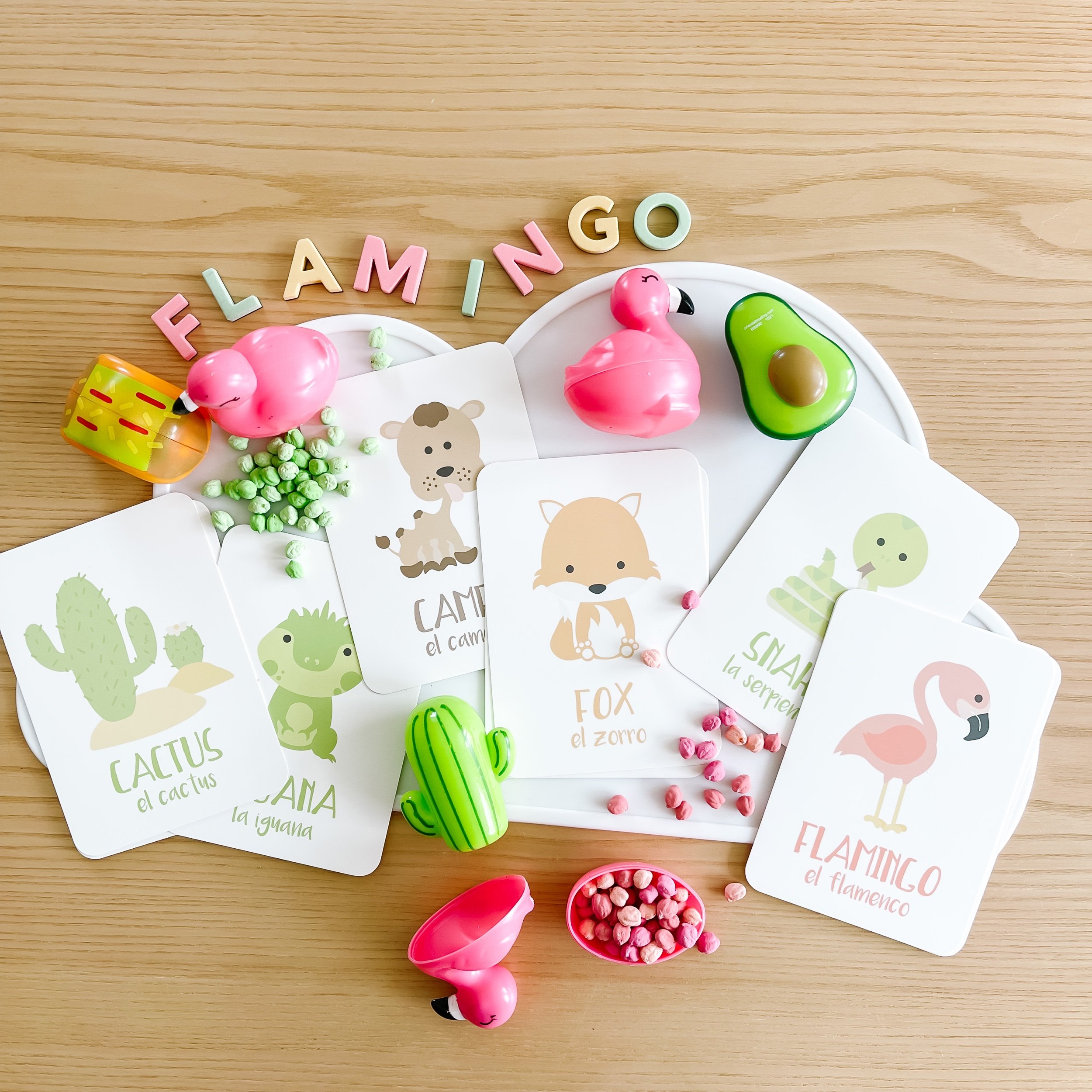
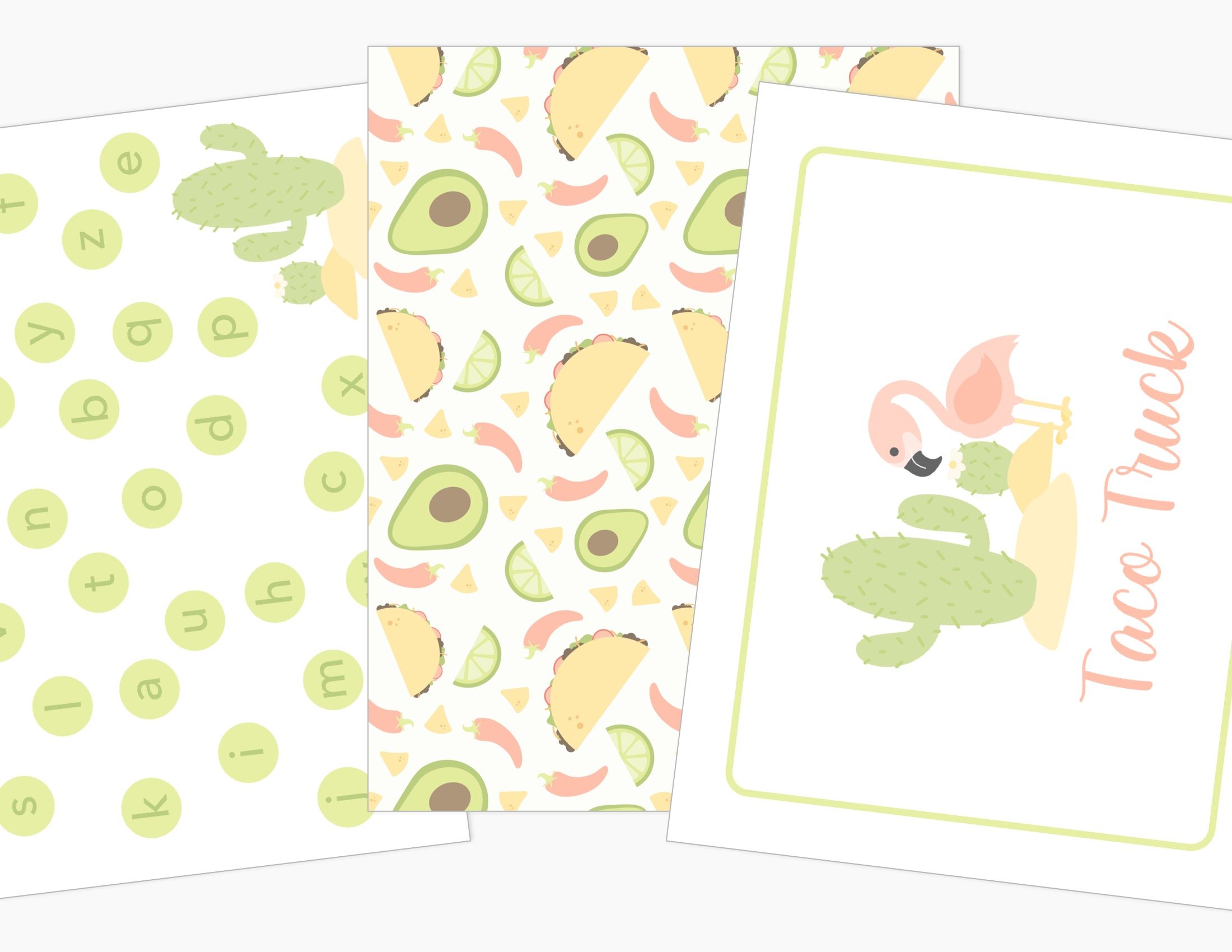
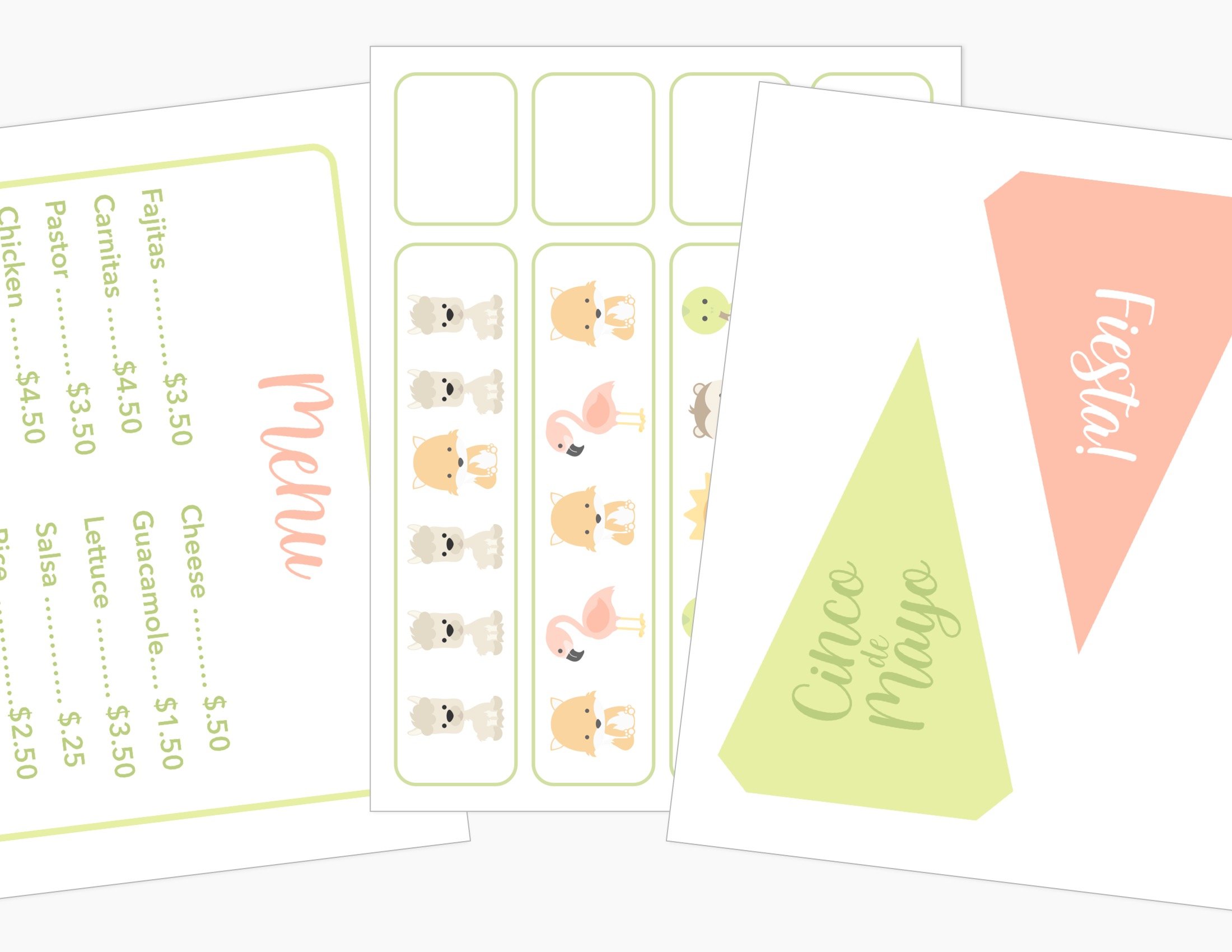
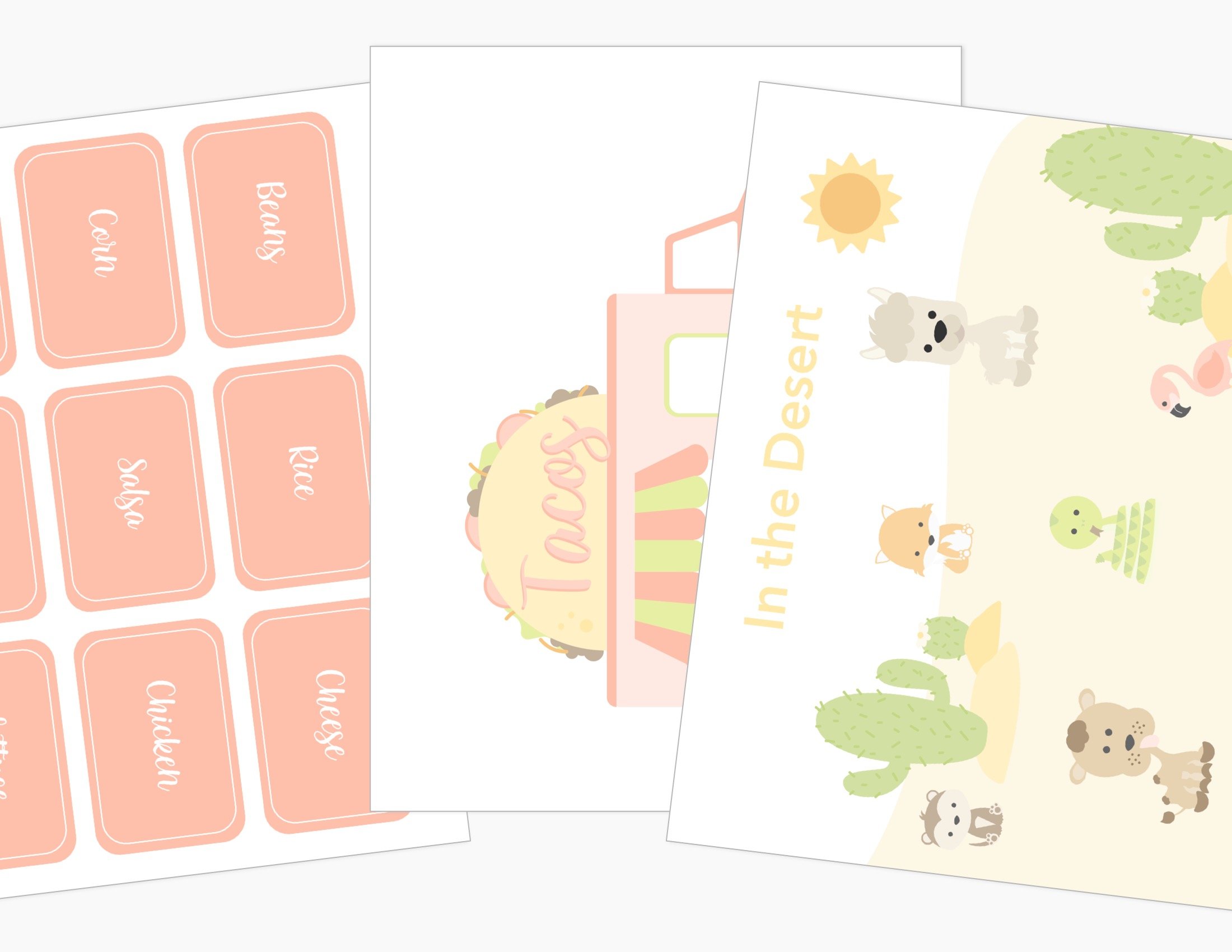
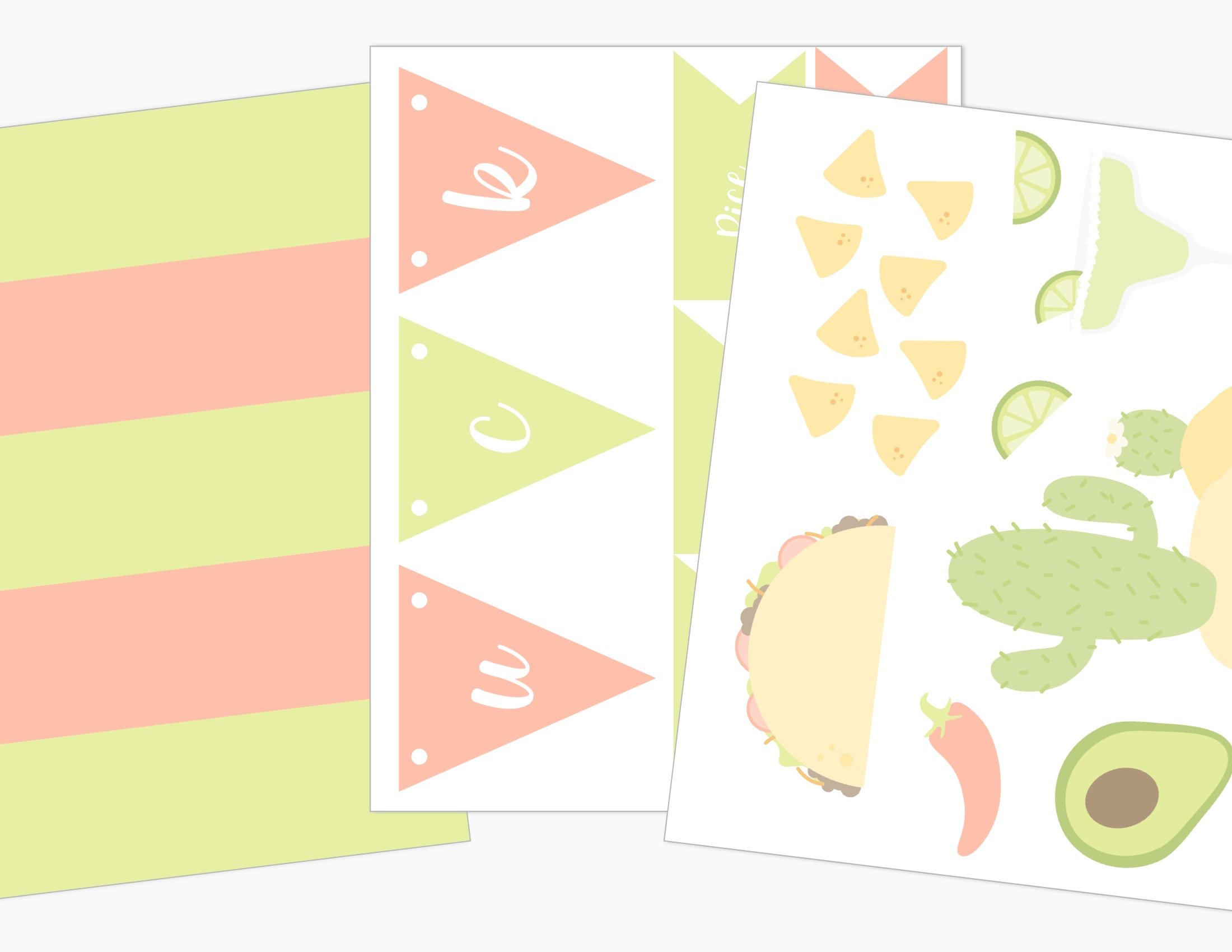
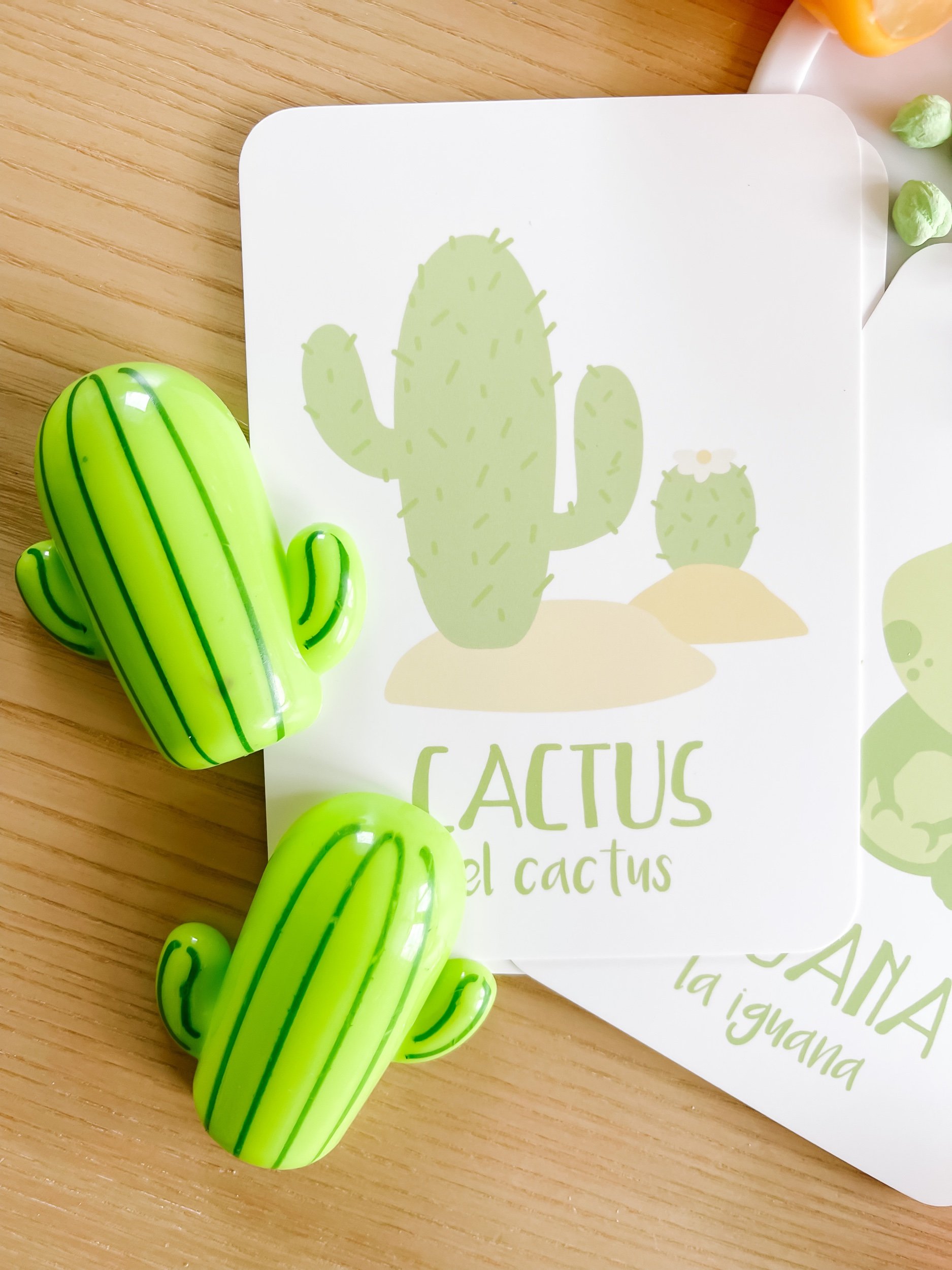
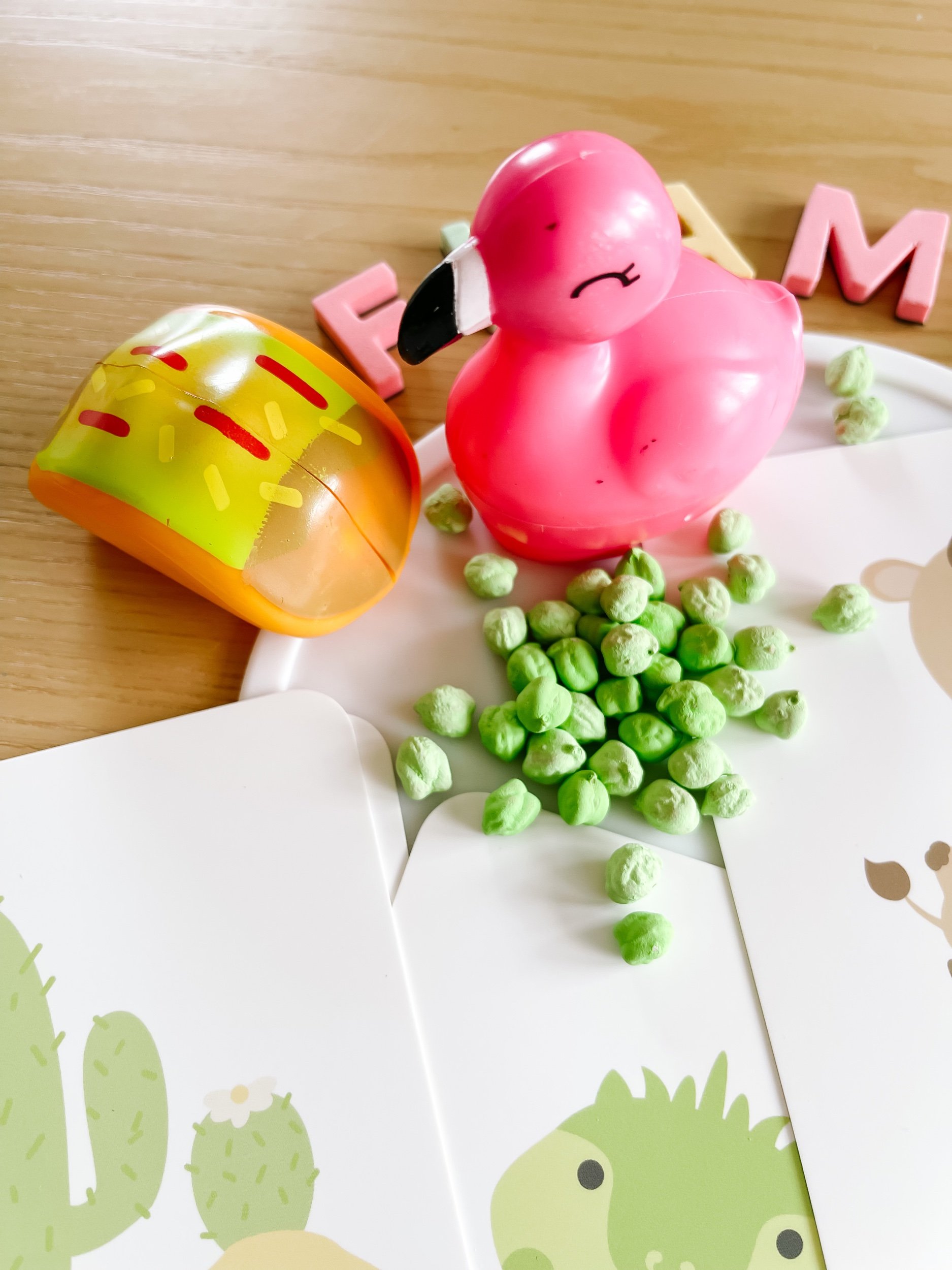
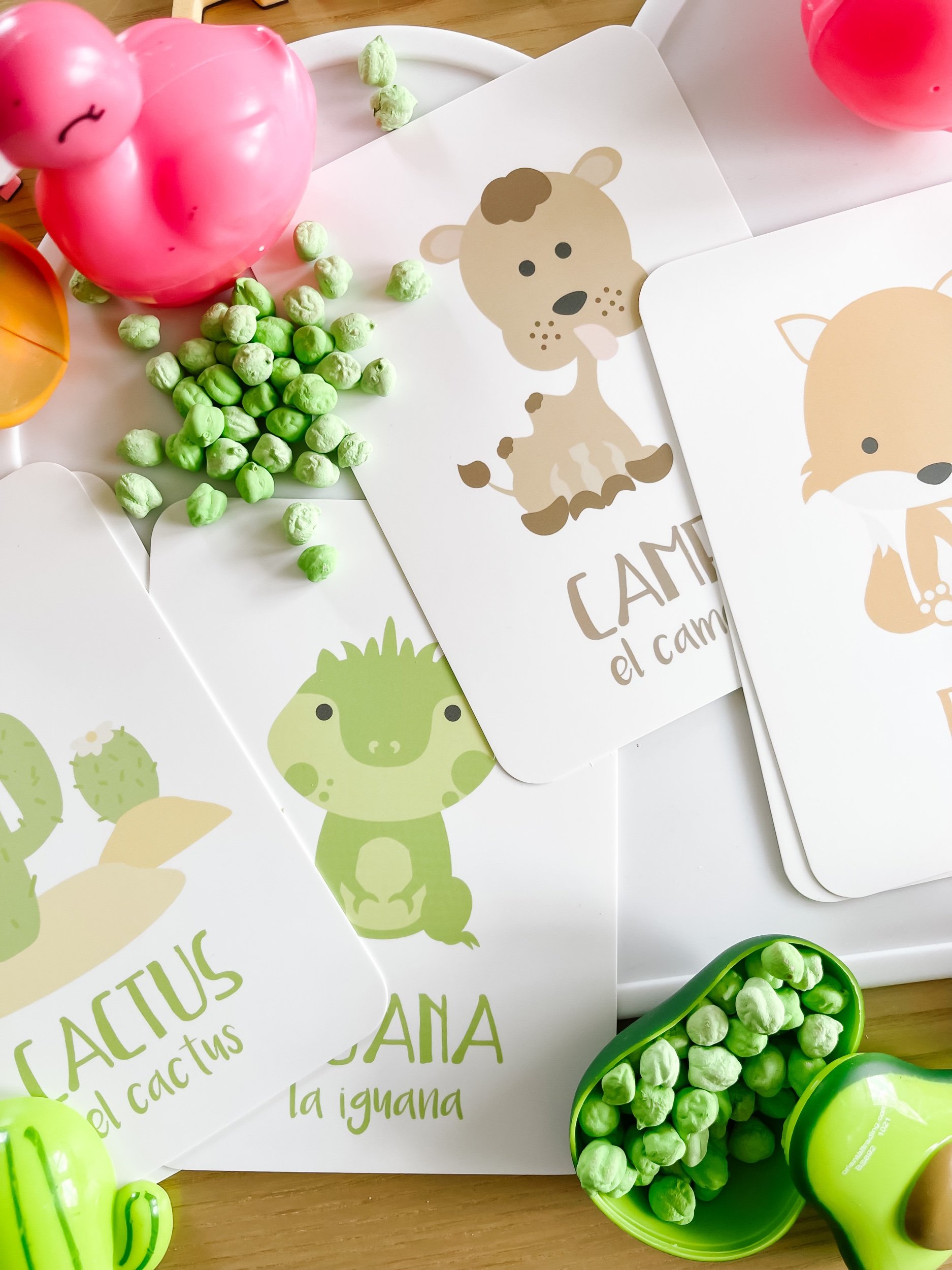
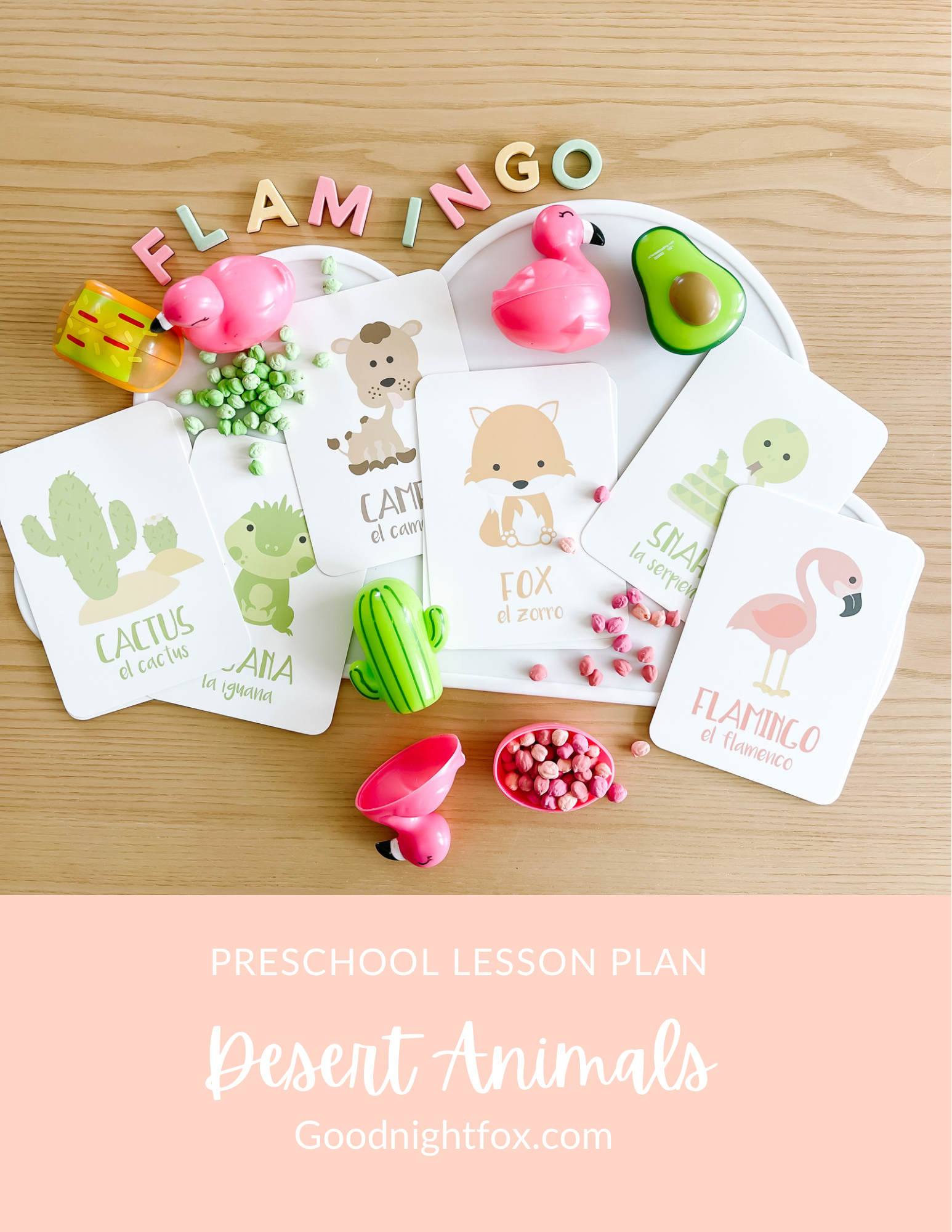
Desert Animal Lesson Plan Sensory Play Kit
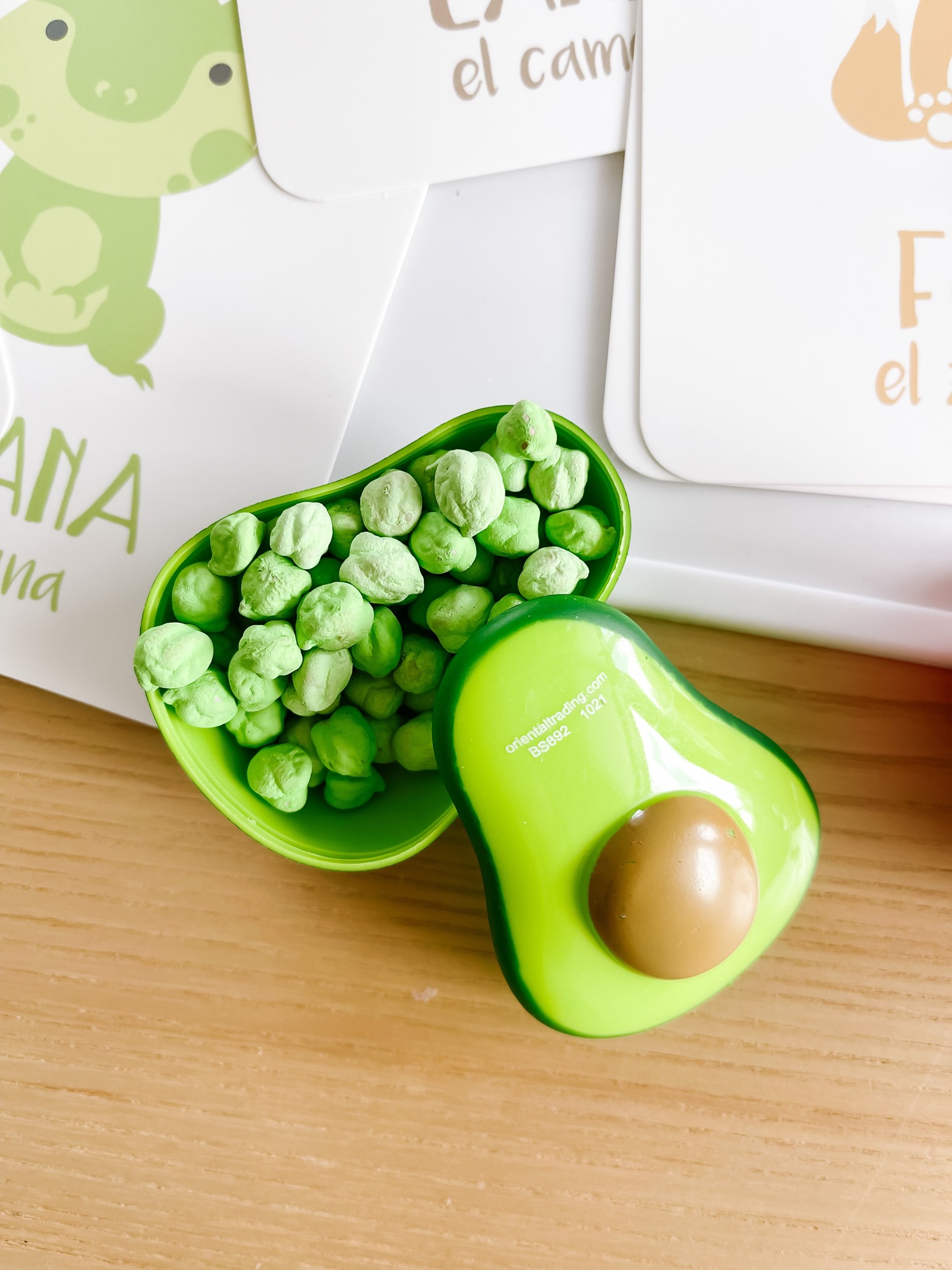
Desert Sensory Kit
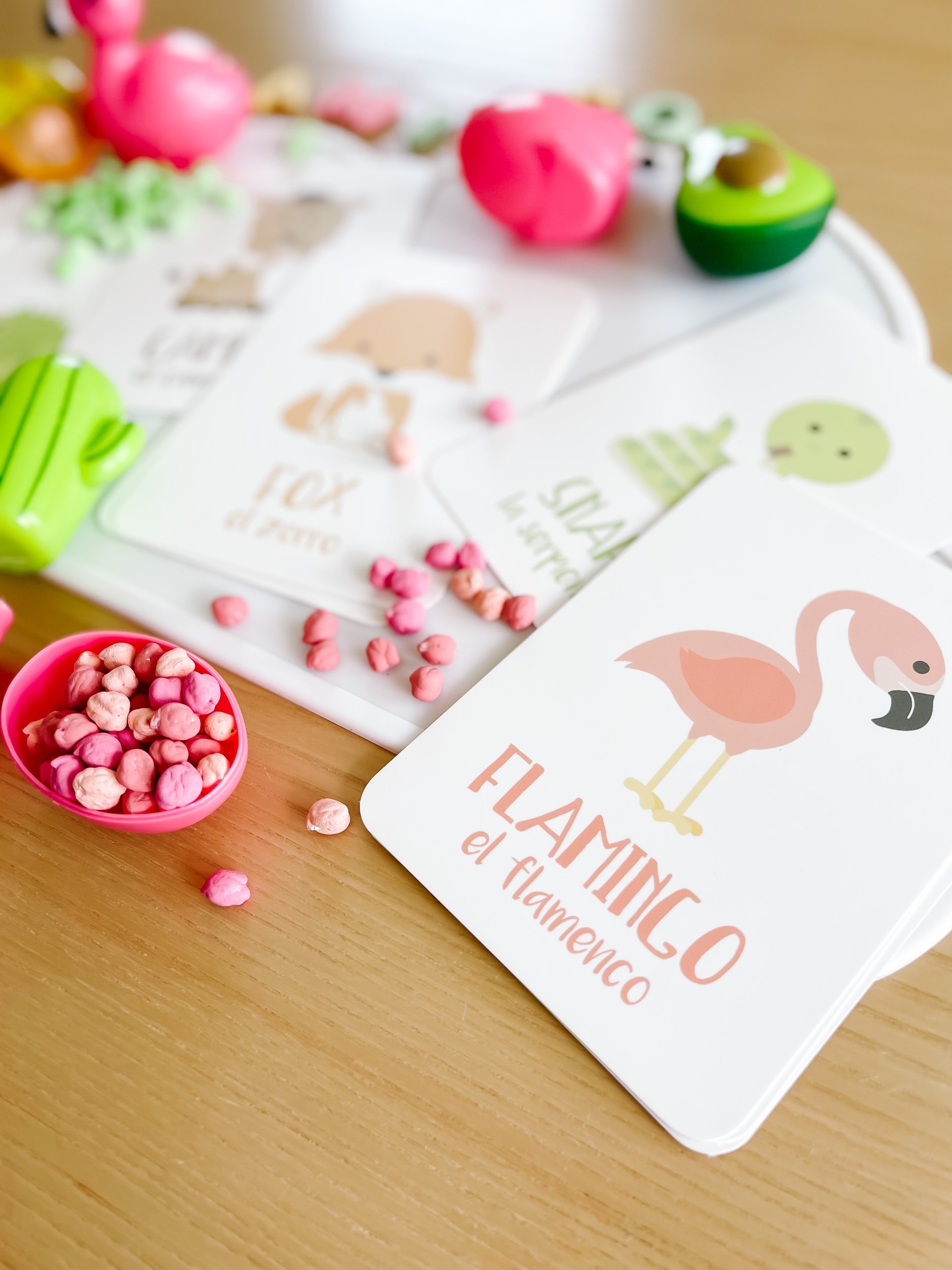
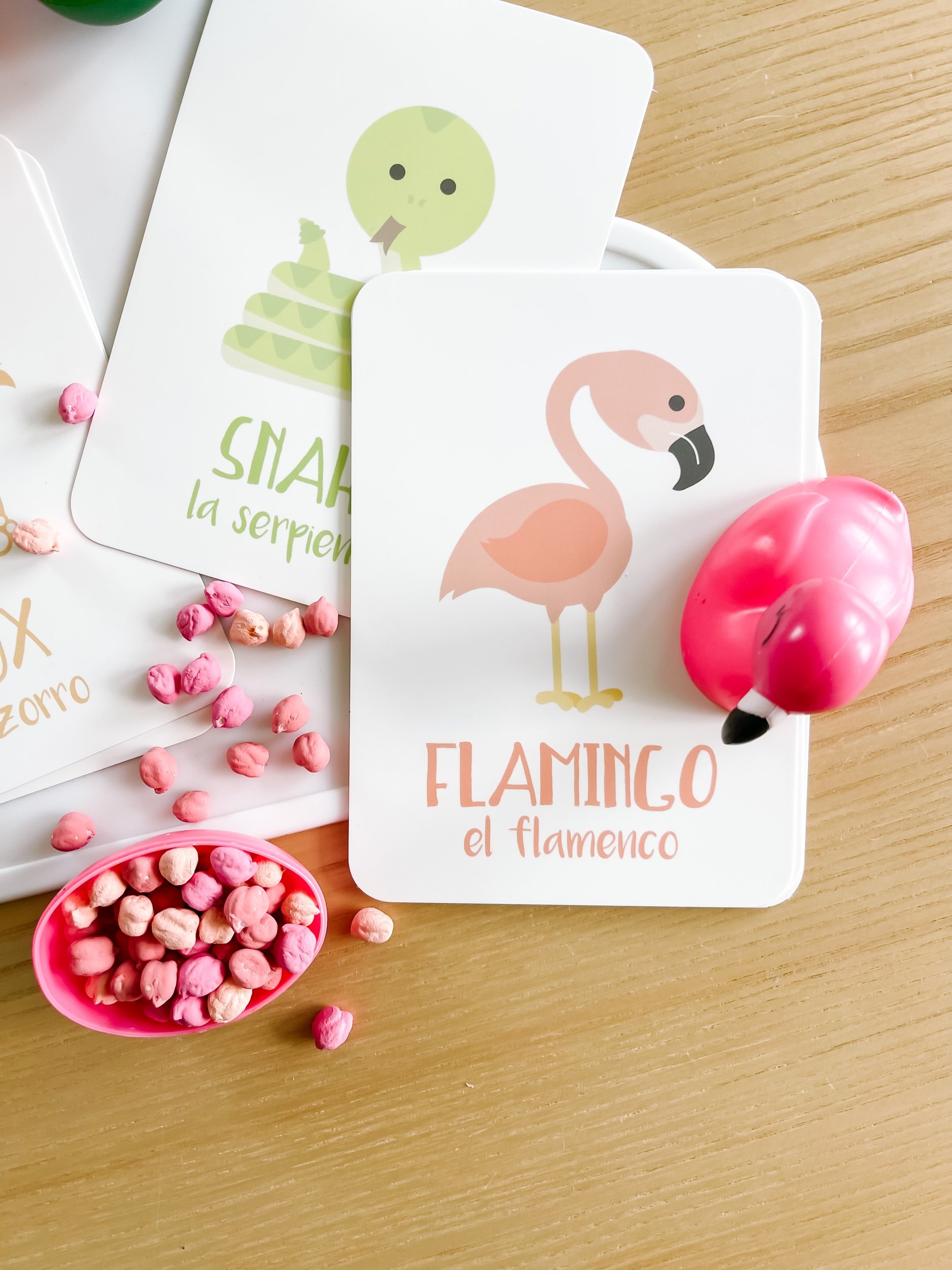
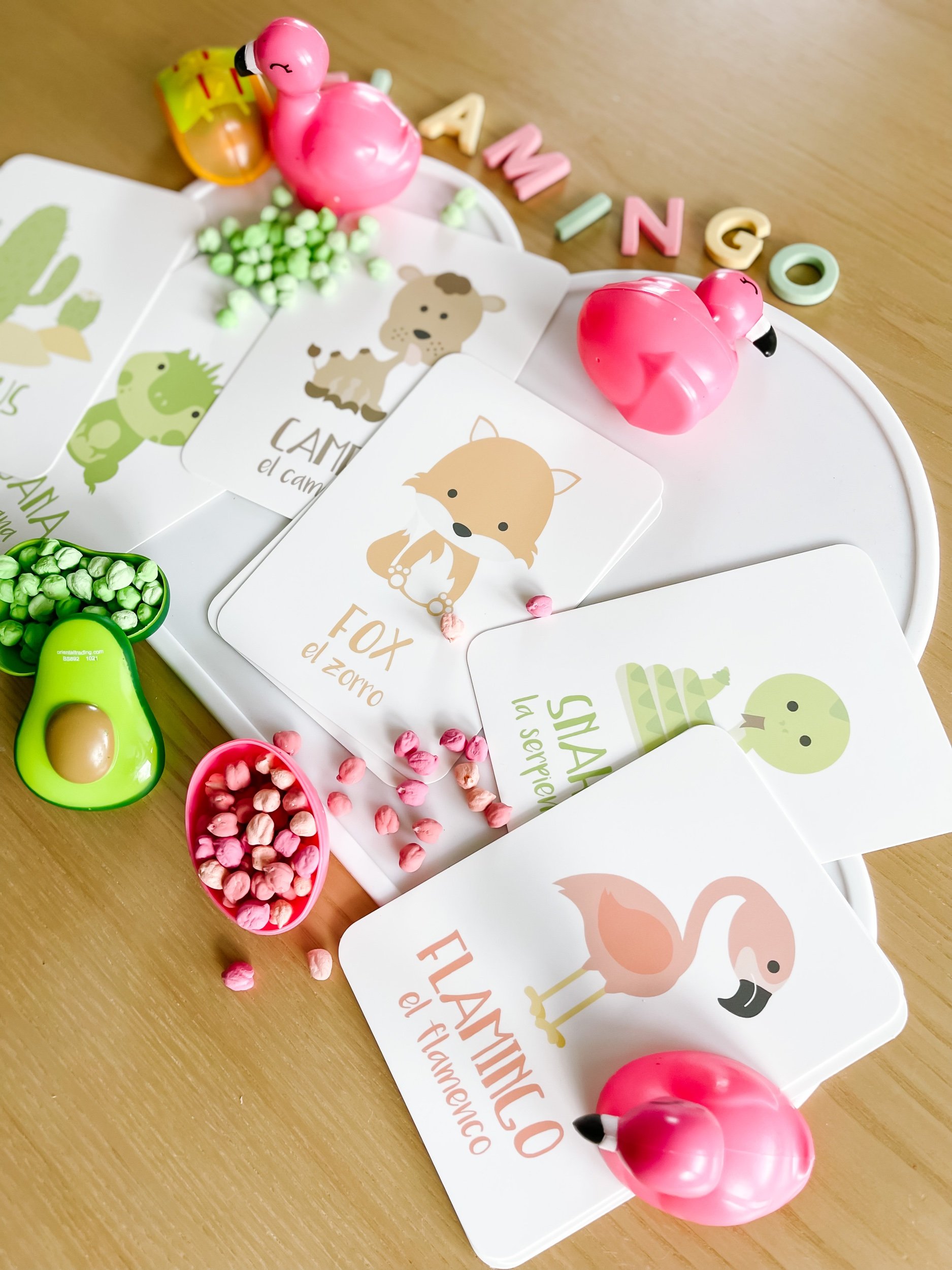
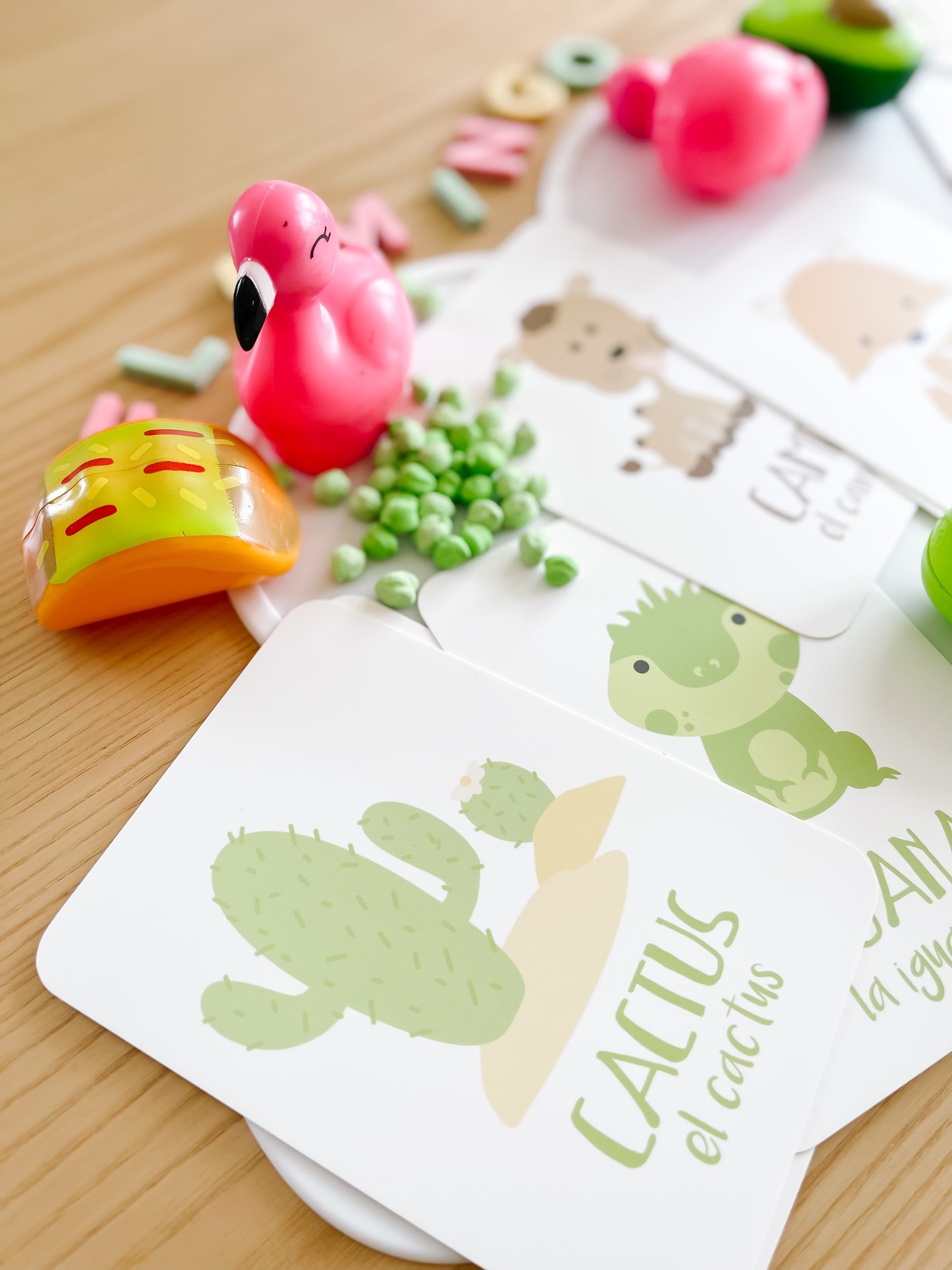
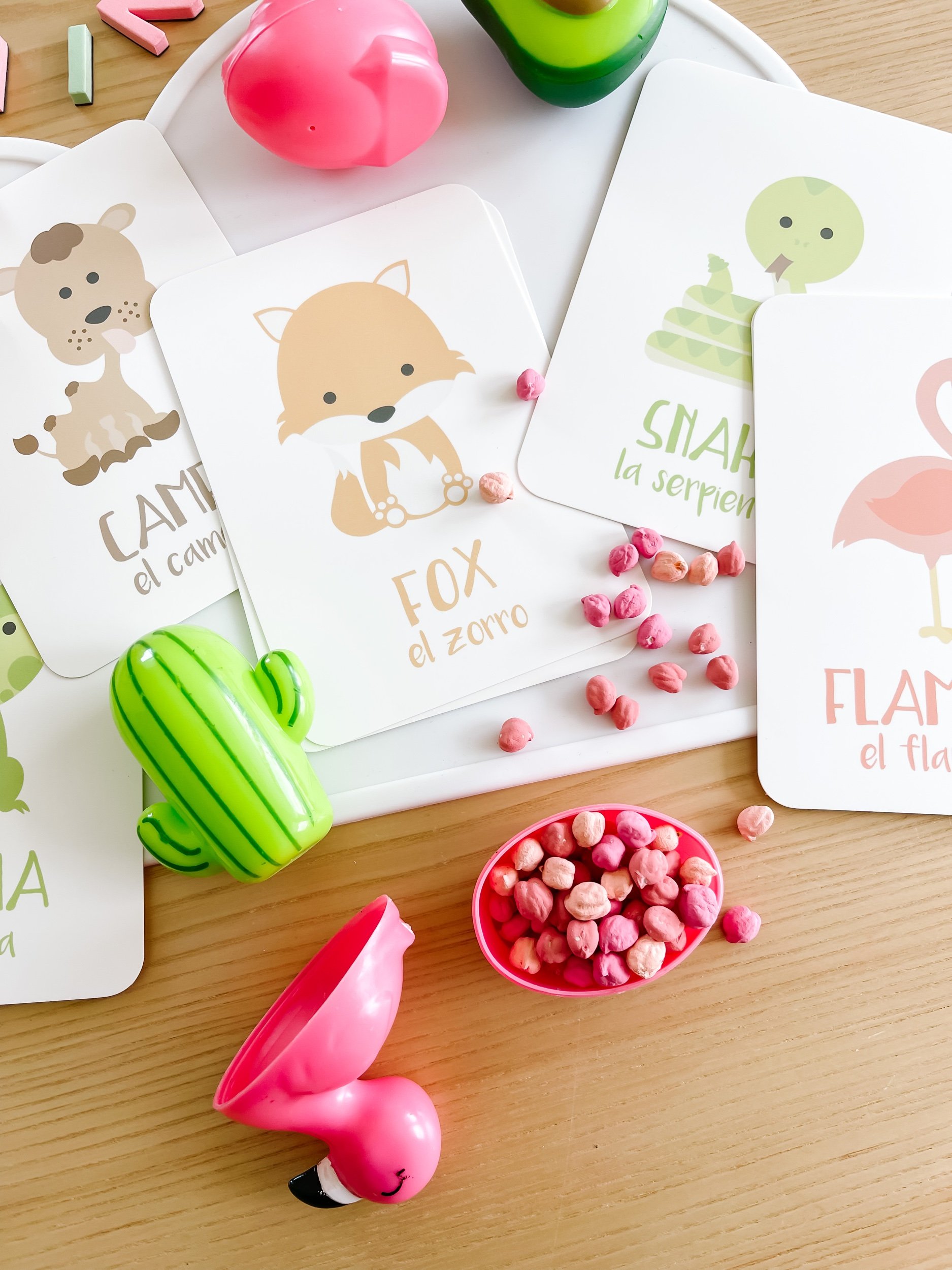
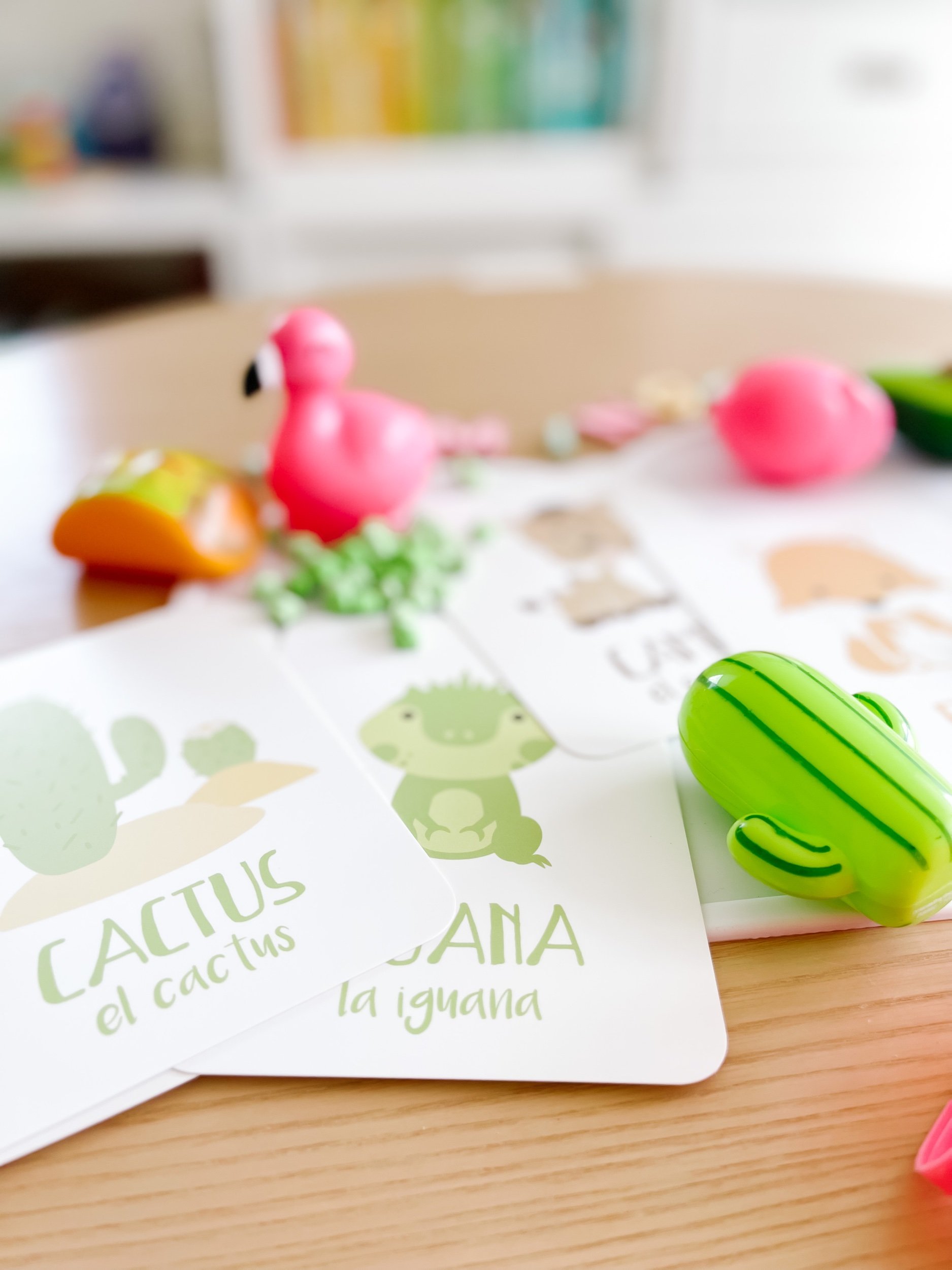
Desert Animal Cards

Week-Long Lesson Plan: Desert Animals for Preschoolers

Day 1: Introduction to Deserts

  • Start the lesson by discussing what deserts are and where they are located in the world. Show pictures or videos of deserts to help preschoolers visualize the environment.

  • Introduce the concept of hot and dry climates in deserts, and explain how animals have adapted to survive in such conditions.

  • Show pictures or plush toys of common desert animals such as camels, snakes, and scorpions, and engage preschoolers in a discussion about what they know about these animals.

Day 2: Camels and Their Adaptations

  • Focus on camels as an iconic desert animal. Discuss the physical characteristics of camels, such as their humps, long legs, and wide feet.

  • Explain how camels have adapted to survive in the desert, including their ability to store water in their humps and withstand extreme temperatures.

  • Show pictures or videos of camels in their natural habitat, and encourage preschoolers to imitate their movements, such as walking with exaggerated long strides like camels.

Day 3: Snakes and Their Senses

  • Introduce snakes as another type of desert animal. Discuss their unique features such as their long bodies, forked tongues, and ability to slither.

  • Explain how snakes use their senses, such as their keen sense of smell and ability to detect vibrations, to hunt for food in the desert.

  • Show pictures or videos of different types of snakes found in deserts, and let preschoolers observe and discuss their characteristics.

Day 4: Scorpions and Their Defenses

  • Discuss scorpions as desert animals known for their unique appearance and venomous stingers.

  • Explain how scorpions use their stingers for defense and to capture prey in the harsh desert environment.

  • Show pictures or models of scorpions, and let preschoolers observe and discuss their physical characteristics and unique features.

Day 5: Recap and Review

  • Review the desert animals discussed throughout the week, including camels, snakes, and scorpions.

  • Engage preschoolers in a discussion about what they have learned, and encourage them to share their favorite facts or observations.

  • Use flashcards or visual aids to reinforce the learning, and play games or do activities related to desert animals, such as matching games or animal charades.

Day 6: Desert Animal Crafts

  • Provide preschoolers with materials to create their own desert animal crafts, such as paper plate camels, sock snakes, or paper bag scorpions.

  • Encourage creativity and imagination while making the crafts, and discuss the unique features of each animal as preschoolers work on their projects.

  • Display the completed crafts around the classroom or at home, and use them as visual aids for further discussions about desert animals.

Day 7: Flashcards for Fun Learning

  • Introduce desert animal flashcards as a visual aid to reinforce the learning from the previous days.

  • Use the flashcards to play interactive games, such as "Guess the Animal," "Name that Animal Sound," or "Match the Animal to its Adaptation."

  • Discuss the benefits of using flashcards as a learning tool, and highlight how they can help preschoolers remember the information about desert animals in a fun and engaging way.

  • Mention that you have desert animal flashcards available for purchase as a visual aid to continue the learning at home or in the classroom.

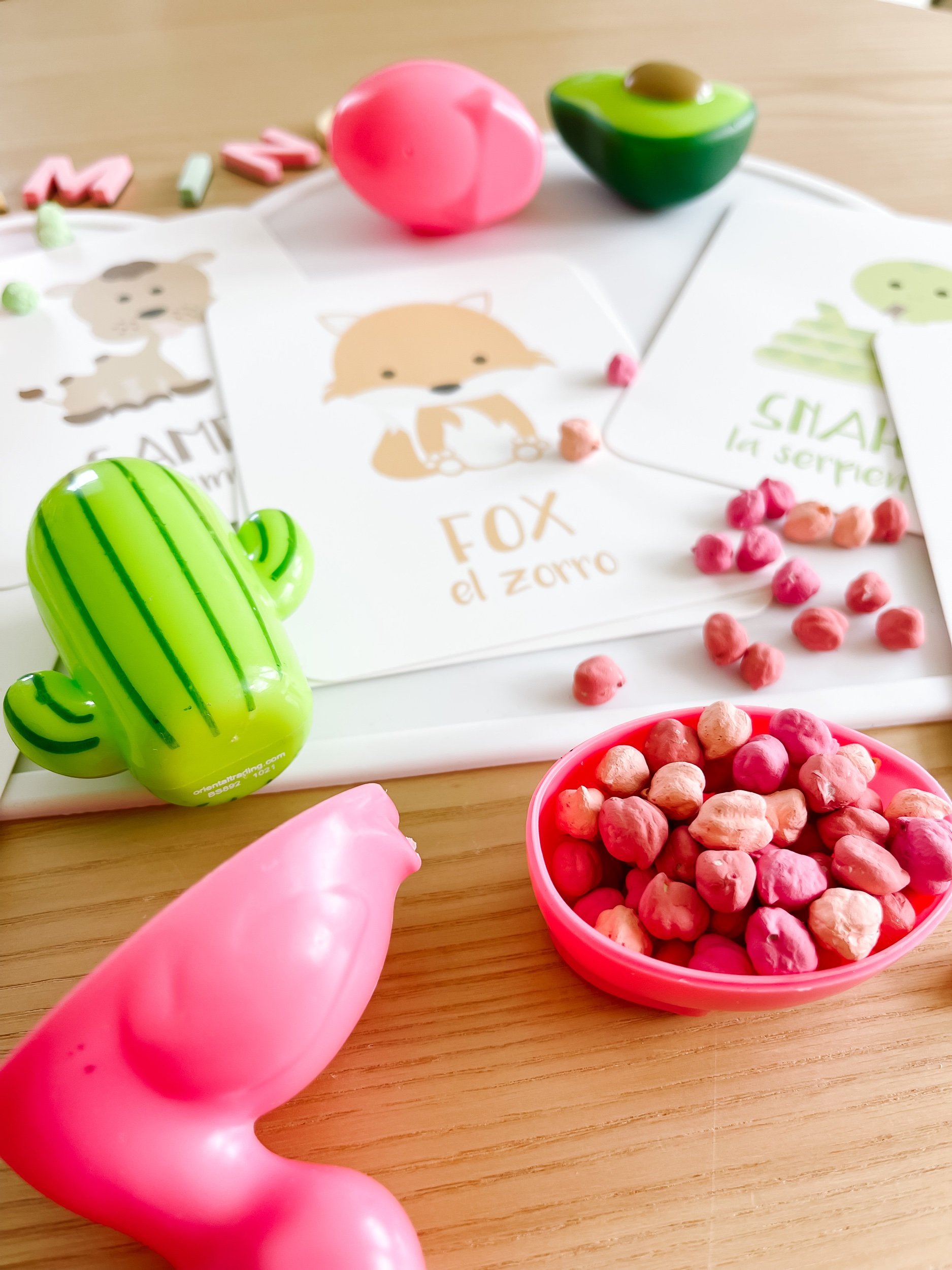
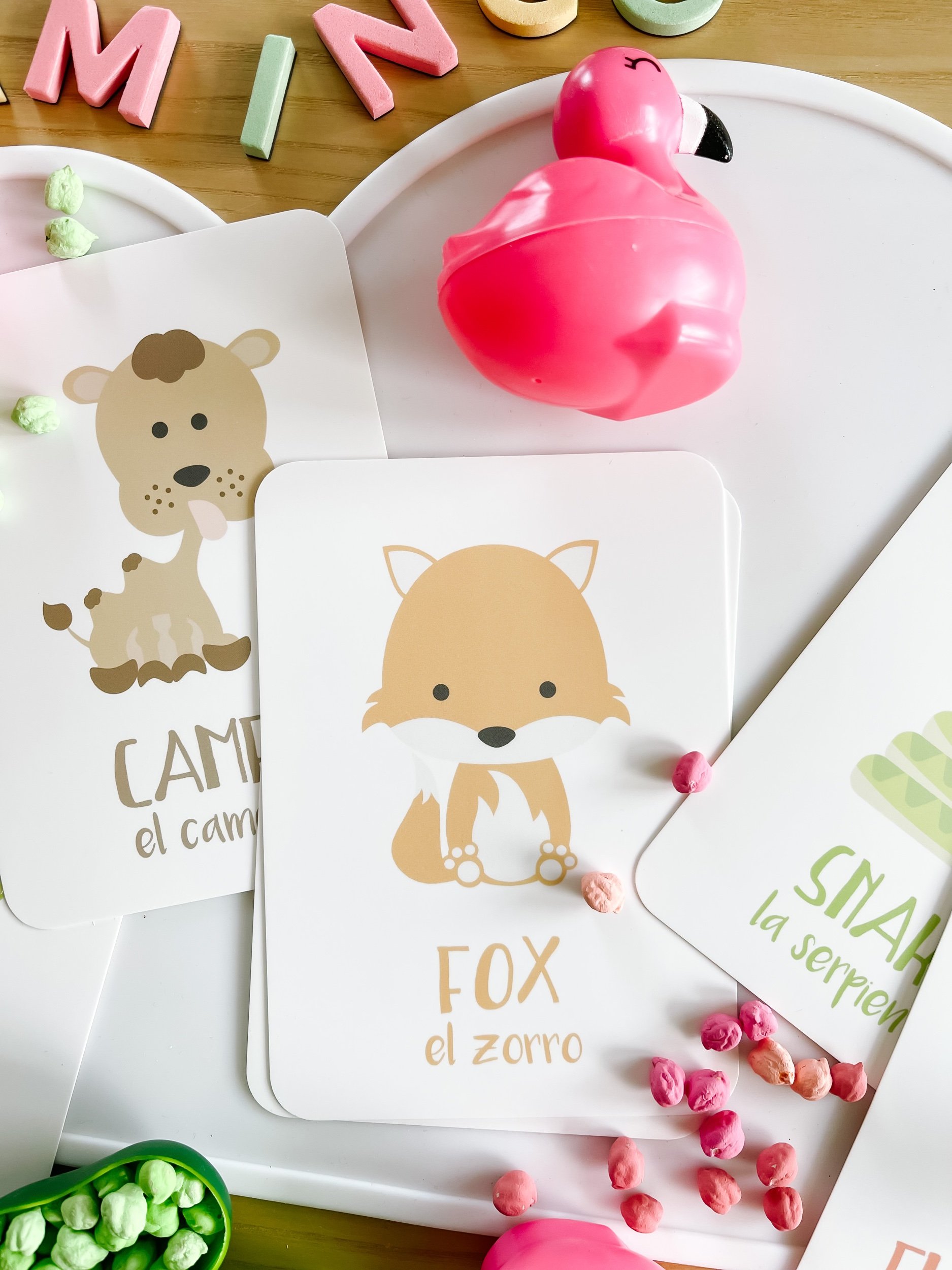
If you're looking for a fun and interactive way to teach preschoolers about desert animals, my desert animal flashcards are a perfect visual aid! These flashcards feature vibrant illustrations of camels, snakes, scorpions, and other desert animals, making learning about them engaging and exciting for young learners.
IMG_3959.jpeg
IMG_3967_jpg.jpeg
IMG_3957.jpeg
2 copy.jpeg
IMG_3962_jpg.jpeg
IMG_3964_jpg.jpeg
IMG_3969_jpg.jpeg
IMG_3965.jpeg
IMG_3961_jpg.jpeg
4.jpeg
4 copy.jpeg
2.jpeg
IMG_3958.jpeg
IMG_3960_jpg.jpeg
IMG_3963.jpeg
IMG_3966.jpeg
IMG_3968_jpg.jpeg
IMG_3959.jpeg IMG_3967_jpg.jpeg IMG_3957.jpeg 2 copy.jpeg IMG_3962_jpg.jpeg IMG_3964_jpg.jpeg IMG_3969_jpg.jpeg IMG_3965.jpeg IMG_3961_jpg.jpeg 4.jpeg 4 copy.jpeg 2.jpeg IMG_3958.jpeg IMG_3960_jpg.jpeg IMG_3963.jpeg IMG_3966.jpeg IMG_3968_jpg.jpeg
Tags desert animals, toddler lesson plan, preschool sensory bin, creative learning, homeschool lesson plan, week long lesson plan, free lesson plan for kids

Boost Your Child's Color Recognition Skills with Flashcards and Rainbow Playdoh

April 9, 2023 Kylie Tuosto
594BF4EE-0EAF-4479-B83B-0ADF5237054F.png

Colors are an essential part of a child's development, and recognizing and naming them correctly is a critical step in their journey to learning. With our color flashcards and rainbow playdoh, you can help your child master the basics and have fun at the same time.

Benefits of Color Flashcards:

  • Encourages early vocabulary development

  • Helps develop visual recognition skills

  • Can be used as a fun, interactive tool for learning

Benefits of Rainbow Playdoh:

  • Provides hands-on, sensory learning experience

  • Encourages creativity and imagination

  • Reinforces color recognition and matching skills

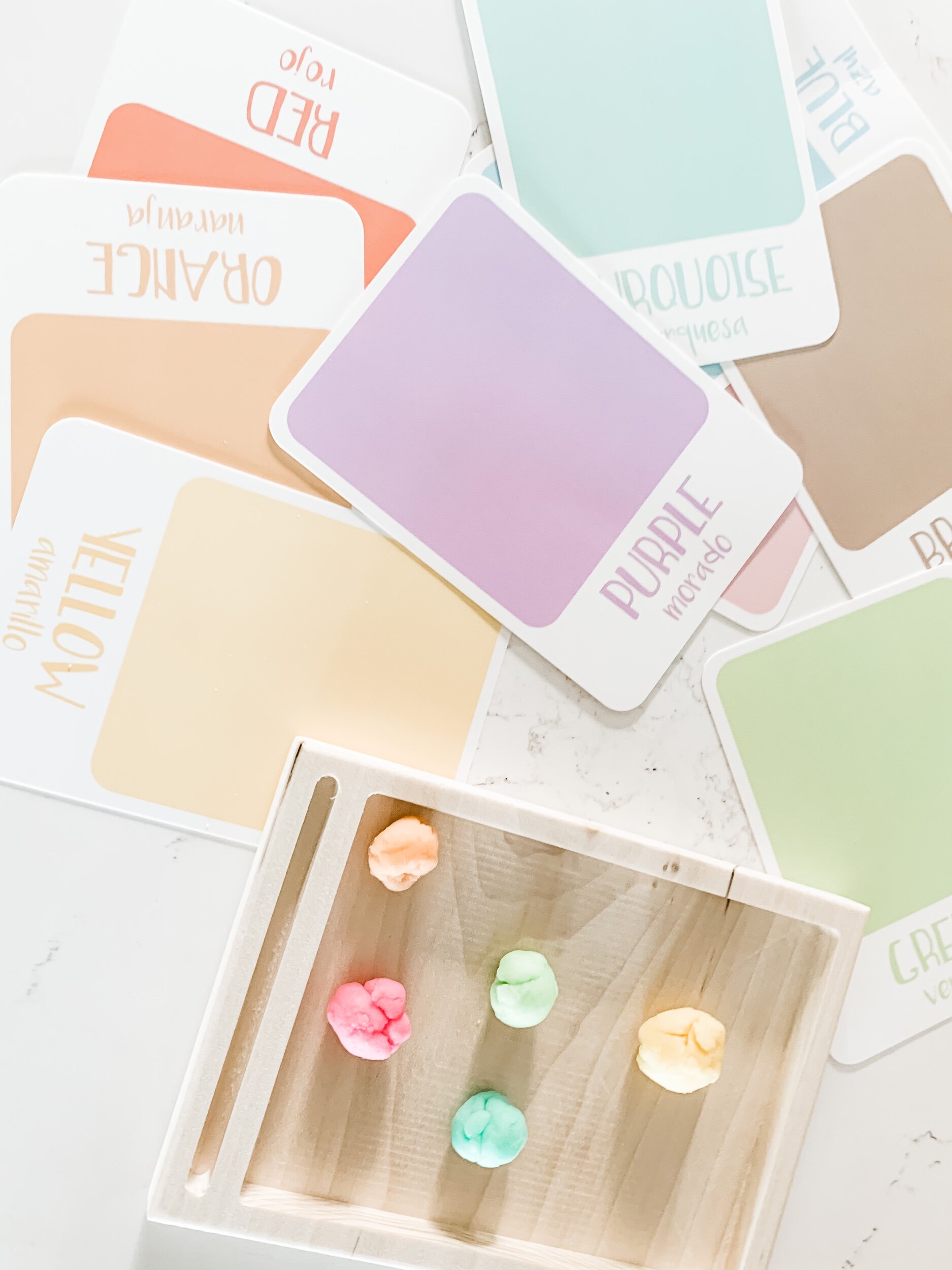
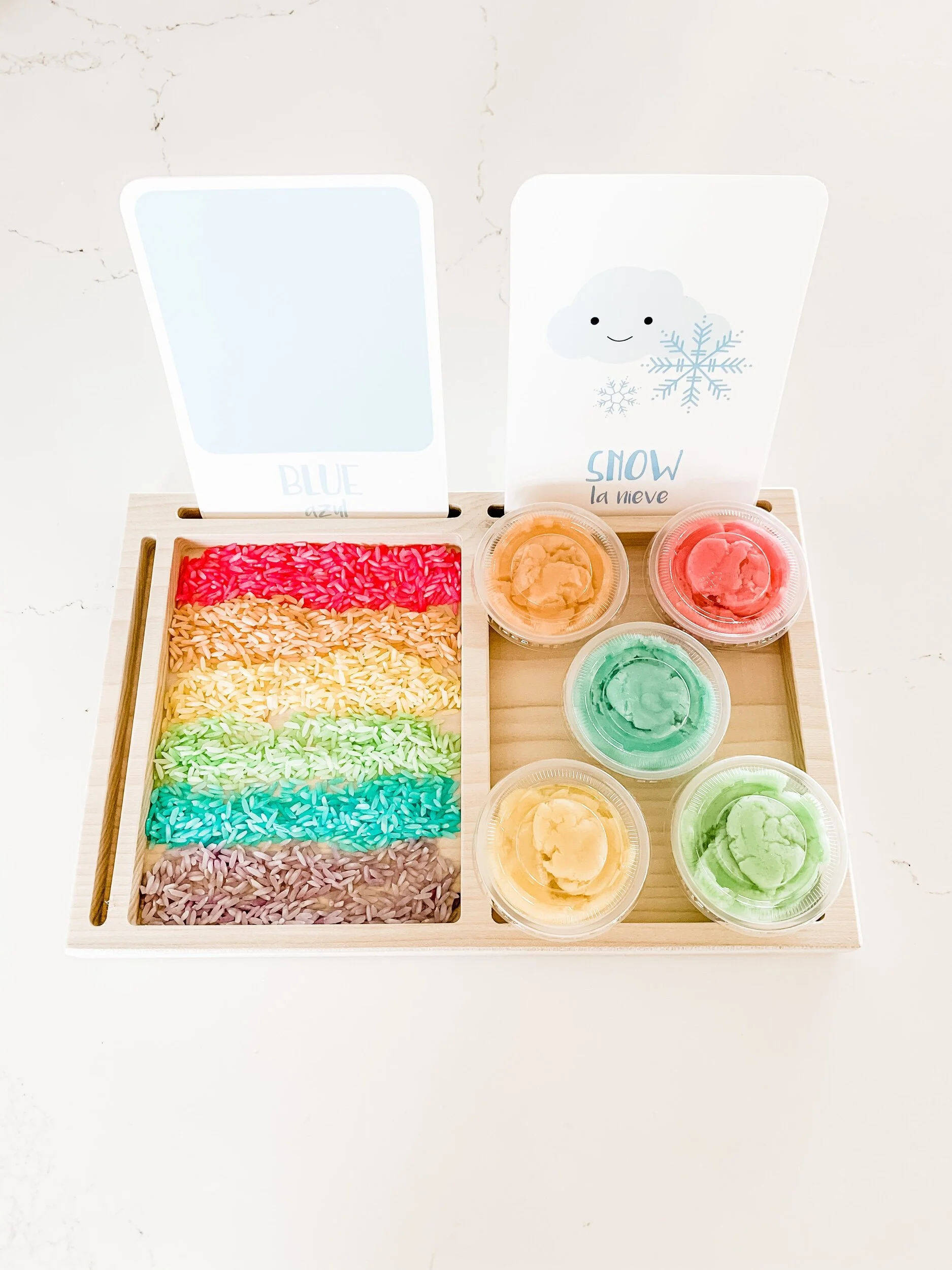
Using Color Flashcards: Our color flashcards are designed with bright, vivid colors to grab your child's attention and make the learning process fun and engaging. You can use them as flashcards, placing them in a pile and having your child pick them up and match them with objects of the same color. You can also use them as a matching game, laying out the cards and having your child match the color words to the corresponding colored cards.

Using Rainbow Playdoh: Rainbow playdoh is a fun and creative way to reinforce color recognition and matching skills. Encourage your child to create colorful objects and figures with the playdoh and match them to the colors on the flashcards. This hands-on activity allows your child to experiment with color mixing and develop their artistic abilities.

Conclusion: With our color flashcards and rainbow playdoh, you can make learning colors an enjoyable and interactive experience for your child. These tools are designed to help develop critical skills, such as vocabulary, visual recognition, and creativity. So why not start today and see how much your child can learn while having fun?

IMG_1836.jpeg
IMG_1848.jpeg
IMG_1829.jpeg
IMG_1843.jpeg
IMG_1797.jpeg
IMG_1849.jpeg
IMG_1840.jpeg
IMG_1837.jpeg
IMG_1841.jpeg
IMG_1838.jpeg
IMG_1831.jpeg
IMG_1854.jpeg
IMG_1847.jpeg
IMG_1822.jpeg
IMG_1855.jpeg
IMG_1824.jpeg
IMG_1747.jpeg
IMG_1812.jpeg
IMG_1832.jpeg
IMG_1834.jpeg
IMG_1835.jpeg
IMG_1839.jpeg
IMG_1844.jpeg
IMG_1845.jpeg
IMG_1846.jpeg
IMG_1851.jpeg
IMG_1852.jpeg
IMG_1857.jpeg
IMG_1858.jpeg
IMG_1866.jpeg
IMG_1859.jpeg
IMG_1862.jpeg
IMG_1865.jpeg
594BF4EE-0EAF-4479-B83B-0ADF5237054F.png

Loose parts play letter color sensory bin

April 9, 2023 Kylie Tuosto

Loose parts play is a type of unstructured play that involves providing children with open-ended materials that they can use in a variety of ways. These materials can be anything from sticks and stones to fabric scraps and cardboard boxes. Loose parts play is beneficial for toddlers because it encourages creativity, problem-solving, and physical development.

Here are some of the benefits of loose parts play for toddlers:

  1. Encourages creativity: When children are given loose parts to play with, they have to use their imagination to come up with different ways to use them. This helps them develop their creativity and problem-solving skills.

  2. Develops fine motor skills: Playing with loose parts requires toddlers to manipulate small objects, which helps to develop their fine motor skills. This can be especially beneficial for children who are struggling with fine motor skills.

  3. Improves hand-eye coordination: Loose parts play involves using small objects in a variety of ways, which helps to improve hand-eye coordination. This is important for toddlers as they develop their motor skills.

  4. Fosters social skills: When children play with loose parts, they often have to work together to create something. This helps to develop their social skills and teaches them how to cooperate and collaborate with others.

  5. Encourages physical activity: Loose parts play often involves physical activity, such as running, jumping, and climbing. This helps to promote physical development and can be especially beneficial for children who are not getting enough exercise.

Overall, loose parts play is a great way to encourage creativity, problem-solving, and physical development in toddlers. By providing children with open-ended materials to play with, parents and caregivers can help to foster a love of learning and exploration in their little ones.

For 15 Sensory Play Activity ideas, check out Wild Woods & Motherhood.

IMG_7008.jpeg
IMG_7041.jpeg
IMG_6993.jpeg
IMG_7009_jpg.jpeg
IMG_6994.jpeg
IMG_6998.jpeg
IMG_6999.jpeg
IMG_7004.jpeg
IMG_6991.jpeg
IMG_6992.jpeg
IMG_7006.jpeg
IMG_7005.jpeg

Easter Sensory Flisat Table Setup Play for Toddlers: An Egg-citing Adventure!

April 9, 2023 Kylie Tuosto
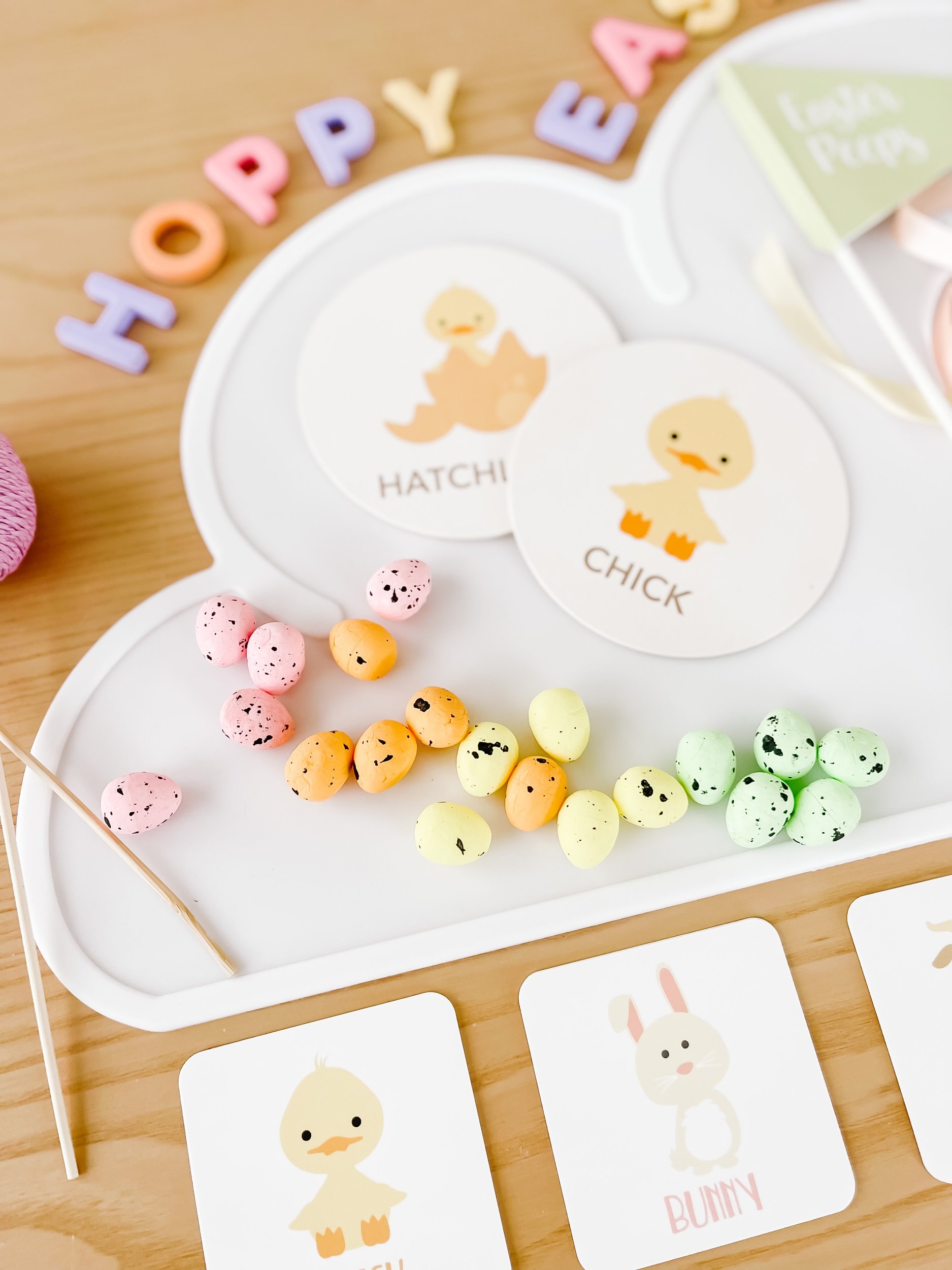
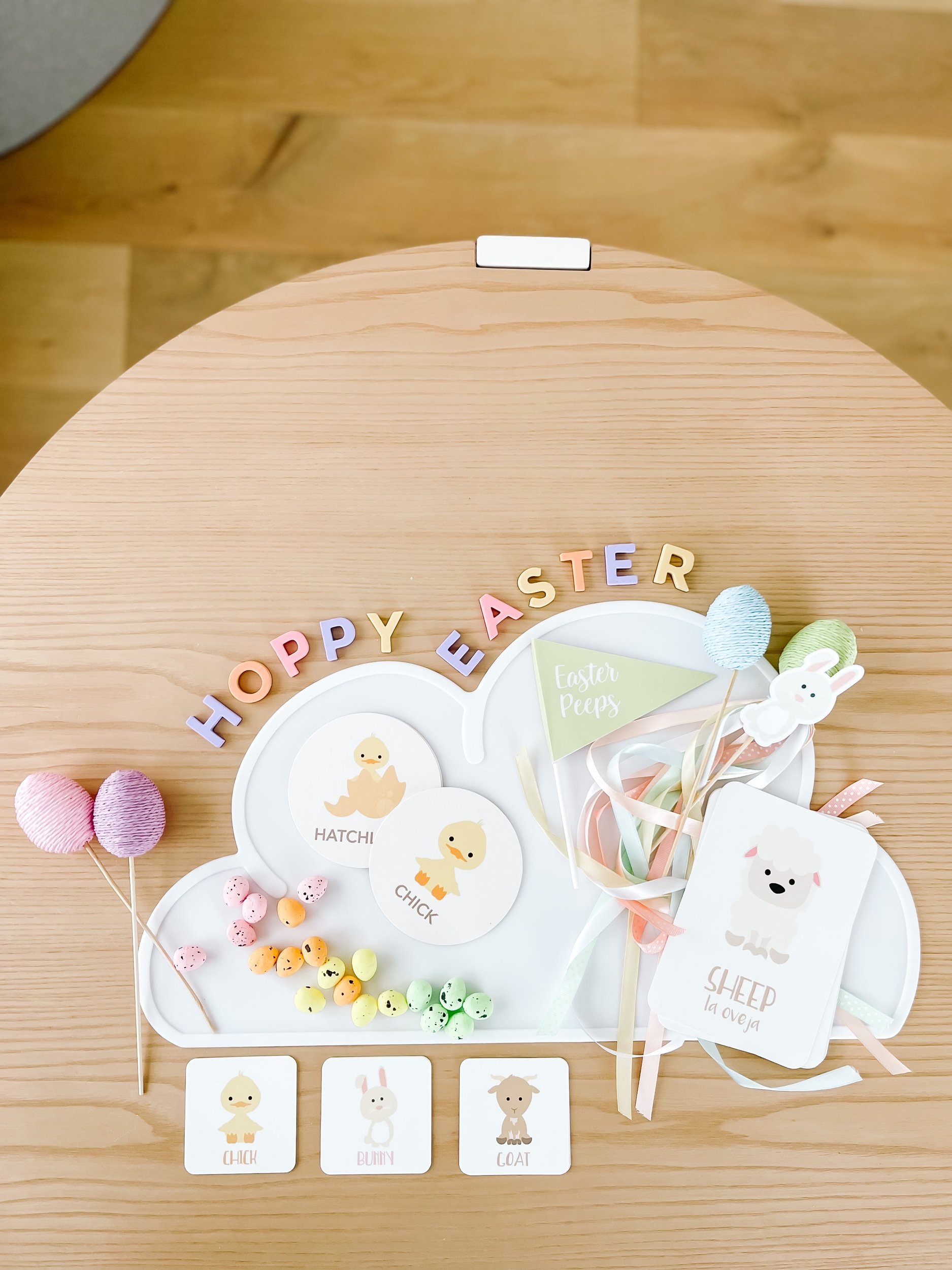
Easter sensory play for preschoolers with Flisat table

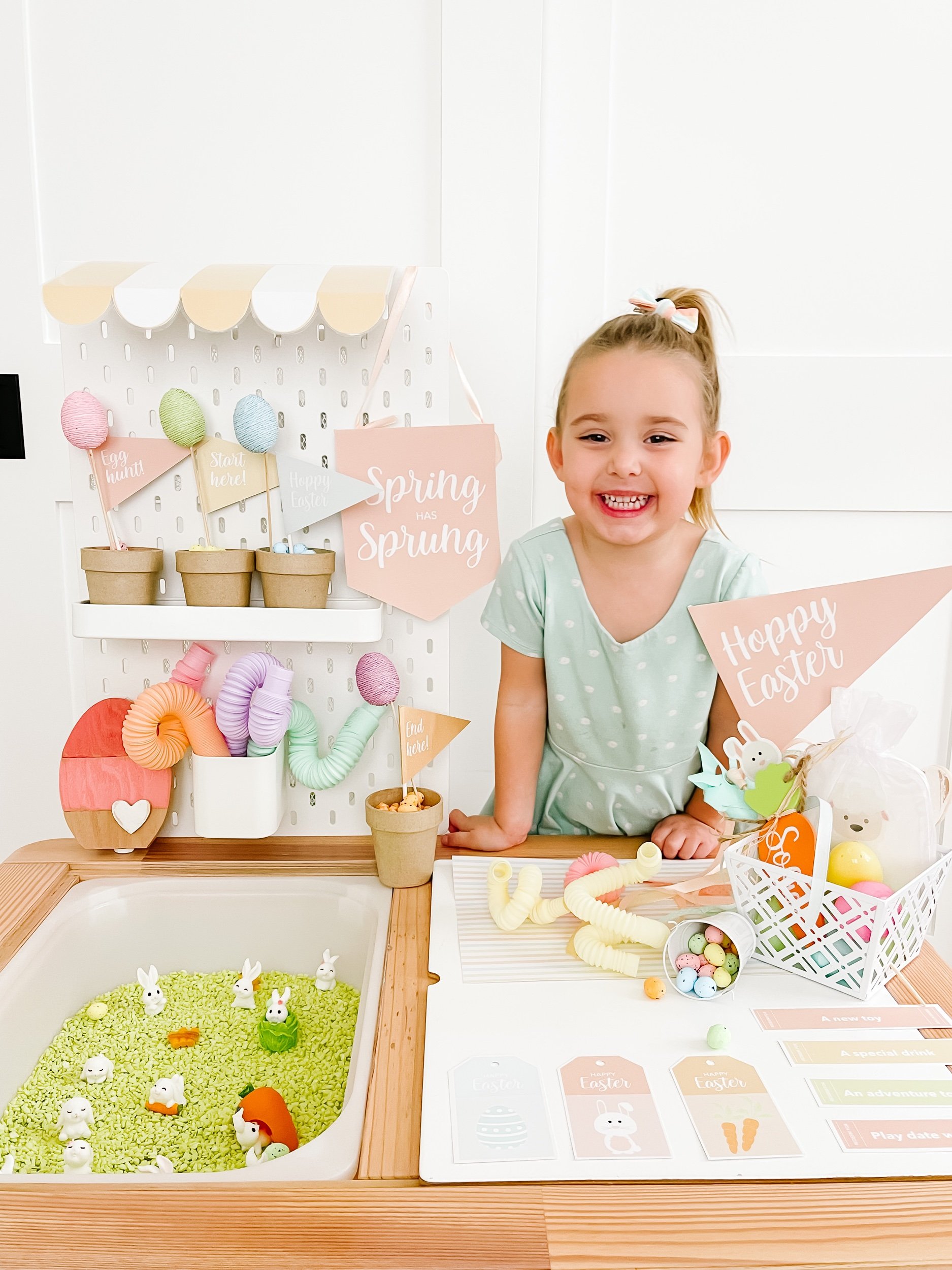
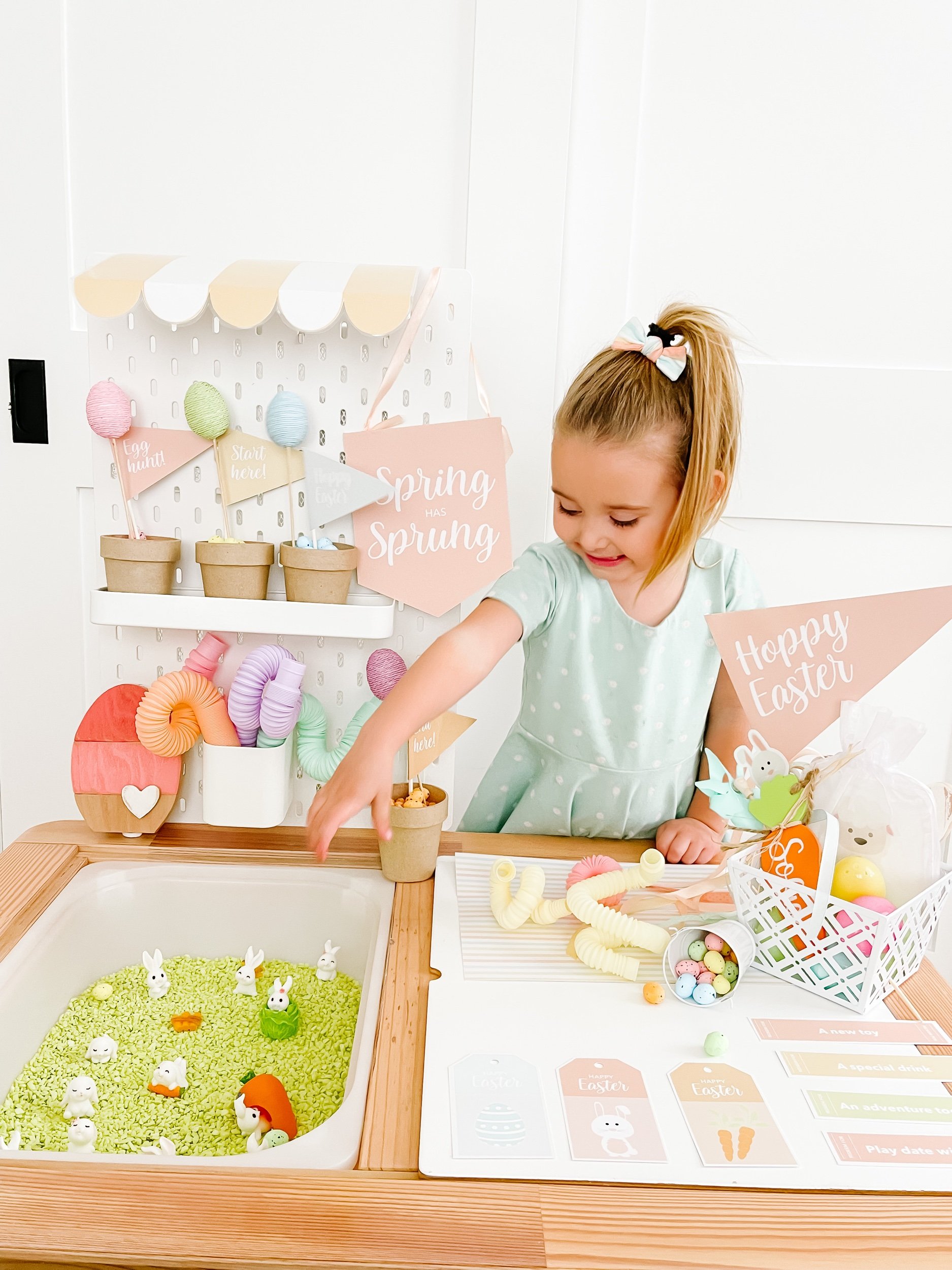
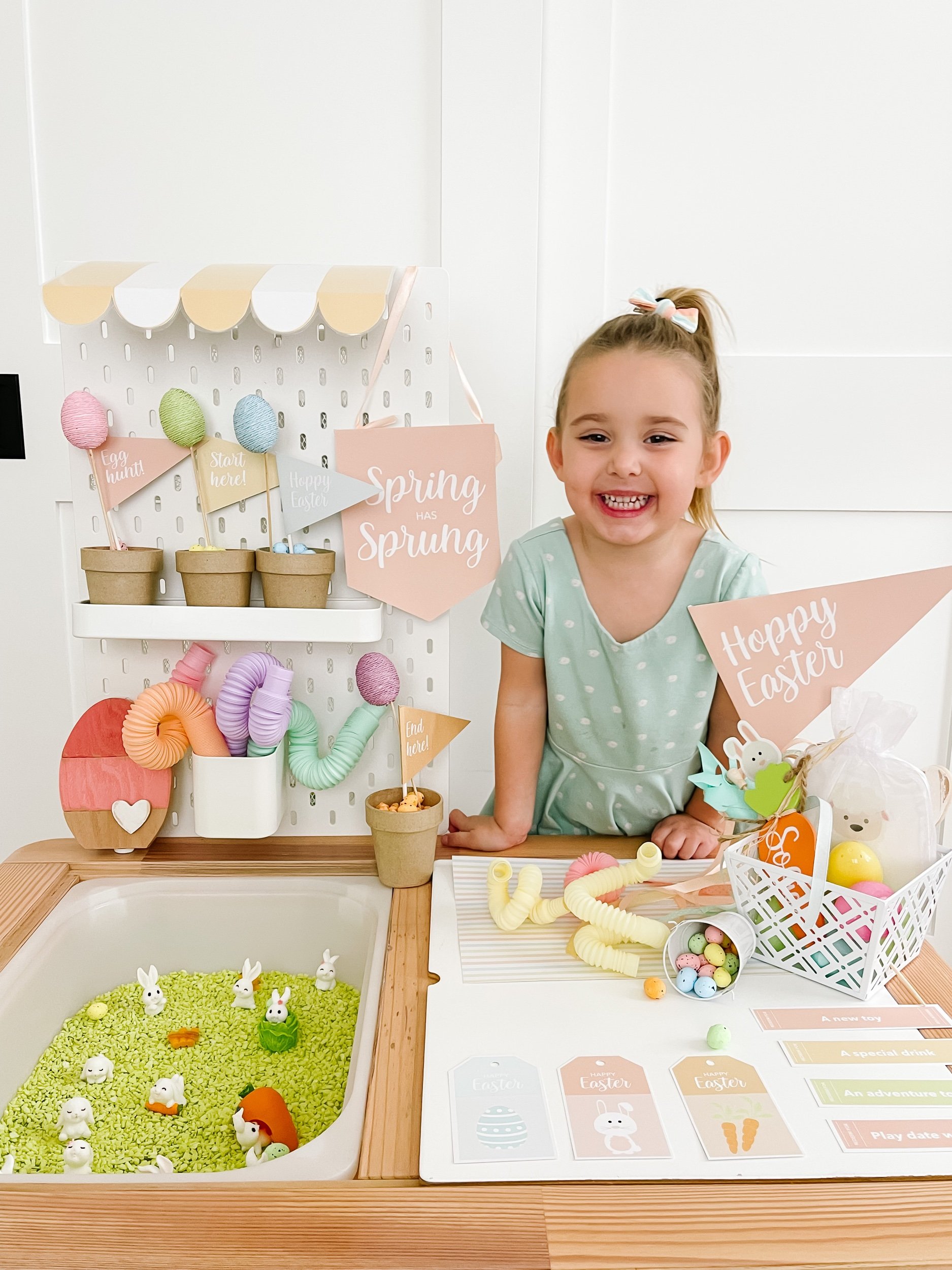
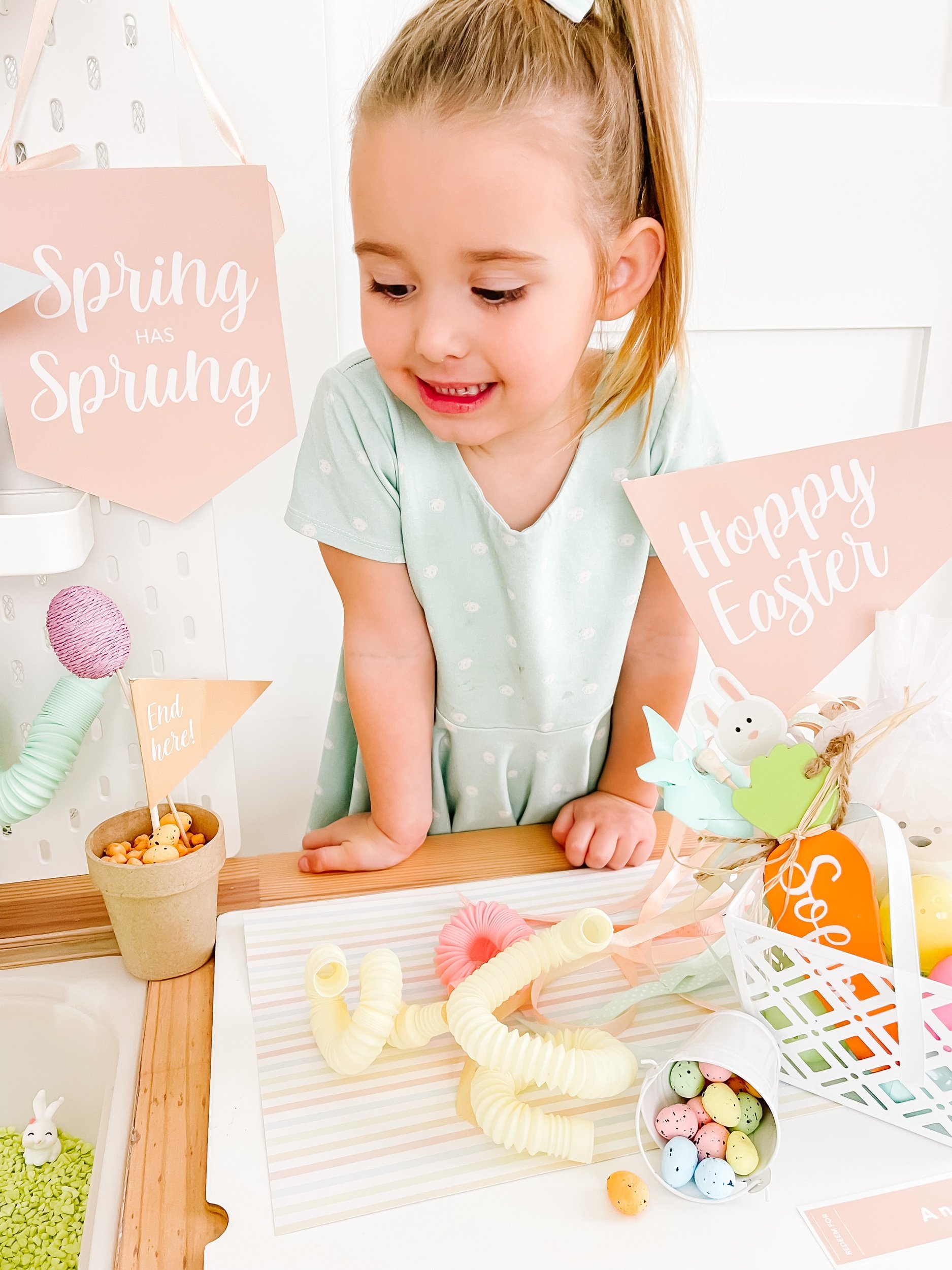
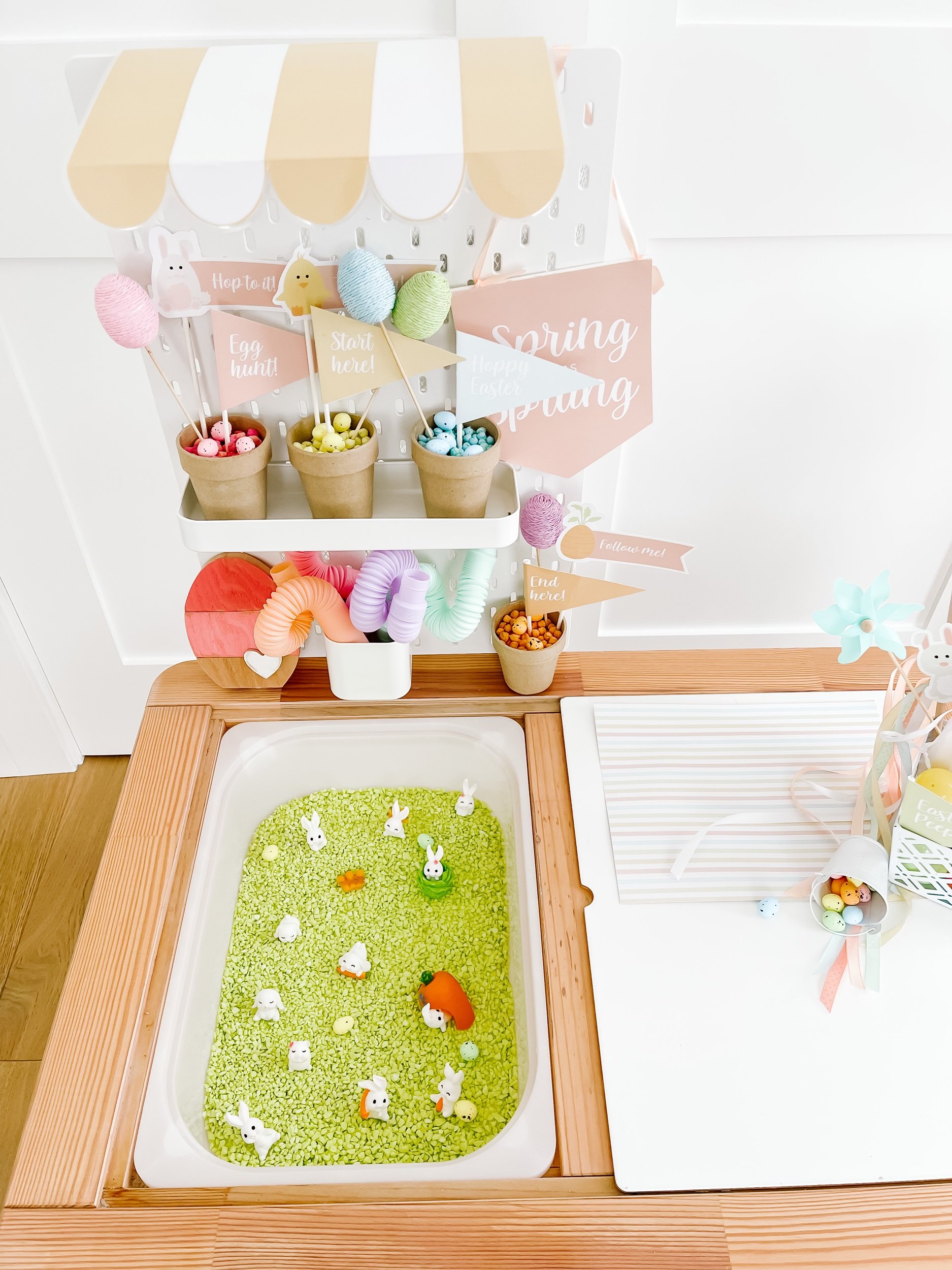
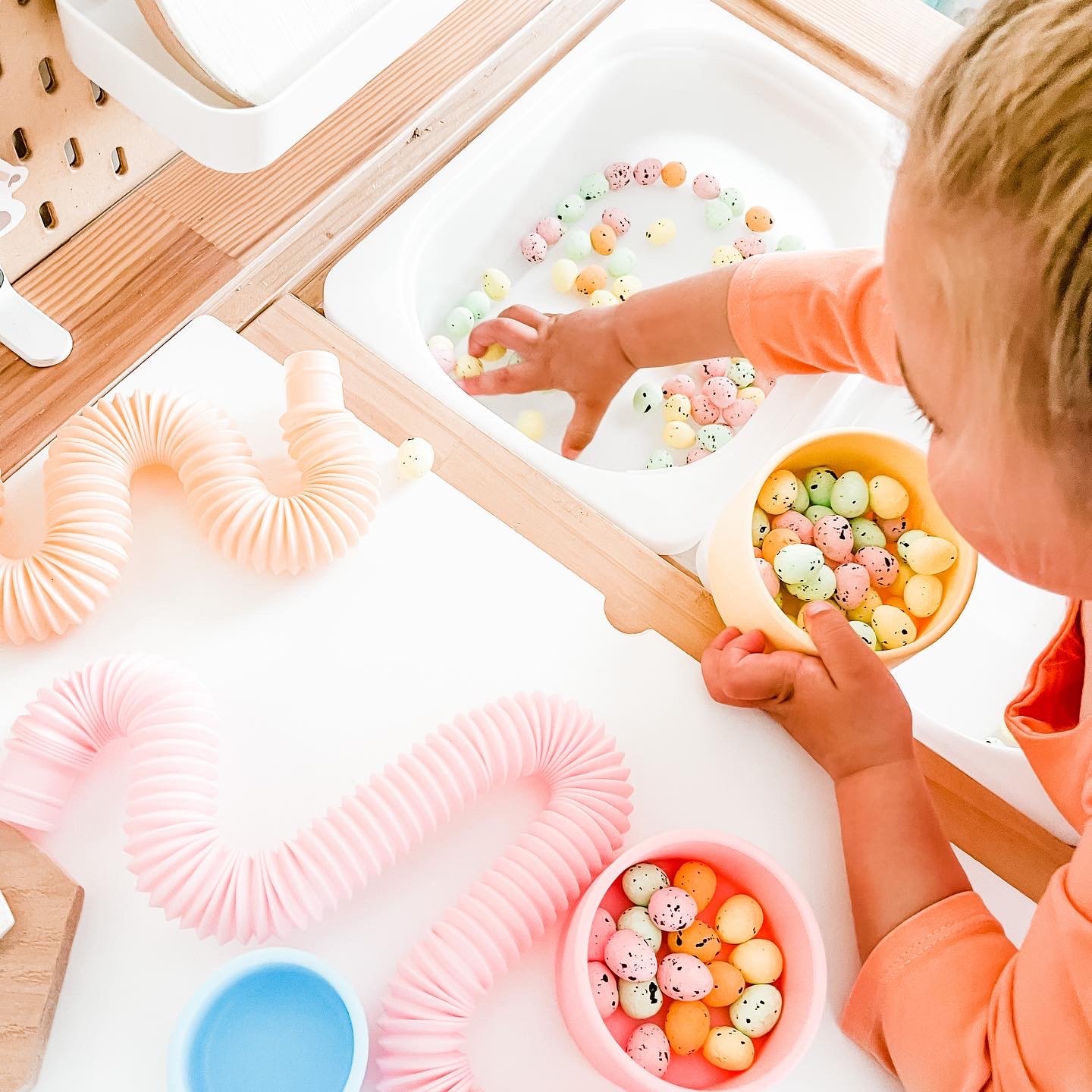
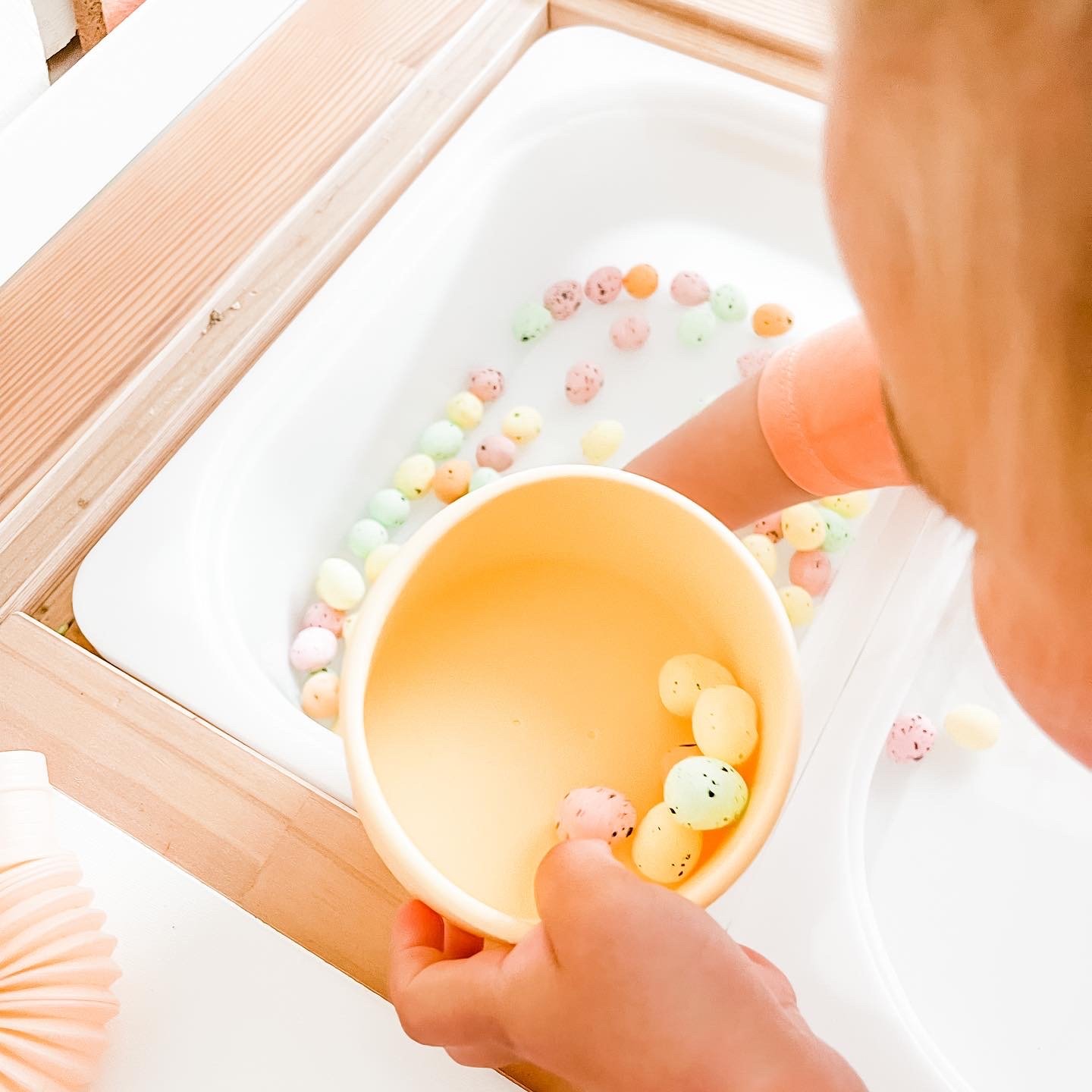
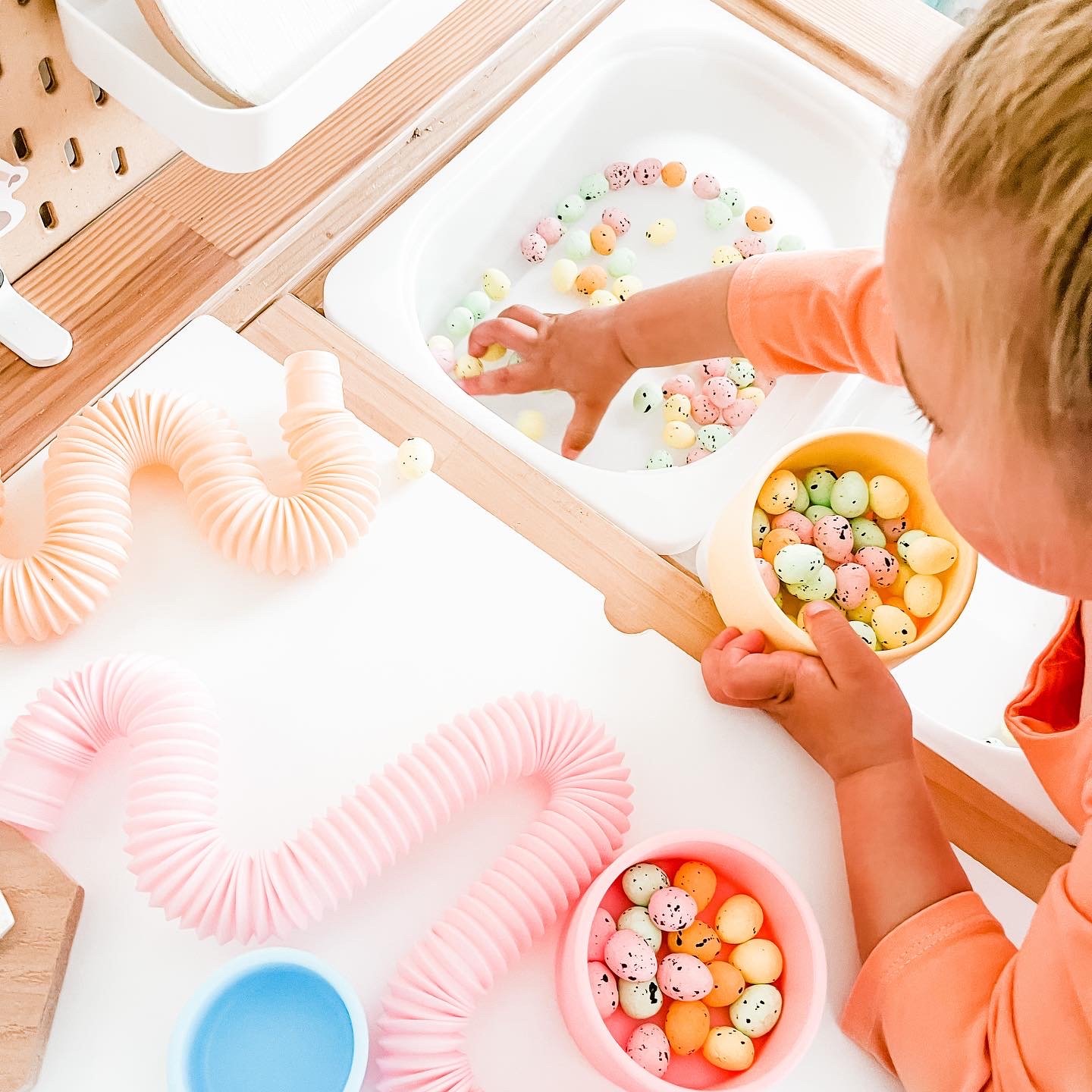
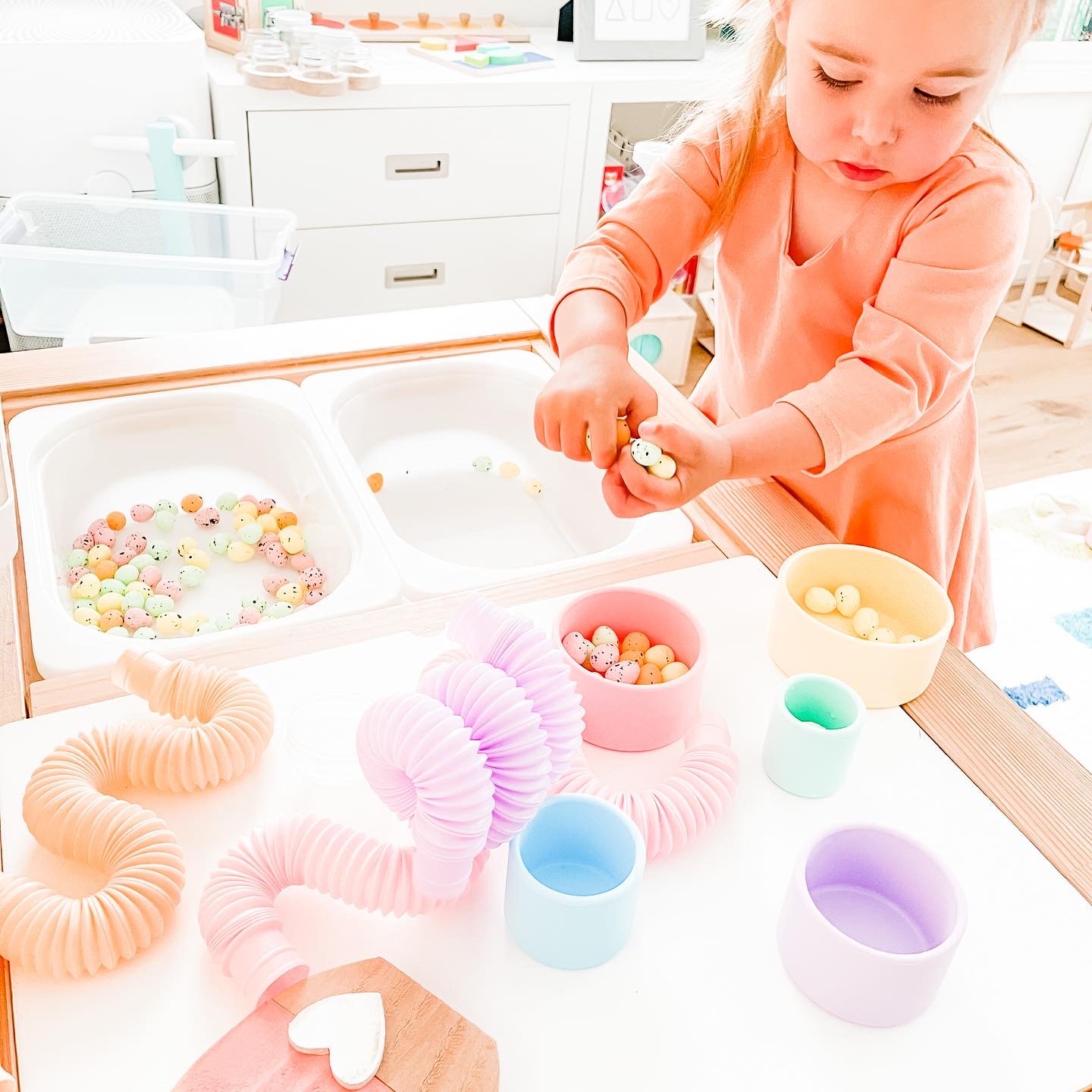
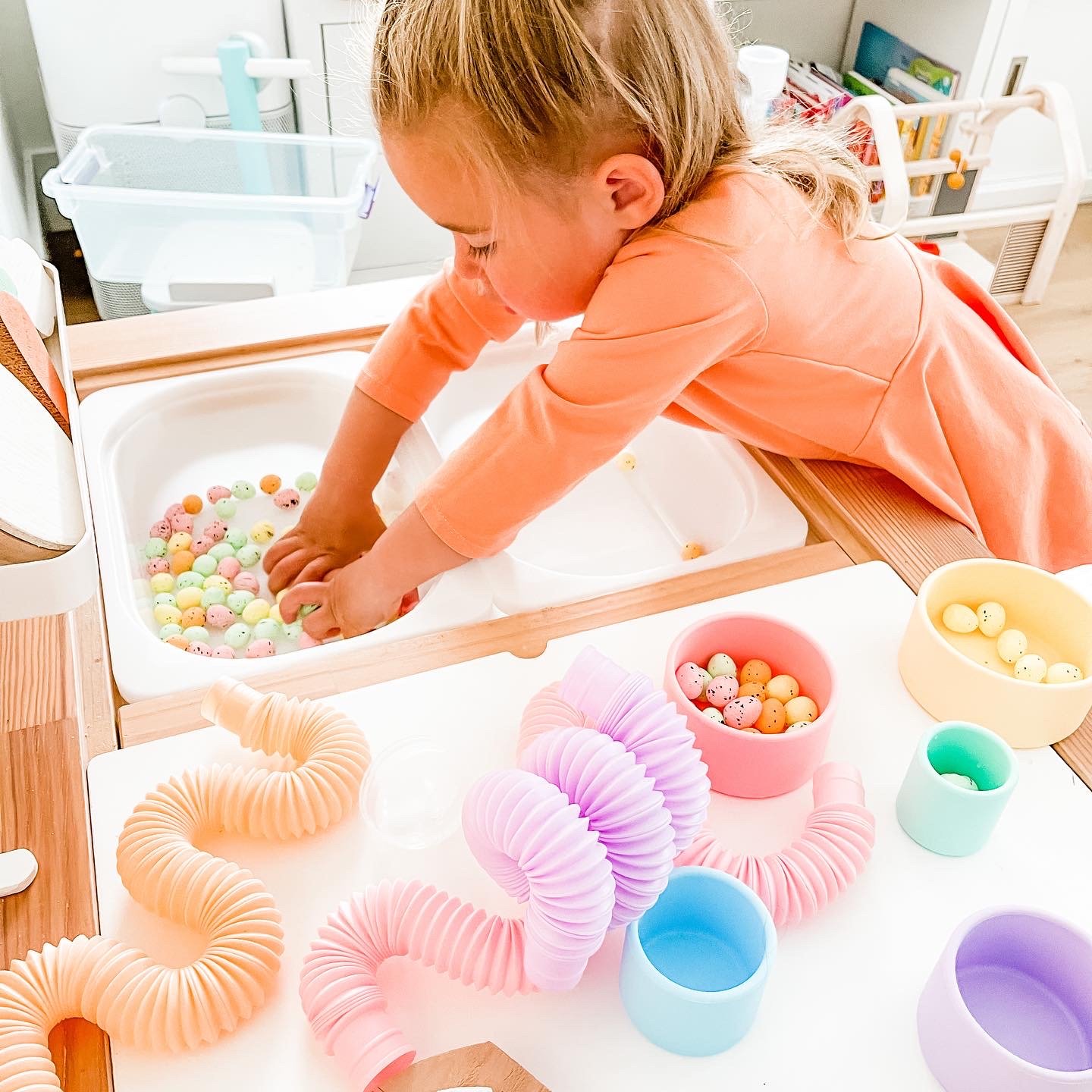
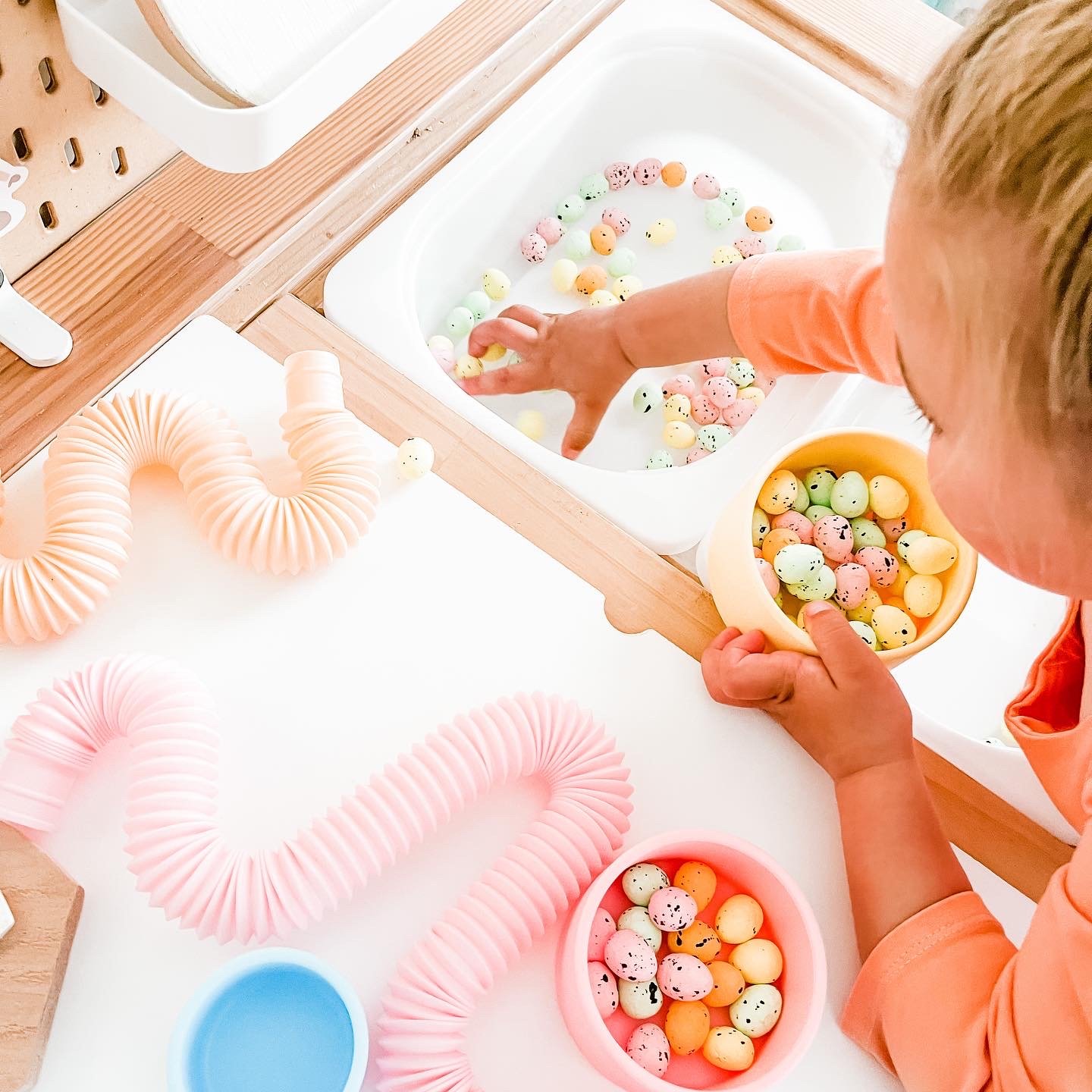
Looking for a fun and engaging Easter activity for your little ones? Look no further than an Easter sensory Flisat table setup play! Ideal for toddlers, this sensory play offers a stimulating and interactive experience, incorporating elements like green rocks, miniature bunny figurines, matching games with farm animal memory cards, as well as Easter-themed printable flags, awnings, and signs for an outdoor egg hunt. In this blog post, we'll guide you through the setup and provide tips to make this Easter playtime truly egg-ceptional!

Materials for this play setup:

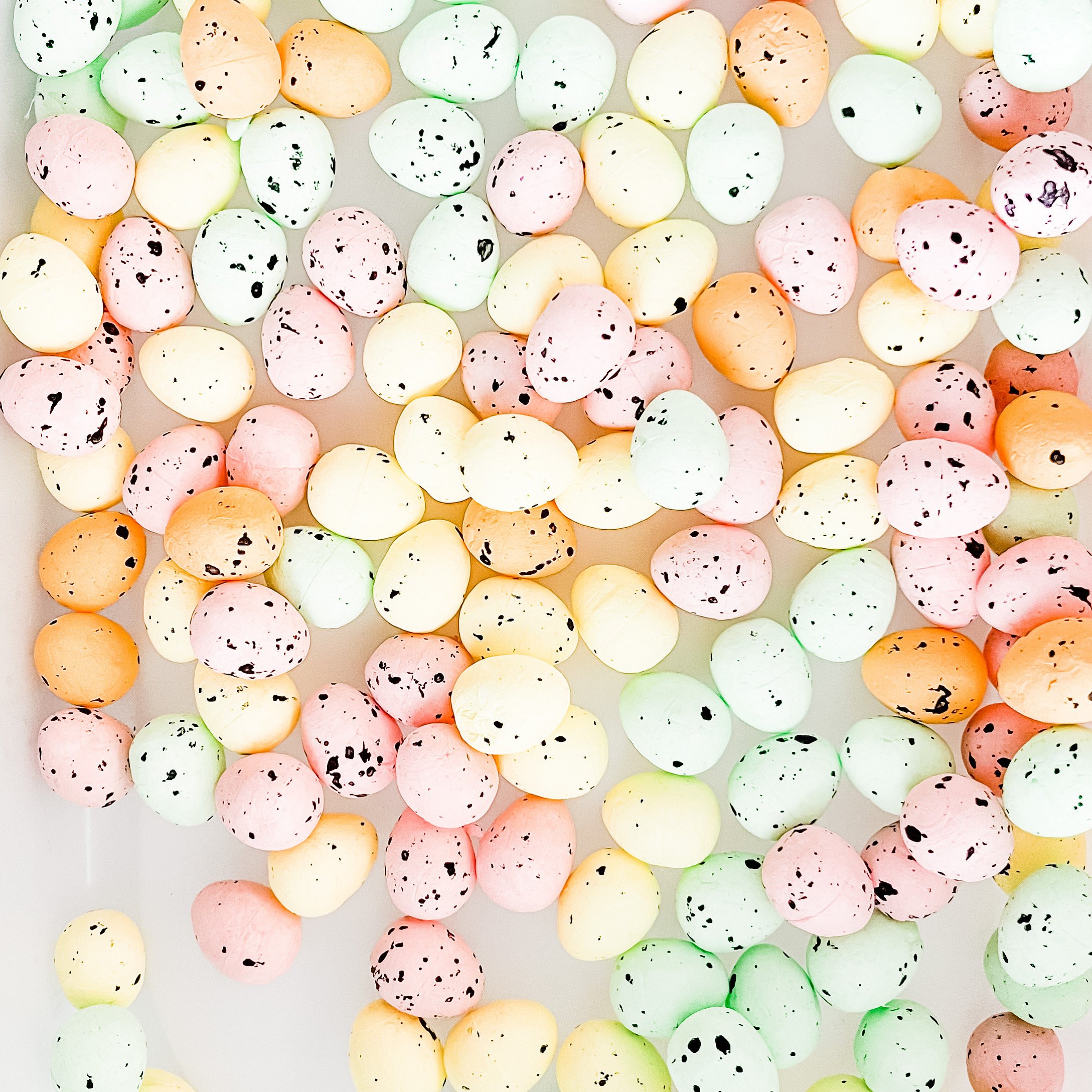
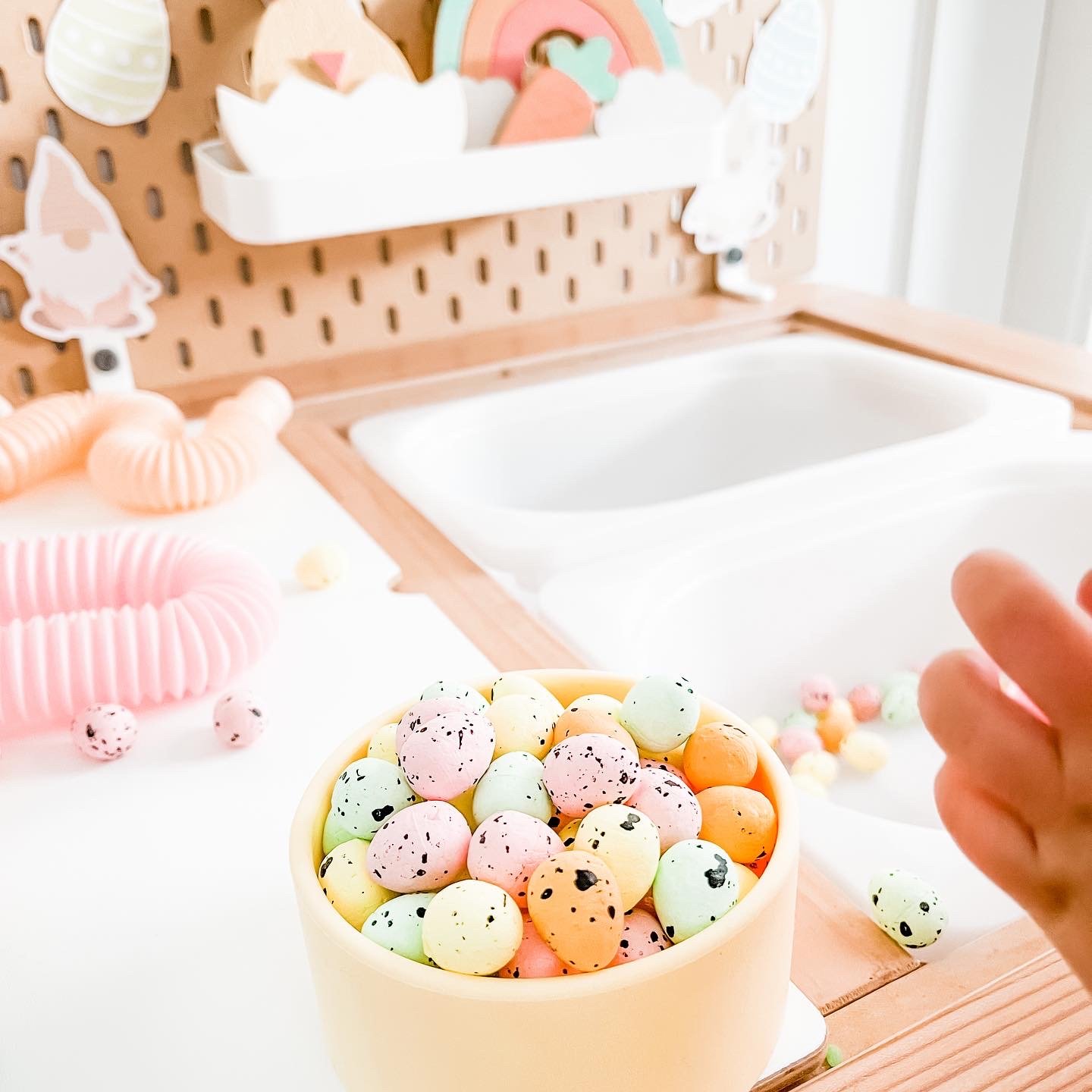
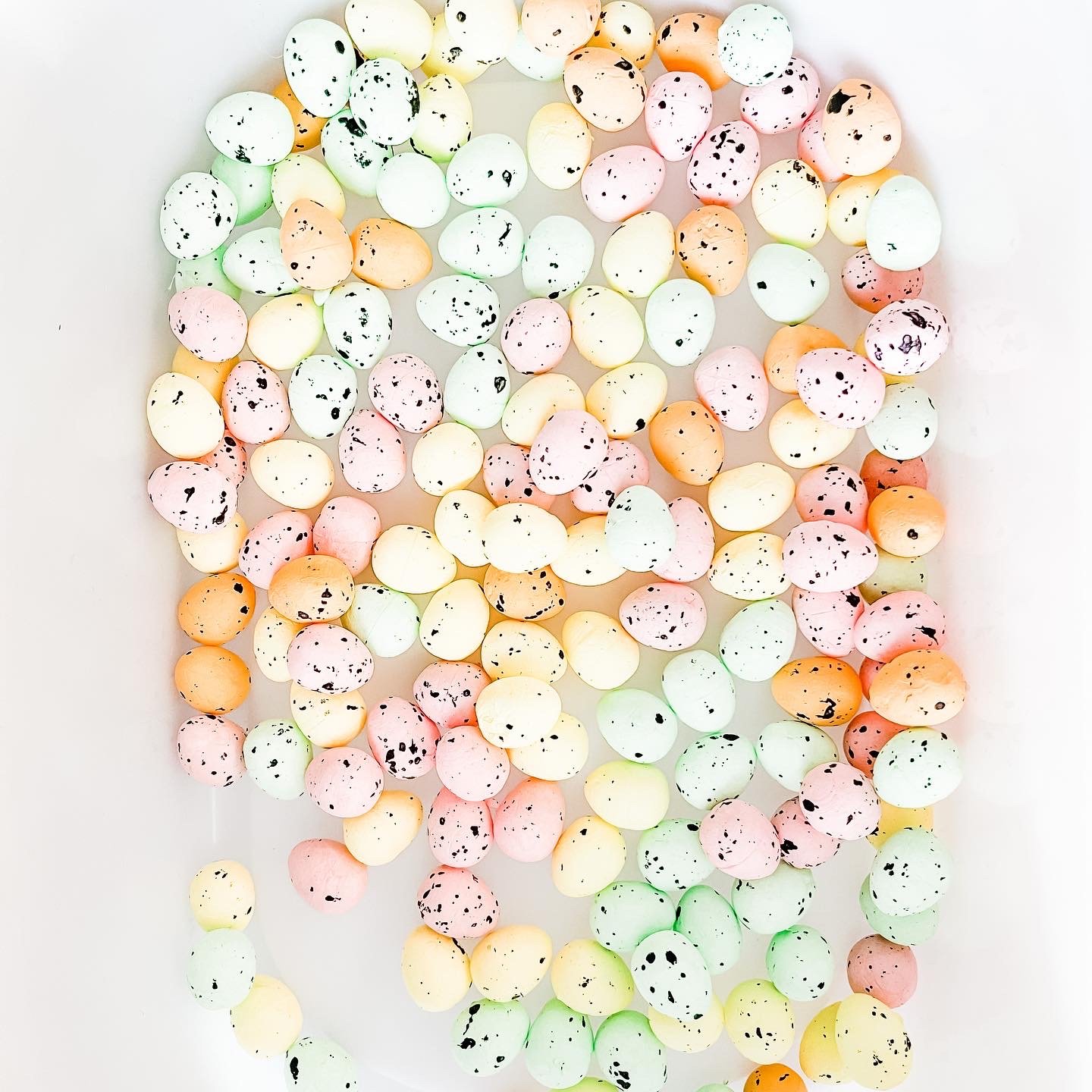
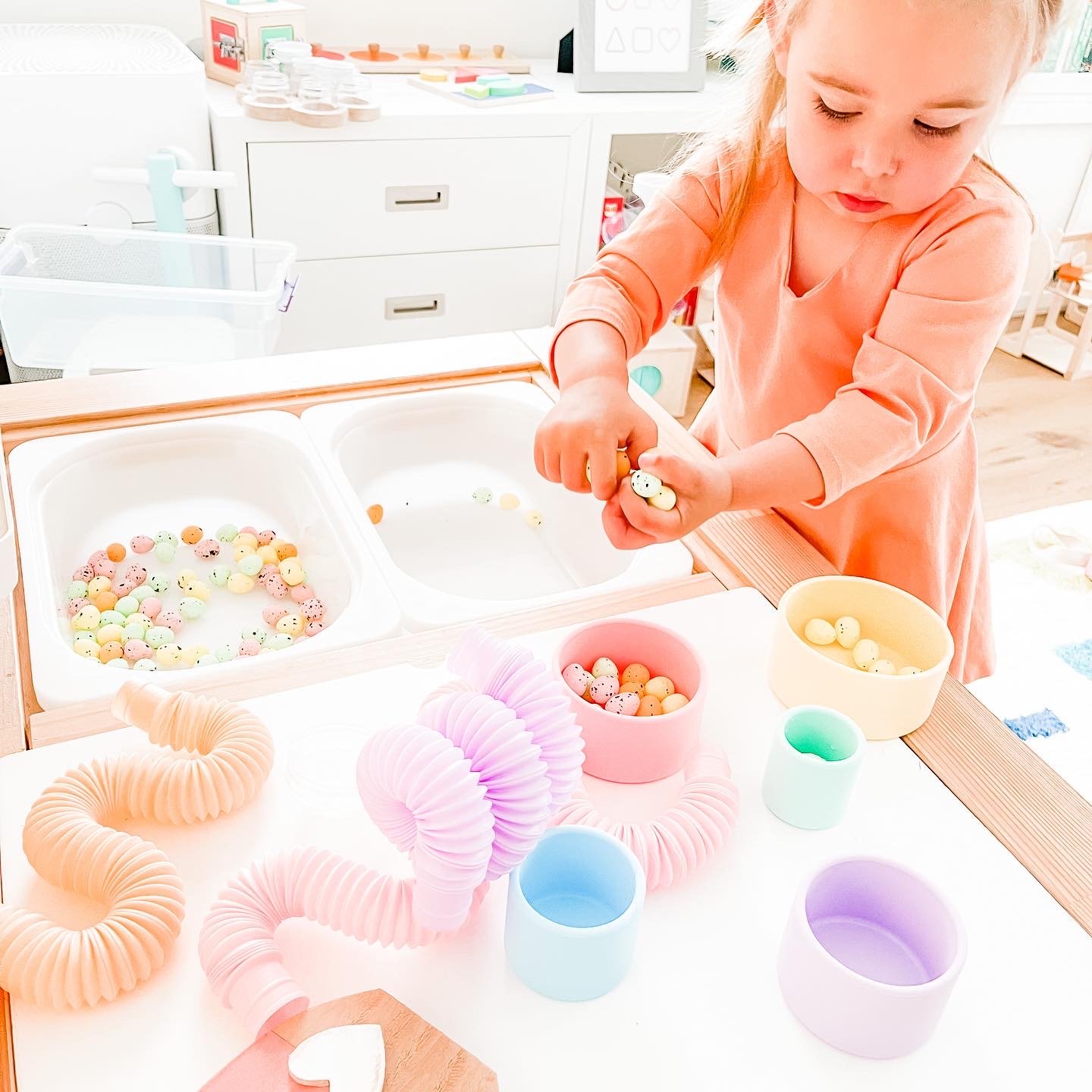
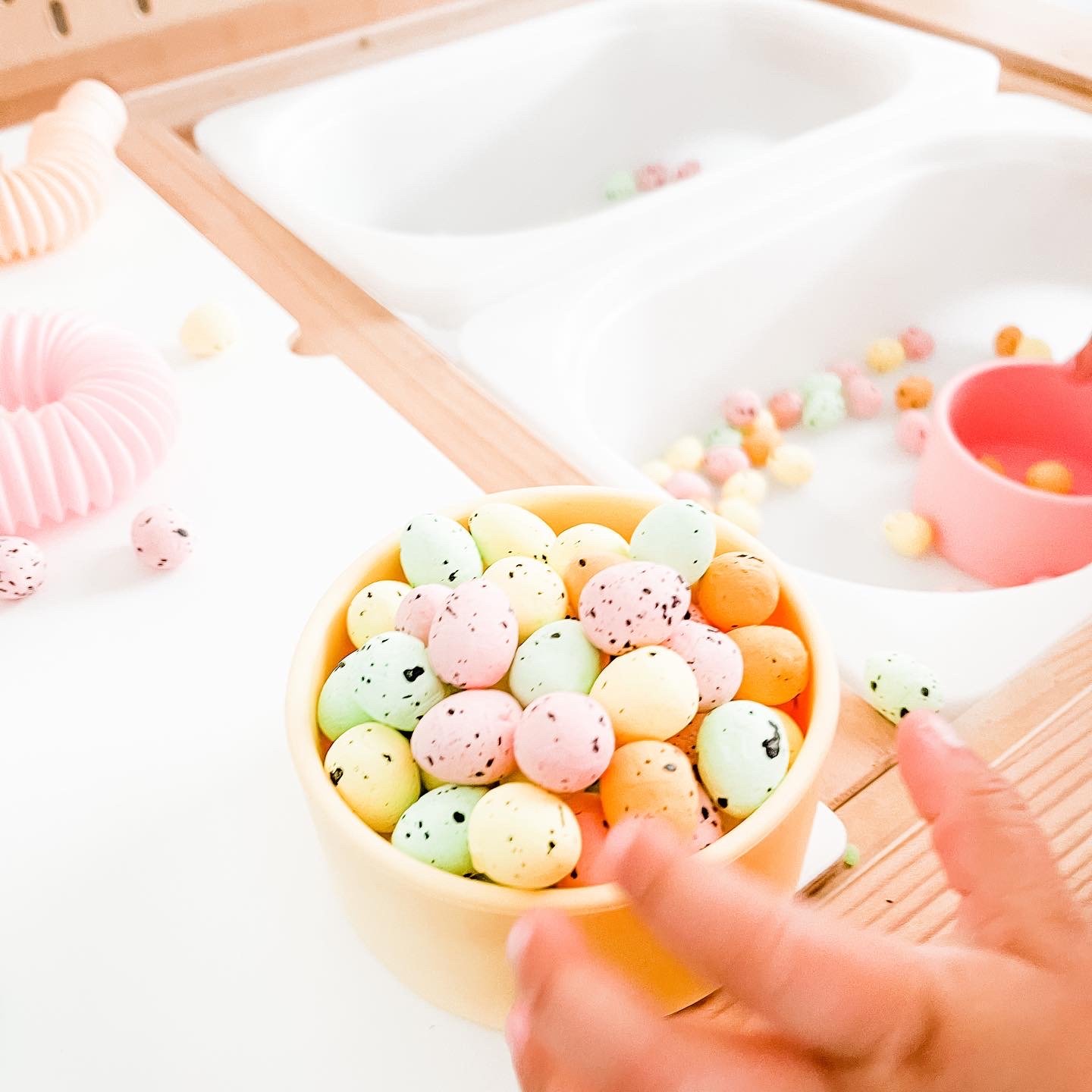
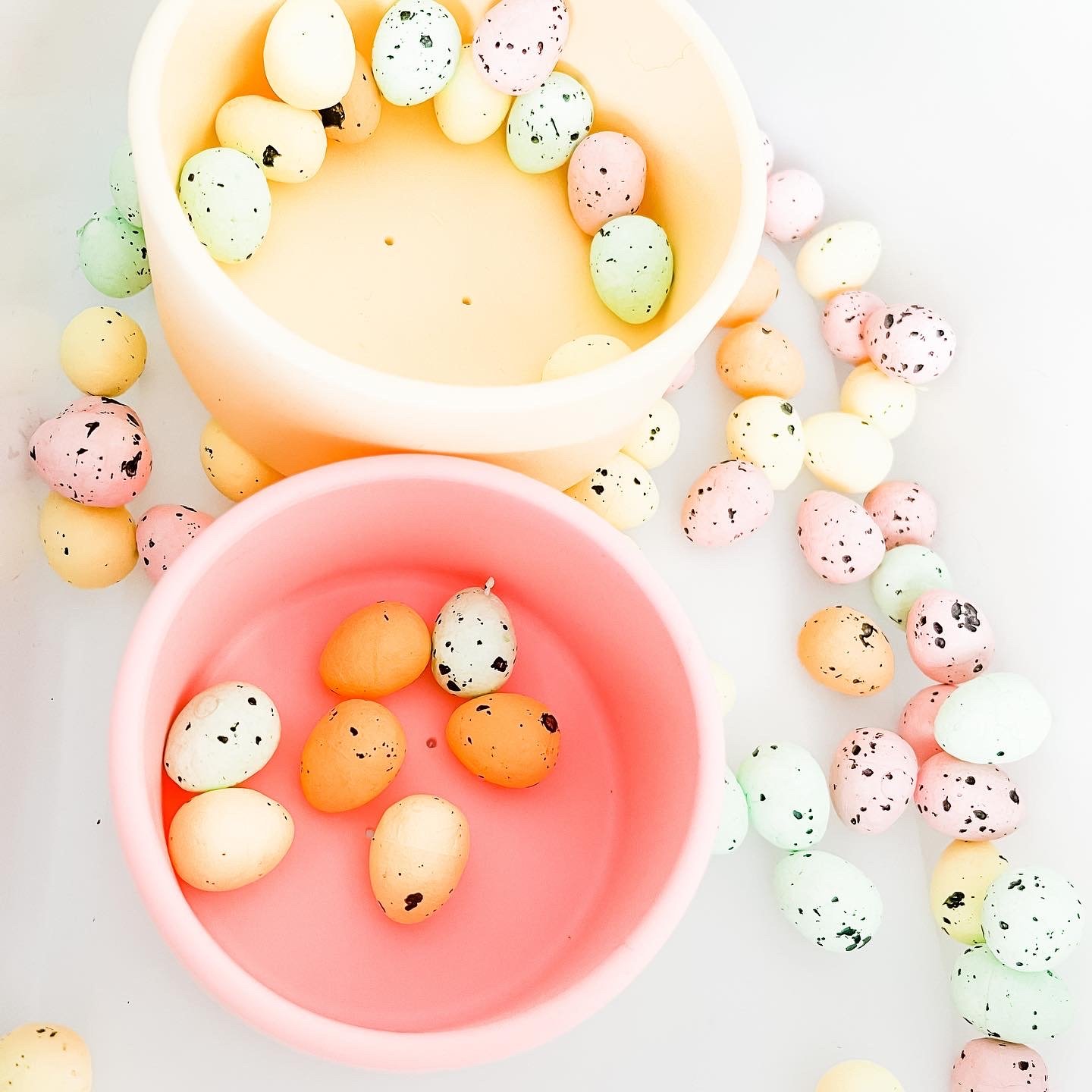
  • Pastel mini foam Easter eggs

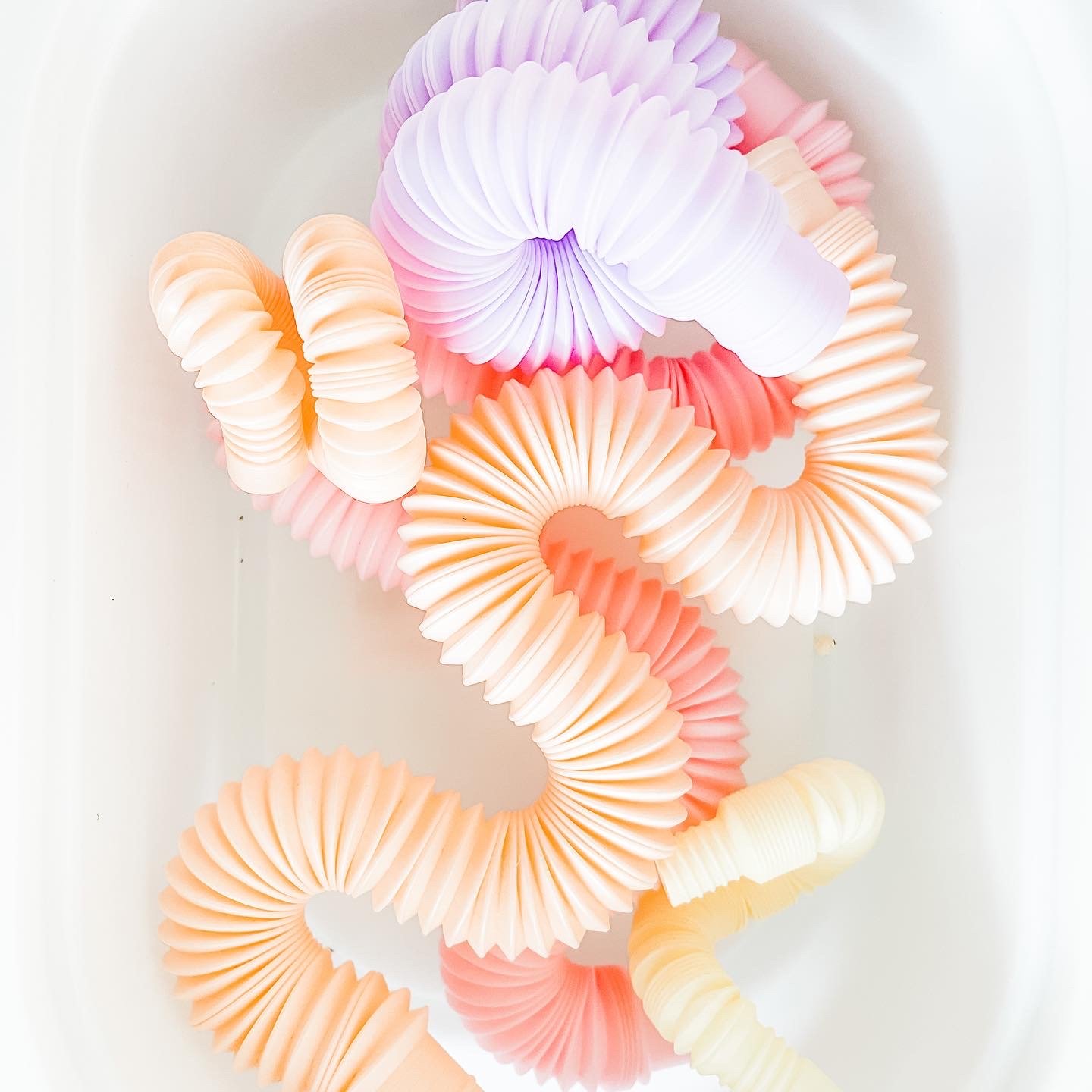
  • Pastel large fidget tubes

  • Adorable little bunnies on Amazon

IMG_1624.jpeg IMG_1619.jpeg IMG_1624.jpeg IMG_1633.jpeg IMG_1554.jpeg

Sensory Table Easter Decor

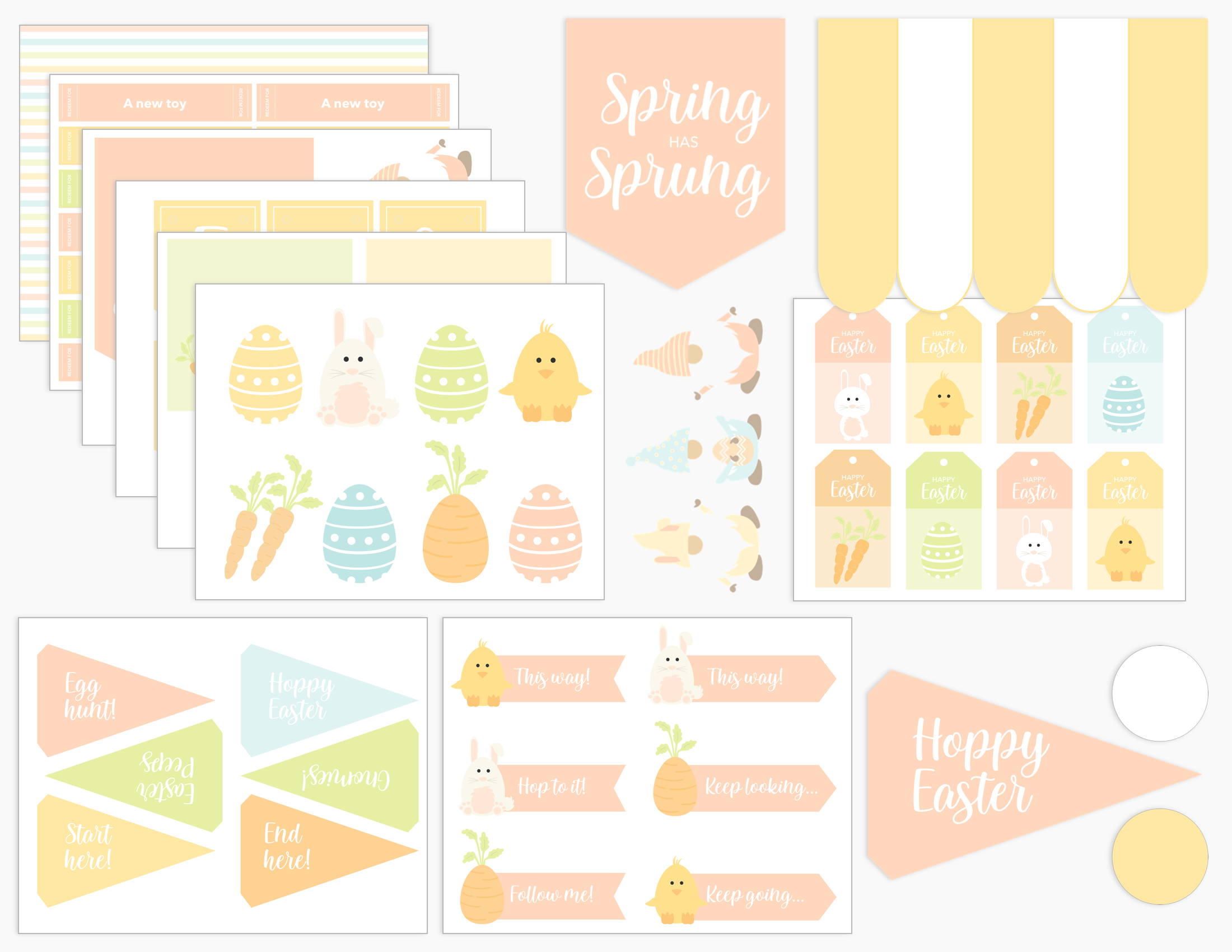
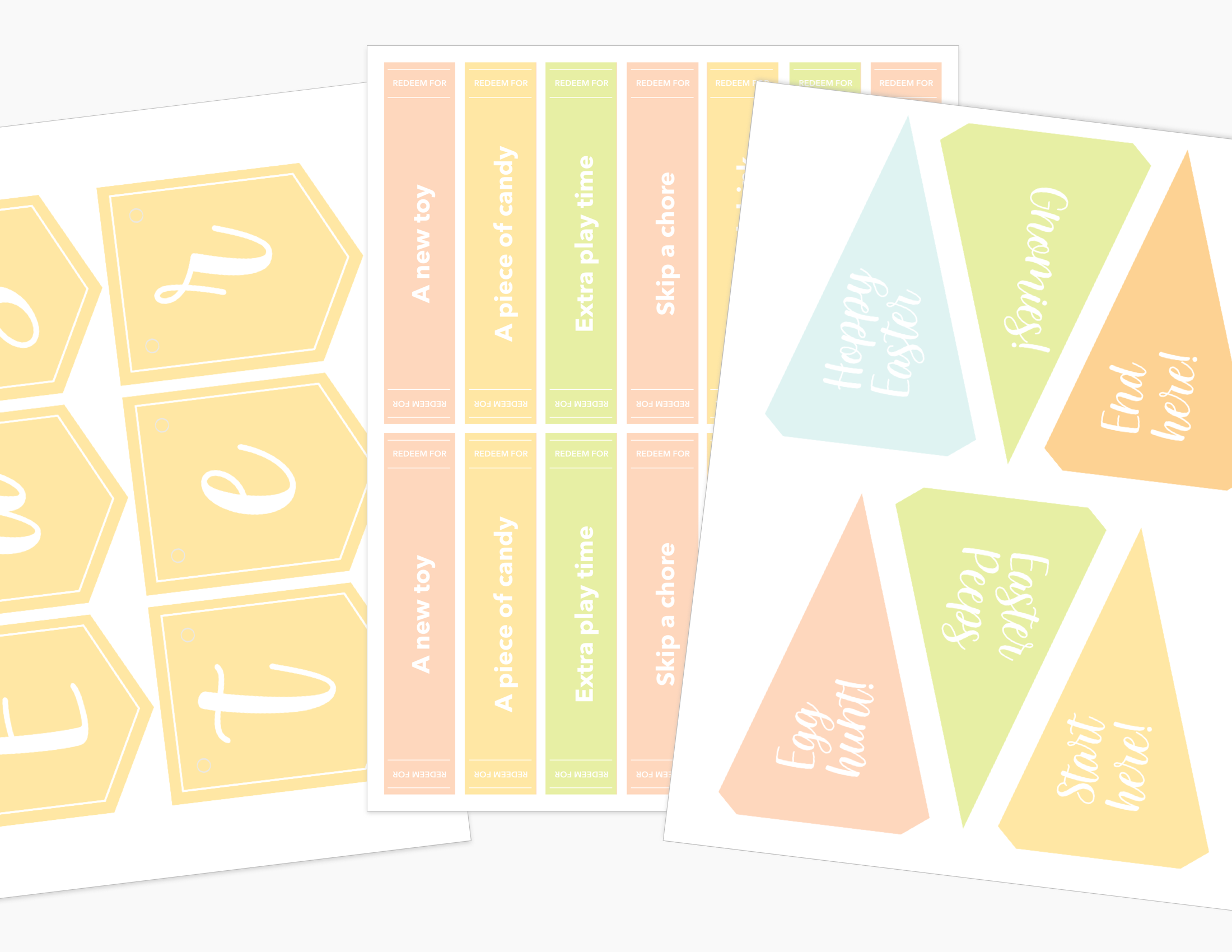
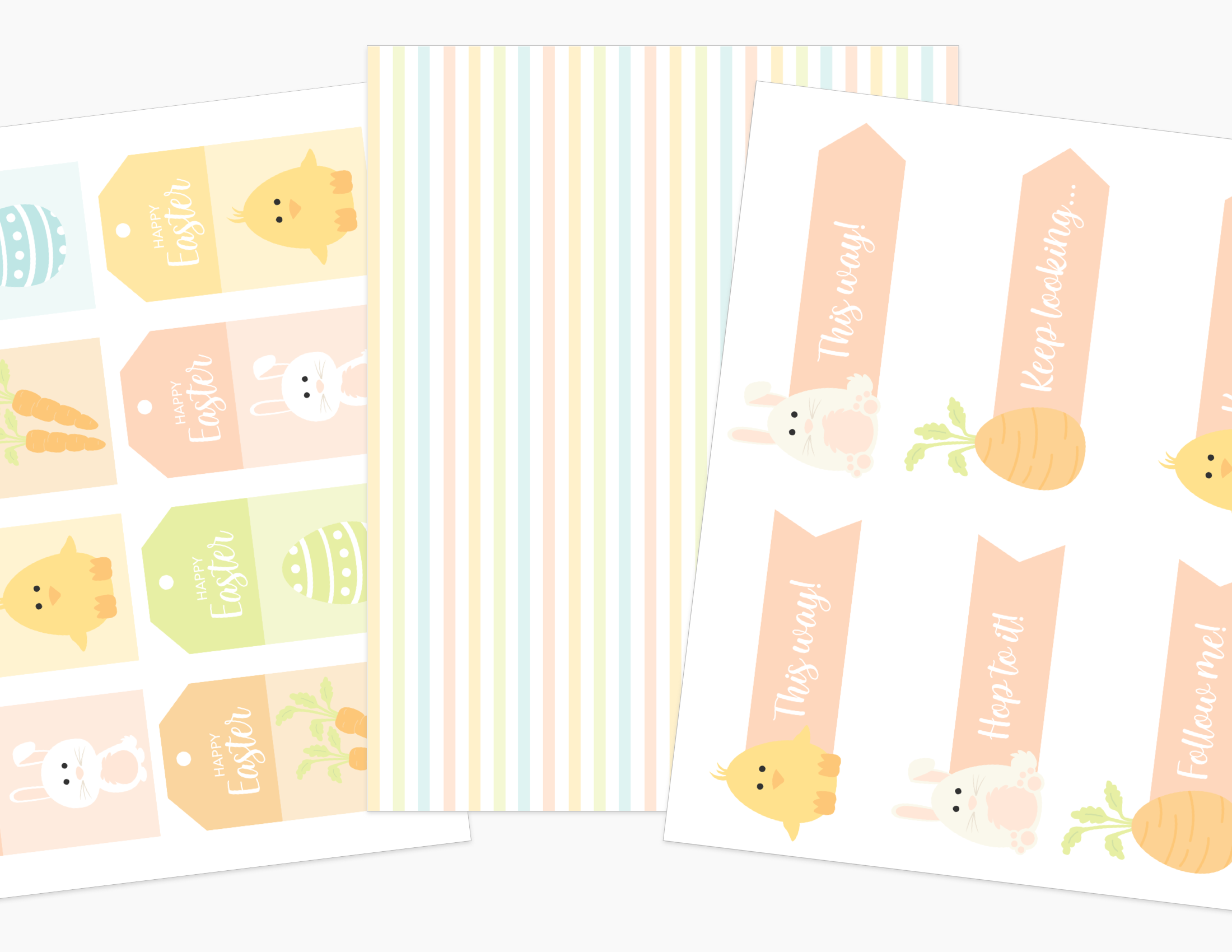
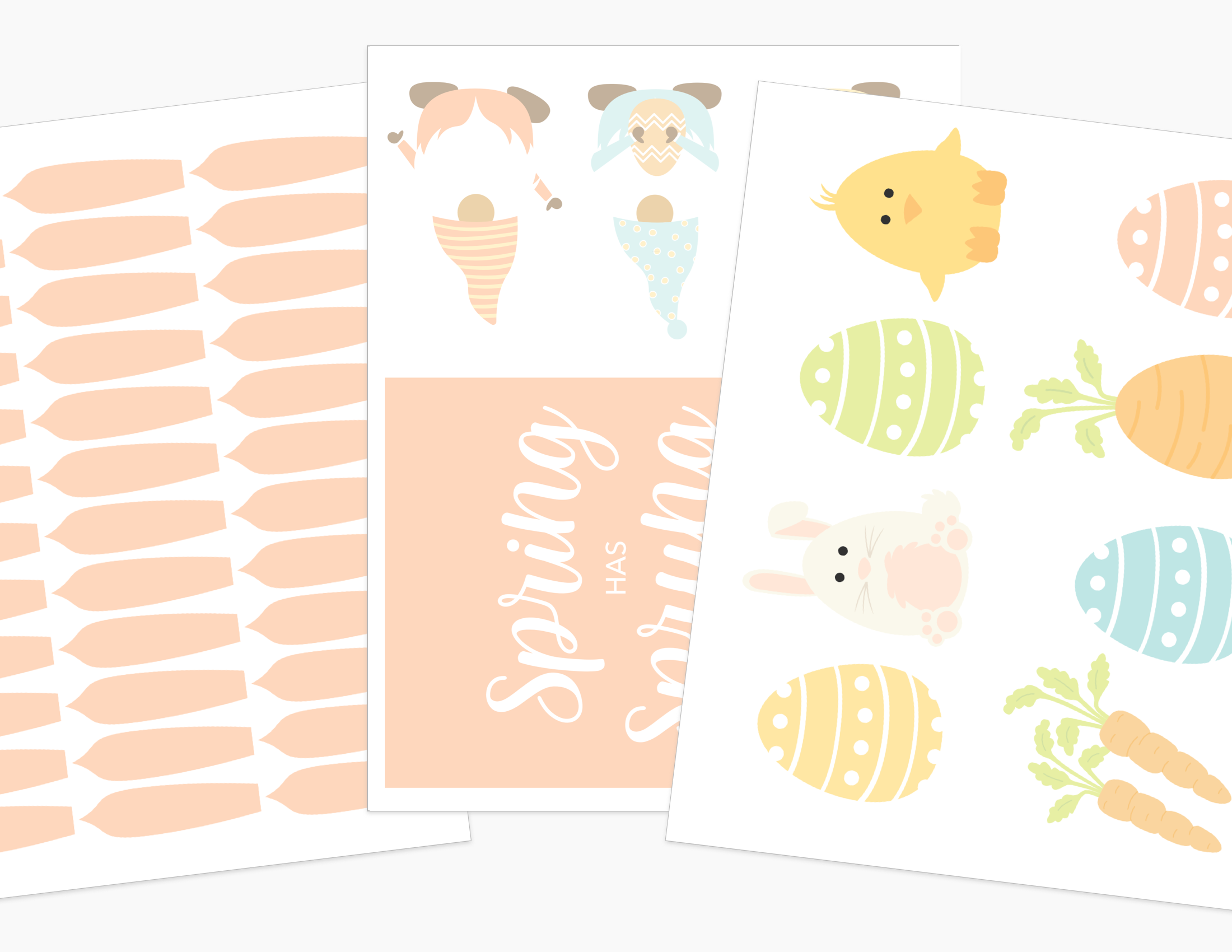
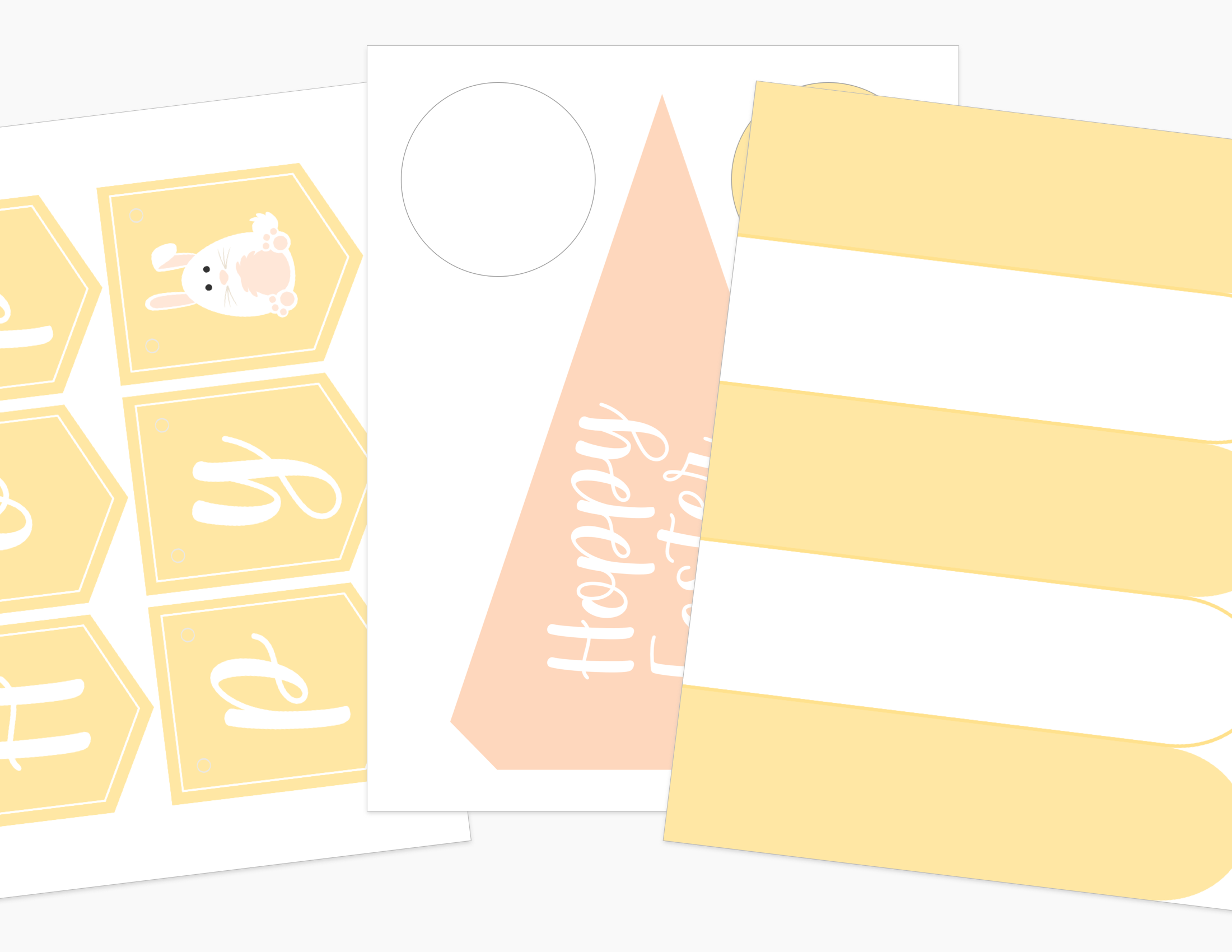
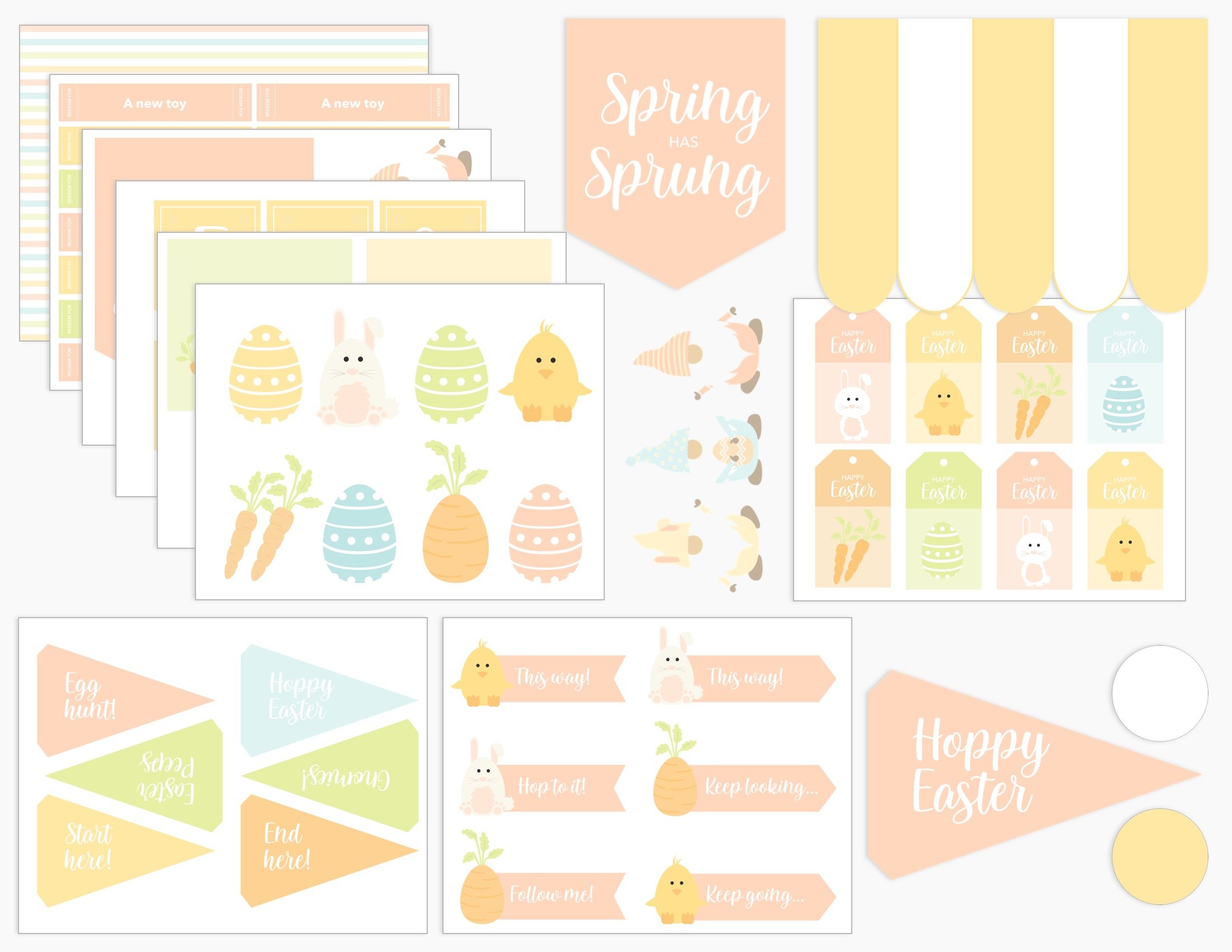
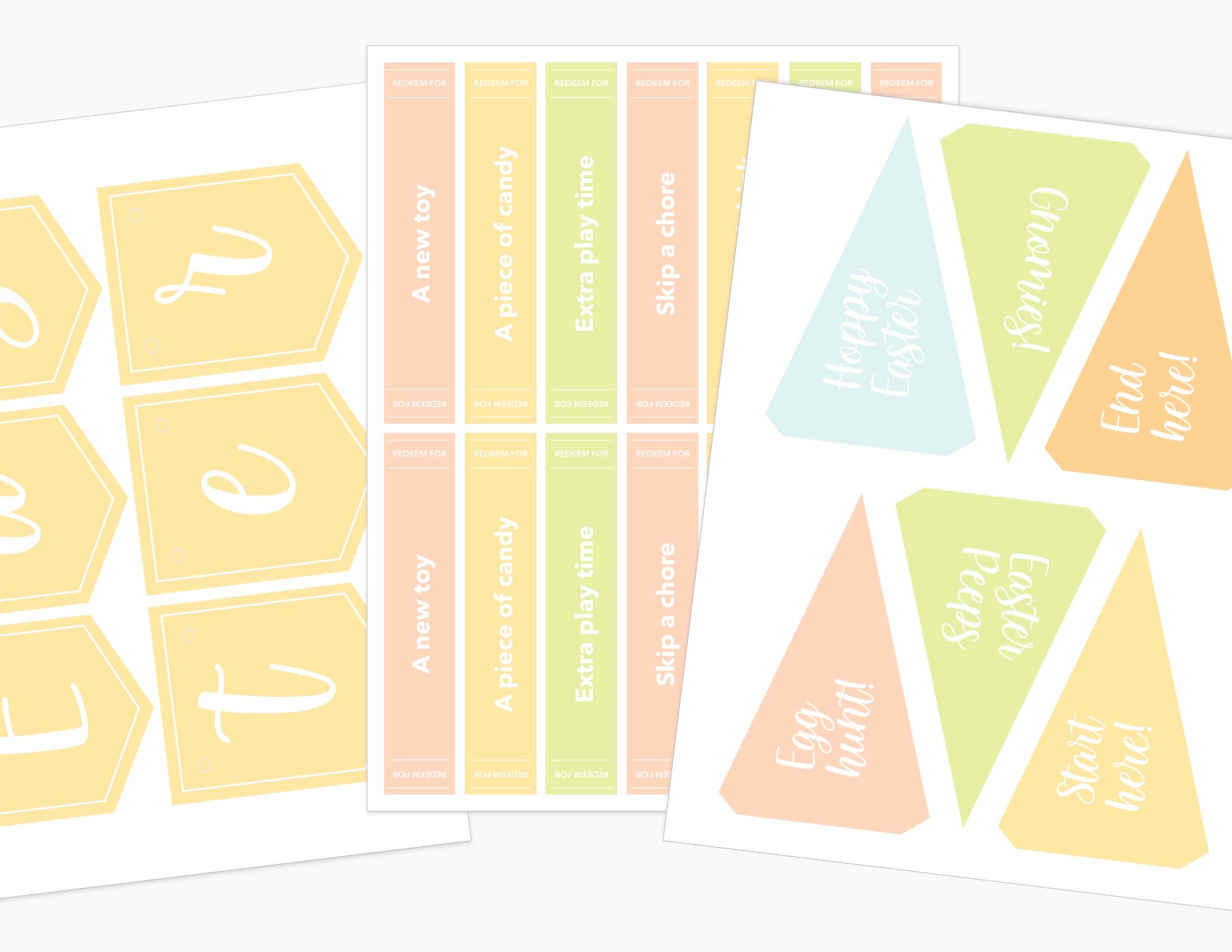
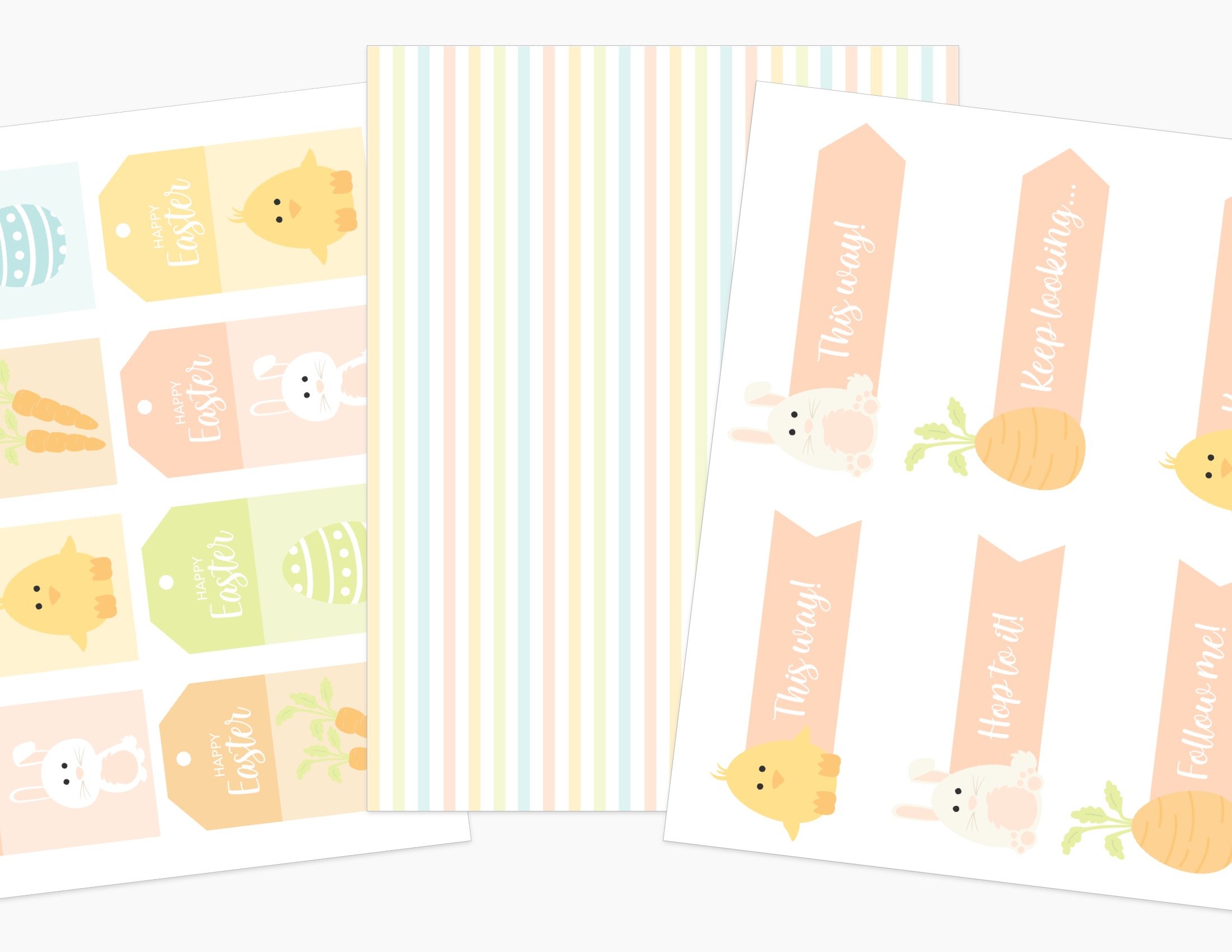
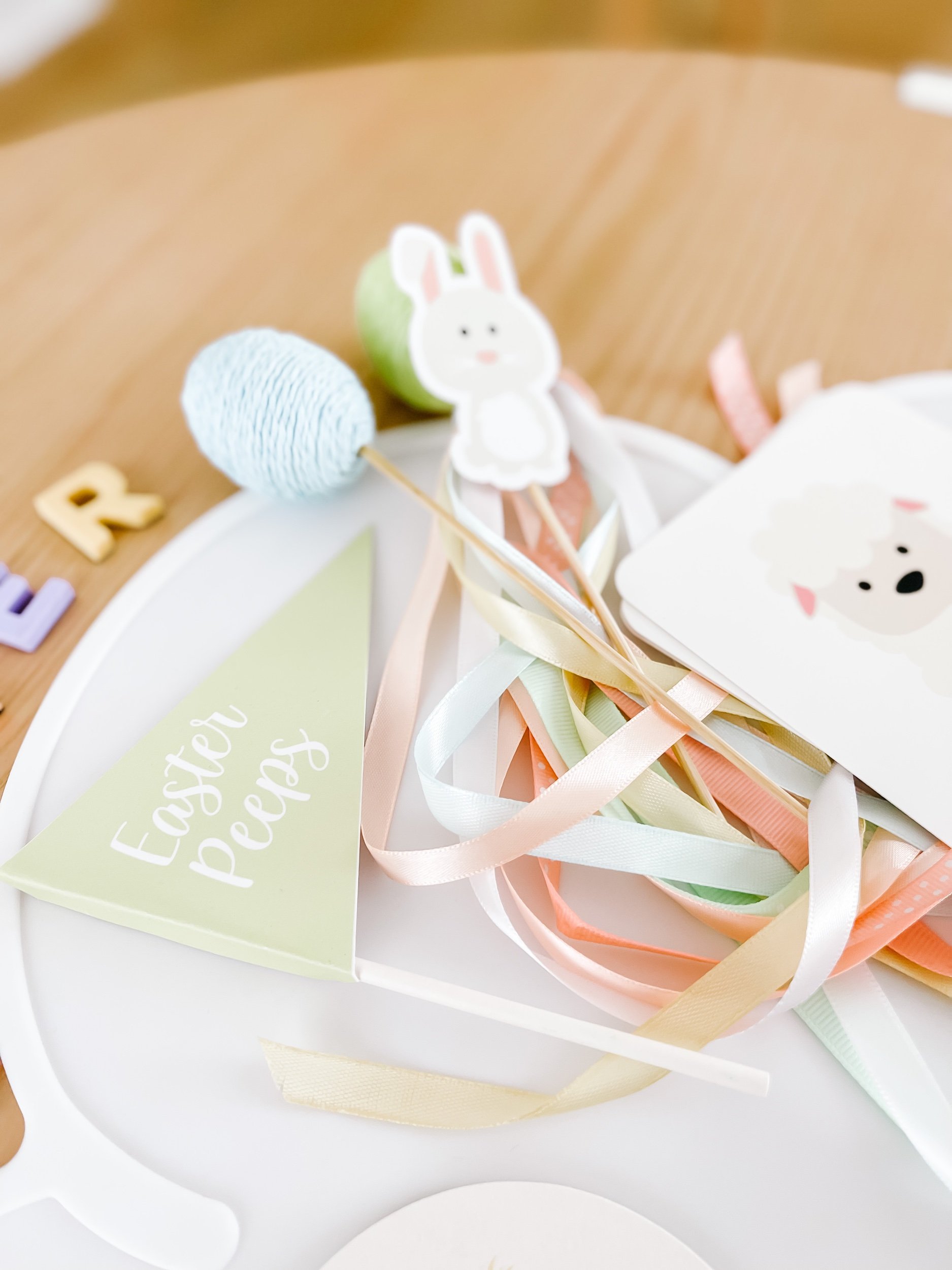
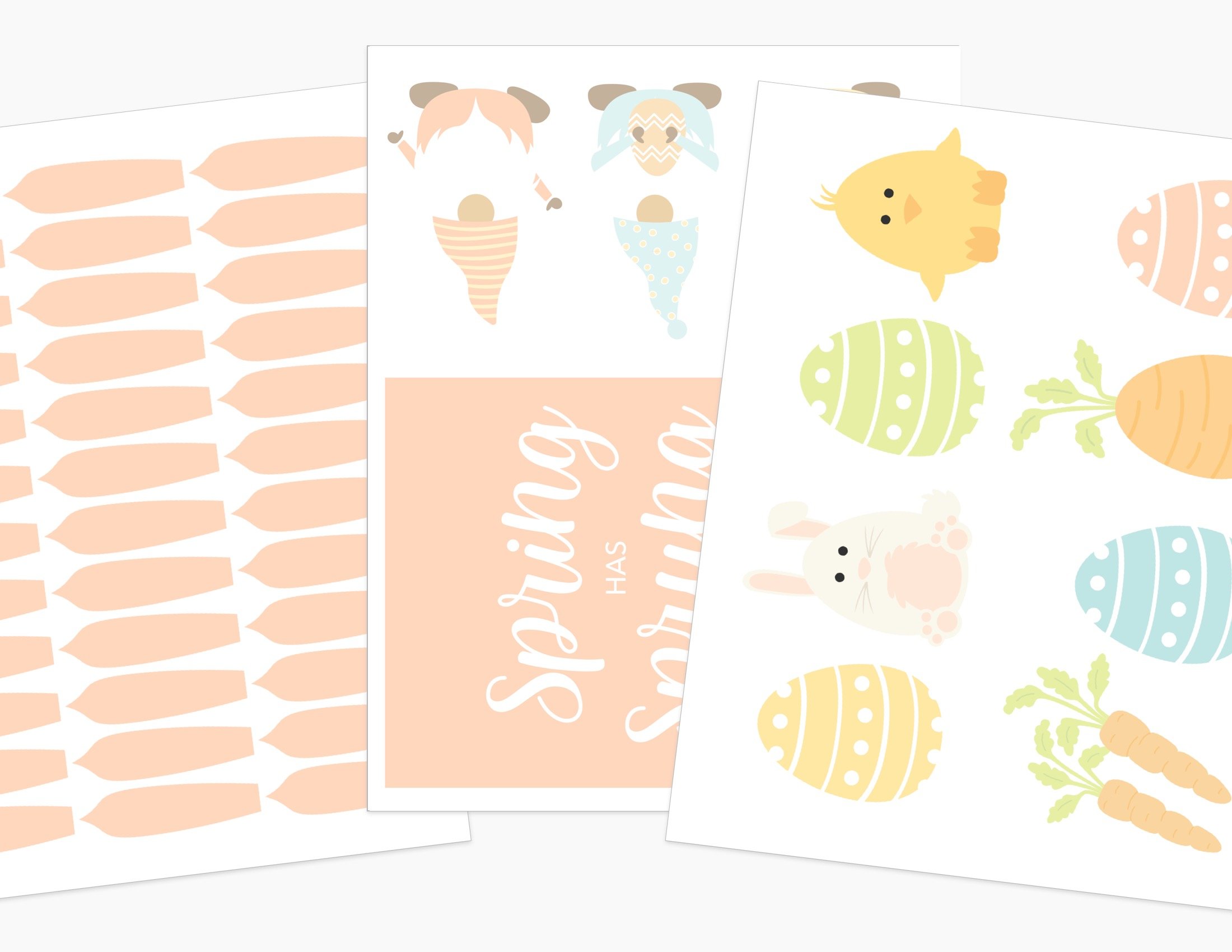
This printable kit includes everything you need to turn your Flisat table into a magical Easter wonderland. The kit includes an awning, printable egg hunt signs, little Easter gnomes, Easter egg filler cards, flags and banners and more.

3 SEnsory Bins for Easter

IMG_1532.jpeg IMG_1639_jpg.jpeg IMG_1554.jpeg

1. Easter bunny Small World Play

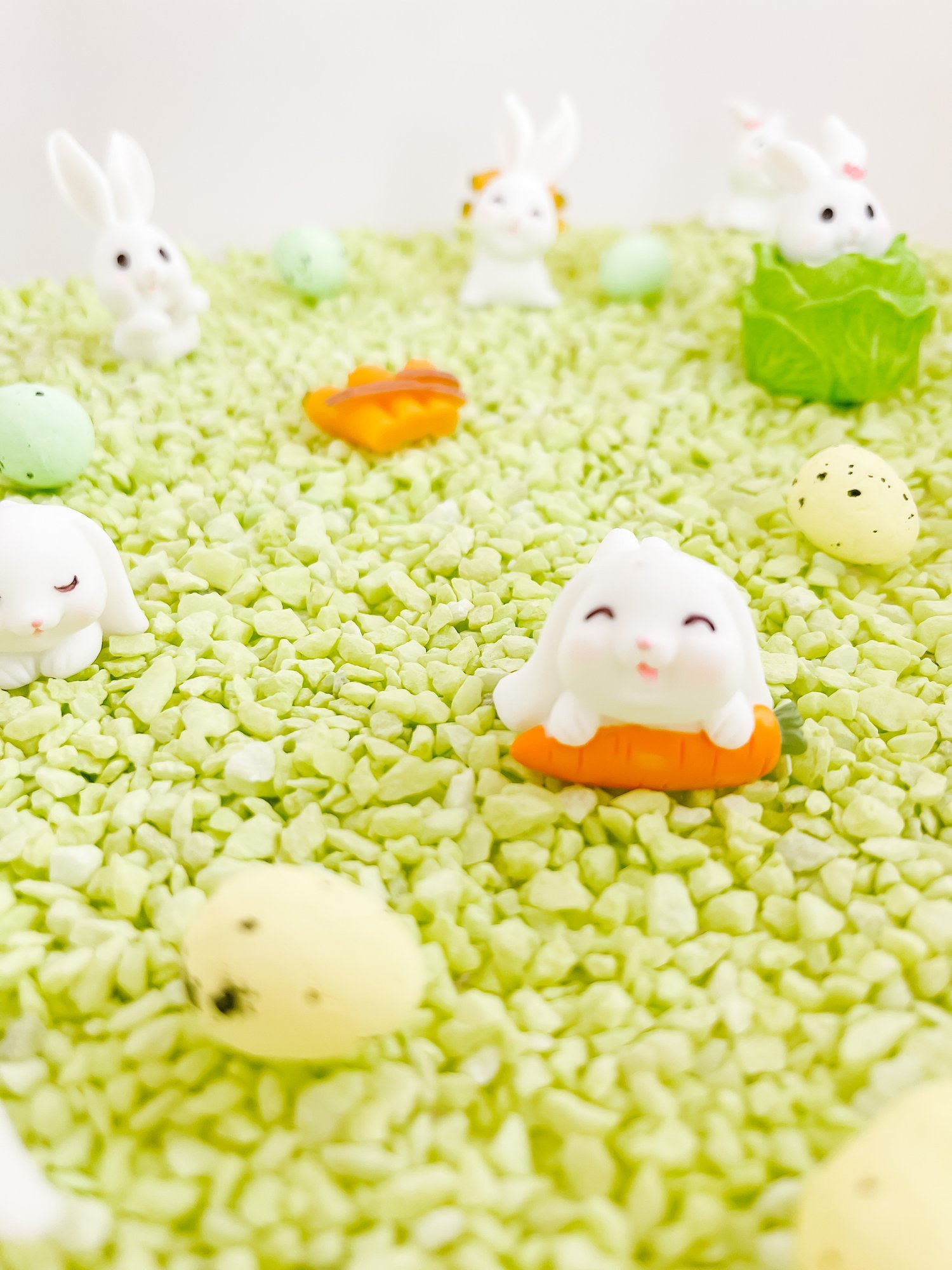
To start this Easter adventure, create a sensory experience by filling a large container, such as a Flisat table, with green rocks. The texture of the rocks adds a unique sensory element and brings the outdoors indoors. Toddlers will love exploring the rocks and feeling their rigid surfaces. This is a great low-mess unique sensory play filler idea. It looks like green grass, and is the perfect background for our mini bunny figurines.

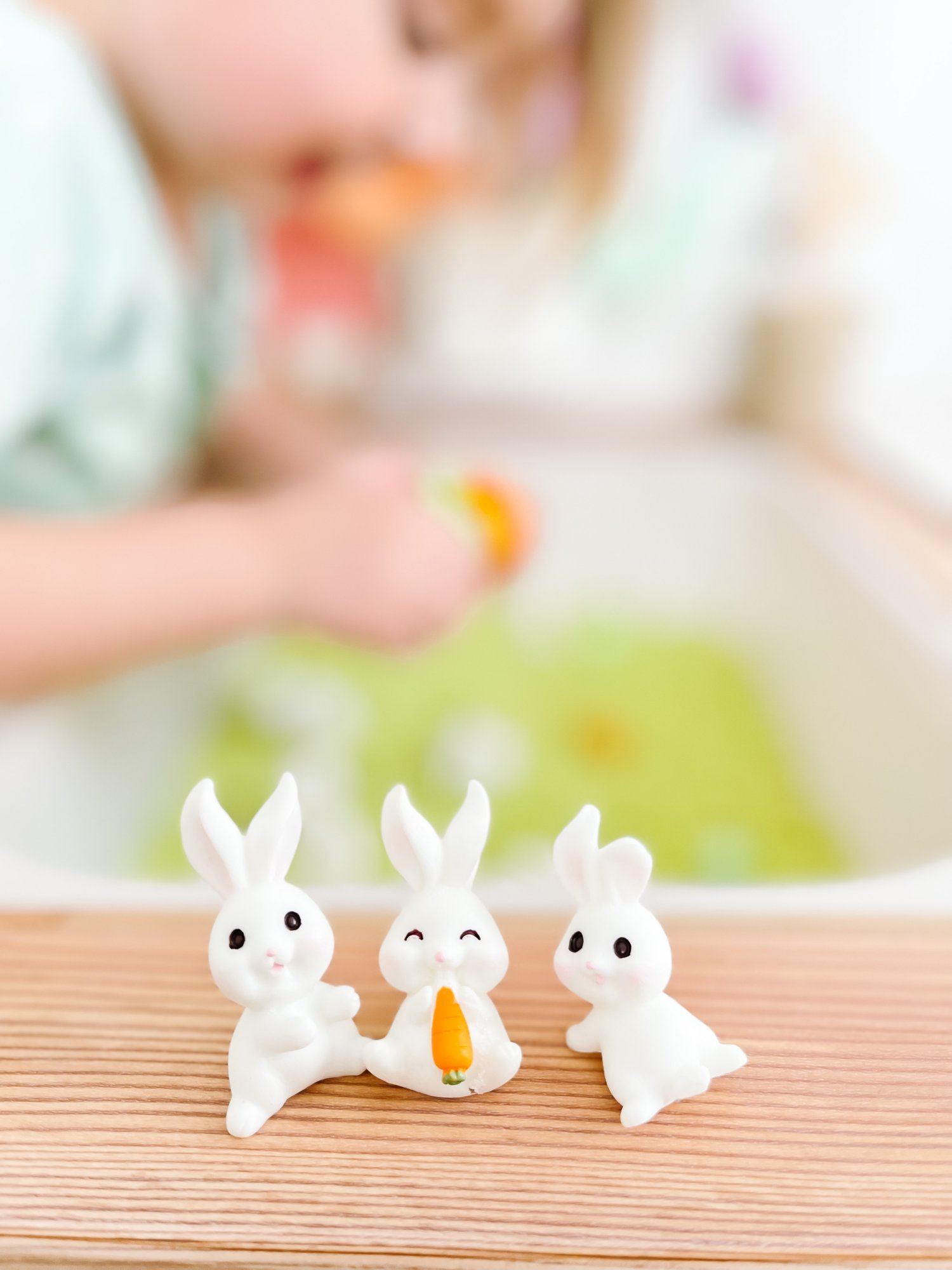
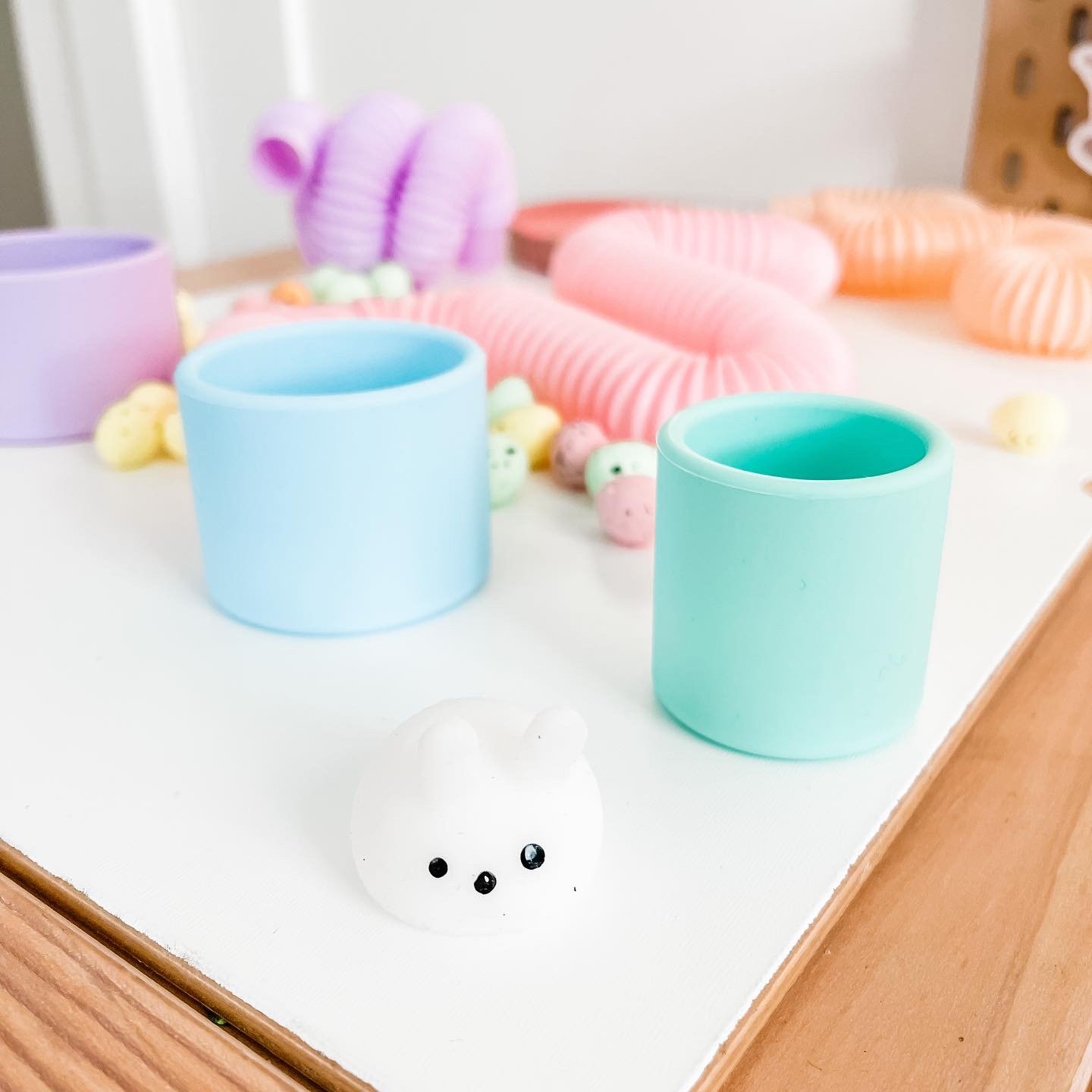
Enhance your sensory setup by incorporating adorable miniature bunny figurines. These little creatures will bring the Easter spirit to life in your toddler's playtime. Encourage imaginative play as your little ones can interact with the bunnies, creating stories and scenarios during their sensory exploration. I found these adorable little bunnies on Amazon and they really bring the scene to life. Each bunny has a unique pose and emotional expression making it the perfect way to learn about different body positions like sitting down, standing up, laying down, etc.

1CFB0CFA-A07A-49DB-8637-C5348C2B00B2.jpeg 878F54BB-BE81-4D20-87EB-DF7311F0F78E.jpeg 828AA1A2-997F-4F45-A86A-57A2849ACB70.jpeg IMG_1633.jpeg 1295AA5A-9973-49AA-8EFC-1779CDB3FEDA.jpeg 32F5CEAC-023B-4215-8929-9ED5E9B6F795.jpeg 1295AA5A-9973-49AA-8EFC-1779CDB3FEDA.jpeg 97848304-3E69-47AB-90F0-007C04788BB3.jpeg 5A12C896-3730-44E2-BADD-9F3B51502396.jpeg 1F10BFA4-ECD2-4000-9E7A-DDA10E9C00D7.jpeg 1295AA5A-9973-49AA-8EFC-1779CDB3FEDA.jpeg 9BBB5506-62F7-44AF-8B82-6201139E2EEB.jpeg E4E6B242-CD5C-46D6-8C6C-26193FAE9E1C.jpeg 0A97FA0E-B15D-403C-B1D8-E1611F51463E.jpeg 50606299-0A0A-44AB-84ED-46406CCE5135.jpeg

2. Easter Egg chutes

For this activity, you’ll need these awesome sensory fidget tubes and some mini foam Easter eggs. To make the chutes, stretch out the fidget tubes and tape them to the Flisat table peg board. You’ll need the large ones in order for the eggs to fit down the chutes. Don’t make them too windy or gravity won’t be enough to get them down. If they do get stuck, your kiddo will love trying to blow them out. You can also make it a challenge by having them stretch and bend the tubes to get the eggs out.

Order List Copy 21.png Order List Copy 18.png Order List Copy 19.png Order List Copy 17.png Order List Copy 20.png

3. Easter Egg HUNT

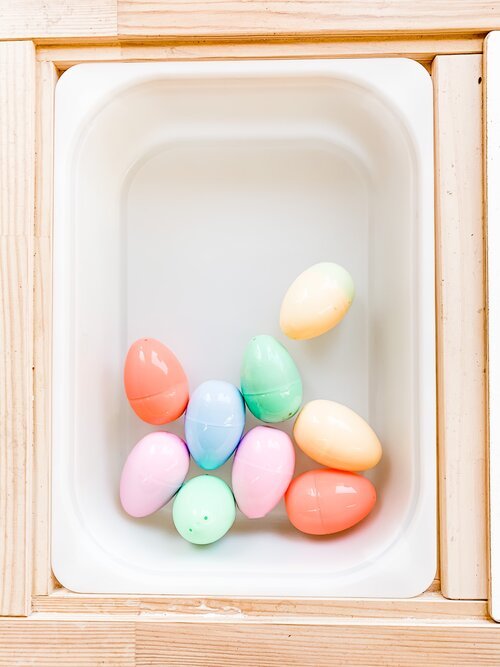
For this activity, you’ll just need some plastic Easter eggs (or you can reuse your mini foam Easter eggs. You can hide them around your kid’s room or play space and offer a basket to collect them in. The printable signs will help your toddler navigate the course and find all of the eggs. You can also make filling the plastic eggs an activity itself!

IMG_3470.jpeg IMG_3518.jpeg IMG_3474.jpeg IMG_3513.jpeg IMG_3519.jpeg IMG_3541.jpeg

4. Jello Easter Eggs

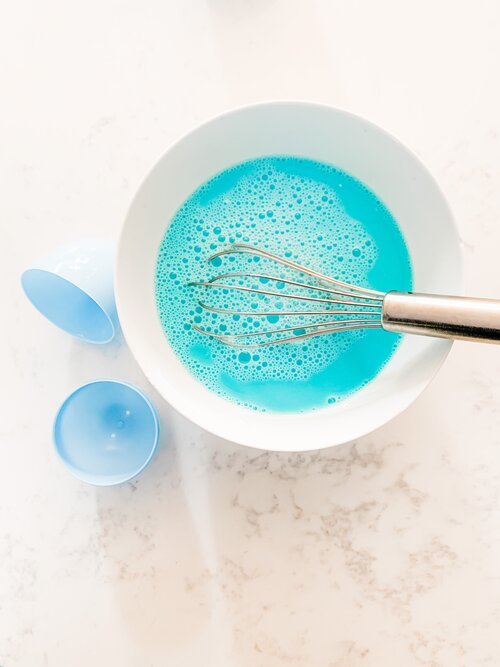
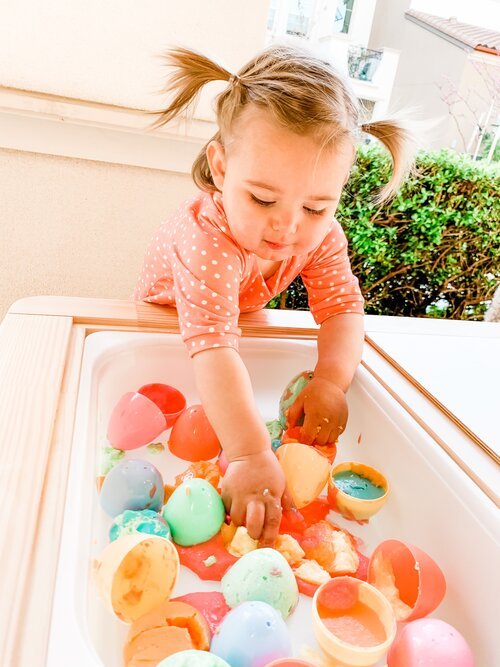
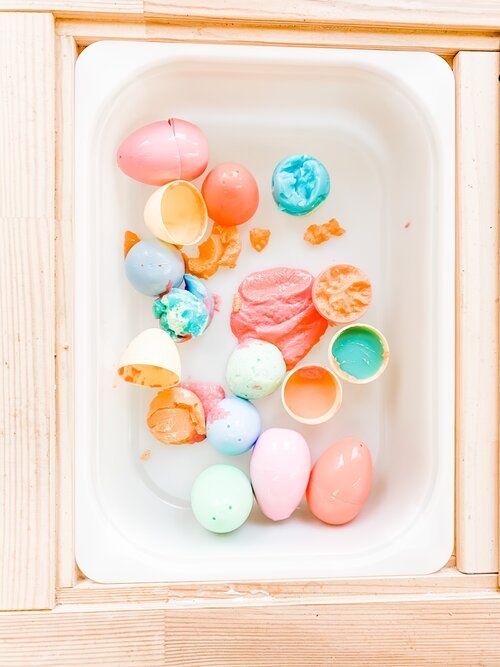
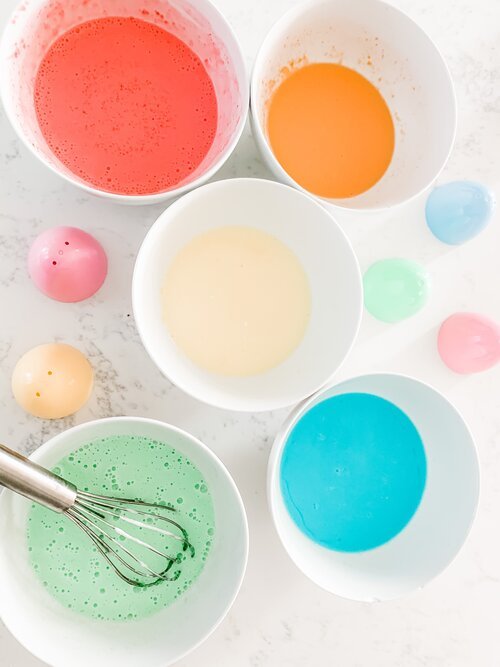
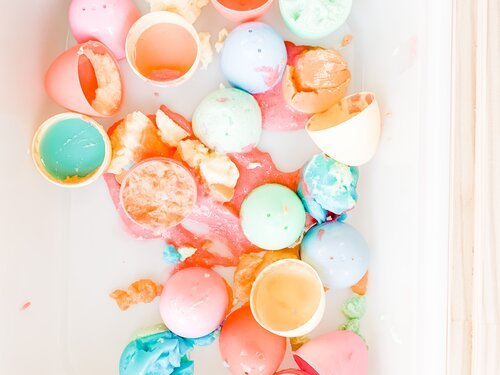
This one is a messy activity but it’s a lot of fun. We used rainbow colored Jello powder mix and followed the instructions on the box. We also added a tablespoon of yogurt to each bowl to make the colors more pastel and also less translucent. Then we scooped the pudding into each half of the eggs filling them to just below the top. Then we popped them into the fridge to set — once partially set, you can close two colors together and let them set completely for a few hours. When you open them up, squeeze the sides of the egg to get them loose and pop them into the bin. Your kiddo will love squishing them between their fingers and blending the colors.

Porta Etiam Ultricies Vulputate Commodo Ligula Elit Condimentum Aenean eu leo Quam Cursus Amet Pellentesque Risus Ridiculus Porta Etiam Ultricies Vulputate Commodo Ligula Elit Condimentum Aenean eu leo Quam
Gallery Block
These are example images. Double-click here to replace these images with your own content. Learn more

4. EASTER BUNNY BAIT (TASTE SAFE)

You can make this Easter bunny bait as a fun and edible bin filler or you can package it up into little bags and gift it to preschool classmate friends. It’s surprisingly simple to make and all you need is popcorn and candy melts (in various pastel colors). You simply pop the popcorn and warm the candy melts. You can melt them in the microwave or create a double boiler with some ramekins in a pan of water on the stove. Simply pour the popcorn into a large bowl and pour the candy coating over it mixing it and turning it as you go. This can be a little bit sticky and messy until the candy coating dries and hardens. If you want a mess free but equally tasty alternative, you can use bunny grahams or M&Ms or both!


The Benefits of Sensory Play for Toddlers

Sensory play is not only fun for toddlers, but it also offers numerous benefits for their development. By engaging in activities that stimulate their senses, children can enhance their cognitive, emotional, and physical skills. With Easter just around the corner, it's the perfect time to explore some sensory play ideas that can make this holiday even more delightful for your little ones.

Cognitive Development

Sensory play helps toddlers develop their cognitive skills in various ways. When they explore different textures, colors, and shapes, they're not only using their senses but also building neural connections. Easter-themed sensory activities can further enhance their cognitive abilities by encouraging problem-solving and critical thinking. For example, setting up an Easter egg hunt where they need to follow clues and solve puzzles can stimulate their minds and promote cognitive growth.

Emotional Development

Sensory play provides toddlers with a chance to explore and express their emotions freely. By engaging in activities such as finger painting or squishing playdough, children can express themselves while experiencing different sensations. This type of play can also contribute to emotional regulation, as it allows them to relax, reduce stress, and find comfort. For Easter, you can create an Easter sensory bin filled with fake grass and small plastic eggs to give your toddler an opportunity to explore different textures and colors, fostering their emotional development.

Physical Development

Sensory play is excellent for promoting fine and gross motor skills in toddlers. Activities that involve pouring, scooping, or manipulating objects help strengthen their hand-eye coordination and improve their finger dexterity. Setting up a sensory table with colorful rice, plastic eggs, and spoons can offer a great Easter-themed sensory experience while enhancing their physical development.
Language and Social Skills

Engaging in sensory play also supports the development of language and social skills. Through verbal and non-verbal communication during pretend play or group activities, toddlers learn to express themselves, share ideas, and cooperate with others. Easter-themed activities such as role-playing a bunny family or creating a sensory garden filled with flowers and Easter-themed toys are excellent ways to encourage language development and social interaction among toddlers.
Sensory play is a powerful tool that facilitates holistic development for toddlers. Engaging in Easter-themed sensory activities not only makes this holiday more exciting but also enhances their cognitive, emotional, physical, and social skills. So go ahead and create a sensory play experience that will keep your little ones engaged, happy, and learning throughout this Easter season.

25 Easter Vocabulary Words for Preschoolers

1. Easter: A Christian holiday celebrating the resurrection of Jesus Christ.
2. Bunny: A small mammal with long ears and a fluffy tail that is often associated with Easter.
3. Egg: A hard-shelled object that comes from birds and is often decorated and hidden during Easter celebrations.
4. Basket: A container used to collect and carry Easter eggs and other goodies.
5. Chick: A baby bird, commonly associated with Easter due to its symbolism of new life.
6. Lily: A fragrant flower often seen during Easter, representing purity and rebirth.
7. Cross: A symbol of Jesus Christ's crucifixion and resurrection, commonly associated with Easter.
8. Bonnet: A hat traditionally worn by girls on Easter, often decorated with flowers, ribbons, or bows.
9. Spring: The season when Easter falls, characterized by new growth, blooming flowers, and warmer temperatures.
10. Pastel: Soft and light colors, commonly seen during Easter, such as pink, yellow, mint green, and baby blue.
11. Hunt: To search for something, like Easter eggs hidden outdoors or indoors.
12. Candy: Sweet treats, often given as gifts or found inside Easter eggs.
13. Carrot: A crunchy vegetable often associated with bunnies and Easter.
14. Jelly beans: Small, colorful candies that are shaped like beans and enjoyed during Easter.
15. Tulip: A vibrant flower that blooms in the spring and is associated with Easter.
16. Springtime: The season of new beginnings and growth, often associated with Easter.
17. Parade: A festive procession, sometimes including floats and costumes, held during Easter.
18. Celebrate: To enjoy and show joy or excitement for a special occasion, like Easter.
19. Family: The people we are related to and love, often spending Easter together.
20. Blossom: The process of flowers opening up and showing their full beauty, often seen in spring and Easter.
21. Sunday: The day of the week Easter is traditionally celebrated on.
22. Hop: To jump lightly, as bunnies do, often associated with Easter.
23. Outfit: The clothes we wear, often chosen with care for special occasions like Easter.
24. Church: A place of worship for Christians, where Easter services are often held.
25. Feast: A large and festive meal enjoyed with family and friends during Easter celebrations.


Other easter activities

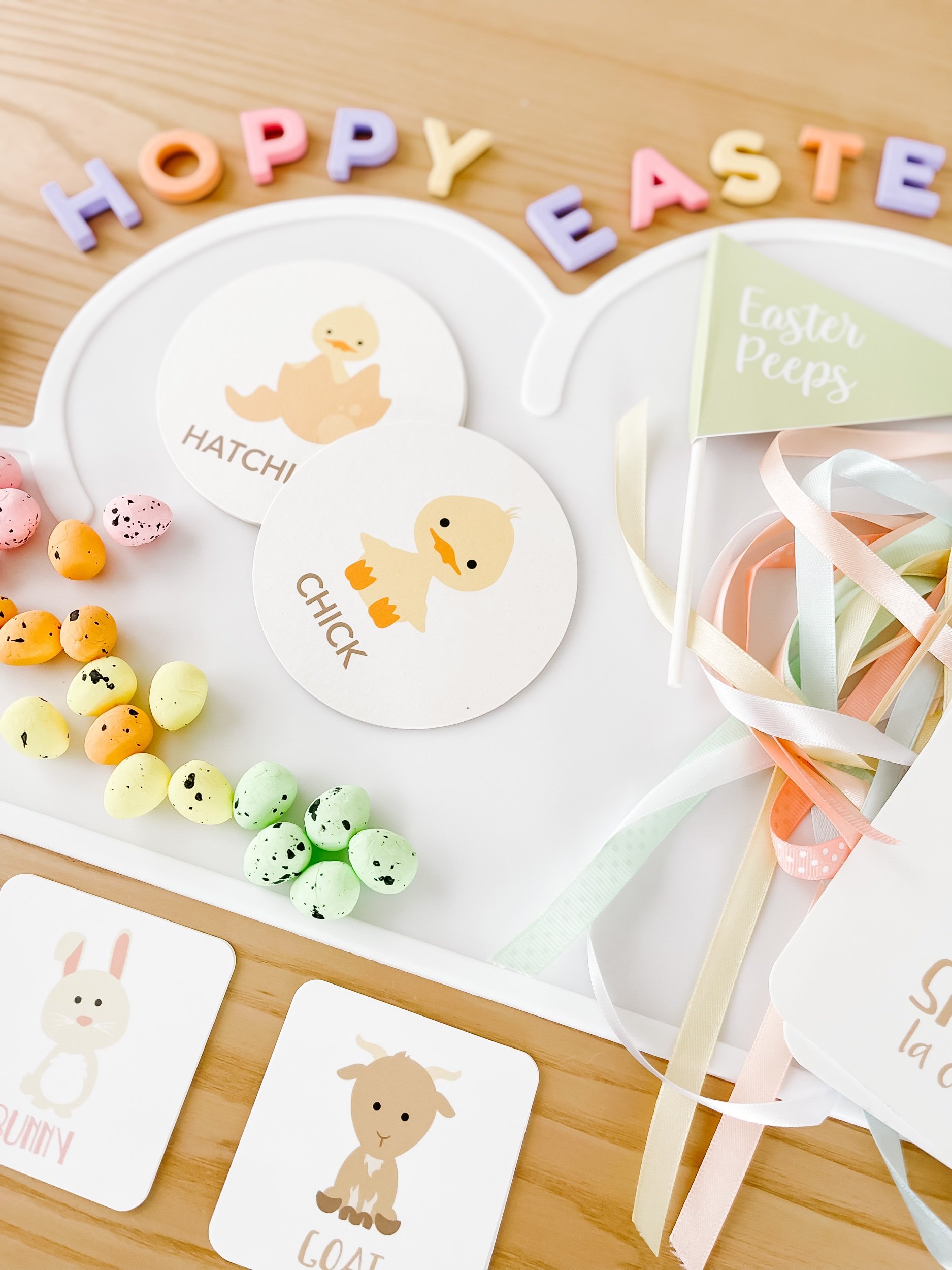
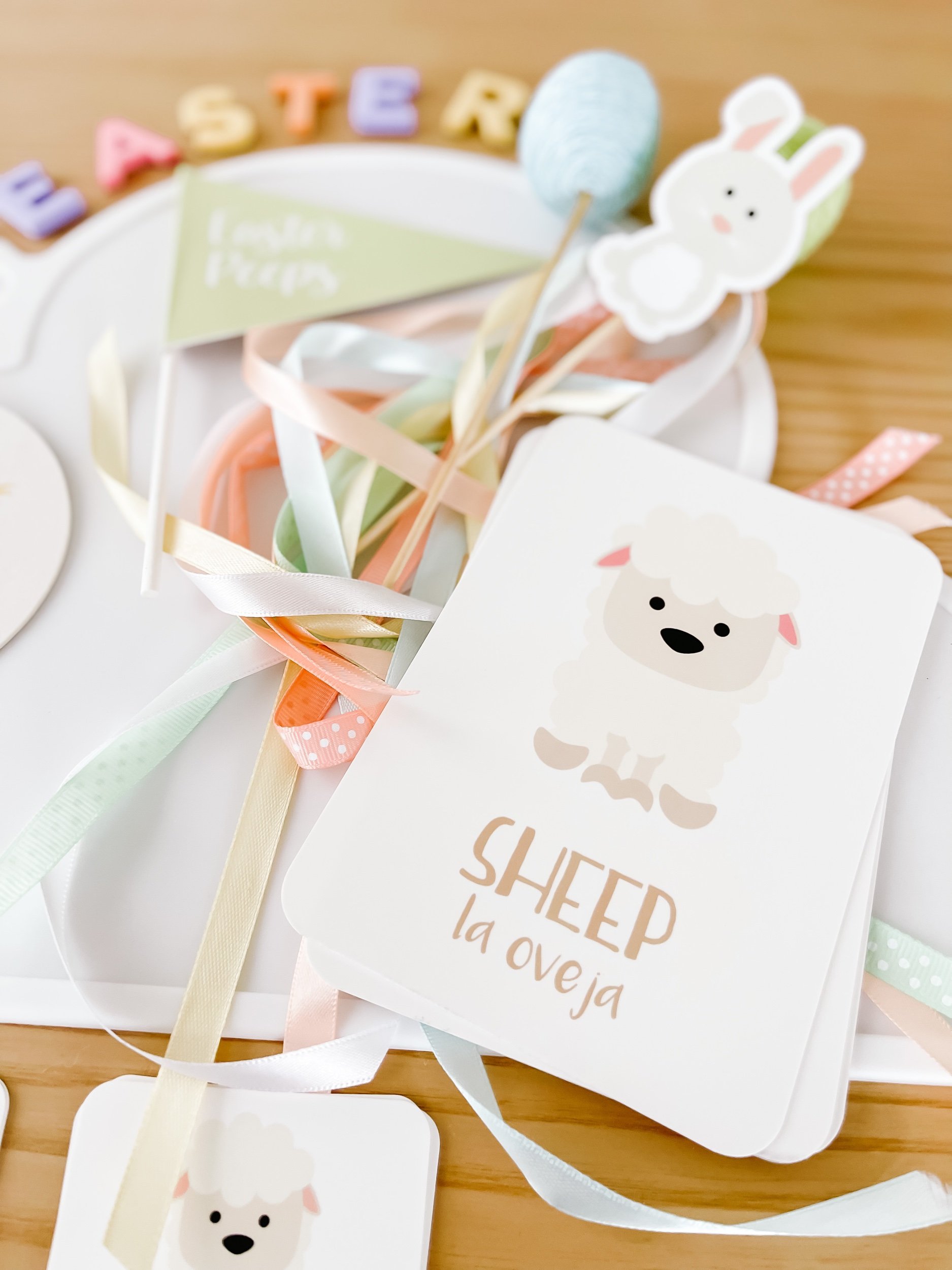
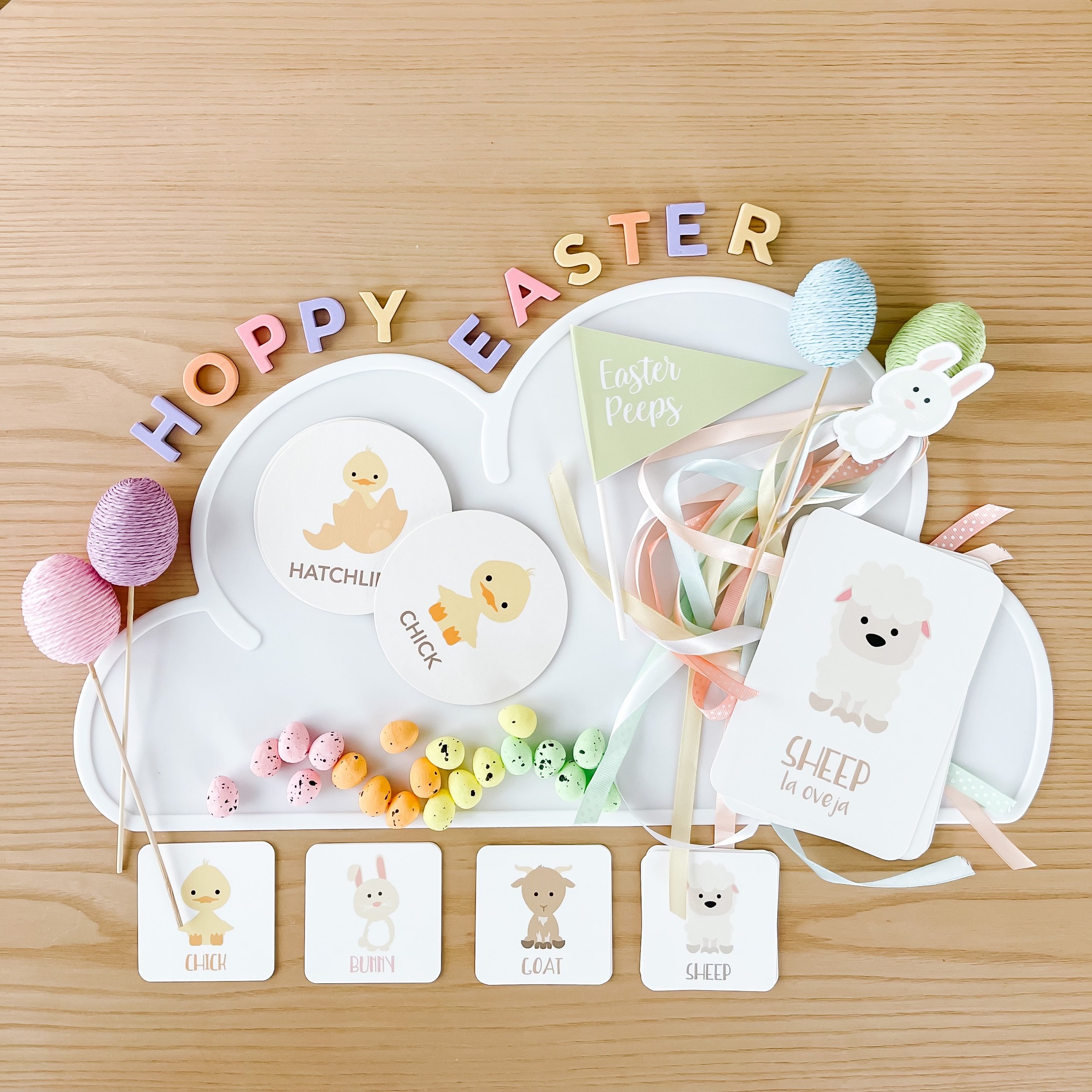
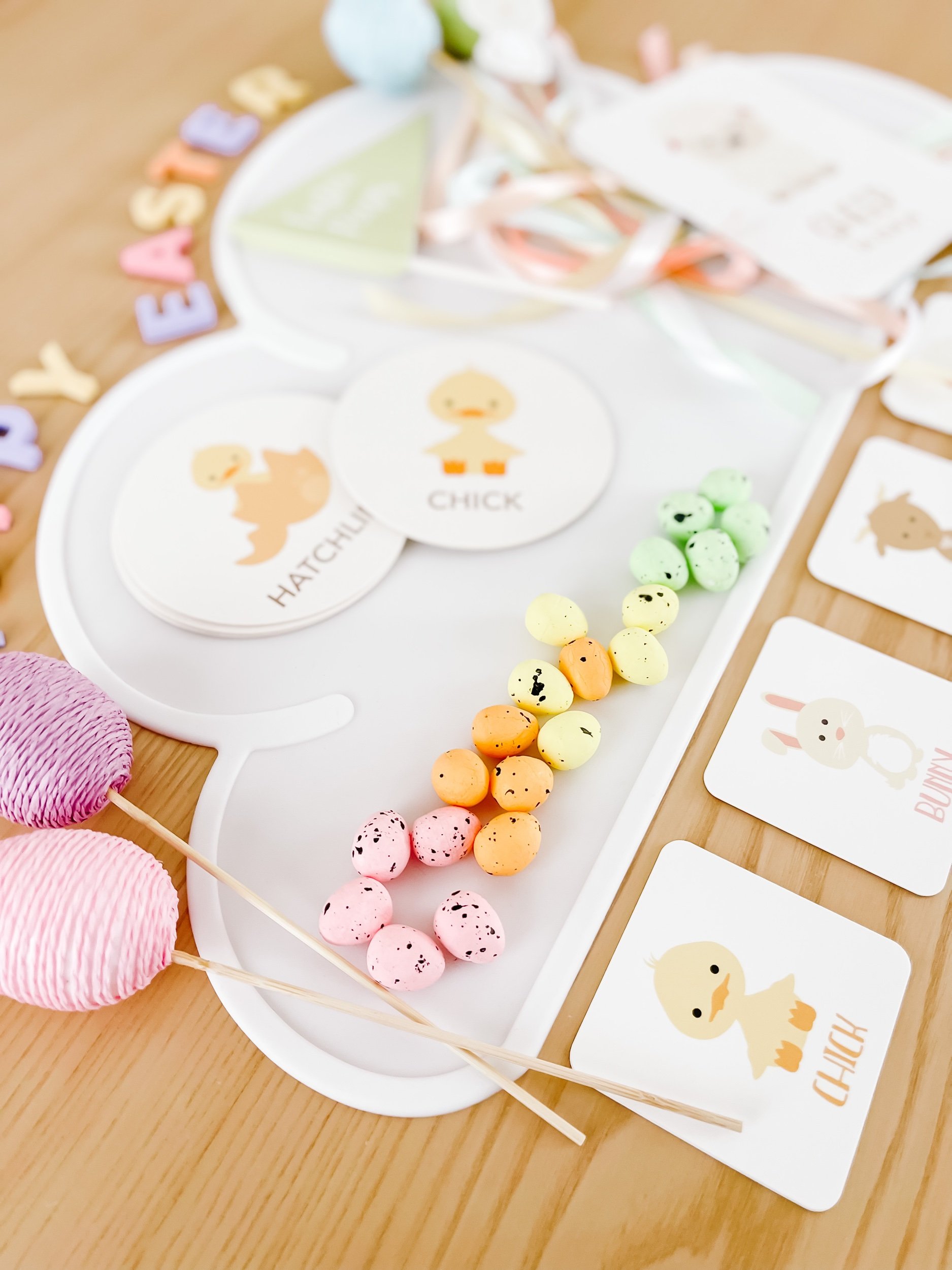
Take your Easter sensory play to the next level with farm animal memory game cards. Toddlers will exercise their cognitive skills while having fun matching the cards together. The combination of sensory play and memory games makes this activity not only enjoyable but also educational. Each card is printed on durable card stock with a matte laminate coating for durable with tiny fingers. The illustrations are simple and reenforce the names of each animal while kiddos learn letters and spelling with matching.

Buy the memory game

Easter Printable Flags, Awning, and Signs

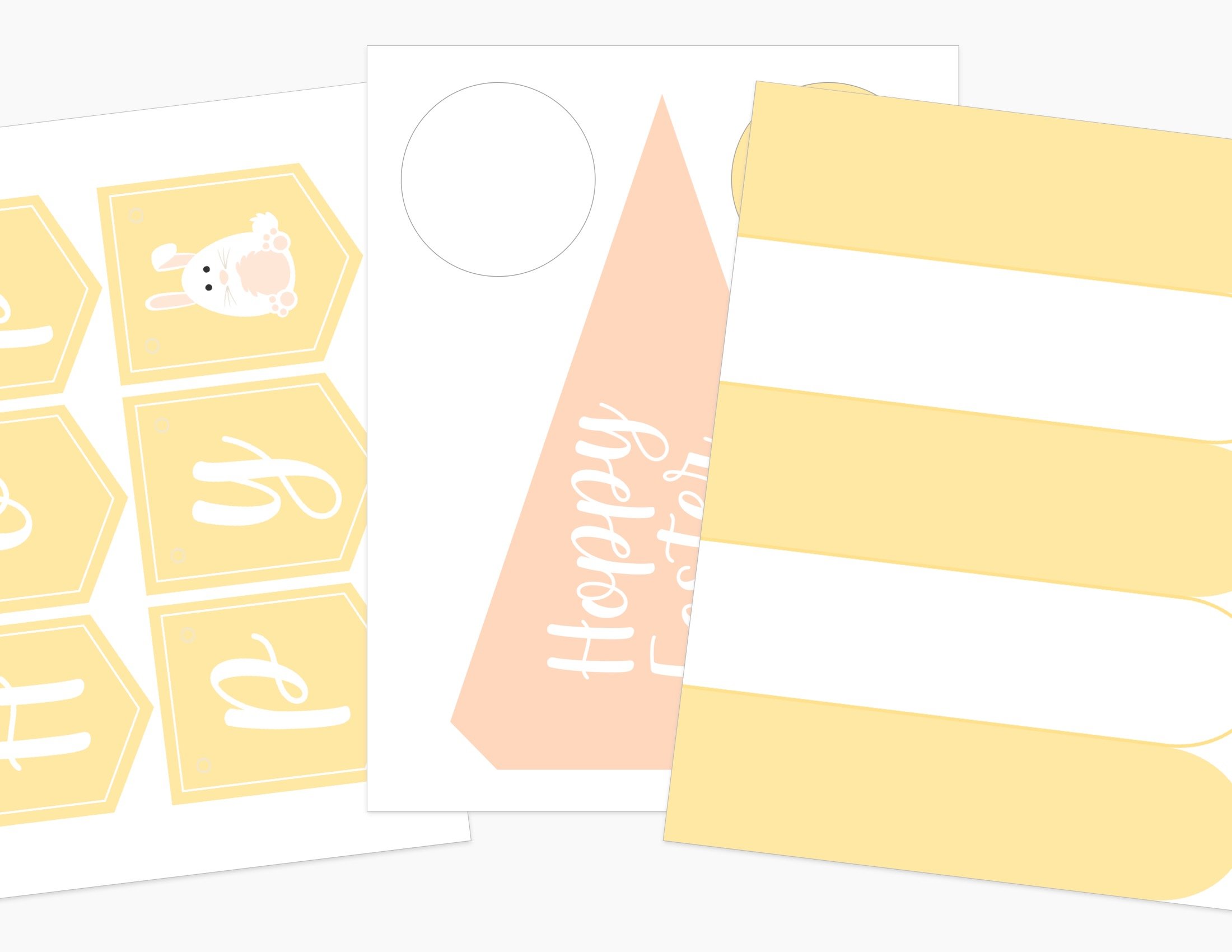
Extend the Easter-themed excitement beyond the table setup with printable flags, awning, and signs for an outdoor egg hunt. These printables can be easily decorated and placed throughout your house or yard to create a festive atmosphere. Your little ones will be thrilled to follow the signs and discover hidden treasures during their Easter egg hunt adventure.

Download & Print

LIfecycle of a chicken cards

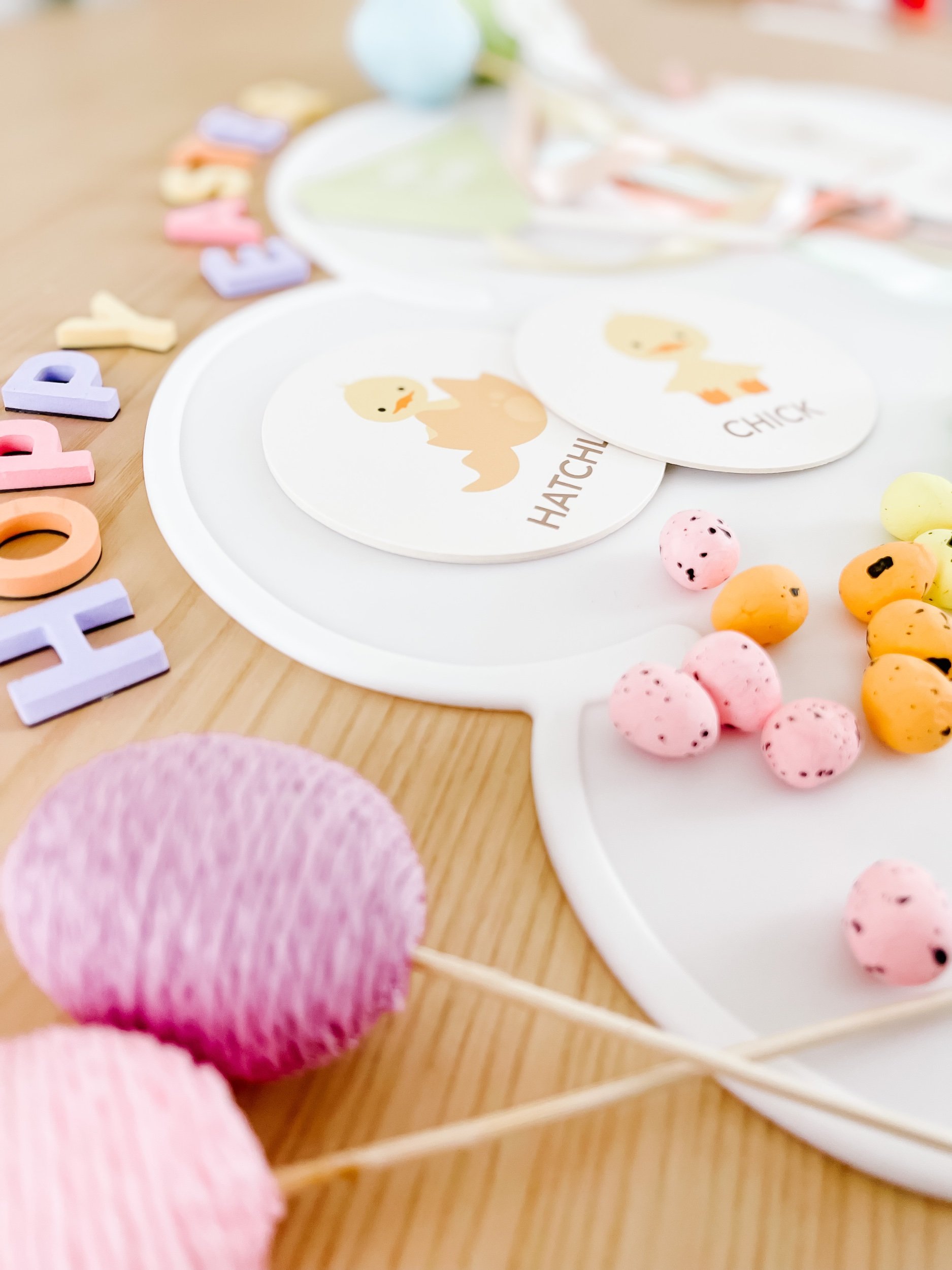
Easter is the perfect season to practice advance toddler concepts like animal lifecycles. Our favorite lifecycle to practice is chickens because each stage of the lifecycle is a part of our everyday lives. We start by discussing eggs, why we eat them for breakfast, their protein and nutrition. Then we discuss how when incubated, eggs will transform into baby chicks. From there, they grow into chickens. We’re lucky enough to live down the street from a high school which raises chickens and Sofie gets the opportunity to feed them regularly. This lifecycle of a chicken card set is the perfect bonus for you Easter setup. You can also check out my blog post with an entire section about eggs.

Chicken Lifecycle Cards

Planning an Easter sensory Flisat table setup play for toddlers can be a rewarding experience. By incorporating elements like the sensory big fill with green rocks, miniature bunny figurines, matching games with farm animal memory cards, and Easter-themed printables for an outdoor egg hunt, you'll create a fun-filled and educational activity for your little ones. Spark their imagination, stimulate their senses, and let the Easter festivities begin! Have a hoppy Easter!

Order List Copy 21.jpeg
IMG_0714_jpg.jpeg
IMG_0713_jpg.jpeg
IMG_0711_jpg.jpeg
Order List Copy 18.jpeg
IMG_0712_jpg.jpeg
Order List Copy 19.jpeg
IMG_0710.jpeg
IMG_0704_jpg.jpeg
IMG_0706_jpg.jpeg
IMG_0707_jpg.jpeg
IMG_0709_jpg.jpeg
IMG_0715_jpg.jpeg
IMG_0717_jpg.jpeg
Order List Copy 20.jpeg
Order List Copy 17.jpeg
Tags easter sensory bin setup, flisat table play ideas, sensory play for kids, flisat table, unique sensory filler ideas, easter egg hunt printables, printable easter

Color Matching BloCks

April 9, 2023 Kylie Tuosto

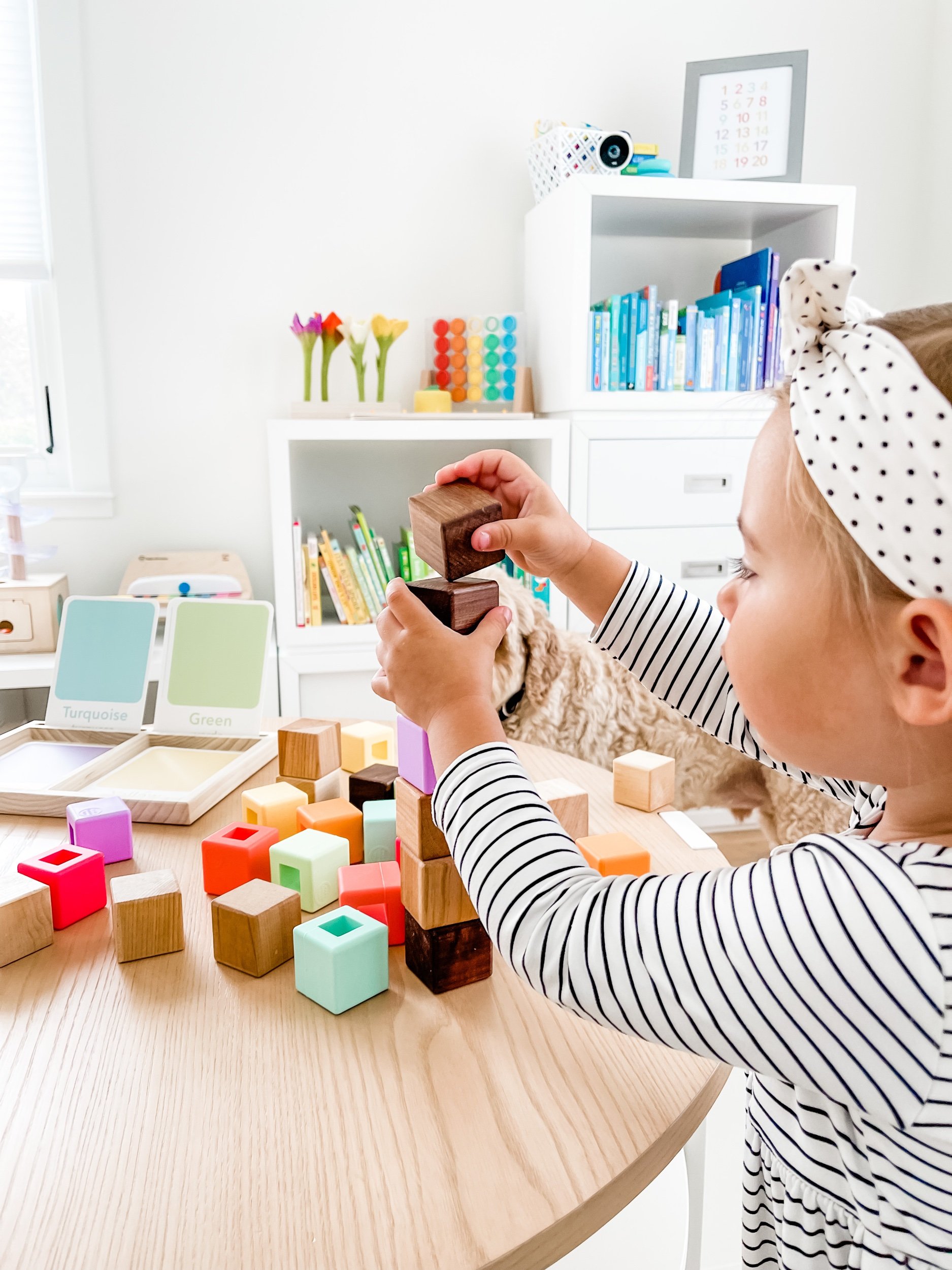
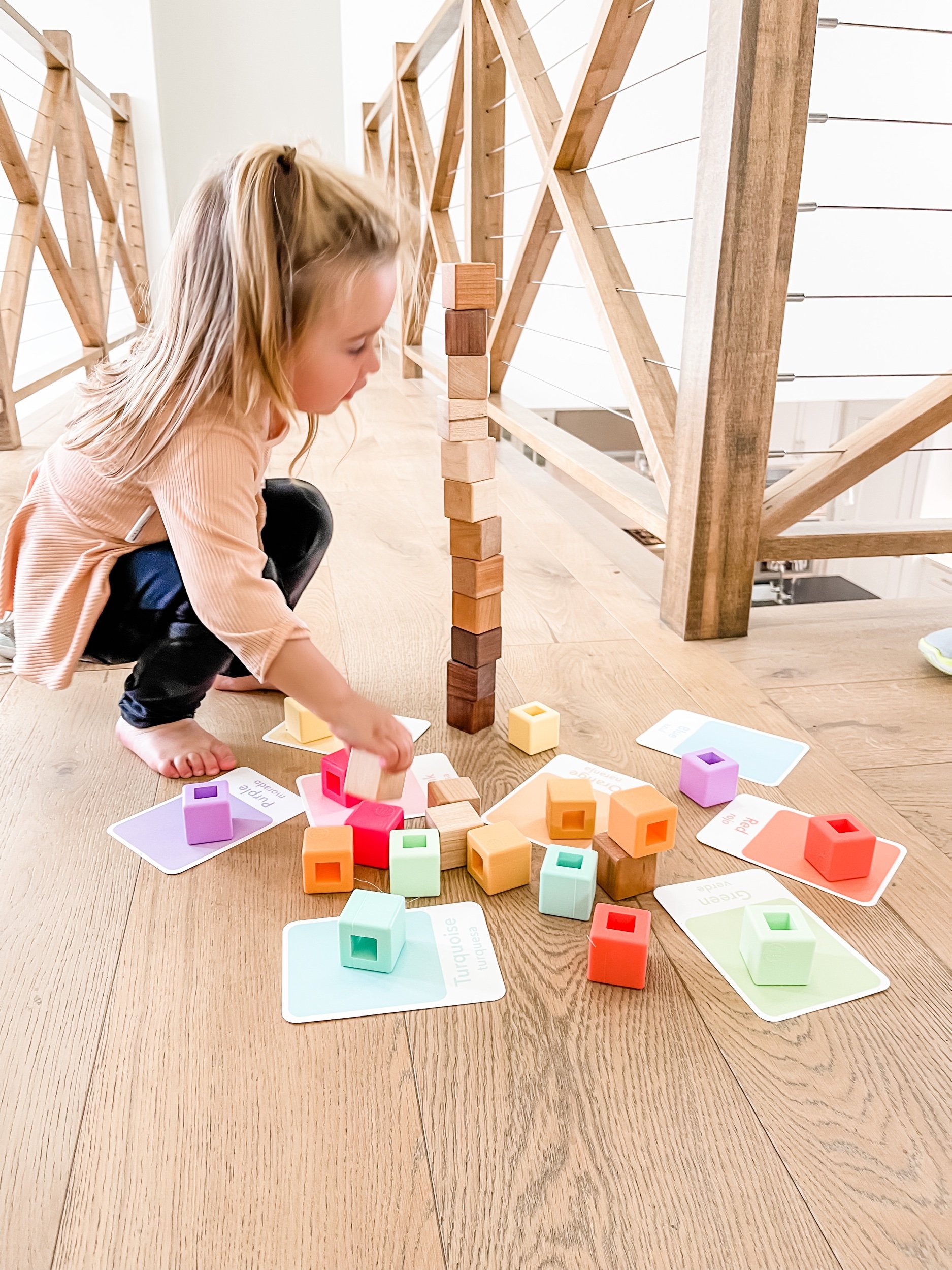
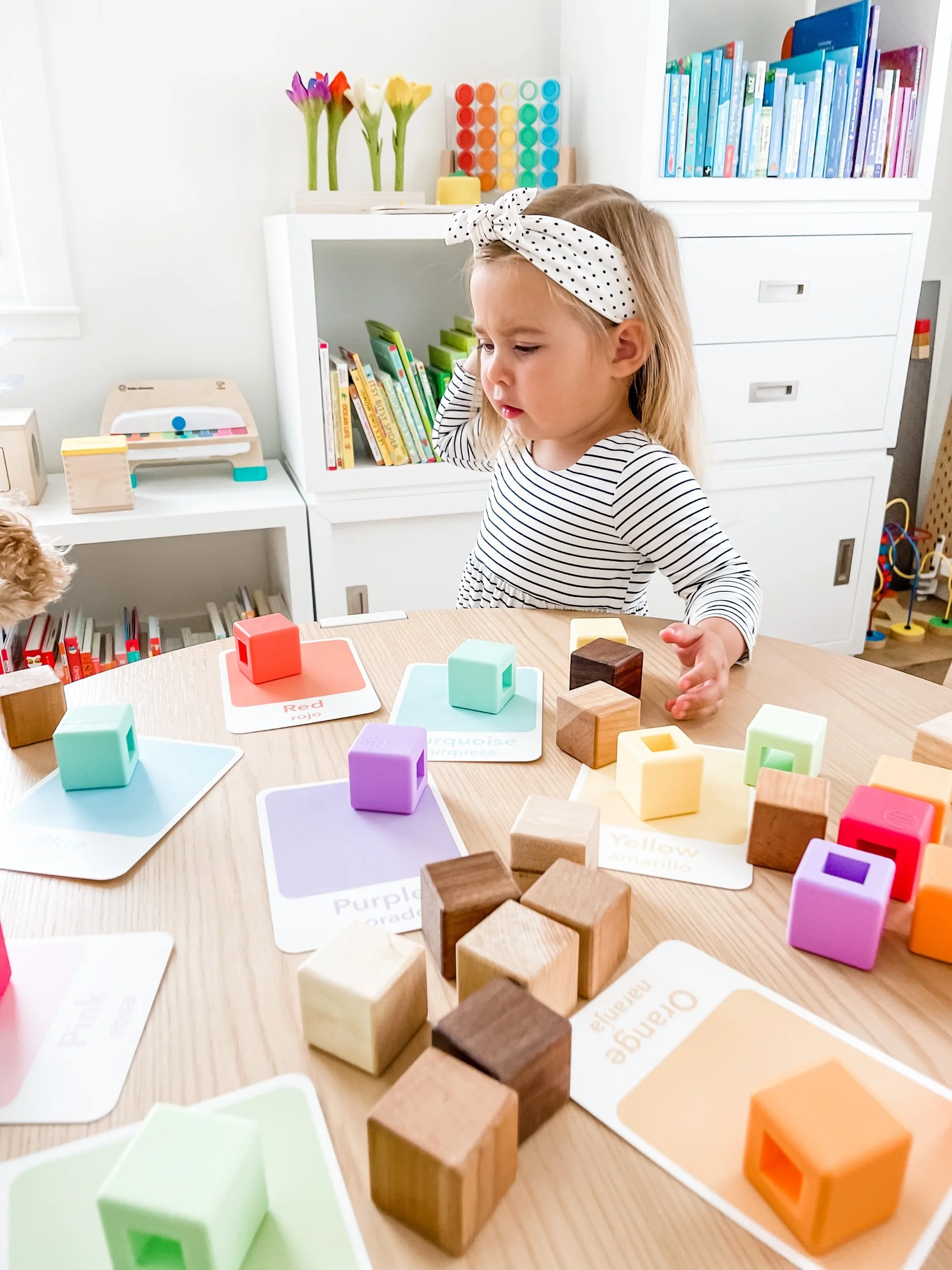
Playing with silicone blocks and matching them with color flashcards can be a great way for toddlers to learn and develop important skills. Here are a few benefits of using this method of play:

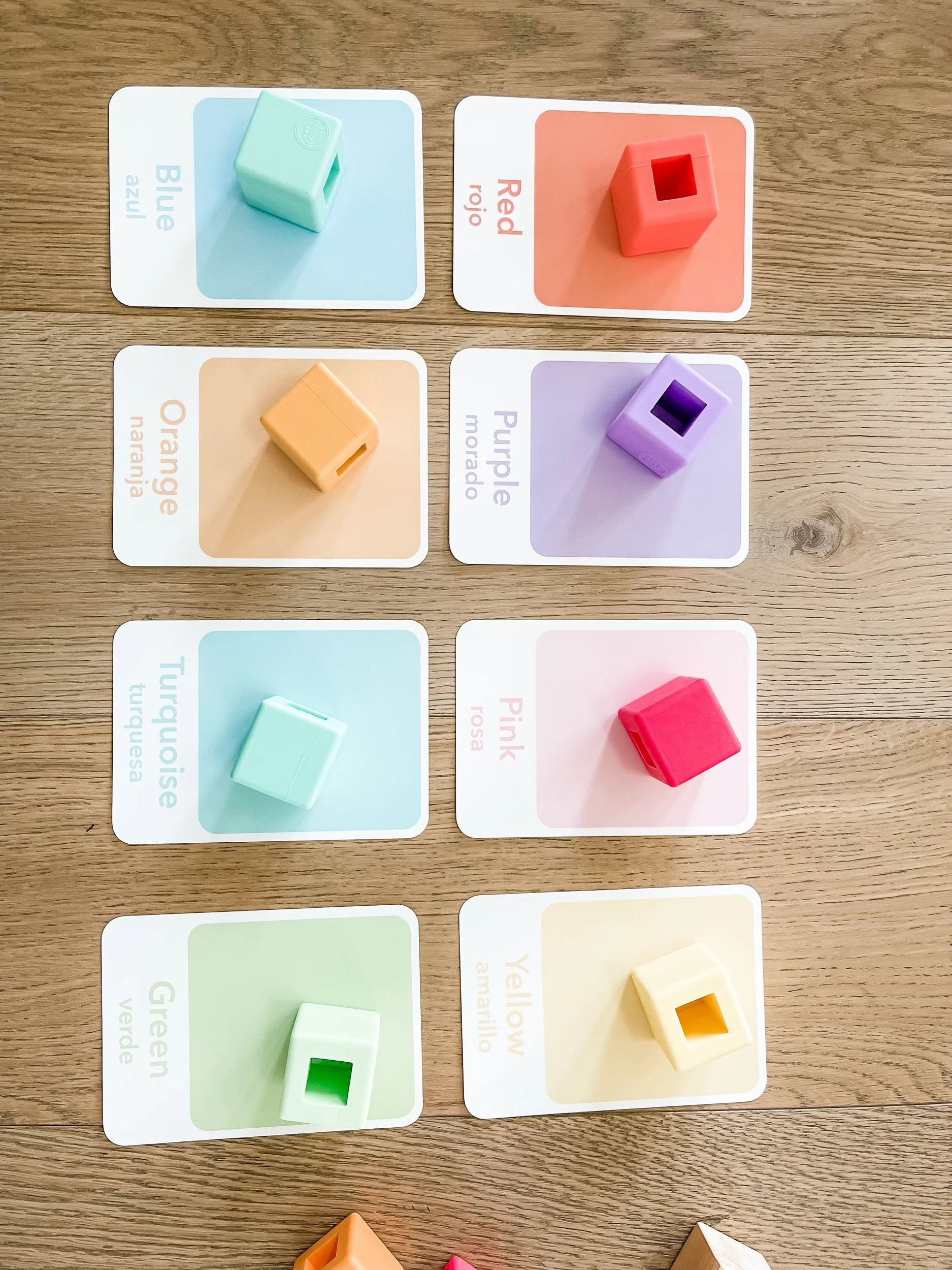
Color Learning Cards
  1. Color recognition: By matching the blocks to the flashcards, toddlers learn to identify different colors and develop their color recognition skills. This is an important step in their cognitive development and can help them in future learning endeavors.

  2. Fine motor skills: Using the blocks and flashcards requires a certain level of dexterity and coordination, which helps toddlers develop their fine motor skills. This is especially important for children as they begin to write and draw.

  3. Problem-solving skills: As toddlers match the blocks to the flashcards, they are learning to solve problems and think logically. This is an important skill that will help them in future learning and in everyday life.

  4. Creativity: Playing with silicone blocks and matching them with color flashcards encourages children to be creative and think in new ways. It allows them to build and create new things using their imagination.

  5. Language development: Using color flashcards can also help children develop their language skills. As they learn the names of different colors, they are also learning new words and expanding their vocabulary.

Overall, playing with silicone blocks and matching them with color flashcards is a fun and interactive way for toddlers to learn and develop important skills. If you're looking for a fun and educational activity for your child, consider purchasing color flashcards to go along with your silicone blocks.

In conclusion, the benefits of playing with silicone blocks and matching them with color flashcards are numerous and can help children in many areas of their development. It is a fun and interactive way to learn and develop problem-solving skills, fine motor skills, creativity, language development, and color recognition. These benefits make it an excellent investment for parents who want to provide their children with fun and educational activities. So, it is highly recommended to purchase color flashcards to enhance the overall development of your child.

IMG_9073.jpeg
IMG_9056.jpeg
IMG_9060.jpeg
IMG_9054.jpeg
IMG_8906.jpeg
IMG_8897.jpeg
IMG_8900.jpeg
IMG_8892.jpeg
IMG_8909.jpeg
IMG_8896.jpeg
IMG_9062.jpeg
IMG_9070.jpeg
IMG_8889.jpeg
IMG_8890.jpeg
IMG_8891.jpeg
IMG_8893.jpeg
IMG_8894.jpeg
IMG_8901.jpeg
IMG_8902.jpeg
IMG_8903.jpeg
IMG_8904.jpeg
IMG_8910.jpeg
IMG_8911.jpeg
IMG_9067.jpeg
IMG_9058.jpeg
IMG_9068.jpeg
IMG_9072.jpeg
IMG_9077.jpeg
IMG_9075.jpeg
IMG_9078.jpeg

No mess Squash nooDles

April 3, 2023 Kylie Tuosto
A759A24B-7A78-427C-B15C-E53DEAD9B25C.png

Taste safe sensory play is an important part of a child's development, especially for toddlers under 3 years old. Sensory play helps to stimulate a child's senses and improve their cognitive and motor skills. However, it is important to ensure that the materials used for sensory play are safe for children to taste, as young children often put things in their mouths. In this blog post, we will discuss the benefits of taste safe sensory play for toddlers under 3 and provide some fun ideas for taste safe sensory play that you can try at home.

One of the benefits of taste safe sensory play is that it helps to improve a child's fine motor skills. This is because children are using their hands and fingers to explore and manipulate different materials in the sensory bin. This can help to improve their hand-eye coordination and dexterity.

Sensory play also helps to improve a child's cognitive development. It allows children to explore and experiment with different materials, which can help to build their problem-solving and critical thinking skills. It also helps to improve their memory and concentration as they are exposed to different stimuli.

Another benefit of taste safe sensory play is that it helps to improve a child's social and emotional development. Children can learn to share and take turns while playing with others, and they can also learn to express their emotions through play.

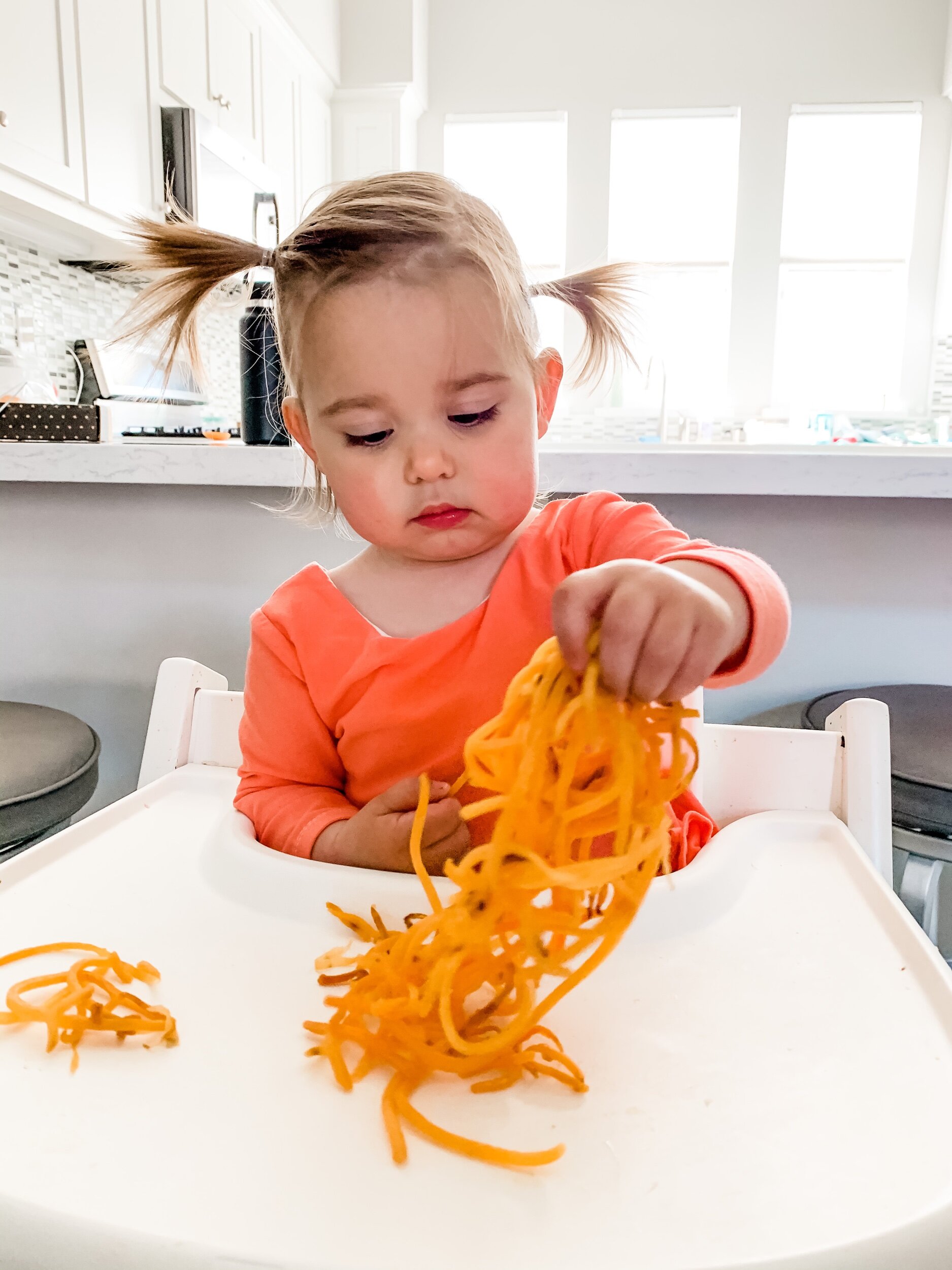
One fun idea for taste safe sensory play is a spaghetti squash noodle play setup. My toddler loved exploring the spaghetti-like texture of the cooked spaghetti squash noodles. I added different kitchen utensils and plastic food items for her to play with and explore. This setup was a hit with her and helped to improve her fine motor skills.

Another taste safe sensory play idea is to use cooked rice or beans in different colors to create a sensory bin. You can also use edible glitter, sprinkles, and other edible decorations to make it more fun and interactive for the children.

To help you with your taste safe sensory play ideas, here is a week long list of activities you can try:

  • Monday: Jello Sensory Bin

  • Tuesday: Bean Sensory Bin

  • Wednesday: Pasta Sensory Bin

  • Thursday: Edible Glitter Sensory Bin

  • Friday: Rice Sensory Bin

  • Saturday: Spaghetti Squash Noodle Play

  • Sunday: Edible Play Dough

In conclusion, taste safe sensory play is a great way for toddlers under 3 years old to learn and grow. It helps to improve their fine motor skills, cognitive development, and social and emotional development. Try creating a spaghetti squash noodle play setup or using cooked rice or beans in different colors to create a sensory bin. And don't forget to check out the week long list of taste safe sensory play ideas for more inspiration.

IMG_1452.jpeg
IMG_1466.jpeg
IMG_1471.jpeg
IMG_1491.jpeg
IMG_1491.jpeg
IMG_1461.jpeg
IMG_1459.jpeg
IMG_1448.jpeg
IMG_1446.jpeg

The Joy of Doll Play: The Benefits of Wooden Doll Houses for Toddlers

April 2, 2023 Kylie Tuosto

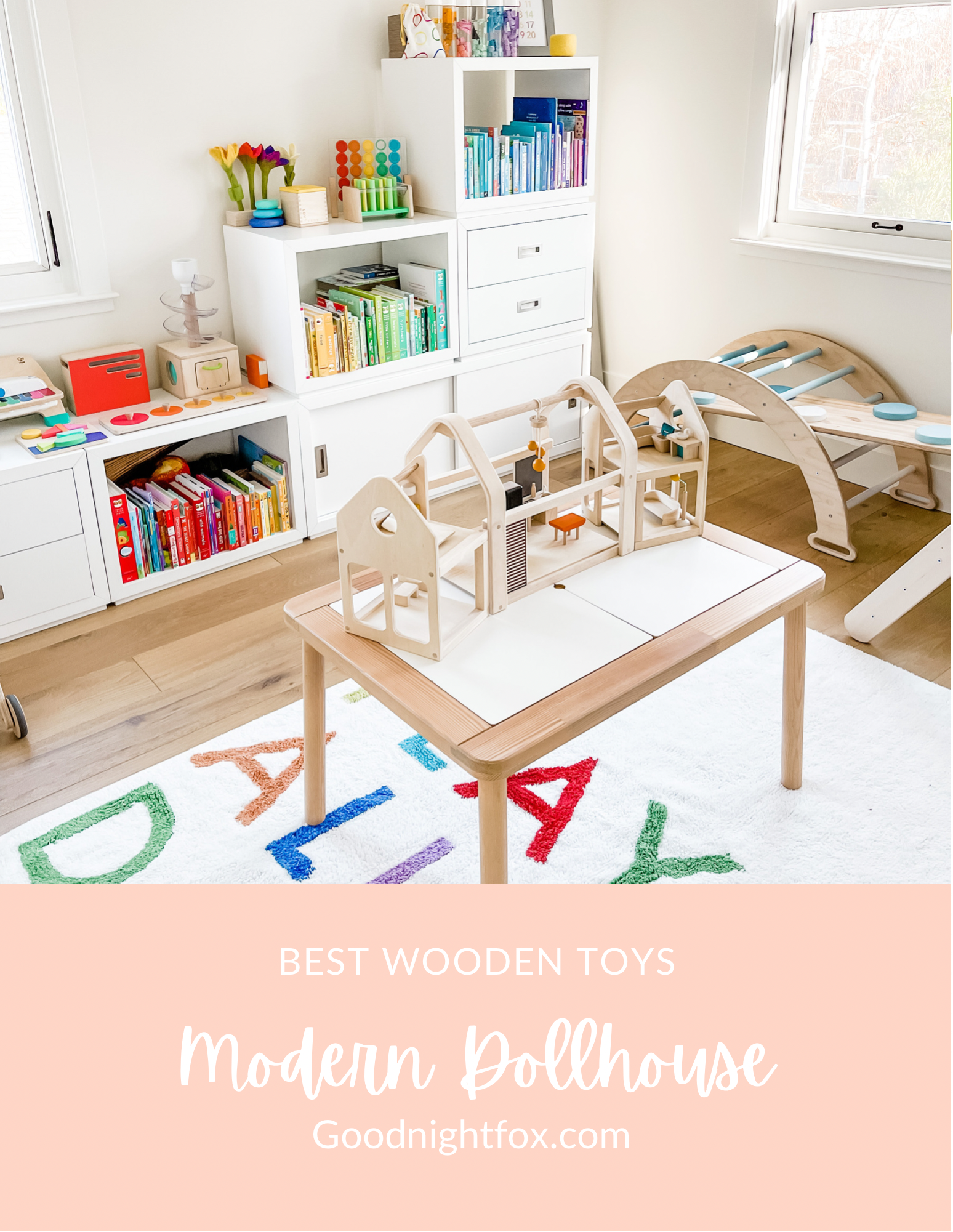
As parents, we are always looking for fun and educational activities for our children. Doll play is a timeless activity that provides children with hours of imaginative and creative fun. Wooden doll houses are a fantastic toy for toddlers and offer a variety of benefits that can help with their development and growth.

Benefits of Doll Play for Toddlers:

  1. Develops social skills: Doll play helps children develop social skills such as empathy, sharing, and communication. They learn how to take care of others, problem-solve and cooperate with friends.

  2. Encourages imaginative play: Doll play allows children to let their imaginations run wild, creating stories and scenarios that help develop their creativity and problem-solving skills.

  3. Improves fine motor skills: The act of manipulating small dolls and furniture helps develop fine motor skills, hand-eye coordination, and dexterity.

  4. Teaches responsibility: Doll play gives children the opportunity to practice taking care of others, providing a sense of responsibility and helping them understand the consequences of their actions.

  5. Enhances language skills: Doll play encourages children to use their language skills to communicate with their dolls, helping to develop their vocabulary and storytelling abilities.

Conclusion: In conclusion, wooden doll houses are a fantastic toy for toddlers and offer a variety of benefits that can help with their development and growth. Whether it's developing social skills, encouraging imaginative play, improving fine motor skills, teaching responsibility, or enhancing language skills, doll play provides children with the opportunity to learn and grow in a fun and engaging way. So why not give your child the gift of a wooden doll house and let their imaginations soar!

IMG_0735.jpeg
IMG_0713.jpeg
IMG_0695.jpeg
IMG_0691.jpeg
IMG_0718.jpeg
IMG_0709.jpeg
IMG_0734.jpeg
IMG_0707.jpeg
IMG_0714.jpeg
IMG_0724.jpeg
IMG_0719.jpeg
IMG_0717.jpeg
IMG_0716.jpeg
IMG_0711.jpeg
IMG_0708.jpeg
IMG_0706.jpeg
IMG_0704.jpeg
IMG_0698.jpeg
IMG_0697.jpeg
IMG_0688.jpeg

Rainbow banana muffins

April 2, 2023 Kylie Tuosto
94407B88-2A00-4375-A5FF-E5781B714605.png

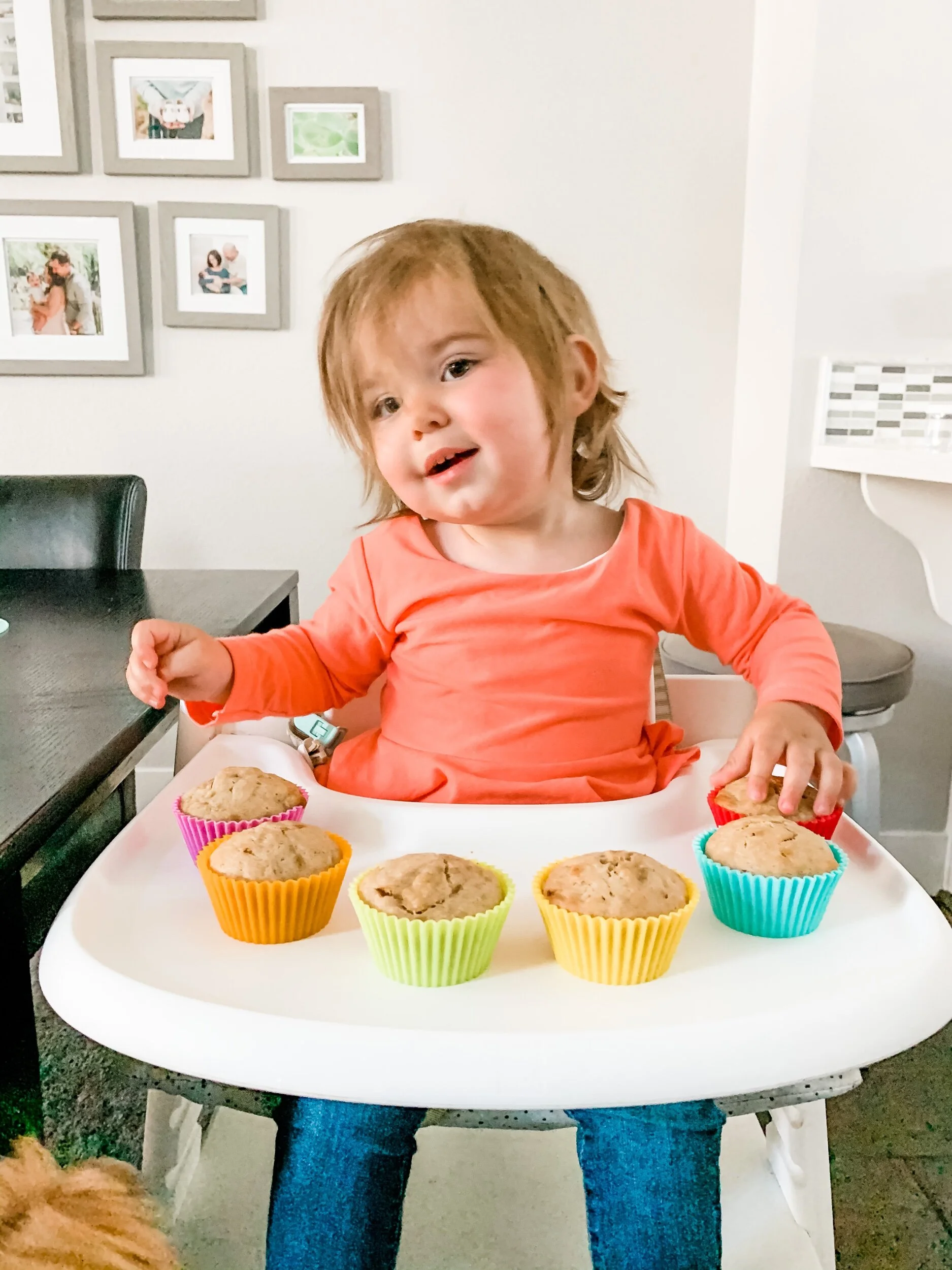
Looking for a fun and delicious recipe to make with the kids? Look no further than these rainbow banana muffins! Made with ripe bananas and baked in colorful silicone cups, these muffins are the perfect way to add a little extra fun to your baking time.

To make these muffins, you will need the following ingredients:

  • 2 ripe bananas

  • 1/2 cup sugar

  • 1 egg

  • 1 tsp vanilla extract

  • 1/2 cup all-purpose flour

  • 1/2 cup whole wheat flour

  • 1 tsp baking powder

  • 1/4 tsp baking soda

  • 1/4 tsp salt

To start, preheat your oven to 350 degrees and place your silicone cups on a baking sheet. In a large mixing bowl, mash the bananas until they are smooth. Add the sugar, egg, and vanilla extract and mix until well combined.

In a separate bowl, mix together the all-purpose flour, whole wheat flour, baking powder, baking soda, and salt. Slowly add this dry mixture to the banana mixture, stirring until just combined.

Next, divide the batter evenly among the silicone cups, filling each about 3/4 full. Place the muffins in the preheated oven and bake for 18-20 minutes, or until a toothpick inserted into the center of a muffin comes out clean.

Once the muffins are done baking, remove them from the oven and let them cool in the cups for a few minutes before removing them. These muffins are perfect served warm, with a little butter or jam on top.

These rainbow banana muffins are not only delicious and fun to make, but also a great way to get kids involved in the kitchen. The silicone cups make it easy for little hands to handle and adds an extra touch of fun to the recipe. So why not give these muffins a try and see for yourself how tasty and fun baking with kids can be!

IMG_0606.jpeg
IMG_0656.jpeg
IMG_0613.jpeg
IMG_0578.jpeg
IMG_0607.jpeg
IMG_0619.jpeg
IMG_0621.jpeg
IMG_0602.jpeg
IMG_0646.jpeg
IMG_0609.jpeg
IMG_0608.jpeg
IMG_0615.jpeg
IMG_0662.jpeg
IMG_0616.jpeg
IMG_0599.jpeg
IMG_0597.jpeg
IMG_0598.jpeg
IMG_0600.jpeg
IMG_0601.jpeg
IMG_0603.jpeg
IMG_0604.jpeg
IMG_0610.jpeg
IMG_0611.jpeg
IMG_0612.jpeg
IMG_0630.jpeg
IMG_0632.jpeg
IMG_0640.jpeg
IMG_0641.jpeg
IMG_0649.jpeg
IMG_0654.jpeg

Rainbow Rice Color Sort

March 26, 2023 Kylie Tuosto
39EB2882-90CB-4746-8FFE-A95FD3D07908.png

Rainbow Rice Sensory Play: A Fun and Educational Activity for Children

Sensory play is a crucial aspect of child development that helps in the growth and development of their cognitive, emotional, and physical abilities. Sensory play activities such as making rainbow rice are not only fun but also educational for children.

Rainbow rice is an easy and inexpensive activity that can be enjoyed by children of all ages. To make rainbow rice, you will need:

  • White rice

  • Food coloring (red, orange, yellow, green, blue, and purple)

  • Ziplock bags

  • Measuring cups

  • Spoon

Instructions:

  1. In separate ziplock bags, mix 1 cup of white rice with 1 tablespoon of water and several drops of food coloring. You will need to make 6 different colored bags of rice for the rainbow.

  2. Once the rice is colored, seal the bags and mix the rice until the color is evenly distributed.

  3. Allow the rice to dry for several hours or overnight.

  4. Once the rice is dry, it is ready for sensory play. Children can use their hands to mix the rice and create their own rainbow.

The benefits of sensory play for children are numerous. Sensory play helps children develop their fine motor skills, hand-eye coordination, and visual-spatial abilities. It also aids in their cognitive development and helps them to understand and explore their environment. Sensory play also helps children to express their emotions and develop their creativity.

Making rainbow rice is a fun and educational activity that can be enjoyed by children of all ages. It is easy to make and requires only a few basic materials. This activity is perfect for rainy days or as a fun addition to any playdate.

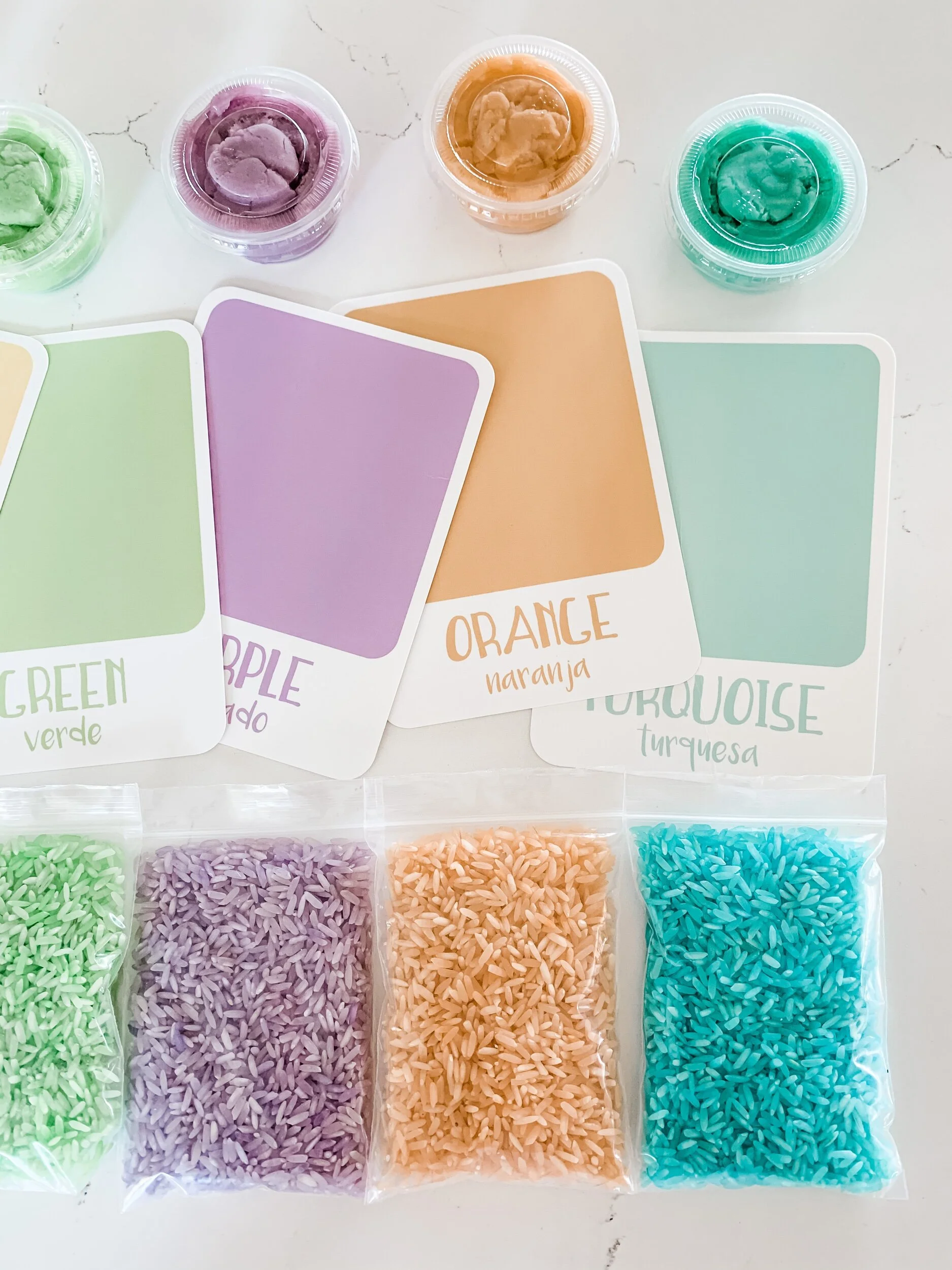
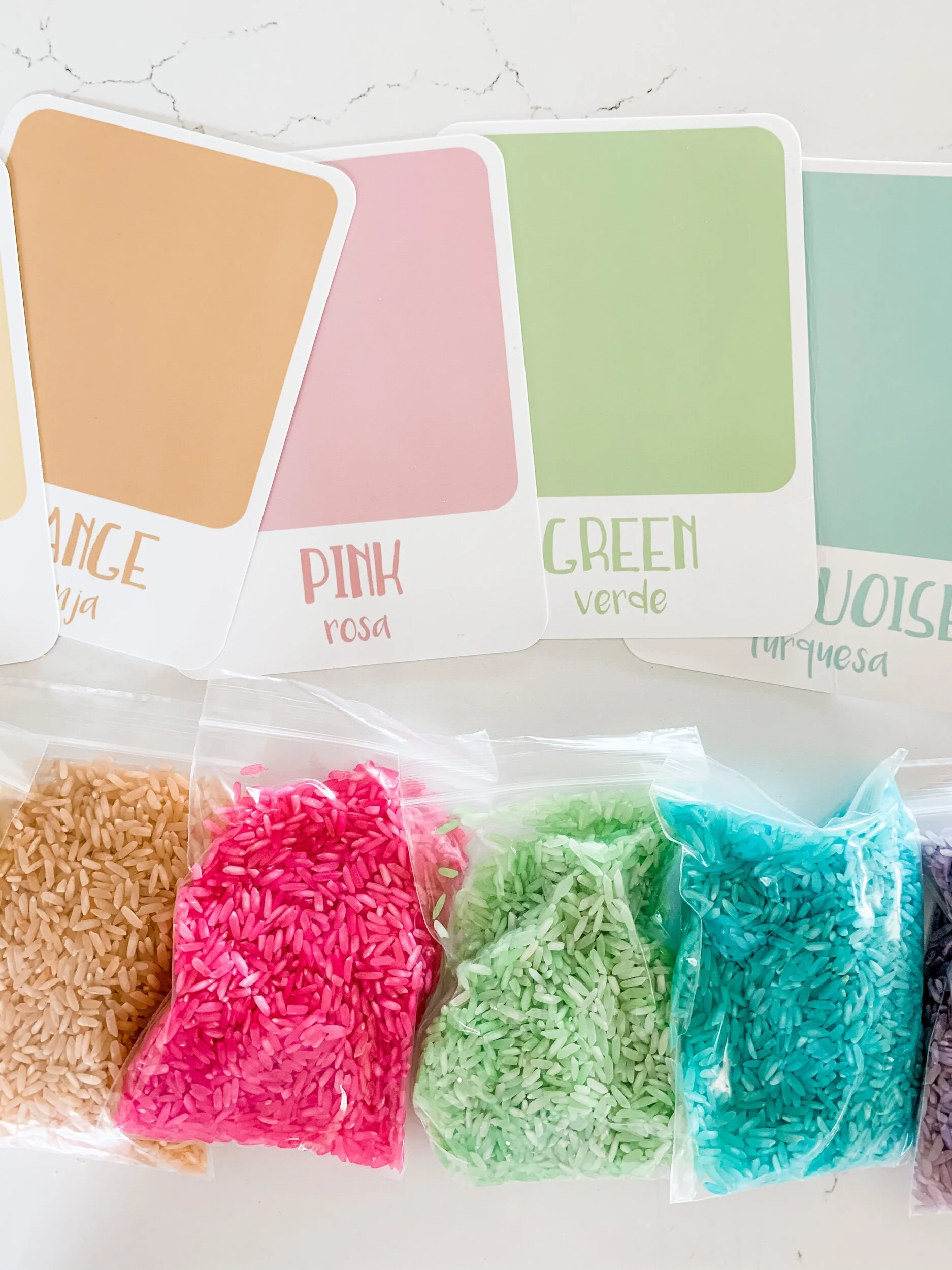
To enhance the educational aspect of the activity, you can pair it with our rainbow color flashcards. Our flashcards are designed to help children learn and recognize colors in a fun and interactive way. They are perfect for use during sensory play and can be used in a variety of ways.

In conclusion, sensory play is an essential aspect of child development and making rainbow rice is a fun and educational activity that can be enjoyed by children of all ages. By pairing it with our rainbow color flashcards, you can enhance the educational aspect of the activity. We hope you and your children enjoy making and playing with rainbow rice!

IMG_2566.jpeg
IMG_2580.jpeg
IMG_2578.jpeg
IMG_2575.jpeg
IMG_2559.jpeg
IMG_2571.jpeg
IMG_2583.jpeg
IMG_2581.jpeg
IMG_2563.jpeg
IMG_2582.jpeg
IMG_2584.jpeg
IMG_2585.jpeg
IMG_2565.jpeg
IMG_2560.jpeg
IMG_2576.jpeg
IMG_2561.jpeg
IMG_2562.jpeg
IMG_2564.jpeg
IMG_2567.jpeg
IMG_2568.jpeg
IMG_2569.jpeg
IMG_2570.jpeg
IMG_2572.jpeg
IMG_2574.jpeg
IMG_2577.jpeg
IMG_2579.jpeg

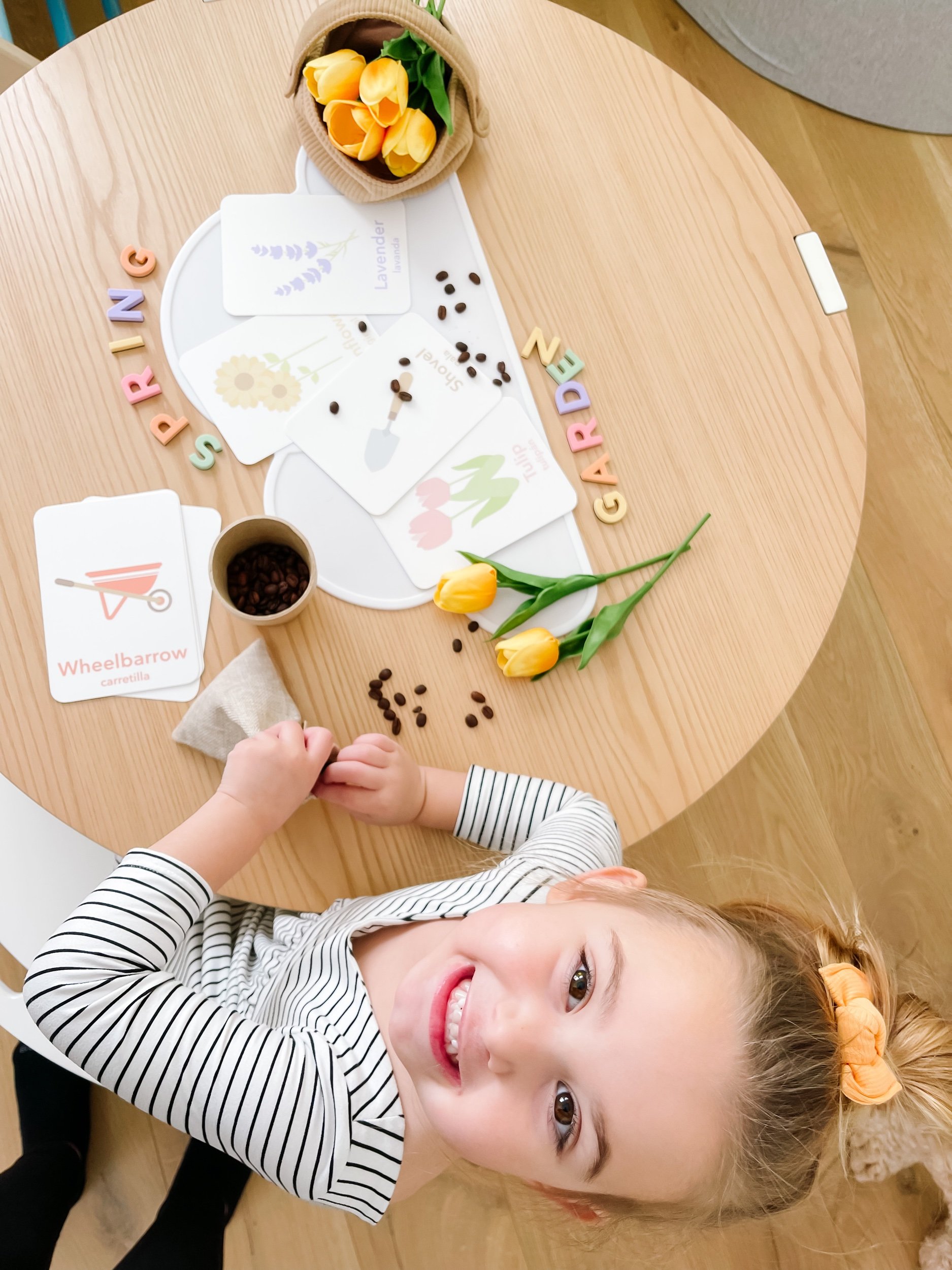
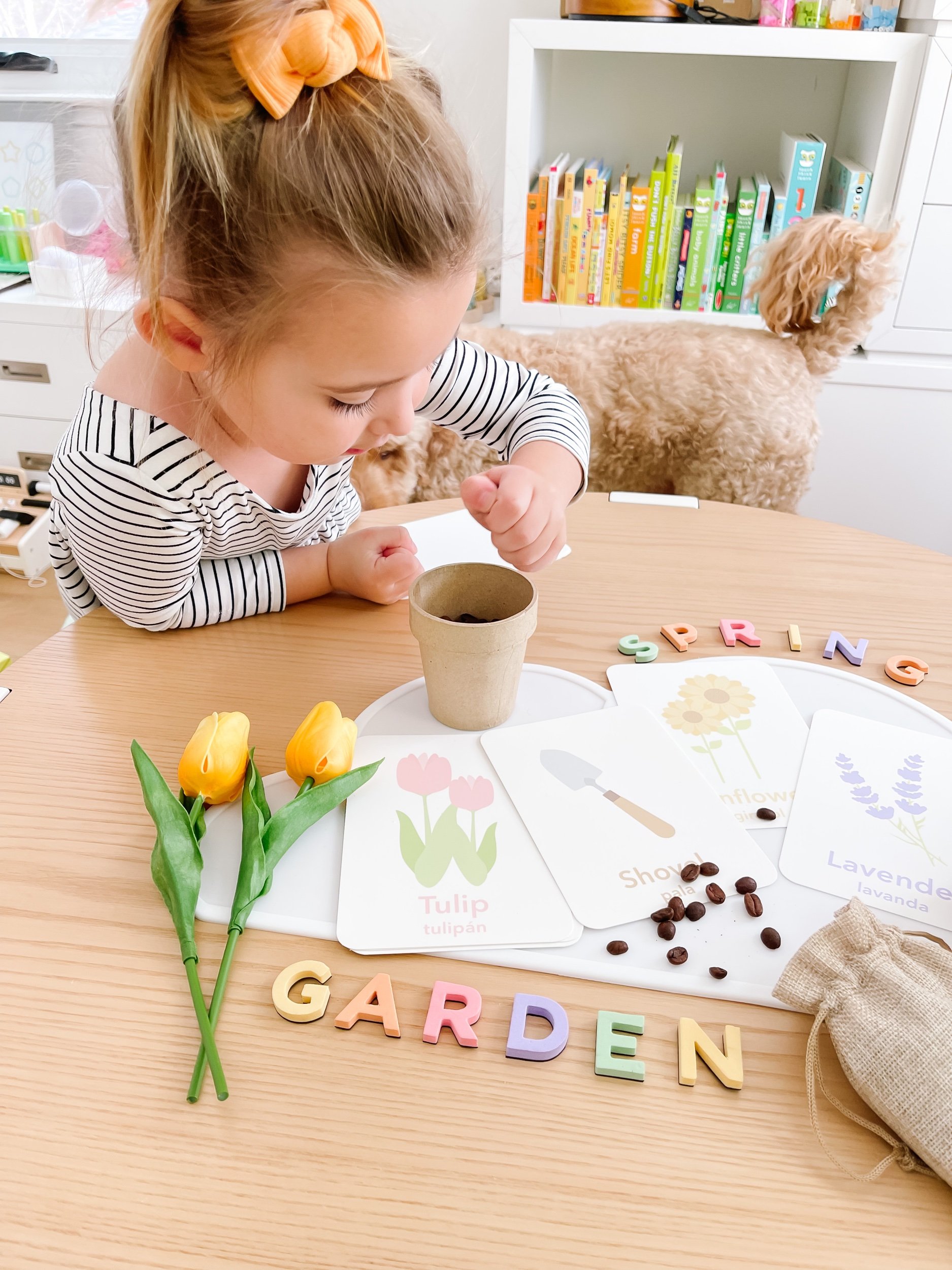
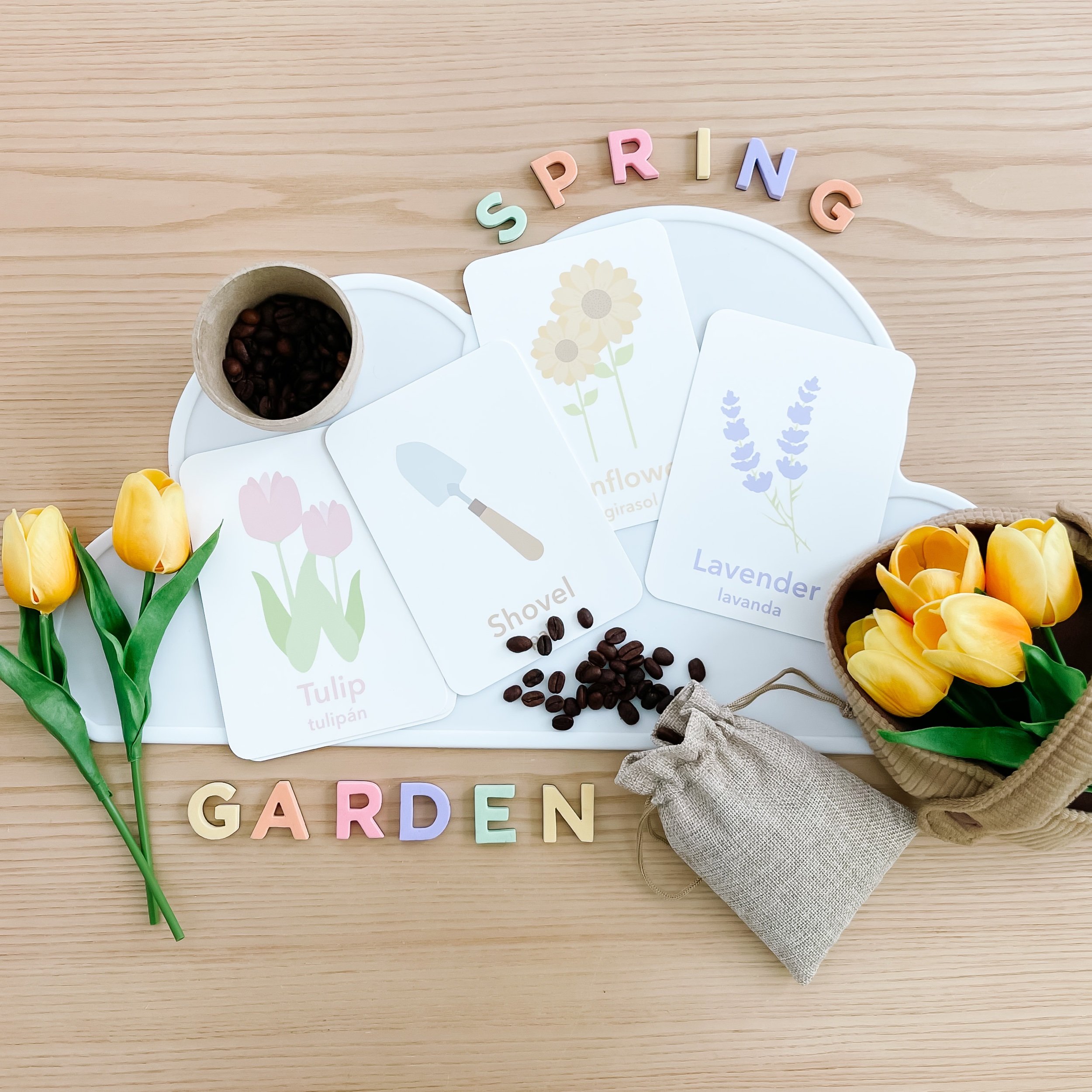
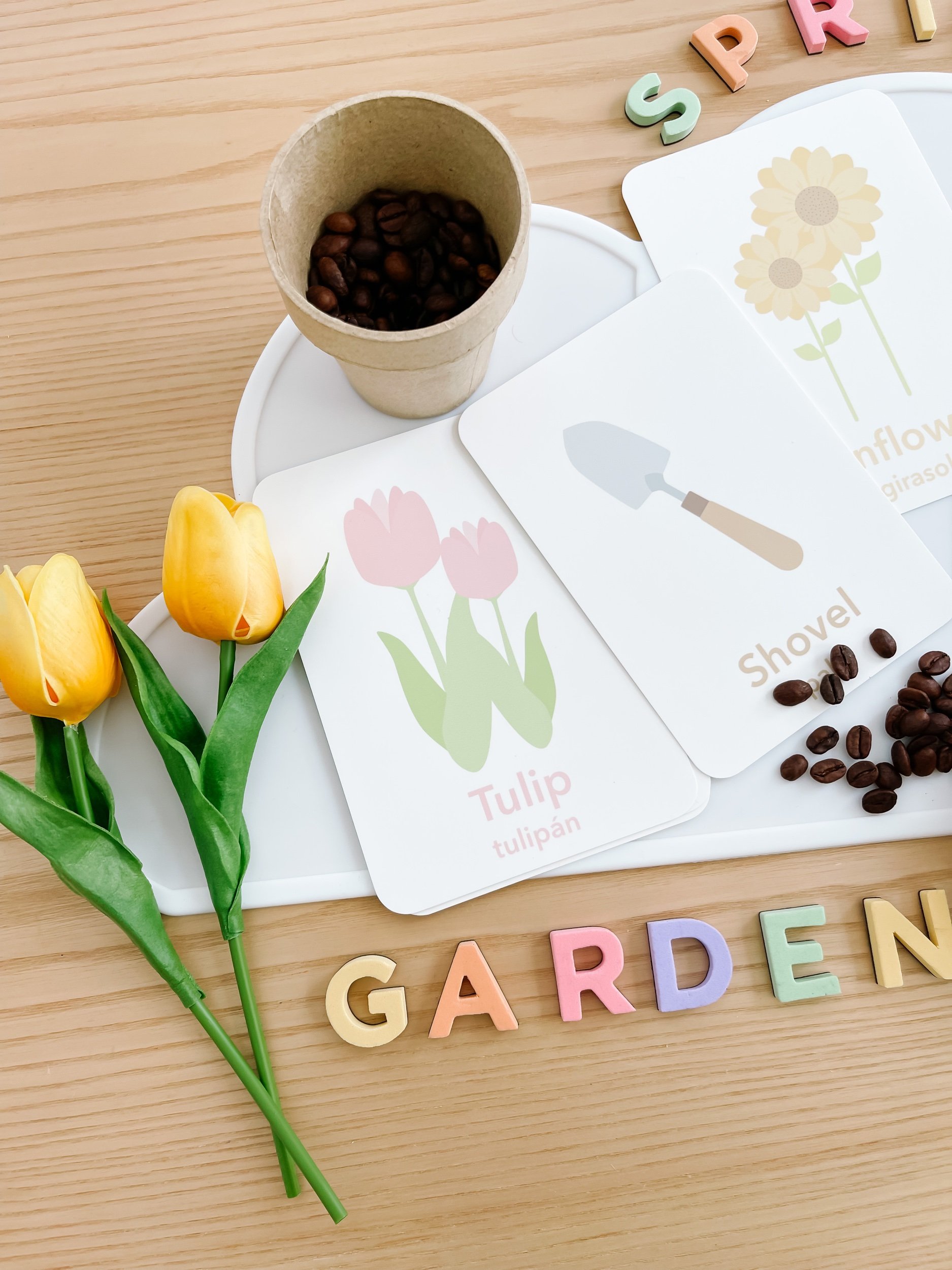
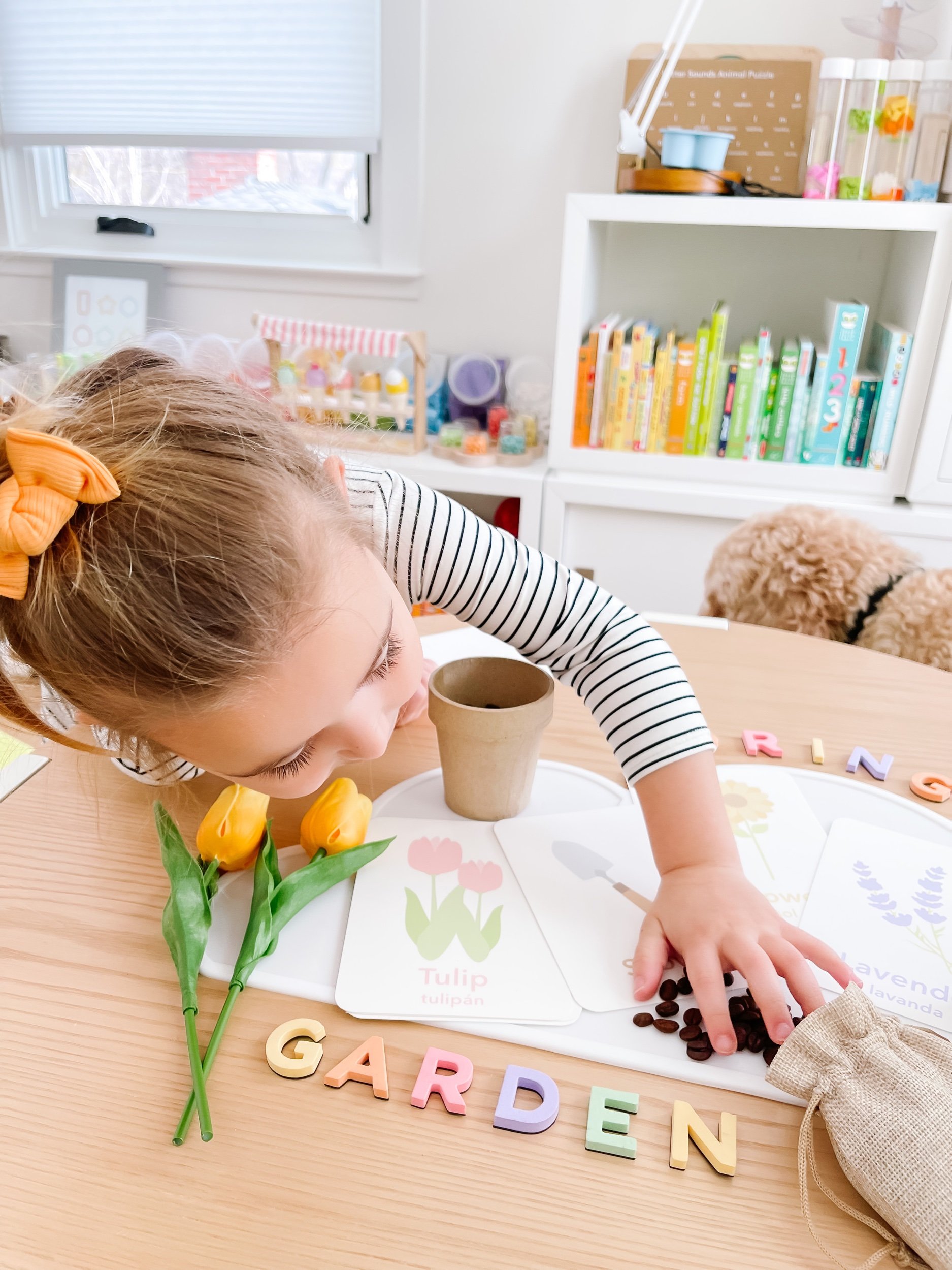
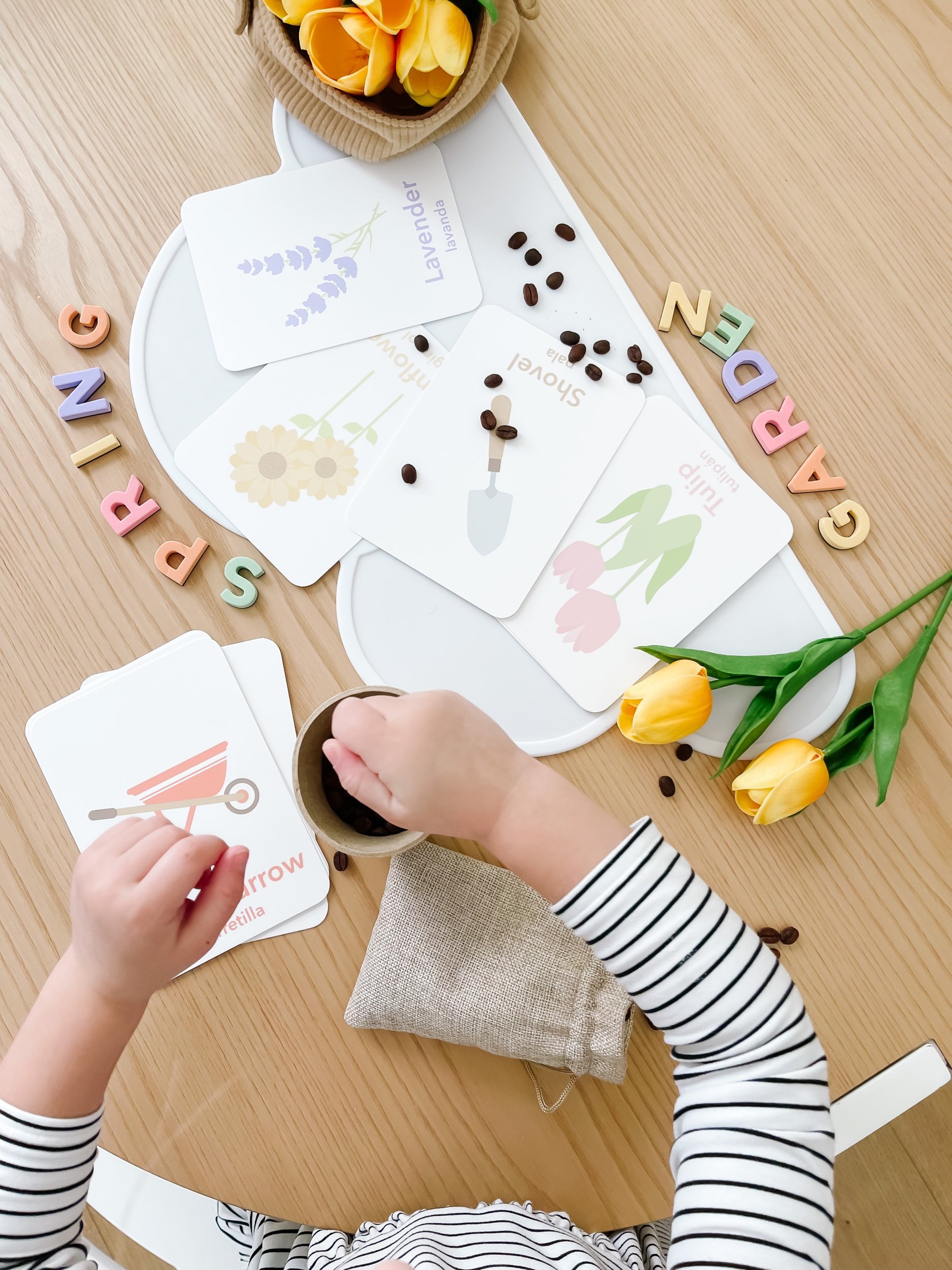
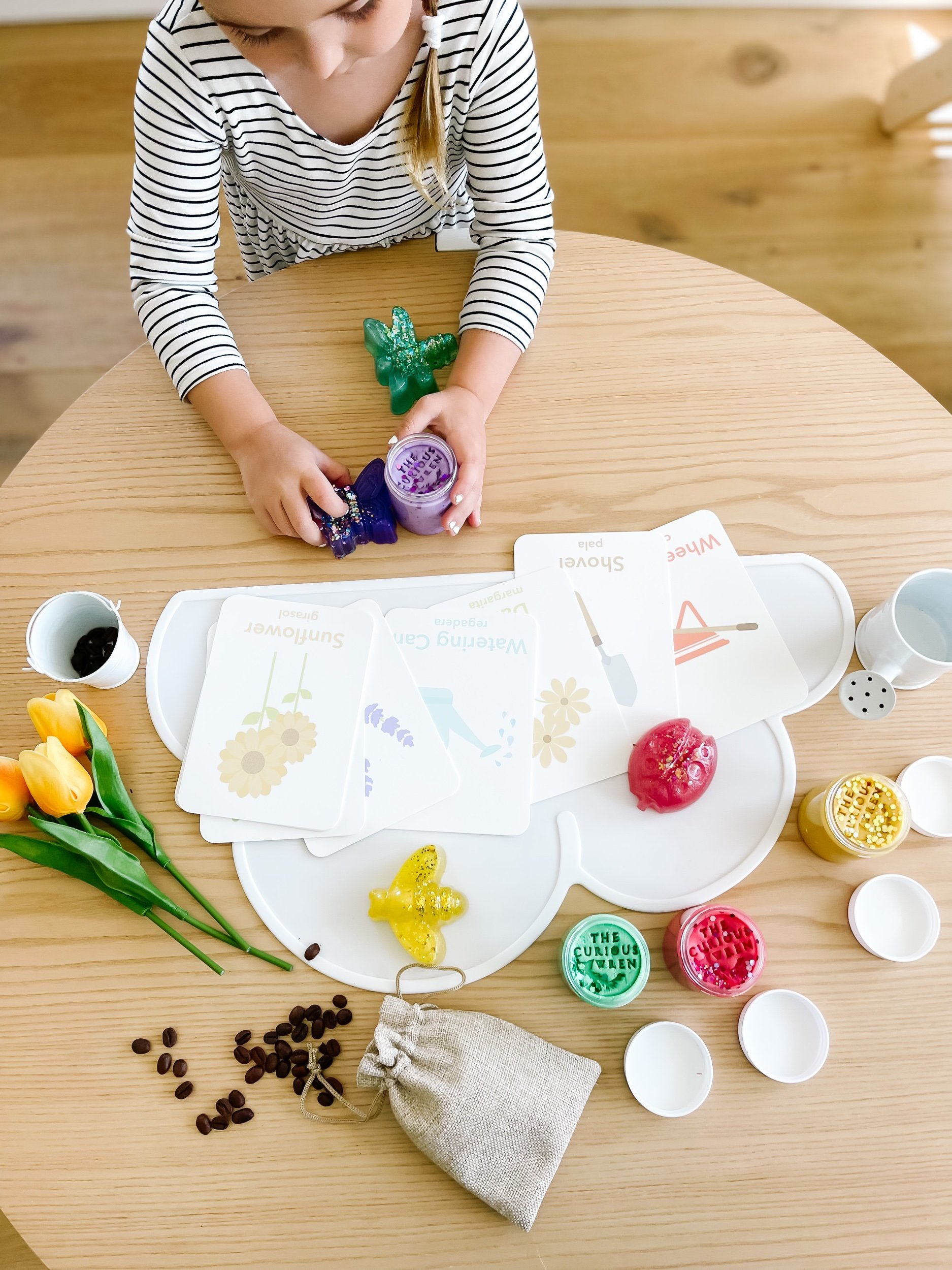
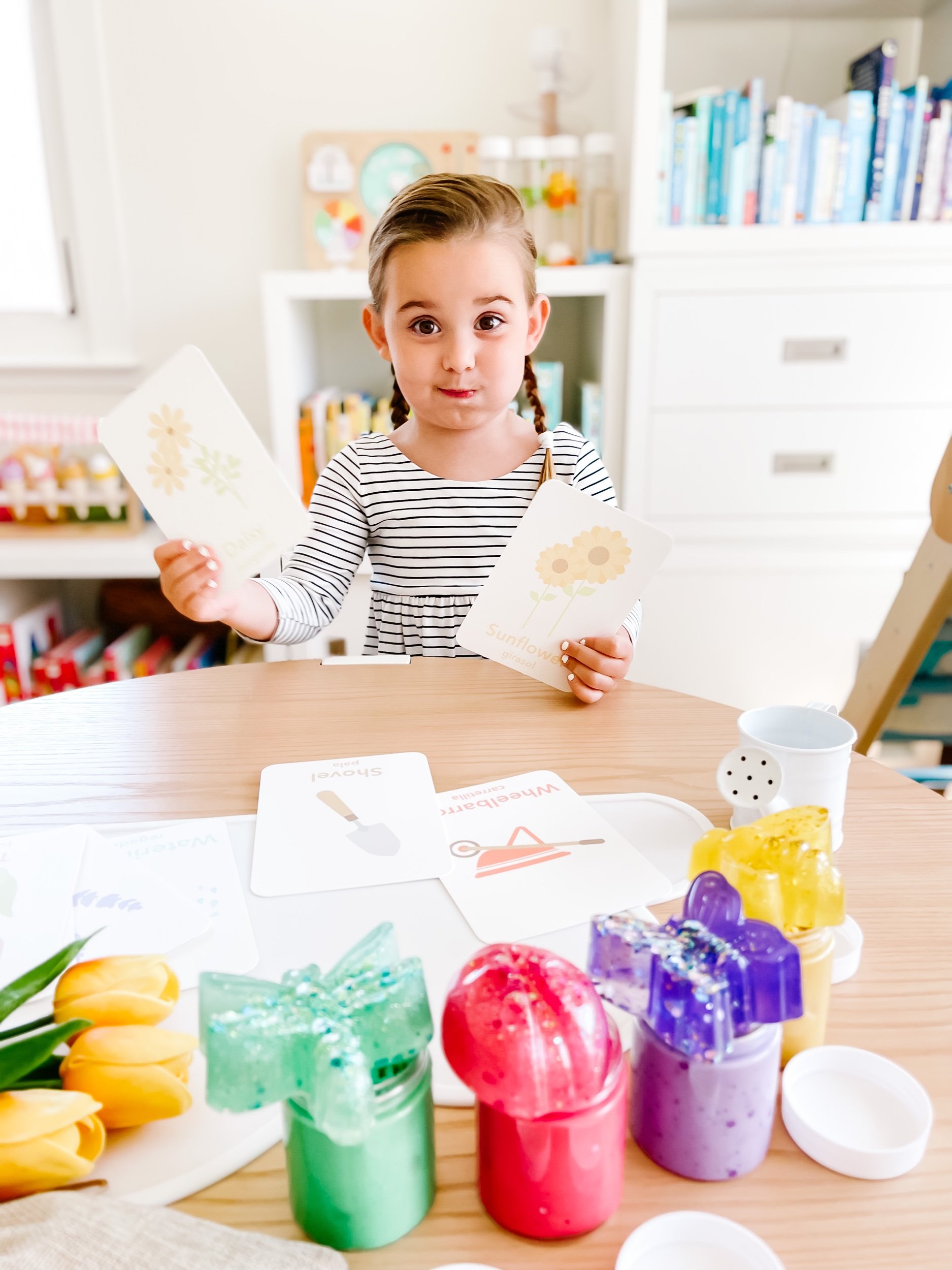
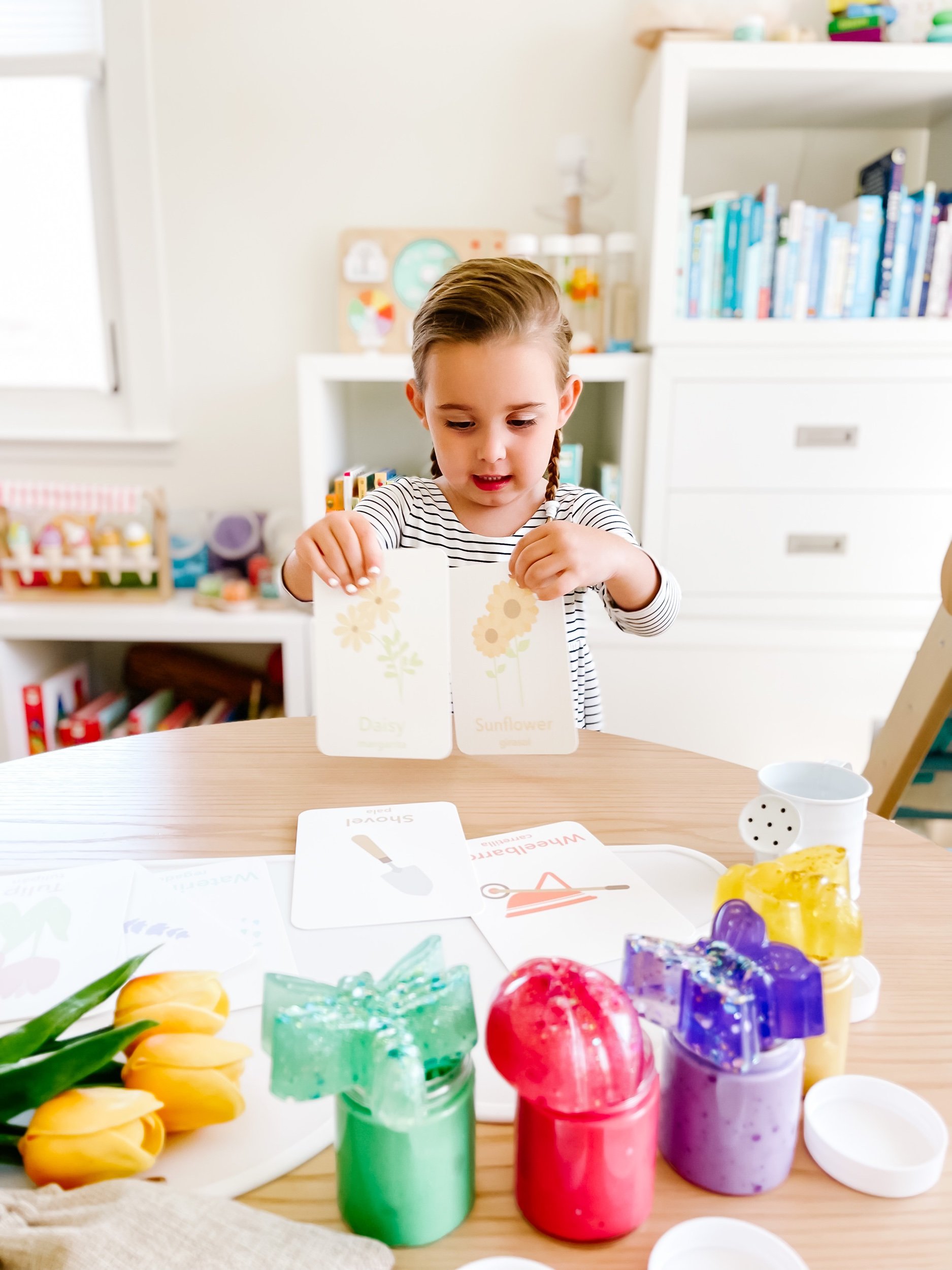
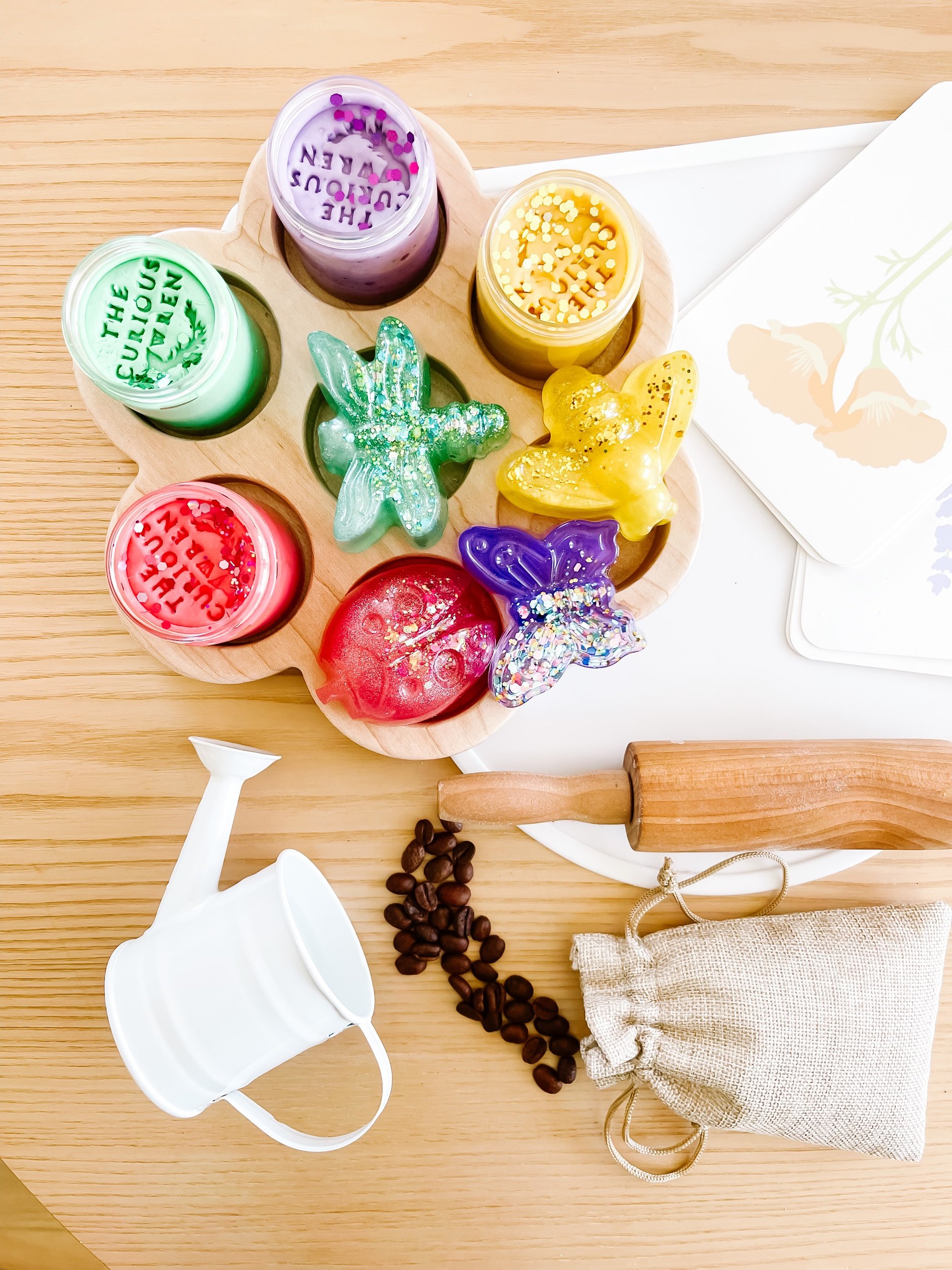
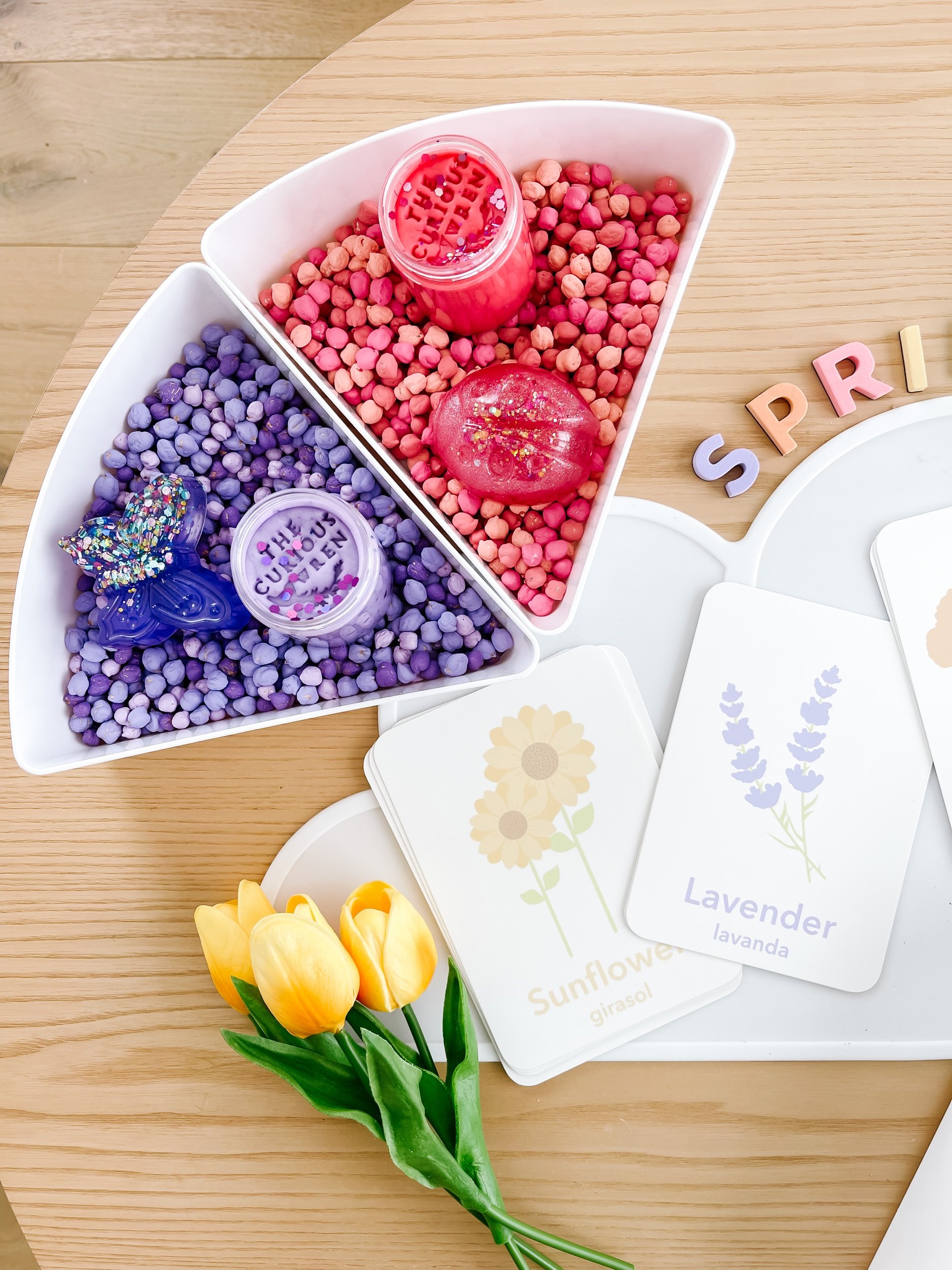
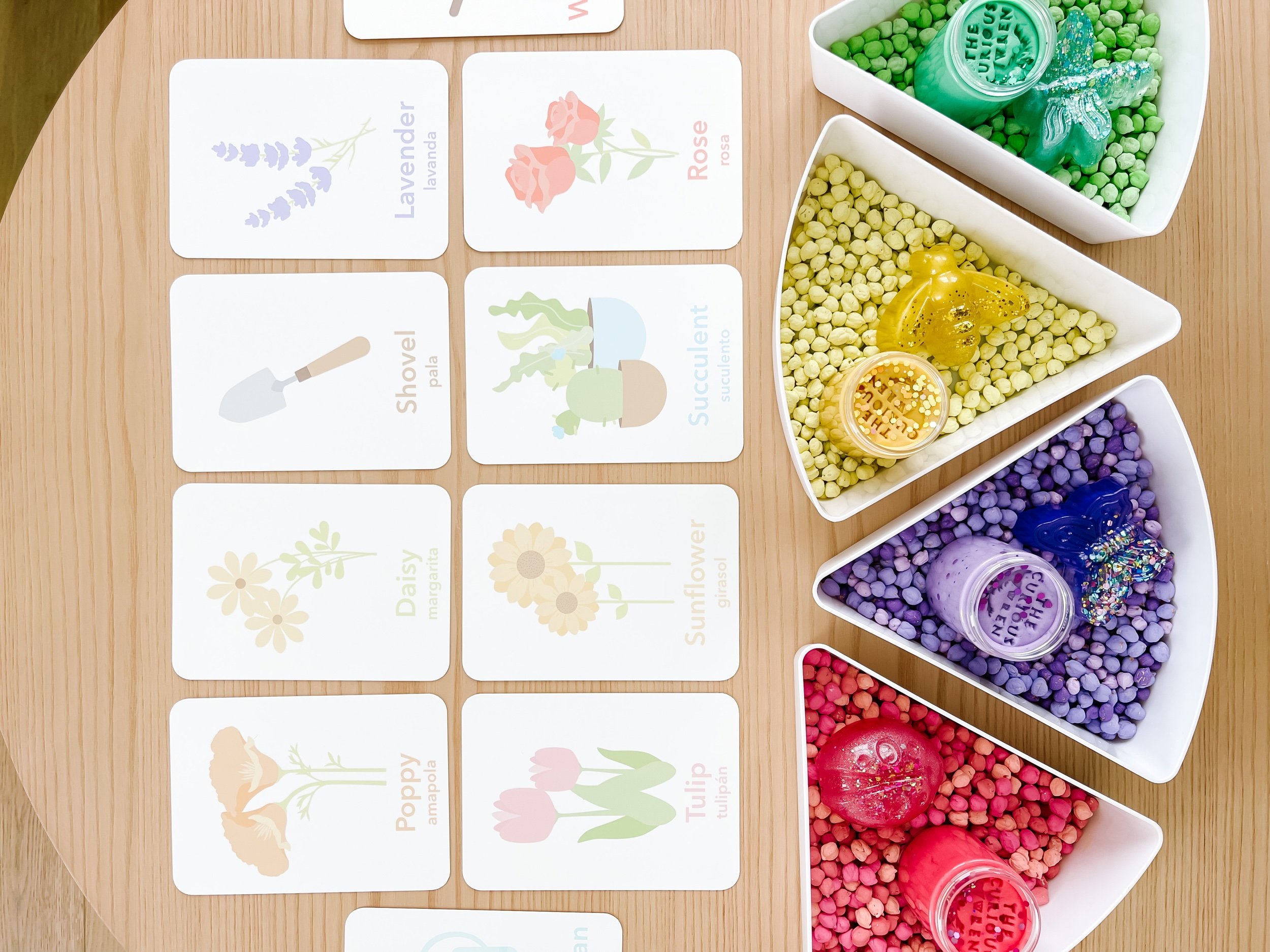
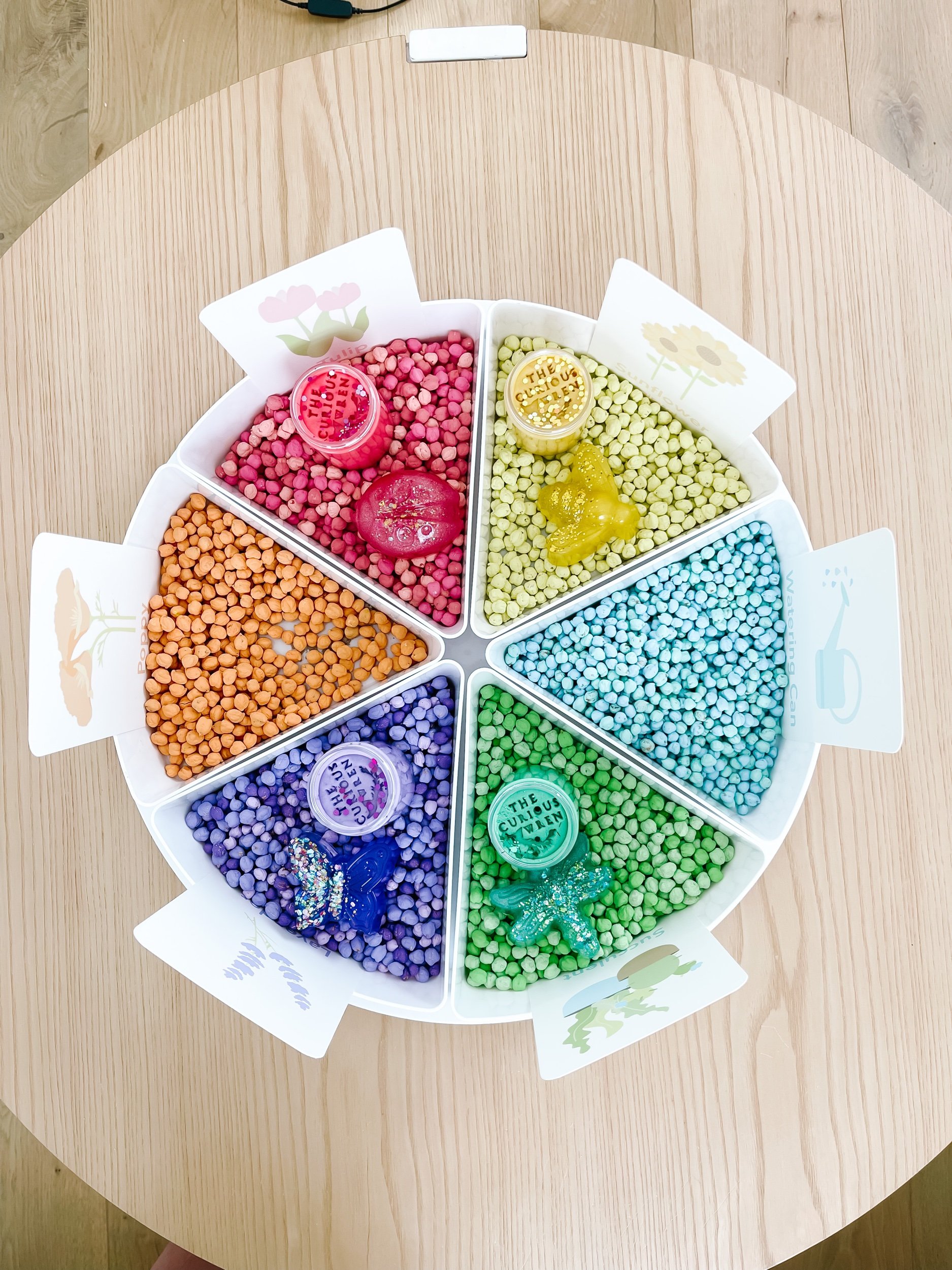
Garden flower spring sensory play ideas

March 21, 2023 Kylie Tuosto
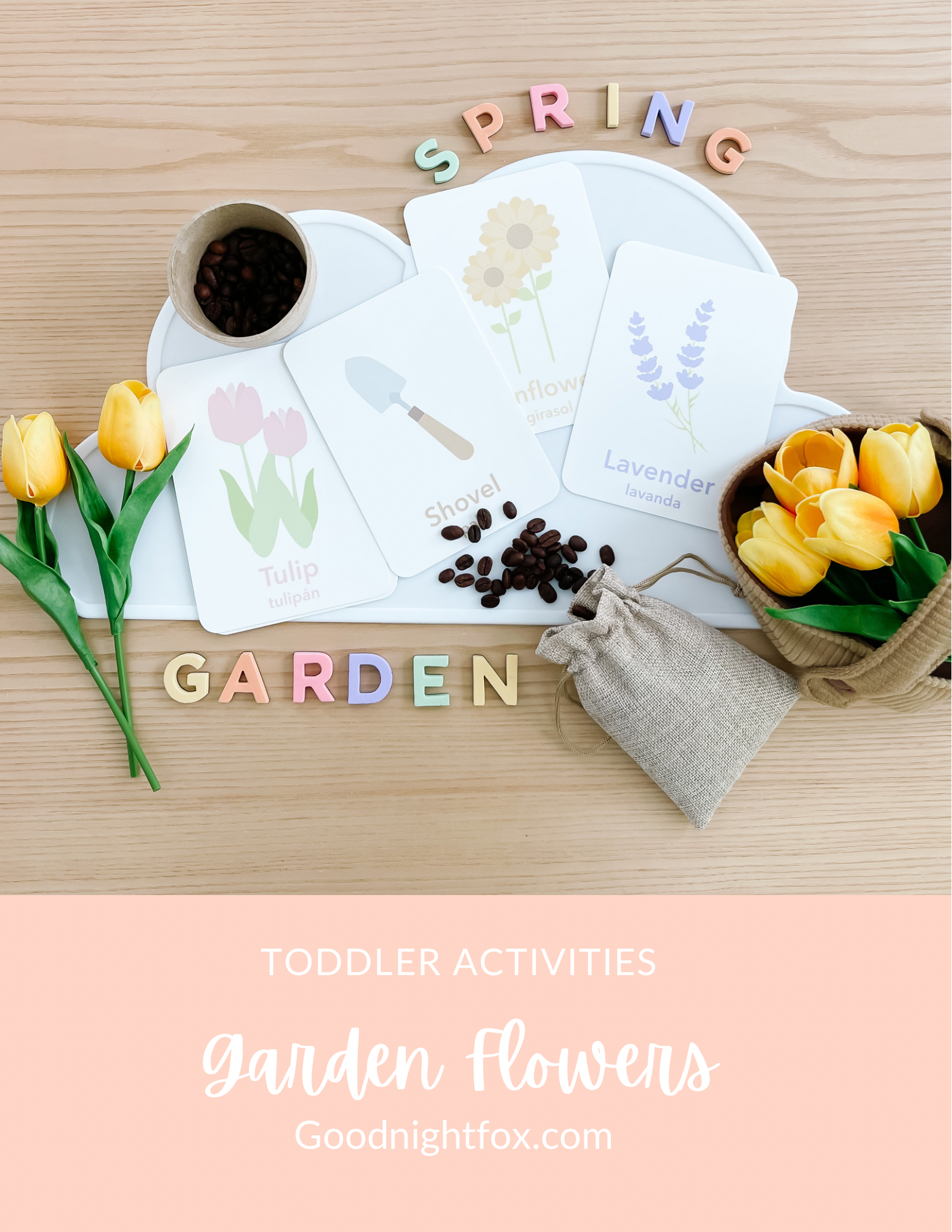
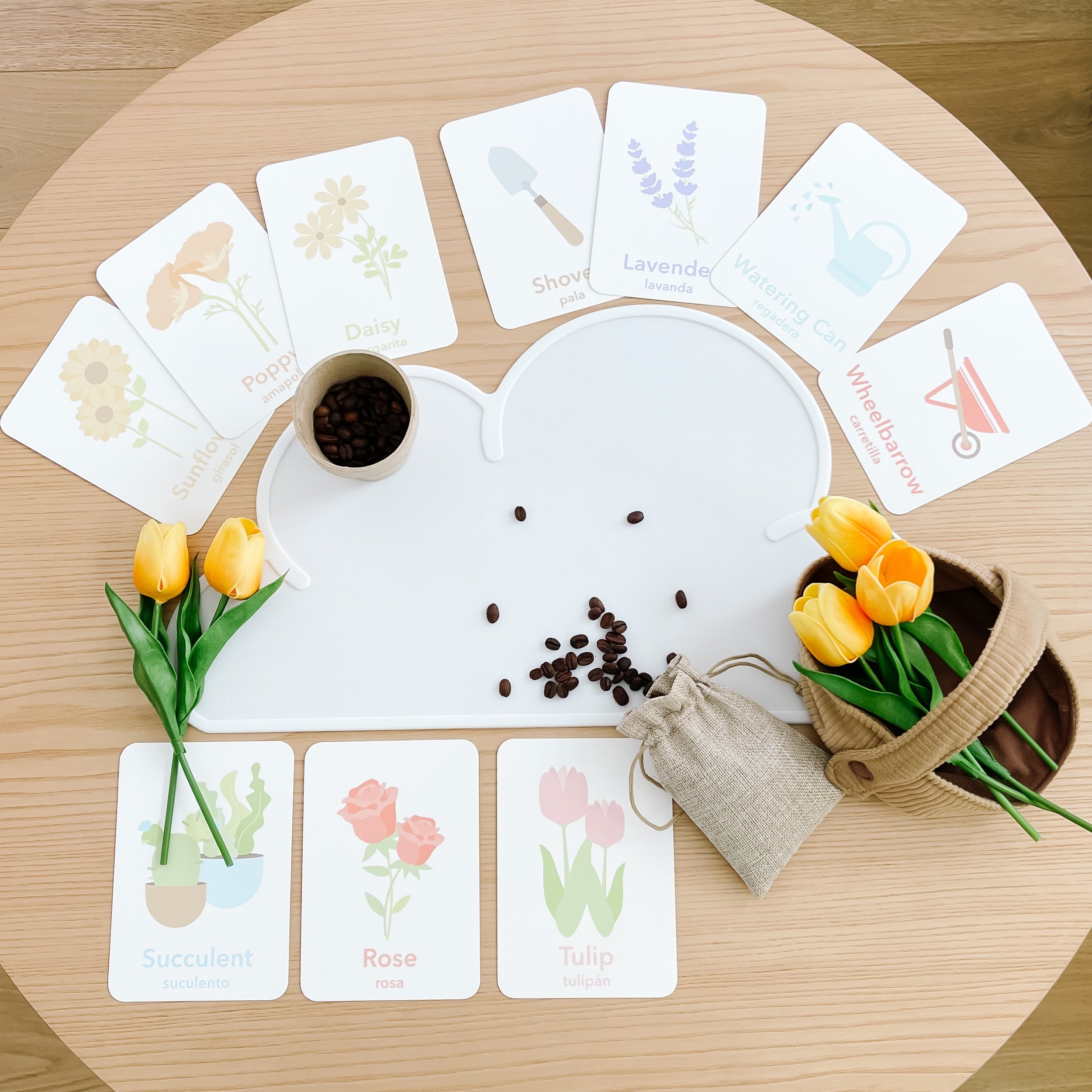
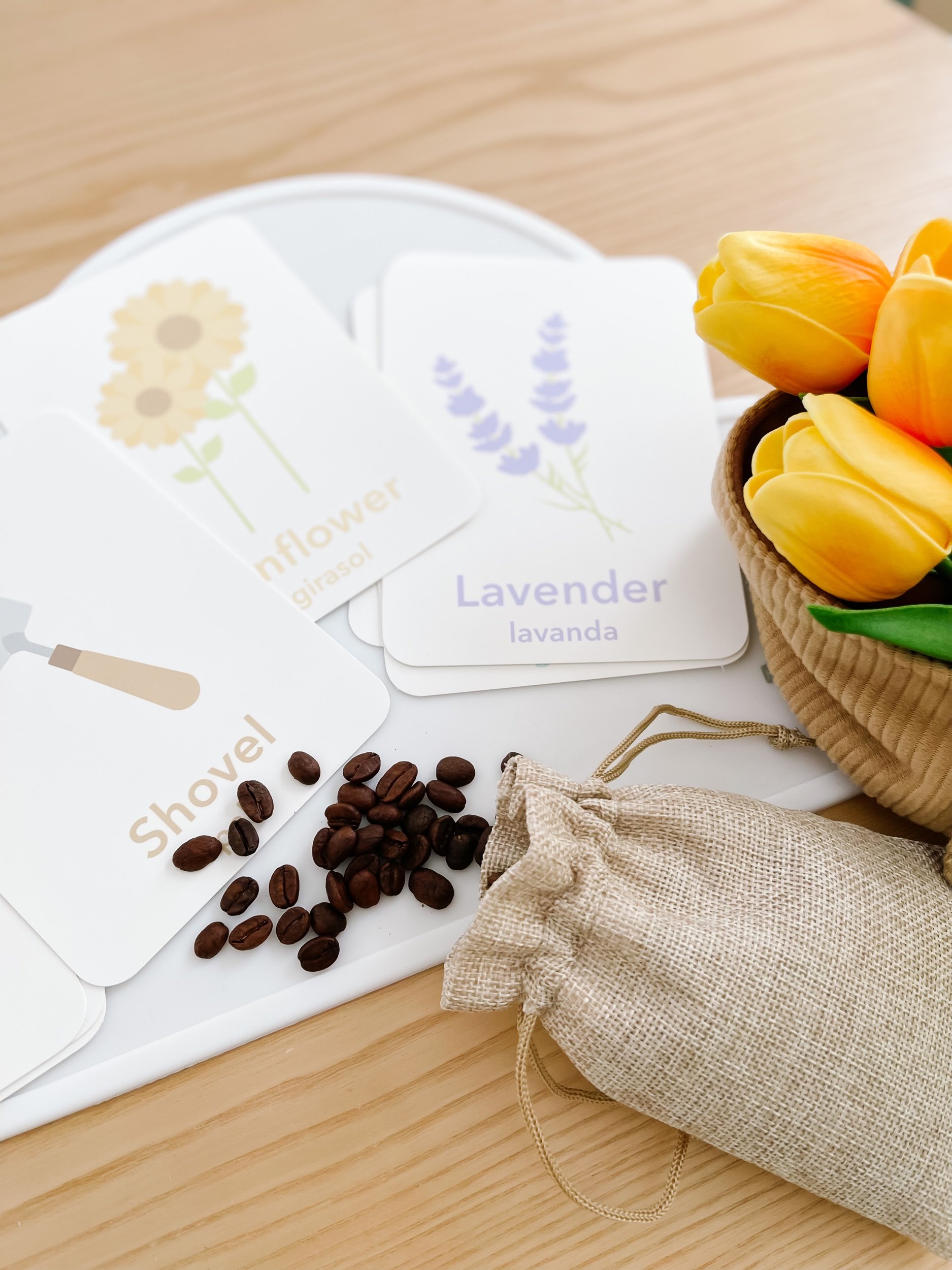
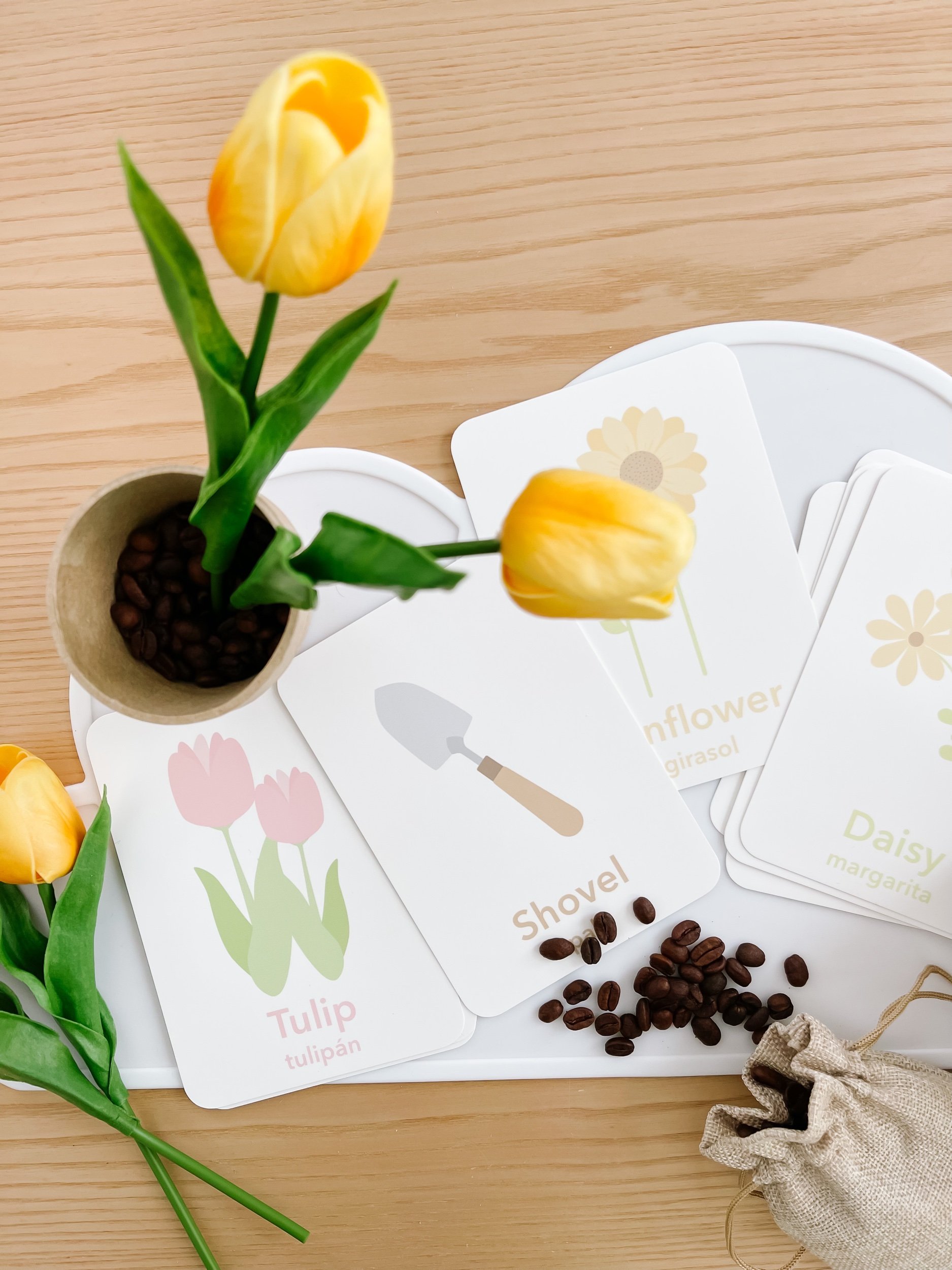
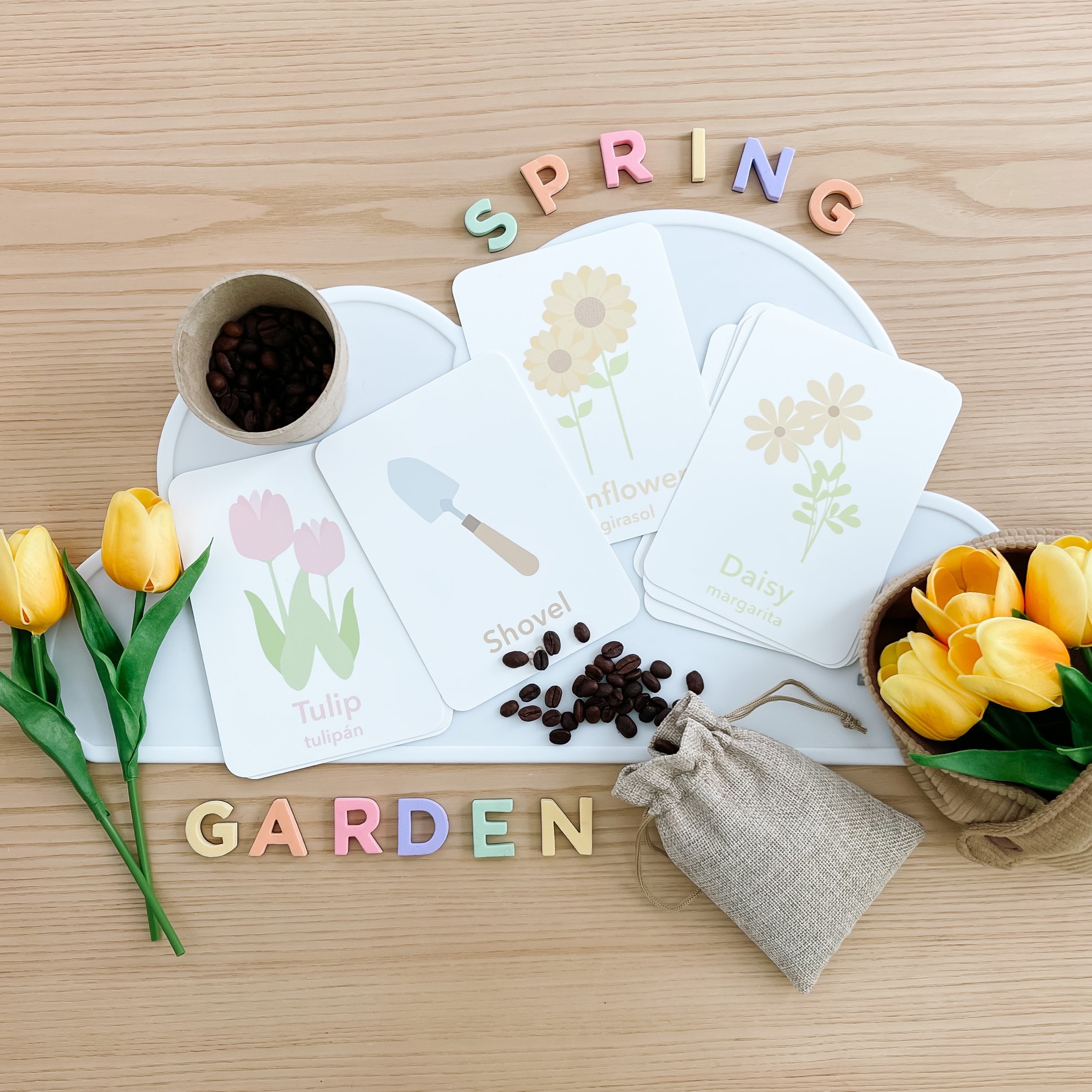
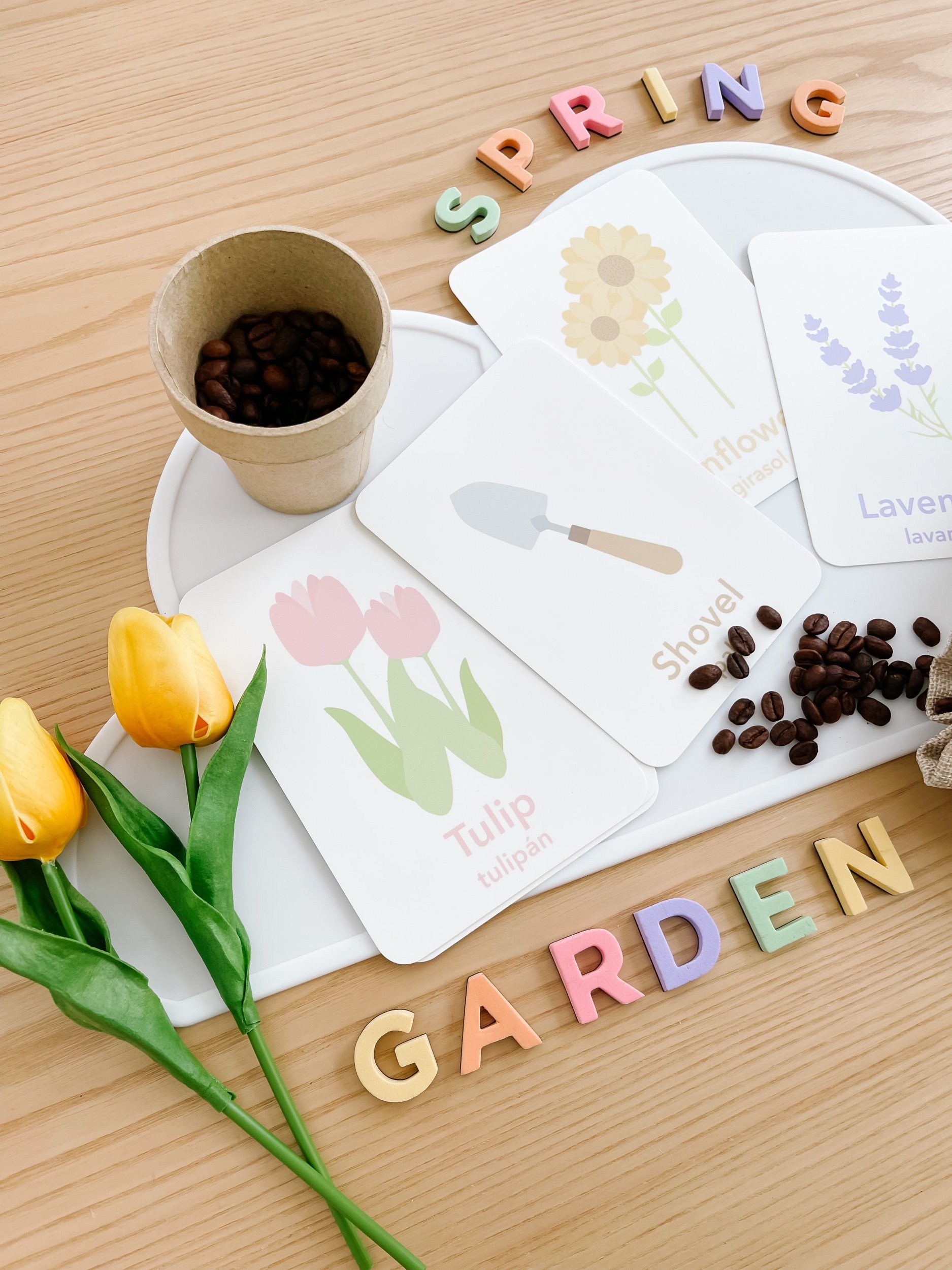
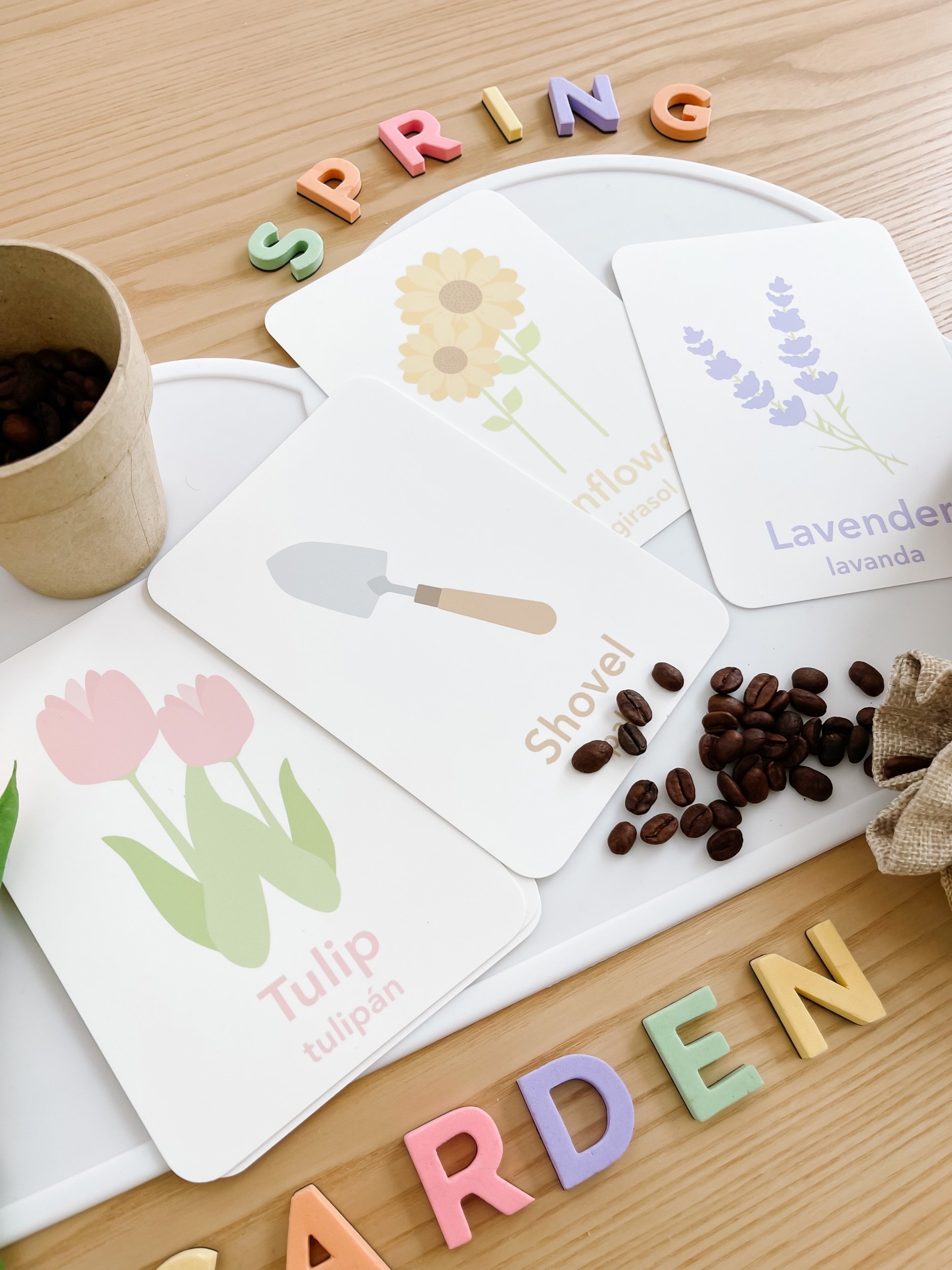
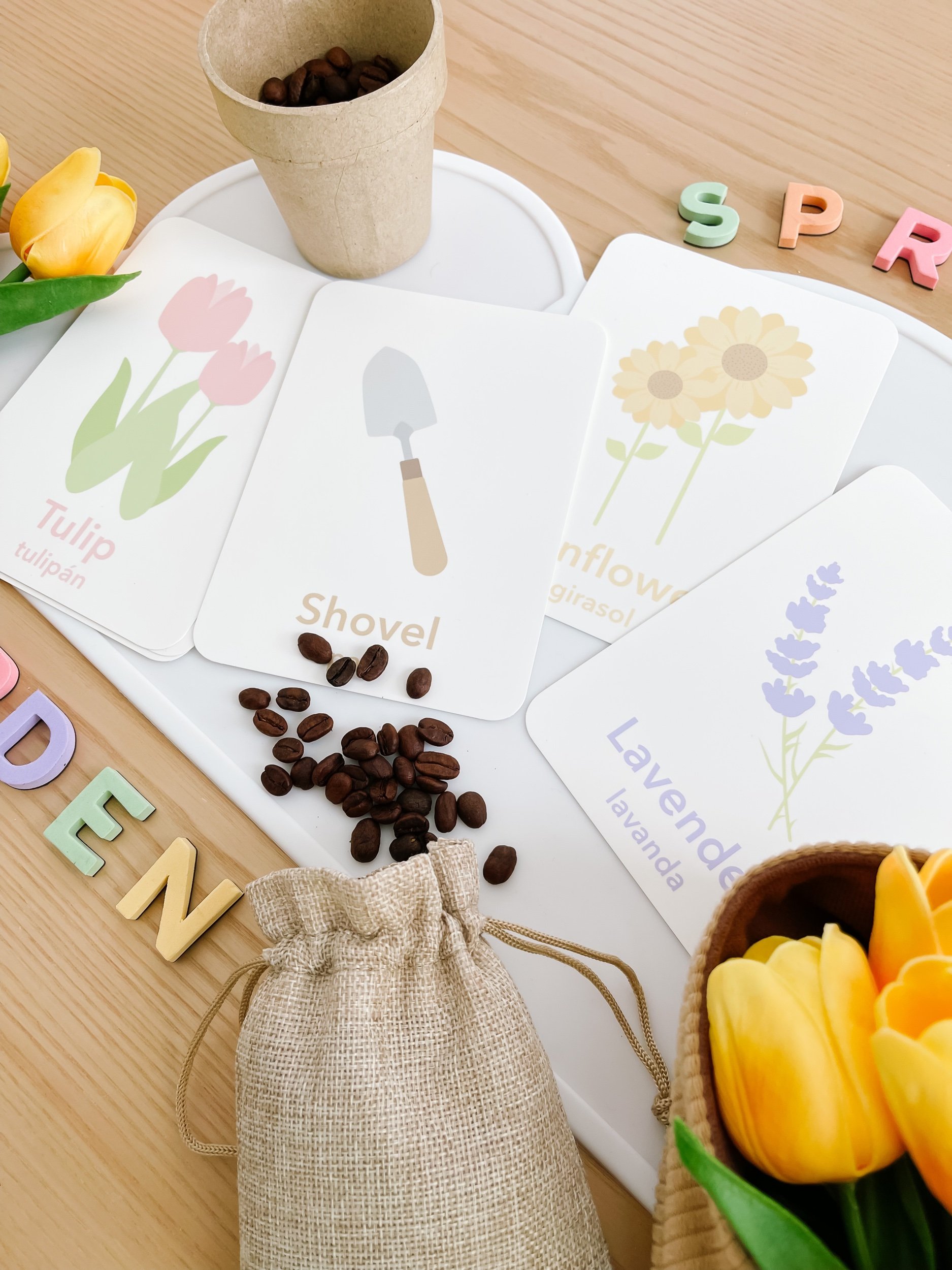
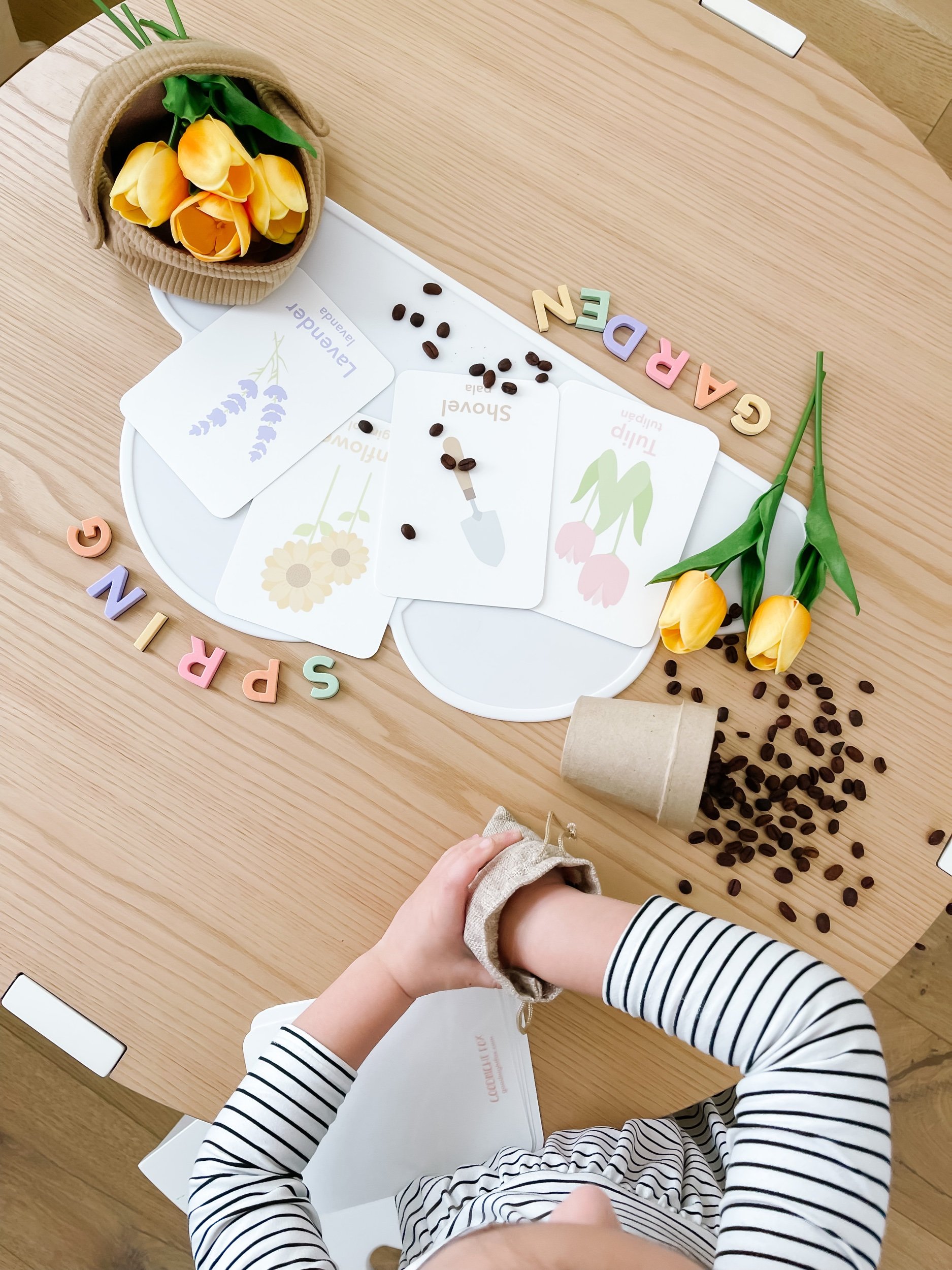
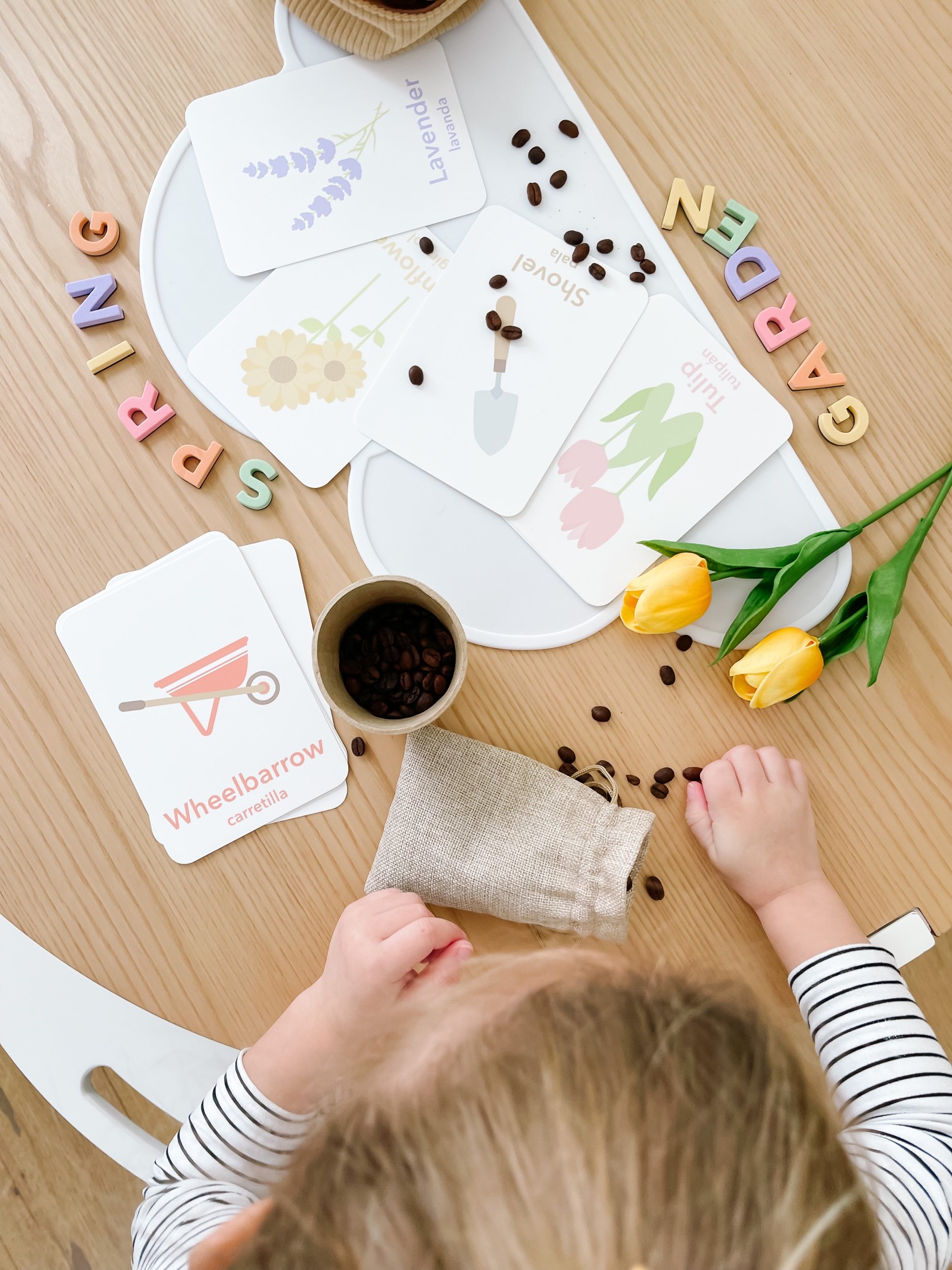
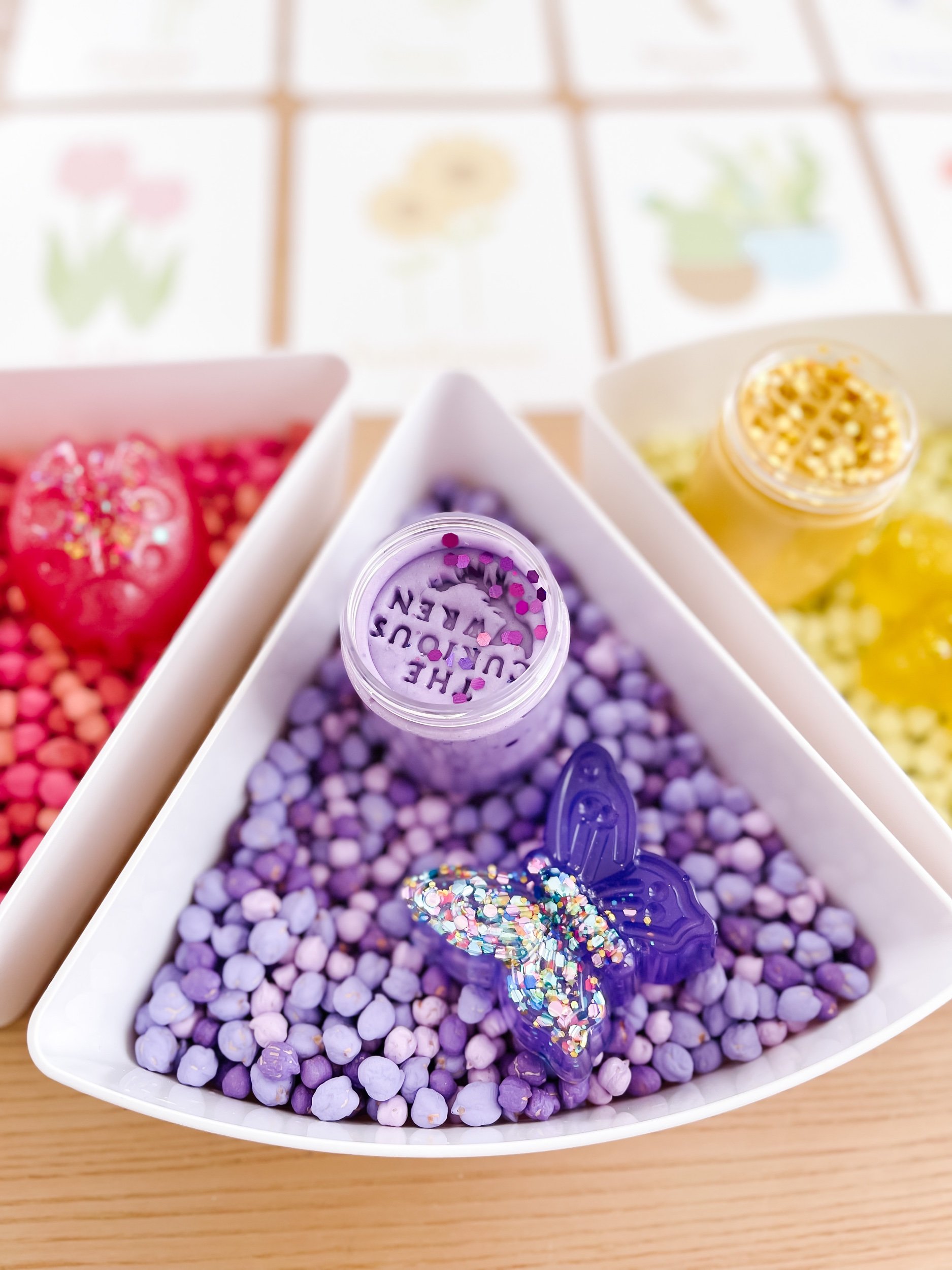
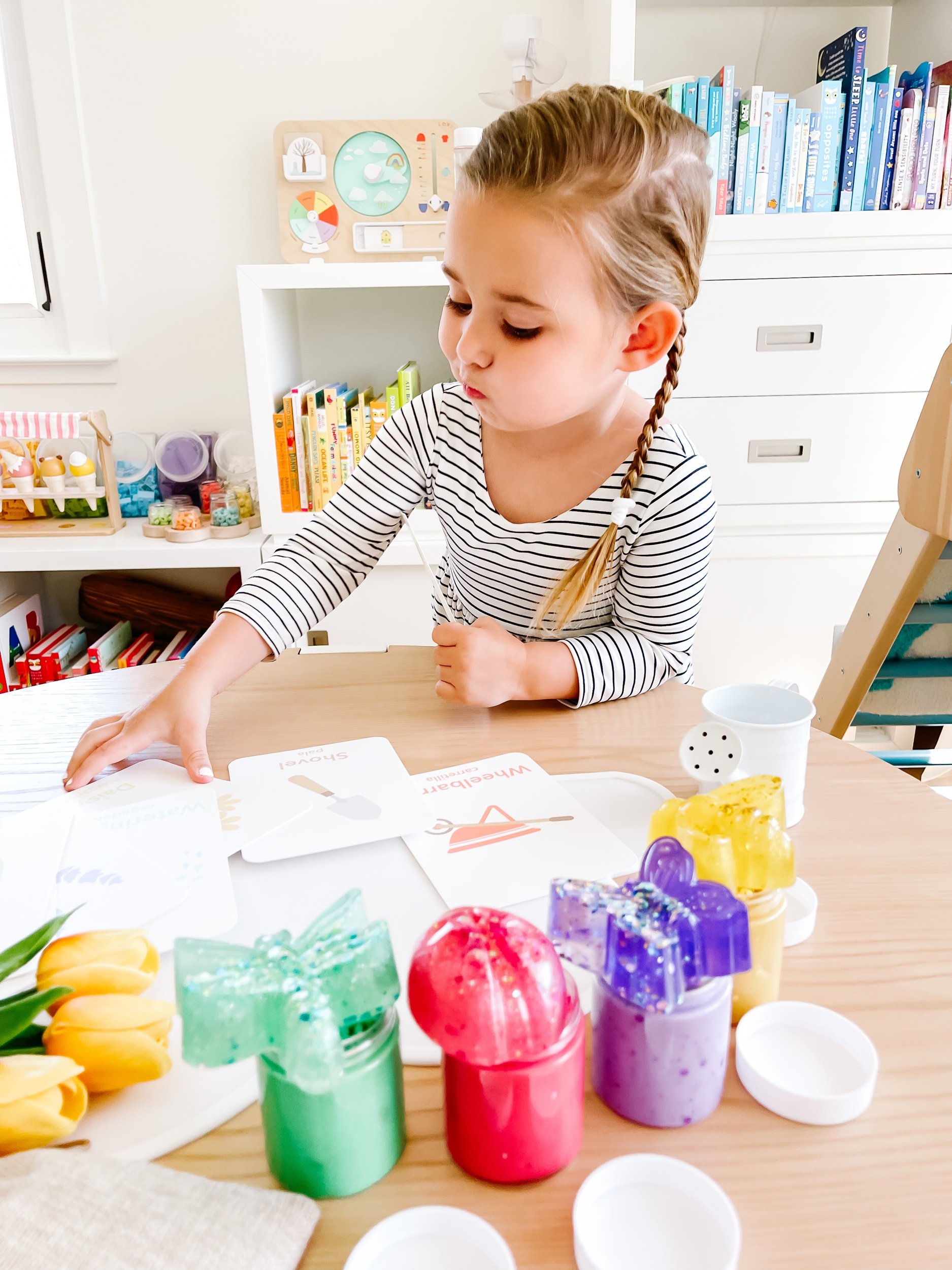
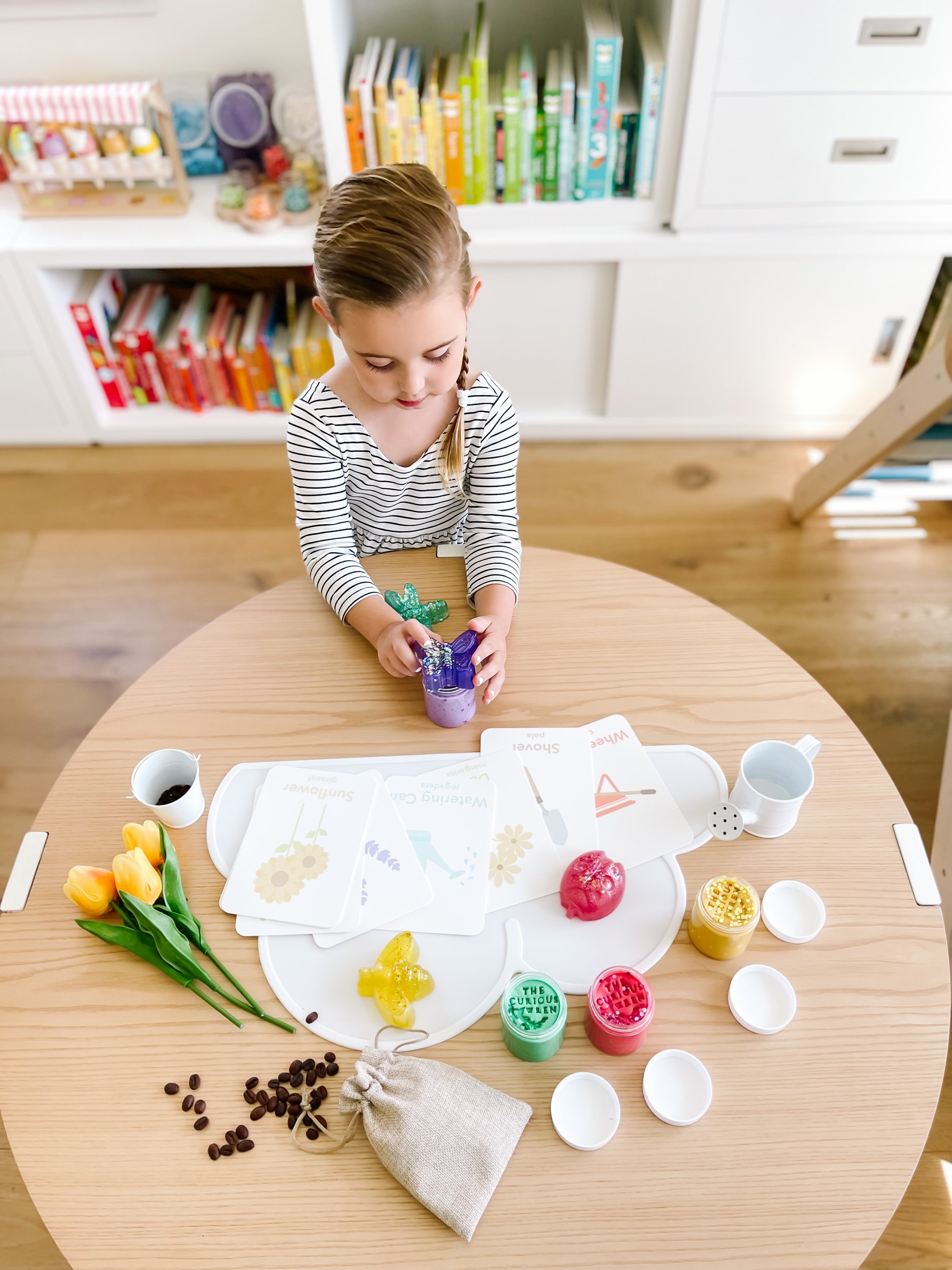
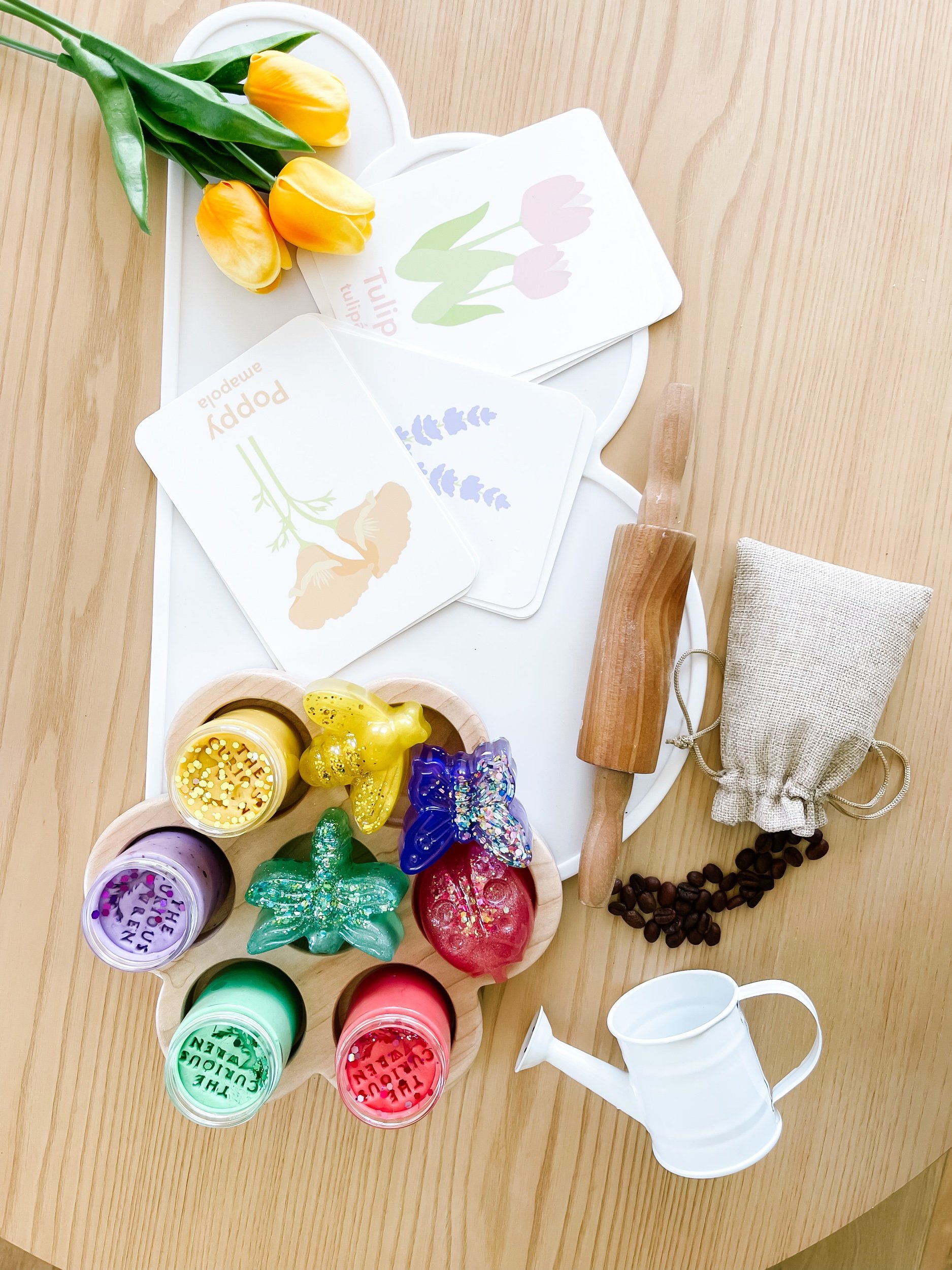
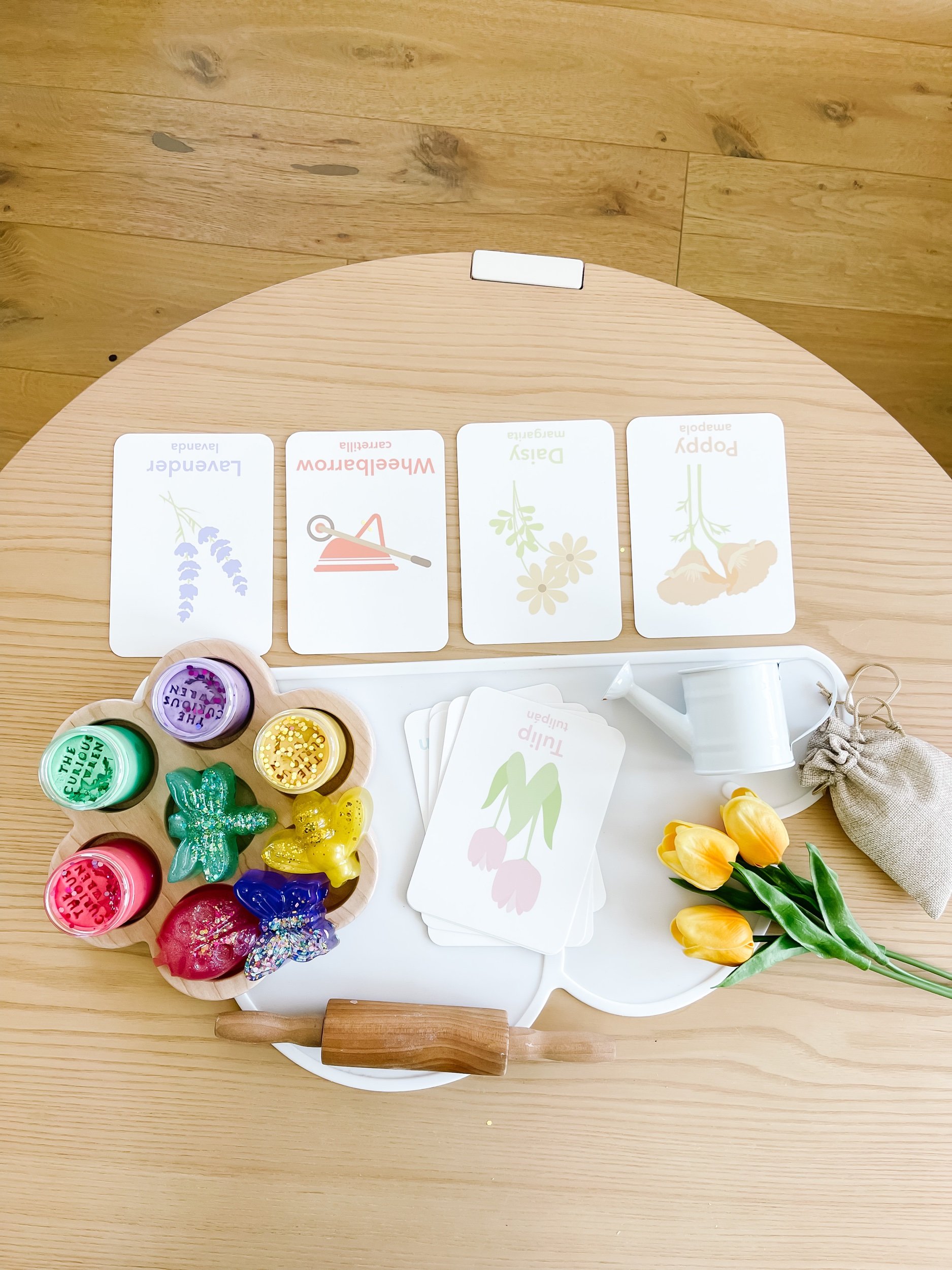
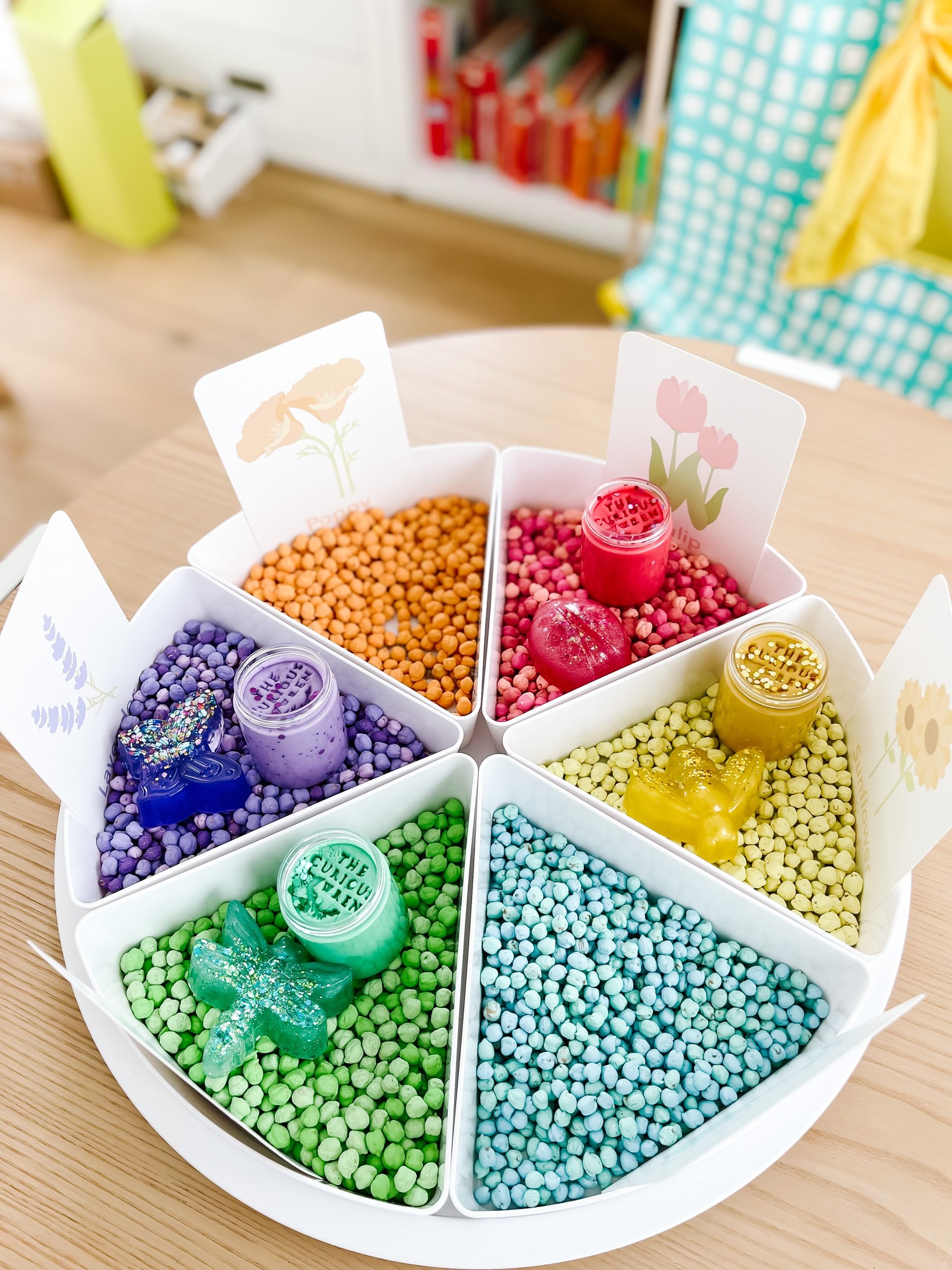
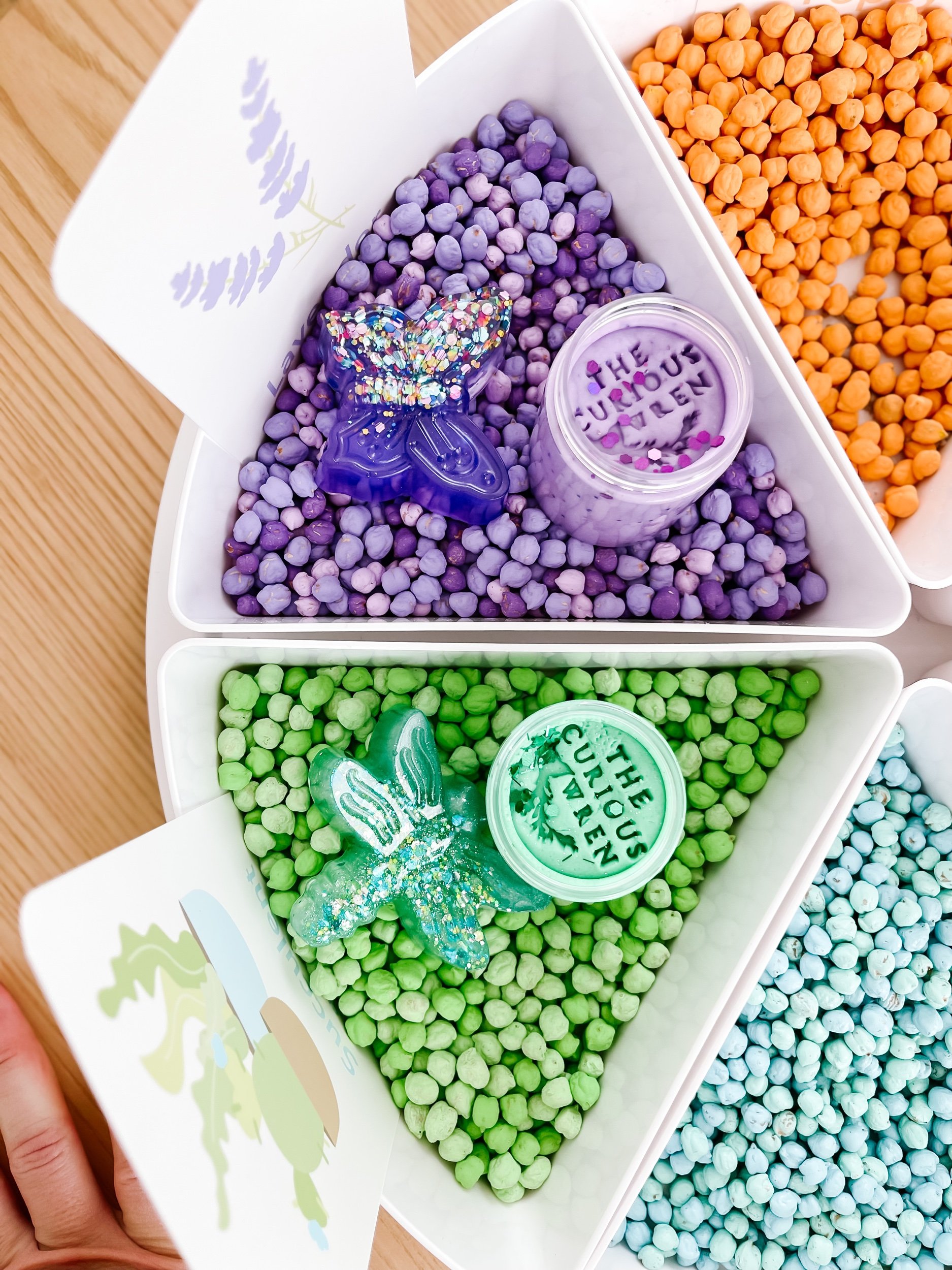
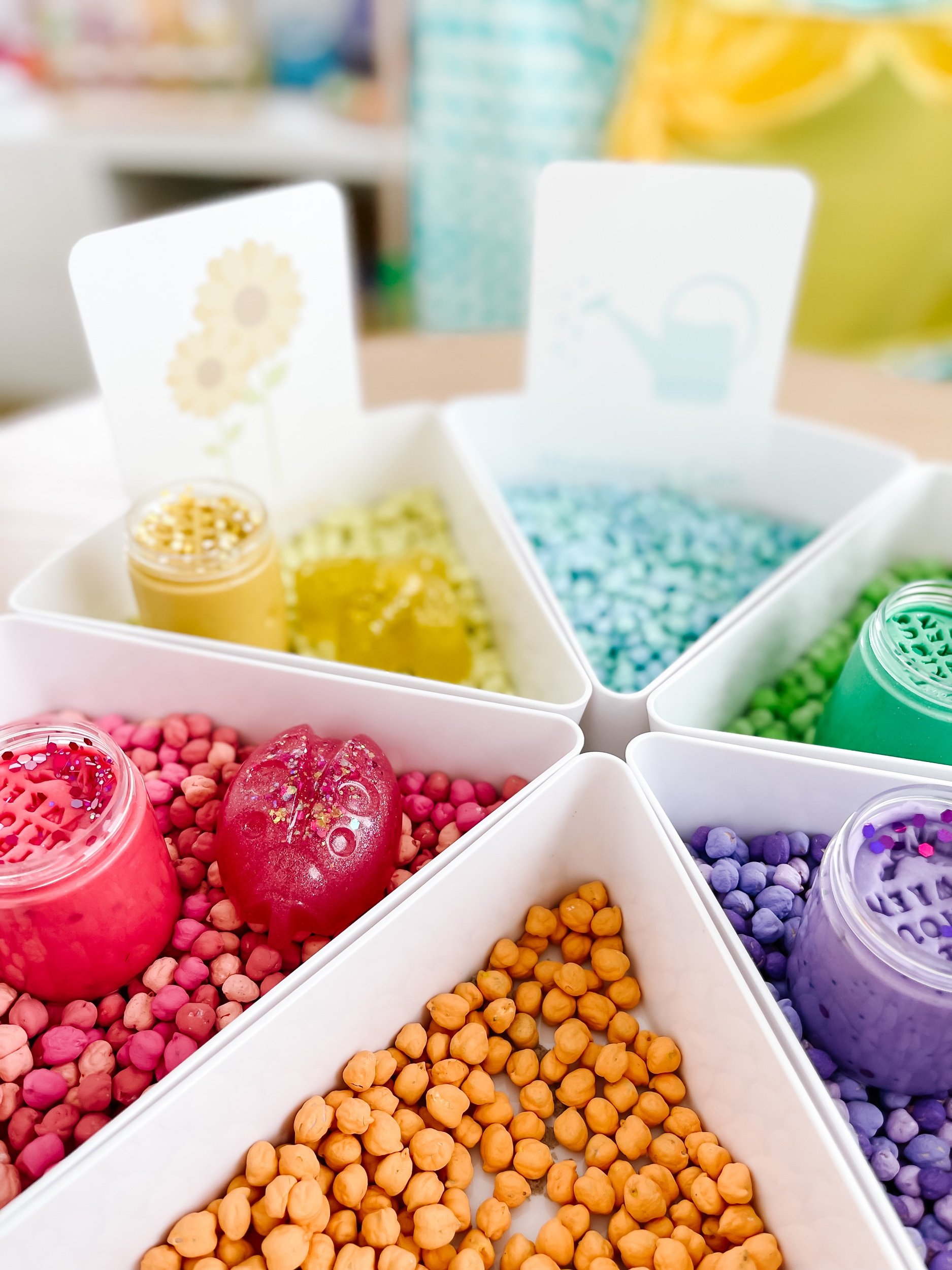
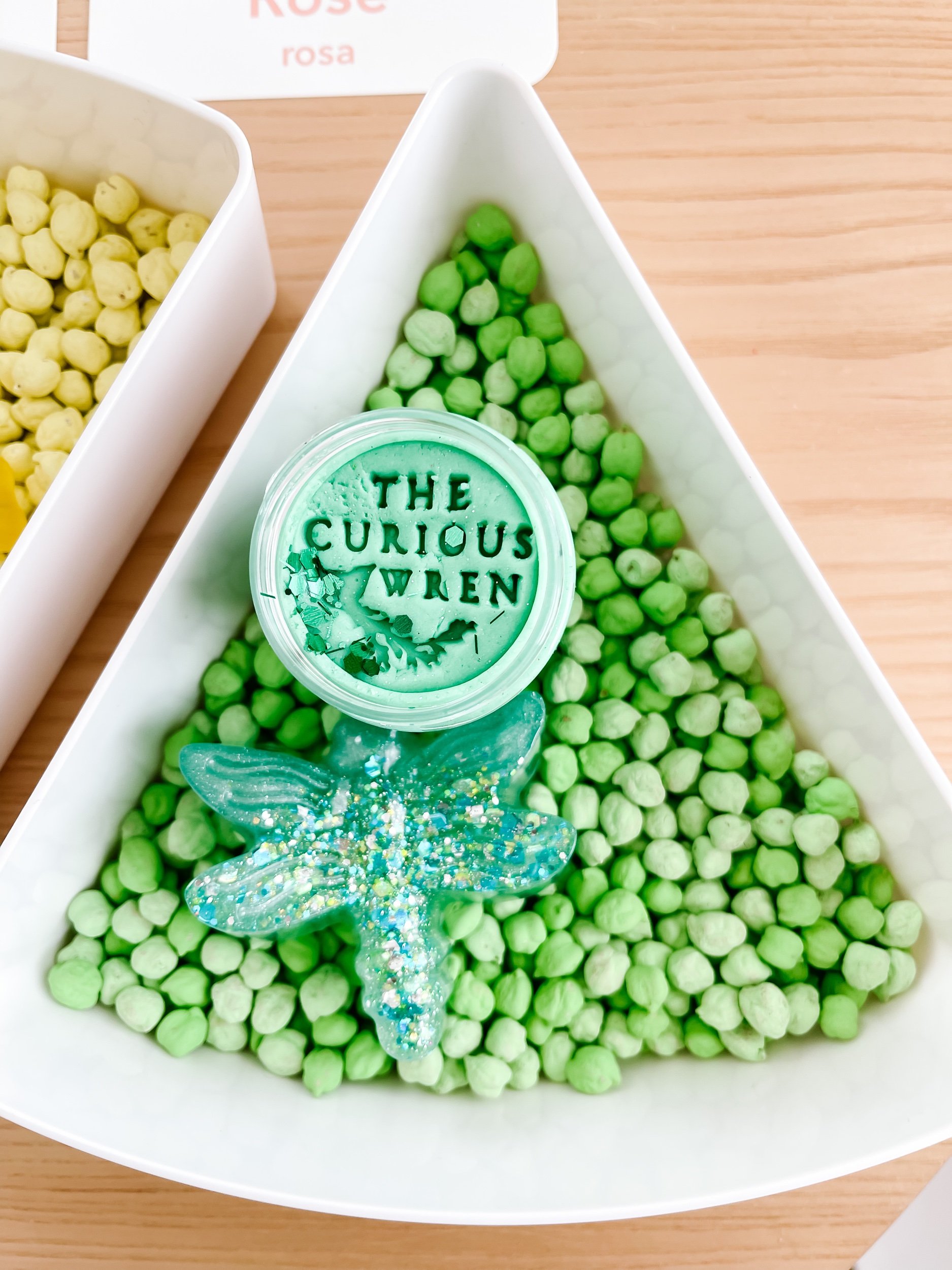
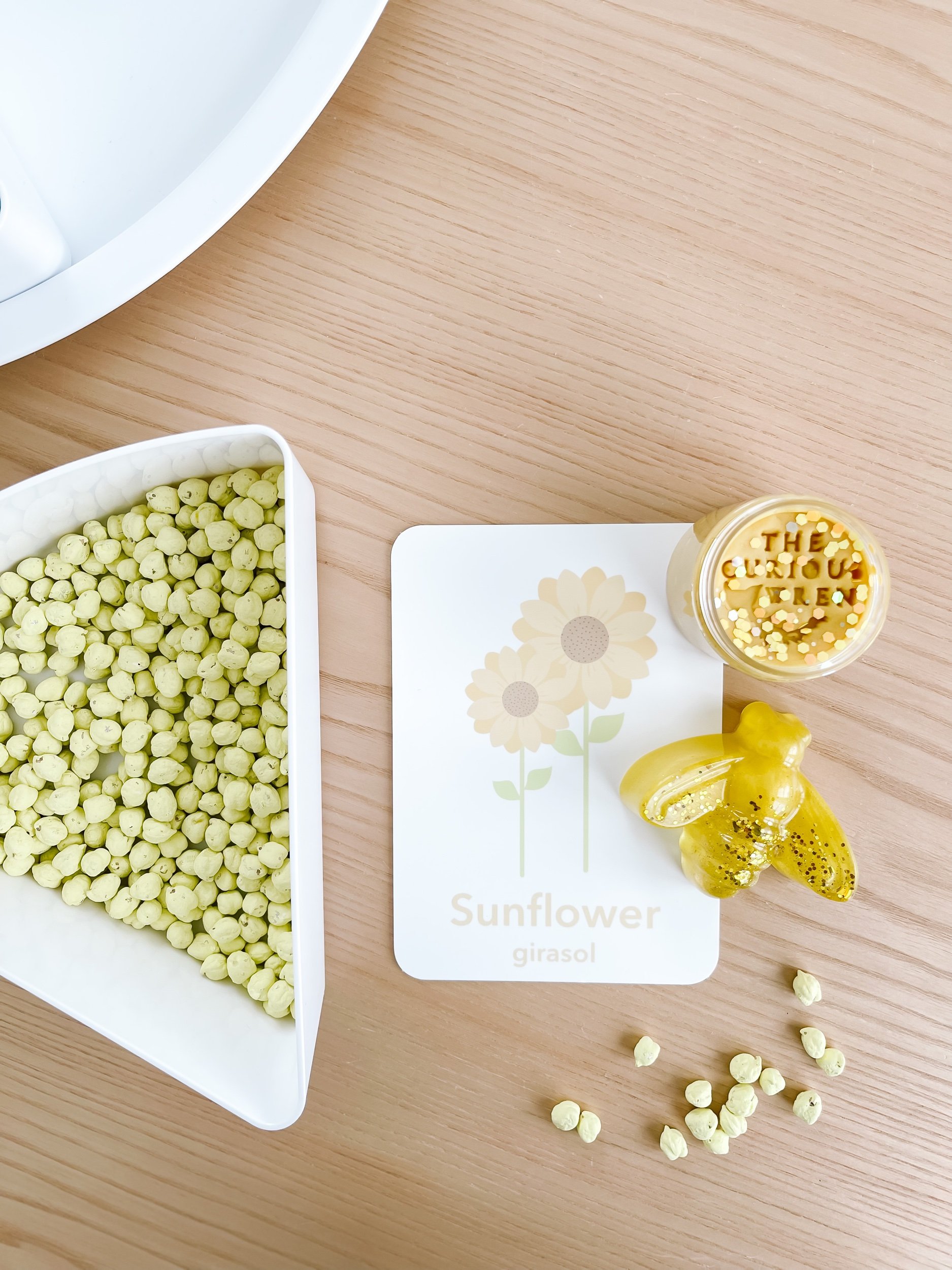
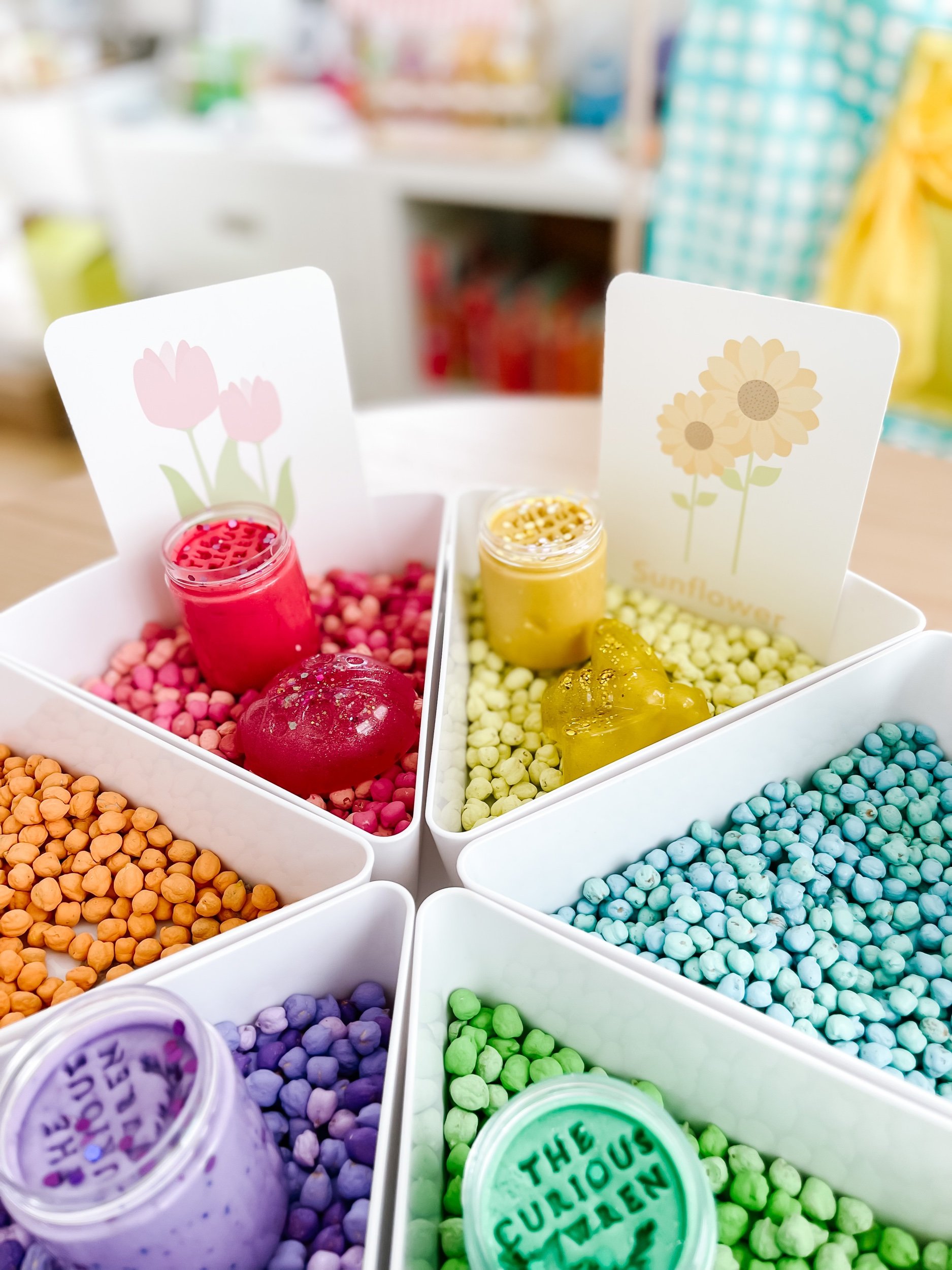
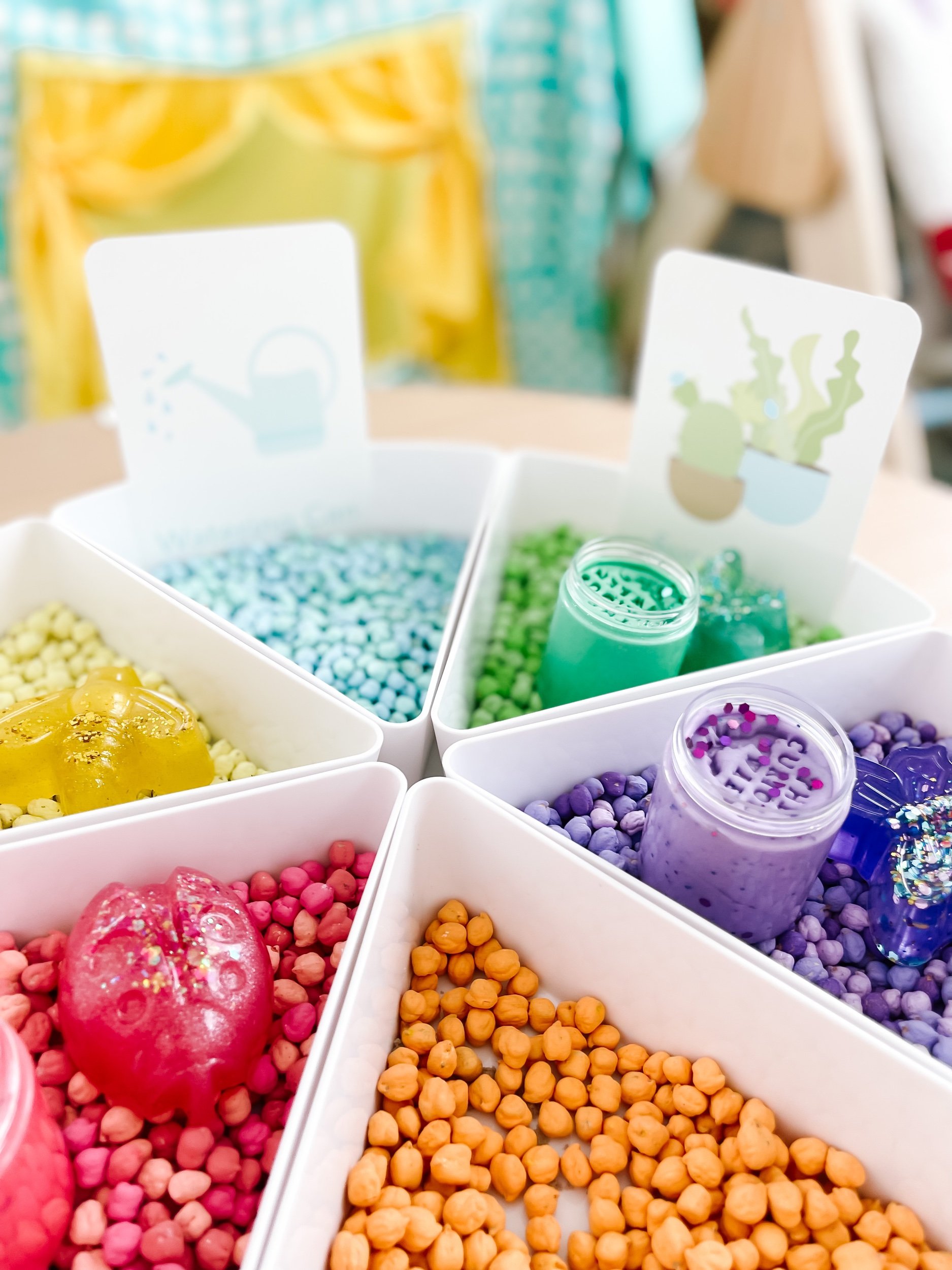
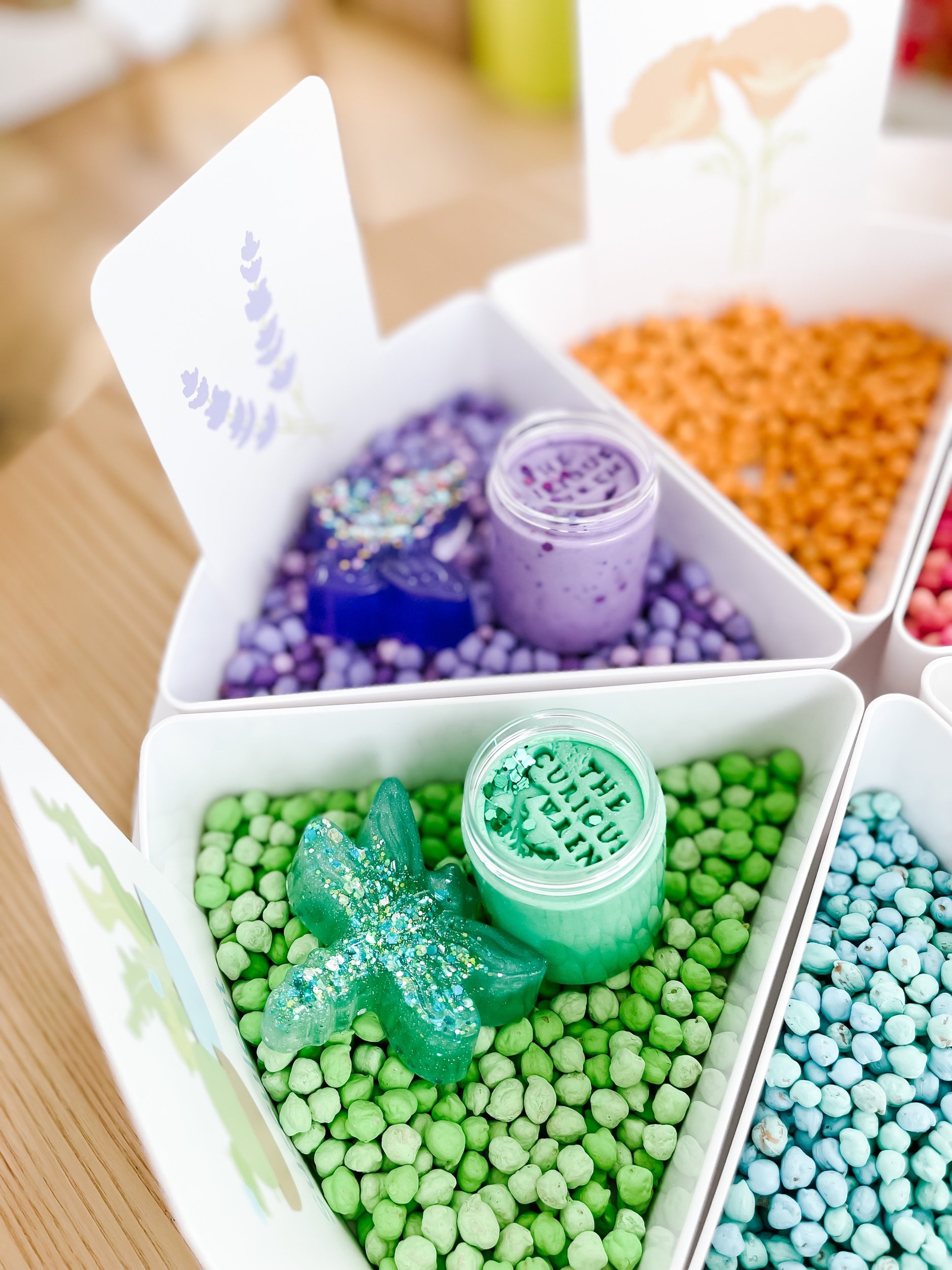
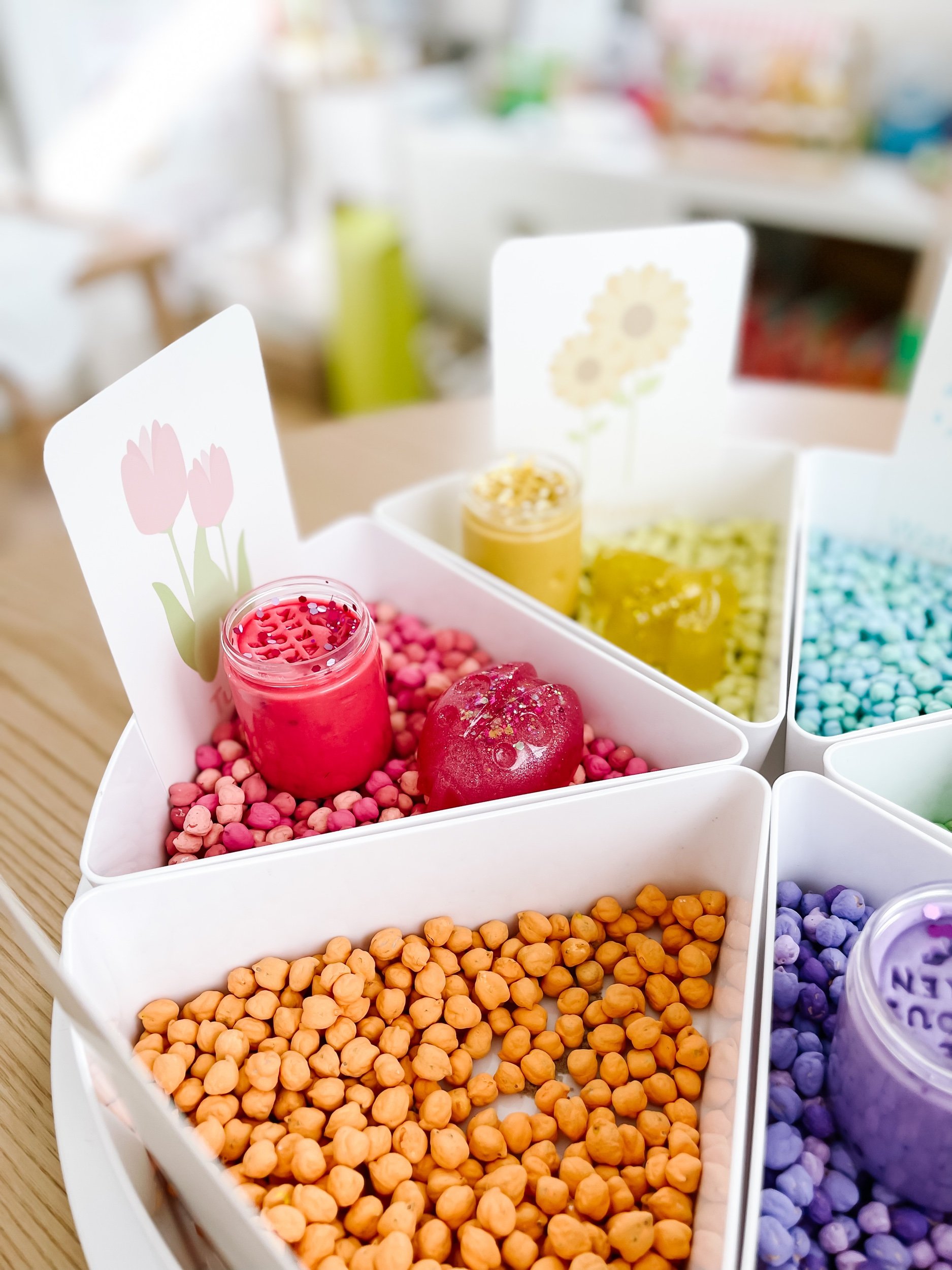
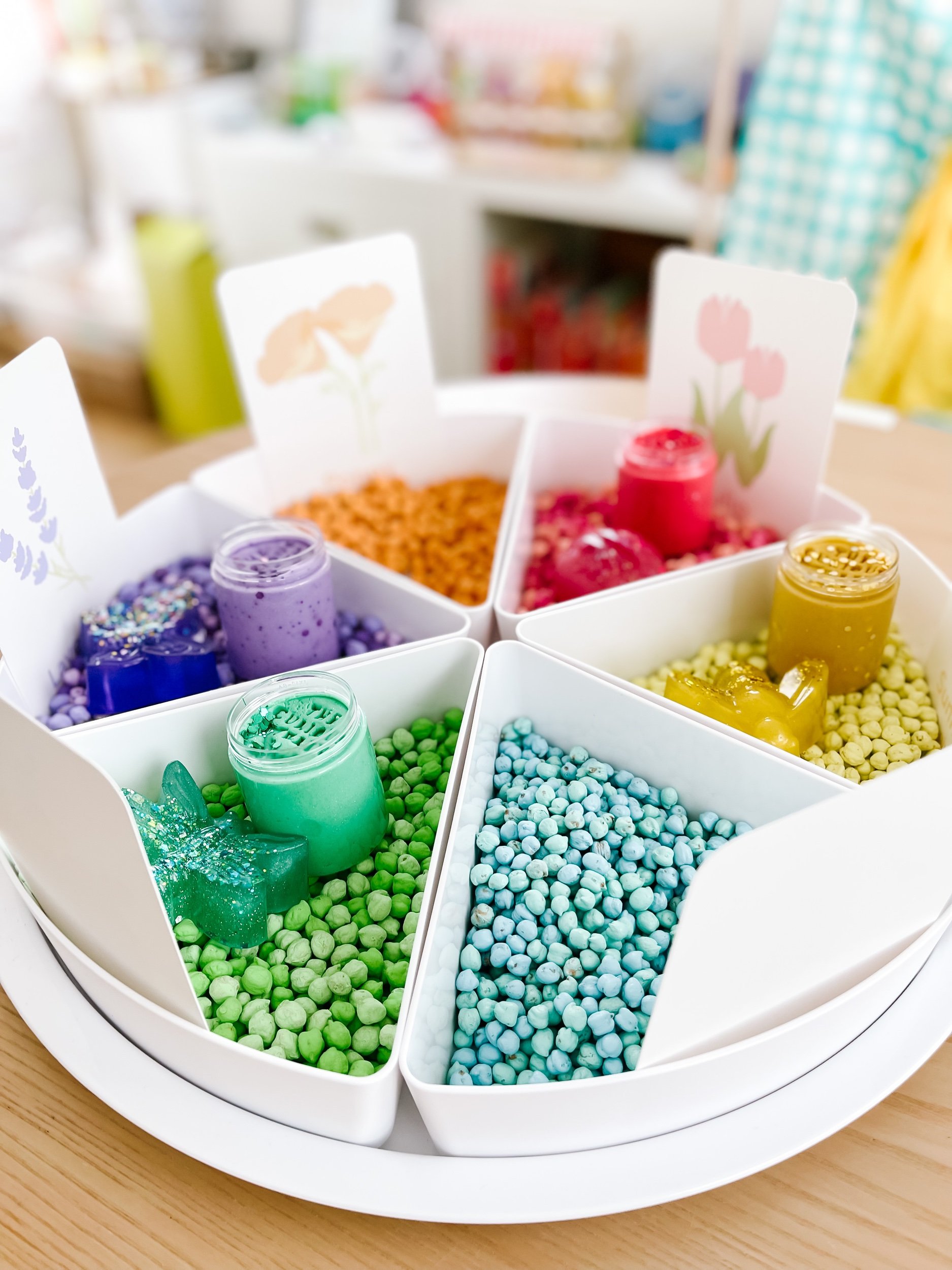
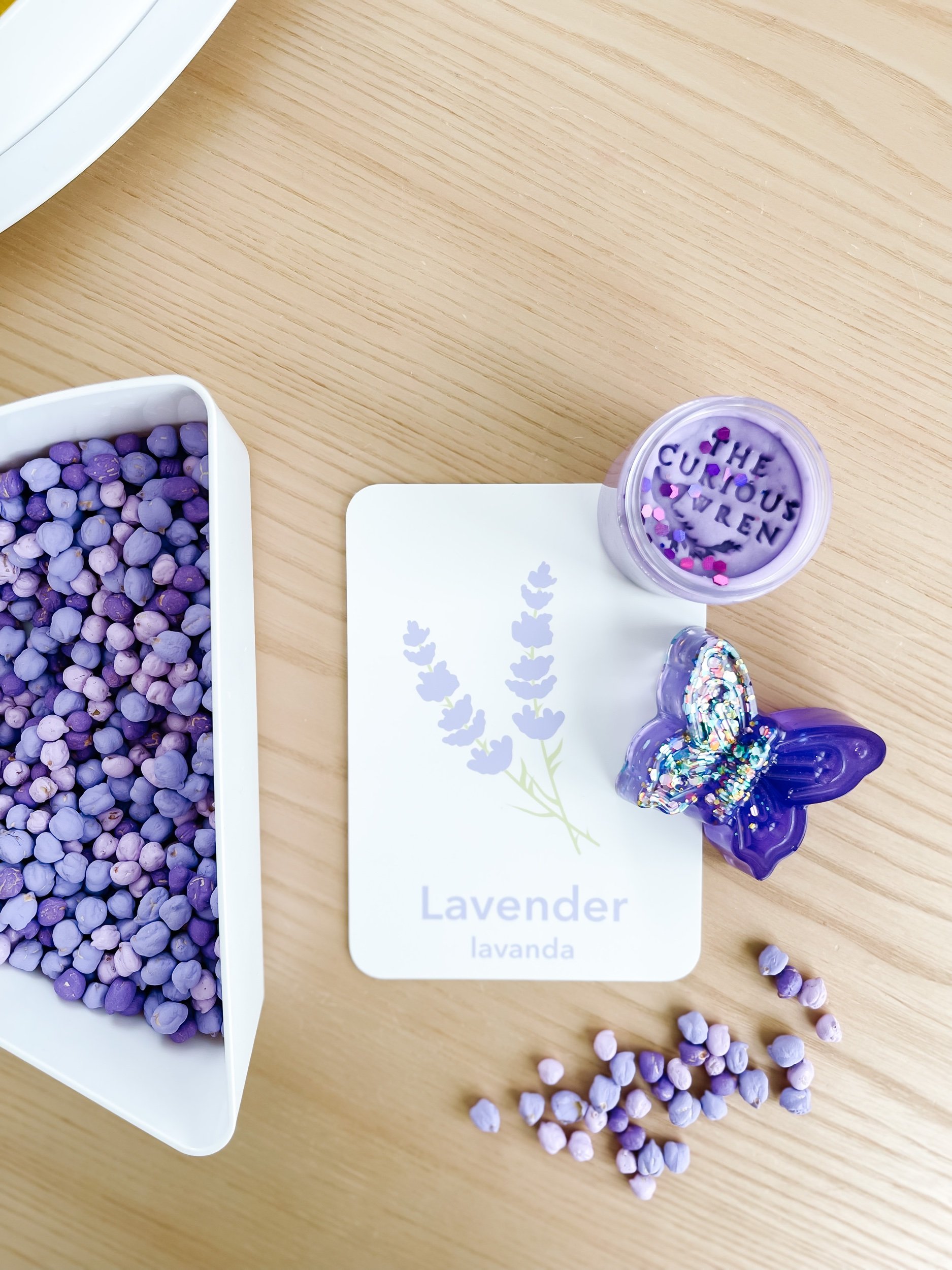
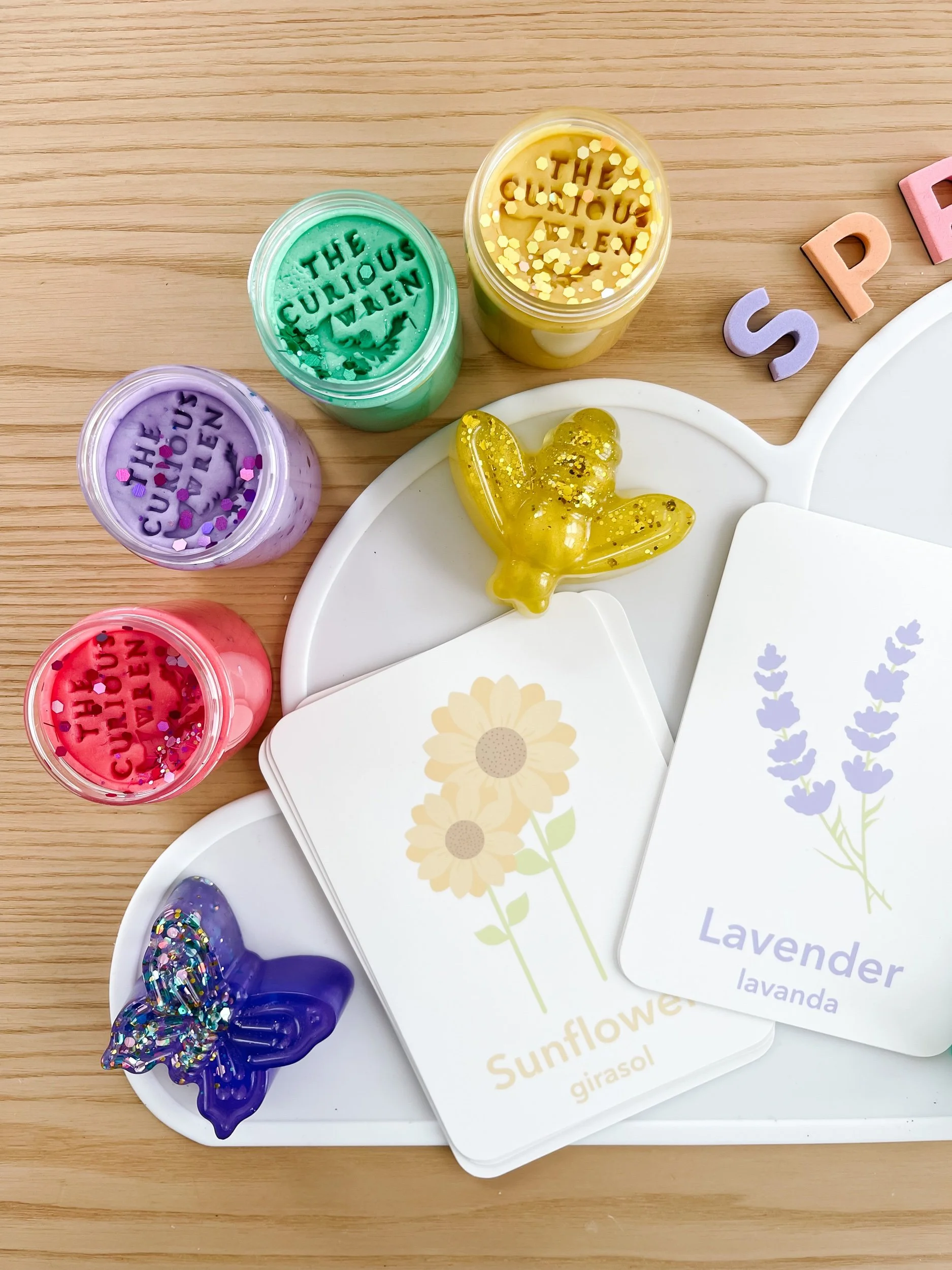
Flower Garden Flash Cards

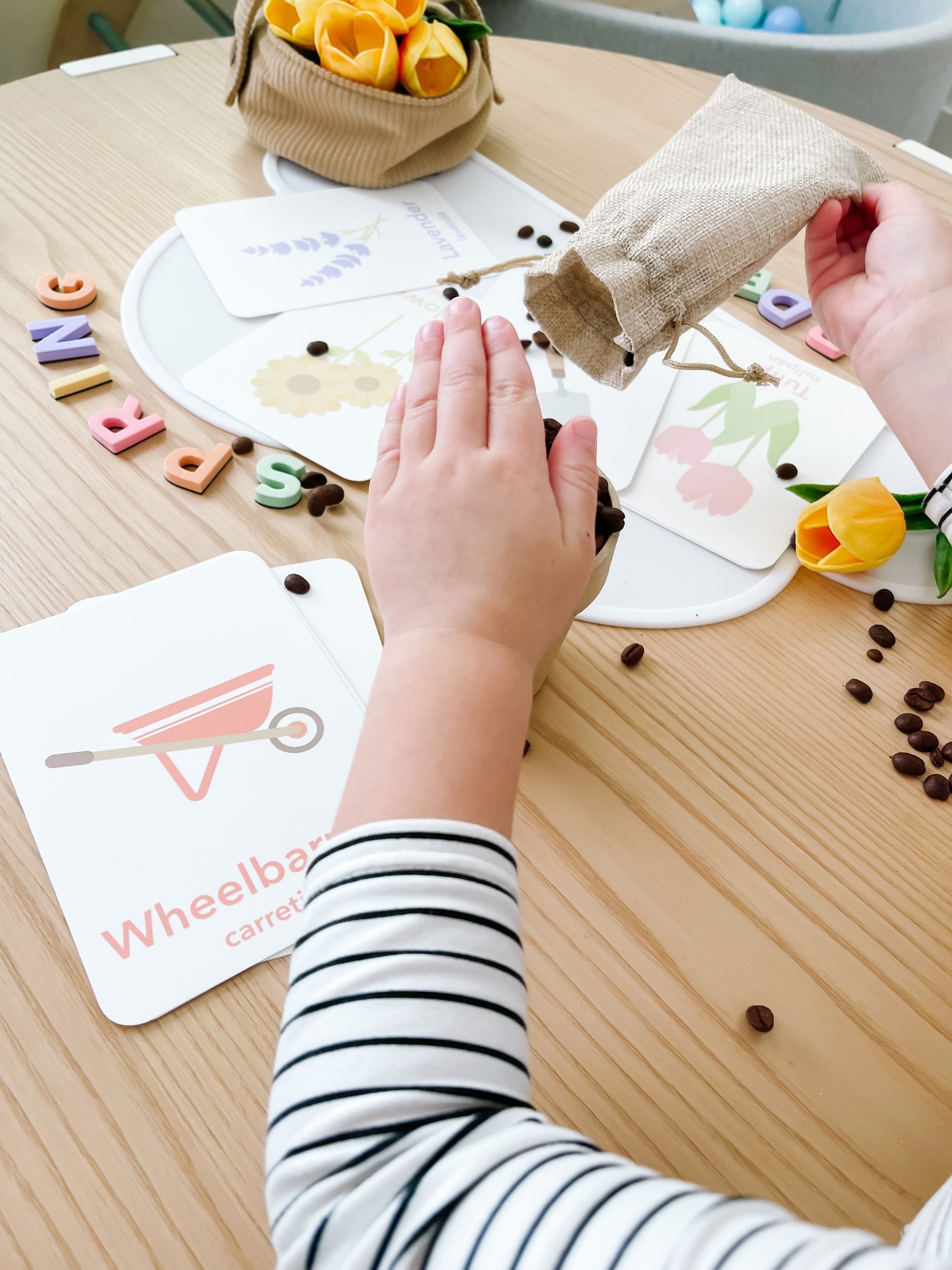
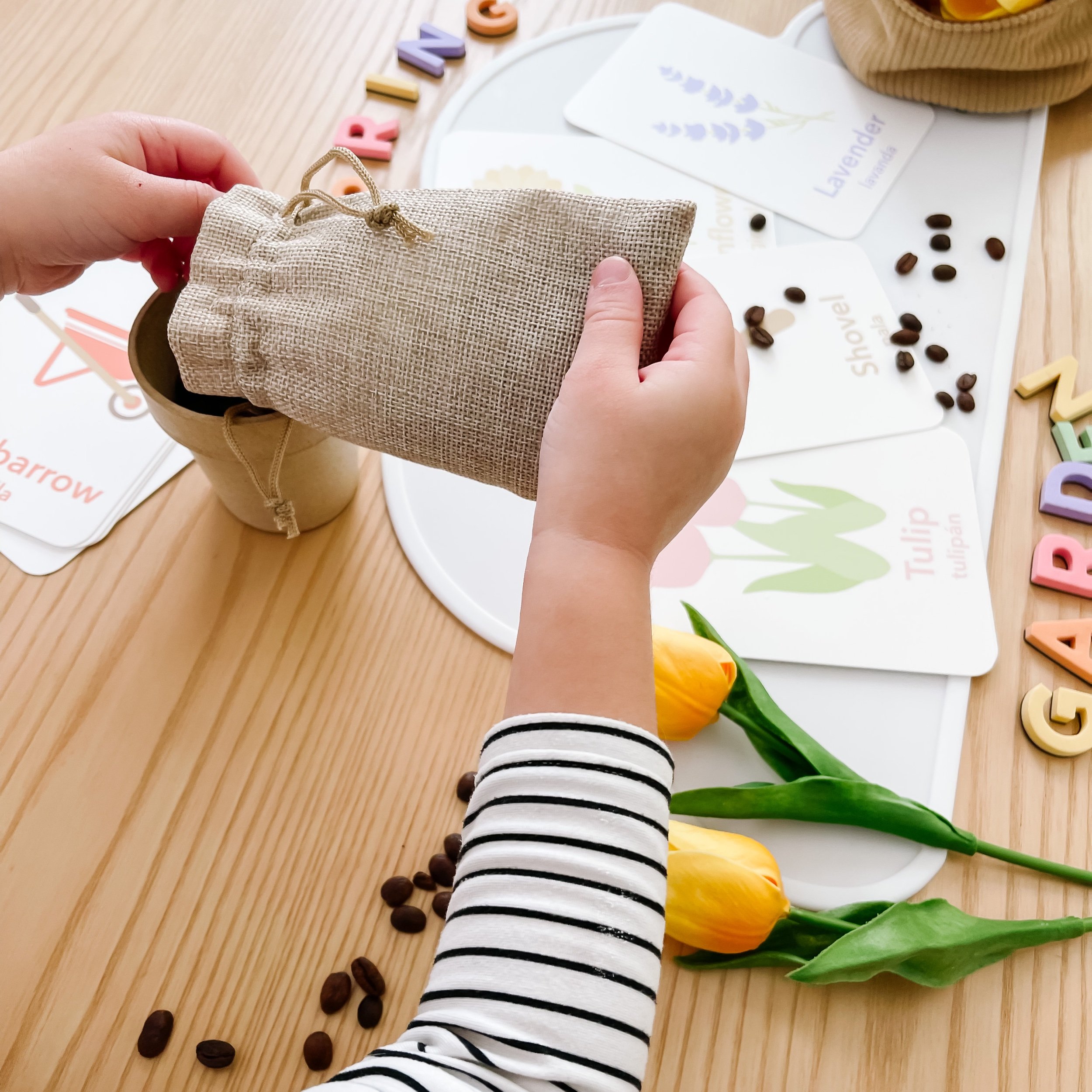
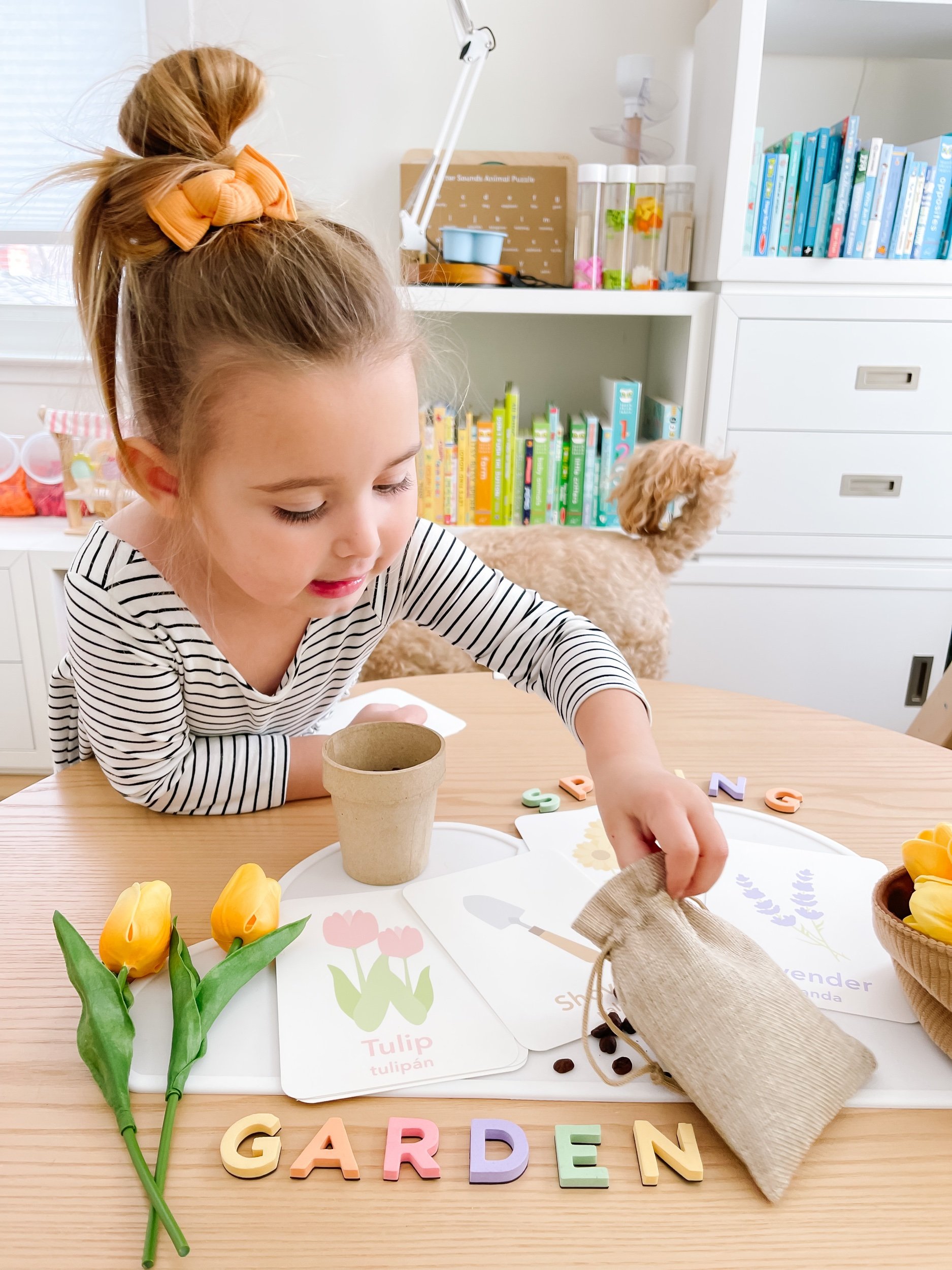
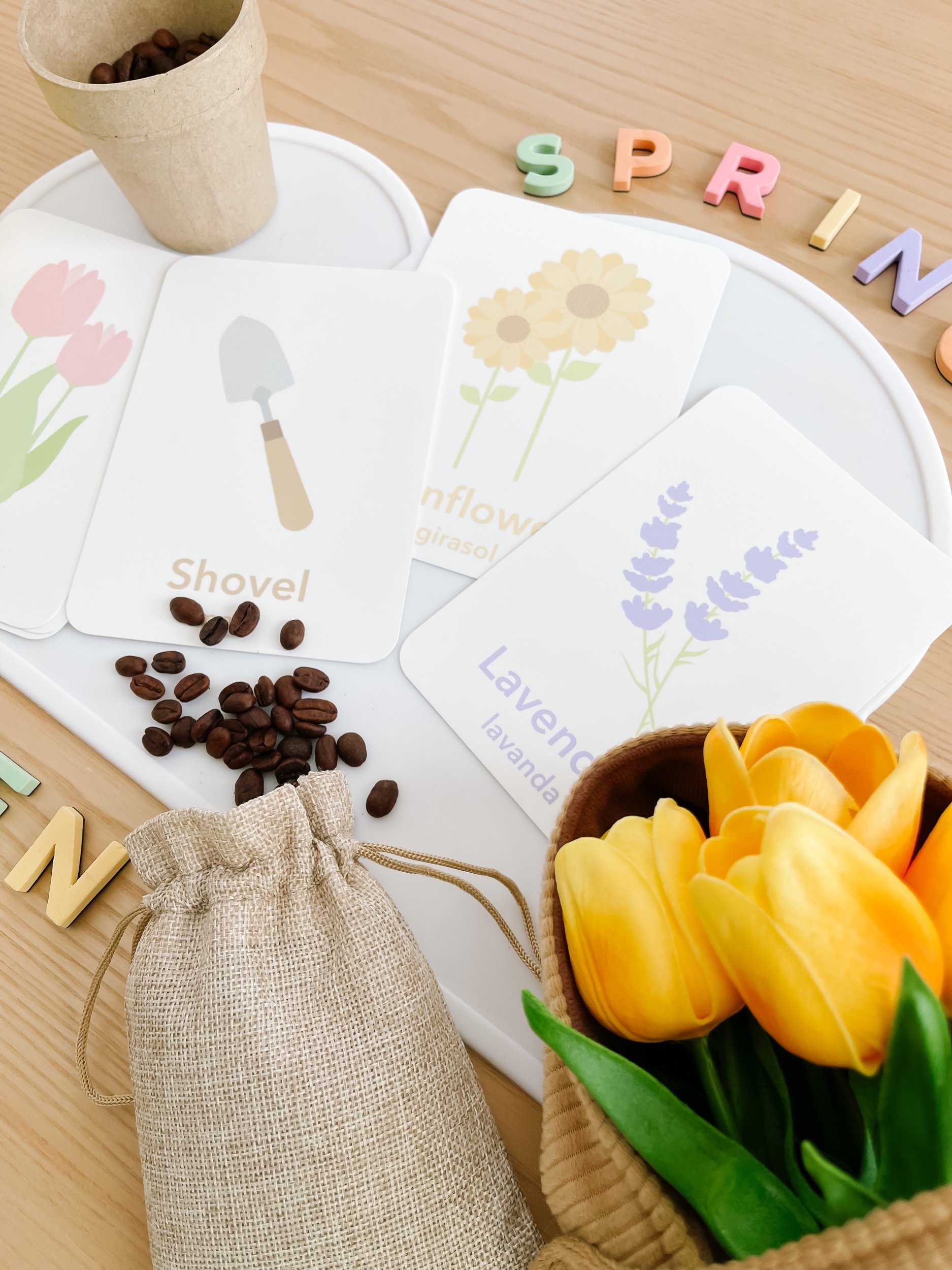
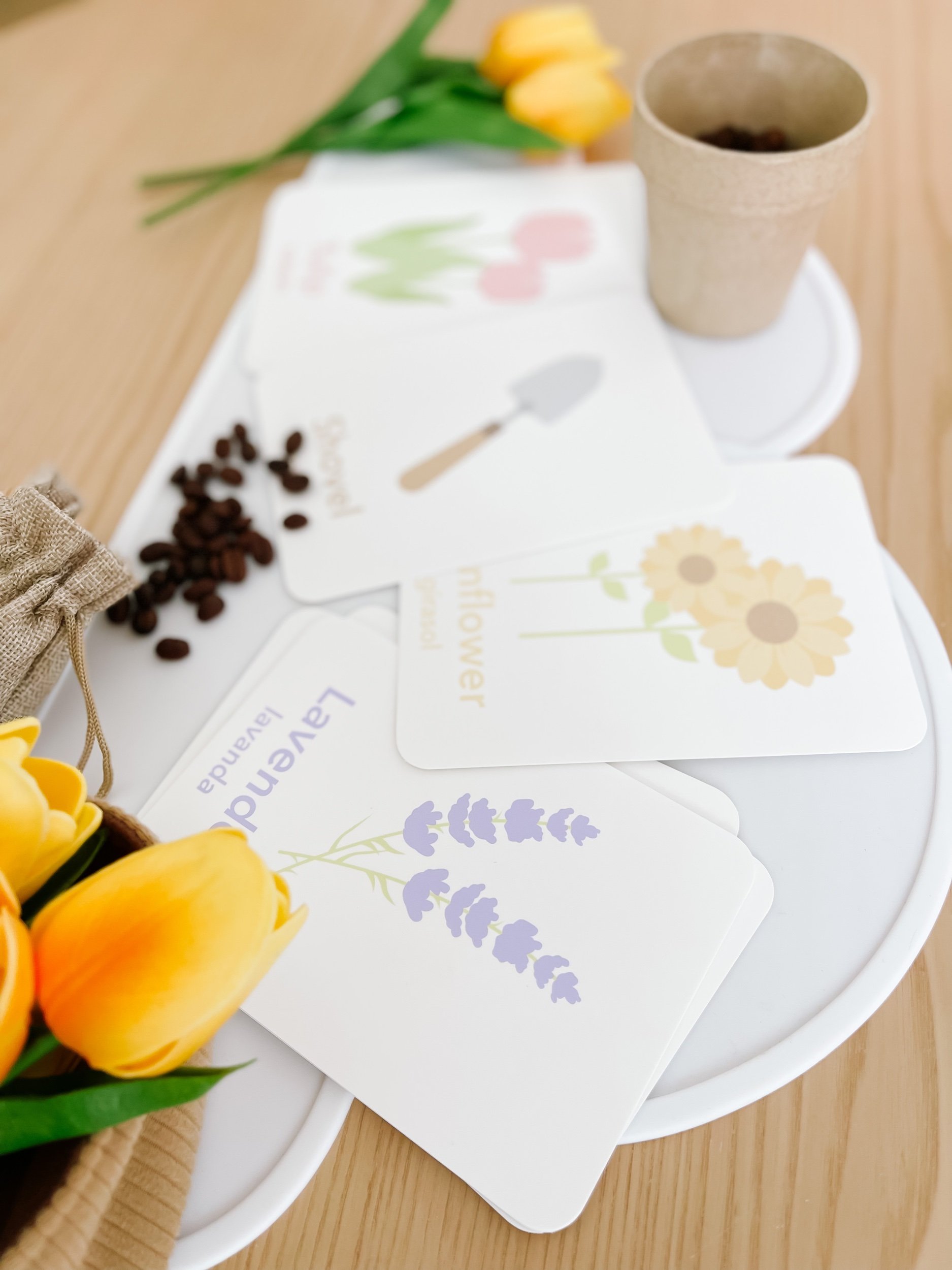
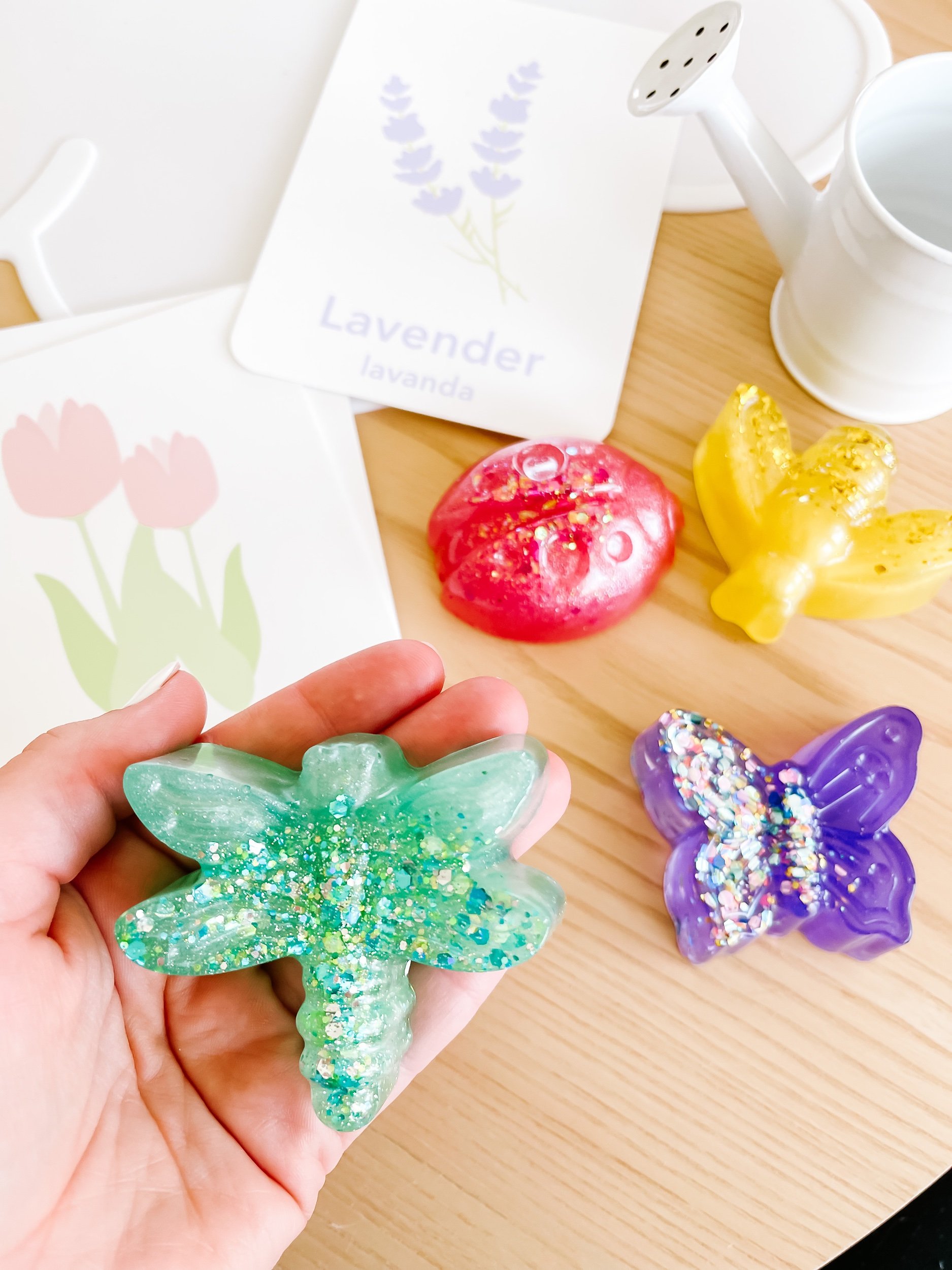
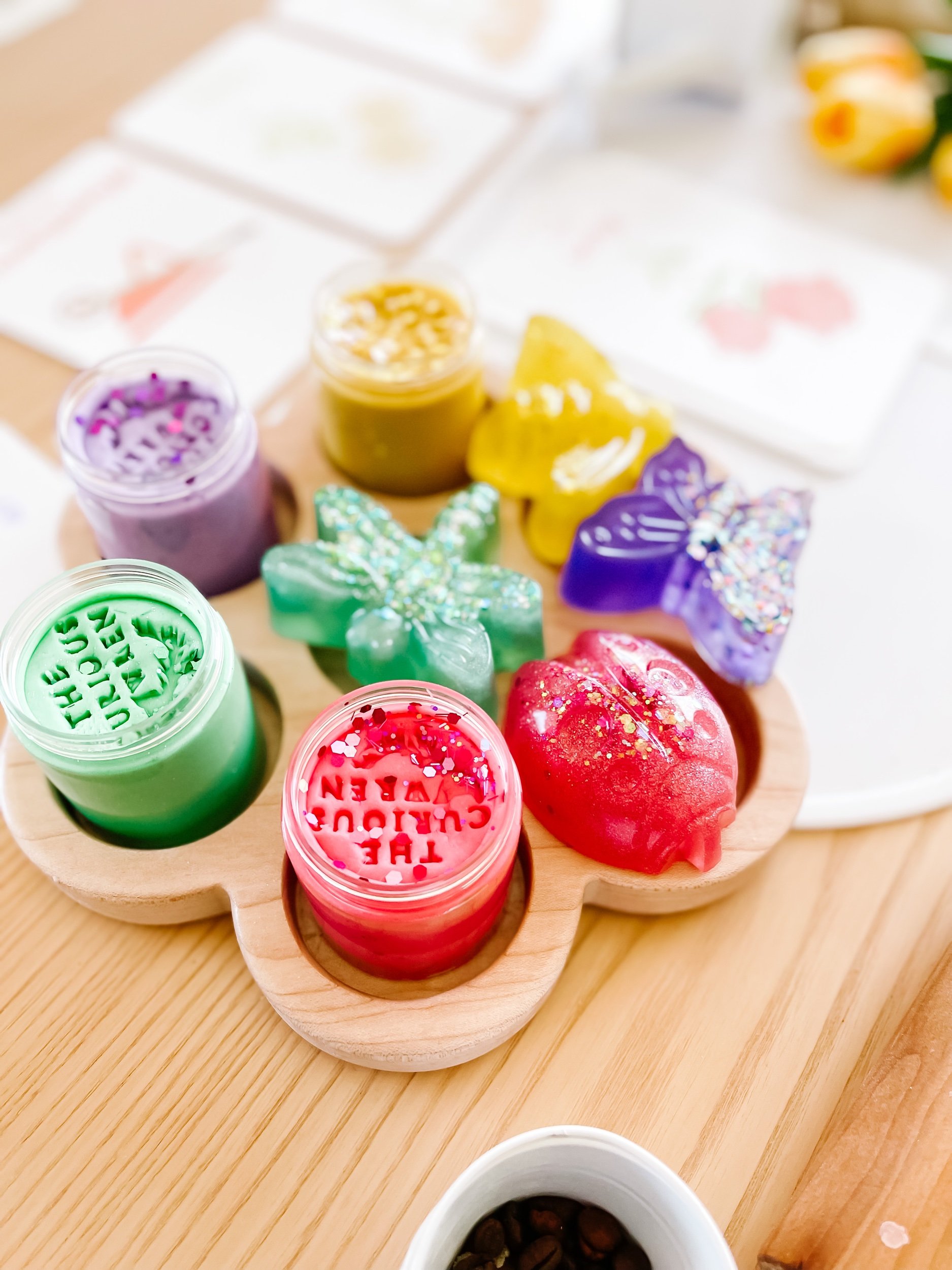
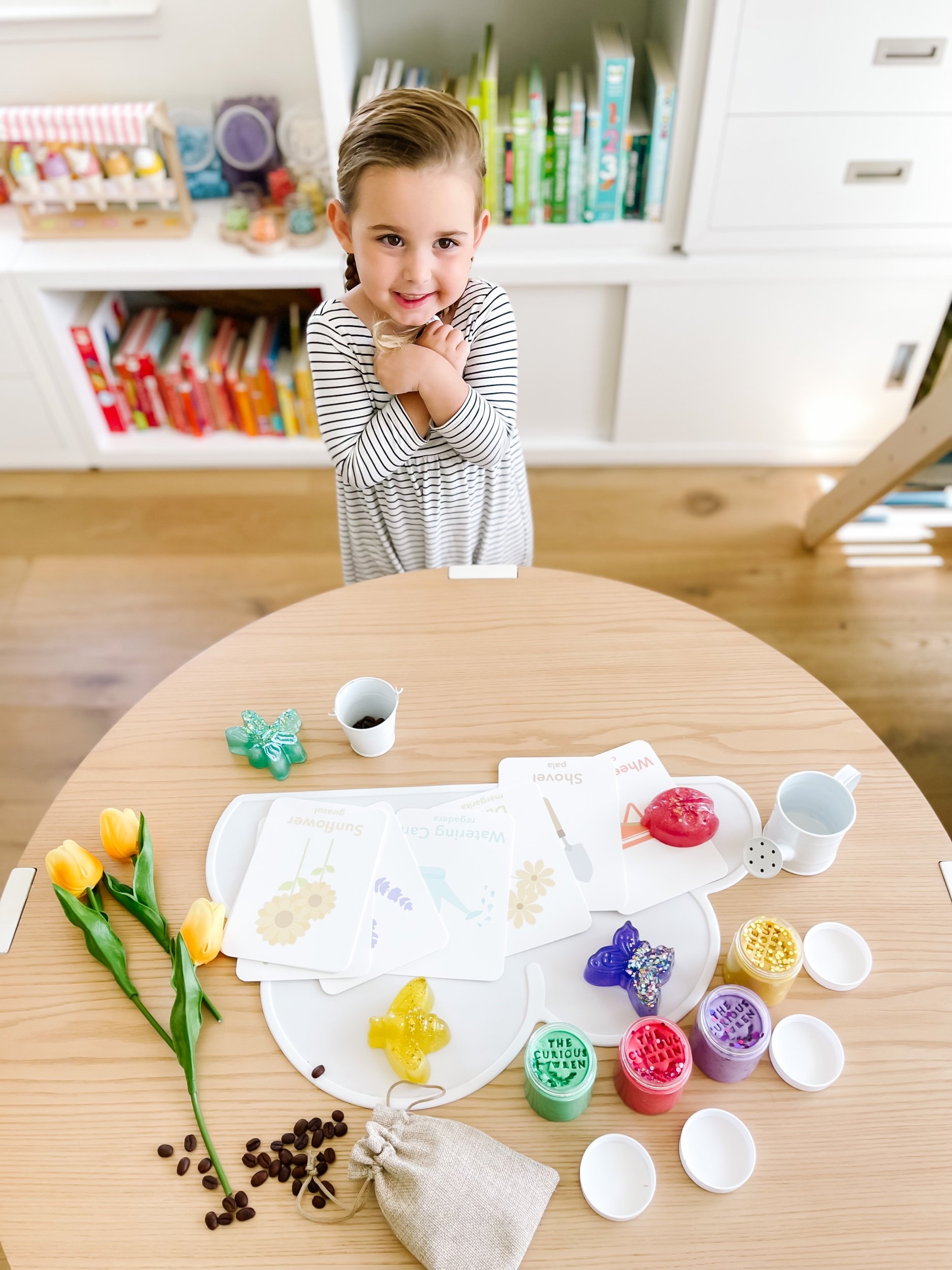
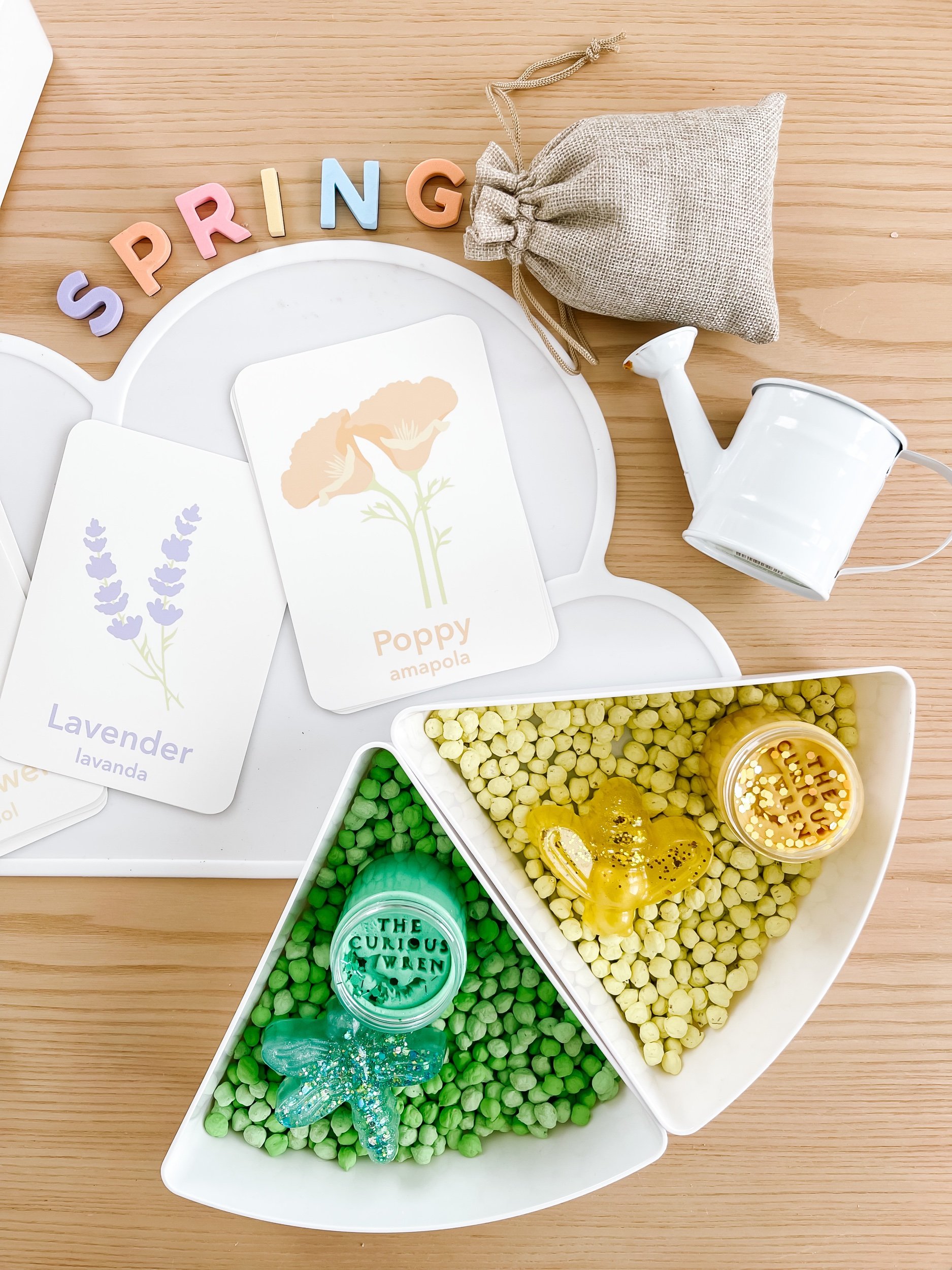
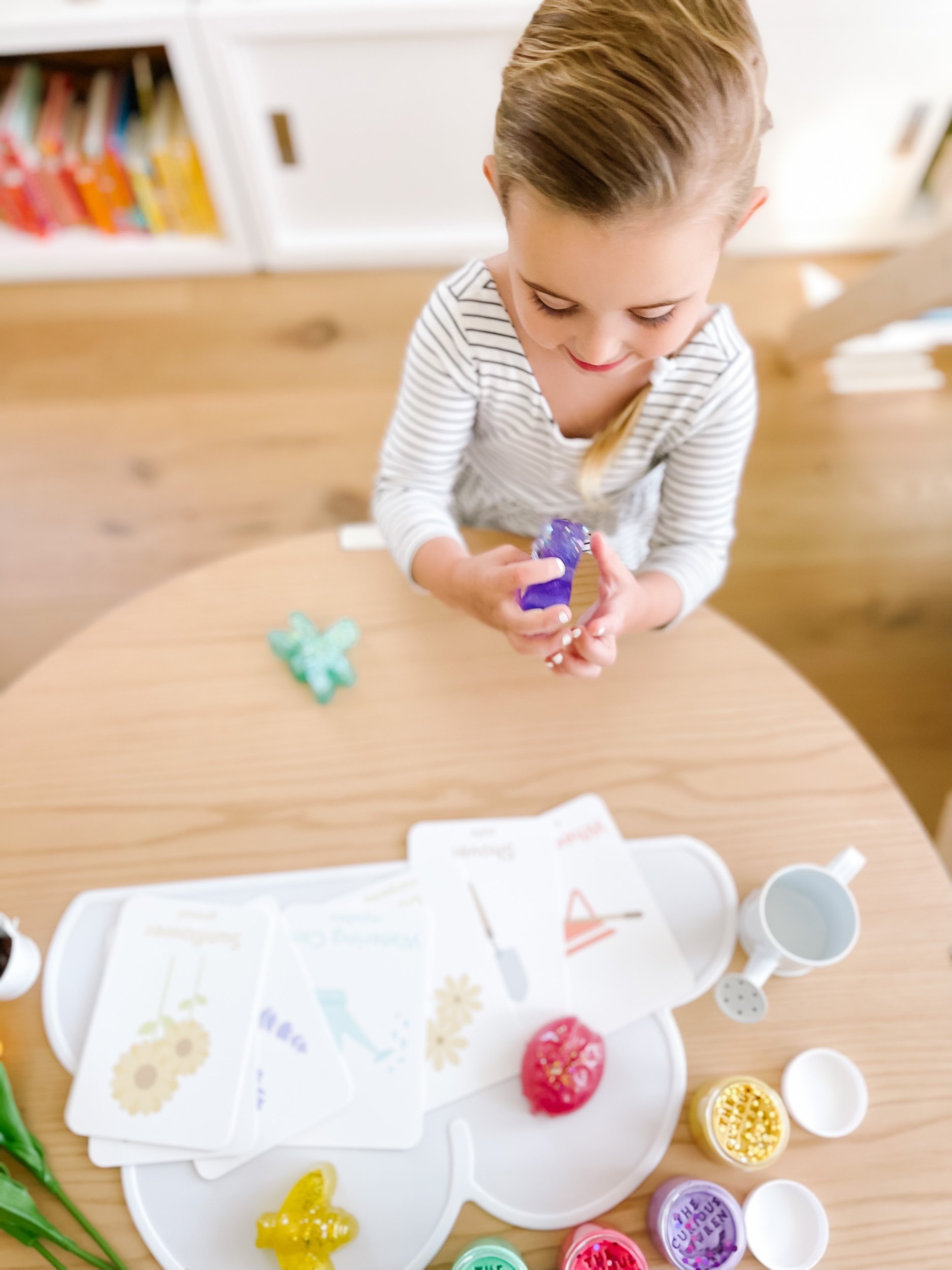
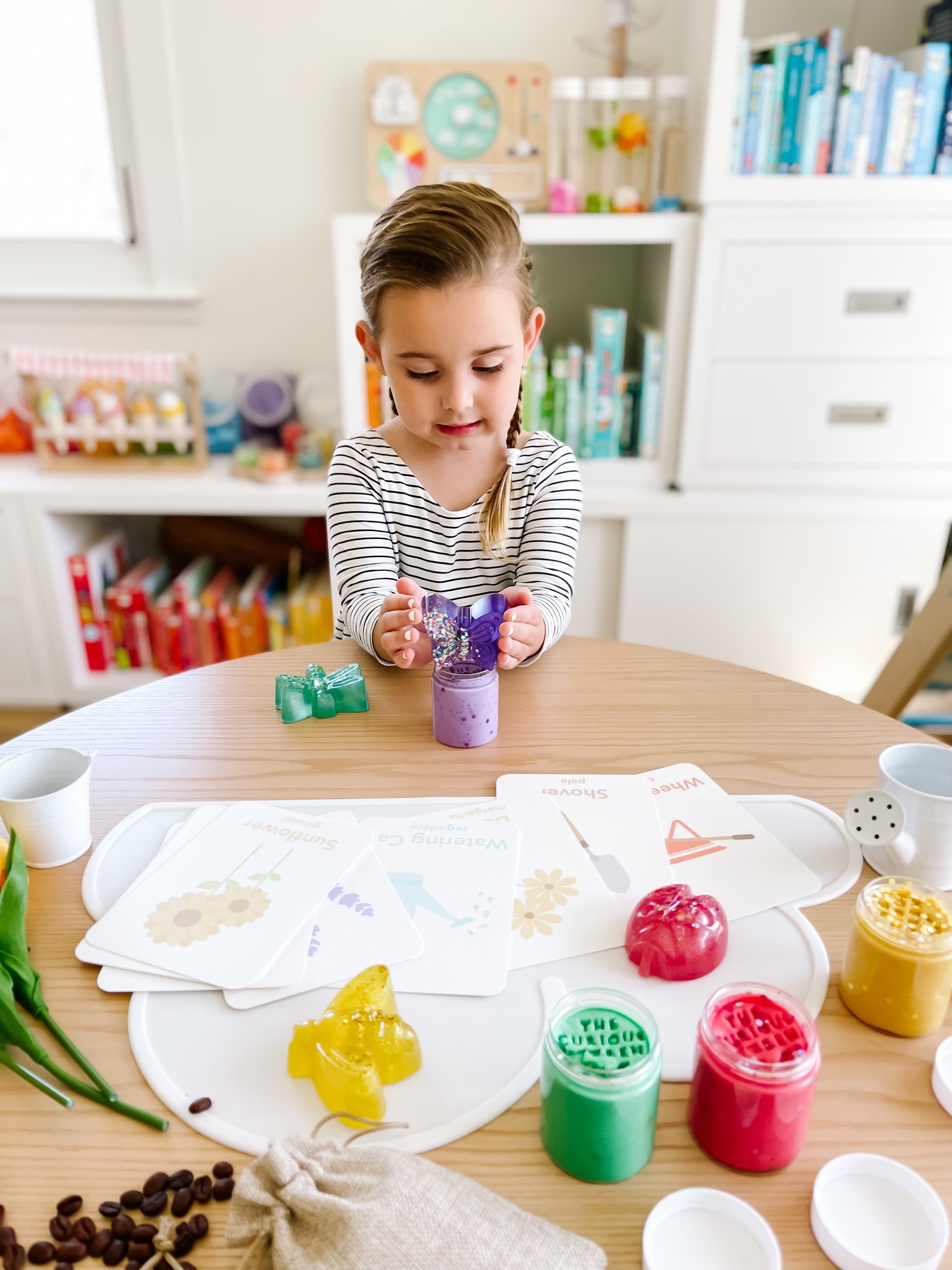
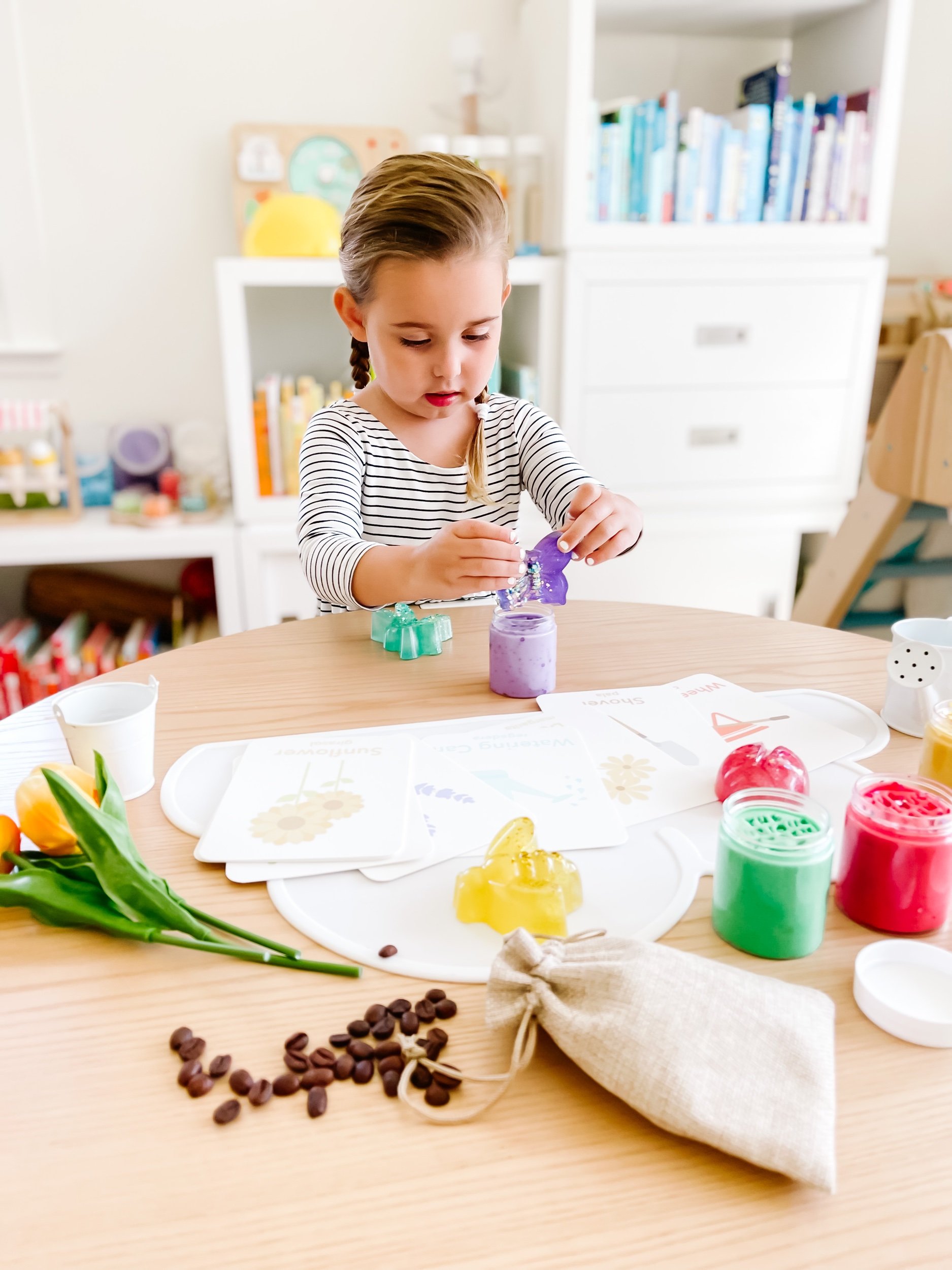
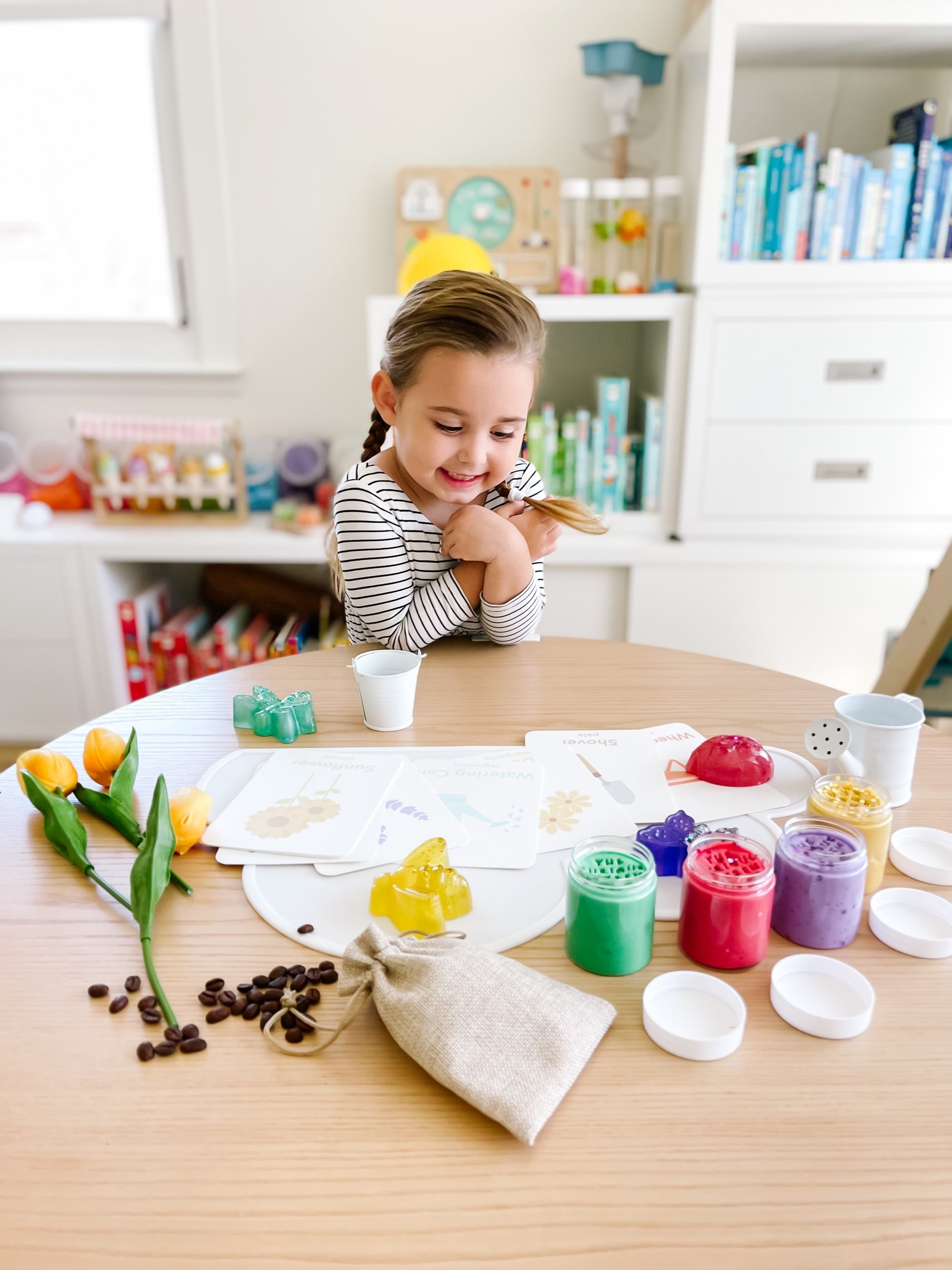
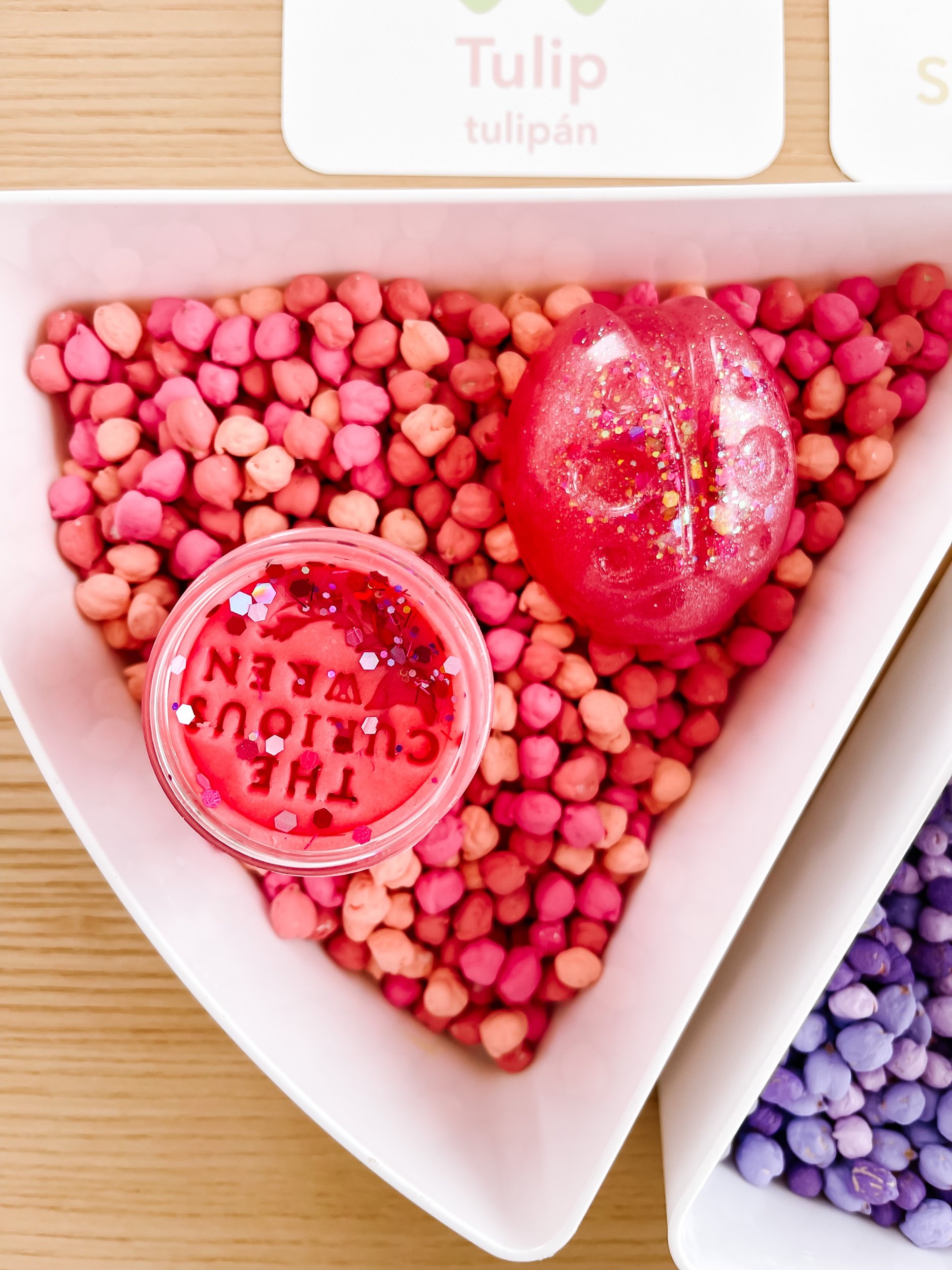
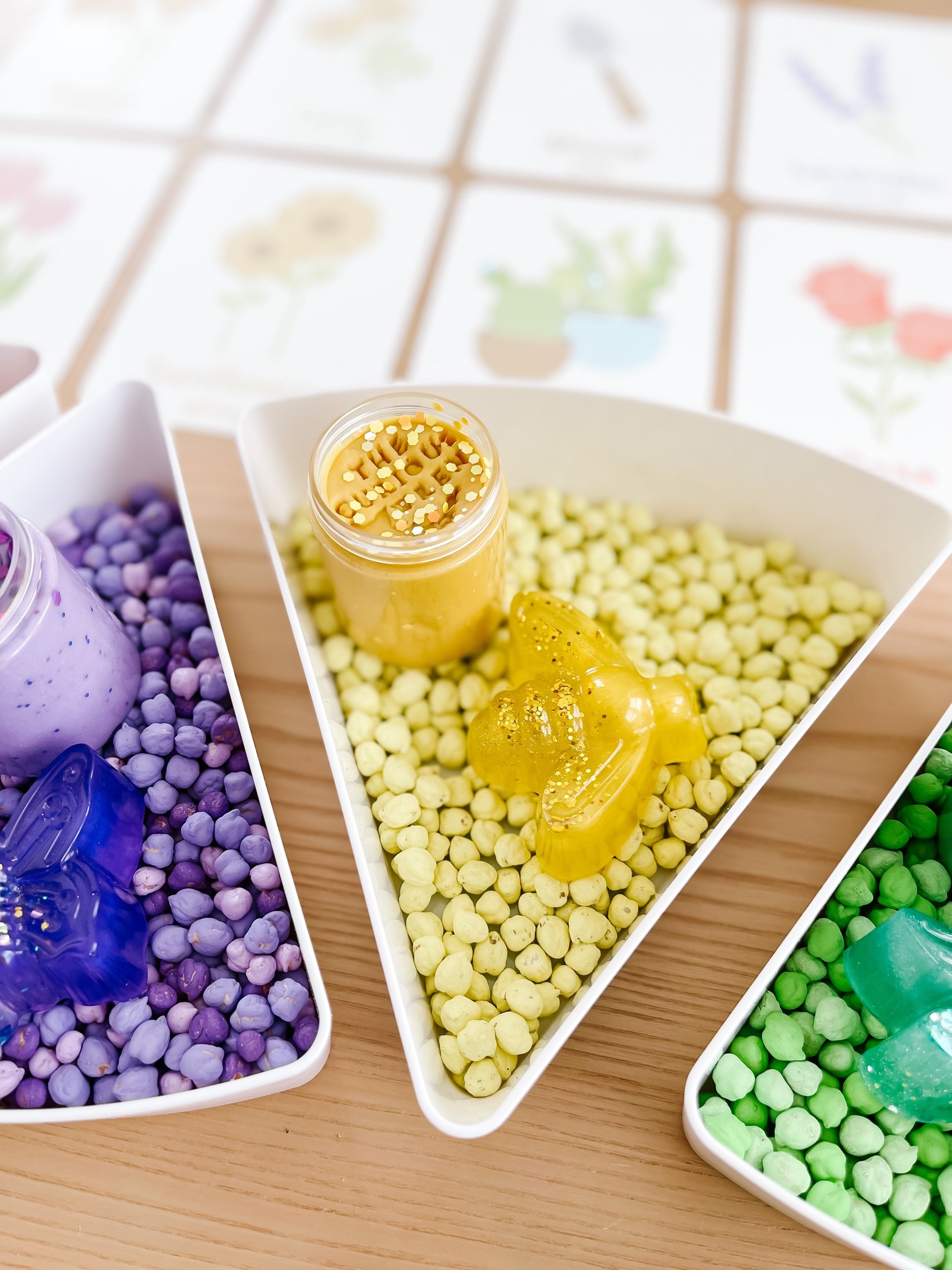
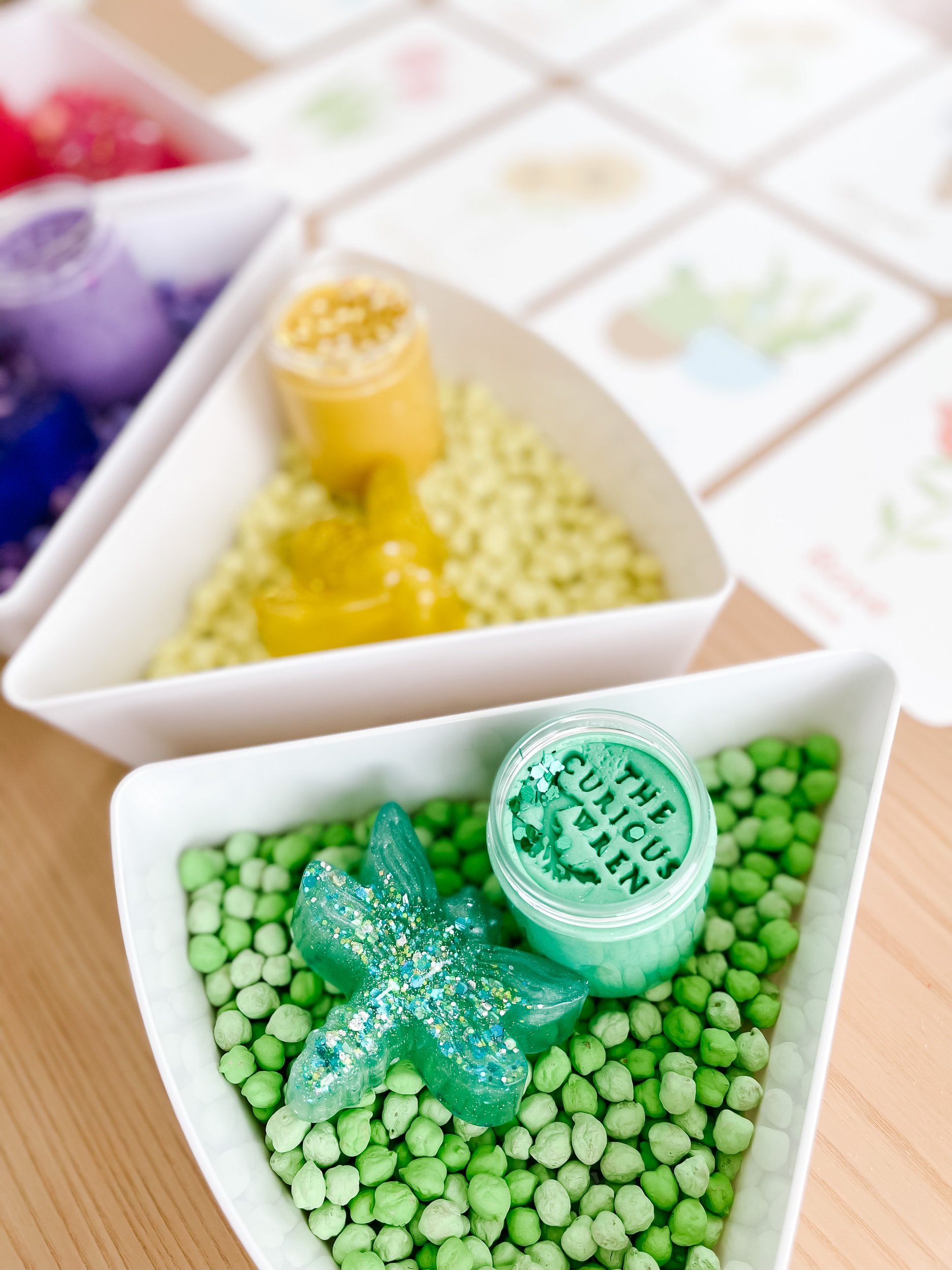
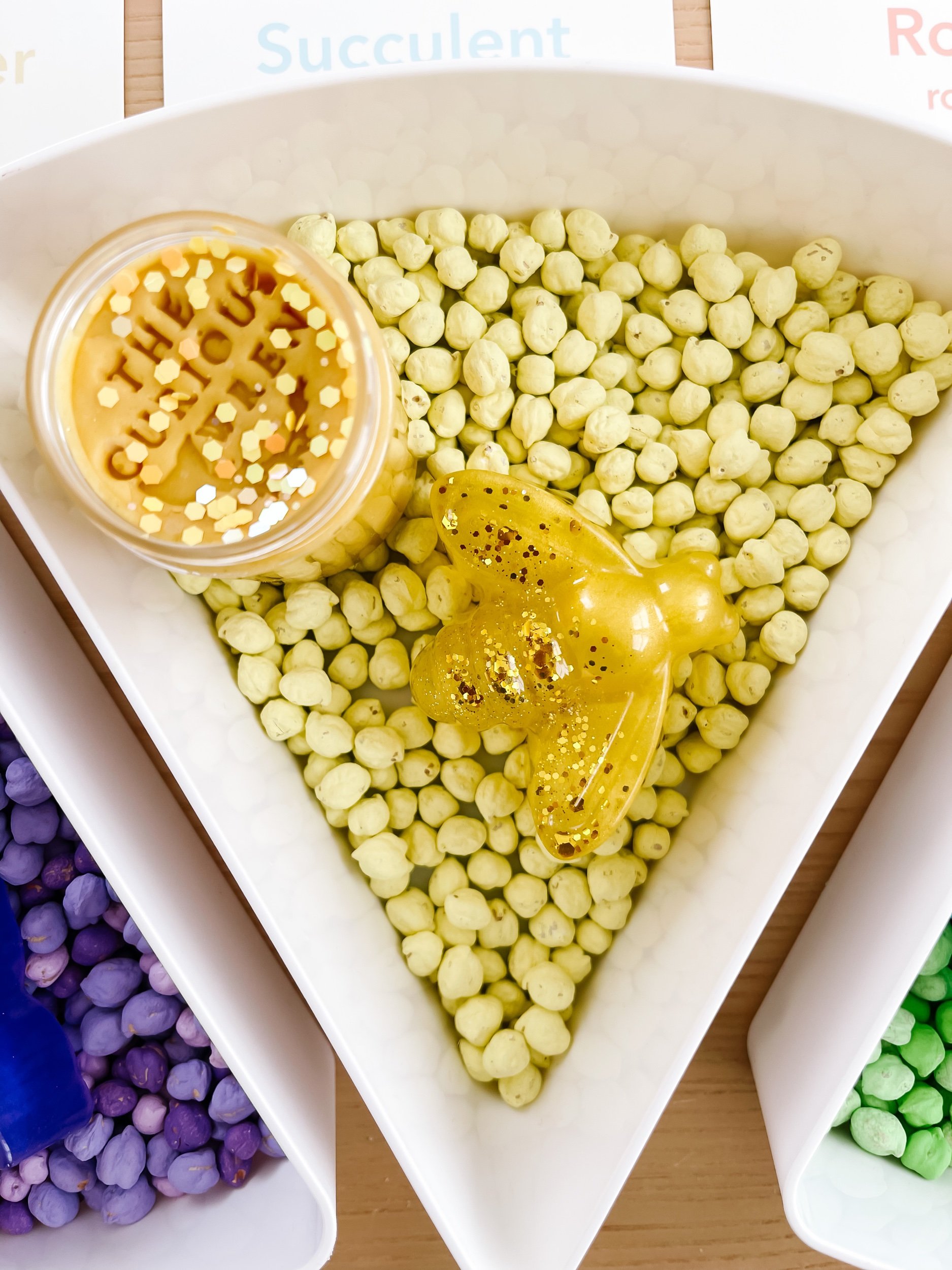
Spring is finally here, and it's the perfect time to engage your toddler in some sensory play activities. Sensory play not only provides your child with a fun experience but also helps them to develop their senses, motor skills, and cognitive abilities. In this blog post, we will share some fantastic spring sensory play ideas that your toddler will love, and we'll also introduce you to our spring garden flower flashcards that can enhance the learning experience.

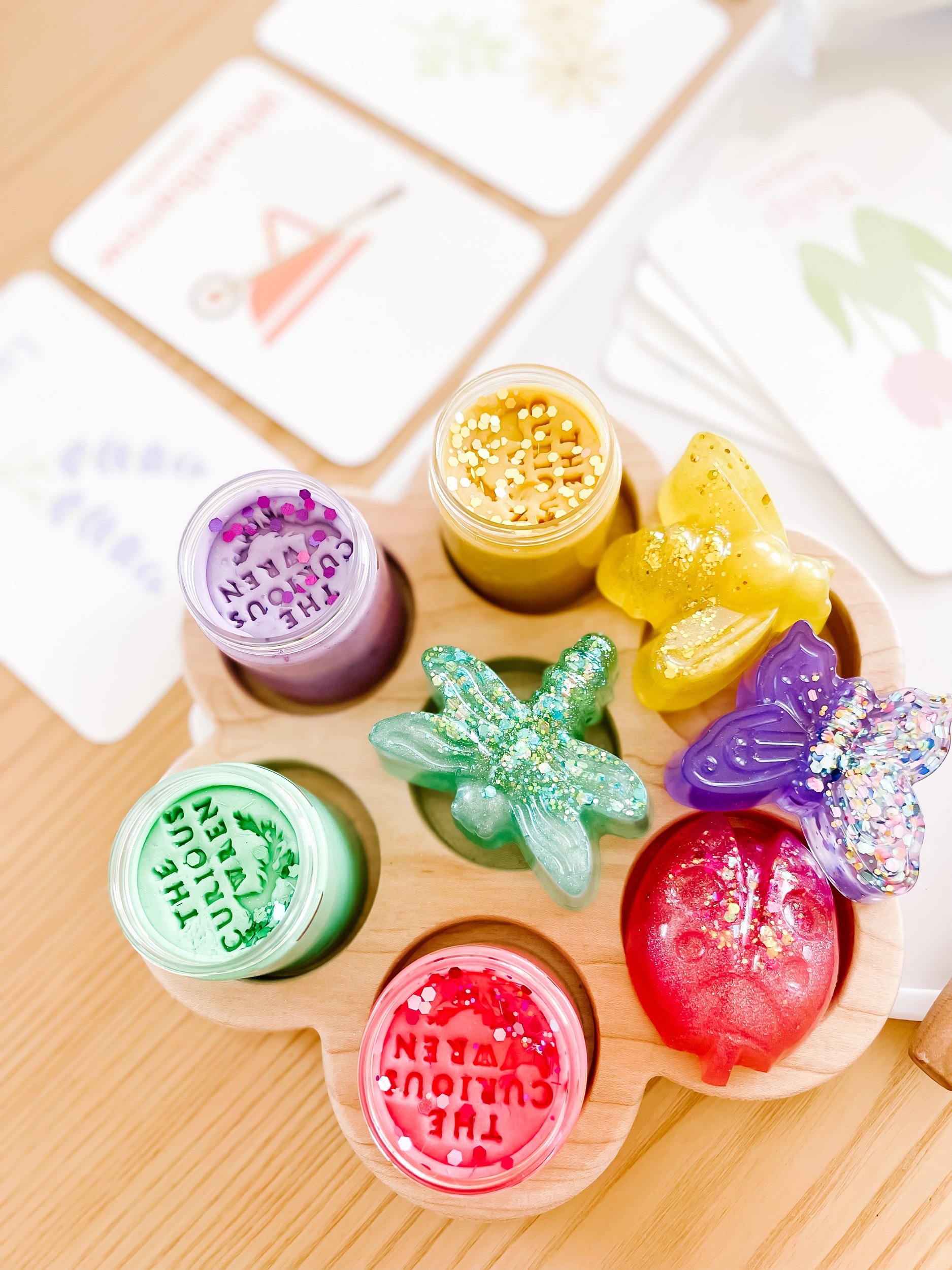
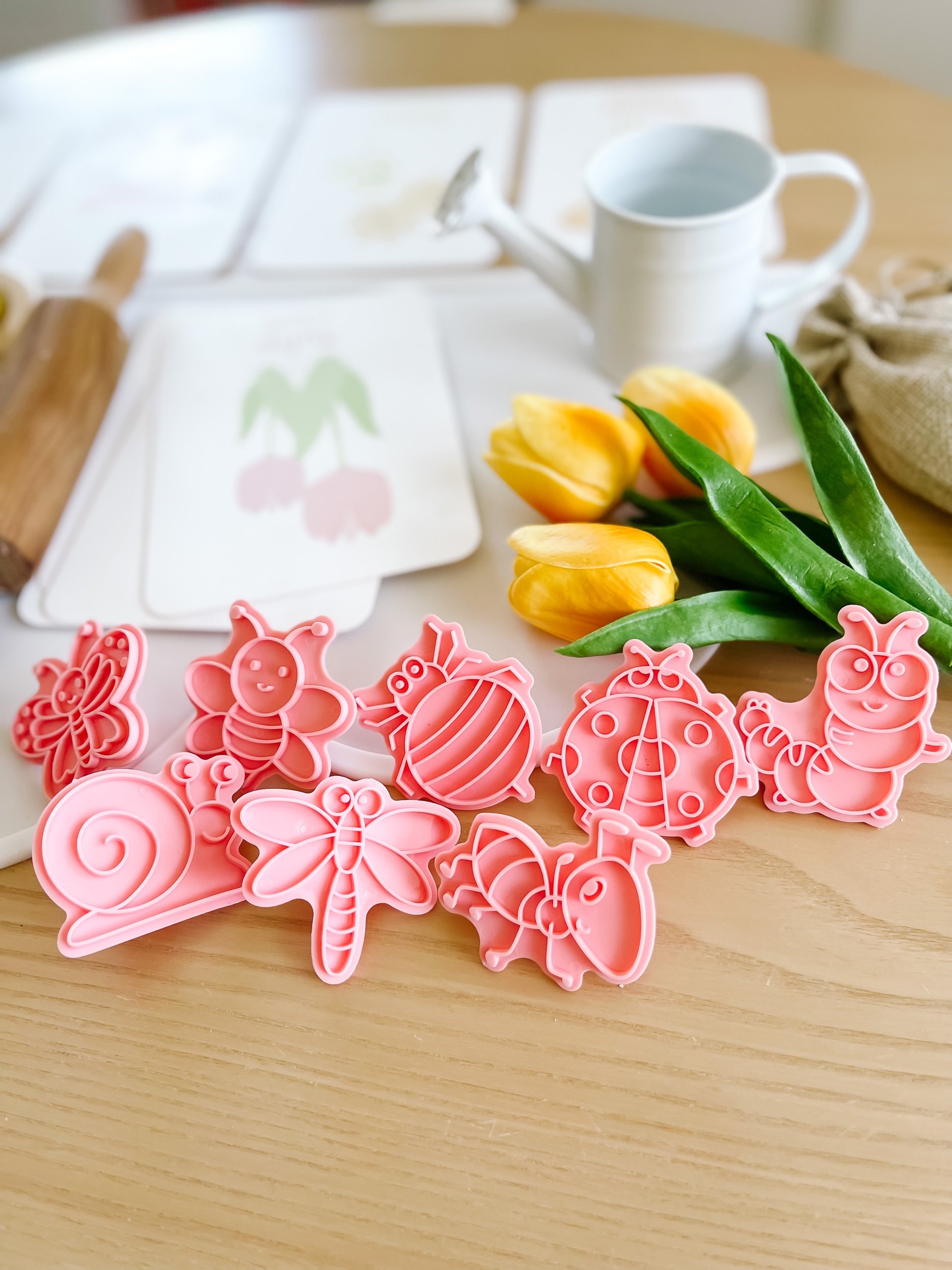
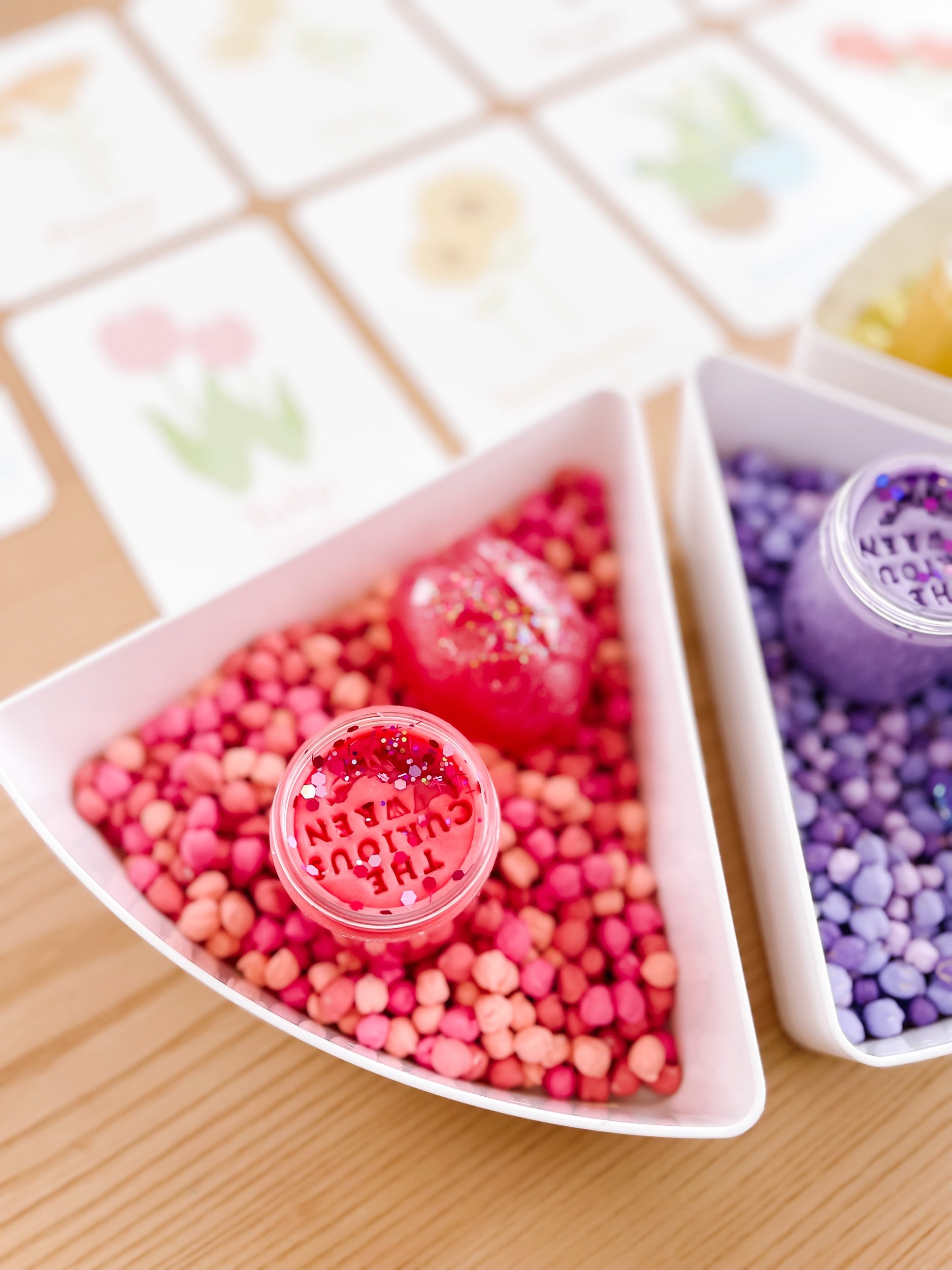
  1. Flower Sensory Bin Create a sensory bin filled with dried flowers, flower petals, and other spring-themed items like plastic insects, stones, and leaves. Let your toddler explore the textures, smells, and colors of each item. You can also hide some of the items in the bin and encourage your child to find them.

  2. Water Play Water play is a fun and refreshing way to engage your child's senses. Fill a small pool or tub with water and let your child splash around. You can also add some flower petals or leaves to the water to make it more sensory-rich.

  3. Gardening Spring is the perfect time to introduce your child to gardening. Let them help you plant some flowers, vegetables, or herbs. This activity not only provides a sensory experience but also teaches your child about nature and the importance of taking care of plants.

  4. Sensory Walk Take your child on a sensory walk in your garden or a nearby park. Encourage them to use their senses to explore their surroundings. You can also bring a basket to collect some spring flowers, leaves, and stones.

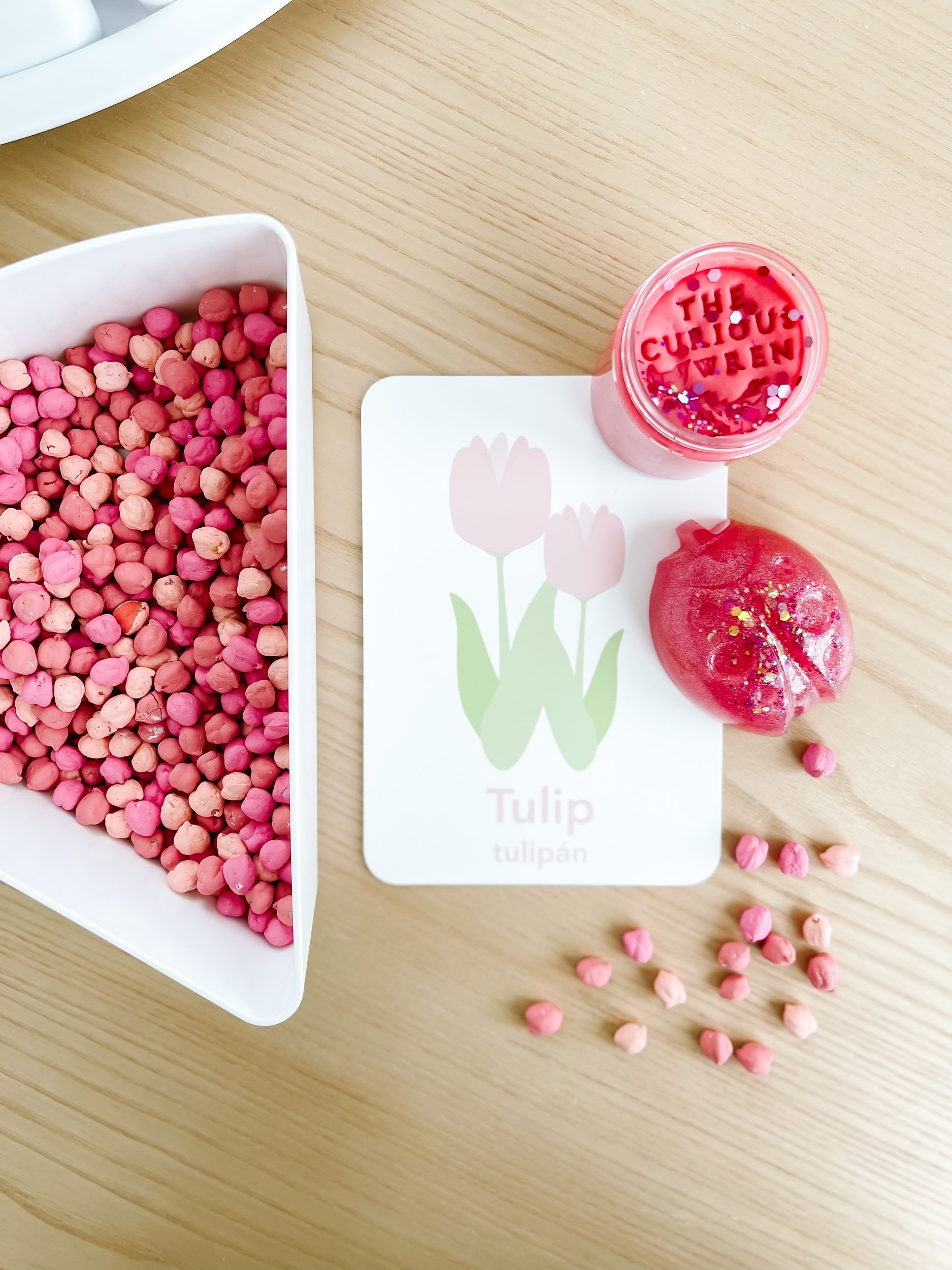
Now, to enhance your child's learning experience, we recommend our spring garden flower flashcards. These flashcards feature beautiful and colorful illustrations of different flowers, and they can help your child learn about the different types of flowers, colors, and shapes. The flashcards also come with fun and educational activities that you can do with your child, such as matching games, counting activities, and more.

By purchasing our spring garden flower flashcards, you'll not only provide your child with a fun and engaging learning experience, but you'll also support their cognitive development. So why not add these flashcards to your spring sensory play activities and make the most out of this beautiful season?

In conclusion, spring is the perfect time to engage your child in some sensory play activities. From flower sensory bins to gardening and sensory walks, there are plenty of fun and educational activities that you can do with your toddler. And if you want to enhance their learning experience, our spring garden flower flashcards are the perfect addition. So get ready to have some fun and make some memories with your little one this spring!

IMG_1422.jpeg
IMG_1410.jpeg
IMG_1381.jpeg
IMG_1429.jpeg
IMG_1400.jpeg
IMG_1401.jpeg
IMG_1407.jpeg
IMG_1418.jpeg
IMG_1425.jpeg
IMG_1413.jpeg
IMG_1405.jpeg
IMG_1386_jpg.jpeg
IMG_1391_jpg.jpeg
IMG_1392_jpg.jpeg
IMG_1396_jpg.jpeg
IMG_1398.jpeg
IMG_1402.jpeg
IMG_1403.jpeg
IMG_1404.jpeg
IMG_1416.jpeg
IMG_1417.jpeg
IMG_3130_jpg.jpeg
IMG_3221.jpeg
IMG_3201_jpg.jpeg
IMG_3237.jpeg
IMG_3249_jpg.jpeg
IMG_3188_jpg.jpeg
IMG_3126.jpeg
IMG_3190_jpg.jpeg
IMG_3203_jpg.jpeg
IMG_3215_jpg.jpeg
IMG_3207_jpg.jpeg
IMG_3184_jpg.jpeg
IMG_3193_jpg.jpeg
IMG_3196.jpeg
IMG_3197_jpg.jpeg
IMG_3200_jpg.jpeg
IMG_3223_jpg.jpeg
IMG_3227_jpg.jpeg
IMG_3239.jpeg
IMG_3240.jpeg
IMG_3243.jpeg
IMG_3245_jpg.jpeg
IMG_3250_jpg.jpeg
IMG_3253_jpg.jpeg
IMG_3256.jpeg
IMG_3264_jpg.jpeg
IMG_3125.jpeg
IMG_3127.jpeg
IMG_3128.jpeg
IMG_3129_jpg.jpeg
IMG_3148_jpg.jpeg
IMG_3147_jpg.jpeg
IMG_3150_jpg.jpeg
IMG_3132_jpg.jpeg
IMG_3119.jpeg
IMG_3144_jpg.jpeg
IMG_3146_jpg.jpeg
IMG_3140_jpg.jpeg
IMG_3134.jpeg
IMG_3149_jpg.jpeg
IMG_3142_jpg.jpeg
IMG_3141_jpg.jpeg
IMG_3145_jpg.jpeg
IMG_3137.jpeg
IMG_3131_jpg.jpeg
IMG_3133_jpg.jpeg
IMG_3135.jpeg
IMG_3138.jpeg
IMG_3139_jpg.jpeg
IMG_3143_jpg.jpeg
IMG_3151_jpg.jpeg
IMG_3152_jpg.jpeg
IMG_3122.jpeg
← Newer Posts Older Posts →

Get Featured

Have a shop that specializes in baby gifts? I'd love to feature your shop and products in one of my weekly roundups. Email me at goodnightfoxstudio@gmail.com.

Have a small shop?

Check out GoodnightFox wholesale we’d love to have you carry the GoodnightFox brand.

Free Letter of the Week Guide

Sign up with your email address to get a weekly Letter Guide A-Z for 26 weeks of sensory play inspiration.

You’ll also get access to free printables, new products and promotions.

Thank you! Check your email for your free 26-Letter of the Week activity guide printable poster.


Free Printable Activities

Check out our free printable library of resources. From activity books, dramatic play kits, memory games, flashcards and more, you can try the entire goodnightFox collection free.

Download & Print

PLAY BY SEASON

  • WINTER

  • Spring

  • Summer

  • Fall

  • Wholesale

  • Favorite ShOPs

  • Newsletter

  • BLOG

  • Shop