

The Ultimate Guide to Organizing Sensory Play at Home
If you love sensory play but hate the mess, you’re not alone. Many parents want to provide hands-on learning activities but feel overwhelmed by clutter, storage, and setup time. The good news? With a simple organization system, sensory play becomes easy to set up, easy to clean up, and easy to repeat.
In this guide, you’ll learn how to create a simple sensory play organization system that works in real homes.
Quick Navigation
Why Sensory Play Feels Messy
The 3-Step Organization System
Best Storage Products for Sensory Play
Toy Rotation Tips That Keep Kids Engaged
A Simple Weekly Sensory Play Routine
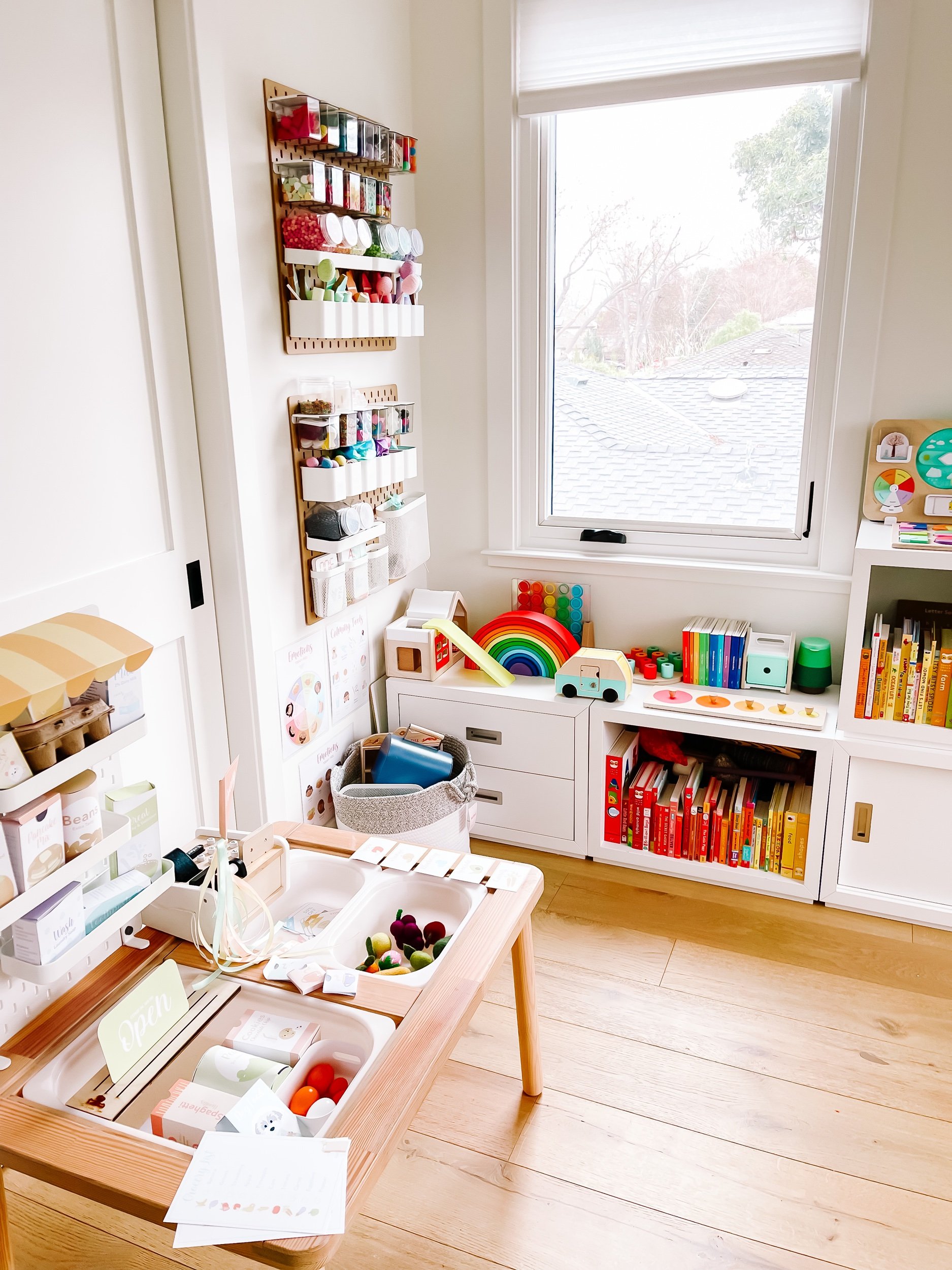
If you’re like me, you’ve accumulated a lot of sensory play materials over the years and you struggle to keep up with storing and organizing all of it. Well, I finally got the time to get it all organized and here are some of my favorite tips and tricks to keep your playroom tidy while enjoying lots of fun (and sometimes messy) sensory play. In this room, I store over 200 sensory play activities along side a multitude of other toys and books.

1. Closed storage units
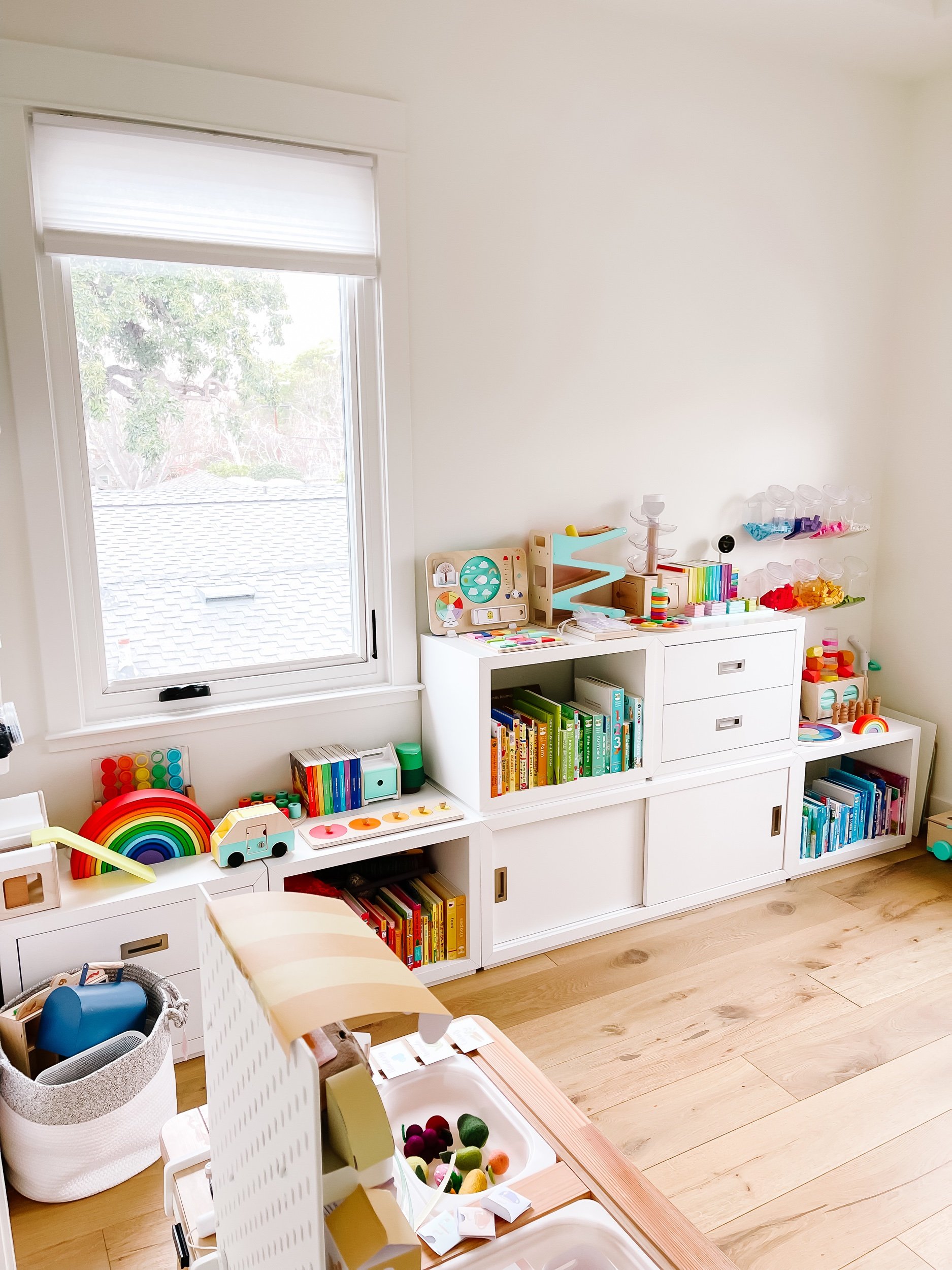
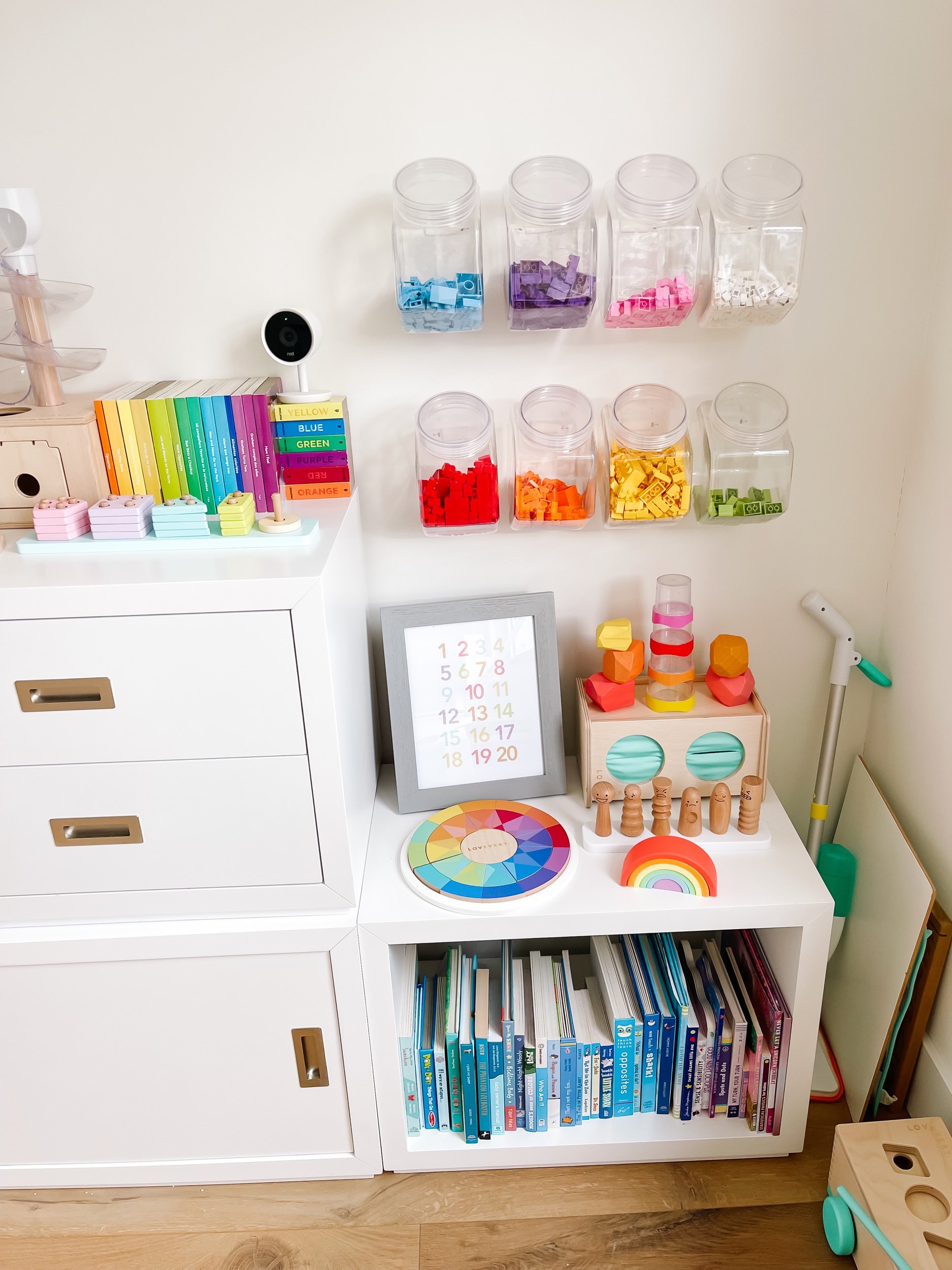
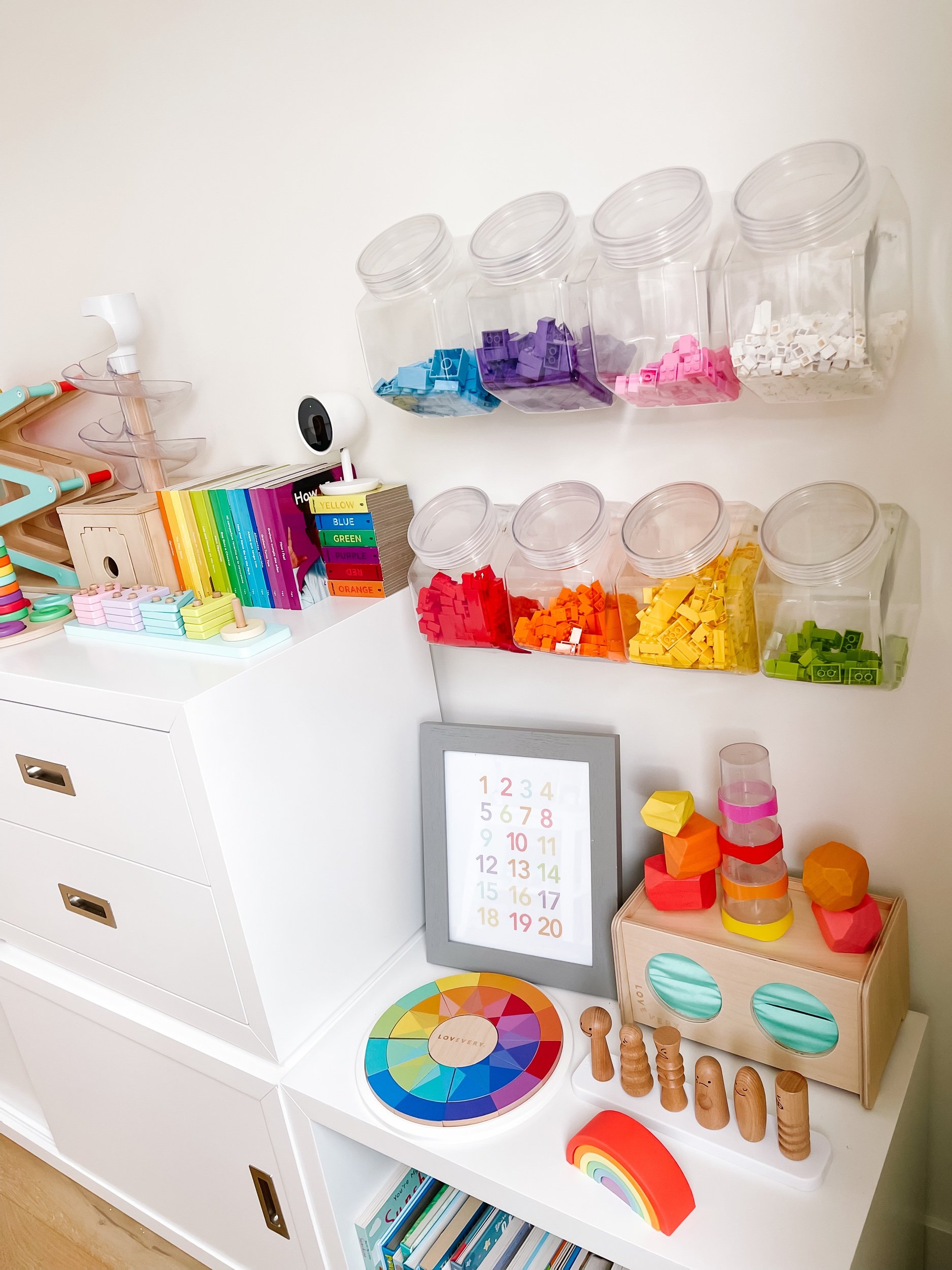
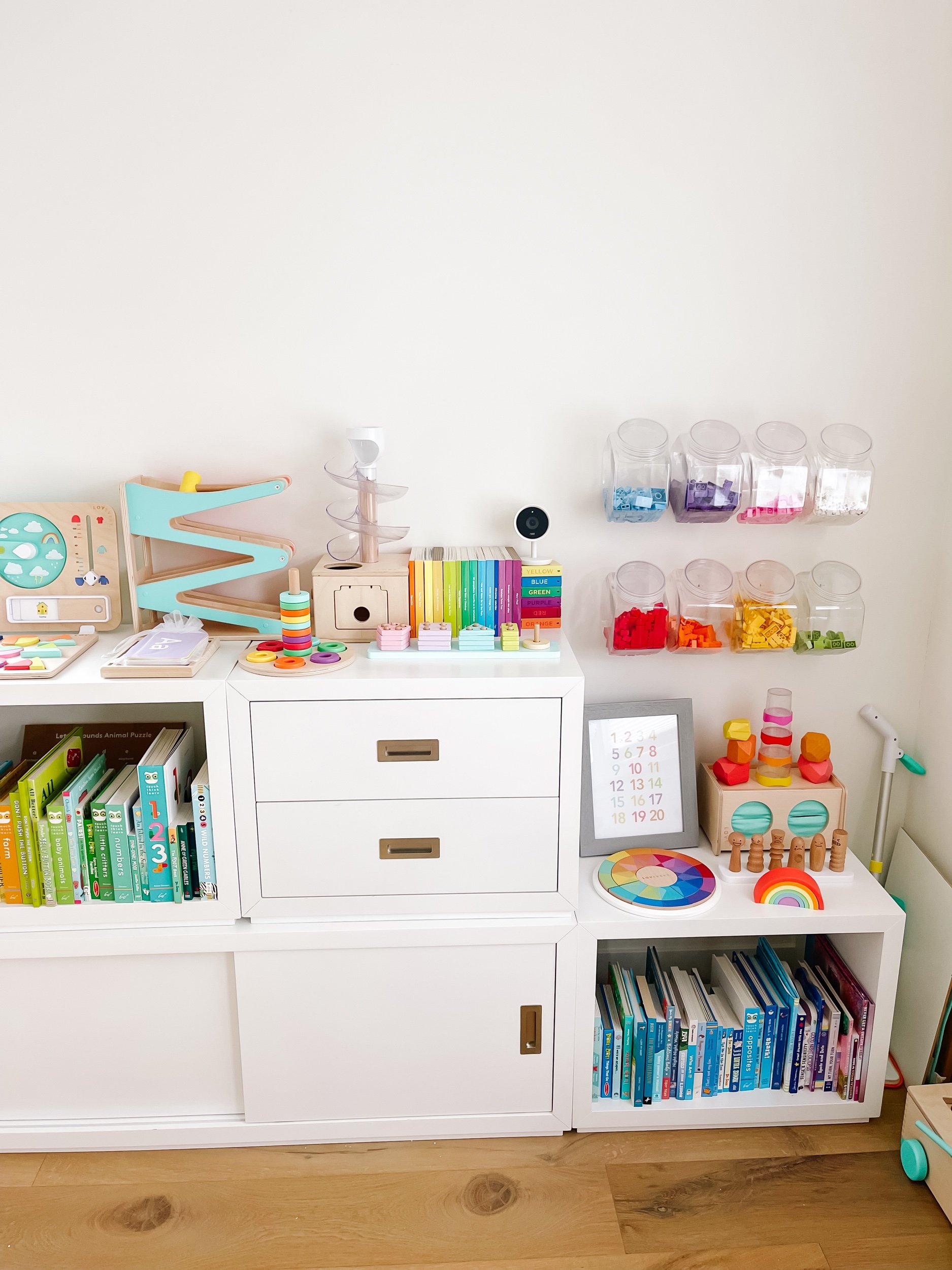
Okay okay. I know Montessori moms love the open and accessible shelving units for kids to have play items accessible and visual. And of course they’re great for toy rotations. But I find they just aren’t practical. Not all of your child’s toys need to be out and available and if we’re talking aesthetics, not all of them are pretty toys. So have a mix of open and closed shelving so that toys are at the ready but also there are some drawers to tuck away items not in use. We love our Aspect Modular shelves from Crate and Barrel. You can make a custom configuration that suits your room.
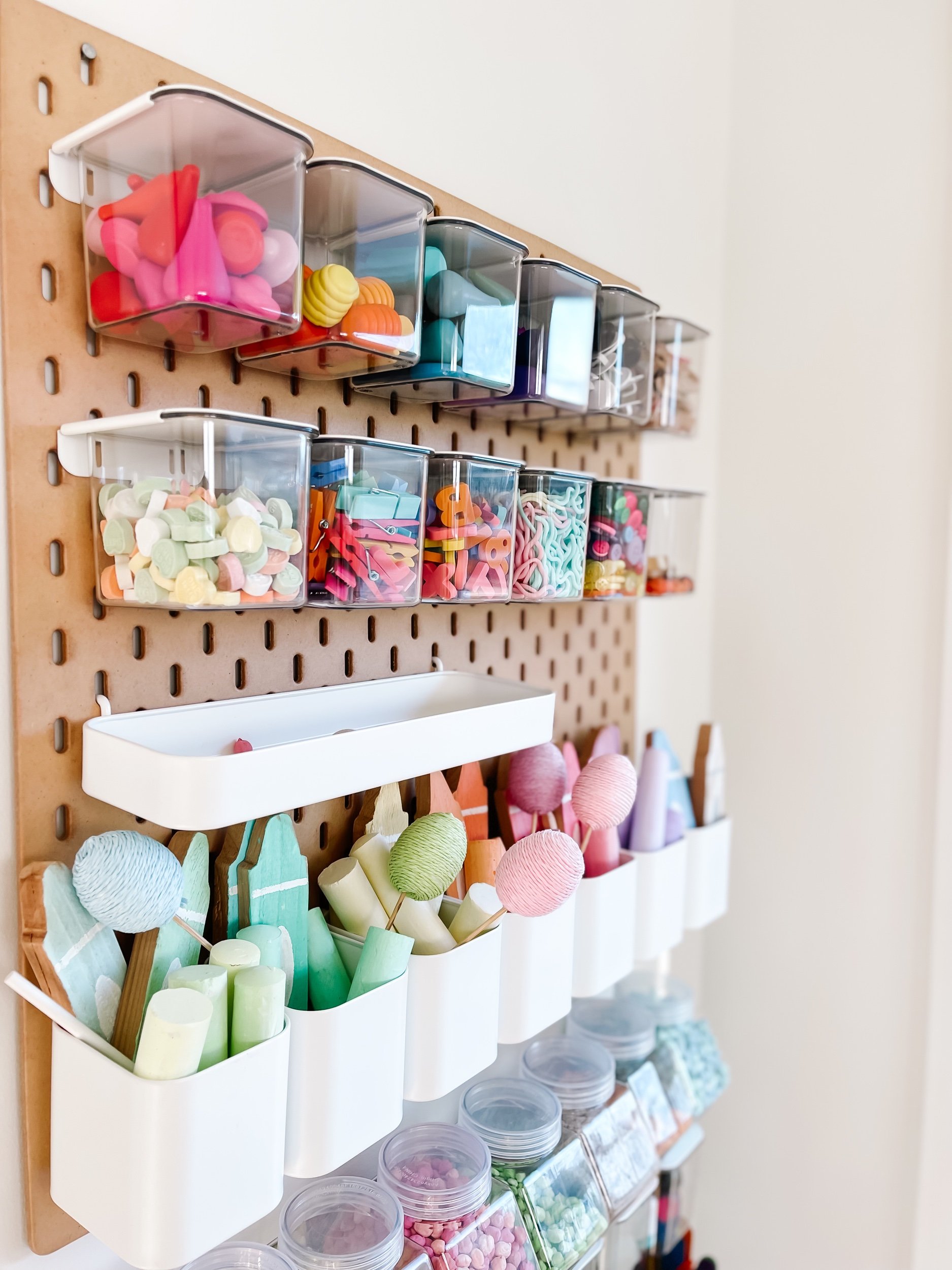
2. Peg Board Organizers
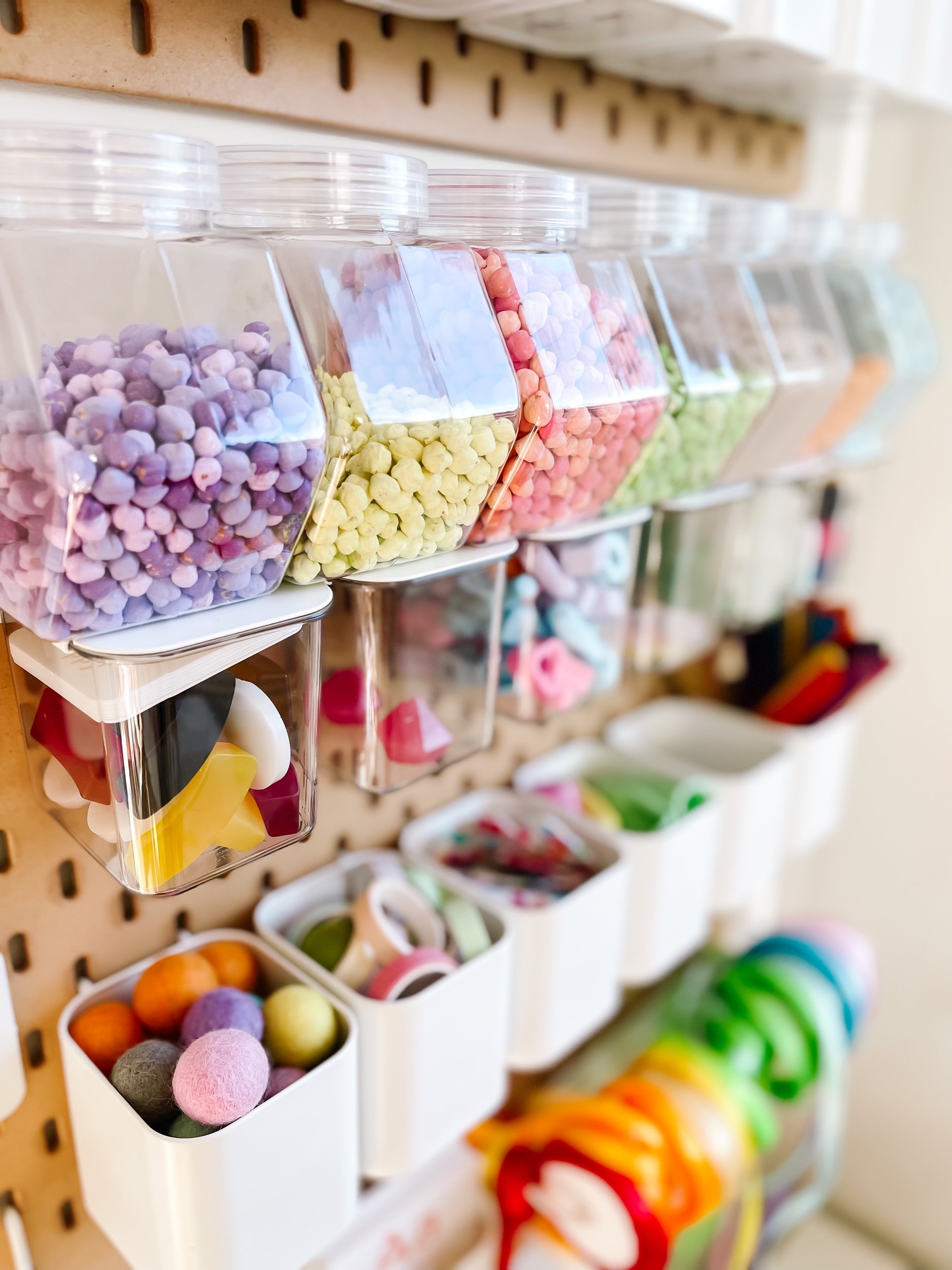
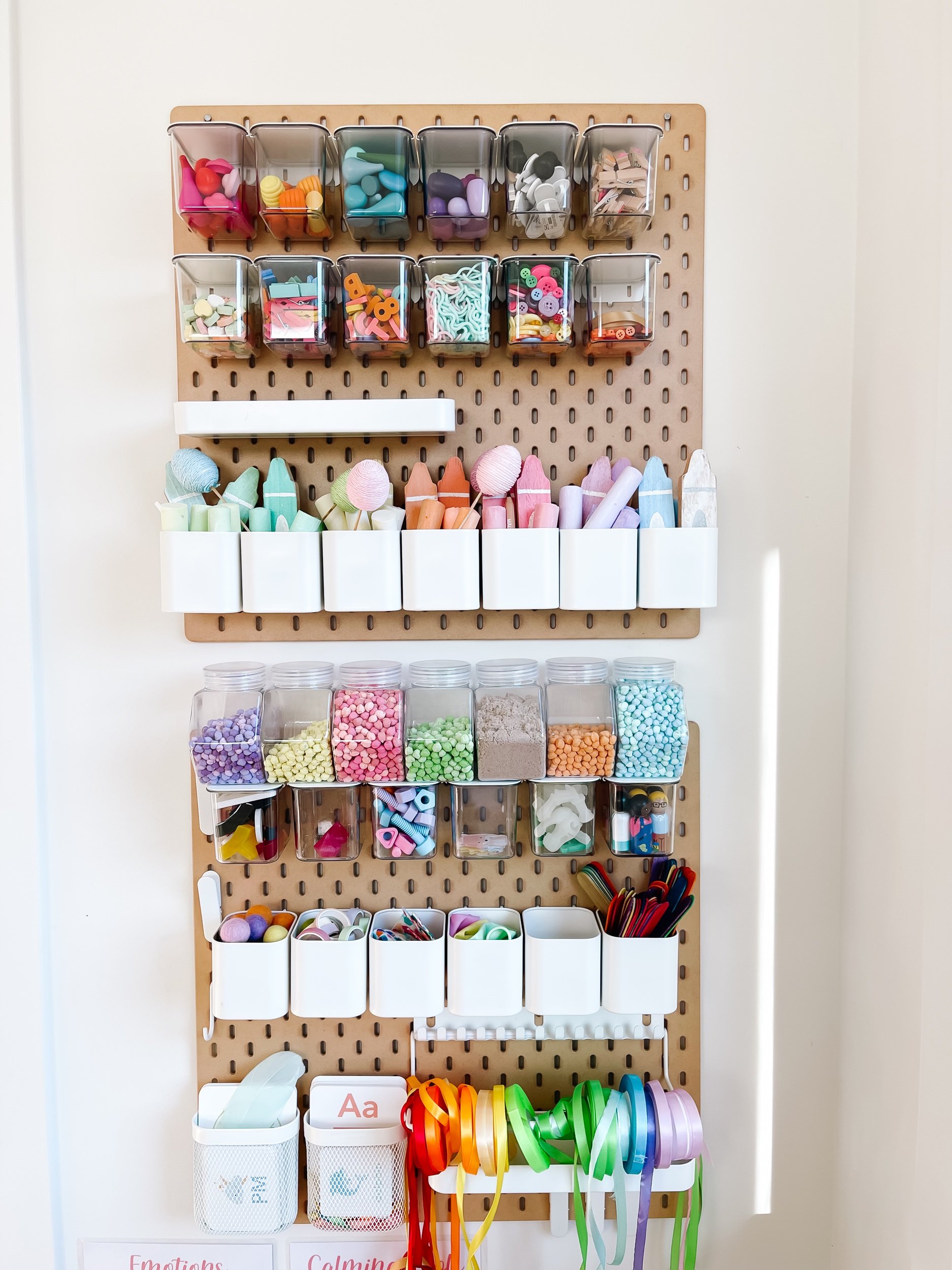
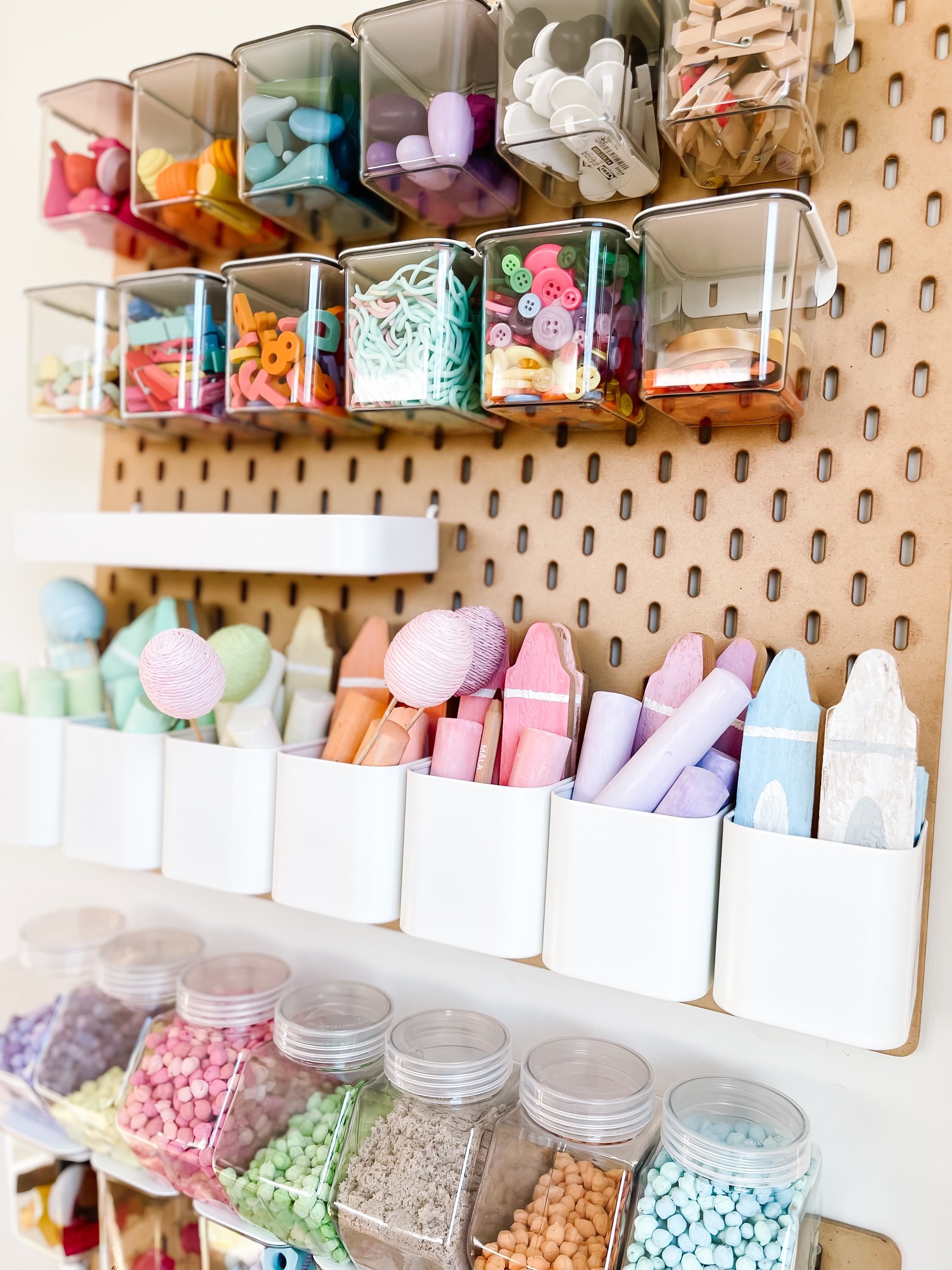
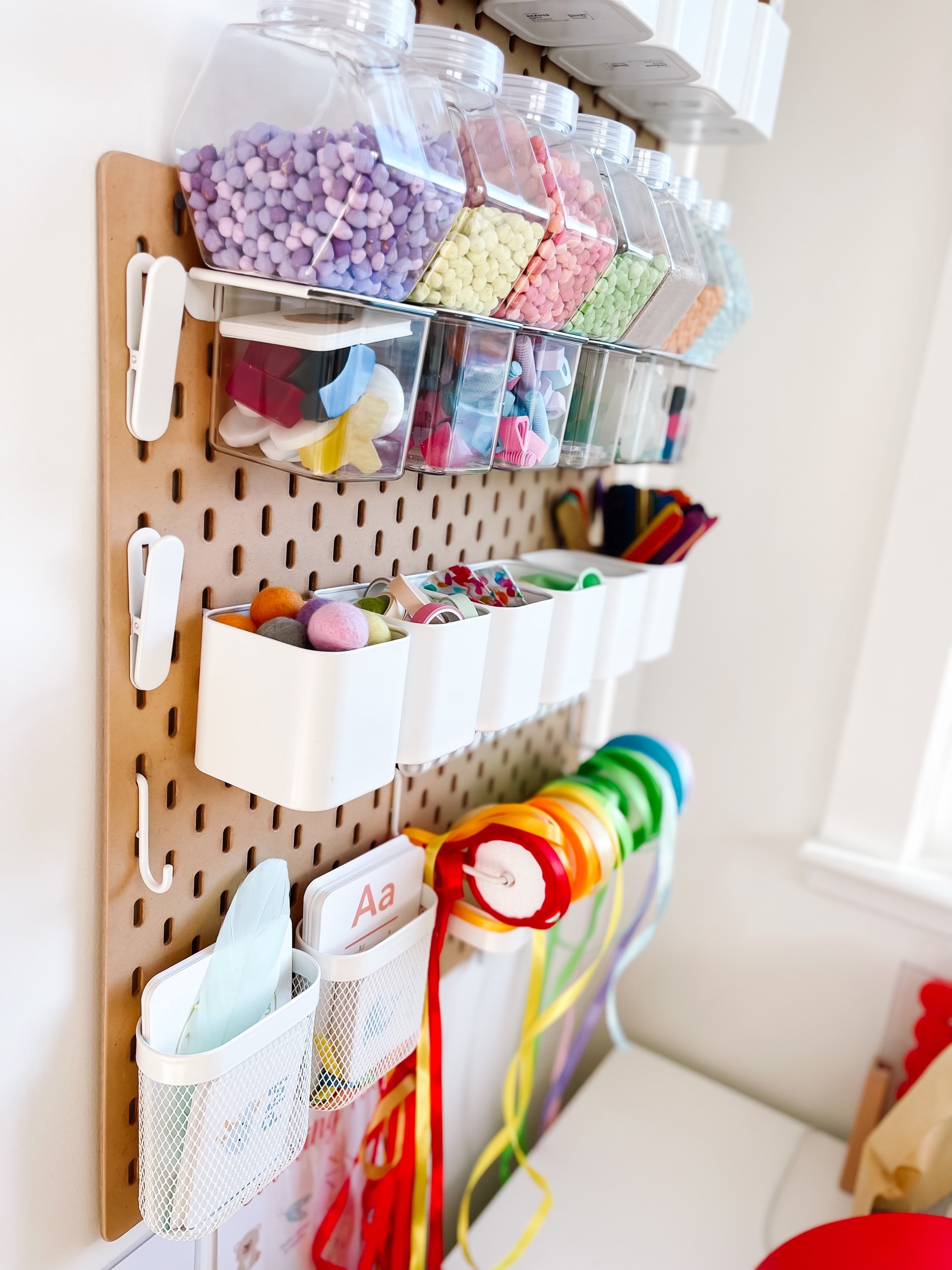
The Skadis pegboard from IKEA has been a lifesaver for us. I can easily store and display small parts and accessories for sensory play. We have our resin letters from @busylittles, we have our emotions pieces from @thesensoryexperience, and our resin pieces from @busylittles all stored neatly in these little containers. Plus we have our wool balls from @wonderyearsshop and our memory games from @bannortoys. Everything is sorted yet accessible so that we can pull them out at a moments notice.
This is a great way to store the sensory fillers that you’re going to use pretty regularly. Wool balls, kinetic sand, grapat and mandala toys, buttons, washi tape, and more. We also use the mesh wire bins to hold our GoodnightFox flashcards — the sets that we pull out most are Letter Sounds, Letters, High Frequency Words, and Emotions.
Resin Letters & Gems by Busy Littles
Emotions pieces by The Sensory Experience
Wool balls by The Wonder Years Shop
Dinosaur Bones by Creating Adventures Co
Rainbow Wooden Crayons by Oak & Co
Rainbow Chickpeas by Curious Wren
Alphabet Clips, Nuts & Bolts Erasers, Letter Erasers from Target Dollar Spot
Grapat & Mandala pieces from Amazon
Silicon Silly String from Amazon
Acrylic Characters by GoodnightFox
Flashcards by GoodnightFox
Playsilks by Sarah’s Silks
Peg Occupations Dolls by TinyMountainMovers
Resin pieces from Little October House

3. Sterilite Storage Bins & Containers
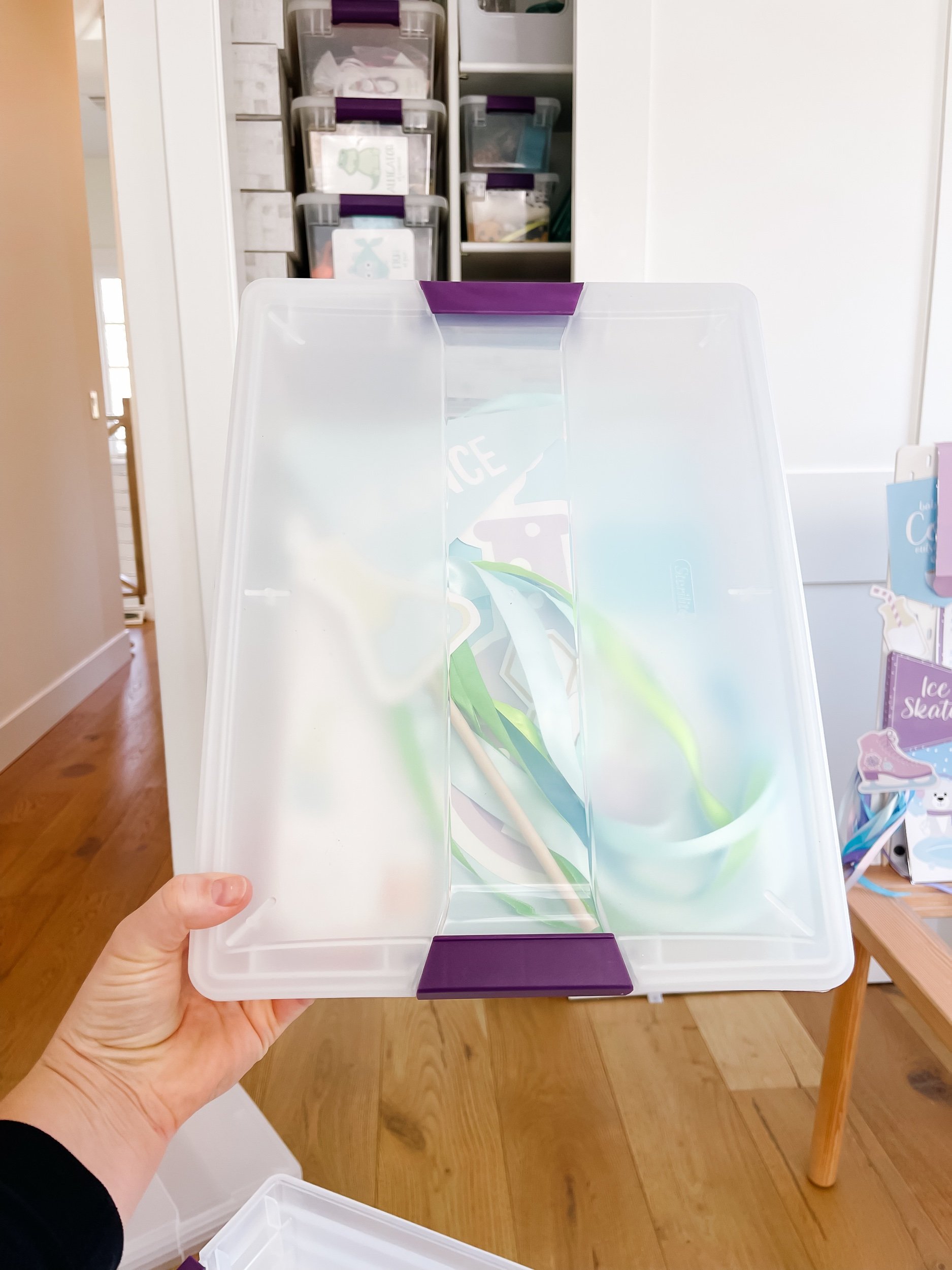
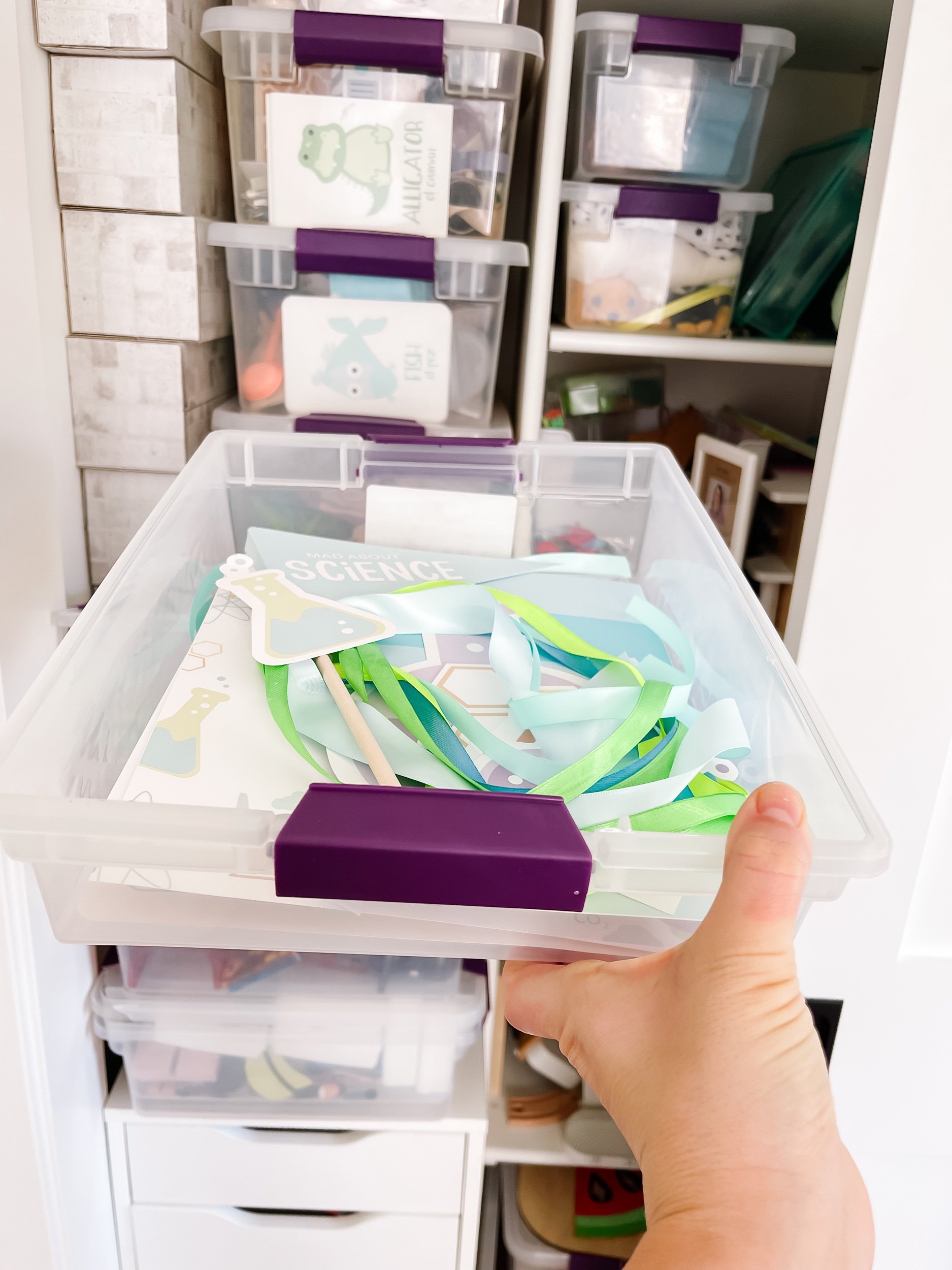
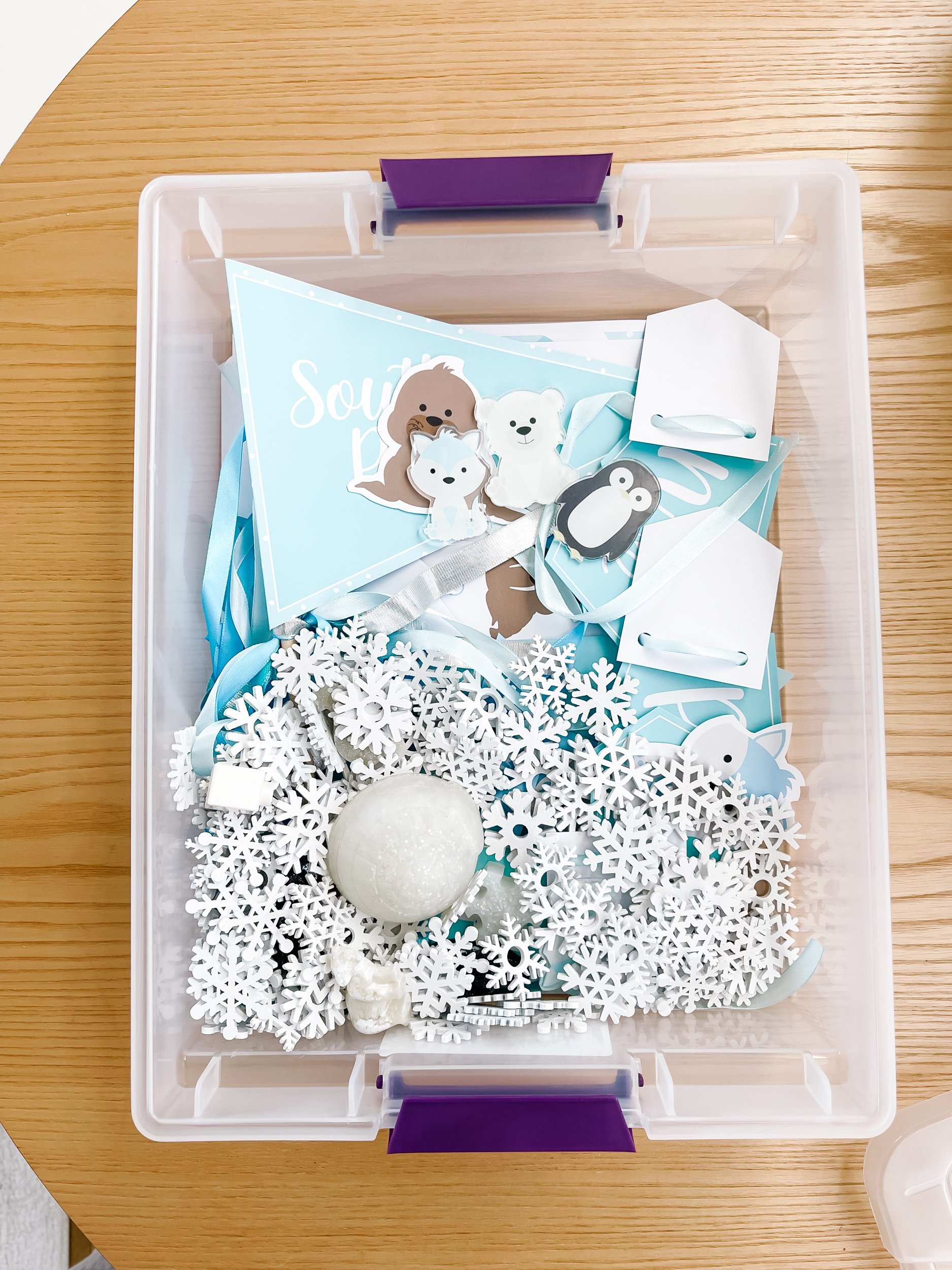
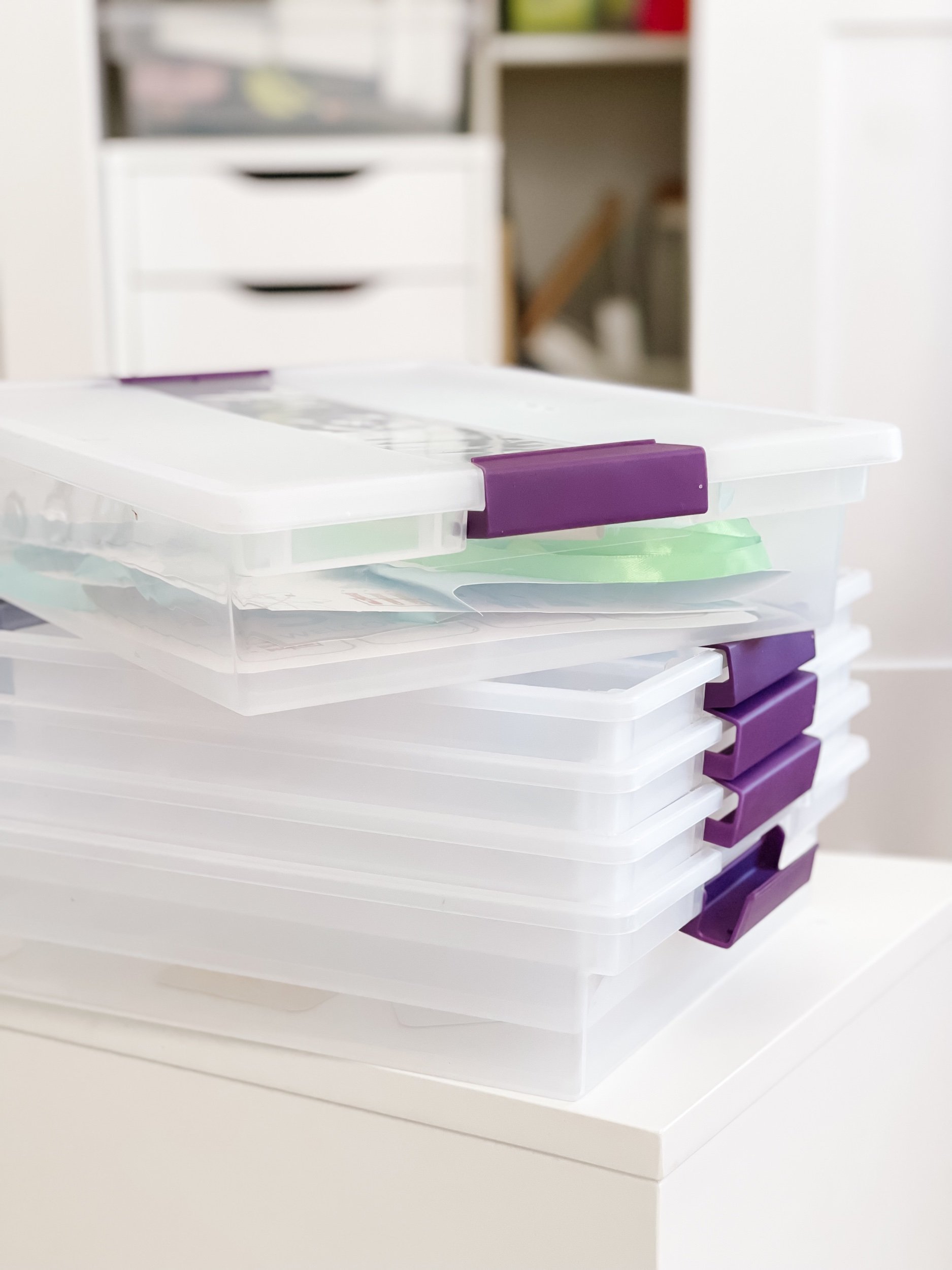
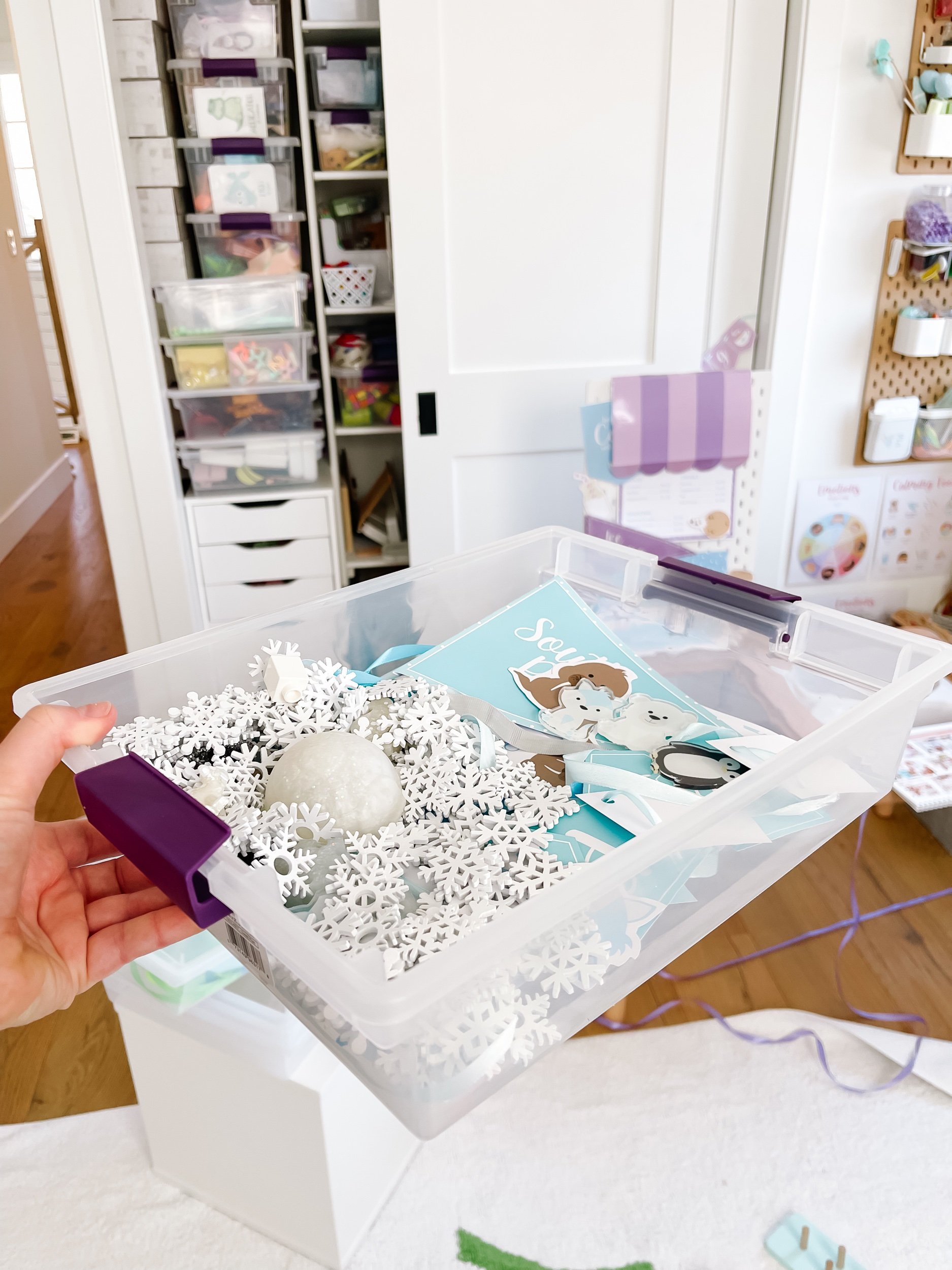
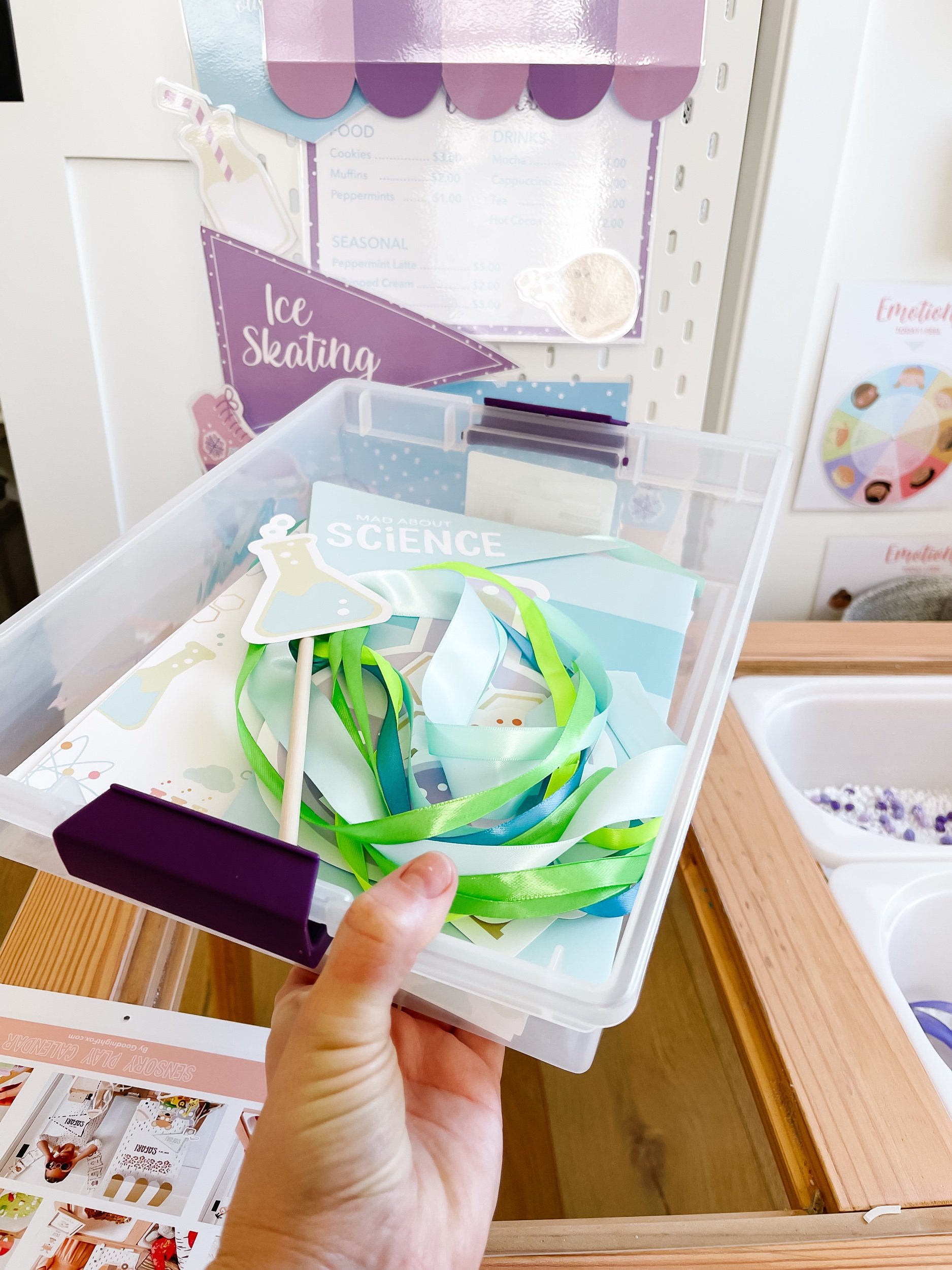
Most of our storage is in our closet. We store by theme in our Sterilite 15qt bins and our 4qt bins. We put toys, printables, flashcards, materials / fillers in these bins by theme. And our favorite hack is using our GoodnightFox flashcards at the front of each bin so that we can remember what the theme of each bin is.
4. Bulk food storage containers for fillers
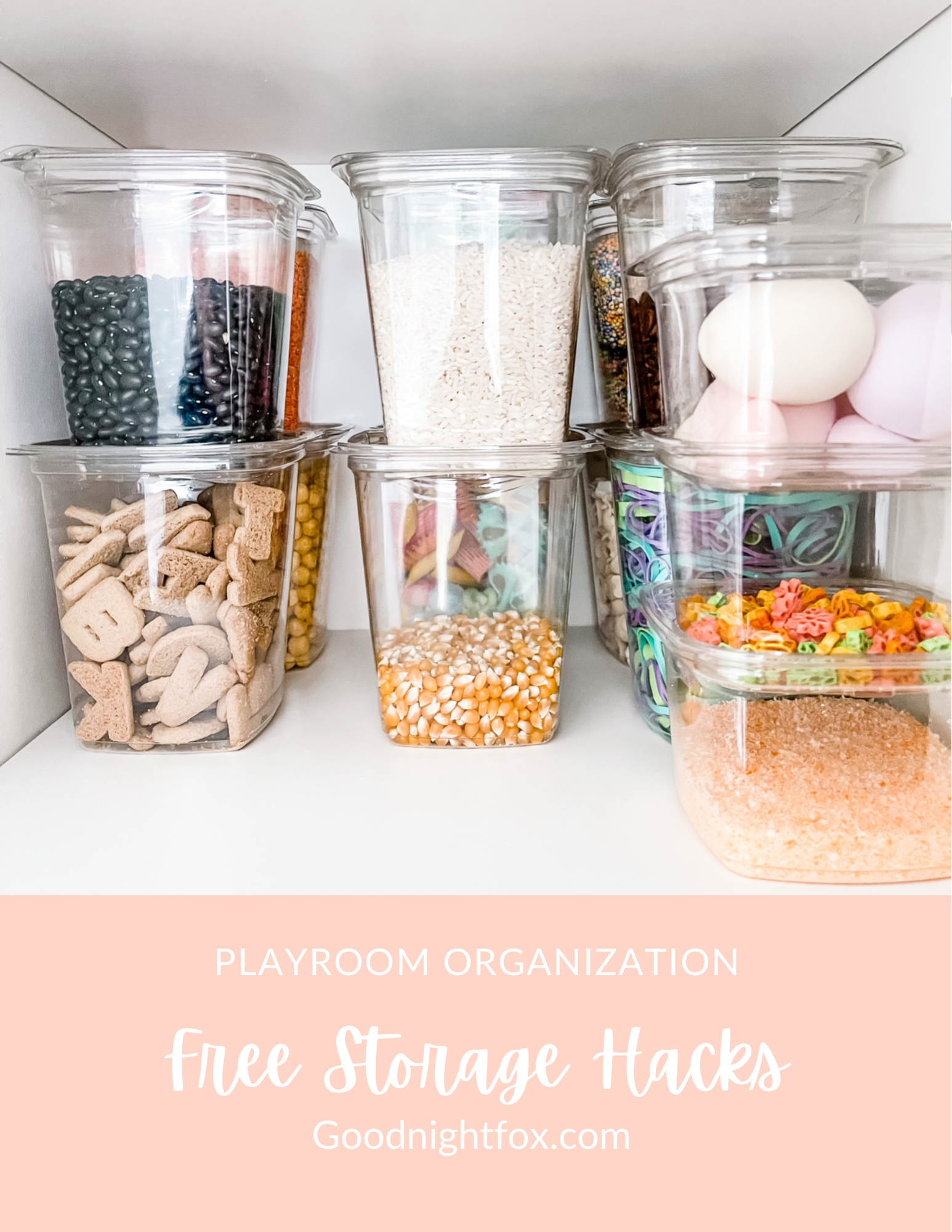
These work great for larger items and then for fillers and smaller materials, we use these free containers from the bulk foods section at WholeFoods. It’s so great because they’re free and come in two sizes so that we can easily store multiple colors of rice, chick peas, and other fillers. And they work great for keeping snacks and cereal from going stale!
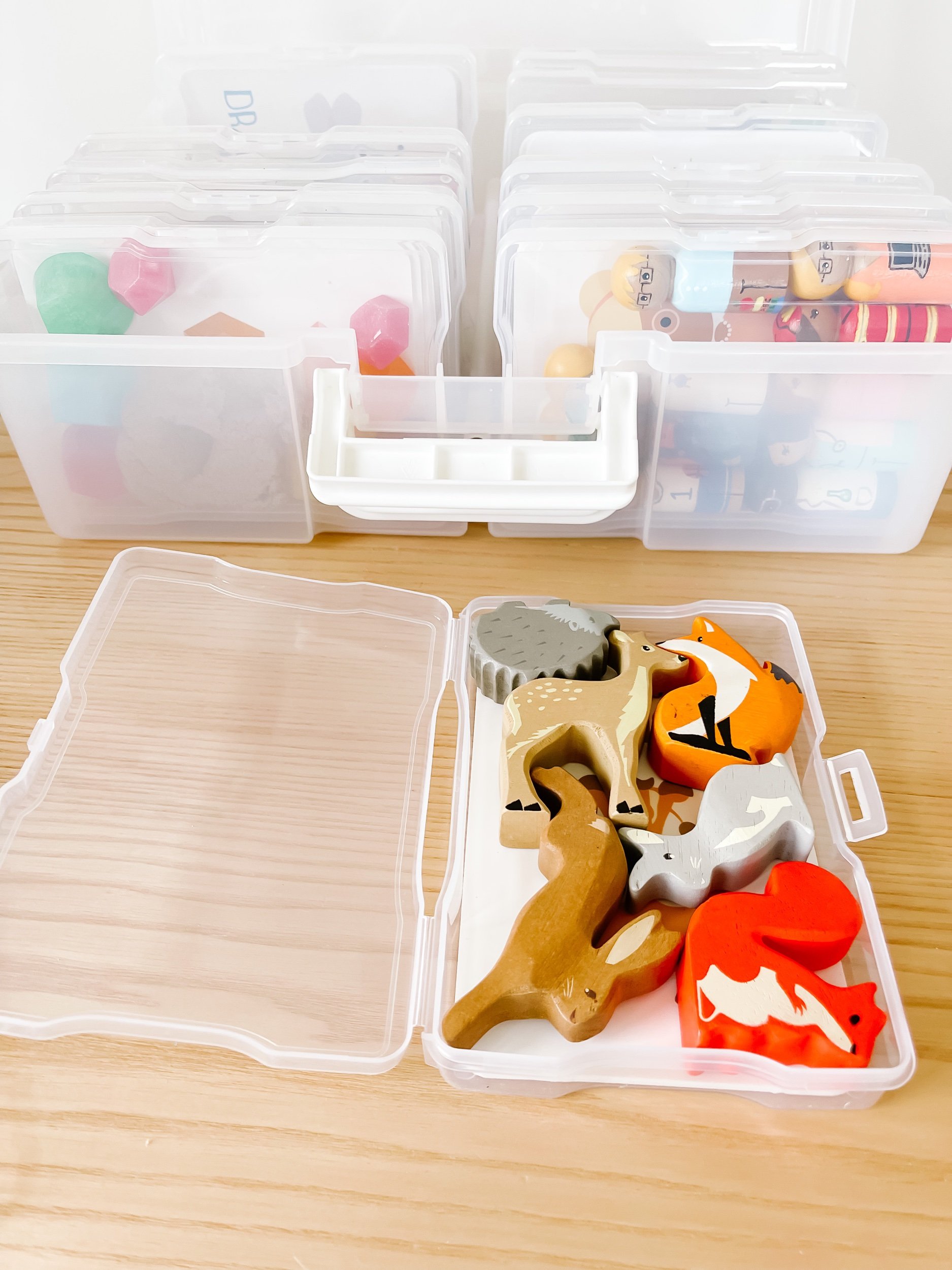
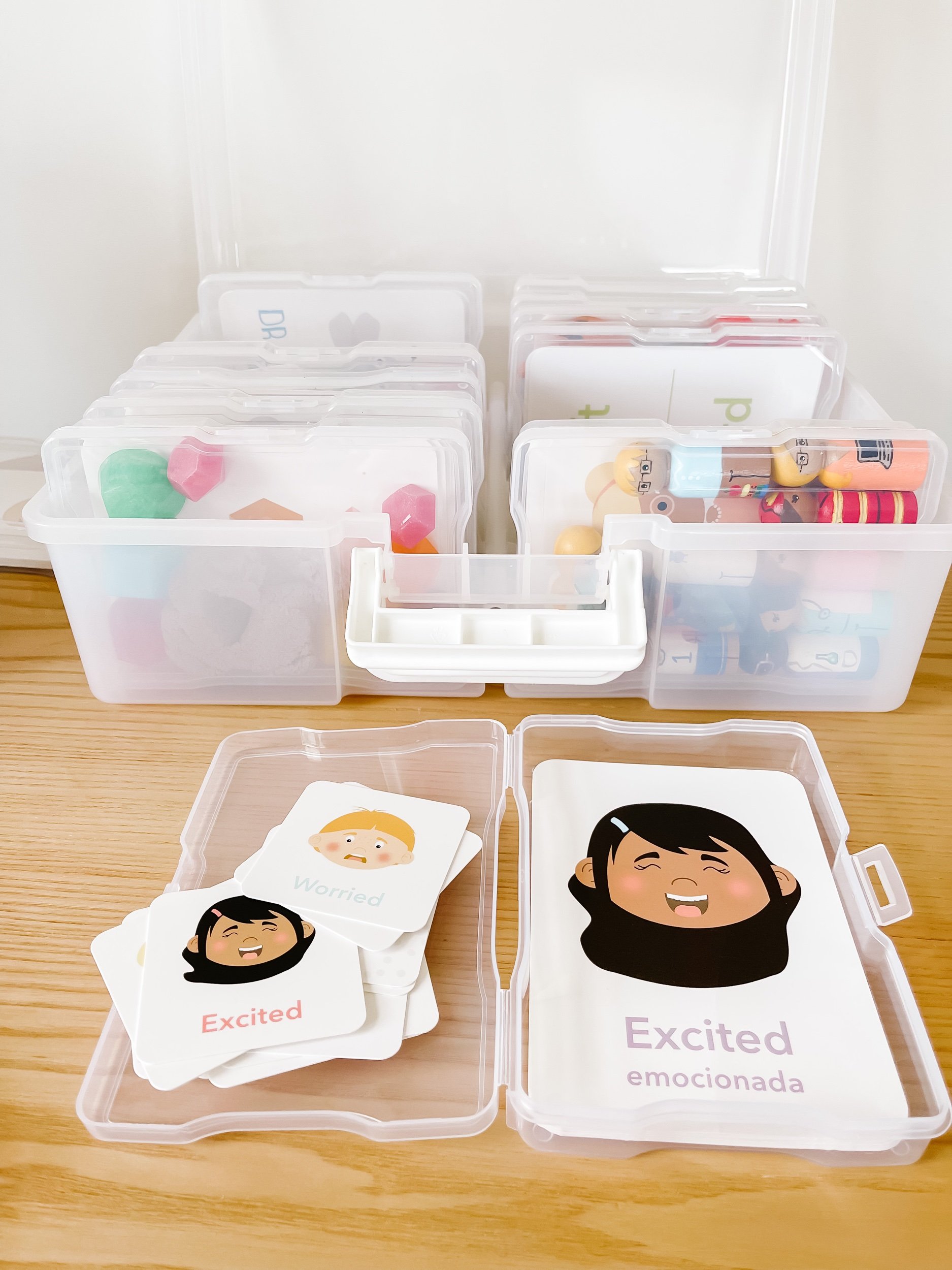
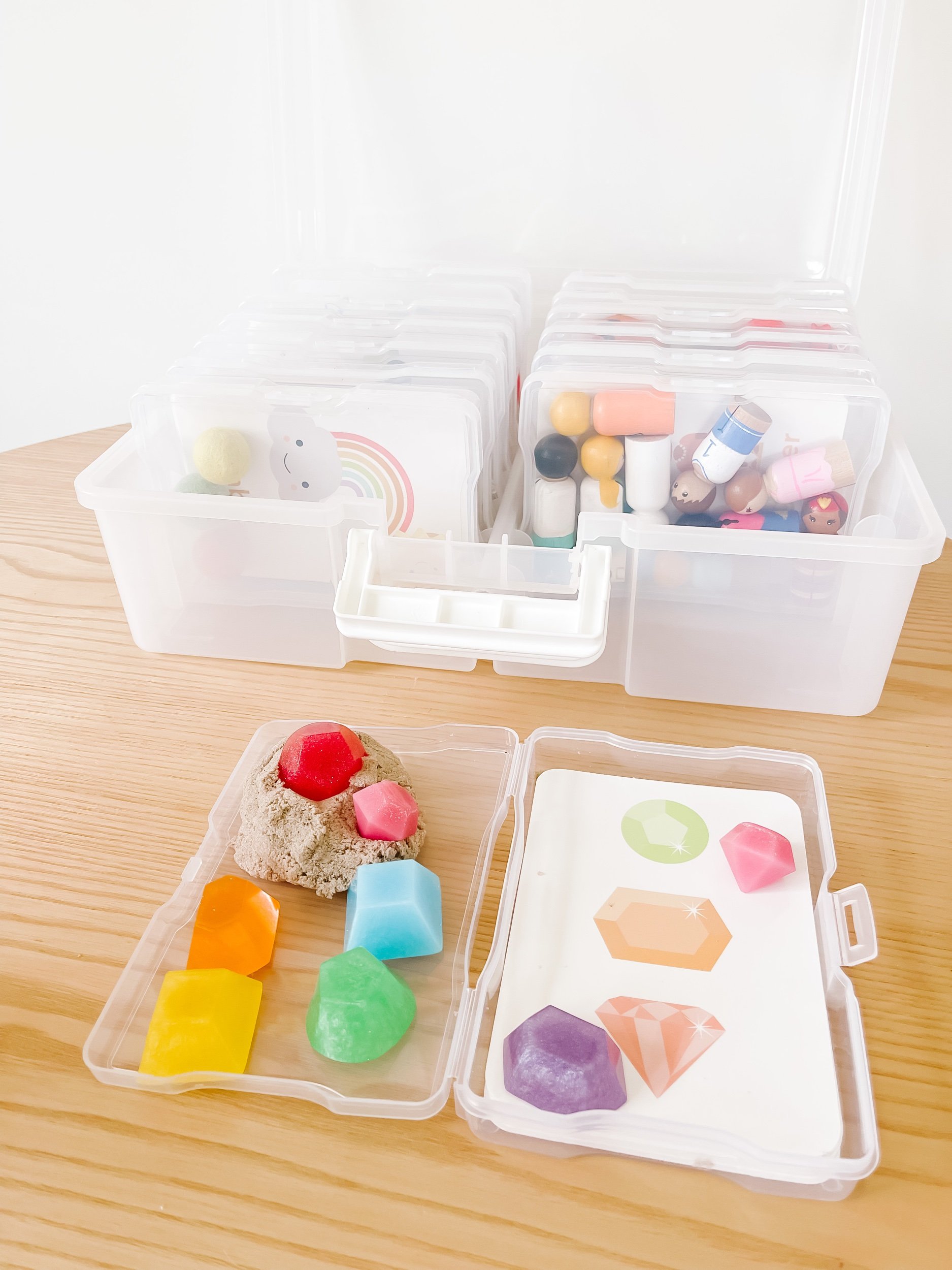
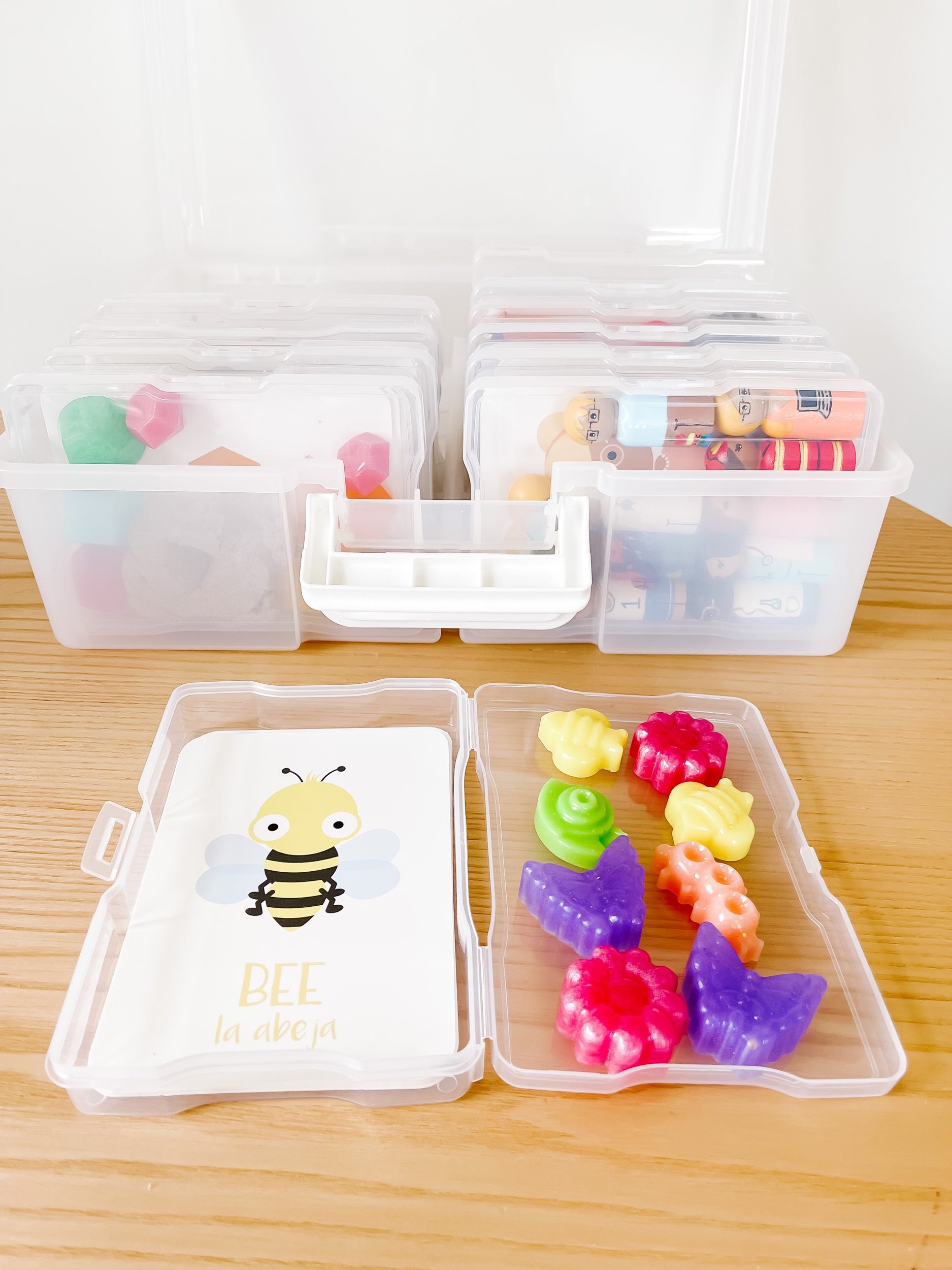
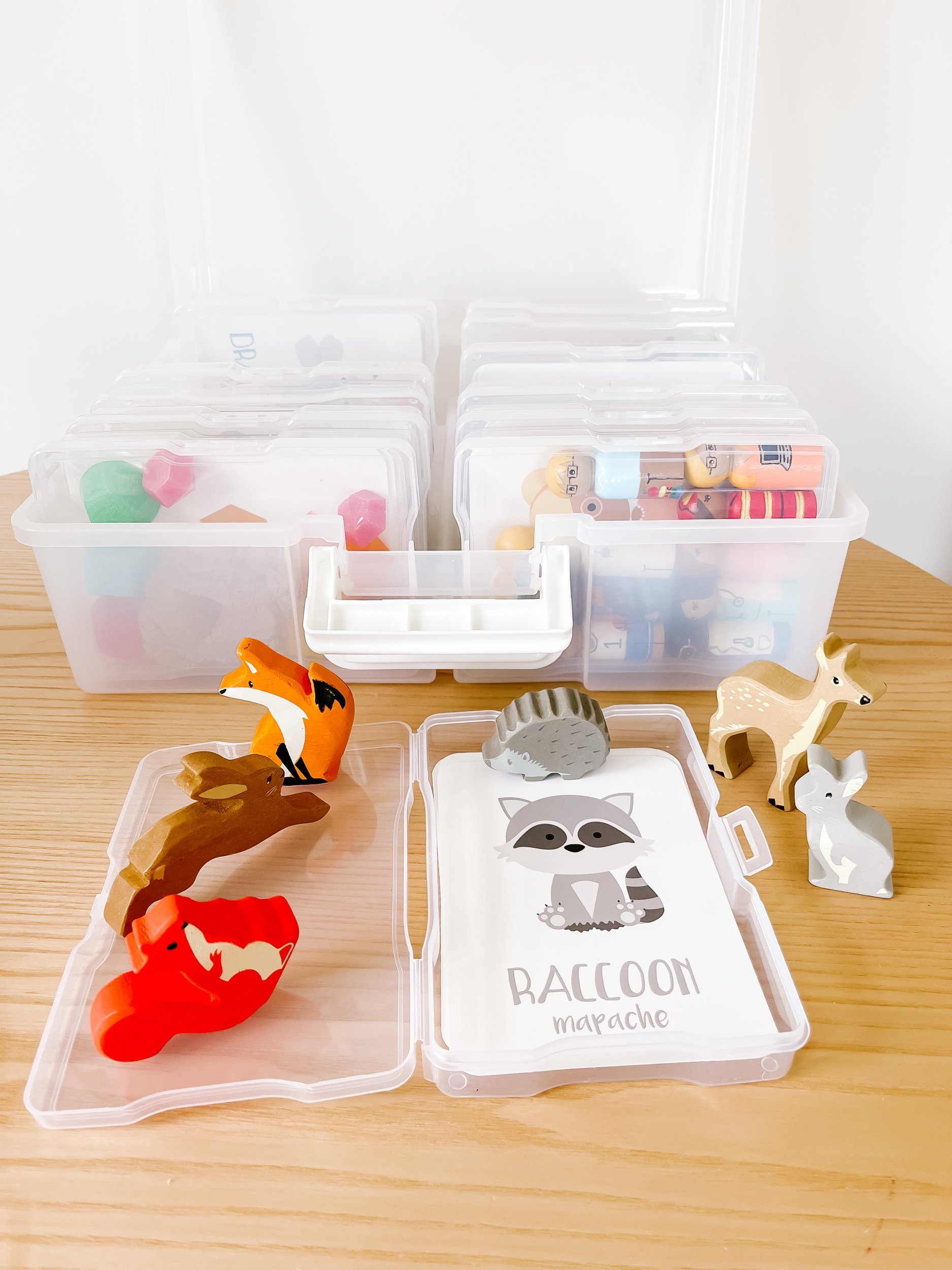
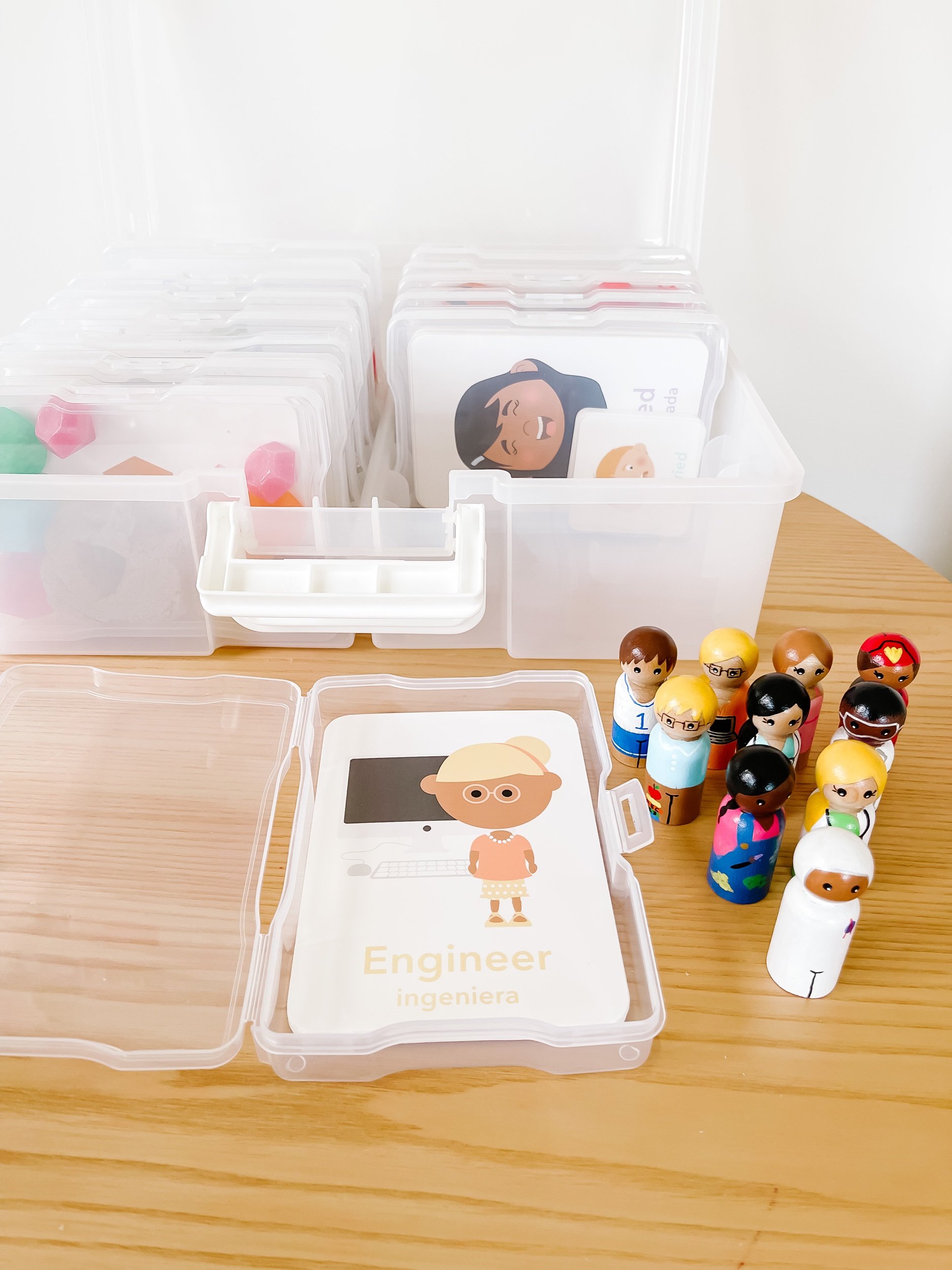
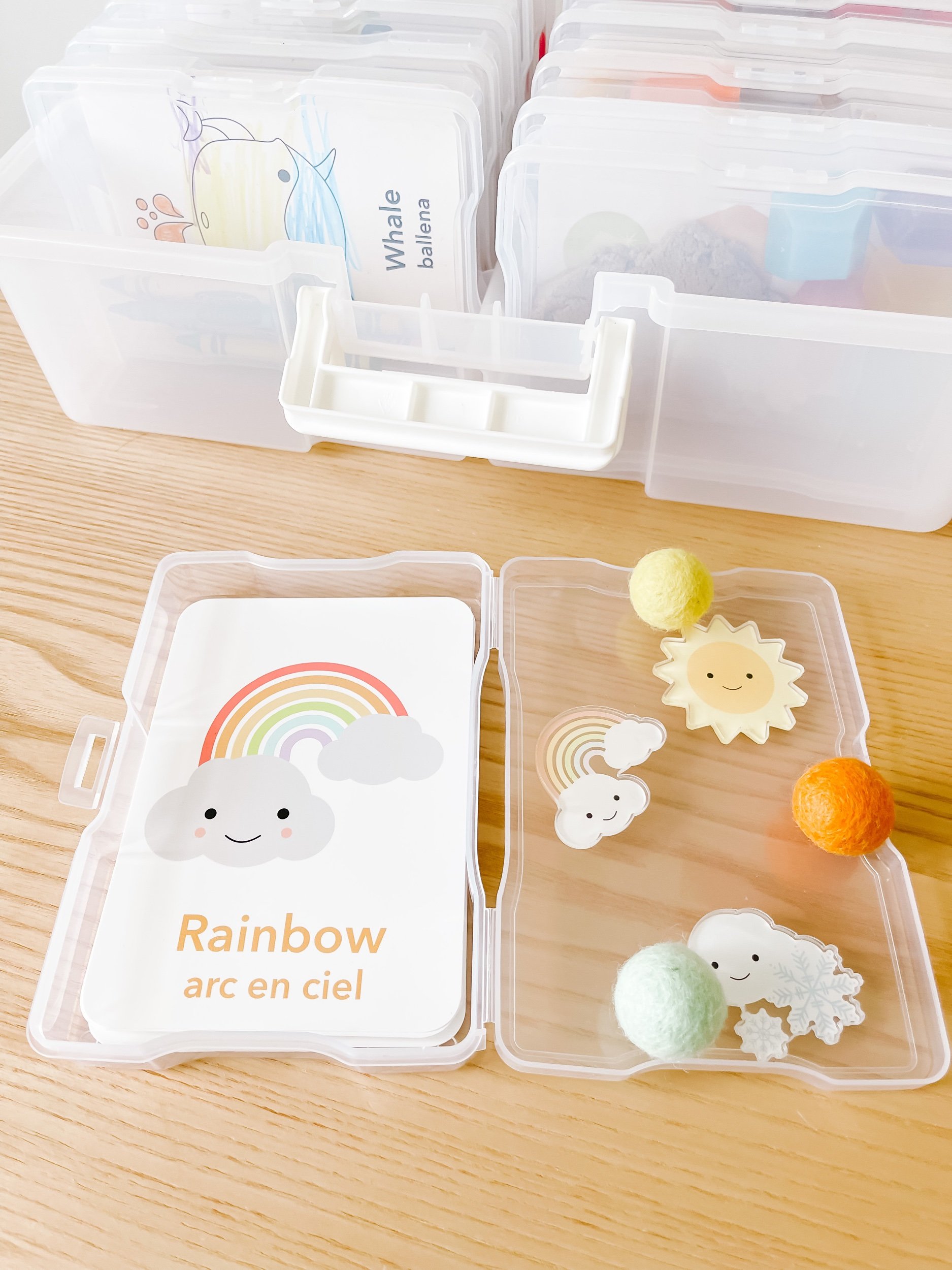
5. Photo Storage Bins for small parts
Creating organized, themed storage solutions for small sensory play items is a game-changer in toy organization and playroom storage. I discovered an amazing hack using clear plastic photo storage boxes for this purpose. These 4x6 boxes are perfect for keeping tiny parts together and sorted by theme, allowing for quick and easy access to specific sensory play items.
What makes these storage boxes even more incredible is how 16 of them neatly fit into a portable case. This feature is a lifesaver for on-the-go activities, as you can easily keep them in your car for spontaneous play sessions. Whether it's a long road trip or a quick visit to a friend's house, having these boxes at hand ensures endless fun without worrying about missing pieces.
You can snag these on Amazon or wait for them to go on sale at Michaels!
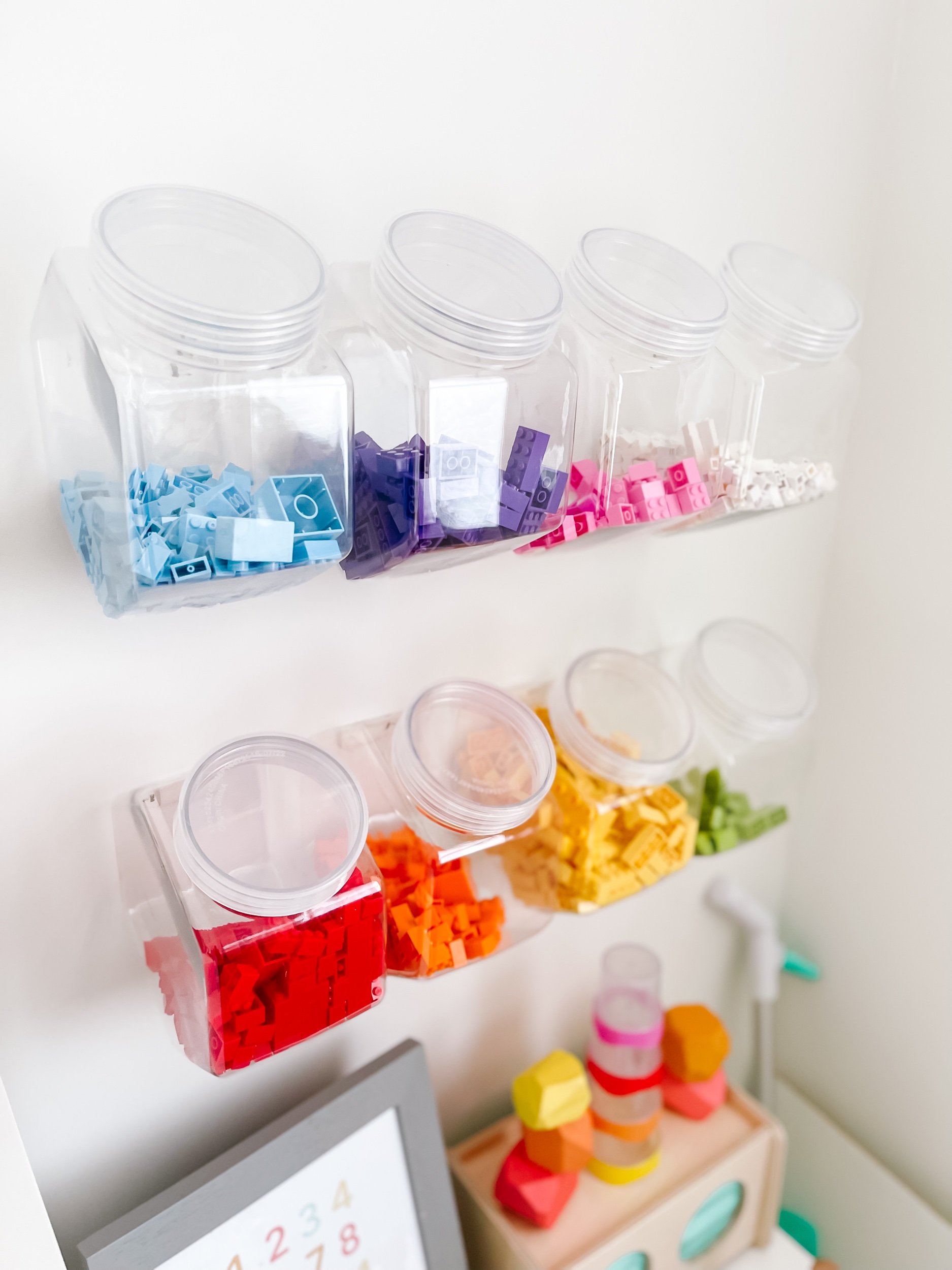
6. Candy Jar clear containers
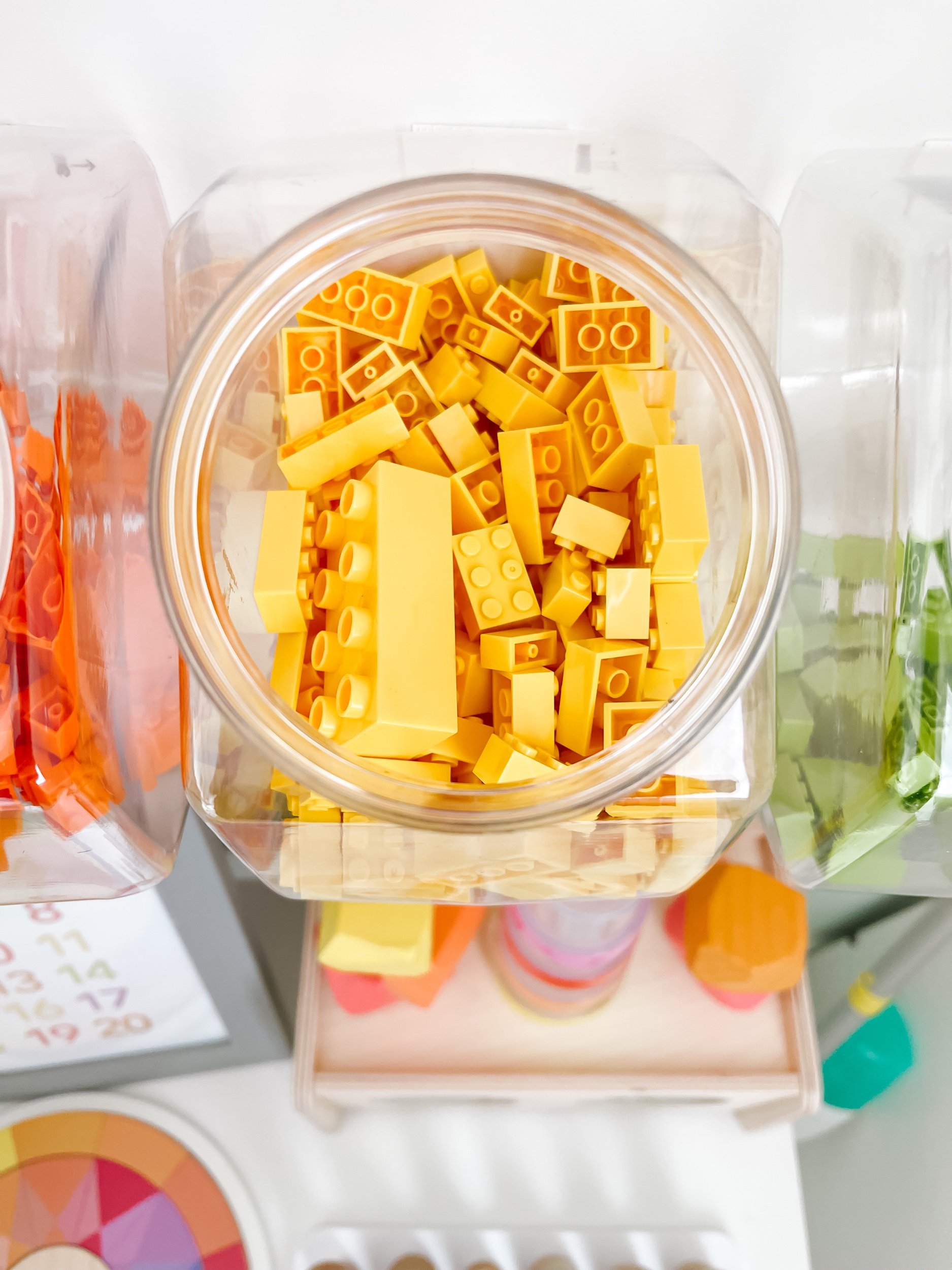
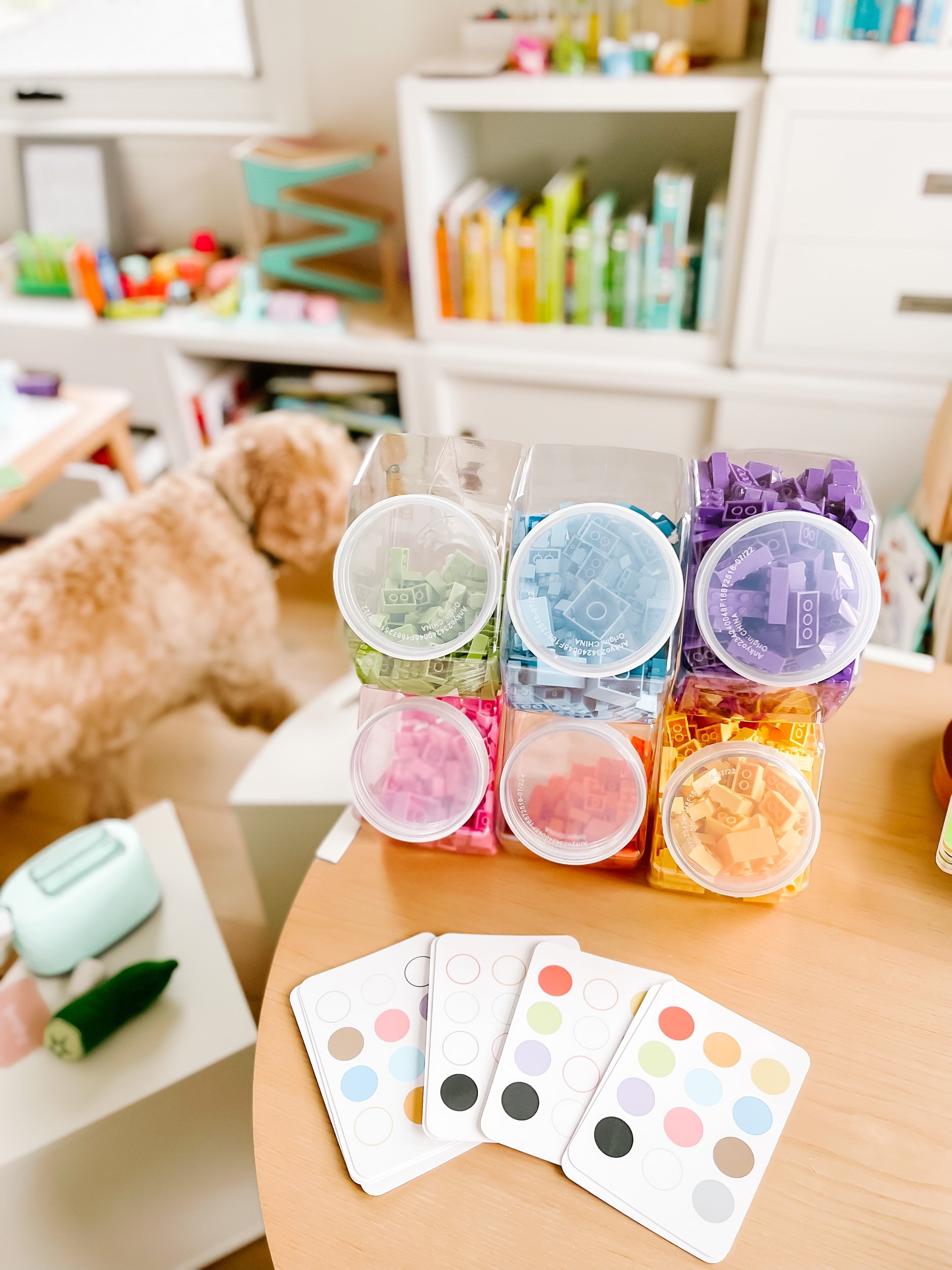
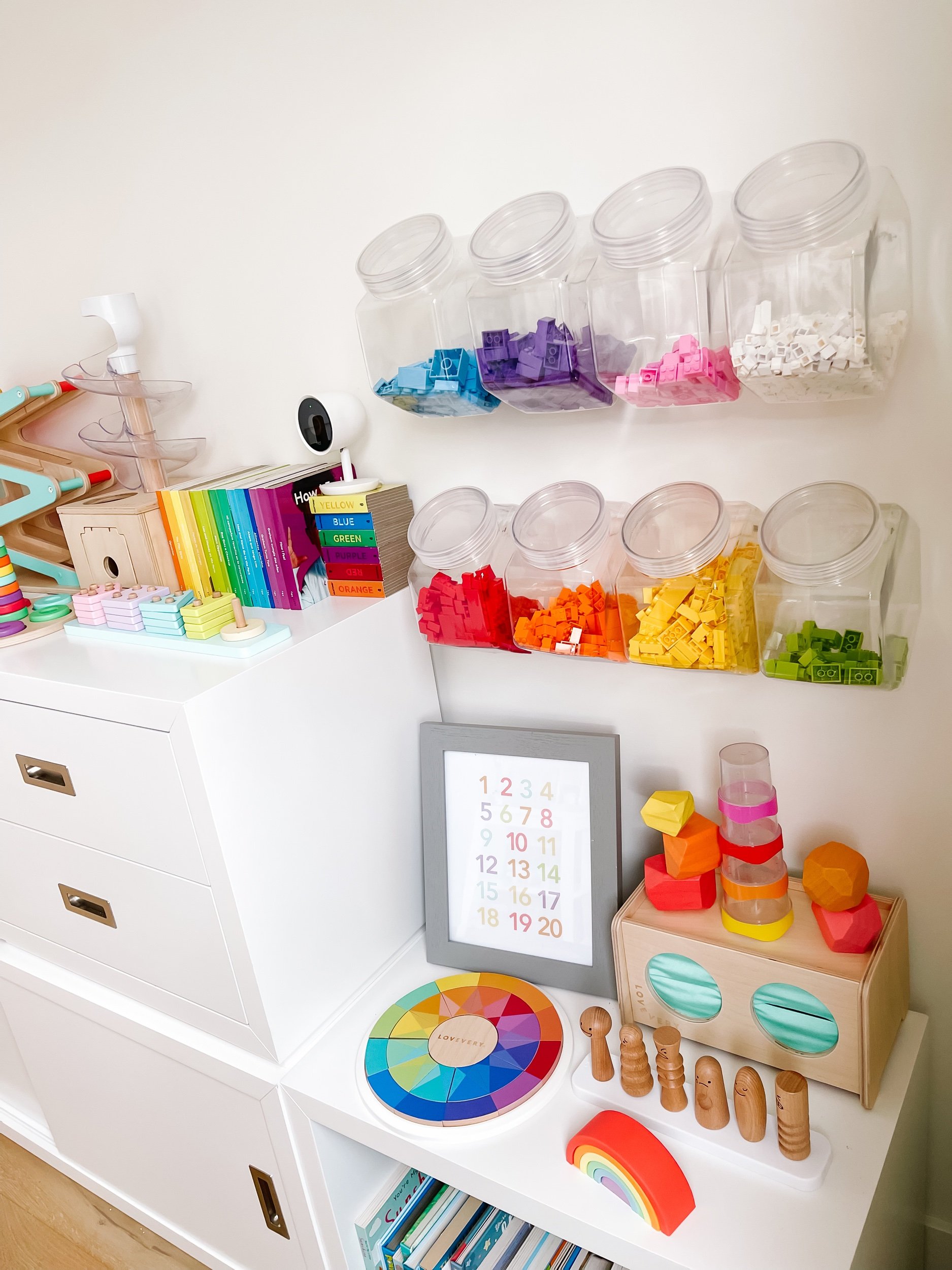
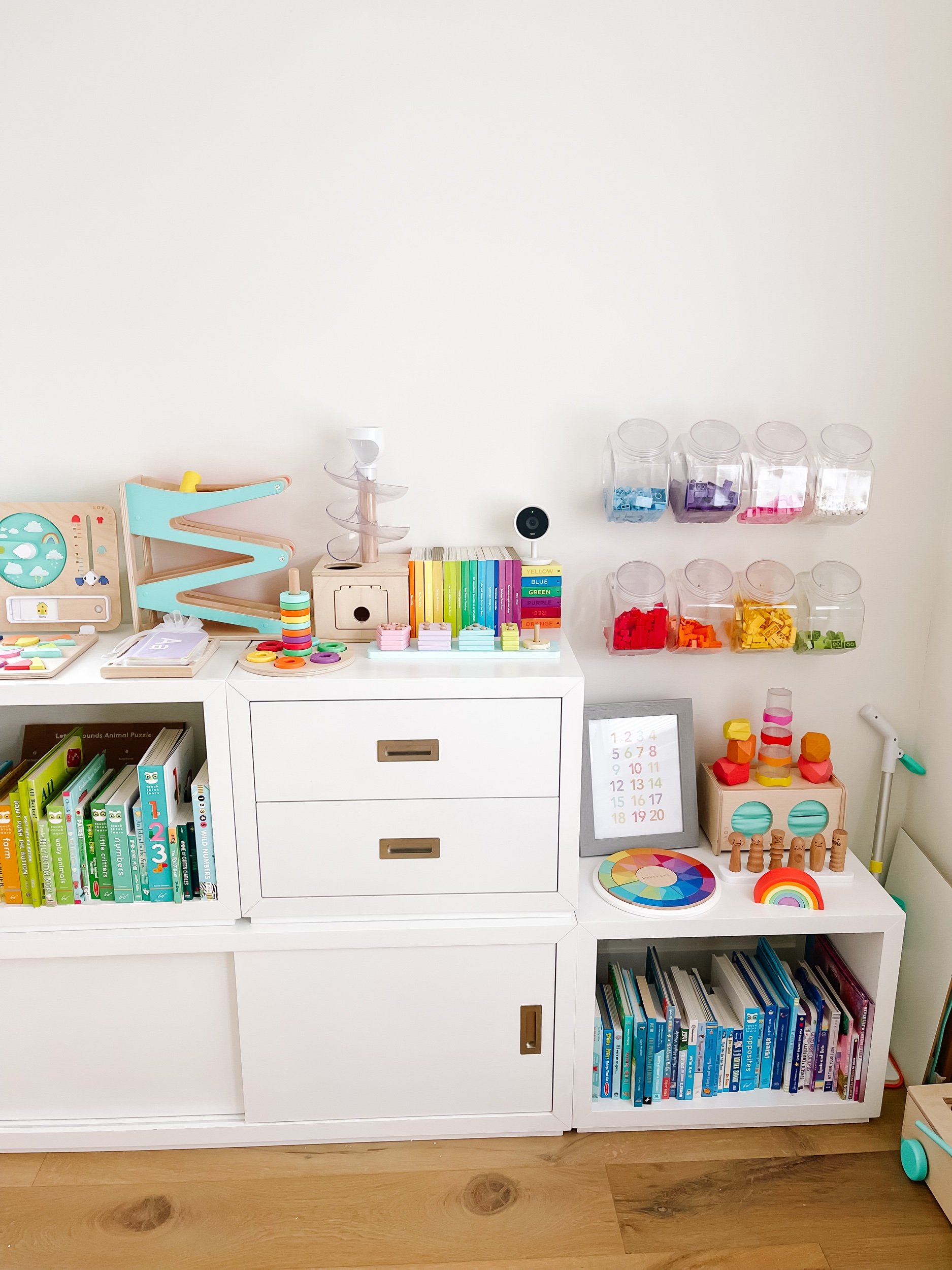
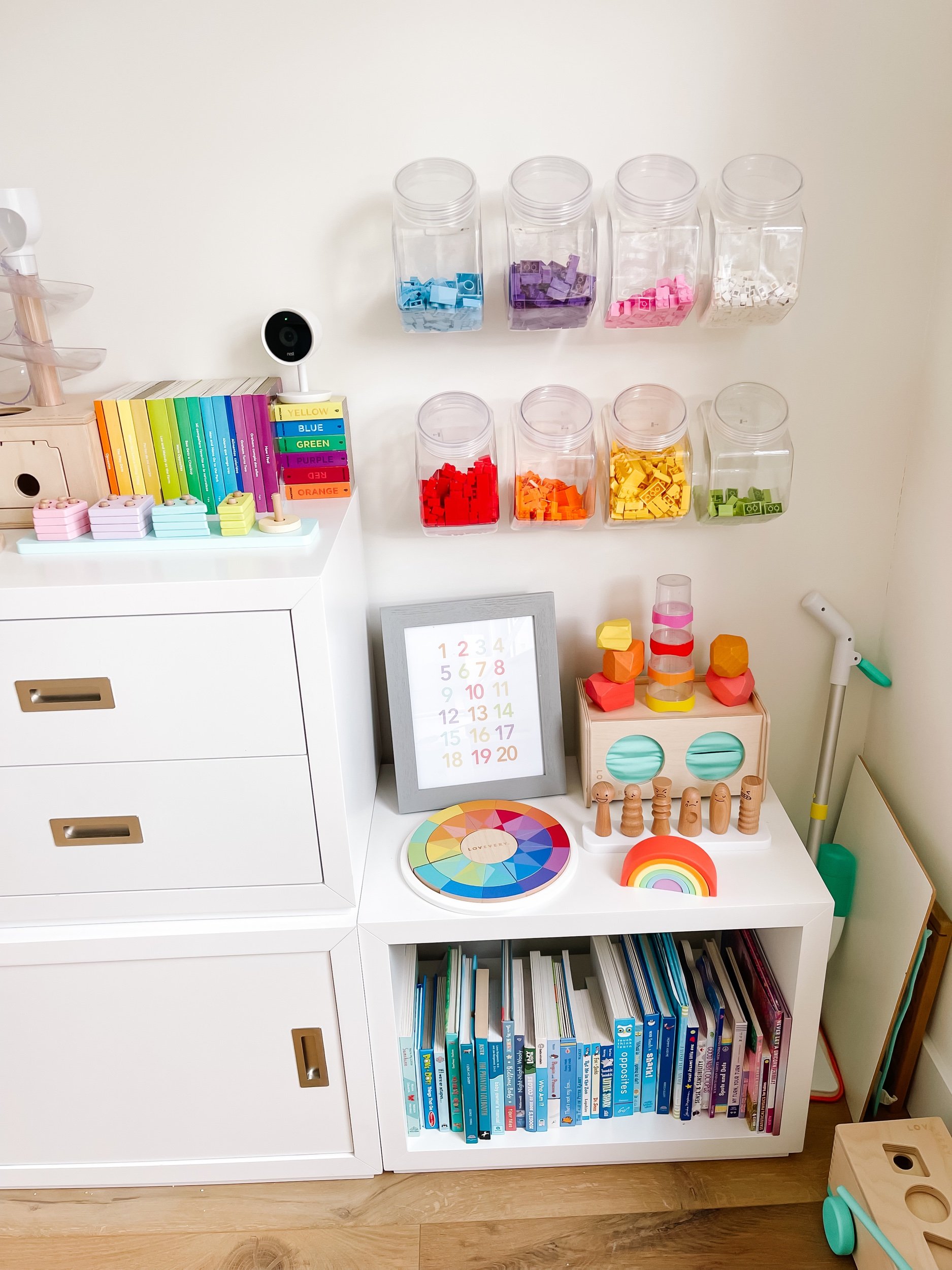
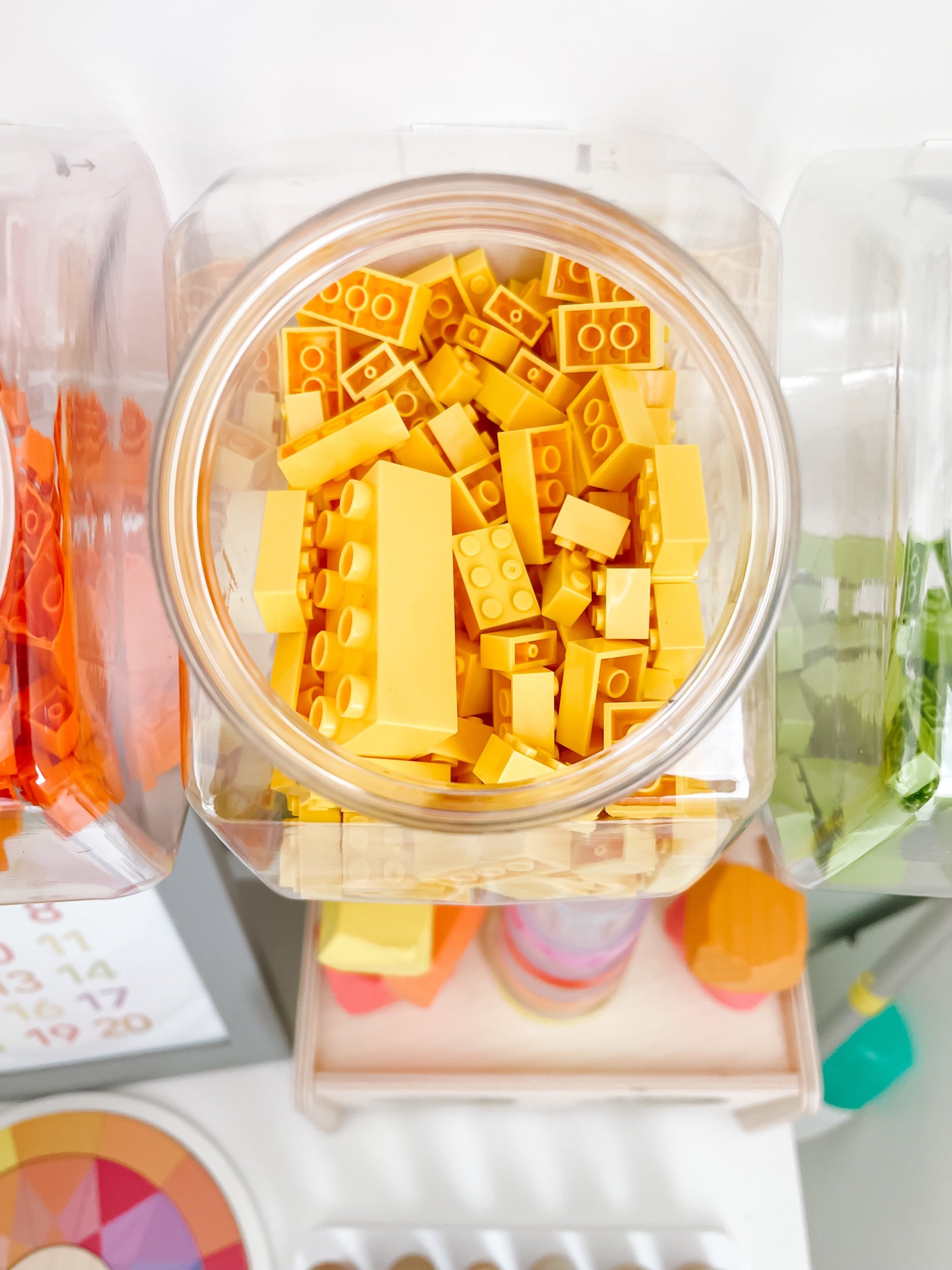
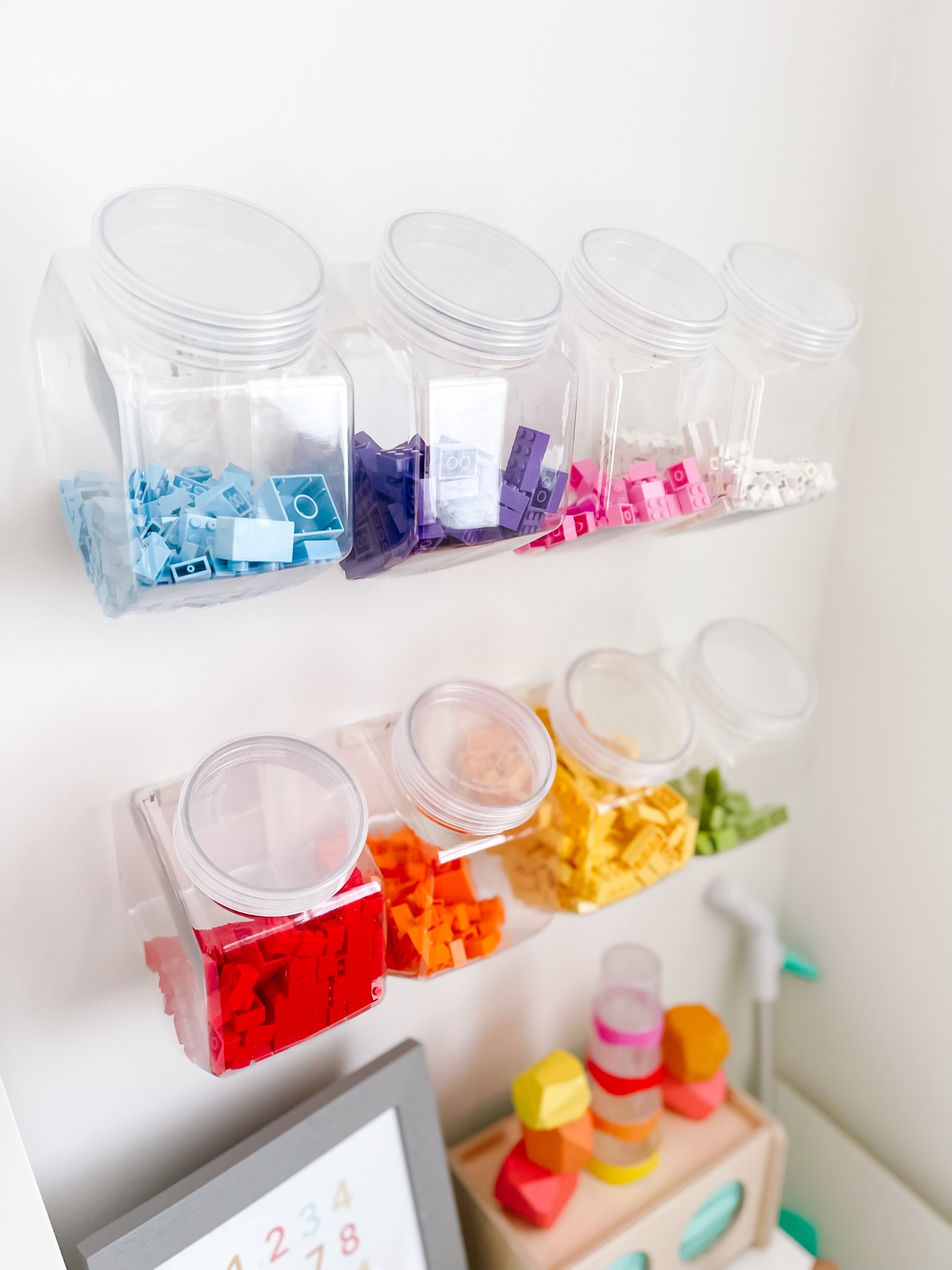
I found these in the target dollar spot one day and absolutely couldn’t resist. I have so many legos and I wanted to organize them all by color and essentially turn them into decor for the room instead of loose parts to hide and shove somewhere. You can store these containers on a shelf or use command strips to fix them to the wall. You can even use them for other things like sensory fillers (I use them to store chickpeas) but you can also store fillers like sand, corn, peas, beans, foam and more!
If you have room on your walls and you’re looking for a creative storage solution, you can easily use command strips to stick these to your walls damage free while making it easy for kiddos to reach in and grab what they’re looking for. Since I have so many rainbow colored legos, it was a no brainer to use these as both decor and storage.
Best Storage Furniture for Sensory Play
The right furniture makes sensory play dramatically easier to manage. When materials are visible and easy to reach, kids can help set up and clean up — which means you don’t have to do everything yourself.
Our favorite storage pieces come from IKEA because they’re affordable, simple, and designed for real families.
Here are the top storage pieces that work beautifully for sensory play:
TROFAST Storage System
Perfect for storing sensory bins, fillers, and activity kits. The pull-out bins make setup incredibly fast.
KALLAX Shelving Unit
Ideal for baskets, books, puzzles, and learning materials. It keeps everything visible without looking cluttered.
RASKOG Rolling Cart
The ultimate activity cart. Use it to rotate materials weekly or store your current sensory bin setup.
Having a dedicated home for sensory materials is the first step toward stress-free play.
Why Toy Rotation Makes Sensory Play Easier
One of the biggest secrets to successful sensory play is toy rotation.
Instead of keeping every toy available at all times, you rotate a small selection each week. This keeps play exciting, reduces mess, and helps children stay focused longer.
Benefits of toy rotation:
• Reduces overwhelm for kids
• Encourages deeper play
• Makes old toys feel new again
• Keeps your home easier to manage
You don’t need a huge playroom or endless storage — just a simple system for rotating materials.
If you need activity ideas to rotate into your weekly setup, start here:
Rainy Day Activity Guide →
A Simple Weekly Sensory Play Routine
Once your storage system is set up, the next step is creating a routine that keeps sensory play easy and sustainable.
Here’s a simple weekly rhythm you can follow:
Monday – Rotate toys and activity trays
Swap out puzzles, books, and sensory tools.
Tuesday – Refresh sensory fillers
Pull from your filler storage and prep one or two new bins.
Need ideas? Start here:
Ultimate Guide to Sensory Fillers →
Wednesday – Set up an activity tray or FLISAT table
Keep it simple and low prep.
Thursday – Refresh or restock materials
Add scoops, tongs, containers, or new tools.
Weekend – Open play and exploration
Let kids revisit their favorite activities from the week.
This routine keeps sensory play manageable without daily planning.
More great tips and tricks
For even more great storage solutions follow some of my favorite accounts:
Follow Teaching by the Mountains for tips like this Maple & Lark zipper pouch organizer
Follow The Home Edit for great tips like arranging your books by rainbow color
If you love sensory play but don’t have time to plan activities every week, the Playschool Planner includes a full year of sensory play ideas and learning activities.

Ready to Build Your Sensory Play Setup?
If you’re just getting started, these guides will help you create a simple and organized play space: