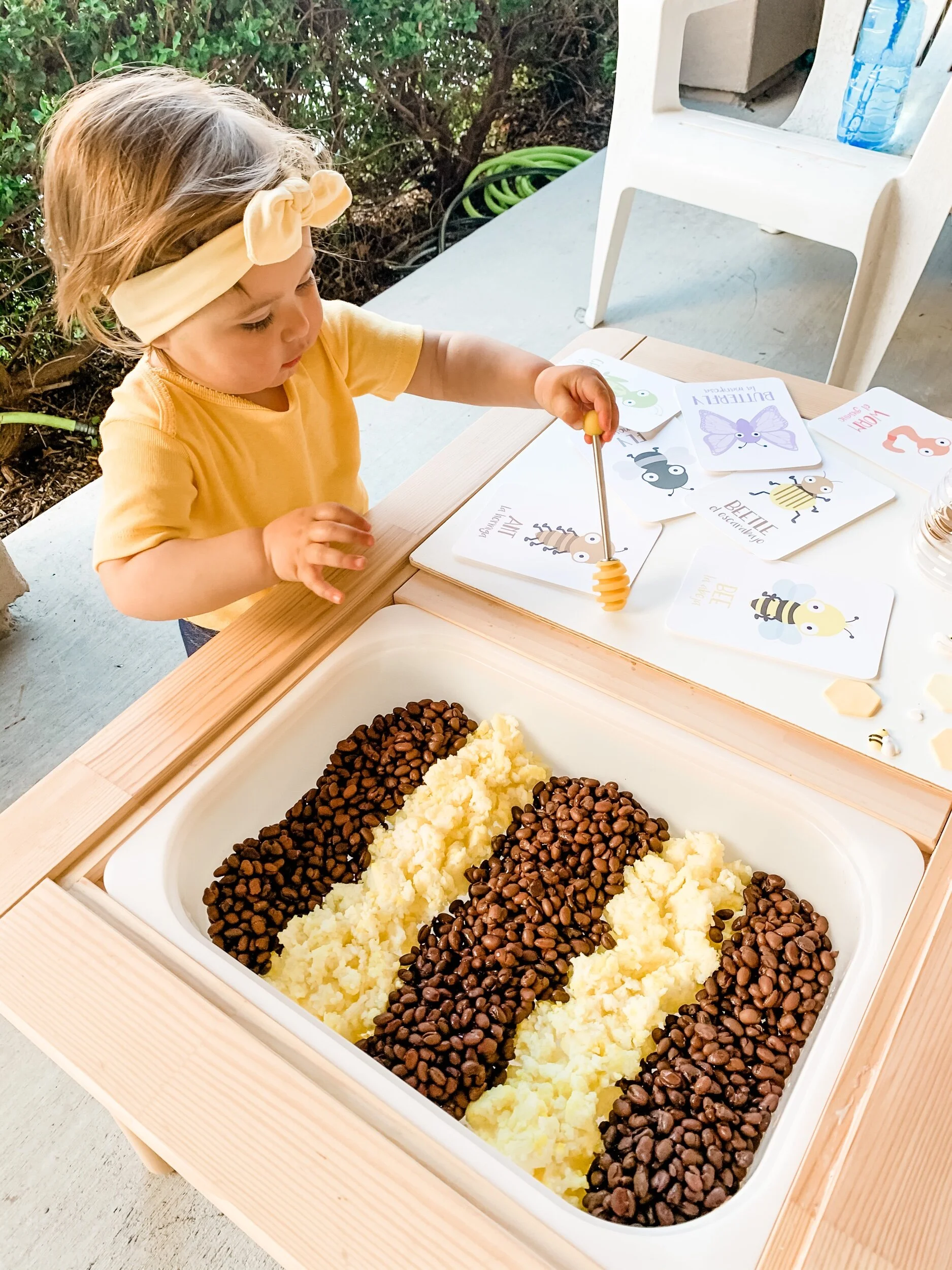
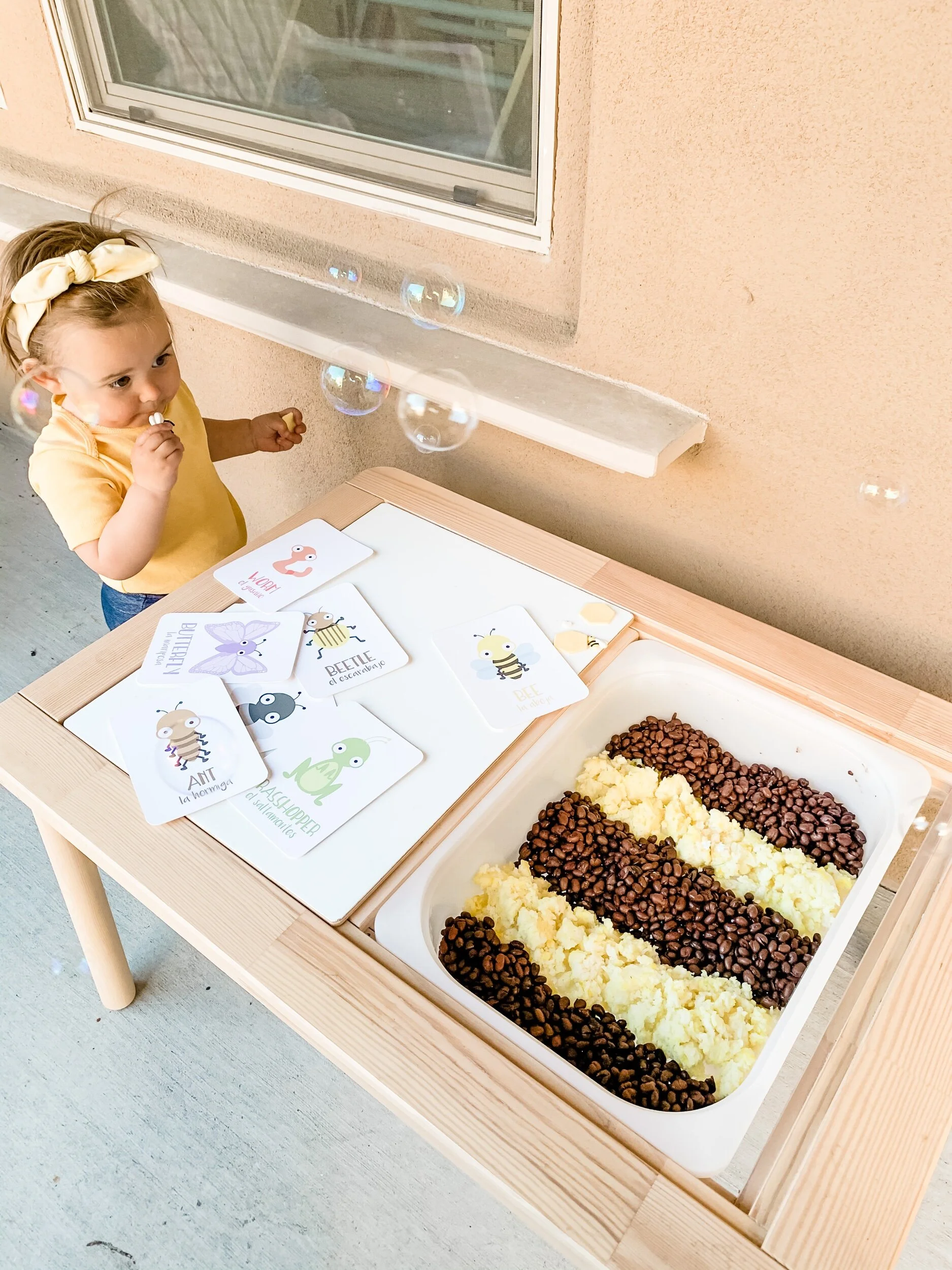
When setting up sensory play for toddlers, taste safety matters. Young children explore the world with their hands — and their mouths — which is why this taste-safe bumblebee sensory bin was designed specifically for early learners.
By cooking the rice and beans used in this bin, you can offer rich sensory exploration while giving parents peace of mind. This spring-inspired activity supports fine motor development, early learning, and open-ended play in a way that feels both engaging and age-appropriate.
Why Taste-Safe Sensory Play Is Important for Toddlers
Toddlers naturally mouth materials as part of development. Taste-safe sensory play allows children to explore freely without constant redirection, making playtime calmer and more productive for everyone.
Taste-safe sensory bins:
Support safe exploration for children under three
Reduce stress for caregivers during sensory play
Encourage longer, more focused play sessions
Build trust and independence during hands-on learning
This bumblebee sensory bin was intentionally designed with fully cooked rice and beans, making it safer for toddlers who are still in the oral exploration phase.
What Makes This Bumblebee Sensory Bin Taste-Safe
Instead of using dyed dry rice or uncooked beans, this setup uses:
Cooked rice
Cooked beans
Cooking the fillers softens the texture and makes them safer if mouthed or tasted. While supervision is still important, this approach makes the activity more appropriate for younger toddlers than traditional dry sensory fillers.
This small adjustment makes a big difference for families introducing sensory play at an early age.
Recommended Ages and Supervision
This taste-safe sensory bin is ideal for:
Toddlers ages 12–36 months with supervision
Older toddlers and preschoolers who enjoy tactile play
Even with taste-safe materials, sensory play should always be supervised, especially when loose parts are included.
Materials Needed for a Taste-Safe Bumblebee Sensory Bin
Sensory Base
Cooked white or yellow rice (cooled completely)
Cooked black beans (rinsed and cooled)
Play Pieces
Bee figurines or felt bees
Artificial flowers or flower cups
Small bowls or containers
Scoops or spoons (optional)
Tray or shallow bin
Because the fillers are cooked, this setup works best for same-day play and should be discarded afterward.
How to Set Up the Bin
Cook the rice and beans ahead of time and allow them to cool fully.
Spread the cooked rice evenly across the bottom of your bin.
Add cooked black beans for contrast and texture.
Place bee figurines and flowers throughout the bin.
Add bowls or scoops to invite scooping, transferring, and sorting.
Keep the setup simple and uncluttered to encourage open-ended exploration.
Learning Opportunities Through Taste-Safe Sensory Play
Fine Motor Development
Scooping rice, transferring beans, and grasping small objects strengthens hand and finger muscles.
Sensory Exploration
Children experience temperature, texture, weight, and movement in a safe and intentional way.
Language Development
Use words like soft, squishy, smooth, warm, cool, yellow, black, and bee to build vocabulary during play.
Early Science and Nature Concepts
Talk about bees, flowers, and springtime as your child explores the bin. Even simple conversations help lay the groundwork for future learning.
Extending the Activity
You can extend this taste-safe sensory bin in simple ways:
Sort bees into different containers
Count bees as they’re transferred
Pair the activity with a spring or insect picture book
Use it as a calm, seated activity during the day
For more ideas on fillers and sensory materials, visit:
https://www.goodnightfox.com/fillers
Free Sensory Play Resources
If you’re building a collection of toddler-friendly activities, the GoodnightFox free printable library includes sensory play ideas, dramatic play kits, and early learning tools designed to grow with your child.
Free printable library:
https://goodnightfox.myshopify.com/collections/free-downloads
Final Thoughts
This taste-safe bumblebee sensory bin is a thoughtful way to introduce sensory play to toddlers while respecting their developmental stage. By cooking the rice and beans, you create a safer environment for exploration, longer engagement, and more confident play.
It’s a simple adjustment that makes sensory play more accessible, especially for younger children and first-time sensory families.