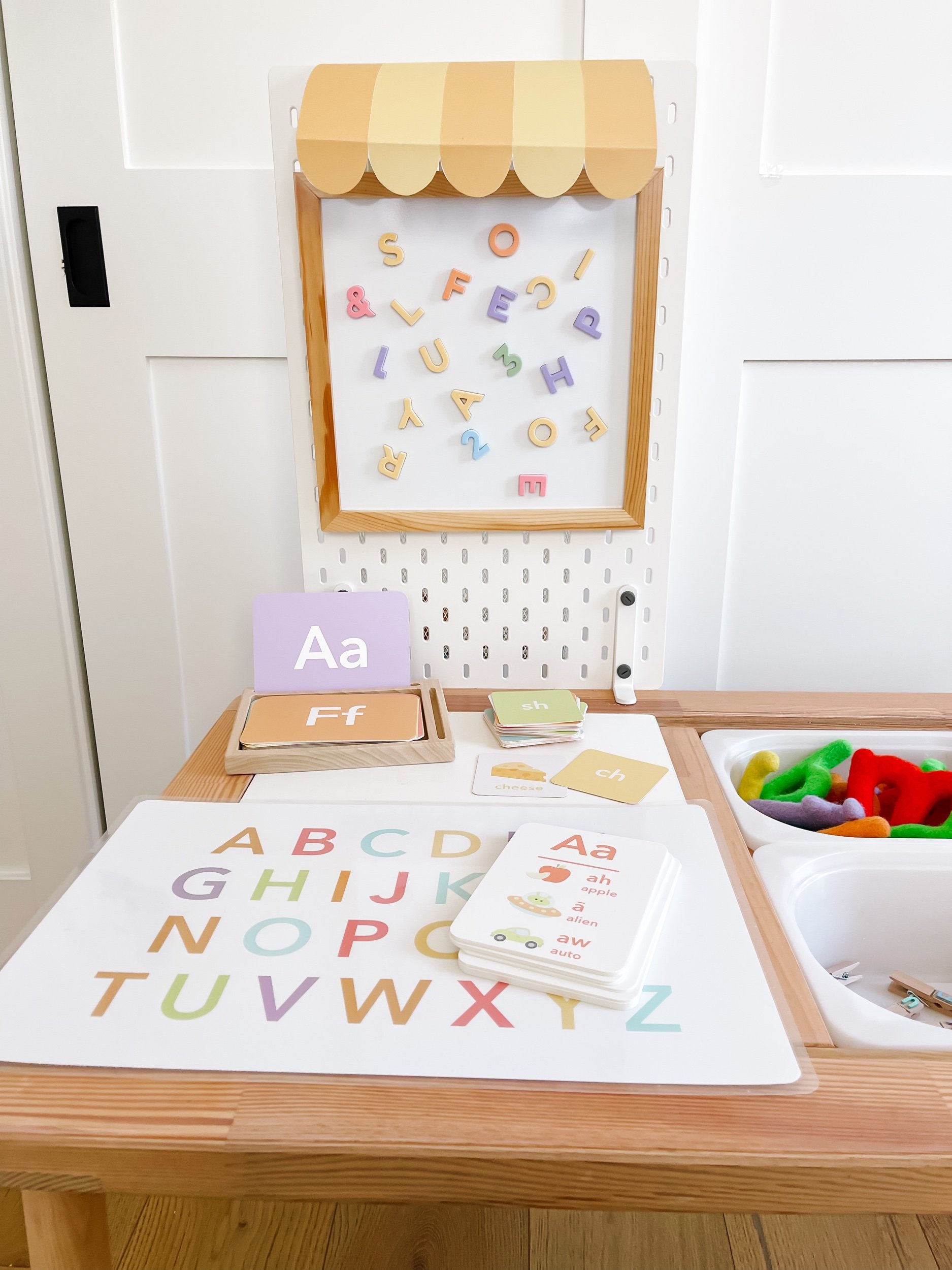
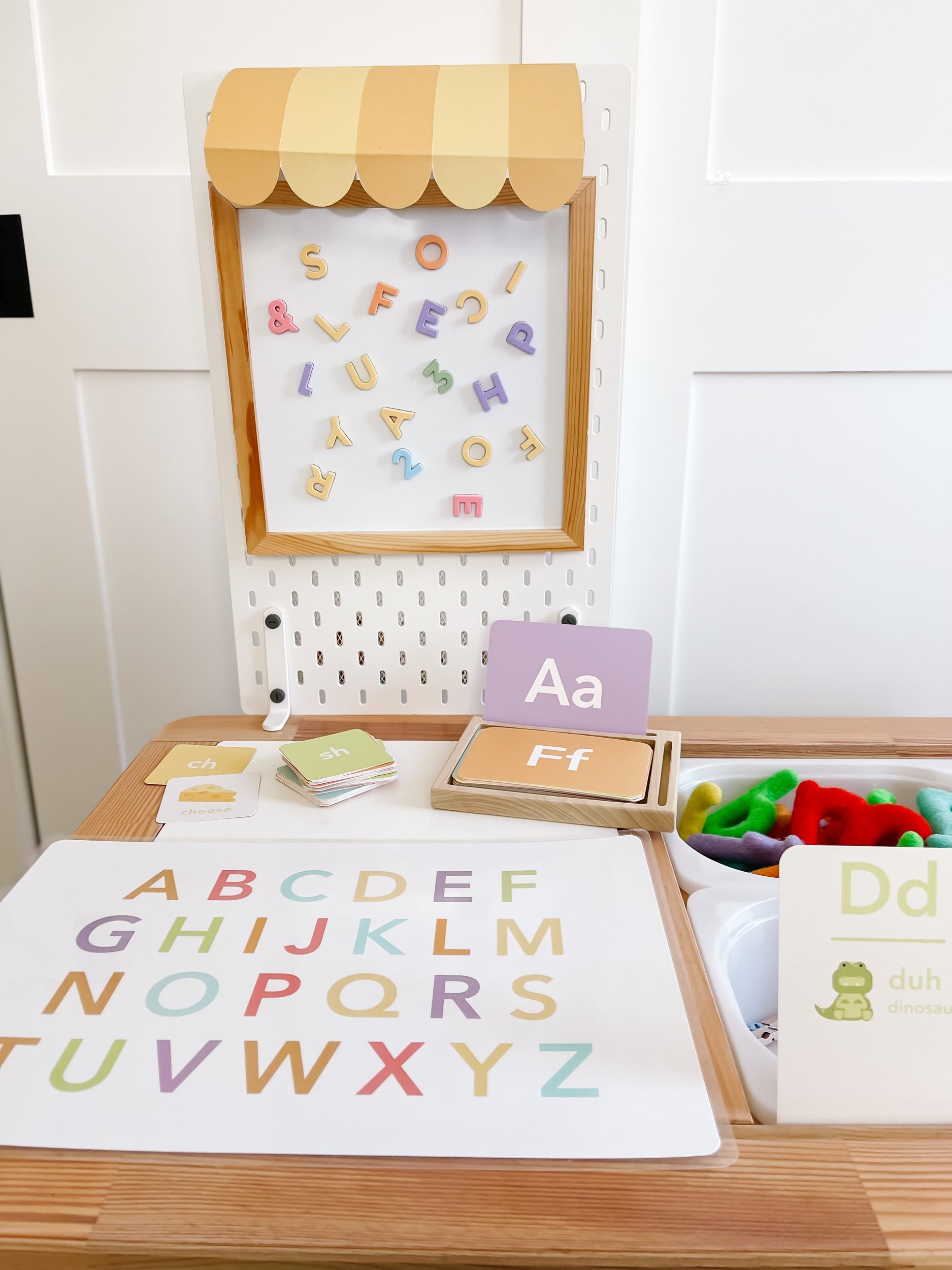
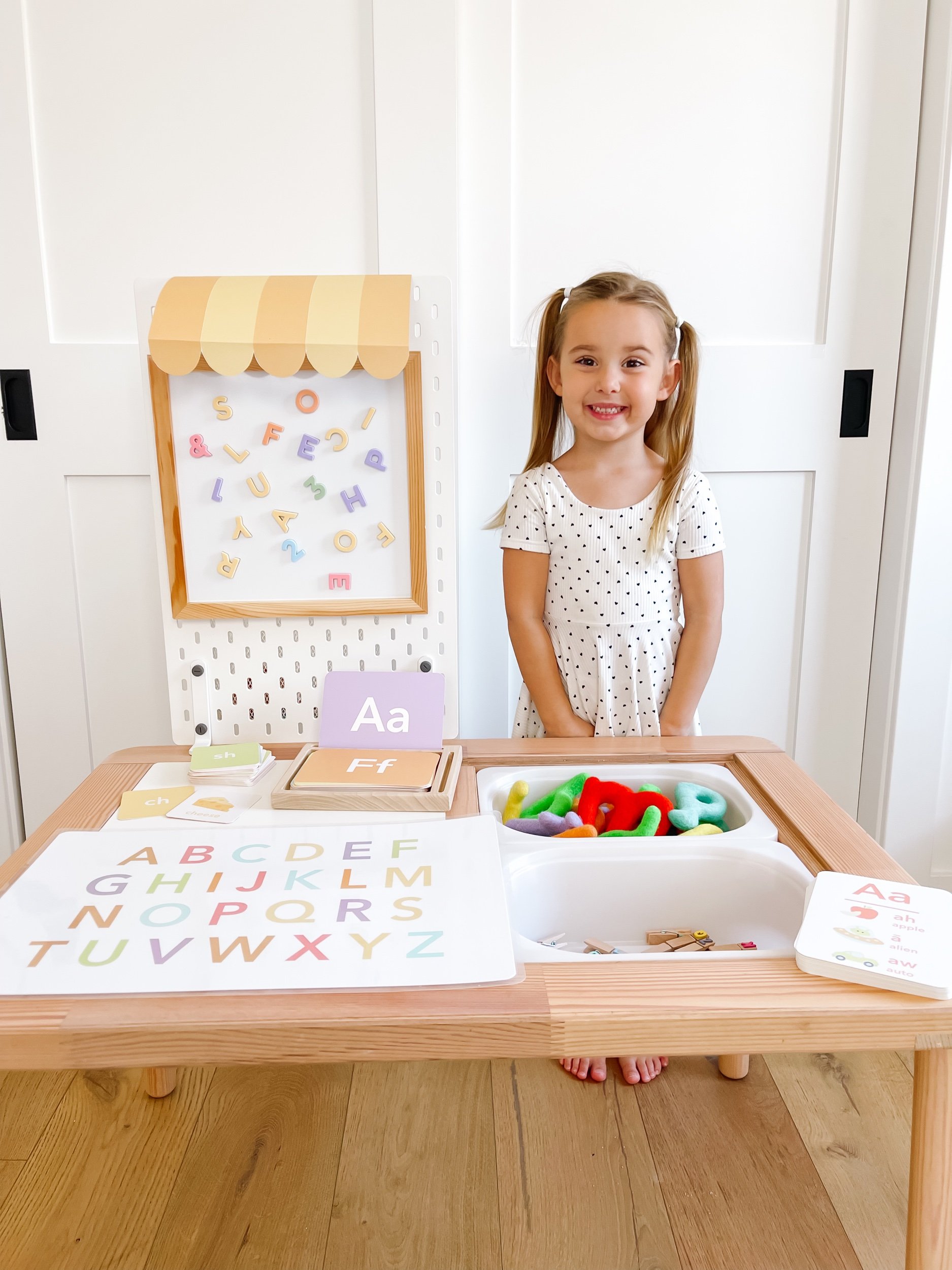
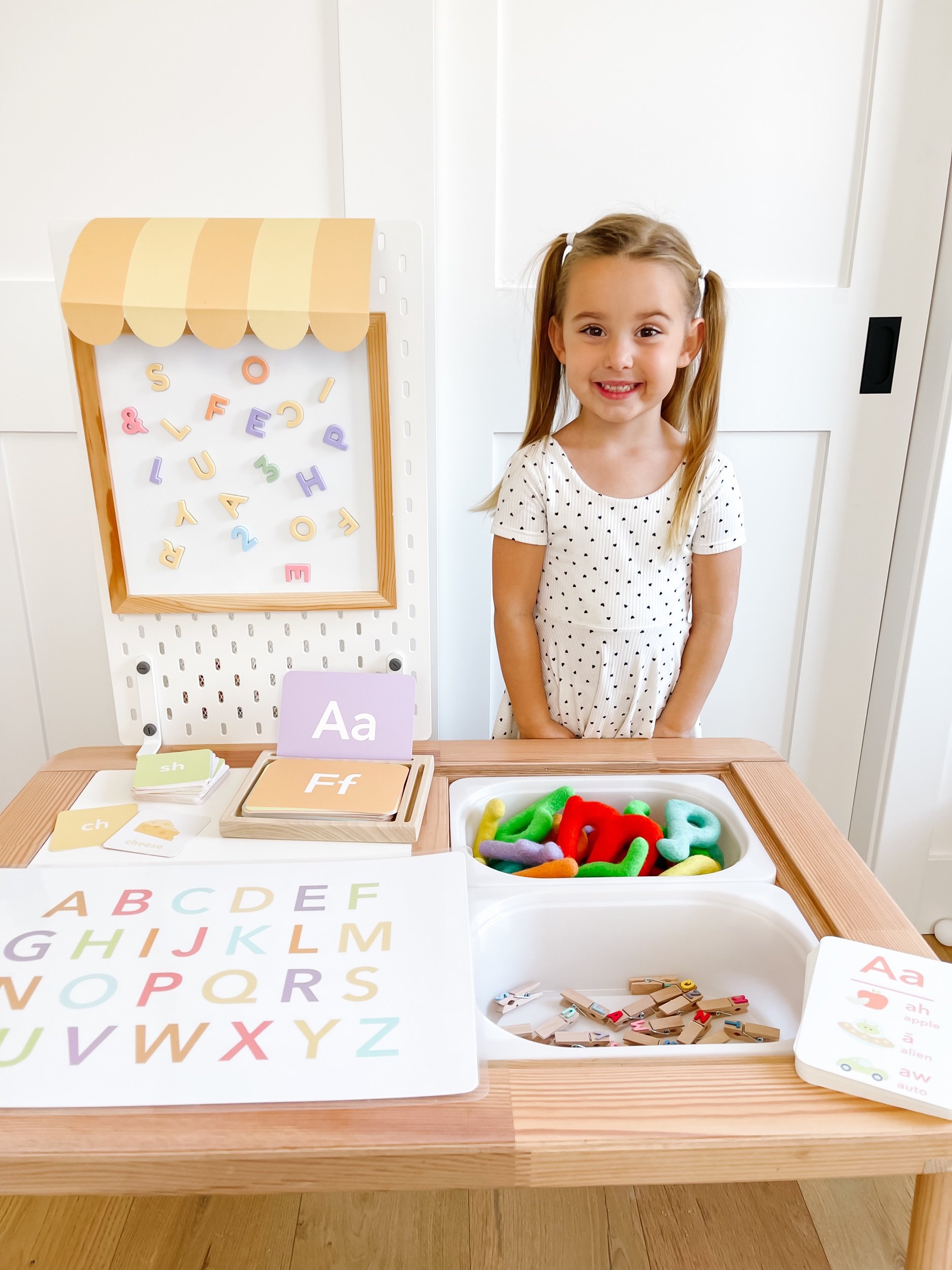
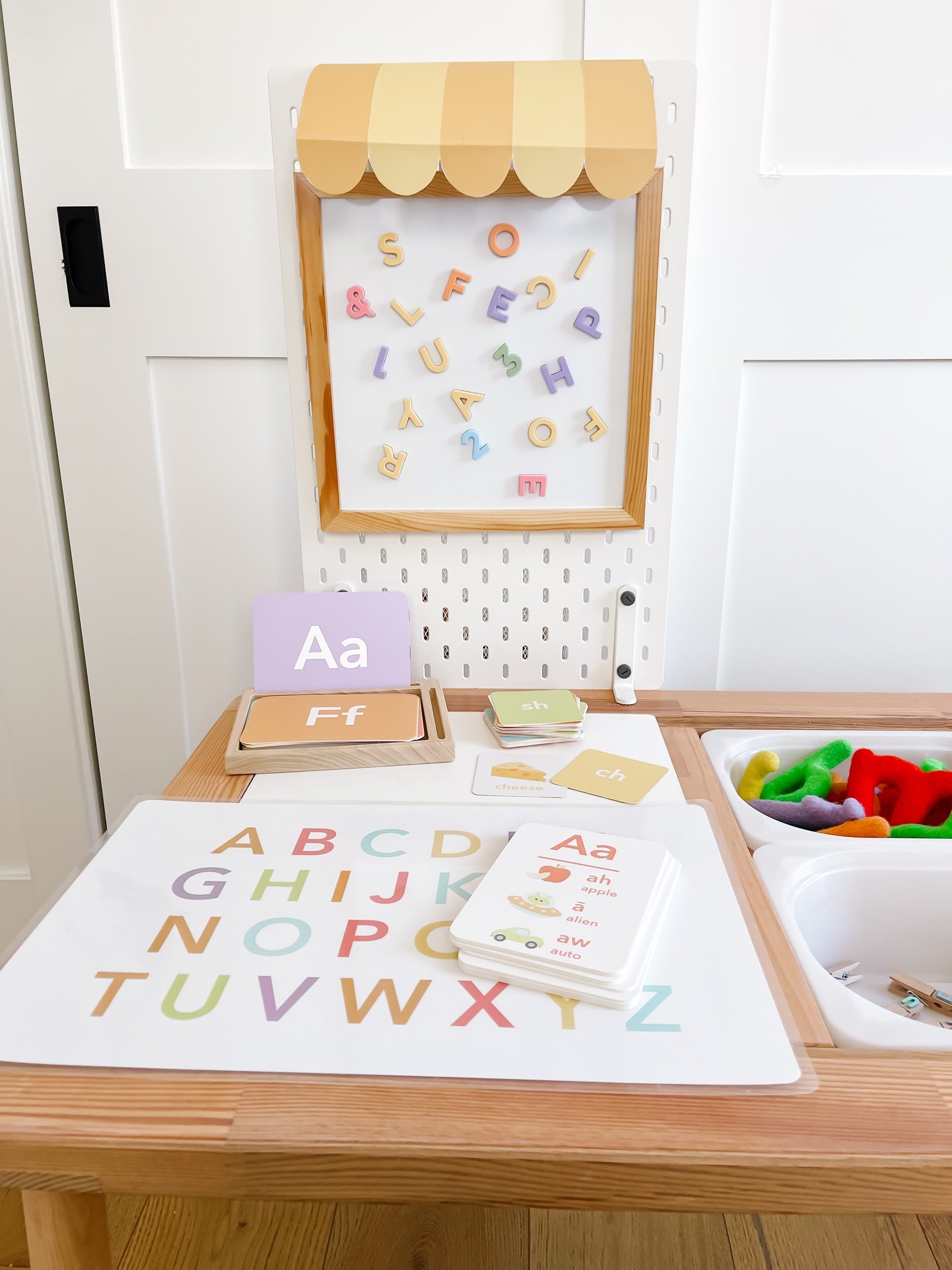
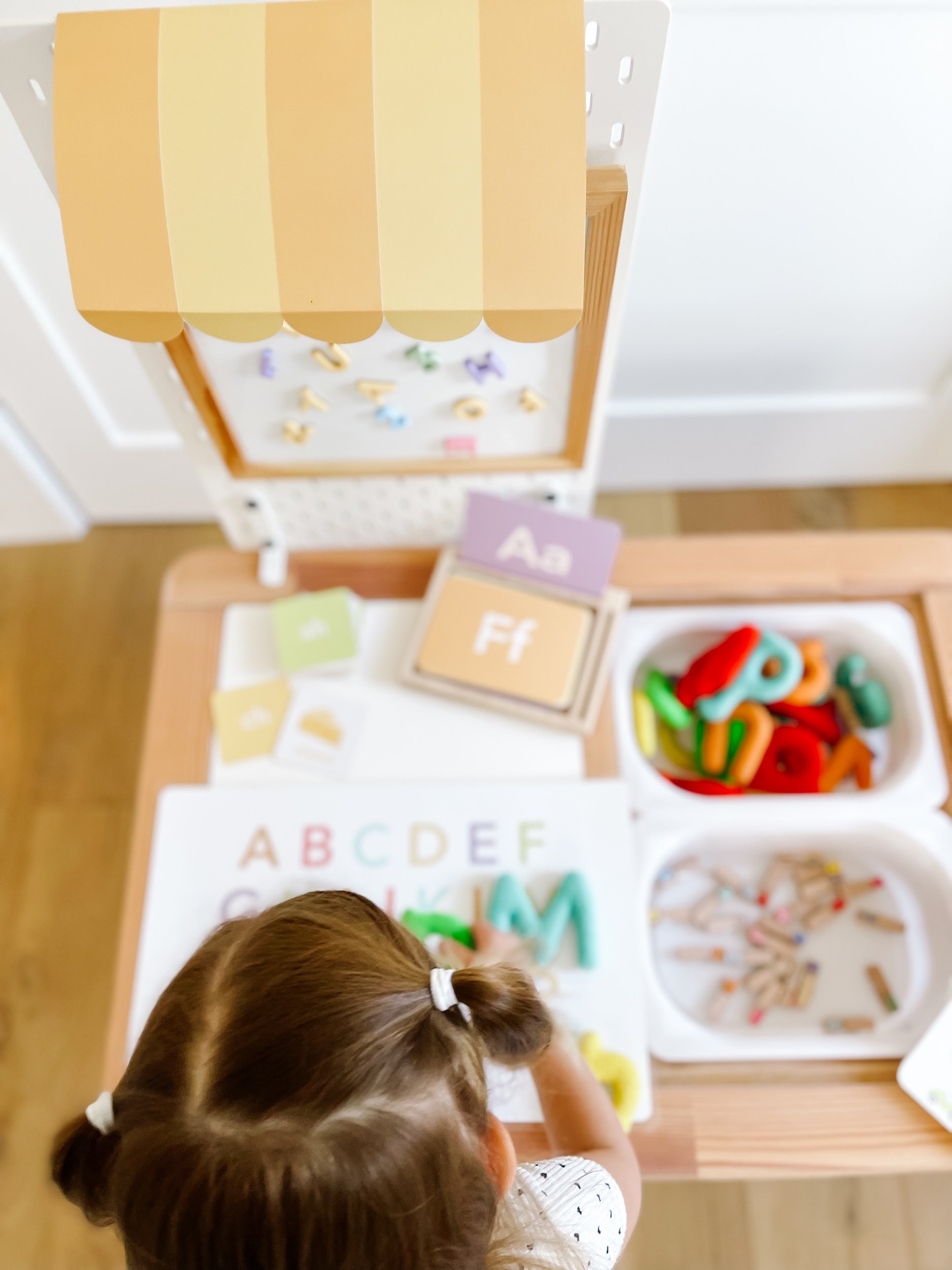
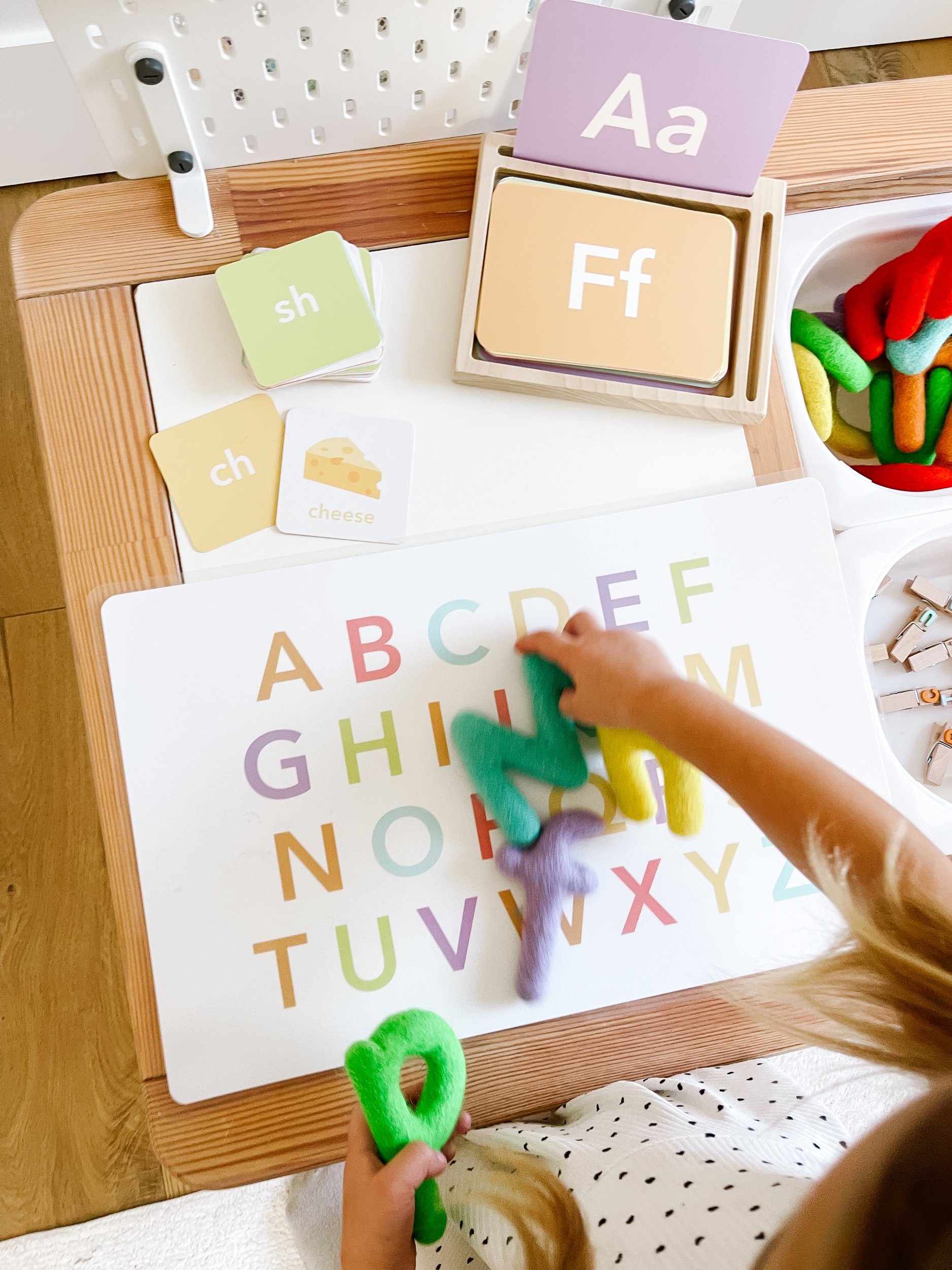
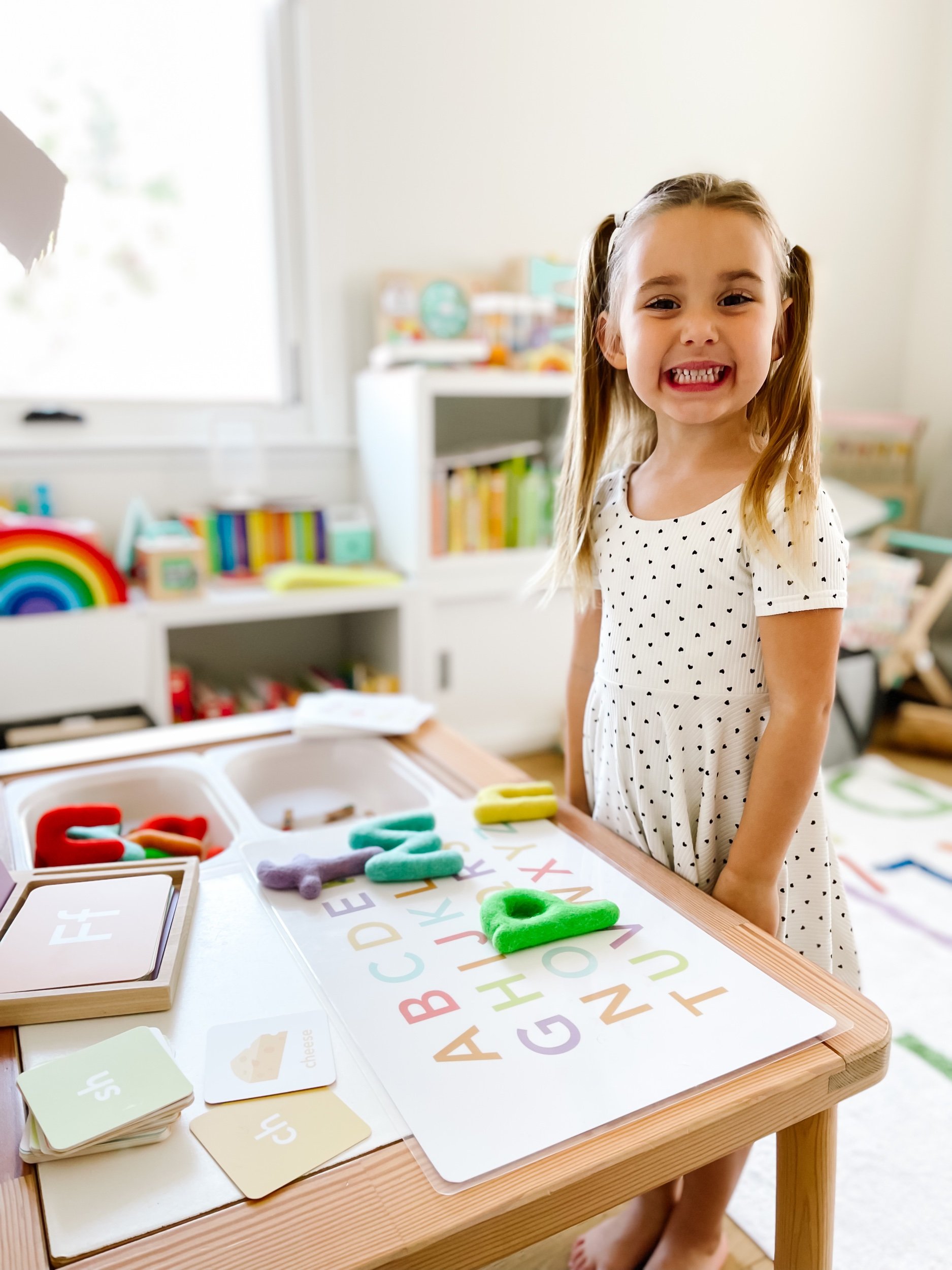
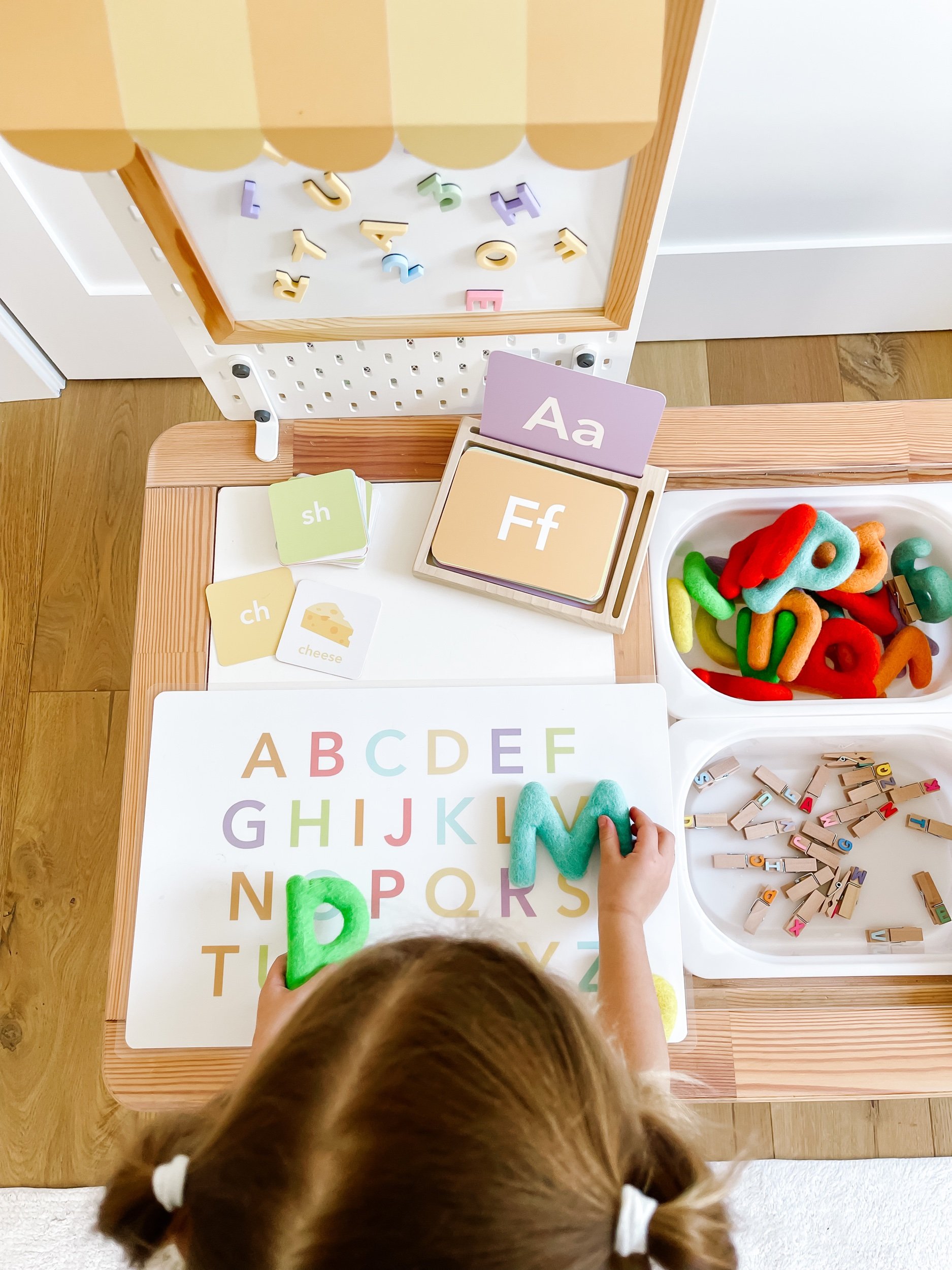
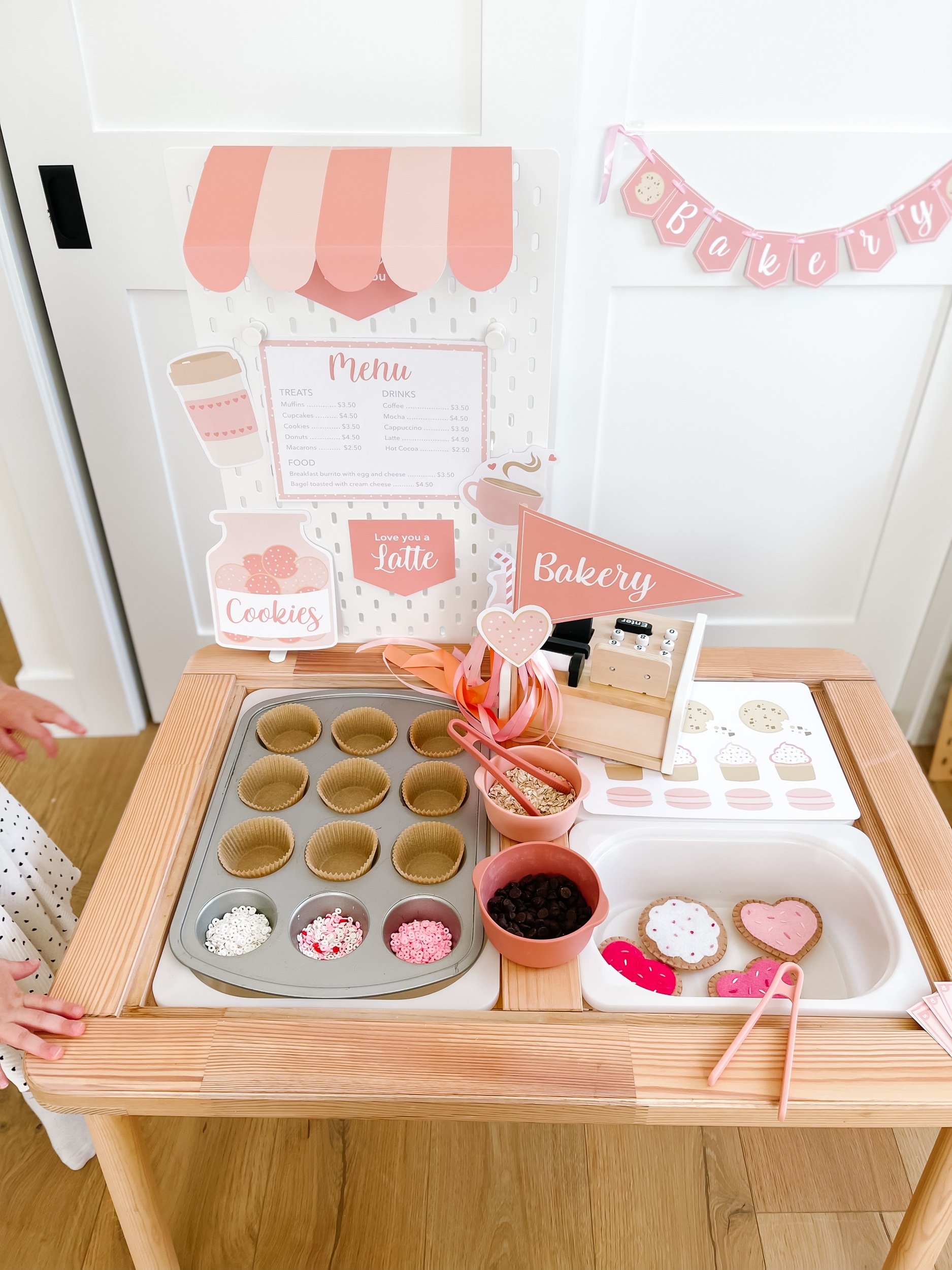
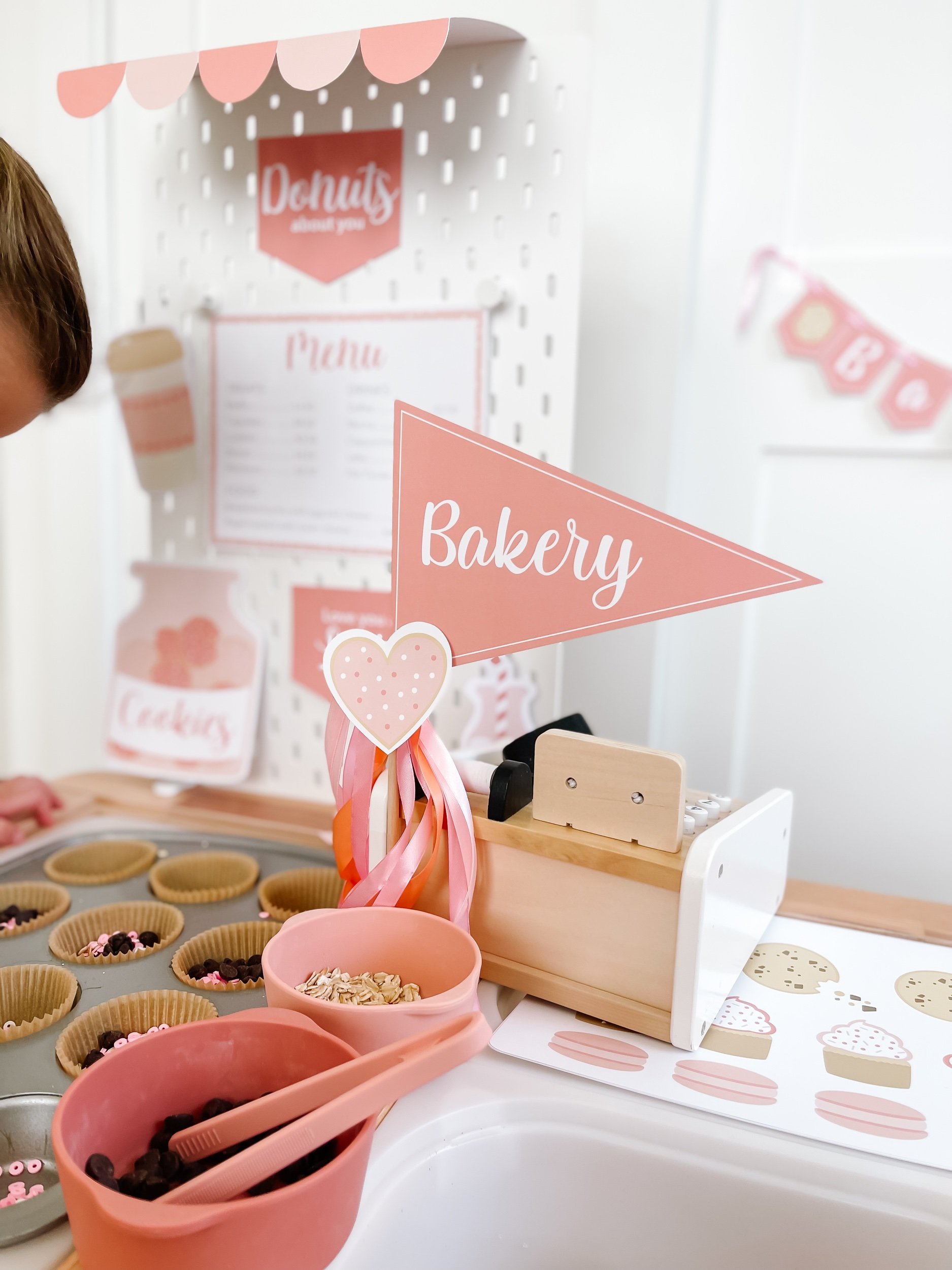
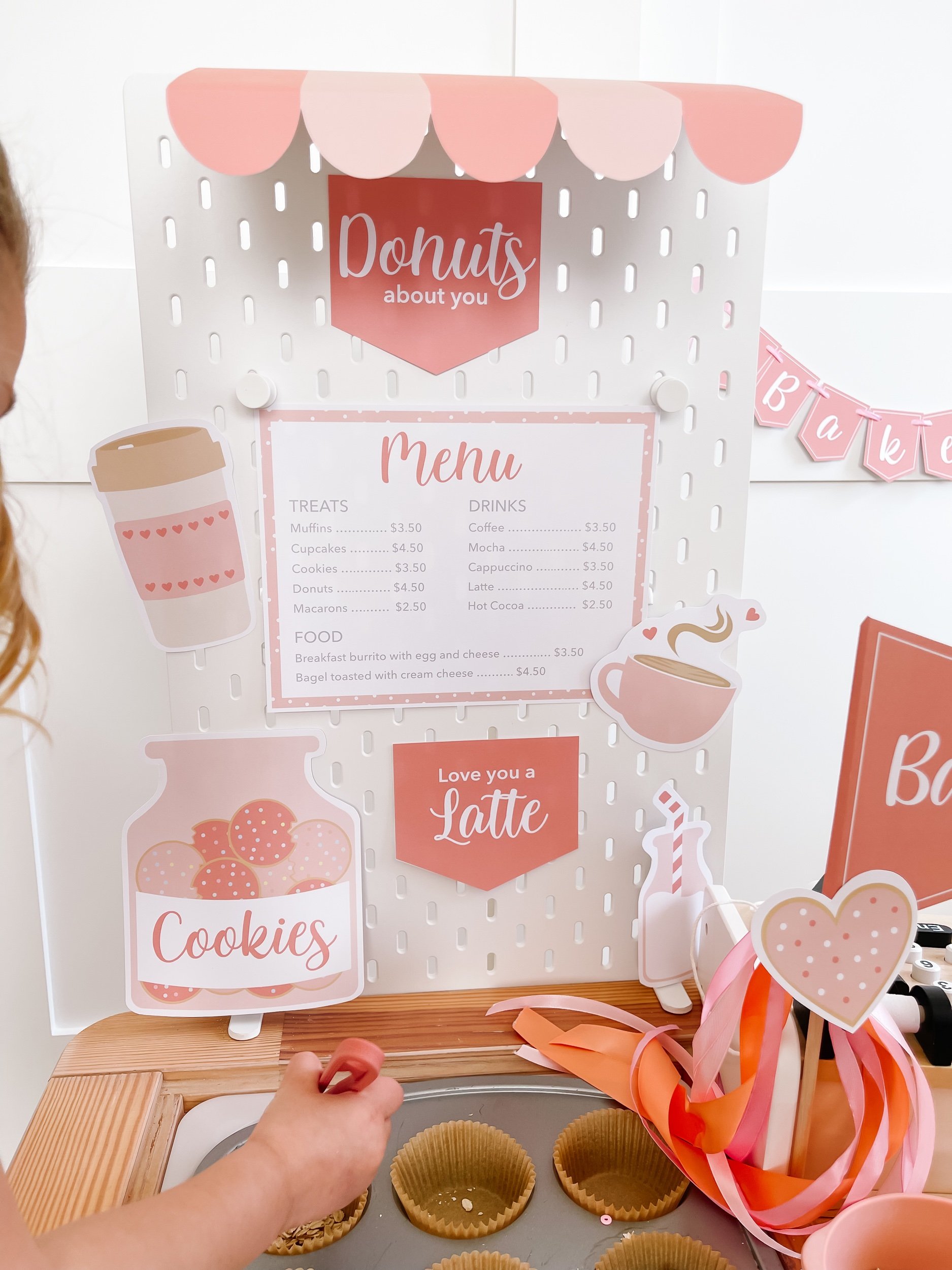
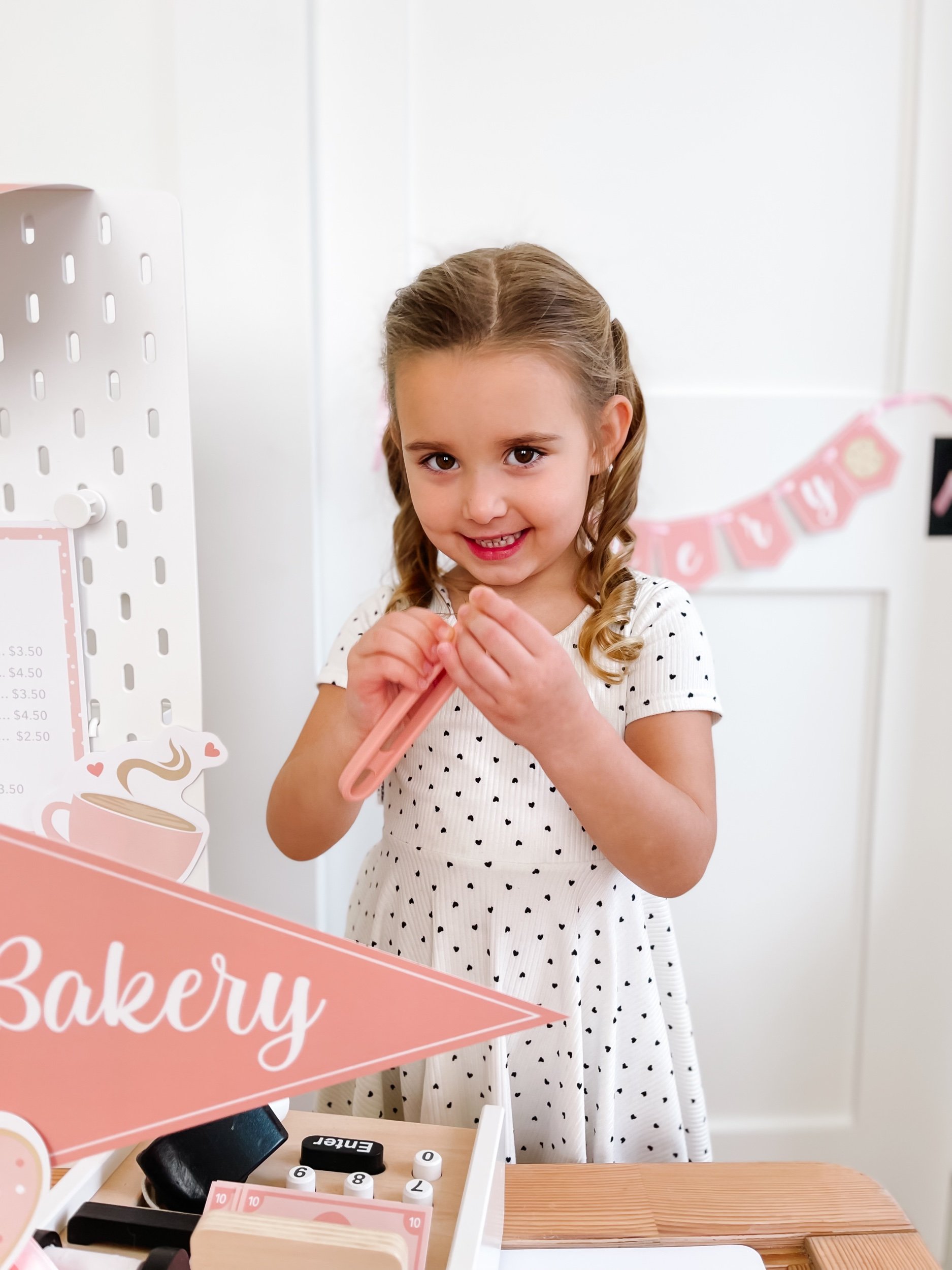
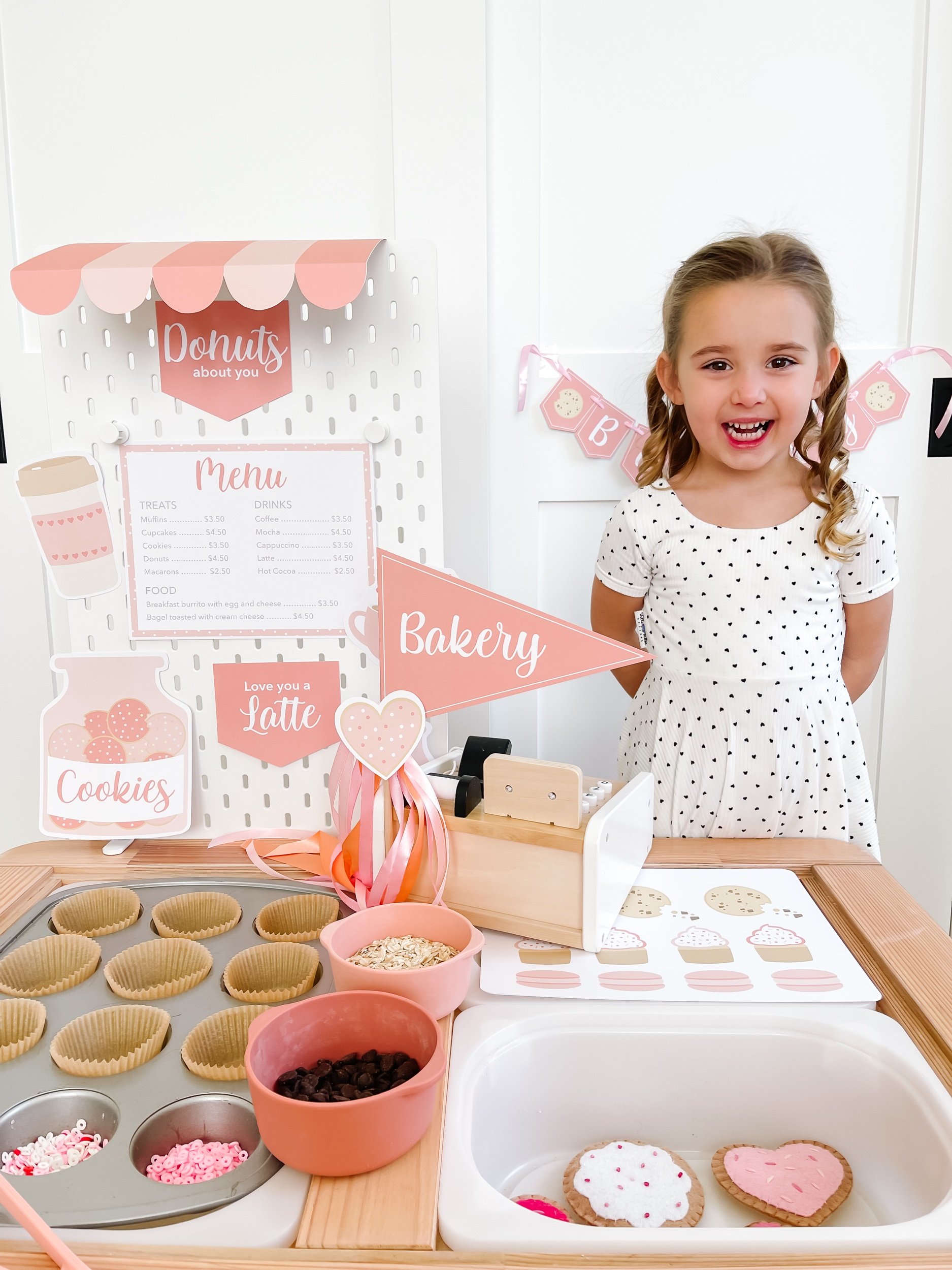
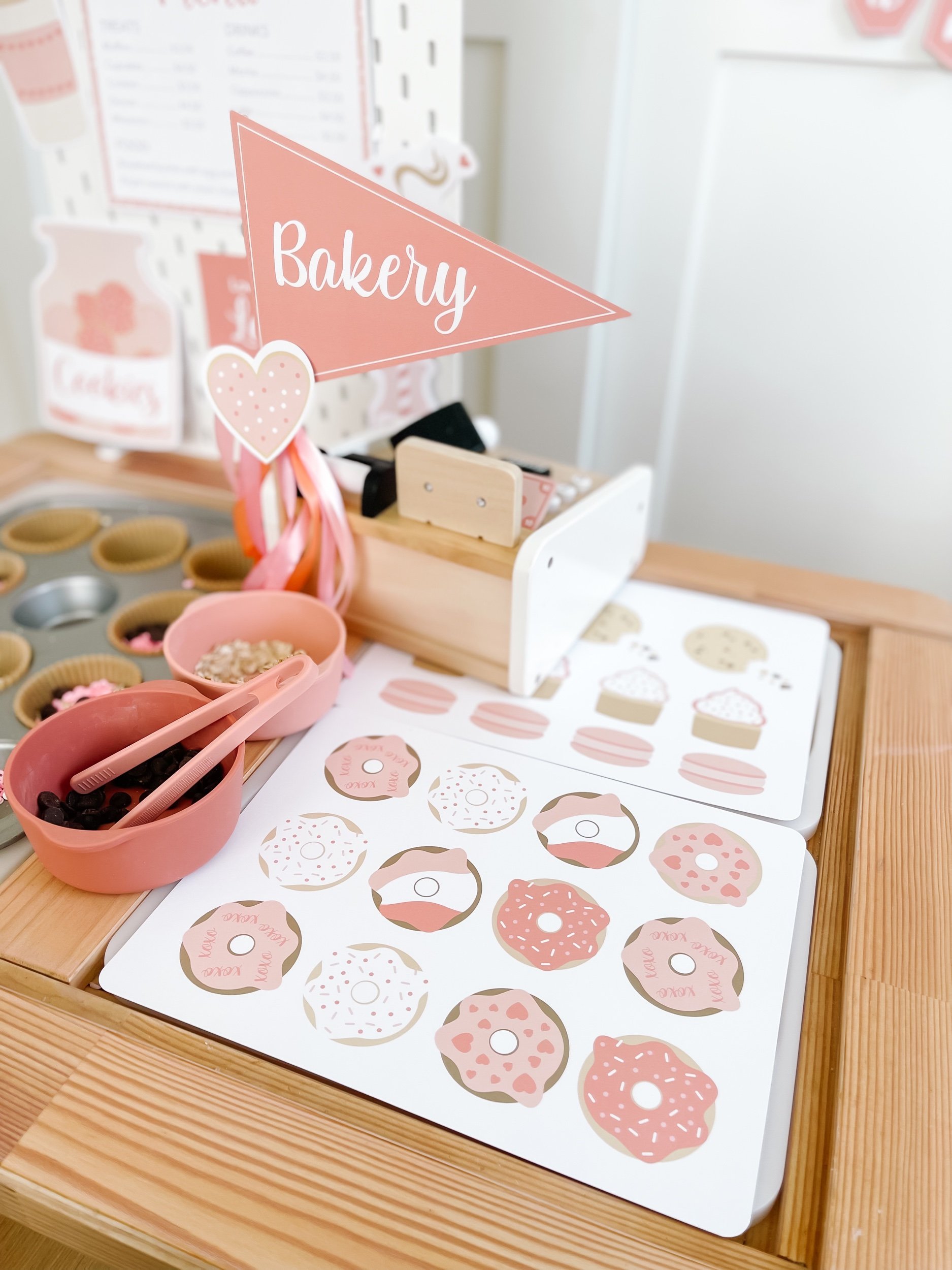
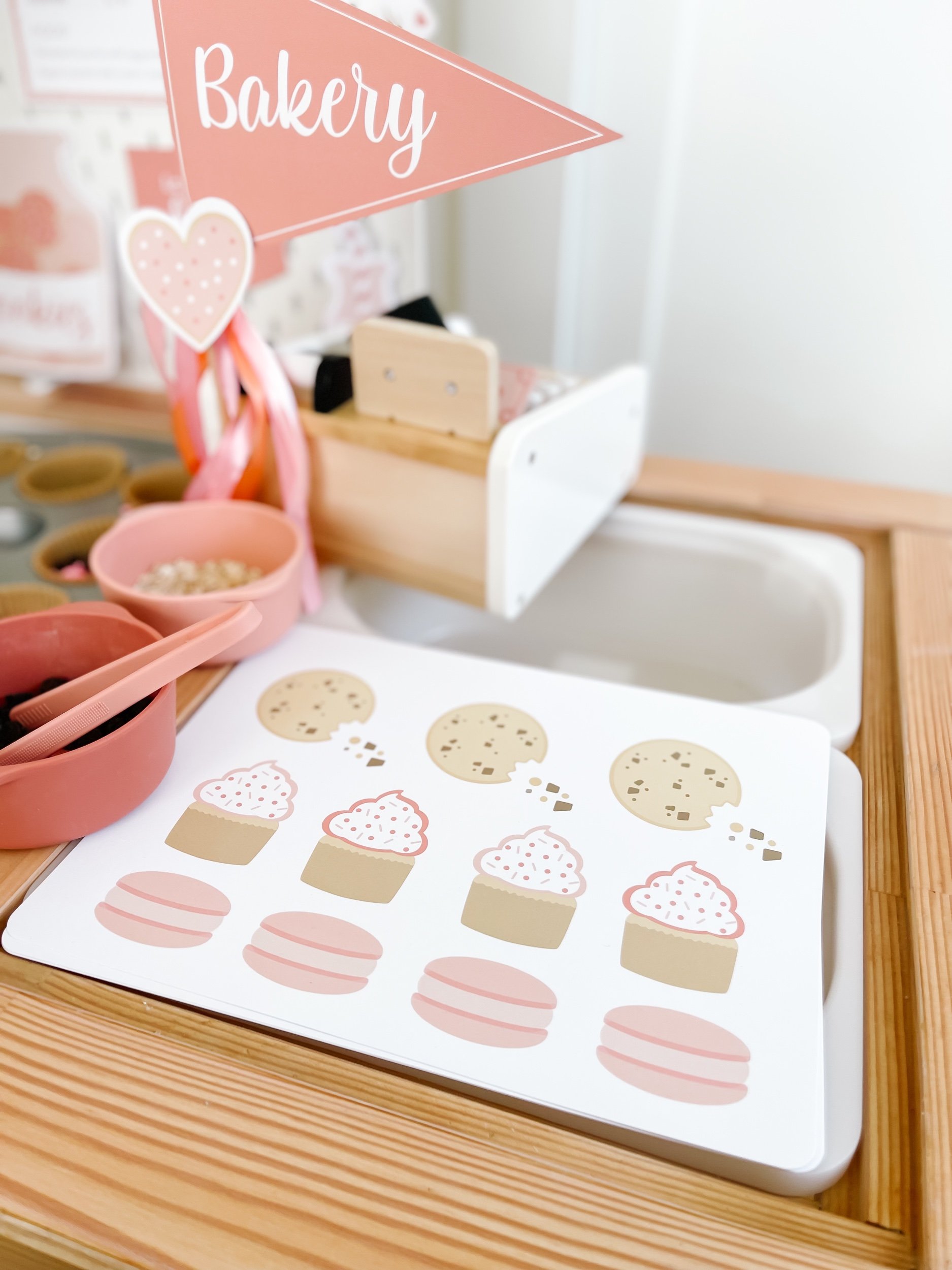
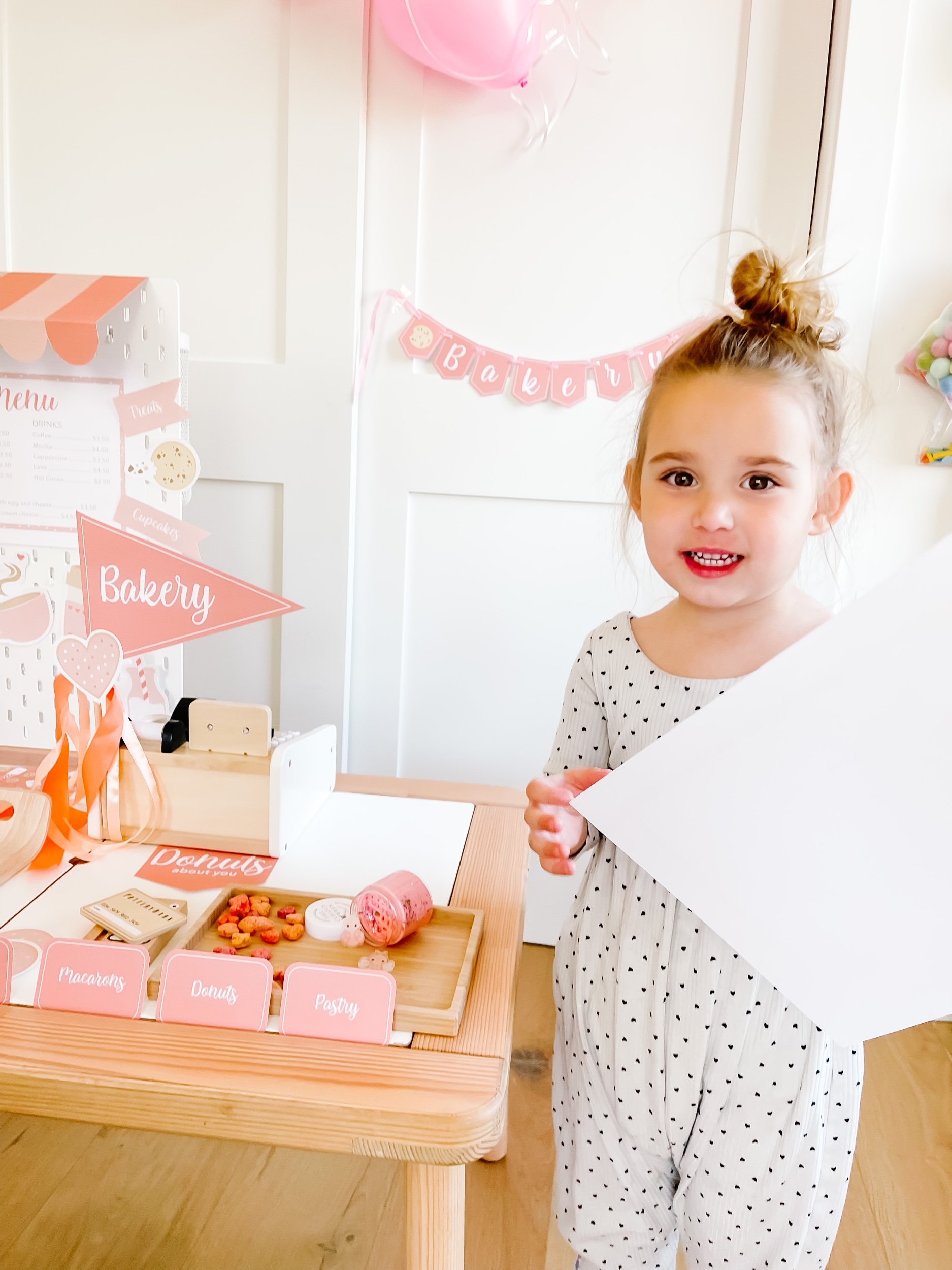
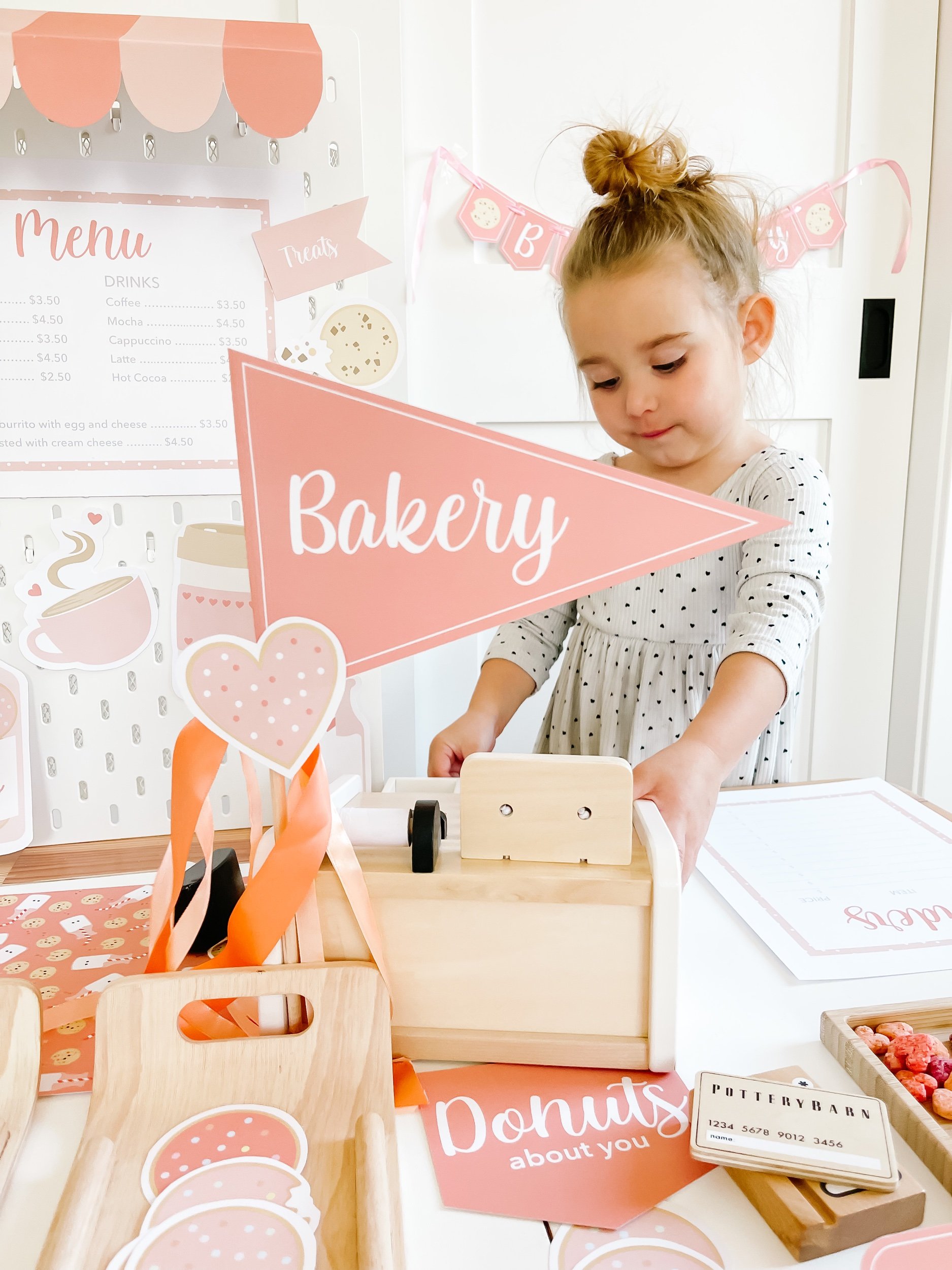
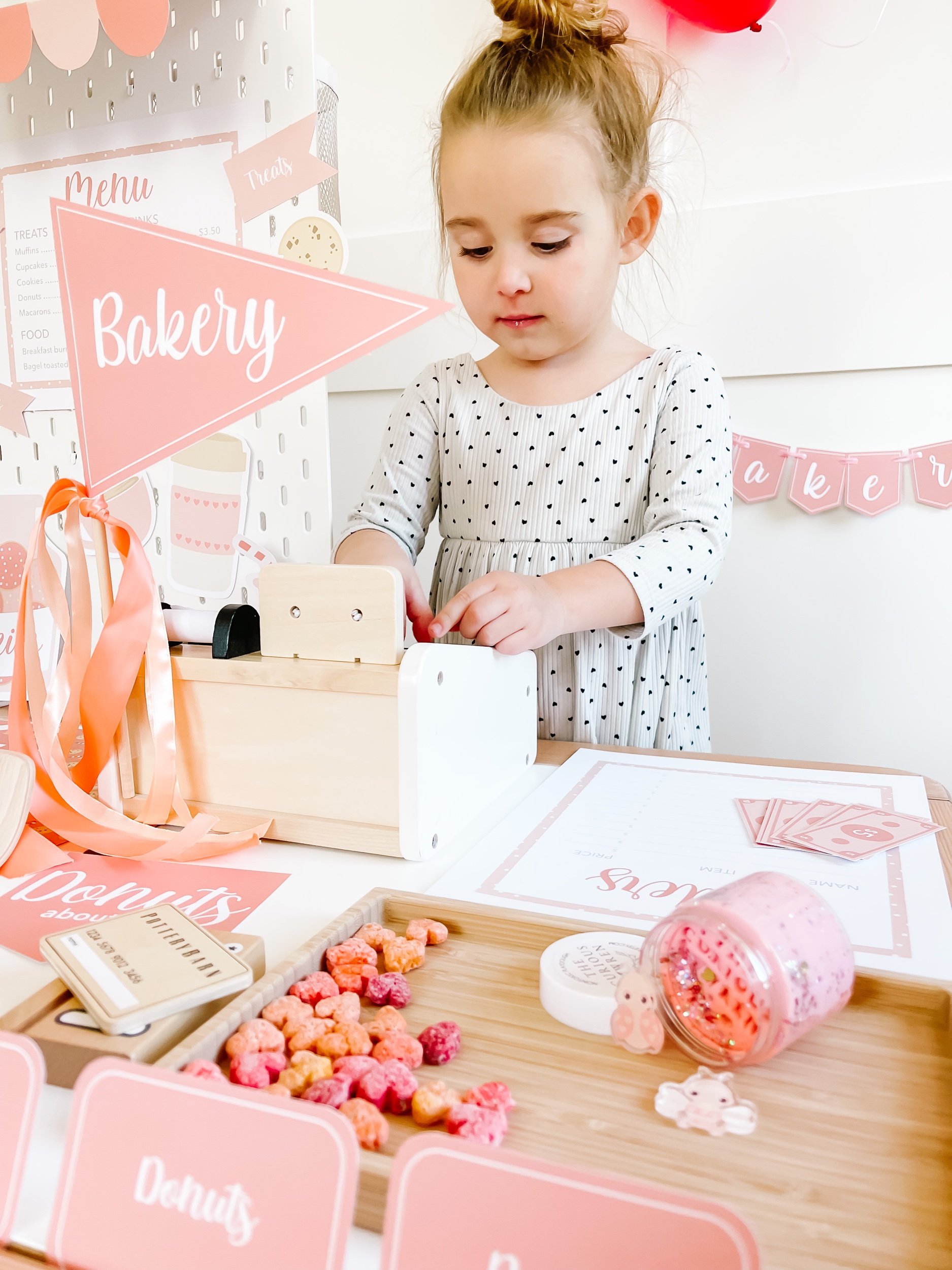
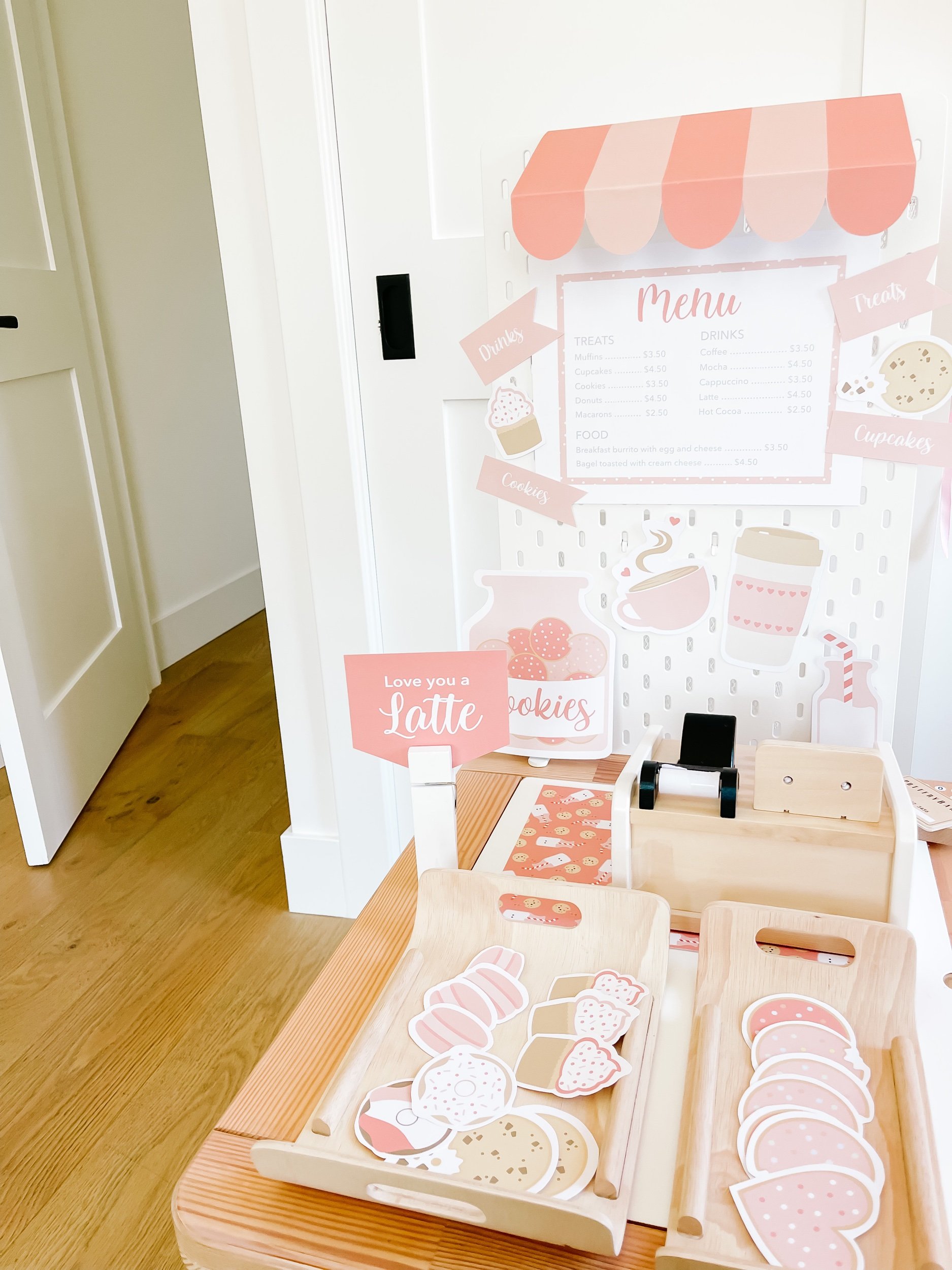
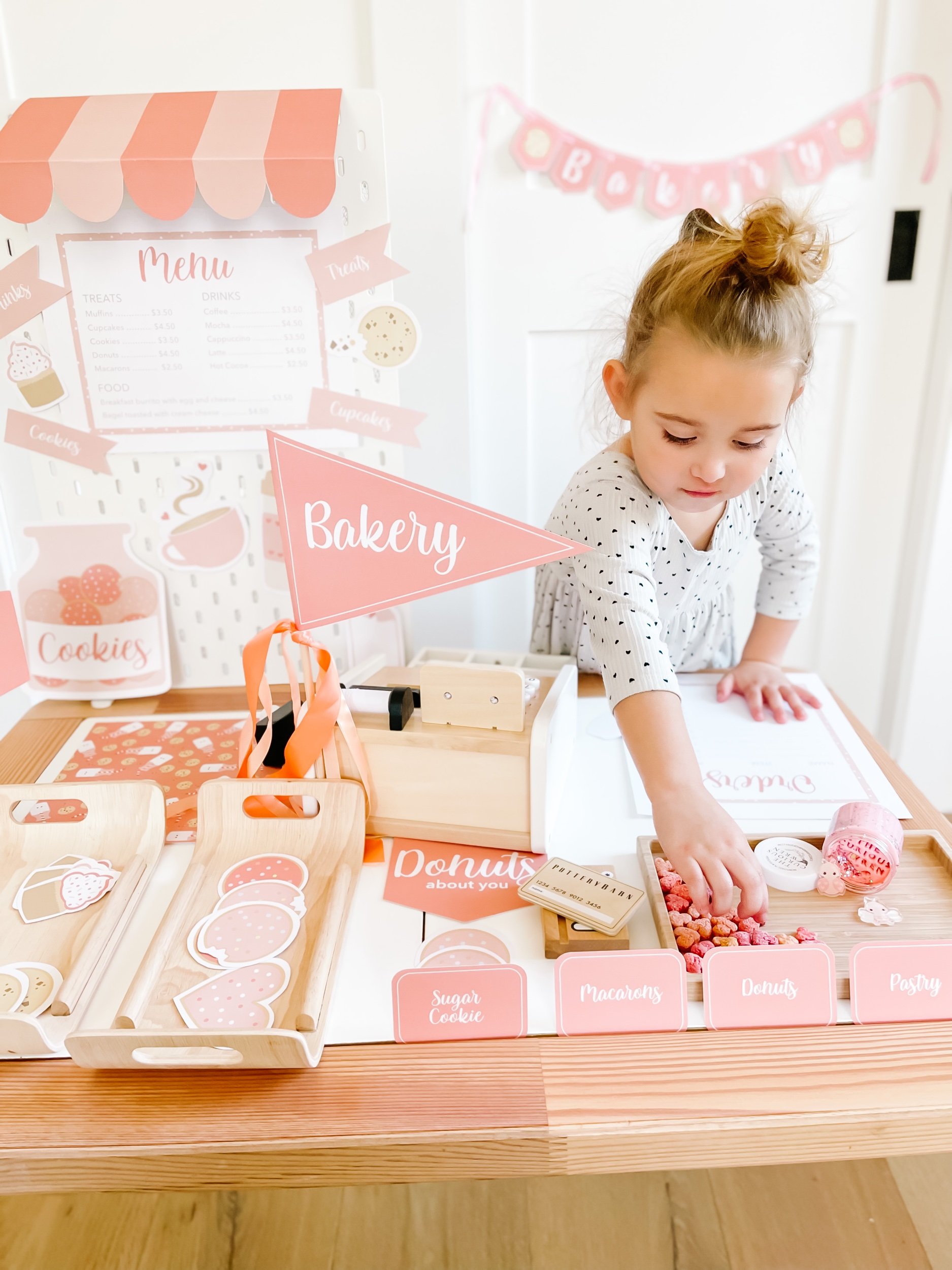
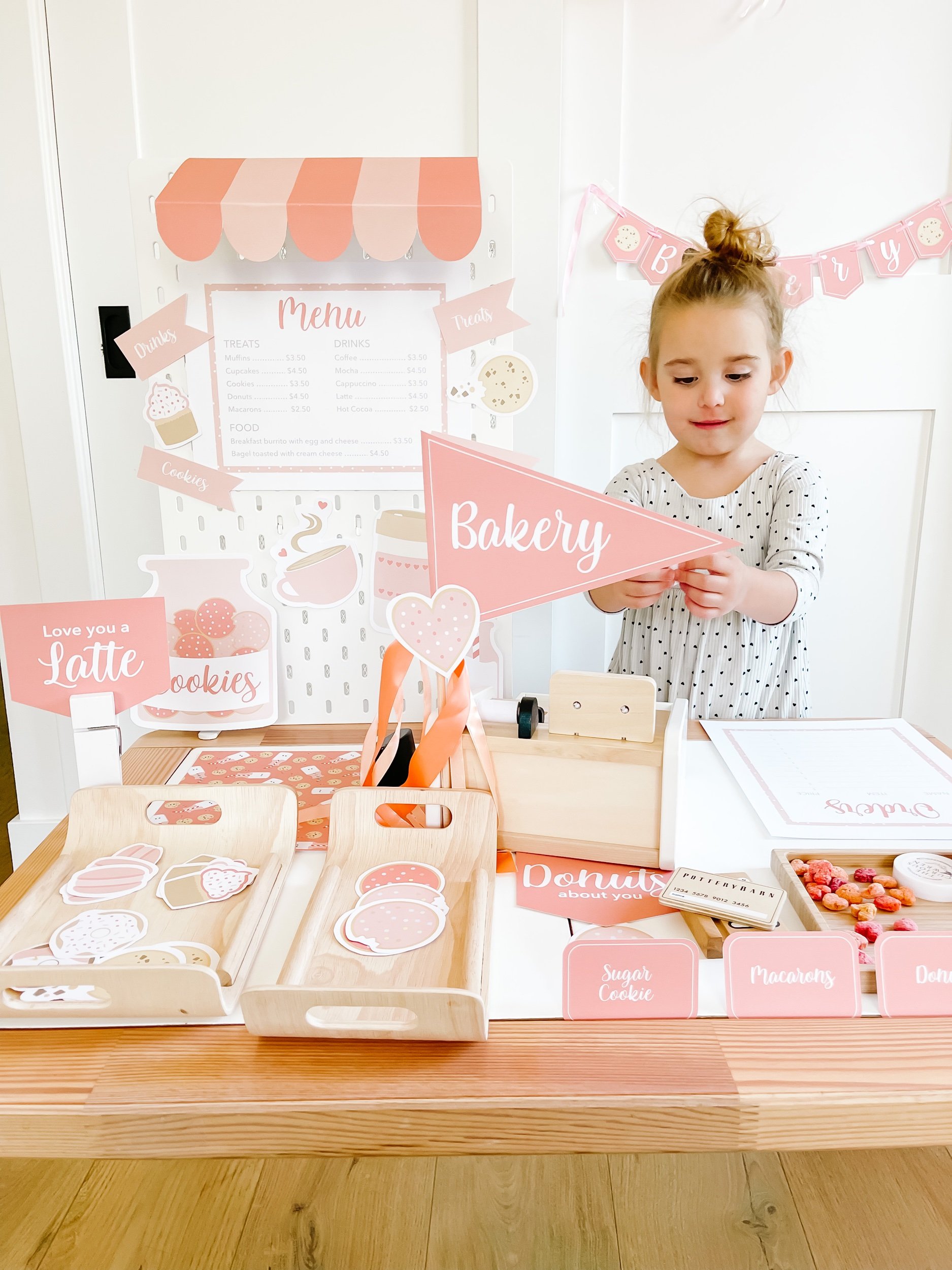
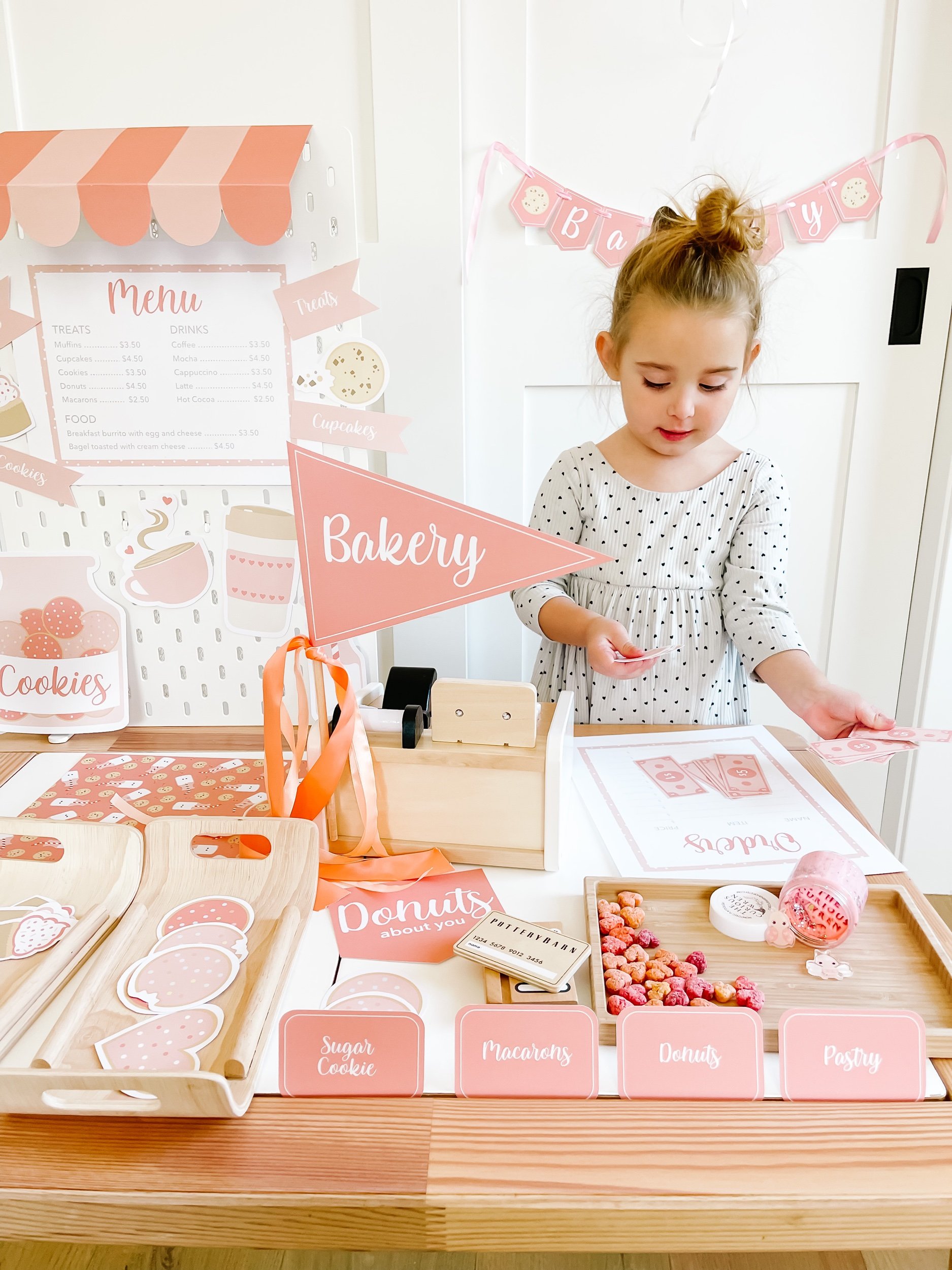
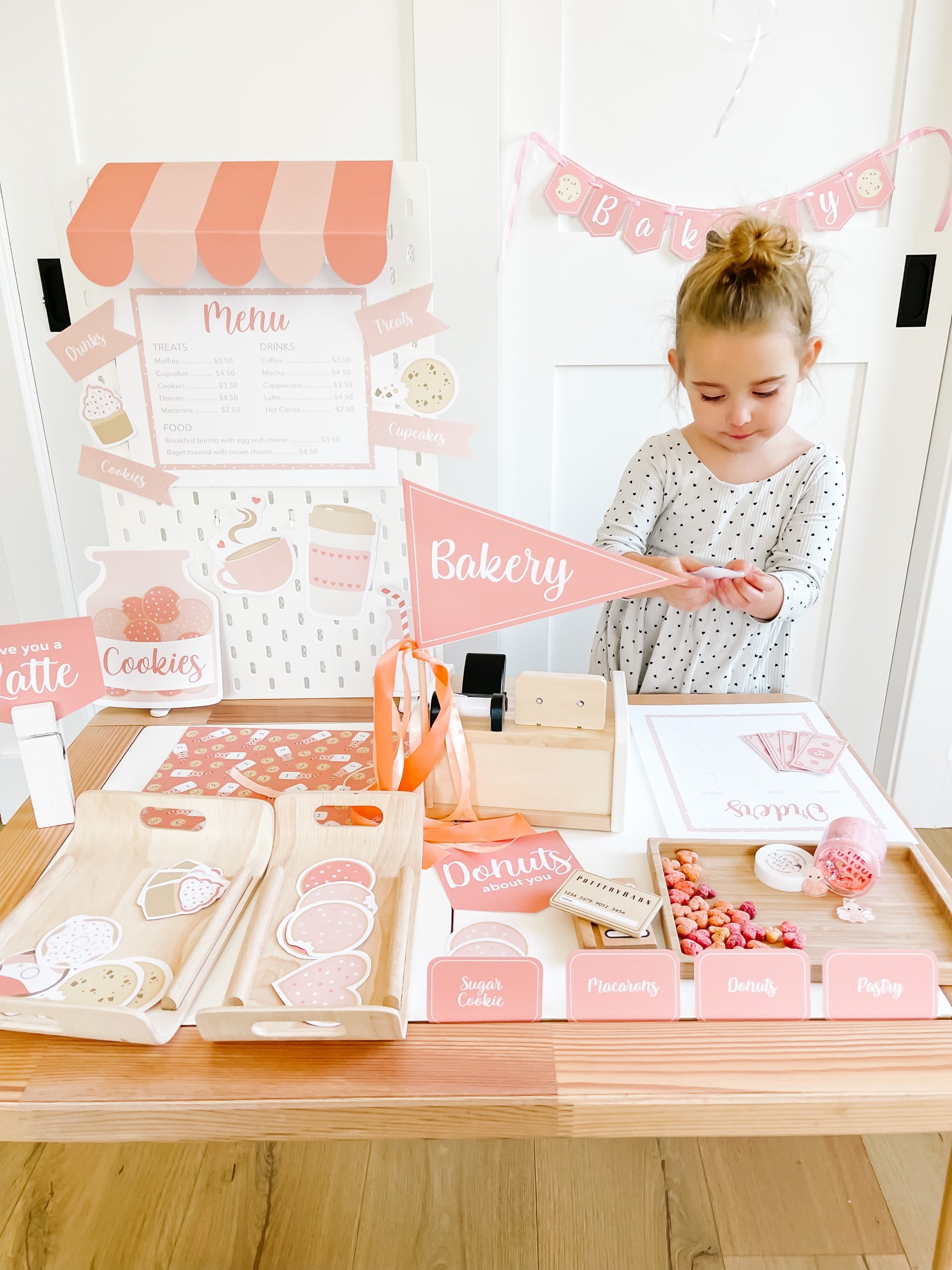
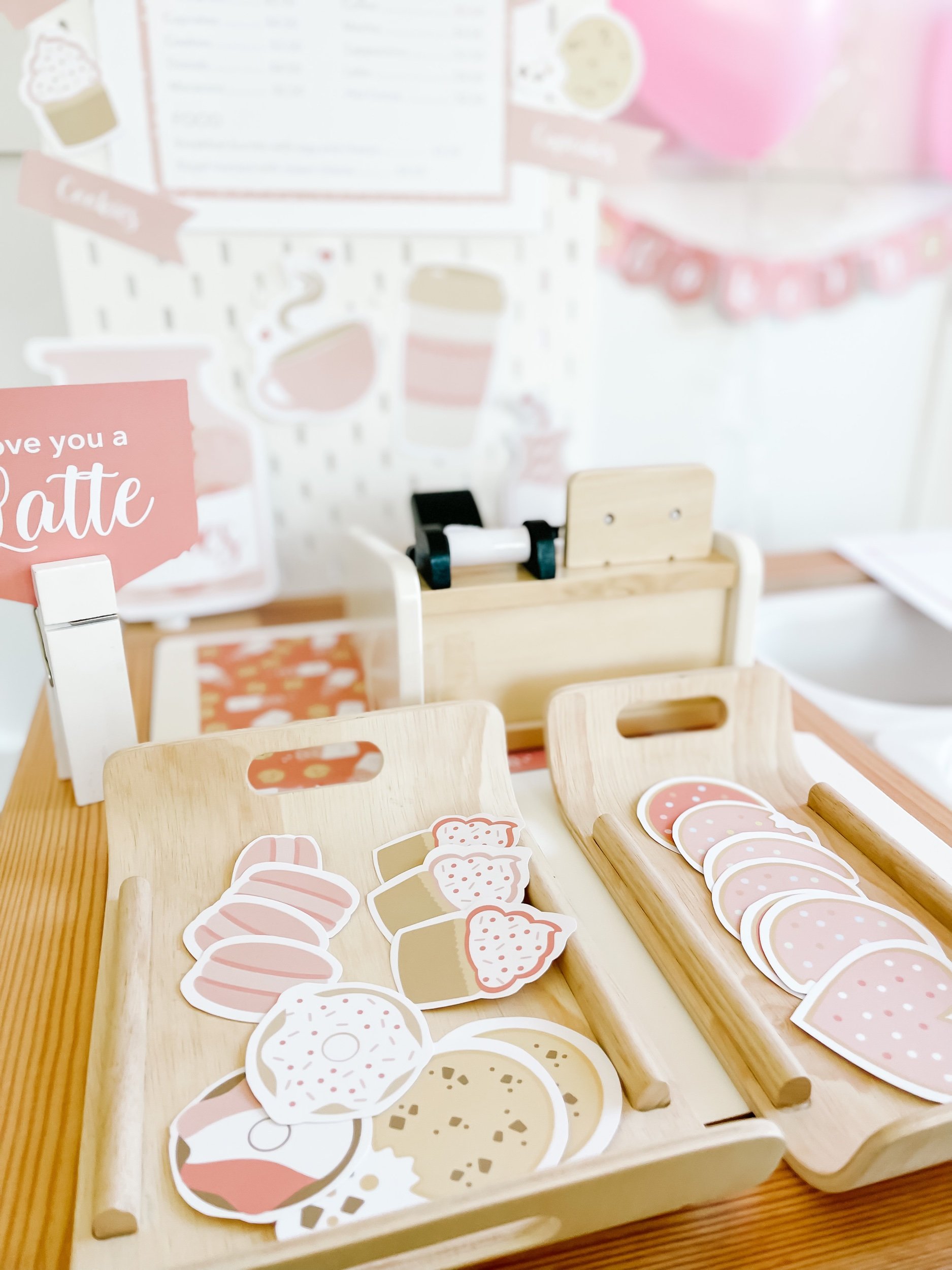
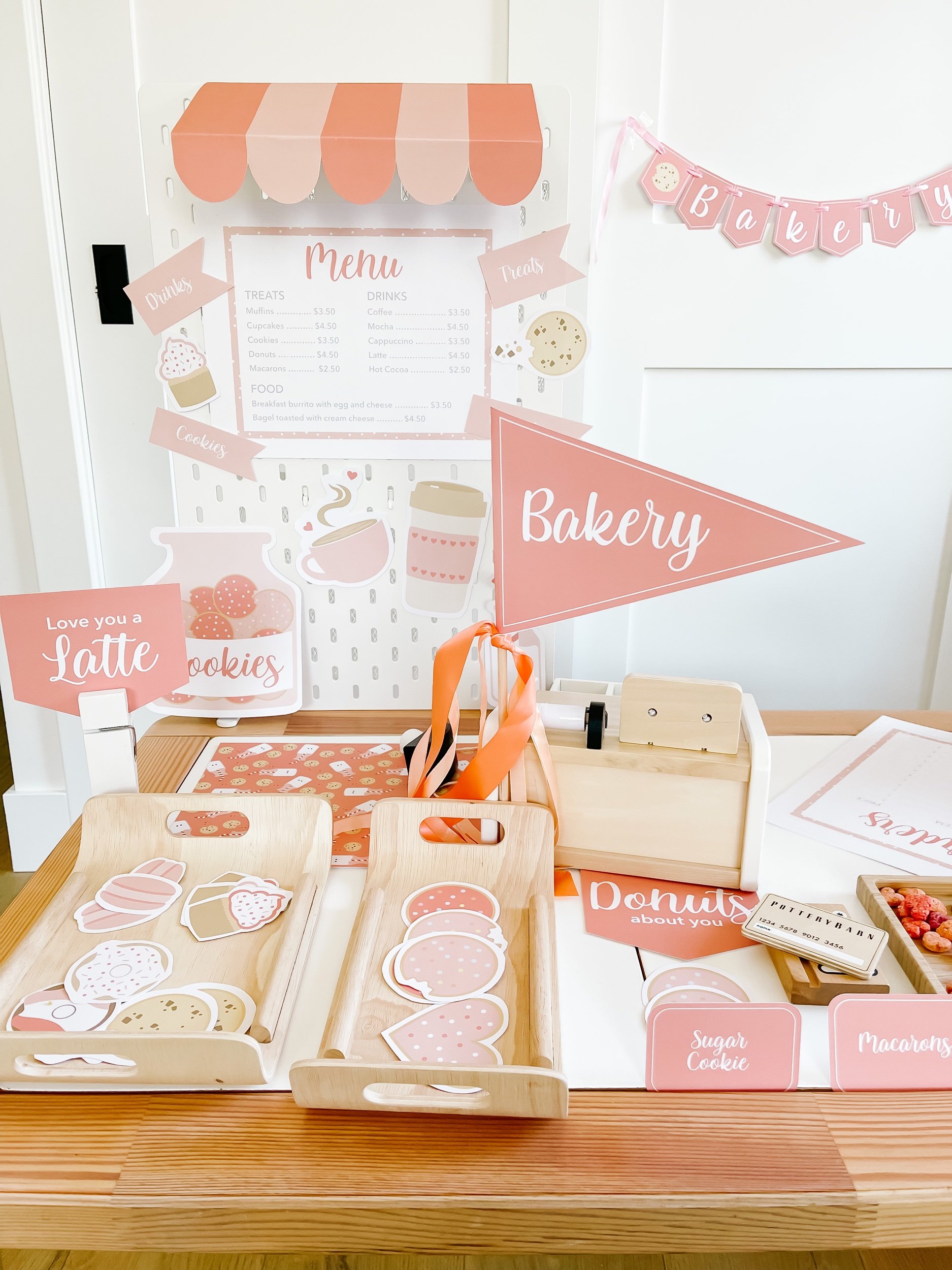
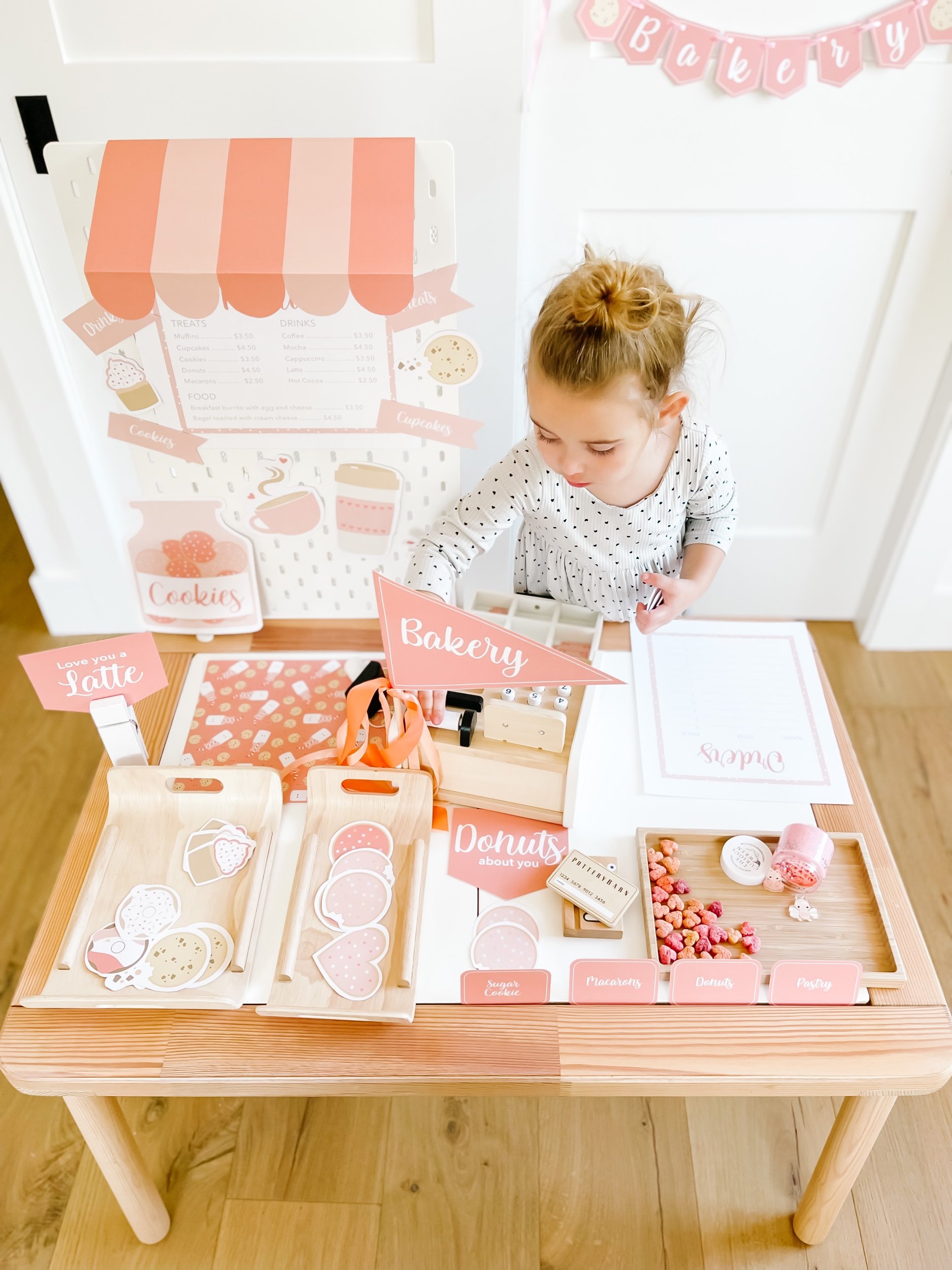
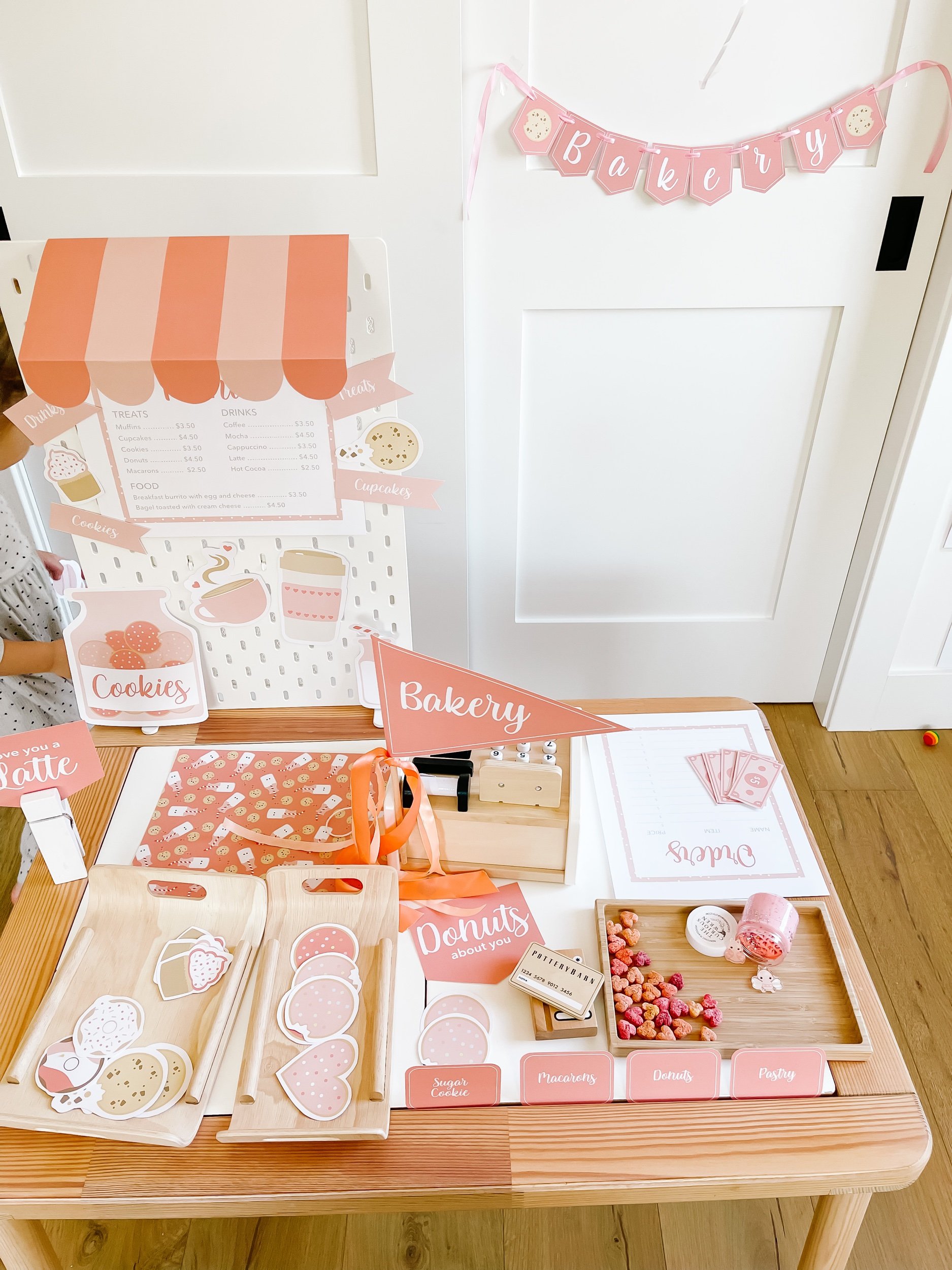
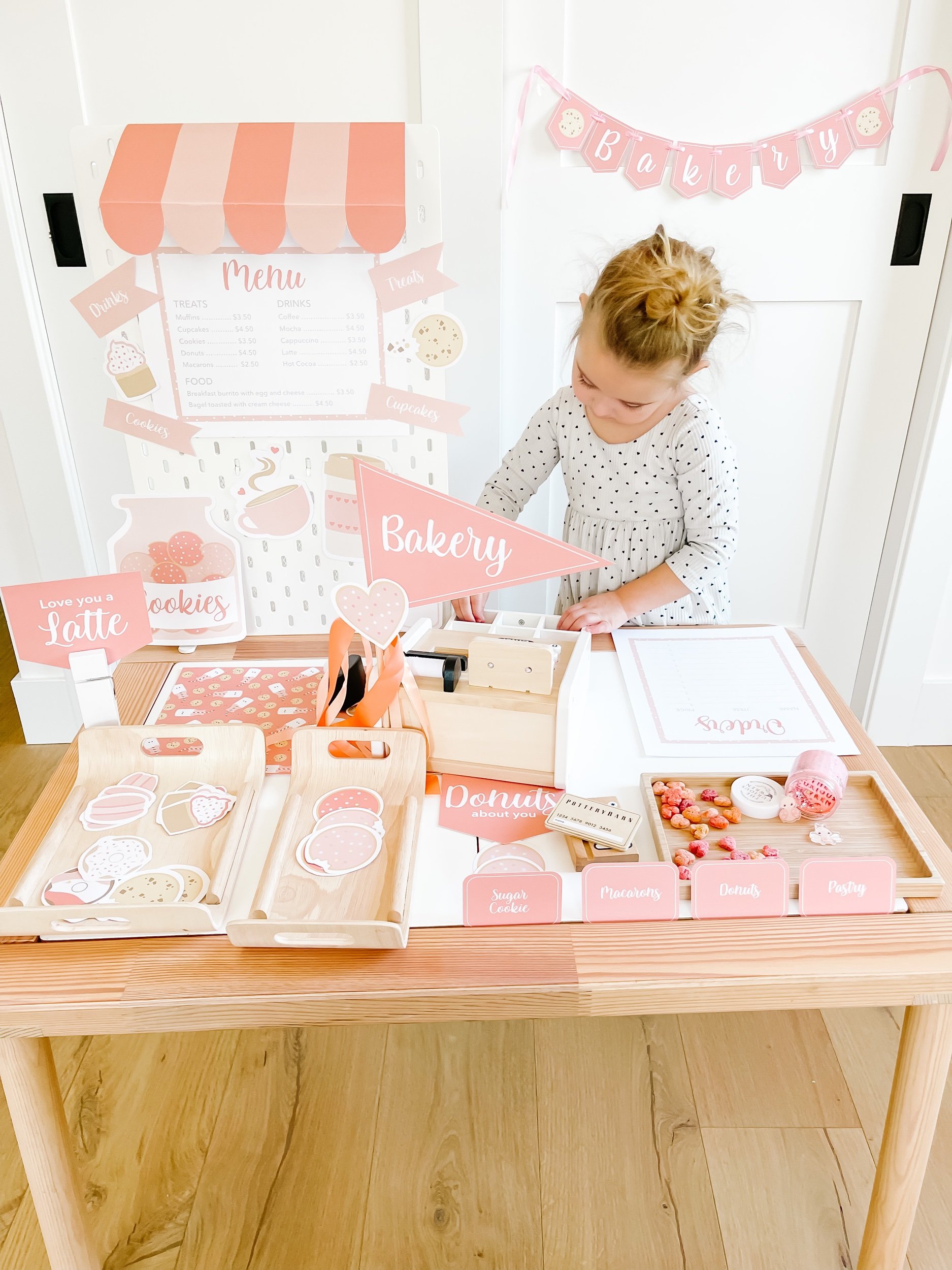
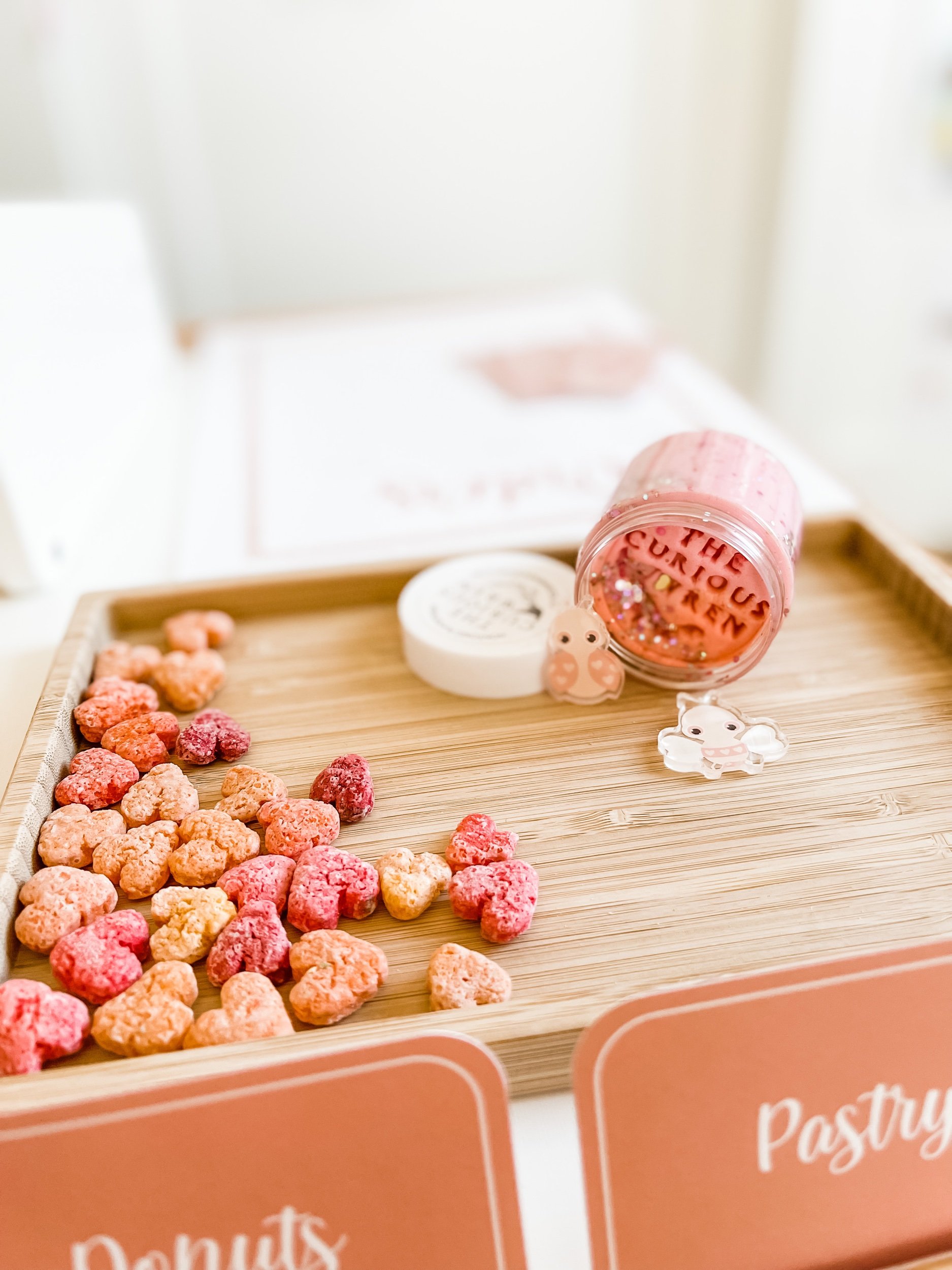
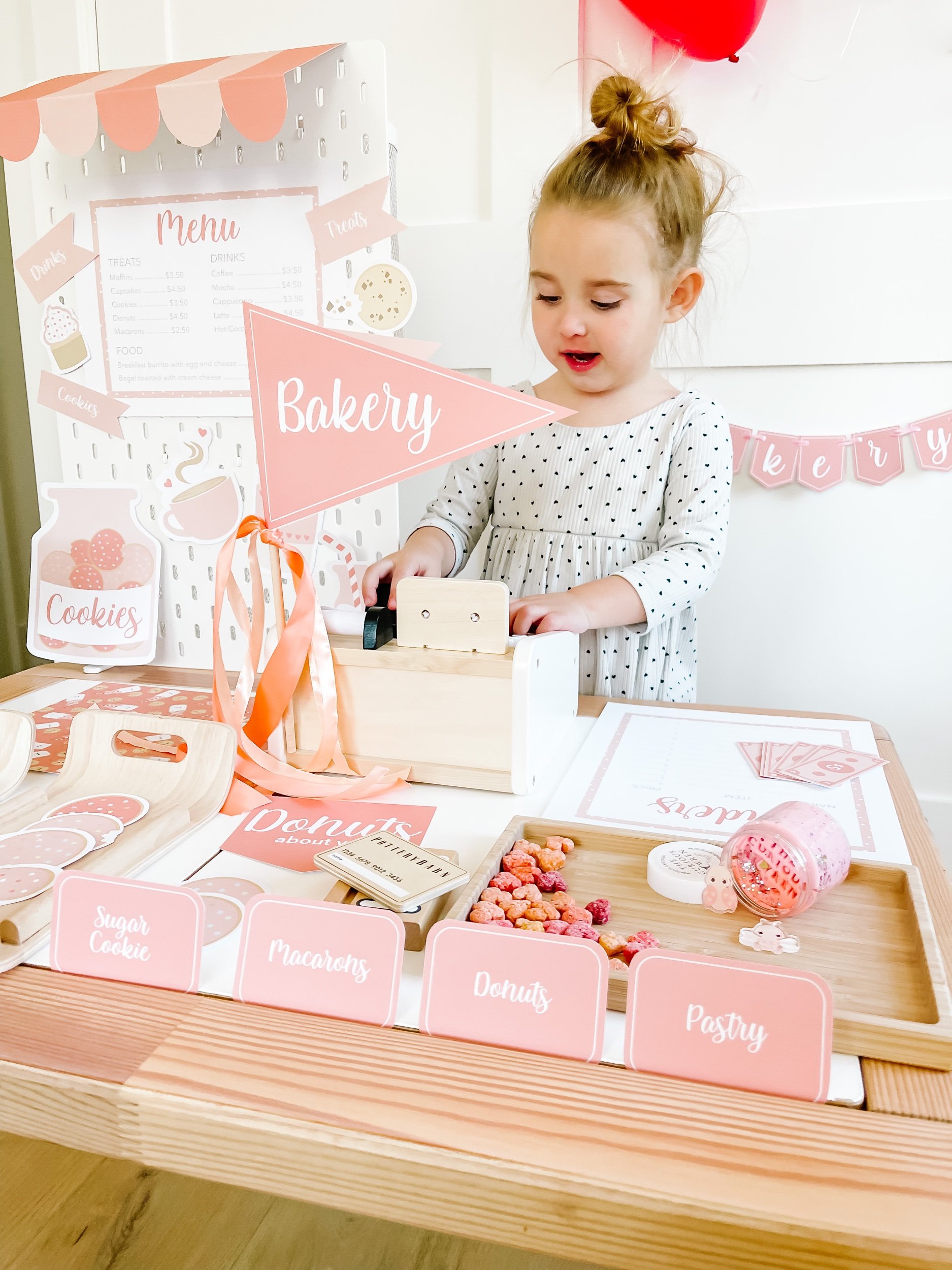
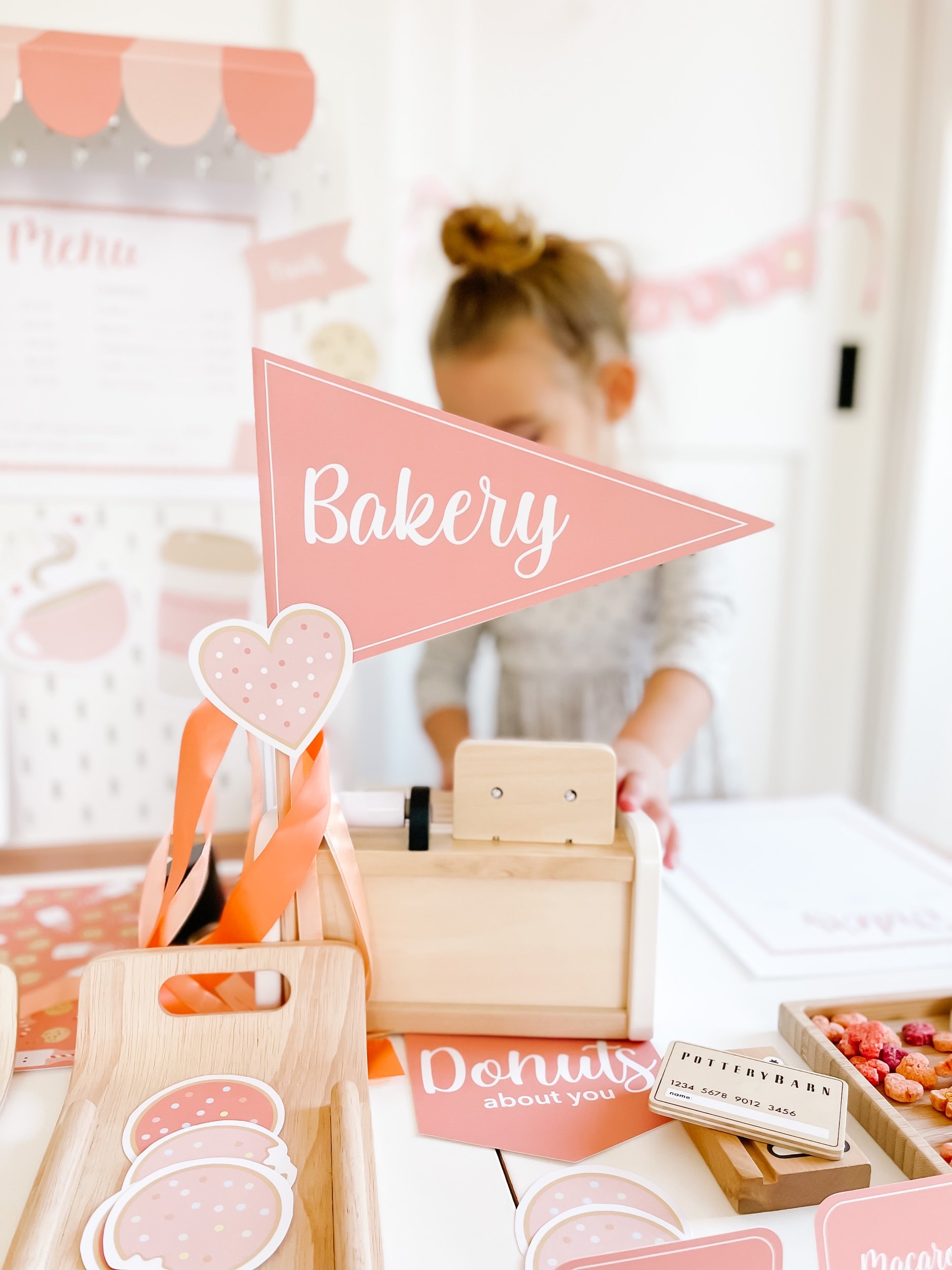
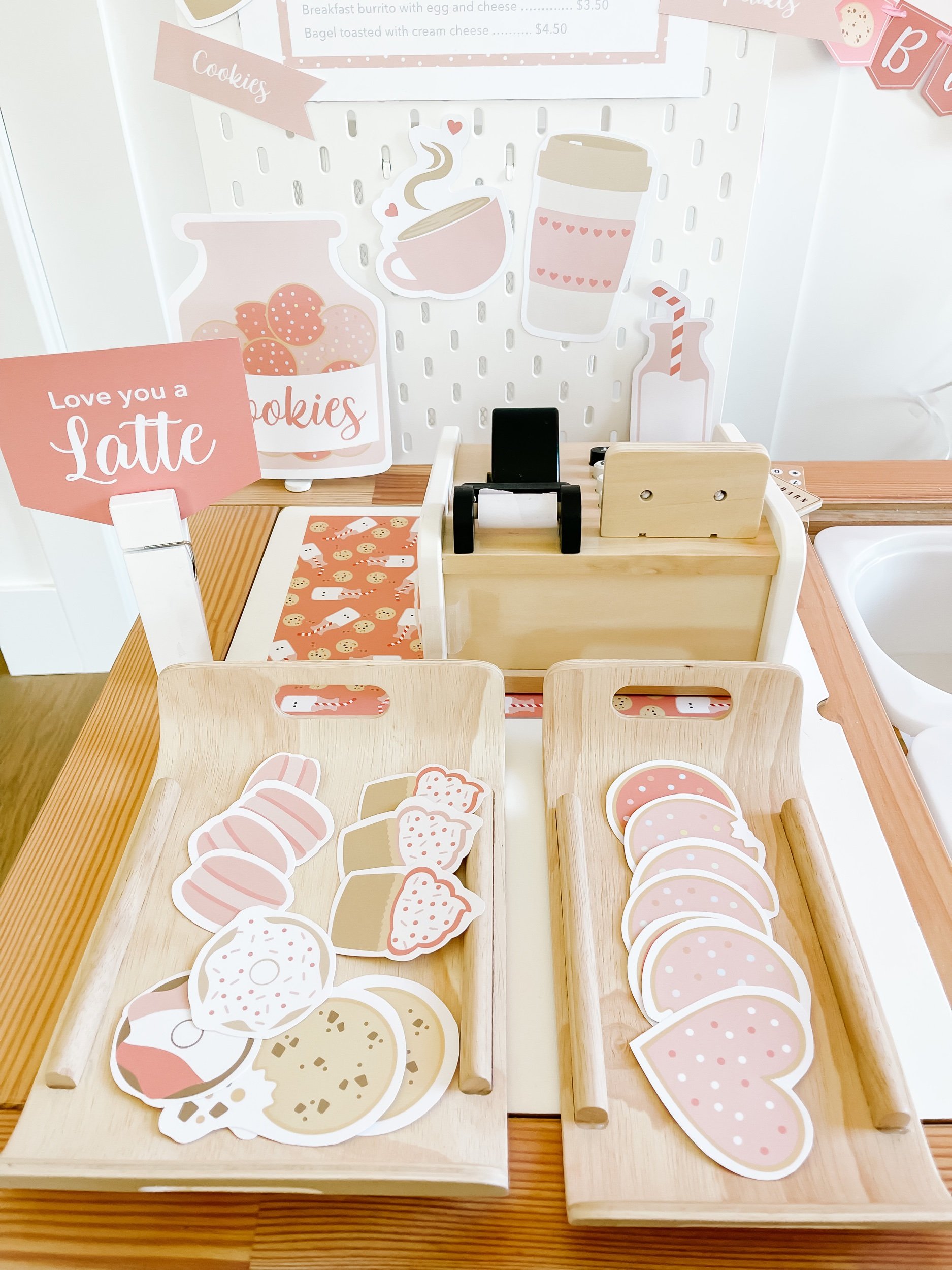
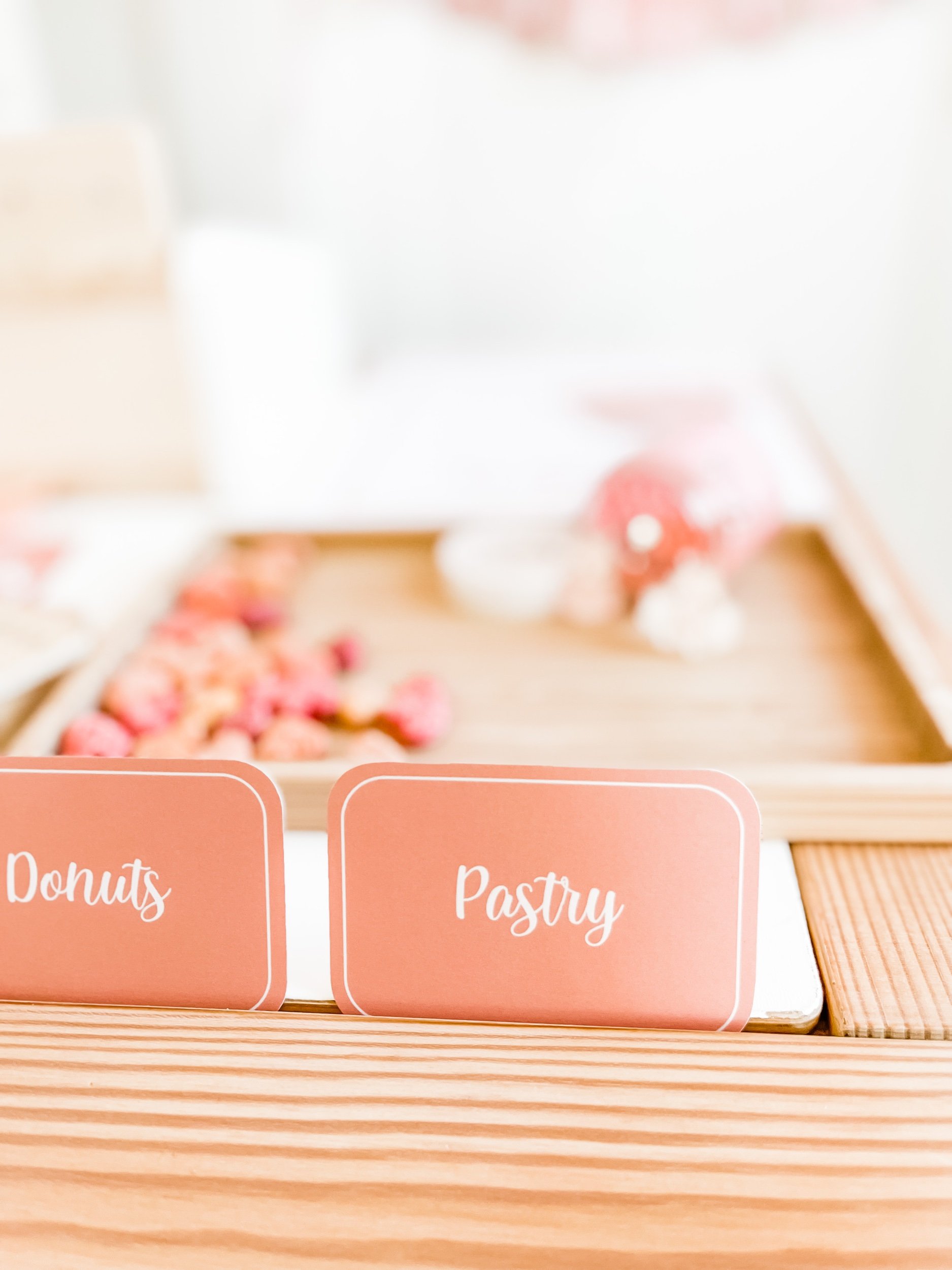
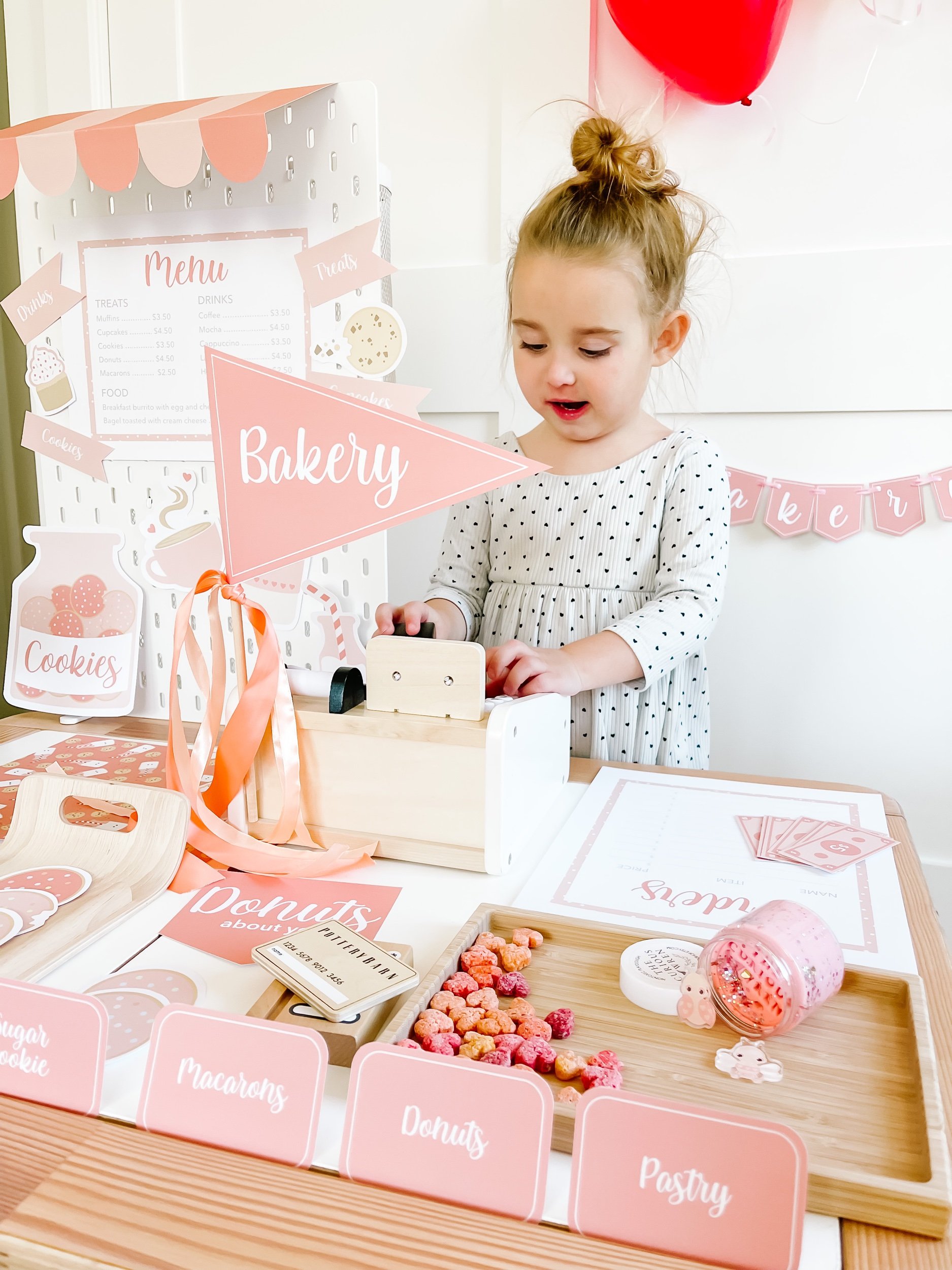
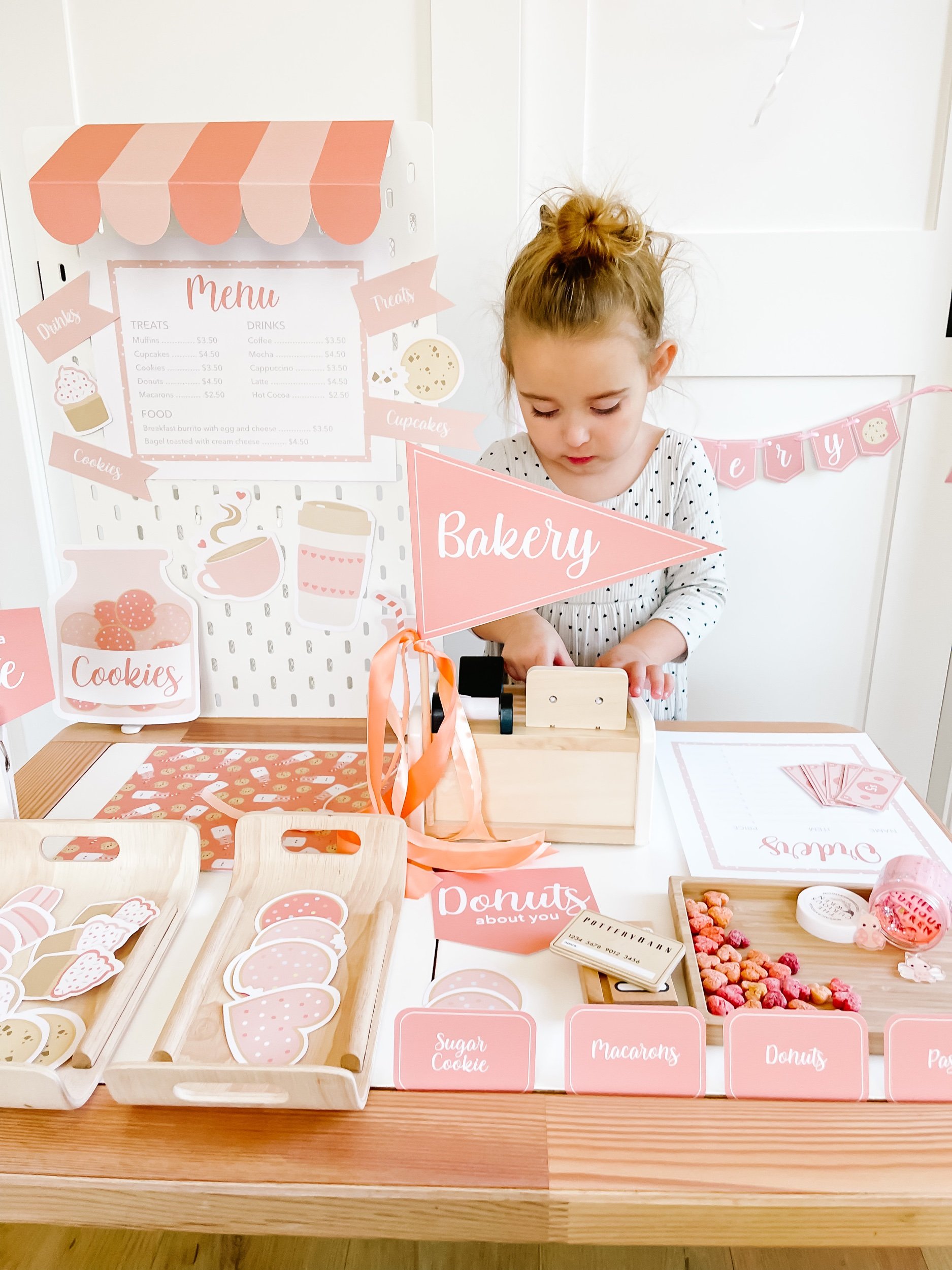
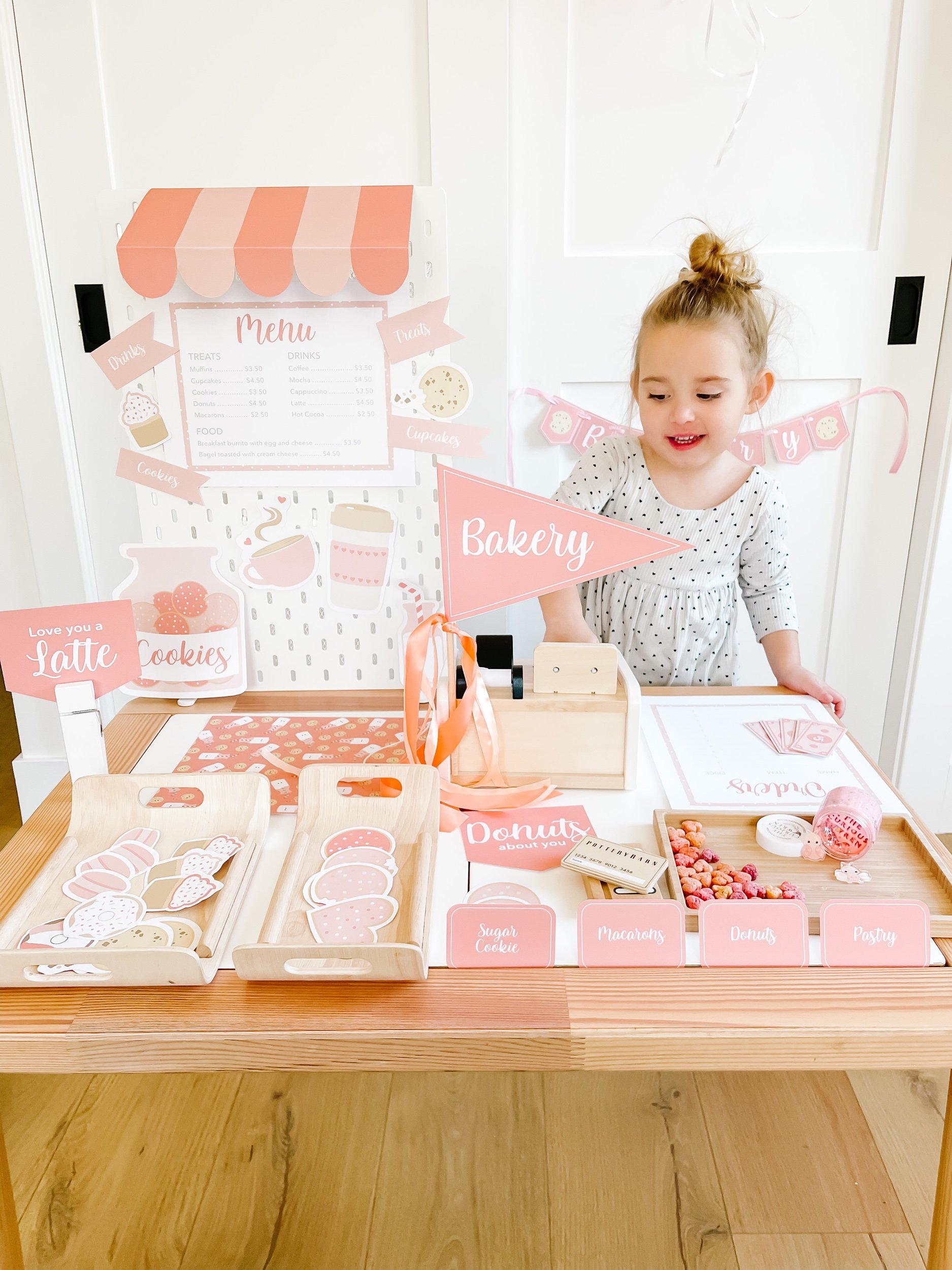
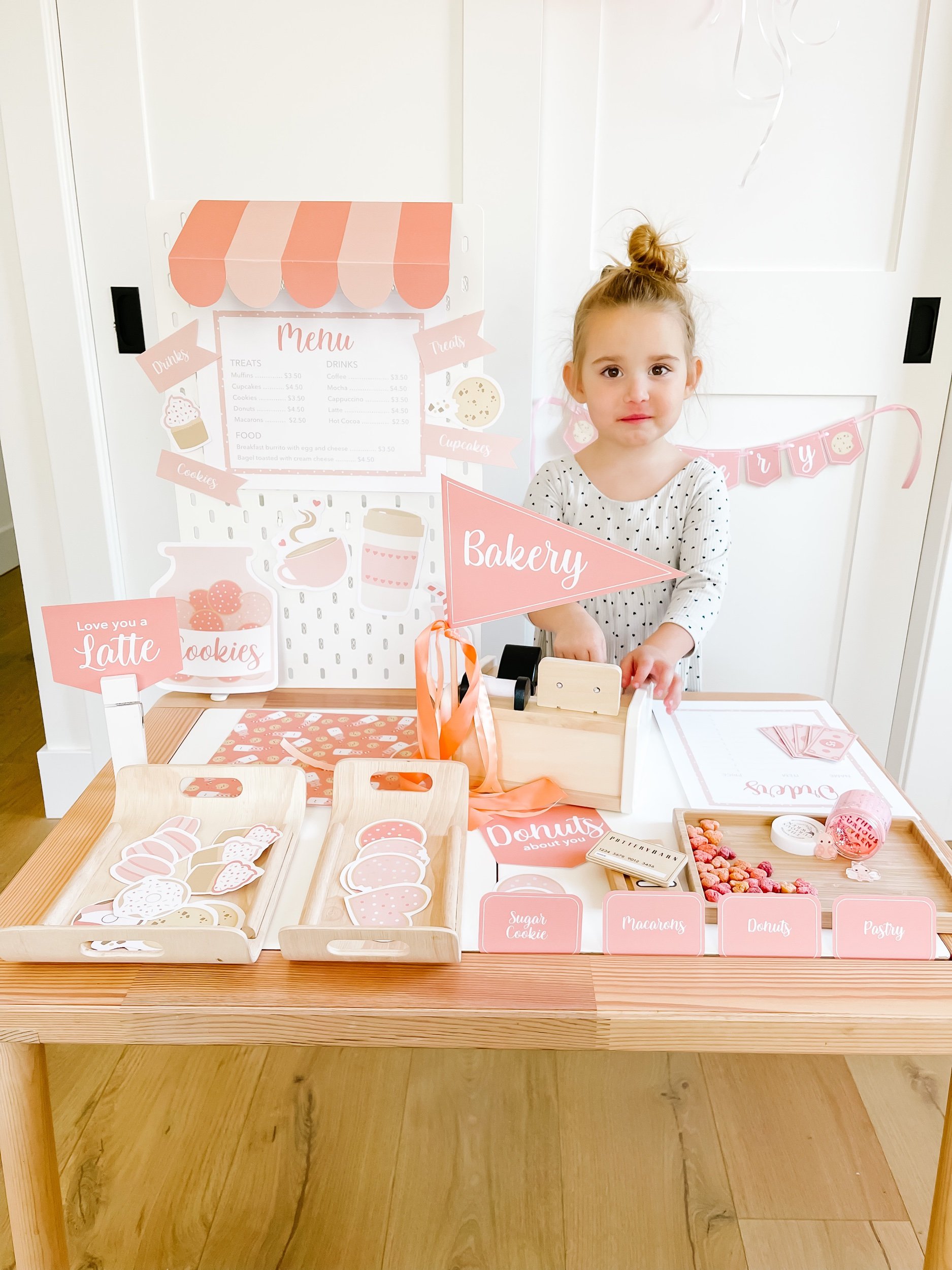
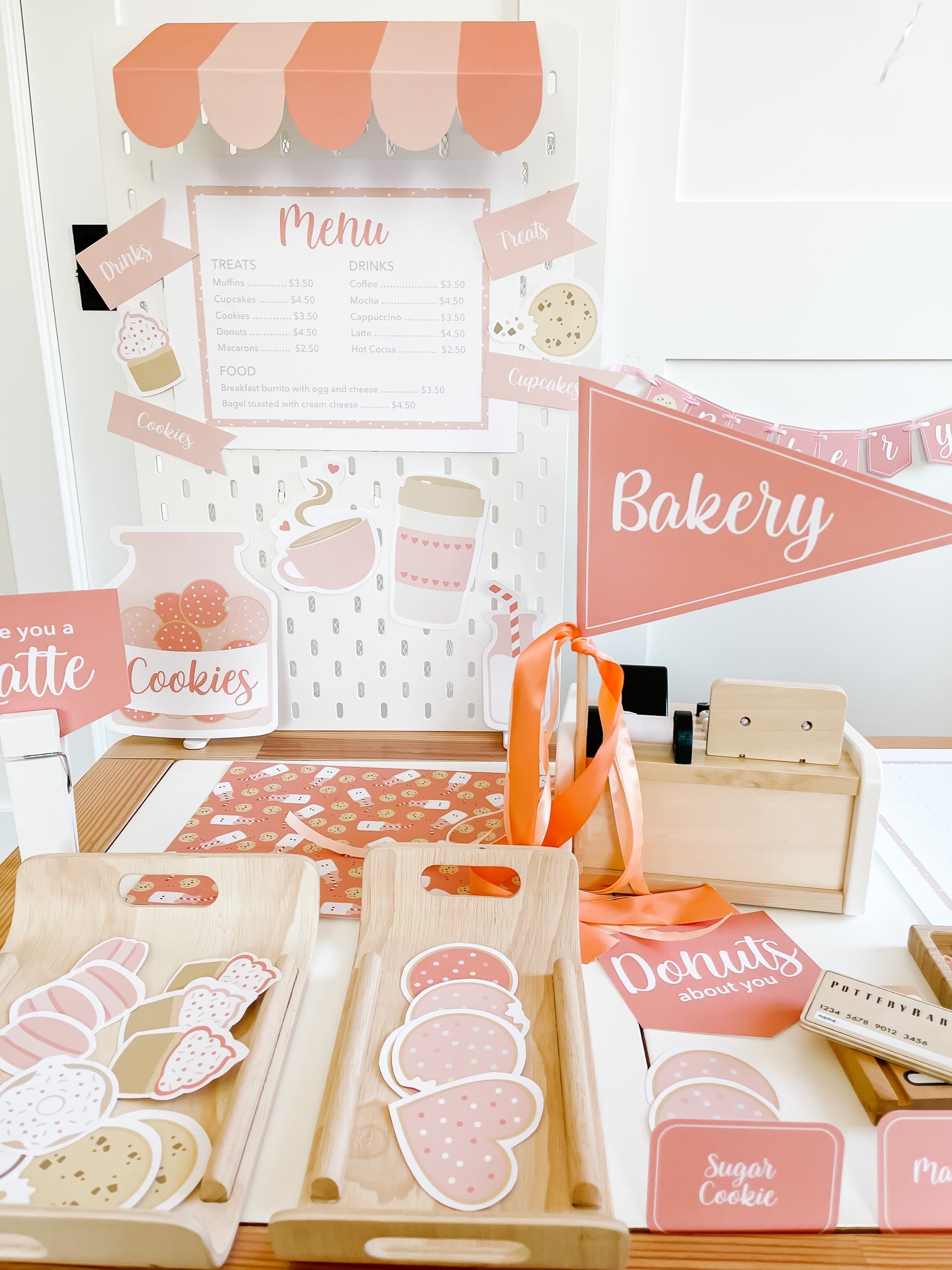
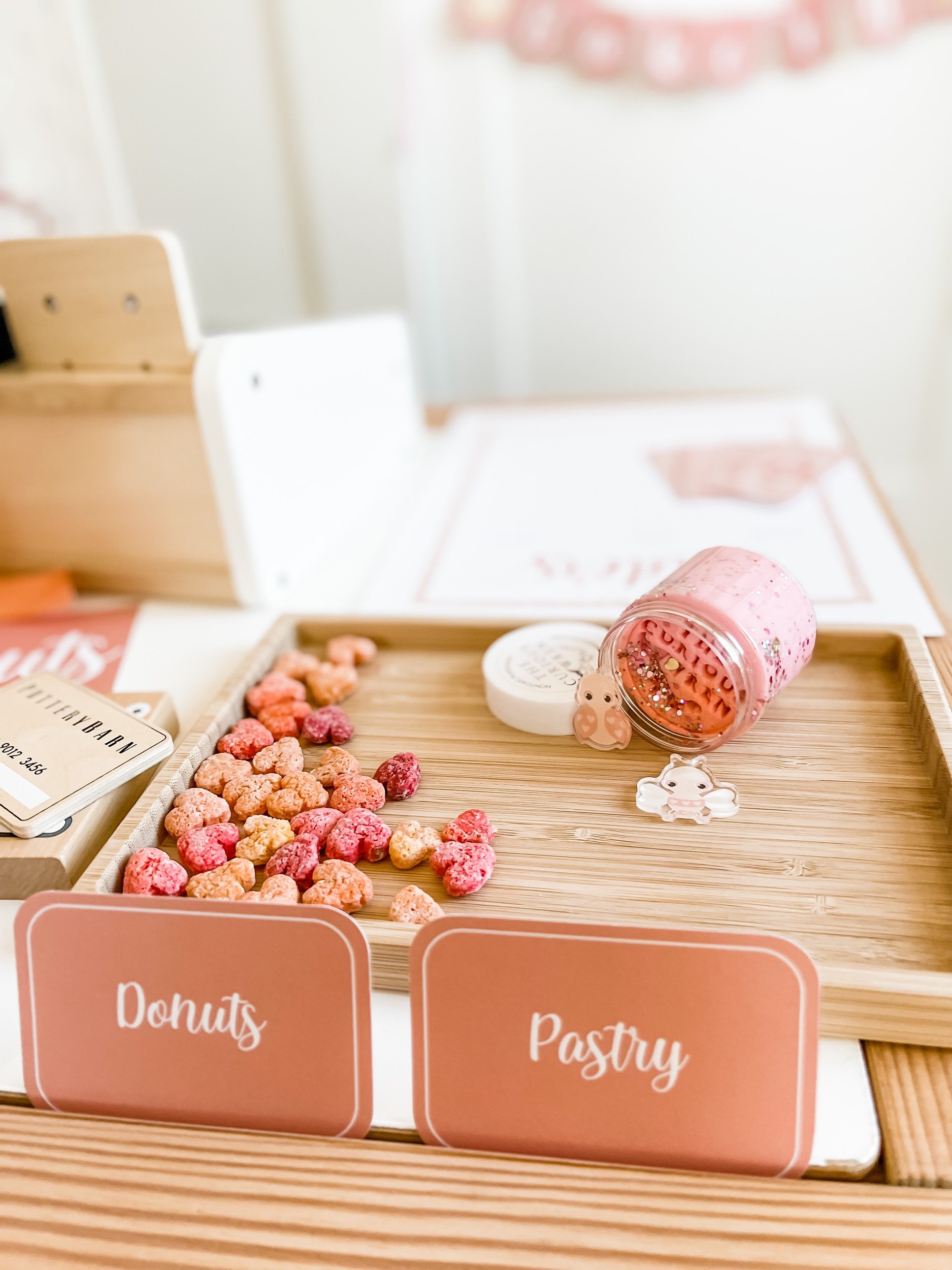
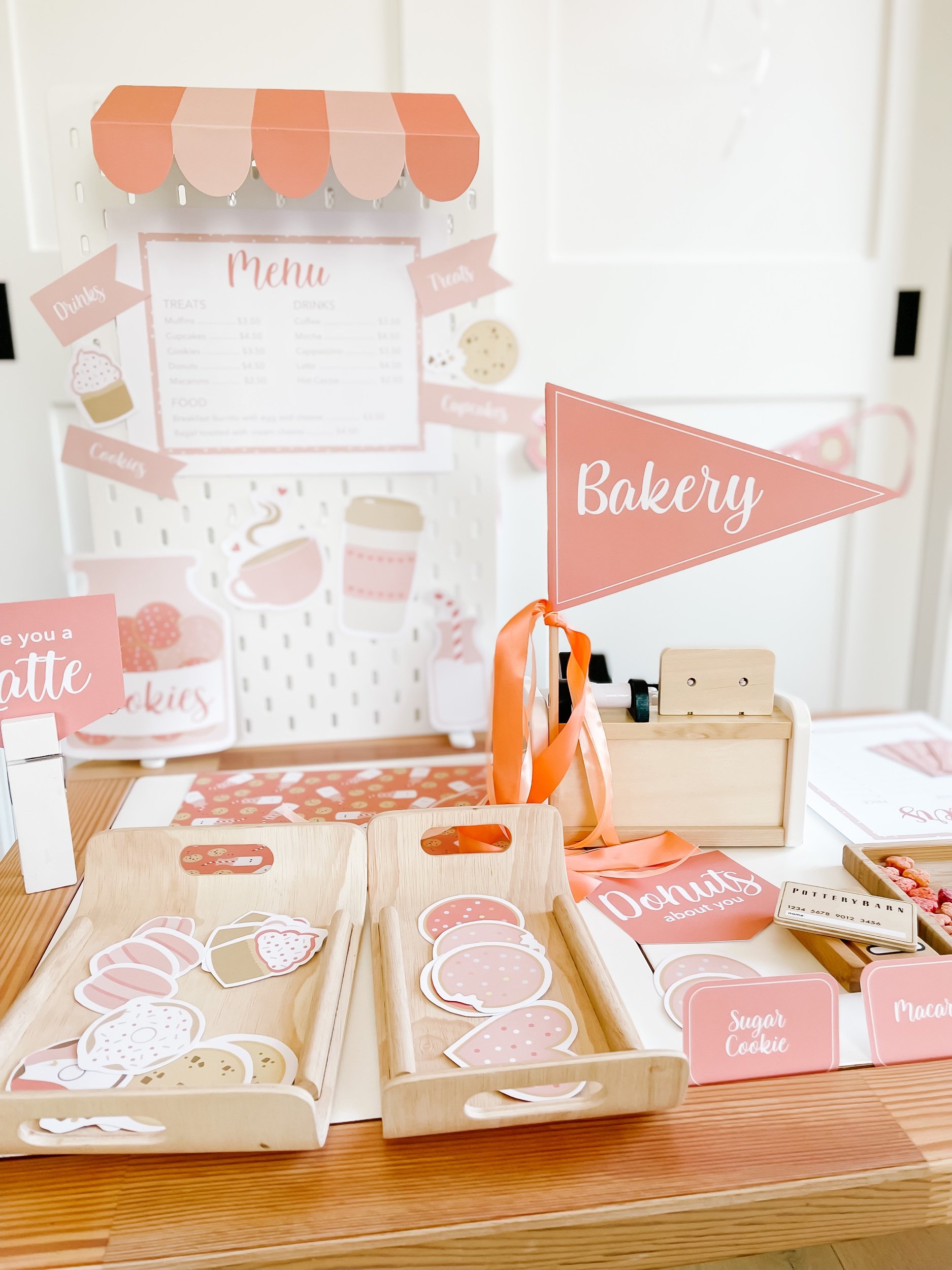
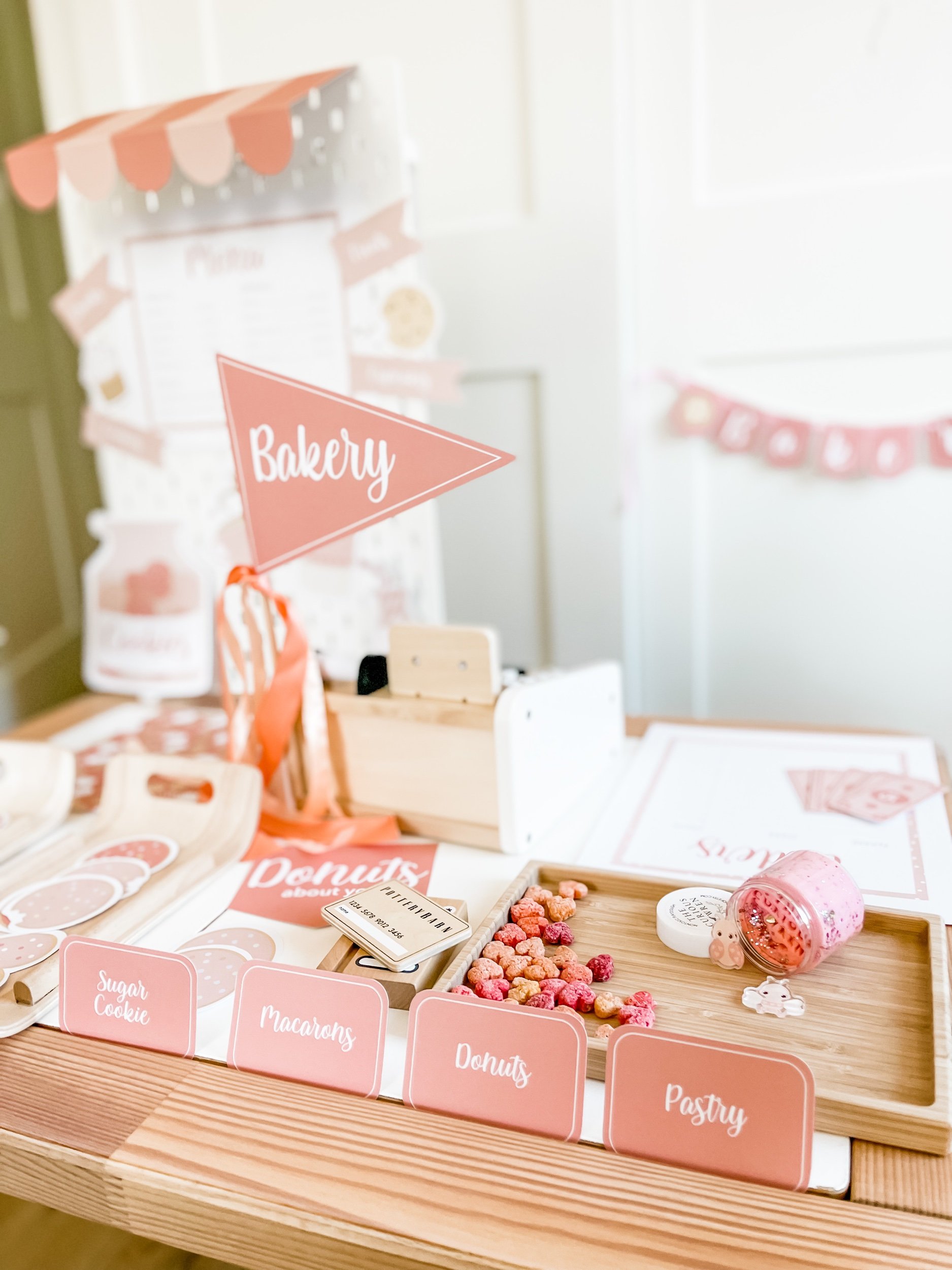
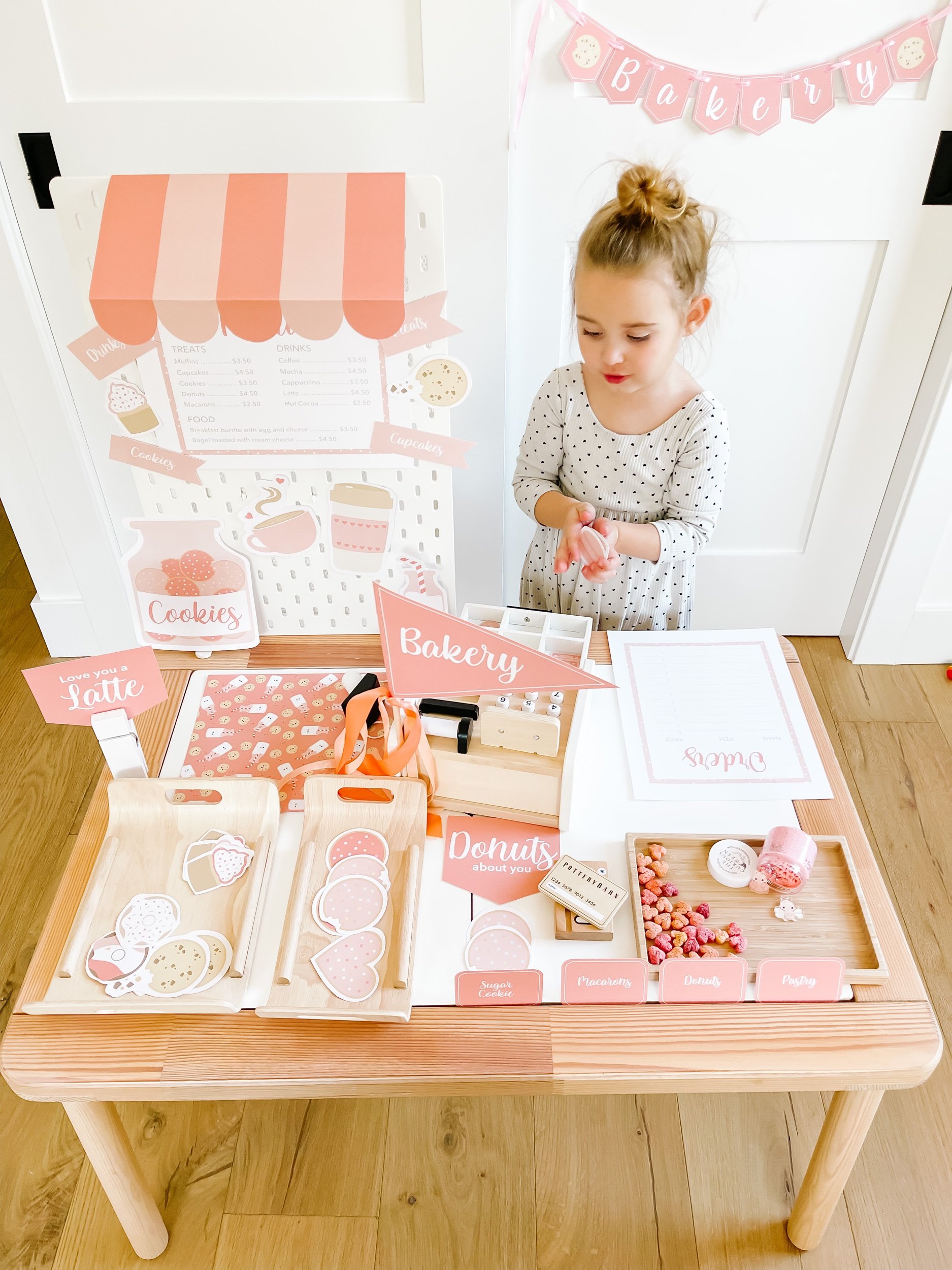
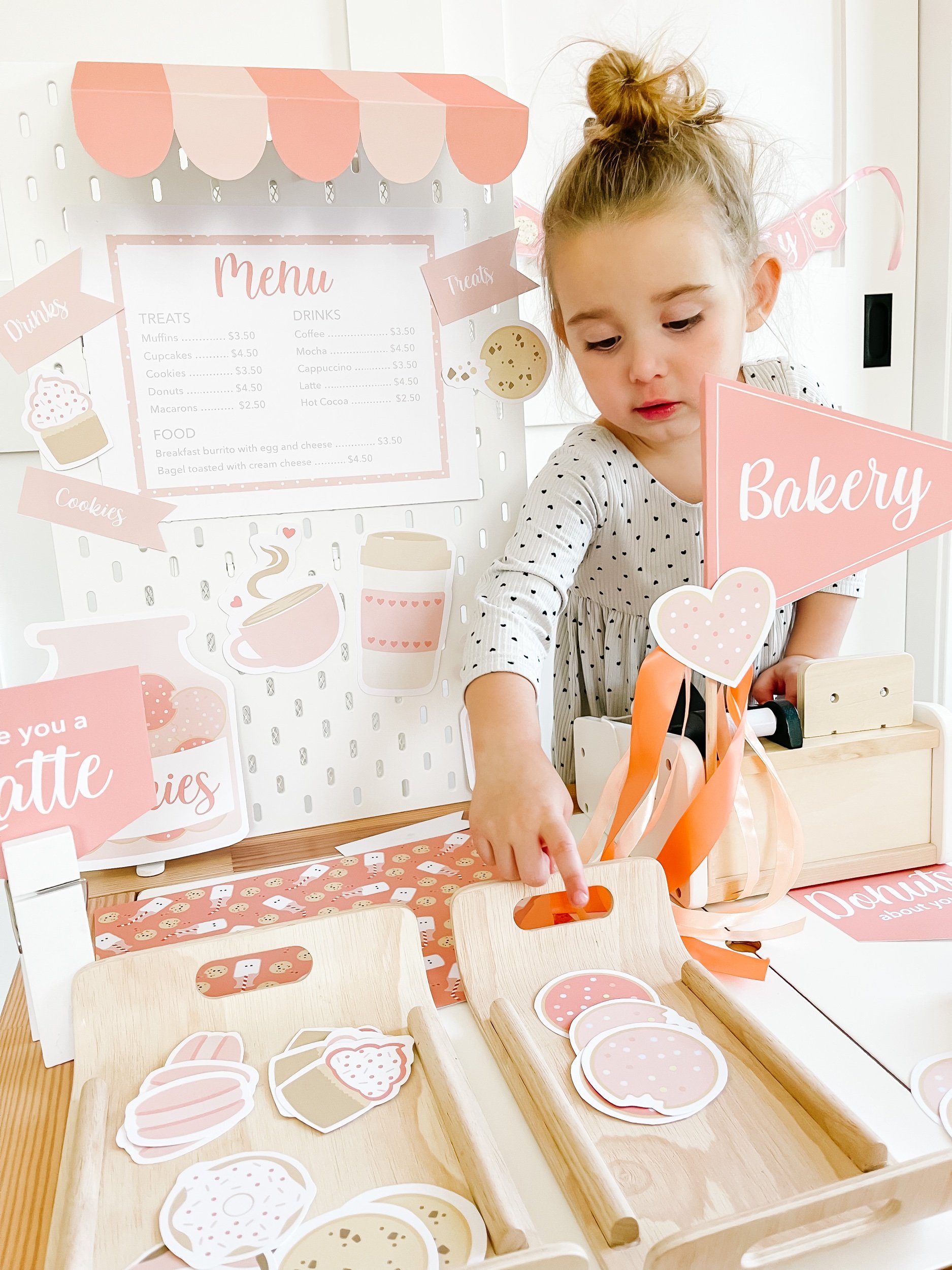
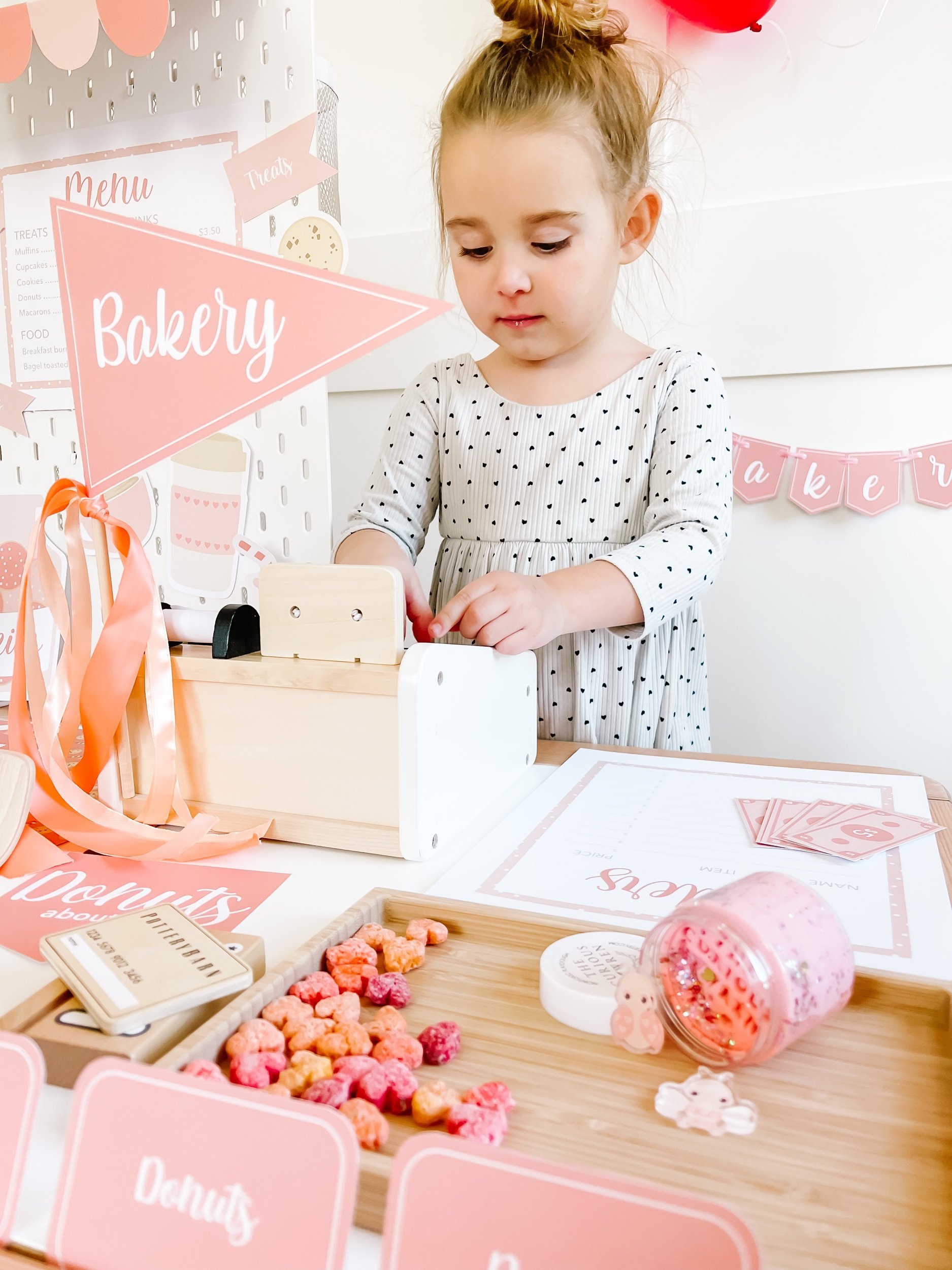
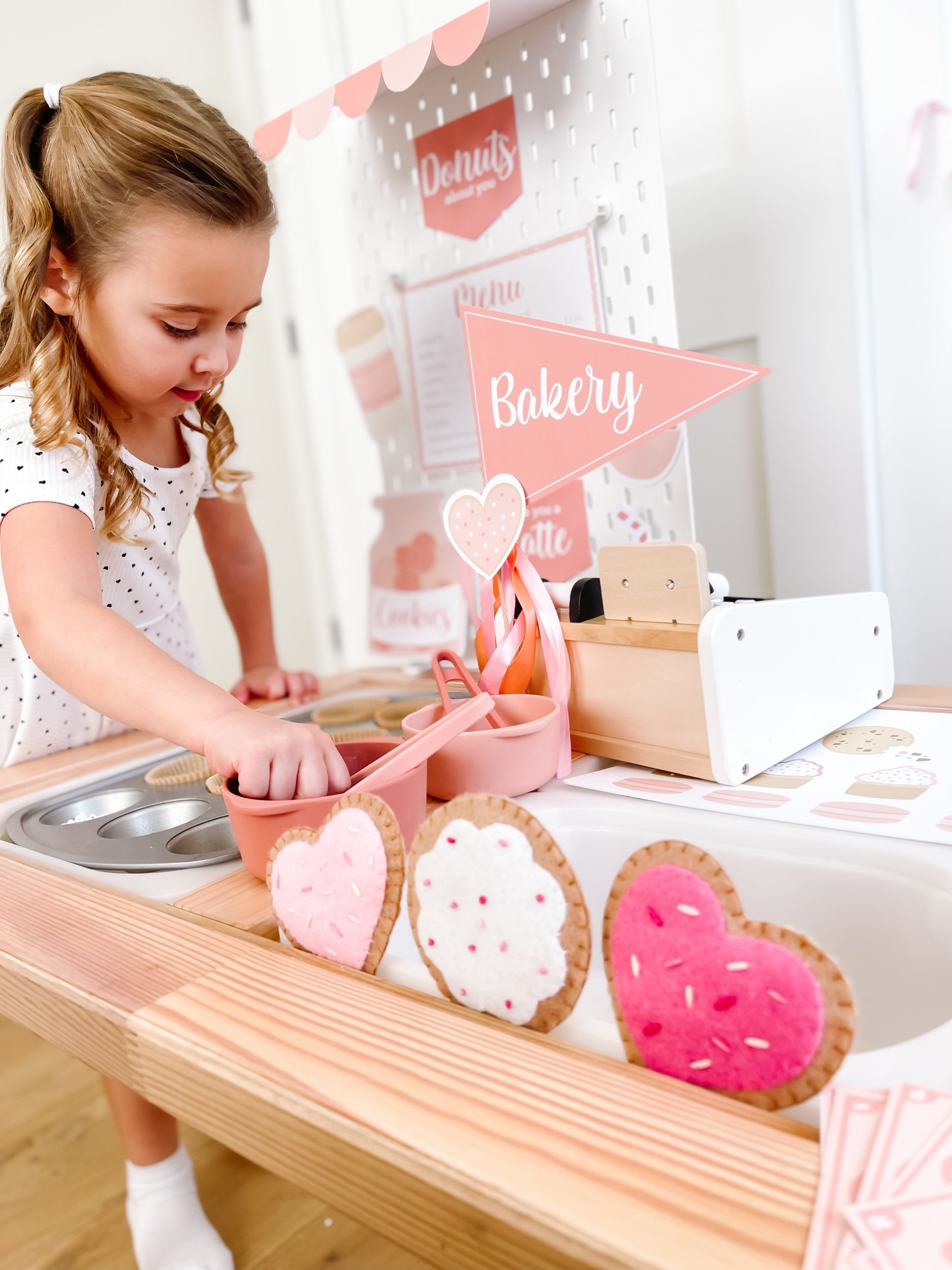
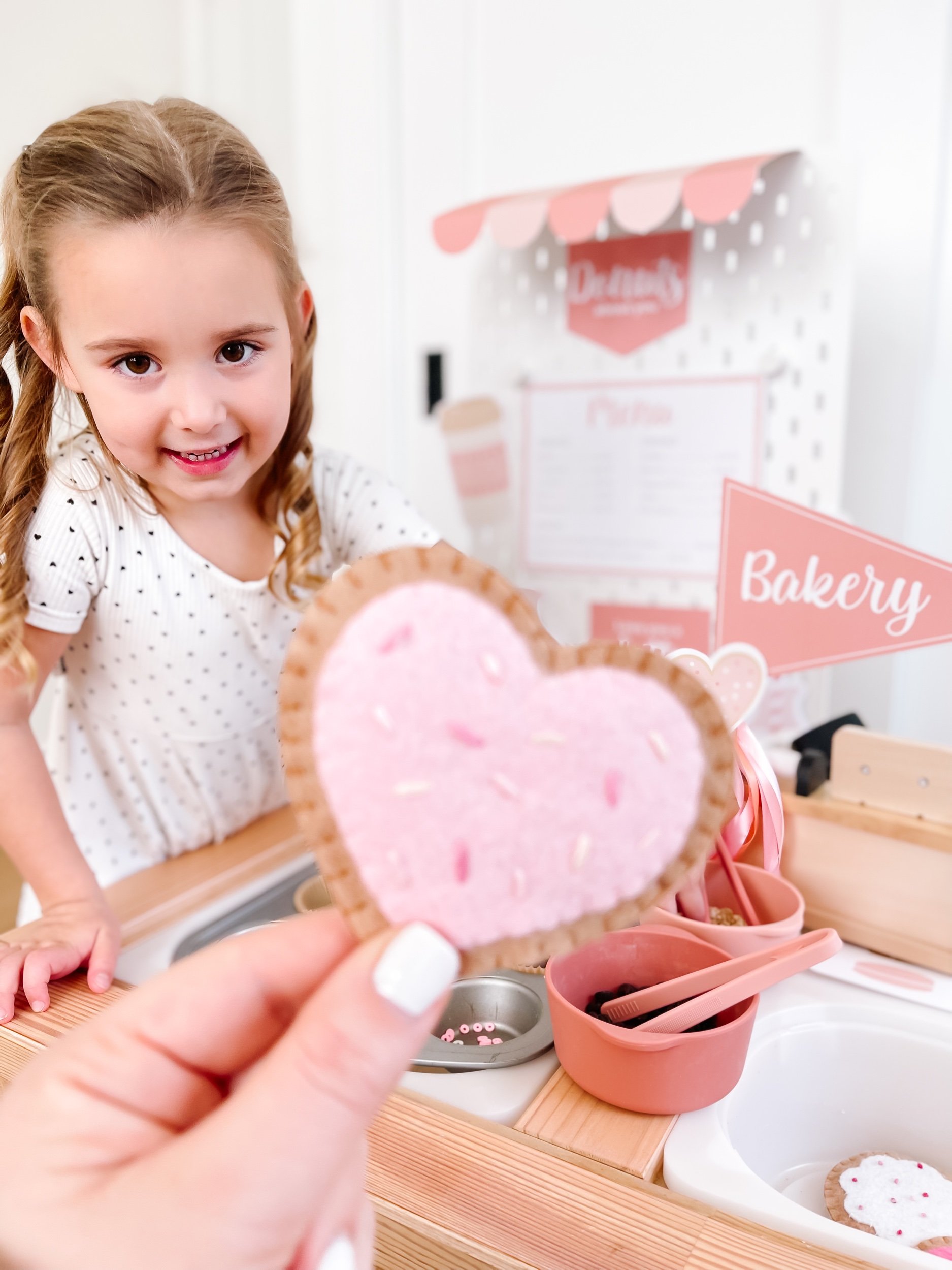
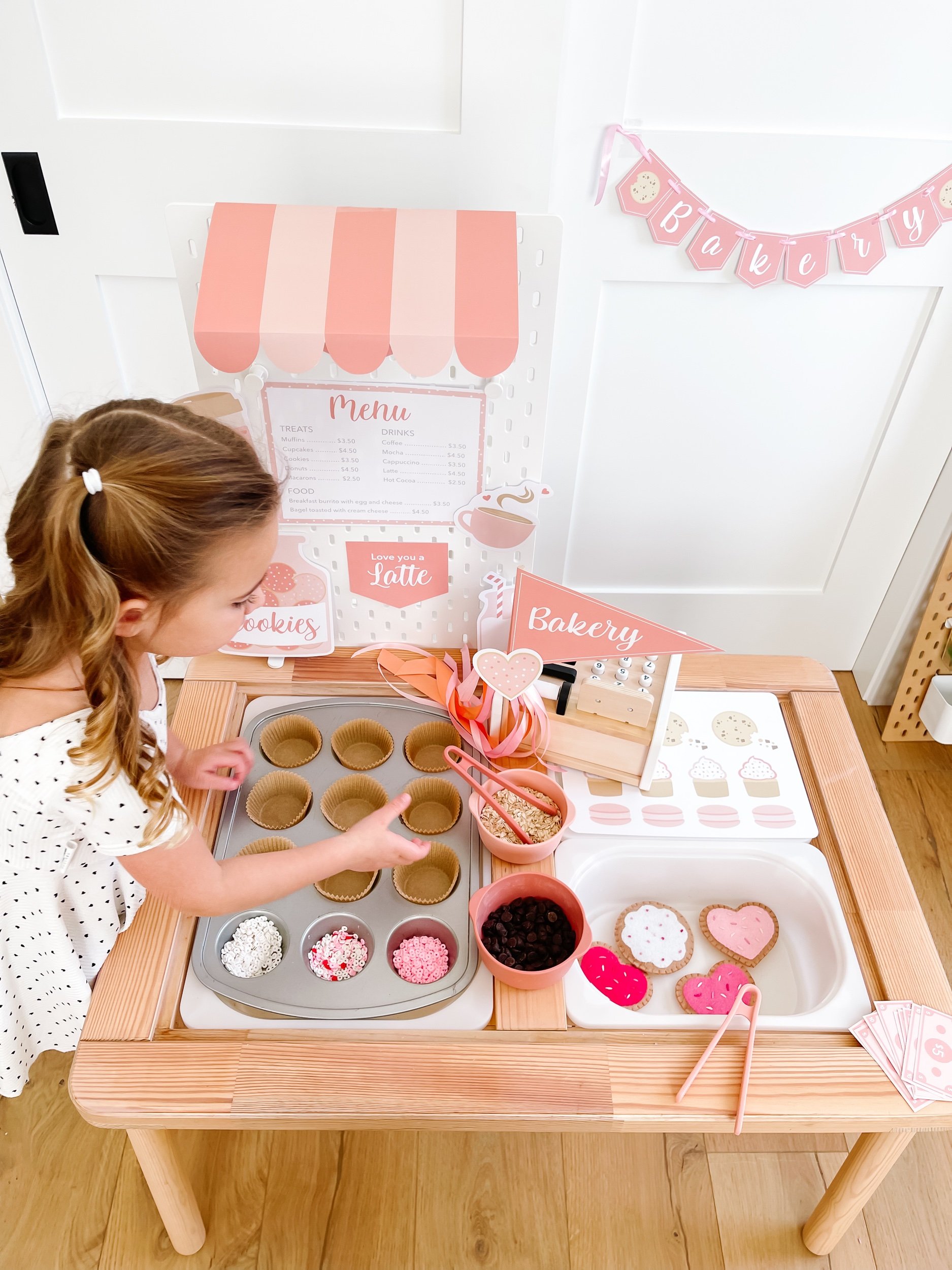
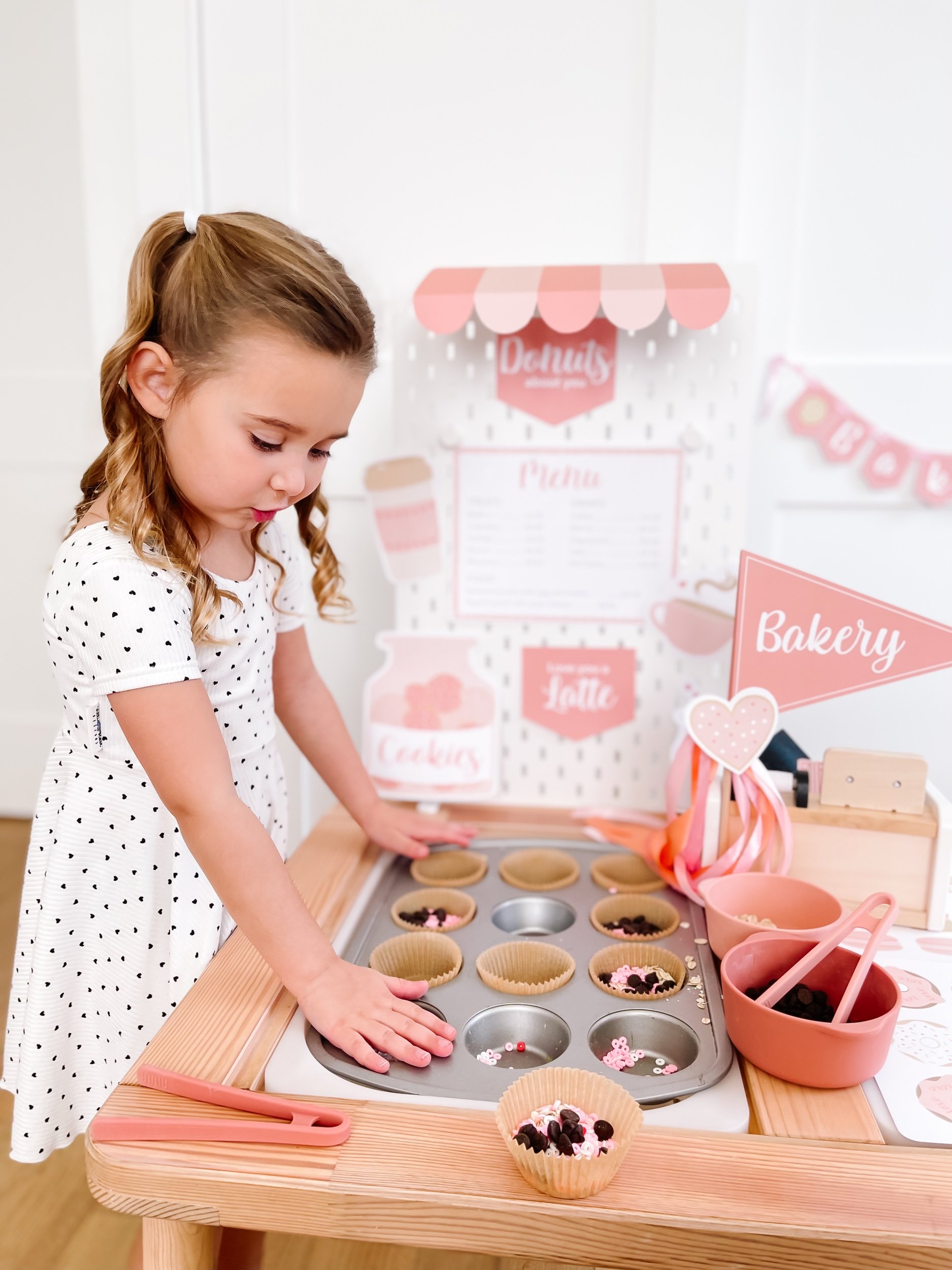
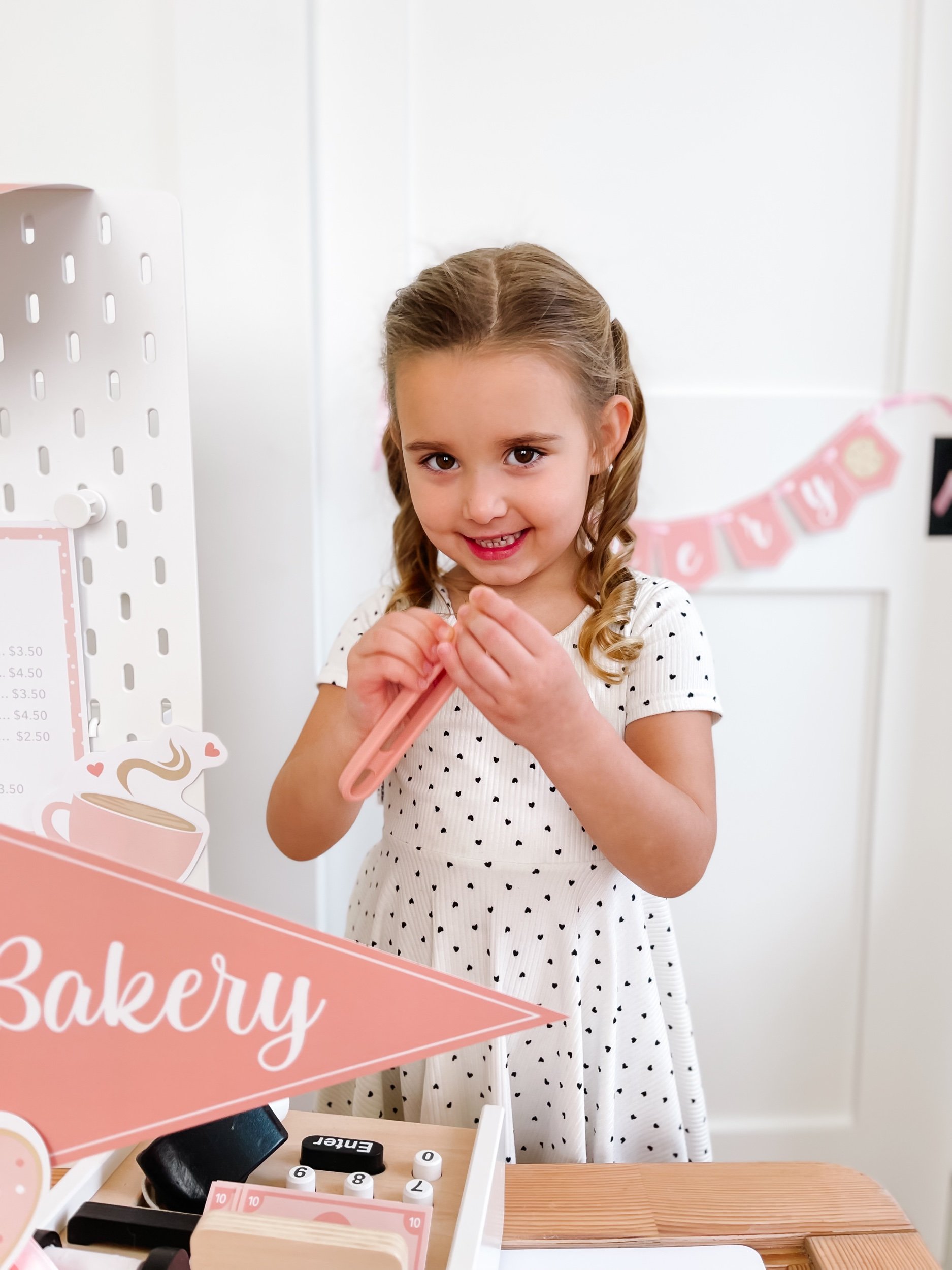
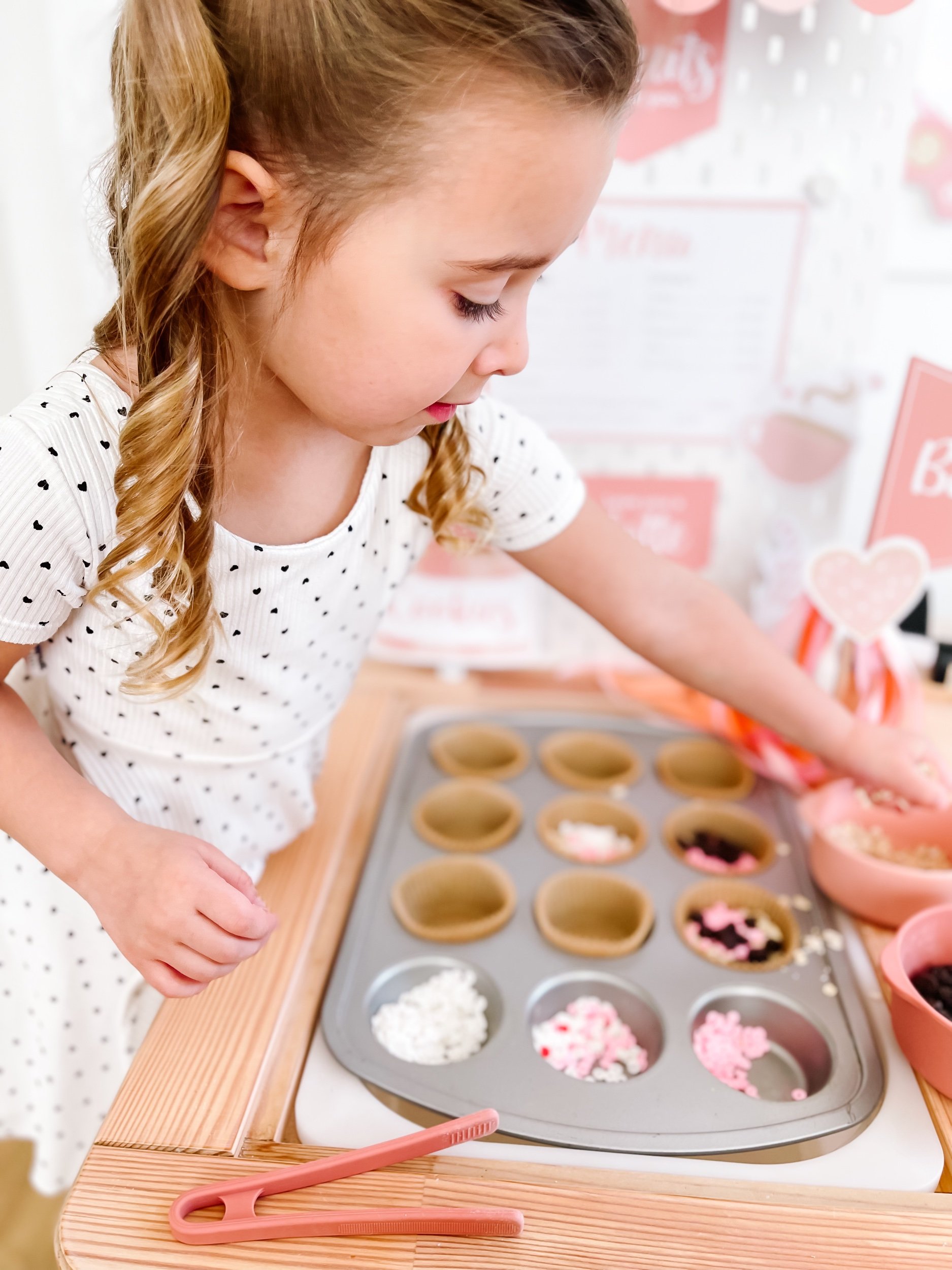
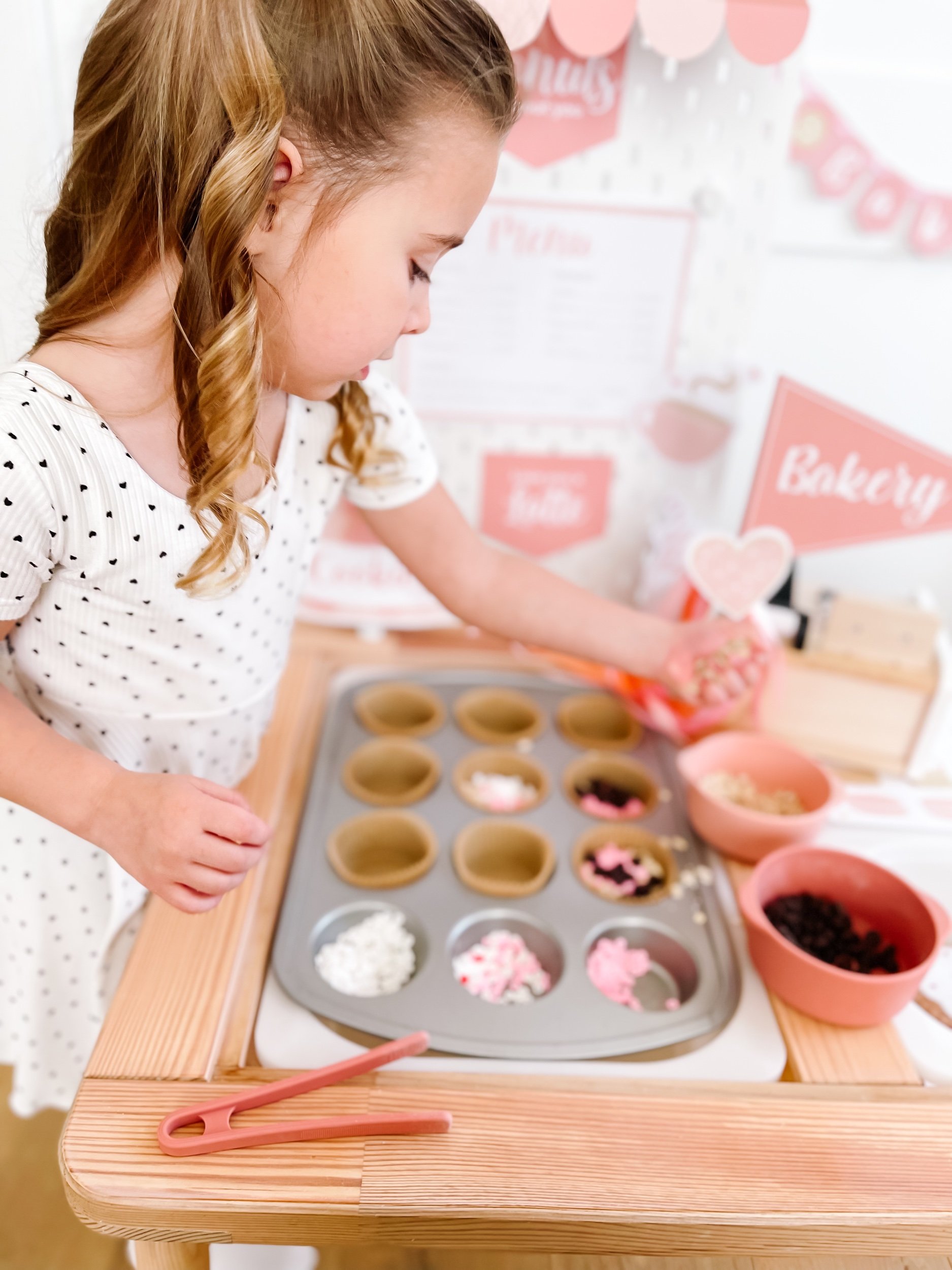
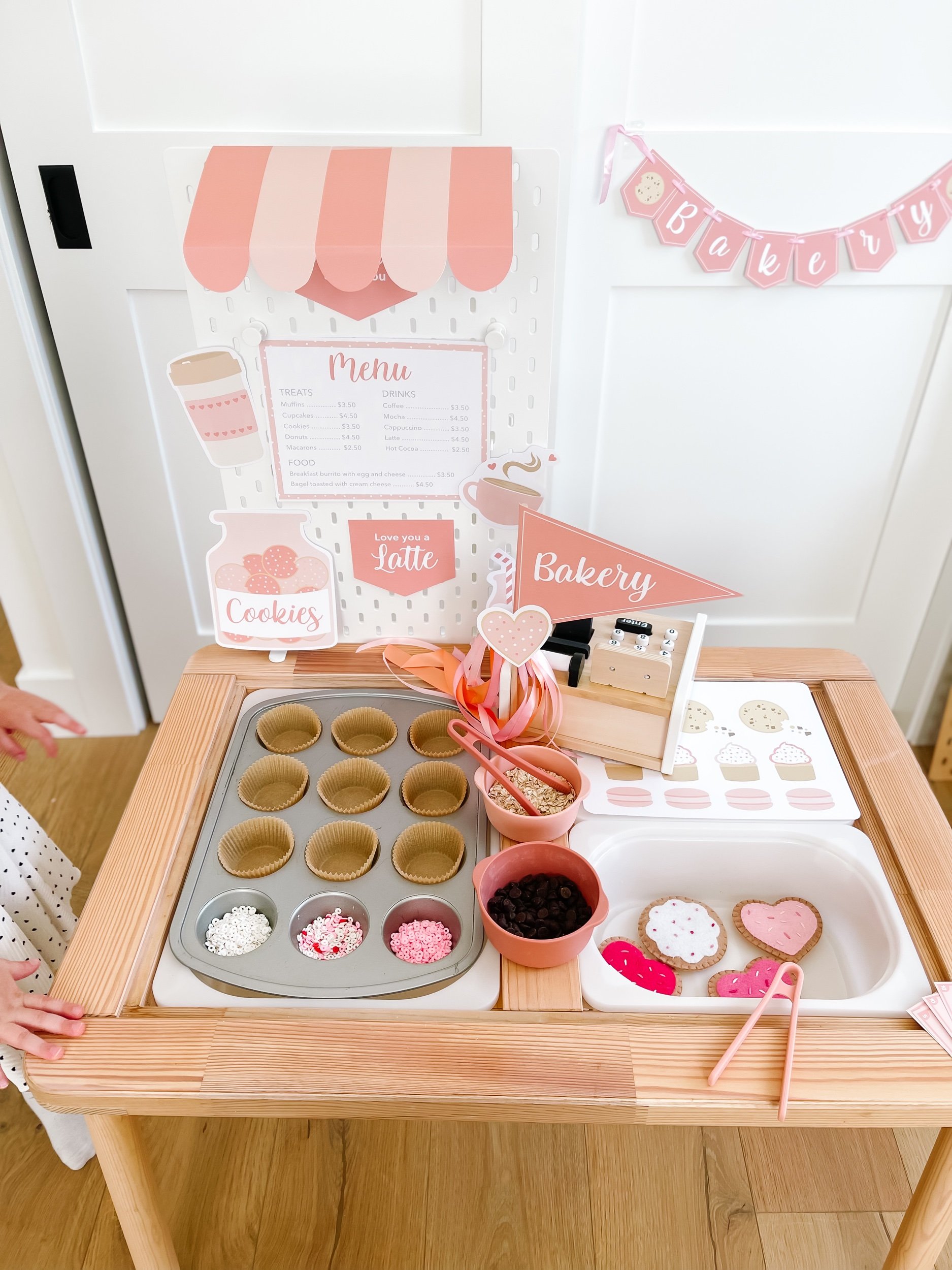
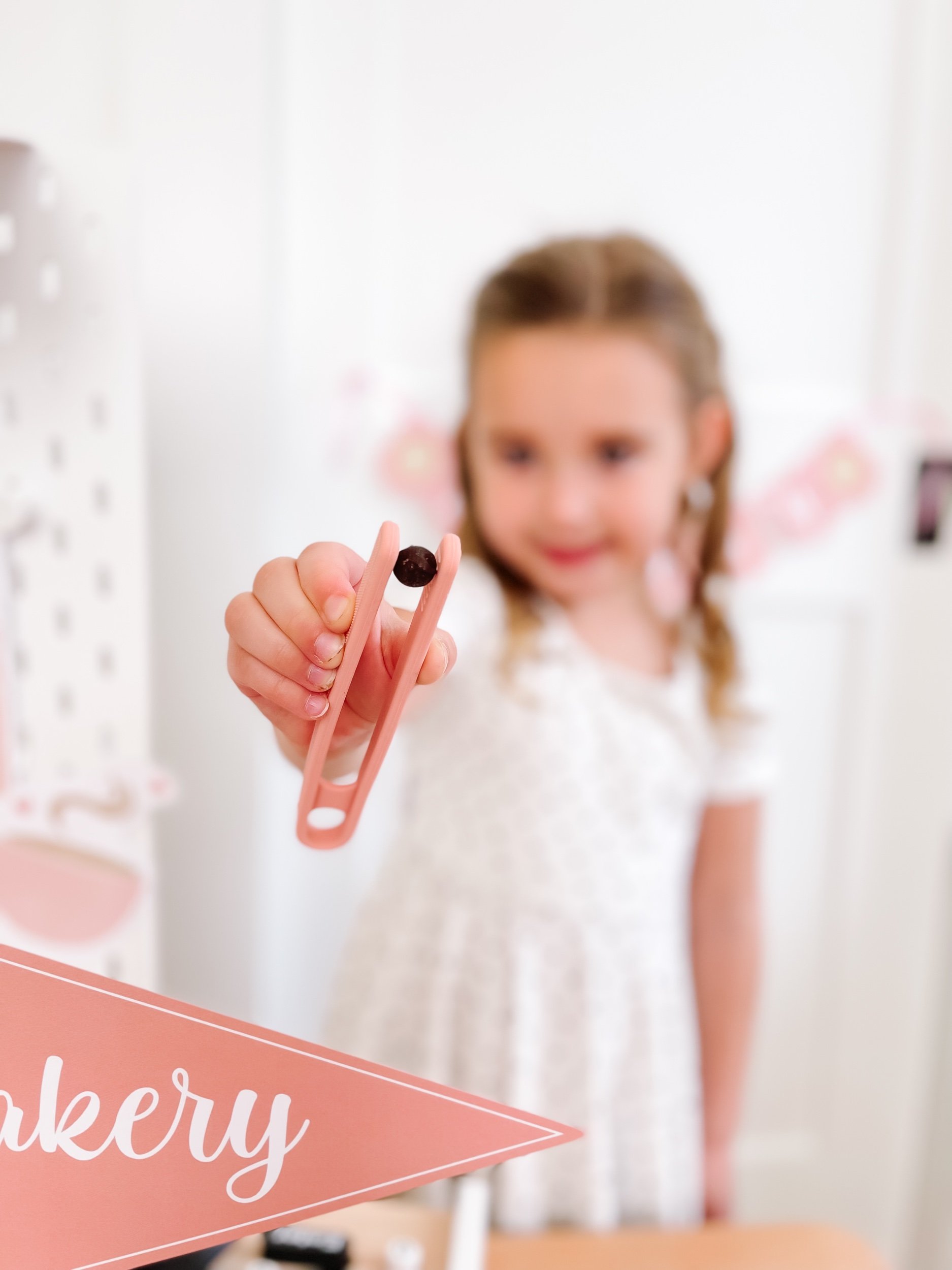
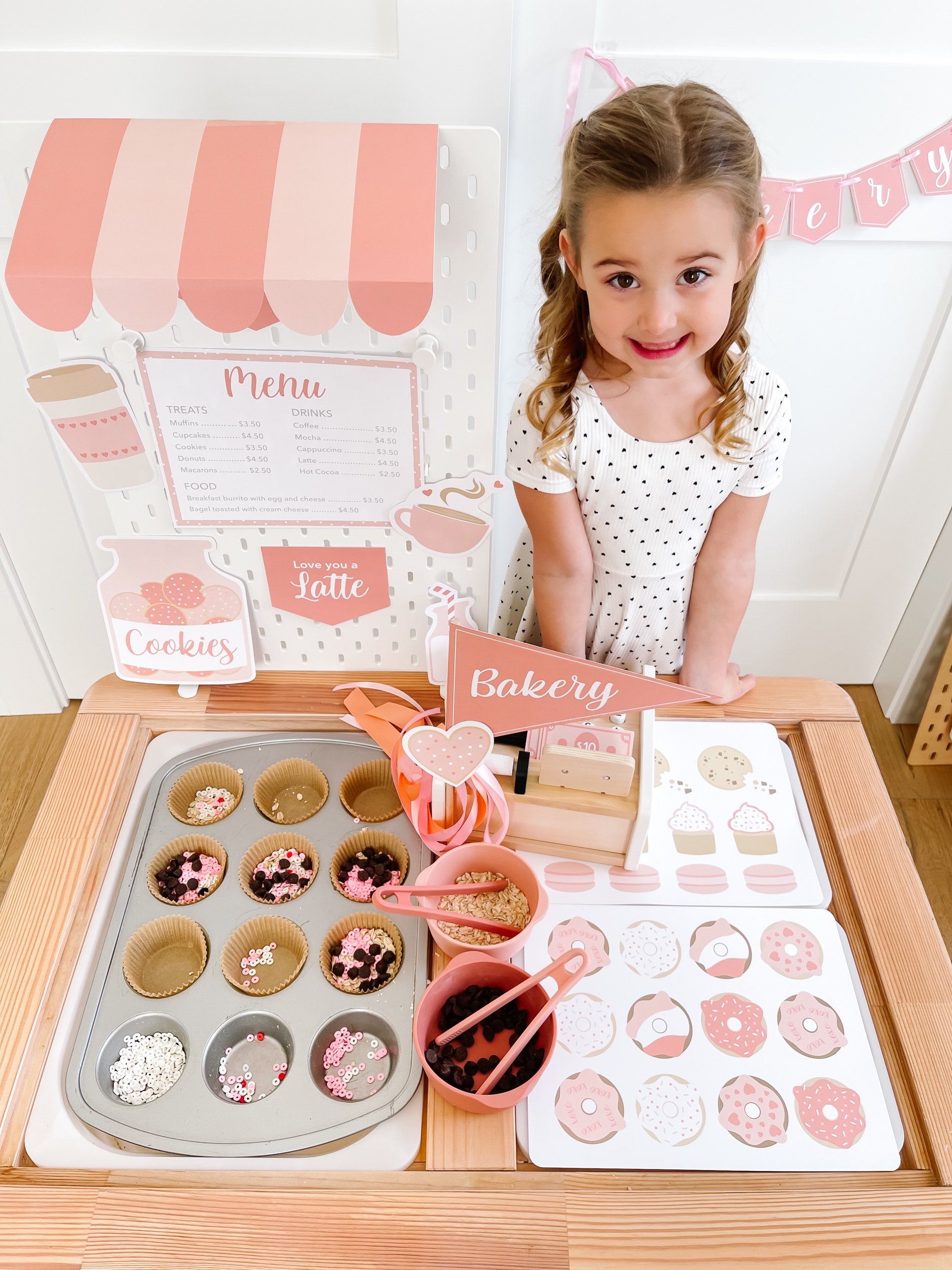
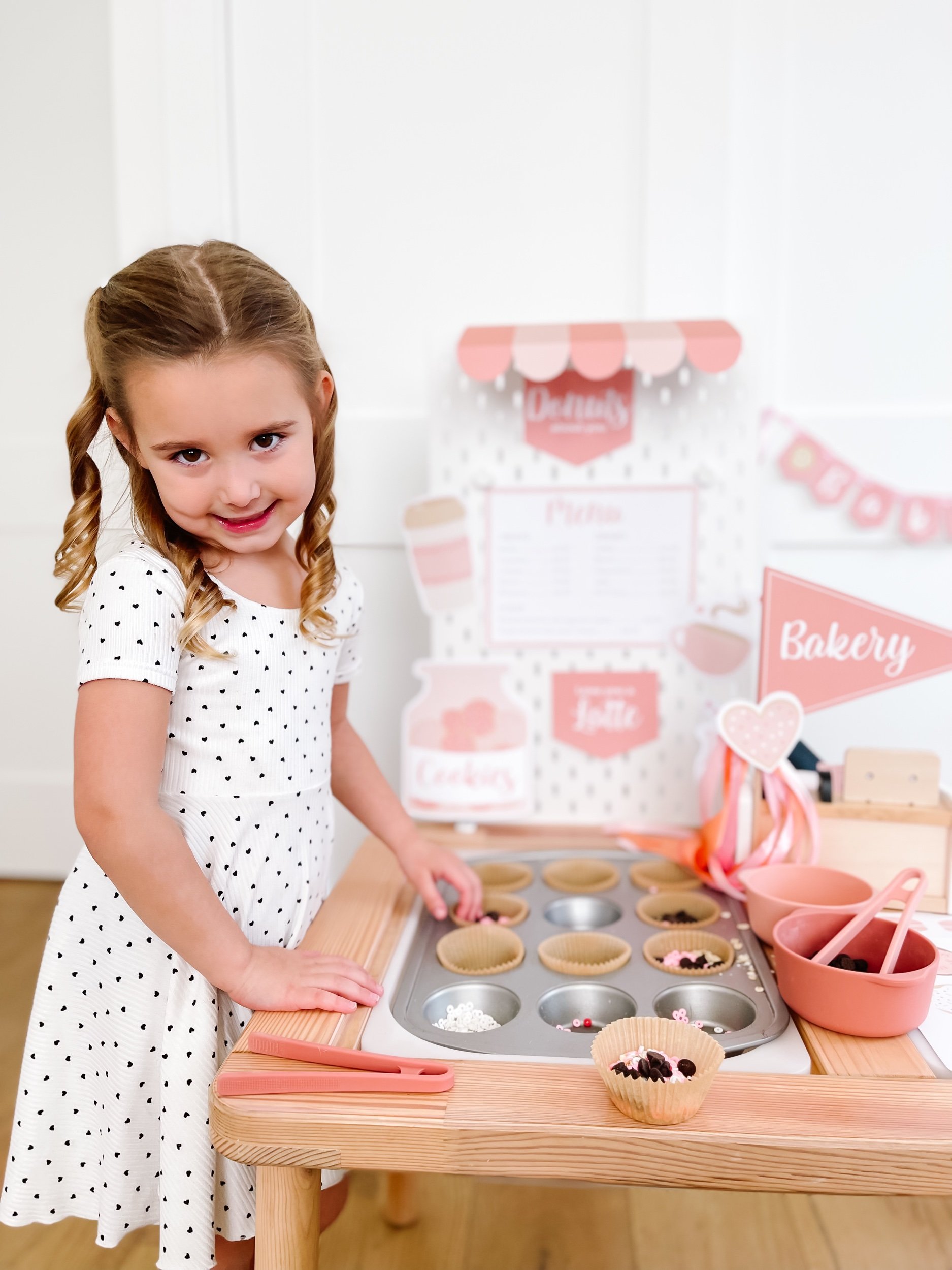
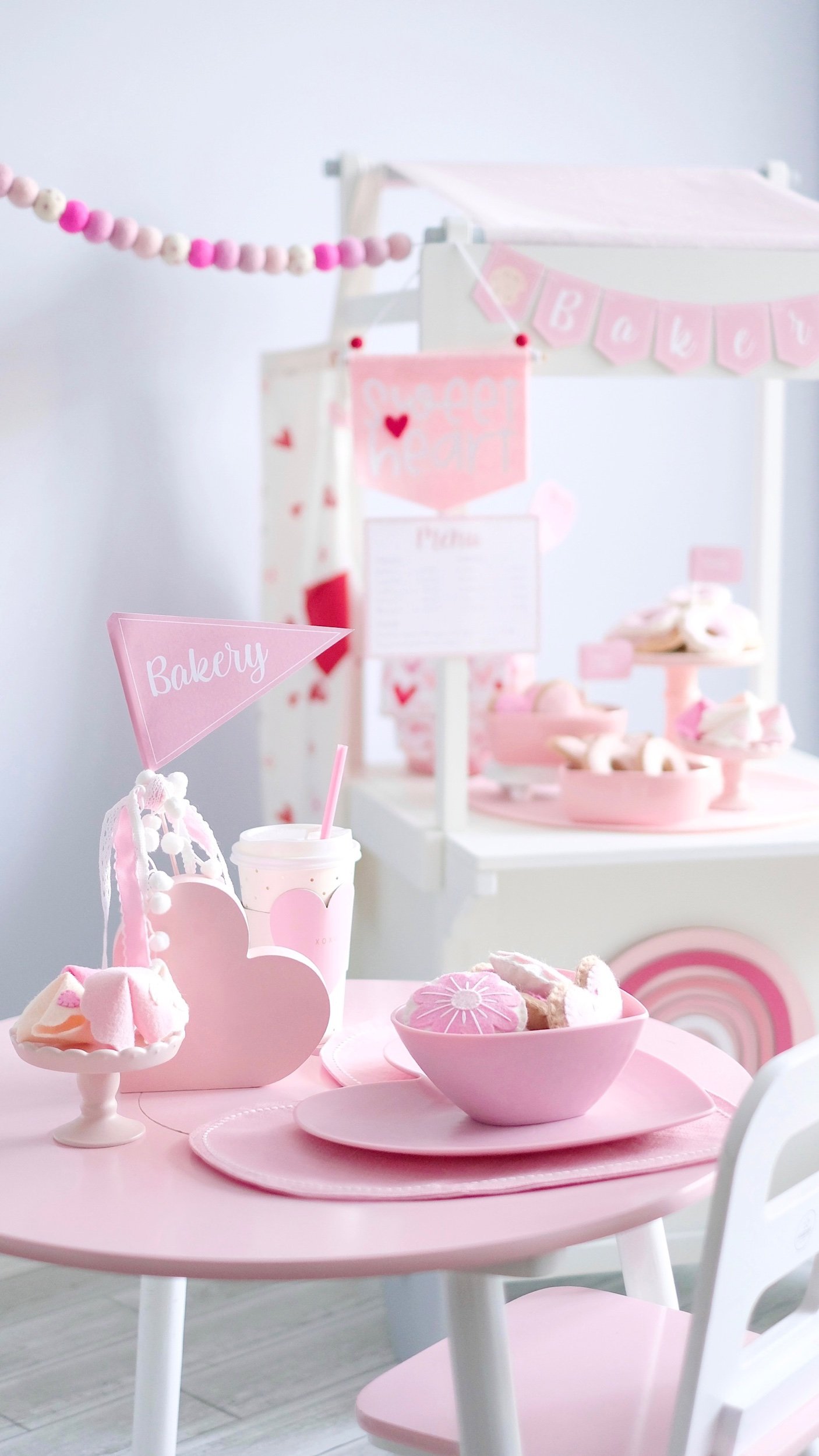
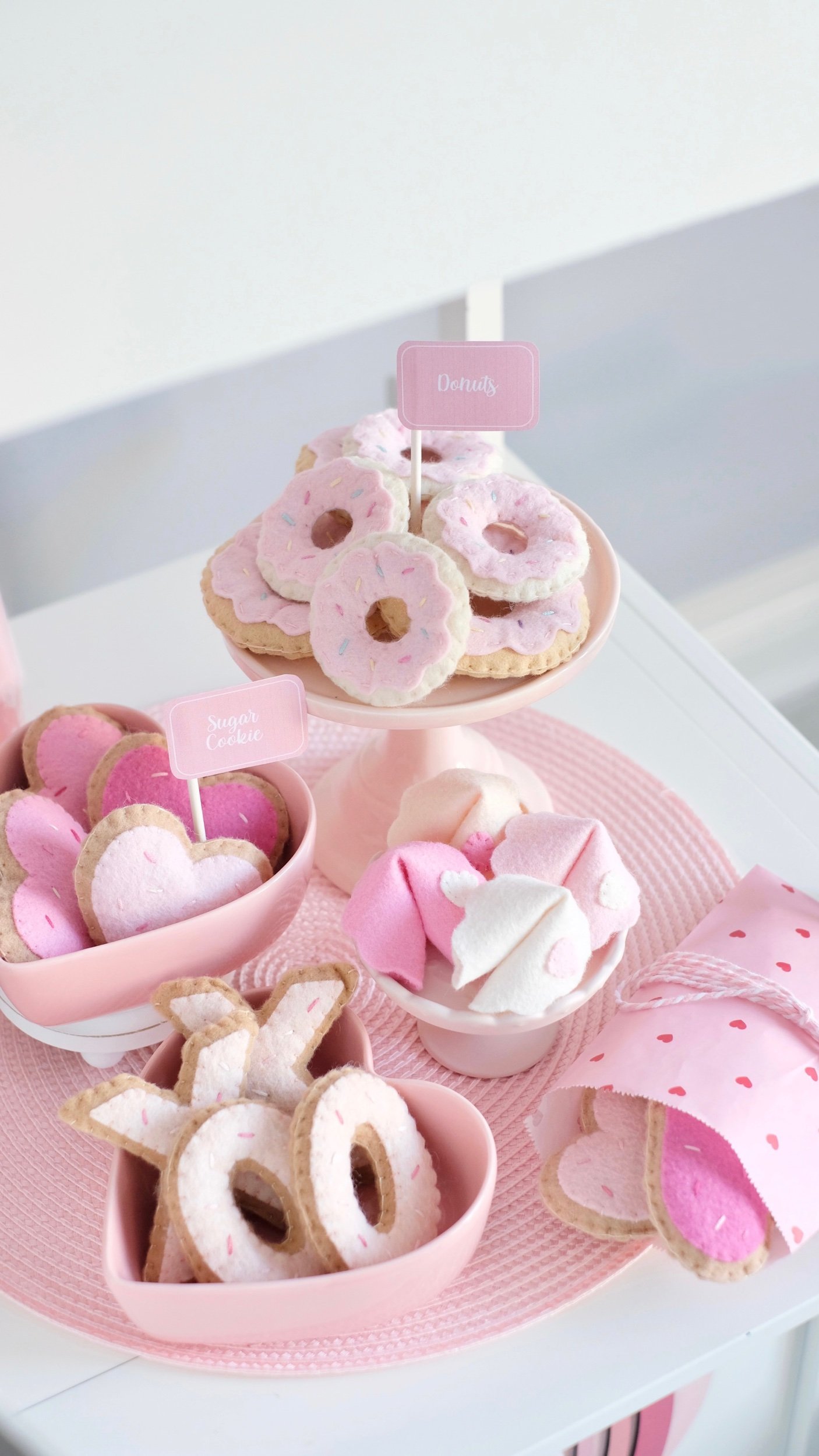
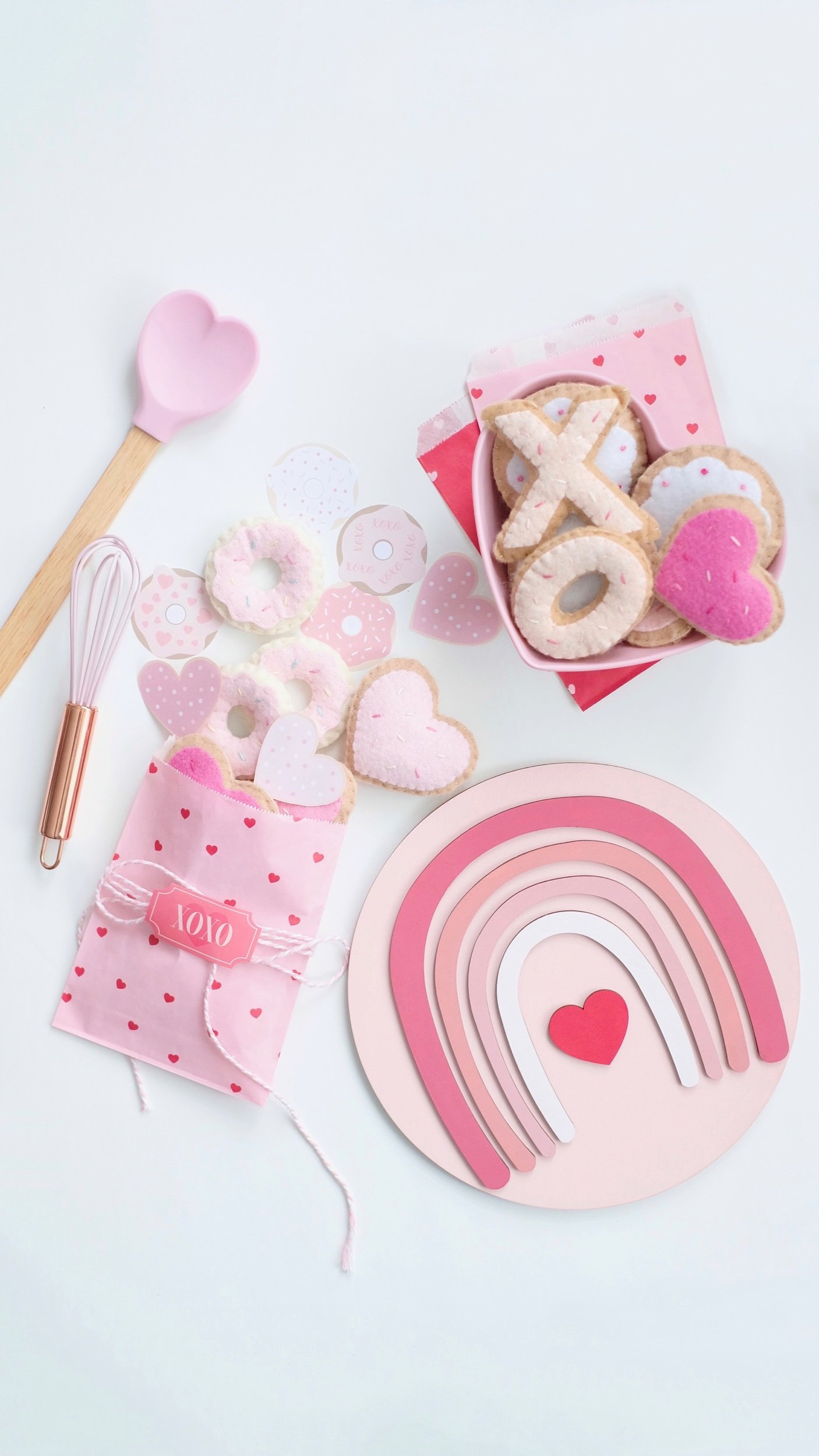
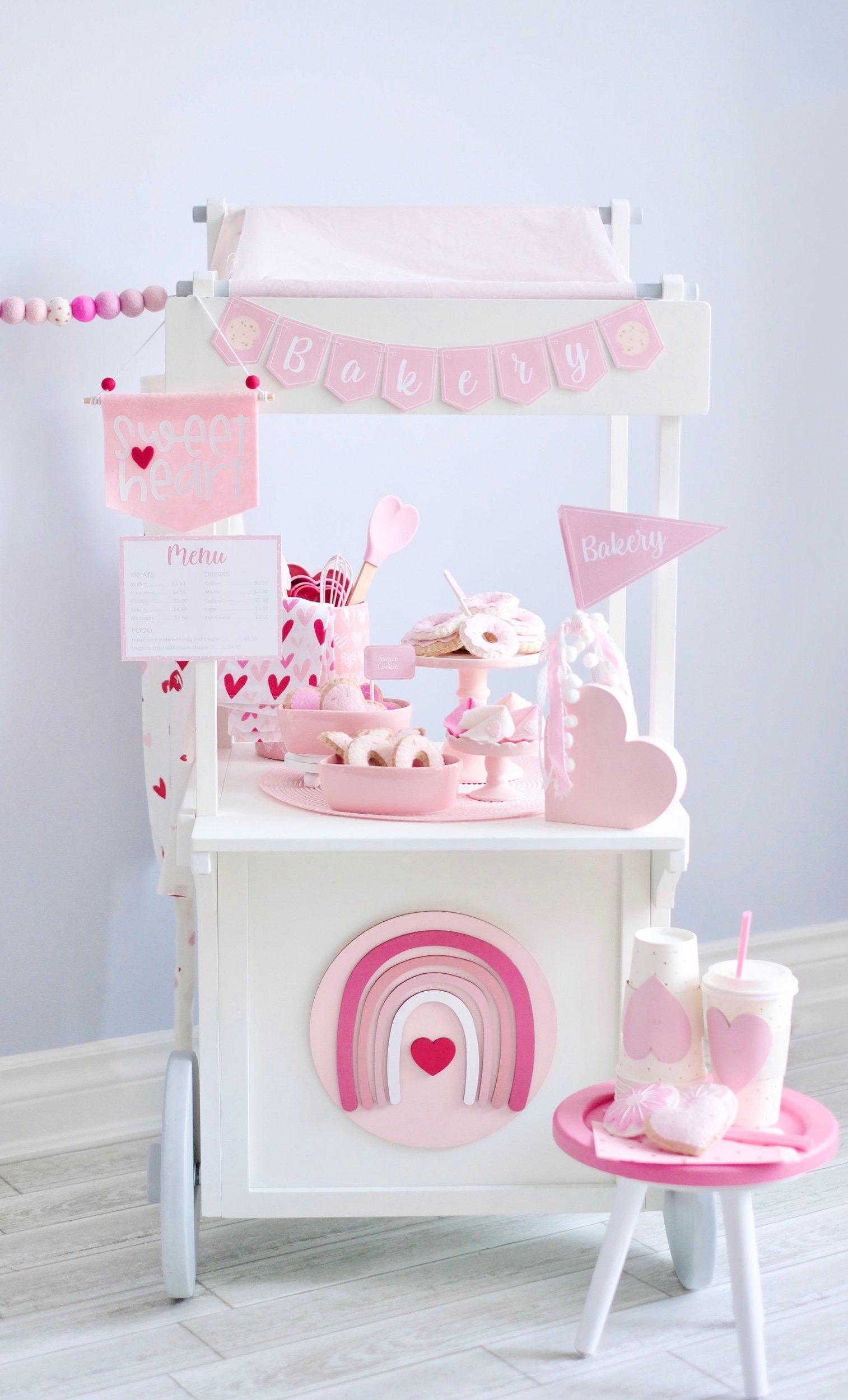
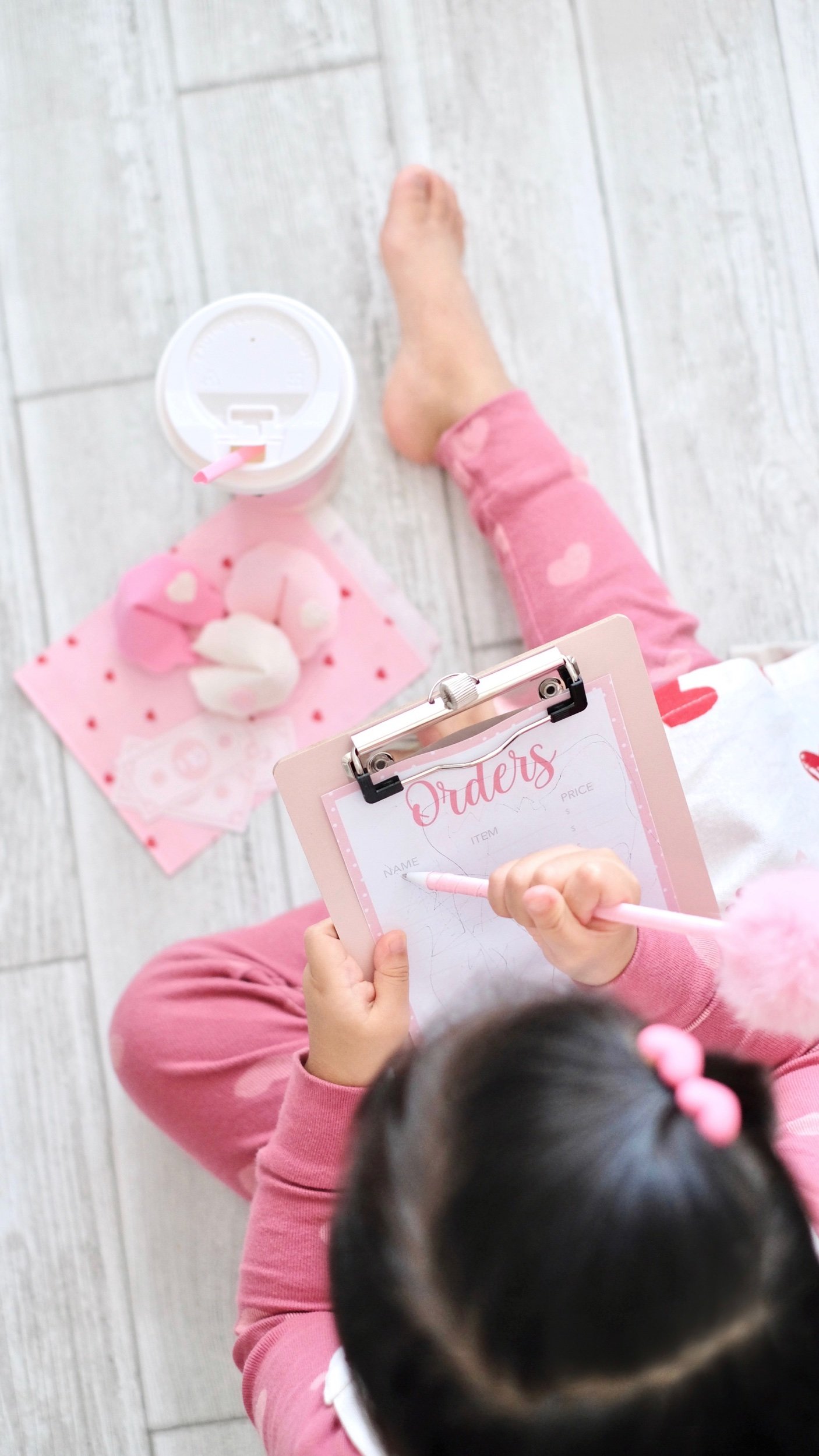
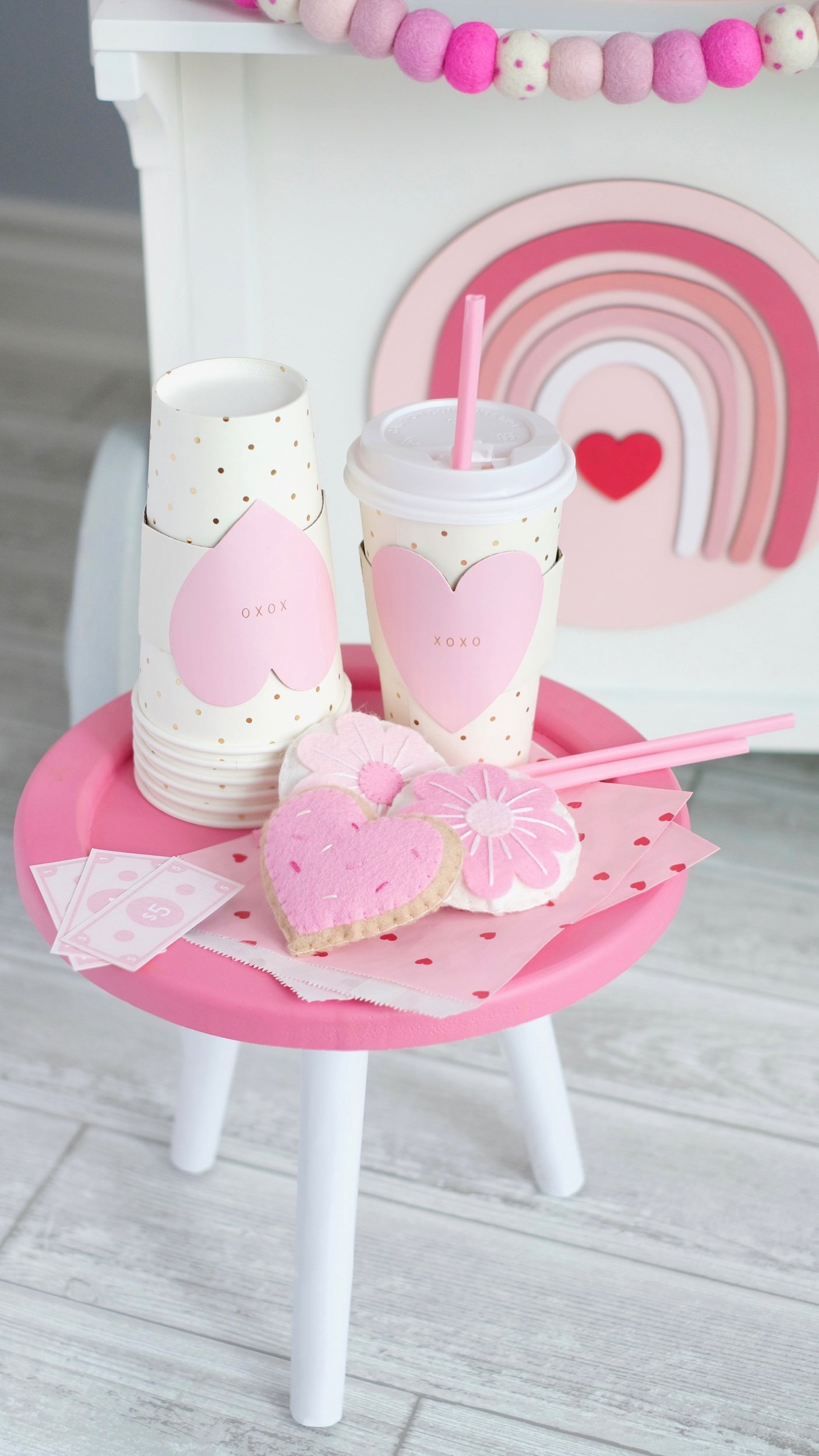
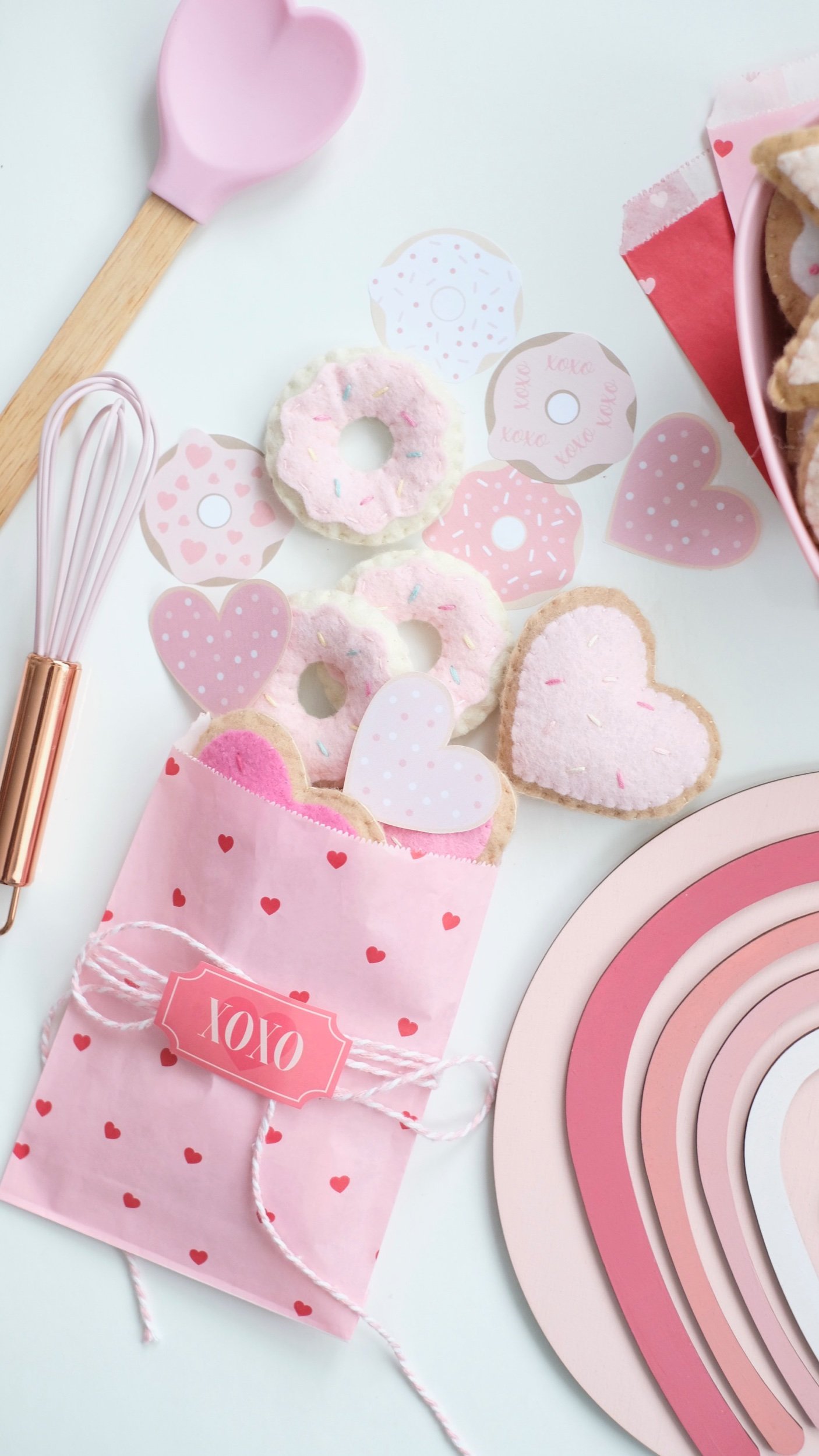
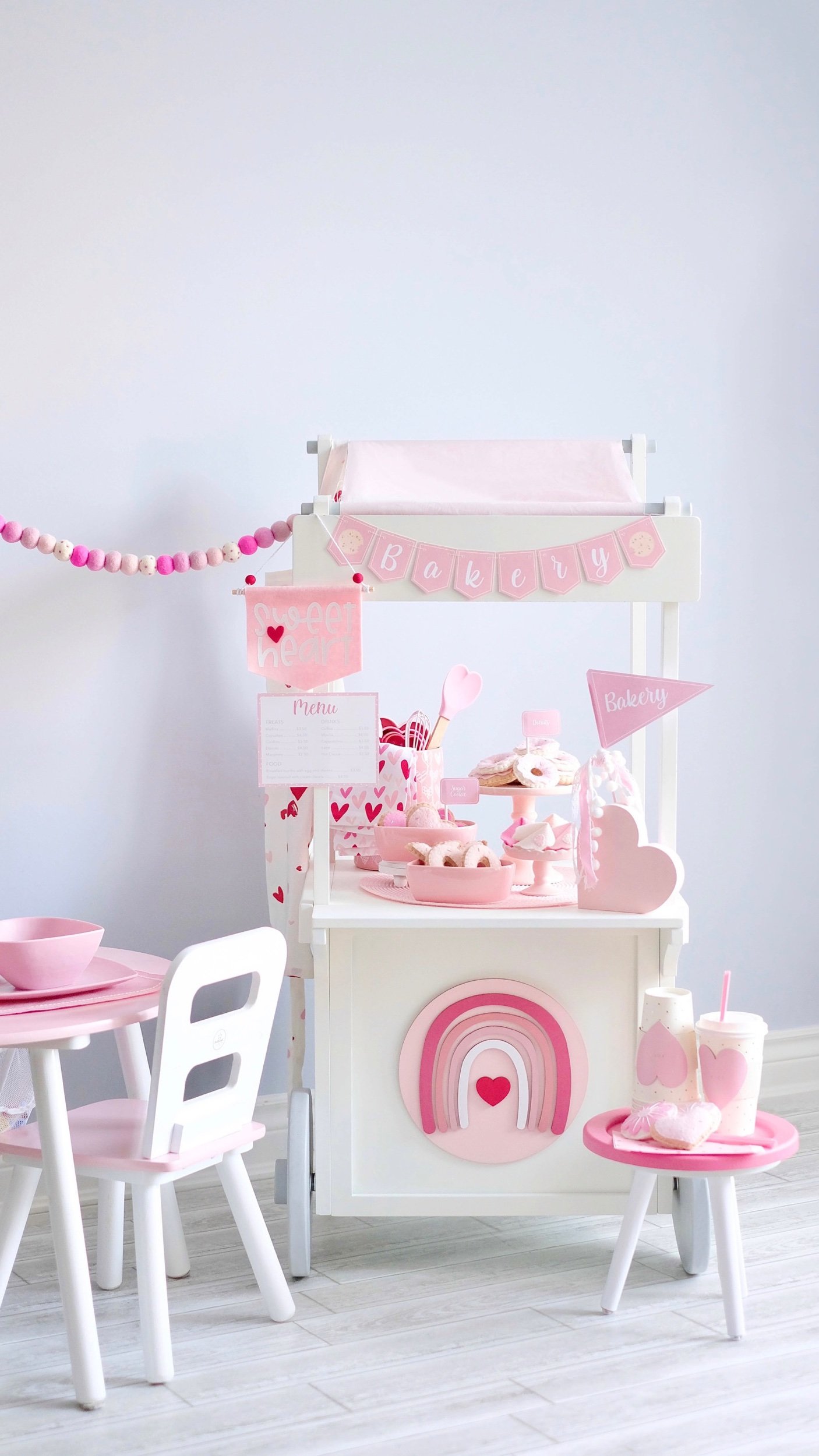
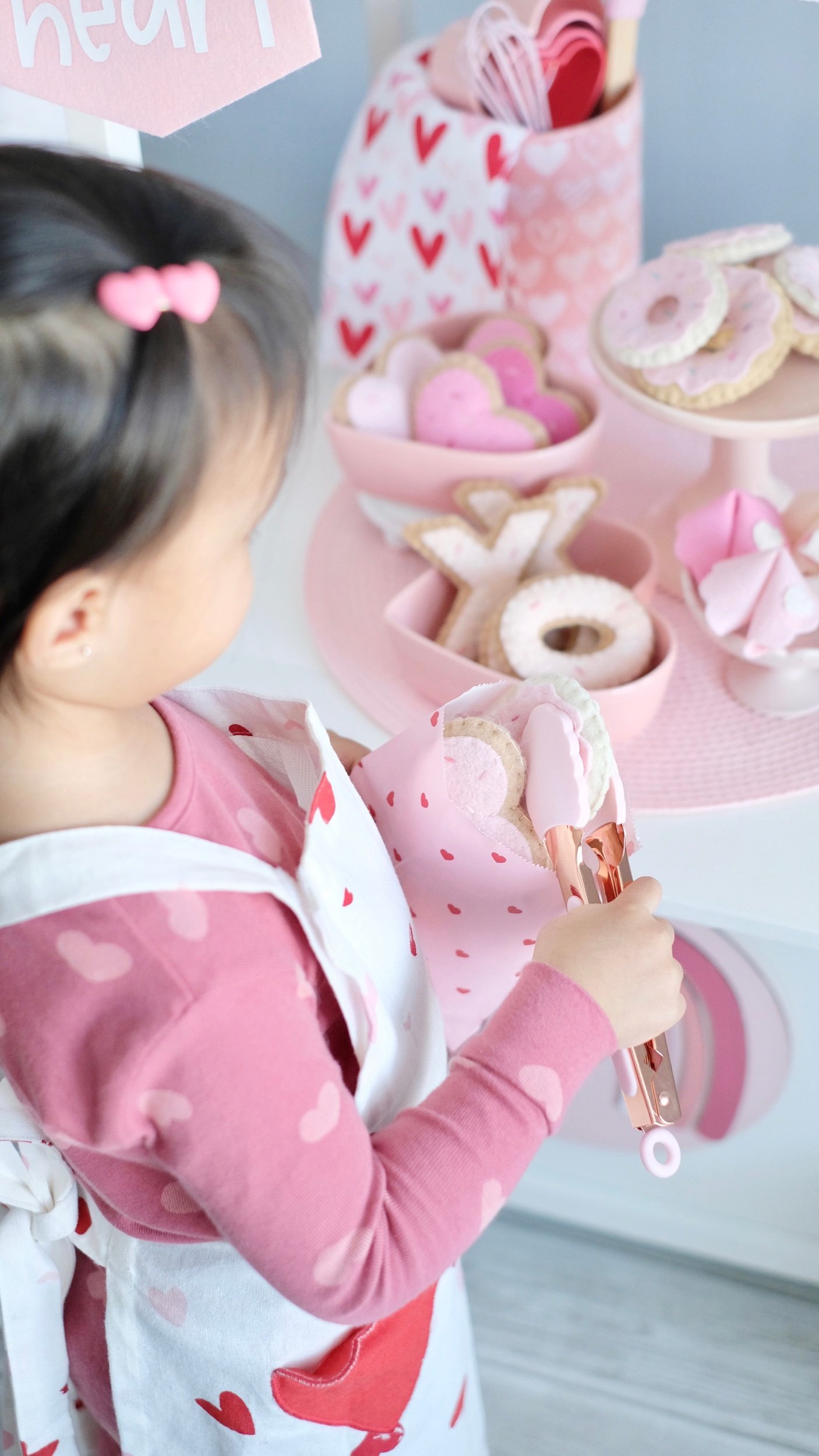
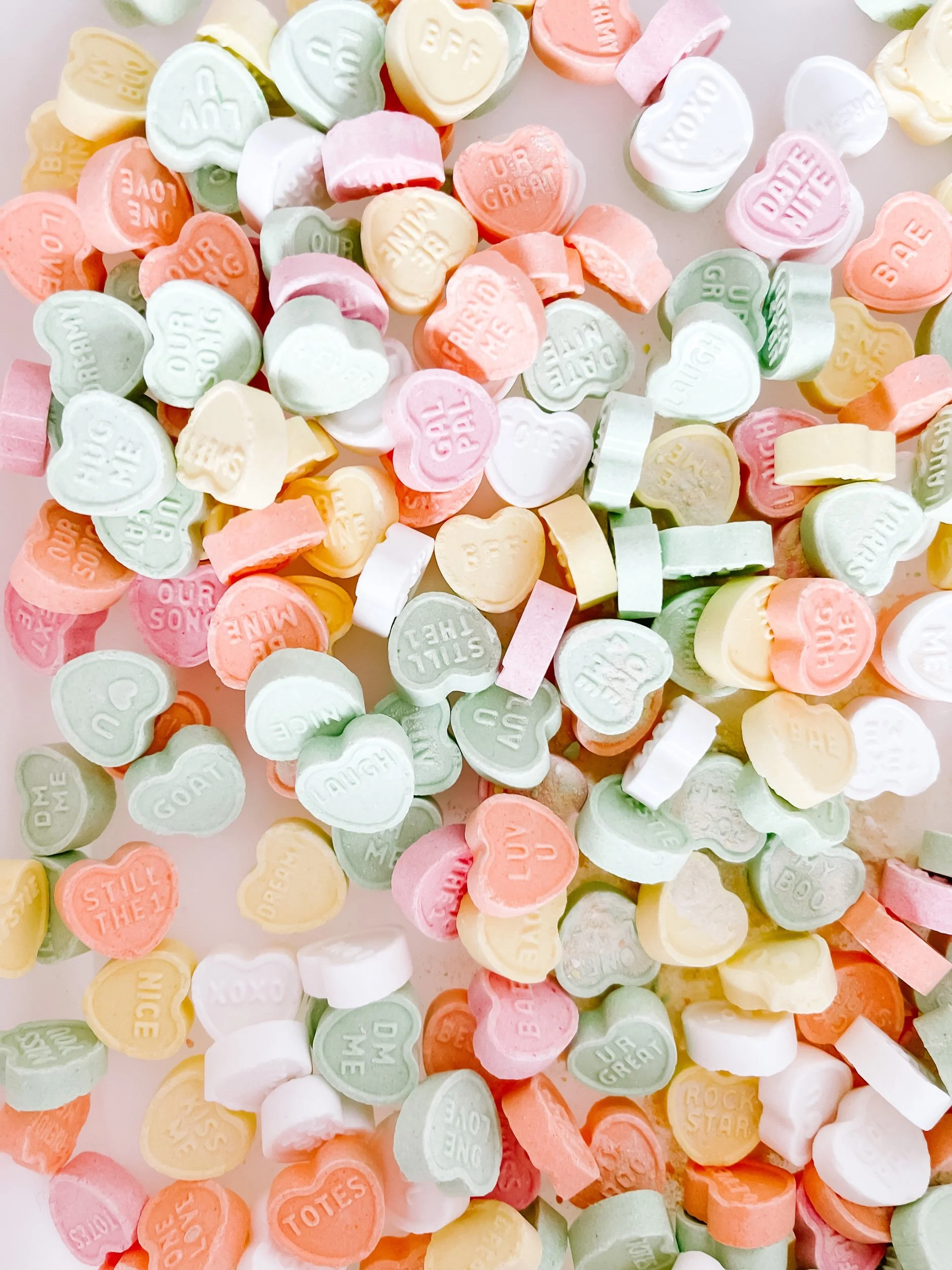
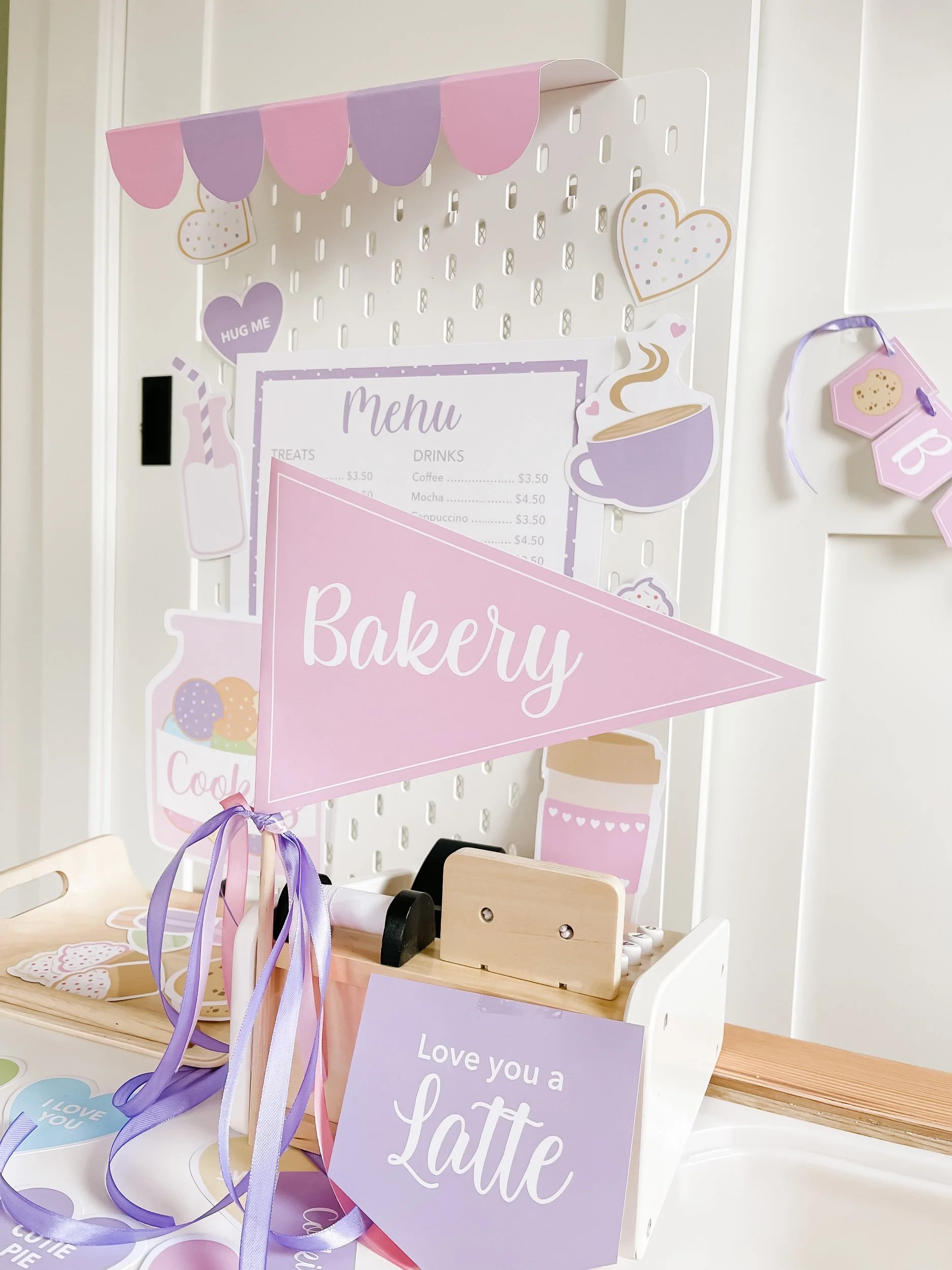
Setting up this Sweet Heart Bakery was an absolute blast! Happy Valentine’s Day!






Your Custom Text Here

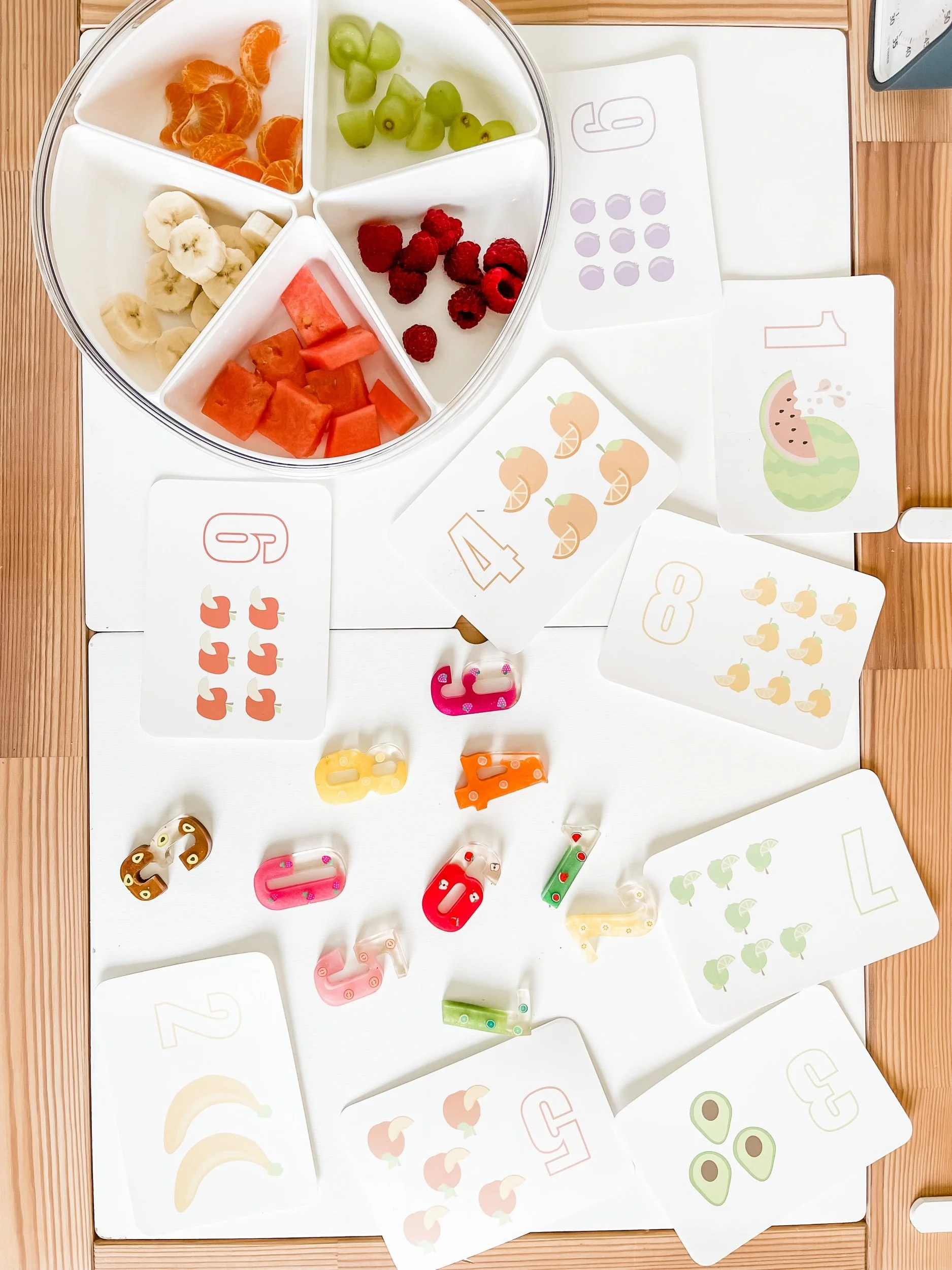
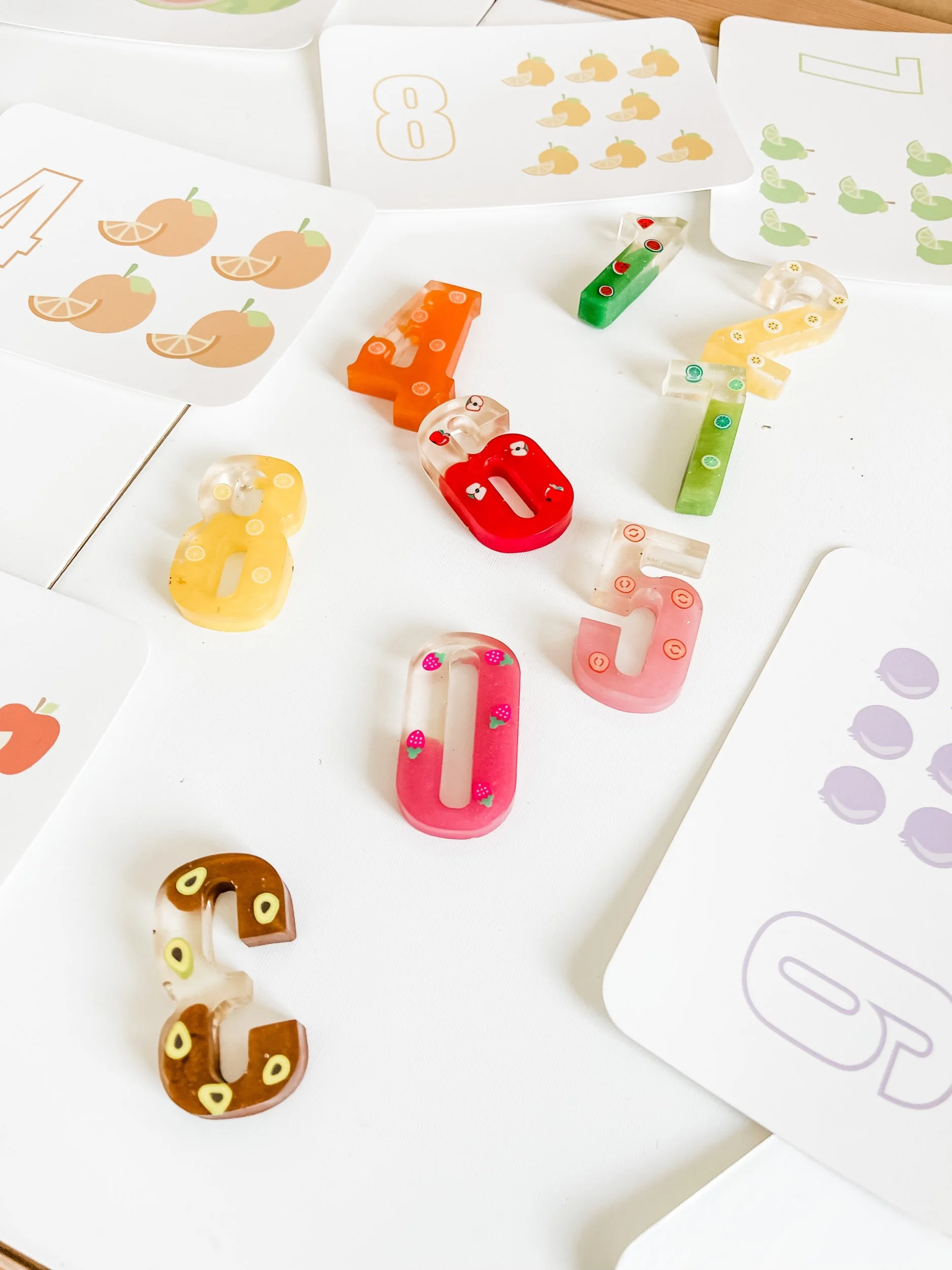
Sensory play is a vital aspect of a toddler's development as it helps them to explore and understand the world around them. One fun and easy way to incorporate sensory play into a toddler's daily routine is through the use of fruit counting flashcards and real fruits.
Fruit counting flashcards are a great tool for teaching toddlers numbers and counting. The colorful illustrations of different fruits on the cards can capture a toddler's attention and make the learning process more engaging. Using real fruits in combination with the flashcards can also help to enhance the sensory experience for the child. Holding and feeling the texture of a real apple, for example, can help to solidify the concept of the apple on the flashcard.
The benefits of sensory play are numerous. It can help to improve fine motor skills, cognitive development, and language skills. Sensory play also allows children to express themselves creatively and can be a great tool for stress relief.
Here are a few sample activity ideas for using fruit counting flashcards and real fruits in a sensory play setting:
Fruit Matching: Place a variety of real fruits in a basket and have the child match them to the corresponding fruit on the flashcards.
Counting Fruits: Have the child count the number of fruits in the basket and match them to the corresponding number on the flashcards.
Fruit Sorting: Sort the fruits into groups by color or type and have the child match them to the corresponding illustrations on the flashcards.
Fruit Tasting: Cut up the fruits and have the child taste them while discussing the different flavors and textures.
Incorporating fruit counting flashcards and real fruits into a sensory play routine can be a fun and effective way to teach toddlers numbers and counting while also promoting overall development. By providing a variety of fruits and related activities, you can help to keep the child engaged and excited about learning.





The Importance of Color Matching in Toddler Education
As parents and caregivers, we all want to give our children the best start in life. One important aspect of early childhood development is teaching children about colors. Color recognition and matching can help with cognitive development, fine motor skills, and even language development. One fun and effective way to teach color matching to toddlers is through the use of color flashcards and legos.
Color flashcards are a simple and easy tool that can be used to teach toddlers about colors. They come in a variety of formats, from basic flashcards with colors printed on them to more interactive flashcards that feature pictures of objects in different colors. The flashcards can be used to teach children about basic colors like red, blue, and yellow, as well as more advanced colors like purple, green, and orange.
Legos are another great tool for teaching color matching to toddlers. Legos come in a variety of colors, and building with them encourages children to match the colors of the bricks to build different structures. This not only helps with color recognition but also with fine motor skills, as children learn to manipulate the small bricks.
One of the best things about using color flashcards and legos for toddler education is that they are both fun and engaging for children. Flashcards can be used in a game-like format, with children being rewarded for correctly matching colors. Building with Legos is also a fun and satisfying activity for children, as they can see their creations come to life in front of them.
In conclusion, color recognition and matching is an important aspect of early childhood development. Using color flashcards and legos as educational tools can help children learn about colors in a fun and engaging way. These activities can help with cognitive development, fine motor skills, and even language development. So, next time you are looking for a fun and educational activity for your toddler, consider using color flashcards and legos.








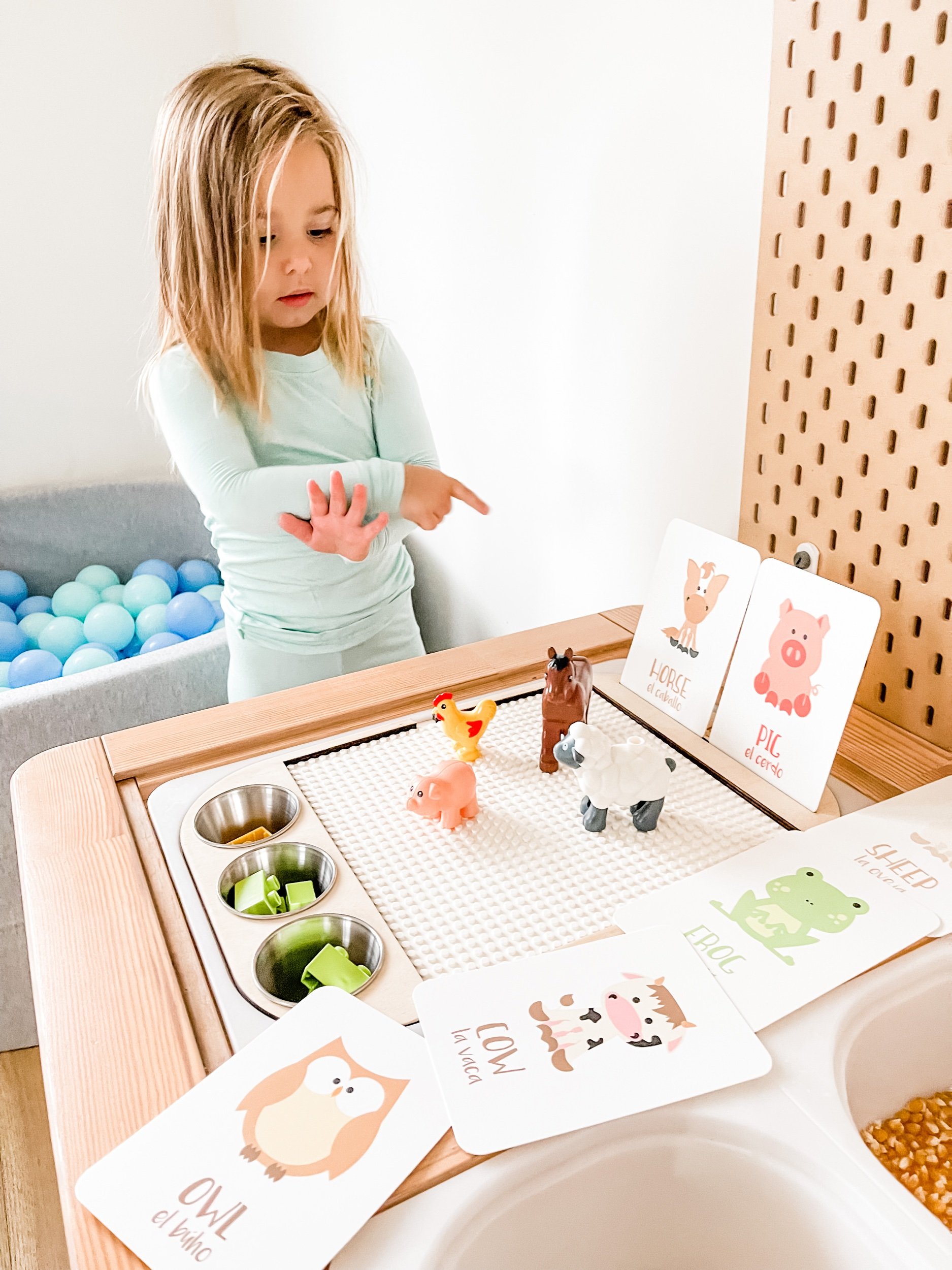
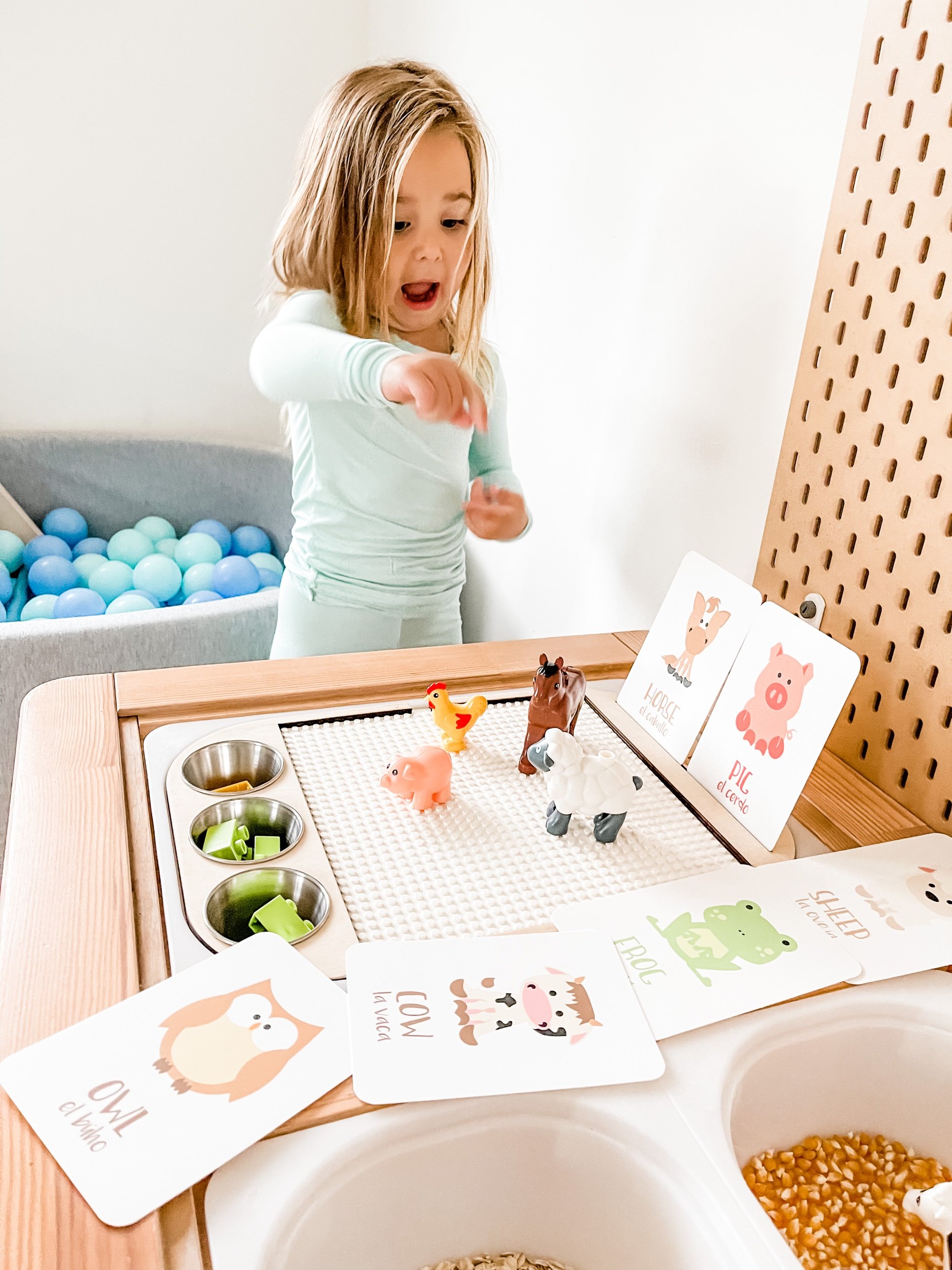
Farm animal sensory play provides numerous benefits for toddlers, including promoting their cognitive, emotional, and physical development. Sensory play activities, such as small world play, allow children to engage their senses and explore the world around them in a fun and interactive way.
Here is an exciting and educational sensory play activity for toddlers that combines farm animals, matching, and sensory exploration:
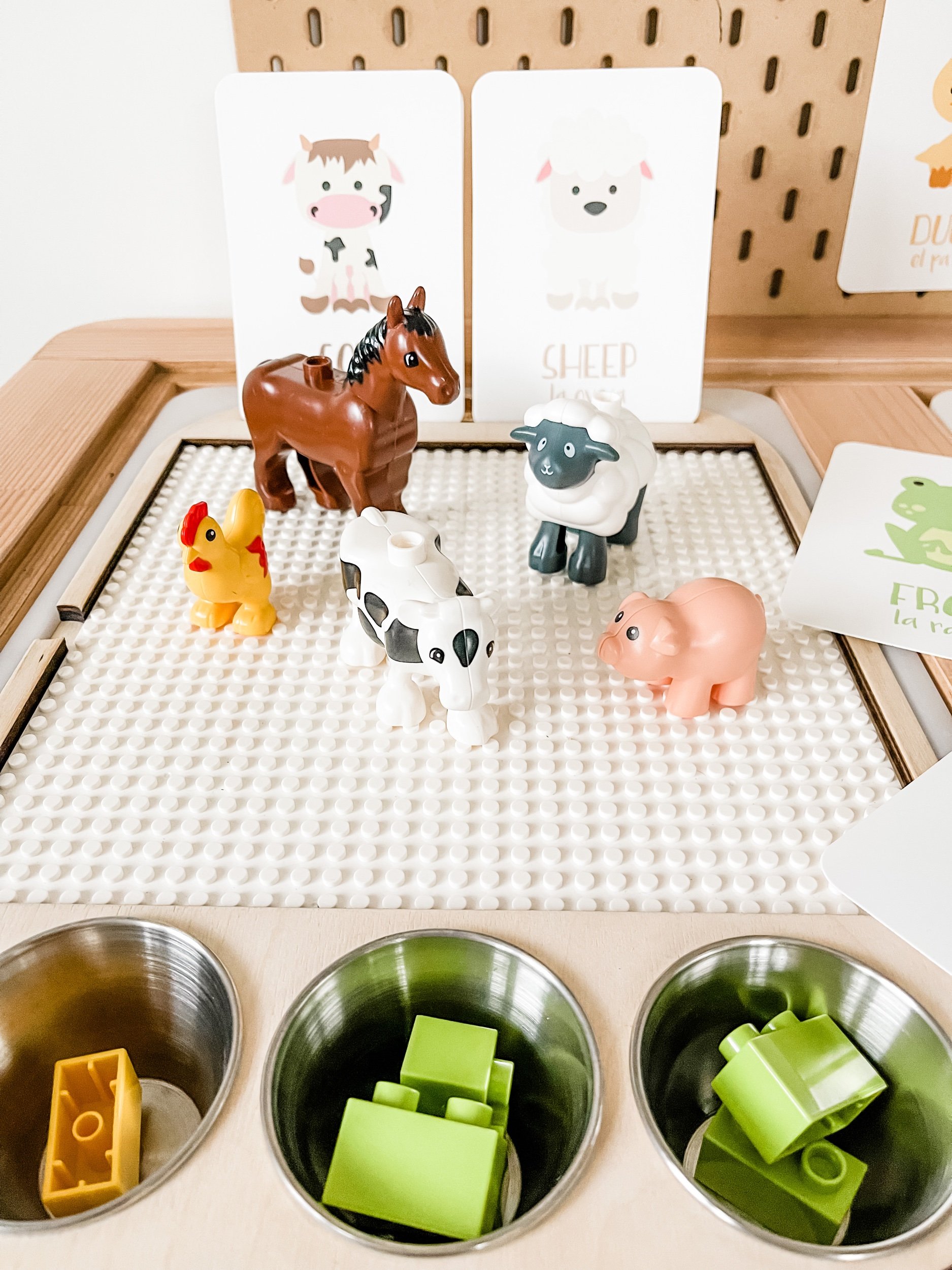
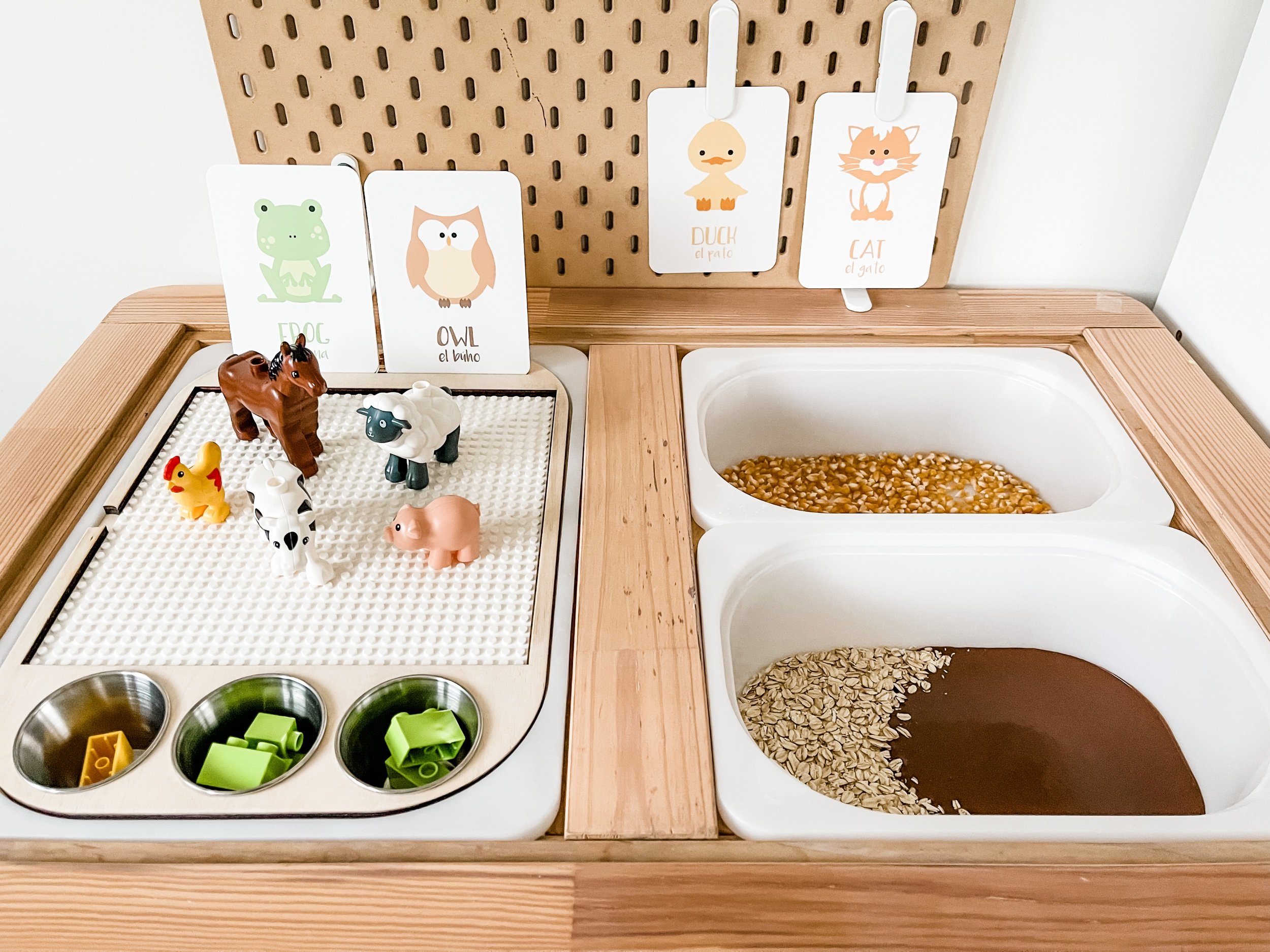
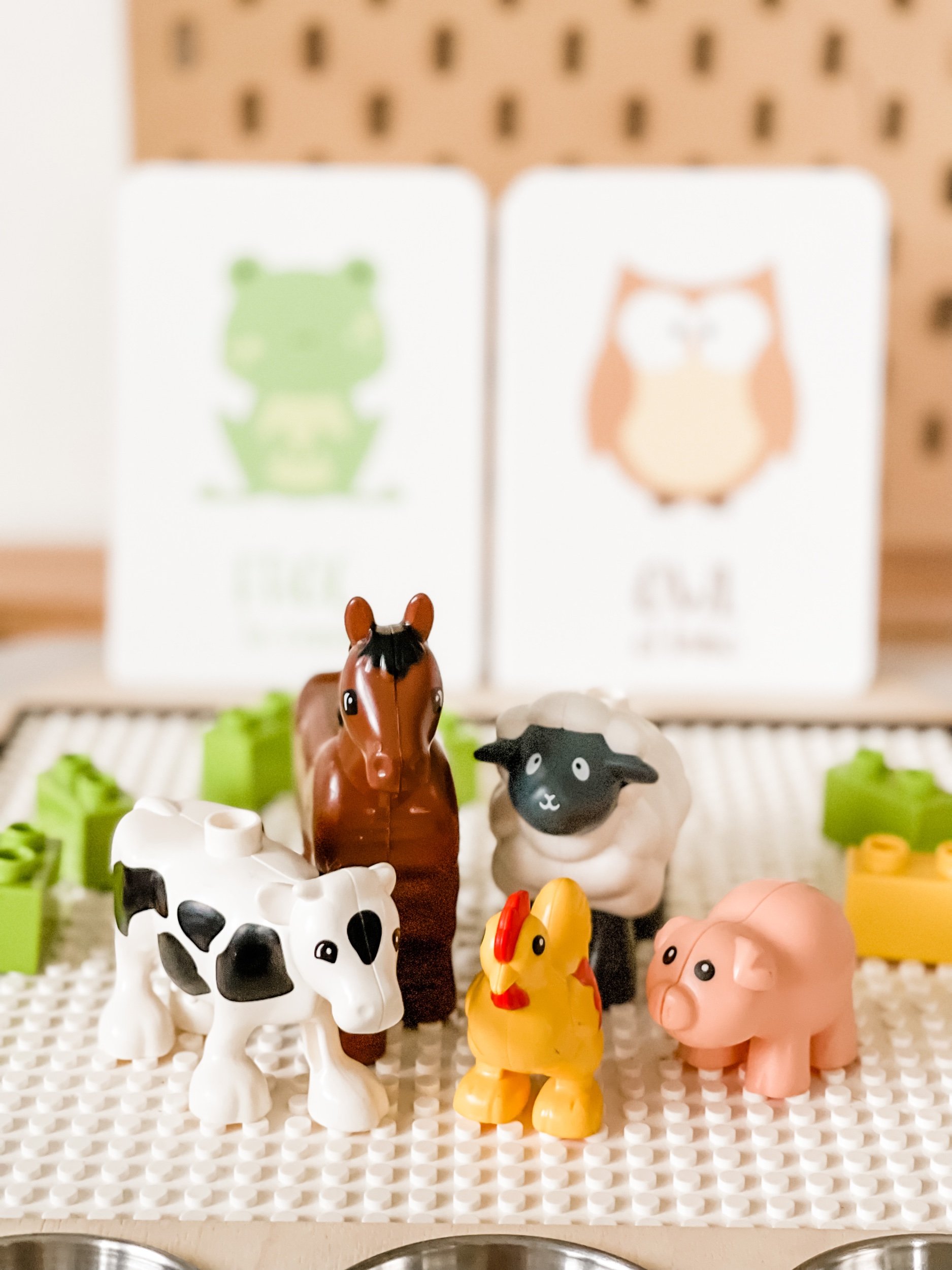
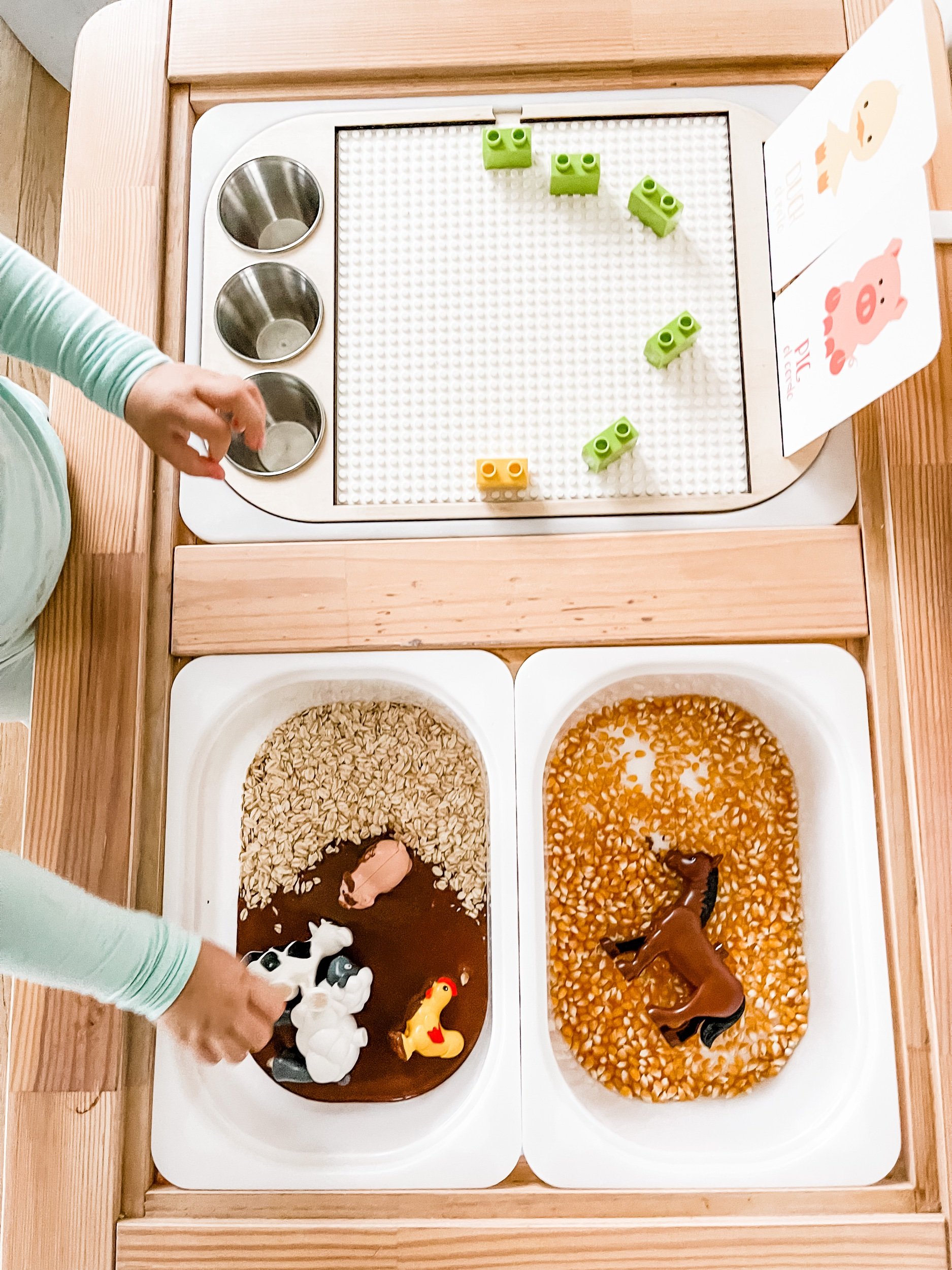
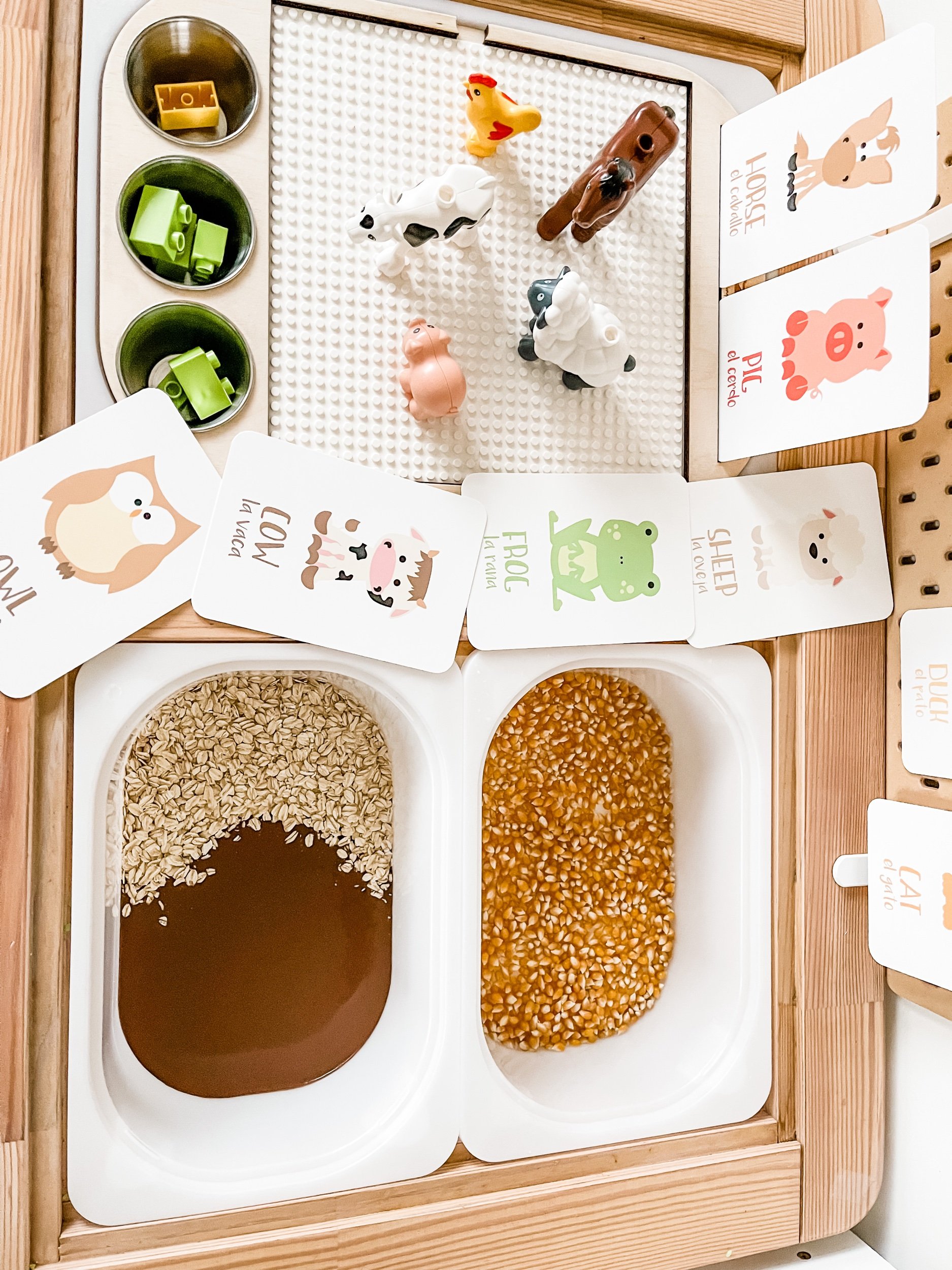
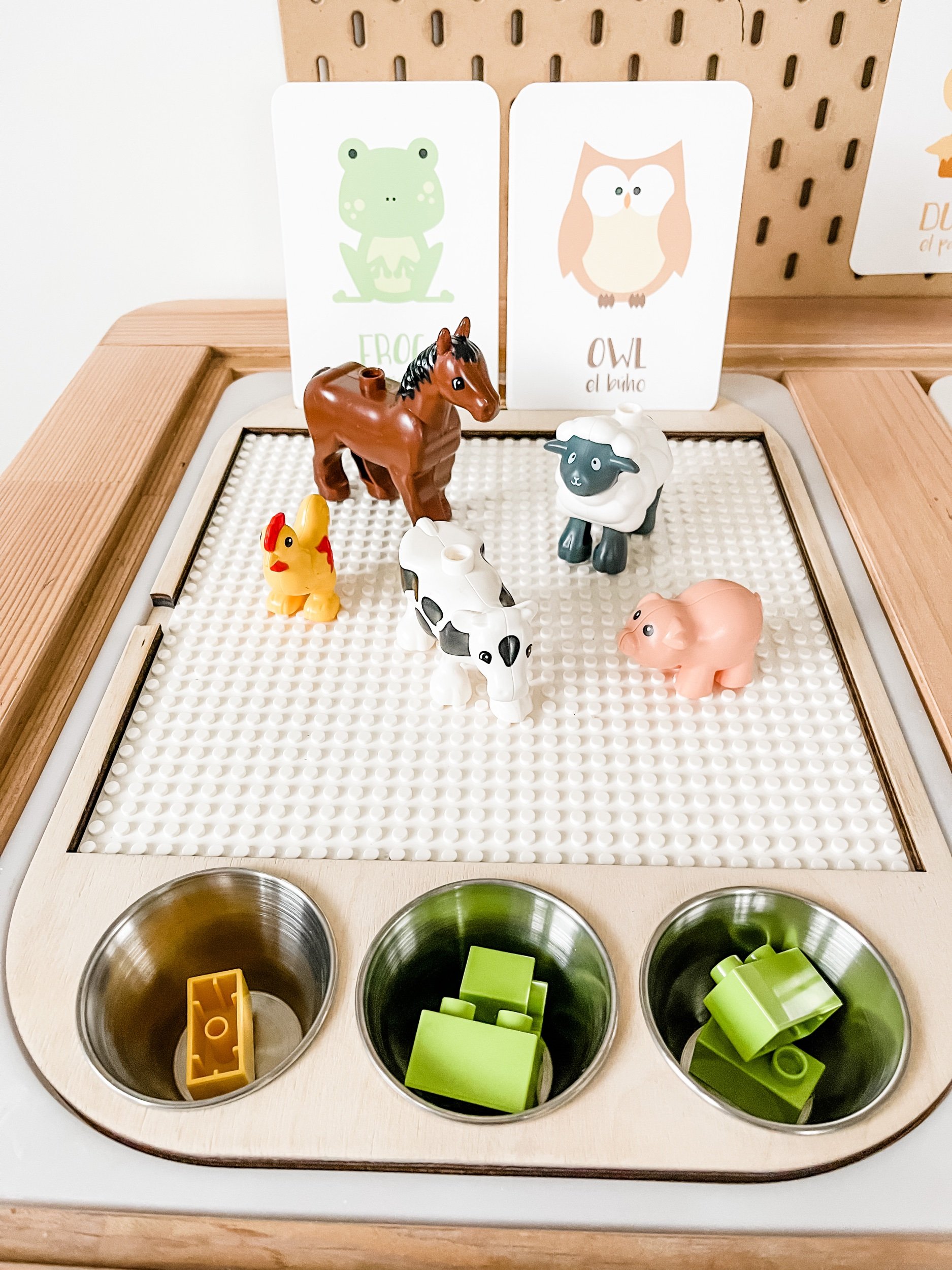
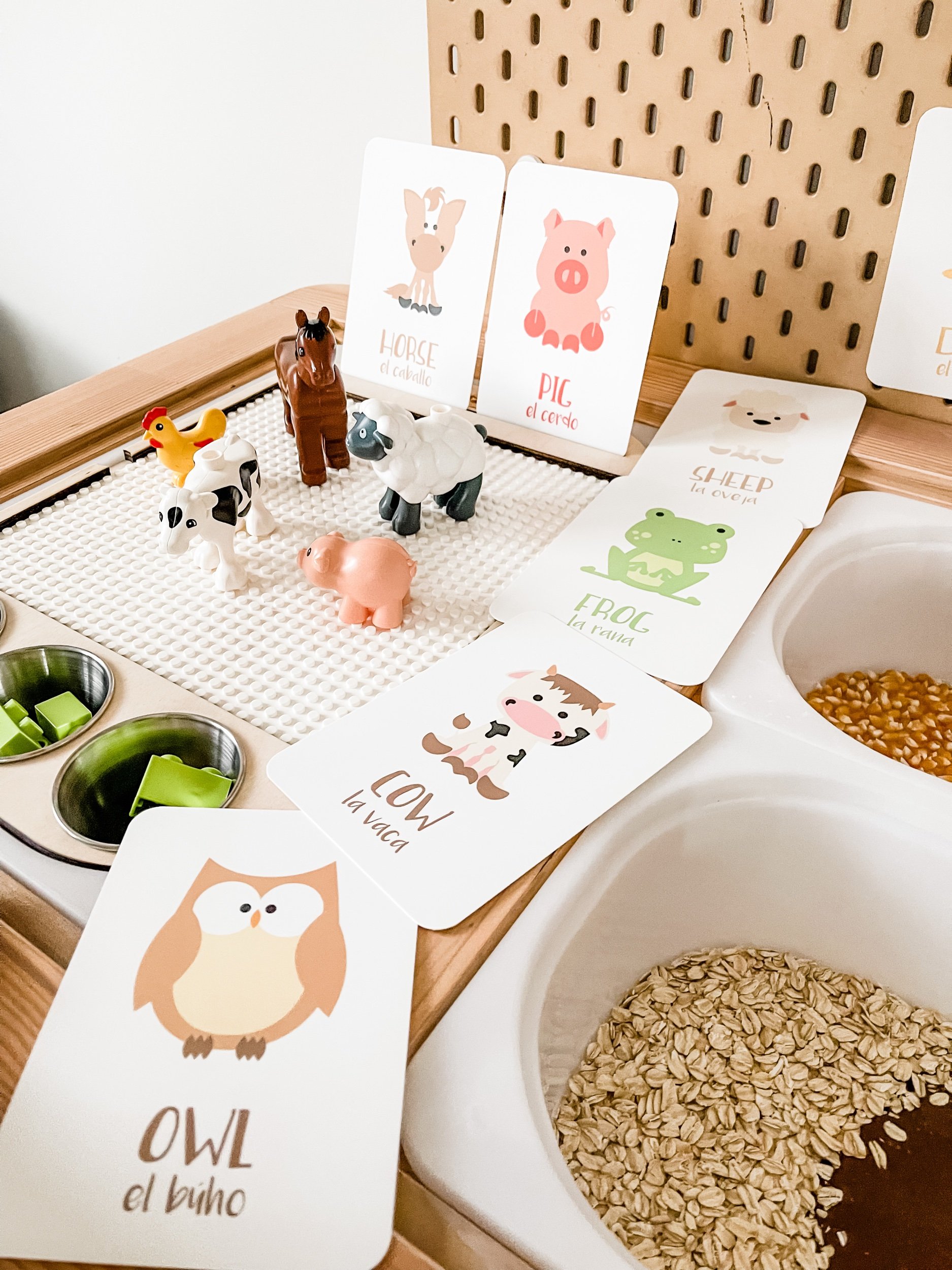
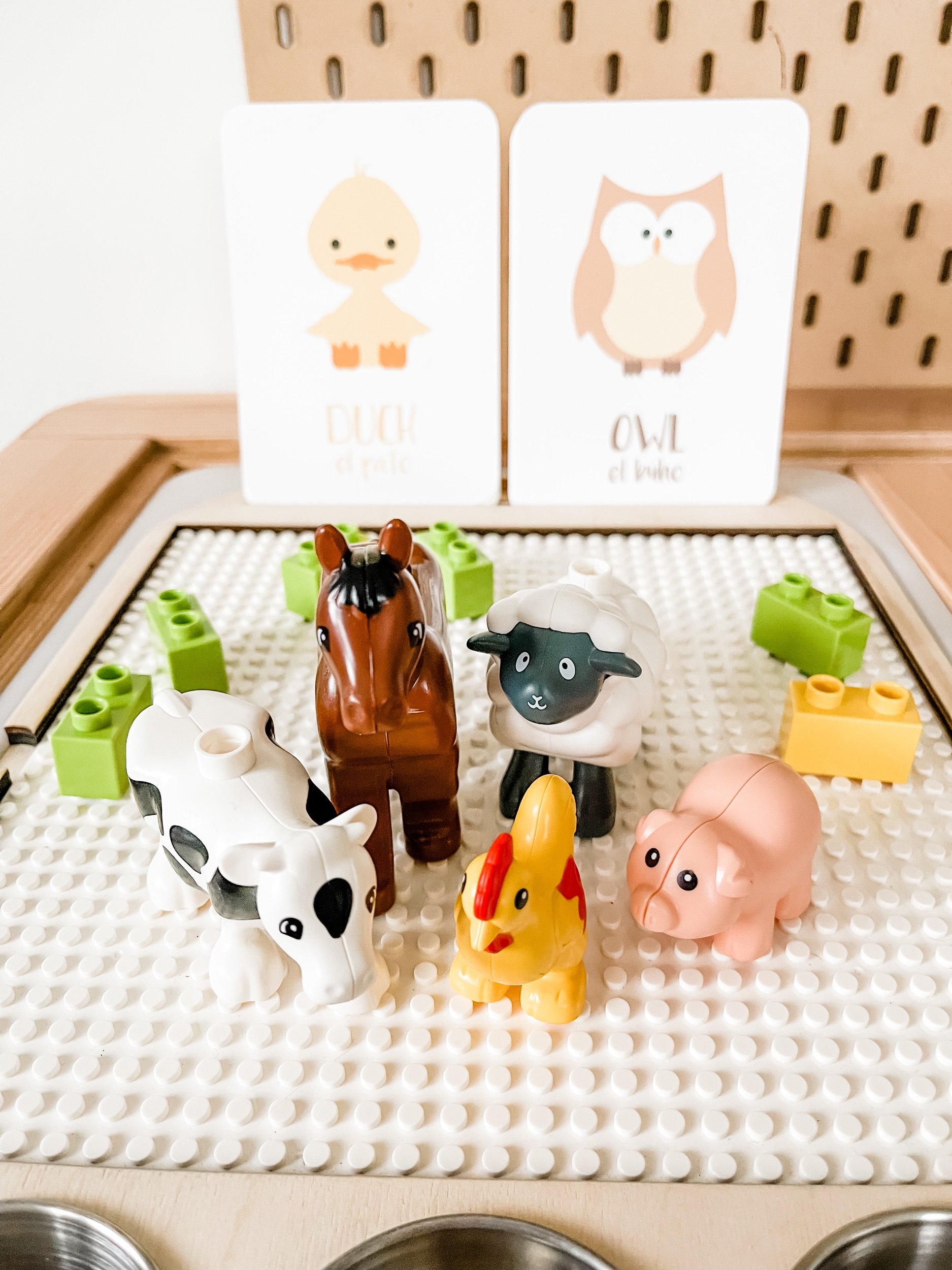
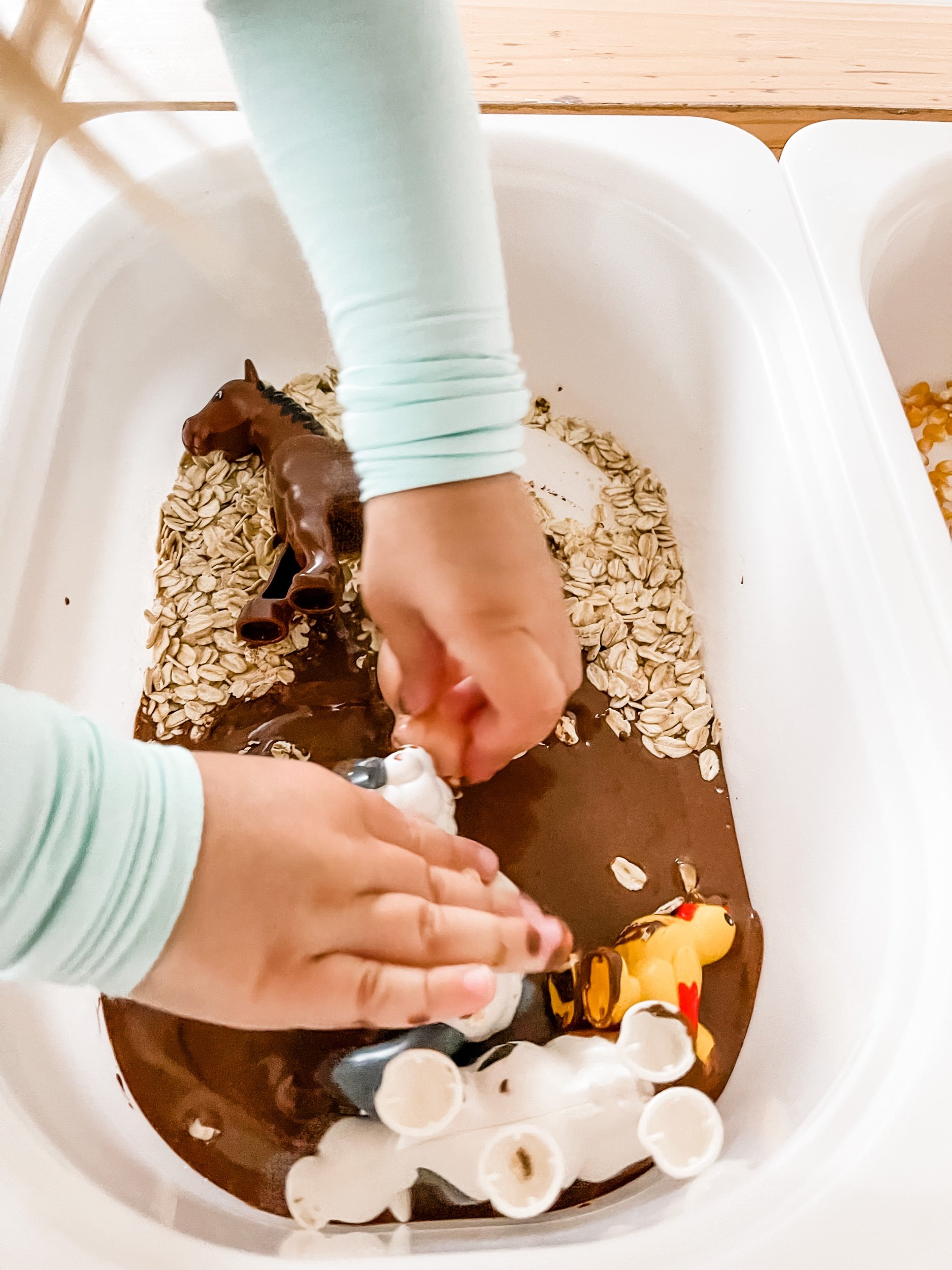
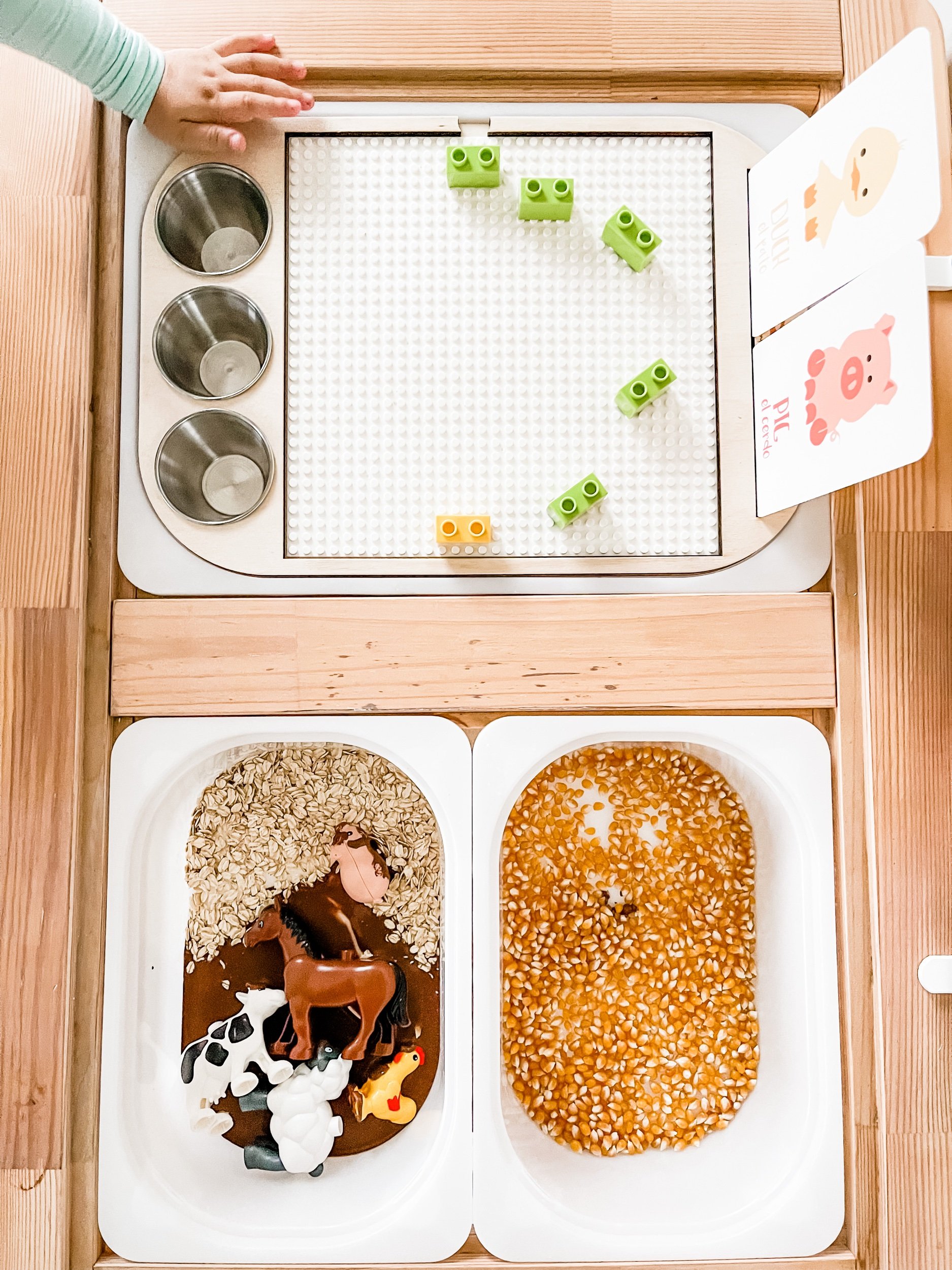
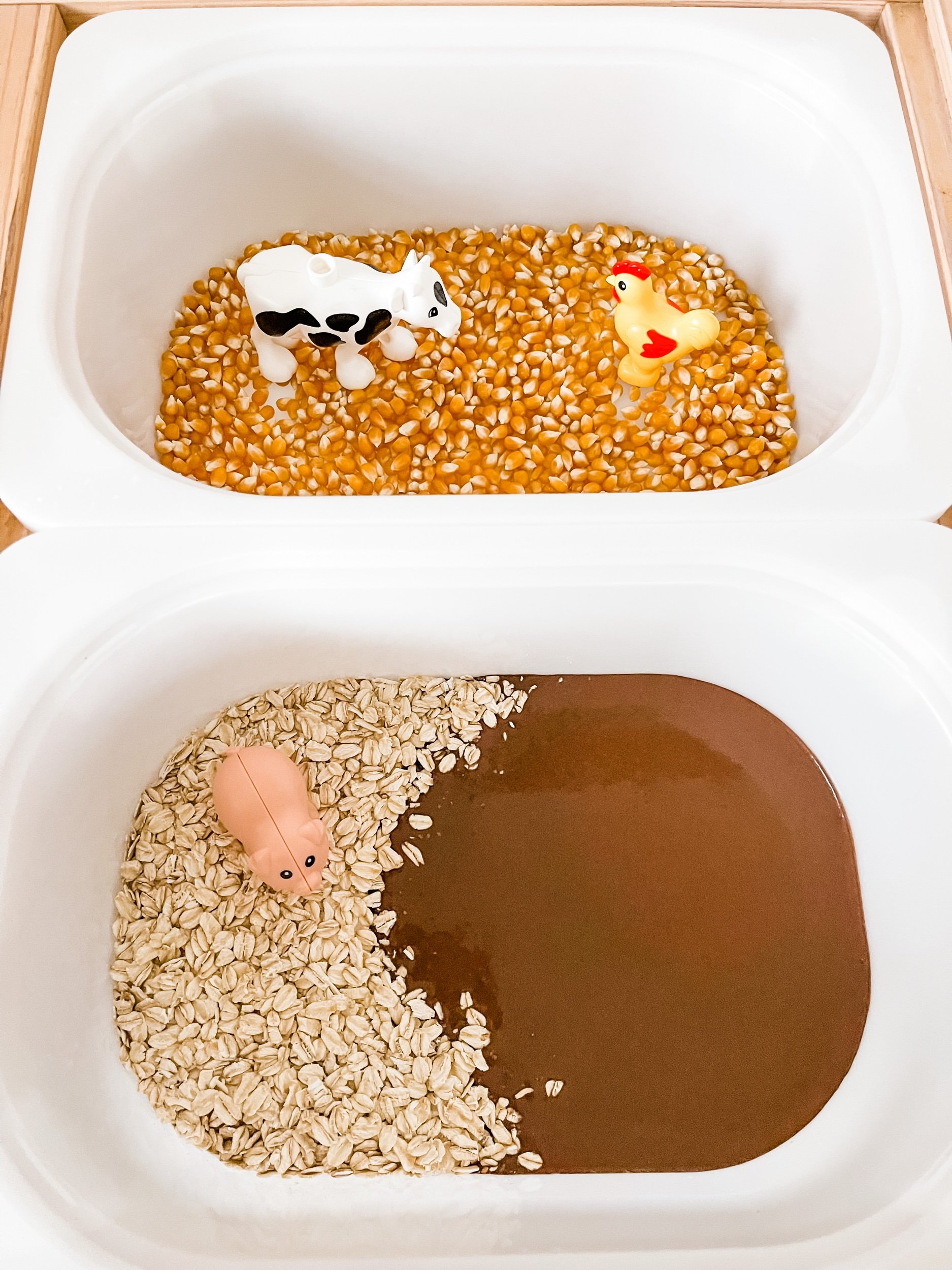
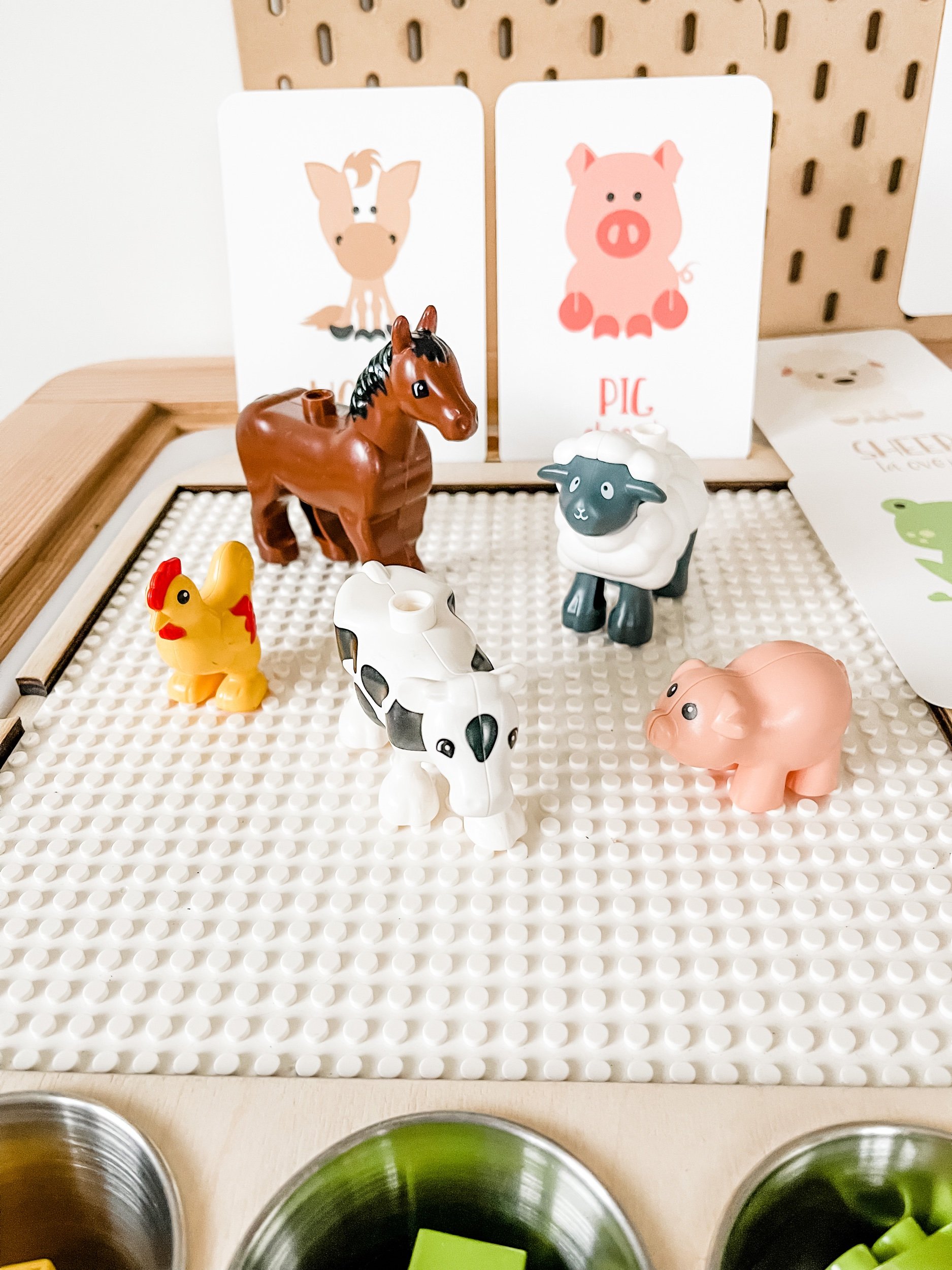
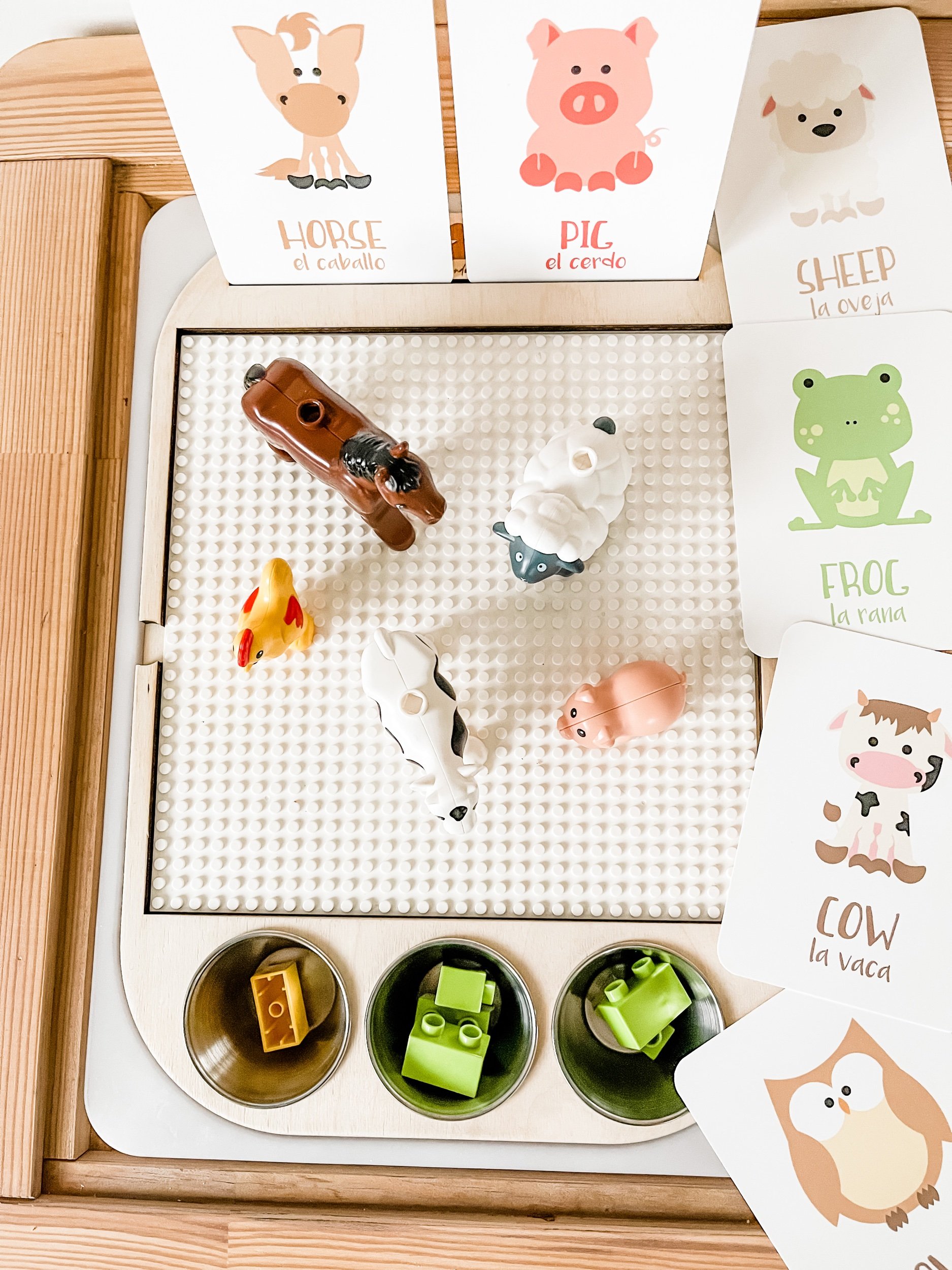
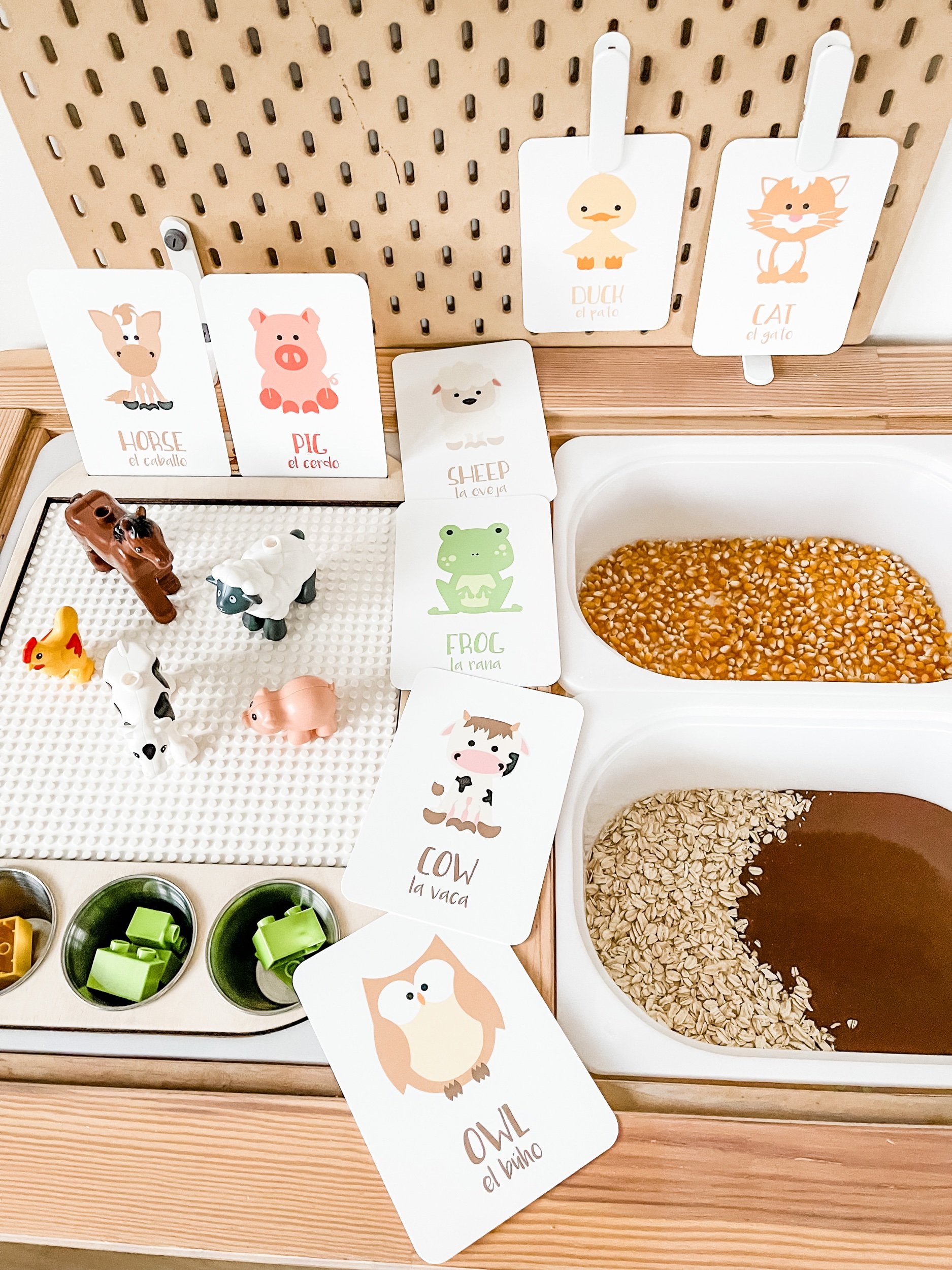
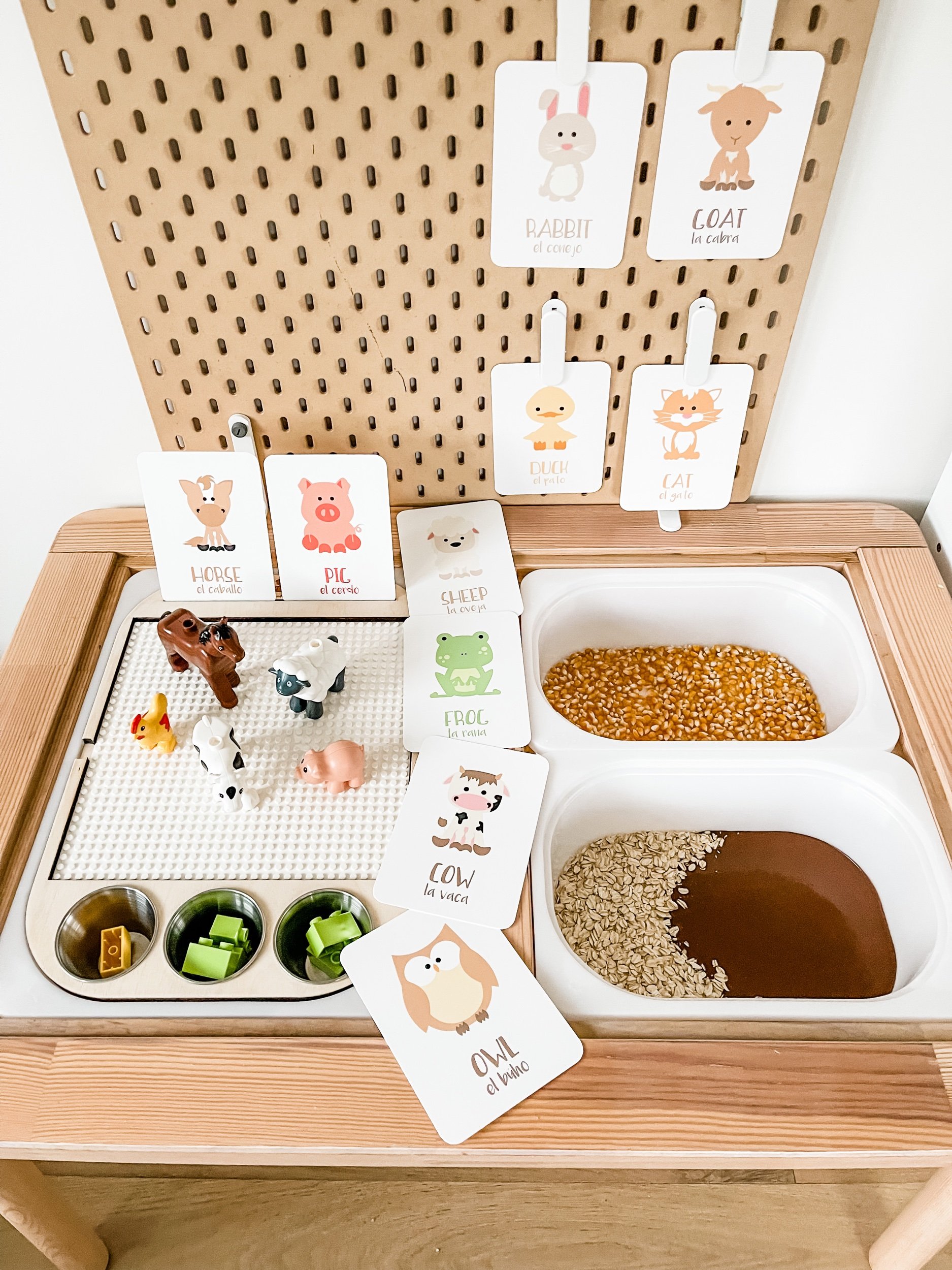
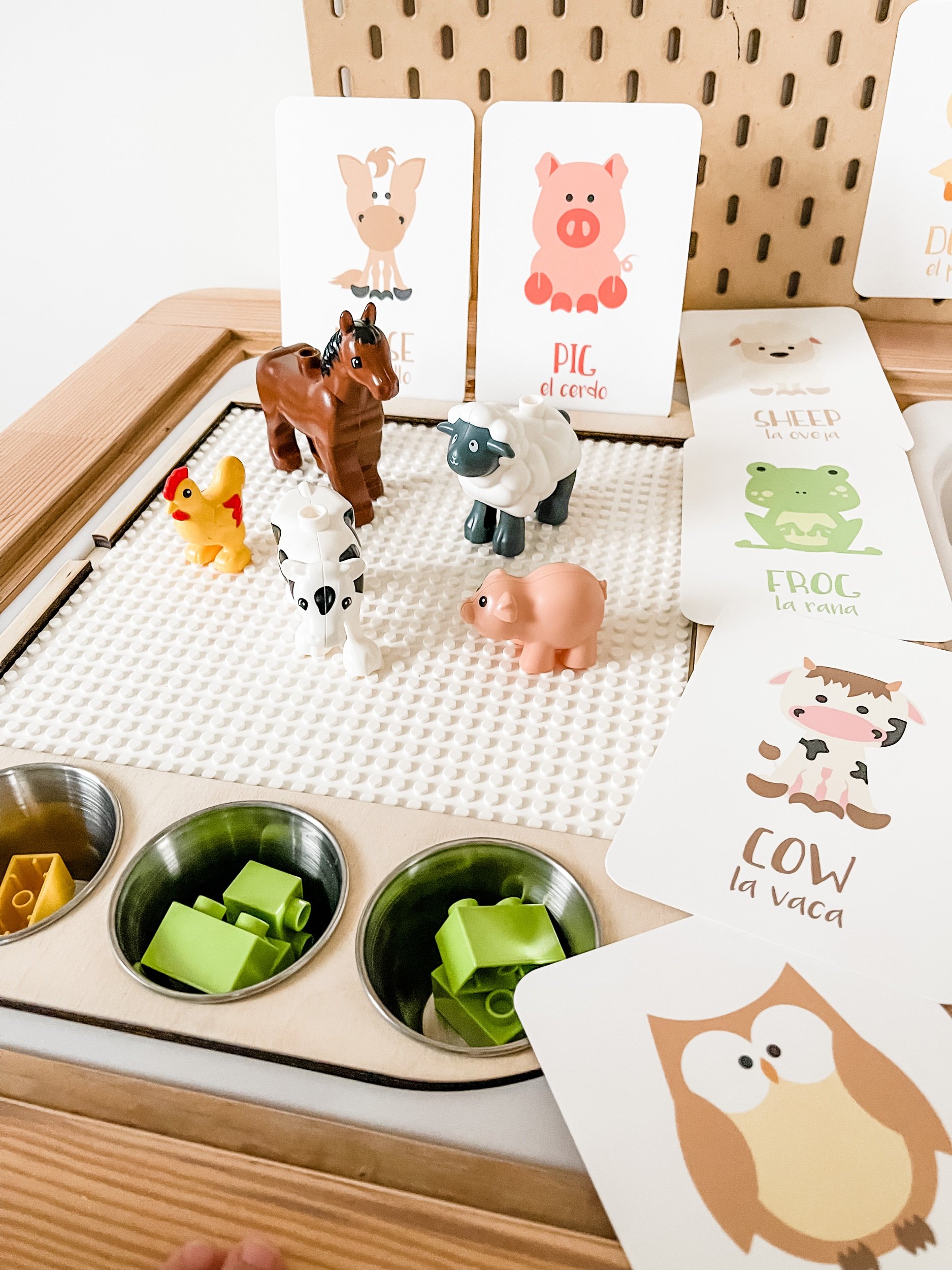
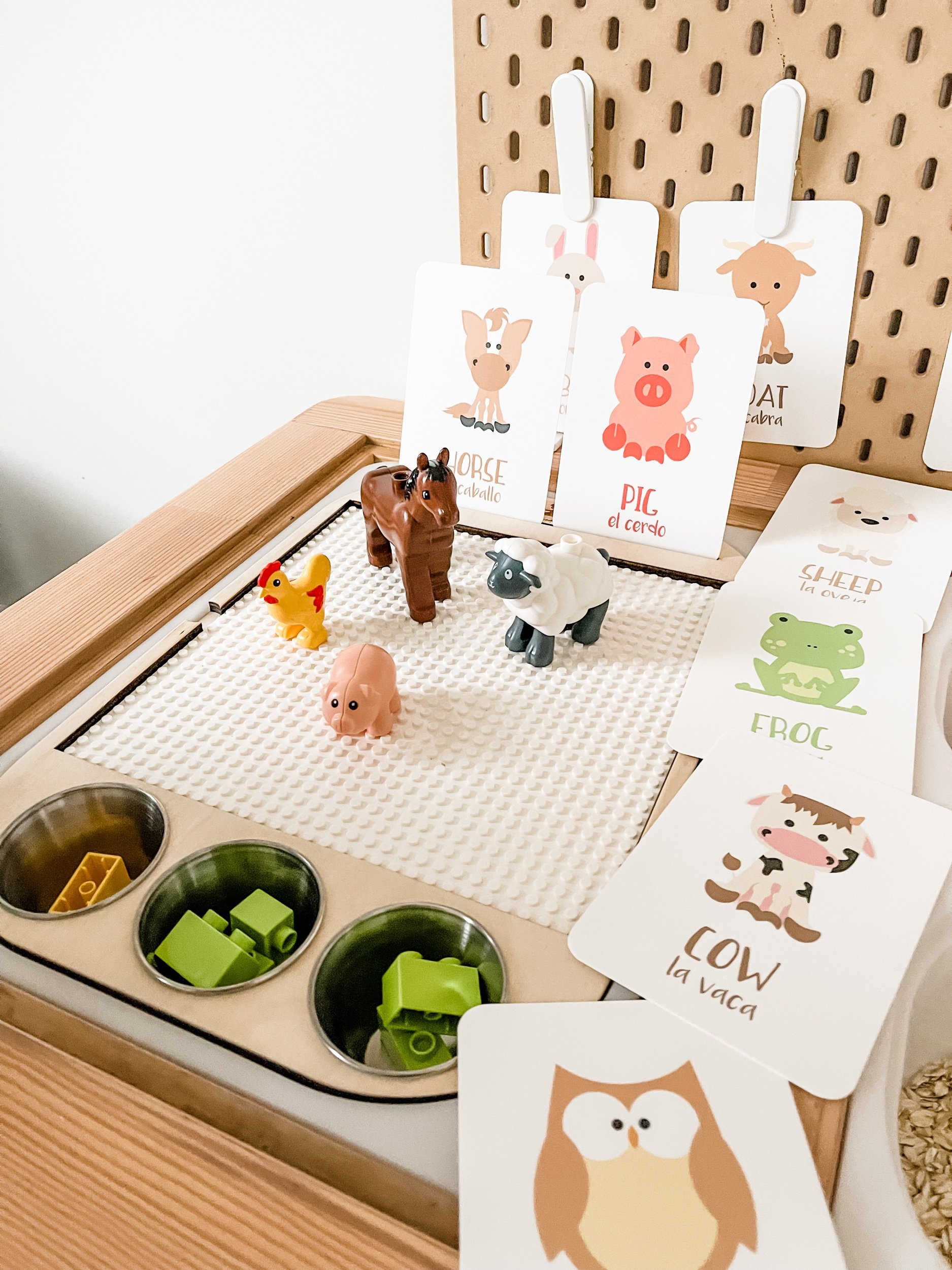
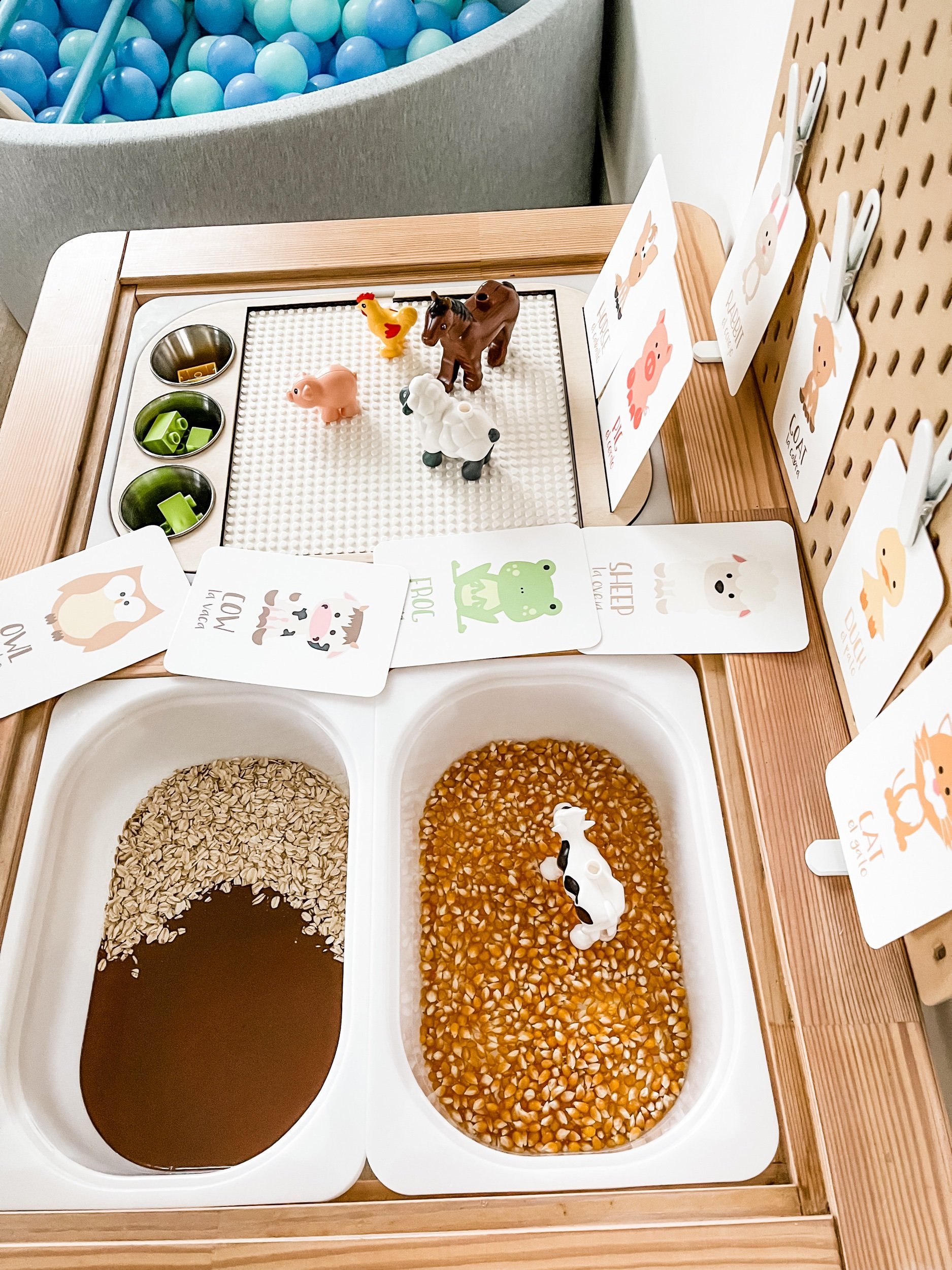
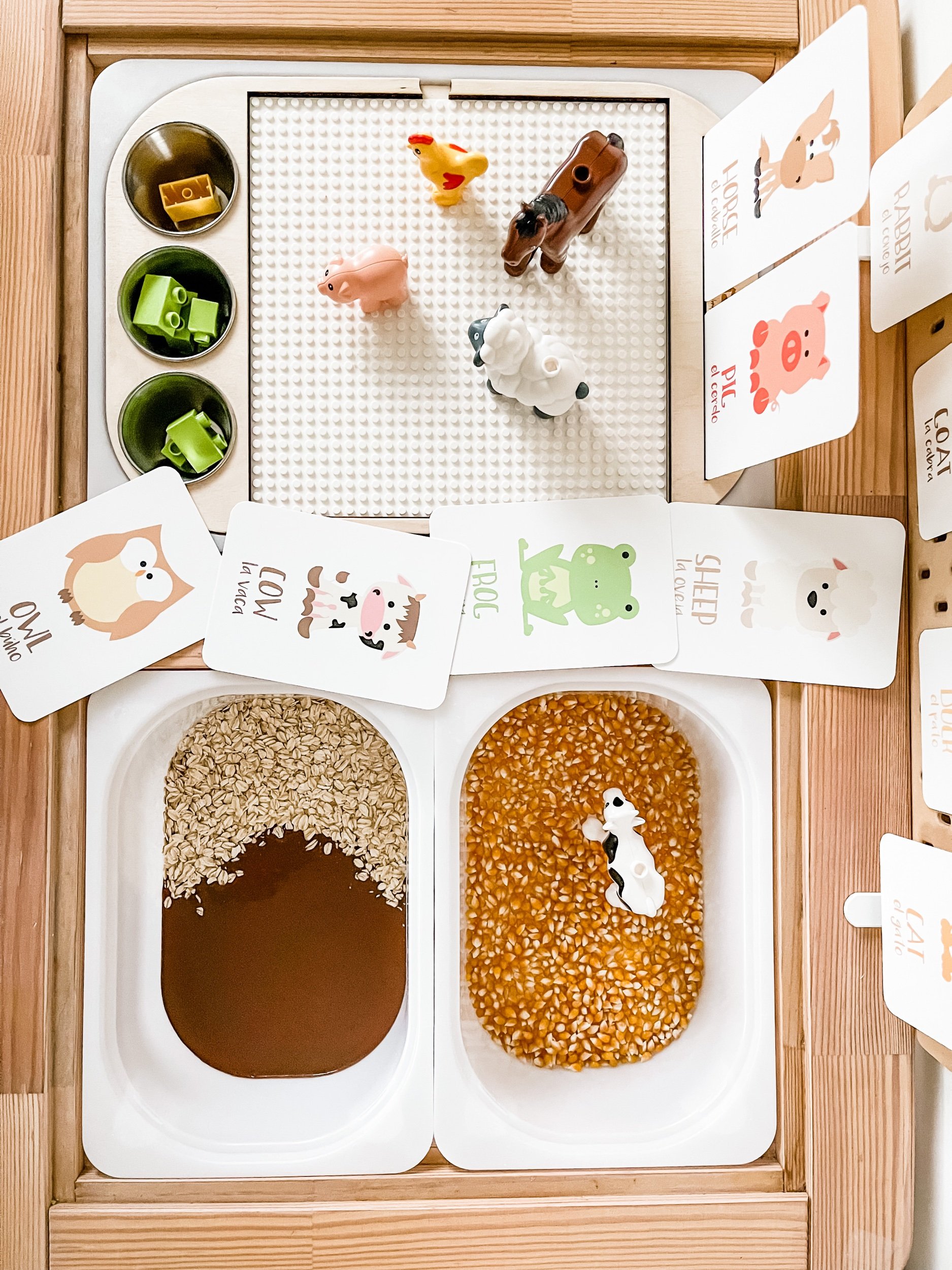
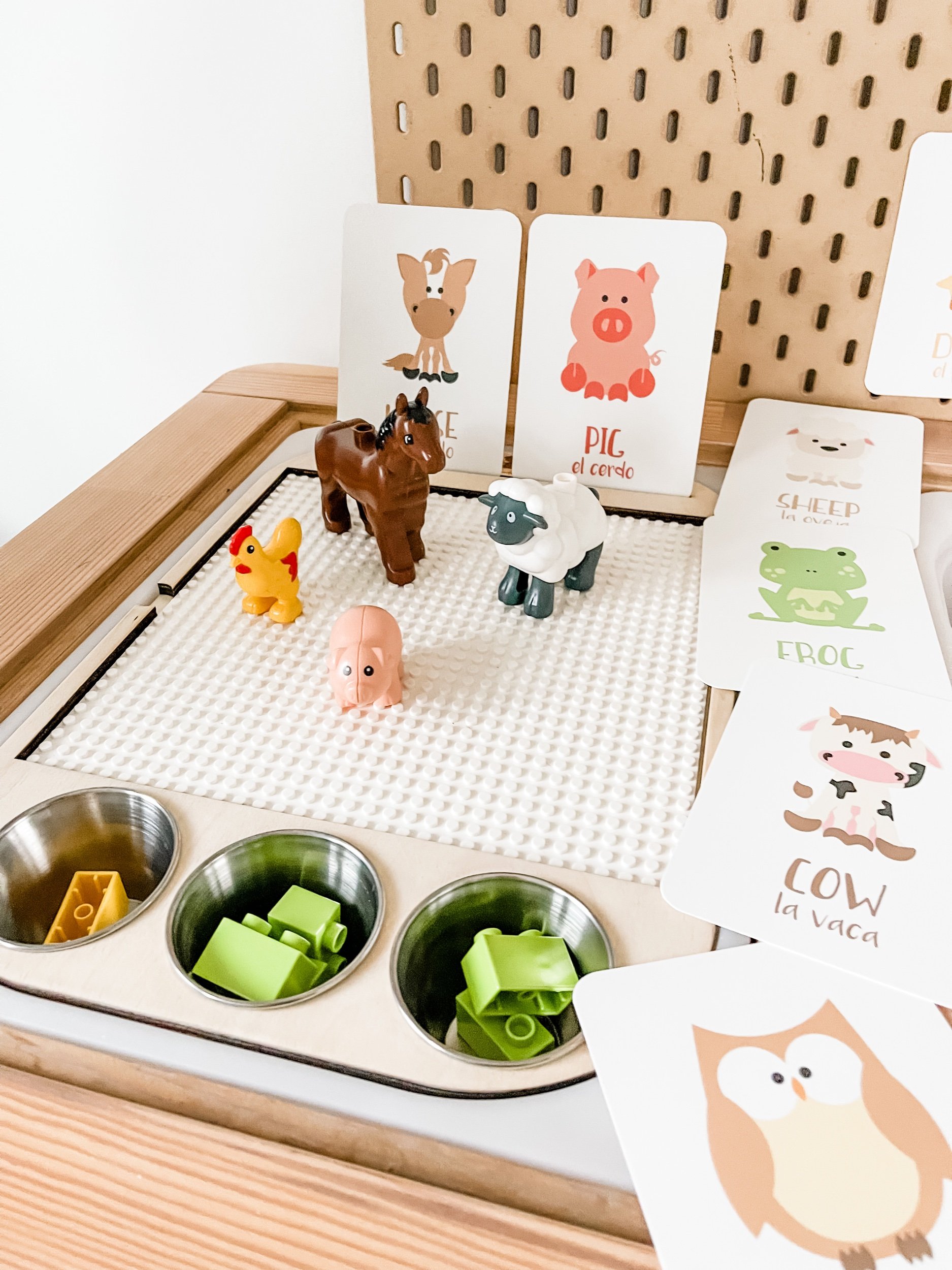
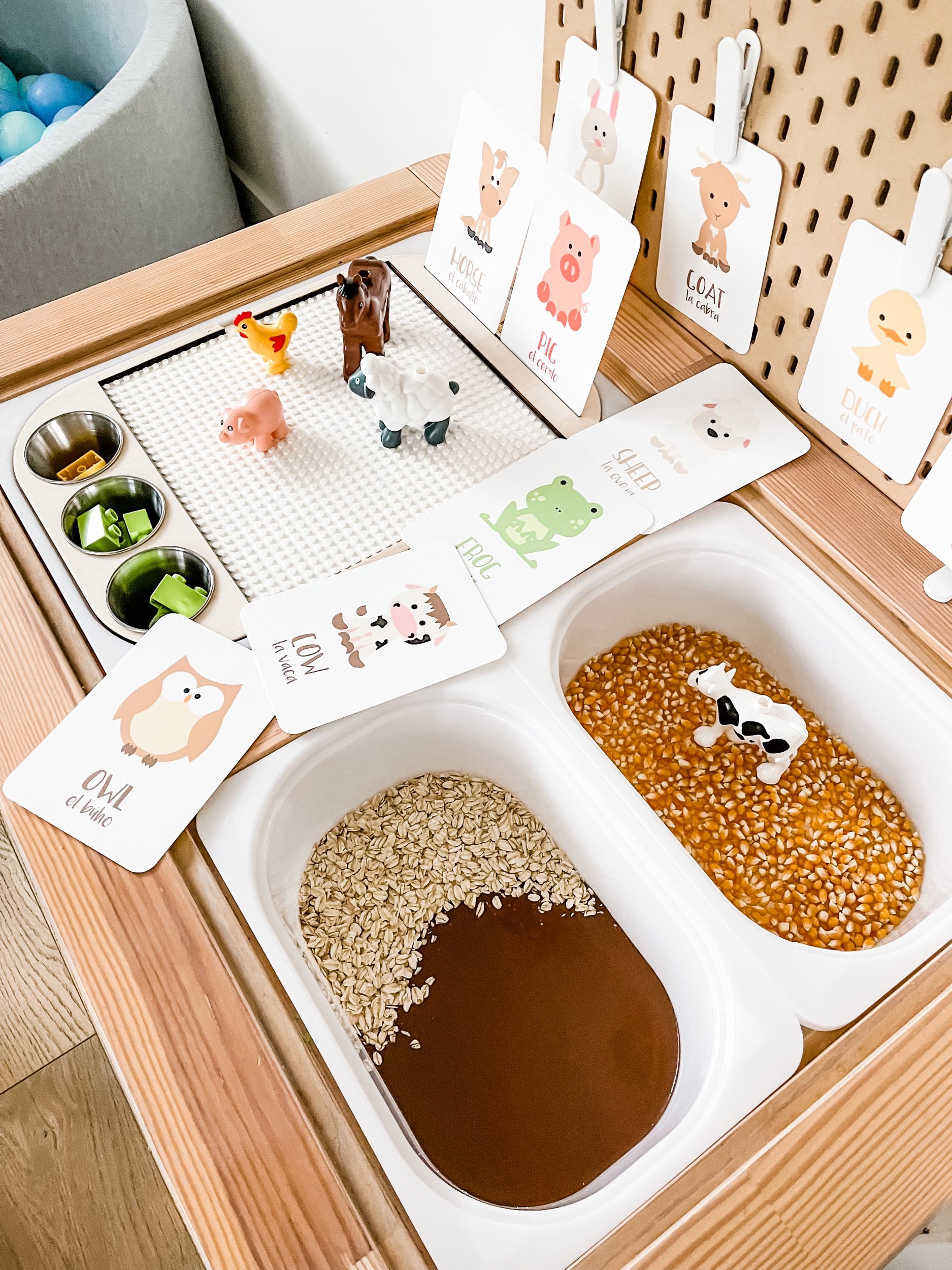
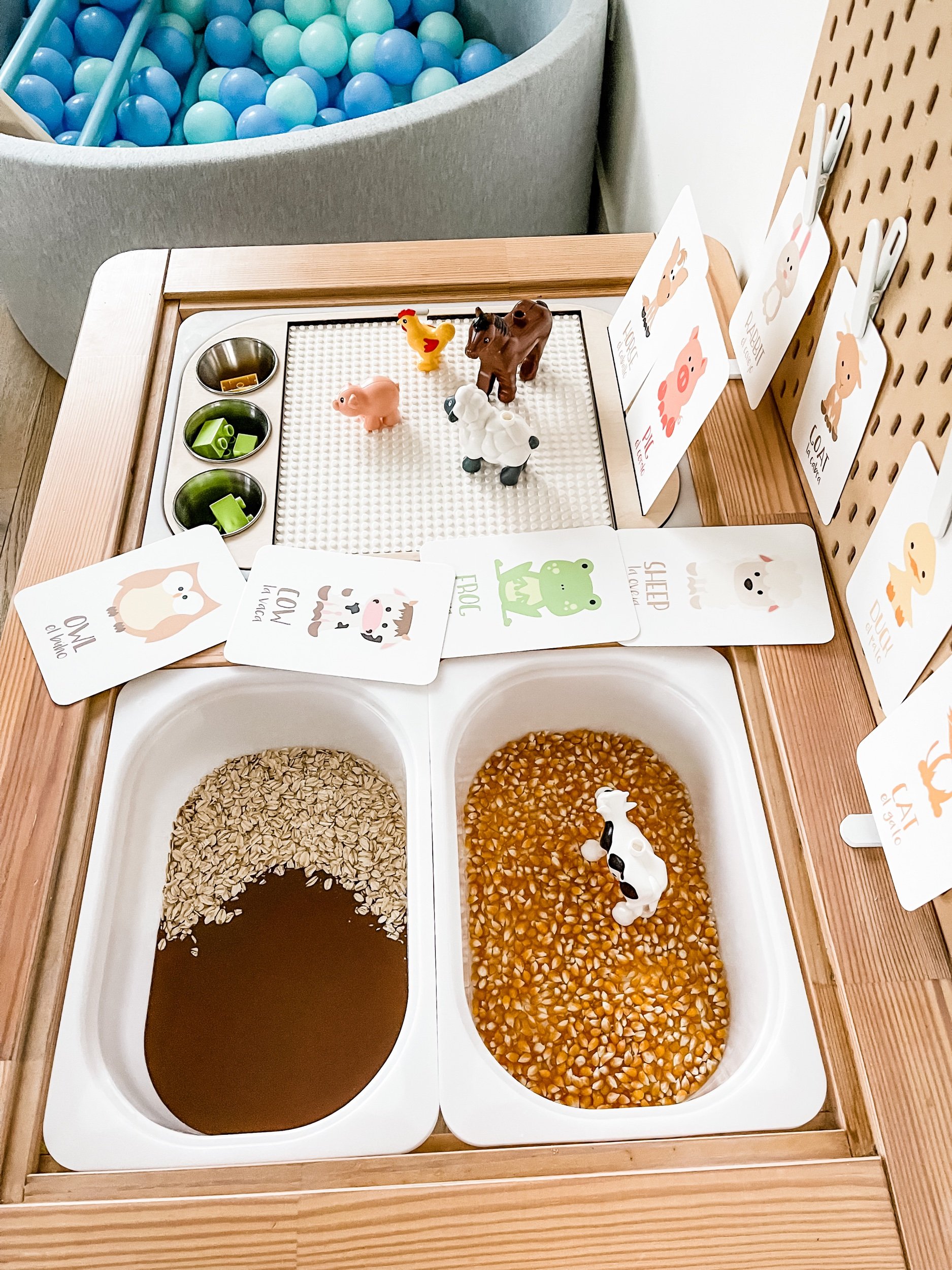
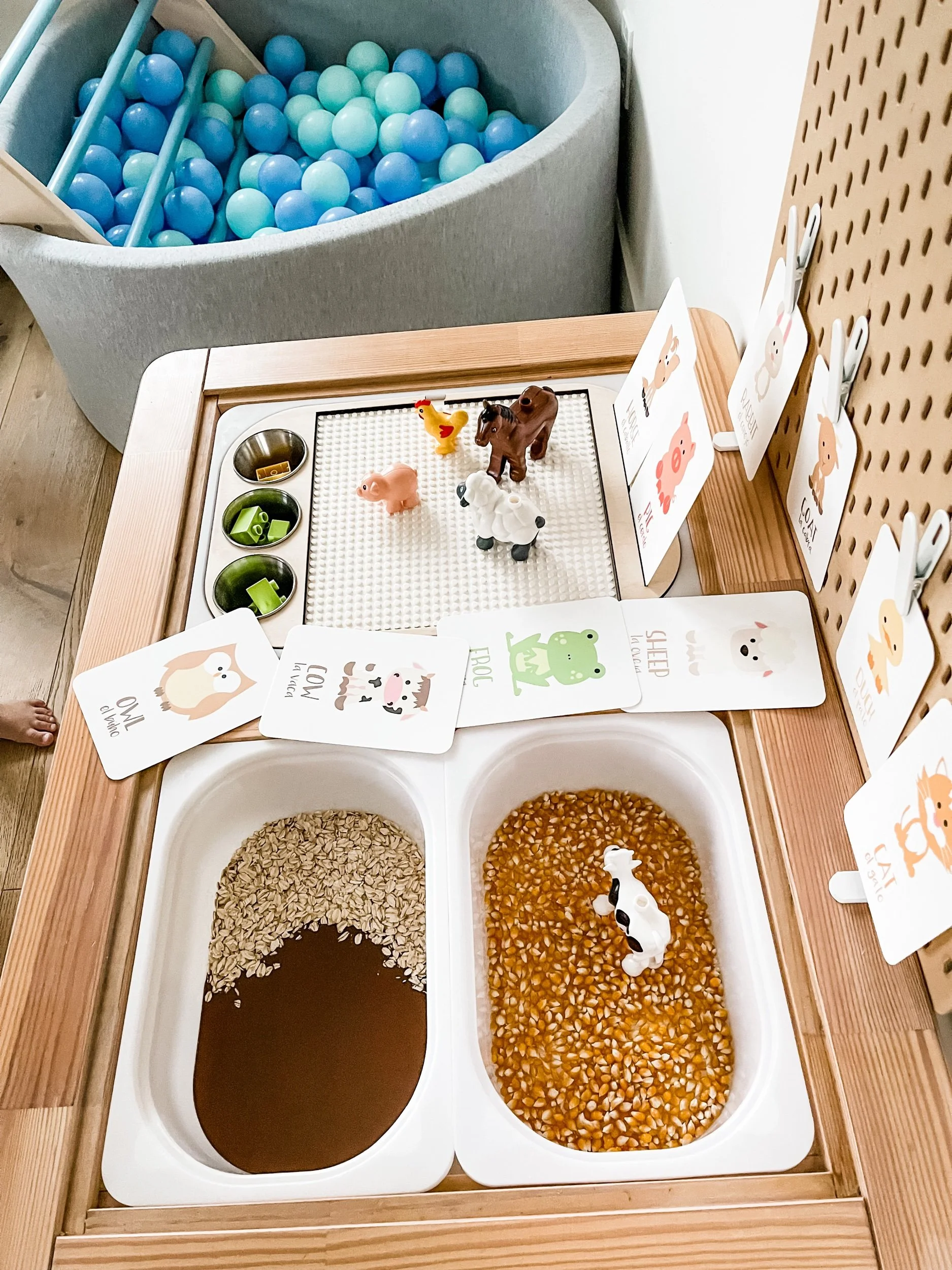
Step 1: Gather materials. You will need farm animal figurines, farm animal flashcards, a bin or tub, cocoa powder, water, corn kernels, oatmeal, and a washing station.
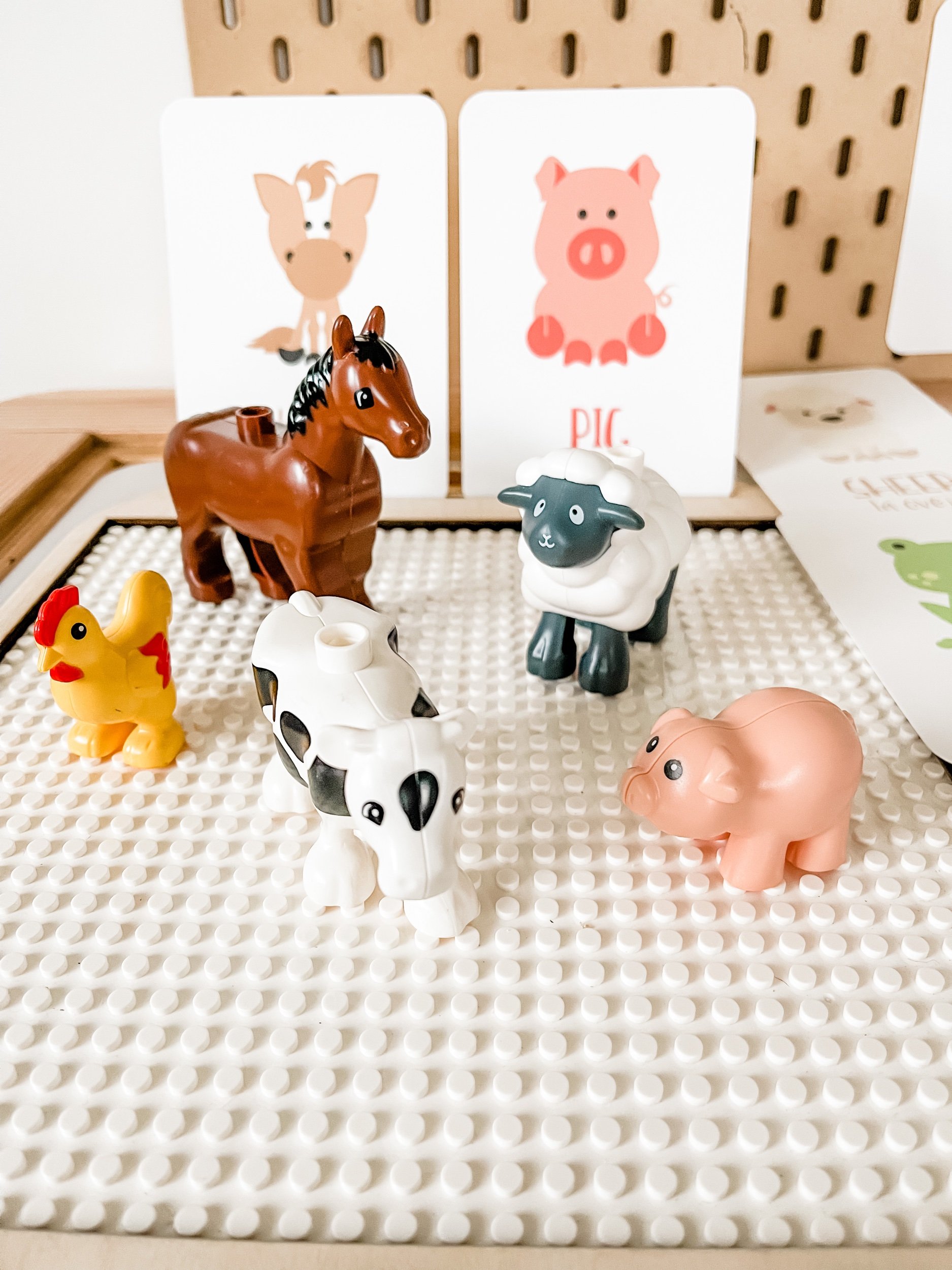
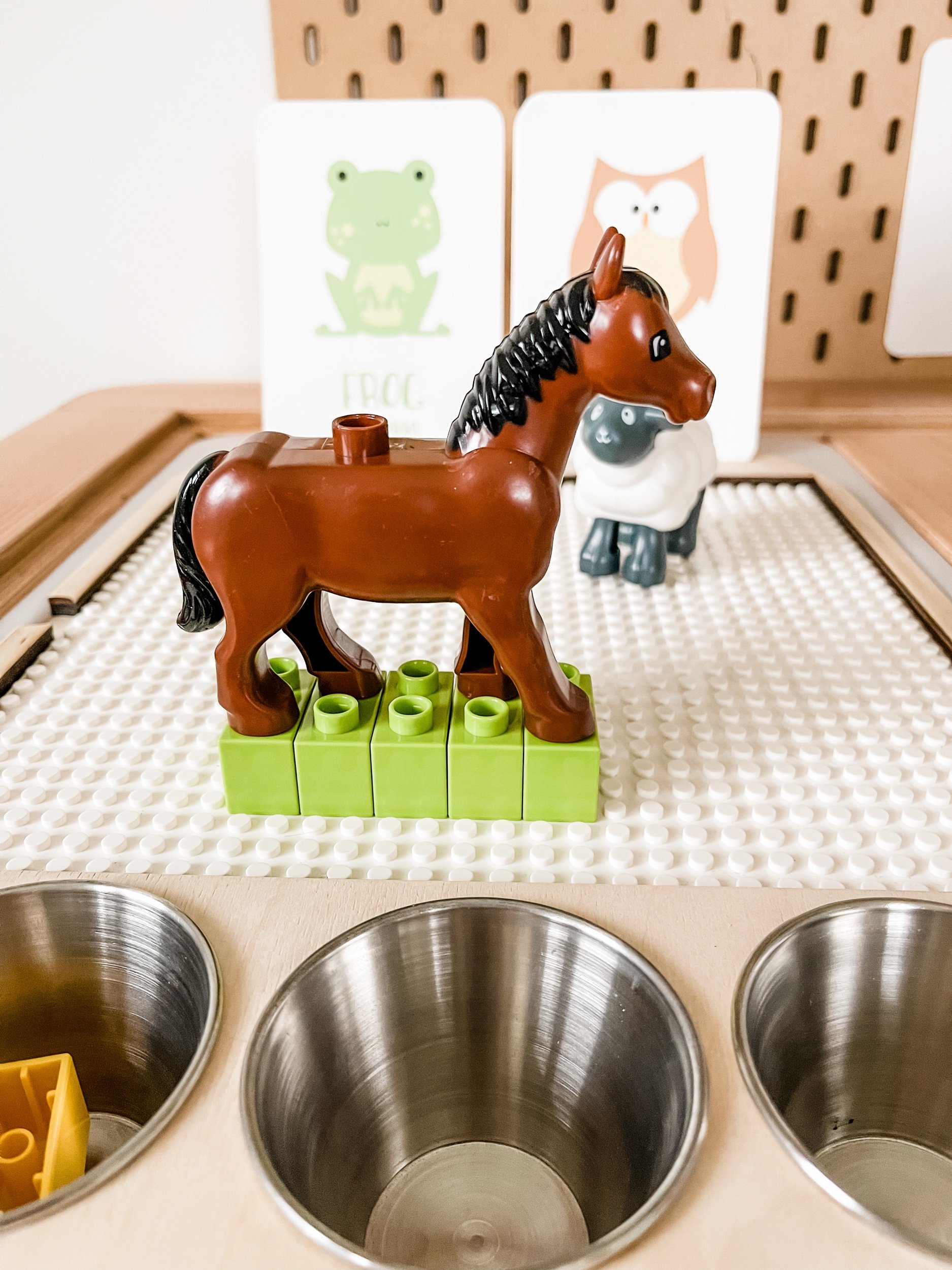
Step 2: Set up the matching activity. Spread out the farm animal flashcards on a flat surface and have the toddlers match the farm animal figurines to the corresponding flashcards.
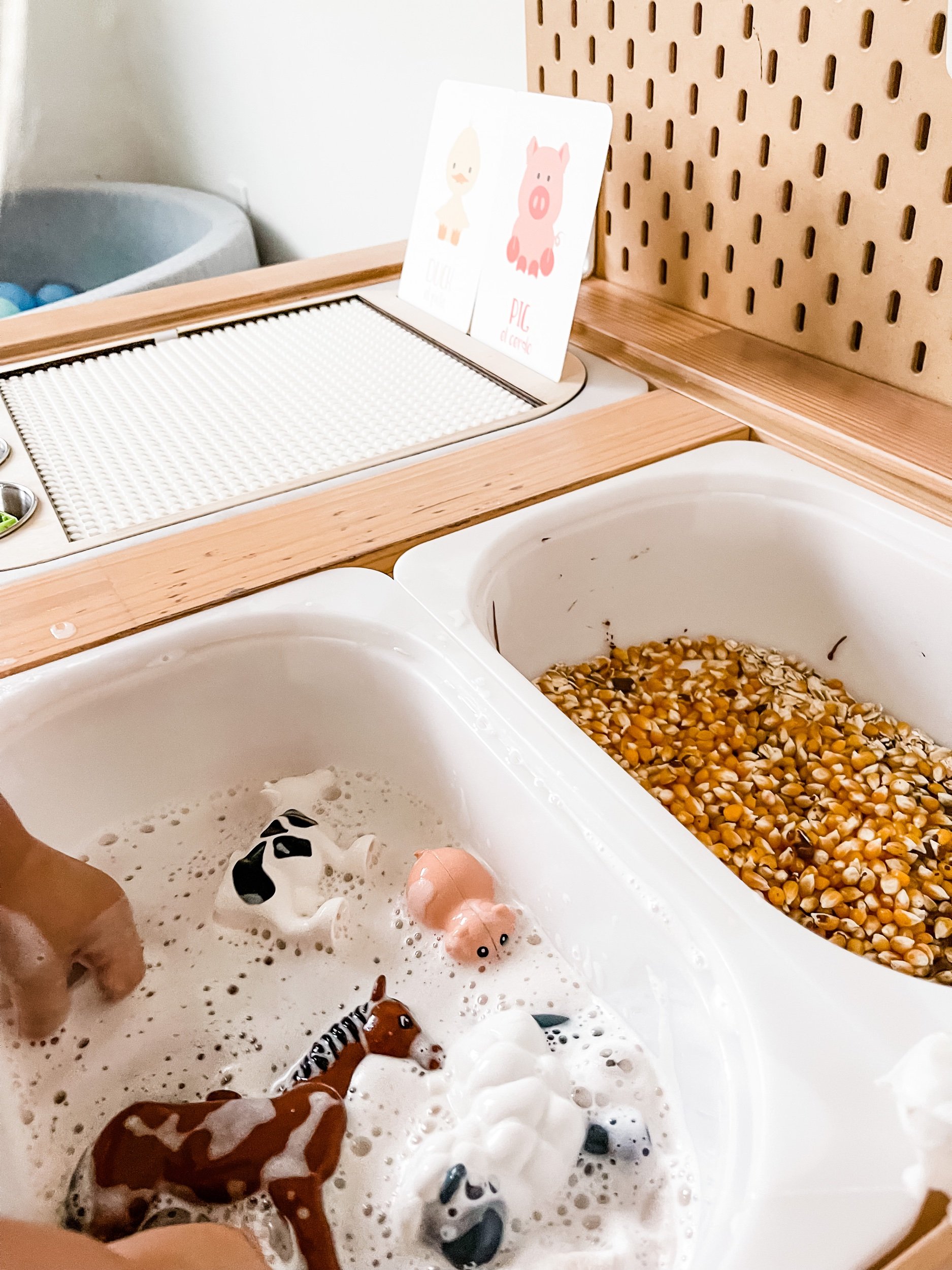
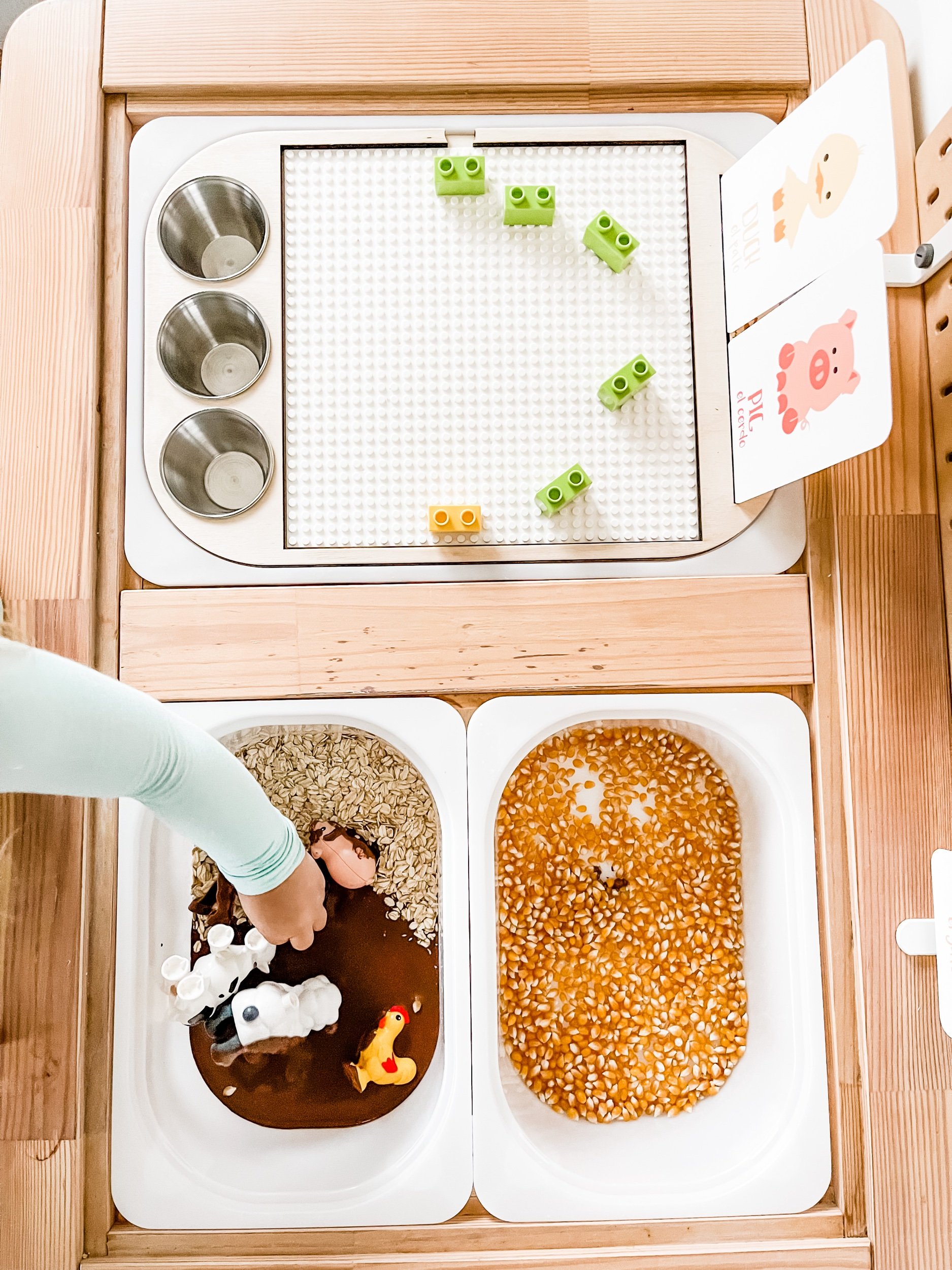
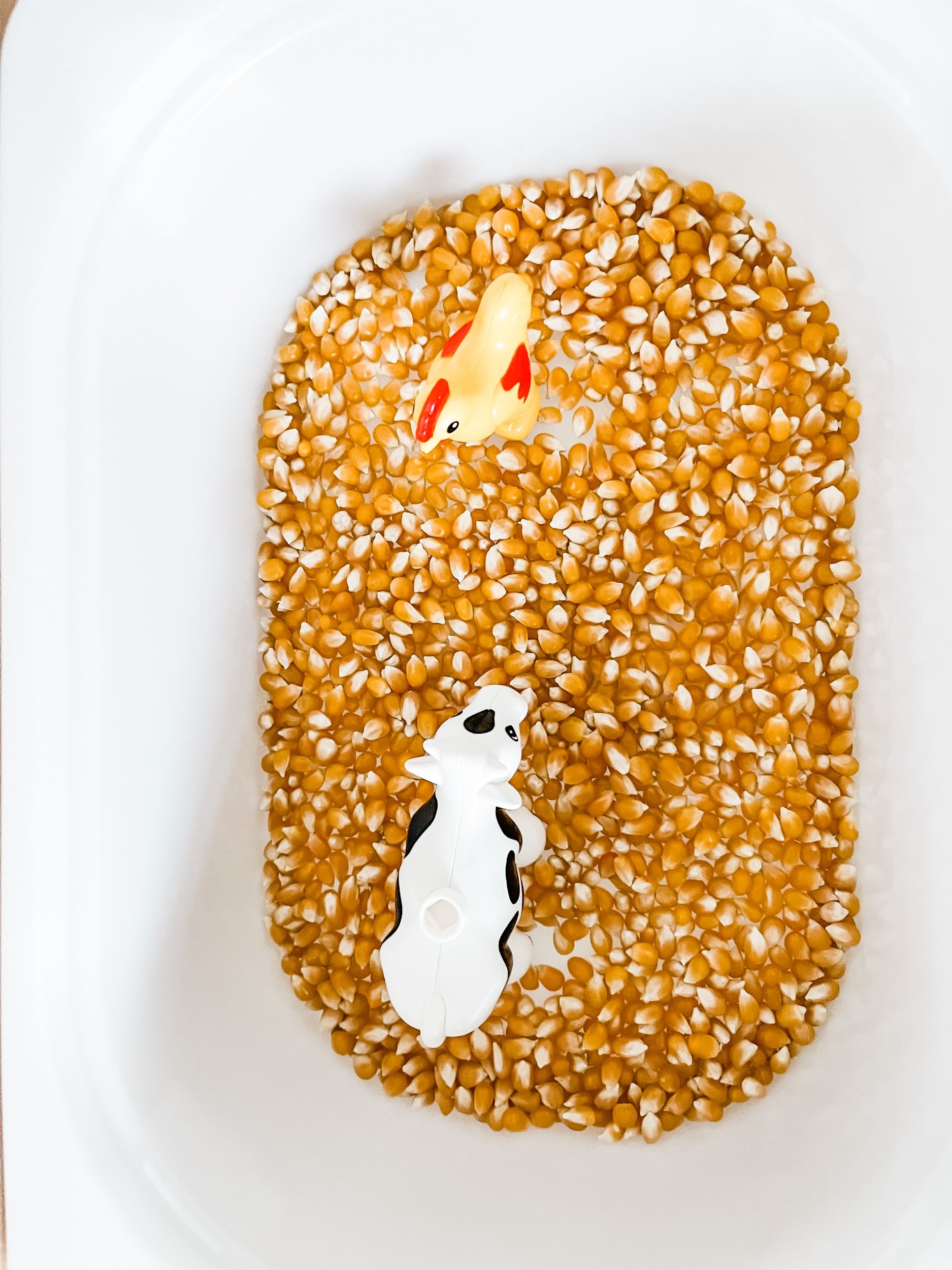
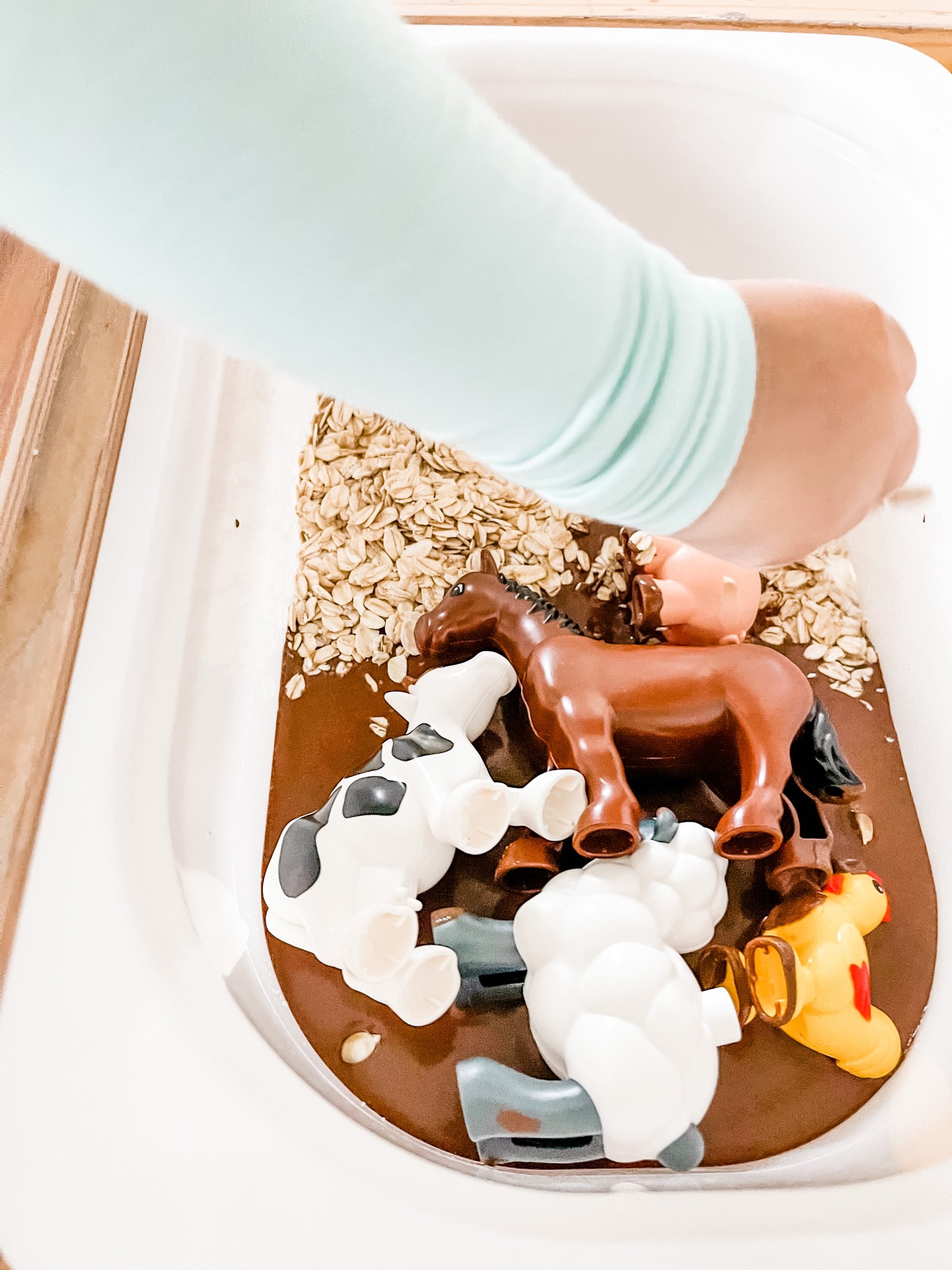
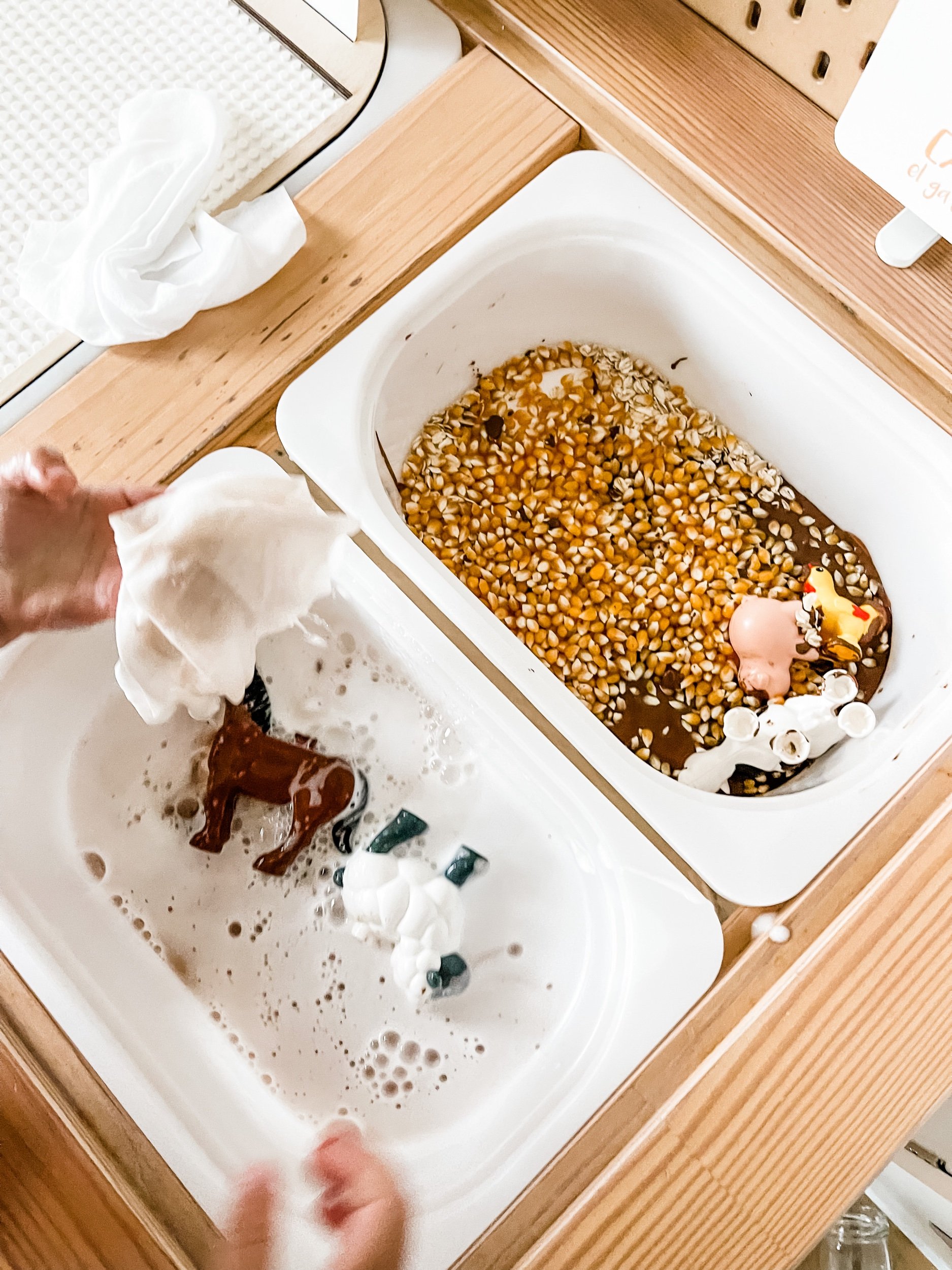
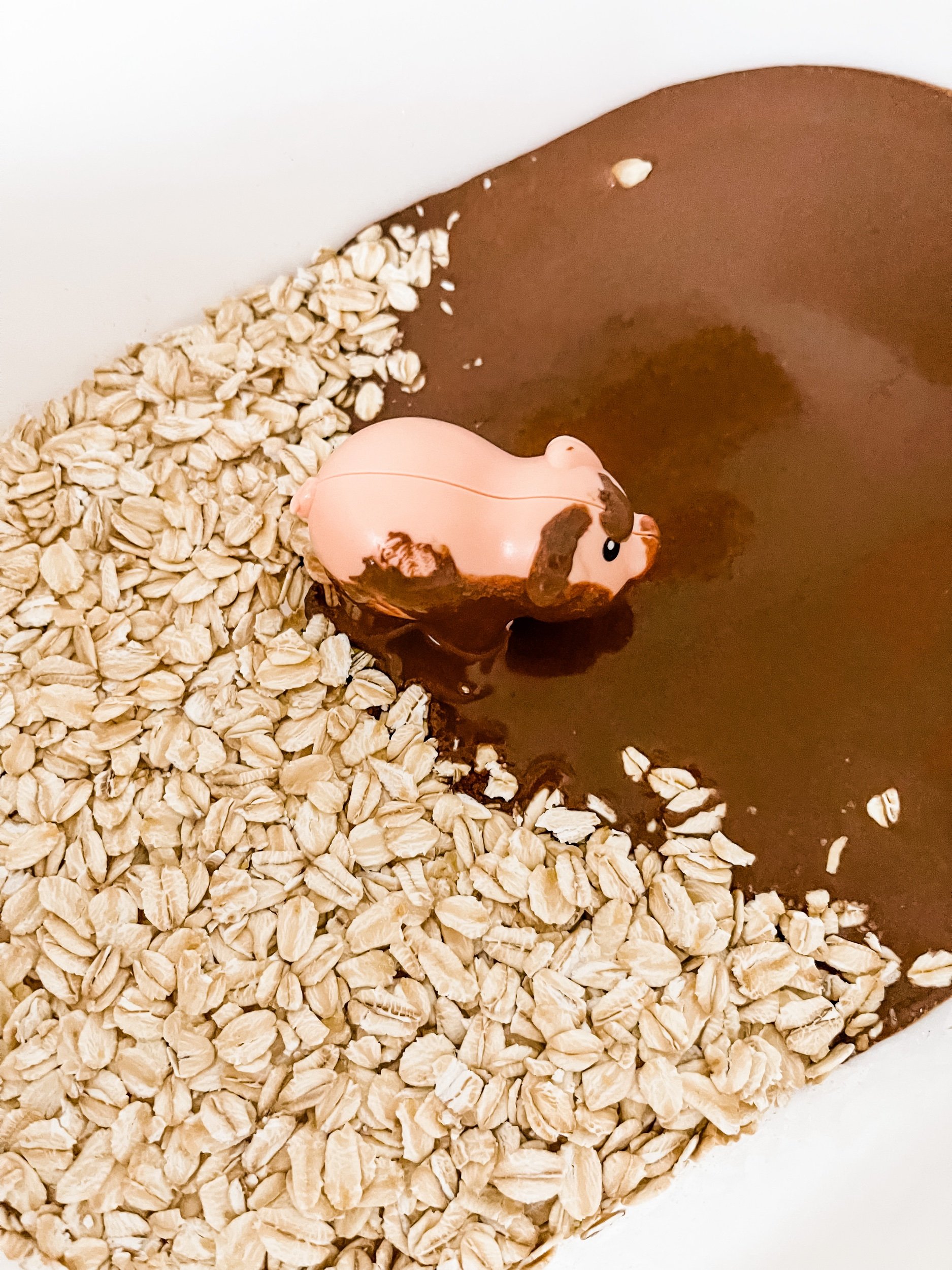
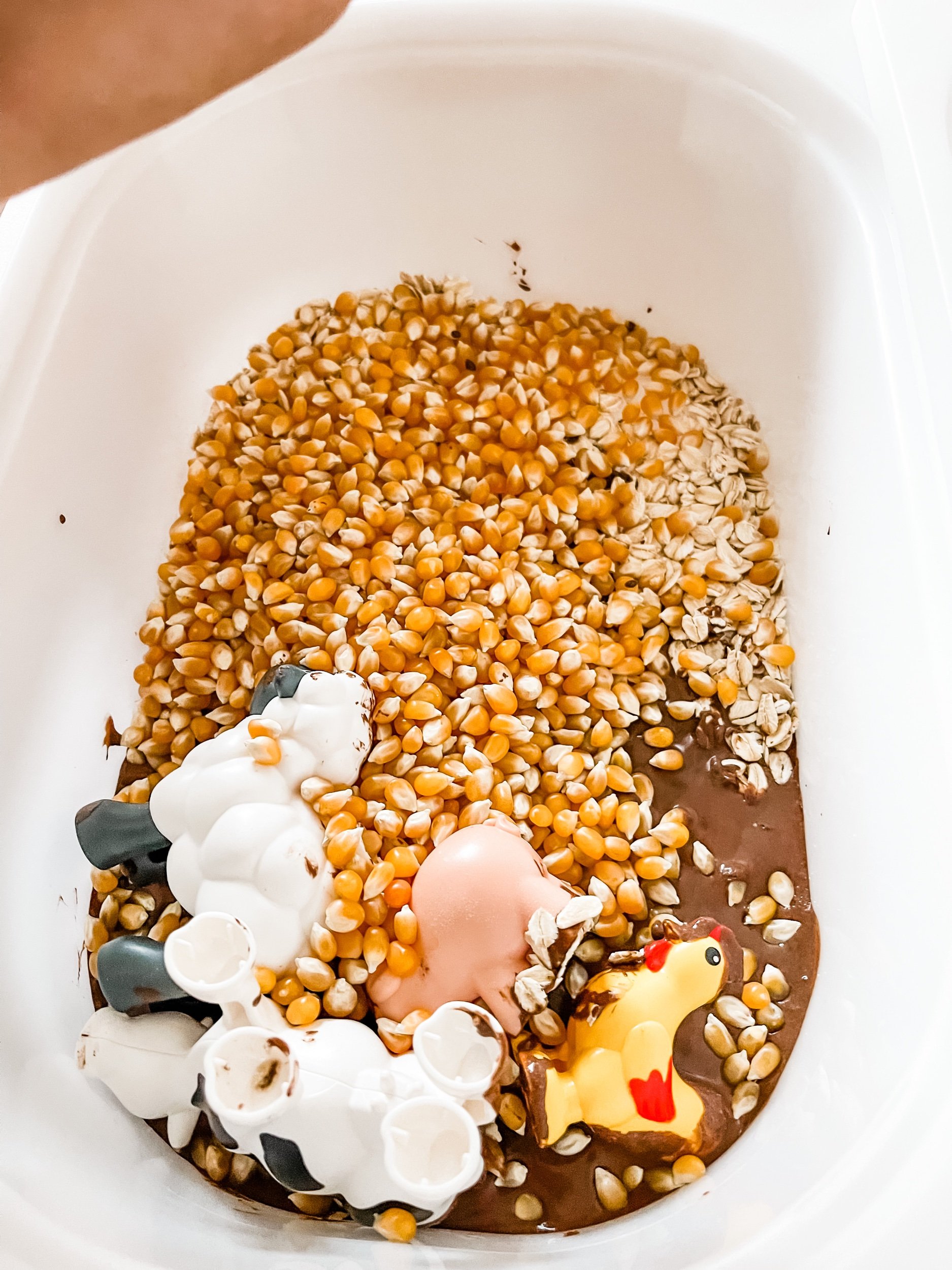
Step 3: Create the sensory bin. Mix together cocoa powder, water, corn kernels, and oatmeal to create a taste-safe mud that the farm animal figurines can play in. Place the sensory bin on a flat surface and let the toddlers use their imagination to have the animals play and explore in the mud.
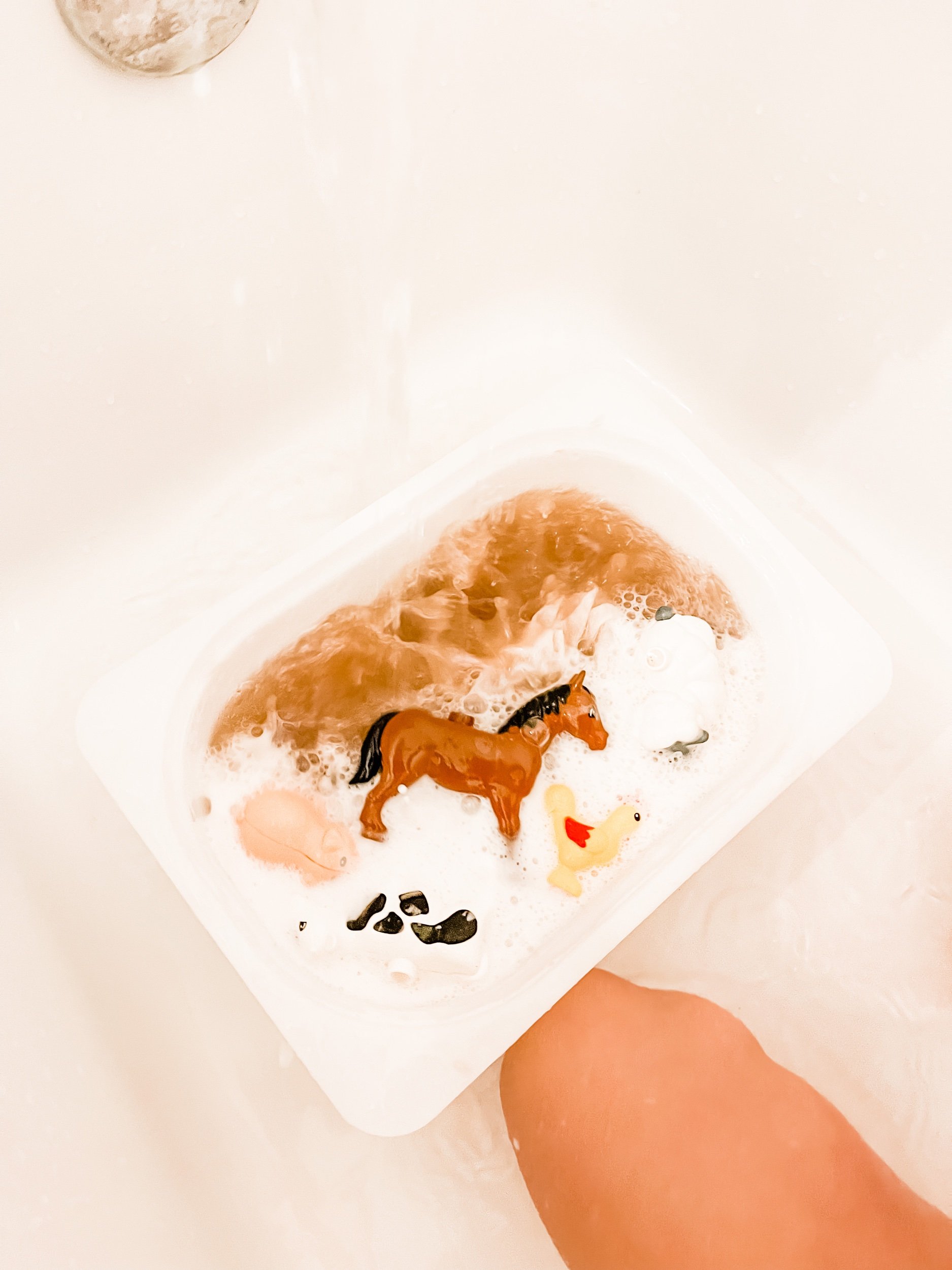
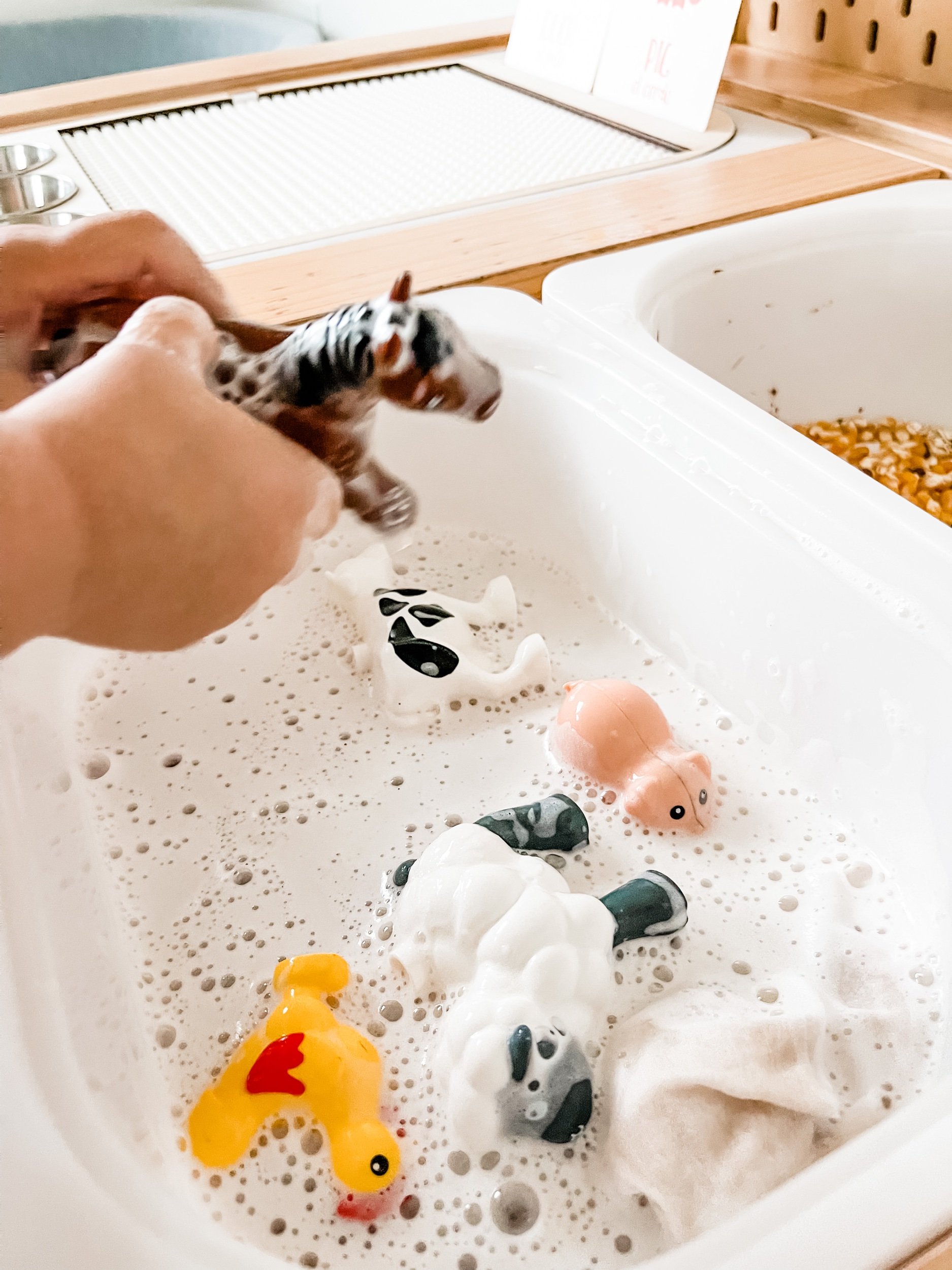
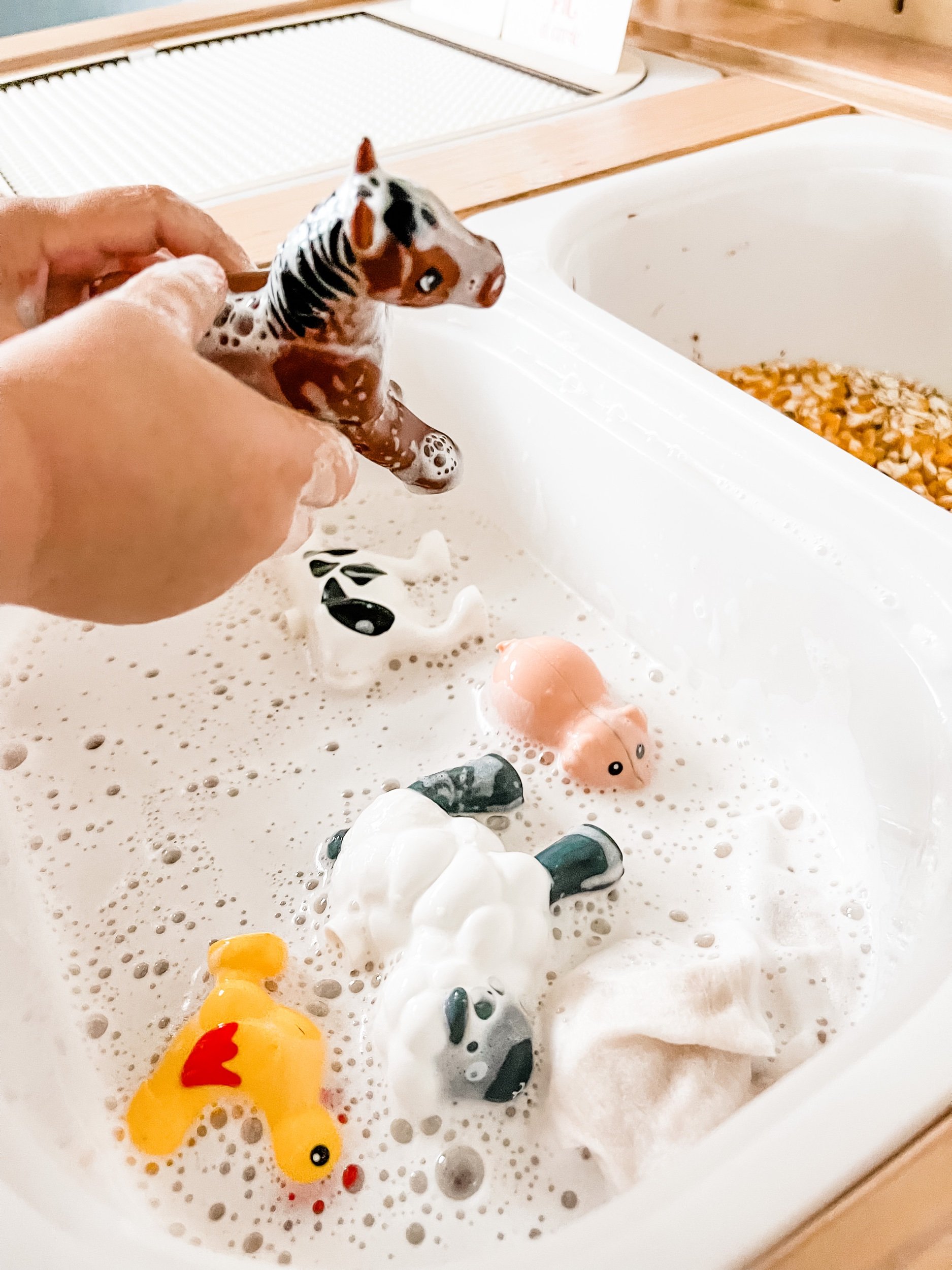
Step 4: Establish the washing station. Fill a tub or basin with water and place it nearby. Show the toddlers how to take the farm animal figurines to the washing station to clean them after playing in the mud.
Step 5: Encourage imaginative play. Encourage the toddlers to use their imagination and creativity to play and explore with the farm animal figurines in the sensory bin and washing station.
Week-Long Lesson Plan: Teach Toddlers About Farm Animal Life
Day 1: Introduction to farm animals and matching activity
Show the toddlers the farm animal flashcards and introduce them to the different animals.
Have them match the farm animal figurines to the flashcards.
Day 2: Sensory exploration in the mud
Set up the sensory bin and encourage the toddlers to explore the mud with the farm animal figurines.
Day 3: Cleaning time at the washing station
Show the toddlers how to take the farm animal figurines to the washing station to clean them after playing in the mud.
Day 4: Animal habitats and homes
Talk to the toddlers about where different farm animals live and what their homes look like.
Day 5: Farm animal sounds and movements
Show the toddlers videos or demonstrate the sounds and movements of different farm animals.
Day 6: Farm animal food and care
Talk to the toddlers about what different farm animals eat and how they are taken care of.
Day 7: Review and recap
Review what the toddlers have learned about farm animals throughout the week.
This farm animal sensory play activity provides an exciting and educational experience for toddlers, promoting their sensory, cognitive, and physical development. Incorporating this activity into your lesson plans will allow toddlers to learn about farm animals in a fun and interactive way.
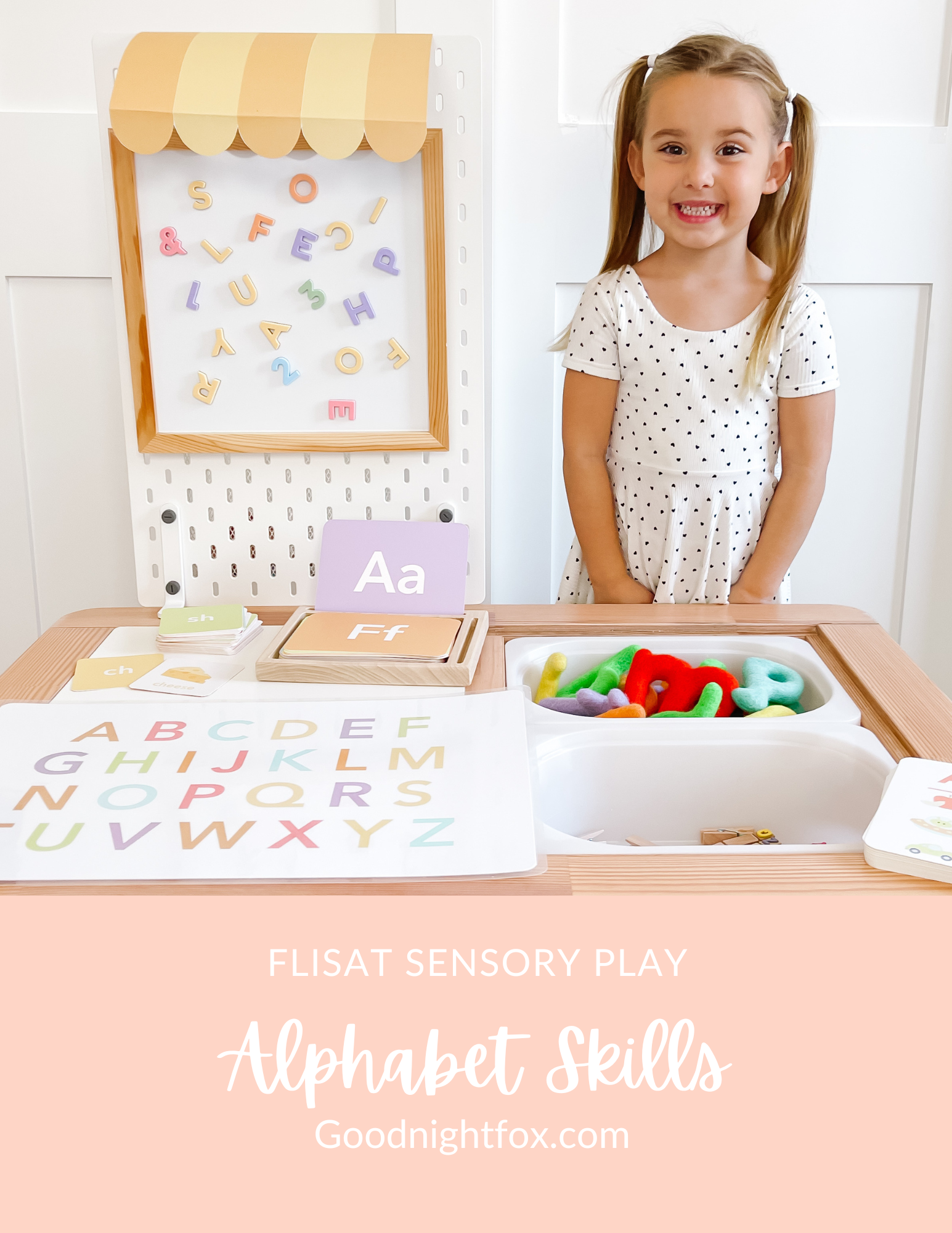

Are you looking for engaging and effective ways to teach your toddler the alphabet? Look no further! Alphabet letter sensory play activities are not only fun and interactive but also highly beneficial for early learning and education in preschoolers. In this blog post, we'll explore the advantages of sensory play for learning and the alphabet's crucial aspects, and we'll provide three exciting sensory bin activities to help your child practice letter learning.

Sensory play involves using the senses (sight, touch, smell, taste, and hearing) to explore and engage with the surrounding environment. It is widely recognized by educators and child development experts as a valuable tool for early learning. Here are some key benefits of sensory play:
1. Cognitive Development: Sensory play stimulates a child's brain by encouraging them to think, problem-solve, and make connections. It helps enhance memory, cognitive skills, and promotes critical thinking.
2. Fine Motor Skills: Engaging in sensory activities like manipulating objects, pouring, pinching, and picking up items enhances fine motor skills, hand-eye coordination, and strengthens finger muscles.
3. Language Development: Sensory play provides opportunities for children to express themselves verbally and non-verbally. It fosters vocabulary development and communication skills through conversations and interactive play.
4. Sensory Integration: Sensory play helps children integrate sensory information from their environment. It aids in sensory processing, self-regulation, and developing body awareness.
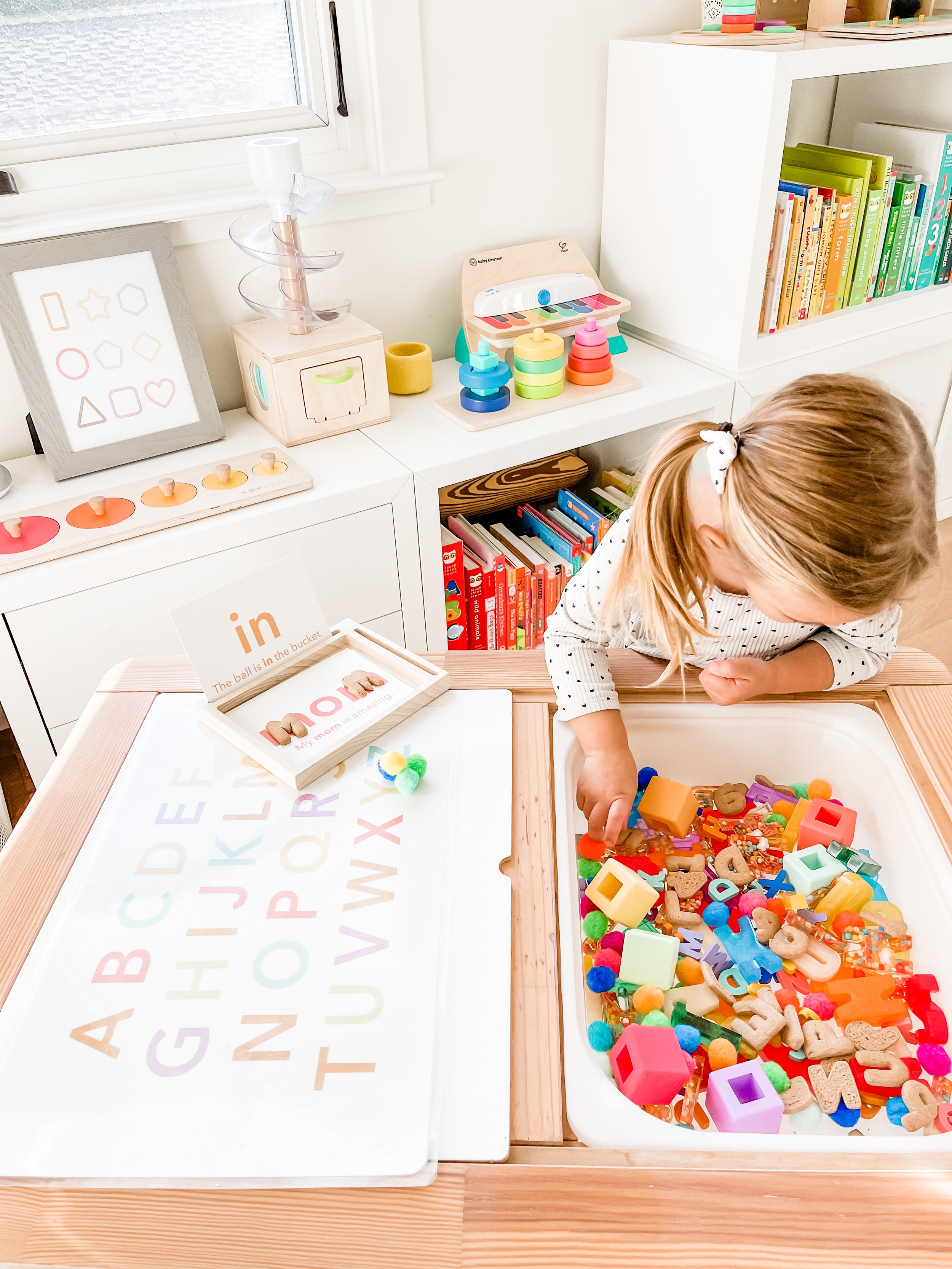
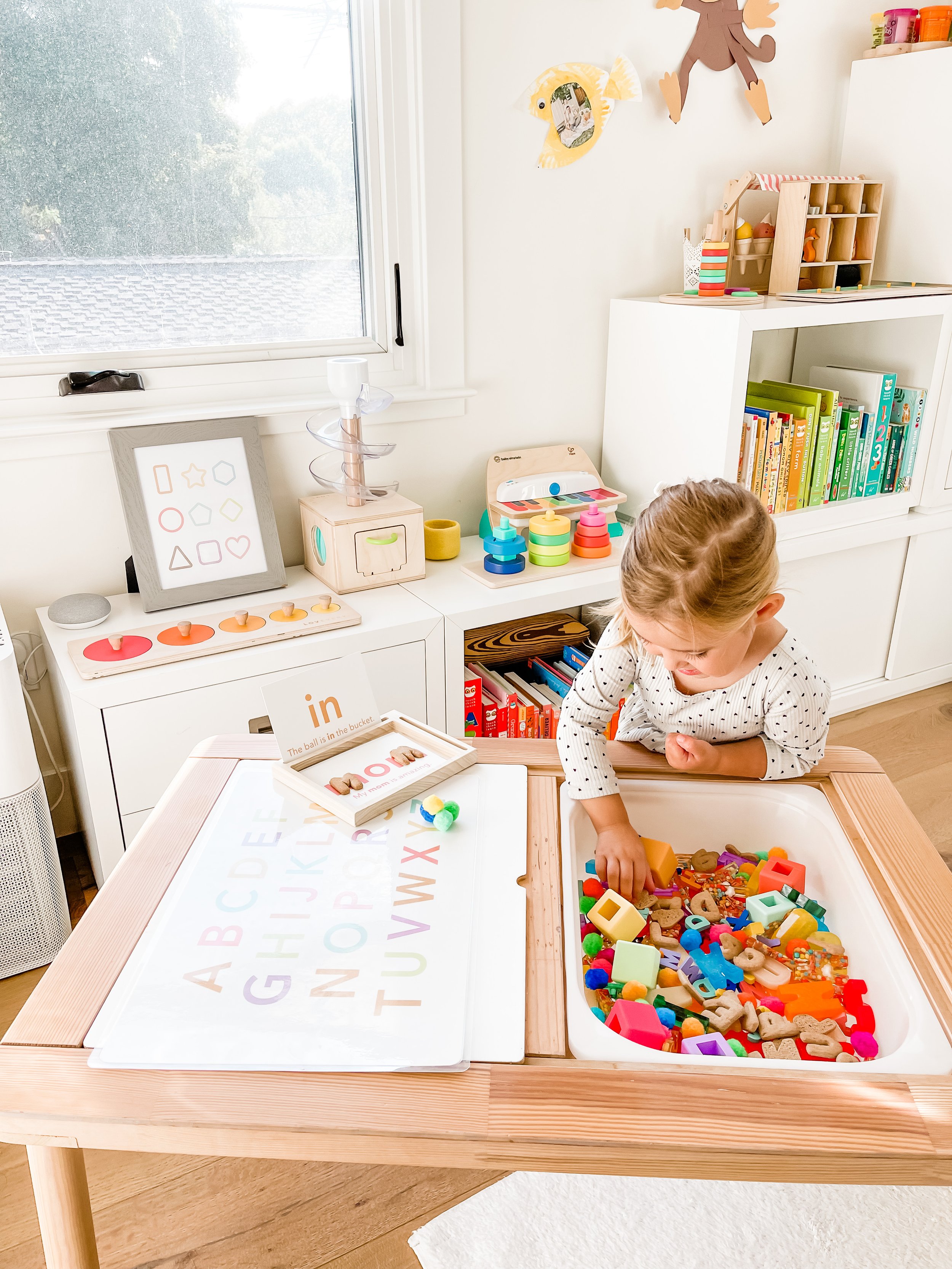
Learning the alphabet at an early age forms the foundation for future literacy skills. It sets the stage for successful reading, writing, and communication abilities. Here are the key aspects of learning the alphabet:
1. ABC Song: Singing the catchy ABC song not only captures children's attention but also helps them remember the order of the letters.
2. Letter Recognition: Recognizing and identifying each letter is essential for reading and writing. Sensory play activities can help reinforce letter recognition skills.
3. Upper and Lower Case Letter Recognition: Learning to distinguish between uppercase and lowercase letters is crucial for spelling and writing correctly.
4. Letter Sequencing: Understanding the order of letters is an important skill that aids reading and writing fluency.
5. Letter Sounds: Associating each letter with its corresponding sound enhances phonemic awareness and promotes early reading skills.
6. Letter Sound Blending: Making a continuous sound out of two or more letters such as /c/ /a/ /t/ makes CAT.
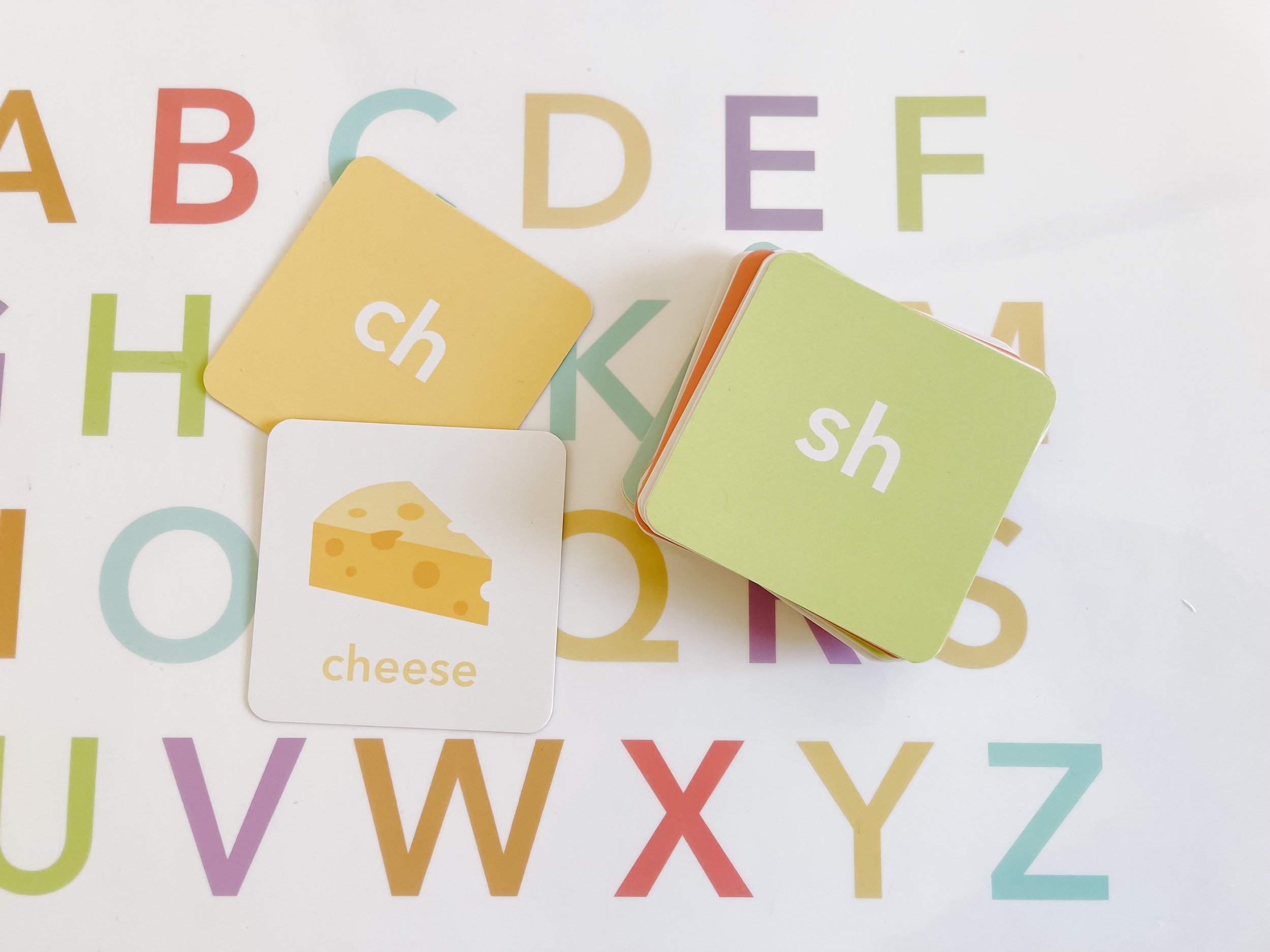
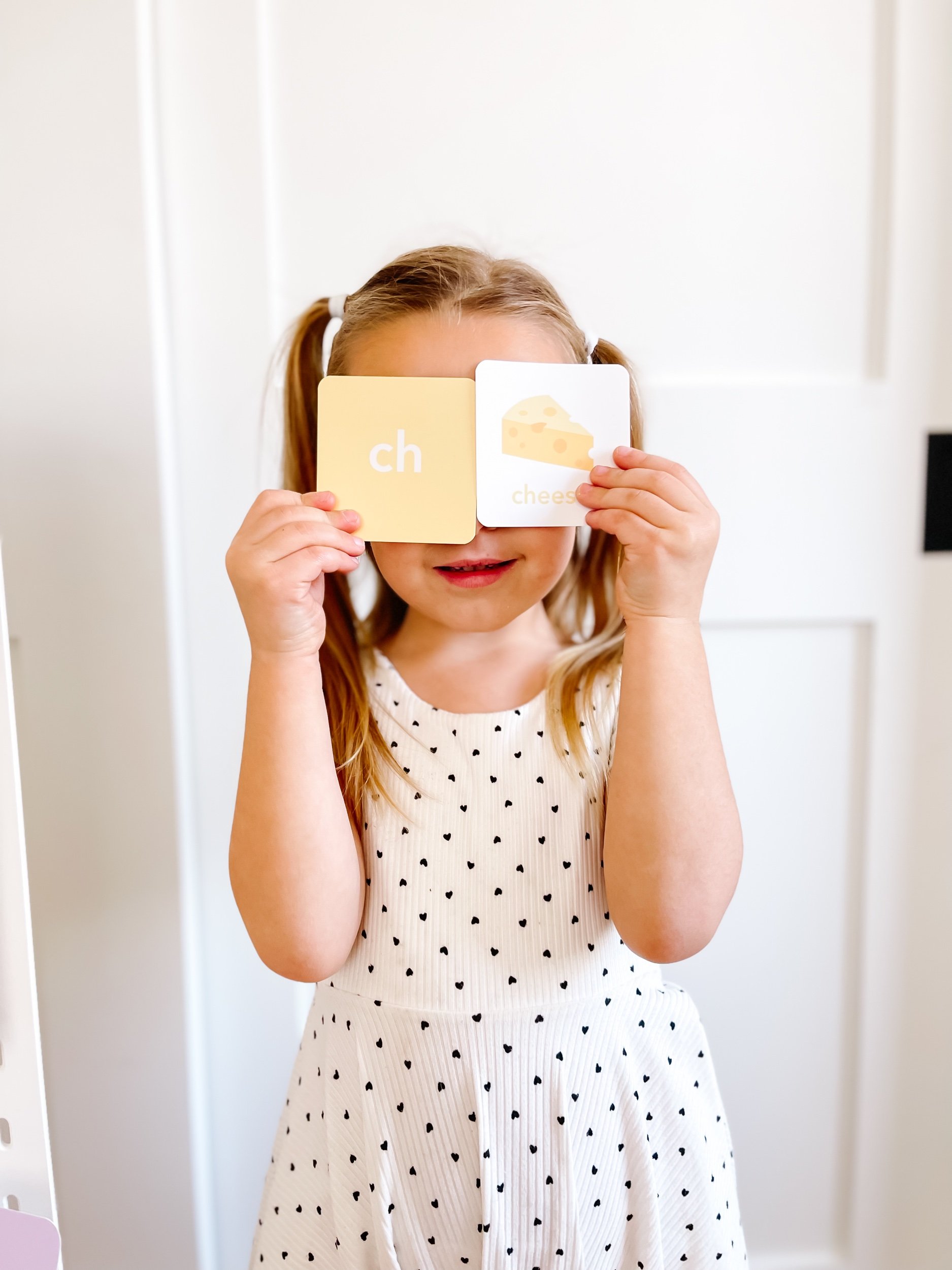
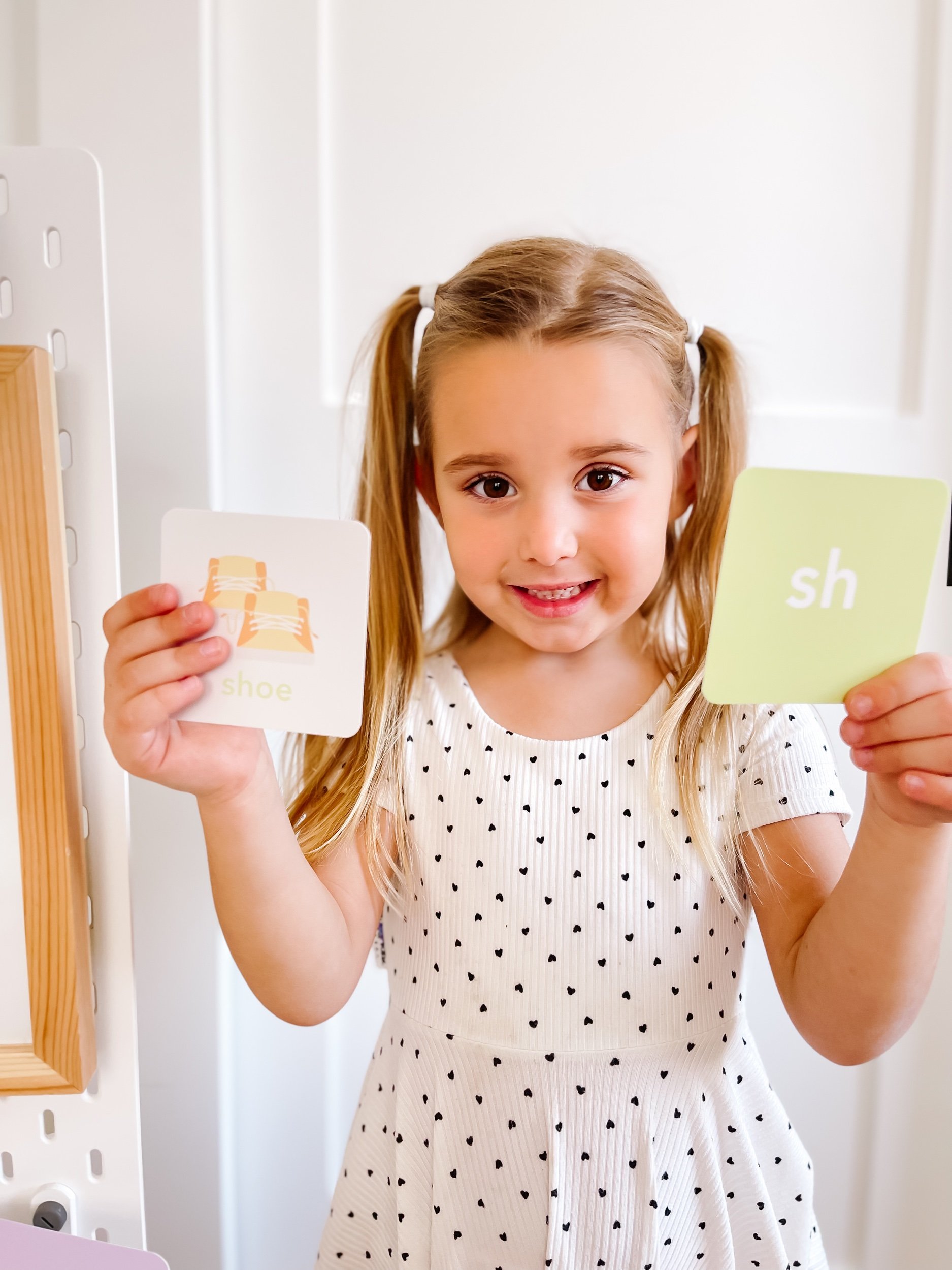
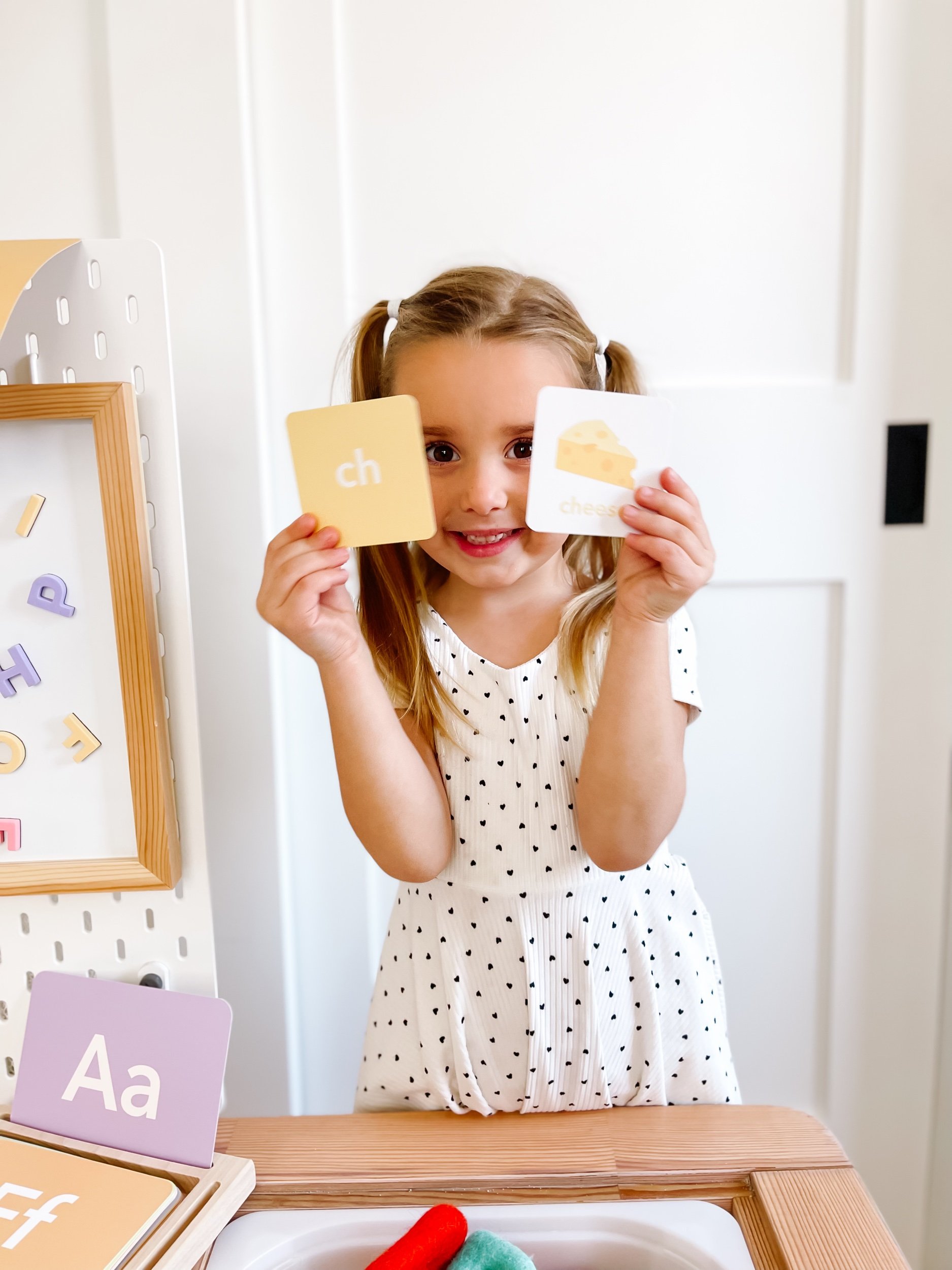
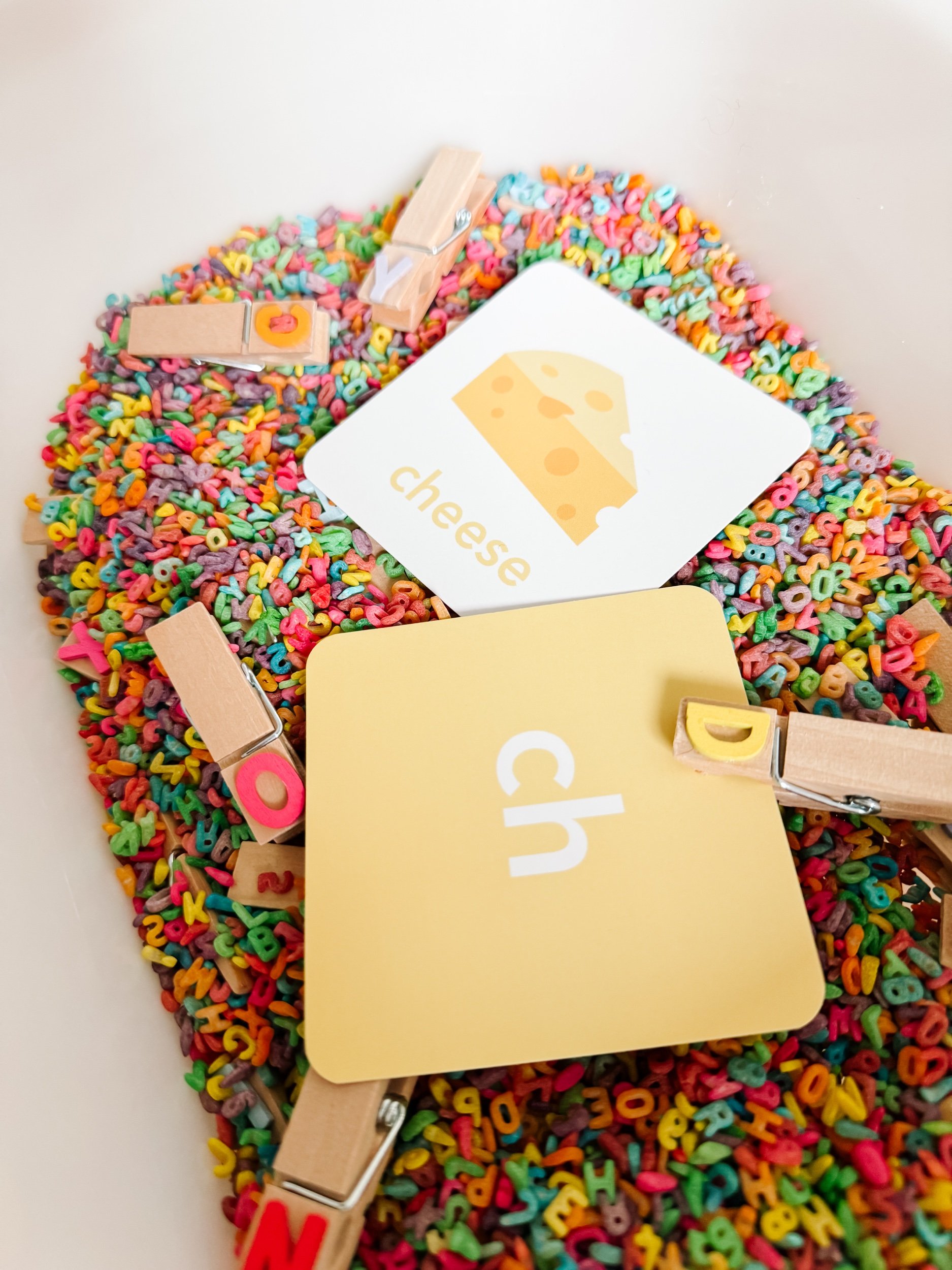
7. Digraphs: Learning the unique sounds that two letters make together such as TH and NG.
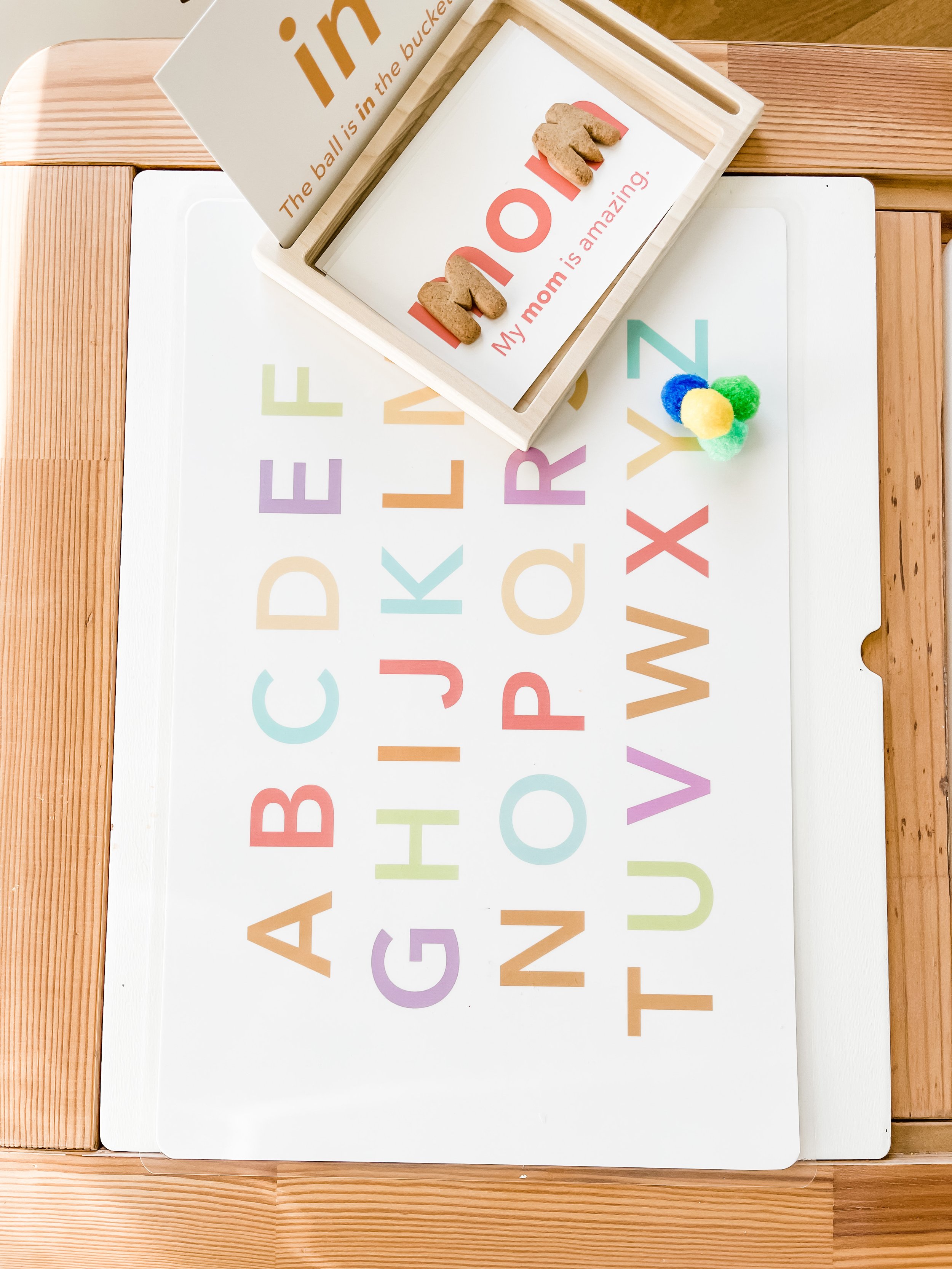
Now, let's dive into six exciting sensory bin activities that will engage your child in hands-on letter learning:
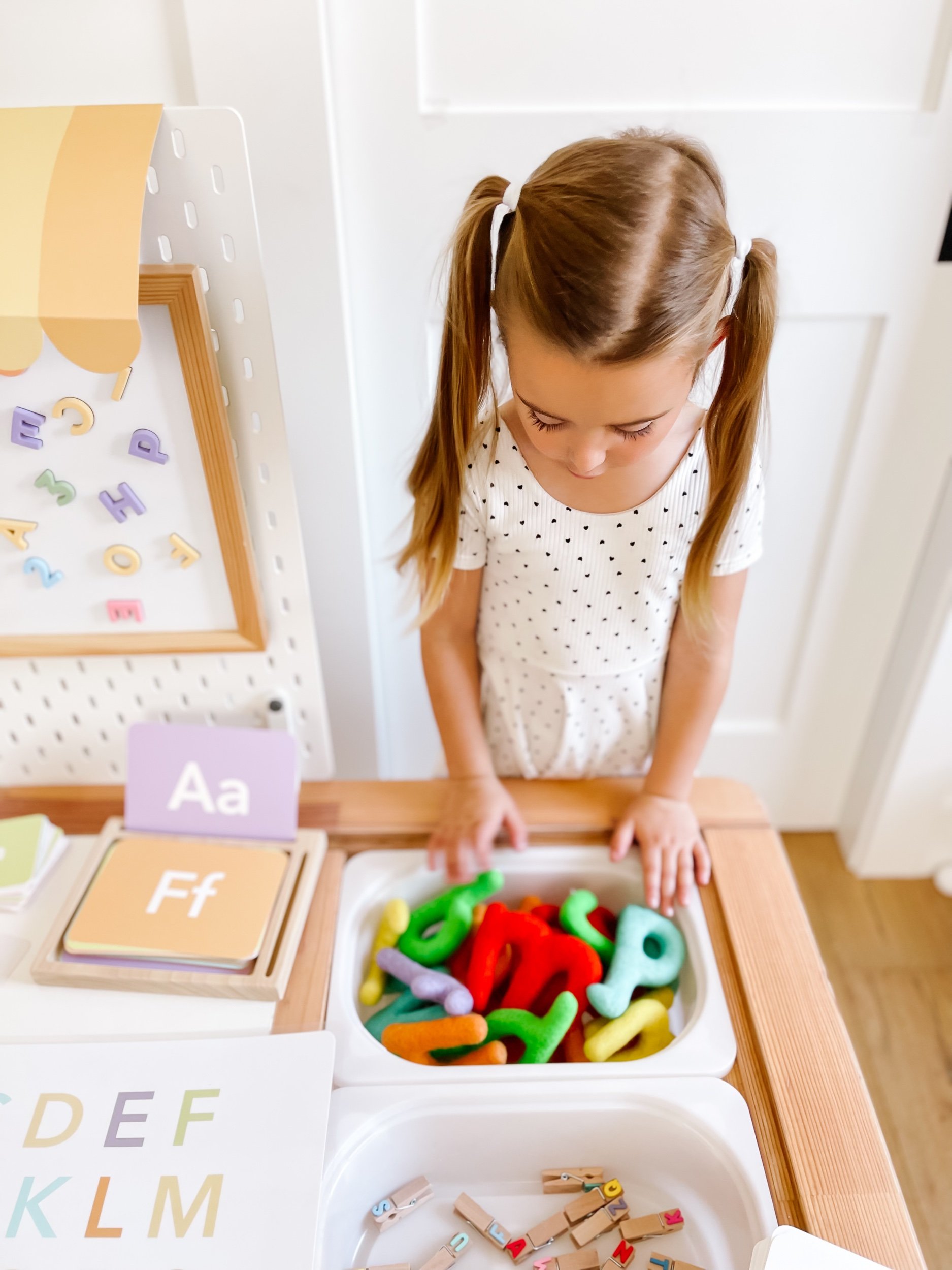
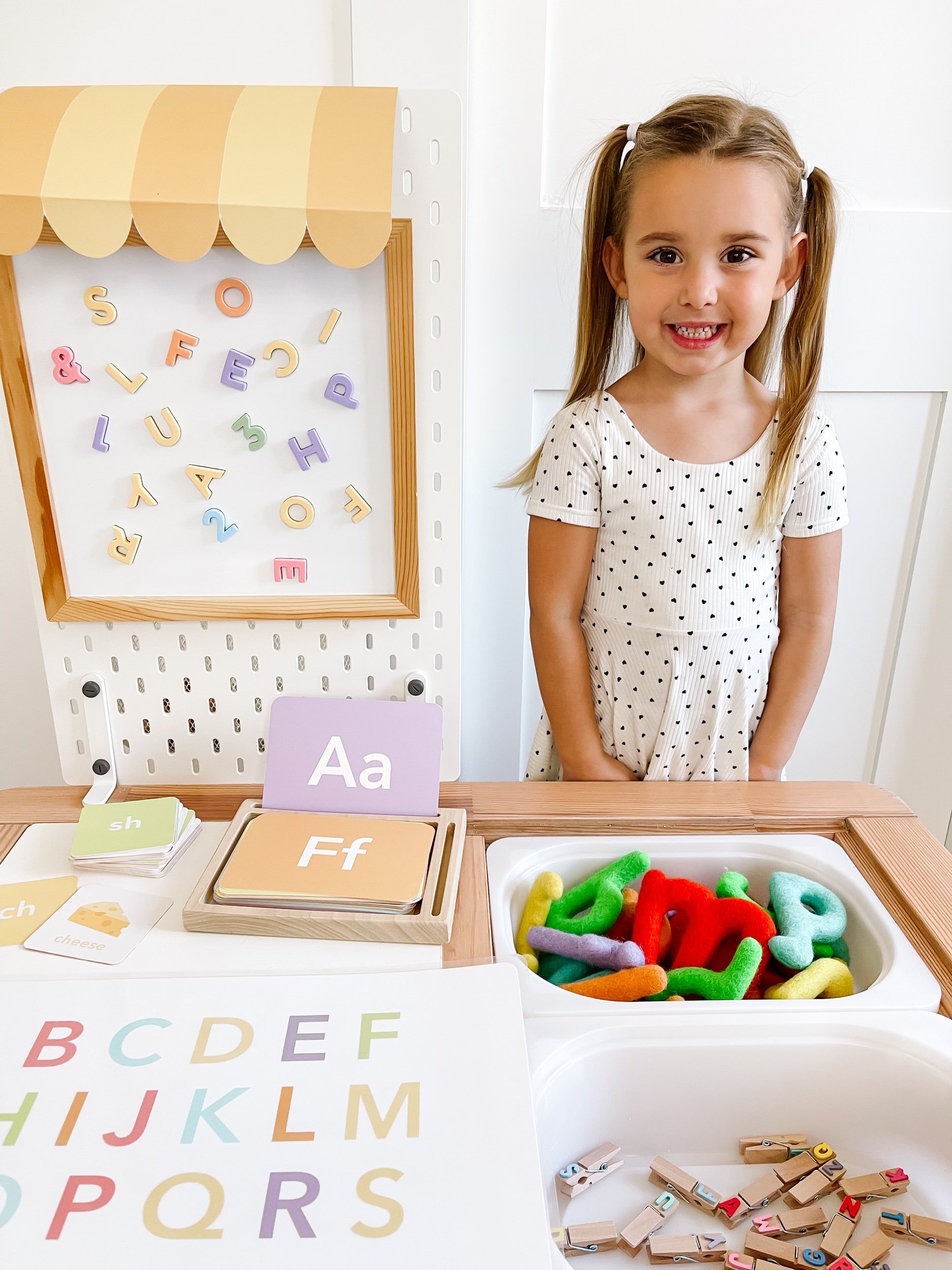
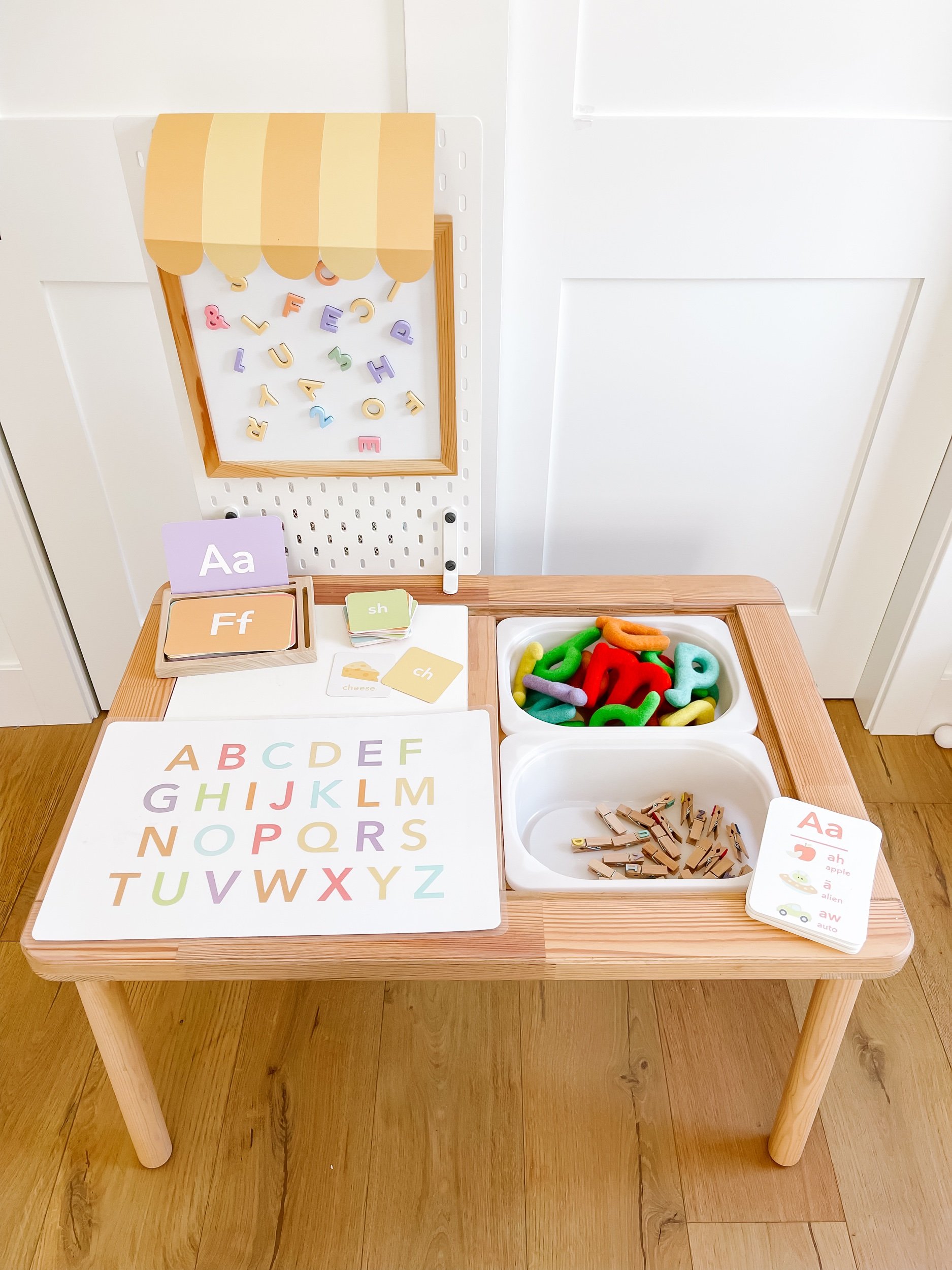
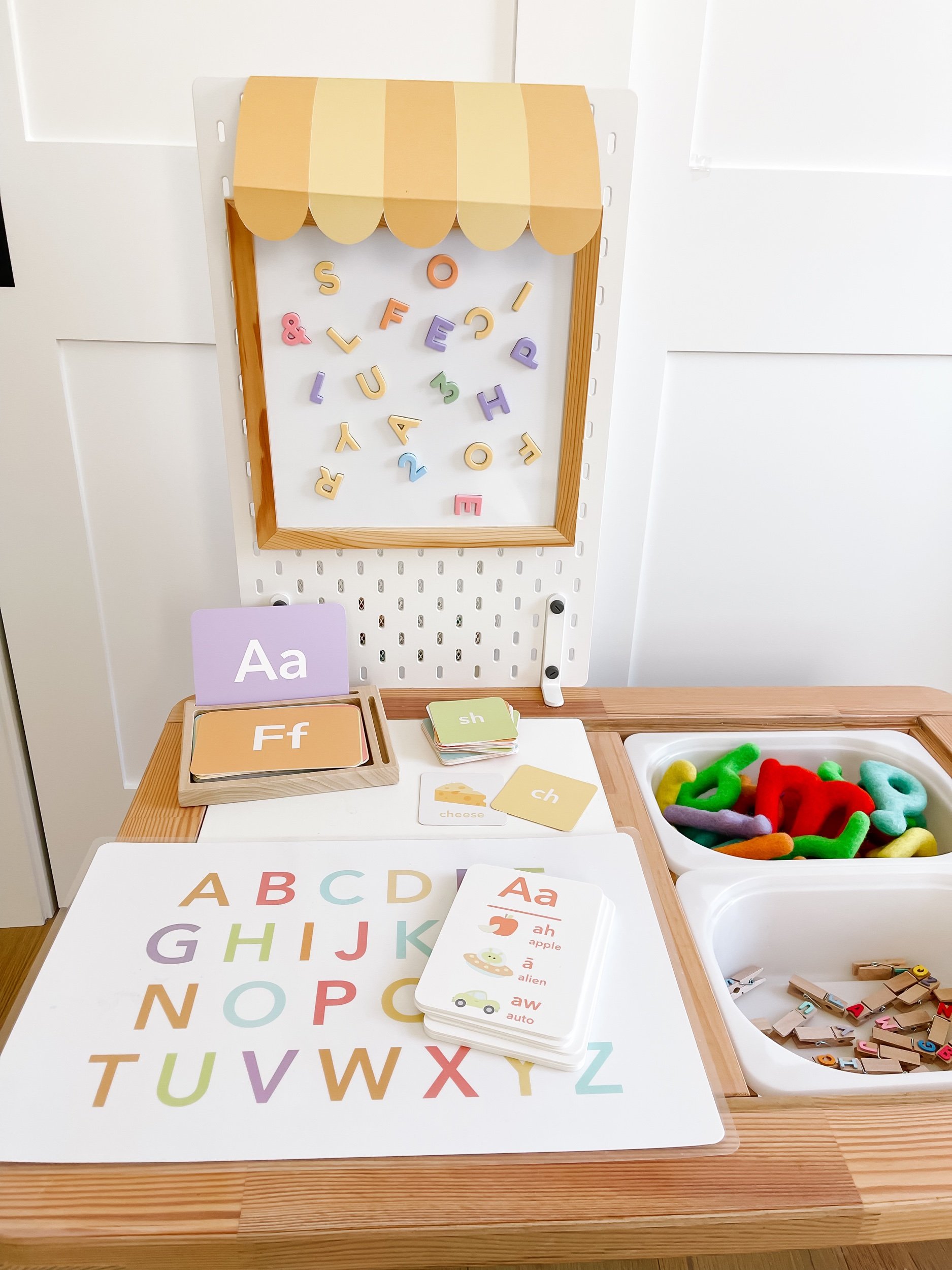
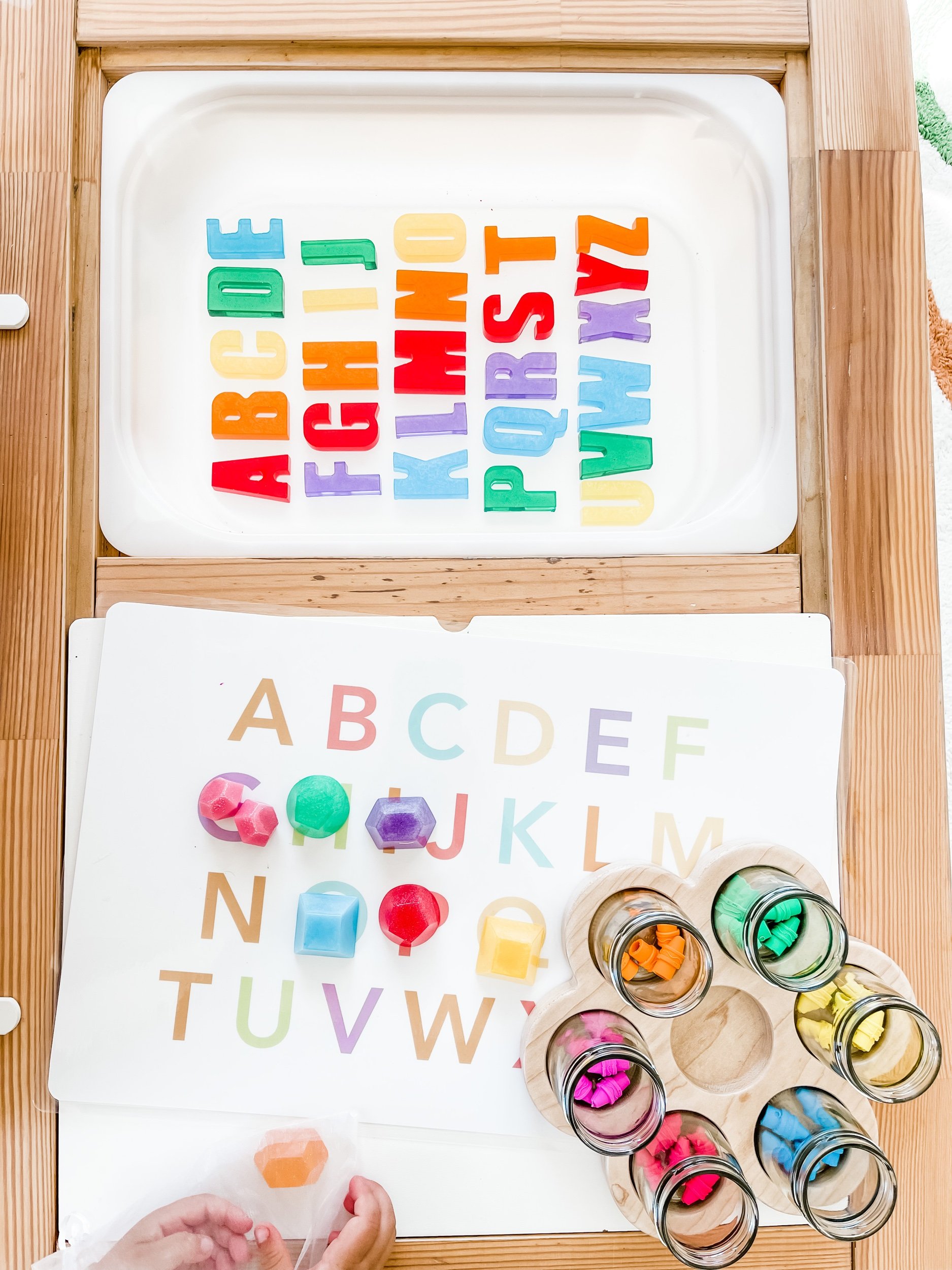
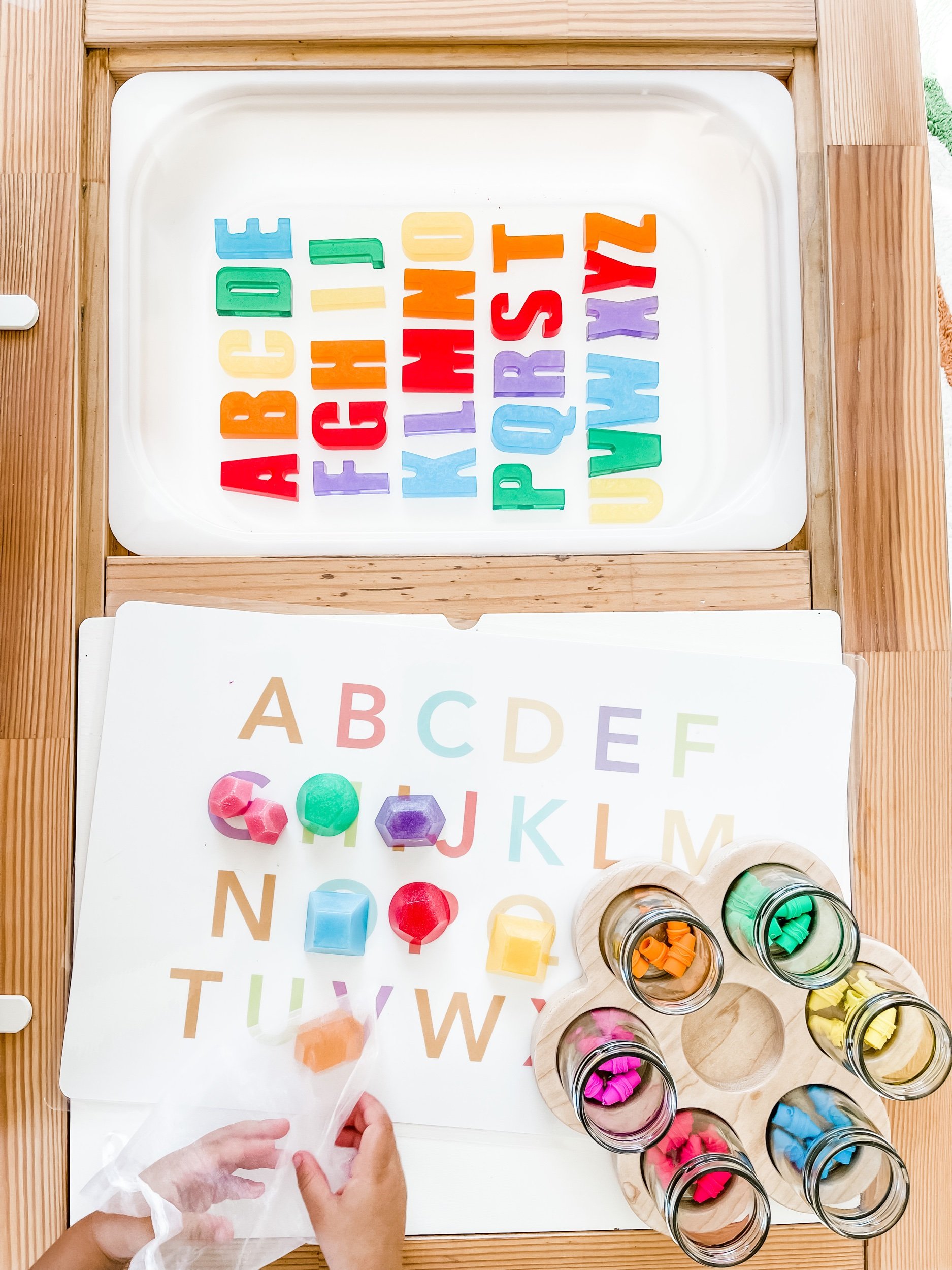
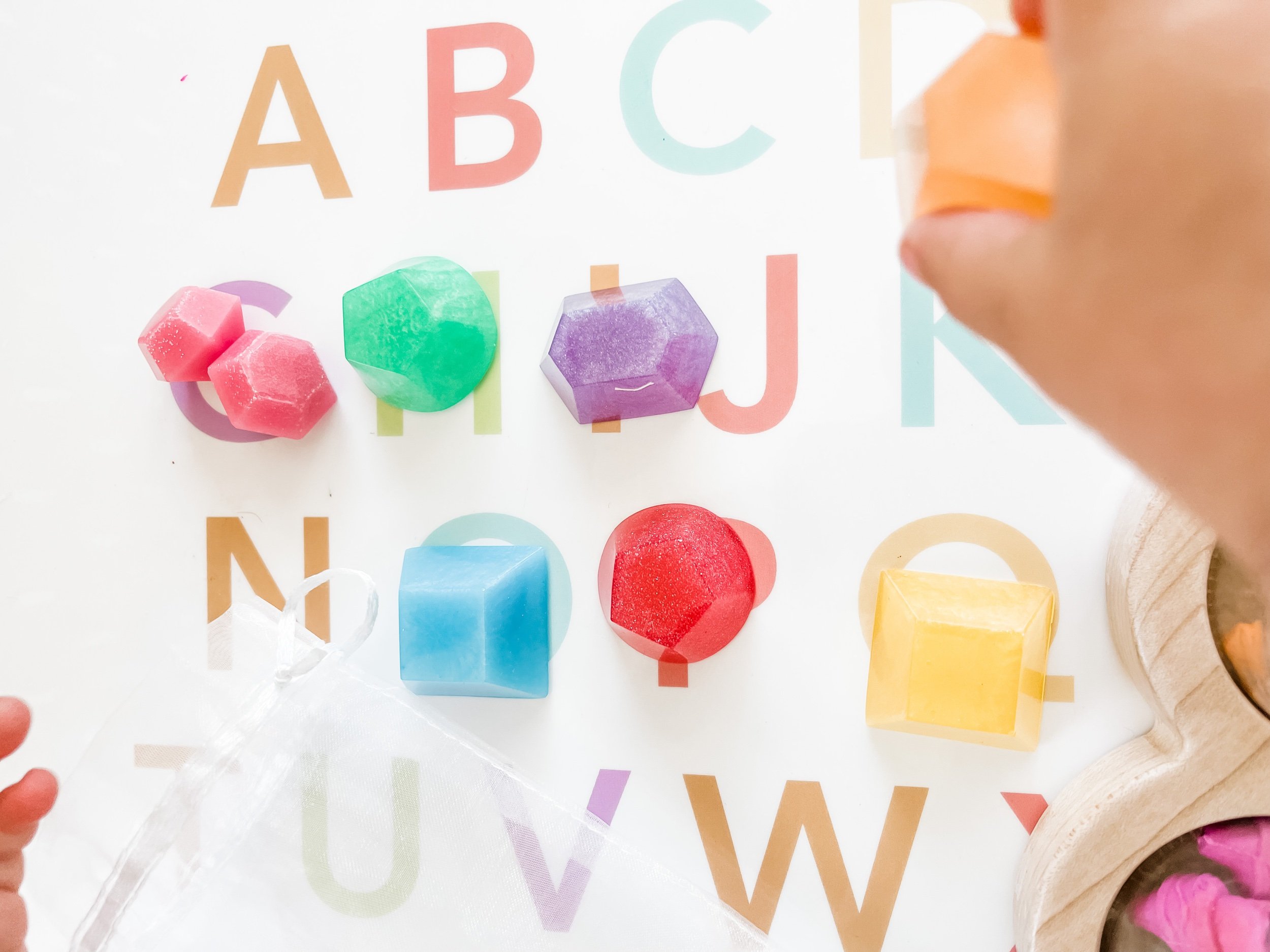
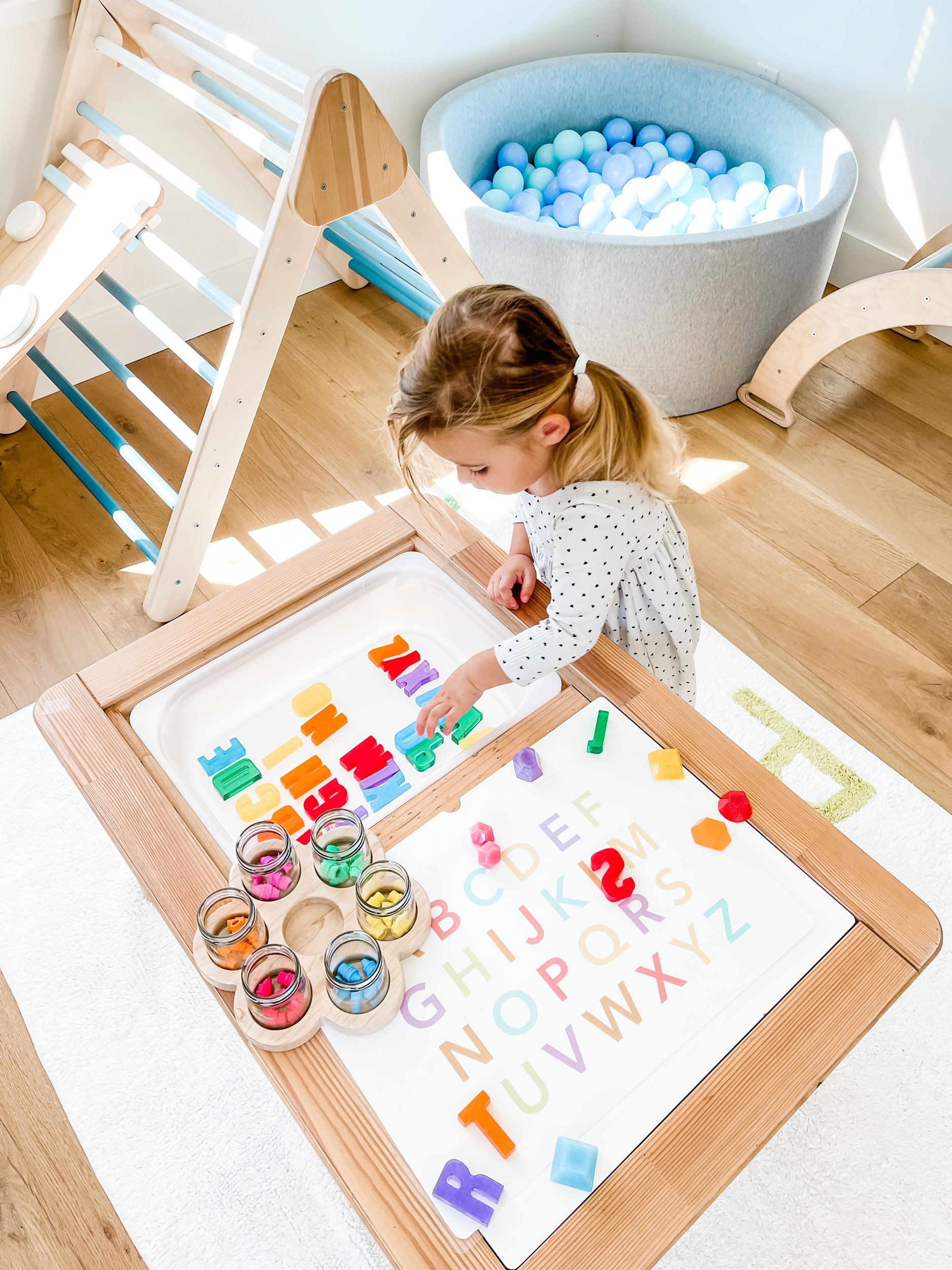
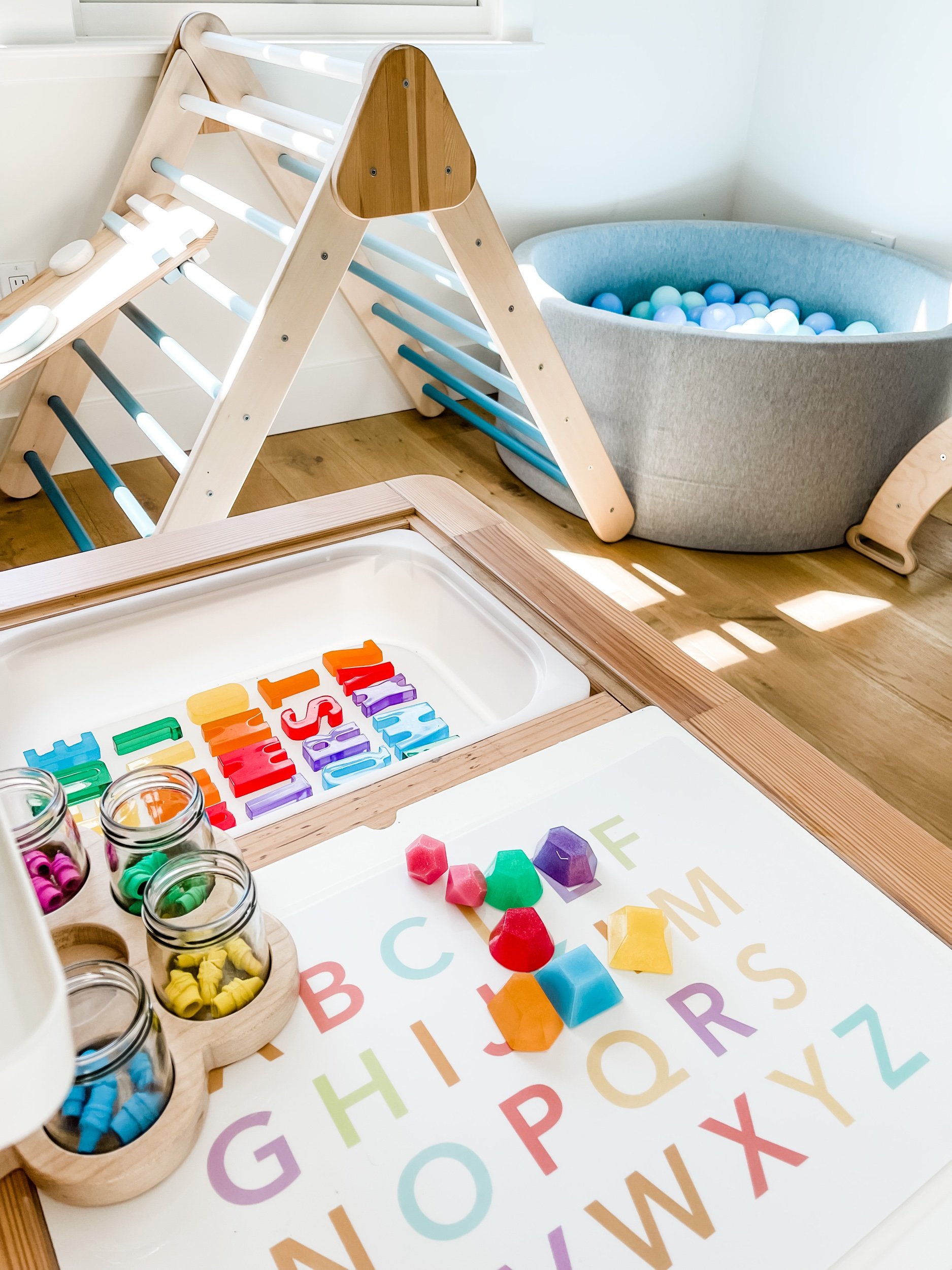
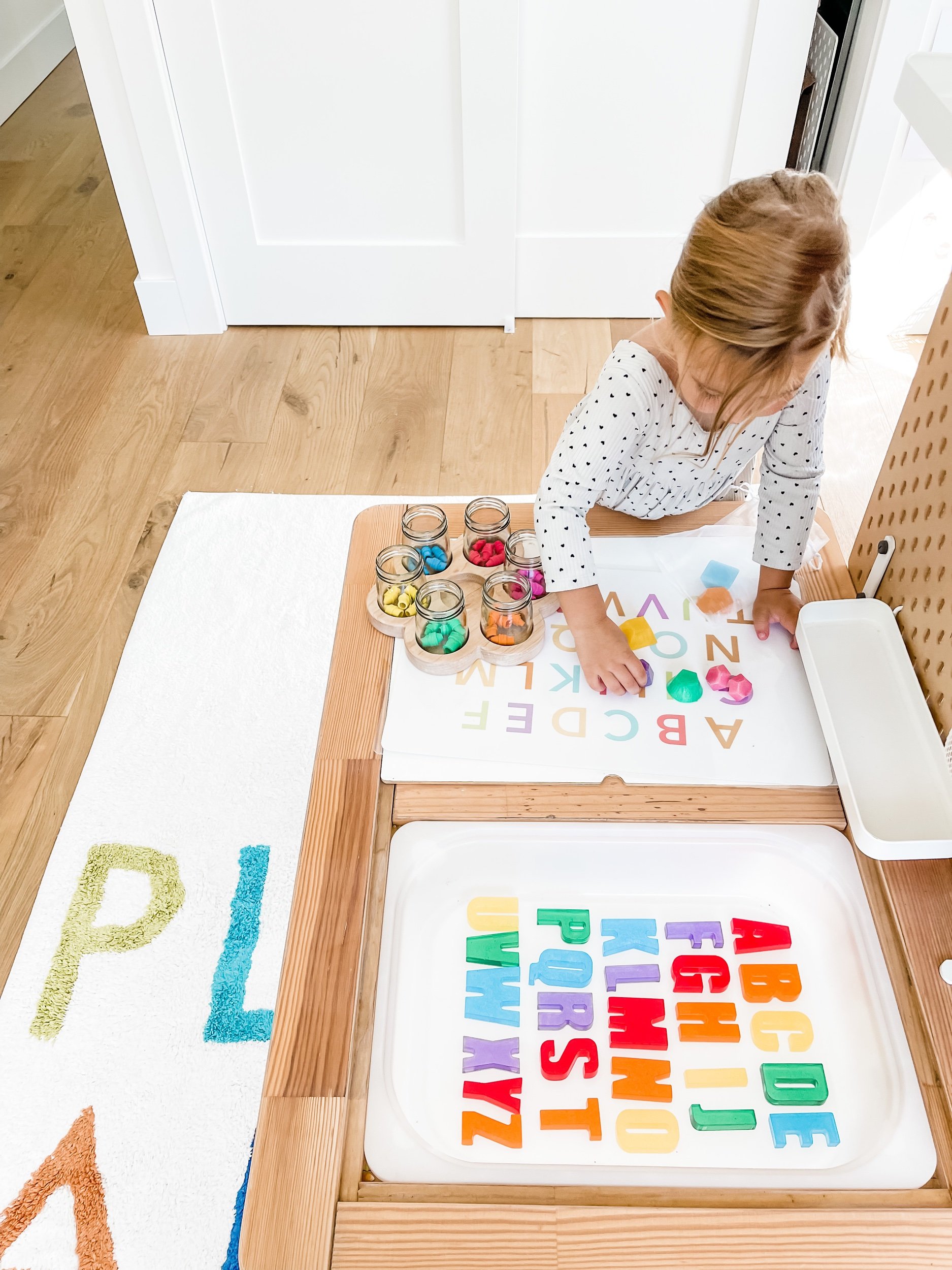
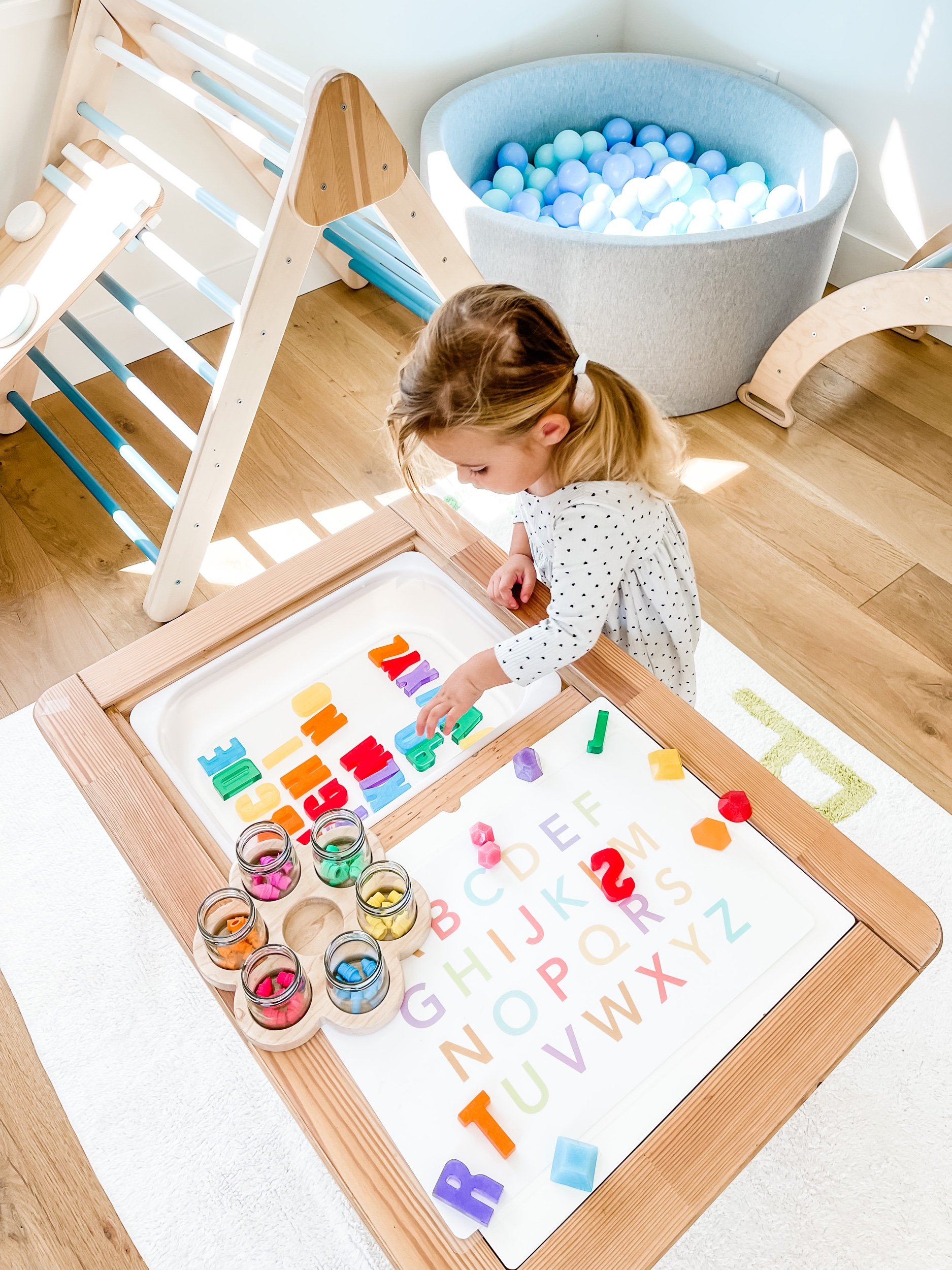
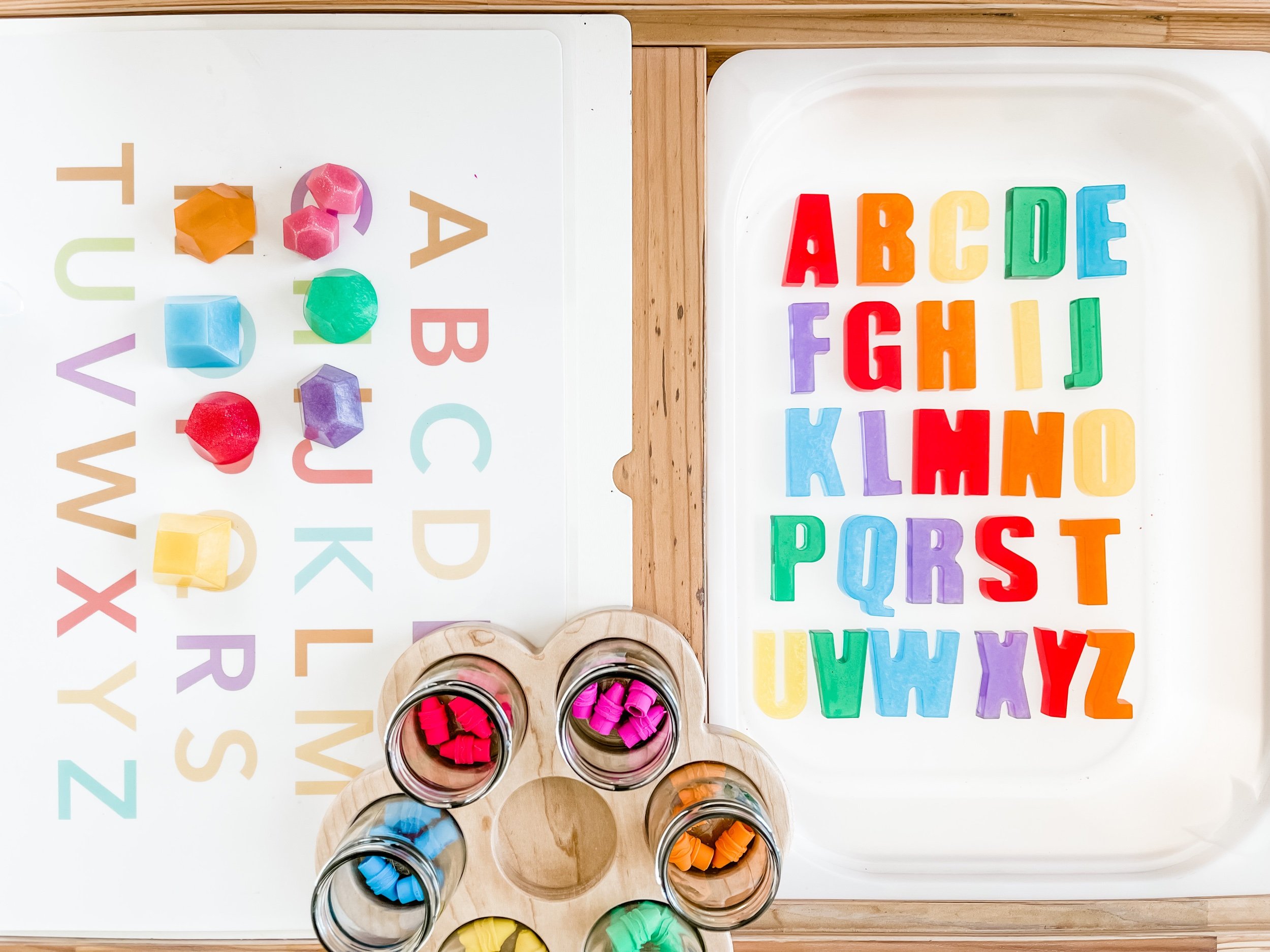
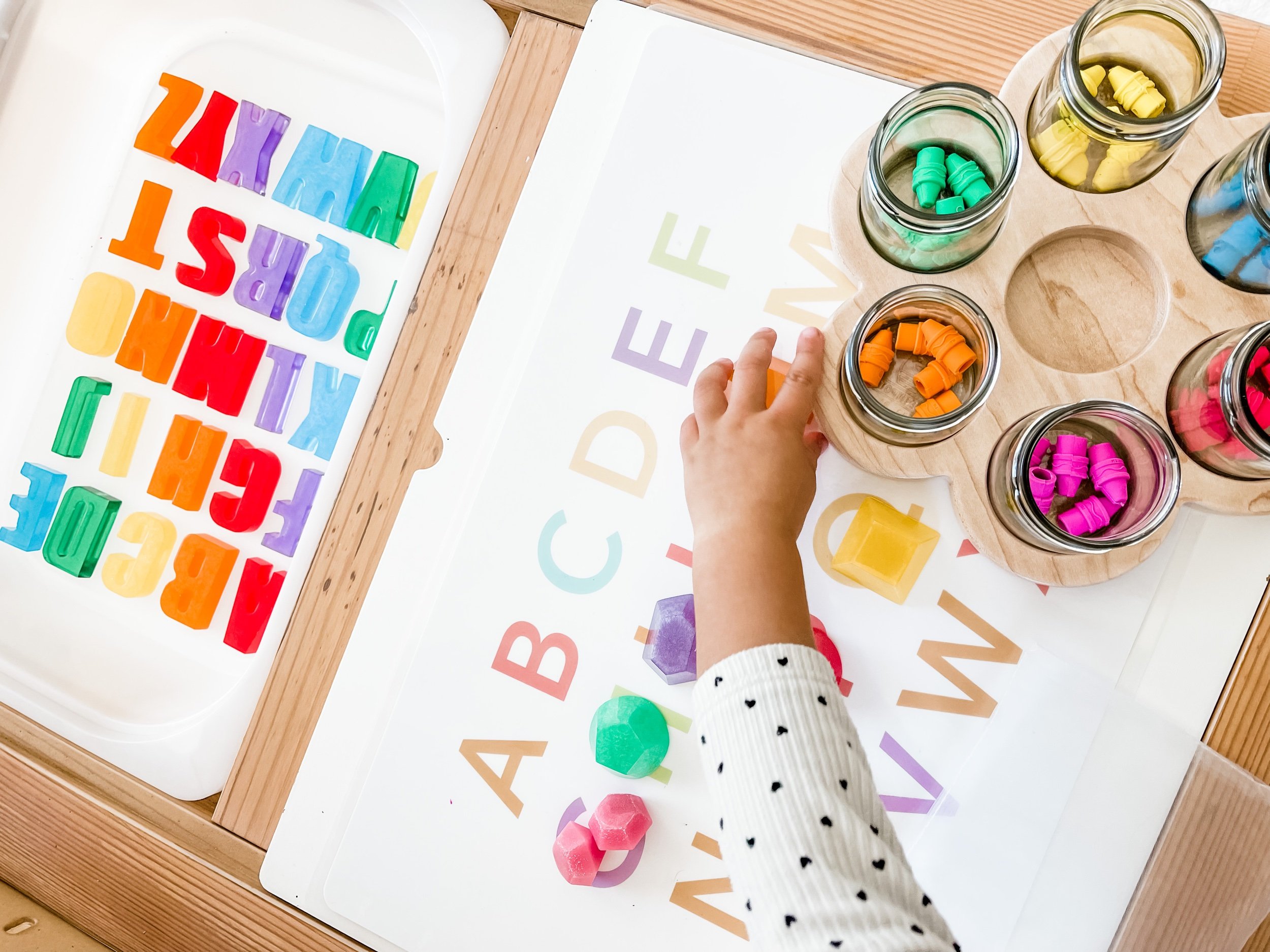
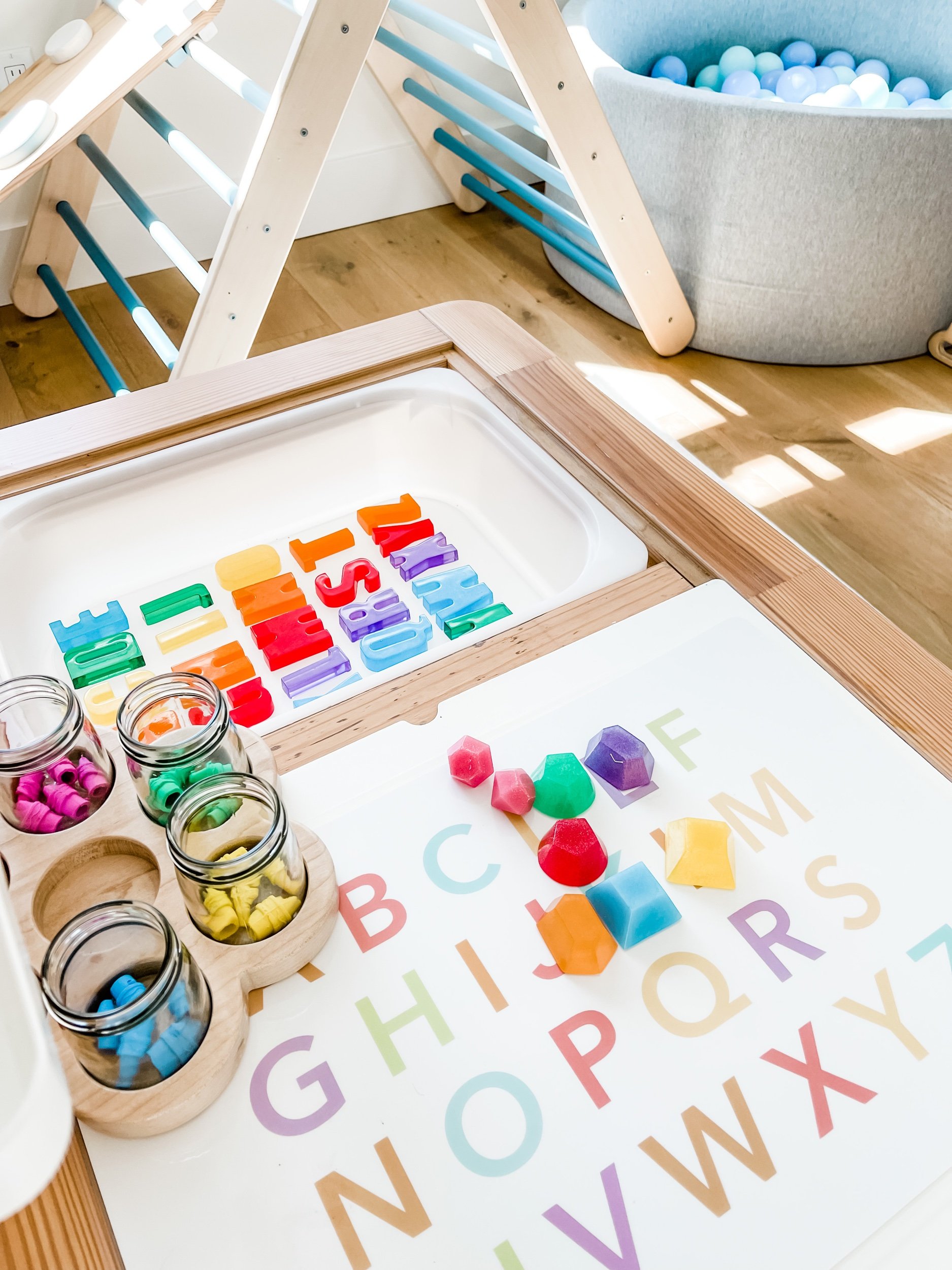
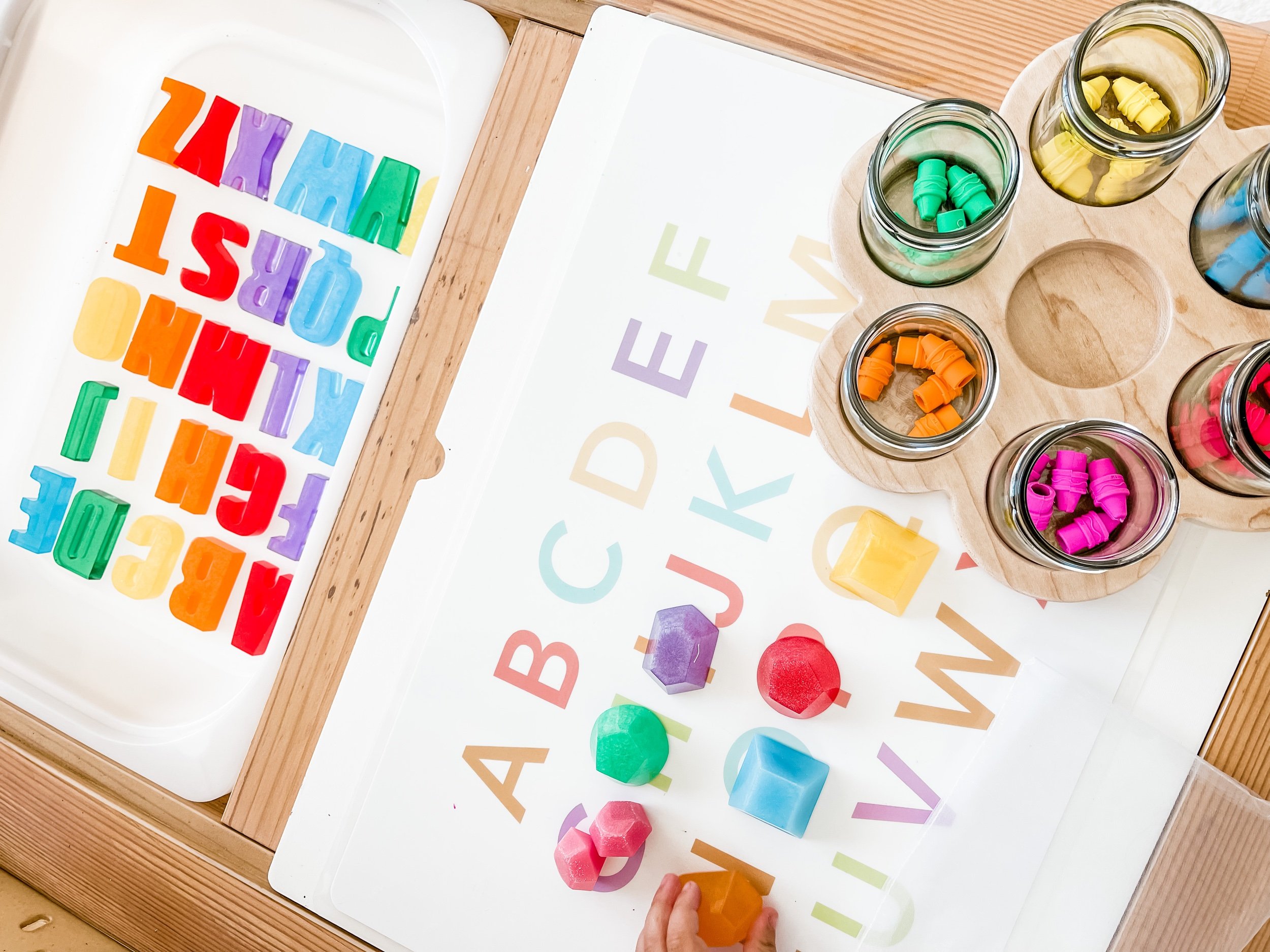
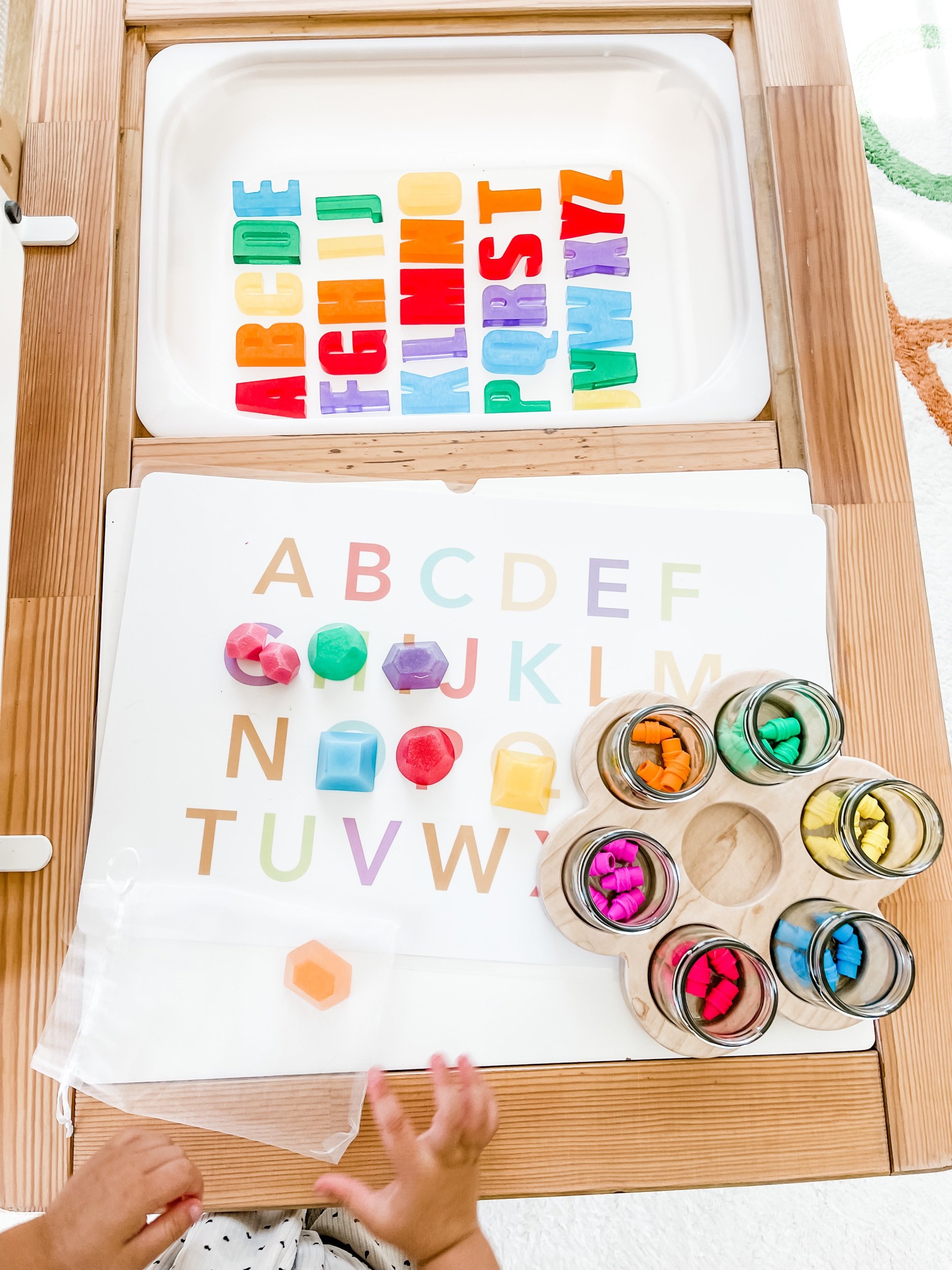
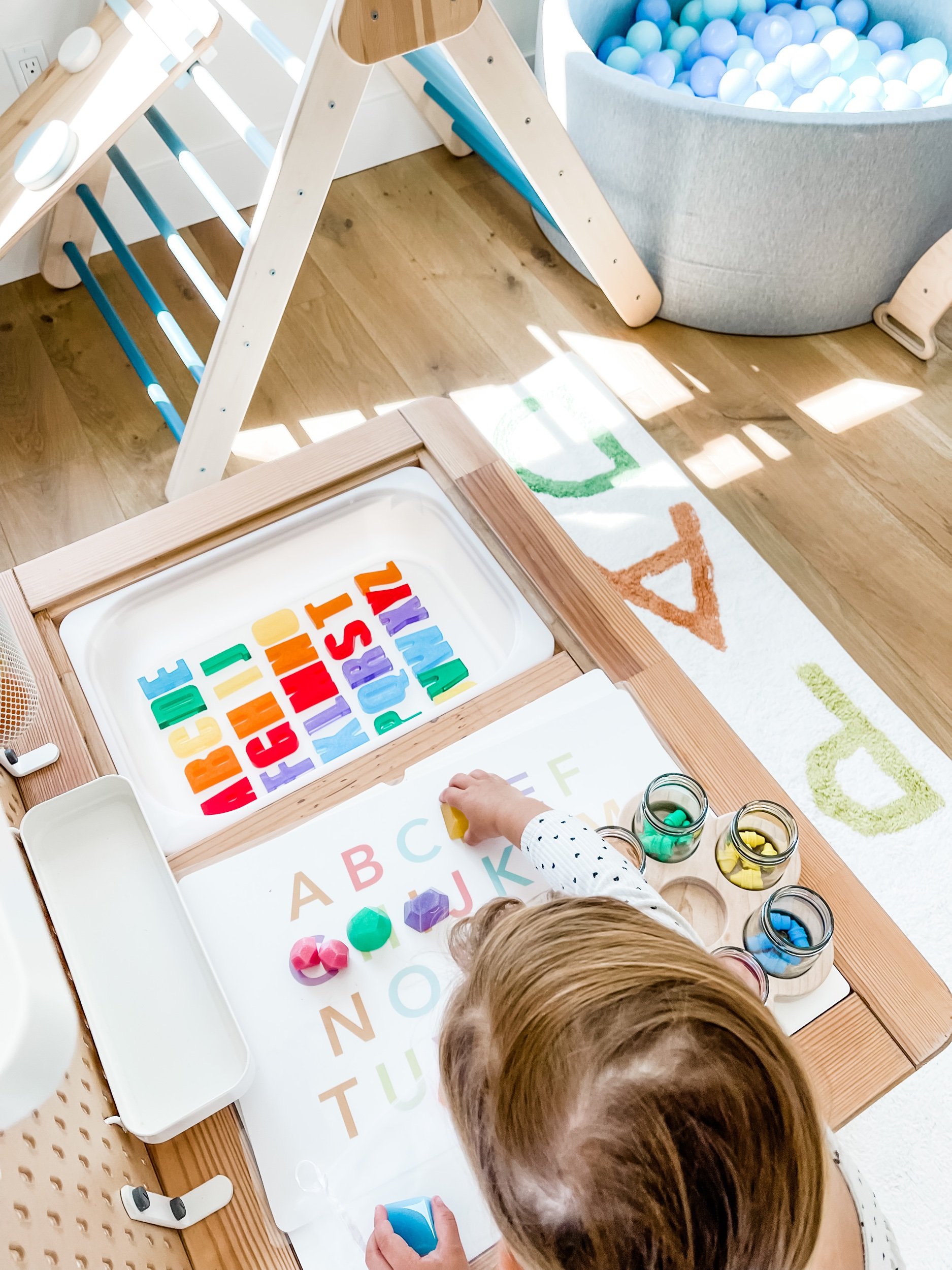
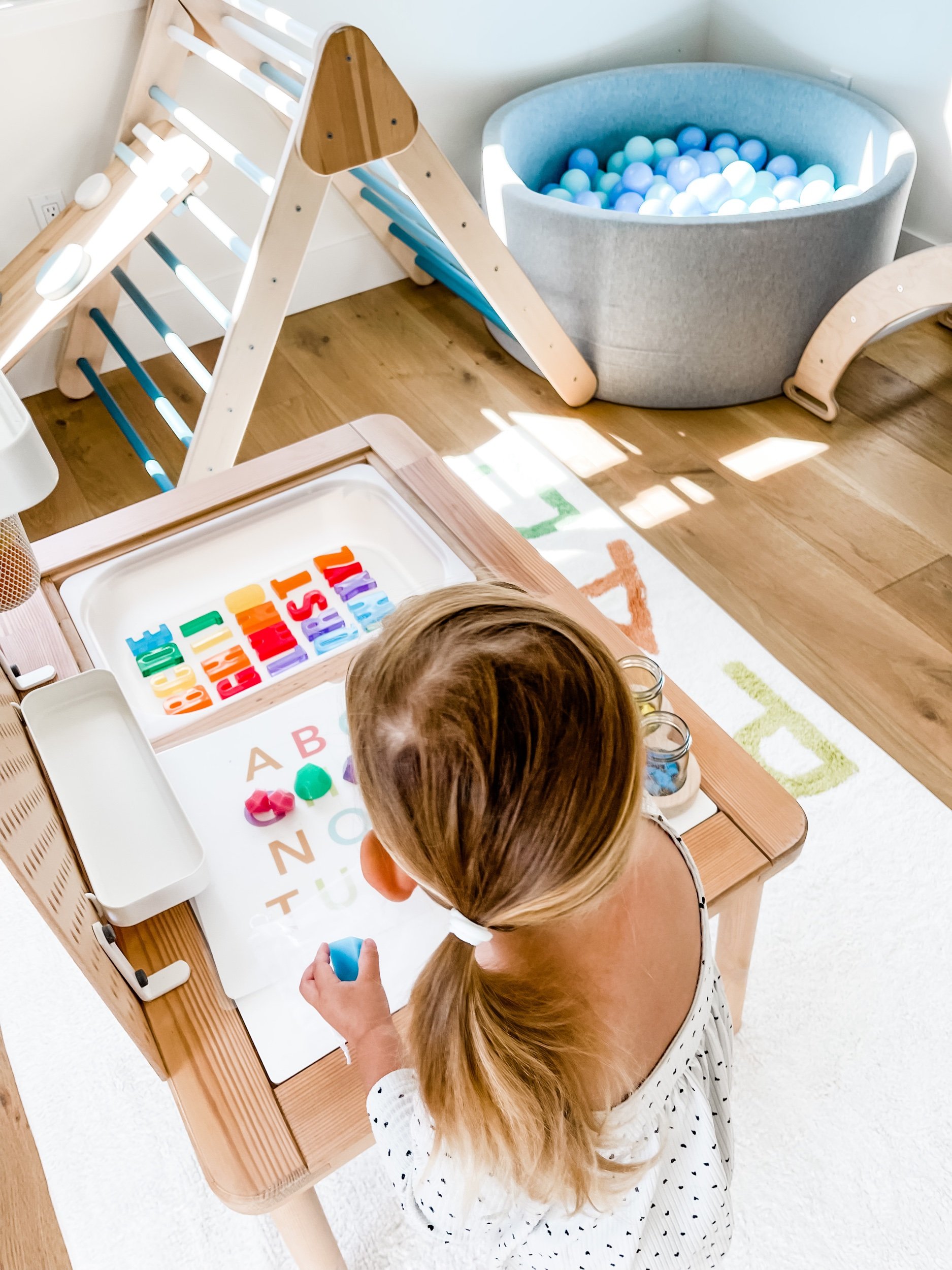
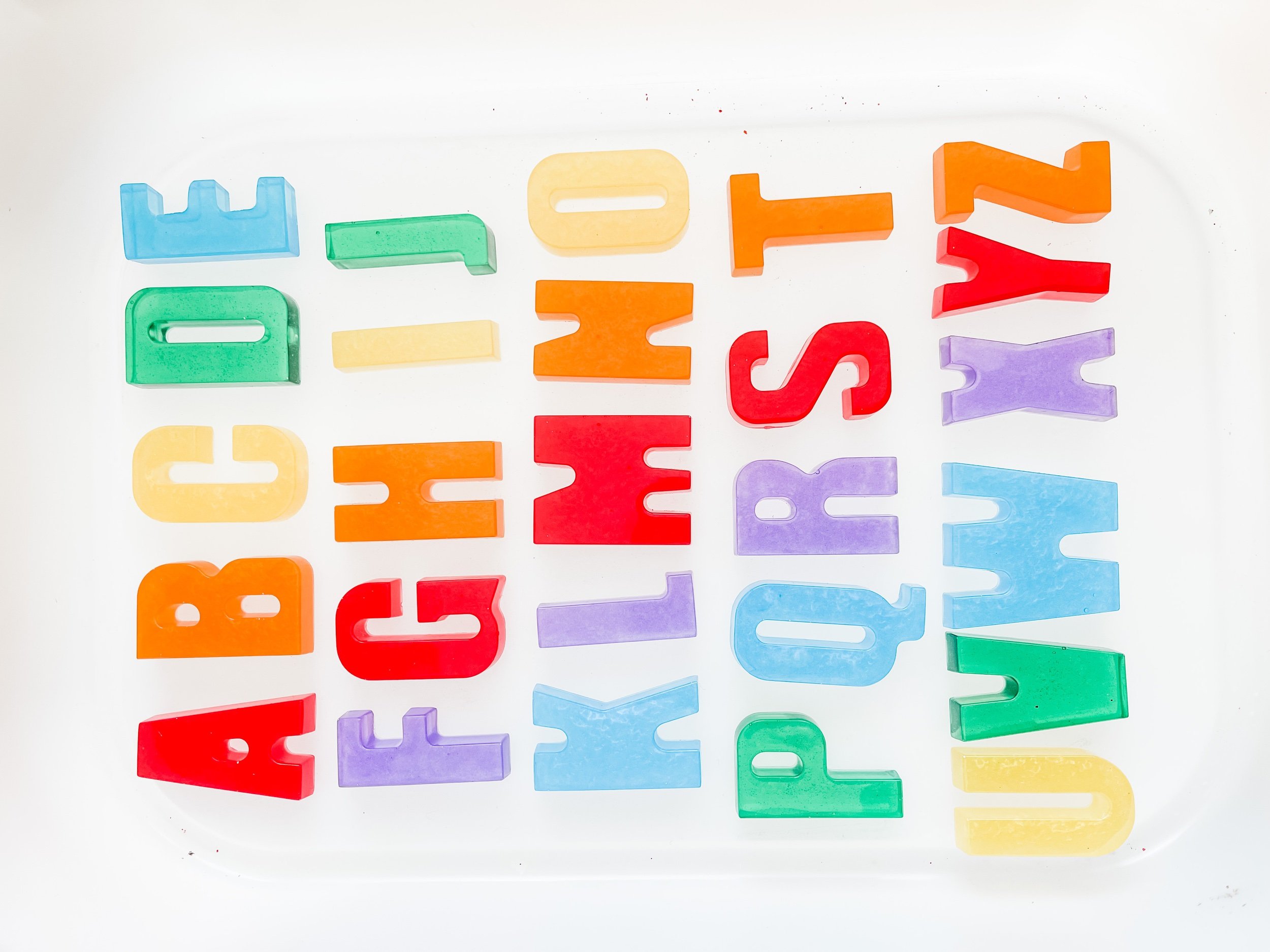
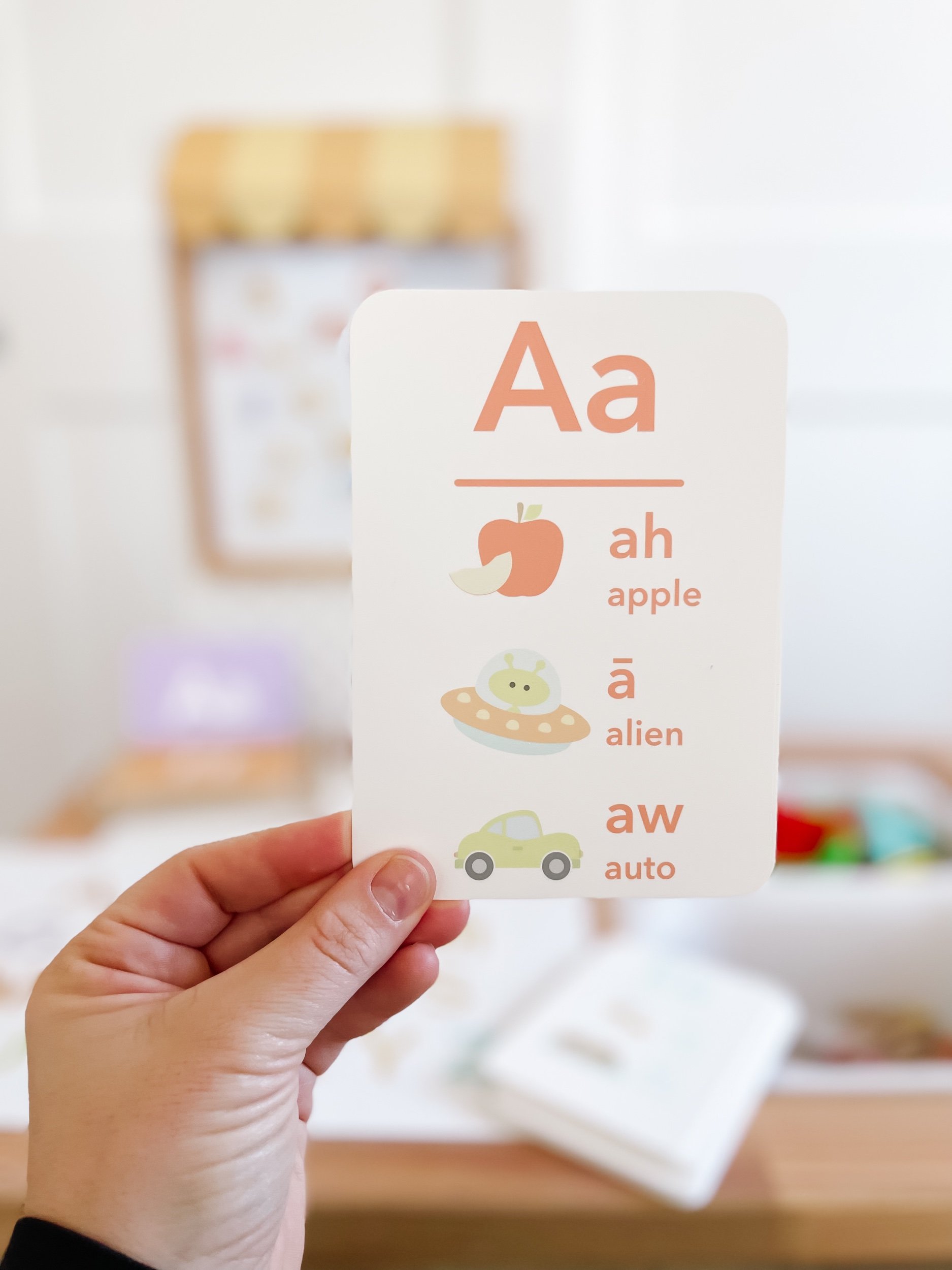
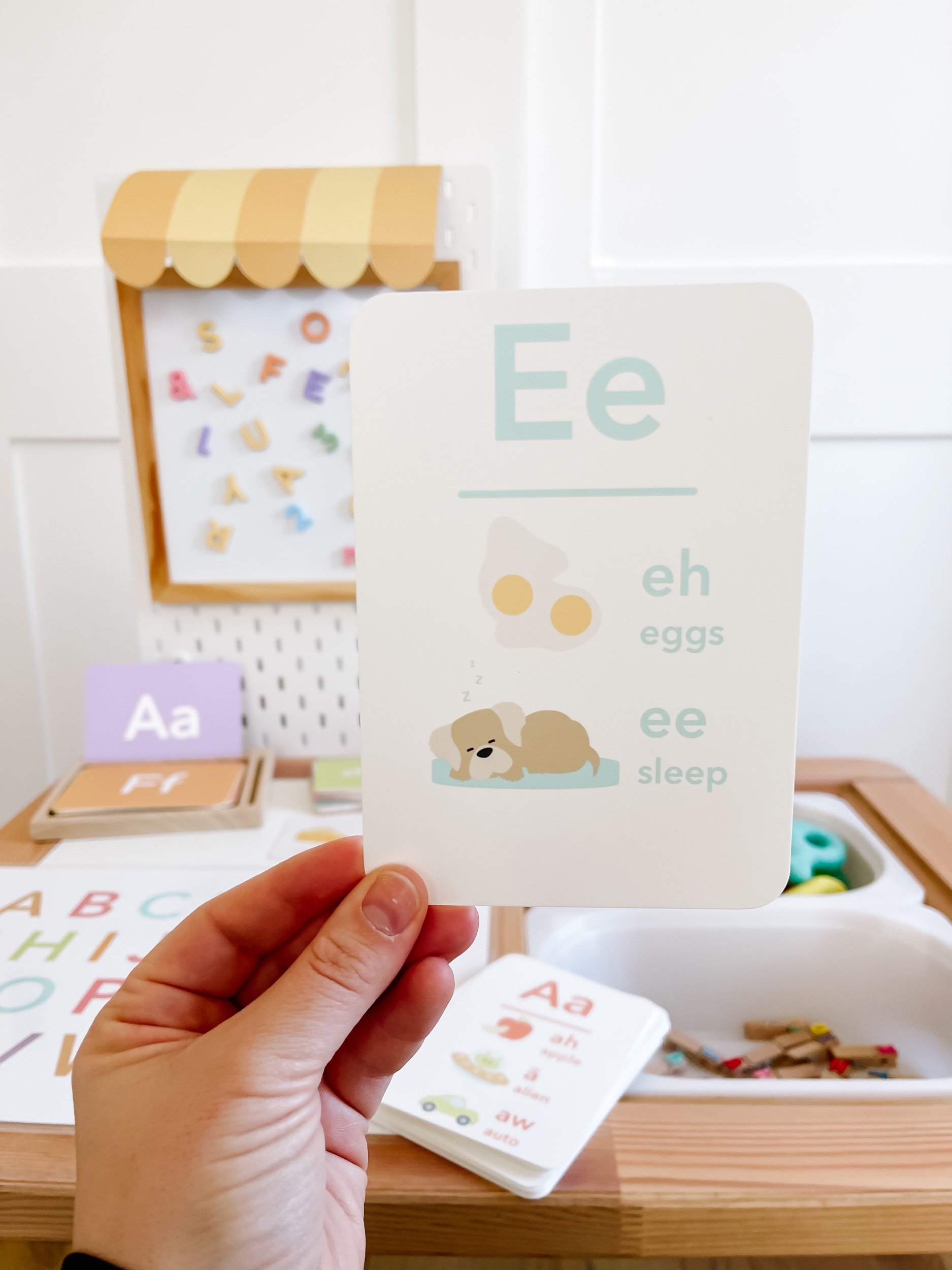
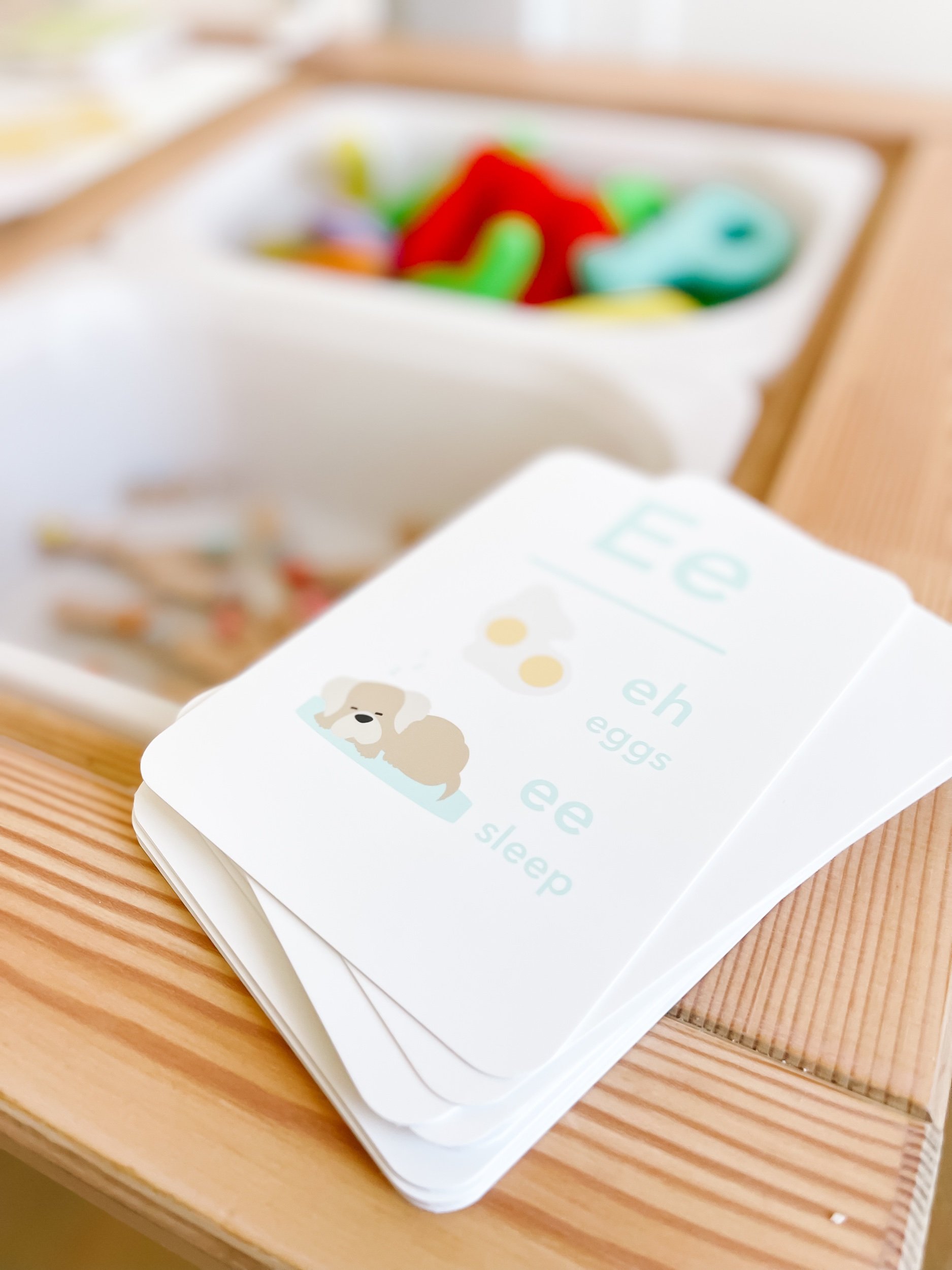
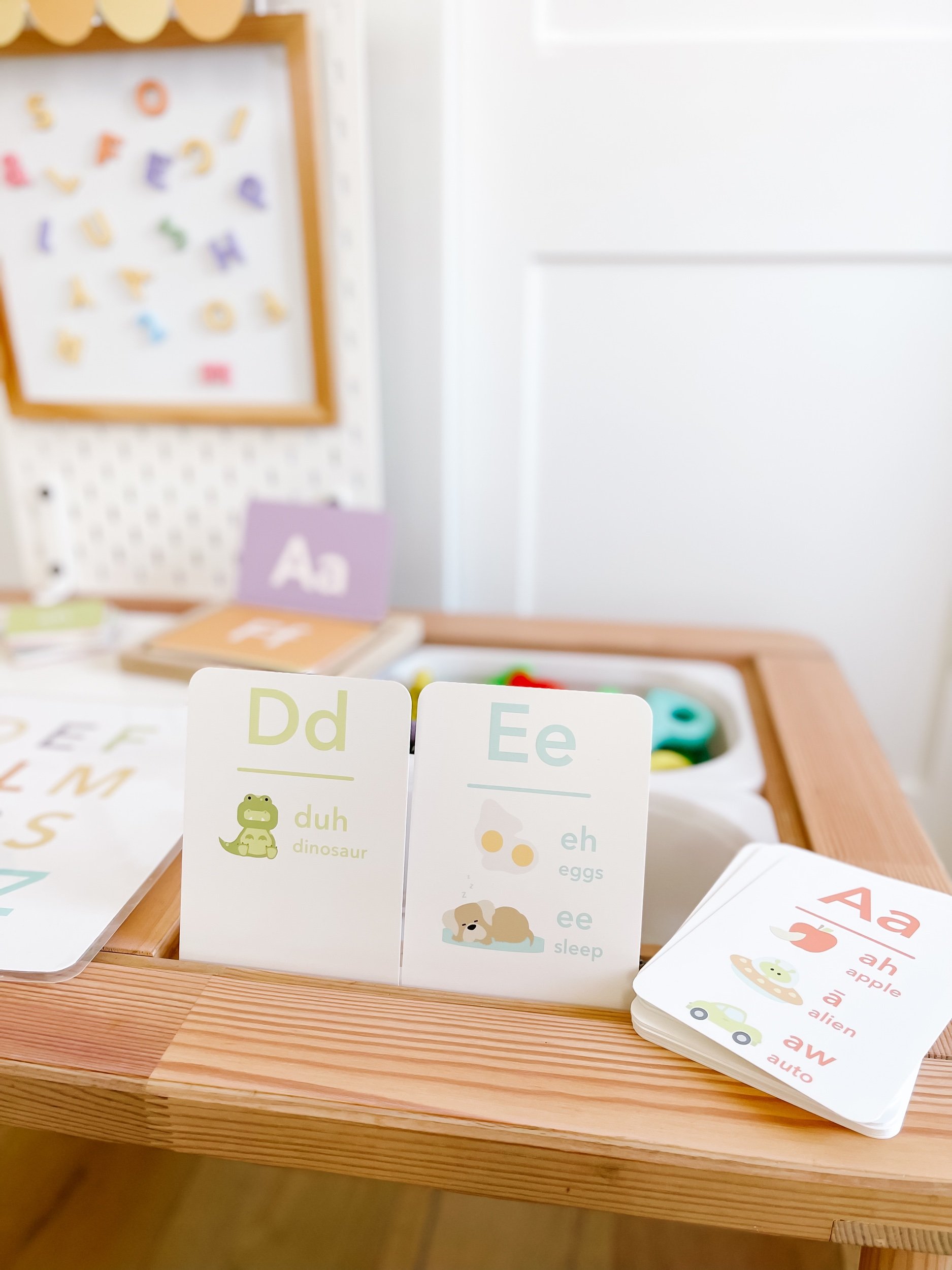
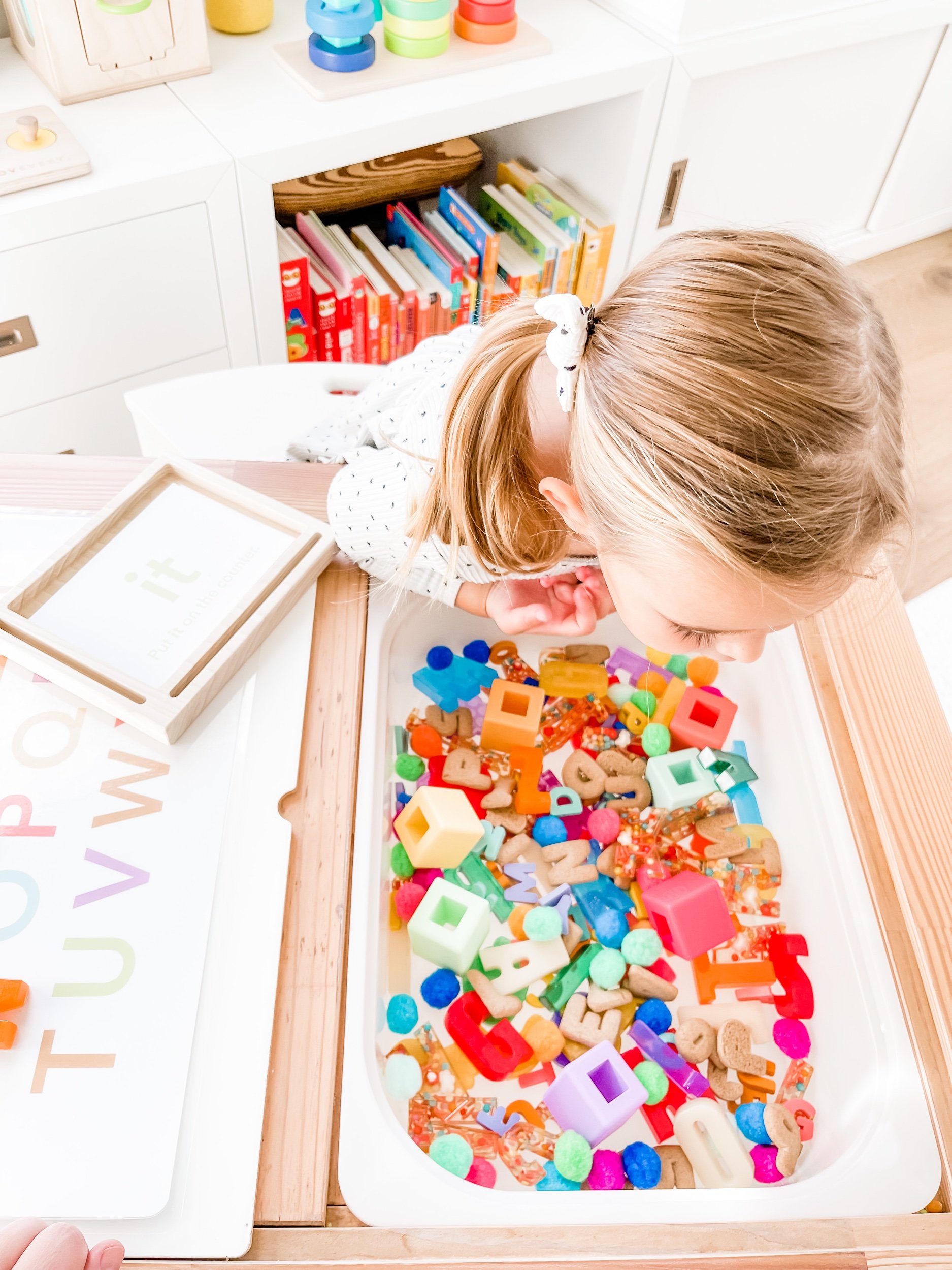
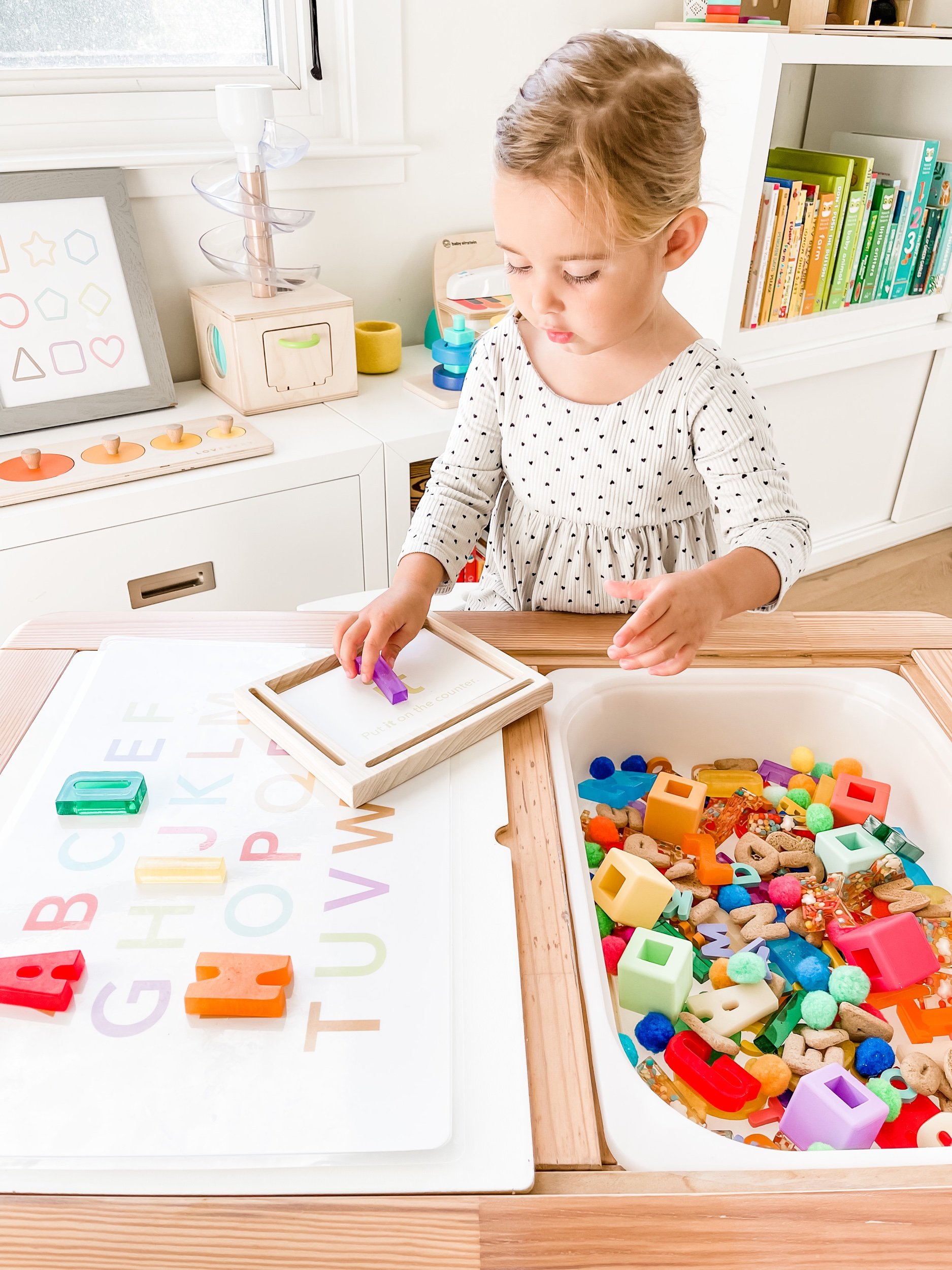
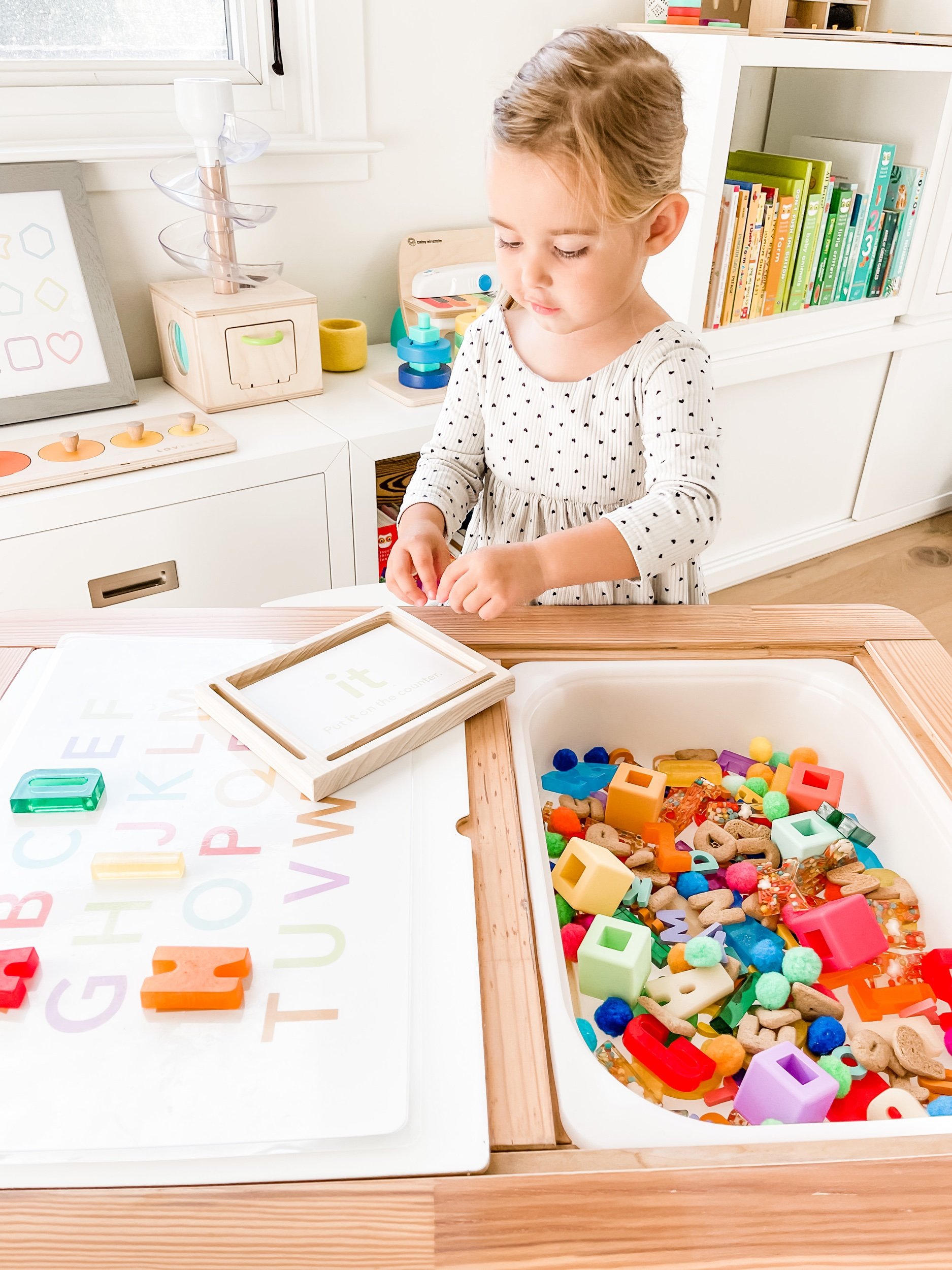
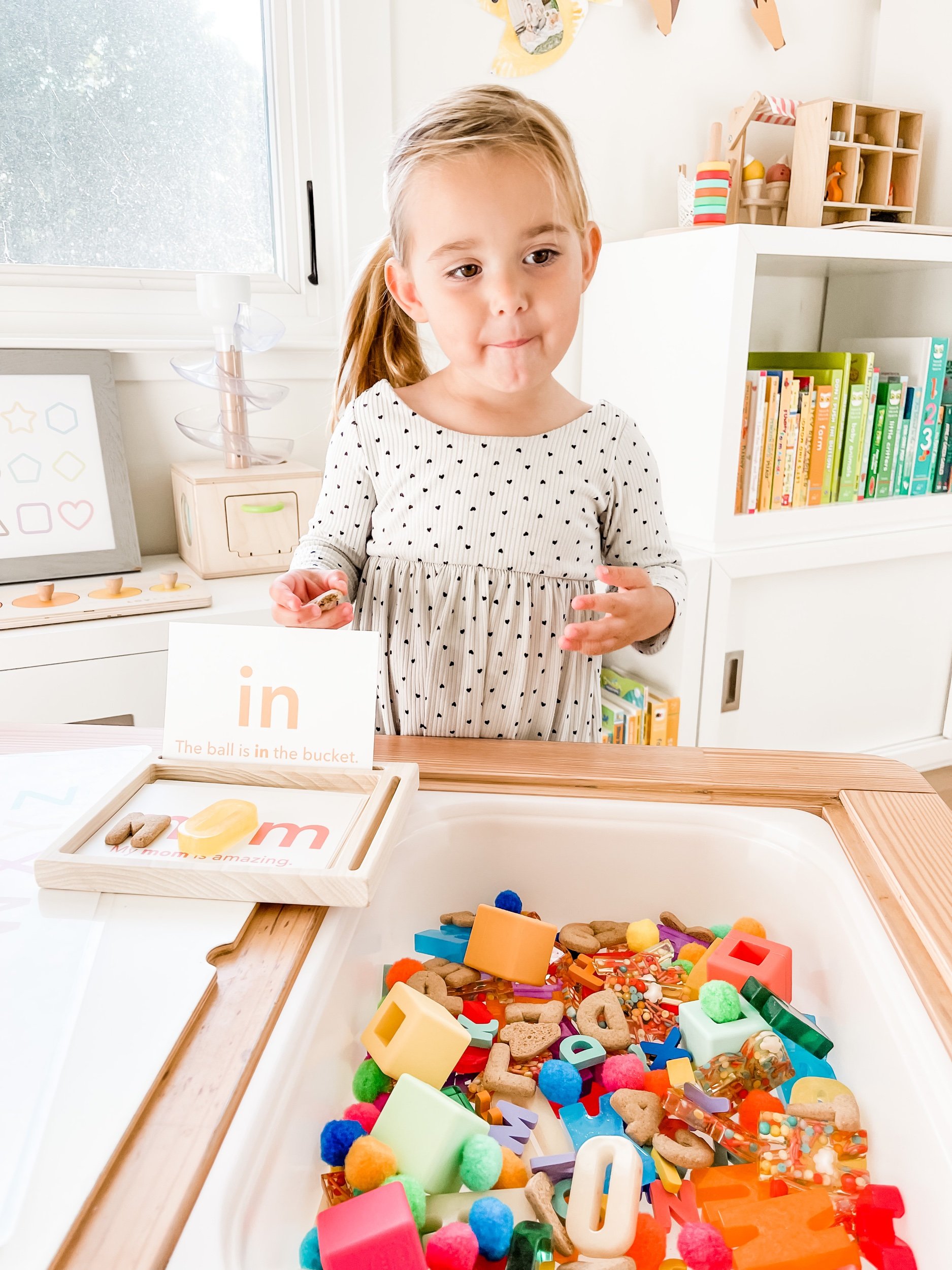
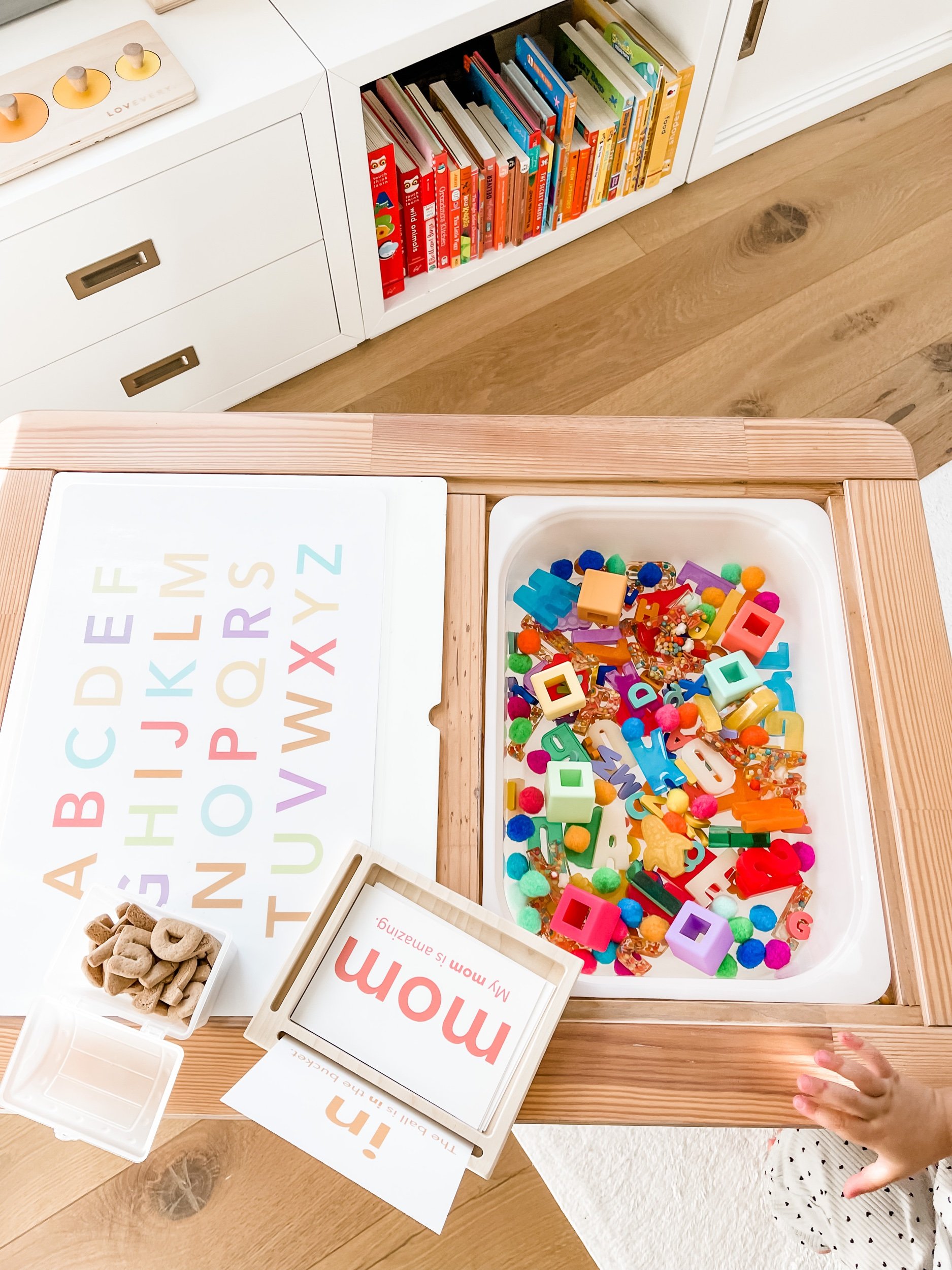
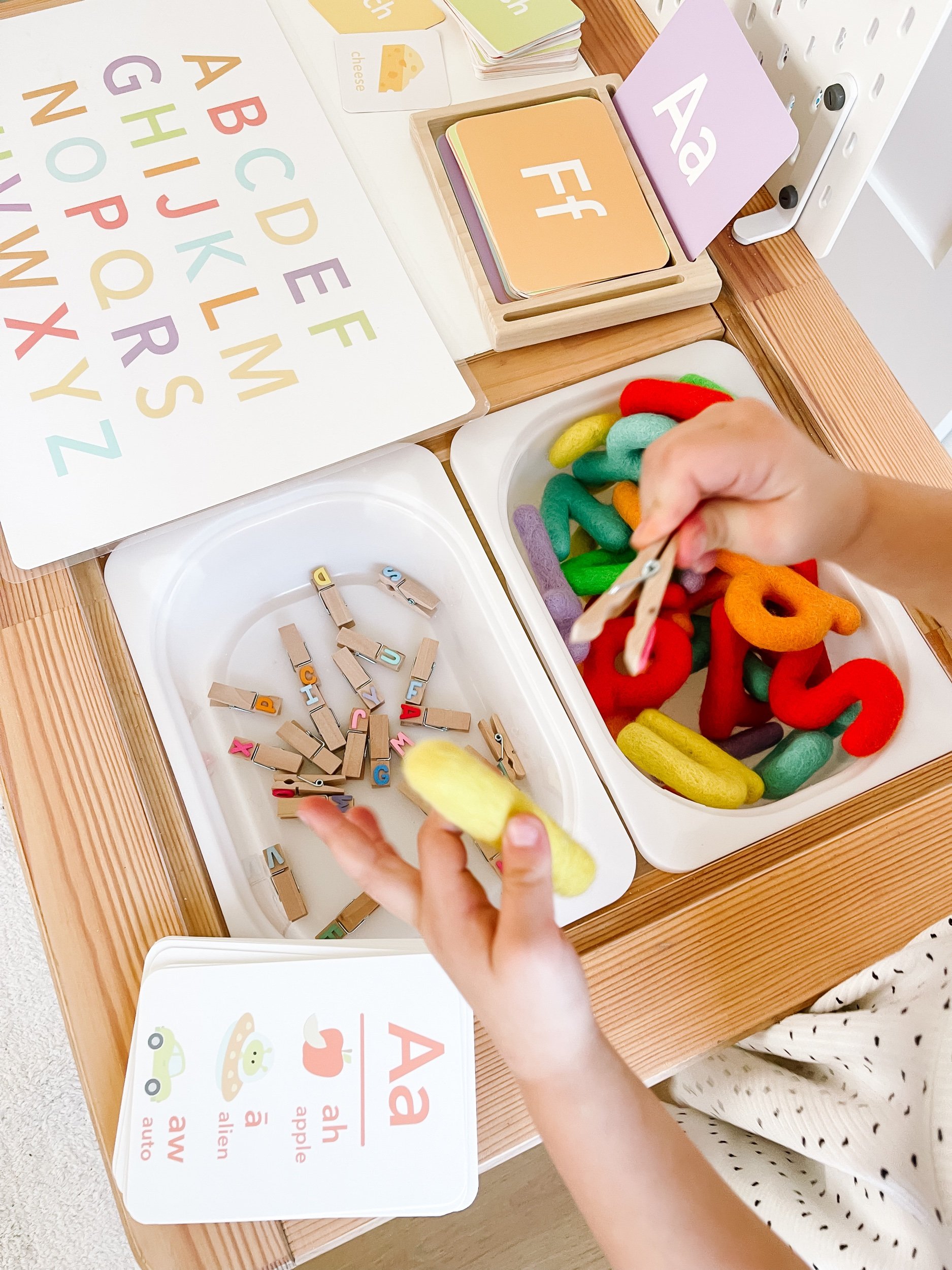
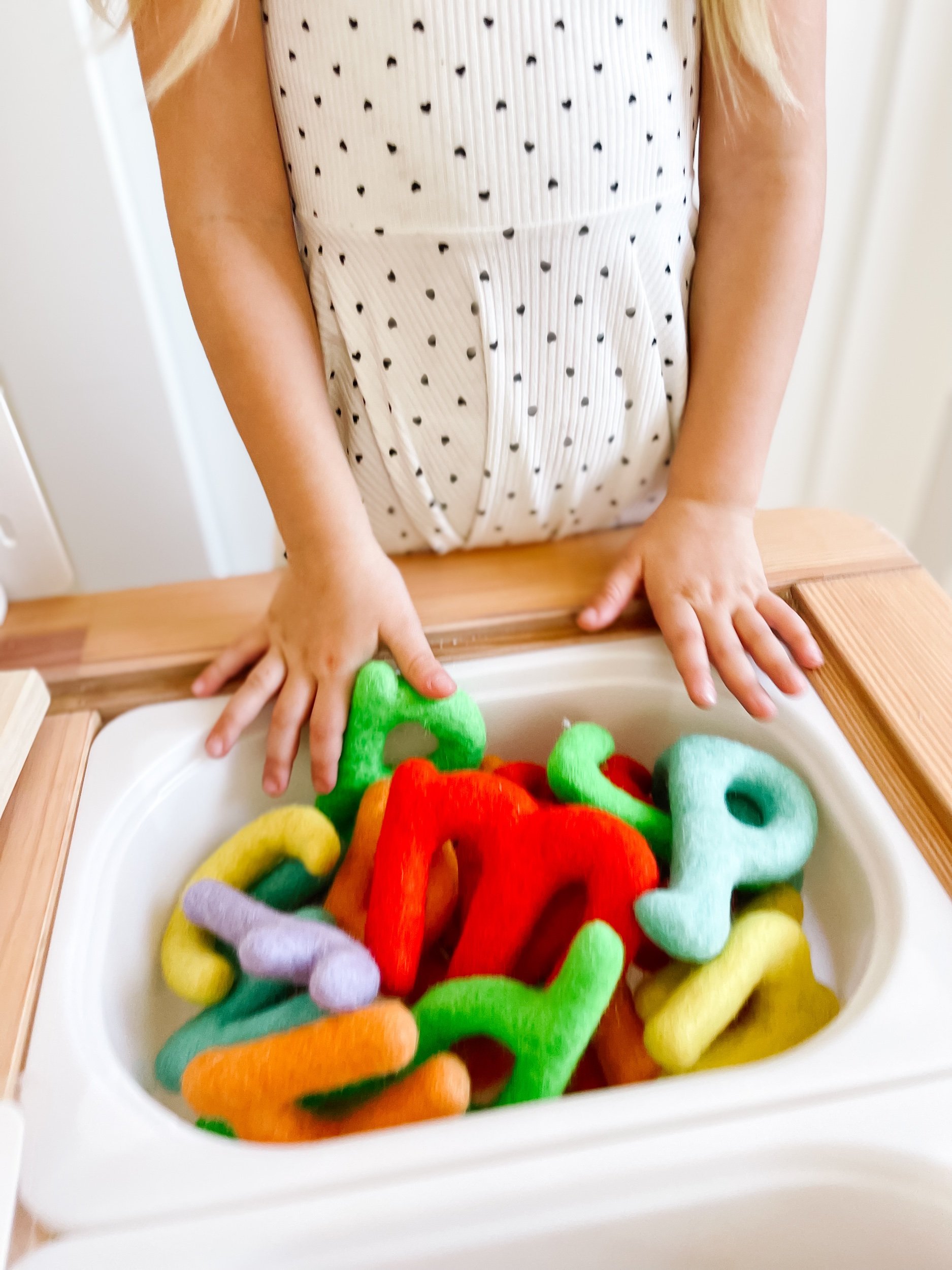
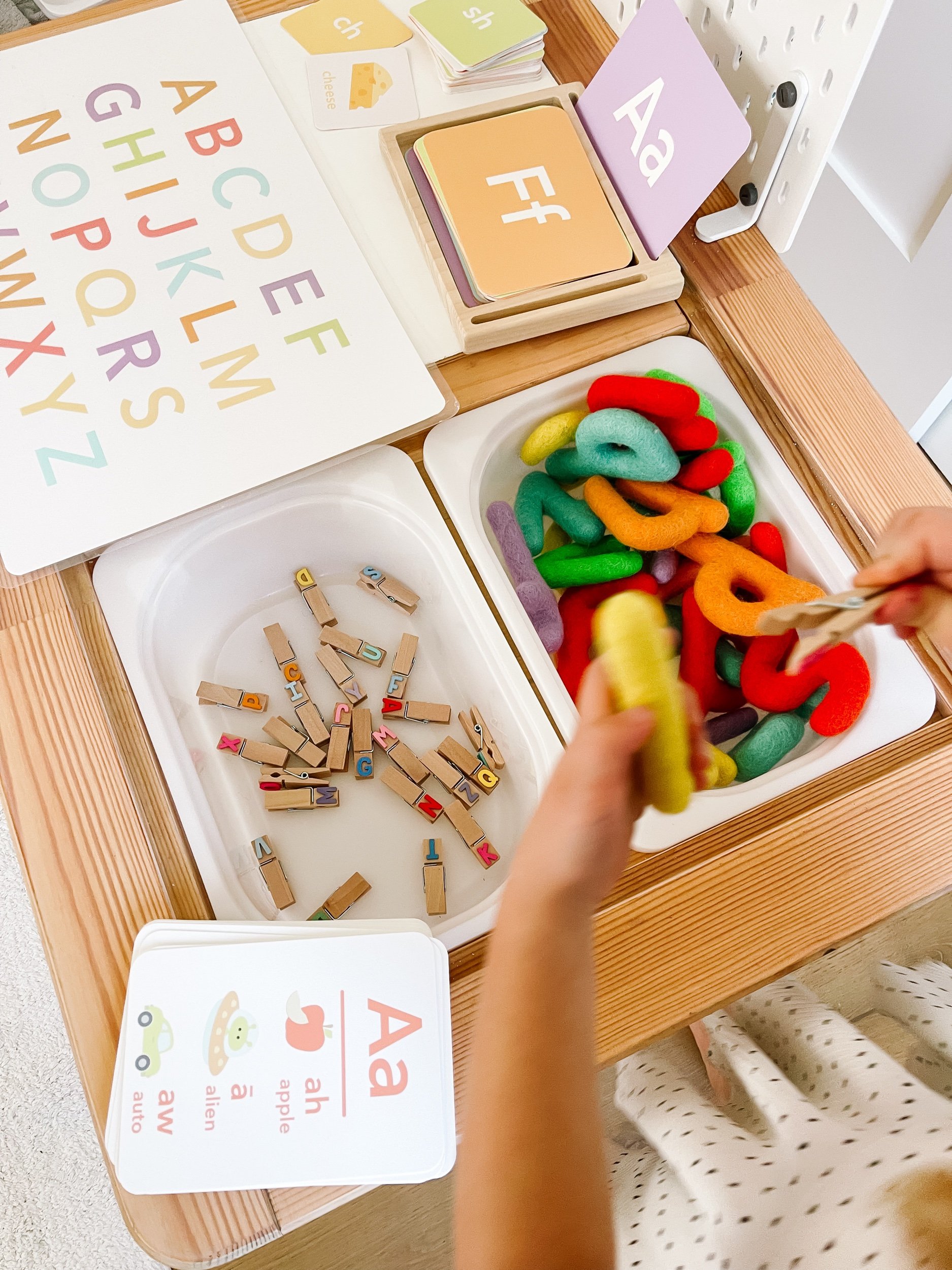
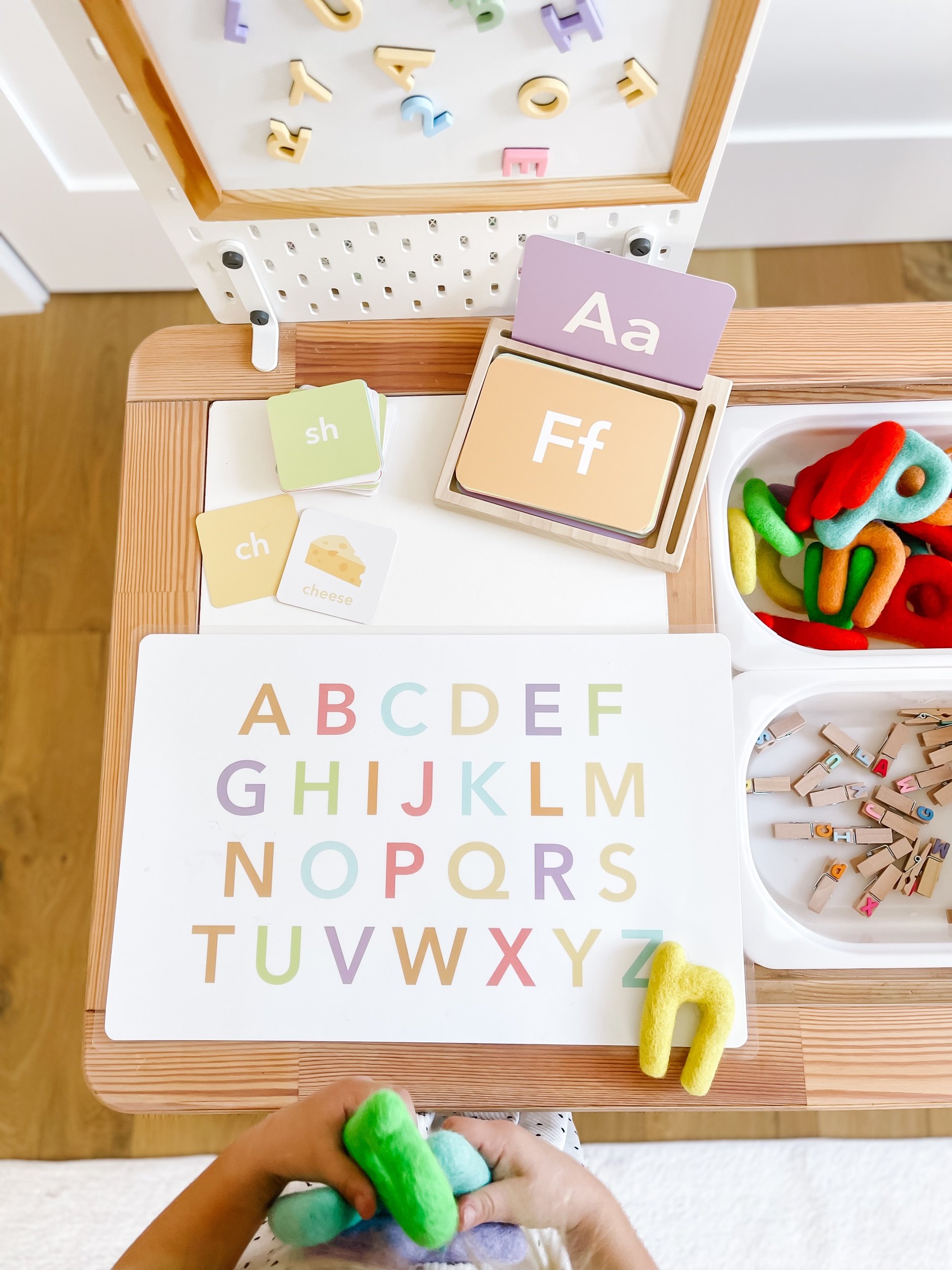
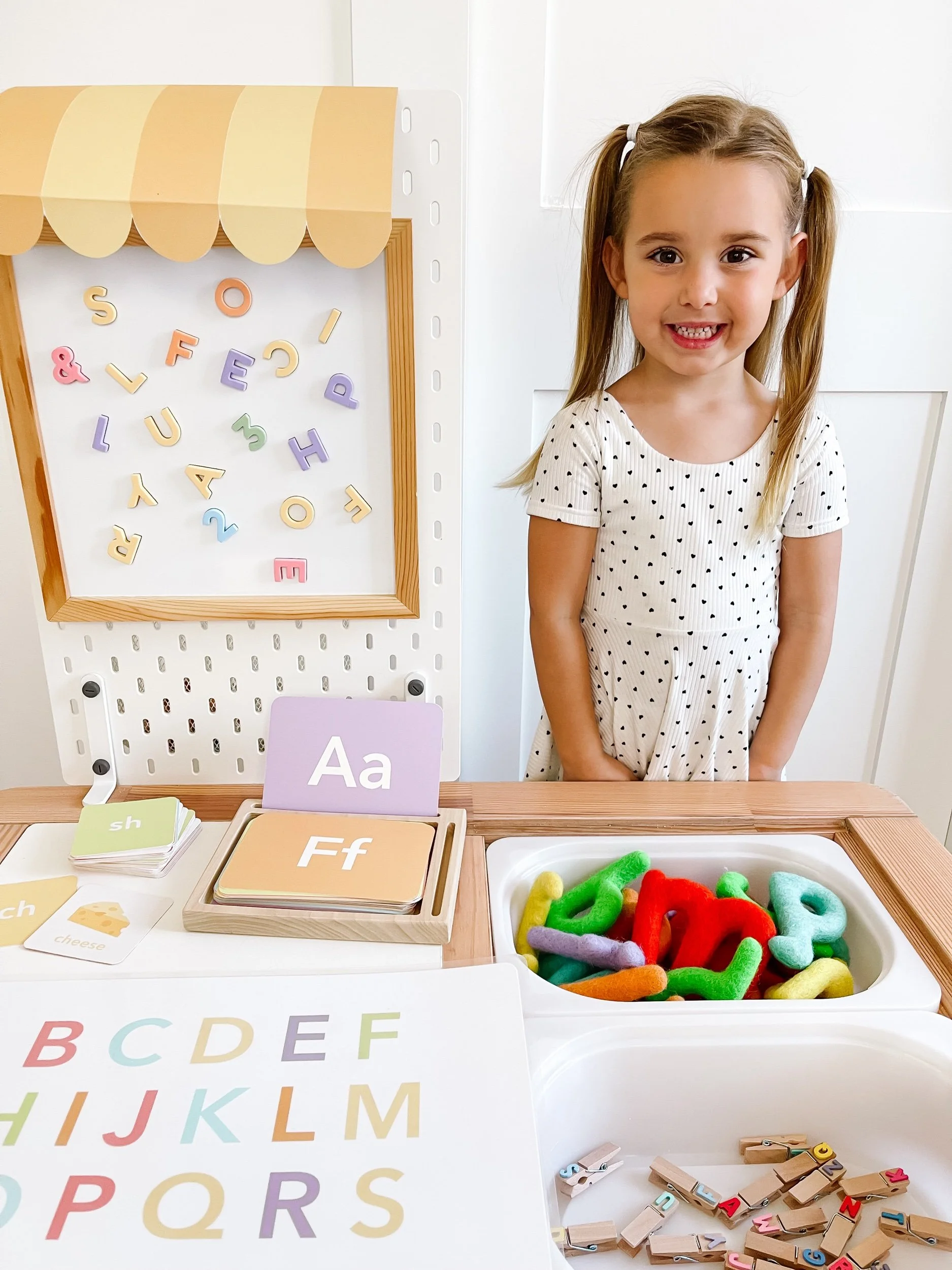
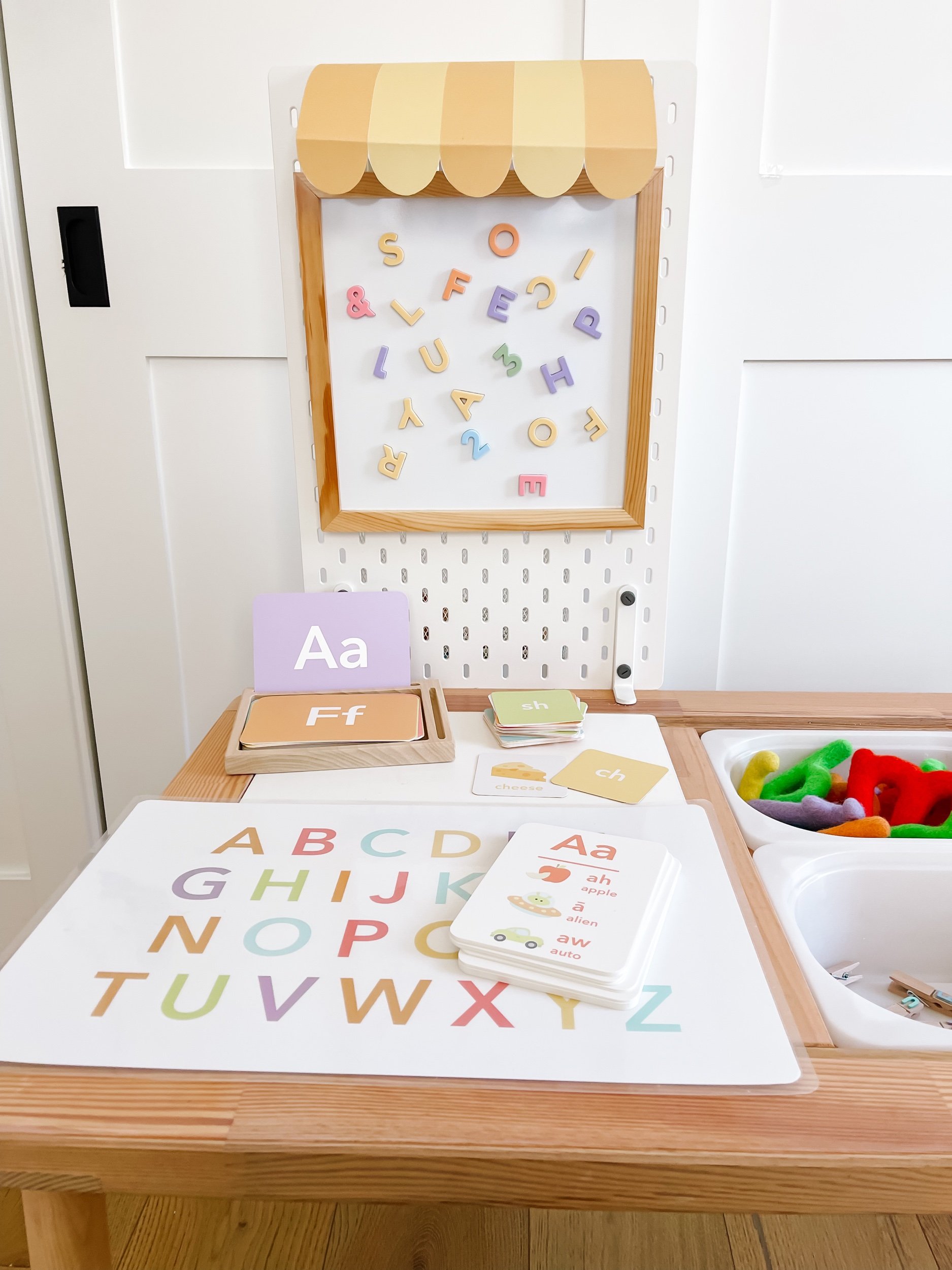
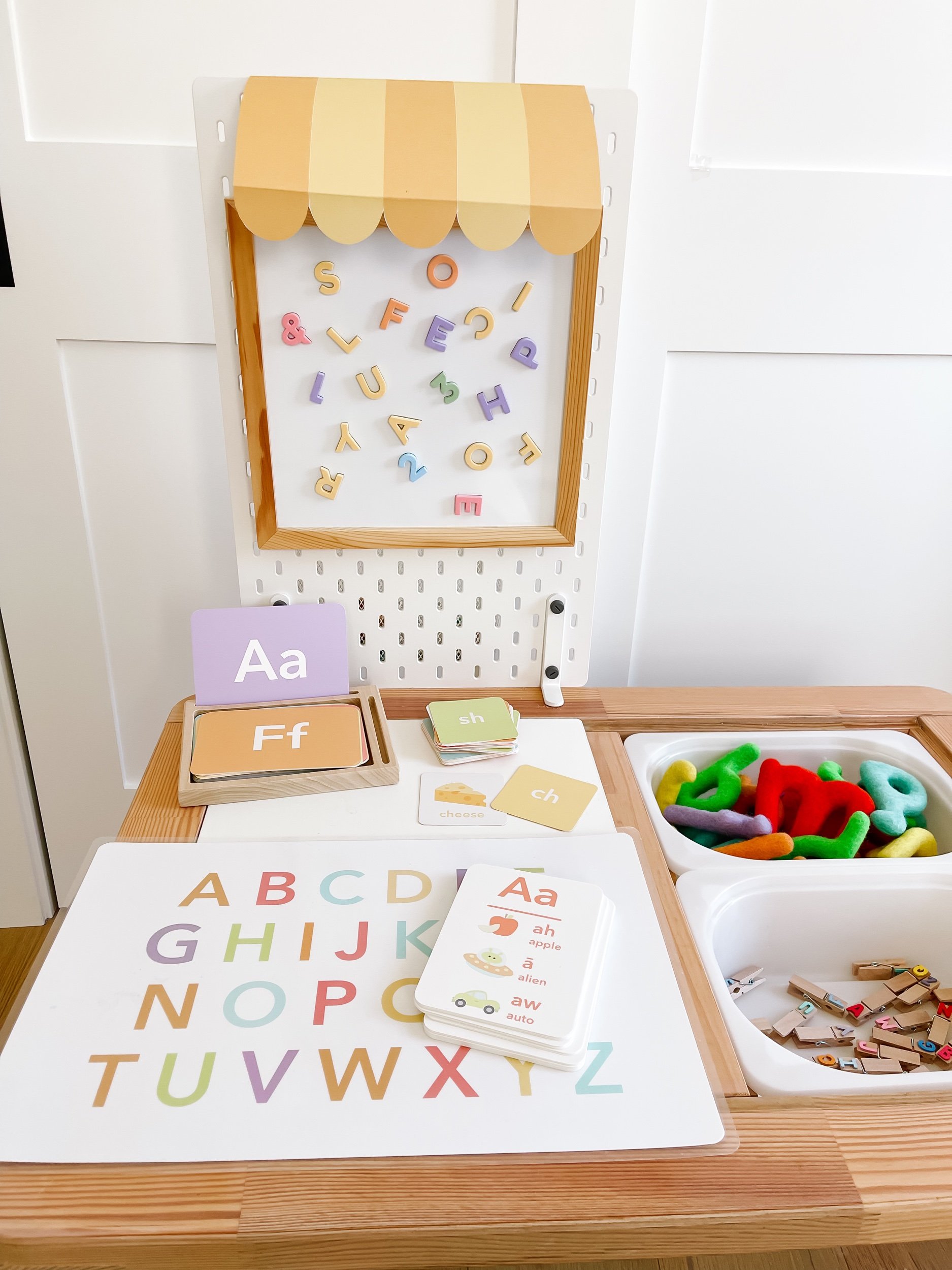
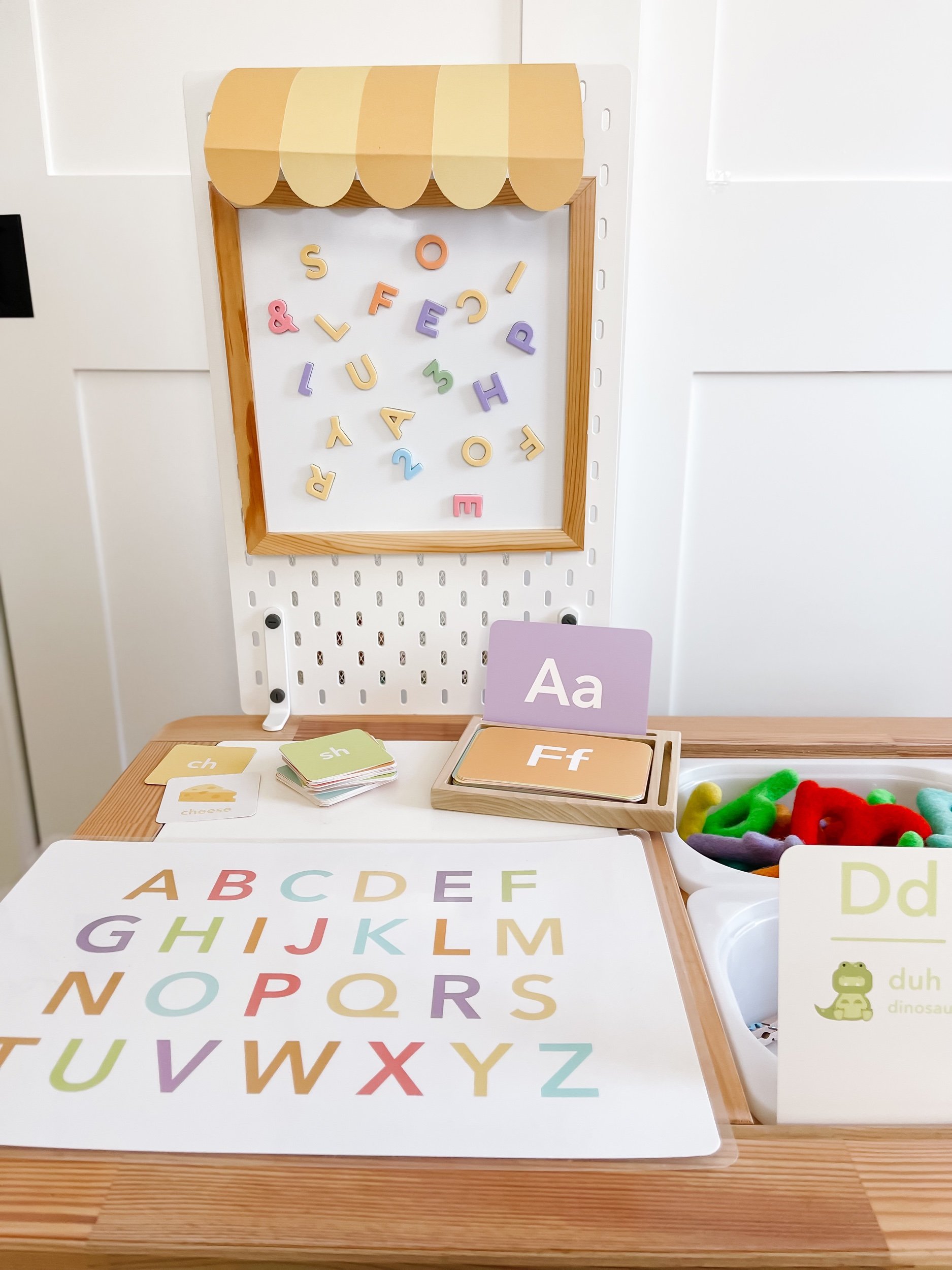
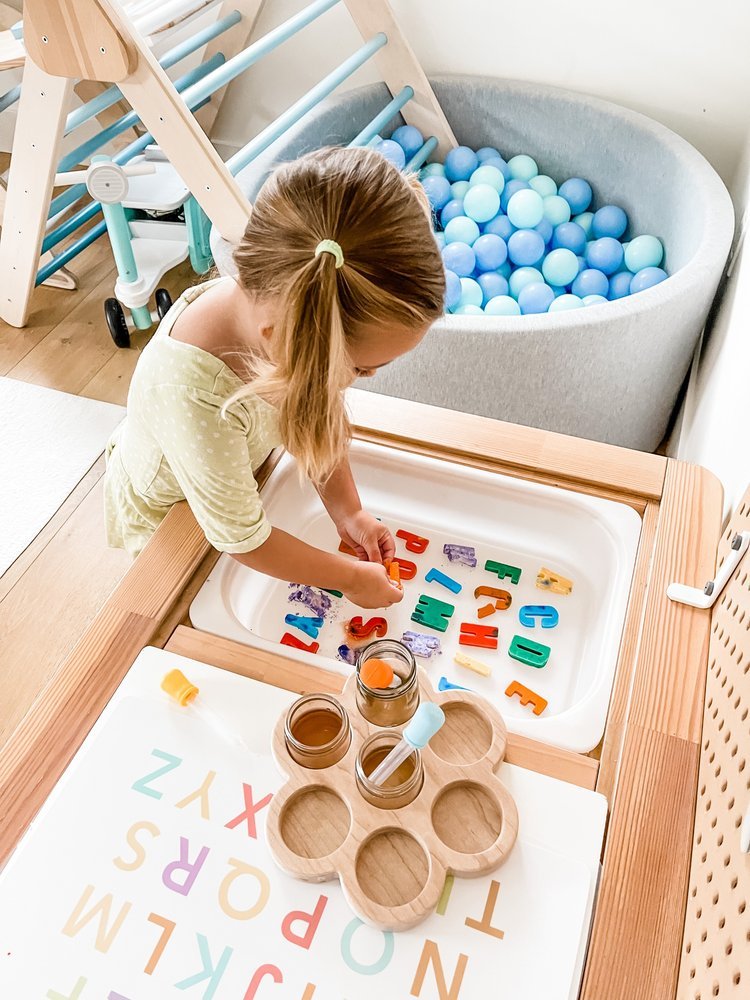
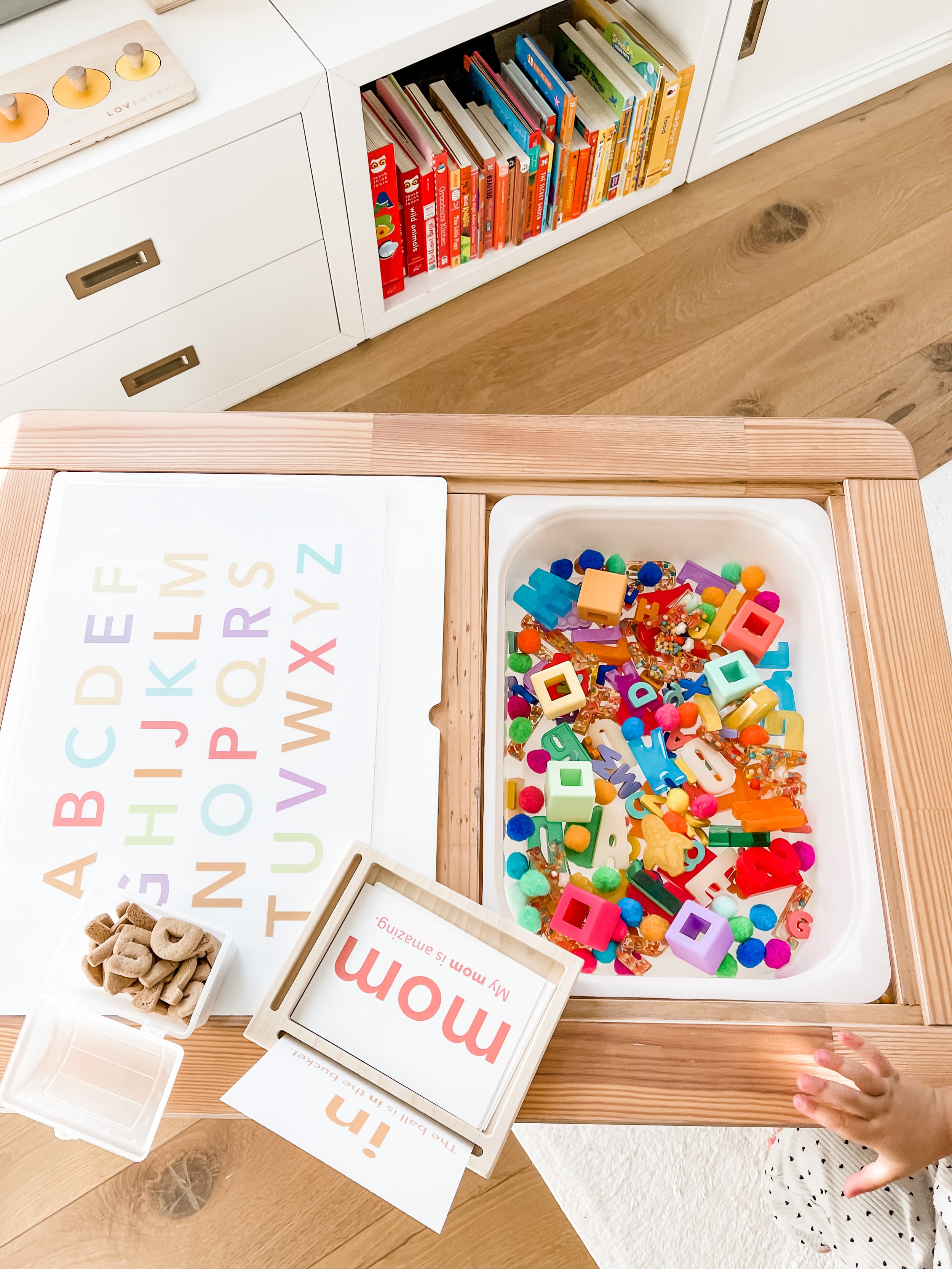
Fill a sensory bin with colorful resin letters, blocks, and soft wool balls. Using alphabet flashcards, encourage toddlers to search and find the matching letter from the bin. This activity promotes letter recognition while providing a tactile experience.
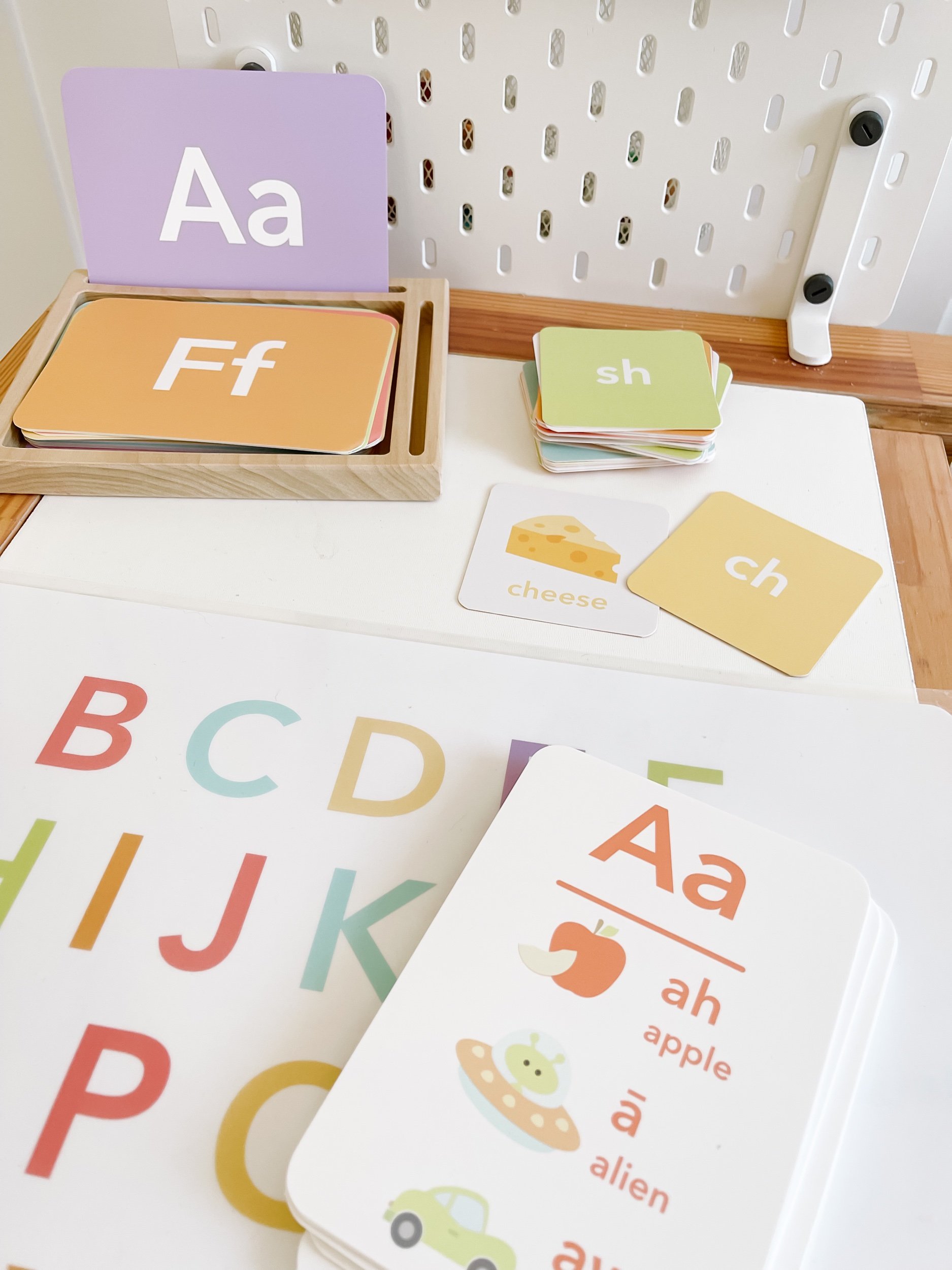
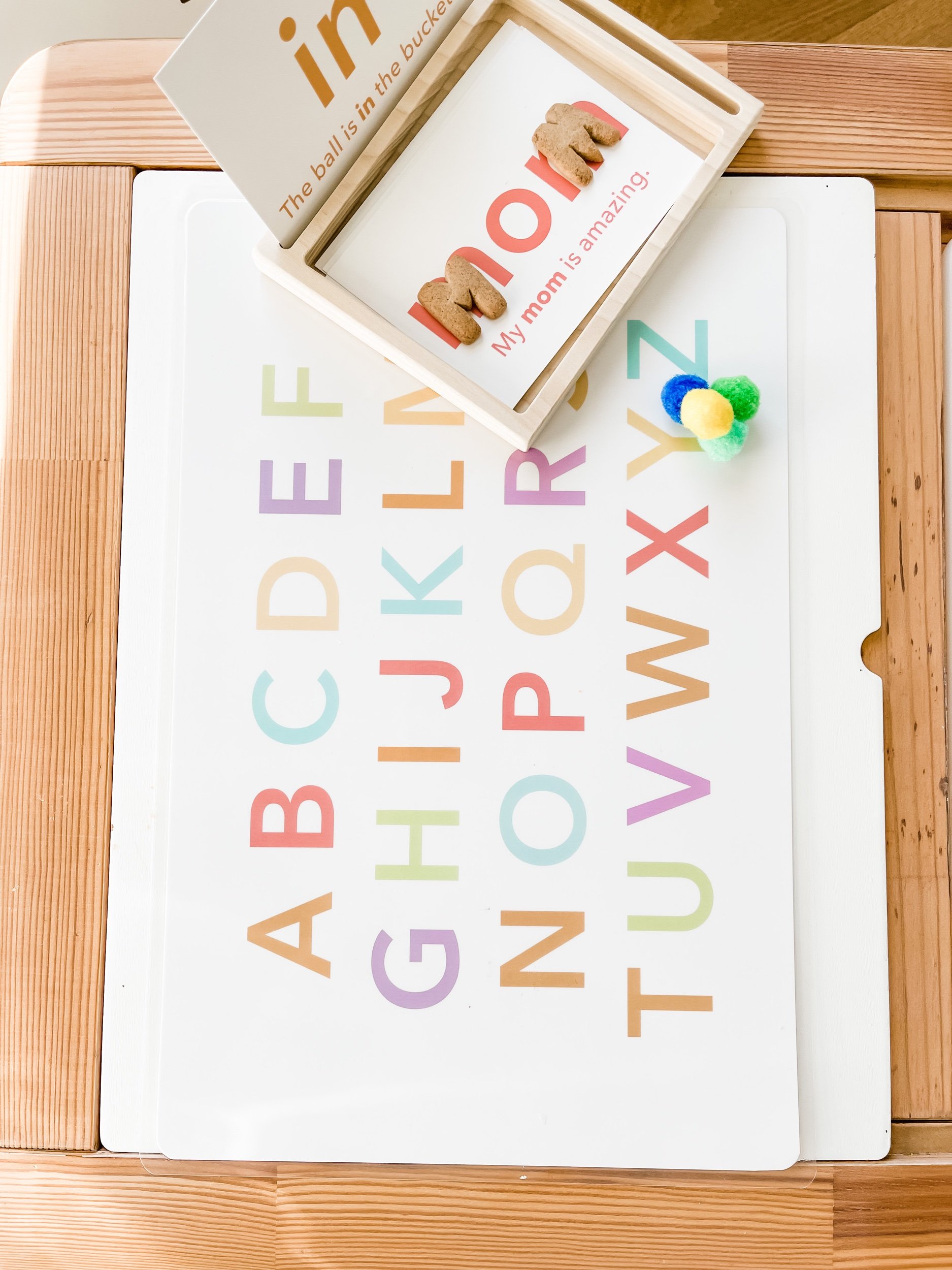
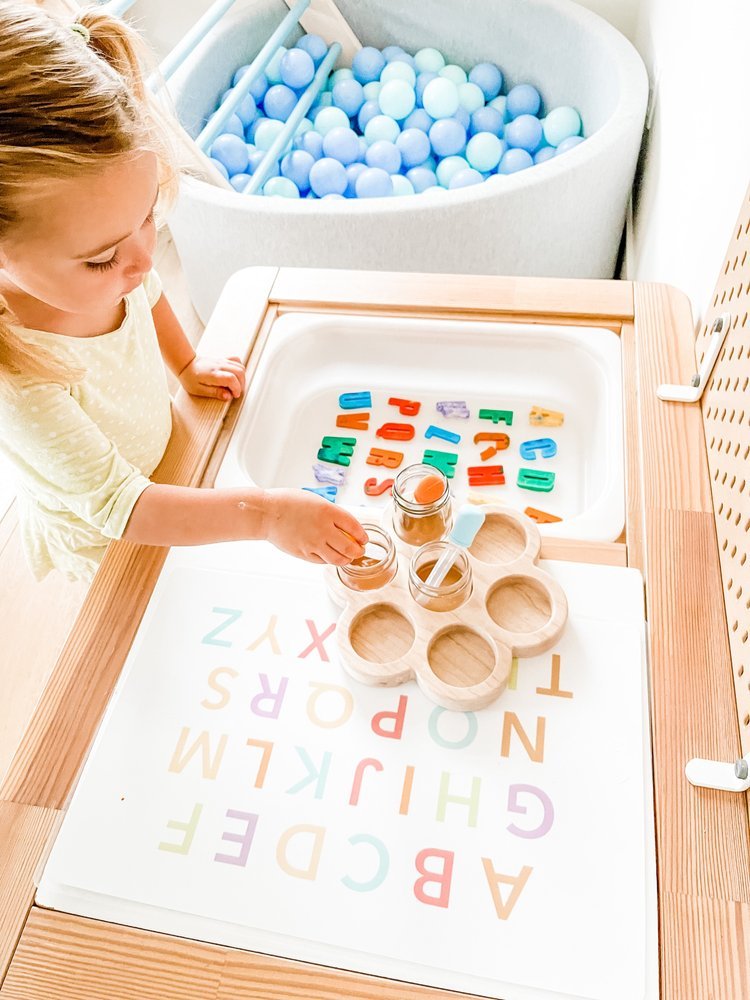
For slightly older children, focus on letter sounds. Pair the sensory bin activity with an alphabet placemat and ask questions like, "Which letter comes before C?" This activity reinforces letter sequencing and phonemic awareness.
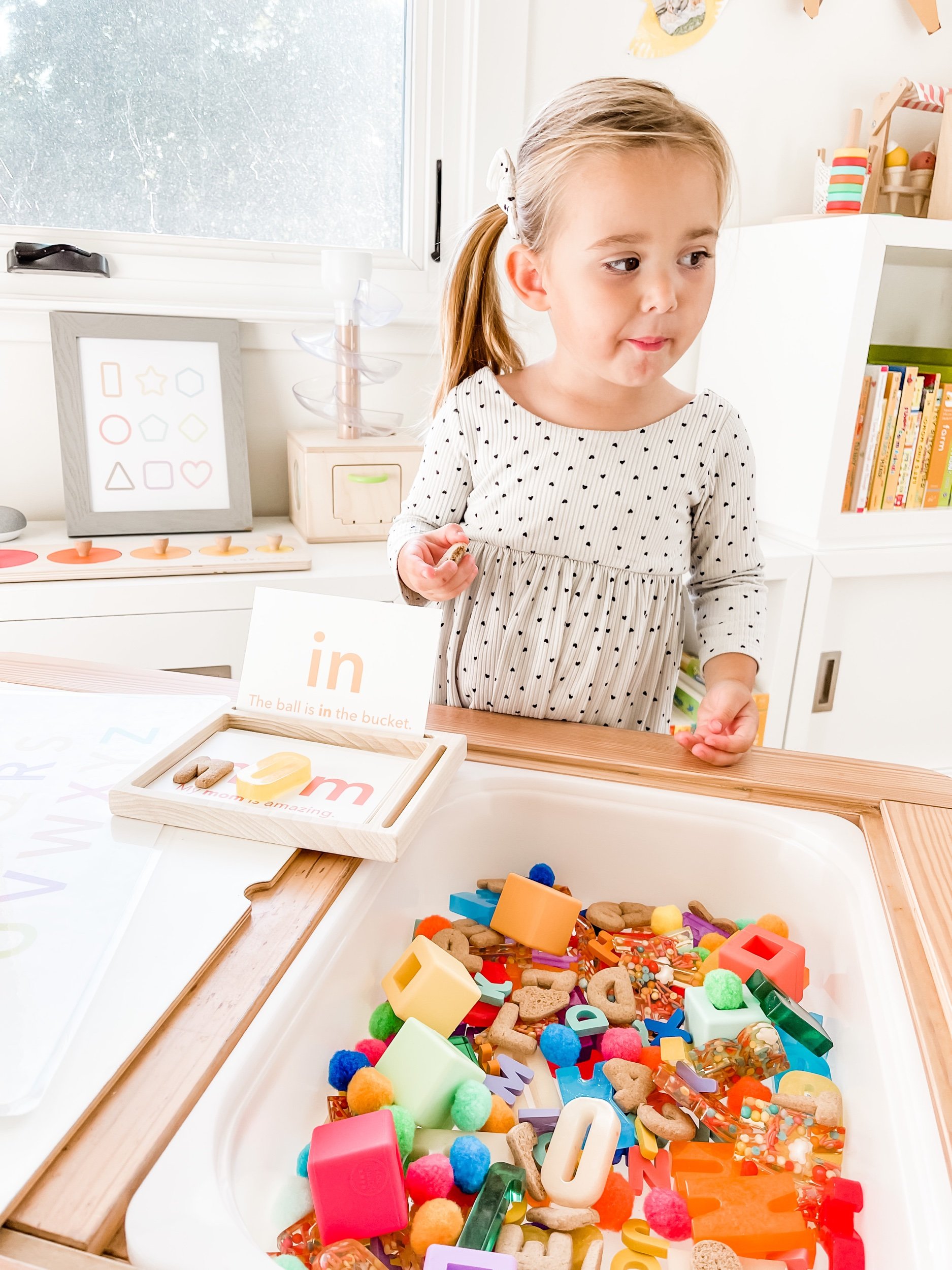
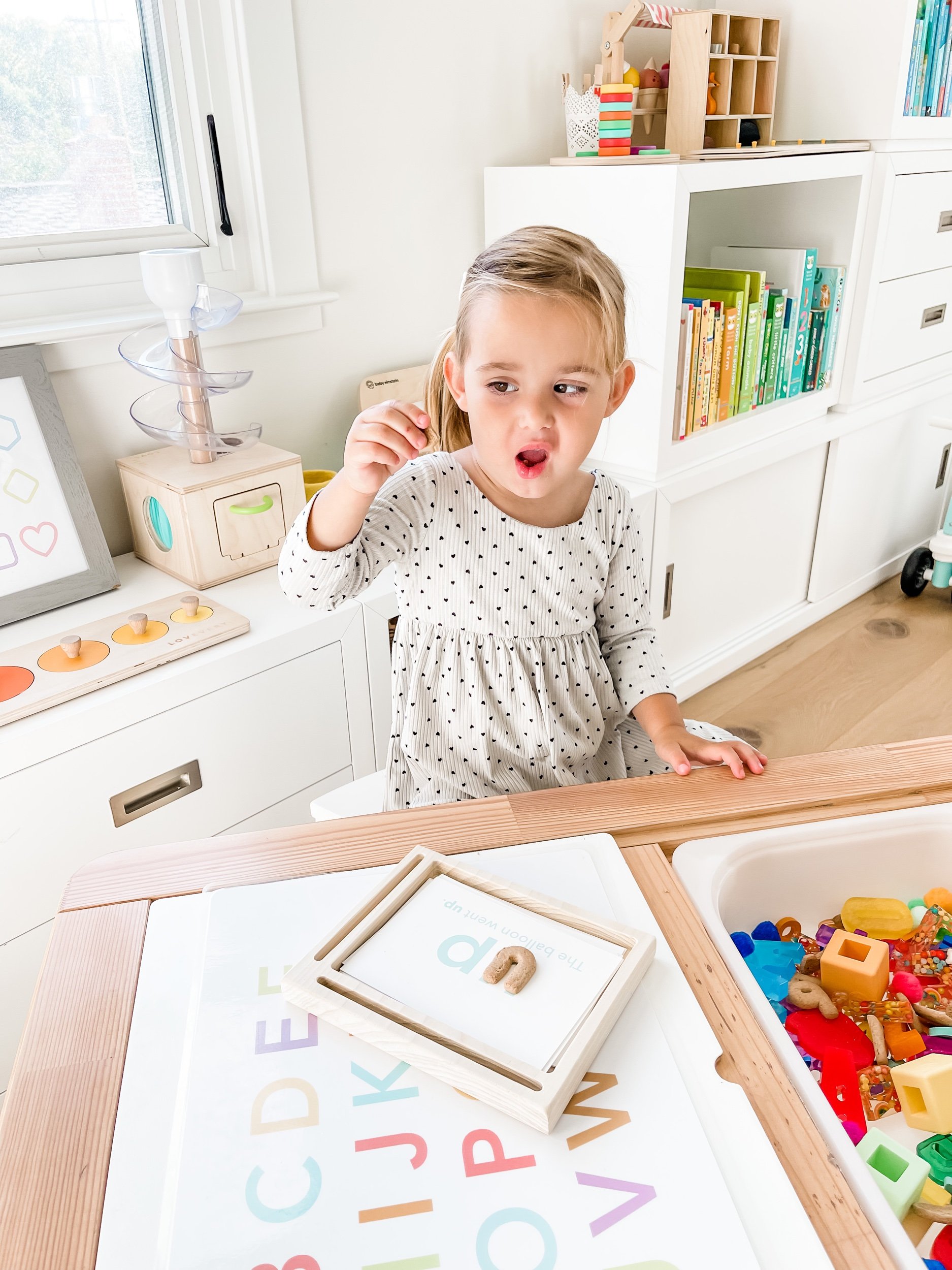
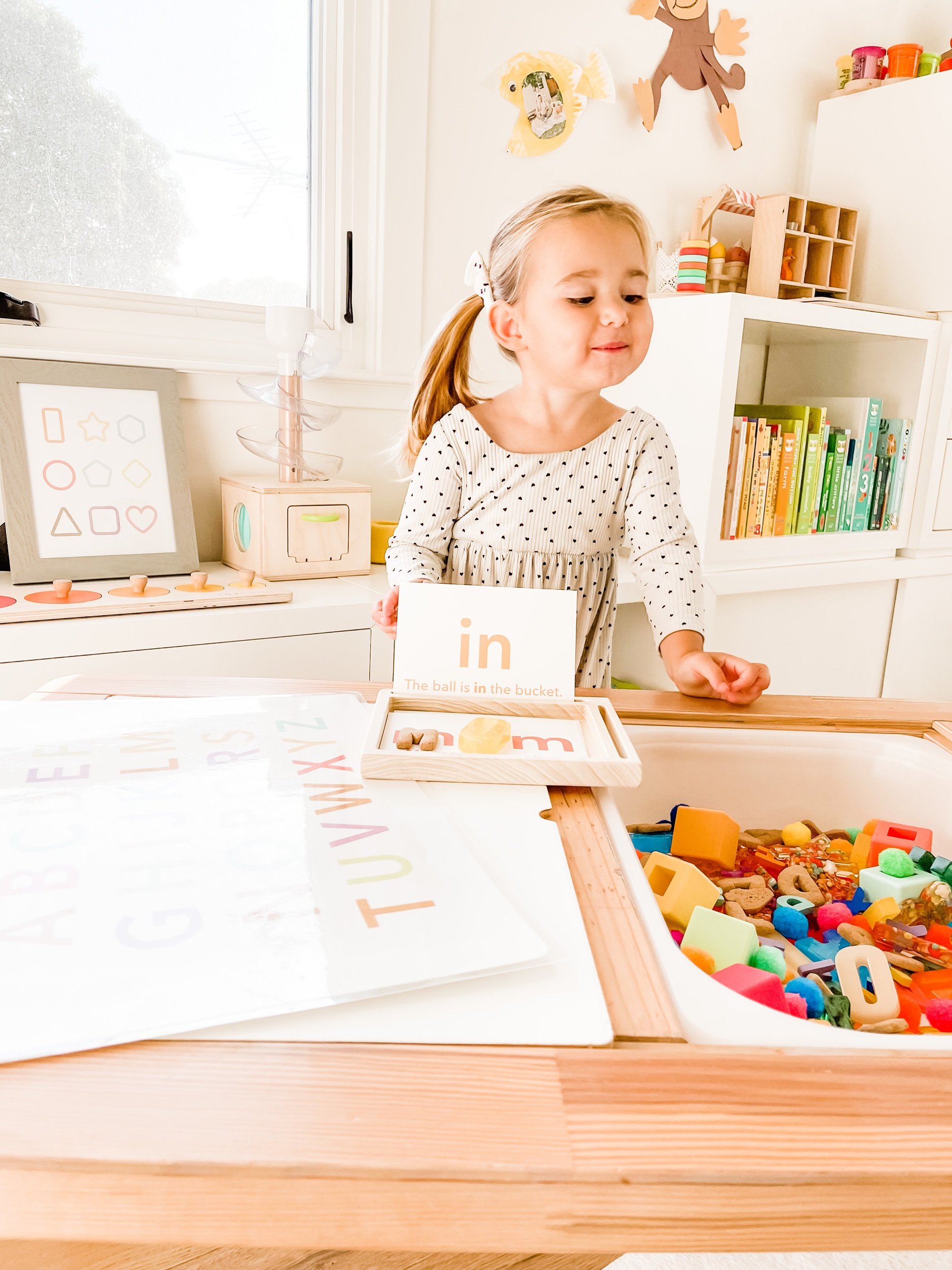
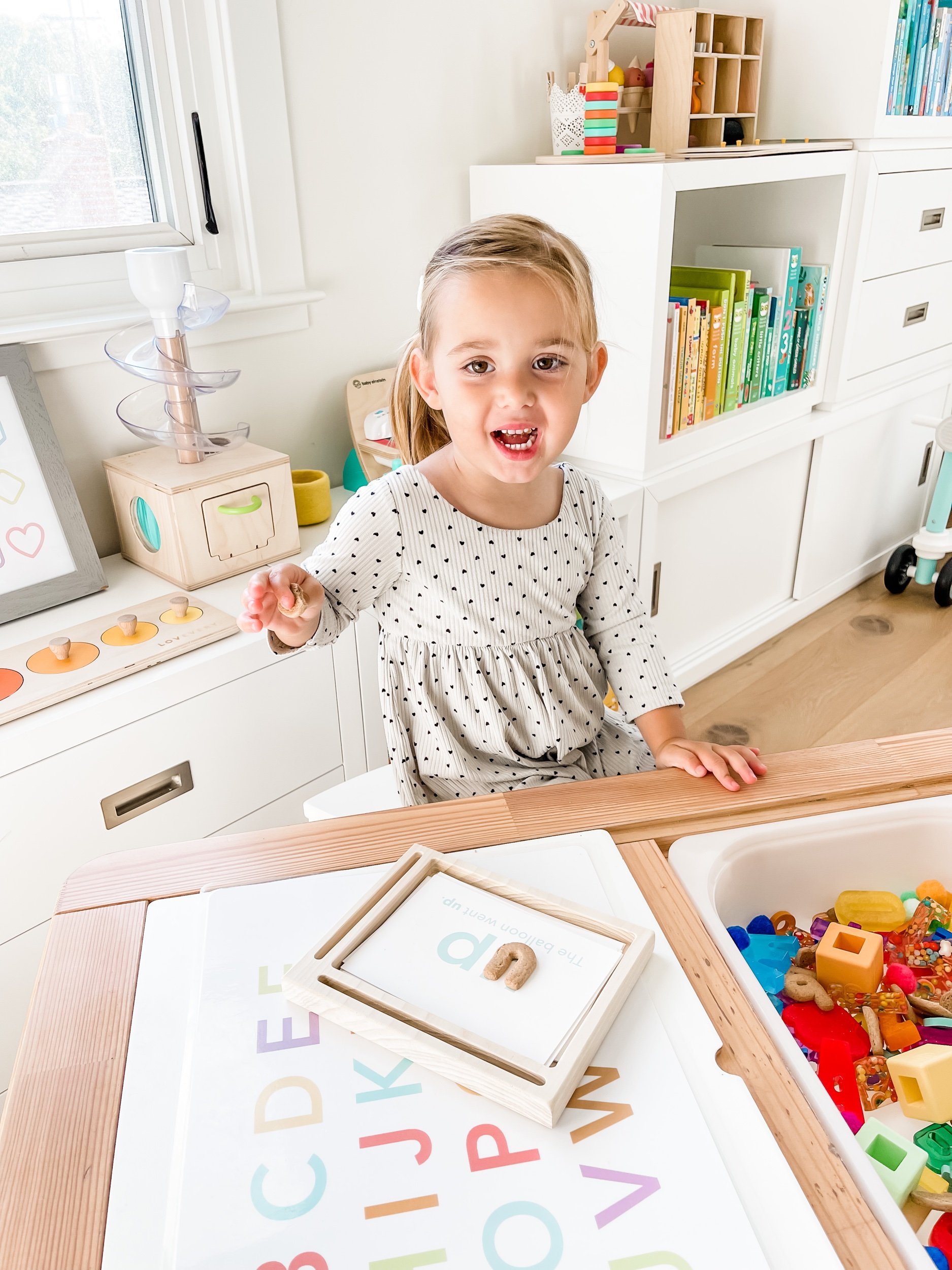
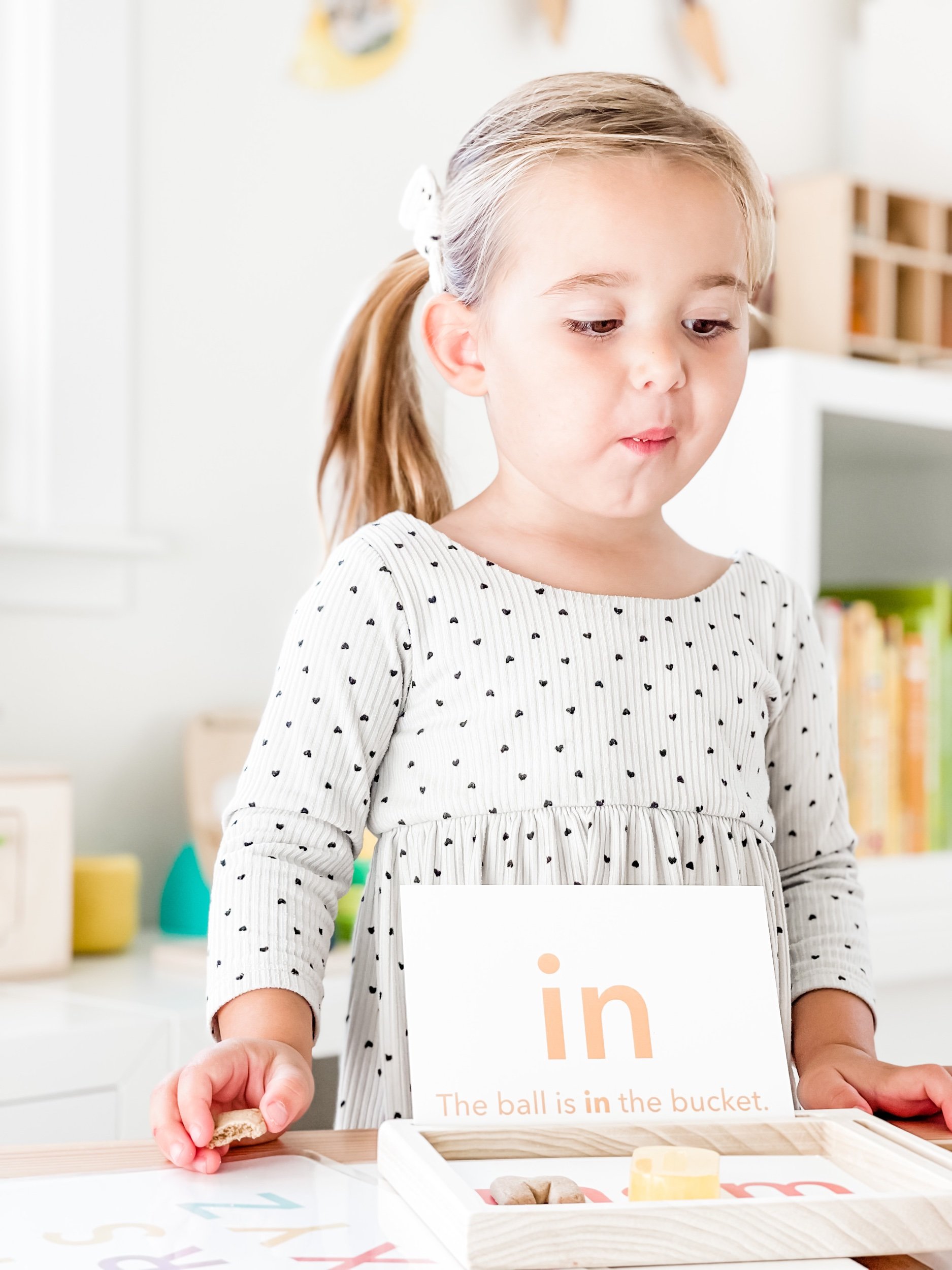
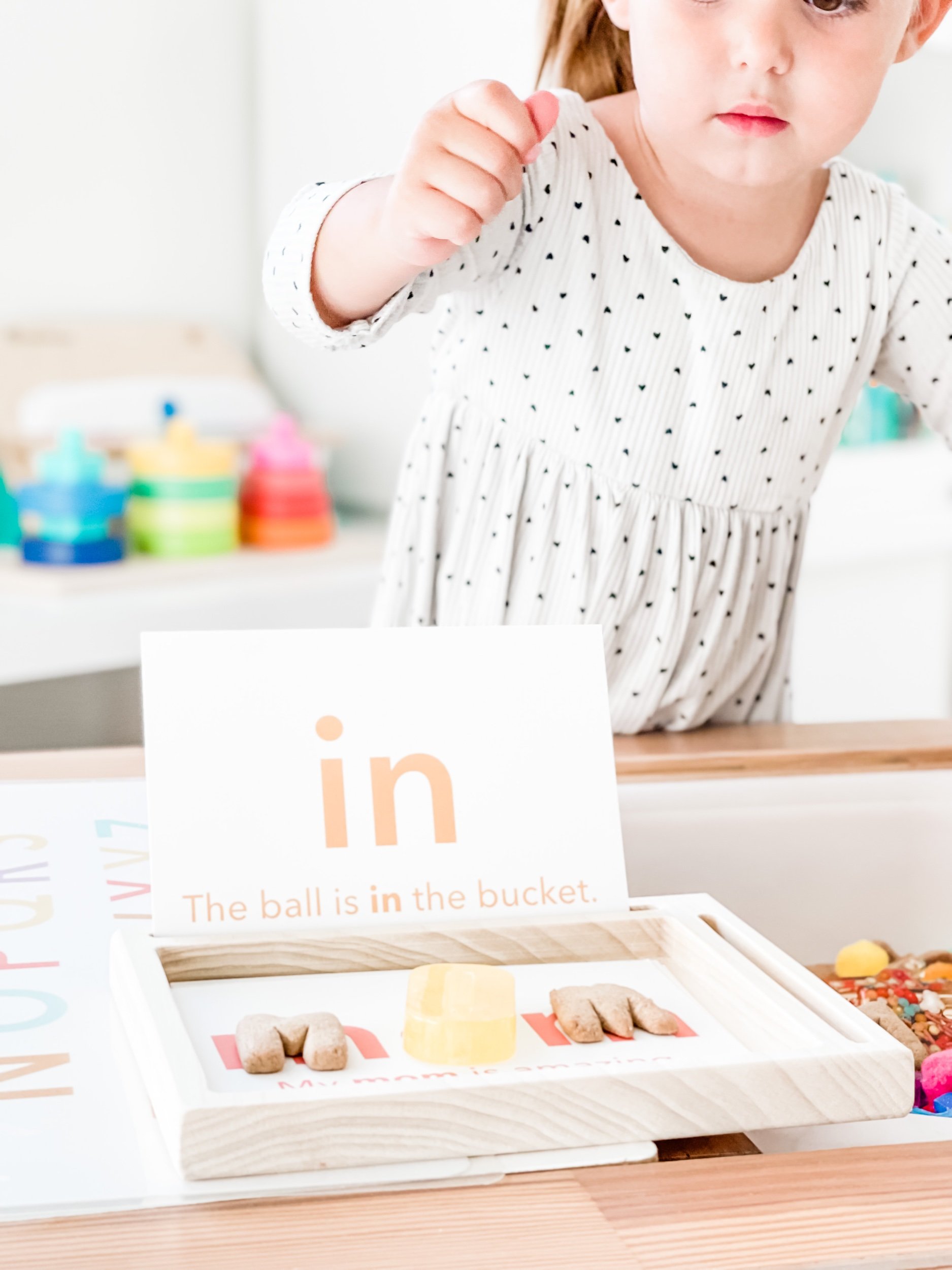
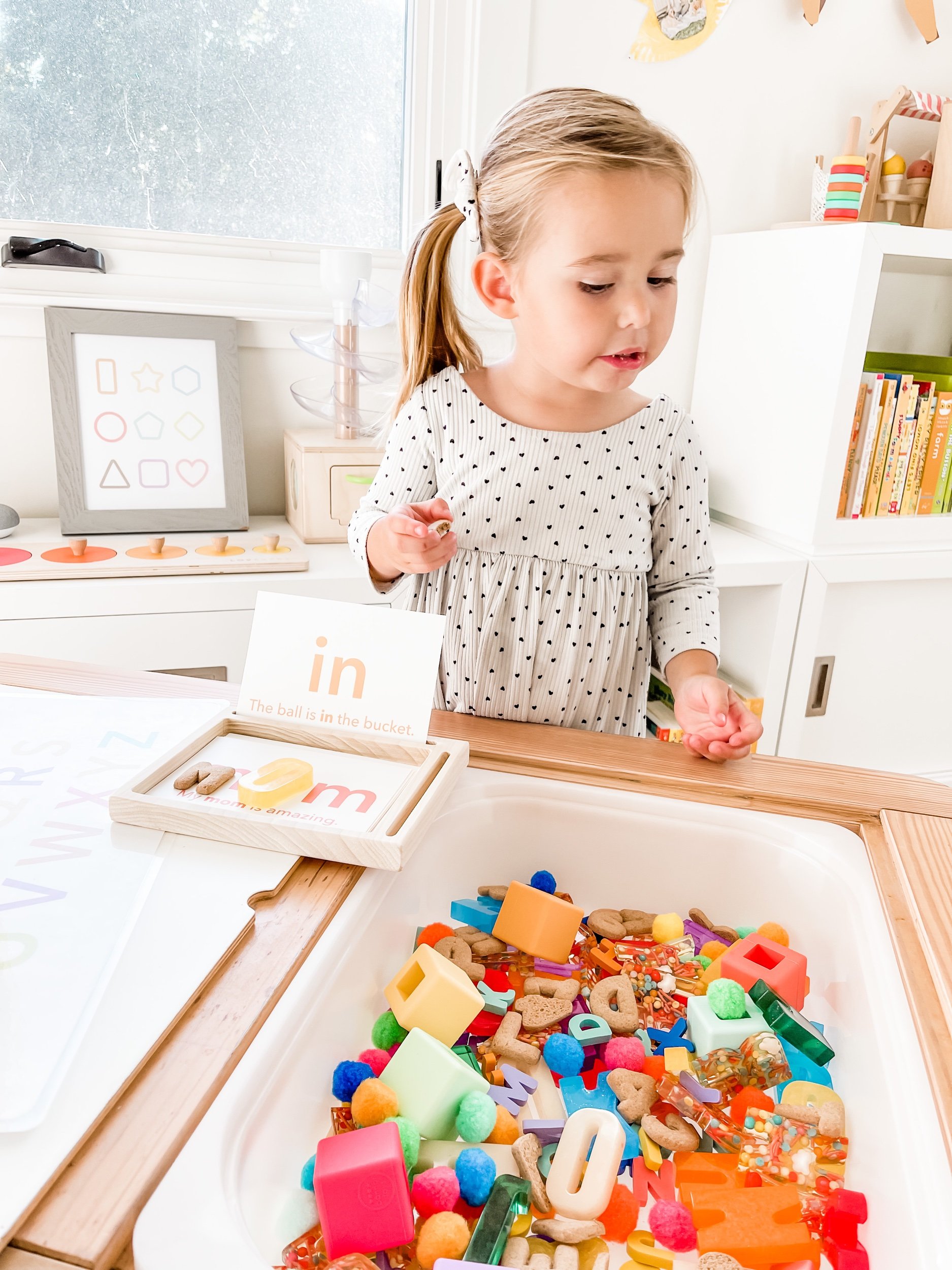
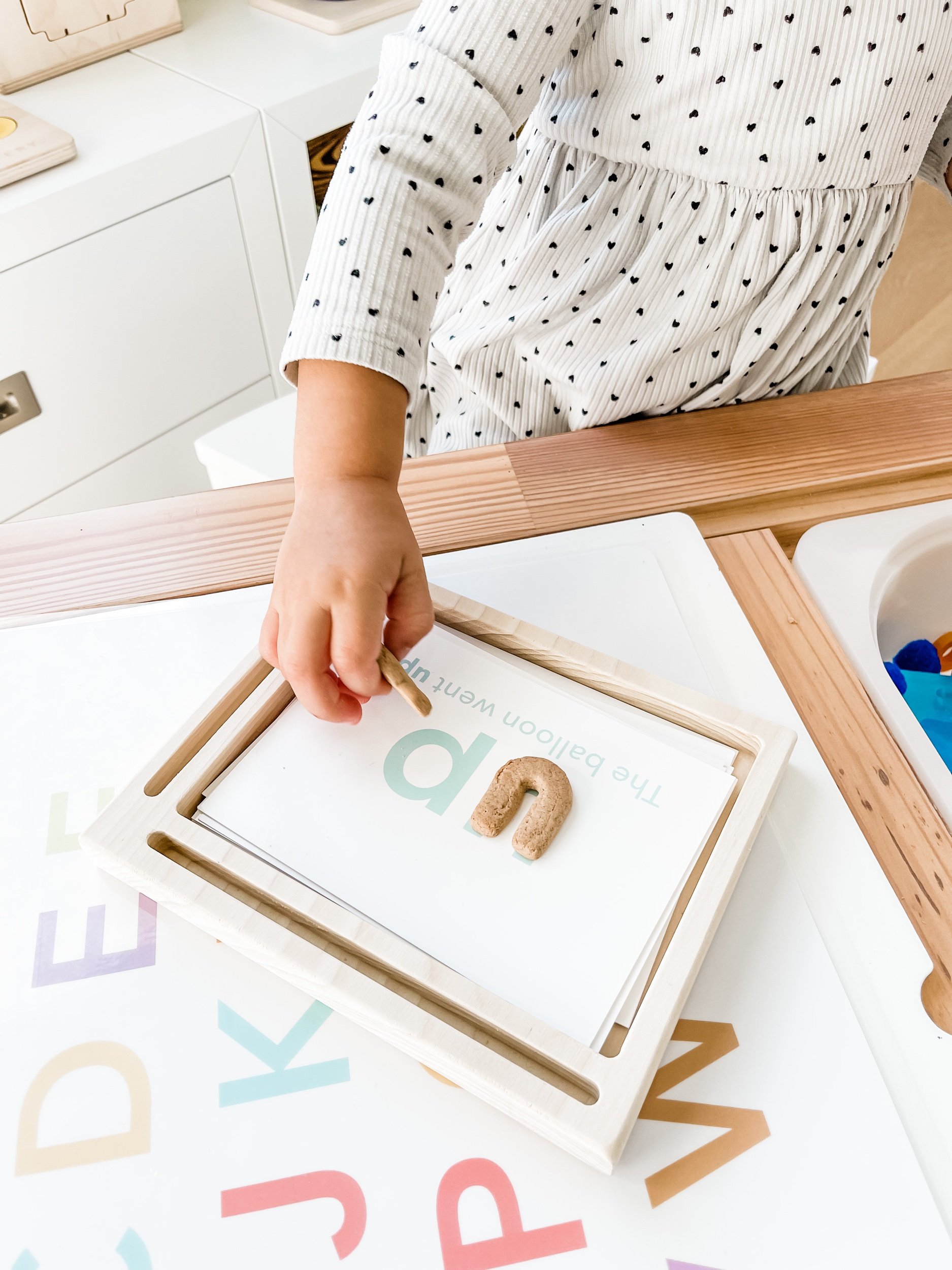
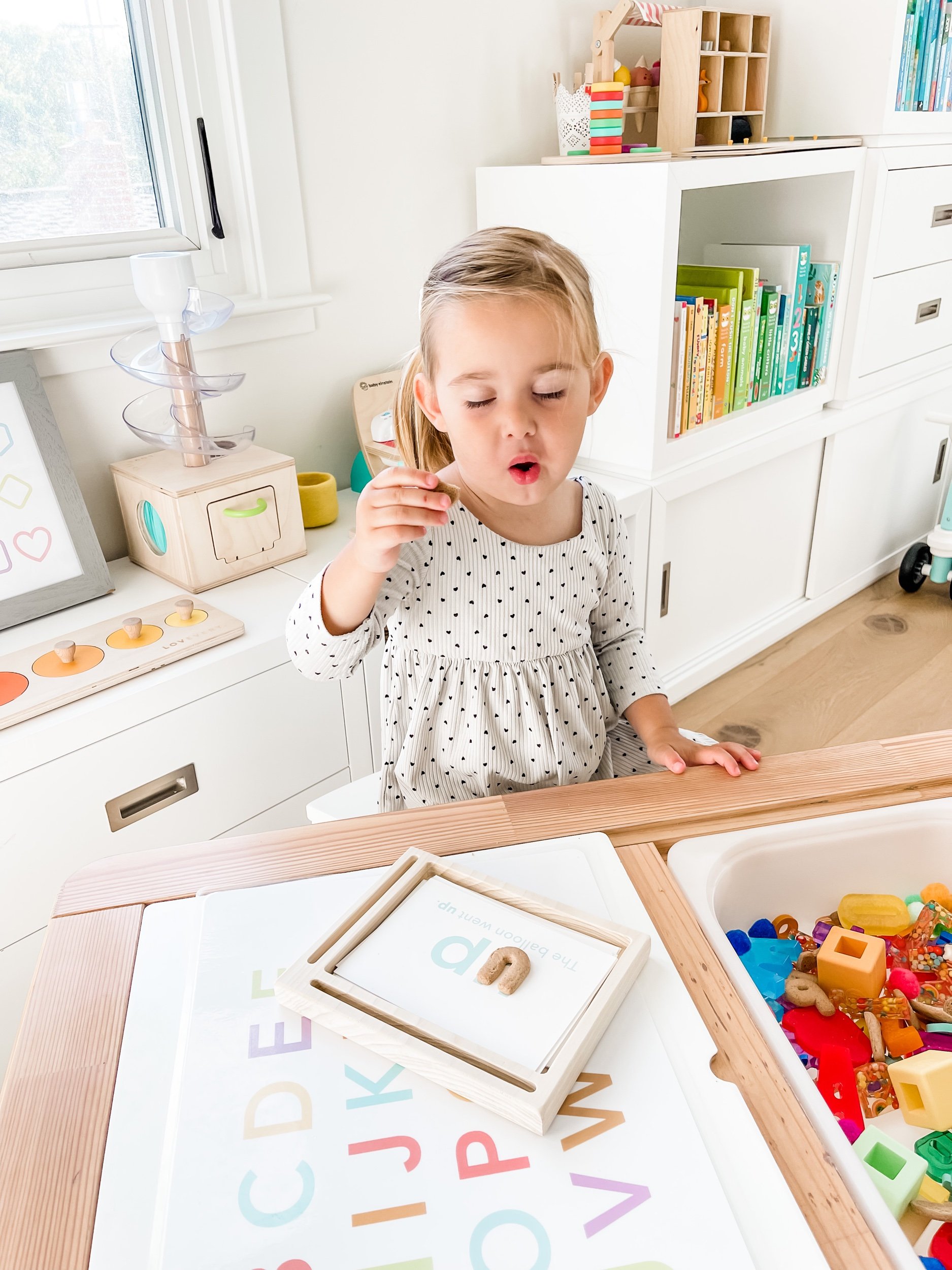
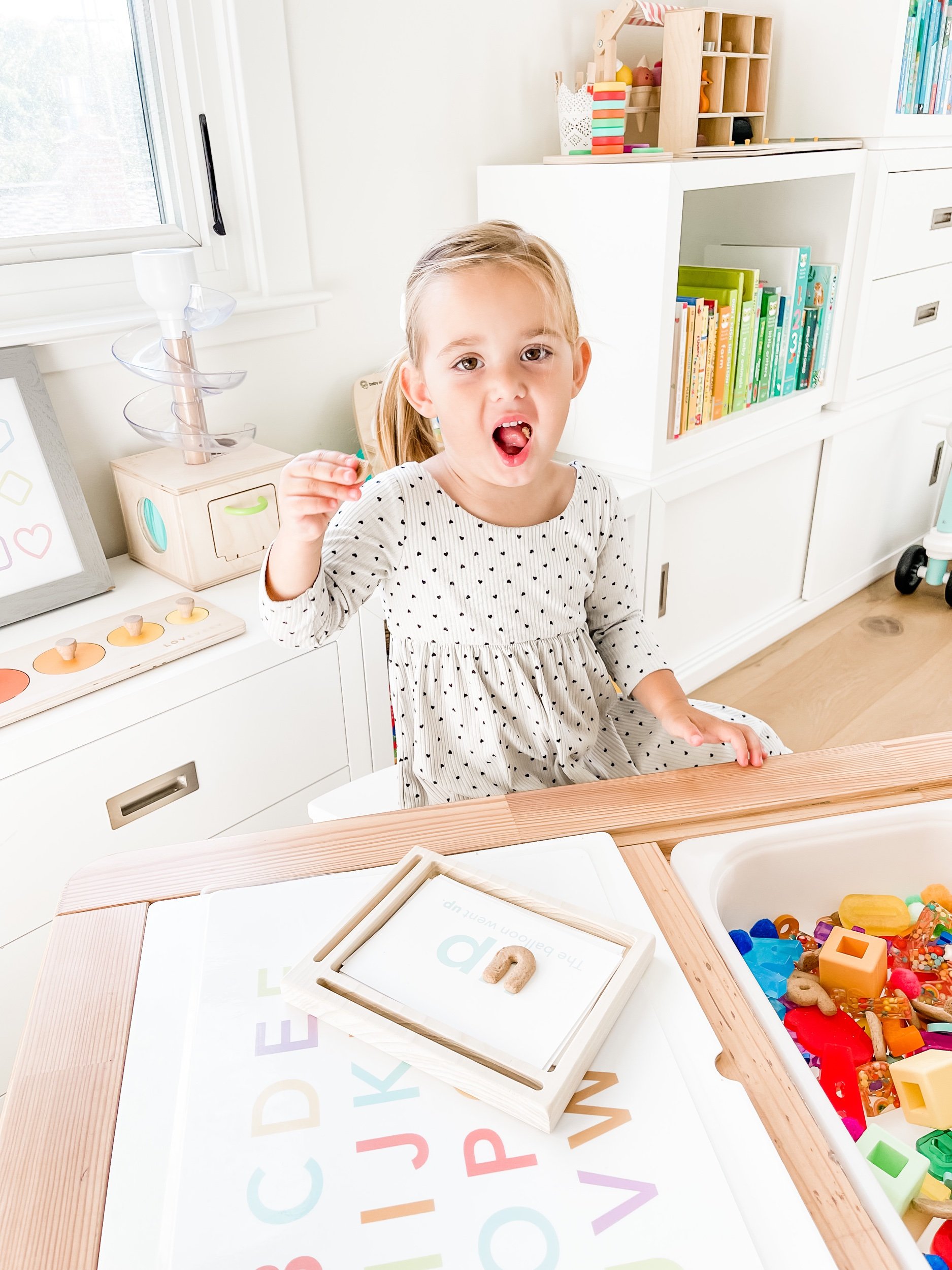
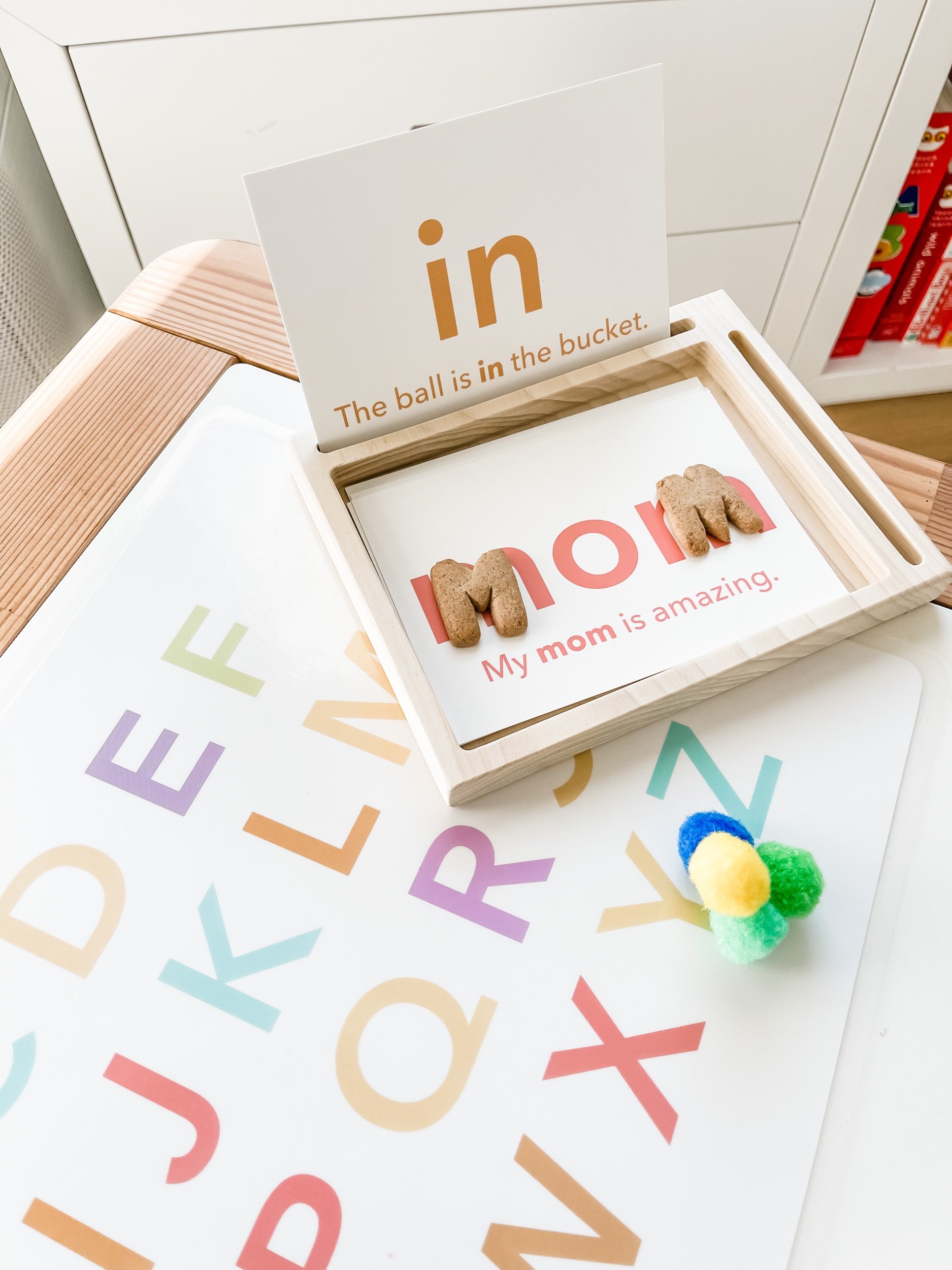
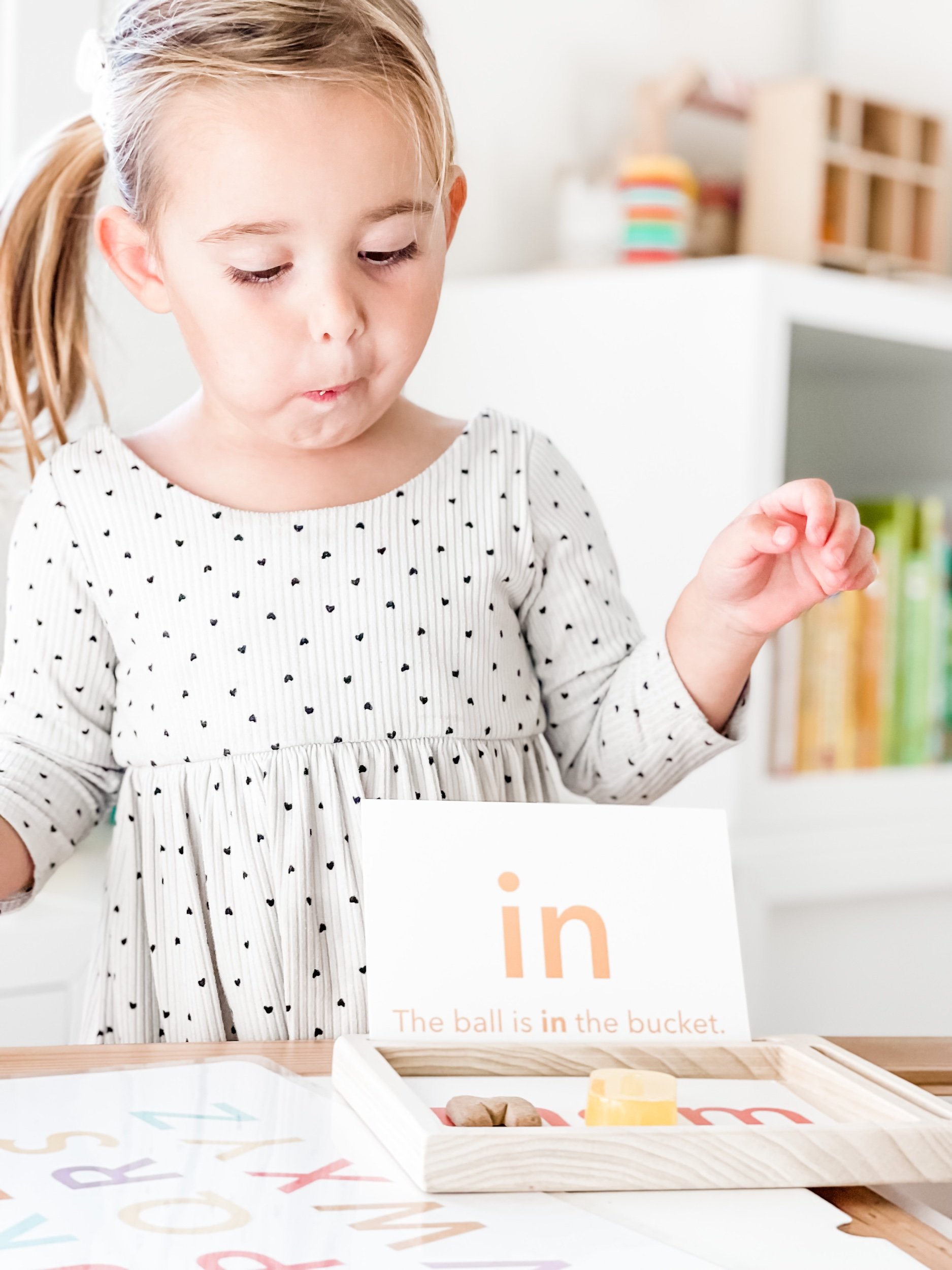
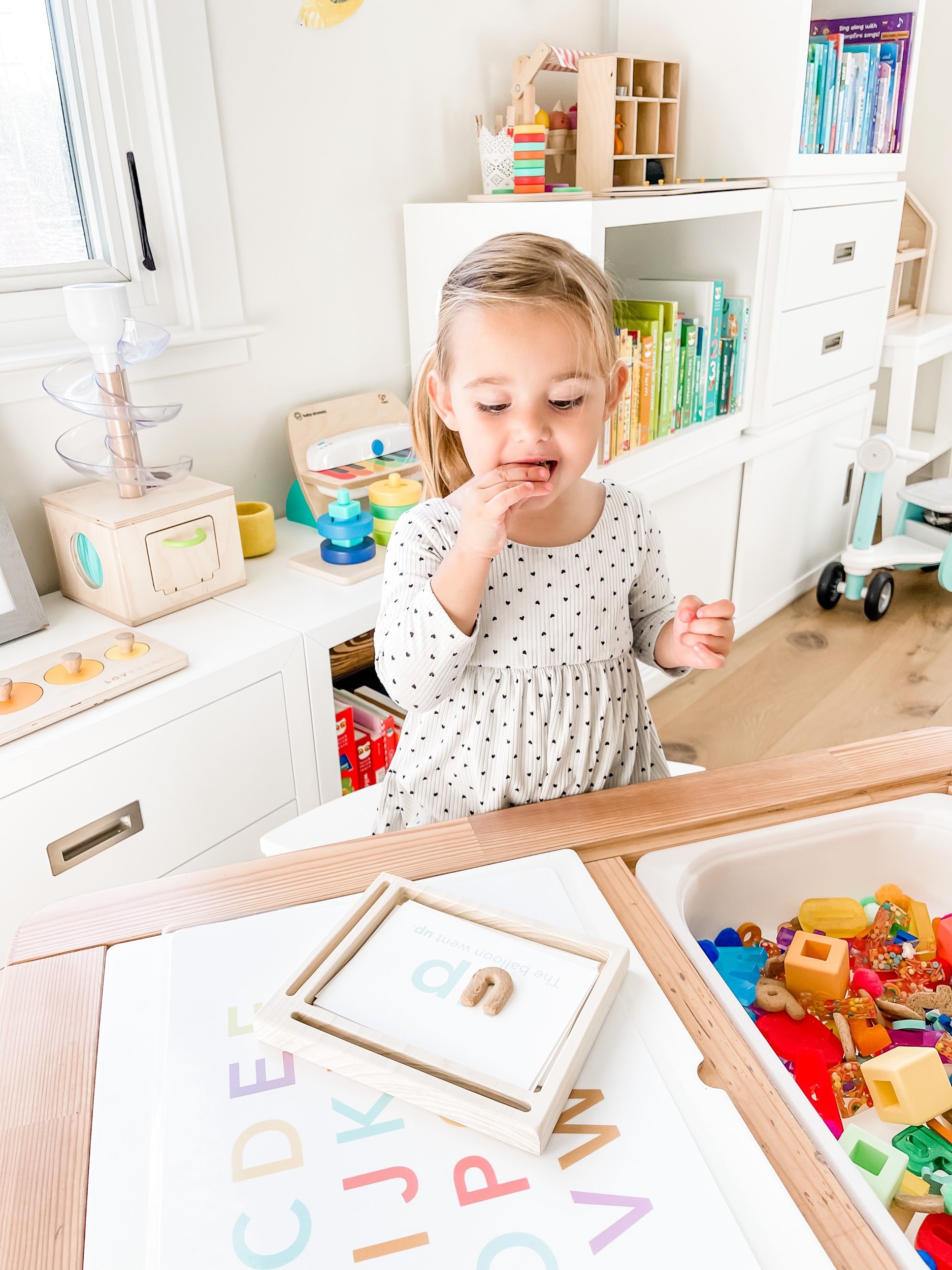
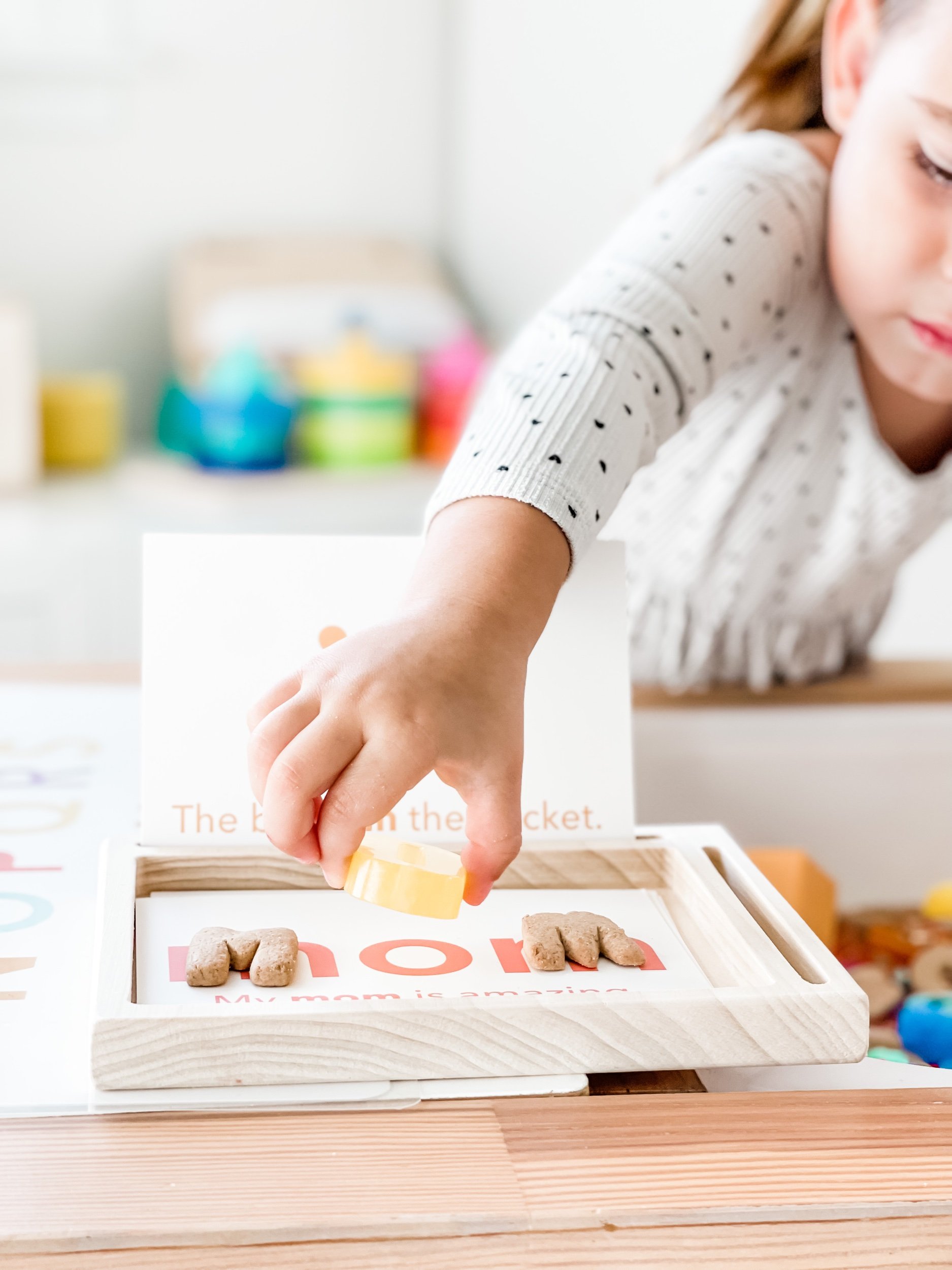
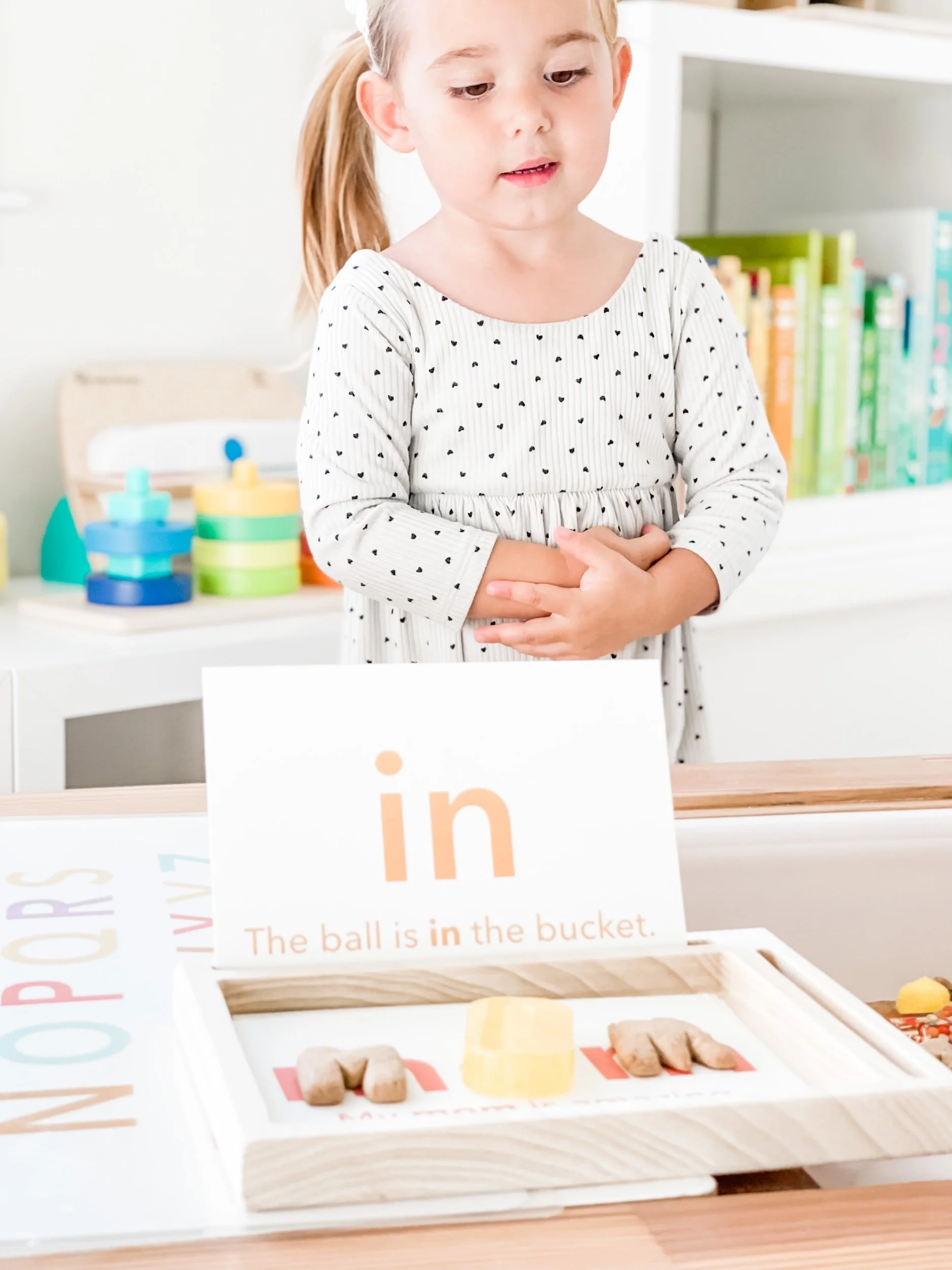
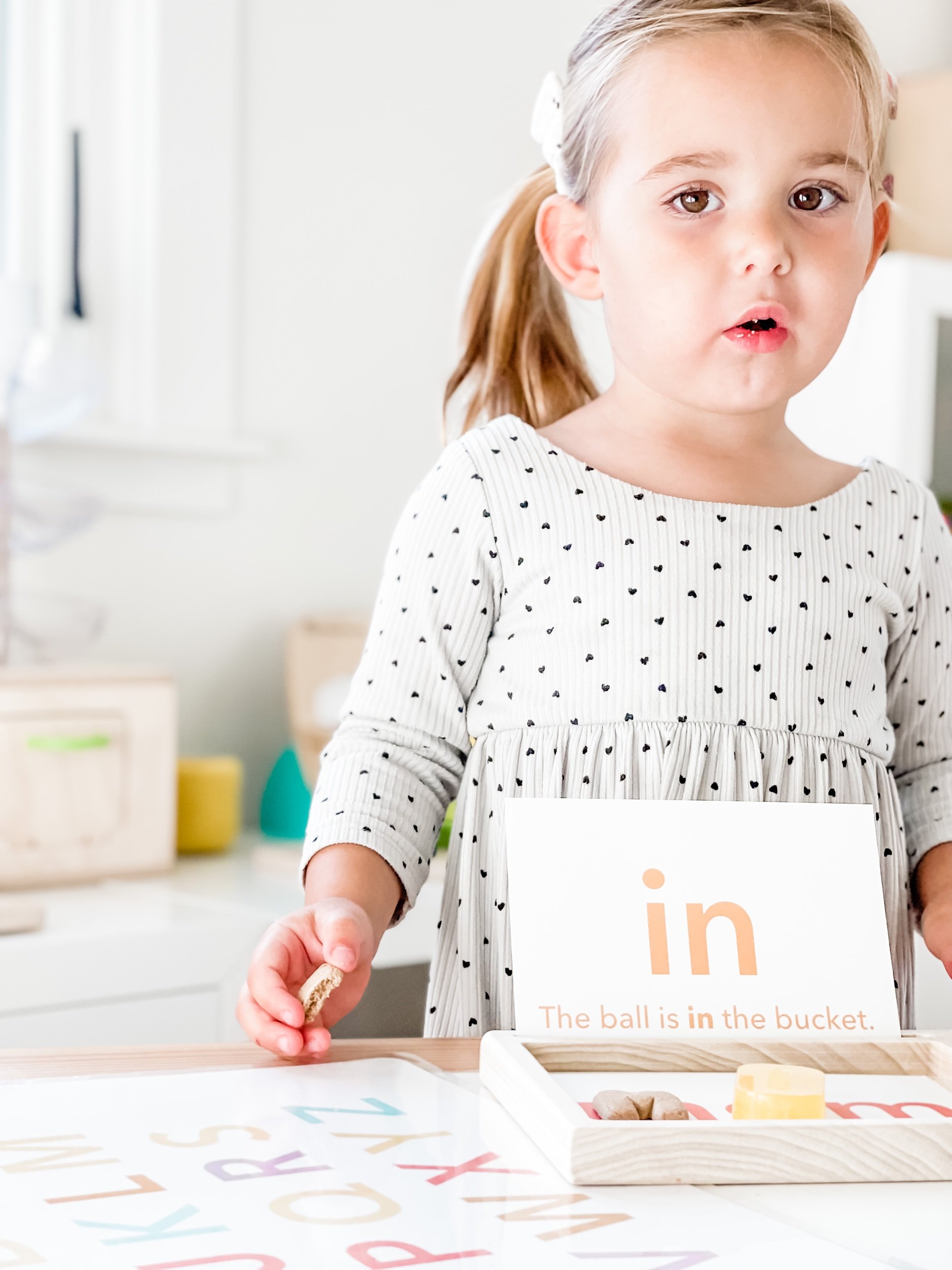
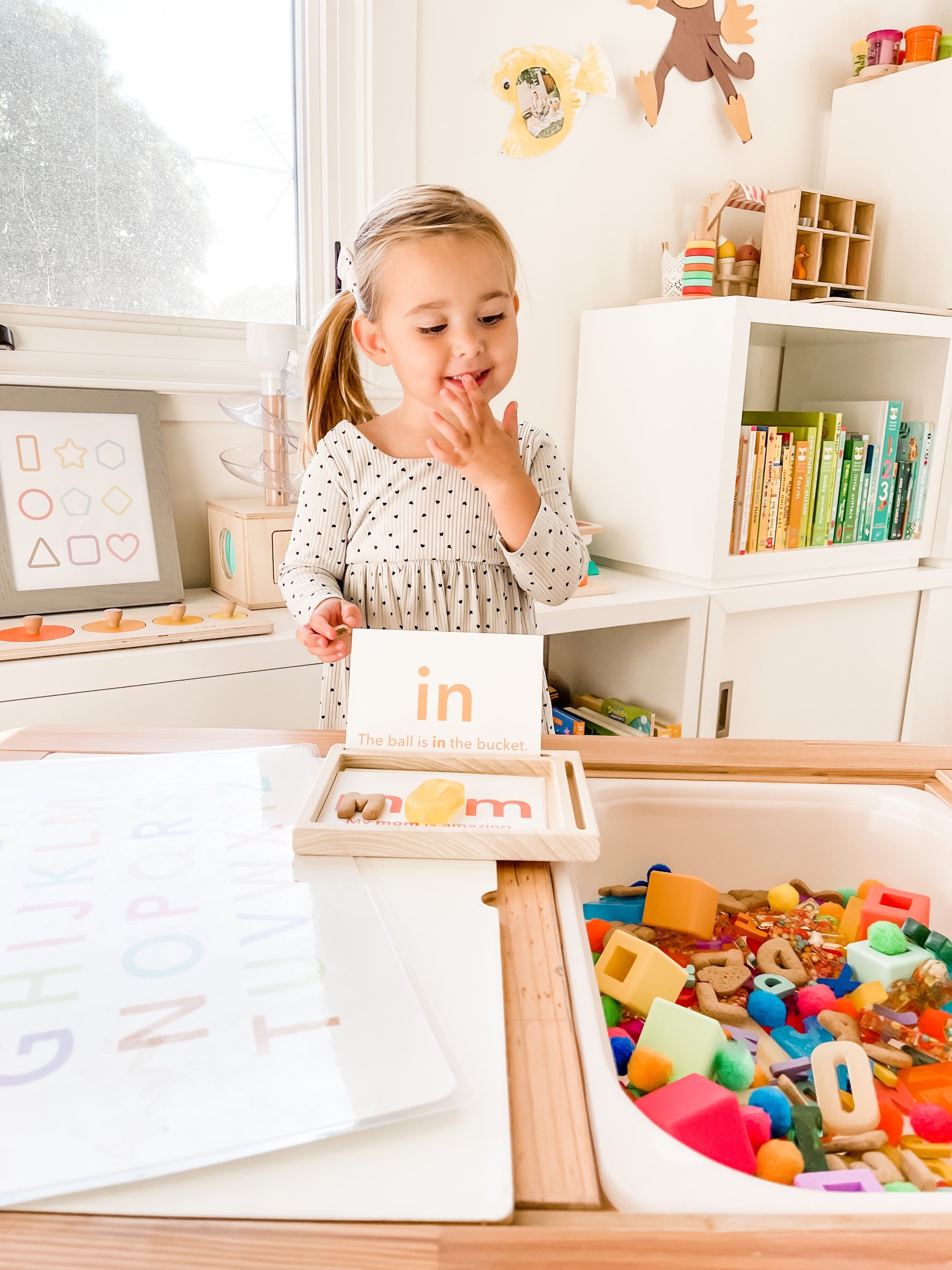
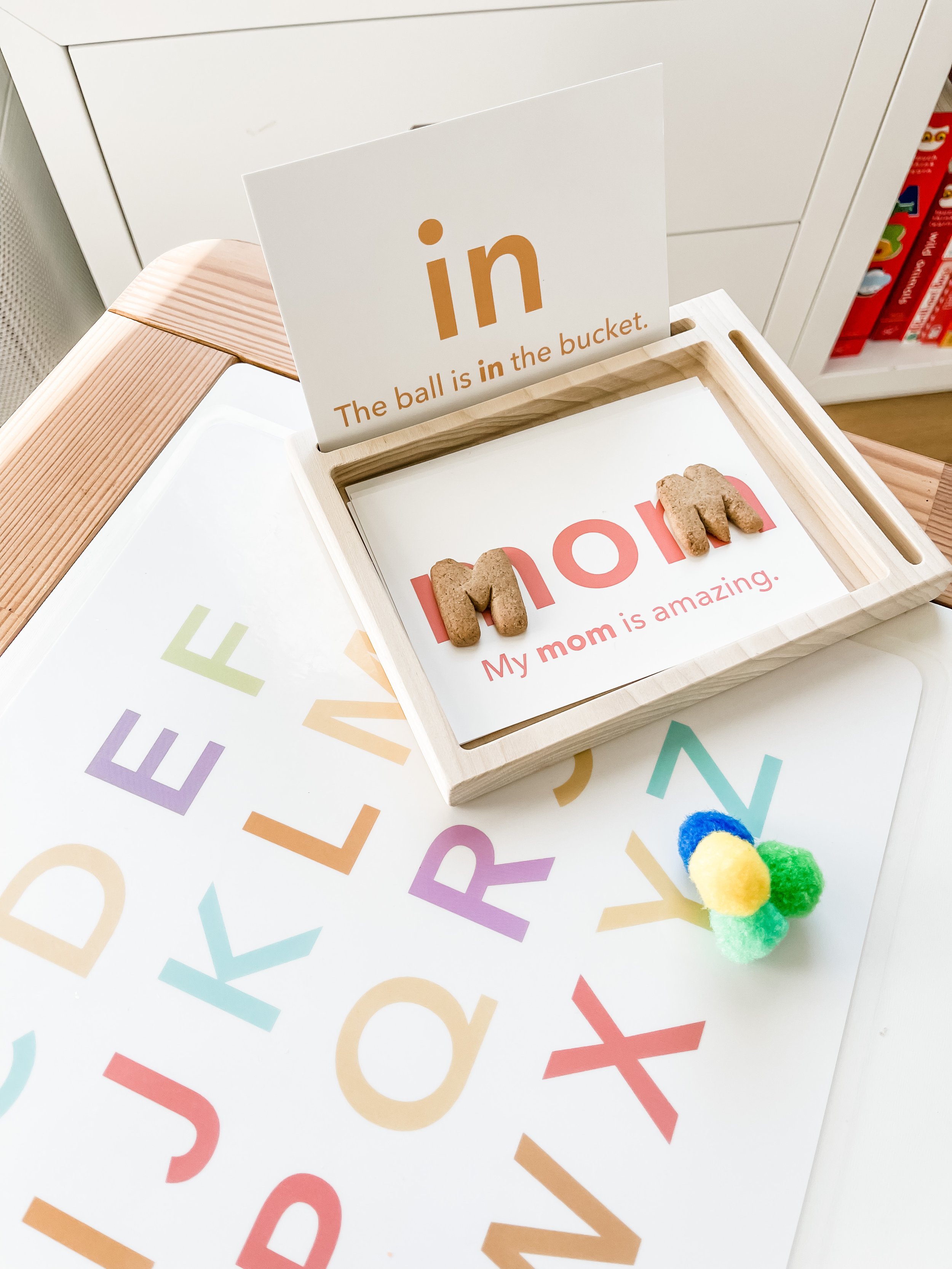
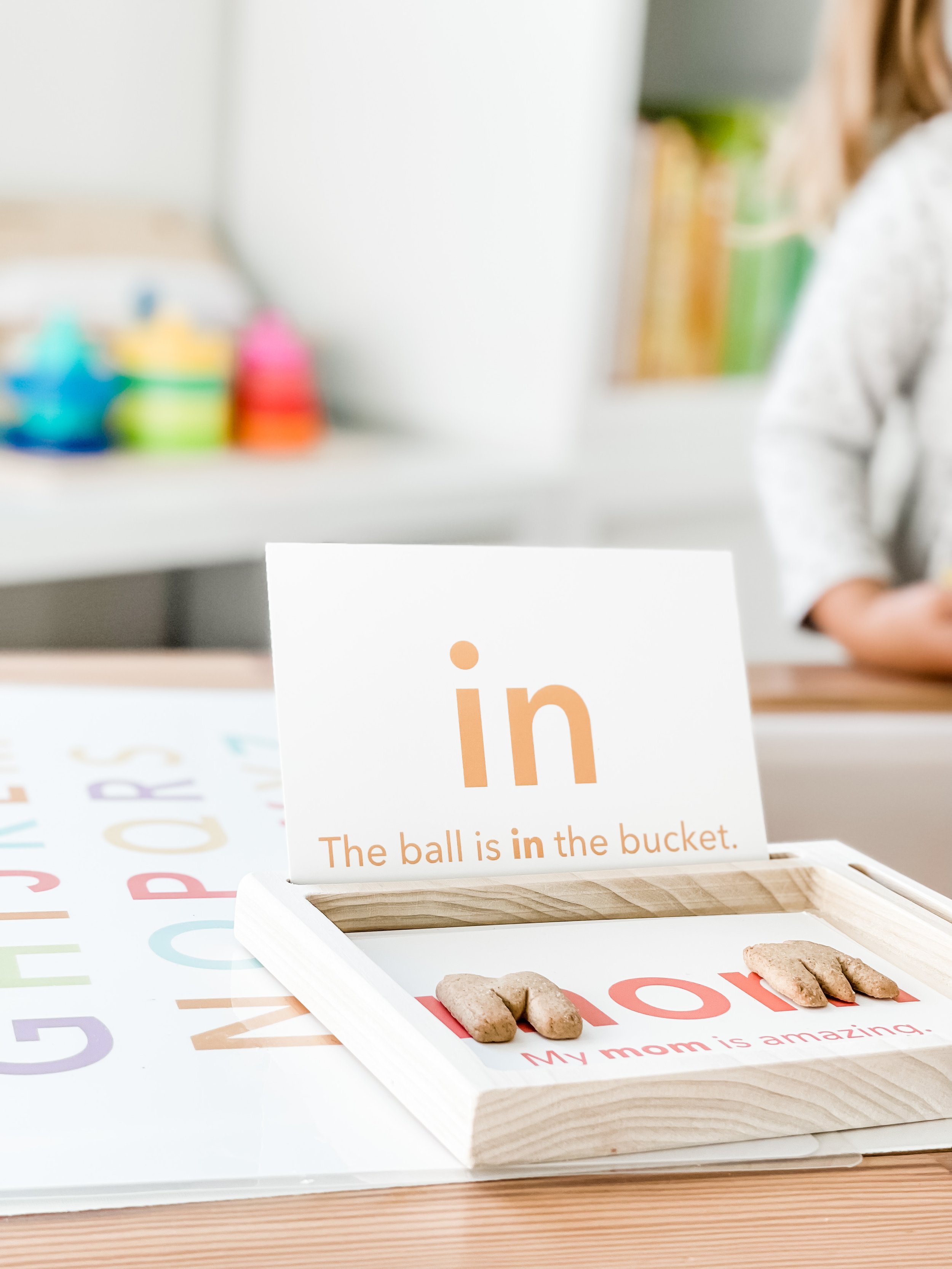
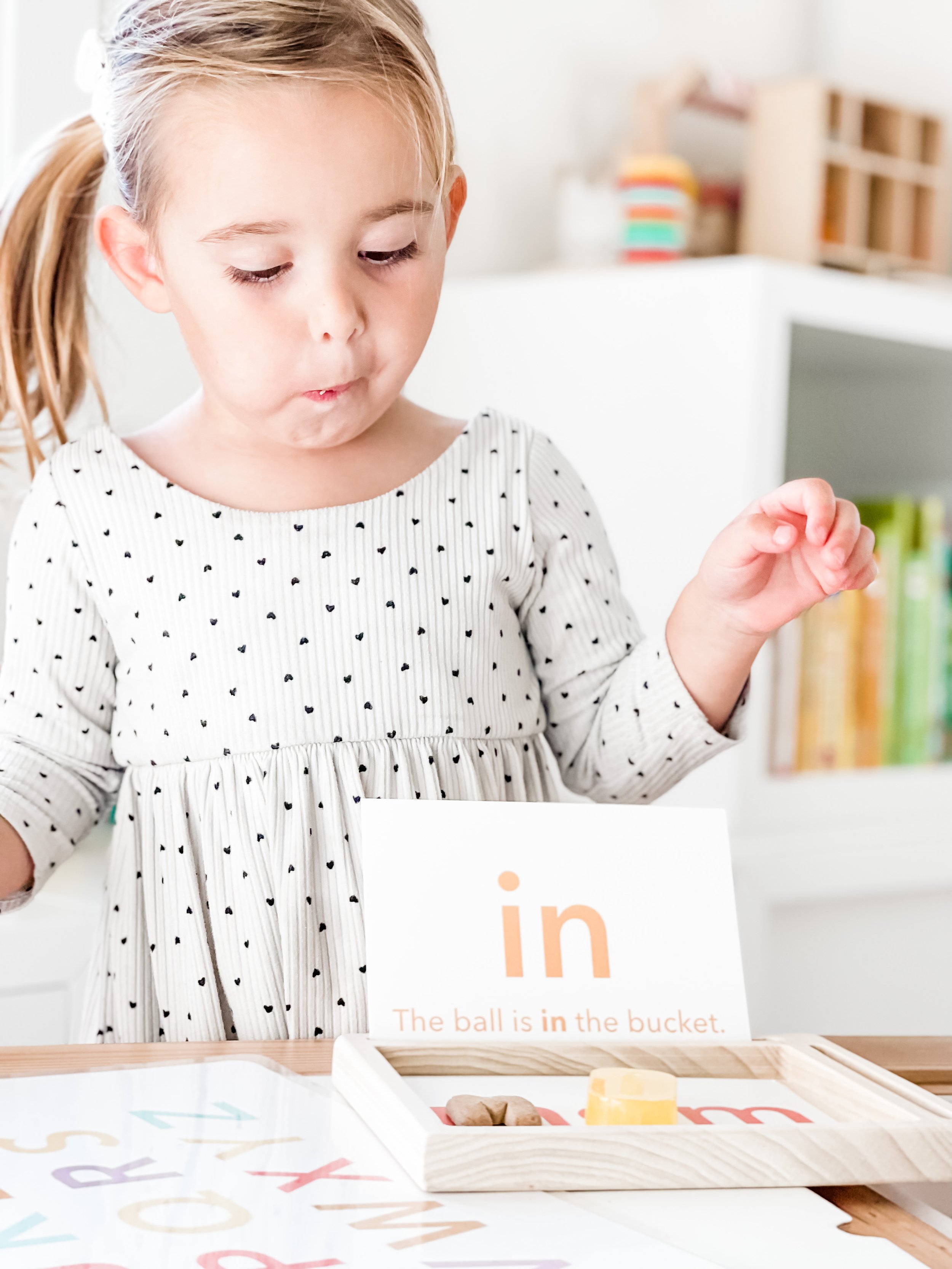
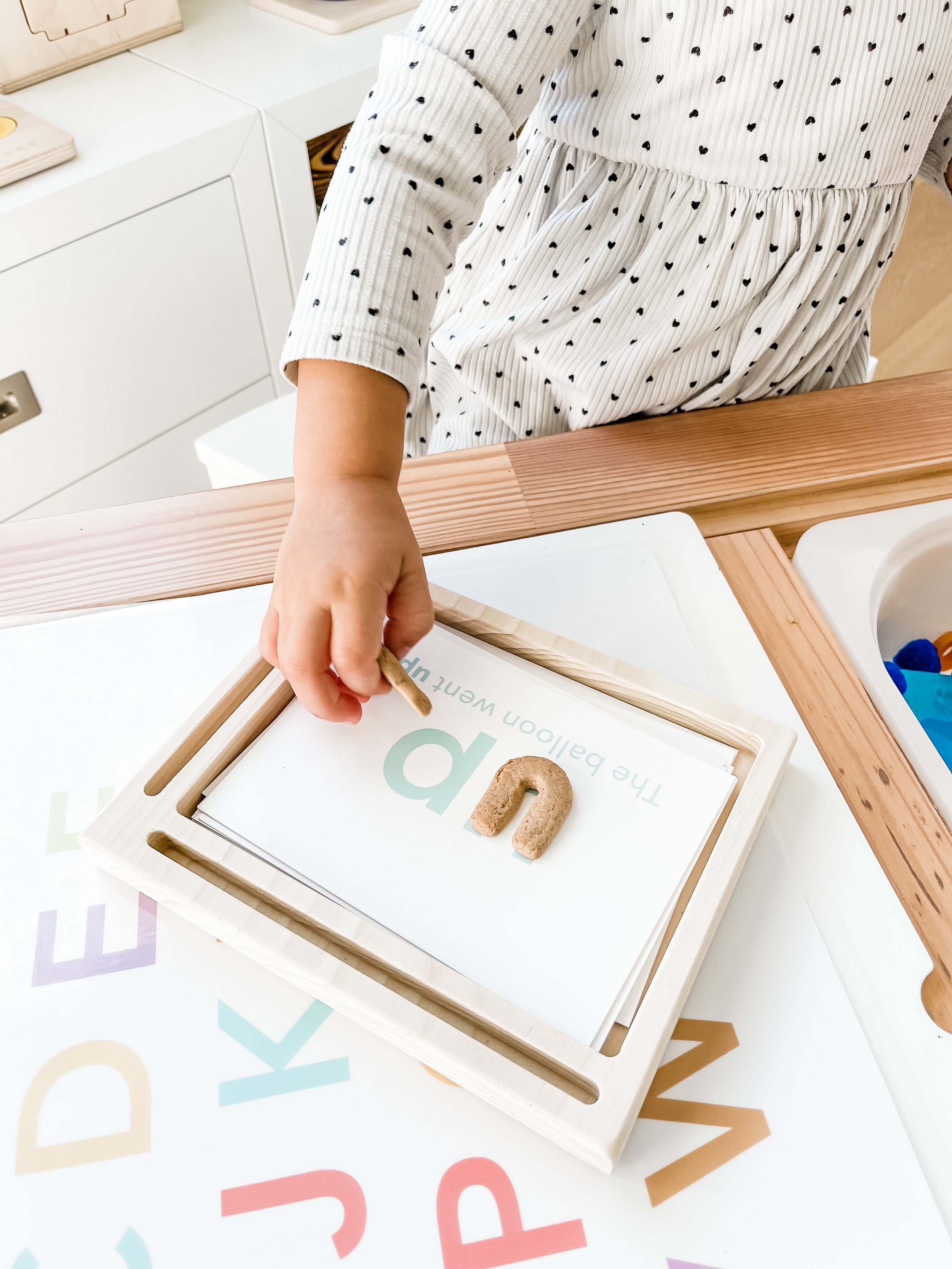
For advanced learners, up the challenge by using sight word flashcards to build complete words. Choose letters from the sensory bin to construct the word displayed on the flashcard. As a tasty alternative, you can use ABC Letter Cookies from Trader Joe's. Reward your child with a cookie for accurately building each word!
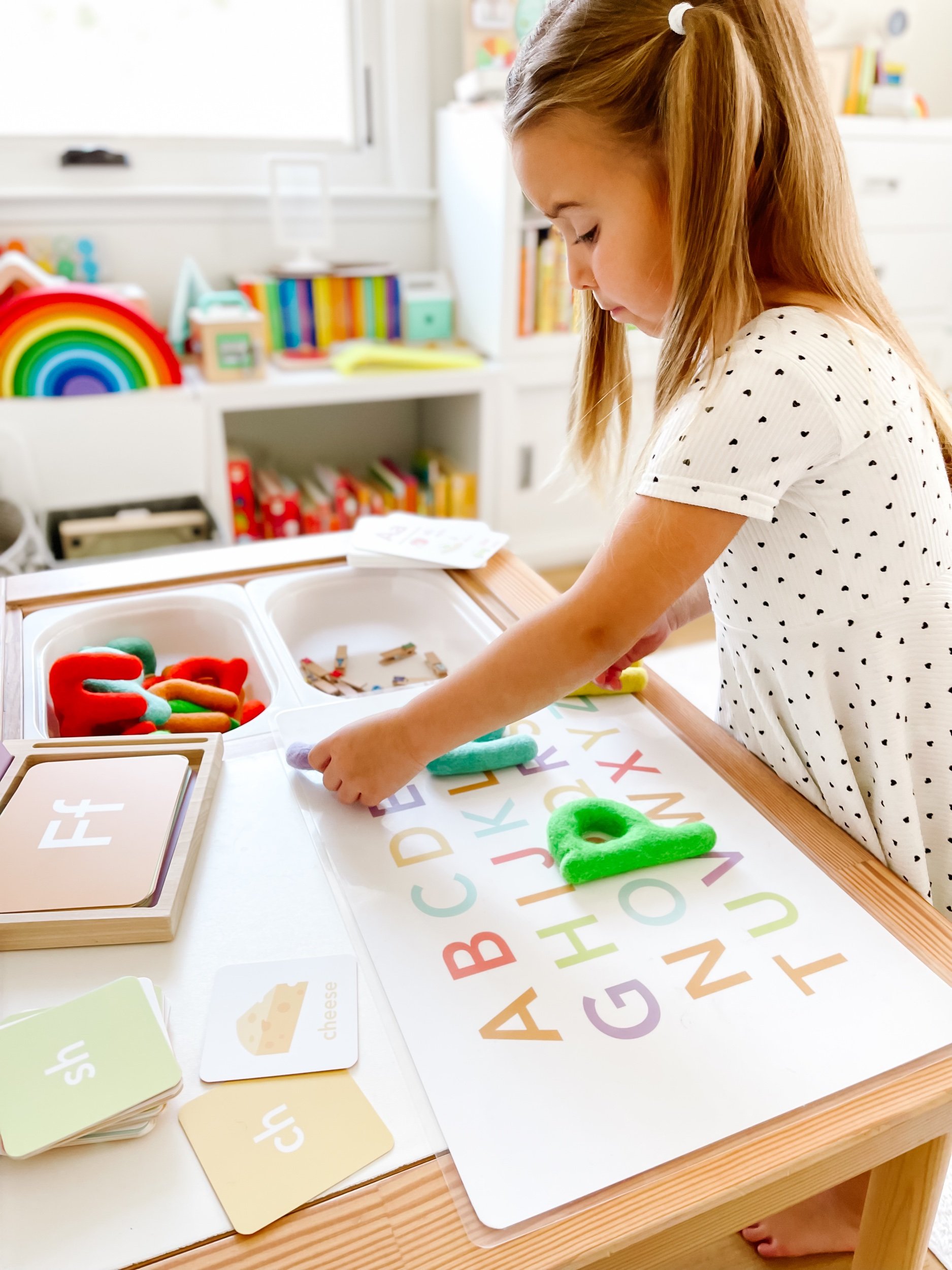
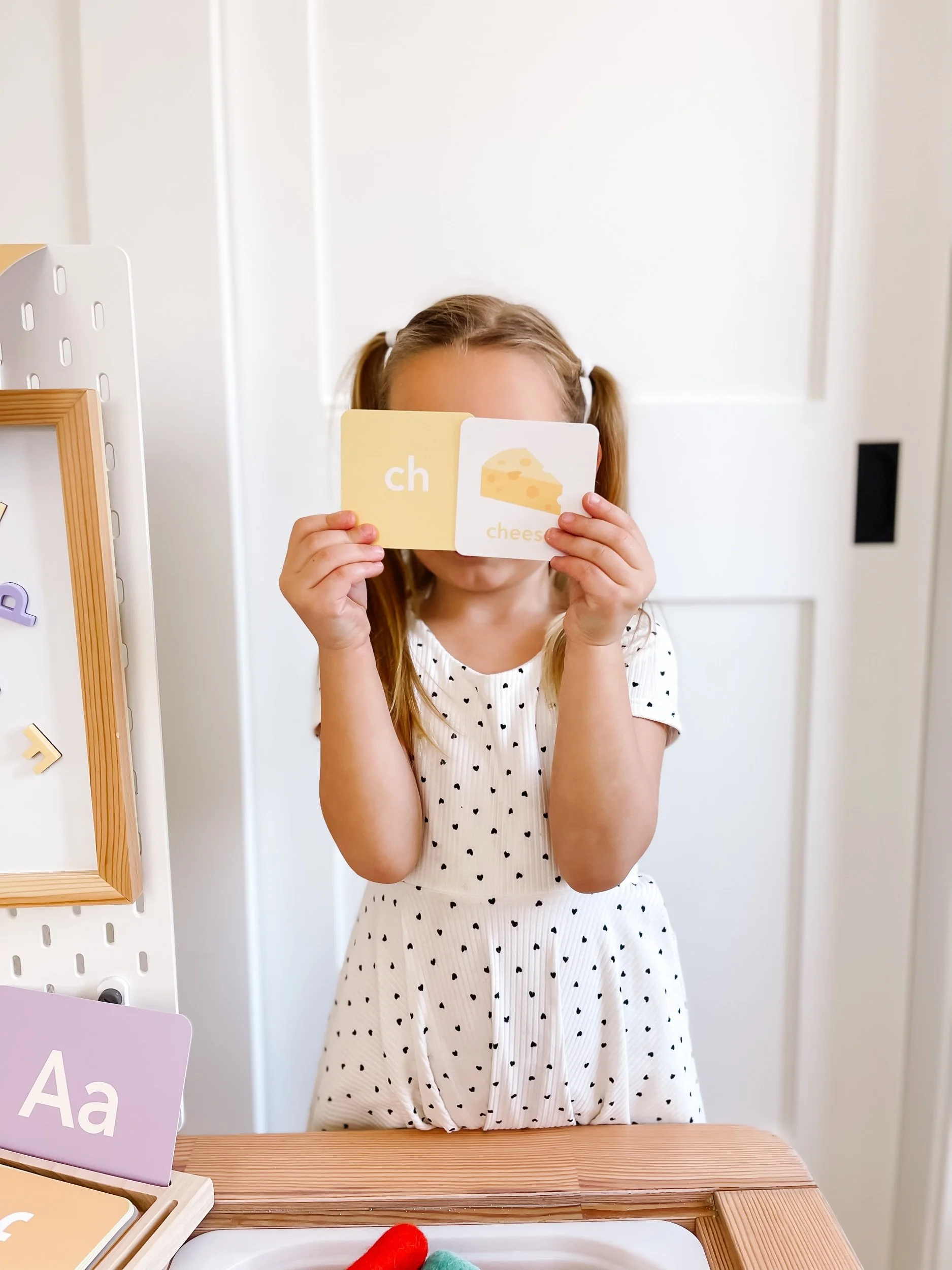
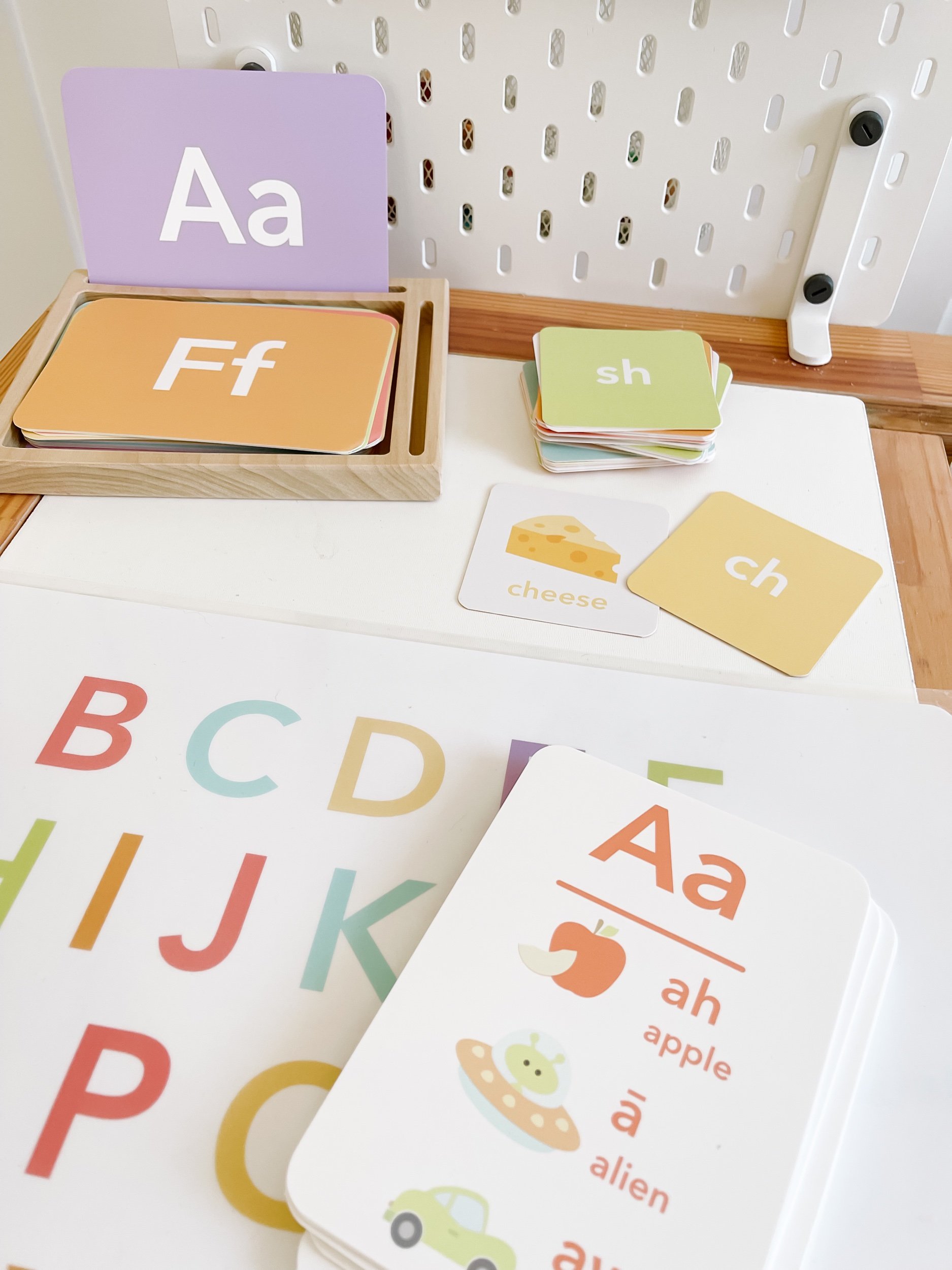
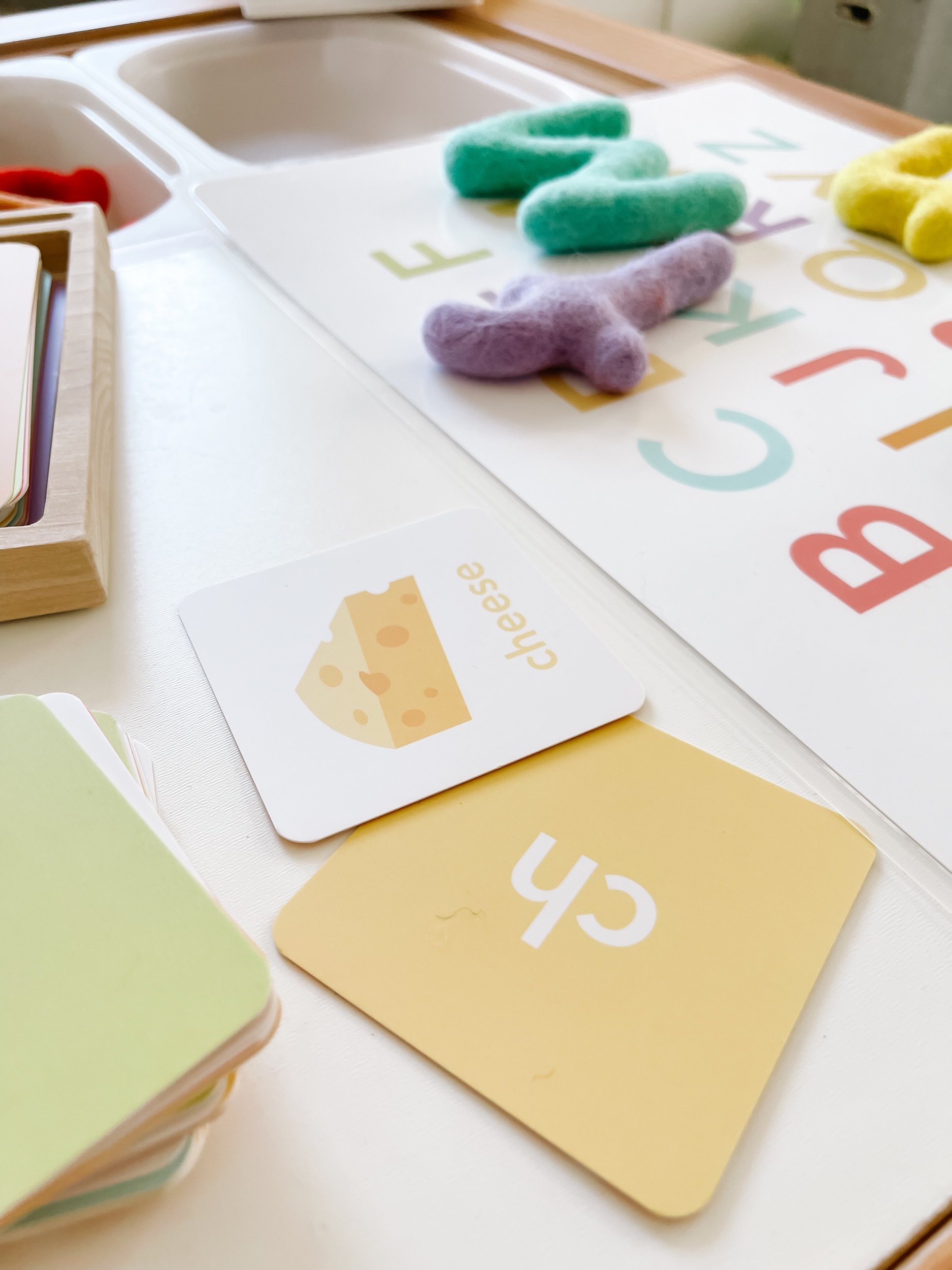
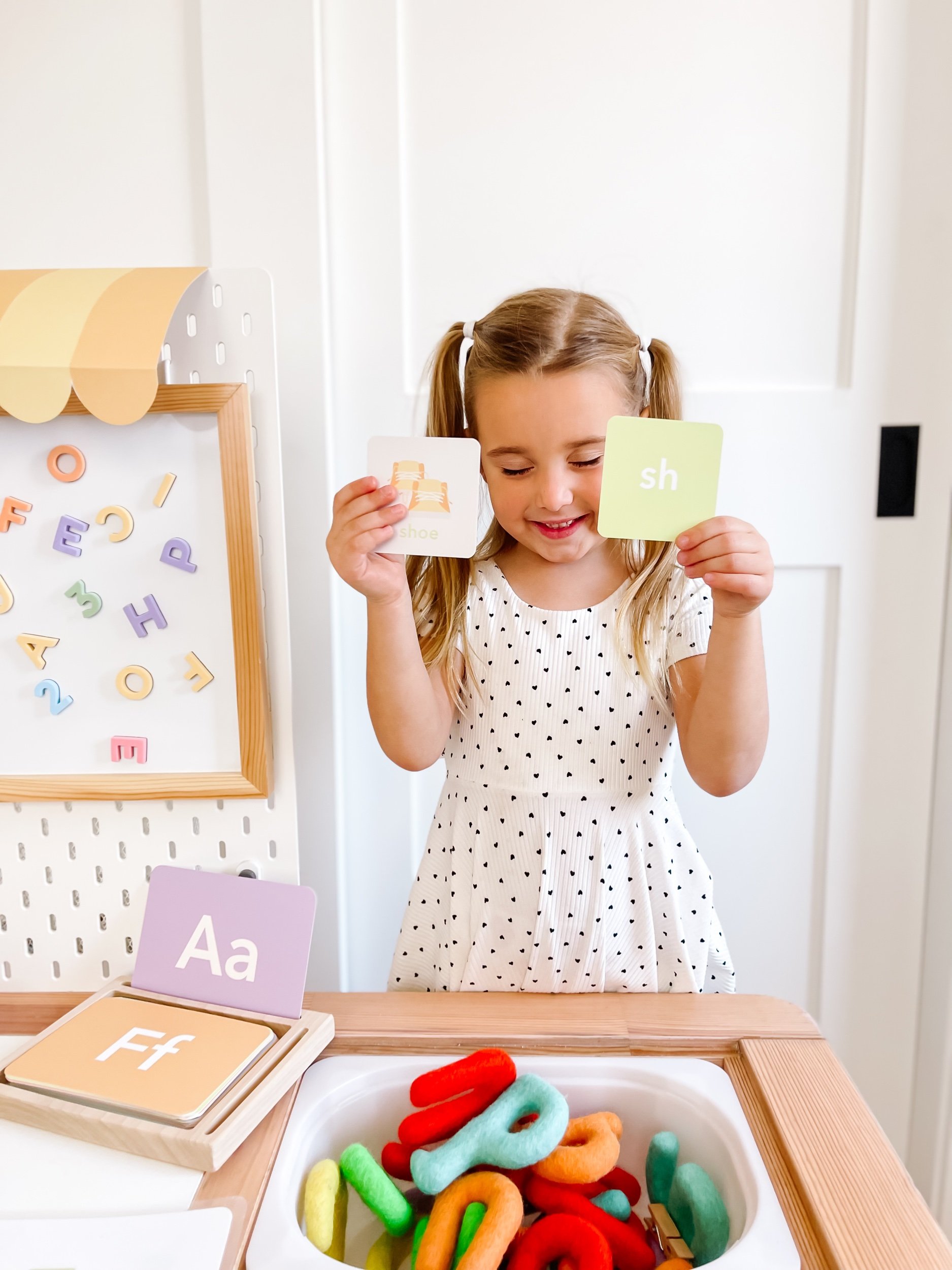
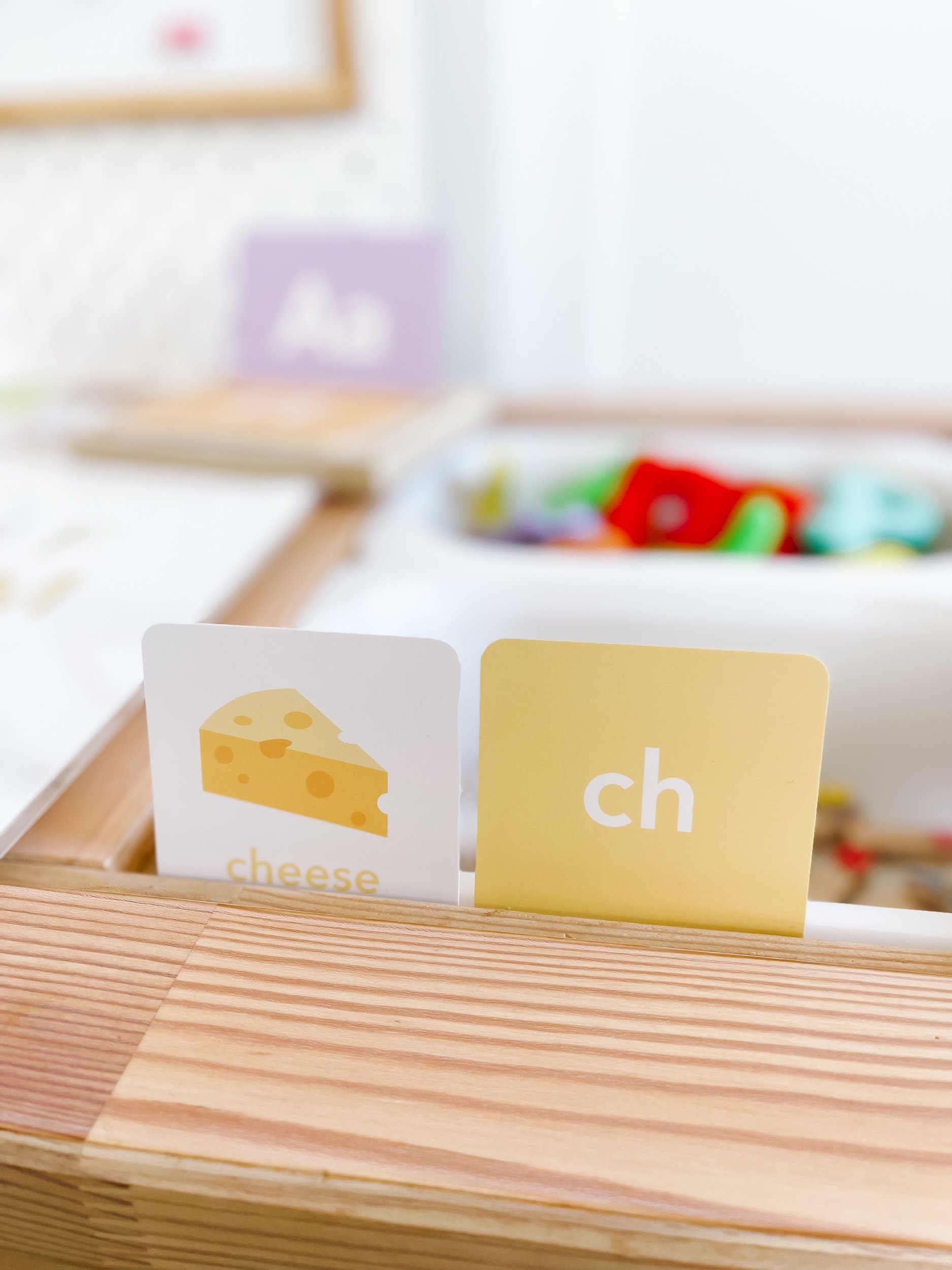
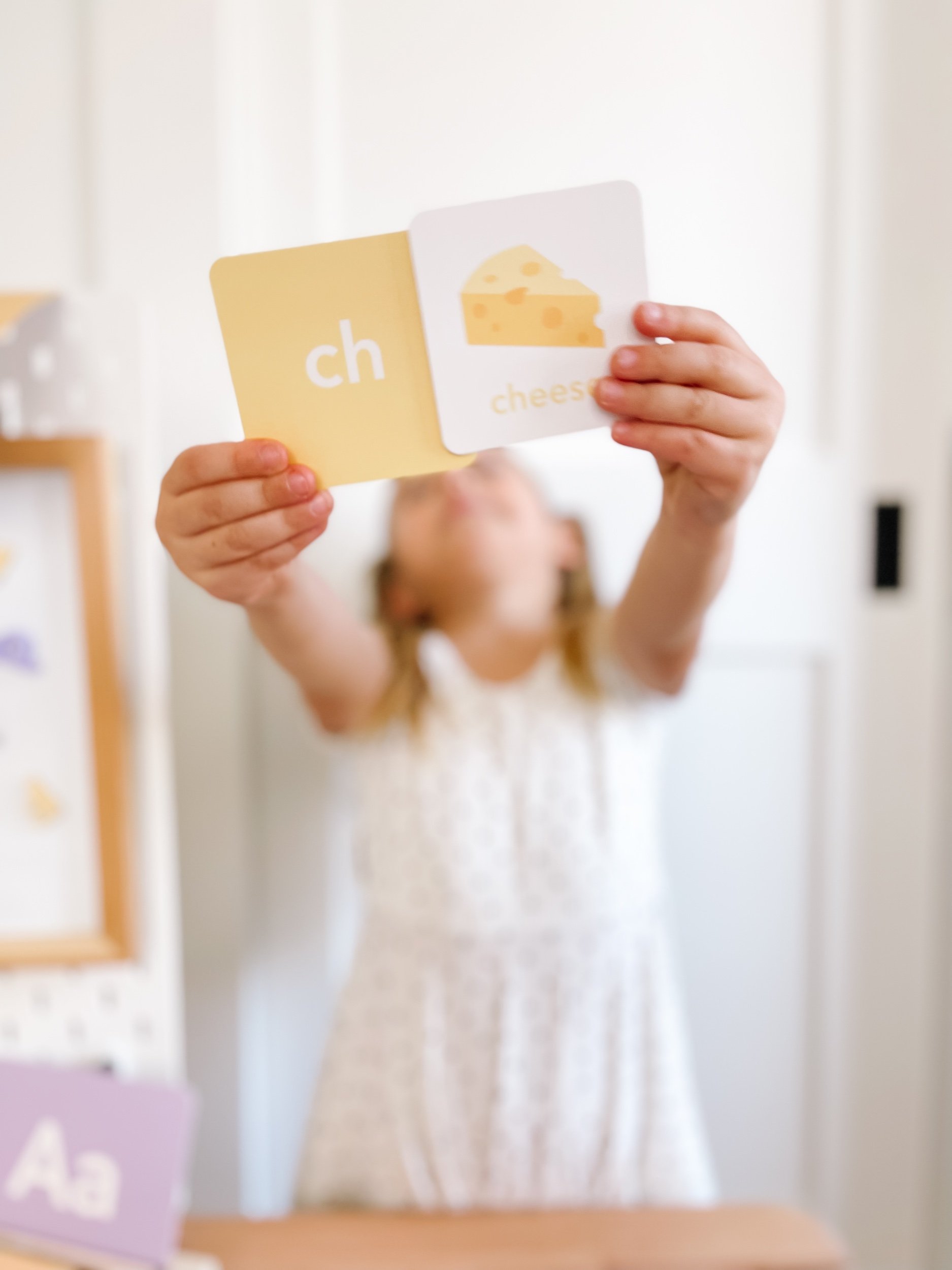
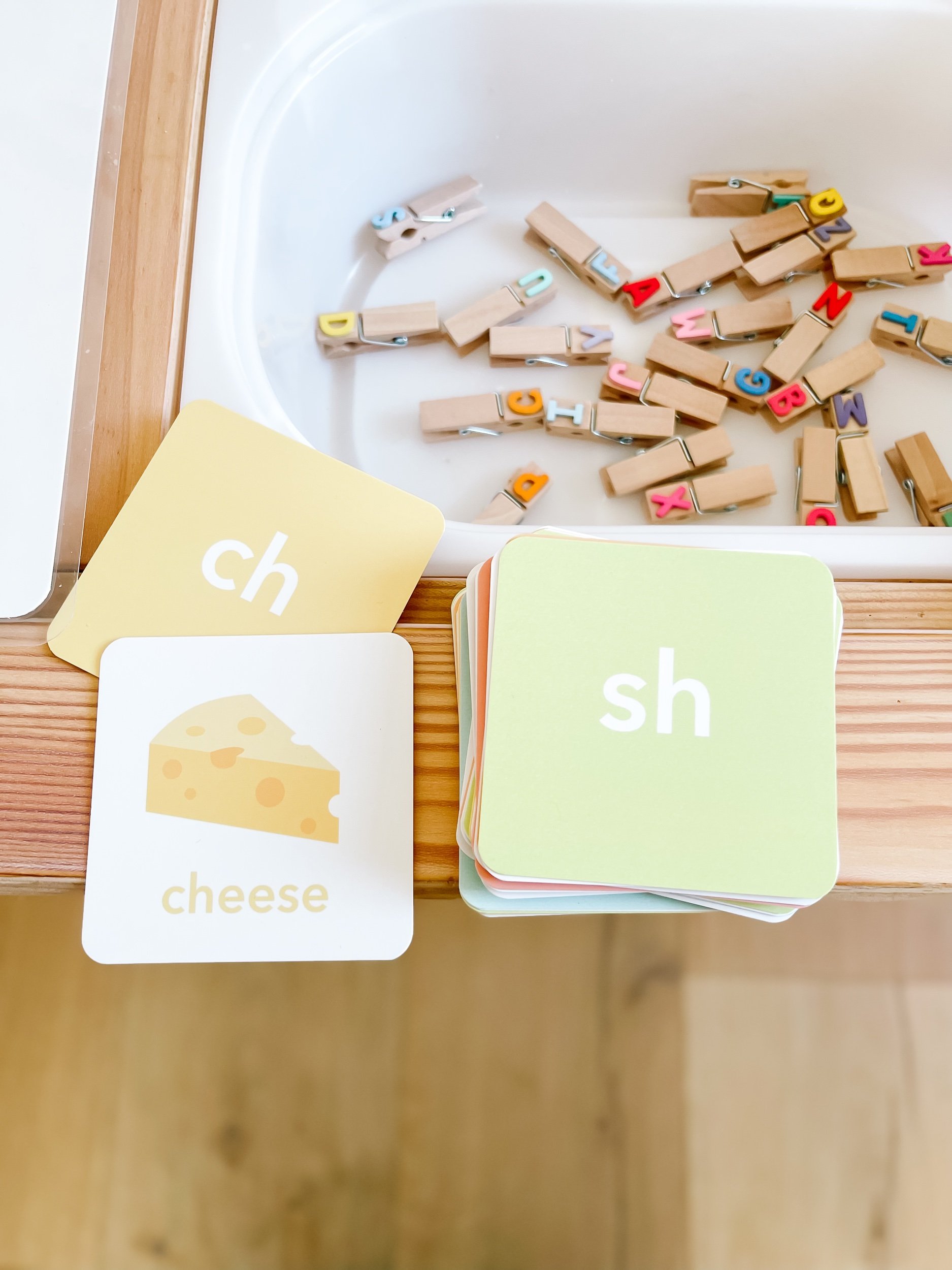
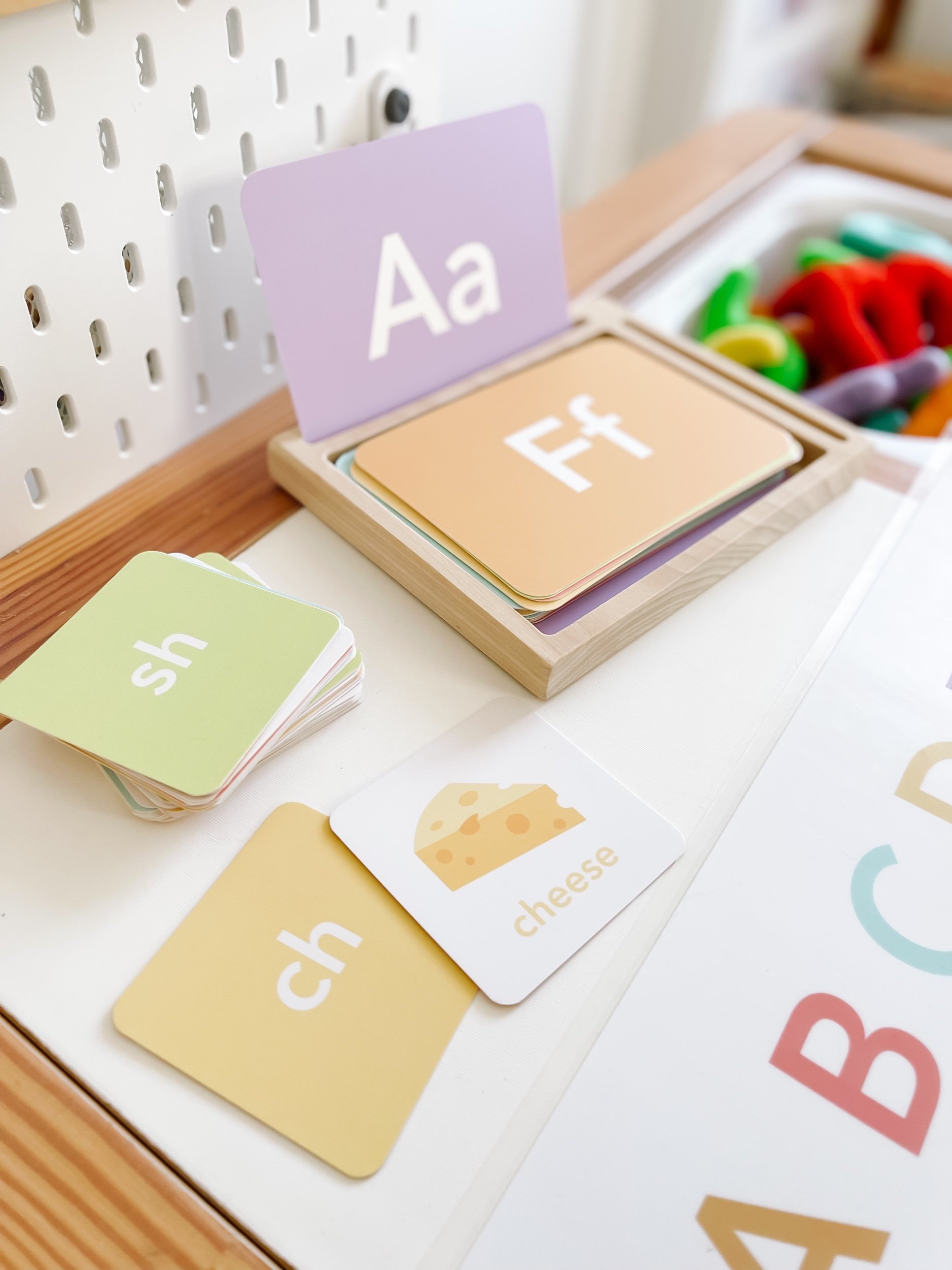
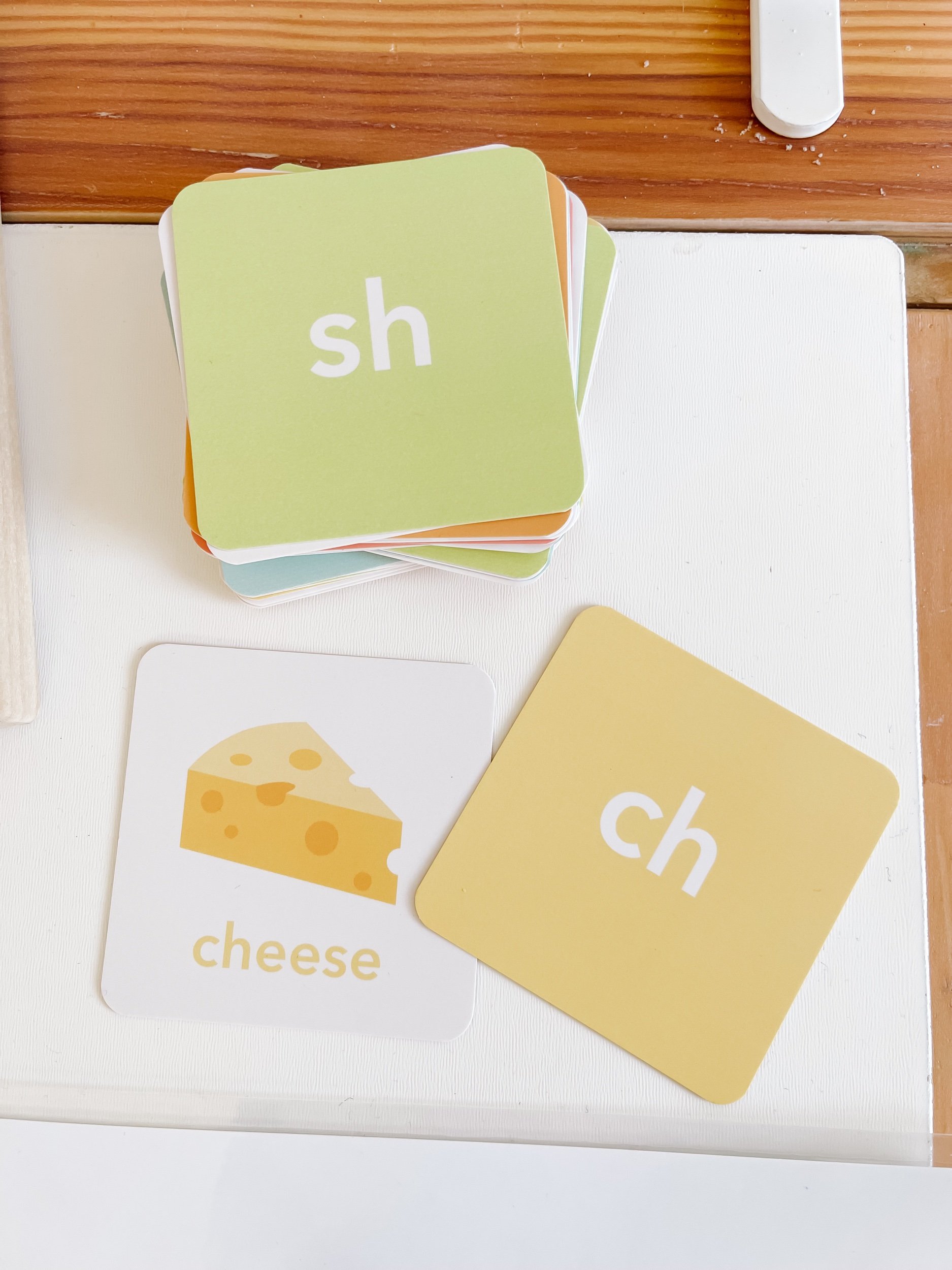
Once your child has learned how to blend letter sounds, they can move on to the skill of recognizing digraphs which are two letters together that make a unique sound. For this activity, we used our digraphs match game cards to find the pairs. Once Sofia is a bit older, we’ll be able to spread the full game out on the table to play.
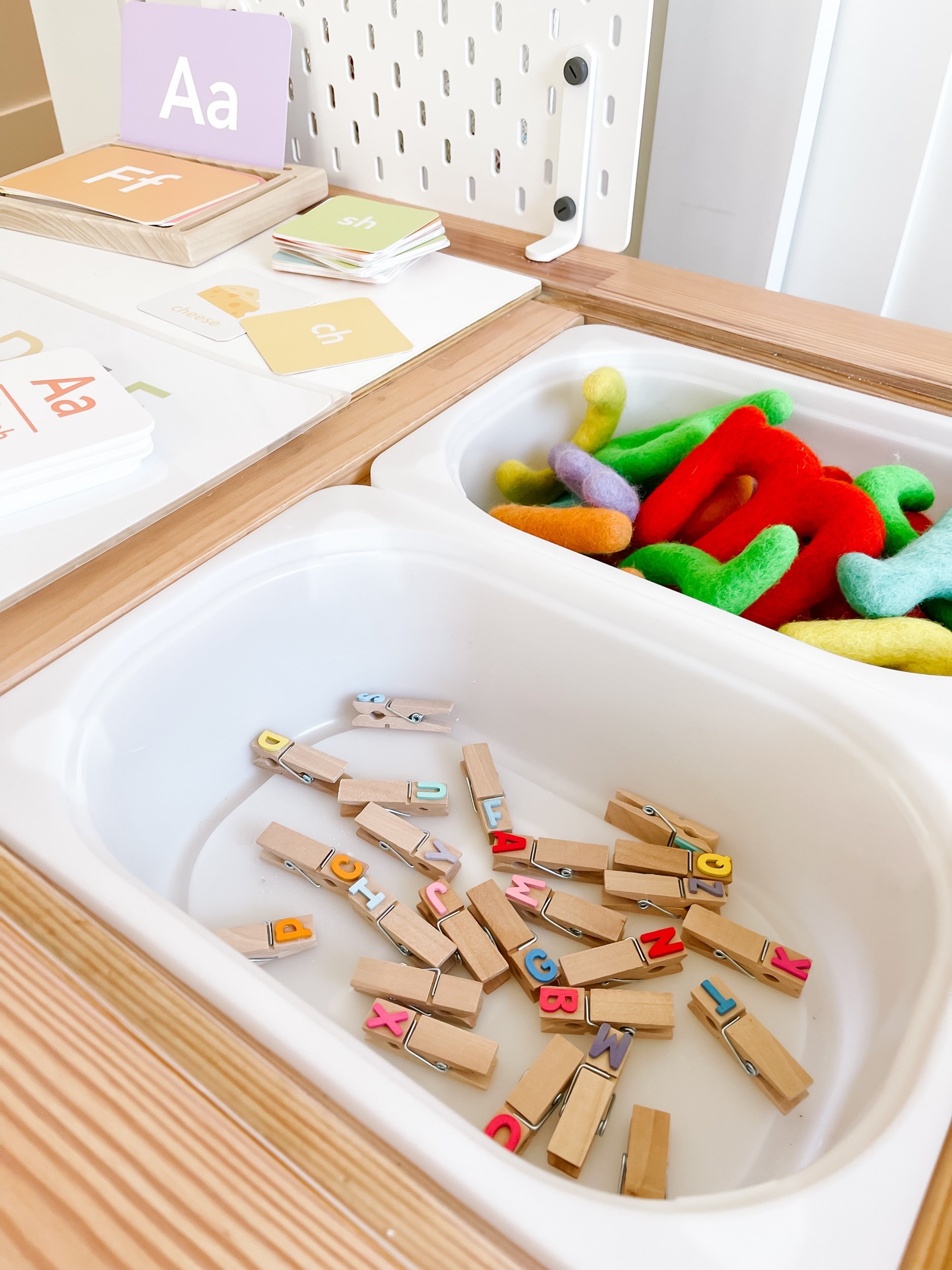
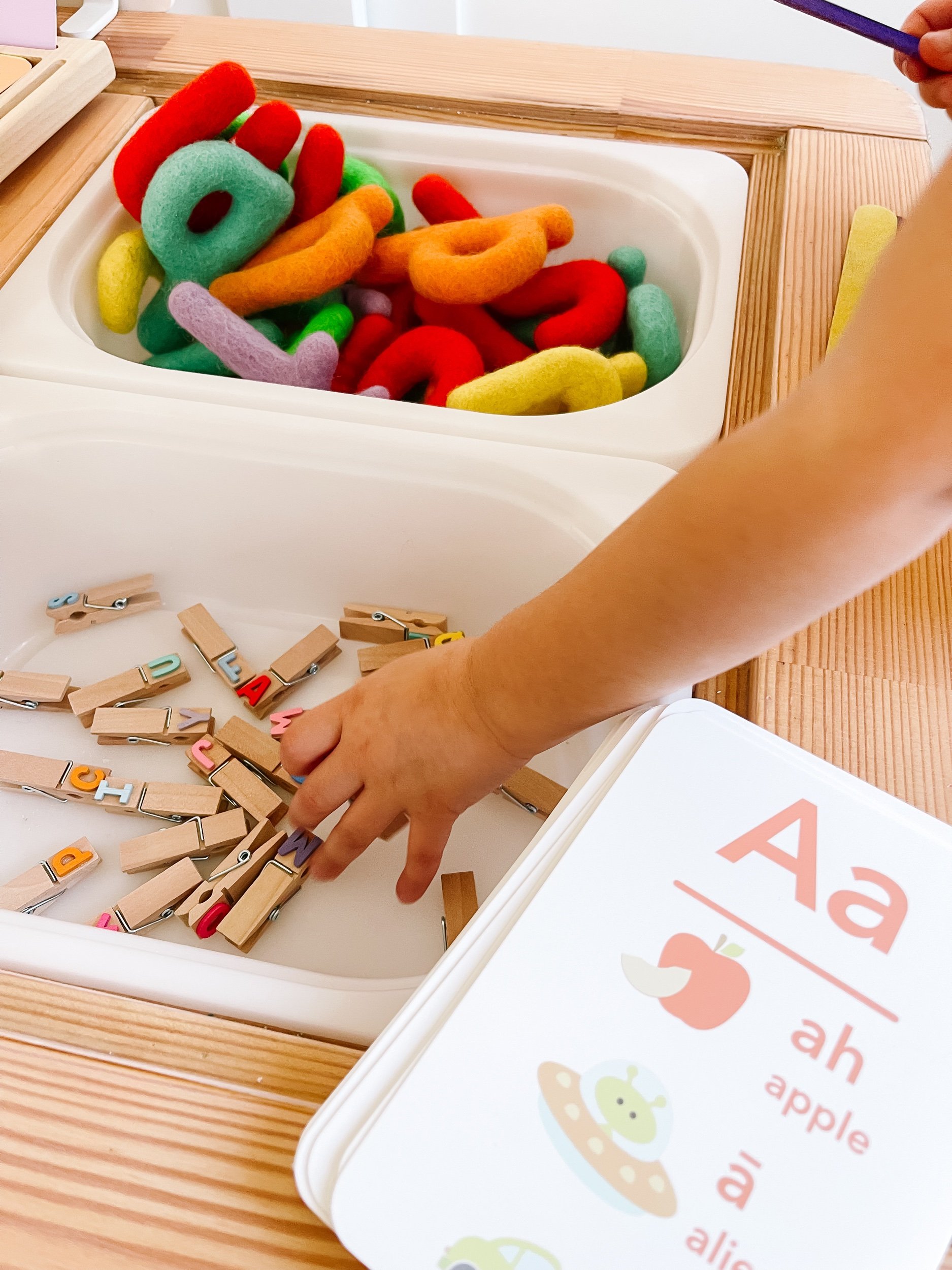
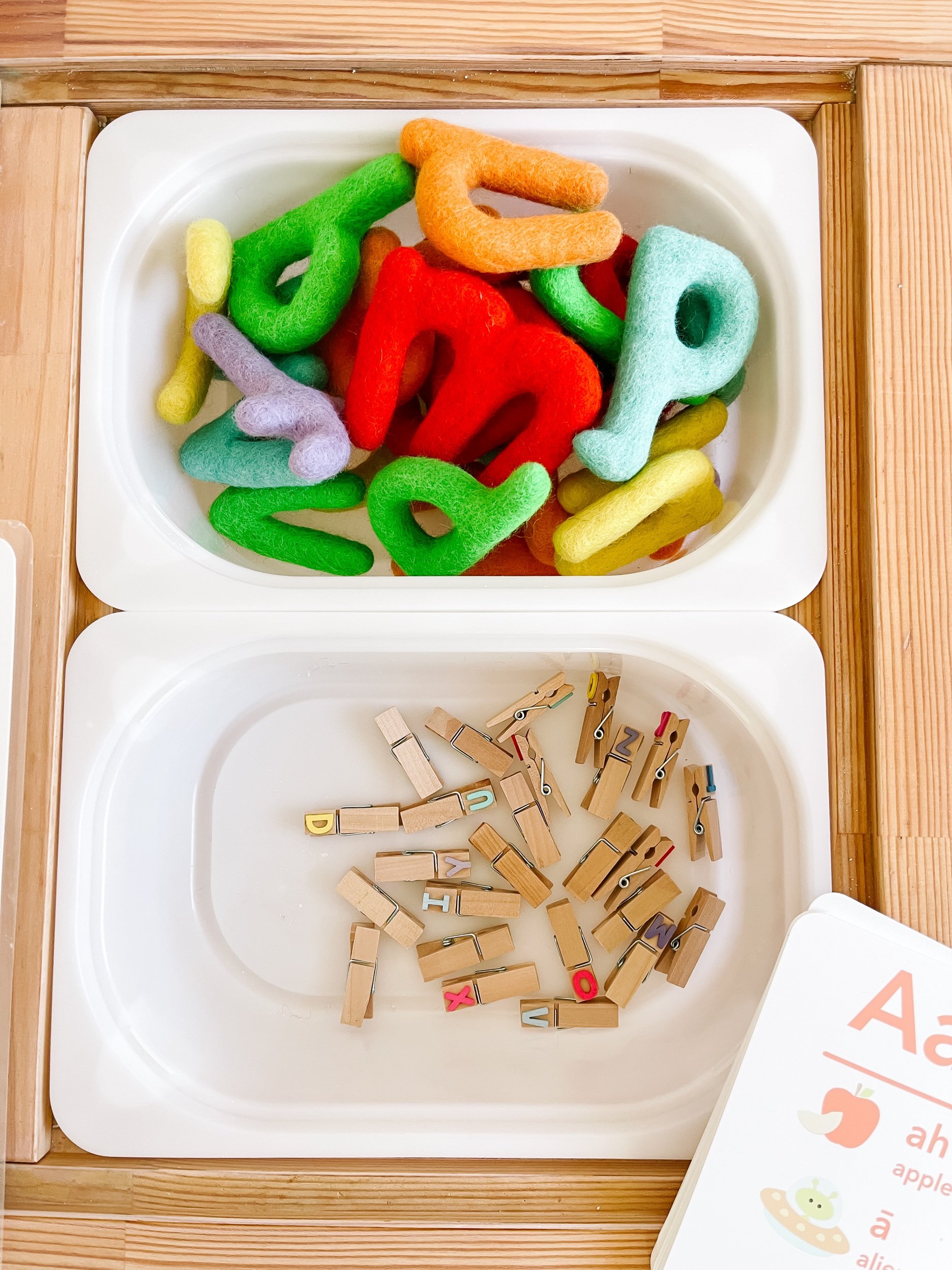
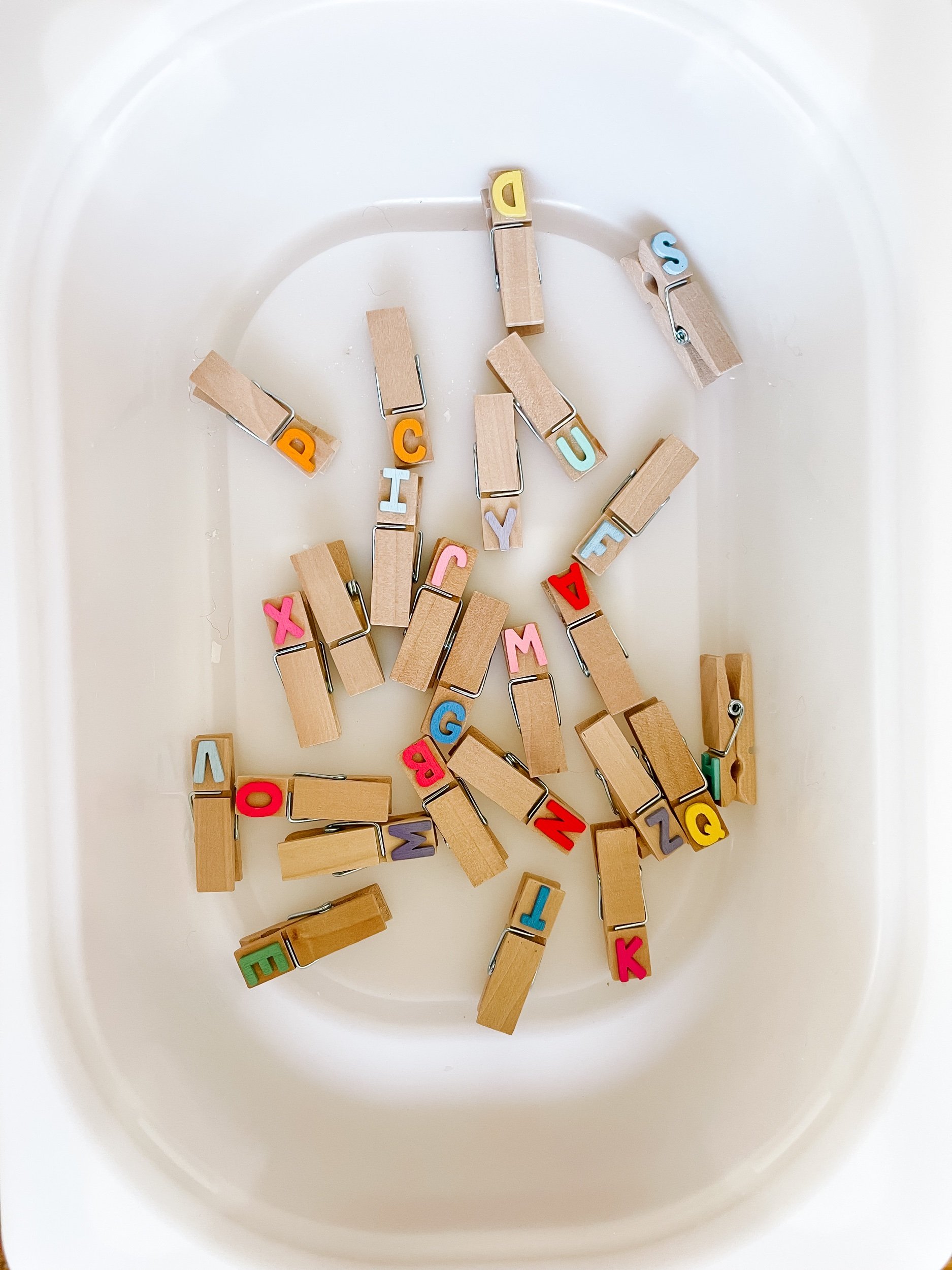
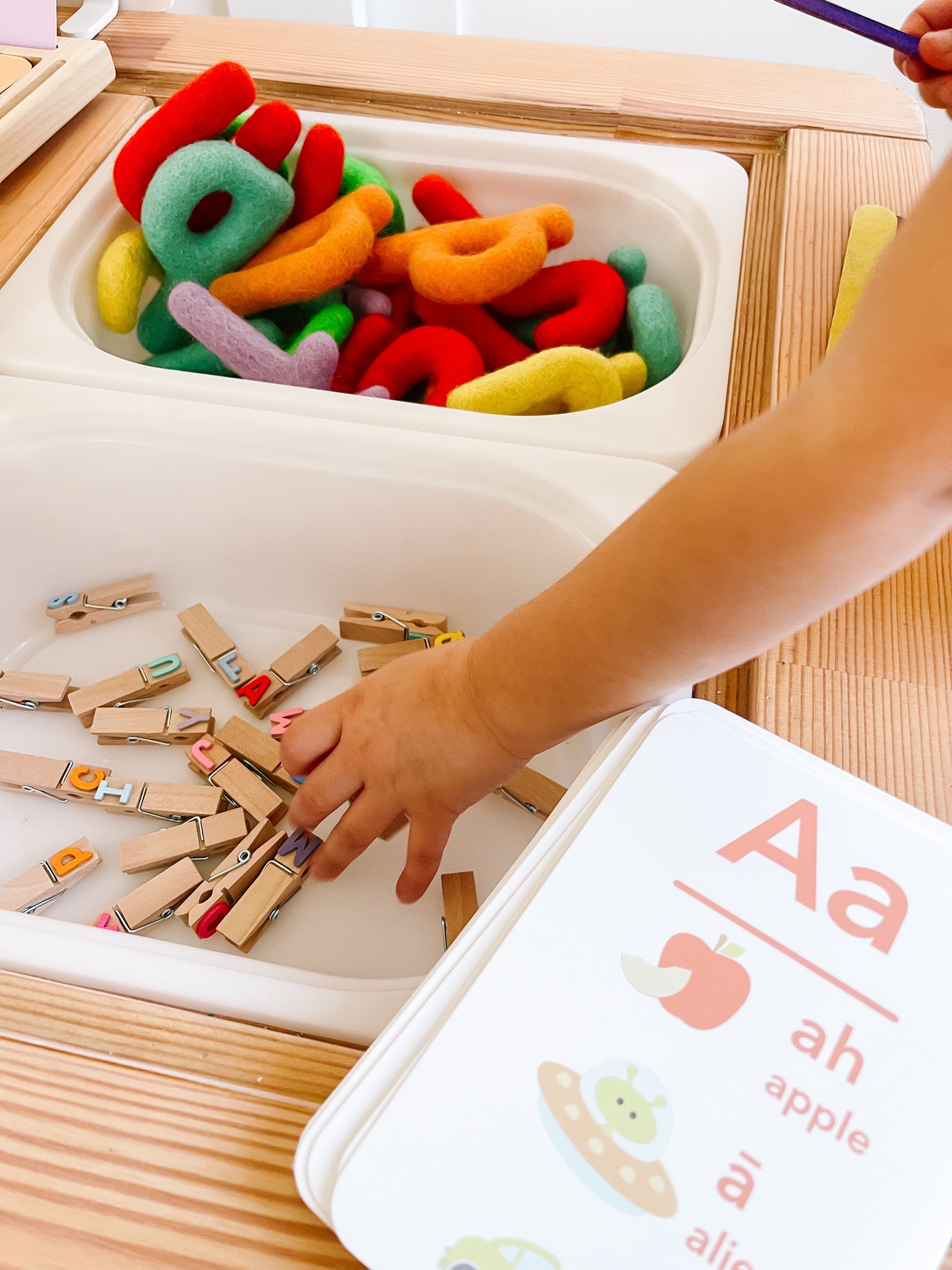
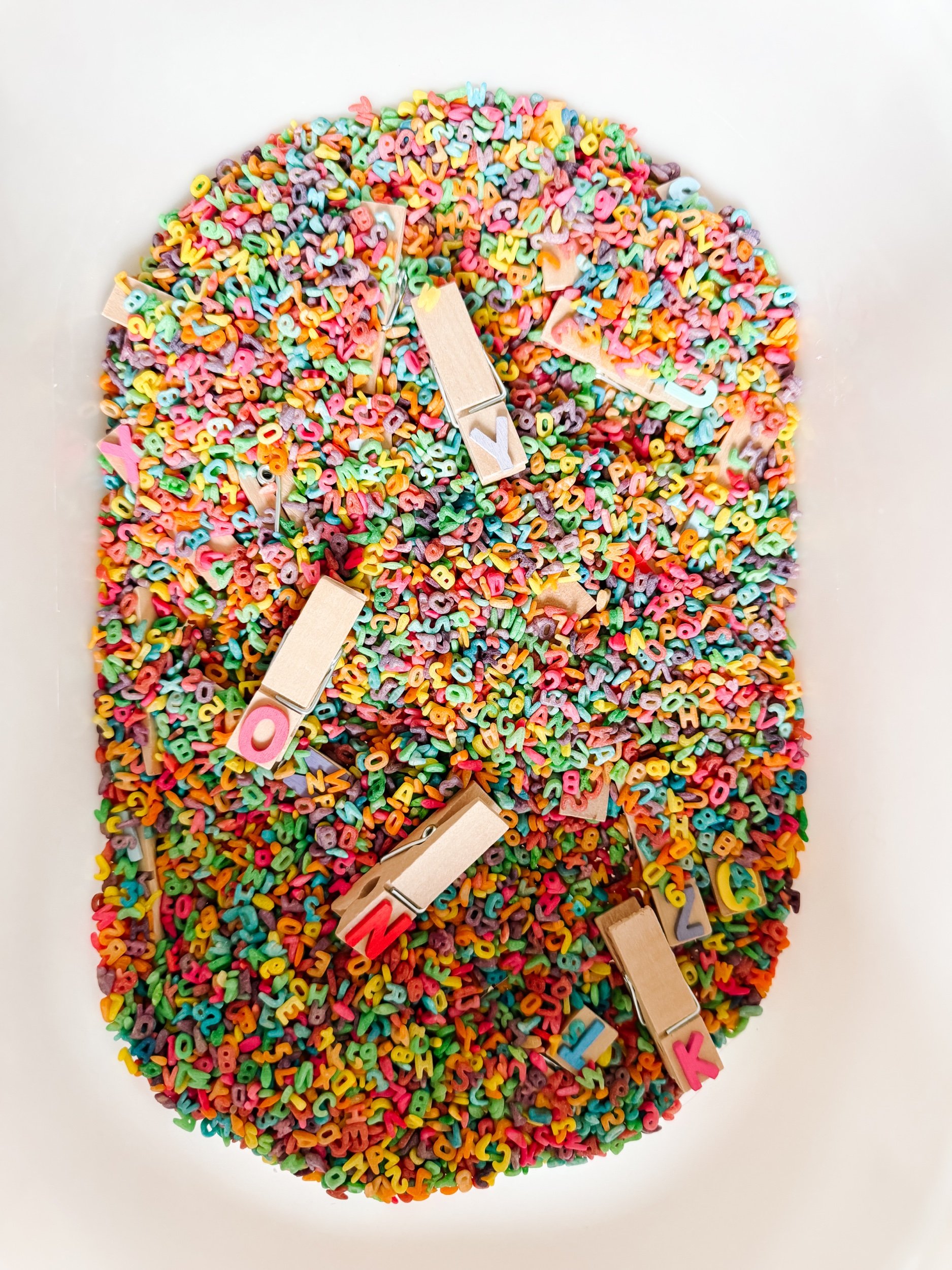
In this activity, you can use wooden clips with letters on them and have your kiddo match to the flashcards and clip to them. If you want to incorporate gross motor skills, have them clip to a string tied up across the room. This will both promote motor skills while also challenging letter recognition.
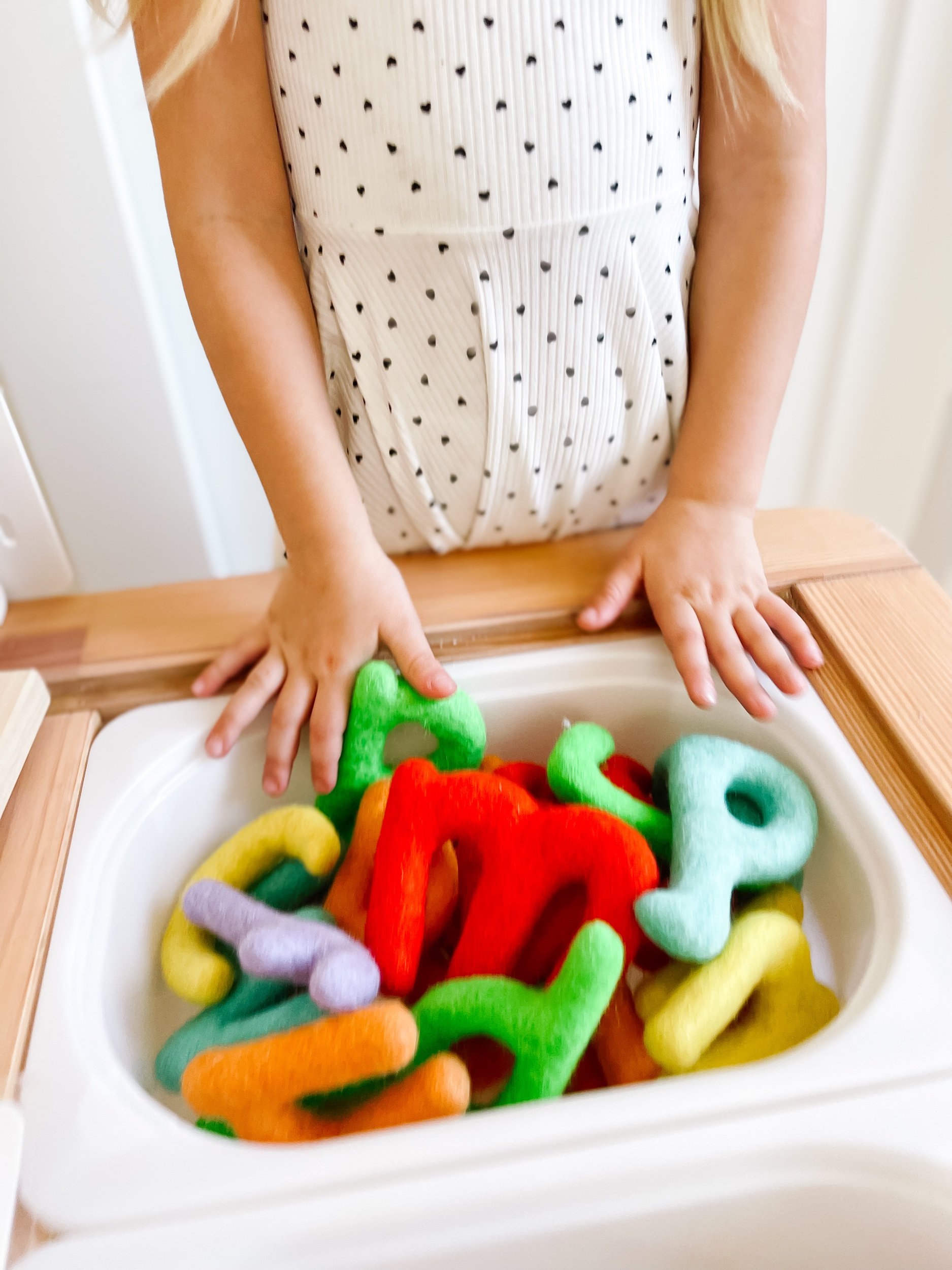
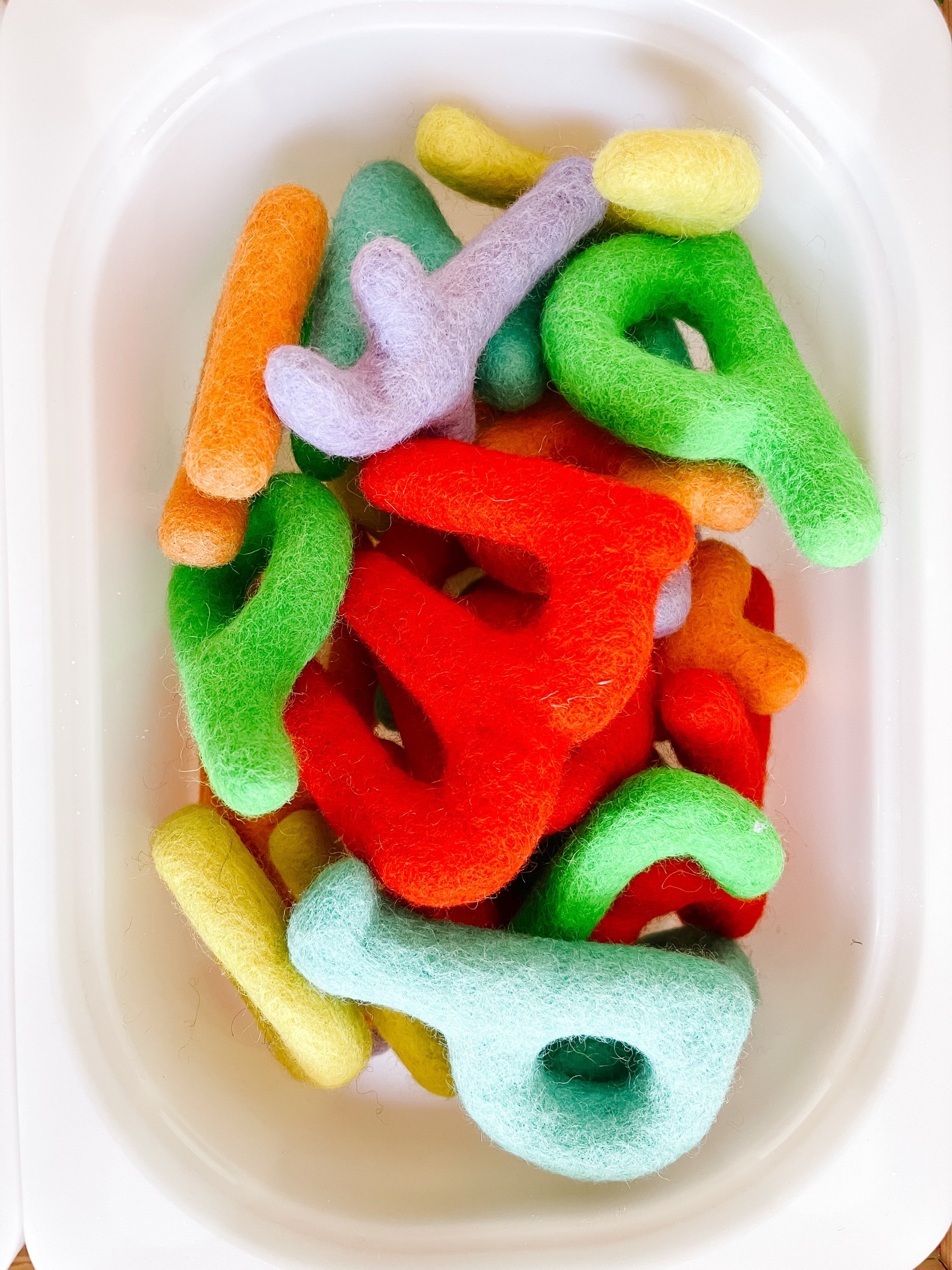
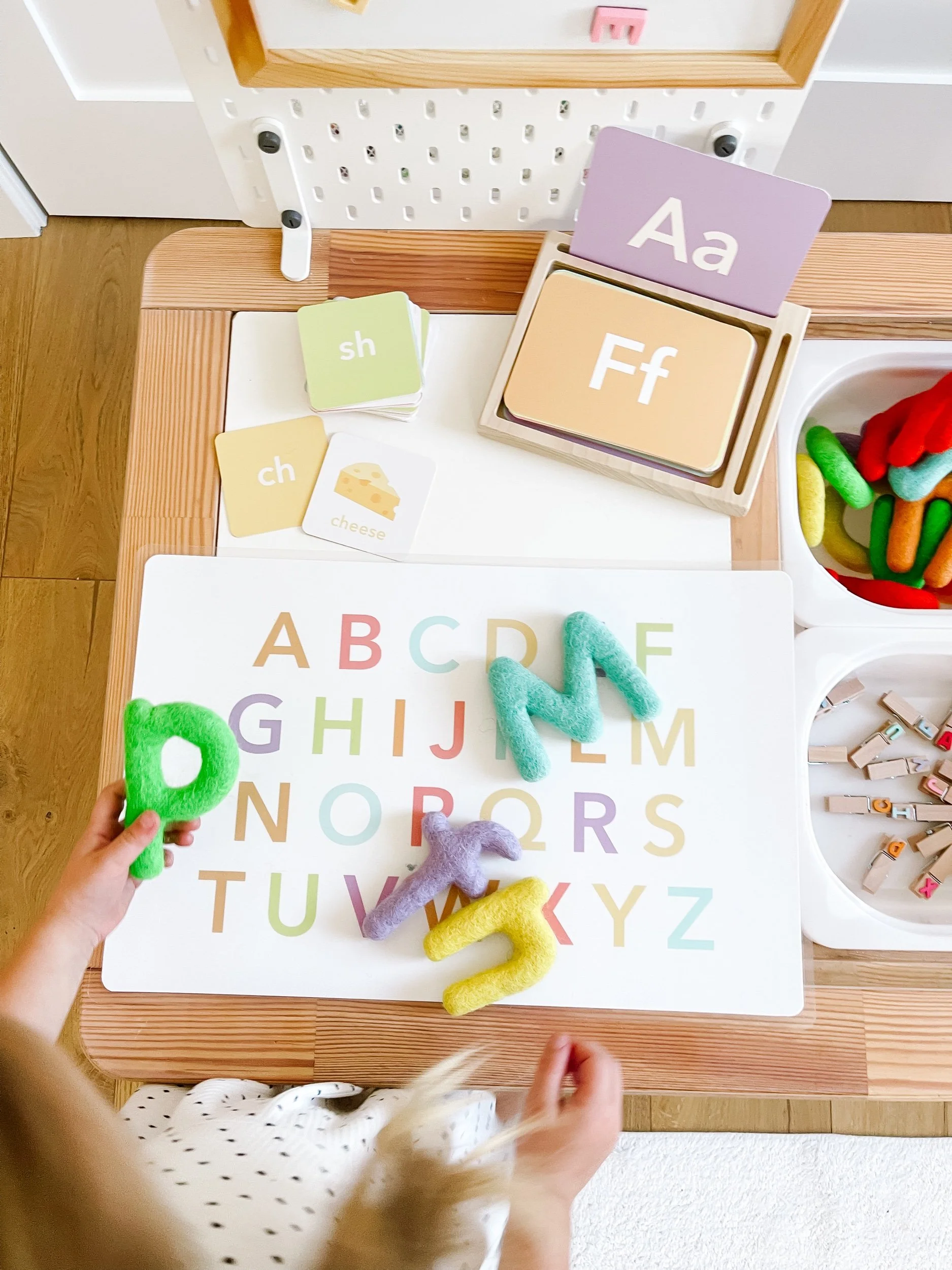
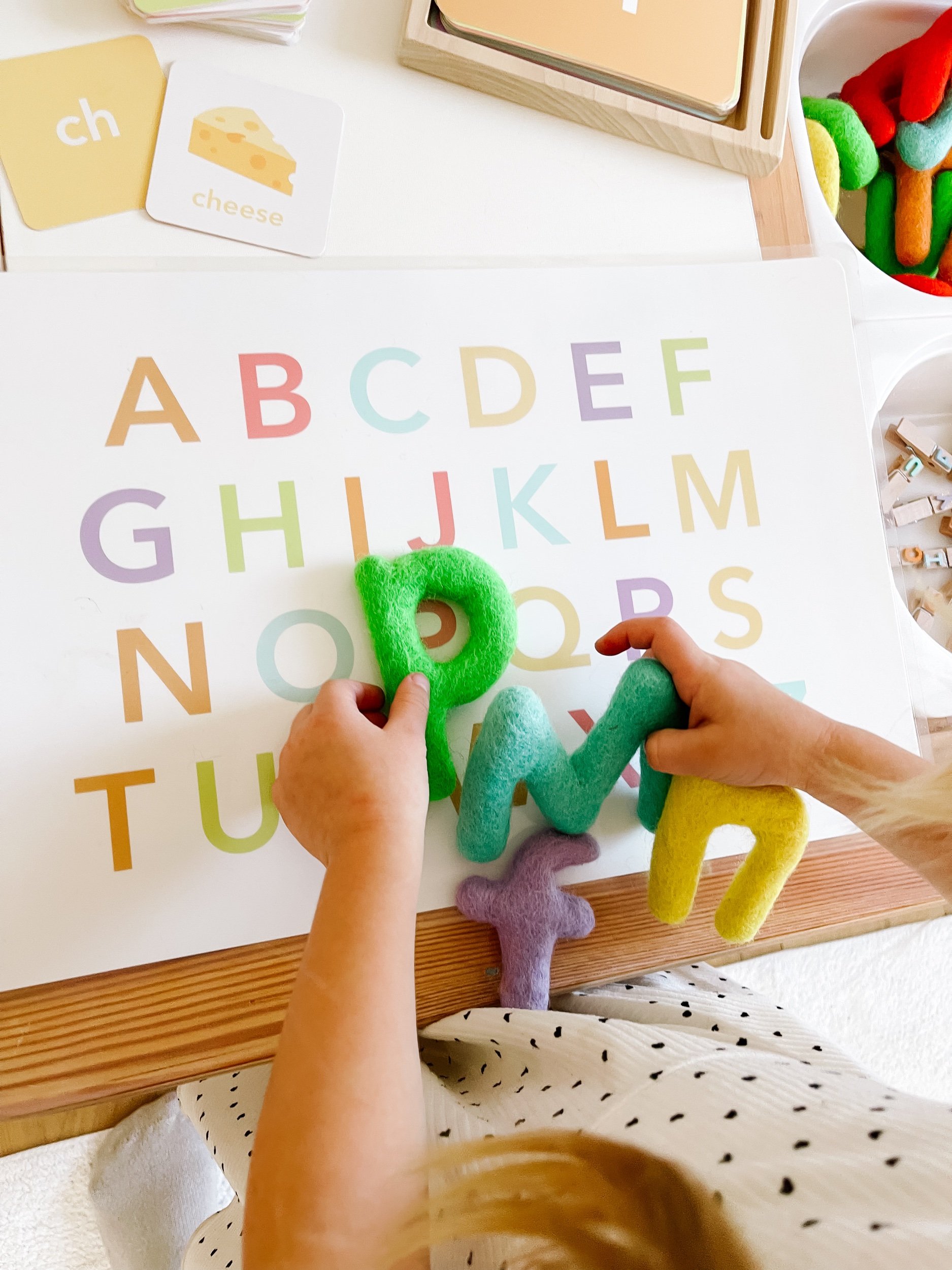
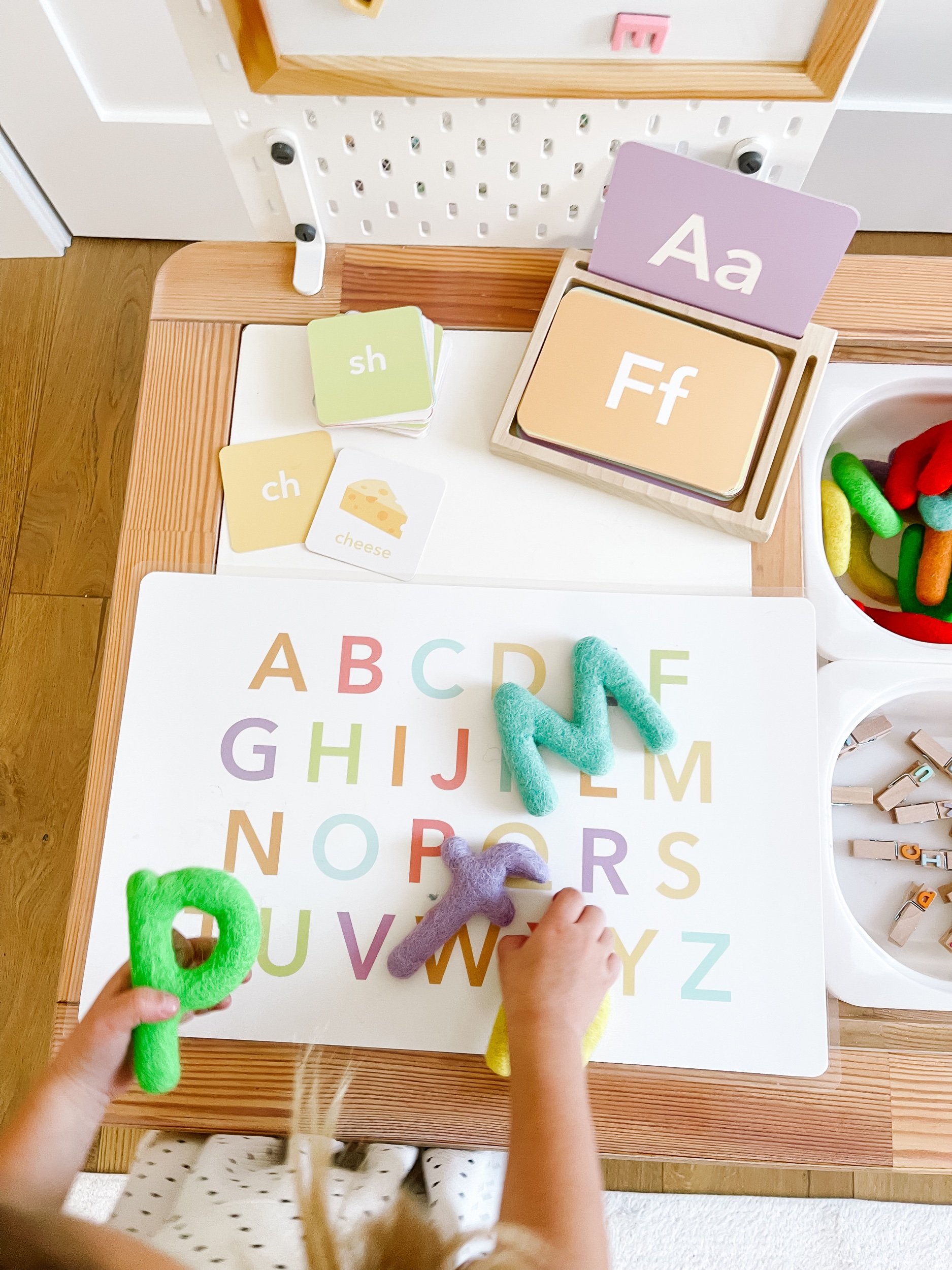
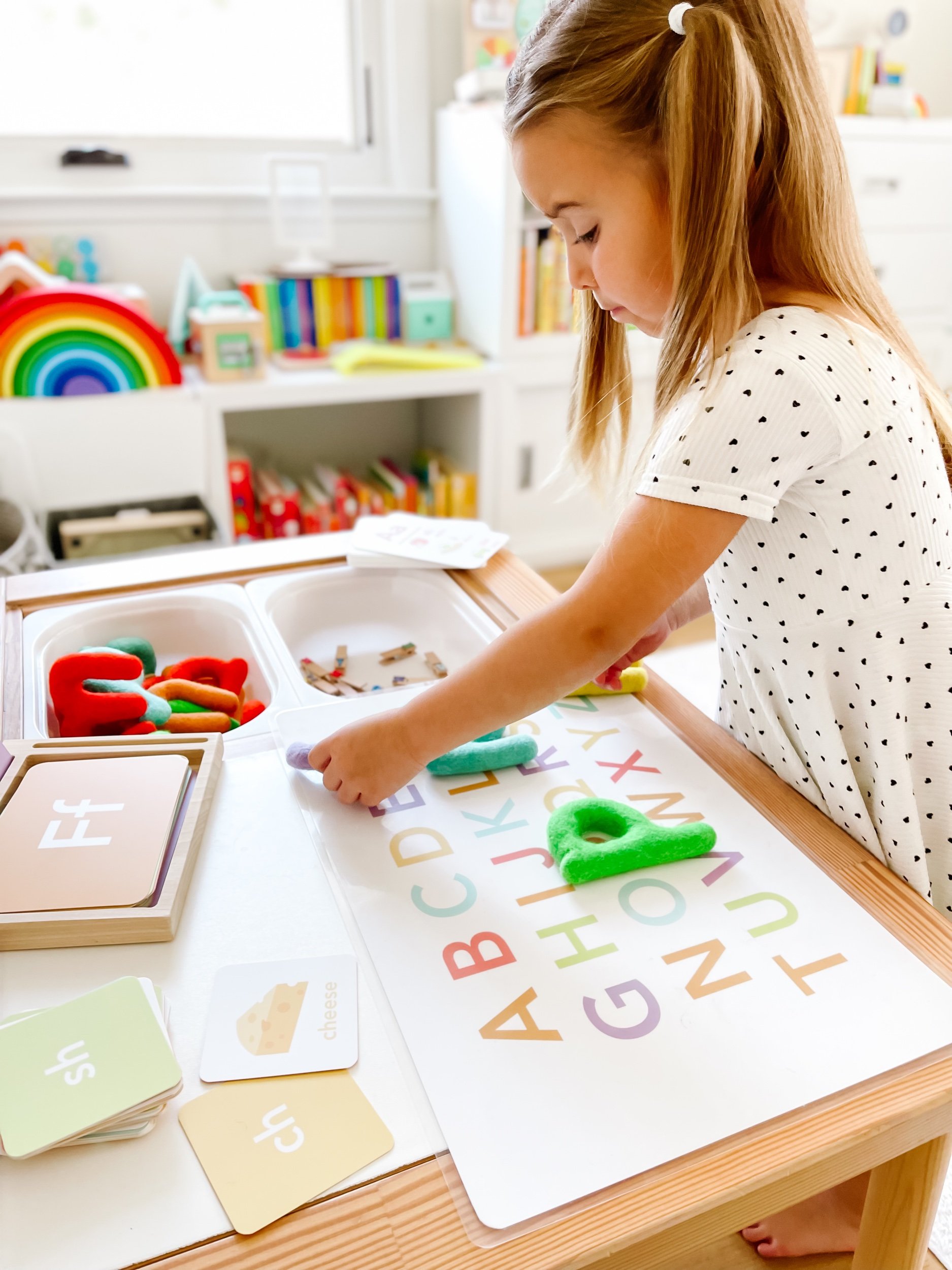
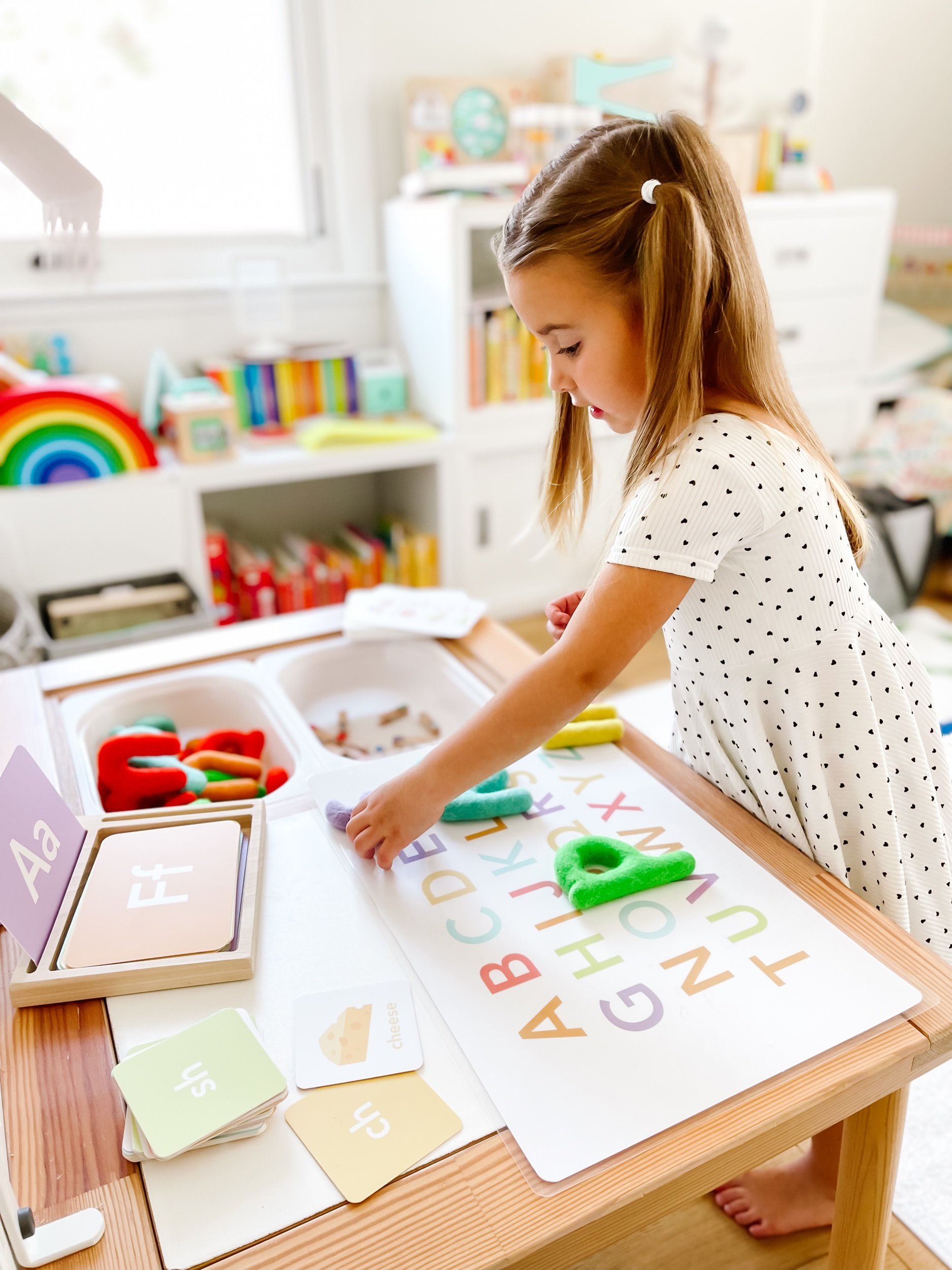
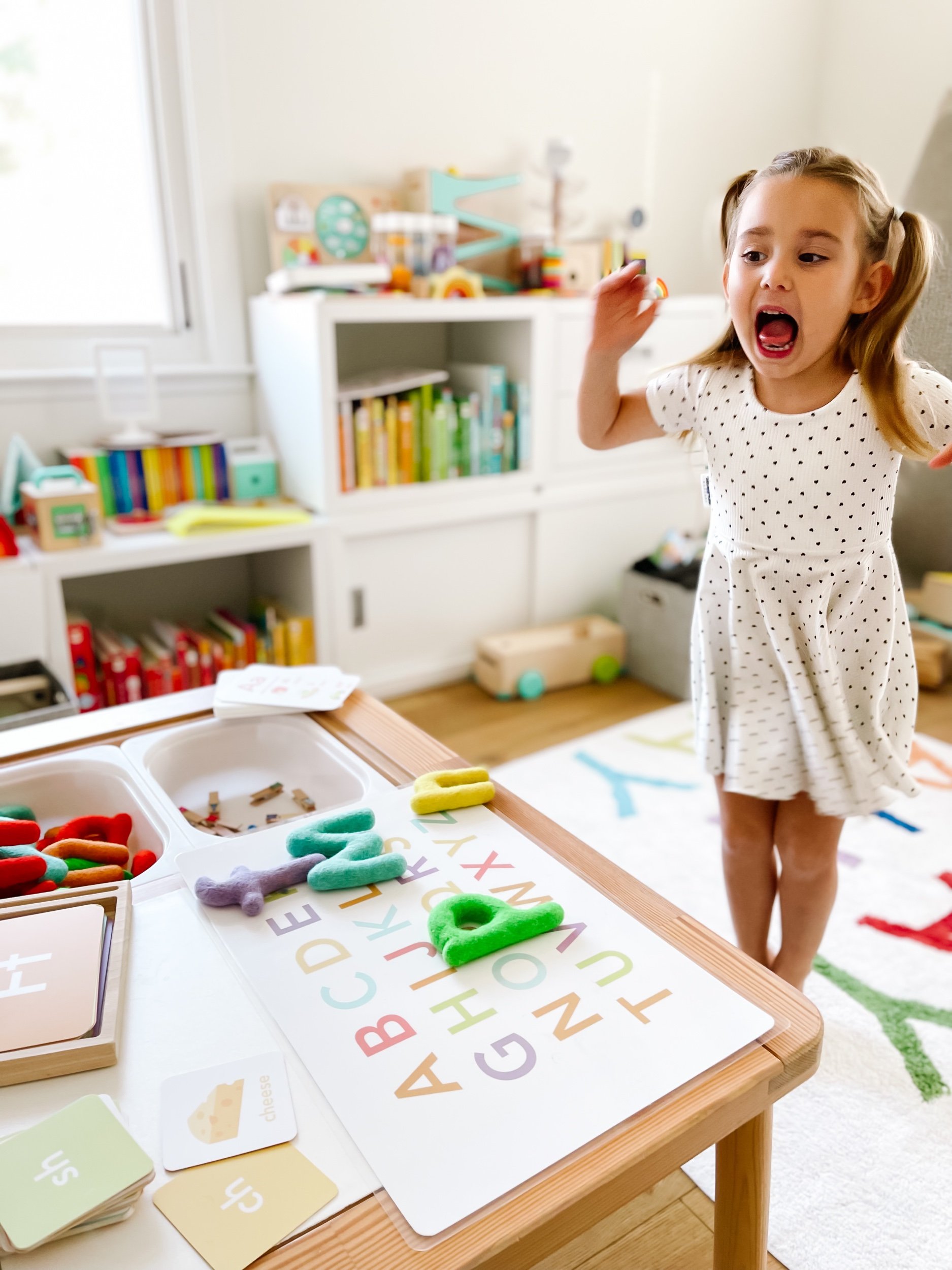
A great alternative to the resin letters are these large wool letters from Wonder Years Play. They’re large and tactile and great for early learners. I used these with Sofia to practice matching them to the letter placemat. This was challenging for her to match the upper and lowercase. But you can make it easier for little ones by purchasing a matching set.
I’m absolutely obsessed with these magnetic letter boards because they offer such a fun and tactile experience for engaging with letters. And moving them around to make new words is so much fun and so gratifying to the senses. They also double as a whiteboard which has been so helpful in teaching Sofie how to blend sounds. Writing each letter as she makes the sound, adding dots or lines to help reinforce the blend has been magical.
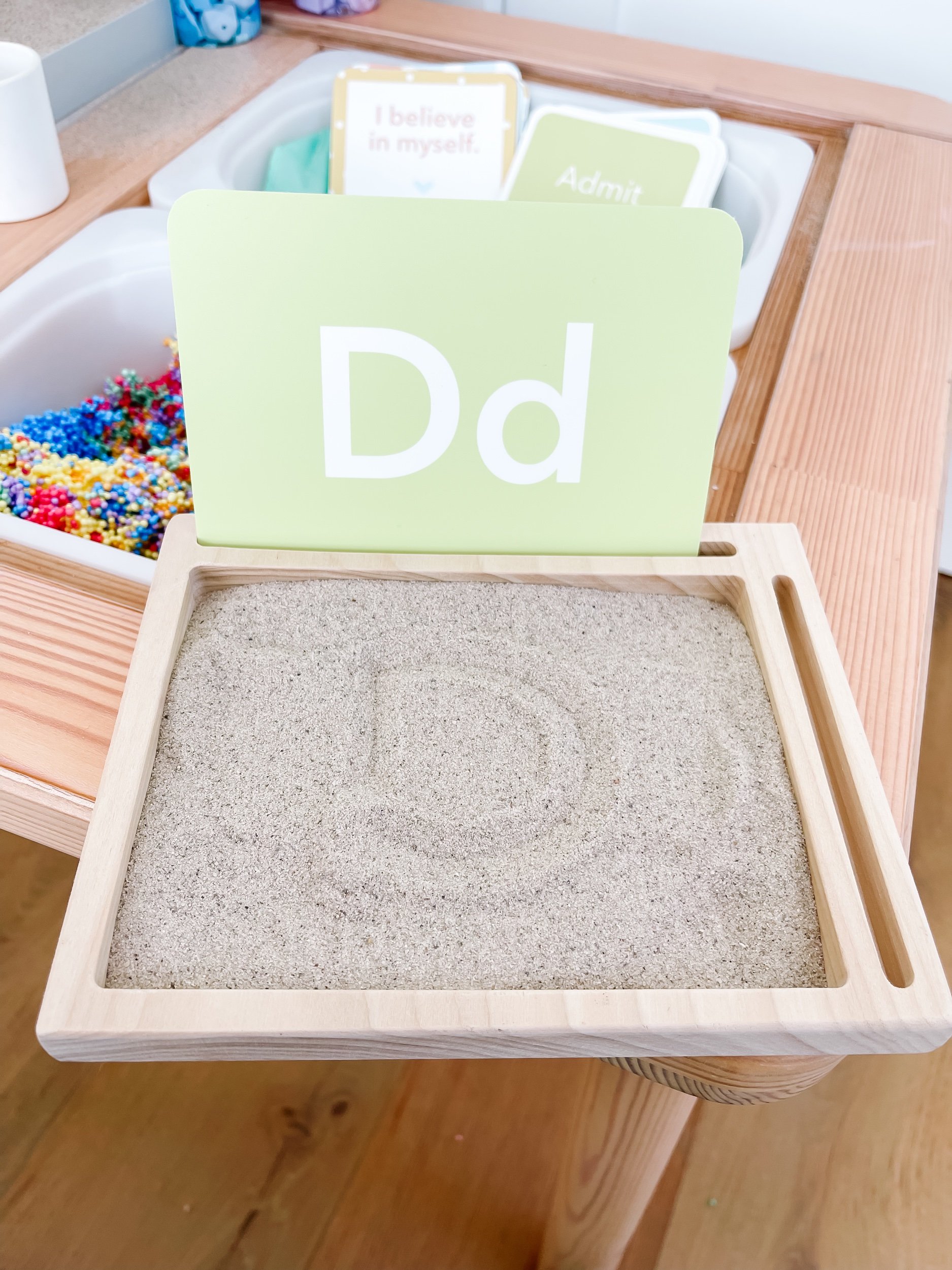
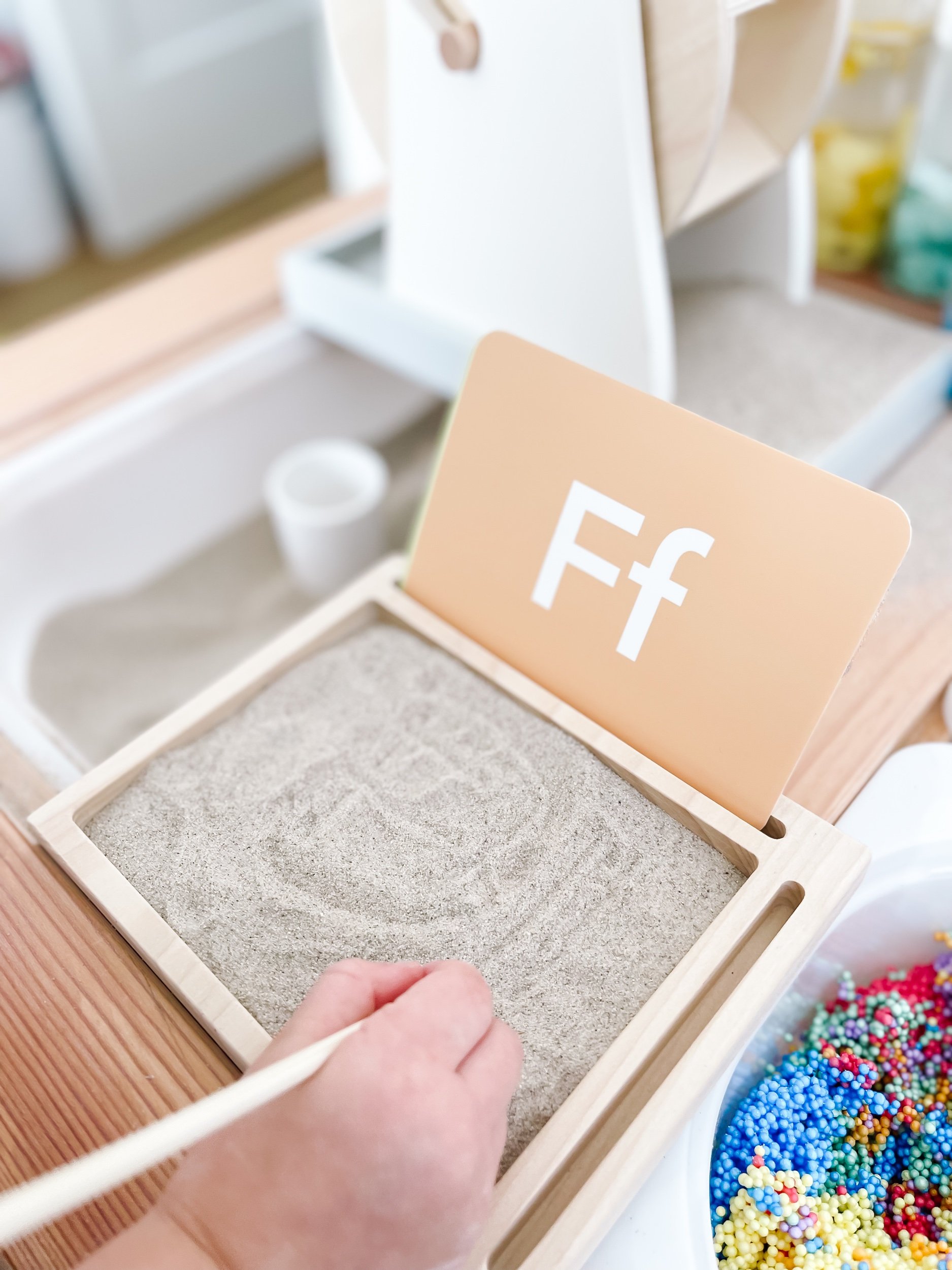
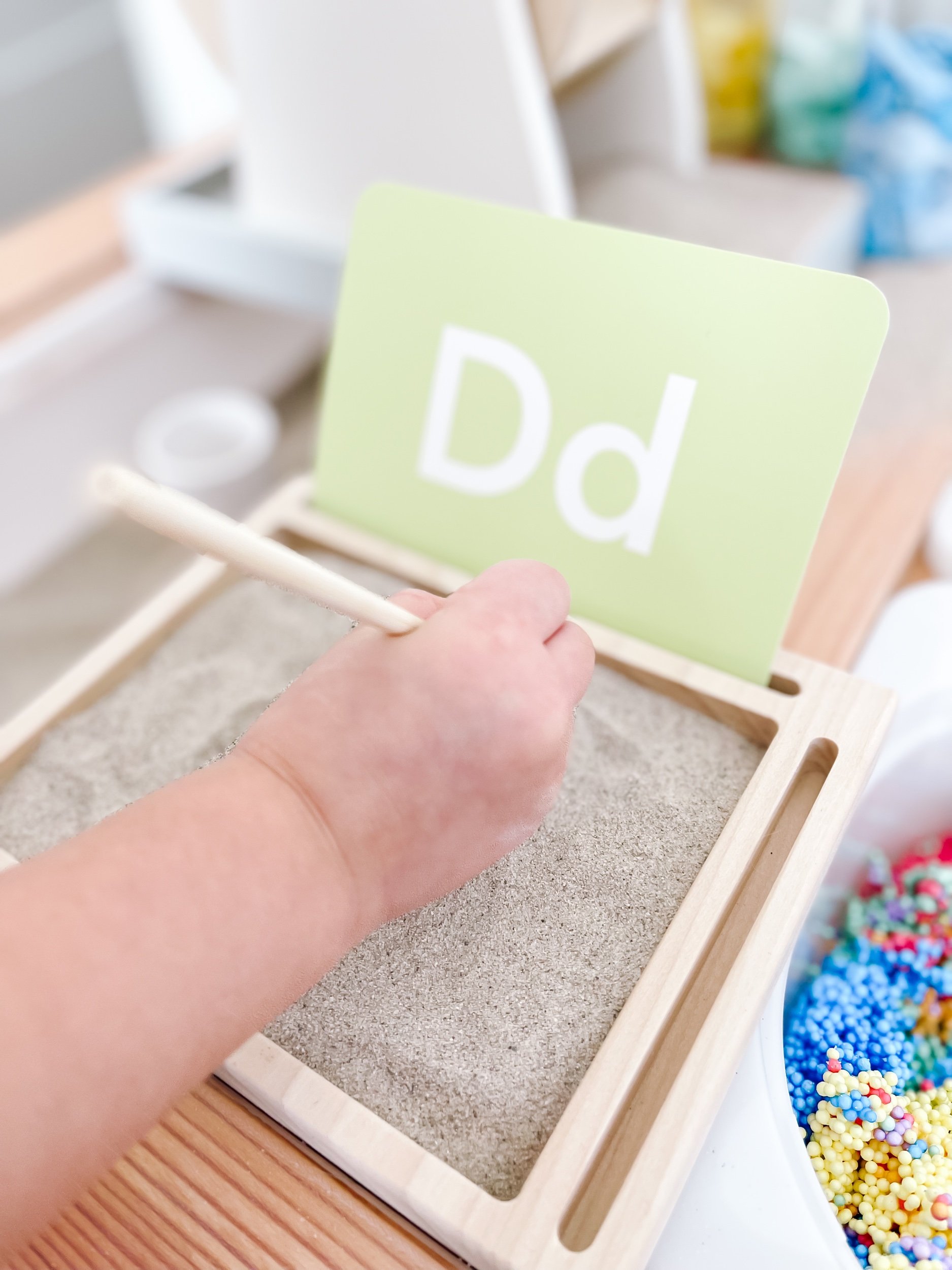
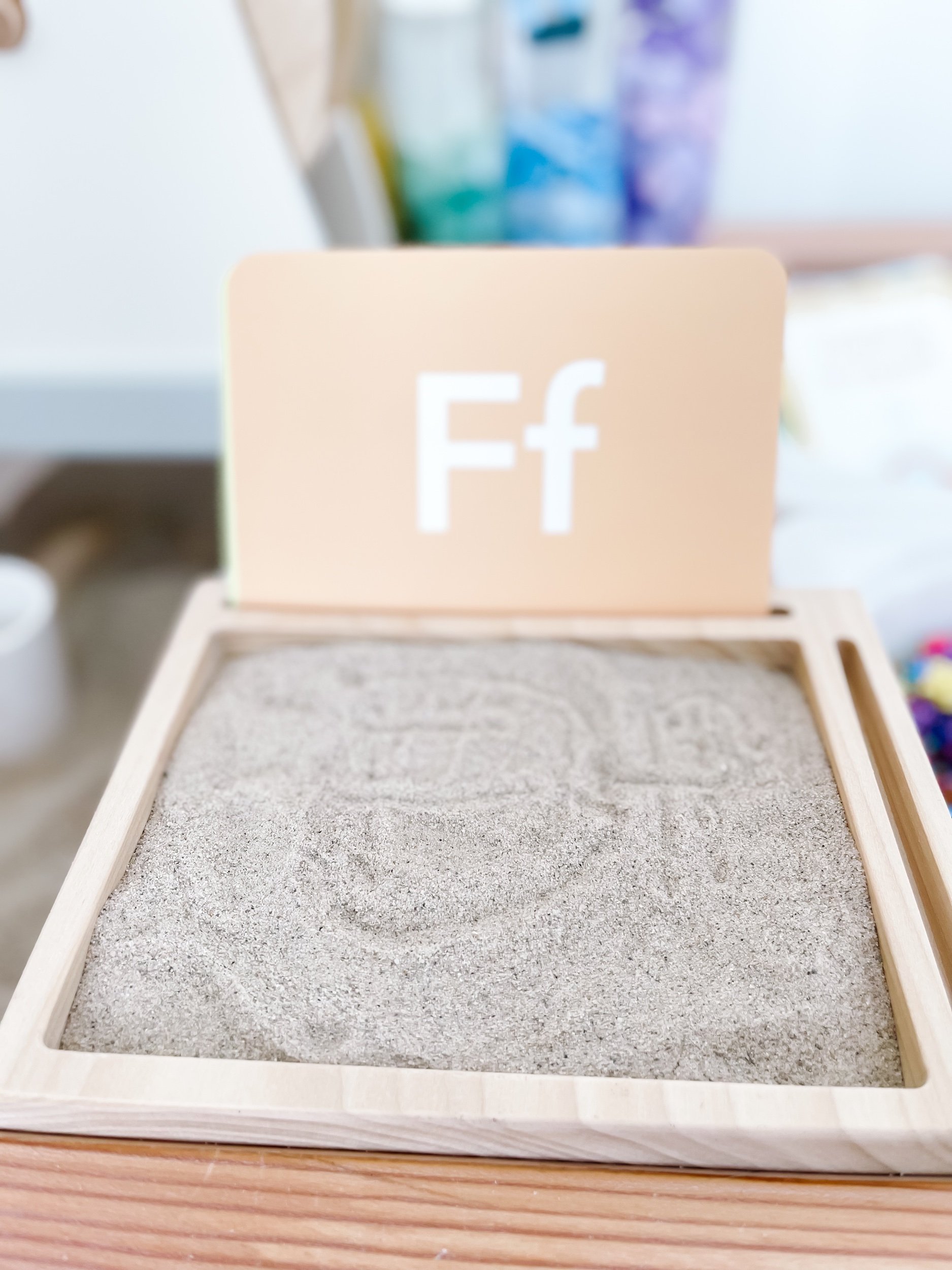
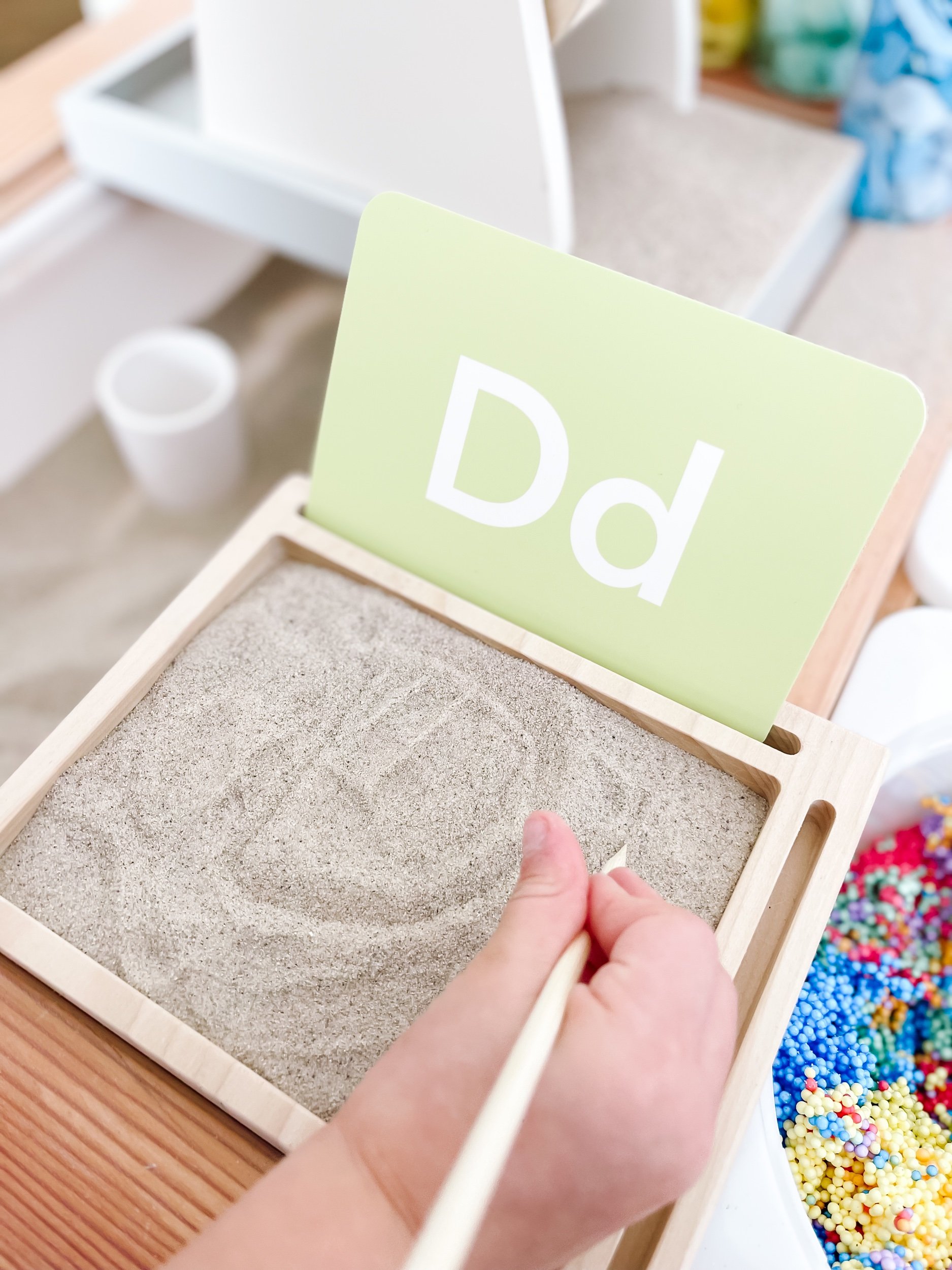
When your kiddo is ready to start writing letters, practicing in colored sand can be a great way to get started. You can start with fingers first showing the direction of writing each letter. These Letter tracing and Letter Flashcards are great for this! Then you can advance to using a wooden pen or stick tool and practicing the proper hand position.
As your child starts to be able to write (3-4 years old) this see through letter board insert from Wonder Years Play is an amazing tool. You can of course just use it as lined board, but you can also put resin letters or objects below and ask your child to write the word or letter for what they see. It’s like a giant iSpy bottle and your kiddo will get a total kick out of it!
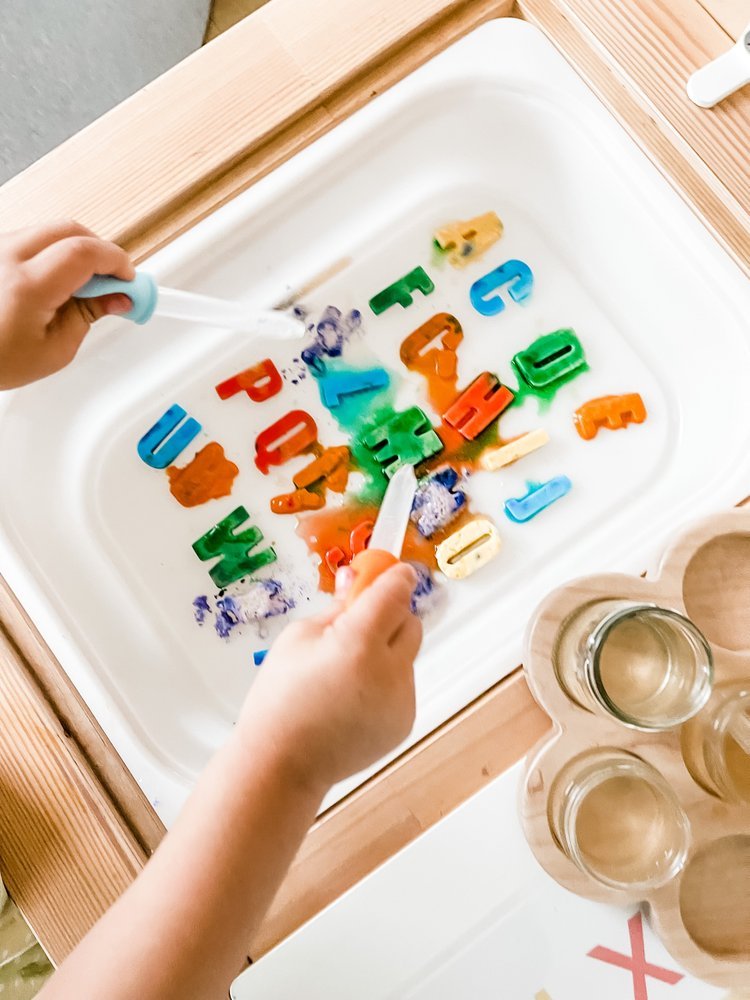
What better way to okay than to combine Letters and Science. In this activity, you can make the letters of the alphabet using a silicone mold, baking soda, and flour. Make a bowl to mix each color and then scoop into the mold. Let set in the fridge. Then take them out and use vinegar for some colorful fizzy fun! For detailed instructions on creating this bin check out Rainbow Fizzy Letters.
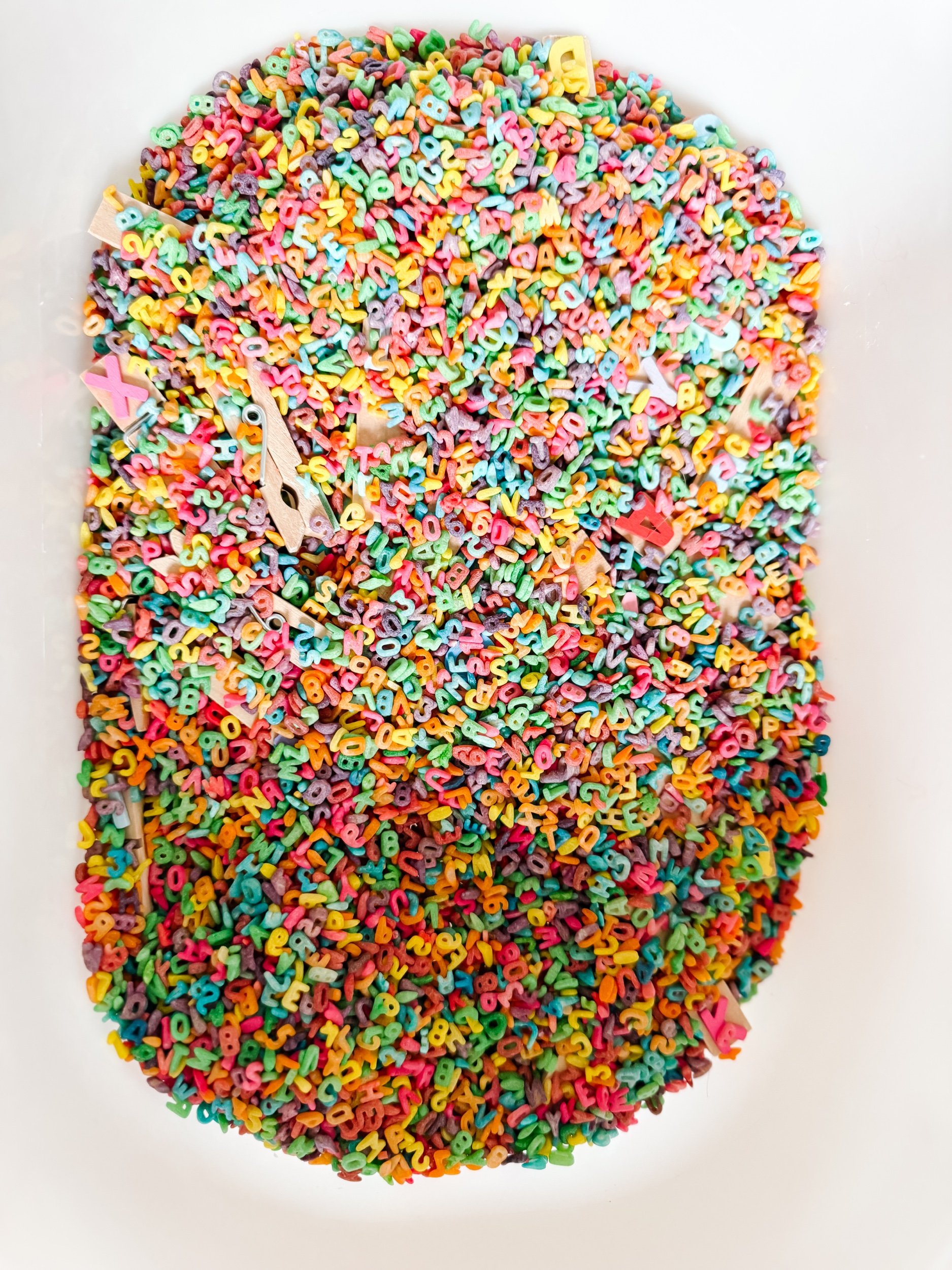
These alphabet letter noodles are the perfect dump and go sensory bin. You can use the past noodles as a base and hide other letter toys, erasers, or magnets in the bin. You can also just let your kiddo scoop up the letters and start to sort them in piles by each letter.
By incorporating these sensory bin activities into your child's playtime, you'll create a stimulating learning environment that sparks their curiosity and supports their early literacy development.
1. Alphabet: The set of letters used to write a language.
2. Phoneme: The smallest unit of sound in a language.
3. Letter: A symbol representing a sound in written language.
4. Upper case letter: Capital letters of the alphabet.
5. Lower case letter: Small letters of the alphabet.
6. Vowel: Letters that produce a clear, distinct sound when spoken.
7. Consonant: Letters that are not vowels and are produced with some obstruction of airflow.
8. Blend: Combining two or more individual letter sounds together.
9. Digraph: Two letters that make a single sound together.
10. CVC: Consonant-Vowel-Consonant, a three-letter word pattern like cat or dog.
11. Sight word: A word that children learn to recognize by sight without sounding it out.
12. Rhyme: Words that have similar ending sounds.
13. Phonics: The relationship between letters and sounds in language.
14. Sound: A noise made by the vocal cords or other means of communication.
15. Trace: To follow or copy the shape of a letter with a pencil or finger.
16. Fine motor skills: The coordination of small muscles needed for tasks like writing or coloring.
17. Visual discrimination: The ability to differentiate between different letters or words.
18. Sequence: The order in which letters of the alphabet are arranged.
19. Flashcard: A card with a letter or word used for learning and practice.
20. Repetition: Repeating an action or information to reinforce learning.
21. Phonological awareness: Recognizing and manipulating sounds in language.
22. Multisensory learning: Teaching that engages multiple senses (e.g., sight, touch, hearing).
23. Letter-sound correspondence: Understanding the relationship between letters and their sounds.
24. Alphabet song: A song used to remember or learn the order of the alphabet.
25. Decoding: The process of turning written words into spoken words by recognizing letter sounds.
Remember, learning the alphabet doesn't have to be a tedious task. Through sensory play, you can make it an exciting adventure for your little one. So, gather your materials, set up a sensory bin, and watch your child immerse themselves in a world of letter fun and educational exploration!

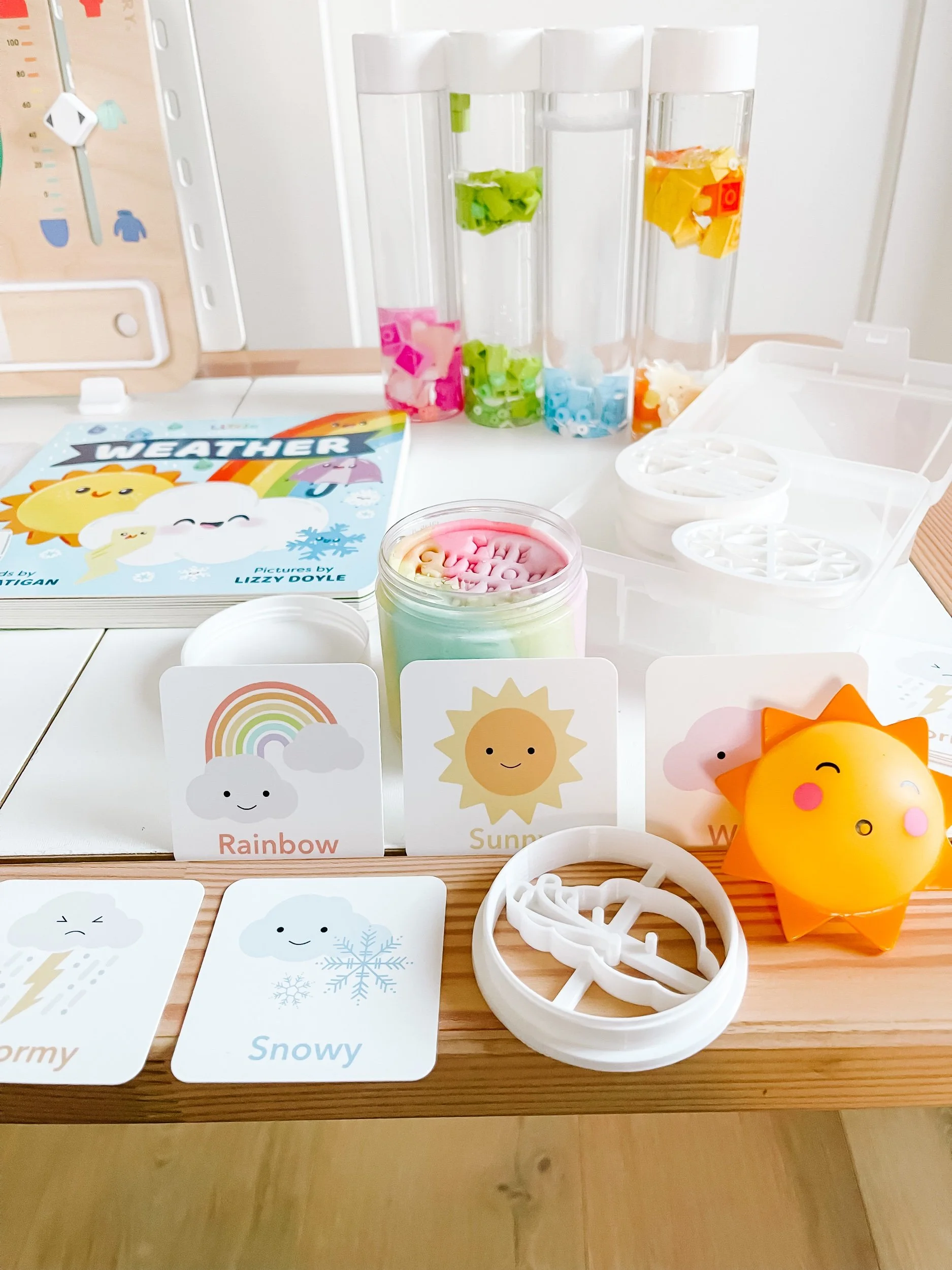
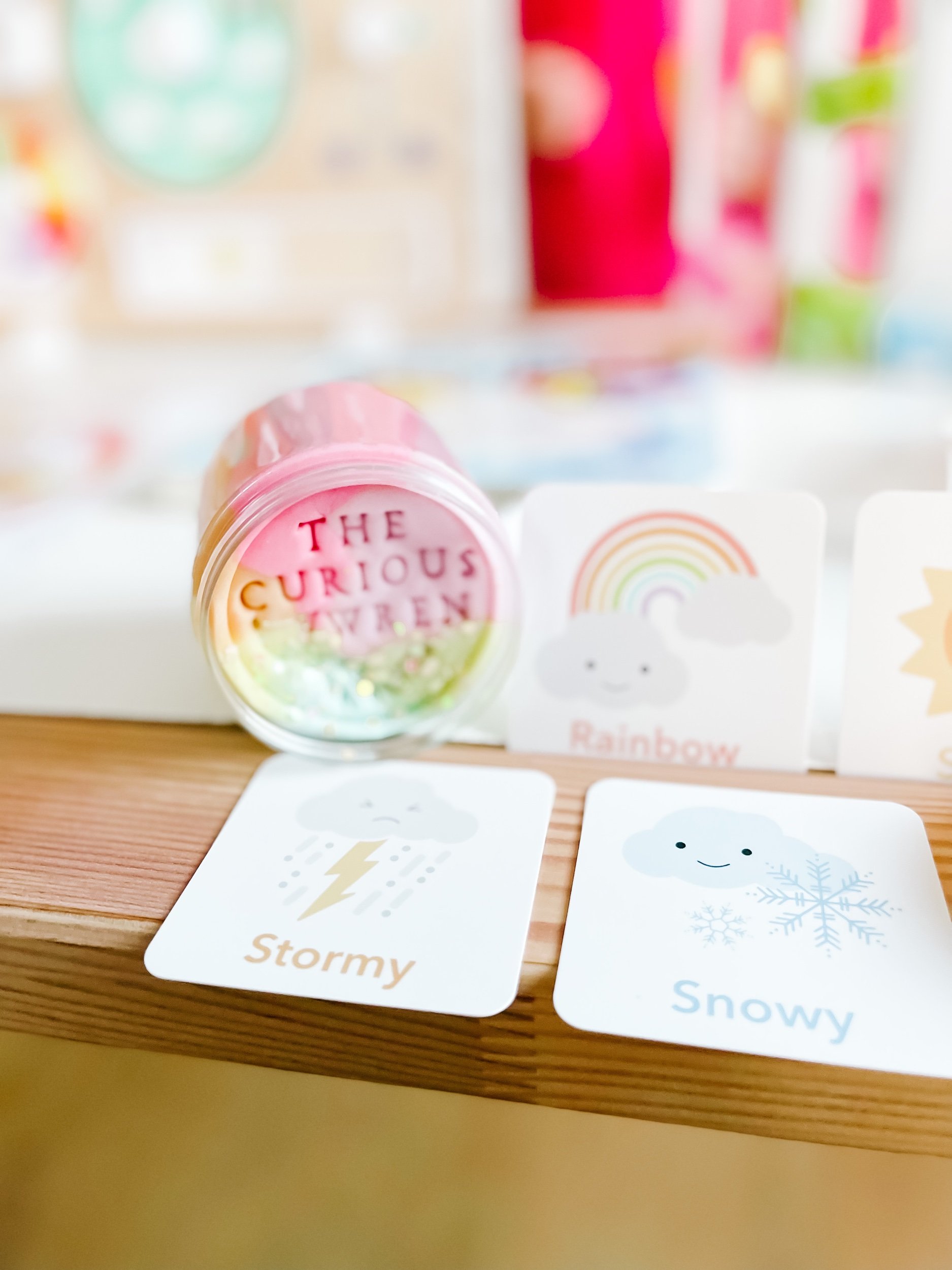
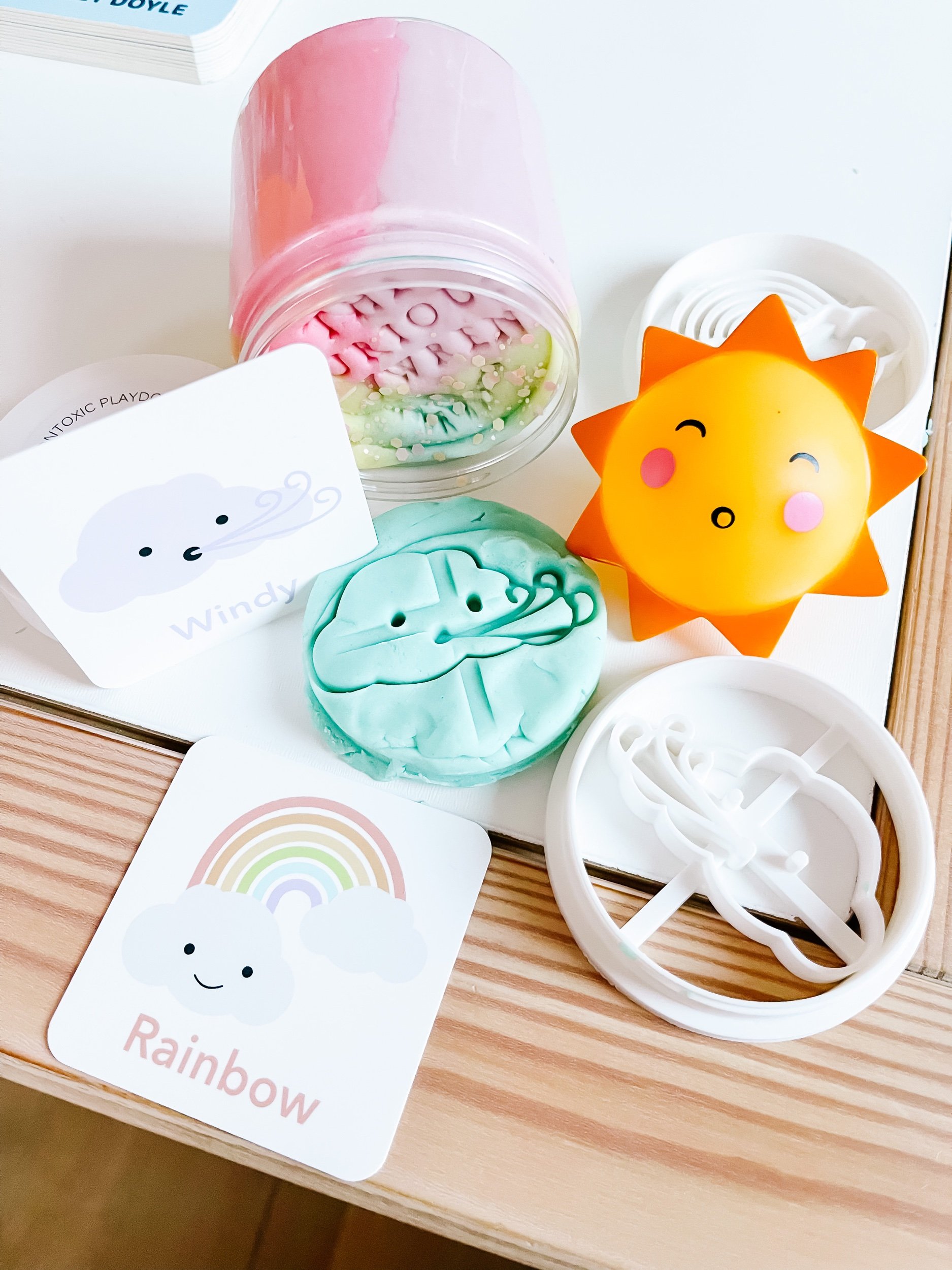
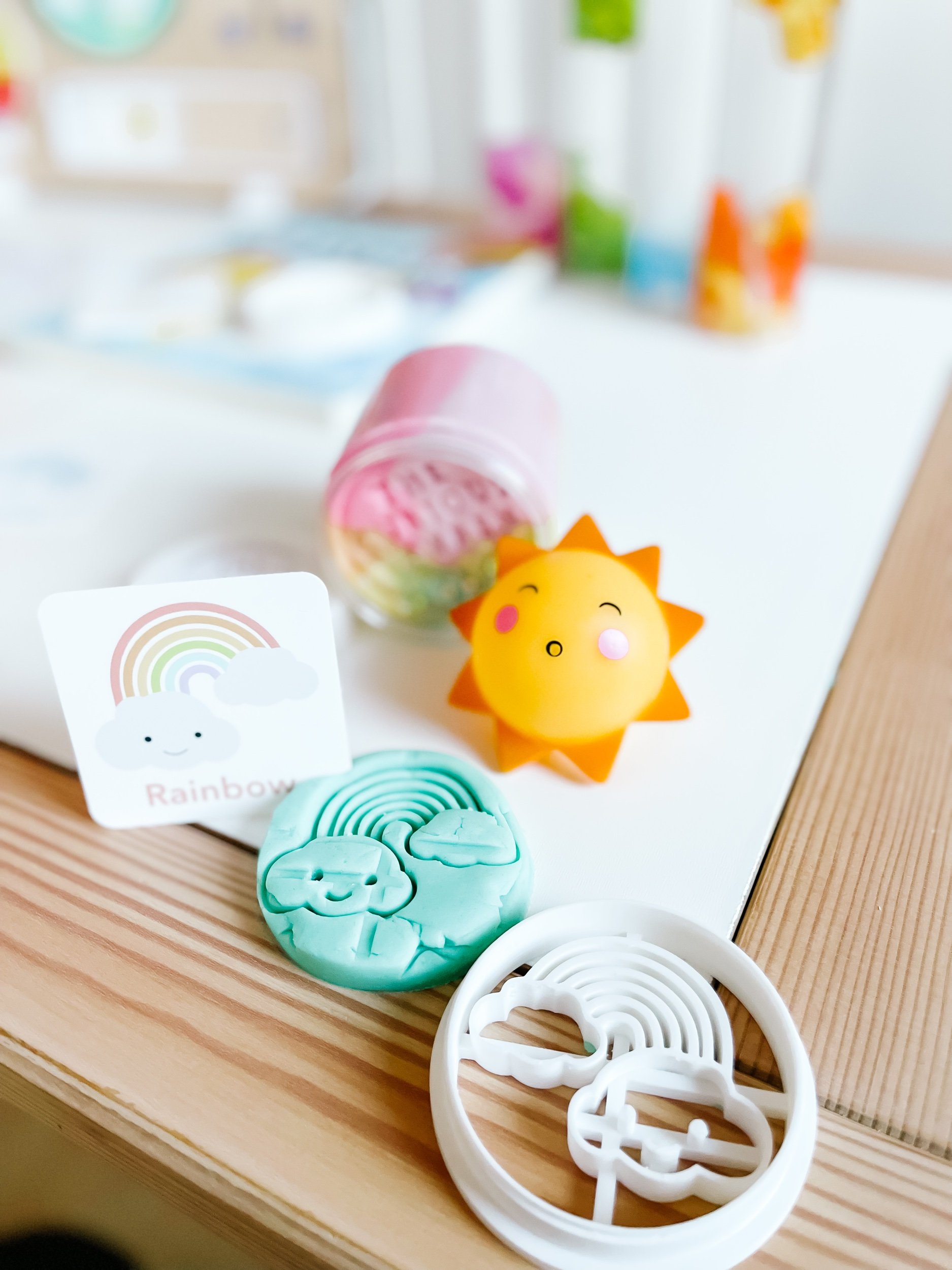
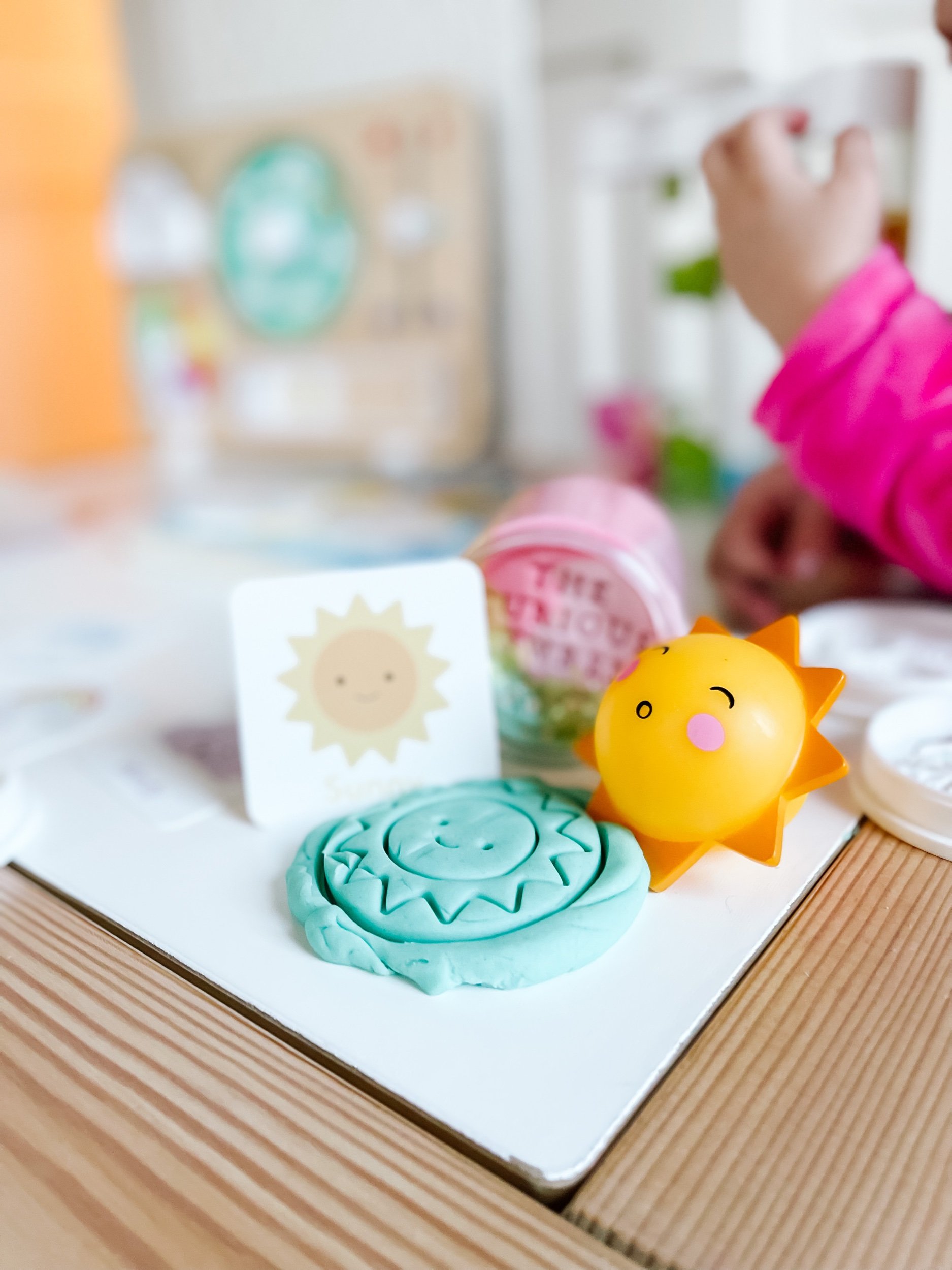
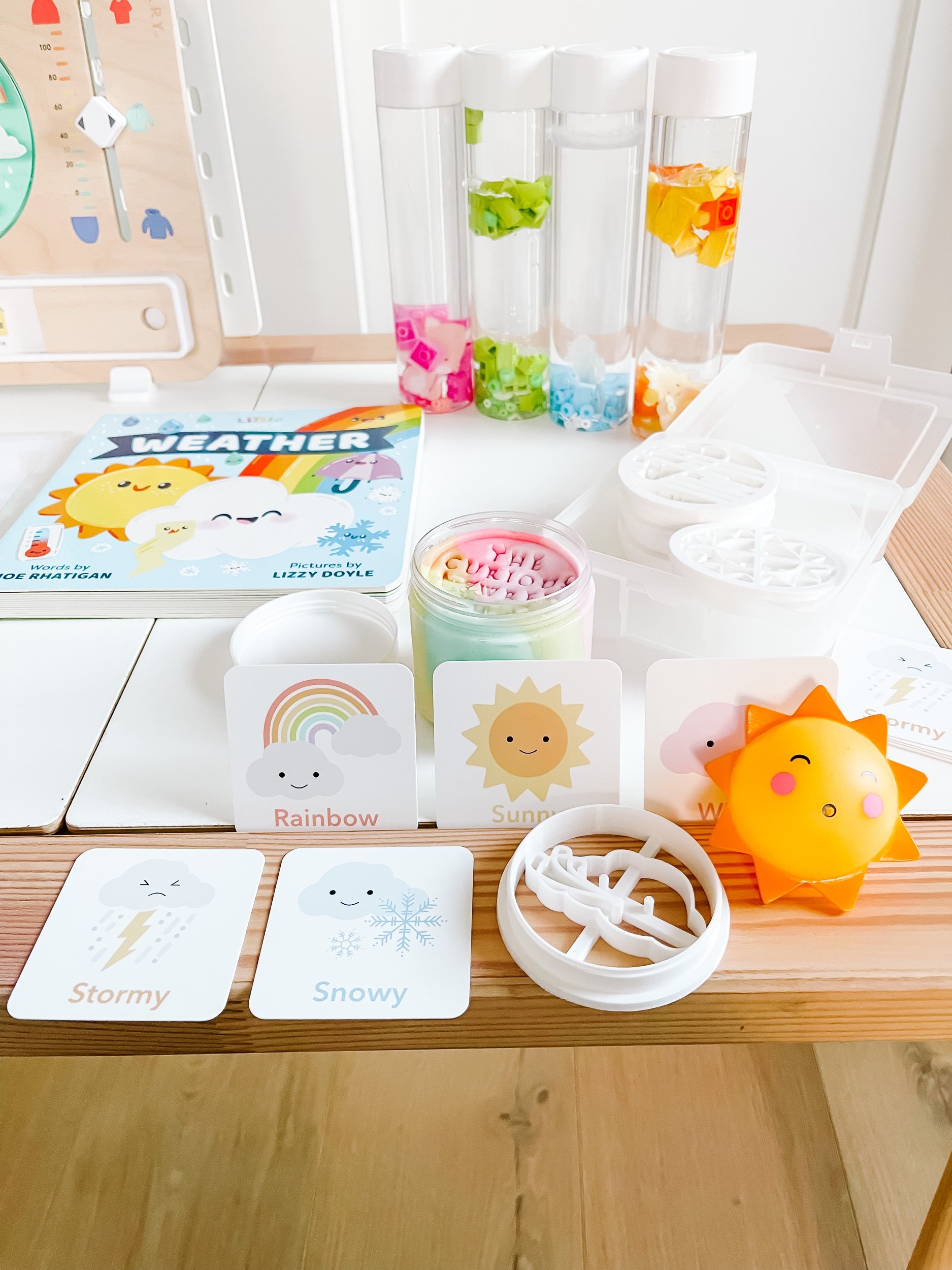
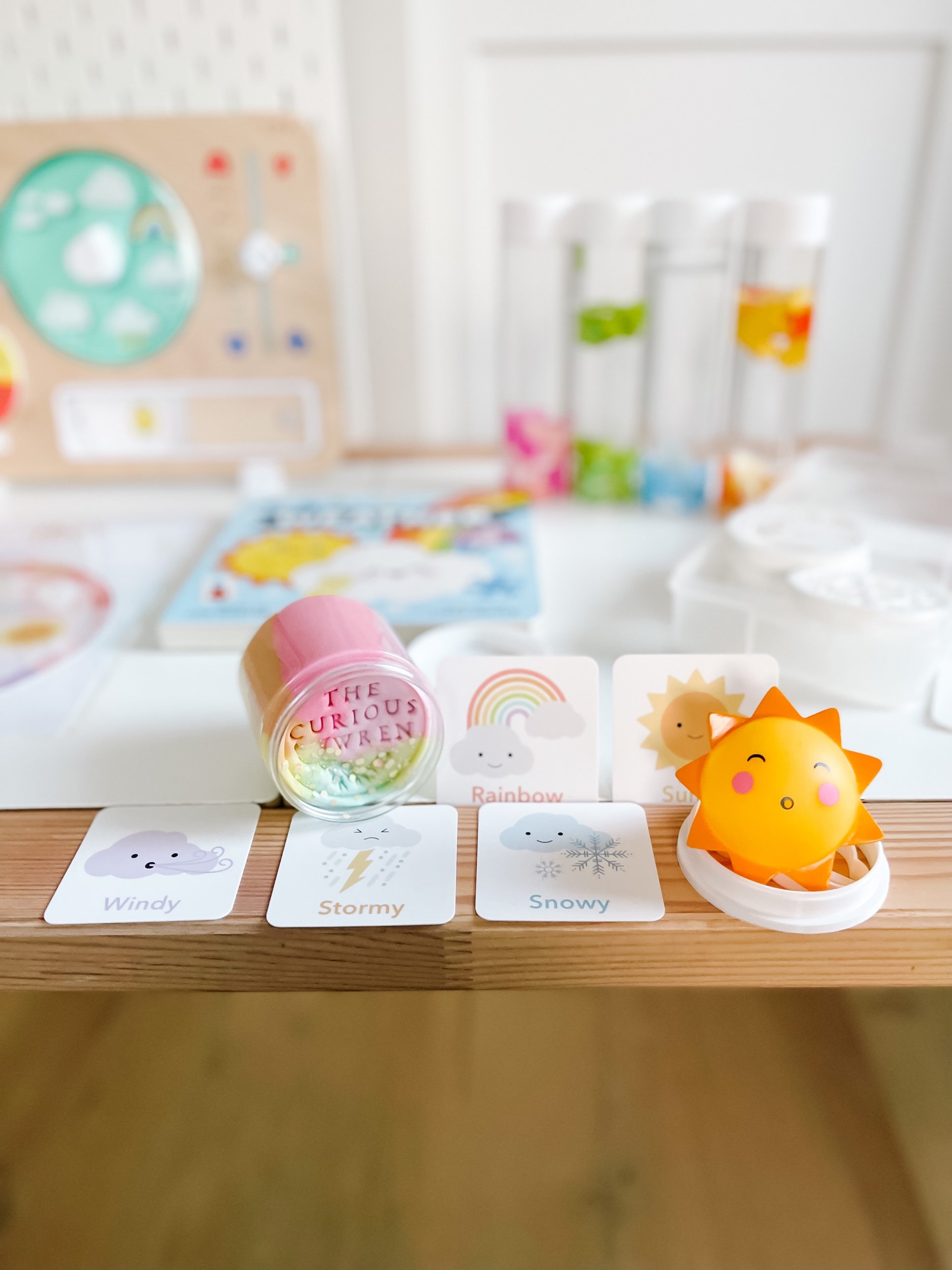
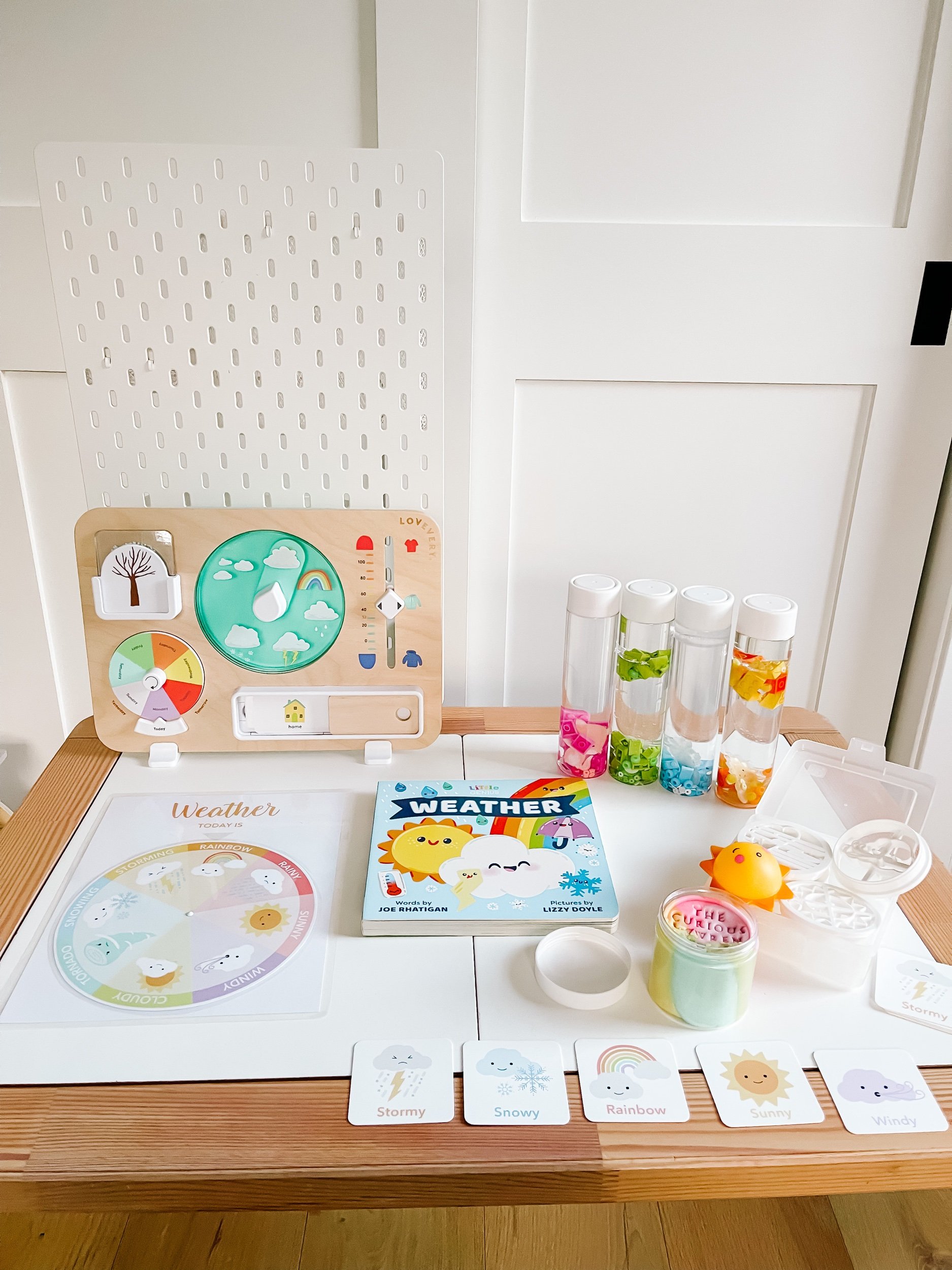
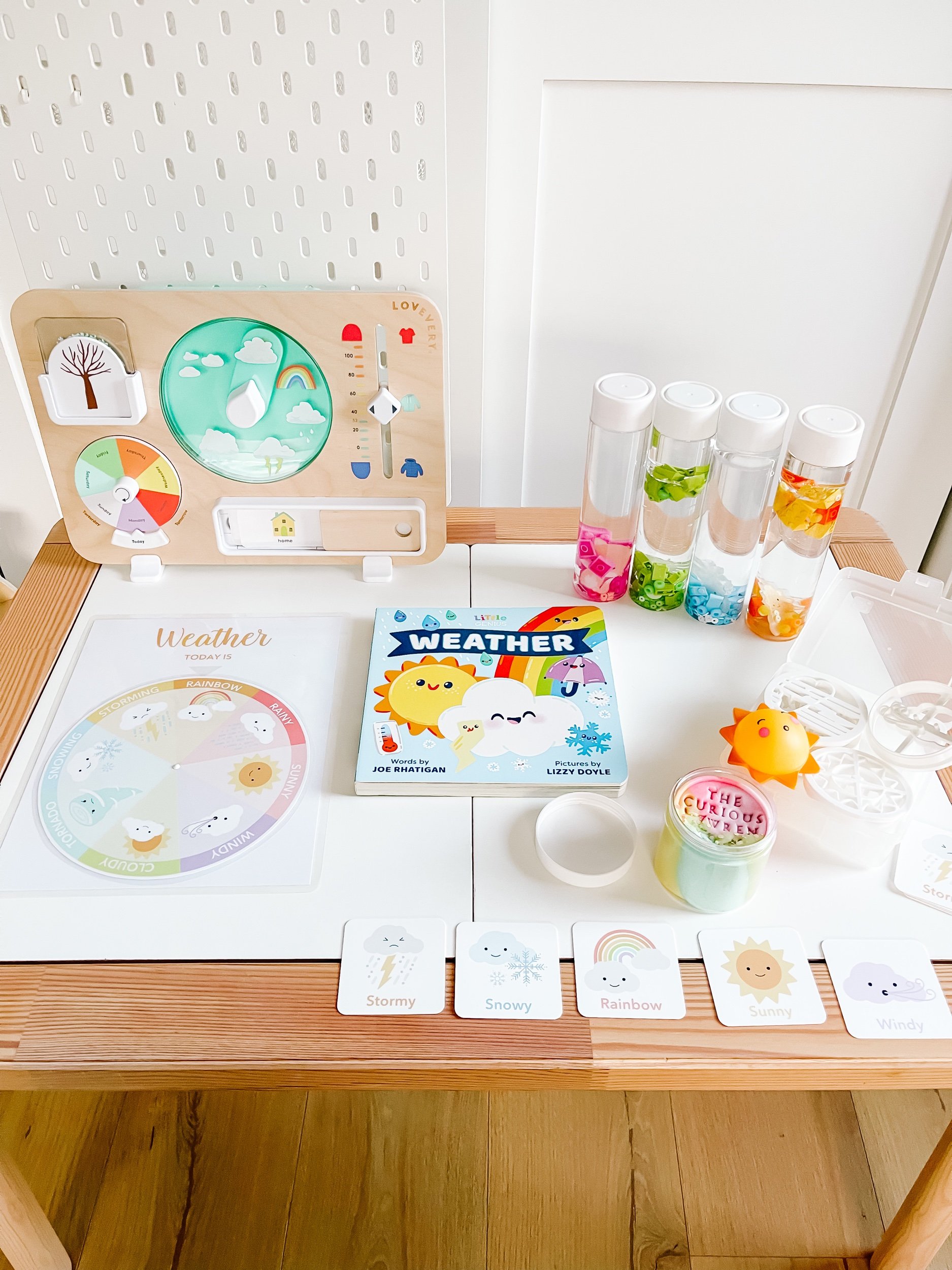
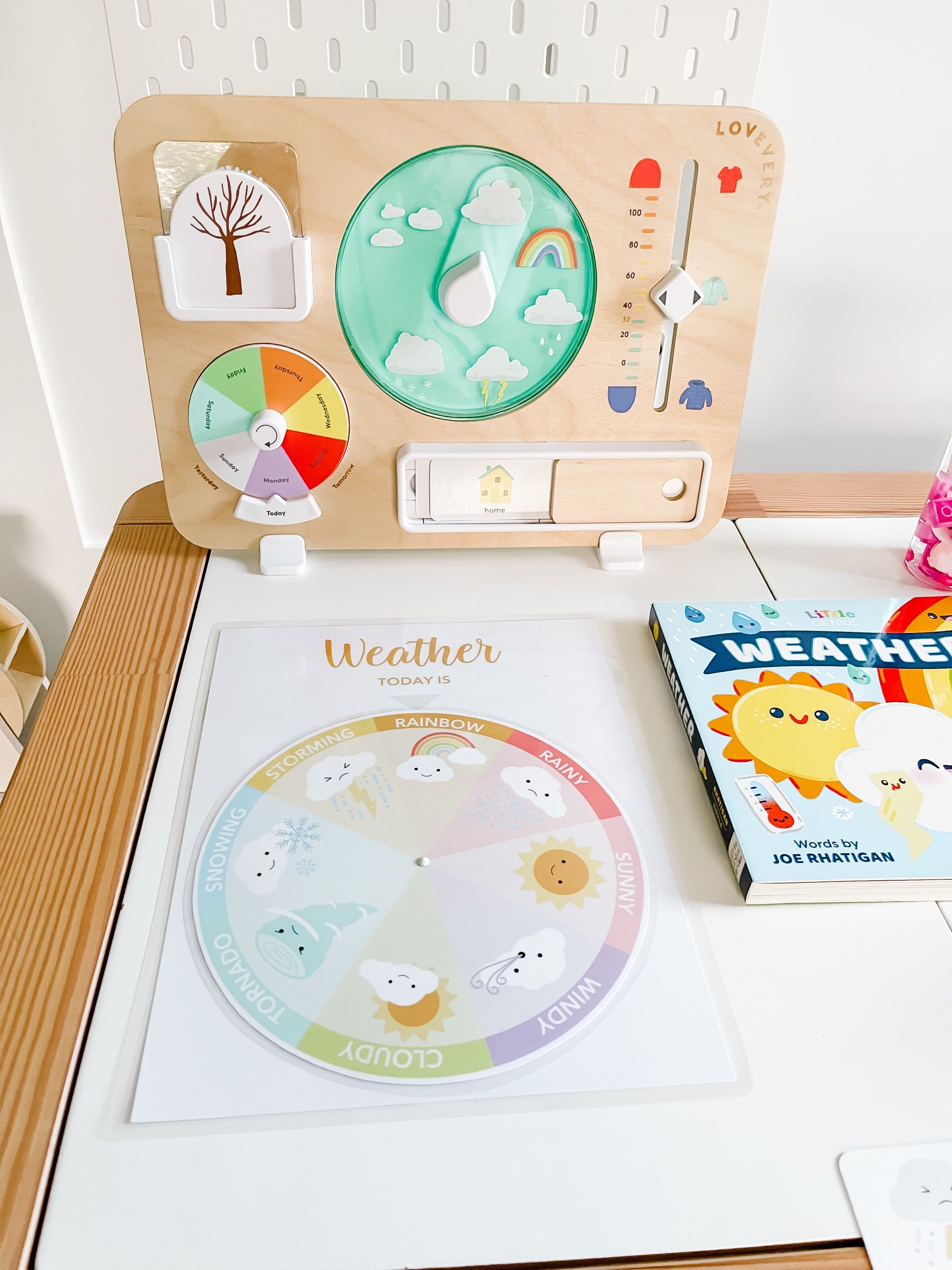
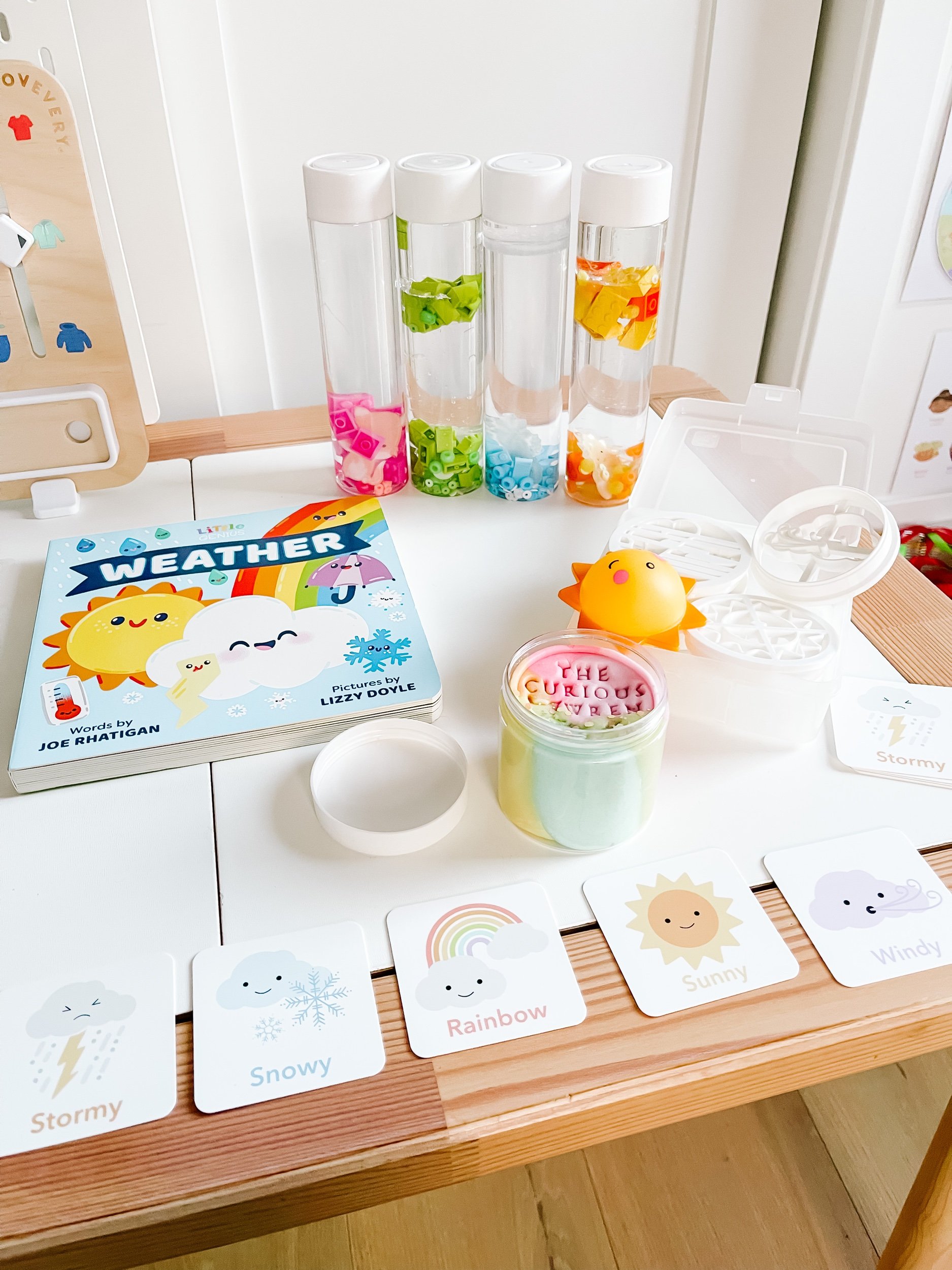
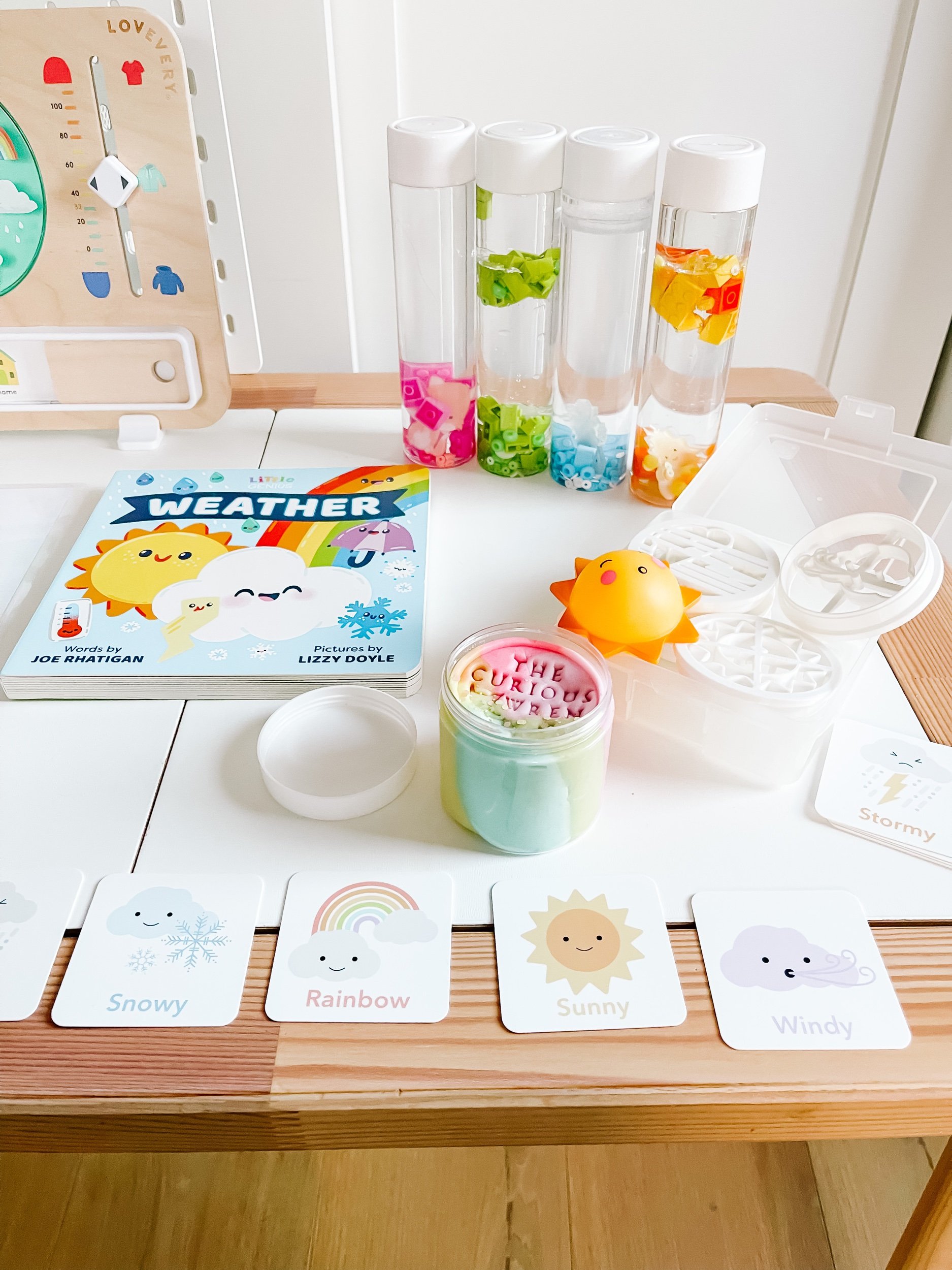
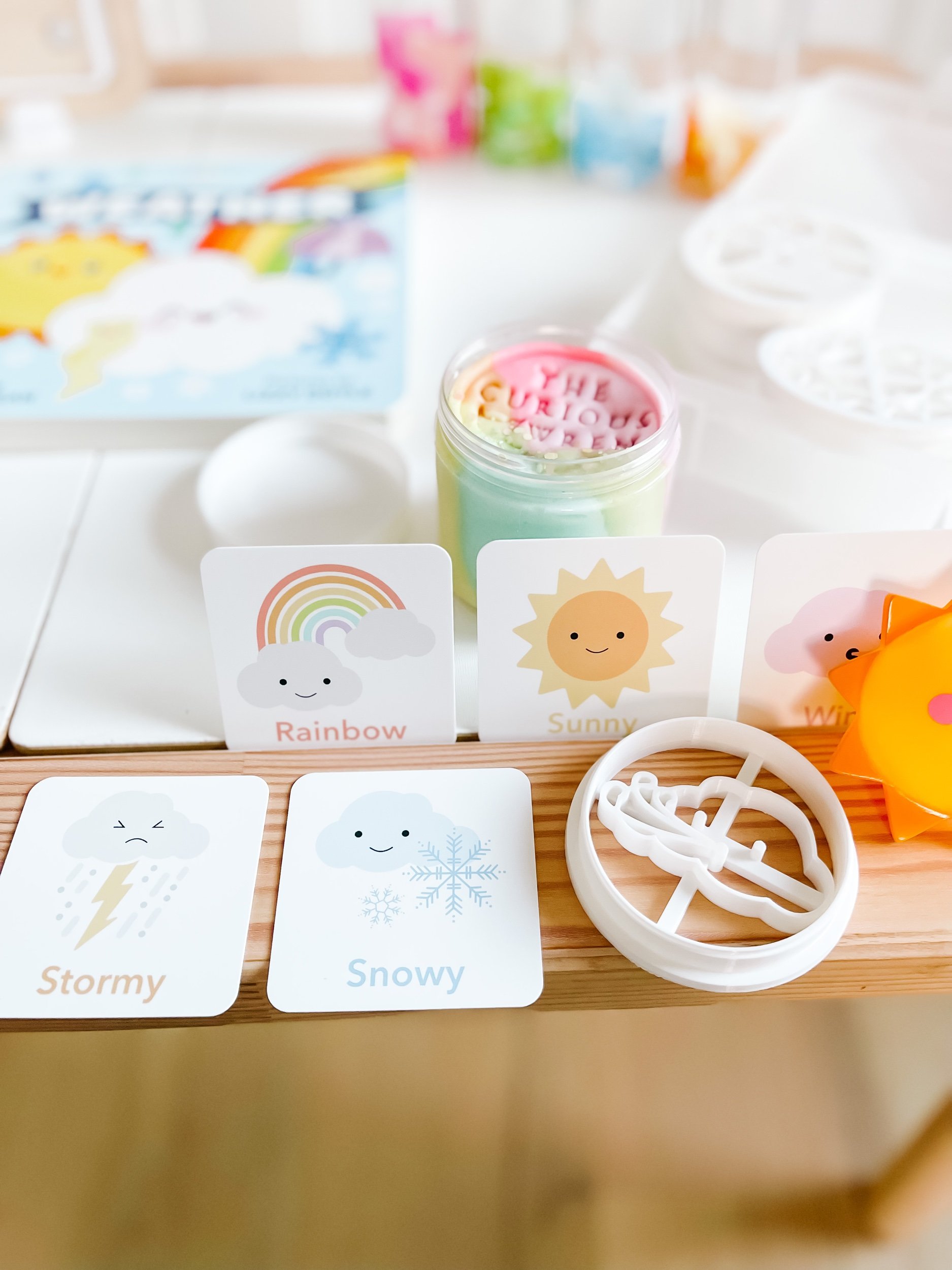
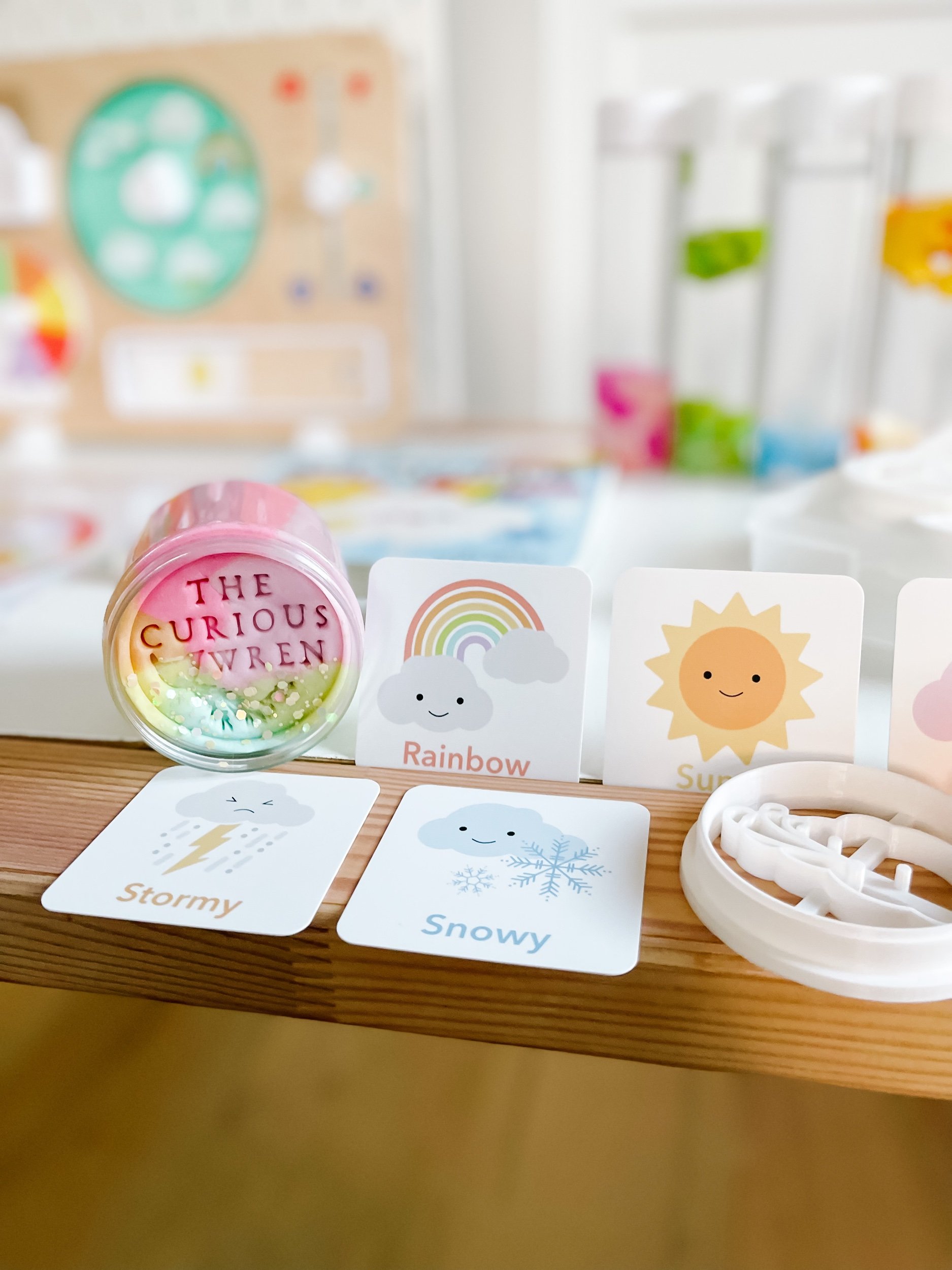
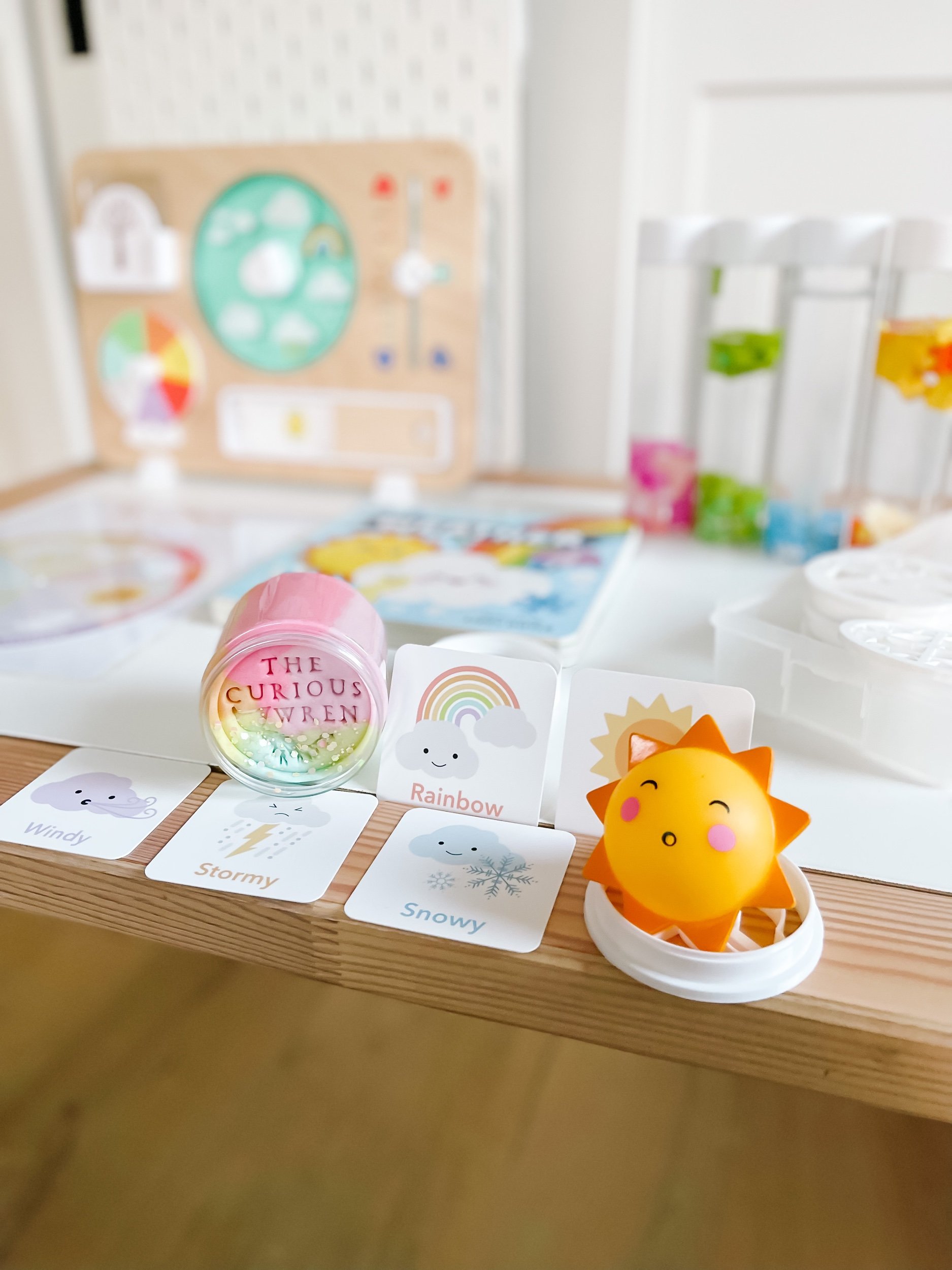
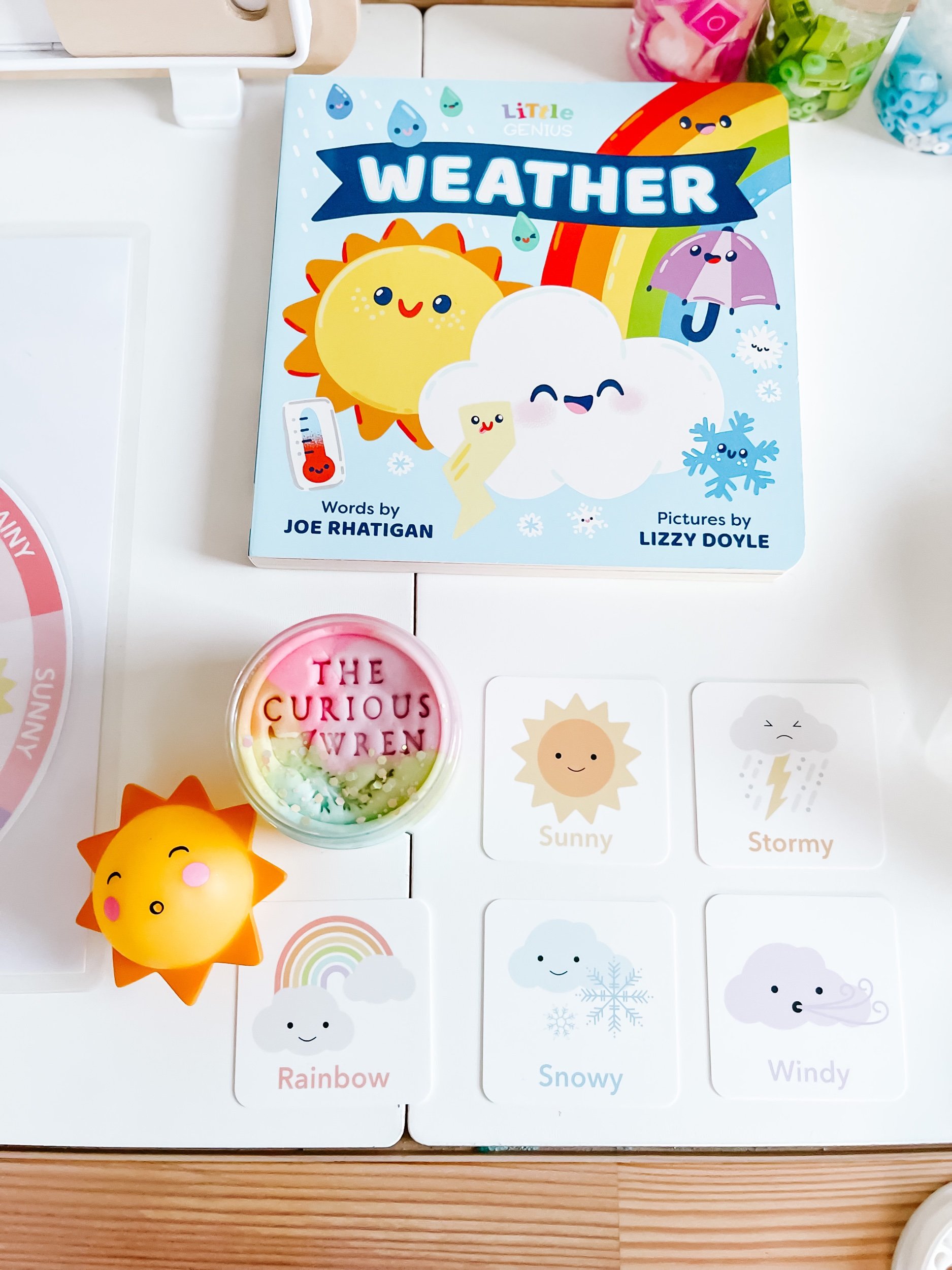
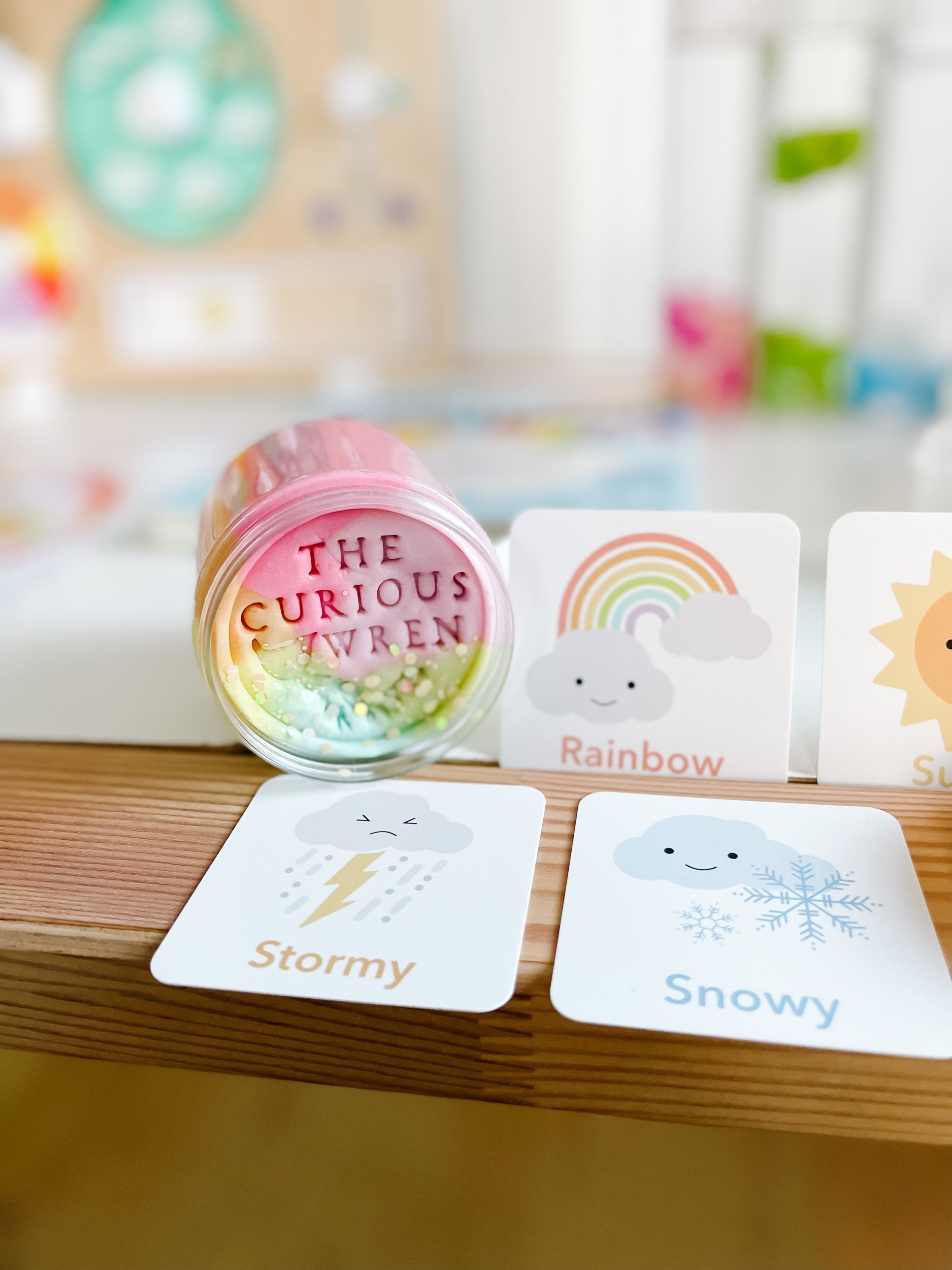
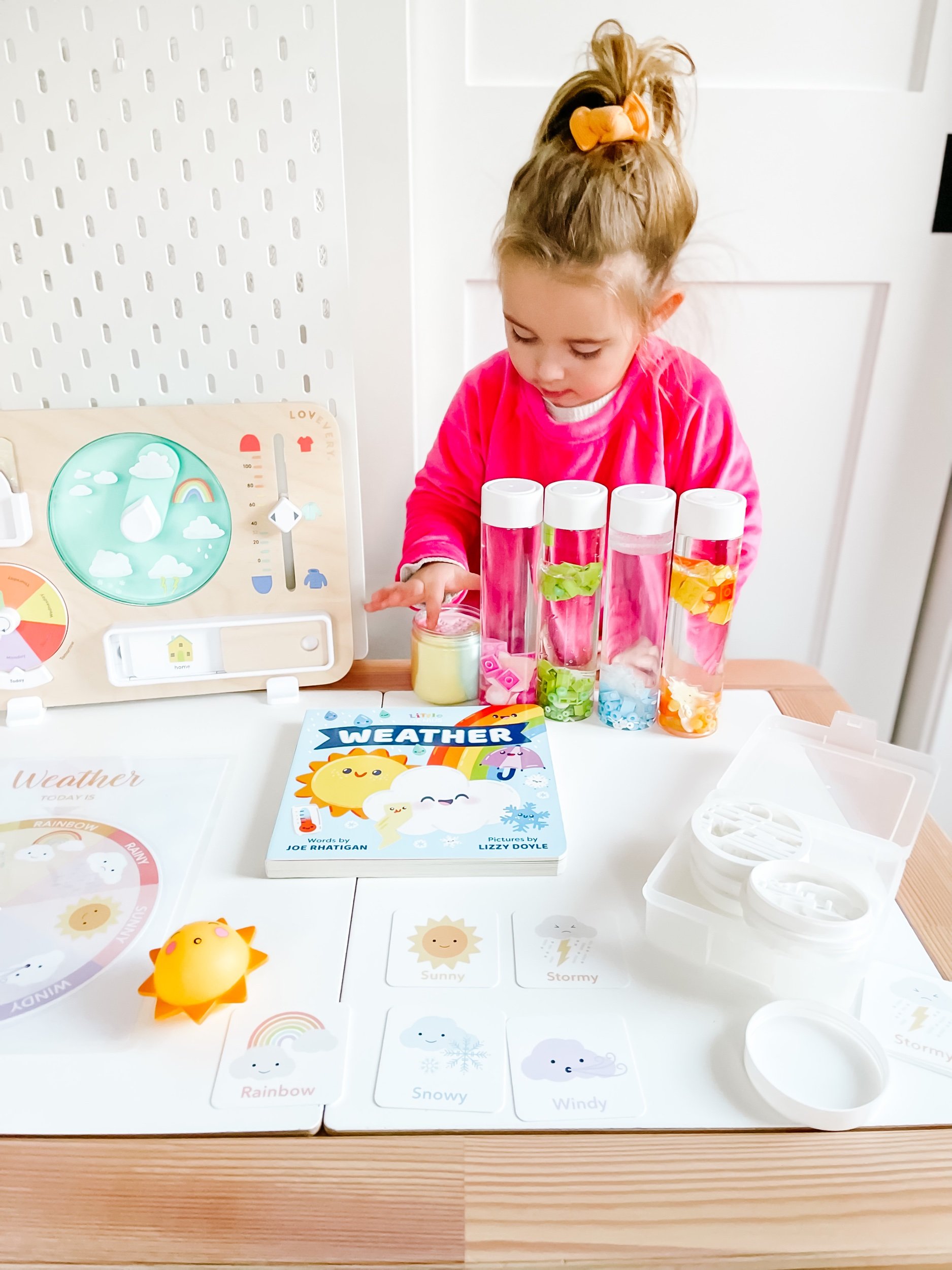
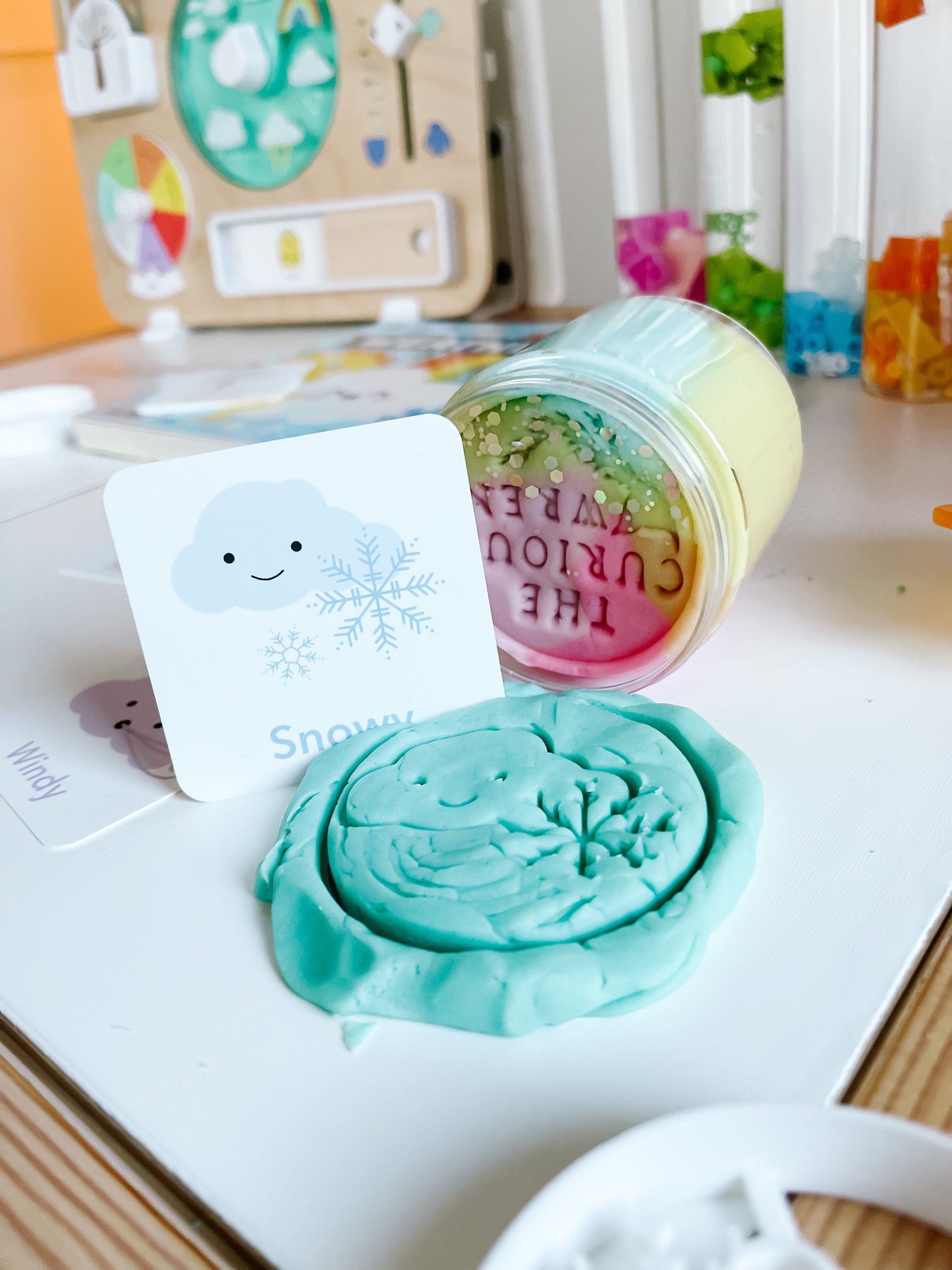
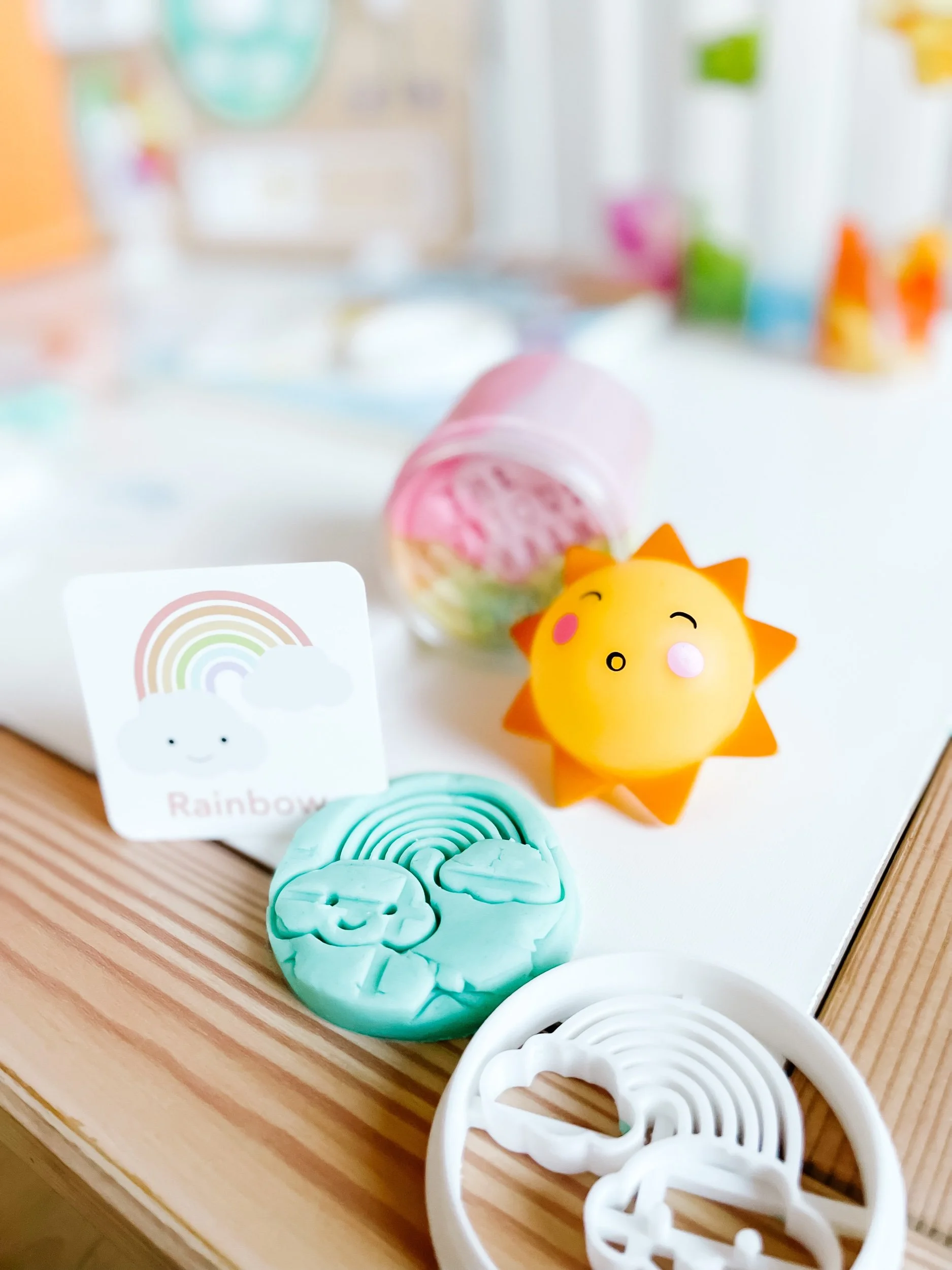
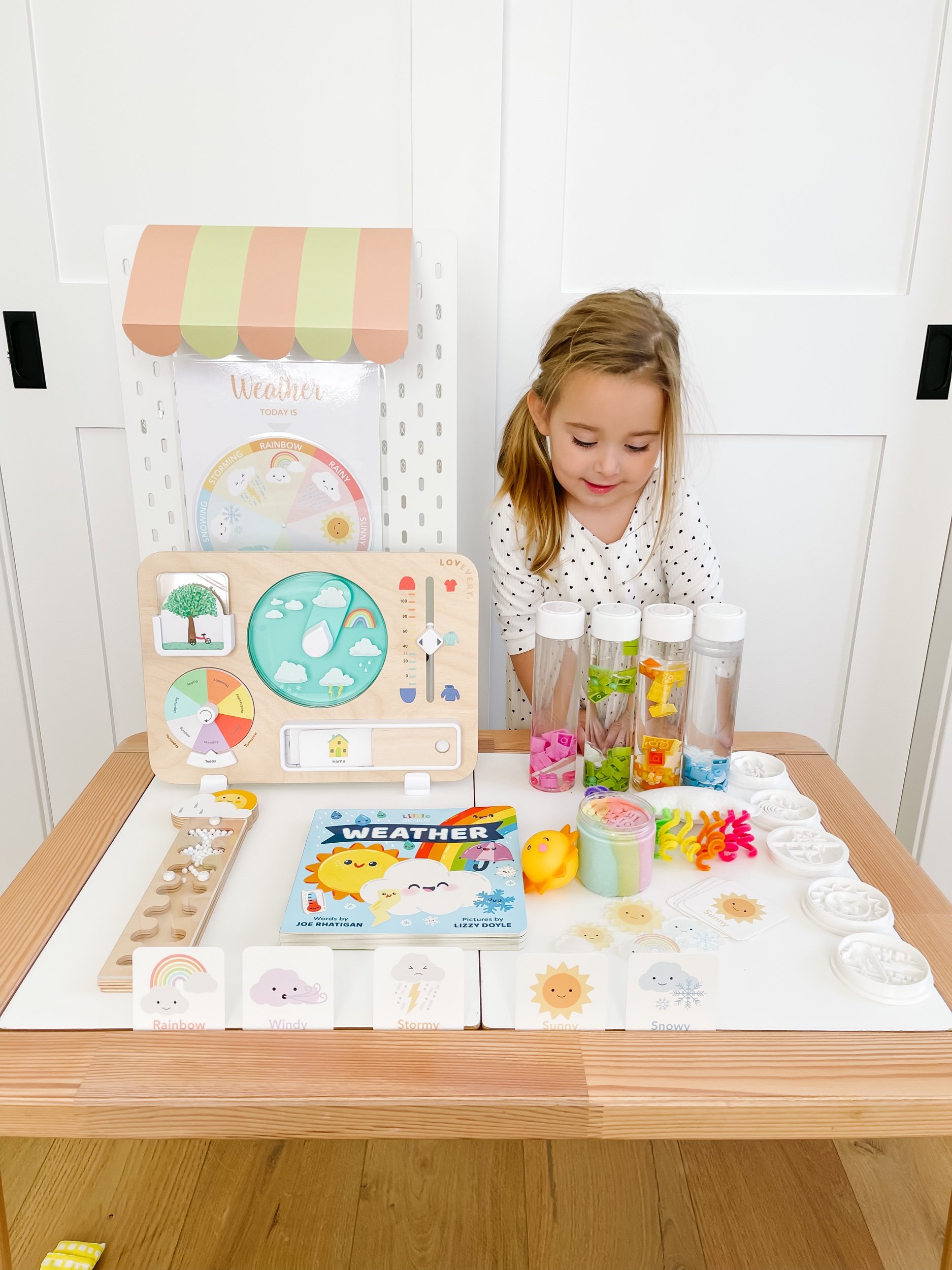
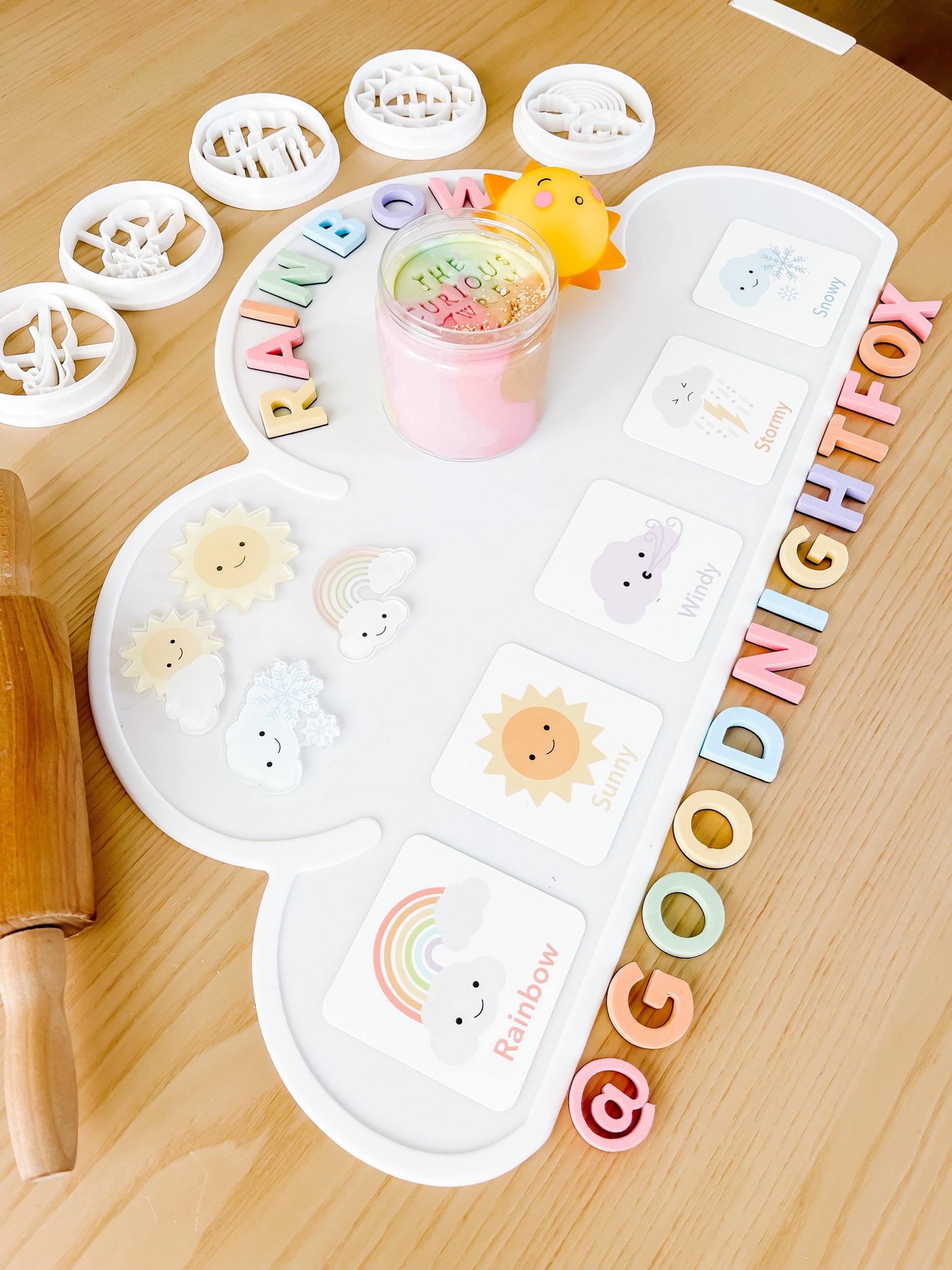
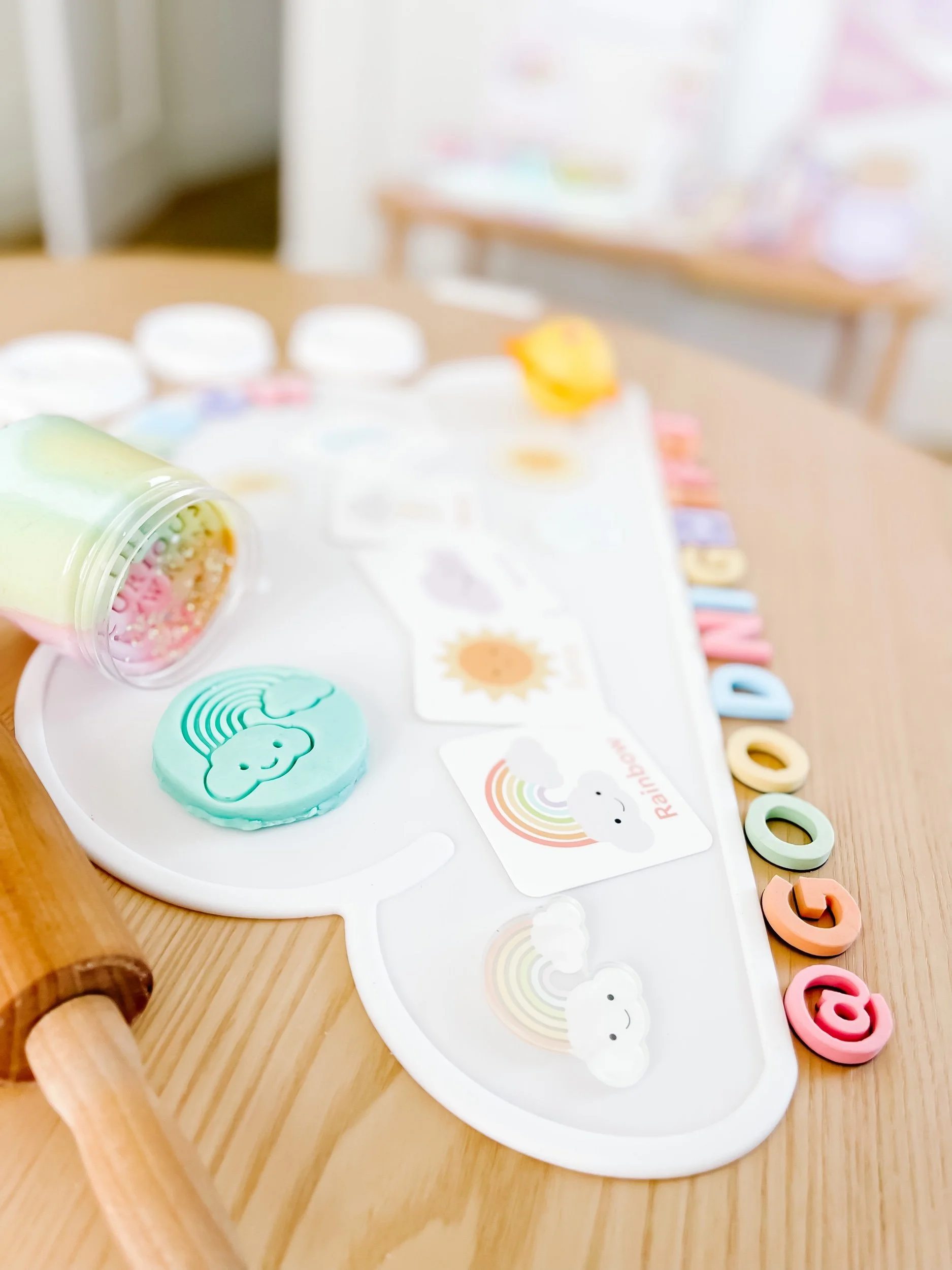
Sensory play is an important aspect of a child's development as it helps to stimulate their senses and improve their cognitive, physical, and emotional skills. It's a great way to engage children in hands-on learning and exploration. One fun and educational way to incorporate sensory play into a child's routine is by setting up a weather-themed sensory table. This can include rainbow colored playdoh, weather cookie cutters, and a weather match game.
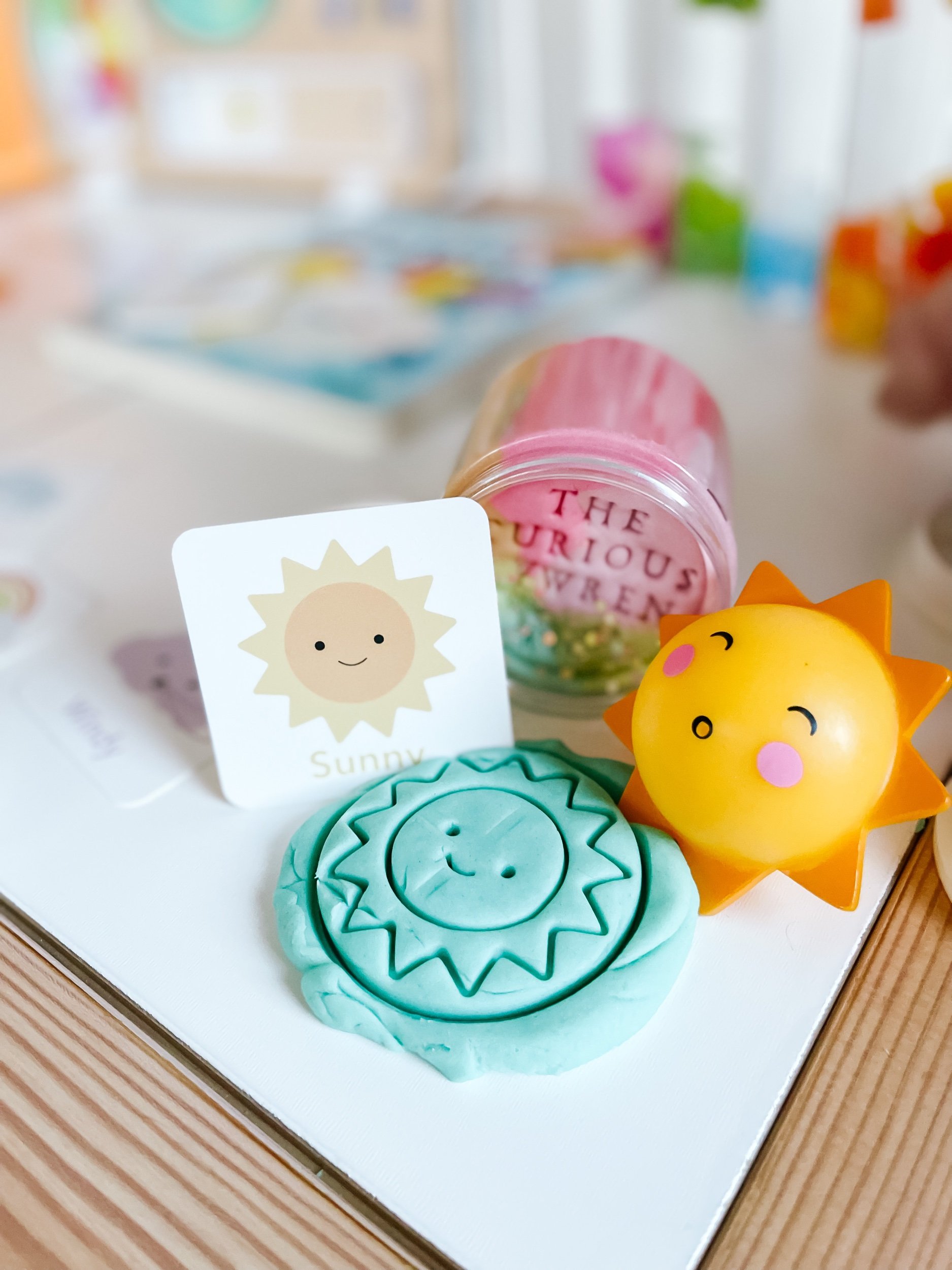
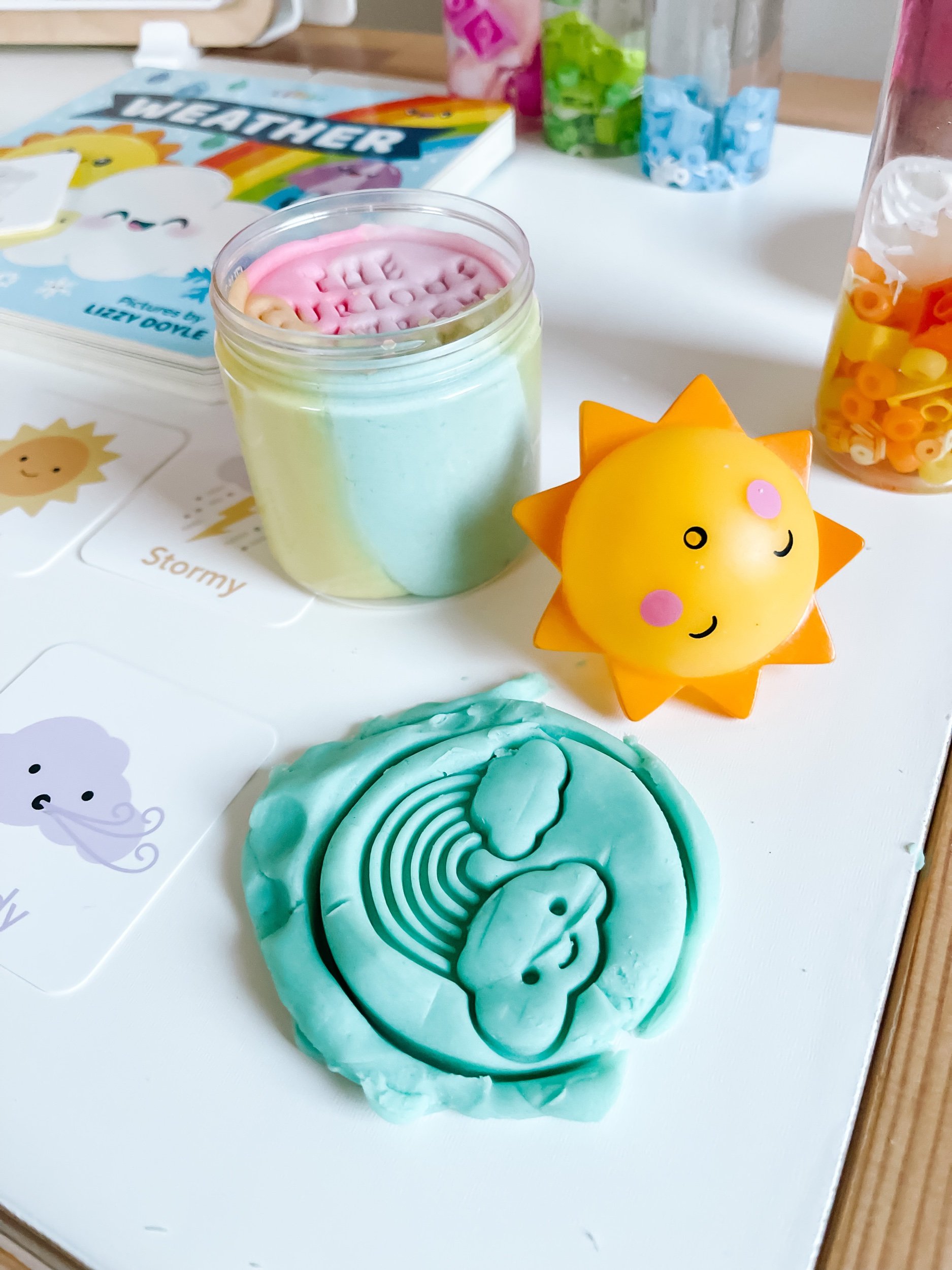
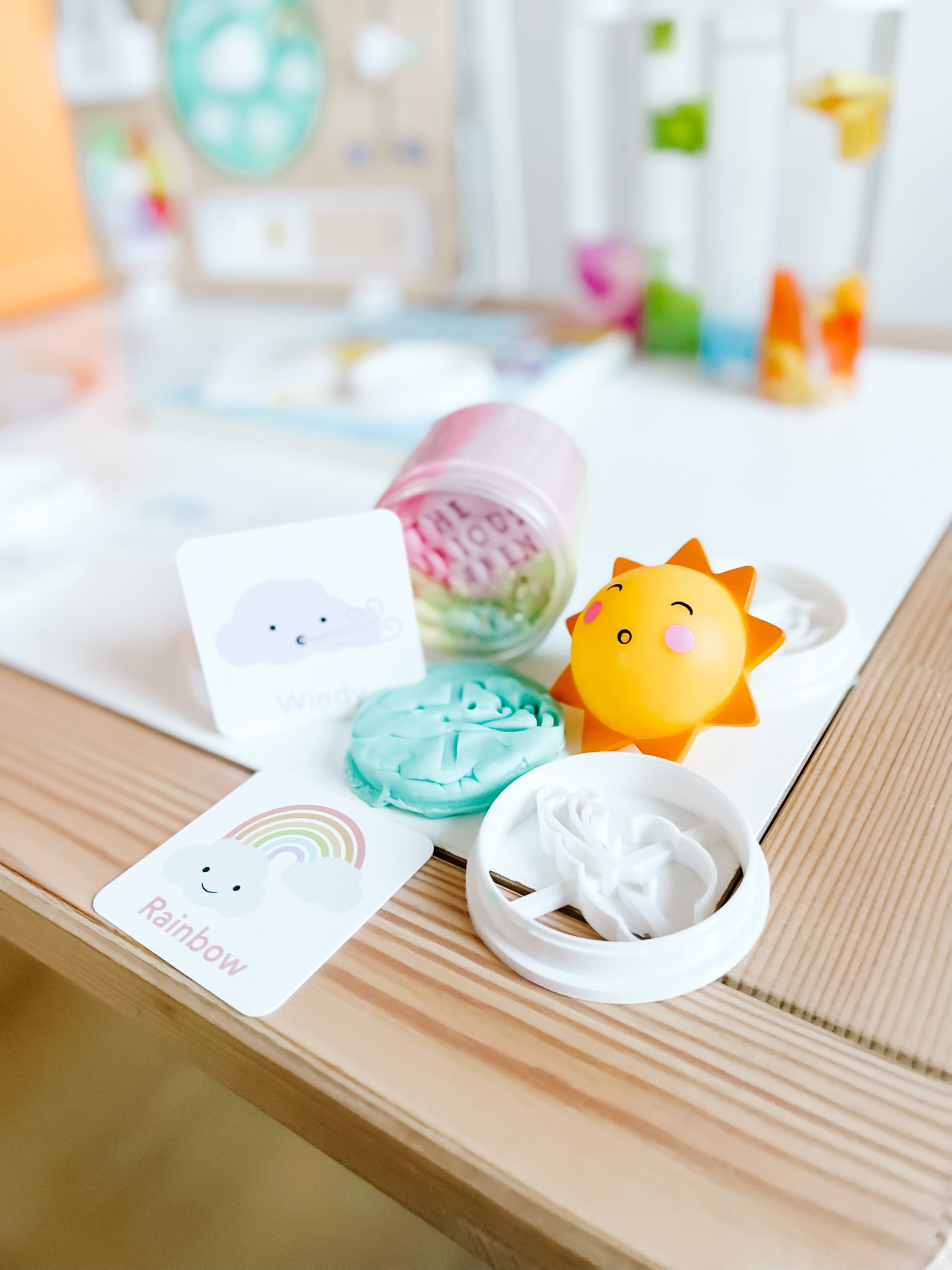
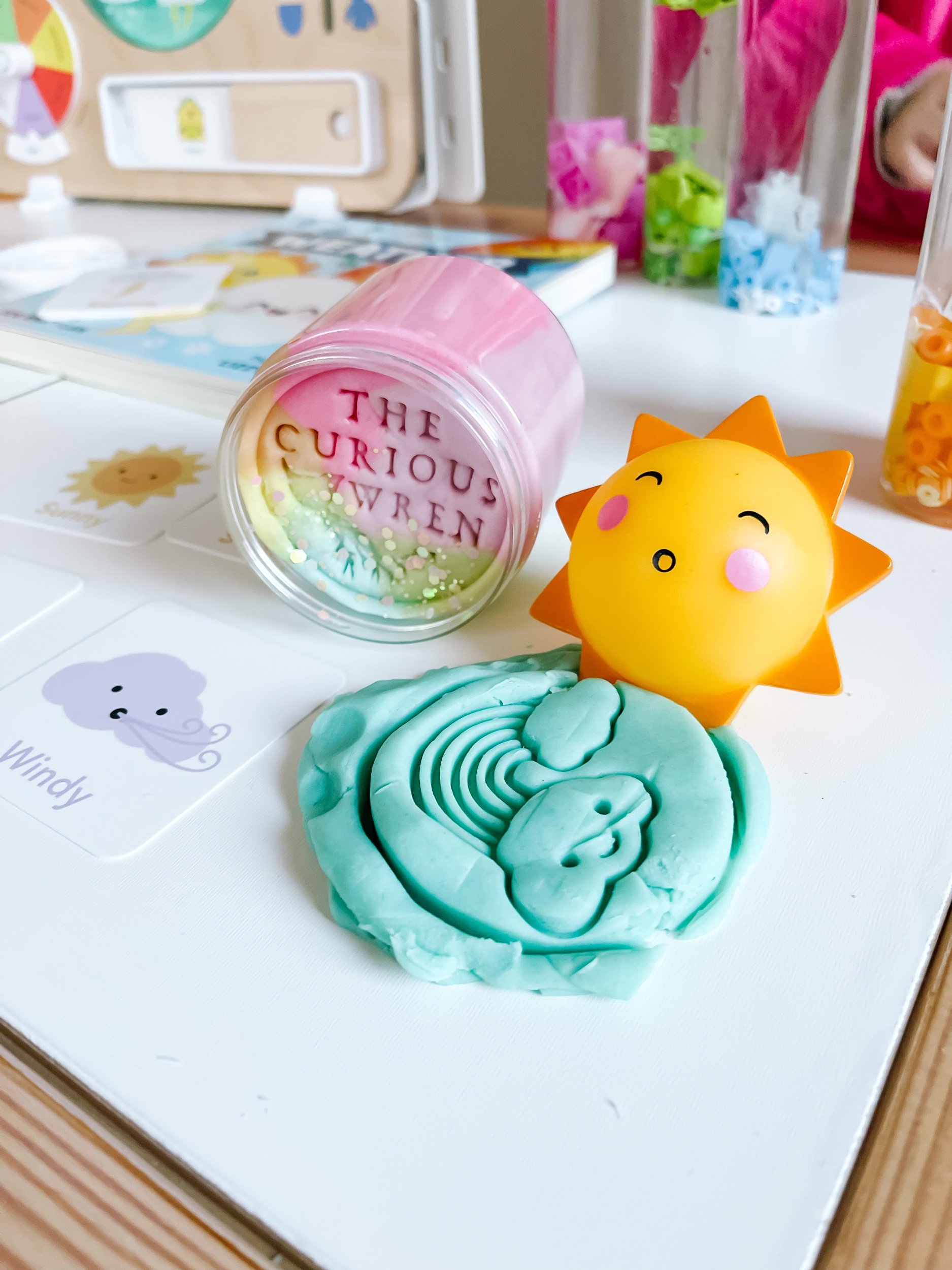
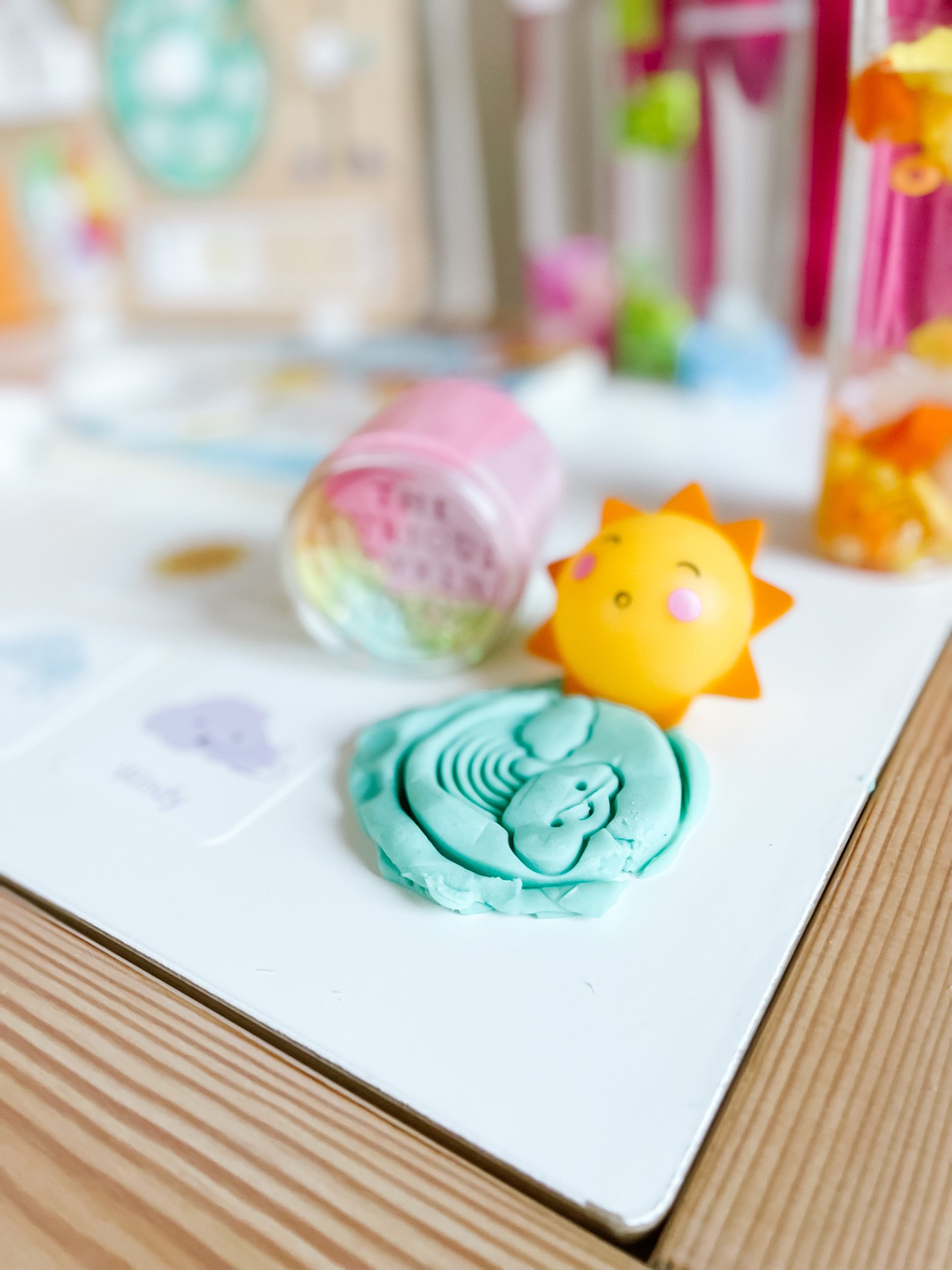
Playdoh is a classic sensory play material that is loved by children of all ages. By adding rainbow colors to the playdoh, children can engage in creative and imaginative play while also learning about colors and patterns. The bright and bold colors can also help to stimulate their senses and improve their color recognition skills. As children manipulate the playdoh, they can learn about texture, form, and shape while also building their fine motor skills.
Cookie cutters are another fun and versatile tool that can be used in a weather-themed sensory table setup. Children can use them to cut shapes out of the rainbow colored playdoh, creating their own weather-related scenes. The cookie cutters can also be used to create fun and educational games, such as a matching game where children have to match the shapes to corresponding weather symbols.
A weather match game is a great way to incorporate learning into the sensory play experience. Children can match weather symbols to their corresponding weather conditions, helping them to learn about different types of weather and their characteristics. This game can be played with the cookie cutters, playdoh shapes, or weather-themed cards.
Sensory play provides a range of benefits for children, including:
Improving fine motor skills: Sensory play helps to improve children's fine motor skills as they manipulate and explore different materials.
Enhancing creativity and imagination: Sensory play encourages children to use their imagination and be creative, leading to increased self-expression and a love of learning.
Supporting cognitive development: Sensory play helps children to develop their cognitive skills, including memory, problem-solving, and reasoning.
Building emotional intelligence: Sensory play can also support the development of emotional intelligence as children learn to regulate their emotions and develop empathy.
In conclusion, a weather-themed sensory table setup is a fun and educational way to incorporate sensory play into a child's routine. With rainbow colored playdoh, weather cookie cutters, and a weather match game, children can engage in hands-on learning and exploration while also building a range of important skills. If you're looking for a fun and educational activity for your child, a weather-themed sensory table is a great option!











Valentine's Day is a special occasion that has been celebrated for centuries, and it's a time for showing love and affection to the people you care about. One of the most delightful ways to celebrate this day with toddlers is through dramatic play. Dramatic play is a fun and interactive activity that provides numerous benefits for young children's development.
Language and Communication Skills: Dramatic play provides a platform for toddlers to express themselves, use their imagination, and practice their language skills. Through pretend play, they learn to communicate effectively with others, use new words and sentences, and improve their vocabulary.
Cognitive Development: Dramatic play helps to stimulate children's imagination and creativity, which leads to improved cognitive development. By pretending to be someone else, they learn to think critically, problem-solve, and understand different perspectives.
Emotional Development: Dramatic play allows toddlers to explore and express their emotions in a safe and controlled environment. This helps to build their emotional intelligence and resilience, and helps them learn how to manage their emotions.
Social Development: Dramatic play provides opportunities for children to interact with others and develop their social skills. They learn to cooperate, share, and take turns in a fun and engaging way.
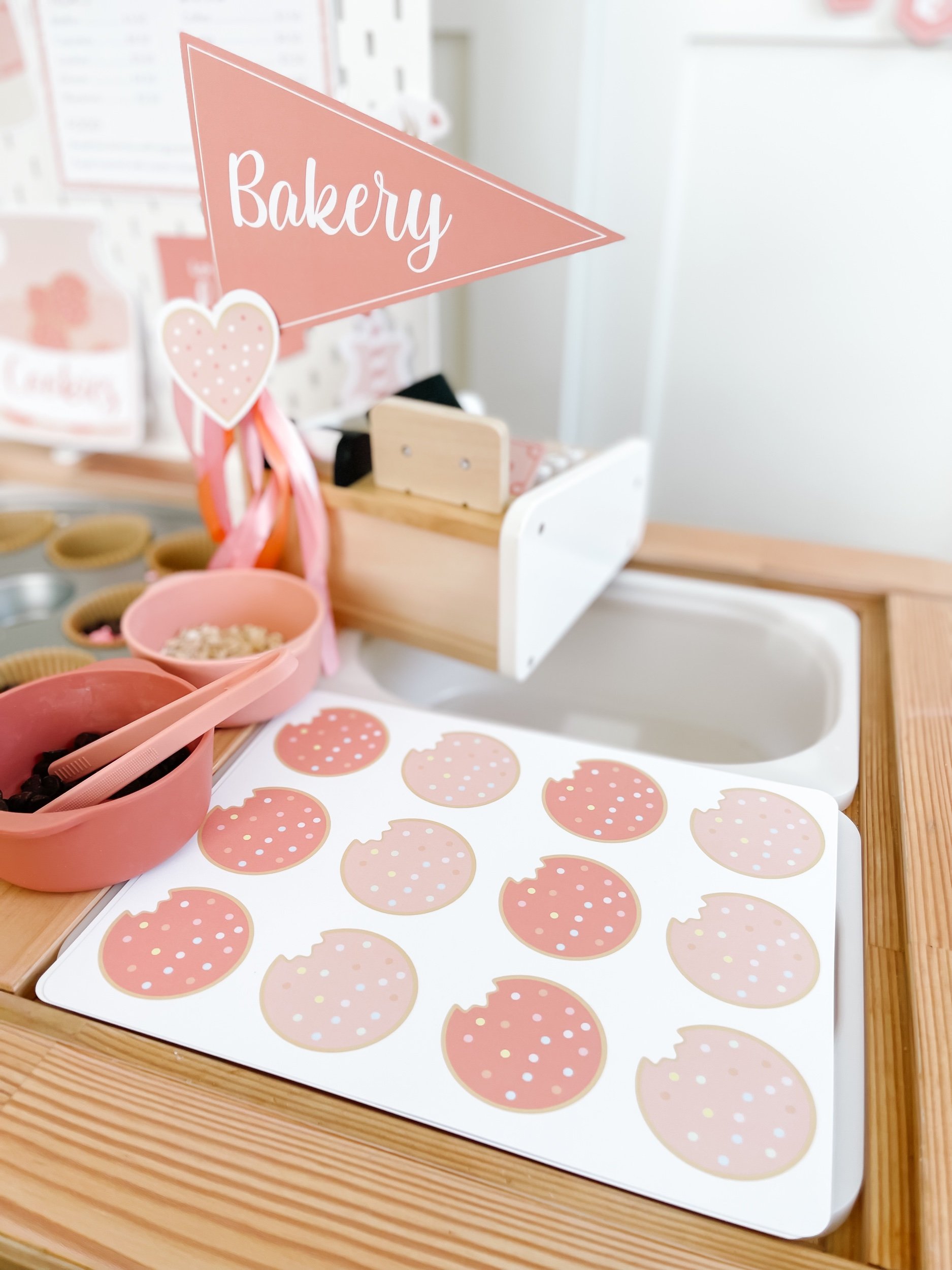
To help you celebrate Valentine's Day with your toddlers, we've created a special Valentine's Bakery Dramatic Play Kit. This kit includes 9 printable PDF pages of sweet treats, bakery signs, and decor that will transform any play area into a bustling bakery. With this kit, your toddlers will have a blast pretending to be bakers, creating and selling delicious treats to their friends and family. They'll develop their language and communication skills, build their emotional intelligence, and have fun in the process!
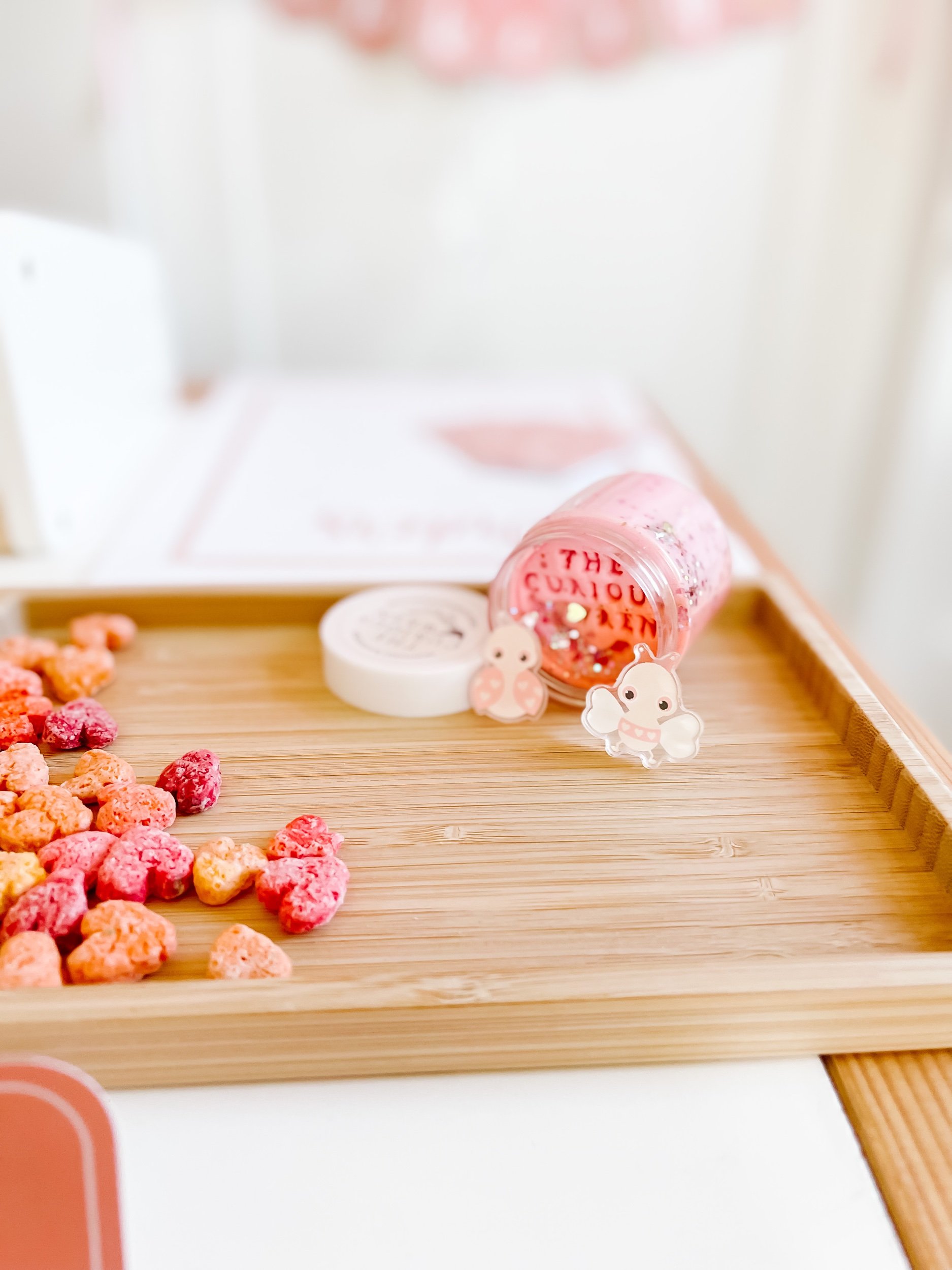
To create this sensory bin activity, start by finding a shallow container or tray that is large enough to hold the cereal filler. Fill the container with heart-shaped cereal such as O's or puffs. You can enhance the sensory experience by adding other Valentine's themed elements like small plastic hearts or heart-shaped scoops. Preschoolers can explore the heart-shaped cereal filler bin by using their fingers or various tools and utensils to scoop, pour, and manipulate the cereal. They can sort the cereal by color, size, or shape, practice counting, or create imaginative play scenarios using the heart-shaped pieces. Encourage them to engage their senses by feeling the crunchy texture and observing the different colors.
This sensory bin activity promotes fine motor skills development as children strengthen their hand-eye coordination, grasp, and manipulate the small cereal pieces. It also allows for sensory exploration, helping to develop their sense of touch and enhance sensory integration. Additionally, they can practice basic math concepts such as sorting, counting, and patterning while engaging in imaginative play.
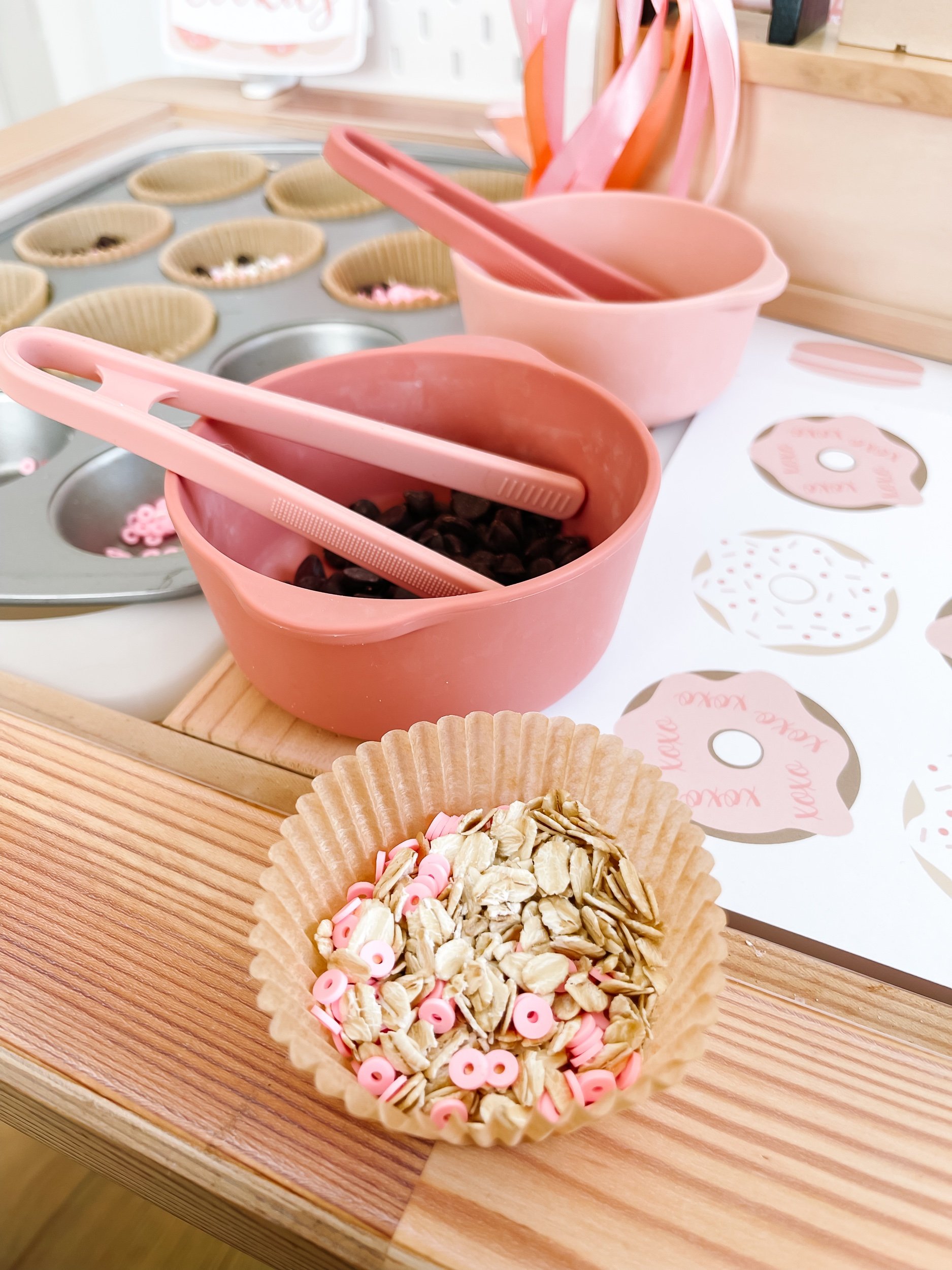
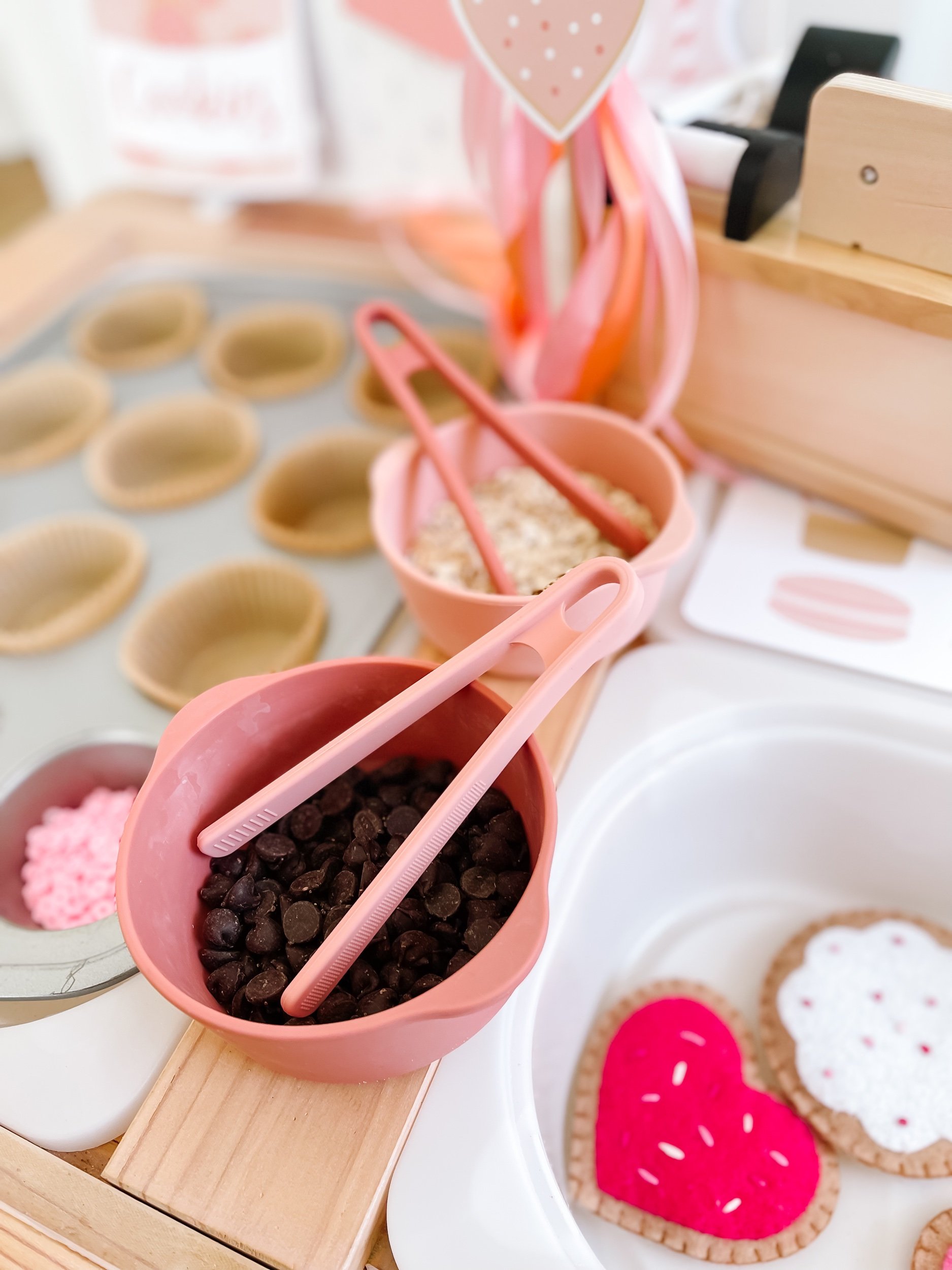
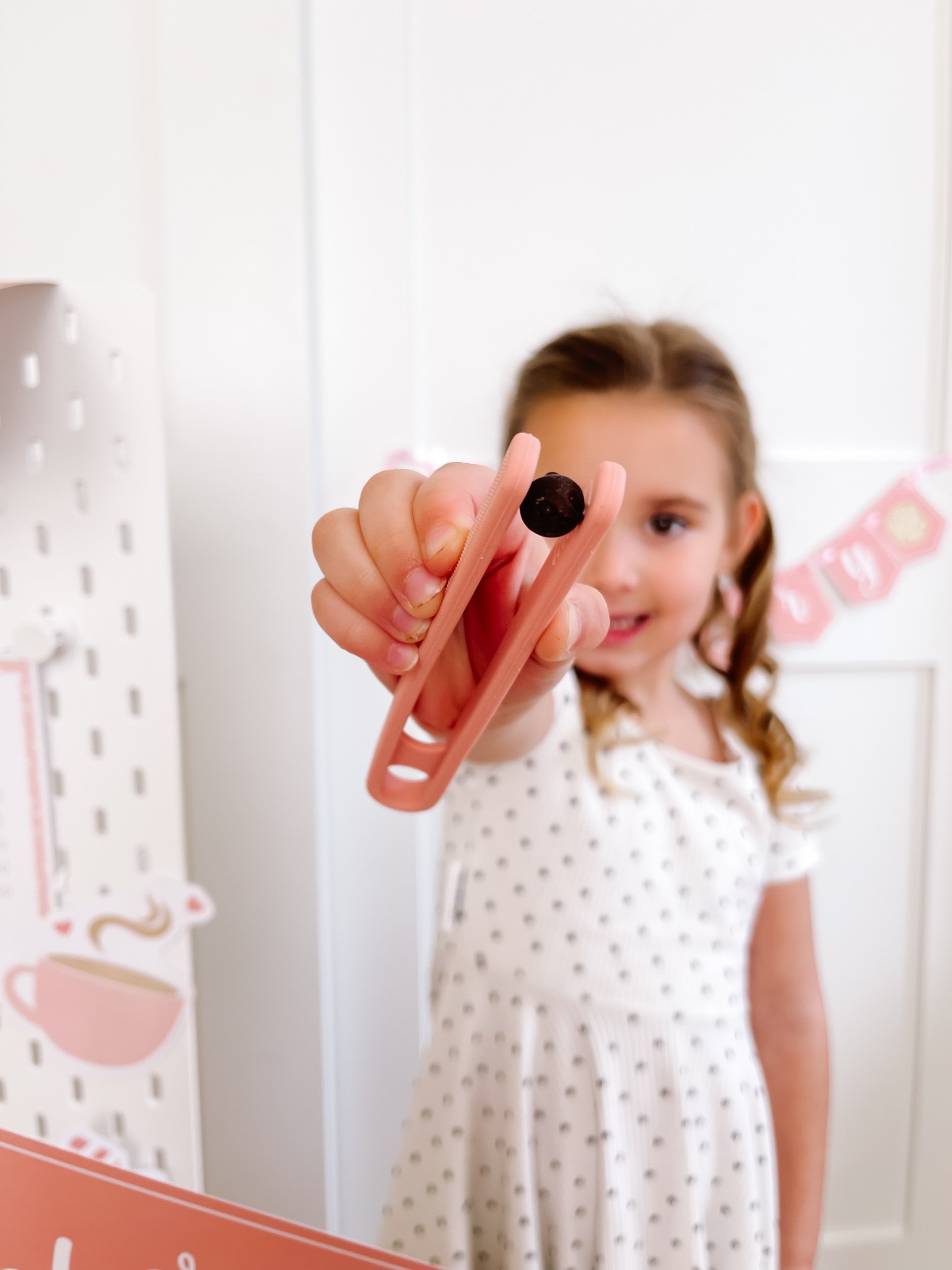
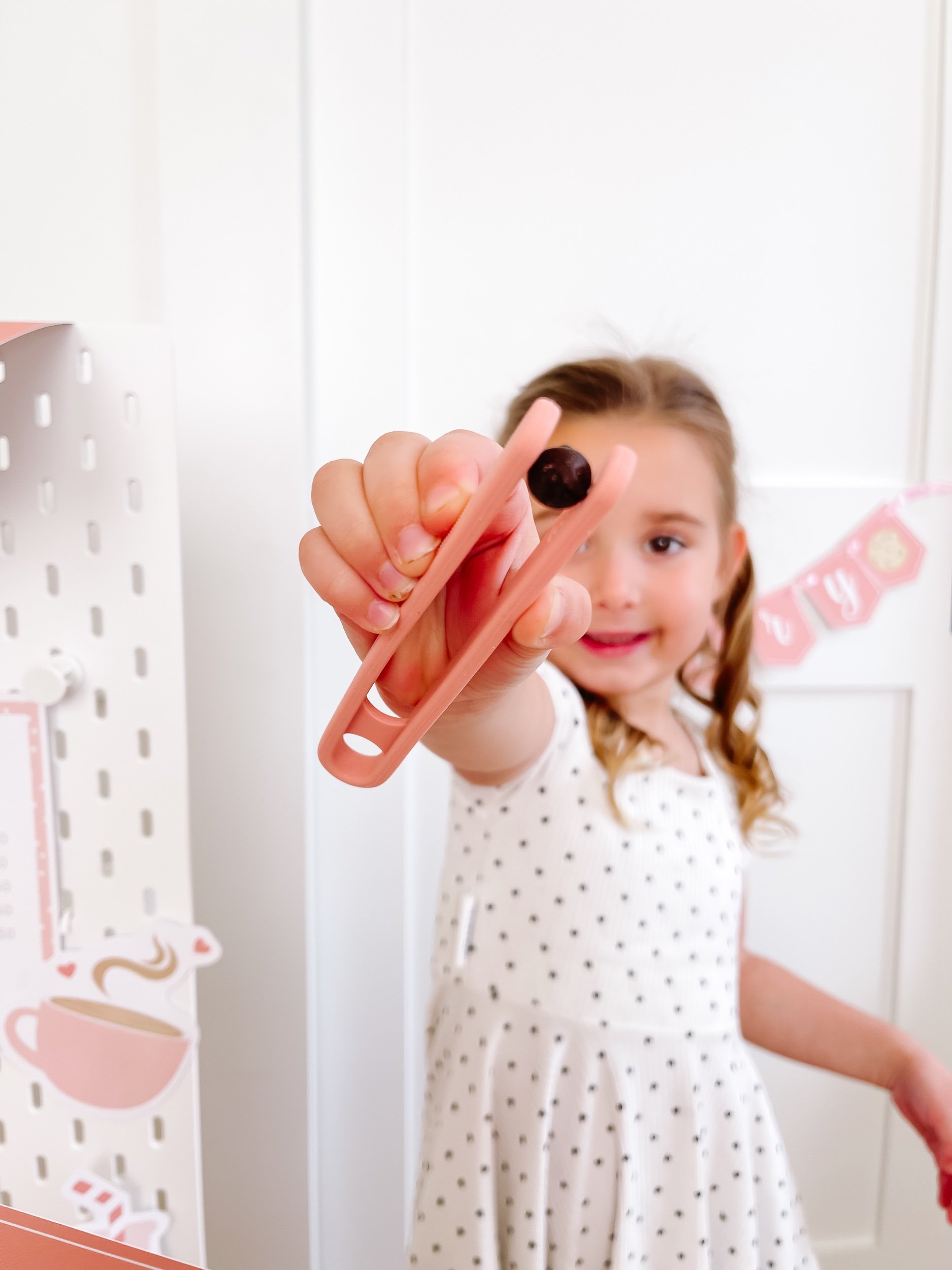
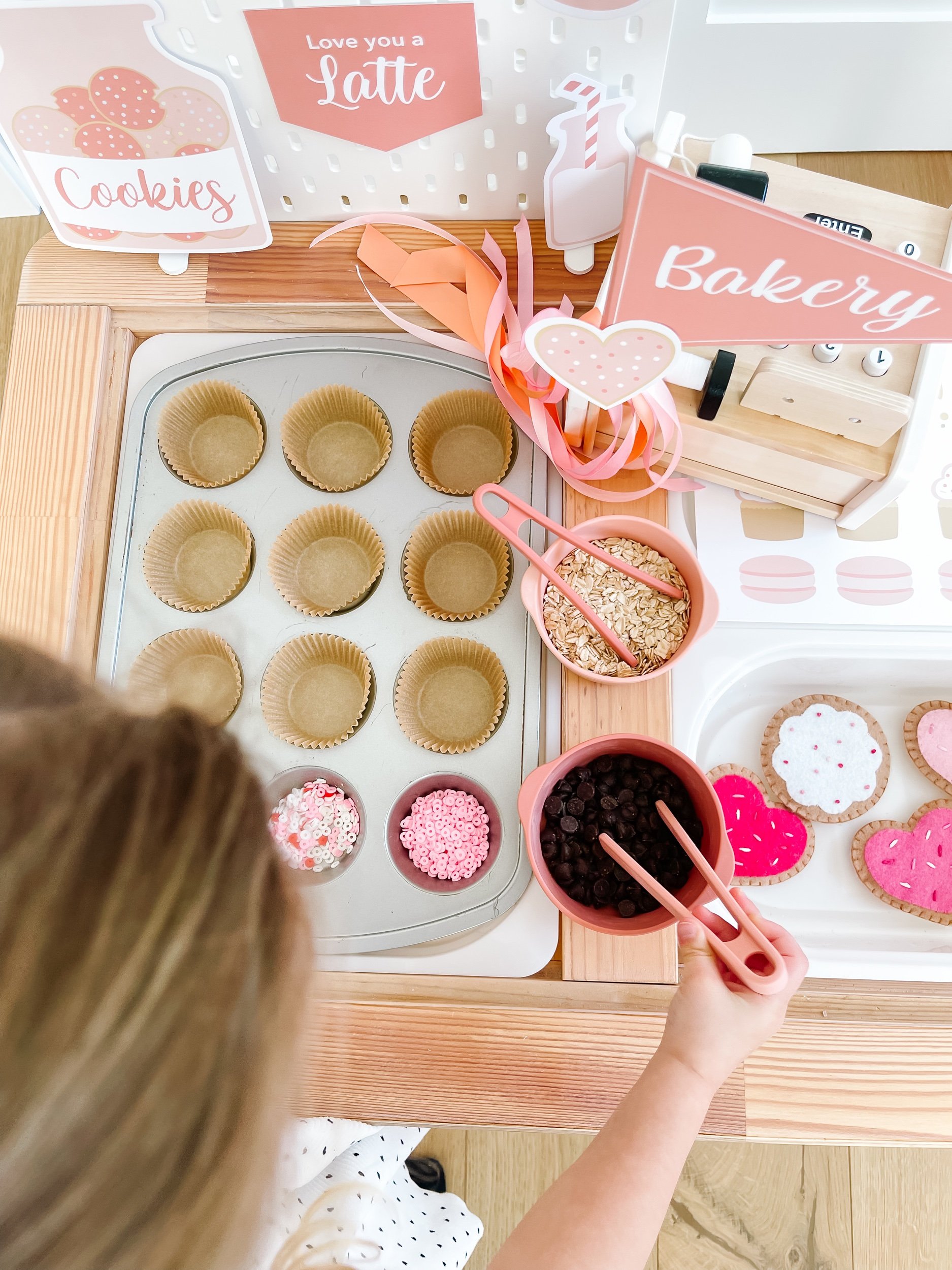
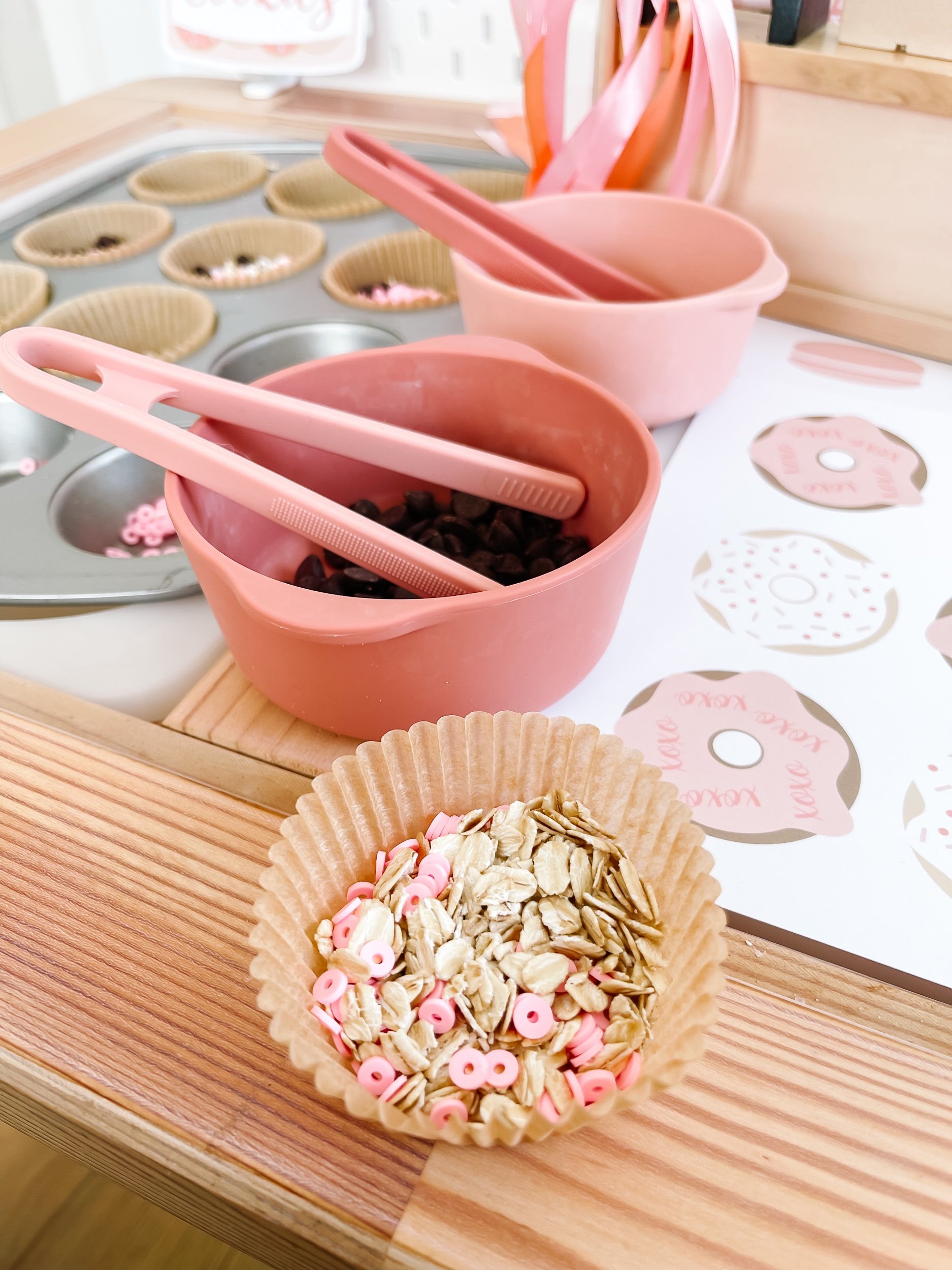
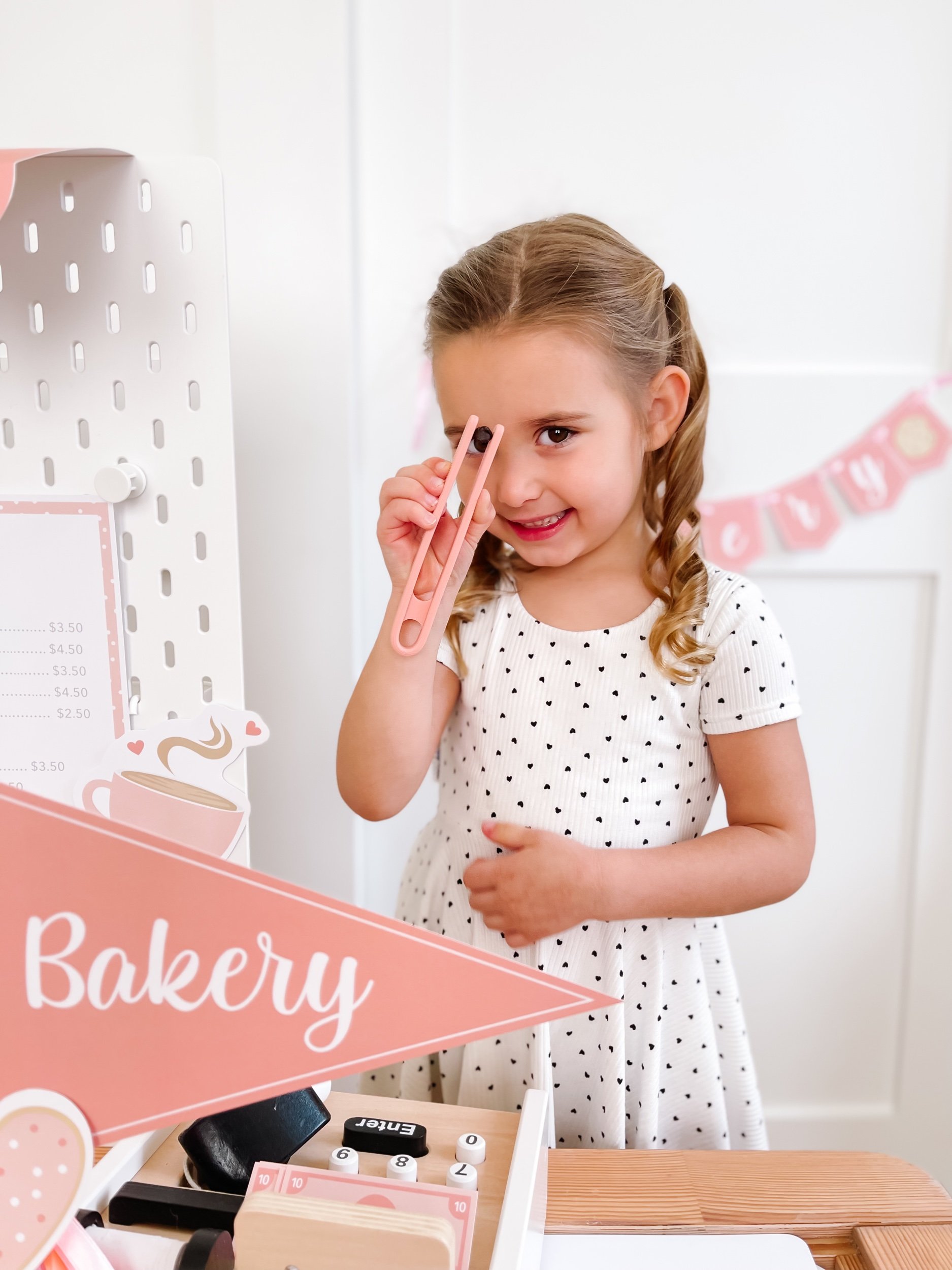
For grasping practice we used our silicone tongs from Inspire My Play and for pouring and scooping we used our silicone bowls!
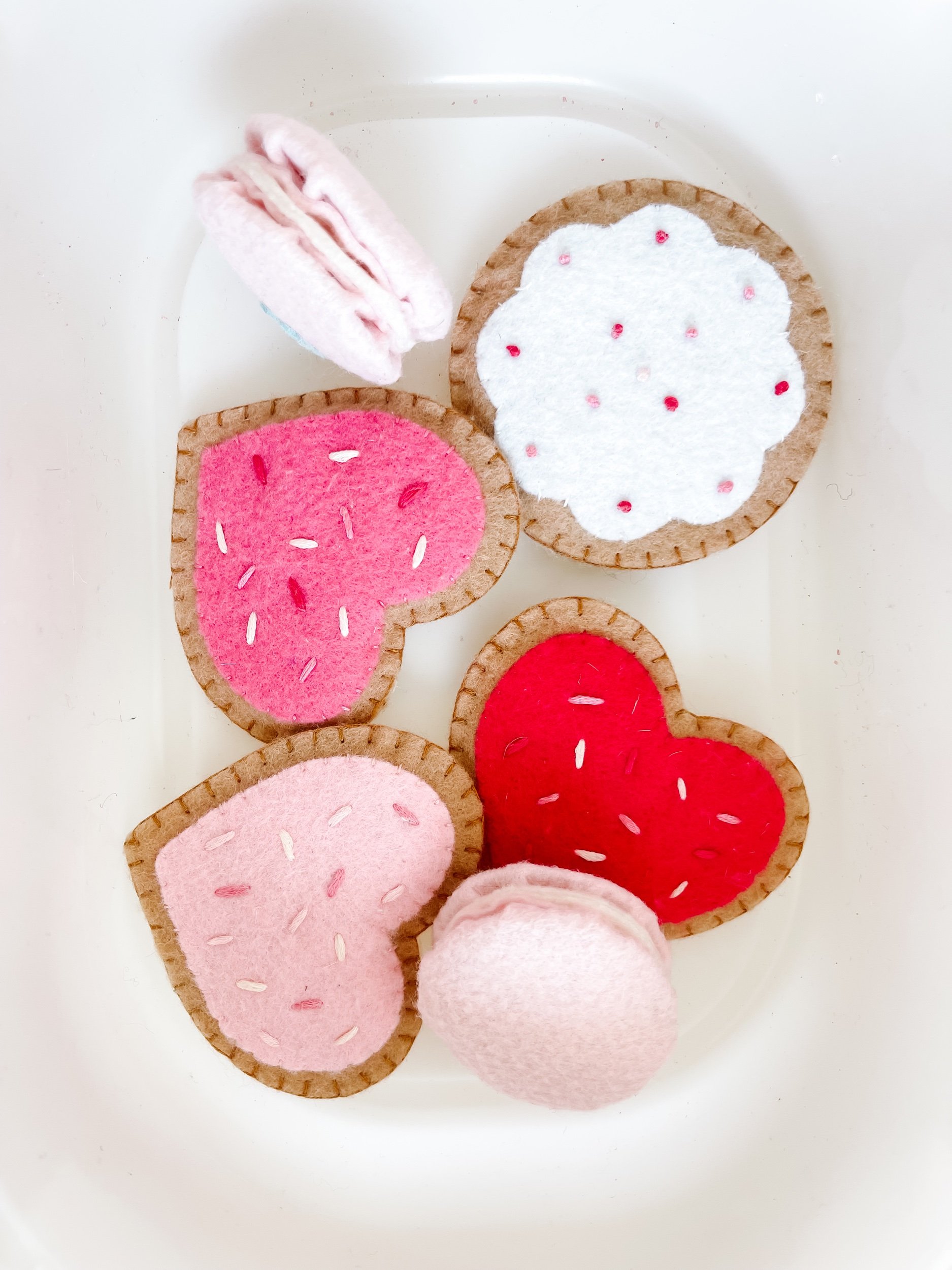
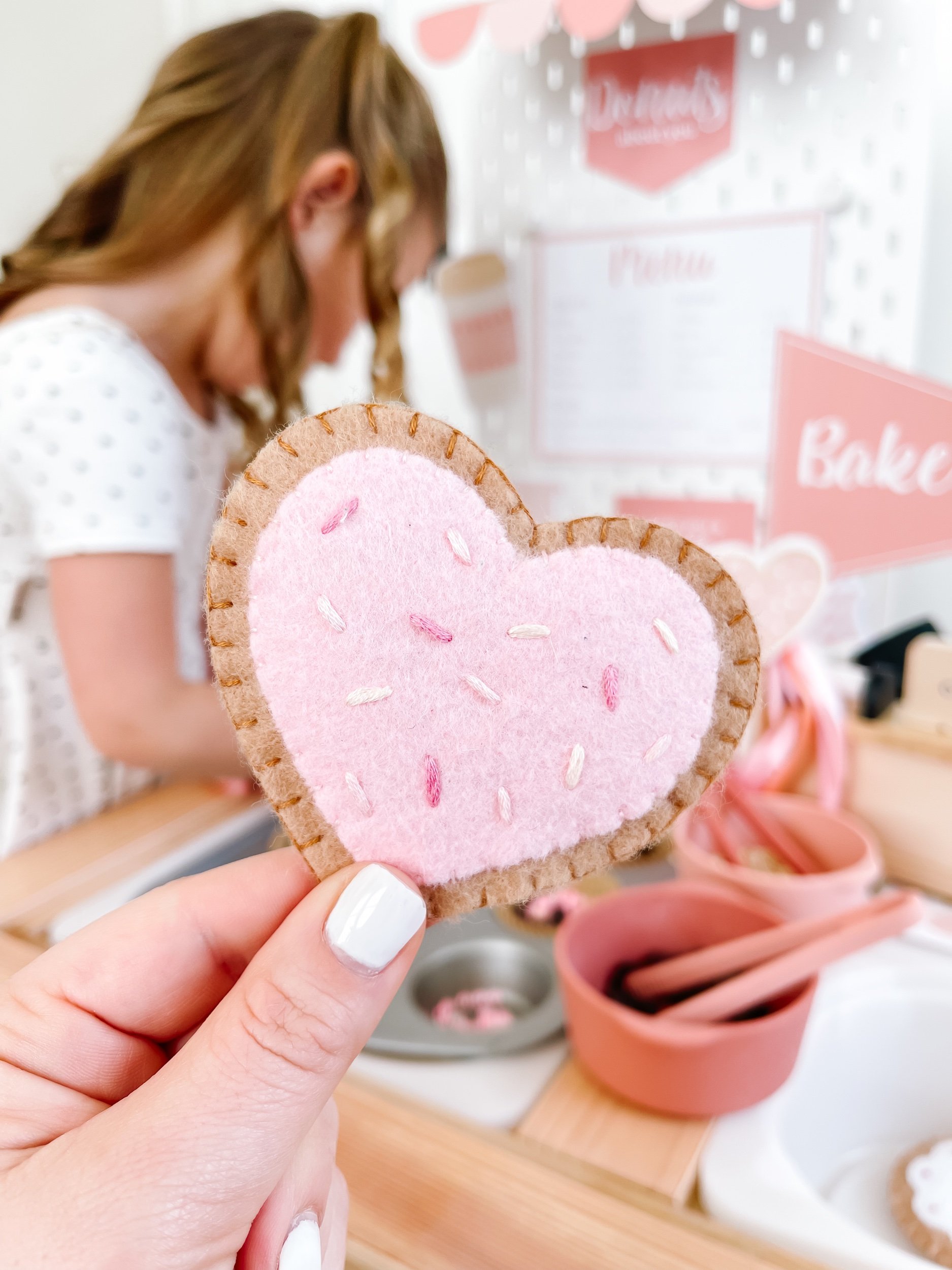
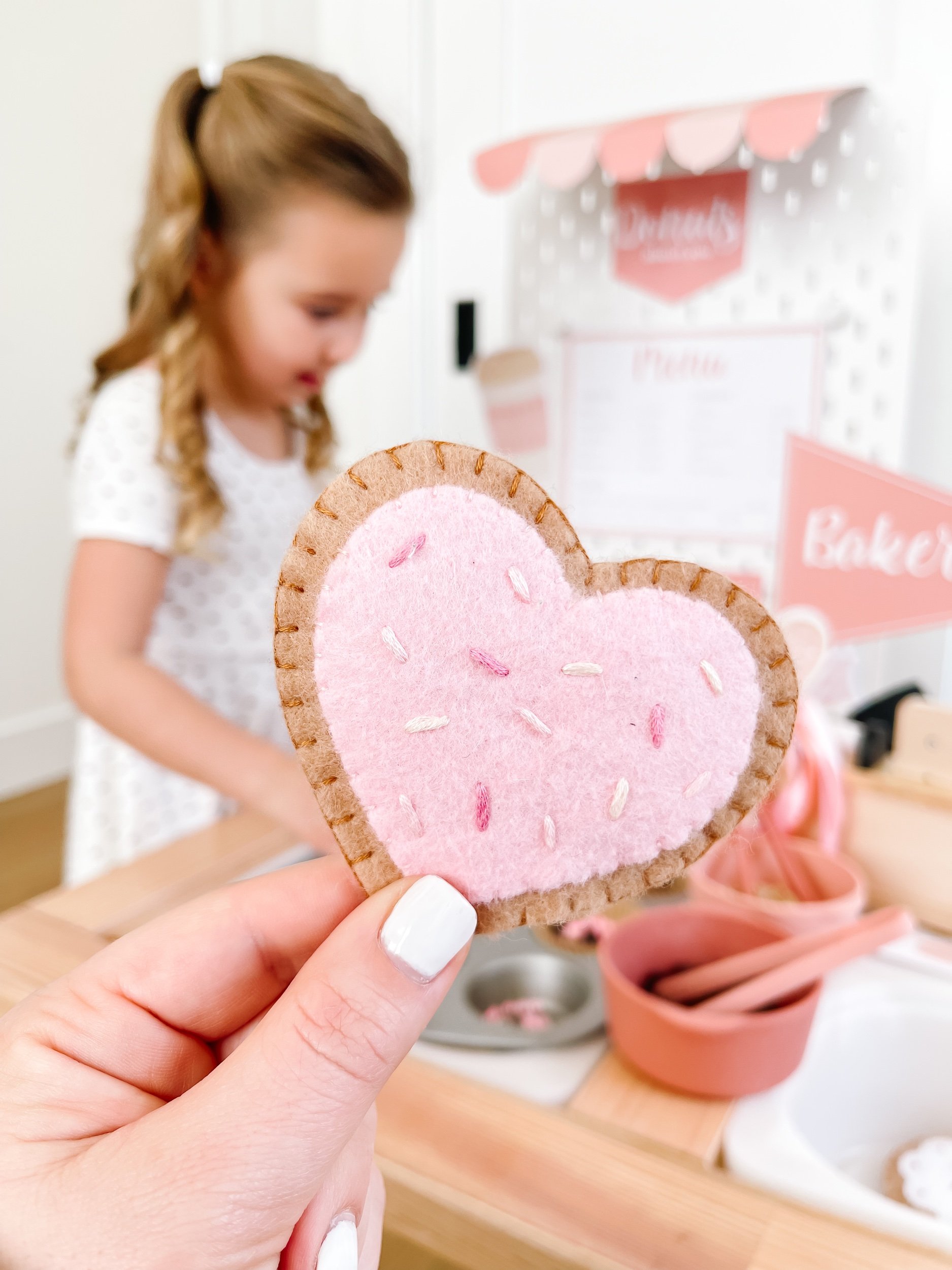
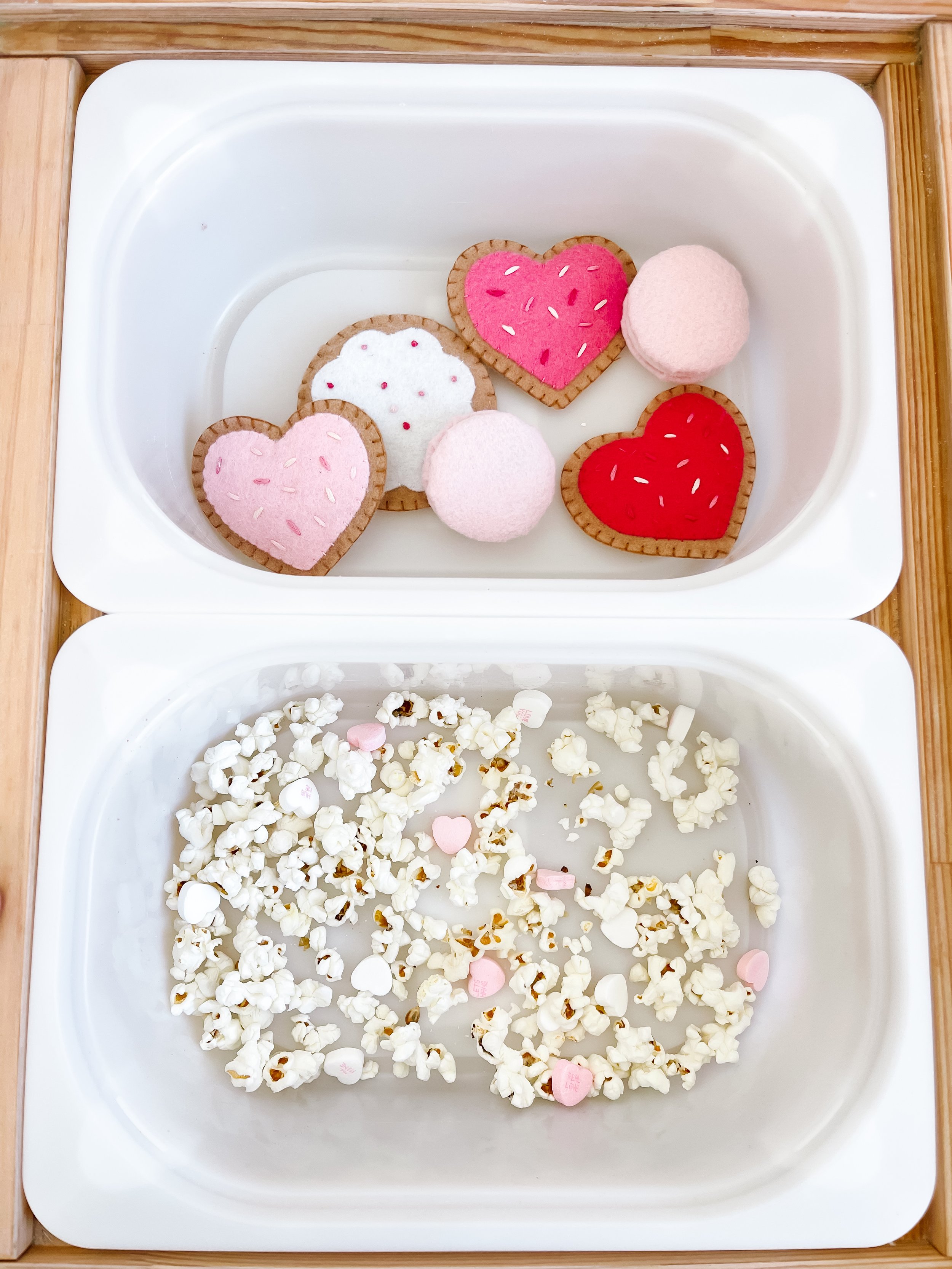
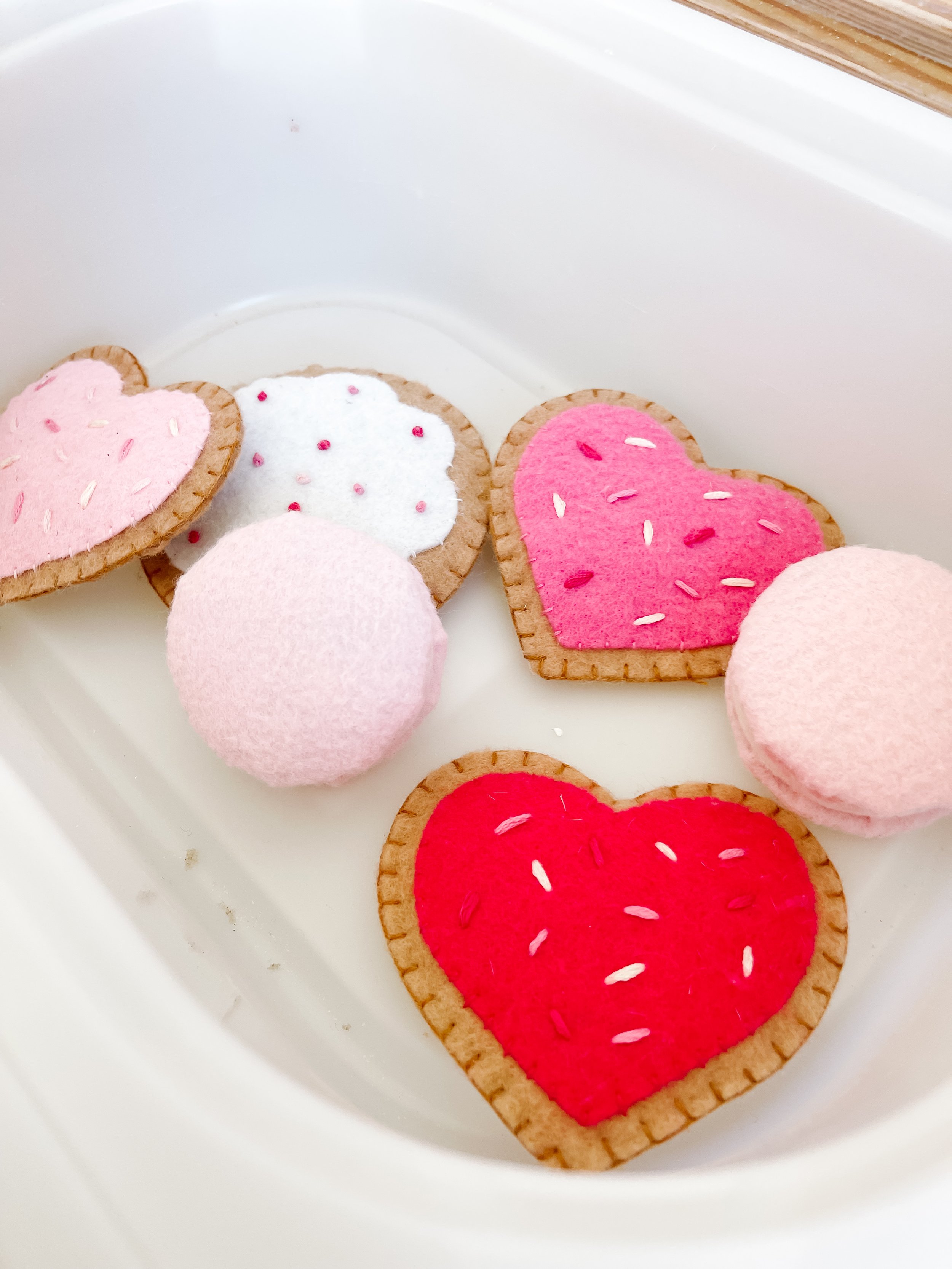
For this sensory bin activity, gather a shallow container or tray and fill it with various felt play food items such as donuts, cookies, cupcakes, and icing pieces. Consider adding utensils like a rolling pin, spatula, or mini baking accessories to enhance the pretend play experience. Preschoolers can use their imagination and creativity to engage in pretend play with the felt play food. They can pretend to bake, decorate, and serve delicious Valentine's treats. Encourage them to use the utensils to "mix" ingredients, "cut" the cookies, or "frost" the cakes. They can explore the different textures and shapes of the felt pieces, encouraging tactile exploration and sensory stimulation. Playing with felt play food in a sensory bin offers various educational benefits for preschoolers. It helps enhance their fine motor skills as they manipulate and grasp the different pieces. It also encourages imaginative and pretend play, fostering language development, creativity, and social skills as children engage in cooperative play scenarios. Additionally, it provides an opportunity for them to explore different textures, shapes, and colors, stimulating their sensory perception. We used these adorable felt cookies and macarons from Pockets of Sweetness.
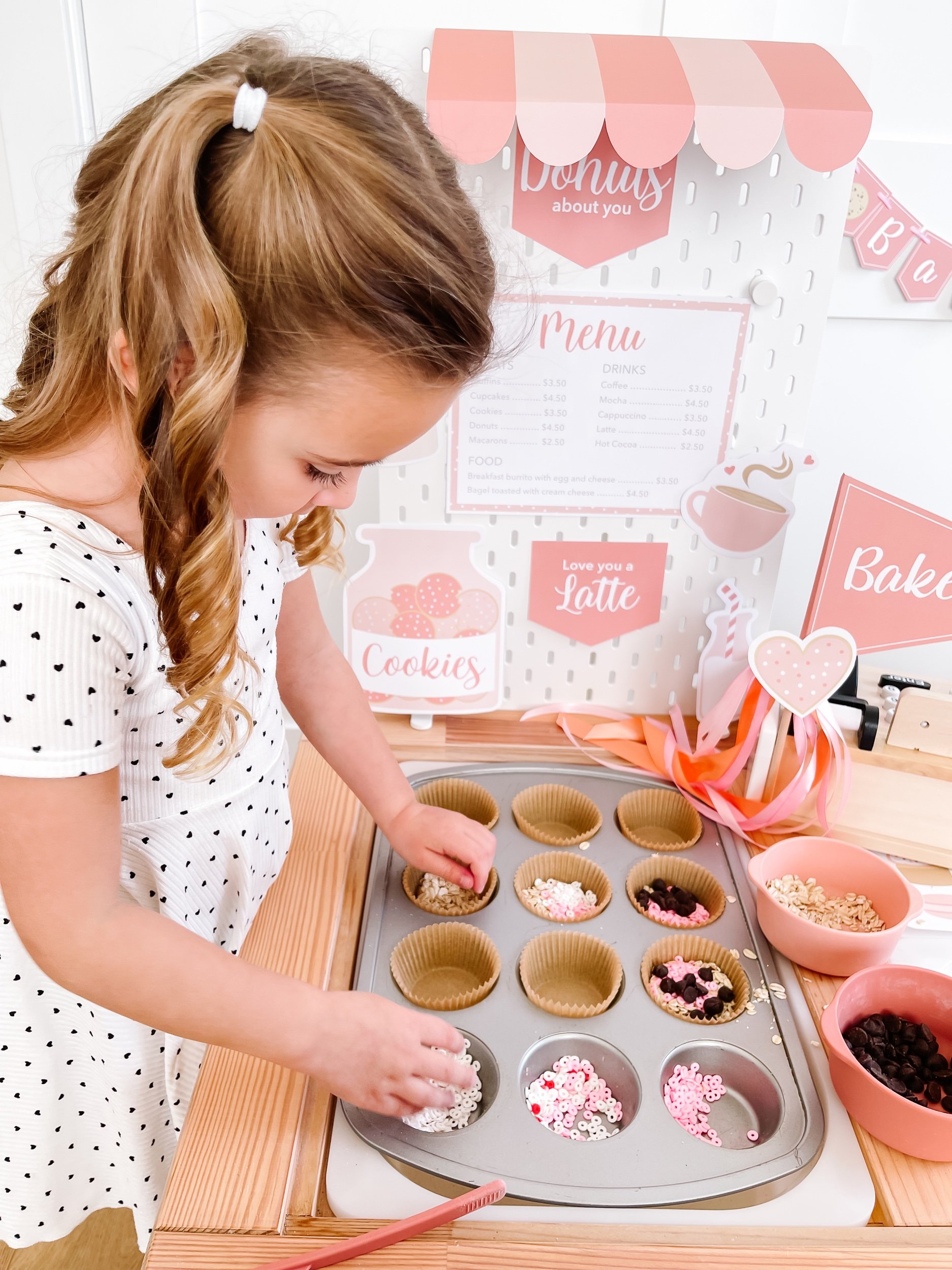
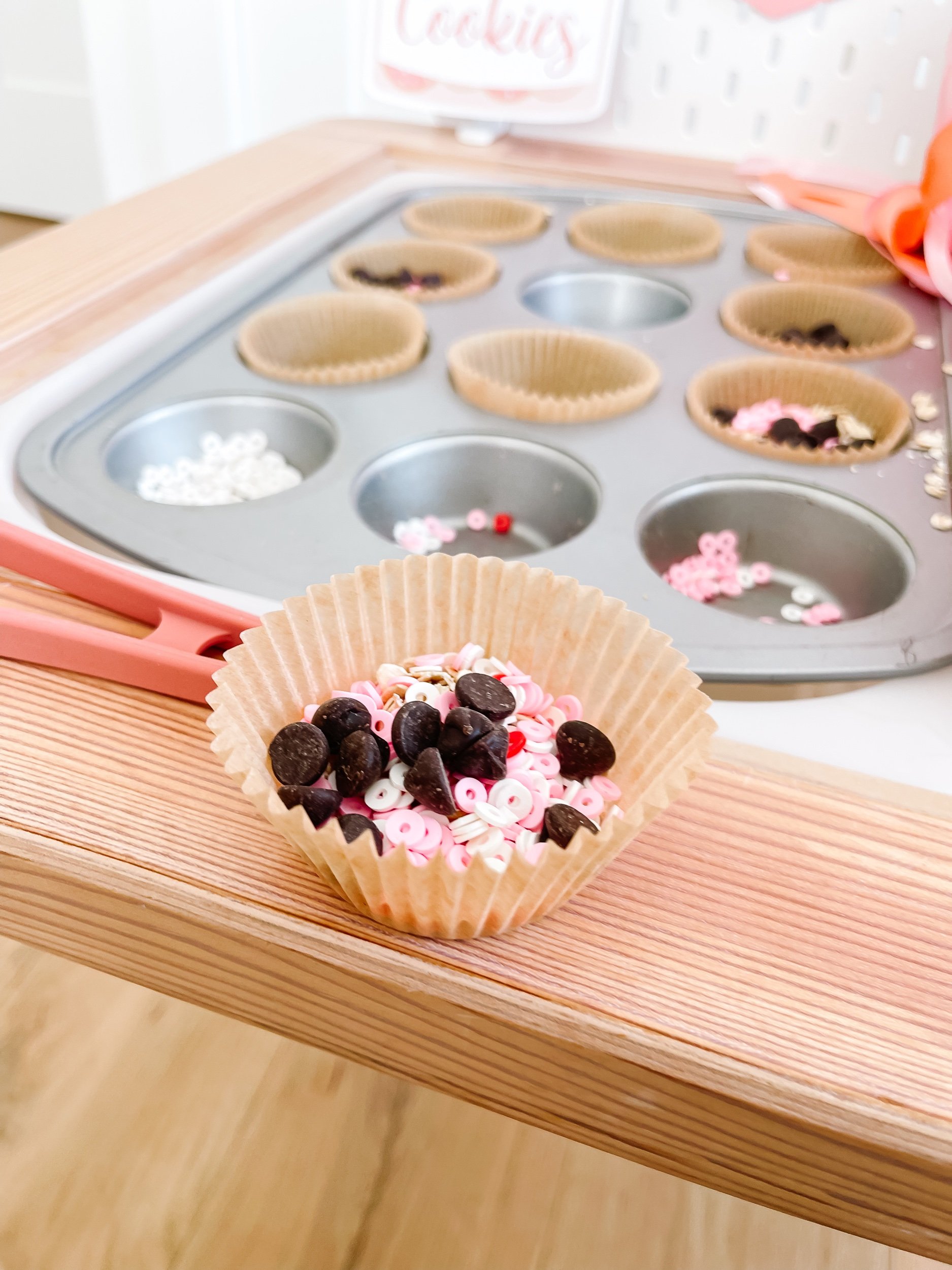
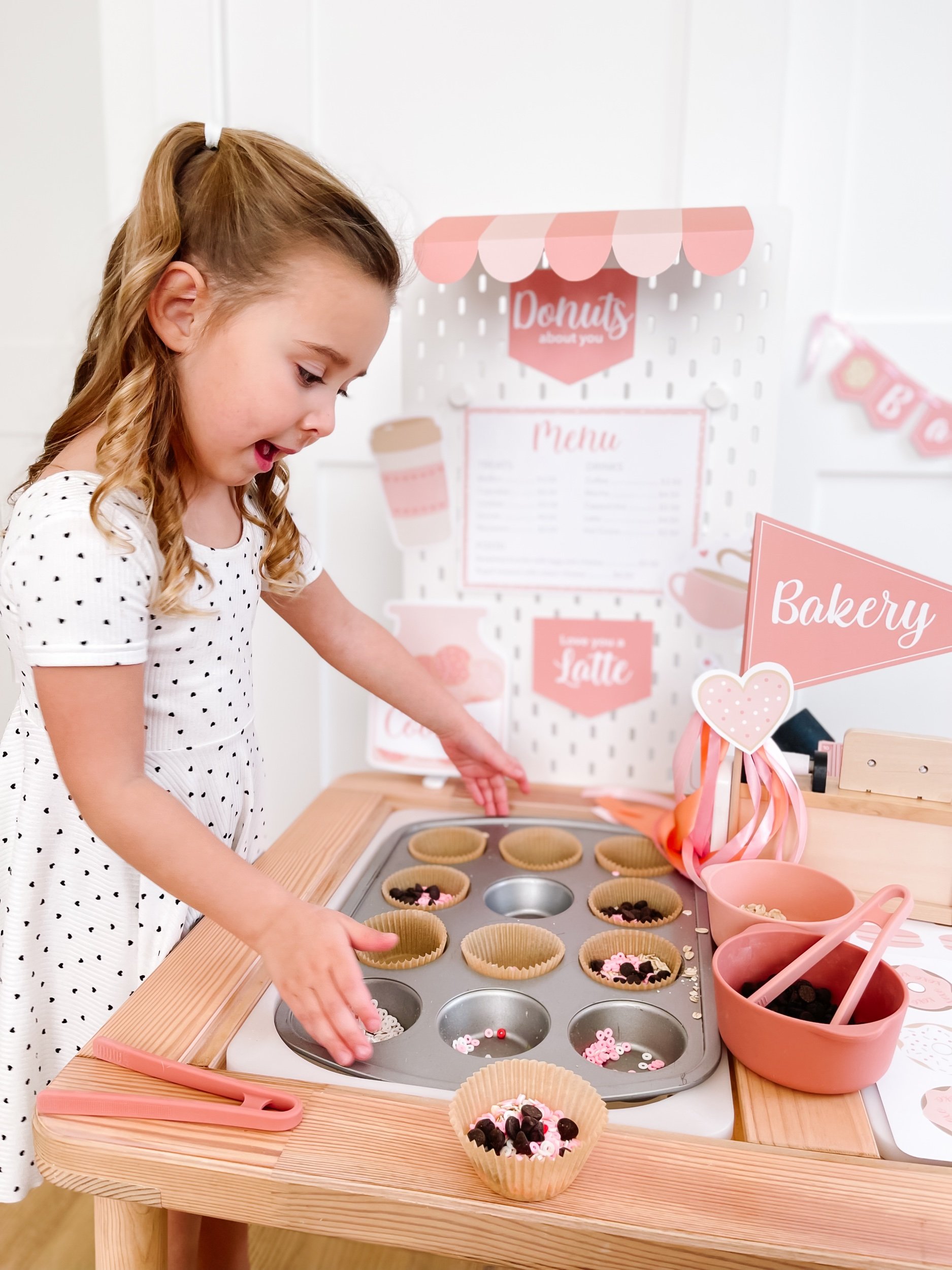
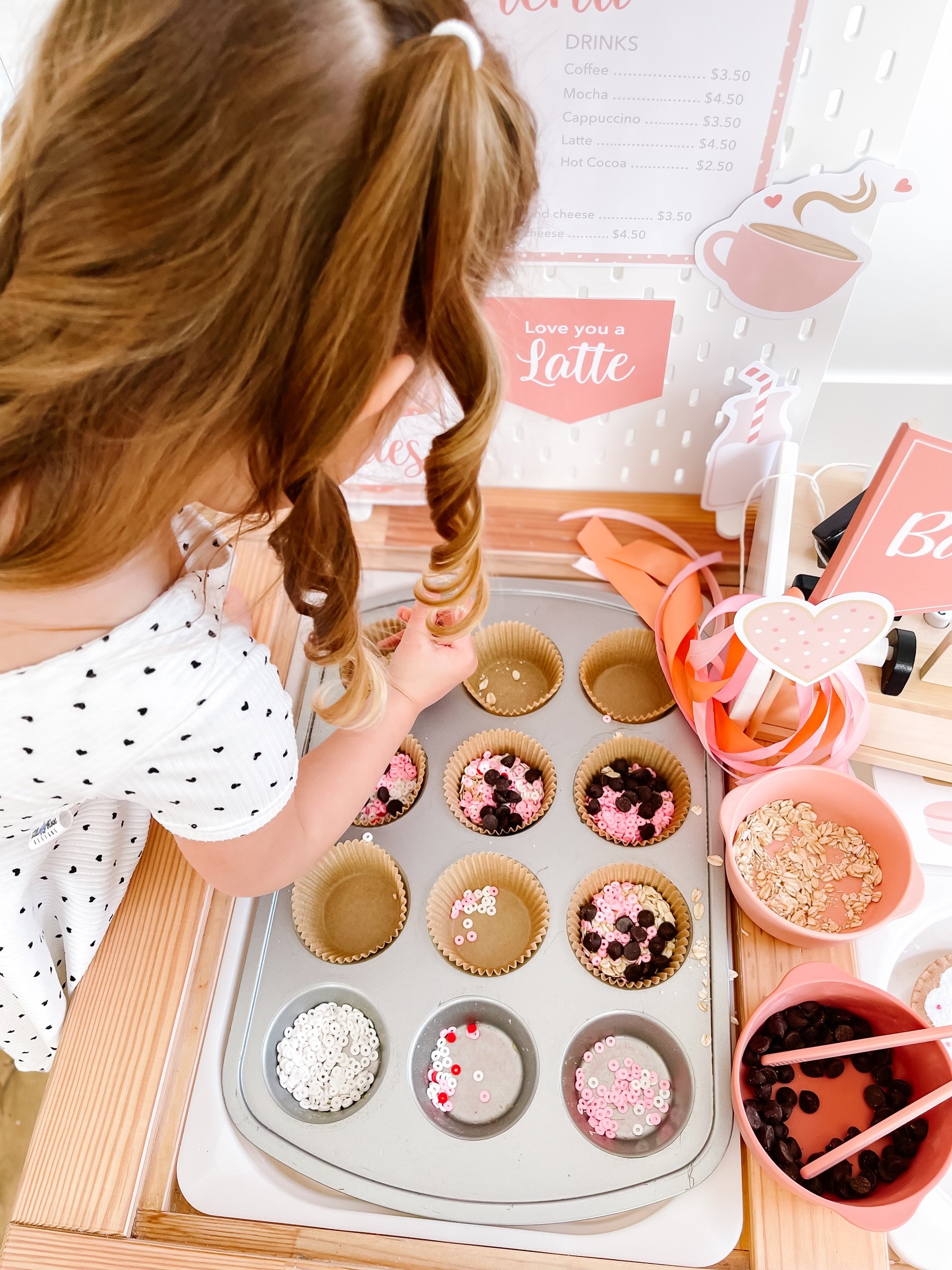
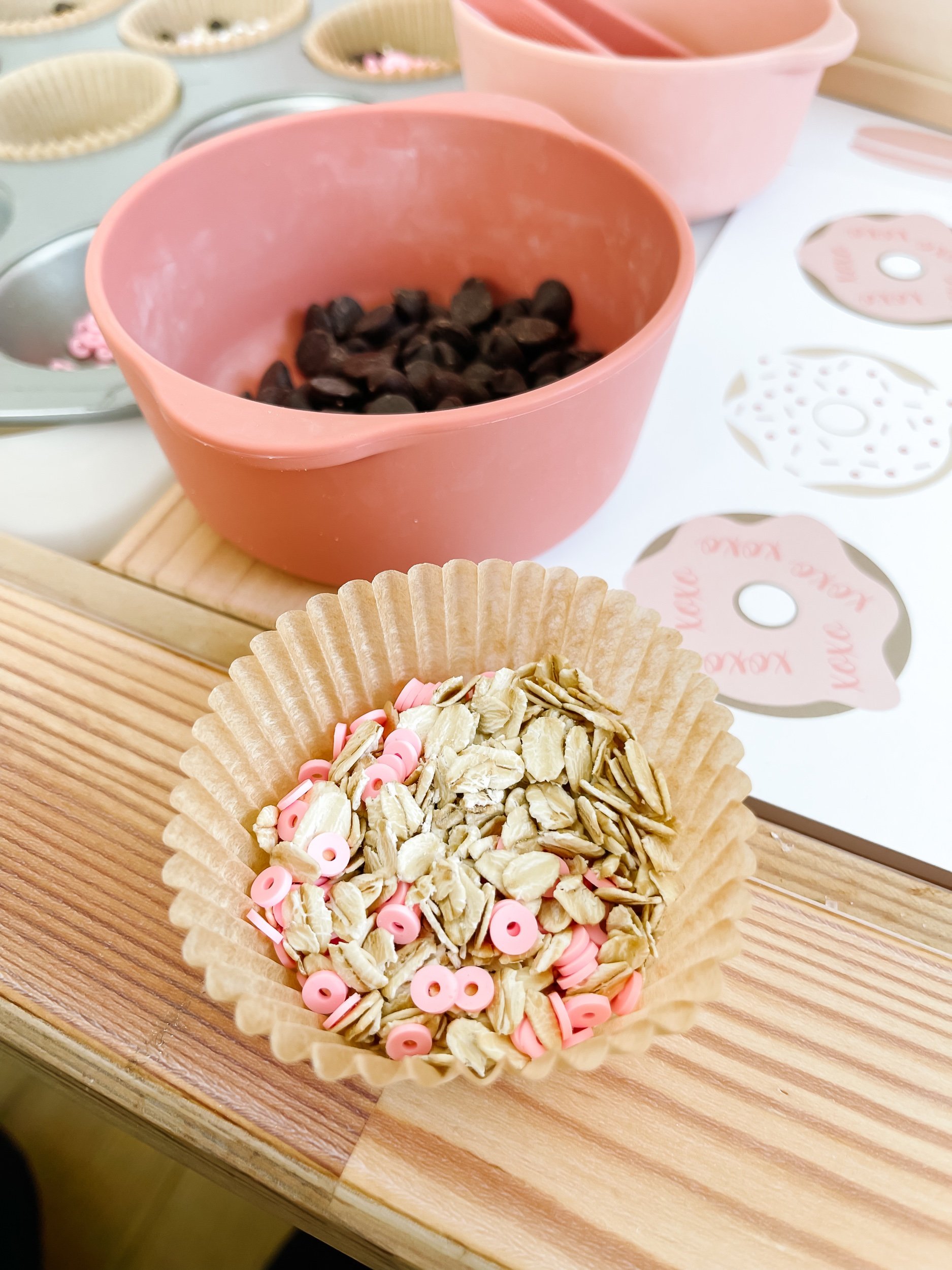
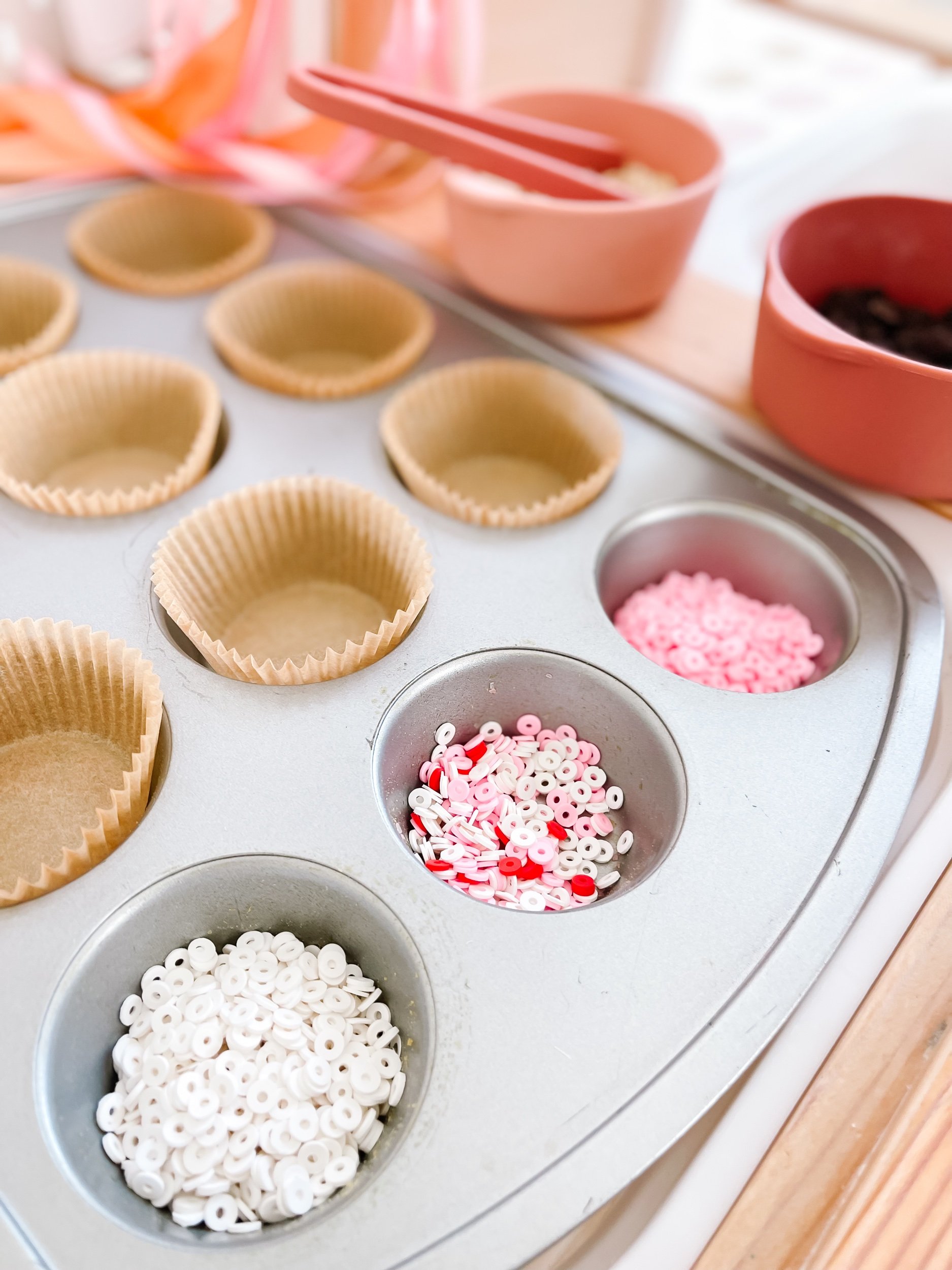
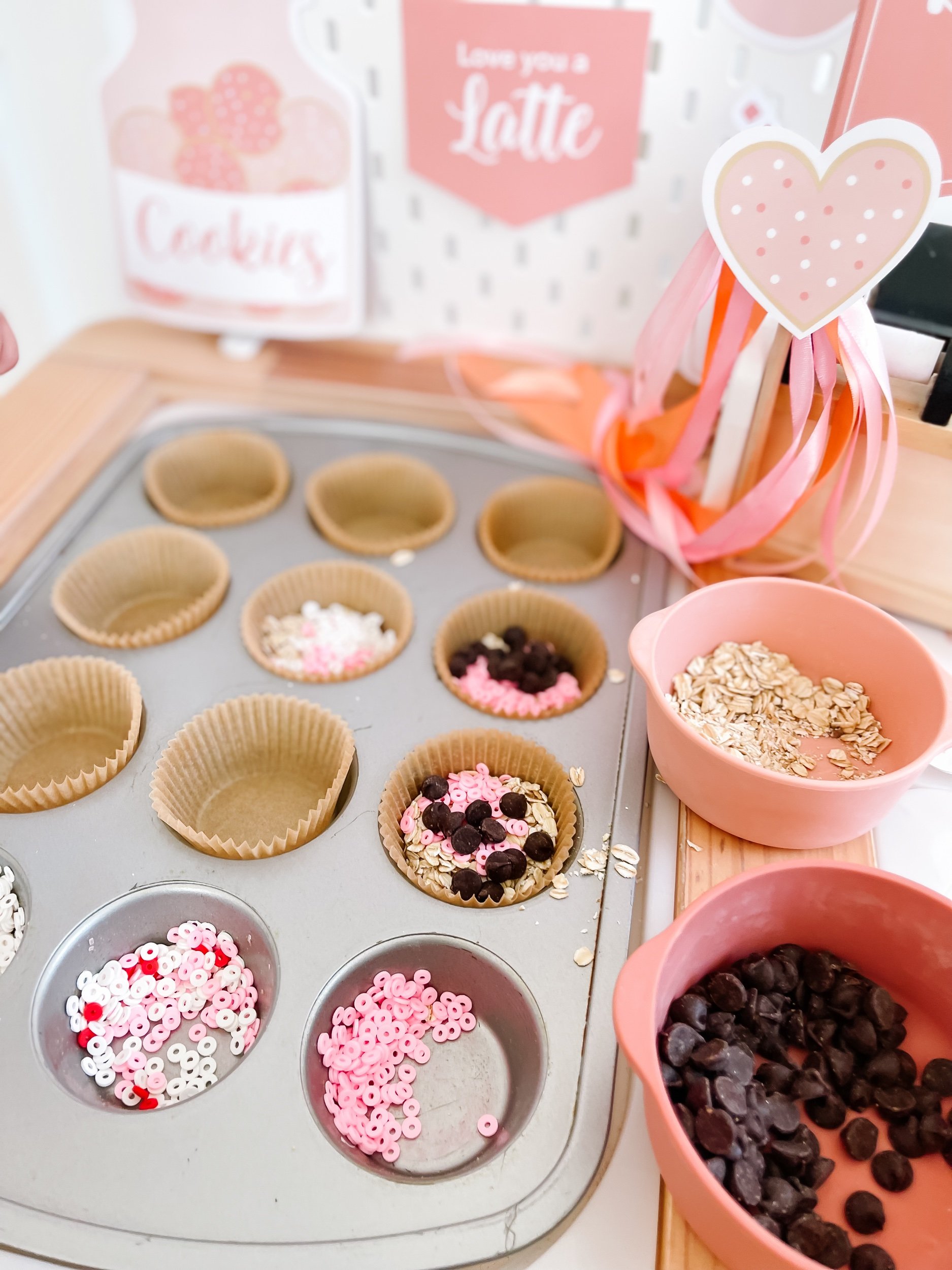
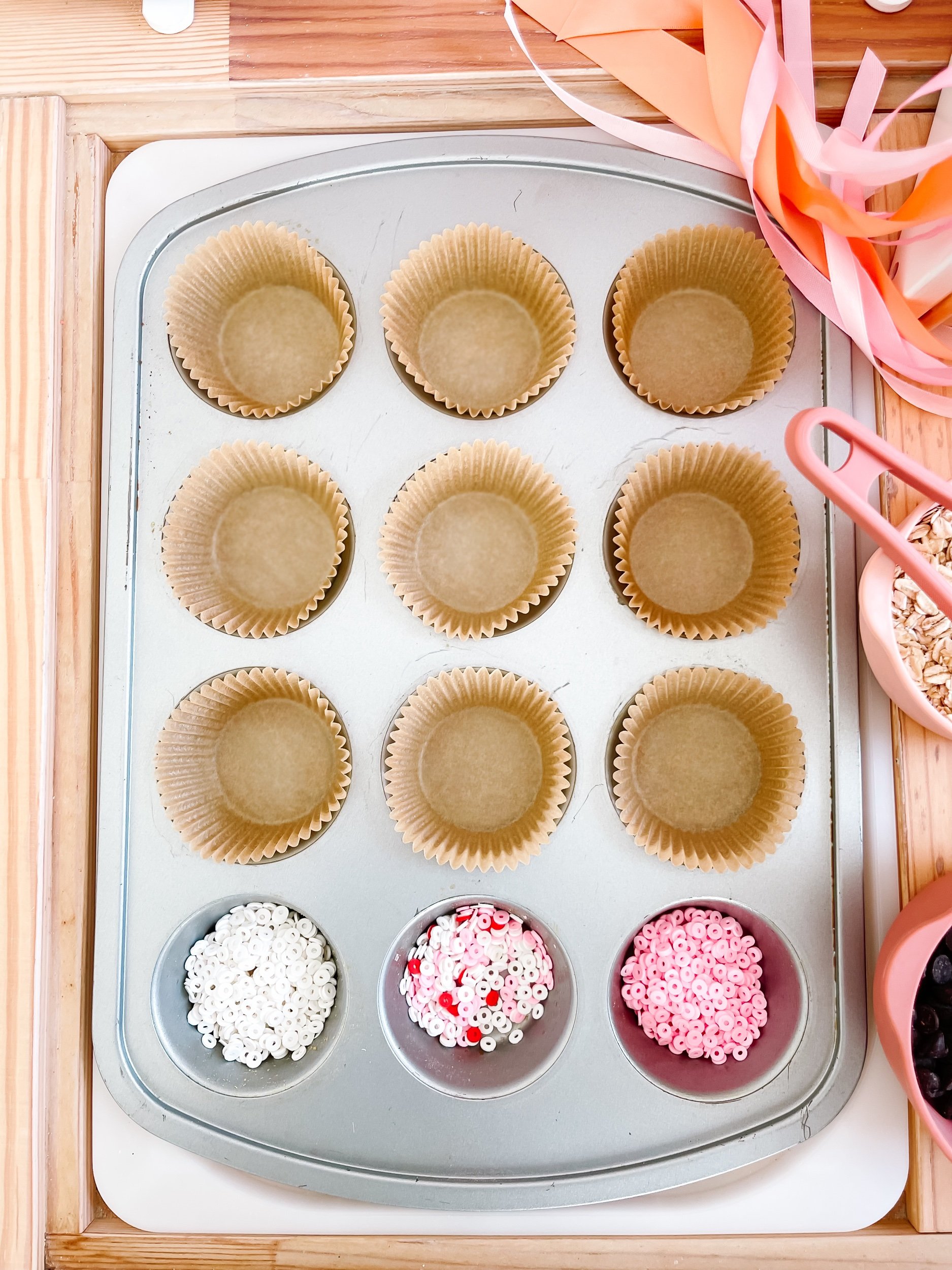
For our third activity bin we put our cupcake baking tray into our Trofast bin! It was a great fit! We used brown paper baking cups to line each hole. Then we poured in some fake sprinkles and used our silicone bowls from Inspire My Play to pour and grasp oatmeal and chocolate shops into each cupcake.
Note: Popcorn is not recommended for children under 5 as it can be a choking hazard. Please use a puff alternative for younger kids.
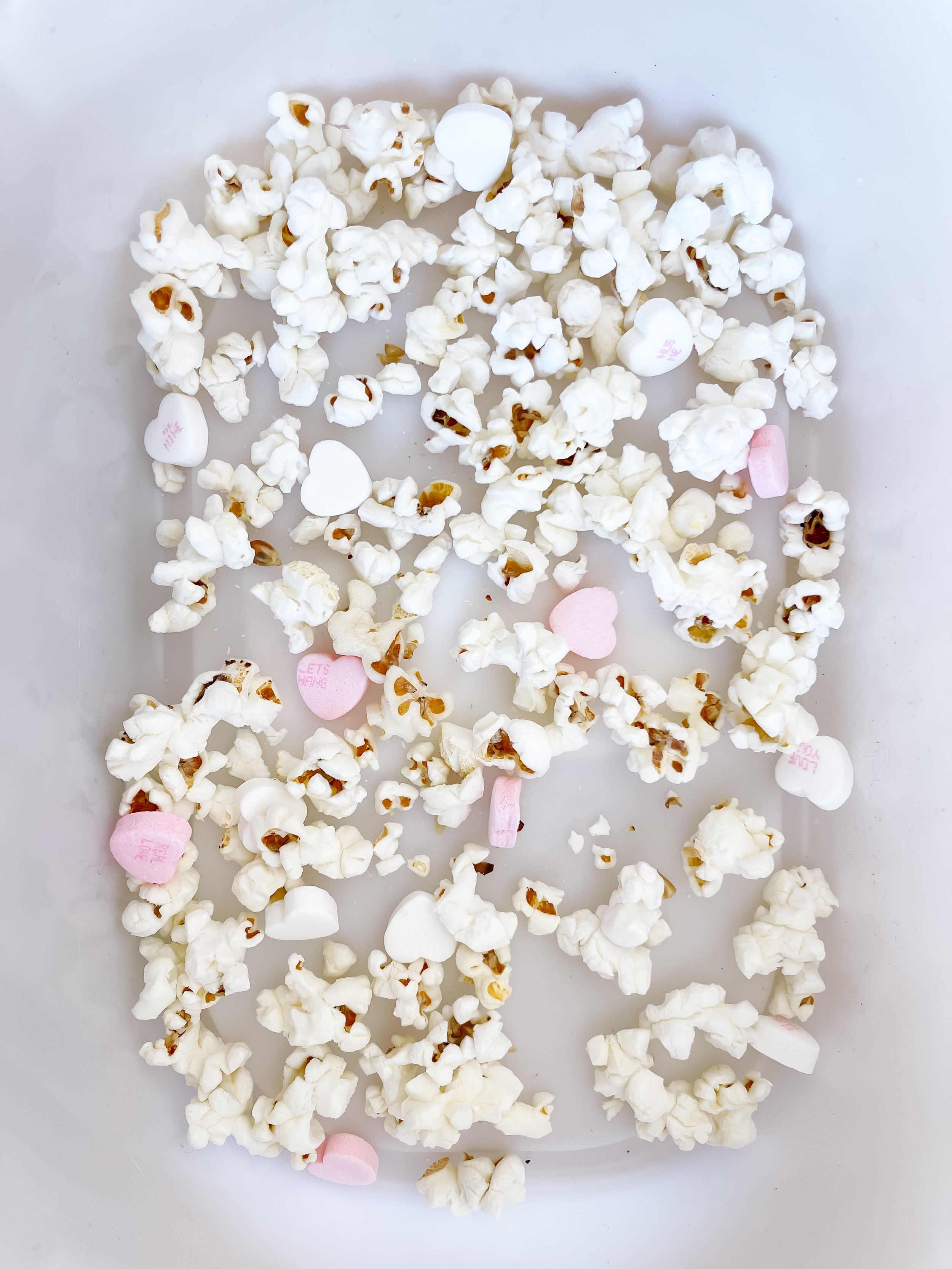
Create this seek-and-find sensory bin activity by filling a shallow container or tray with a base layer popped popcorn, sweetheart candy or another filler like rice or chickpeas. Then, bury small cupcake-themed toys, trinkets, or pictures beneath the surface. Consider adding themed tools like a small sieve or spoon for children to use in the search process.
Preschoolers can use the provided tools or their hands to search for hidden cupcake-related items in the sensory bin. They can sift the filler material through the sieve or dig through the sand to uncover the treasures. Encourage them to identify and name the items they find or engage in imaginative storytelling based on the items they discover. This sensory seek-and-find activity promotes cognitive development in young children by enhancing their observation skills, attention to detail, and visual discrimination abilities. It also encourages problem-solving as they strategize on how to reveal the hidden cupcake items. By engaging with the different tools and filler materials, children can improve their fine motor skills and hand-eye coordination. Additionally, this activity allows for vocabulary expansion and imaginative play as children name and describe the items they find while creating stories around the cupcake theme.
1. Heart: A symbol representing love or kindness, typically depicted as a red shape with two equal sides and a point at the bottom.
2. Oven: A heated chamber used for baking or cooking food.
3. Cupcake: A small individual cake, often with icing and decorations on top.
4. Baker: A person who prepares and bakes bread, cakes, and pastries.
5. Mixer: A kitchen appliance used for combining ingredients by rotating its blades.
6. Spoon: An eating or cooking utensil with a small shallow bowl at the end.
7. Sprinkle: Small pieces of sugar or decorations that are scattered over a baked item.
8. Rolling Pin: A cylindrical tool used to flatten dough for baking.
9. Whisk: A kitchen utensil with a long handle and wire loops used to blend ingredients smoothly.
10. Counter: A flat, elevated surface used for food preparation or serving.
11. Dough: A mixture of flour, water, and other ingredients used for baking bread or pastries.
12. Cookie: A sweet baked treat usually made from flour, sugar, and butter.
13. Apron: A protective garment worn over clothes to keep them clean while cooking or baking.
14. Menu: A list of all the food items available for purchase in a bakery.
15. Display: A set-up arrangement of baked goods or products for customers to see.
16. Pastry: A sweet often made with flour, sugar, and various flavorings or fillings.
17. Tray: A flat, rectangular or circular platter used for carrying or serving baked items.
18. Muffin: A small, round, and sweet bread often made with fruits or chocolate chips.
19. Tongs: A tool with two arms and grips used for picking up or serving baked goods.
20. Icing: A sweet, decorative topping made from sugar, flavorings, and water.
21. Cookie Cutter: A tool used to cut cookie dough into various shapes before baking.
22. Order: A request made by a customer for a specific baked item.
23. Cashier: A person responsible for handling payments and transactions at a bakery.
24. Menu Board: A board displaying the list of available baked items and prices.
25. Heart-shaped: Something having the form or outline of a heart.
Hope this helps in creating an engaging and educational Valentine's bakery dramatic play setup for toddlers!
In conclusion, dramatic play is a fantastic activity for toddlers, providing numerous benefits for their development. The Valentine's Bakery Dramatic Play Kit is a perfect way to celebrate this special day while encouraging your children's growth and development. So, don't wait any longer, order your kit today! Remember to always supervise children during sensory bin activities and ensure that small items are age-appropriate and safe for them to handle.

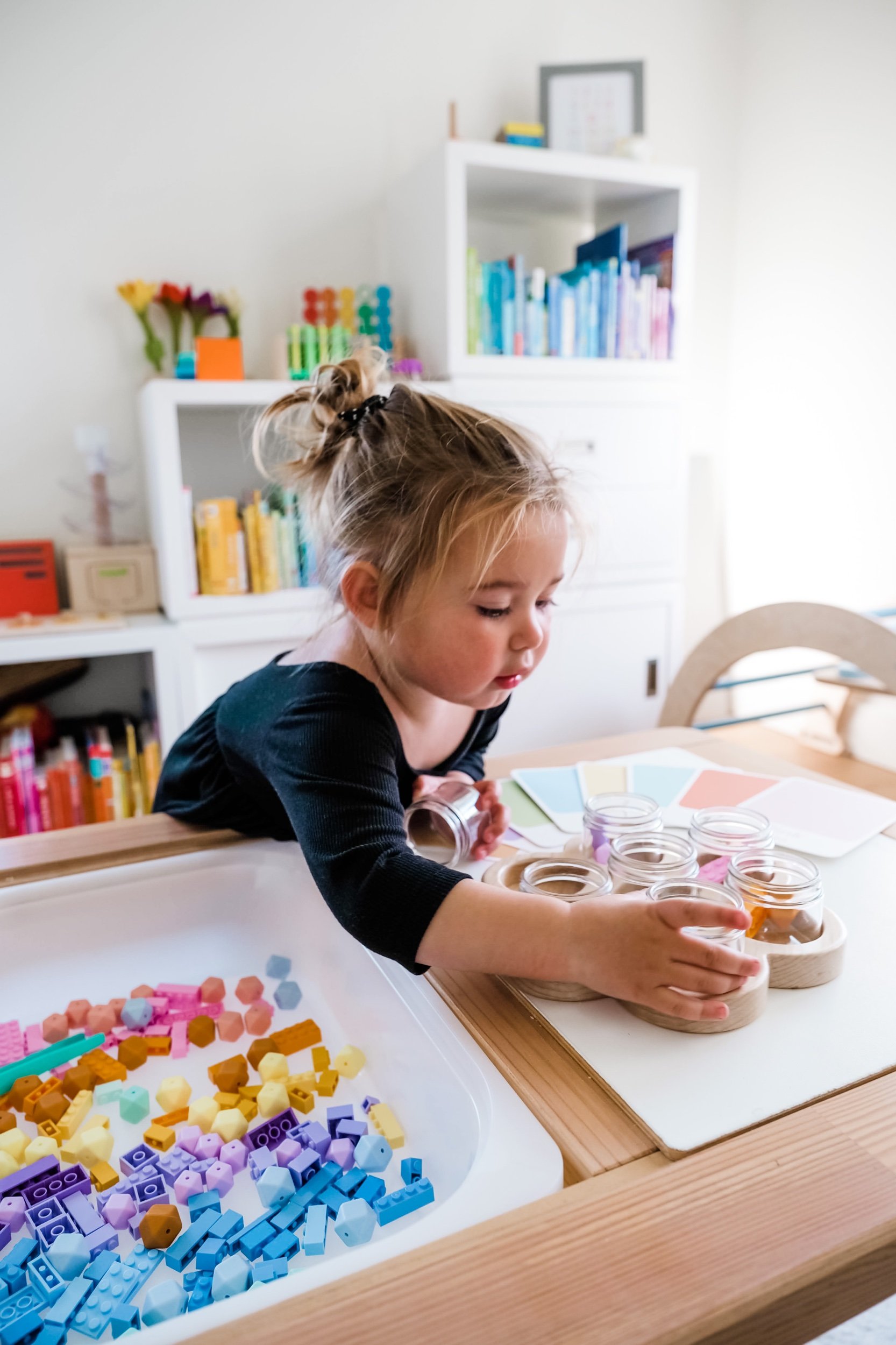
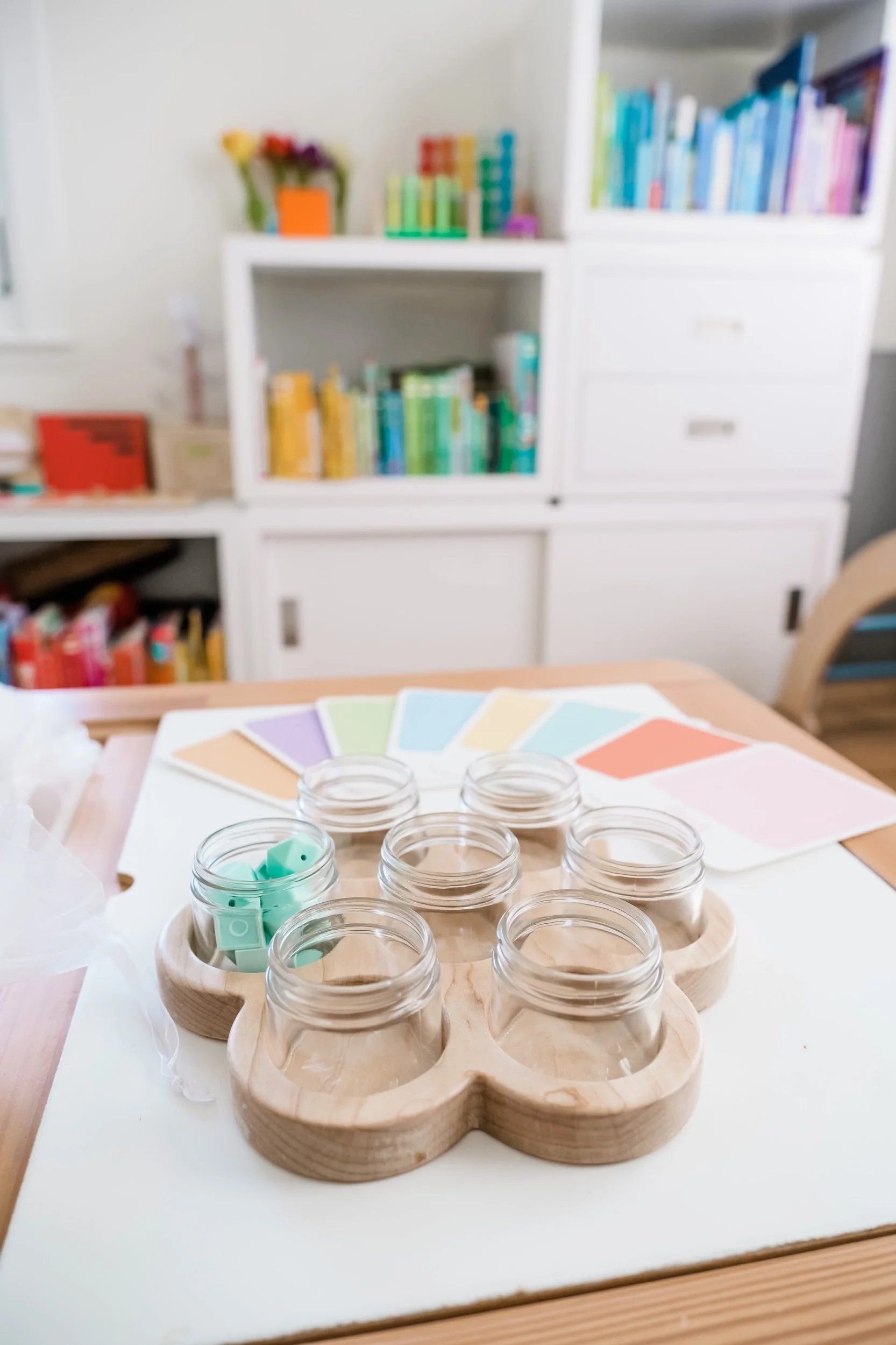
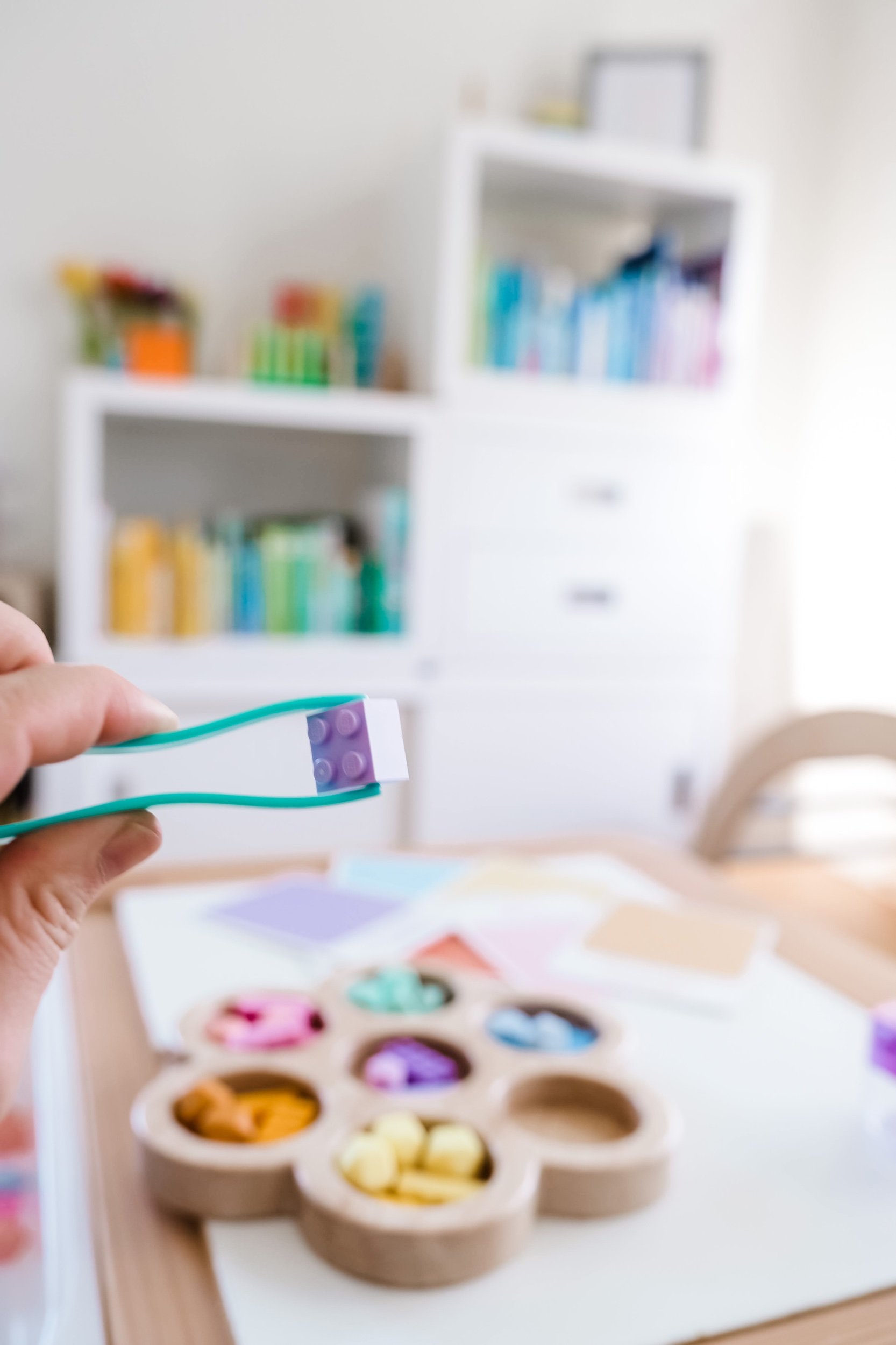
Wooden and silicone rainbow blocks paired with color flashcards — a no-prep, no-mess toddler activity that builds fine motor skills, color recognition, and problem-solving through open-ended play.

Few toys work as hard as a good set of colorful blocks. In our house, rainbow blocks have been a go-to since Sofie was tiny — first for throwing around the room (they're super durable, thankfully!), then for stacking, building, sorting, and eventually one of her favorite quiet activities: matching each block to its color flashcard.
If you're looking for a fun, educational toy for your toddler that builds real skills without any setup or prep, wooden and silicone rainbow blocks paired with color flashcards are one of the easiest wins I know.
Jump to: Why it works · What you need · How to play · Variations & tips
Playing with wooden and silicone blocks helps toddlers develop fine motor skills, hand-eye coordination, and problem-solving abilities — all in one simple toy. As they sort through the blocks to identify and match different colors, they're also building visual and cognitive skills: learning to compare, categorize, and name what they see.
The versatility is the other big selling point. One day your little one might stack blocks and build towers (sneaky lessons in balance and stability), and the next they might arrange them into patterns and designs — which gets creativity and imagination going. That range of open-ended play is exactly what makes blocks a staple.
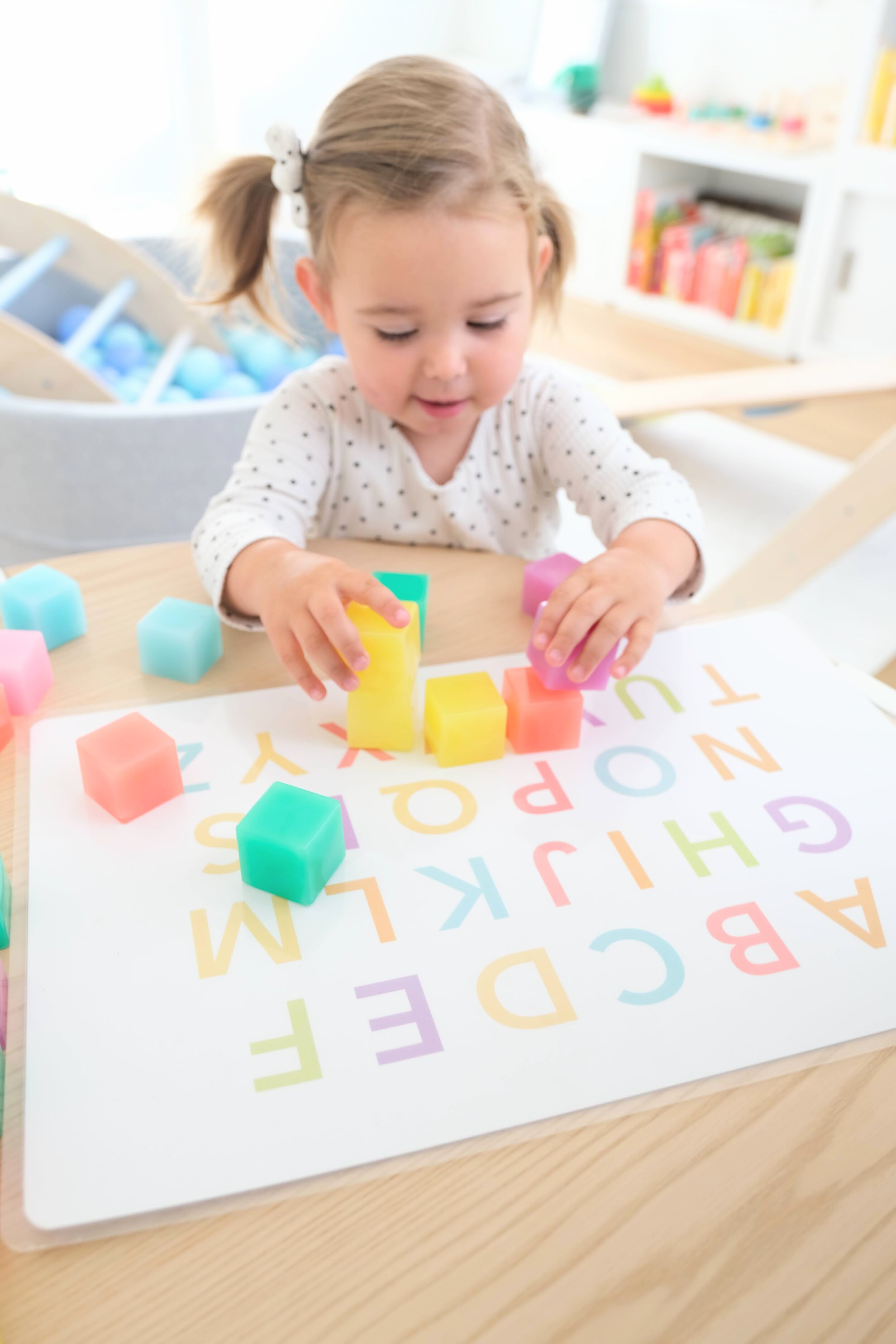


Wooden and silicone rainbow blocks are a great choice for toddlers — safe, durable, versatile, and easy to clean. Pair them with color flashcards and you've got an activity that builds fine motor skills, hand-eye coordination, color recognition, and problem-solving, all while your toddler just thinks they're playing. It's the kind of low-prep win every busy parent needs in the rotation.
Find this and 20+ more ideas in my rainbow sensory activities roundup.

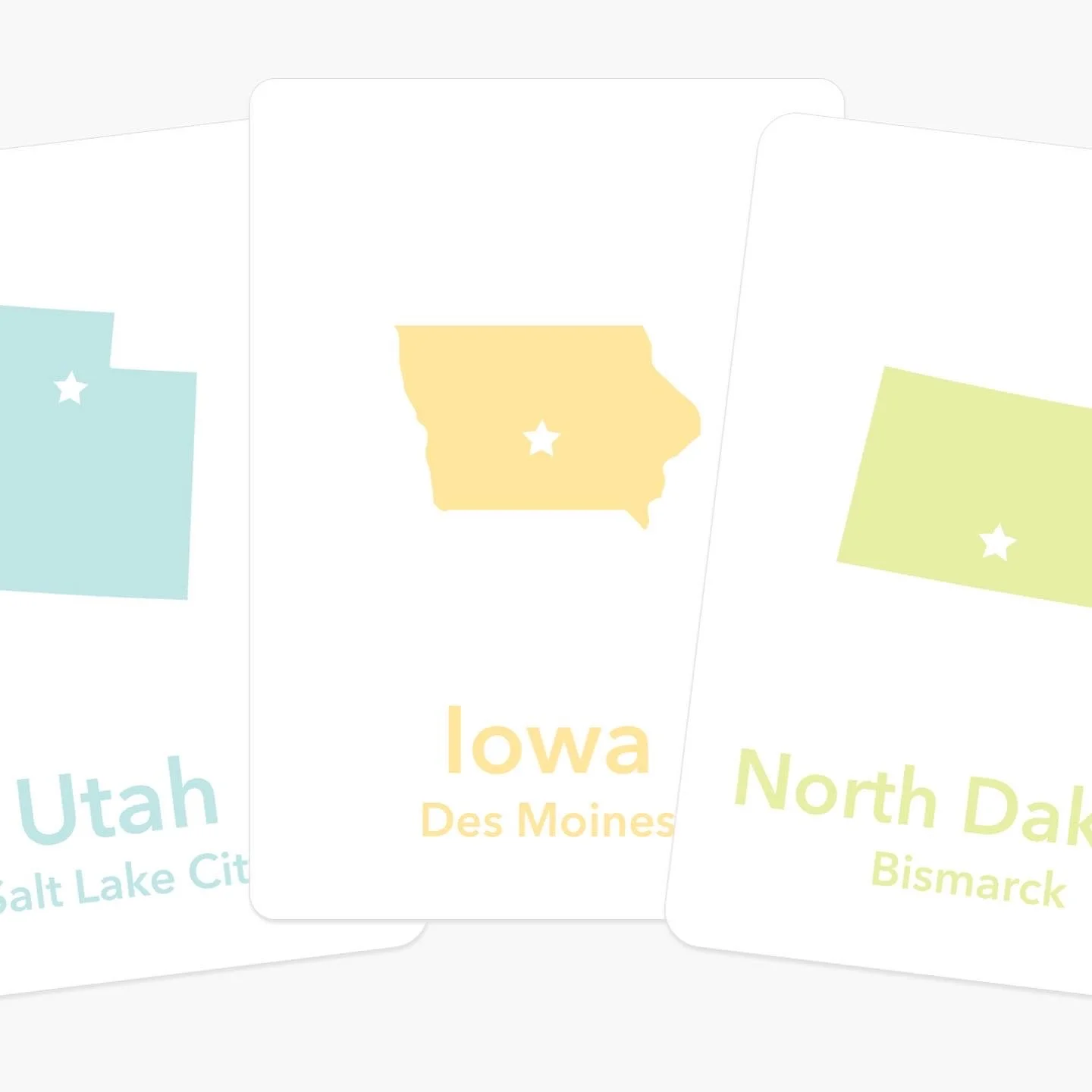
Teaching kids the states and capitals of the United States can be a fun and engaging way to help them learn about geography and history. Here are some tips and a sample week-long lesson plan to help you teach kids the states and capitals in an interactive and effective way.
Day 1: Introduction to the states and capitals
Begin by introducing the concept of states and capitals to your kids. Show them a map of the United States and point out the different states.
Ask them if they can name any of the states or capitals and write them on the board.
Next, introduce a fun activity where kids can match states to their capitals using flashcards or an interactive map.
Day 2: Memorization techniques
Today, focus on teaching kids different memorization techniques to help them learn the states and capitals.
Teach them the mnemonic device "HOMES" to remember the Great Lakes (Huron, Ontario, Michigan, Erie, Superior)
Introduce other methods such as visualization, repetition, and association to help them remember the states and capitals.
Day 3: Quiz time
Give your kids a quiz on the states and capitals they've learned so far.
Use flashcards or interactive quizzes to make it more fun and interactive.
Give them a reward for correct answers such as gold star or small prize
Day 4: State projects
Have kids choose a state to research and create a project about.
Encourage them to learn about the state's history, landmarks, and famous people.
Have them present their projects to the class and quiz each other on their state's capital.
Day 5: Review and wrap-up
Review all the states and capitals that have been learned throughout the week.
Give them a final quiz to see how much they've retained.
Congratulate the kids on their hard work and give them a certificate of completion.
Sample activities:
State and capital matching game
State capital bingo
State capital flashcards
State capital word search
State capital map labeling
State research project
By using interactive activities, memorization techniques, and rewards, kids will be able to learn the states and capitals of the United States in a fun and engaging way. With this lesson plan, your kids will be experts on the states and capitals of the United States in no time!



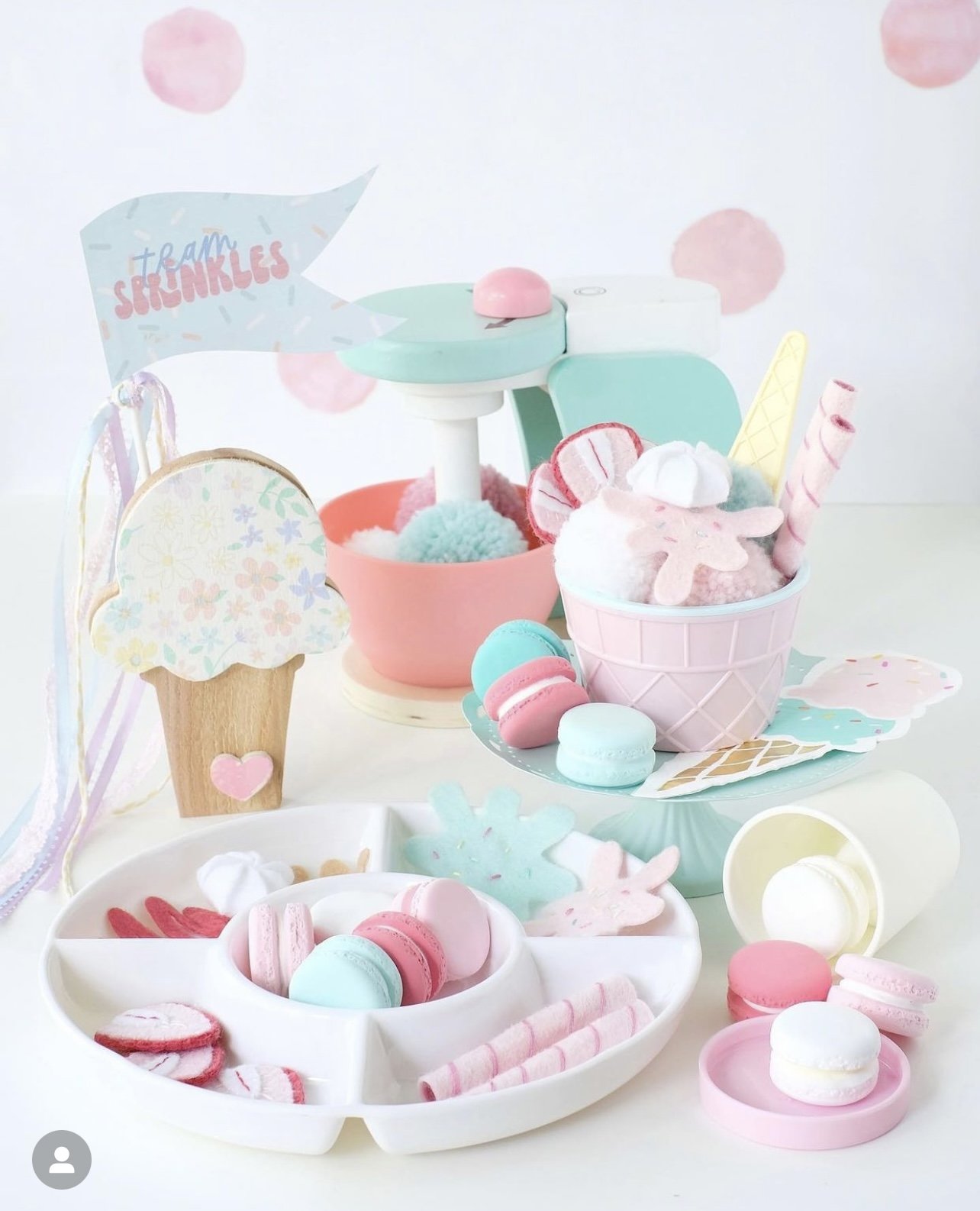
Introducing Our Exciting New Ice Cream Shop Printable Dramatic Play Kit for Toddlers!
At our ice cream shop, we believe in the importance of play-based learning for toddlers. That's why we've created a fun and interactive dramatic play kit that will not only entertain your little ones, but also help them develop important skills.
Our printable kit includes everything you need to set up an ice cream shop in your own home. From the ice cream counter and menu to the cash register and play money, your toddler will have hours of fun pretending to run their own ice cream shop.
But the benefits of our dramatic play kit go beyond just fun and entertainment. Through play, your toddler will develop important skills such as:
Fine motor skills as they manipulate the play money and scoop the pretend ice cream
Language development as they practice taking orders and making change
Social skills as they interact with their playmates and learn to share and take turns
Math skills as they learn about counting and basic money concepts
But that's not all! Our kit also includes a list of fun and educational play activities that you can do with your toddler to enhance their learning experience. Here are just a few examples:
Take a pretend field trip to the grocery store to buy ingredients for your ice cream shop
Practice sorting and counting different flavors of pretend ice cream
Have a taste test to learn about different flavors and textures of ice cream
Use a calendar to track the days of the week and special events at the shop
Your child will love pretending to be the owner and operator of their very own ice cream shop. And you'll love watching them learn and grow through play. Order your printable dramatic play kit today and give the gift of learning through play to your toddler.



Have a shop that specializes in baby gifts? I'd love to feature your shop and products in one of my weekly roundups. Email me at goodnightfoxstudio@gmail.com.
Check out GoodnightFox wholesale we’d love to have you carry the GoodnightFox brand.