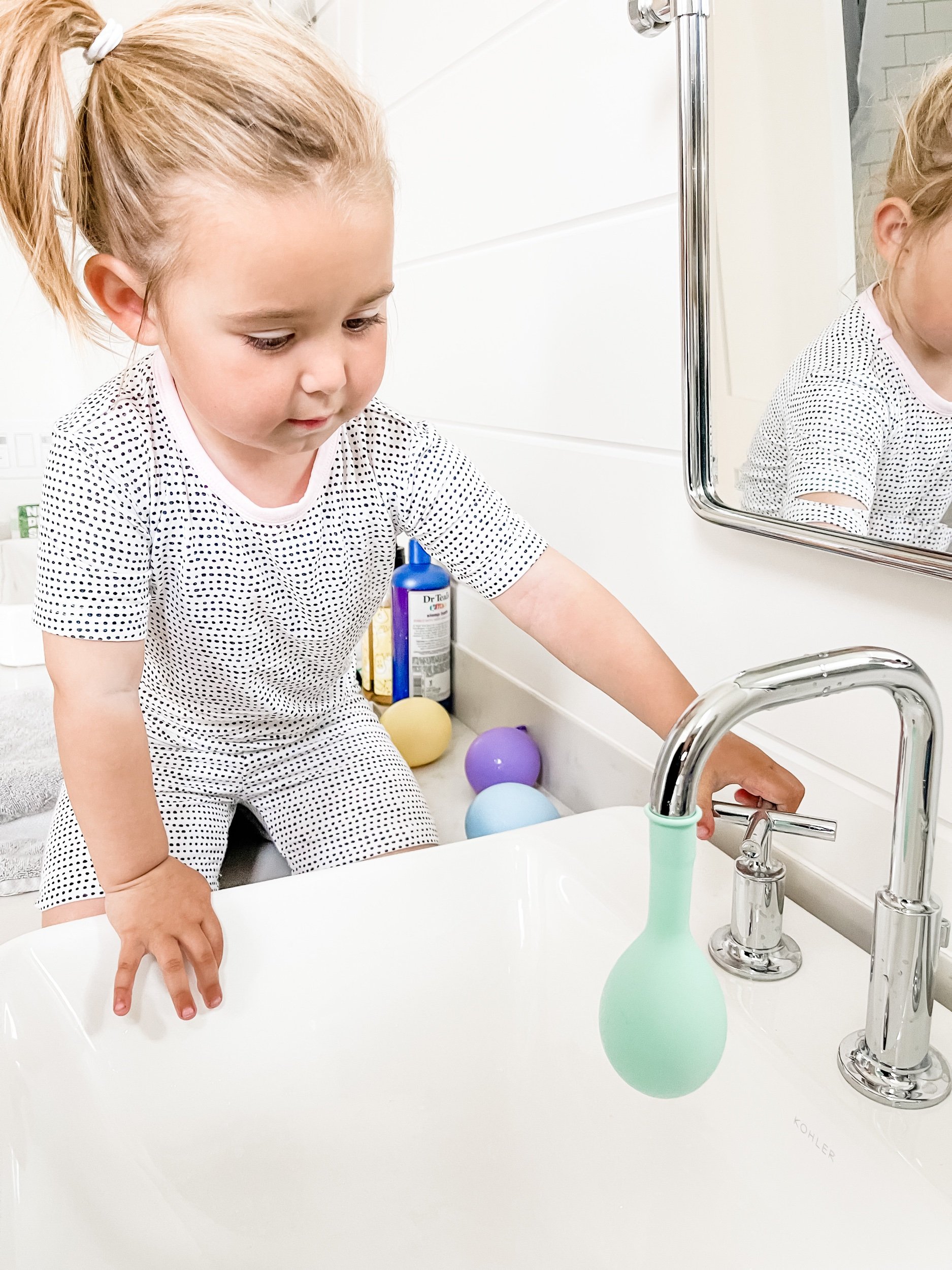
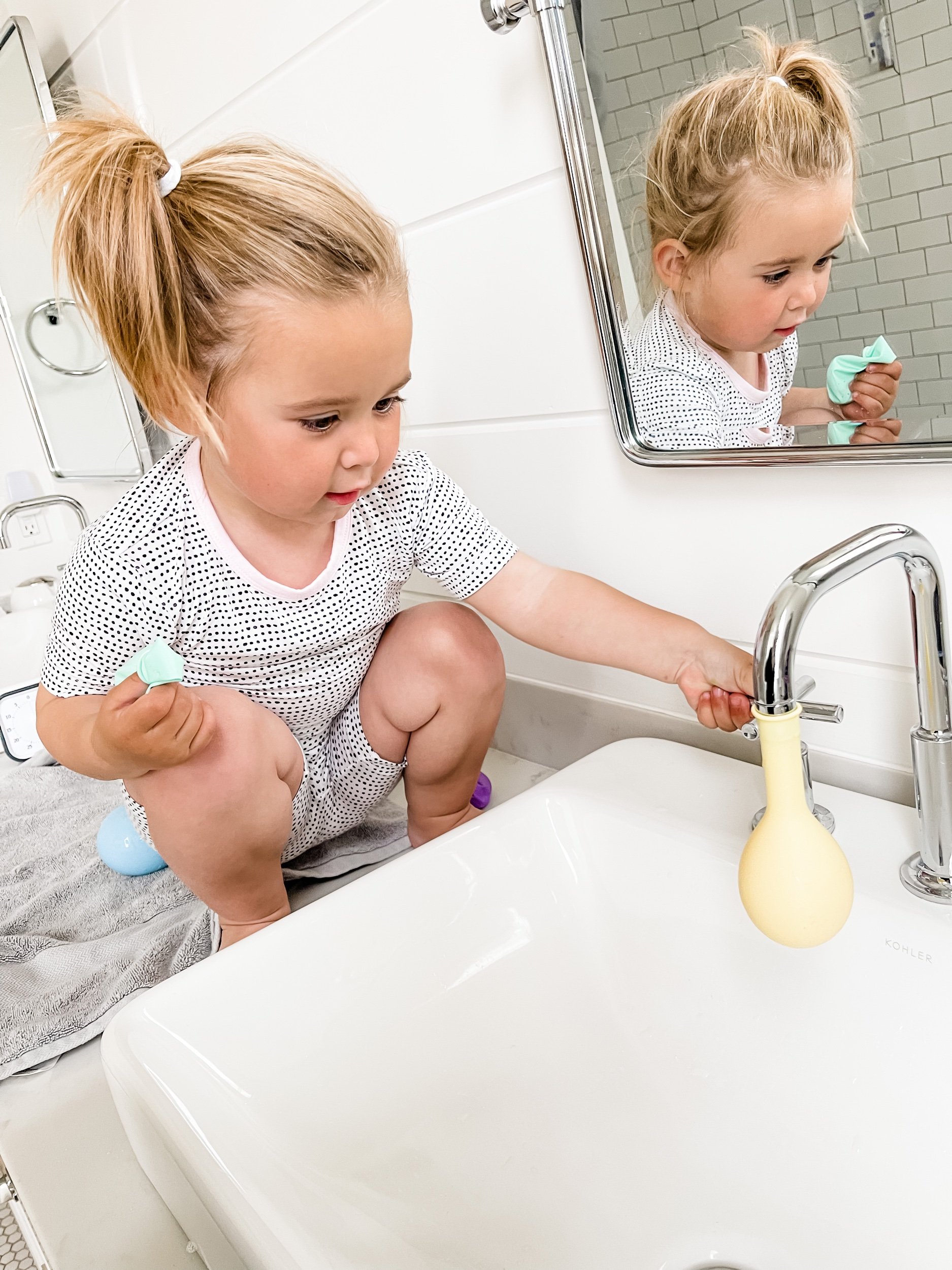
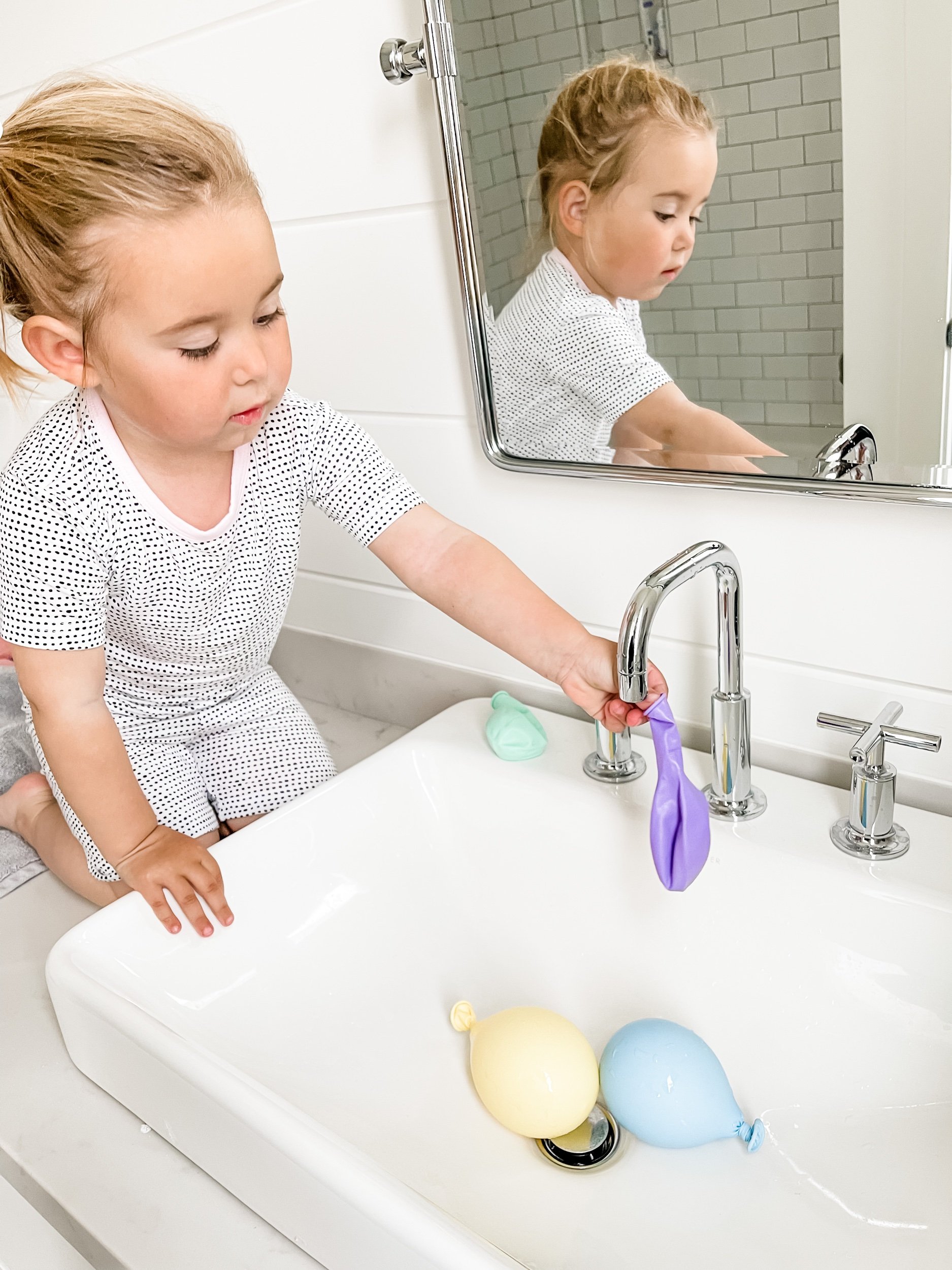
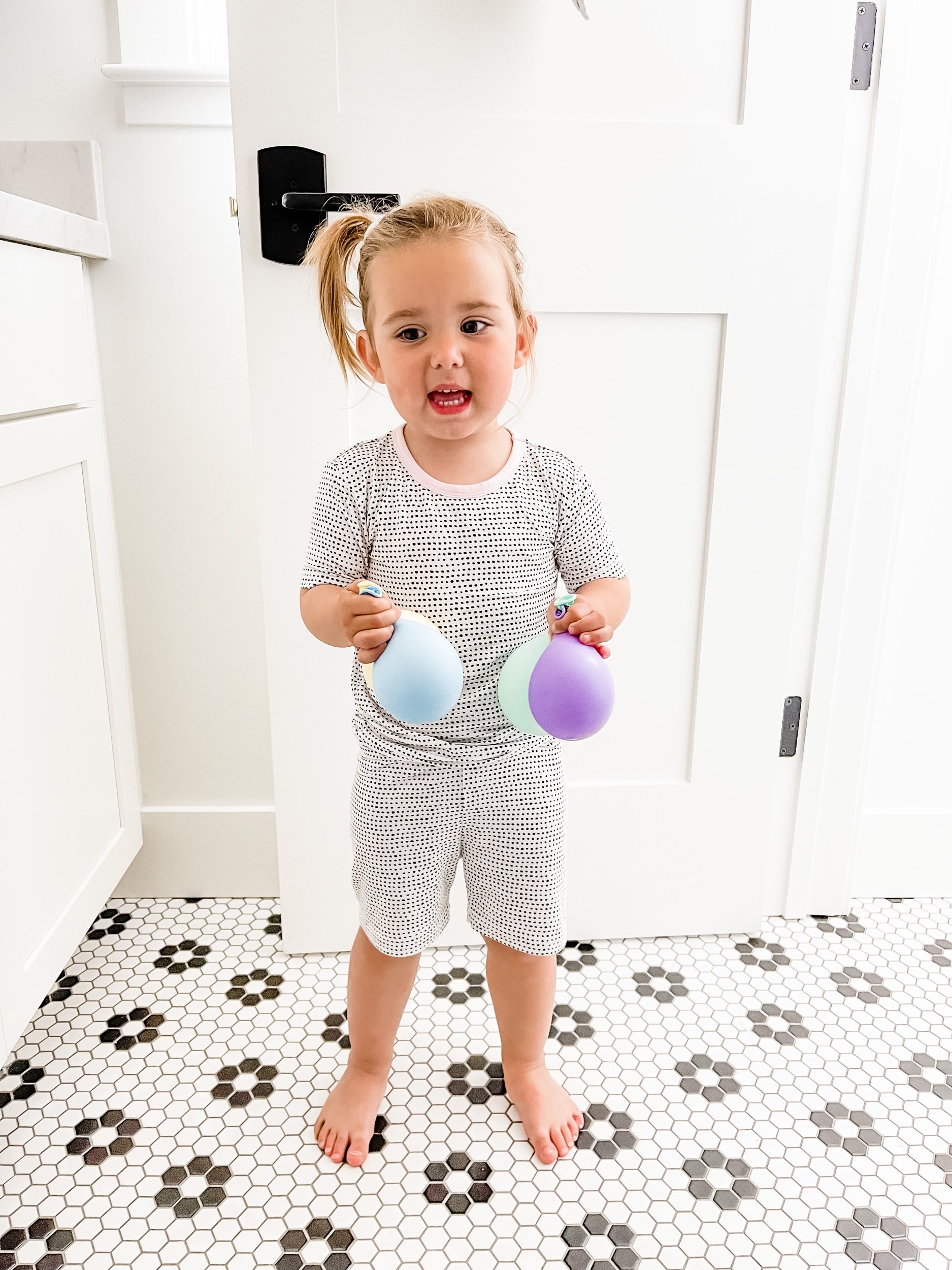
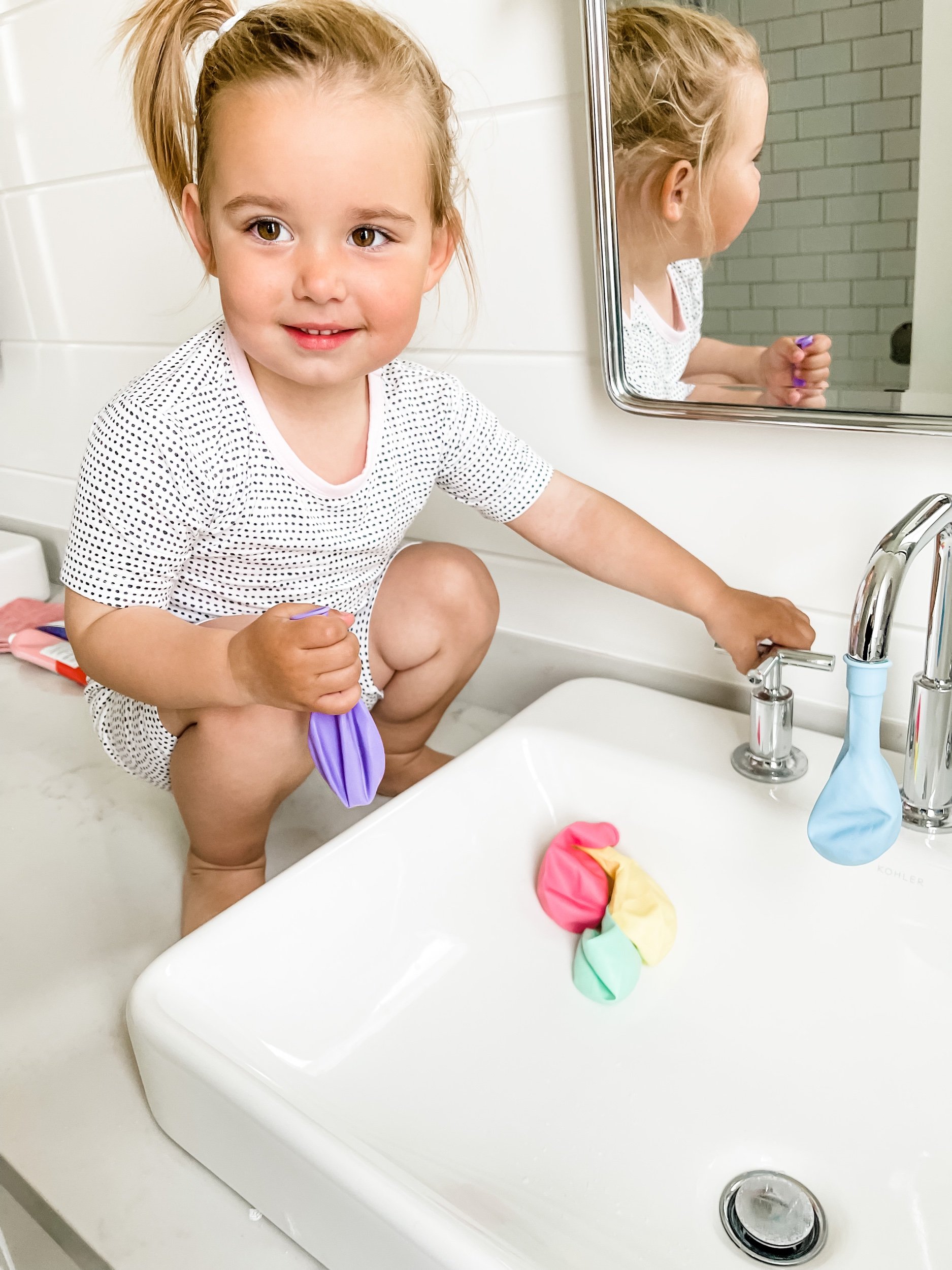
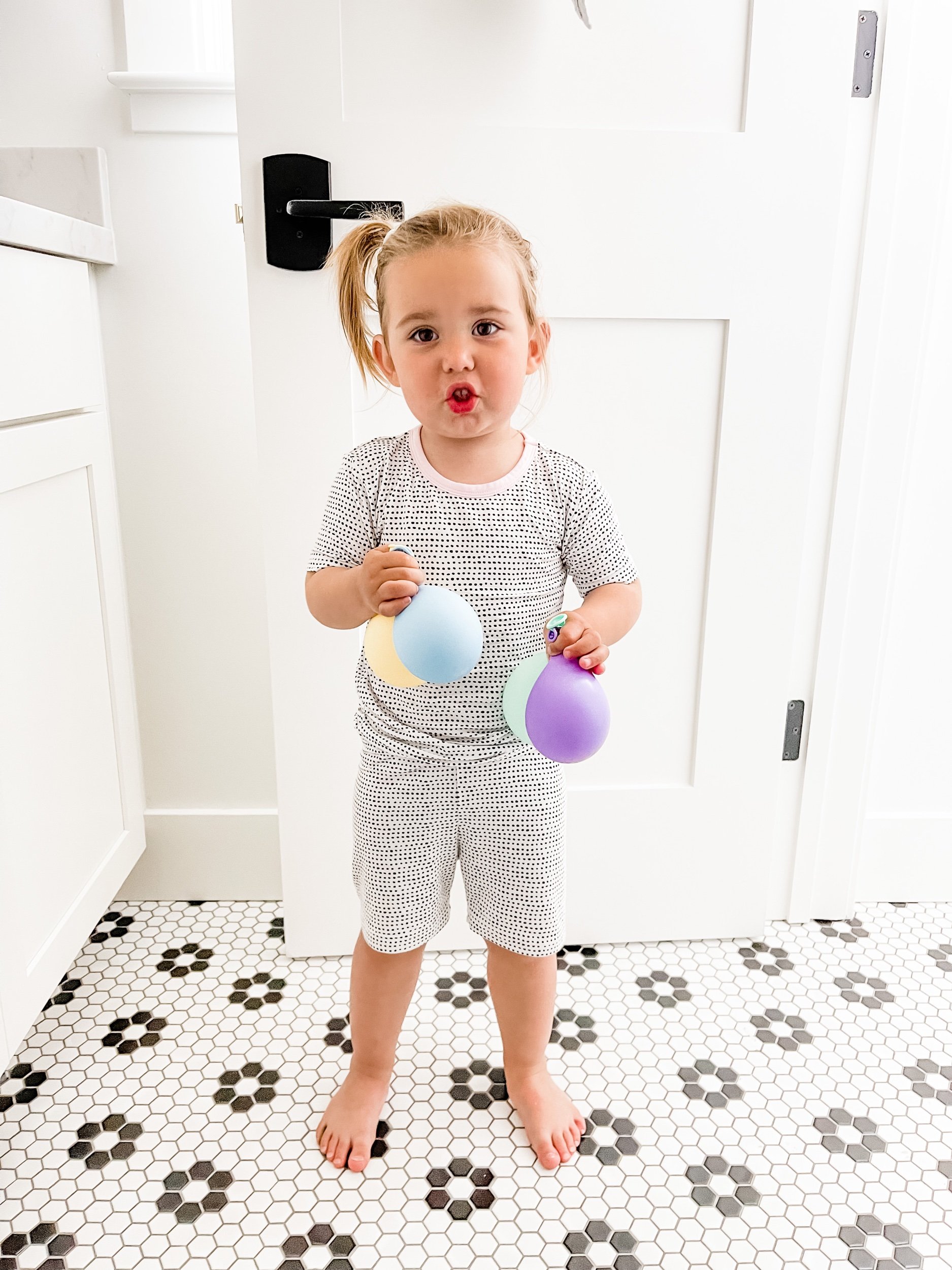
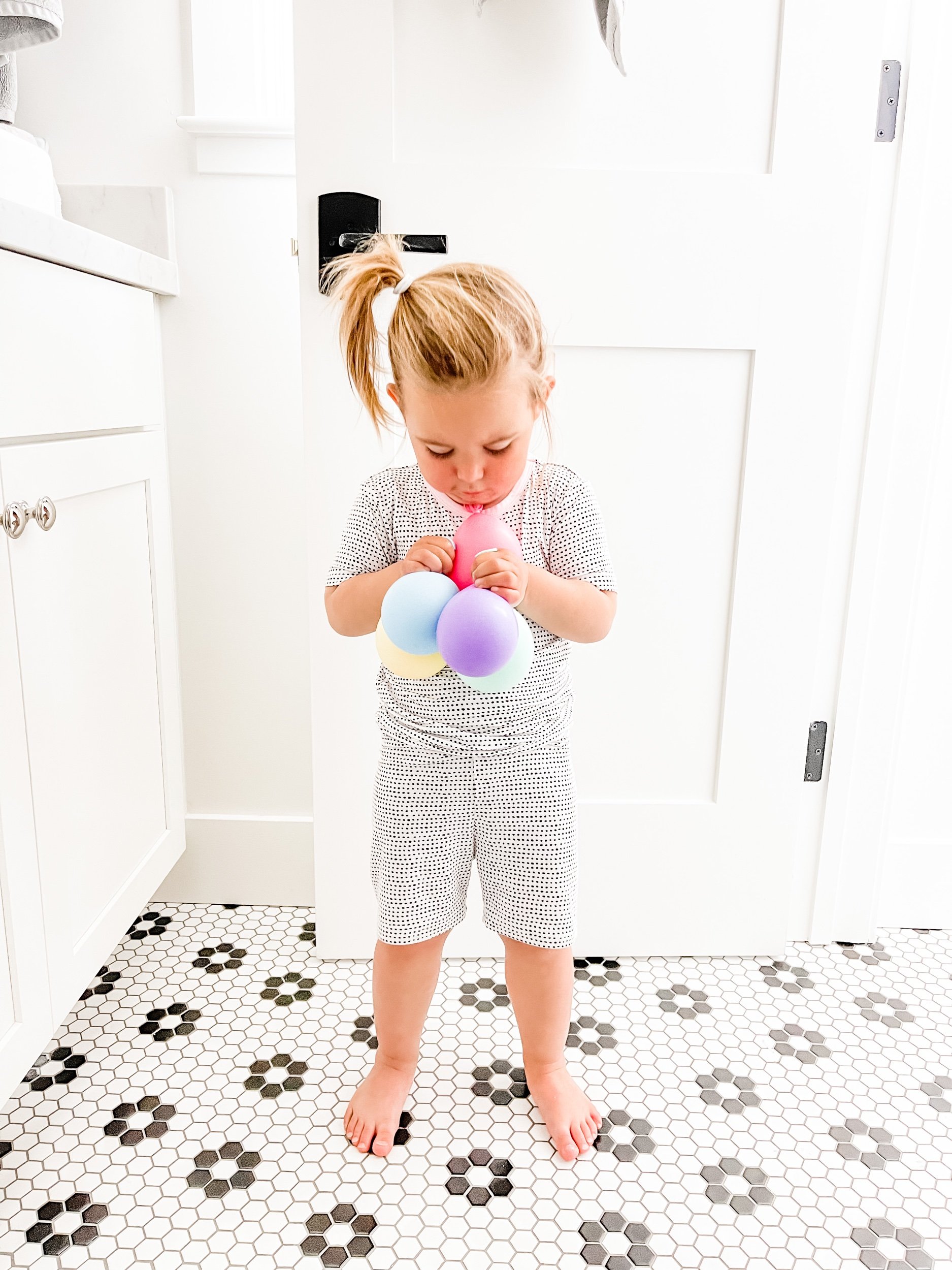
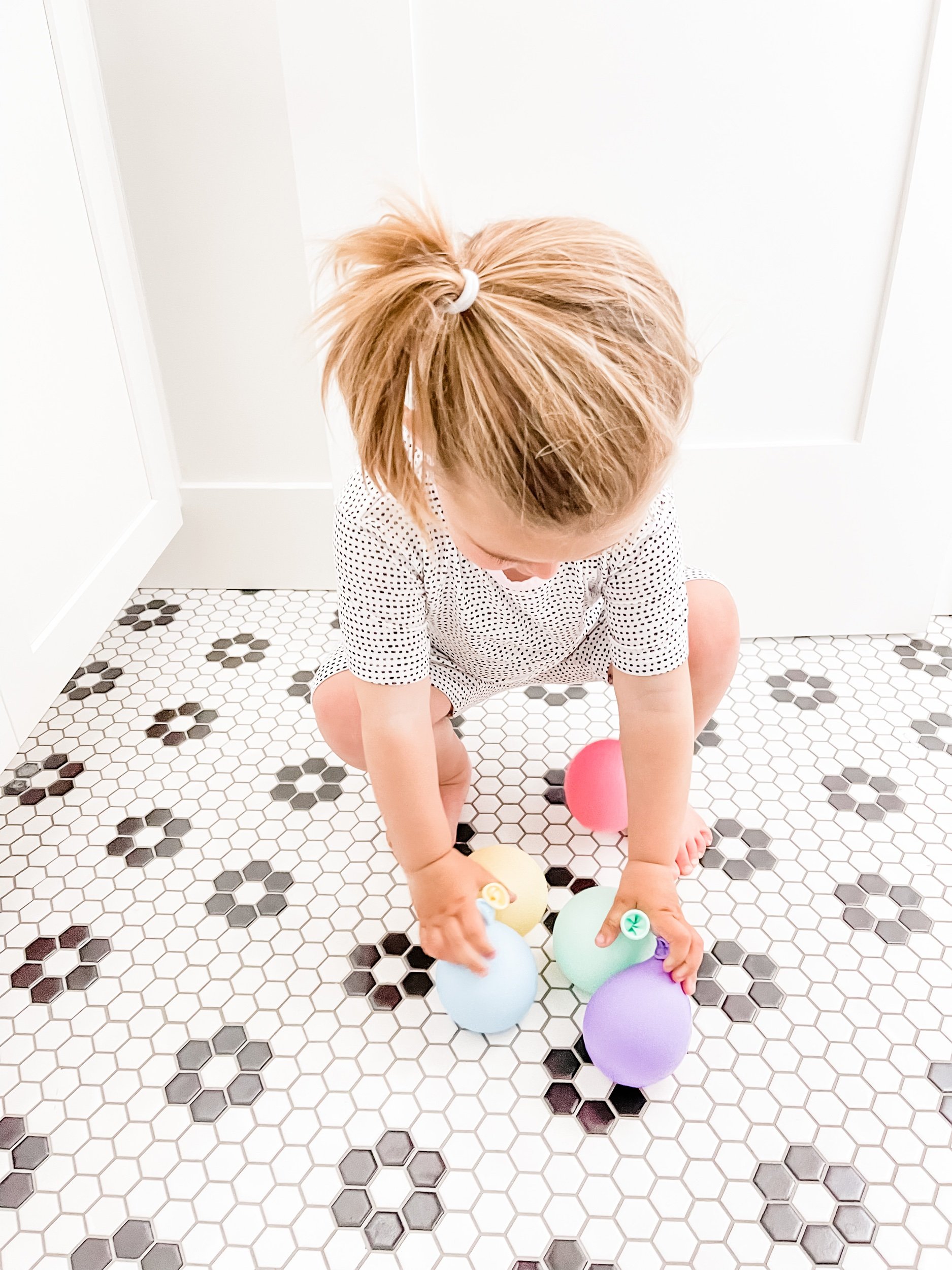
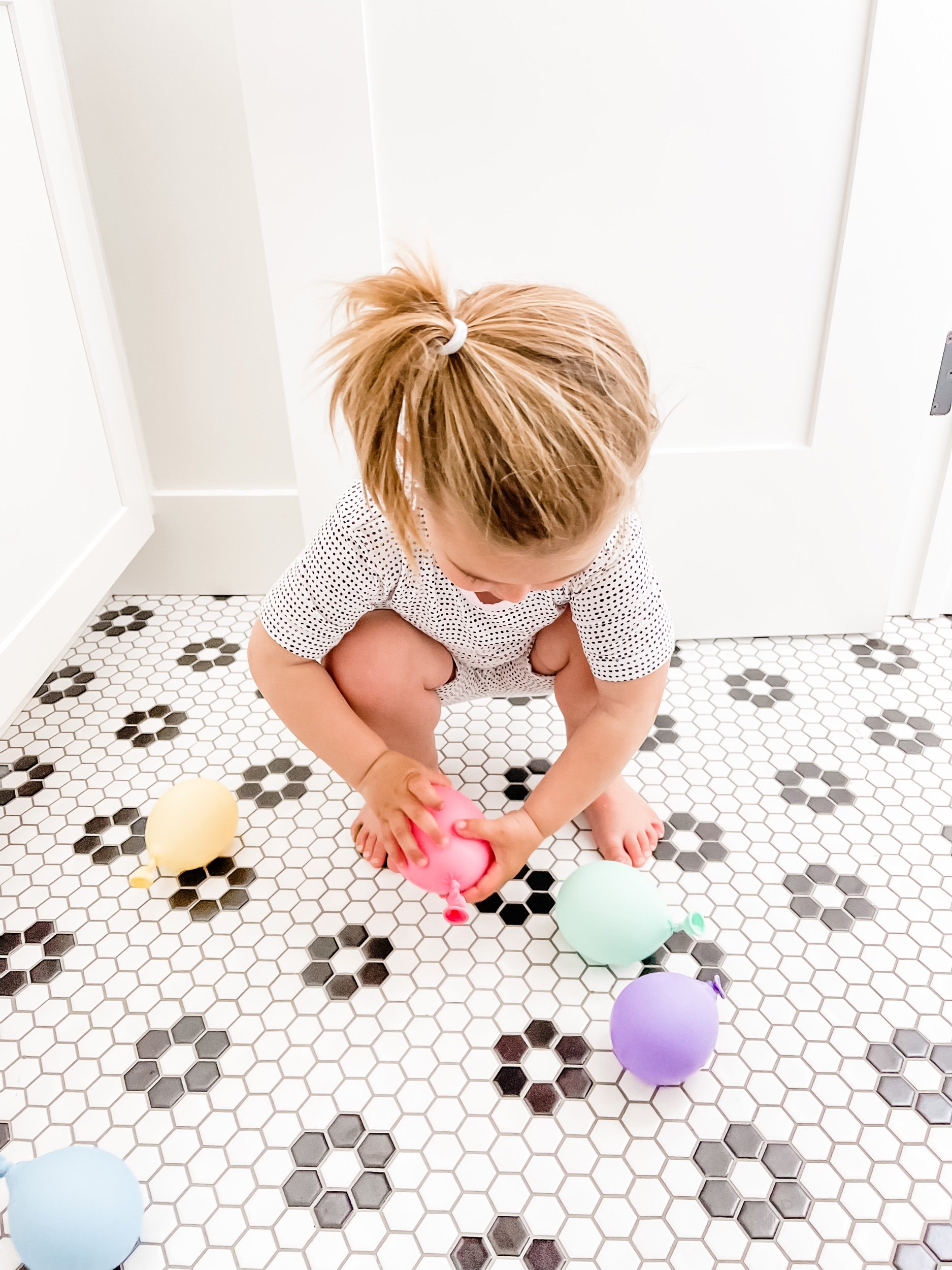
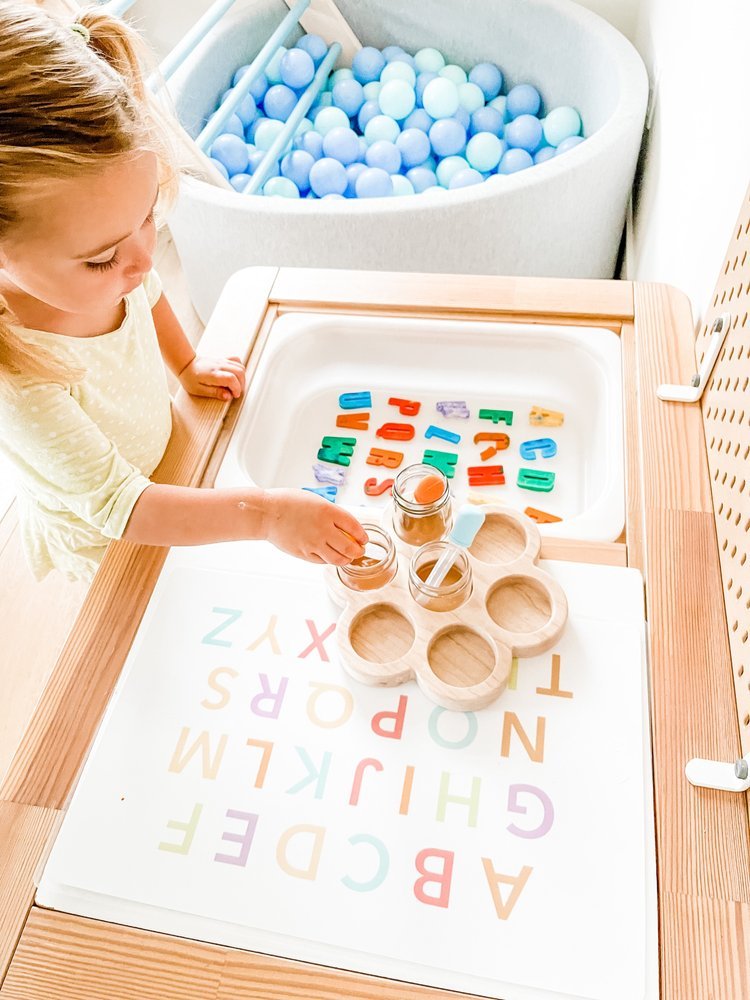
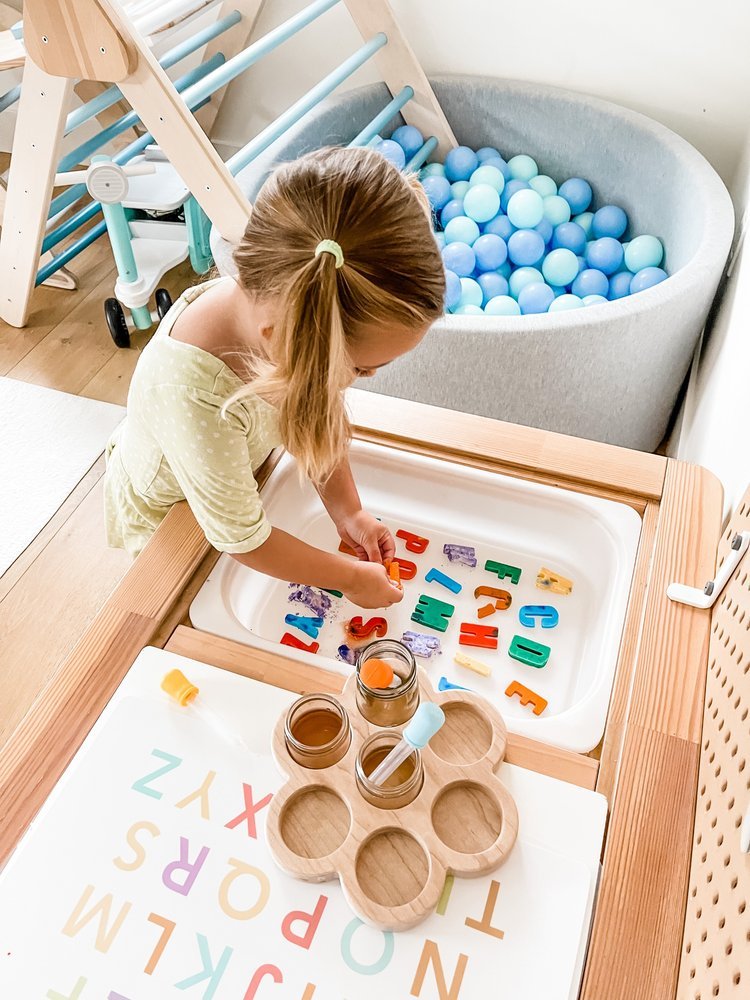
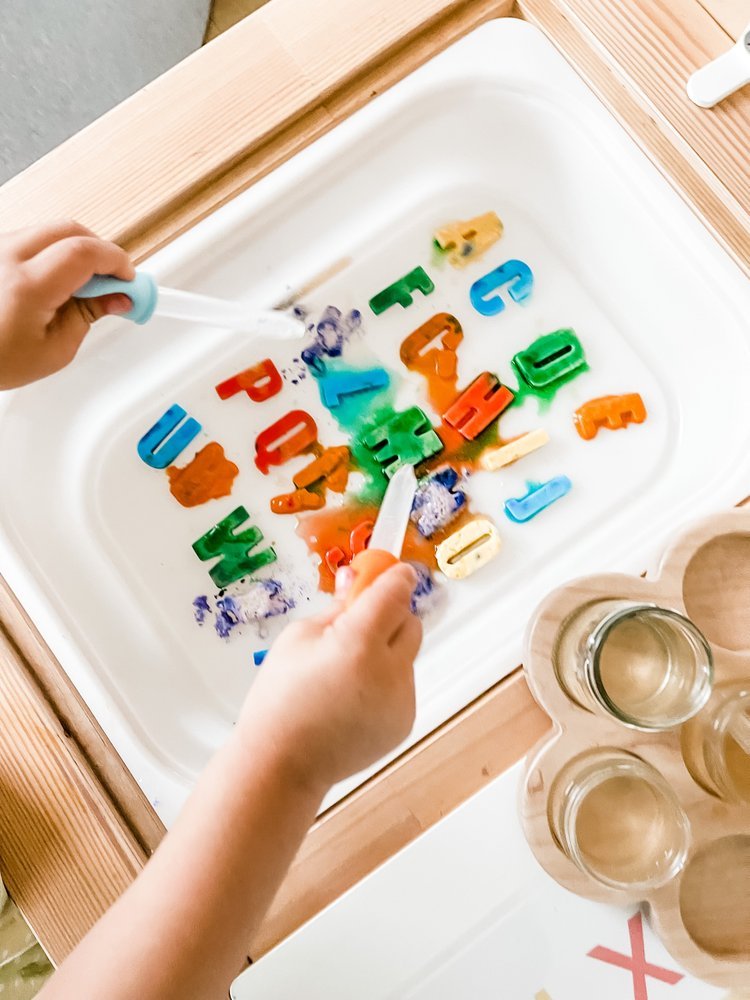
I finally had to take a work trip and leave Sofie for the first time in her life. She’s already super clingy, so I had a feeling this one was going to be rough. I was gone for 3 days and Sofie was home with Dad. So I decided to try to setup a few fun and new surprise activities for her to experience while I was gone. And one of the best ones was this frozen egg Alphabet game. She had a ton of fun helping me put this one together.
Frozen Letter Eggs:
Step 1: Gather colored balloons big enough to fit resin letters
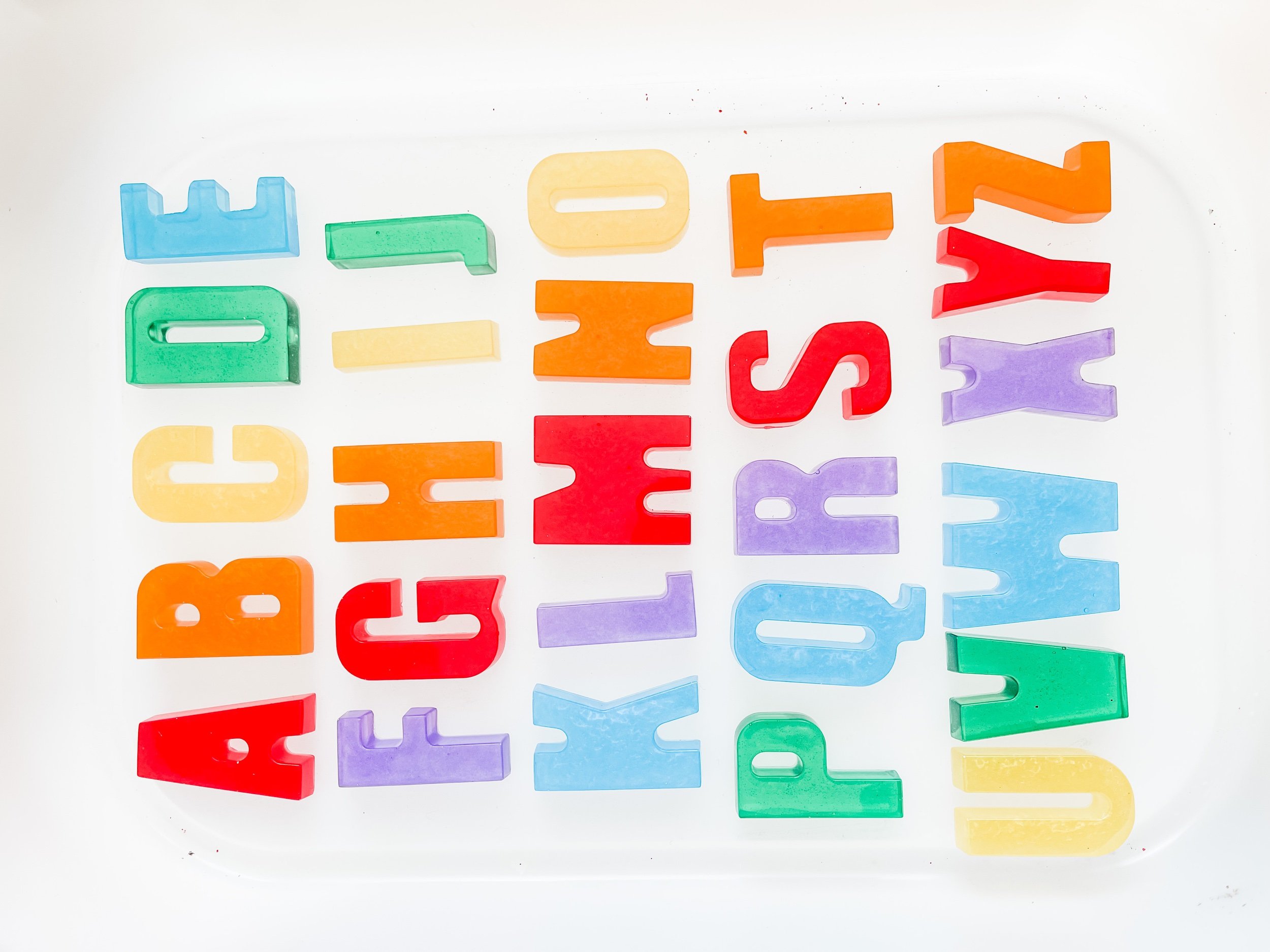
Step 2: Gather the resin letters for your child’s name (I used SOFIE obviously) - I get my favorite letters from @CharsJars and @_Busy _ Littles
Step 3: Open up the balloon neck and pop the letters inside
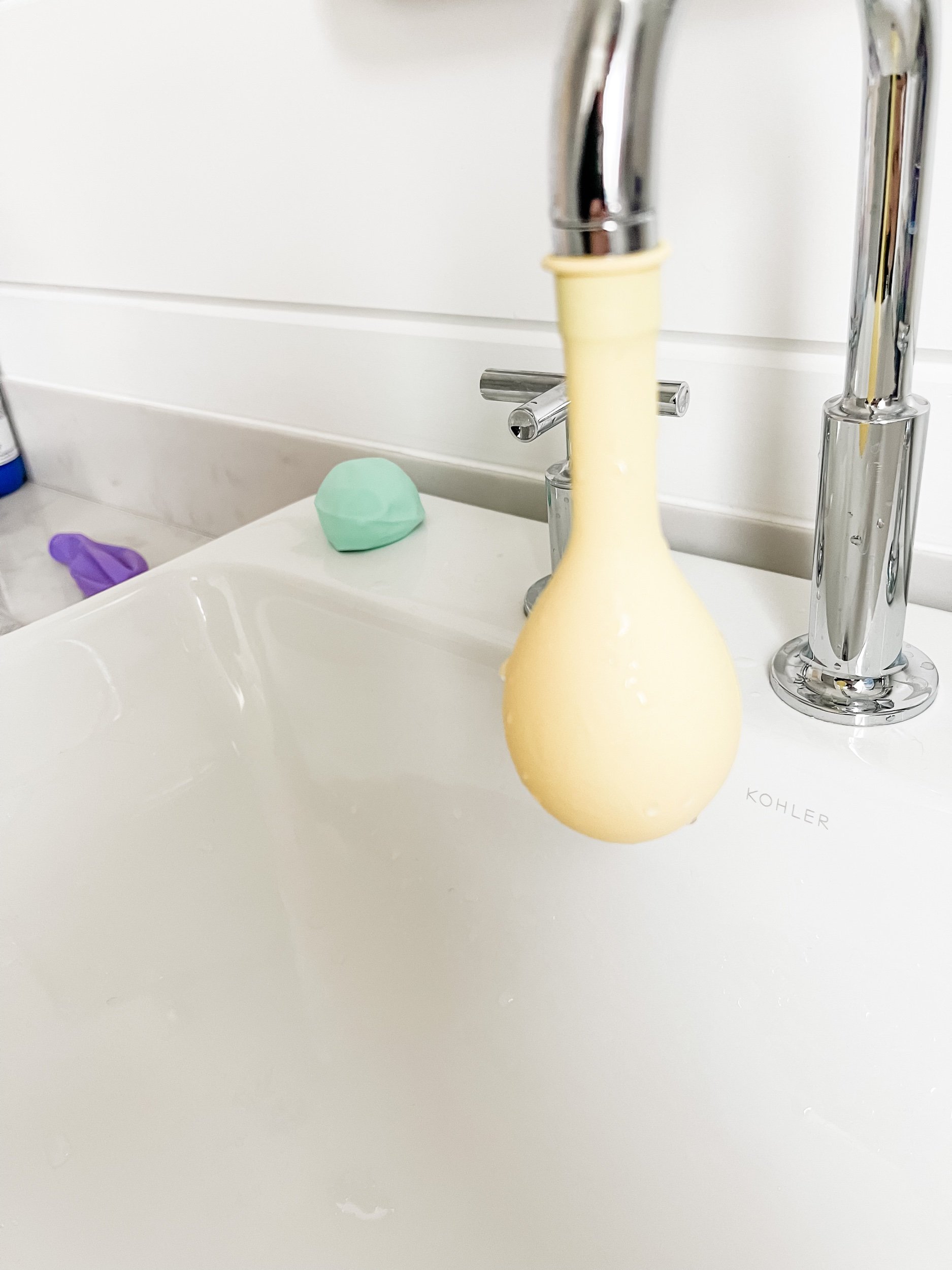
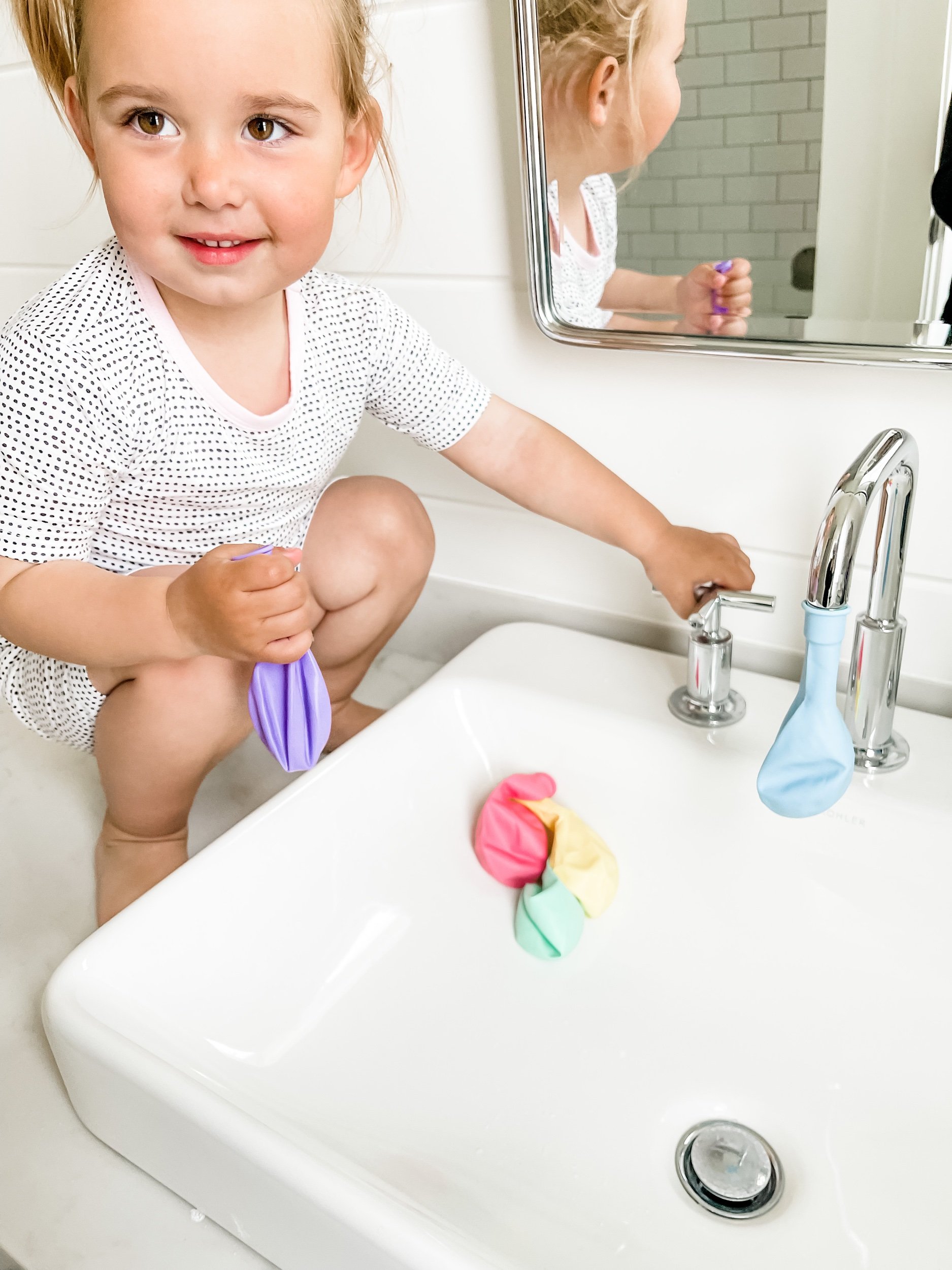
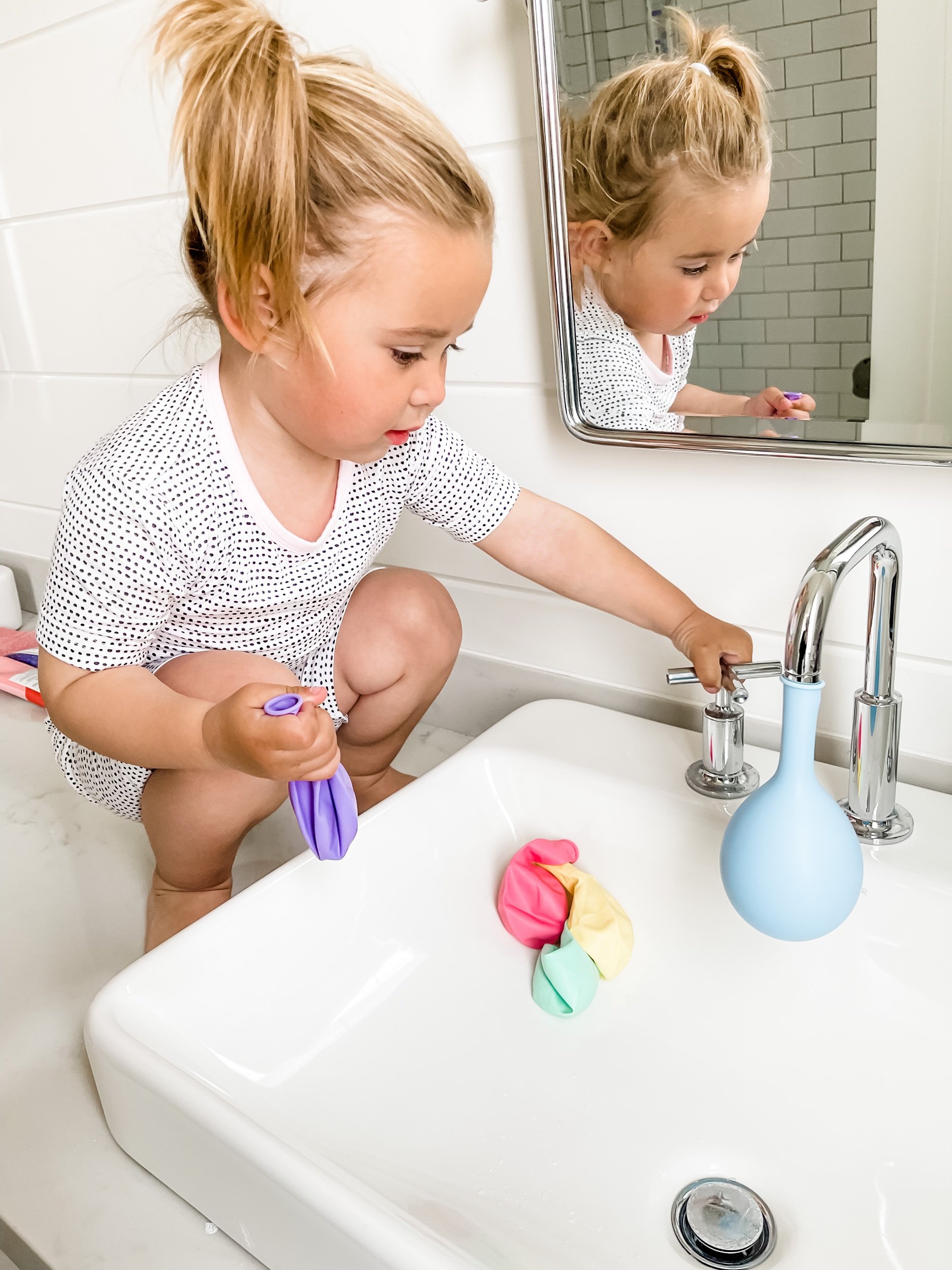
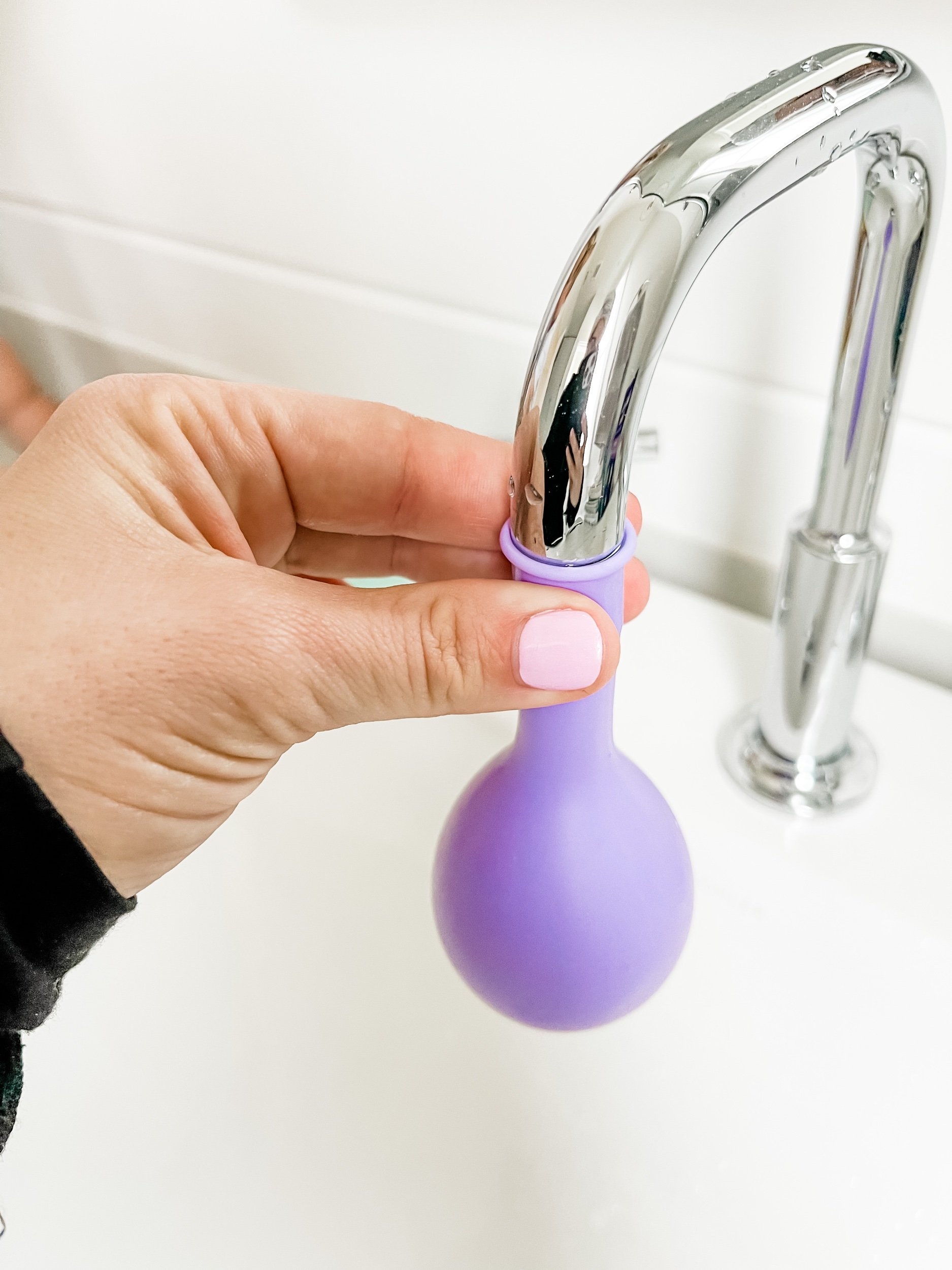
Step 4: Wrap the balloon around the sink and fill with water
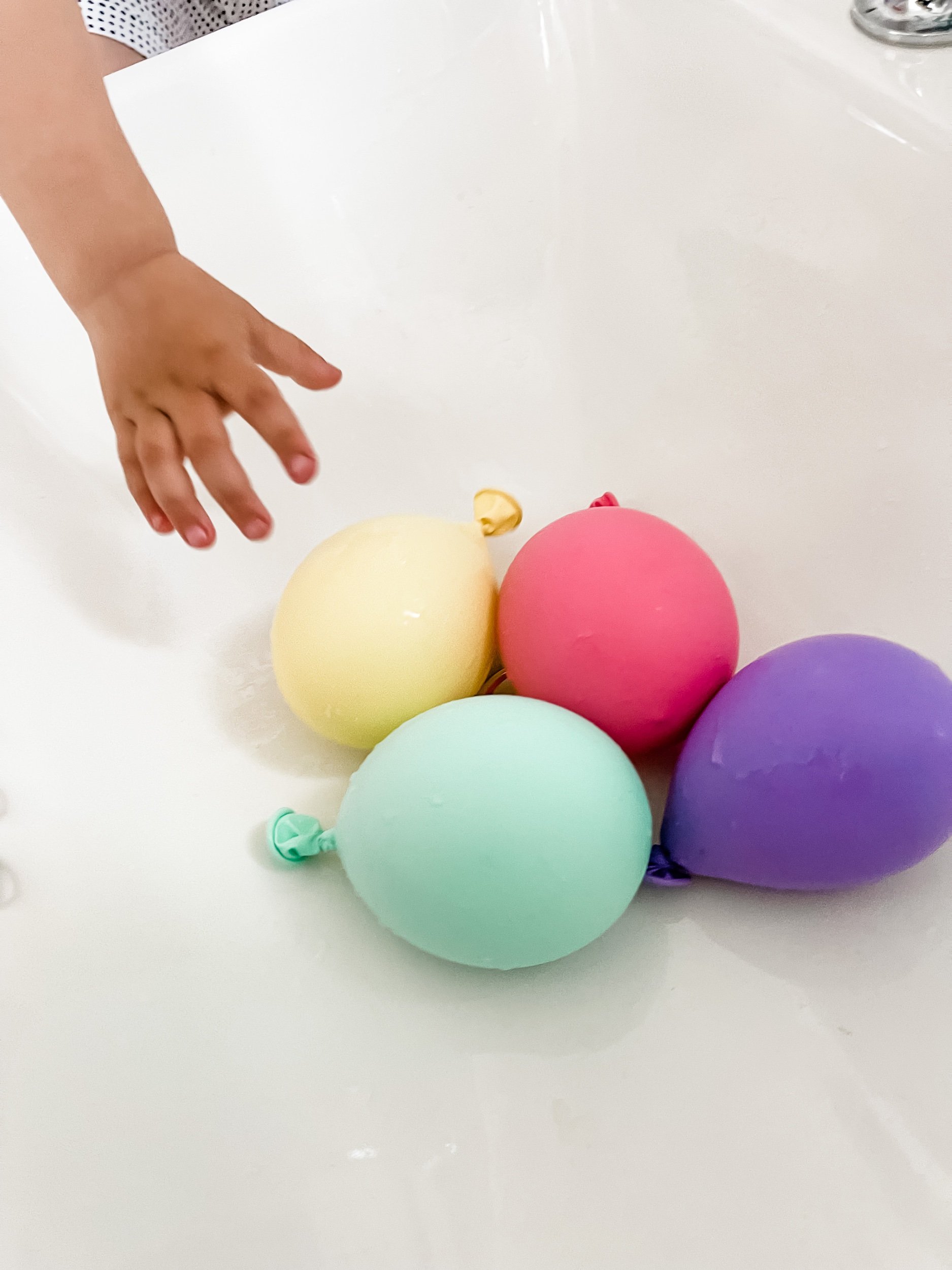
Step 5: Plop them in the freeze and freeze overnight
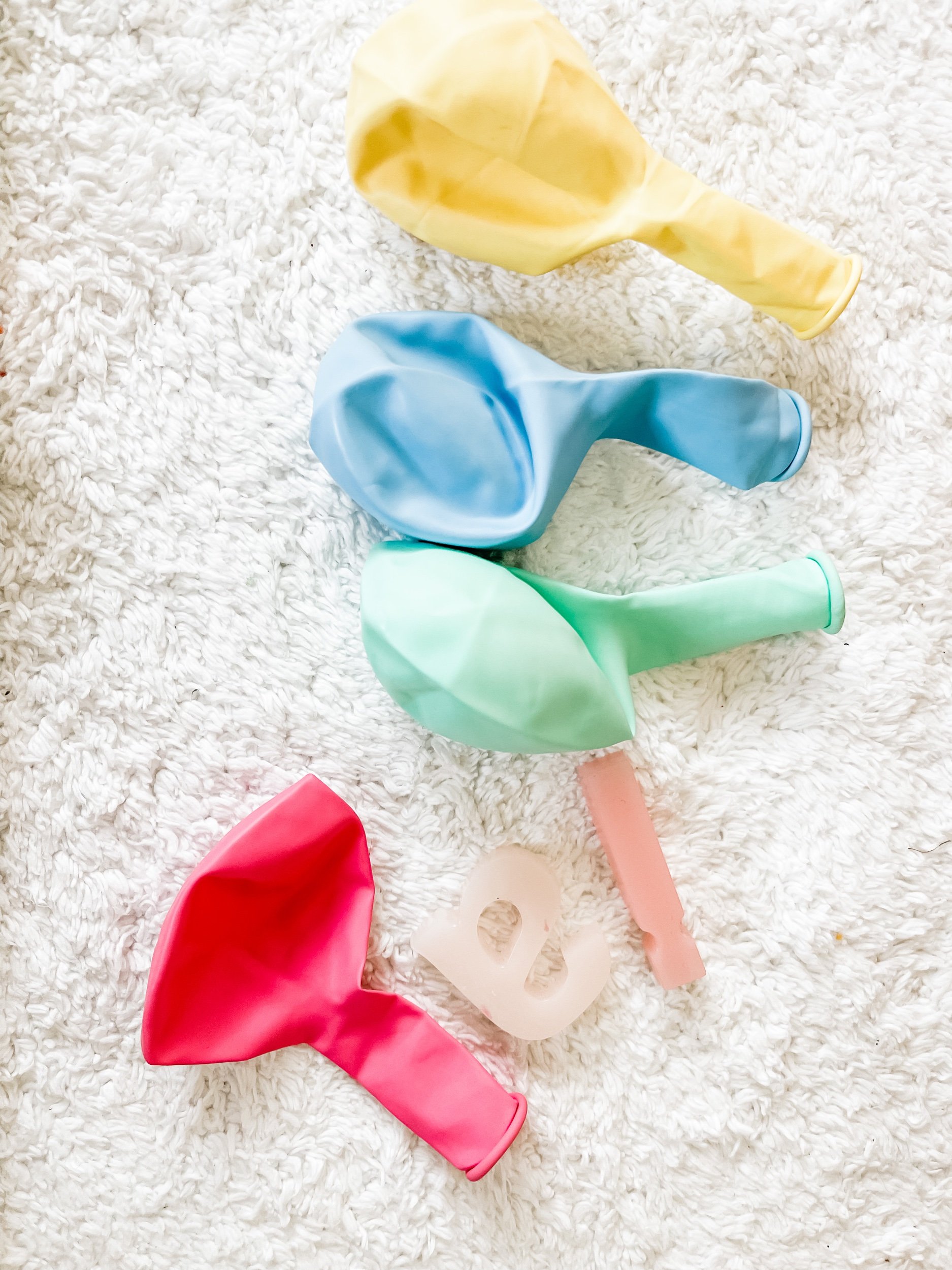
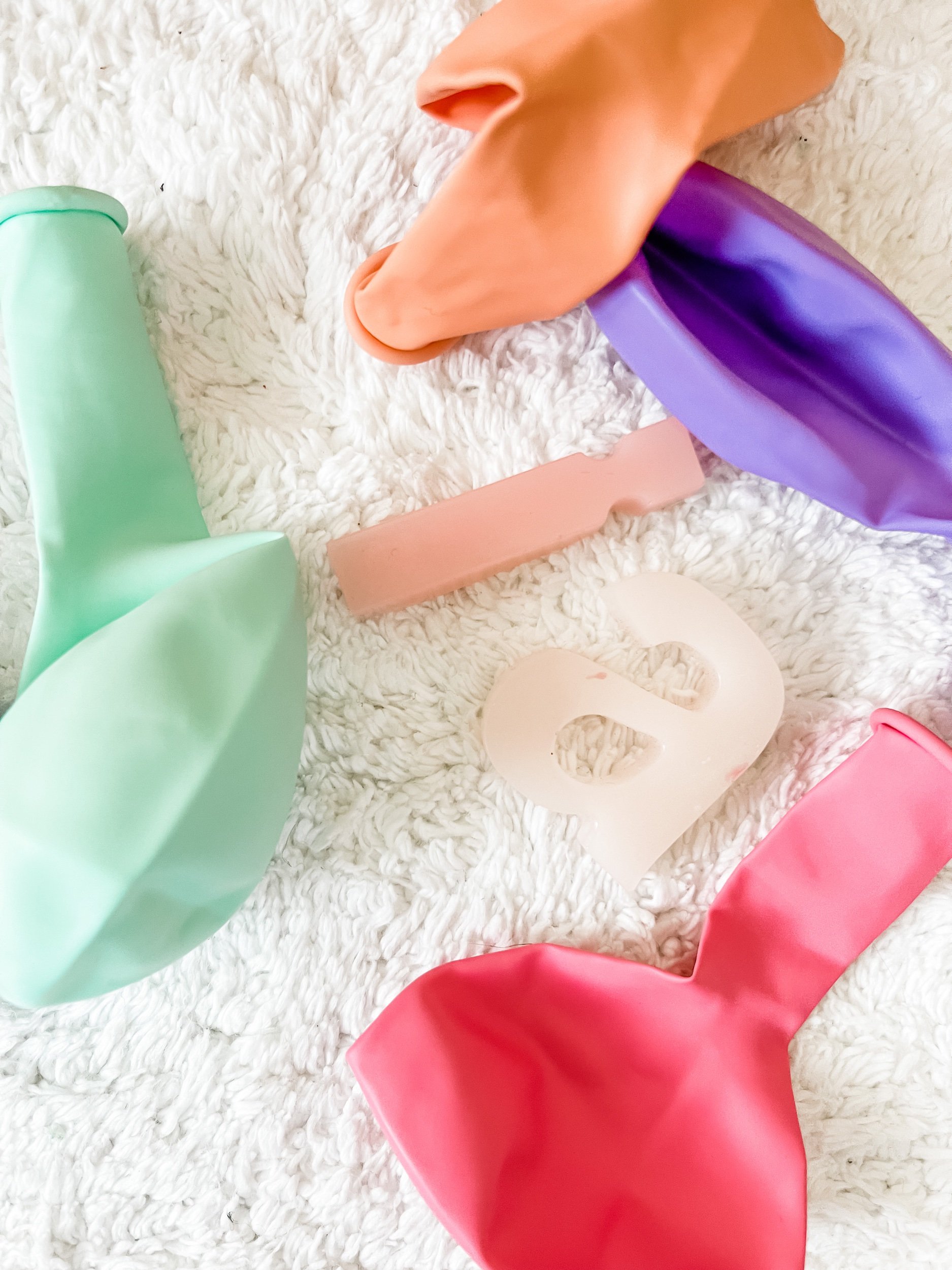
Step 6: Take them out of the freezer, cut off the balloons and enjoy as part of a sensory bin or like we did in the warm bath water
This activity was so great to talk about water and how it starts liquid and turns solid. She love watching the ice melt and revealing the letters inside! And it was a great fresh new activity to keep her and daddy busy during bath time while I was away!
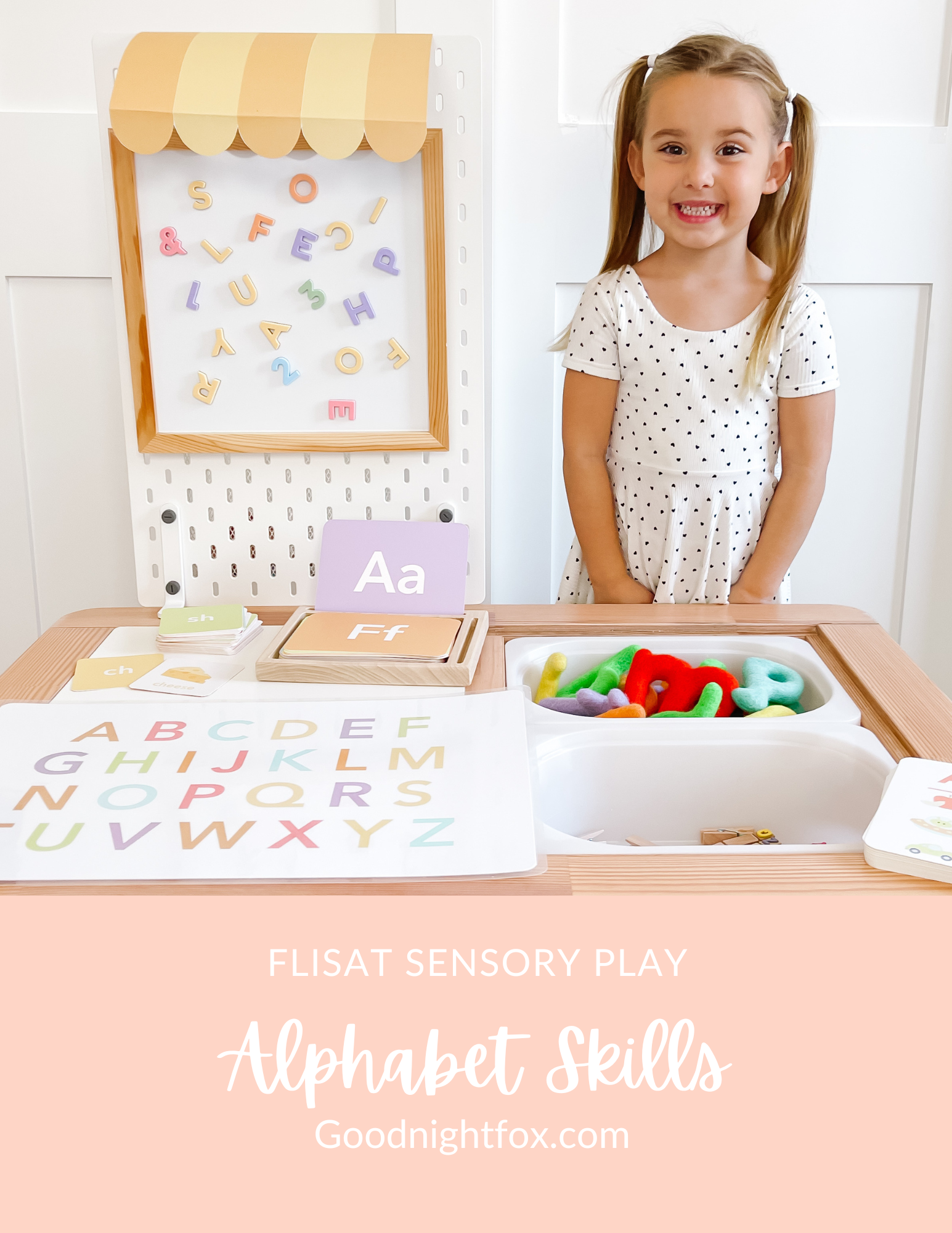
Are you looking for engaging and effective ways to teach your toddler the alphabet? Look no further! Alphabet letter sensory play activities are not only fun and interactive but also highly beneficial for early learning and education in preschoolers. In this blog post, we'll explore the advantages of sensory play for learning and the alphabet's crucial aspects, and we'll provide three exciting sensory bin activities to help your child practice letter learning.
The Benefits of Sensory Play for Learning
Sensory play involves using the senses (sight, touch, smell, taste, and hearing) to explore and engage with the surrounding environment. It is widely recognized by educators and child development experts as a valuable tool for early learning. Here are some key benefits of sensory play: 1. Cognitive Development: Sensory play stimulates a child's brain by encouraging them to think, problem-solve, and make connections. It helps enhance memory, cognitive skills, and promotes critical thinking. 2. Fine Motor Skills: Engaging in sensory activities like manipulating objects, pouring, pinching, and picking up items enhances fine motor skills, hand-eye coordination, and strengthens finger muscles. 3. Language Development: Sensory play provides opportunities for children to express themselves verbally and non-verbally. It fosters vocabulary development and communication skills through conversations and interactive play. 4. Sensory Integration: Sensory play helps children integrate sensory information from their environment. It aids in sensory processing, self-regulation, and developing body awareness.
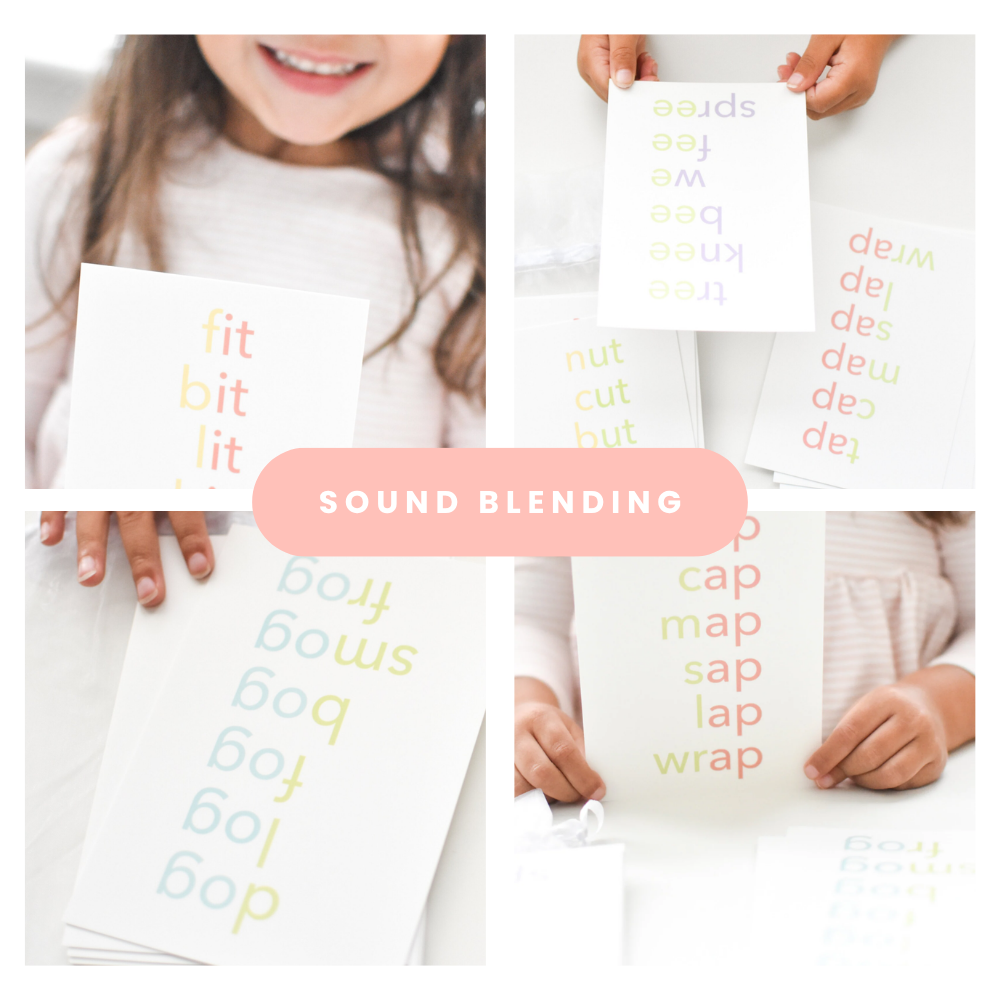
Learning the alphabet at an early age forms the foundation for future literacy skills. It sets the stage for successful reading, writing, and communication abilities. Here are the key aspects of learning the alphabet: 1. ABC Song: Singing the catchy ABC song not only captures children's attention but also helps them remember the order of the letters. 2. Letter Recognition: Recognizing and identifying each letter is essential for reading and writing. Sensory play activities can help reinforce letter recognition skills. 3. Upper and Lower Case Letter Recognition: Learning to distinguish between uppercase and lowercase letters is crucial for spelling and writing correctly. 4. Letter Sequencing: Understanding the order of letters is an important skill that aids reading and writing fluency. 5. Letter Sounds: Associating each letter with its corresponding sound enhances phonemic awareness and promotes early reading skills. 6. Letter Sound Blending: Making a continuous sound out of two or more letters such as /c/ /a/ /t/ makes CAT. 7. Digraphs: Learning the unique sounds that two letters make together such as TH and NG.
Now, let's dive into six exciting sensory bin activities that will engage your child in hands-on letter learning:
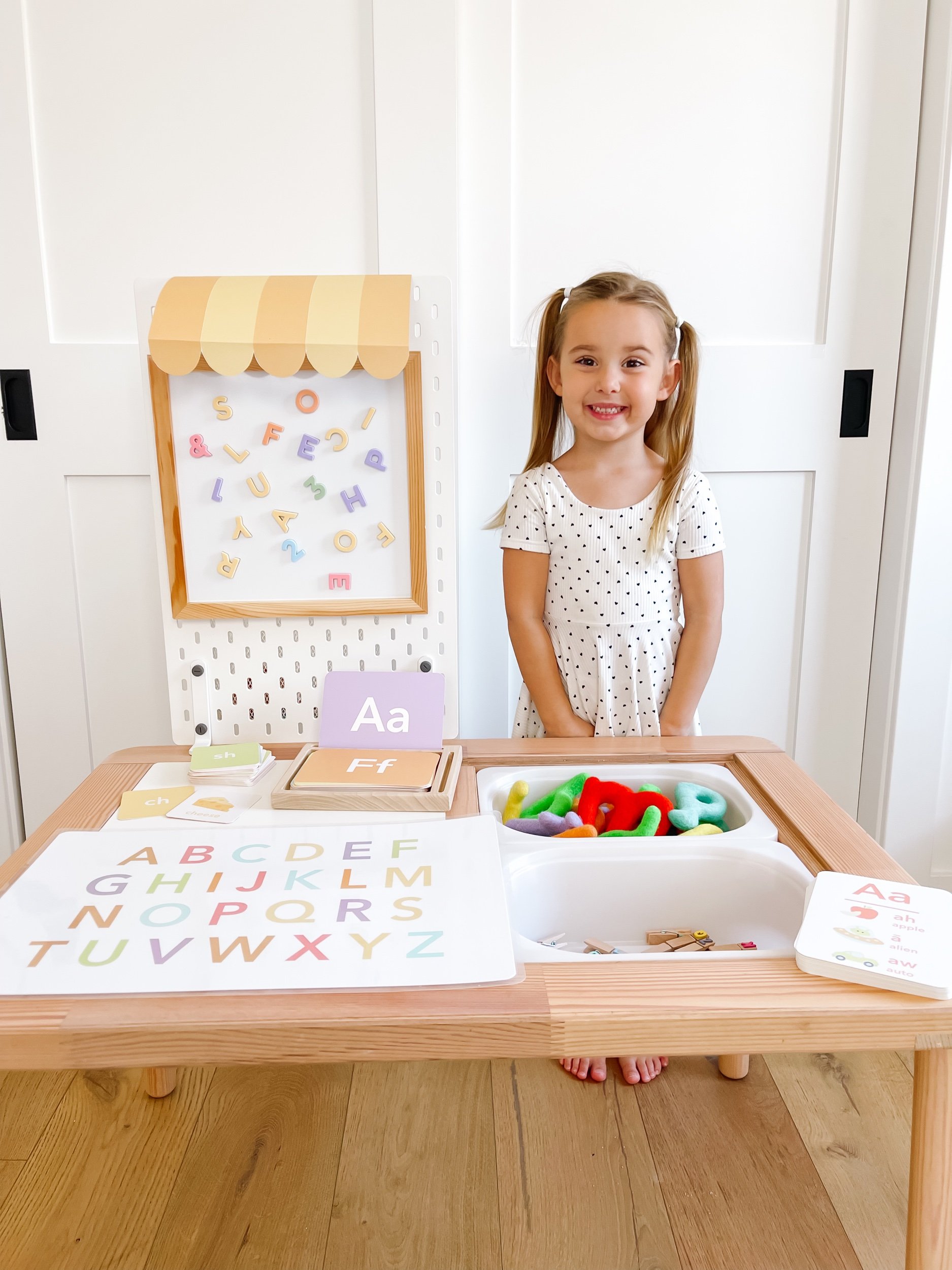
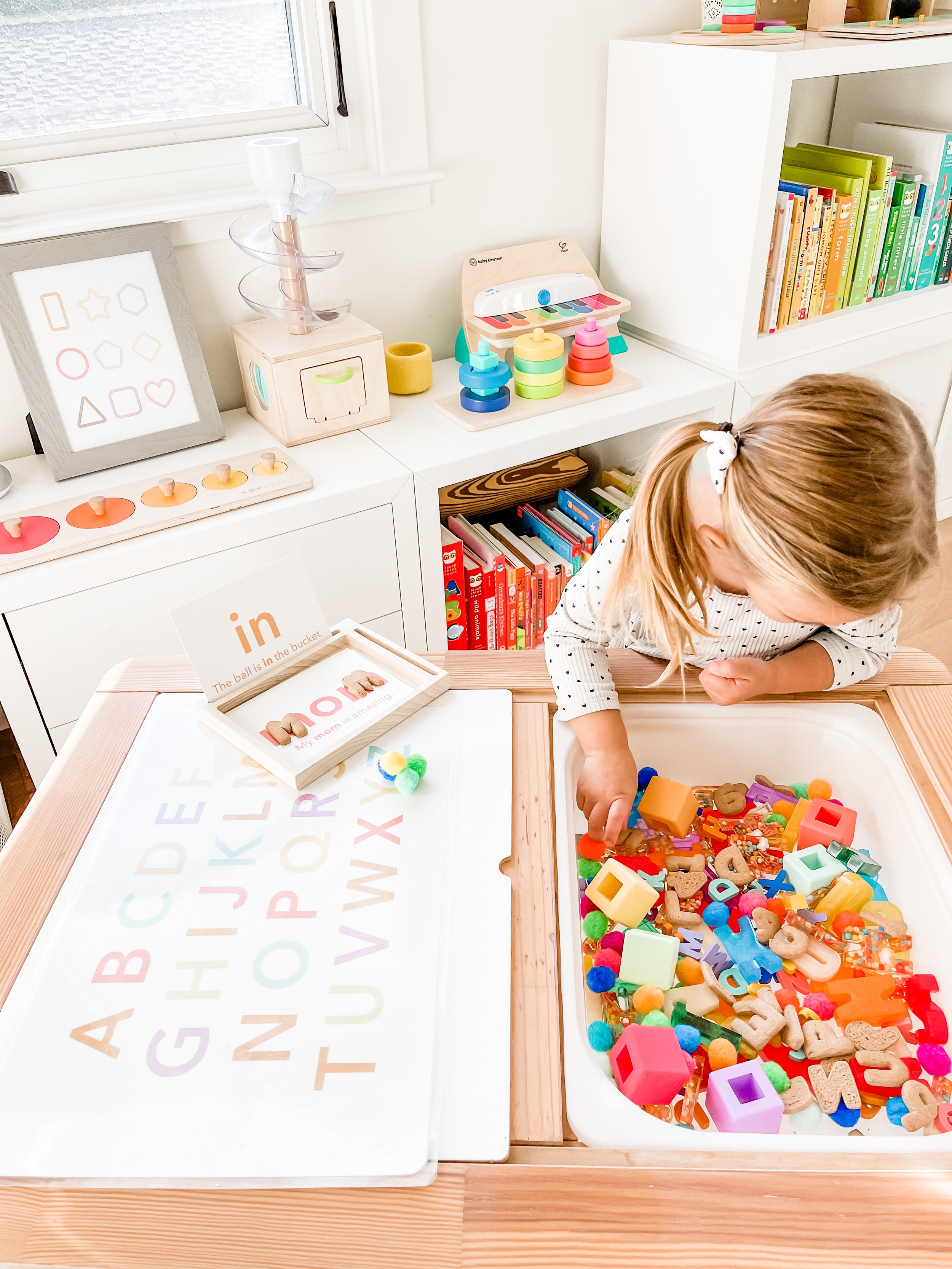
1. RESIN Letter Search and Find Bin:
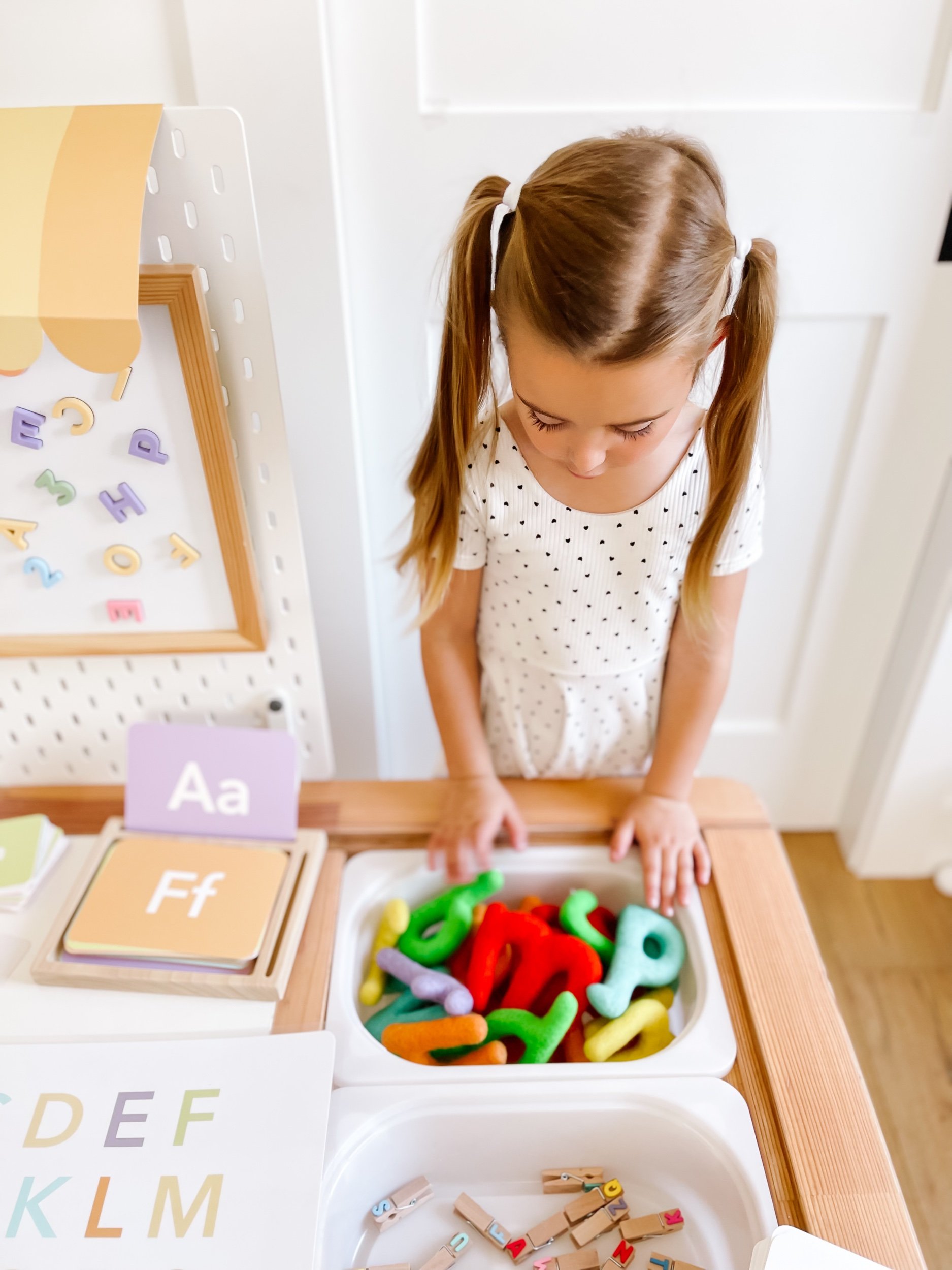
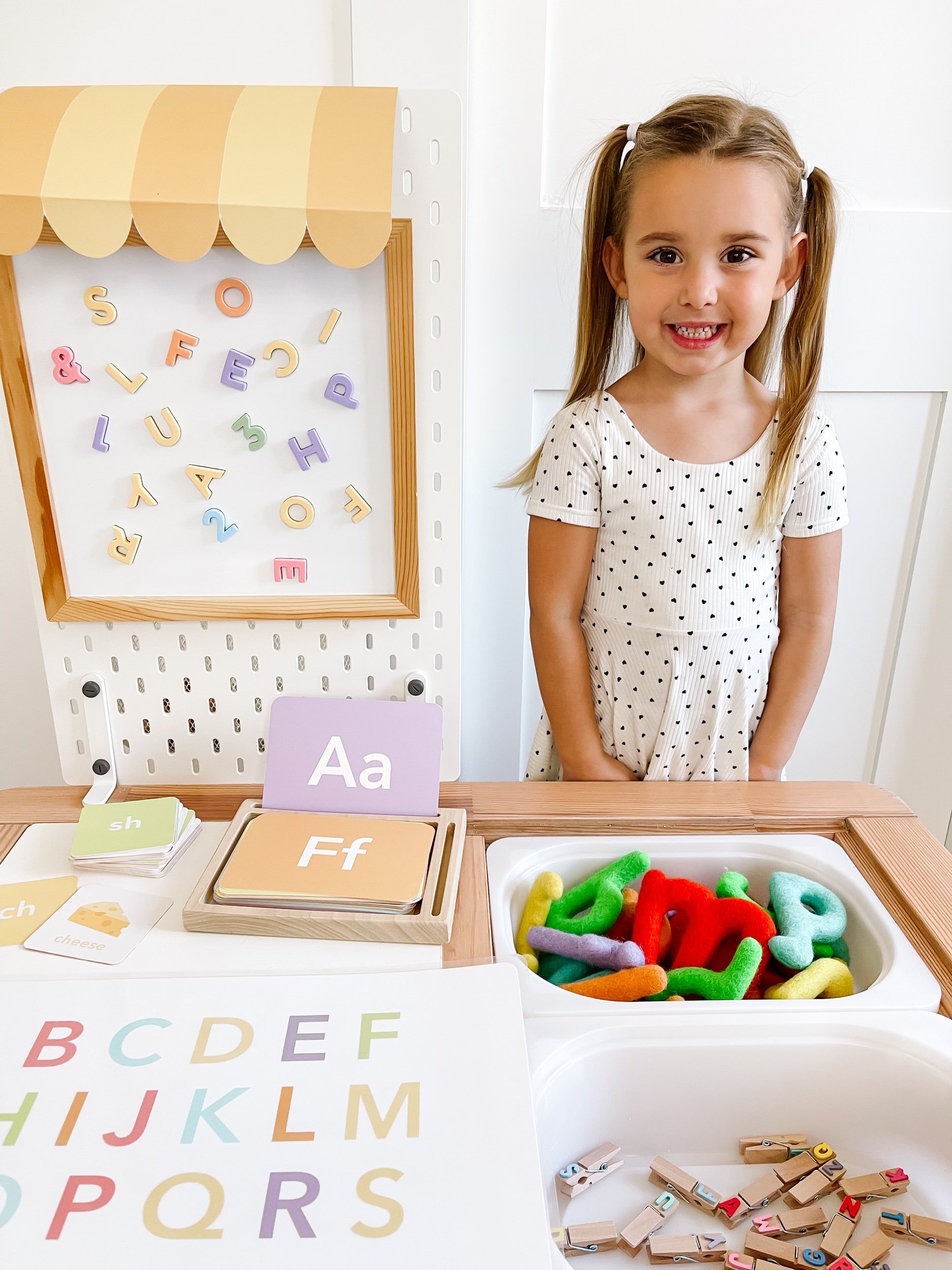
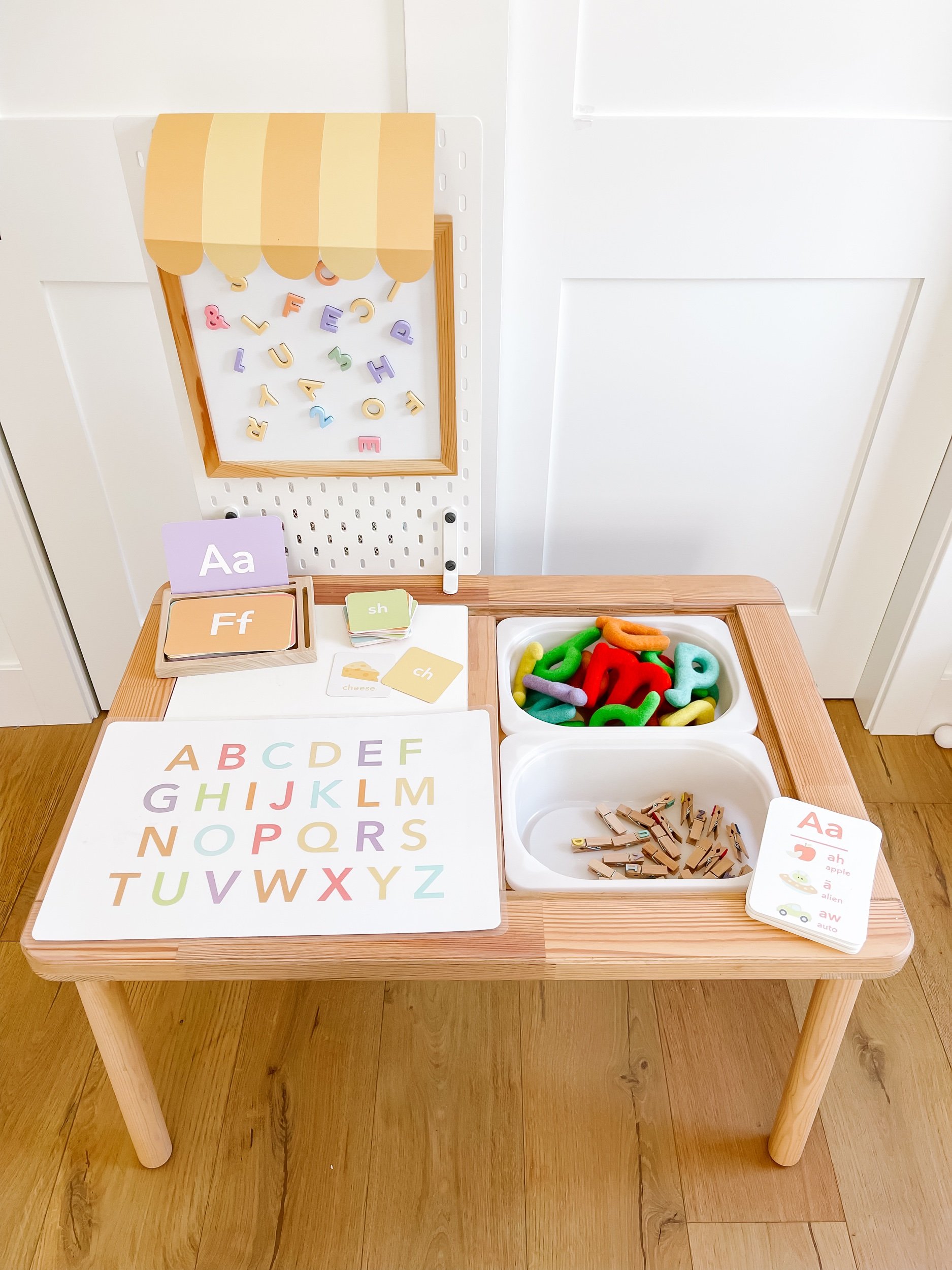
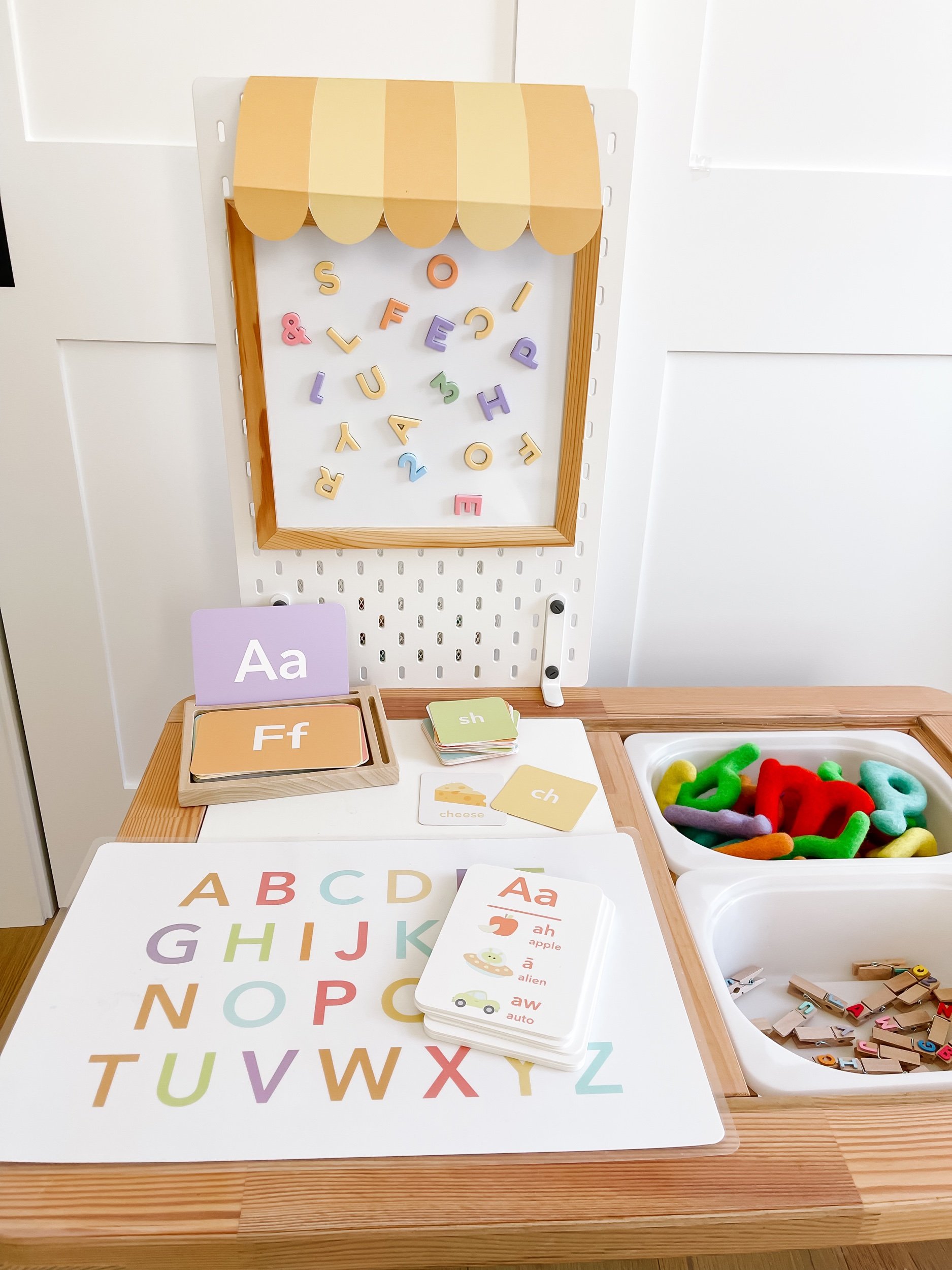
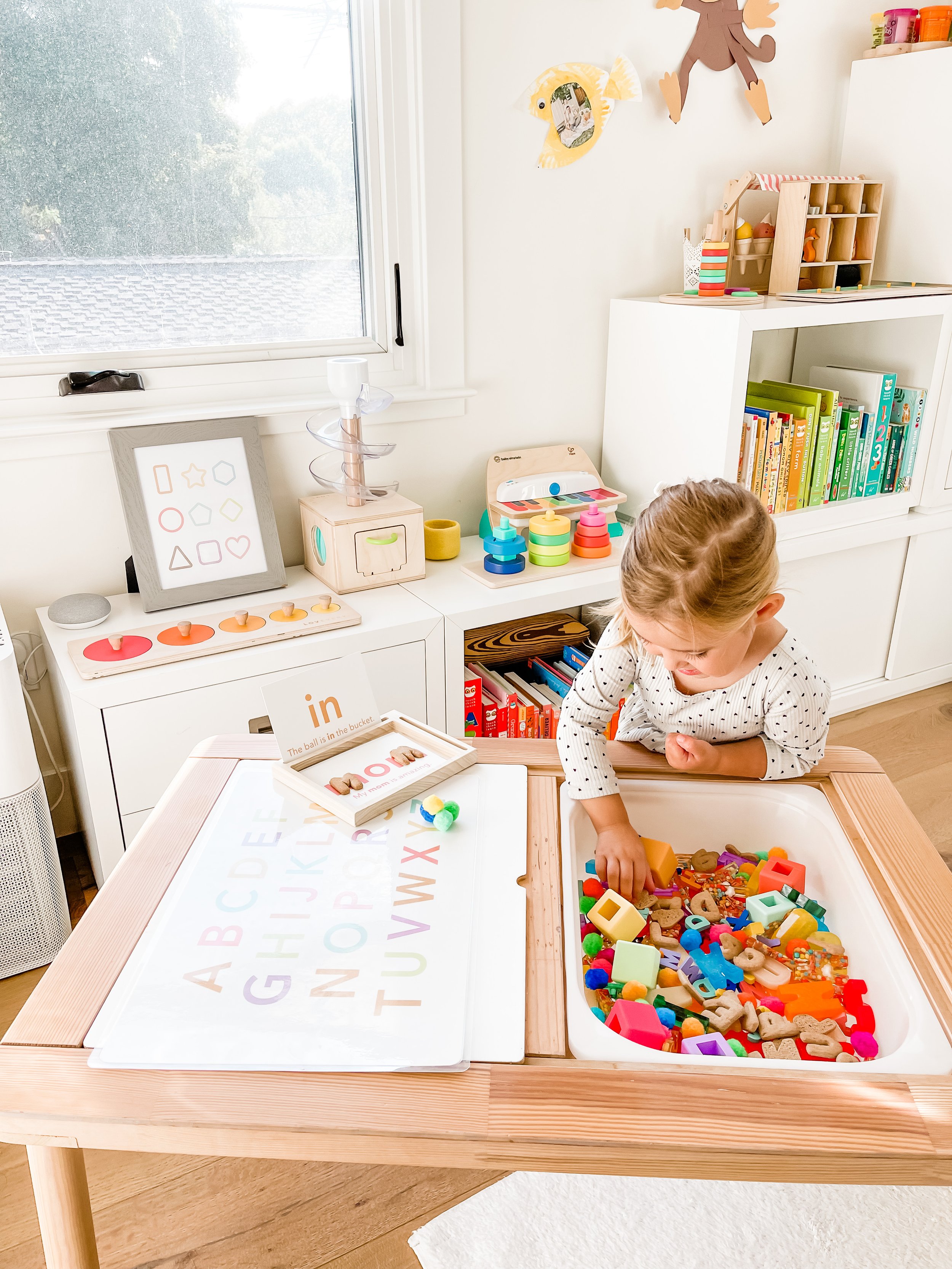
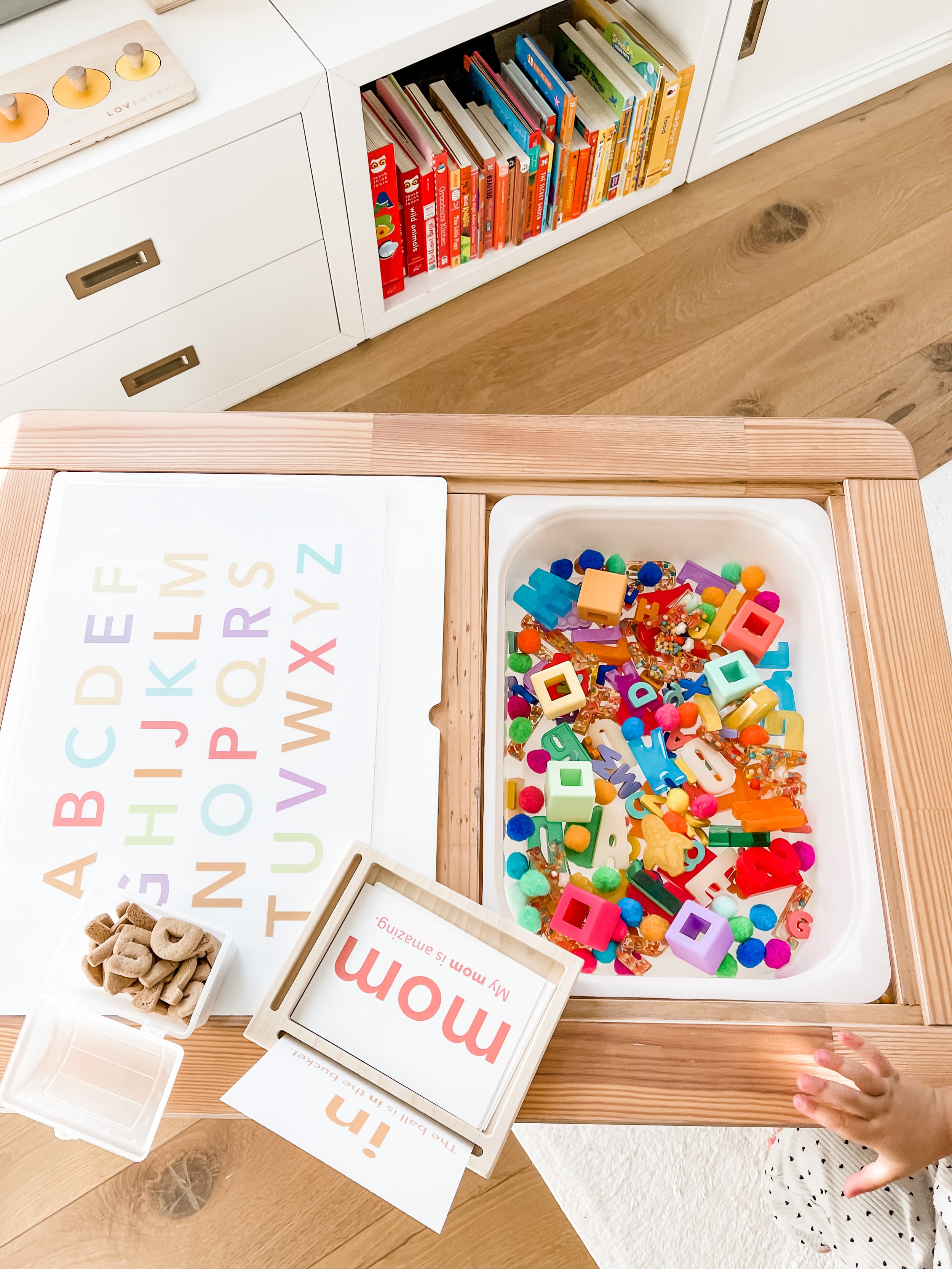
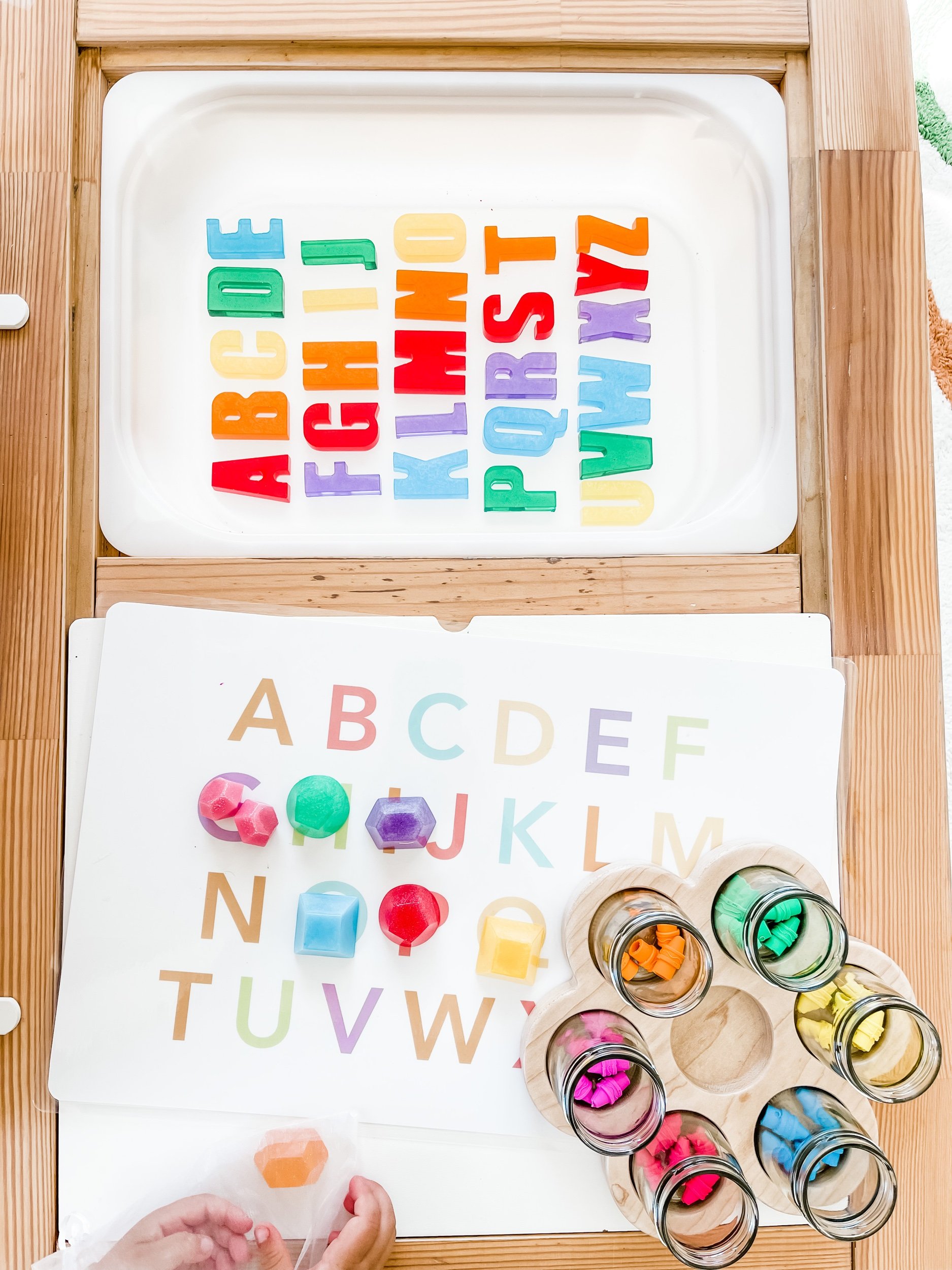
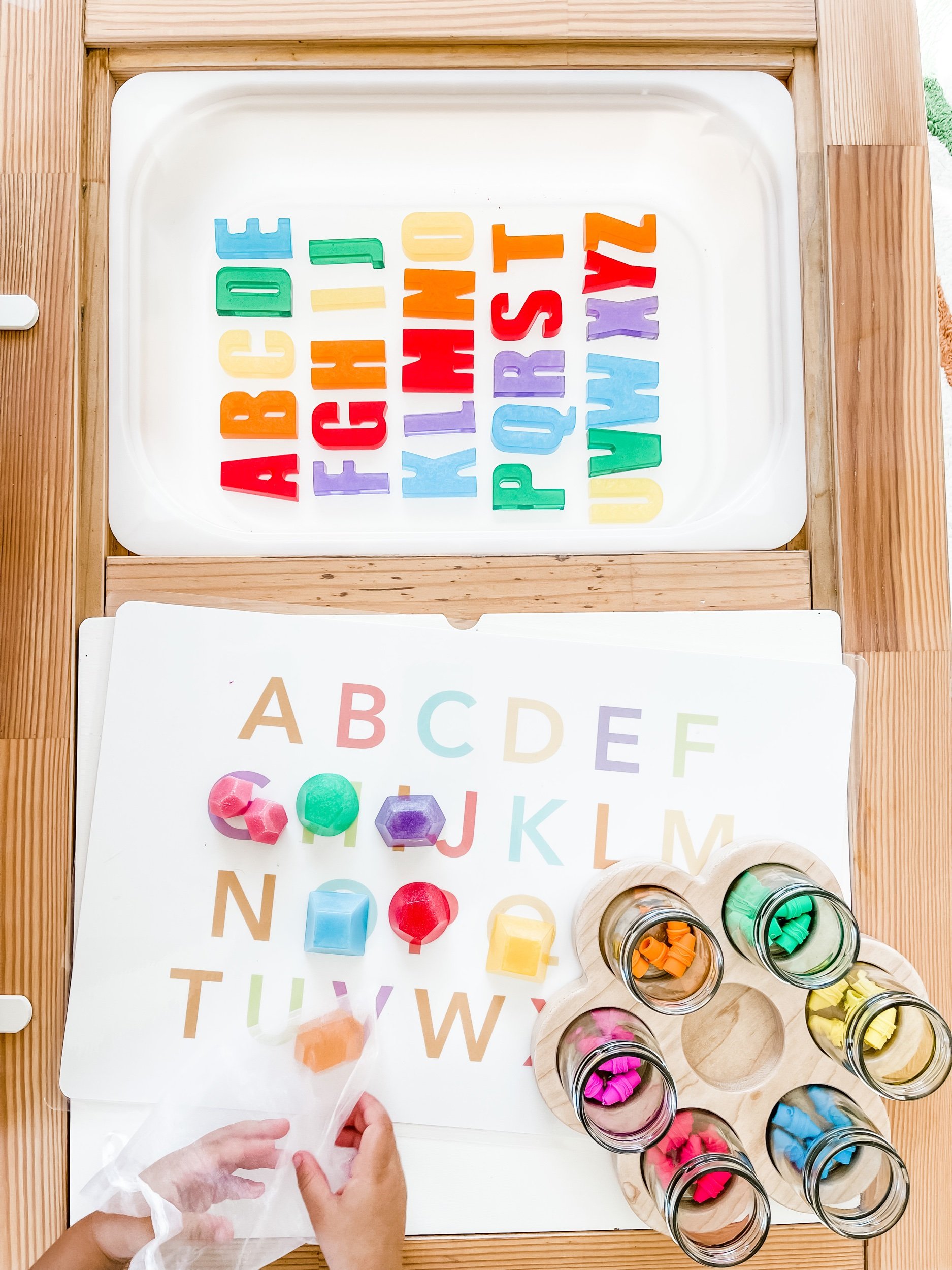
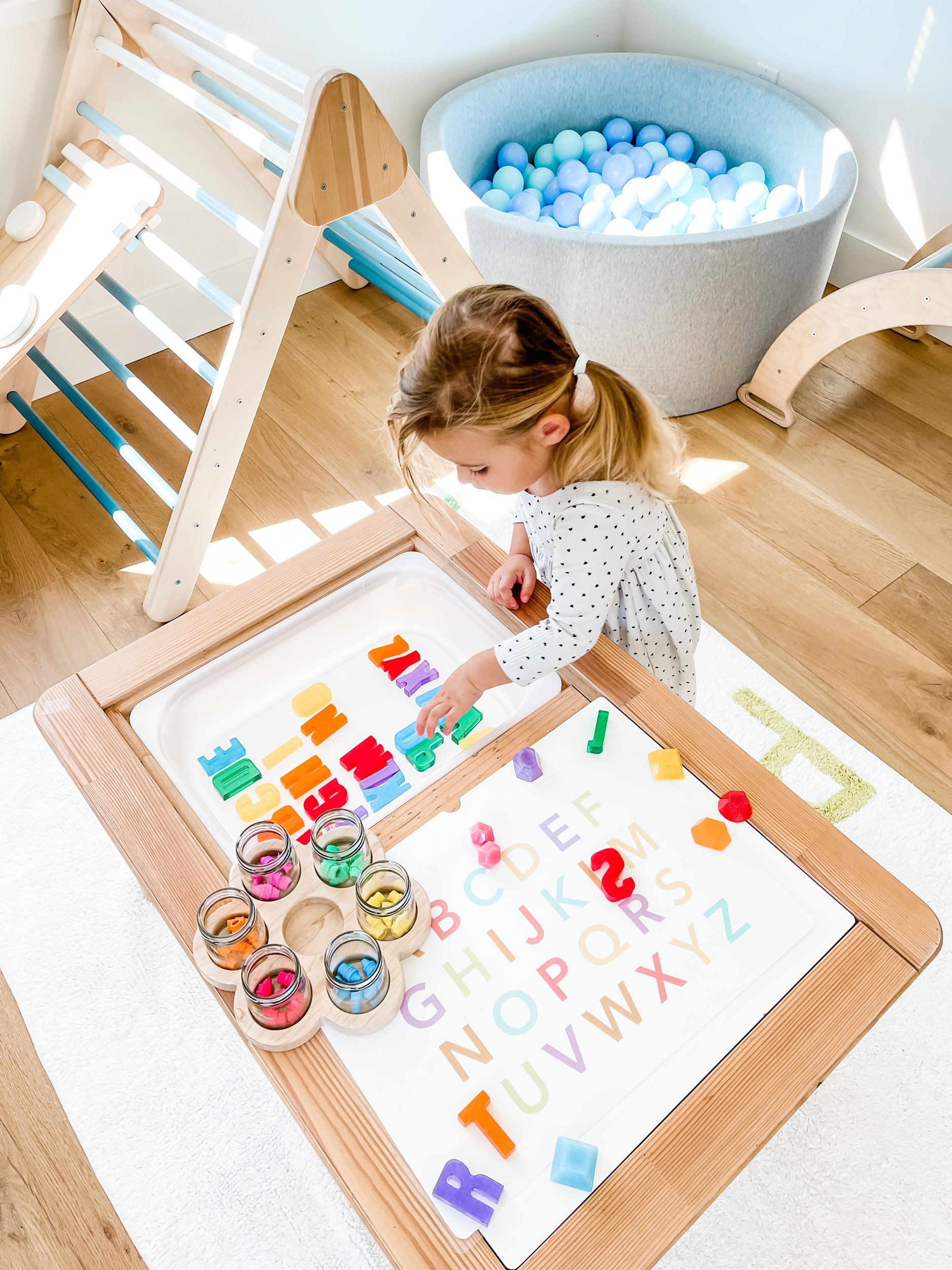
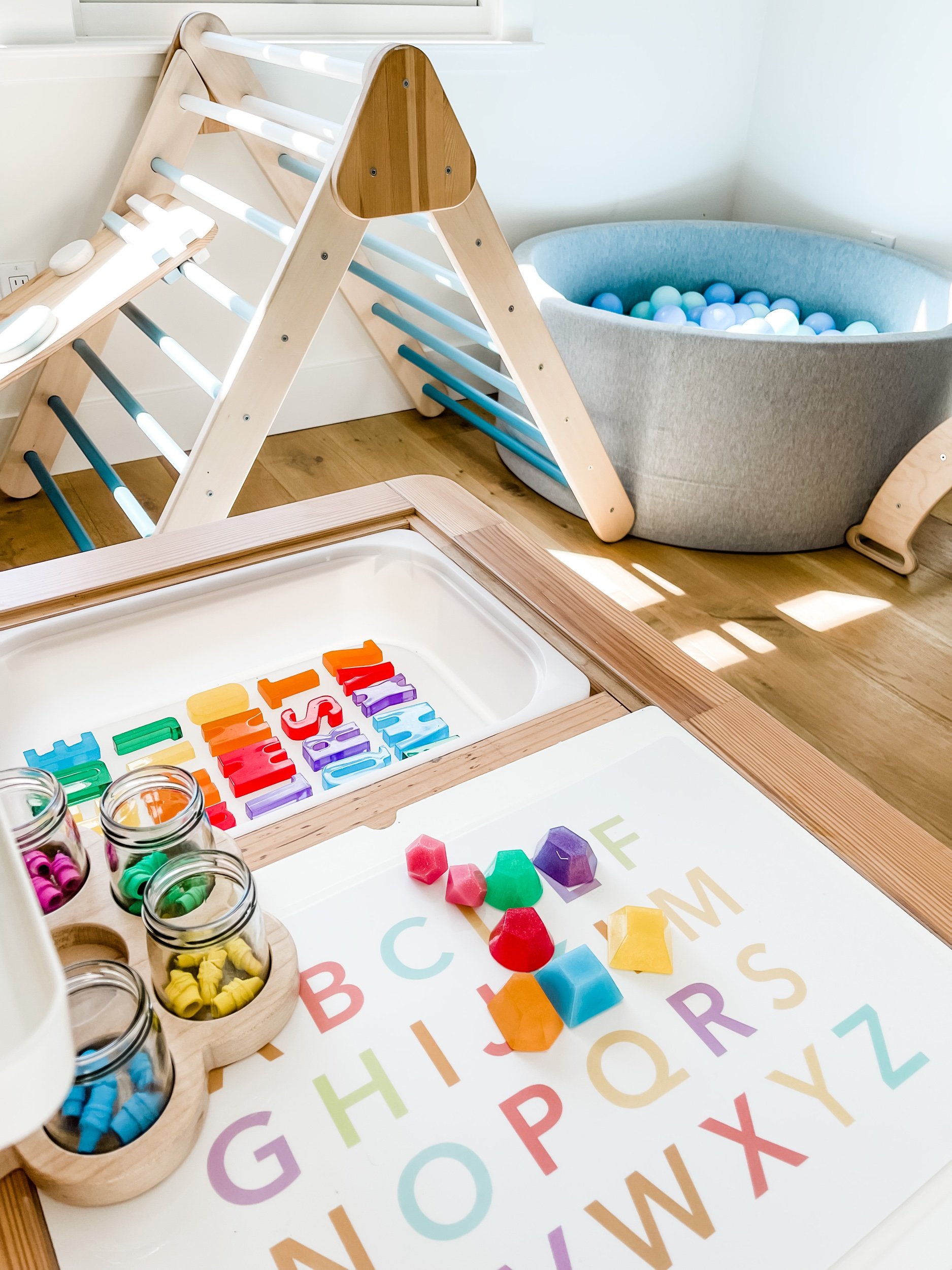
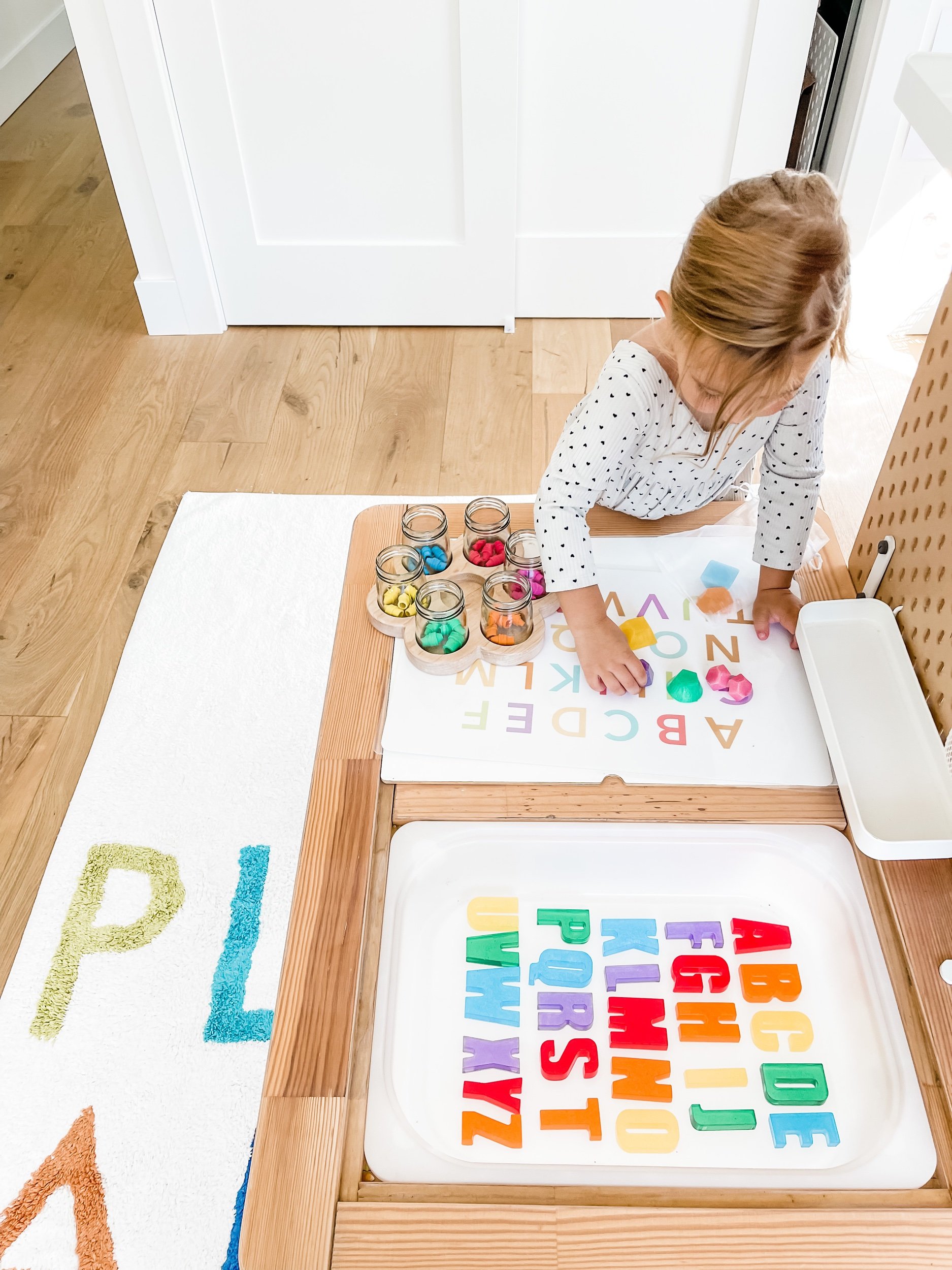
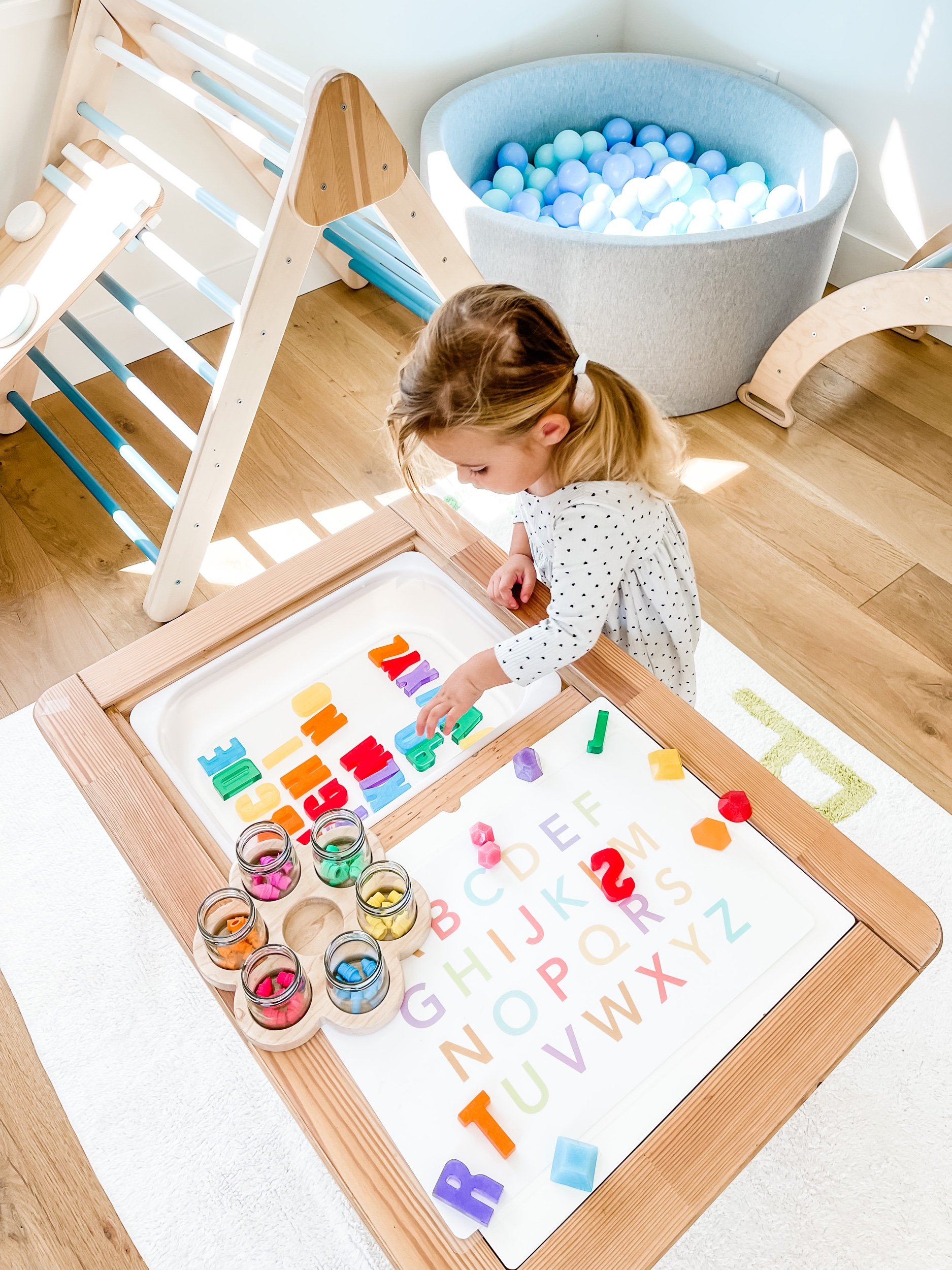
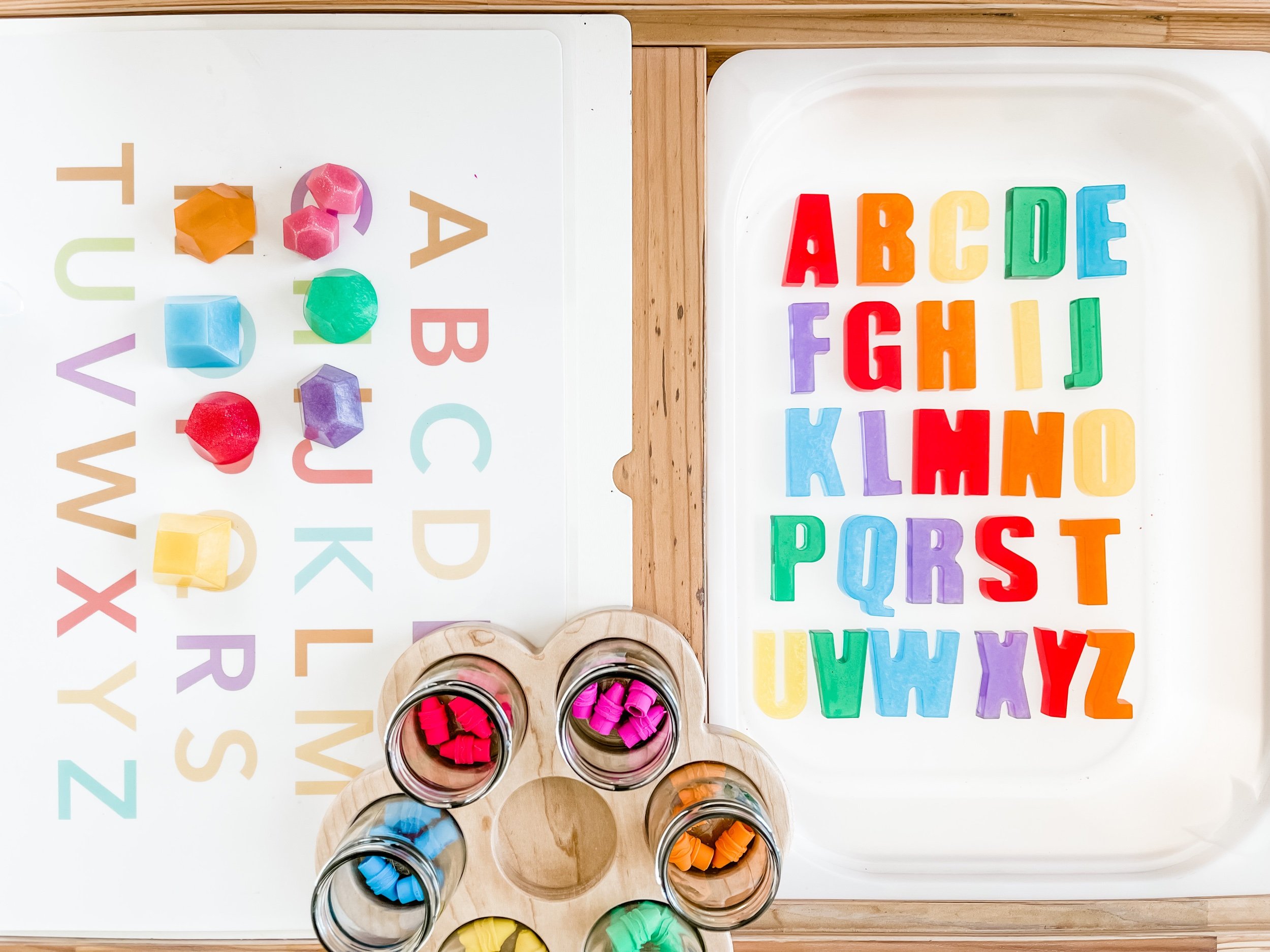
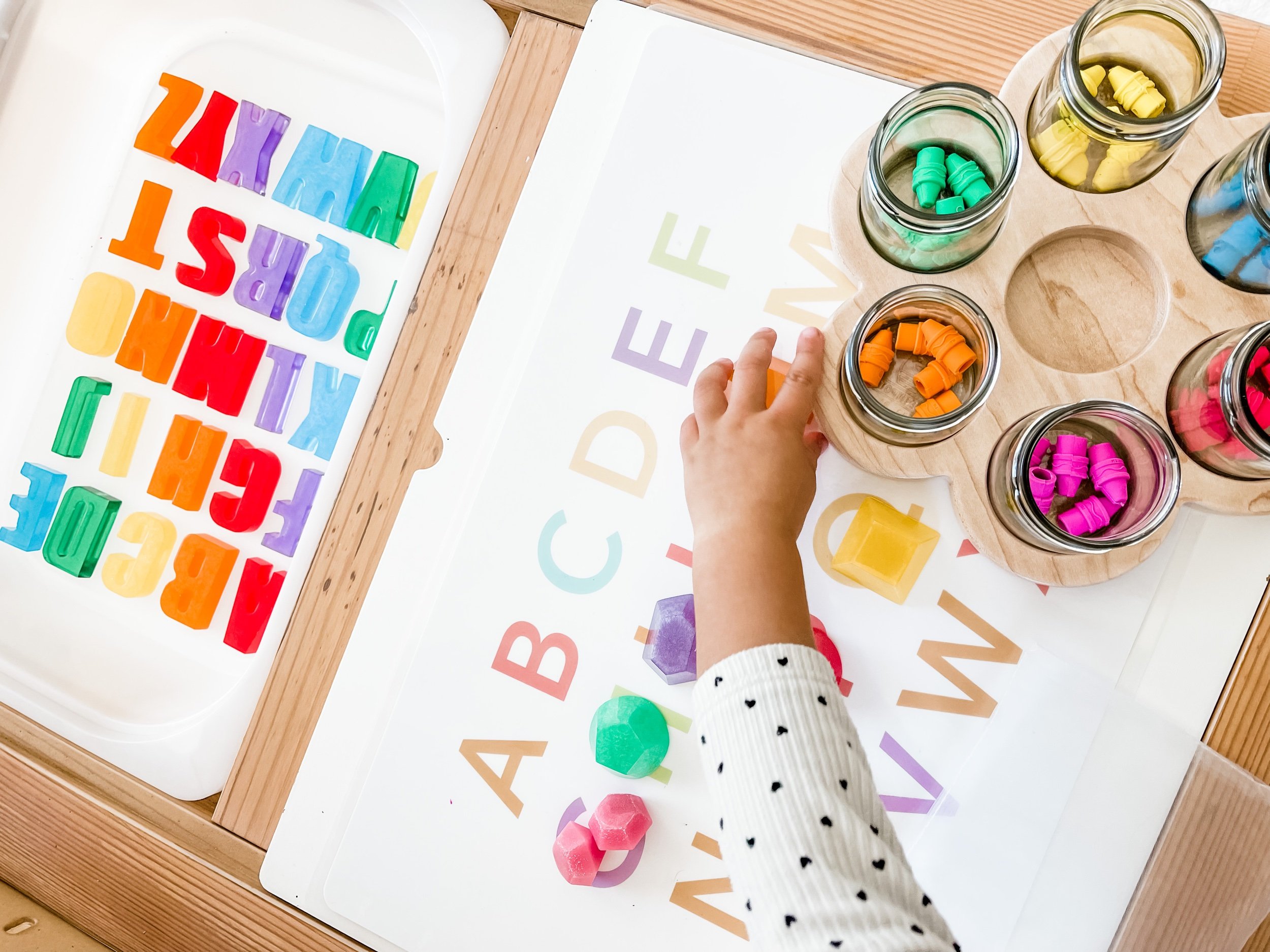
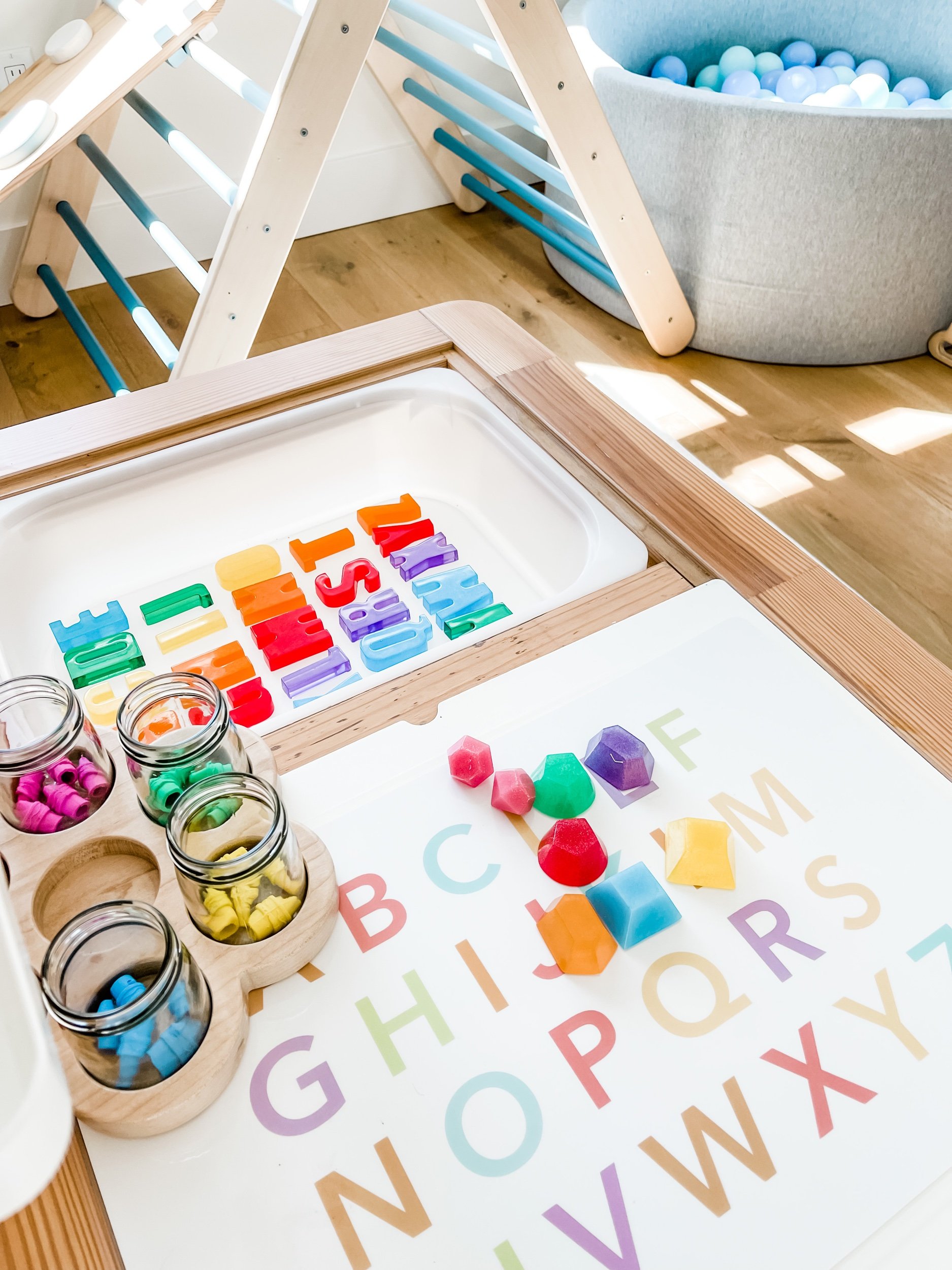
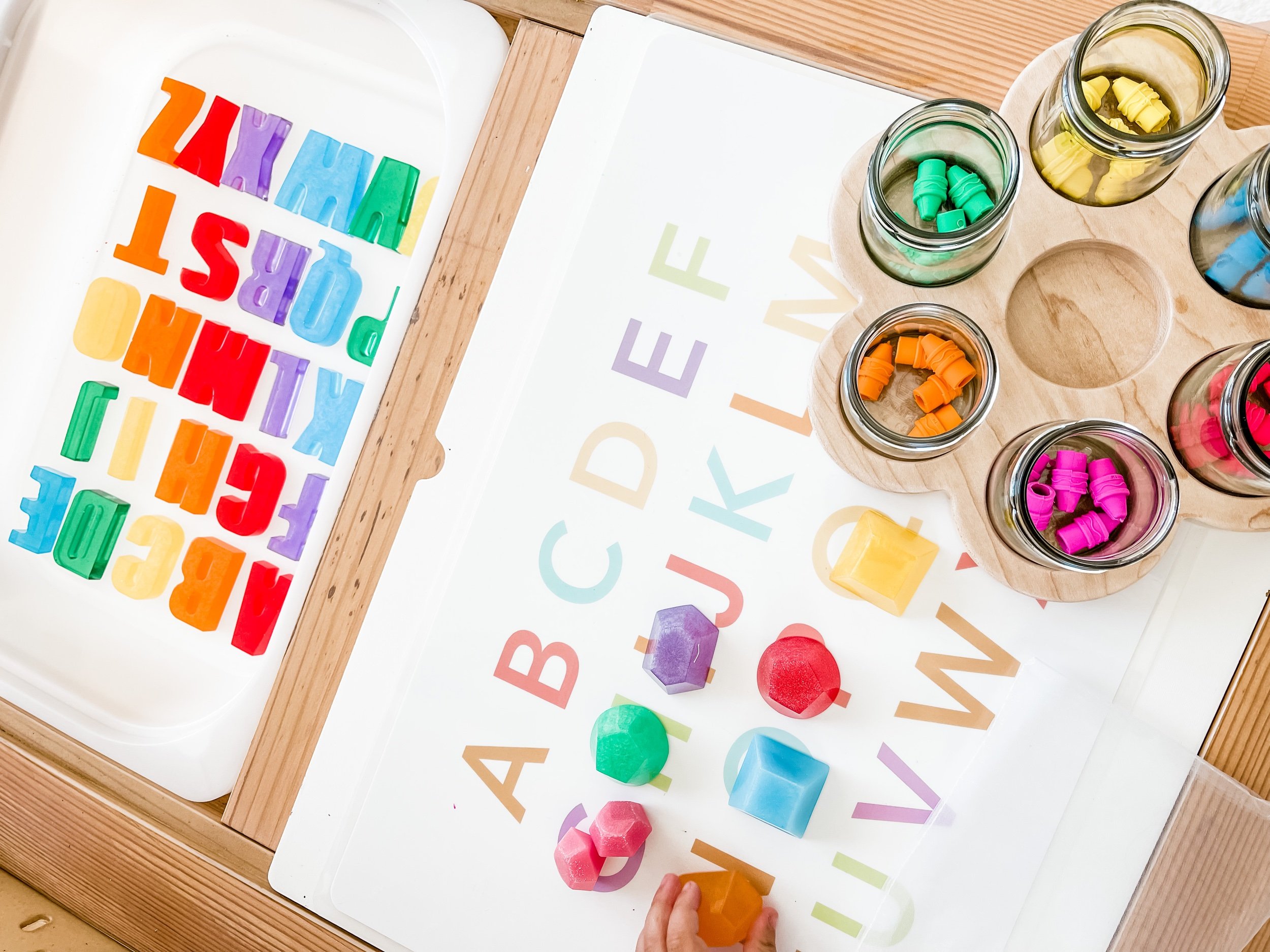
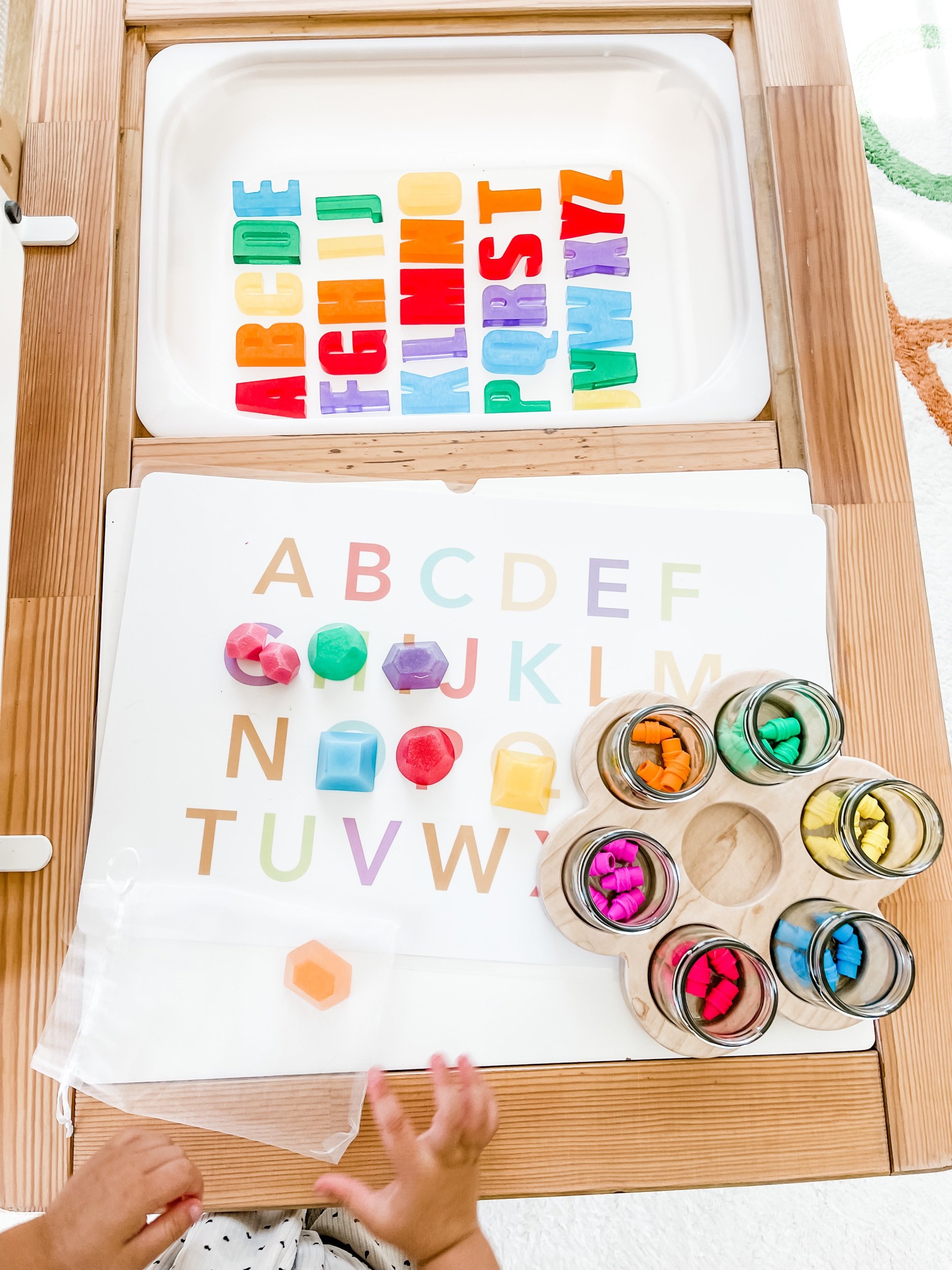
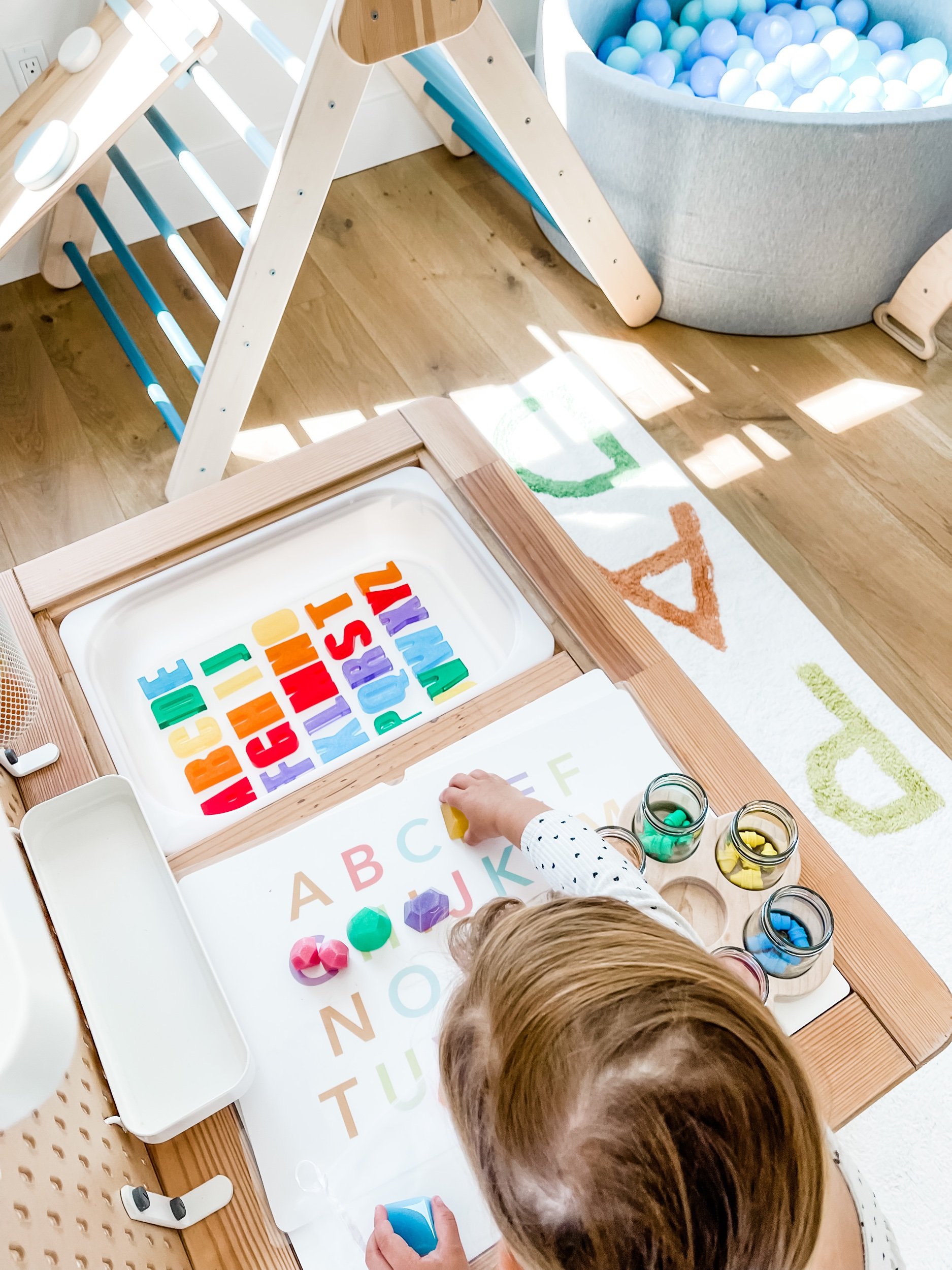
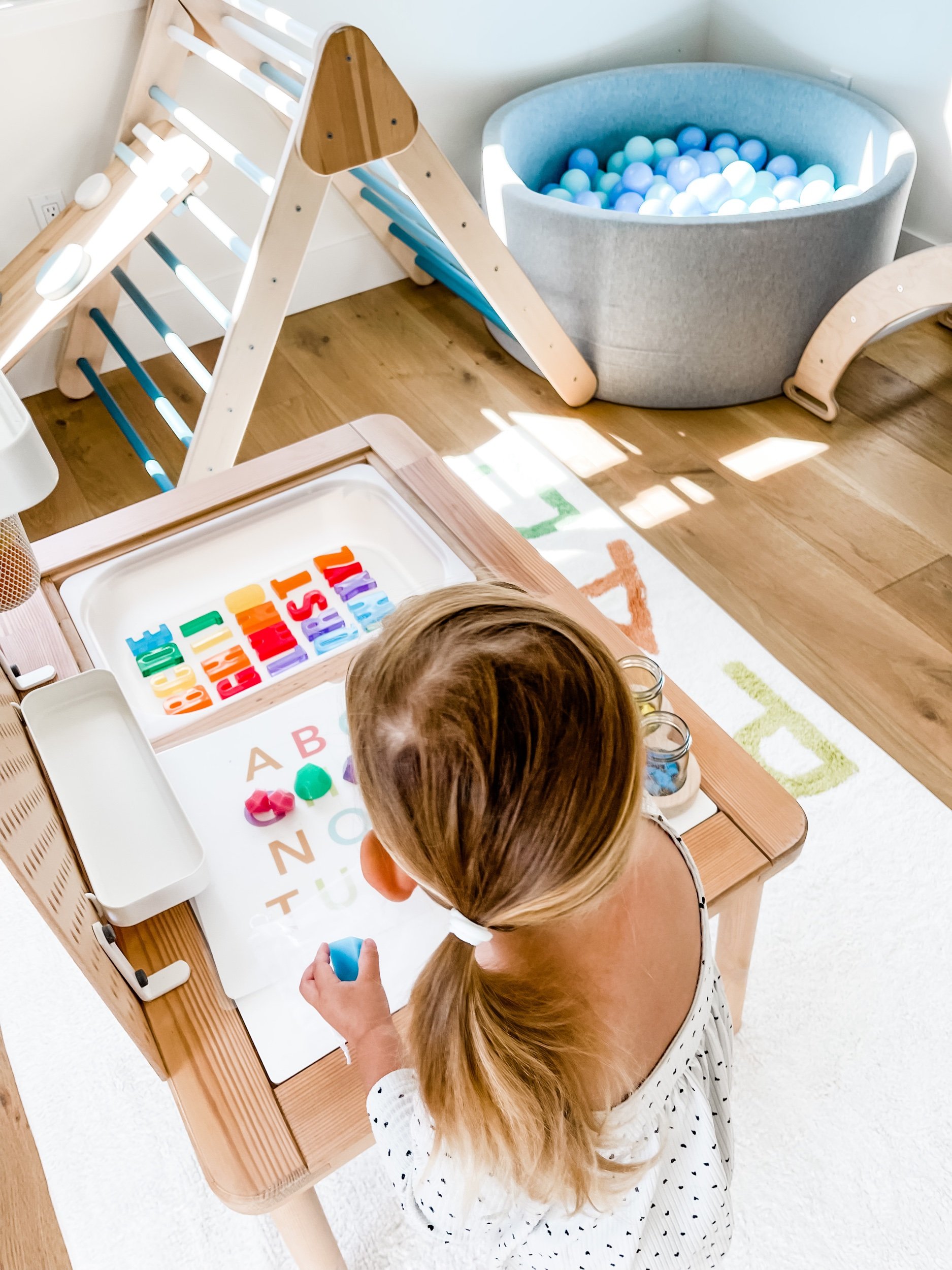
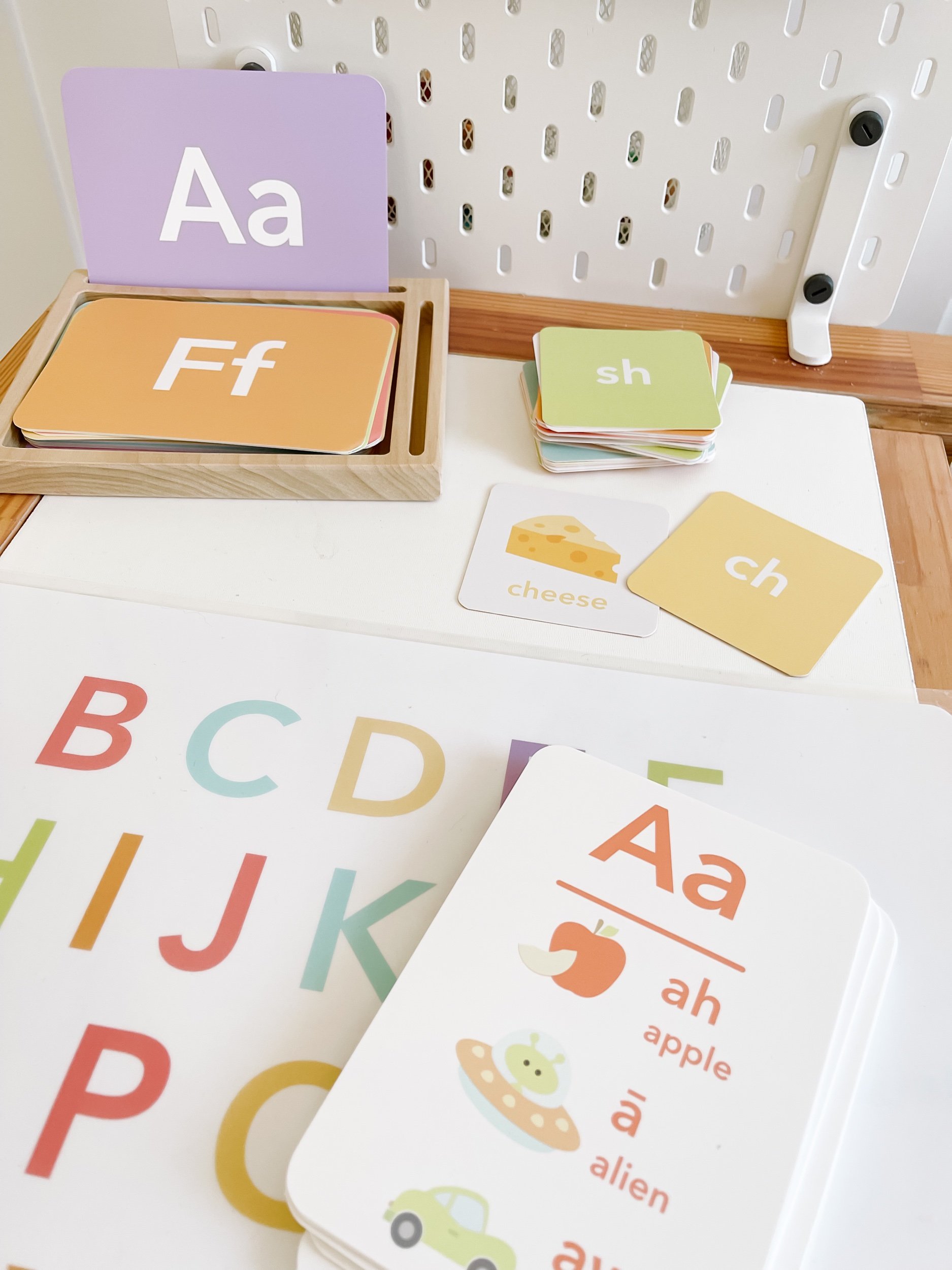
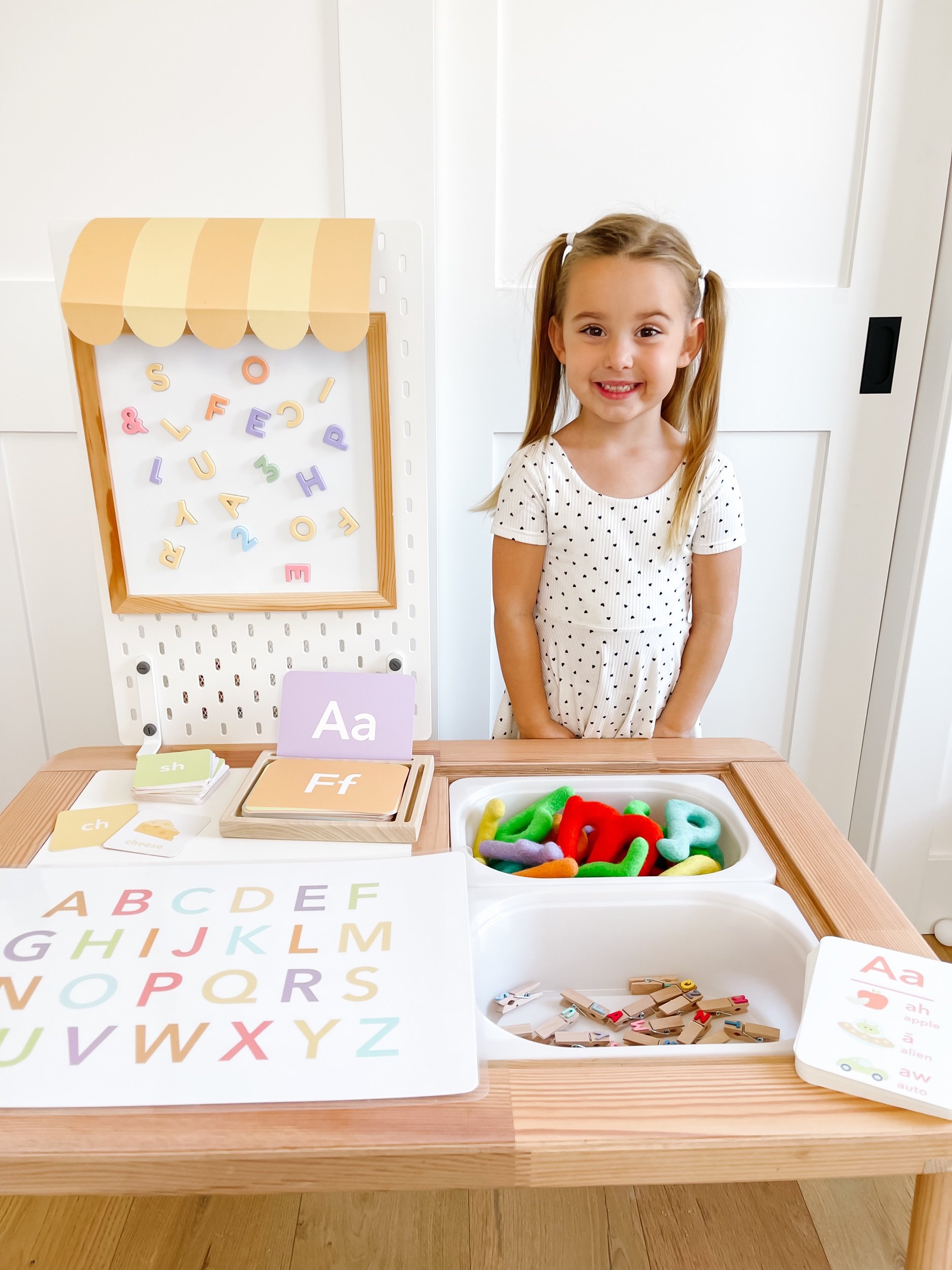
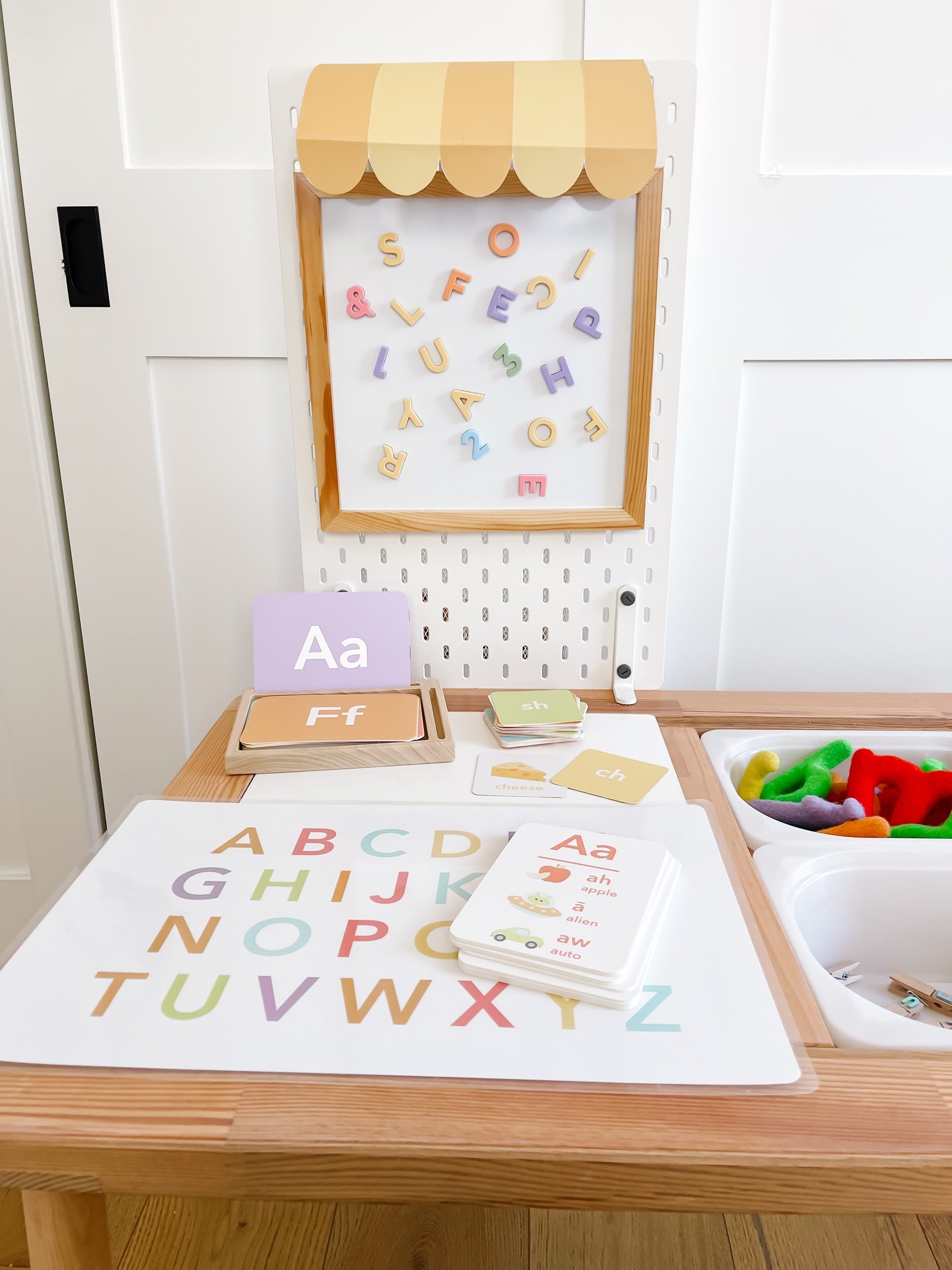
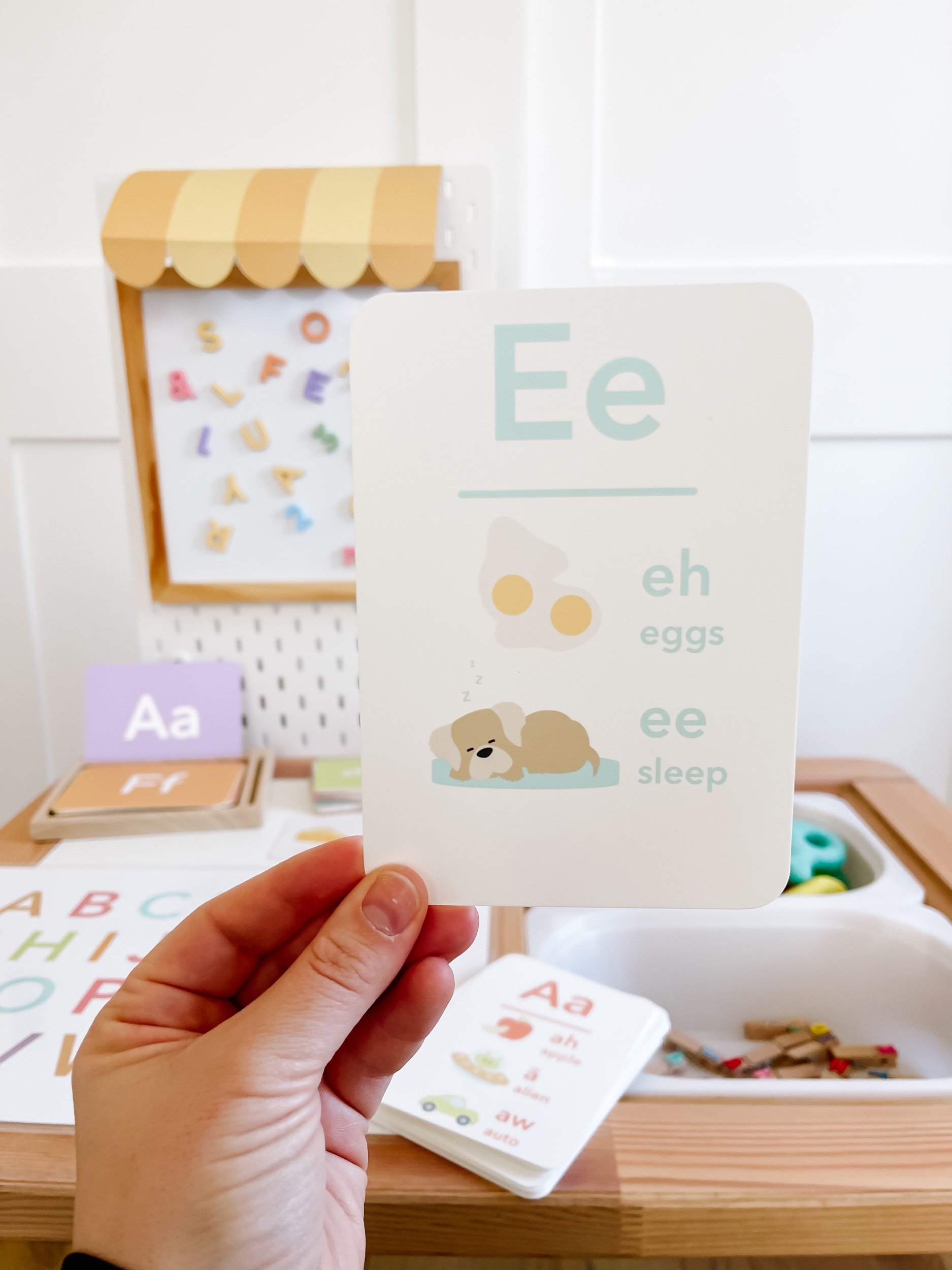
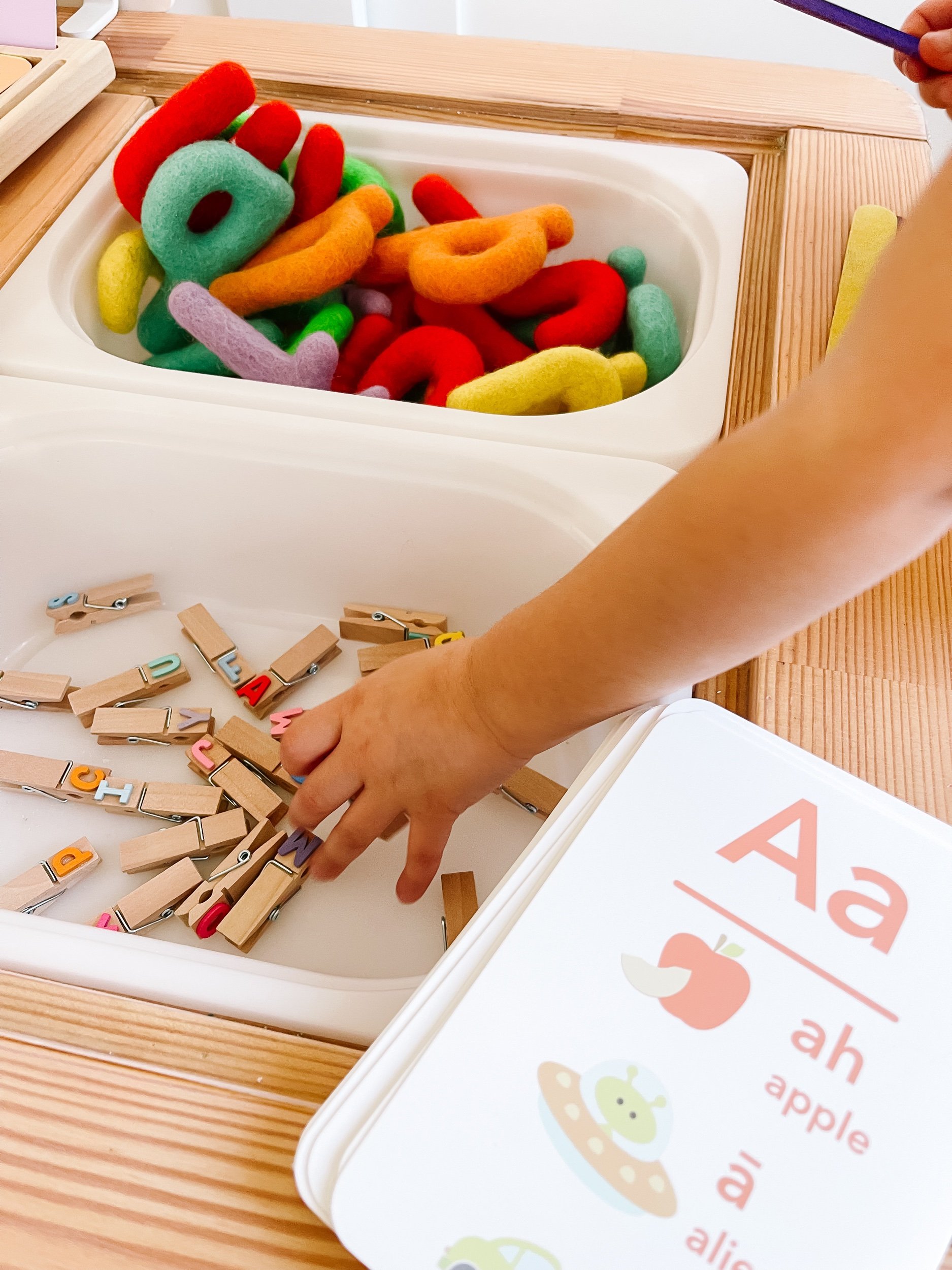
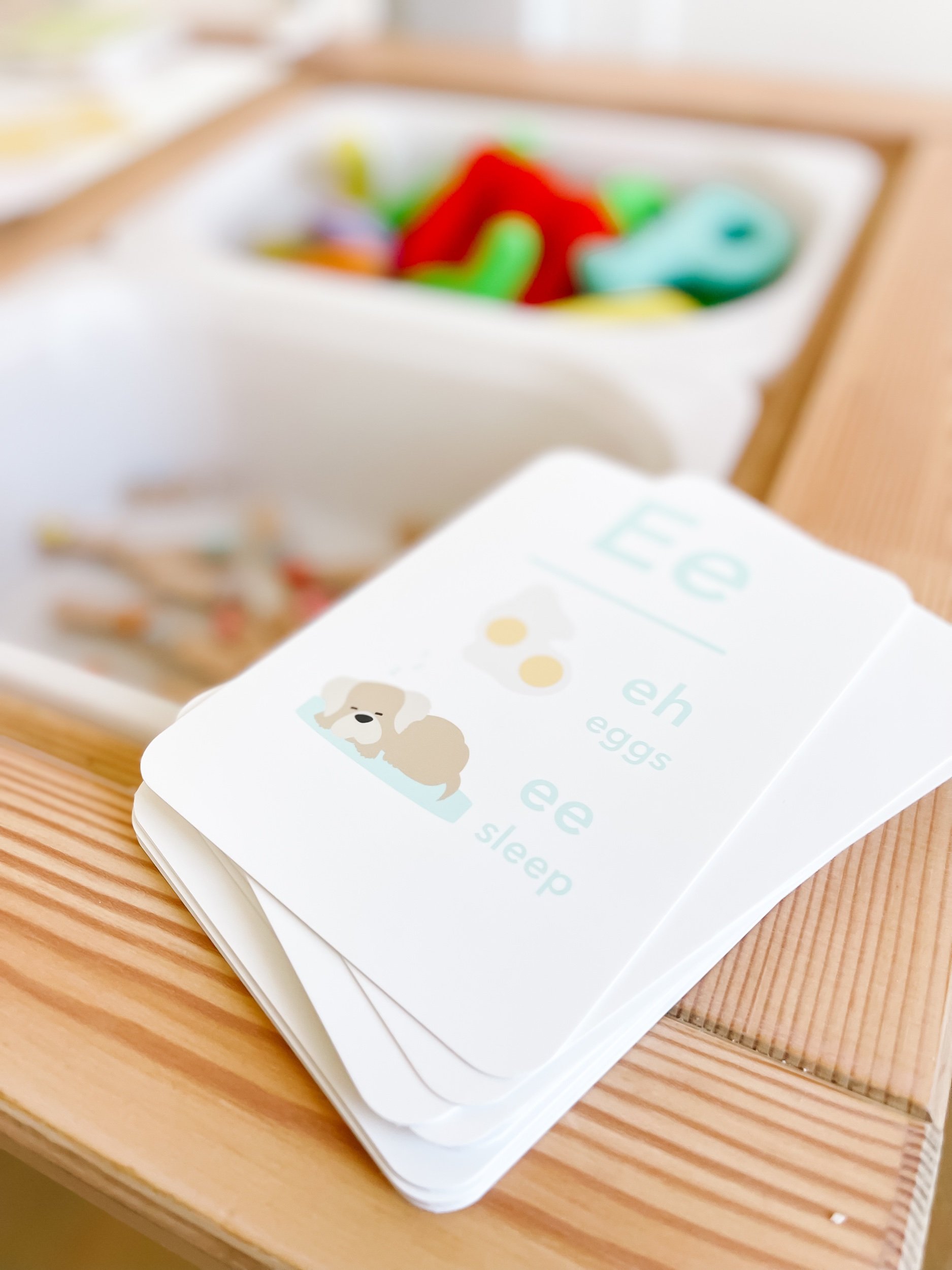
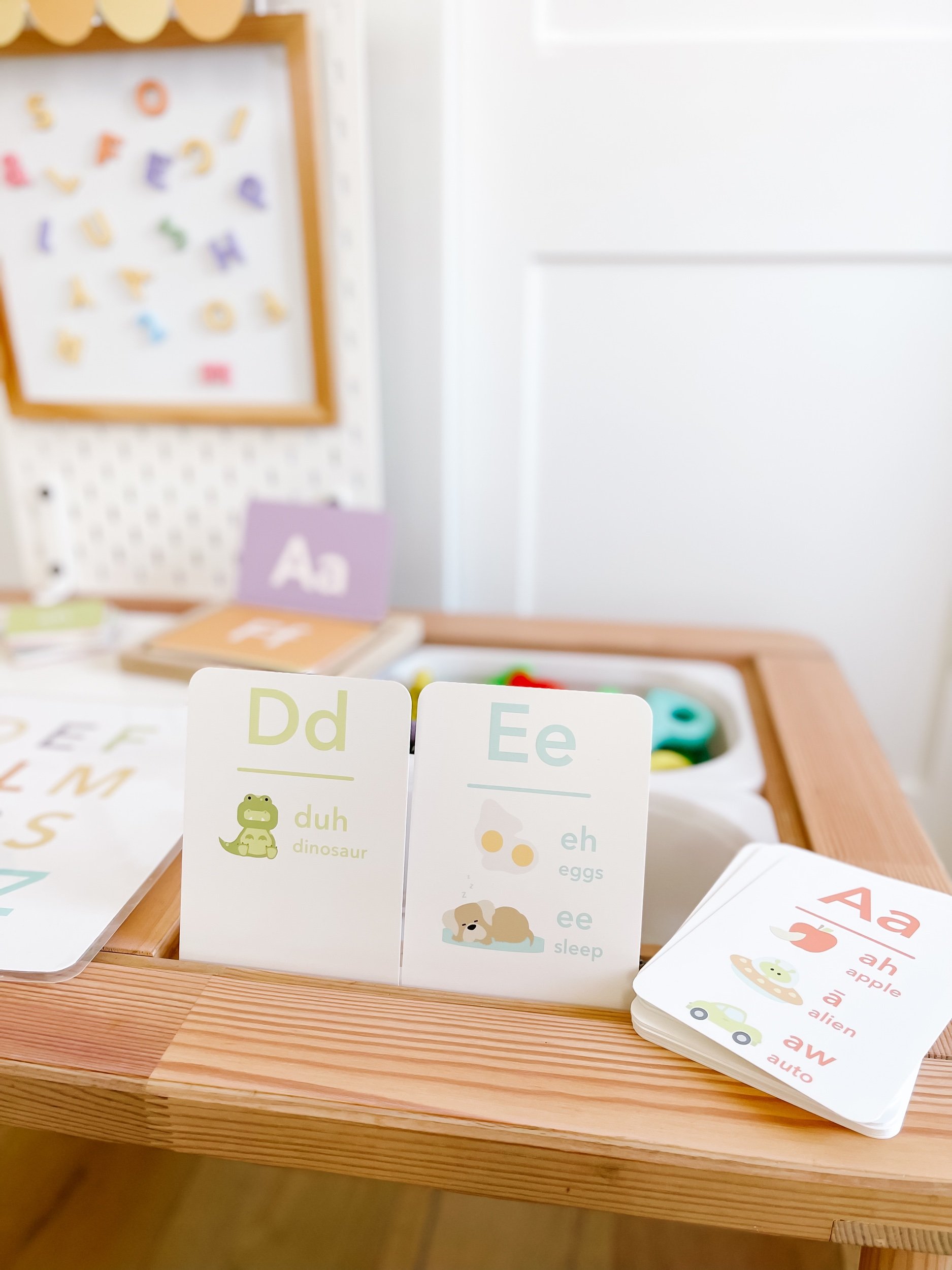
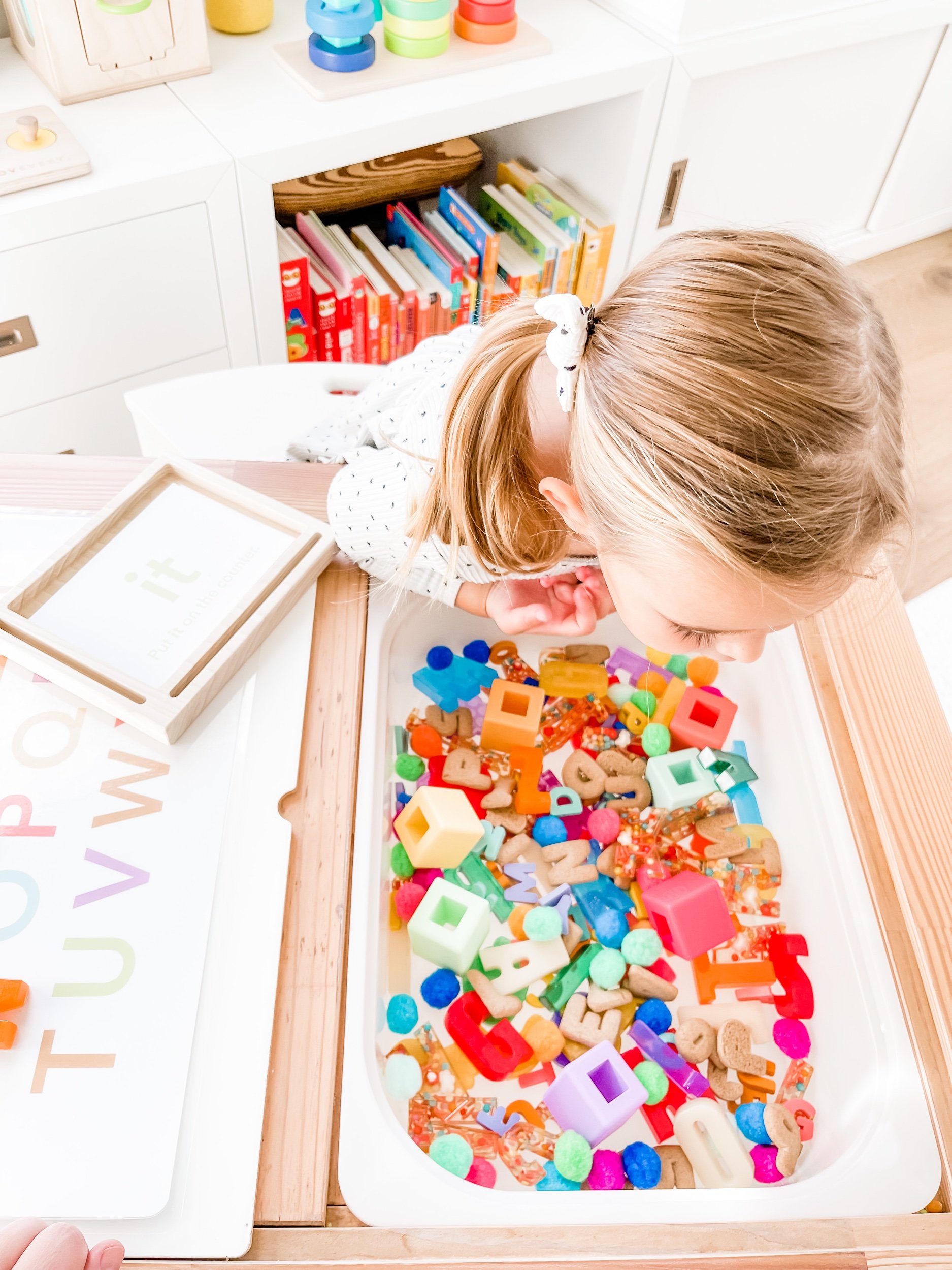
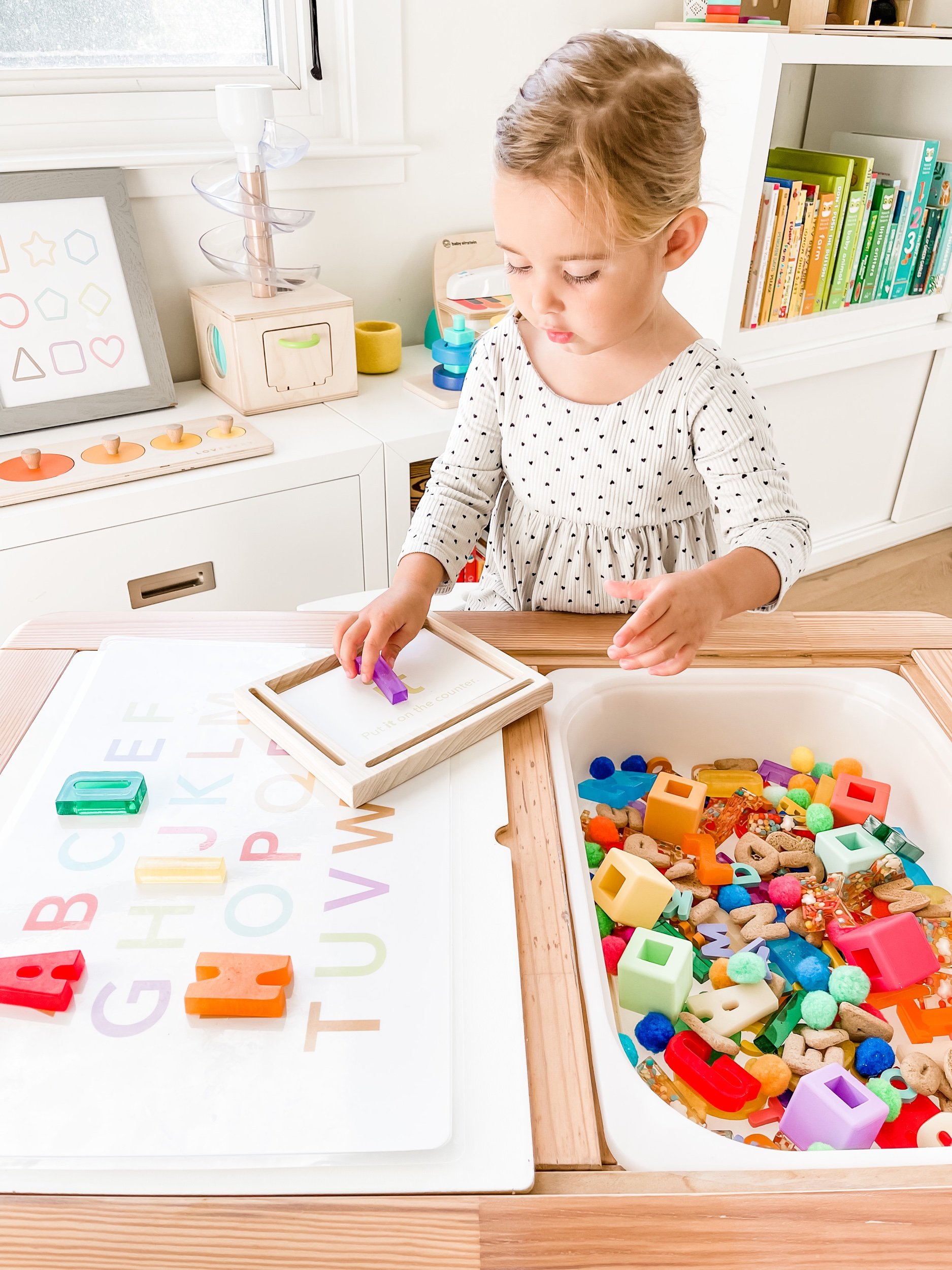
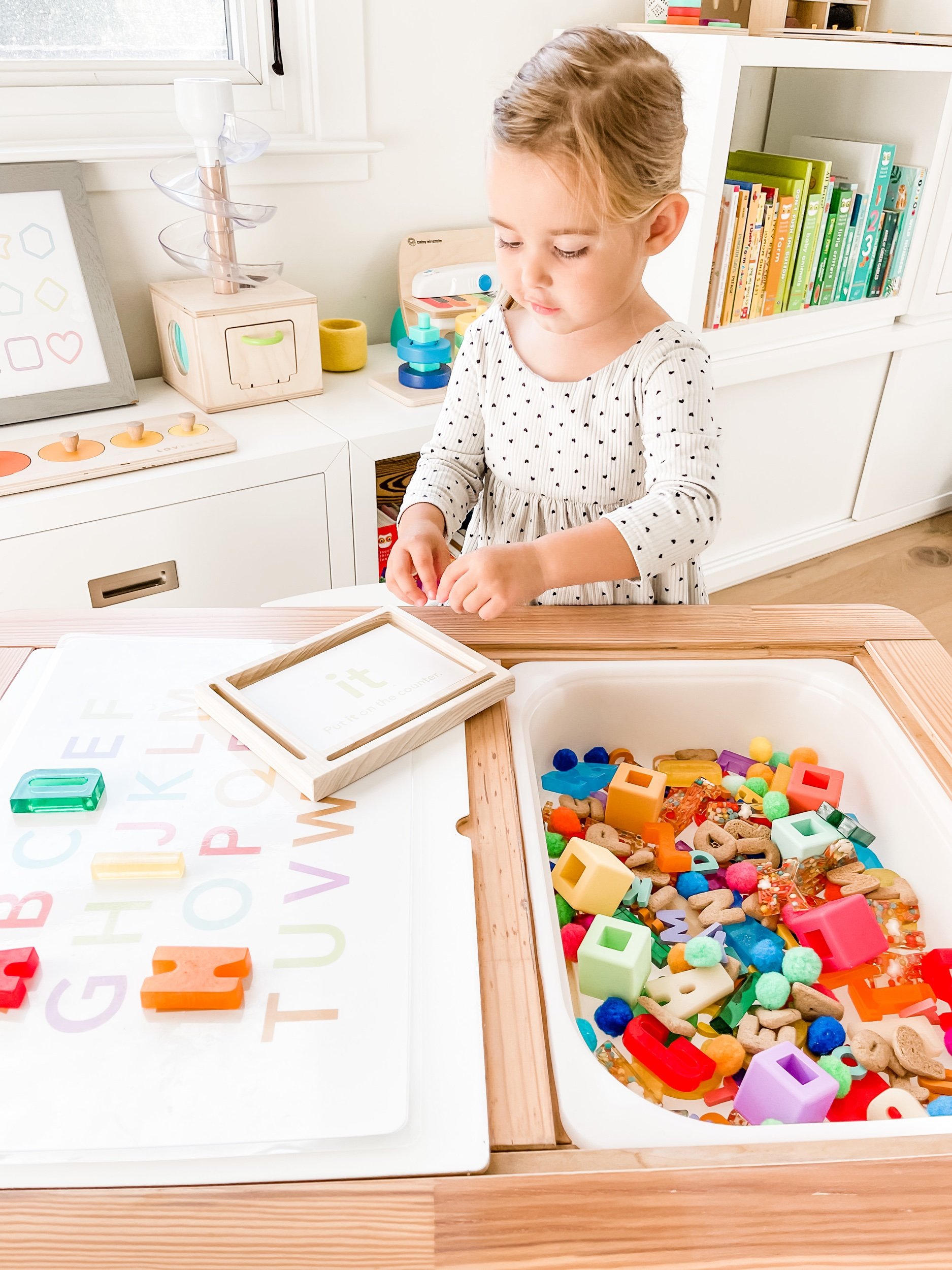
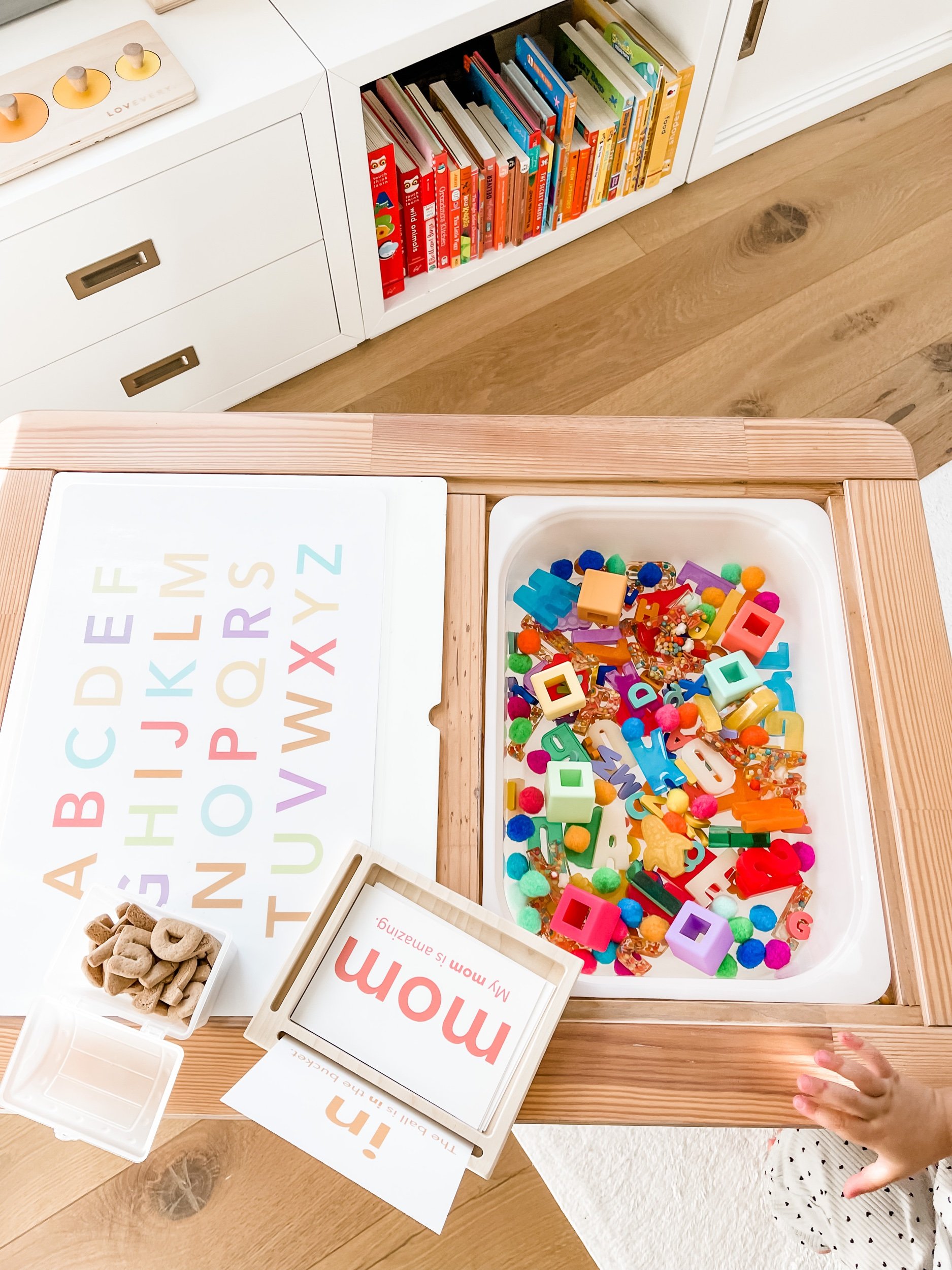
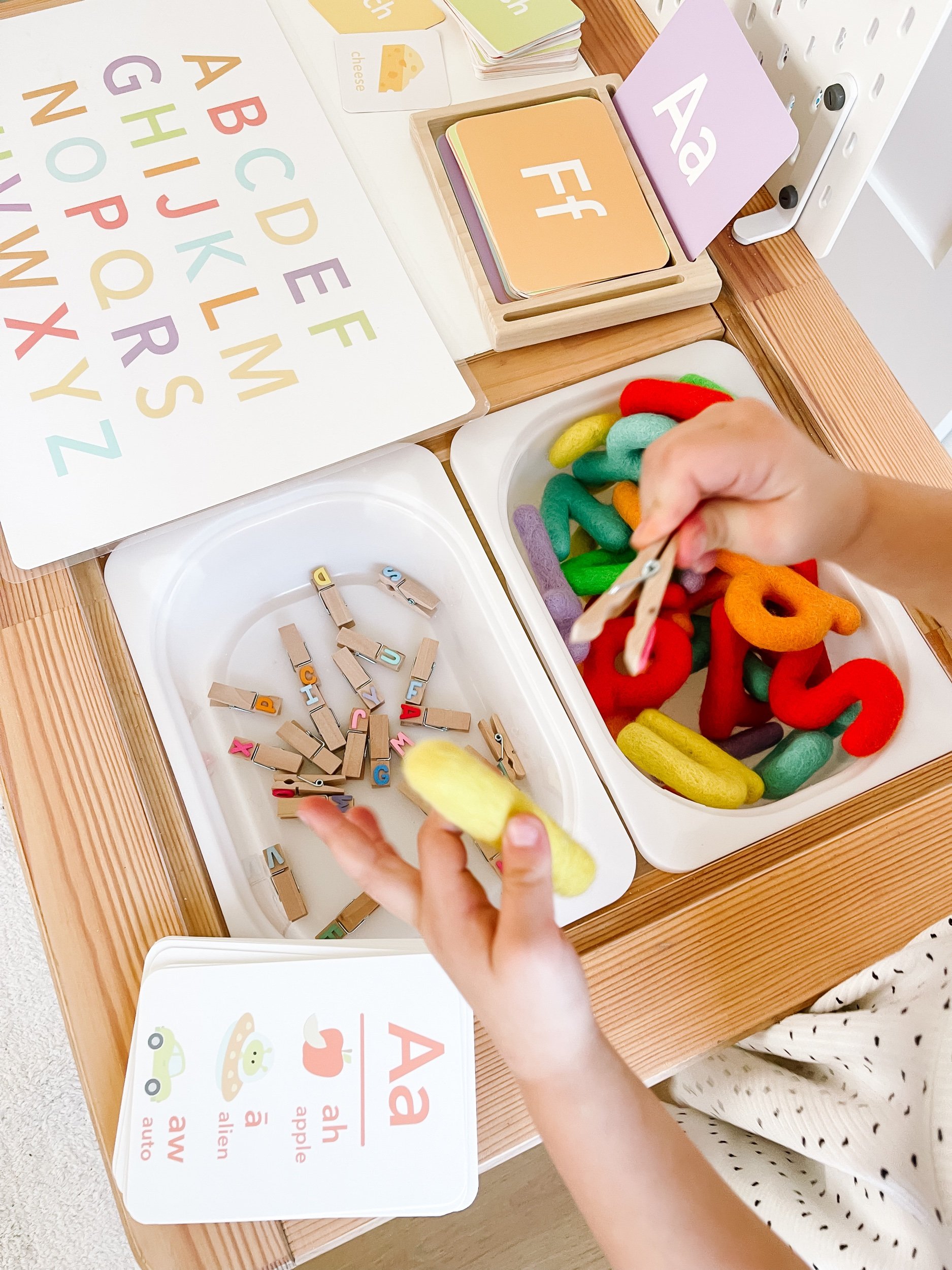
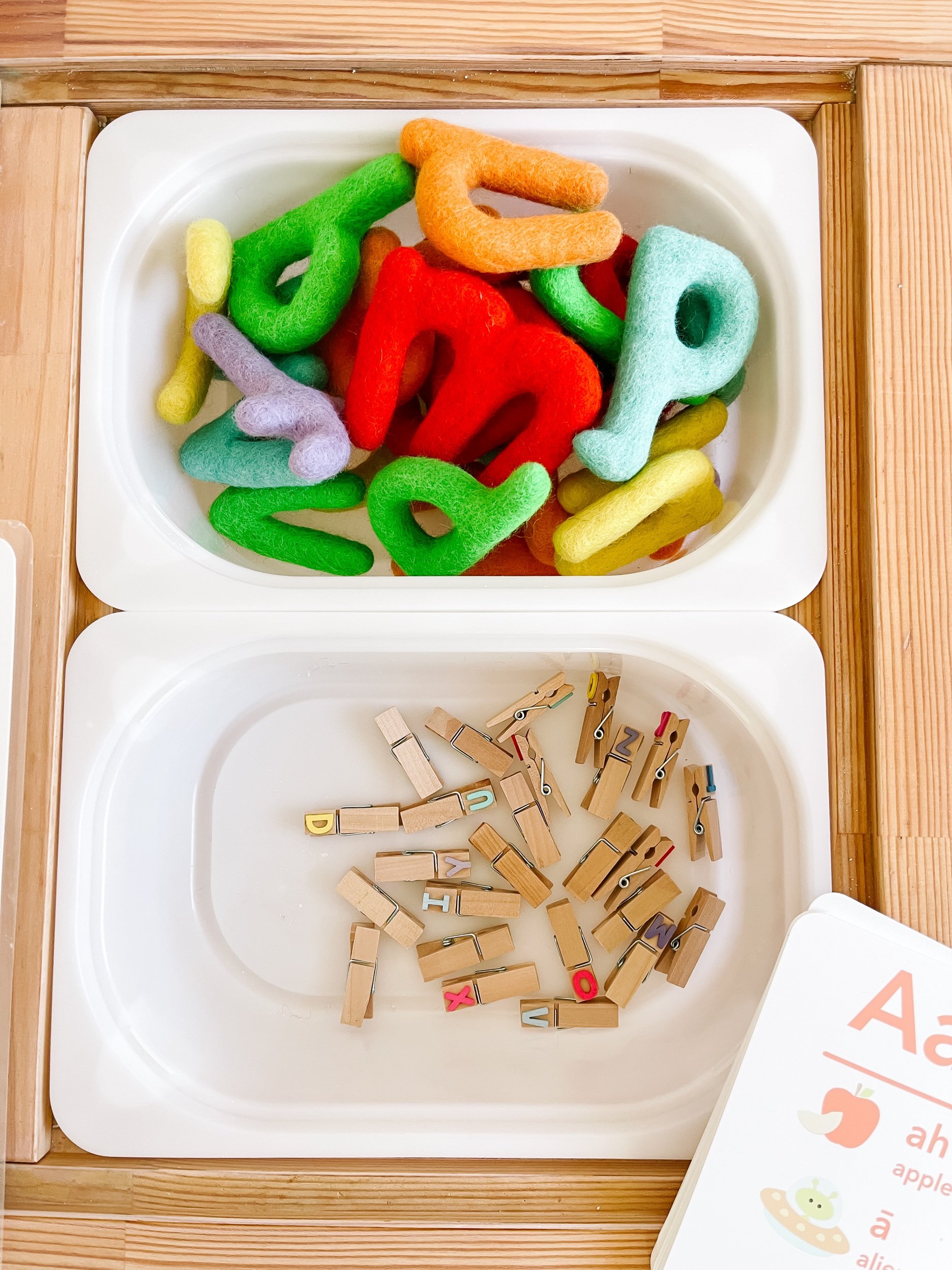
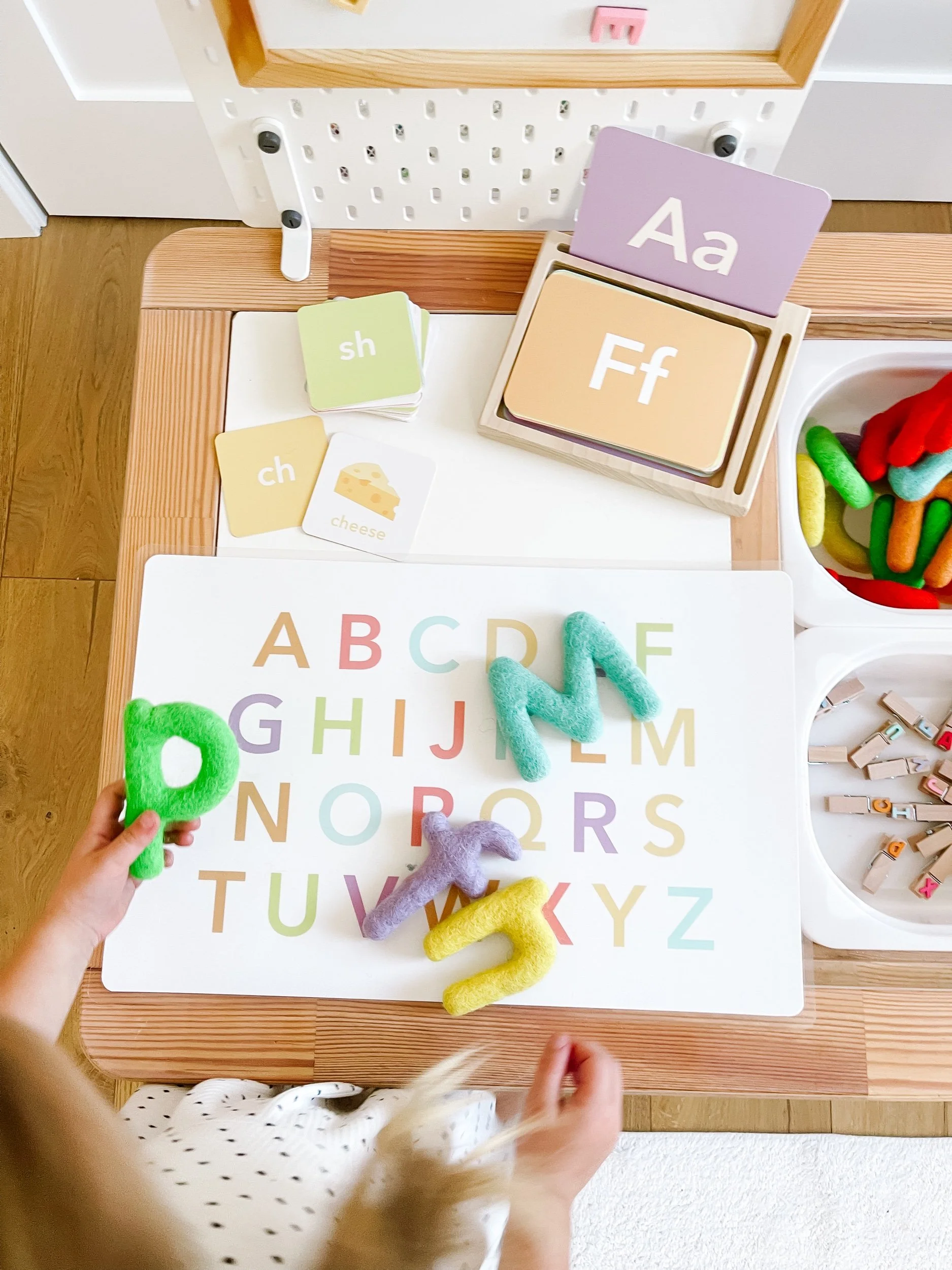
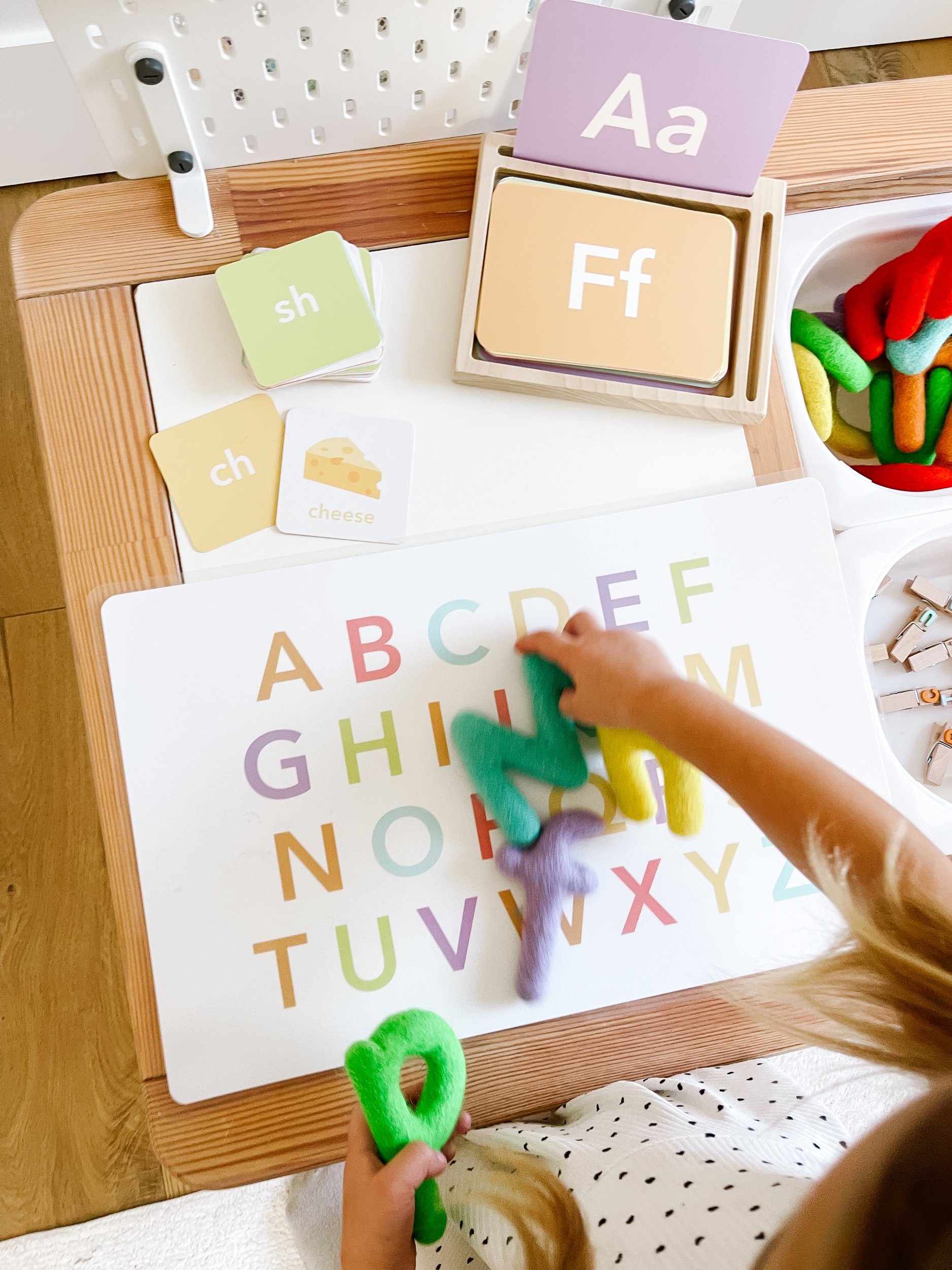
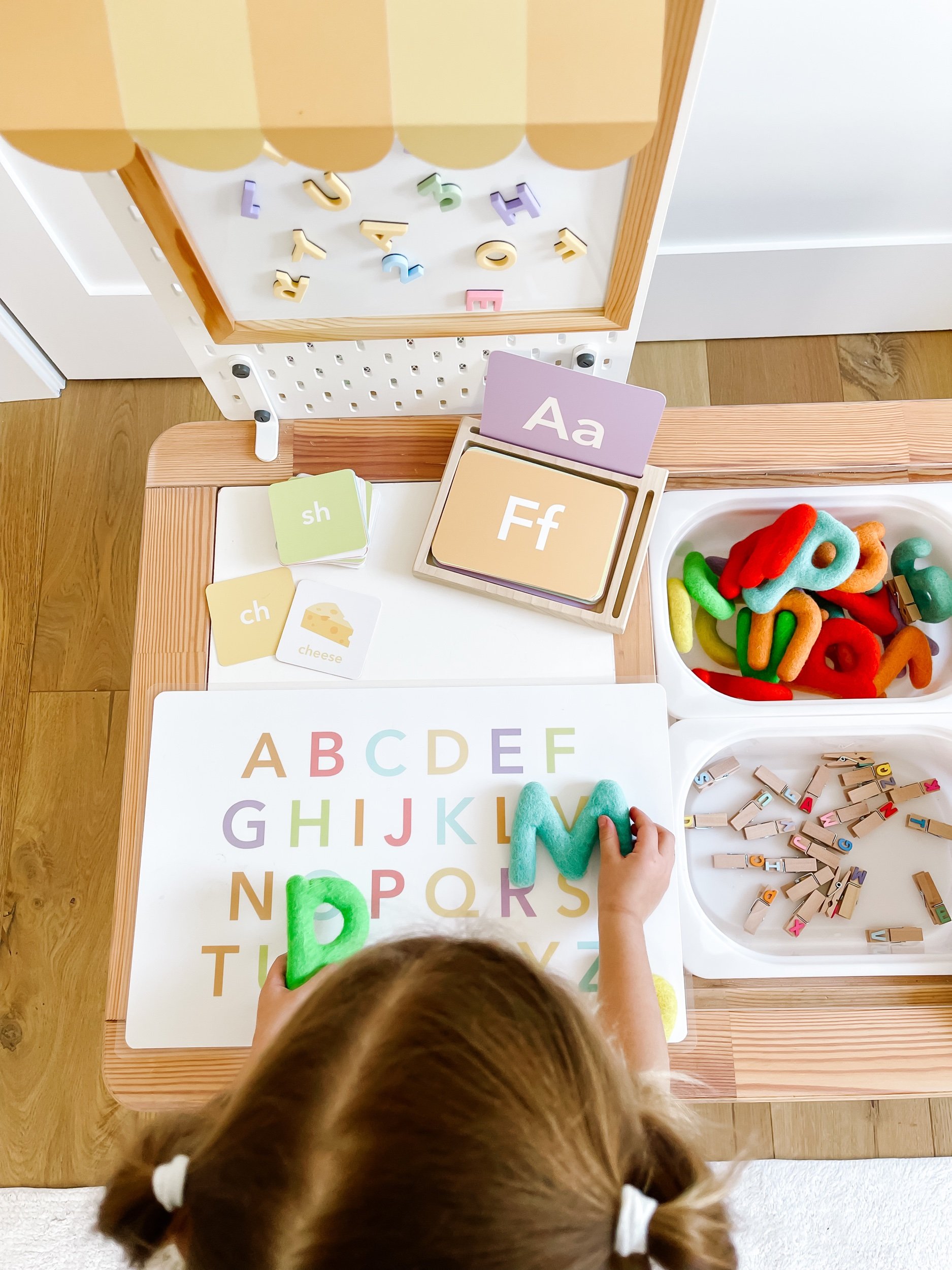
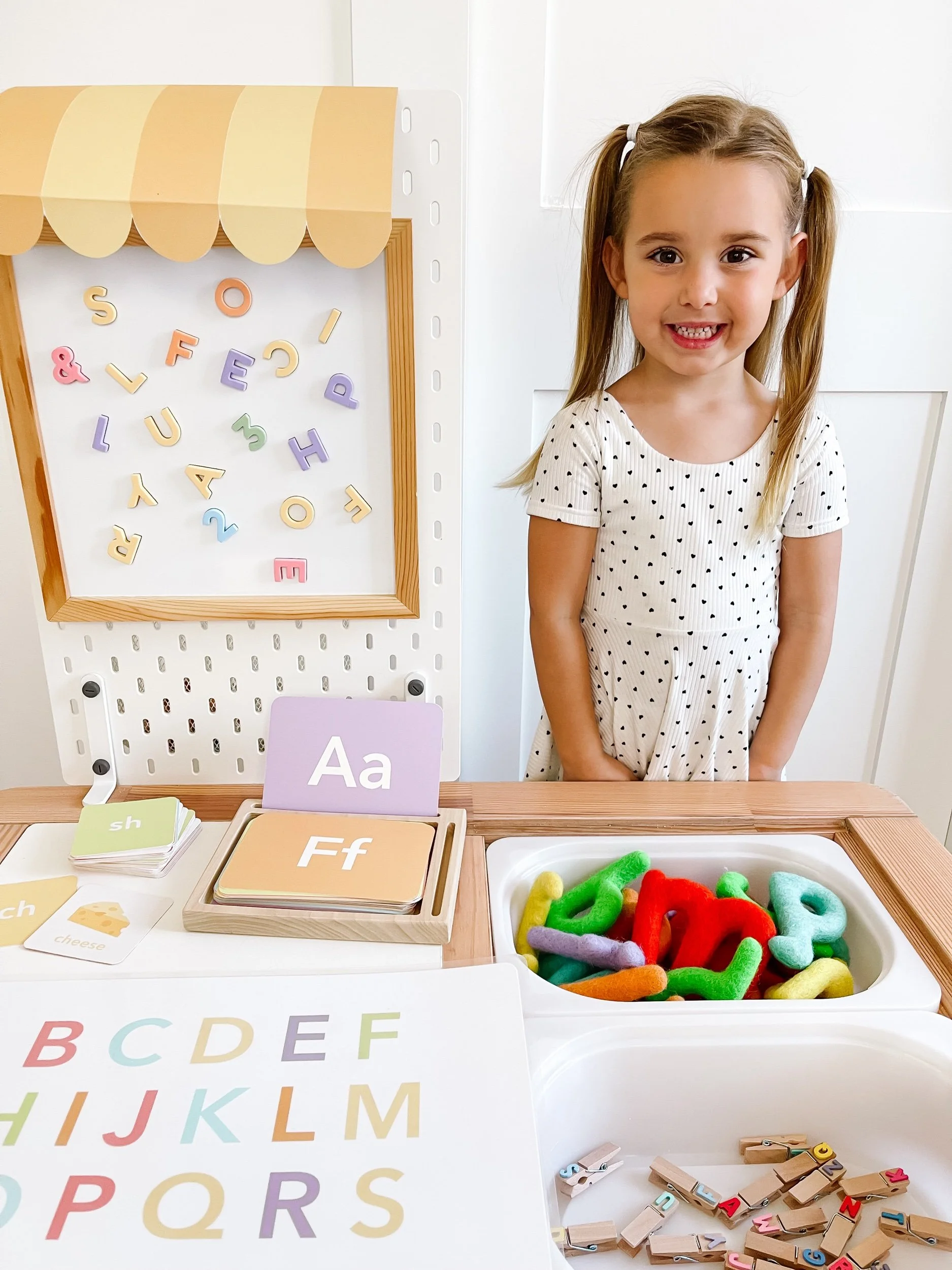
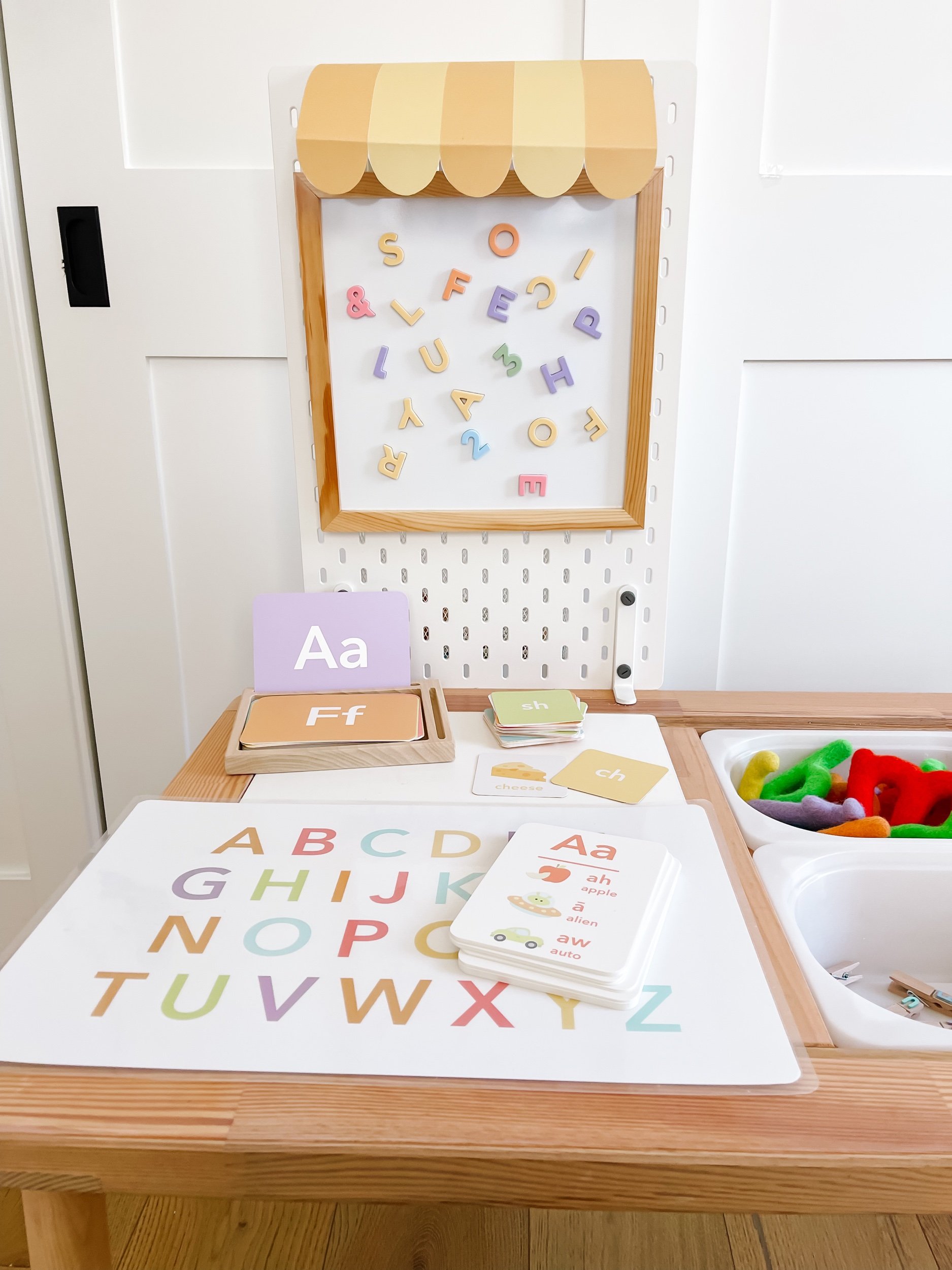
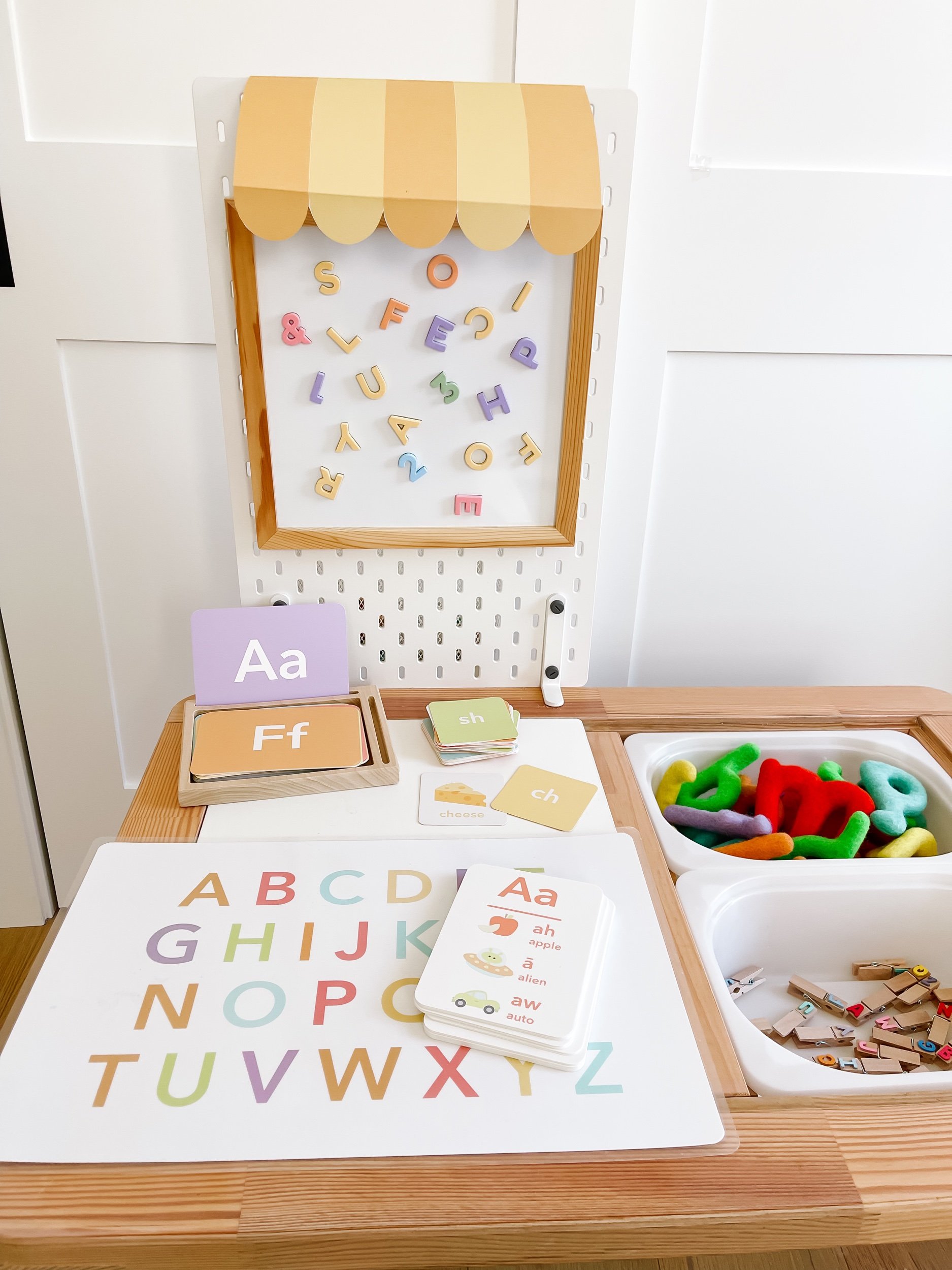
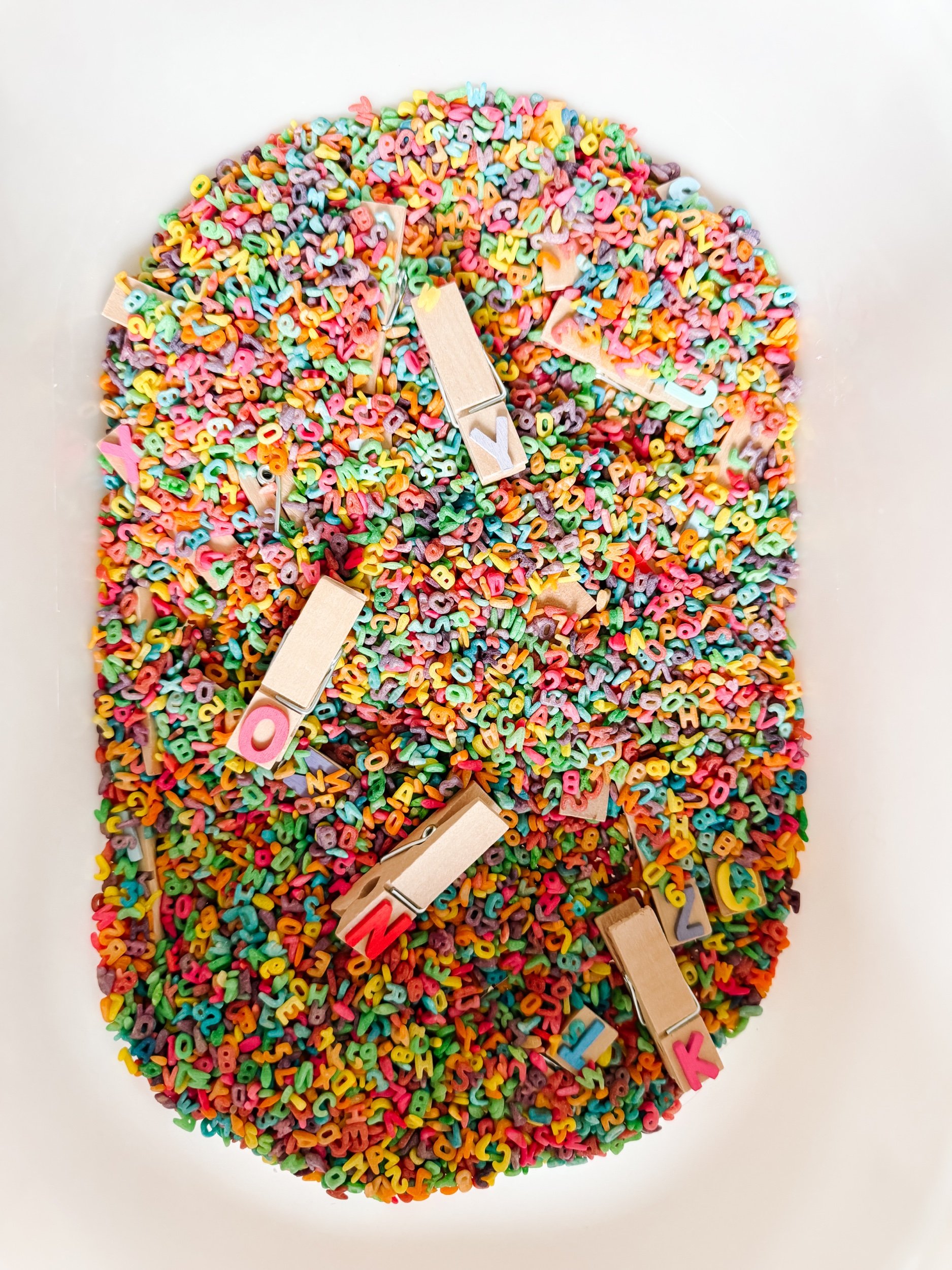
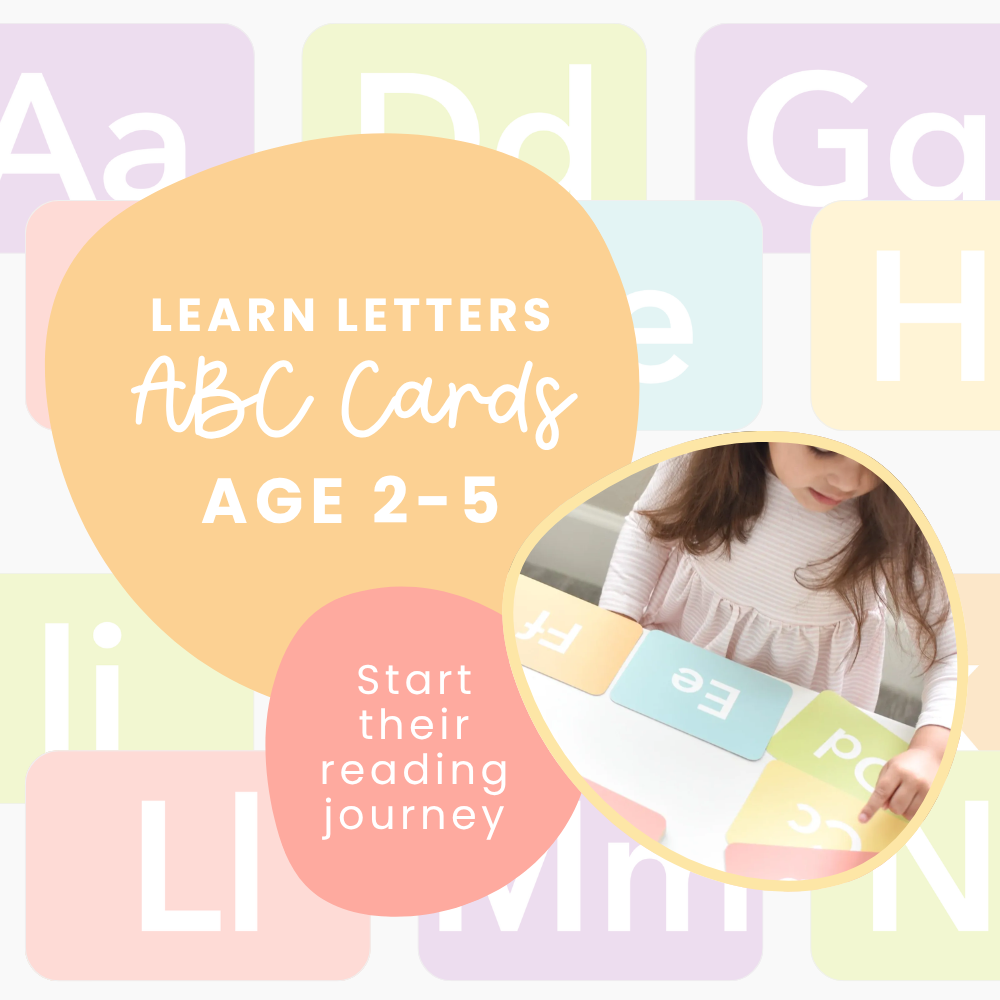
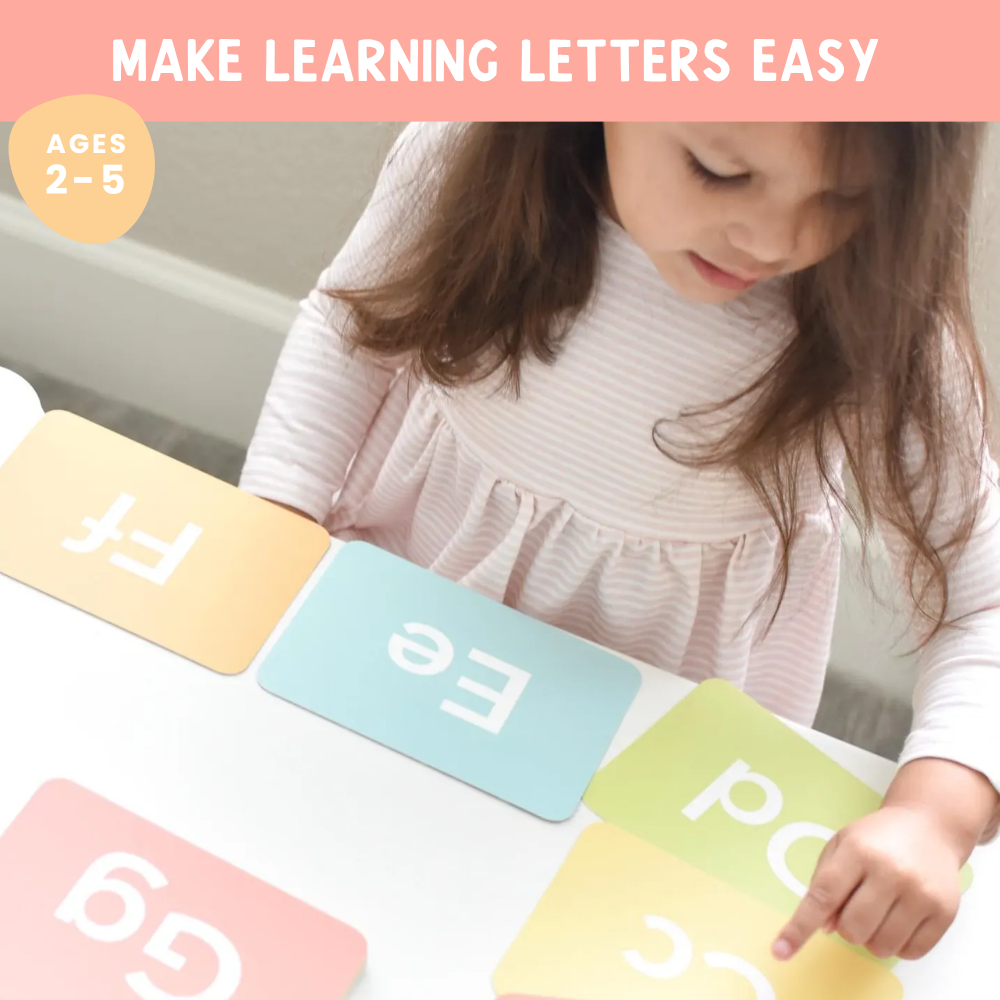
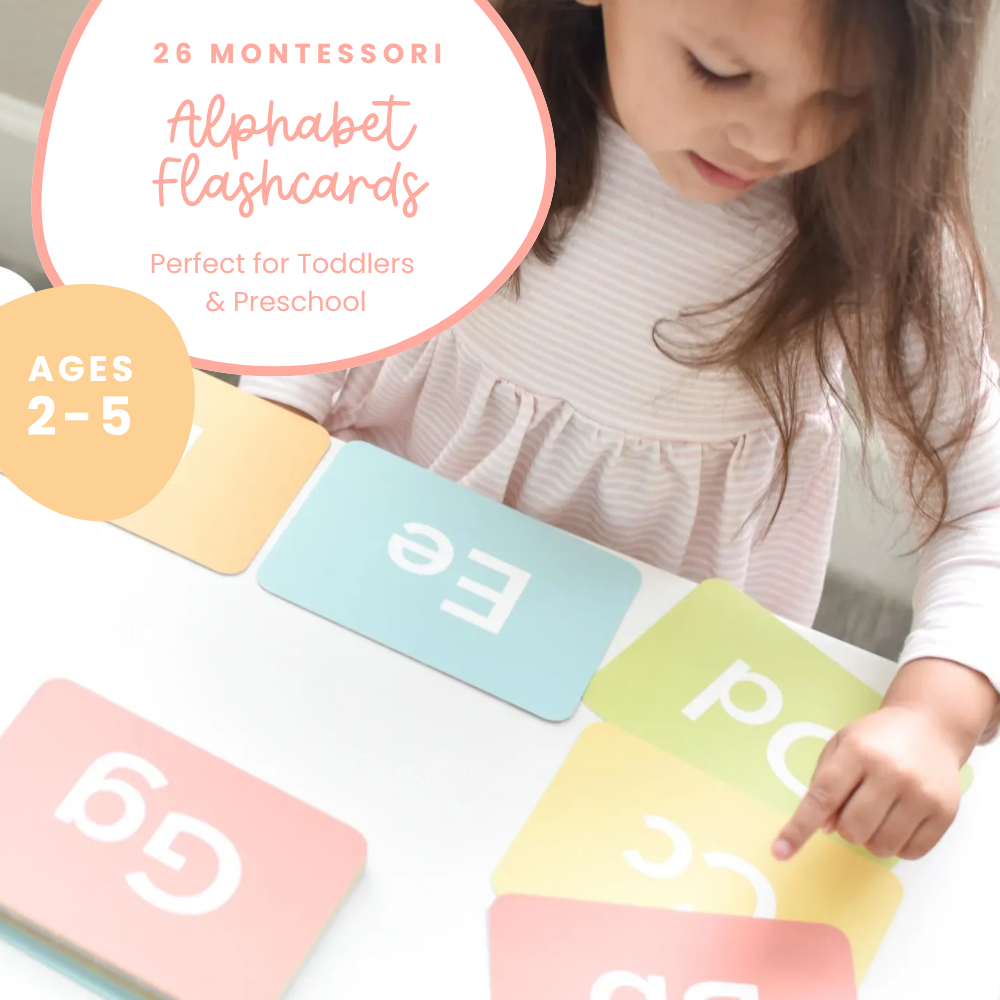
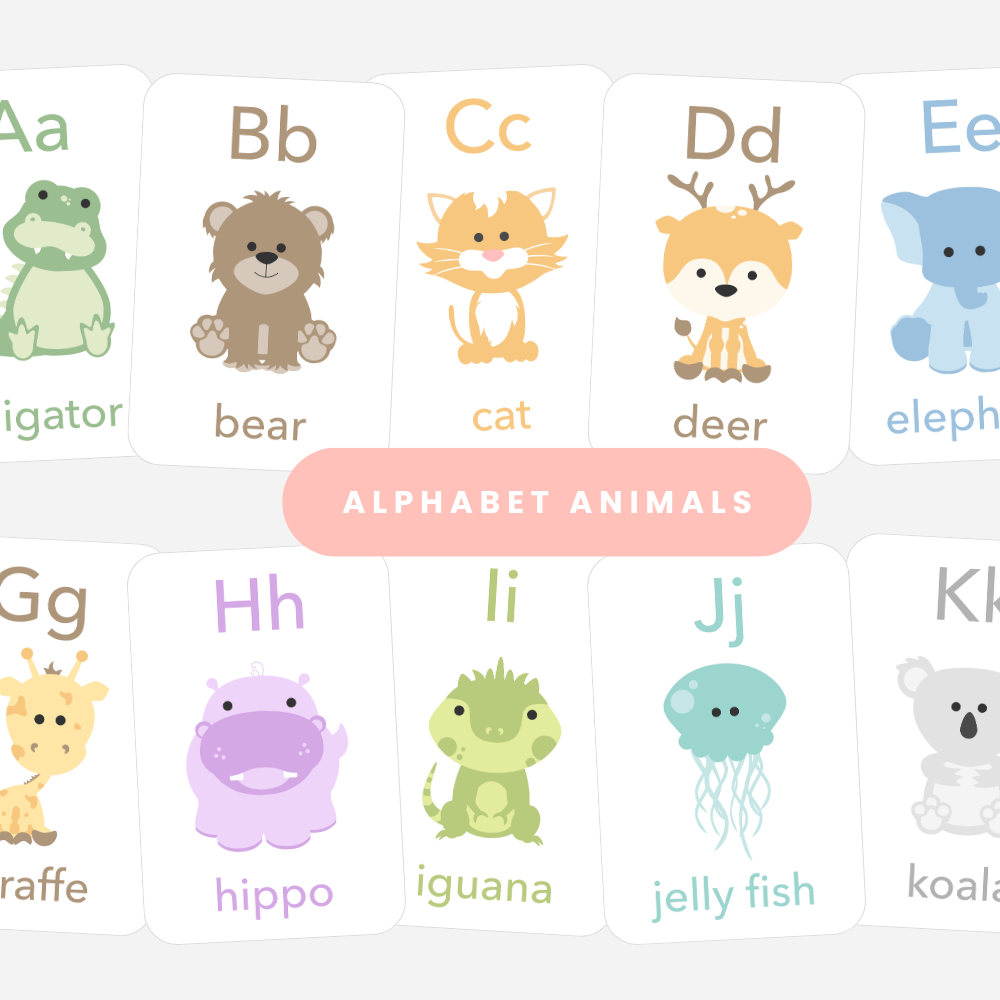
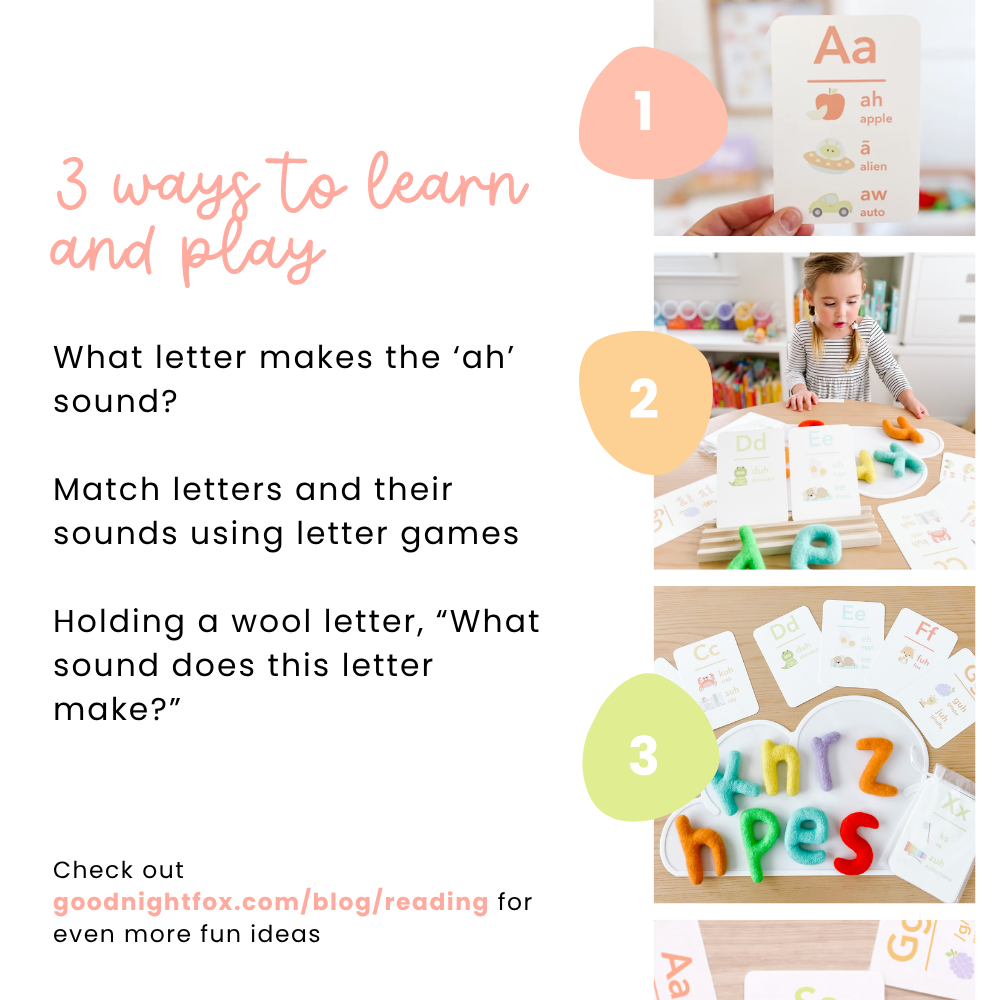
Fill a sensory bin with colorful resin letters, blocks, and soft wool balls. Using alphabet flashcards, encourage toddlers to search and find the matching letter from the bin. This activity promotes letter recognition while providing a tactile experience.
2. Letter Sounds & PHONICS:
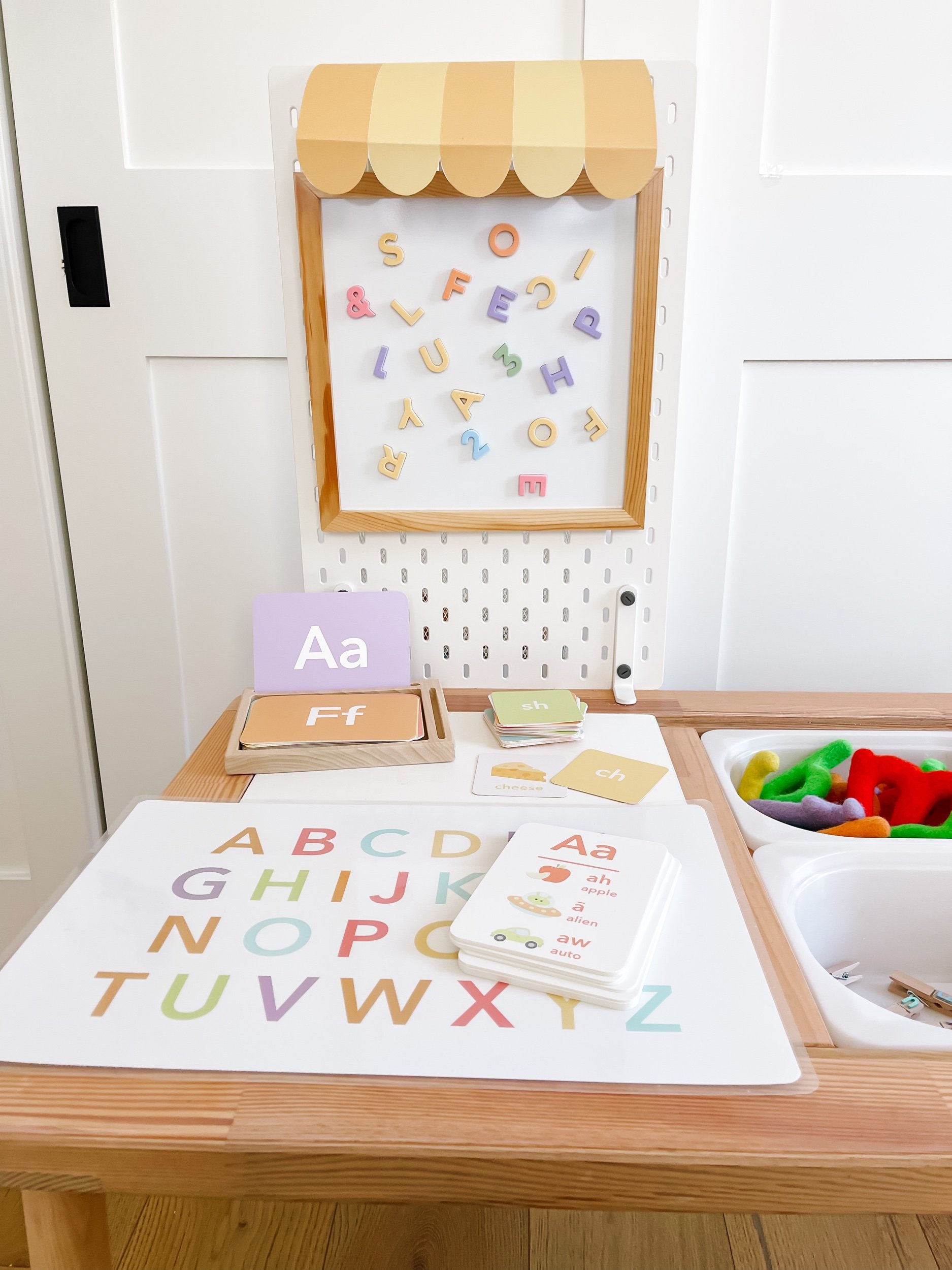
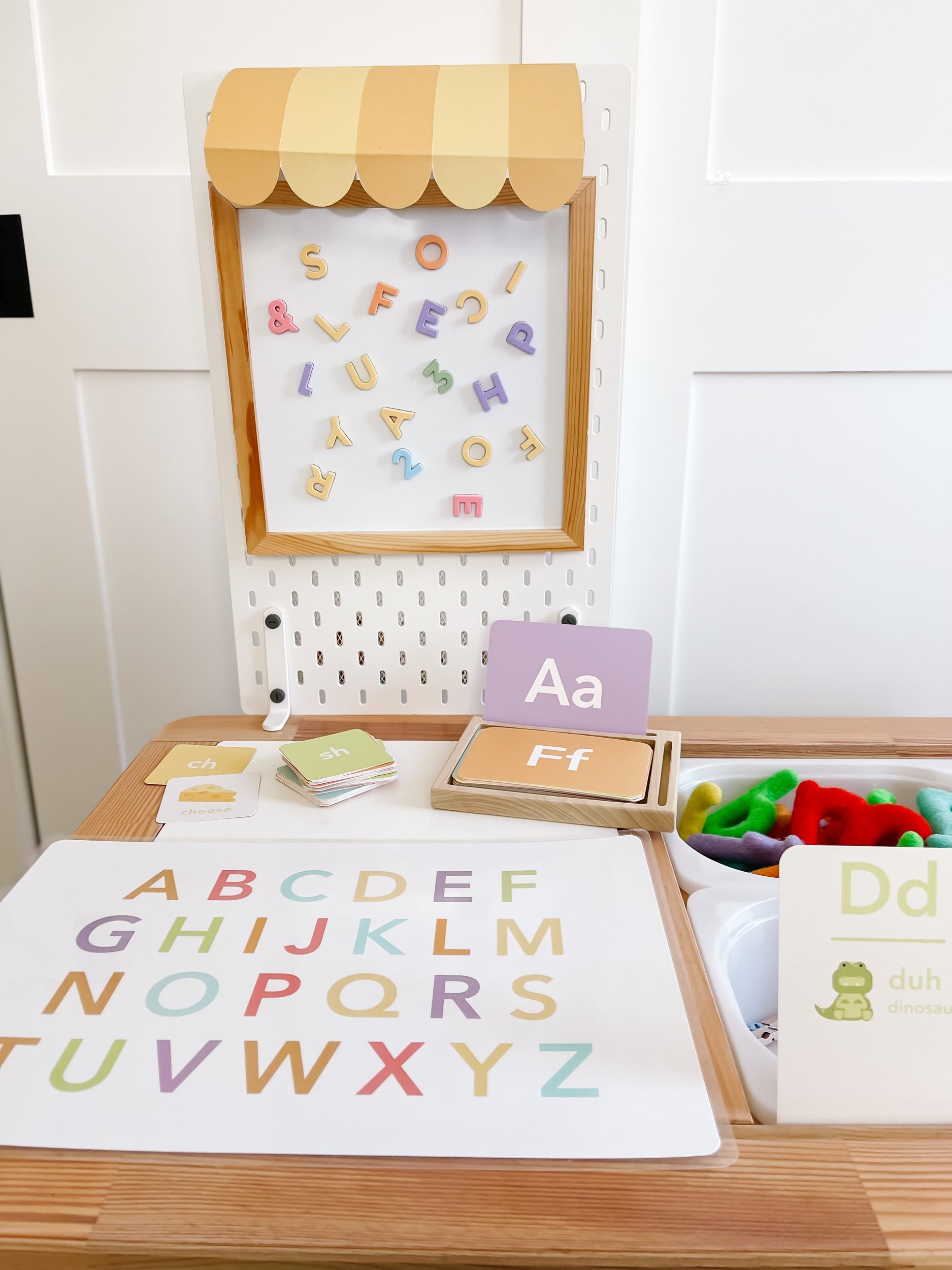
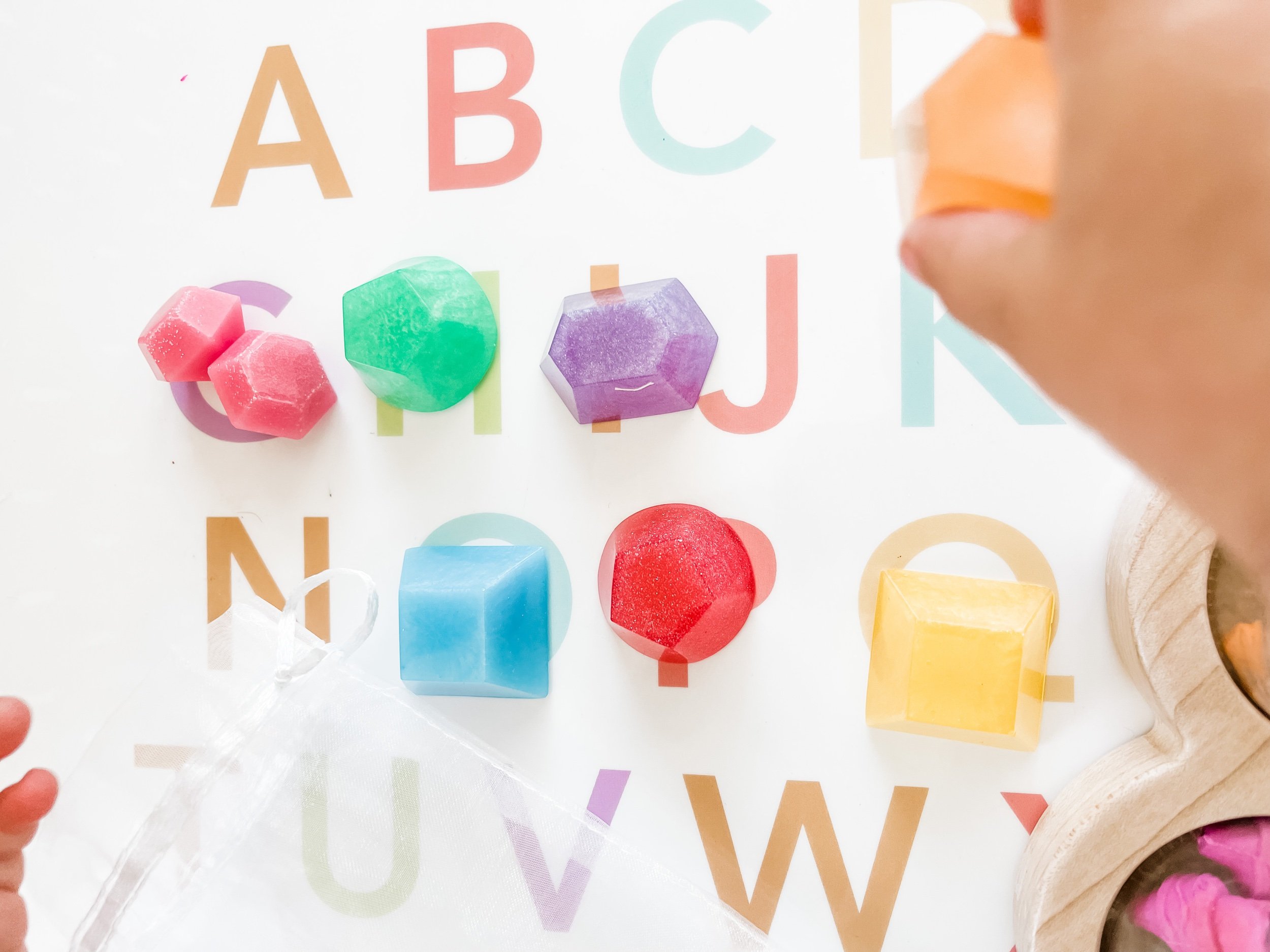
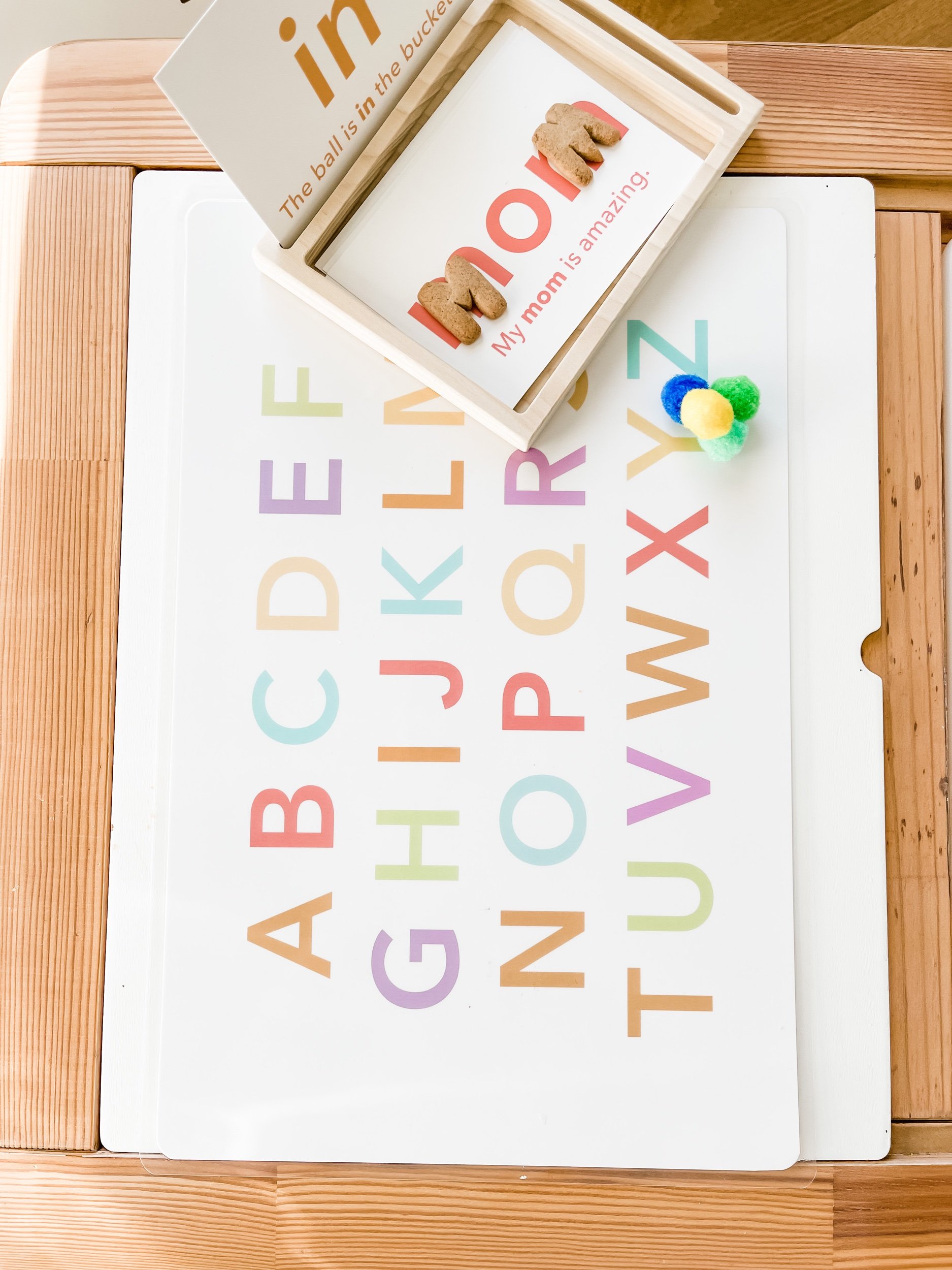
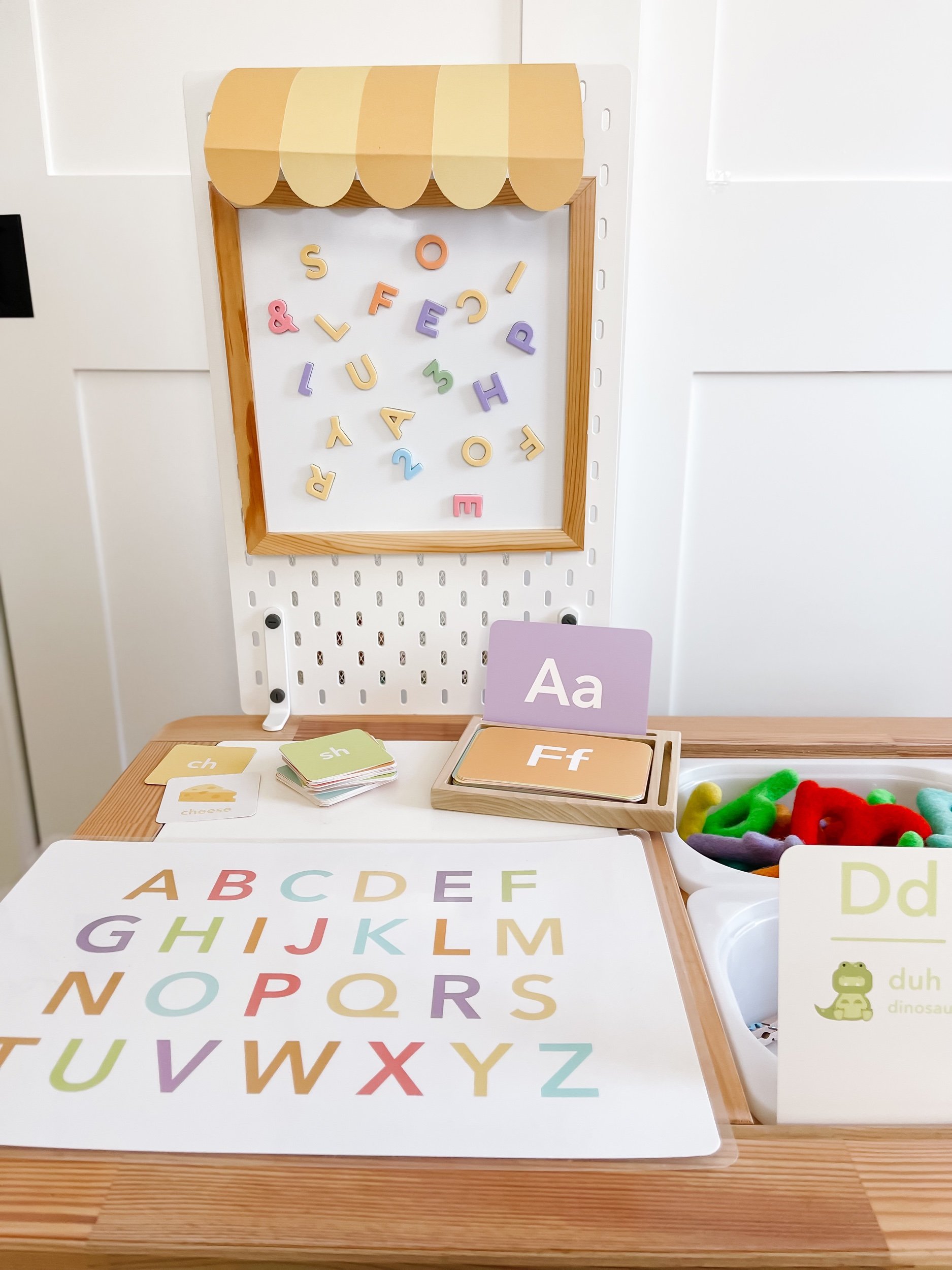
For slightly older children, focus on letter sounds. Pair the sensory bin activity with an alphabet placemat and ask questions like, "Which letter comes before C?" This activity reinforces letter sequencing and phonemic awareness.
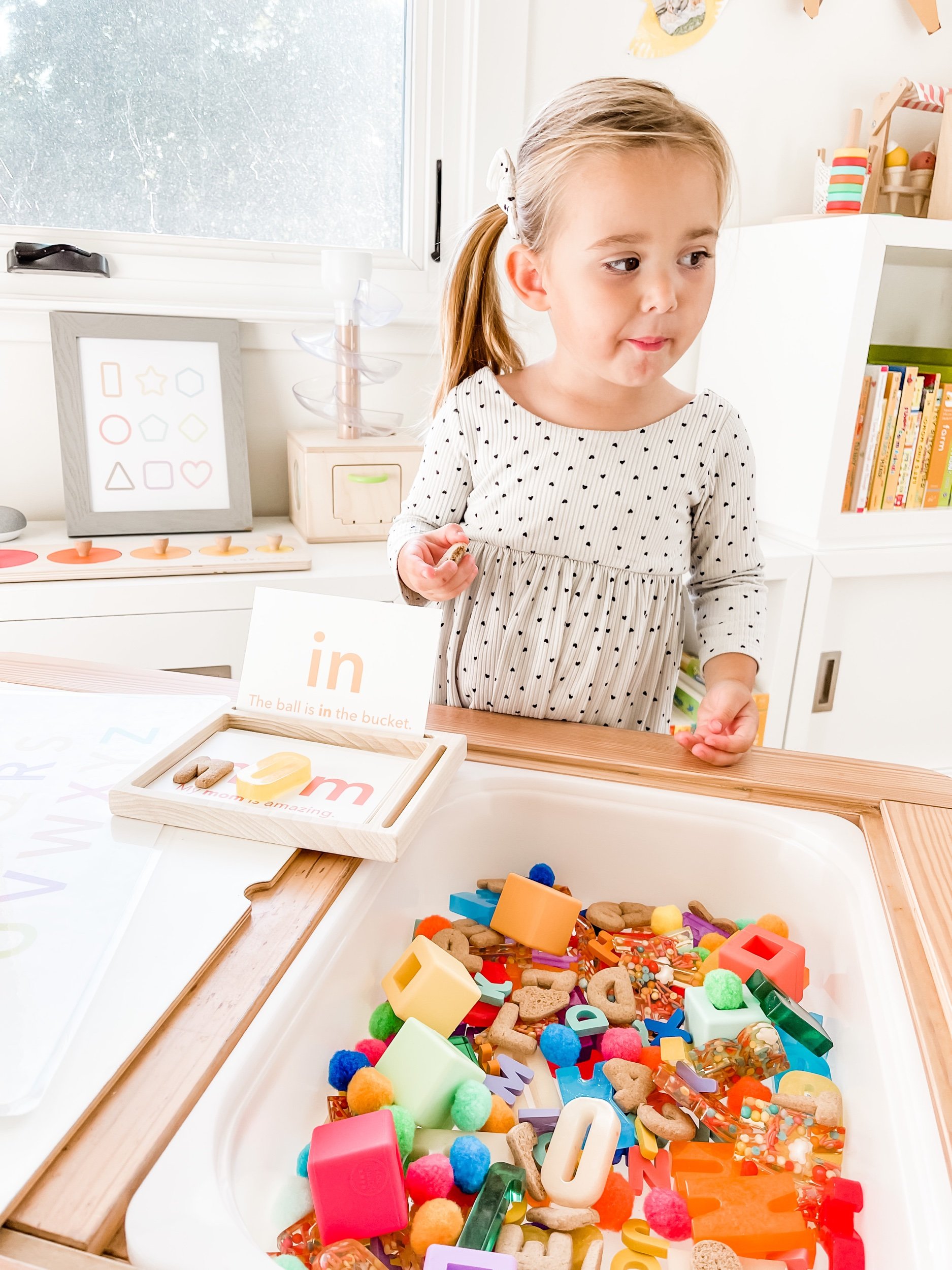
3. Word Building & SIGHT WORDS:
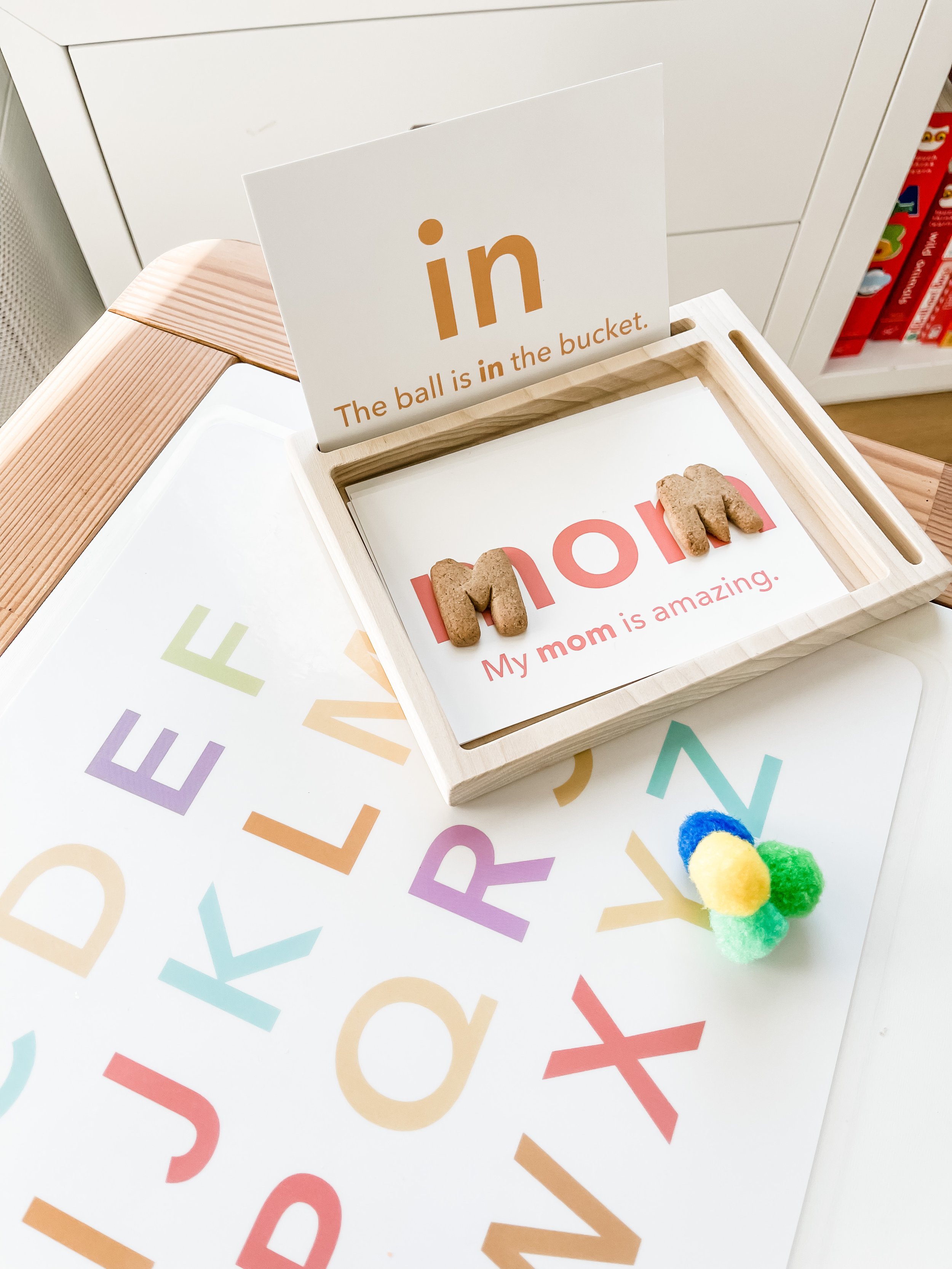
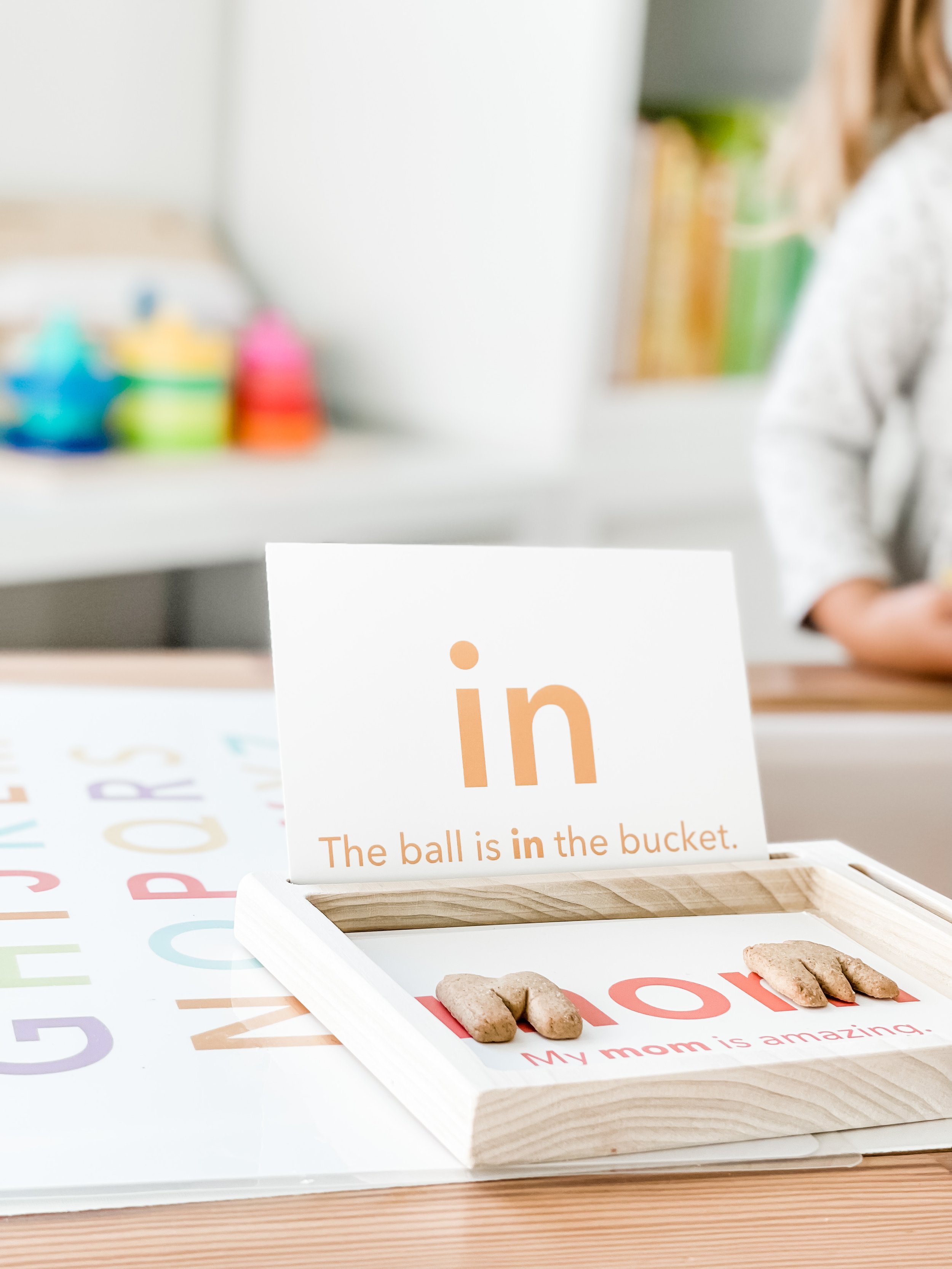
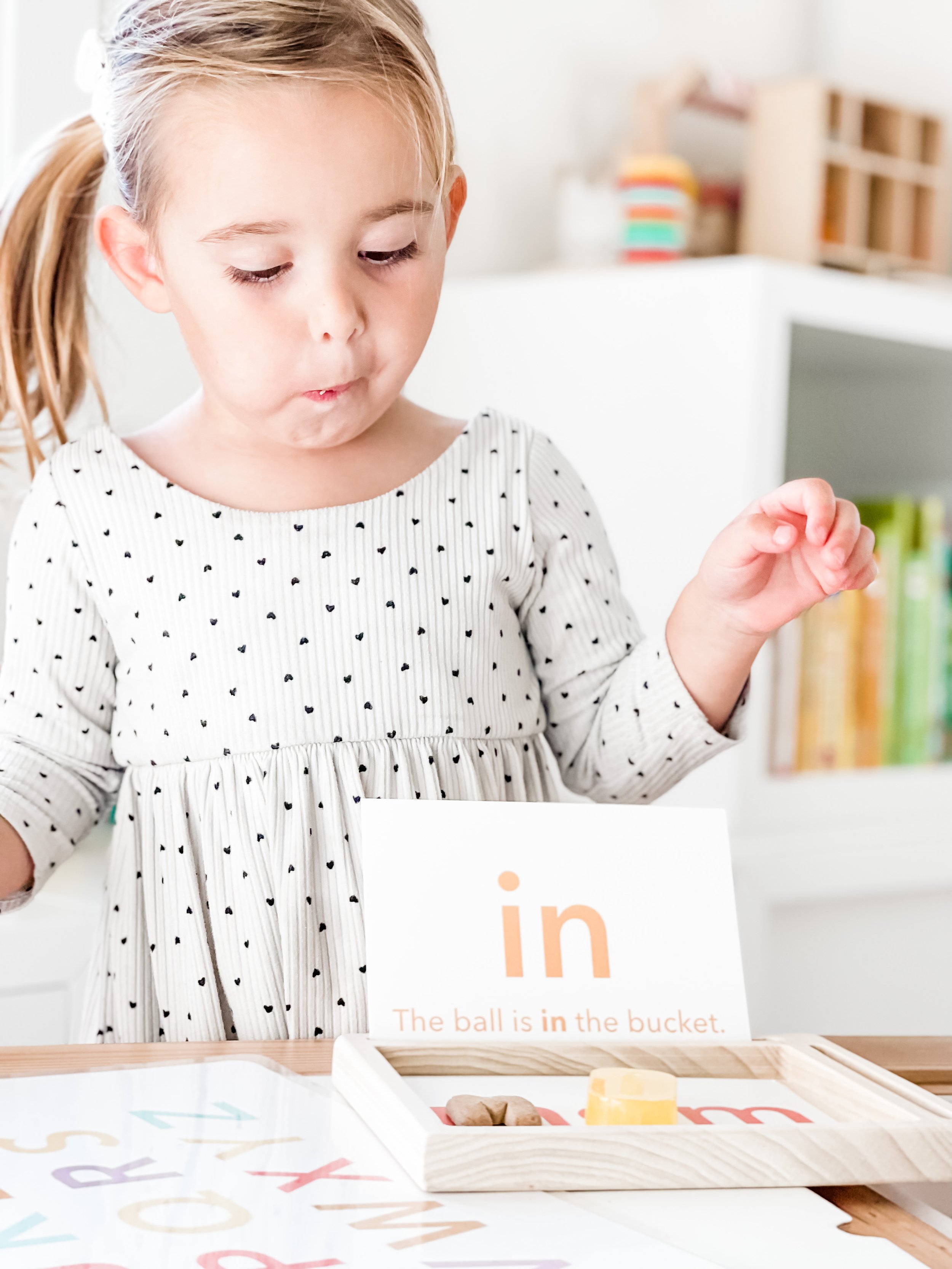
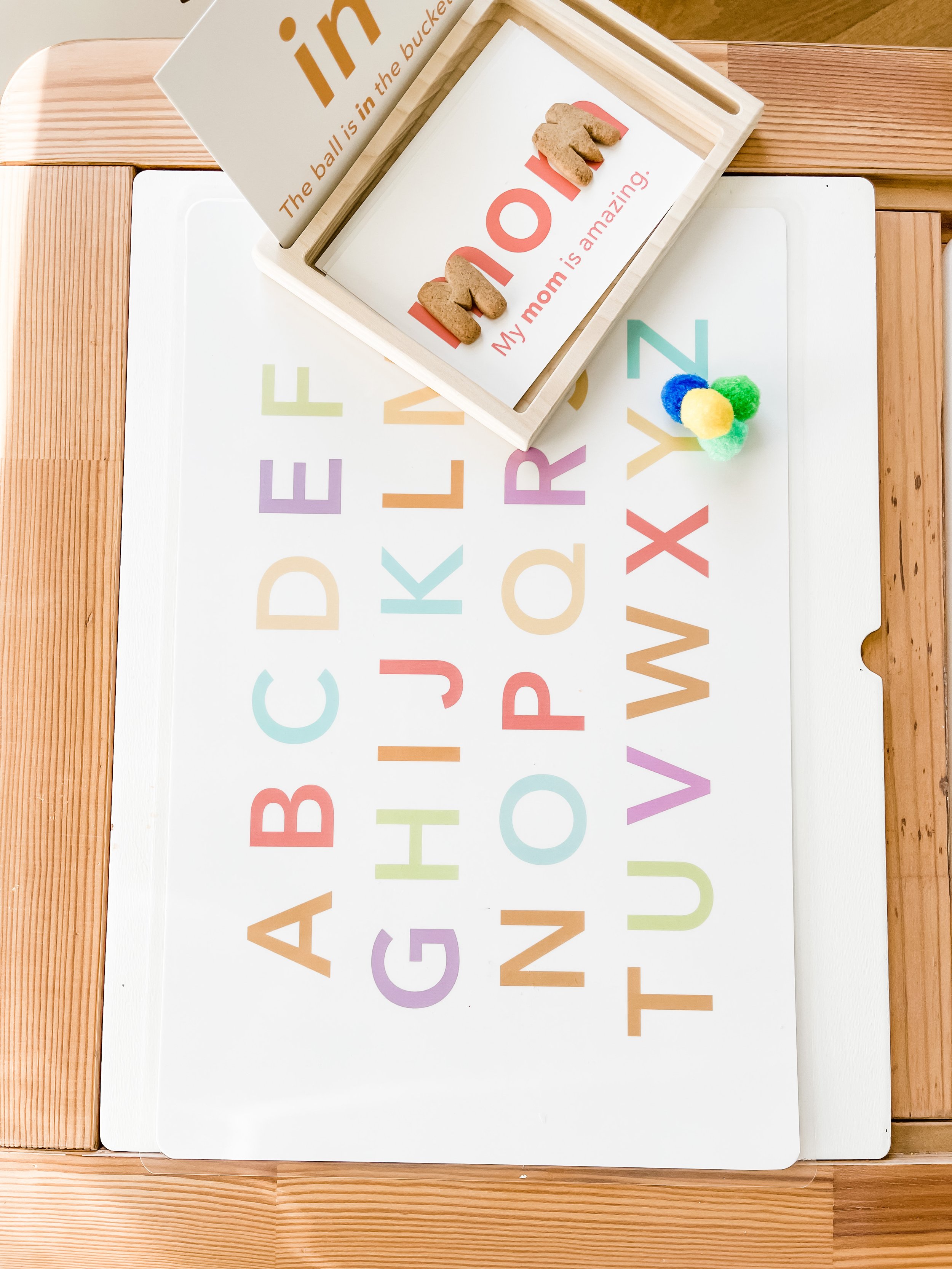
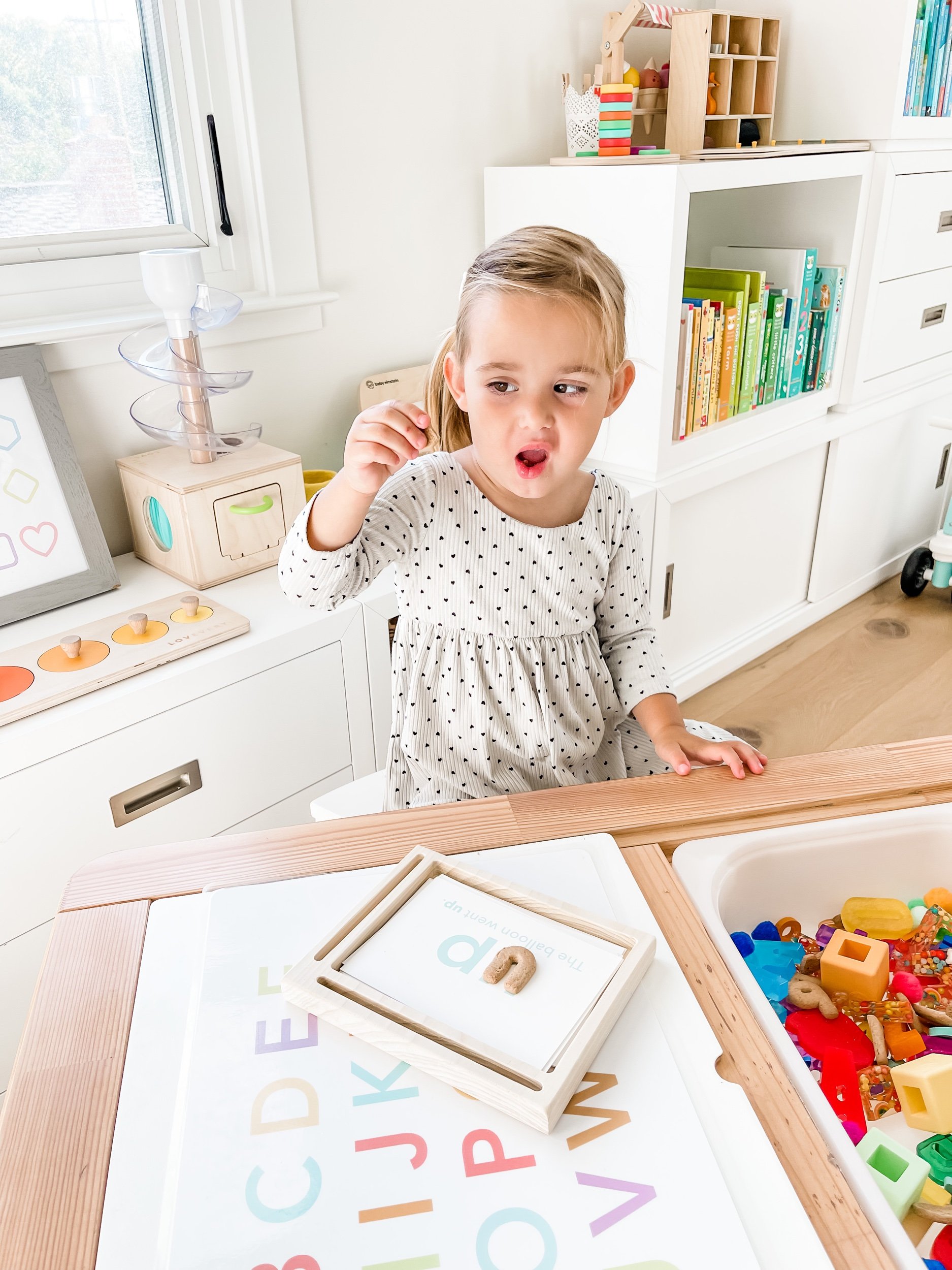
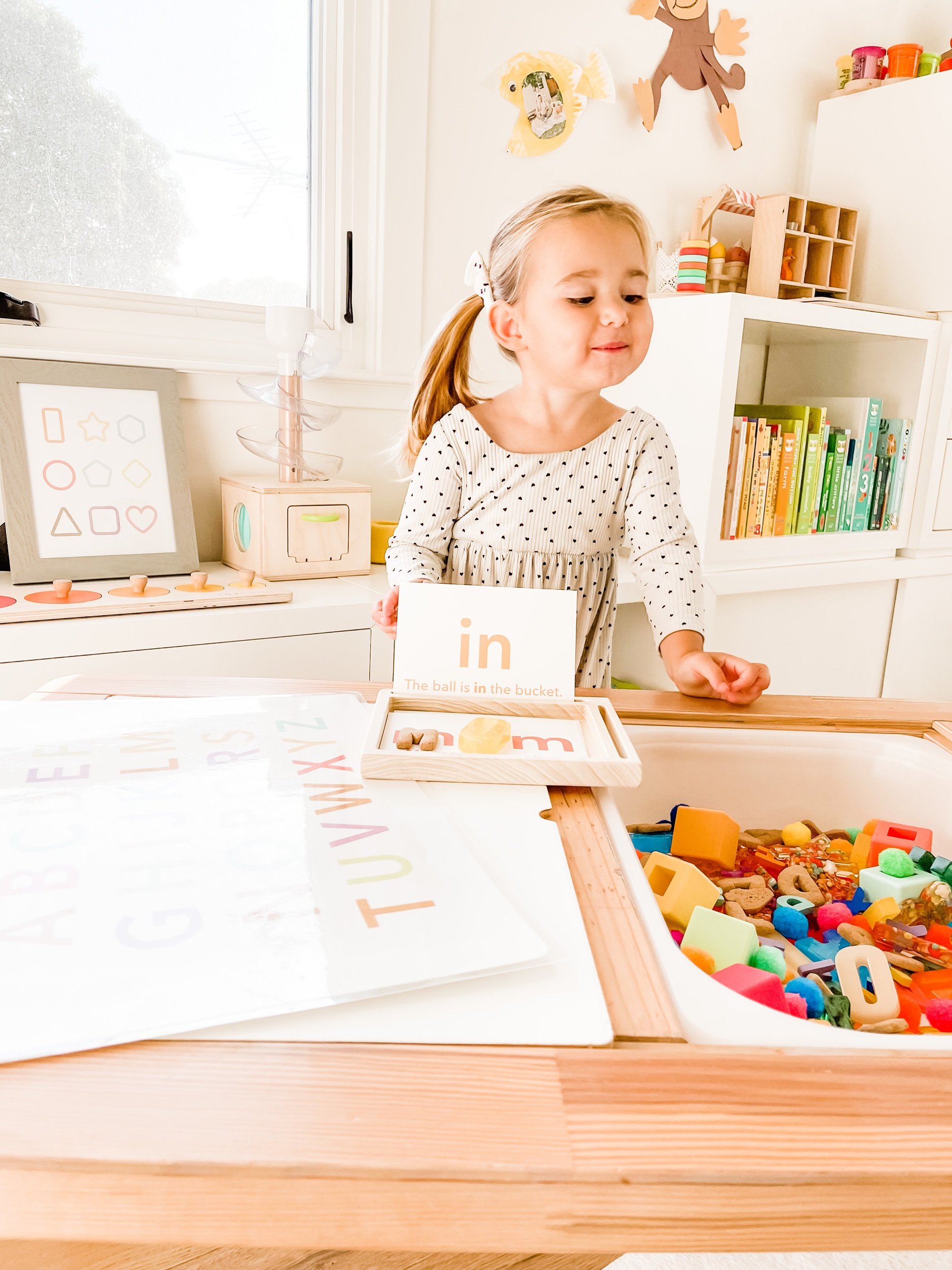
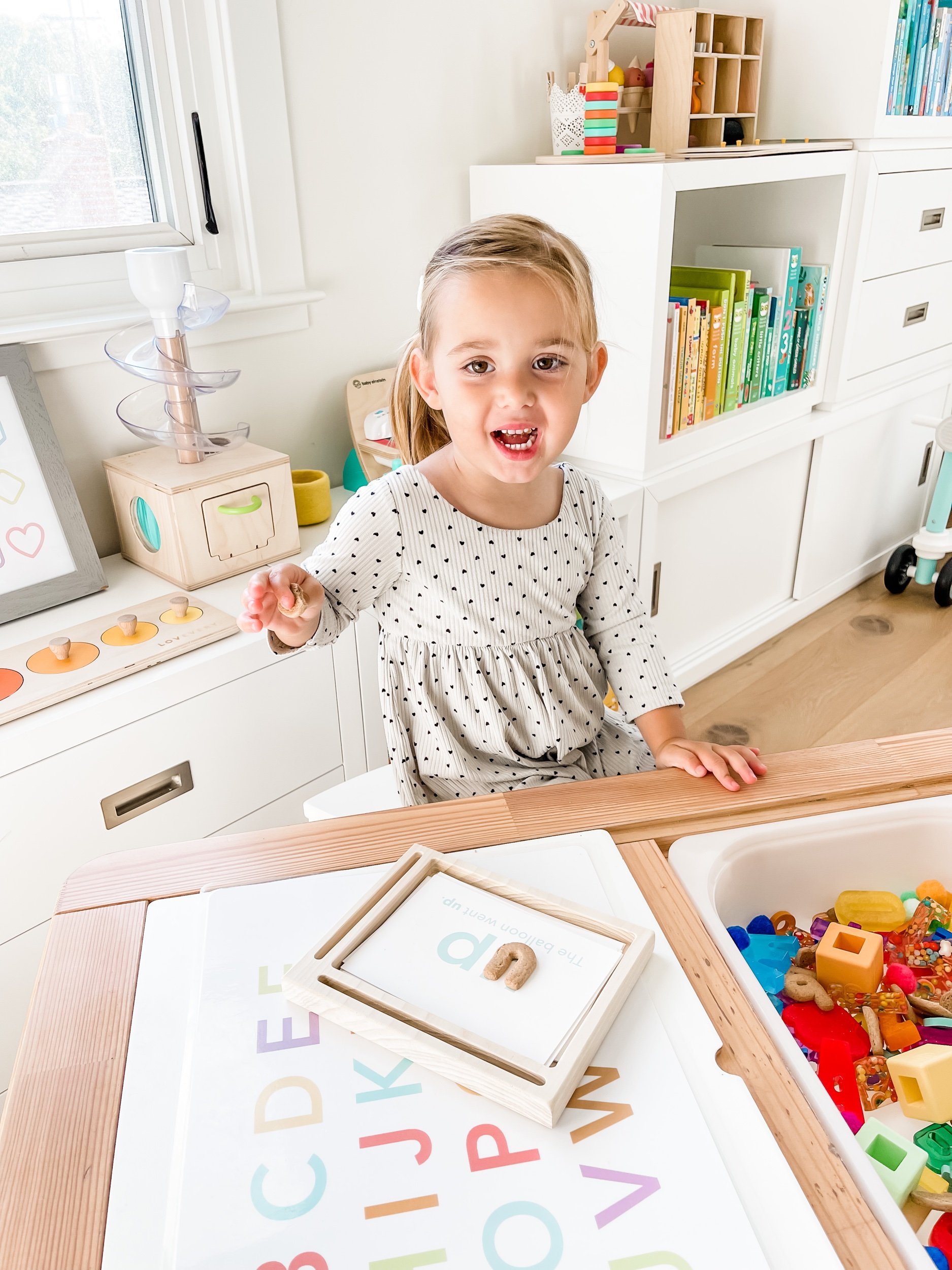
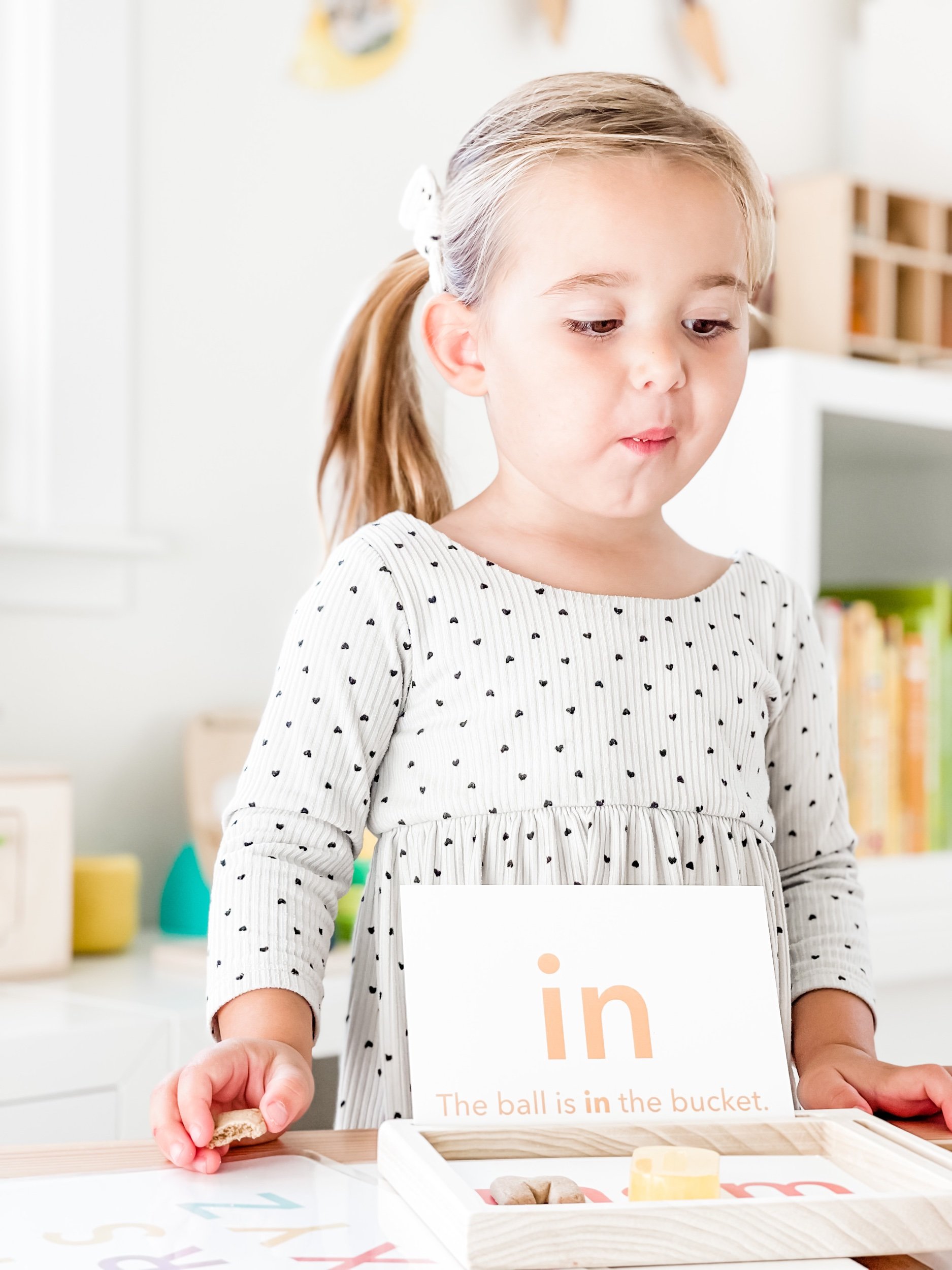
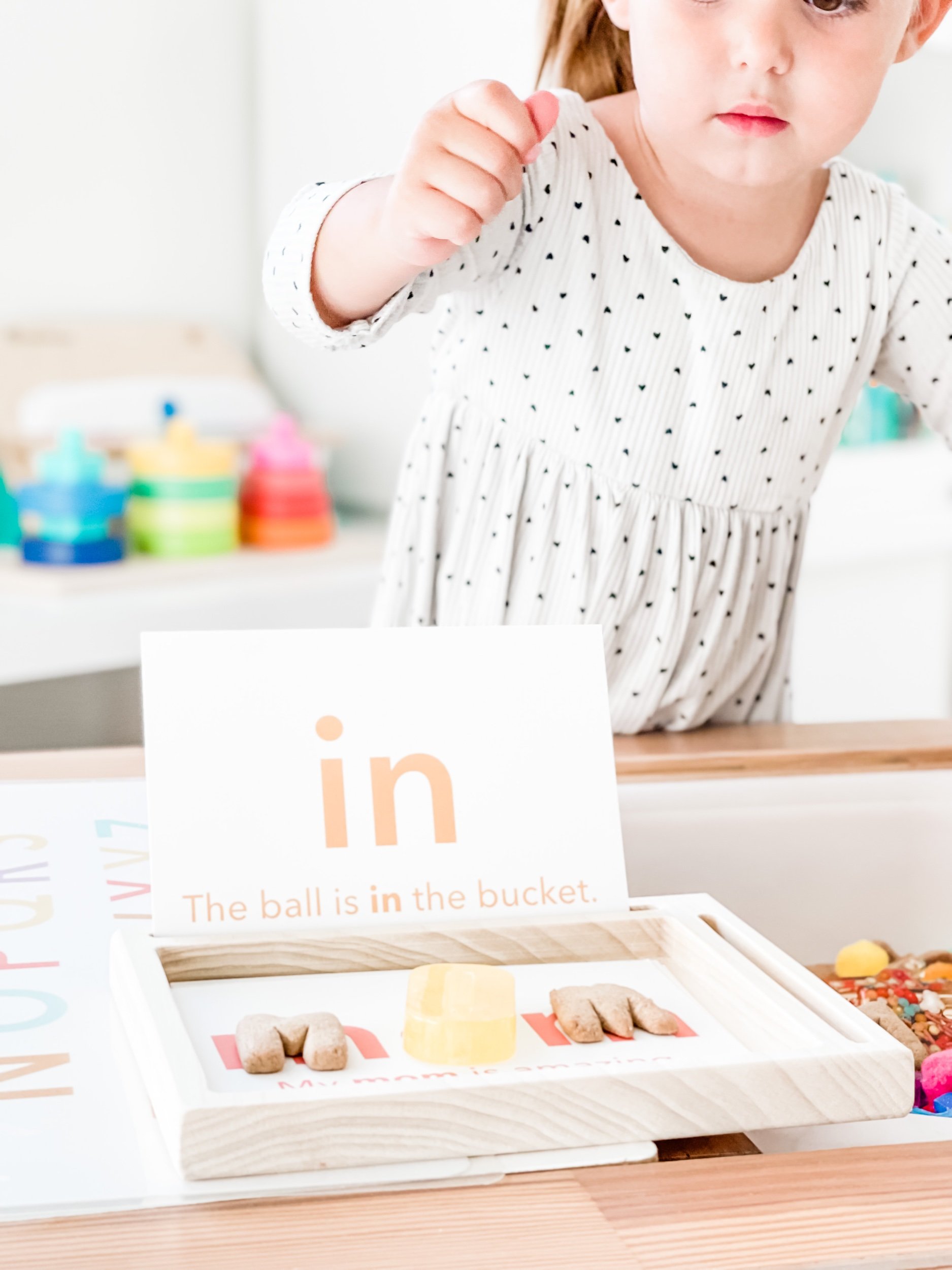
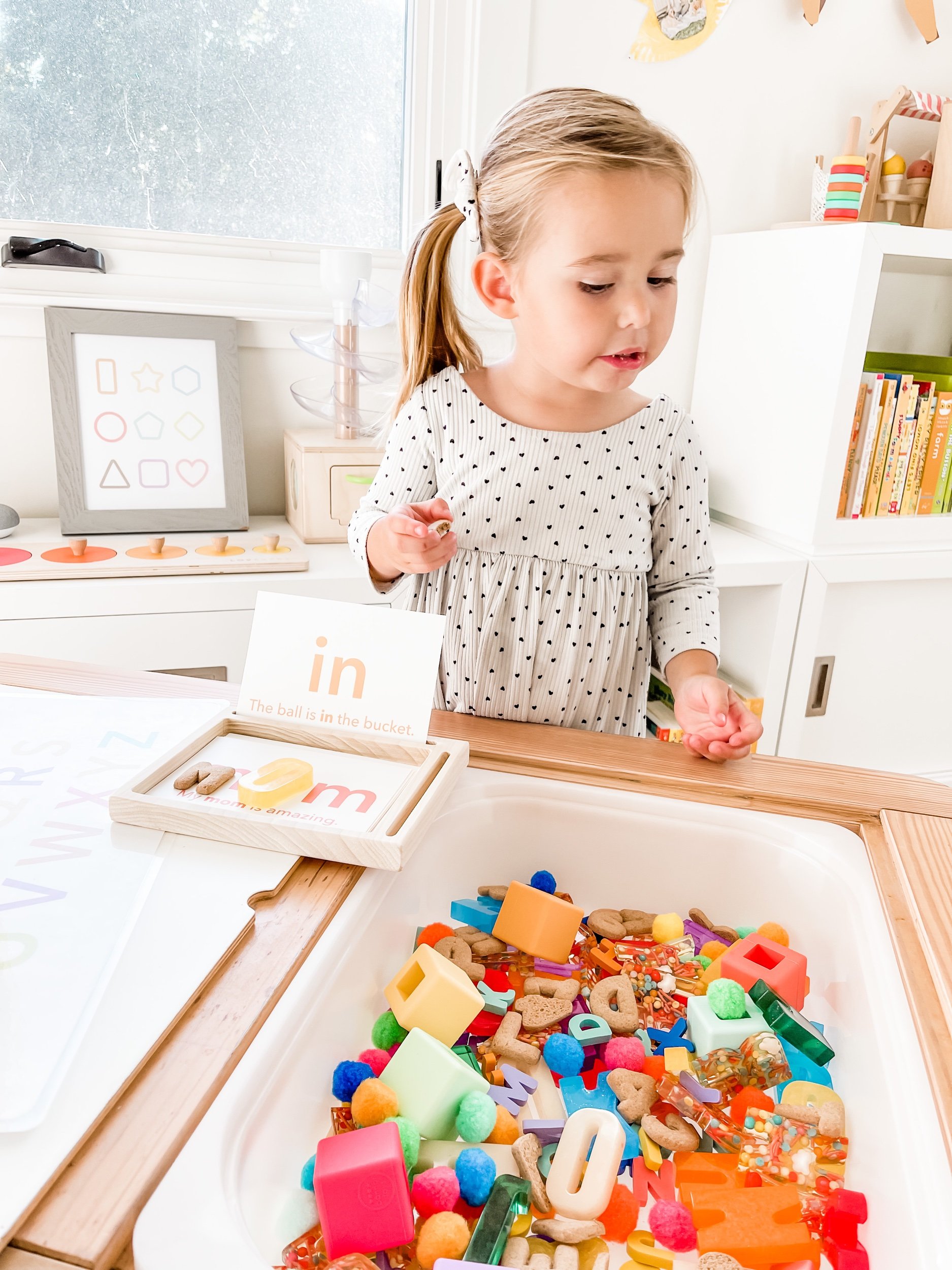
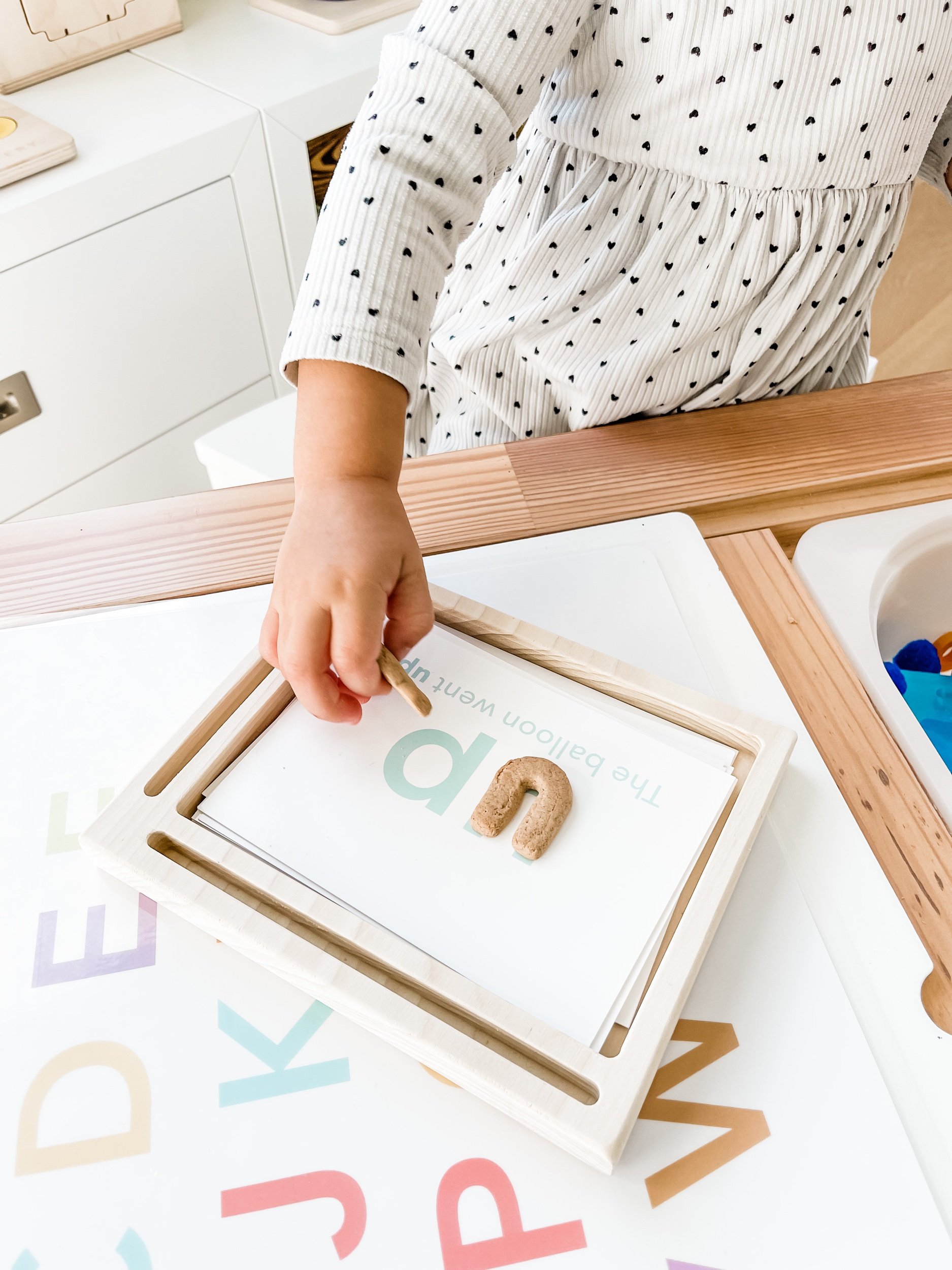
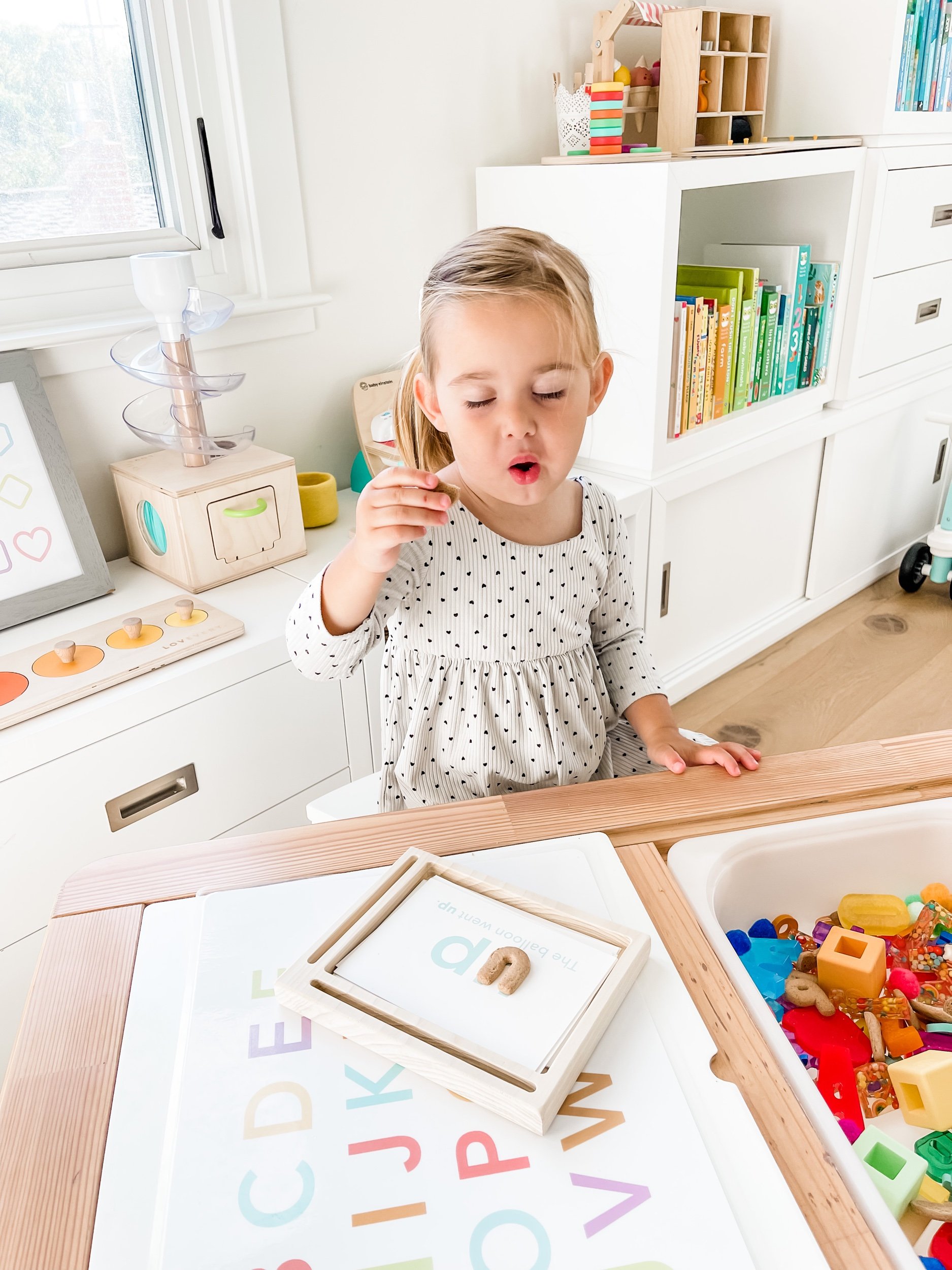
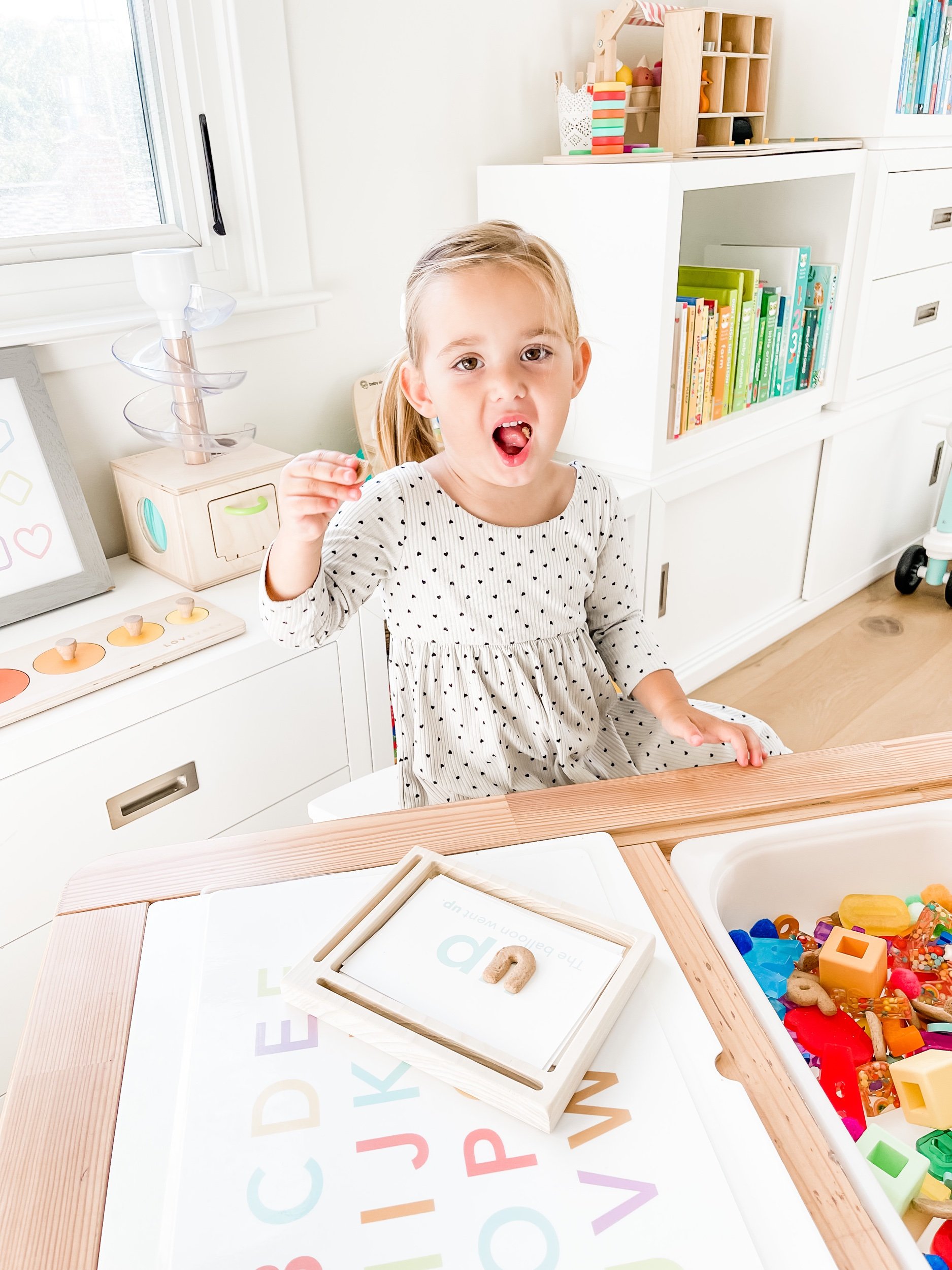
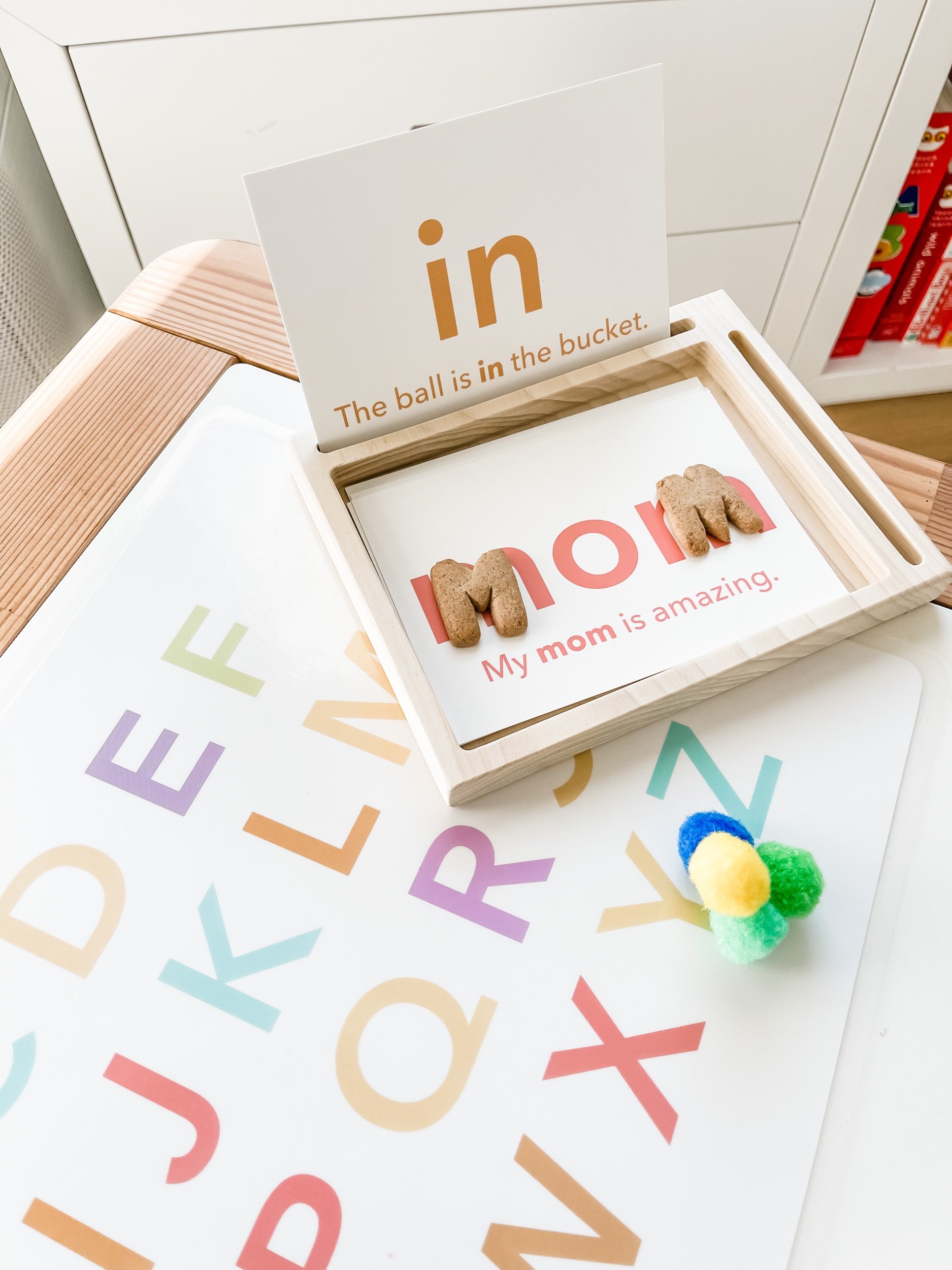
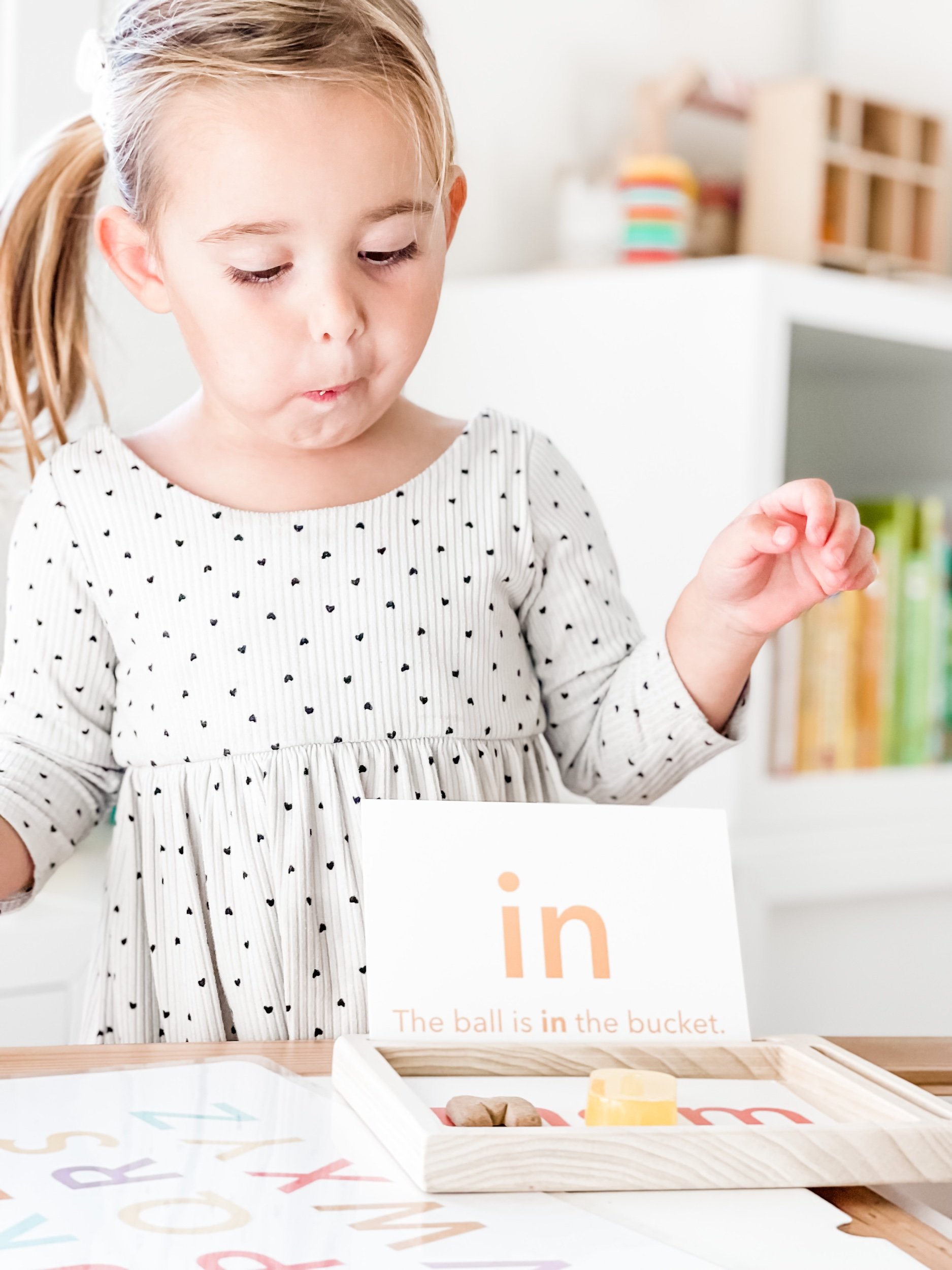
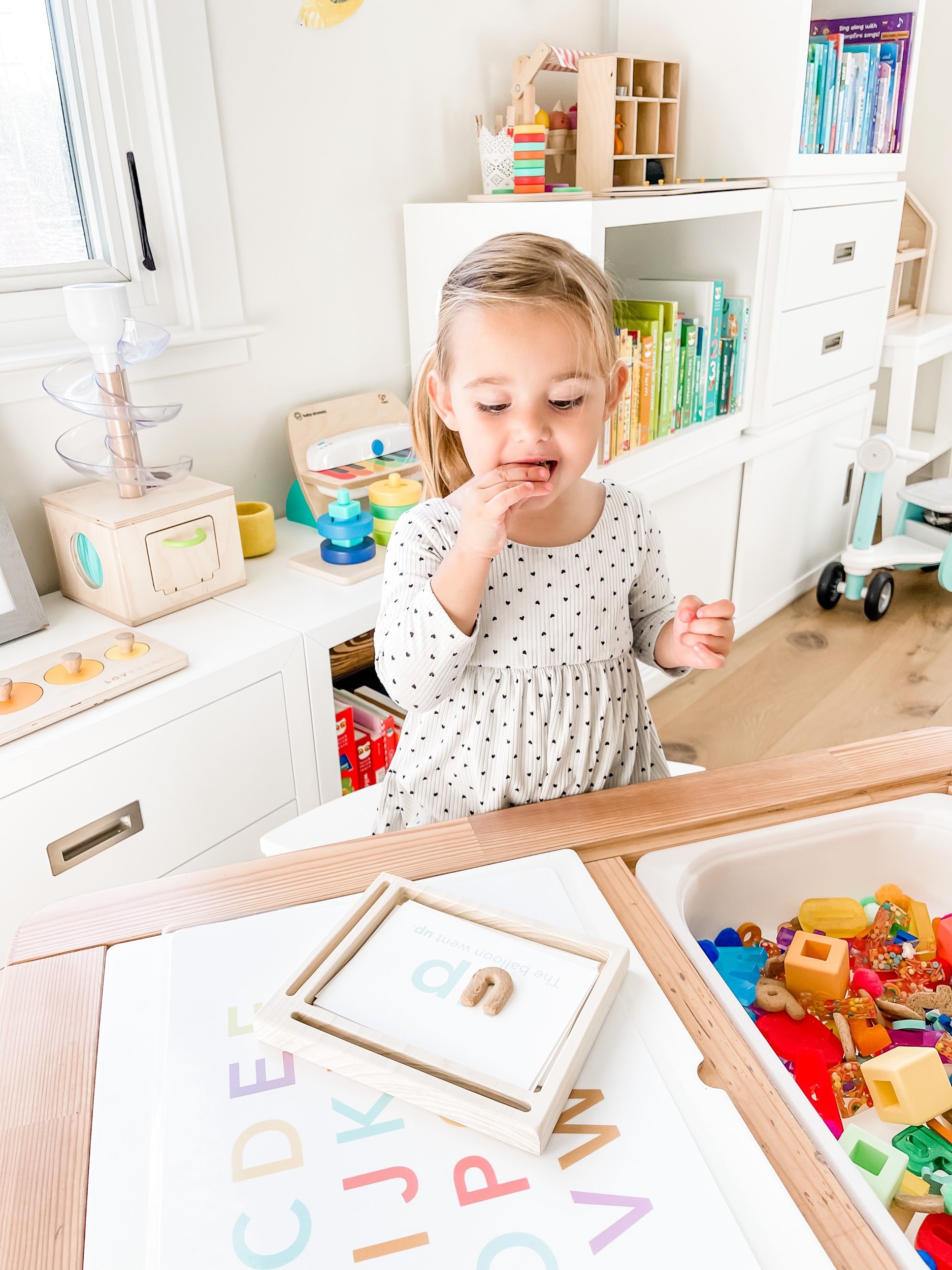
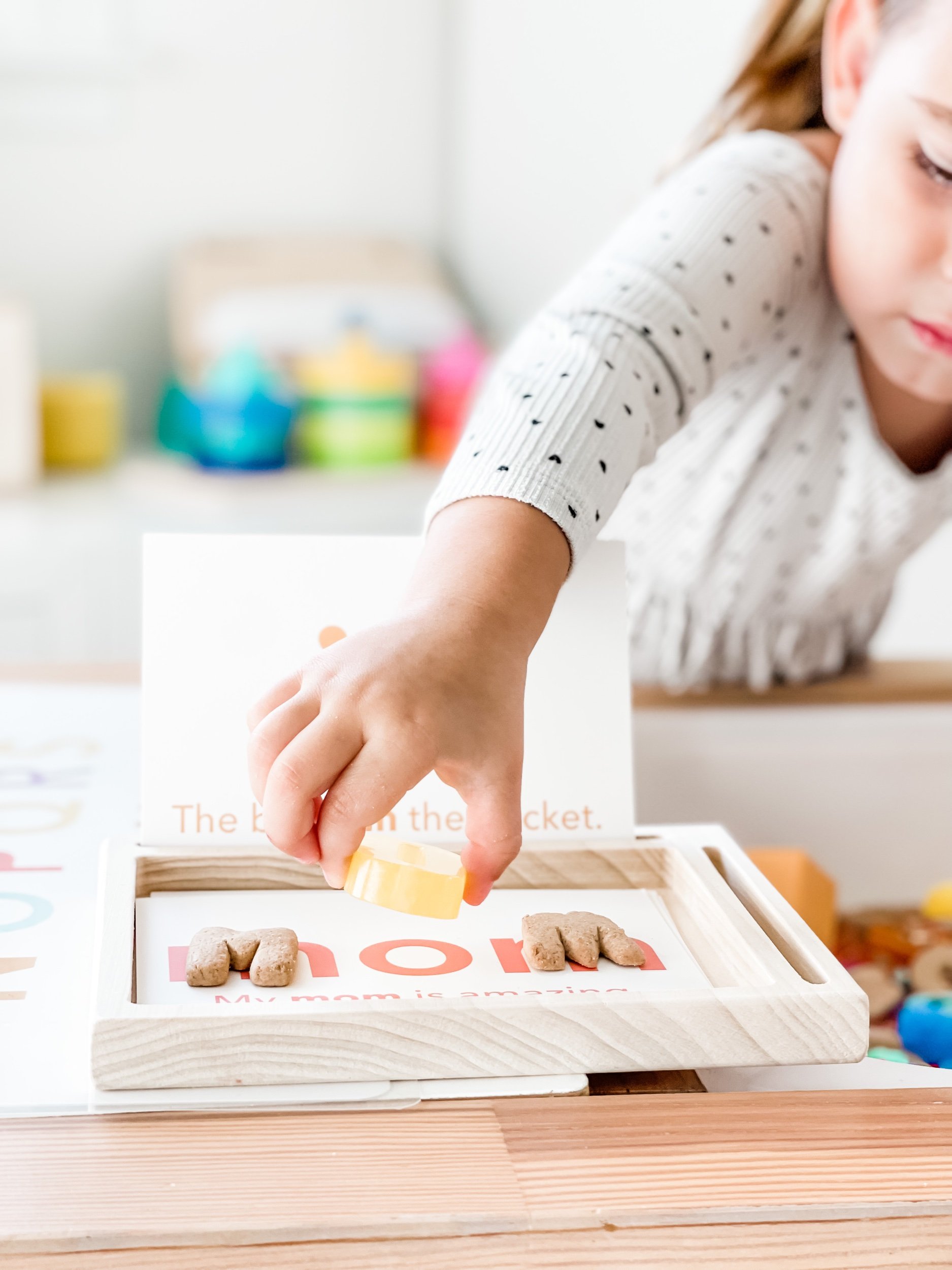
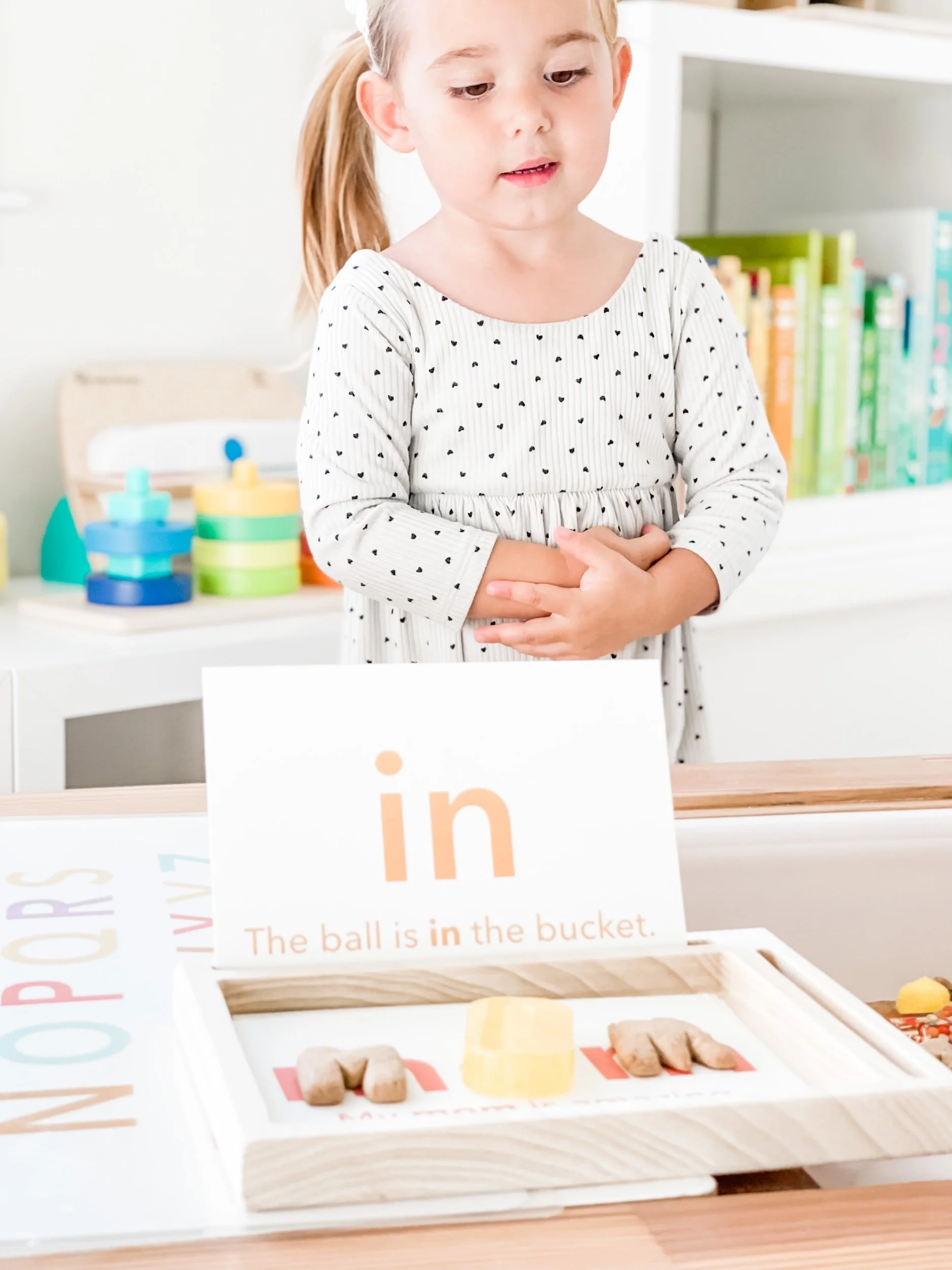
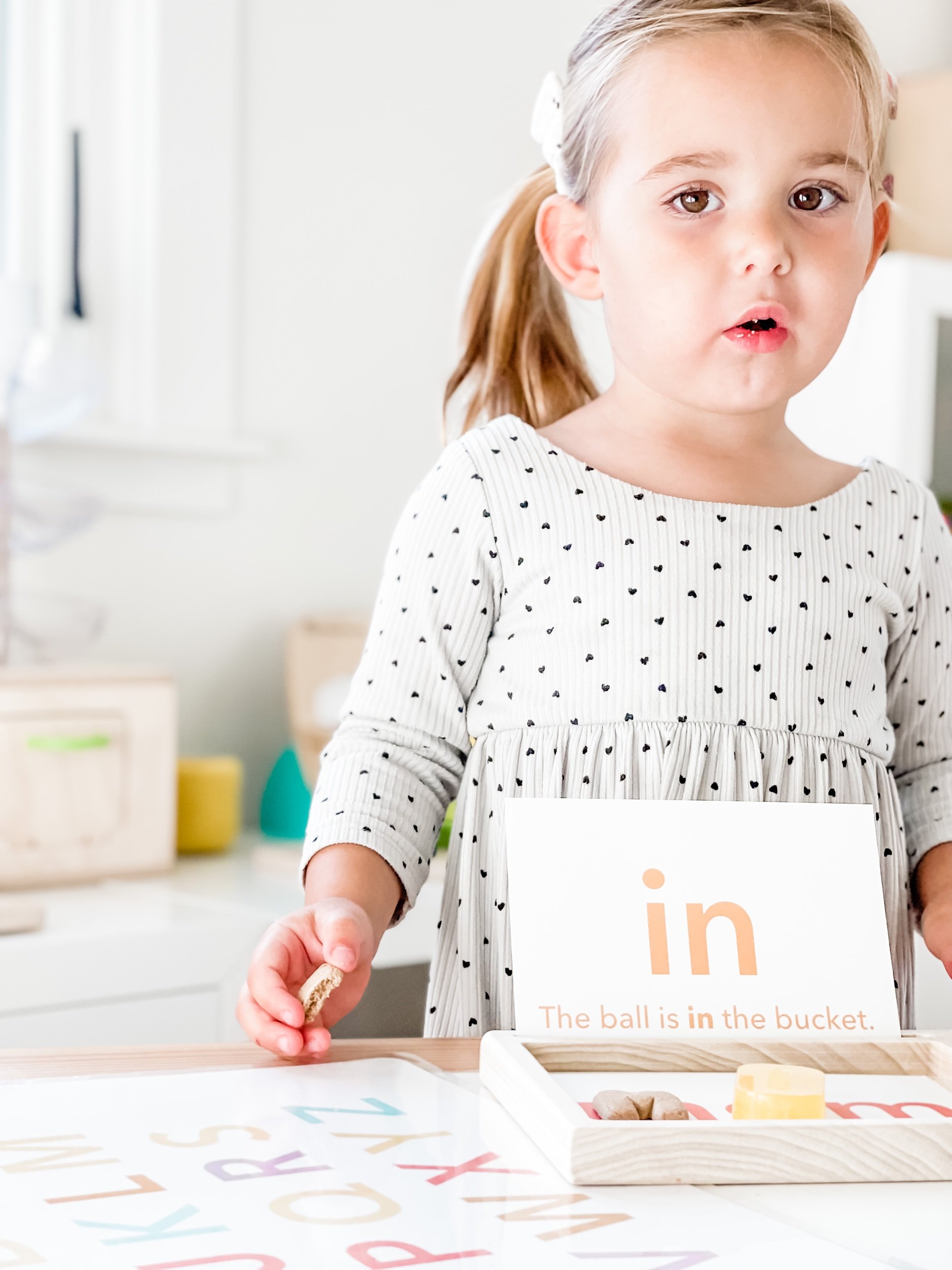
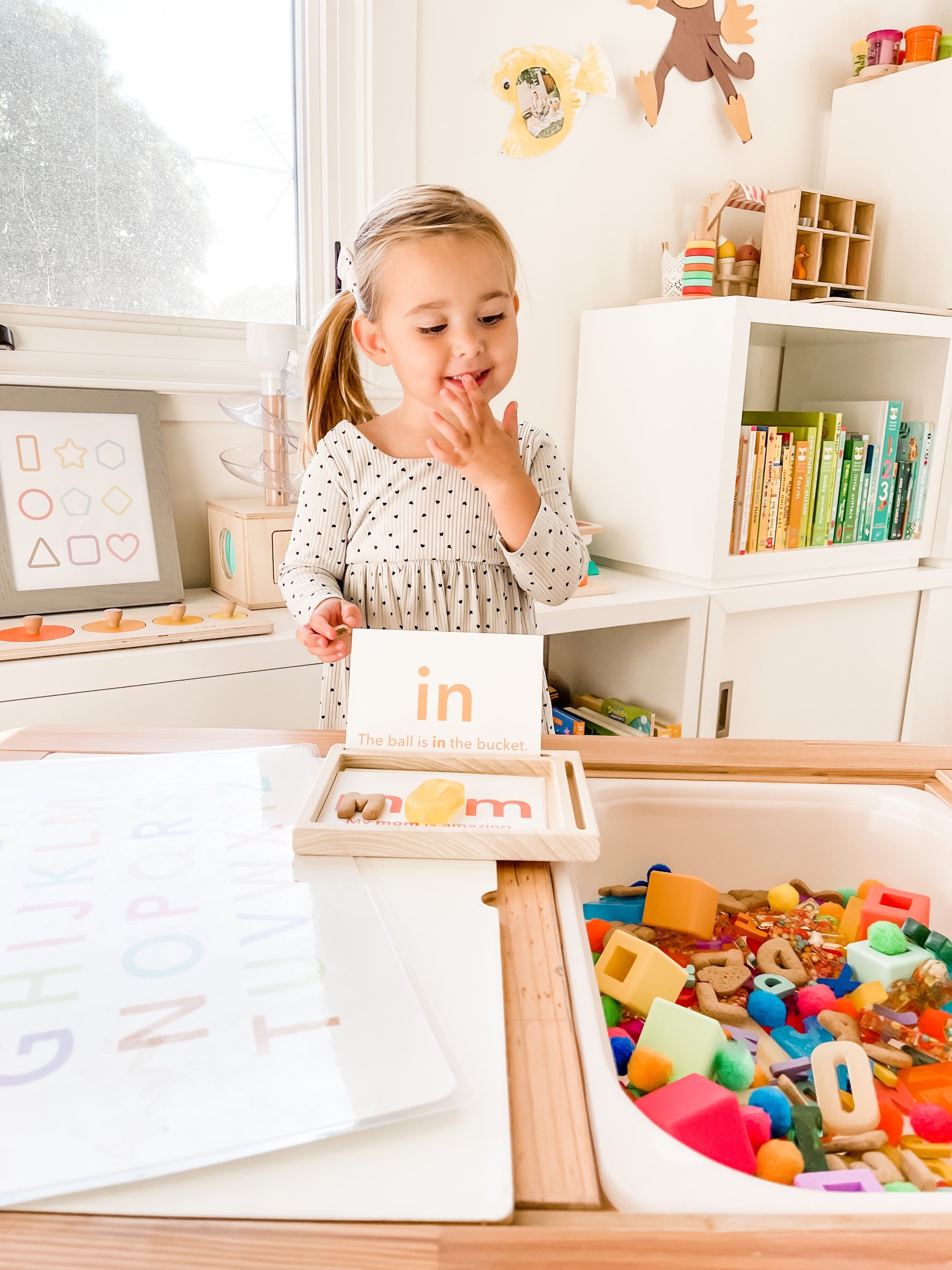
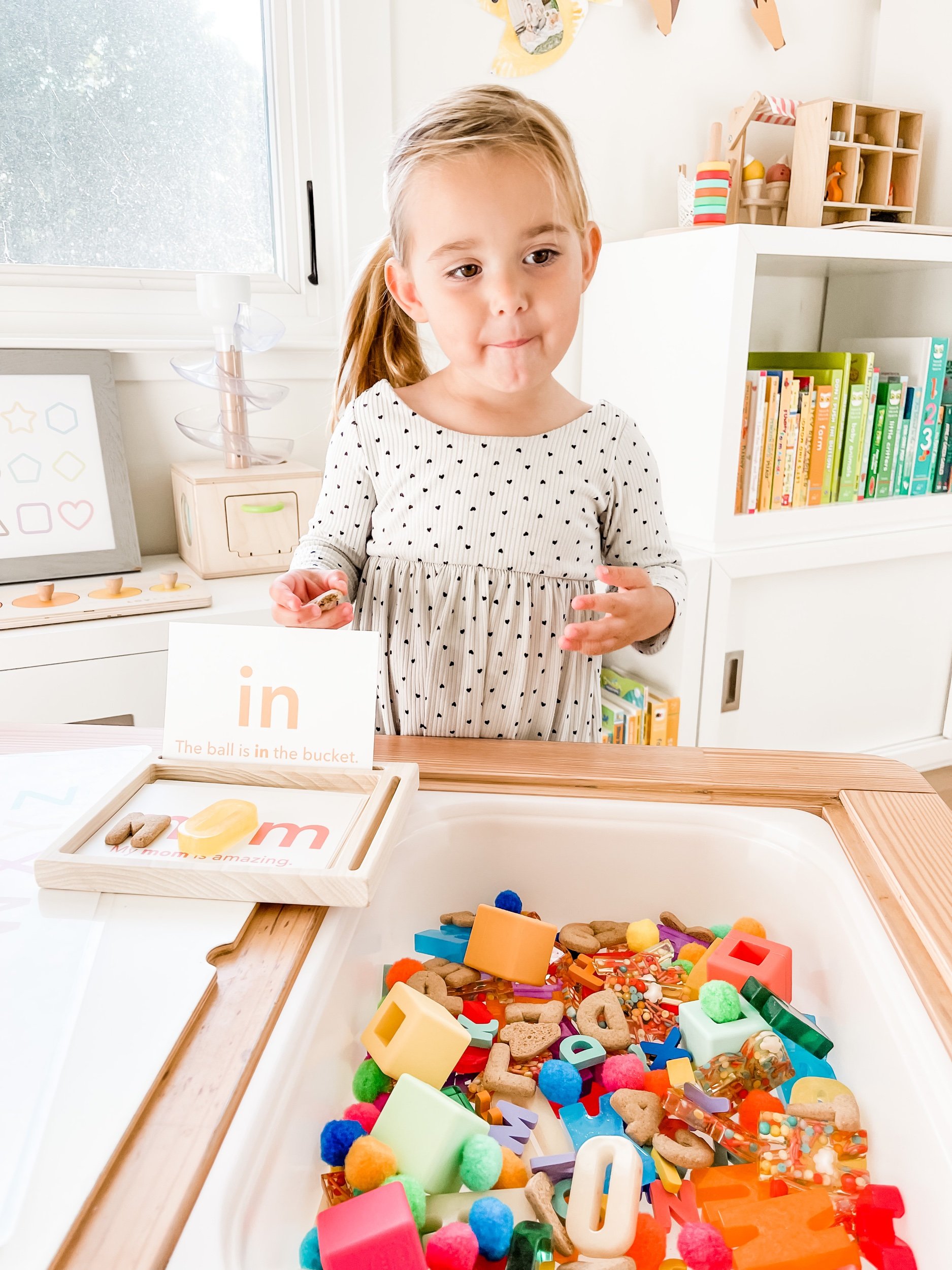
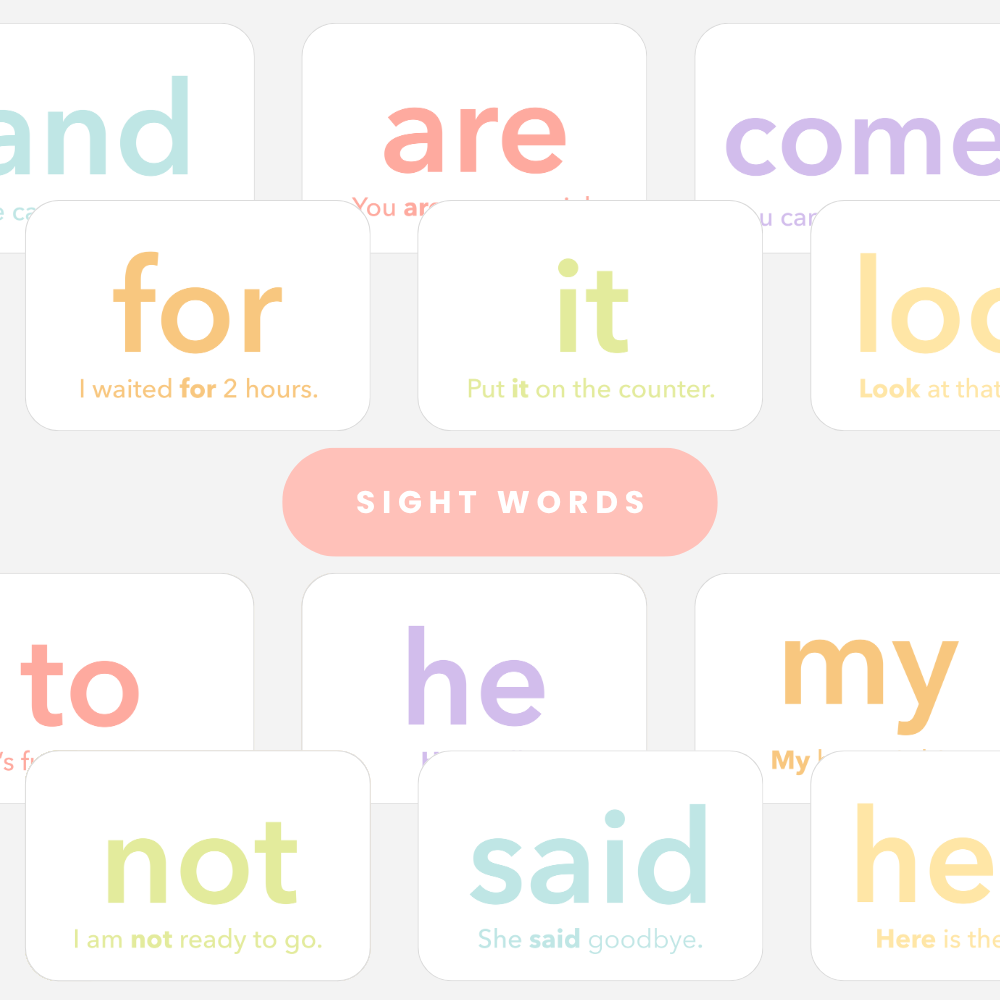
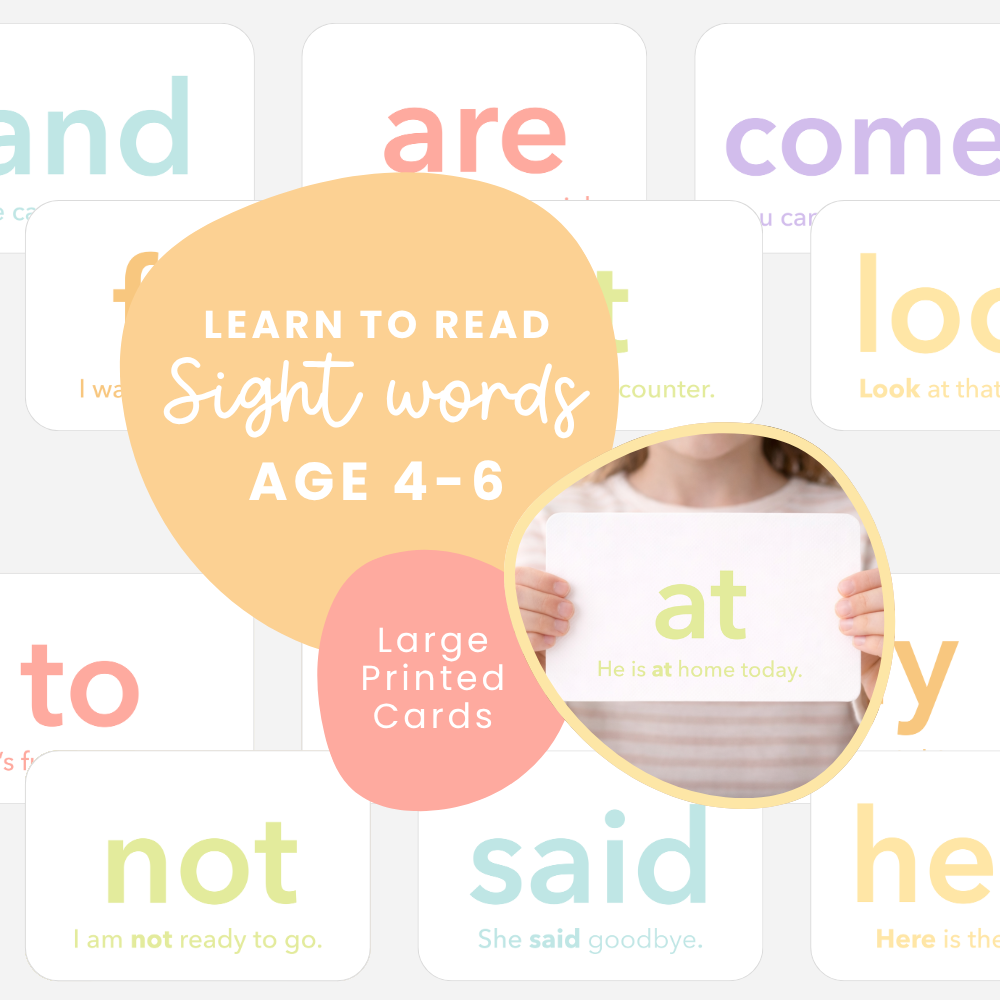
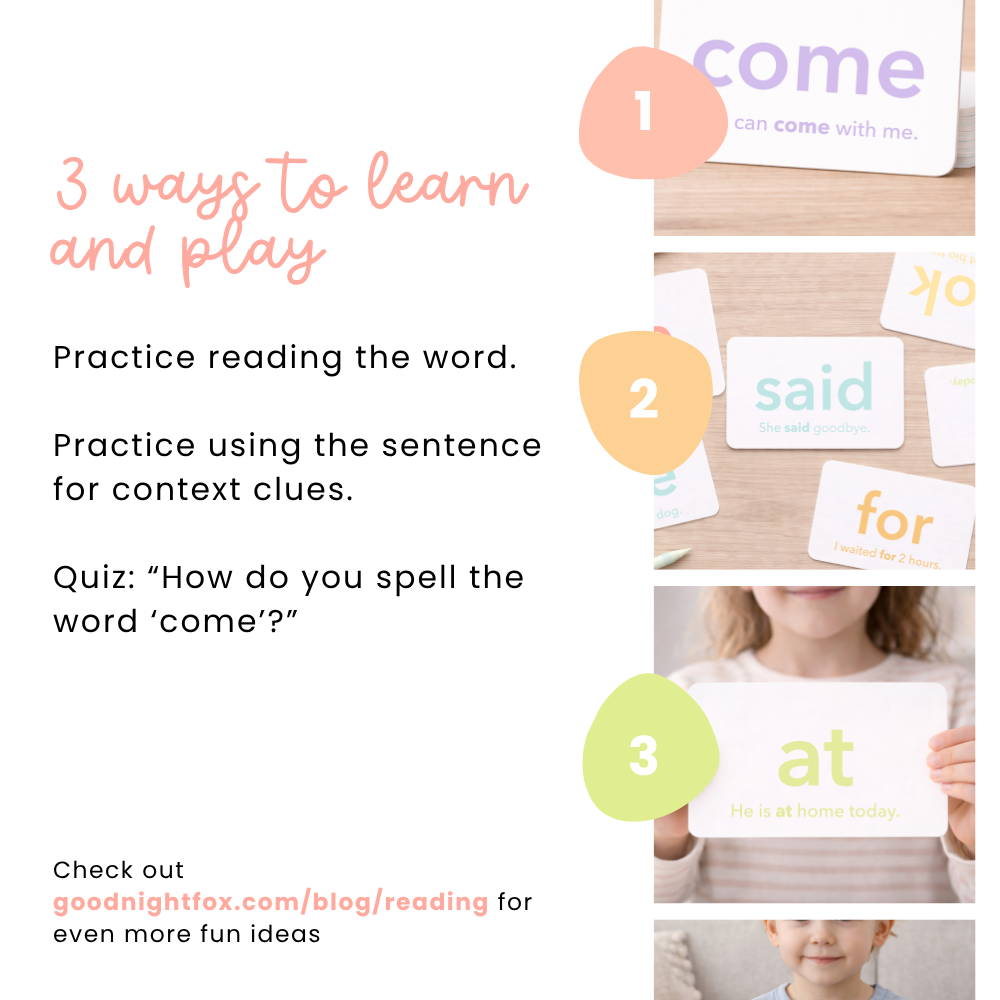
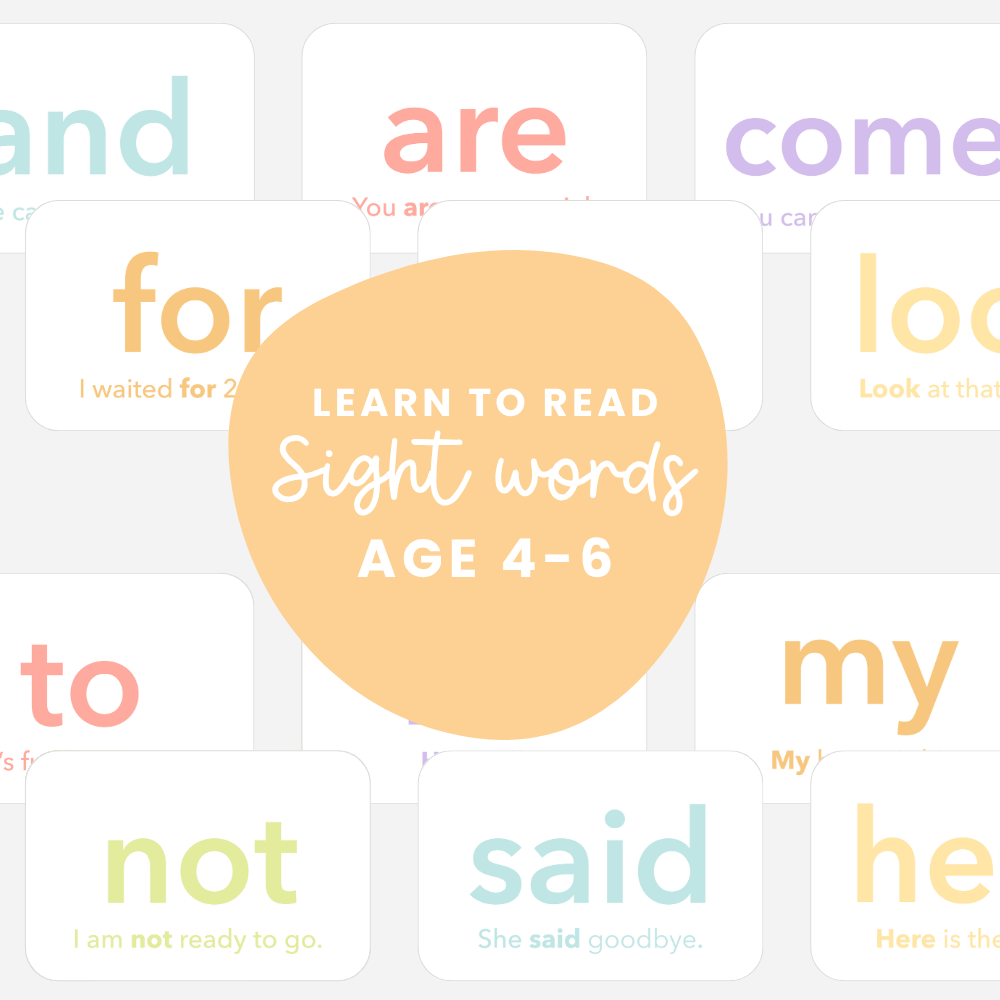
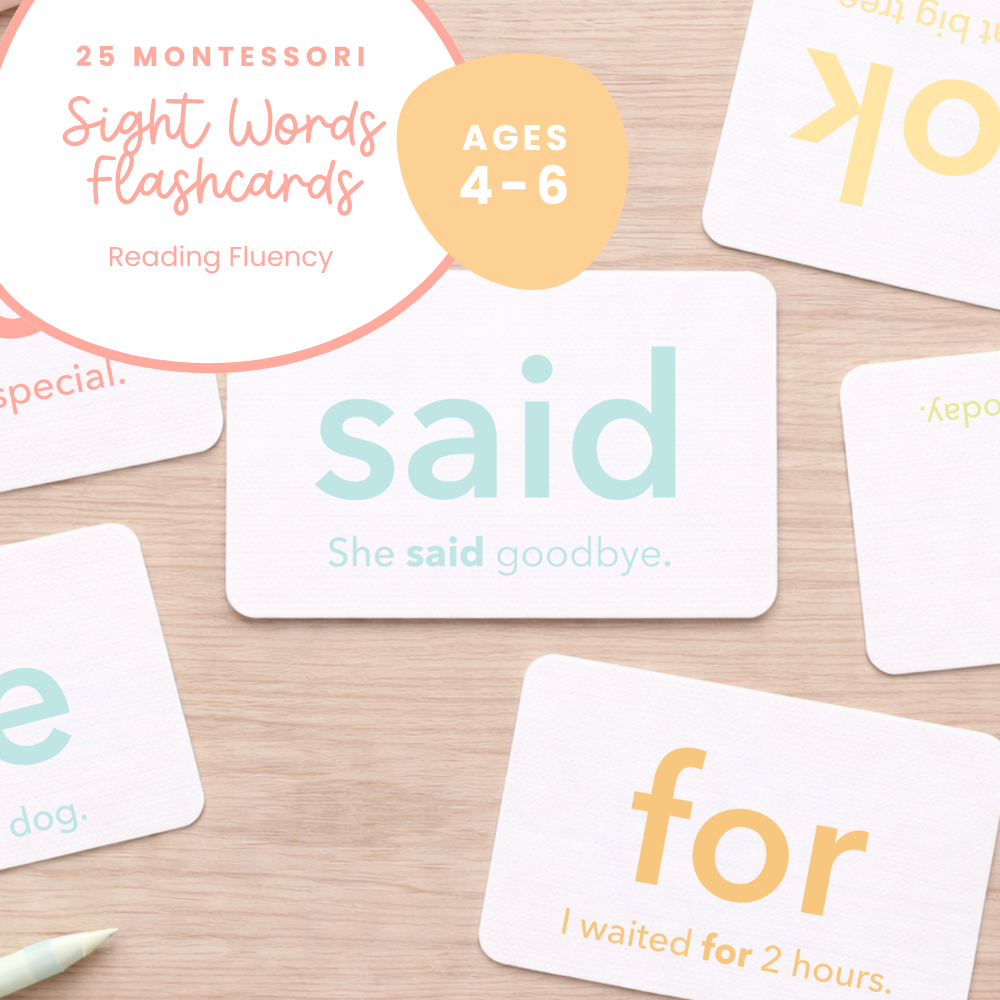
For advanced learners, up the challenge by using sight word flashcards to build complete words. Choose letters from the sensory bin to construct the word displayed on the flashcard. As a tasty alternative, you can use ABC Letter Cookies from Trader Joe's. Reward your child with a cookie for accurately building each word!
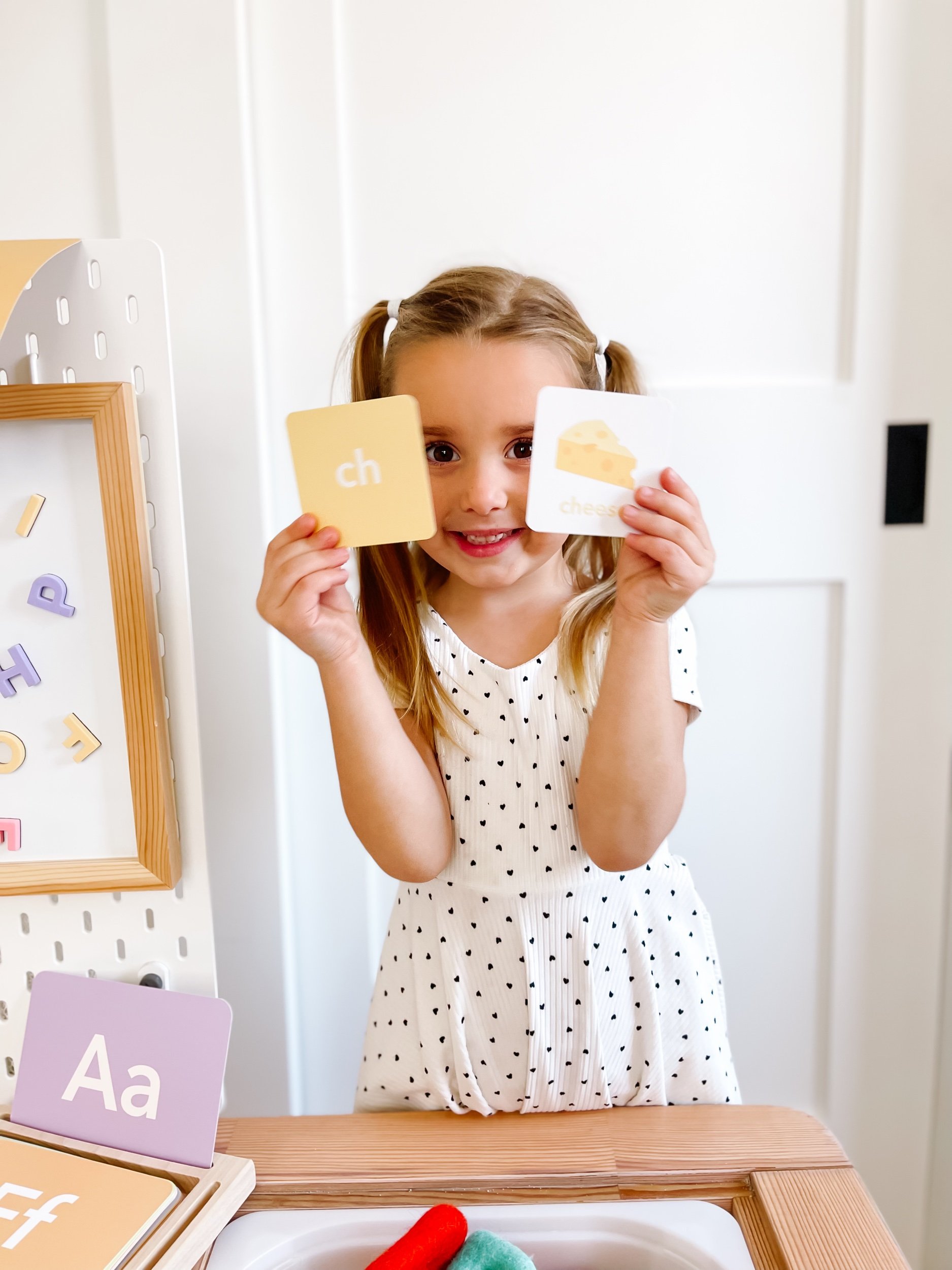
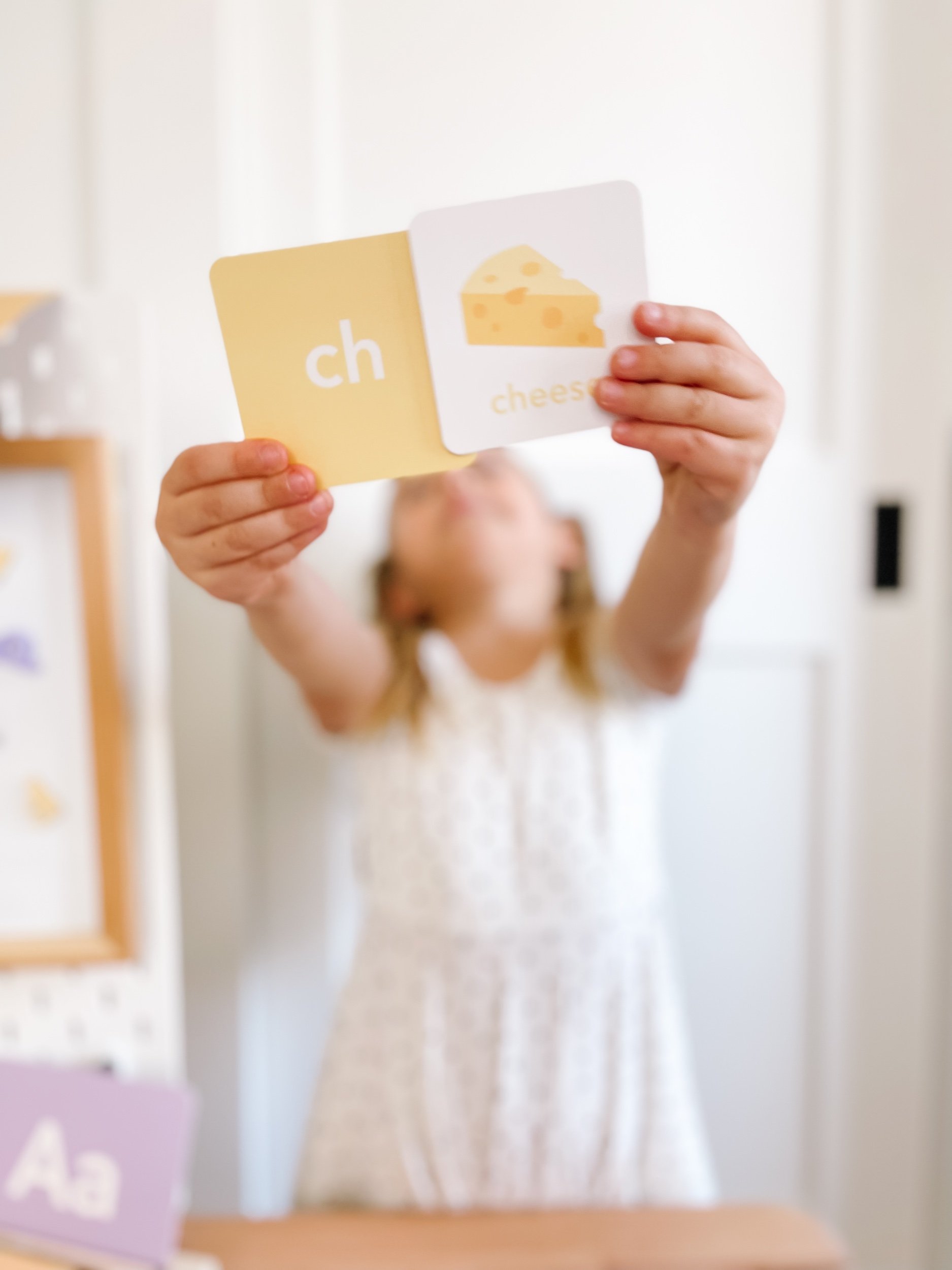
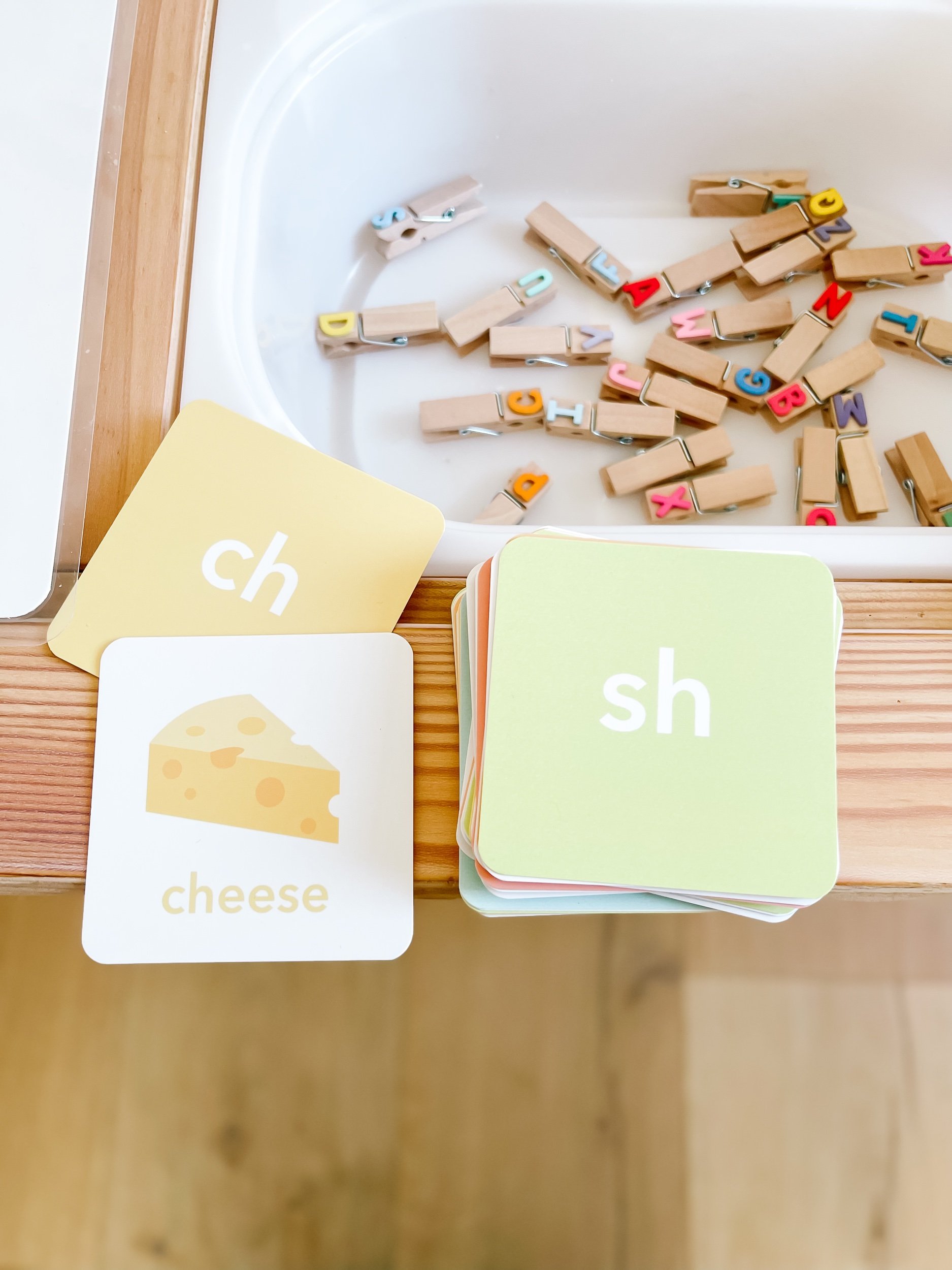
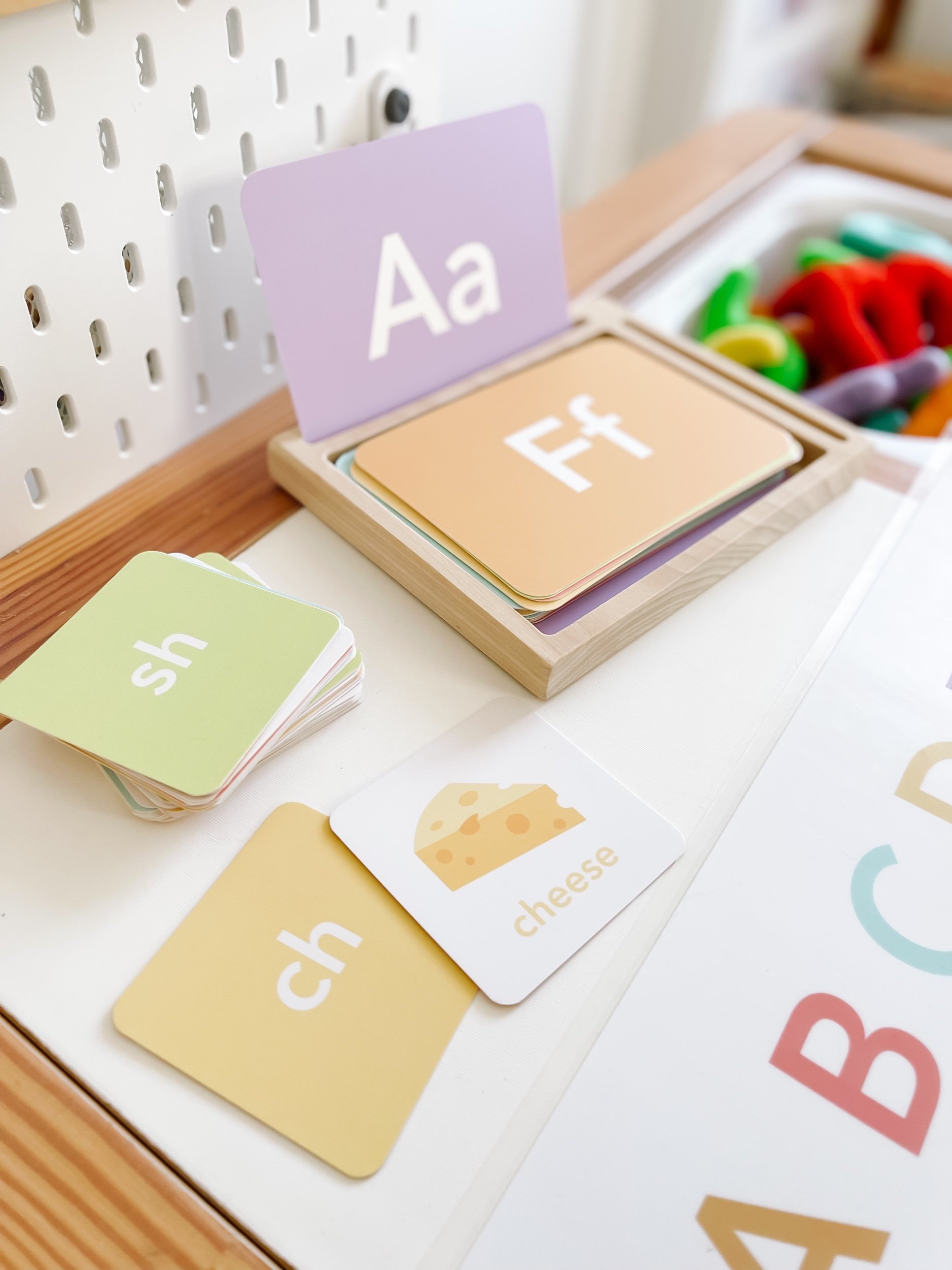
4. Digraphs Match Game:
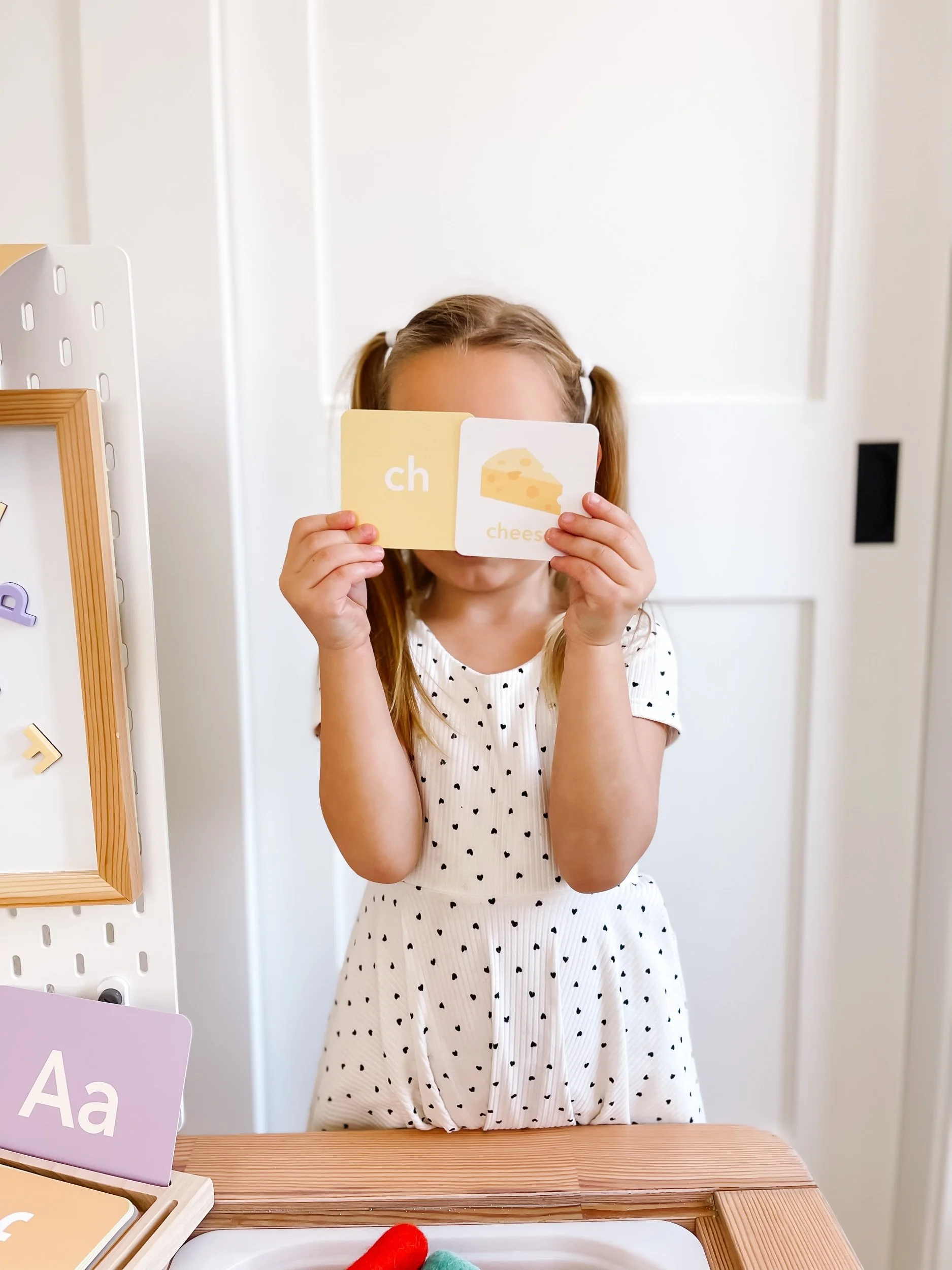
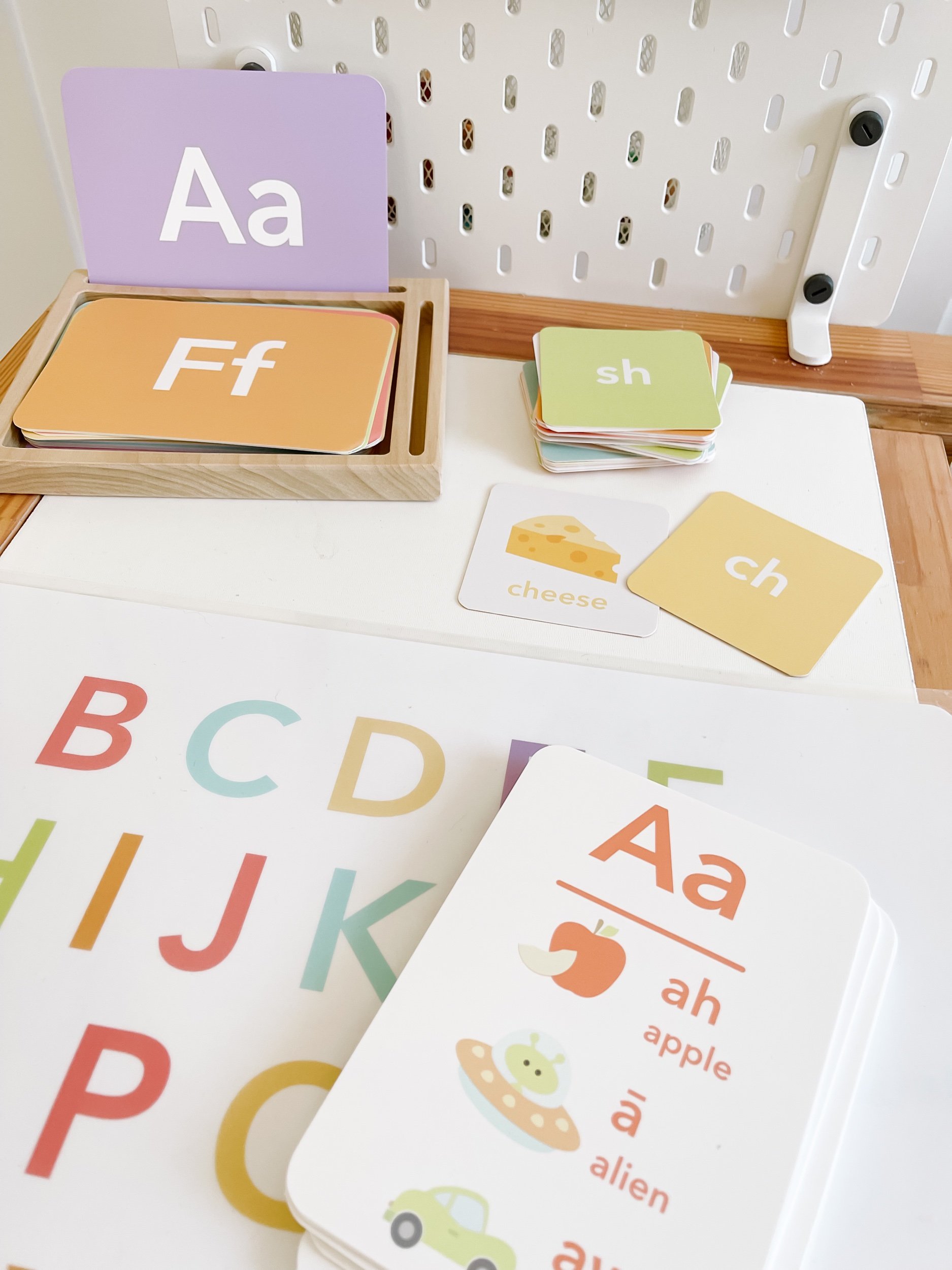
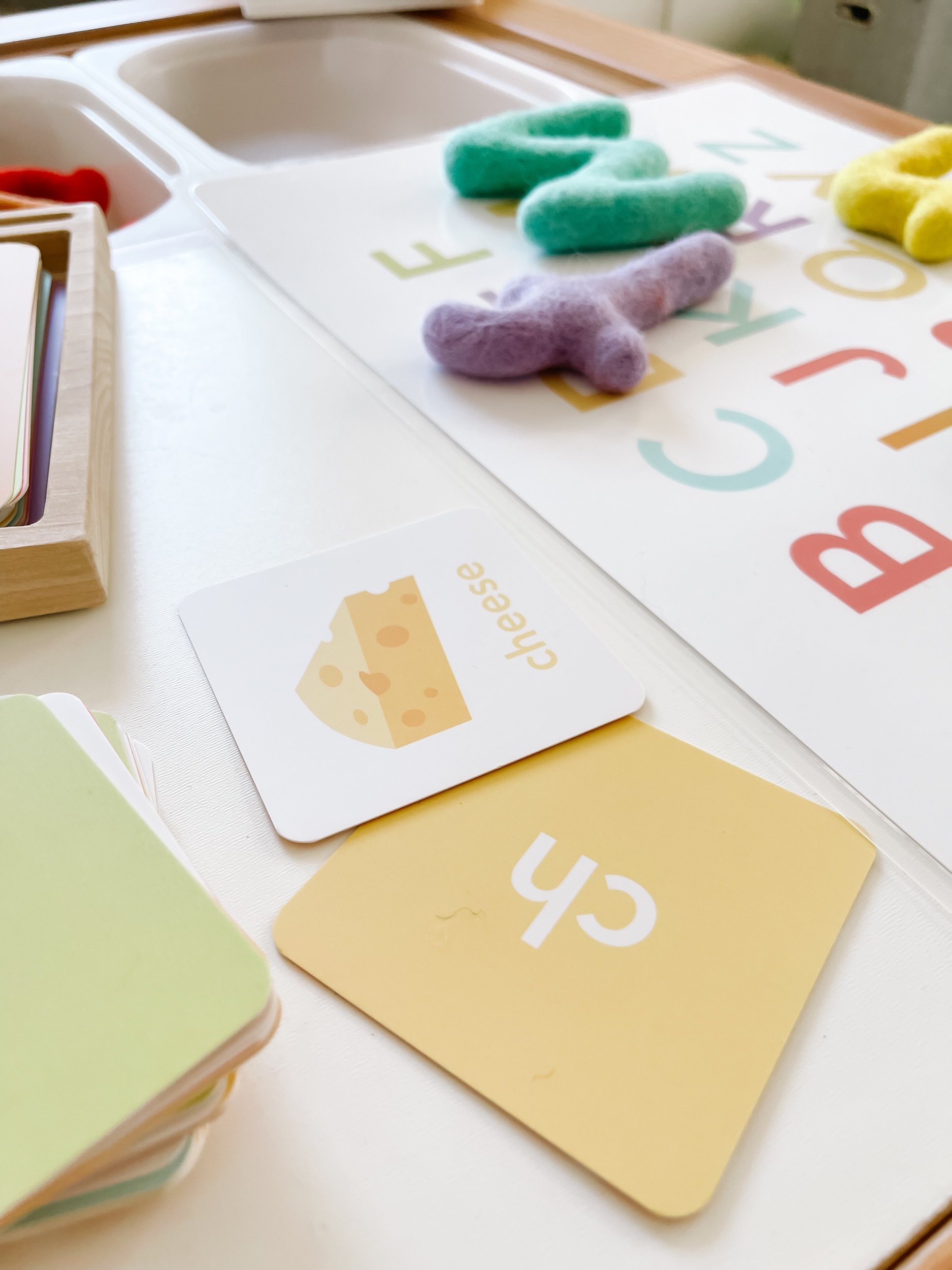
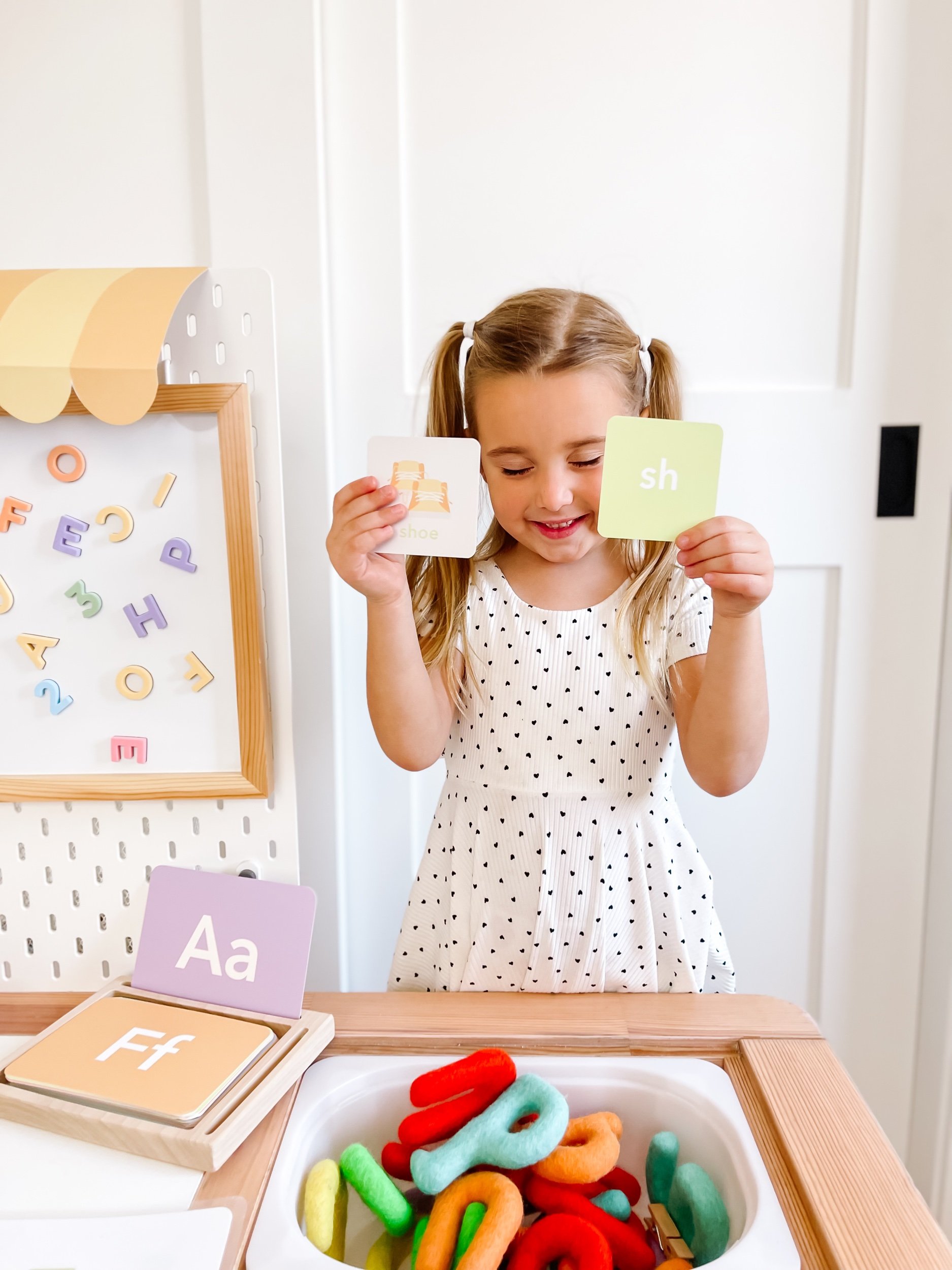
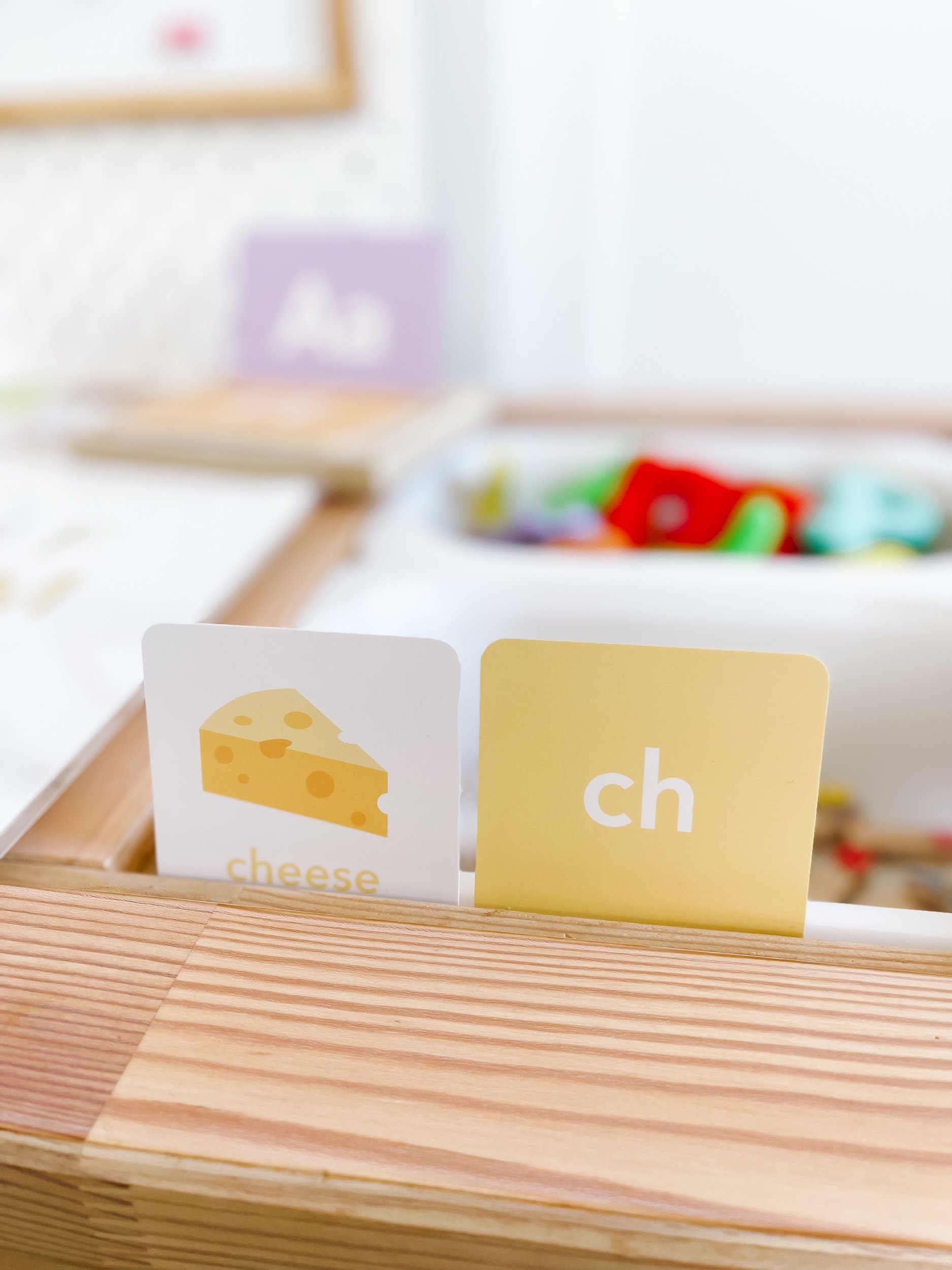
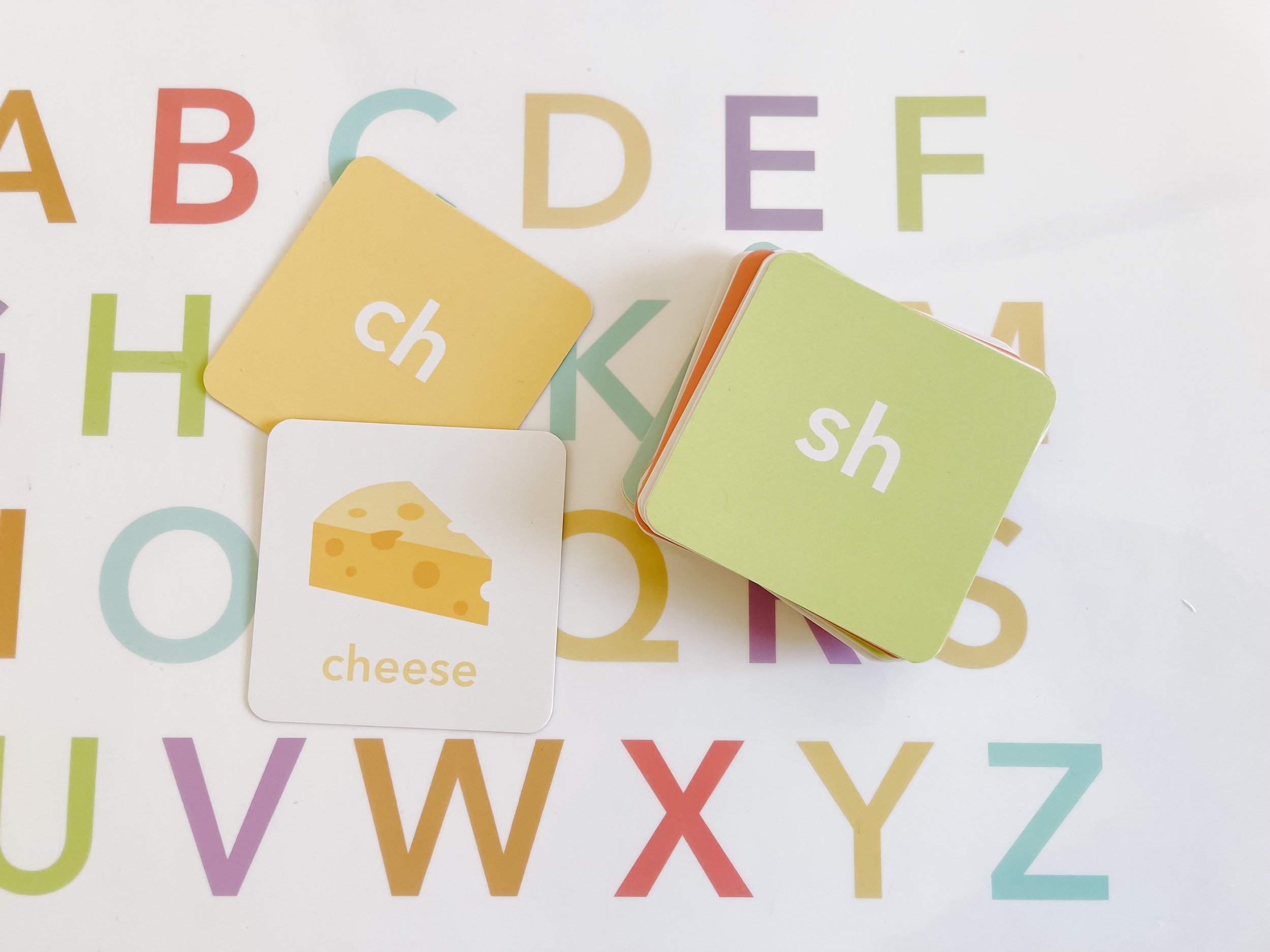
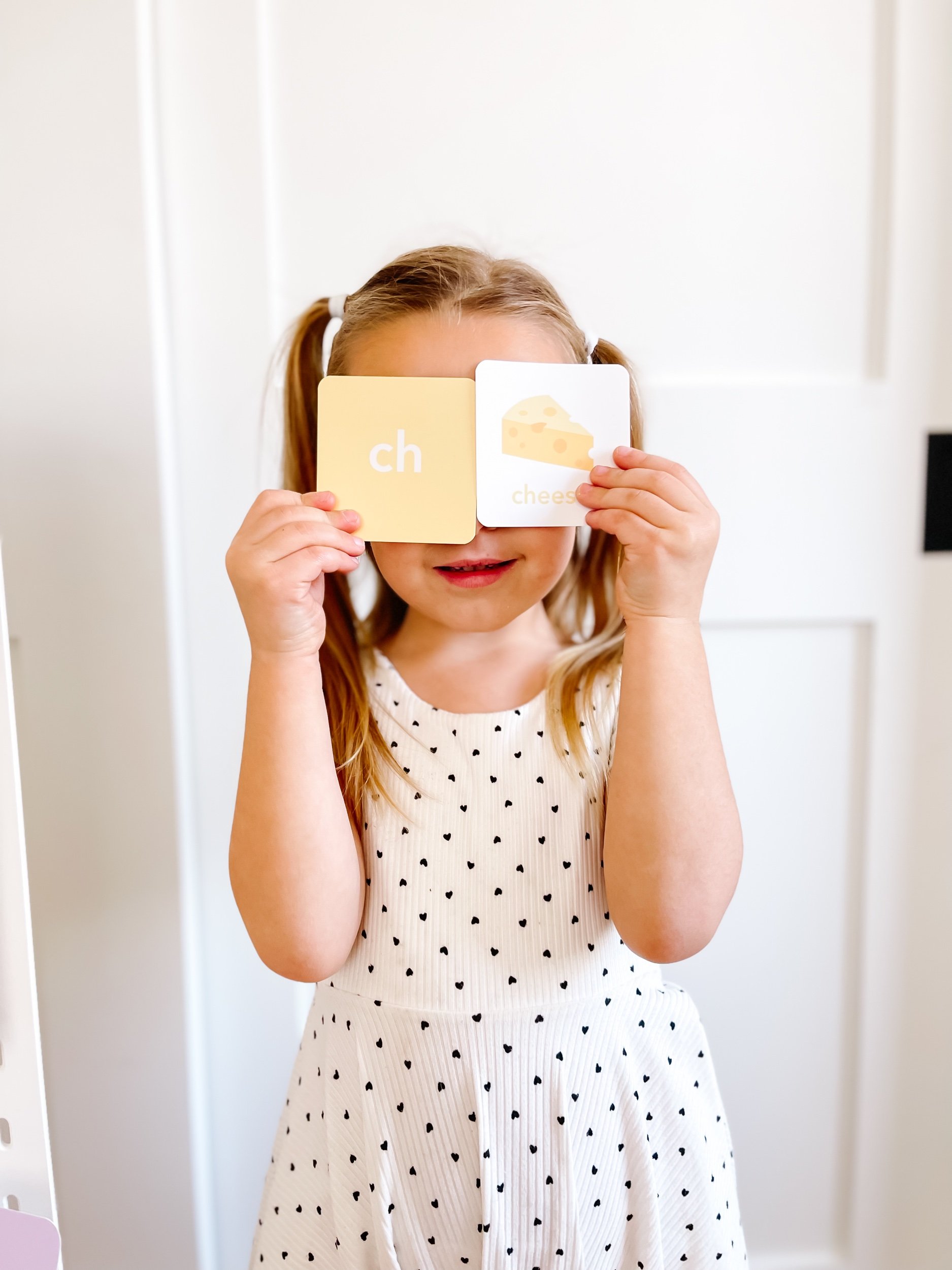
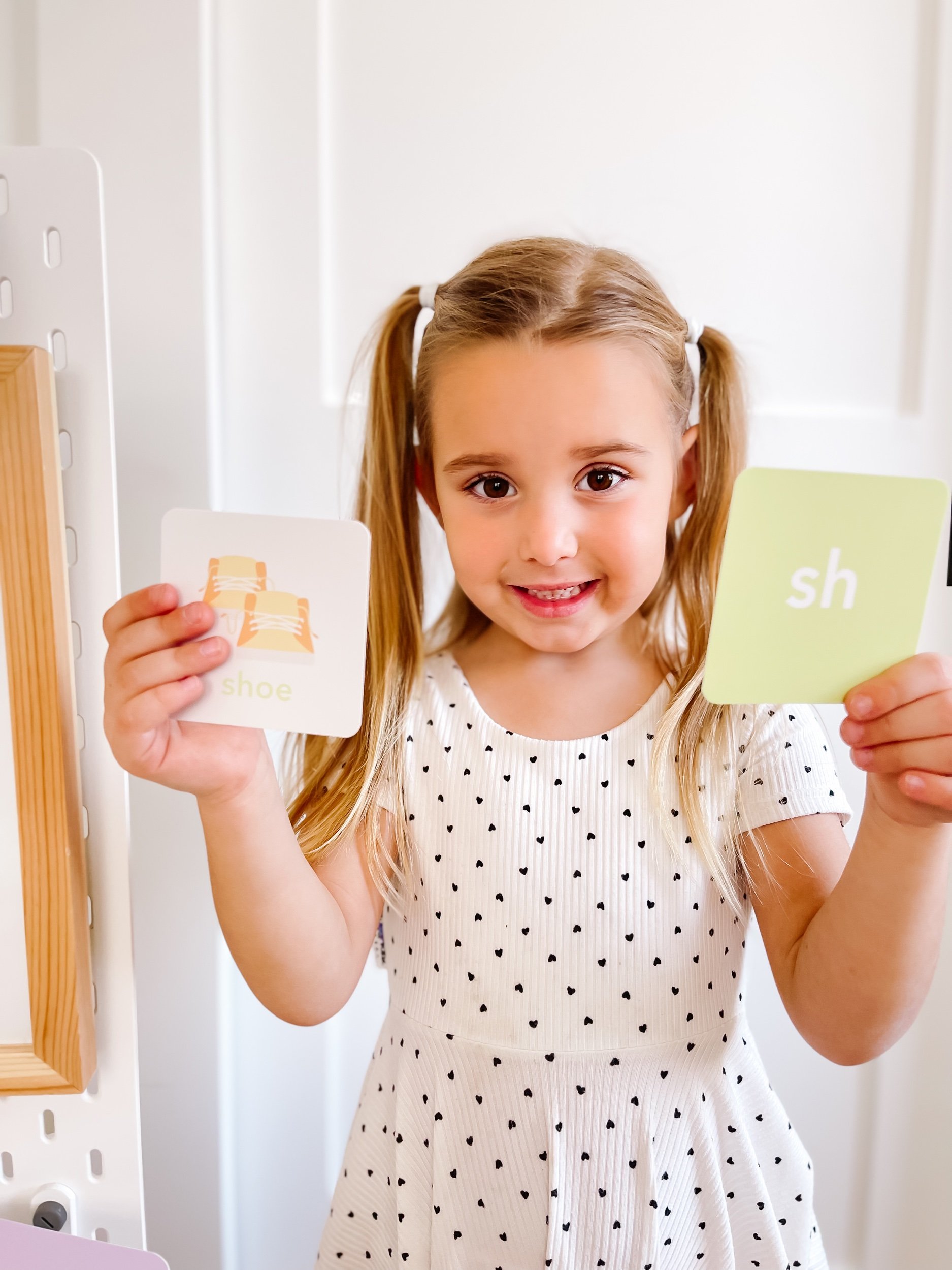
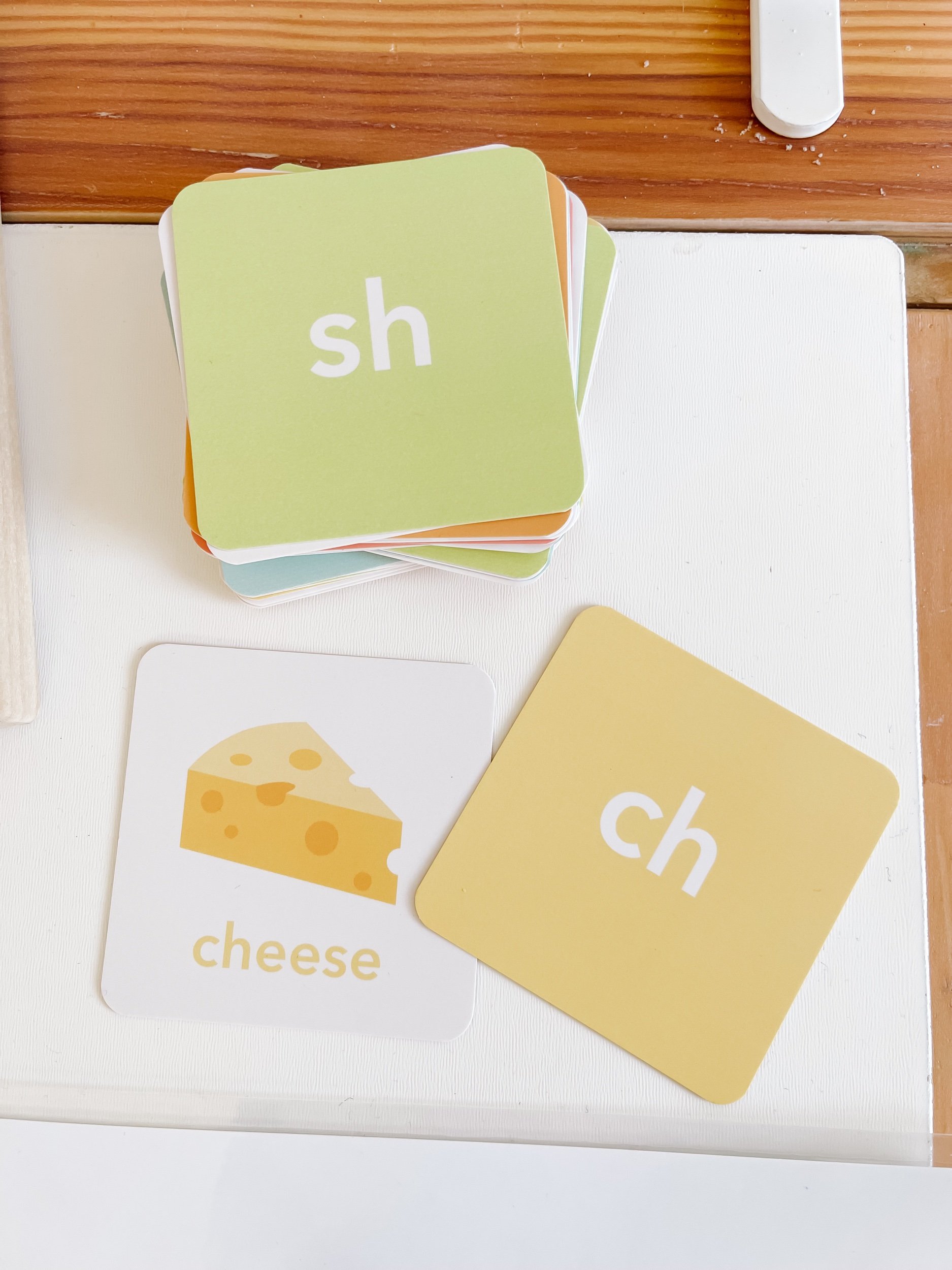
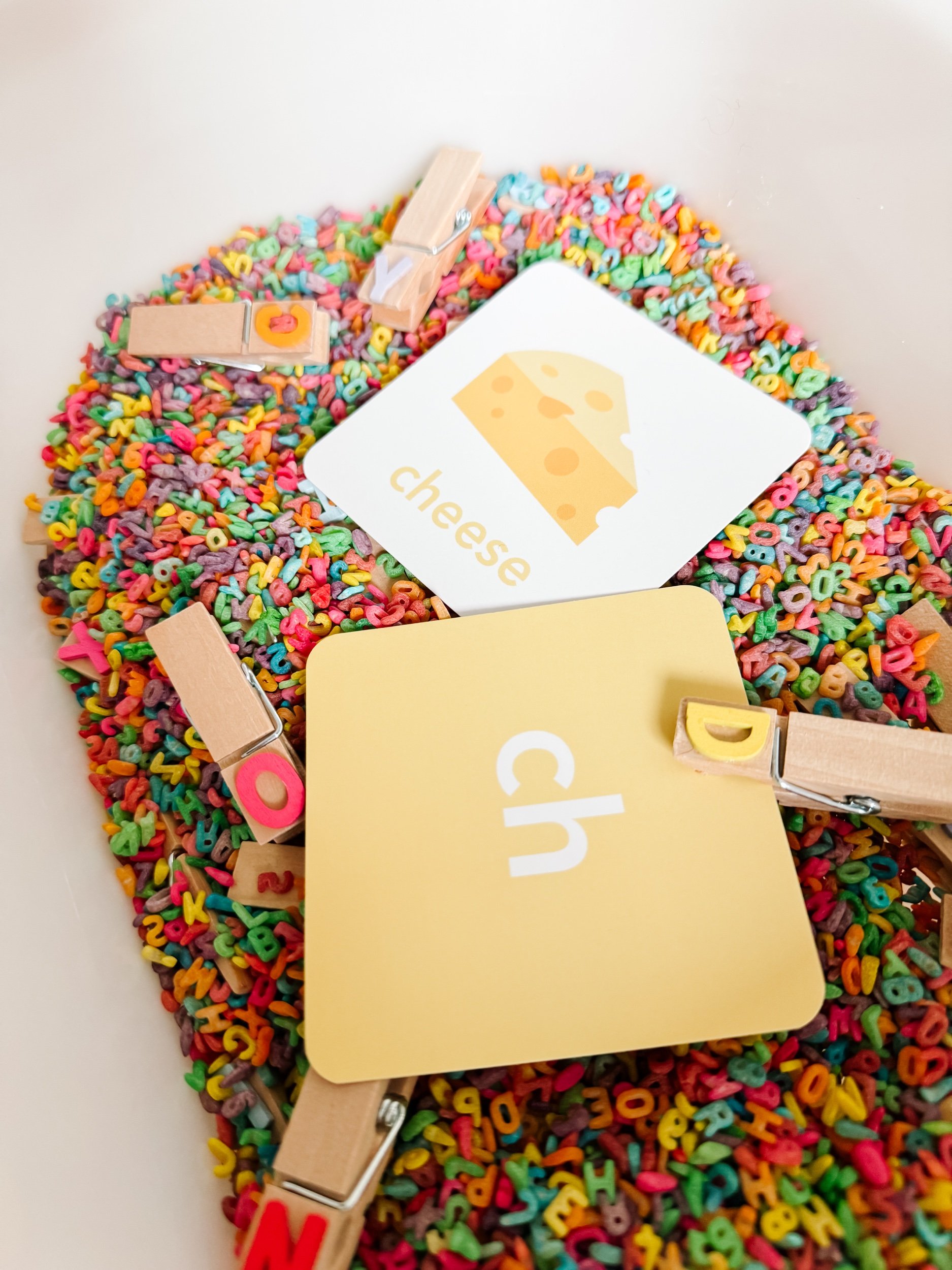
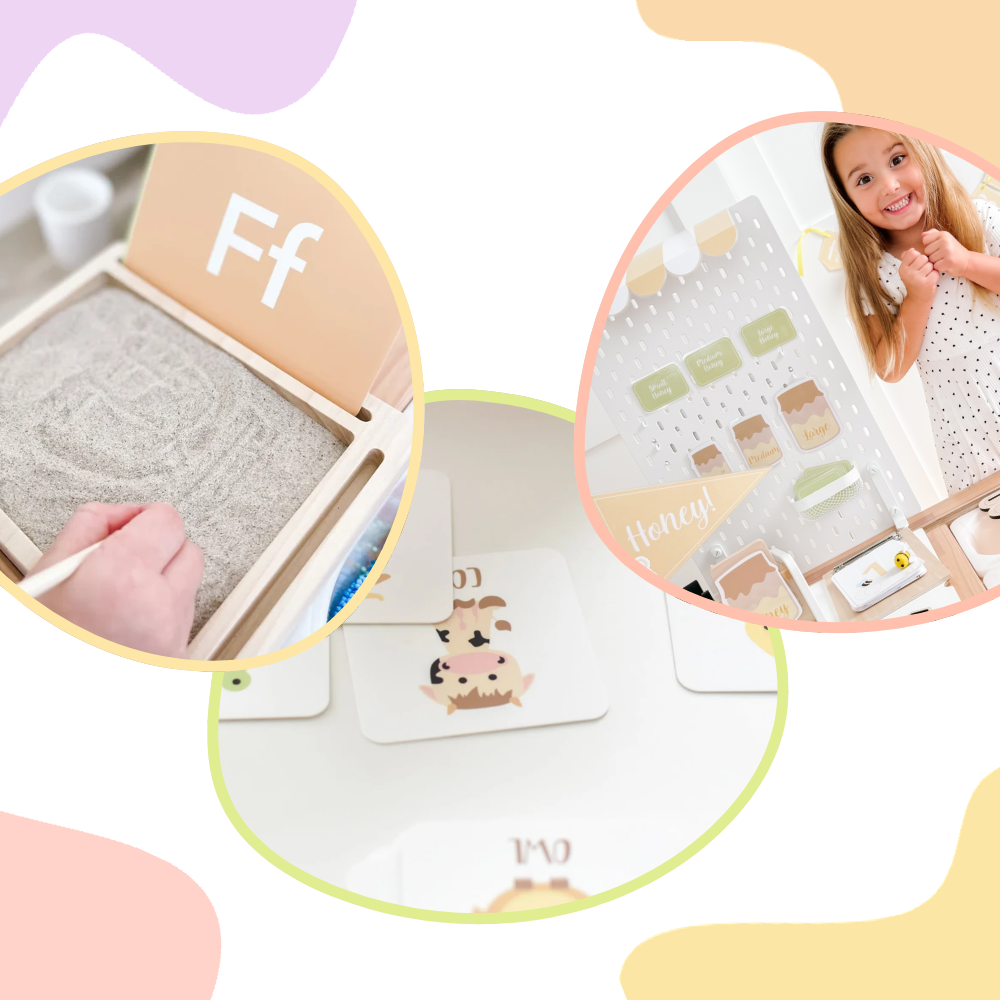
Once your child has learned how to blend letter sounds, they can move on to the skill of recognizing digraphs which are two letters together that make a unique sound. For this activity, we used our digraphs match game cards to find the pairs. Once Sofia is a bit older, we’ll be able to spread the full game out on the table to play.
5. Fine Motor Clip Matching
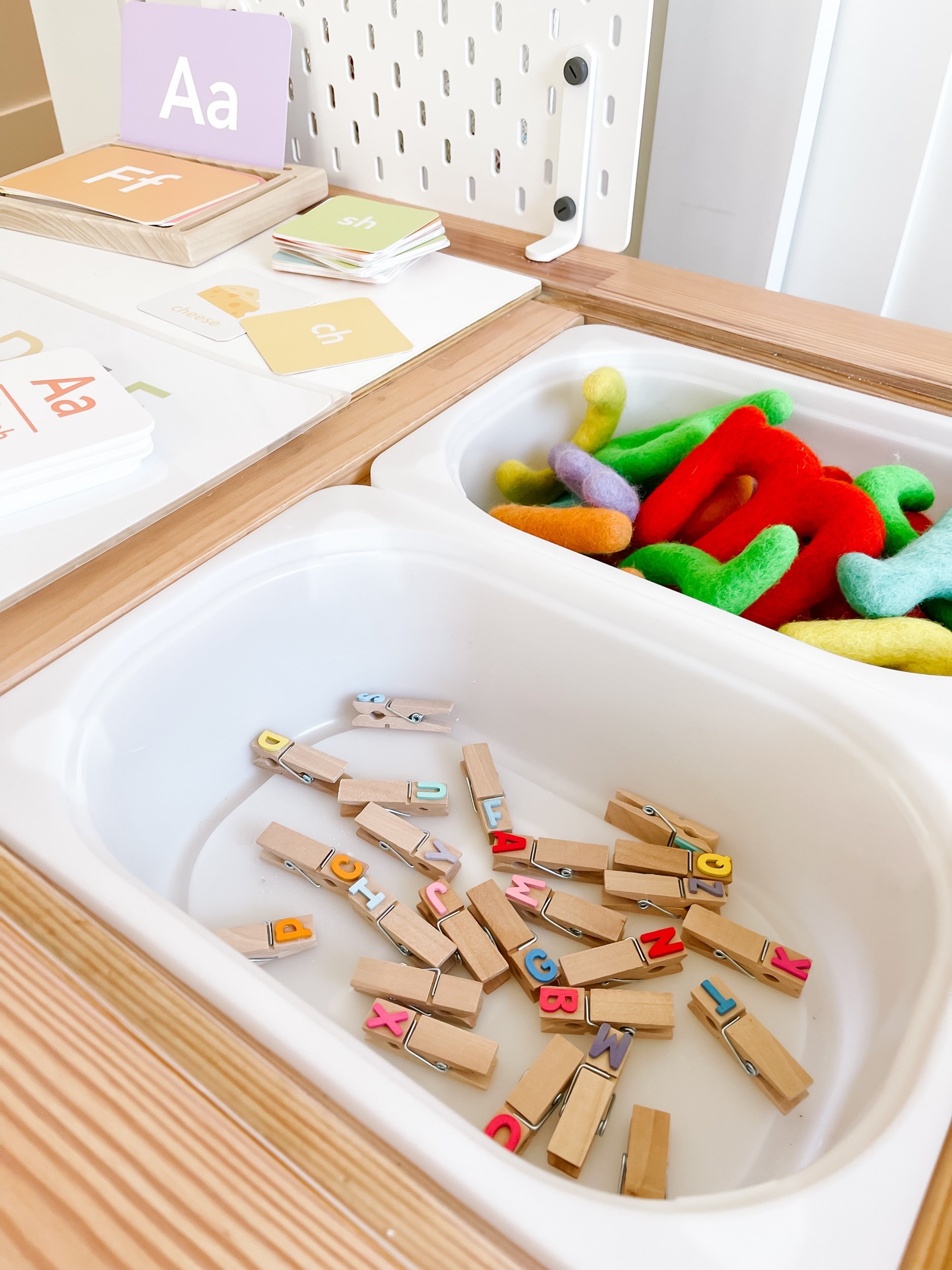
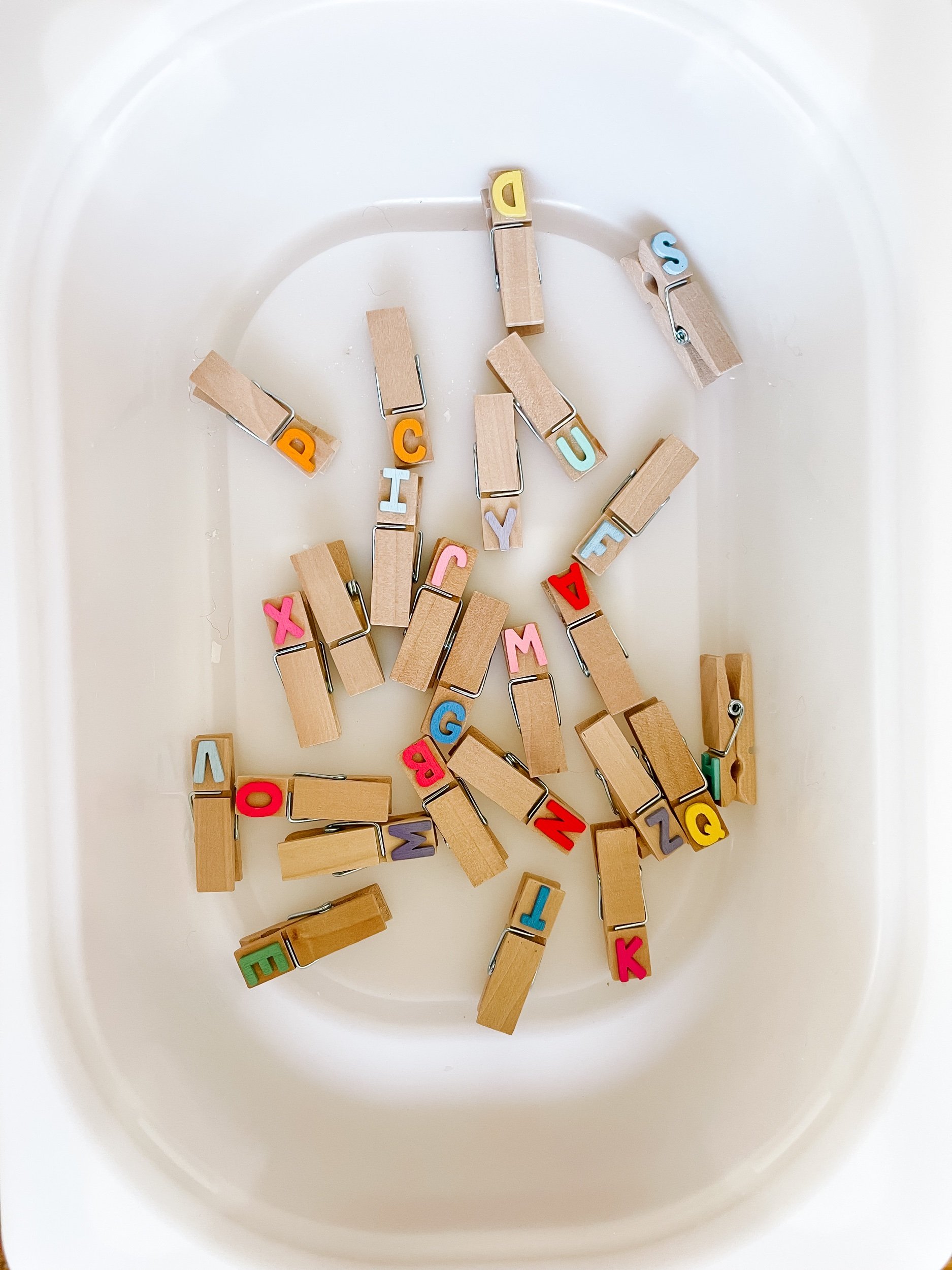
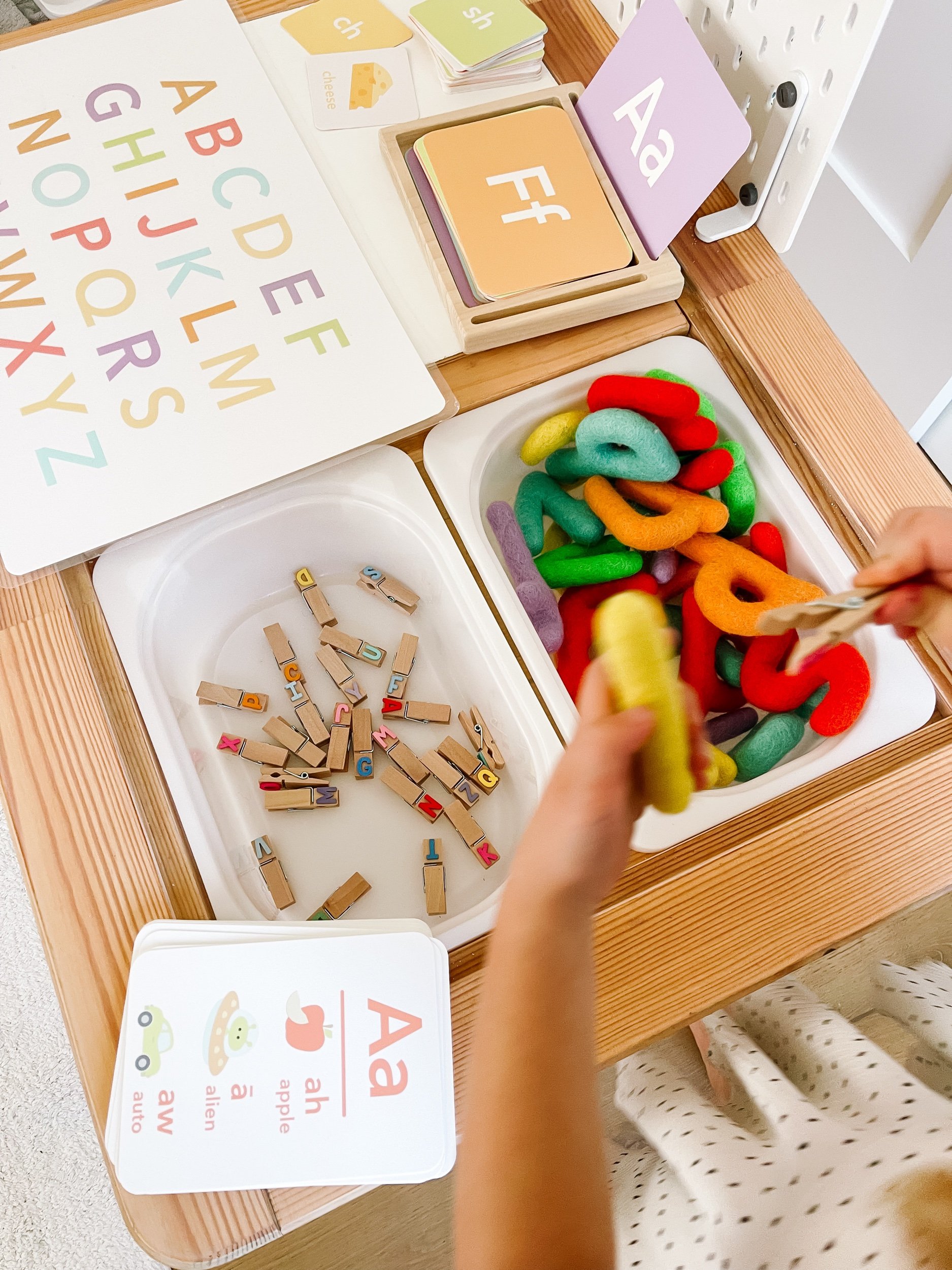
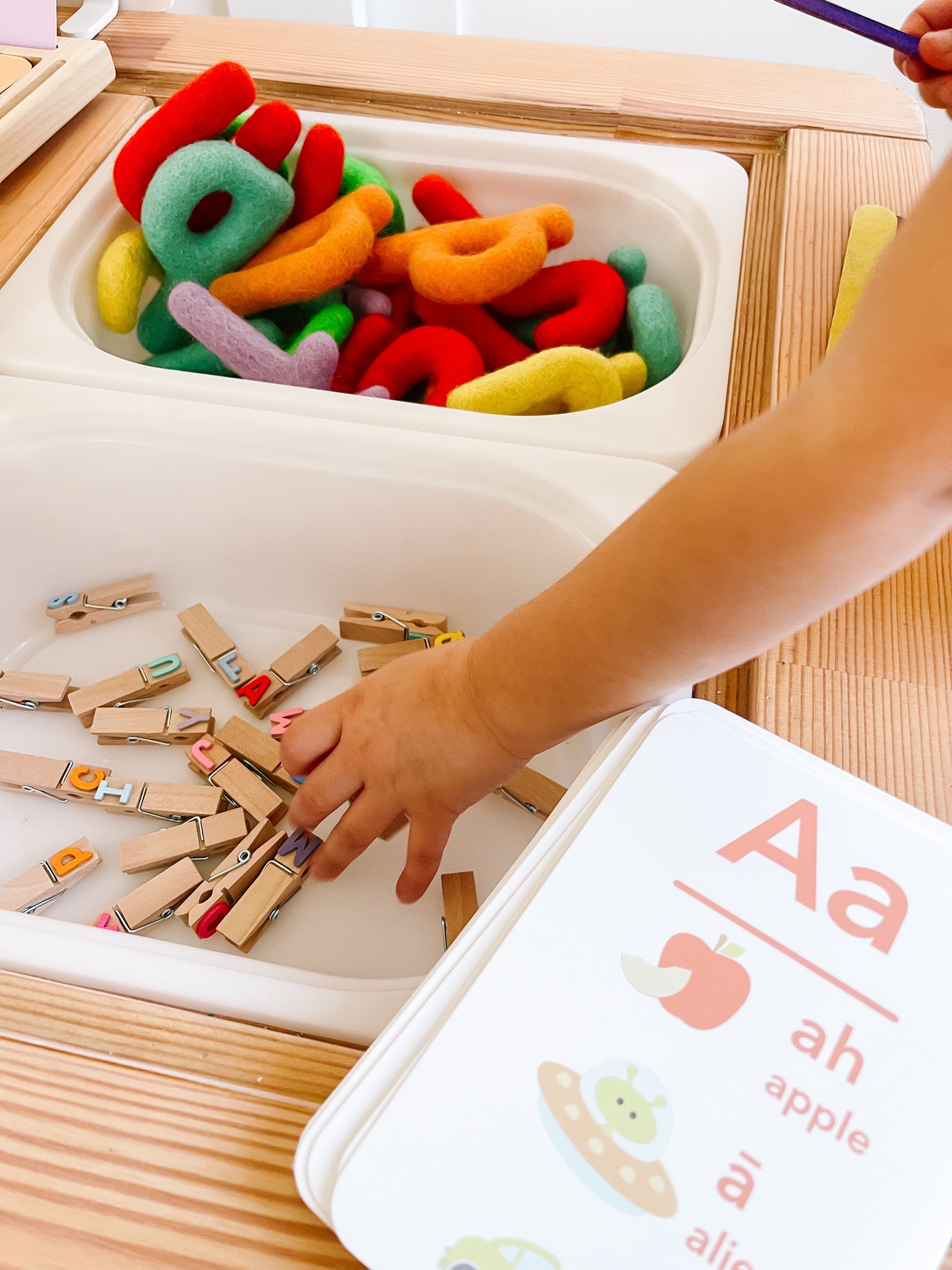
In this activity, you can use wooden clips with letters on them and have your kiddo match to the flashcards and clip to them. If you want to incorporate gross motor skills, have them clip to a string tied up across the room. This will both promote motor skills while also challenging letter recognition.
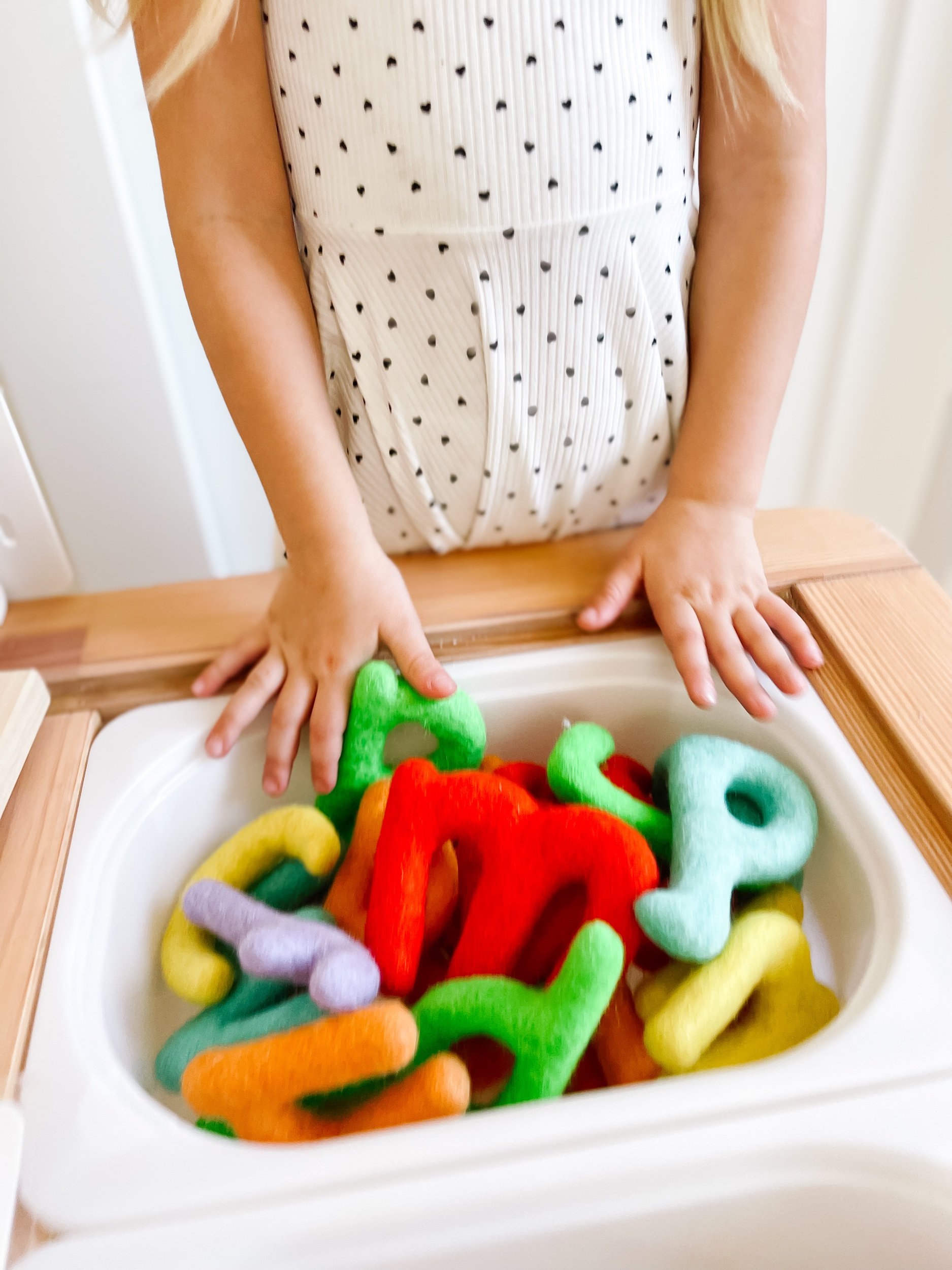
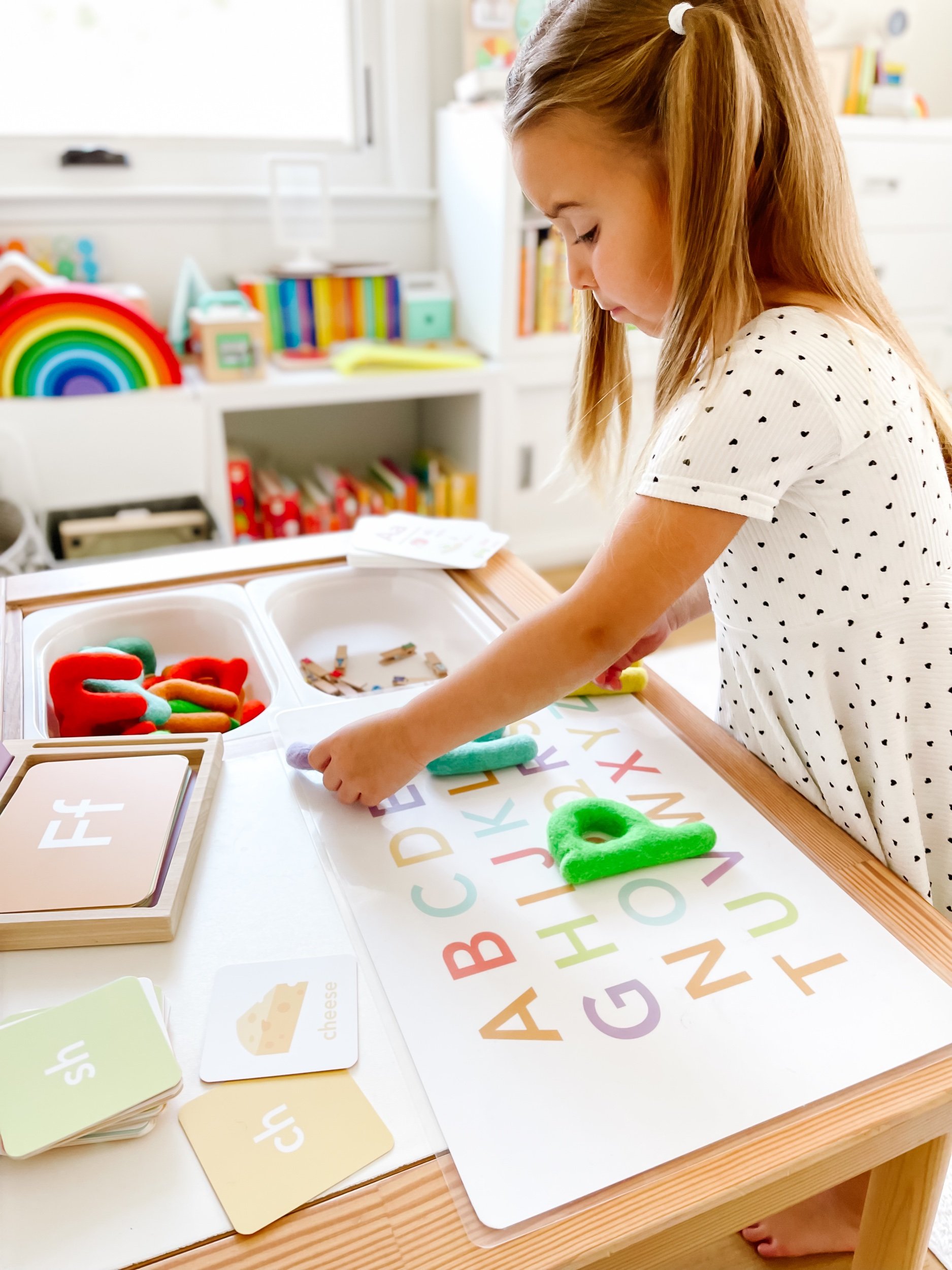
6. Wool Letters Bin
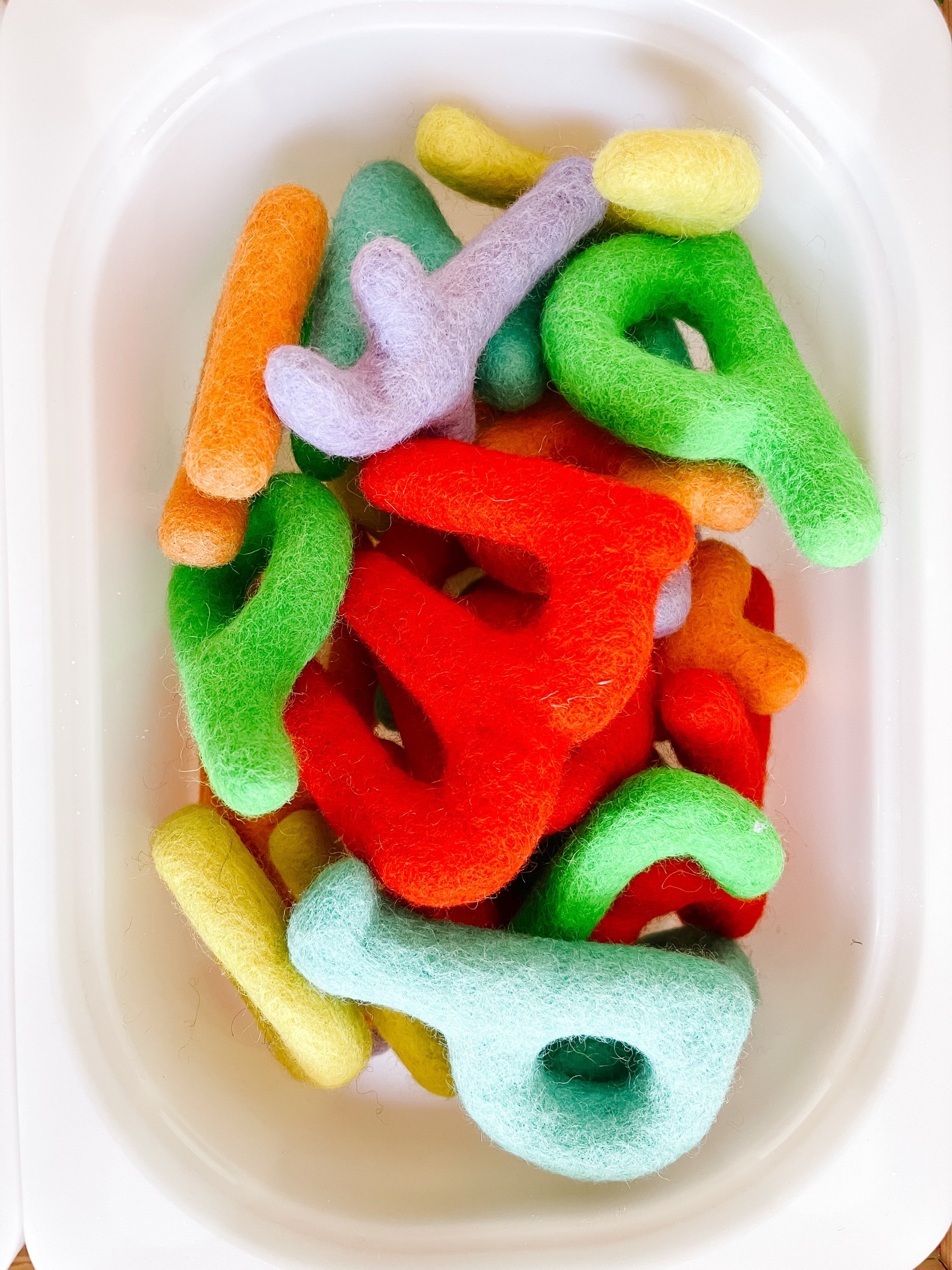
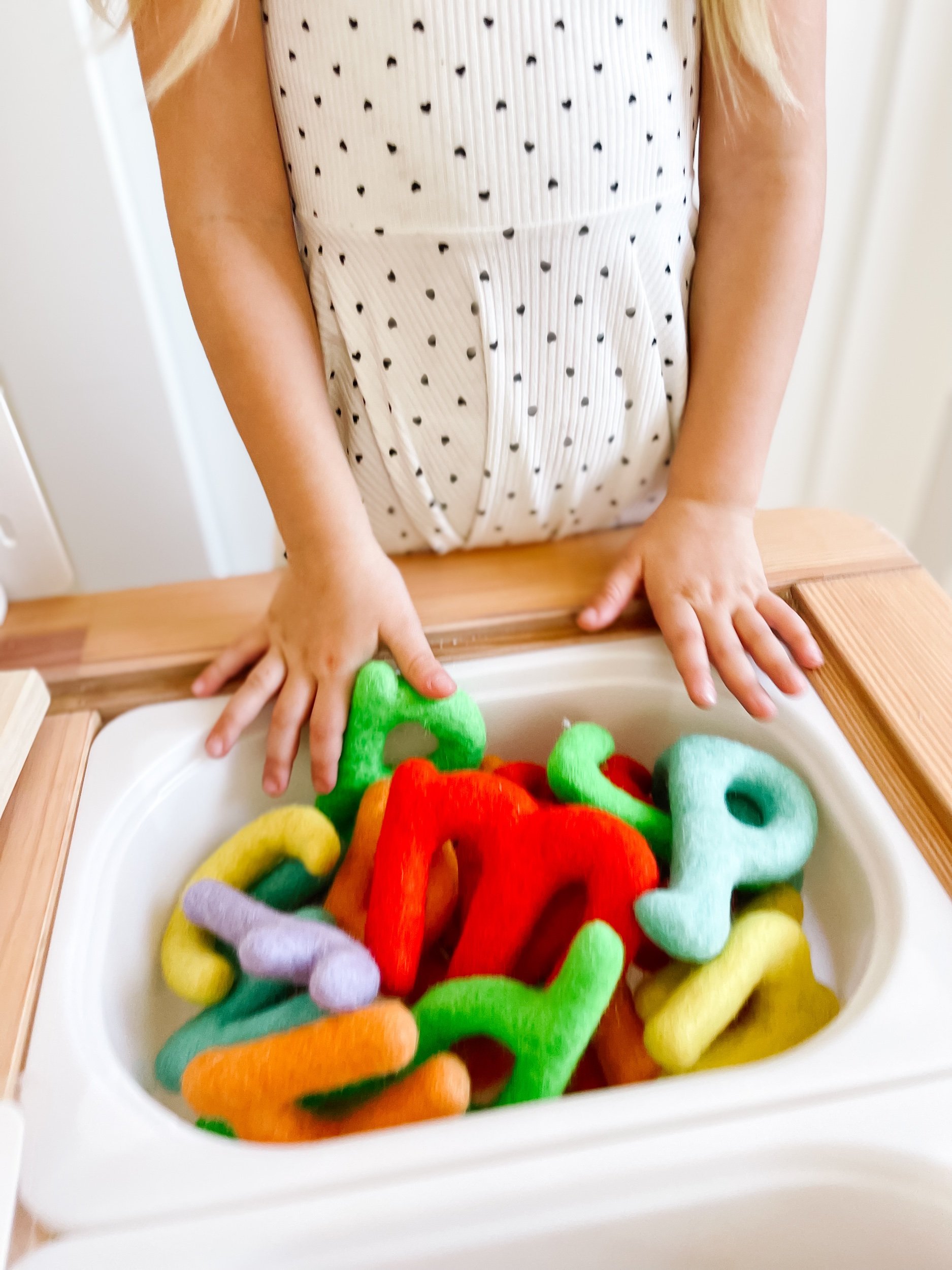
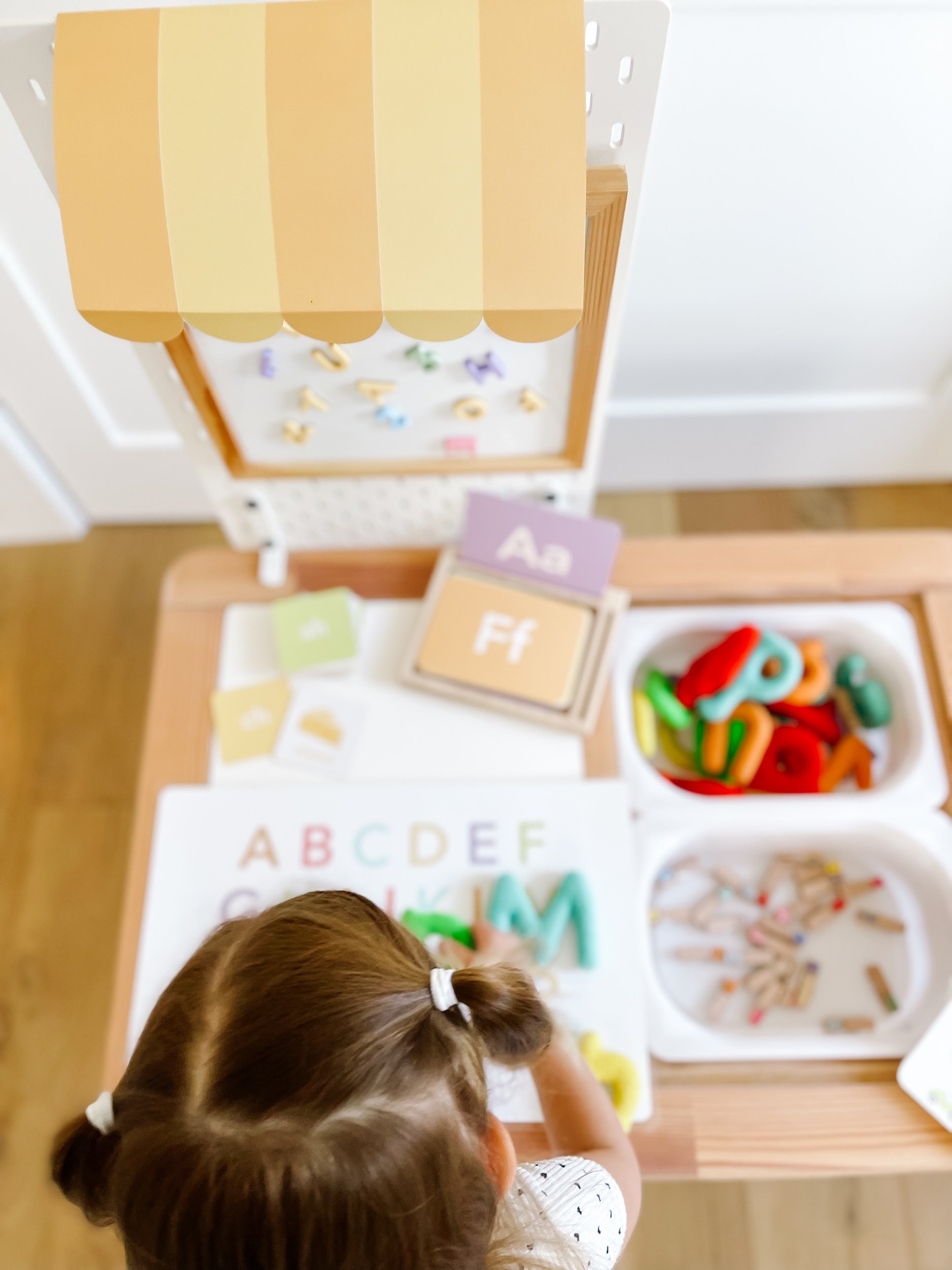
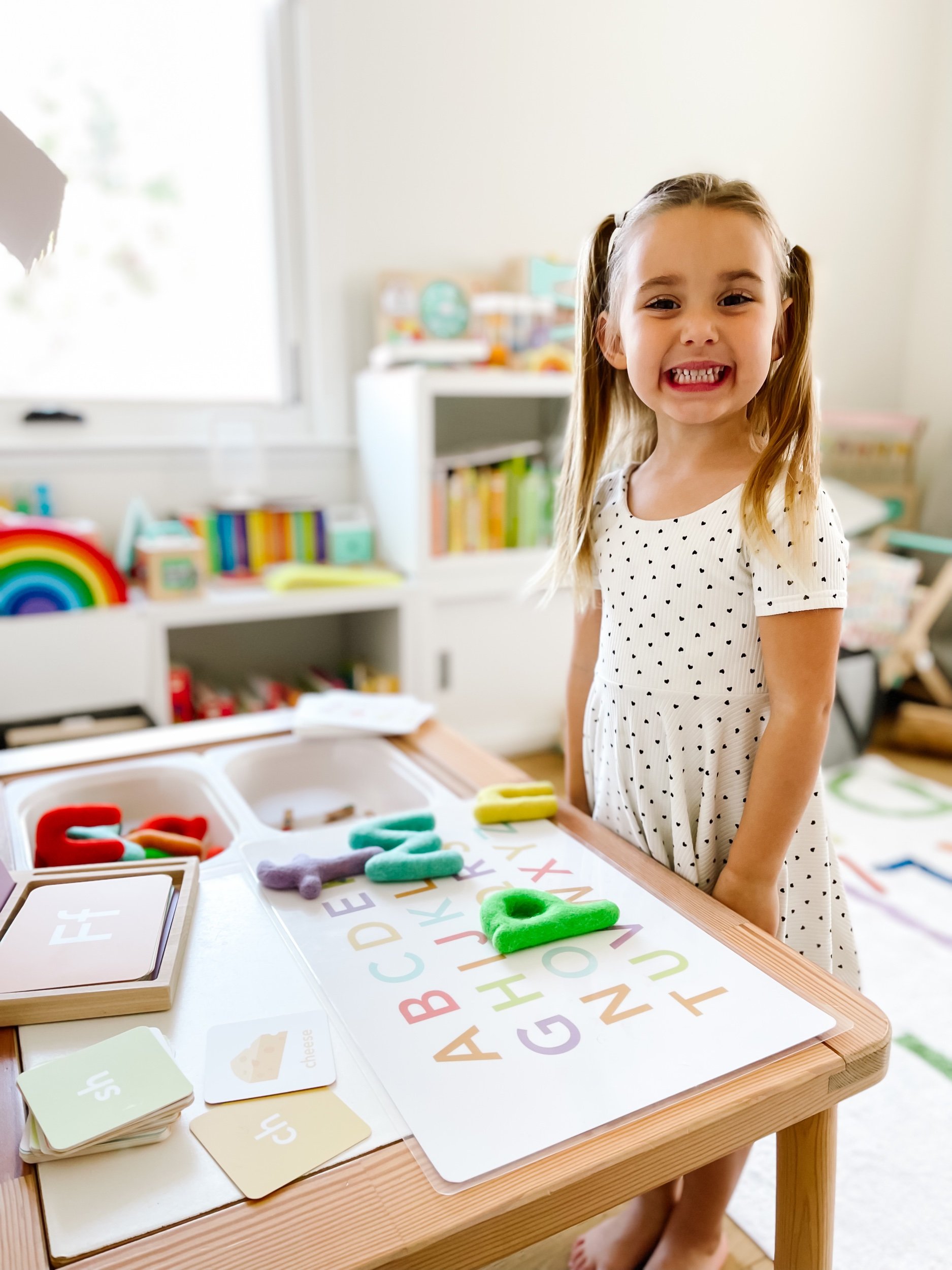
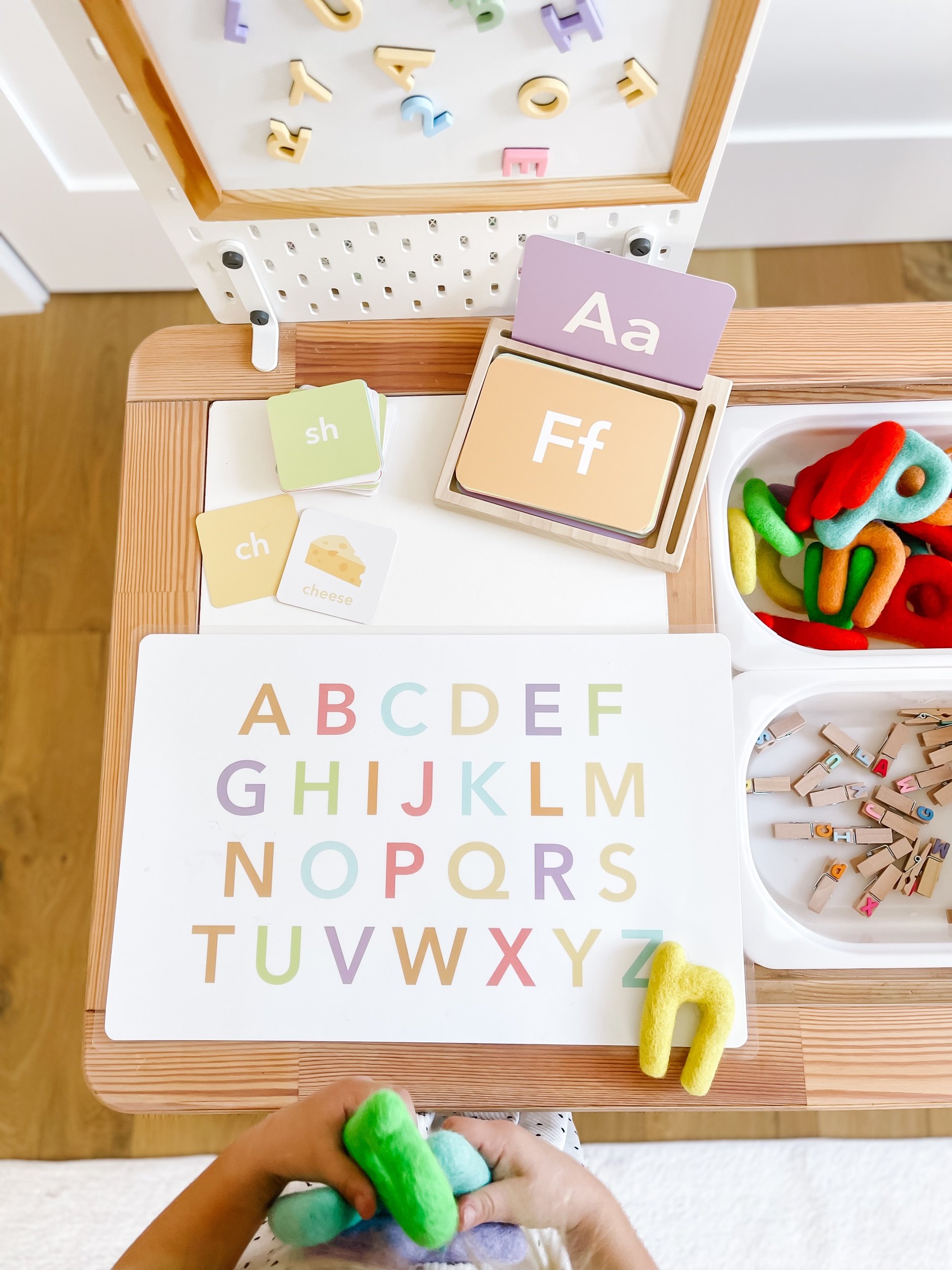
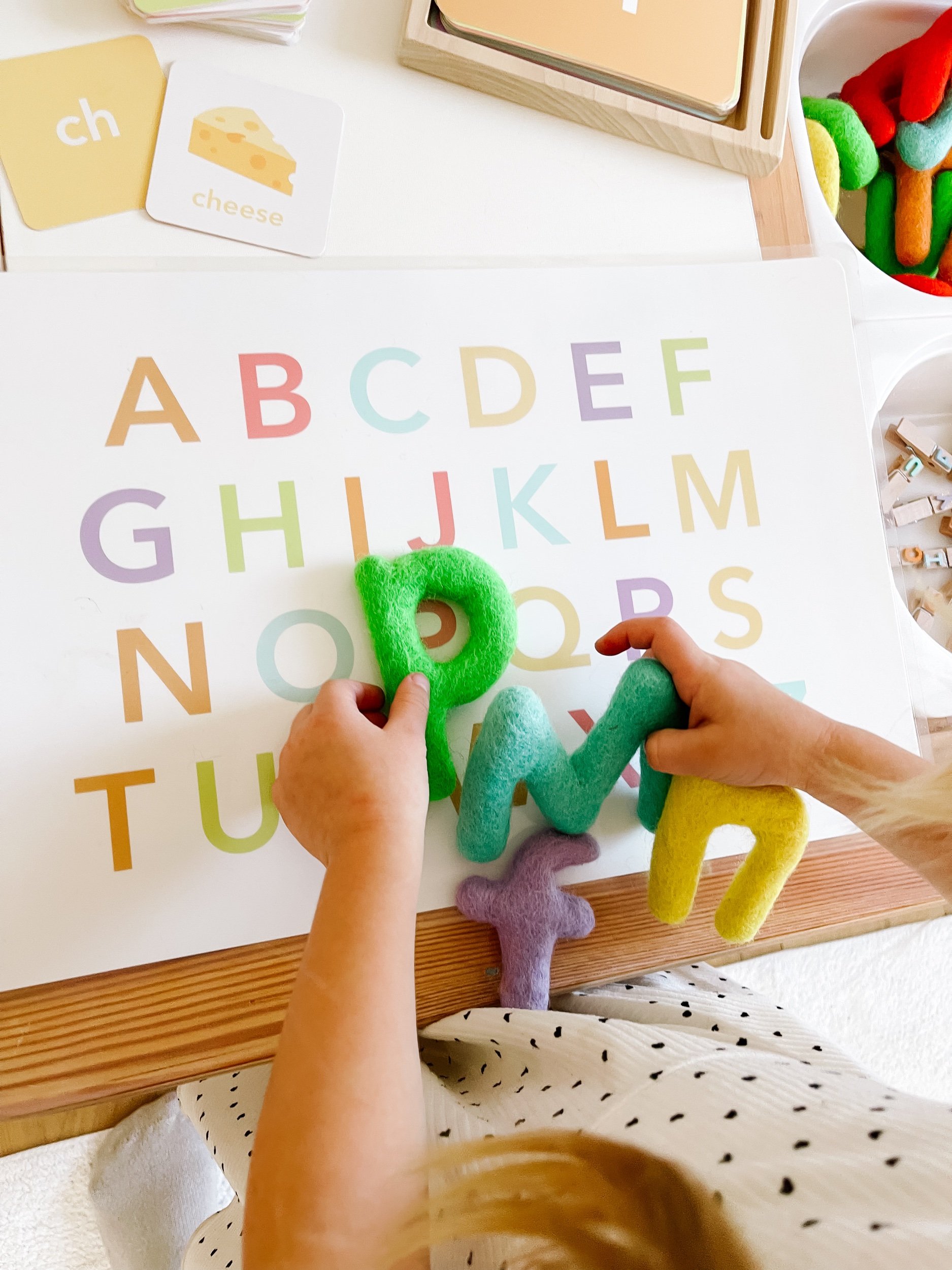
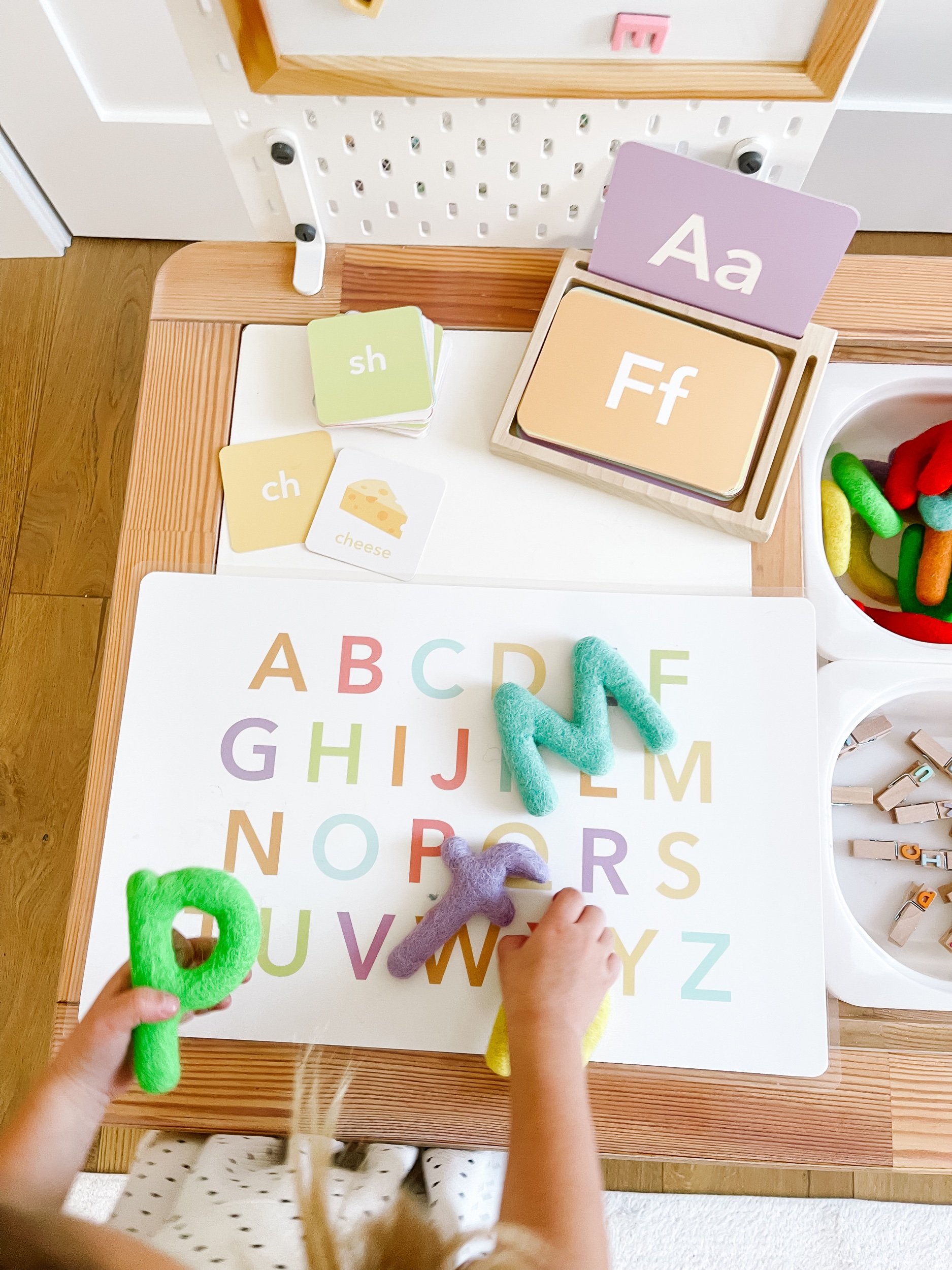
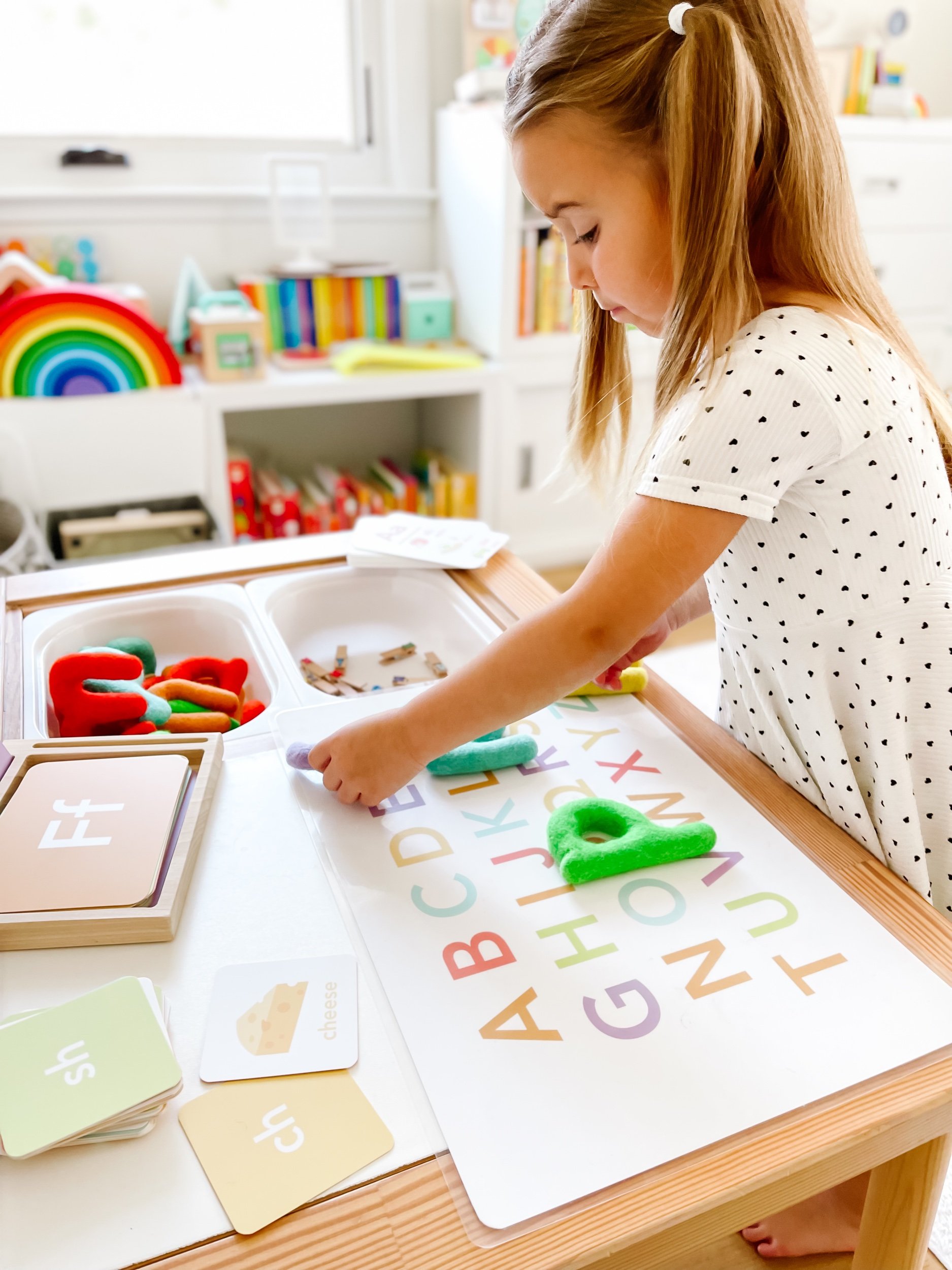
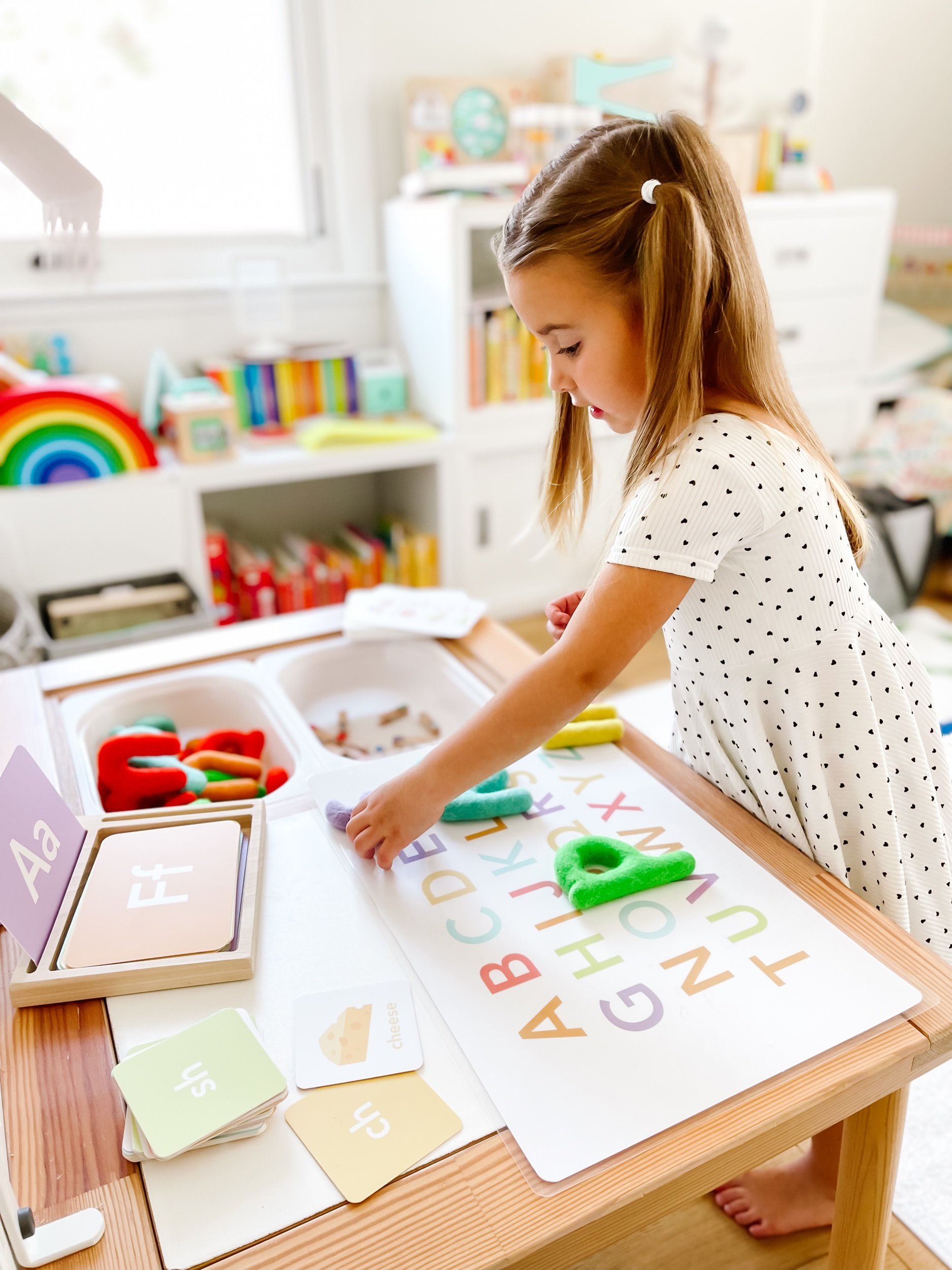
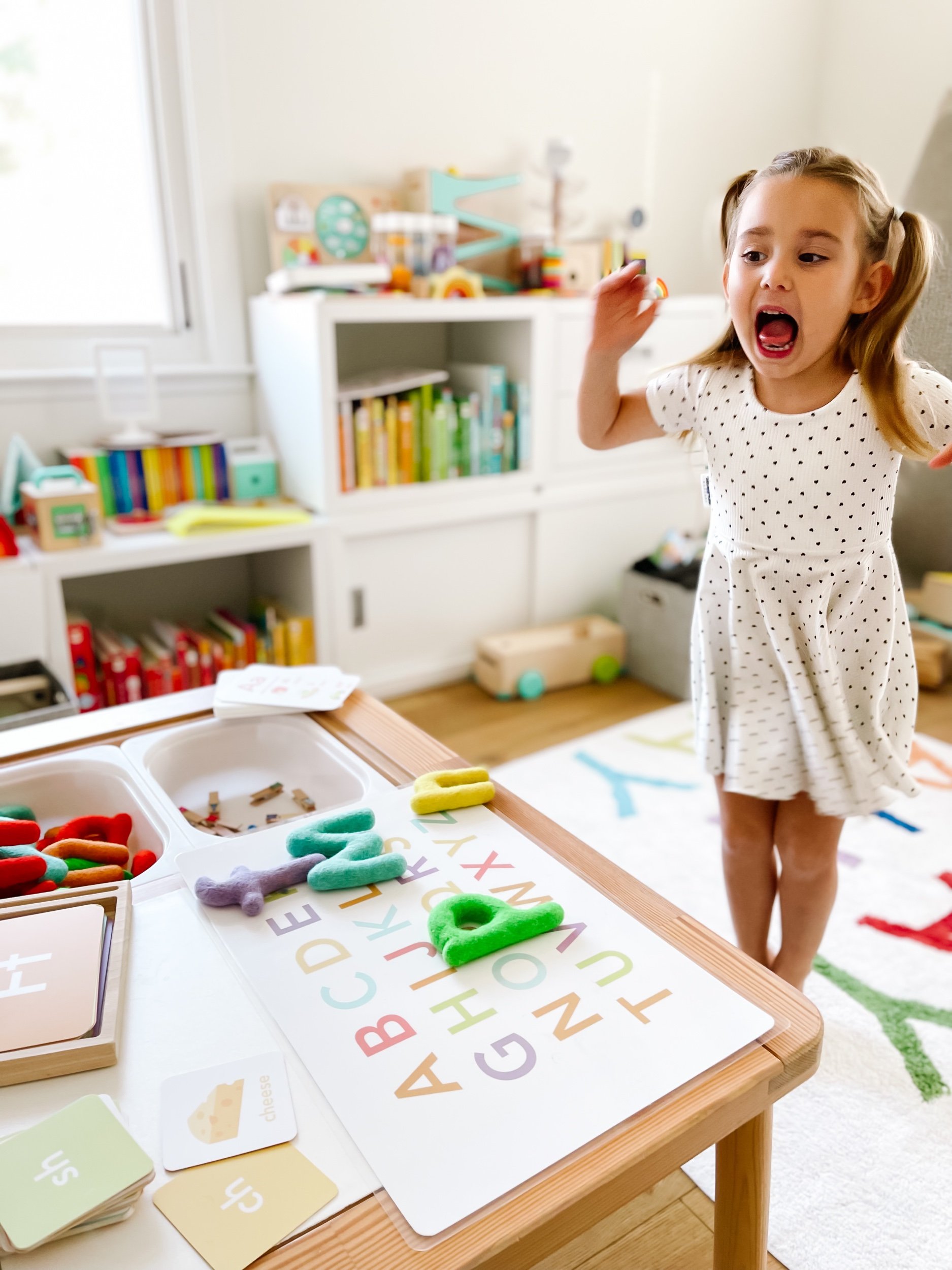
A great alternative to the resin letters are these large wool letters from Wonder Years Play. They’re large and tactile and great for early learners. I used these with Sofia to practice matching them to the letter placemat. This was challenging for her to match the upper and lowercase. But you can make it easier for little ones by purchasing a matching set.
7. Magnetic Letter Board
I’m absolutely obsessed with these magnetic letter boards because they offer such a fun and tactile experience for engaging with letters. And moving them around to make new words is so much fun and so gratifying to the senses. They also double as a whiteboard which has been so helpful in teaching Sofie how to blend sounds. Writing each letter as she makes the sound, adding dots or lines to help reinforce the blend has been magical.
8. Letter writing in colored sand
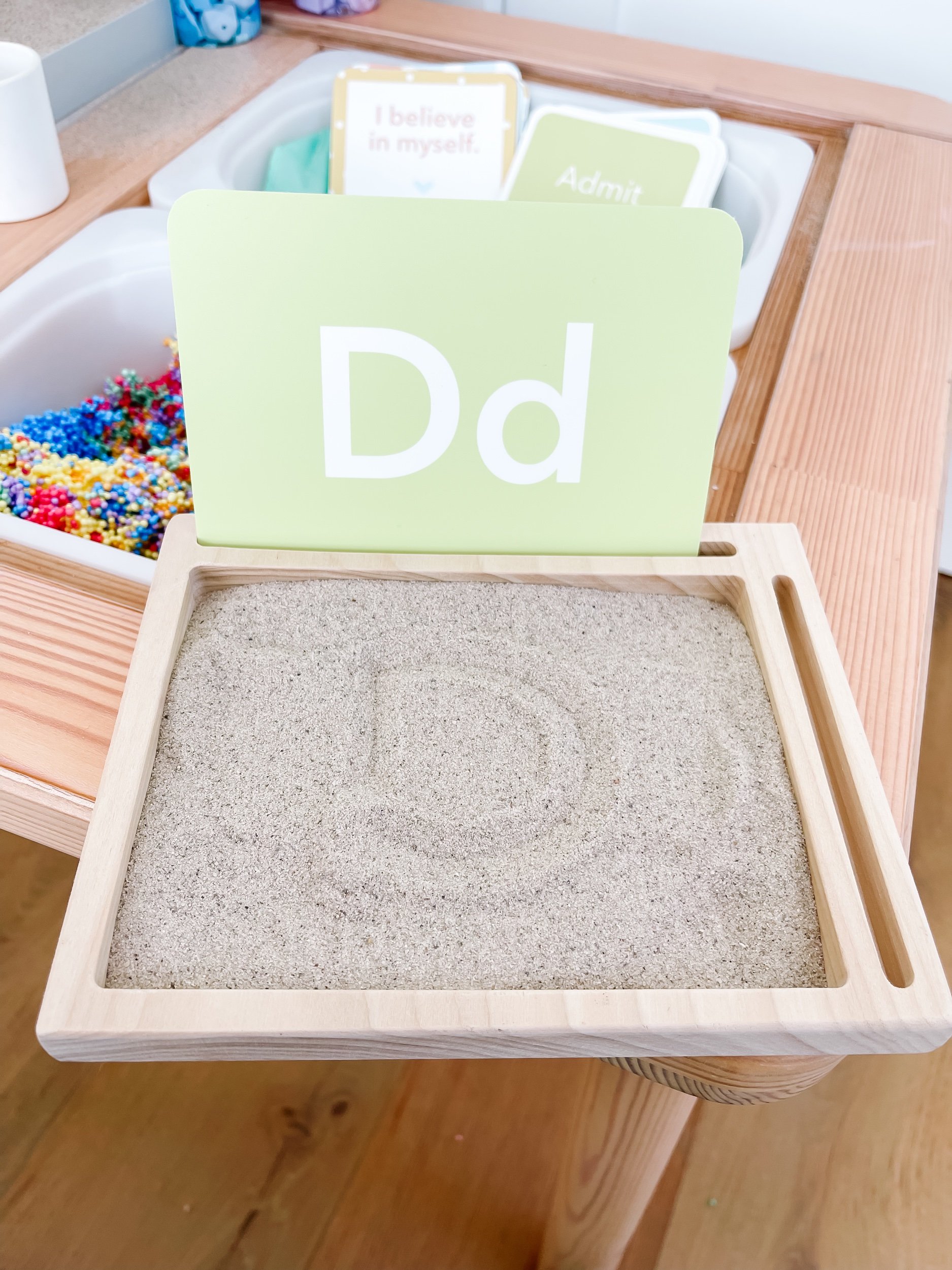
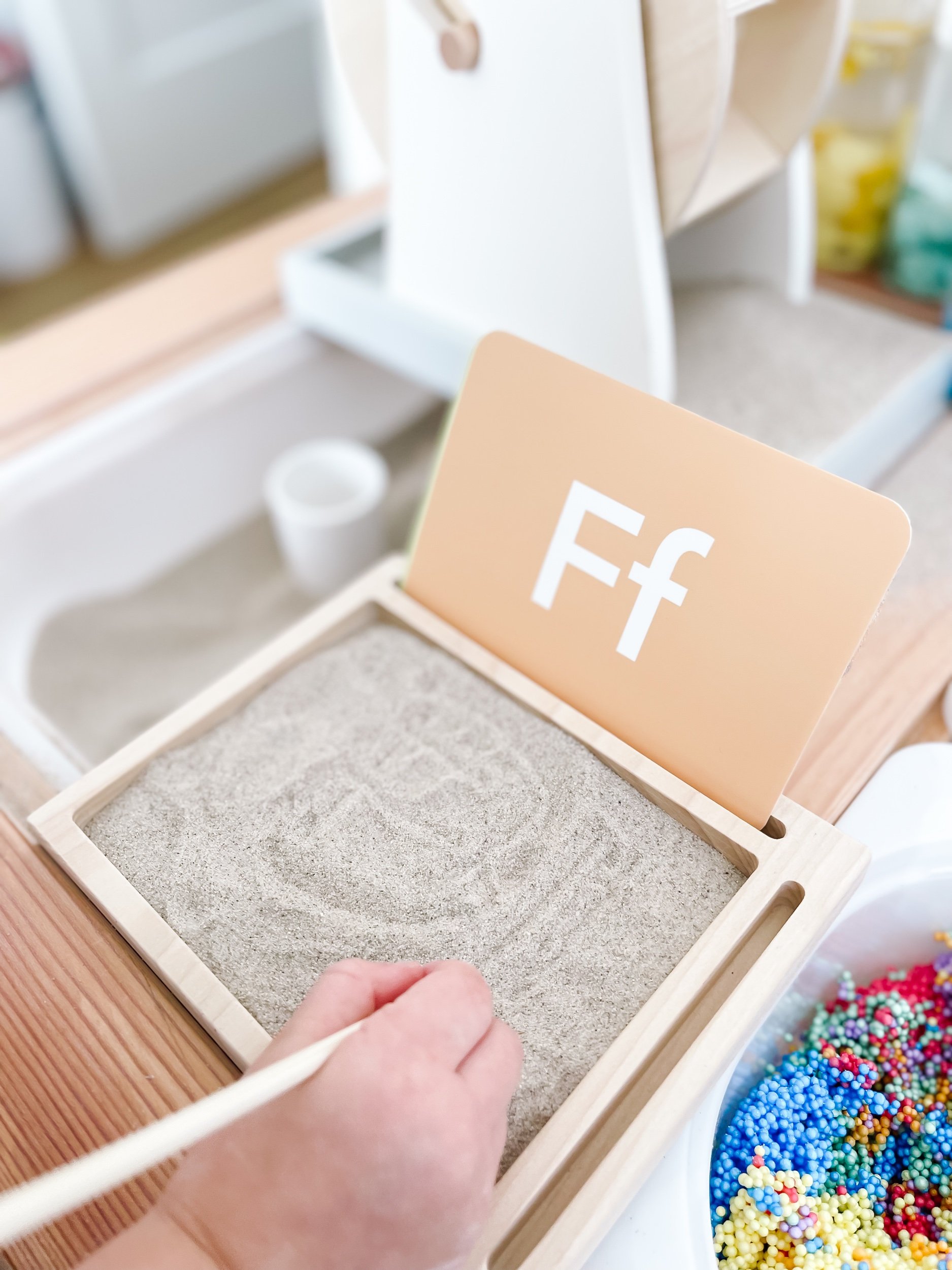
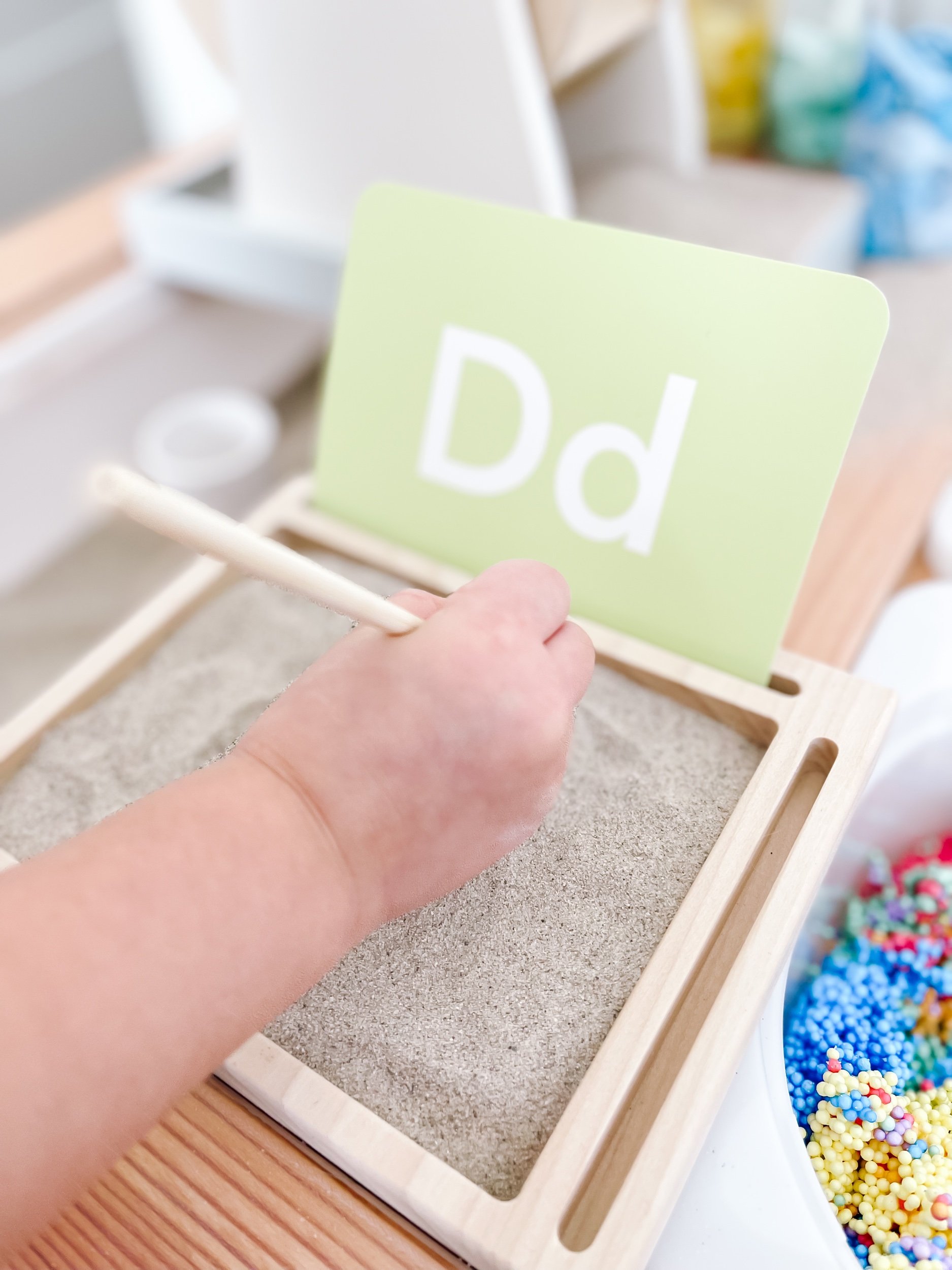
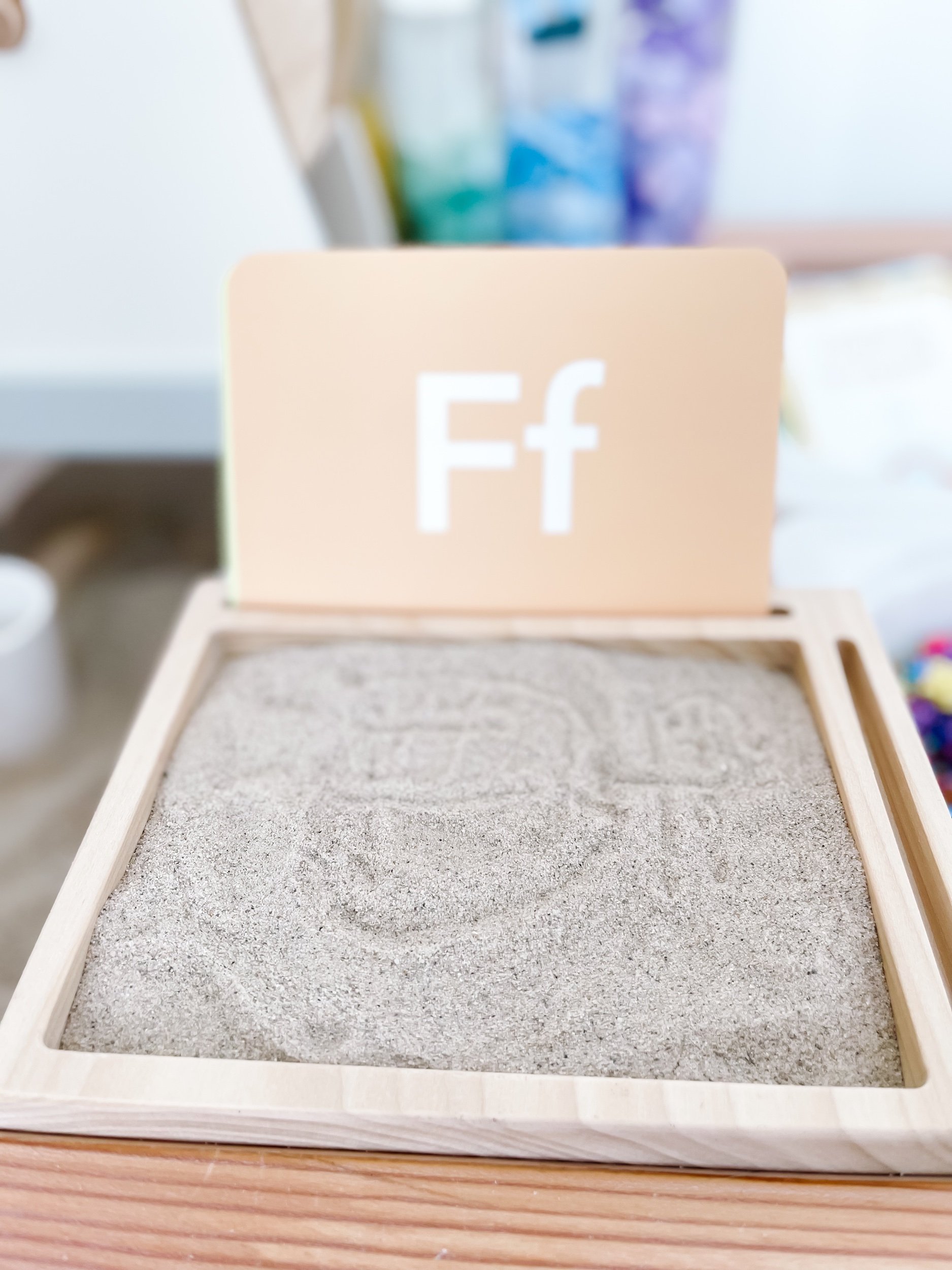
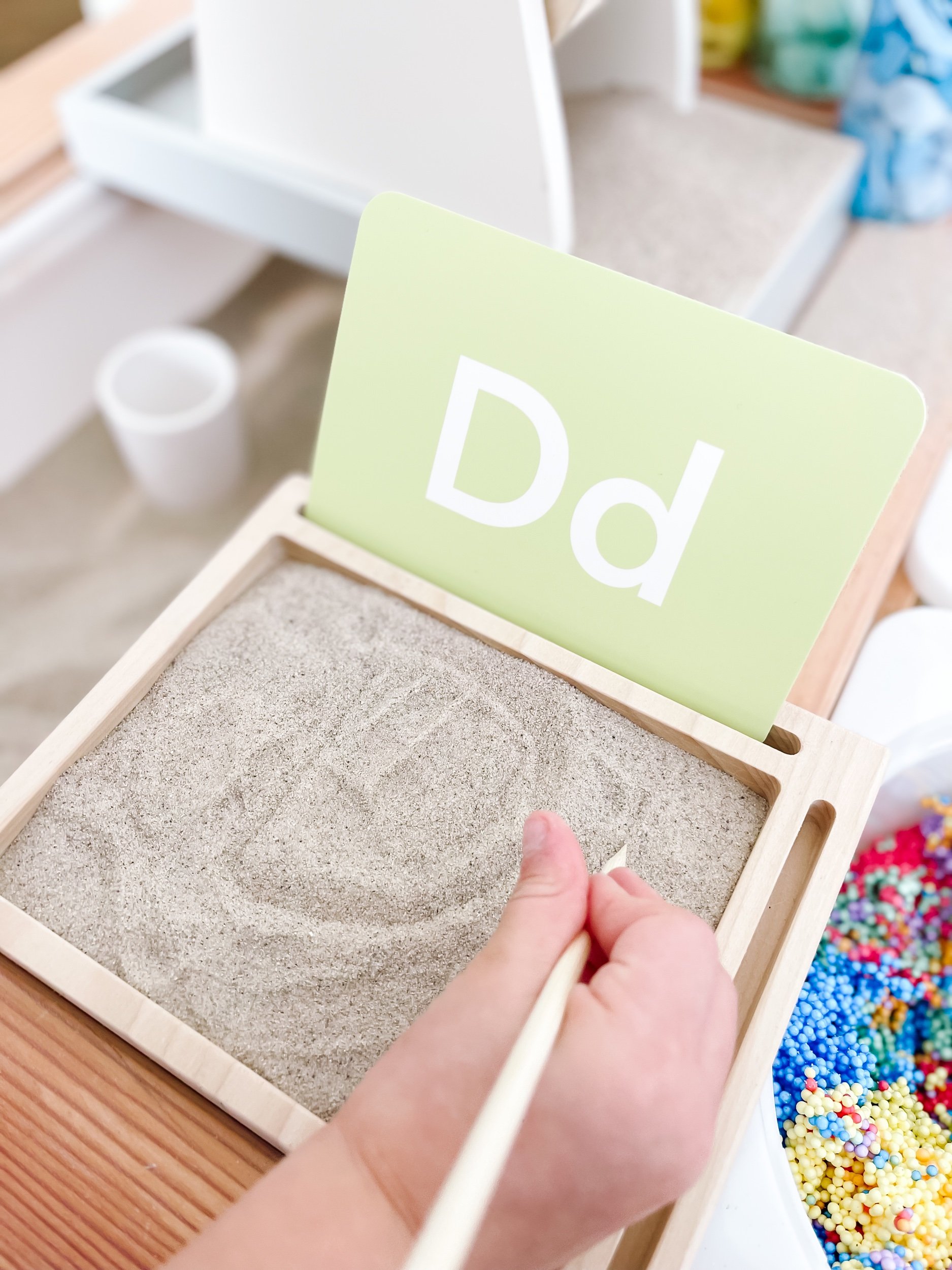
When your kiddo is ready to start writing letters, practicing in colored sand can be a great way to get started. You can start with fingers first showing the direction of writing each letter. These Letter tracing and Letter Flashcards are great for this! Then you can advance to using a wooden pen or stick tool and practicing the proper hand position.
9. Letter writing on lined board insert
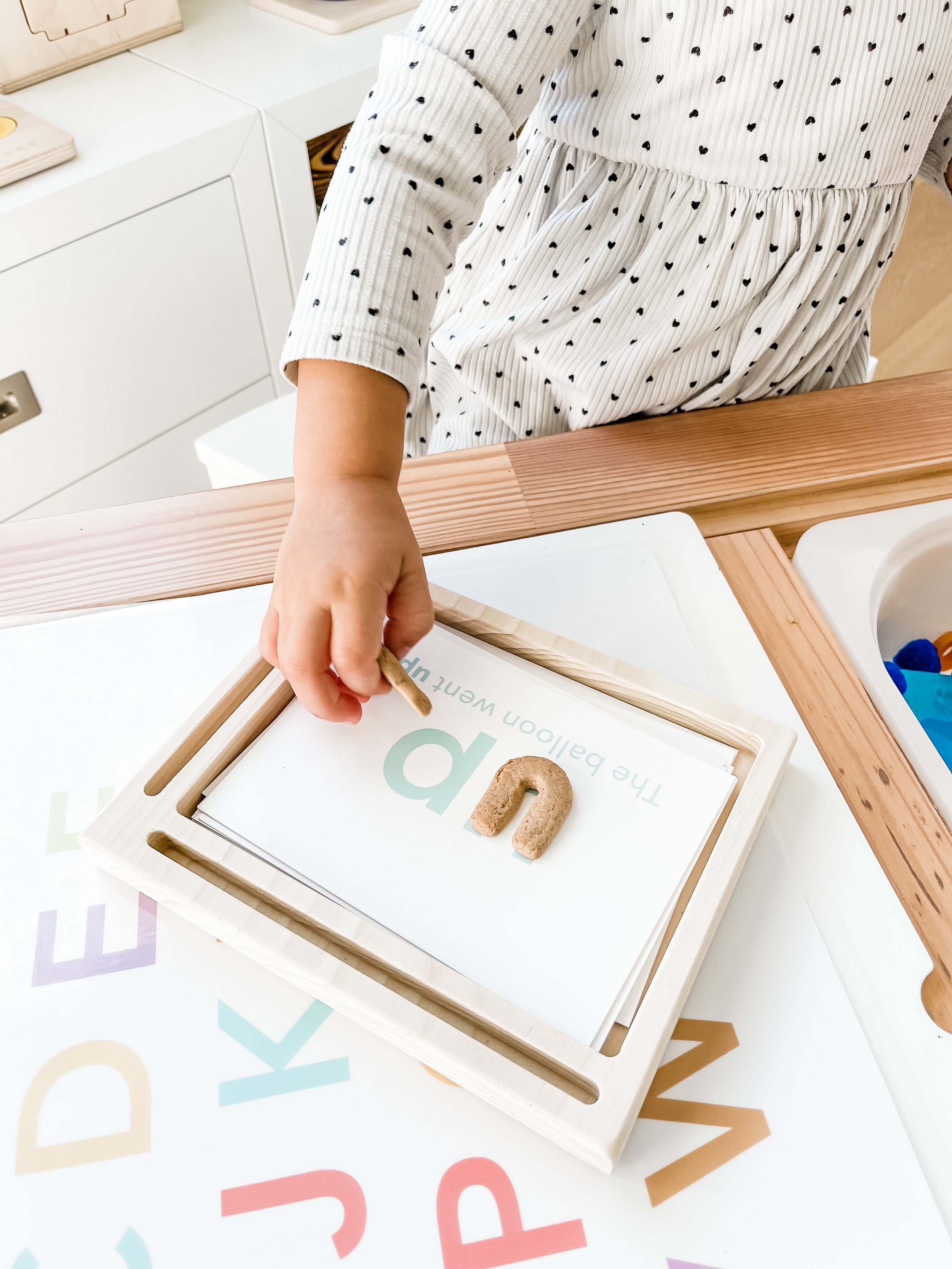
As your child starts to be able to write (3-4 years old) this see through letter board insert from Wonder Years Play is an amazing tool. You can of course just use it as lined board, but you can also put resin letters or objects below and ask your child to write the word or letter for what they see. It’s like a giant iSpy bottle and your kiddo will get a total kick out of it!
10. Fizzy Letters
What better way to okay than to combine Letters and Science. In this activity, you can make the letters of the alphabet using a silicone mold, baking soda, and flour. Make a bowl to mix each color and then scoop into the mold. Let set in the fridge. Then take them out and use vinegar for some colorful fizzy fun! For detailed instructions on creating this bin check out Rainbow Fizzy Letters.
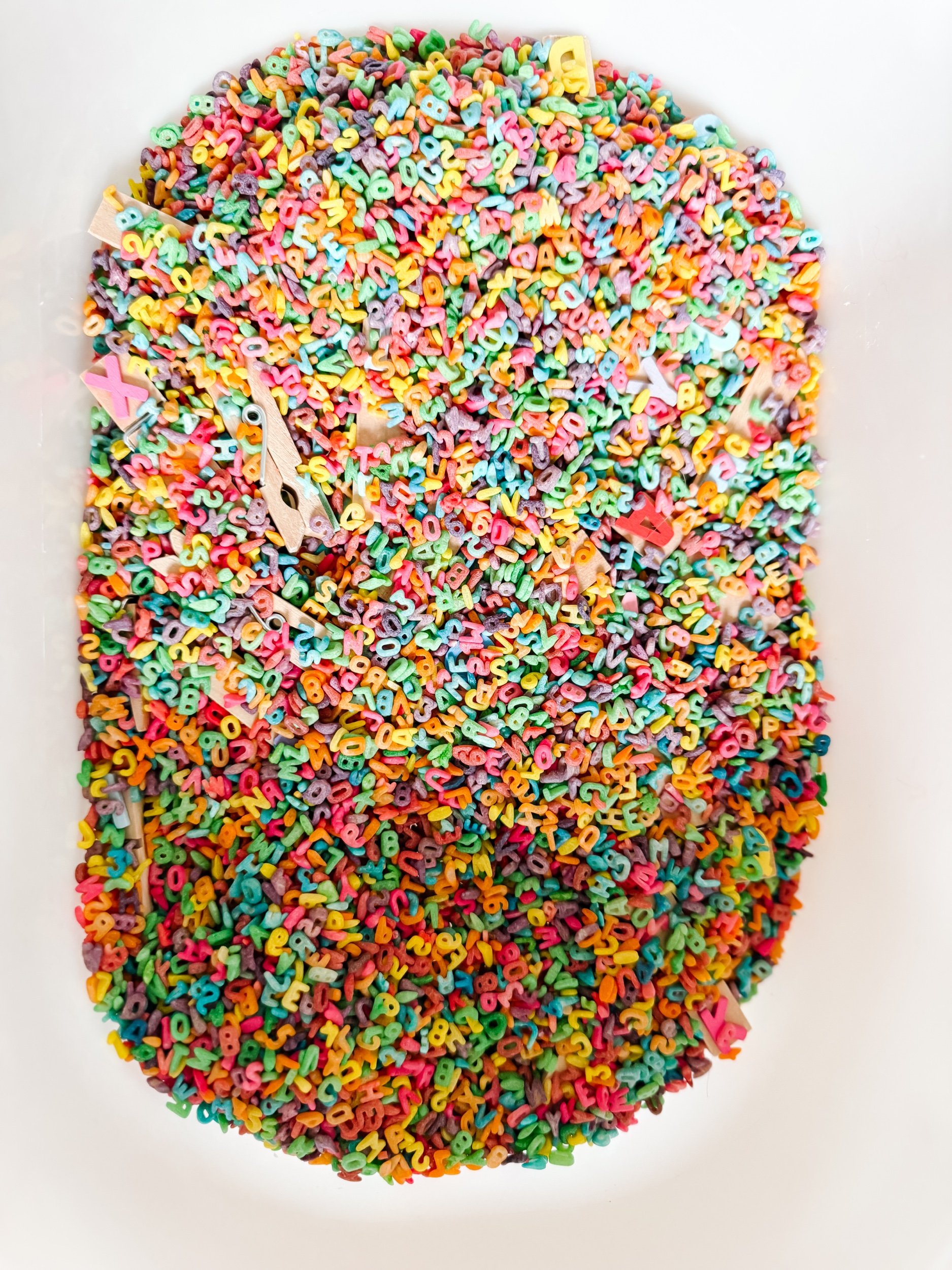
11. PASTA LETTERS SEARCH & FIND
These alphabet letter noodles are the perfect dump and go sensory bin. You can use the past noodles as a base and hide other letter toys, erasers, or magnets in the bin. You can also just let your kiddo scoop up the letters and start to sort them in piles by each letter.
By incorporating these sensory bin activities into your child's playtime, you'll create a stimulating learning environment that sparks their curiosity and supports their early literacy development.
Vocabulary Words for Learning the Alphabet - Ages 2-6
1. Alphabet: The set of letters used to write a language. 2. Phoneme: The smallest unit of sound in a language. 3. Letter: A symbol representing a sound in written language. 4. Upper case letter: Capital letters of the alphabet. 5. Lower case letter: Small letters of the alphabet. 6. Vowel: Letters that produce a clear, distinct sound when spoken. 7. Consonant: Letters that are not vowels and are produced with some obstruction of airflow. 8. Blend: Combining two or more individual letter sounds together. 9. Digraph: Two letters that make a single sound together. 10. CVC: Consonant-Vowel-Consonant, a three-letter word pattern like cat or dog. 11. Sight word: A word that children learn to recognize by sight without sounding it out. 12. Rhyme: Words that have similar ending sounds. 13. Phonics: The relationship between letters and sounds in language. 14. Sound: A noise made by the vocal cords or other means of communication. 15. Trace: To follow or copy the shape of a letter with a pencil or finger. 16. Fine motor skills: The coordination of small muscles needed for tasks like writing or coloring. 17. Visual discrimination: The ability to differentiate between different letters or words. 18. Sequence: The order in which letters of the alphabet are arranged. 19. Flashcard: A card with a letter or word used for learning and practice. 20. Repetition: Repeating an action or information to reinforce learning. 21. Phonological awareness: Recognizing and manipulating sounds in language. 22. Multisensory learning: Teaching that engages multiple senses (e.g., sight, touch, hearing). 23. Letter-sound correspondence: Understanding the relationship between letters and their sounds. 24. Alphabet song: A song used to remember or learn the order of the alphabet. 25. Decoding: The process of turning written words into spoken words by recognizing letter sounds.
Remember, learning the alphabet doesn't have to be a tedious task. Through sensory play, you can make it an exciting adventure for your little one. So, gather your materials, set up a sensory bin, and watch your child immerse themselves in a world of letter fun and educational exploration!
How to Teach Letter Sounds Without Feeling Overwhelmed
Learning the alphabet is only the beginning. This parent-friendly guide
walks you through a playful reading journey—from first letter exposure to
phonics, sound blending and early reading fluency.
Free printable · Play-based practice · Flexible guidance for ages 2–6
AgeApproximately 2–6
Practice Time3–5 minutes
Parent PrepMinimal
Learning StyleHands-on and playful
I knew the alphabet—but I still did not know how to teach reading
When I first started helping Sofia learn her letters, I assumed I could
simply point to each one and say its sound.
Then I reached letters like A, C and G and realized how quickly phonics
becomes confusing for a parent who was never taught how to teach it.
Which sound comes first? Should I say the letter name too? When do we
begin blending sounds into words?
I did not want reading practice to feel like a lesson she had to sit
through. I wanted it to feel like the rest of our learning—short,
playful and connected to things she already enjoyed.
So I created a simple reference sheet for myself and began practicing
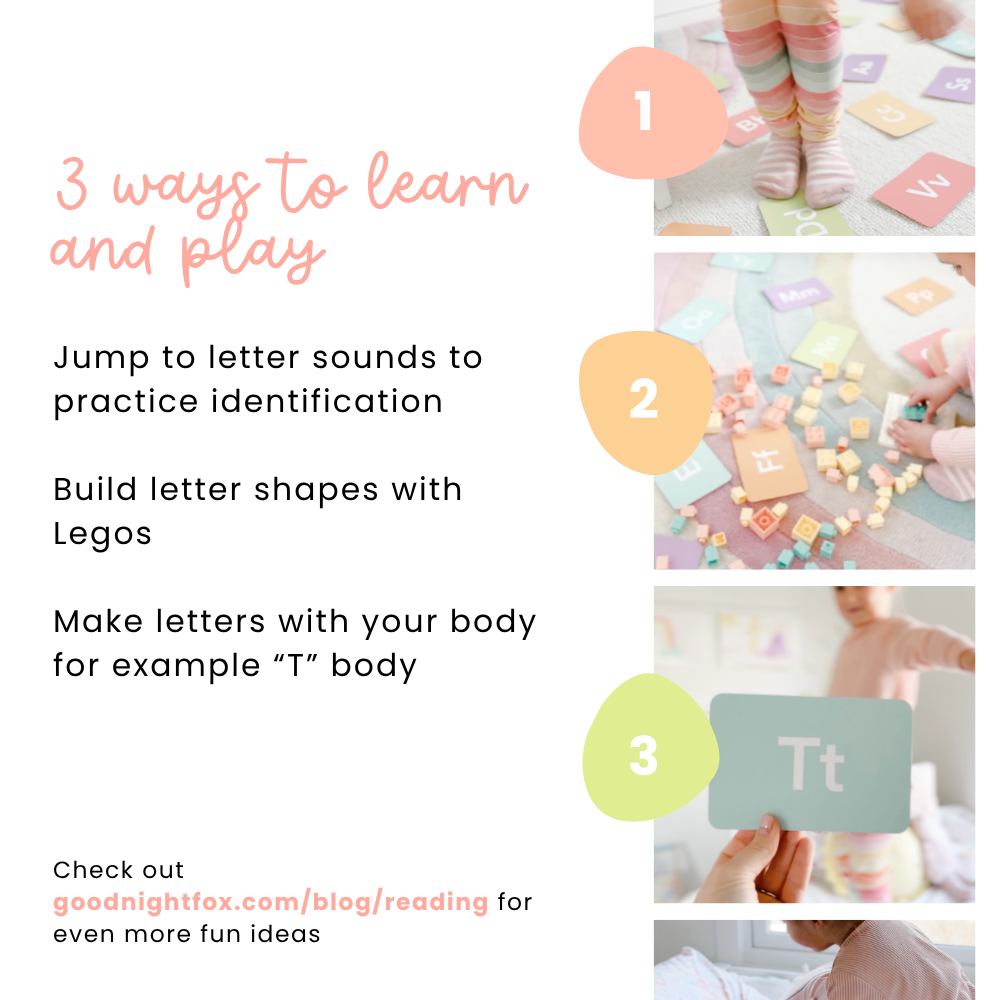
one letter sound at a time. We jumped to letters on the floor, built
letter shapes, searched for sounds in books and hid cards inside sensory
bins.
That small shift made phonics feel manageable for both of us. This guide
is designed to give you the same clear starting point.
FREE PARENT REFERENCE
Keep Every Letter Sound Within Reach
The free GoodnightFox Phonics Cheat Sheet gives you a clear visual
reference for the most useful sound to introduce first, plus additional
sounds children may encounter later.
You will also receive playful early-literacy ideas and occasional
GoodnightFox product updates. Unsubscribe anytime.
WHY PHONICS MATTERS
Phonics Connects Spoken Language With Print
Phonics helps children understand that written letters and letter
combinations represent sounds in spoken words.
As children strengthen this connection, they become better able to hear
beginning sounds, blend simple words and attempt unfamiliar words instead
of relying only on memorization.
Letter RecognitionPhonemic AwarenessBeginning SoundsSound BlendingReading Confidence
WHY THIS FEELS HARD
Letters Do Not Always Make Just One Sound
Parents are often told to “teach the letter sounds” without being shown
which sound to introduce first or how much information a young child
actually needs.
Aapple · acorn · father
Ccat · city
Ggoat · giraffe
Parent Tip
You do not need to teach every possible sound at once. Begin with one
common, easy-to-hear sound and introduce variations naturally as your
child encounters them in books and conversation.
THE GOODNIGHTFOX READING SYSTEM
A Clear Path From First Letters to First Words
Children do not move from seeing the alphabet to independently reading
books in one leap. Reading develops through connected stages: letter
exposure, recognition, phonics, sound blending and increasingly fluent
word reading.
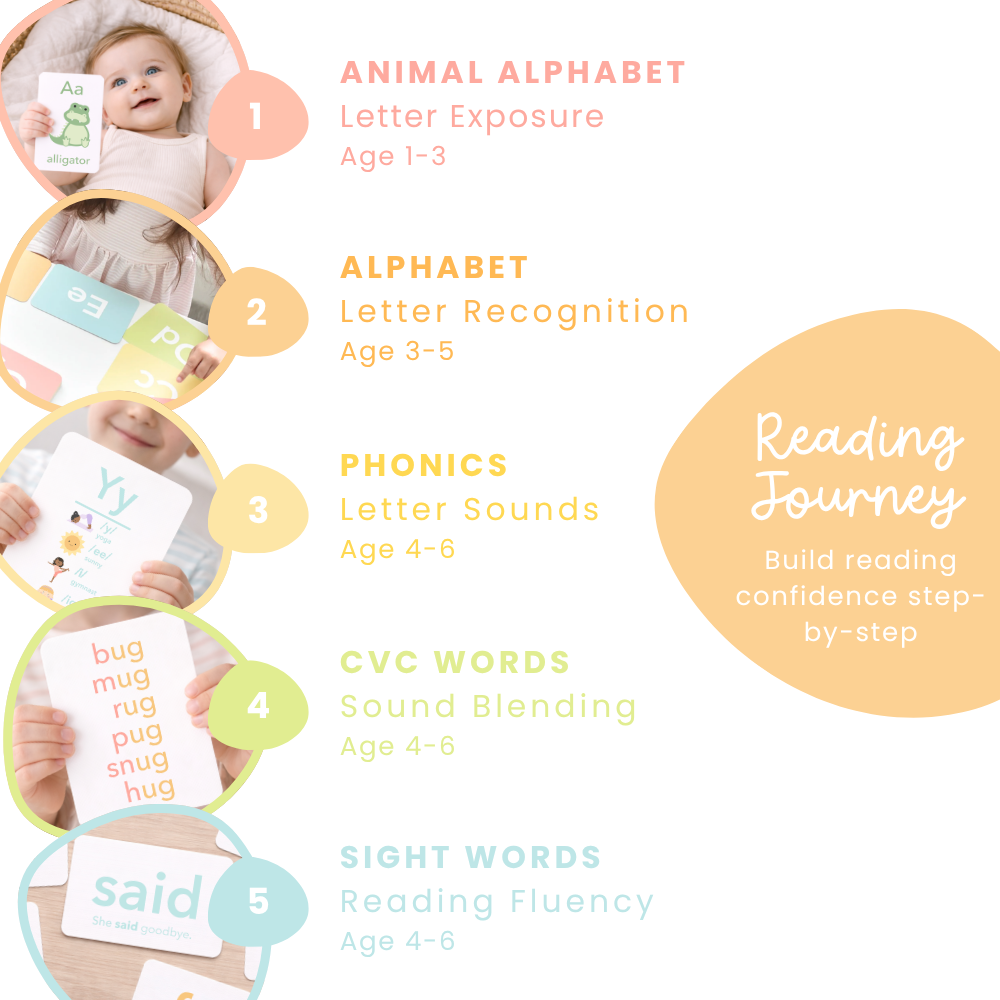
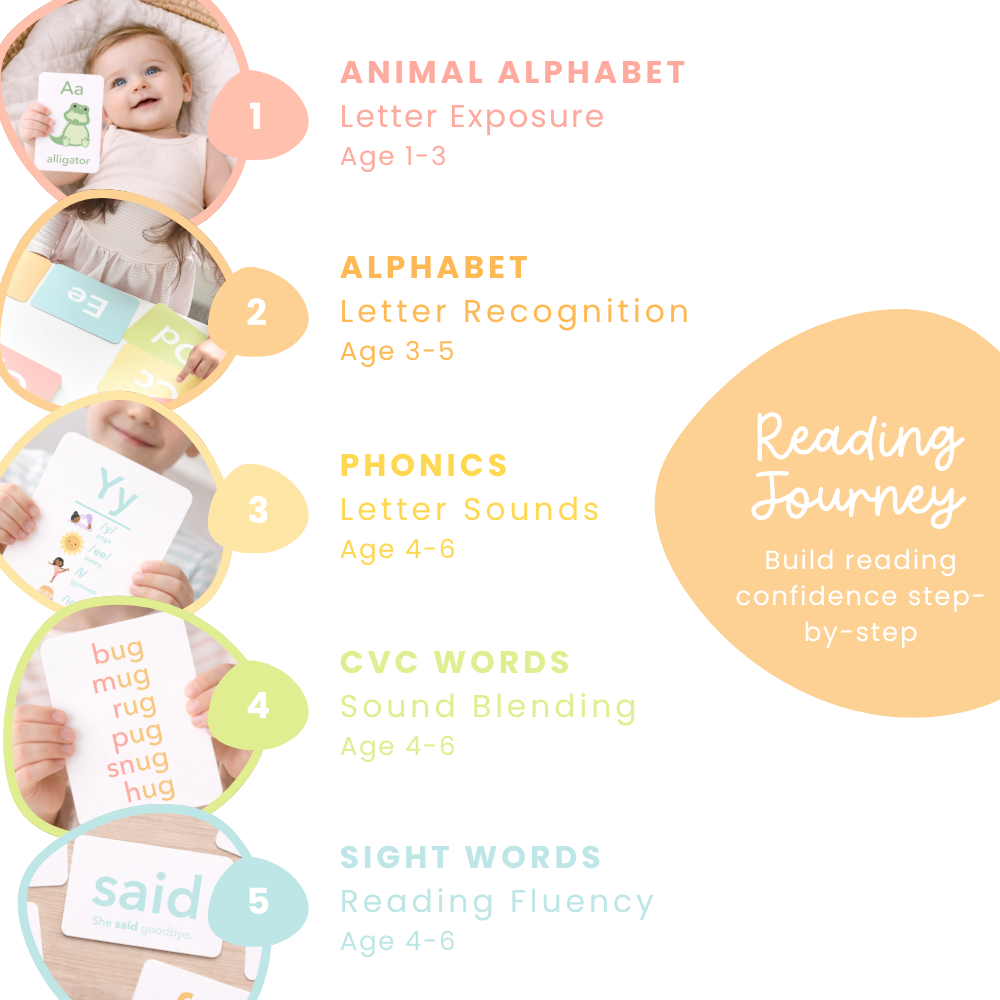
The GoodnightFox Reading Journey helps you identify the stage your child
is currently exploring and choose a playful next step.
1
ANIMAL ALPHABET
Letter Exposure
Approximately ages 1–3
Children begin noticing letters through memorable animal
illustrations, familiar words and playful visual associations.
Letter pairs such as sh, ch, th and
wh help children move beyond one-letter, one-sound patterns.
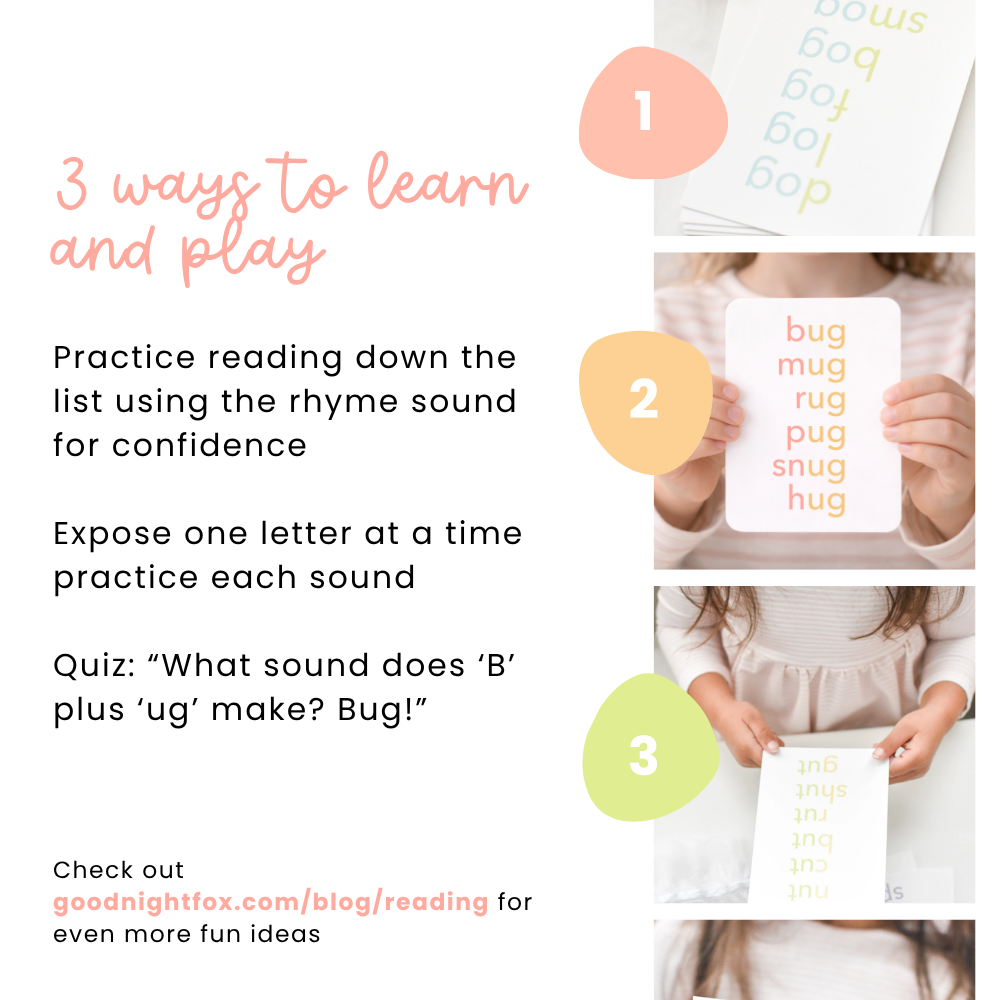
Rhyming Words
Hearing shared endings and sound patterns supports phonological
awareness and prepares children to recognize word families.
WHERE SHOULD WE BEGIN?
Start With the Skill Your Child Is Exploring Today
My child enjoys pictures but does not recognize letters.Start with Animal Alphabet picture associations.
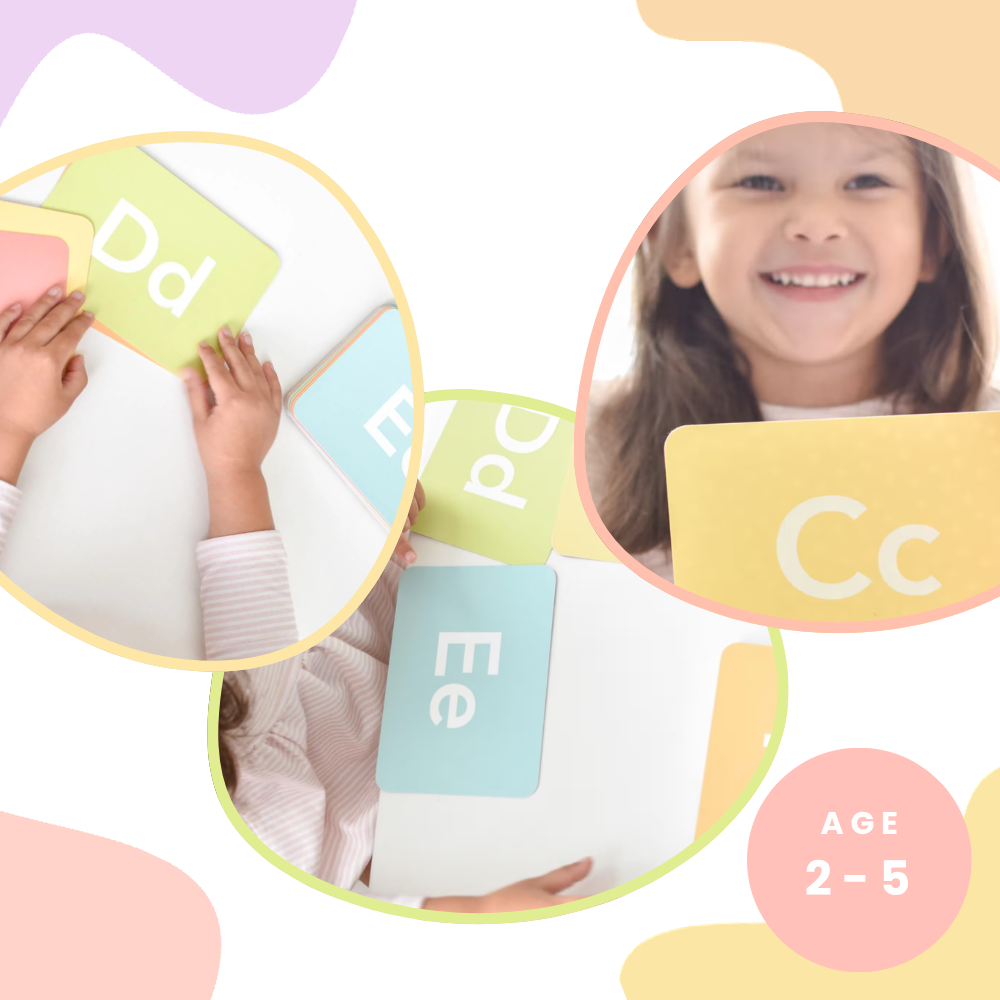
My child recognizes only a few letters.Practice uppercase and lowercase Alphabet cards.
My child knows letters but not their sounds.Use the Phonics Cheat Sheet and Letter Sounds cards.
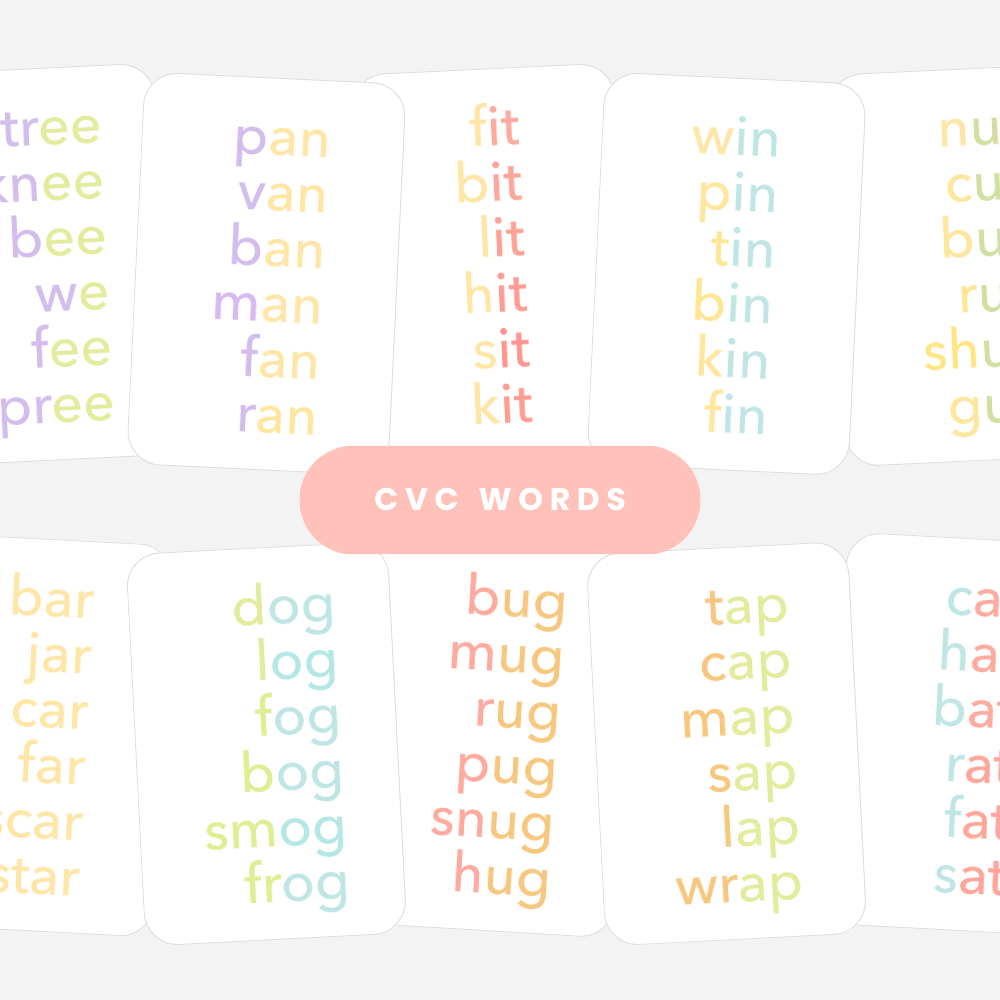
My child knows sounds but cannot combine them.Begin CVC word-building and simple blending.
My child reads simple words slowly.Continue phonics while adding sight-word practice.
My child is working across several stages.The coordinated Reading Bundle gives you room to grow.
These age ranges and stages are flexible guides—not deadlines. Children
may move back and forth between skills or work on several at the same
time.
START SMALL
A Simple Five-Minute Phonics Routine
1
Choose One Sound
Introduce one primary sound and keep the explanation short.
“This is B. B makes the /b/ sound, like ball.”
2
Find Something Familiar
Connect the sound to your child’s name, a favorite animal, toy or
food.
3
Add Movement or Touch
Trace the letter, build it with dough, hop to it or hide its card
in a sensory bin.
4
Notice It in a Book
Point out the sound naturally in a title, character name or
familiar word.
5
Stop While It Is Still Fun
End after a few successful repetitions rather than continuing
until your child is frustrated.
LEARNING THROUGH PLAY
Flashcards Do Not Have to Feel Like a Quiz
The cards are most effective when they become part of a game, sensory
invitation, movement activity or conversation—not when a child is asked
to sit through an entire stack.
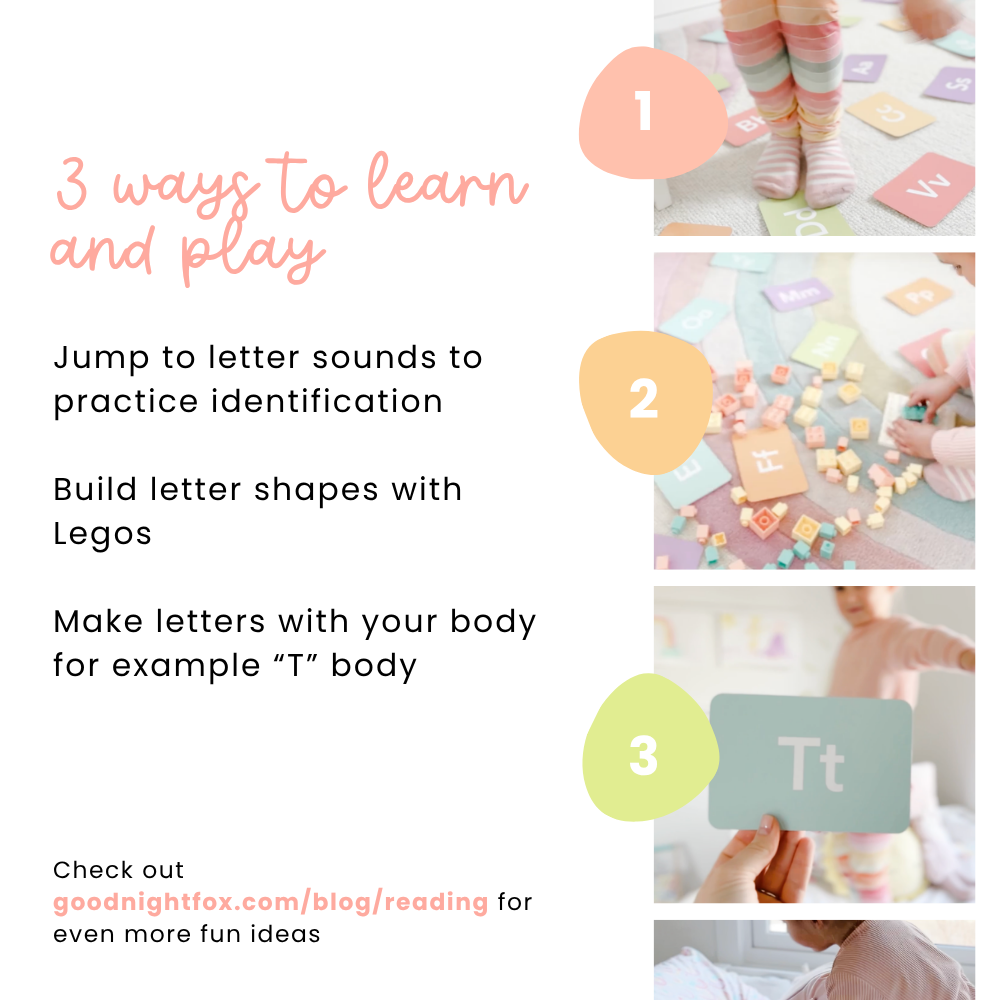
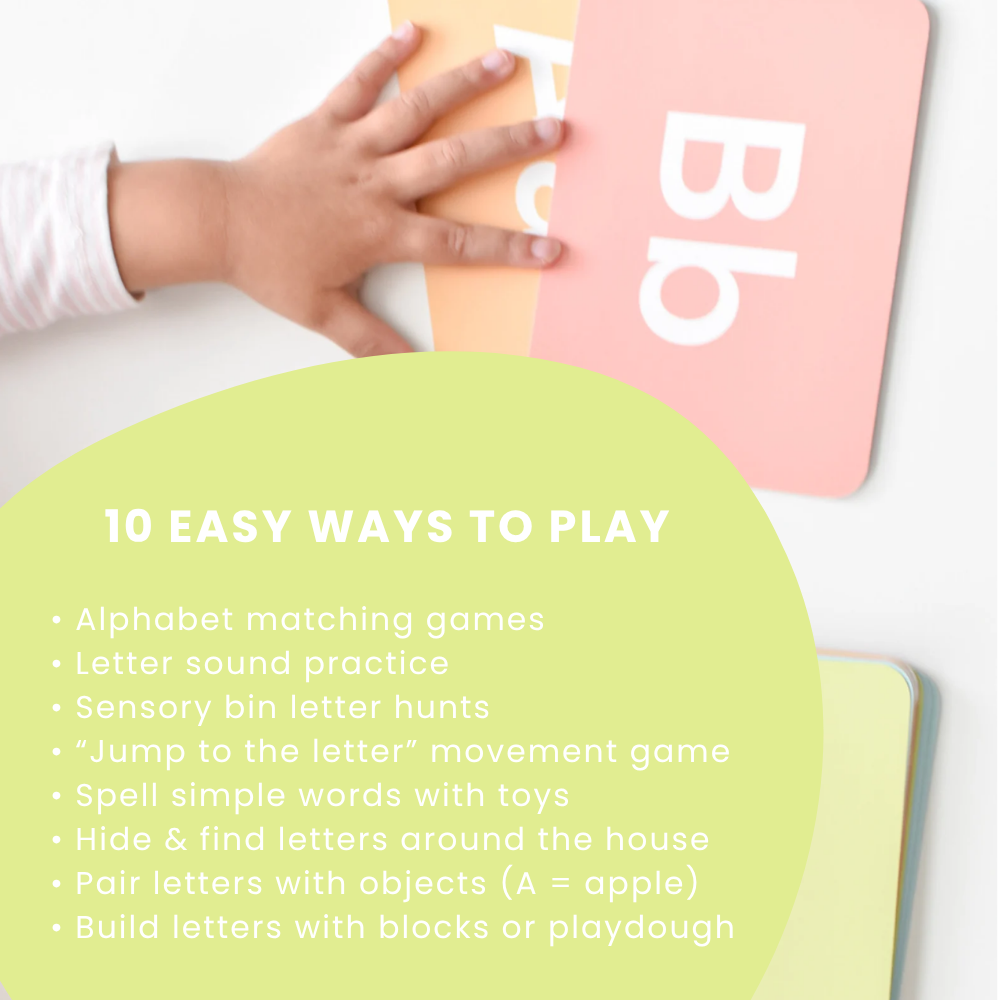
Alphabet matching gamesLetter-sound practiceSensory-bin letter hunts“Jump to the letter” movement gamesBuild letters with blocks or play doughHide and find cards around the housePair letters with familiar objectsBuild simple CVC wordsMatch rhyming pairsSearch for sight words inside books
LATER IN THE JOURNEY
Adding Sight Words Without Abandoning Phonics
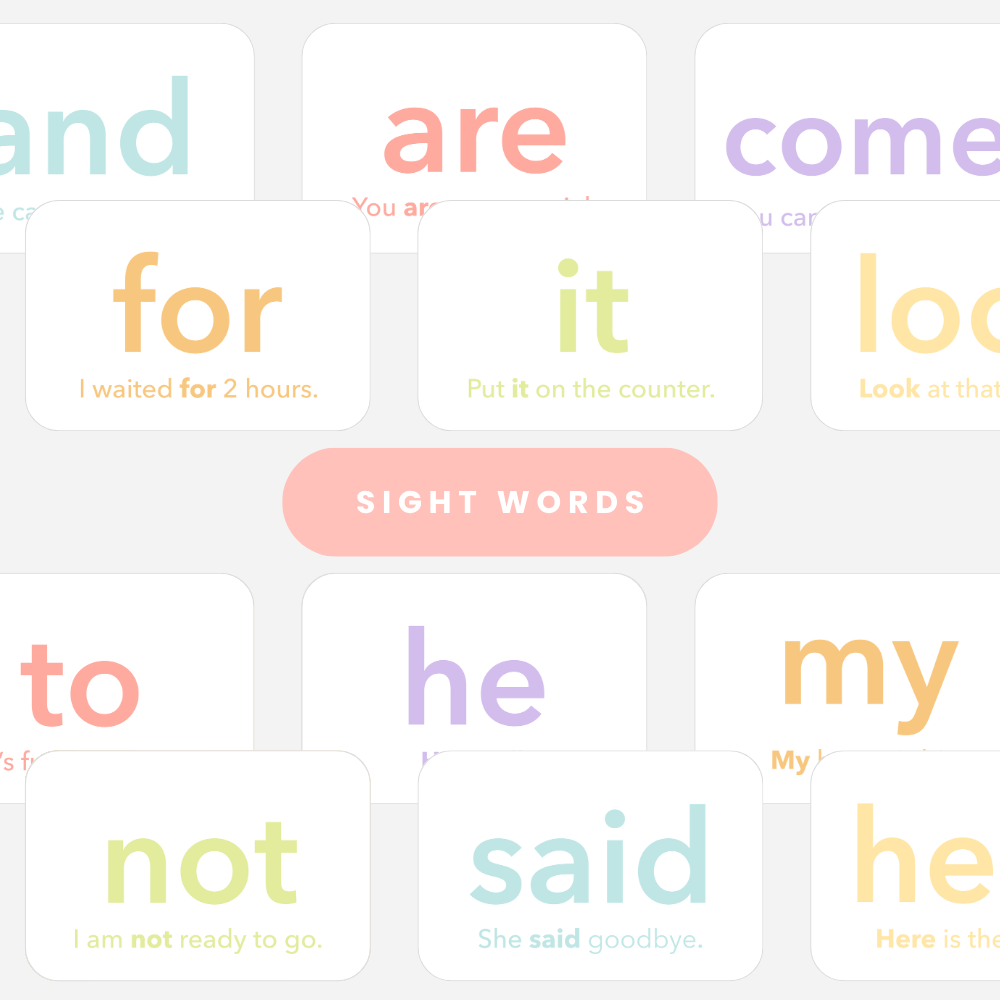
Sight-word practice should support phonics rather than replace it.
Children can learn to recognize frequently encountered words while still
sounding out unfamiliar words and studying how letters work together.
THE COMPLETE HANDS-ON SYSTEM
Support Every Step of Their Early Reading Journey
The free cheat sheet gives you a reference for teaching letter sounds.
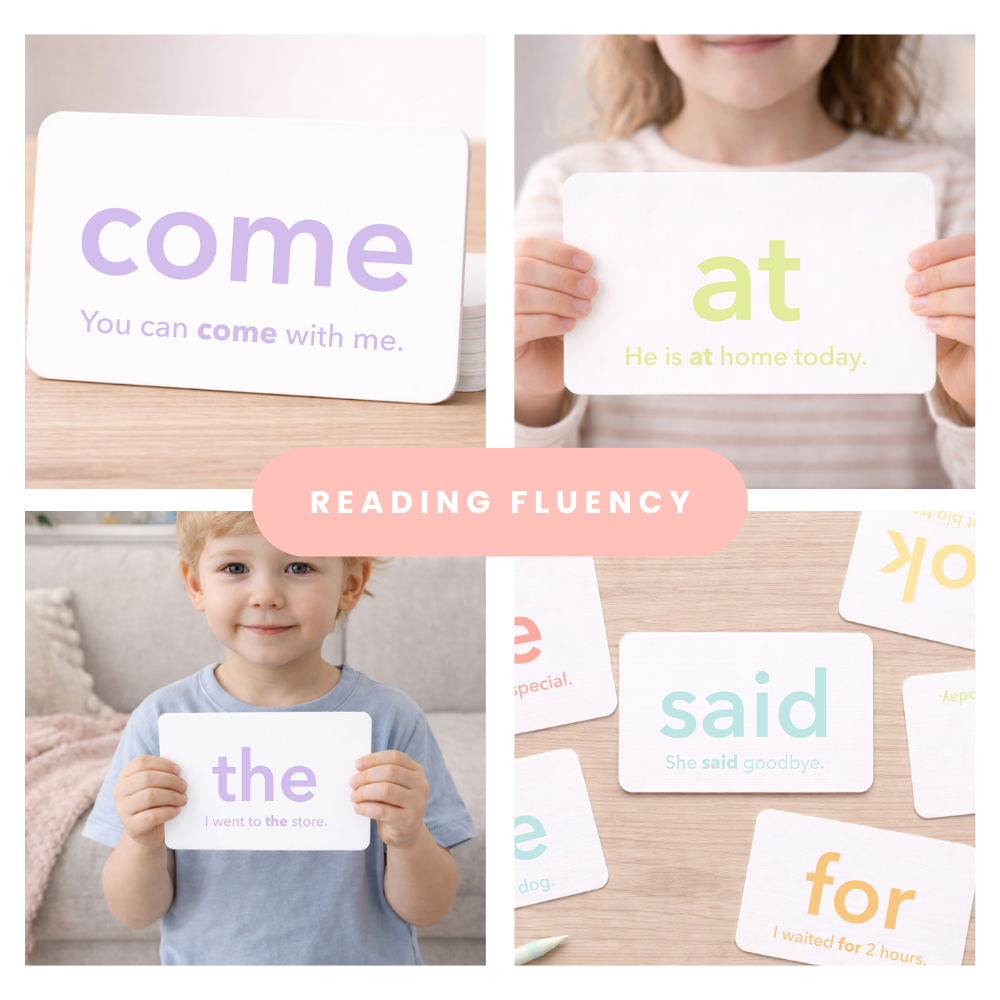
The physical Reading Flashcards Bundle gives your child coordinated,
reusable tools for practicing the skills that come before and after
phonics.
Alphabet LettersUppercase and lowercase recognition
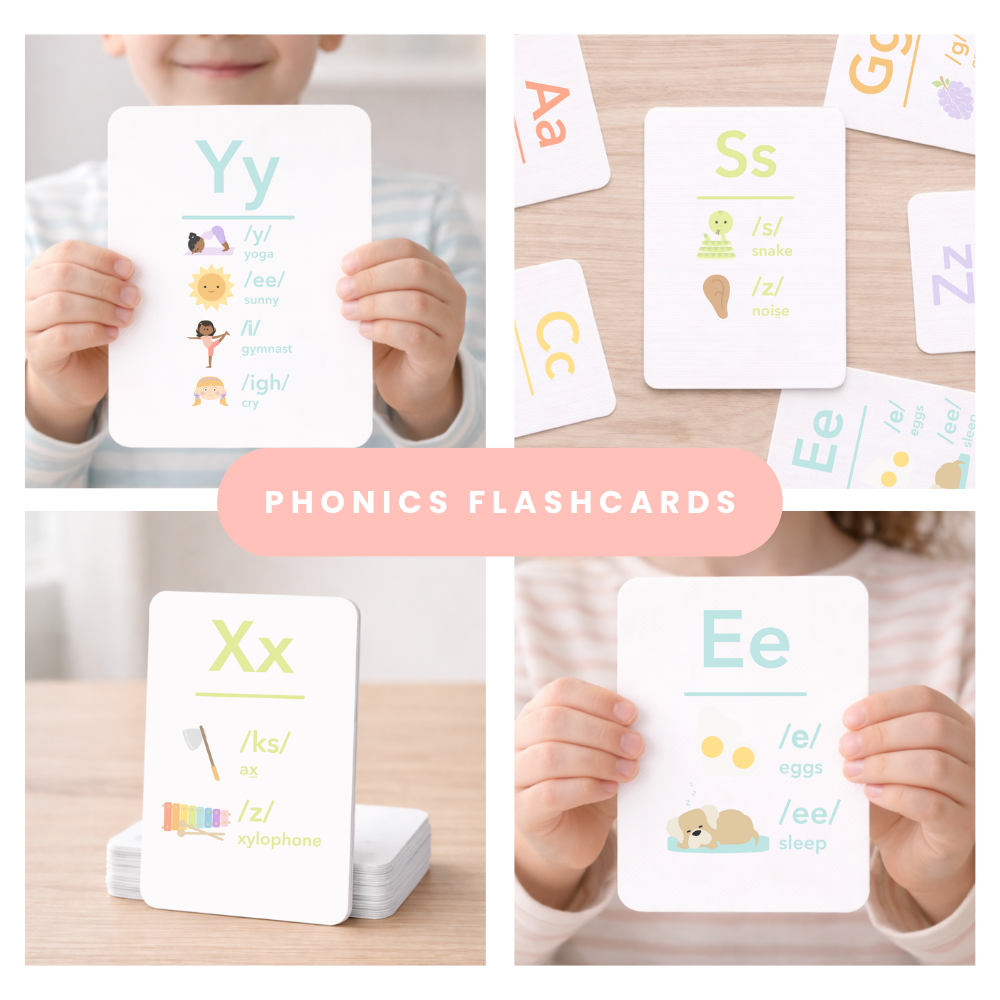
Phonics Letter SoundsClear picture and sound associations
DigraphsCommon two-letter sound patterns
Rhyming WordsShared endings and sound awareness
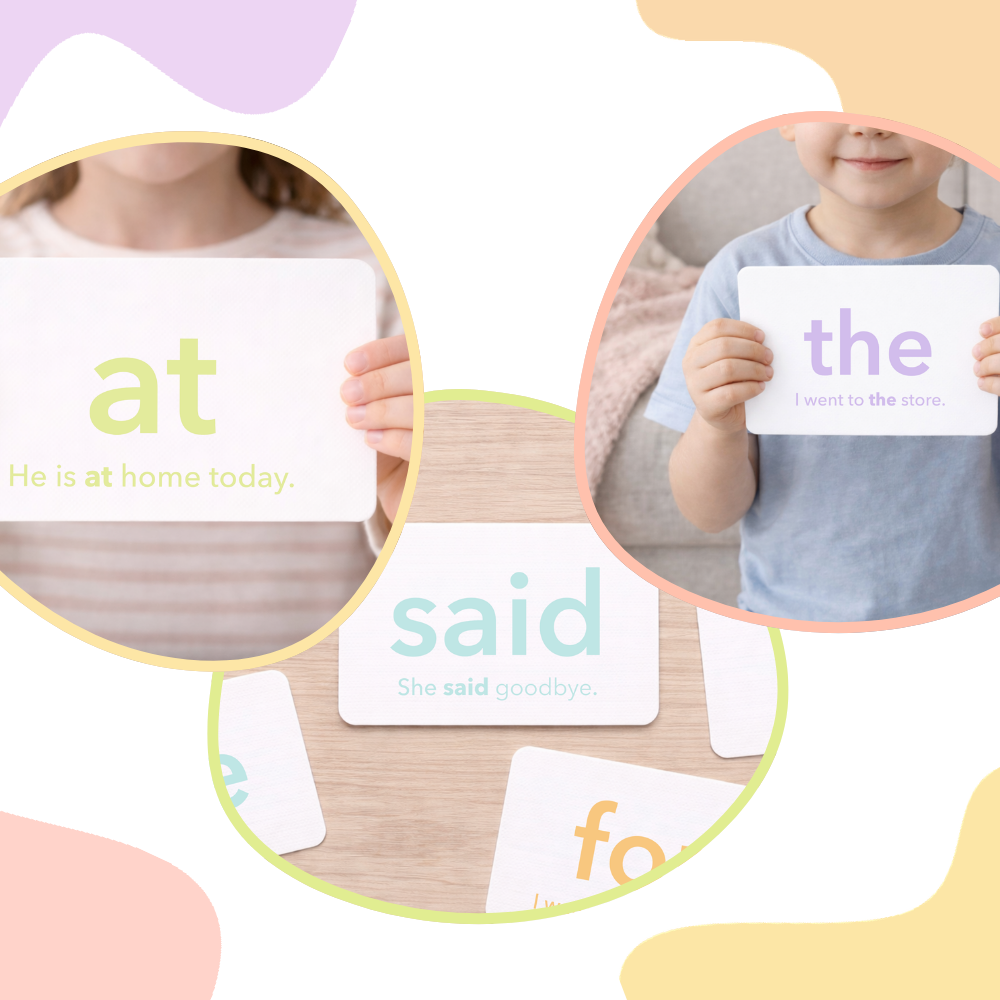
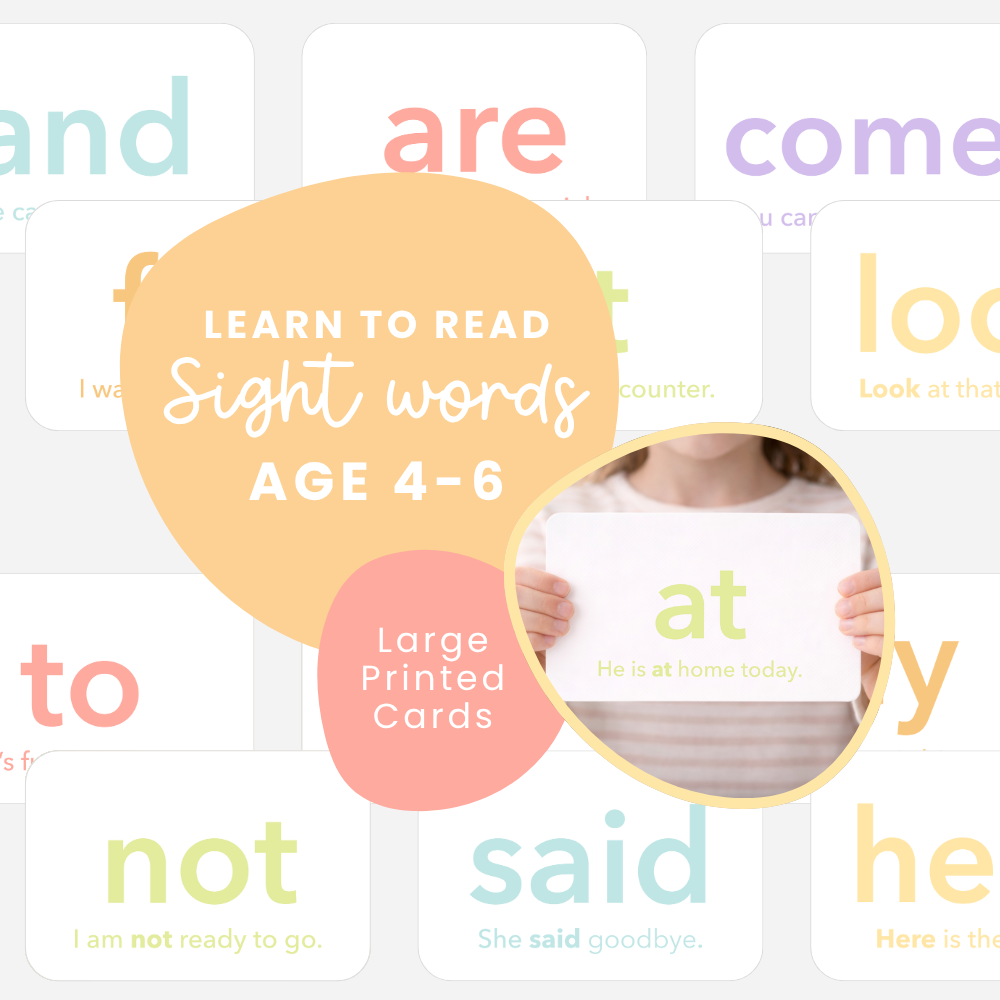
Sight WordsFrequently encountered early-reading words
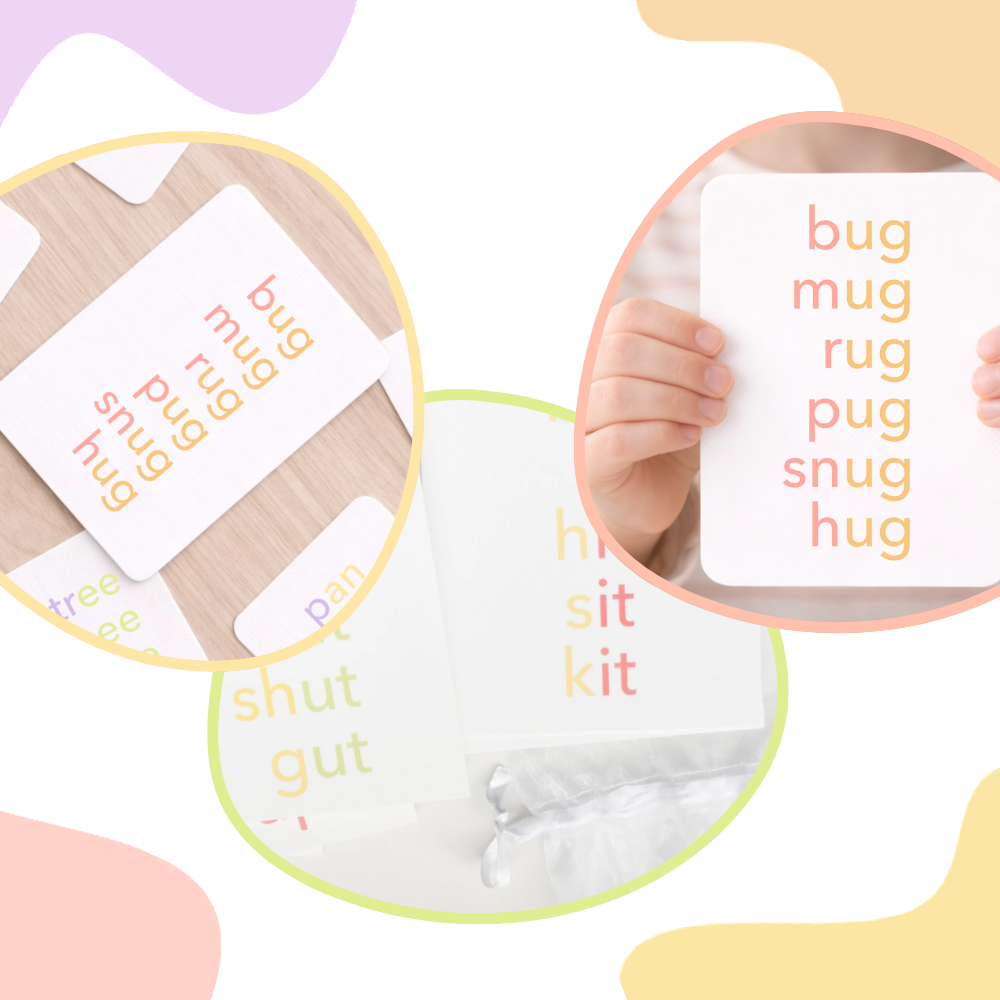
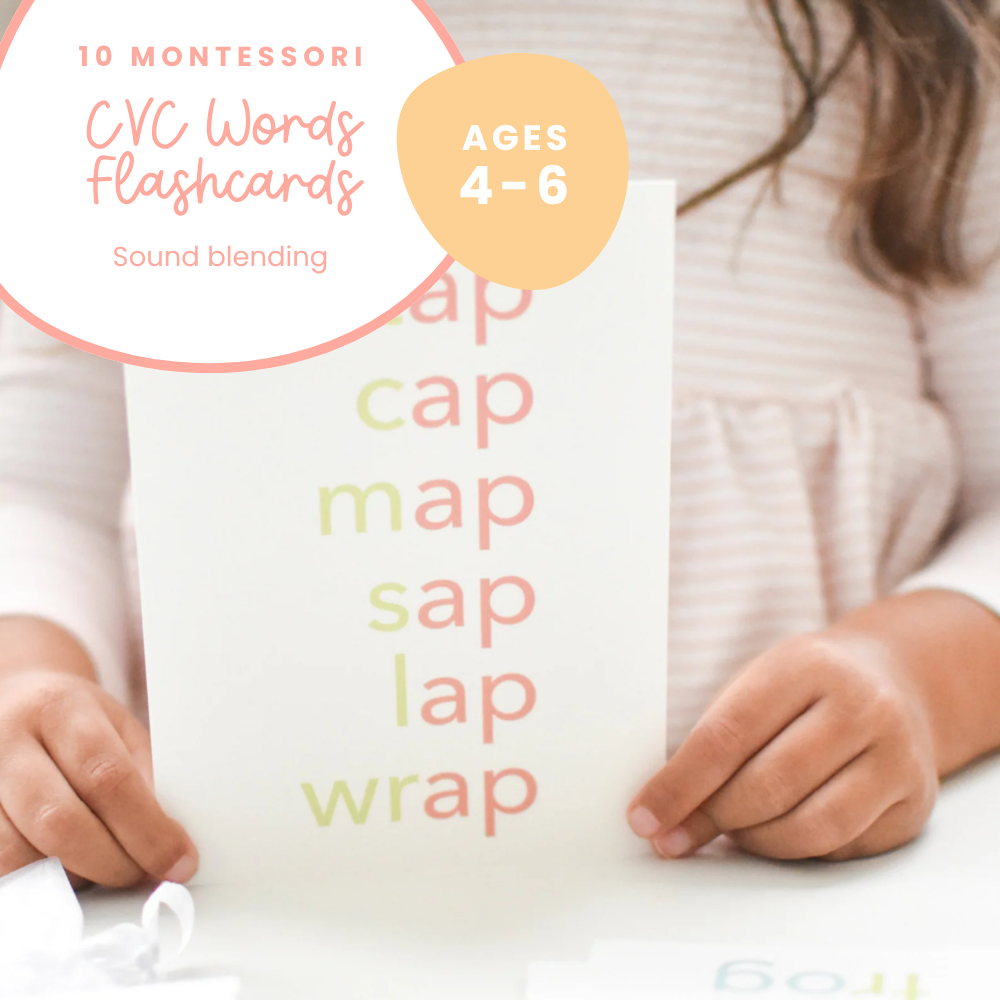
CVC Skill BuildingPractice blending simple short-vowel words
Physical, professionally printed flashcards
Designed for early learners approximately ages 3–6
Use in sensory bins, morning baskets and homeschool preschool
Many children begin noticing letters and sounds during the preschool
years. Follow your child’s interest and keep practice playful and
pressure-free.
Should I teach letter names or sounds first?
Children can learn both. The name identifies the letter symbol, while
the sound explains how the letter functions inside words.
Which sound should I teach first?
Begin with a common, easy-to-hear sound. Use the phonics cheat sheet as
a practical reference for primary and secondary sounds.
How long should phonics practice last?
Three to five focused minutes can be plenty for a young child. Stop
before the activity becomes frustrating.
Does my child need to learn letters alphabetically?
No. You can begin with the letters in your child’s name, follow their
interests or use a structured progression.
Are sight words a replacement for phonics?
No. Sight words can be practiced alongside phonics, but children still
need to learn how letters and sounds work together.
What are digraphs?
Digraphs are two letters that work together to represent one sound,
such as sh, ch and th.
When should we begin CVC words?
Begin simple blending once your child knows several common letter
sounds and can hear individual sounds inside short words.
Are the Reading Bundle cards physical or printable?
The primary Reading Flashcards Bundle is a physical product. A separate
printable version is also available.
START WHERE YOU ARE
One Sound Today Can Become One Word Tomorrow
Begin with the free parent reference. Practice for a few playful minutes.
When your child is ready for the next stage, use the Reading Bundle to
continue building.
Teaching your toddler letter sounds shouldn’t feel overwhelming… but for many parents, it does. If you’ve ever sat down to teach the alphabet and thought:
“Why does letter A make so many sounds?”
“What do I actually teach first?”
“Am I doing this right?”
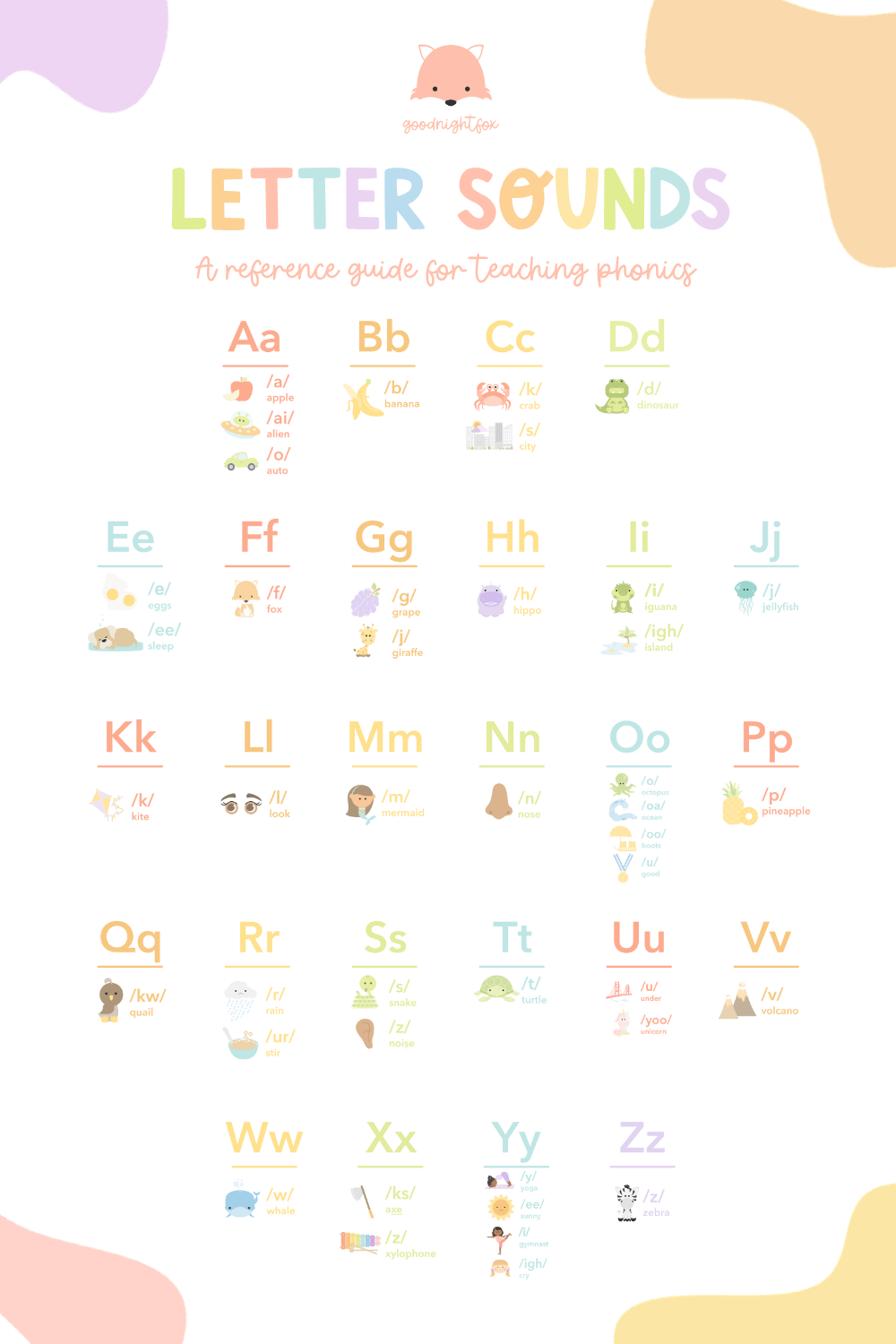
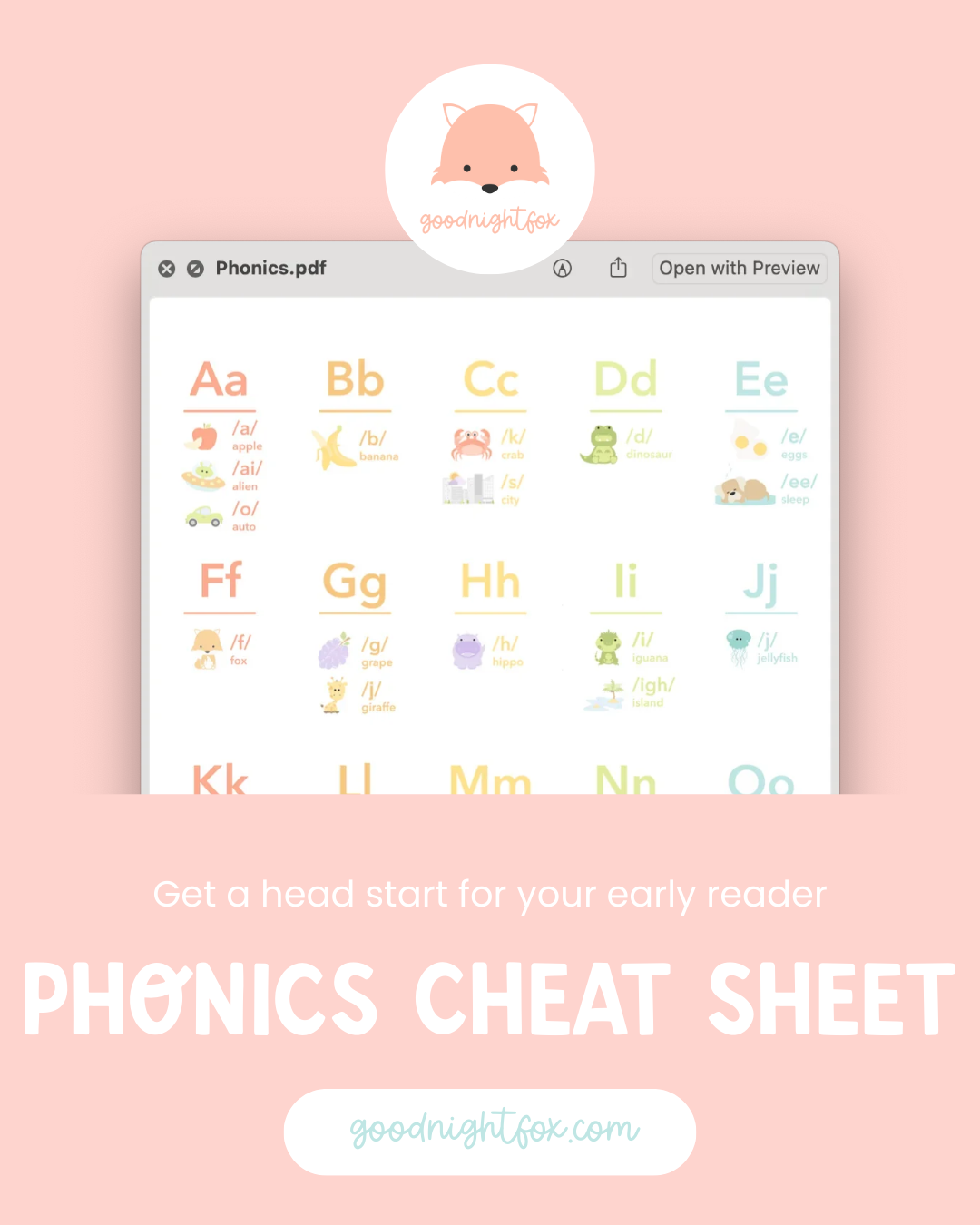
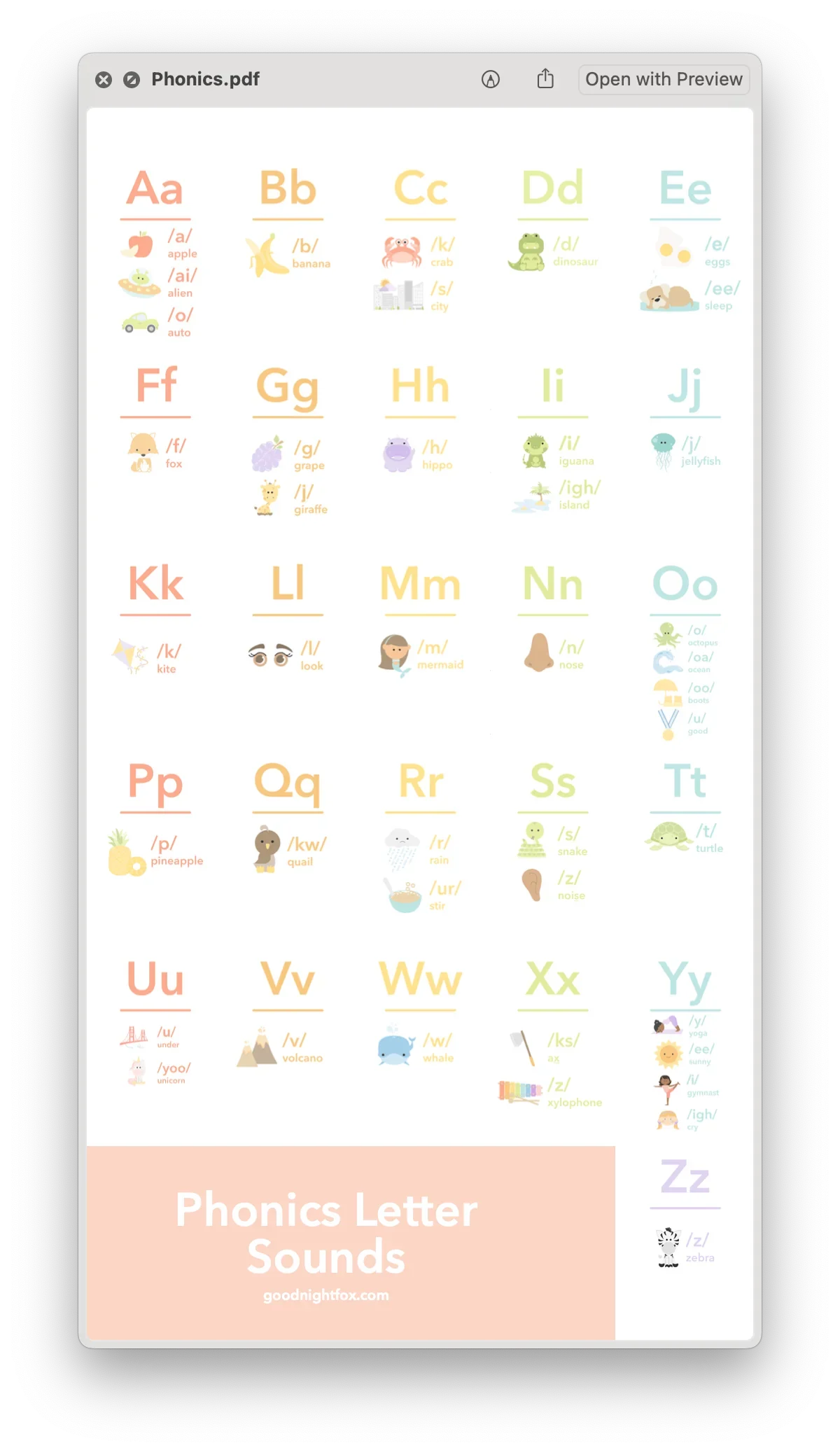
You’re not alone — and that’s exactly why I created a super simple Phonics Cheat Sheet that breaks everything down in a clear, visual way.
Before you dive in, grab the FREE printable phonics cheat sheet below — it’s the perfect quick-reference guide for teaching letter sounds the stress-free way.
Phonics is the foundation of early reading. When toddlers learn letter sounds, they’re building:
Early decoding skills
Sound awareness (phonemic awareness)
Confidence with letters
The ability to blend sounds later
This is one of the biggest predictors of future reading success — and starting early (in a playful, low-pressure way!) makes all the difference.
The Problem Most Parents Run Into
Letters don’t just make one sound. For example:
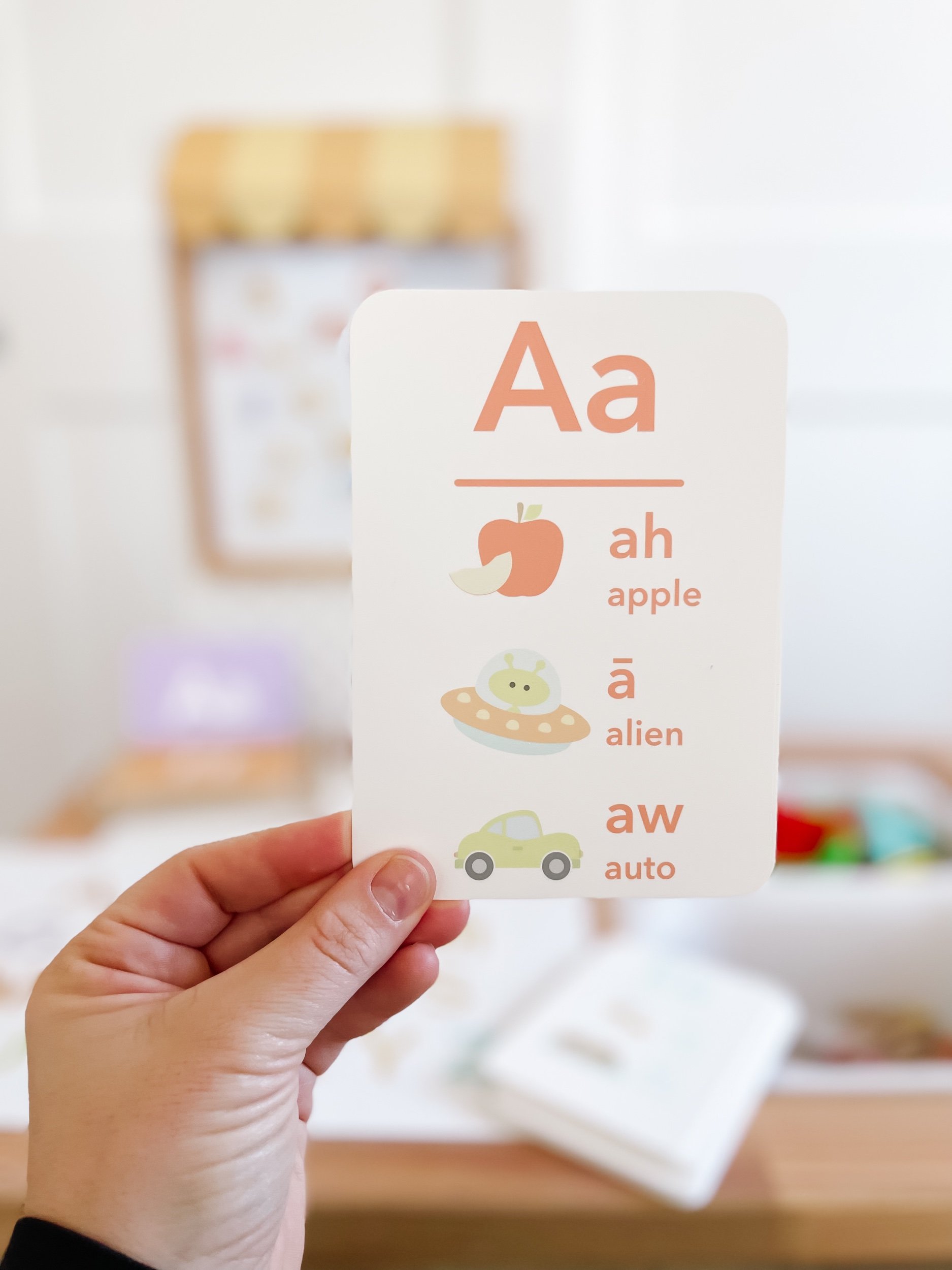
A → /a/ /ā/ /ah/
C → /k/ /s/
G → /g/ /j/
It’s no wonder parents feel unsure about teaching phonics at home.
That’s why I designed the Phonics Cheat Sheet — it lists every common letter sound in a toddler-friendly format that matches how you’ll teach them in preschool and kindergarten.
💡 Pro Tip: Keep the cheat sheet on your fridge or in your homeschool binder for quick reference during activities.
1. Start with the most common sound Each letter has multiple sounds, but toddlers should begin with the one they’ll use most often. The free cheat sheet highlights these clearly.
2. Use real objects and sensory play Examples:
Hide objects that begin with /b/ in a sensory bin
Make letter-sound “scooping” stations
Use playdough to form letters while saying the sound
3. Keep practice short and playful Think: 3–5 minutes of focused phonics paired with hands-on fun.
4. Repeat sounds often and casually Point out letter sounds while cooking, driving, reading — the more repeated exposure, the better.
Free Phonics Cheat Sheet (Must-Have for Toddler Learning!)
This printable includes:
The most common sound for every letter
Secondary sounds parents often forget
A toddler-friendly layout that builds confidence
Beautiful pastel illustrations that make learning feel fun
A quick-reference tool you can use with ANY activity
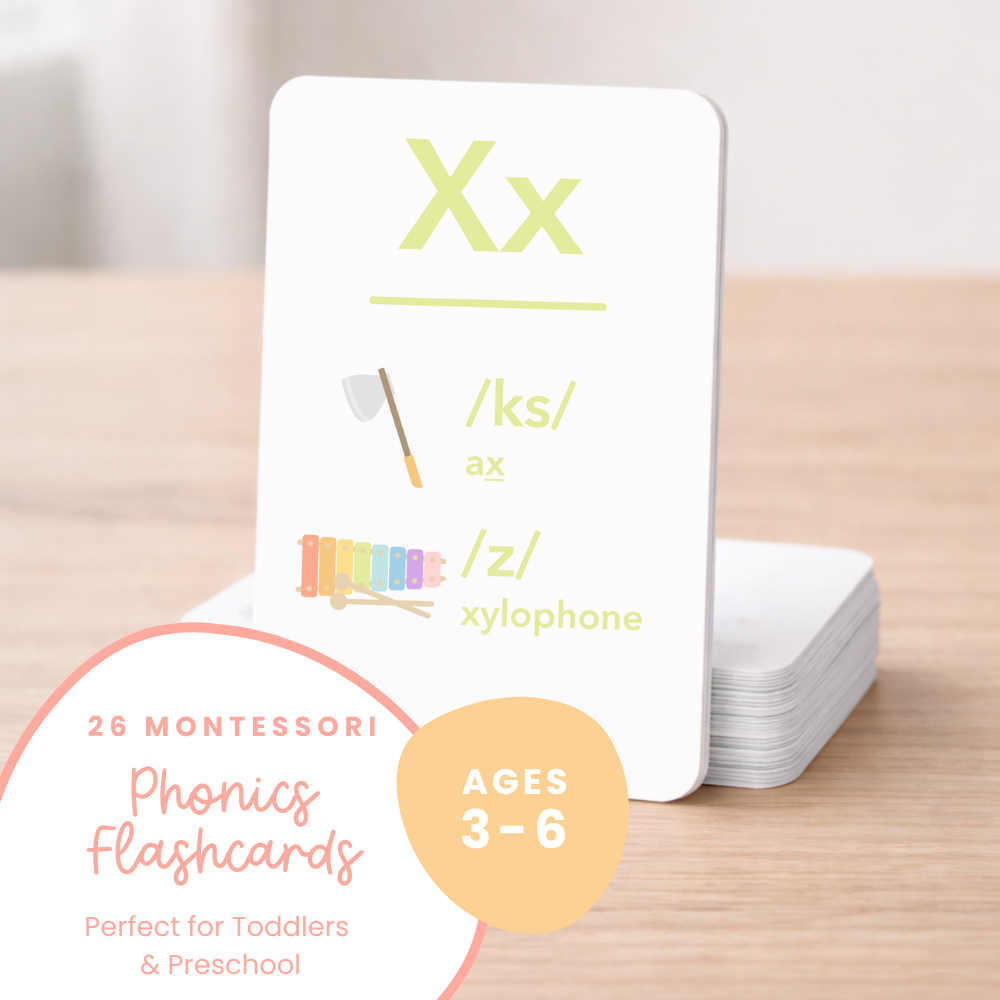
Want to Take Phonics Further? Try the Letter Sounds Flashcards
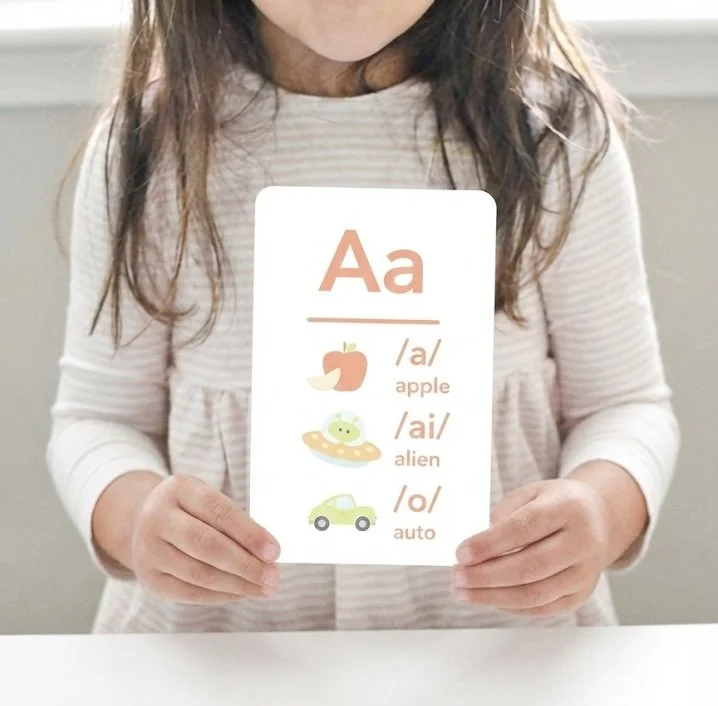
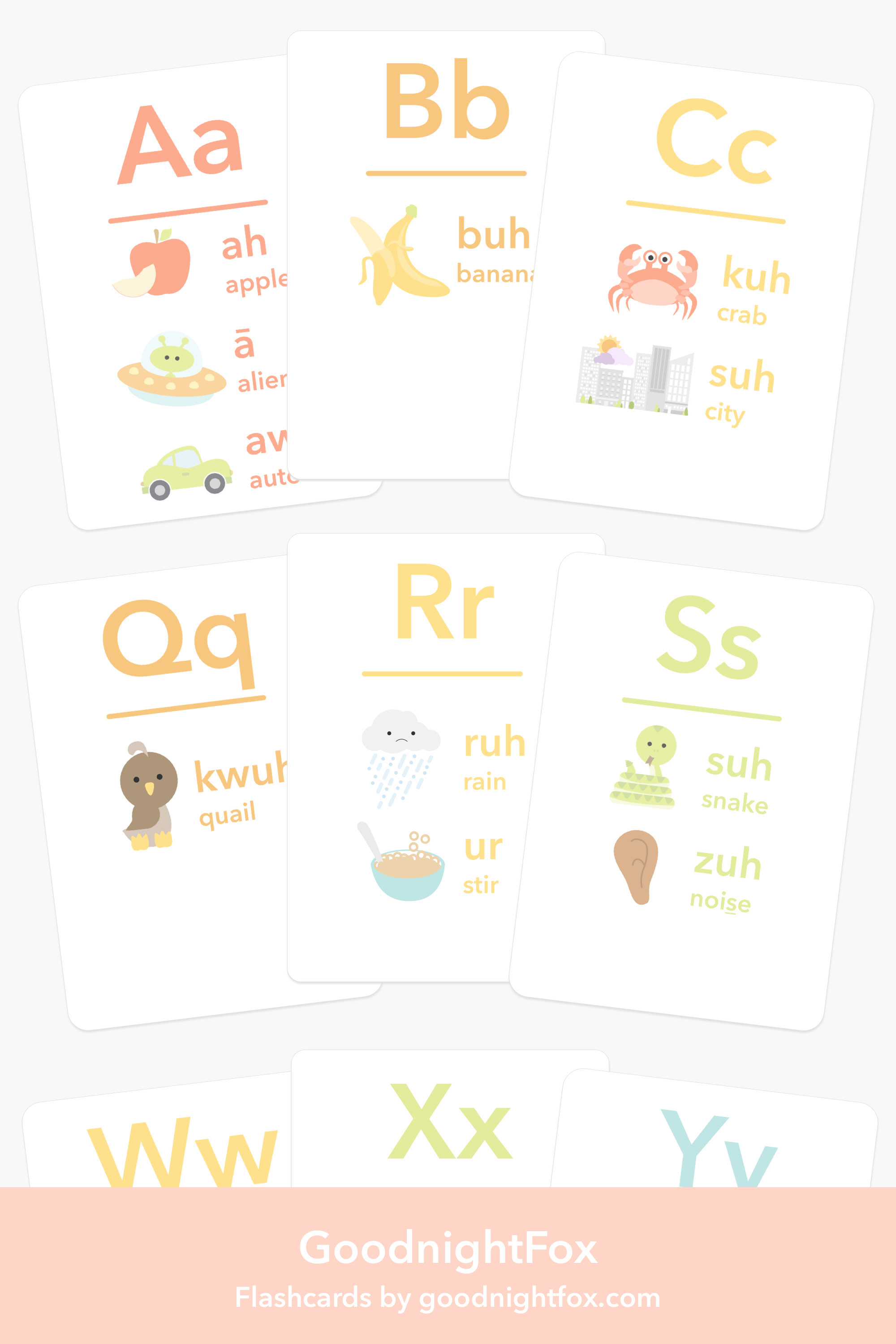
If your toddler loves hands-on learning, my Letter Sounds Flashcards are the perfect companion to the cheat sheet. They help toddlers:
Practice sounds through play
Match objects to beginning sounds
Build fine motor skills through sorting, matching, and sensory play
Gain confidence before preschool or kindergarten
Parents tell me all the time how these cards completely transformed their reading routine — making it something their child asks to do.
✨ After downloading the cheat sheet, keep an eye on your inbox. I’ll send you a few playful phonics activities + an exclusive discount on the physical flashcards.
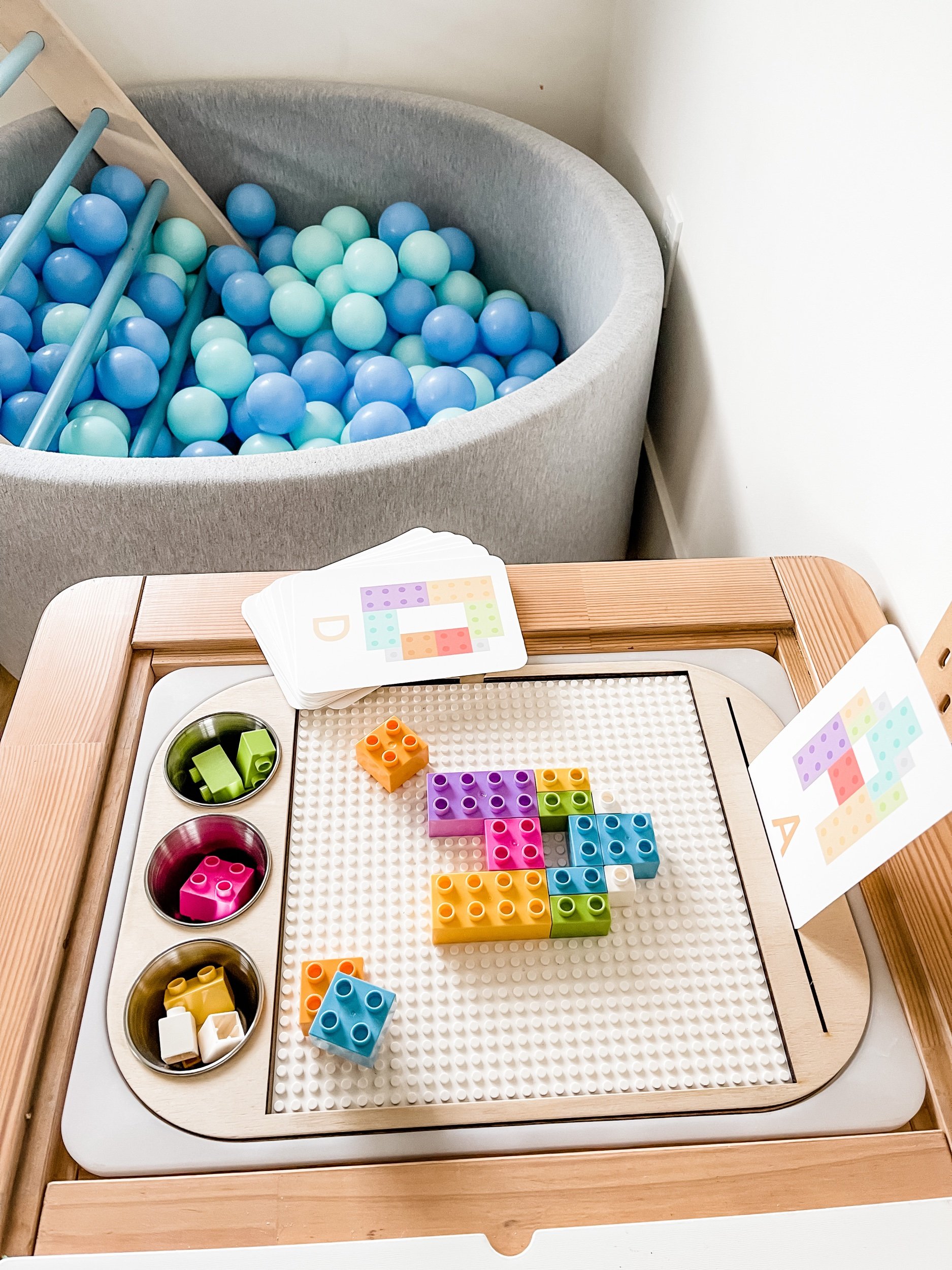
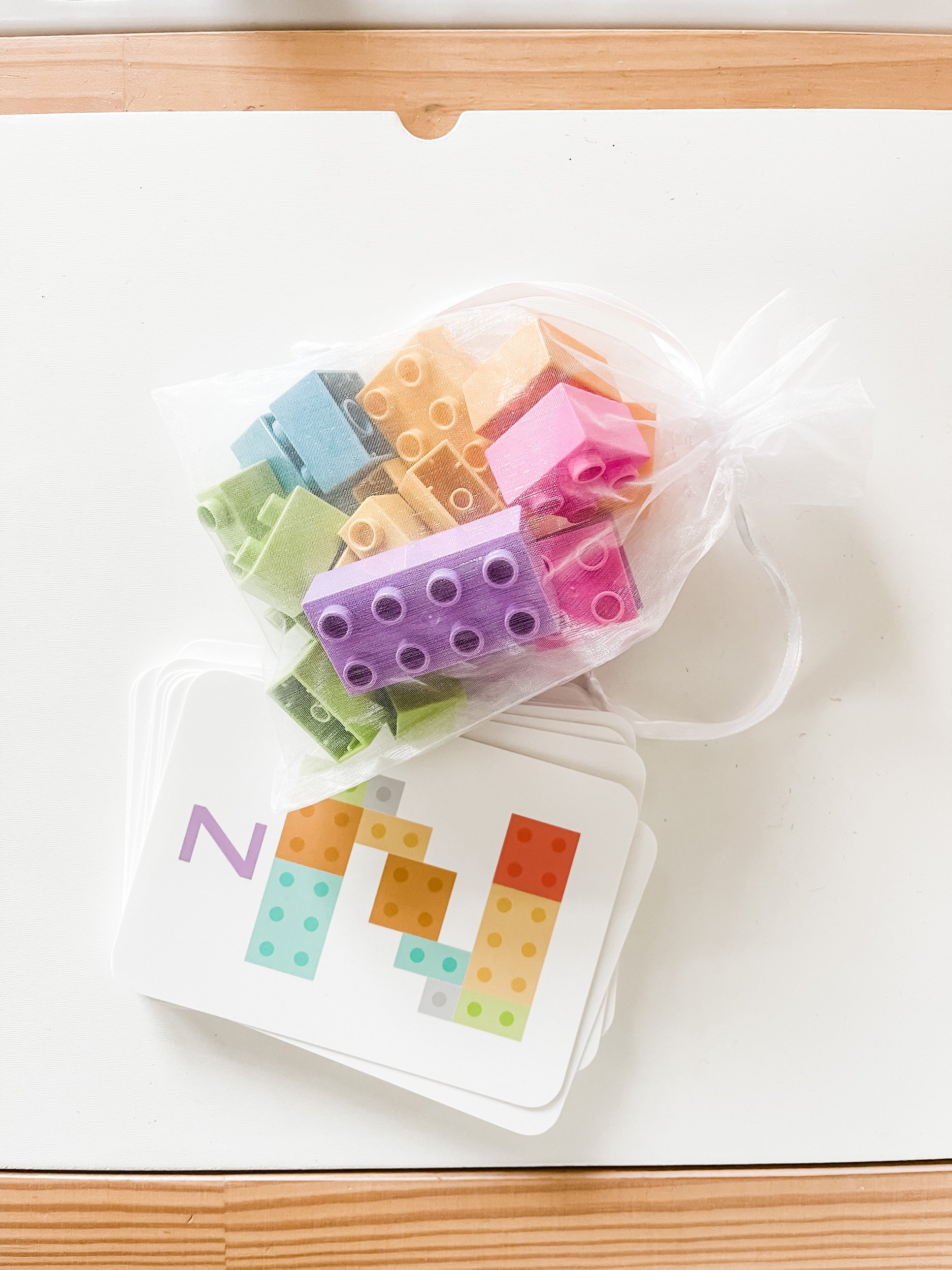
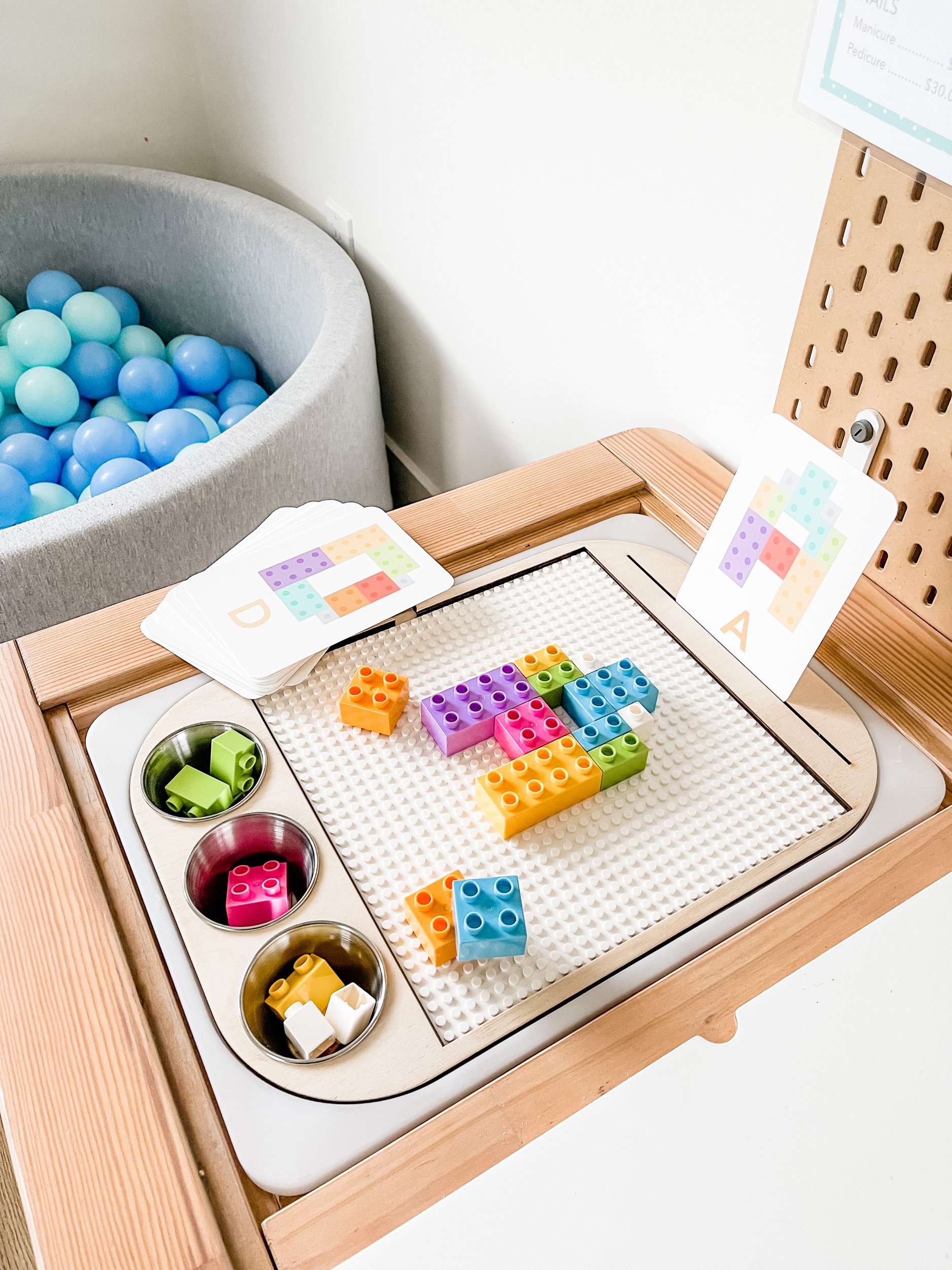
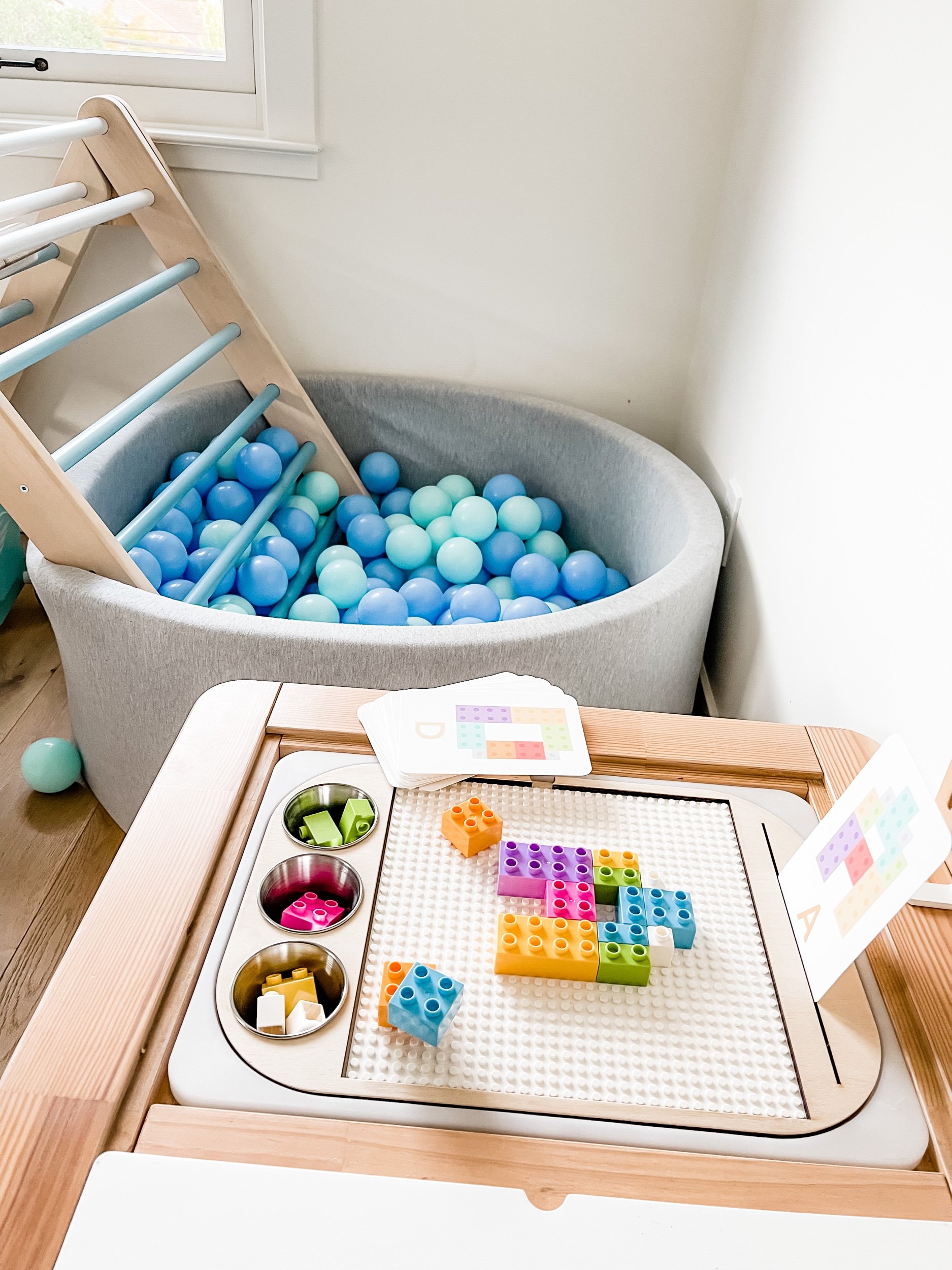
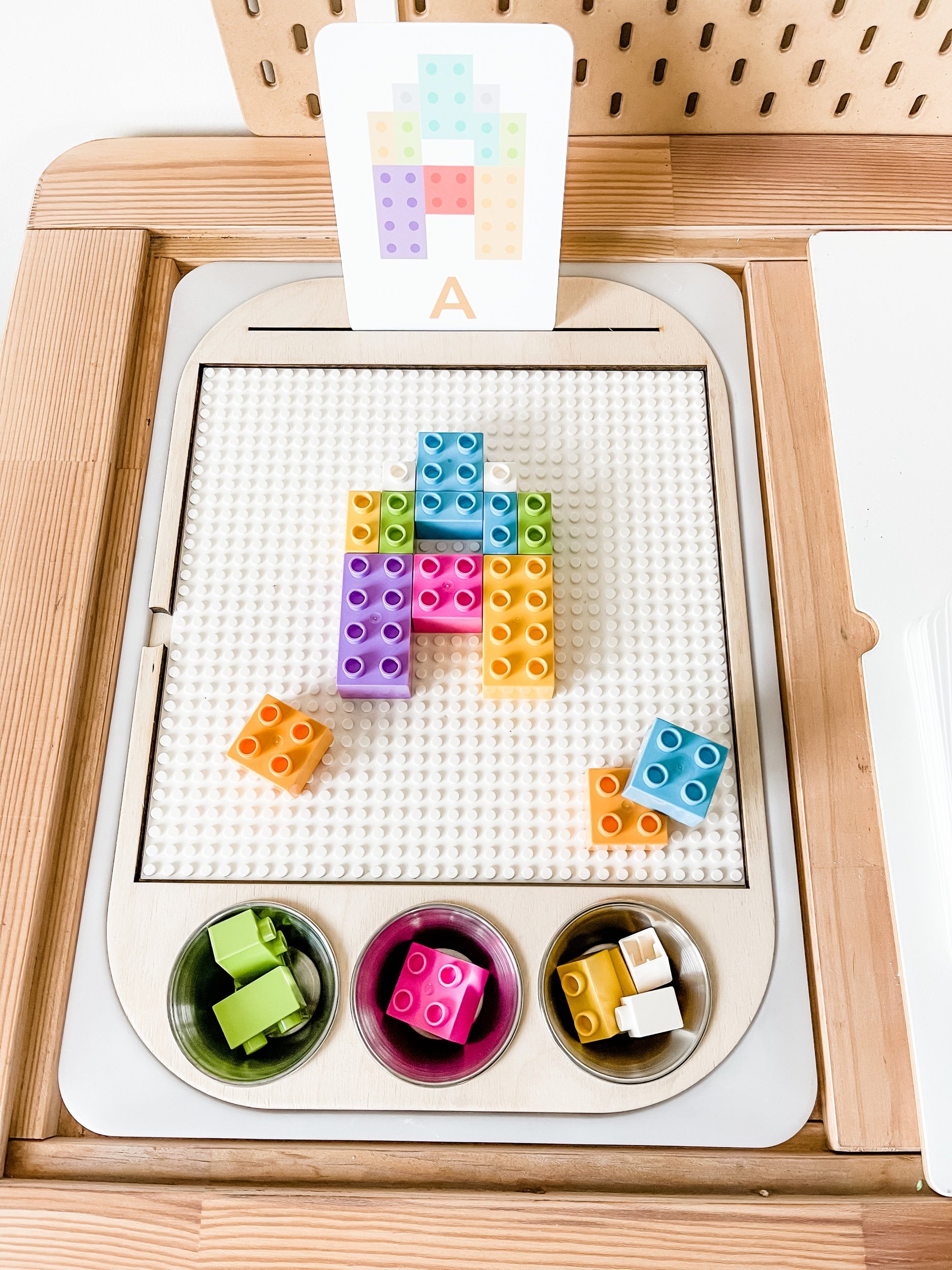
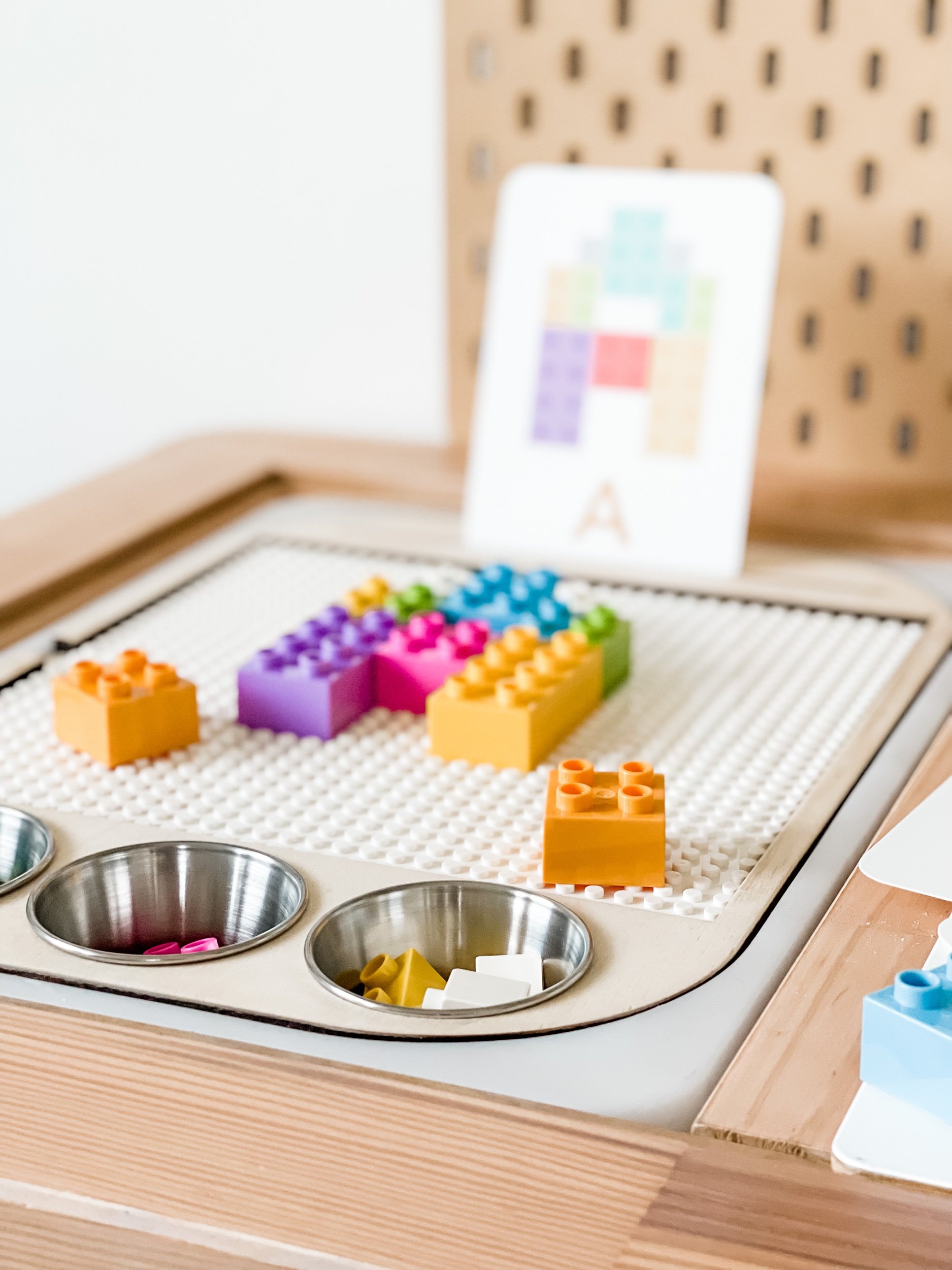
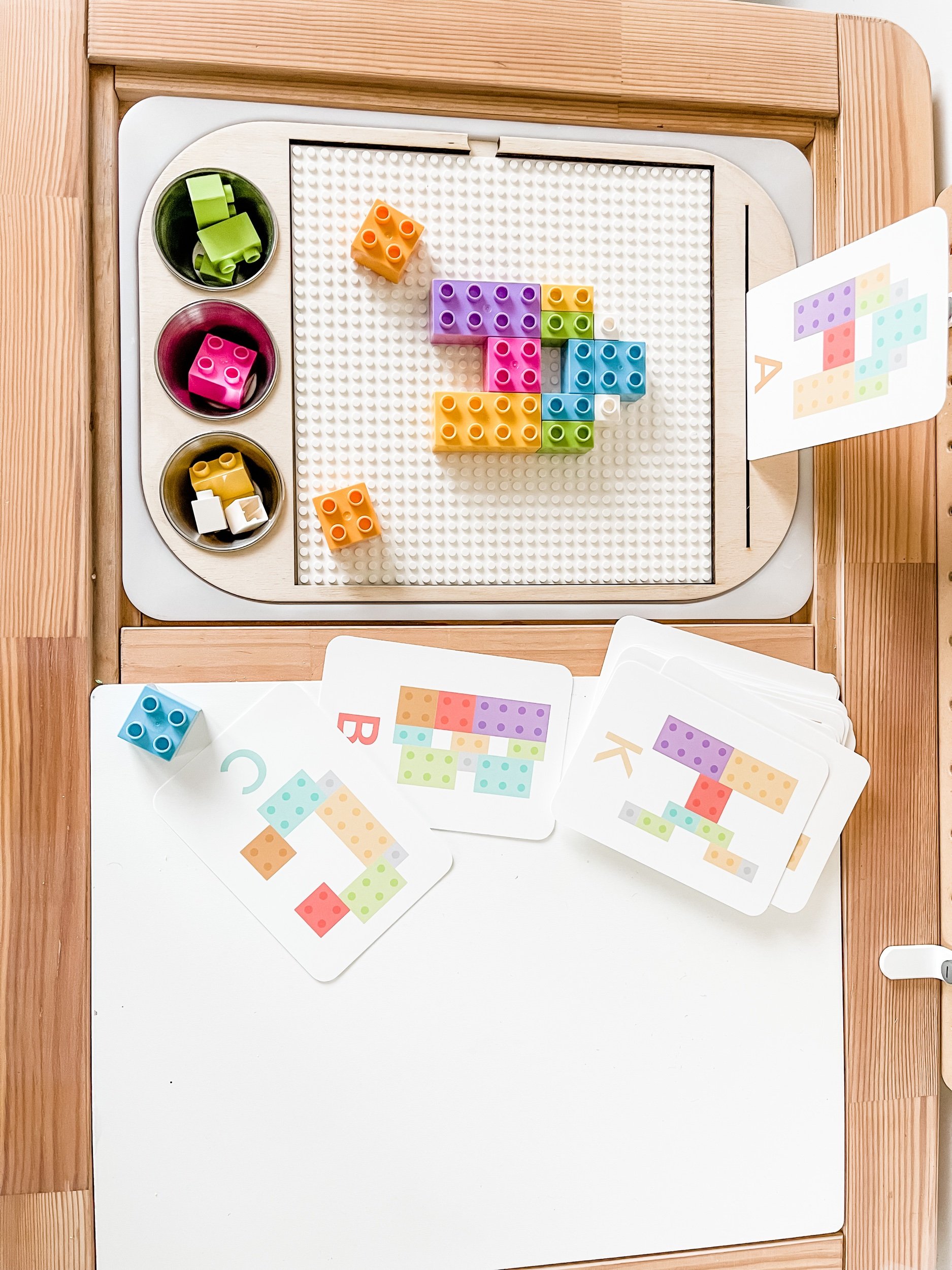
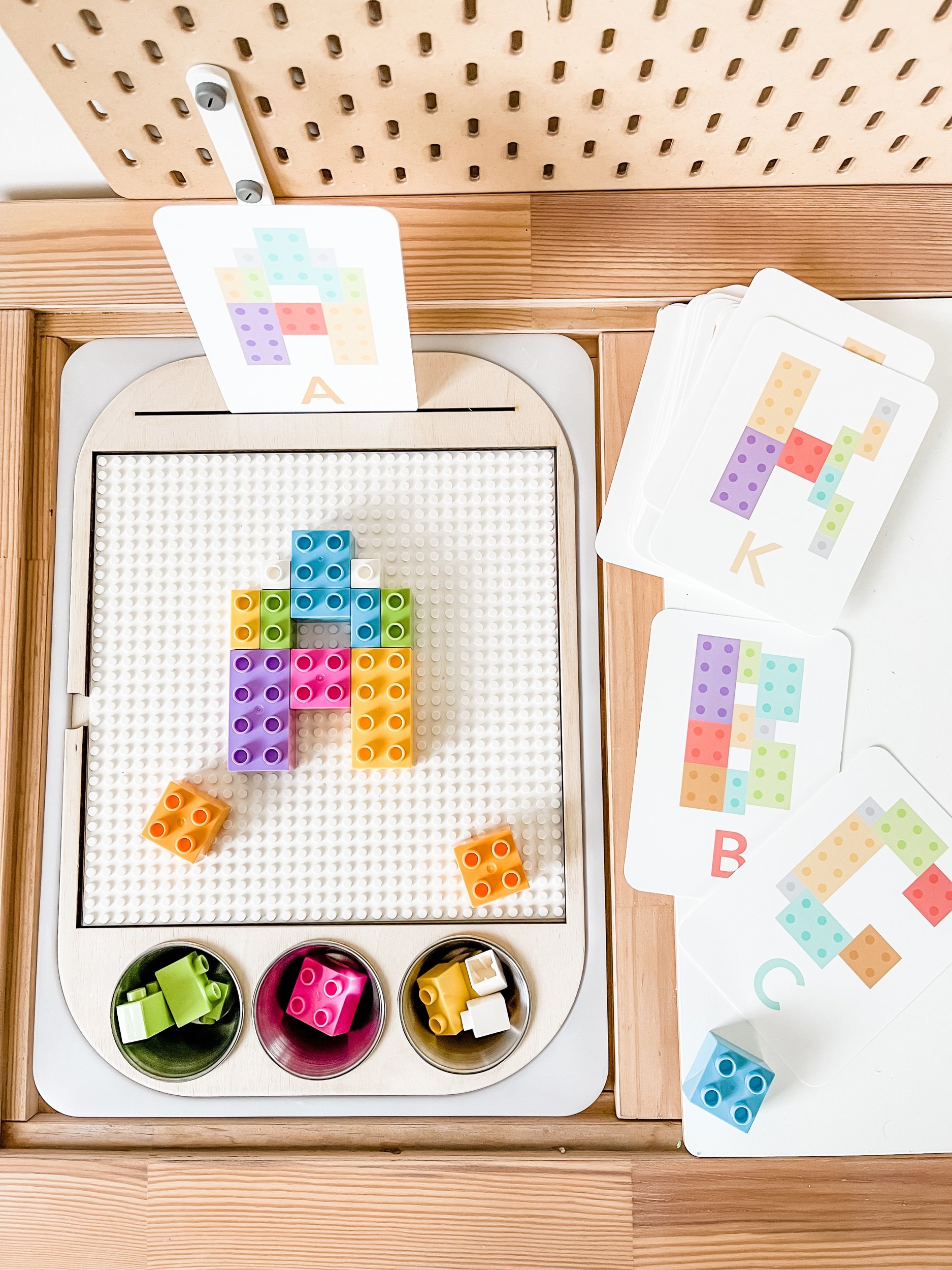
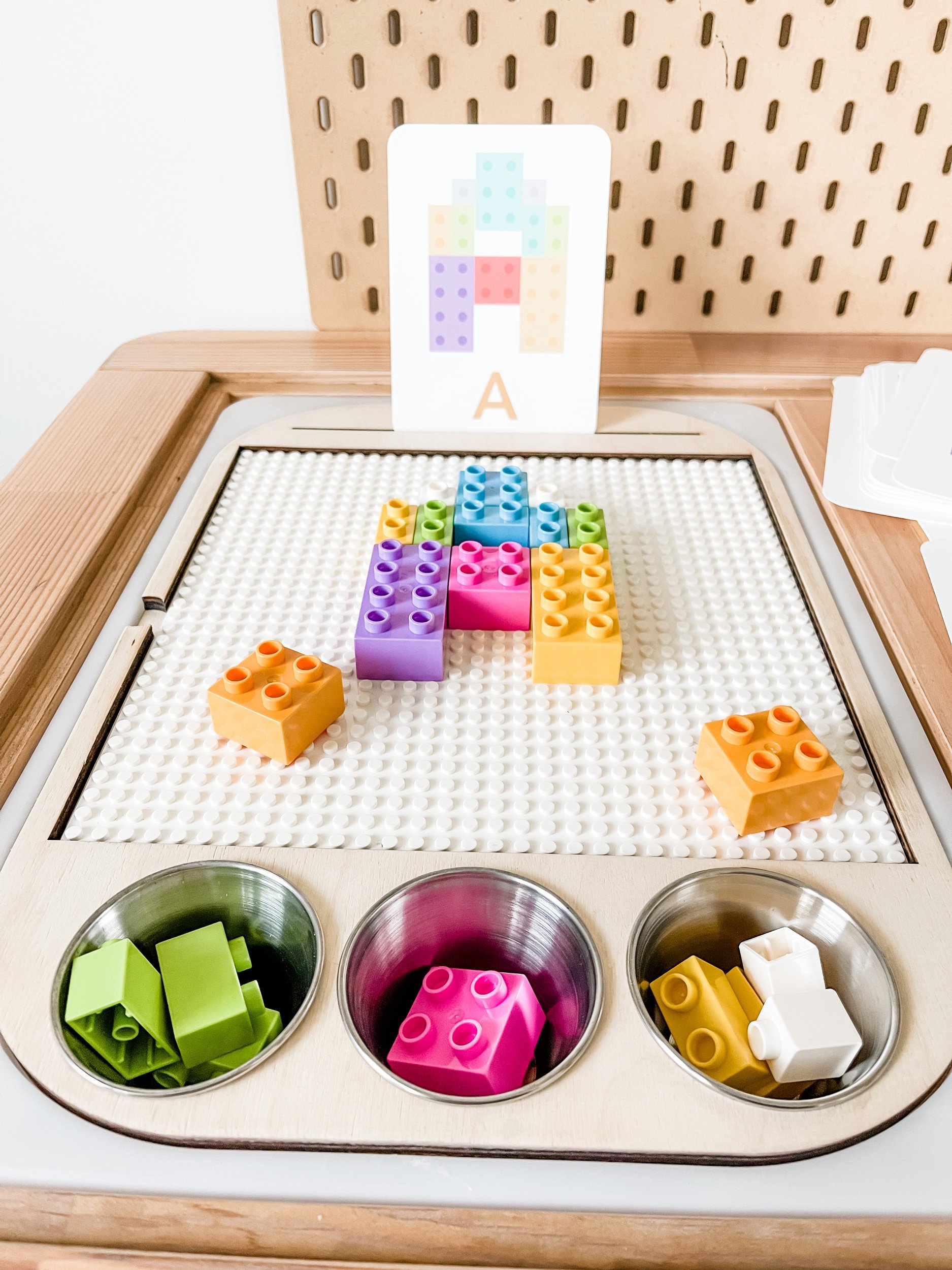
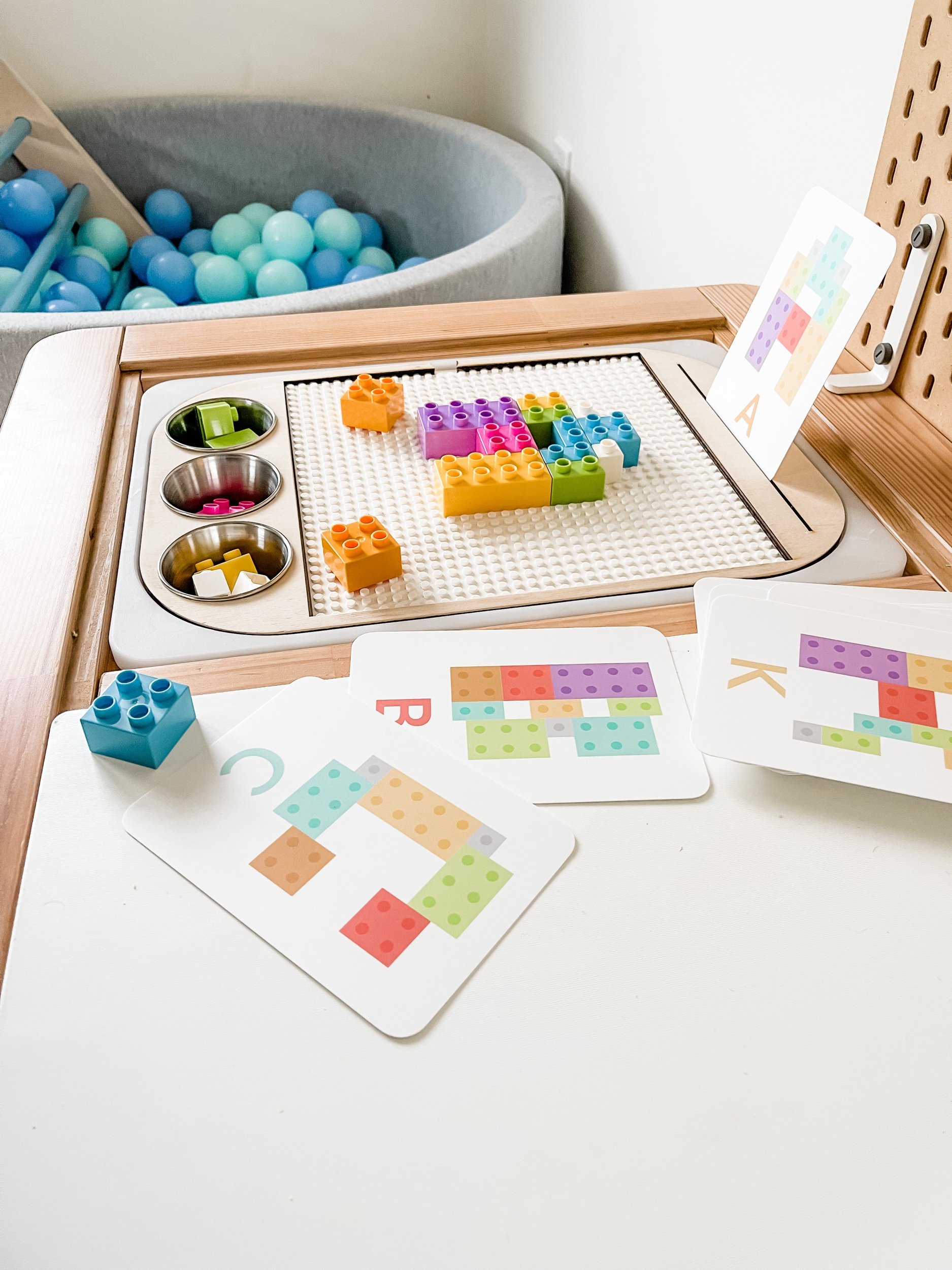
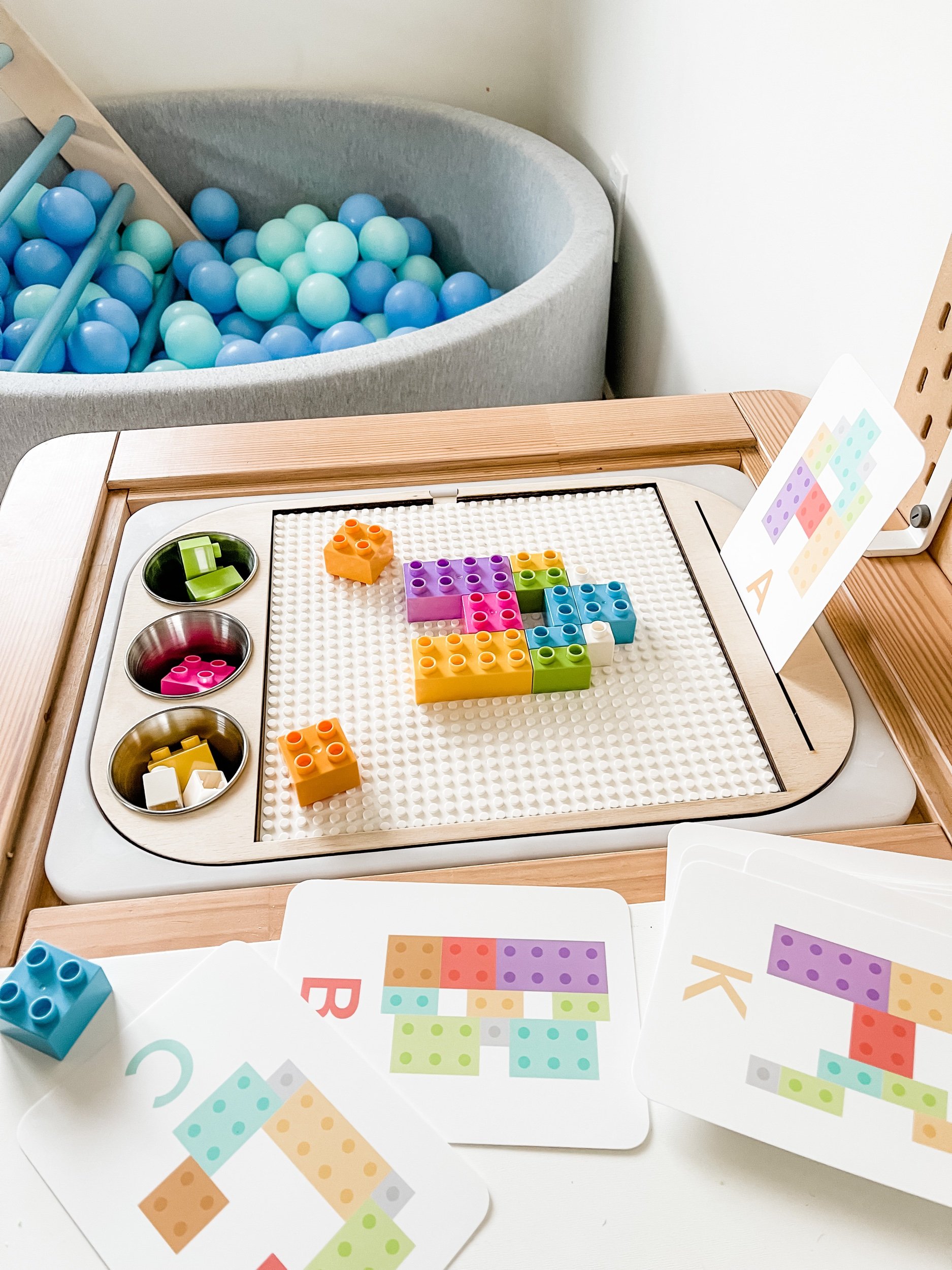
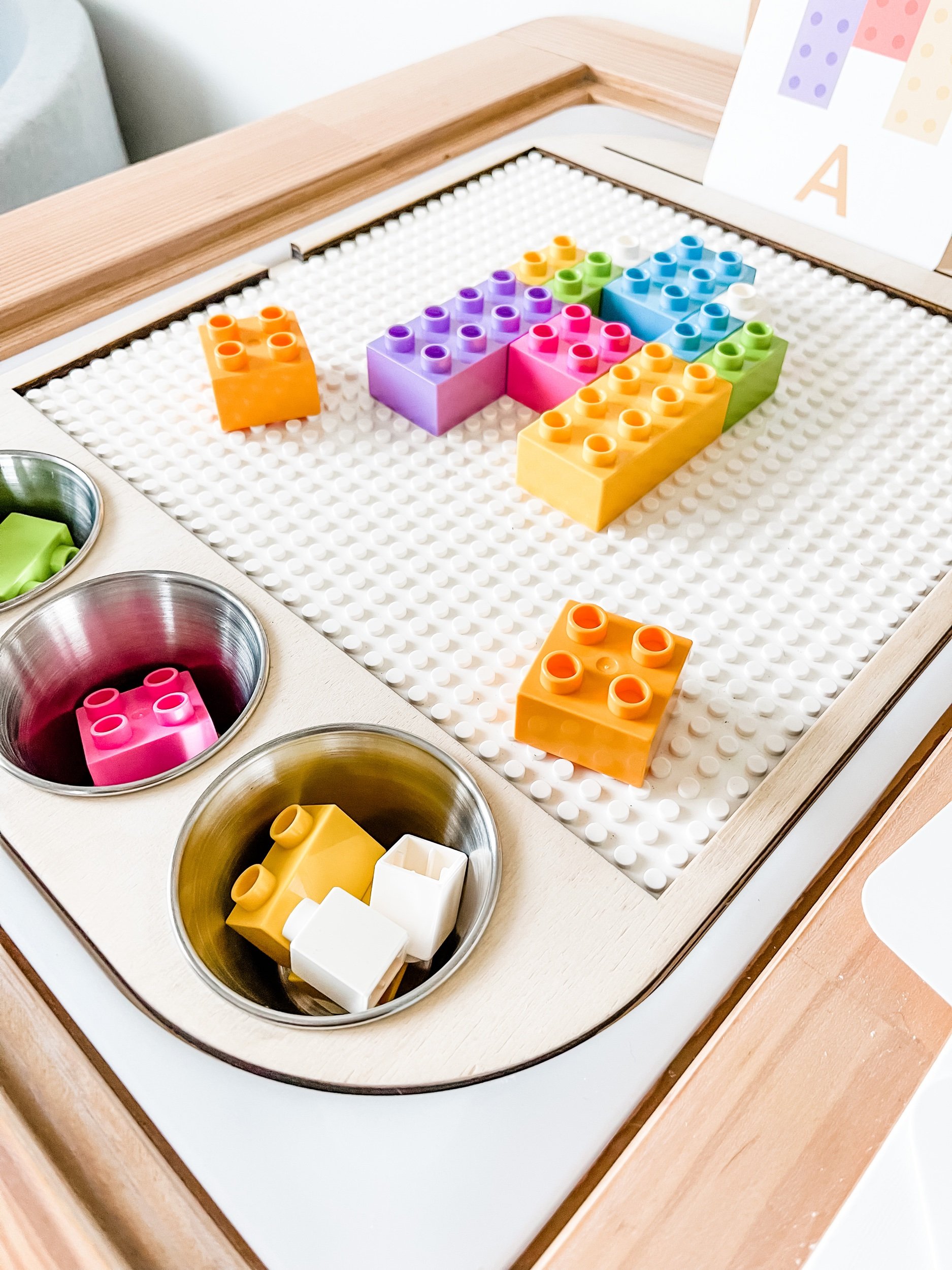
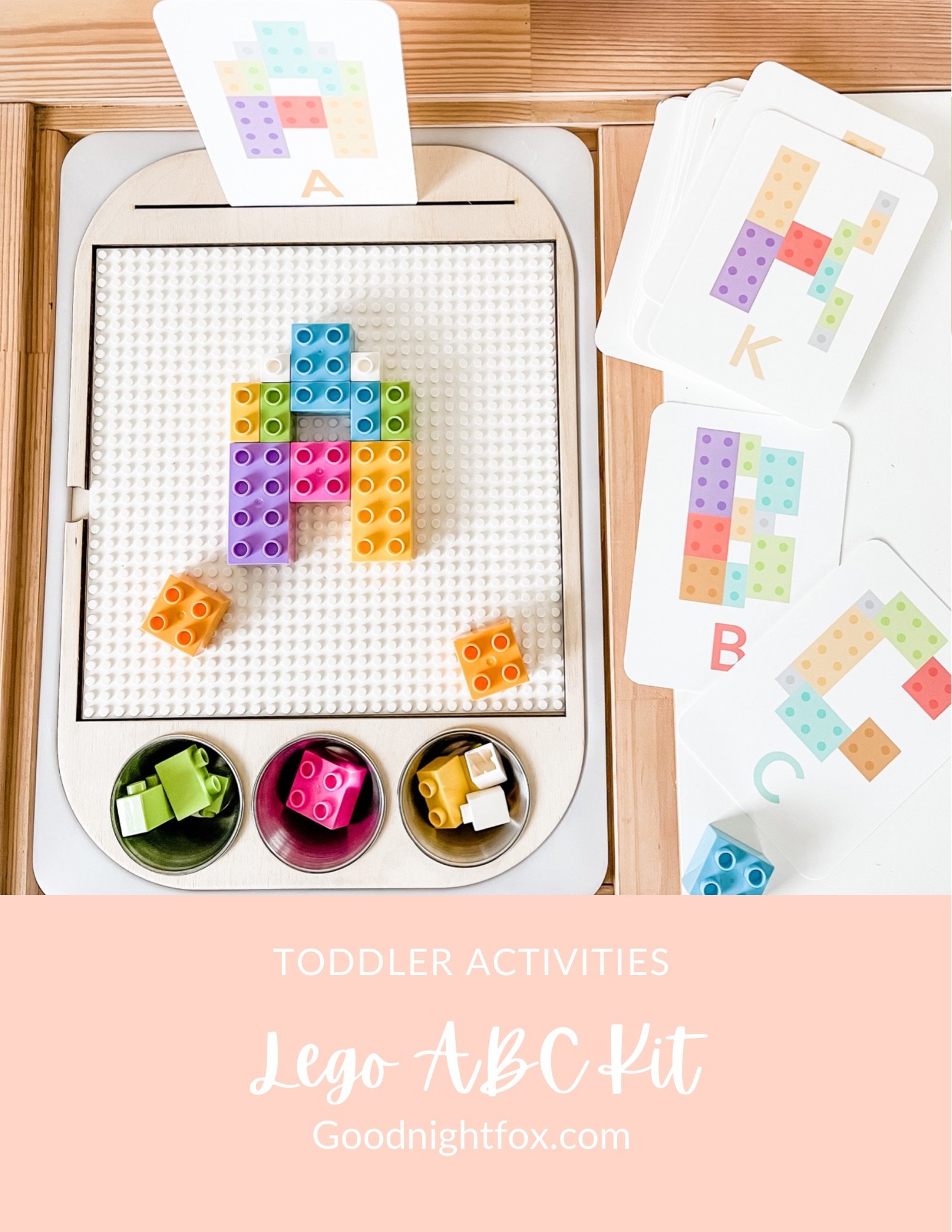
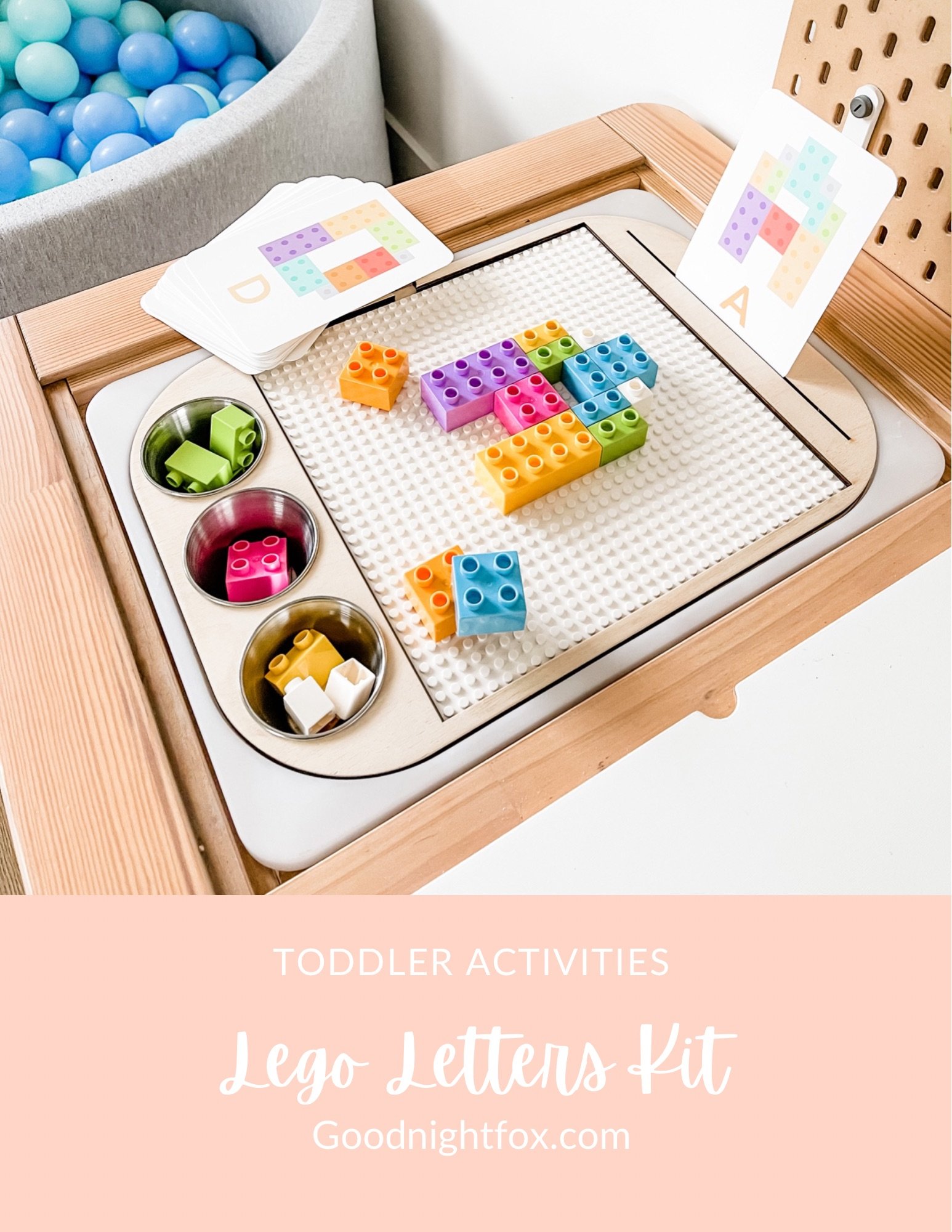
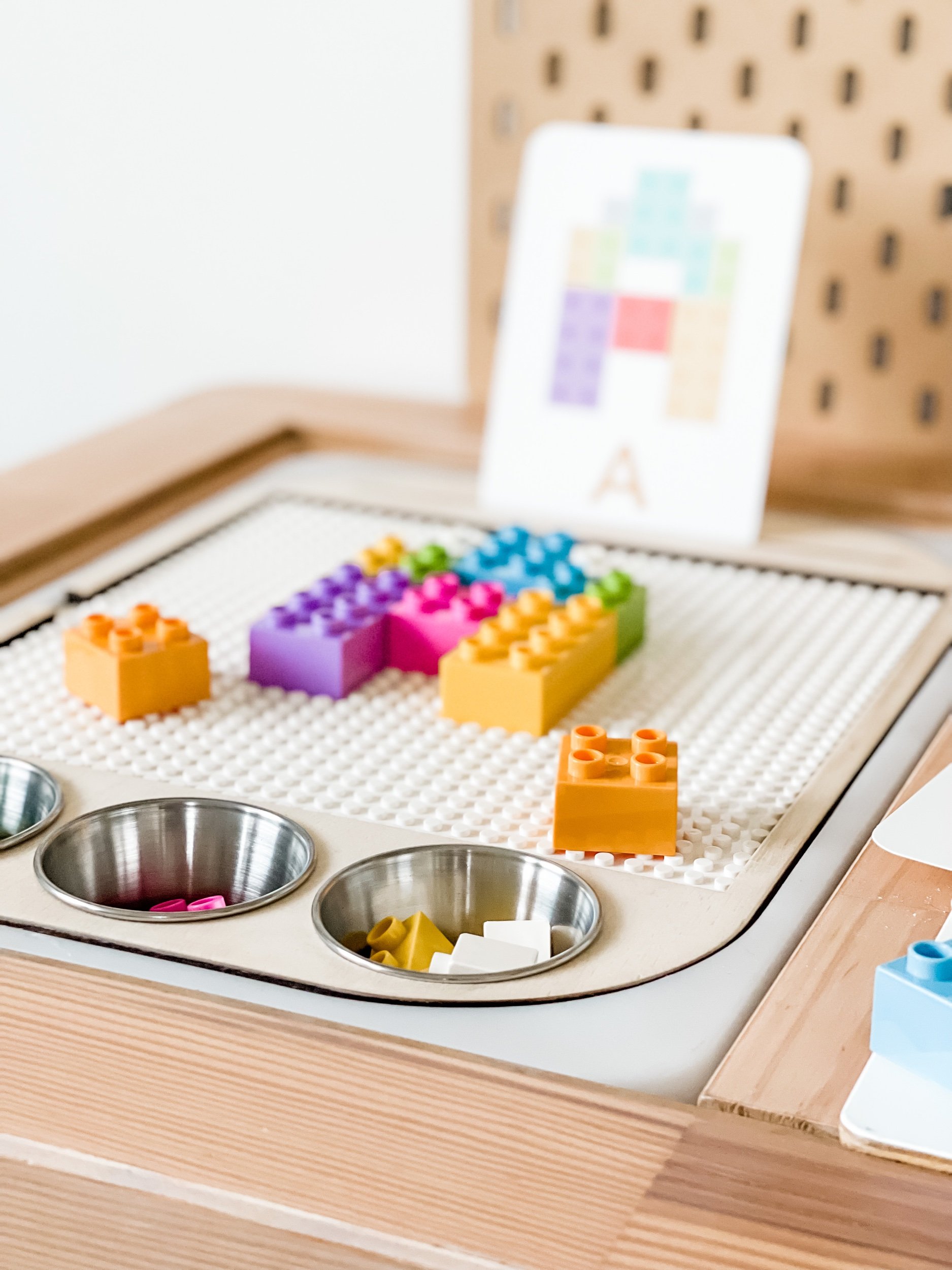
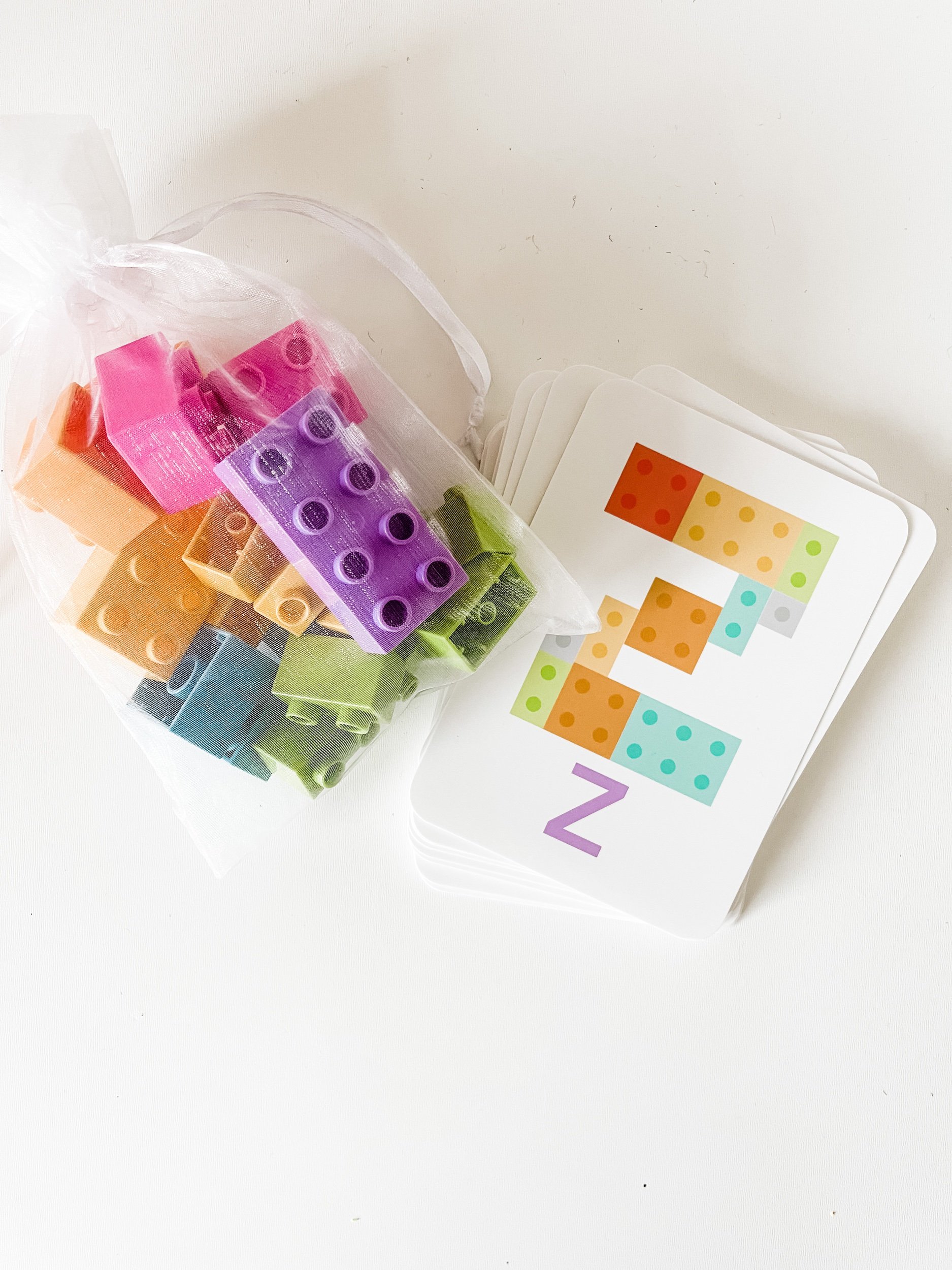
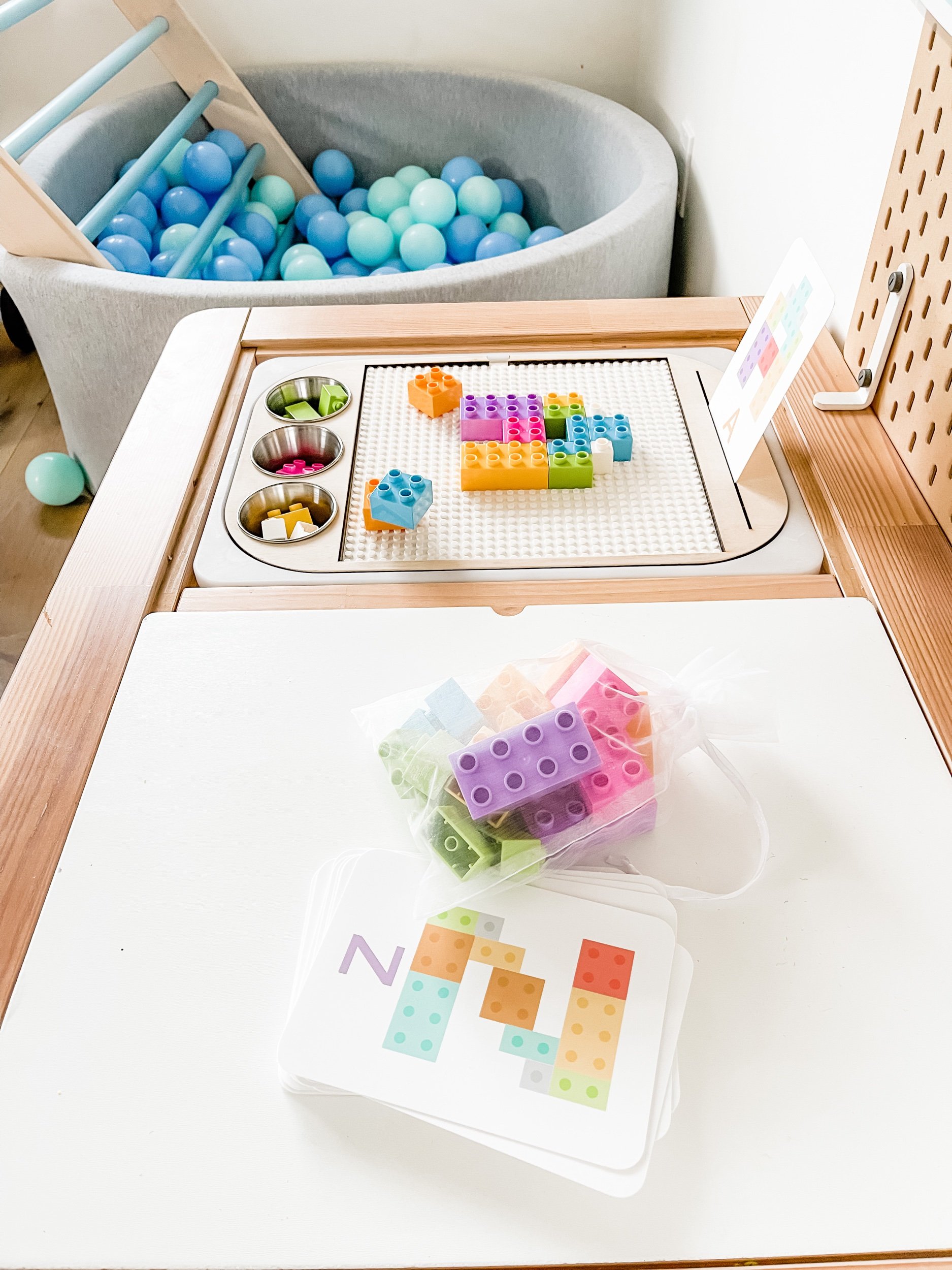
If you’re in the alphabet learning stages or even just the early building phases, this Lego Alphabet Kit is an absolute must have. And with the holiday season coming up, your kiddos are sure to love unwrapping this one. This set comes in both standard lego sizes for ages 5-8 and duplo size (2 times the size bricks) for your littler ones 1-4 who still like to mouth small objects. You can pair these up with base plates and build at your Flisat table, or you can take them on the go with the on-the-go kit. We took this set with us on the long flight to Pittsburgh and it kept Sofie in her chair, entertained for 30min.
Enjoy building and learning at the same time with this awesome kit!
Have a shop that specializes in baby gifts? I'd love to feature your shop and products in one of my weekly roundups. Email me at goodnightfoxstudio@gmail.com.