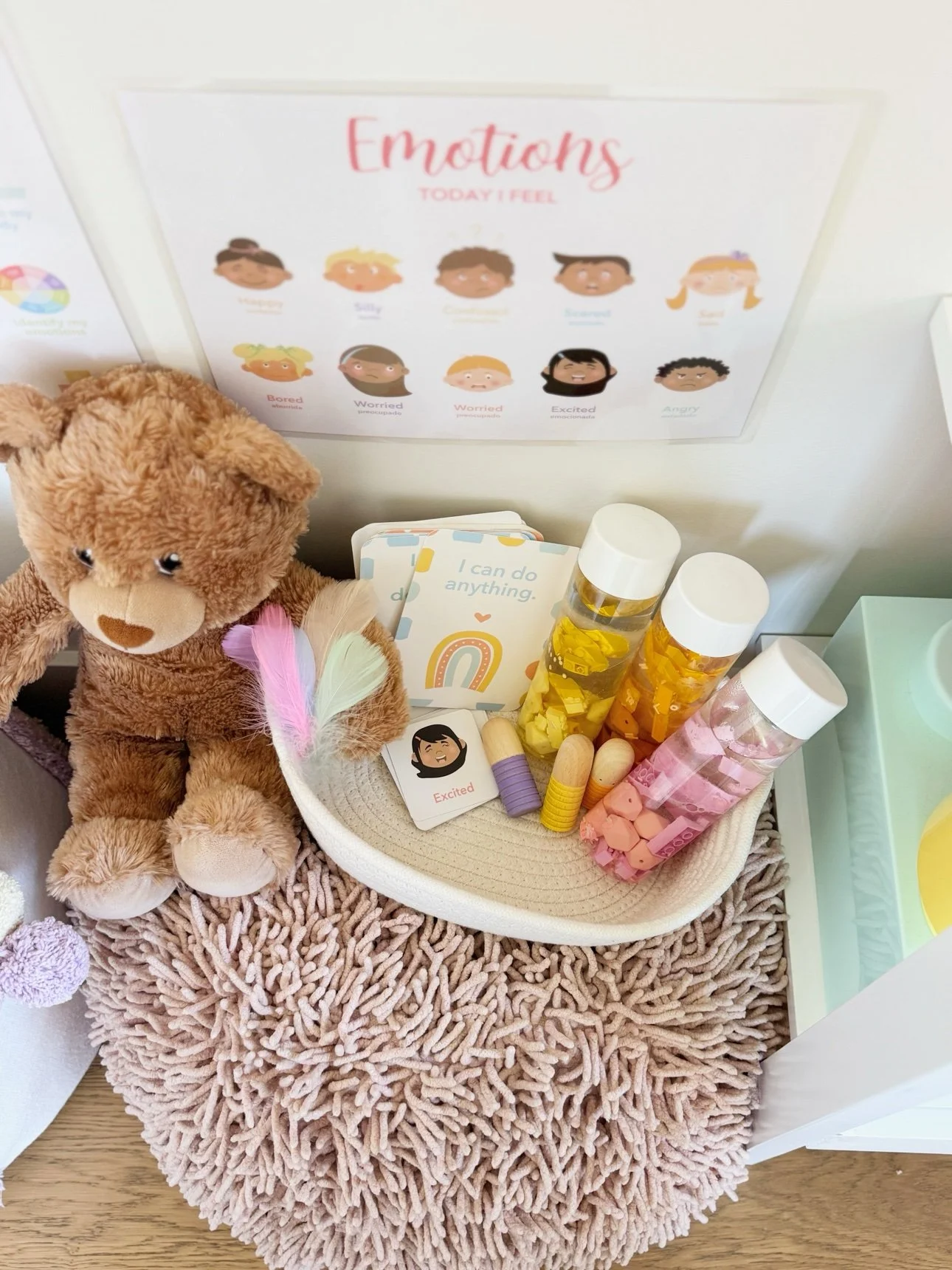
Calming Corner for Toddlers: How to Set Up a Calm Down Corner
When your toddler's emotions go from zero to sixty — the hitting, the screaming, the full-body meltdown over the wrong color cup — what they need isn't a lecture or a time-out. They need a place. A calming corner is a small, cozy spot where big feelings are allowed and calming tools are within reach, so your child can learn to settle their own storm instead of weathering it alone.
What a calming corner is (and isn't)
A calming corner is not a punishment spot. Nobody gets "sent" there. It's an invitation — a soft landing pad your child can choose when feelings get too big. The difference matters: a time-out says "go away until you're calm," while a calming corner says "here are your tools; I'll help you use them." When she was little, ours lived in the corner of the living room, and the rule was simple: anyone could use it, including grown-ups.
The whole setup rests on three pieces: something that helps your child name the feeling, something that helps them settle their body, and a space that feels theirs. Here's how to build each one.
Step 1: Give feelings names with emotions posters
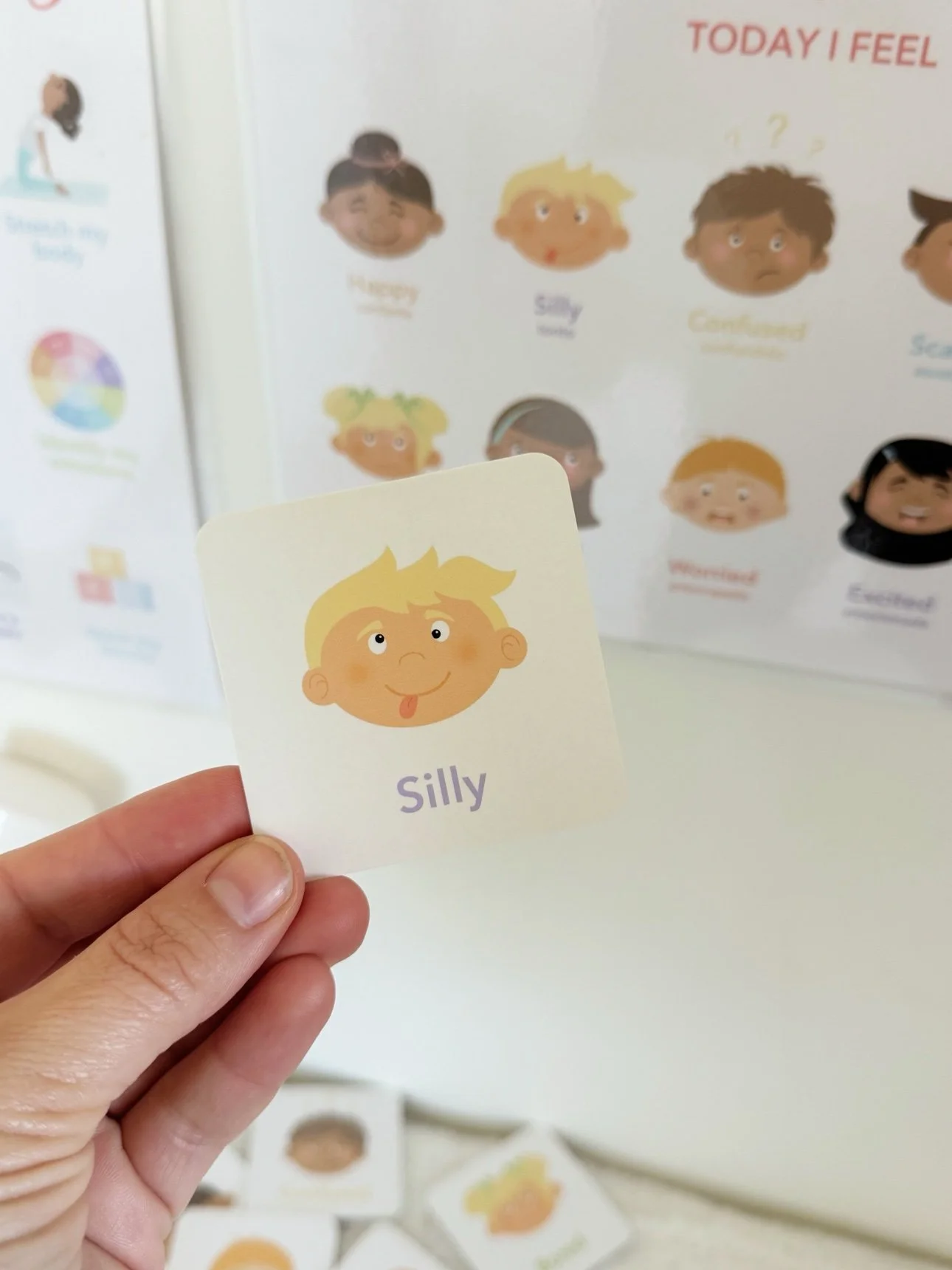
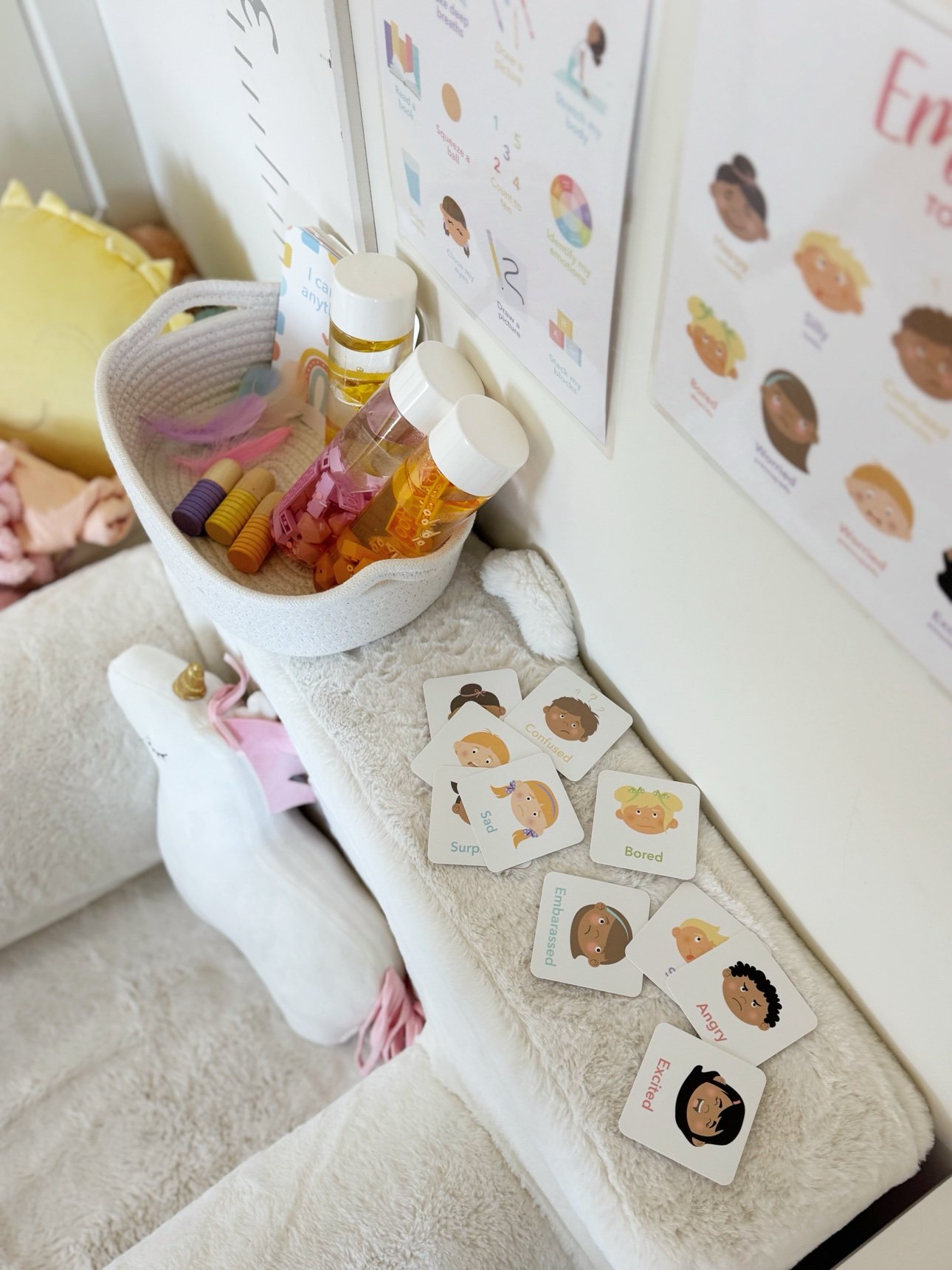
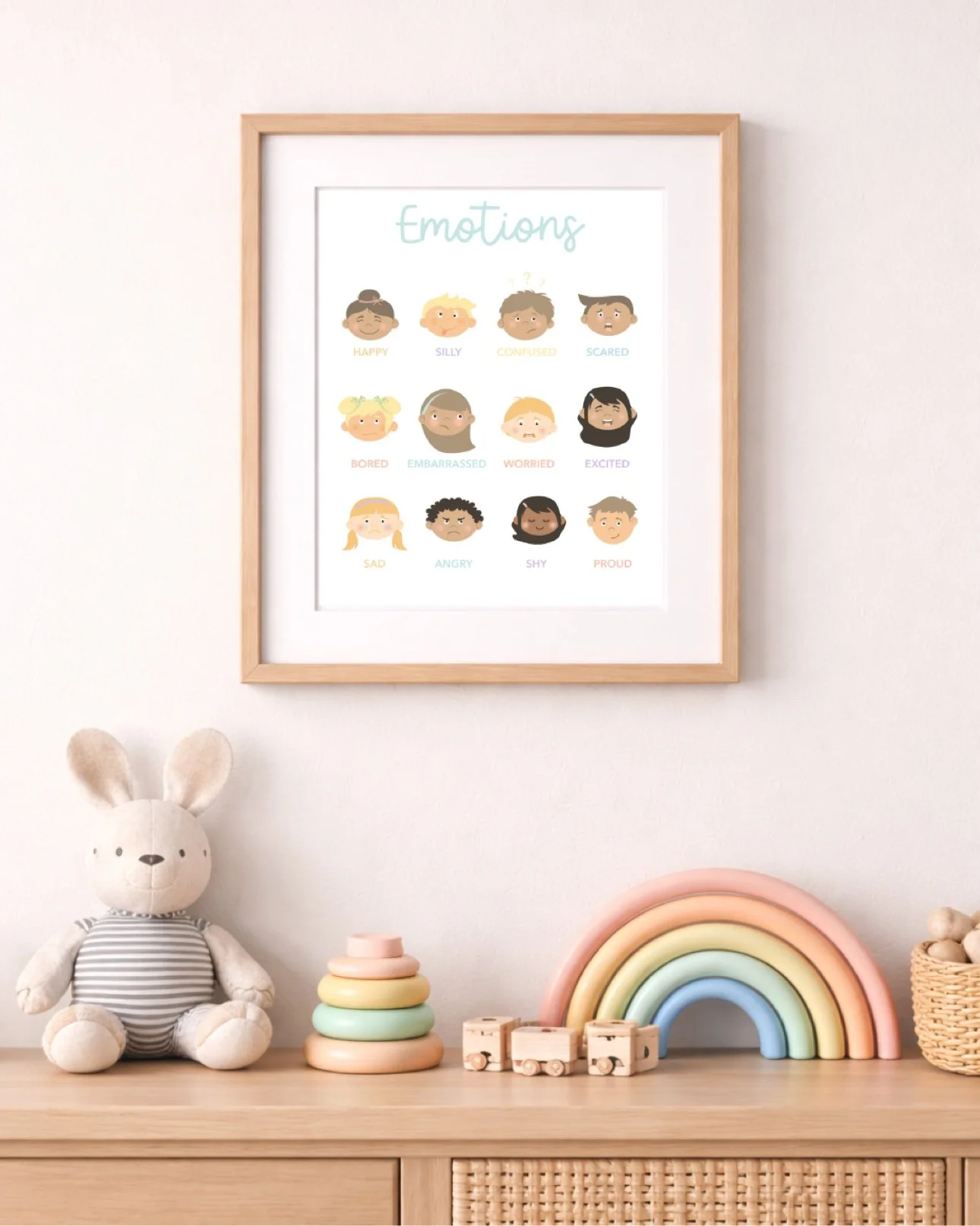
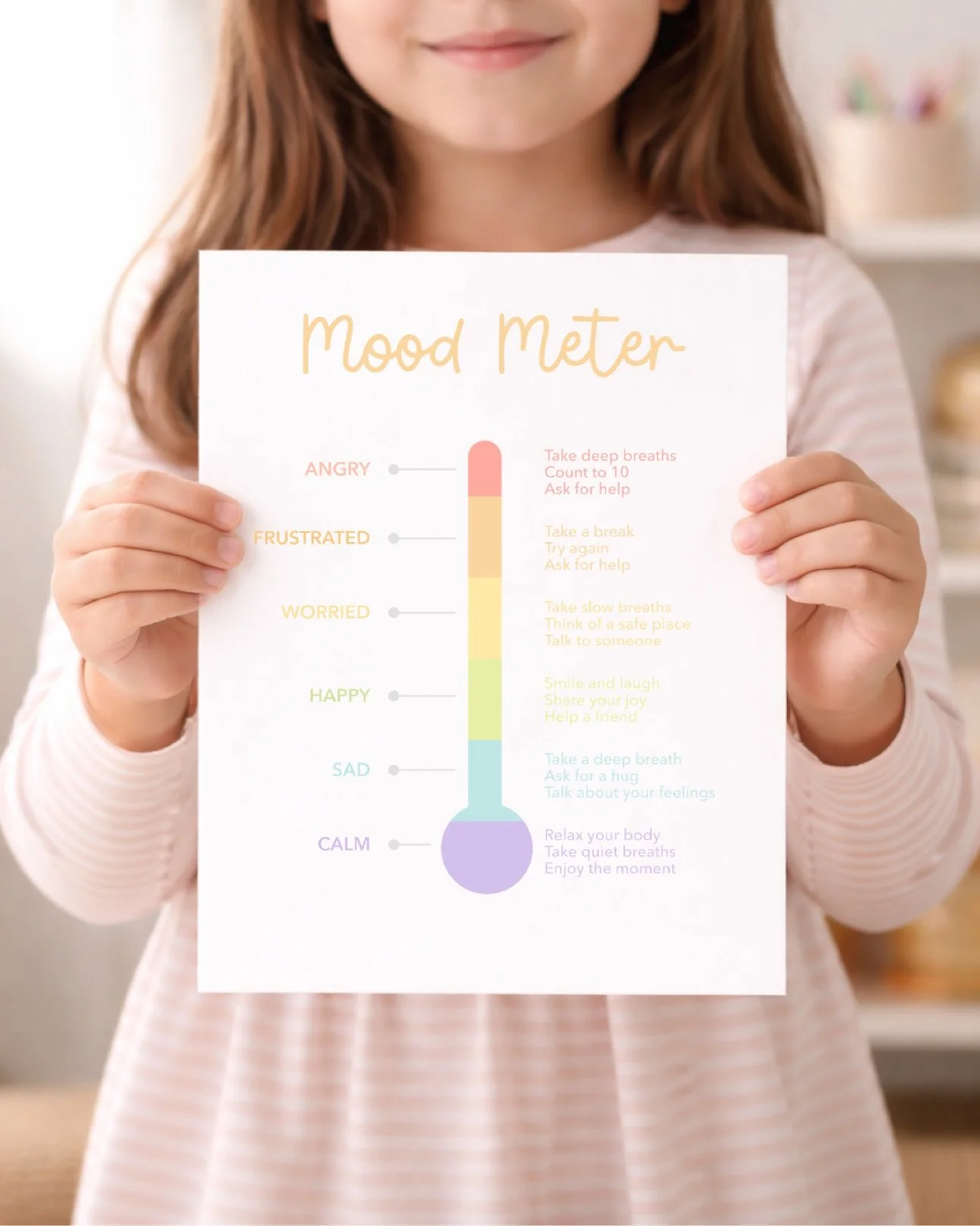
Before a child can calm down, they need words for what's happening inside. An emotions poster or set of emotions cards on the wall turns "I'm just MAD" into "I'm frustrated" — and that specificity is the first calming tool. Point to the faces together during calm moments first, so the vocabulary is already there when the storm hits.
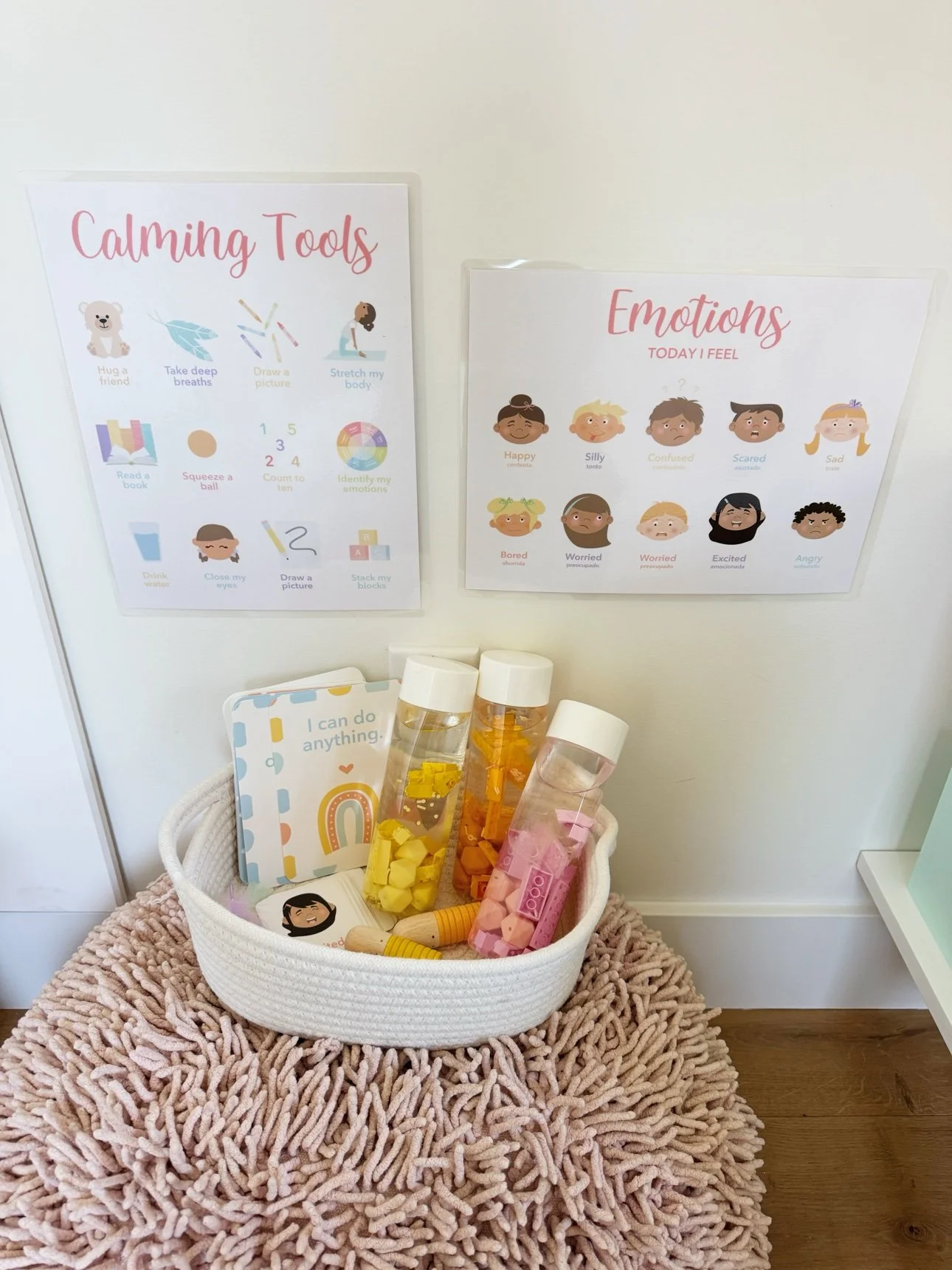
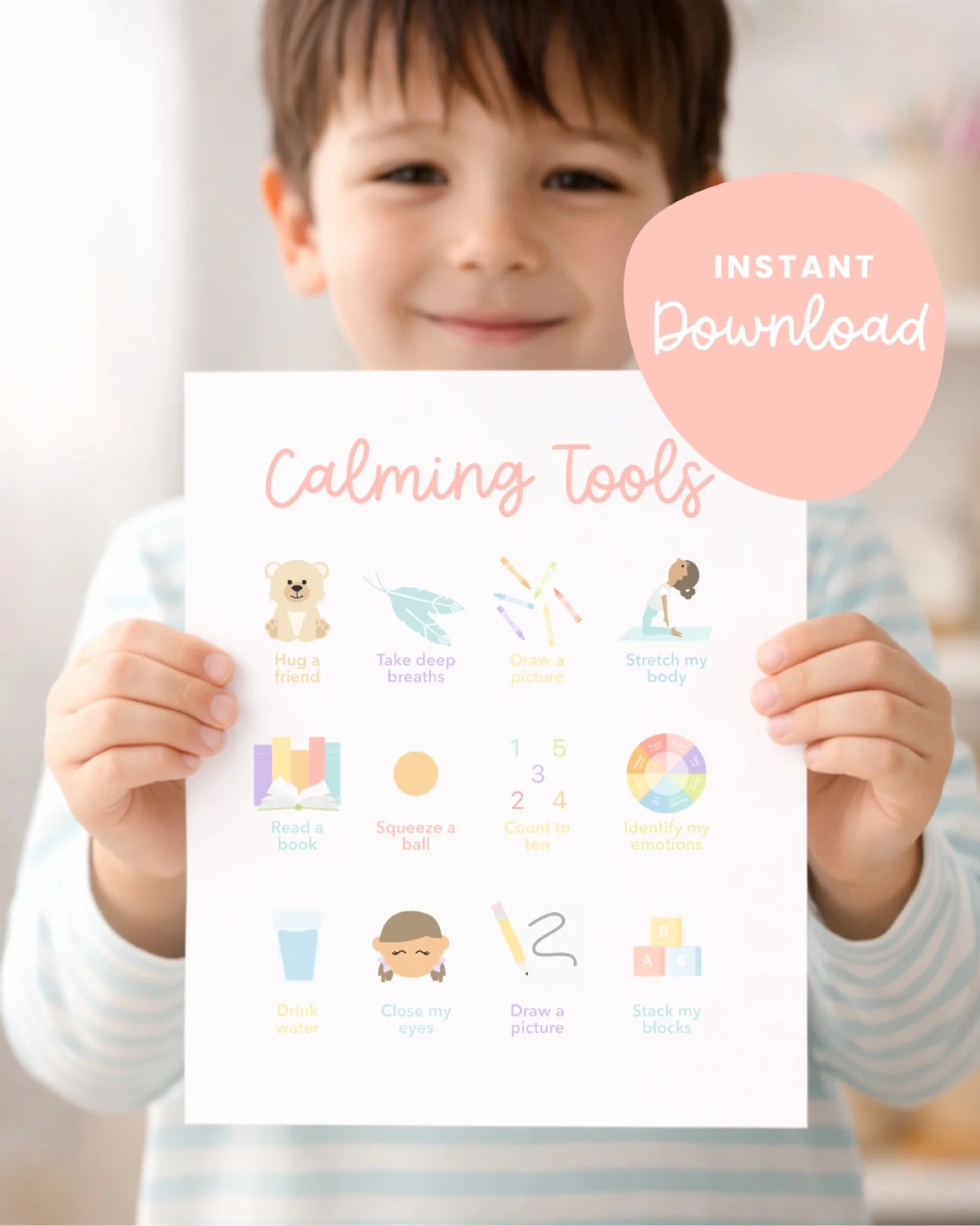
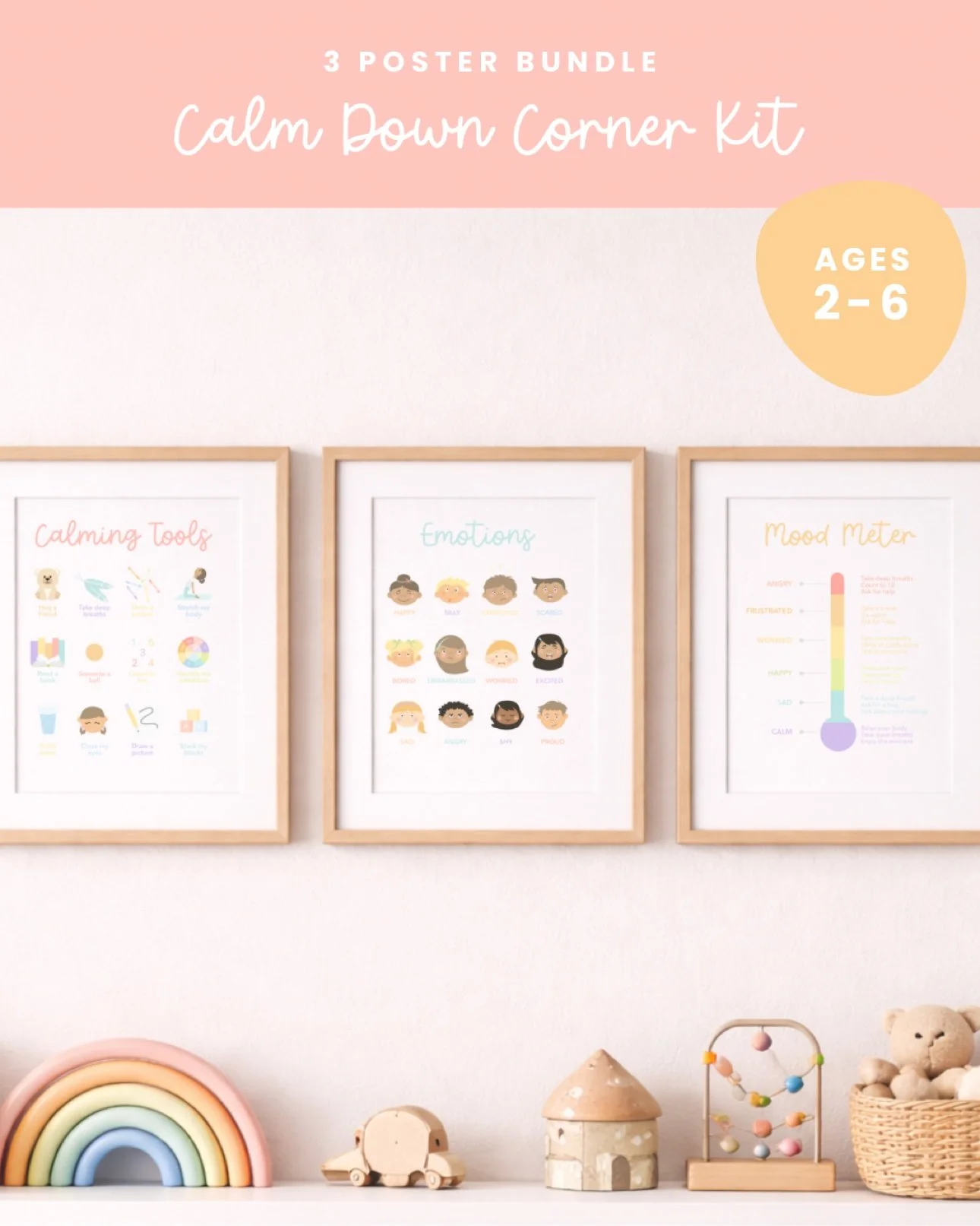
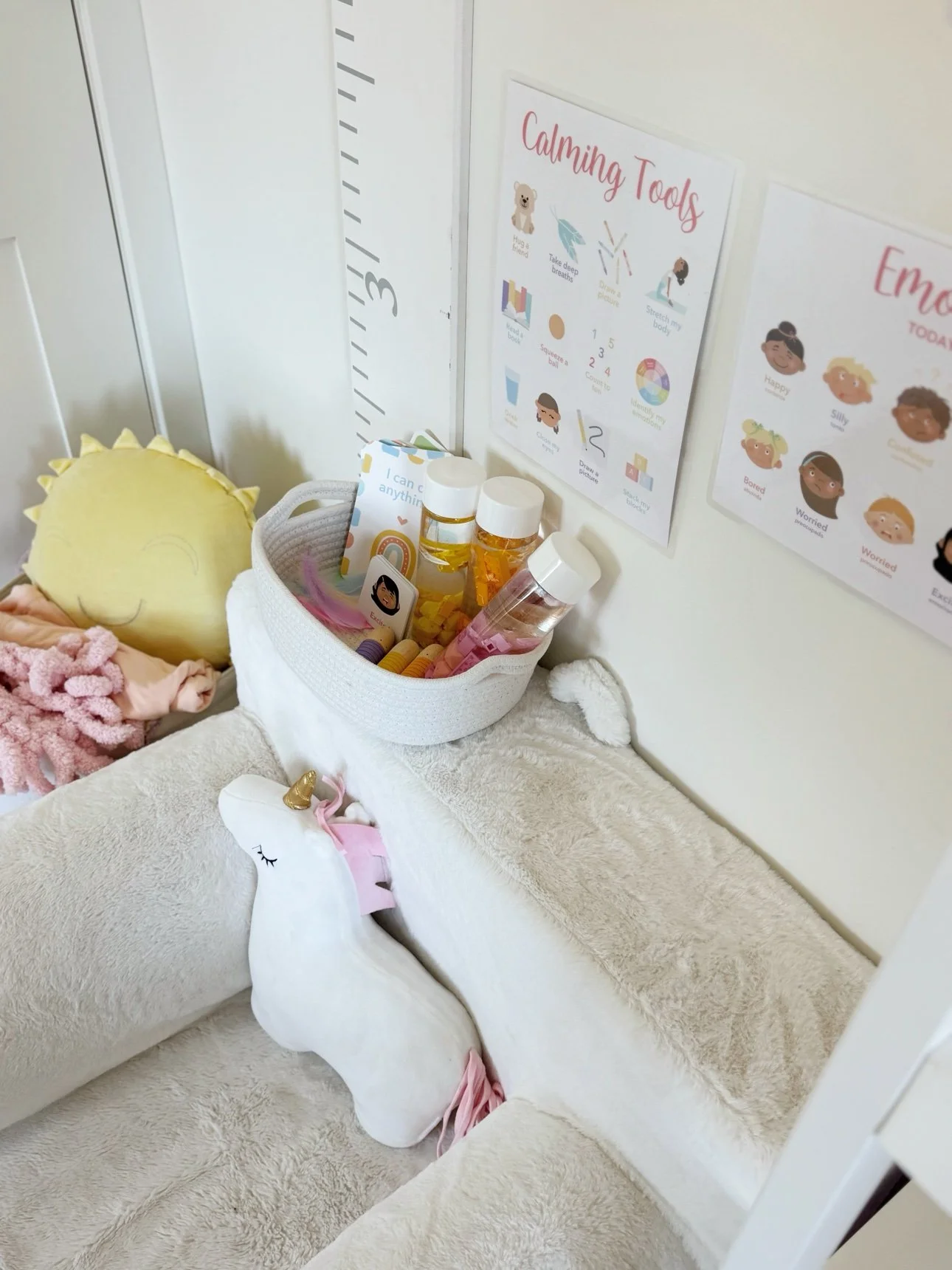
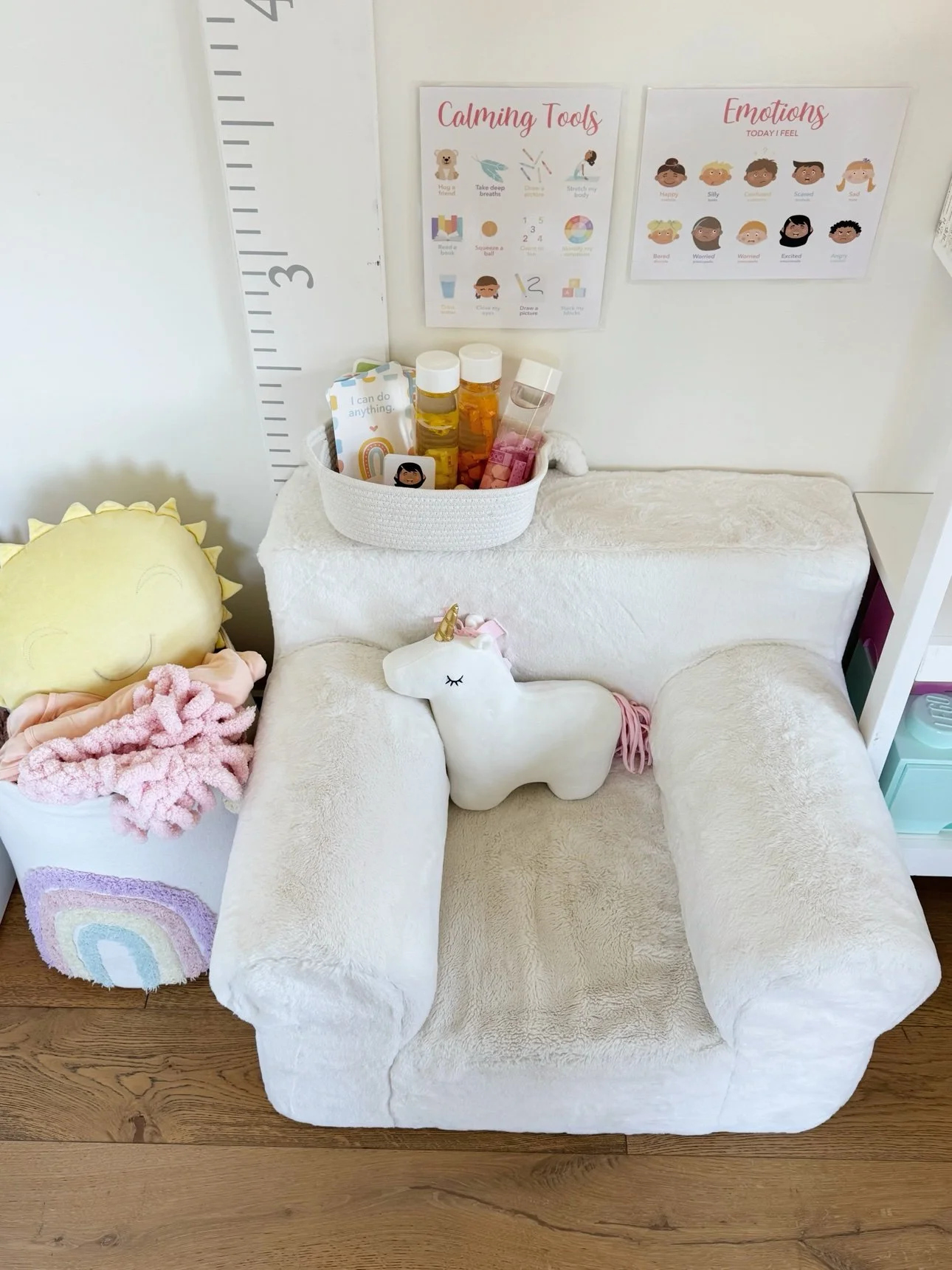
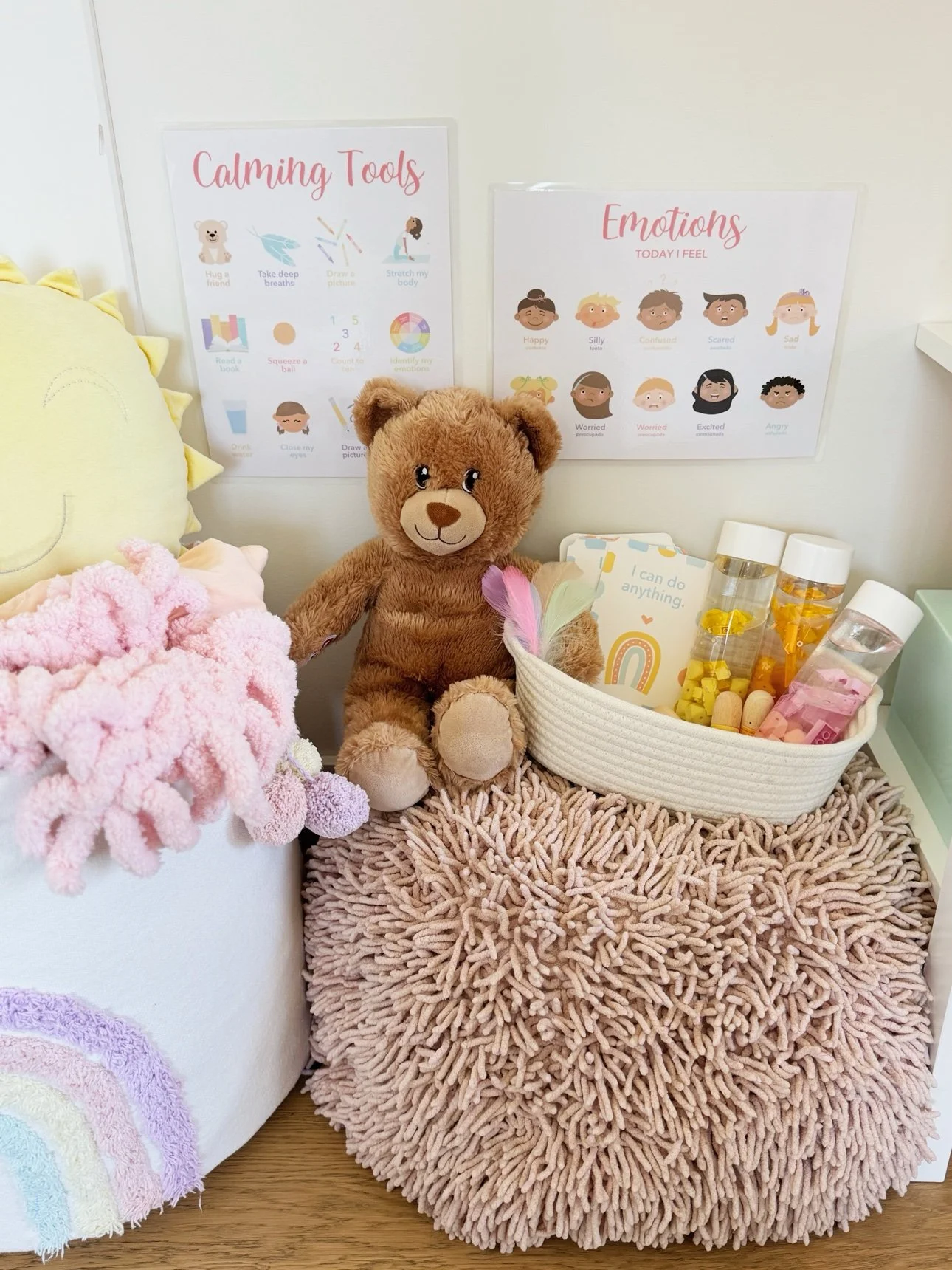
Our Emotions Posters (Set of 3) were made for exactly this: a framed emotions chart, a feelings check-in wheel, and a calming tools poster that live on the calming corner wall. Pair them with a simple check-in — "show me which face matches yours right now" — and you've built the naming habit before you ever need it mid-meltdown.
Step 2: Stock a calming tools basket
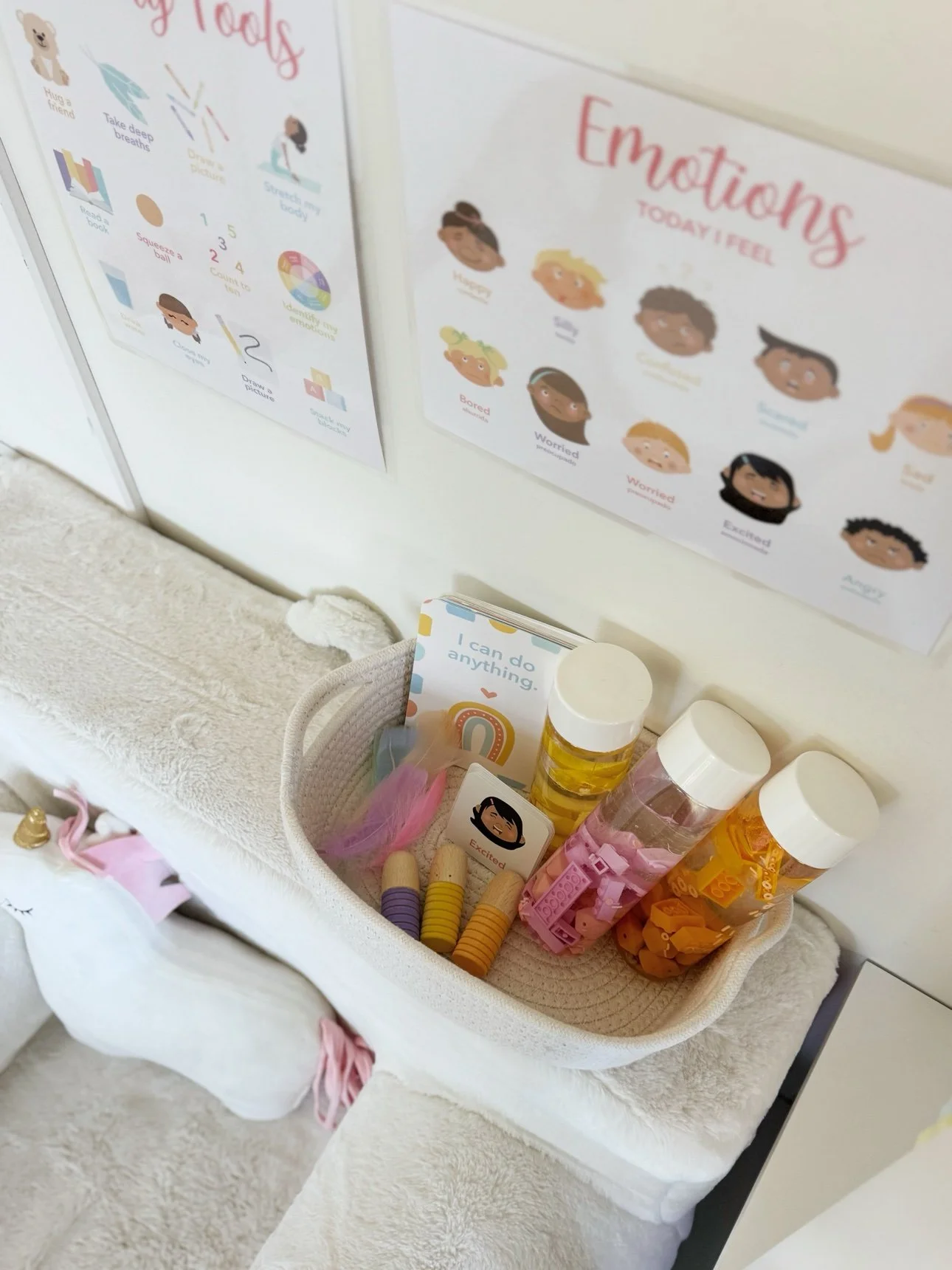
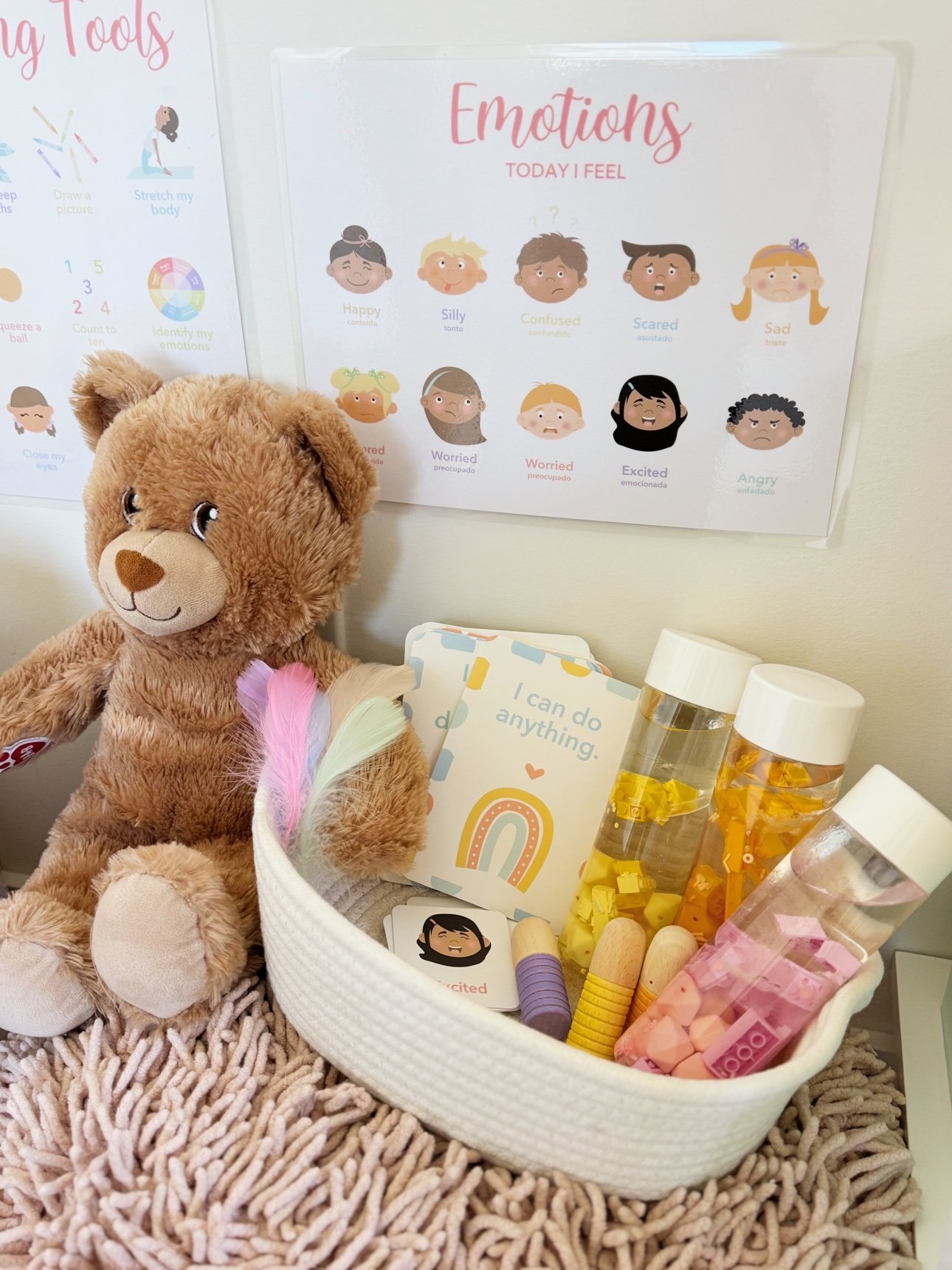
This is the heart of the corner: a basket of sensory tools your child can reach for when their body needs help settling. The rule is variety — different tools work on different days, and part of the learning is discovering which one helps this feeling. Keep it small enough to tidy in a minute; a basket that overflows becomes its own overwhelm.
What actually earns its spot in the basket:
- A sensory bottle — watching the glitter settle gives racing minds something slow to follow. Our DIY sensory bottles take ten minutes to make.
- Something squeezy — a stress ball or playdough; big feelings need somewhere physical to go.
- Something soft — a stuffed animal or silky fabric for comfort.
- Breathing cards — simple visual breathing prompts. Our Toddler Mindfulness Flashcards pair each calming strategy with a warm illustration, so "take a breath" becomes something they can see and copy.
- Drawing supplies — a small notepad and crayons; some kids process feelings best through their hands.
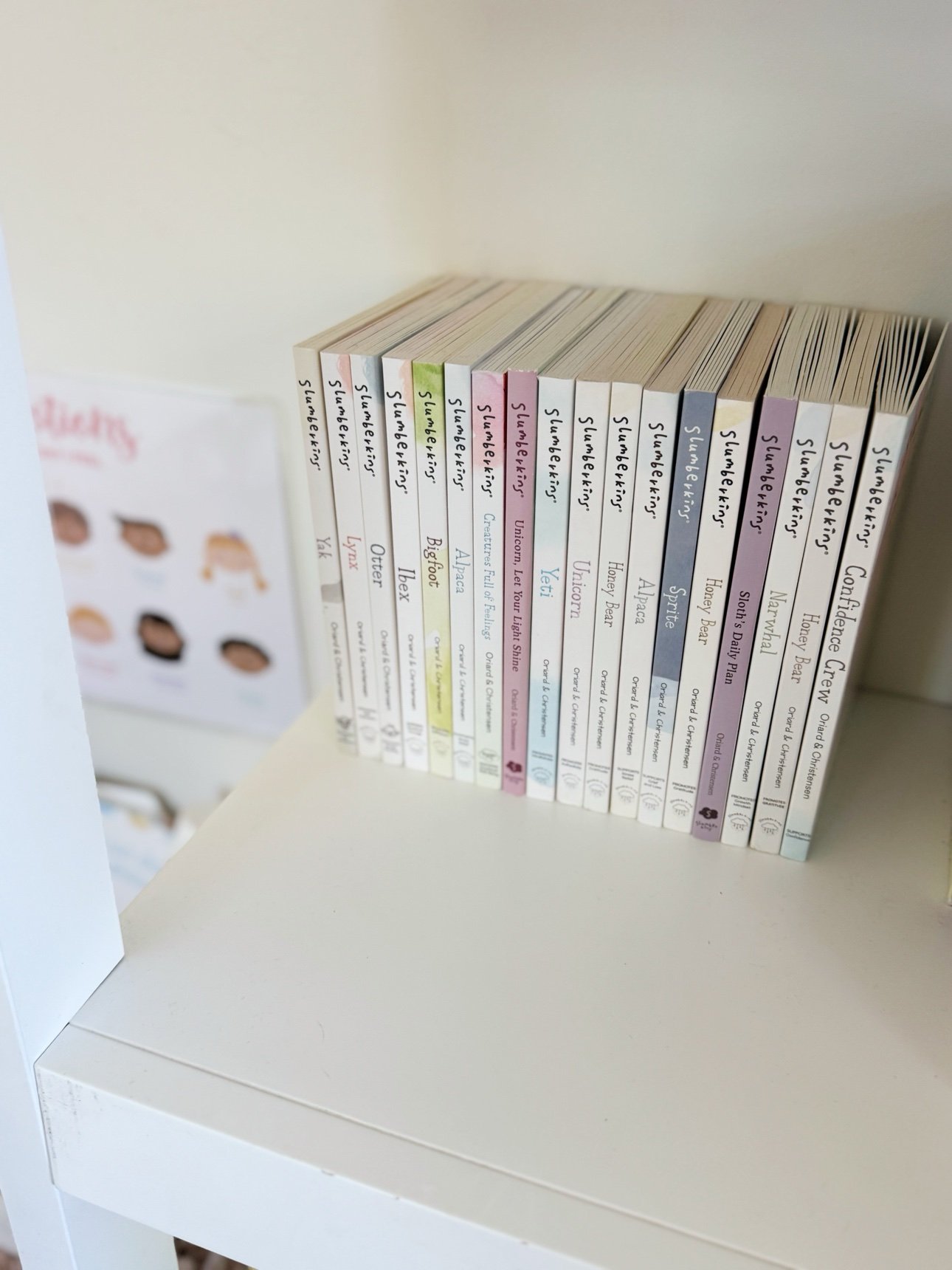
- A book or two — feelings-themed favorites for reading together after the storm passes.
Step 3: Make the space theirs
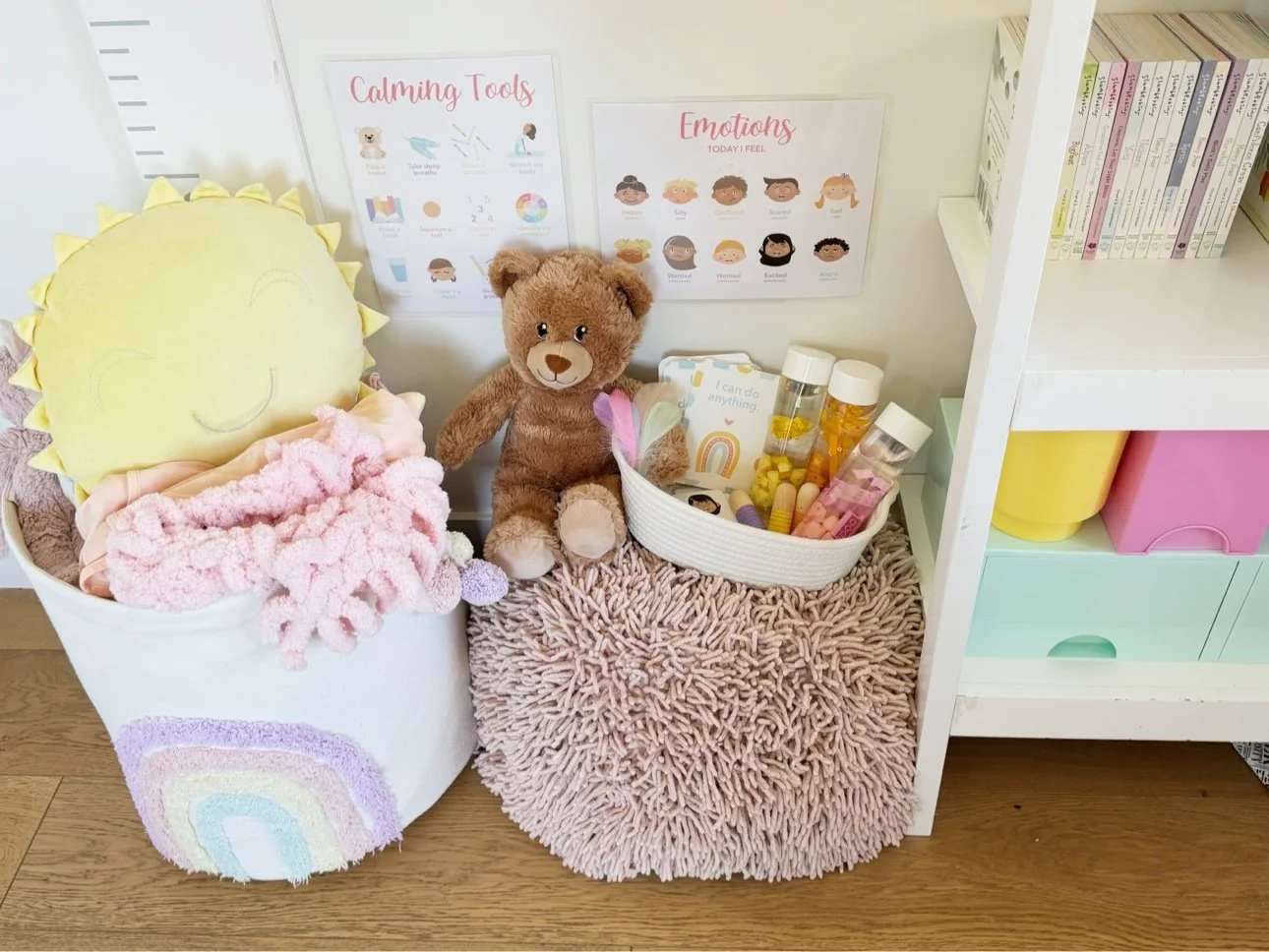
A calming corner works because it feels different from the rest of the room. You don't need much: a soft rug or cushion, a pillow, maybe a stuffed animal that "lives" there. Let your child help arrange it — choosing where the basket sits and which stuffed animal guards the corner is the buy-in that makes them actually go there later.
When she was little, we added her own artwork to the wall — scribbles where she'd matched colors to feelings, which doubled as decoration and as proof that the corner was hers. A space they helped build is a space they'll use.

How to introduce it (before anyone's upset)
Never debut the calming corner mid-meltdown. Tour it together on a calm afternoon: name each tool, practice the breathing cards, pick a stuffed animal. Role-play with a stuffed animal having "big feelings" and walking it through the steps. The first dozen visits should be playful and voluntary — you're building a positive association, not a procedure.
Then, when the real storm comes, keep your script short: "You're having big feelings. Let's go to the calming corner together." Go with them at first. You're teaching a skill, not assigning a location.
When they won't use it
Totally normal, especially at first. A few things that help:
- Use it yourself. Nothing sells a calming corner like watching a parent take three breaths in it. Modeling beats instructing every time.
- Don't force it. A calming corner your child is dragged to becomes a time-out with cushions. Invite, don't require.
- Shrink the ask. "Just hold the sensory bottle for one minute" is easier than "go calm down."
- Check the tools. If the basket's been ignored for weeks, swap two items. Novelty reopens curiosity.
What's the difference between a calming corner and a time-out?
A time-out isolates the child until they're calm; a calming corner equips them with tools and (at first) your company while they learn to settle. One punishes the feeling, the other teaches through it.
What age is a calming corner for?
It works from about age 2 through early elementary. Toddlers use it with a parent's help; preschoolers start going independently; older kids adapt it into their own regulation toolkit.
How big does the space need to be?
Two square feet is plenty — a corner of the living room or bedroom with a cushion, a basket, and wall space for the posters. Cozy beats spacious here.
What if my child destroys the calming corner instead of using it?
That's information, not failure — it means they're not ready to be there alone yet. Go with them, keep visits short, and remove anything throwable until the throwing phase passes.
The tools for the corner
A calming corner runs on two things: words for feelings and tools for settling. Our Emotions Posters (Set of 3) ($9) cover the wall — an emotions chart, a feelings check-in wheel, and a calming tools poster, all printable. Our Toddler Mindfulness Flashcards ($12) fill the basket — ten illustrated breathing and calming prompts little hands can hold.
The space
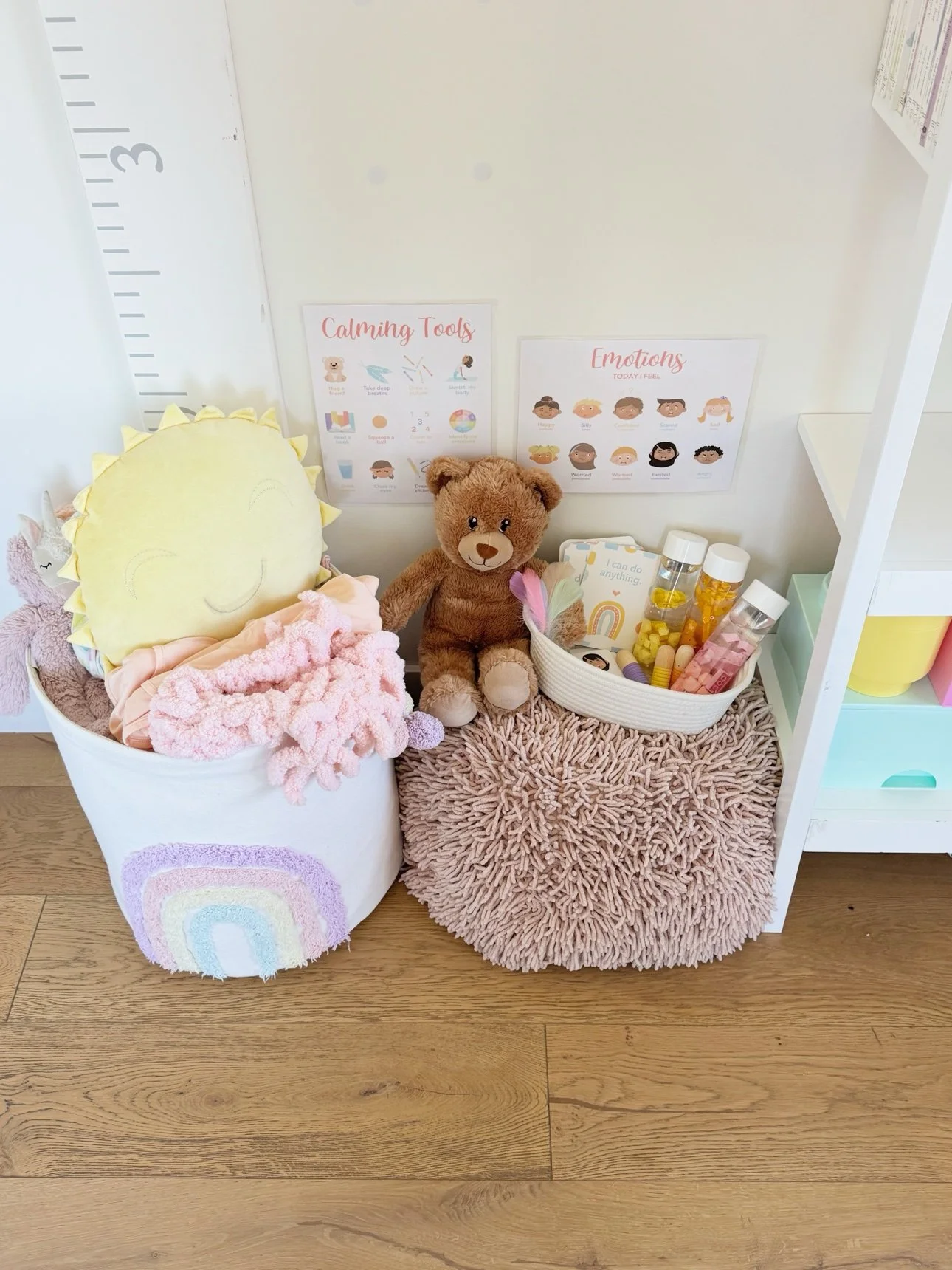
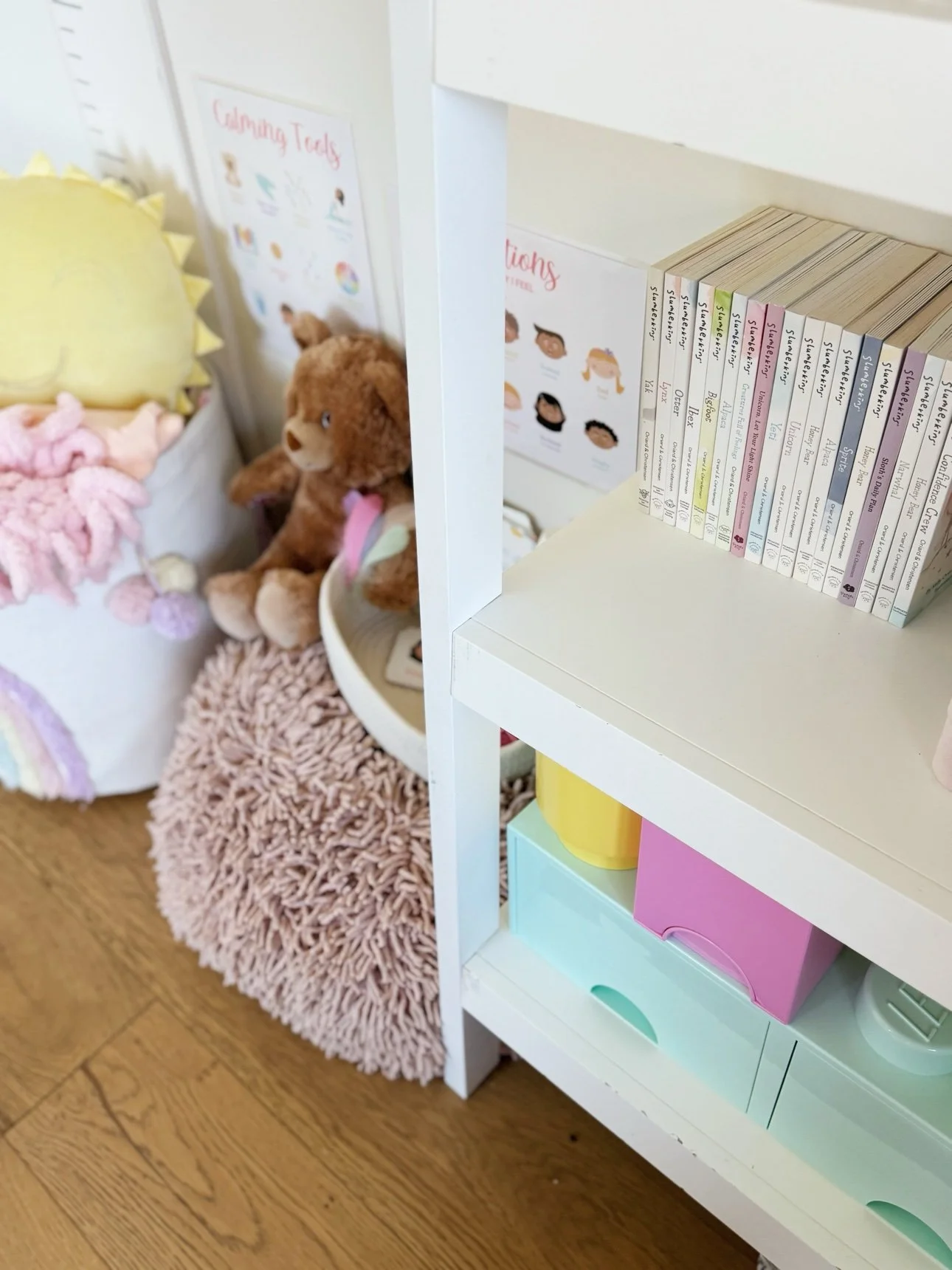
The tools basket
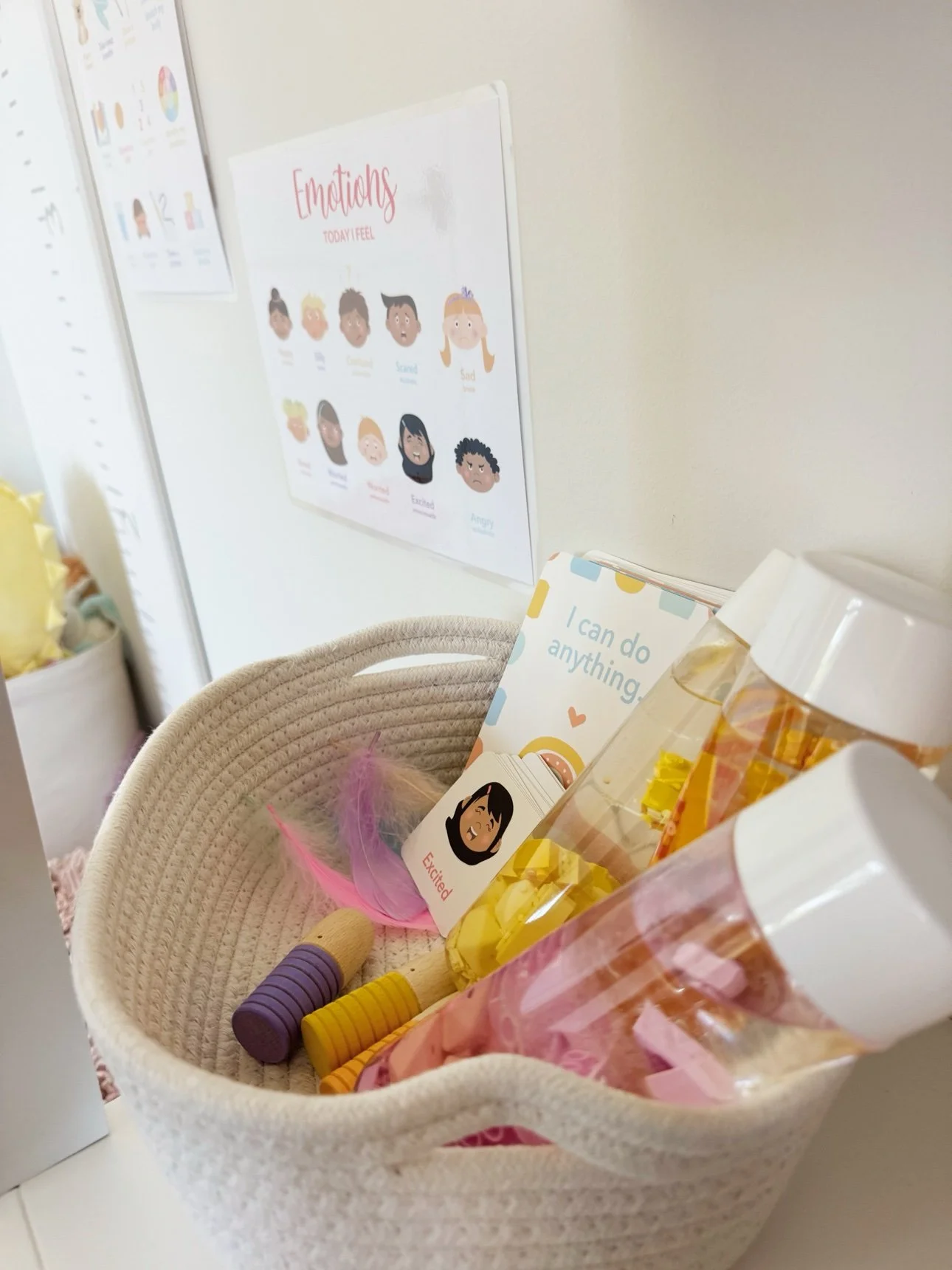

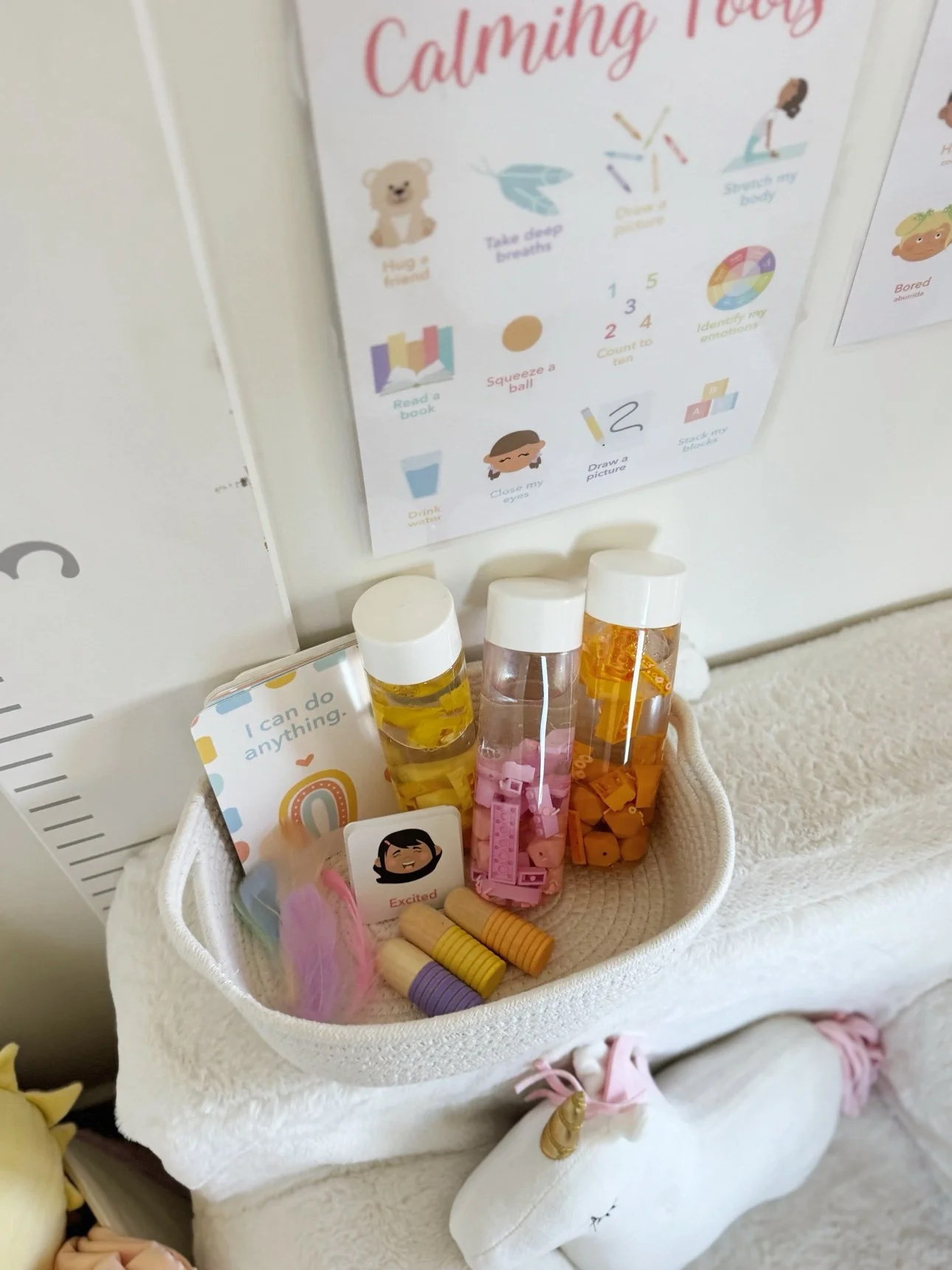
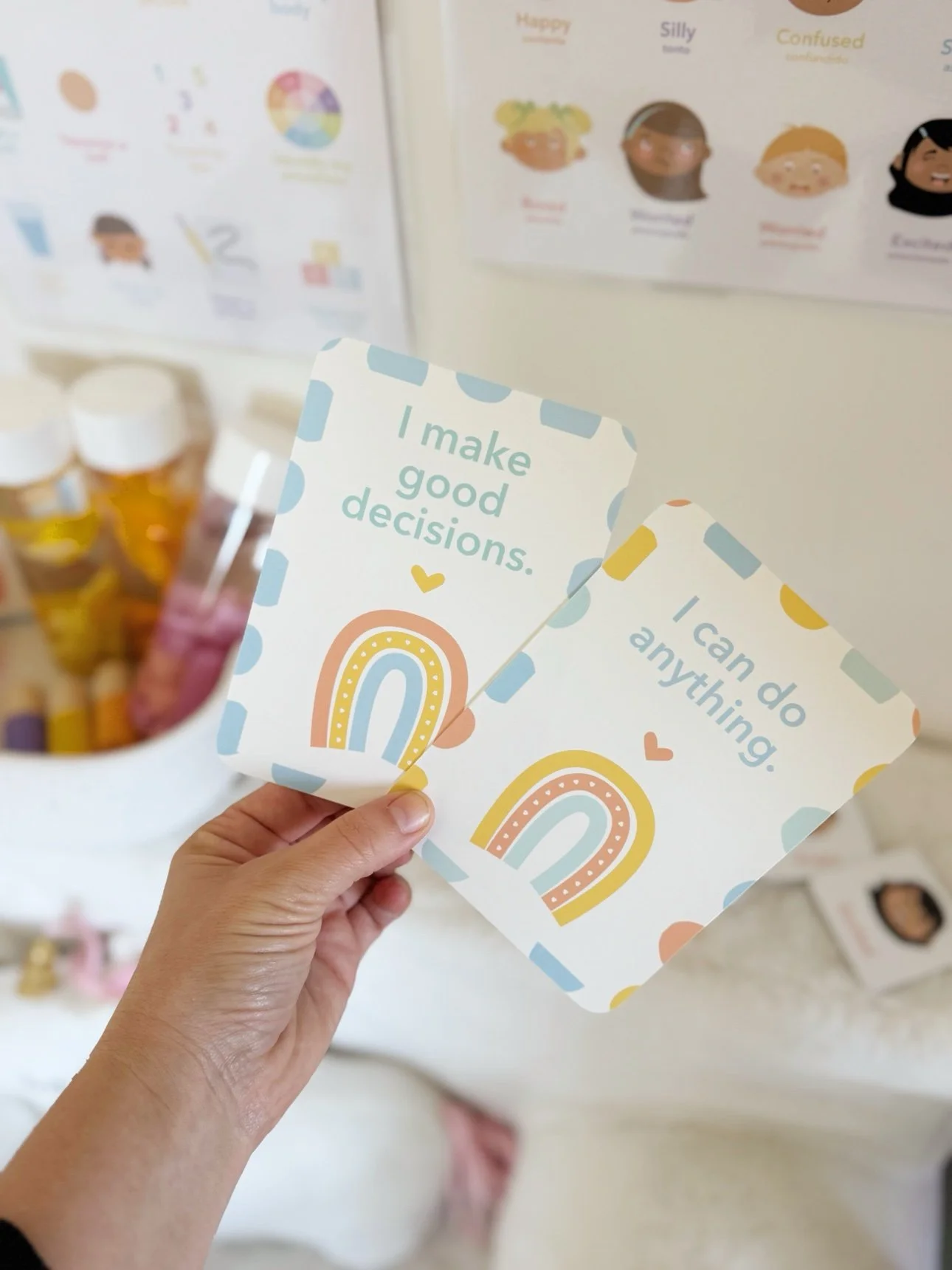
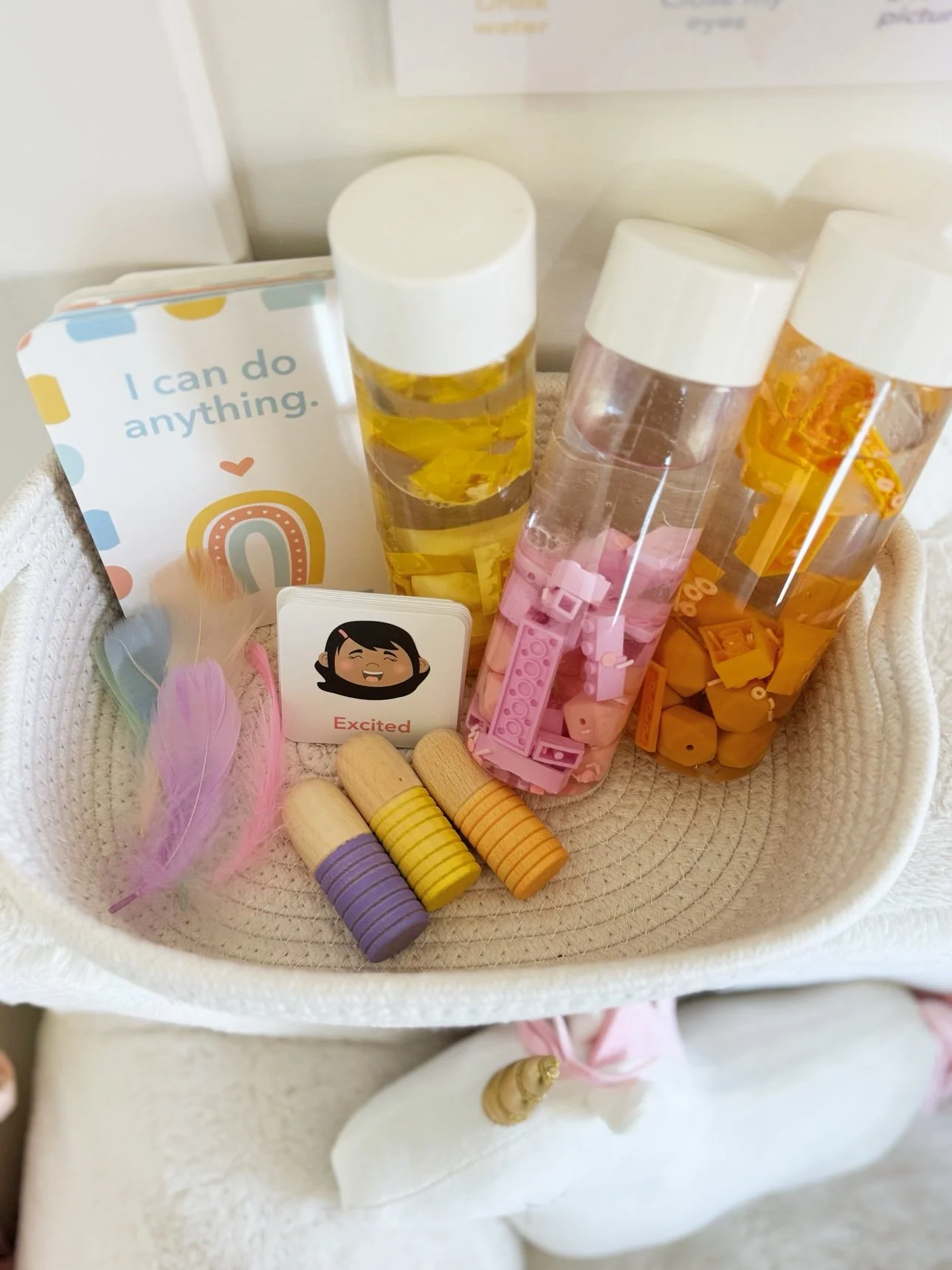
The posters & cards