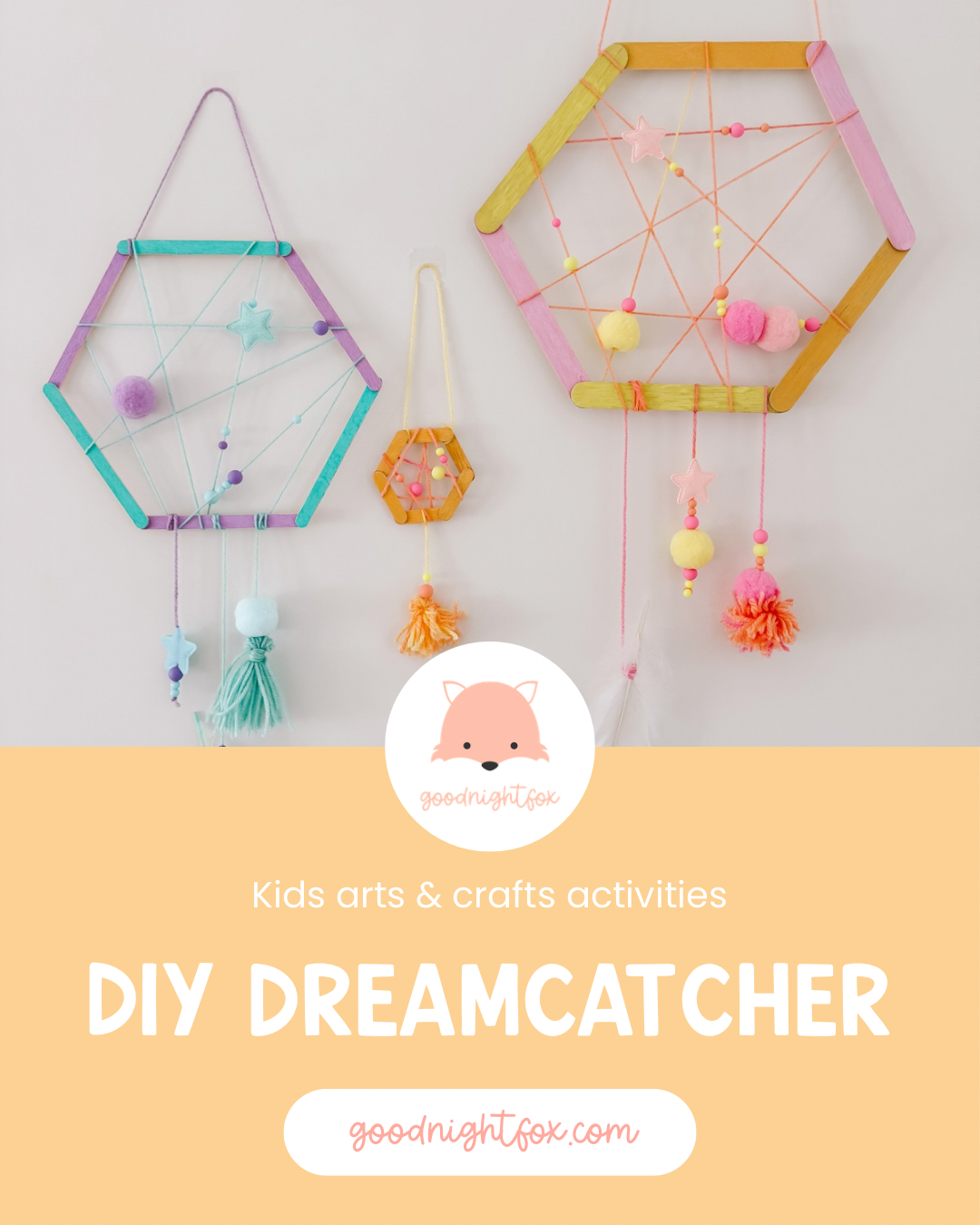
Dreamcatcher-Inspired Weaving Craft for Kids
Build a colorful woven decoration from craft sticks, yarn, beads, pom-poms and tassels—while introducing children to the Ojibwe origins of dreamcatchers with care and respect.
A quiet craft for talking about dreams
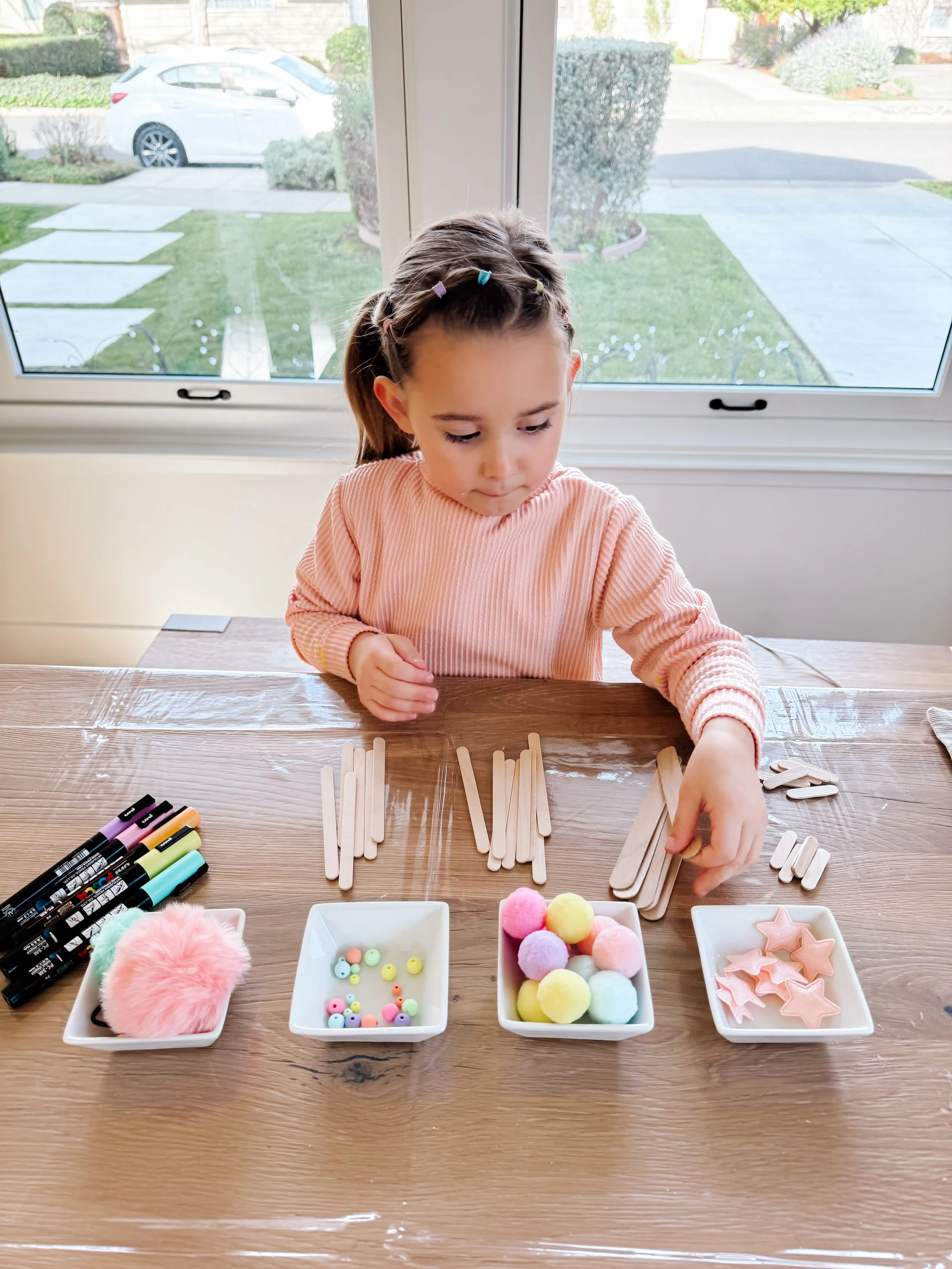
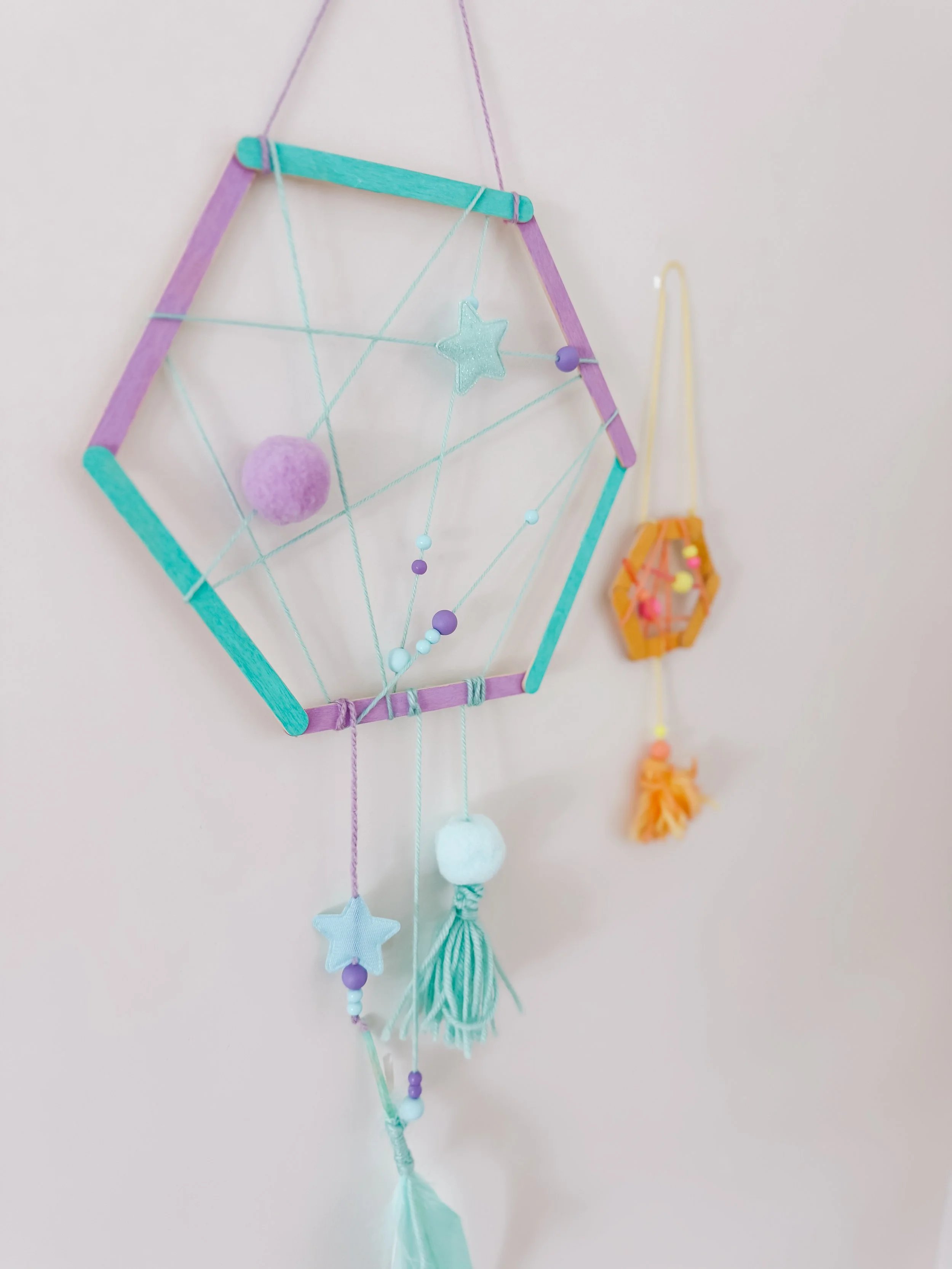
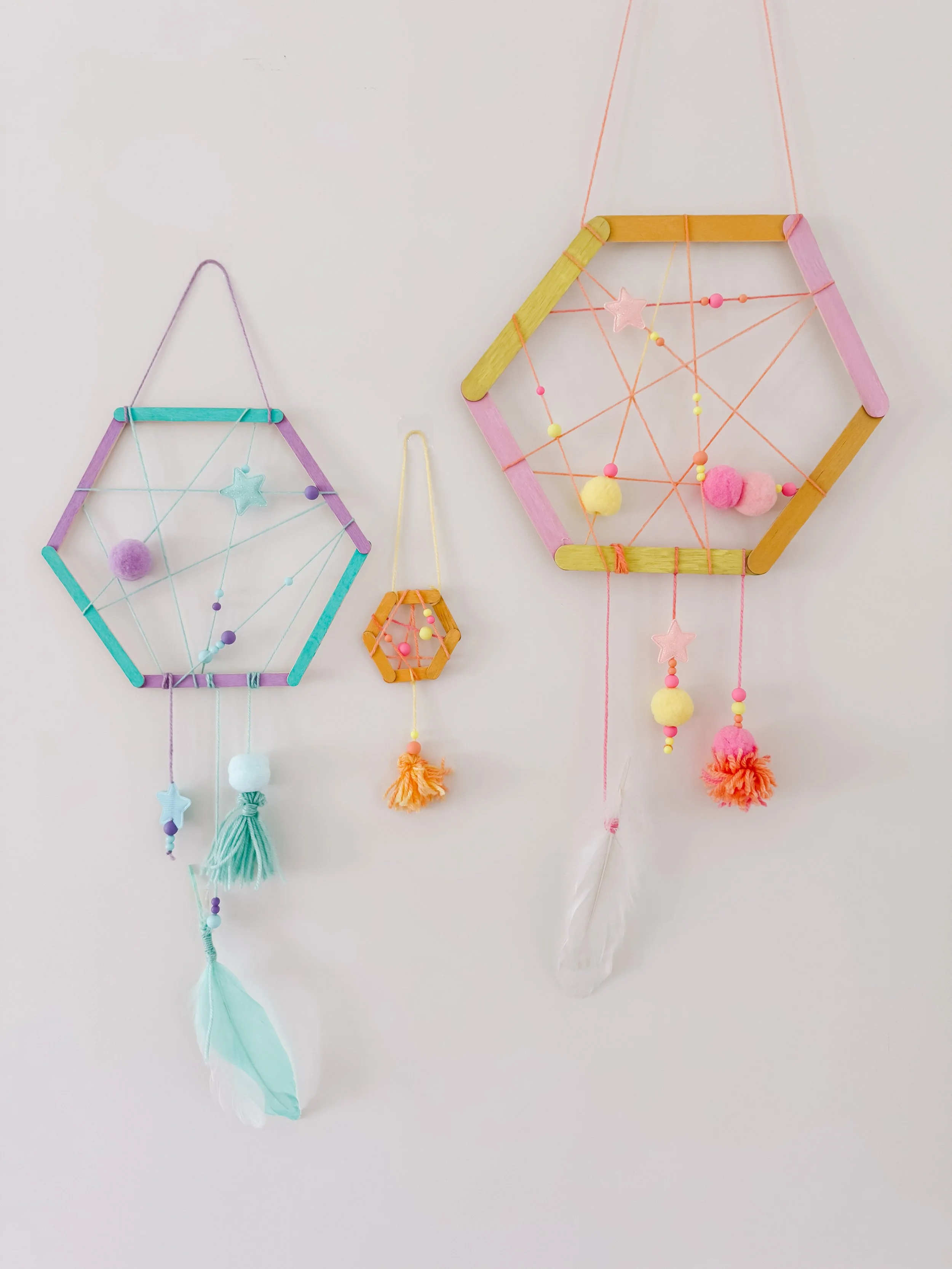
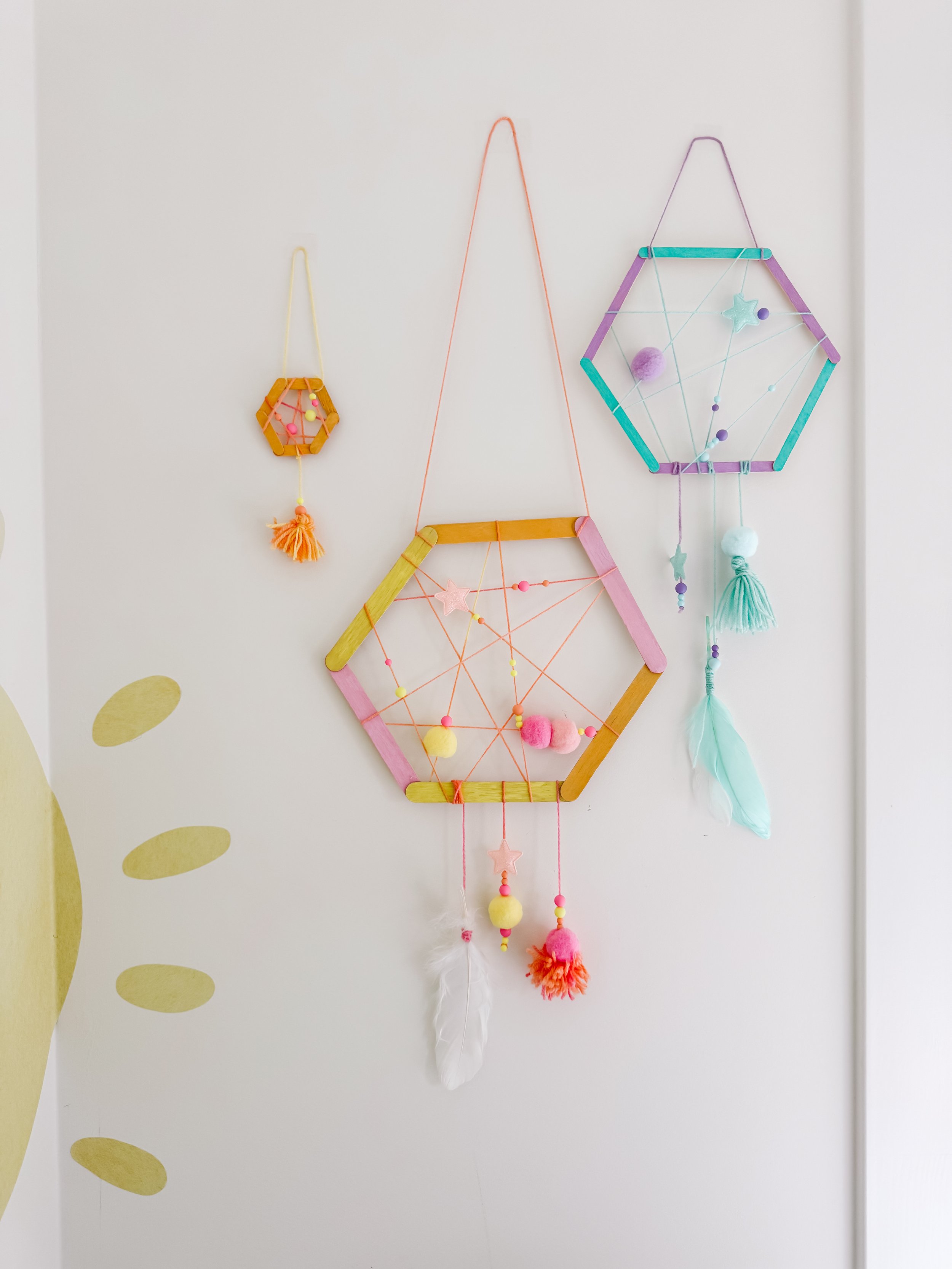
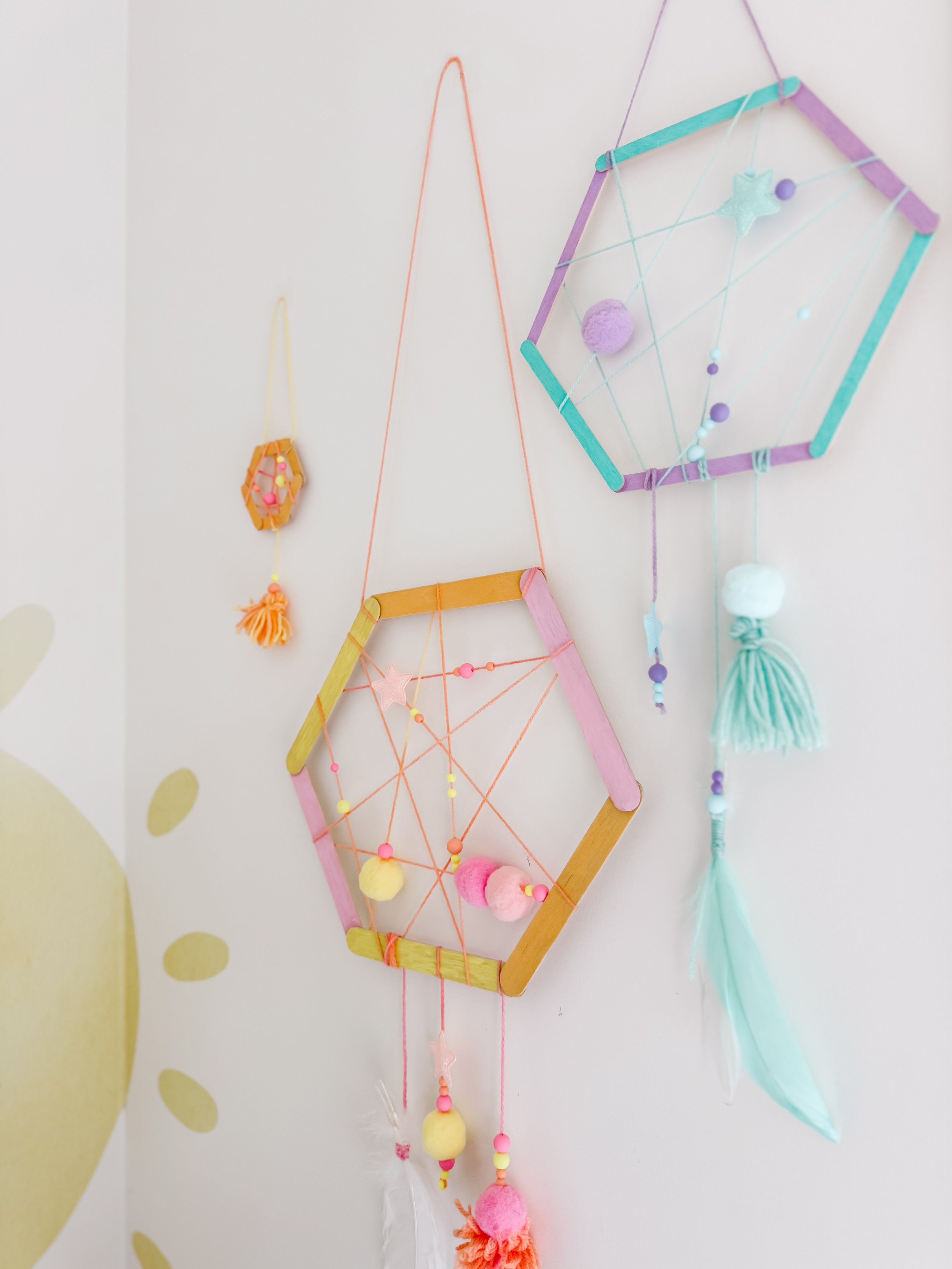
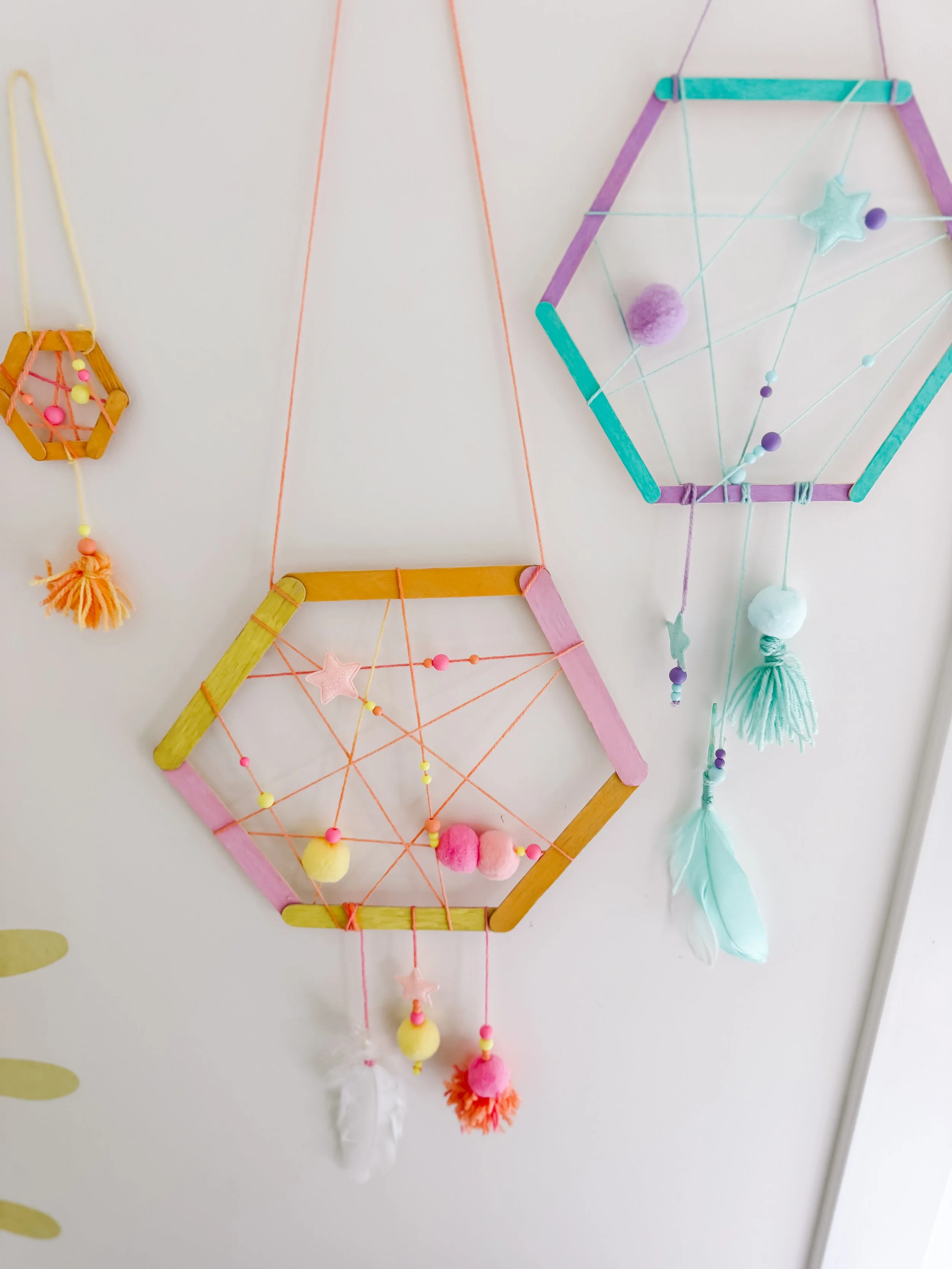
We started this activity with a table full of soft pastel materials: wooden craft sticks, colorful yarn, pom-poms, beads, stars, tassels and feathers.
Sofia immediately began planning which colors would belong together. She chose sticks for the frame, matched beads to her yarn and imagined where each star should hang.
As we worked, the conversation naturally moved toward bedtime, dreams and the objects people keep near them to feel safe and comforted.
That gave us an important opportunity to talk about where dreamcatchers come from. Rather than presenting them as a decoration invented for bedrooms or craft stores, we learned that they are connected to Ojibwe, or Anishinaabe, cultural traditions.
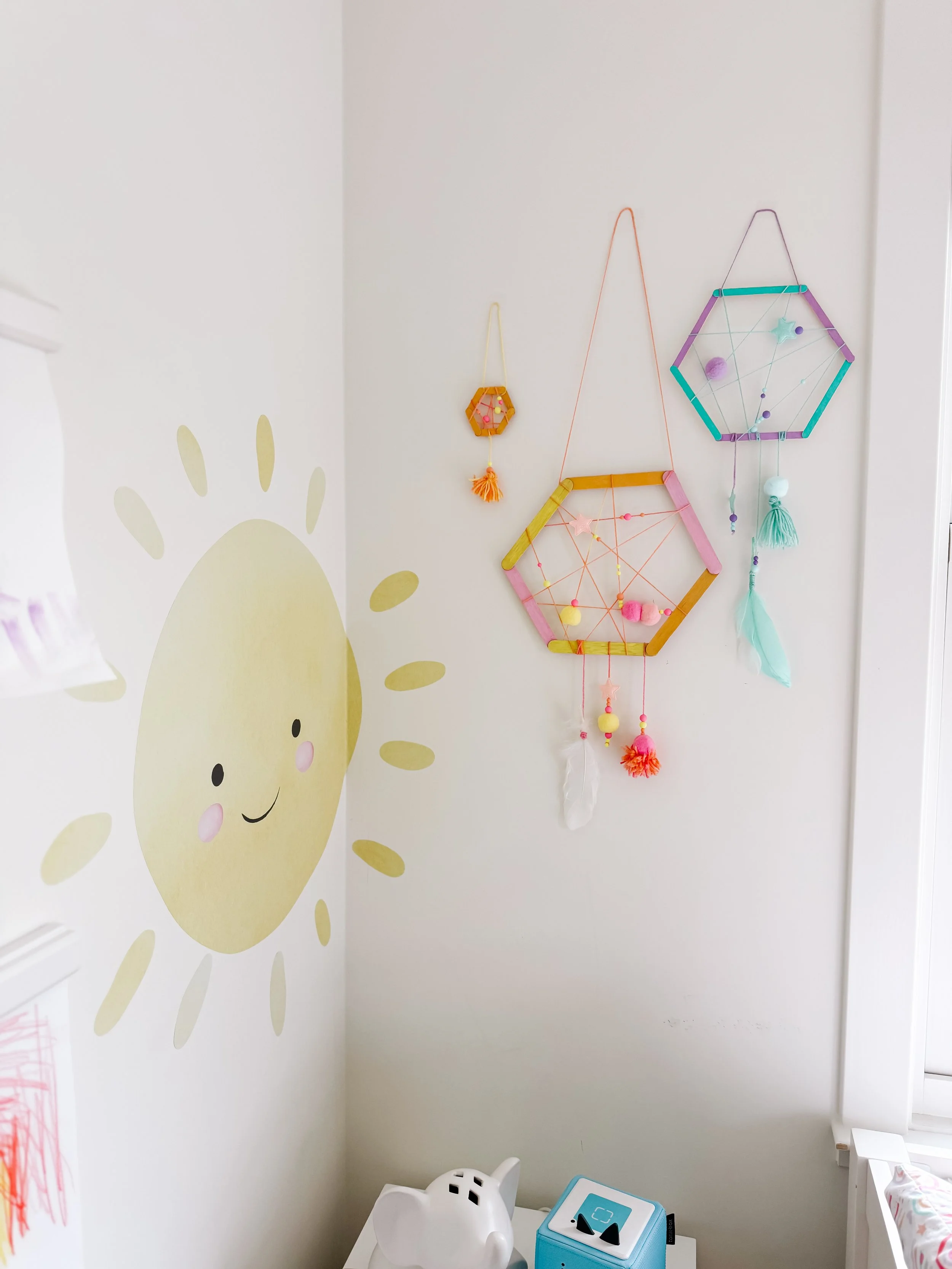
Our craft-stick version is not a traditional dreamcatcher. It is a child-friendly weaving activity inspired by the recognizable circular or web-like form. We used it as an invitation to learn, create and talk respectfully about the people connected to the original tradition.
A respectful learning note
Native American and First Nations peoples are not one single culture. They include many distinct nations, languages, histories and living communities.
Dreamcatchers are most closely associated with the Ojibwe, also known as Anishinaabe, whose homelands include areas surrounding the Great Lakes in what is now the United States and Canada.
Teachings about dreamcatchers can differ among Ojibwe families and communities. When discussing them with children, it is better to say, “In some Ojibwe teachings…” rather than claiming that every Native person believes or practices the same thing.
This project should be described as a dreamcatcher-inspired weaving craft, not an authentic ceremonial or traditional Ojibwe object.
What were dreamcatchers traditionally used for?
In commonly shared Ojibwe teachings, a woven web was placed near a sleeping child as an object of protection and care.
The web is often described as catching or filtering harmful dreams or influences while allowing good dreams to reach the sleeper.
Some retellings connect the web to Asibikaashi, often translated as Spider Woman, a protective figure in Ojibwe stories.
Details vary, so it is helpful to treat this as a living cultural teaching rather than one fixed fairy tale with a single universal version.
Who are the Ojibwe?
The Ojibwe are an Indigenous people whose communities span areas of the Great Lakes, northern United States and Canada.
Ojibwe people are also part of a broader cultural and linguistic group often called Anishinaabe. Communities continue to maintain their languages, governments, arts, family traditions and cultural knowledge today.
When introducing Indigenous cultures to children, use the present tense. Indigenous people are not only figures from history—they are members of vibrant contemporary communities.
Materials needed
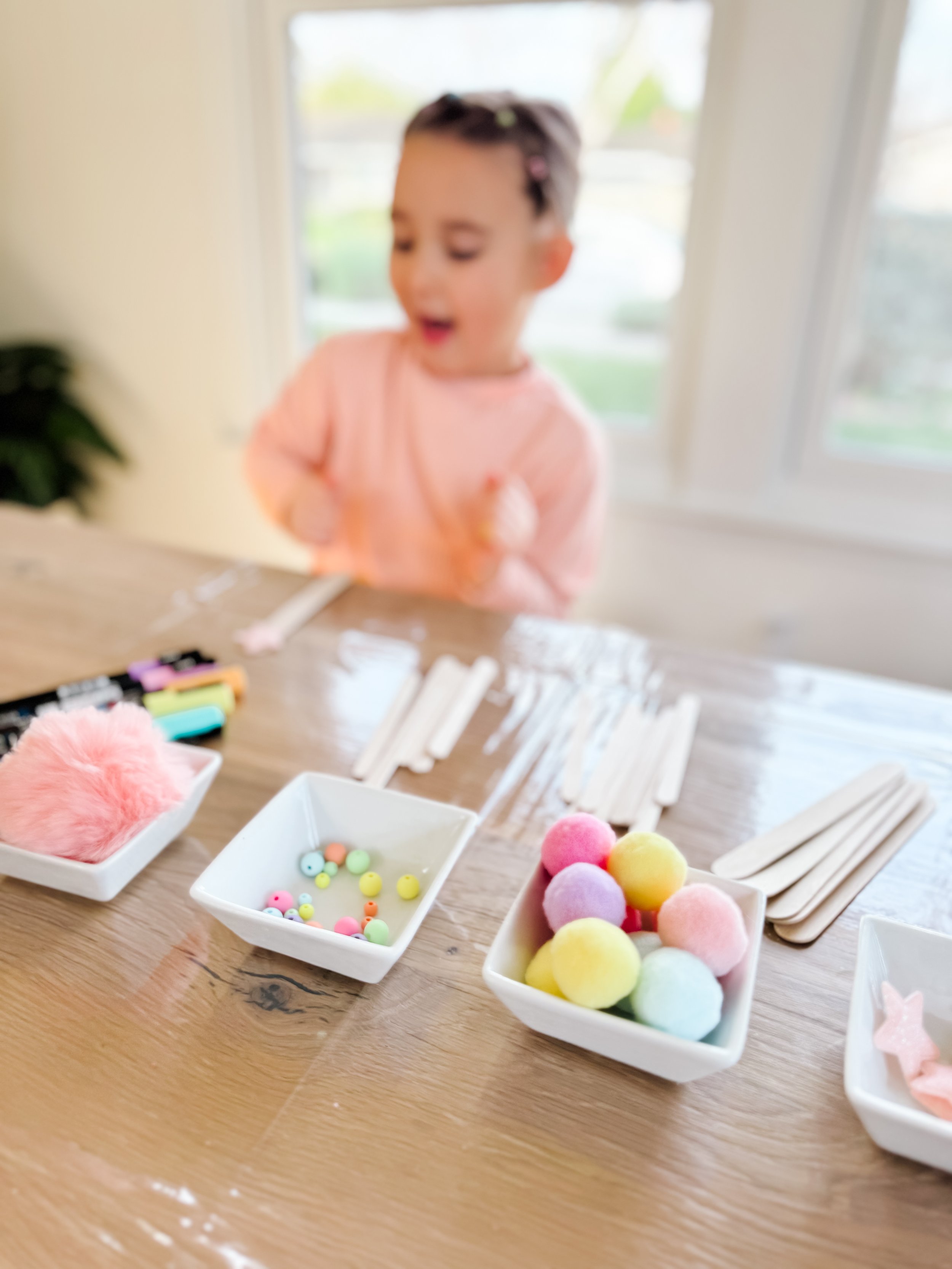
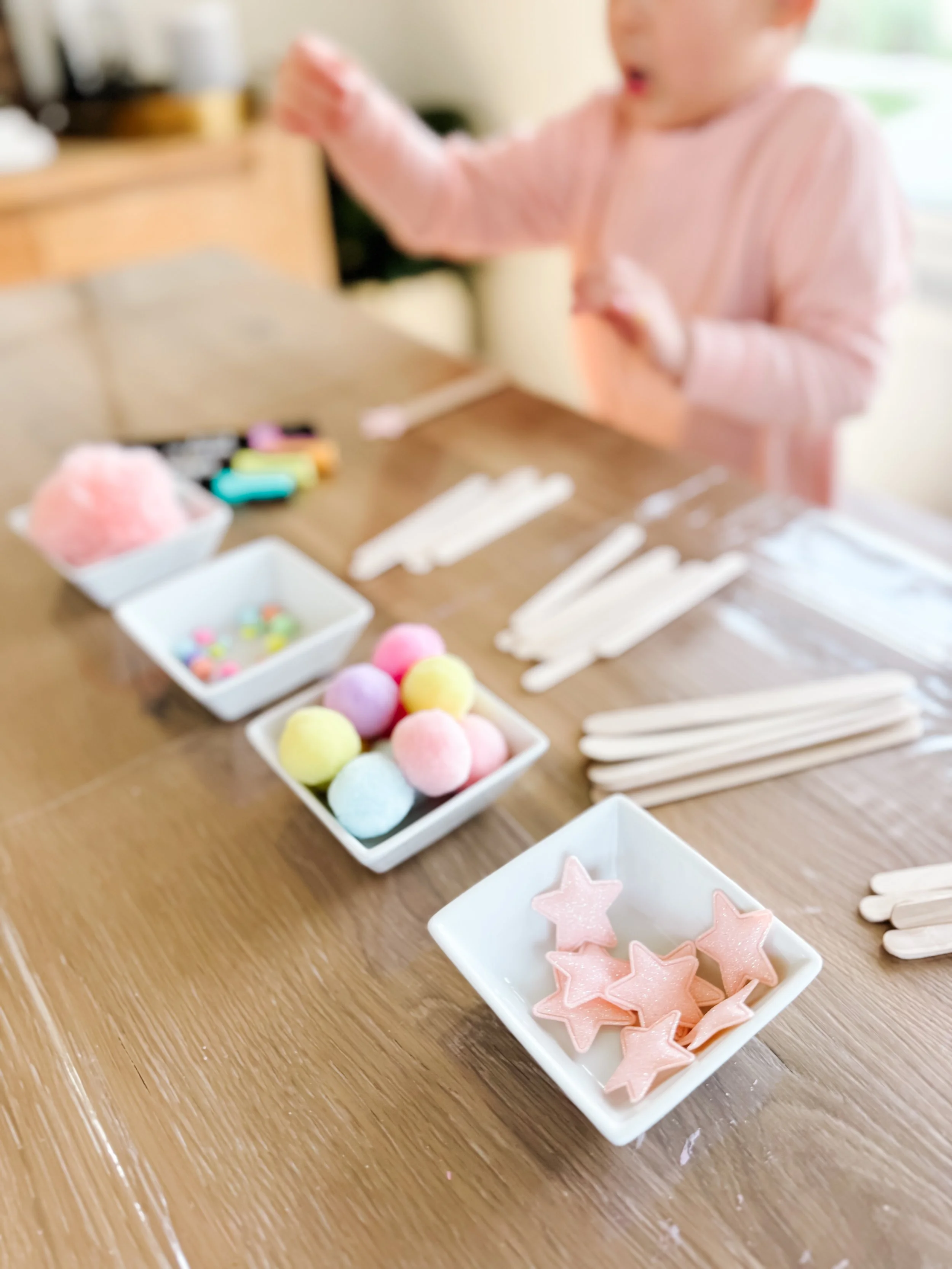
- Six regular-size wooden craft sticks for each large frame
- Optional smaller craft sticks for miniature versions
- Washable paint markers, acrylic paint or tempera paint
- Yarn in one or more colors
- Large beads with openings wide enough for yarn
- Pom-poms
- Felt or fabric stars
- Optional feathers
- Scissors
- School glue or low-temperature hot glue with adult help
- A piece of cardboard or your fingers for making yarn tassels
Safety note
Beads, pom-poms and other small embellishments can be choking hazards. Supervise children closely. Adults should handle hot glue and help with tight knots or difficult cuts.
How to make a craft-stick weaving frame
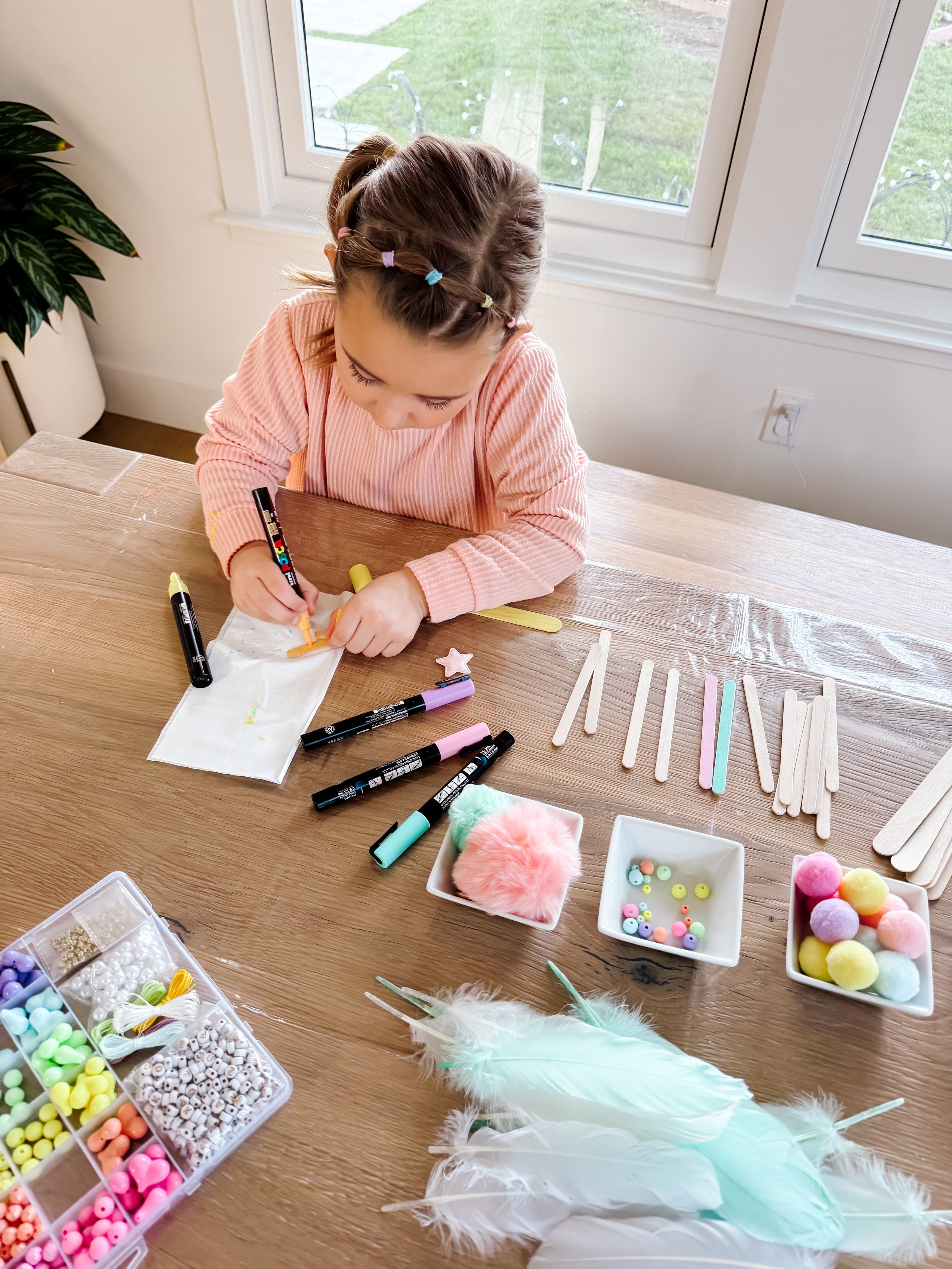
Color the wooden sticks
Decorate six craft sticks using paint, paint markers or washable markers.
Children can use one color around the entire frame, create a repeating pattern or give every stick a different color.
Let painted sticks dry completely before assembling the frame.
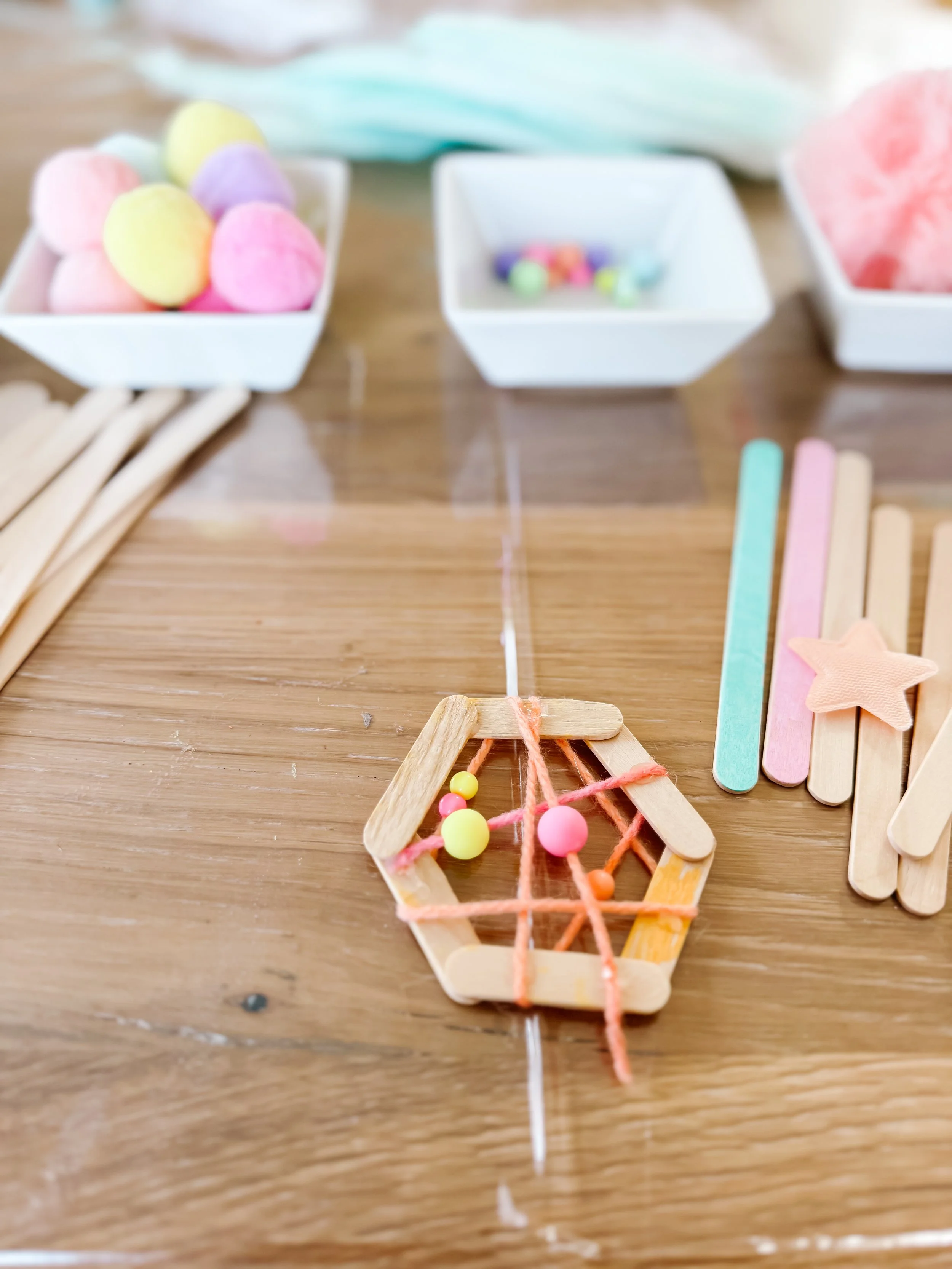
Build the hexagonal frame
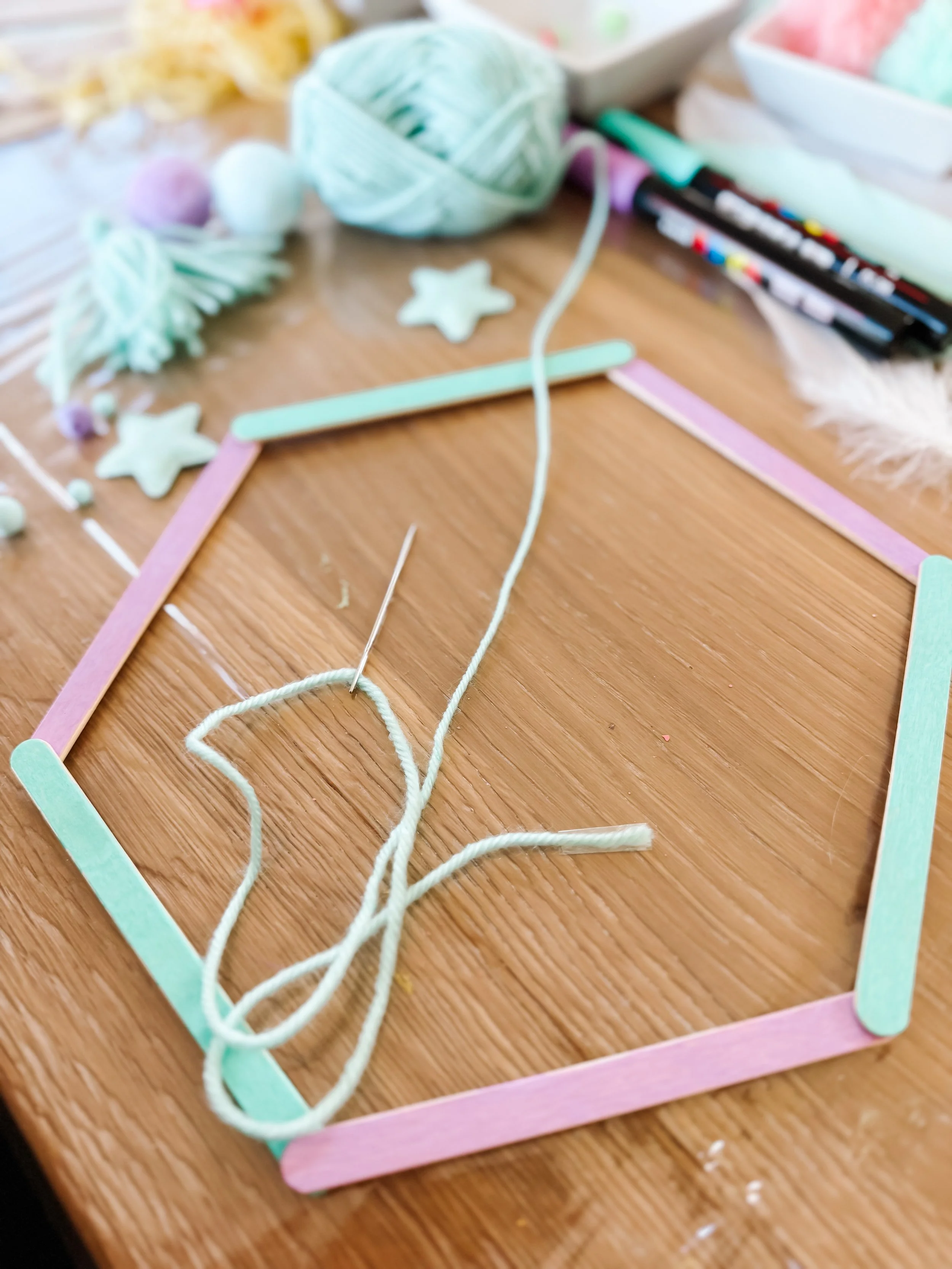
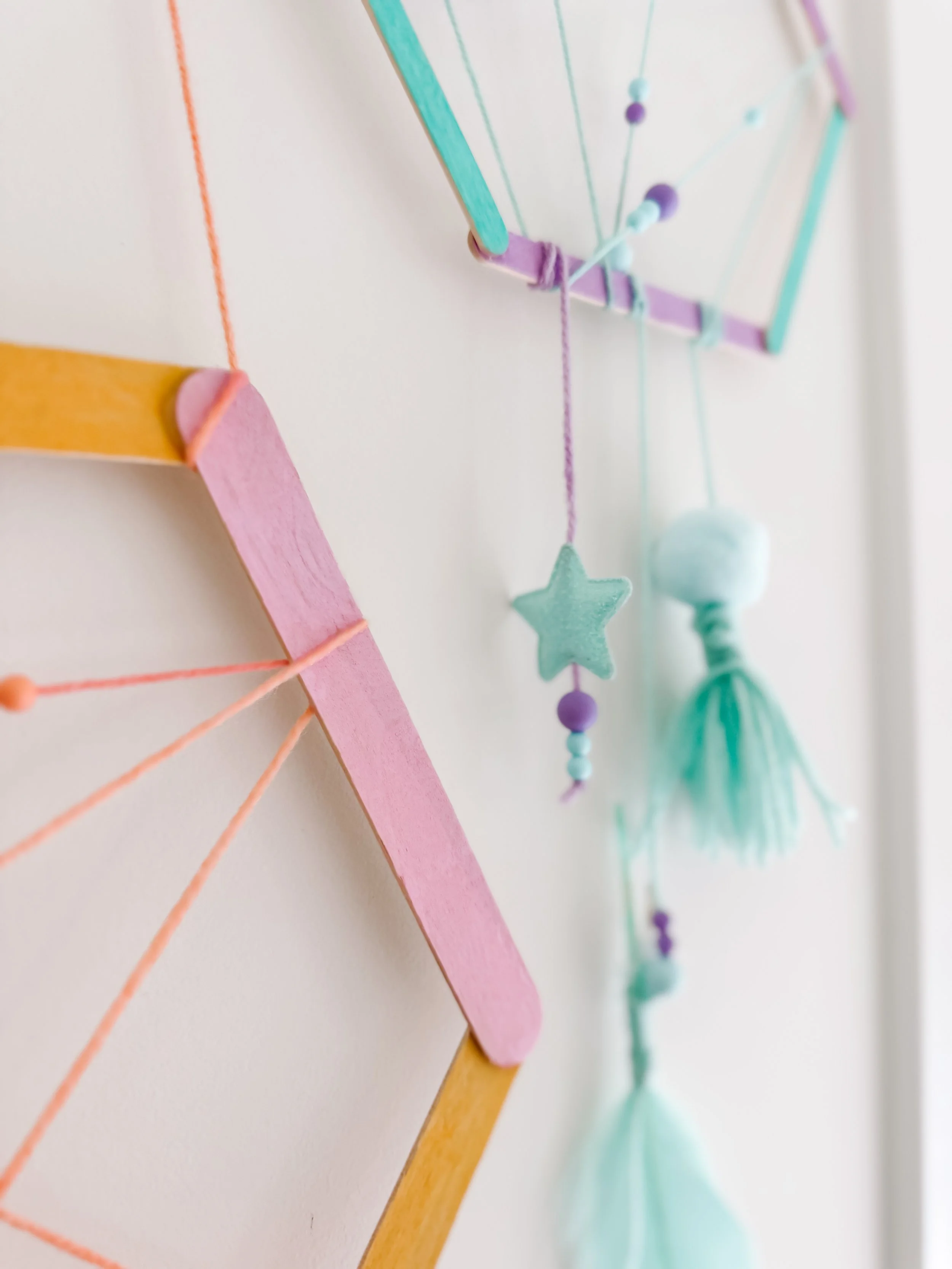
Arrange six craft sticks in a hexagon, overlapping the ends slightly.
Glue each corner where two sticks meet. Allow the frame to dry before beginning the web.
Children can also create a miniature ornament using smaller craft sticks.
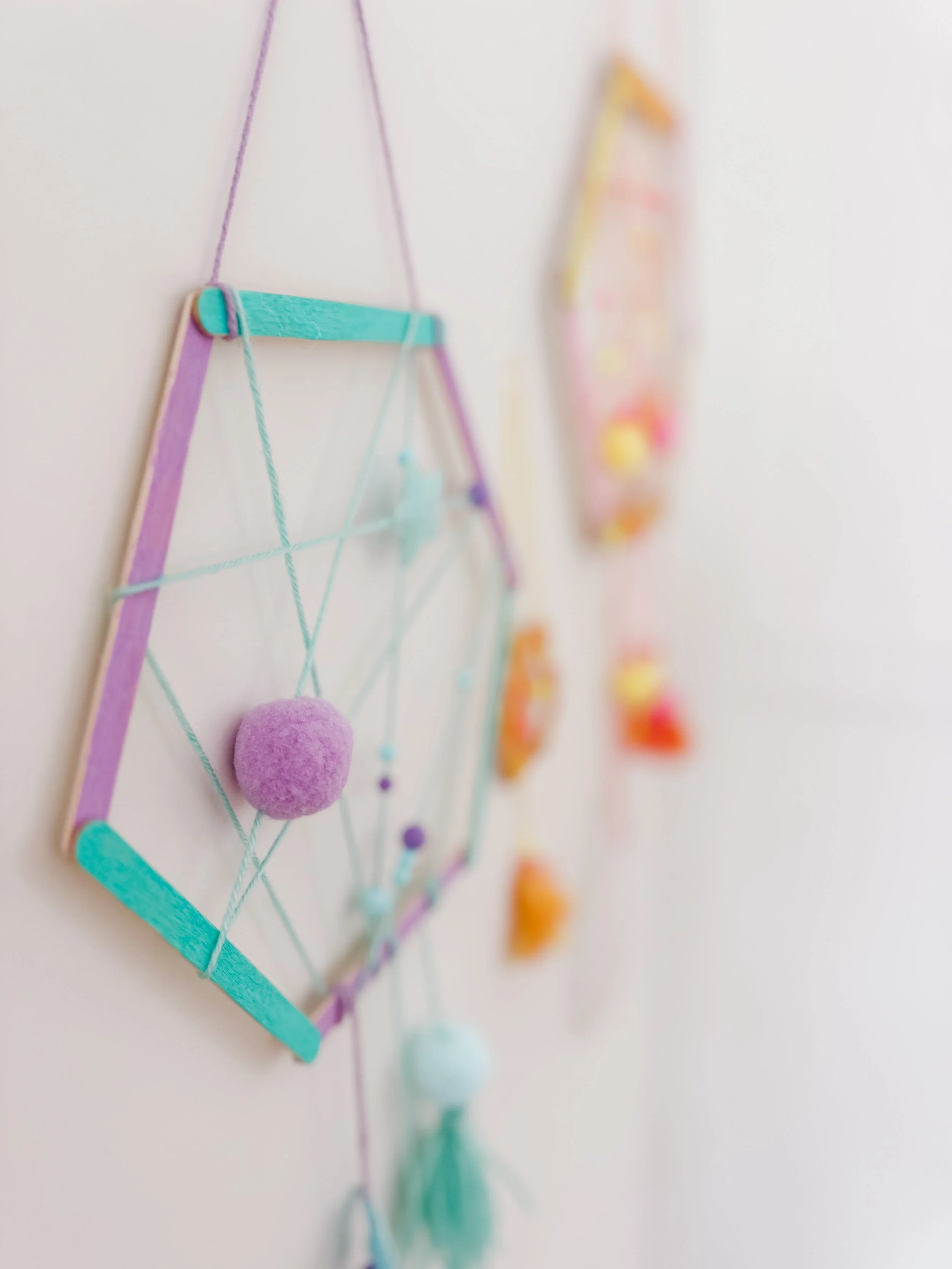
Wrap a loose yarn web
Tie one end of the yarn securely around a corner of the frame.
Stretch the yarn across the opening, wrap it around another side and continue crossing back and forth.
There is no single correct pattern for this decorative version. Encourage children to notice how each new line changes the spaces and shapes inside the frame.
Keep the yarn gently taut without pulling hard enough to bend the wooden sticks.
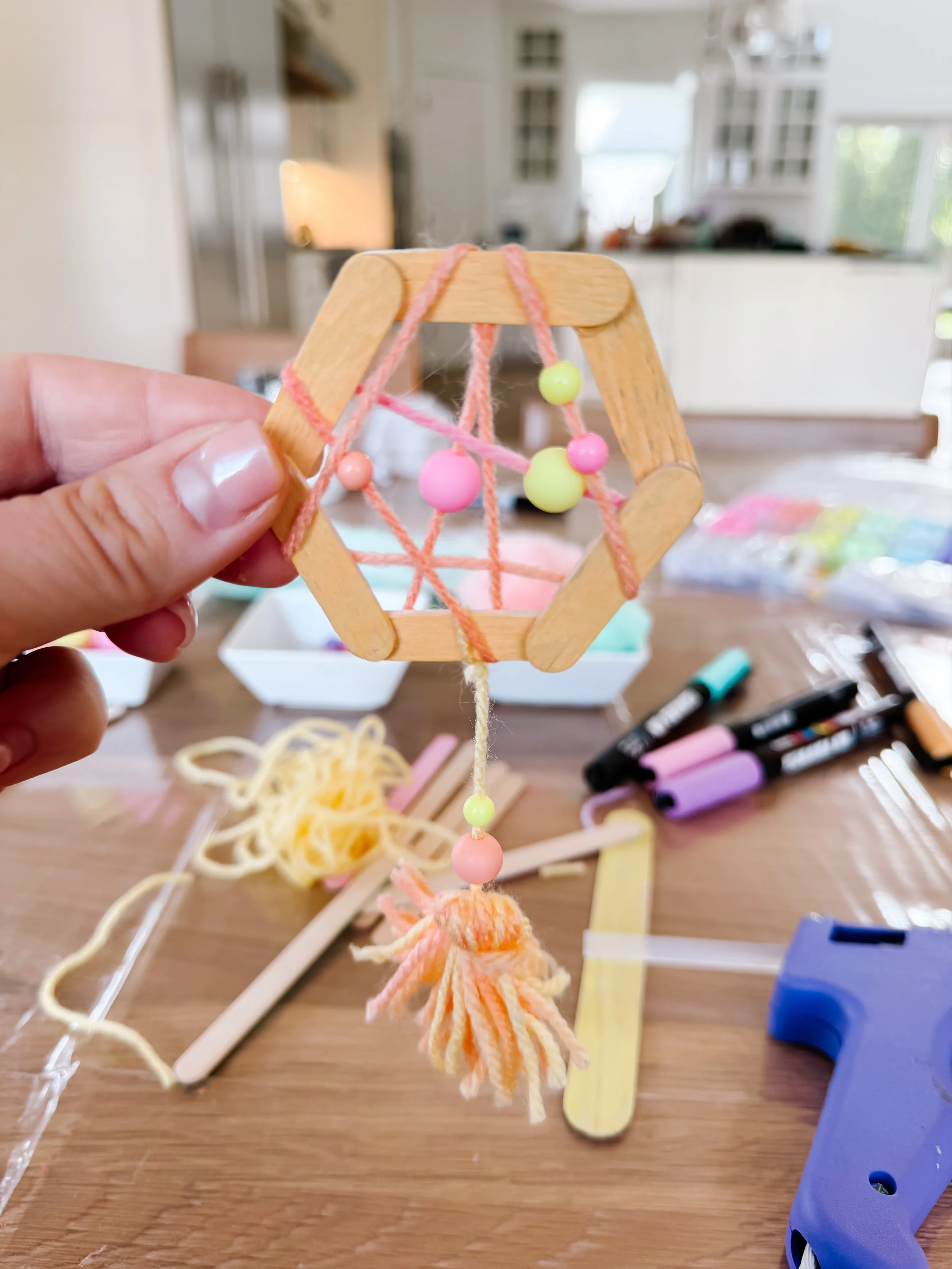
Add beads to the web
Thread a few large beads onto the yarn as you weave.
Slide each bead to the desired position before wrapping the yarn around the next side of the frame.
Invite children to create repeating color patterns or count the beads as they work.
How to make a yarn tassel
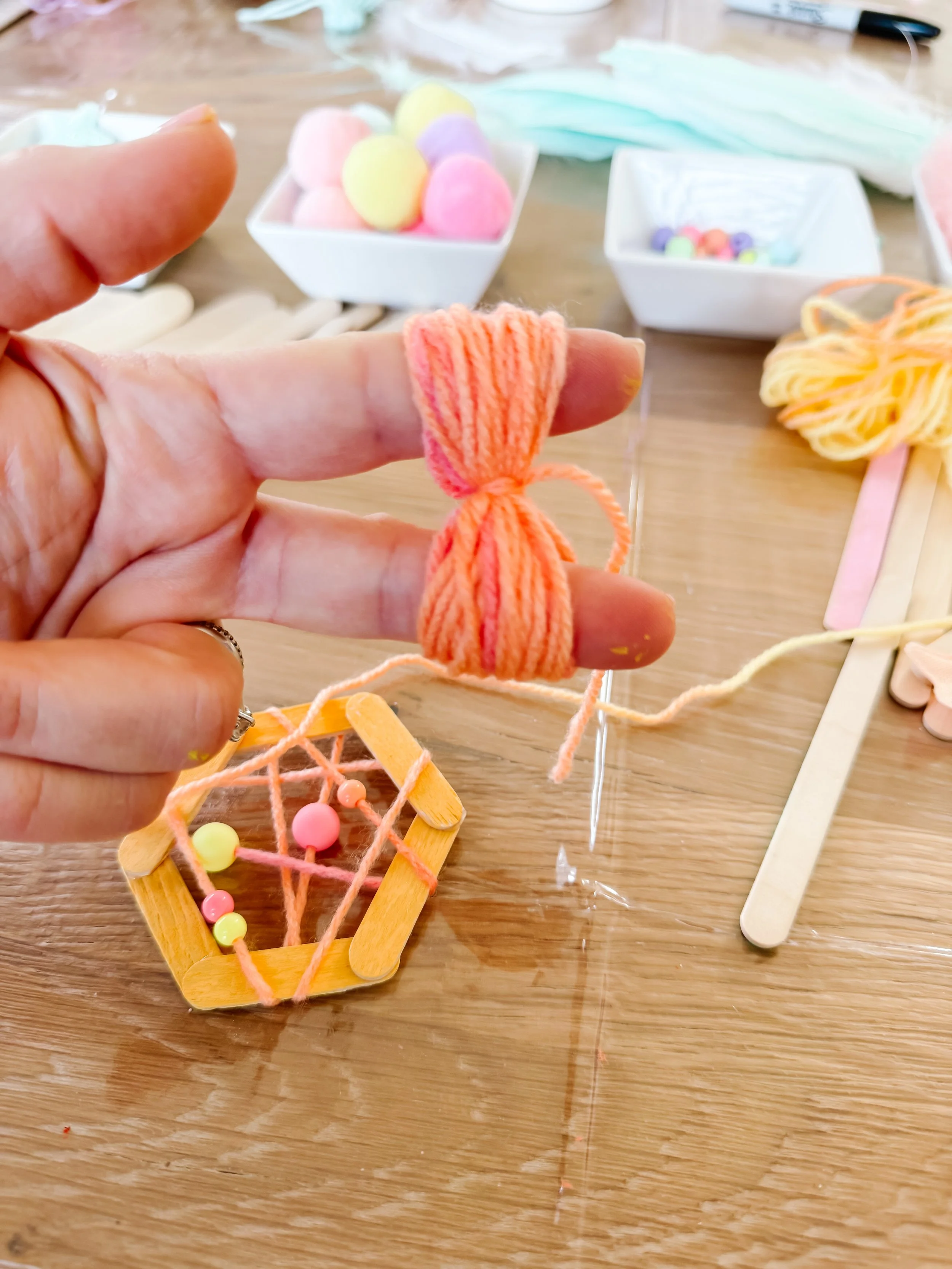
Wrap and tie the yarn
Wrap yarn around two or three fingers approximately 15 to 25 times.
Carefully slide the bundle from your fingers and tie a separate piece of yarn tightly around its middle.
Fold the bundle in half, then tie another piece of yarn just below the fold to create the tassel head.
Ask an adult to cut the loops at the bottom and trim the yarn ends evenly.
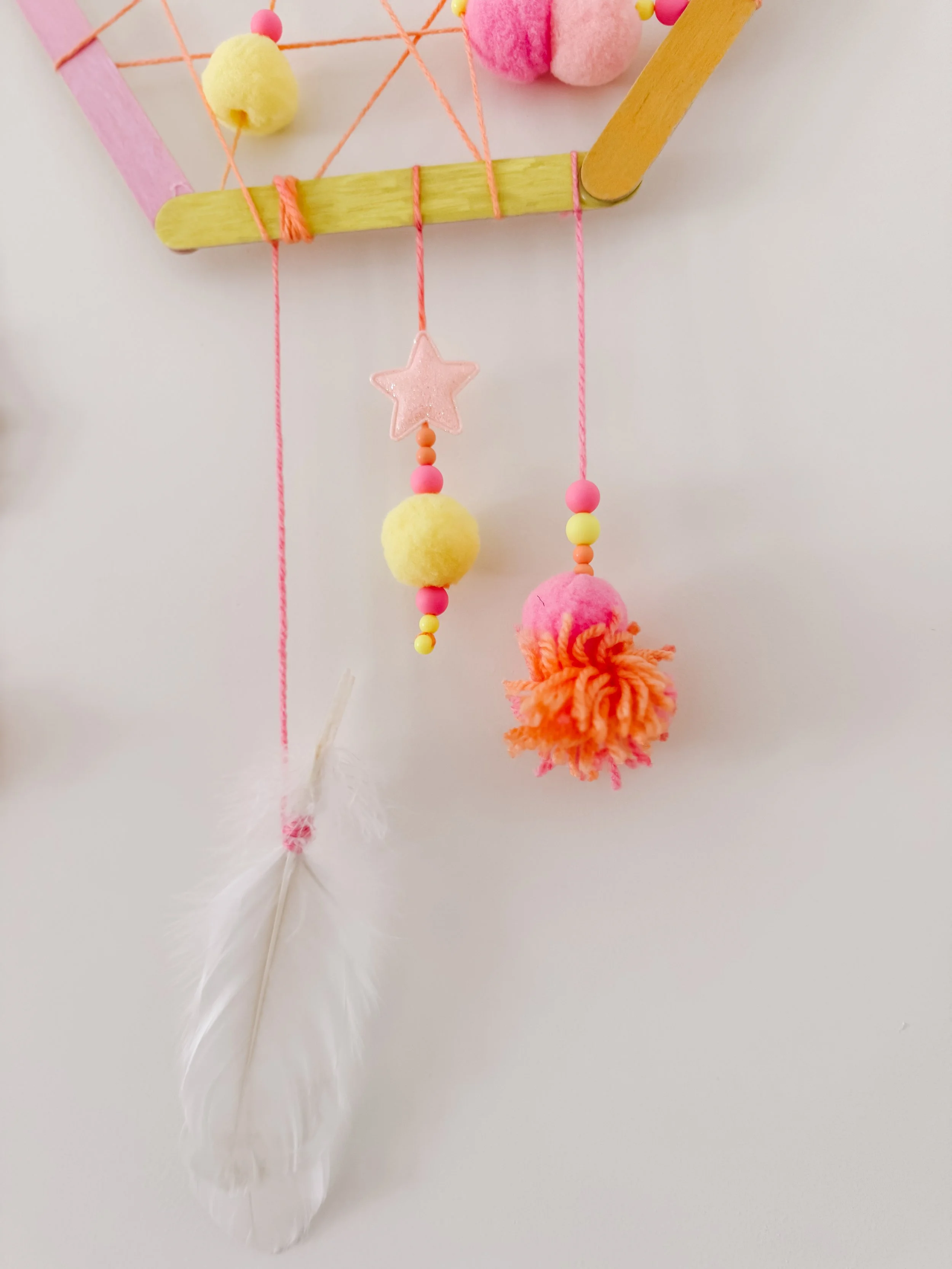
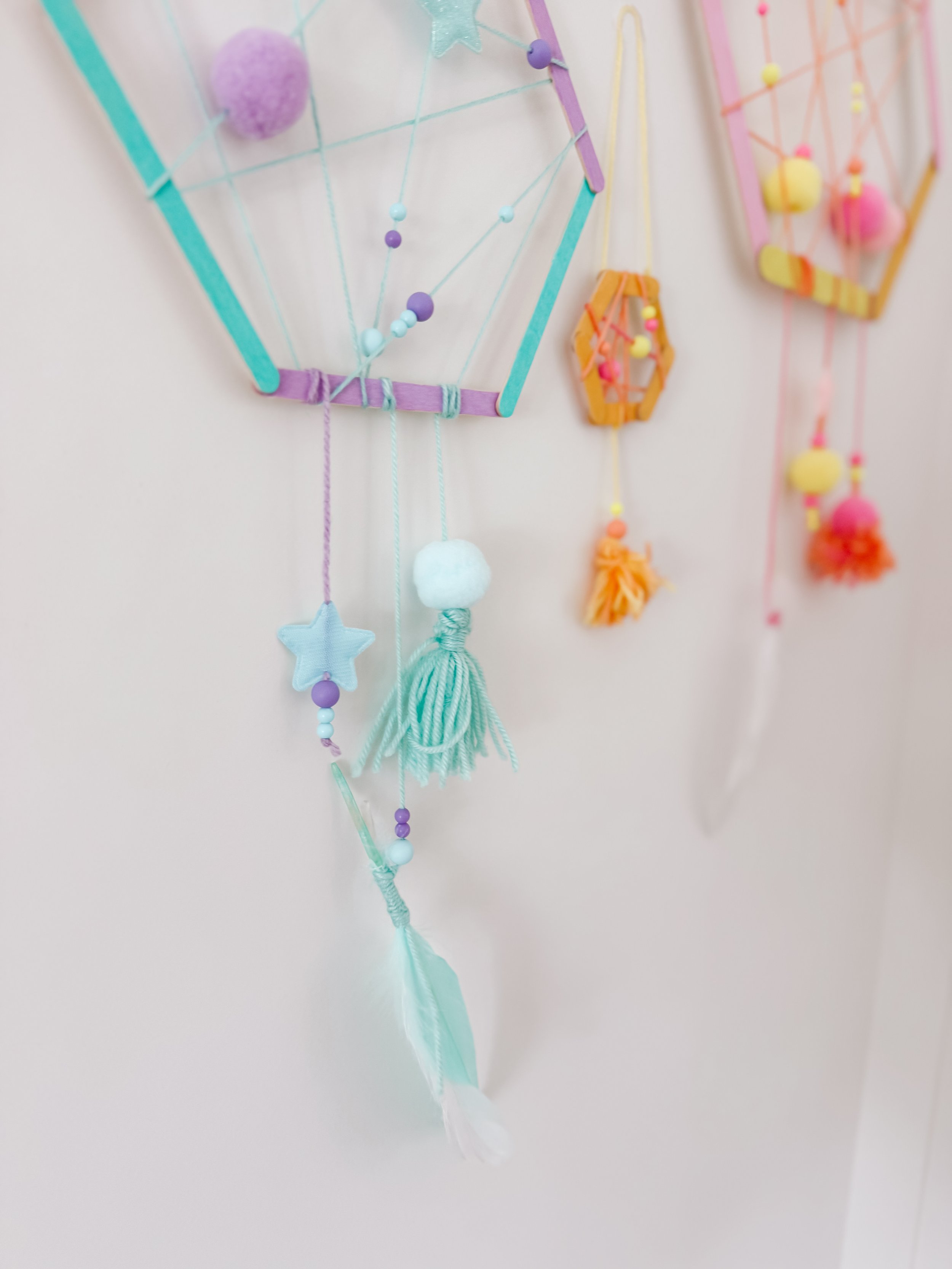
Attach the hanging pieces
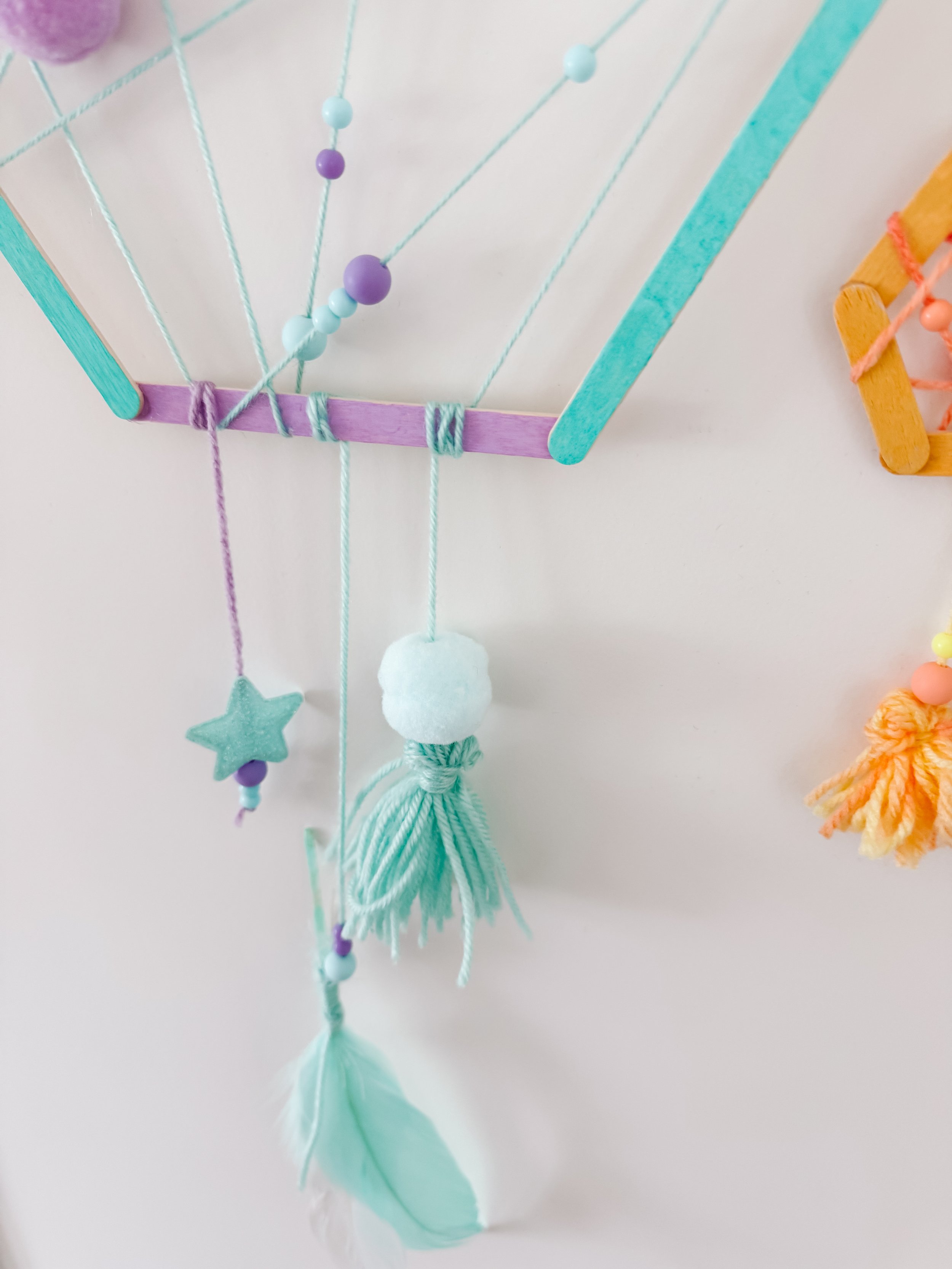
Tie one to three lengths of yarn along the lower edge of the frame.
Add tassels, pom-poms, stars, beads or feathers to the hanging strings.
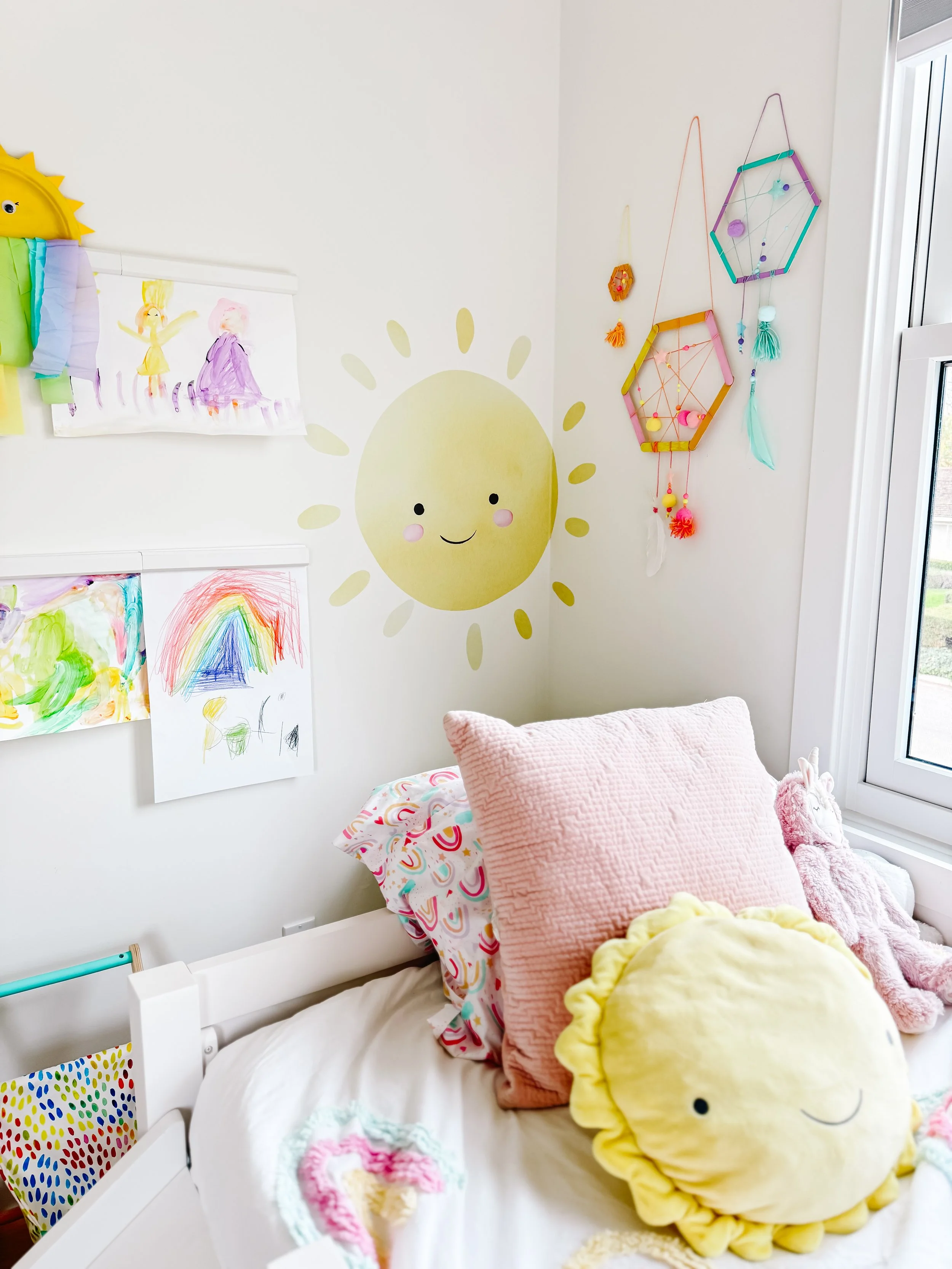
Attach another yarn loop to the top so the finished craft can hang on a wall, doorknob or hook.
Try different color palettes
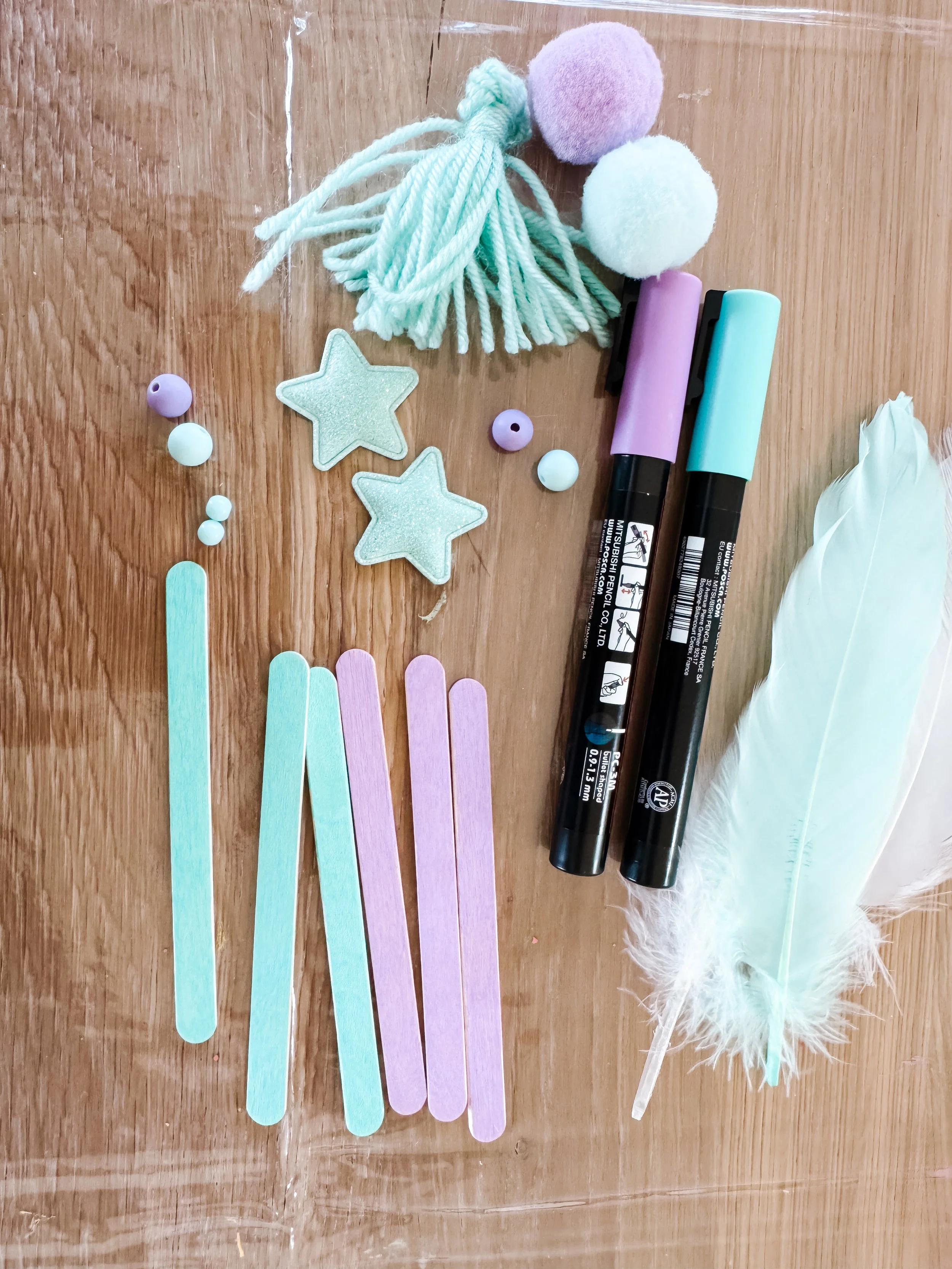
Cool colors
Combine turquoise, mint, lavender and pale blue for a soft nighttime palette.
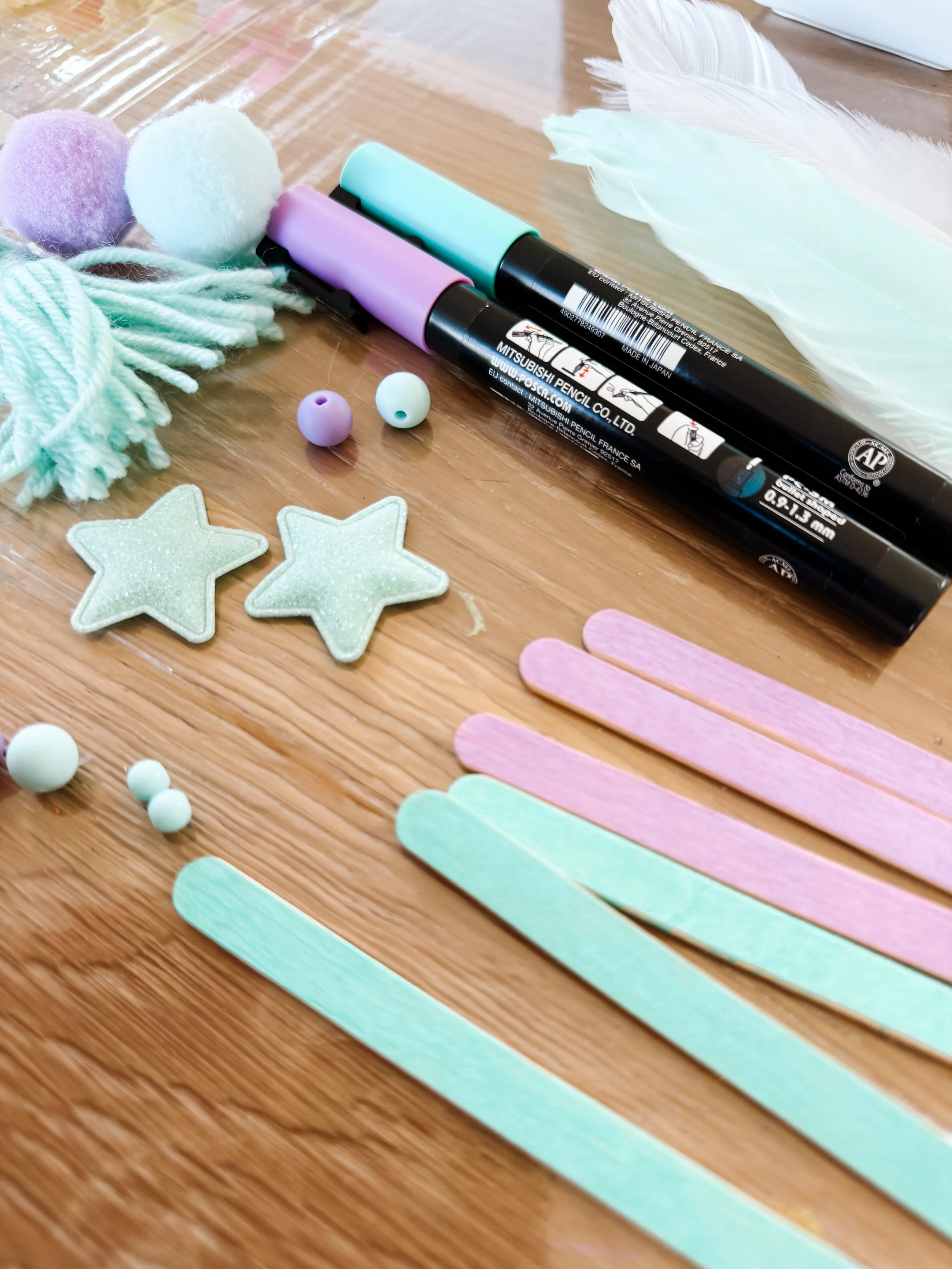
Pastel rainbow
Mix coral, yellow, pink, mint and purple for a colorful decoration that still feels coordinated.
Nature-inspired colors
Use brown, green, cream and sky blue, then pair the craft with a walk outdoors and observations of spiderweb patterns.
Learning opportunities
This craft combines creative design with several meaningful learning skills.
Fine motor skills Hand-eye coordination Weaving Threading Pattern recognition Counting Color planning Spatial reasoning Creative expression Cultural learning Listening StorytellingLearn from the shape of a spiderweb
The web inside the frame provides a natural opportunity to explore geometry.
Ask children to find:
- Straight lines
- Crossing lines
- Triangles
- Large and small spaces
- Lines that are parallel
- Lines that meet at a point
Compare the handmade pattern with a photograph of a real spiderweb. Notice how a spider’s web may contain radial lines extending from the center and curved or spiral sections connecting them.
Questions to ask children
- What shapes can you find inside your yarn web?
- What happens when two yarn lines cross?
- How can you keep the yarn from becoming loose?
- Which colors did you choose, and why?
- Can you create a repeating bead pattern?
- What helps you feel safe and comfortable at bedtime?
- What is the difference between learning from a culture and pretending something belongs to us?
- Why is it important to name the Ojibwe people when discussing dreamcatchers?
- How are Indigenous communities part of the present, not only the past?
- What questions would you like to ask an Ojibwe artist or storyteller?
Words to learn
How to make the cultural lesson stronger
Use specific nation names
Say “Ojibwe” or “Anishinaabe” rather than using “Native American” as though it describes one single culture.
Use the present tense
Talk about what Ojibwe people create, teach, speak and celebrate today—not only what they did long ago.
Look for Native voices
Choose books, museum resources, recordings and artwork created by Indigenous authors, educators and artists whenever possible.
Avoid costumes and pretend identities
Children can learn about another culture without dressing up as a generalized Native person or inventing ceremonial meanings.
Support Native artists
When purchasing traditional or culturally connected art, seek work sold by artists from the culture represented.
Be honest about the craft
Explain that this is a modern craft-stick weaving activity inspired by a traditional form—not a traditional dreamcatcher.
Parent tip
Focus on care, not fear
When discussing dreams with young children, keep the conversation gentle. Rather than suggesting that a child needs an object because something frightening may happen, ask what helps their body feel calm and safe before sleep.
Their completed craft can become a prompt for a soothing bedtime routine: name one happy memory, take three slow breaths and imagine one peaceful dream.
Reliable resources for learning more
These resources can help families learn more from museum collections, Ojibwe speakers and regional historians:
Dreamcatcher-inspired craft FAQ
Where did dreamcatchers originate?
Dreamcatchers are most closely associated with Ojibwe or Anishinaabe traditions in the Great Lakes region. They later became widely adopted, marketed and represented outside their culture of origin.
What were dreamcatchers used for?
In commonly shared Ojibwe teachings, woven webs were connected with protecting sleeping children and filtering harmful dreams or influences. Specific teachings and meanings may differ among families and communities.
Are dreamcatchers part of every Native American culture?
No. Indigenous nations have distinct cultures and traditions. Dreamcatchers should not be described as a universal practice shared by every Native American or First Nations community.
Is this an authentic Ojibwe dreamcatcher?
No. This is a contemporary children’s weaving craft made from craft sticks and decorative materials. It is inspired by the web-like form and paired with age-appropriate cultural learning.
Is it respectful for children to make this craft?
The activity is more respectful when adults clearly name its Ojibwe origins, avoid presenting it as authentic ceremonial art, do not invent cultural claims, use Native-created educational sources and support Indigenous artists when purchasing traditional work.
What age is this craft best for?
Children ages five and older can usually help decorate, weave and thread the pieces. Adults should assemble difficult joints, supervise small beads and handle hot glue.
How do you keep the yarn from slipping?
Wrap the yarn completely around a craft stick before crossing the opening again. Small dots of glue on the back of the frame can secure loose starting and ending points.
What can I use instead of feathers?
Try yarn tassels, fabric strips, ribbon, felt leaves, paper shapes, pom-poms or additional strings of beads.
What skills does this craft develop?
Children practice fine motor control, threading, weaving, hand-eye coordination, planning, color selection, counting, pattern creation and spatial reasoning.