
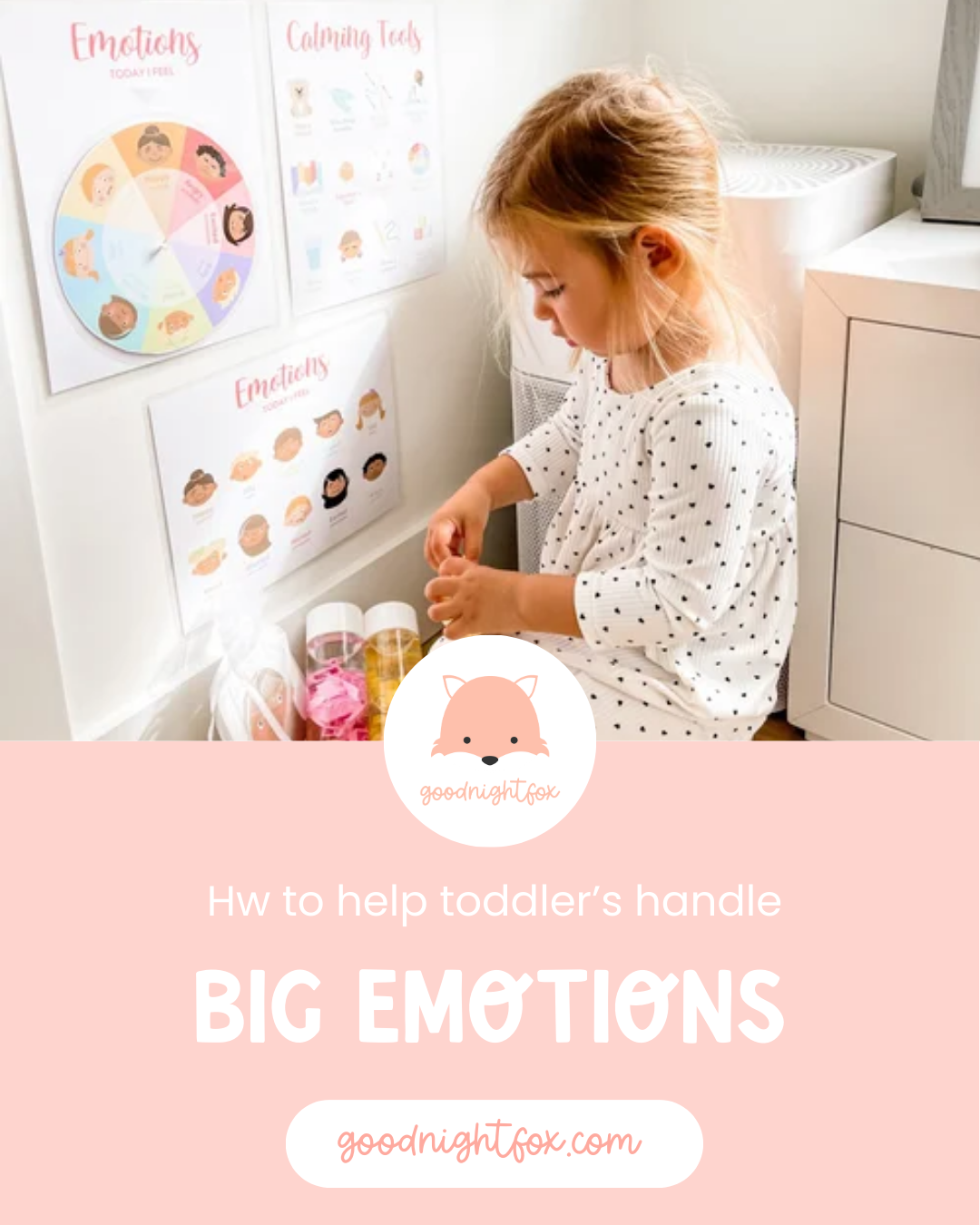
Big emotions are a normal and healthy part of childhood — especially for toddlers and preschoolers. Meltdowns, tears, yelling, and shutting down aren’t signs of bad behavior. They’re signs that a child’s developing brain needs support.
In this post, you’ll find research-backed strategies to help children recognize, express, and regulate big emotions in a developmentally appropriate way. These techniques are gentle, practical, and designed to work with how young brains actually develop — not against them.
Why Big Emotions Are So Hard for Young Children
Young children feel emotions intensely, but they don’t yet have the neurological tools to manage them.
Research shows:
The prefrontal cortex (responsible for impulse control and emotional regulation) is still developing well into early adulthood
The amygdala (the brain’s threat detector) is highly reactive in young children
Language skills often lag behind emotional experiences
This means children often feel more than they can explain — and behavior becomes their communication.
The goal isn’t to eliminate big emotions. The goal is to teach children what to do with them.
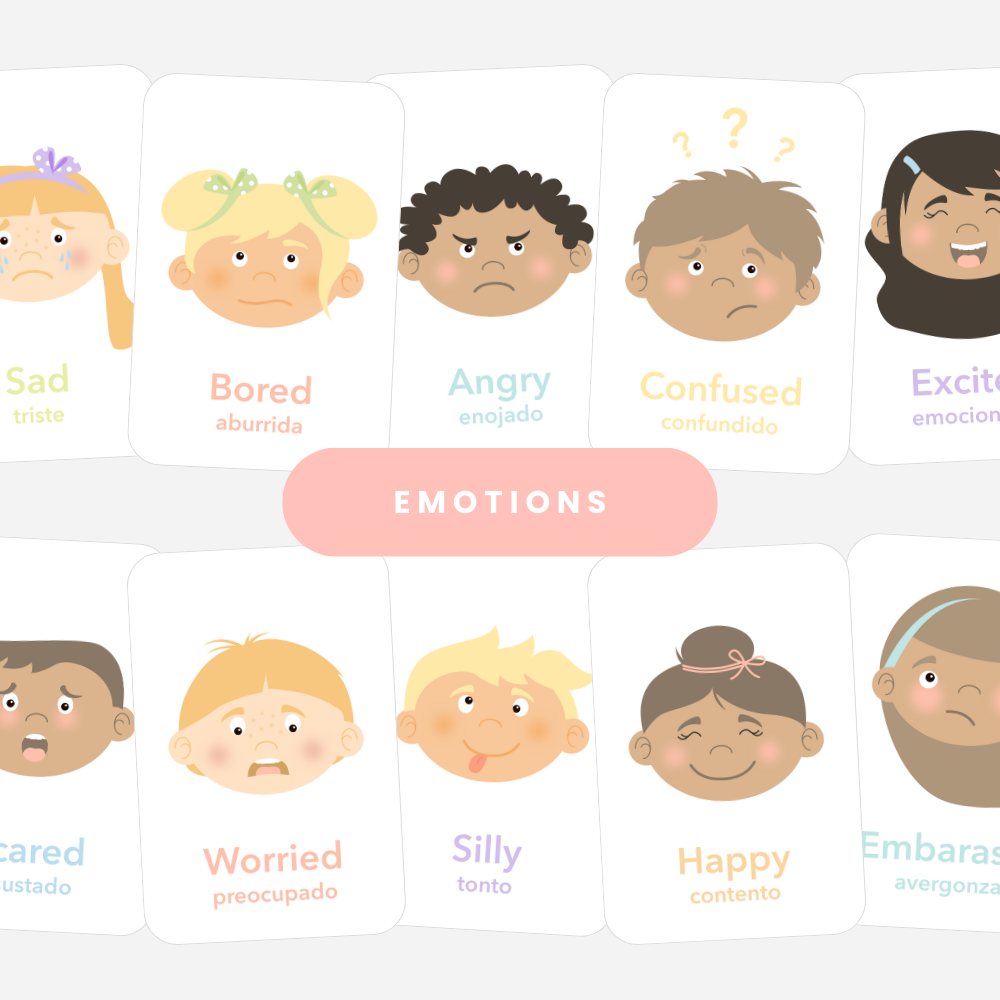
Tip 1: Name the Emotion Before Trying to Fix the Behavior
Studies in emotional development show that emotion labeling helps calm the nervous system and builds long-term emotional intelligence.
Instead of:
“You’re fine. Stop crying.”
Try:
“I see you’re feeling really frustrated. That’s hard.”
Naming emotions helps children:
Feel understood and validated
Build emotional vocabulary
Calm more quickly
Visual supports make this especially effective when children are dysregulated and language processing is harder.
Helpful resource:
Emotions Flashcards – Learn and name feelings through play
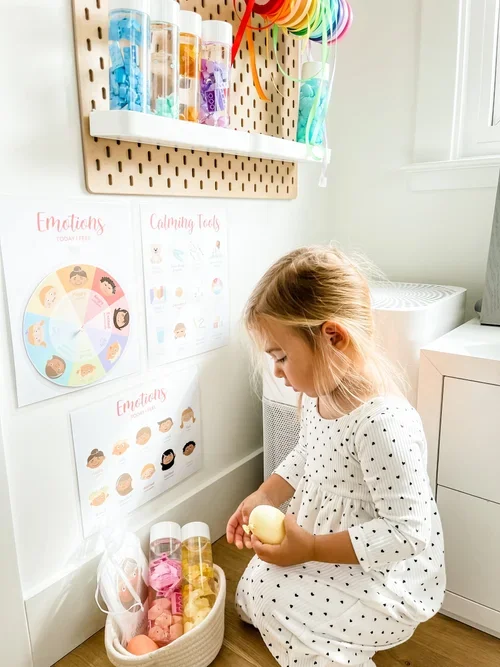
Tip 2: Create a Calm-Down Space (Not a Time-Out)
A calming corner is a supportive space, not a consequence.
Research on self-regulation shows children develop emotional control best when they have:
Predictable routines
Safe spaces to decompress
Tools they can access independently
A calming corner might include:
Soft seating or a cozy mat
Emotion visuals
Breathing or grounding prompts
Simple sensory tools
When introduced proactively, a calming corner teaches skills rather than reinforcing shame.
Helpful resource:
Calming Corner Guide – Build a regulation-friendly space at home
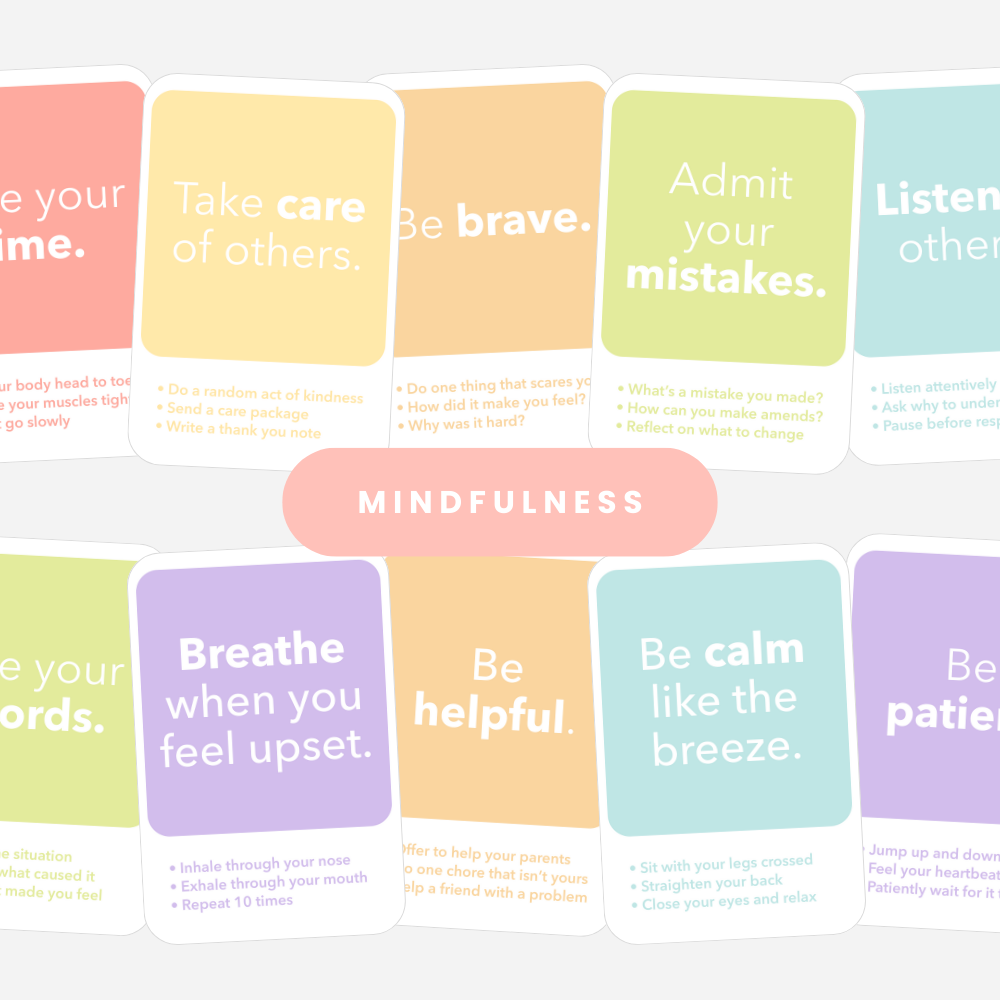
Tip 3: Teach Regulation Skills Outside the Emotional Moment
One of the most important insights from neuroscience is this:
Children cannot learn new skills when they are in fight-or-flight.
That means coping strategies should be taught:
During calm moments
Through play
As part of everyday routines
Effective approaches include:
Practicing breathing when children are already calm
Using visuals to walk through calming strategies
Modeling regulation skills together
Helpful resource:
Mindfulness Flashcards – Practice calming strategies proactively
Tip 4: Normalize Emotions Instead of Minimizing Them
Phrases like:
“You’re okay.”
“There’s nothing to be upset about.”
“Big kids don’t cry.”
are often meant to help — but they can unintentionally teach children to suppress emotions rather than process them.
A more effective approach is:
Validate the feeling
Guide the behavior
For example:
“It’s okay to feel angry. It’s not okay to hit. Let’s find a safe way to let that anger out.”
Helpful resource:
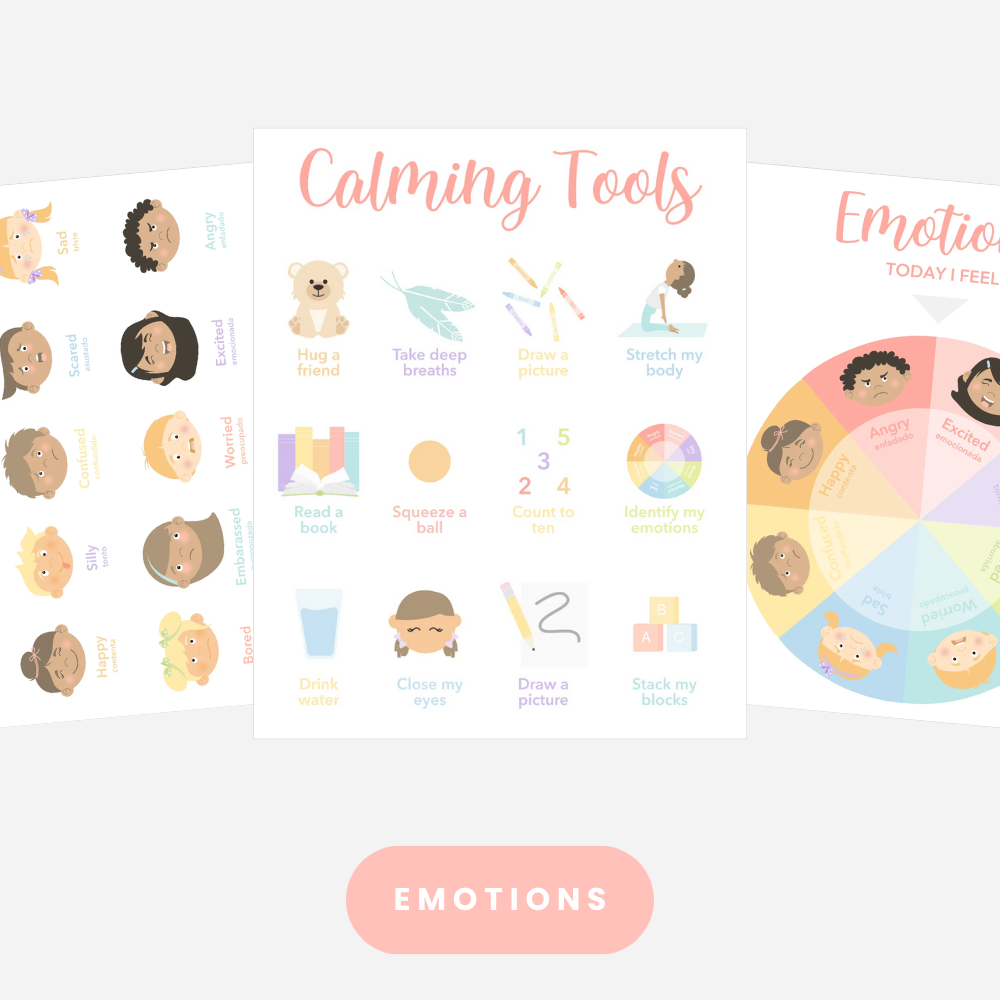
Emotions Poster Set – Visual emotional literacy support
Displaying emotion visuals at a child’s eye level reinforces the message that all feelings are allowed, even when certain behaviors are not.
Tip 5: Support Emotional Regulation On the Go
Big emotions don’t only happen at home. They show up:
In the car
At the grocery store
During transitions
At school or daycare
Portable tools help children regulate emotions in real-world settings where they may feel overstimulated or overwhelmed.
Helpful strategies include:
Reviewing emotions before transitions
Offering simple calming prompts
Using familiar visuals outside the home
Helpful resource:
Emotions To-Go Cards – Portable emotional support for real life
Tip 6: Model Emotional Regulation Yourself
Children learn emotional regulation primarily through co-regulation — watching how trusted adults handle stress.
Modeling doesn’t mean being perfectly calm. It means being honest and reflective:
“I felt frustrated, so I took a breath.”
“I made a mistake. I’m going to try again.”
Using the same tools alongside your child reinforces consistency and trust.
How Sensory Play Supports Emotional Regulation
Sensory play plays a powerful role in emotional development by:
Regulating the nervous system
Providing physical outlets for emotions
Improving focus and body awareness
Activities like scooping, squeezing, sorting, and deep-pressure play can significantly reduce emotional overwhelm. Many families integrate emotion visuals and mindfulness prompts directly into sensory play routines.
This approach aligns naturally with a learning-through-play philosophy and supports both emotional and cognitive development.
Final Thoughts: Big Feelings Need Gentle Tools
Big emotions are not something to “fix.” They’re something to teach through.
When children are given:
Language for their feelings
Visual tools they can understand
Safe spaces to calm their bodies
Supportive adult guidance
They build emotional skills that last a lifetime.
GoodnightFox resources are designed to support this process gently — through play, visuals, and connection — without pressure or overwhelm.