
Emotions on the Go: Teach Feelings Anywhere with Flashcards
The best emotions lesson isn't a lesson at all — it's a card pulled out in the backseat, a silly face in the grocery cart, a matching game while the food arrives. Feelings happen everywhere, so practice them everywhere: here are five easy ways to teach emotions on the go with flashcards.
Why on the go works so well
Big feelings don't wait for a calm moment at the kitchen table. They show up in the car, in line at the store, in the middle of a restaurant meal. Practicing emotions in those moments — with a card deck that fits in a diaper bag — wires the vocabulary right where your toddler needs it. No prep, no setup, just pull a card and play.
1. Mirror faces
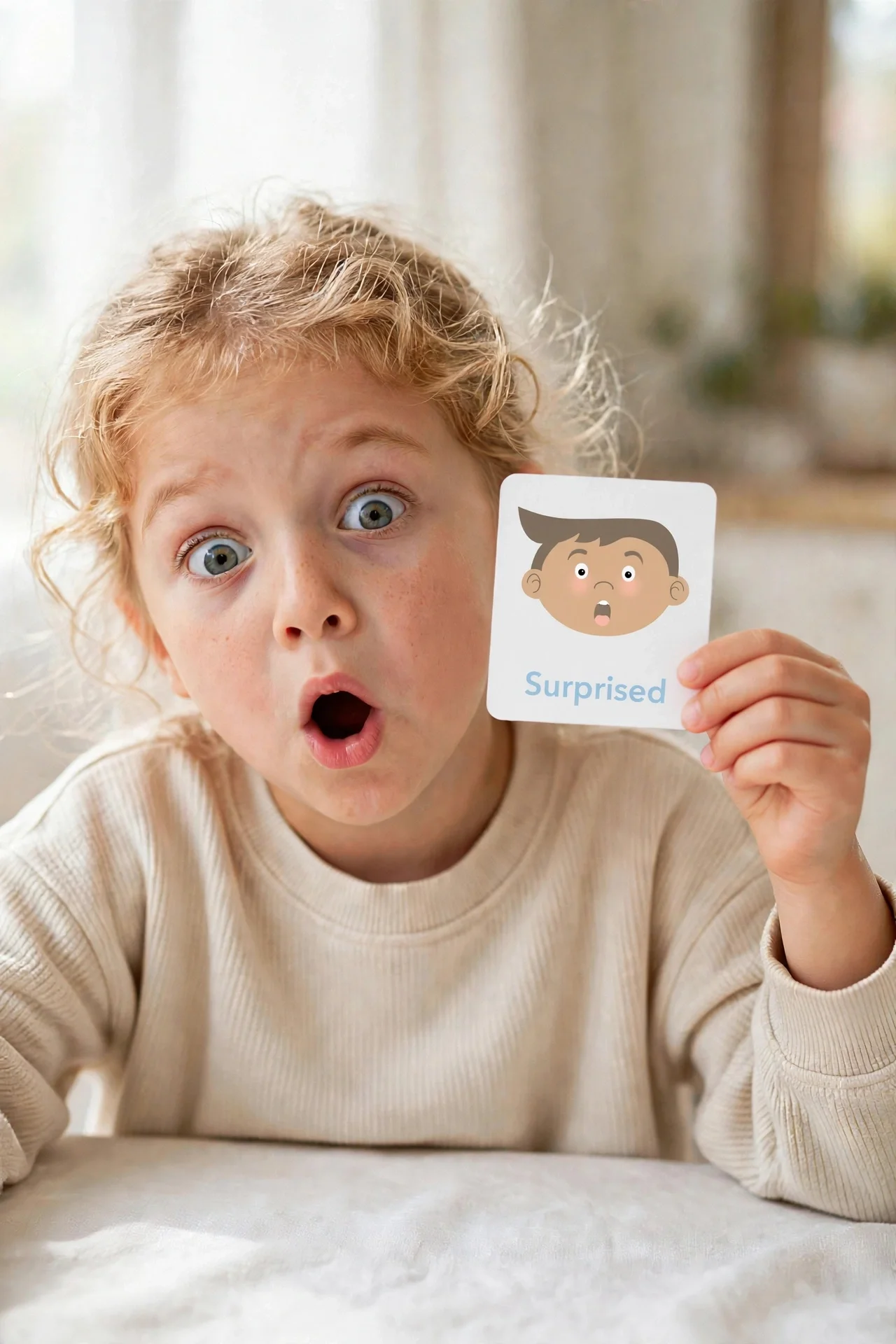
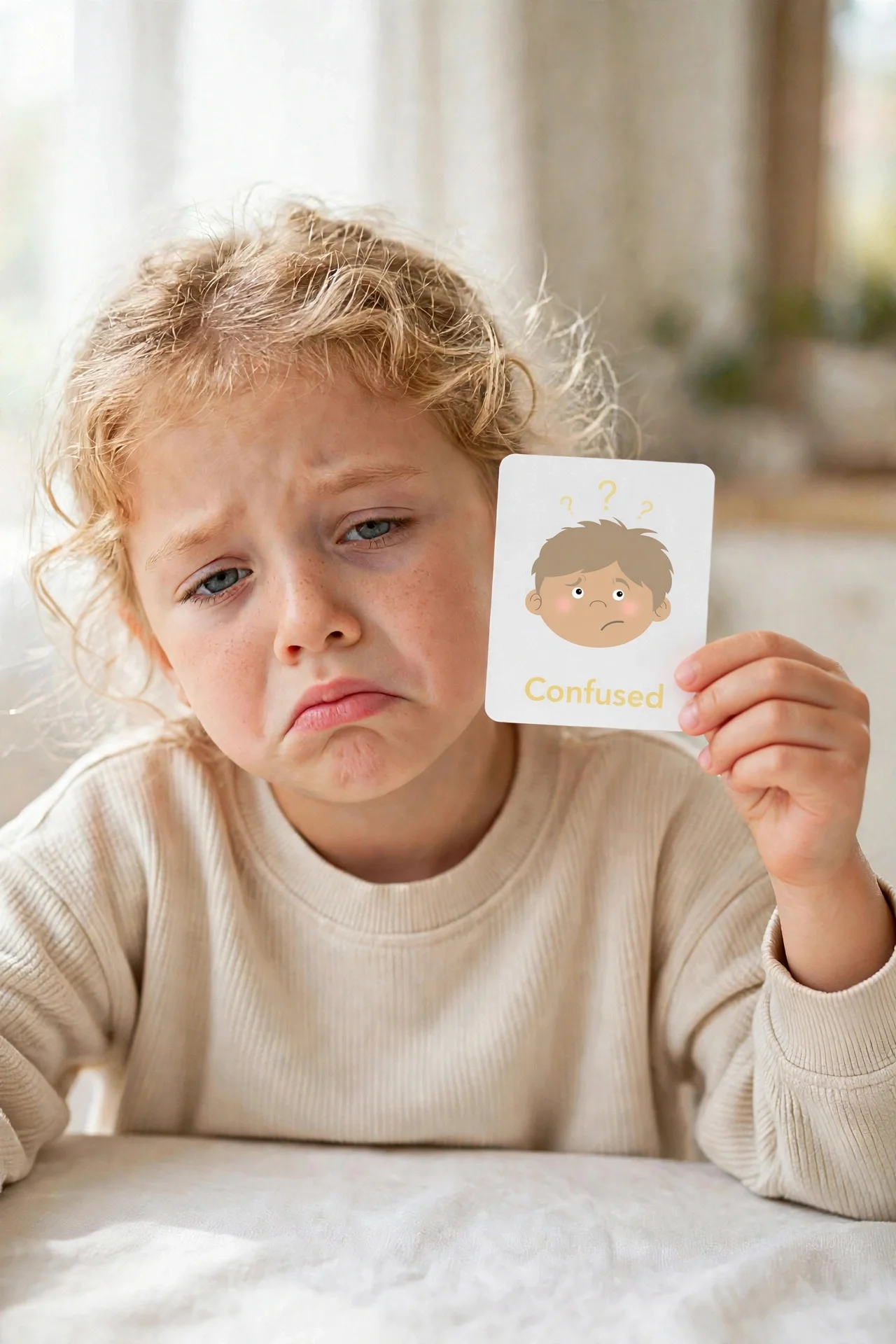
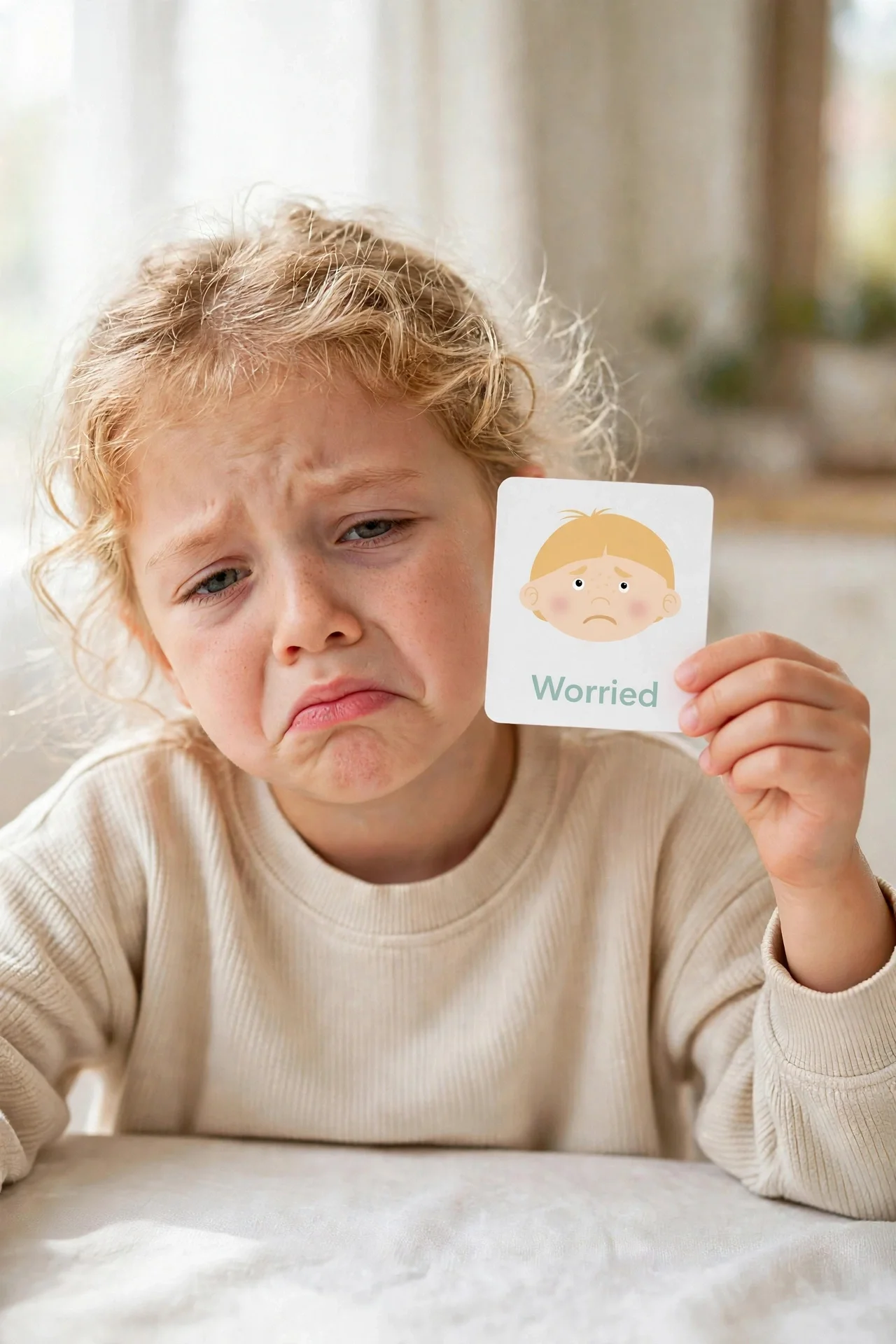
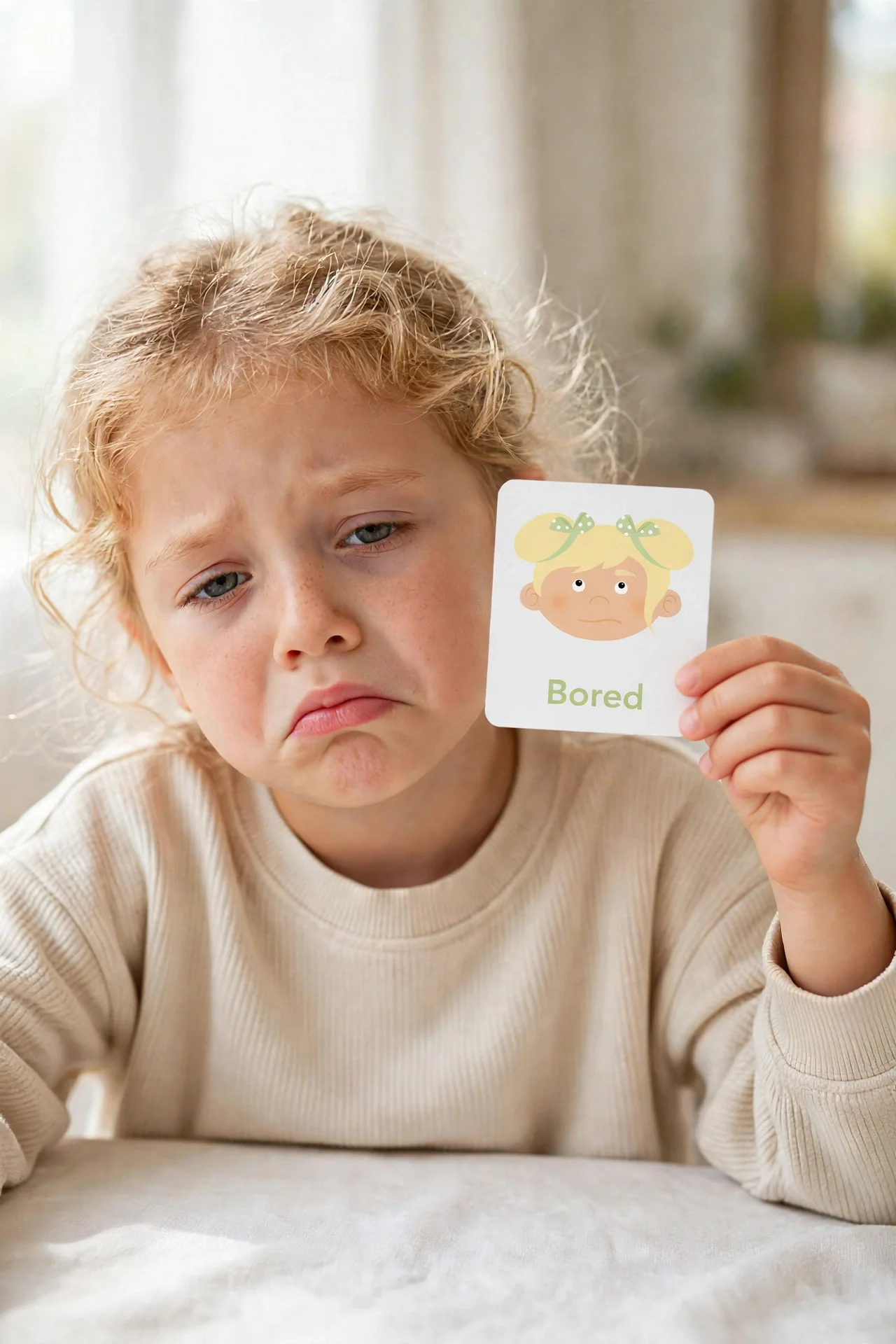
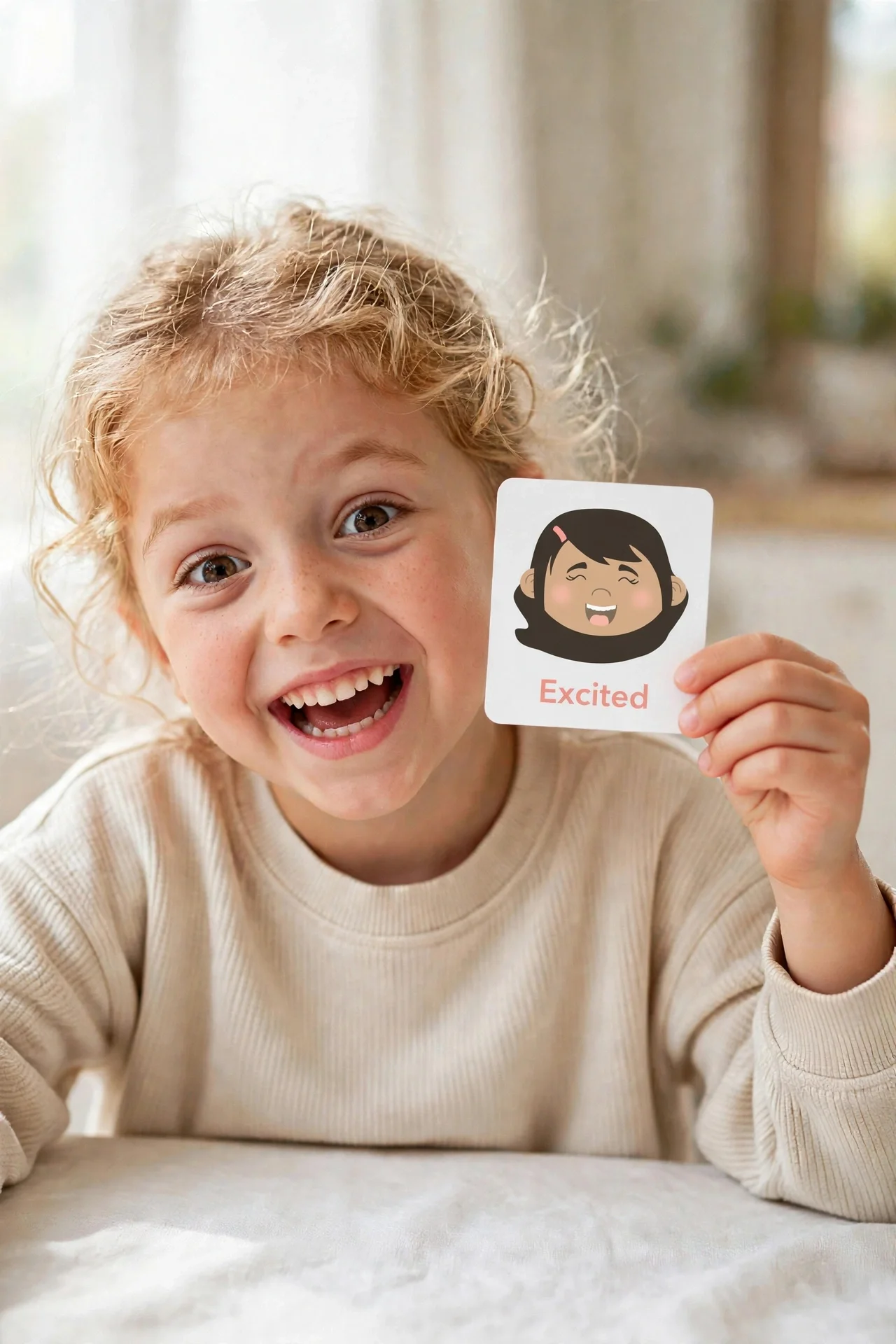
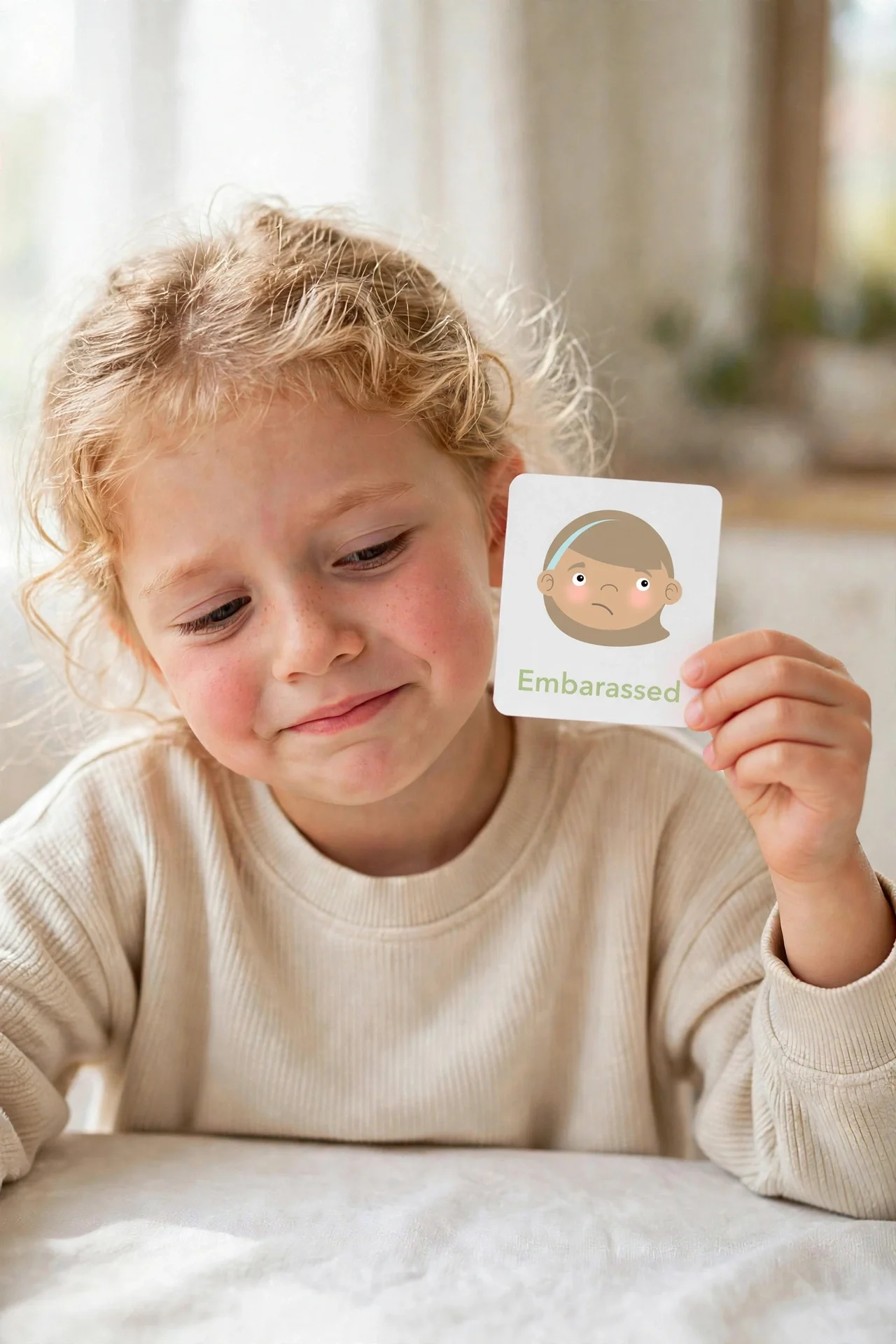
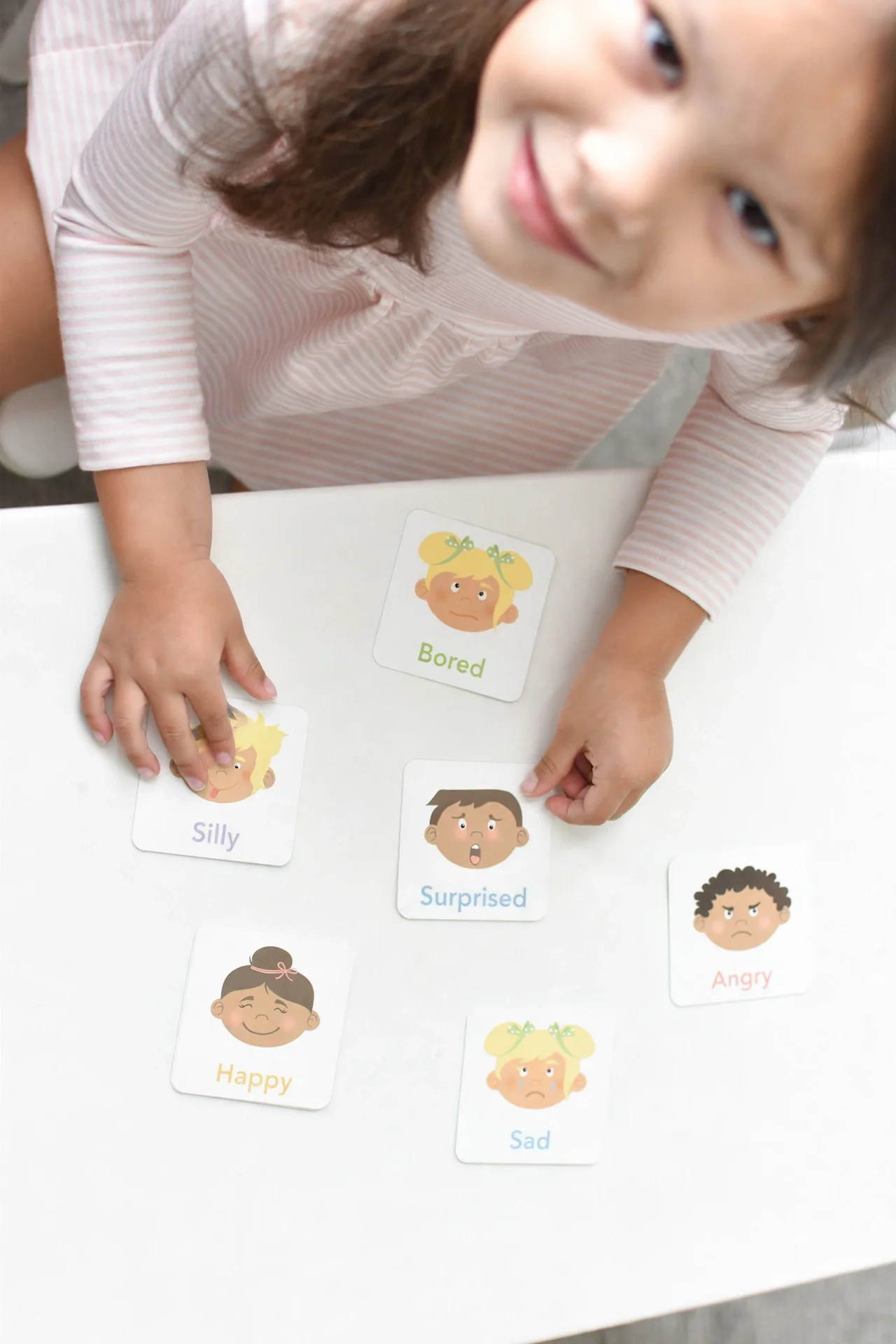
Hold up a card and make the face together — then let your toddler "teach" it back to you. Copying the expression wires the word to the feeling, and the silliness keeps them coming back. Work through the whole deck over a week: happy, sad, angry, silly, surprised, confused, worried, bored, excited, and embarassed.
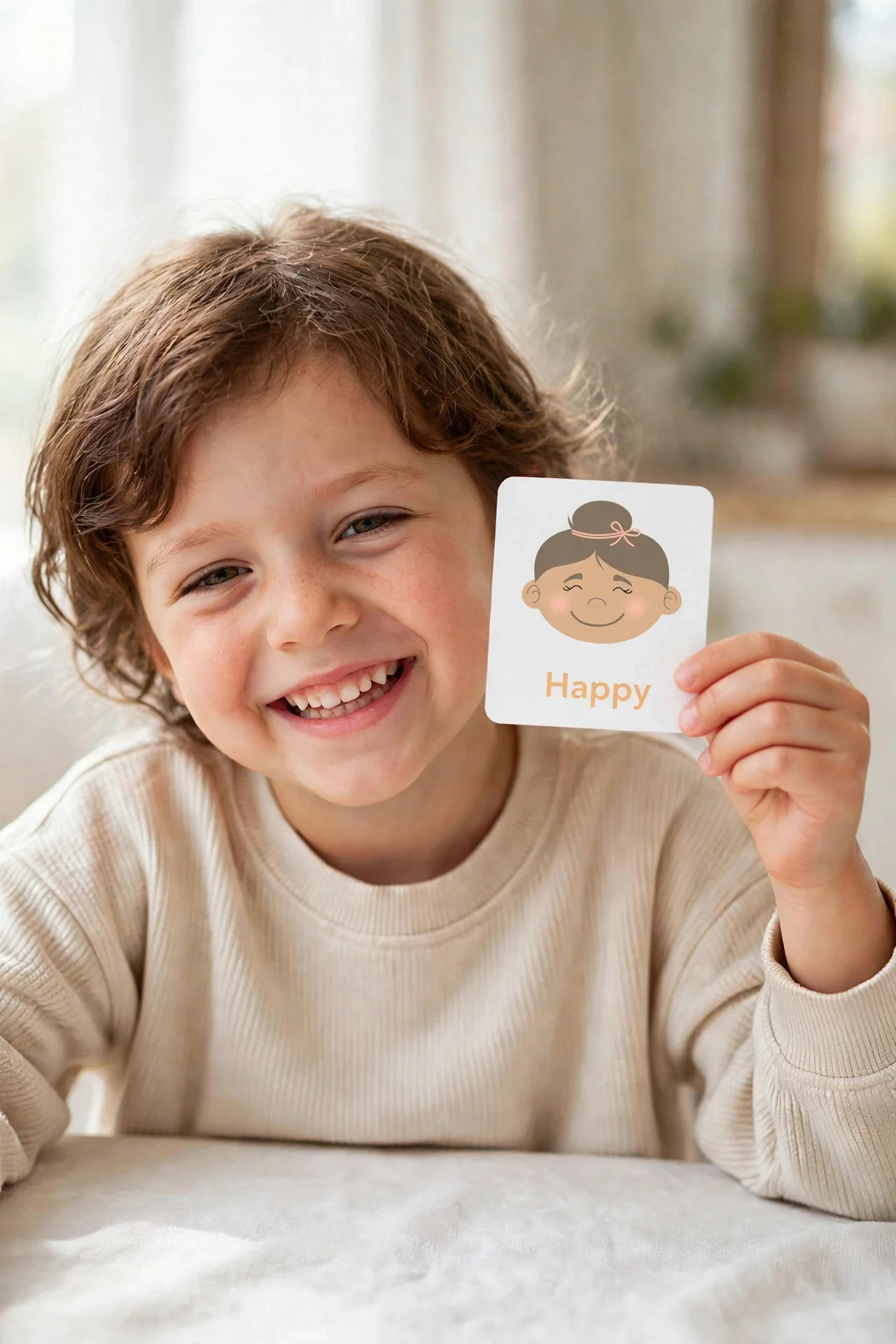
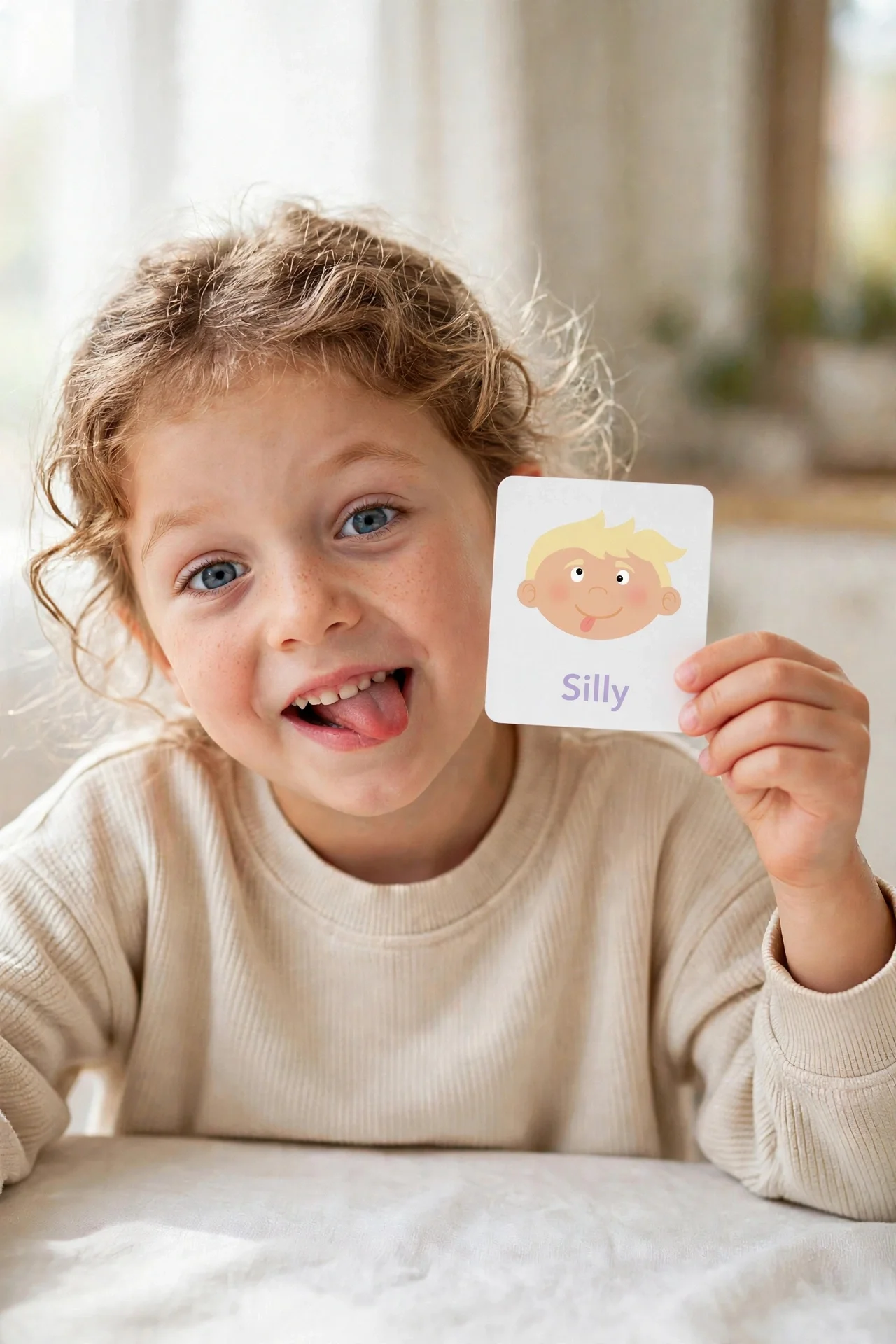
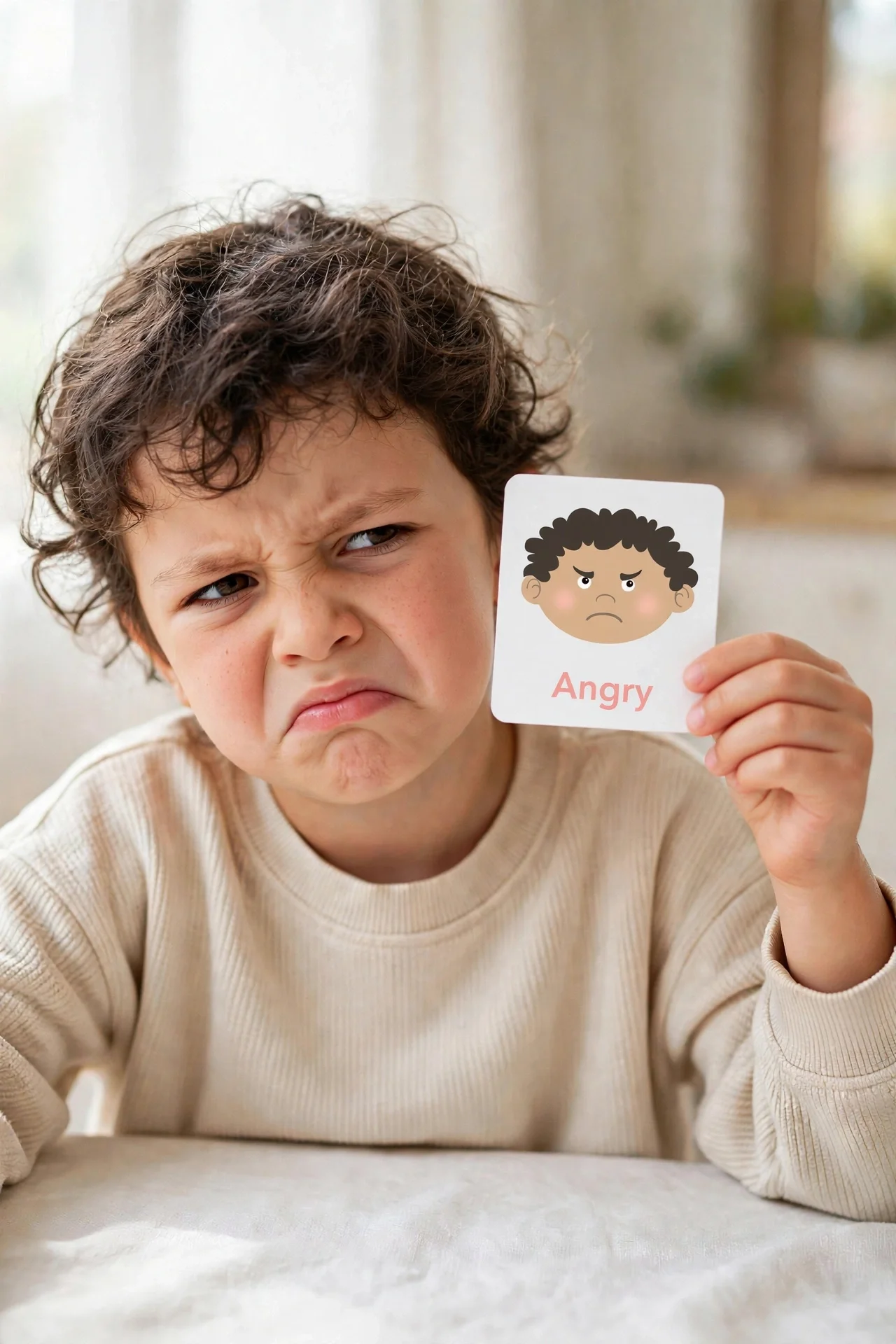
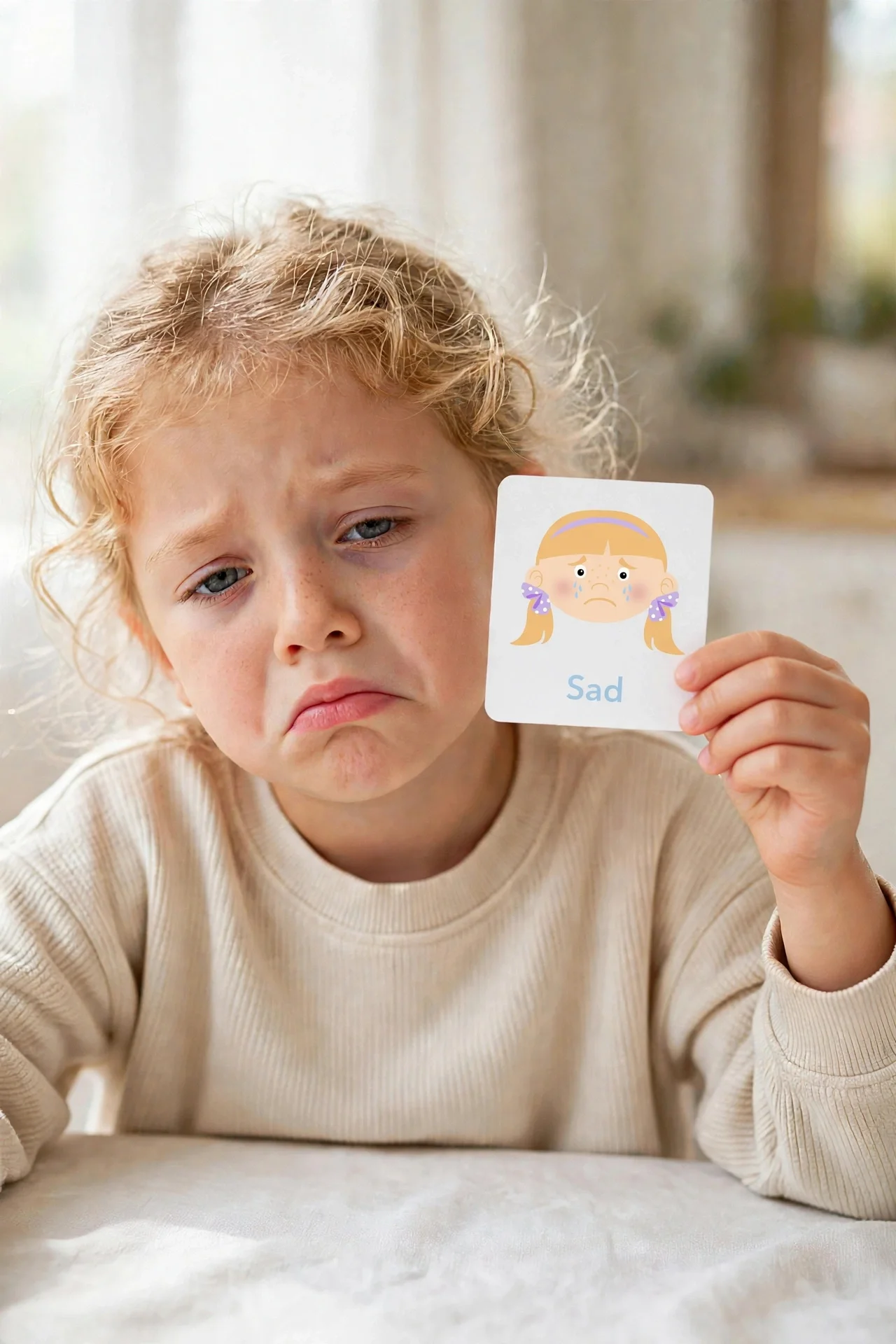
2. Backseat feelings check-in
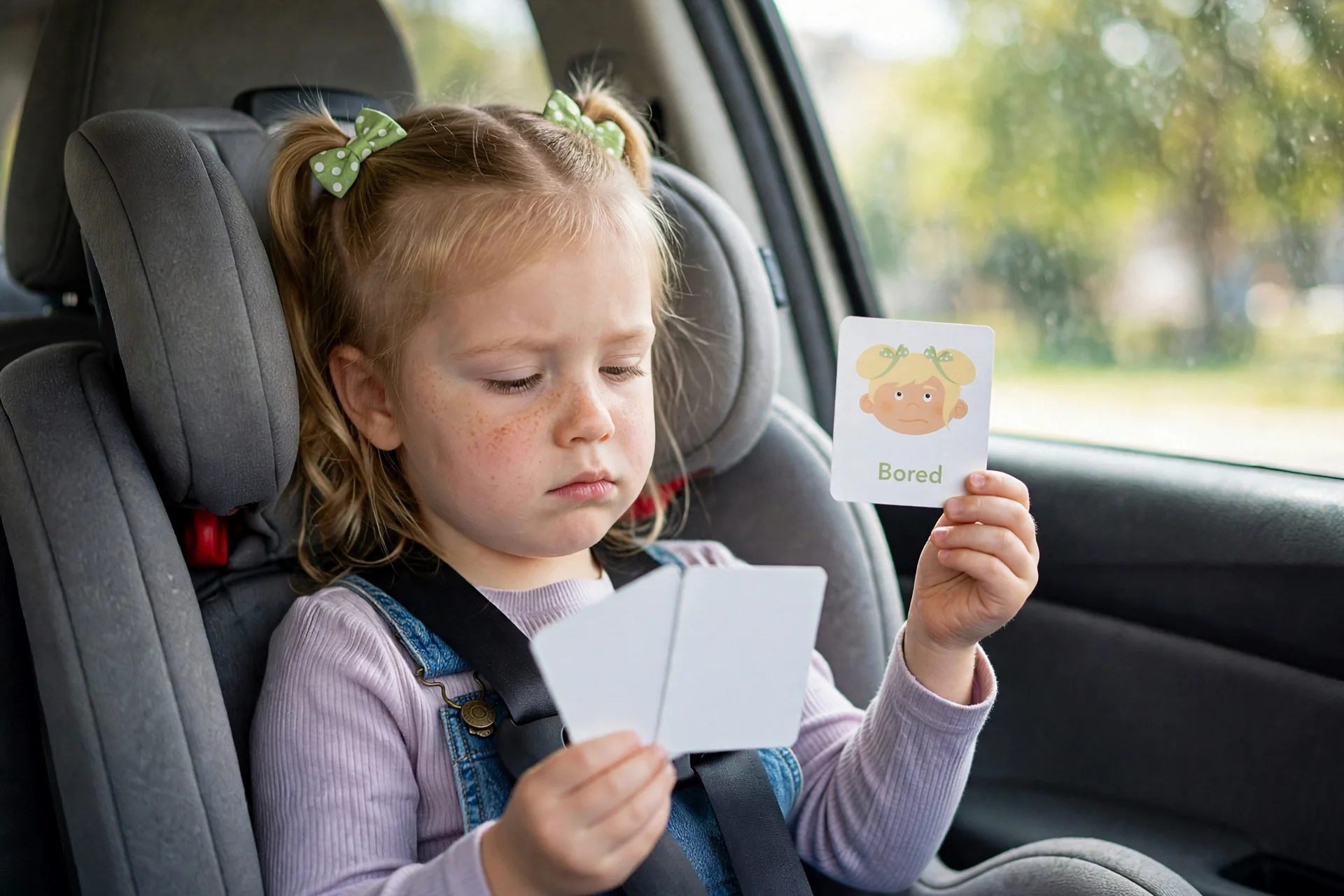
Stuck in traffic? Fan out three or four cards and ask: "How are you feeling right now? Hold one up." No wrong answers, no fixing — just naming. It turns a restless ride into a two-minute vocabulary drill, and over time your toddler starts reaching for the words on their own.
3. Grocery cart emotion hunt
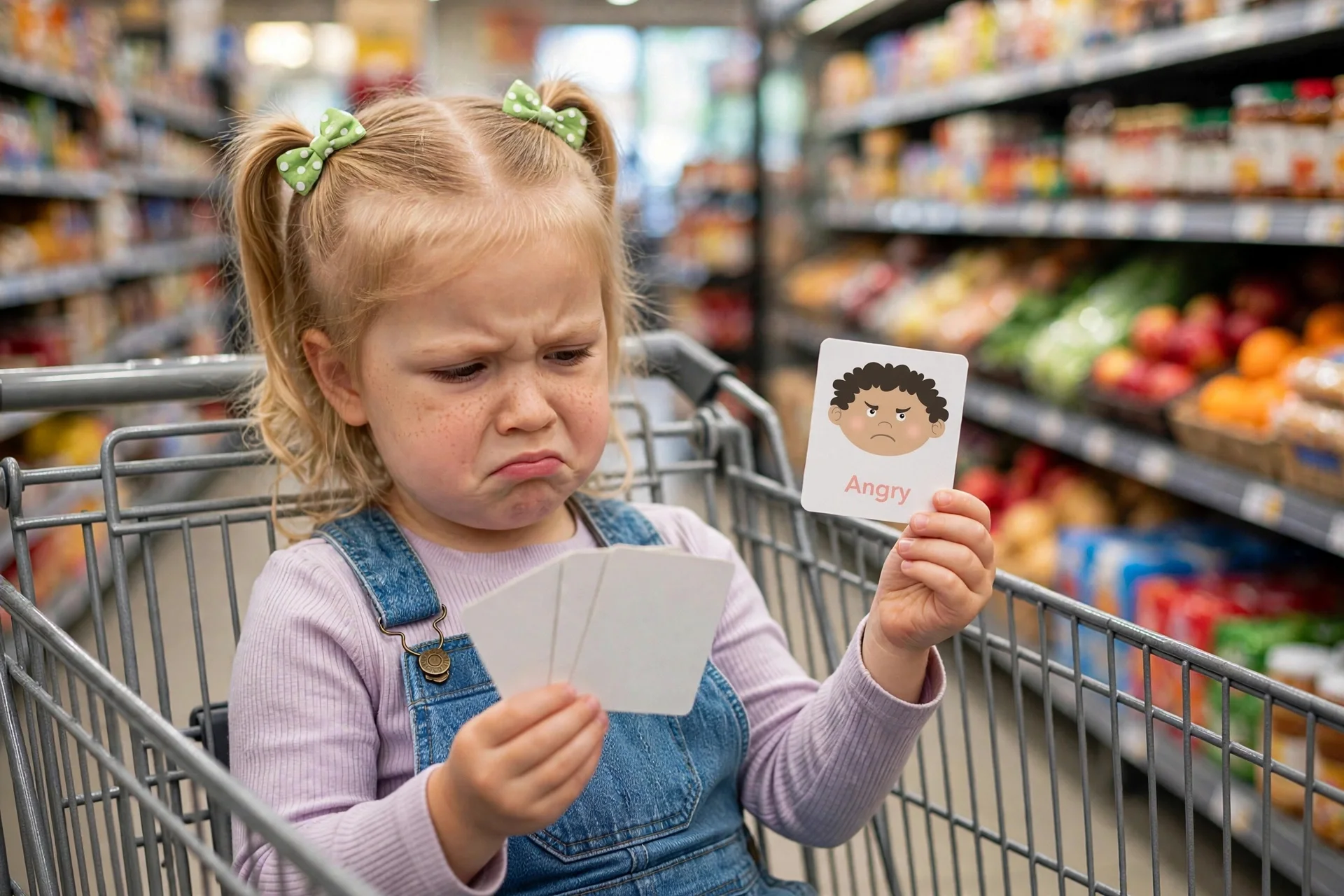
Pull a card in the produce aisle: "Can you find someone who looks surprised?" Your toddler scans the store, studies faces, and connects the card to the real world. It keeps little hands and eyes busy in the cart — and it's genuinely good people-watching practice.
4. Restaurant wait game
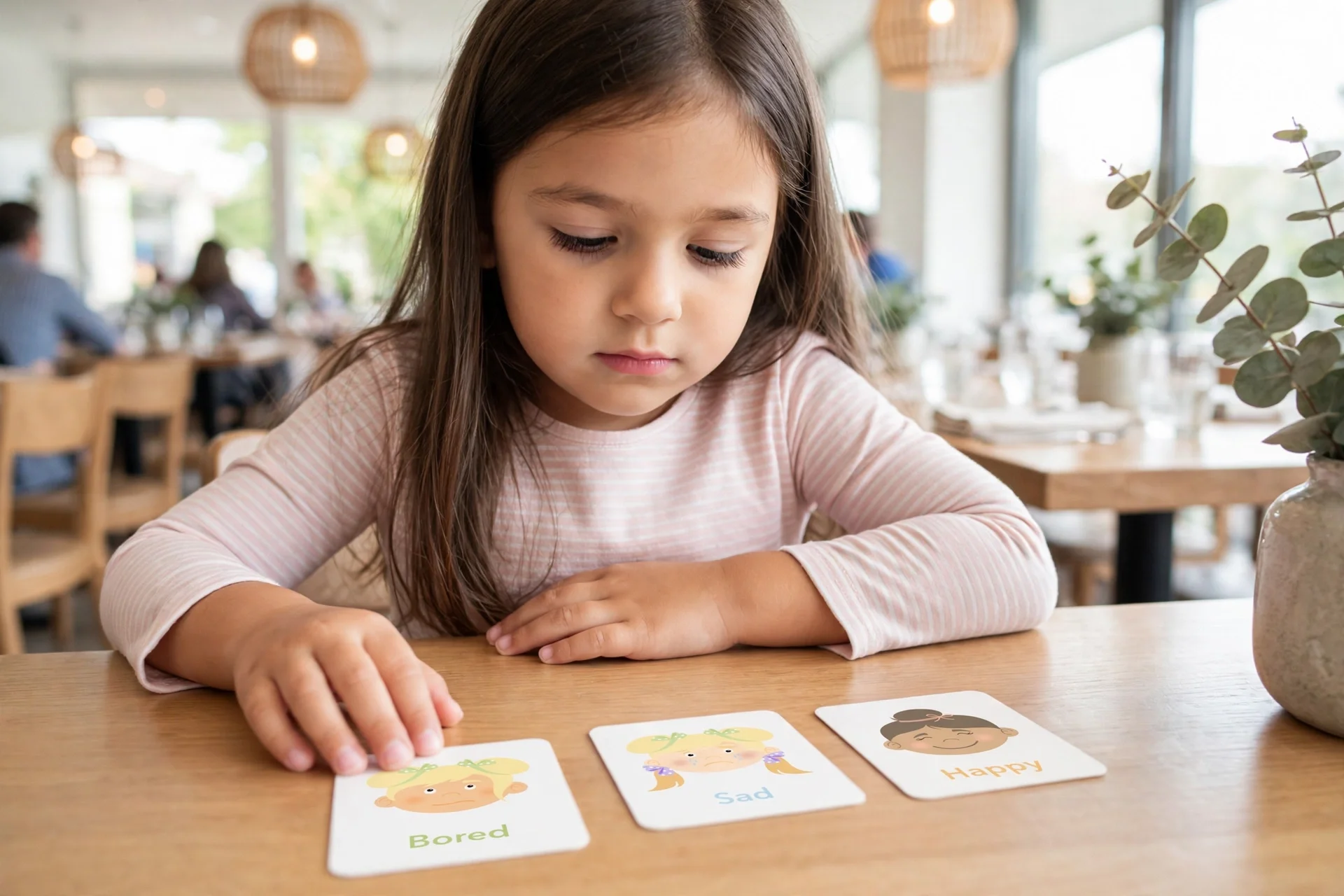
The fifteen minutes before the food arrives are prime meltdown territory. Spread three small cards on the table instead: "Find the worried face." "Show me excited." It fills the wait with a game that builds vocabulary — and it's a lot quieter than a tablet at full volume.
5. Match game, anywhere
Any flat surface works: lay out pairs face-down and flip two at a time. It starts as a memory game and ends as a feelings conversation — "You found two sads! When do you feel sad?" Our Emotions Flashcards were made for this, with English and Spanish emotion words on every card.
What age is this best for?
Around age 2 and up. Younger toddlers can start with just happy, sad, and angry; add the trickier ones (confused, worried, embarassed) as their vocabulary grows.
How many cards should I bring?
Three or four is plenty. Too many choices overwhelm a toddler mid-errand — depth beats breadth.
What if my toddler just wants to chew the cards?
Totally normal under two. Hand them one card as the "chew card" and play with the rest — or stick to mirror faces until the mouthing phase passes.
Do I correct wrong answers?
Gently, and rarely. Reflect what you see instead: "Hmm, your face looks a little droopy — could that be sad?" Modeling beats correcting.
The deck that goes everywhere
These games run on good visuals. Our Emotions Flashcards ($15) give toddlers the faces and words — English and Spanish labels, sized for little hands and diaper bags. For the at-home version of this work, see our emotions activities guide and our calming corner setup.