
Fall Frozen Sensory Bin: A Pastel Fall + Frozen Sensory Bin for Little Hands
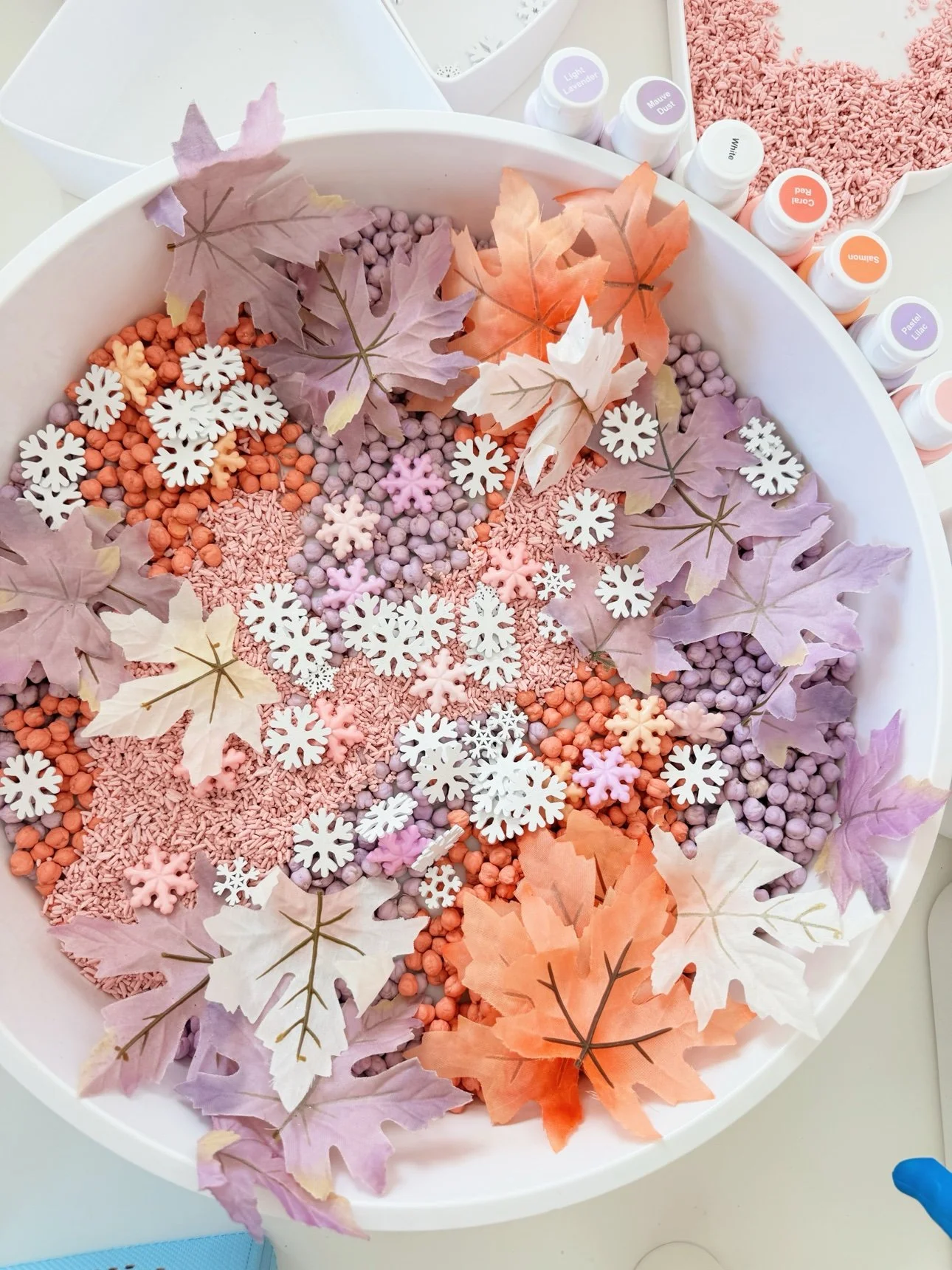
Half falling leaves, half swirling snow — this fall frozen sensory bin mashes up autumn and Frozen into one pastel bin your kids will want to dig into for weeks. Pastel dyed chickpeas, blush pink rice, faux fall leaves, snowflake sprinkles, and a few favorite Frozen characters. We set this one up today and it stayed a play table favorite well past lunch.
What makes this bin special
Most Frozen sensory bins are all winter — blue rice, silver glitter, done. This one borrows the fall half of the Frozen 2 palette: salmon and lilac chickpeas, pink rice, and fall leaves in ivory, blush, and burnt orange, with snowflake accents scattered in like the first frost. It's the exact color story from our pantry and craft bin, and it photographs like a dream without a single drop of glitter glue.
What you need
- Large white bowl or tray — the bin itself (we used a big white serving bowl)
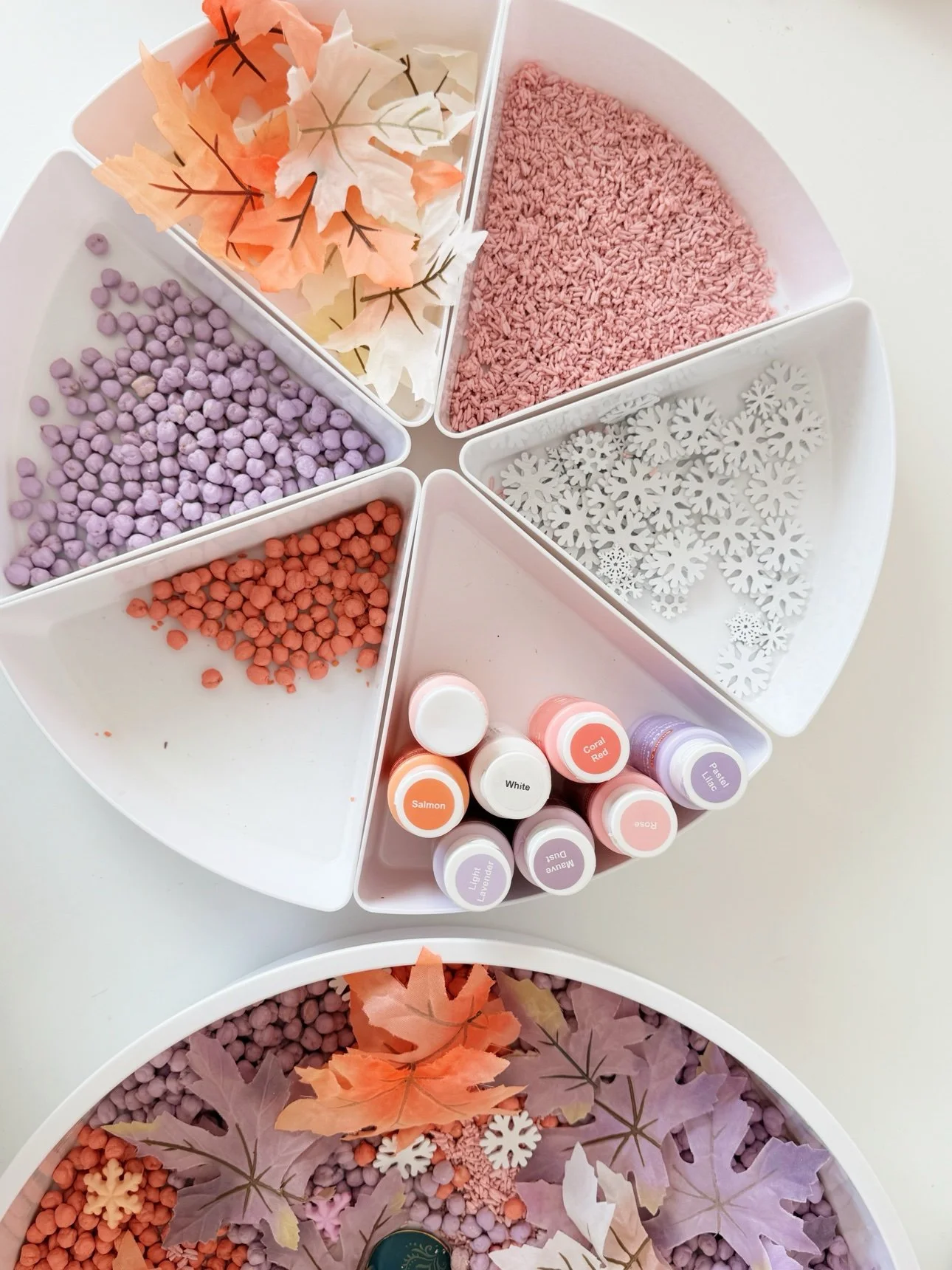
- White compartment tray — for the pre-mix display + ongoing refills
- Dried chickpeas — about 2 cups each for salmon and lavender
- White rice — about 2 cups for the blush pink rice
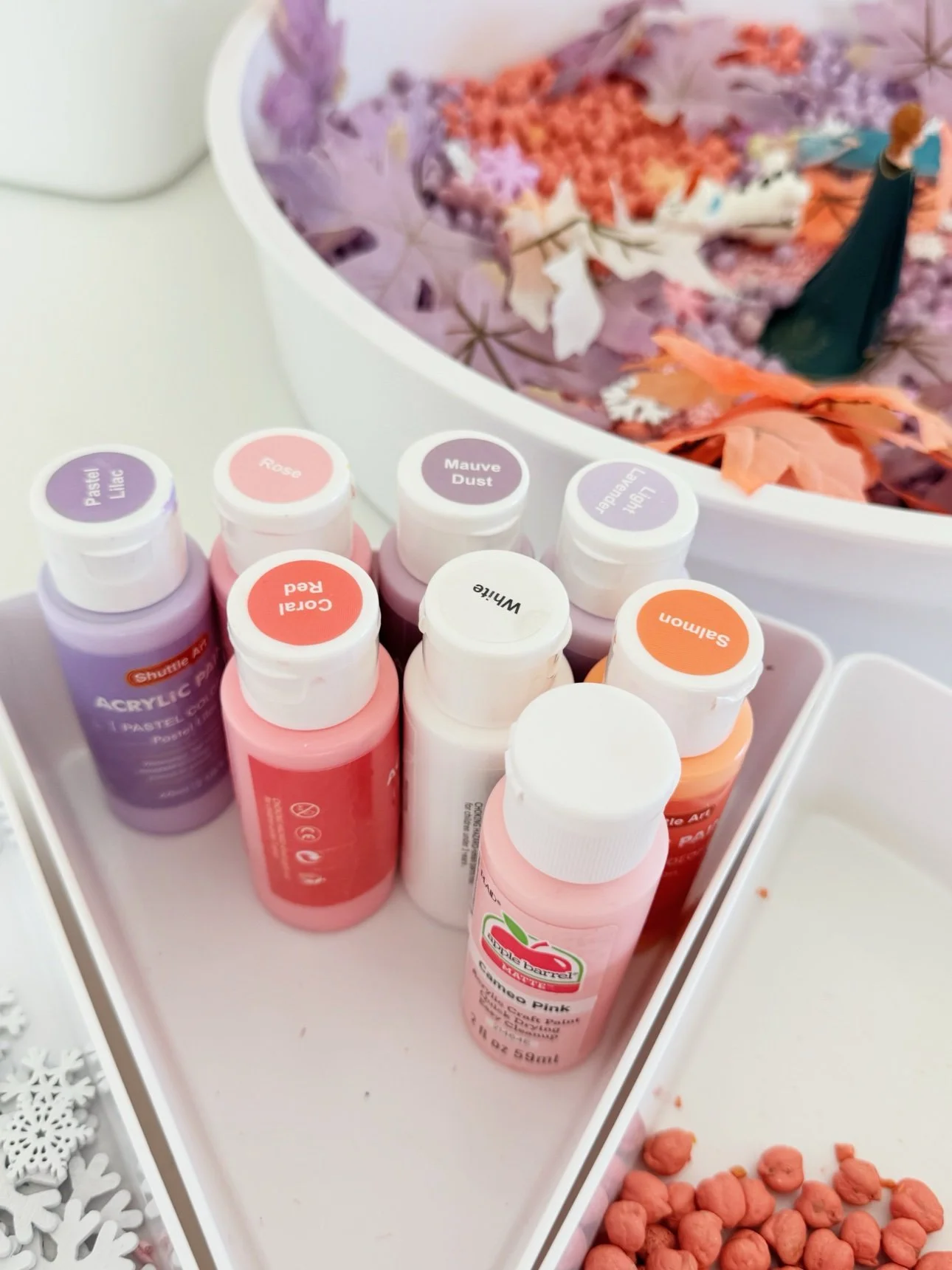
- Pastel acrylic paint — we used coral red (for the salmon chickpeas), pastel lilac/lavender, rose, white, and cameo pink
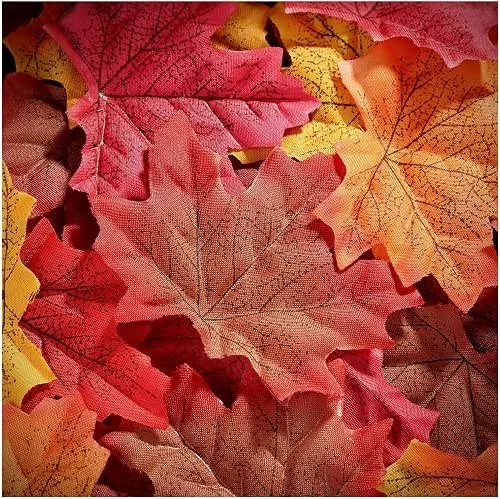
- Faux fall leaves — ivory/cream, blush, lavender, and orange sets
- Snowflake accents — white wooden snowflakes + pastel snowflake buttons
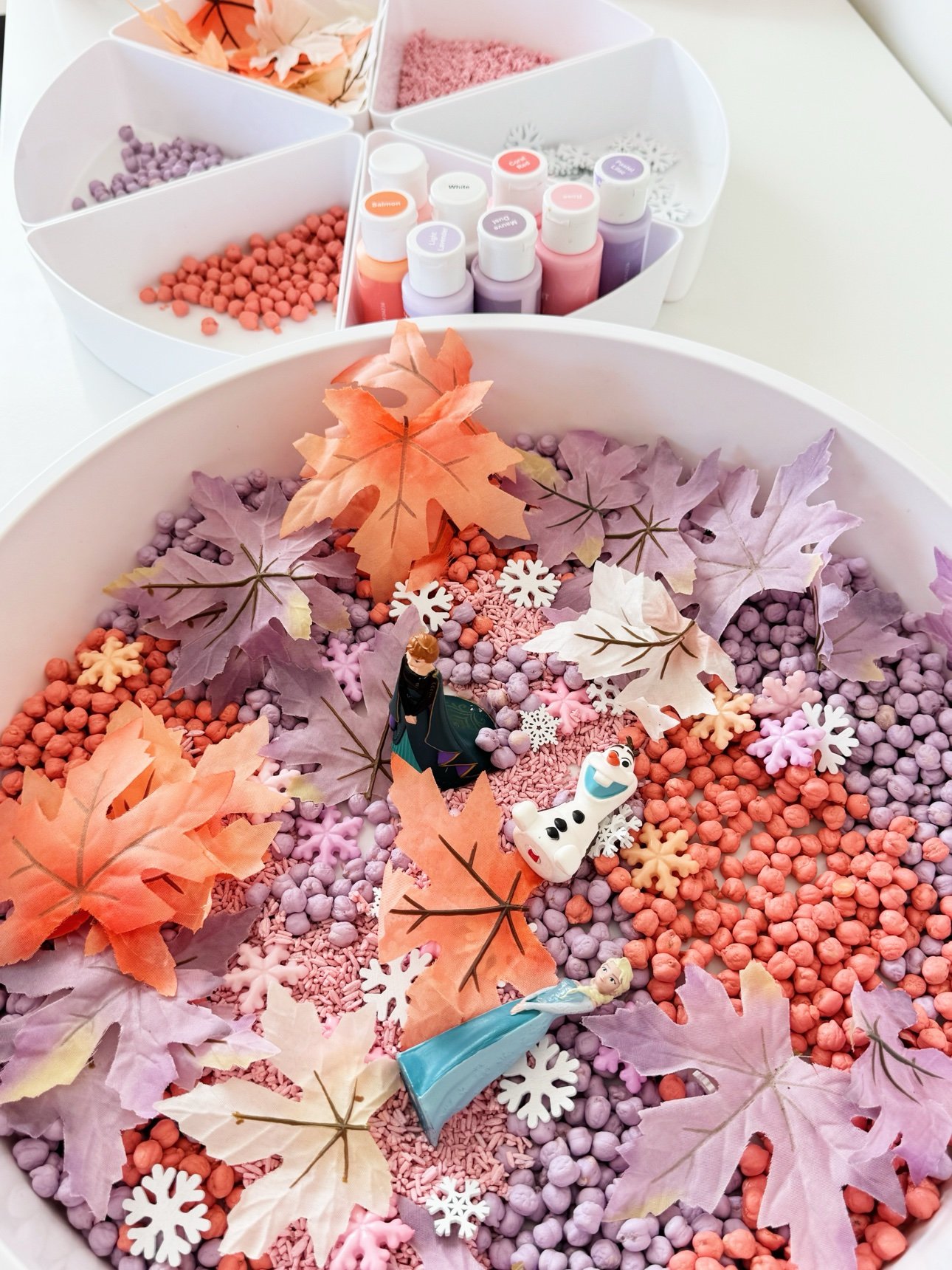
- Frozen figurines — Anna, Elsa, and Olaf for small-world play
- Ziplock bags + a lined tray — for dyeing and drying the fillers
How to dye the chickpeas and rice
Dyed fillers are the whole secret of this bin, and they take about 15 minutes of active work plus drying time. One method for both:
- Pour 2 cups of dried chickpeas (or white rice) into a large ziplock bag.
- Add a generous squirt of acrylic paint — coral red for the salmon chickpeas, pastel lilac for the lavender, rose/cameo pink for the rice. Start with less; you can add more.
- Seal the bag and shake and squish until every piece is evenly coated. Add a splash more paint for deeper color.
- Spread in a single layer on a parchment-lined baking tray and let dry completely — usually 1–2 hours. Give them a stir halfway so no side stays damp.

Taste-safe swap: acrylic paint is not edible. If your player still mouths everything, dye with food coloring + a splash of white vinegar instead of acrylic — the color won't be quite as matte-pastel, but the bin stays mouth-safe.
How to set it up
- Pour the salmon chickpeas, lavender chickpeas, and pink rice into the big bowl in drifts — don't mix yet, the color bands are half the fun.
- Tuck in the faux leaves around the edges in little clusters — orange by the salmon chickpeas, ivory and lavender leaves wherever they land prettiest.
- Scatter the wooden snowflakes and pastel snowflake buttons over the top like the first frost.
- Stand Anna, Elsa, and Olaf in the middle and let the scene tell itself.
Ways to play
- Sort by color: scooping all the lilac chickpeas into one compartment is sneaky math (sorting + classifying).
- Rescue mission: bury Olaf in the pink rice and dig him out with little hands — no tools needed, fingers do the work.
- Snowfall leaves: drop leaves from above and narrate the "first frost" — instant small-world storytelling with Anna and Elsa.
- Snowflake counting: pull out the pastel snowflake buttons one at a time and count them — the chunky buttons are perfect for little pinch grips.
- Pour and refill: transfer fillers between the bowl and the compartment tray with scoops or cups for scooping practice.
Skills hiding inside the play
- Fine motor: scooping, pouring, pinching snowflake buttons, and digging out buried figures build hand strength and control.
- Color recognition + sorting: naming and separating salmon, lilac, pink, and white is early math disguised as play.
- Imaginative play: Frozen characters in a fall landscape invite original storytelling, not just movie retelling.
- Sensory exploration: smooth chickpeas vs. grainy rice vs. papery leaves vs. chunky snowflakes — four textures in one bin.
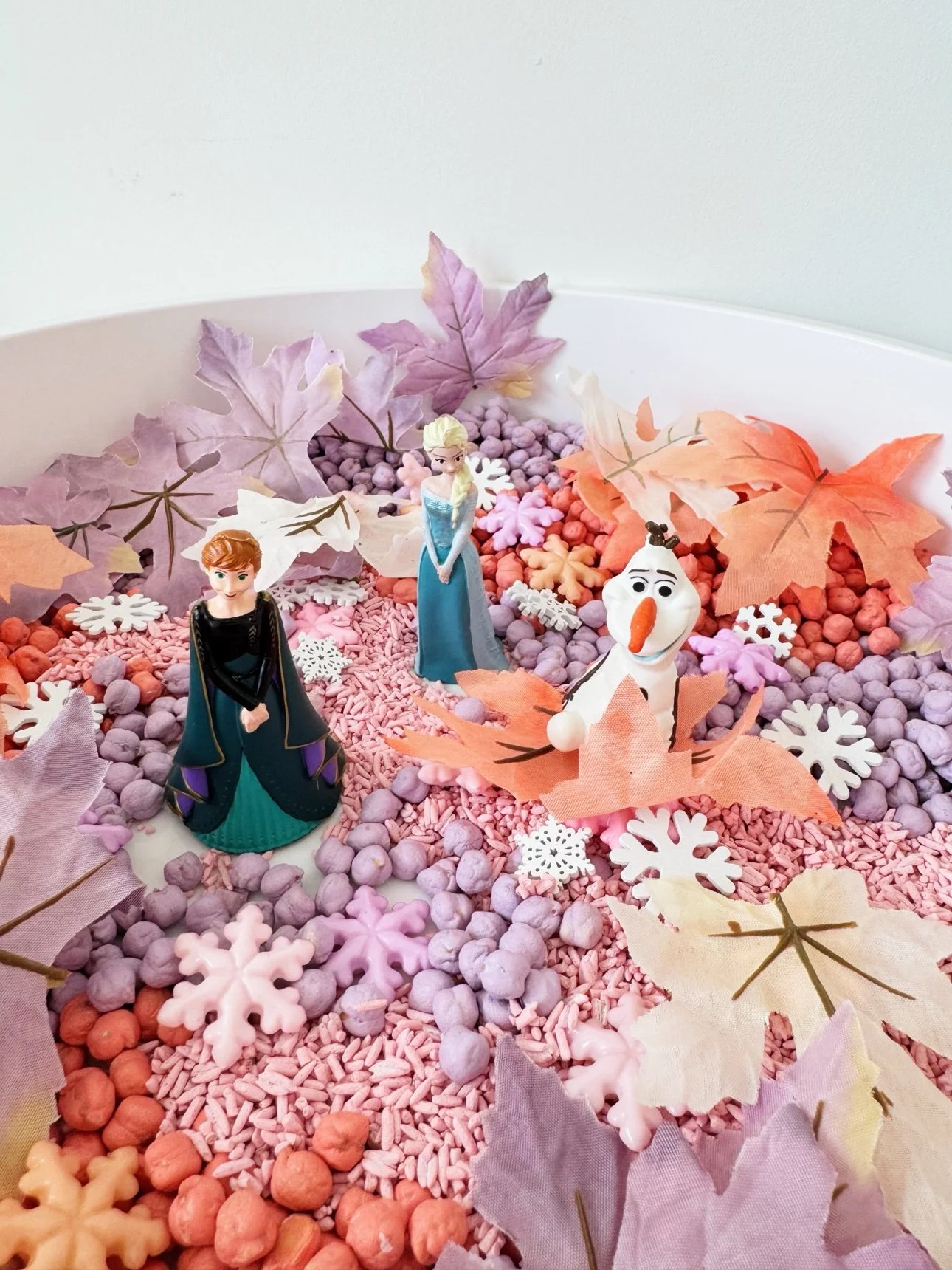
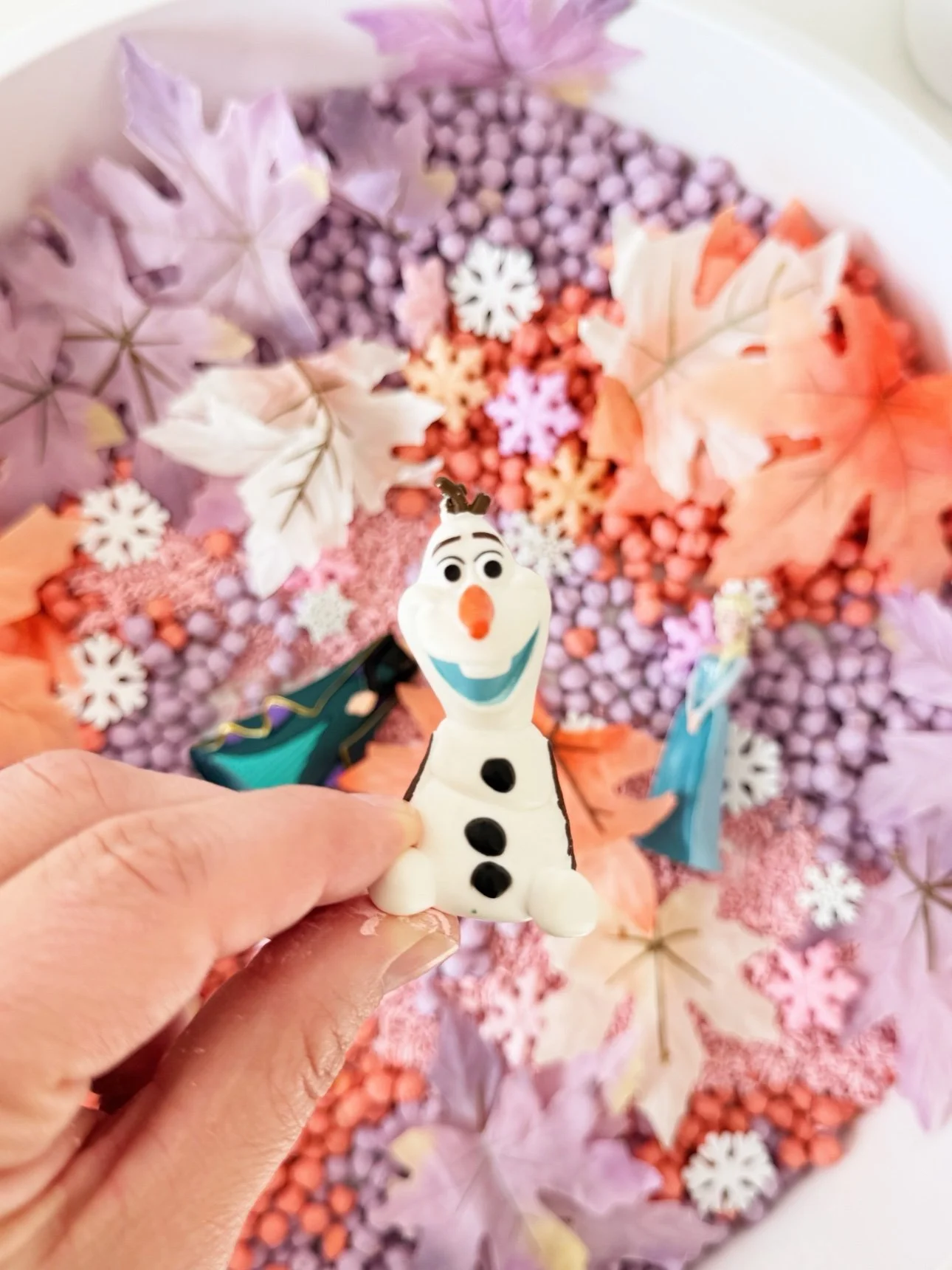
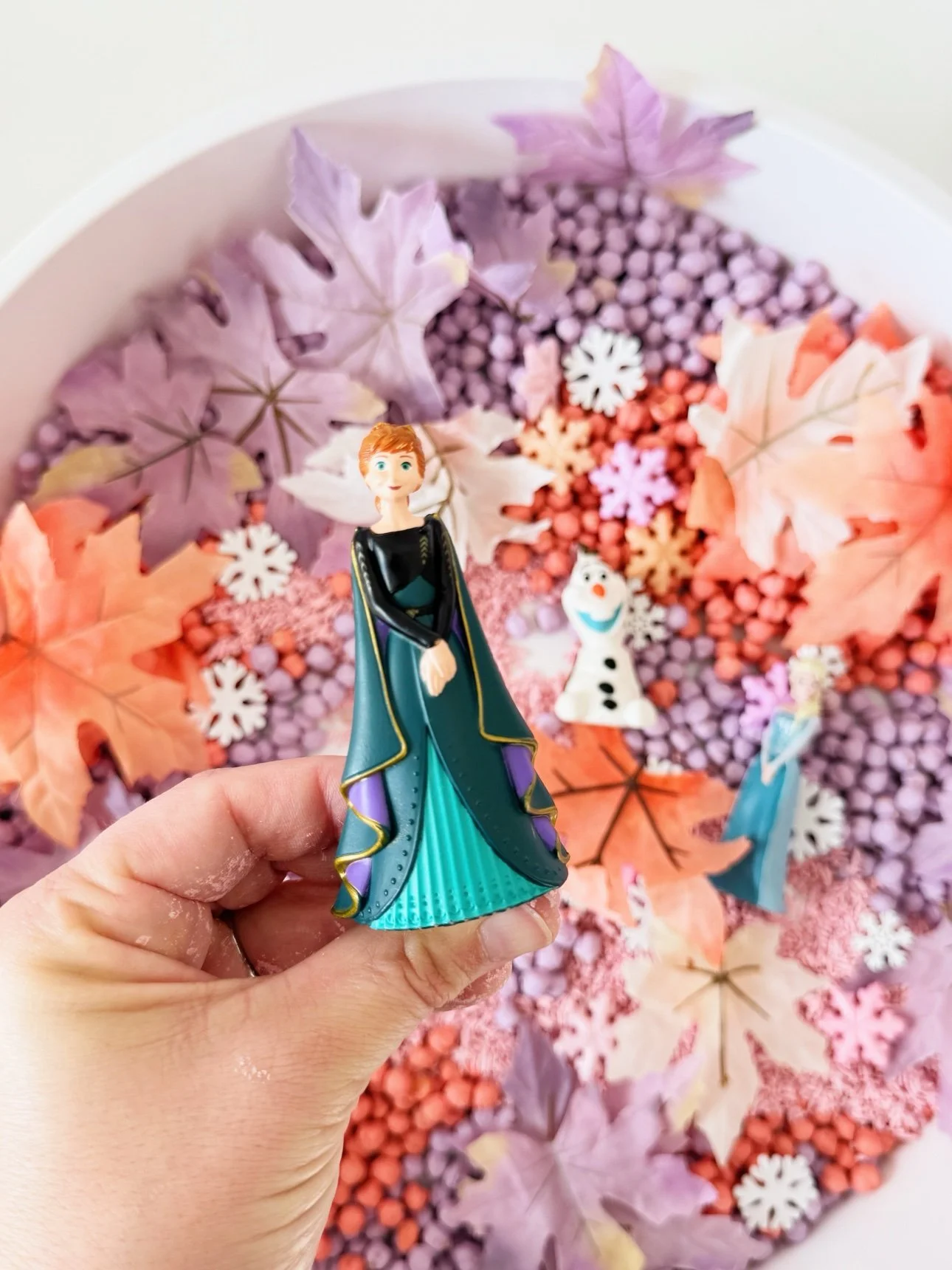
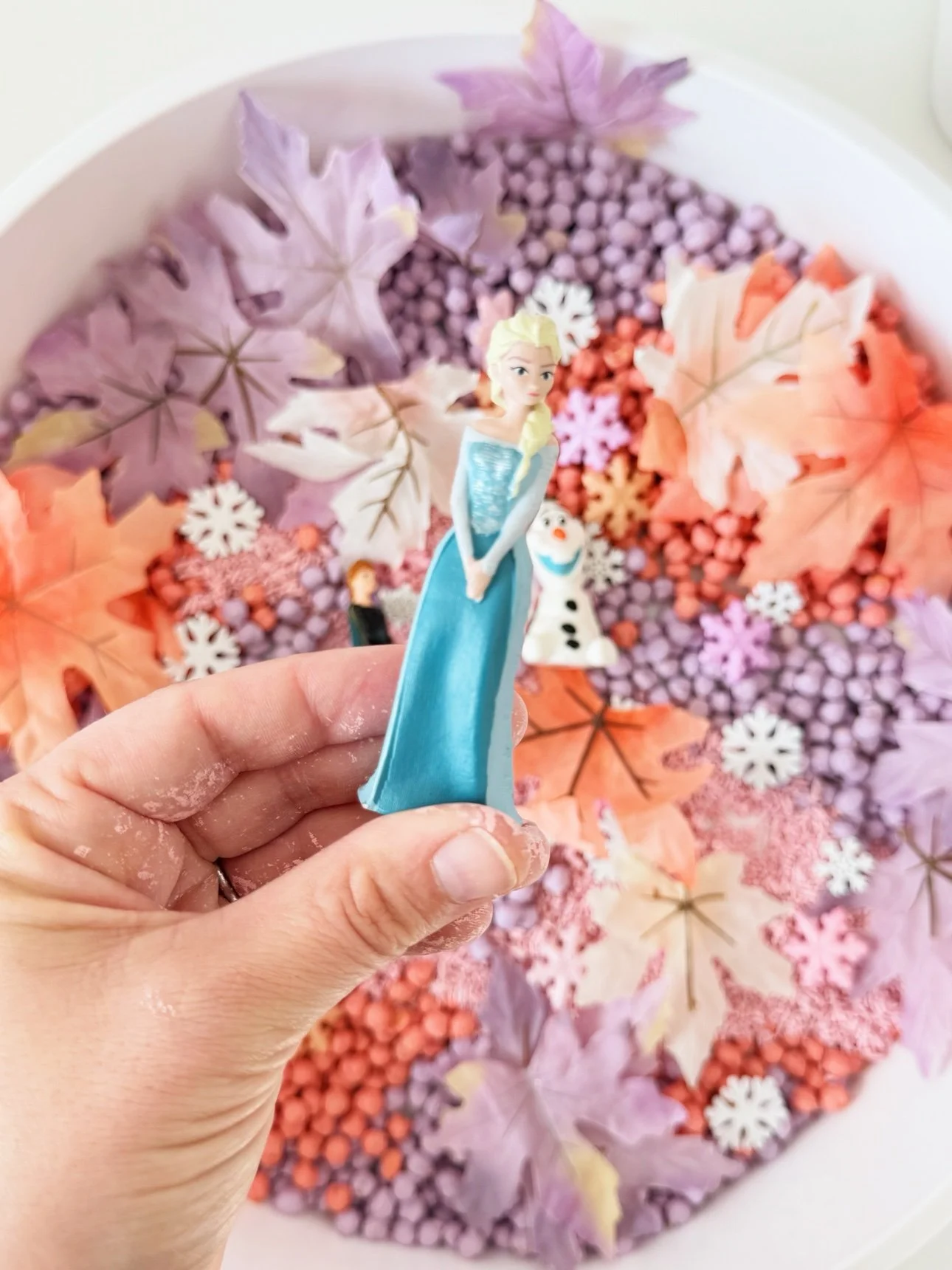
Meet the Frozen crew — Olaf, Anna, and Elsa.
Storage + cleanup tips
- Store dry fillers in jars or ziplock bags — dyed chickpeas and rice keep for months and re-set beautifully.
- Keep a refill tray: we left the compartment tray loaded so topping up the bowl takes ten seconds.
- Play on a sheet: chickpeas roll. A flat bedsheet under the bin catches escapees and makes cleanup a two-minute shake-out.
- Refill the leaves seasonally: swap in evergreen sprigs for winter or pastel eggs for spring and the bin gets a second life.
Shop this bin
Everything we used to make this fall frozen sensory bin — if you'd rather not hunt it down. (Send me your exact product links anytime and I'll swap them in.)
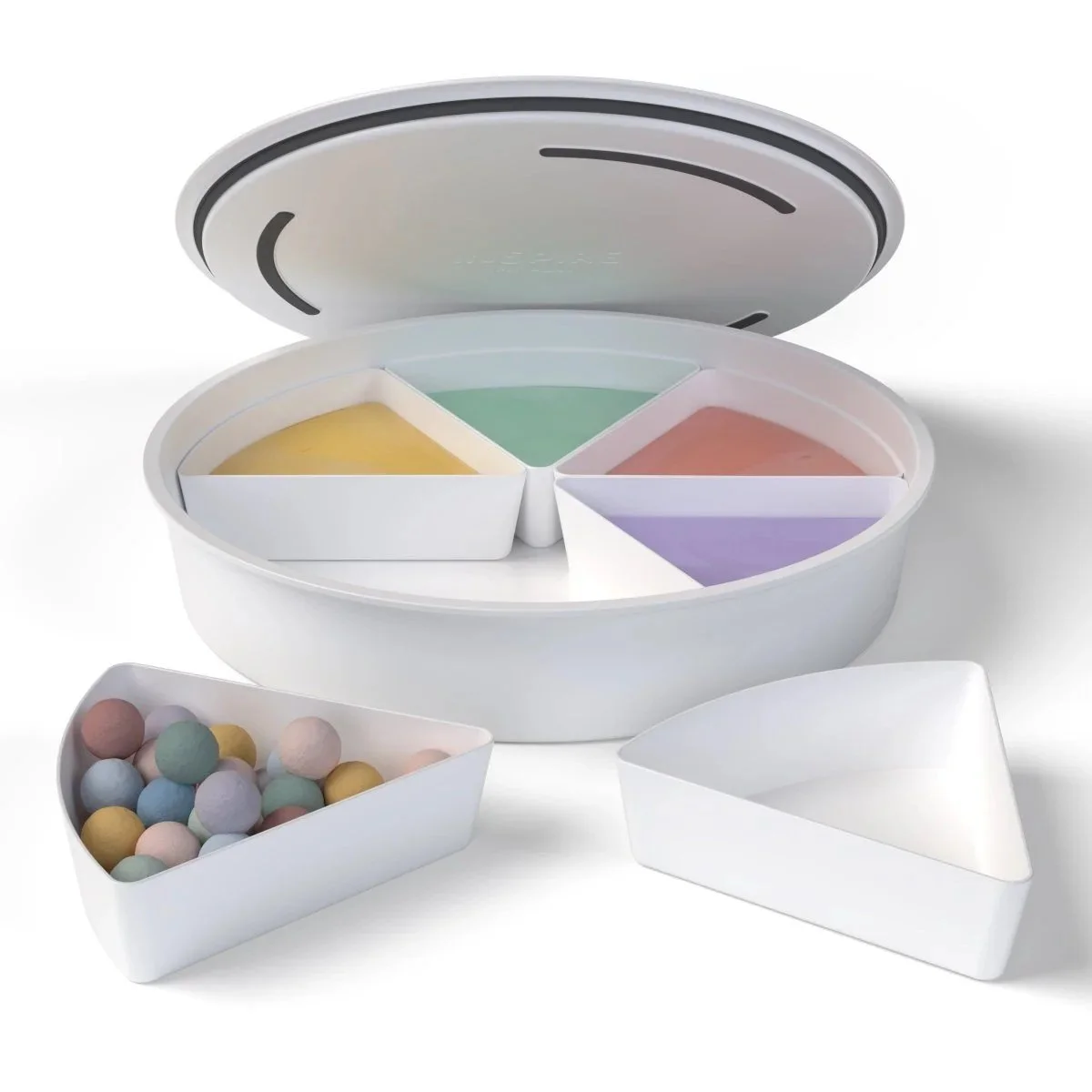
Inspire My Play PlayTRAY
The white sensory tray with six removable compartments we stage everything in — also doubles as refill storage.
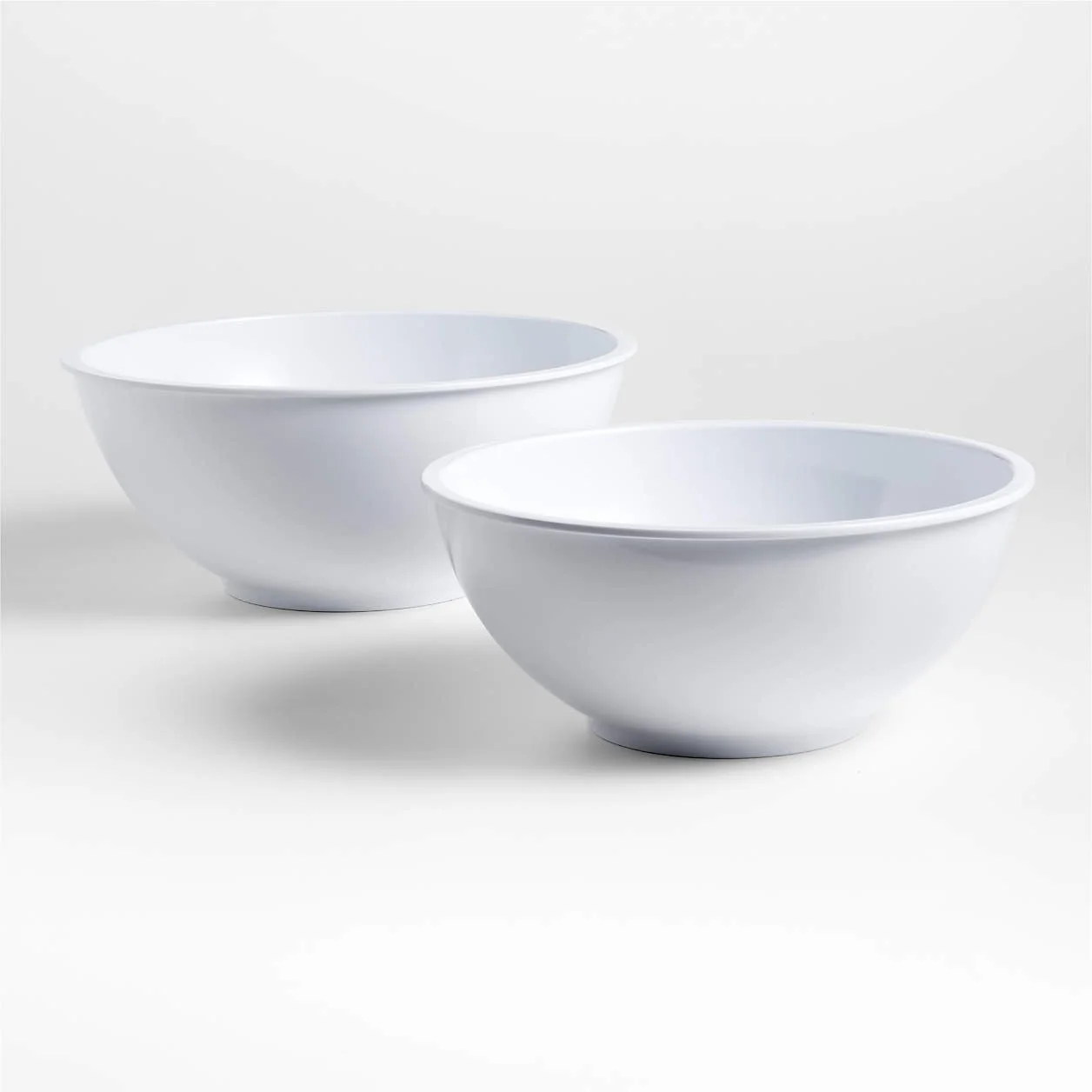
Large white serving bowl
The bin itself — wide and shallow so little hands can reach everything.
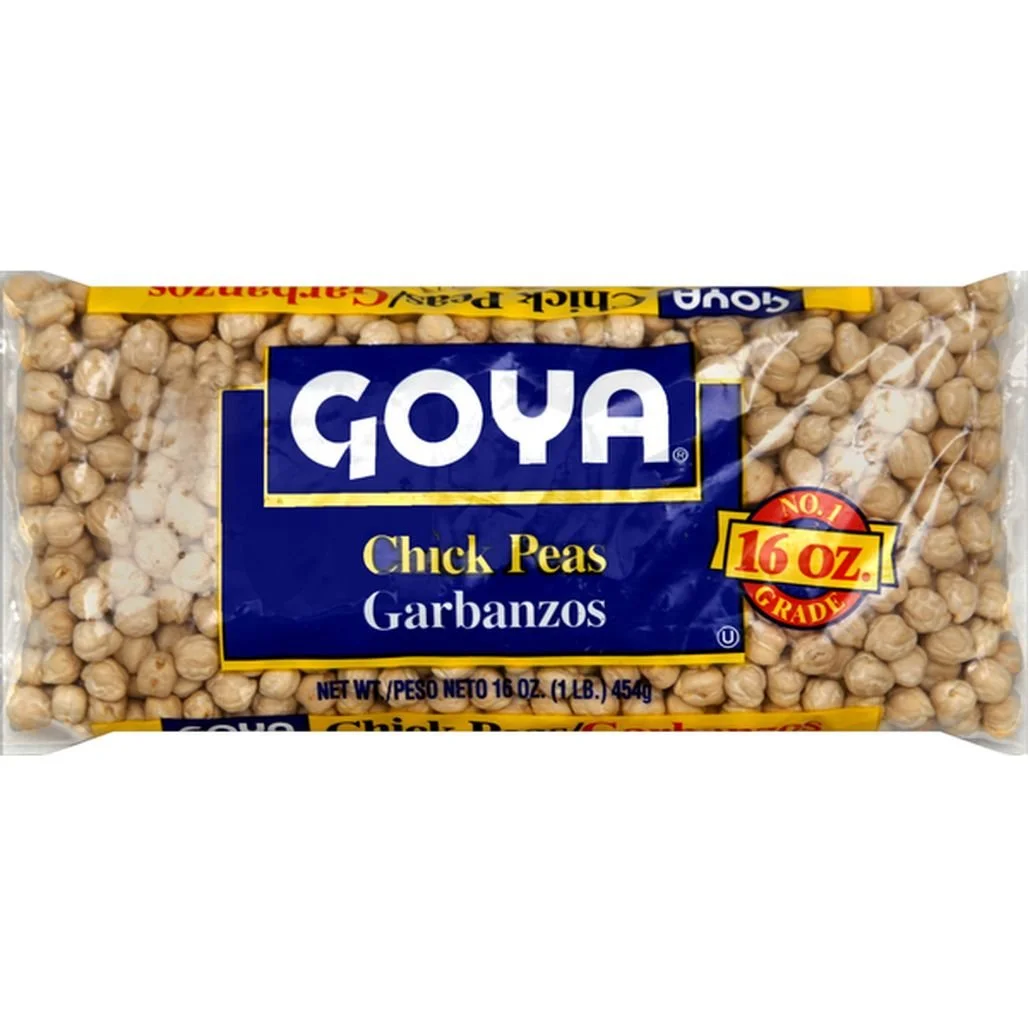
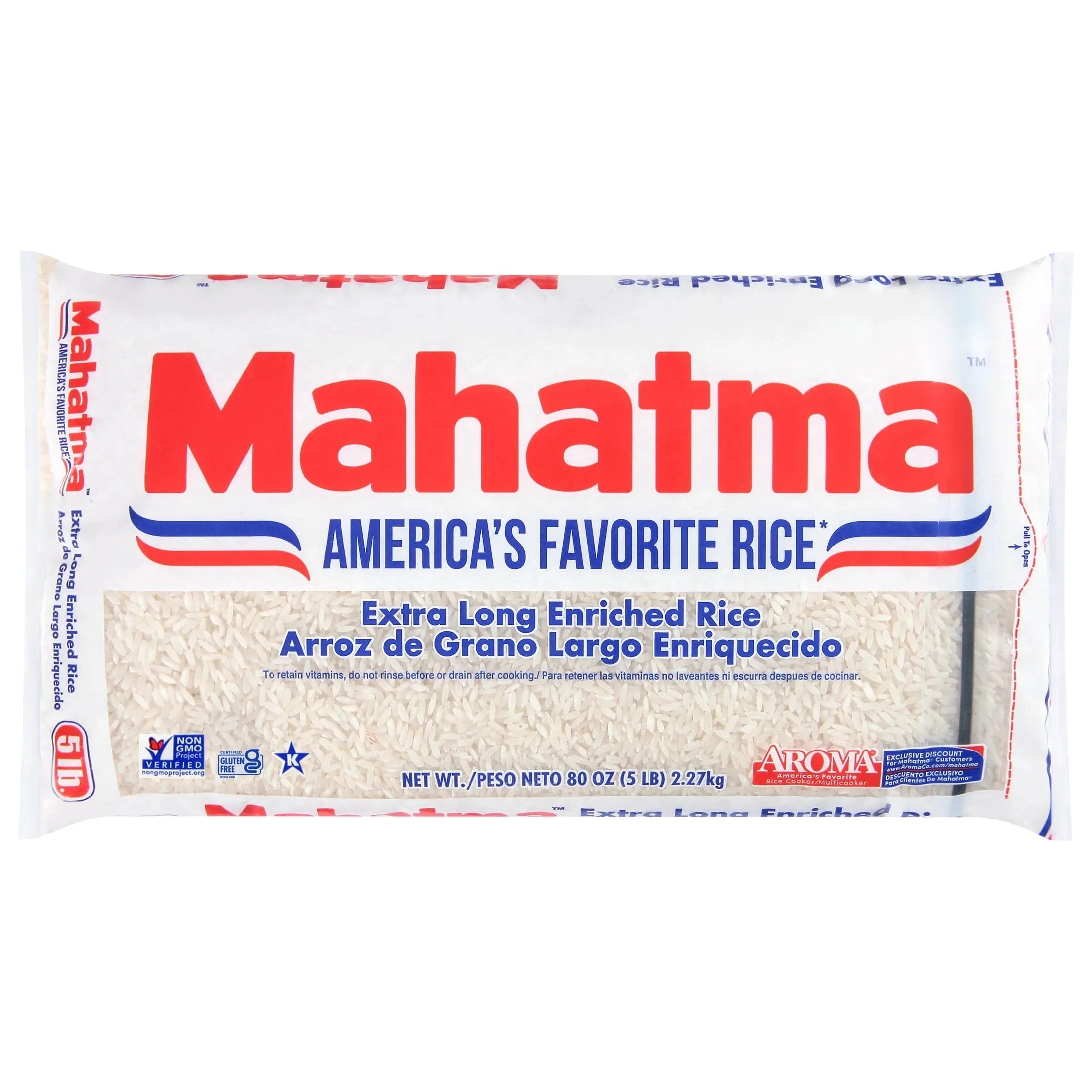
White rice (for dyeing)
Plain white rice dyes beautifully into that blush pink filler.
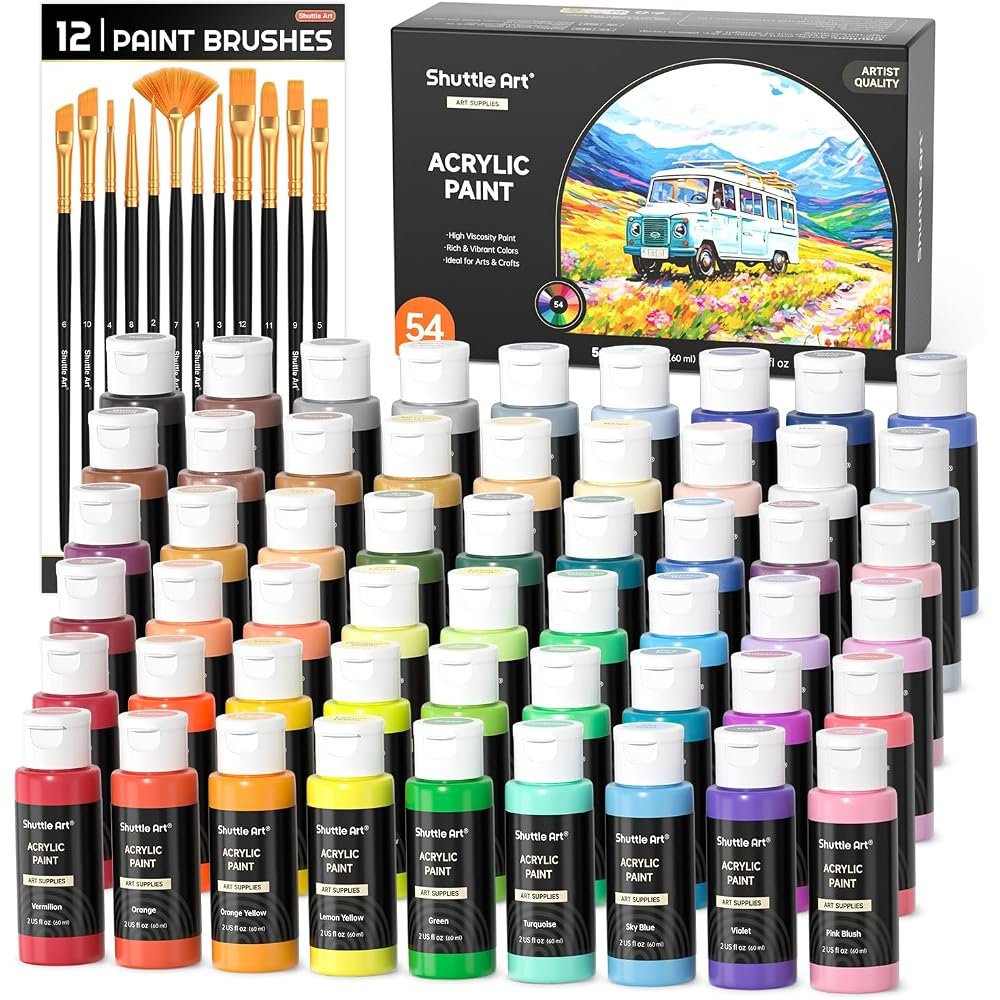
Pastel acrylic paint set
We used Shuttle Art pastel acrylics — lilac, rose, mauve, coral red, salmon, and white for the whole palette.
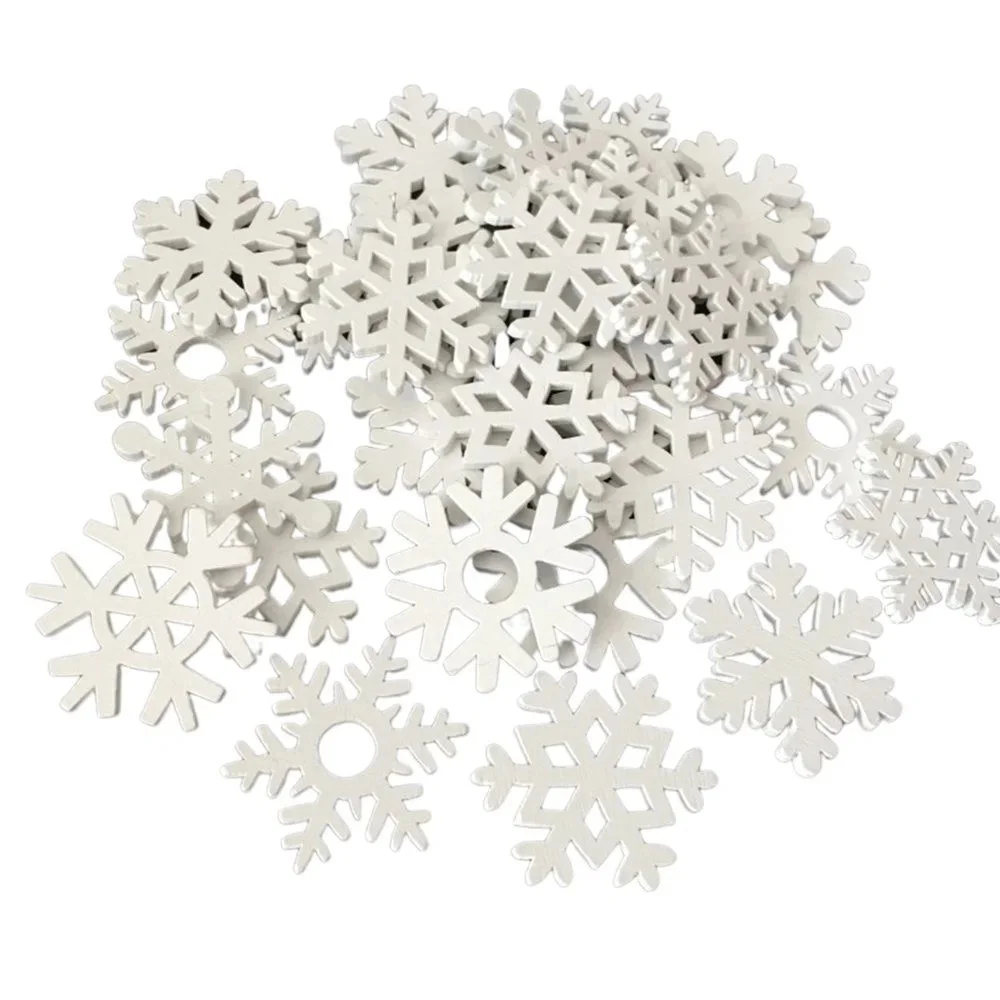
Snowflake decorations
White wooden snowflakes — scatter them over the top like the first frost.
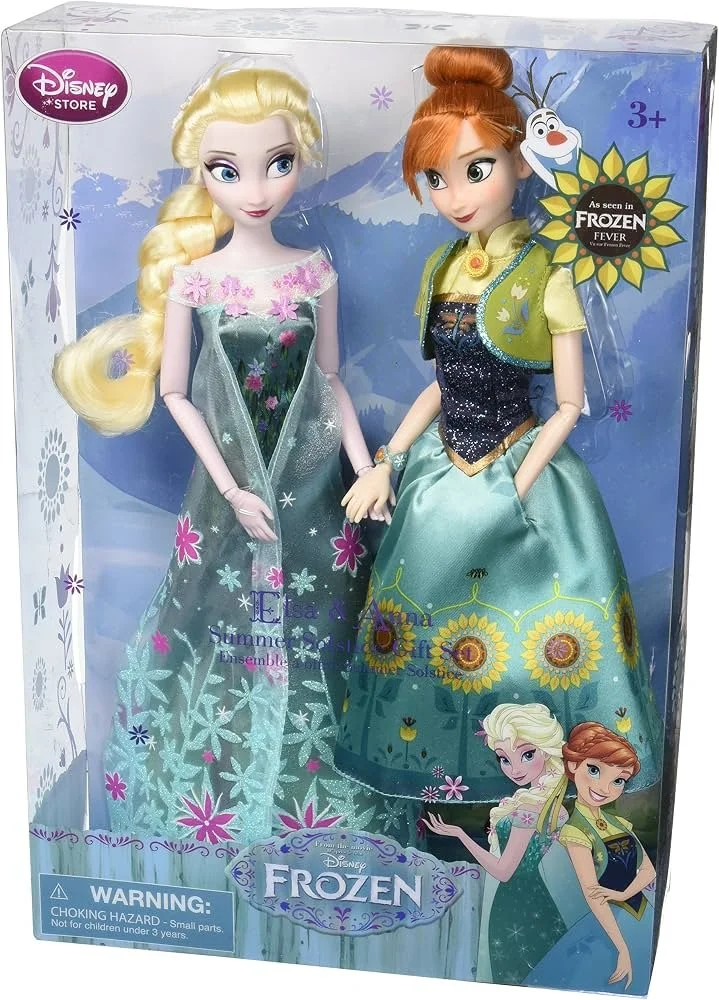
Frozen figurines (Anna, Elsa, Olaf)
A Disney Store Frozen figure set — the stars of the small-world scenes.
Some links are affiliate links. We only share things we actually use.
How do you dye chickpeas for a sensory bin?
Shake dried chickpeas in a ziplock bag with acrylic paint until evenly coated, then spread in a single layer on a parchment-lined tray to dry for 1–2 hours. For a taste-safe version, swap the acrylic for food coloring + a splash of white vinegar.
How long does this sensory bin take to set up?
About 20 minutes once your fillers are dyed and dry. Dyeing the chickpeas and rice is 15 minutes of active work plus 1–2 hours of drying time, so do the fillers the night before.
Is this sensory bin taste-safe?
As shown, no — acrylic paint is not edible, so it's best for kids who don't mouth play materials, with active adult supervision. For mouthers, dye everything with food coloring + vinegar instead.
How long do dyed chickpeas and rice last?
Months. Store them dry in jars or ziplock bags and they'll re-set beautifully for future bins — swap the leaves and figurines and you have a whole new theme.
What ages is a fall frozen sensory bin good for?
Ages 2–6 is the sweet spot. Toddlers scoop, pour, and explore textures; preschoolers add sorting, counting, and elaborate small-world stories with the Frozen characters.