
Fine Motor Activities for Toddlers: 8 Playful Ways to Build Strong Little Hands
If your toddler flings a crayon after three scribbles, can't get the bead onto the string, or gets frustrated trying to open snack bags — you are not behind, and neither is your child. Little hands are still under construction. Fine motor skills (the small, precise movements of the hands and fingers) build slowly through thousands of tiny, playful repetitions — and the kitchen table is a better gym for them than any worksheet.
What "fine motor skills" actually means (and when they show up)
Fine motor skills are the small, controlled movements of the hands and fingers — picking up a Cheerio between thumb and forefinger, turning a page, stacking a block. Occupational therapists describe them unfolding in a predictable rough order: a whole-hand palmar grasp in the first months, a pincer grasp (thumb + forefinger) emerging around the first birthday, then stacking, scribbling, and self-feeding through the second year, and by ages 2–3: stringing large beads, imitating circular and straight strokes, rolling and squeezing playdough, and holding a crayon with thumb and fingers rather than a full fist (paraphrased from the Kid Sense Child Development fine motor chart).
That order matters more than any single age — milestones are a benchmark, not a deadline. A 2-year-old who can stack three blocks but can't string beads yet isn't "behind"; they're simply still practicing the bead step. And everything builds on everything: the shoulder and wrist strength from big-arm play, the hand strength from squeezing dough, and the precision of that pincer grasp all combine into the hand control that later makes crayons, scissors, and pencils feel easy. Our scissor skills guide and pre-writing activities guide continue this progression as your child's hands grow stronger.
When she was little, our fine motor practice never looked like "exercises." It looked like a tray of playdough while dinner cooked, pom-poms being moved from bowl to bowl for no reason at all, and stickers stuck absolutely everywhere except where they belonged. That's the spirit of everything below: eight playful ways to put those little hands to work, ranked from easiest to set up to the ones that need two minutes of prep.
8 fine motor activities for toddlers
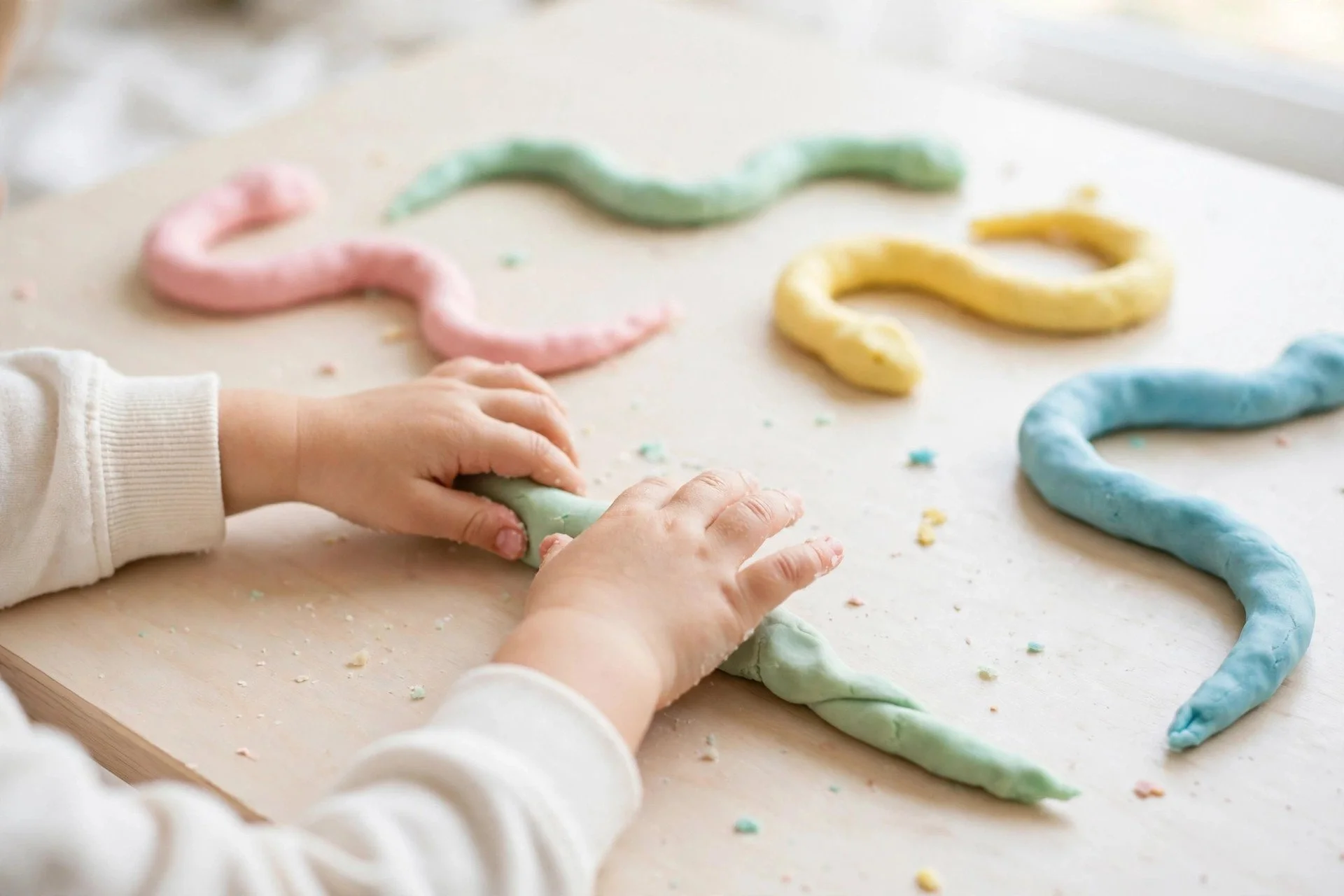
1. Playdough squeezing, rolling, and pulling
The single friendliest fine-motor gym there is. Squeezing a ball of dough, rolling snakes, pinching off bits, pulling pieces apart — every one of those movements loads the small hand muscles that later keep a crayon moving without fatigue. Keep a small lump out on the counter during dinner prep; two minutes of rolling while you chop is more practice than one long "playdough session" that overstays its welcome.
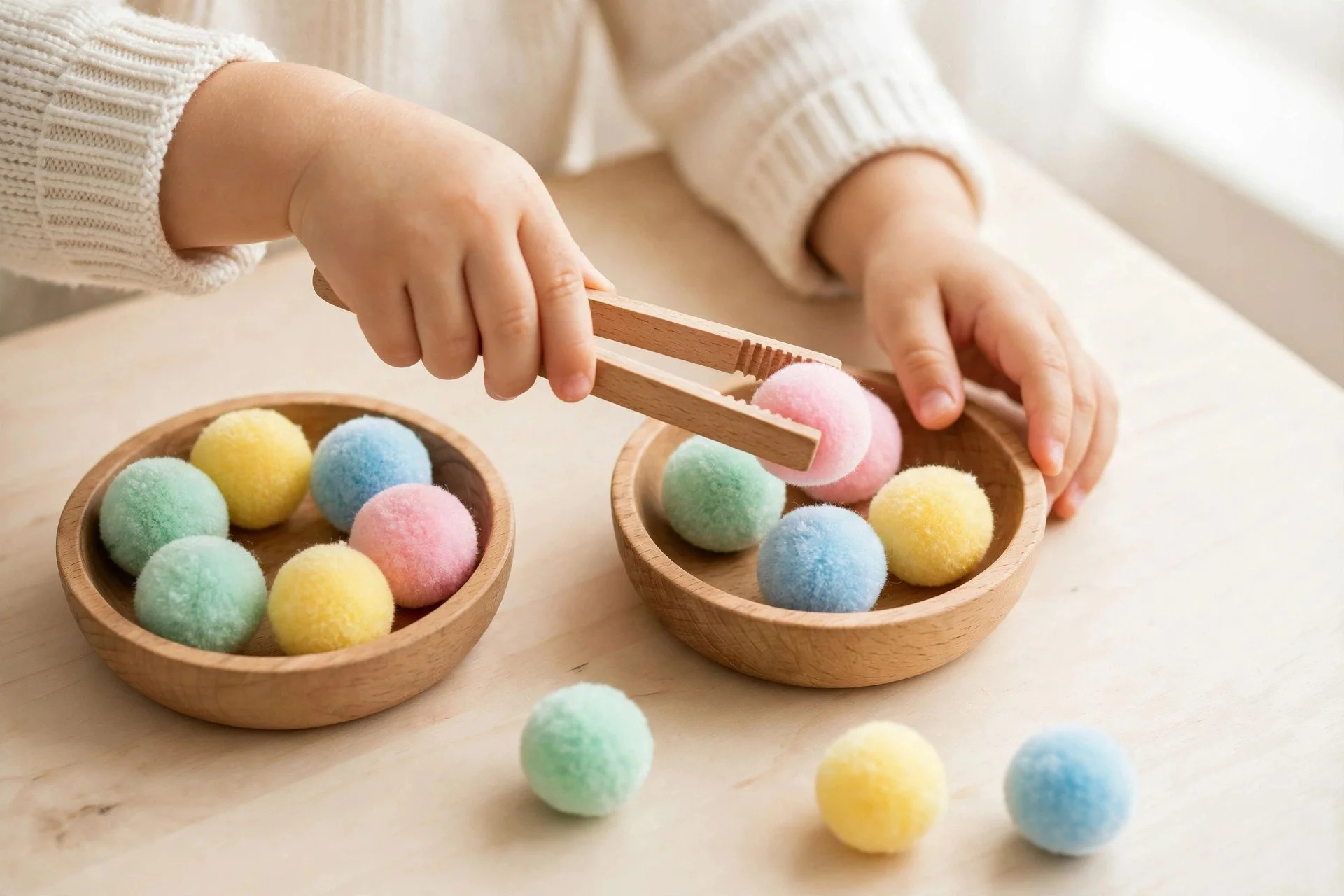
2. Pom-pom transfer with kitchen tongs
Drop a handful of pom-poms in one bowl, put an empty bowl beside it, and hand over toddler-safe tongs. Moving pom-poms one by one trains the pincer-adjacent squeeze-and-release pattern and teaches the hands to grade force — squeeze too hard and the pom-pom shoots across the room, which is honestly the best part. When she was little, this bought us a full ten minutes of absorbed quiet, which I considered a major household achievement.
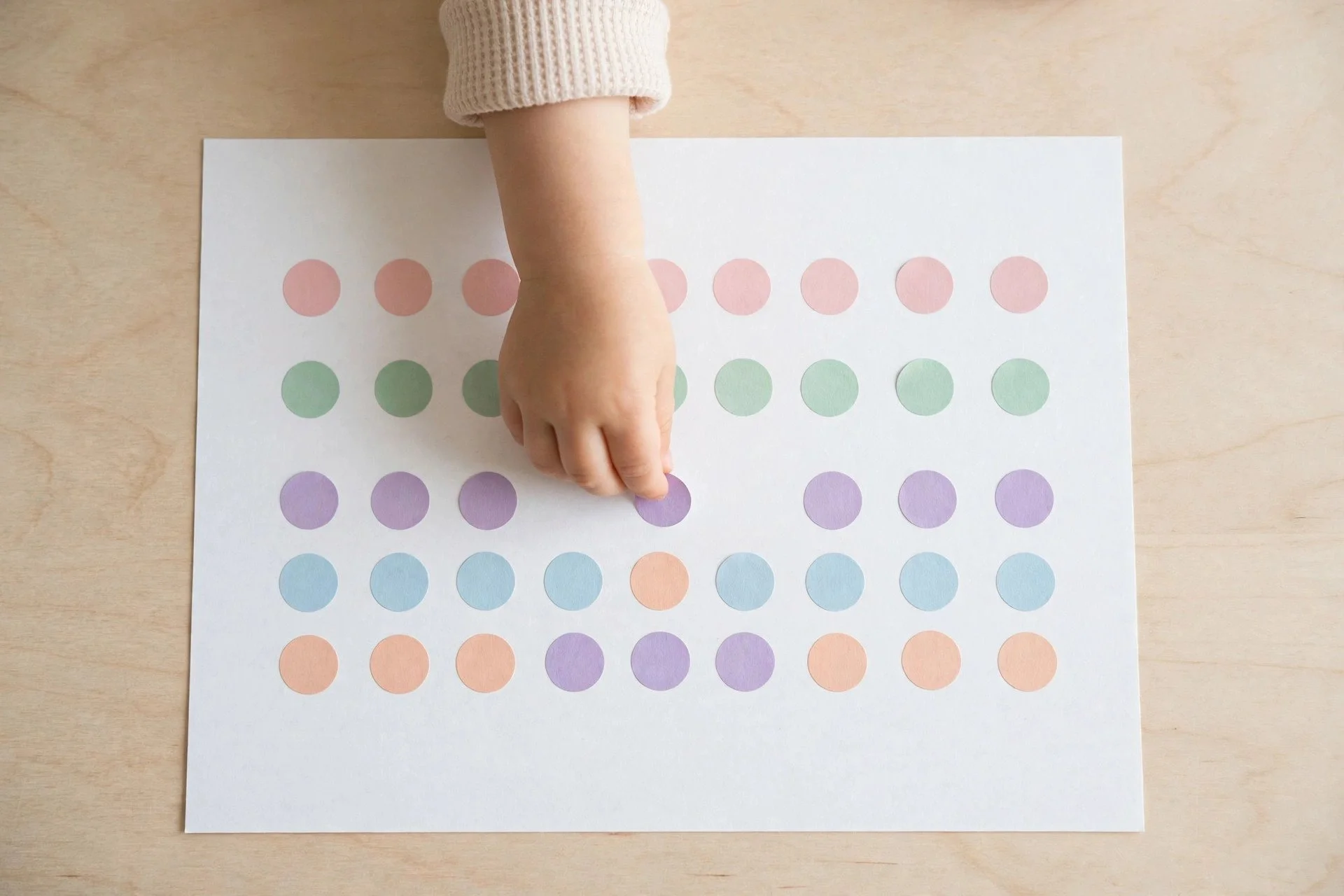
3. Dot stickers on paper (our counting favorite)
Peeling dot stickers is one of the best fine-motor exercises hiding in the craft aisle — that tiny edge requires real fingertip precision, and placing each sticker exactly where they want it is pure eye-hand control. We did this with plain paper and a sheet of colored dot stickers, and kept our Number Dot Cards beside the paper so she could count along as she stuck. Important setup note: stickers go on the paper, with the cards beside it as the counting guide — the cards stay sticker-free.
4. Stringing big beads (the classic for a reason)
Threading large beads onto a pipe cleaner or a stiff shoelace is the activity occupational therapists keep coming back to, because it demands everything at once: two hands doing different jobs, eyes tracking a small target, fingers feeding a wobbly string through a hole. Start with big wooden beads and a pipe cleaner — the stiffness does half the work. Shorten the string if frustration rises; a pipe cleaner threaded with five beads and worn as a "necklace" is a legitimate victory.
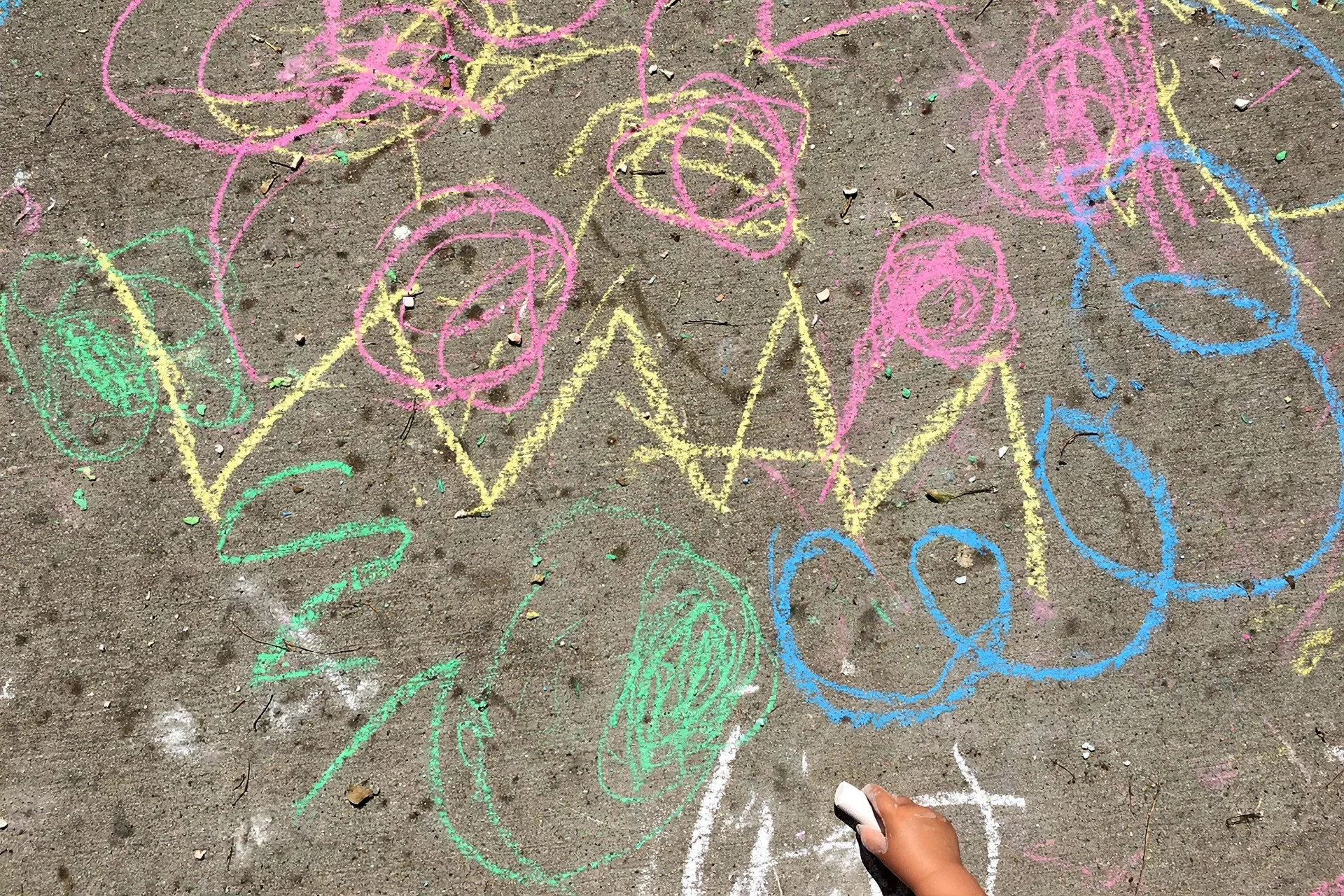
5. Chalk, crayon, and finger-paint scribbles
Scribbling is fine motor practice, full stop. Short, fat crayons and stubby chalk encourage thumb-and-fingers rather than a whole fist, and big vertical surfaces (paper taped to a wall, a fence painted with water) let the whole arm work before the fingers take over. Finger painting earns its own mention: the resistance of paint under fingertips gives the hand extra sensory feedback about pressure and movement, and the cleanup is why the bathtub exists.
6. Stacking, pegging, and sorting
Stacking blocks, pressing pegs into a pegboard, dropping coins into a slot — every "put the thing in the thing" activity trains release control, which is the quieter half of grasping. Releasing a block gently at the top of a tower without knocking it down takes more hand control than grabbing it ever did. Sorting by color or size layers in thinking skills, but the hands get their workout either way.
7. Snack-time fine motor (the daily freebie)
Mealtimes are fine motor practice that happens anyway — you just have to hand some of it over. Letting your toddler pick up small foods with fingers, scoop with a spoon, open (and close) simple containers, and peel stickers off fruit are all genuine hand workouts. The mess is real, but so is the repetition: three meals a day is more practice than any activity tray.
8. Peel-and-place stickers and tape pulls
Sticker books with chunky reusable stickers, and strips of painter's tape stuck across a tray for your toddler to peel off — both demand that fingertip pinch-and-peel motion that shows up again in dressing, feeding, and writing. If stickers migrate to the walls, the dog, and their own forehead: that's fine. Placement precision arrives later; the peeling is the workout.
Bonus: popsicle stick play ideas
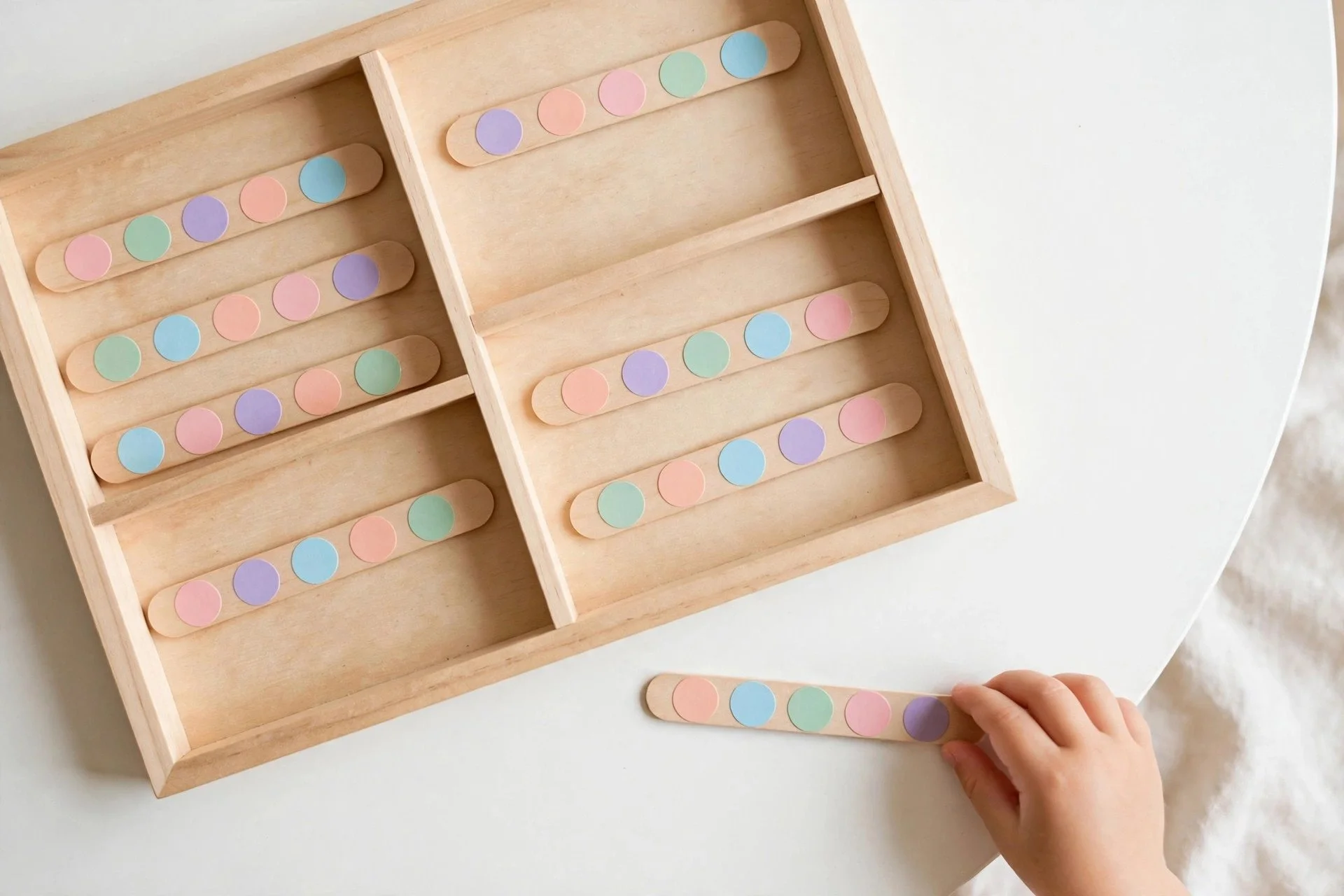
Once you have dot stickers and a bag of popsicle sticks, you get two more fine-motor games almost for free. Both keep little hands busy with peeling, pressing, and matching — and both sneak in color practice.
Dot-sticker popsicle sticks (with color matching)
Stick one row of dot stickers down each popsicle stick — keep every dot the same size, but mix up the color order on every stick so your child can sort and match by color. Peeling each tiny sticker and pressing it into a straight row is the fingertip workout; matching the color sequences turns it into a game.
Velcro dot stick chains
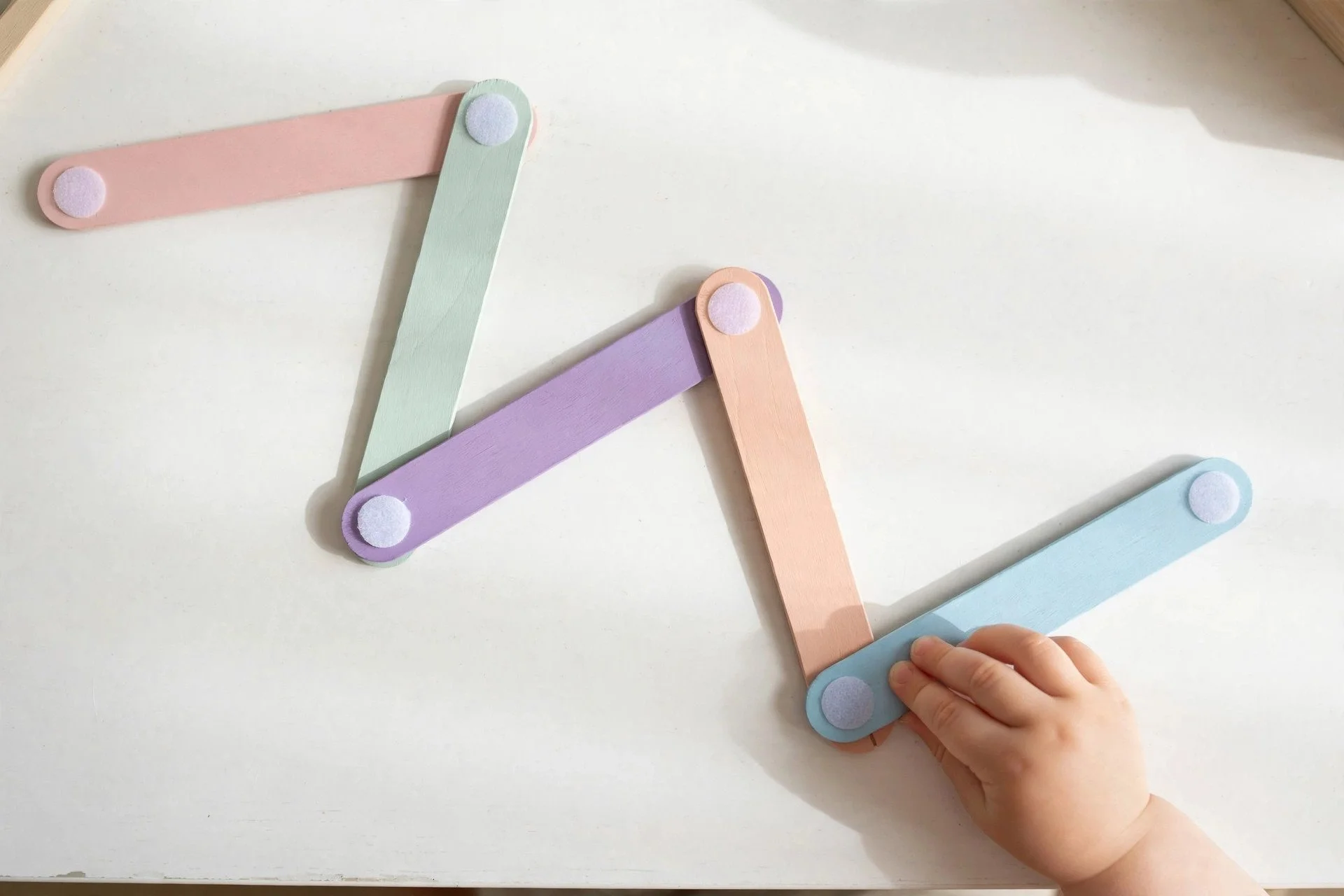
Press a small velcro dot on each end of painted popsicle sticks and let your child snap them together into long zigzag chains. Pulling velcro apart and pressing it back together is serious hand-strength work disguised as building.
Shop the materials
Pastel dot stickers (Teacher Created Resources) — Pastel macaron dot stickers
Wooden popsicle sticks
Some links are affiliate links. We only share things we actually use.
What you can stop stressing about
- That another toddler "can do more." Milestones are benchmarks, not races — a child who stacks brilliantly but can't thread beads is simply mid-progression, not behind.
- Staying inside the lines. Controlled scribbling comes before controlled coloring, and it comes through play, not correction.
- Ignoring the mess. Fine motor play is messy by design — containment (a tray, a sheet, the bathtub) beats prevention.
- Long sessions. Five absorbed minutes repeated often builds more skill than one long activity that ends in tears.
Simple setup rules that make every activity work better
- Follow the order loosely. Squeezing and stacking come before threading and tracing — if a step frustrates, play longer at the step before it.
- Use both hands on purpose. Holding the bowl while the tongs move, steadying the paper while stickers peel — "helper hand" habits start now.
- Short tools for little hands. Broken crayons, stubby chalk, and small tongs let fingers — not a fist — do the work.
- Quit while it's fun. Ending an activity with your child wanting more is the whole strategy.
- Repeat the boring ones. The tenth round of pom-pom transfer is where the skill actually locks in.
When to check in with a teacher or OT
Every child develops at their own pace, and struggling with one activity is not a red flag. It's worth a conversation with your child's pediatrician, preschool teacher, or an occupational therapist if, over time, you're noticing things like: a grip that never progresses from a full fist well into the preschool years, consistent avoidance of anything requiring hand work, big frustration that grows rather than shrinks with playful practice, or difficulty with self-care tasks like utensils and dressing relative to peers. Asking early is never the wrong move — and an OT can tell you quickly whether it's a "keep playing" situation or something worth targeted support.
What are fine motor activities for toddlers?
They're playful activities that exercise the small muscles of the hands and fingers: squeezing playdough, moving pom-poms with tongs, peeling stickers, threading big beads, scribbling, and stacking. Occupational therapists recommend this kind of play because it builds the hand strength and eye-hand control children need for crayons, scissors, and pencils later.
What age should I start fine motor activities?
You probably already have. Babies practice fine motor skills by grasping rattles and picking up finger foods, and toddlers build on that with stacking, scribbling, and self-feeding. The activities above are best matched to ages 1–3, but any age is a good age to put playdough on the counter and let little hands work.
My toddler gets frustrated and gives up. What should I do?
Make the target bigger and the tool easier: bigger beads, a stiffer string, a shorter session. Frustration usually means the step is slightly too hard, not that your child can't do it — drop back one level of difficulty and let them succeed there for a while. And always stop while it's still fun; the next round will come easier.
Do fine motor activities really help with handwriting?
They build the foundation handwriting stands on: hand strength, pincer grasp, two-handed coordination, and eye-hand control. Occupational therapists treat these as the prerequisite skills that make writing tools feel natural later. No single activity guarantees anything, but regular hand play is exactly what OTs recommend in the toddler years.
How long should a fine motor activity last?
Five to ten absorbed minutes is plenty for a toddler. Short sessions repeated across the week — a lump of playdough during dinner prep, stickers after lunch — build more skill than one long session that overstays its welcome.
Our favorite tool for sticker-and-count play
When she was little, dot stickers on paper were a standing activity at our kitchen table — and keeping the Number Dot Cards beside the paper turned sticker time into counting time too. Each card shows its exact number of printed dots, so she could count along as she stuck her own.