
Scissor Skills for Preschoolers: 8 Fun Cutting Activities That Build Hand Strength
Handing a preschooler scissors for the first time can feel like handing them a tiny sword. But with the right progression — snipping before cutting, playdough before paper — those wobbly first cuts turn into real confidence fast.
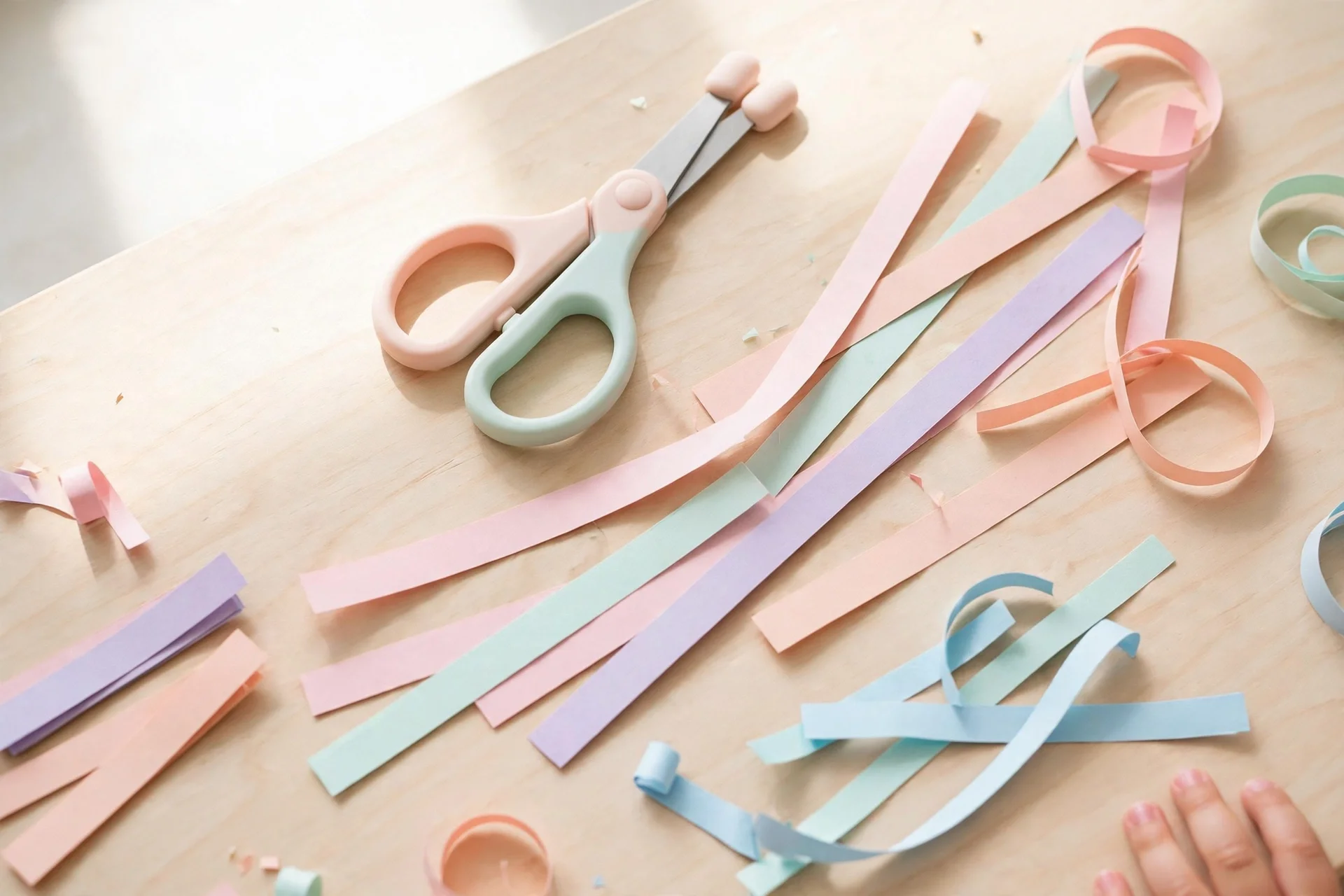
The day the scissors stopped being scary
When my daughter was three, she held her first pair of kid scissors upside down for about a week. Thumb in the wrong loop, elbow in the air, tongue sticking out with concentration — and honestly? That was perfect. She was figuring out the single hardest part of cutting: getting the hand to do two things at once, open and close, in a rhythm.
Here's what I wish someone had told me back then: most kids don't learn to cut by cutting on lines. They learn by snipping — one little chop at a time, into playdough, into straws, into the edge of a paper plate. The lines come later, once the hand knows what to do. Every activity below follows that order, from easiest to hardest.
Why cutting practice is worth the mess
Cutting is one of the best fine-motor workouts a preschooler can get. It strengthens the small muscles in the hand — the same ones they'll use to grip crayons and pencils later — and it teaches both hands to work together: one hand cuts, the other holds and turns the paper. That's a big coordination job for a little brain.
Children's occupational therapists generally describe the progression like this: around age 2, kids snip the edge of paper; around 3, they cut across paper and start cutting on lines; by 4–5, they cut out simple shapes (a children's OT guide from NSW Health lays out the stages and the safety basics nicely). Wide range of normal, as always — some kids snip happily at two and a half, some don't care until four. Follow their interest.
Scissor safety rules first (30 seconds, every time)
Before the first snip, set three rules and repeat them like a broken record until they can say them back:
- Scissors only cut what I say they can cut. Paper, playdough, straws — whatever's on the table. Not hair, not clothes, not the couch.
- We sit down to cut. No walking, no running, no cutting while wandering around the room.
- We hand them over handles-first. Blades closed, handles out — the way you'd hand someone a knife, minus the drama.
And the grip: thumb in the small loop on top, index and middle fingers in the bigger loop underneath — "thumbs up!" is the mnemonic that actually sticks. If your child is left-handed, grab left-handed scissors; right-handed scissors genuinely don't work in a left hand. For kids whose hands tire fast, spring-back scissors (the kind that pop open on their own) take the hardest part — the opening — off their plate.
8 cutting activities, easiest to hardest
1. Snip playdough snakes
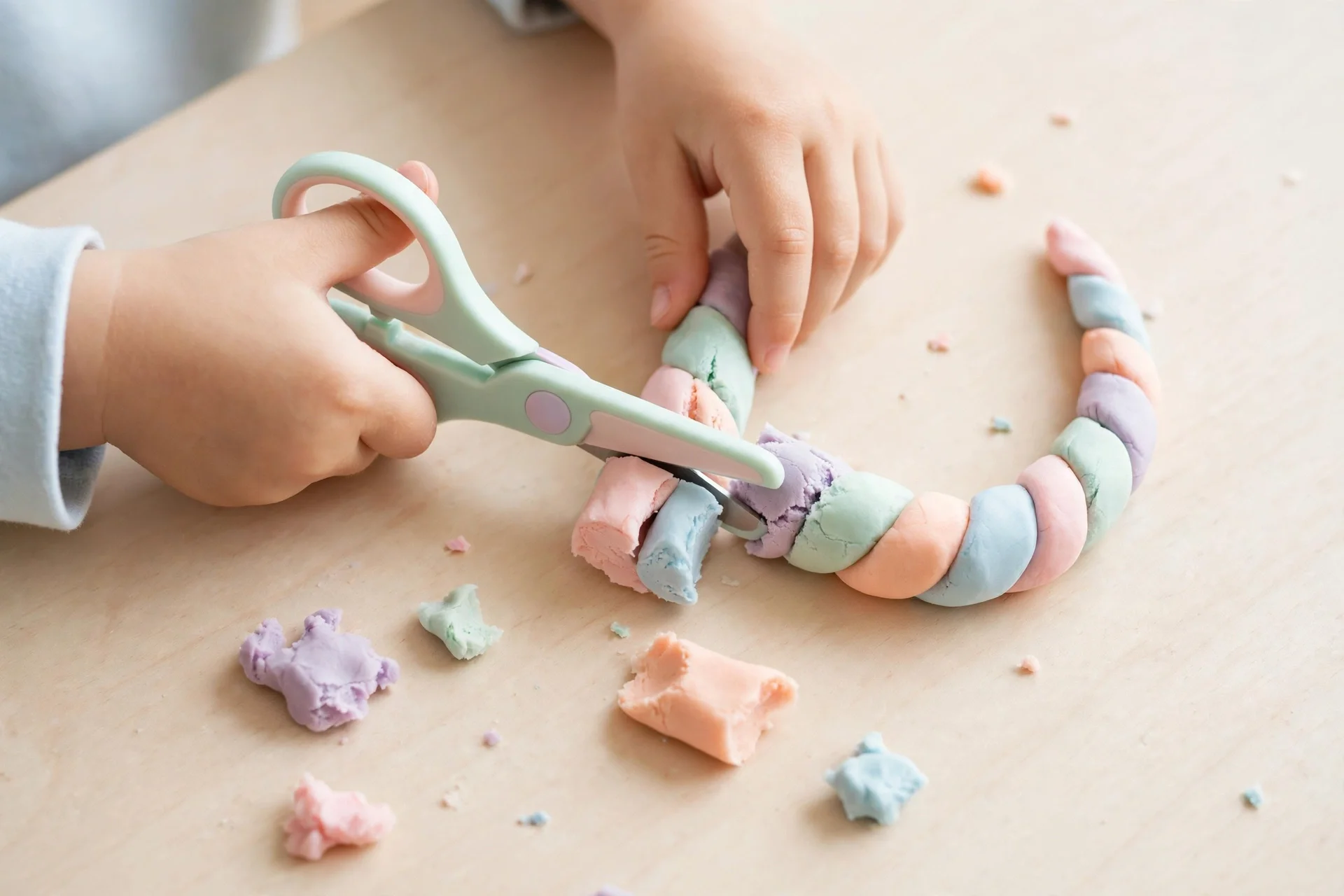
This is the starting line. Roll playdough into thin snakes, hold one end, and let your child snip pieces off with one chop each. Playdough gives just enough resistance that the hand has to work, but there's no paper to hold steady and no line to follow — pure open-and-close practice. When she was little, we called the cut pieces "playdough noodles" and counted them into a bowl afterward, which kept her snipping way longer than any paper activity ever did.
2. Cut straws into beads
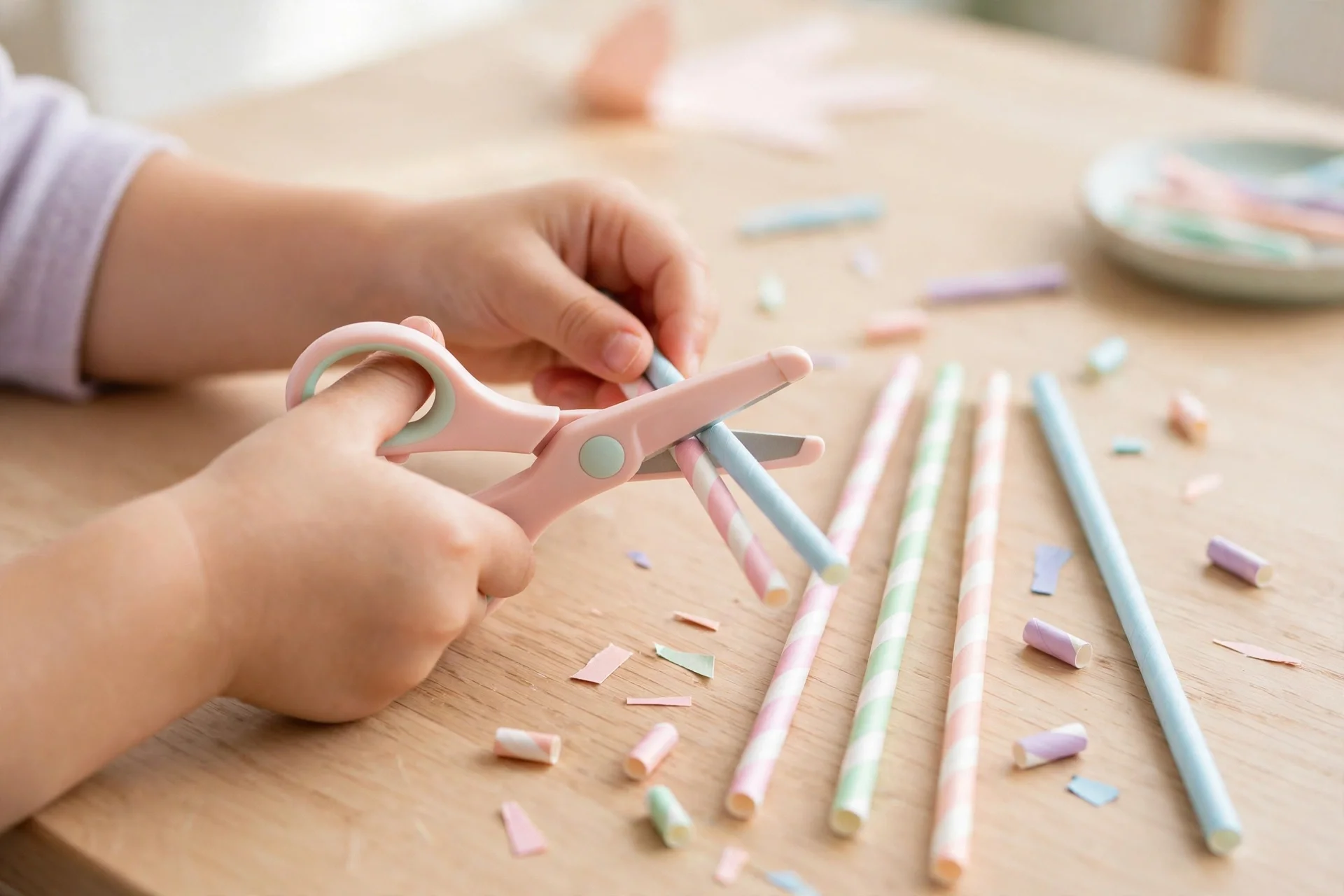
Straws are the perfect second step: they're stiffer than playdough but still easy to hold, and every snip makes a satisfying little bead. Cut a pile, then string the beads onto yarn for a necklace. (Paper straws work too, though they crush a bit — part of the fun.) Pro tip from our kitchen table: tape one end of the straw to the table so it doesn't roll away mid-snip.
3. Fringe the paper plate
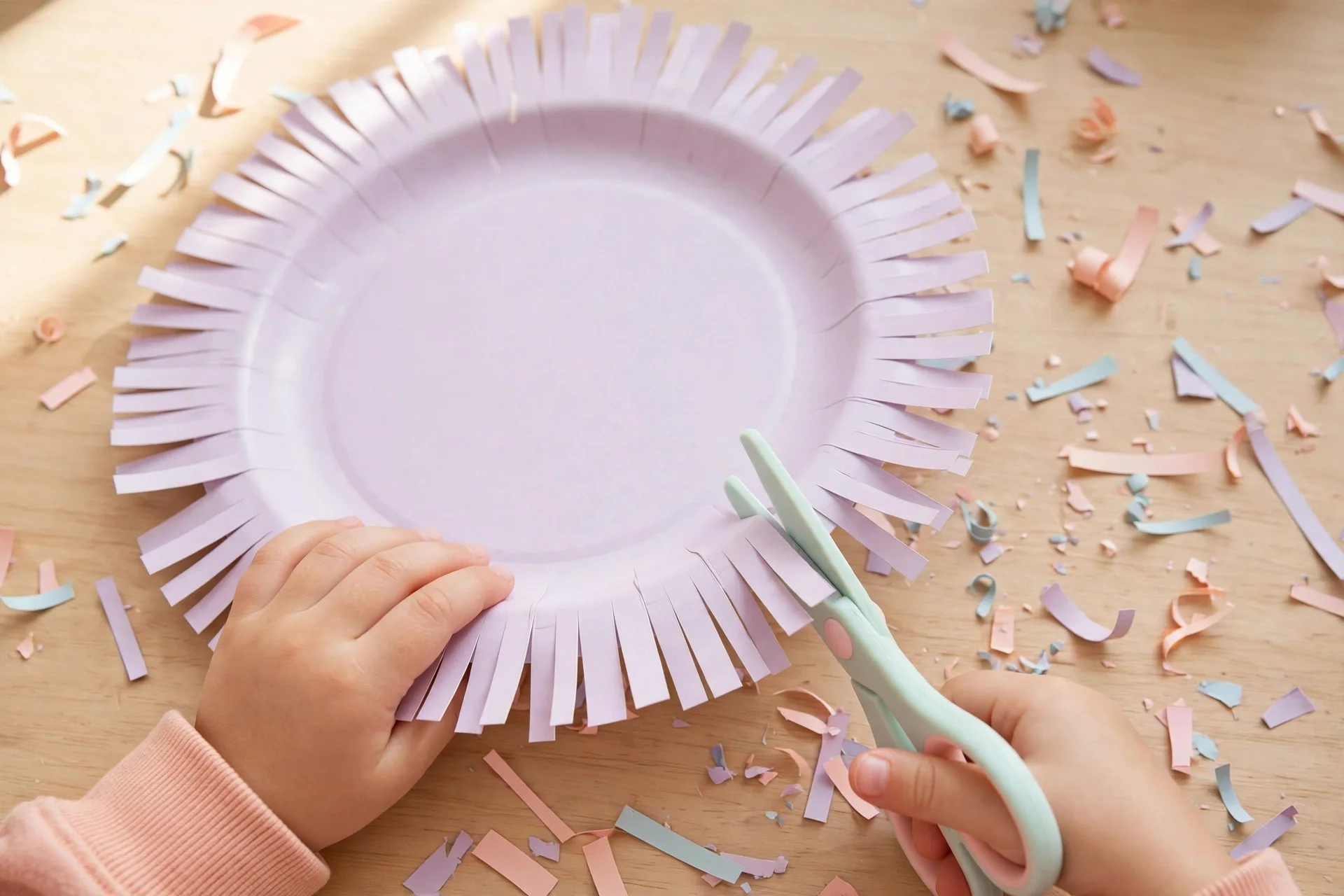
Draw a circle in the middle of a paper plate (or skip the drawing — it doesn't matter) and show your child how to snip a fringe all the way around the edge. Each cut is independent, so there's no pressure to connect them, and the plate holds itself steady — no second-hand coordination required yet. Ours became suns, lions, and one memorable "porcupine." The holding hand can officially join in here: show them how to turn the plate a little after each snip.
4. Snip junk-mail confetti
Hand them the recycling bin's greatest hits — junk mail, old envelopes, grocery flyers — and let them go to town. No lines, no goals, just glorious destruction. This was the activity that finally made cutting fun instead of a lesson in our house, because there was zero wrong way to do it. Sweep it into a bowl and you've got confetti for the next pretend birthday party.
5. Cut along thick straight lines
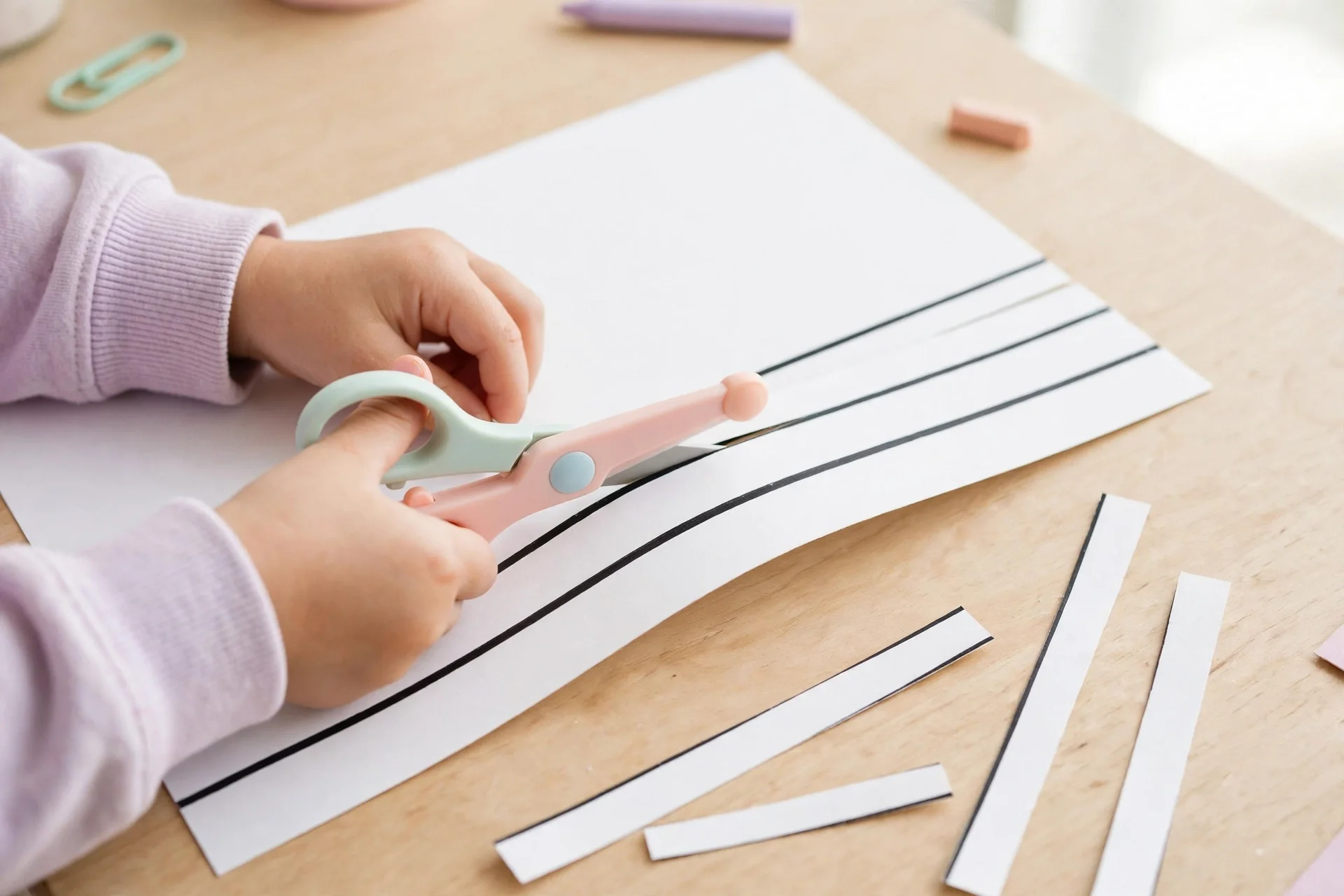
Now the lines enter — but make them thick. Draw fat marker lines (about as wide as a highlighter) across a strip of paper, and the goal is just to stay somewhere inside the line. Thick lines mean early success, and success is what keeps them coming back. Cardstock or construction paper works better than flimsy printer paper here; it doesn't flop around while they're concentrating.
6. Cut wavy and zigzag lines
Once straight lines feel easy, curves are the next adventure. The trick to teach: the scissors hand stays mostly still, opening and closing, while the paper hand does the steering — gently turning the paper to follow the line. Draw big lazy waves first, then zigzags. This is also where you'll see the "thumbs up" grip start to matter; upside-down scissors make curves nearly impossible.
7. Cut out simple shapes
Circles, squares, triangles — big ones, drawn boldly. Cutting a shape means cutting and turning and planning where the scissors go next, which is genuinely hard work for a four-year-old brain. Start with circles (no corners to navigate), then squares. Celebrate the wobbly edges; neatness comes with practice, and a wobbly circle they cut themselves beats a perfect one every time.
8. Cut grass and herbs outside
Take the scissors outside. Long grass, dandelion stems, fallen leaves, a sprig of rosemary from the garden — nature is the most forgiving cutting material there is, and it doesn't feel like practice at all. We kept a little basket by the back door one summer, and "let's go cut things for the fairy soup" got more cutting practice in than any worksheet-style activity I ever set up.
If your child gets frustrated (or is scared to start)
Some kids see scissors and freeze — usually because the one time they tried, it was hard and nobody showed them the easy version. Go back to playdough snips, where success is instant. Check the scissors, too: kid scissors that are too dull to actually cut paper are more common than you'd think, and nothing kills motivation like scissors that fold the paper instead of cutting it. They should be sharp enough to cut, with rounded tips for safety.
Keep sessions short — five to ten minutes is plenty. And if they're all thumbs with the grip, warm up the hands first with scissor-free squeezes: tearing paper, using tongs to move pom-poms, squeezing a spray bottle, or punching holes with a hole punch. All of it builds the same hand strength, no blades involved.
When should my preschooler start using scissors?
Most kids are ready to try snipping around age 2–3 with close supervision, and to cut on lines around 3–4. Readiness signs: they can open and close their hand on purpose, they'll sit and focus for a few minutes, and they can follow a simple rule like "scissors stay at the table." There's a wide range of normal — interest matters more than the calendar.
What kind of scissors should I buy?
Look for small scissors with rounded tips, short blades, and handles that actually fit little hands — tiny oval handles are easiest. They need to be sharp enough to really cut paper (overly blunt ones just fold it and frustrate everyone). Left-handed kids need left-handed scissors. If your child's hand tires quickly, spring-back scissors that pop open automatically remove the hardest part of the motion.
My child cuts everything — hair, clothes, the curtains. Help.
Completely normal, and it means they're interested — which is actually good news. The fix is structure, not banning: scissors live in one spot, come out for cutting time only, and go straight back when the activity ends. Restate the rule every time ("scissors only cut what I say"), and keep early sessions short and supervised. Most kids outgrow the rogue cutting once the novelty wears off.
Should I correct their grip every time?
Remind, don't nag. A quick "thumbs up!" cue at the start of each session goes further than mid-cut corrections, which just frustrate them. If the grip is truly unworkable (both thumbs in one loop, scissors upside down), pause and reset together — then let them get back to the fun part.
The one thing that matters most
Start easier than you think you need to. A child who snips playdough happily for a month will pick up line-cutting in an afternoon; a child pushed onto lines too early decides cutting is "too hard" and quits. Snip first, lines later, shapes last — and let the confetti phase last as long as they want it to.