
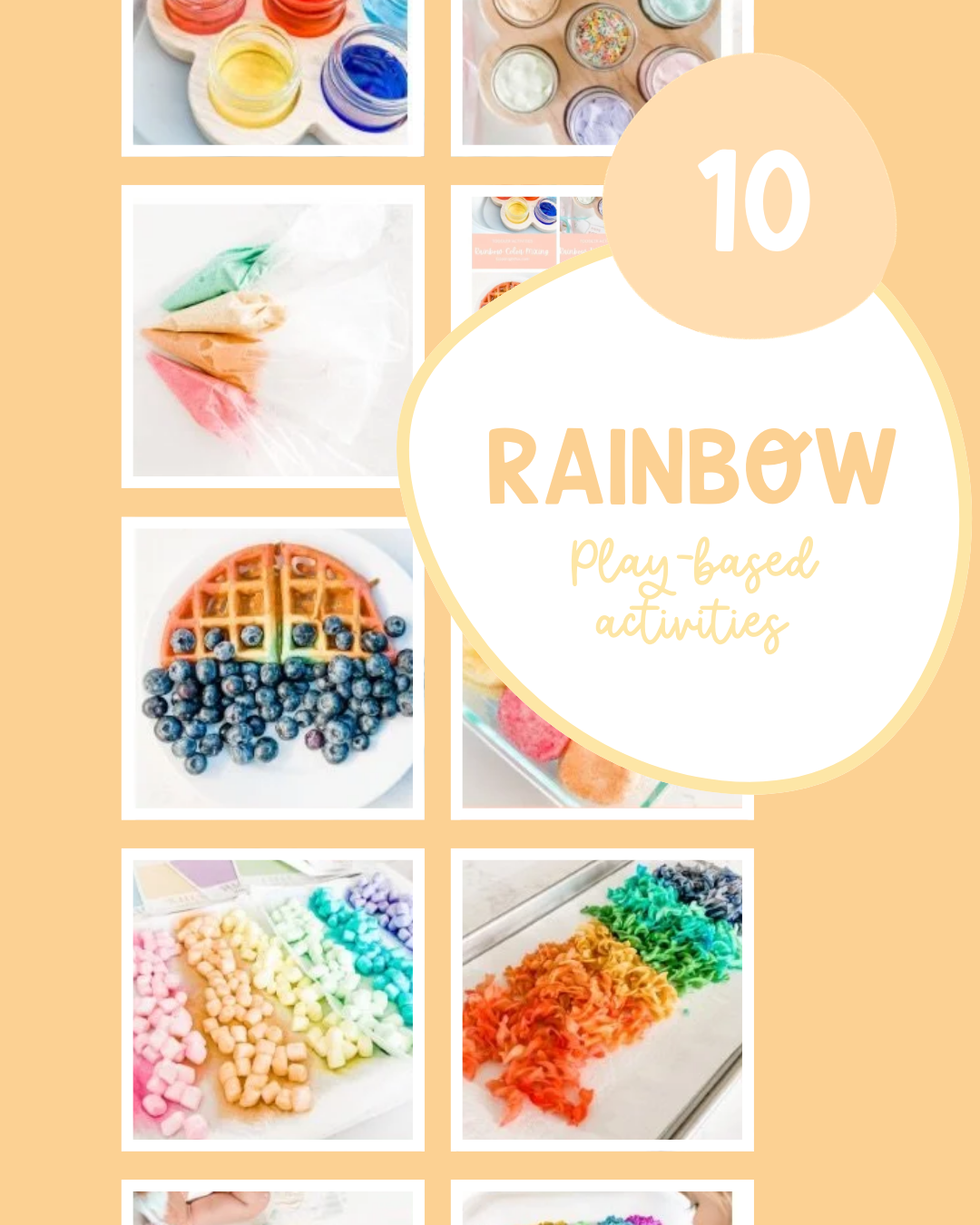
Colorful Play Ideas for Spring, Weather Week & St. Patrick’s Day
Rainbow activities are pure magic for toddlers.
They’re bright. They’re inviting. They naturally encourage sorting, pattern building, color recognition, and sensory exploration — without it feeling like “learning.”
These rainbow sensory activities fit beautifully into:
Let’s dive into our favorite rainbow activities — the ones that truly hold toddler attention.
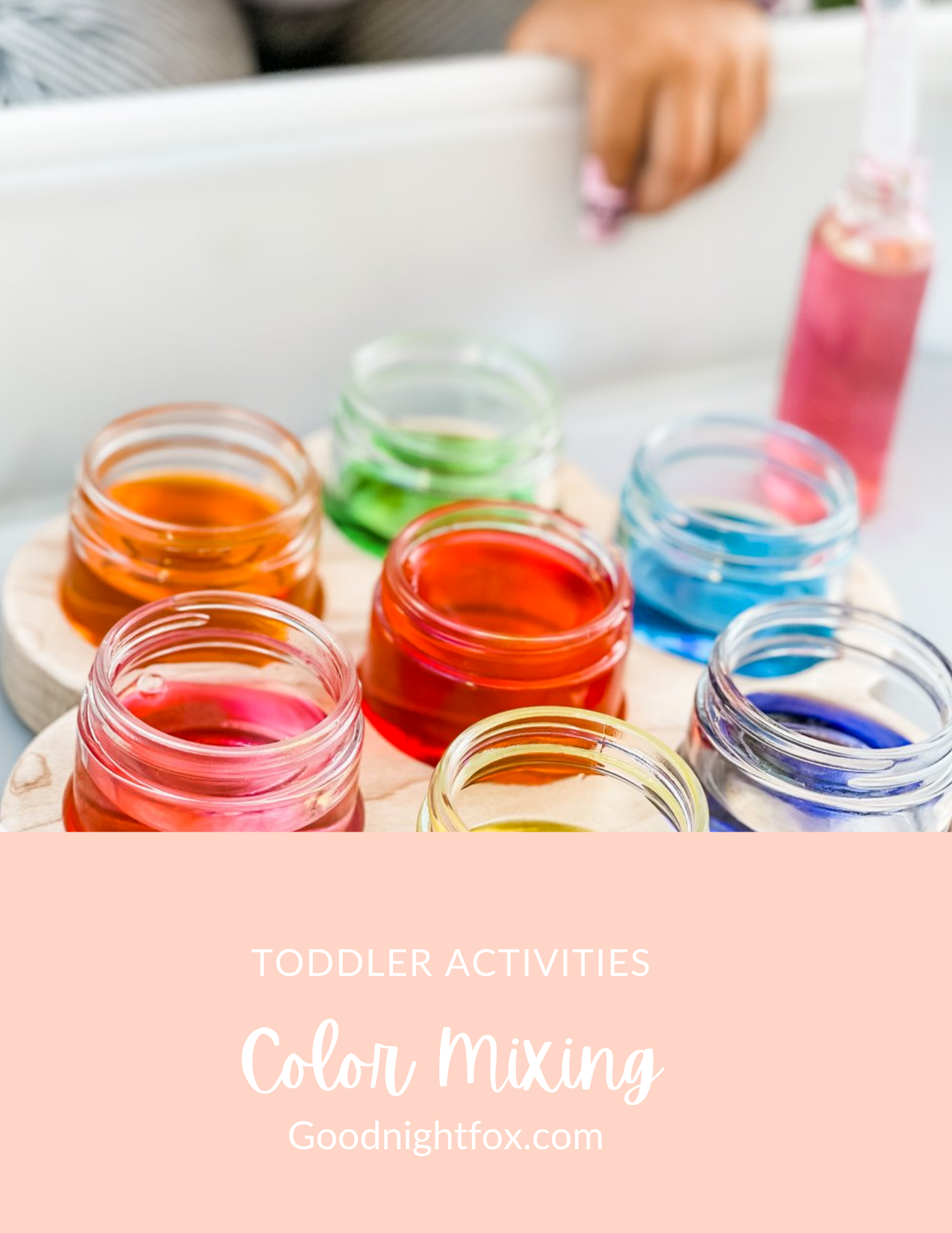
1. Rainbow Water Color Mixing
This is always the activity that makes toddlers gasp.
Set out small jars of primary-colored water with droppers or pipettes and let your little one experiment with mixing colors. Watching red and yellow swirl into orange or blue and yellow transform into green feels like a little science experiment — but to them, it’s magic.
It’s also secretly building:
Fine motor control
Early science concepts
Cause-and-effect understanding
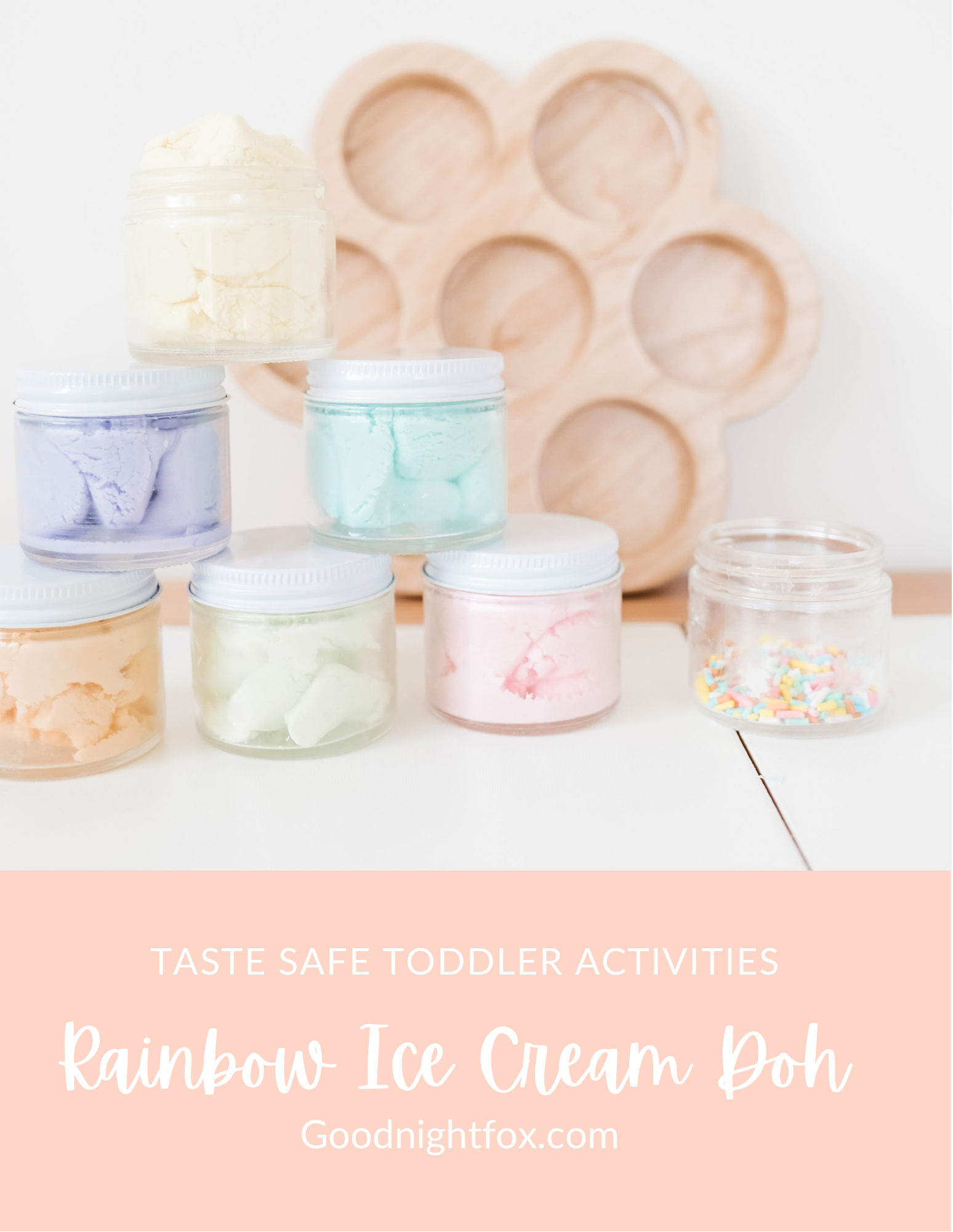
2. Rainbow Cloud Dough
Rainbow cloud dough is soft, crumbly, and almost impossible to resist.
Layer the colors in rainbow order inside a tray and add scoops, cups, or shamrock cookie cutters. Toddlers love pressing, scooping, and blending the colors together — even if your perfectly layered rainbow doesn’t last long.
This activity supports:
Sensory regulation
Hand strength
Open-ended imaginative play
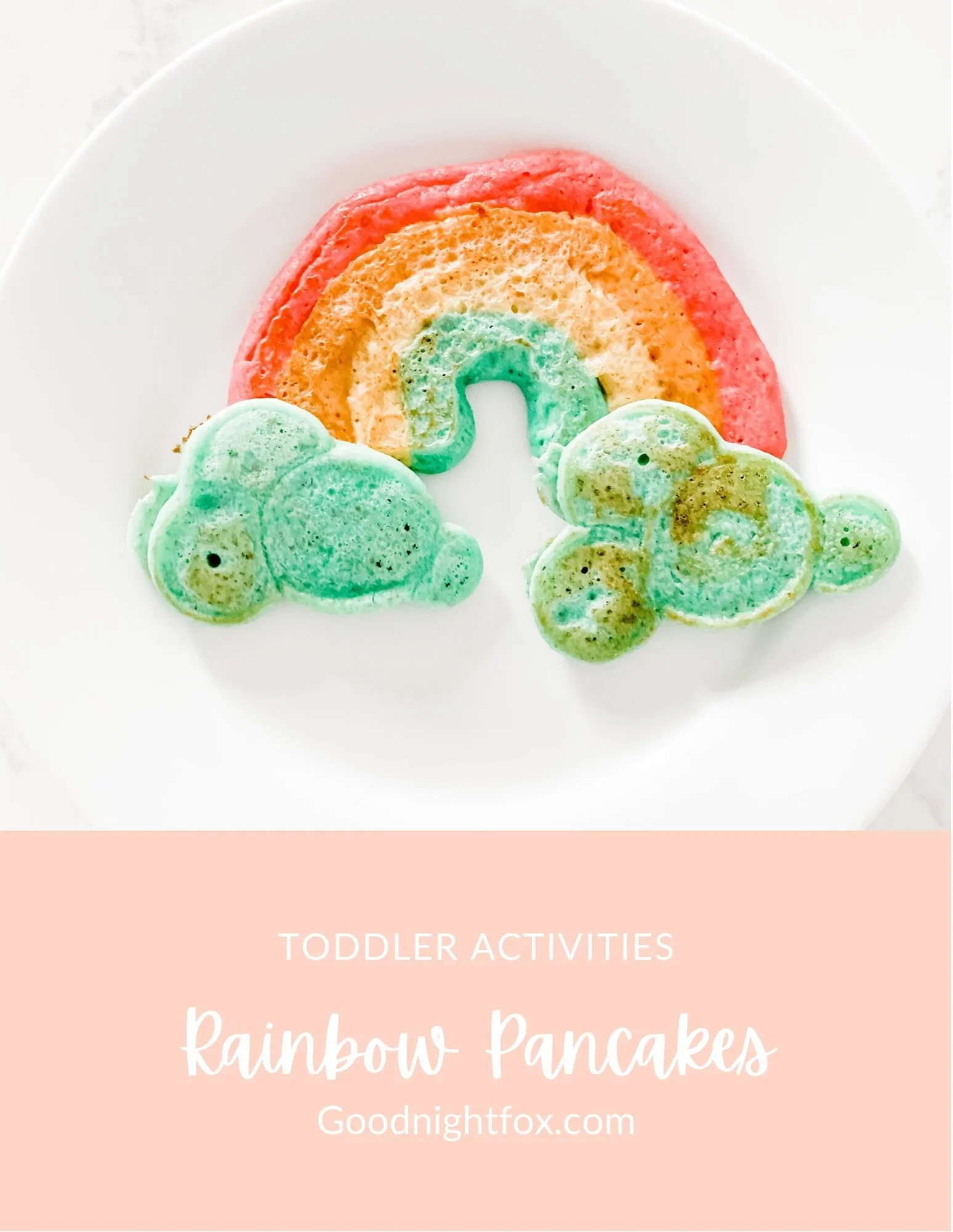
3. Rainbow Pancakes
Turning breakfast into a rainbow stack is one of the easiest ways to make learning feel joyful.
Stack colorful pancakes in rainbow order and let your toddler help arrange toppings by color. You can talk about sequencing (What color comes next?) or count each layer together.
It’s playful. It’s memorable. And it feels like a celebration.
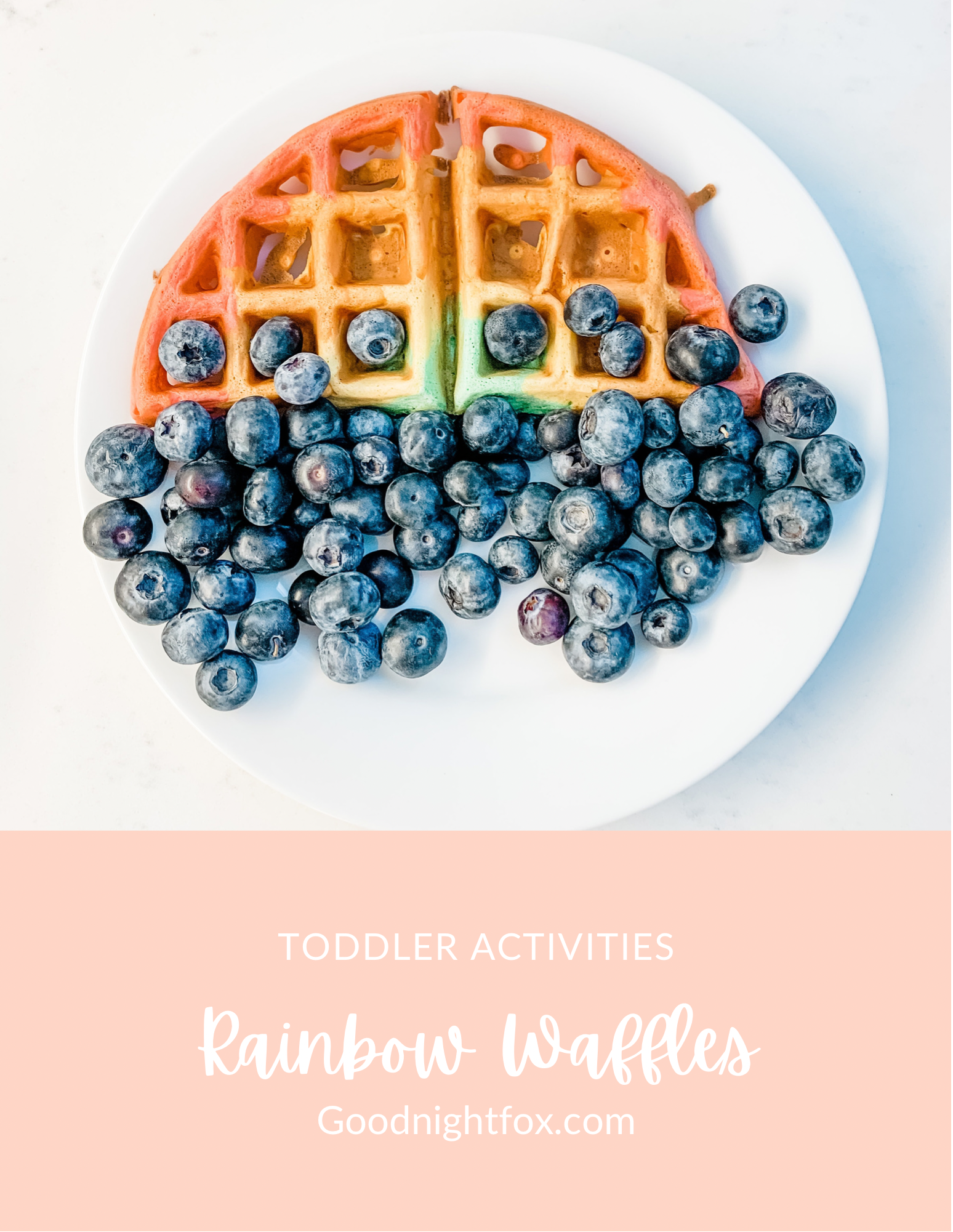
4. Rainbow Waffles
Rainbow waffles are a slightly simpler spin on rainbow pancakes — but just as fun.
Top waffles with blueberries, strawberries, kiwi, and other colorful fruits to build a rainbow across the plate. Before assembling, have your toddler sort the fruit by color or count how many pieces of each shade they have.
It’s breakfast + early math + fine motor skills — all wrapped into one happy plate.
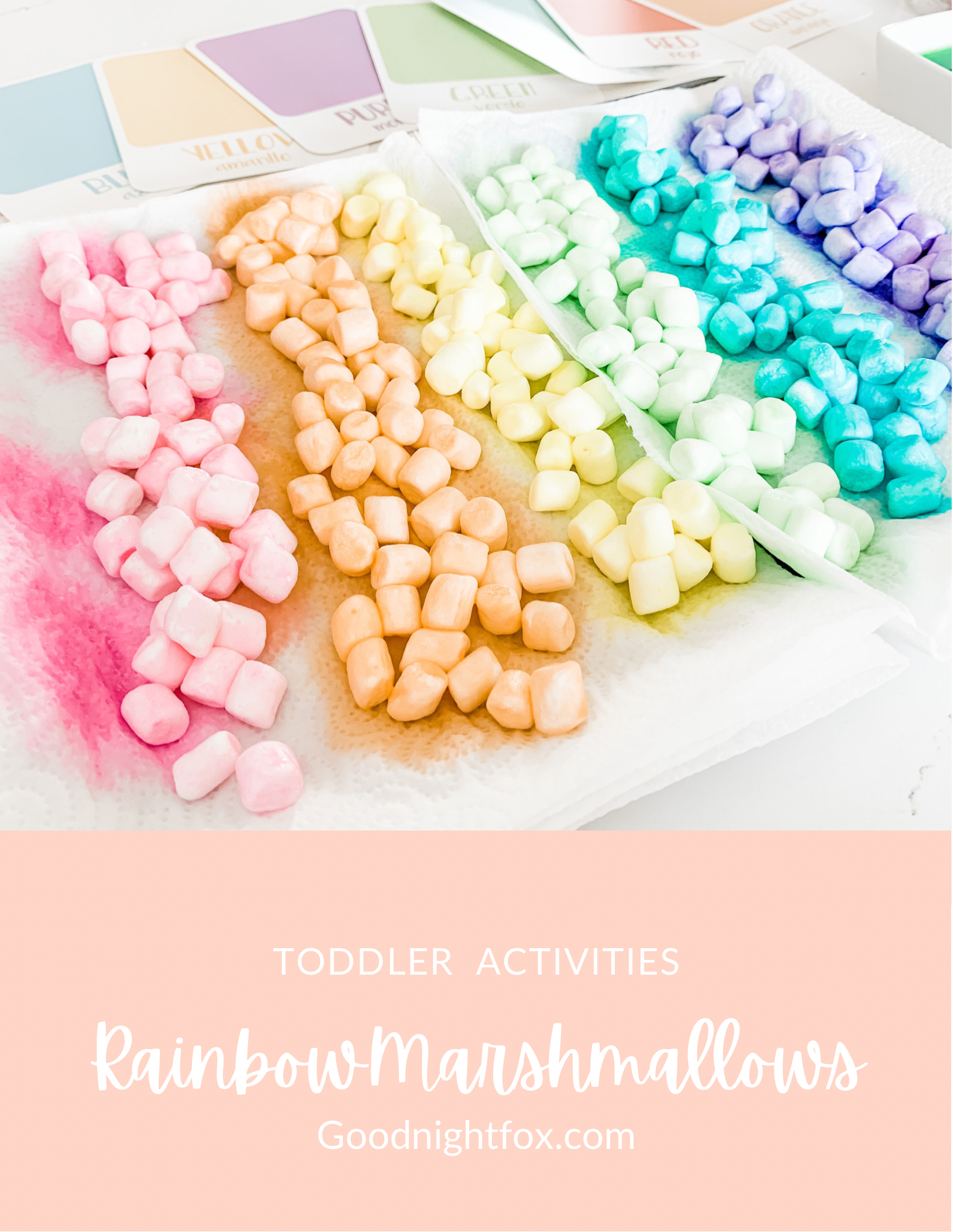
5. Rainbow Marshmallows
Dyed marshmallows arranged in rainbow order make an irresistibly sweet sensory invitation.
Add small tongs for picking up each color and watch fine motor skills strengthen in real time. You can practice patterns (red, orange, red, orange) or count each section as you build the rainbow.
It’s simple, beautiful, and toddler-approved.
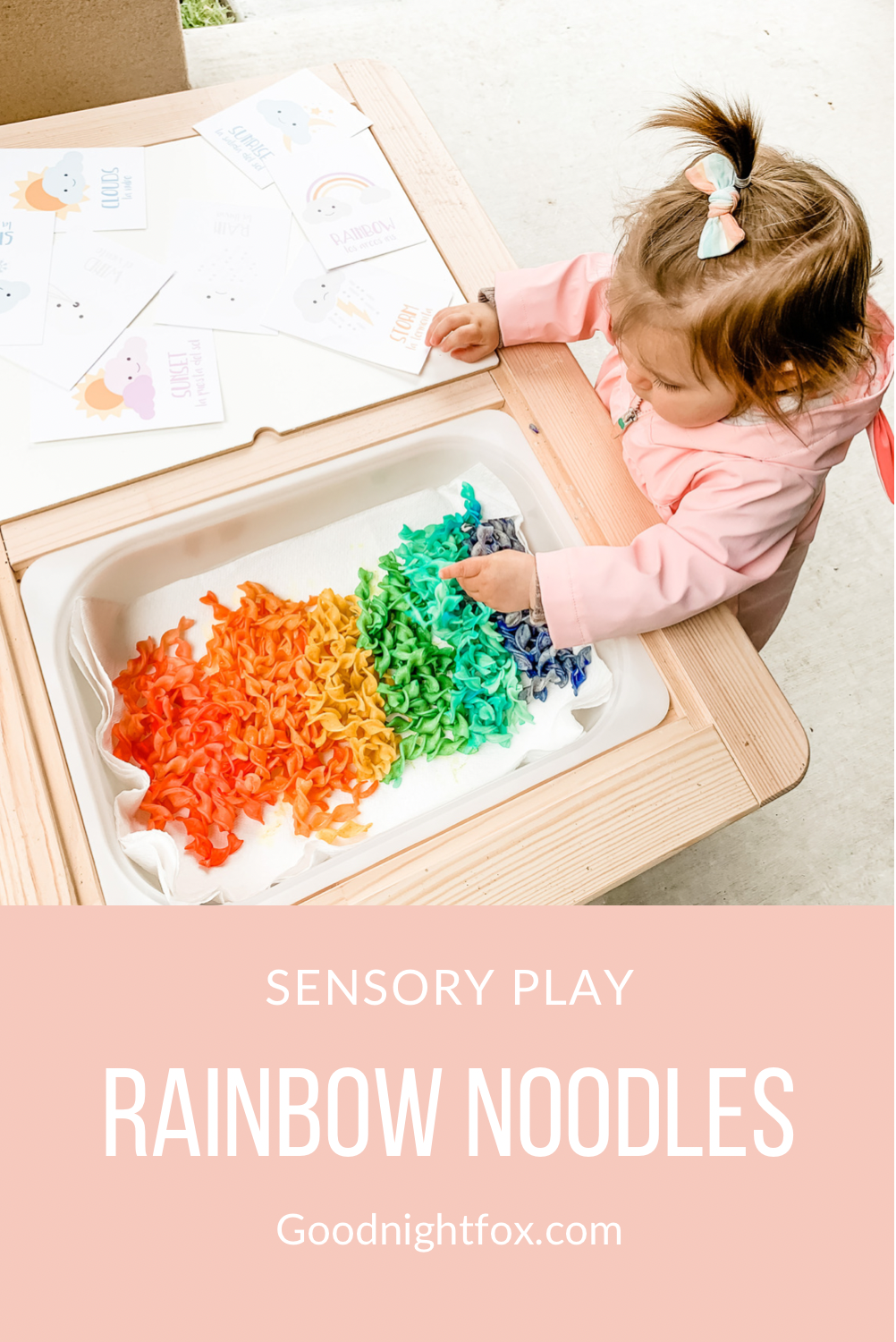
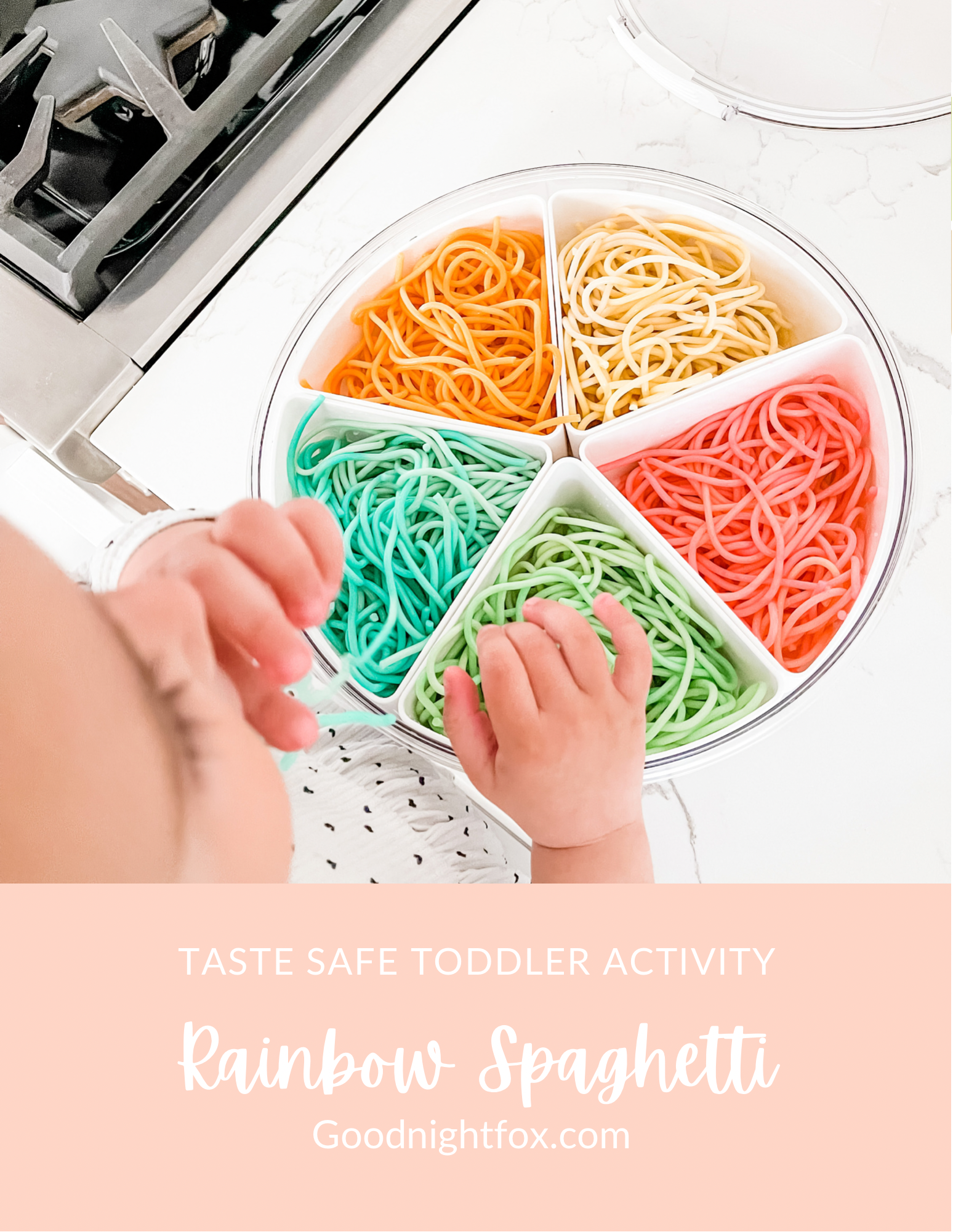
6. Rainbow Noodles
Rainbow noodles are perfect for toddlers who still explore with their mouths.
Cook spaghetti, divide into bowls, dye each section, and place them in rainbow order inside a tray. The slippery texture is fascinating, and little hands love squeezing and scooping.
This activity supports:
Sensory exploration
Hand strength
Early color sorting
It’s one of my favorite go-to activities for rainy spring afternoons.
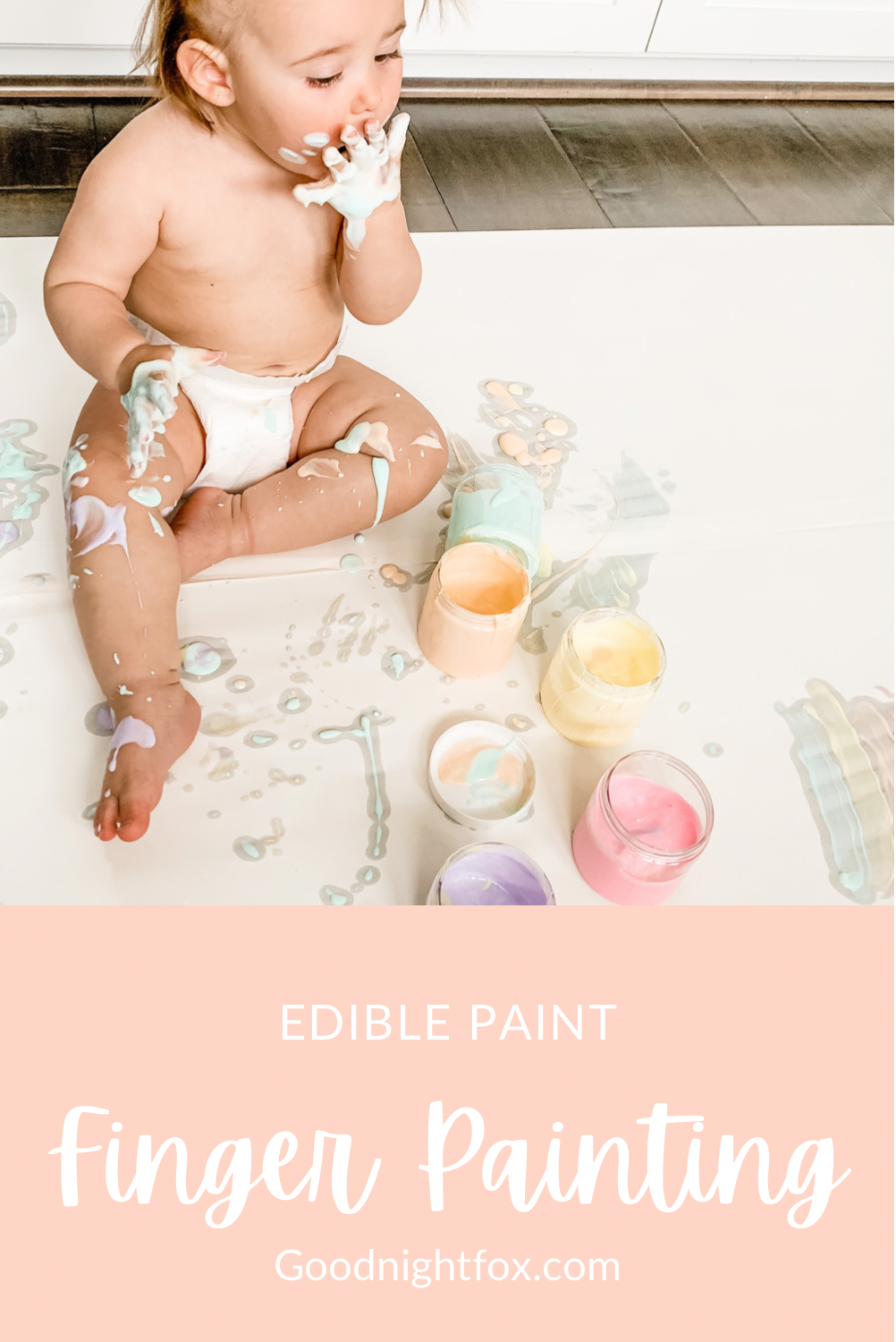
7. Rainbow Yogurt Paint
If you’re not quite ready for traditional paint, rainbow yogurt is the perfect solution.
Simply dye plain yogurt with food coloring and let your toddler finger paint directly on parchment paper or a tray. The colors blend beautifully — and you don’t have to stress if they sneak a taste.
This activity builds:
Creative confidence
Sensory tolerance
Early artistic exploration
It fits beautifully into Weather & Rainbows Week when talking about how rain and sunshine create rainbows.
8. Rainbow S’mores
Rainbow s’mores feel extra special because they combine sensory play and snack time.
Arrange colorful marshmallows in rainbow order before assembling your treat. You can talk about color sequencing or ask your toddler to find “the green one” or “the blue one” to reinforce vocabulary.
It’s cozy, colorful, and perfect for a March afternoon.
9. Rainbow Kinetic Sand
Divide kinetic sand into rainbow sections inside a shallow tray and add mini scoops, cups, or “pots of gold.”
Toddlers naturally start mixing the colors, creating patterns, or burying small treasures. The texture is calming and incredibly engaging.
This activity pairs beautifully with:
Even more rainbow activities
Twelve more of our favorite rainbow ideas — organized by type so you can find exactly the kind of play (or treat!) you're in the mood for. Every one links to the full tutorial or recipe.
Crafts

Rainbow Drip Art with Melted Crayons
Glue a row of whole crayons along the top of a canvas in rainbow order, then aim a hair dryer on its hottest setting at them and watch the colors melt and drip. Part art, part first science lesson — lay down newspaper first; this one drips.
Get the tutorial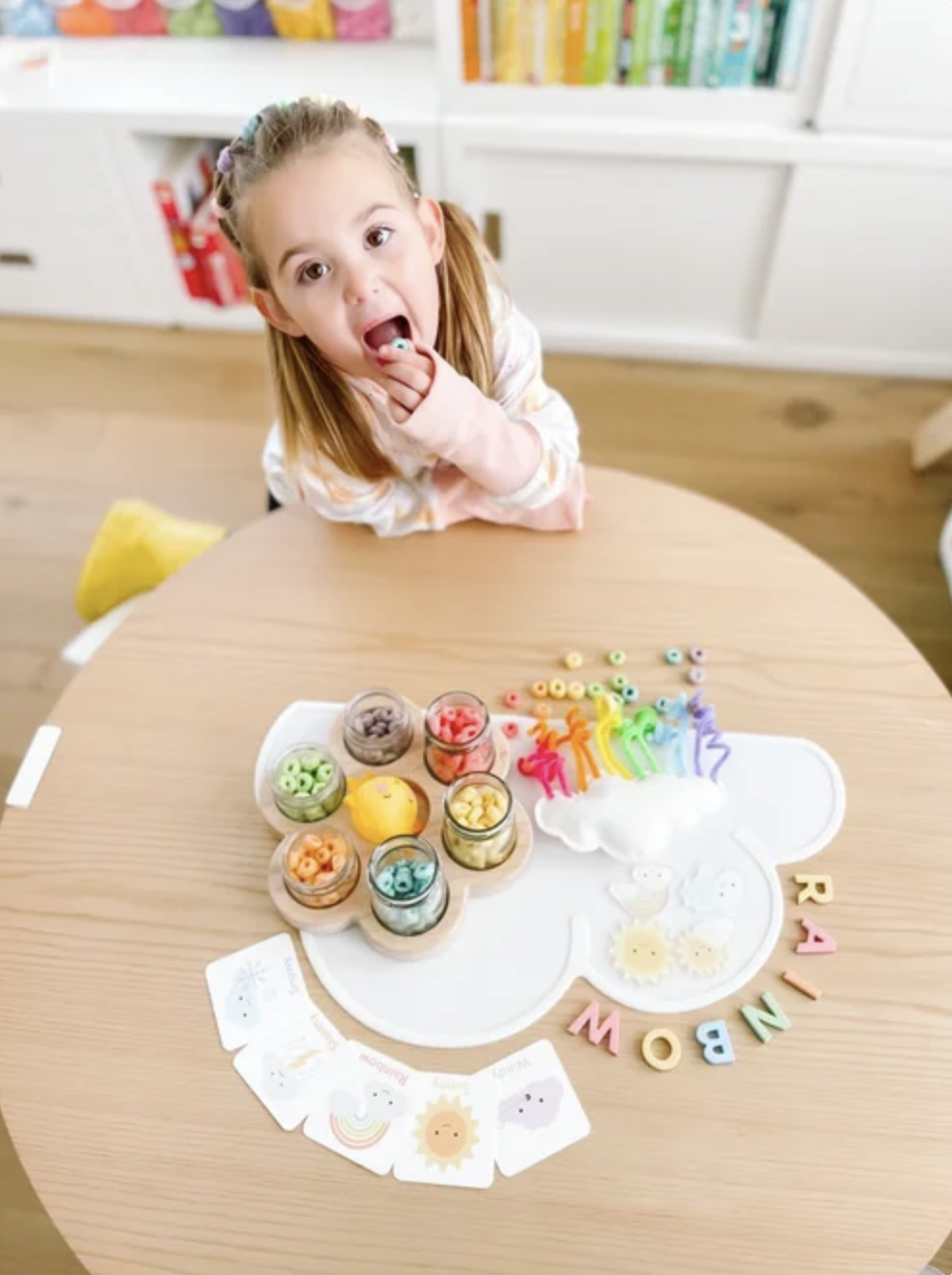
Rainbow Cloud Pipe Cleaner & Fruit Loop Craft
Thread Fruit Loops onto pipe cleaners in rainbow order, then attach the arches to a cloud cut from cardstock. Secretly full of learning — sorting colors, sequencing, and fine-motor practice. Perfect for rainbow week or St. Patrick's Day.
Get the tutorial
Rainbow Color Matching Blocks
Sofie loves pairing her wooden and silicone blocks with her color flashcards — sorting and matching builds visual and cognitive skills while she plays. Blocks wipe clean with a damp cloth, which matters when everything still goes in the mouth.
Get the tutorial
Rainbow Fizzy Letters
Colorful baking-soda letters, pressed in a silicone alphabet mold, fizz and bubble for a sensory delight that mixes art, science, and hands-on play. Pair them with an alphabet placemat to turn it into a letter-matching game.
Get the tutorialScience & discovery
Rainbow Milk Experiment
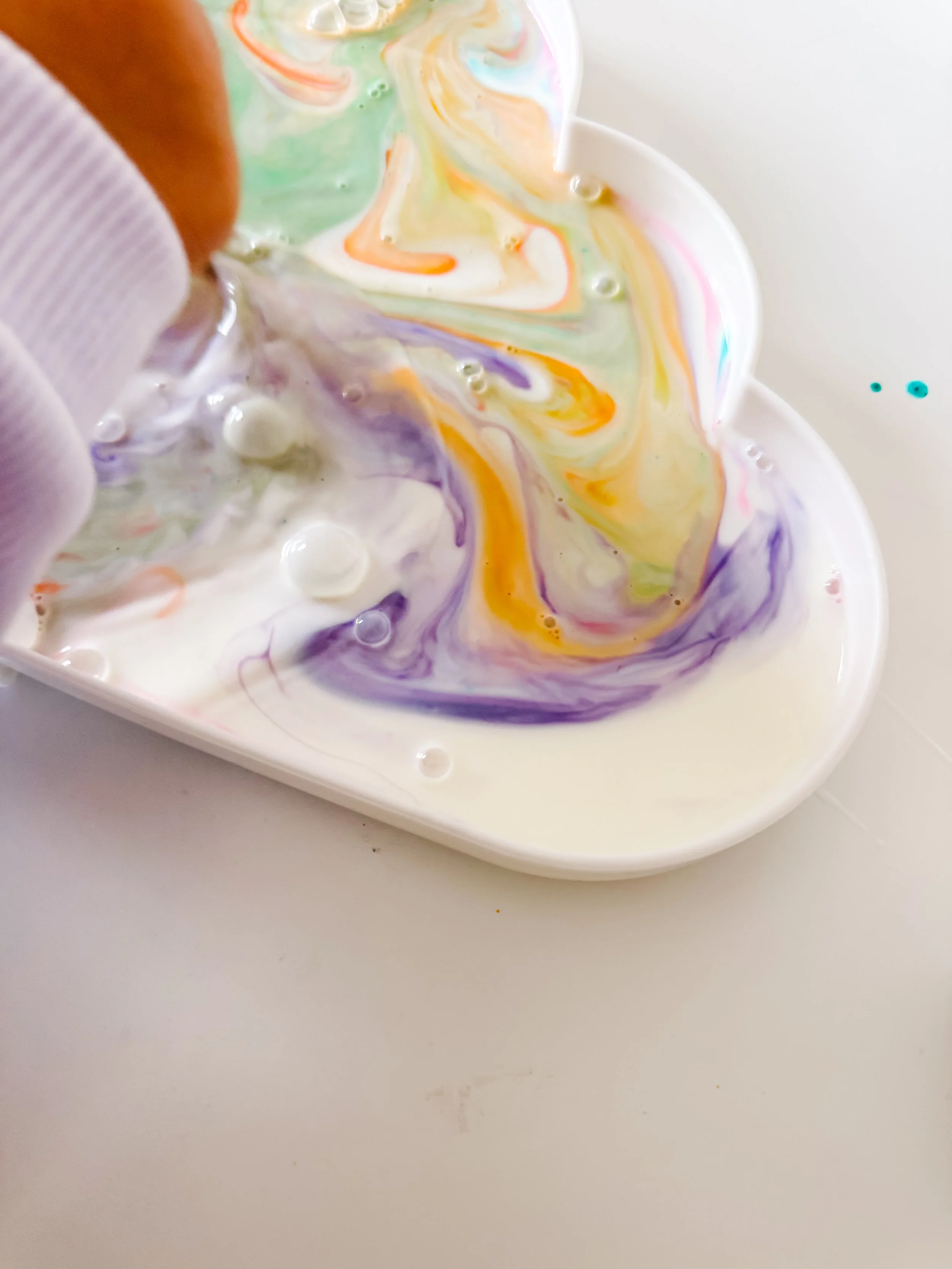
Pour whole milk into a shallow dish, dot it with food coloring, then touch a soapy cotton swab to the surface — and watch the colors race. Five minutes to set up; her tip is that whole milk makes the strongest reaction.
Get the tutorial
Rainbow Rice Color Sort
Color one cup of white rice per ziplock bag with water and food coloring — one bag per rainbow color — then let little hands mix, pour, and sort it into bowls. An easy, inexpensive sensory base she calls fun for children of all ages.
Get the tutorialPlaydough & sensory dough
Rainbow Oat Dough
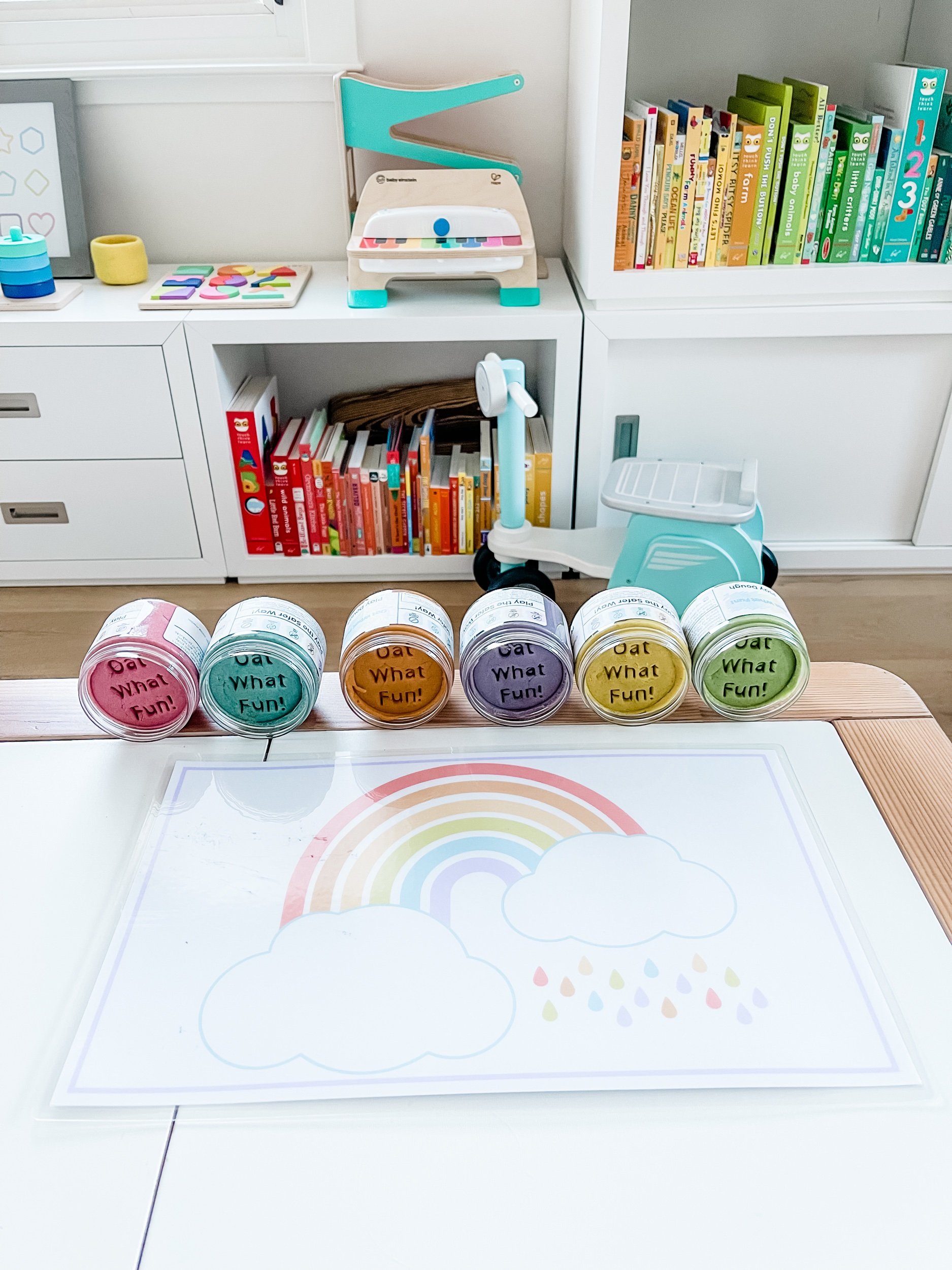
All-natural, non-toxic playdough made from pantry staples — oats, flour, salt, and water. Oats are hypoallergenic, which makes it a lovely option for sensitive skin, and you can scent it with natural extracts like vanilla or peppermint.
Get the recipe
Rainbow Ice Cream Doh
The easiest playdough recipe in her collection: just mix frosting, confectioner's sugar, and cornstarch — no measuring needed. Tint it with pastel food coloring for soft, fluffy, completely food-based rainbow scoops.
Get the recipeSweet treats
Rainbow Cinnamon Rolls
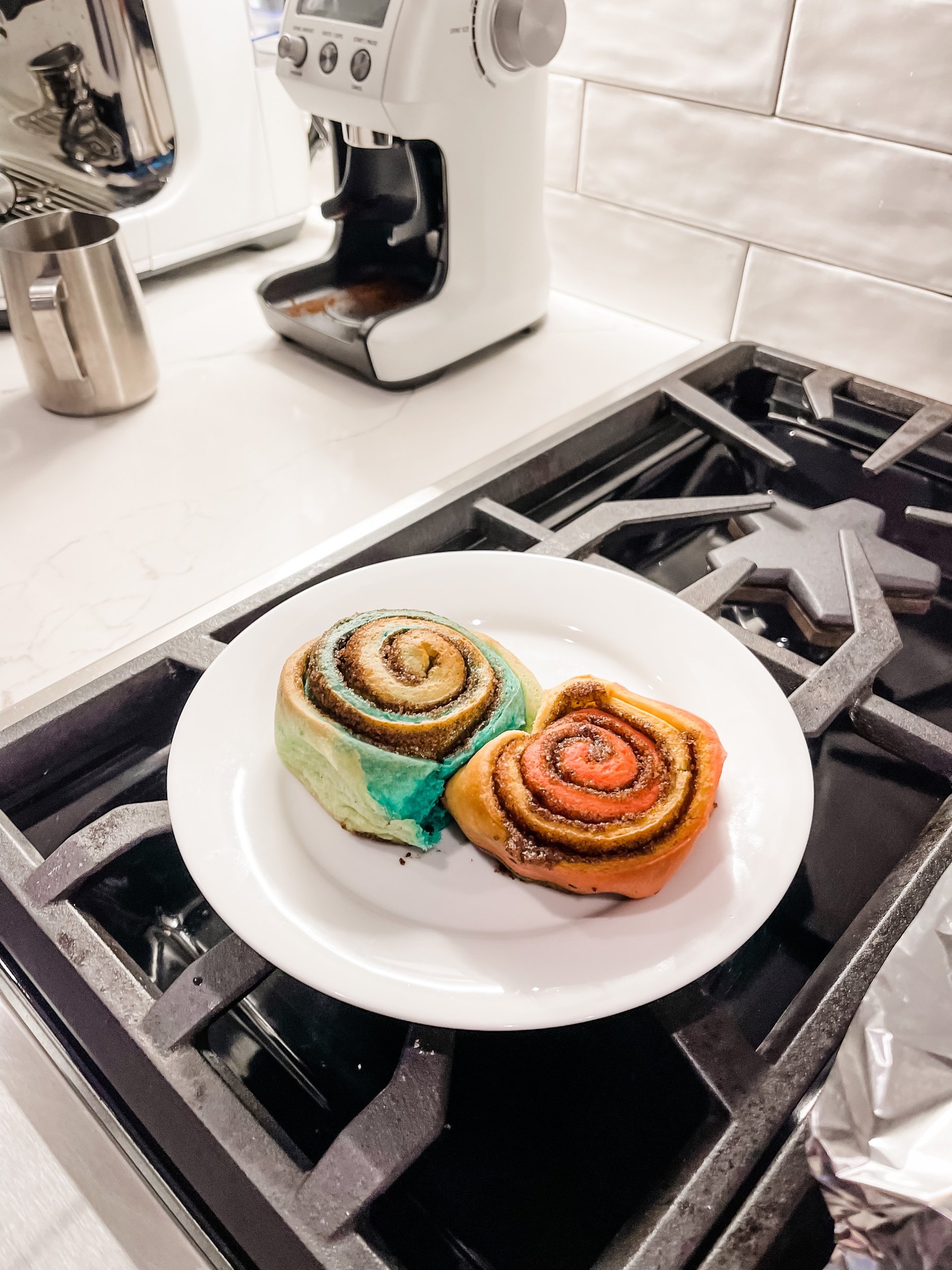
The St. Paddy's Day morning showstopper: her classic cinnamon-roll dough gets divided into balls, each tinted with food coloring, then rolled up with a cinnamon-sugar filling (she doubles the filling — trust her on this).
Get the recipe
Rainbow Banana Muffins
Ripe bananas, a simple one-bowl batter, and colorful silicone cups — that's all it takes to turn an ordinary morning into a rainbow one. A perfect little-helpers recipe: kids can mash the bananas and fill the cups.
Get the recipe
St. Patrick's Day Rainbow Fruit Plate
Arrange strawberries, blueberries, kiwi, oranges, and other colorful fruit in rainbow arcs, then skewer halved marshmallows on toothpicks for little clouds at each end. A festive, no-bake snack for parties or classrooms.
Get the recipe
Pastel Rainbow Marshmallow S'more Casserole
Sugar-crusted marshmallows in soft pastel rainbow shades, packed snugly into a glass baking dish for a s'more-inspired treat that's almost too pretty to eat — straight to the dessert table.
Get the recipeRainbow activities FAQ
What ages are rainbow sensory activities good for?
Toddlers through preschoolers. Kylie made the yogurt finger paints specifically for her one-year-old, who was putting everything in her mouth; the pipe-cleaner fruit-loop craft and the magic milk experiment are both labeled age 3+; and she describes rainbow rice as enjoyable for children of all ages — a good pick when siblings of different ages are playing together.
How do you dye rice for sensory play?
Her method from the rainbow rice post: in a ziplock bag, mix 1 cup of white rice with 1 tablespoon of water and several drops of food coloring — one bag per color (red, orange, yellow, green, blue, and purple). Seal the bag and squish the rice until the color is evenly distributed, then let it dry for several hours or overnight before play.
Are these activities food-based?
Many of them are. The yogurt finger paints, the ice cream doh (frosting-based), the oat dough (oats, flour, salt, water), and the recipes — banana muffins, cinnamon rolls, fruit plate, and the marshmallow s'more casserole — are all food-based sensory play. The craft and science activities (melted crayons, fizzy letters, pipe cleaners, blocks, magic milk) are play materials, not edible ones — so follow her lead in each post for what's for play and what's for eating.
How do you set up a rainbow week of activities?
Her posts give you a ready-made rhythm: the pipe-cleaner fruit-loop craft is one she calls out specifically for rainbow week (it also fits weather week, spring, and St. Patrick's Day). A simple way to run it: dye the rainbow rice the night before (it needs several hours to dry), open the week with a low-mess activity like color-matching blocks, slide a sensory dough or food-based finger paint into a midweek morning, wow them with the magic milk experiment one afternoon (five-minute setup), and end the week with a treat bake like the banana muffins or cinnamon rolls. One activity a day keeps the sensory bins and art supplies from piling up.
How to Turn This Into a Full Rainbow Week
Here’s a simple rhythm you could follow:
Monday – Rainbow Color Mixing
Tuesday – Yogurt Paint
Wednesday – Rainbow Noodles
Thursday – Leprechaun Trap Craft
Friday – Leprechaun Pancakes
For a full month of themed learning, see our March Play-Based Learning Guide
