
Toddler Memory Games: 8 Simple At-Home Ways to Build Focus and Recall
If your toddler can remember exactly where you hid the snacks but forgets what you asked them to do thirty seconds ago — congratulations, you have a completely normal toddler. These 8 toddler memory games turn that sharp little brain toward focus, matching, and recall, one short game at a time.
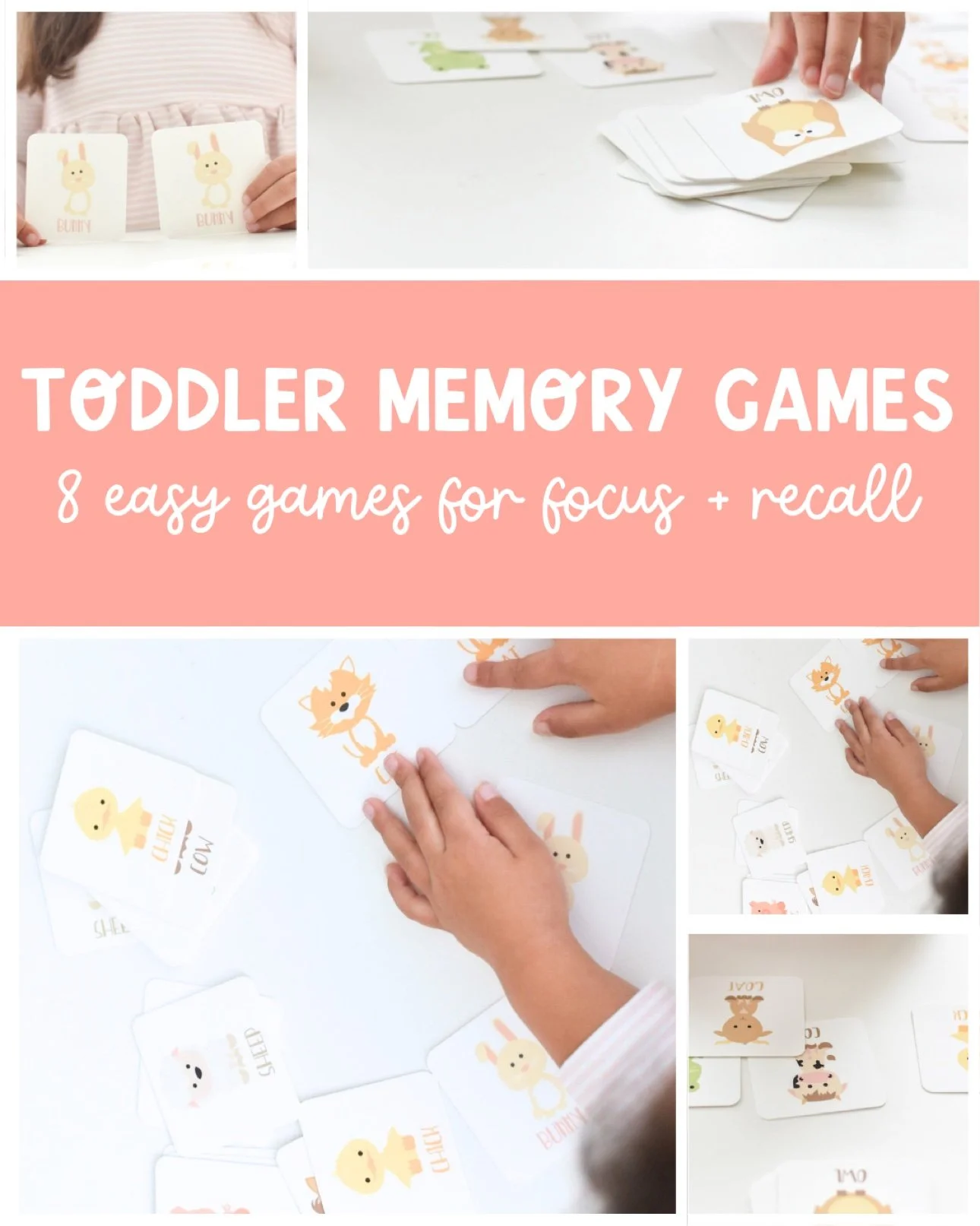
Why memory games are worth your 10 minutes
Here's the thing nobody tells you about toddler attention spans: they're supposed to be short. A two-year-old focusing for five solid minutes is doing exactly what two-year-olds do. Memory games aren't about forcing longer focus — they're about giving that little brain fun reasons to practice paying attention, noticing details, and holding one small thing in mind while doing another.
When she was little, matching games were one of our rainy-day staples. Not because I was running some kind of brain-training program — honestly, I just needed something that kept her seated for more than four minutes while I drank my coffee while it was still warm. But I noticed something: the more we played, the longer she'd stick with puzzles, the better she got at finding things we'd "lost," and the more she started narrating what she was doing out loud. Play was doing the work all by itself.
These toddler memory games start dead simple (no reading, no rules to memorize) and build from there. Most use things you already own. And every single one sneaks in bonus skills — vocabulary, turn-taking, fine motor — without your toddler ever suspecting they're learning a thing.
8 toddler memory games to play at home
1. Face-up matching (the starter game)
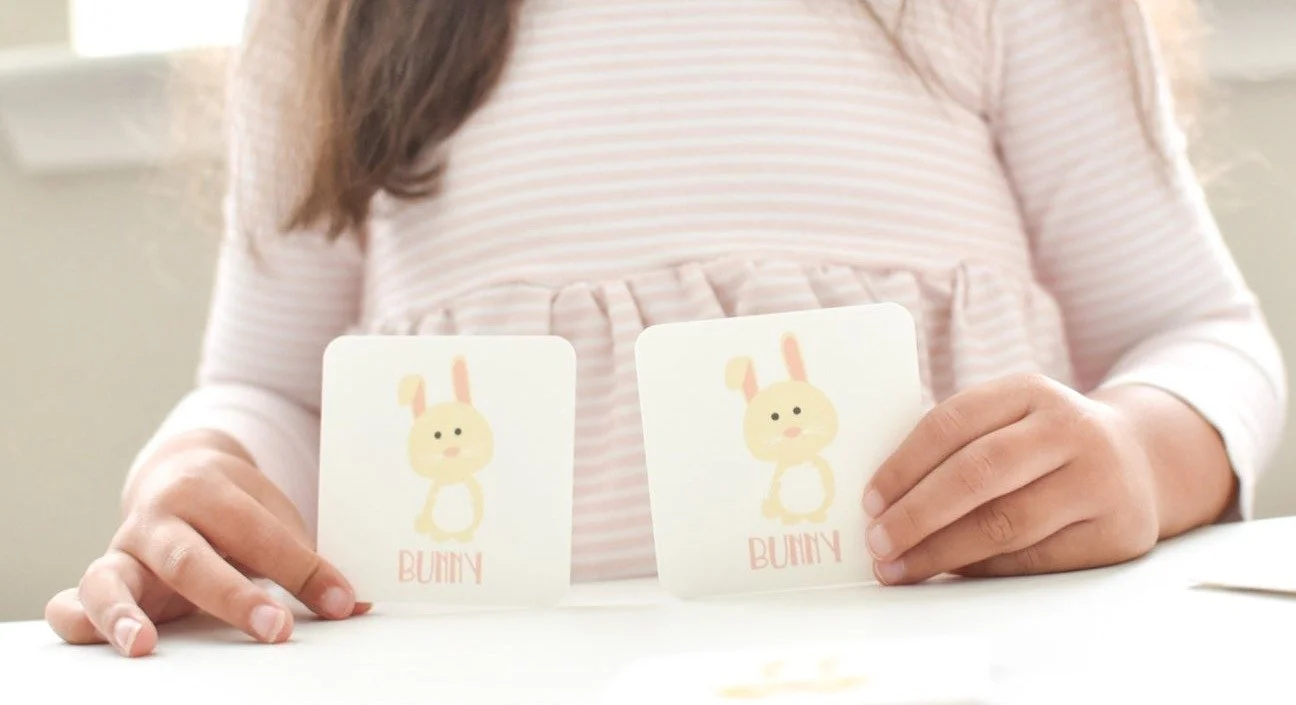
Forget everything you know about how memory games "should" be played. For toddlers under two, flip the cards face up and just match the pairs. Same pictures together — that's the whole game. It teaches the core idea (these two go together) without the frustration of hidden cards. We started here when she was about eighteen months, with just three or four pairs, and she loved the satisfaction of finding the match. When face-up matching gets easy, you're ready for the real flip-and-find version.
2. The tiny-grid classic
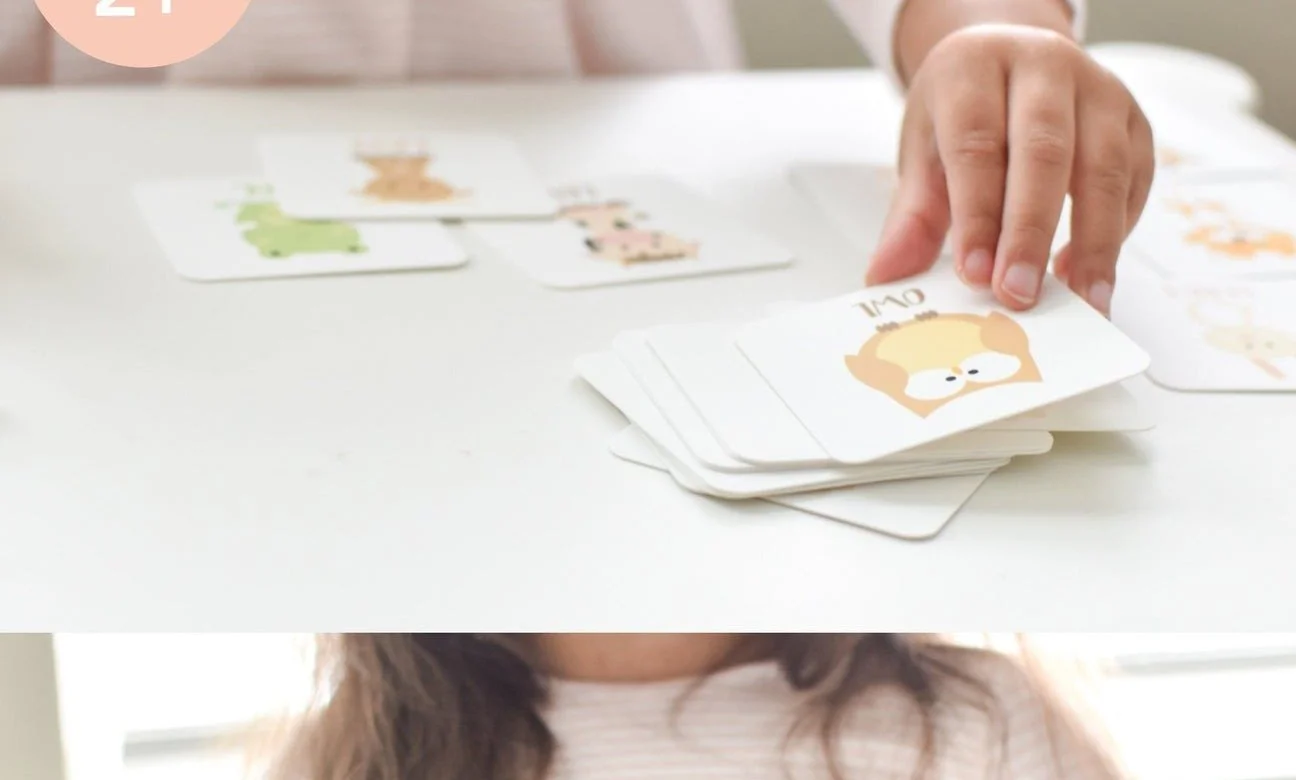
Once face-up matching clicks, try the traditional game — but shrink it way down. Three or four pairs, laid out in a small grid, cards face down. Take turns flipping two. Narrate everything: "I got the cow… and the pig! Not a match. Your turn — where do you think the cow is?" That running commentary is half the learning: it models the thinking-out-loud strategy older kids use to remember. Quit after a few rounds, while it's still fun — ending on a high note means they'll ask to play again tomorrow.
3. The tray game ("what's missing?")
This one's a classic for a reason. Lay three or four familiar objects on a tray — a spoon, a toy car, a ball, a block. Let your toddler look at them for a few seconds, name each one together, then cover the tray with a tea towel. Sneak one object away, uncover, and ask: "What's missing?" Start with just three objects and build up. The naming-together step matters — it gives their brain a verbal hook to hang the memory on.
4. Muffin-tin pair hunt
Hide matching pairs under the cups of an overturned muffin tin (or plastic cups on the table). Your toddler lifts two cups to find the pairs hiding underneath. The lifting and peeking adds a motor element that keeps wiggly kids engaged longer than flat cards do, and you can swap what's hidden — stickers, pom-poms, small toys, picture cards — so the game feels brand new every time you set it out.
5. Card hide-and-seek around the room
Take one card from each matching pair and hide them around the room — on the couch, behind a pillow, under the table (keep them visible-ish for little ones). Hand your toddler the other half of each pair and send them hunting: find the hiding card that matches the one in your hand. It pairs memory with movement, which is a magic combination for toddlers who can't sit still. We played versions of this constantly when she was little — the sillier the hiding spots got, the harder she laughed and the longer she played.
6. Sound shaker pairs
Fill pairs of small opaque containers (old spice jars or Easter eggs taped shut work perfectly) with matching fillings — rice and rice, beans and beans, bells and bells, pom-poms and pom-poms. Shake one, then hunt for its sound-alike. This one's wonderful because there's no "right picture" to find — it's pure listening and remembering, and toddlers find it genuinely thrilling when they get it right. Just make sure everything is sealed well enough to survive enthusiastic shaking.
7. Photo pairs of real life
Print double copies of a few favorite photos — the dog, grandma, their best friend, their own shoes — and play matching with those. Toddlers are wildly more motivated to remember faces and things they love than generic pictures. It's also the sweetest game to watch: the delight when they match the two grandmas is something else. Bonus: naming everyone in the photos sneaks in vocabulary and family connection at the same time.
8. Story re-tell from pictures
After reading a favorite book, lay out three or four picture cards (or just point at the illustrations) and re-tell the story together out of order: "What happened first? And then what?" Remembering a story's sequence is memory work in disguise — and it's one of the earliest building blocks of both comprehension and storytelling. Start with books they practically have memorized; the familiarity is what makes it feel like a game instead of a quiz.
Bonus tip: keep a set where the waiting happens
The games above all work with household objects, but there's a real case for one dedicated matching set: consistency. When she was little, we kept a small set of animal matching cards in the kitchen drawer — the same pictures every time — and pulled them out during those in-between moments: waiting for pasta to boil, sitting at a restaurant, the last ten minutes before naptime. Because the pictures never changed, she started remembering where specific cards were, which turned every game into a little victory. Familiar materials build confidence; novelty builds interest. You want both.
Tips that make every game work better
- Start tiny. Three pairs beats ten pairs for a beginner. Add more only when they're winning easily.
- Let them win — sometimes. A toddler who never finds a match stops playing. A little strategic "forgetting" on your part keeps them coming back.
- Narrate everything. Saying what you see and what you're thinking models the exact mental strategies memory relies on.
- Quit while it's fun. Five great minutes beats fifteen minutes that end in tears. You can always play again after snack.
- Follow their lead. If they want to line the cards up instead of playing properly, that's fine — they're still looking, comparing, and noticing. That's the work.
What age can toddlers start playing memory games?
Around 18 months, most toddlers can handle simple face-up matching — finding two cards that look the same. The classic face-down flip-and-find game usually clicks between ages 2½ and 3, and even then, start with just three or four pairs. There's no rush; matching at any level is building the same skills.
How many pairs should I start with?
Three to four pairs is the sweet spot for beginners. It keeps the game short enough to finish and easy enough to win. Add one or two pairs at a time as it gets easy — you'll know it's time when they start finishing the game and immediately asking to play again.
My toddler just flips cards randomly. Is that normal?
Completely normal — and actually part of the process. Random flipping is how toddlers explore the materials and the rules. Keep modeling your own turns out loud ("I'm looking for the other cow… is it this one? No!"), and over a few weeks you'll see the randomness turn into genuine searching.
Do I need to buy special cards for memory games?
No — most of the games above use things you already own. But a dedicated set has real advantages: the same pictures every time let your child build genuine recall (not just matching), the cards survive toddler handling, and having a "game set" makes it feel like an event. If you go that route, look for big, clear illustrations with no visual clutter.
Our go-to matching cards
When she was little, our kitchen-drawer set was a small stack of animal matching cards — the same cheerful faces every time, sturdy enough to survive being chewed on, loved on, and dragged around the house. Big, clear illustrations were the key: no clutter, just the animal, so all her attention went to looking, comparing, and remembering. If you want the same setup, our memory game cards were made exactly for this.