
Teaching Your Toddler to Count: 8 Fun Ways That Actually Work
No worksheets, no drilling flashcards at the kitchen table. Just everyday moments — snacks, stairs, and stickers — that turn counting into a game they'll beg to play.
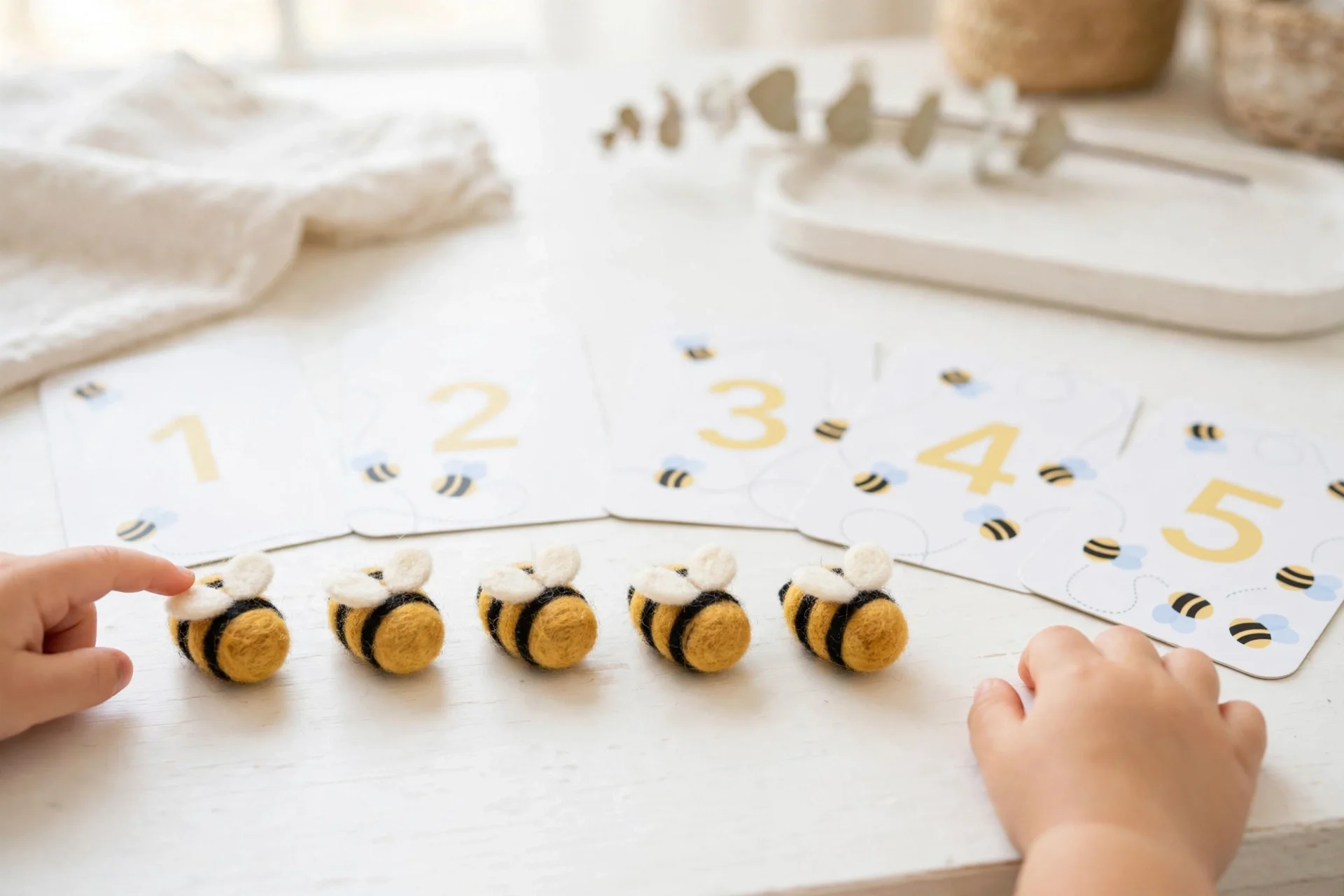
The day counting clicked
When my daughter was little, she could chant "one, two, three, four, five" like a song — and then hand me "three" crackers by grabbing a whole fistful. It took me a while to realize those were two completely different skills. Reciting numbers is memory. Counting actual things — touching each one, saying one number per item — is math. And the second one is where the magic lives.
Teaching a toddler to count isn't about getting them to ten as fast as possible. It's about helping them understand that numbers mean something: that "three" is this many crackers, these many steps, these many stickers on a page. Every activity below builds that connection through play.
Why counting real things beats reciting numbers
Most toddlers learn to rattle off numbers the way they learn song lyrics — the words are there, but the meaning isn't attached yet. The skill that turns reciting into real counting is called one-to-one correspondence: touching (or pointing to) each object exactly once while saying one number word per object.
You'll know it's clicking when your toddler slows down, points deliberately, and doesn't skip or double-count. That careful pointing is the whole game — celebrate it every time.
8 easy ways to teach your toddler to count
1. Narrate your counting all day long
The simplest one: just count out loud, constantly. "Let's put on your shoes — one shoe, two shoes!" "Three spoonfuls of yogurt — one, two, three." We counted stairs, socks, blueberries, everything. Toddlers absorb number words the same way they absorb all language — by hearing them used, over and over, in context.
This costs you nothing and it works in the background of normal life. Start here if you do nothing else.
2. Snack math
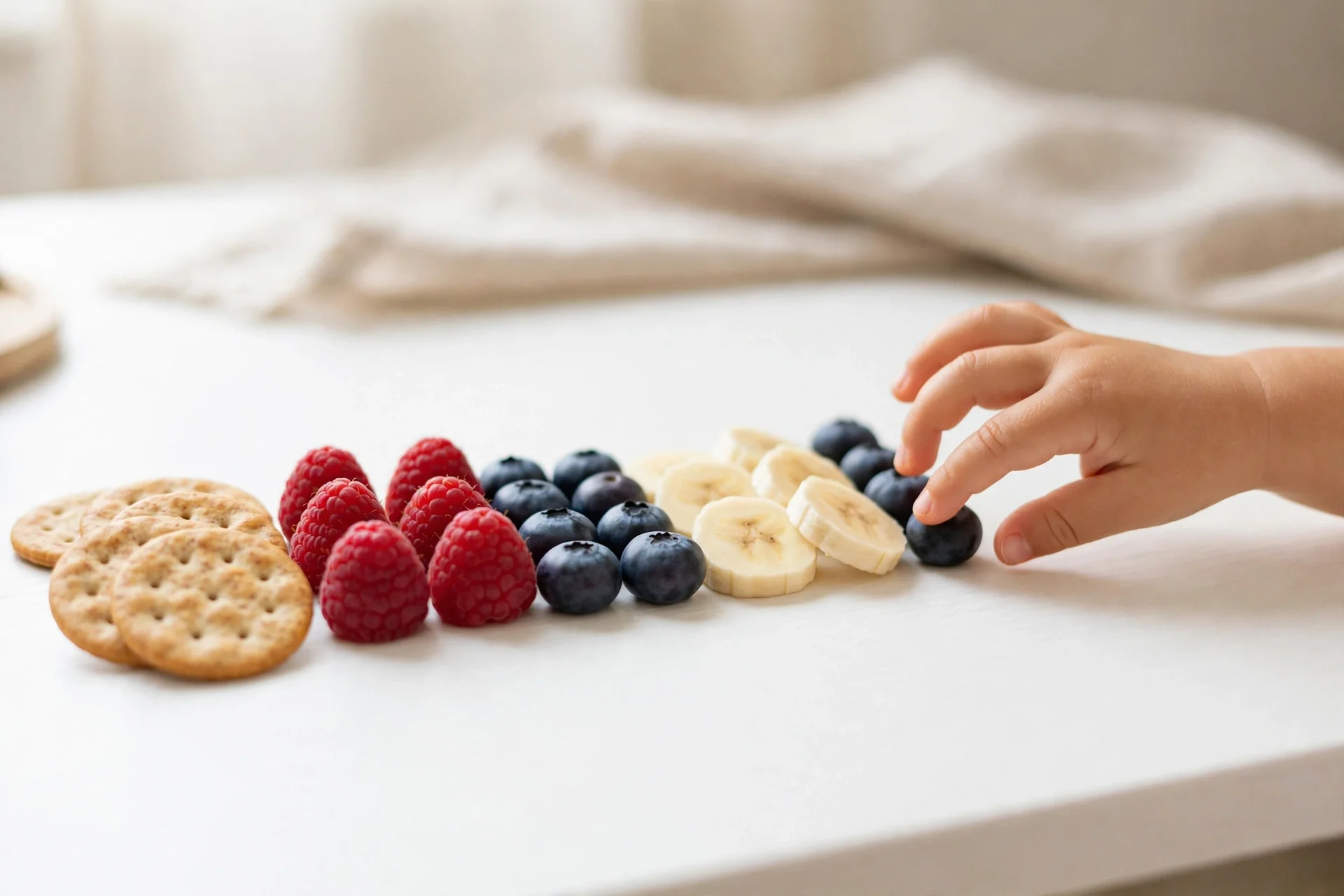
Snacks are the ultimate counting manipulative because toddlers are extremely motivated by them. Line up crackers, berries, or cereal pieces in a row and count them together before eating — one number per piece, touching each one. Then let them do it while you just listen.
When she was little, my daughter's favorite was lining up banana slices and counting them onto her plate. The eating was the reward for the counting, and she never once called it learning.
3. Dot sticker number cards
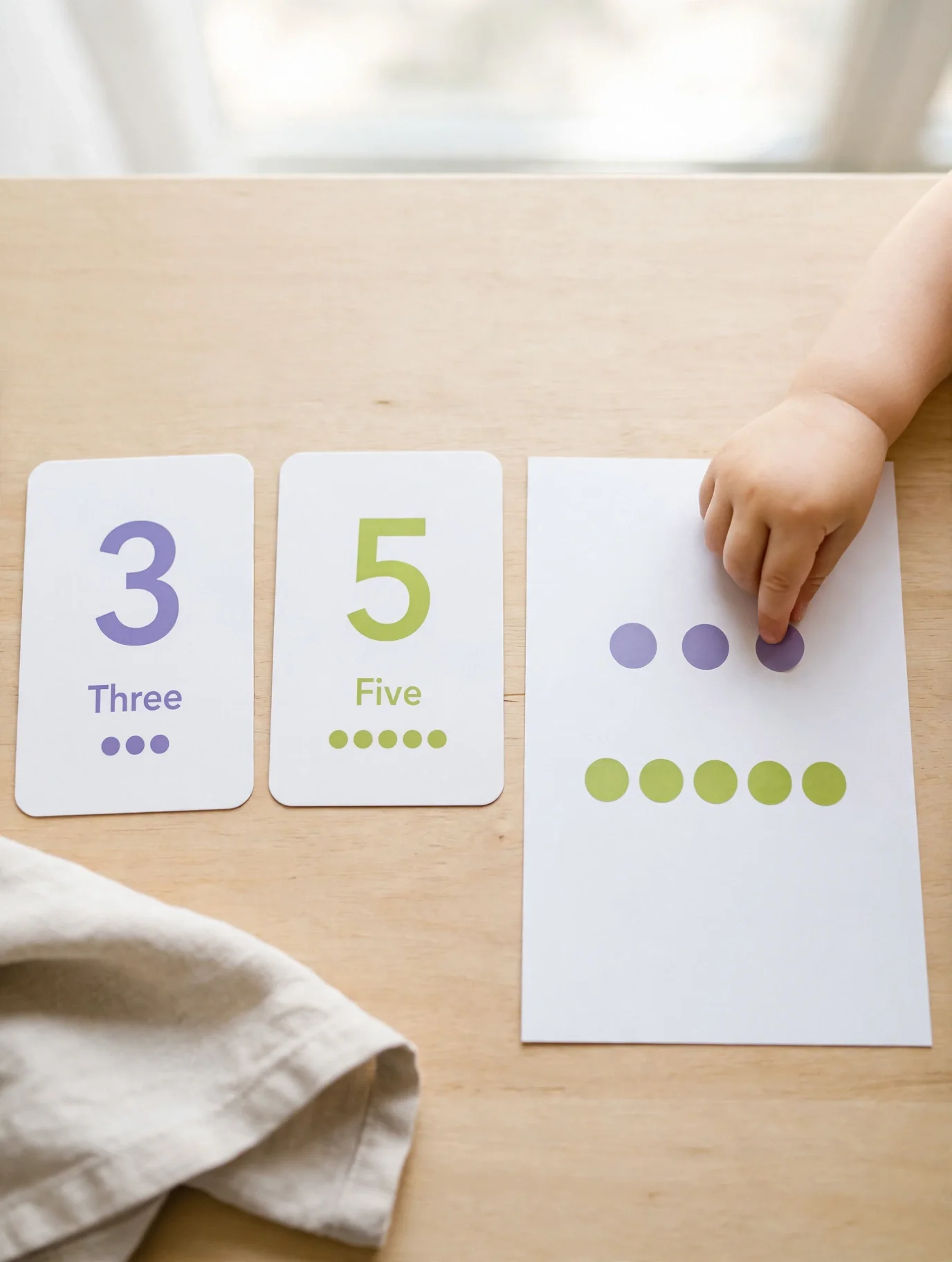
Write big numbers on index cards or paper (1 through 5 to start), and let your toddler stick one dot sticker on the card for each number — one sticker while saying "one," two stickers while saying "one, two." It builds the number-to-quantity connection and sneaks in fine motor practice too.
Keep it to five numbers max at first. When they can do 1–5 without help, add 6–10.
4. Count real objects onto number cards
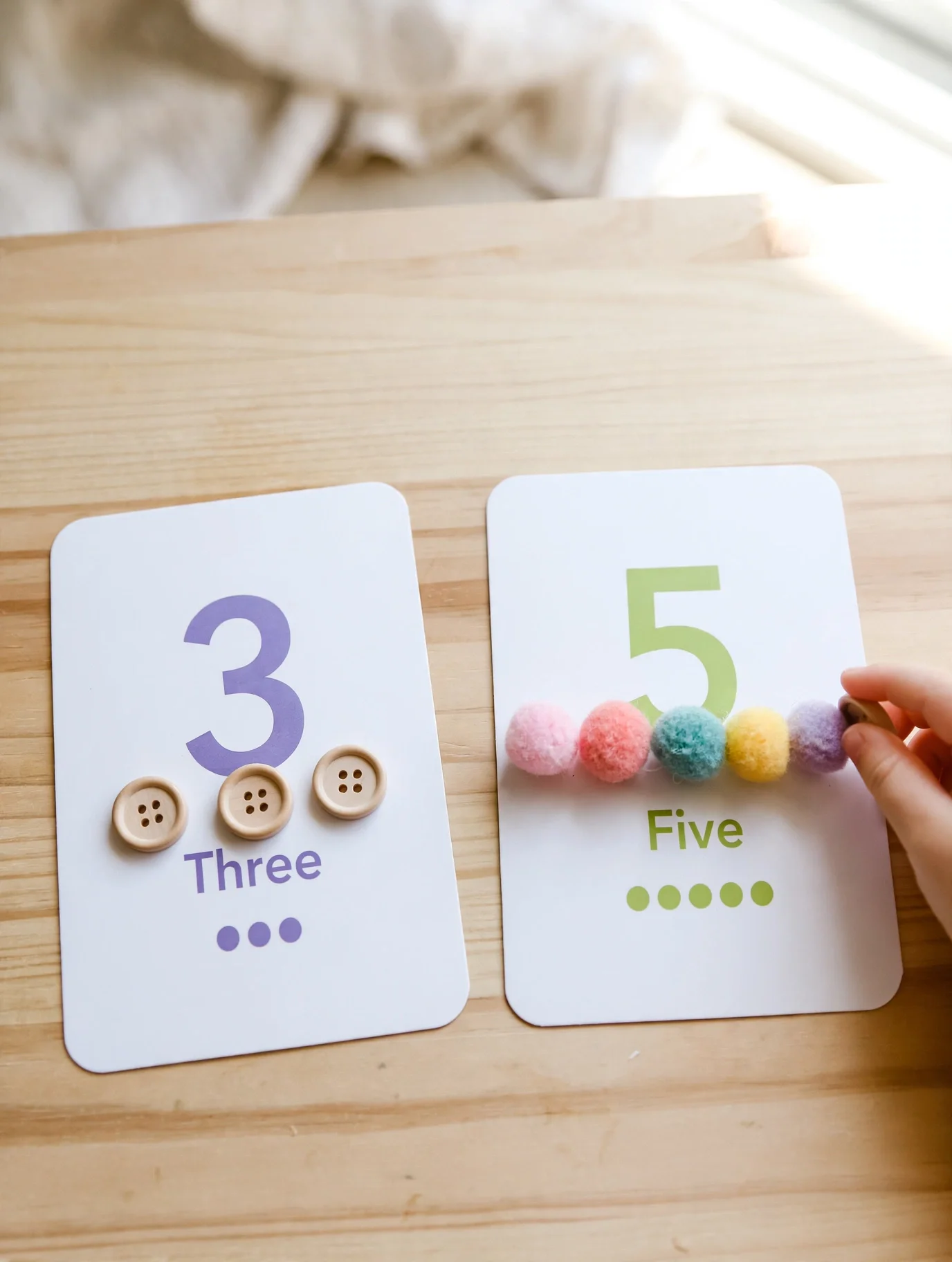
This is the one-to-one correspondence workout. Lay out number cards and have your child place the matching number of real objects on each — three buttons on the 3, five pom-poms on the 5. Touching each object while counting is what wires the concept in.
Use whatever you have: dried pasta, pebbles from a walk, Duplo bricks. The objects don't matter — the touching-and-counting does.
5. Count the stairs
Stairs are a built-in counting lesson you climb every day. Count each step together on the way up — slowly, one number per step. Going down is even better practice because it breaks the rhythm and makes them think.
We did this every single morning when she was two. By the time we moved to a one-story house, she was counting to twelve without missing a step.
6. Movement counting games
Count jumps, claps, stomps, or spins. "Let's do five big jumps — one, two, three, four, FIVE!" Big-body counting is perfect for toddlers who won't sit still for table activities (so... most toddlers). It also teaches them to stop at the target number, which is an early self-regulation win hiding inside a math game.
7. Go on a number hunt
Tape number cards around the house at toddler height and send them hunting: "Can you find the number 4?" When they find it, they bring it back and count out four matching objects. It turns number recognition into a treasure hunt, and the running-around is a feature, not a bug.
8. Count while you cook together
Baking is full of natural counting: eggs cracked, scoops of flour, chocolate chips pressed into cookie dough. Let them count each addition out loud — "one egg, two eggs" — and the delicious smell at the end makes the whole thing memorable. We still count chocolate chips going into every batch of cookies.
The one thing that matters most
Keep it short and keep it playful. Two minutes of joyful counting beats twenty minutes of forced practice every time. If they wander off mid-activity, that's fine — the numbers will still be there tomorrow, and so will the snacks. Follow their lead, count everything in sight, and trust the repetition to do its work.
When should my toddler start learning to count?
Most toddlers start reciting number words between 2 and 3, and real one-to-one counting usually follows — first with small sets of 2–3 objects, growing from there. There's a wide range of normal, so follow your child's interest rather than a timeline.
My toddler skips numbers when counting. Is that normal?
Completely. Skipping numbers (especially the teens) is one of the most common toddler counting quirks. Just model it correctly without making a big deal of it — "Let's try again together: one, two, three, four..." — and they'll sort it out with practice.
Should I correct my toddler when they count wrong?
Gently, and rarely mid-flow. If they're happily counting, let them finish — interrupting kills the joy. Later, count it together correctly as a game. The goal is a child who loves numbers, not one who's afraid of getting them wrong.
What's the difference between reciting numbers and really counting?
Reciting is saying the number words in order (like a song). Real counting means matching one number word to each object — one touch, one number. That matching is the foundational math skill, and it's what all the activities above are really building.
Make counting time even easier
When she was little, I made our first number cards by hand on index cards — and remade them every time they got crumpled, chewed, or lost under the couch. Our math flashcards are the upgrade I wish I'd had: thick, wipeable, toddler-proof cards with clear numbers, ready to pair with snacks, buttons, and pom-poms for real counting practice.