
Kindergarten Readiness Checklist: 7 Skills That Matter More Than Knowing Every Letter
If you've ever lain awake wondering whether your child is "ready" — whether they know enough letters, whether they'll sit still, whether they'll be okay — you're not alone. This kindergarten readiness checklist focuses on the skills that actually help a child settle into school, with playful five-minute ways to practice each one at home.
First, a deep breath: what "ready" really means
Here's the thing nobody tells you when the kindergarten worry kicks in: readiness is not a race to read chapter books before the first day. Reading Rockets, a national literacy initiative, describes being ready for kindergarten as having preschool skills across three areas — academic, social, and physical — and notes that kindergarten itself is where most children learn to read and write, so fluent reading beforehand is not expected (see their kindergarten readiness handout).
The CDC's guidance for preschoolers ages 3–5 paints a similar picture: this is the stage where children become more independent, play with other children, recall parts of stories, and practice everyday skills like dressing and using safety scissors (see the CDC's preschoolers 3–5 years overview). In other words, the child who can follow a morning routine, ask for help, retell a favorite story, and count the spoons into the drawer is building exactly the foundation school builds on.
When she was little, our readiness practice never looked like school. It looked like cards on the wall, counting snacks, and a lot of silly voices during story time. That's the spirit of this checklist: seven skills, each with a tiny playful practice you can fold into a normal day.
The kindergarten readiness checklist
1. Follows a simple routine and 2-step directions
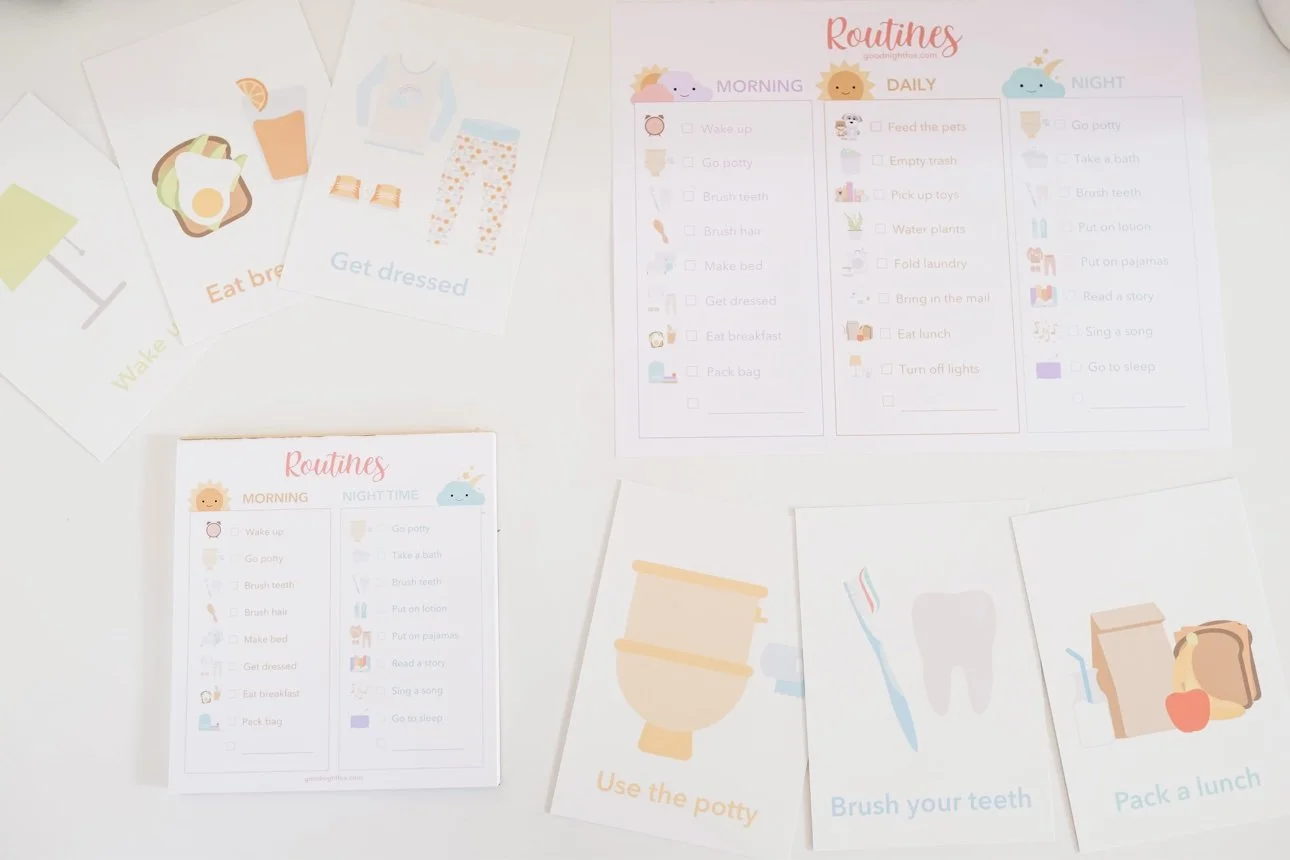
School days run on routines: arrive, unpack, sit, listen, line up. A child who can follow "first wash hands, then sit at the table" — and who knows what comes next in their own morning — walks into that structure with confidence. Practice at home by making the routine visible. We stuck our routine cards on her bedroom wall with Velcro dots when she was six, and she loved moving each card herself; for a 4- or 5-year-old, the same idea works at their eye level in the hallway or bathroom. If you want the full how-to, our visual schedule guide walks through it step by step.
2. Separates, takes turns, and asks for help
Teachers consistently put social-emotional skills at the top of the readiness list: separating from caregivers, joining a group, sharing, waiting for a turn, and asking an adult for help. None of that is taught with flashcards — it's practiced in everyday play. Board games with one rule, playground turn-taking, and pretend play where someone else gets to be the shopkeeper first are all quiet readiness training. Short, successful separations (a playdate, a library story time) build the "I can do this" muscle before the first full school day.
3. Talks in sentences and retells a story
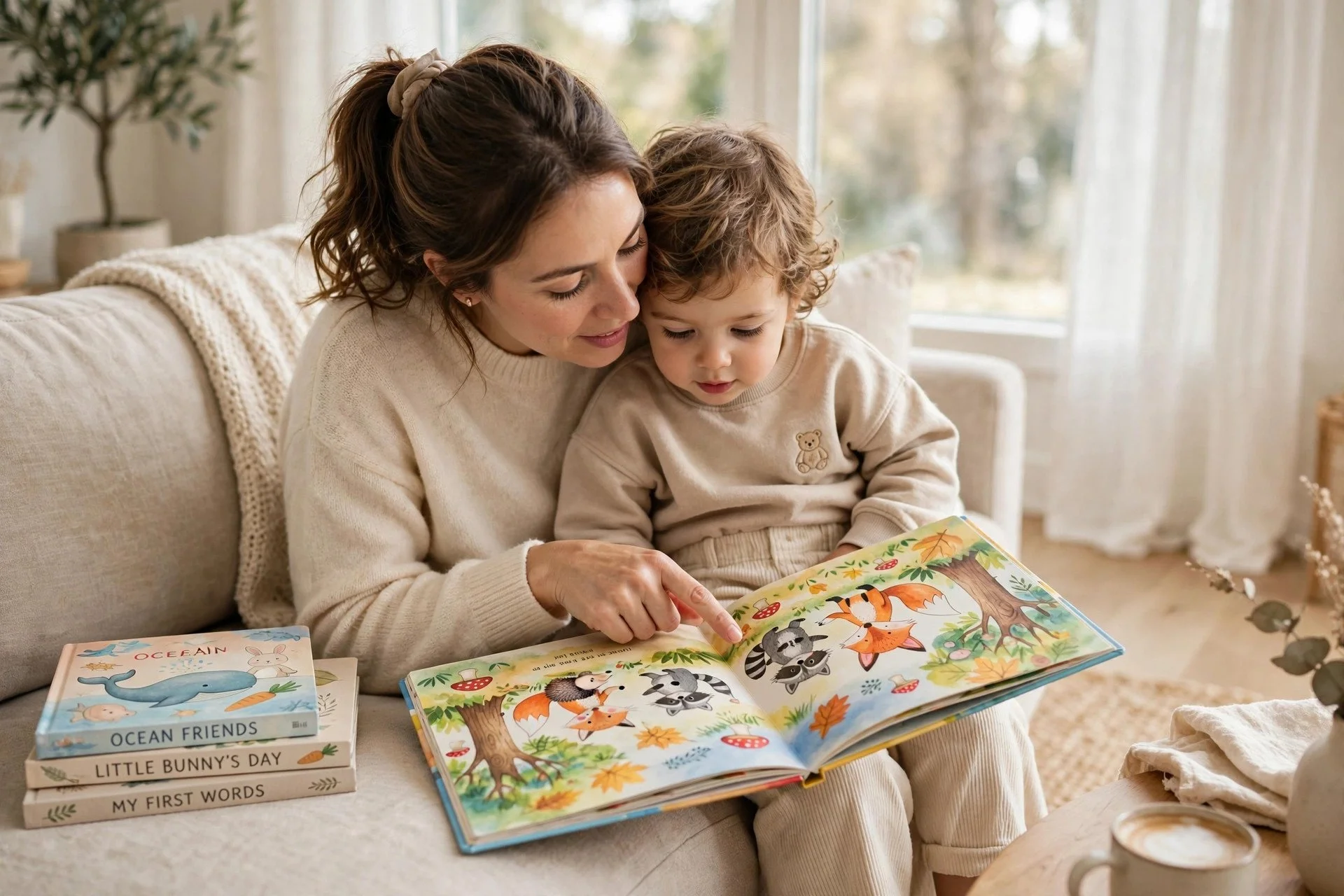
A ready kindergartner can usually speak clearly enough for adults outside the family to understand, follow a short conversation, and tell you what happened in a story — not word for word, just the gist in their own words. The practice is simply talking and reading together, out loud, every day. When she was little, we narrated everything and let her "read" favorite books back to us from the pictures; that retelling is early comprehension in disguise. Our speech and talking activities post has more of the games we played at home.
4. Recognizes their name and some letters
Your child doesn't need the whole alphabet on lock. Recognizing their own name in print, knowing some letters (especially the ones in their name), and understanding that books go front to back, left to right, is a strong start. Keep it playful: letter hunts on cereal boxes, name puzzles at the fridge, and matching games with big, clear letter cards. Short bursts — three to five minutes — beat any drill.
5. Counts objects to 10 with one-to-one matching
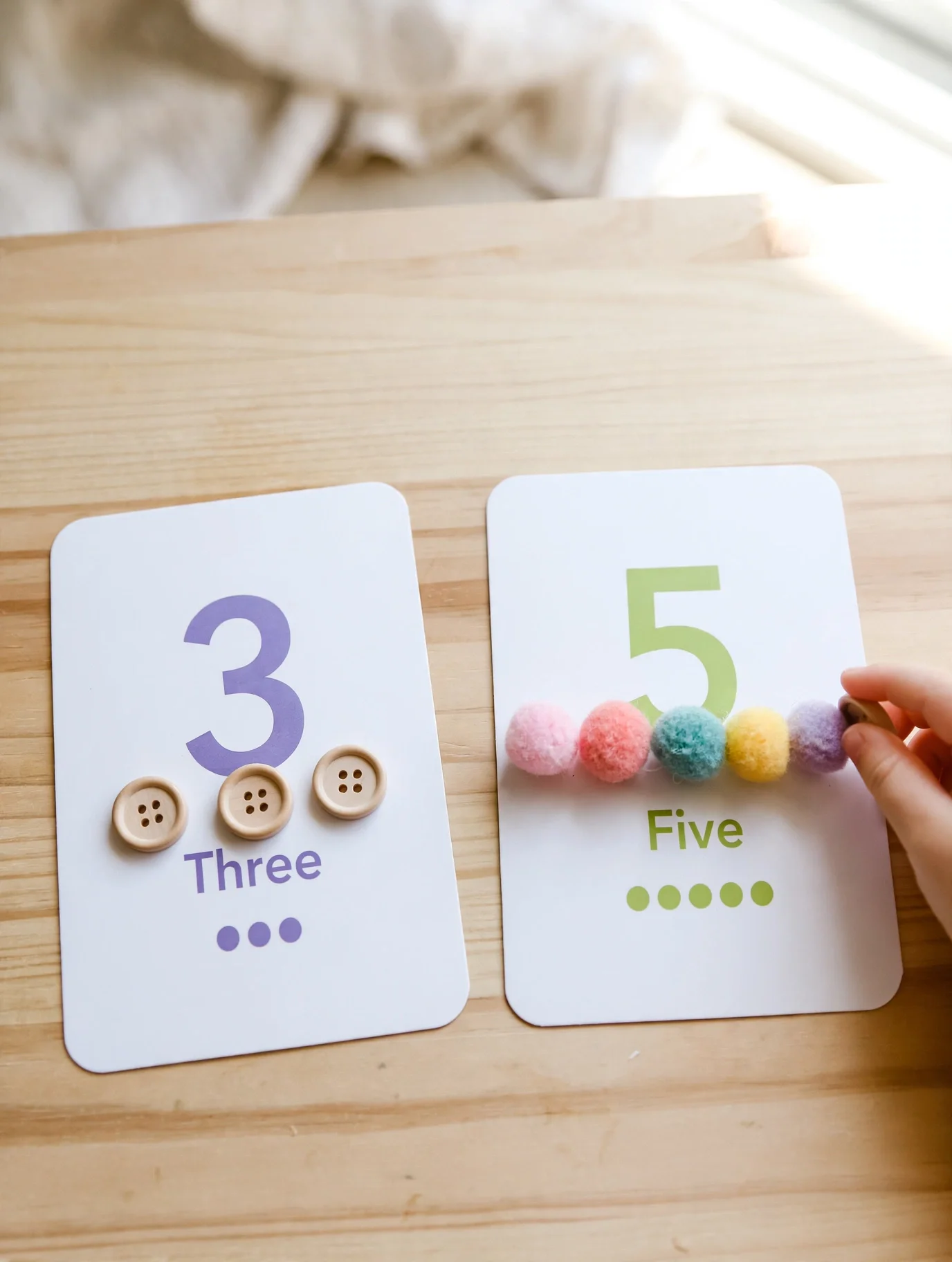
There's a difference between reciting "1-2-3-4-5" like a song and actually counting five crackers, touching each one once. That second skill — one-to-one correspondence — is the one that matters, and it's built with snacks, stairs, and stuffed animals lined up for inspection. Our counting activities guide has the games we used, from snack math to counting objects onto number cards.
6. Holds a crayon and uses scissors with supervision
Kindergarten involves a lot of crayons, glue, and safety scissors. A child who can hold a crayon, snip the edge of a paper, and squeeze a glue bottle arrives ready for the fun part. Warm up little hands with playdough, tongs, and stickers, then start cutting with thick paper and short snips — confidence first, straight lines later.
7. Manages everyday self-care
Bathroom independence, handwashing, opening a lunchbox, putting on a coat, and carrying a backpack are unglamorous — and they free up a child's whole brain for learning. Practice the exact items they'll use at school: the same lunch containers, the same shoes, the same backpack zipper. A two-minute "school morning rehearsal" on a weekend makes the real Monday feel familiar.
What you can stop stressing about
- Reading fluently. Kindergarten is where most children learn to read; recognizing some letters and loving books is a great launchpad.
- Writing sentences. Writing their name (or part of it) and drawing recognizable pictures is plenty.
- Counting to 100. Counting objects accurately to 10, with one touch per object, is the stronger foundation.
- Sitting perfectly still. Wiggle is normal at 4 and 5. Listening to a short story and focusing for a few minutes at a time is the realistic goal.
When to check in with a teacher or pediatrician
Every child develops at their own pace, and a single unchecked box is not a red flag. It's worth a conversation with your child's preschool teacher or pediatrician if you're seeing struggles across several areas at once — for example, speech that's very hard for others to understand, difficulty following any simple directions, no interest in pretend play, or losing skills they once had. Trust your gut: you know your child, and asking early is never the wrong move.
Not sure where to start? Take the free Sprout Check
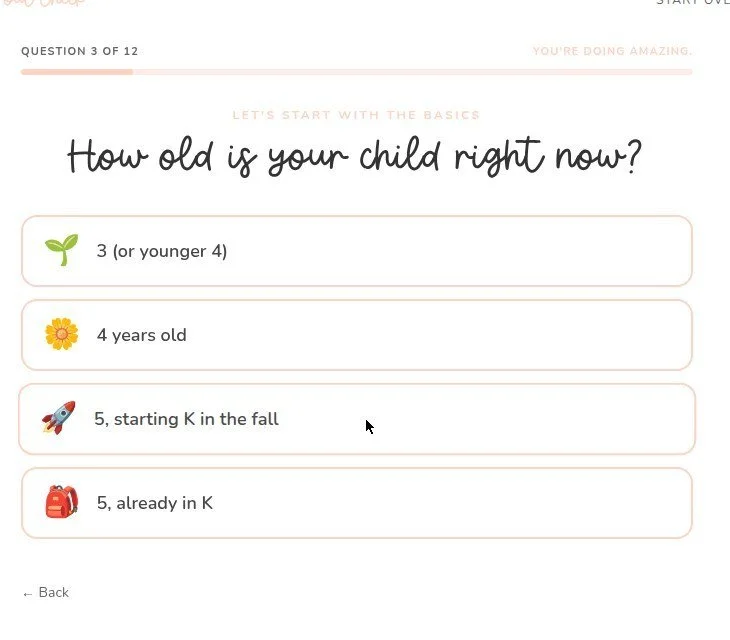
Want a quick, friendly starting point instead of guessing? Our free Sprout Check is a 2-minute kindergarten-readiness quiz — a dozen playful questions across the 6 skills kindergarten teachers actually look for. It shows you where your child is shining and builds a personalized plan with the activities that fit them best.
What should my child know before kindergarten?
The short list: follow a simple routine and 2-step directions, separate from caregivers and take turns, talk in sentences and retell a story, recognize their name and some letters, count objects to 10, hold a crayon and snip with scissors, and manage basics like handwashing and opening their lunchbox. Social and independence skills matter at least as much as letters and numbers.
Does my child need to know all their letters before kindergarten?
No. Recognizing some letters — especially the letters in their own name — and showing interest in books is a solid start. Letter knowledge grows quickly once school starts, particularly when home practice stays playful and short.
Should my child be reading before kindergarten?
Not expected. Kindergarten is where most children learn to read. What helps most beforehand is being read to daily, handling books, hearing rhymes and songs, and "retelling" favorite stories from the pictures.
How can I practice readiness without worksheets?
Use the day itself: count snacks, hunt for letters on signs, follow a picture routine in the morning, take turns in a simple game, and rehearse opening the exact lunchbox they'll carry. Five playful minutes folded into real life beats a stack of worksheets.
Our readiness practice staples
When she was little, our practice lived in three card sets: routine cards for the morning lineup, big animal alphabet cards for letter games, and number dot cards for counting real objects one at a time. Same cards, same games, five minutes here and there — that's what made it stick. If you want the same setup, these are the exact sets we used.
Shop Morning Routine Flashcards