Visual Schedule for Toddlers: End Morning & Bedtime Battles
Tired of repeating yourself forty times before breakfast? A visual schedule for toddlers shows them what comes next — so you can stop narrating the whole morning and start enjoying it.
The morning I stopped repeating myself
When she was little, our mornings ran on a soundtrack of me saying the same things on loop: "Shoes on. Shoes on, please. SHOES. ON." Bedtime wasn't much better — every step was a negotiation. Then a preschool teacher friend showed me her classroom's secret: a simple row of picture cards showing the day's routine, stuck at toddler eye level. Within a week, my daughter was pointing to the next card herself instead of melting down about it. I wished I'd tried it a year earlier.
A visual schedule for toddlers works because it translates your words — which vanish the second you say them — into something they can see, touch, and follow on their own.
Why toddlers fight transitions (it's not defiance)
Toddlers live entirely in the present moment. When you announce "time to leave!", you're asking them to drop something wonderful for something unknown — and their brain genuinely can't picture what comes next. That's why transitions spark the biggest battles of the day.
A visual schedule fixes this by making the invisible visible. When a child can see that snack comes after shoes, and playground comes after snack, the day stops feeling like a series of ambushes. Predictability is calming — for toddlers especially.
What is a visual schedule, exactly?
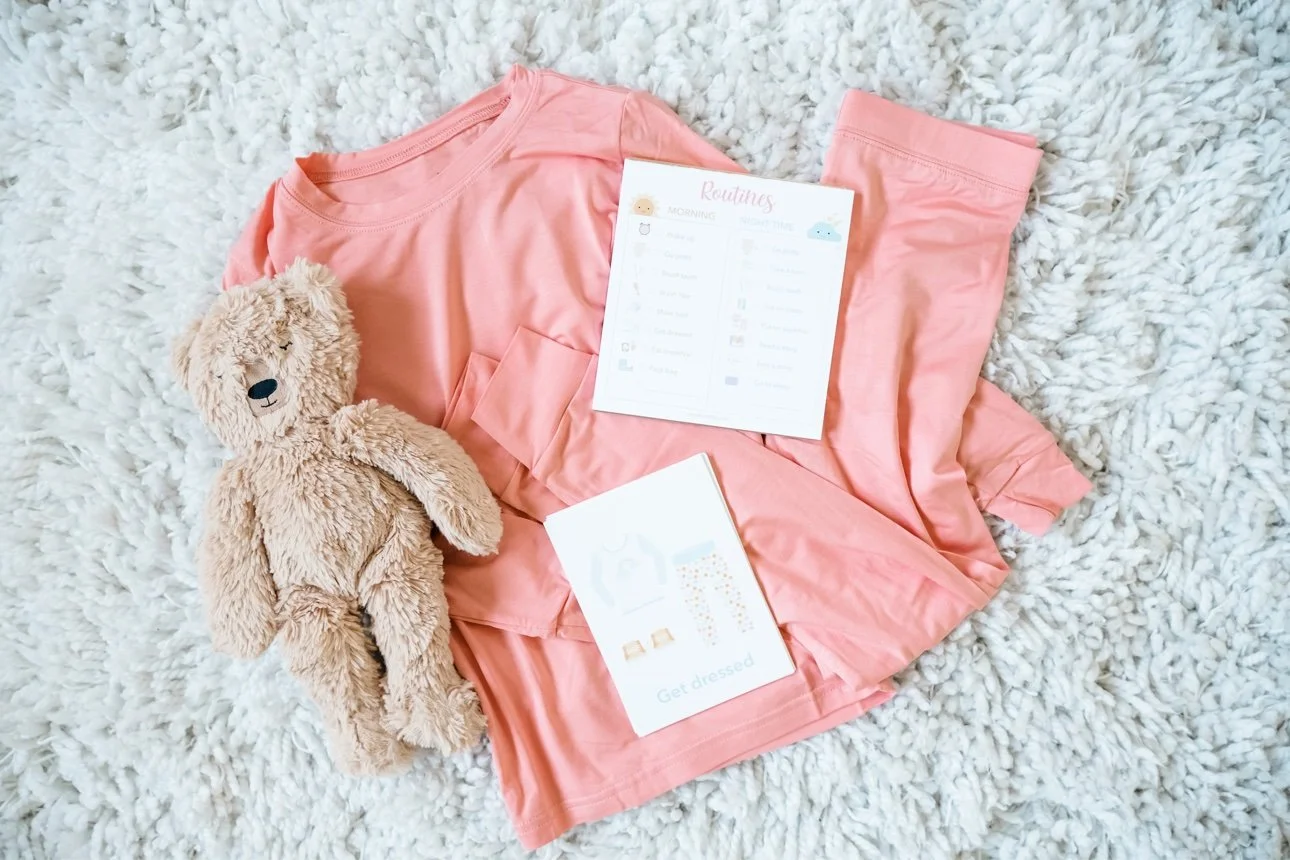
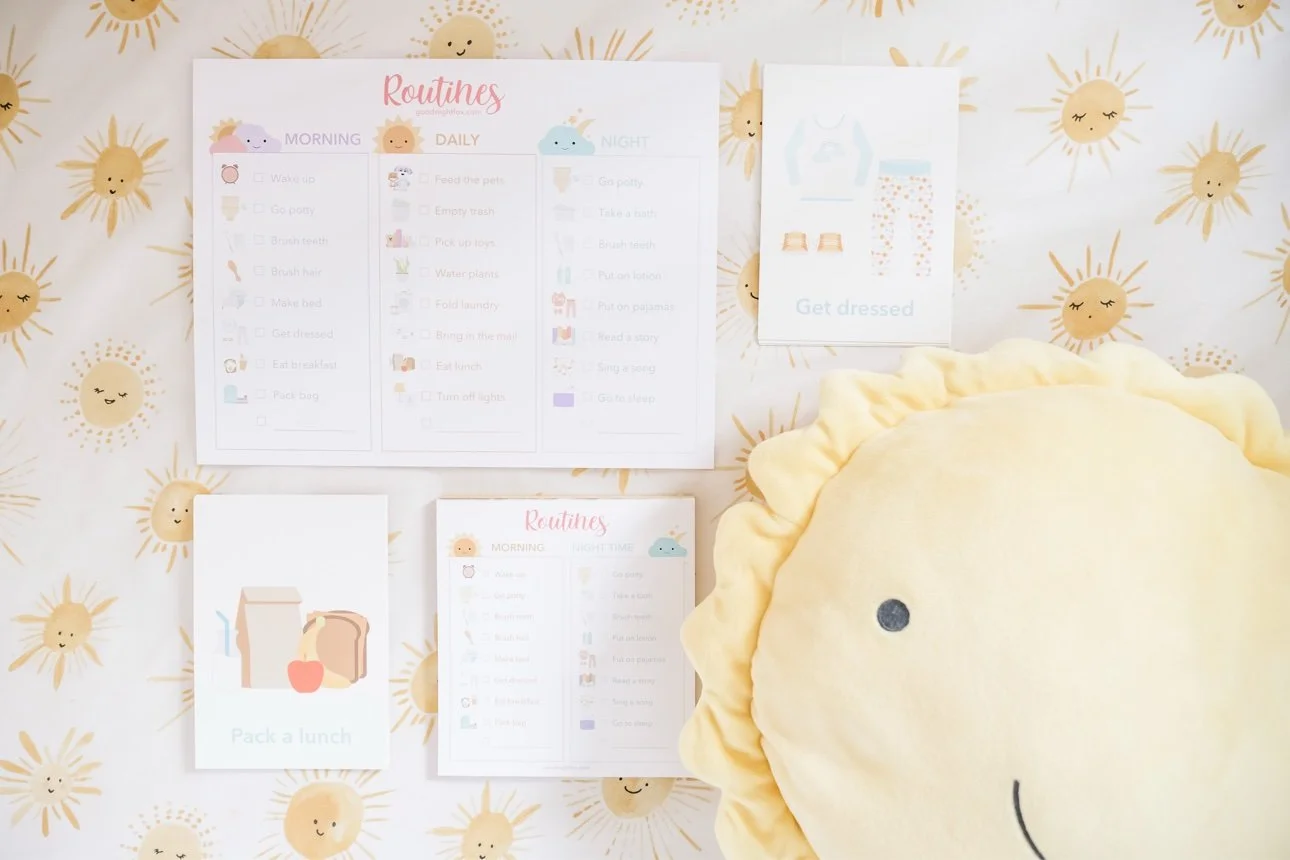
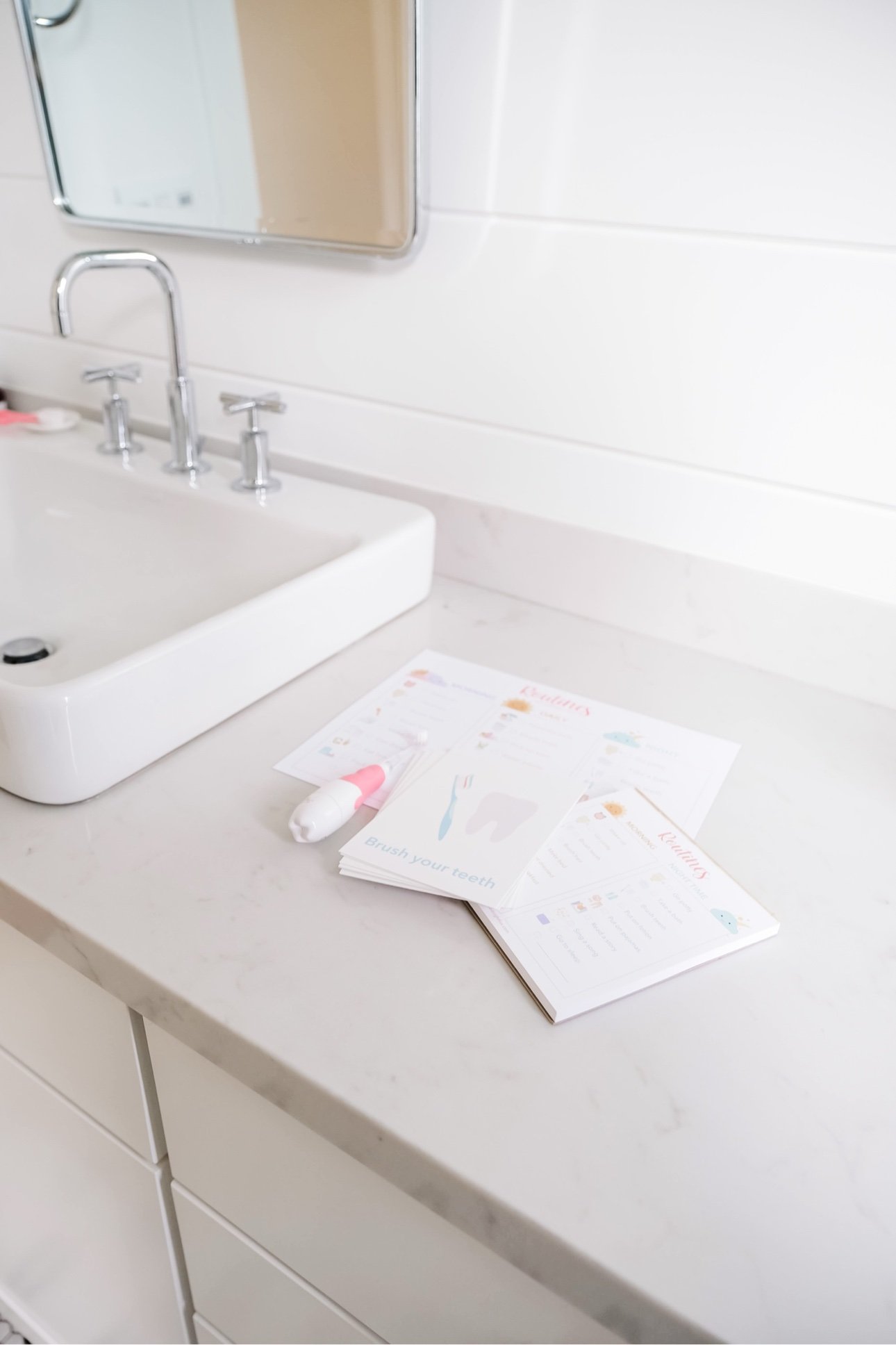
It's simply a sequence of picture cards — one per step of a routine — arranged in order where your child can see them. Each card shows one activity: wake up, brush teeth, get dressed, eat breakfast. Your child moves through the cards as the routine happens, flipping, removing, or checking off each one.
Speech therapists, occupational therapists, and preschool teachers have used visual schedules for years, including with autistic children and kids with ADHD — but they're just as powerful for any toddler who thrives on knowing what comes next (which is nearly all of them).
How to build a visual schedule in 4 steps
Step 1: Pick one routine to start
Don't schedule the whole day on day one — that's overwhelming for everyone. Start with the routine that causes the most friction: usually mornings or bedtime. Master one, then add another.
Step 2: Choose 4–6 steps, in the same order every day
Fewer steps is better. For mornings: wake up → potty → brush teeth → get dressed → eat breakfast → shoes on. Keep the order identical daily — the power is in the predictability.
Step 3: Put it at their eye level
Tape the cards to the wall by their bed, stick them on the fridge with magnets, or line them up on a low shelf. If they can't see it without asking you, it can't do its job.
Step 4: Let your child work the schedule
This is the magic part. After each step, let them flip the card over, move it to a "done" pile, or slide it down. That small act of control transforms them from a passenger in your routine into the driver of it. Point to the schedule instead of repeating yourself: "Check your cards — what's next?"
A sample morning routine
- Wake up — card one sets the tone: the day has a plan
- Go potty — non-negotiable step two, before anything fun
- Brush teeth — two minutes, same song every day if it helps
- Get dressed — lay clothes out the night before to remove the decision
- Eat breakfast — the natural reward in the middle
- Shoes on — the finish line they can see coming
A sample bedtime routine
- Bath time — the signal that the day is winding down
- Brush teeth — same step, same place in the order, every night
- Pajamas on — let them pick between two options for buy-in
- Read a book — one or two, decided in advance (not at 8:45pm)
- Say goodnight — same phrase, same order, every night
Tips that make it actually stick
Keep it positive. The schedule shows what to do, not what not to do. "Gentle hands" beats "don't hit" on a card every time.
Be boringly consistent for two weeks. The first few days, you'll still be doing most of the work — pointing, prompting, celebrating. Around day 5–7, most toddlers start running the schedule themselves. That's when it pays off.
Let them help build it. Choosing which cards go on the schedule (from your pre-approved options) gives them ownership. A child who built the routine defends the routine.
Adjust as they grow. When a step becomes automatic, swap in a new challenge — pouring their own water, picking tomorrow's clothes. The schedule grows with them.
Use it for the hard outings too. A 3-card schedule — store → playground → home — can prevent a grocery store meltdown better than any bribe. They can see the fun part is coming.
What age should I start a visual schedule?
Around age 2 is the sweet spot for most toddlers — they're old enough to recognize pictures and follow a sequence, and young enough that the routine becomes second nature quickly. Even 18-month-olds can follow a simple 3-card routine with help.
Do visual schedules only work for autistic children?
Not at all. Visual schedules are widely used in autism and ADHD support because they're so effective — but every toddler benefits from seeing what comes next. Preschool classrooms use them for entire classes of neurotypical kids.
What if my toddler ignores the schedule?
Totally normal in week one. Keep pointing to it cheerfully instead of repeating verbal instructions, and celebrate every time they engage with it — even just touching the next card counts. Most kids come around within a week or two once they realize the schedule is reliable.
Should I use photos or illustrations?
Either works. Real photos of your own child doing each step can be extra motivating ("that's YOU brushing teeth!"), while clear illustrations are easier to read at a glance. The key is that each card shows one obvious action.
Skip the DIY — use cards made for this
When she was little, I started by printing and laminating my own routine cards — and reprinting them every time one got crumpled, chewed, or lost under the couch. Our Routines flashcards are the upgrade I wish I'd had: thick, wipeable, toddler-proof cards covering morning, bedtime, and everything between, ready to stick on the fridge and start using tonight.