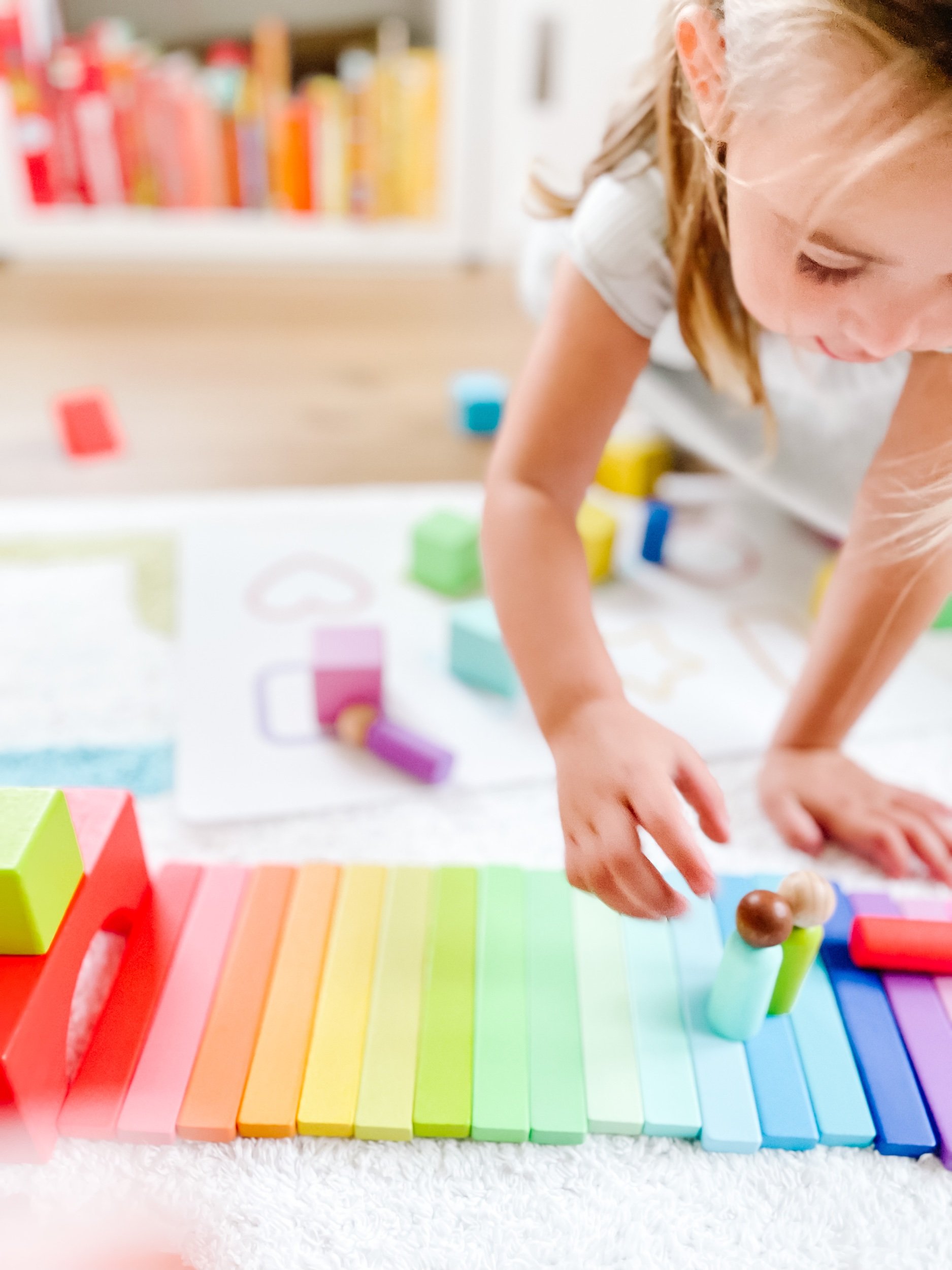
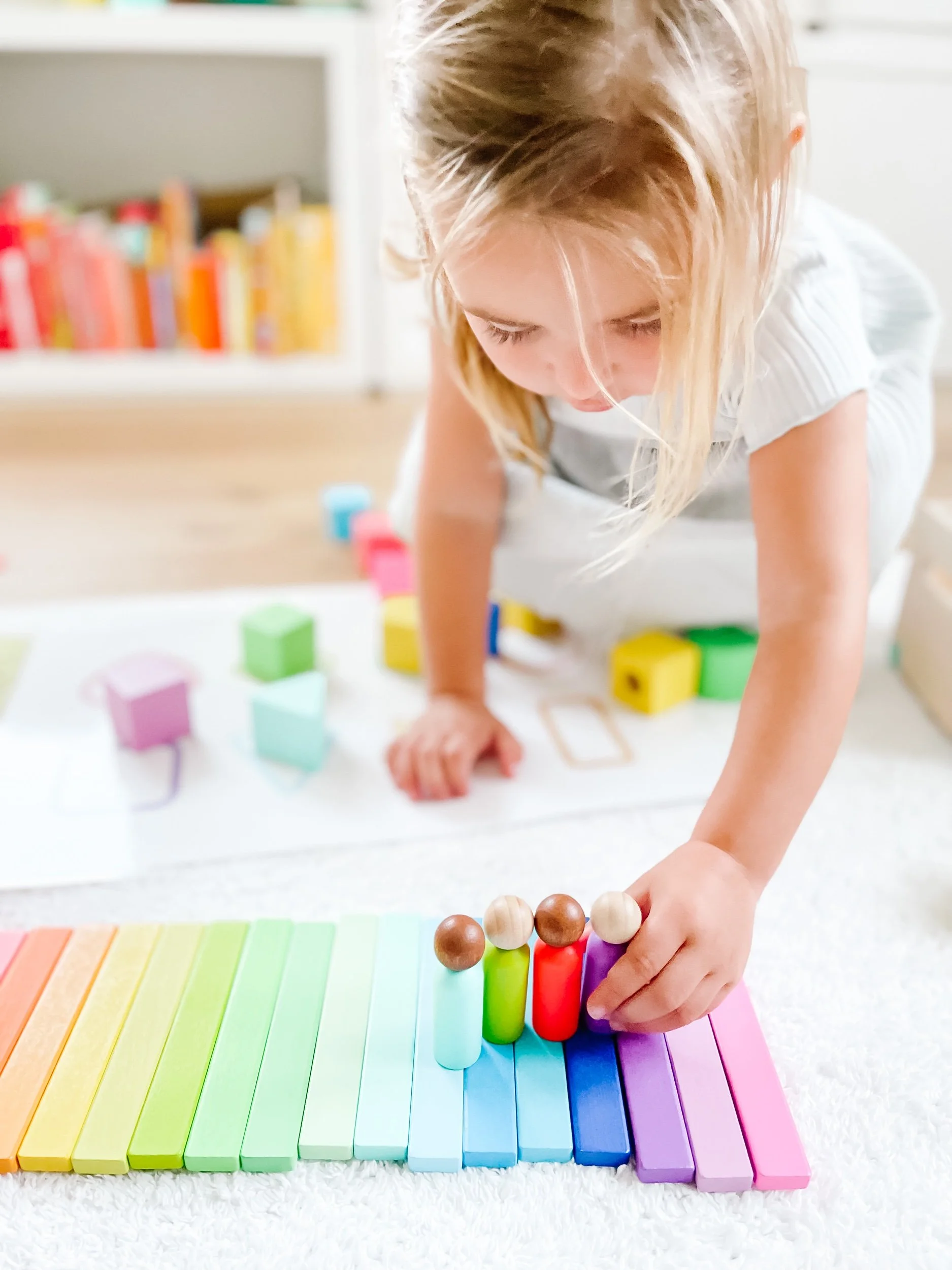
I was on the fence for the longest time about getting Sofie this Lovevery Blocks Set . I figured she already had all of the play subscription kits, what would she need these for?! But I’m so glad I pulled the trigger on these. I was able to get them on sale when Amazon was having a sale and they’ve been so awesome. Not only do they come with their own storage box so that we can practice cleaning up and putting them away, but it can be turned into a little car/cart for wheeling then around. It’s been so fun watching Sofie’s imagination come to life when we get these out. She’s built towers and towns, race tracks and bridges. I can’t wait to see what her little mind comes up with next!
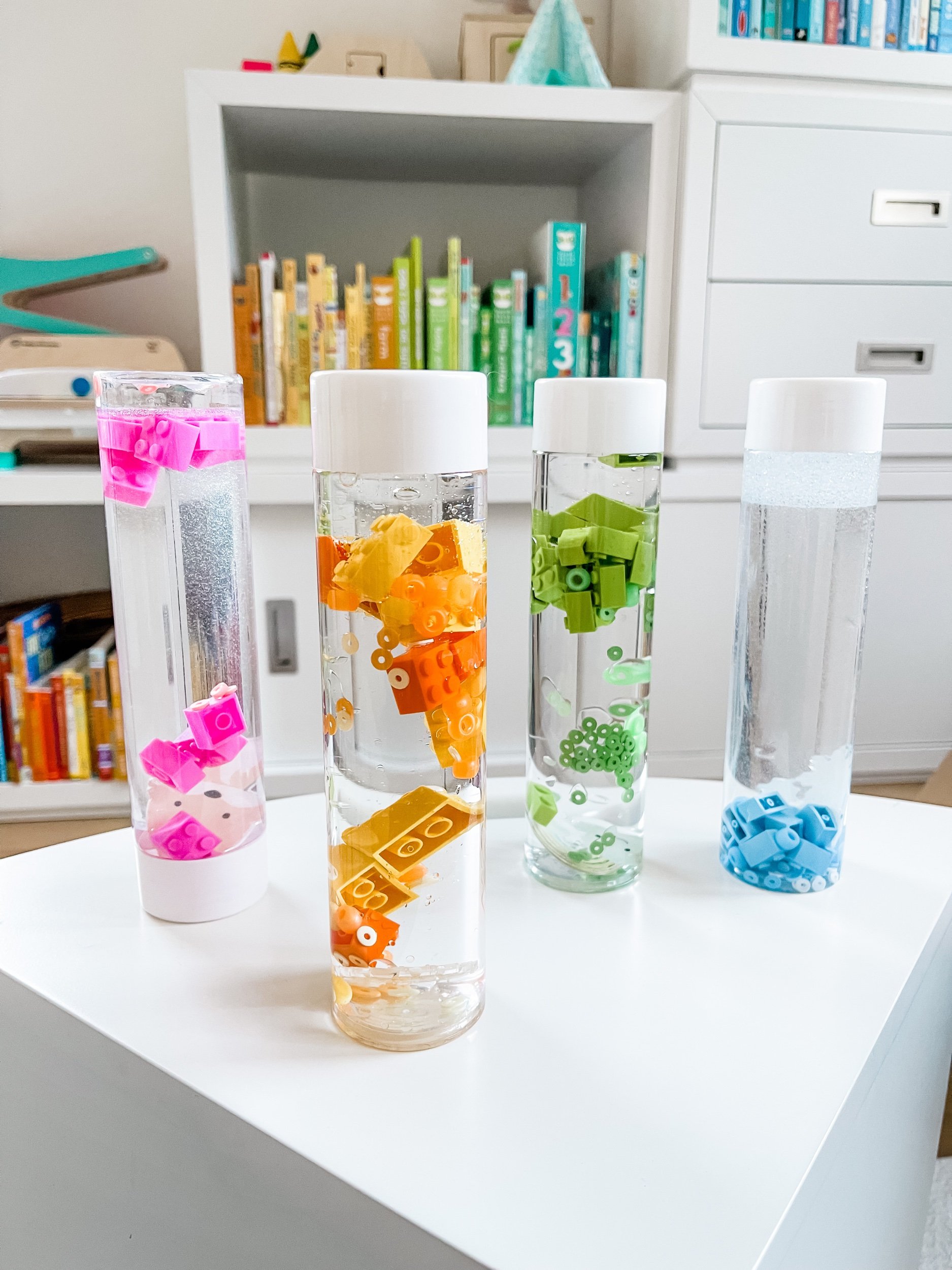
Four Seasons Sensory Bottles
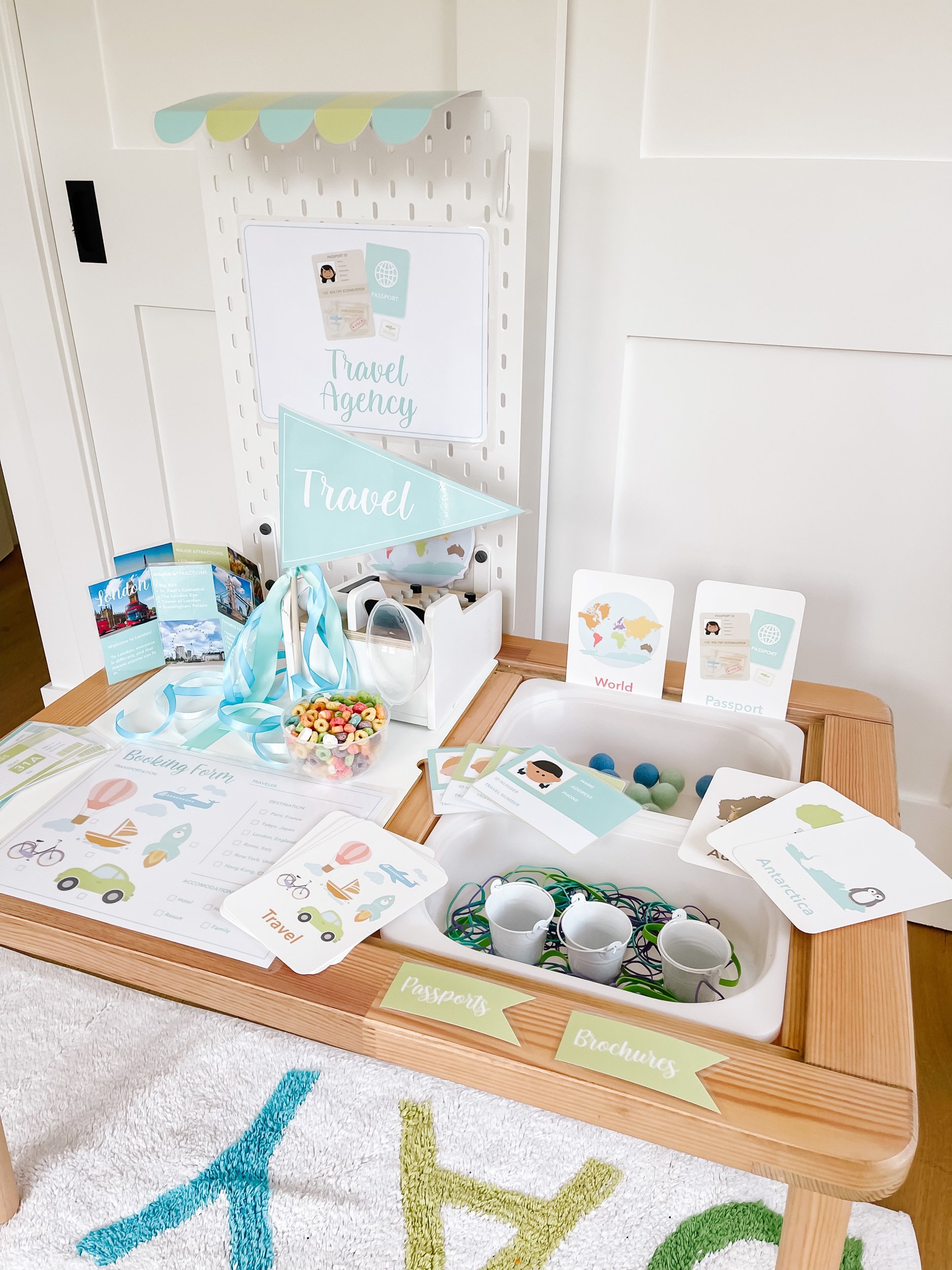
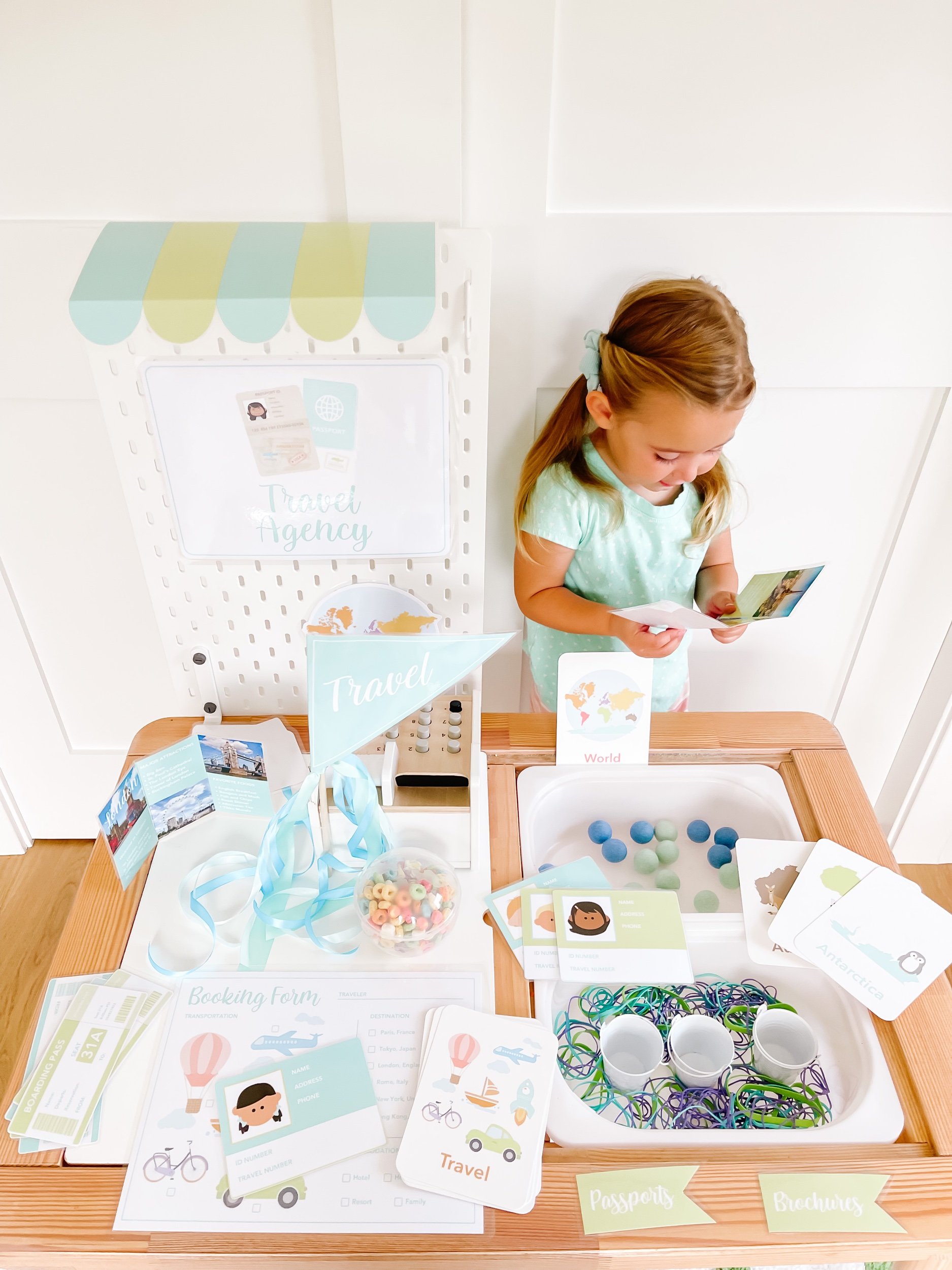
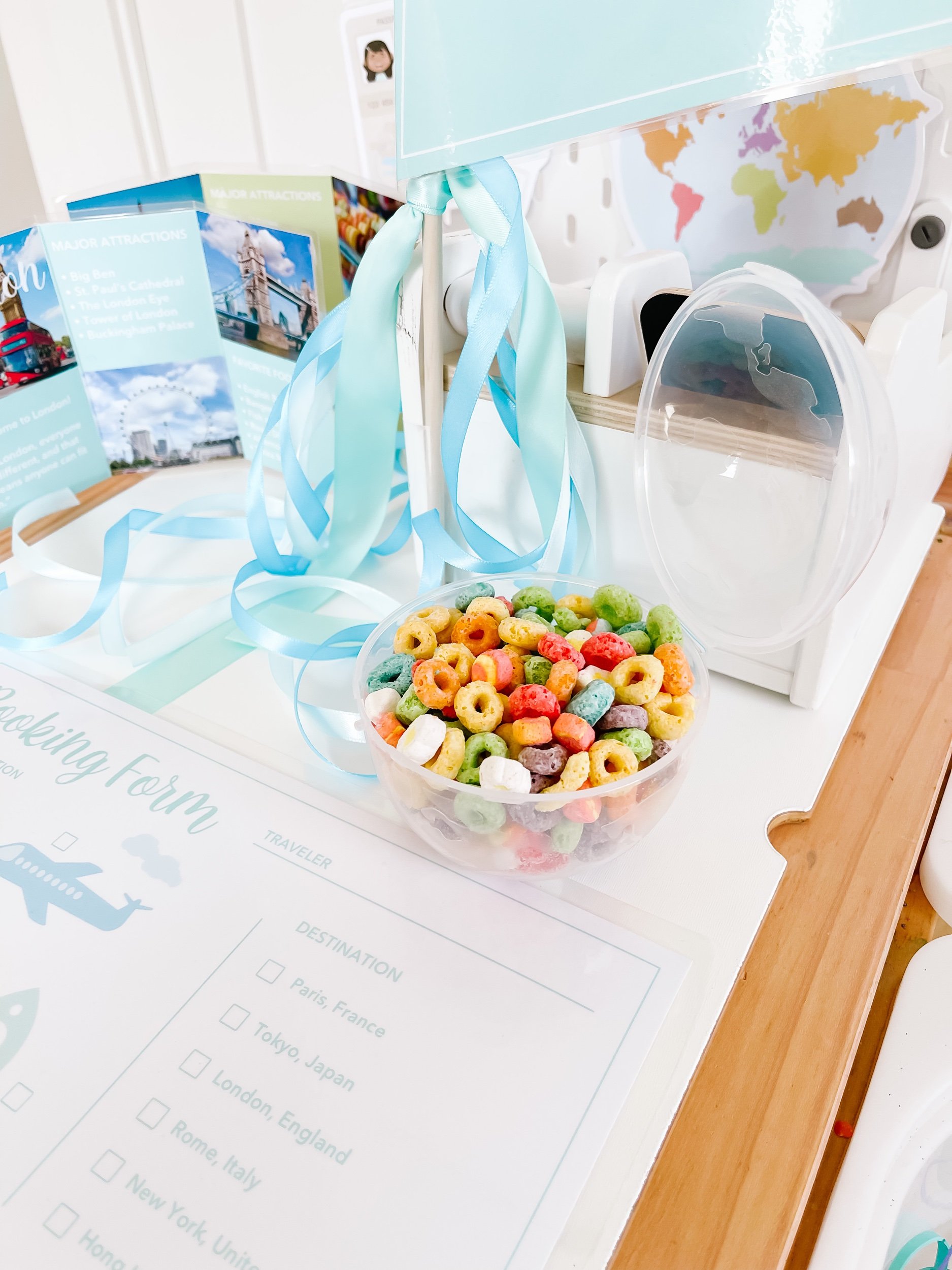
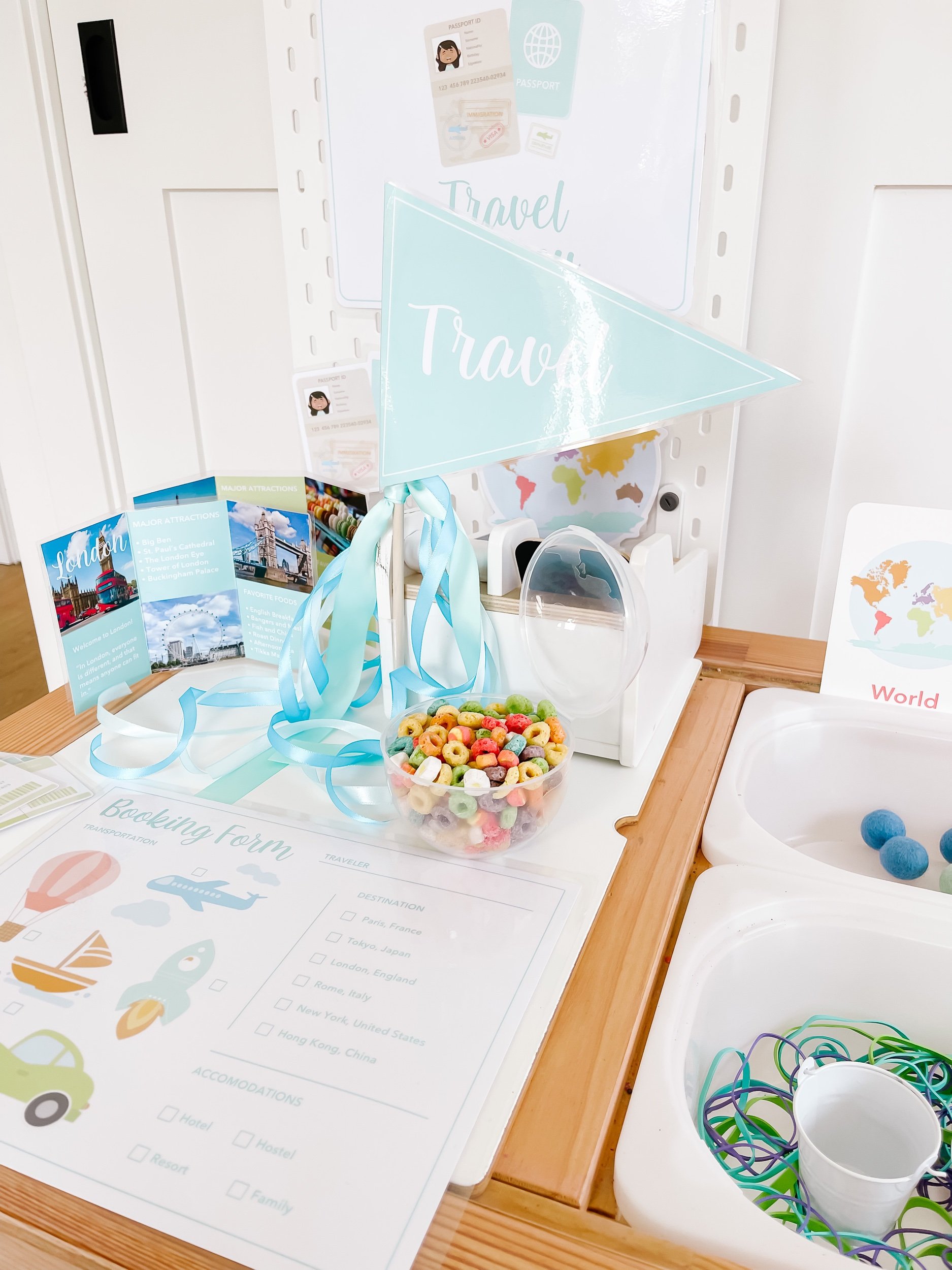
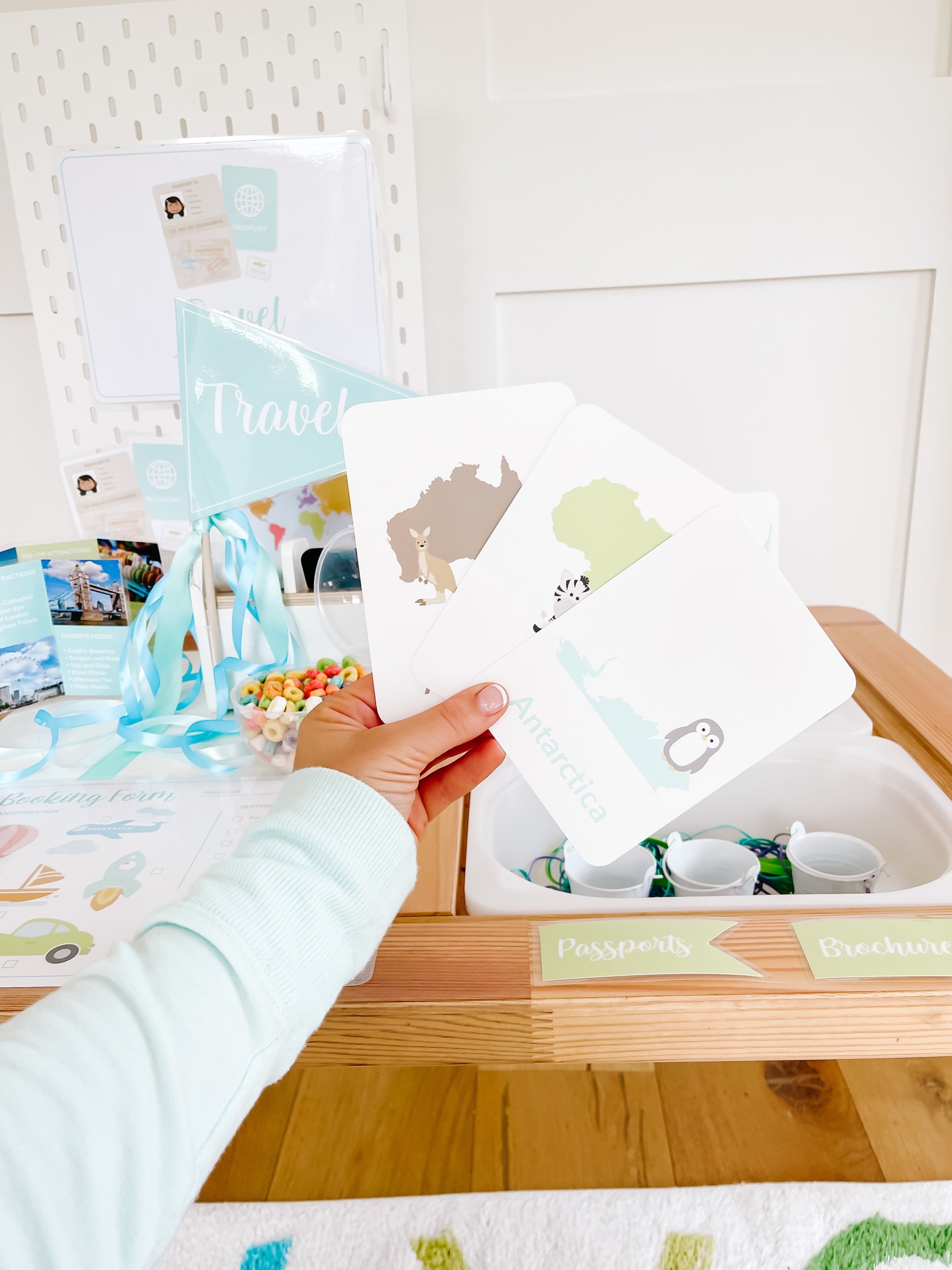
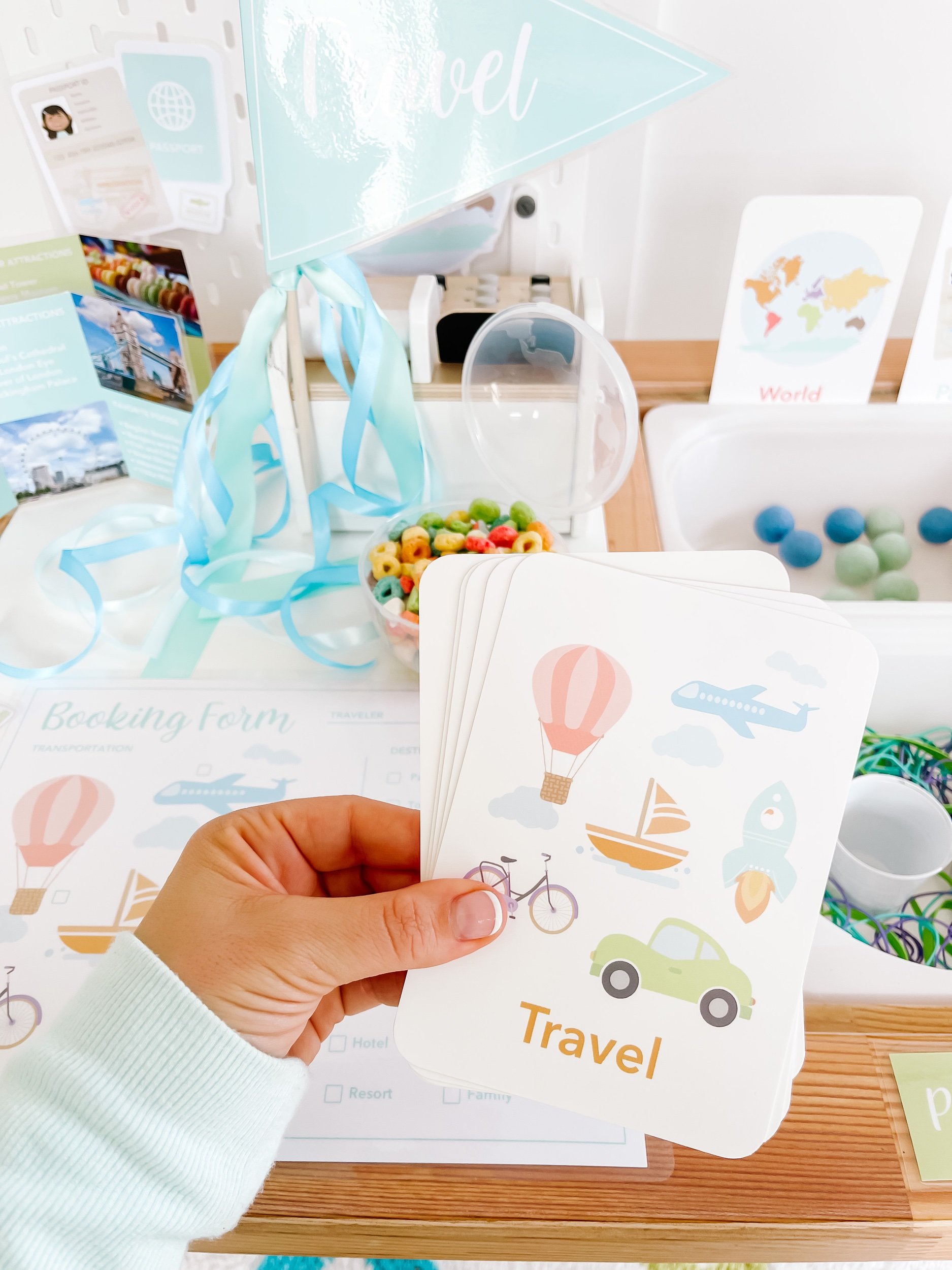
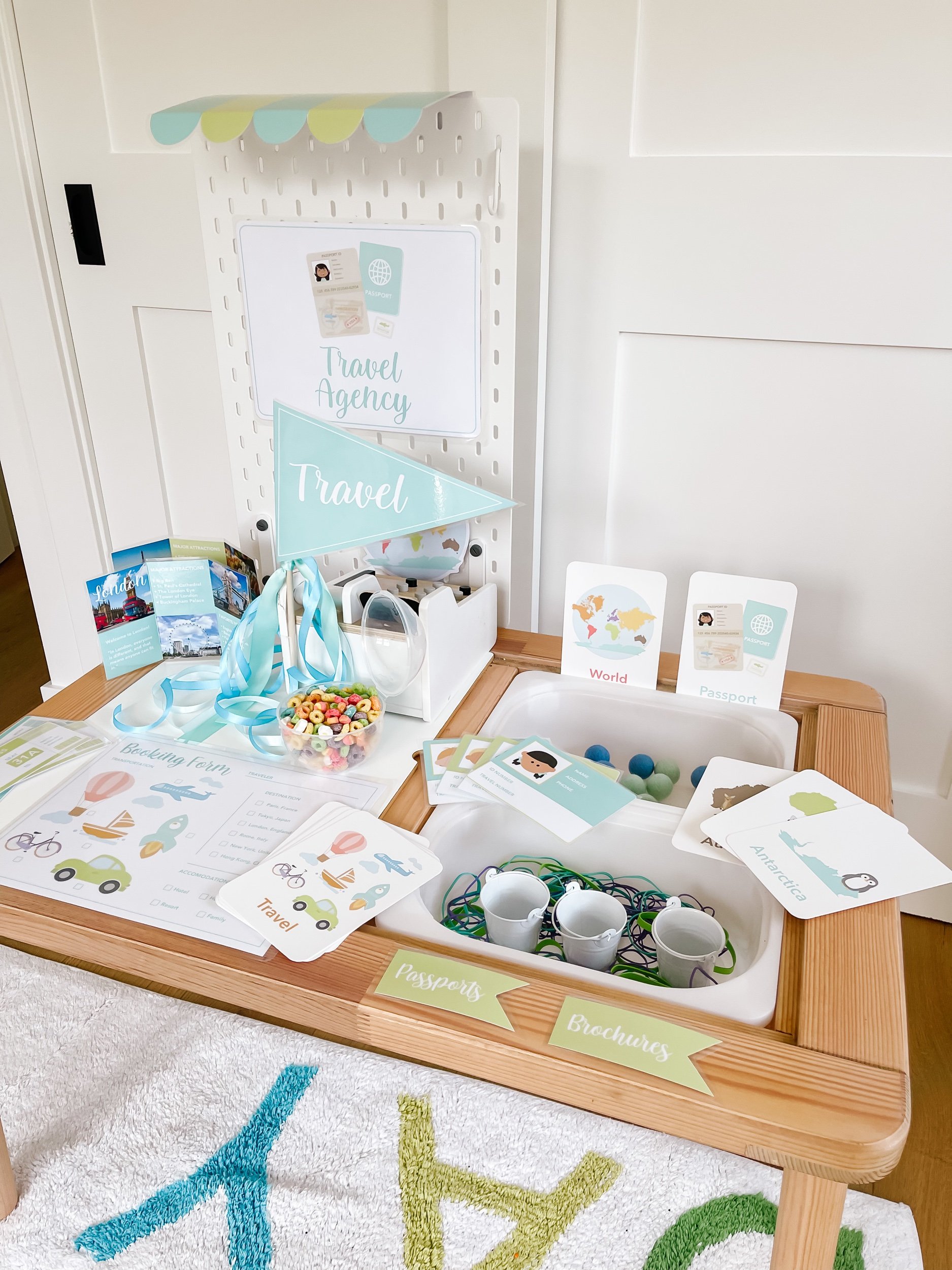
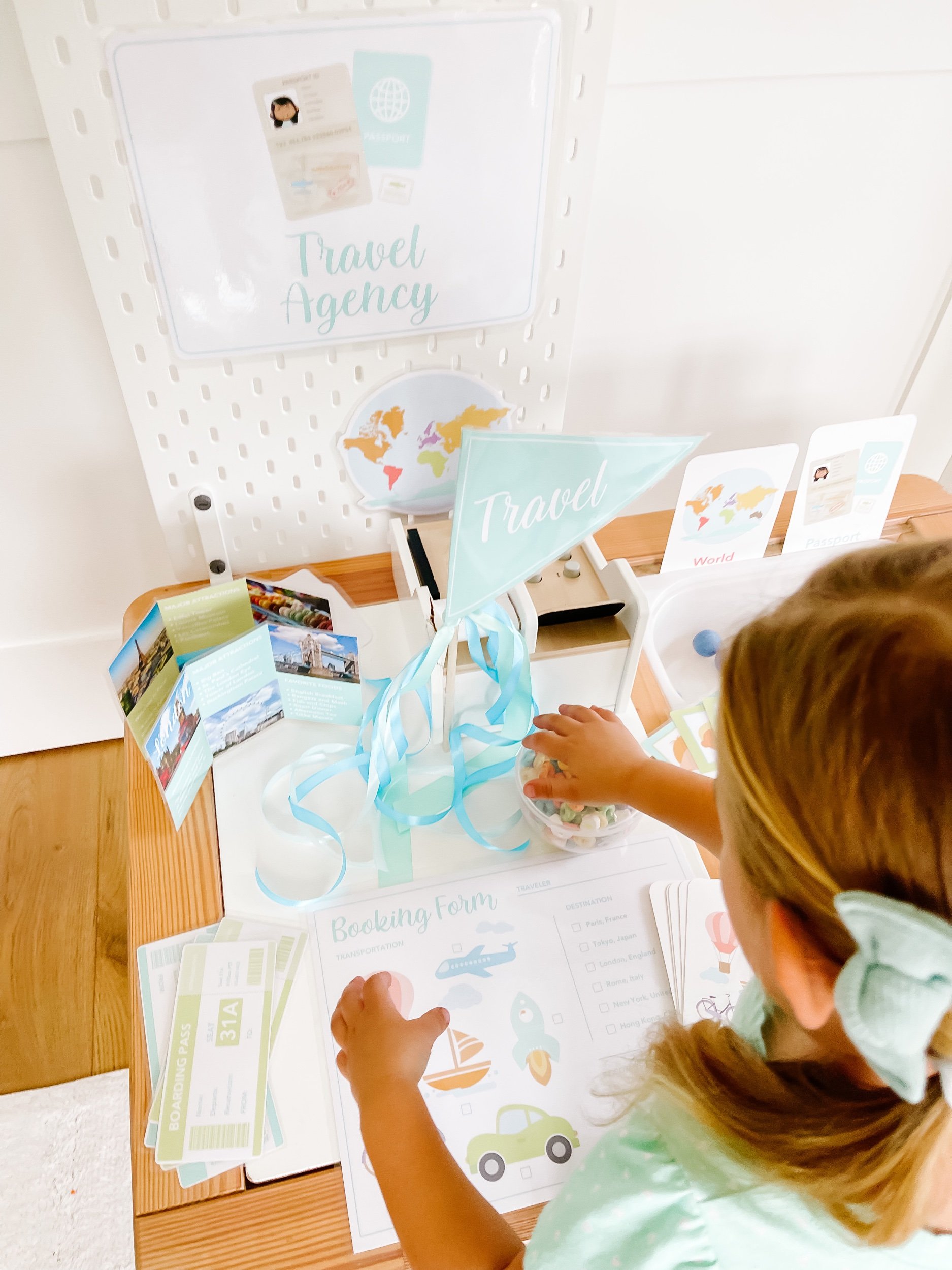
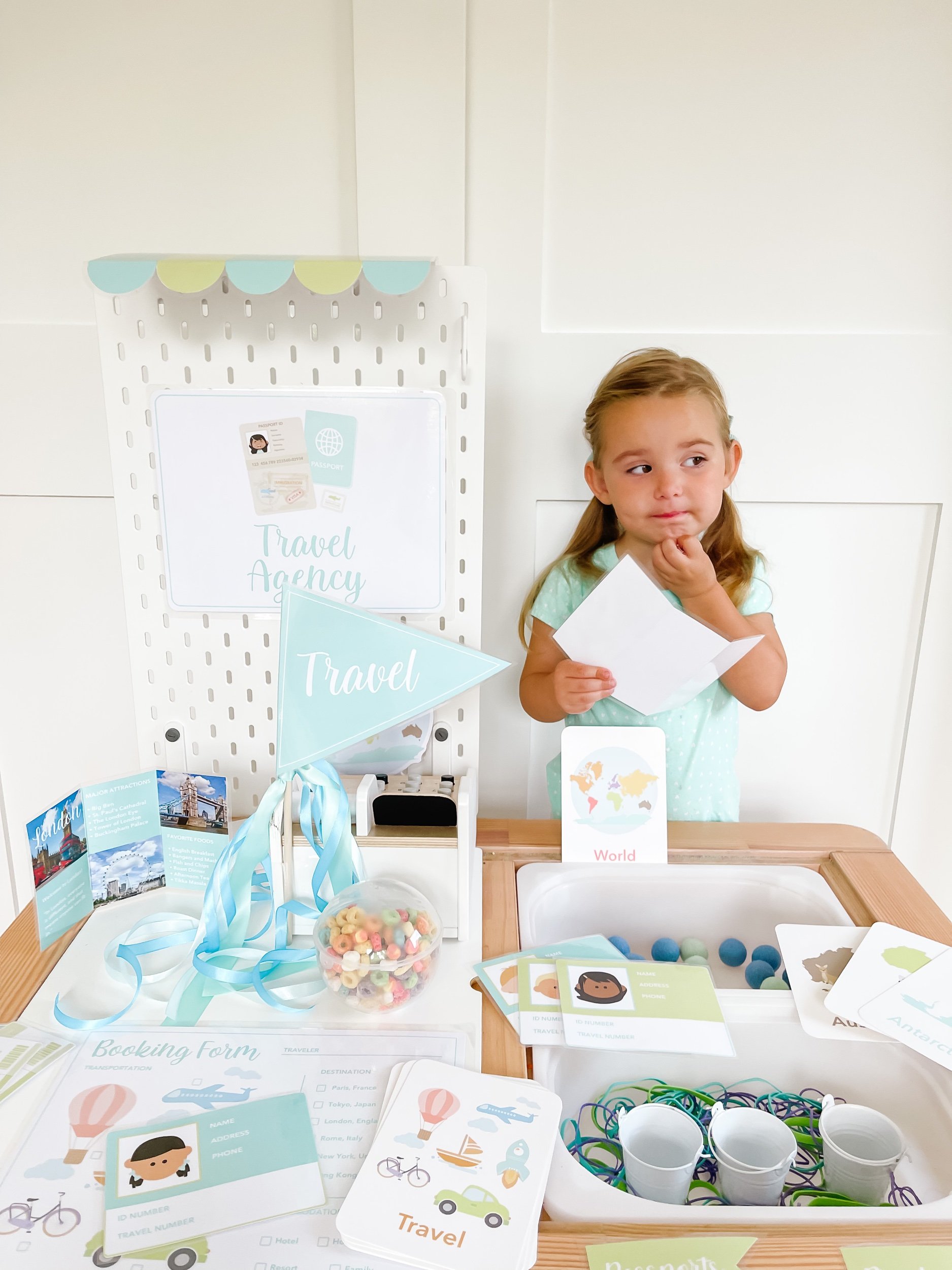
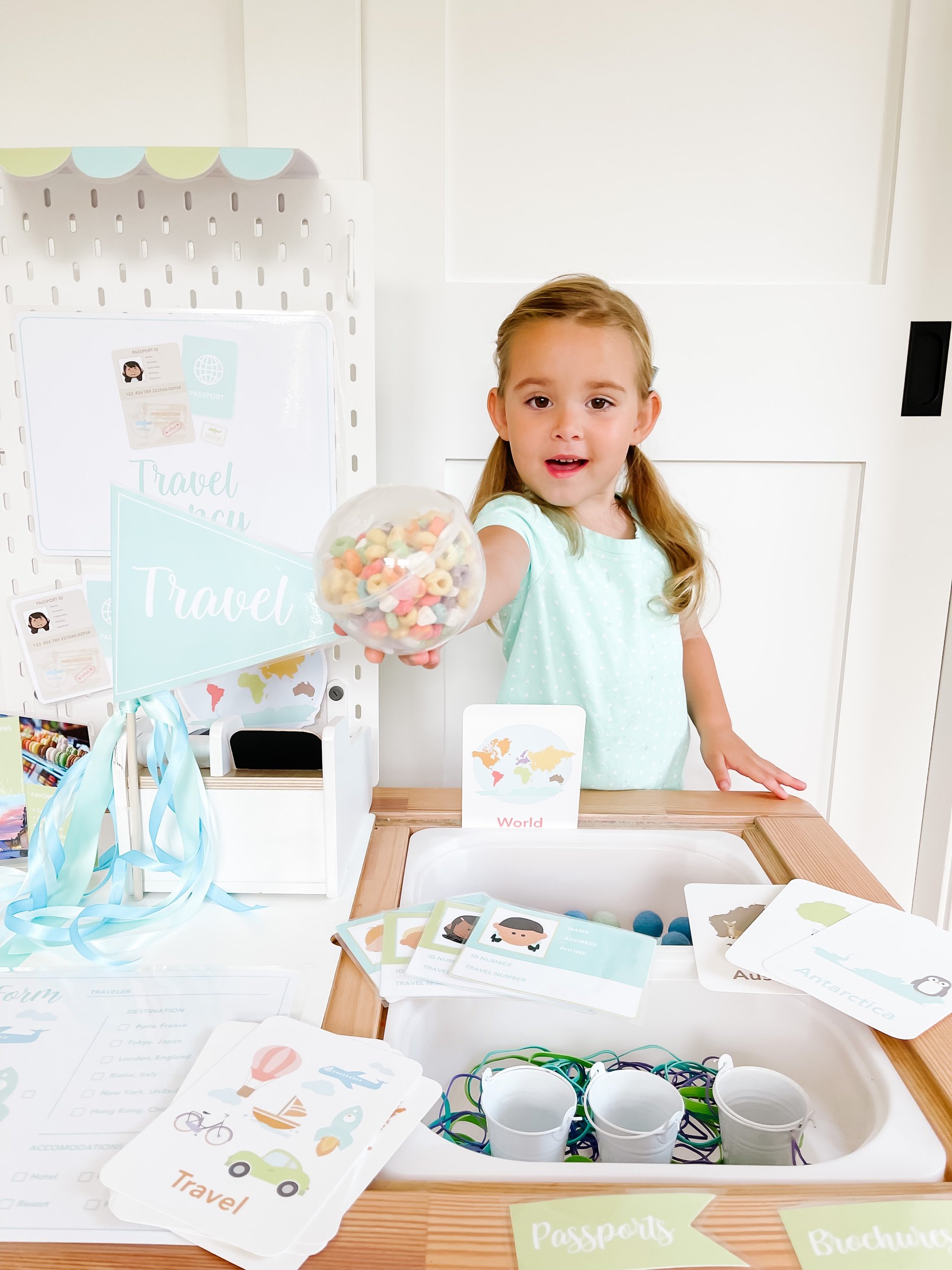
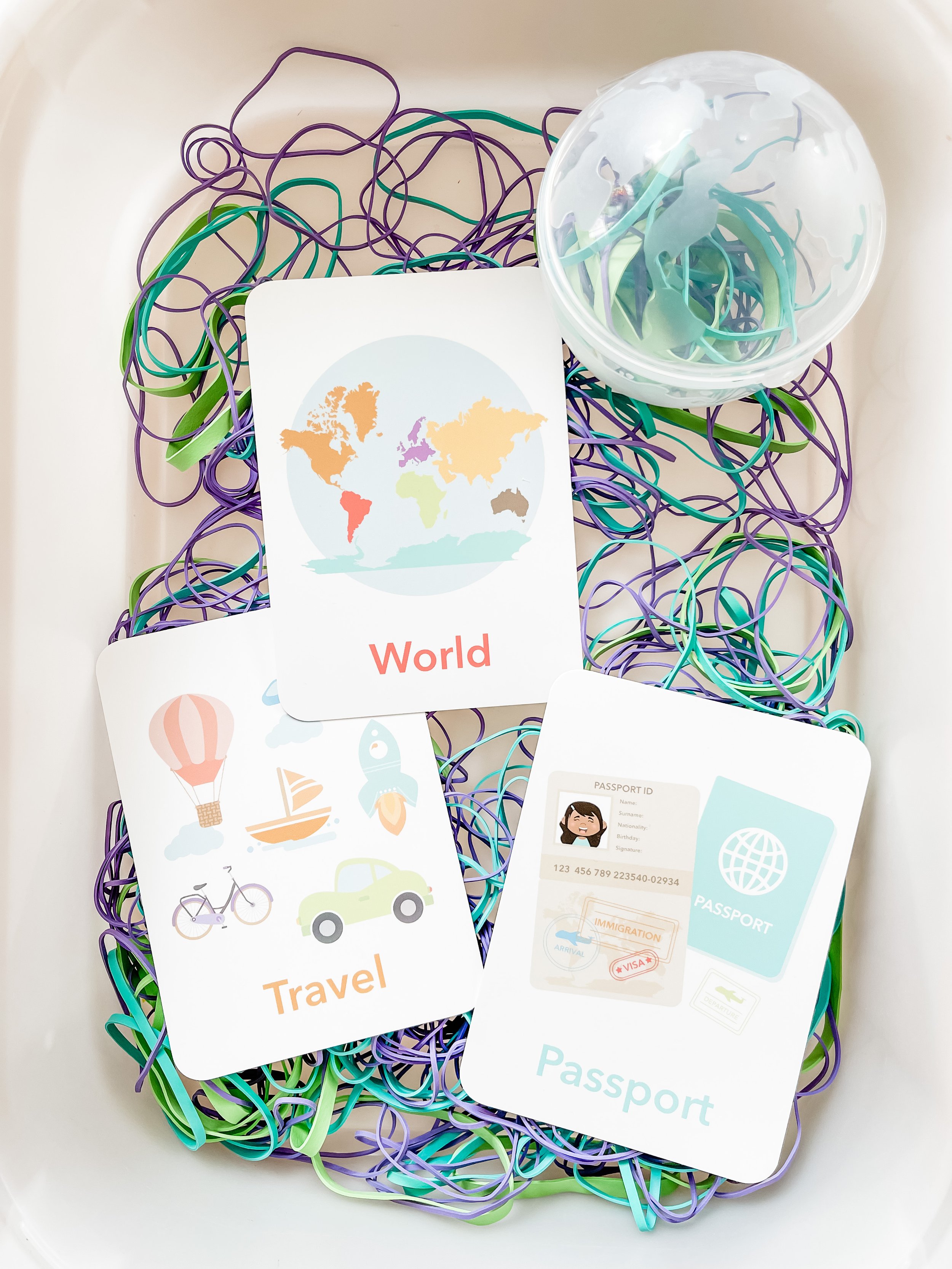
Discover the World with Our Travel Agency Dramatic and Sensory Play Kit
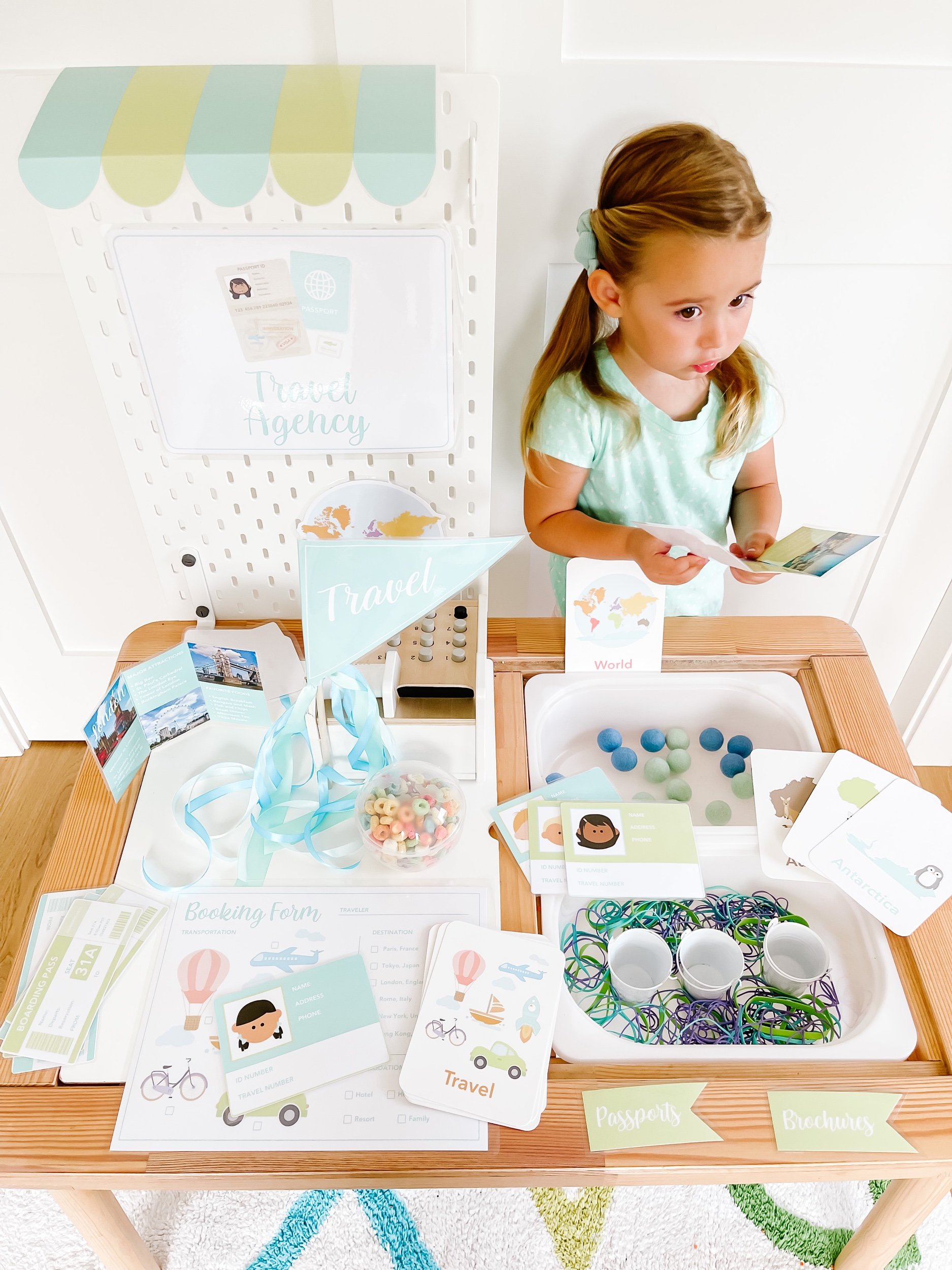
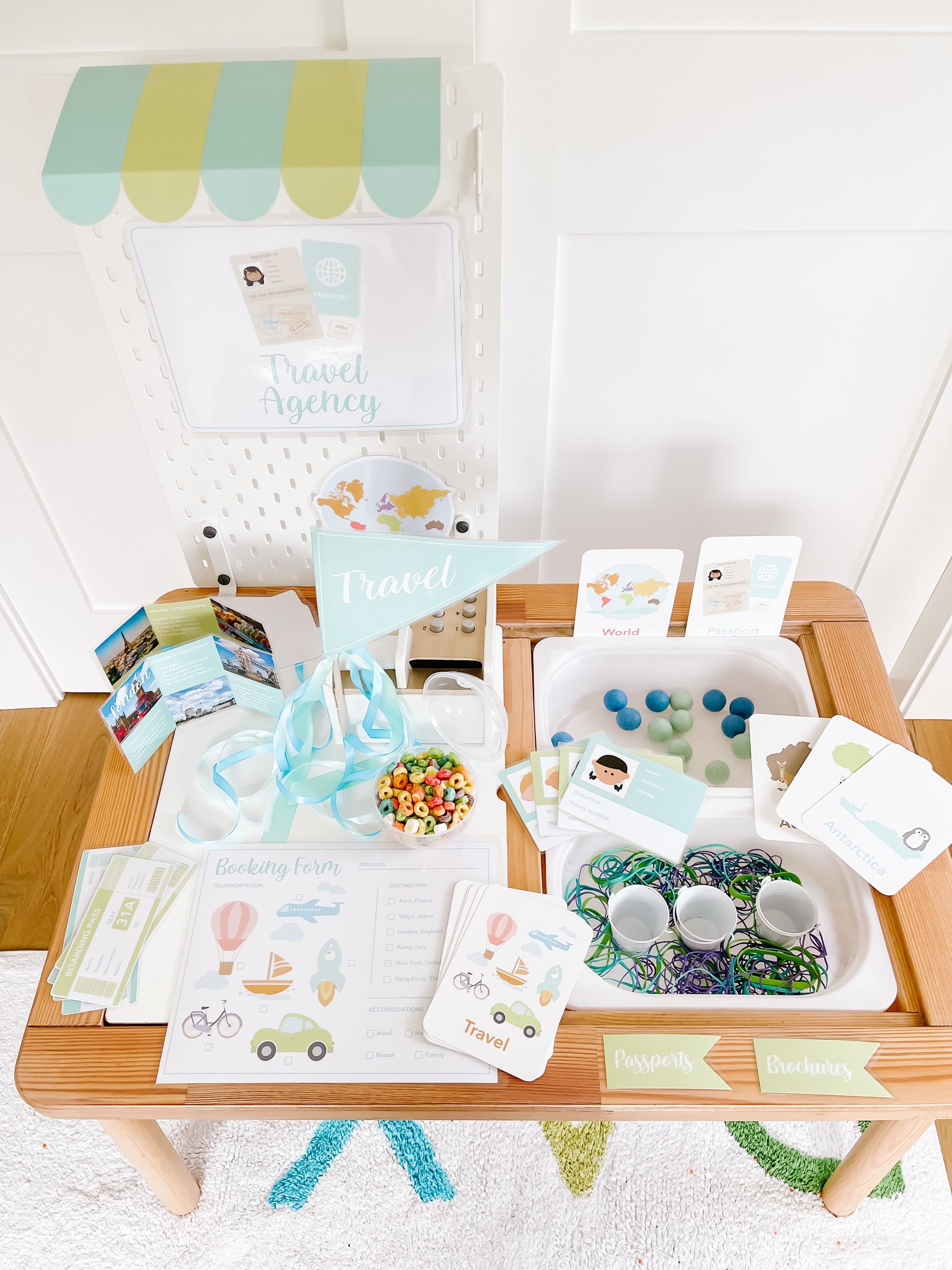
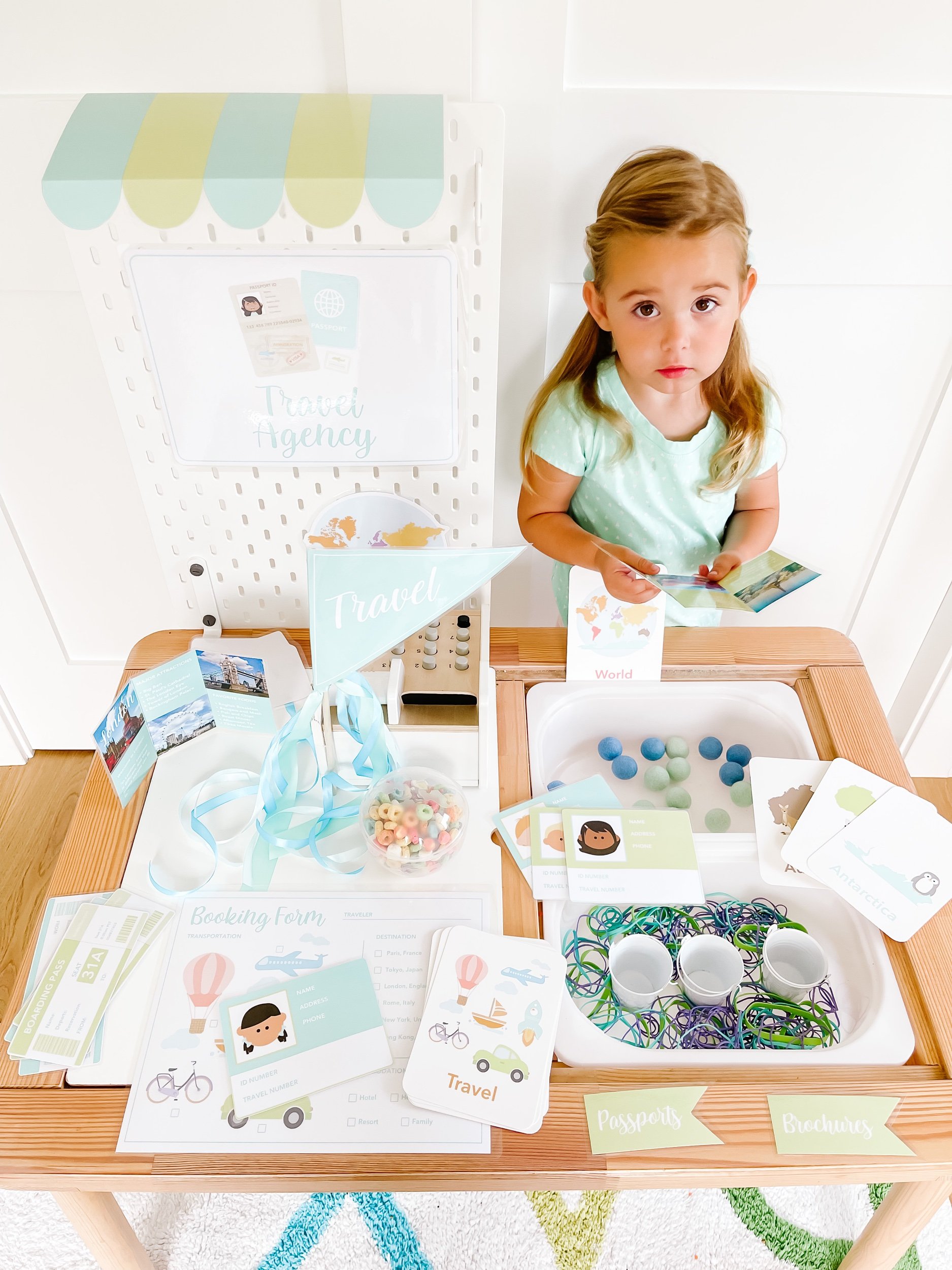
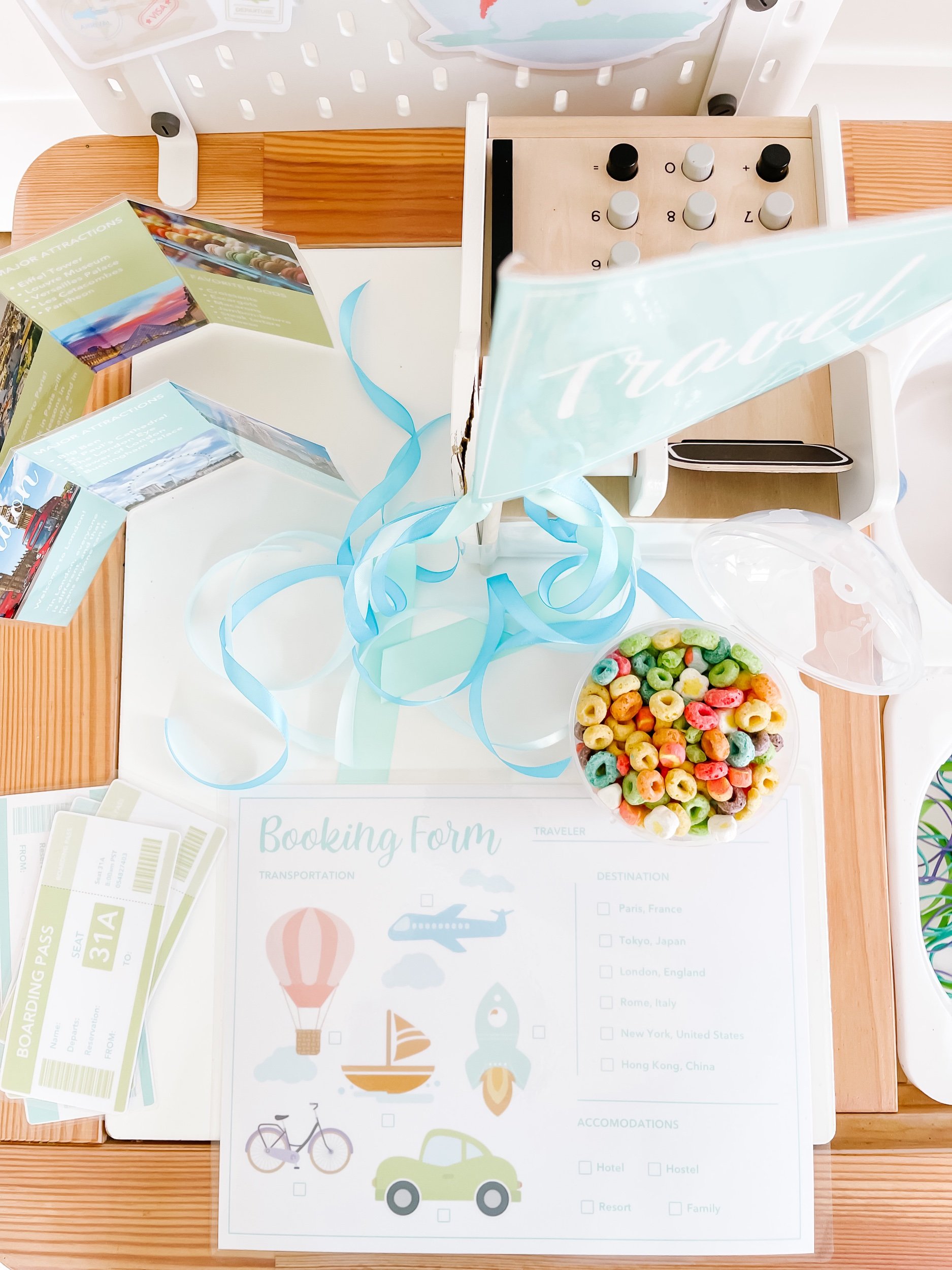
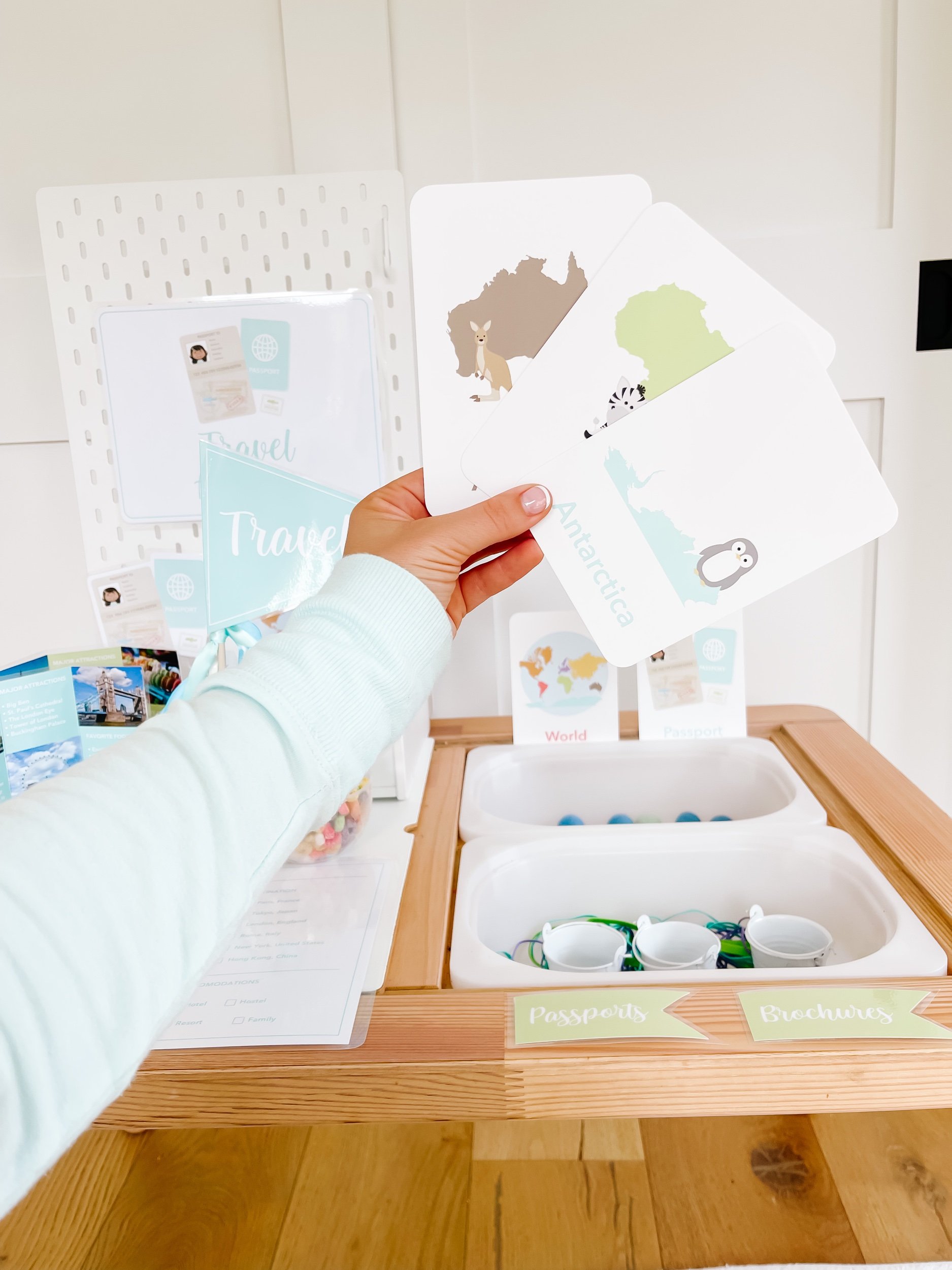
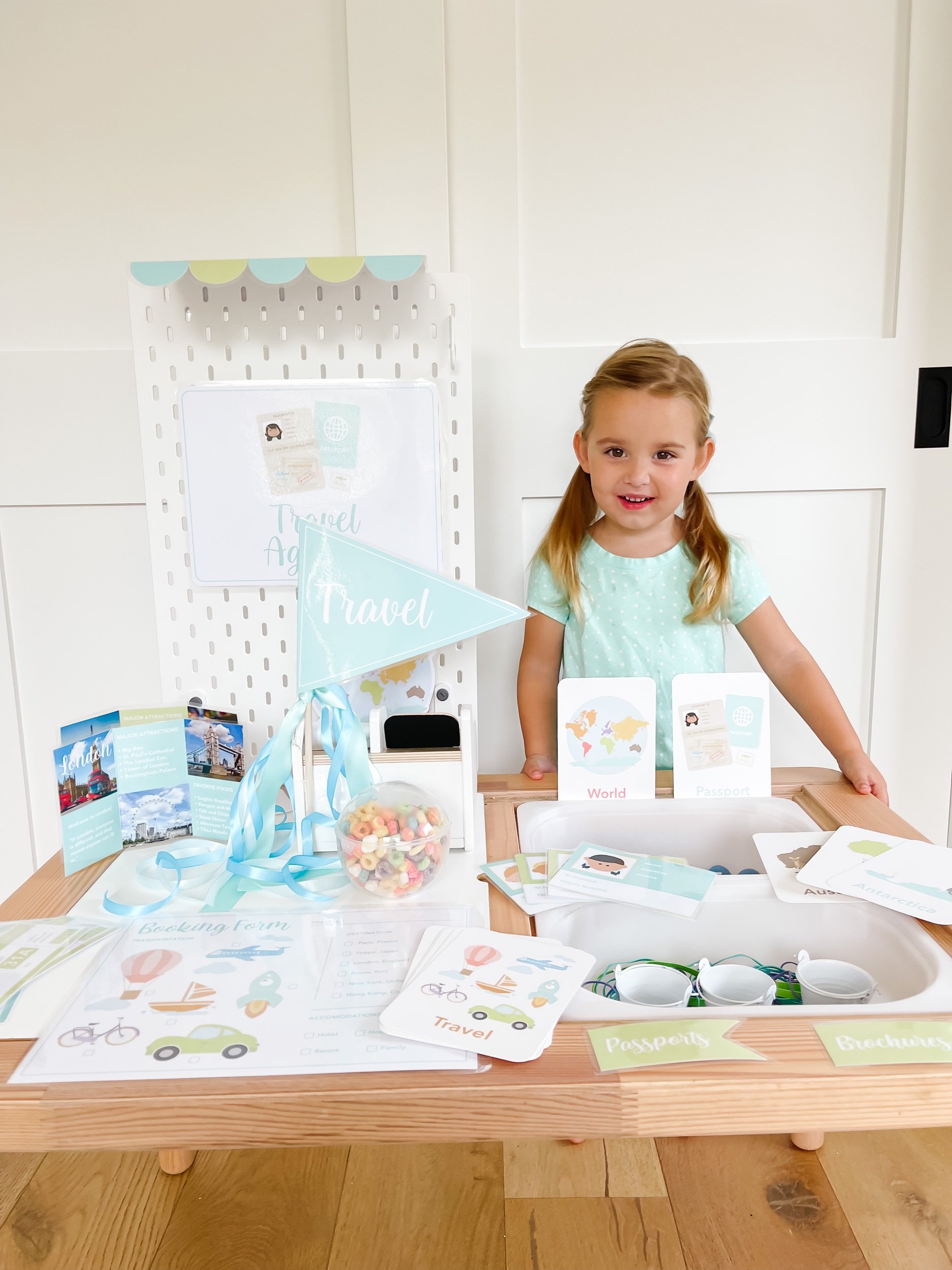
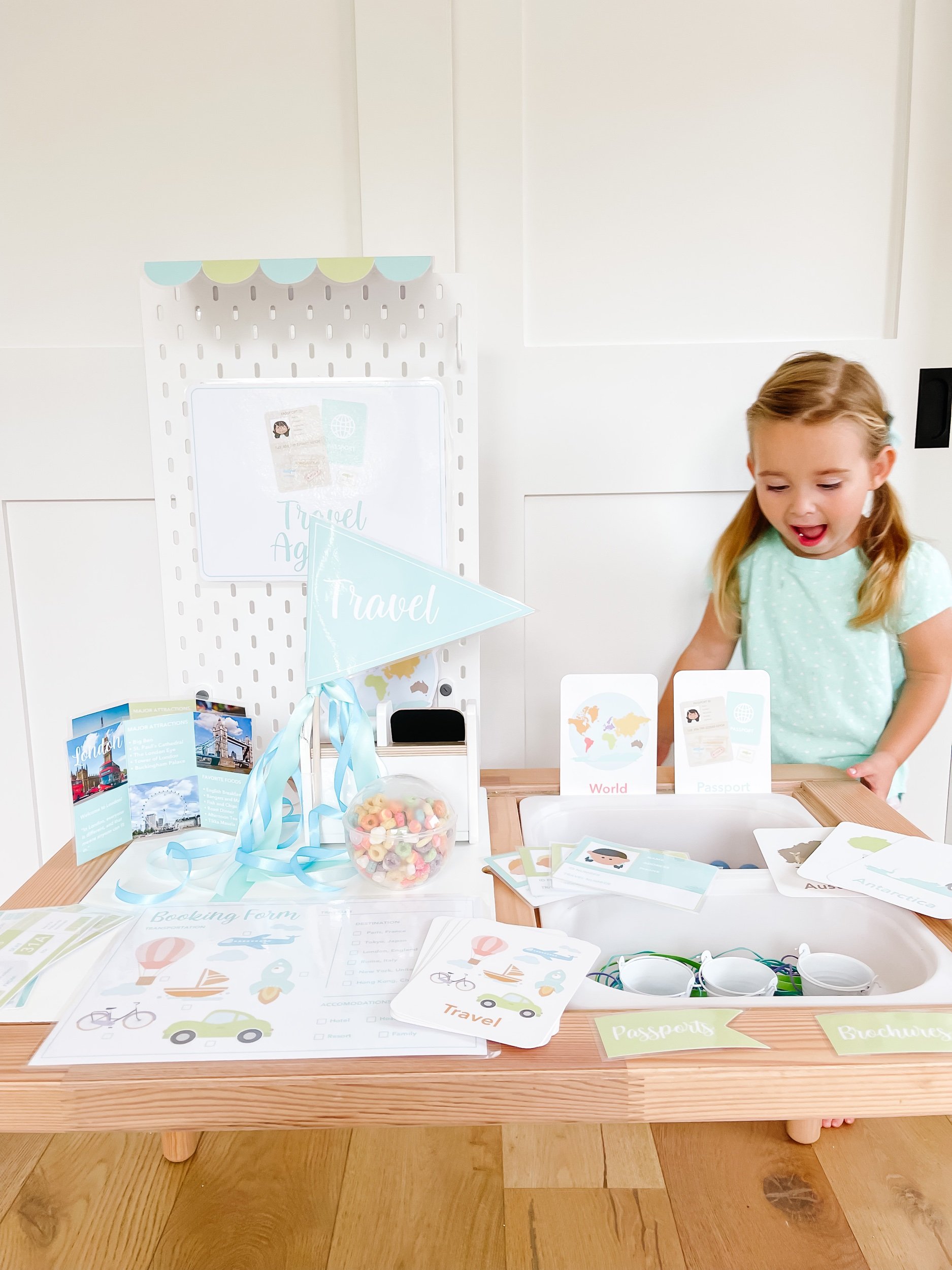
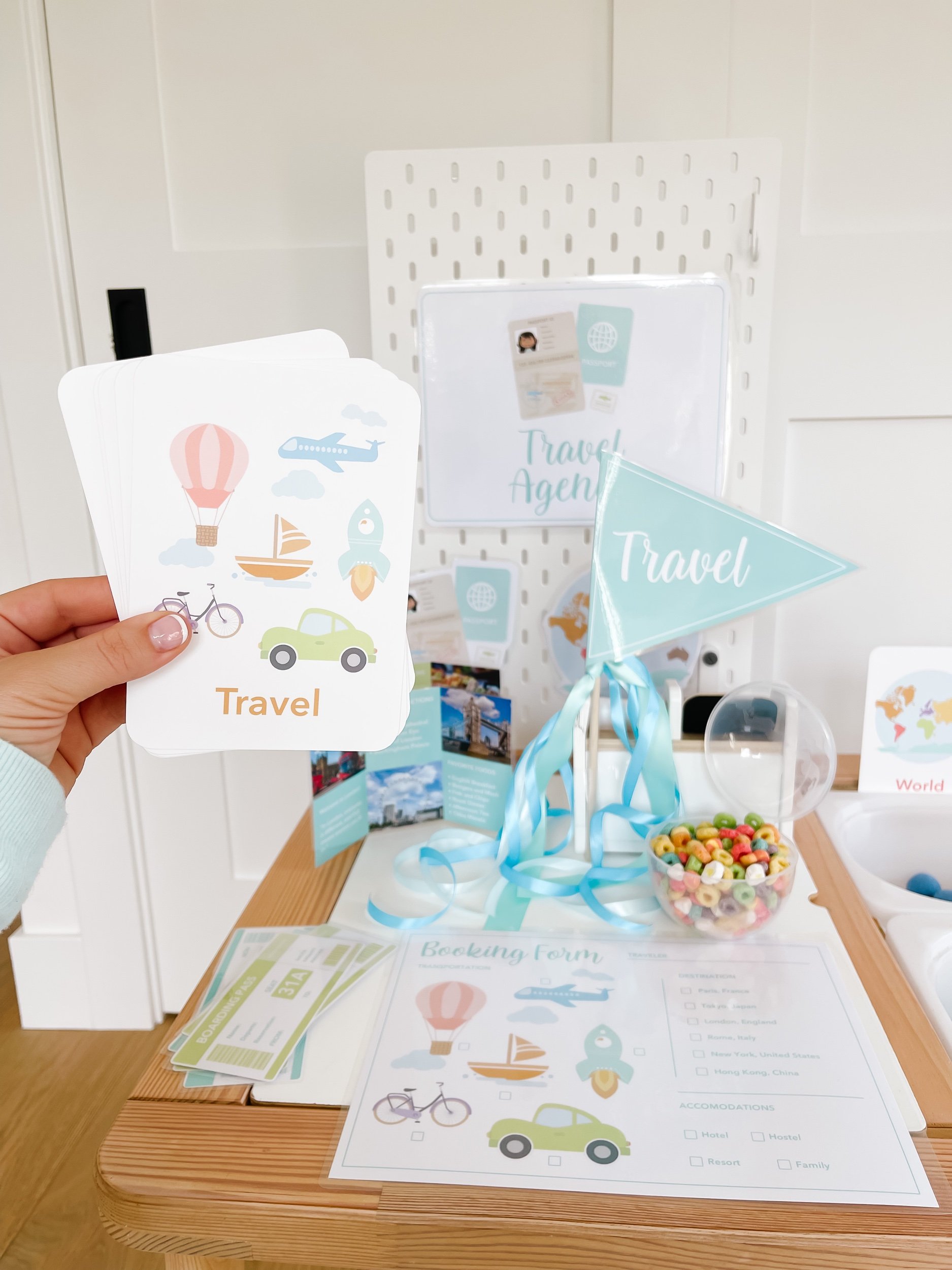
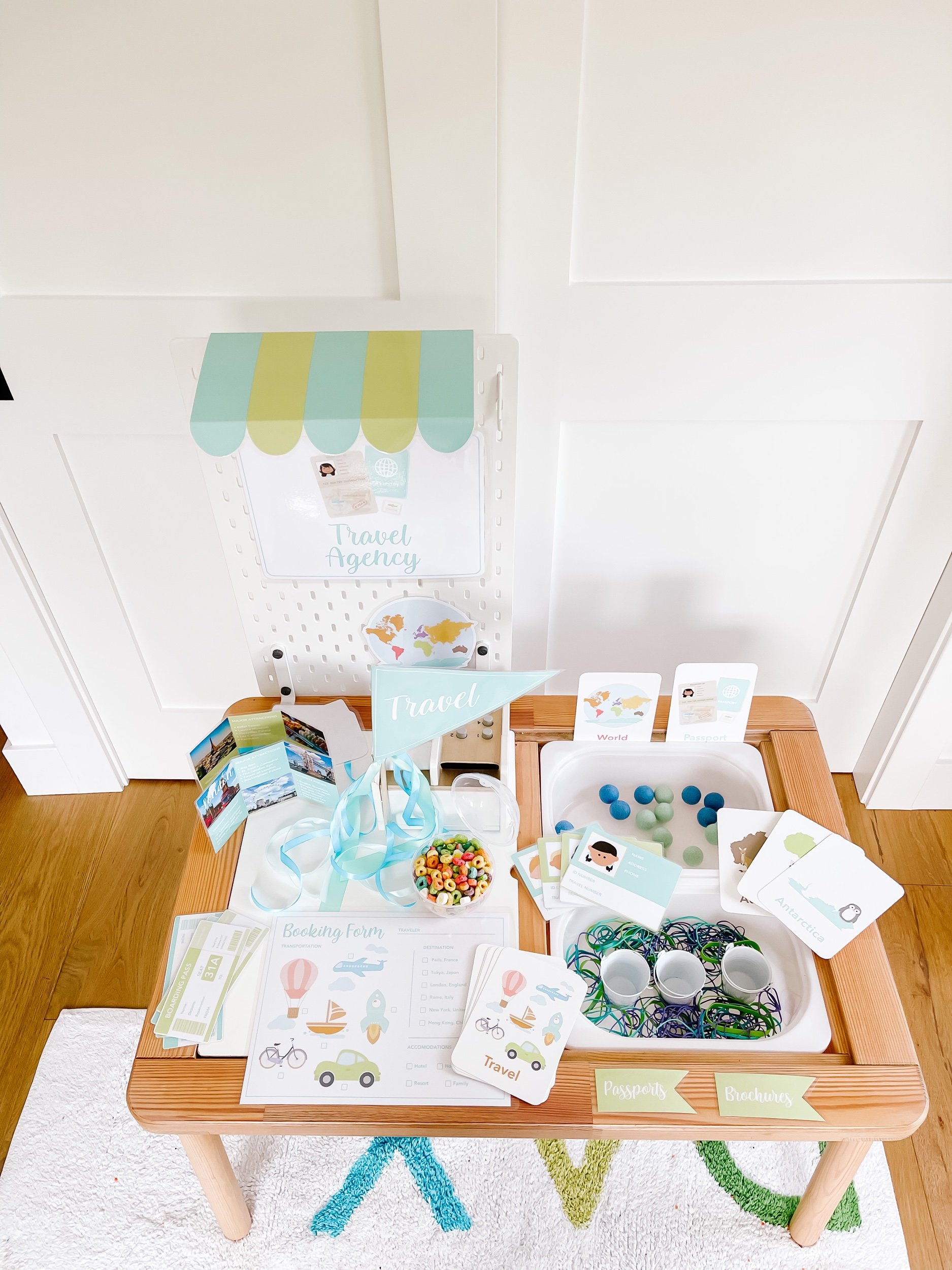
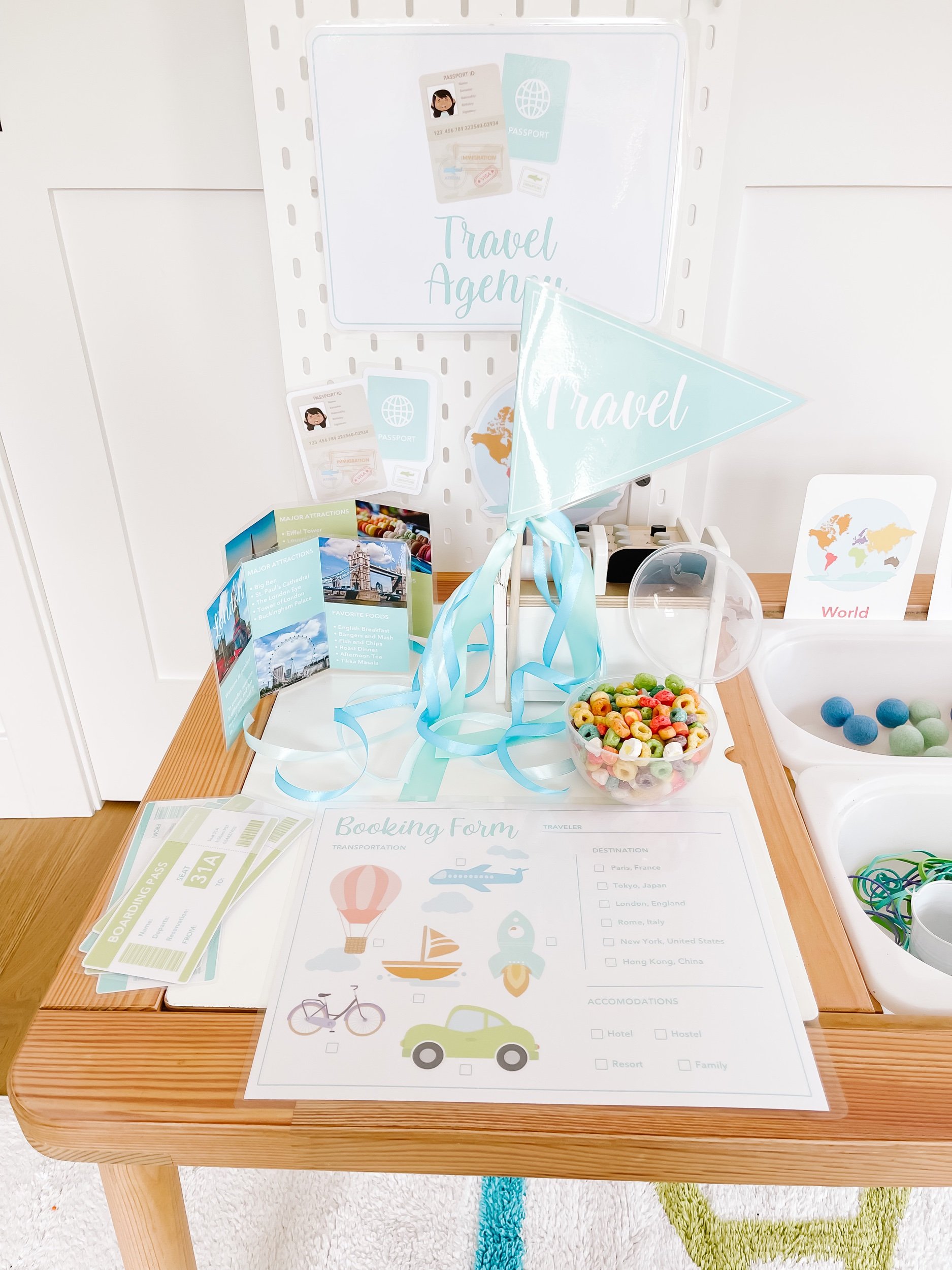
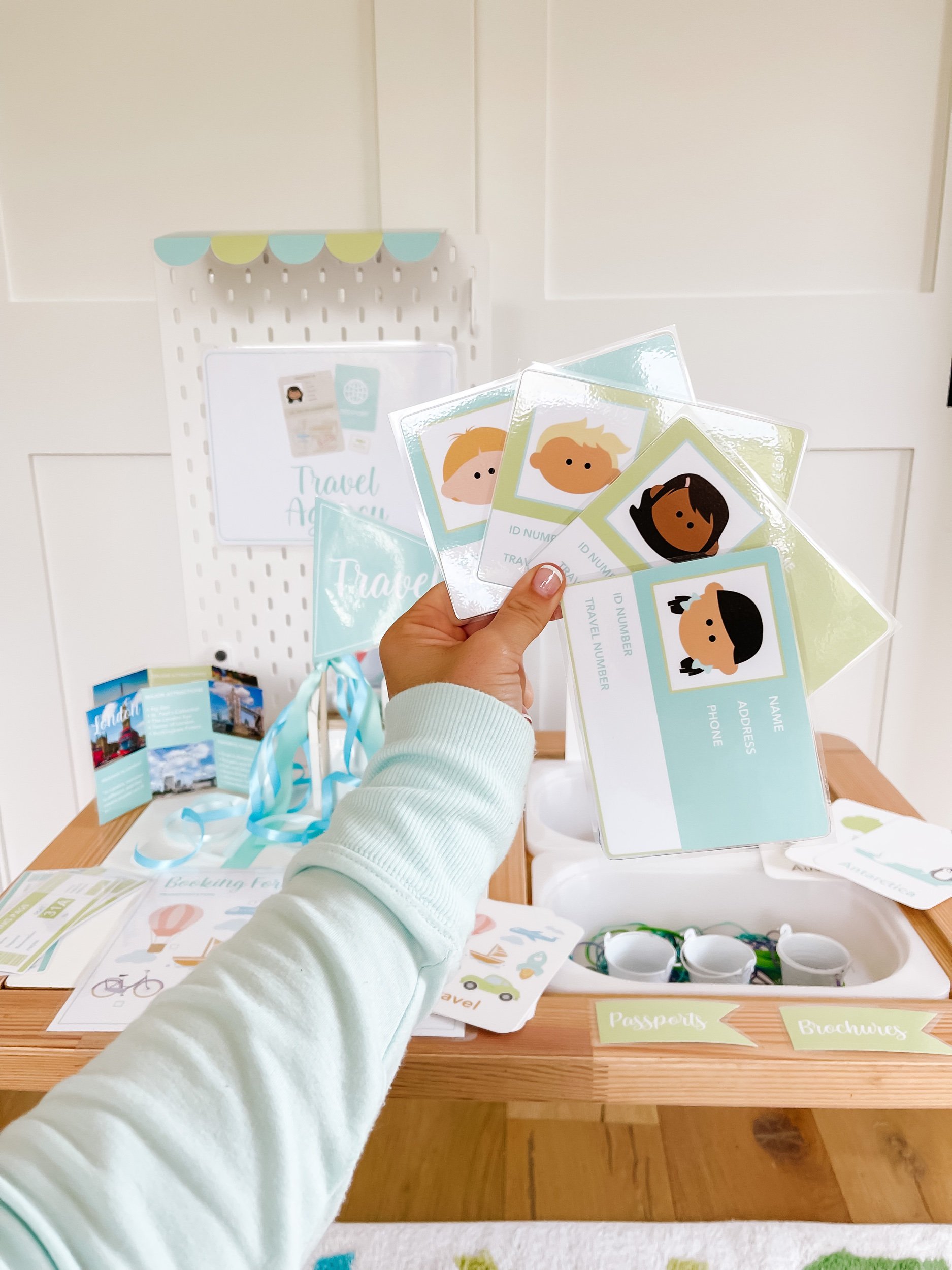
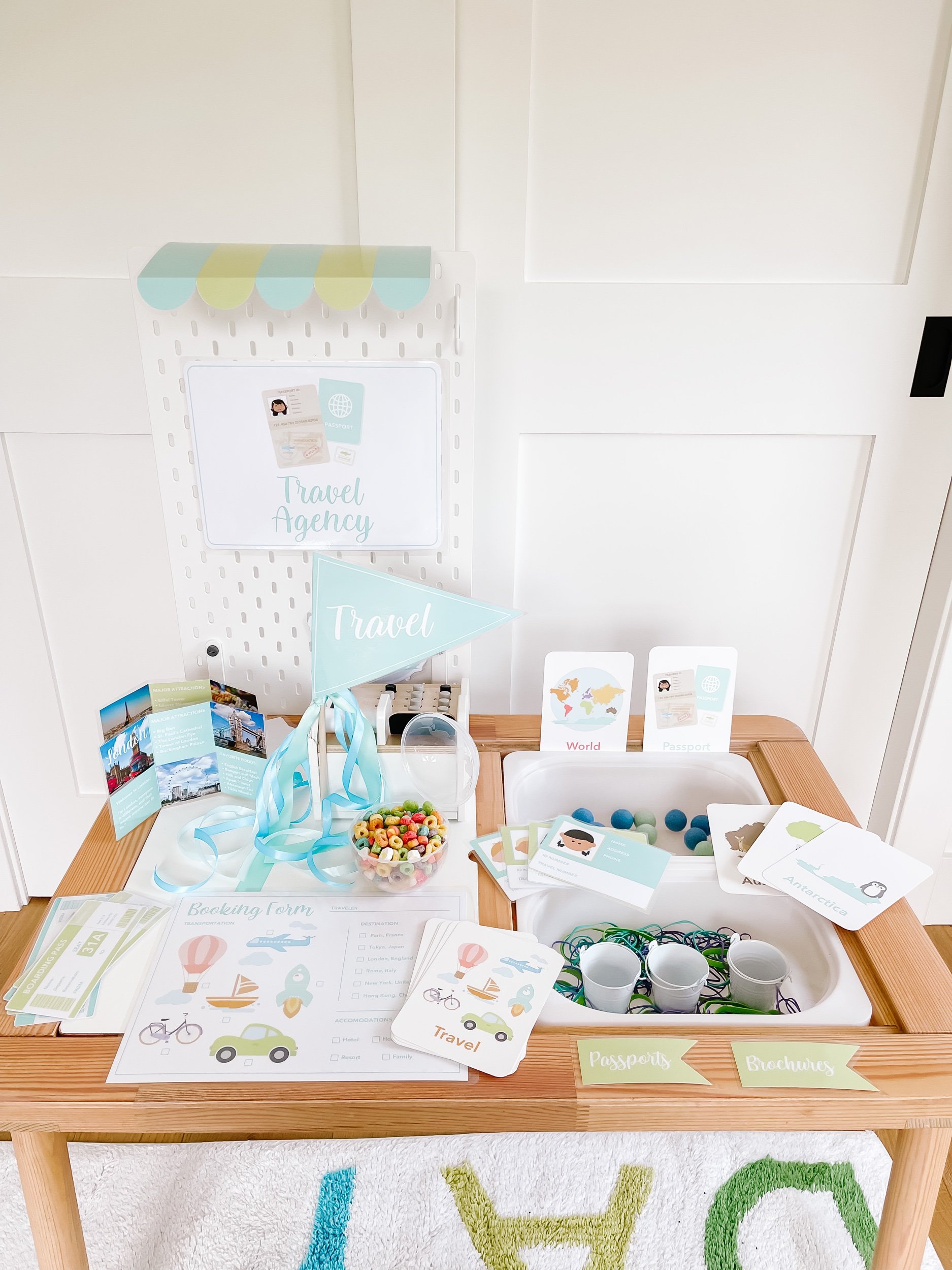
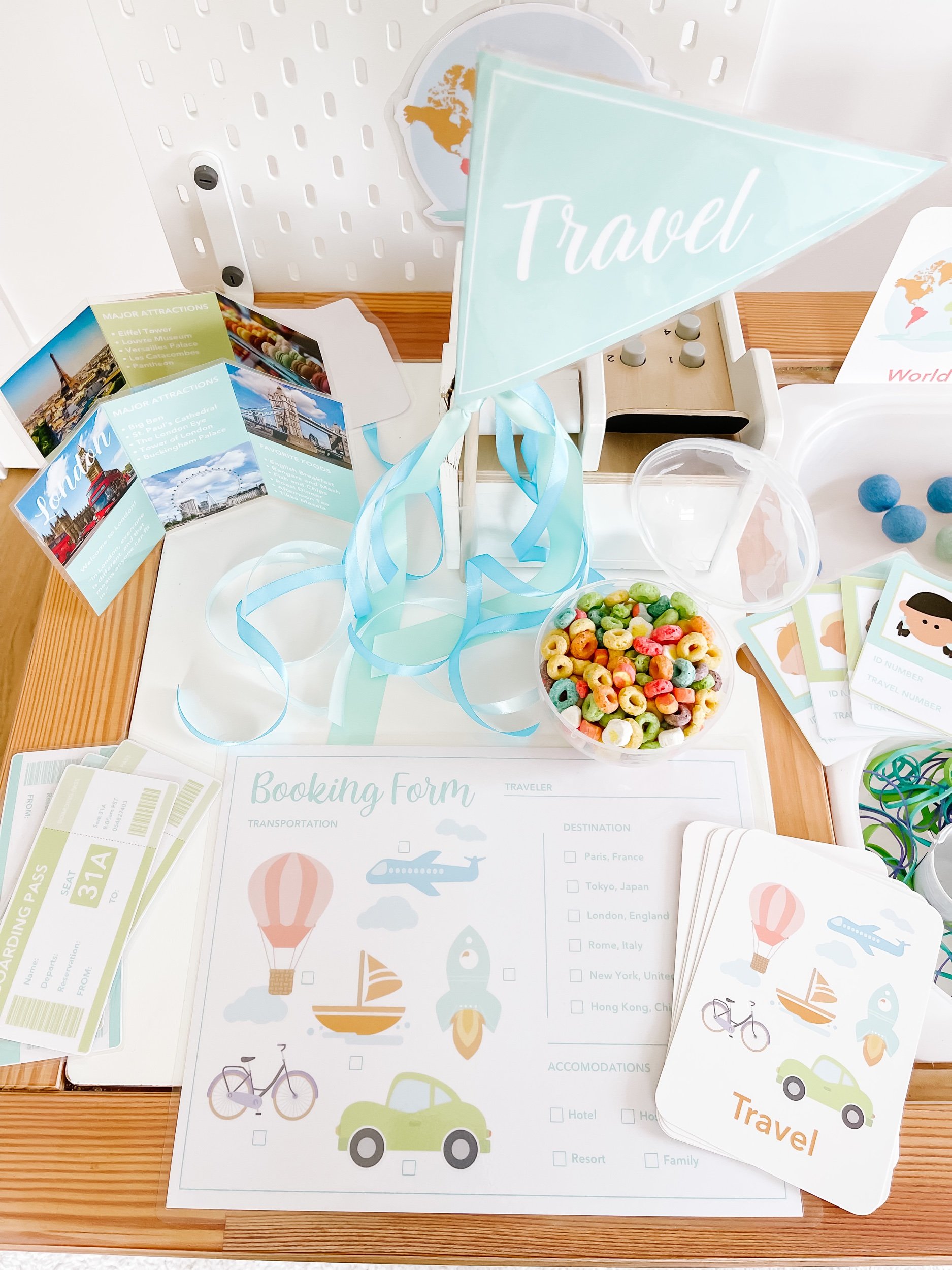
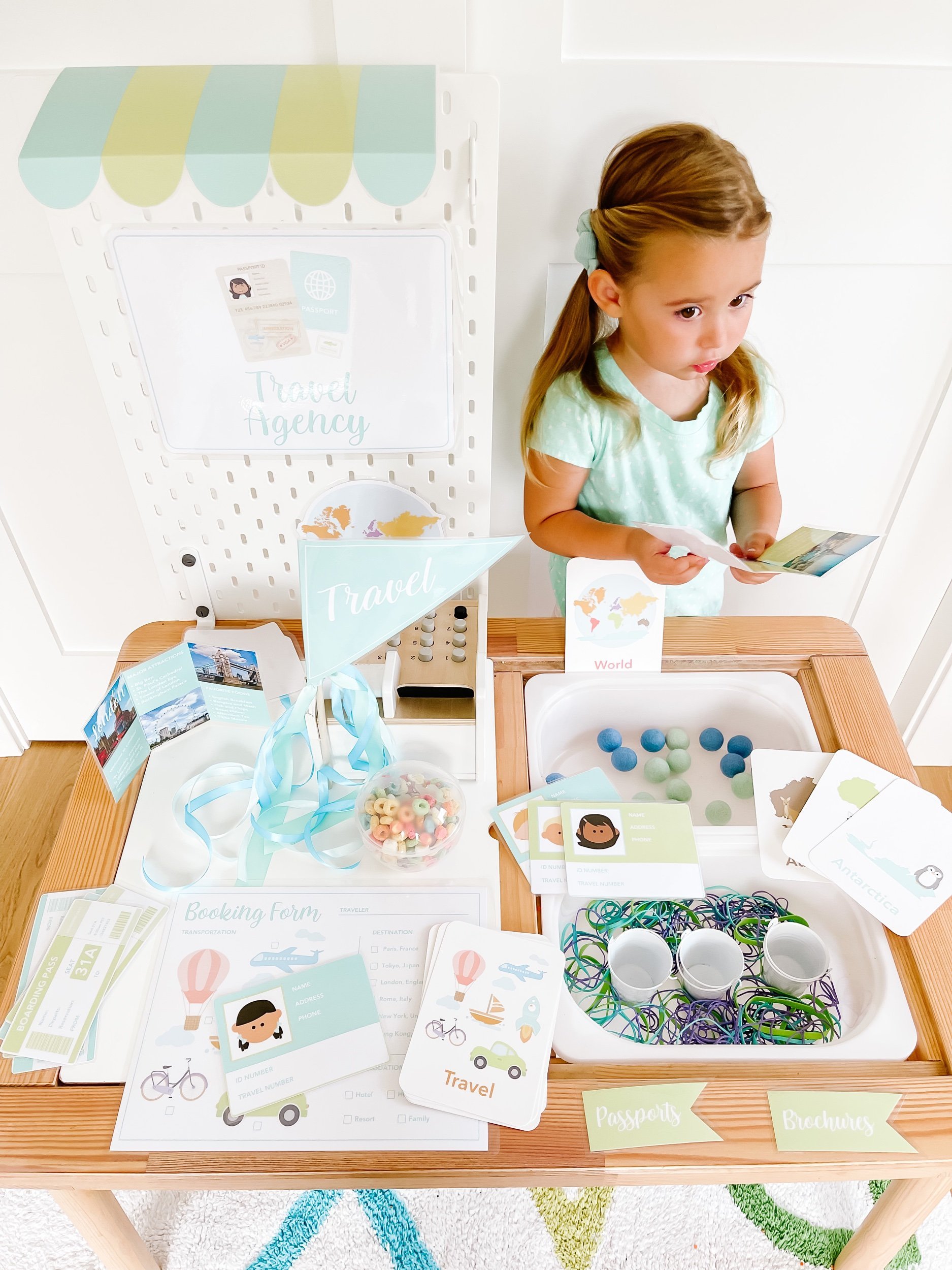
Are you looking for a fun and educational activity for your little ones that will spark their imagination and ignite their curiosity about the world? Look no further than our Travel Agency Dramatic and Sensory Play Kit! In this blog post, we will introduce you to the exciting printable decor in a delightful teal and lime green theme that includes an awning, travel agency sign, pennant flag, cut out globe, 2 brochures, and a sign-up form. Additionally, we will explore three sensory bin activities that perfectly complement this travel-inspired theme. Let's dive in!
Printable Decor in Teal and Lime Green Theme
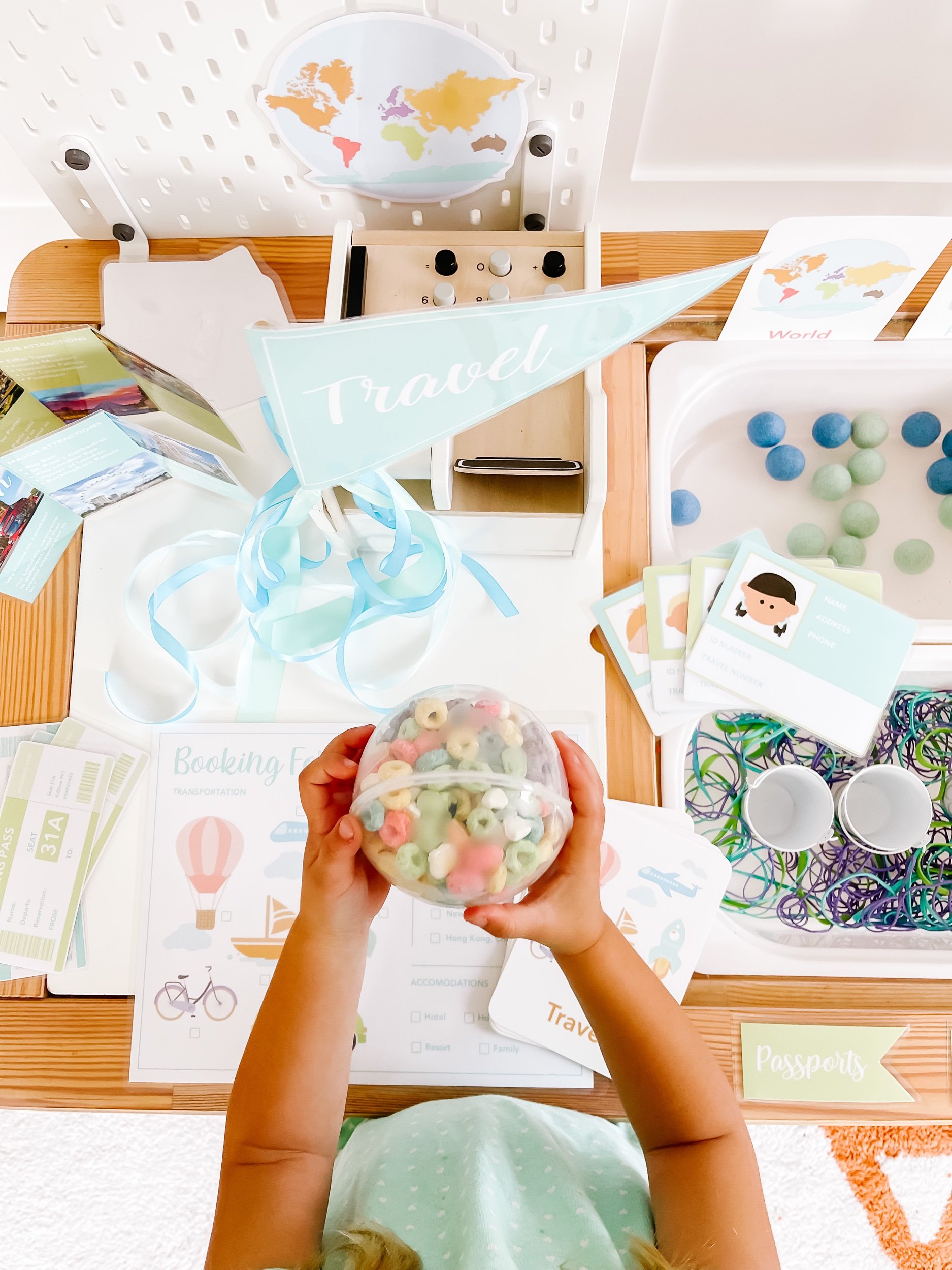
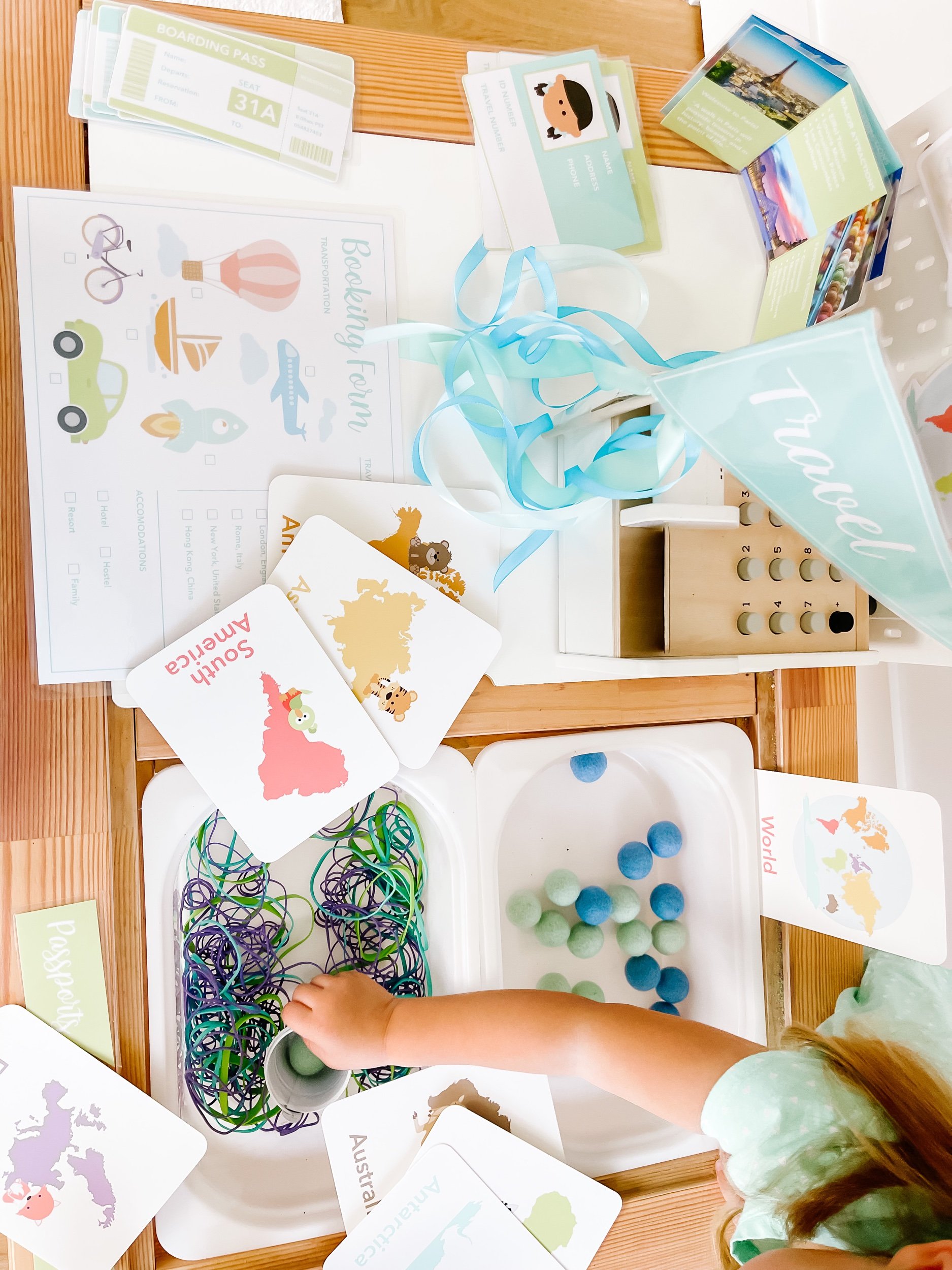
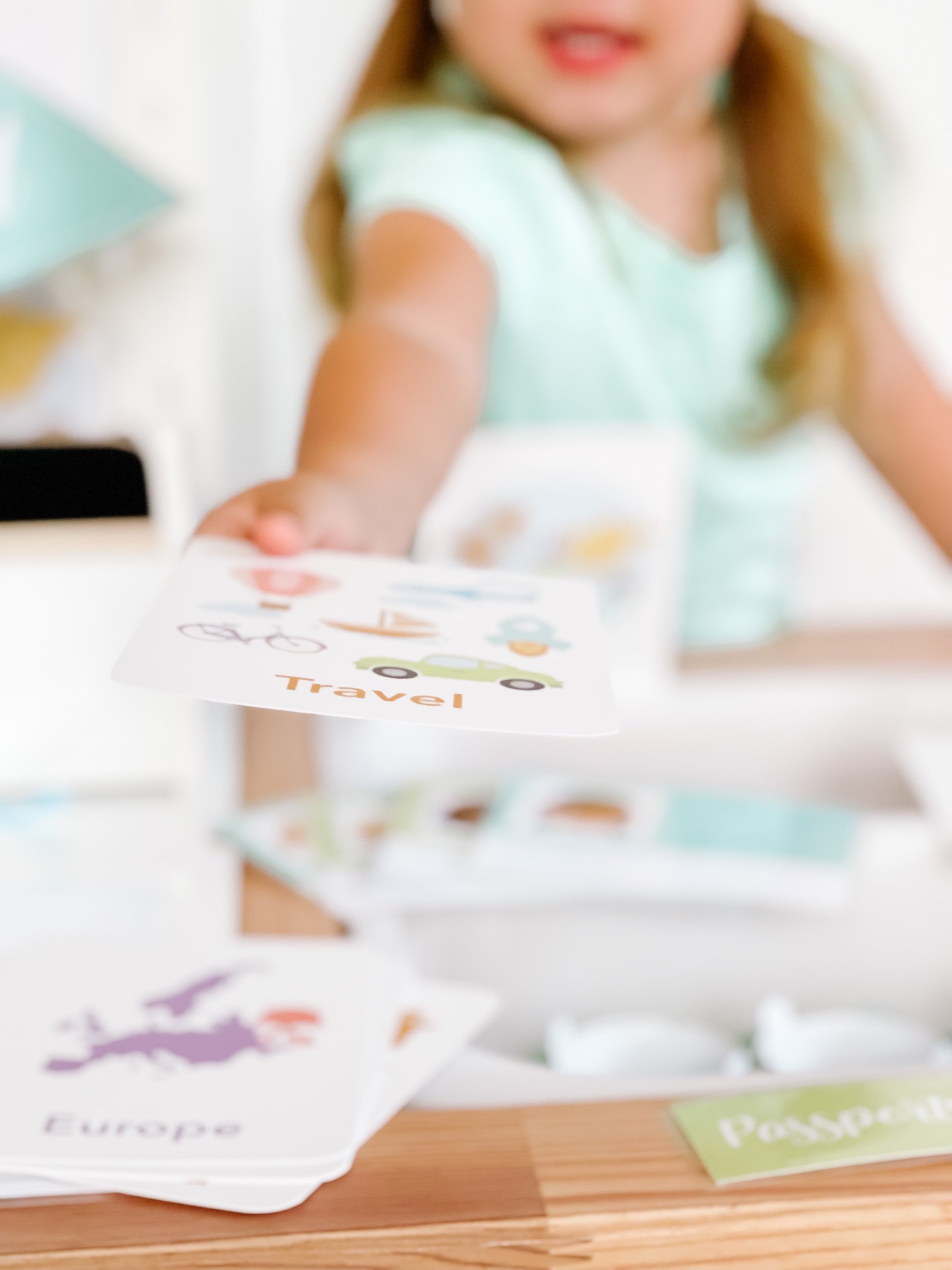
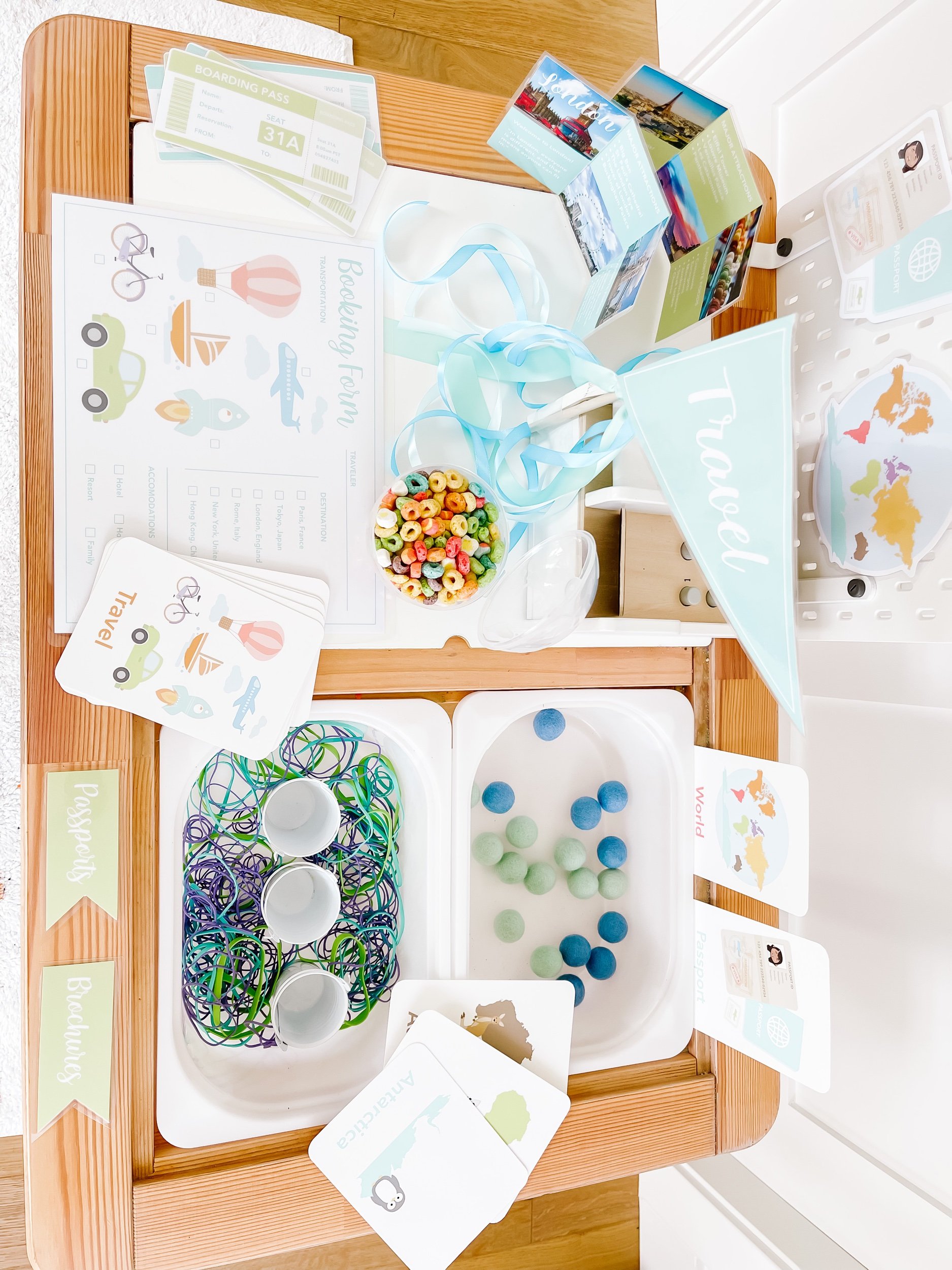
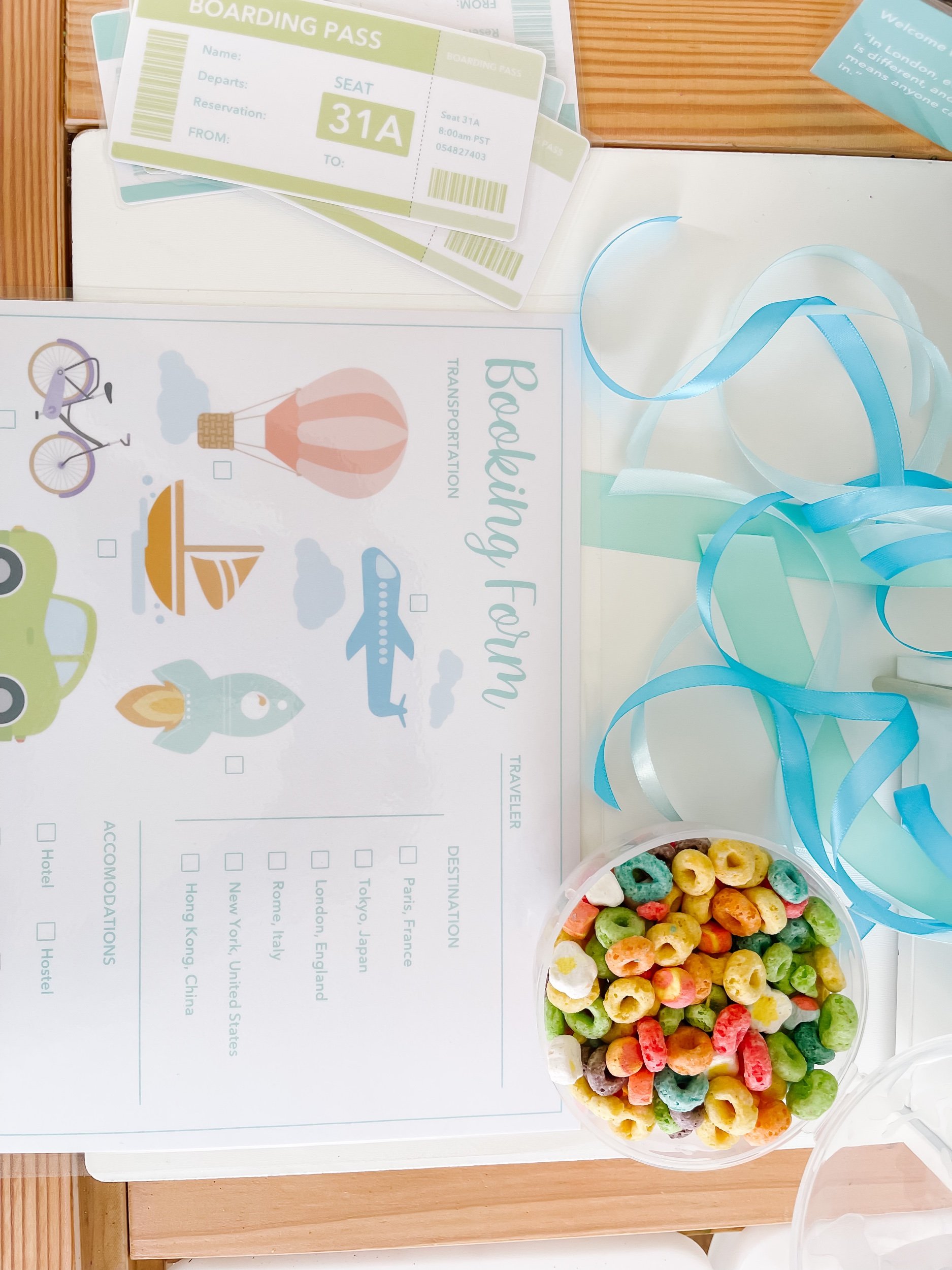
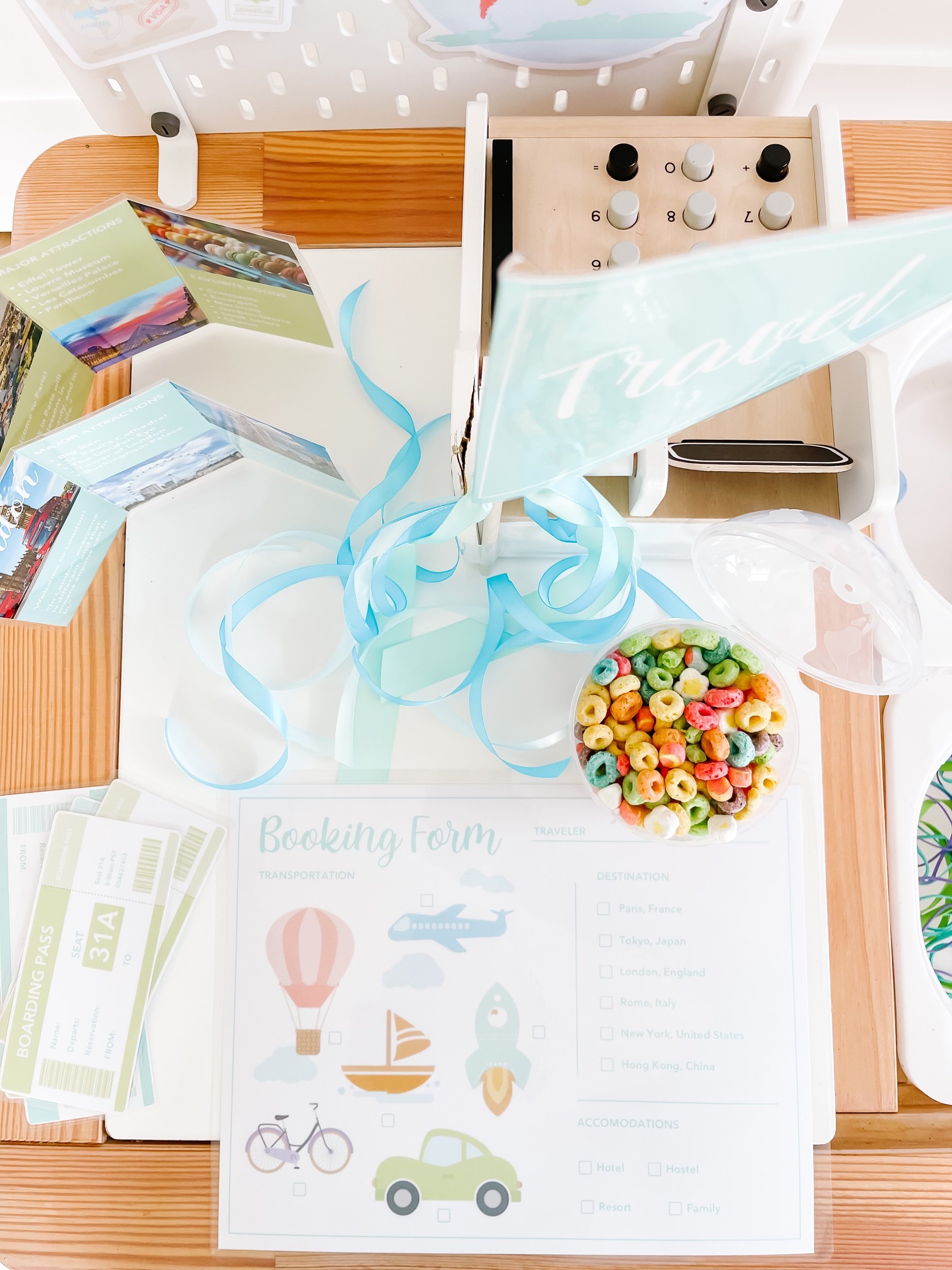
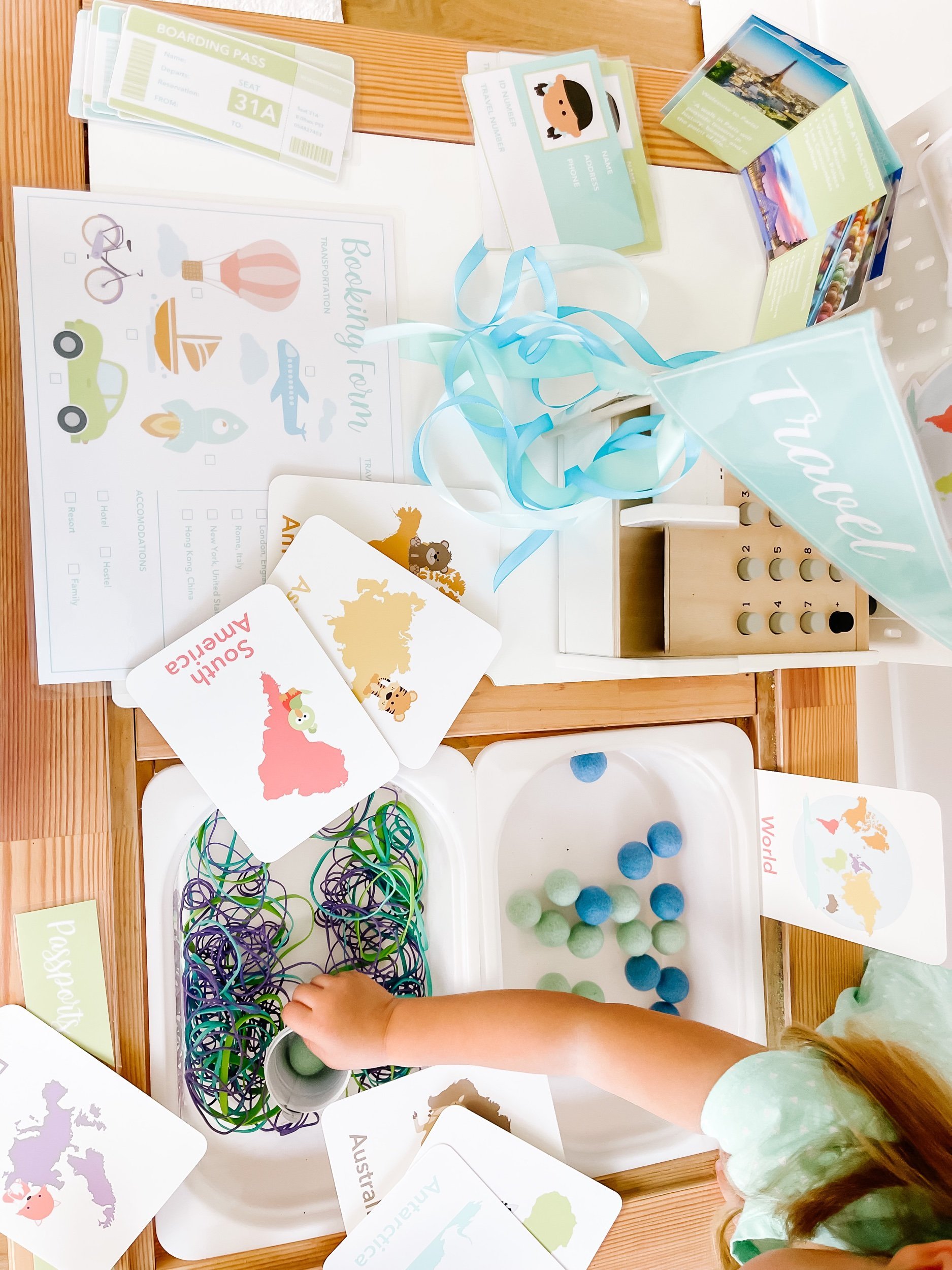
Our printable decor is designed to create an immersive and engaging environment for toddlers to explore and play. Featuring vibrant shades of teal and lime green, the decor includes an awning, a travel agency sign, a pennant flag, a cut-out globe, two brochures, and a travel form. The kit also includes a passport, airplane tickets, and 4 identification cards. With these visually stimulating pieces, your little ones will feel like they are embarking on a real travel adventure!
1. FRUIT LOOPS BIN
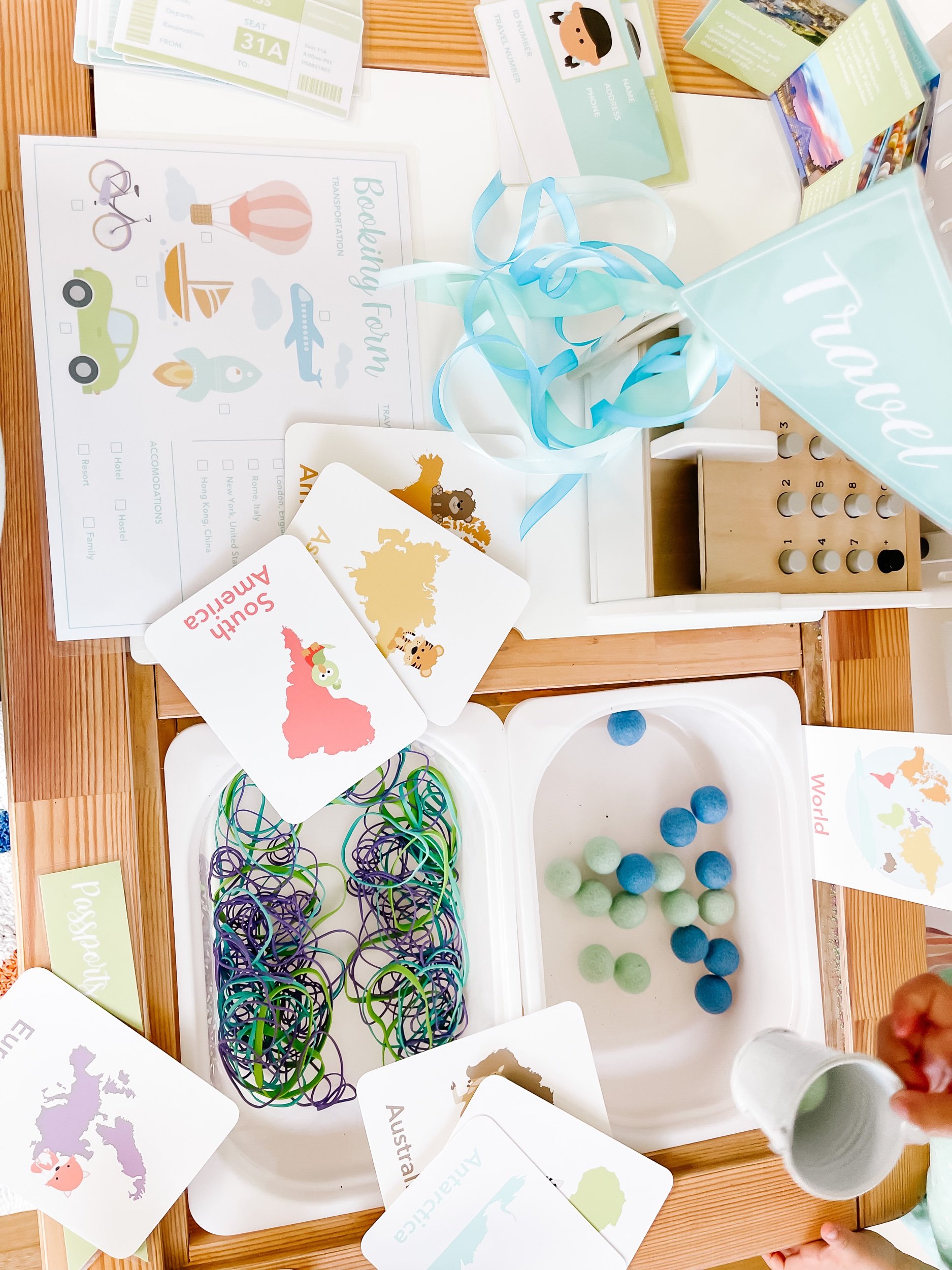
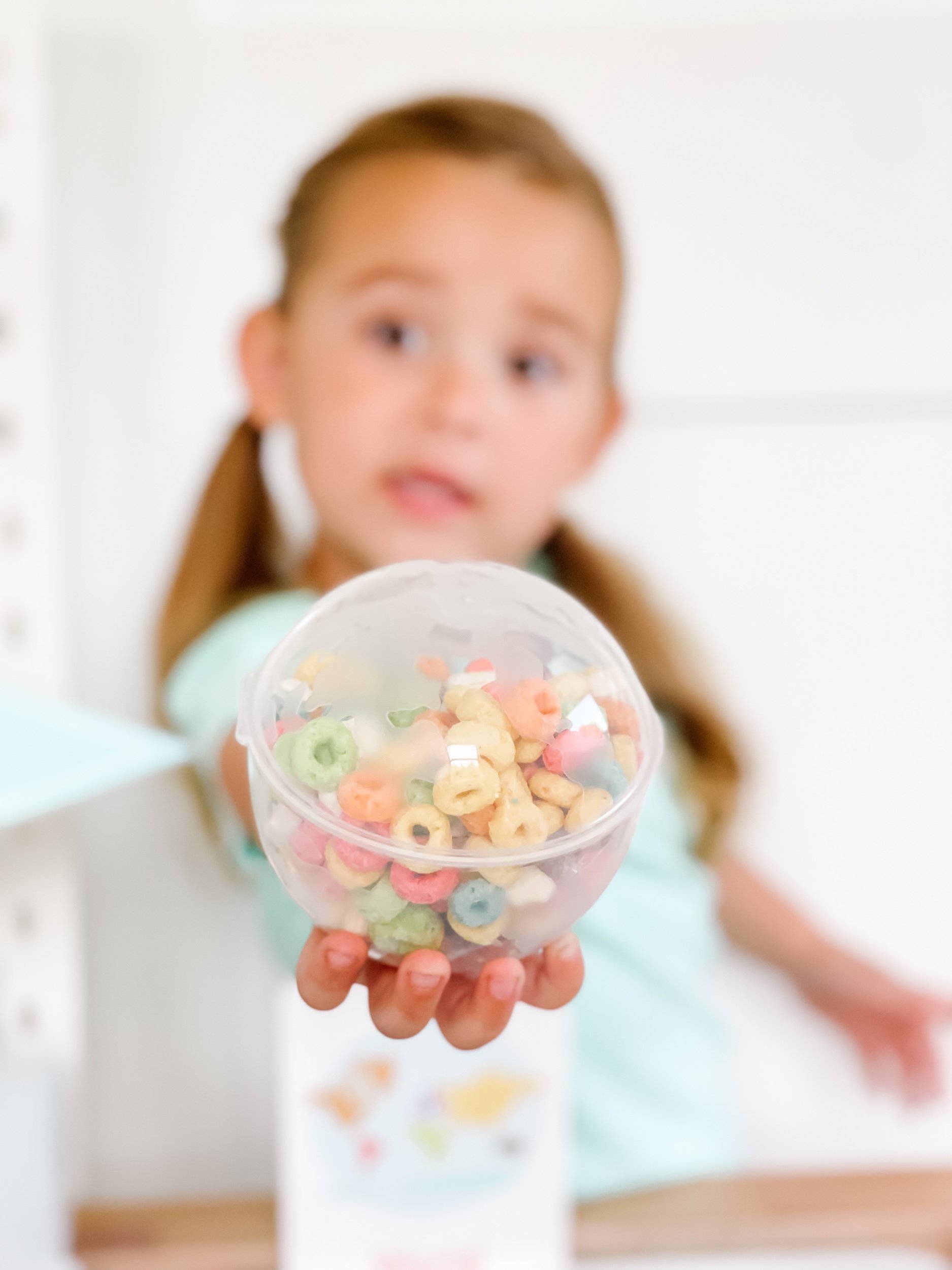
One of the sensory bin activities included in our kit involves using colorful fruit loops to match the colors to the continents on the globe. This activity not only engages toddlers' senses but also introduces them to the concept of continents and promotes color recognition skills.
For ages 1.5 to 2.5, toddlers can focus on identifying and sorting the fruit loops by color. As they progress to ages 3.5 to 4.5, they can start associating each color with a specific continent, enhancing their geographical knowledge. This adaptable activity caters to different learning needs and allows children to explore at their own pace.
2. Wool Balls for Sorting and Matching
Another exciting sensory bin activity featured in this setup involves wool balls for sorting and matching. Toddlers can enjoy the tactile experience of playing with soft wool balls while developing their fine motor skills and hand-eye coordination. They can sort the balls by size, color, or texture, promoting critical thinking and problem-solving abilities.
For younger toddlers aged 1.5 to 2.5, the focus can be on exploring the different textures and practicing basic sorting. As they grow older, ages 3.5 to 4.5, children can be encouraged to match the wool balls to pictures representing famous landmarks or cultural symbols from various countries. This activity promotes cultural awareness, creativity, and cognitive development.
3. Rubber Bands for Creative Play
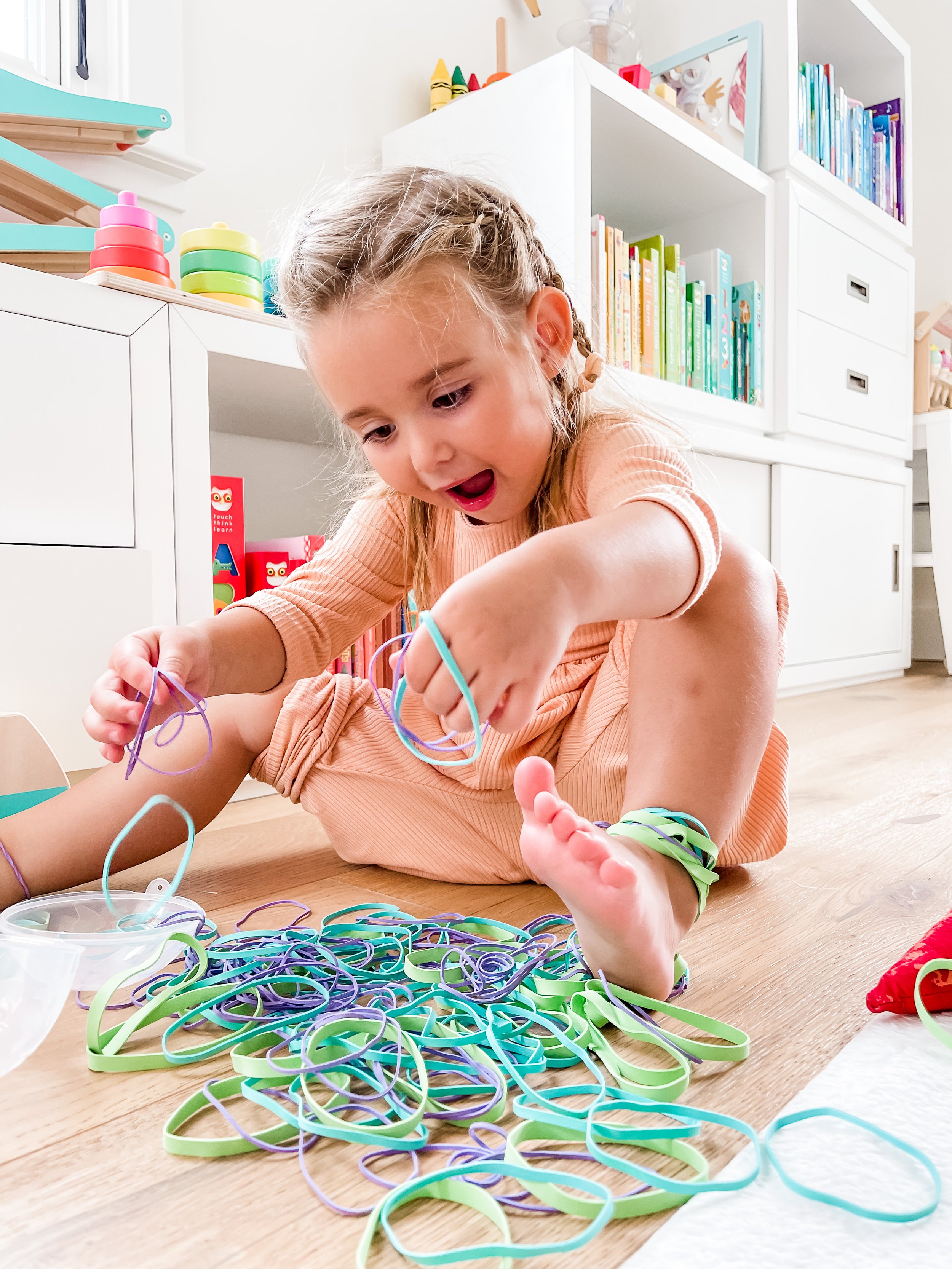
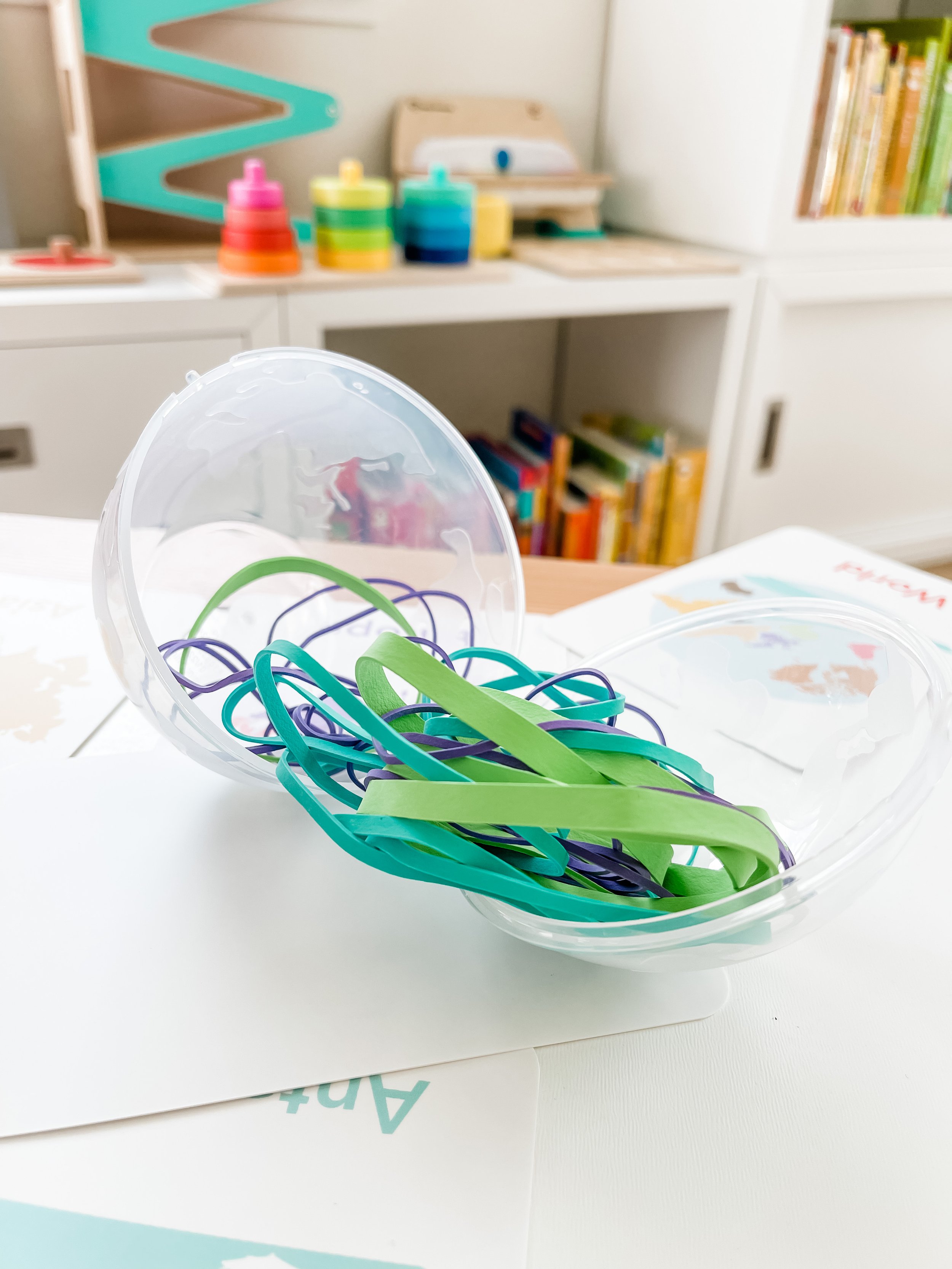
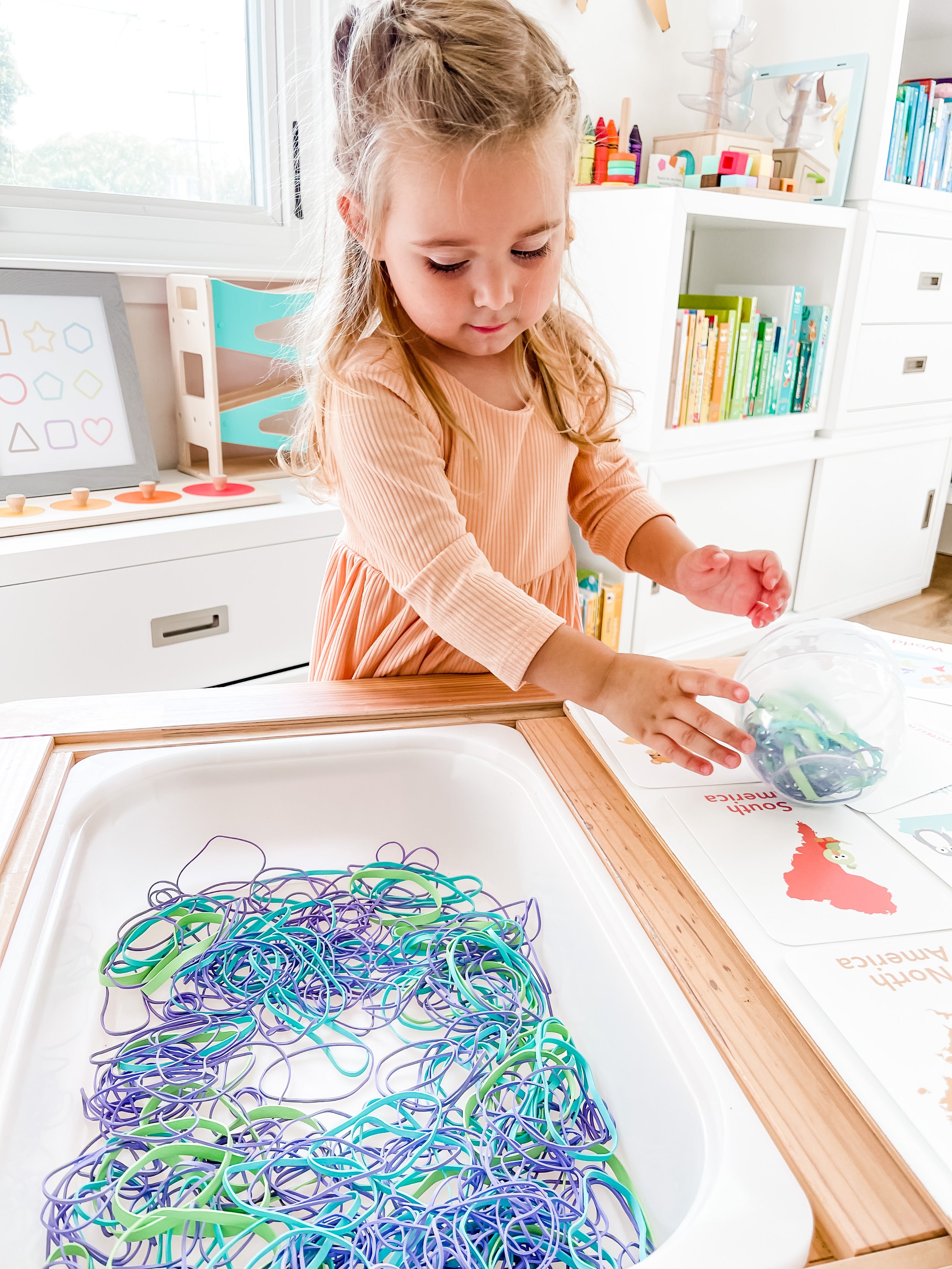
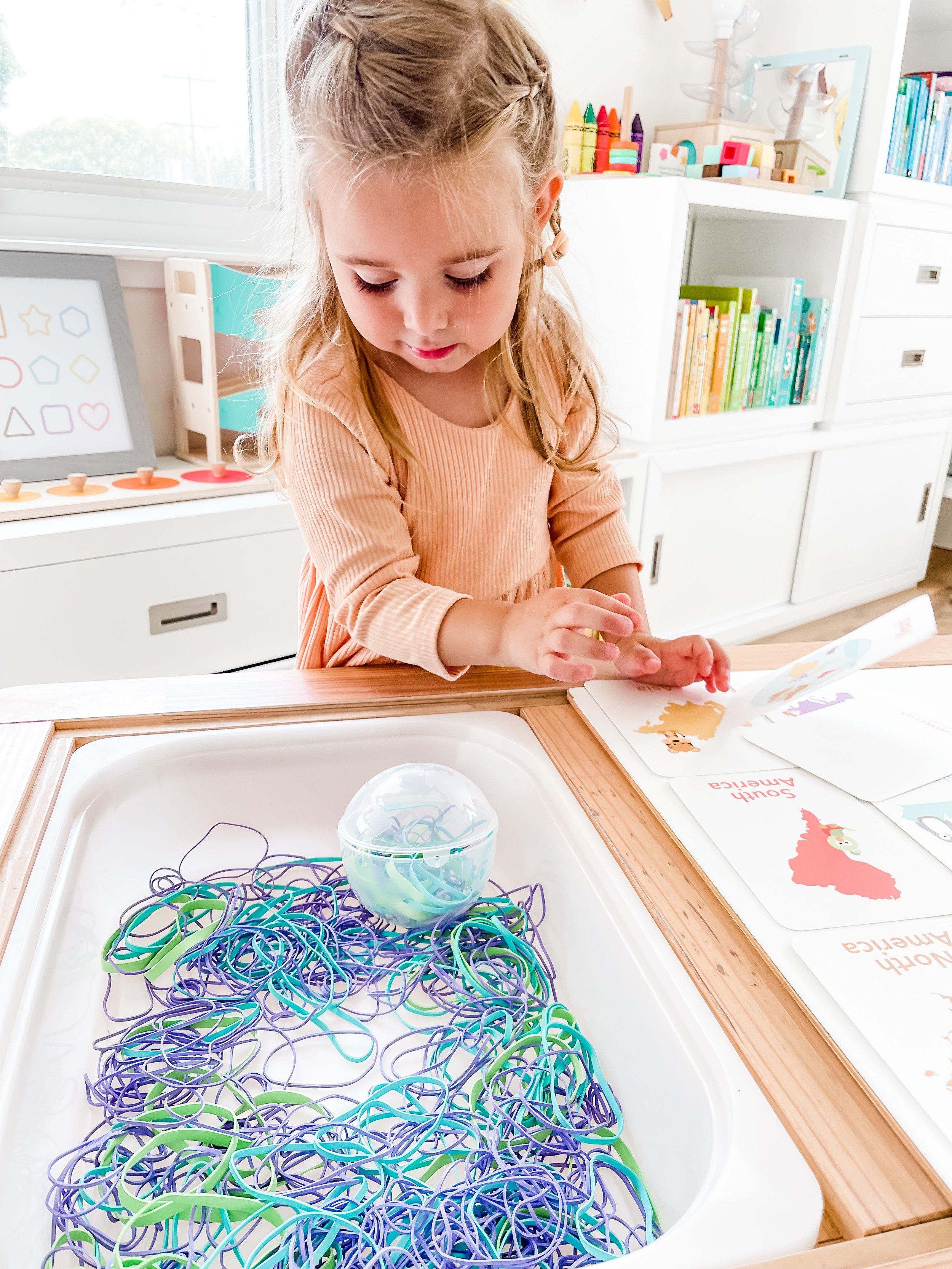
Our third sensory bin activity incorporates rubber bands for creative play. This open-ended activity allows toddlers to explore their imaginations while enhancing their fine motor skills and hand strength. They can stretch, twist, and manipulate the rubber bands to create shapes or patterns, fostering their creativity and problem-solving abilities. Sofia loved this part of the activity! She dumped the rubber bands on the floor and began putting them around her wrists and ankles.
For younger toddlers aged 1.5 to 2.5, the focus can be on exploring the sensory properties of the rubber bands, such as stretchiness and texture. As they progress to ages 3.5 to 4.5, children can be encouraged to create letters, numbers, or simple shapes with the rubber bands, incorporating early literacy and numeracy skills into their play.
Benefits of Sensory Play for Kids
Engaging in sensory play offers numerous benefits for children's development. It stimulates their senses, allowing them to explore different materials, textures, colors, and sounds, which in turn enhances their cognitive, physical, and social-emotional growth. Sensory play supports the development of fine motor skills, hand-eye coordination, and sensory processing abilities, making it an essential aspect of early childhood education.
Benefits of Dramatic Play and Learning about the World
Dramatic play provides children with valuable opportunities to develop social skills, creativity, and problem-solving abilities. Through their imaginative scenarios and role-playing, toddlers learn how to communicate, negotiate, and cooperate with others. When combined with learning about the world through travel, food, culture, and geography, dramatic play becomes a rich and immersive experience that broadens children's horizons and fosters a sense of curiosity and respect for different cultures.
In conclusion, our Travel Agency Dramatic and Sensory Play Kit is a perfect way to introduce your little ones to the wonders of the world while promoting sensory exploration and imaginative play. With our printable decor in a captivating teal and lime green theme and three exciting sensory bin activities, your toddlers will embark on an educational journey that will stimulate their senses, inspire their creativity, and ignite their passion for learning. So, let's join hands and set off on a thrilling adventure together!
Vocabulary Words for Kids Ages 2-4:
1. Travel: The act of going from one place to another.
2. World: The Earth and all its people, places, and things.
3. Explore: To look around and discover new things.
4. Adventure: A thrilling and exciting experience.
5. Discover: To find or learn about something new.
6. Map: A flat drawing that shows where places are located.
7. Compass: A tool that tells you which way is north, south, east, and west.
8. Airplane: A flying vehicle that takes people on long journeys.
9. Train: A long vehicle that runs on tracks and takes people to different places.
10. Boat: A water vehicle that can sail on rivers, lakes, or oceans.
11. Suitcase: A bag used for carrying clothes and personal belongings while traveling.
12. Passport: An important travel document that identifies a person and allows them to enter different countries.
13. Ticket: A piece of paper that shows you paid for a journey or event.
14. Airport: A place where airplanes take off and land.
15. Hotel: A place where people stay overnight while traveling.
16. Guidebook: A book that gives information about a specific place.
17. Postcard: A card with a picture on one side and space for writing on the other, sent to family and friends while traveling.
18. Suitcase: A bag used for carrying clothes and personal belongings while traveling.
19. Tourist: Someone who visits a place for enjoyment and exploration.
20. Currency: The type of money used in different countries.
21. Passenger: A person who is traveling in a vehicle like a bus, train, or airplane.
22. Destination: The place where someone is going or planning to visit.
23. Travel Agent: Someone who helps people plan their trips and book travel arrangements.
24. Luggage: The bags and suitcases that you take with you when you travel.
25. Adventure: A thrilling and exciting experience.
Enjoy your journey of learning about the world and travel agencies!
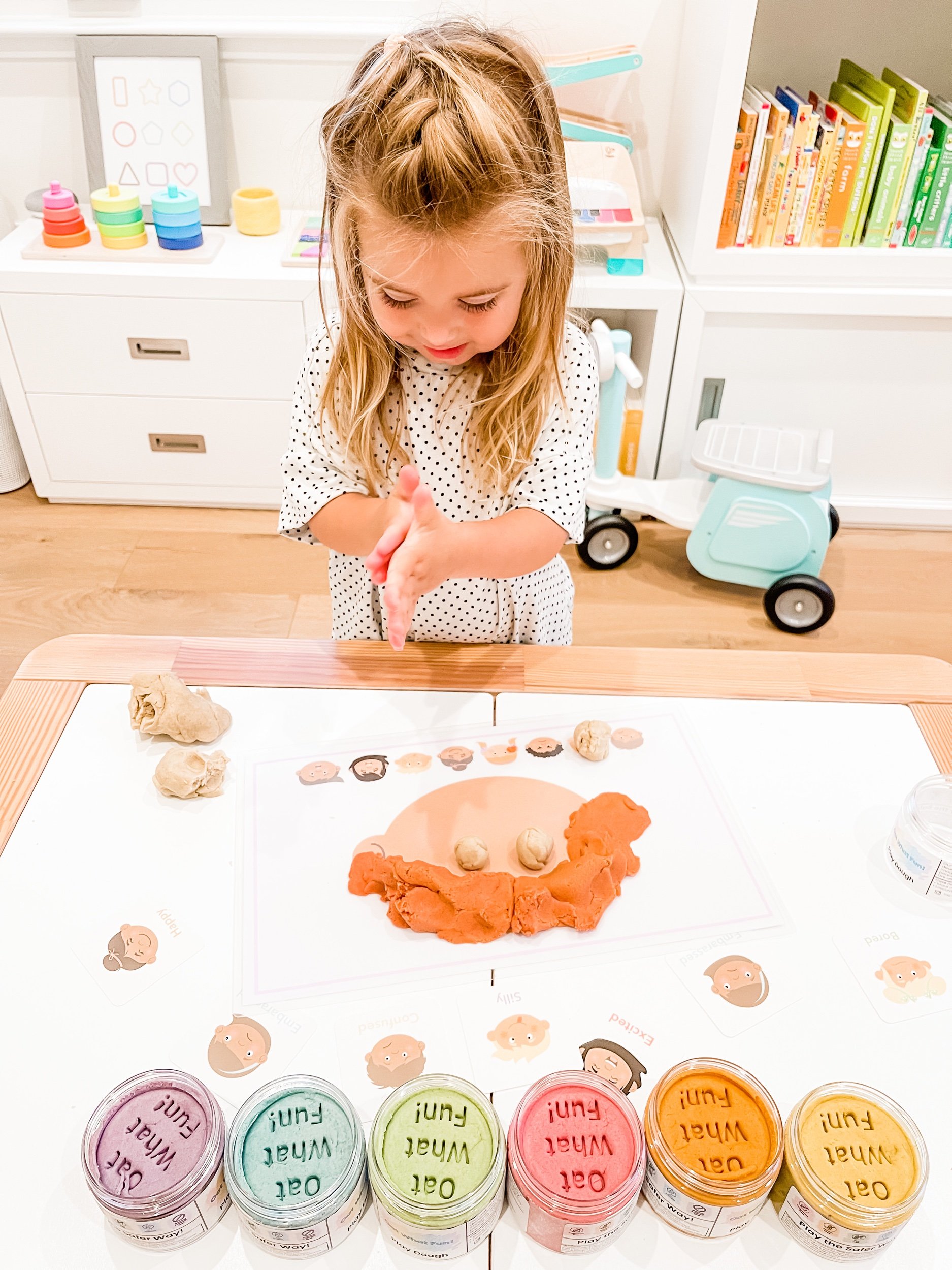
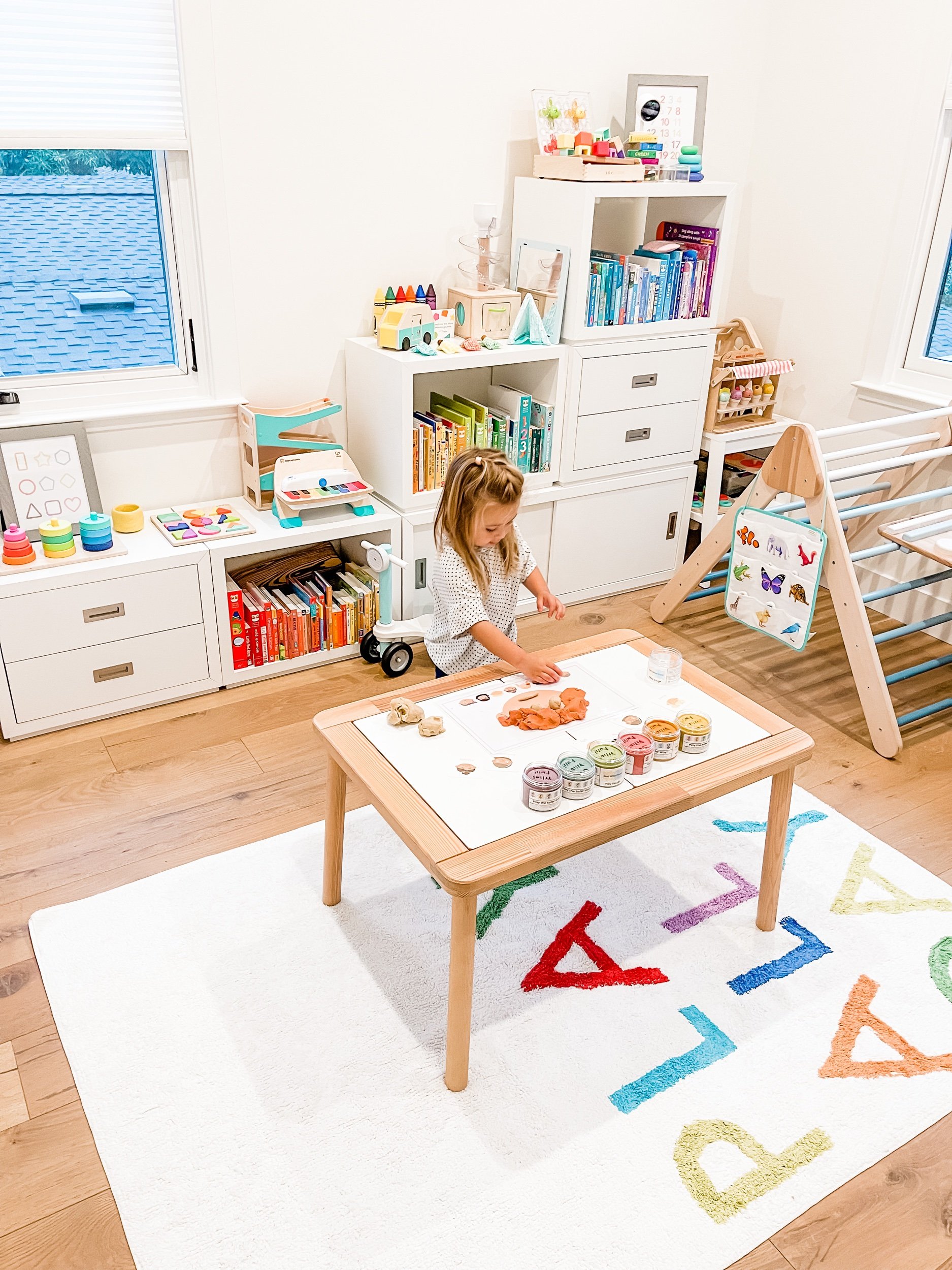
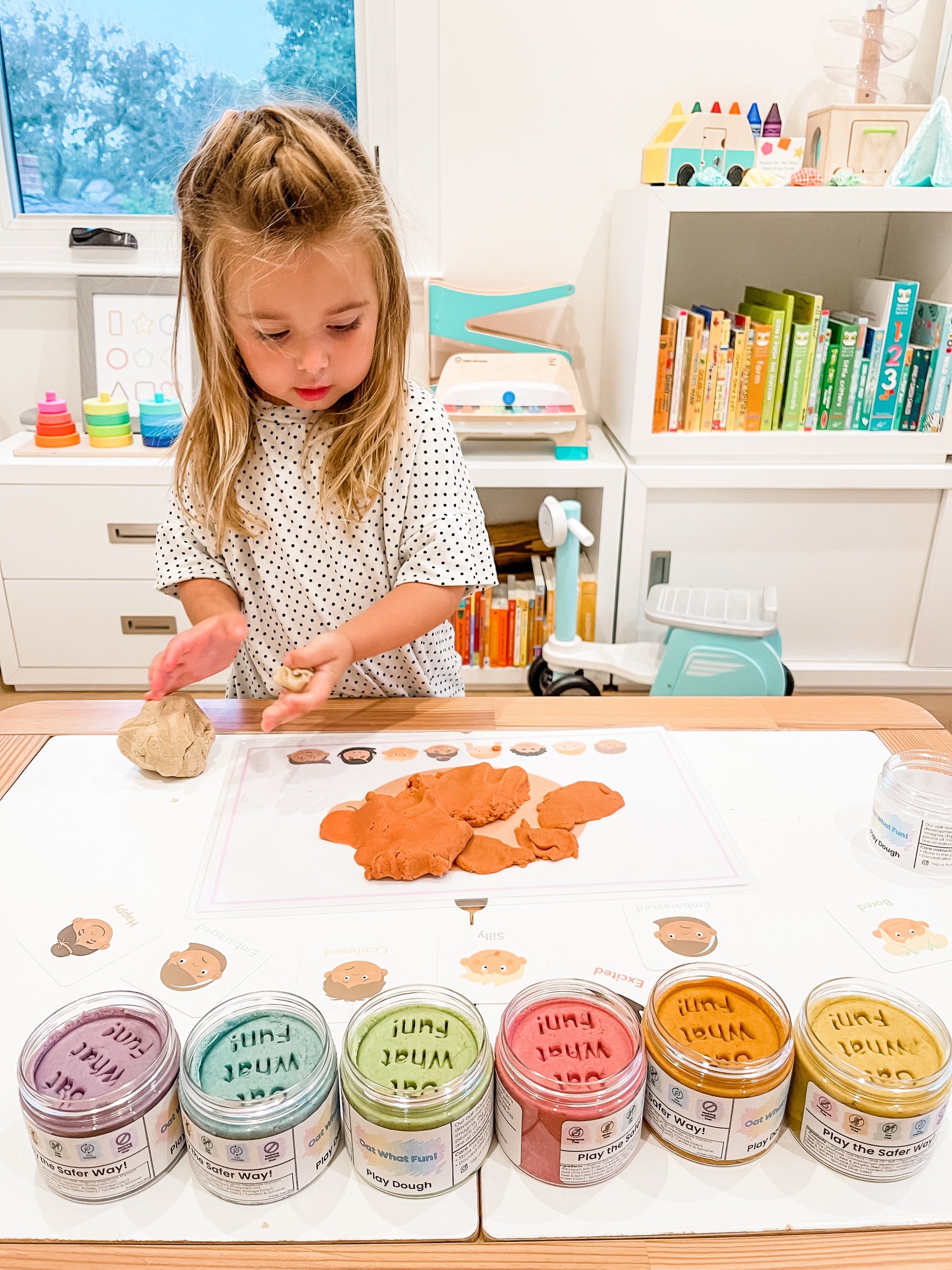
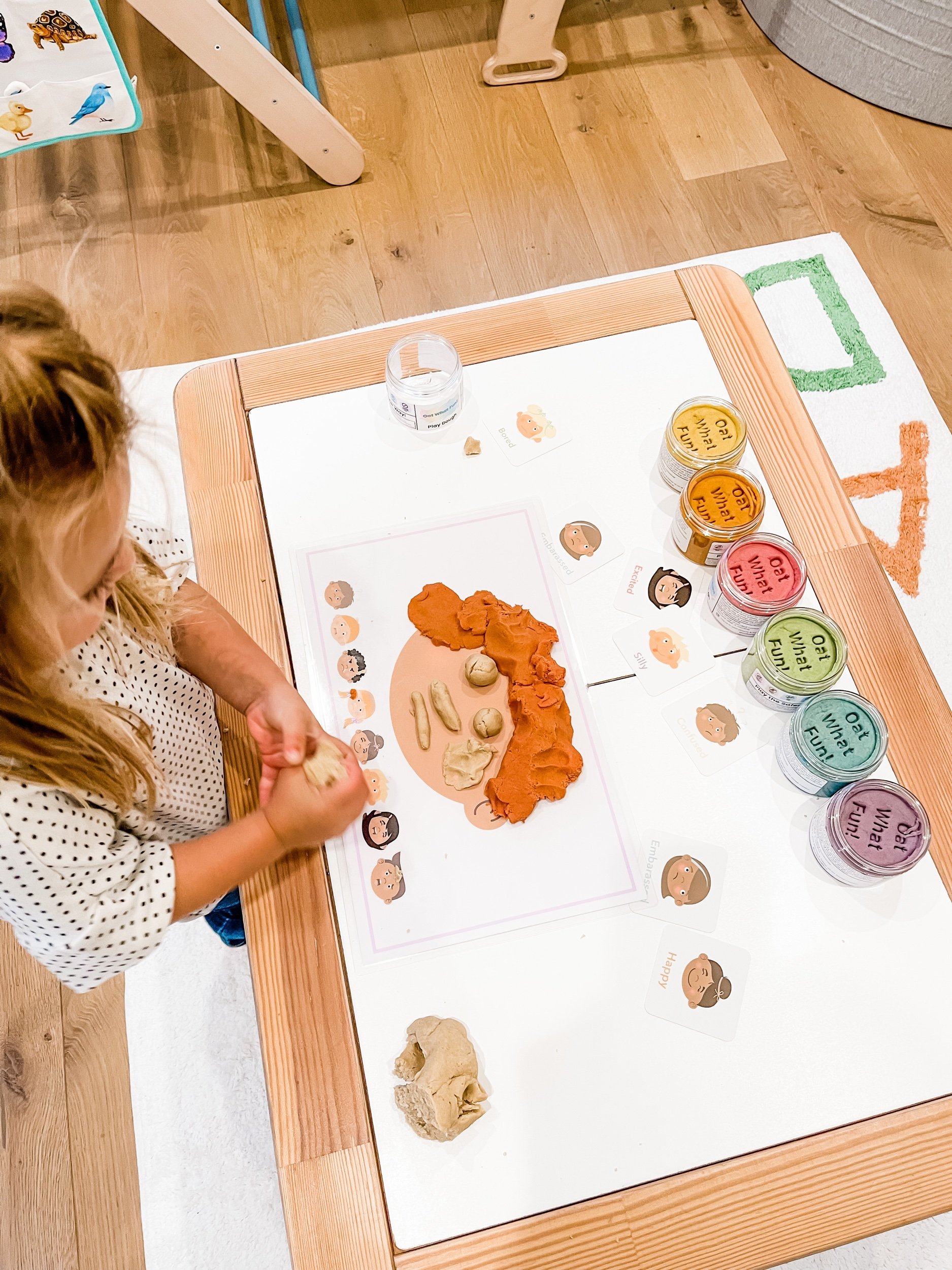
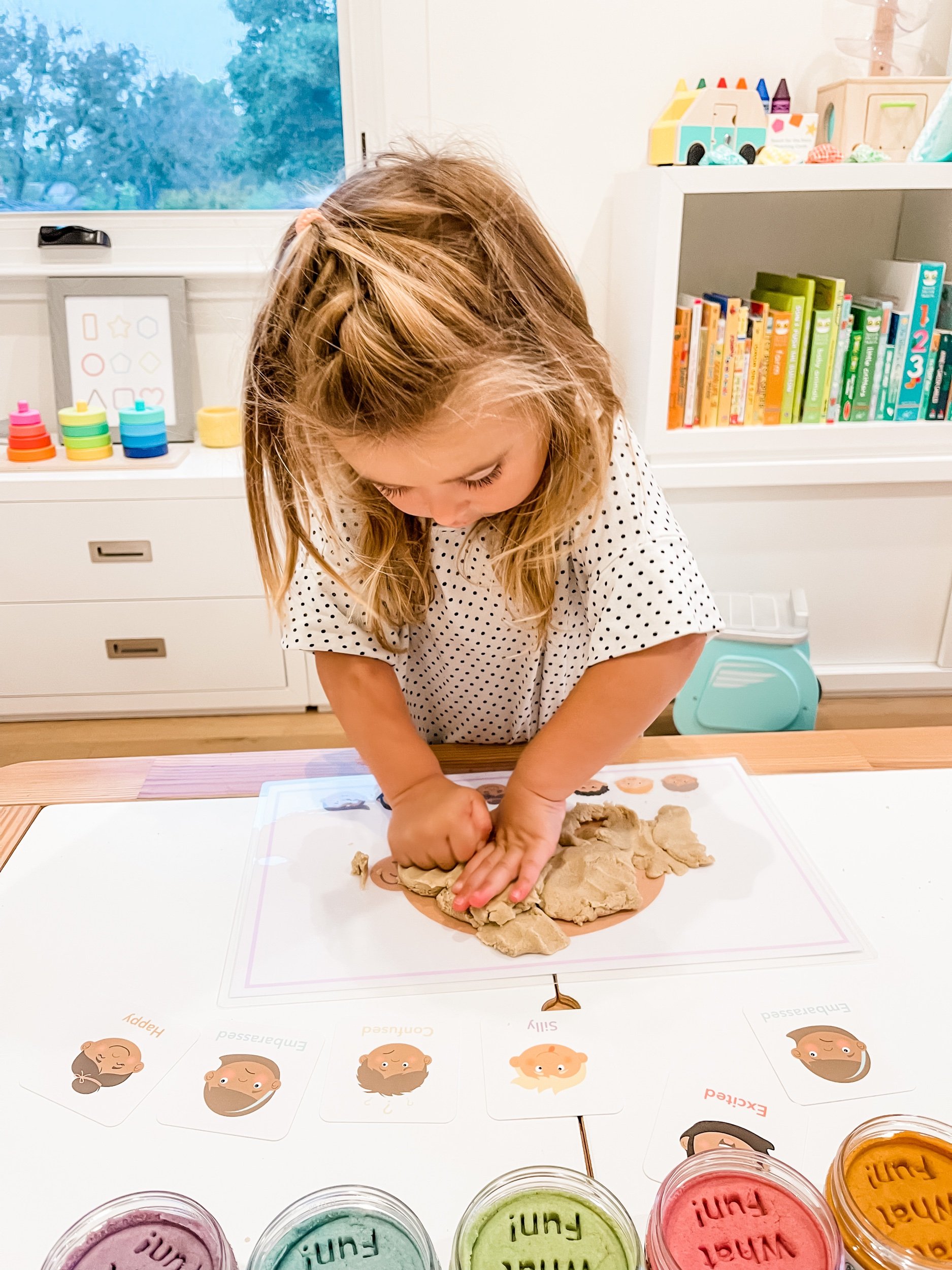
Learning Emotions Building Faces with Play Doh
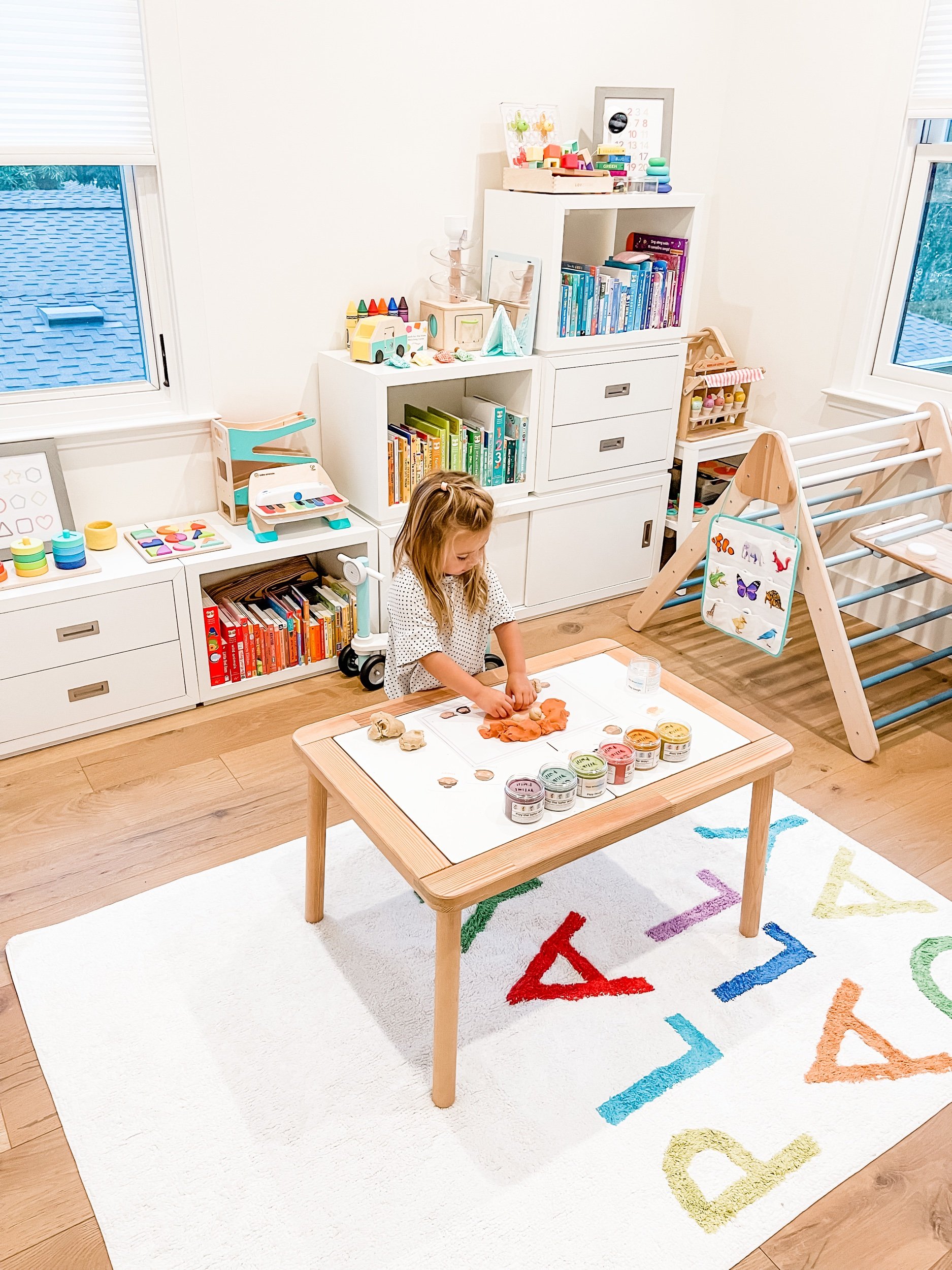
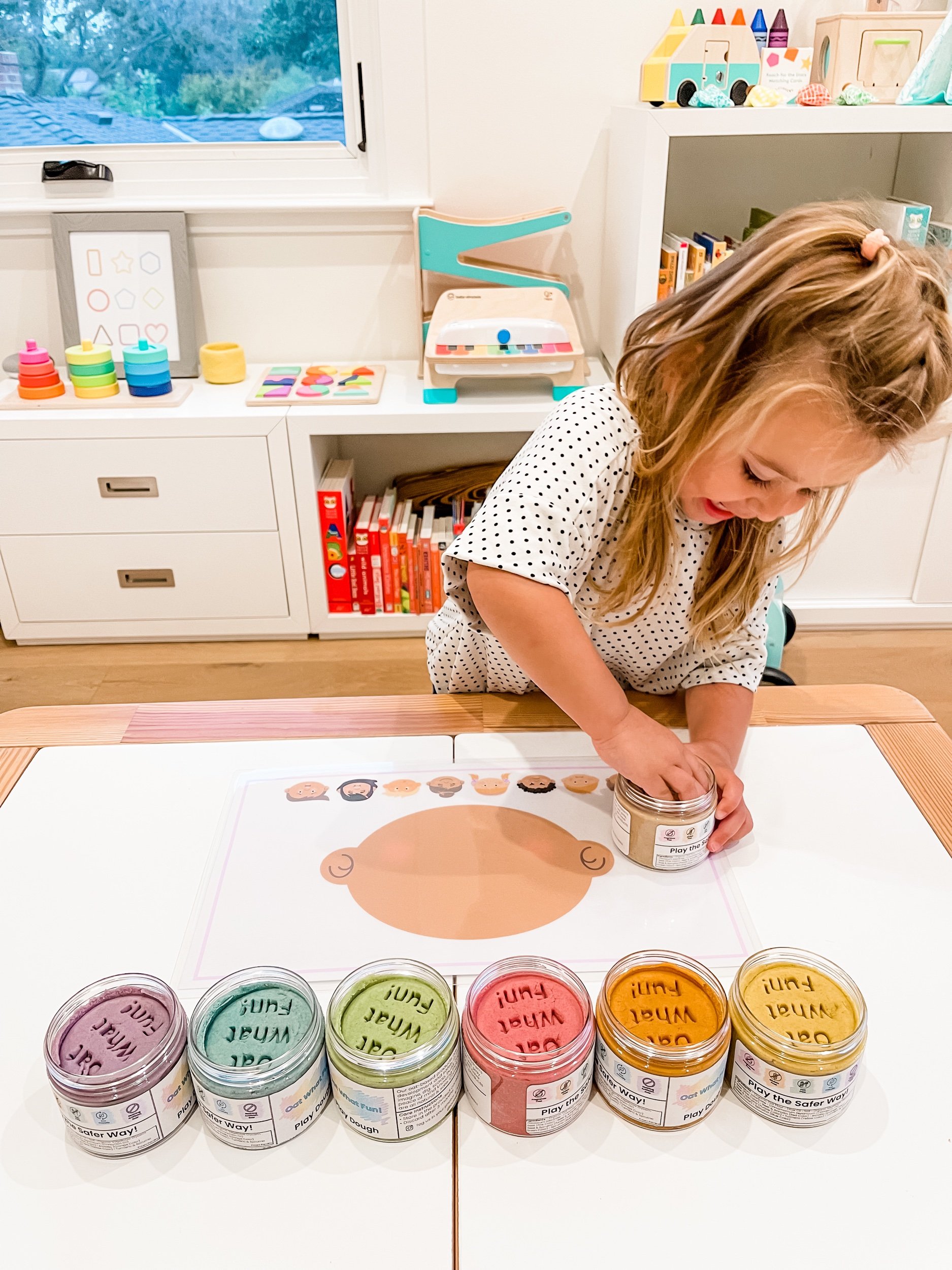
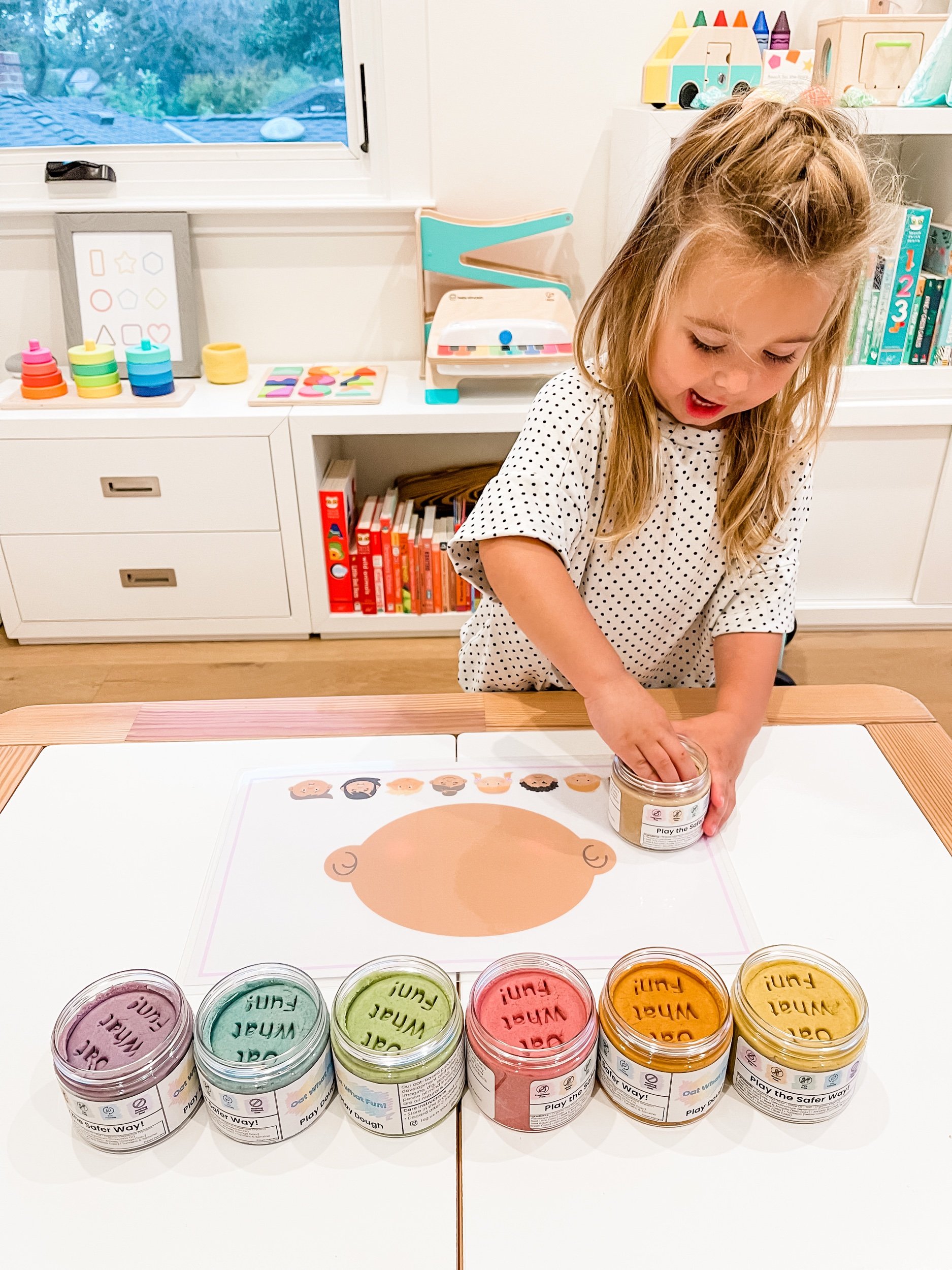
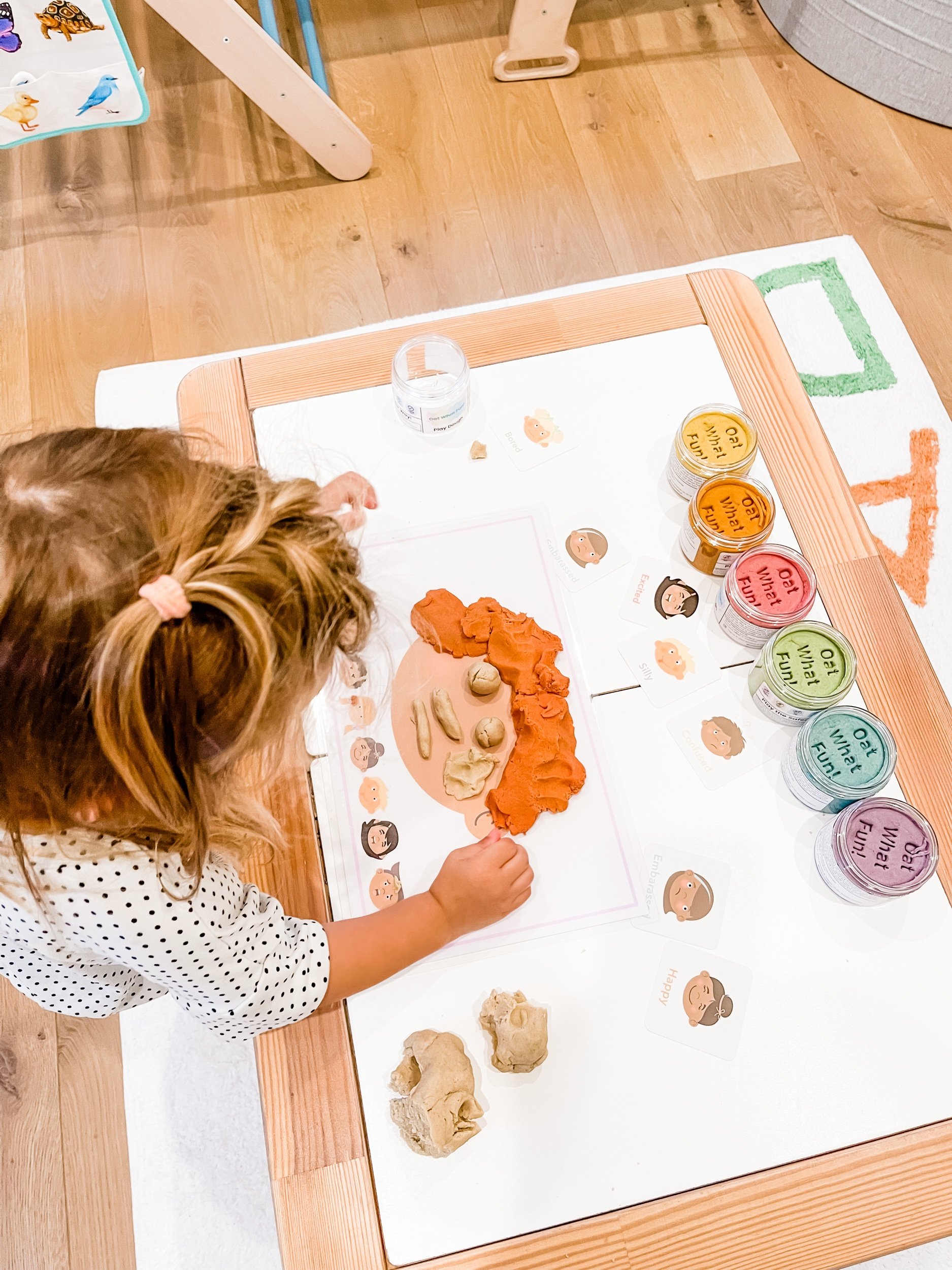
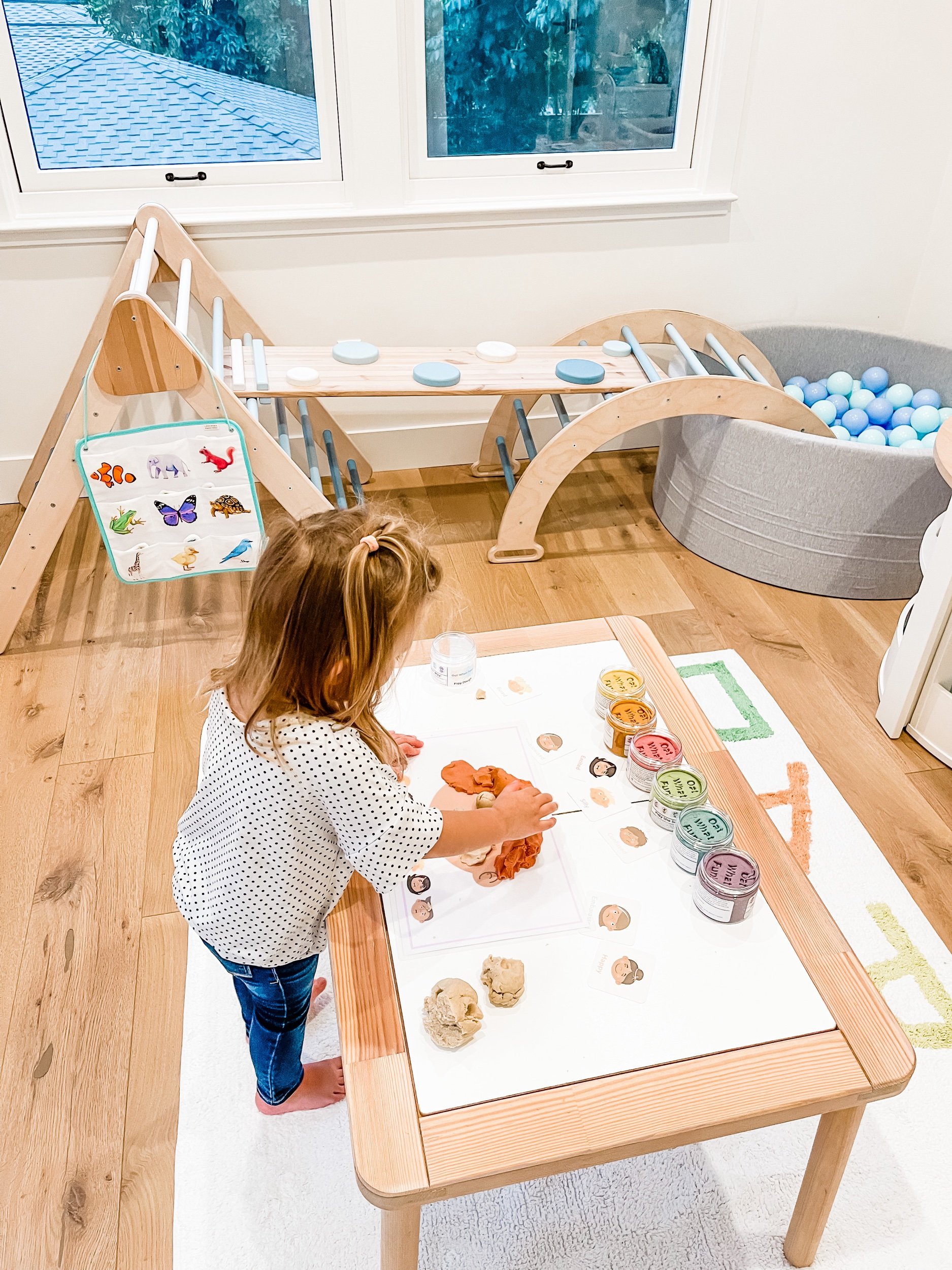
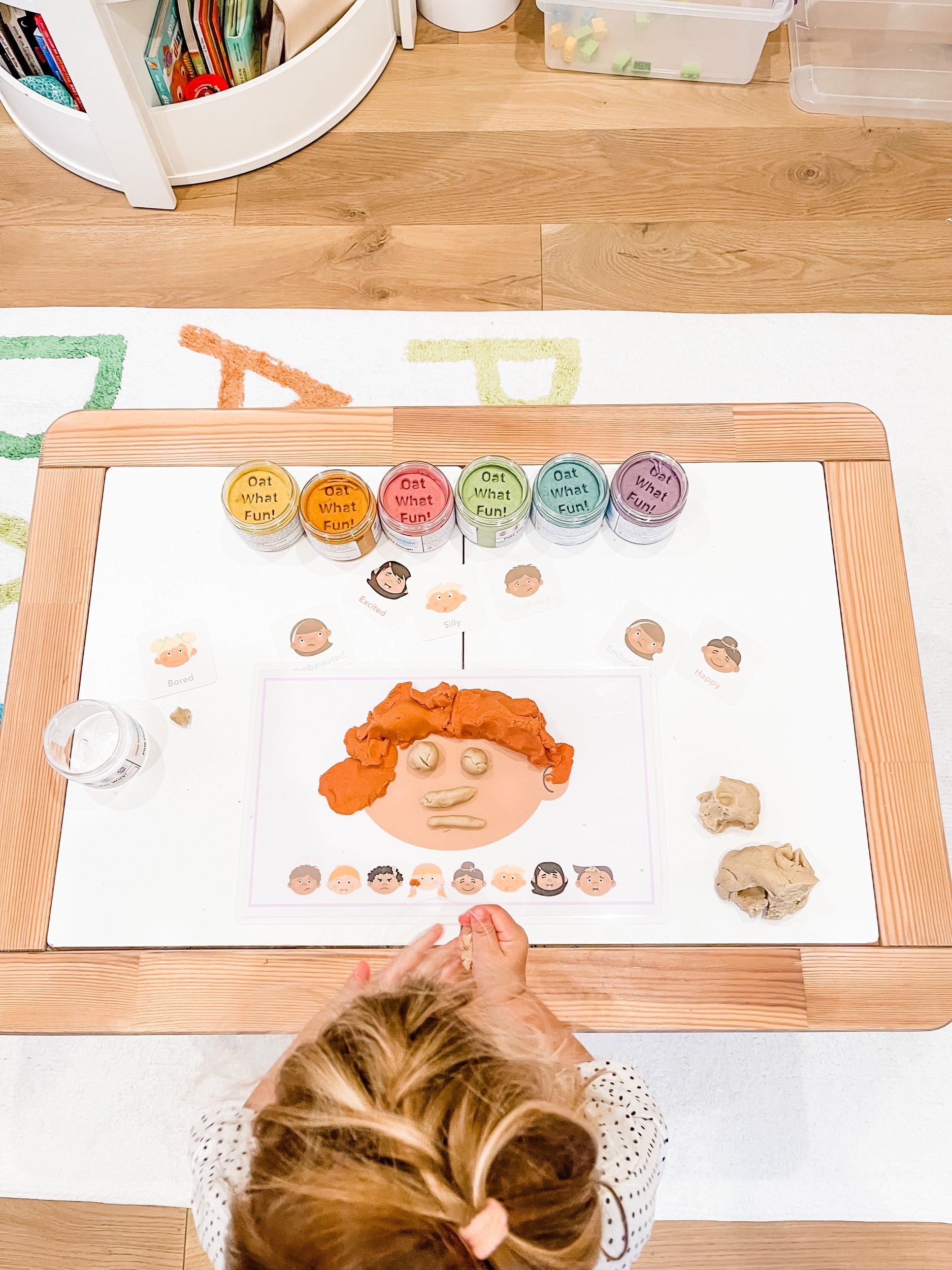
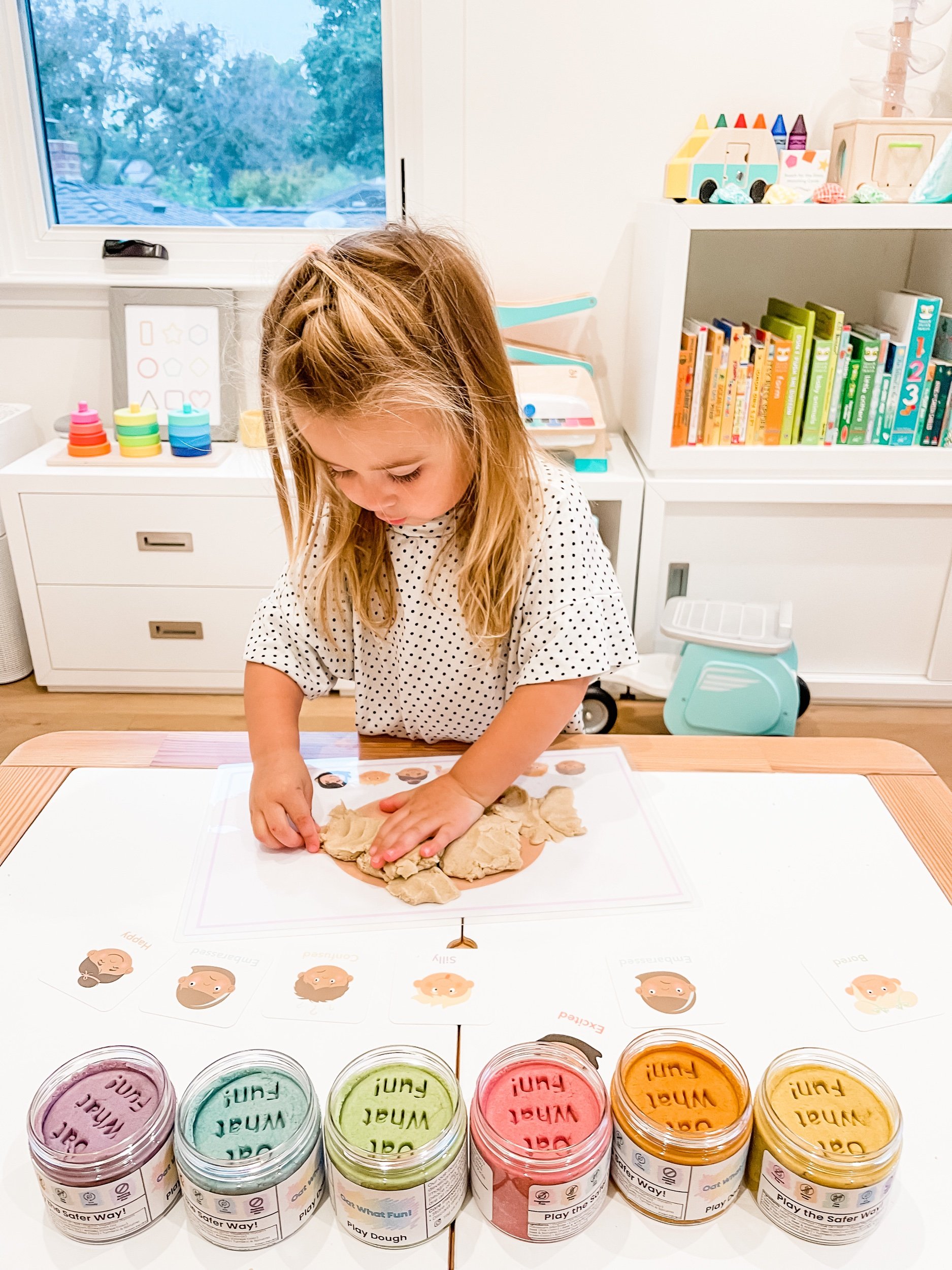
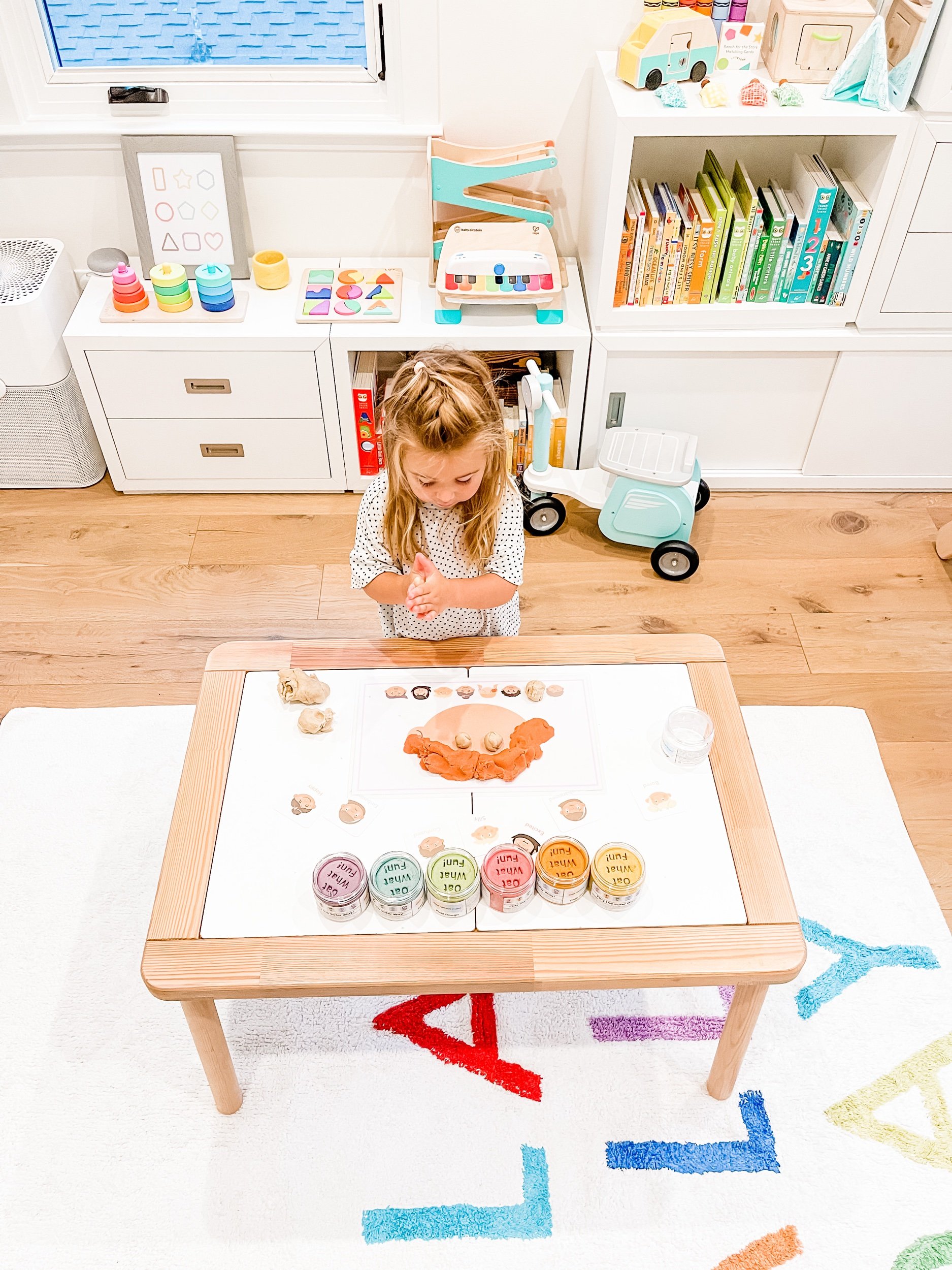
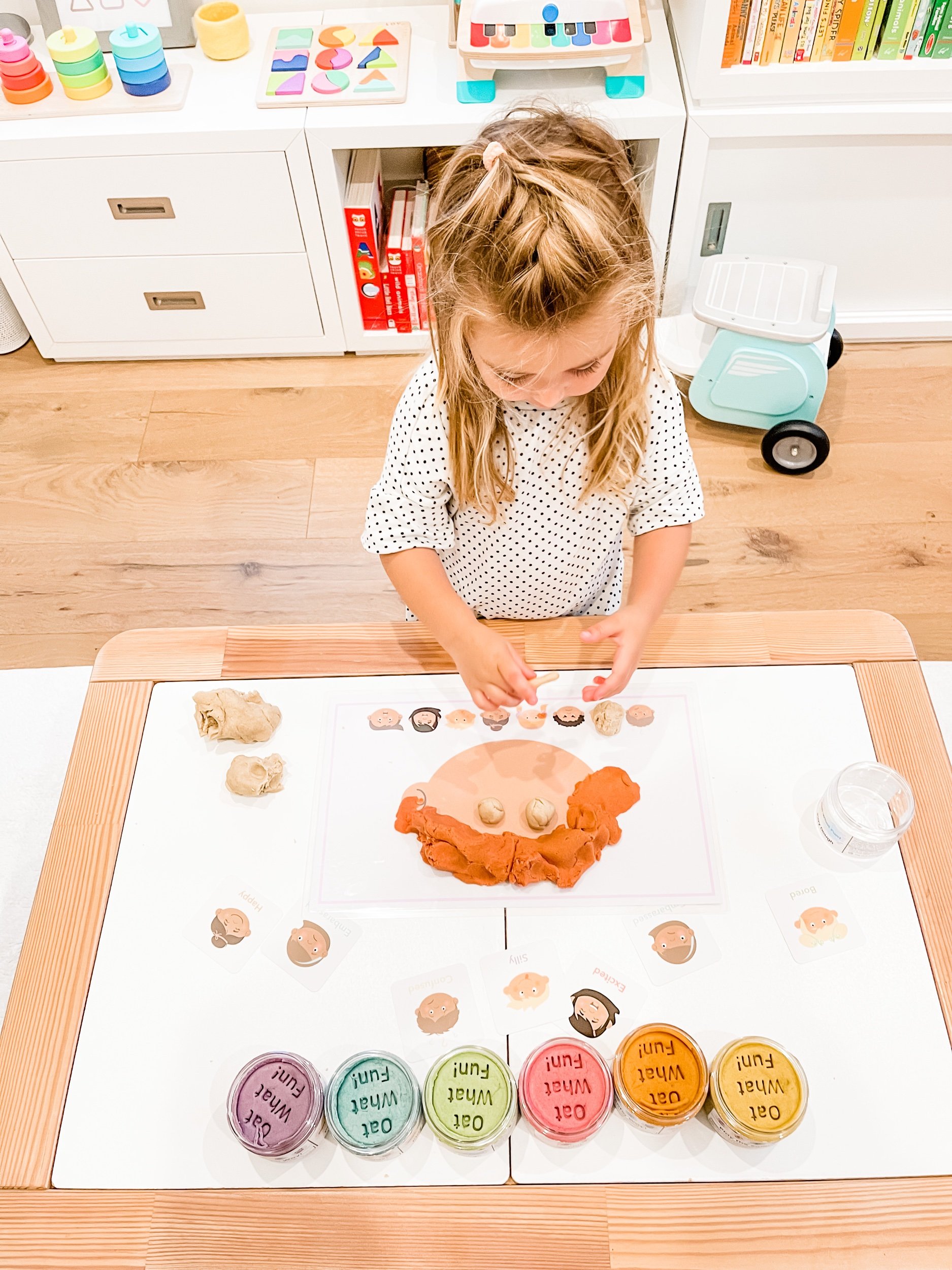
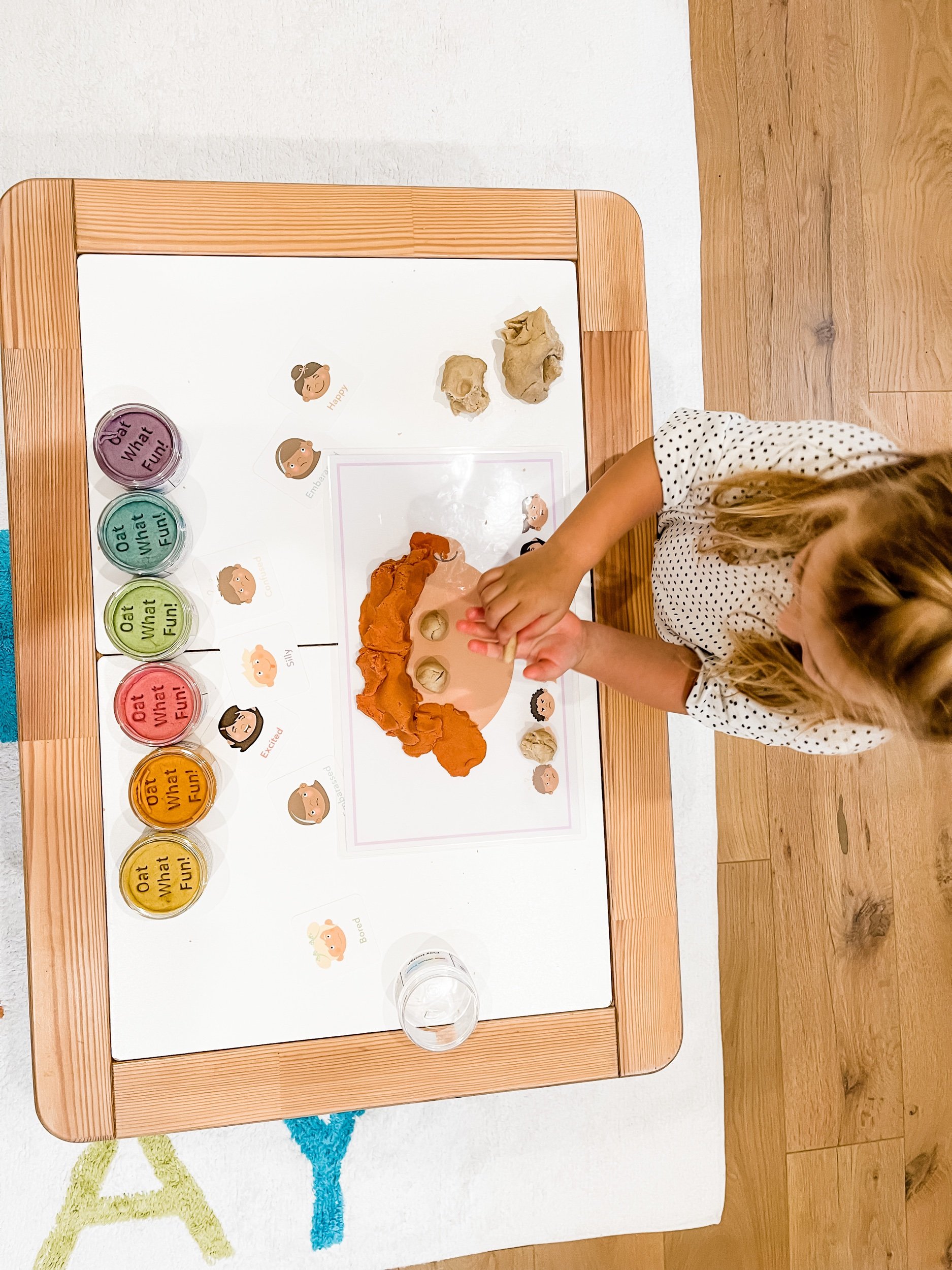
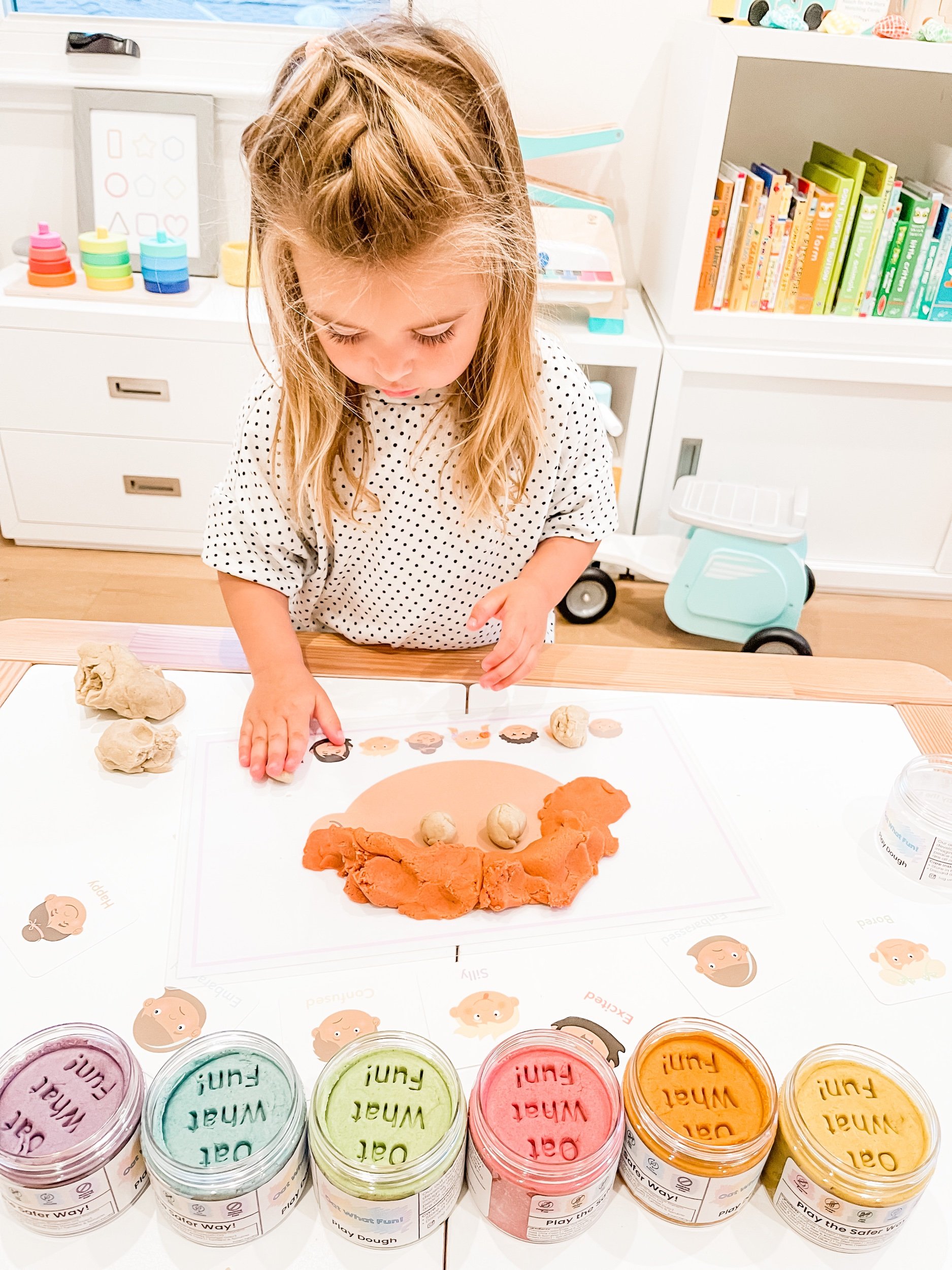
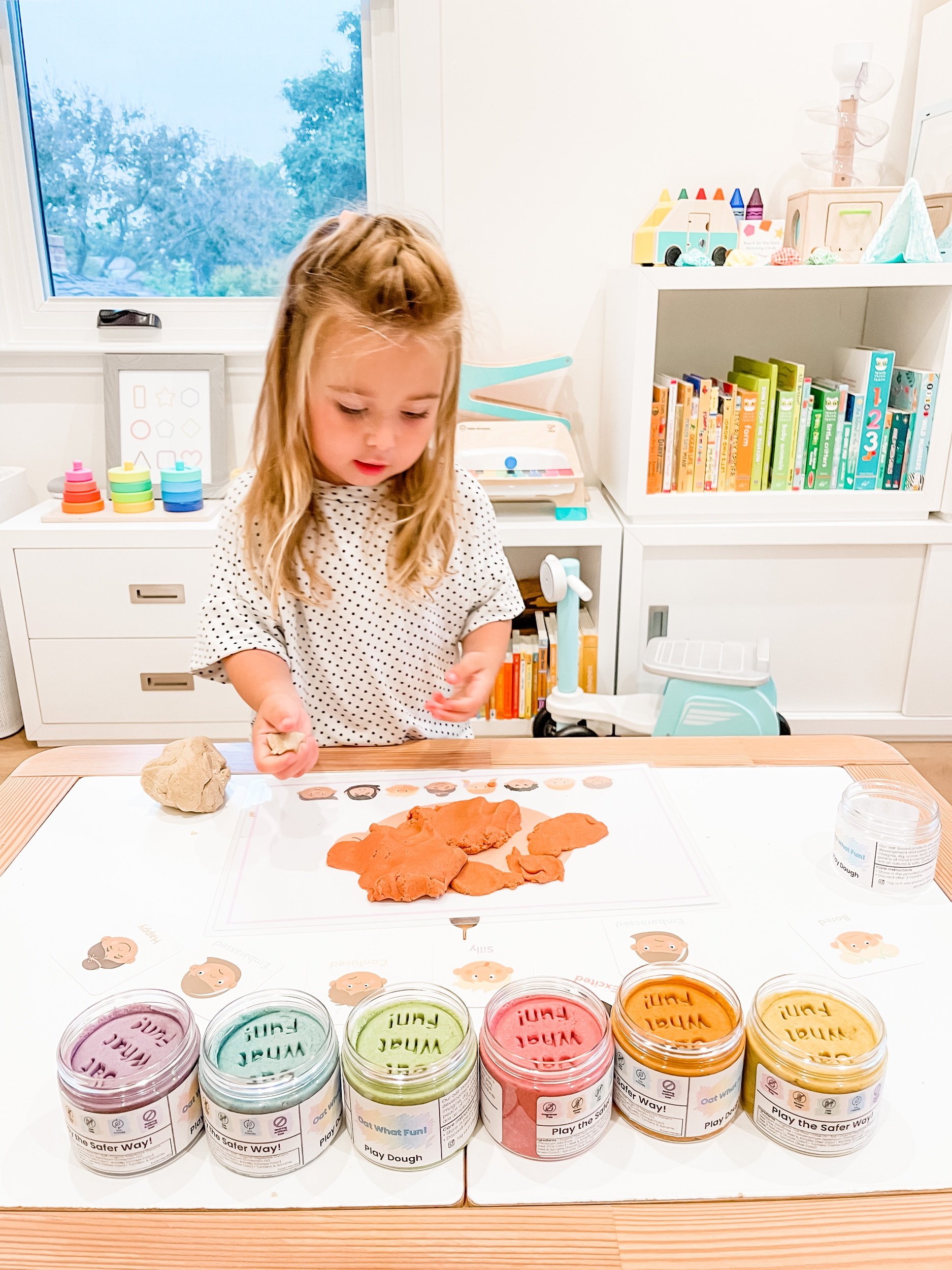
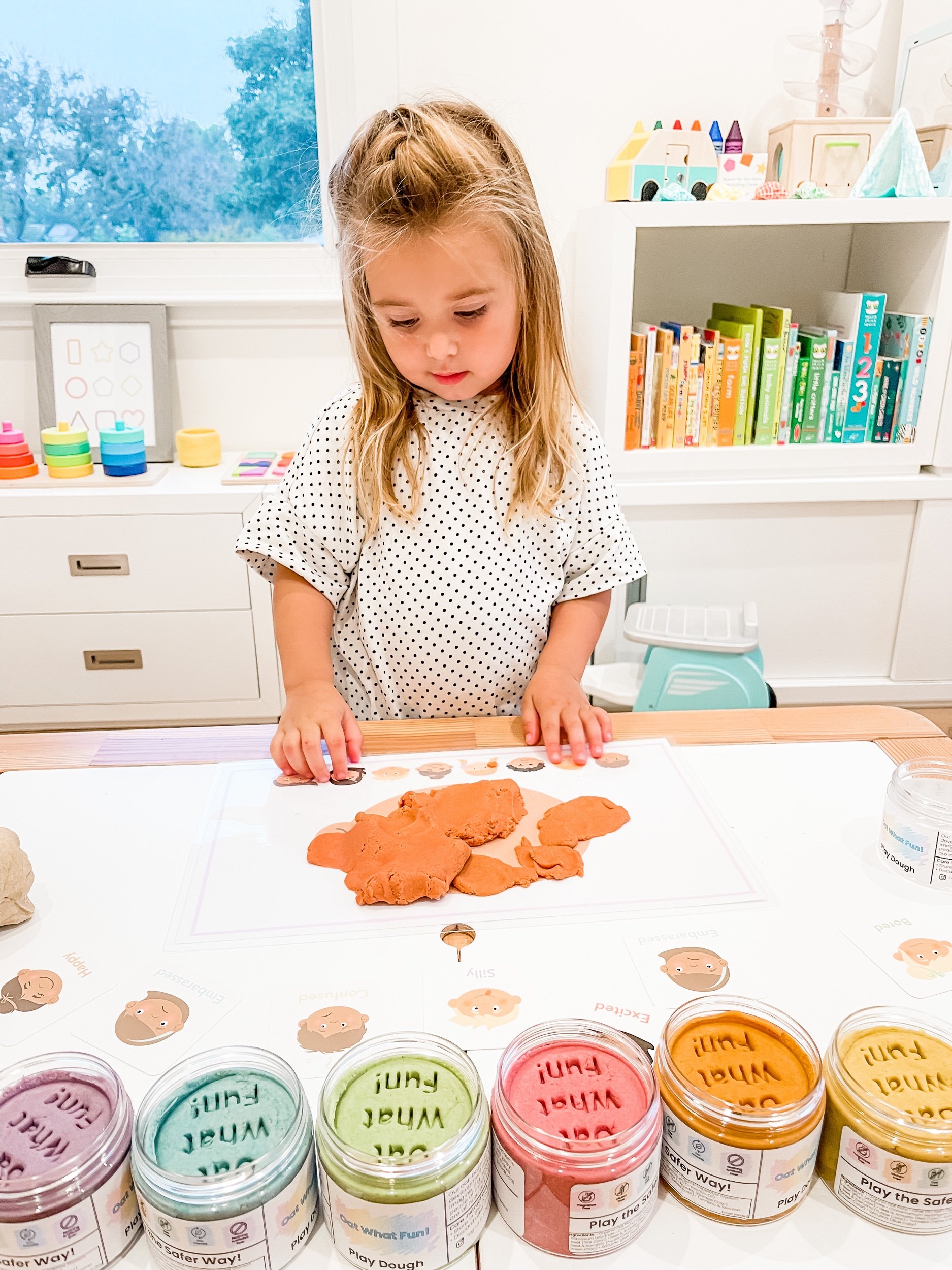
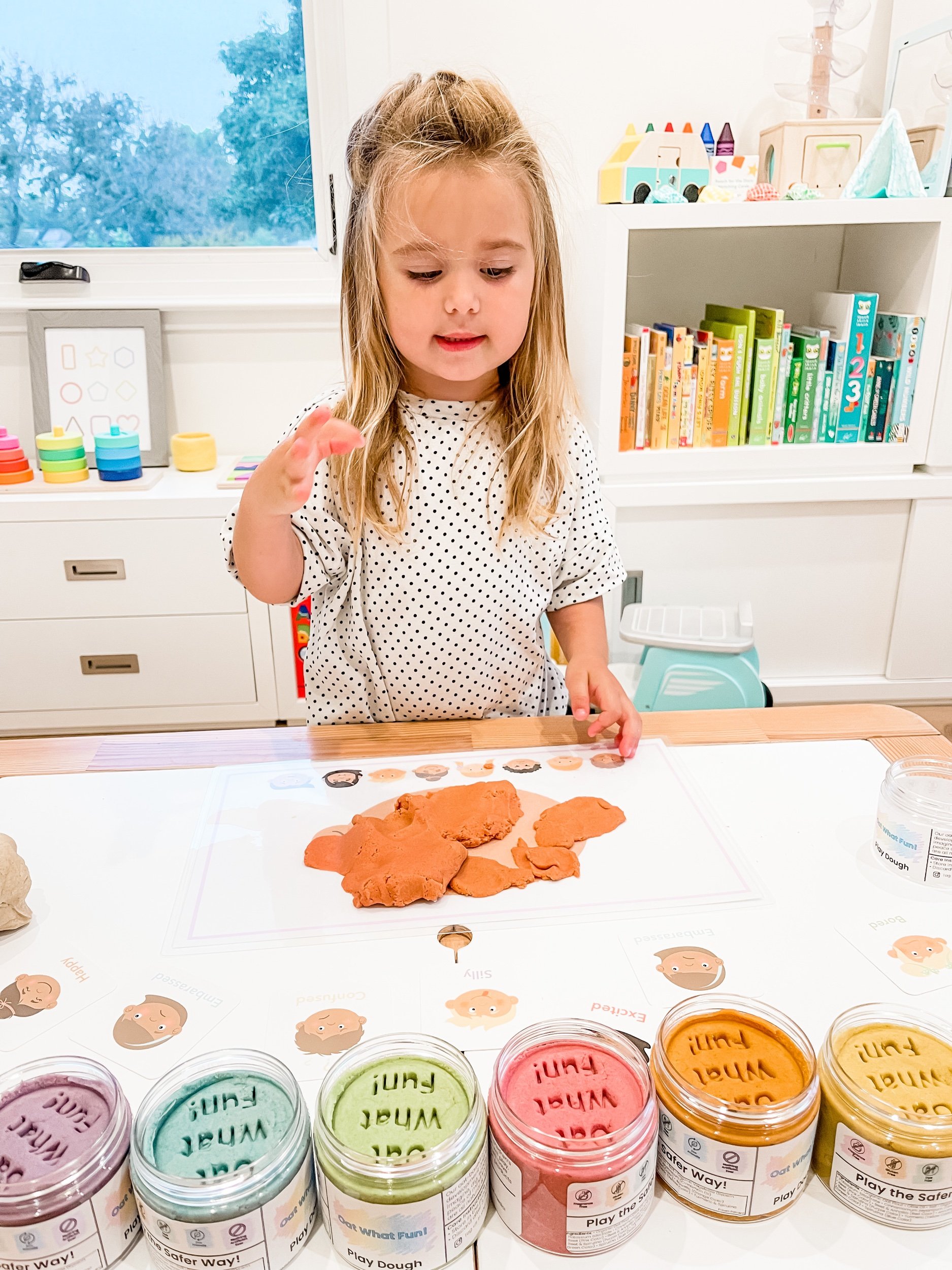
Today we made the cutest little colorful faces with this awesome oat meal based playdoh from @oatwhatfun.
As parents and caregivers, we all want our children to grow up to be well-adjusted, empathetic individuals who are able to navigate the complexities of the world around them. One of the most important foundations for this development is a strong understanding of emotions.
From a very young age, toddlers and preschoolers begin to experience and express a wide range of emotions, from joy and excitement to frustration and sadness. However, at this age, children often lack the language and understanding to fully communicate and process their feelings.
That's where our emotions flashcards and memory game cards come in! These tools are specifically designed to help young children learn about and practice identifying and expressing different emotions.
Through using our flashcards, toddlers and preschoolers can learn to identify and name different emotions, such as happiness, sadness, anger, and fear. This helps to build a foundation for more complex emotional understanding and regulation later on. The memory game cards are also a fun and interactive way to reinforce this learning and make it more engaging.
Beyond just learning the vocabulary of emotions, our cards also help children to understand the causes and triggers of different emotions, and how to express them in appropriate ways. This is an essential skill for developing healthy relationships and effective communication.
Our emotions flashcards and memory game cards are also convenient and easy to use. Parents and caregivers can use them at home during playtime, during car rides, or whenever they have a spare moment. They are also durable and can withstand being handled by little hands.
In conclusion, understanding emotions is crucial for children's social and emotional development, and our emotions flashcards and memory game cards are an excellent tool for helping young children learn about and practice identifying and expressing different emotions. They are convenient, durable, and fun for both children and adults. Don't hesitate to buy our emotions flashcards and memory game cards today!
LESSON PLAN: UNDERSTANDING EMOTIONS (FOR PRESCHOOLERS)
Week 1: Introduction to Emotions
Monday:
Introduction to the concept of emotions and why it's important for children to learn about them.
Discussion of different emotions and their associated feelings, such as happy, sad, angry, and scared.
Introduce flashcards with pictures of children expressing different emotions and have the children identify the emotions they see.
Encourage the children to share times when they have felt the different emotions discussed.
Tuesday:
Review of emotions discussed yesterday and introduction of new emotions, such as excited and surprised.
Group activity: Have the children act out different emotions and have the class guess which emotion they are expressing.
Small group discussion: Have the children talk about a time when they felt a specific emotion and how they dealt with it.
Wednesday:
Introduction of the concept of triggers for emotions, such as a toy being taken away causing sadness.
Discussion of appropriate ways to express emotions and the importance of communication.
Role-playing activity: Have the children act out different scenarios and discuss appropriate ways to express emotions in those situations.
Thursday:
Review of emotions and triggers discussed throughout the week.
Introduction of the memory game cards, where children match emotion cards with the corresponding triggers.
Play the memory game as a class and discuss the different triggers for emotions.
Friday:
Review of the week's lesson on emotions.
Encourage the children to share what they have learned about emotions and ask if they have any further questions.
End the week with a class discussion on how understanding emotions can help us have better relationships and communication with others.
Note: Each day's activities should be adjusted based on the children's age and development level. Also, activities should be adapted to include different modalities such as visual, kinesthetic, auditory, and tactile to make it more engaging for kids.
5 Senses Learning Experience
Looking for a fun Saturday activity!? Check out this 5 Senses Learning Experience. We used a variety of different food to practice all five senses.
Banana - Sweet
Lemon - Sour
Avocado - Soft
Dog treats - Stinky
Cherry Tomatoes - Dark
Cookie letters - Good
Squash - Hard
Rainbow Ice Cream Doh
Looking for a food-based sensory playdough that is soft, fluffy, and truly fun to squish? This Rainbow Ice Cream Doh has become a favorite in our house. It was so easy to make — and better yet, you don't even need to measure anything. Just mix, adjust until it feels right, and play.
If your little one puts everything in their mouth (mine sure did), a food-based sensory dough like this one is a wonderful option for playtime. There is no worrying while they squish, roll, and pretend to scoop it up like their favorite frozen treat.
What You Need
That's the beauty of this recipe — the ingredients list is wonderfully short, and you probably have most of it in your kitchen already:
Frosting (the ready-to-use kind from a tub)
Confectioner's sugar
Cornstarch
Food coloring — I recommend a pastel food coloring set if you want soft, dreamy colors like the ones in the photos
Since this is a food-based sensory recipe, the proportions are flexible. The whole point is that you don't need to measure — you simply add and adjust until the texture is just right.
How to Make It
Step 1: Mix the base. Start with your frosting in a bowl, then add confectioner's sugar and cornstarch. Mix everything together with a spoon at first, then finish it off with your hands.
Step 2: Adjust until it's not sticky. This is the key part. Continue adding sugar and cornstarch, a little at a time, until the frosting is no longer sticky. You want a soft, fluffy dough that holds its shape when you squeeze it but doesn't cling to your hands. Every tub of frosting is a little different, so trust your hands on this one — when it stops sticking, you're done.
Step 3: Divide and color. Split the dough into portions and add food coloring to each one to create your rainbow. A pastel food coloring set gives you those gorgeous soft colors — pink, mint, lavender, baby blue, peach. Knead the color in until each portion is evenly tinted.
Step 4: Scoop and play. Now for the fun part! The dough is perfect for ice cream shop pretend play — roll it into scoops, stack scoops on top of each other, and serve them up. It molds beautifully and holds its shape like a real scoop.
Tips
Keep adding dry ingredients slowly. If your dough is still sticky after your first round of sugar and cornstarch, just keep going. A little more of each, knead again, and check. The sticky stage is completely normal.
Start with a small amount of food coloring. A drop or two goes a long way, especially with the pastel sets. You can always add more, but you can't take it back — and the soft colors are the whole charm here.
Play on a tray or mat. Sensory play is so much more relaxing for mom when cleanup is contained. A rimmed tray or a wipeable mat keeps the dough (and the little hands) in one spot.
Store it well. Keep the finished dough in an airtight container or zip-top bag so it stays soft and fluffy for the next play session.
This Rainbow Ice Cream Doh is proof that the best sensory activities are often the simplest ones. Three ingredients from the kitchen, no measuring, a rainbow of pastel colors, and a morning of happy scooping play. Give it a try — and find more rainbow ideas in my rainbow sensory activities roundup: https://www.goodnightfox.com/blog/rainbow
Haunted House Halloween Sensory Play: A Spooky Adventure for Little Ones
Are you looking for a thrilling and educational Halloween activity for your little ghouls and goblins? Look no further than our Haunted House Halloween Sensory Play! This interactive sensory experience will not only captivate their imaginations but also stimulate their senses and boost their vocabulary. Read on to discover the spooky decor, engaging activities, and a list of 25 vocabulary words perfect for ages 3-6.
Spooky Decor that Sets the Stage
The Haunted House Halloween Sensory Play is all about creating an immersive experience for your child. Start by printing a haunted house template, complete with spooky details, and place it as the centerpiece of your play space. Hang a ghostly sign and a flag with eerie symbols to add an extra touch of spookiness. Don't forget to scatter cutouts of bats, spiders, eyeballs, candy corn, and witches hats throughout the area. These decorations will create an engaging and visually stimulating atmosphere for your little ones.
Sensory Bins Filled with Thrills
To heighten the sensory experience, prepare two sensory bins filled with black and orange dyed quinoa. The contrasting colors will create an exciting visual effect, making the play session even more captivating. The quinoa's texture enhances fine motor skills and encourages exploration. Hide the cutouts within the filler and provide pinchers for your child to dig them out. This activity promotes hand-eye coordination and the development of fine motor control.
Matching Games and Flashcards for Skill Building
In addition to the sensory bins, incorporate matching games using flashcards into the play session. Create flashcards featuring the same spooky cutouts found within the sensory bins. Encourage your child to search for the corresponding flashcard once they've uncovered a cutout. This engaging activity helps develop cognitive abilities like memory, attention to detail, and pattern recognition.
Benefits of Sensory Play
Sensory play offers numerous developmental benefits for young children. It stimulates their five senses - sight, sound, touch, smell, and taste - as they explore different textures, colors, and shapes. This type of play enhances cognitive skills, such as problem-solving, critical thinking, and creativity. Moreover, sensory play engages children's fine motor skills, promoting their hand-eye coordination and dexterity.
Vocabulary Enrichment with 25 Spooky Words
As your child revels in the Haunted House Halloween Sensory Play, they will also build their vocabulary. Here is a list of 25 spooky words, perfect for ages 3-6, to enrich their language skills through this activity theme setup:
1. Ghost
2. Skeleton
3. Vampire
4. Witch
5. Bat
6. Spider
7. Mummy
8. Haunted
9. Candy
10. Pumpkin
11. Cackle
12. Cauldron
13. Broomstick
14. Trick-or-treat
15. Boo
16. Costume
17. Cobweb
18. Jack-o'-lantern
19. Potion
20. Moon
21. Monster
22. Fangs
23. Ghoulish
24. Eerie
25. Spooky
Introduce these words during play, associating them with the corresponding cutouts and flashcards. By incorporating vocabulary into this Halloween-themed sensory play, you can foster a love for learning and expand your child's language skills.
This Halloween, make learning spooktacularly fun with the Haunted House Halloween Sensory Play! Engage your child's senses, promote cognitive development, and expand their vocabulary with this thrilling activity. Get ready for a hauntingly good time!
Rainbow Noodle Sensory Play: How to Dye Pasta for a Colorful Sensory Bin
Two easy ways to dye pasta rainbow colors — the quick-dry bag method for same-day play, and the overnight method for the brightest colors — plus play ideas, tips, and answers to the questions I get asked most.
Today it was rainy outside so we couldn't go for our typical walk to the park, so I was noodling around on what to do and decided to try out this rainbow noodle sensory bin!
It's so hard to find activities to keep a one year old entertained — especially when she puts everything in her mouth. So food-based seemed like a safe way to get messy and have some fun. Everyone who knows me knows that I love spaghetti — and really just all things pasta in general — so it shouldn't come as a surprise that Sofie loves this activity too! But man, I wasn't expecting it to be such a big hit.
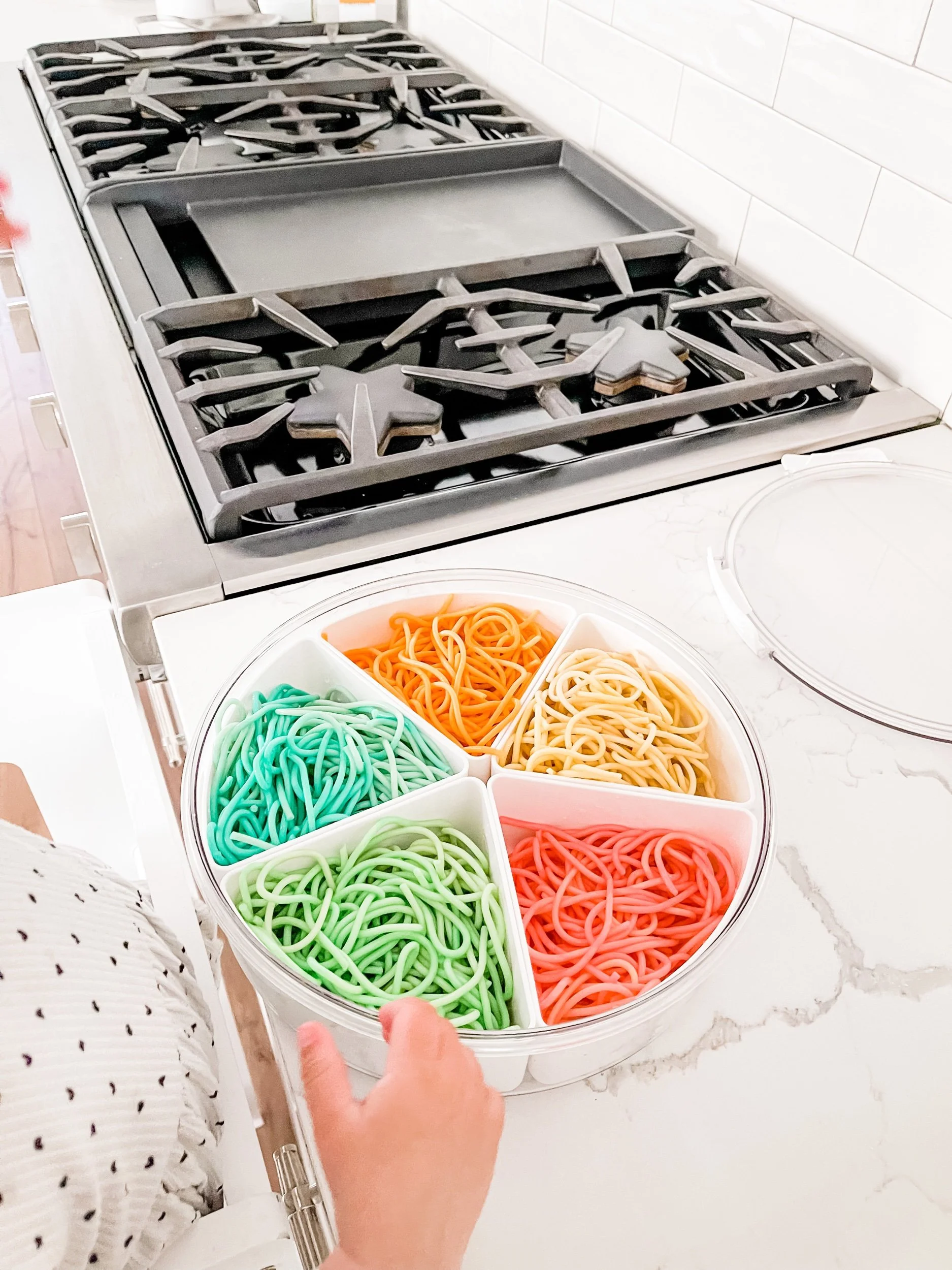
Rainbow noodles are a staple of sensory play in our house now — spiral, spaghetti, lots of different types of noodles. Because Sofie mouths everything, I always do cooked pasta. The colors come out so bright and beautiful, and it doubled as a great post-nap snack!
It's so simple to make — I plopped Sofie in her high chair and fed her lunch in front of the stove while cooking the noodles. Talk about mama multi-tasking!
Jump to: Why kids love it · Materials · Quick-dry method · Overnight method · Play ideas · Tips · FAQ
Why kids love it
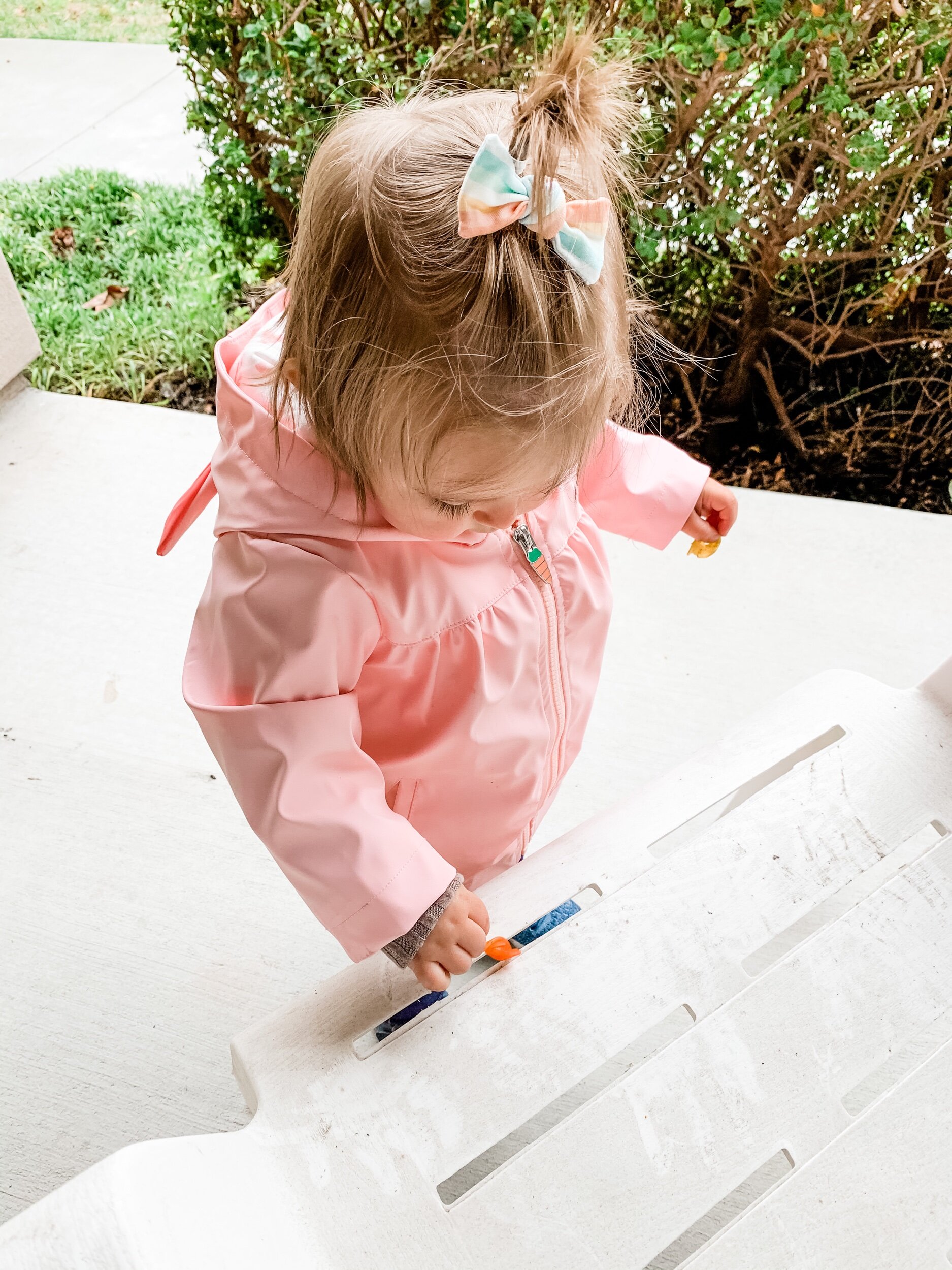
- The squish factor. Slippery, smooth noodles are irresistible to squish, squash, pick up, and stomp on — and kids use them in surprising ways, from poking them through patio chair holes to walking around with them.
- The colors. Bright rainbow noodles are endlessly enticing — even mid-dry, my daughter could hardly resist touching them. Watching them all mixed together is half the fun.
- It's food-based. No worrying about little mouthers — Sofie snacked on plenty of noodles while she played, and that's exactly the point. Rainbows make an easy learning tie-in too: name and match the colors — red, orange, yellow, green, blue, purple — alongside color flashcards.
Materials
- Noodles — I used spiral, but spaghetti or any other noodles work. We've since mixed it up with lots of different types.
- Food coloring — regular drops, or pastel for especially bright, vibrant colors
- Turmeric
Play extras: color flashcards, rainbow color placemat, weather flashcards, and a pots-and-pans play set.
How to dye the pasta
Two ways to do it — the quick-dry method for same-day play, or the overnight method for the most vibrant colors. Both start with cooking your noodles.
Step 1: Cook and cool the noodles. Boil your noodles — I did spiral, but spaghetti or any other noodles work — then drain in a colander and rinse in cold/cool water to bring them down to room temperature quickly. I like to pick them up with my hands while rinsing so they come out slippery and not sticky. Then pick your method:
Method A: The quick-dry bag method
- Into each plastic bag, add 1 drop of oil to help coat the noodles, plus 1 drop of food coloring. Pour in about 3 scoops of noodles per bag, seal, and hand the bags to your kiddo to mix up! Squishing and squashing the noodles in the bags was a great sensory experience for Sofie — and I will admit I enjoyed it too.
- Dry before you play. Spread the noodles on a baking sheet with a paper towel to absorb the excess, so the food coloring doesn't dye hands or stain clothes. Don't let them dry too long, or they become sticky rather than smooth and slippery. We let ours dry during Sofie's nap, and played when she woke up.
Method B: The overnight pastel method (brightest colors)
- Fill 6 plastic ziploc bags with 2–3 tablespoons of water each — I used an entire box of spaghetti, one bag per rainbow color.
- Add 3 drops of pastel food coloring per bag and let it fully saturate the water.
Play ideas
- Take it outside. With major spillage happening, the porch sensory table is perfect — no worrying about food coloring on countertops or floors. It makes the whole experience carefree and clean-up friendly.
- Pair with flashcards. We grabbed our Goodnight Fox weather flashcards and bugs flashcards and talked about rainbows, rain, and the bugs rain brings to our porch. Another time we used color cards and a rainbow color placemat for matching — great practice, since Sofie still mixes up some of her colors. A little pots-and-pans set makes mixing and color-matching play extra fun.
- Name and match the colors. Repeat the colors — red, orange, yellow, green, blue, purple — and match them up with the noodle colors.
- Embrace the mess. At first Sofie was hesitant — she picked a few noodles out rather than diving in. But soon she was throwing noodles on the floor, walking around with them, and using them in ways that completely surprised me, before finally digging in and mixing them all up. The colors look so fun blended together!
- Let them snack. Several floor-bound noodles were eaten by our dog later that day, and the spaghetti batch doubled as a post-nap snack. That's food-based sensory play.
Tips
- Great for mouthers. Hard to find activities safe for one year olds who put everything in their mouth — that's why I go with cooked pasta.
- Rinse well after cooking. Picking the noodles up with your hands while rinsing keeps them slippery and smooth, not sticky.
- Get the dryness right. Dry dyed noodles before play so color doesn't transfer to hands or clothes — but not so long that they turn sticky instead of slippery.
- Use pastel coloring for the brightest colors. Regular food coloring works great, but pastel is what makes the colors pop.
- Try different noodle shapes. Spiral, spaghetti, and other shapes all work — mixing them up keeps the sensory experience fresh.
- Play outdoors when you can. No stress about food coloring on countertops or floors.
Is this safe for babies and toddlers who put everything in their mouths?
Yes — that's the whole reason I reach for this one. When my daughter was one and putting everything in her mouth, food-based sensory was the safe way to get messy and have fun. Sofie absolutely snacked on the noodles while she played!
Will the food coloring stain hands or clothes?
It can if you skip the drying step. Let the noodles dry before play so the color doesn't transfer — I spread them on a baking sheet with a paper towel to absorb the excess. Playing outside makes cleanup carefree too.
What kind of pasta works best?
Anything you've got! Spiral, spaghetti, lots of different types of noodles — for the overnight method, one whole box of spaghetti divided into 6 bags gives you a full rainbow.
How long does it last? Can I reuse it?
The lidded compartment serving tray is my secret weapon — seal it up and save the noodles to play again later. We used our overnight batch twice in one day and then tossed the leftover spaghetti. With the quick-dry method, you can dye a batch during naptime and play that afternoon.
More rainbow fun
This is one of my favorite rainbow activities — find 20+ more in my rainbow sensory activities roundup, from rainbow rice and magic milk to rainbow playdough and sweet treats.
Dinosaur Play Dough, Coloring, and Resin Animals
Today we did a fun and simple Pink Dinosaur setup using some goodies from some of our favorite shops:
Halloween Pumpkin Patch
The Benefits of Dramatic Play for Toddlers: Creating a Festive Pumpkin Patch Experience
Are you looking for an engaging and educational activity to captivate your toddler's imagination? Look no further than our pumpkin patch themed dramatic play kit! This immersive experience is not only fun for little ones but also offers a multitude of developmental benefits. In this blog post, we'll explore the advantages of dramatic play and delve into the delightful Flisat play table decor, showcasing a vibrant awning, banner, flag, rows of sunflowers, cut-out pumpkins, and a build-a-scarecrow activity. Additionally, we'll share three sensory play bins suitable for different age groups (0-1.5, 1.5-2.5, and 2.5+) and discuss our middle age group's favorite sensory bin filler - granola, which not only adds texture but also doubles as a tasty snack. Lastly, we'll unveil how my daughter adored this activity, pretending to scoop and sell granola at her very own pumpkin patch. Let's dive in!
This decor sits on the same table-and-pegboard base — my FLISAT sensory-table setup guide shows how it goes together.
The Benefits of Dramatic Play for Toddlers
Dramatic play, also known as pretend play or imaginative play, is a crucial aspect of a child's development. It allows toddlers to explore the world around them, express their thoughts and emotions, develop social and cognitive skills, and enhance their creativity. Engaging in imaginative play helps promote:
1. Language and Communication Skills: Through role-playing, children learn to use words to express their thoughts, communicate with others, and practice conversational skills.
2. Problem-Solving and Critical Thinking: When children engage in dramatic play, they encounter various scenarios that require problem-solving, decision-making, and critical thinking. They learn to adapt and make choices while developing their cognitive skills.
3. Social and Emotional Development: Dramatic play encourages children to interact with their peers, promoting cooperation, empathy, and understanding. It allows them to explore different roles, perspectives, and emotions, developing their sense of self.
Captivating Flisat Play Table Decor
Our pumpkin patch dramatic play kit features a stunning Flisat play table decor arrangement that will transport your toddler to a magical fall wonderland. With an awning, banner, flag, rows of sunflowers, cut-out pumpkins, and a build-a-scarecrow activity, this setup sets the stage for an immersive and authentic pumpkin patch experience. The vibrant colors and charming design elements will ignite your child's imagination and bring the pumpkin patch to life in your very own home.
Sensory Play Bins for Different Age Groups
1. Ages 0-1.5: For our youngest pumpkin patch enthusiasts, we recommend a sensory play bin filled with soft fabric squares of different textures. This tactile experience enhances sensory exploration, fine motor skills, and hand-eye coordination.
2. Ages 1.5-2.5: Toddlers in this age group will delight in a sensory play bin filled with colorful play dough, small plastic pumpkins, and natural materials like leaves and twigs. This sensory bin encourages imaginative play, sensory exploration, and fine motor skill development.
3. Ages 2.5+: For older toddlers, a sensory play bin filled with dried corn kernels, mini plastic shovels, artificial sunflowers, and small containers promotes sensory exploration, fine motor skills, and imaginative play.
The Perfect Sensory Bin Filler: Granola
In our pumpkin patch themed dramatic play kit, we've introduced a sensory bin filler that not only adds texture but is also a delicious snack - granola! This wholesome choice appeals to the senses, providing a unique tactile experience while allowing children to satisfy their hunger during the activity. As they scoop and sell granola at their pumpkin patch, toddlers develop fine motor skills, hand-eye coordination, numerical awareness, and entrepreneurial spirit.
My Daughter's Love for the Pumpkin Patch Activity
Watching my daughter engage with the pumpkin patch themed dramatic play kit was an absolute joy. She loved pretending to scoop and sell granola at her very own pumpkin patch, donning a smile that radiated her excitement. Her little hands skillfully picked pumpkins while sifting through the sensory delight of the granola-filled bin. It was a truly unforgettable experience that not only entertained her but also contributed to her development in numerous ways.
In conclusion, our pumpkin patch themed dramatic play kit offers a fantastic opportunity for toddlers to engage in imaginative play, fostering their language, cognitive, social, and emotional development. The vibrant Flisat play table decor, combined with the various sensory play bins suitable for different age groups, creates an immersive and educational experience. And the inclusion of granola as a sensory bin filler adds an element of taste and texture to the activity. So, why wait? Unleash your child's imagination and let them embark on a whimsical journey
Today we played pretend Pumpkin Patch and we had an absolute blast making up all of the things that we did at the real pumpkin patch this year. We used our Flisat table and filled the sensory tub full of granola and buried some pumpkins underneath to dig them out. We pretended to buy slices of pumpkin pie and eat them. And we of course built our own scarecrow and our own jack-o-lanterns with the printable kit.