
Your Custom Text Here
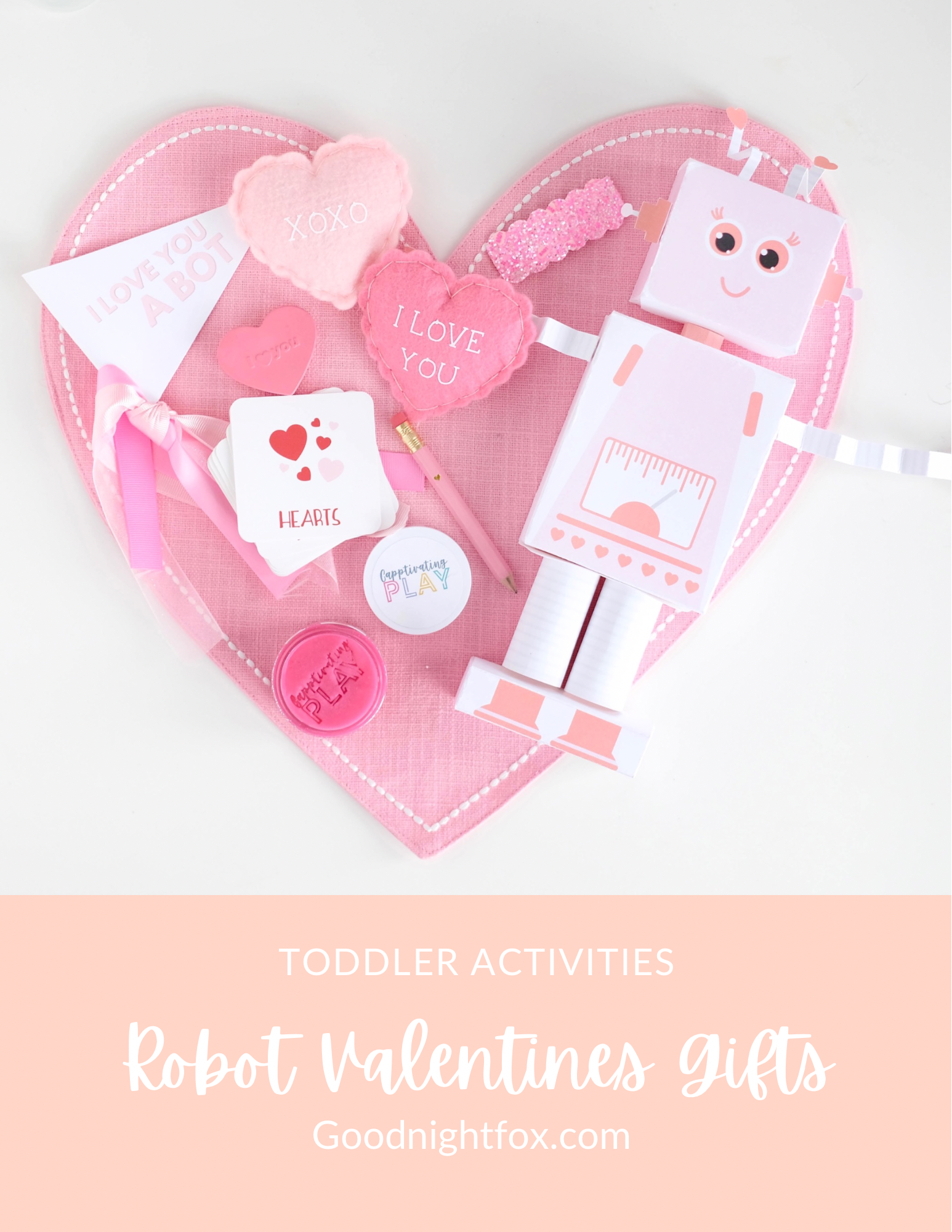
As parents and caregivers, it's important to provide young children with the tools they need to learn and grow. One of the most fundamental skills children will learn is counting. However, teaching counting to toddlers can be a challenge. Thankfully, there are many hands-on tools and resources available that can make this process more engaging and effective for young learners.
One of the most effective ways to teach counting to toddlers is through play. Play-doh, toys, and other hands-on materials can be used to help children understand the concepts of numbers and counting. For example, using play-doh to create the numbers 1-10, and then having the child count the number of play-doh balls, can be a fun and interactive way for children to learn about numbers and counting.
Another great tool for teaching counting to toddlers is foam numbers. These soft and tactile numbers can be used in a variety of ways, such as having the child match the number to the corresponding number of objects, or having the child arrange the numbers in order.
Number mats are also a great tool for teaching counting to toddlers. These mats often feature numbers and corresponding images, which can help children make connections between the numbers and the objects they represent. For example, a number mat with the number 1 and a picture of a apple, number 2 and a picture of two apple.
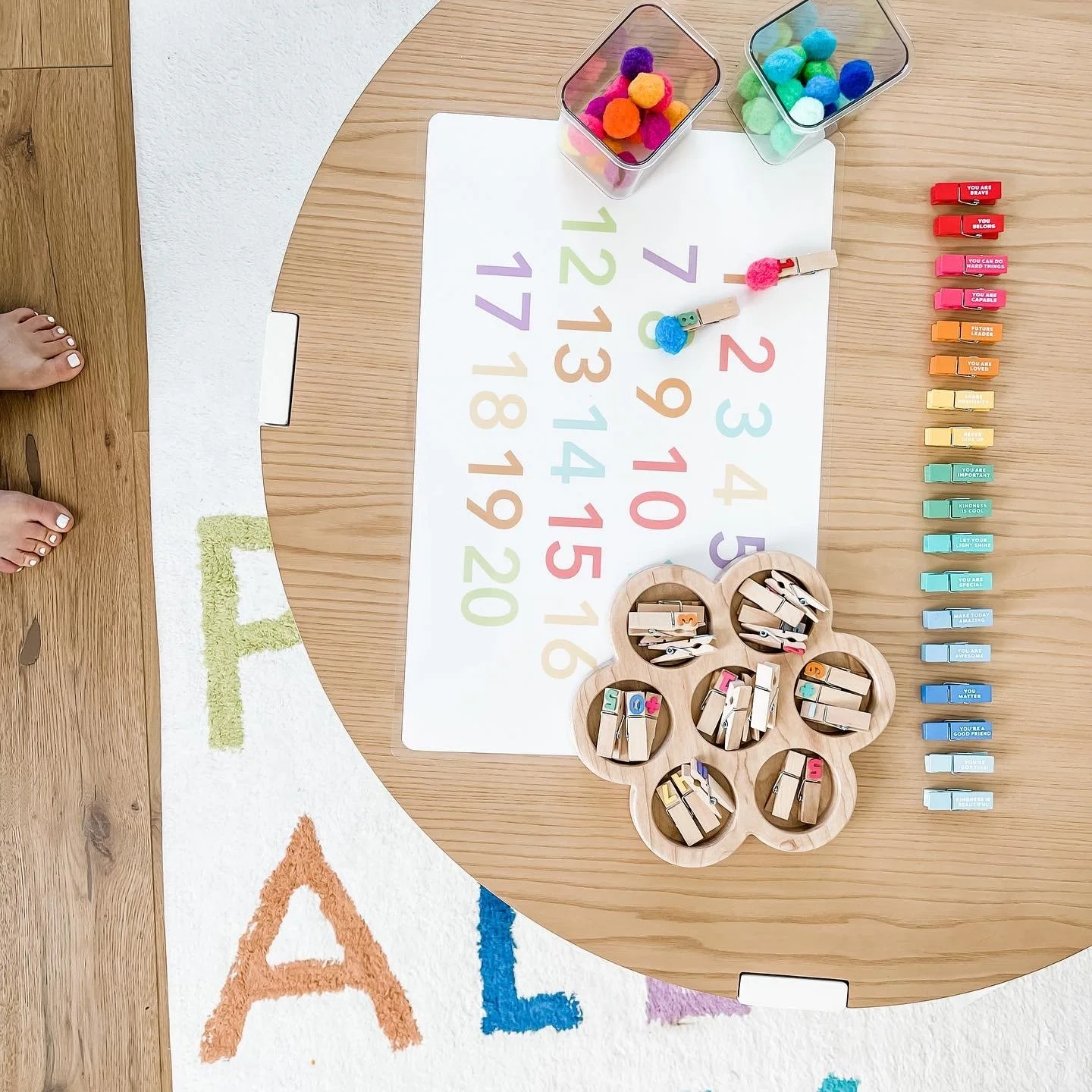
One of the most effective and versatile tools for teaching counting to toddlers is a numbers placemat. This type of placemat is specifically designed to help children learn and practice counting. It usually feature numbers and corresponding images, and can be used in a variety of ways such as counting the number of objects, matching numbers to the corresponding number of objects, and more.
In conclusion, teaching counting to toddlers can be a fun and engaging experience when using the right tools and resources. Hands-on materials like play-doh, foam numbers, number mats, and numbers placemat can make the learning process more interactive and effective for young learners. As parents and caregivers, it's important to invest in these types of resources to give children the best possible start in their educational journey.
You can order our Numbers Placemat on our website and give your child a fun and interactive way to learn numbers and counting.




Day 1: Introduction to numbers
Introduce numbers 1-5 to the class using number flashcards and counting objects (such as blocks or counting bears)
Have the students practice counting aloud with the class
Play number matching games (such as matching the number flashcard to the corresponding number of objects)
Day 2: Counting up to 10
Introduce numbers 6-10 to the class
Have the students practice counting up to 10 with the class
Play counting games, such as "I Spy" with numbers or counting how many of a certain object are in the room
Day 3: One-to-one correspondence
Introduce the concept of one-to-one correspondence (matching each object to one number)
Have the students practice counting objects and matching them to the corresponding number
Play games such as "Feed the Monster" where the students take turns counting out the correct number of objects to feed to a stuffed monster
Day 4: Number recognition
Review numbers 1-10 with the class
Have the students practice recognizing numbers in different forms (such as written numerals, number flashcards, and counting objects)
Play number matching games, such as matching written numerals to the corresponding number of objects
Day 5: Counting beyond 10
Introduce the concept of counting beyond 10
Have the students practice counting up to 20 with the class
Play counting games, such as counting how many steps it takes to get from one side of the room to the other
Day 6: Review and assessment
Review all concepts covered throughout the week
Have the students complete a worksheet or assessment to test their understanding of numbers and counting
Play a game such as "Number Scavenger Hunt" where the students search for numbers around the room and write them down
Day 7: Final project
Have the students create a number book, where they can practice writing numbers, counting objects, and illustrating the corresponding number of items.
Note: For each day, it is important to include opportunities for students to work with numbers and counting in both whole group and small group settings, as well as through hands-on activities and games.

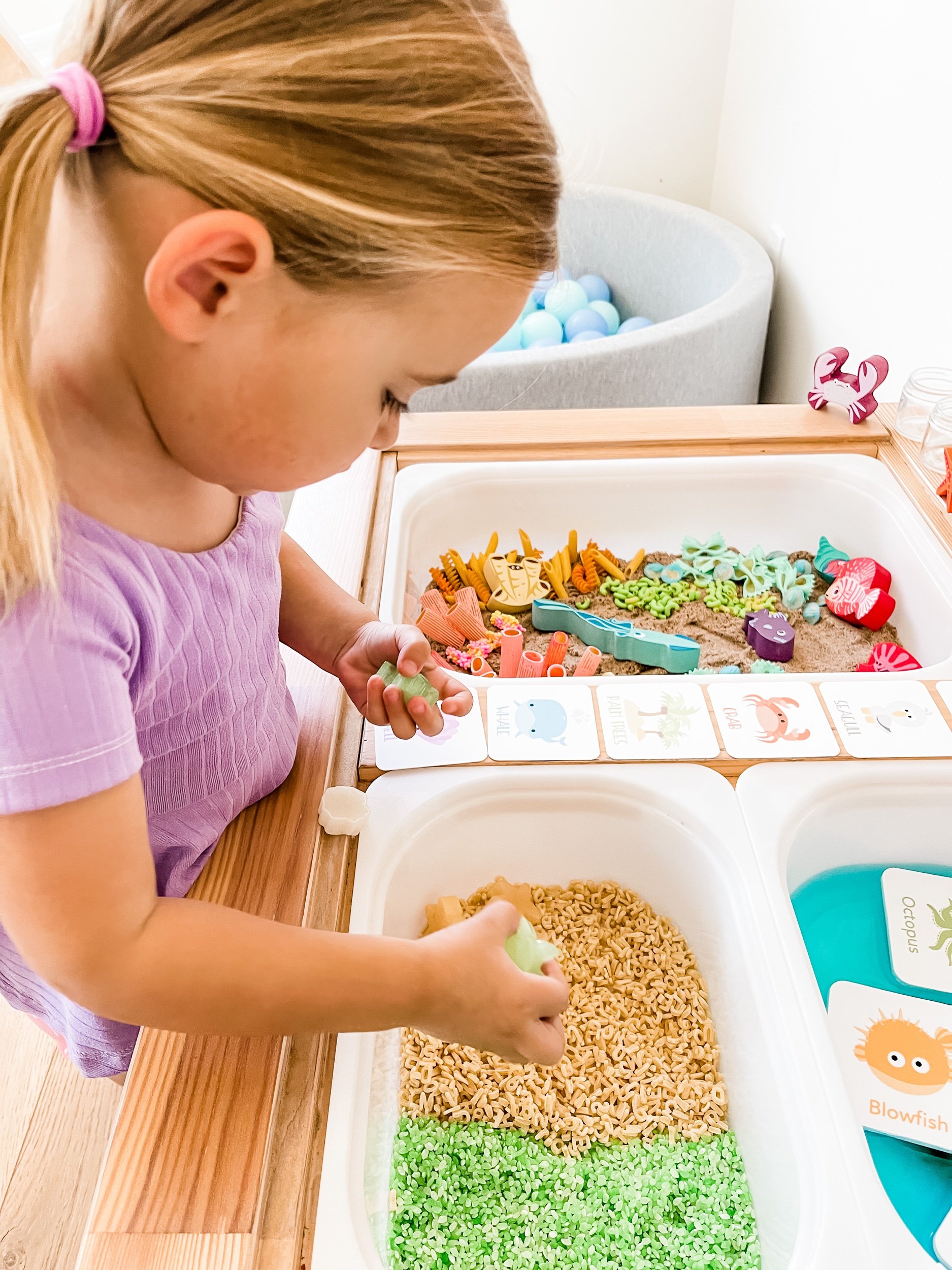
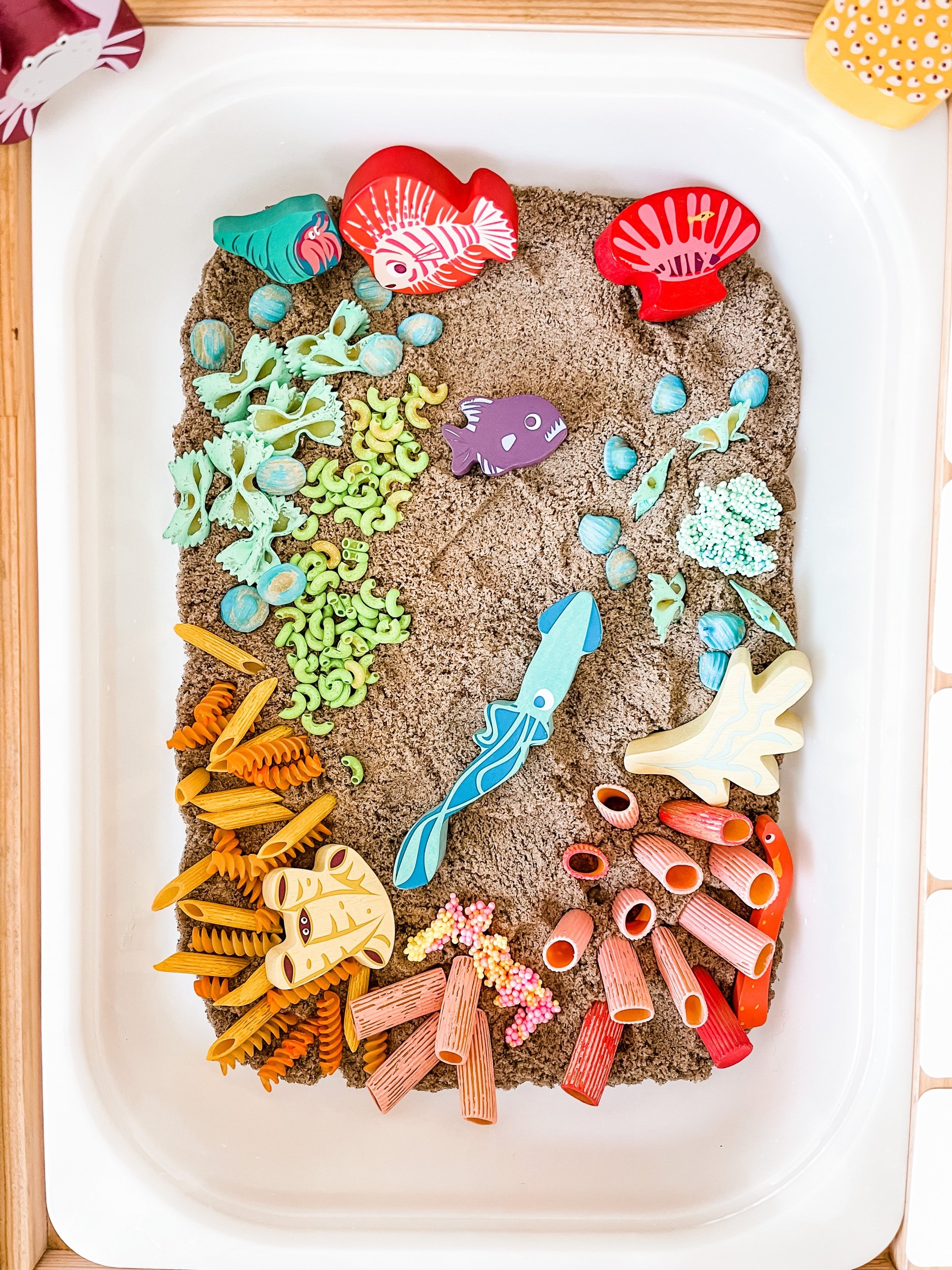
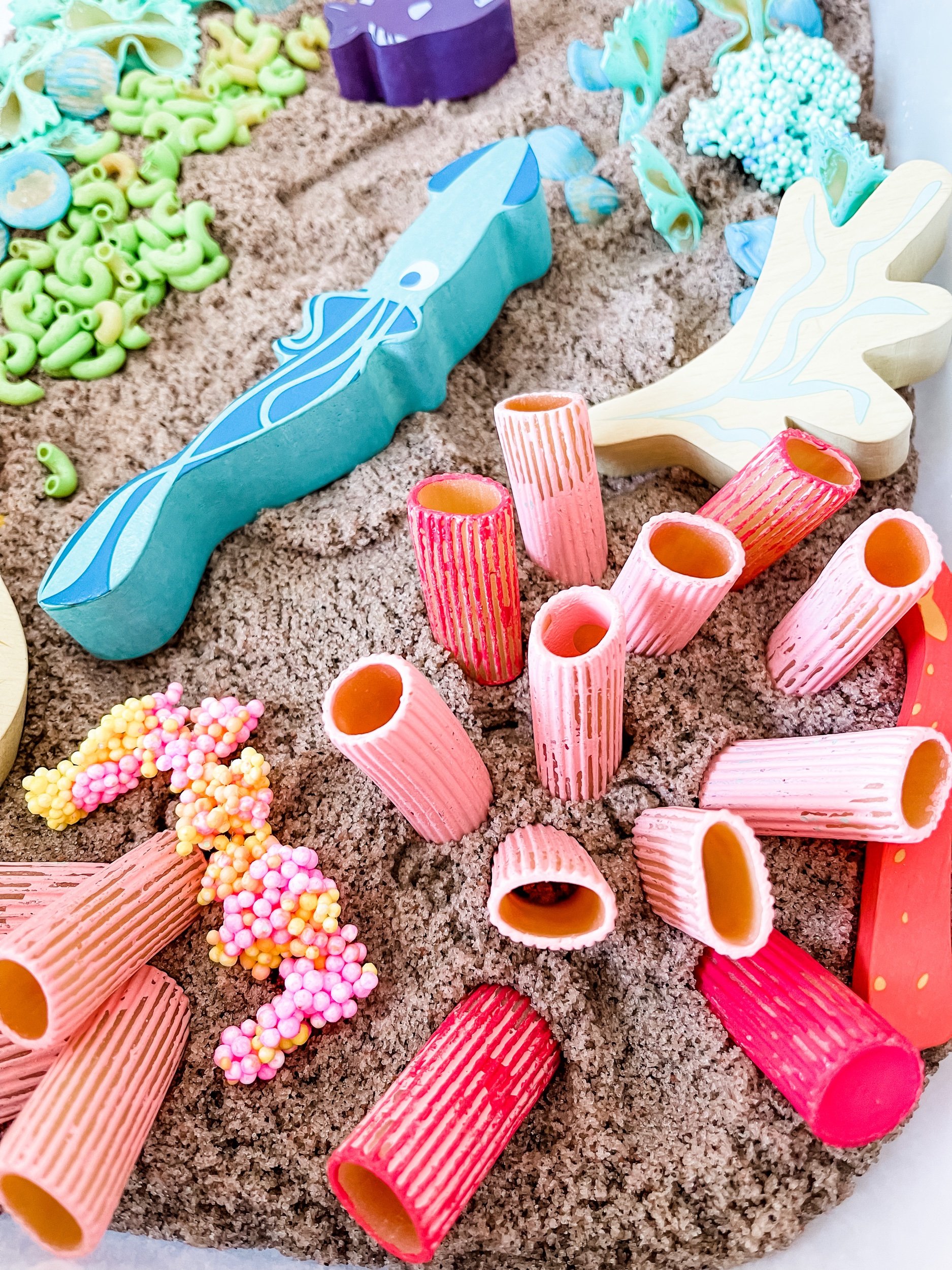
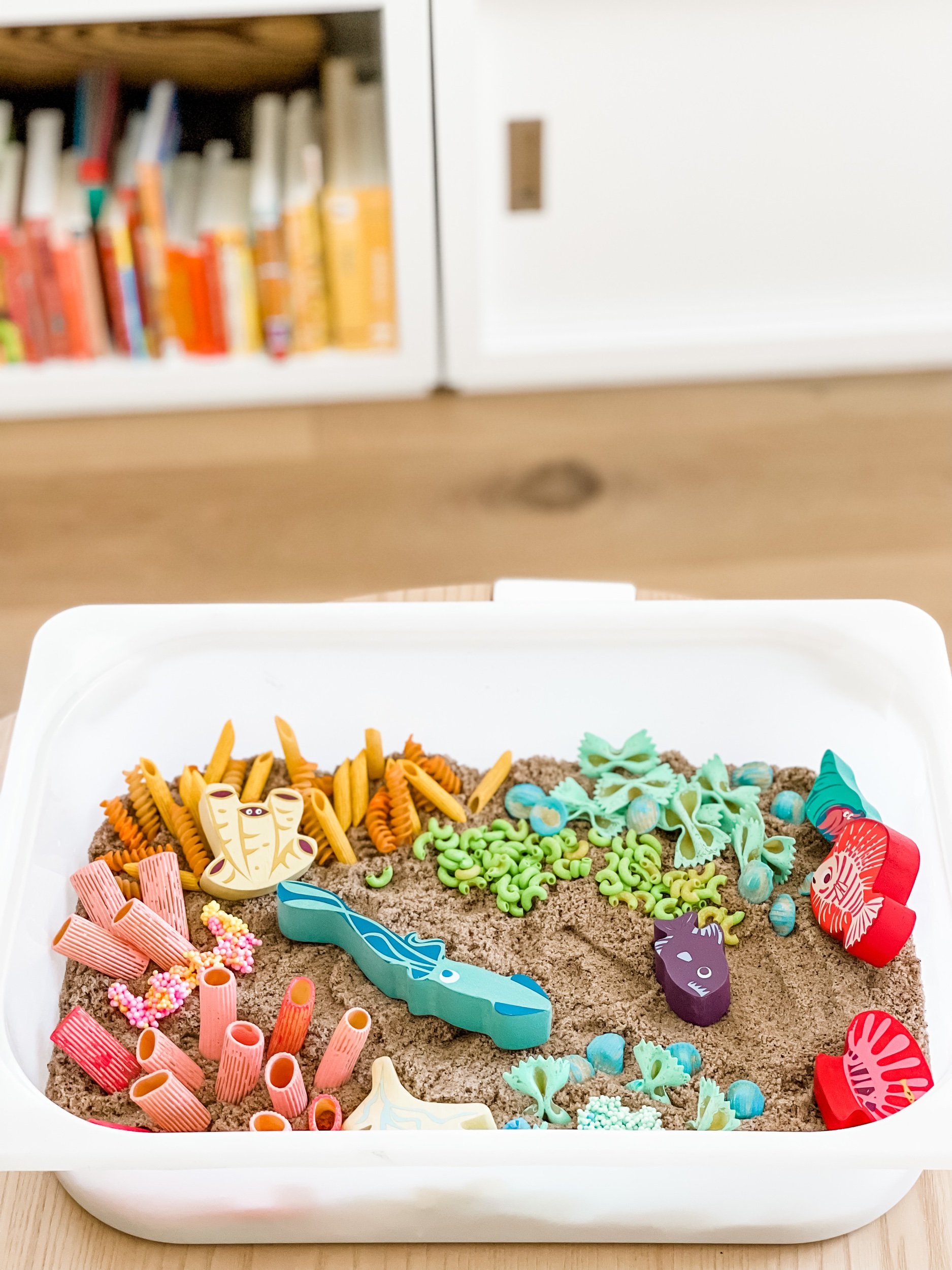
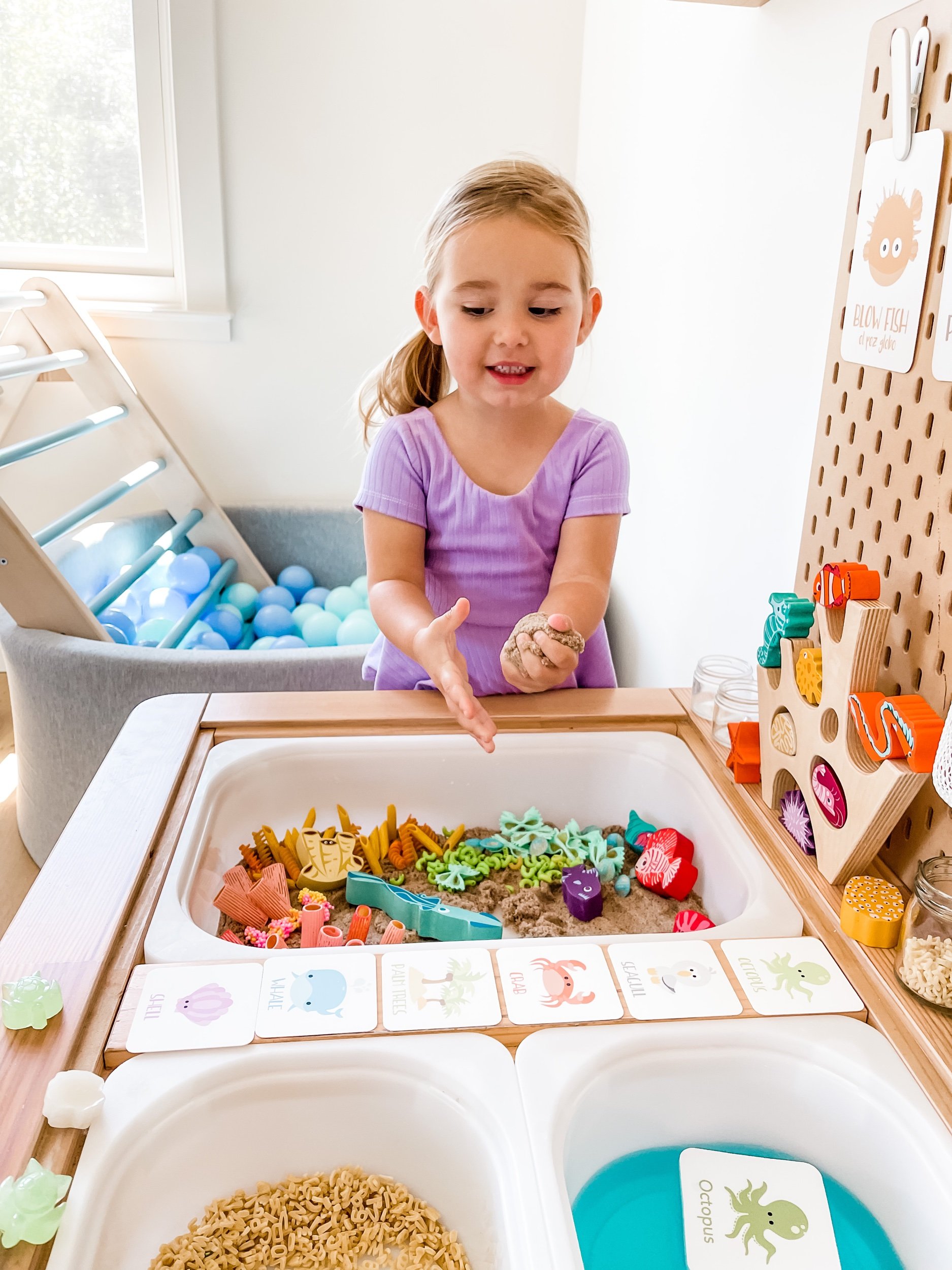
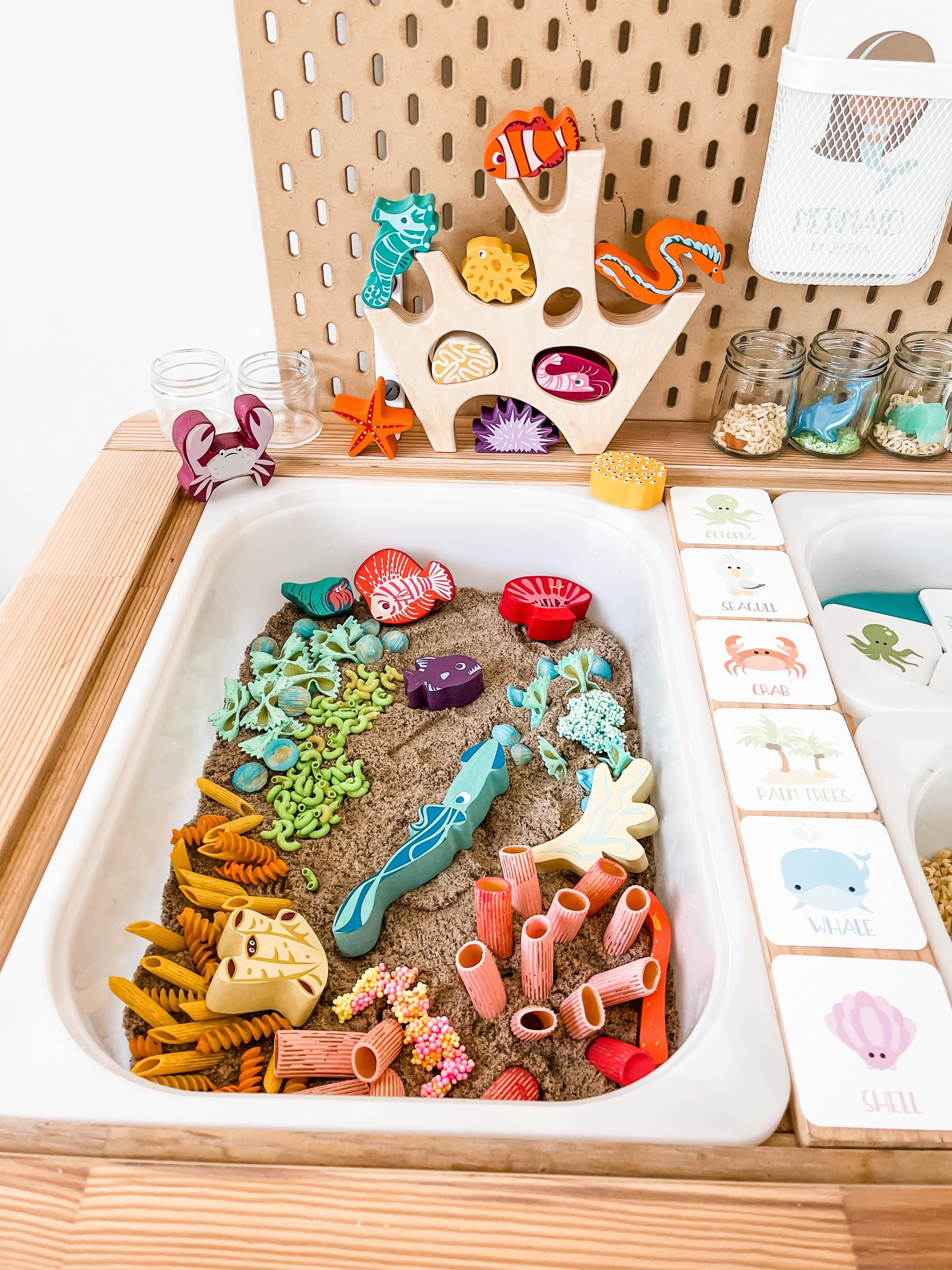
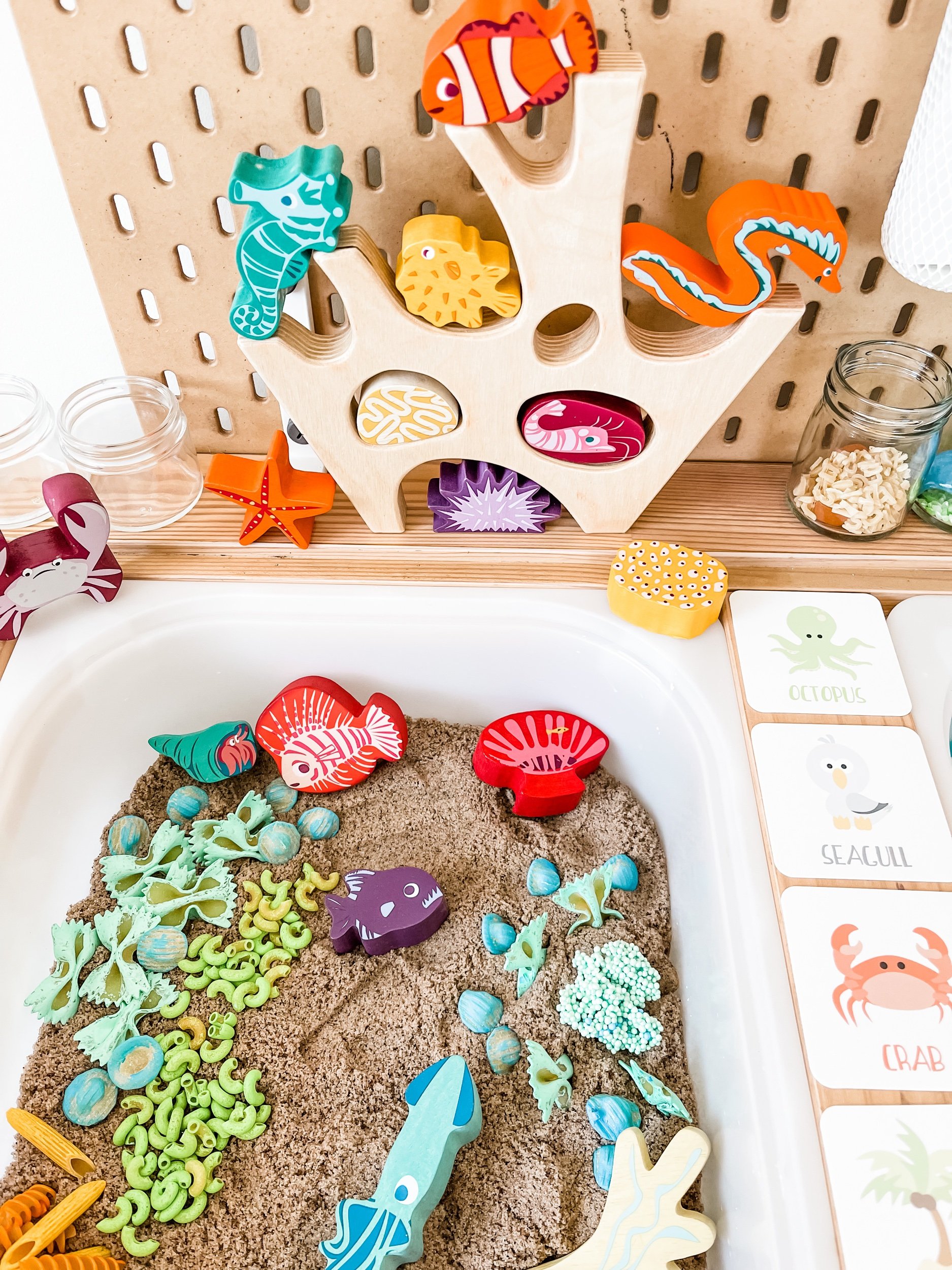
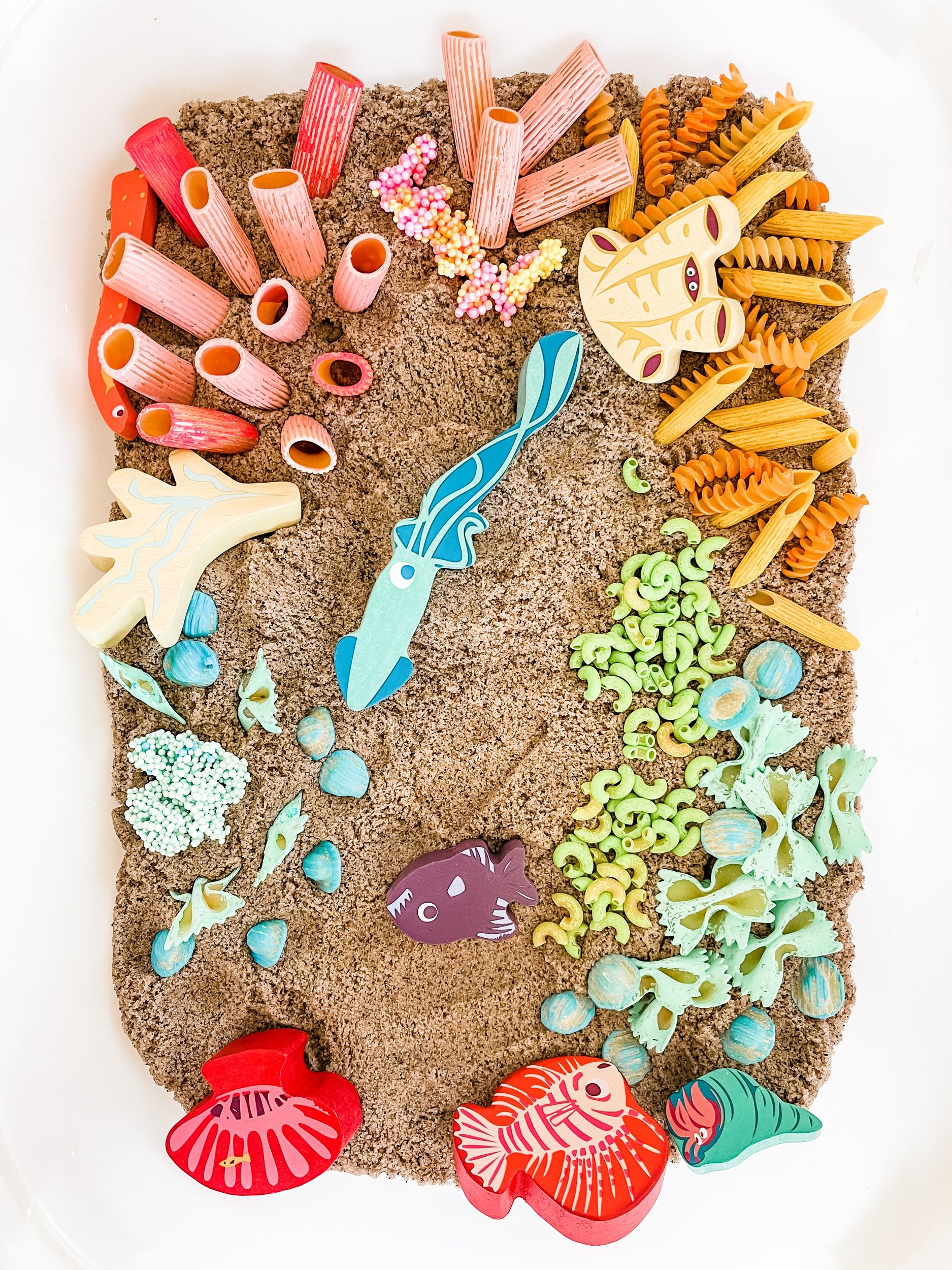
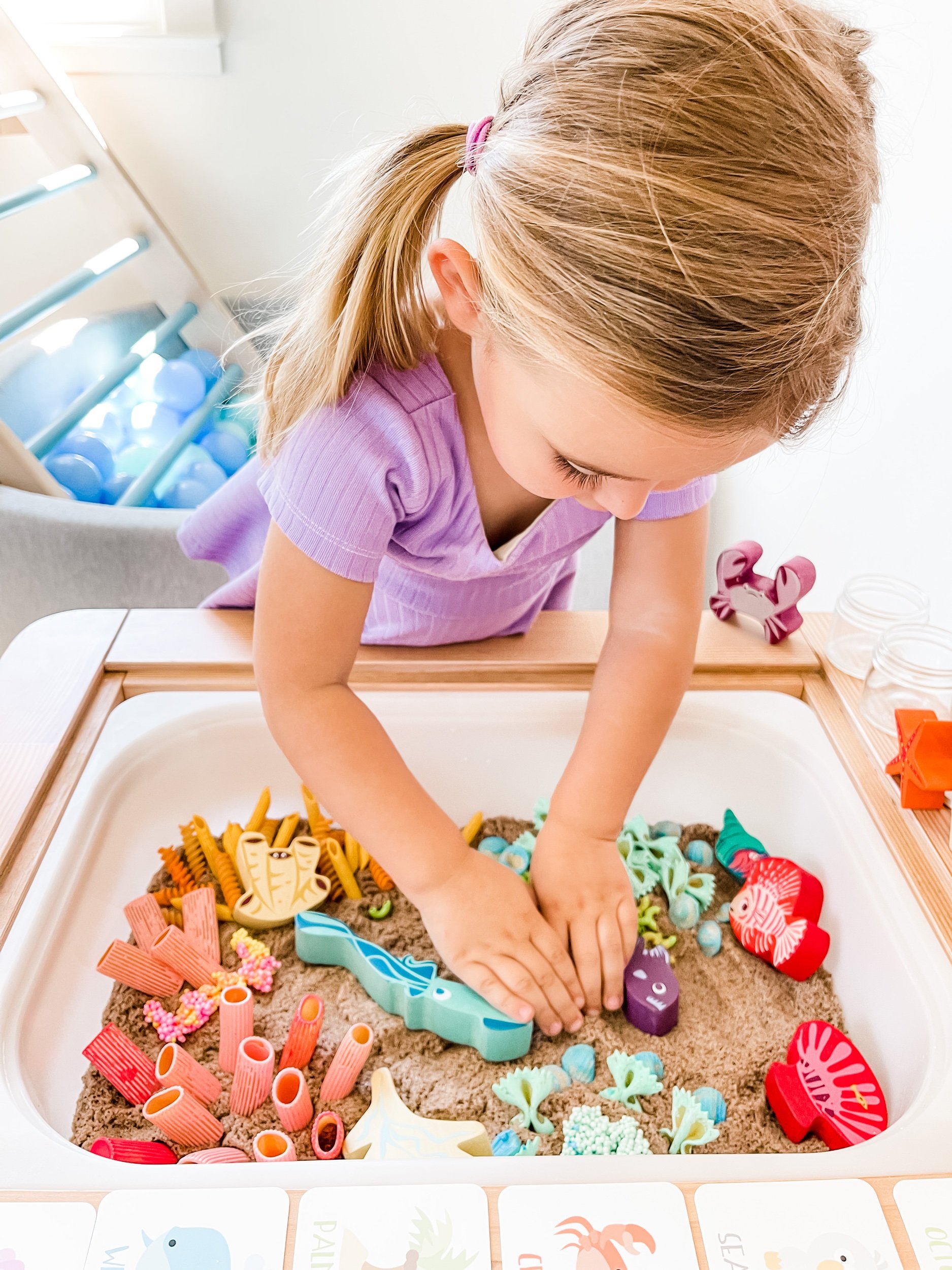
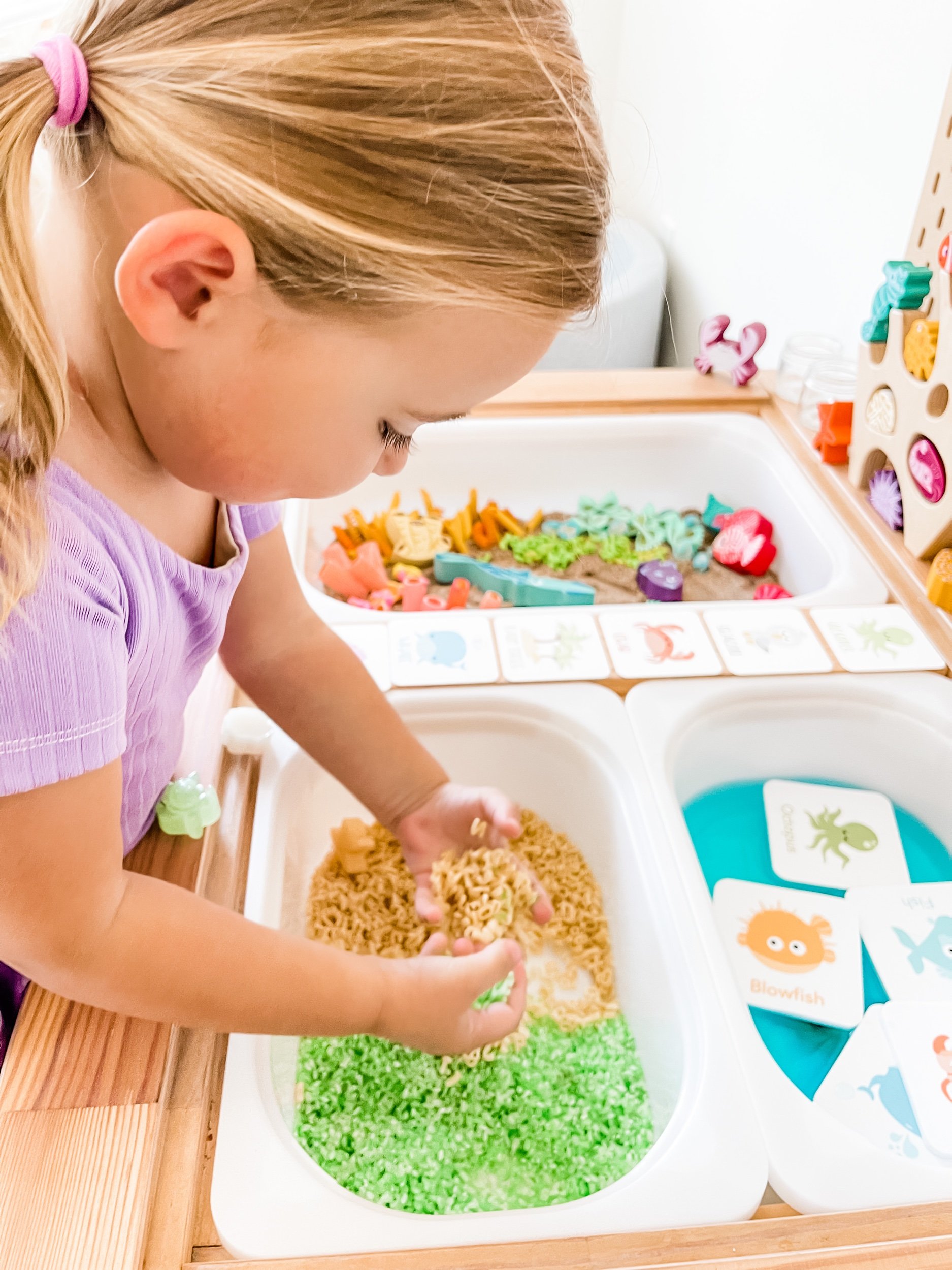
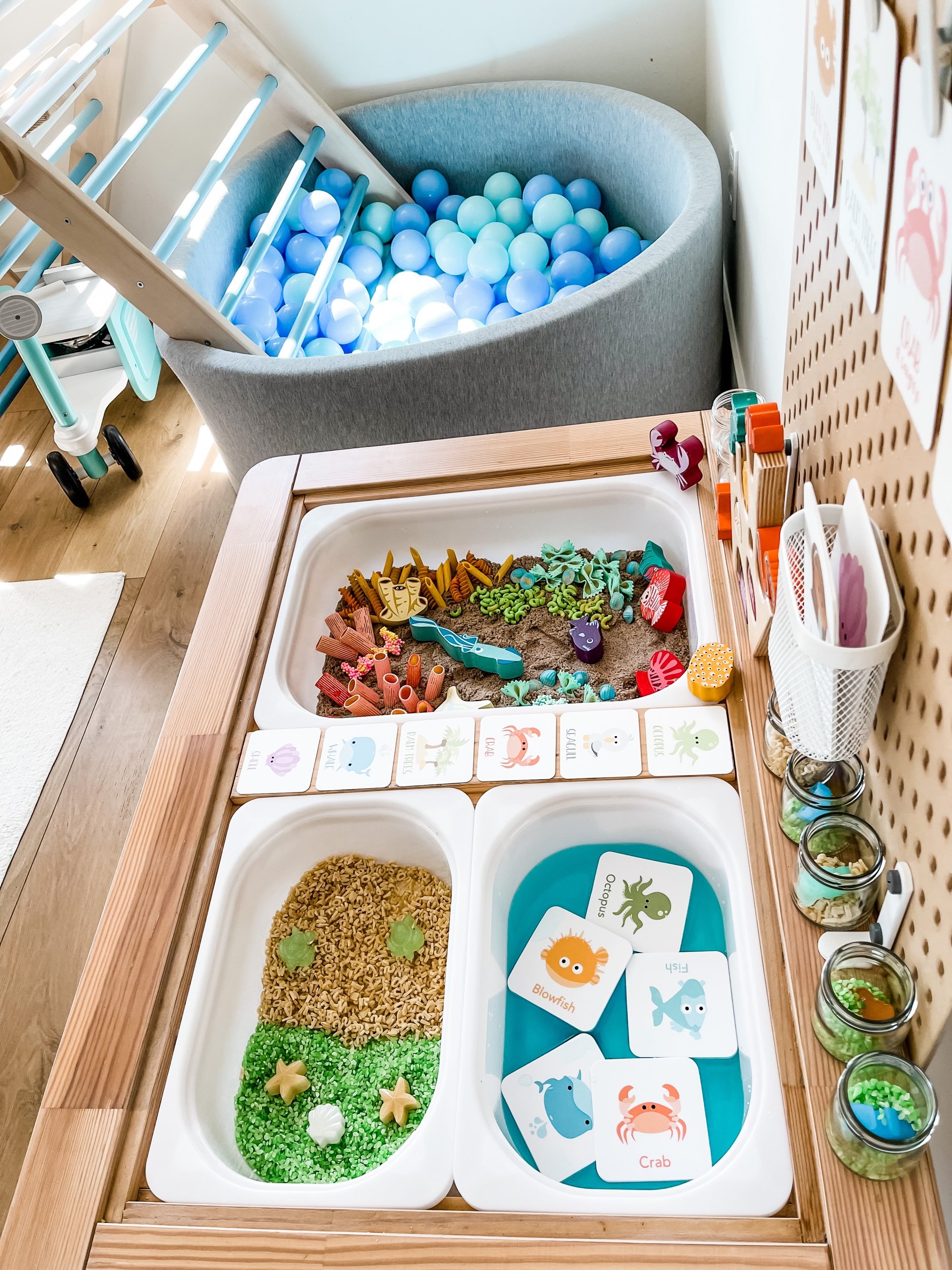
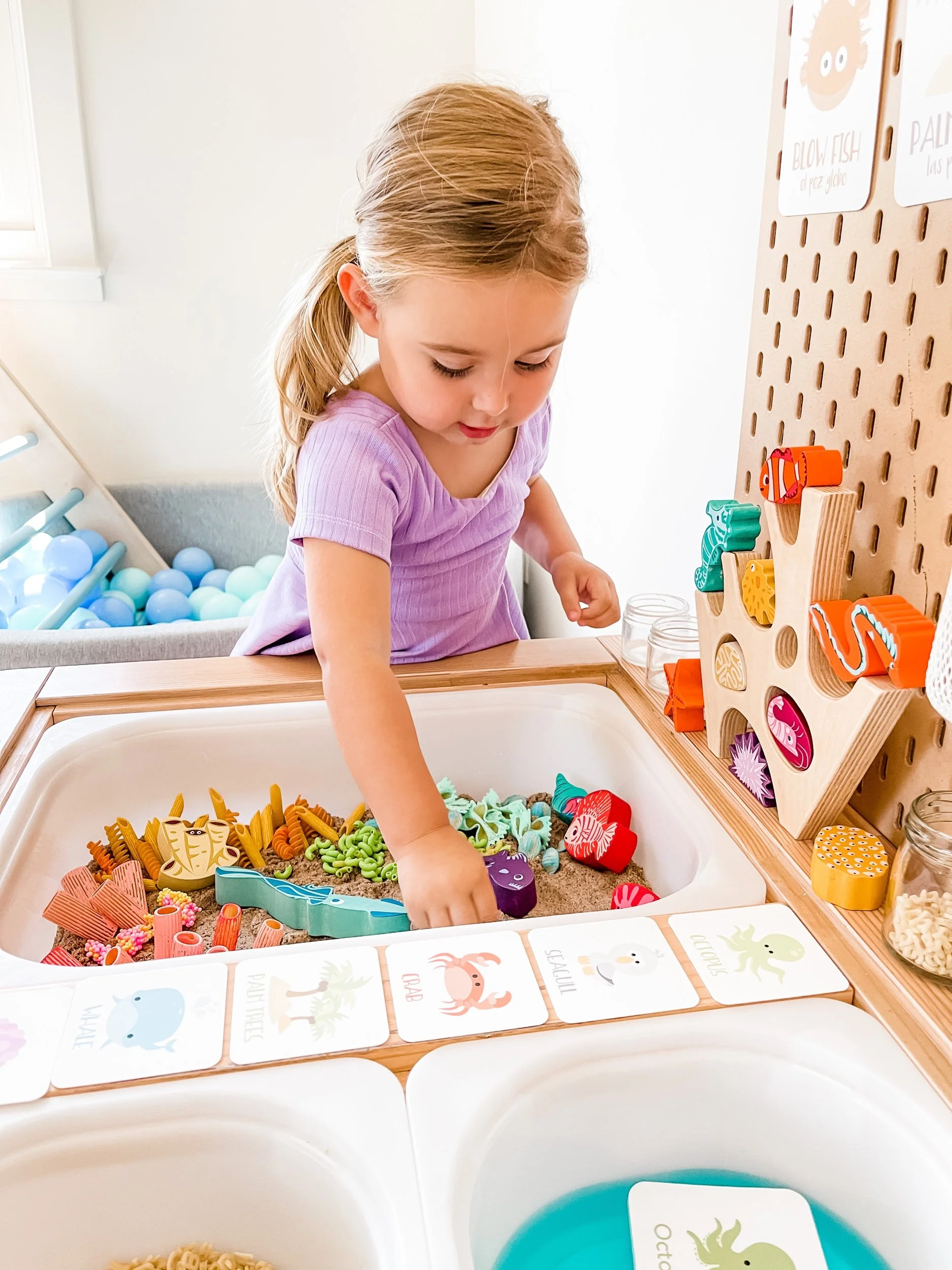
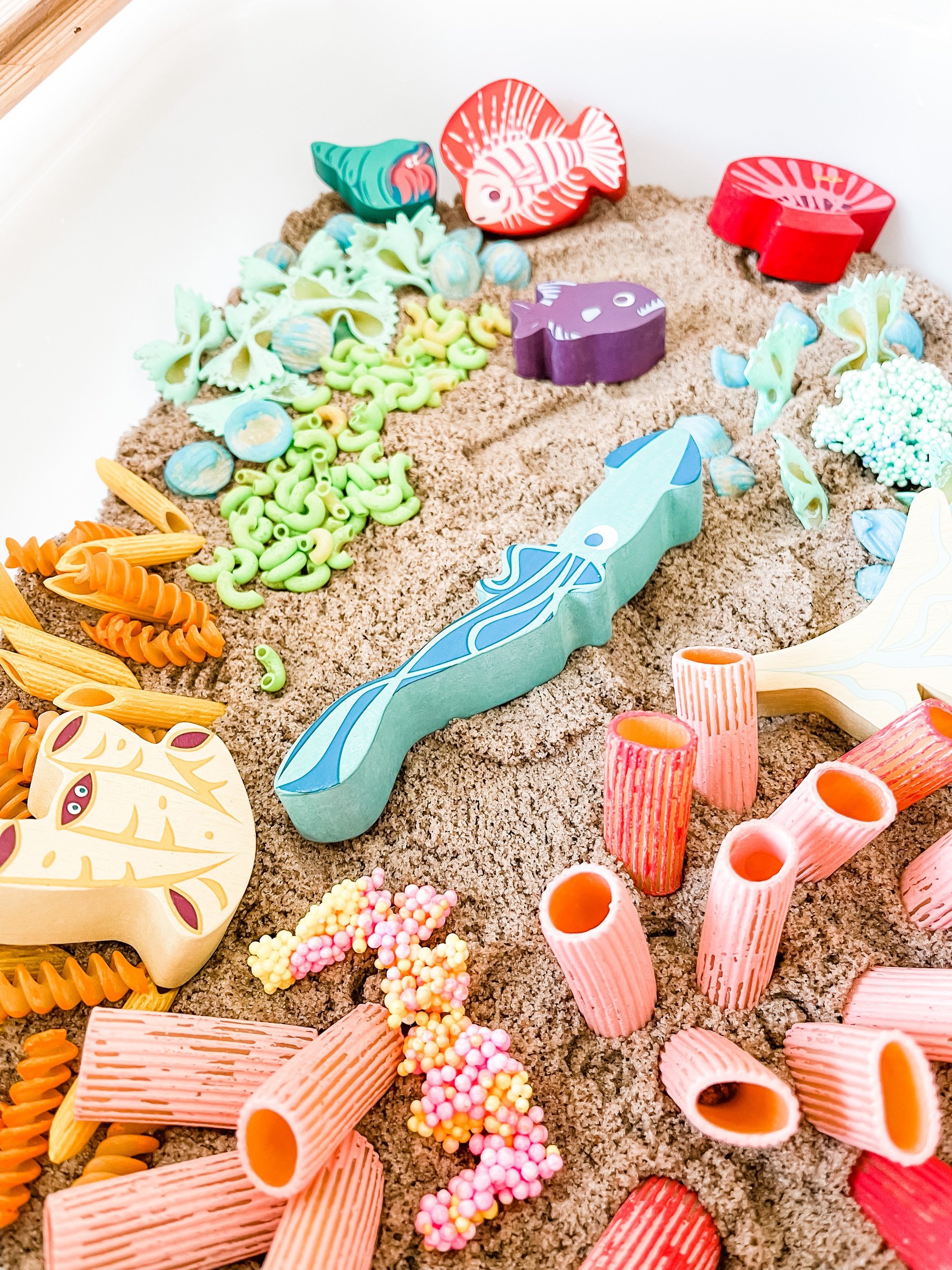
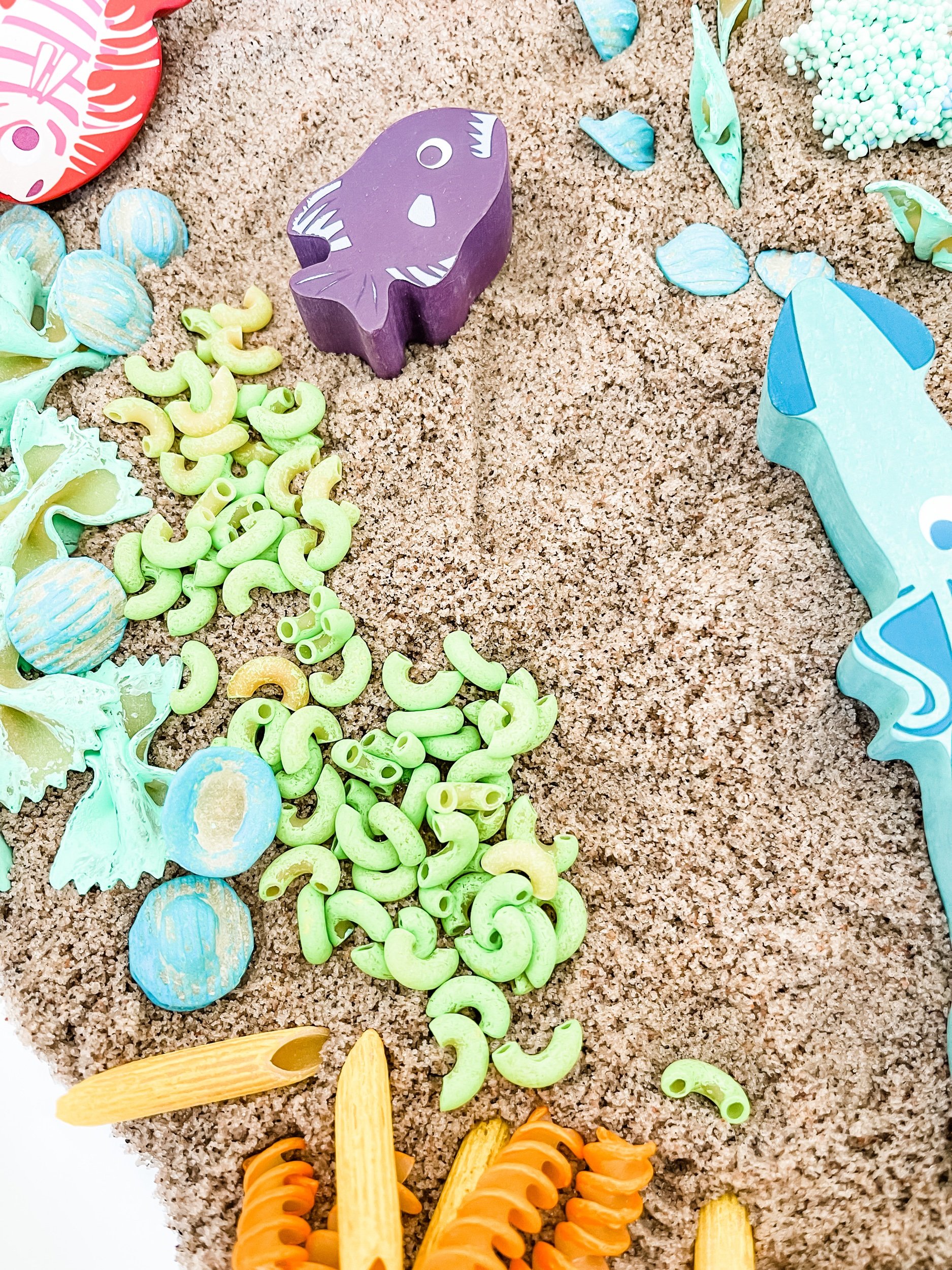
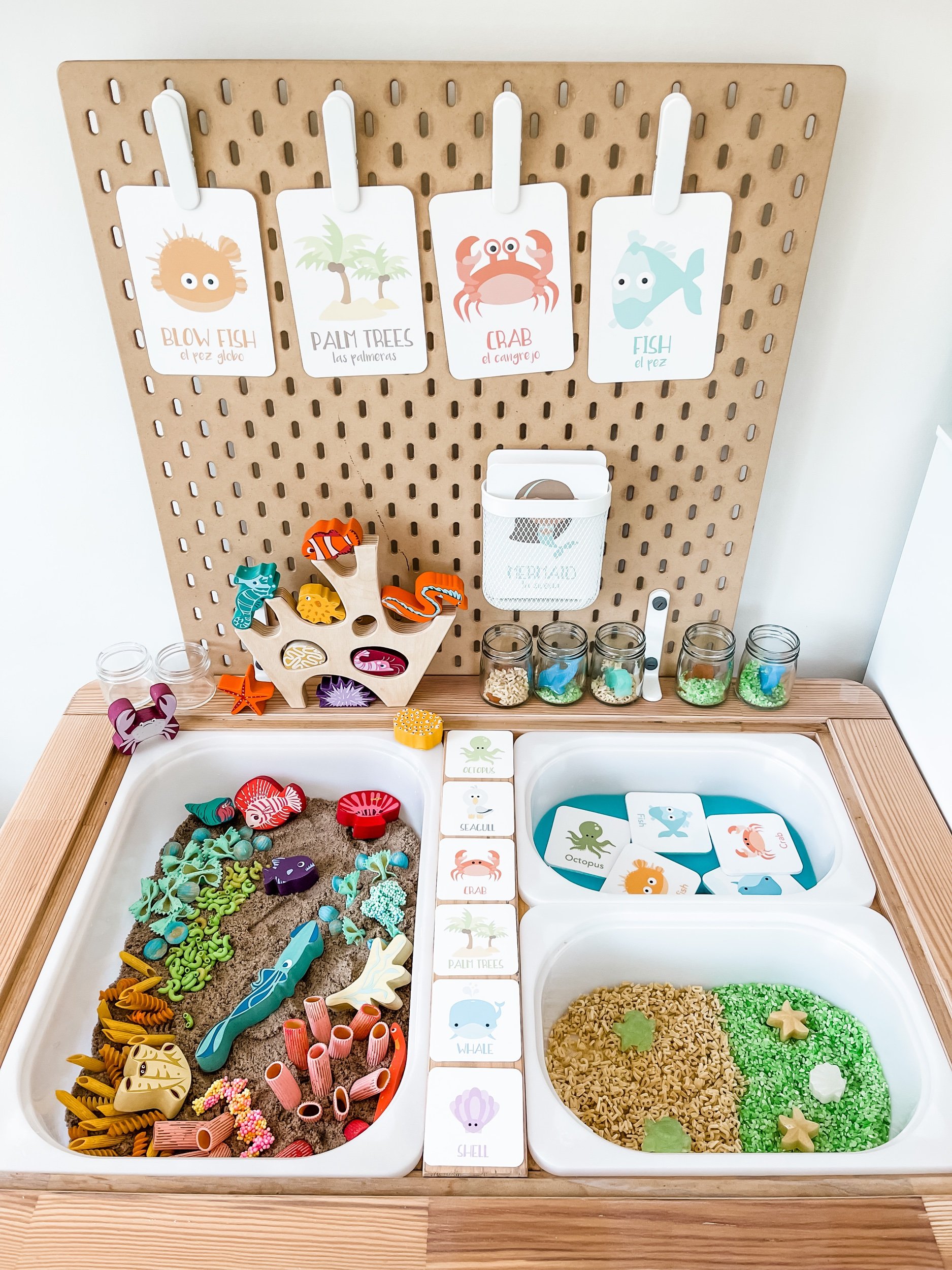
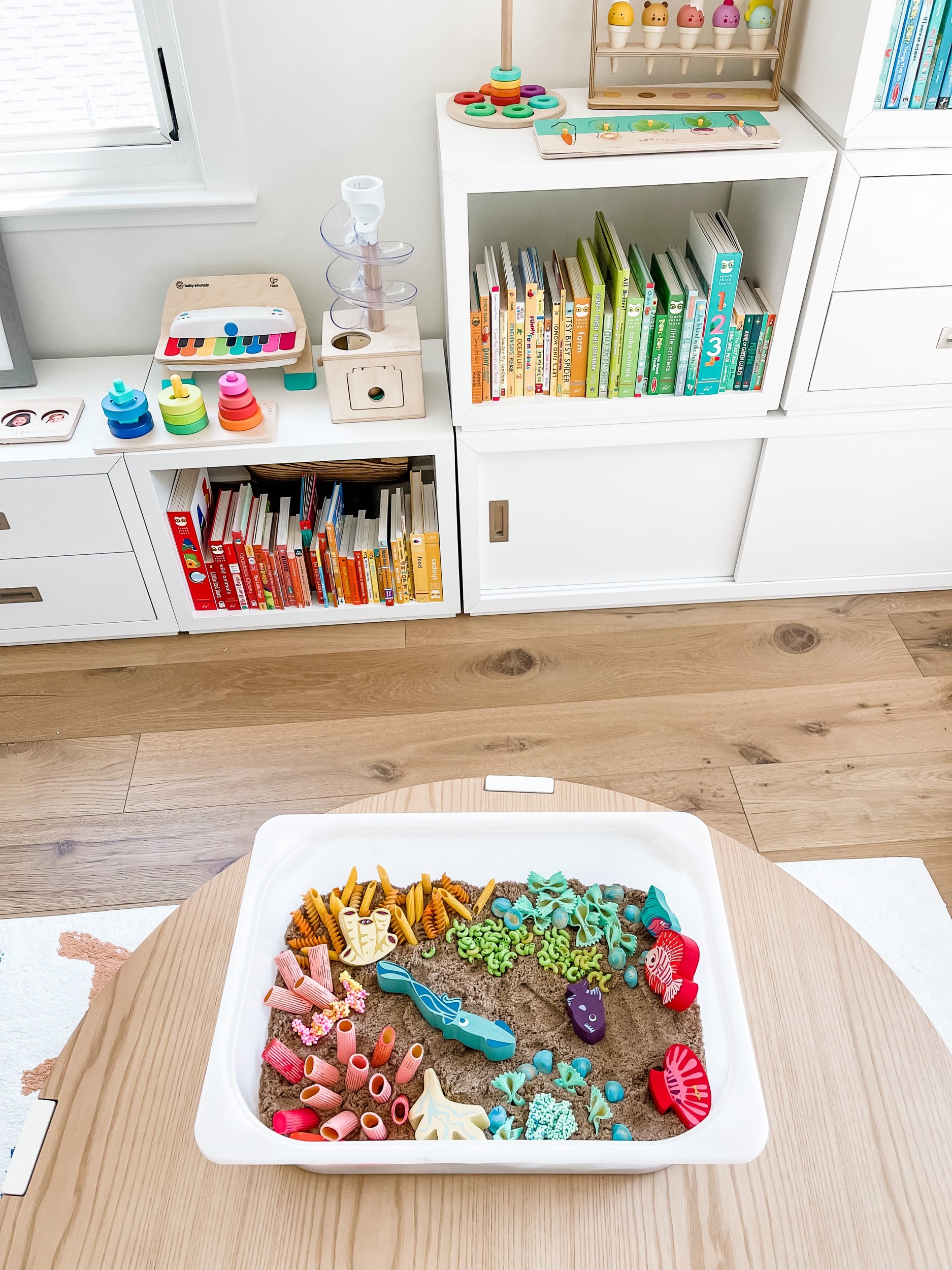
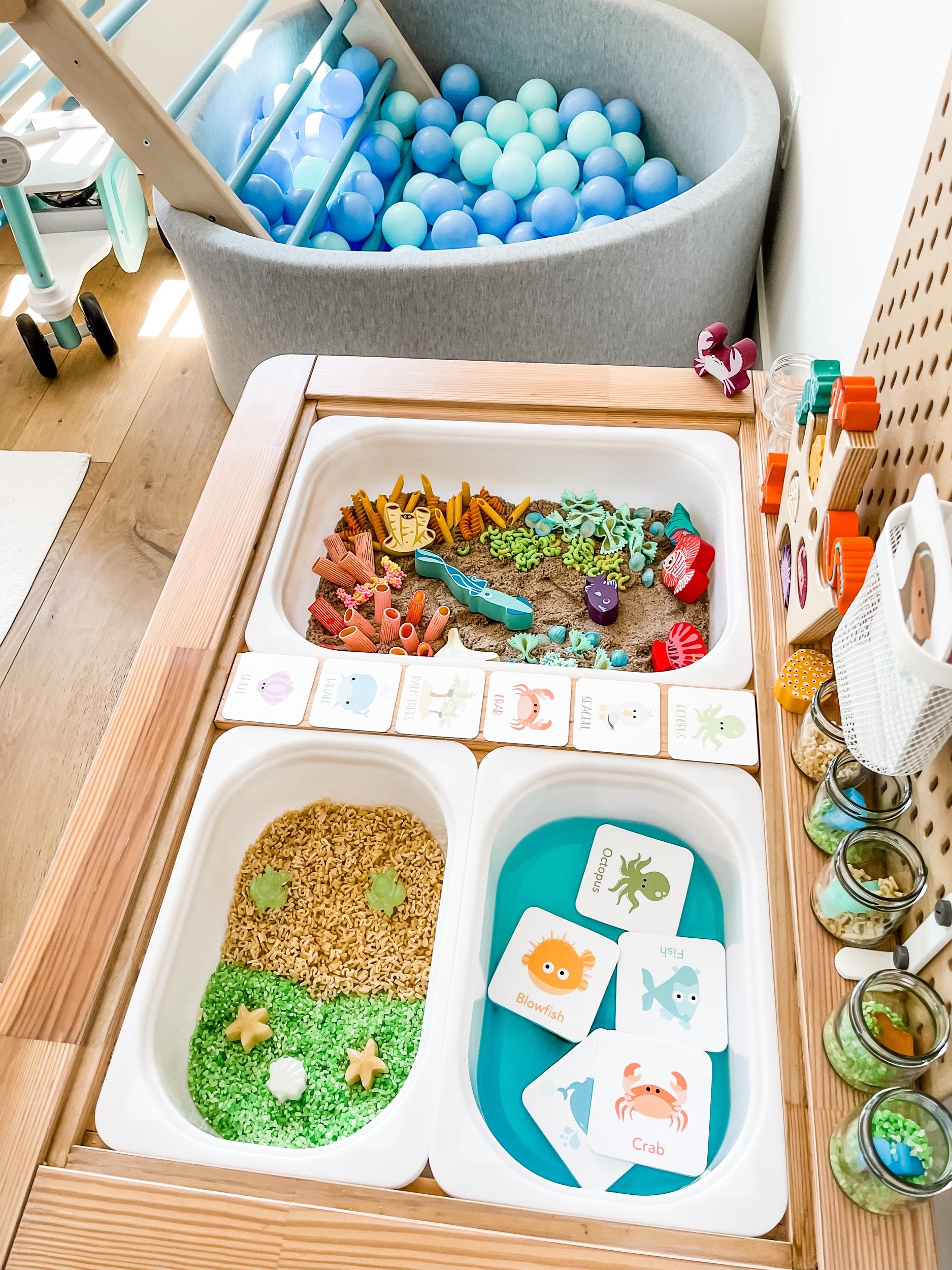
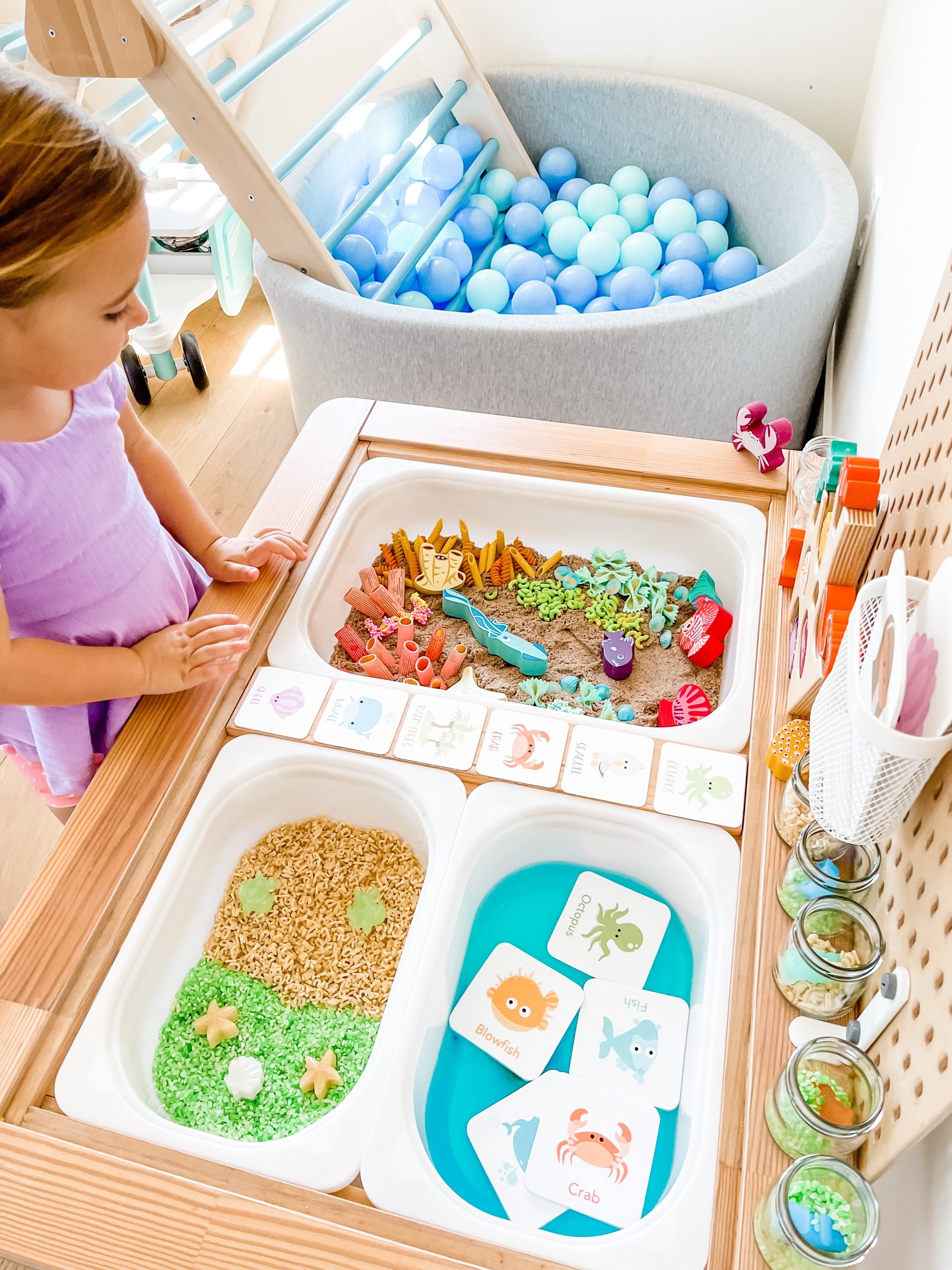
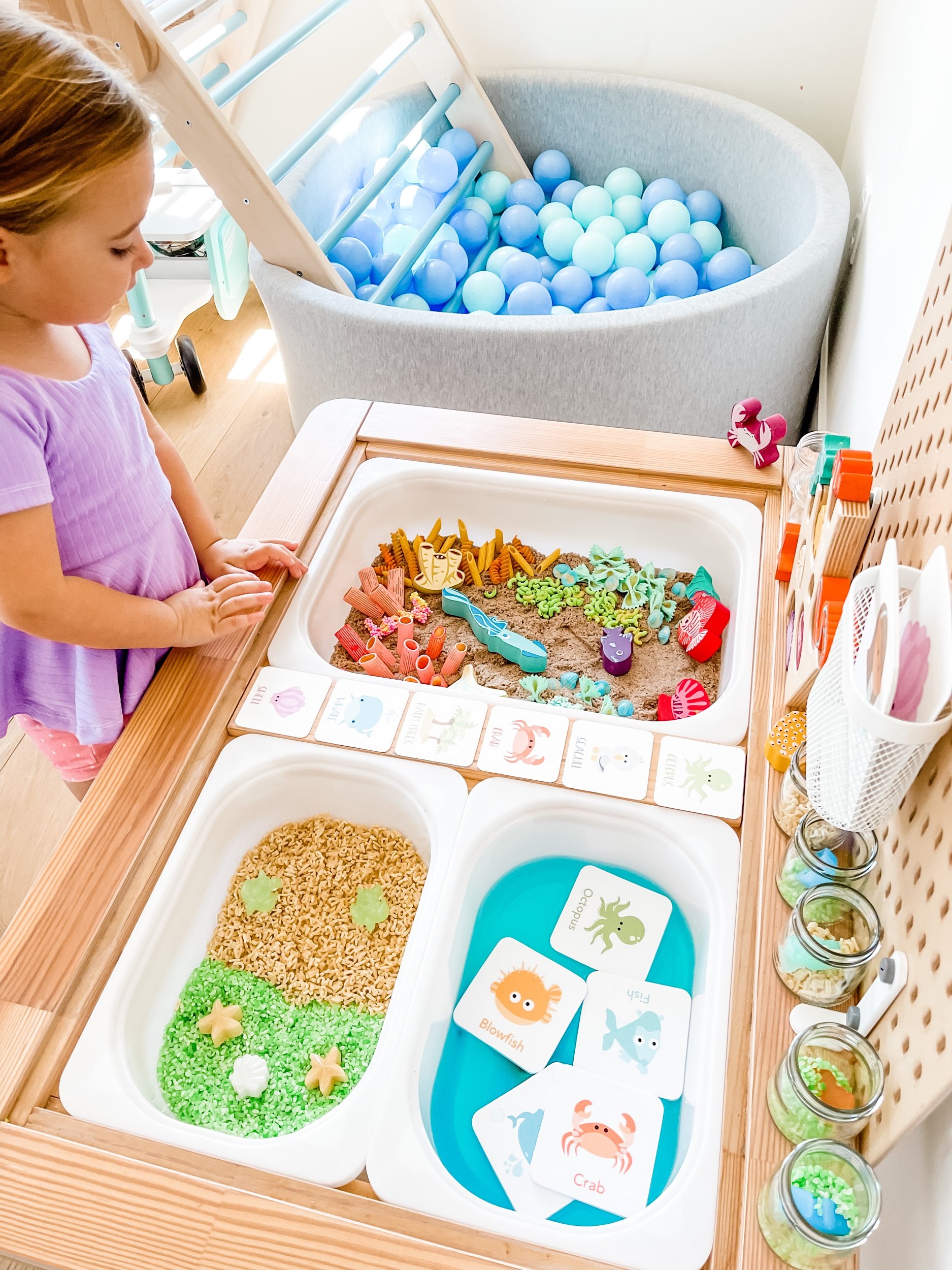
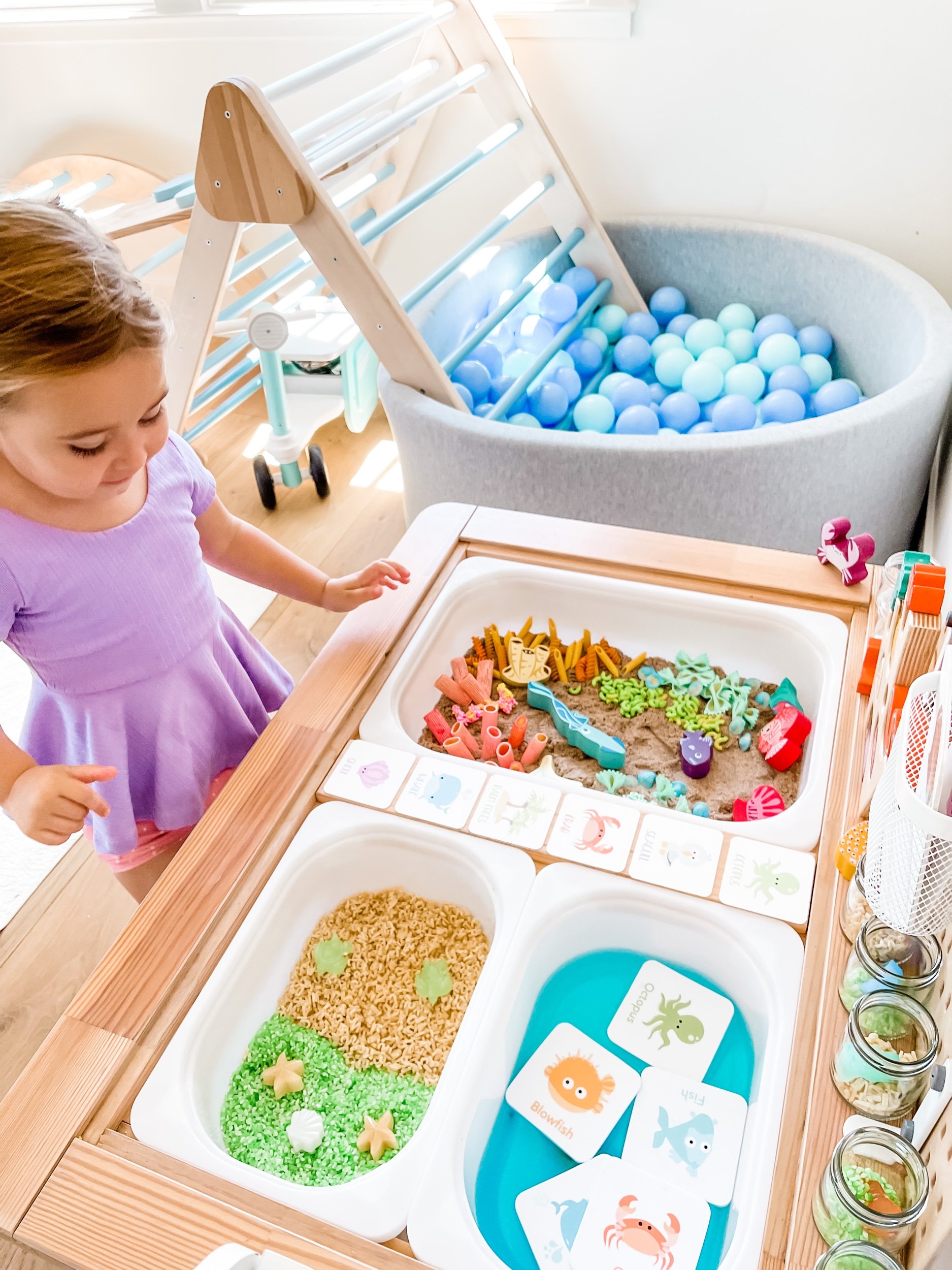
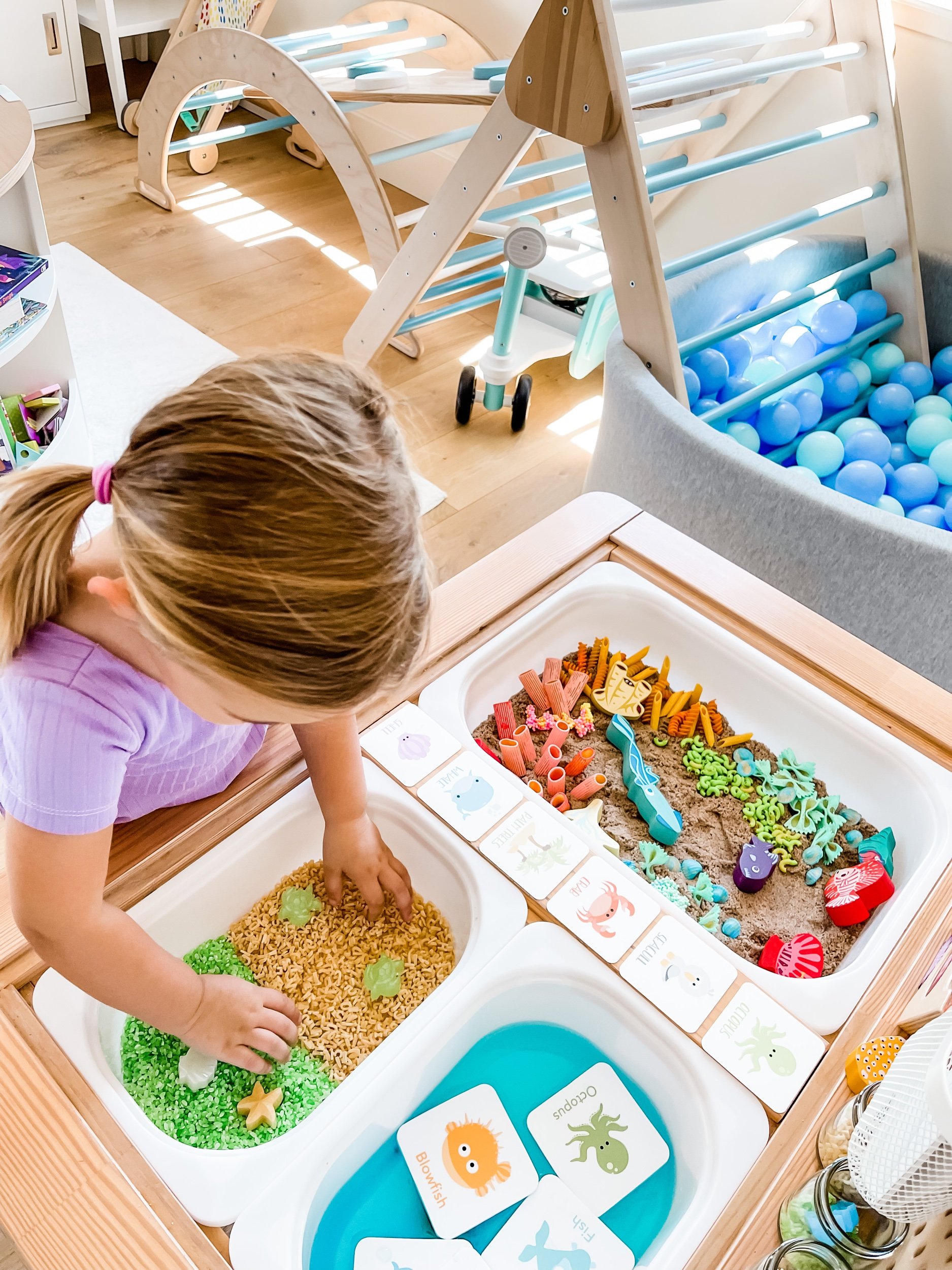
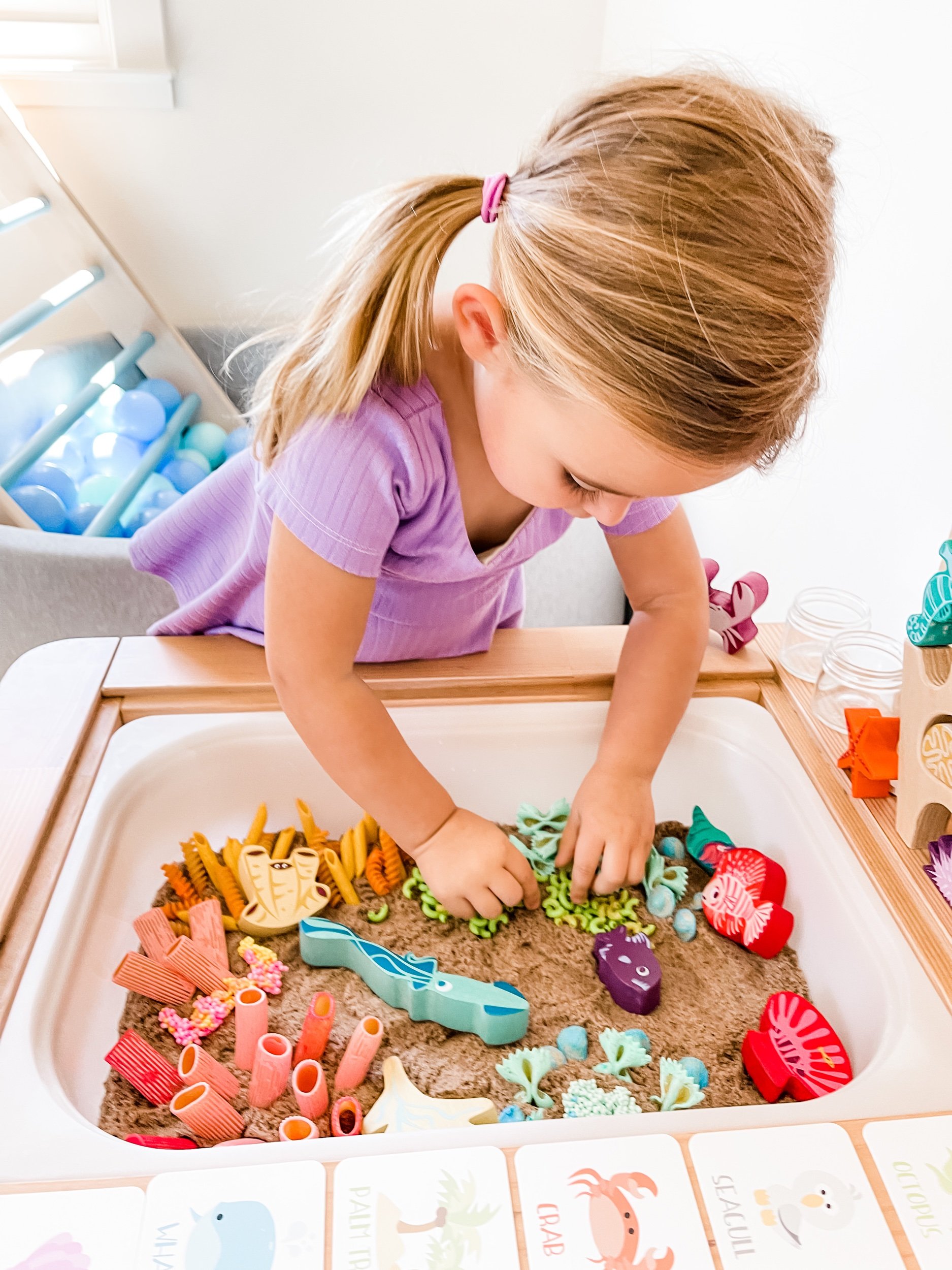
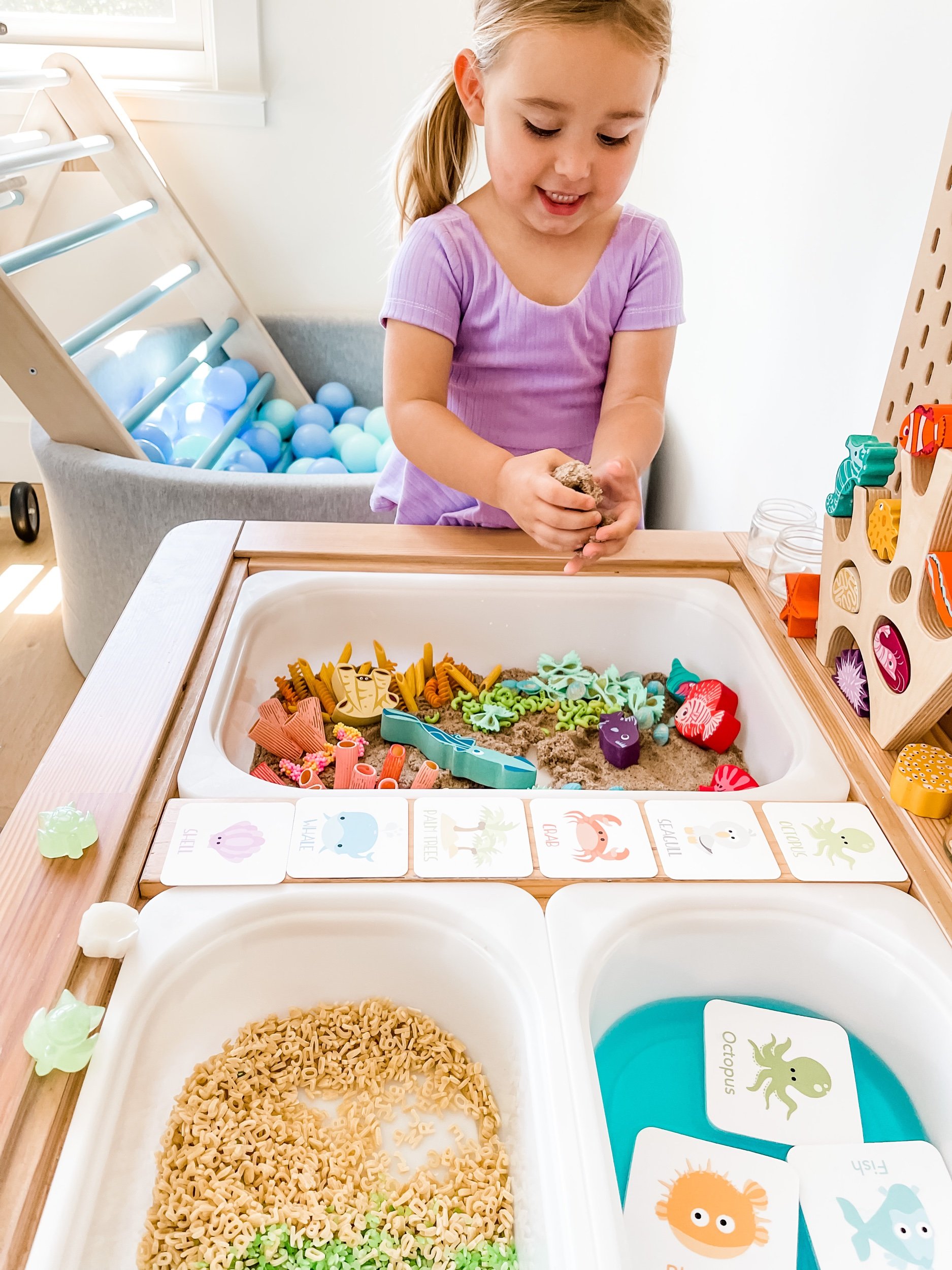
Coral reefs are a vital and diverse ecosystem that play a crucial role in the ocean's biodiversity. But did you know that introducing your toddler to the world of coral reefs can be an exciting and engaging way for them to learn about the natural world? Through sensory play and kinetic sand, parents and educators can provide children with a hands-on and interactive learning experience that will foster a deeper connection to the ocean and its inhabitants.
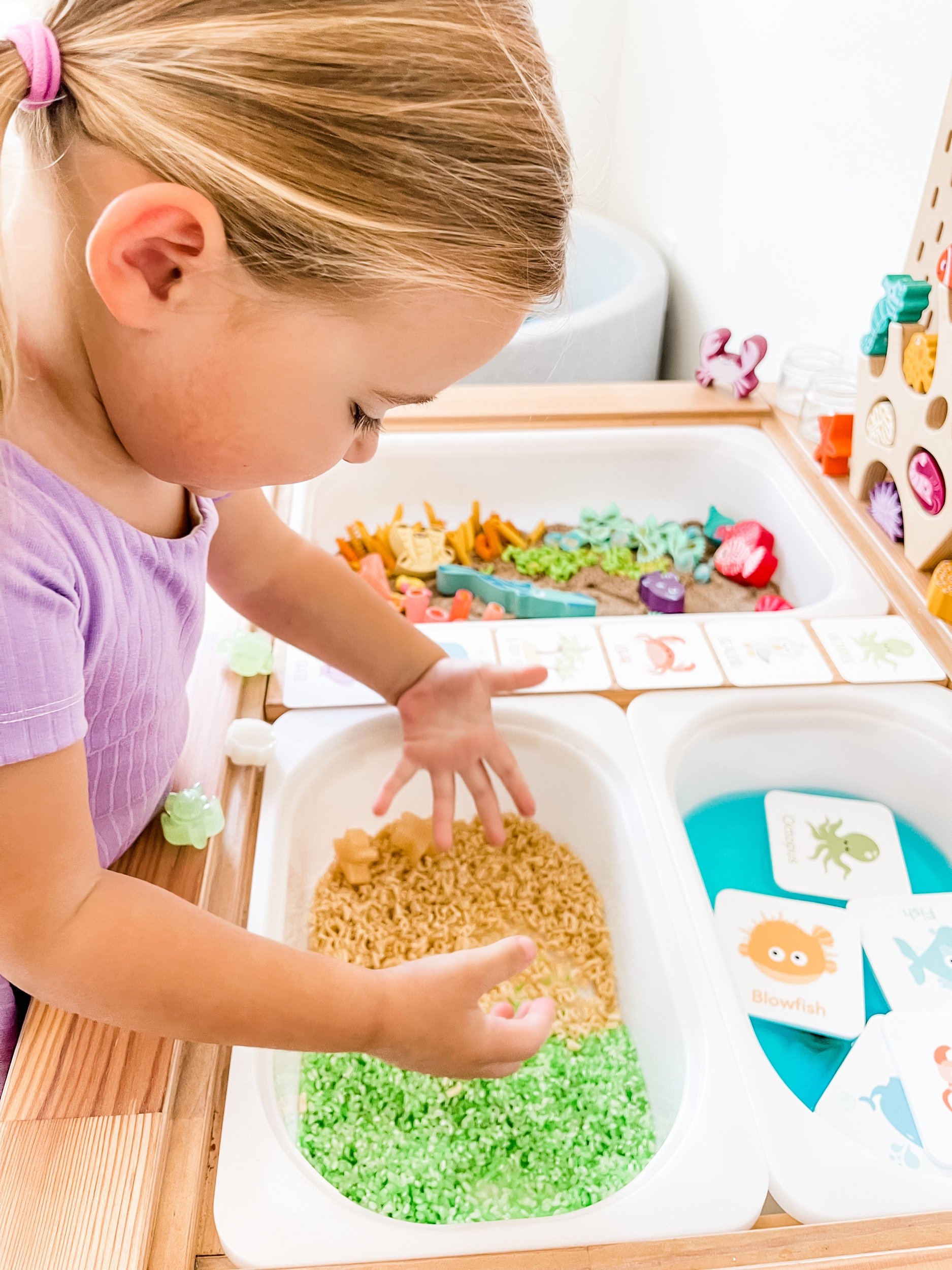
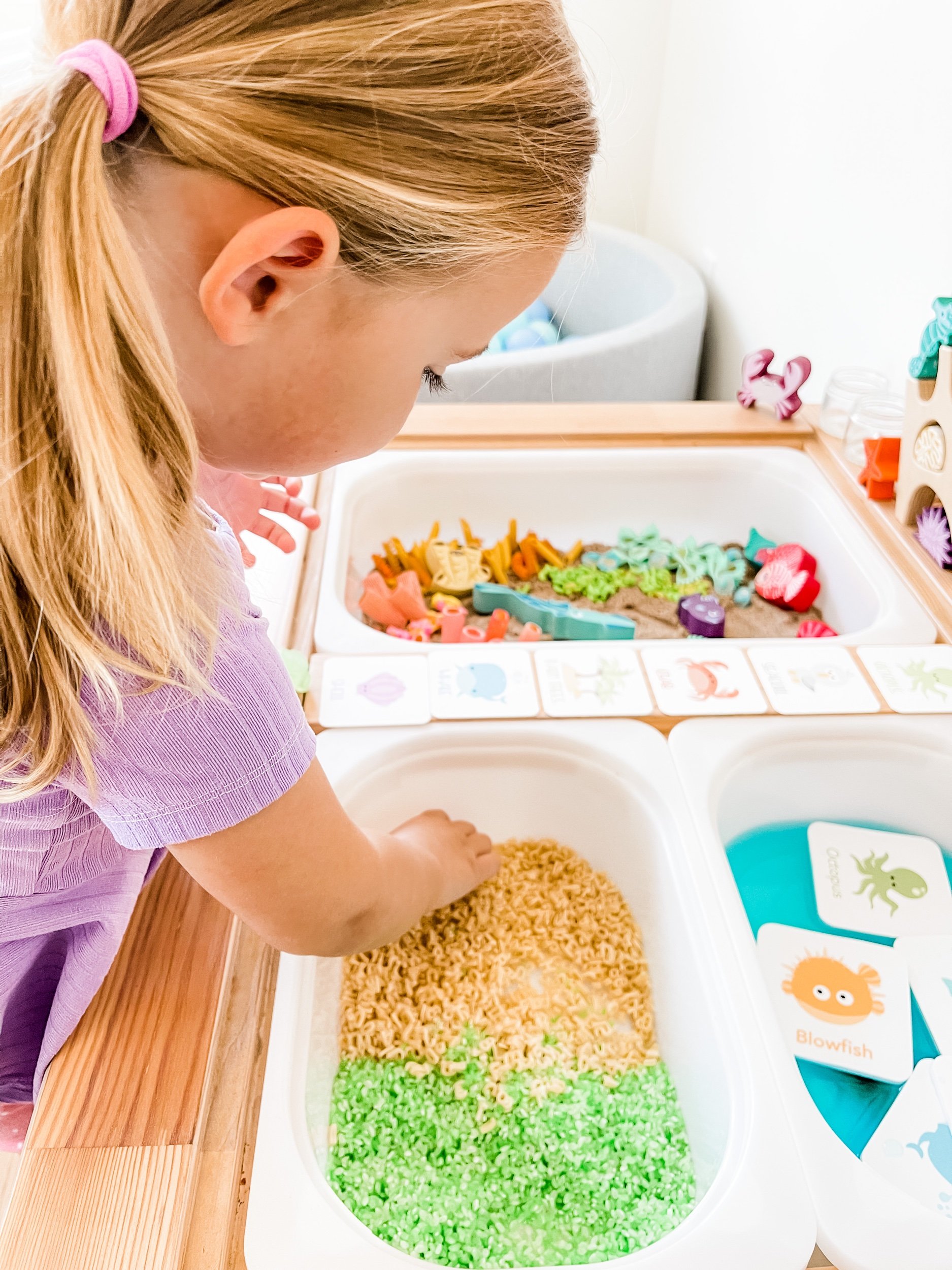
Sensory play is an educational method that uses the five senses to help children learn and explore new concepts. Kinetic sand, in particular, is a great tool for sensory play because it is soft, pliable, and easy to mold and shape. According to research from the National Association for the Education of Young Children, children who engage in sensory play have a more significant understanding and retention of information.
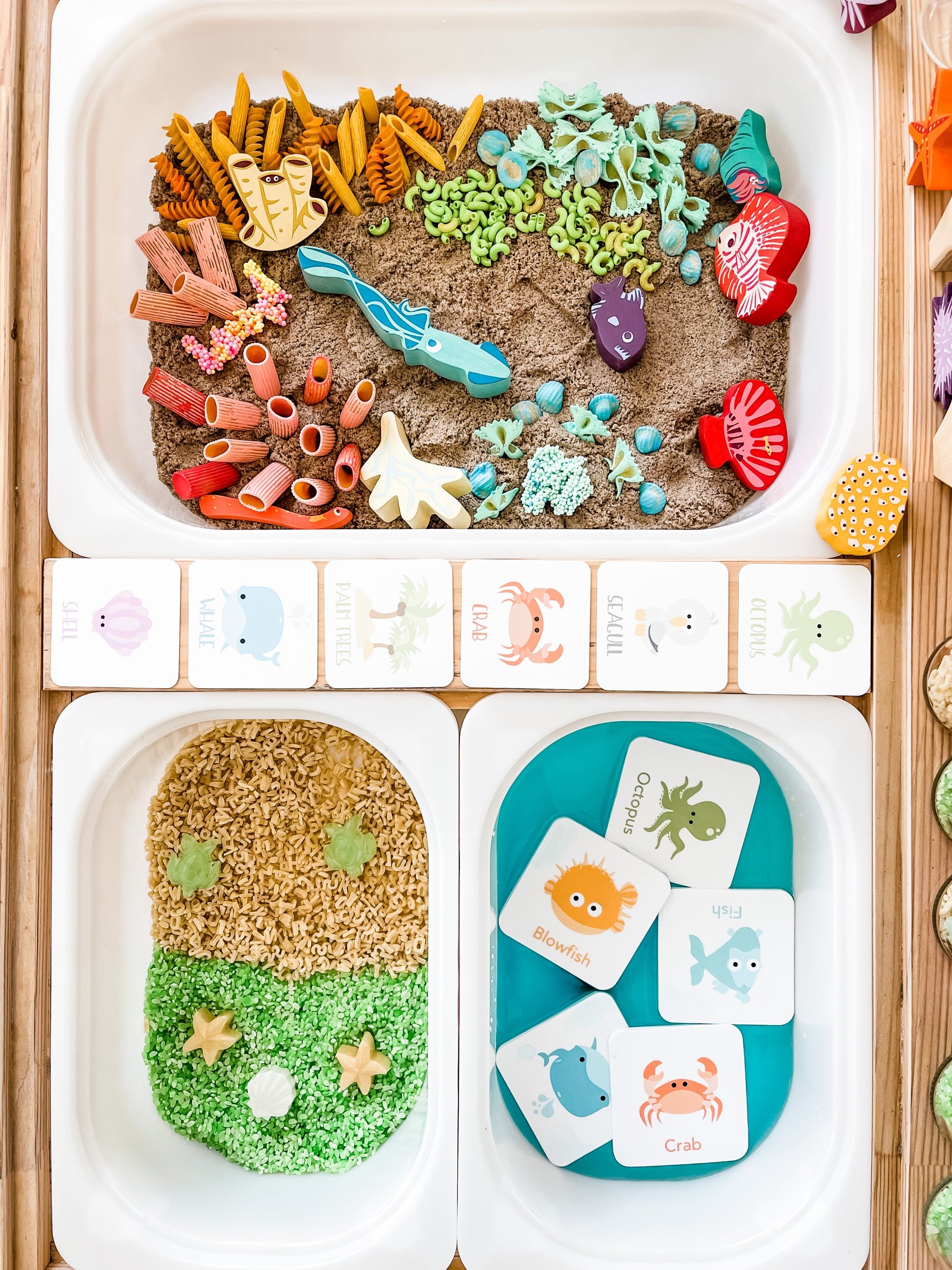
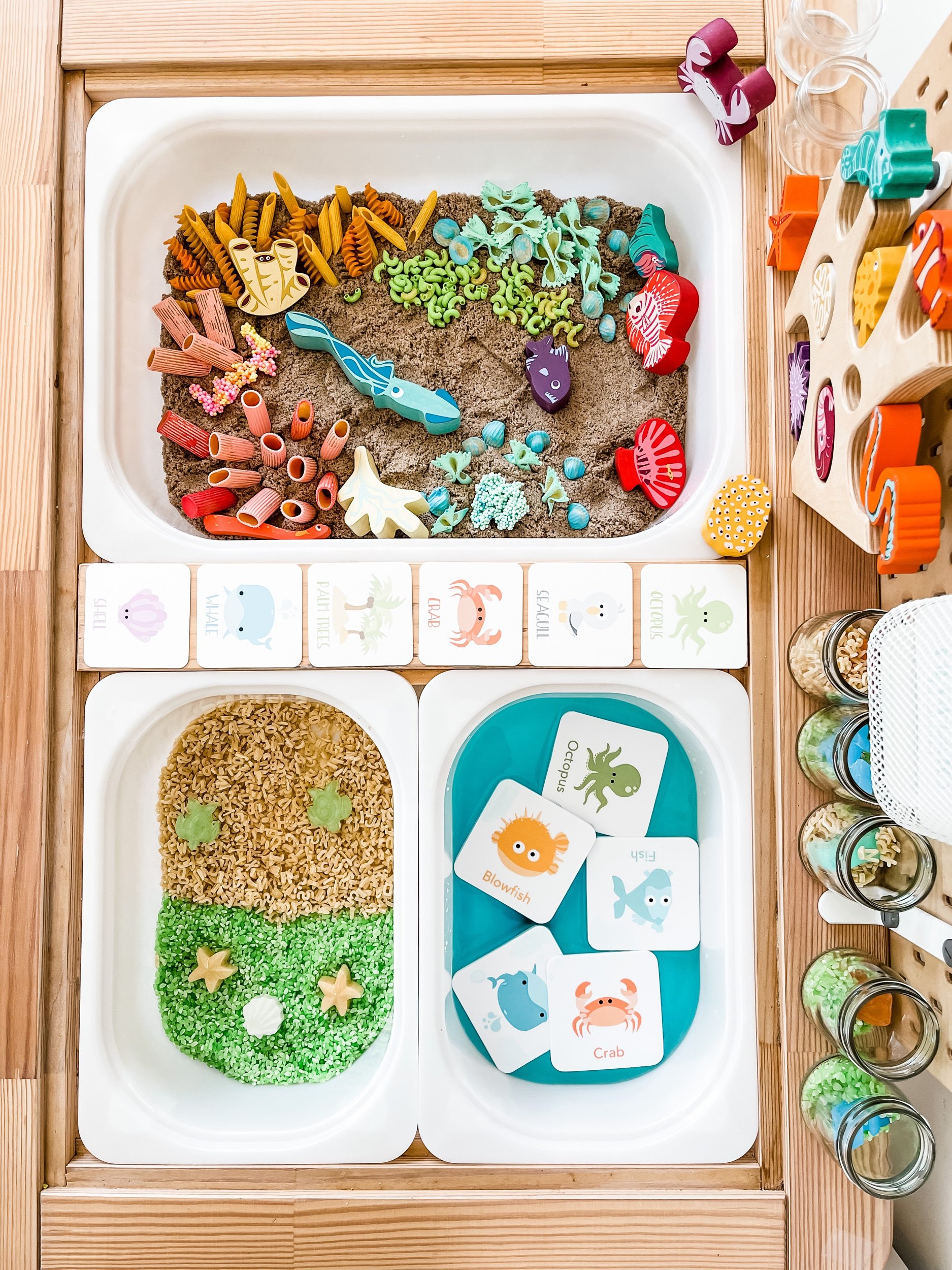
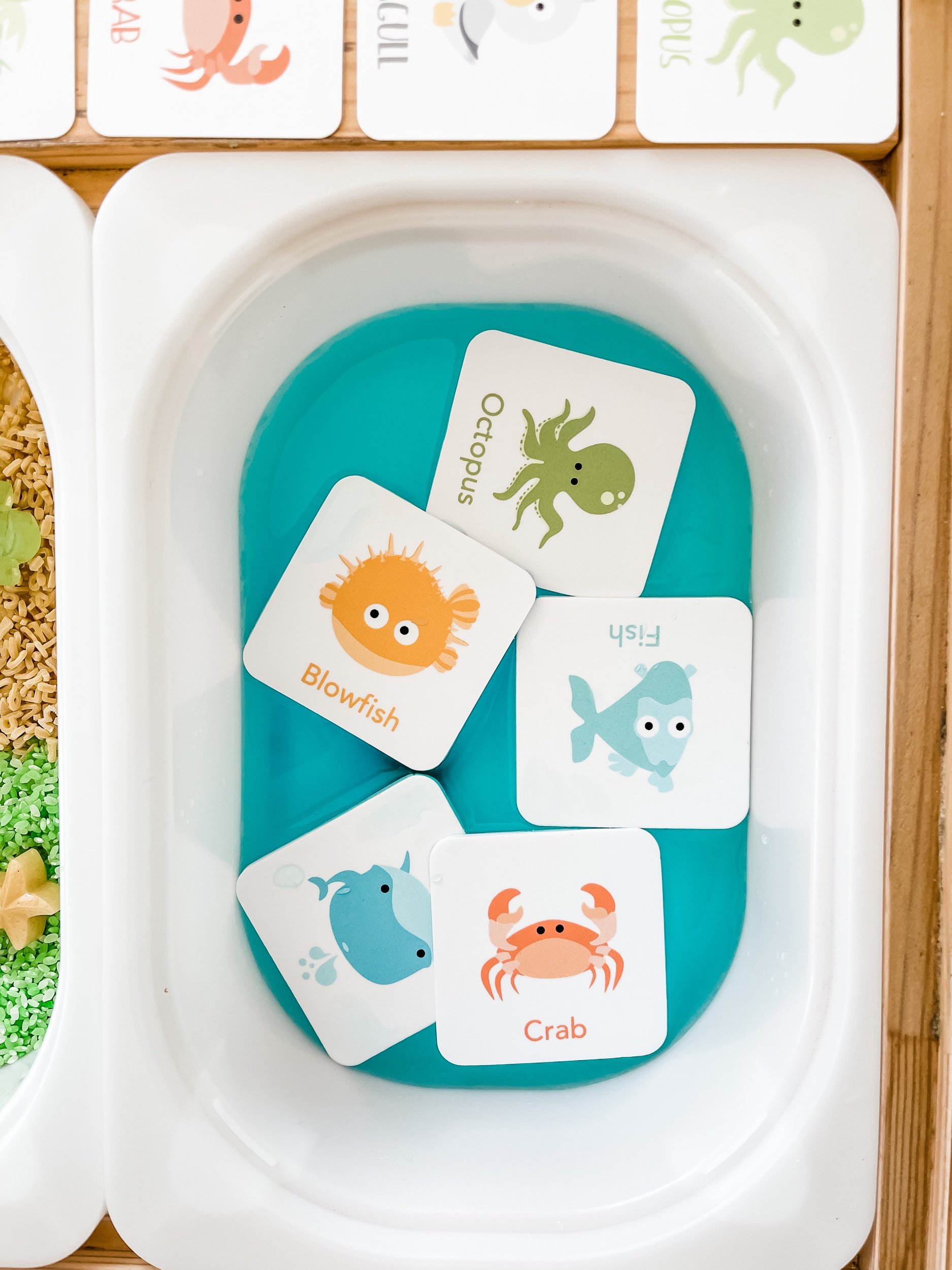
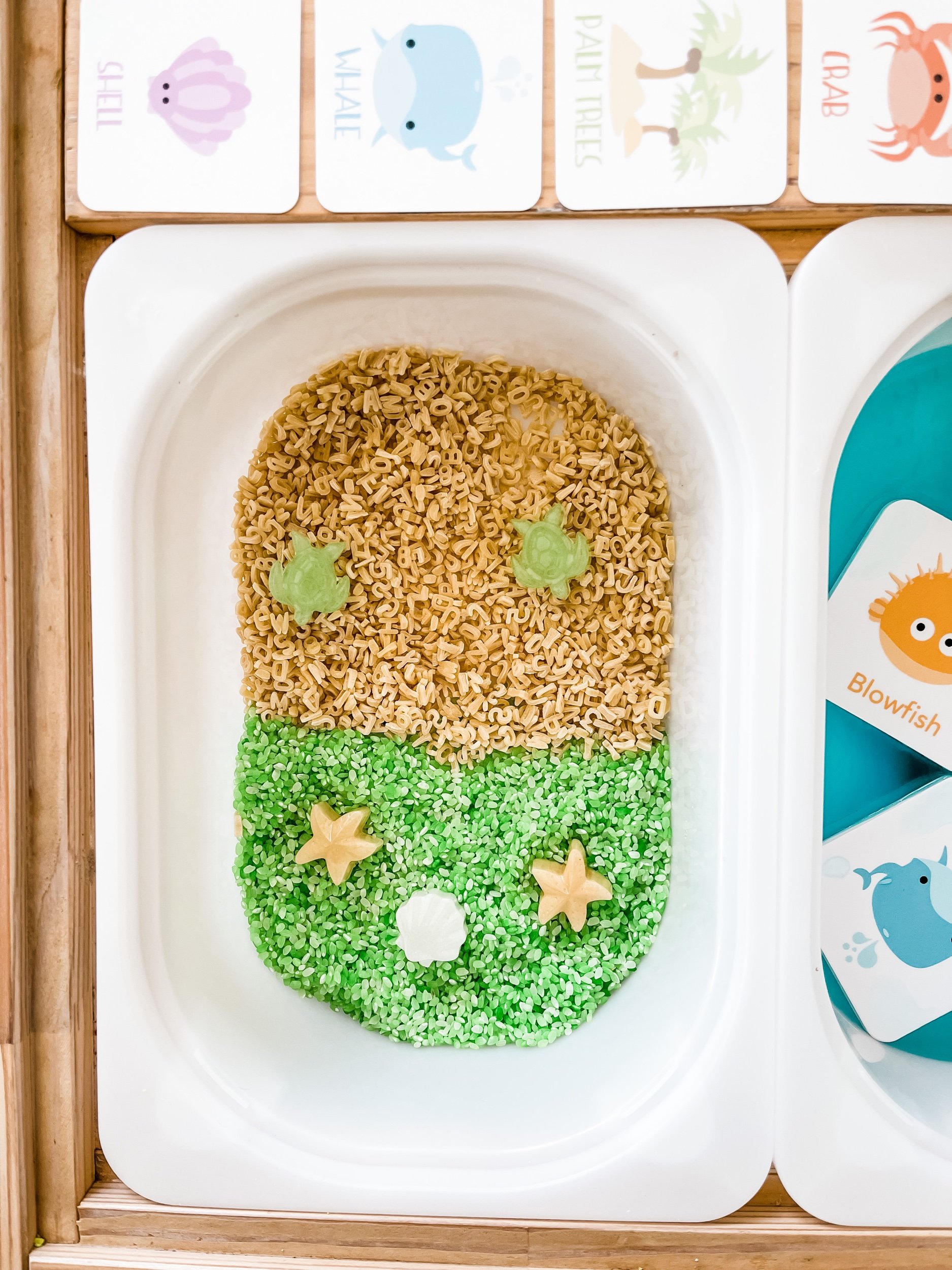
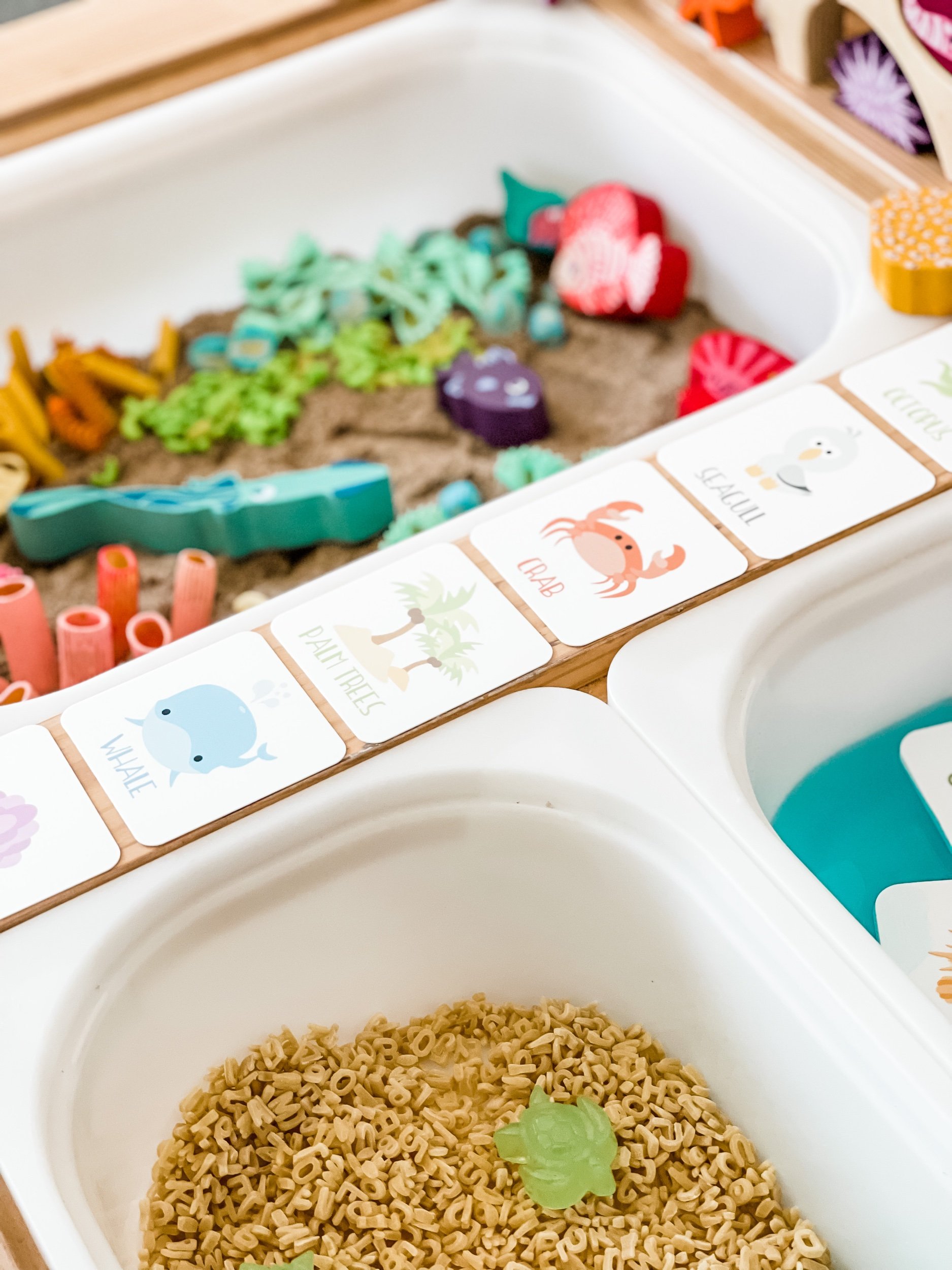
When combined with foam bath time memory game cards featuring ocean animals, toddlers can learn about coral reefs and the animals that call them home. The cards are made with durable and safe materials, perfect for little hands to handle, and the colorful illustrations of ocean animals will capture the child's attention. Plus, it is a fun and interactive way for children to learn about coral reef animals and improve their memory skills.
Coral reefs are also home to a diverse range of marine life, and according to the National Ocean Service, they provide food and medicine for millions of people. By teaching children about coral reefs, they will develop a sense of environmental stewardship and an understanding of the importance of protecting these ecosystems.
Moreover, incorporating these educational activities into daily routines at home, daycare, or in the classroom is easy and accessible for parents, caregivers, and educators. As a result, children will have a more significant understanding and retention of information, and they will develop a deeper connection to the natural world.
In conclusion, learning about coral reefs through sensory play and kinetic sand is an effective and fun way for toddlers to explore and learn about the natural world. By purchasing foam bath time memory game cards to use with kinetic sand, parents and educators can provide children with an even more interactive and enjoyable learning experience. For more information on coral reefs and their importance, visit reputable sources such as the National Ocean Service and the Coral Reef Alliance.
Week-long Lesson for Preschoolers
Objective: Students will learn about ocean life and animals through interactive activities, books, and games.
Monday: Introduction to the Ocean
Begin the lesson by showing students pictures of the ocean and asking them what they notice.
Read the book "The Magic School Bus: At the Waterworks" to introduce the concept of the ocean and the creatures that live there.
Have students create a class mural of the ocean and the animals they learned about.
Tuesday: Fish
Read the book "Rainbow Fish" to introduce the concept of fish and their different colors and patterns.
Have students create their own fish using construction paper and paint.
Play the game "Fishy, Fishy" where students take turns being "it" and pretending to be different types of fish.
Wednesday: Marine Mammals
Read the book "A Dolphin Named Bob" to introduce the concept of marine mammals and the different types that live in the ocean.
Have students create their own marine mammal using clay or play dough.
Play the game "Whale, Whale, What Do You See?" where students take turns being the "whale" and identifying different marine mammals.
Thursday: Shells and Crustaceans
Read the book "The Very Hungry Hermit Crab" to introduce the concept of shells and crustaceans.
Have students collect and examine different types of shells and crustaceans.
Play the game "Shell Match" where students match different shells to the corresponding crustacean.
Friday: Review and Assessment
Review the concepts learned throughout the week by playing a game of "Ocean Animal Charades."
Have students complete a simple assessment, such as a matching game or a fill-in-the-blank worksheet.
End the lesson by having students share their favorite part of the week's activities.
Note: The specific activities, books, and games may vary depending on the resources available to you, but the overall structure of the lesson plan can be followed. Also, make sure to adjust the time and the activities to fit the abilities of the students.
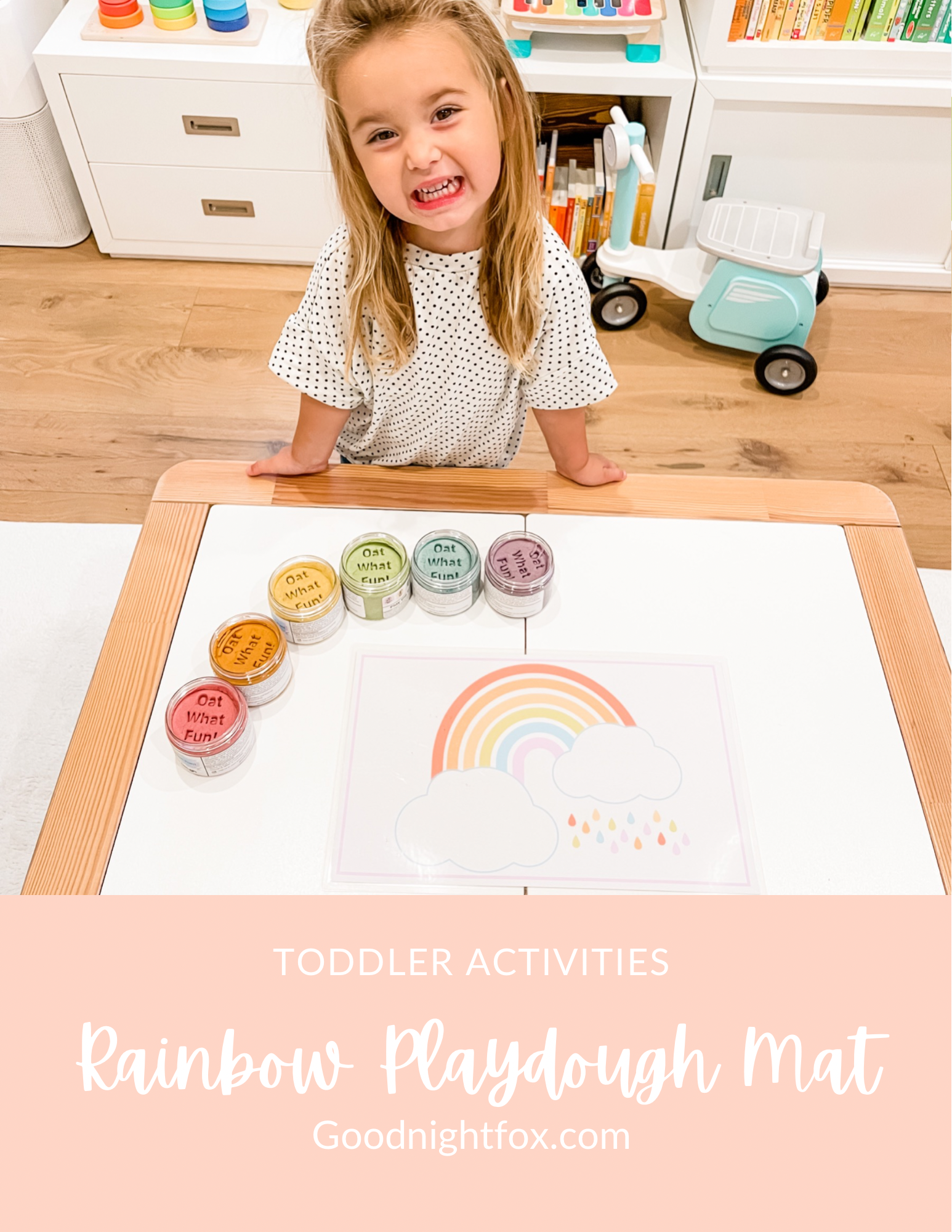
Playdoh is a classic and beloved toy that has been used for generations to promote creativity, fine motor skills, and imaginative play. However, many traditional playdoh products contain synthetic ingredients and preservatives that may be harmful to children or have negative environmental impact.
An alternative to traditional playdoh is homemade playdoh made out of oats. Oat playdoh is an all-natural, non-toxic and eco-friendly option that provides many benefits for children and their families.
One of the main benefits of oat playdoh is that it is safe for children to use. Since it is made from all-natural ingredients, there is no risk of harmful chemicals or synthetic materials coming into contact with children's skin or mouths. Additionally, oats are known to be hypoallergenic, making it a great option for children with sensitive skin or allergies.
Another benefit of oat playdoh is that it is easy to make and can be customized to suit individual preferences. Oat playdoh can be made with ingredients found in most kitchens, such as oats, flour, salt, and water. It can also be flavored with natural extracts, such as vanilla or peppermint, to make it more appealing to children.
In addition, oat playdoh is an eco-friendly option, as it is made from sustainable and biodegradable materials. Unlike traditional playdoh, which can end up in landfills after being used, oat playdoh can be composted or even eaten.
Oat playdoh also promotes learning and development in children. Using it can help develop fine motor skills, hand-eye coordination, and dexterity, as well as encouraging creativity and imaginative play. Children can use it to create different shapes, models, and patterns, helping to develop their problem-solving and spatial reasoning skills.
In conclusion, oat playdoh is a safe, eco-friendly, and versatile alternative to traditional playdoh. Not only it is easy to make and customize, but it also promotes learning and development in children. It is a great option for families looking for a natural and sustainable play option for their kids.
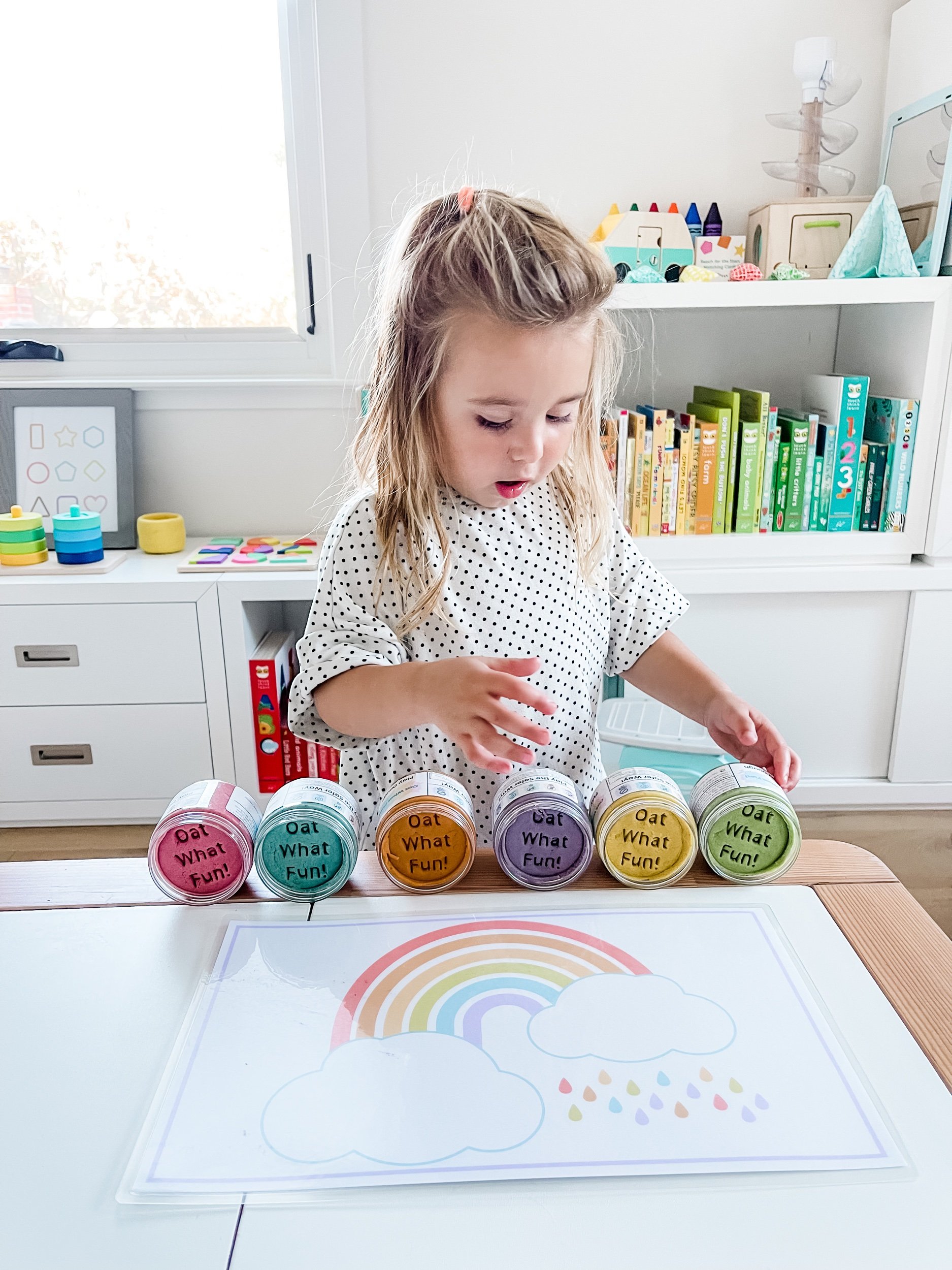
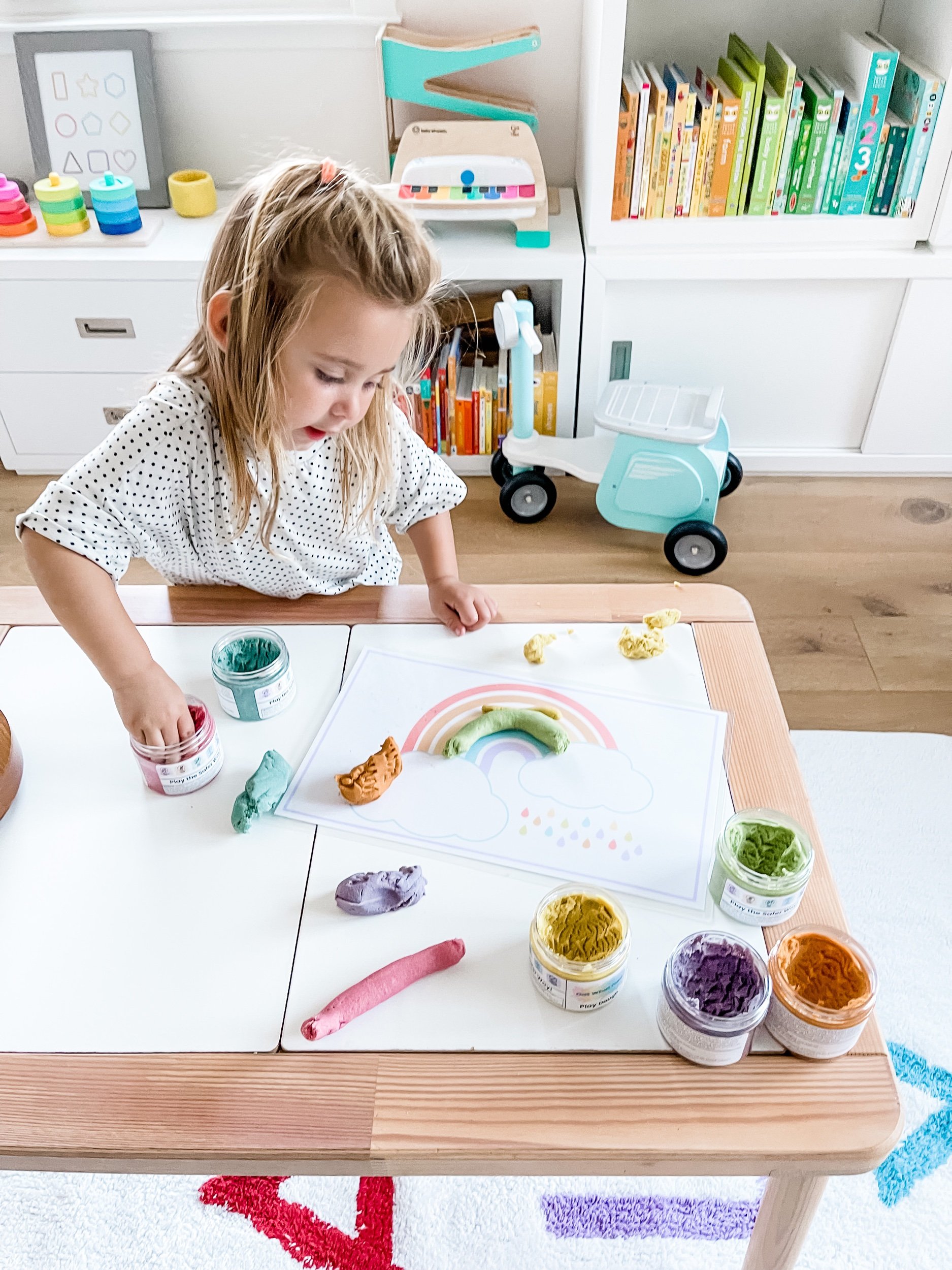
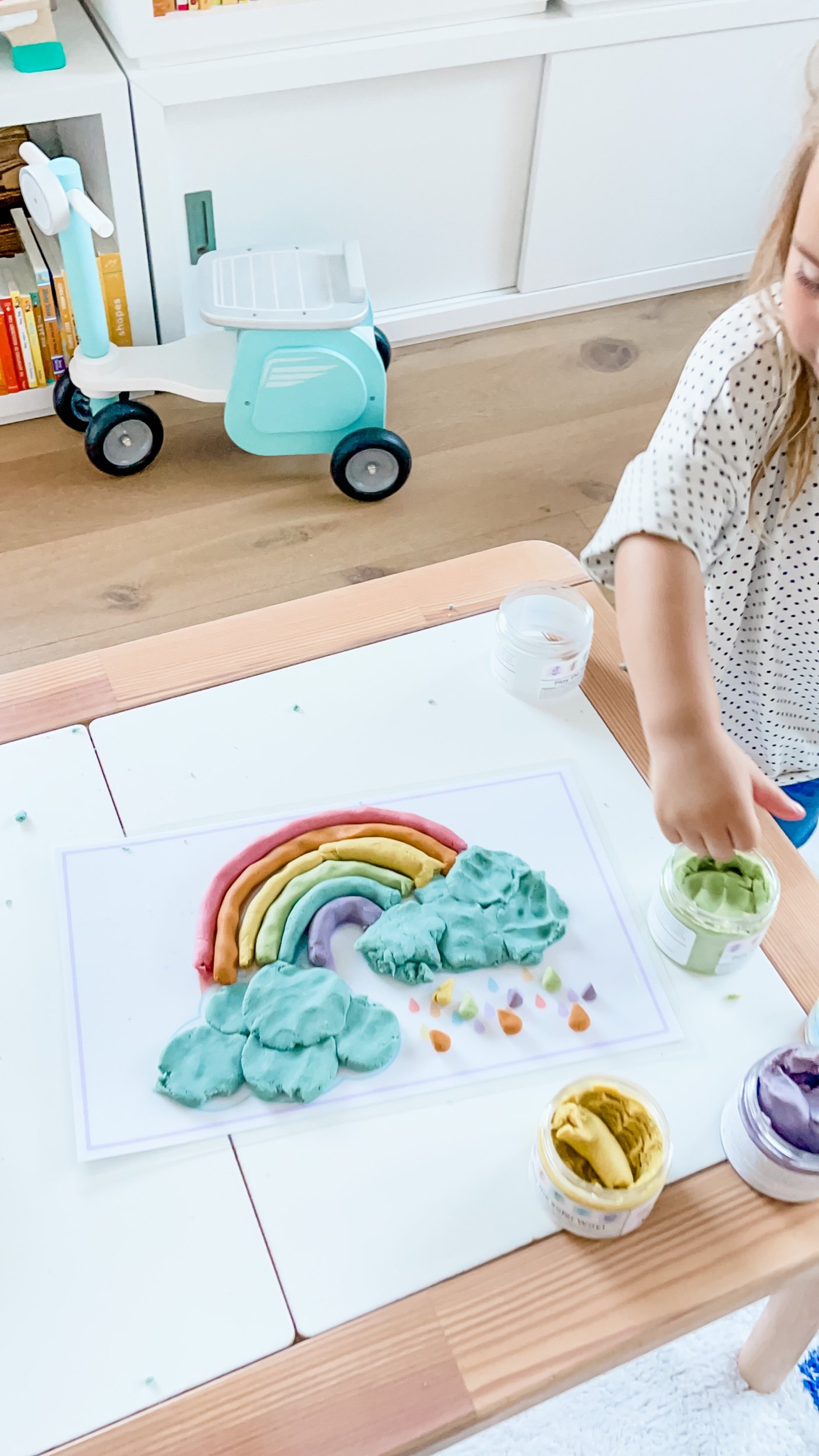
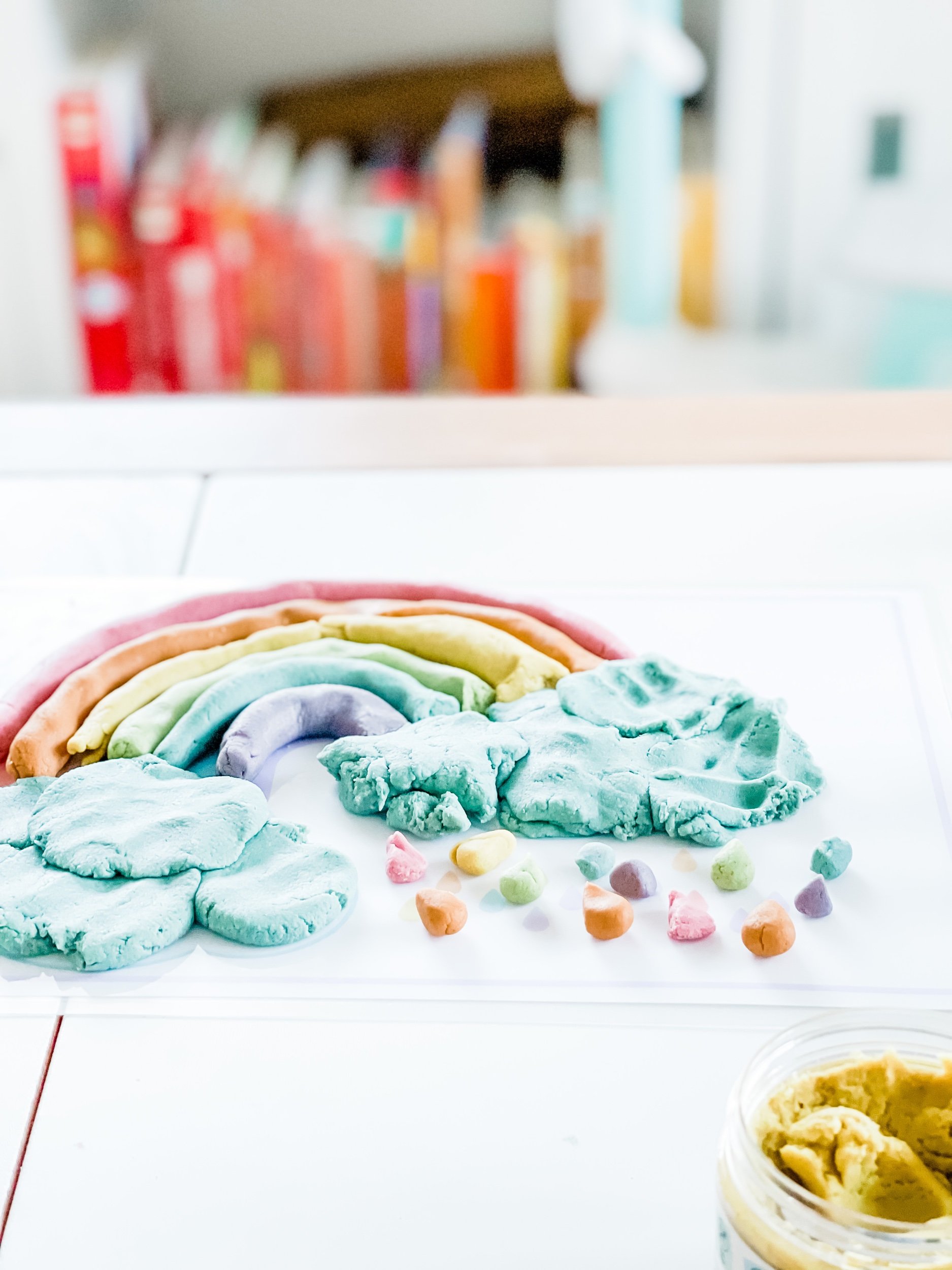
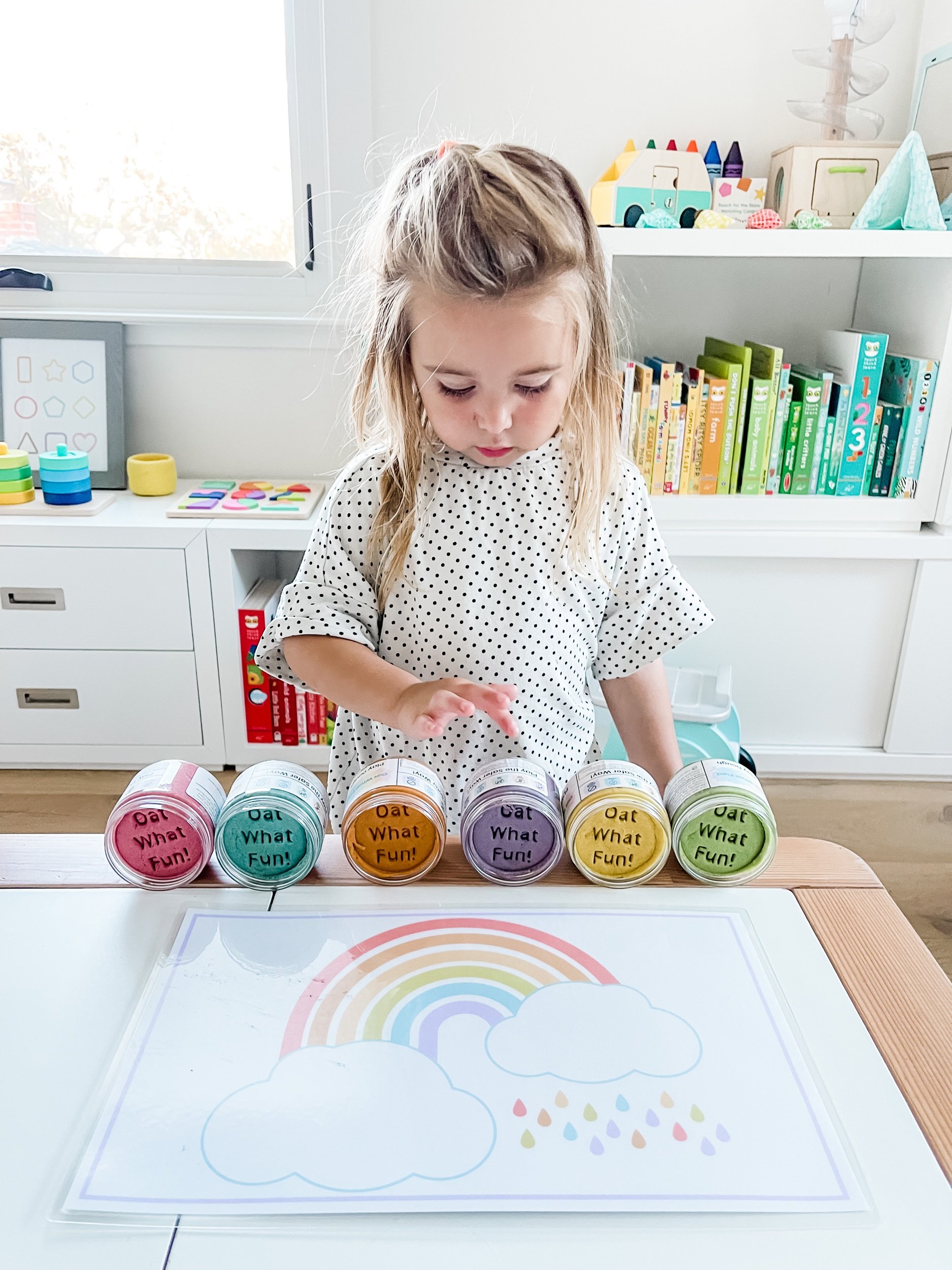
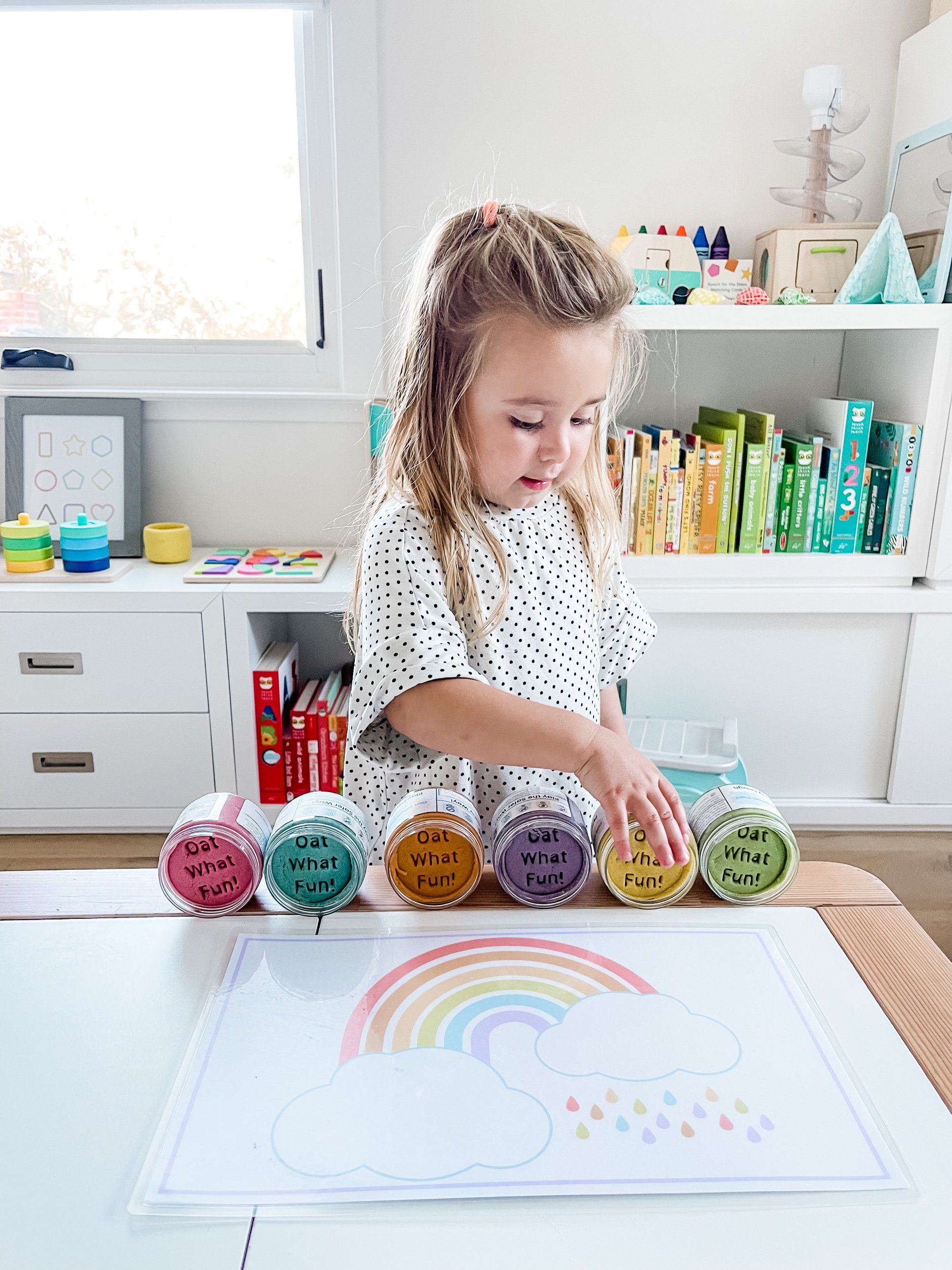
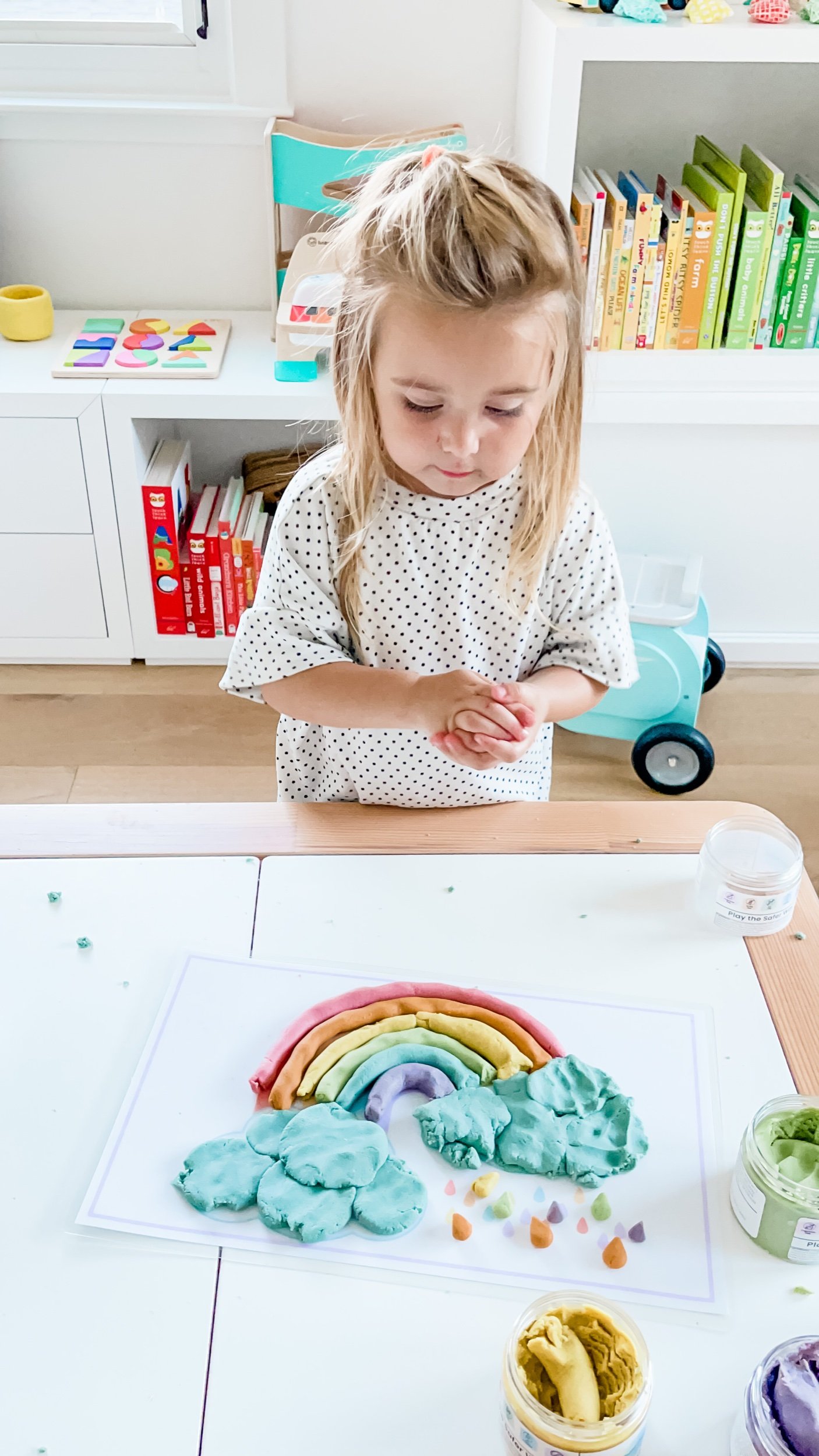
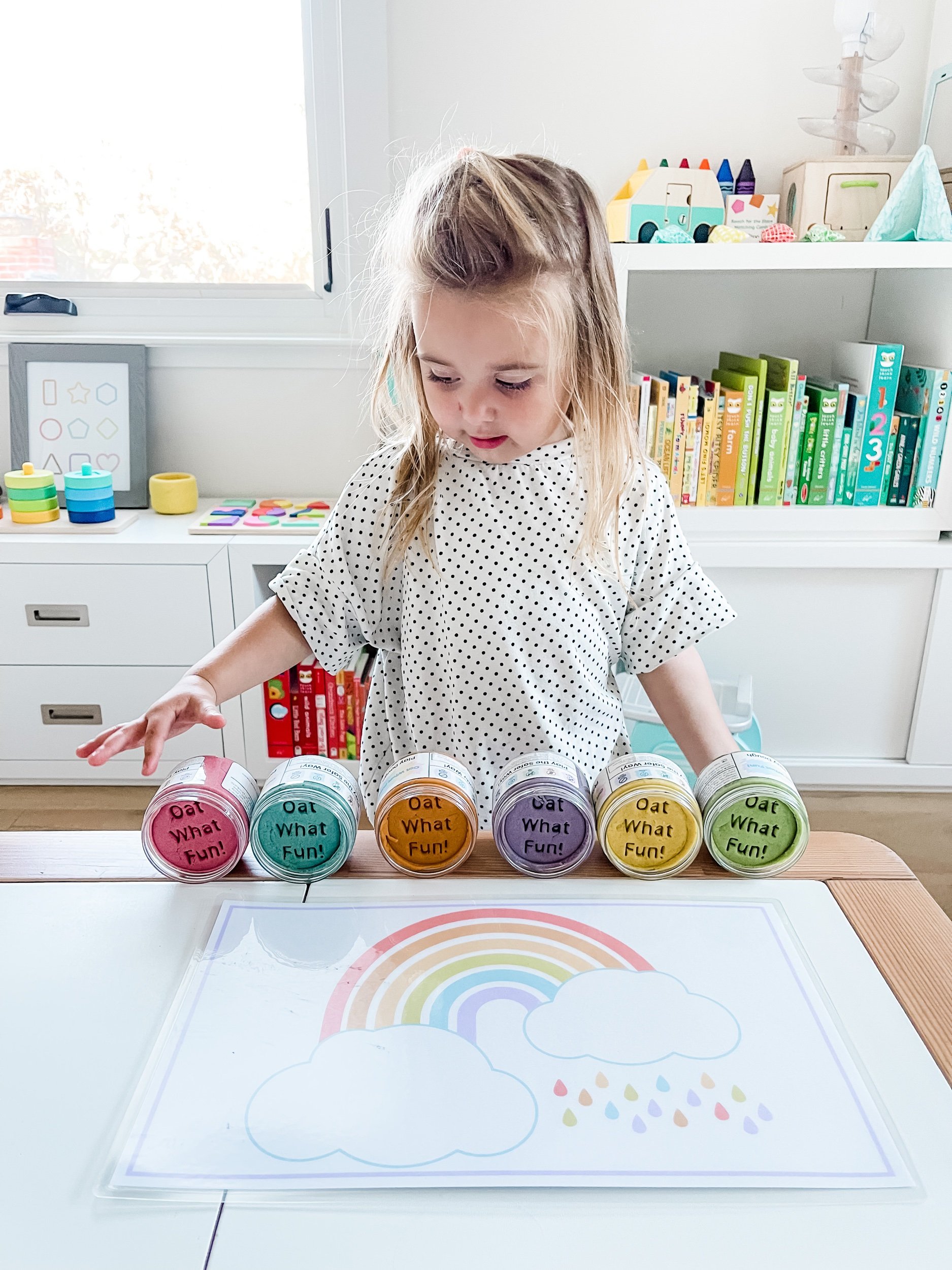
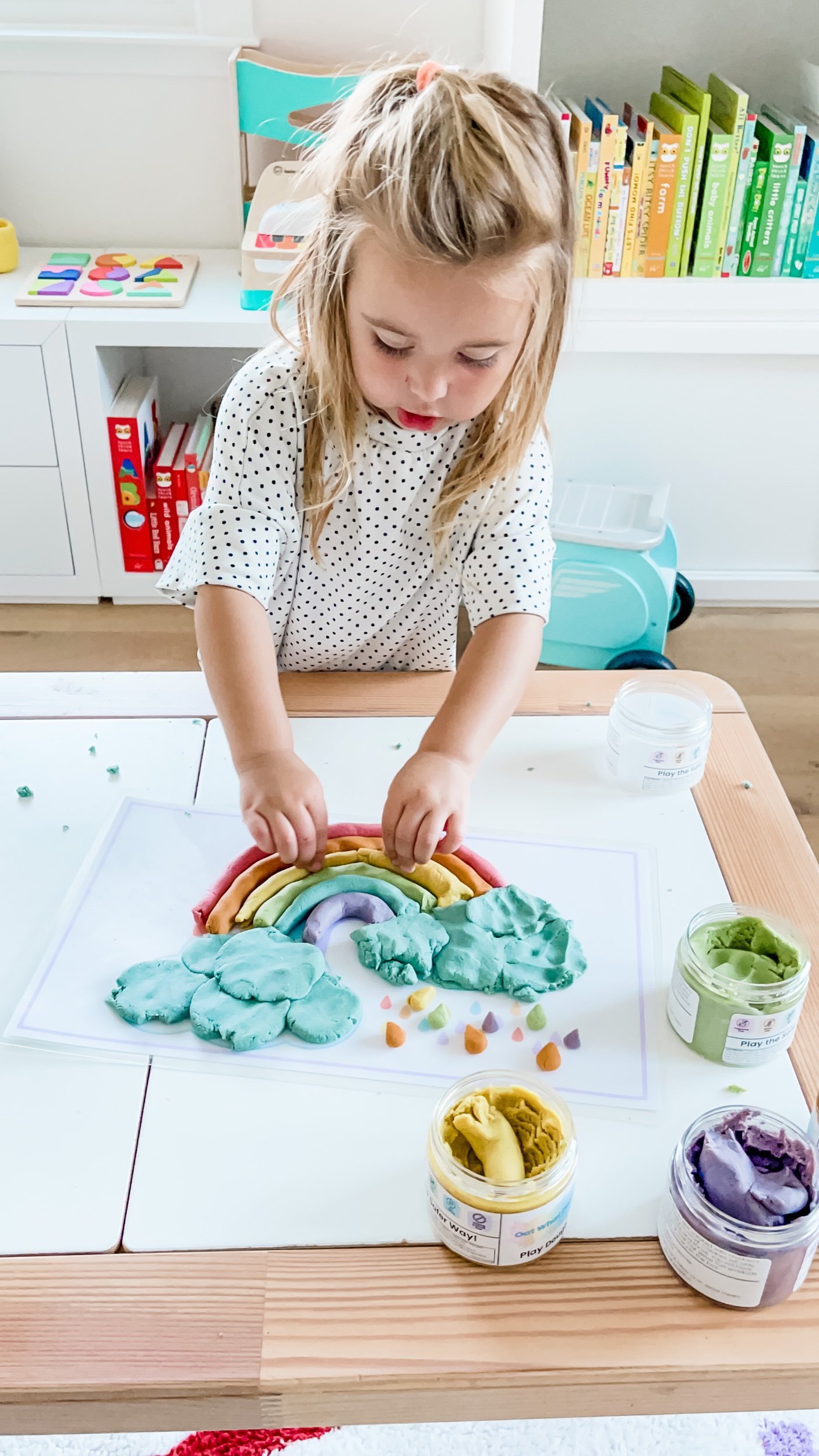
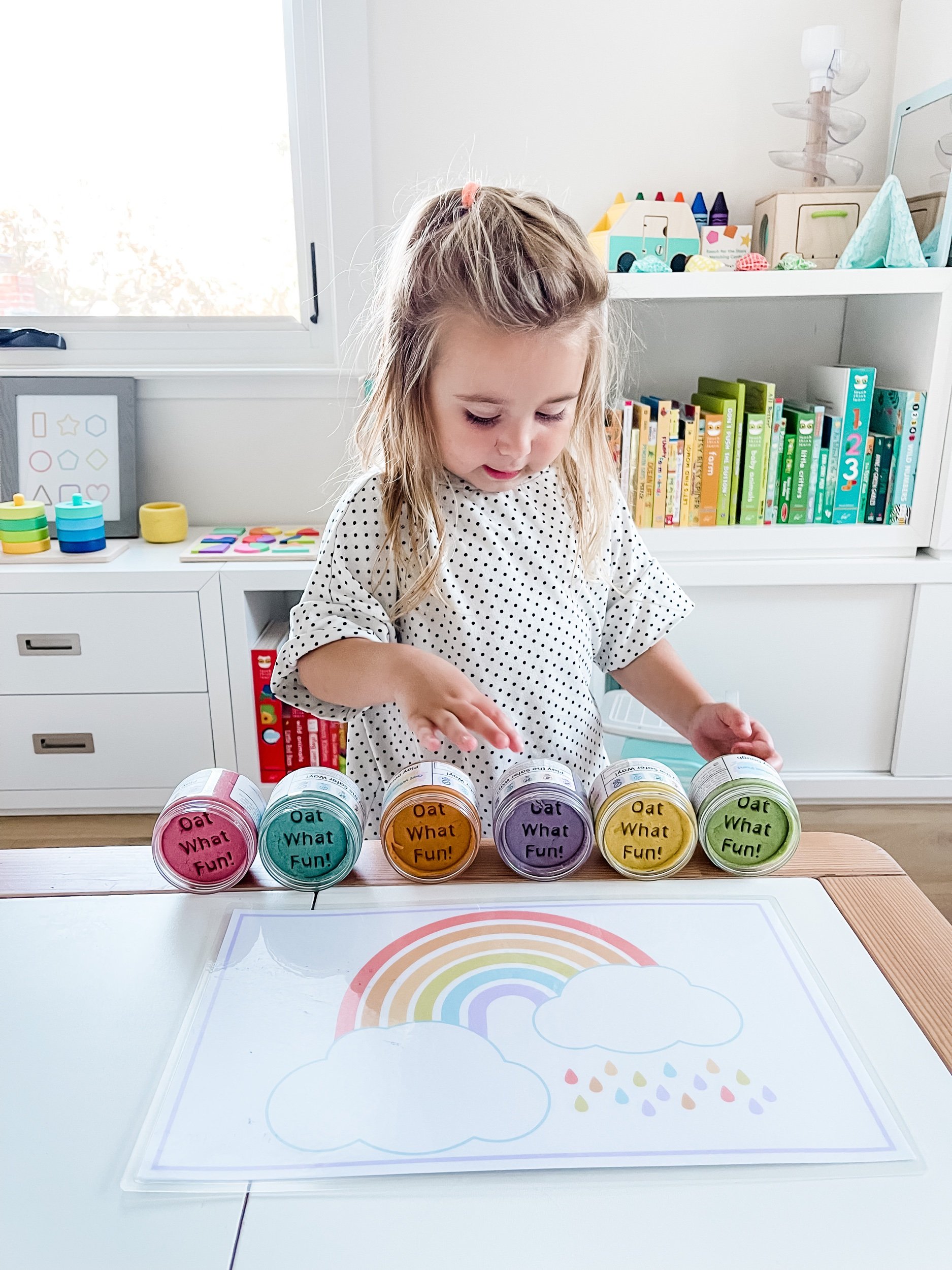
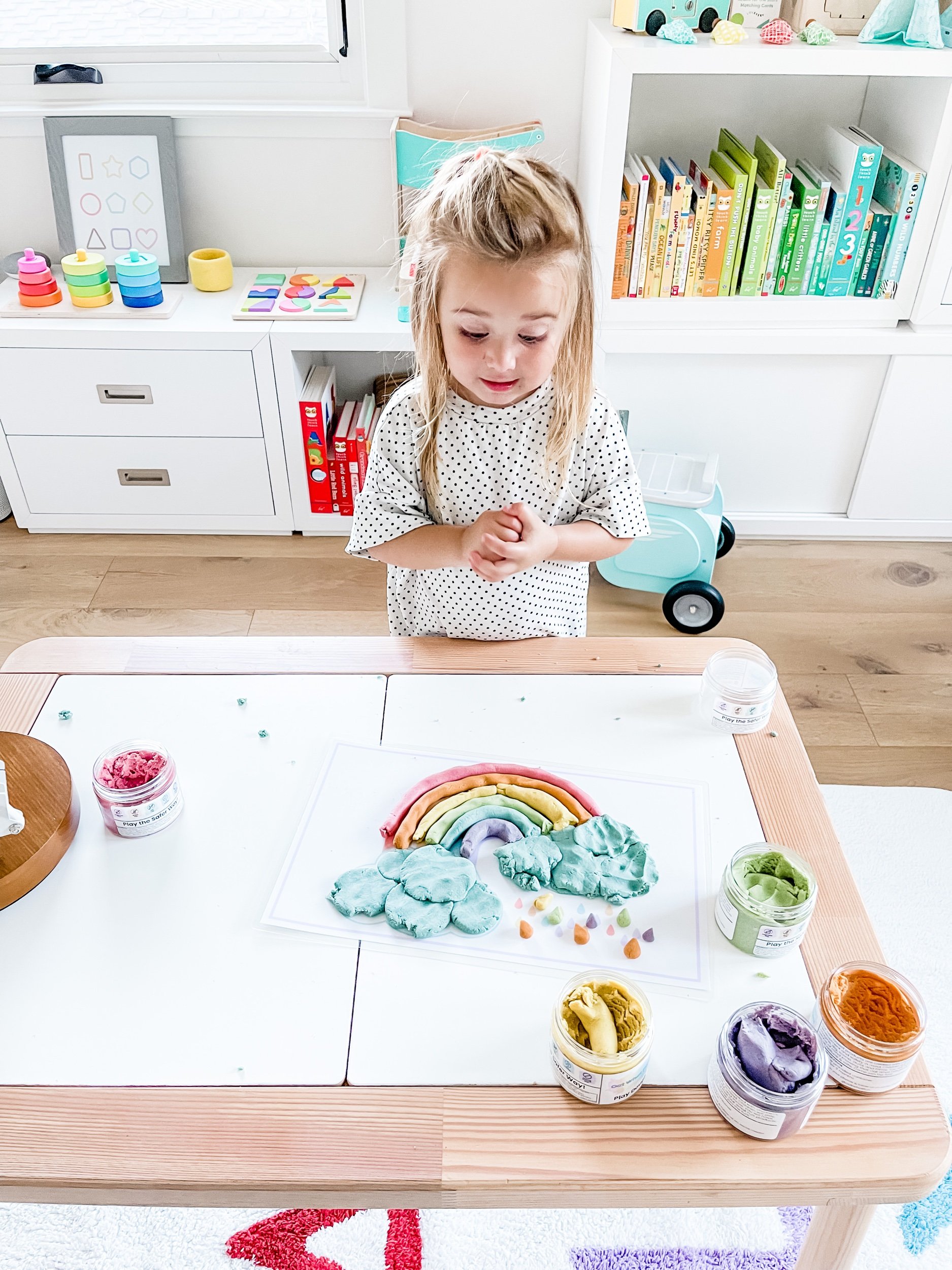
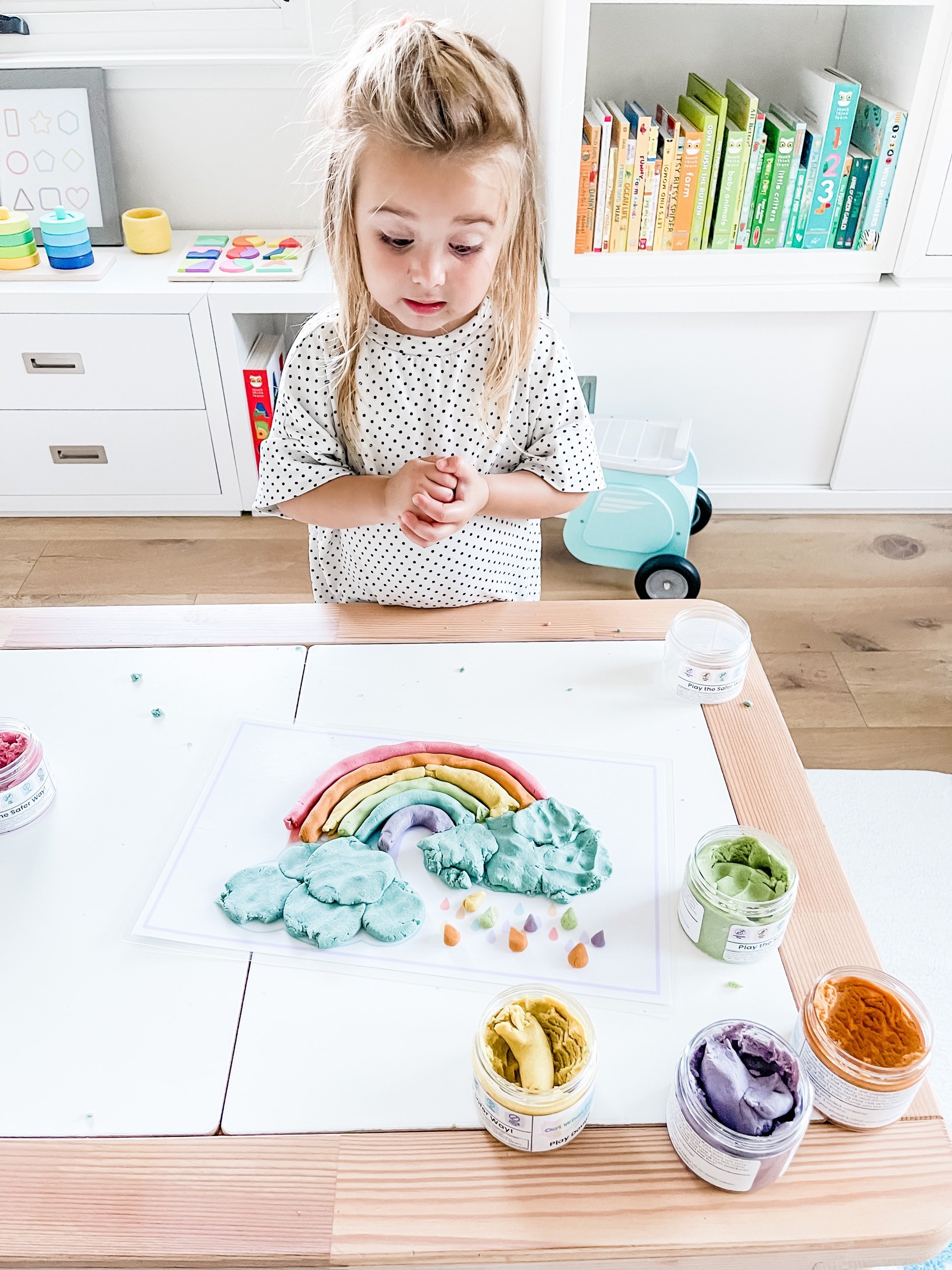
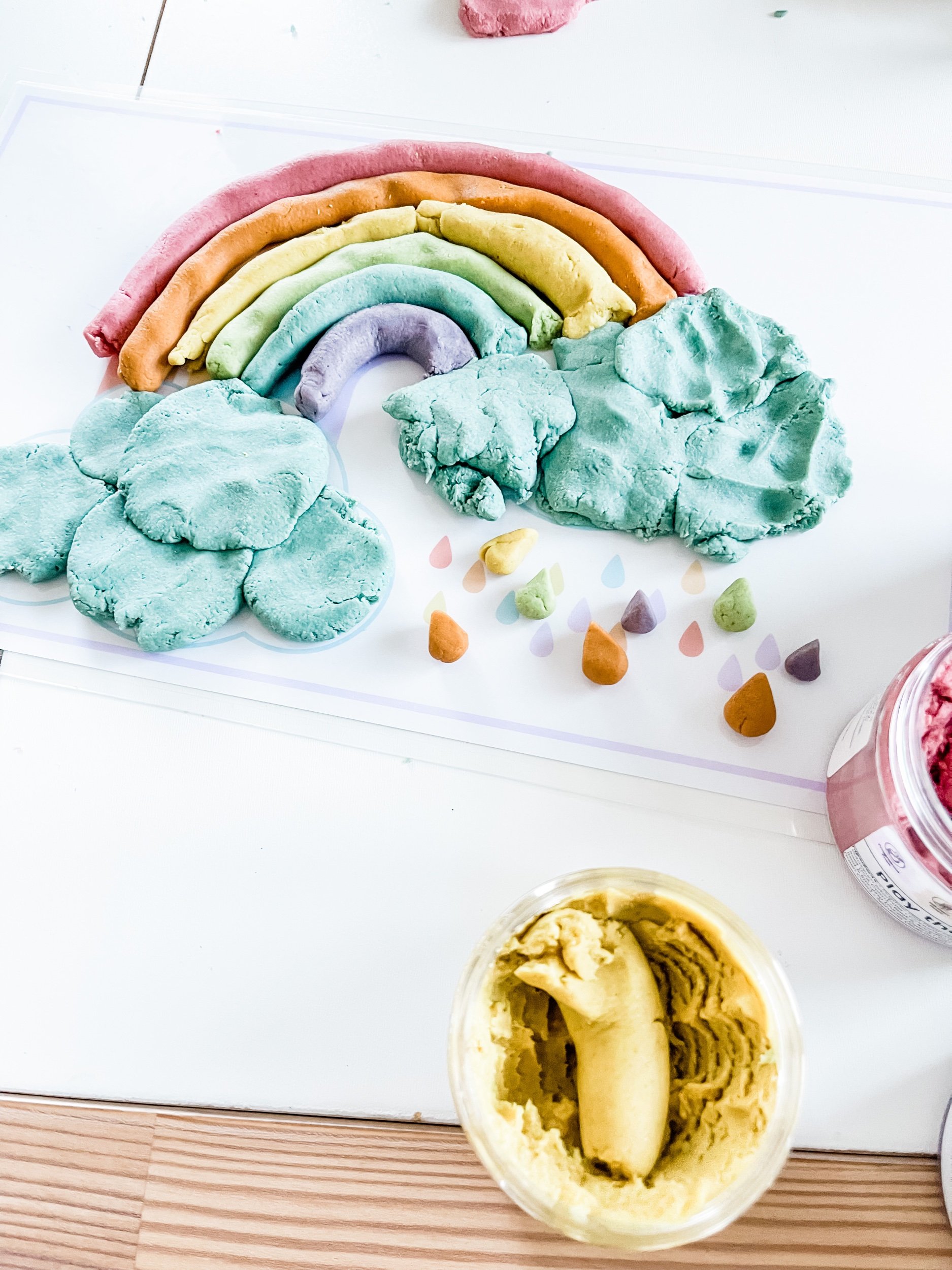
Monday:
Introduction to the colors of the rainbow: Red, Orange, Yellow, Green, Blue, Indigo, Violet
Show flashcards of each color and have the children identify them.
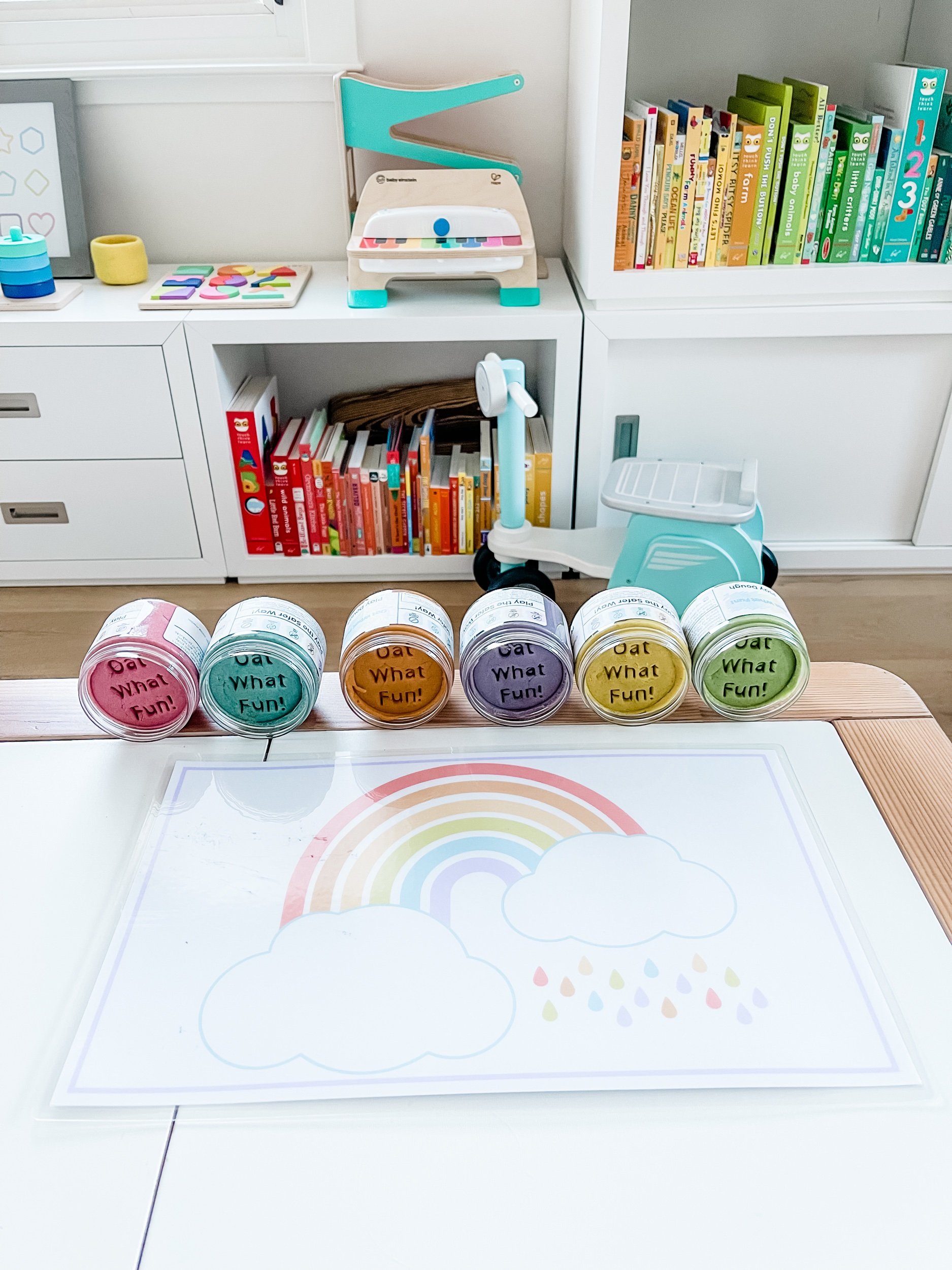
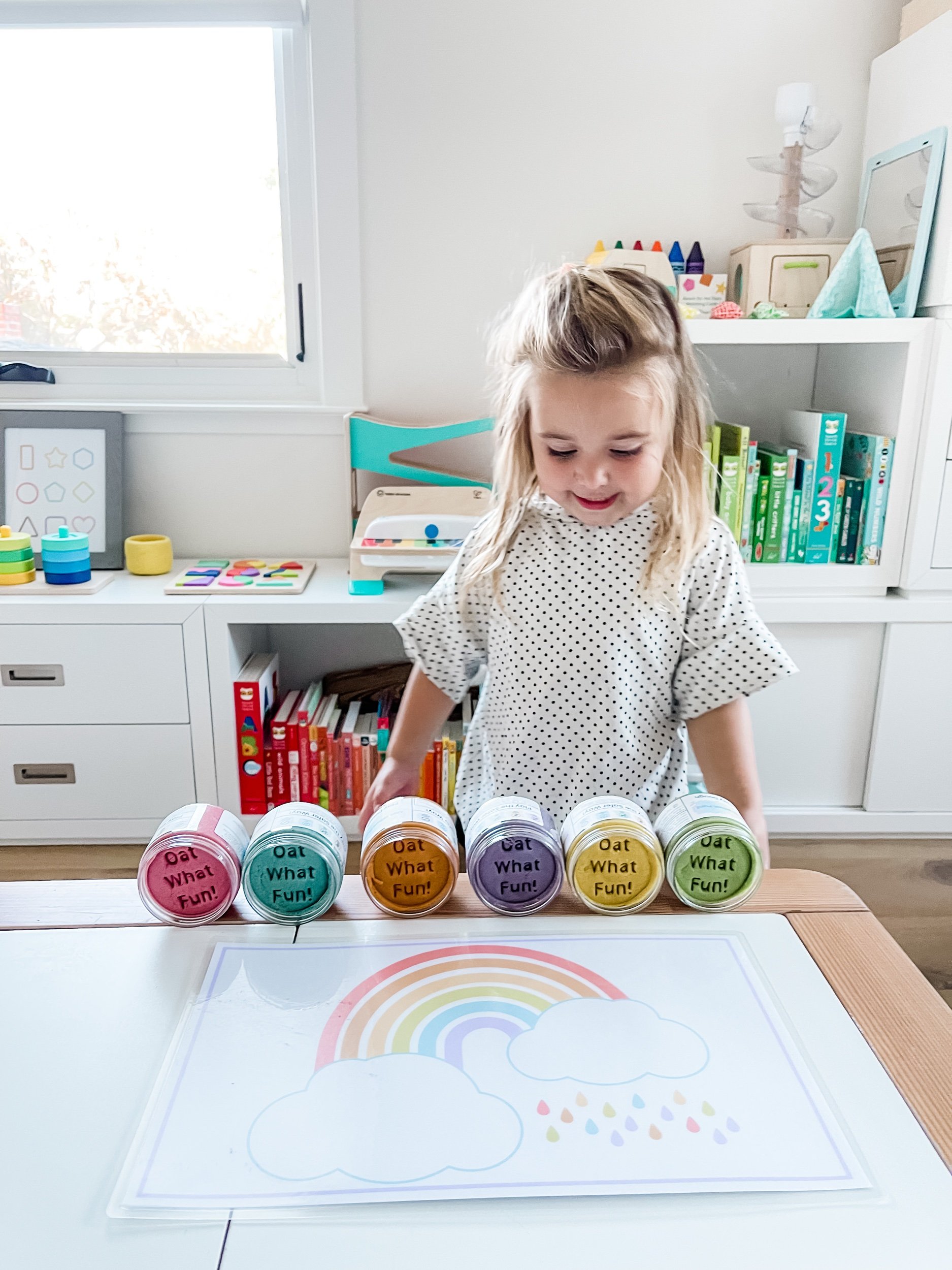
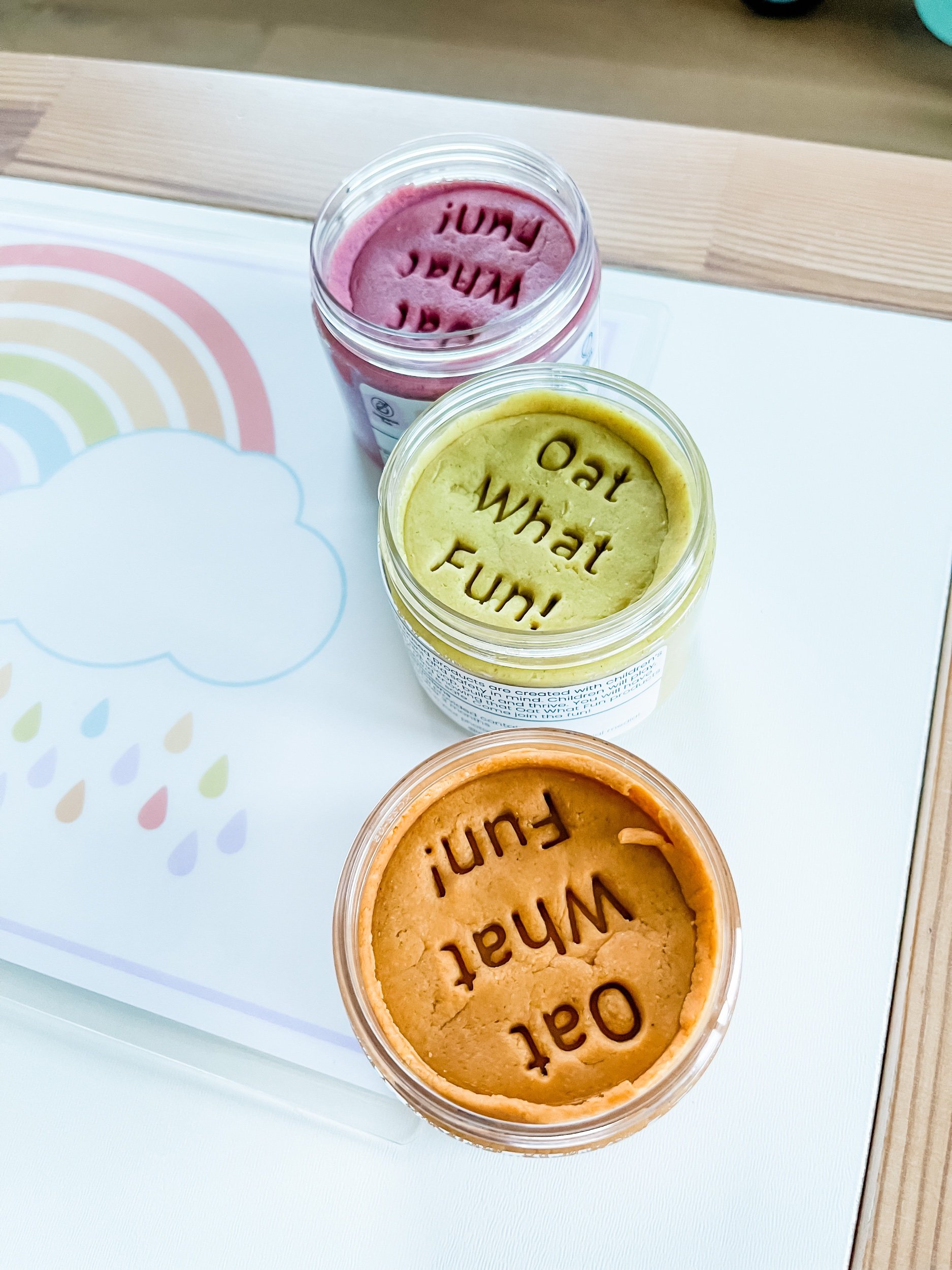
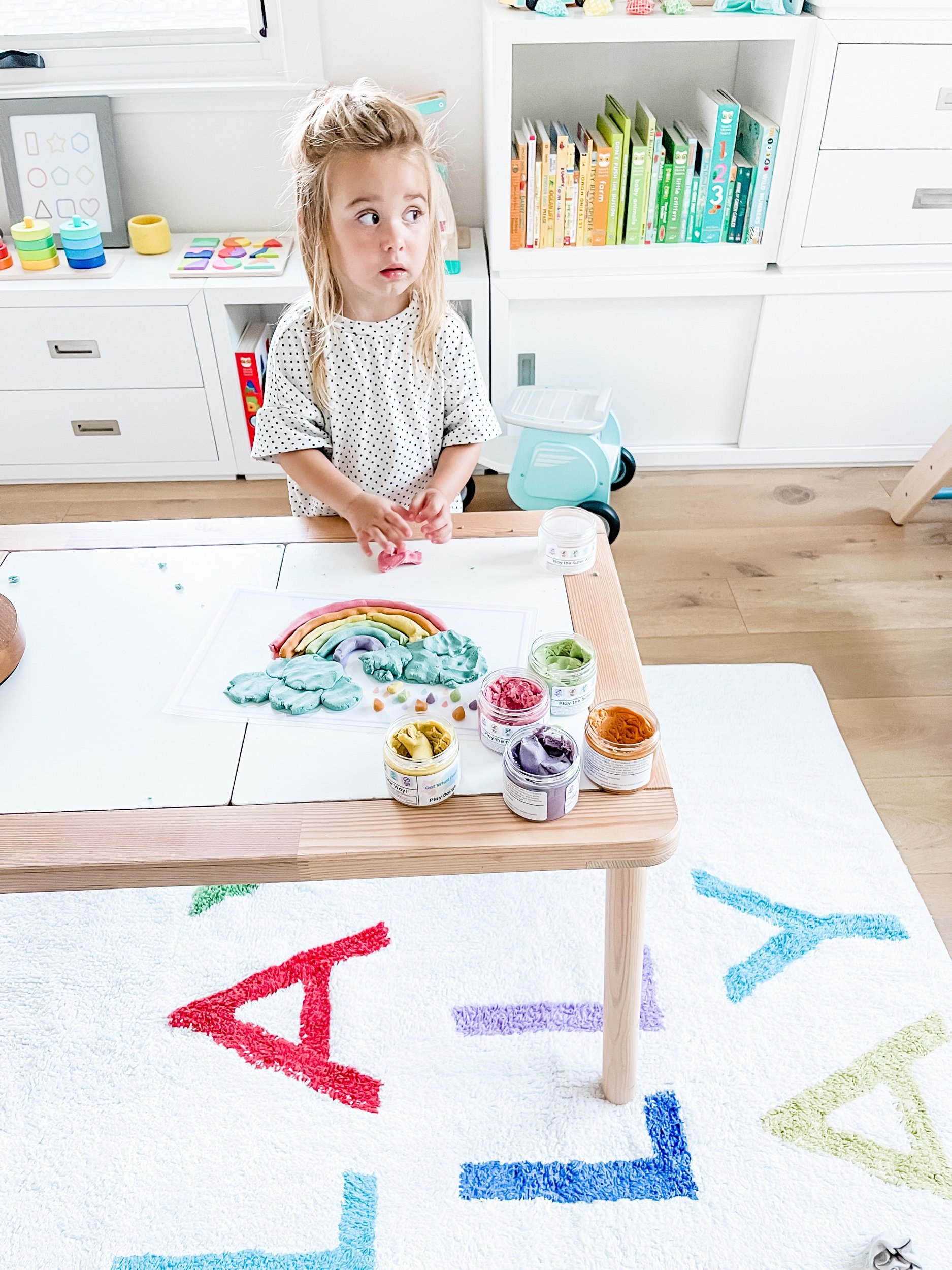
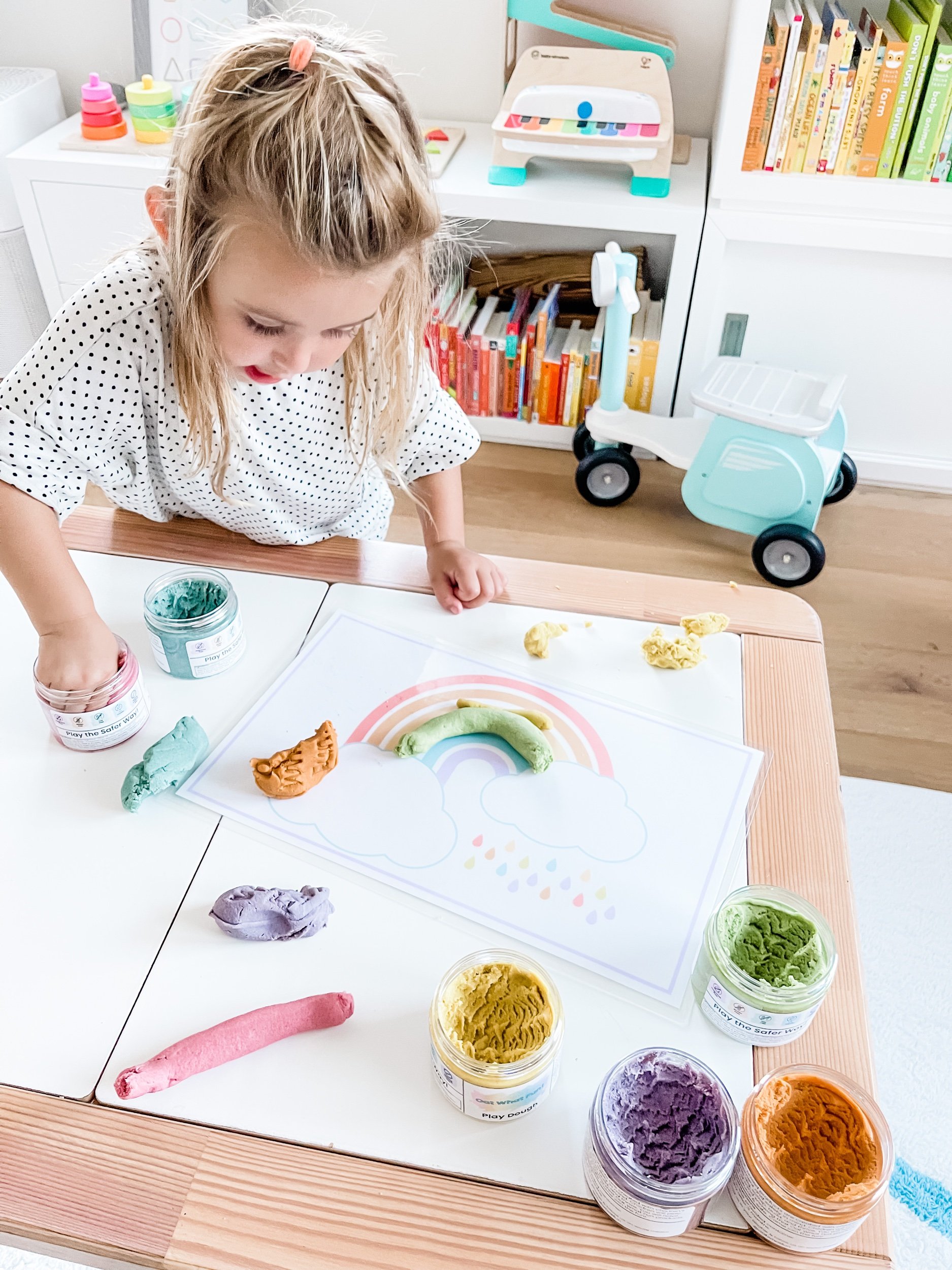
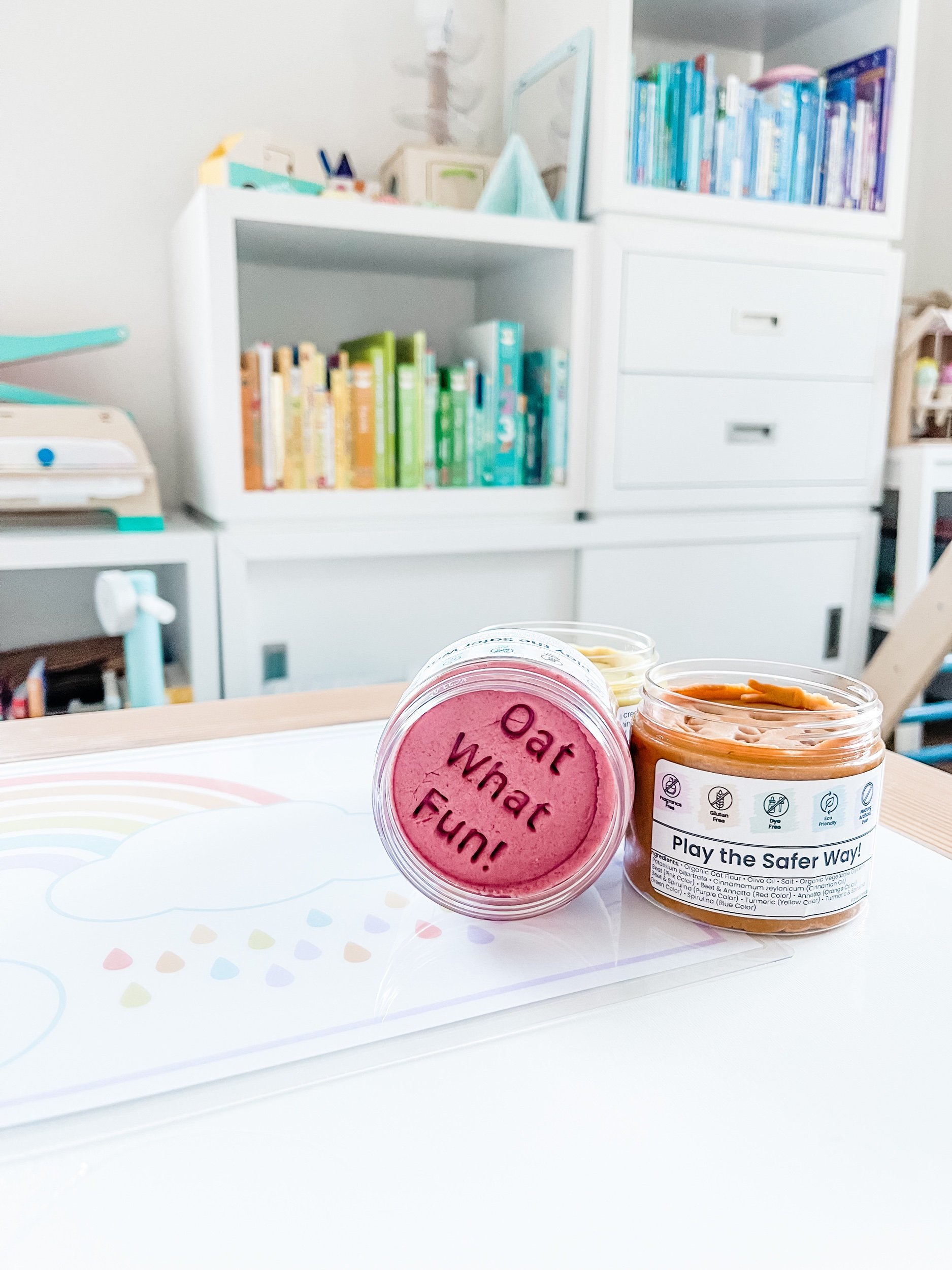
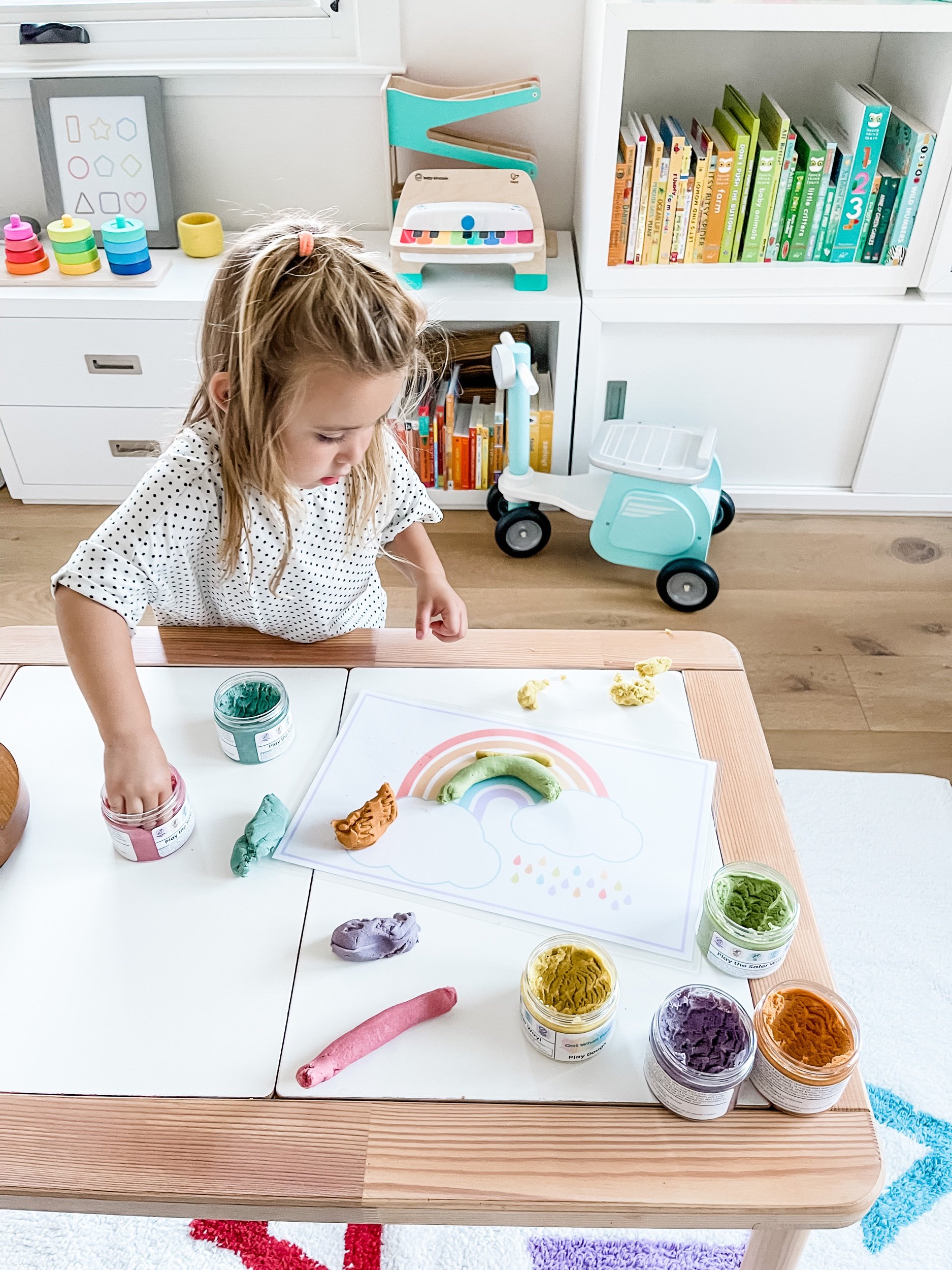
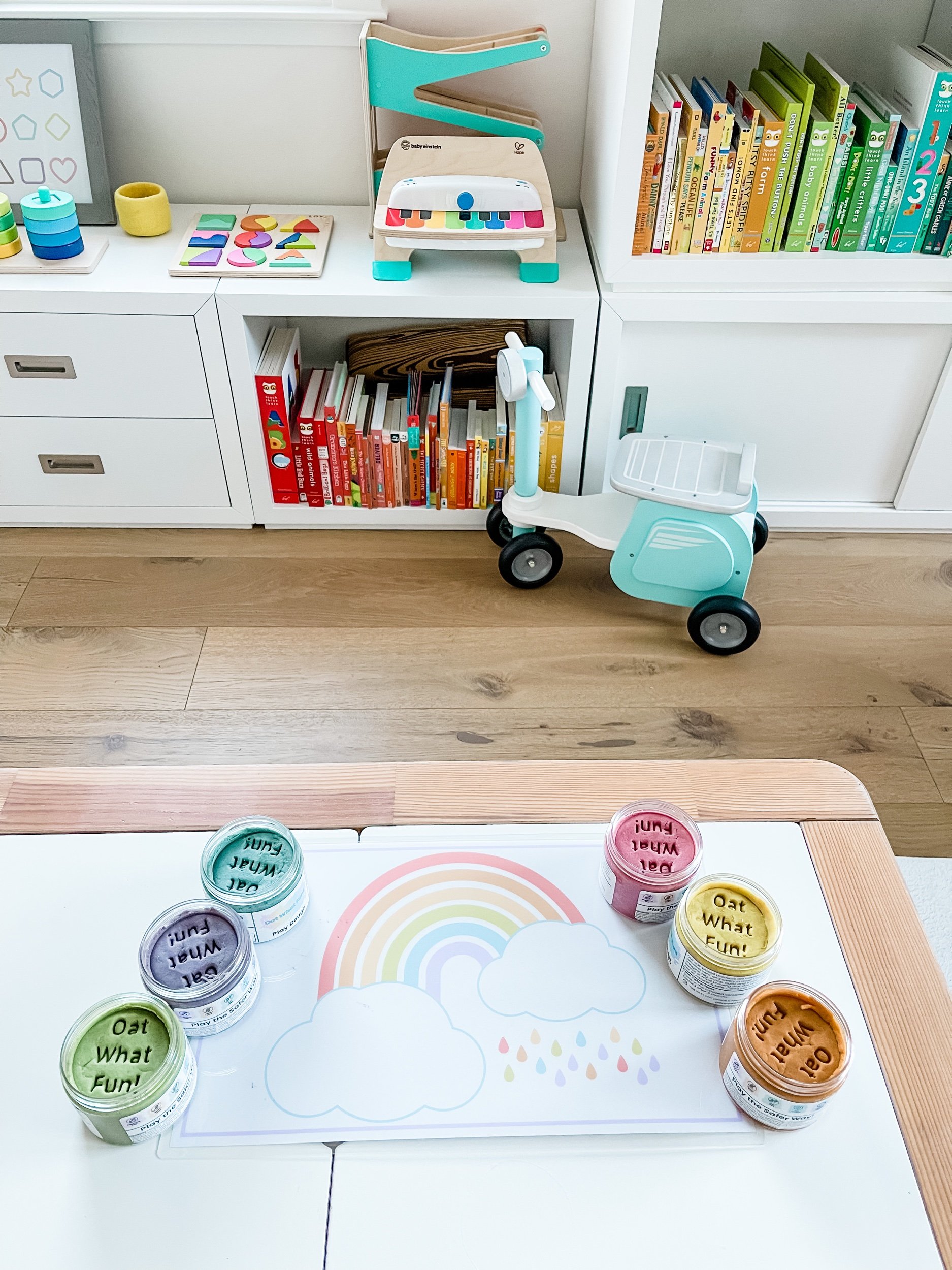
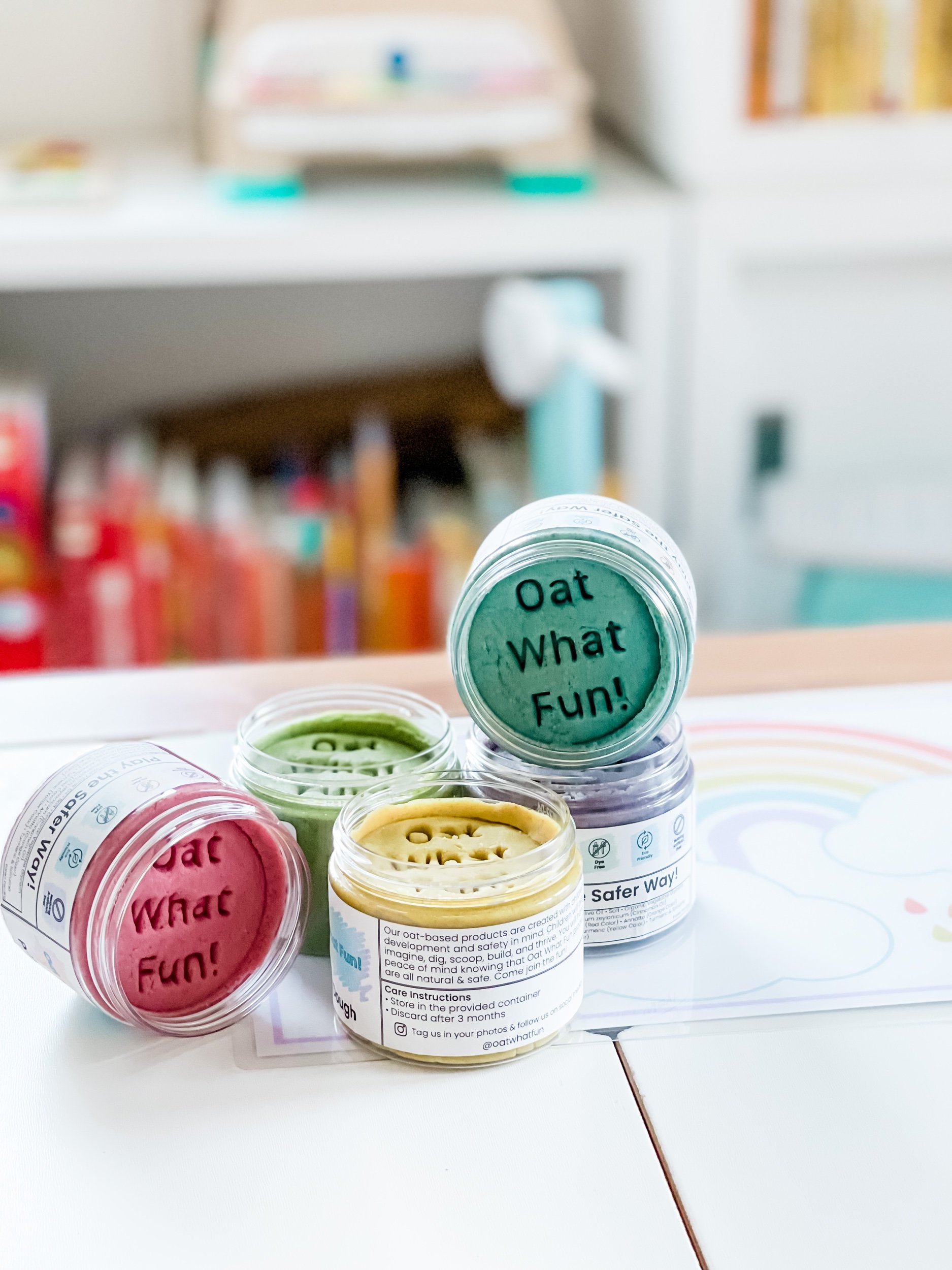
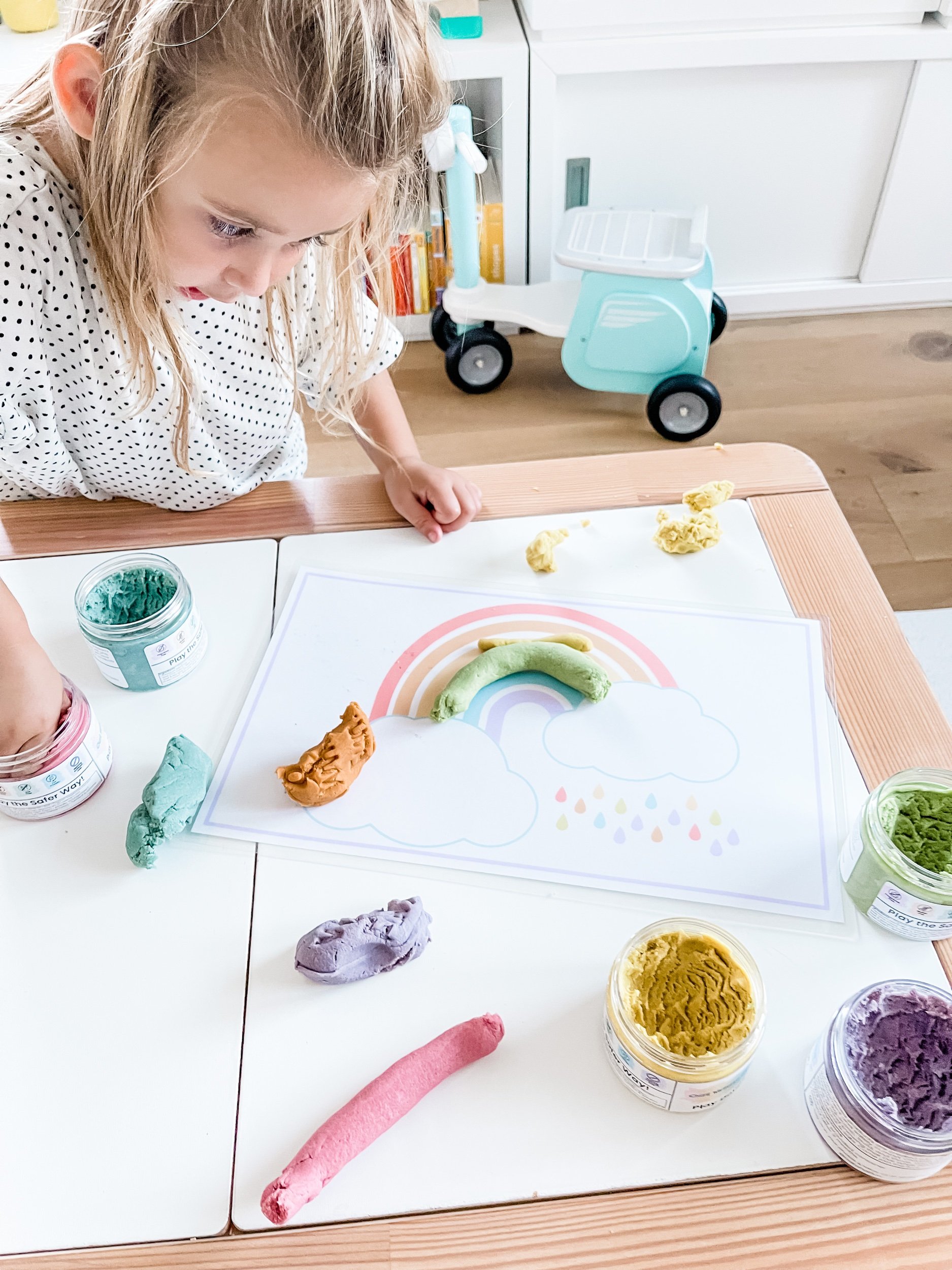
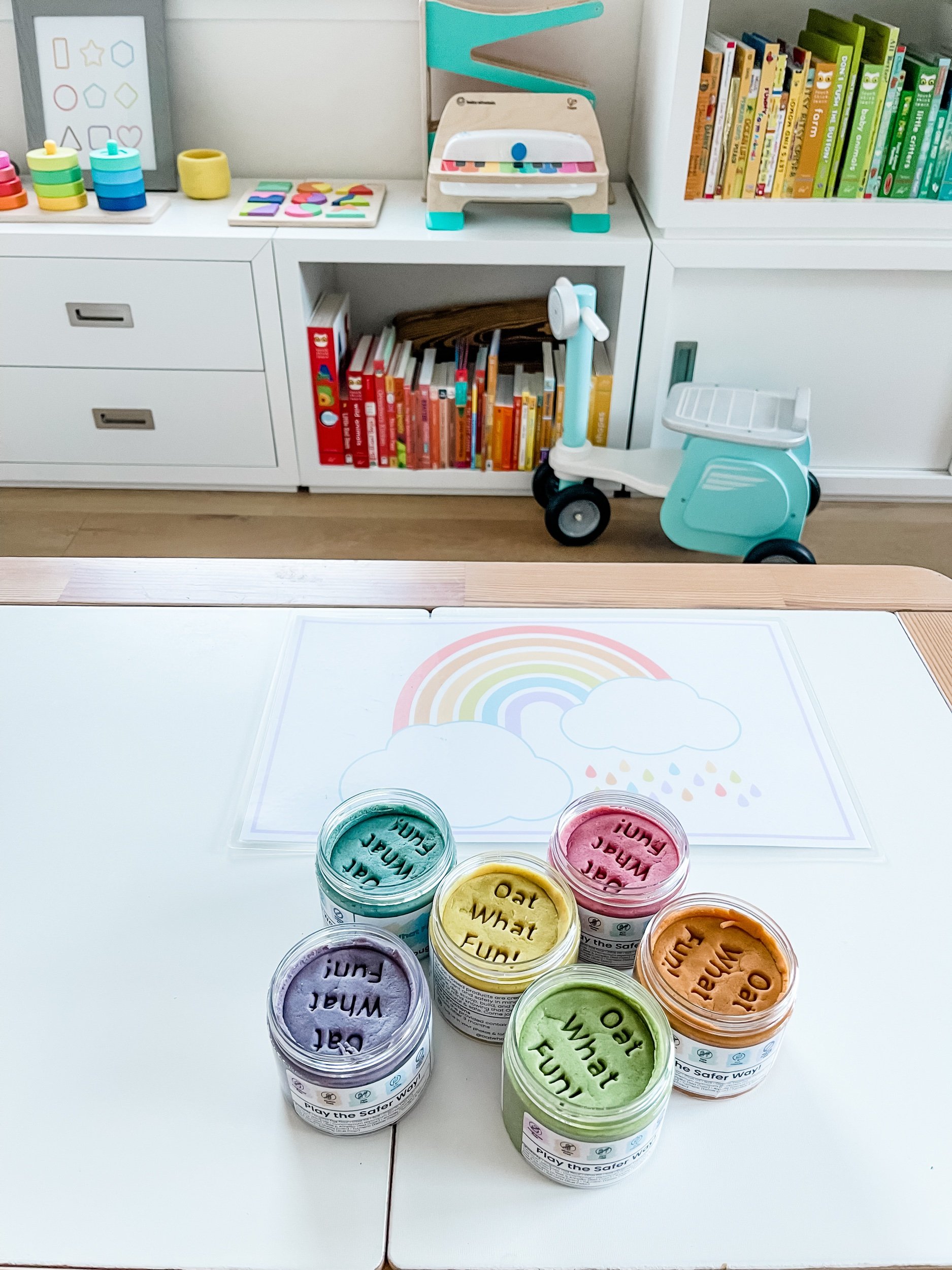
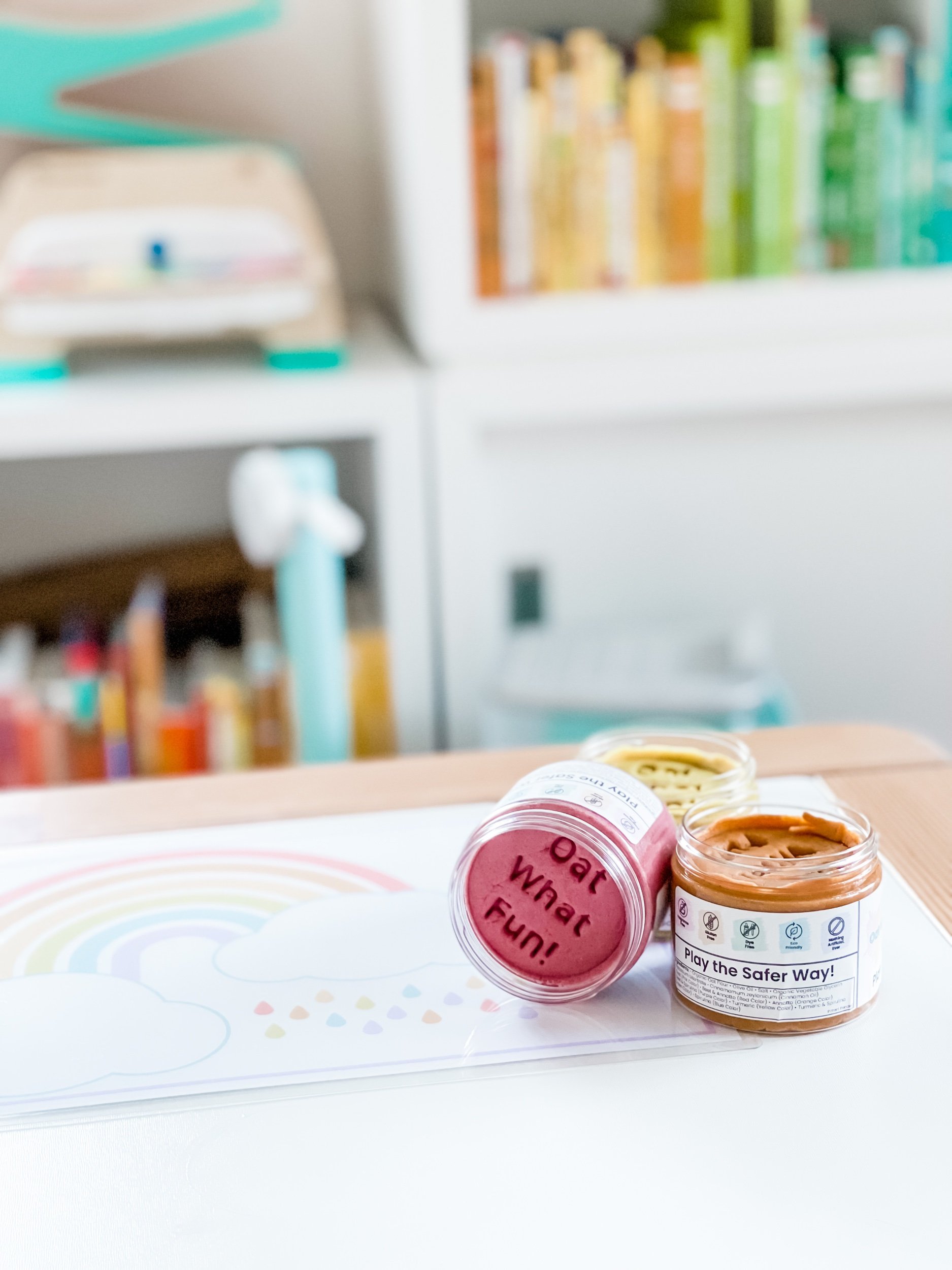
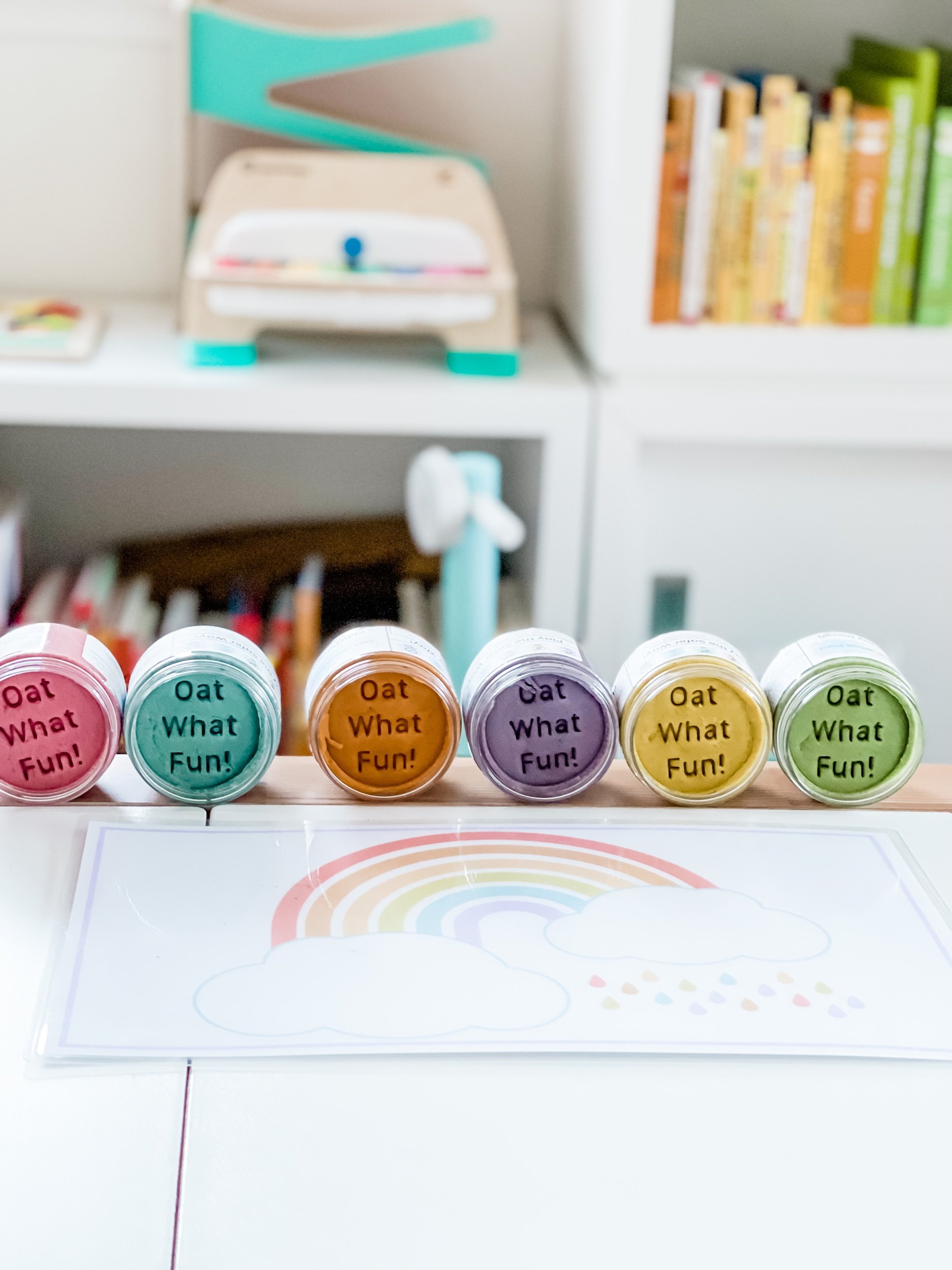
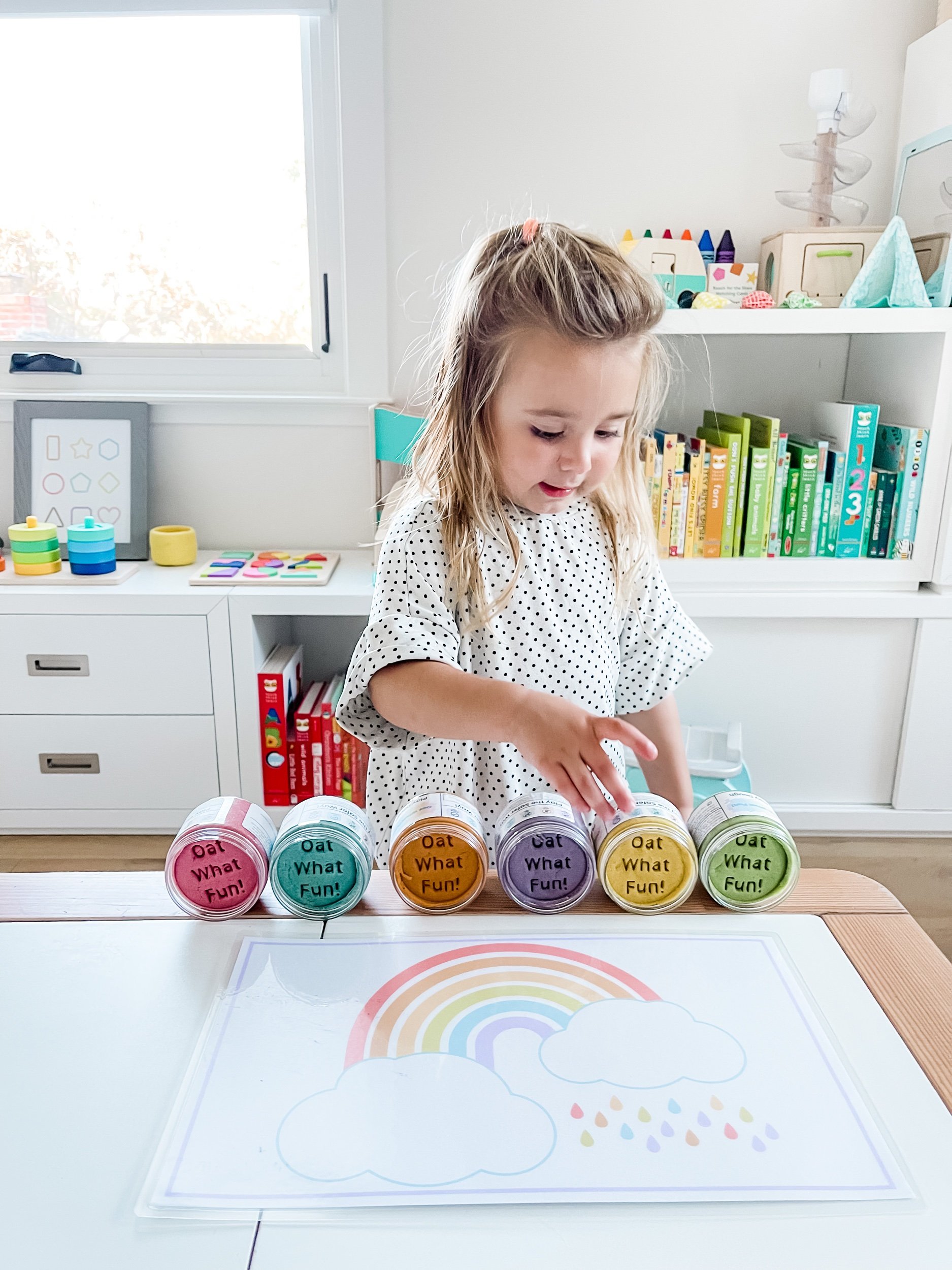
Introduce the playdoh, and have each child take a small piece of the natural playdoh in different colors, and let them explore the texture and color.
Tuesday:
Review of the colors of the rainbow and their associated names.
Show a picture of the rainbow and have the children identify the colors in order.
Small group activity: Have the children work in pairs to create different shapes and patterns using the playdoh in the colors of the rainbow.
Wednesday:
Review of the colors of the rainbow and their order.
Introduce the concept of mixing colors to make new colors.
Have the children mix different colors of playdoh together to create new colors and discuss the results.
Thursday:
Review of the colors of the rainbow, their order, and the concept of mixing colors.
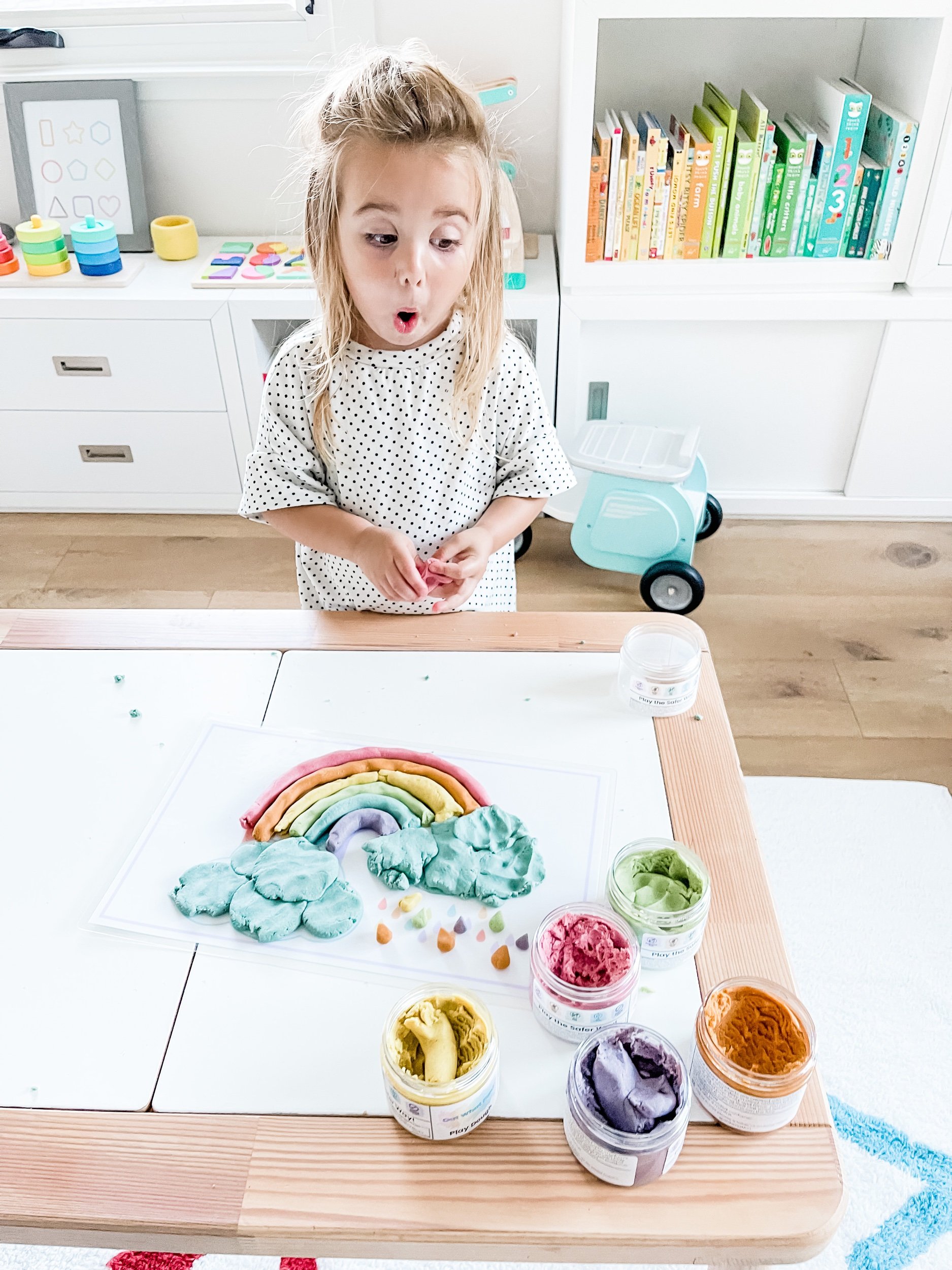
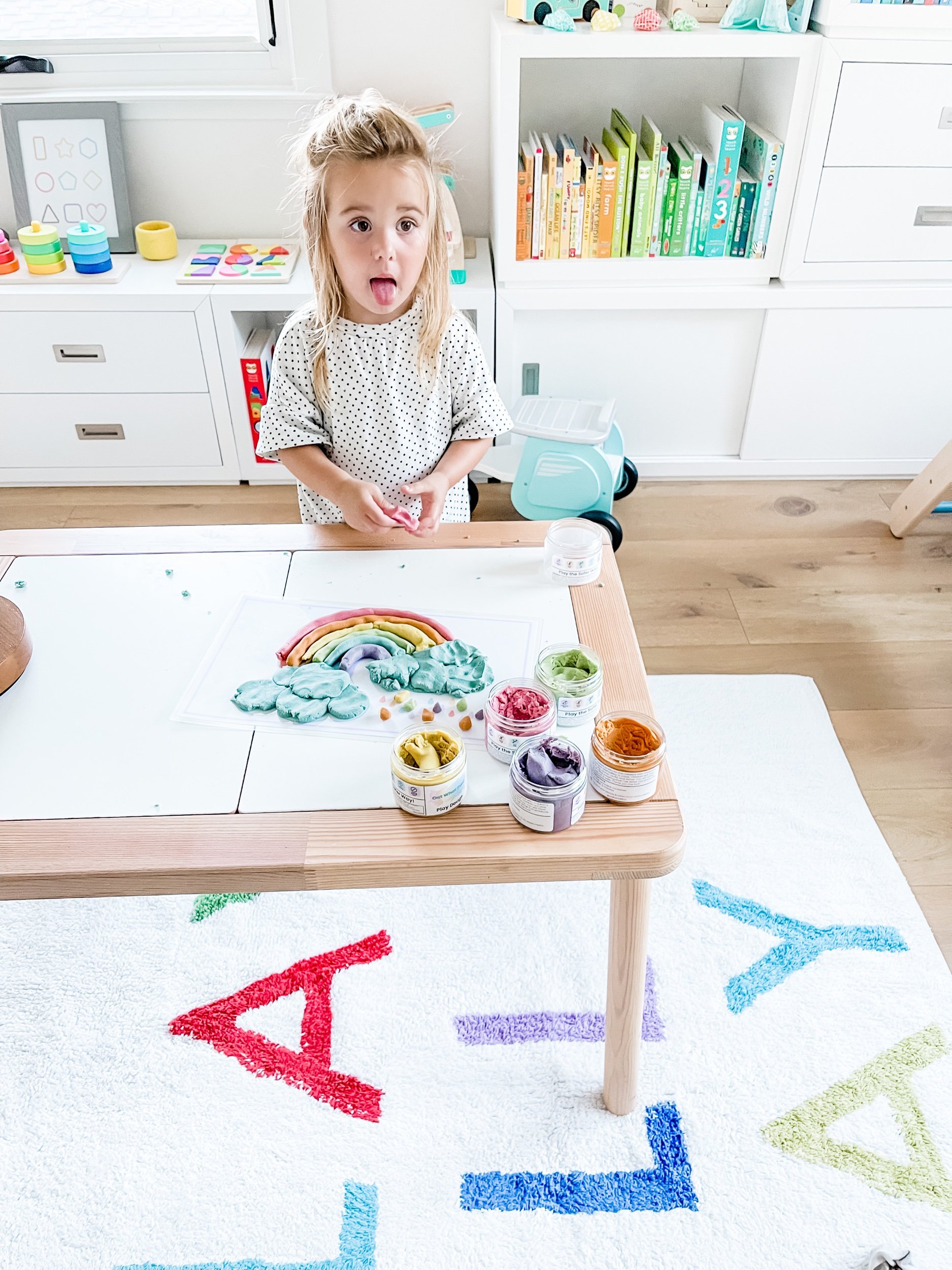
Hands-on activity: Have the children create a rainbow using the playdoh in the correct order of colors.
Encourage the children to use their creativity and imagination to create different designs and patterns within the rainbow.
Friday:
Review of the week's lesson on the colors of the rainbow.
Have the children share their rainbow creations with the class.
End the week with a class discussion on how understanding the colors of the rainbow can help children in their daily lives, such as recognizing different colors of fruits, clothes, and traffic lights.
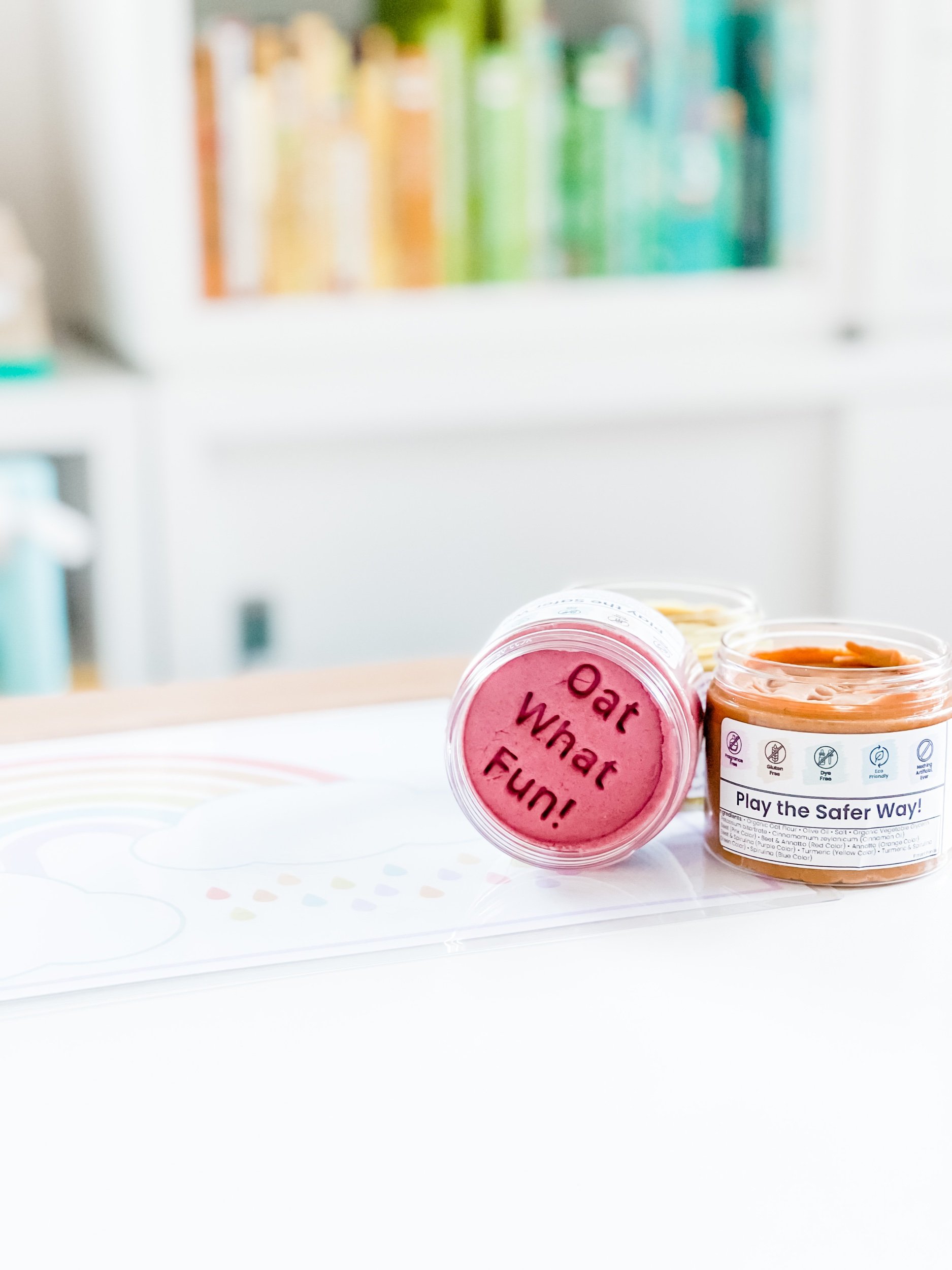
Note: Each day's activities should be adjusted based on the children's age and development level. Also, activities should be adapted to include different modalities such as visual, kinesthetic, auditory, and tactile to make it more engaging for kids. Use of natural playdoh is recommended as it is non-toxic, safe and easy to clean up.

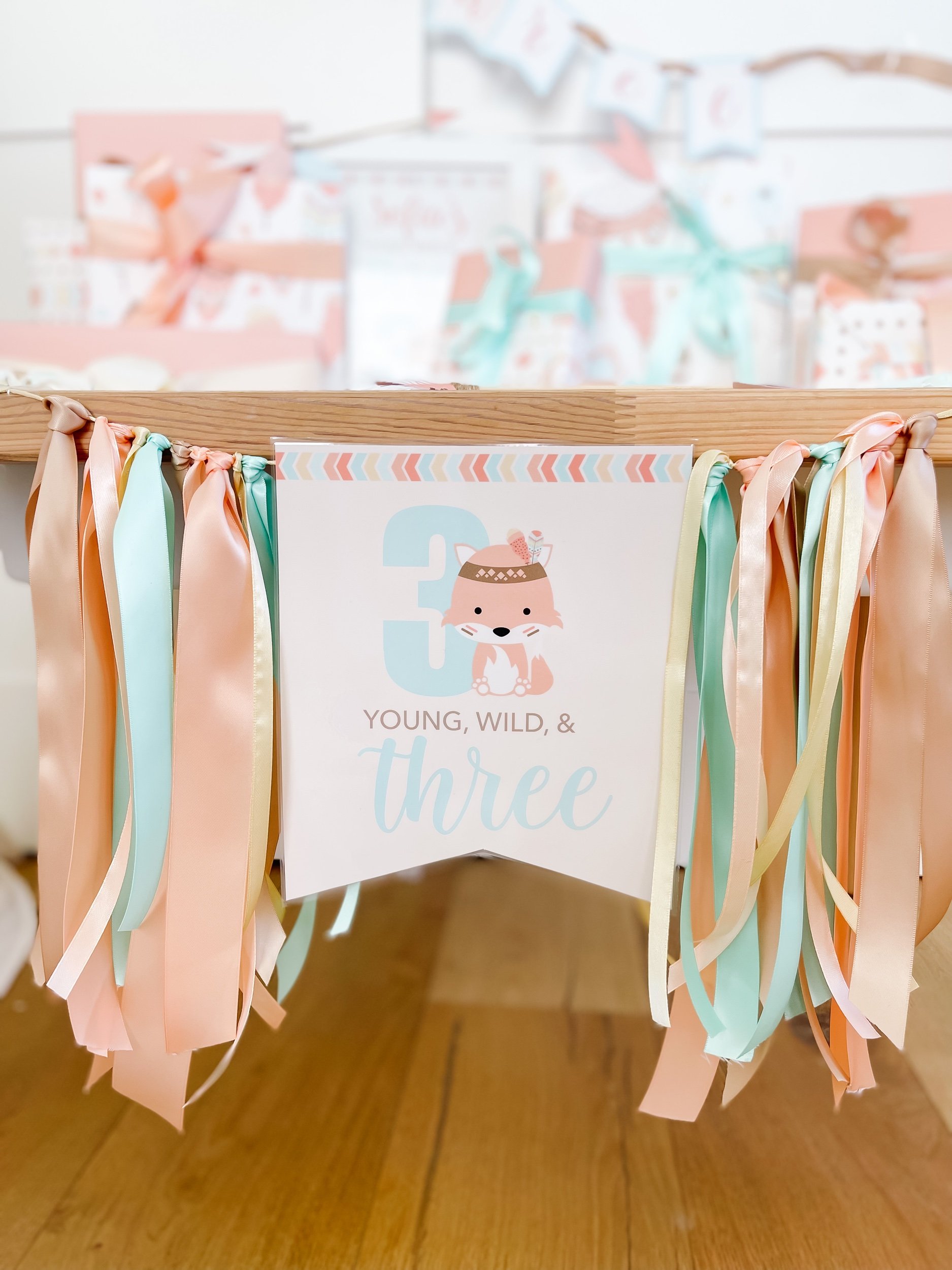
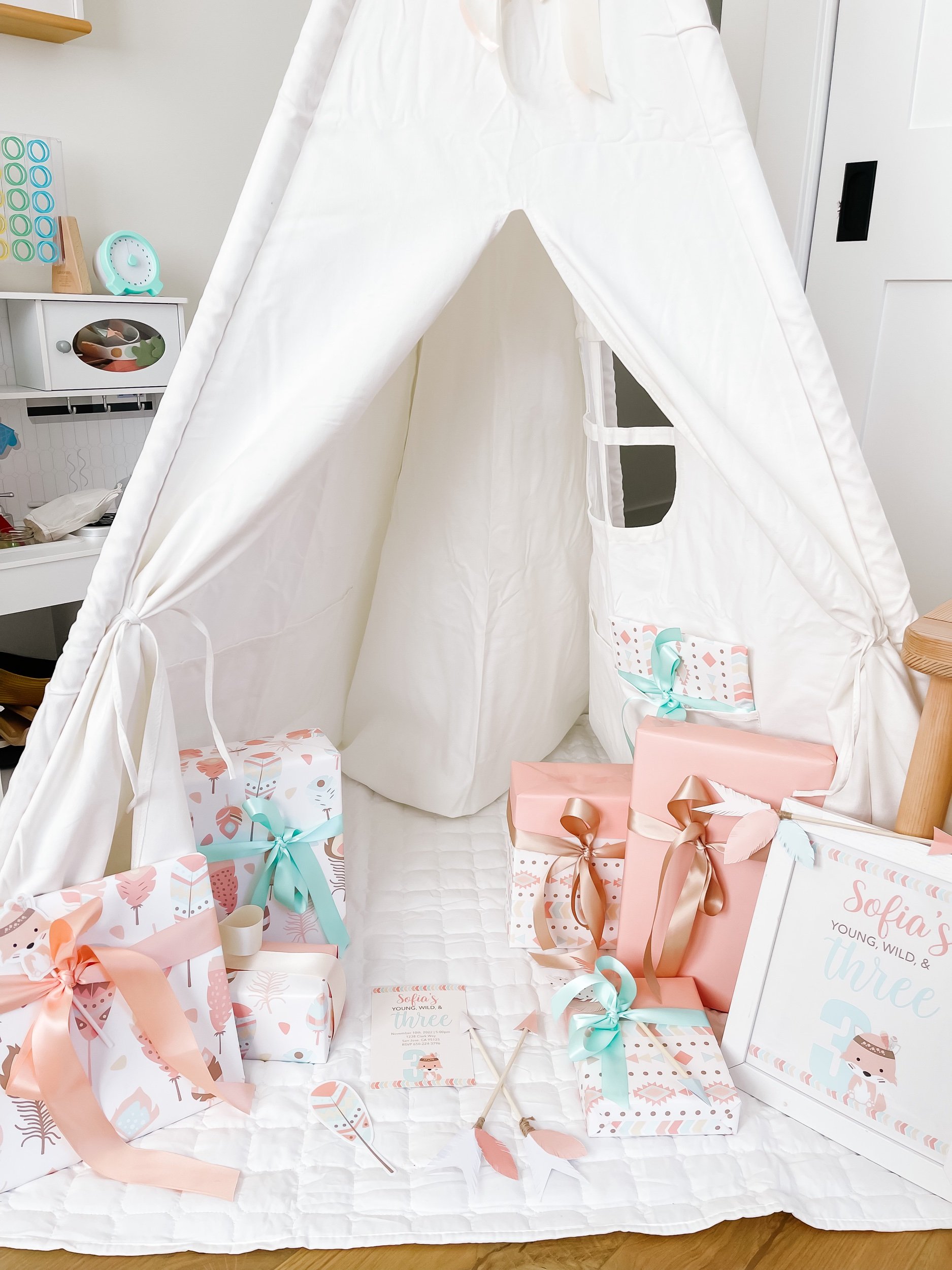
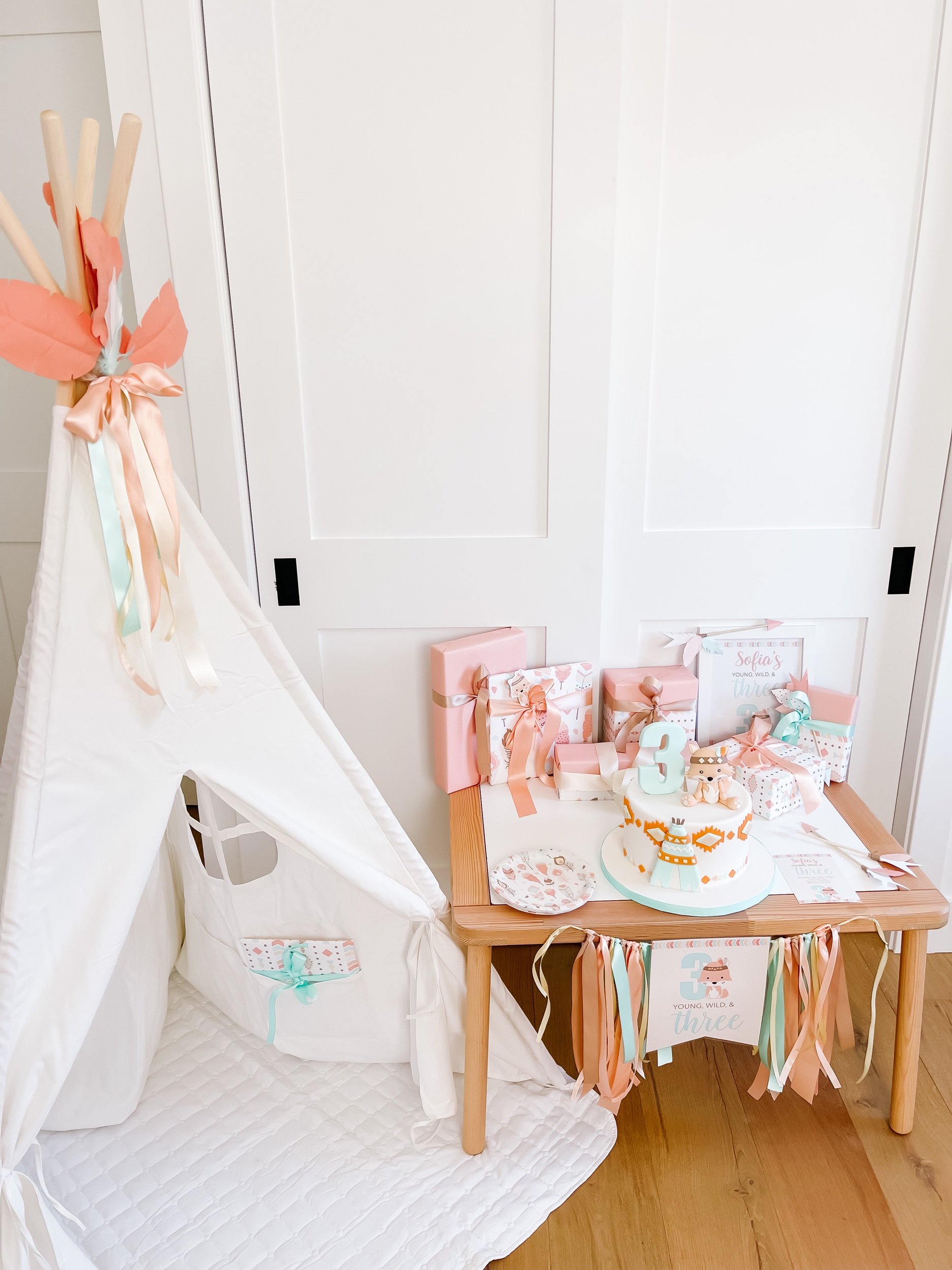
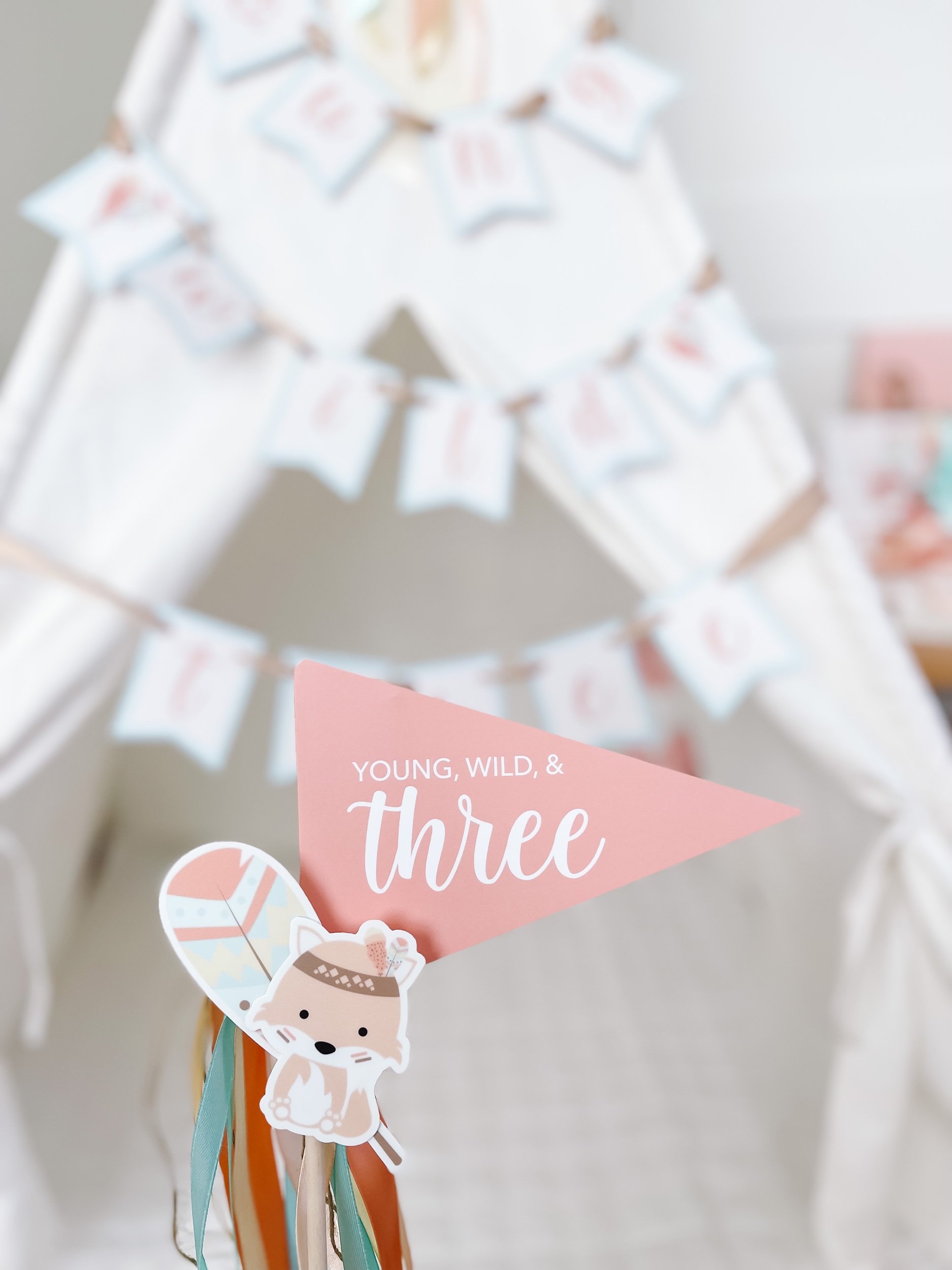
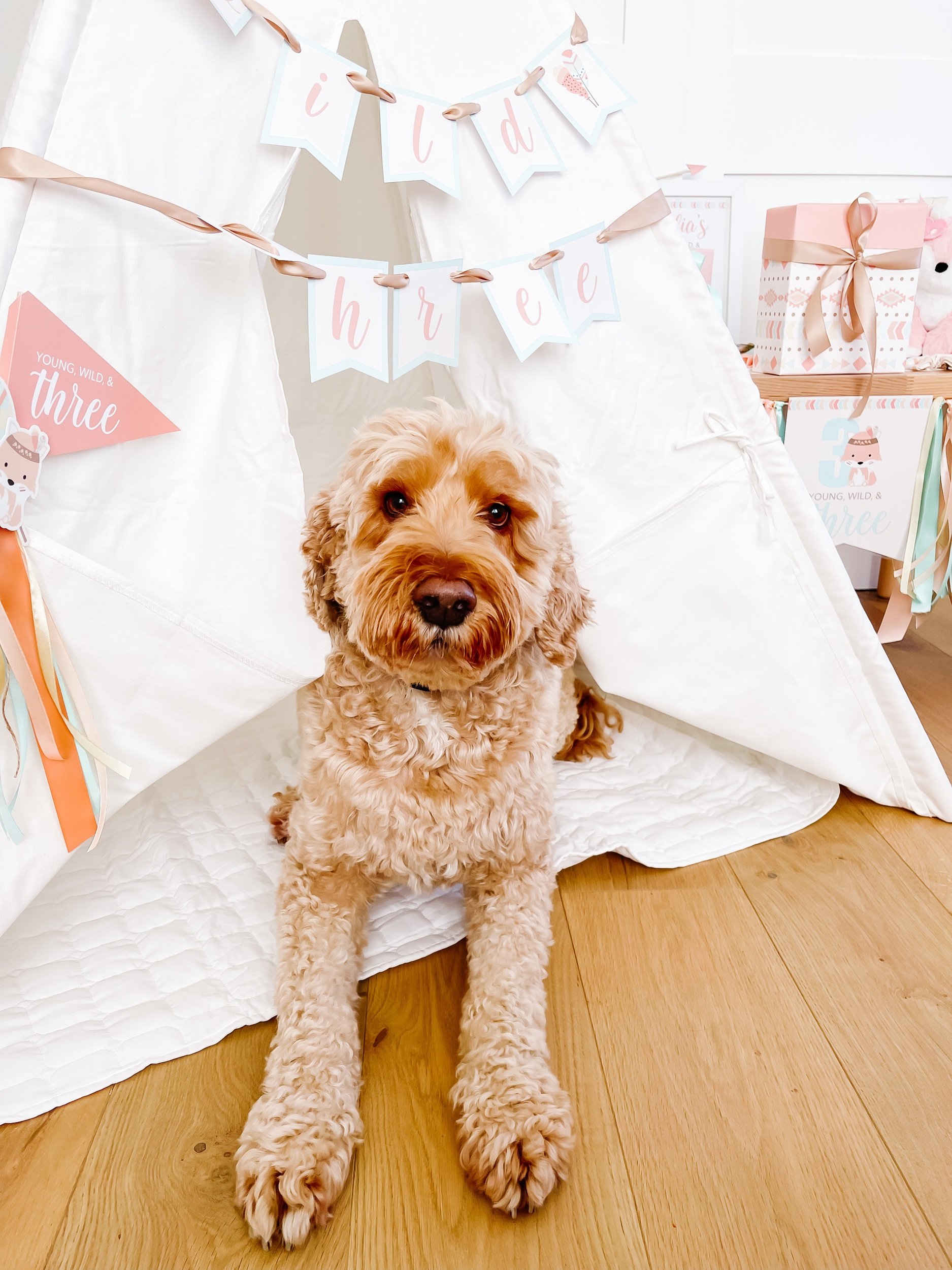
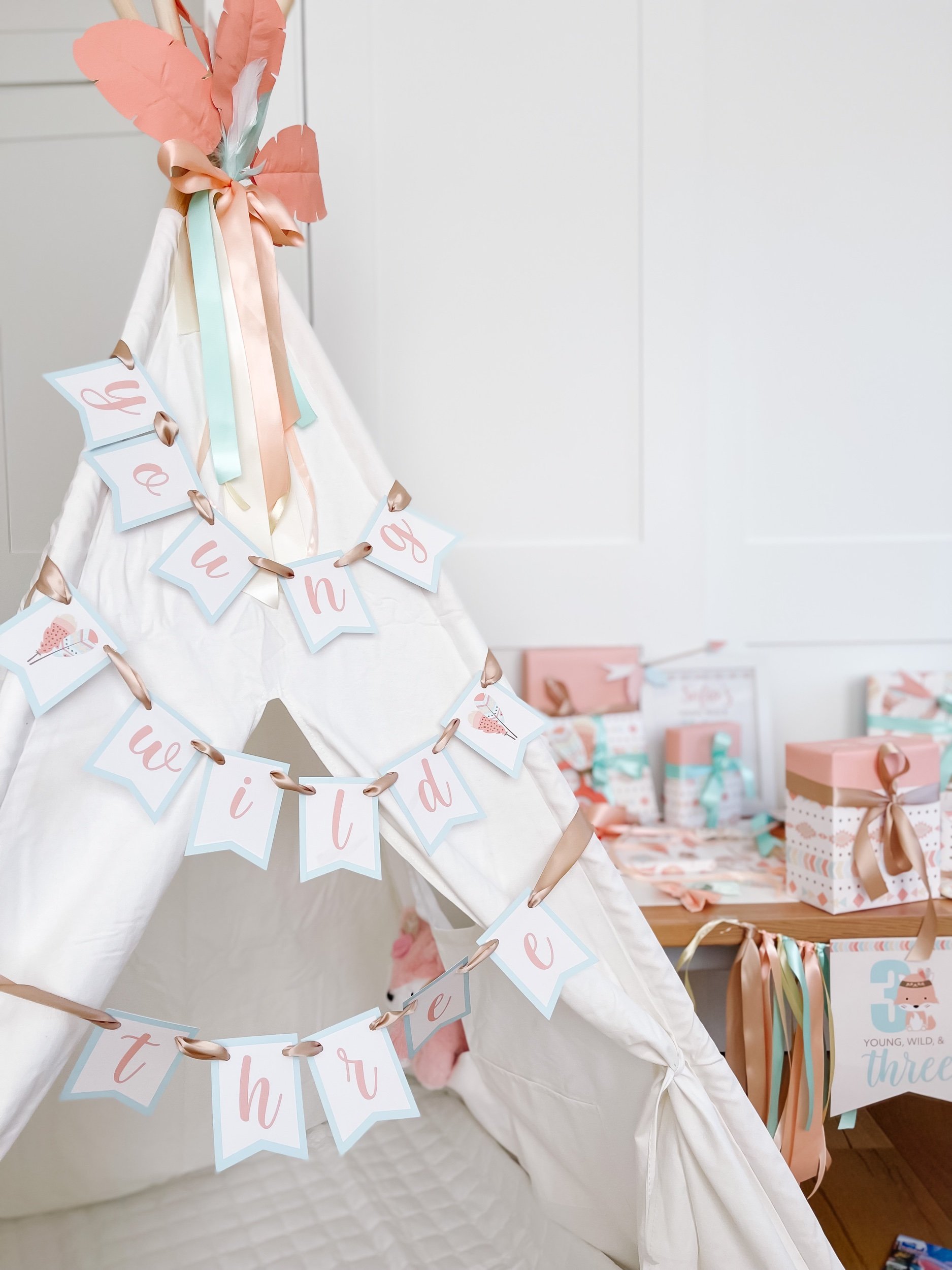
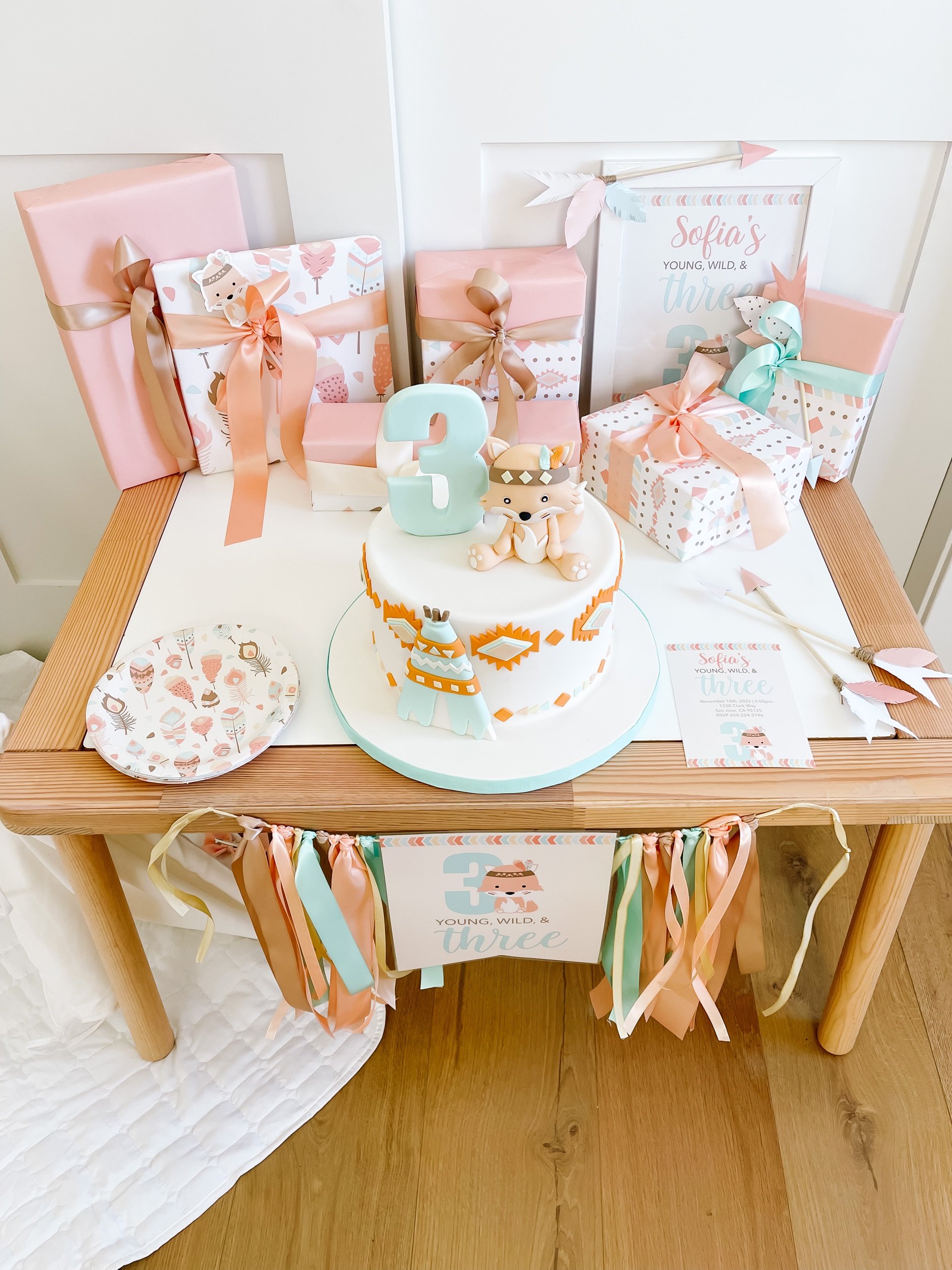
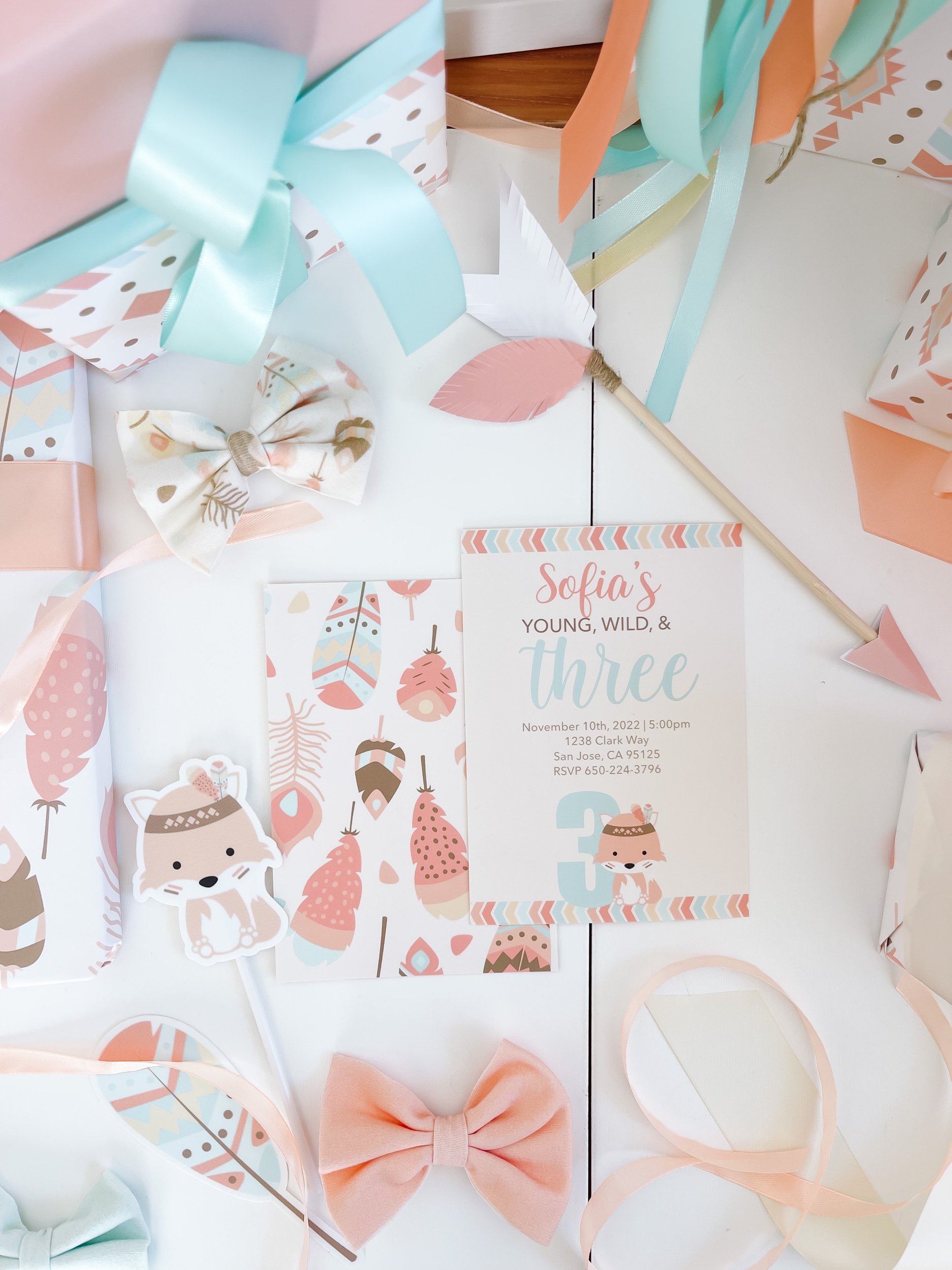
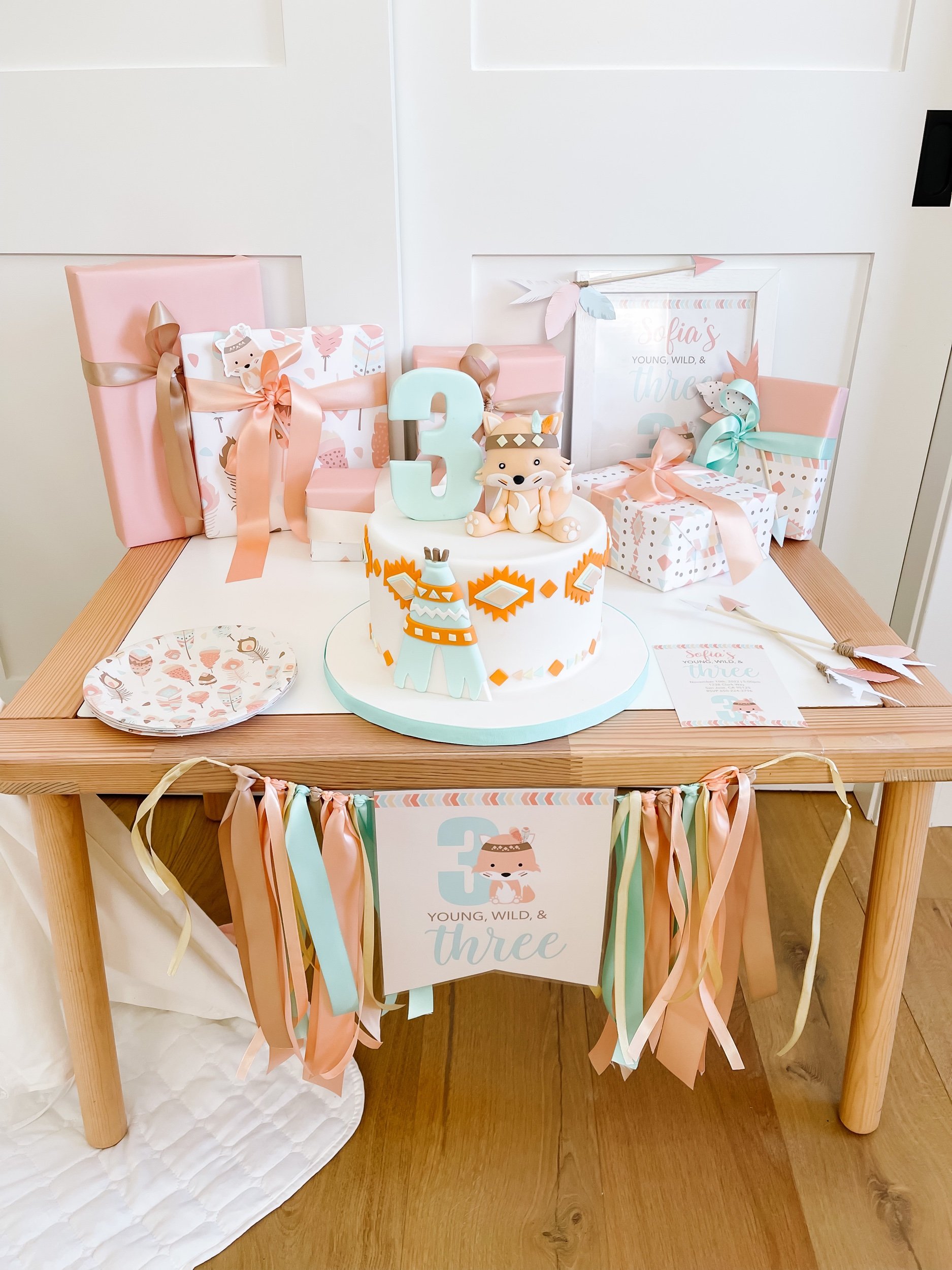
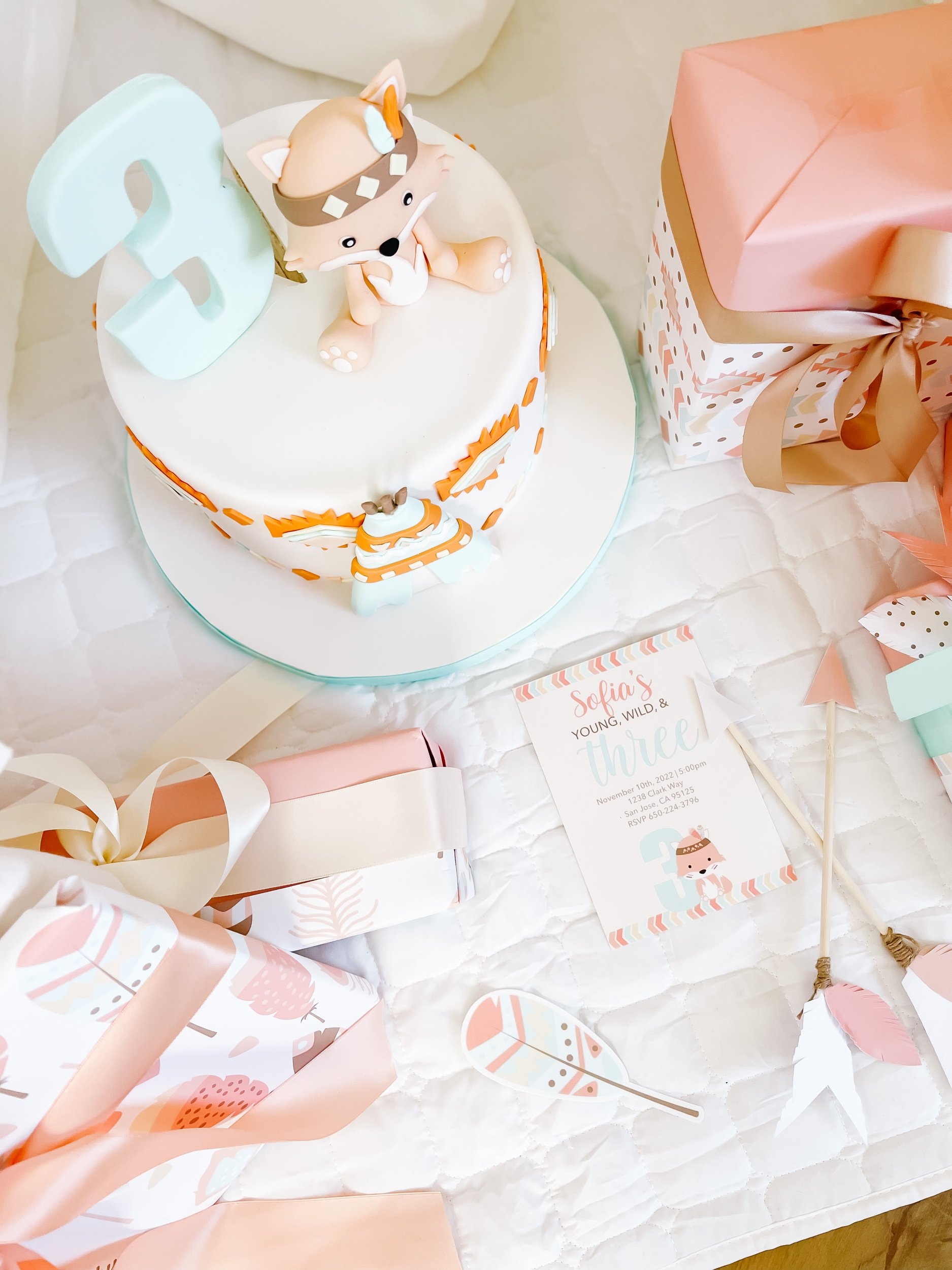
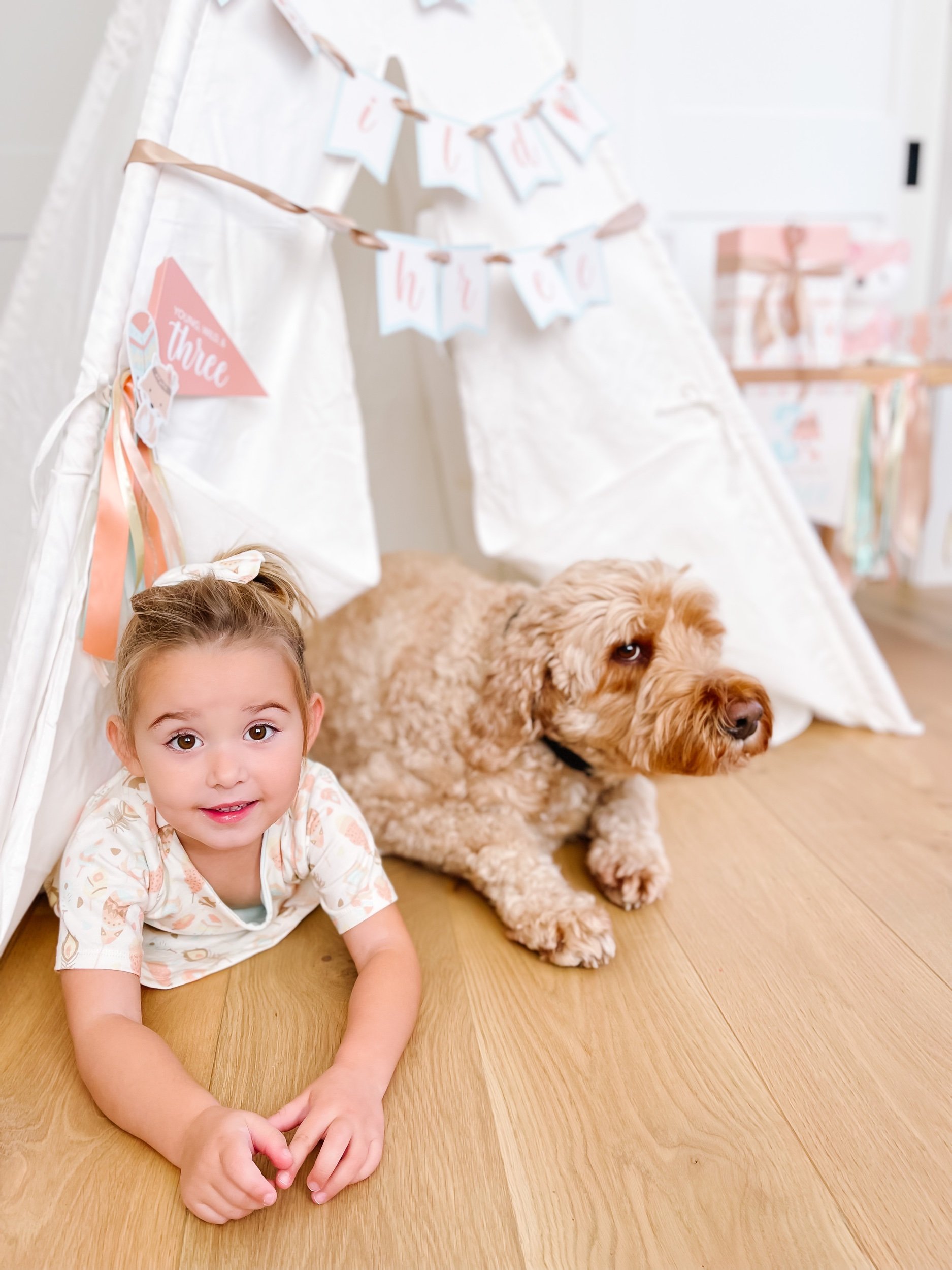
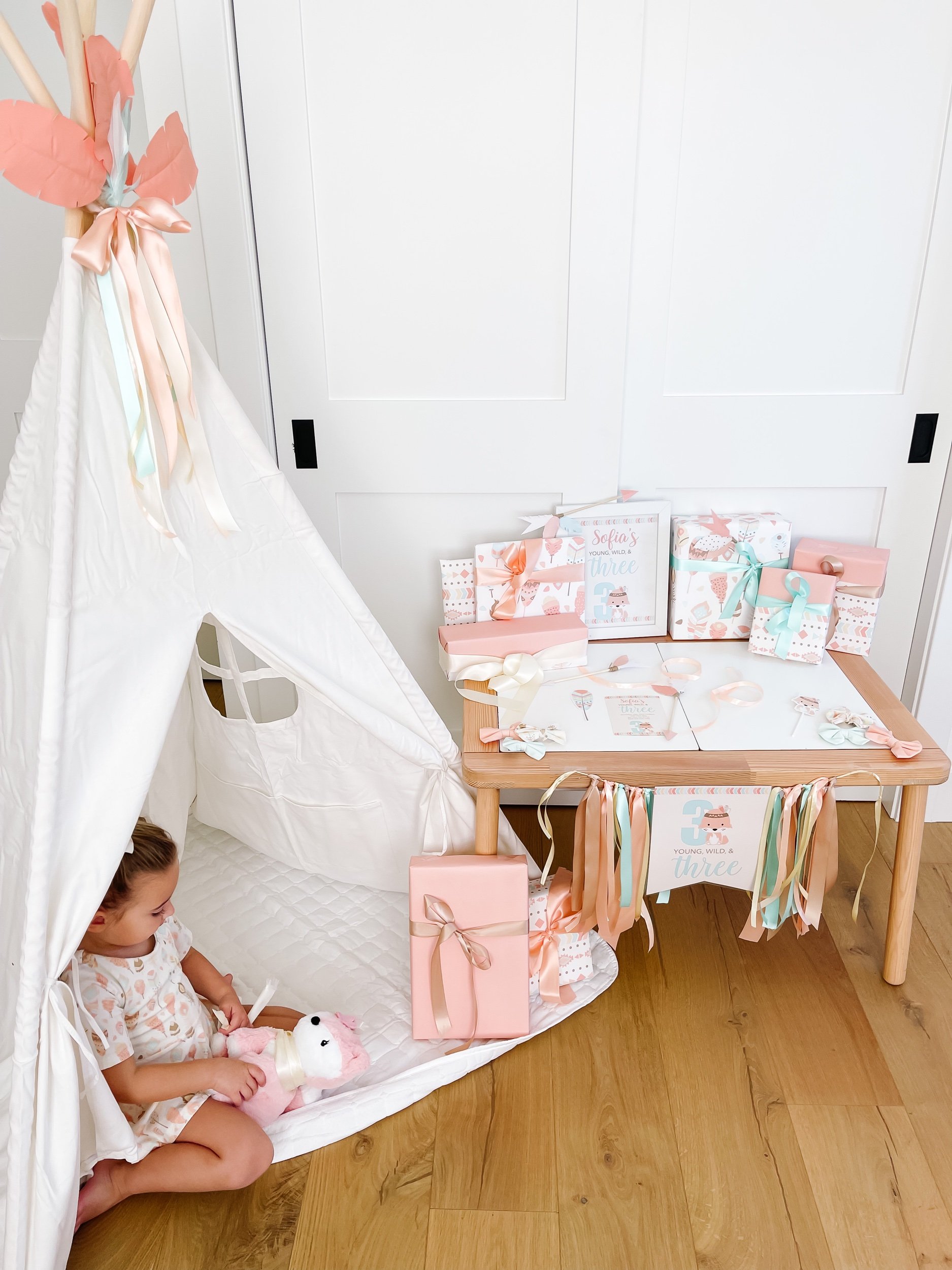
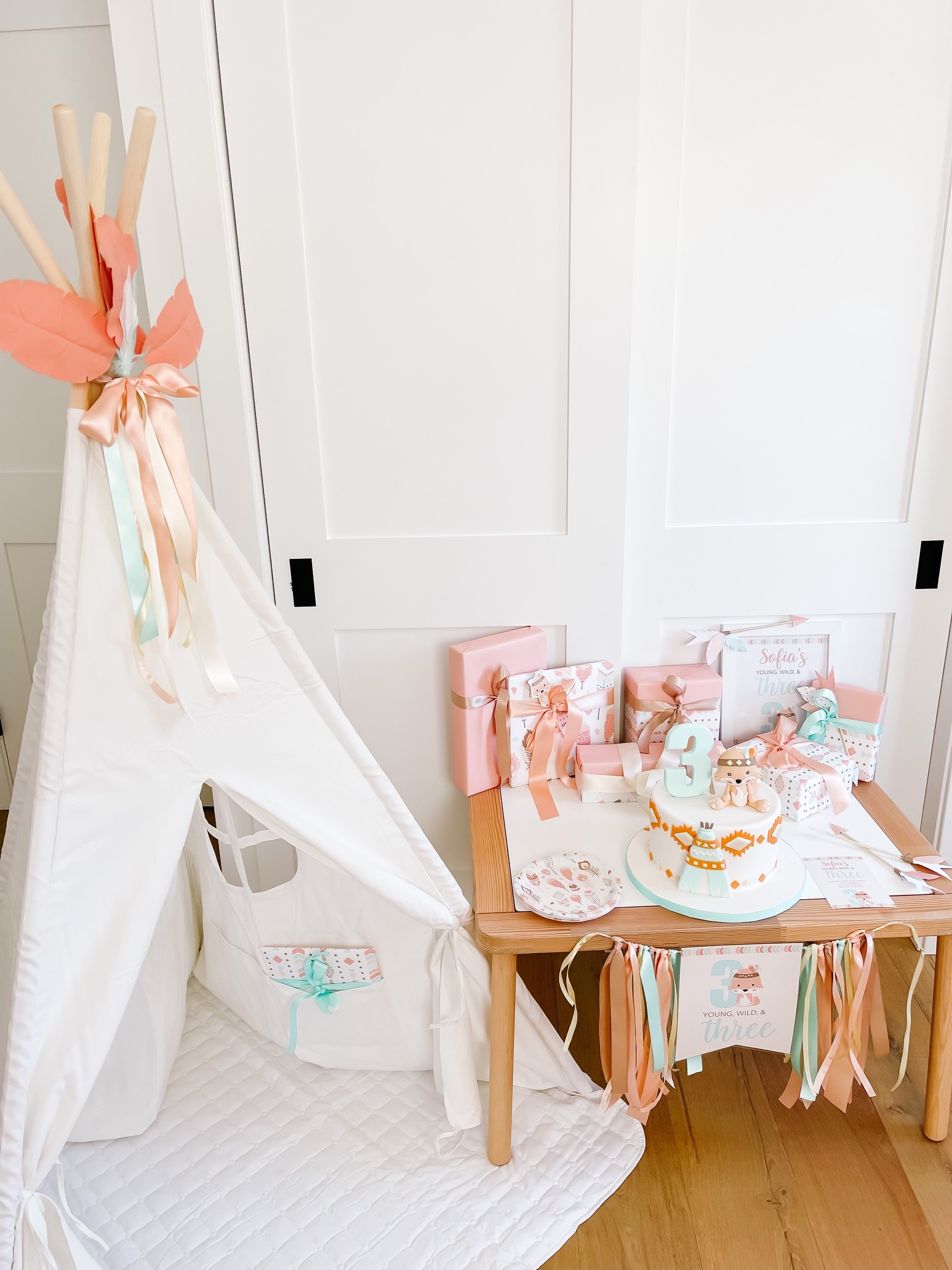
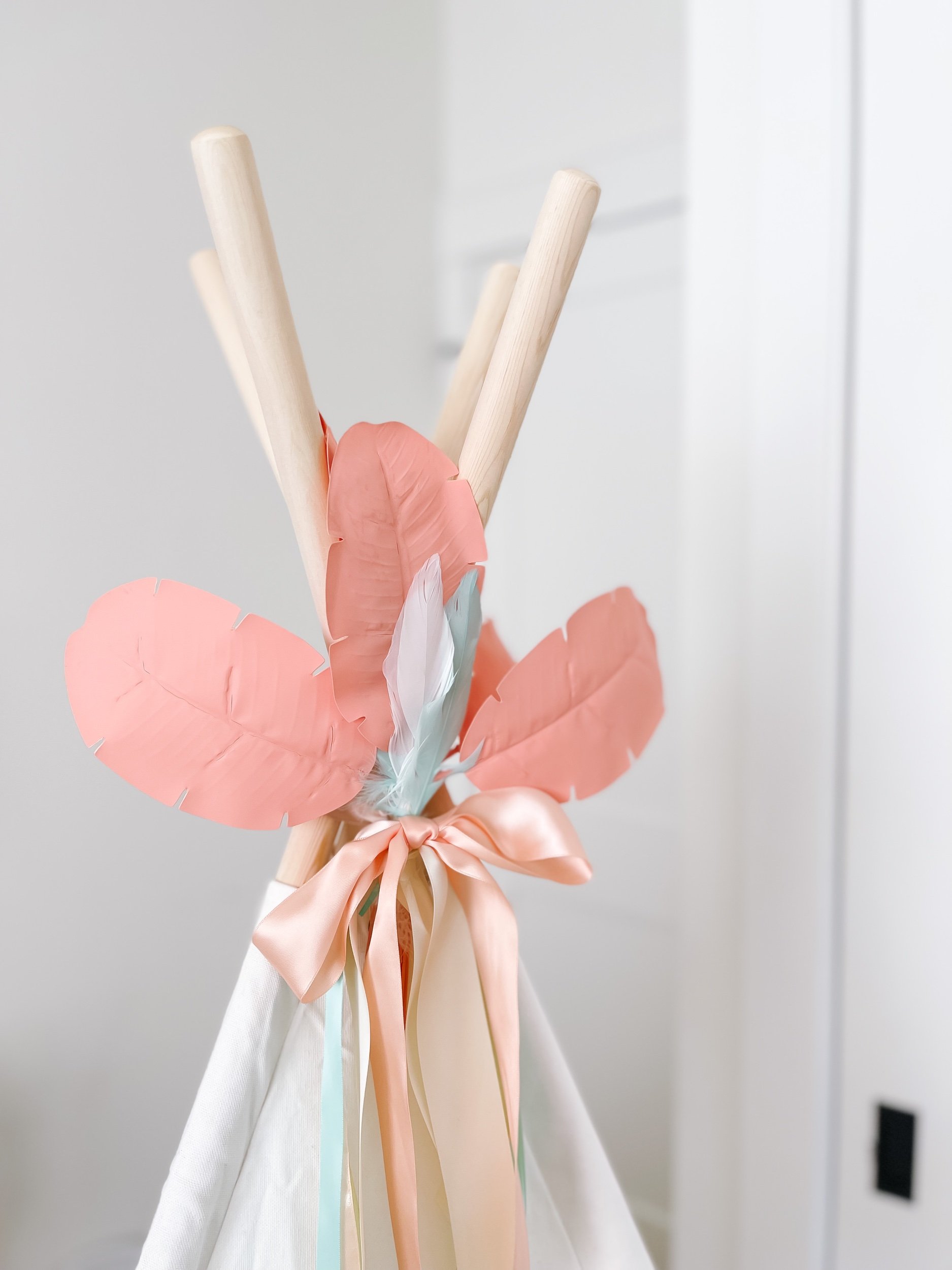
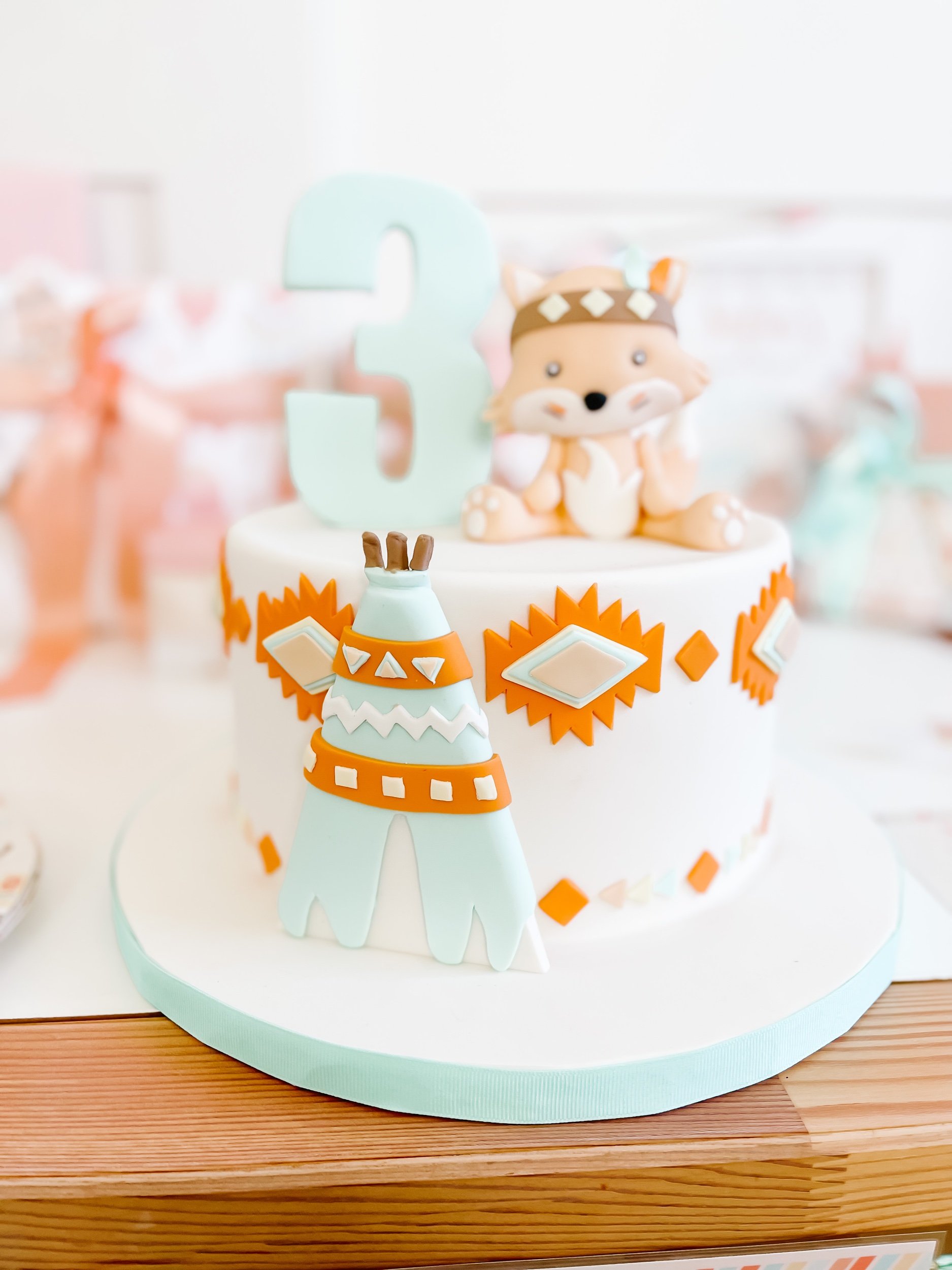
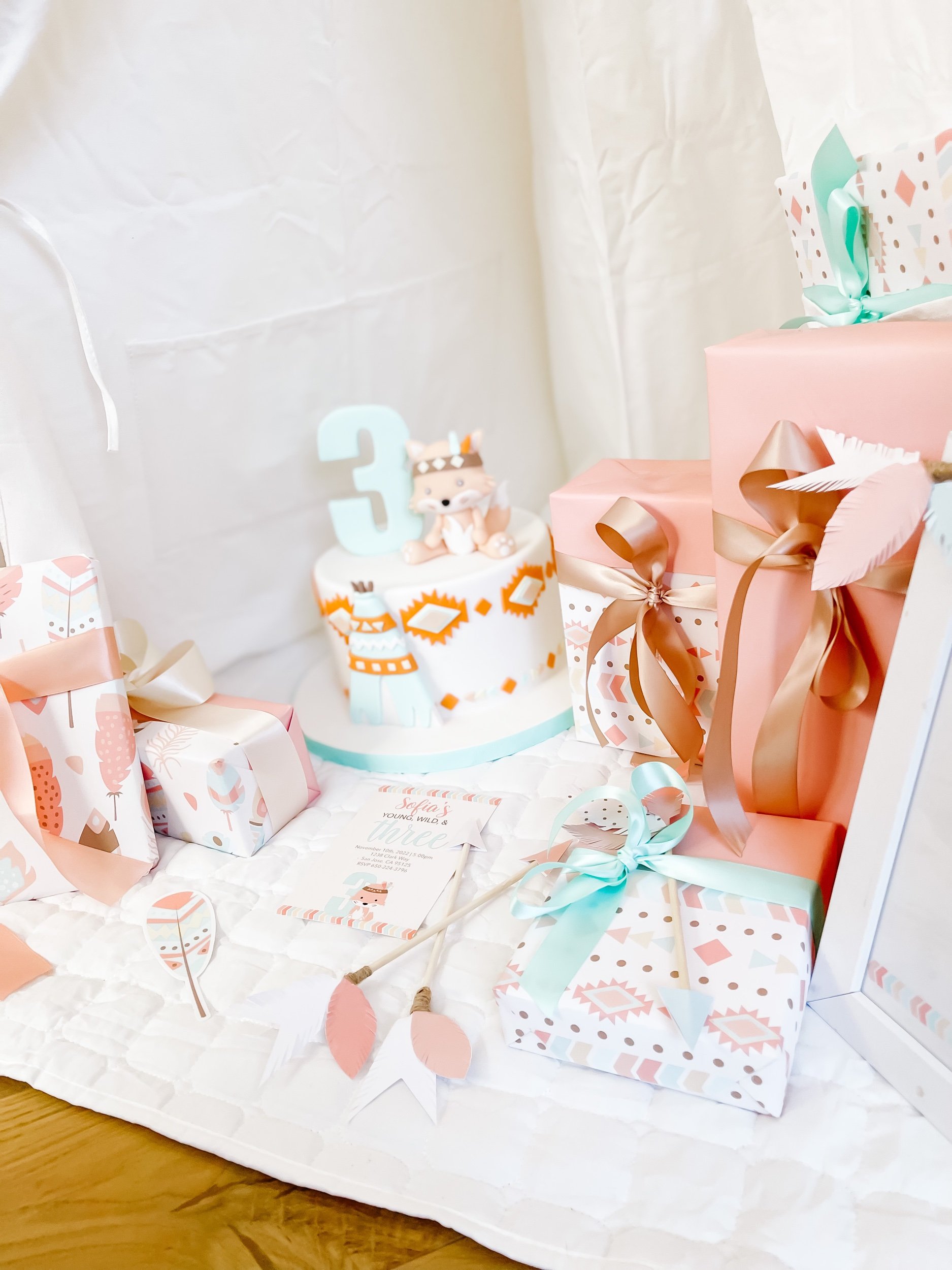
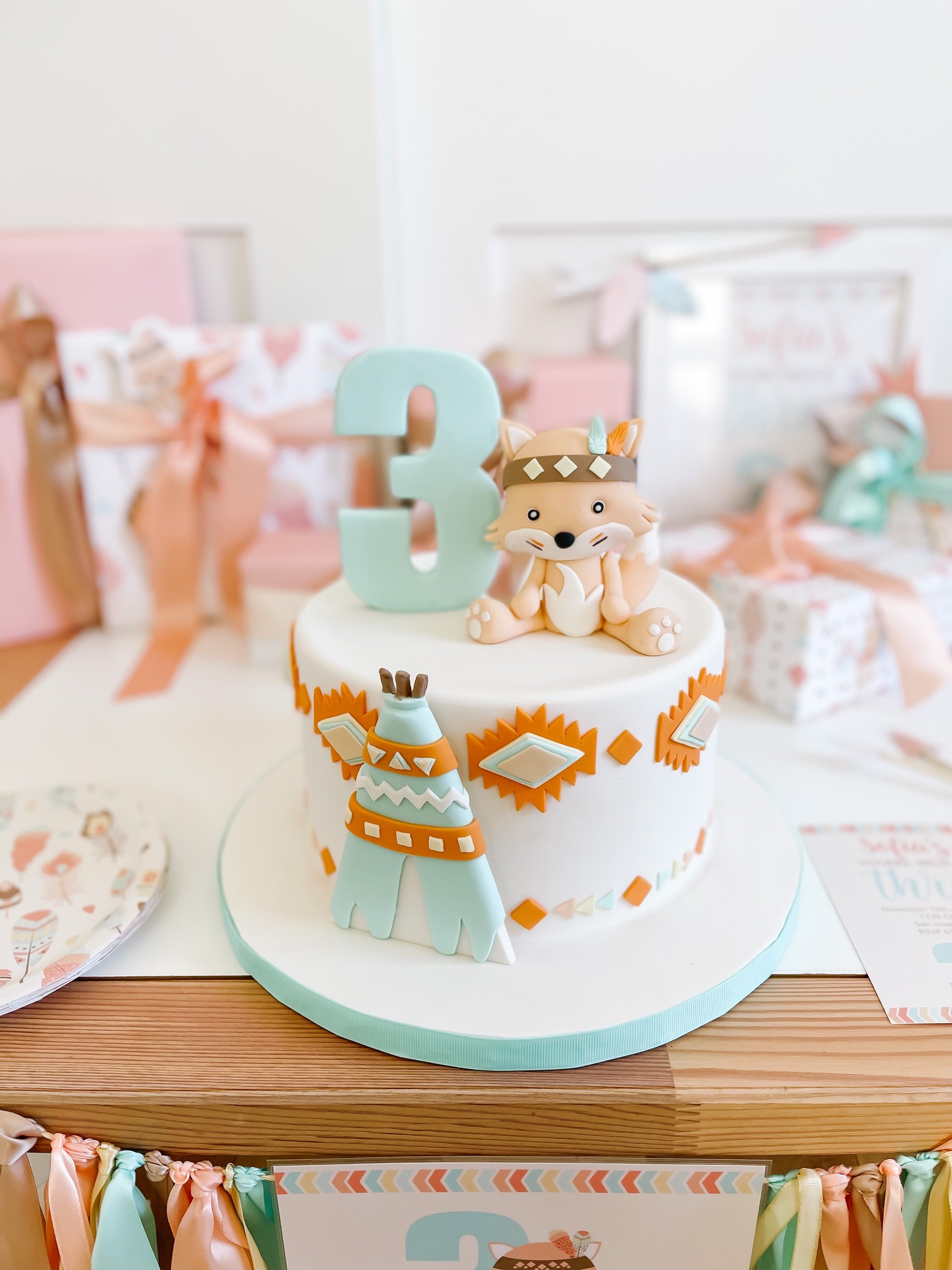
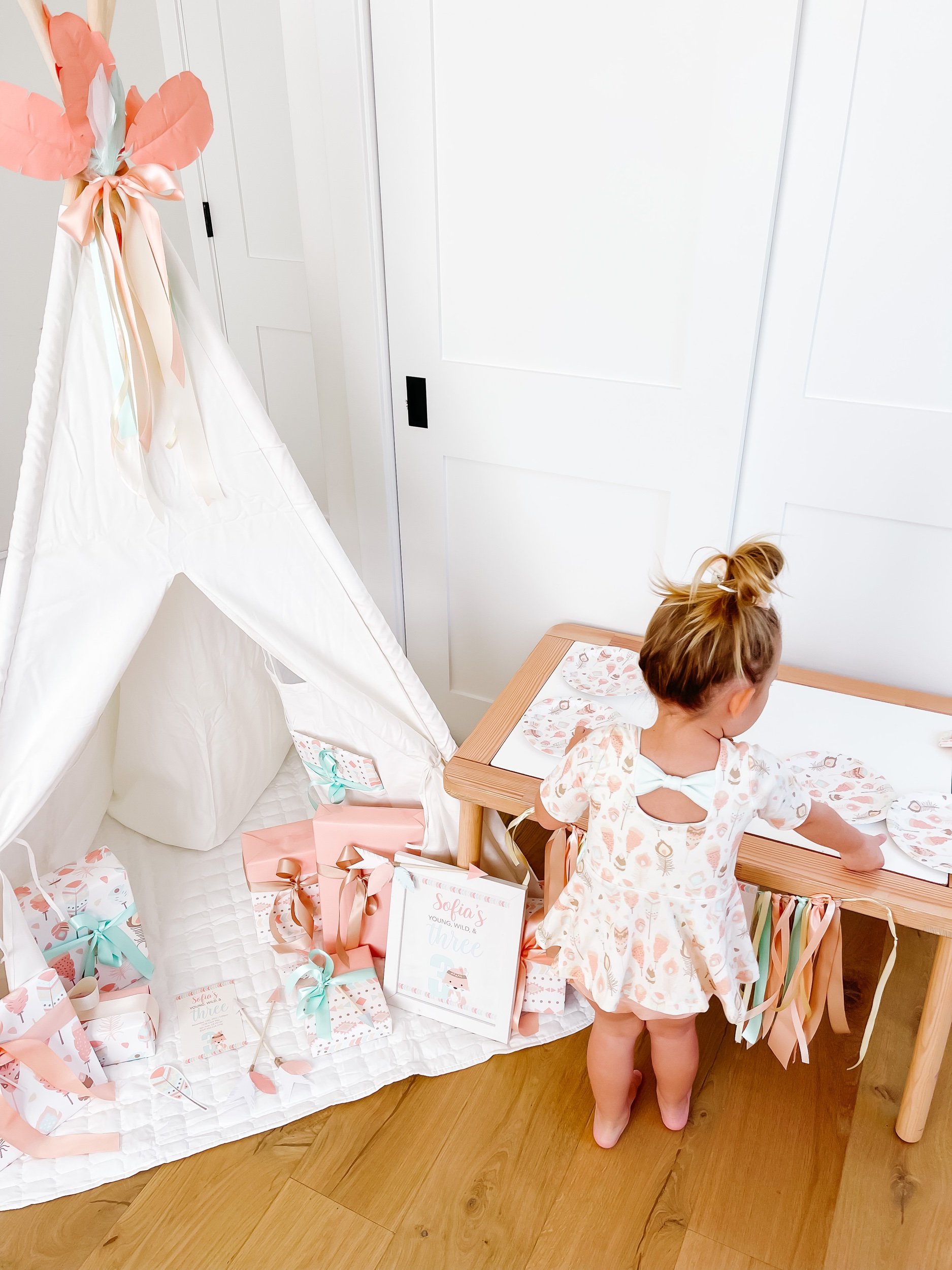
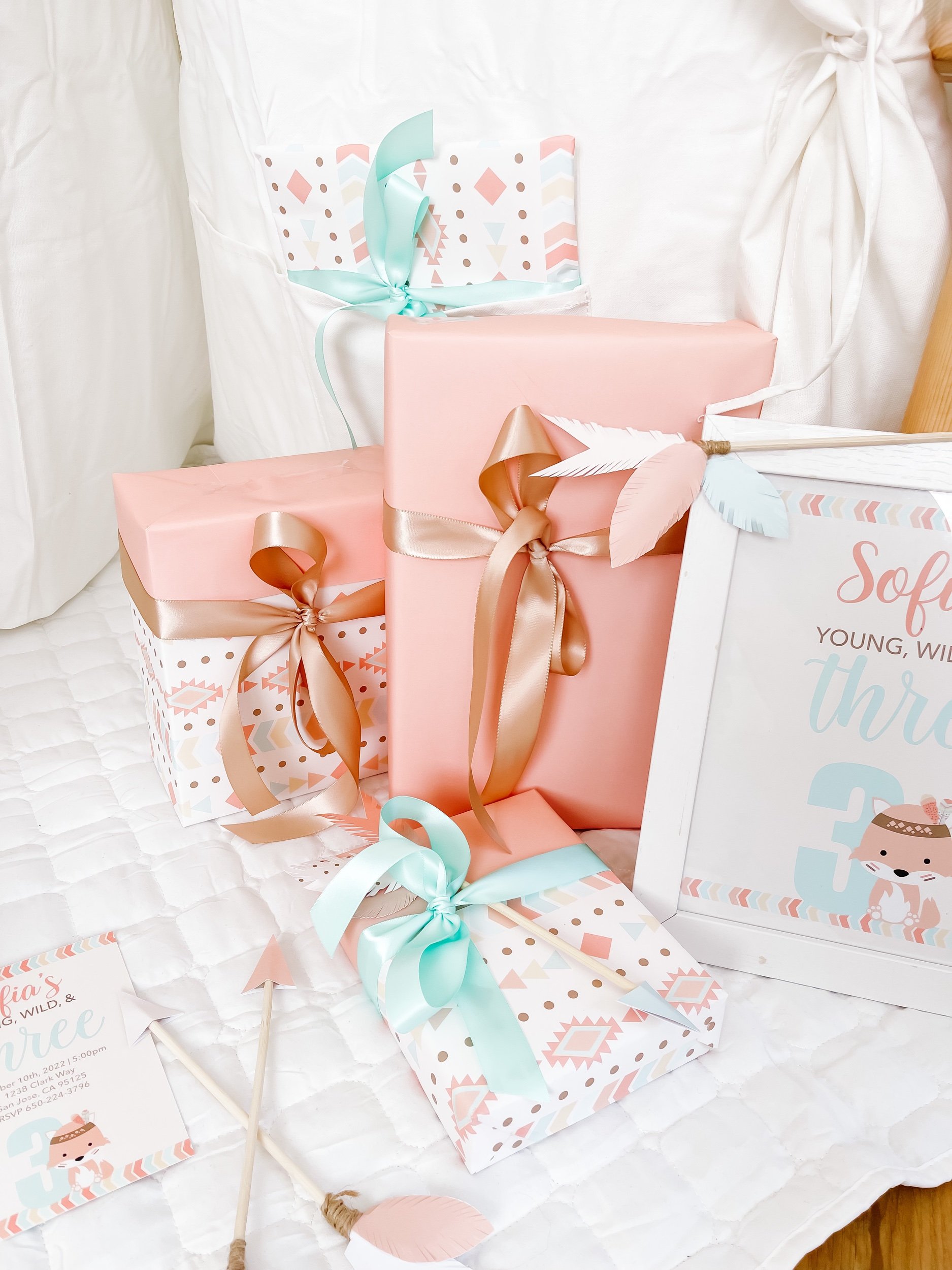
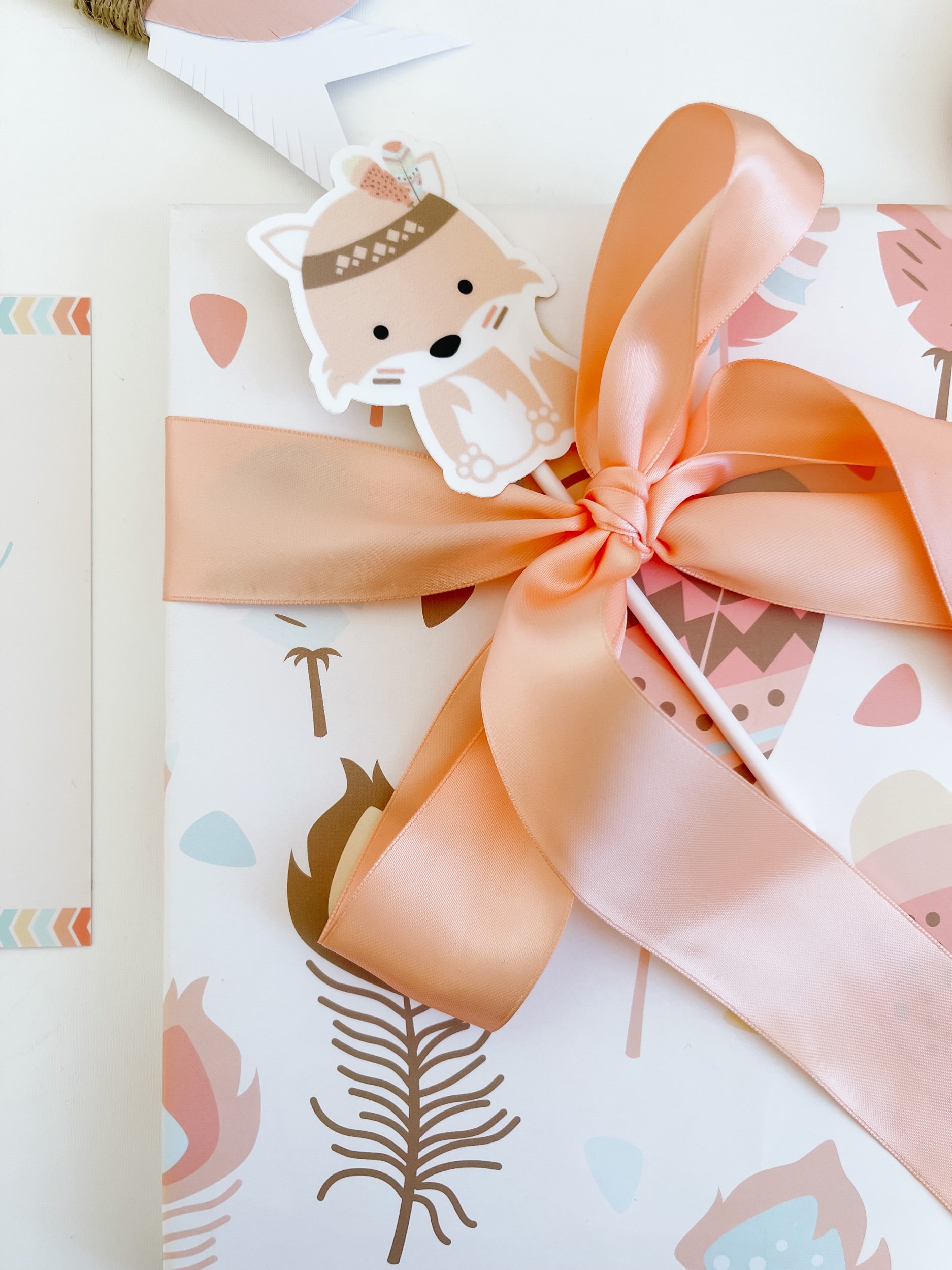
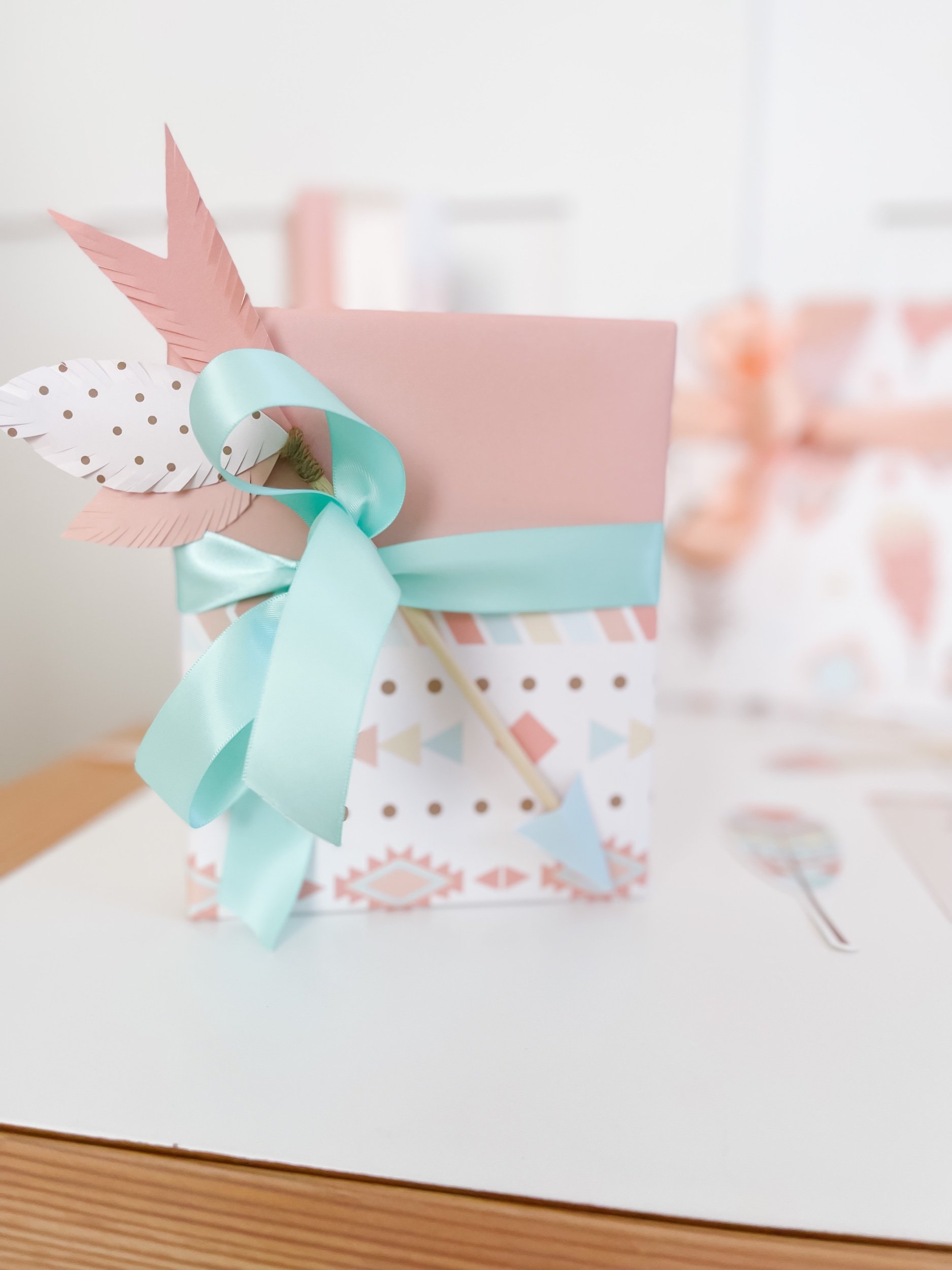
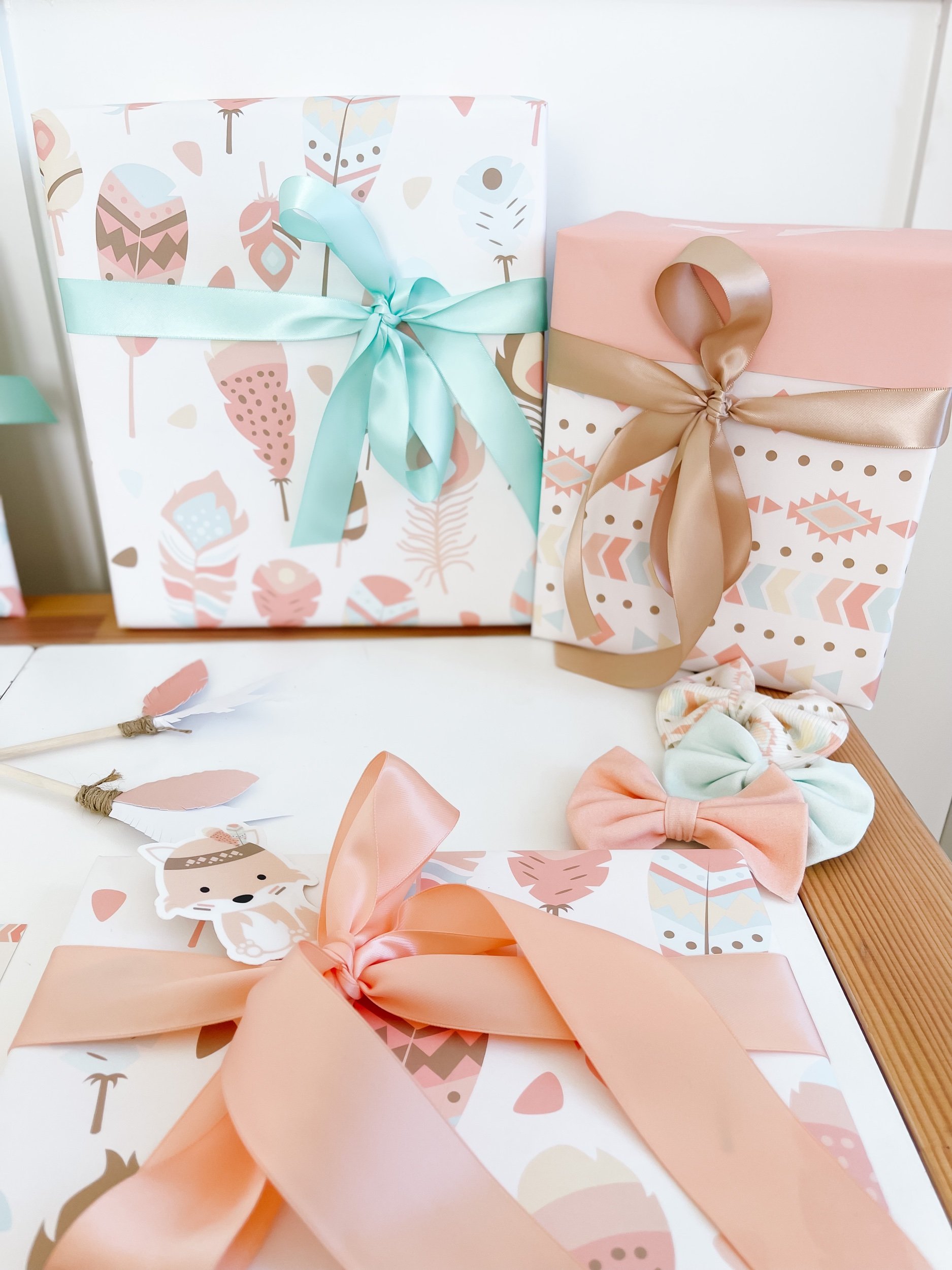
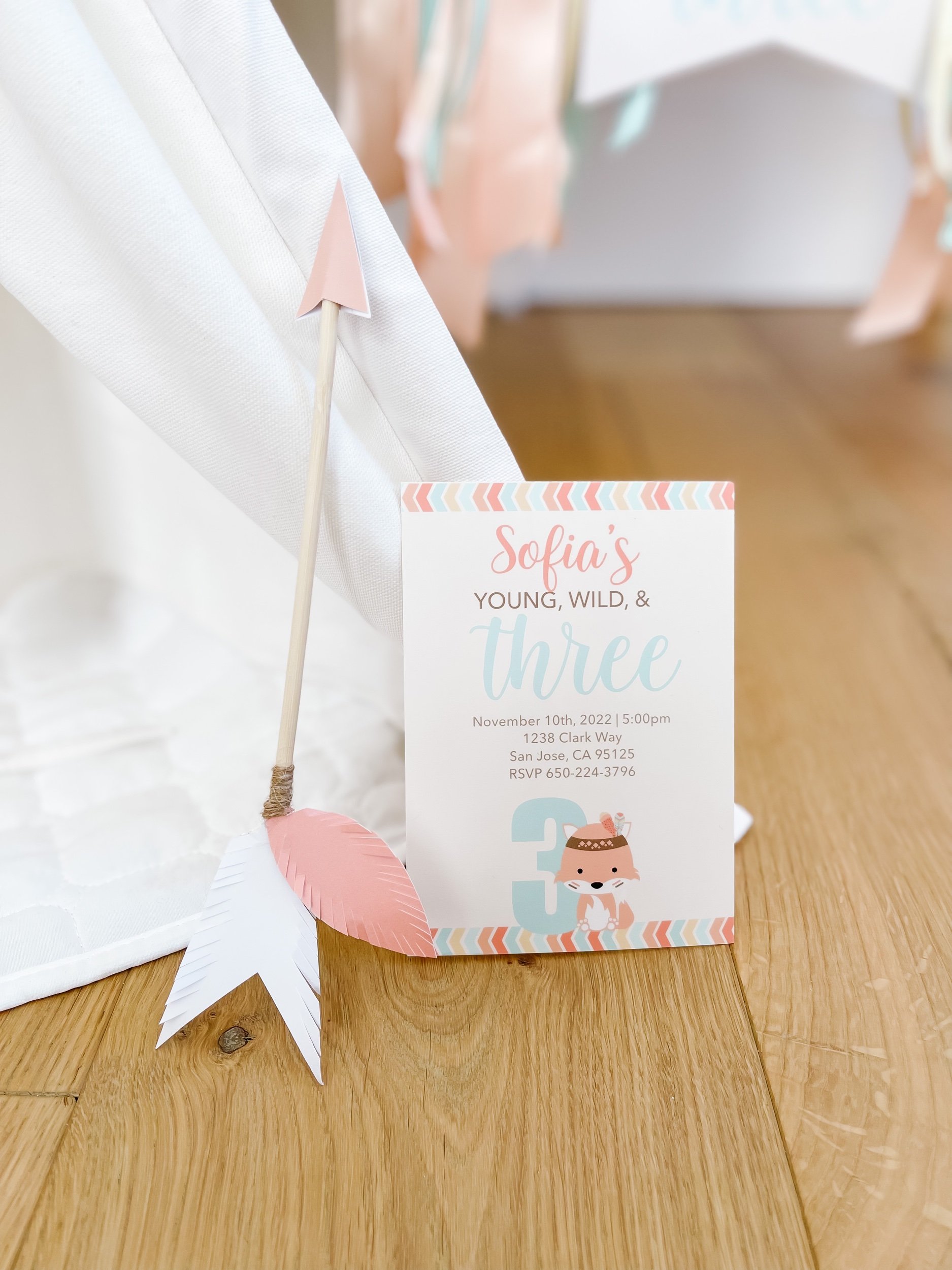
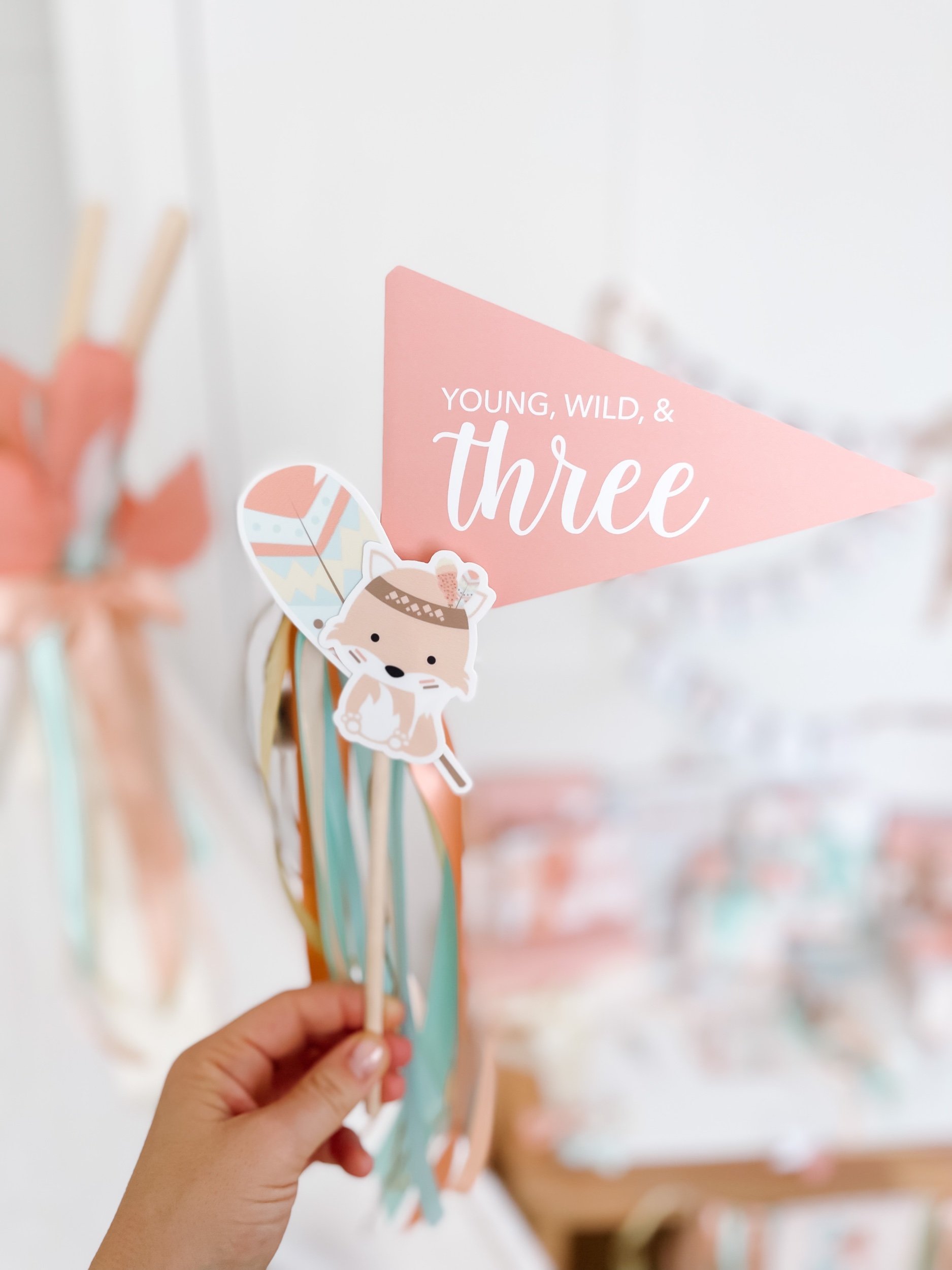
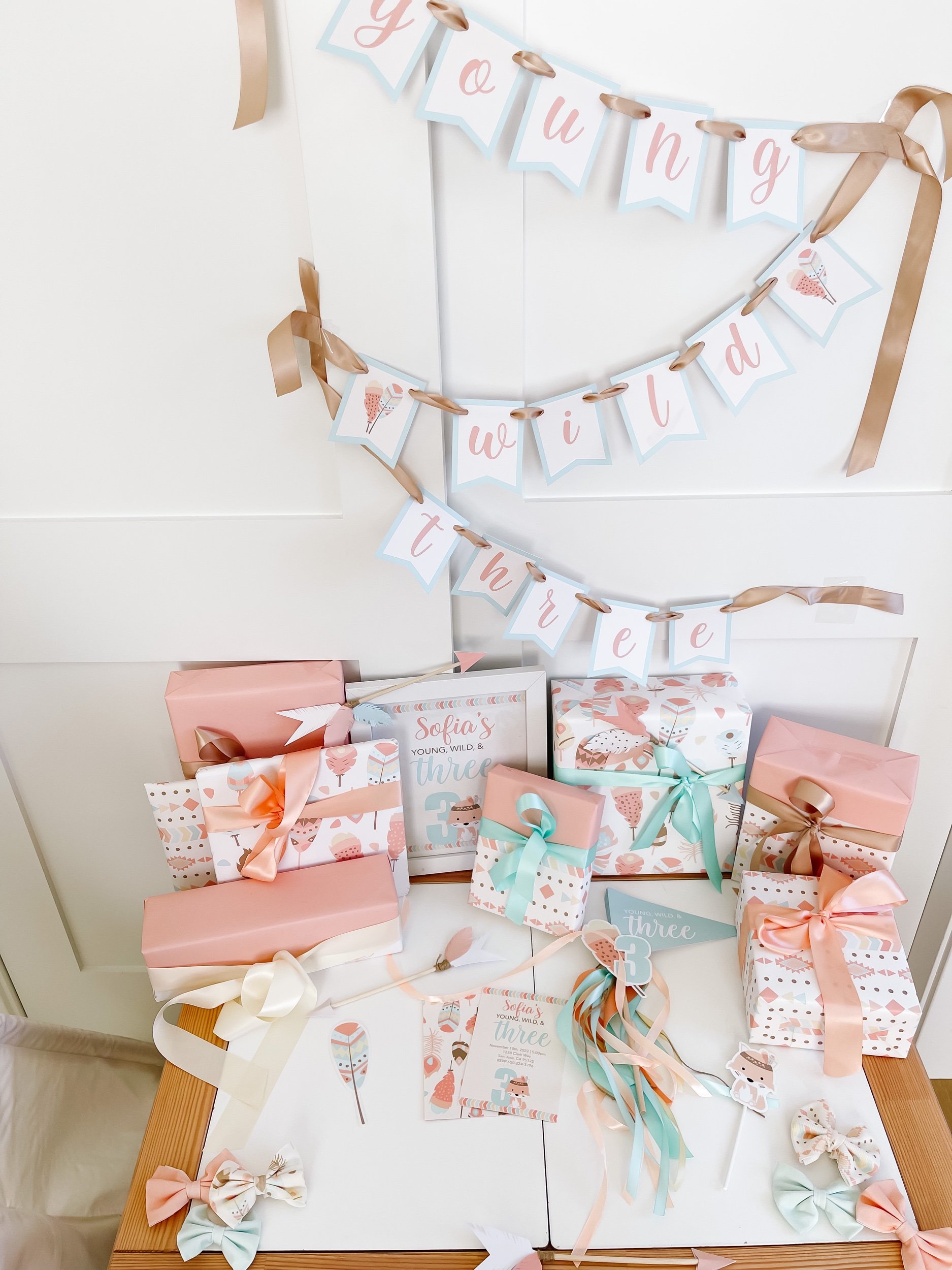
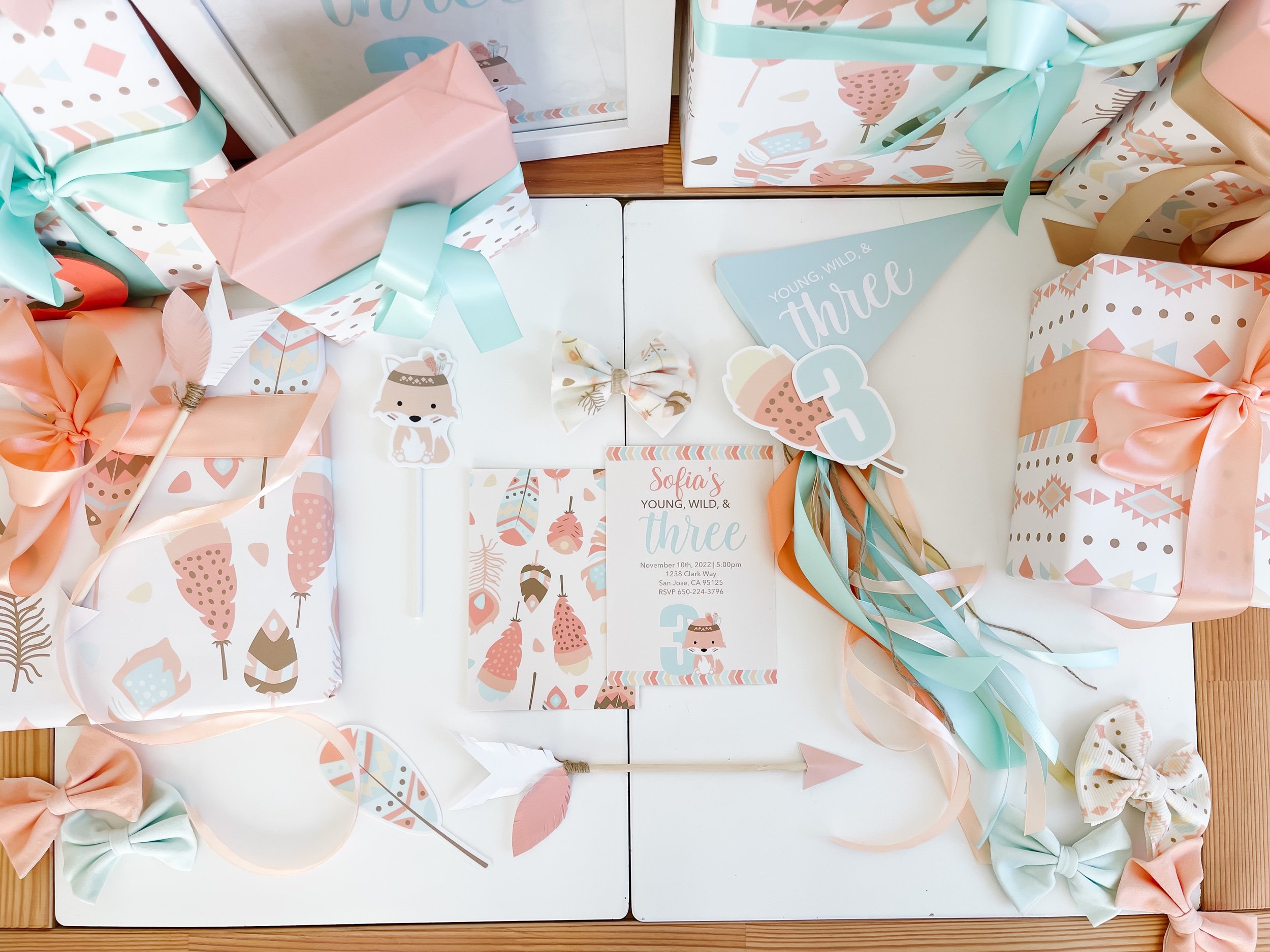
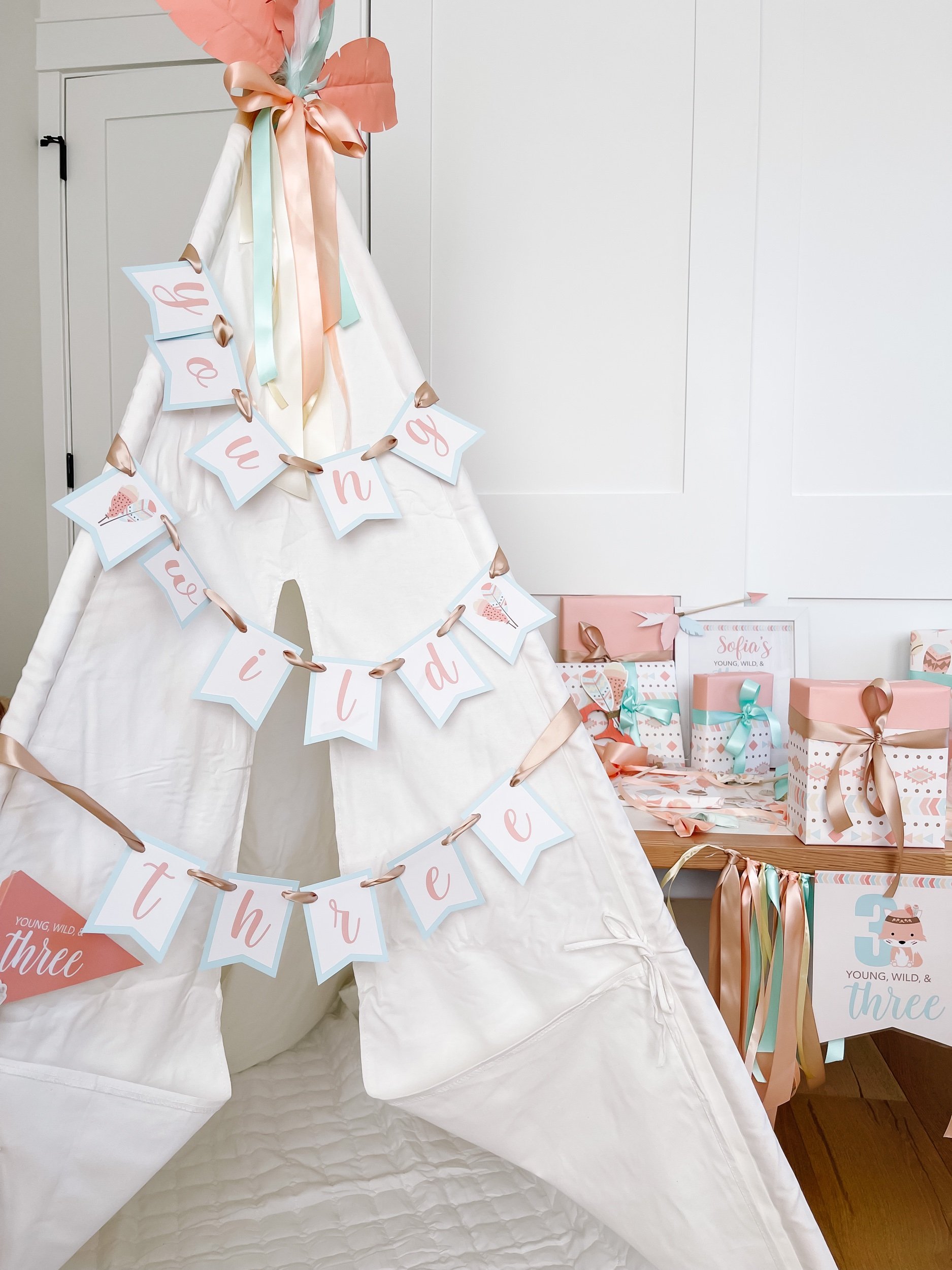
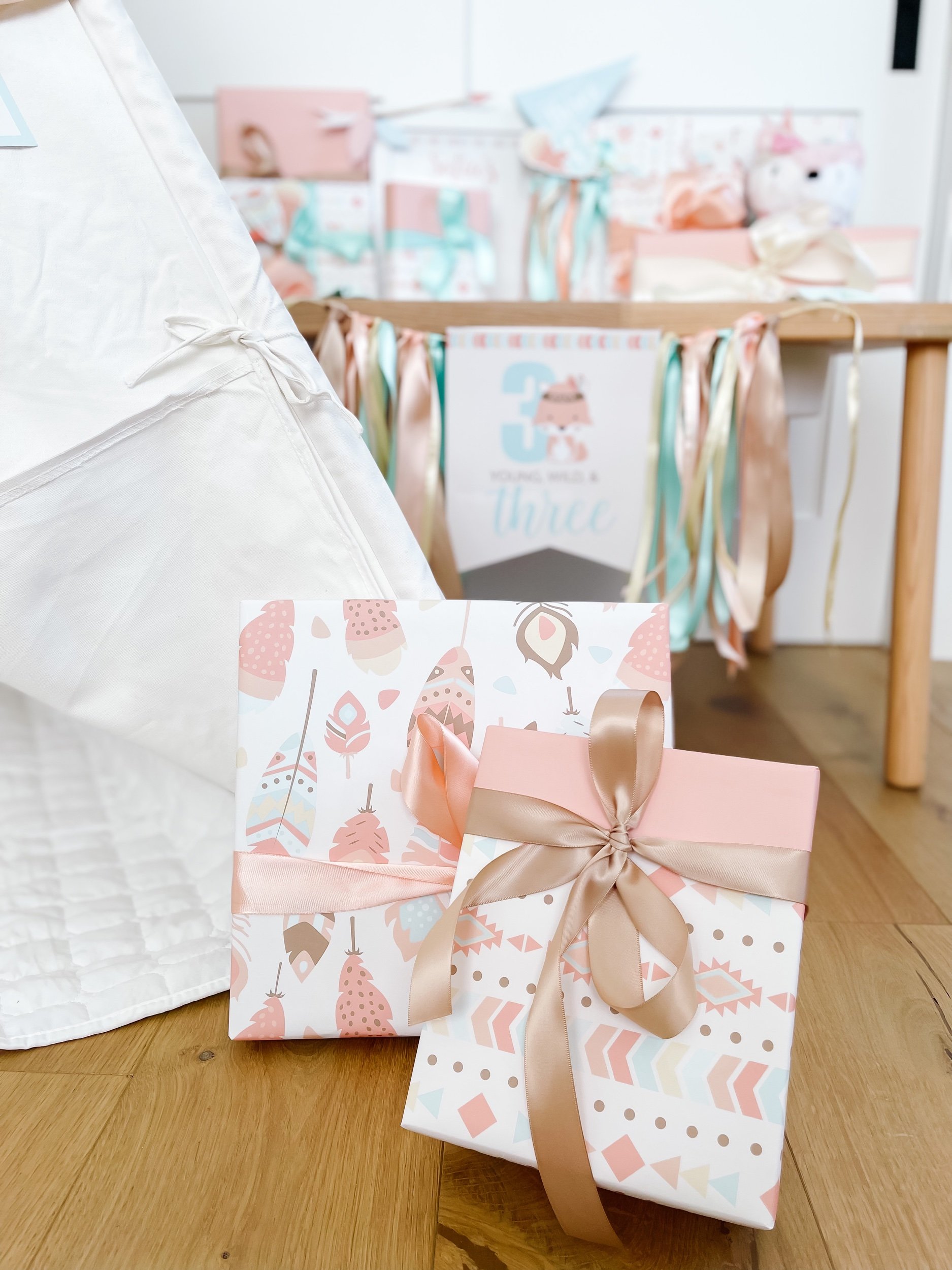
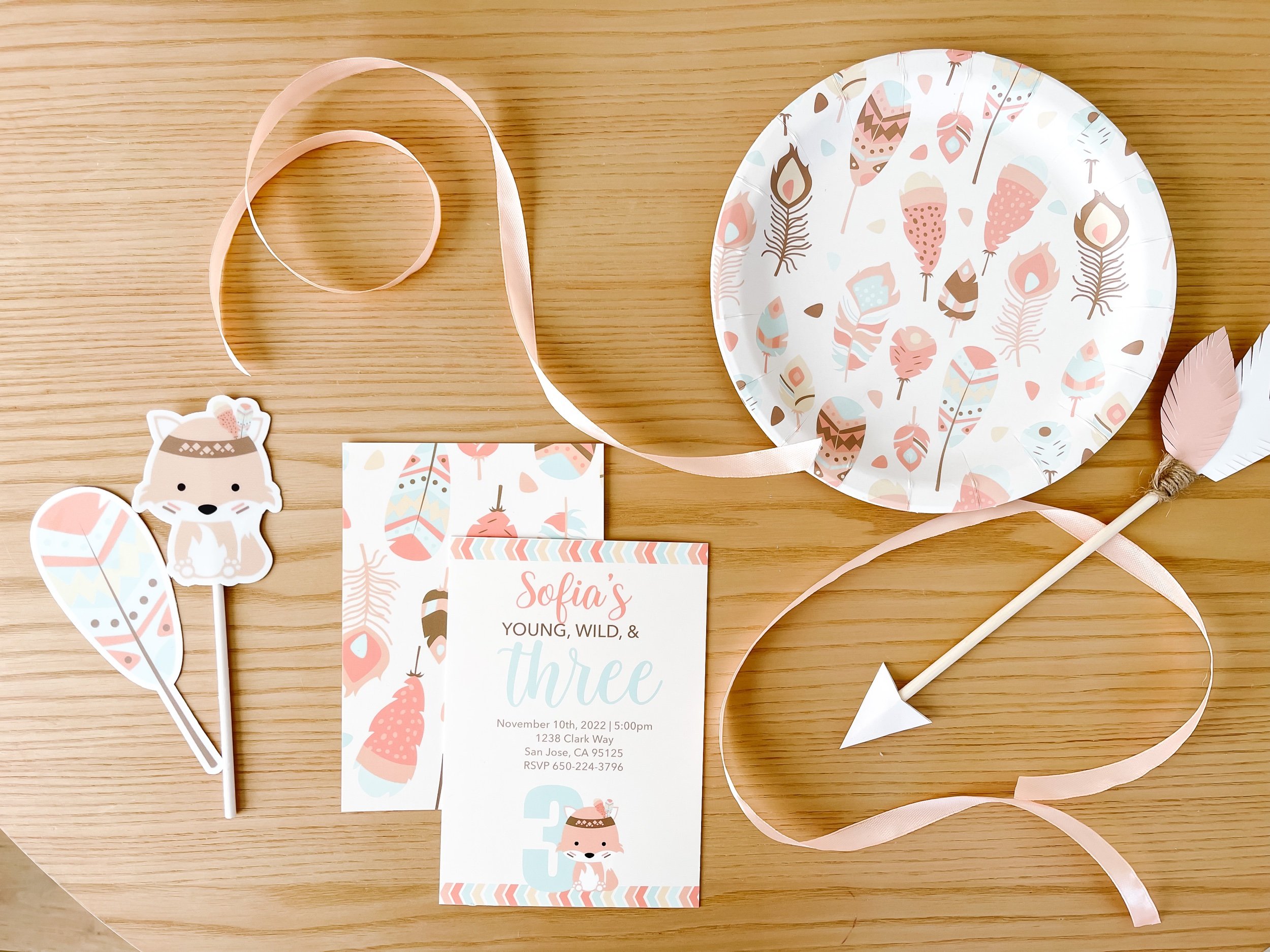
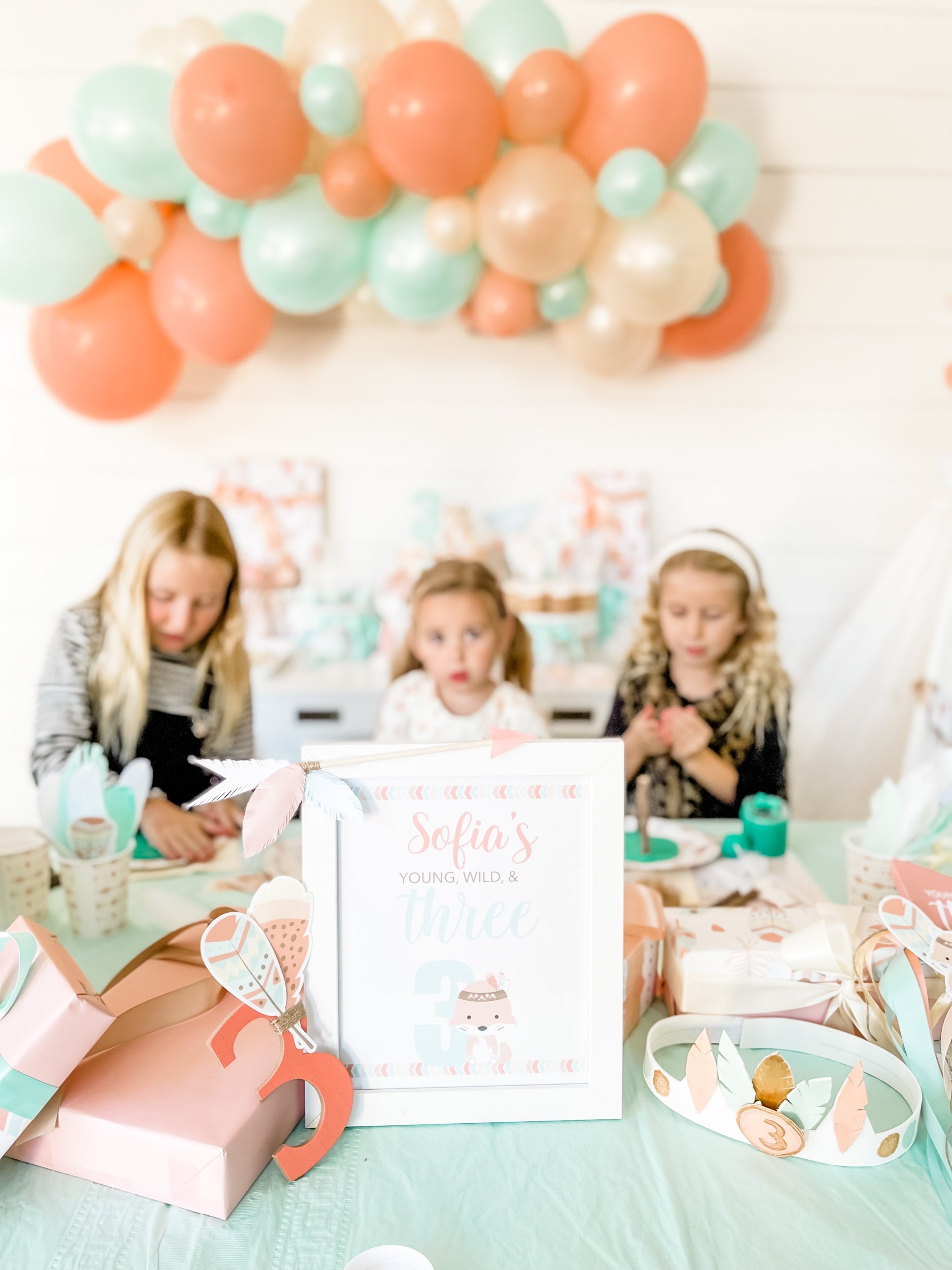
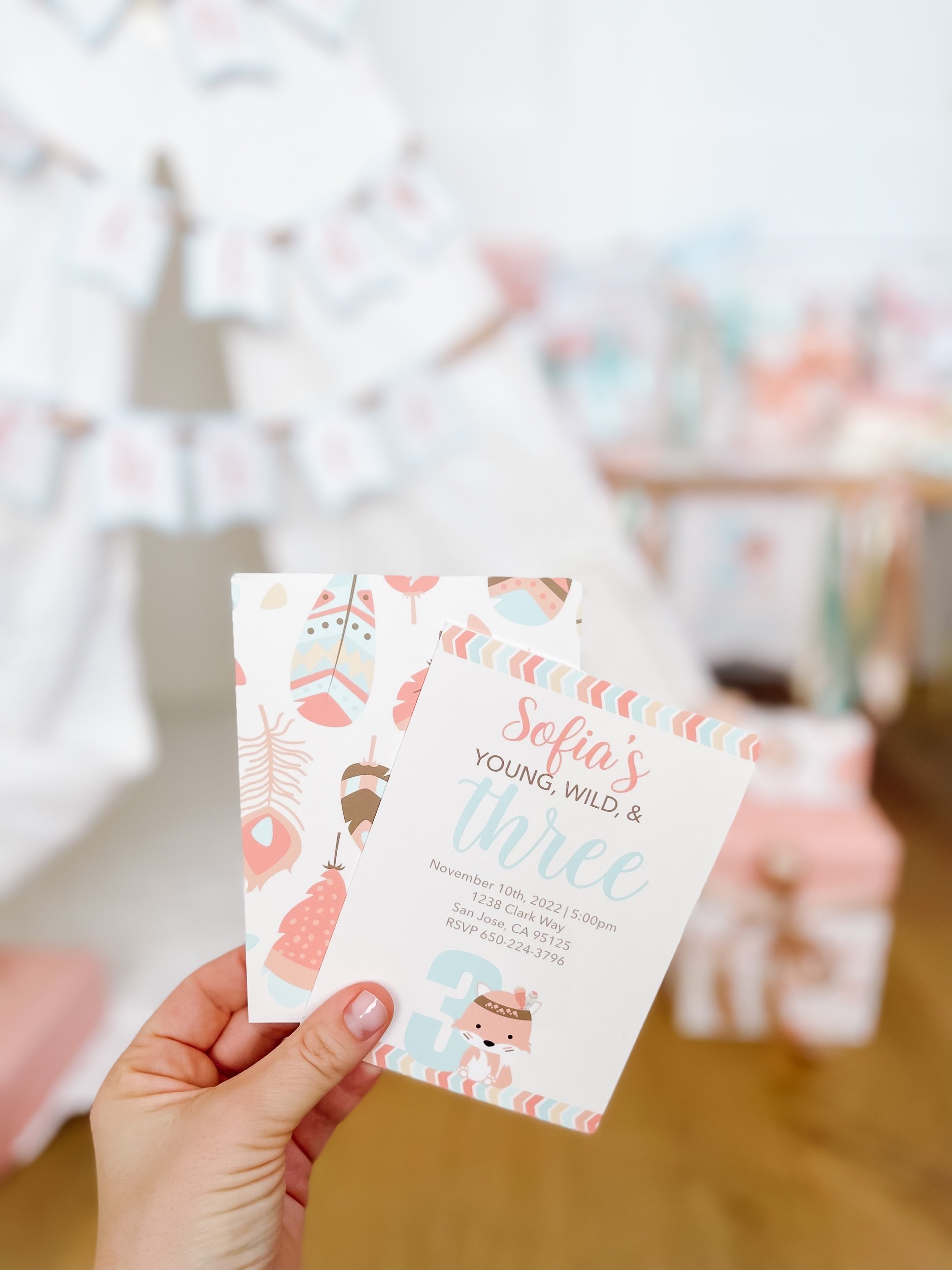
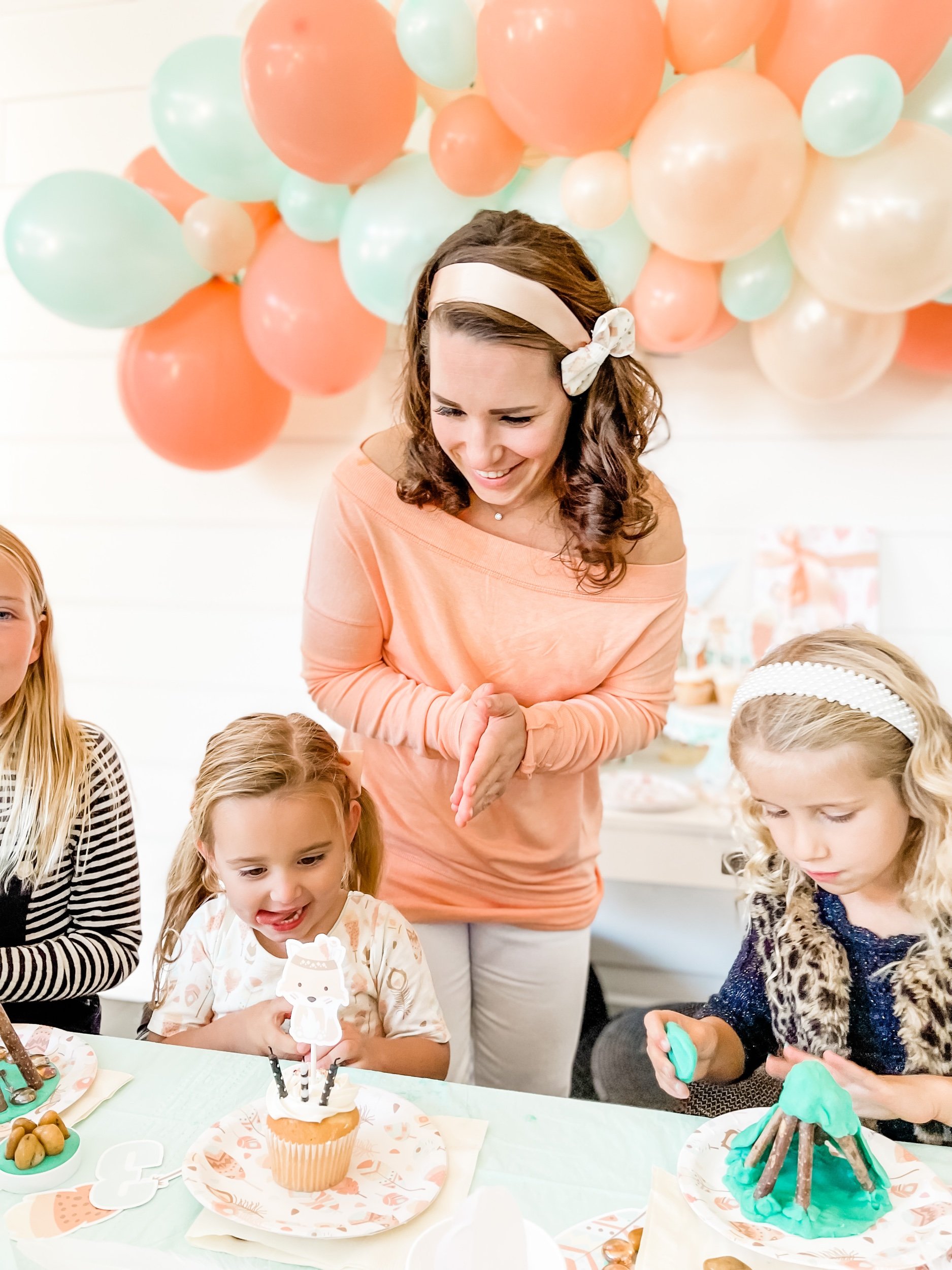
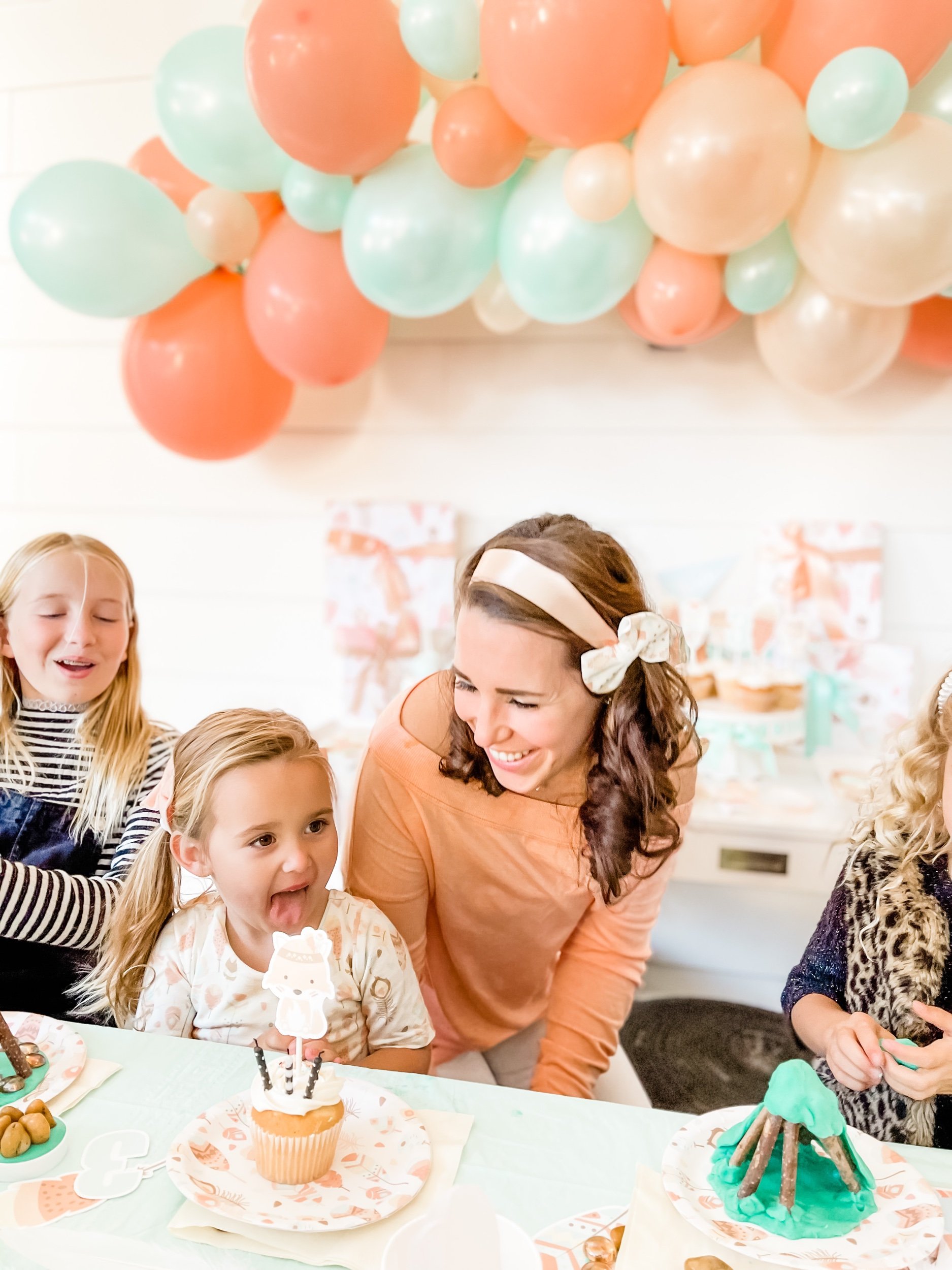
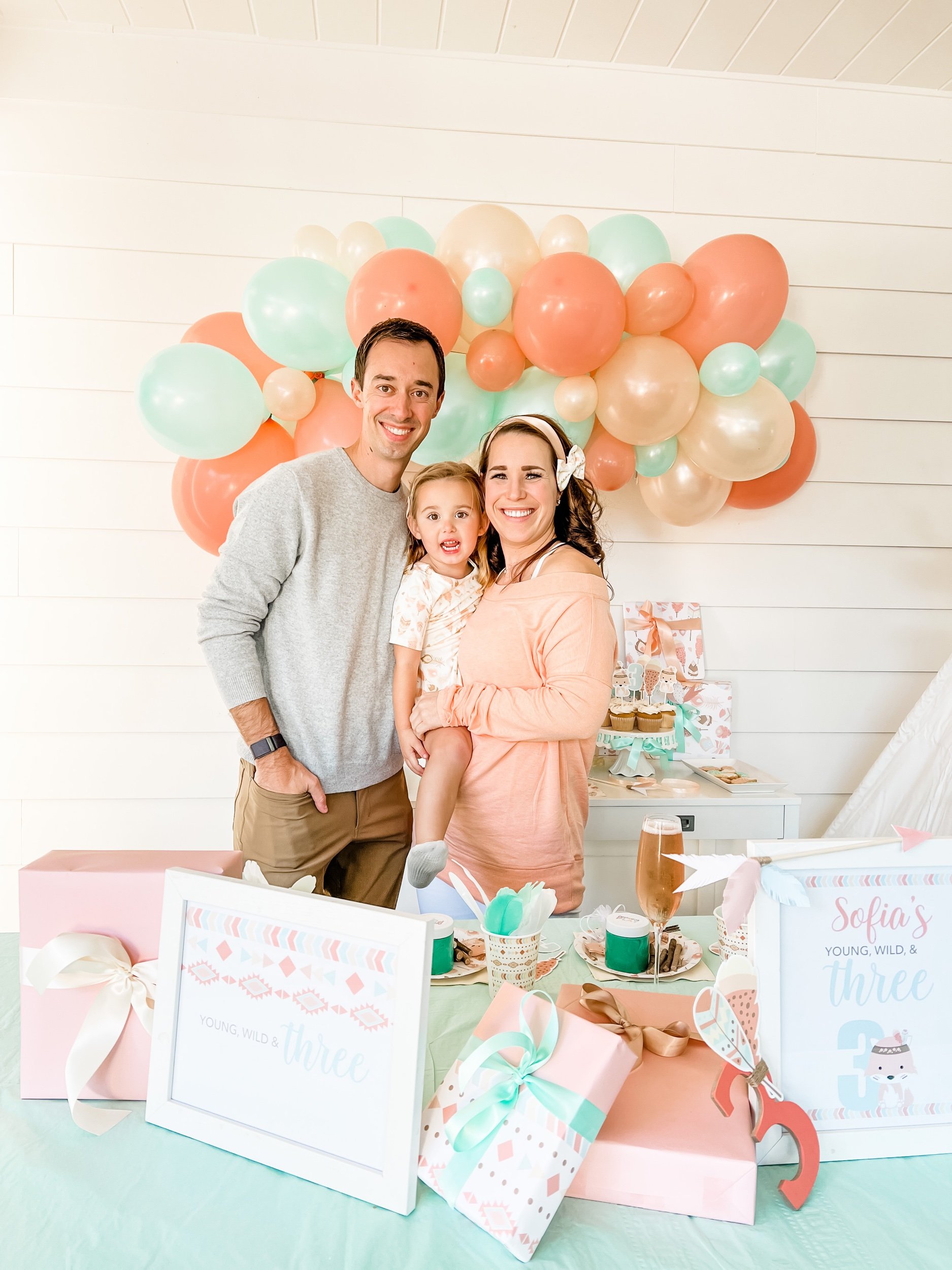
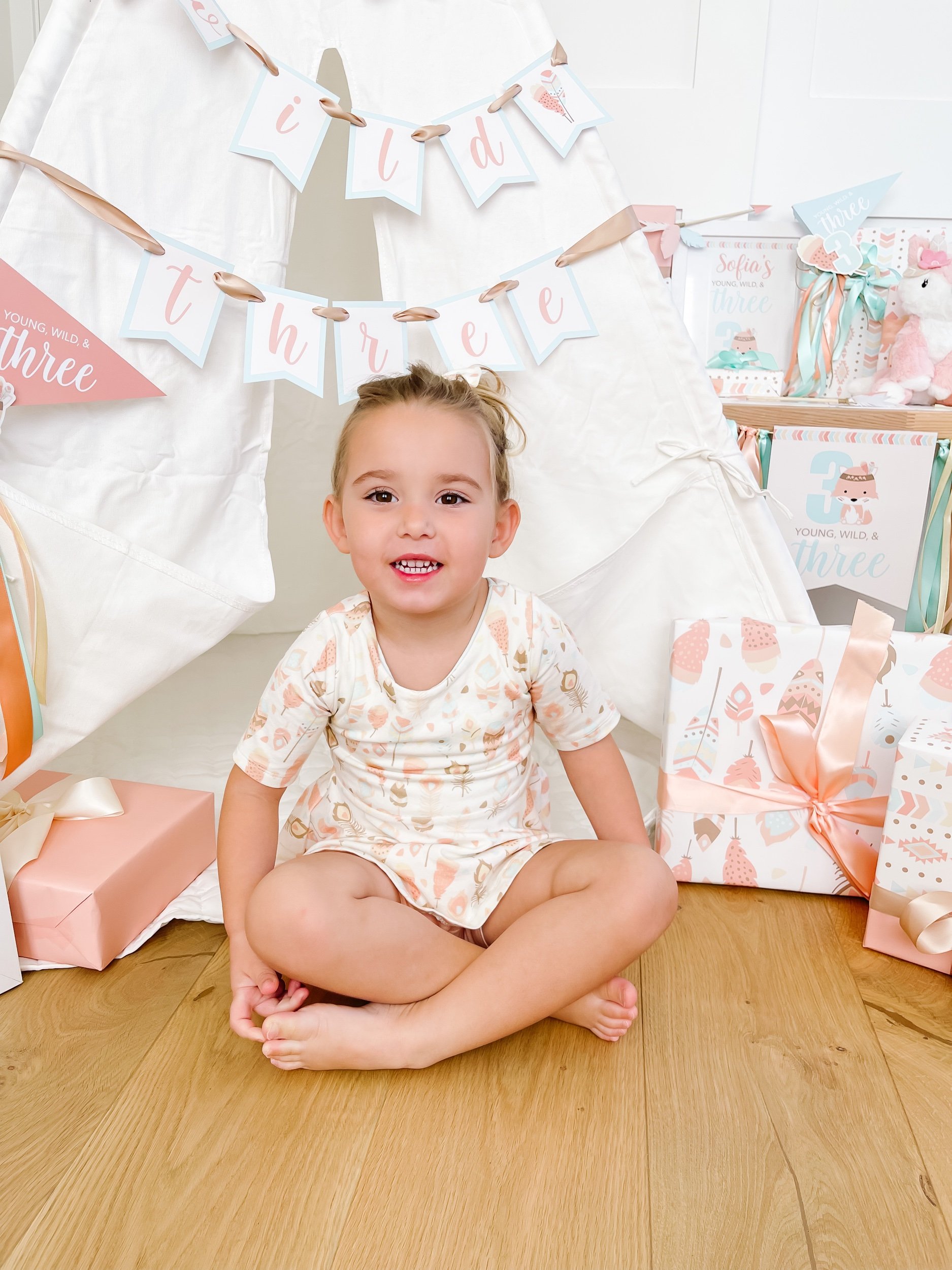
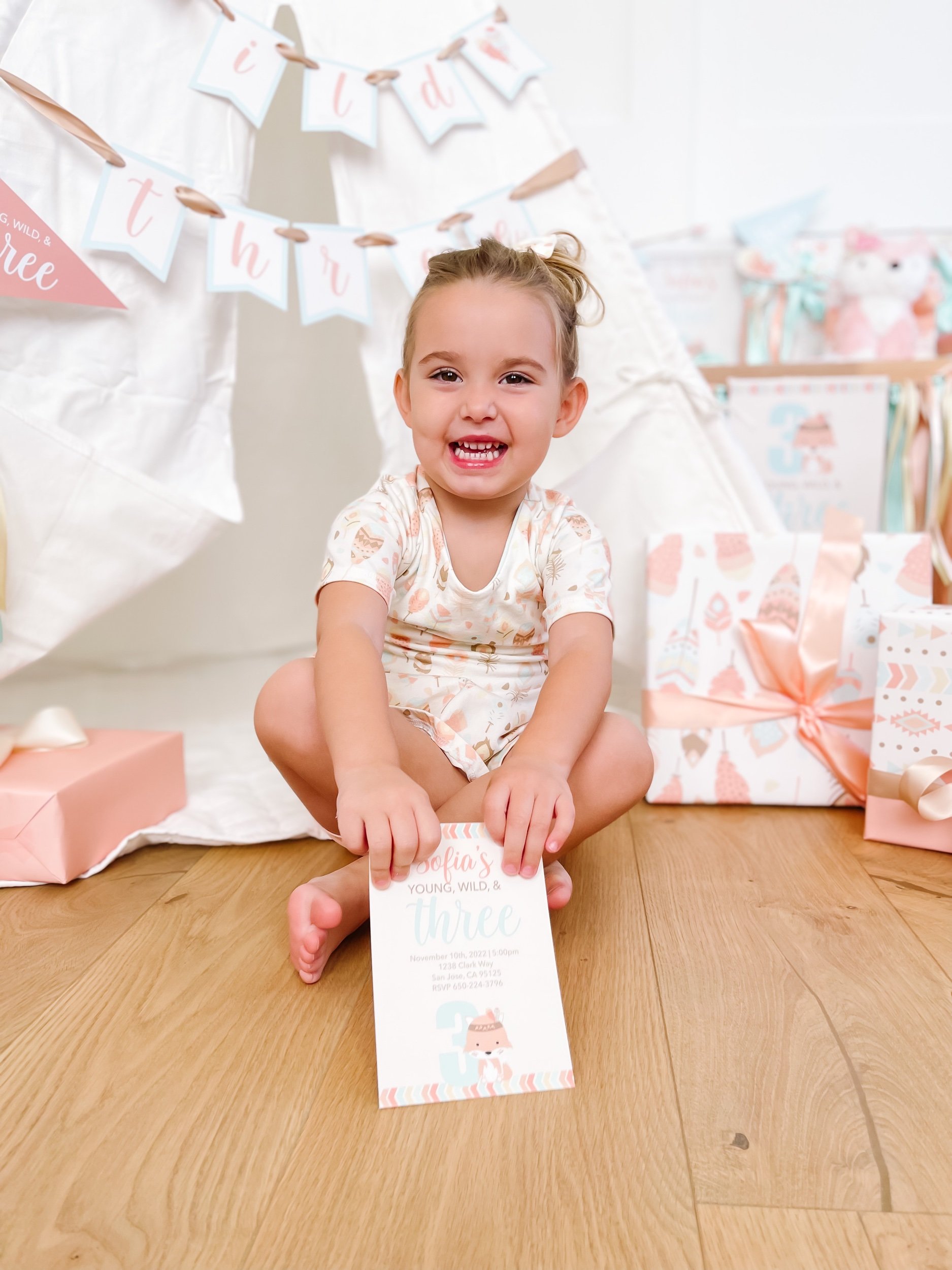
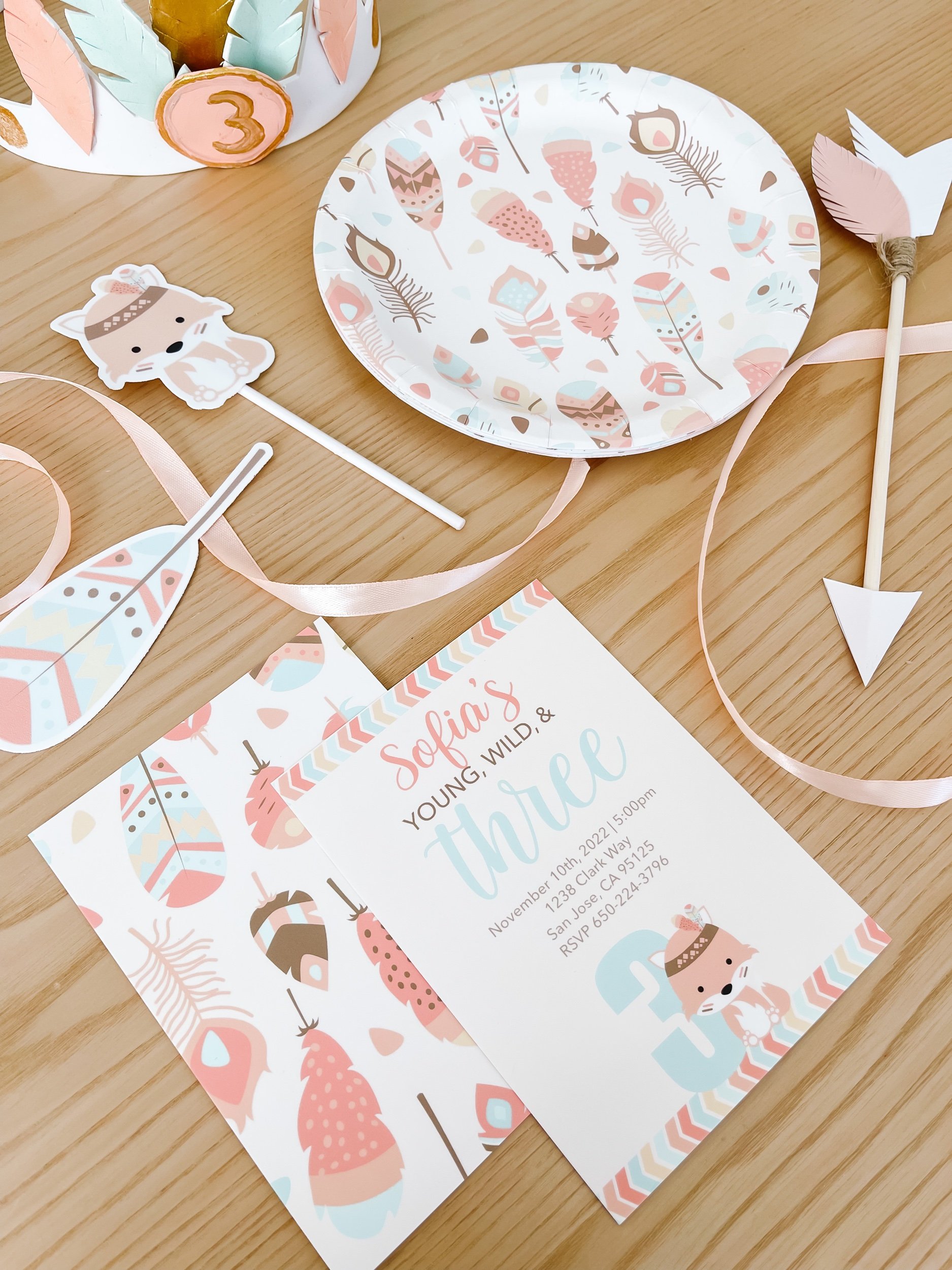
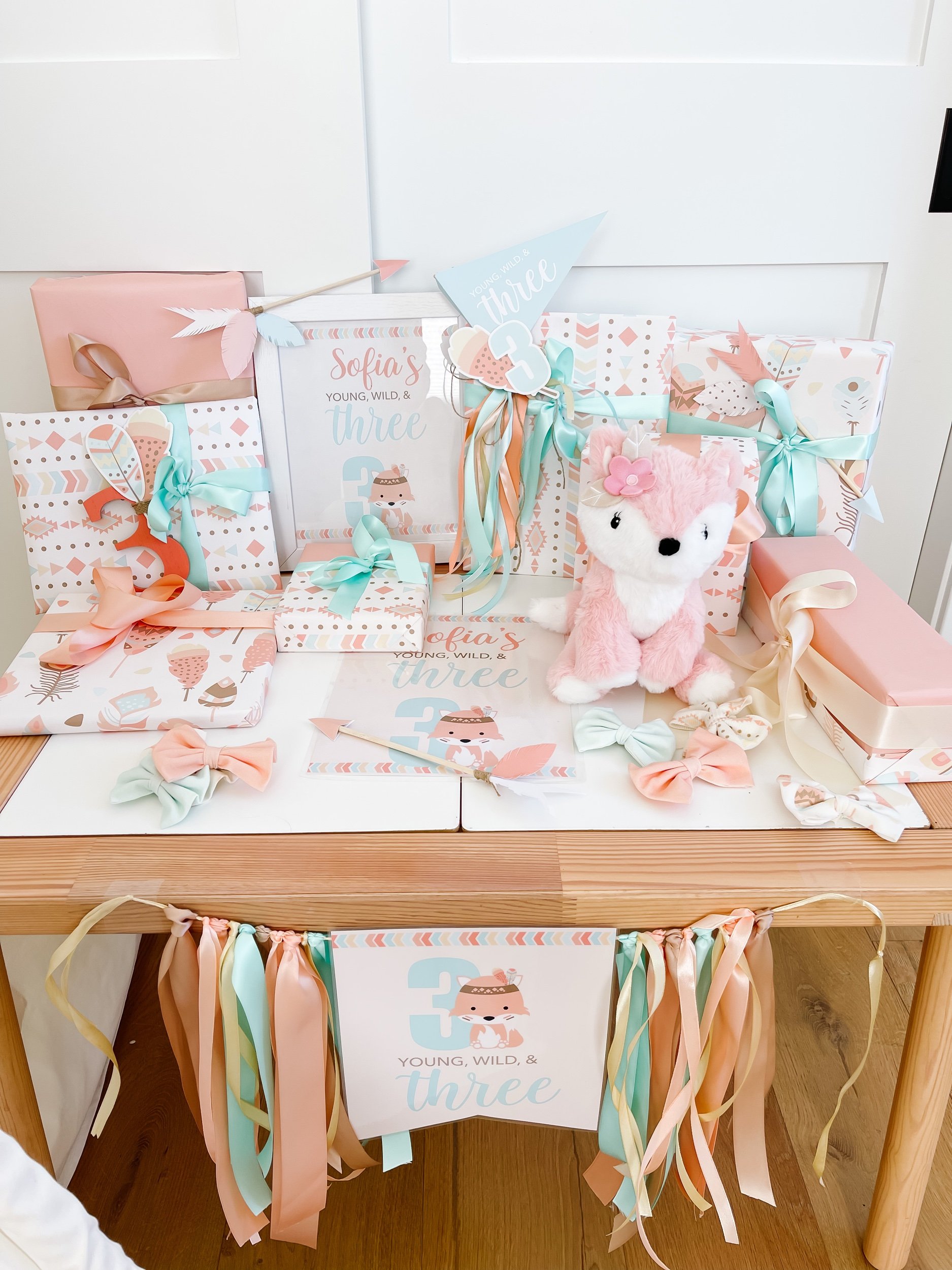
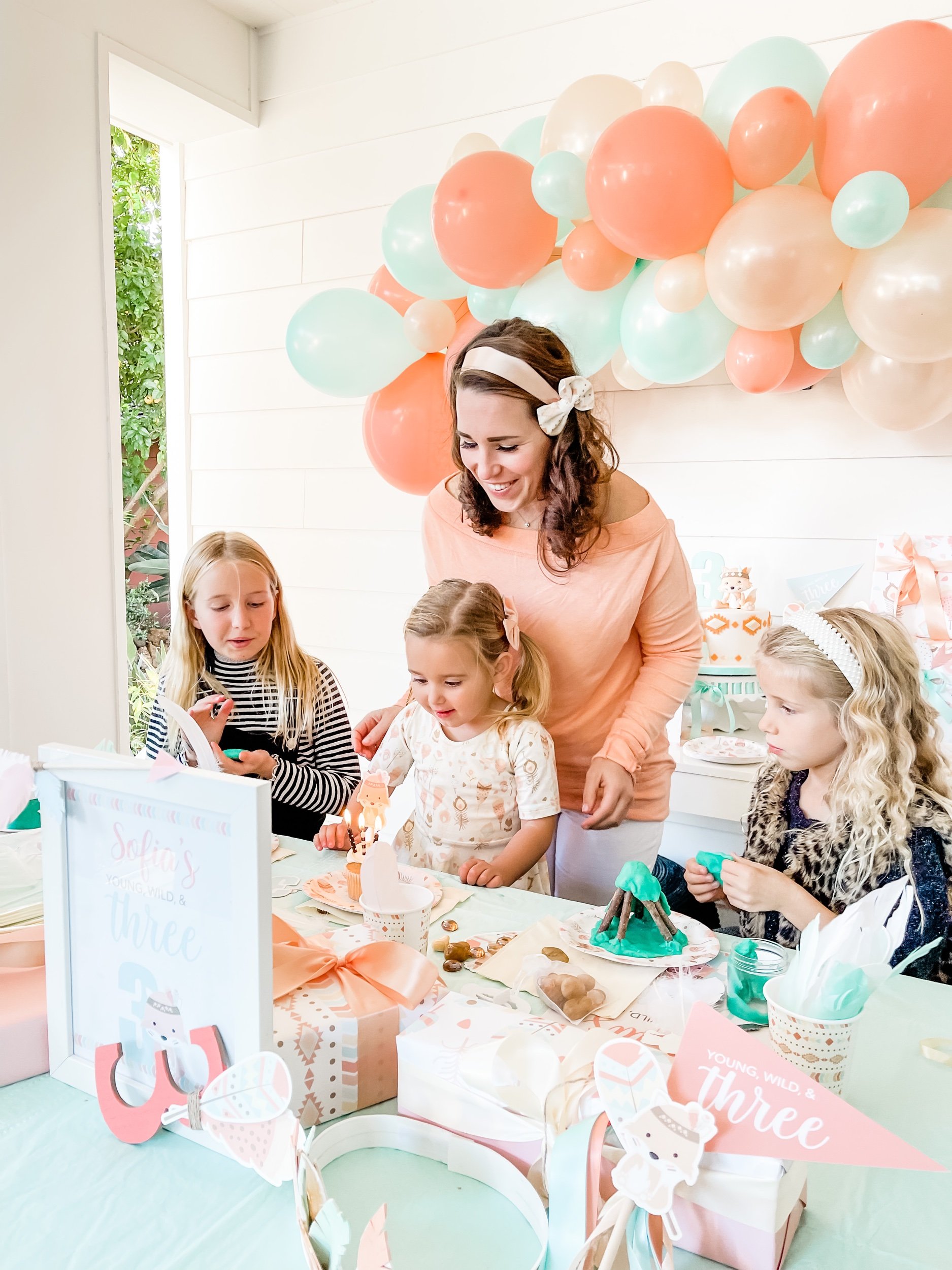
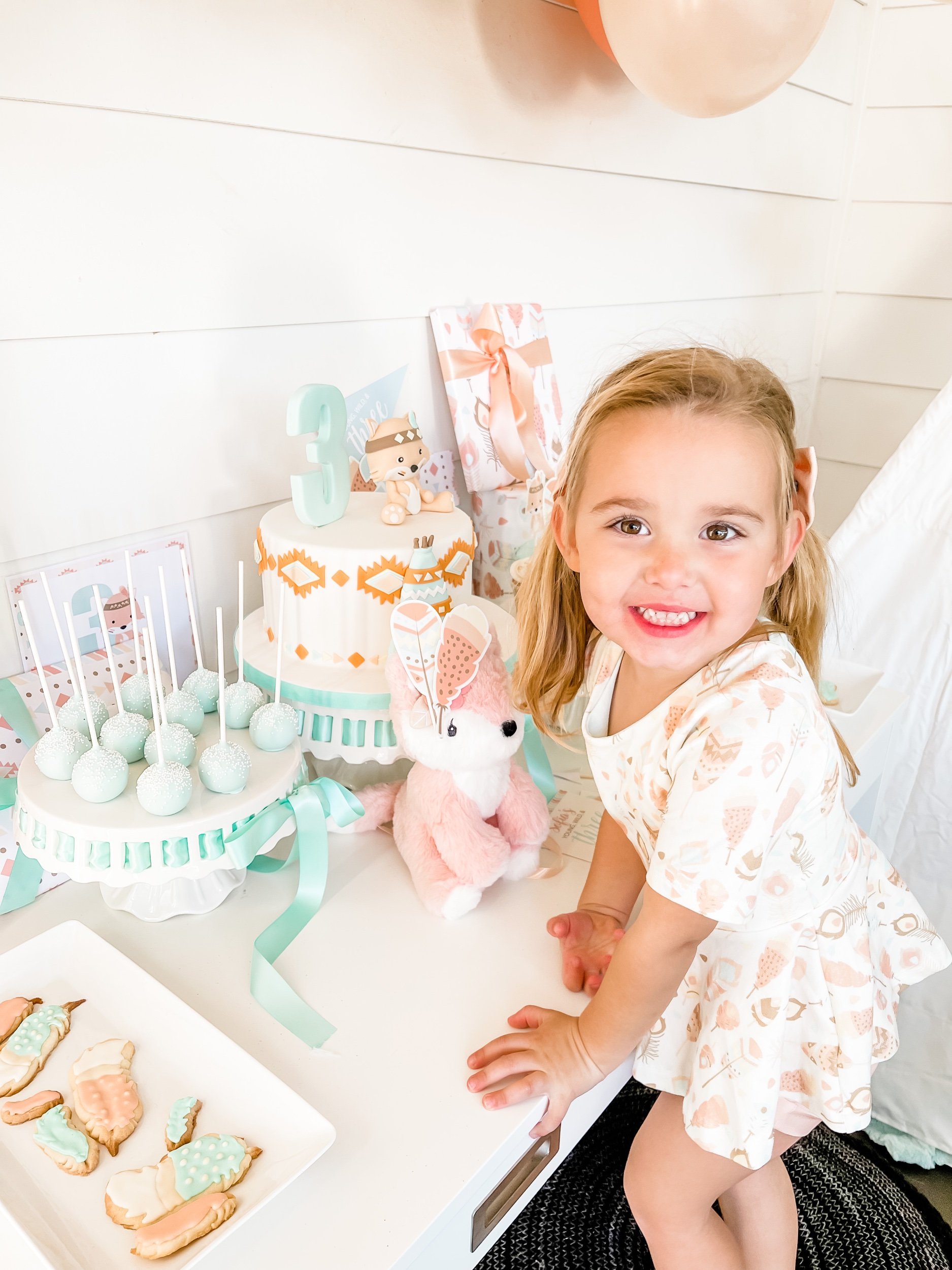
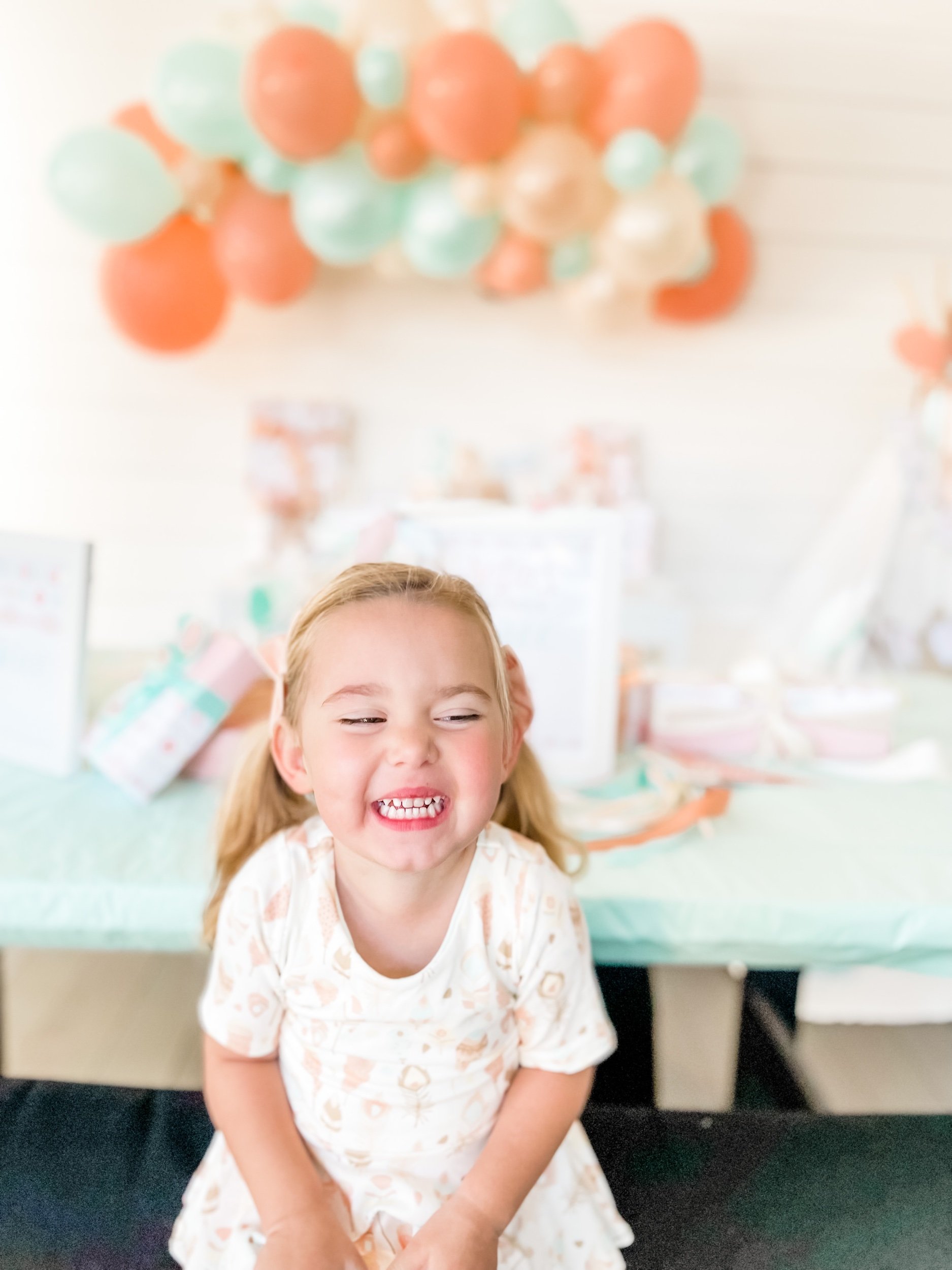
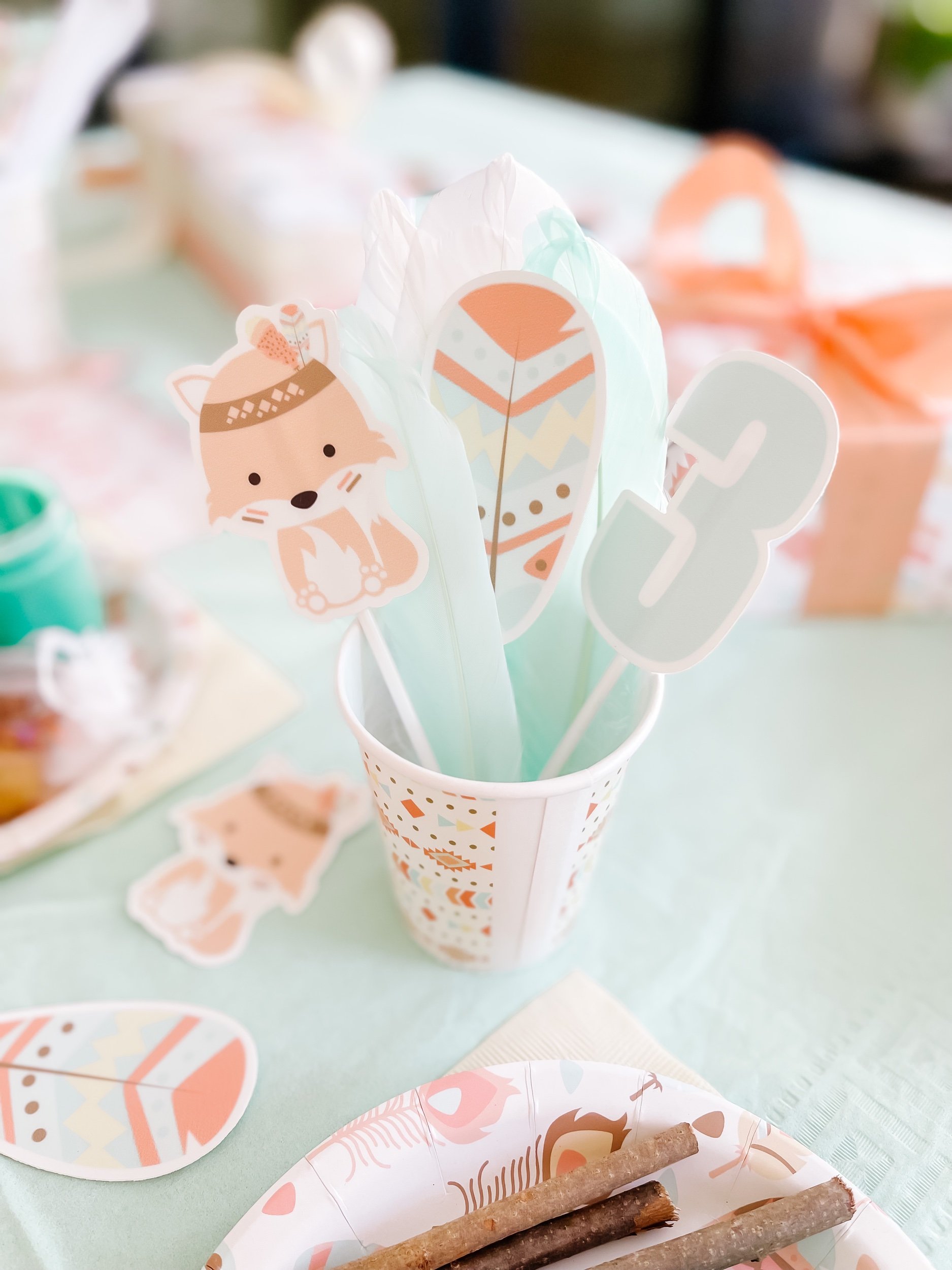
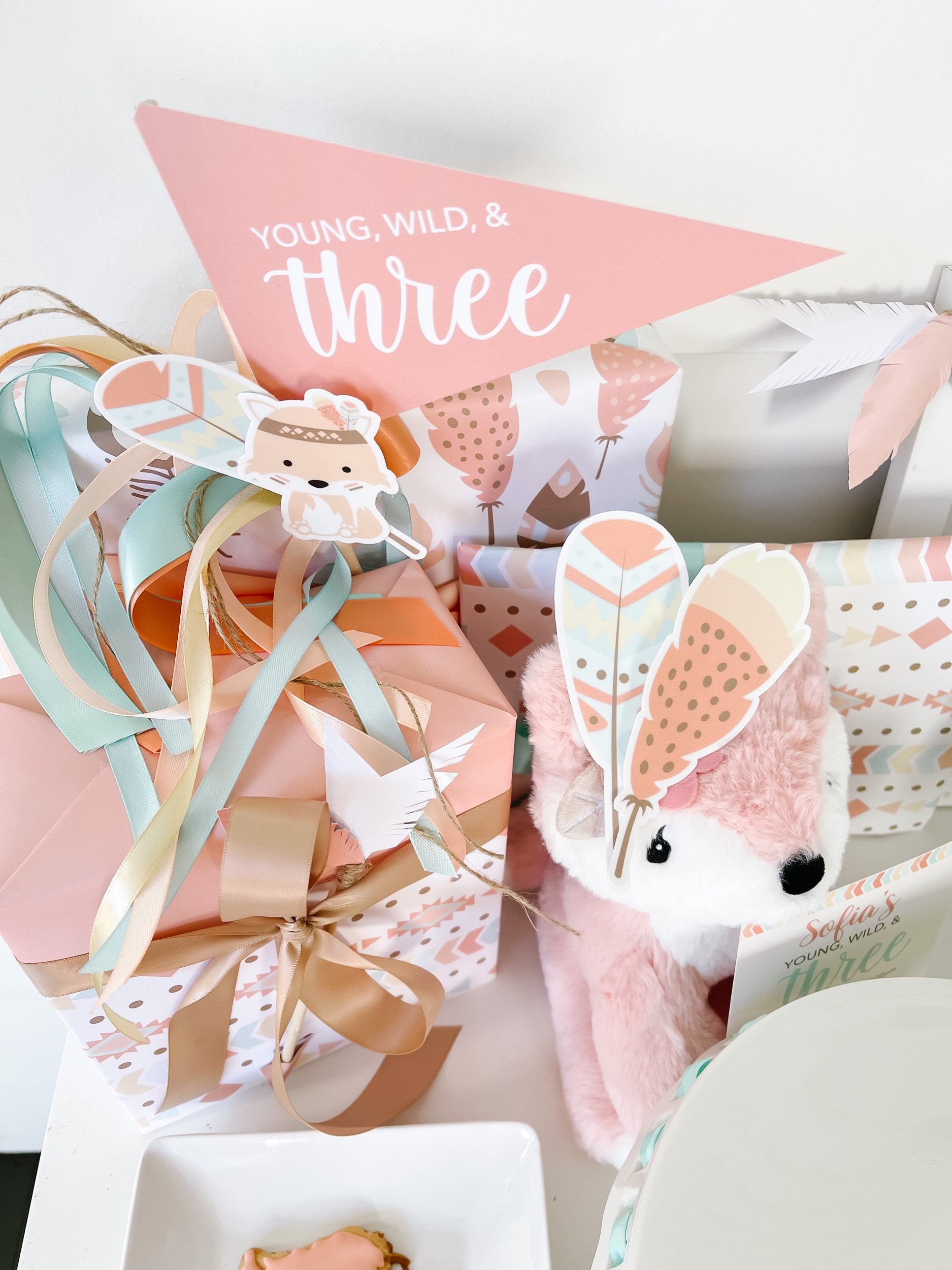
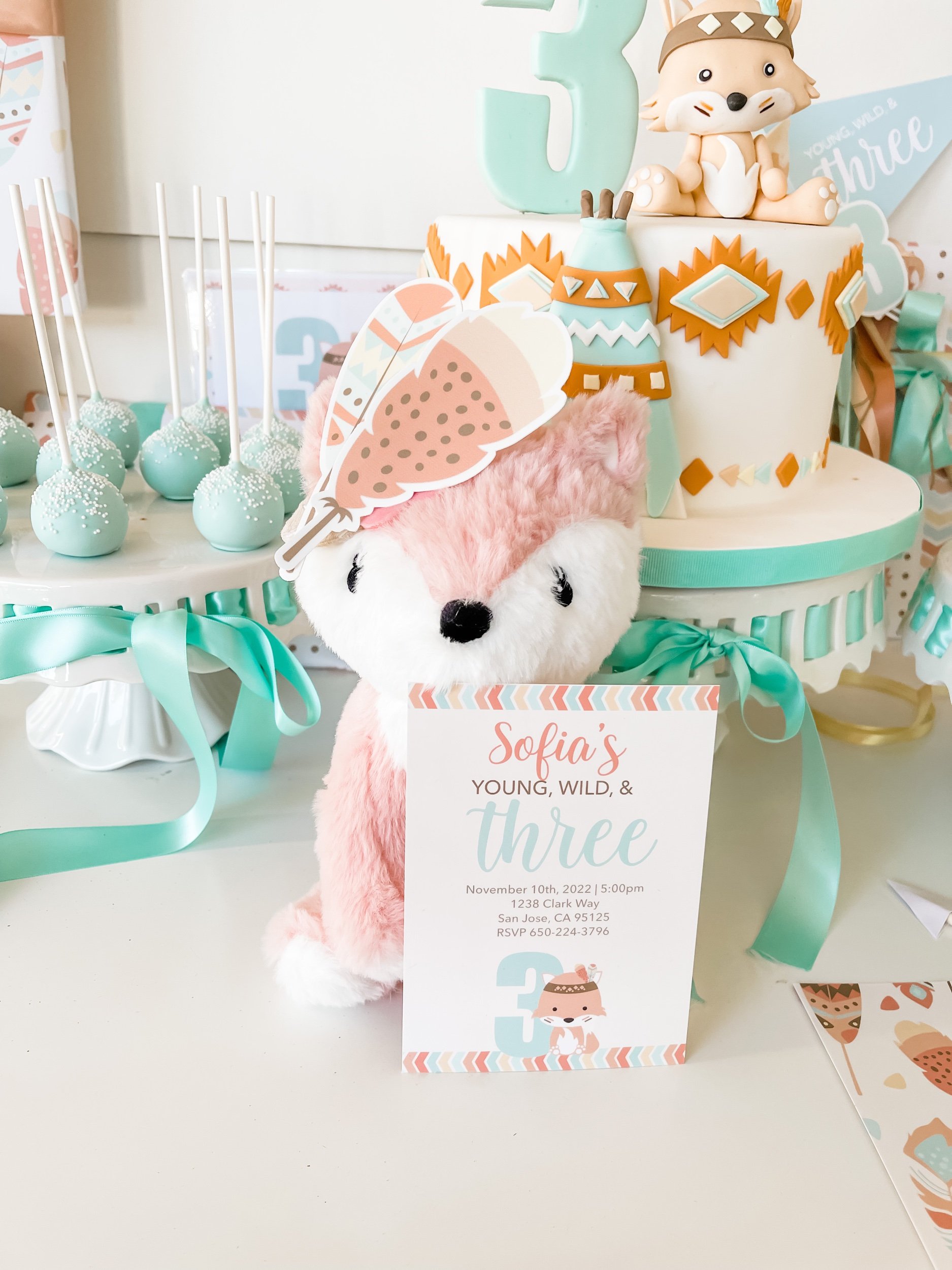
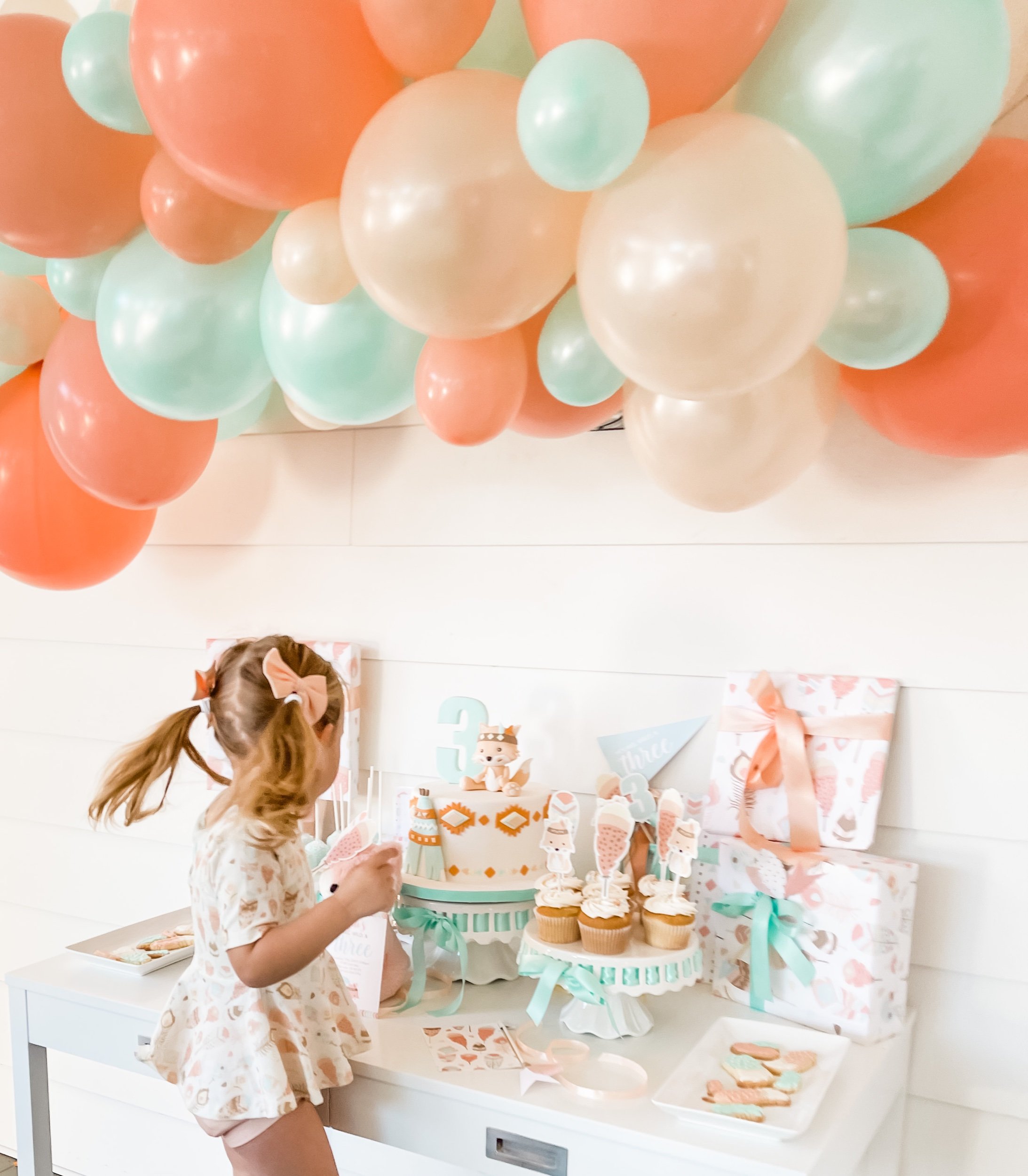
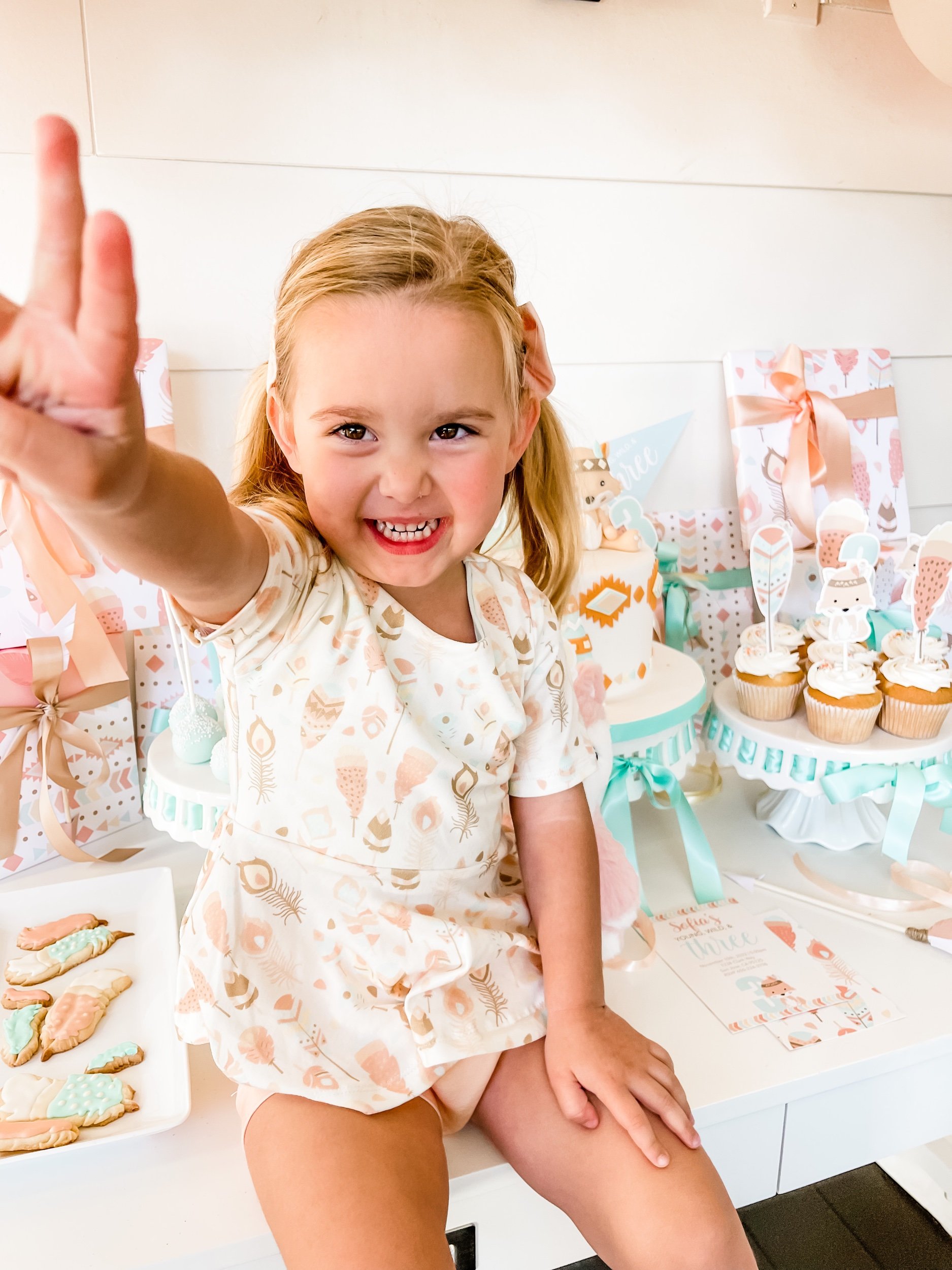
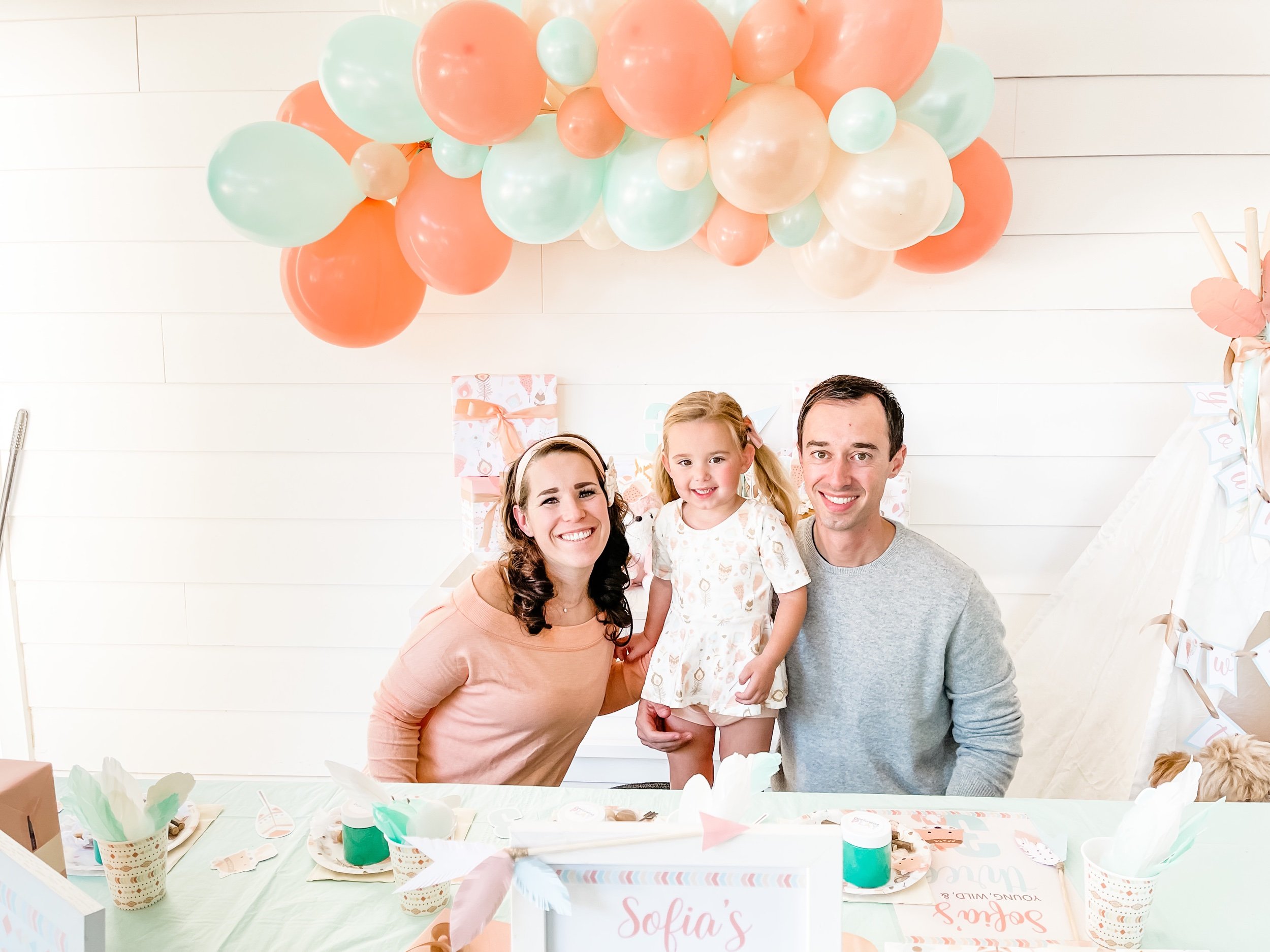
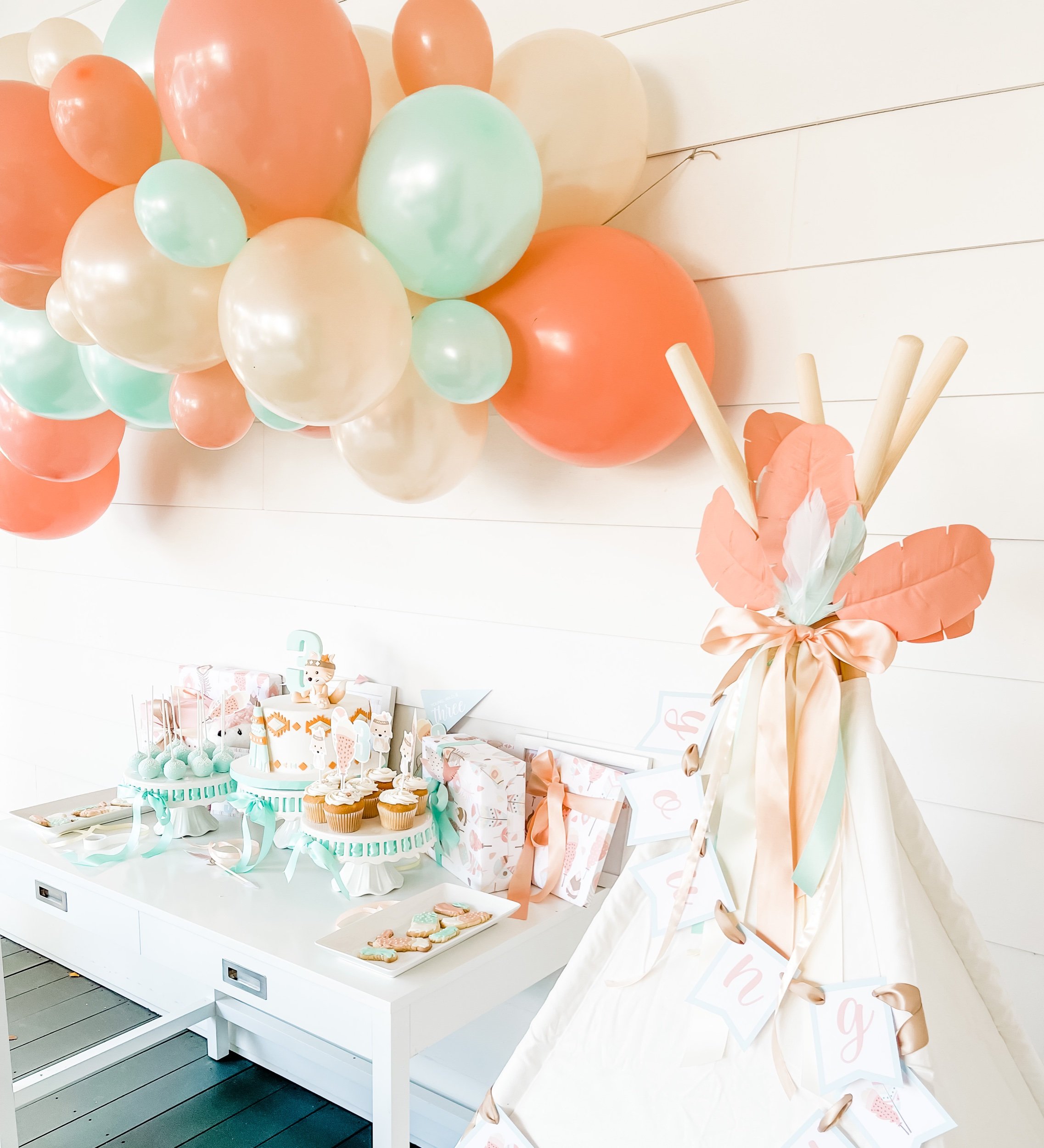
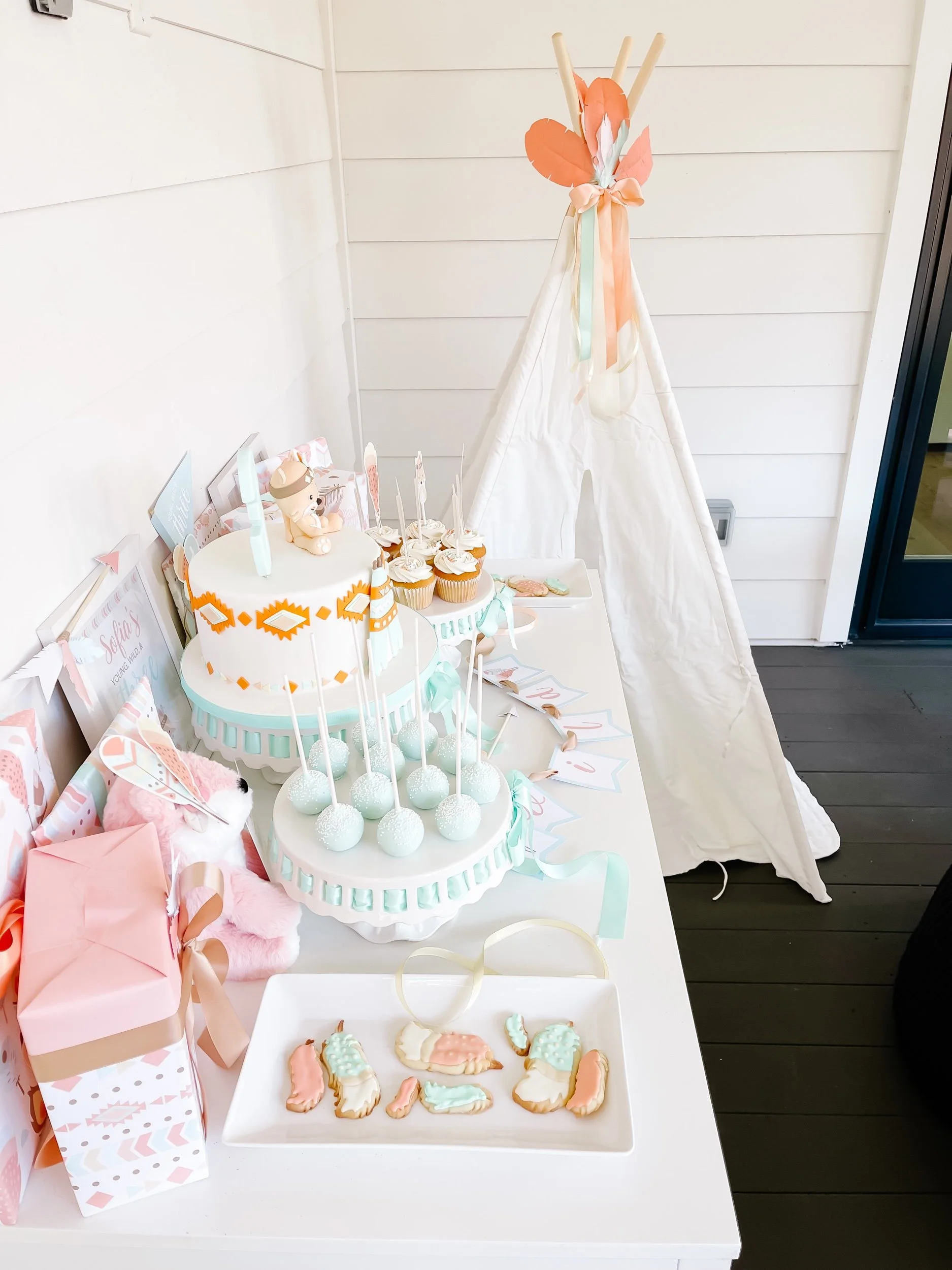
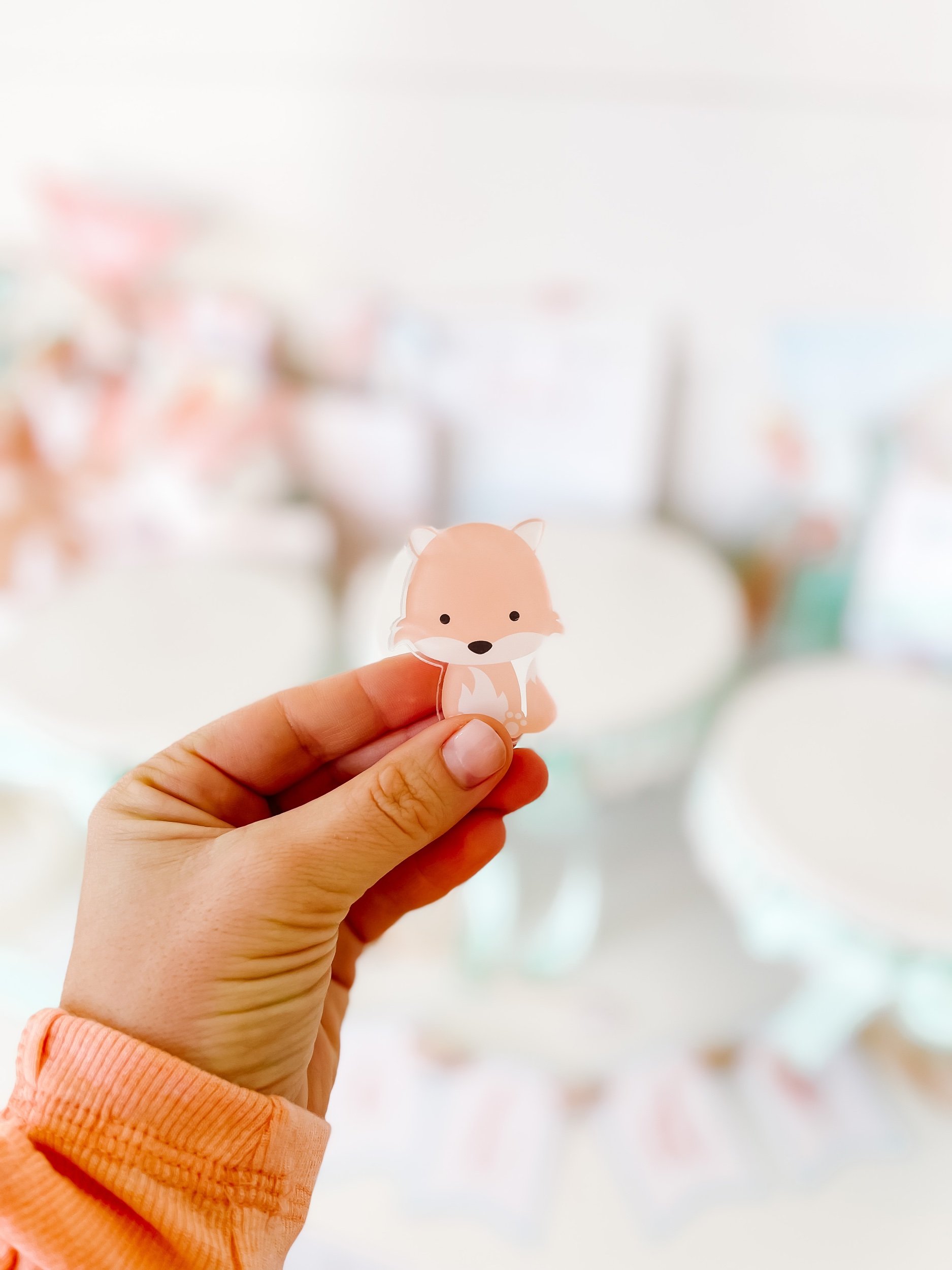
My little nugget is finally three! And oh boy is she a wild one. So this Boho Fox Tribal theme was absolutely the perfect fit for this wild child. And I knew I wanted her big gift this year to a be a teepee so I designed an entire theme around this cute little boho fox. Of course it’s in my all time favorite color scheme, coral and mint. I just love how this peachy coral pink and teal soft mint came together to create this lovely theme. I got to work with the fabulous @capptivatingplay on designing these adorable party favor kits which included play doh, sticks, rocks, and these cute little acrylic foxes.
I’ve made this kit available for print on my website along with some of the other party supplies listed here:
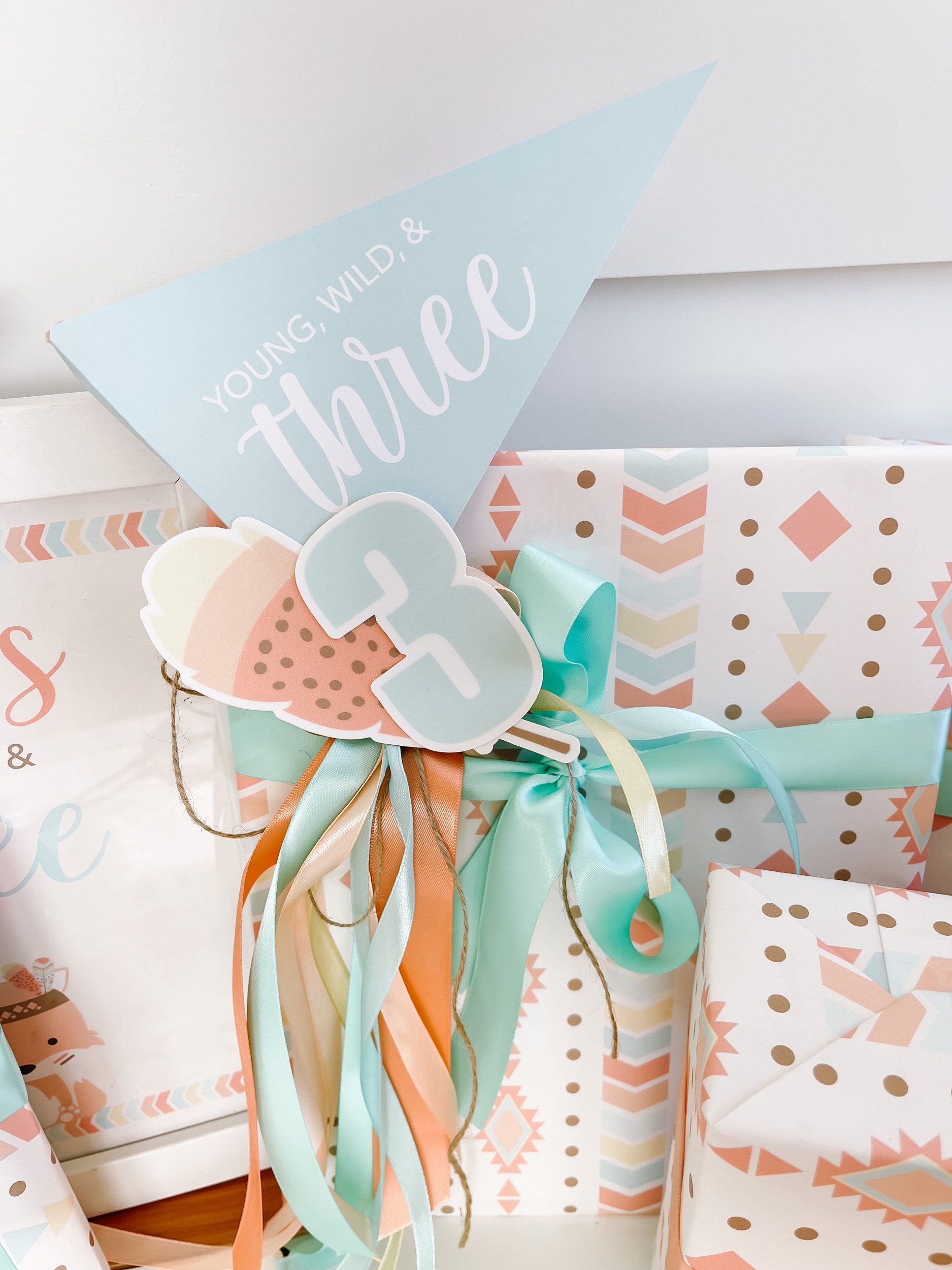
Welcome sign, banner, party invitations, cupcake toppers, pennant flags, etc. by @goodnightfox
Balloons by @soireelove
Cake by @the.cake.shop
Party Favors by @capptivatingplay
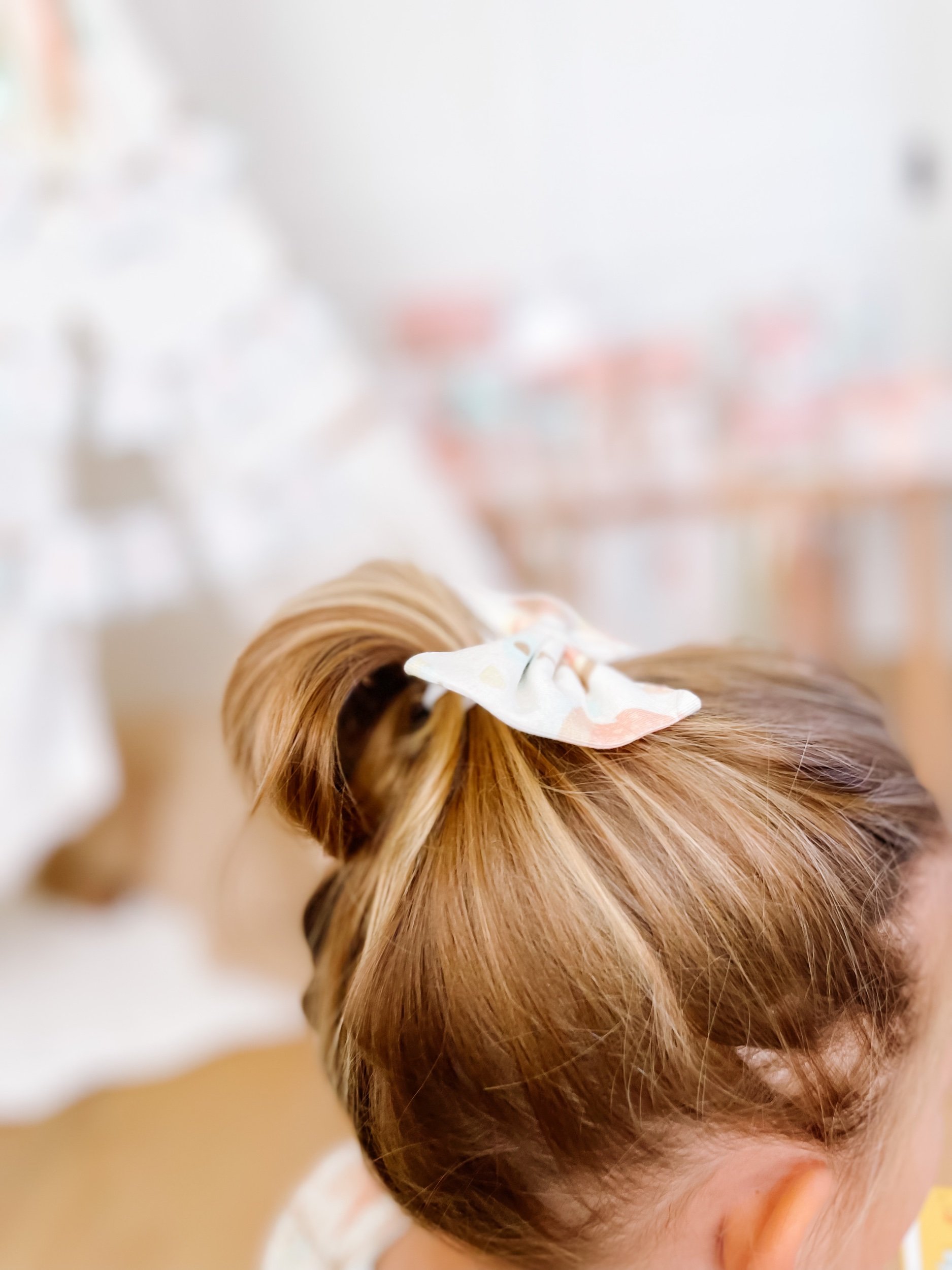
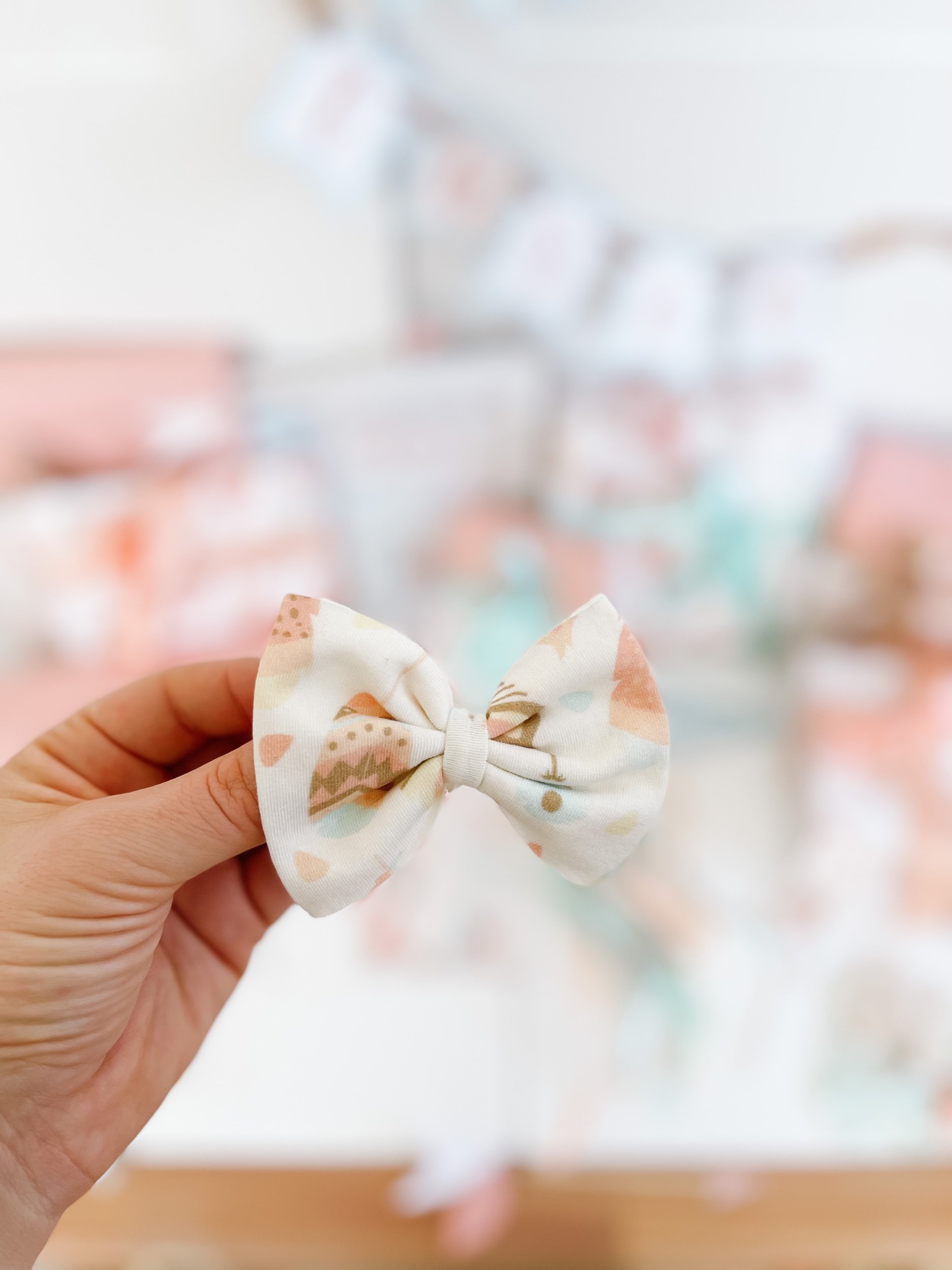
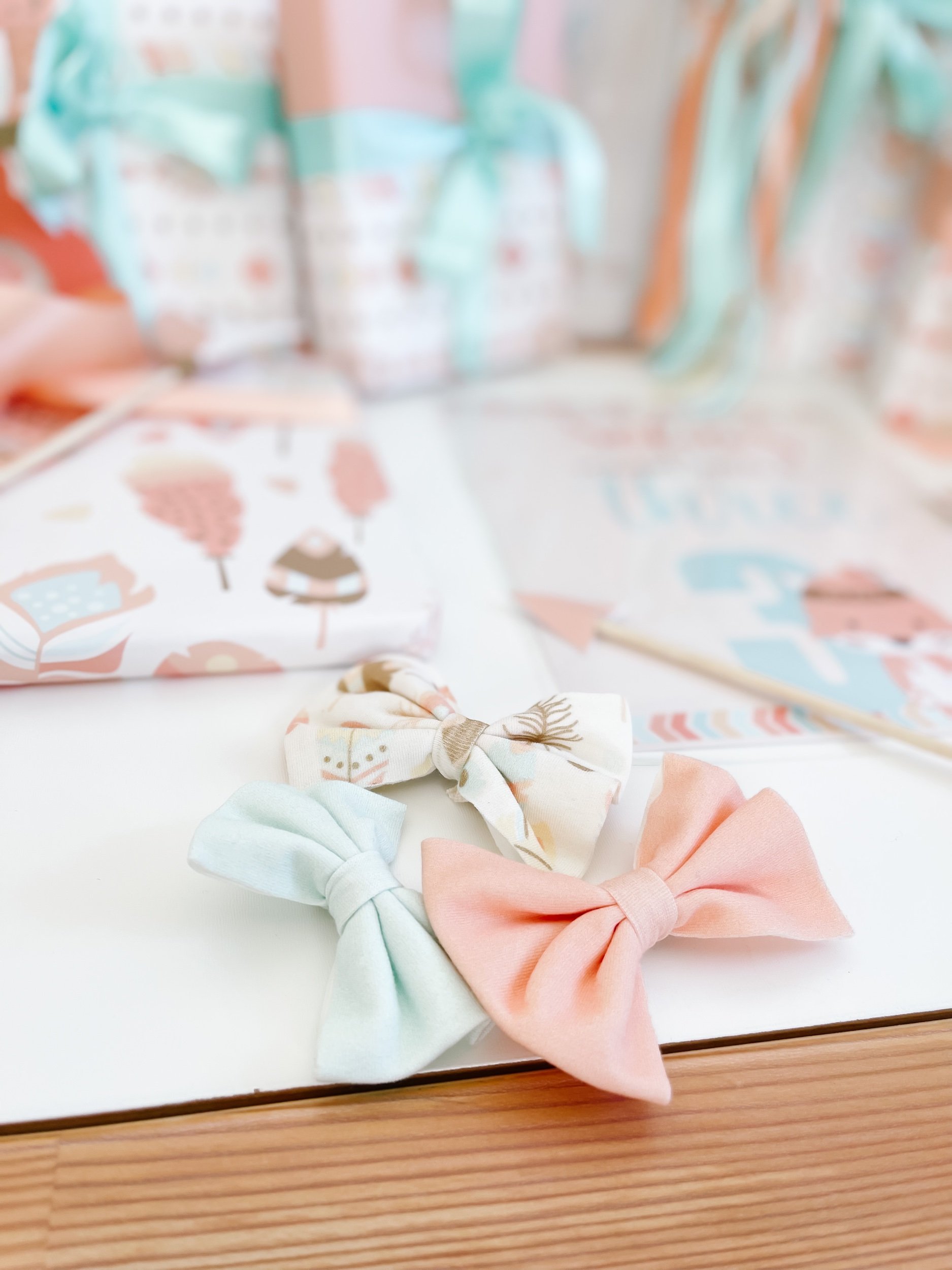
Party Dress & Hair Bows by @bhartt_designs

Are you looking for a unique and stylish birthday party theme for your daughter? Look no further than a Young, Wild, and Three bohemian fox chic party!
Not only is the bohemian fox trend on-point and adorable, but it also allows for a lot of creative freedom in terms of decor and activities. Incorporate colors like coral and mint for a vibrant and playful look.
One of the best things about this theme is that it can be adapted for any age or gender. You can have fun with fox-themed games and crafts for the kids, or even serve fox-inspired cocktails for the adults.
To make your party planning even easier, be sure to download our printable party decoration kit. This kit includes invitations, party signs, party banners, party flags, and more, all designed to perfectly complement a Young, Wild, and Three bohemian fox chic party. Plus, it will make your party planning experience much more seamless and stress-free.
In conclusion, a Young, Wild, and Three bohemian fox chic birthday party is an excellent idea for your daughter's birthday party. With colors like coral and mint, it's sure to be a colorful and stylish occasion that your guests will love. Make sure to download our printable party decoration kit to take the stress out of party planning.

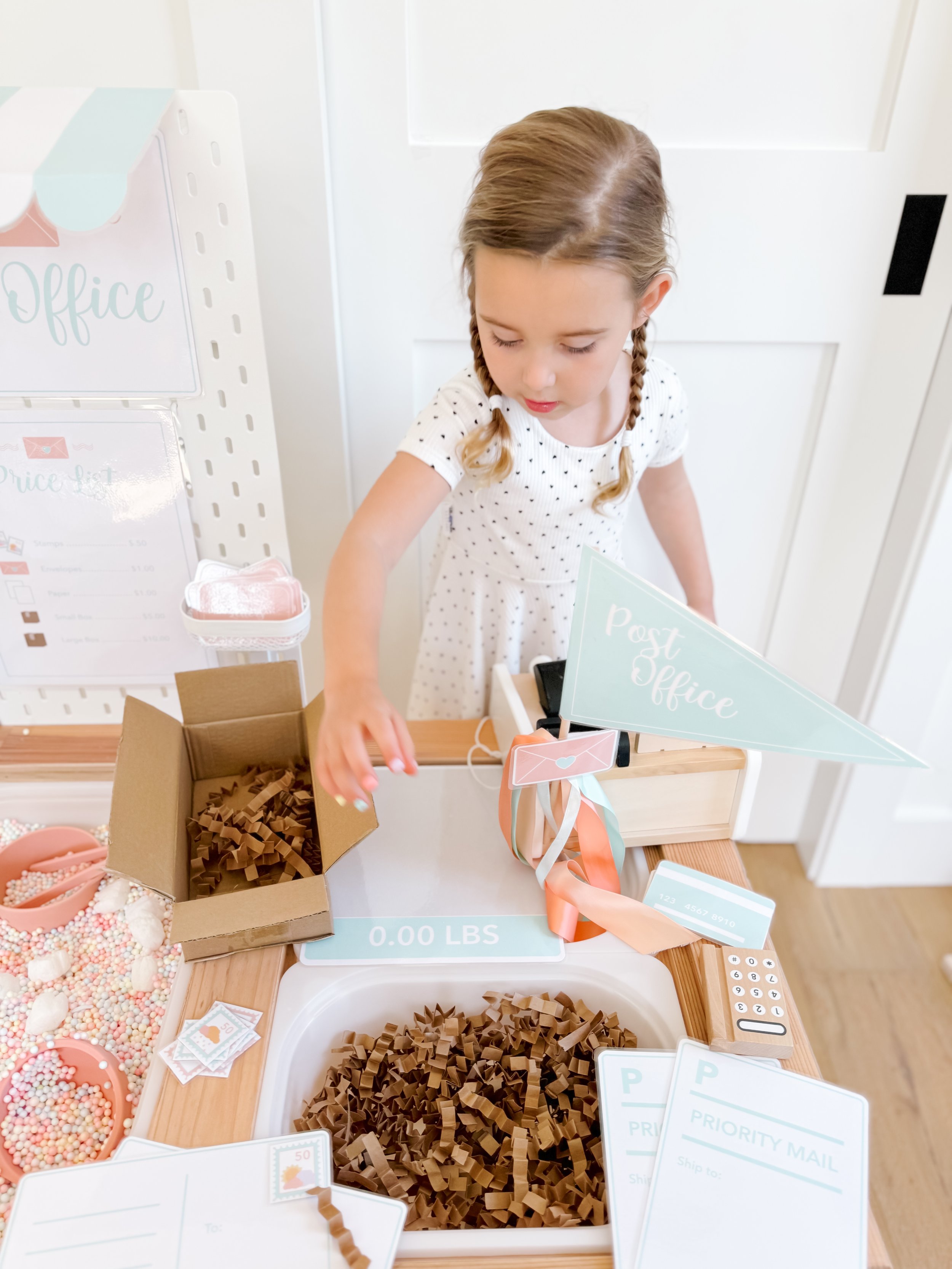
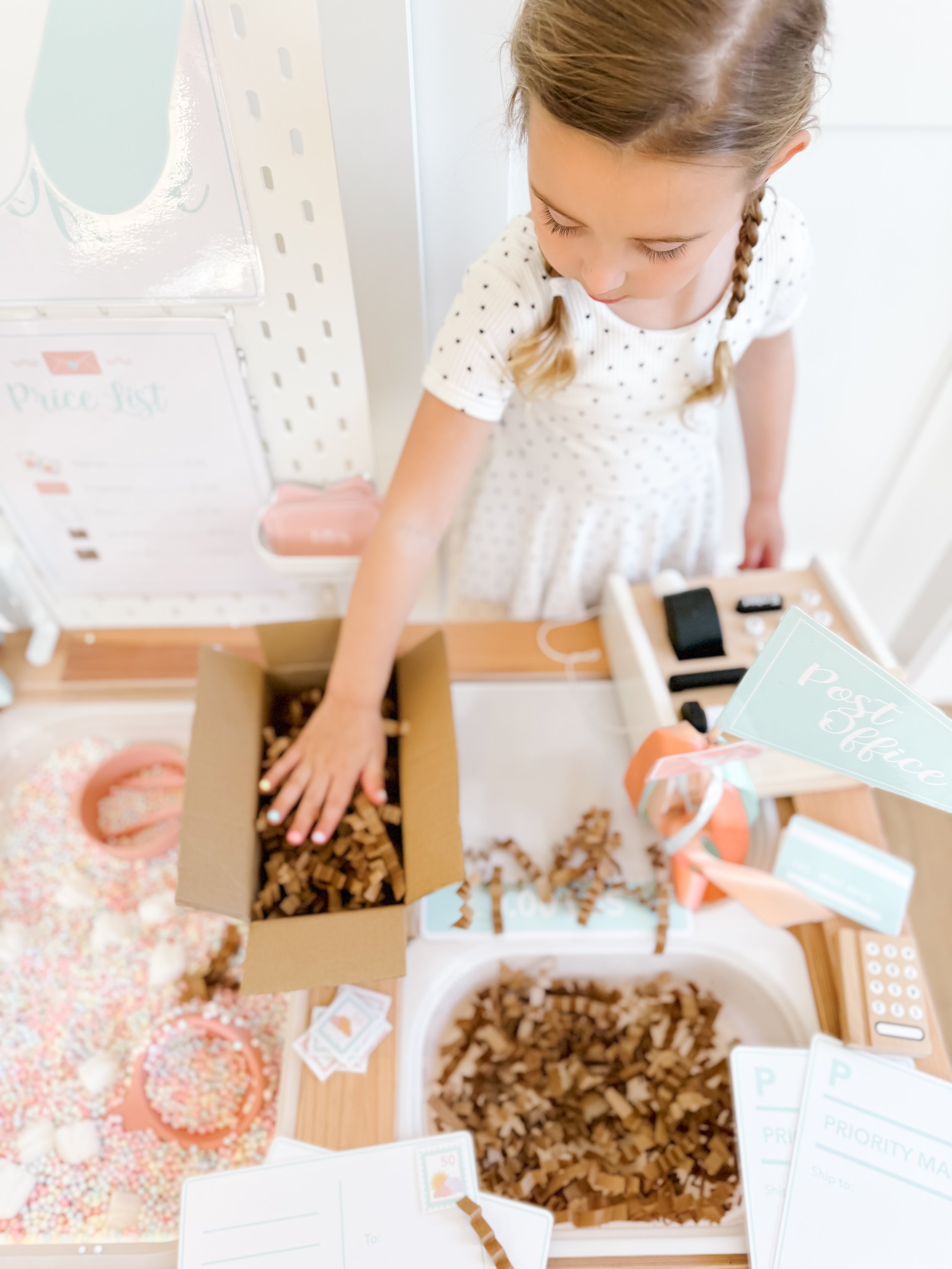
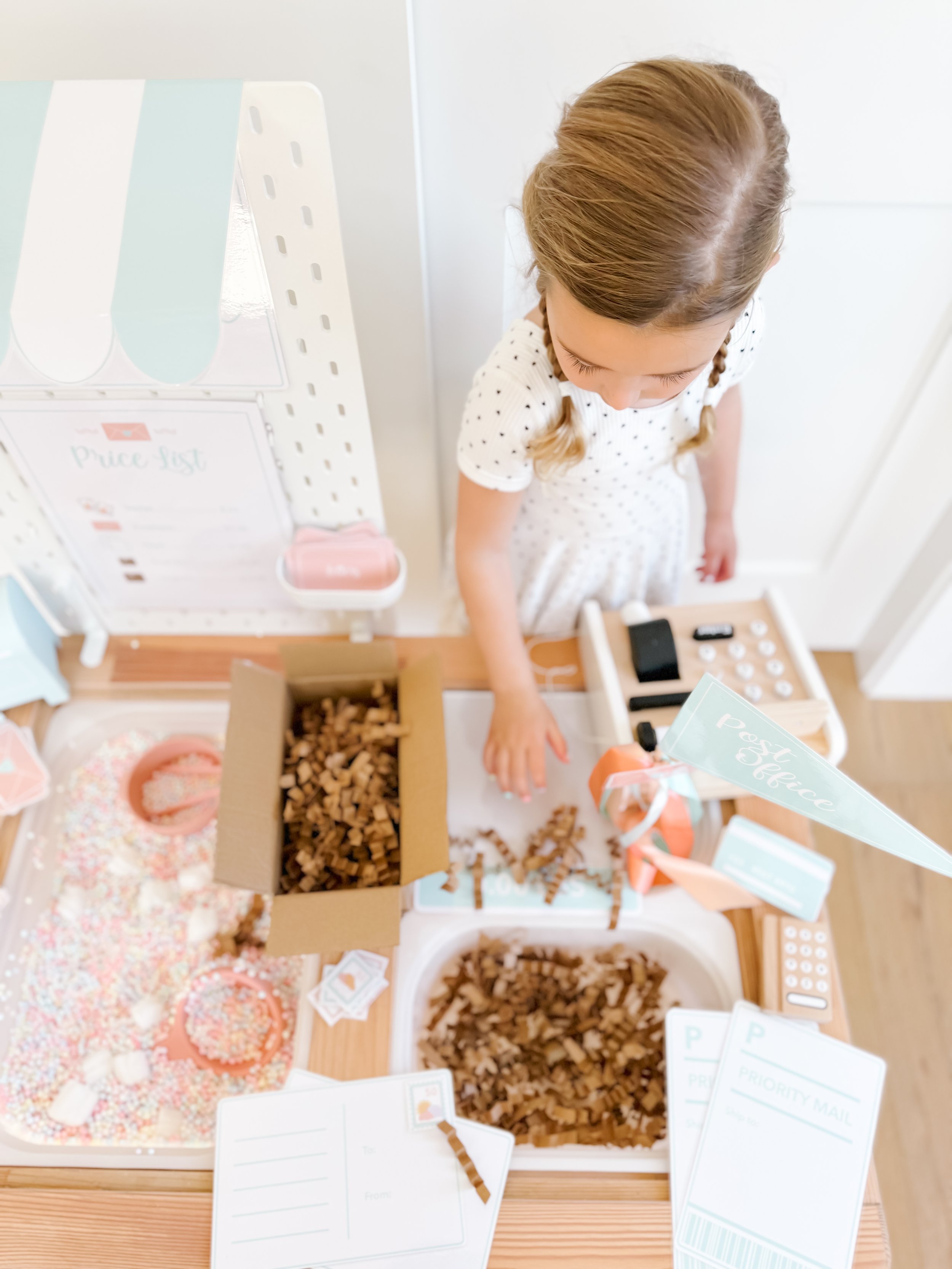
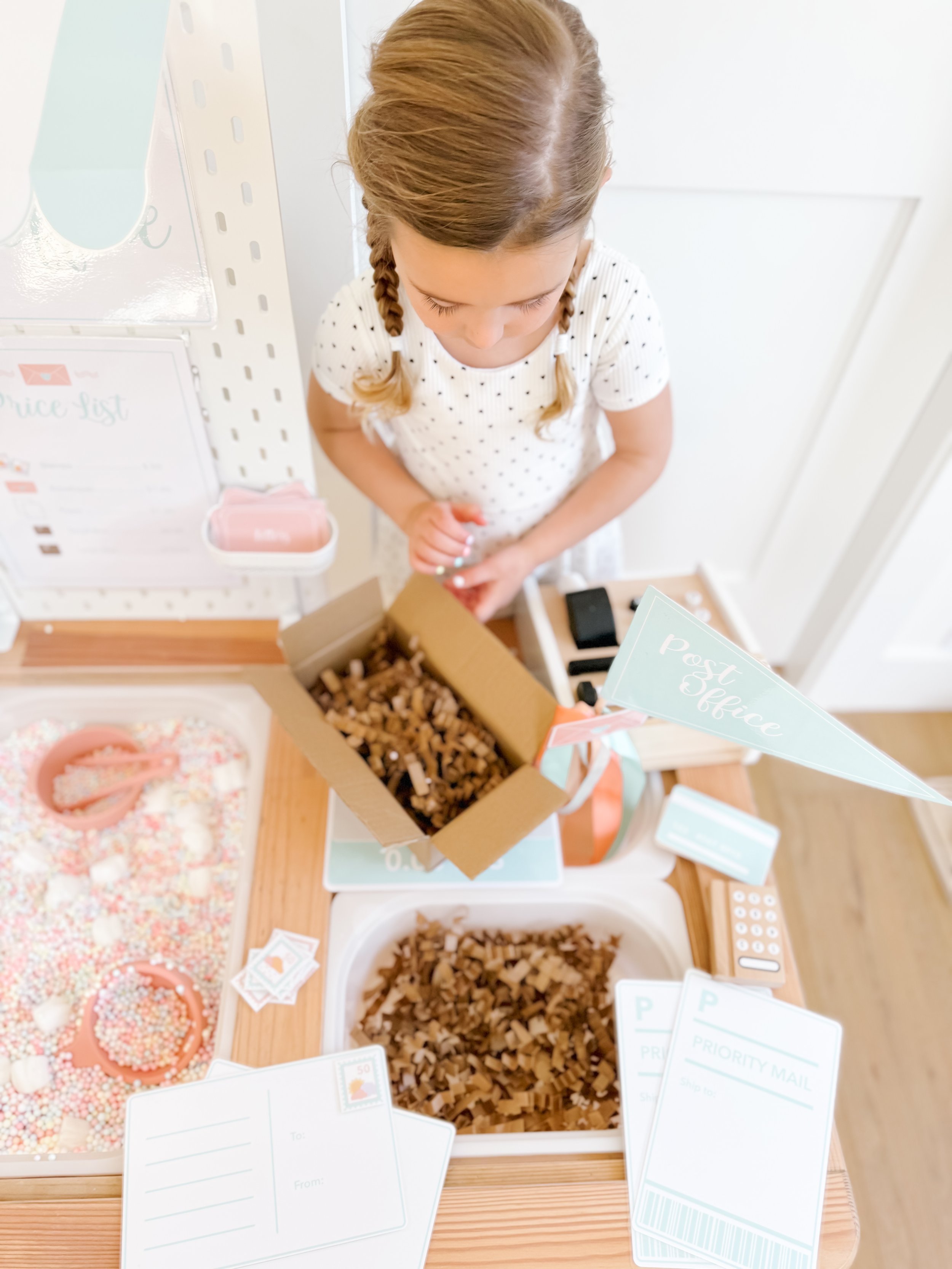
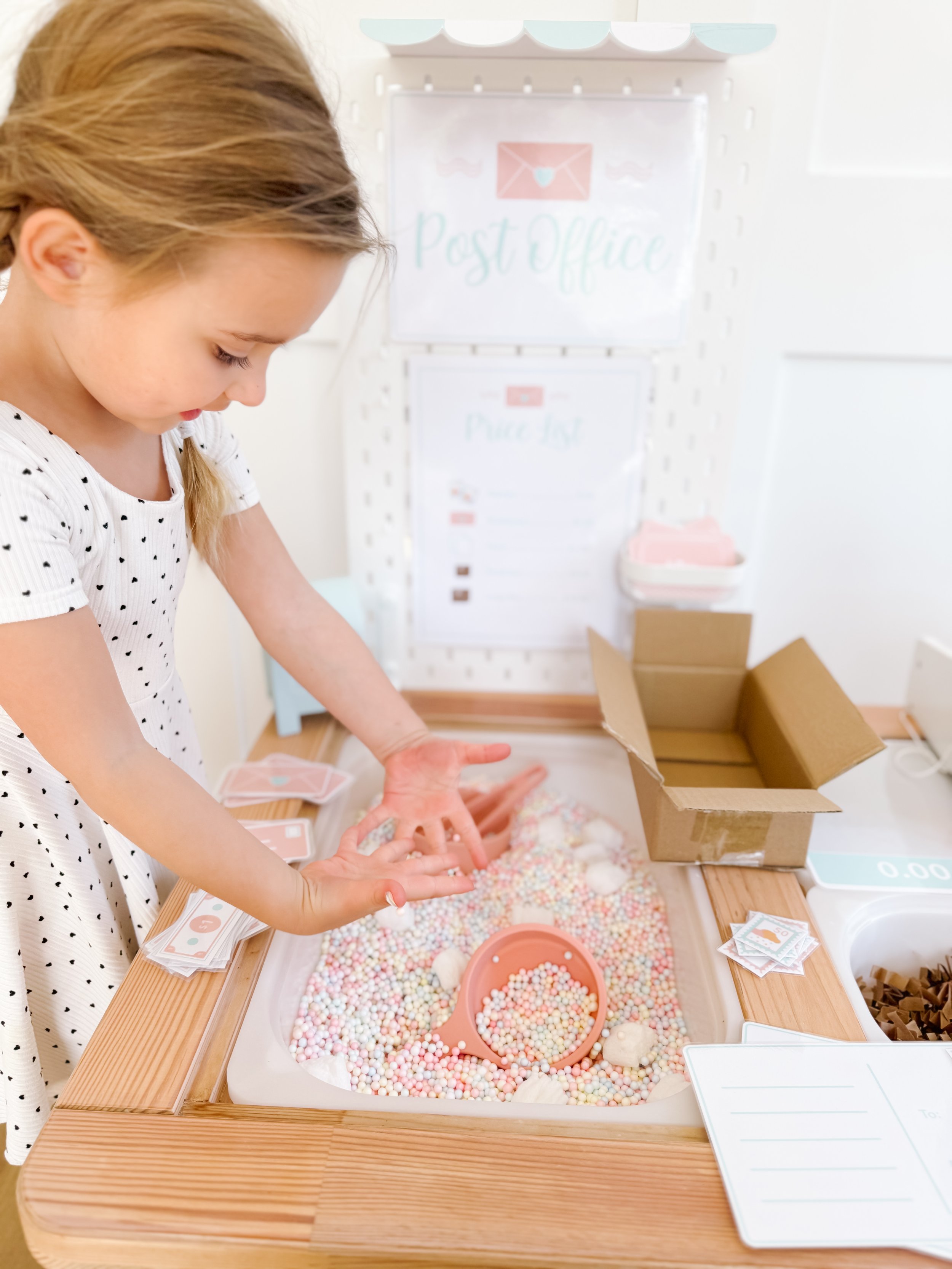
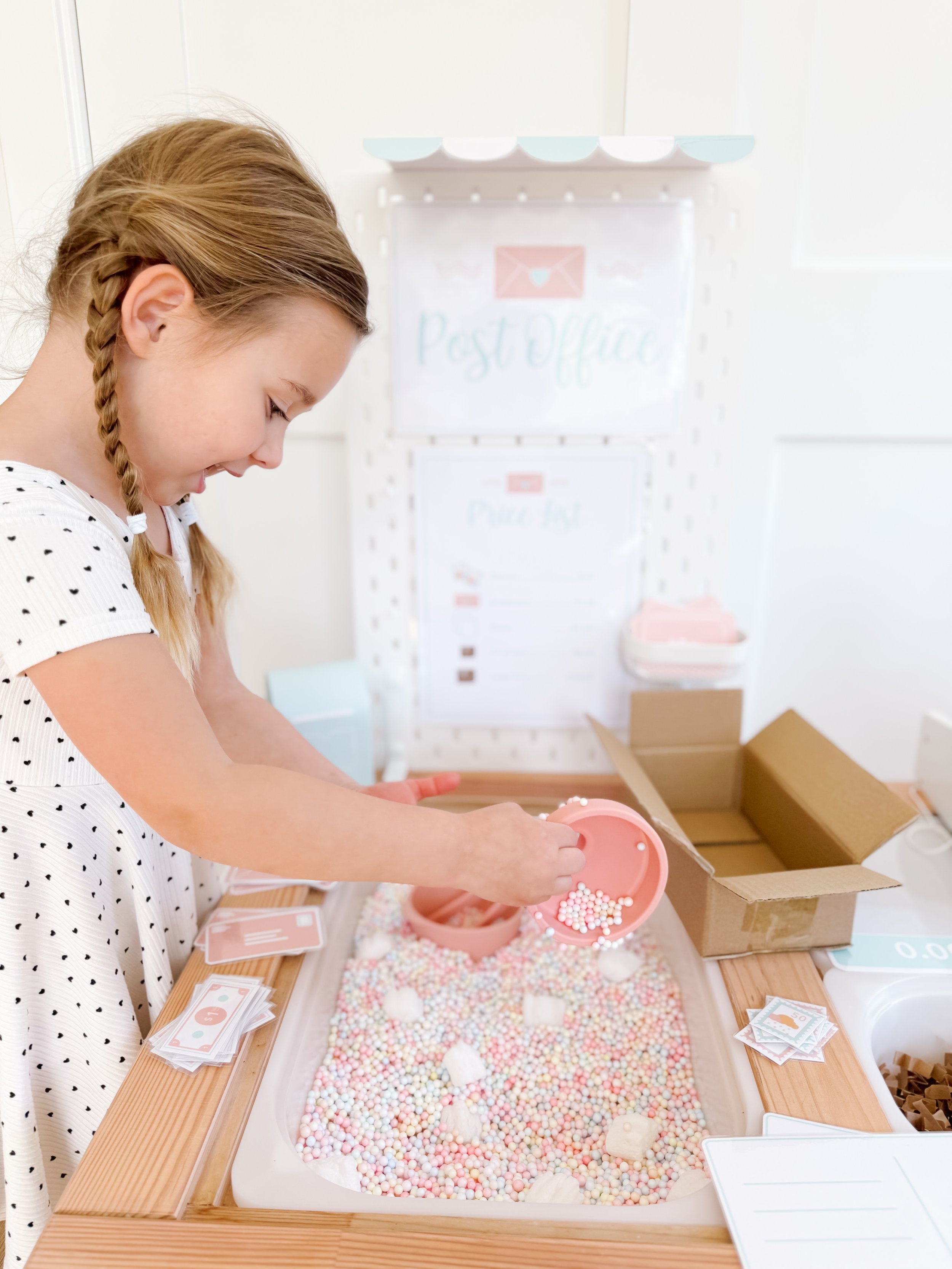
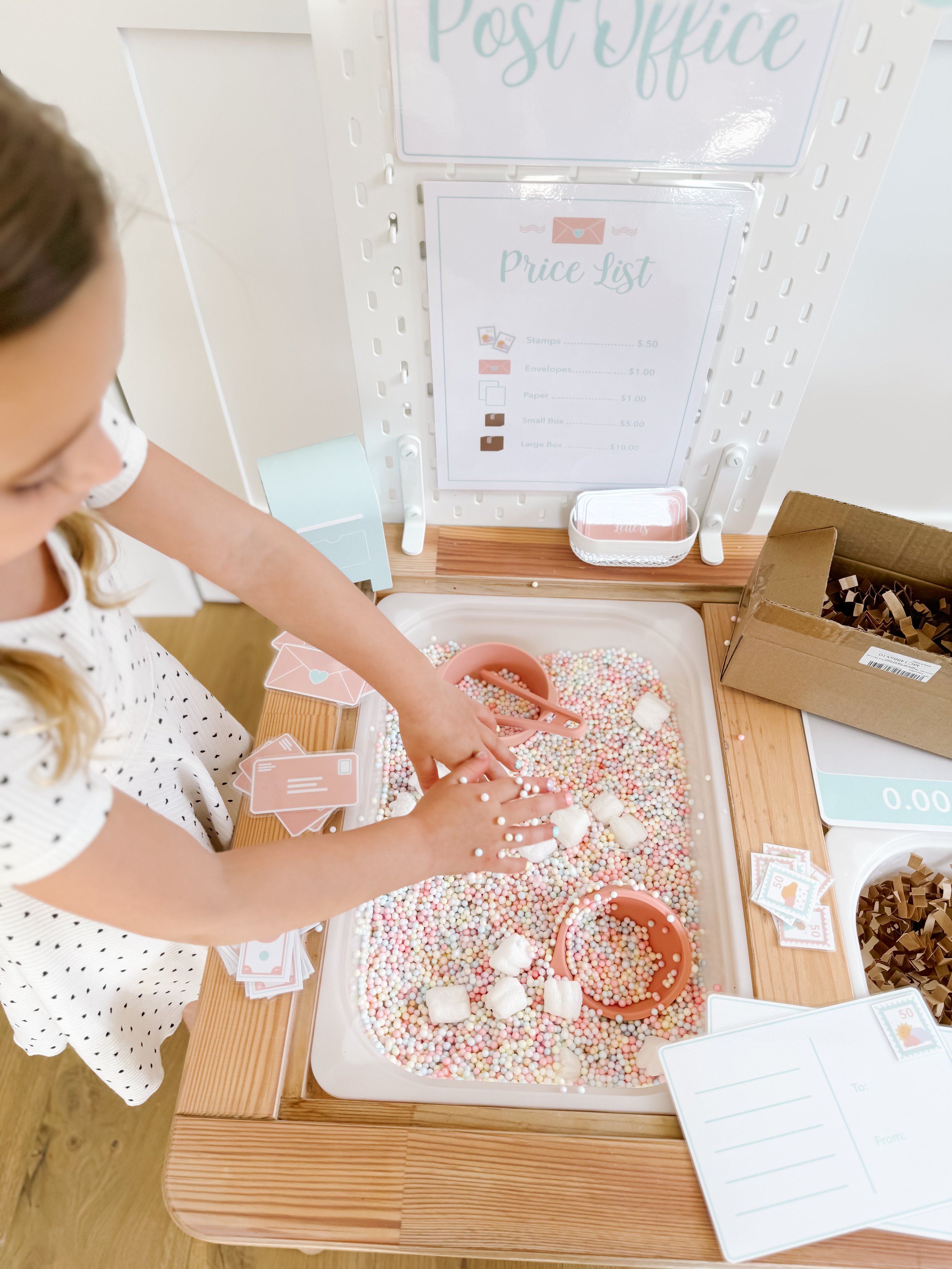
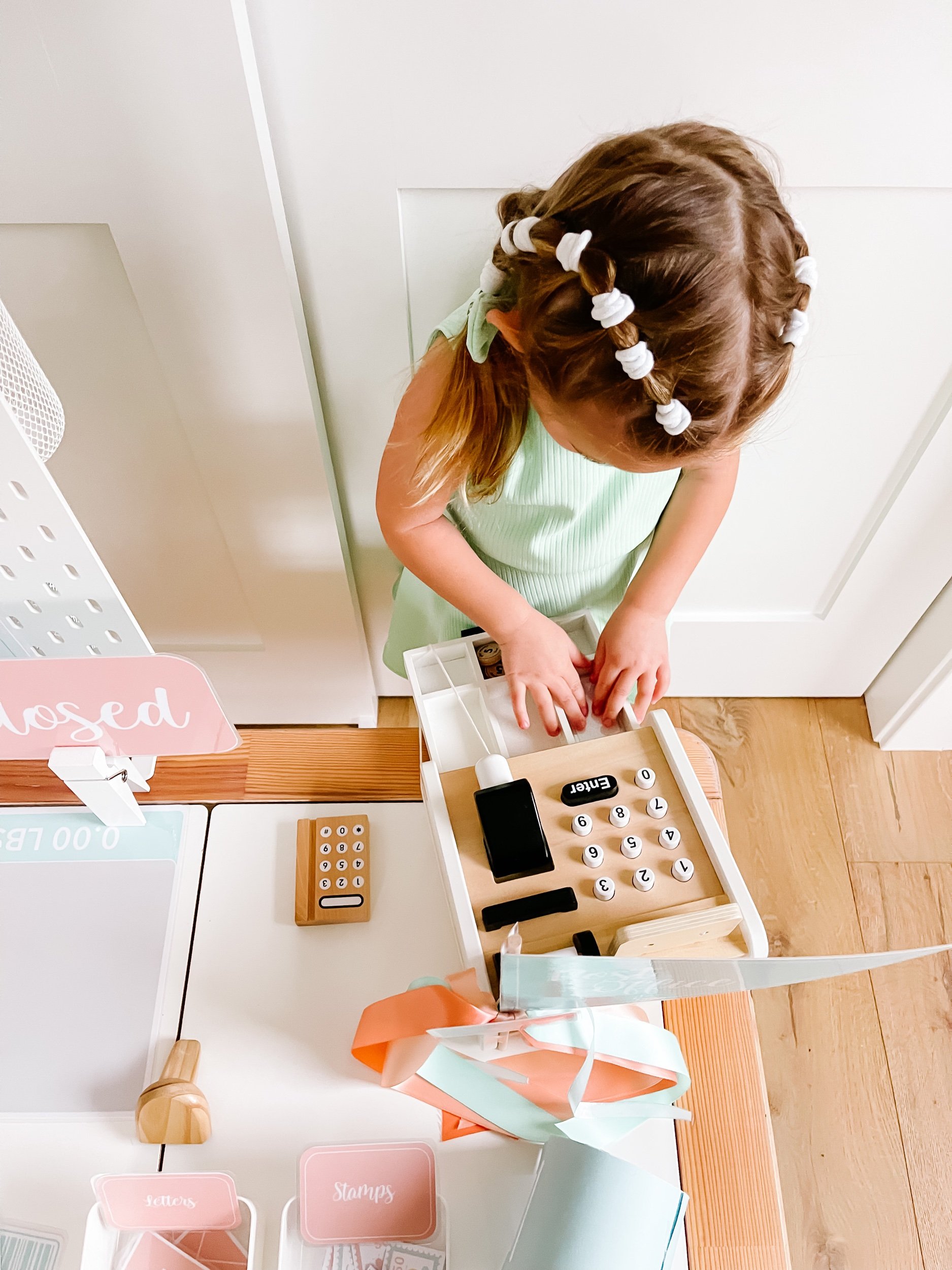
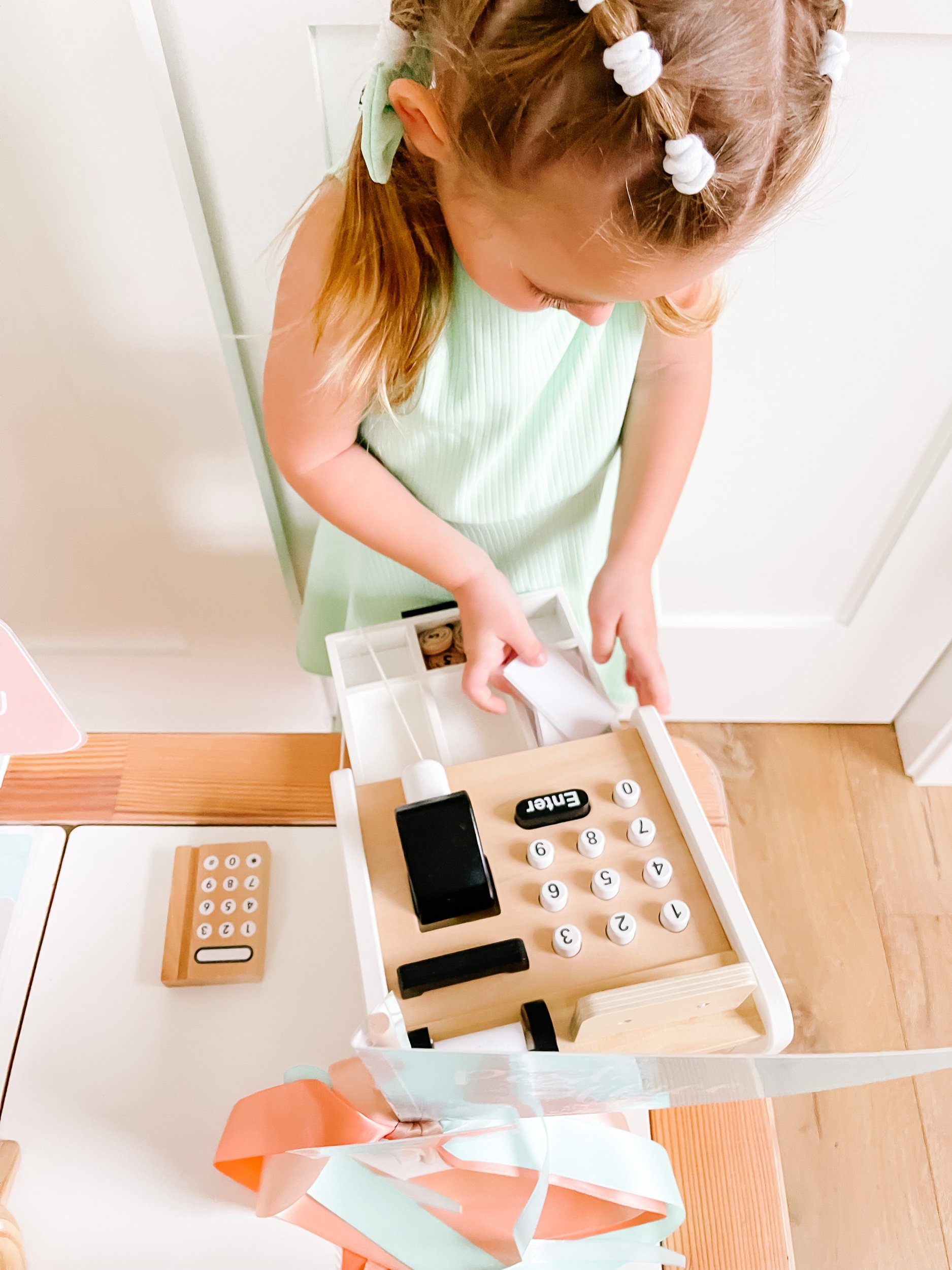
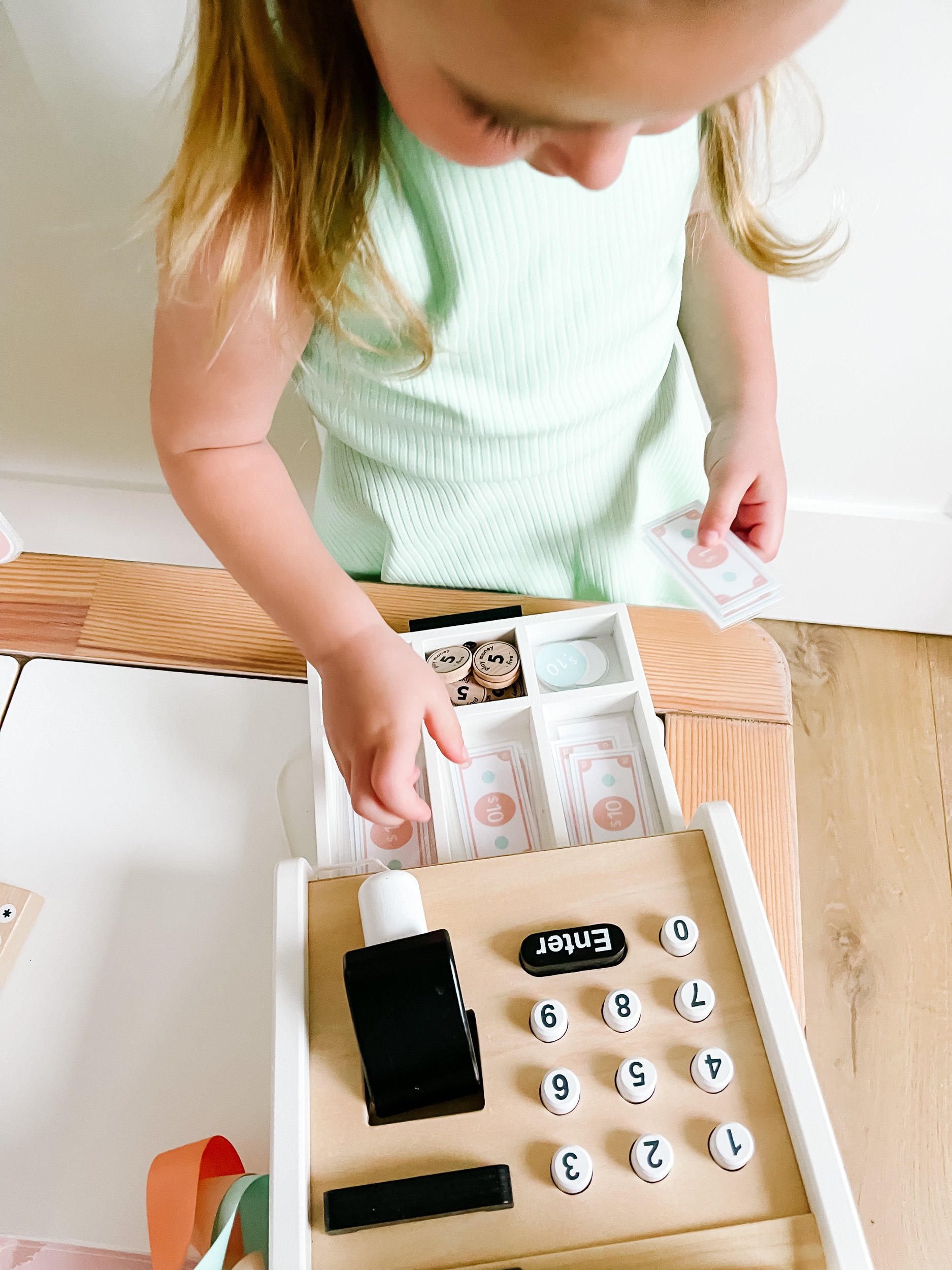
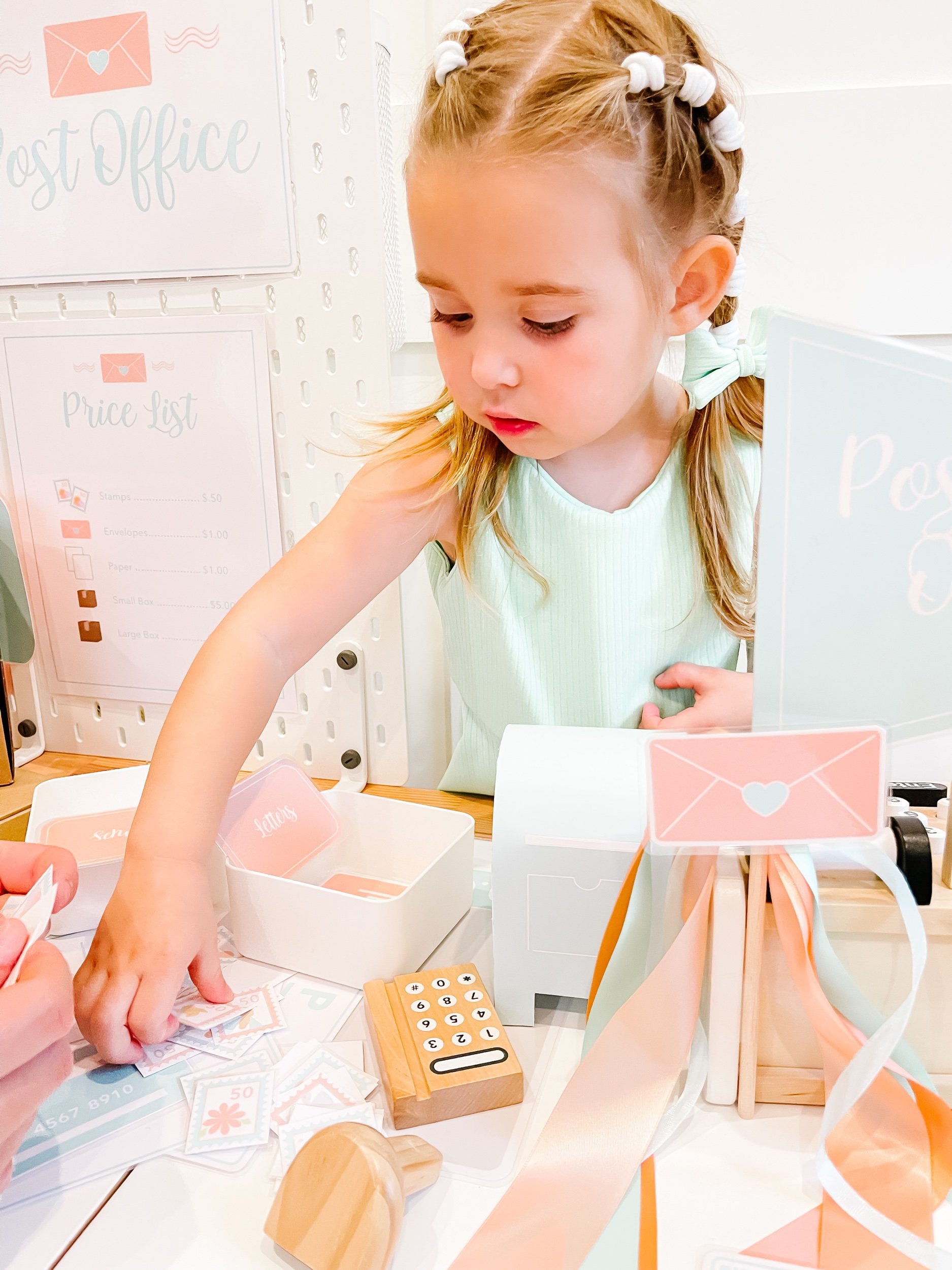
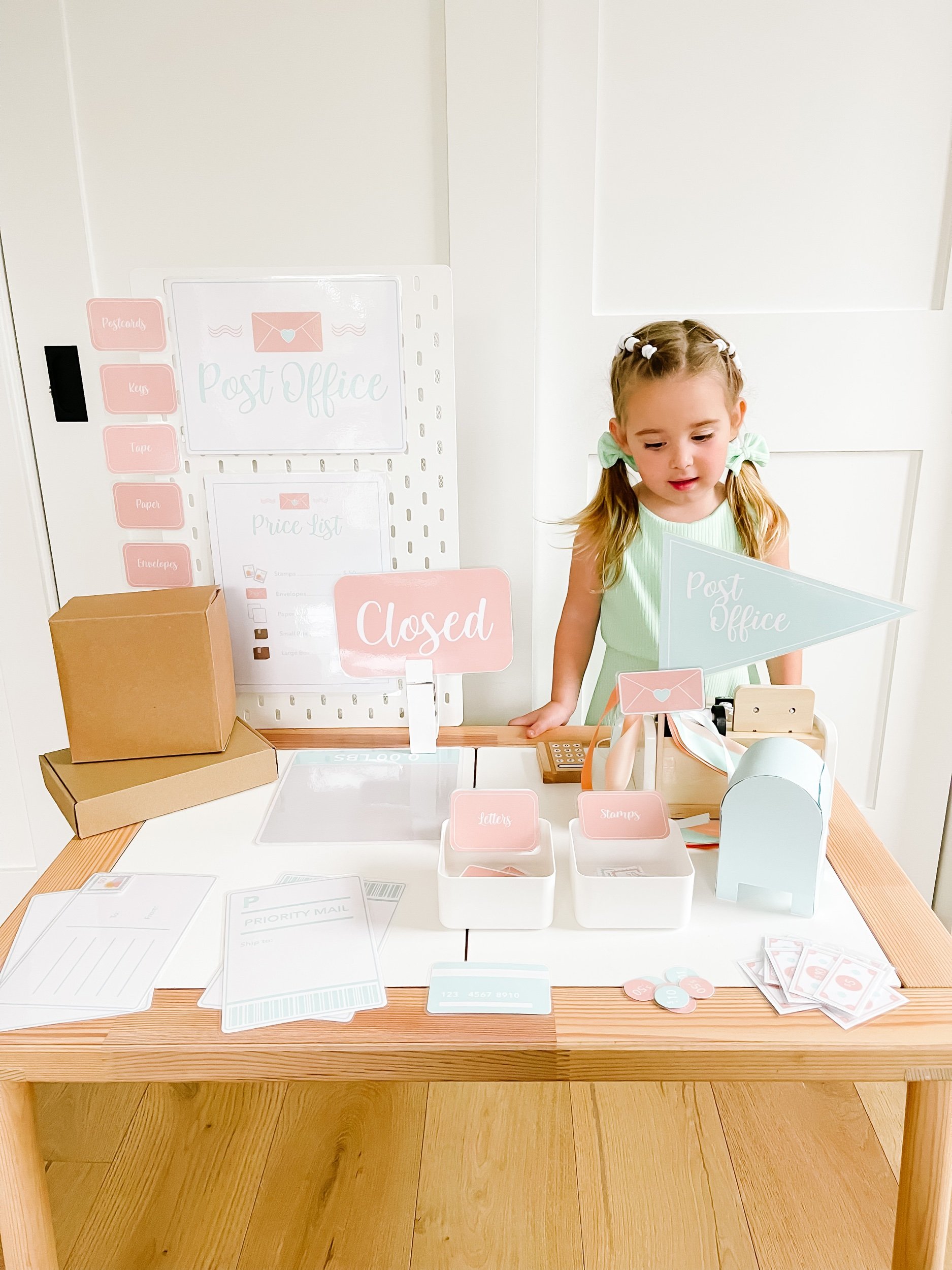
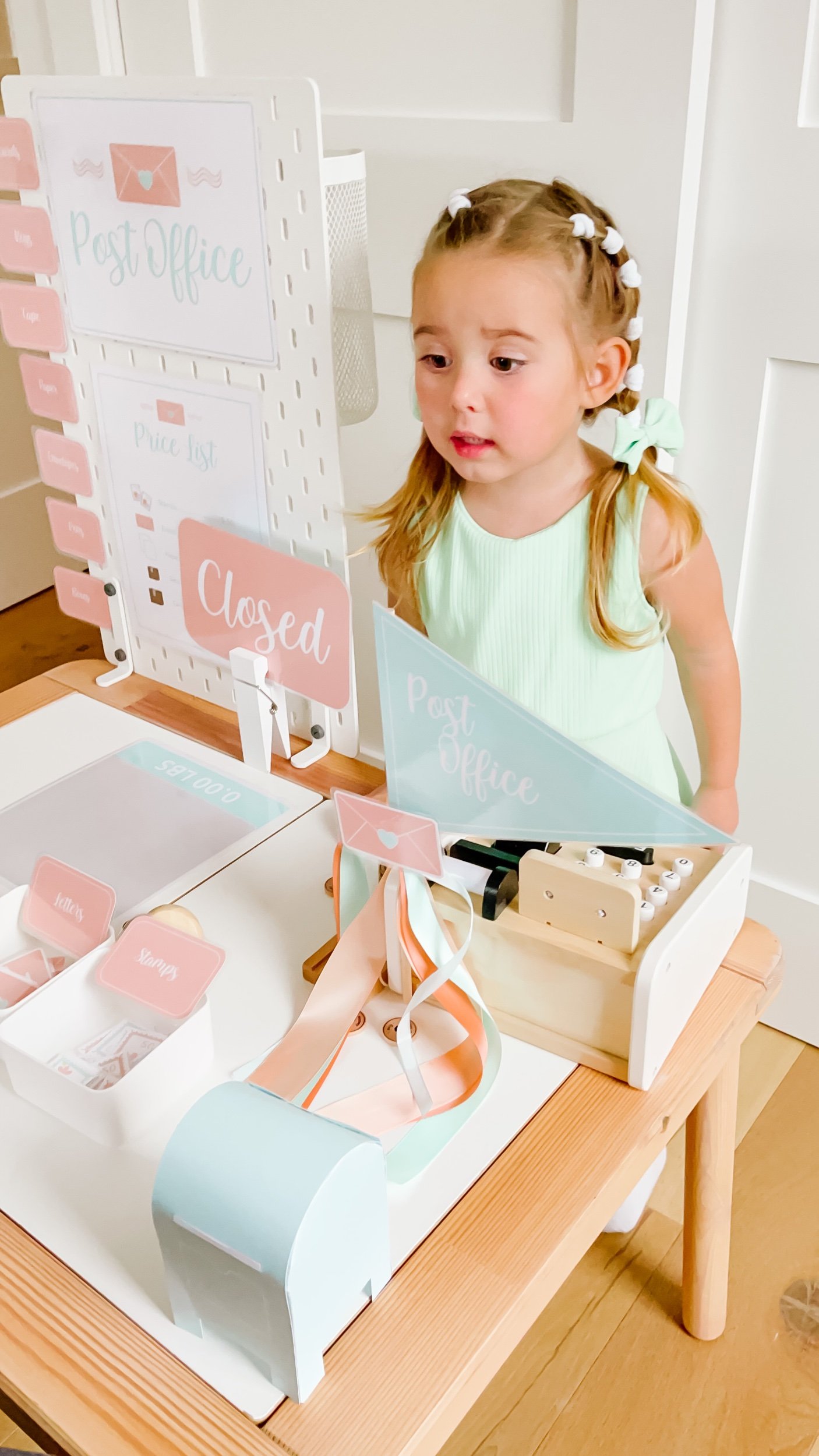
As a parent, I'm always looking for fun and educational activities to do with my daughter Sofie. One activity that we recently set up together is a post office dramatic and sensory play. This activity not only allows Sofie to explore her imagination but also enhances her sensory skills and provides a hands-on learning experience. In this blog post, I will walk you through our post office setup and discuss the benefits of dramatic and sensory play for preschoolers.
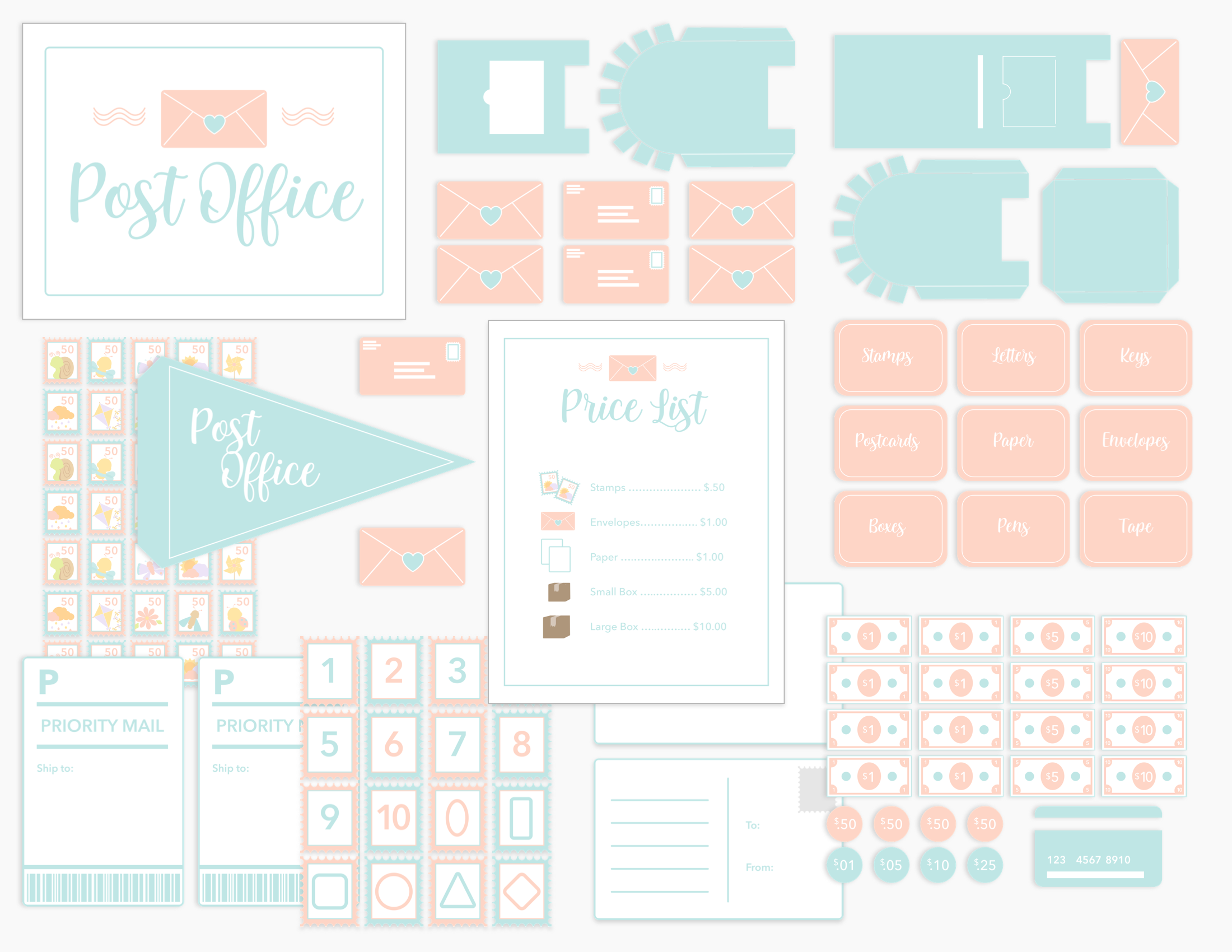
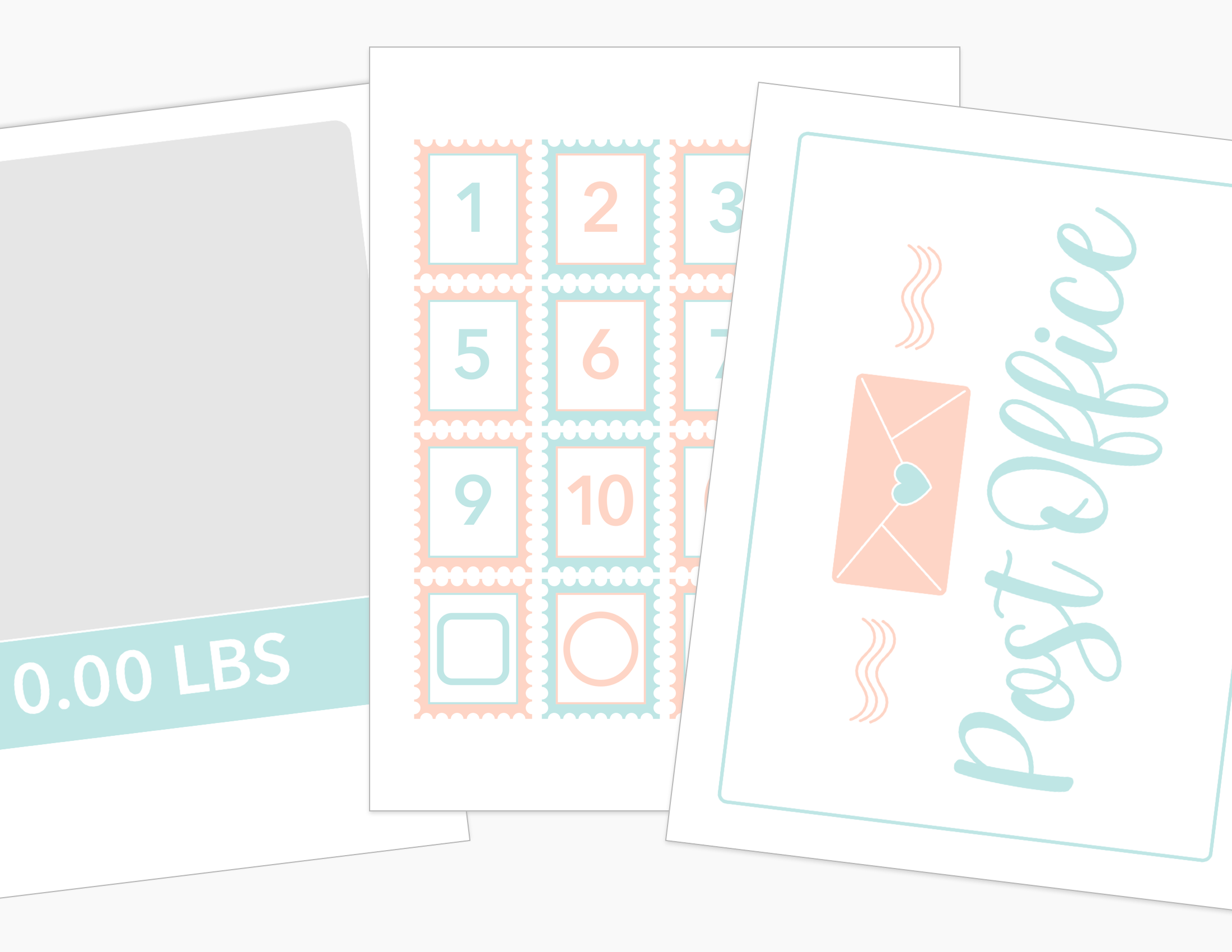
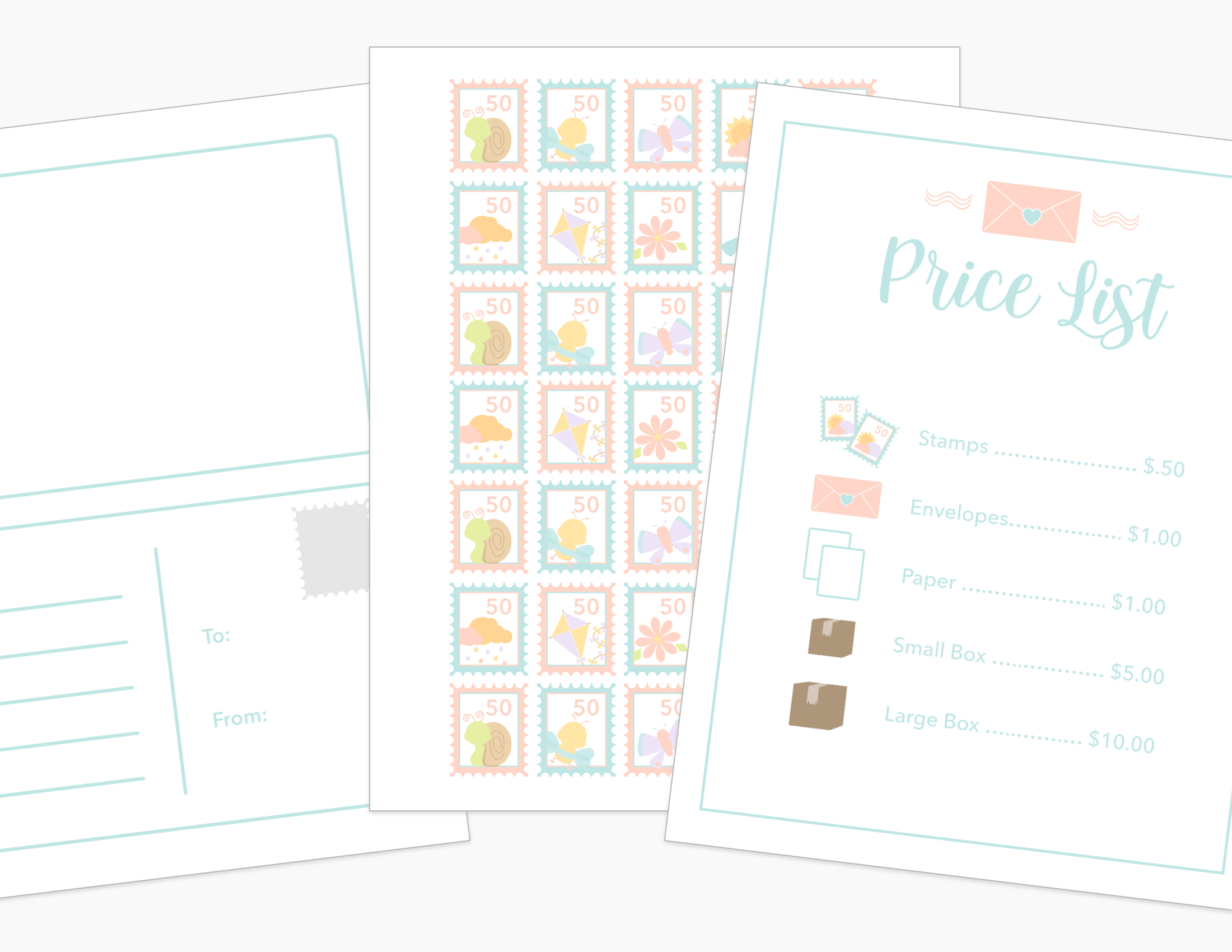
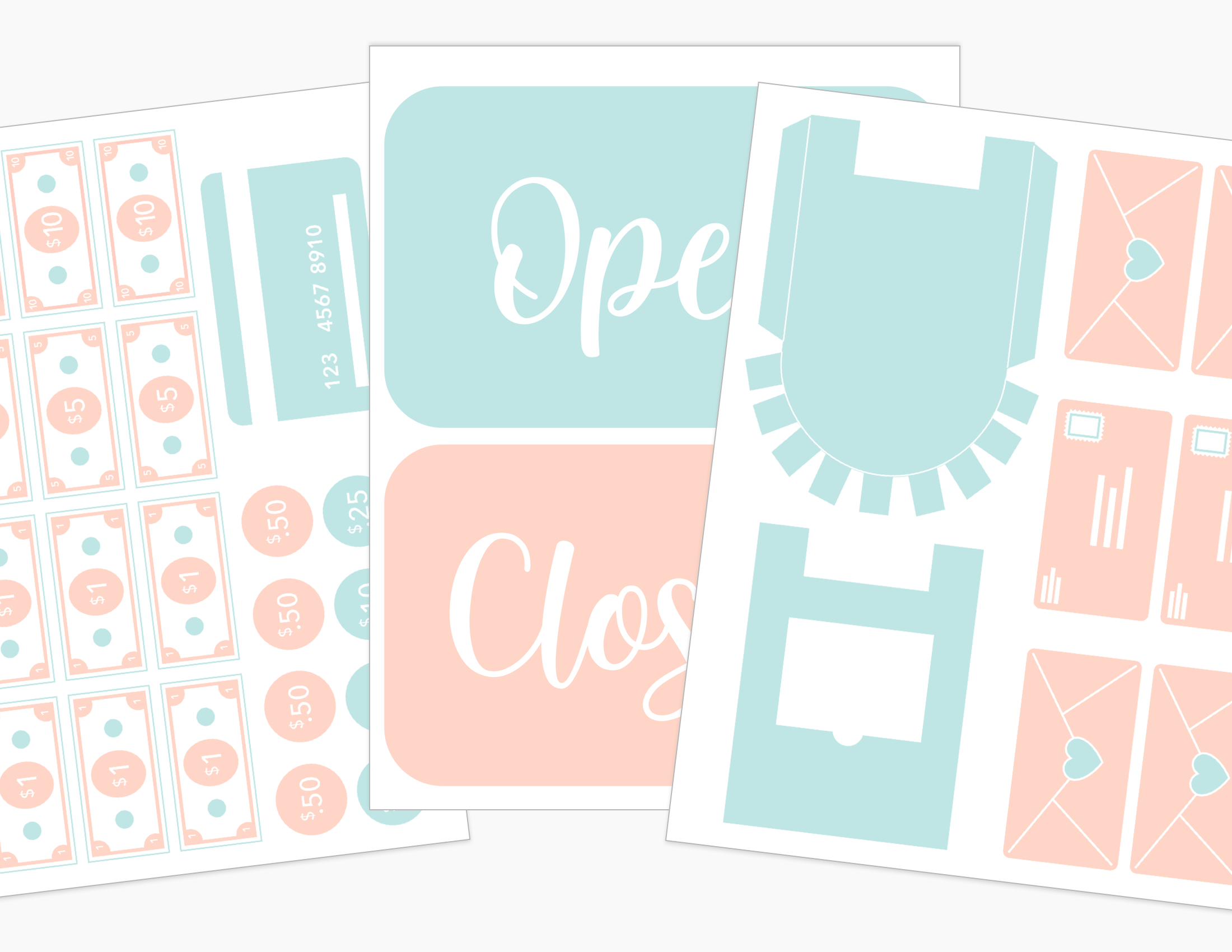
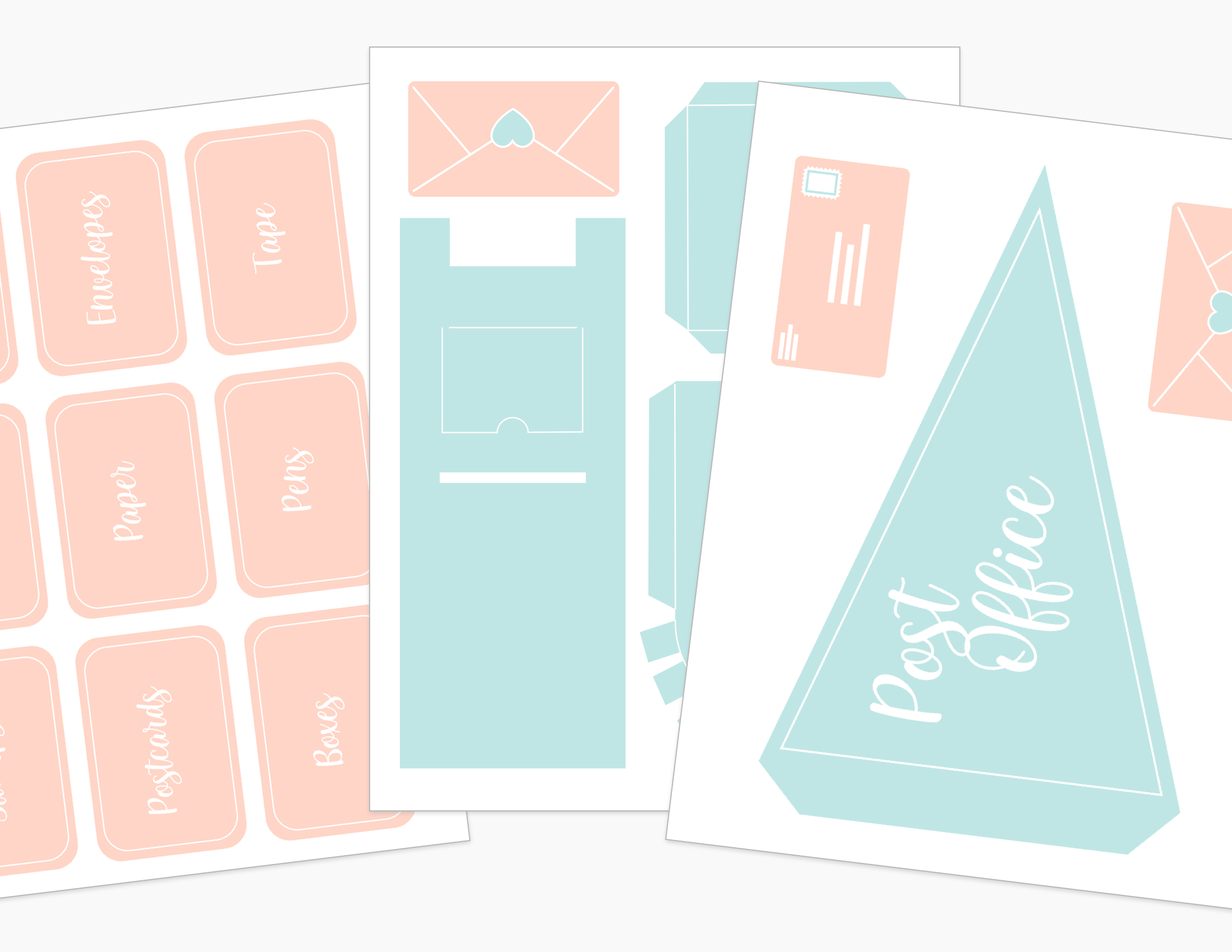
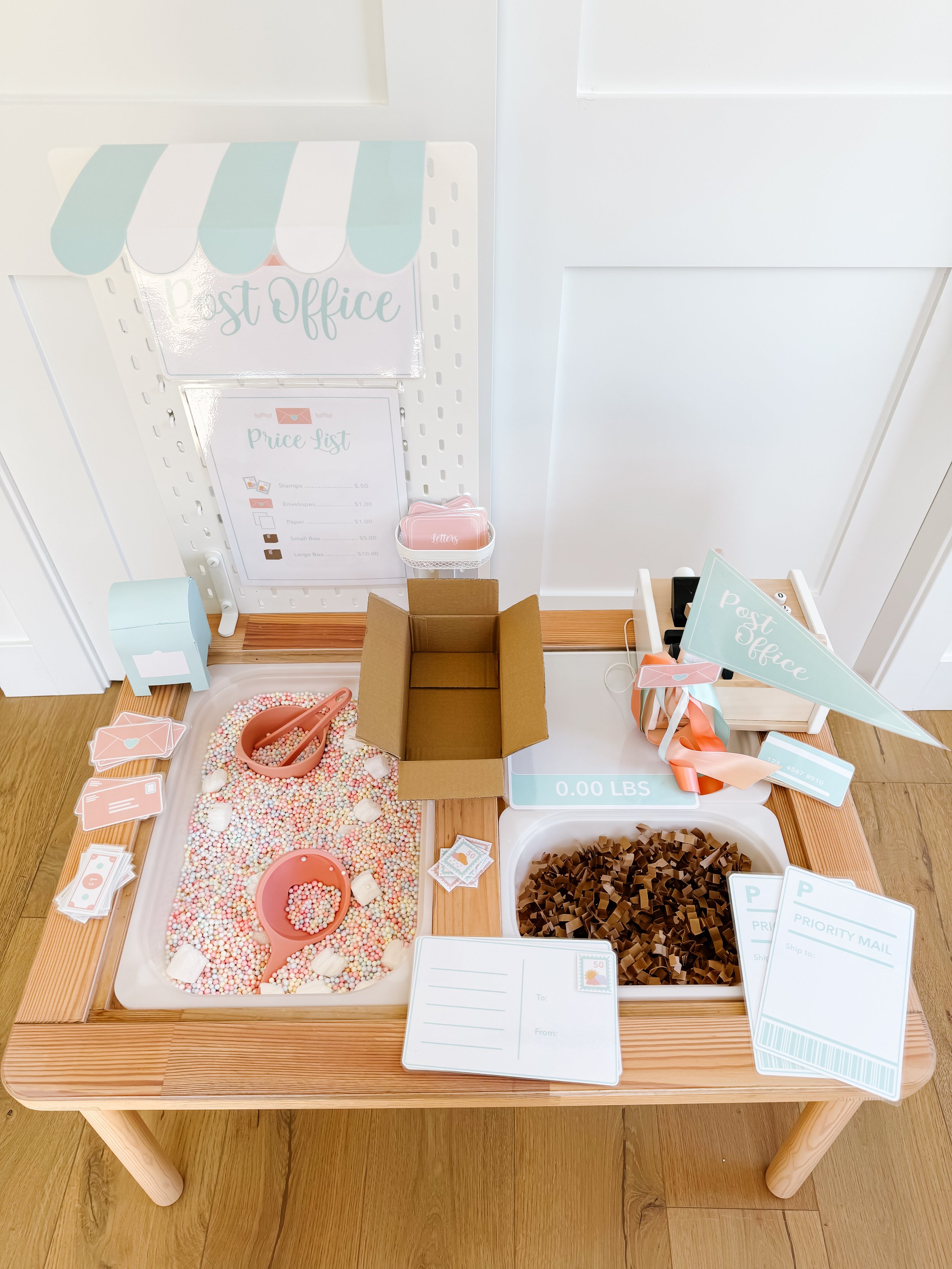
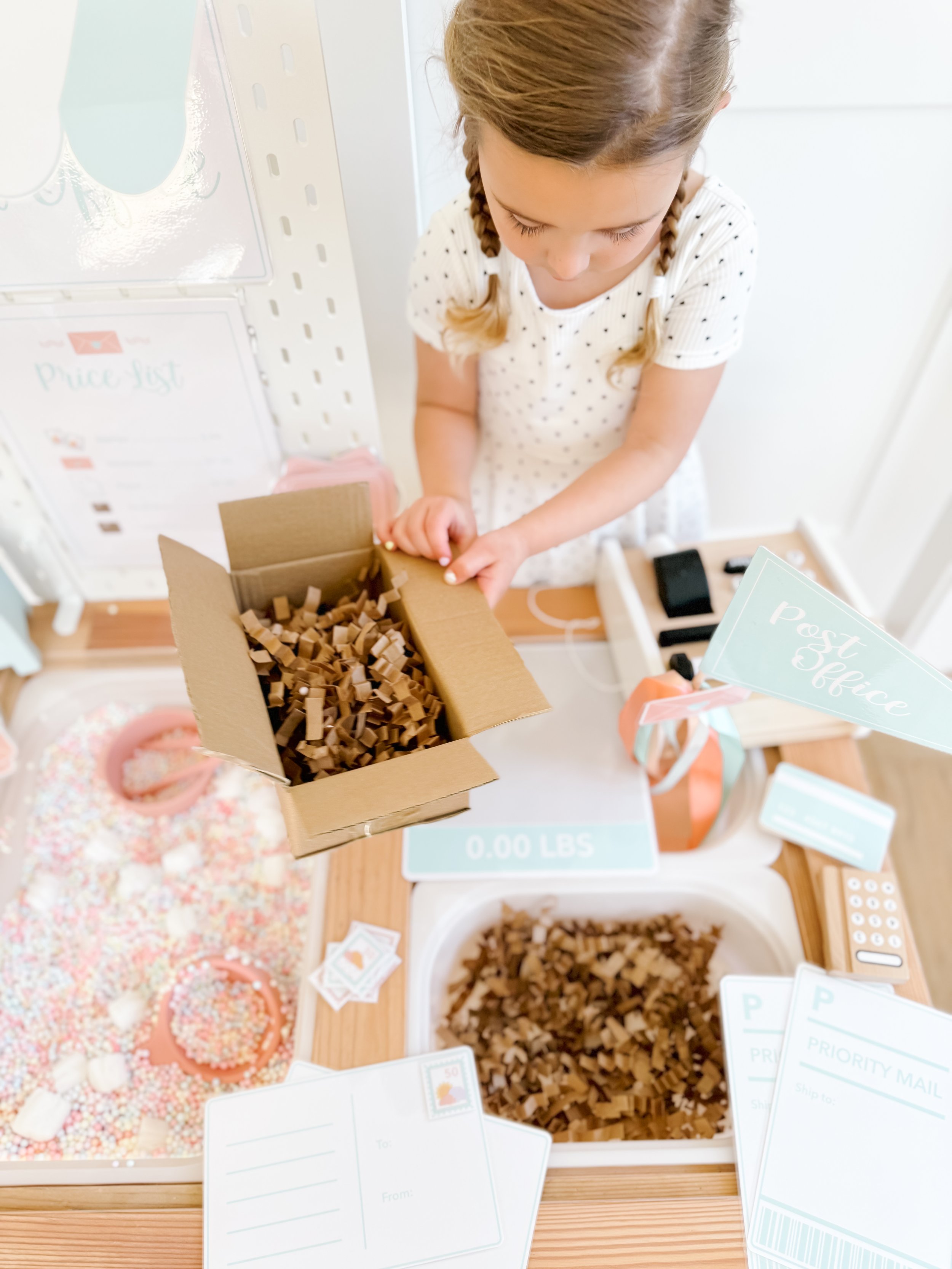
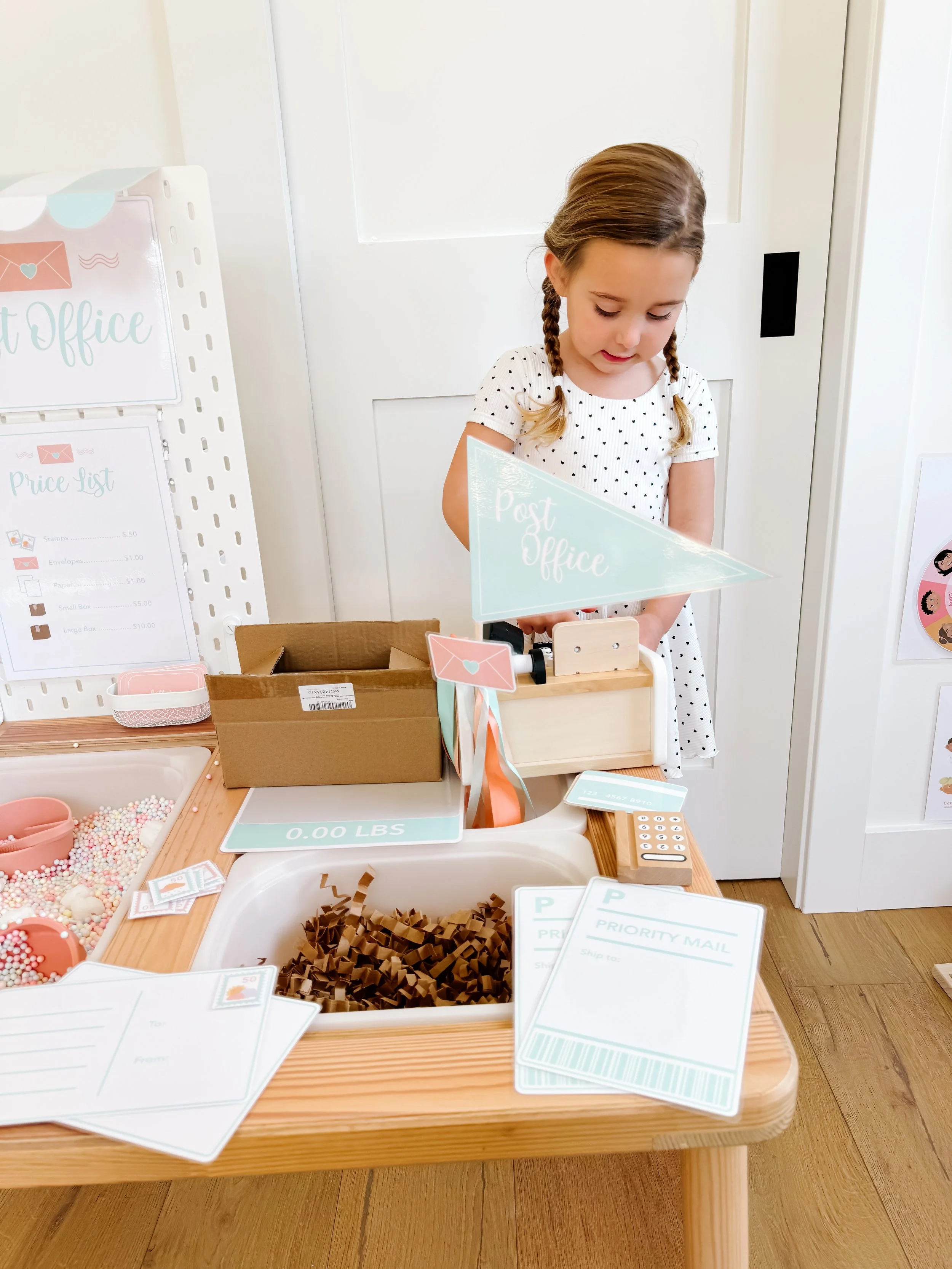
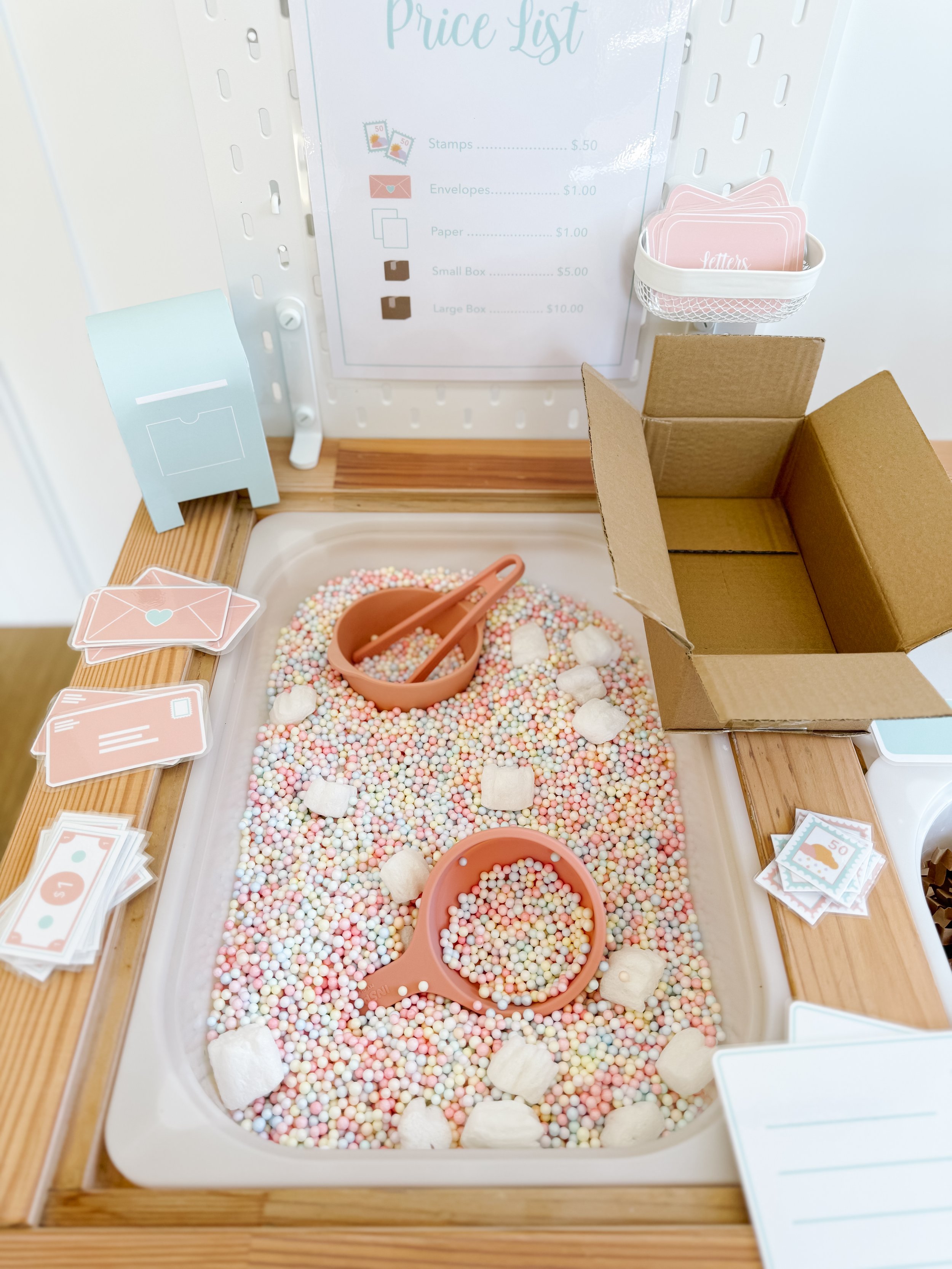
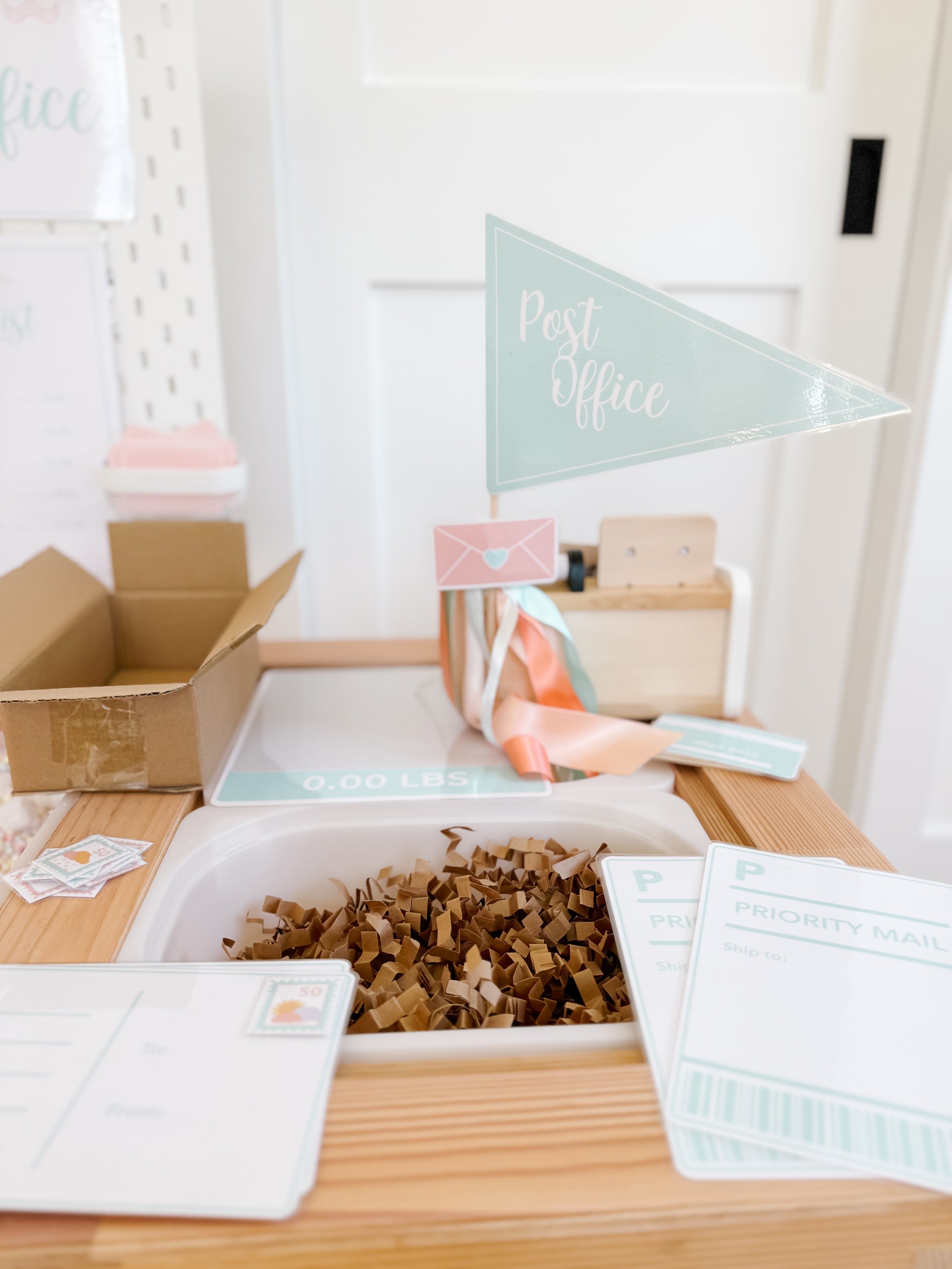
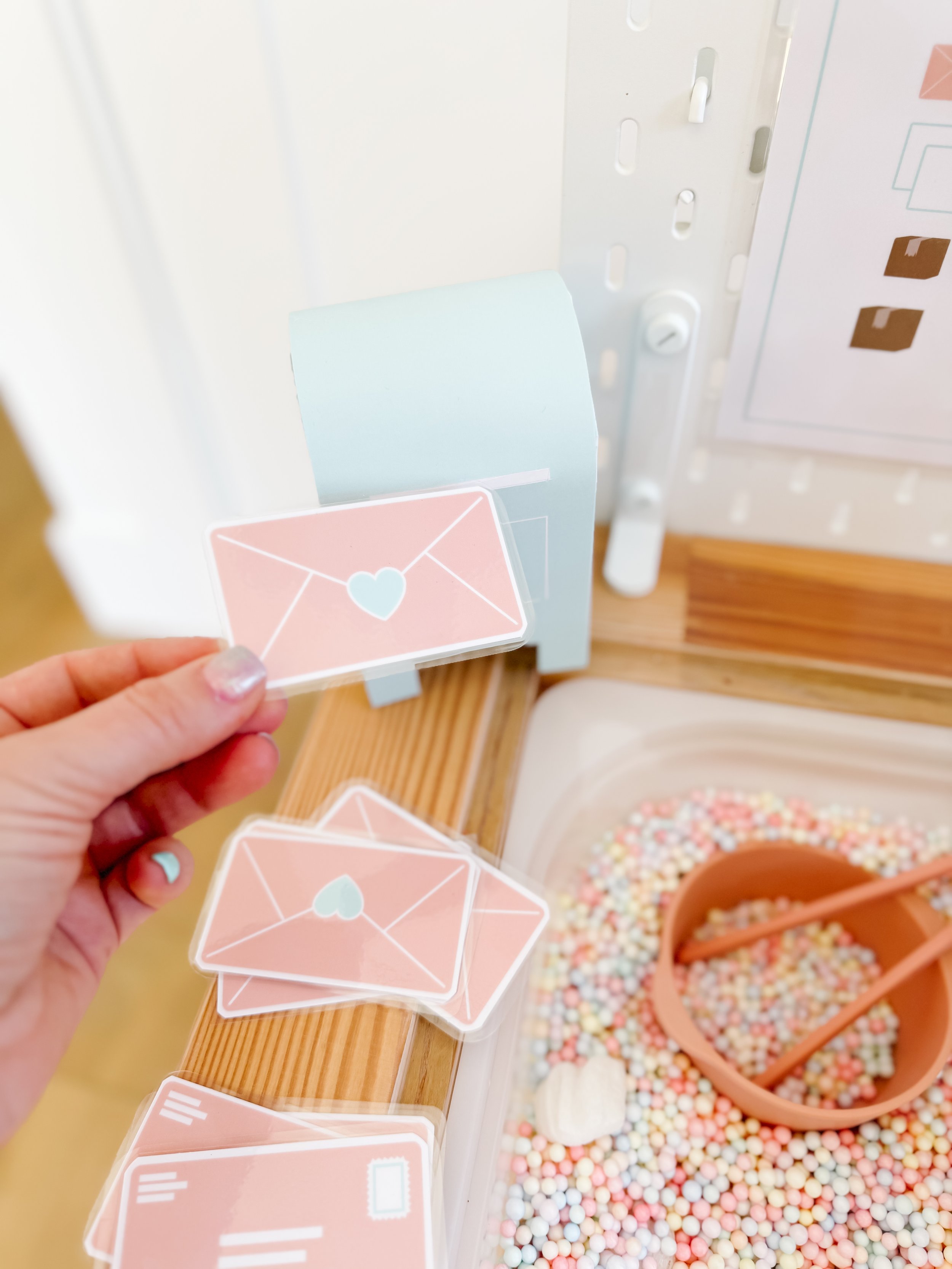
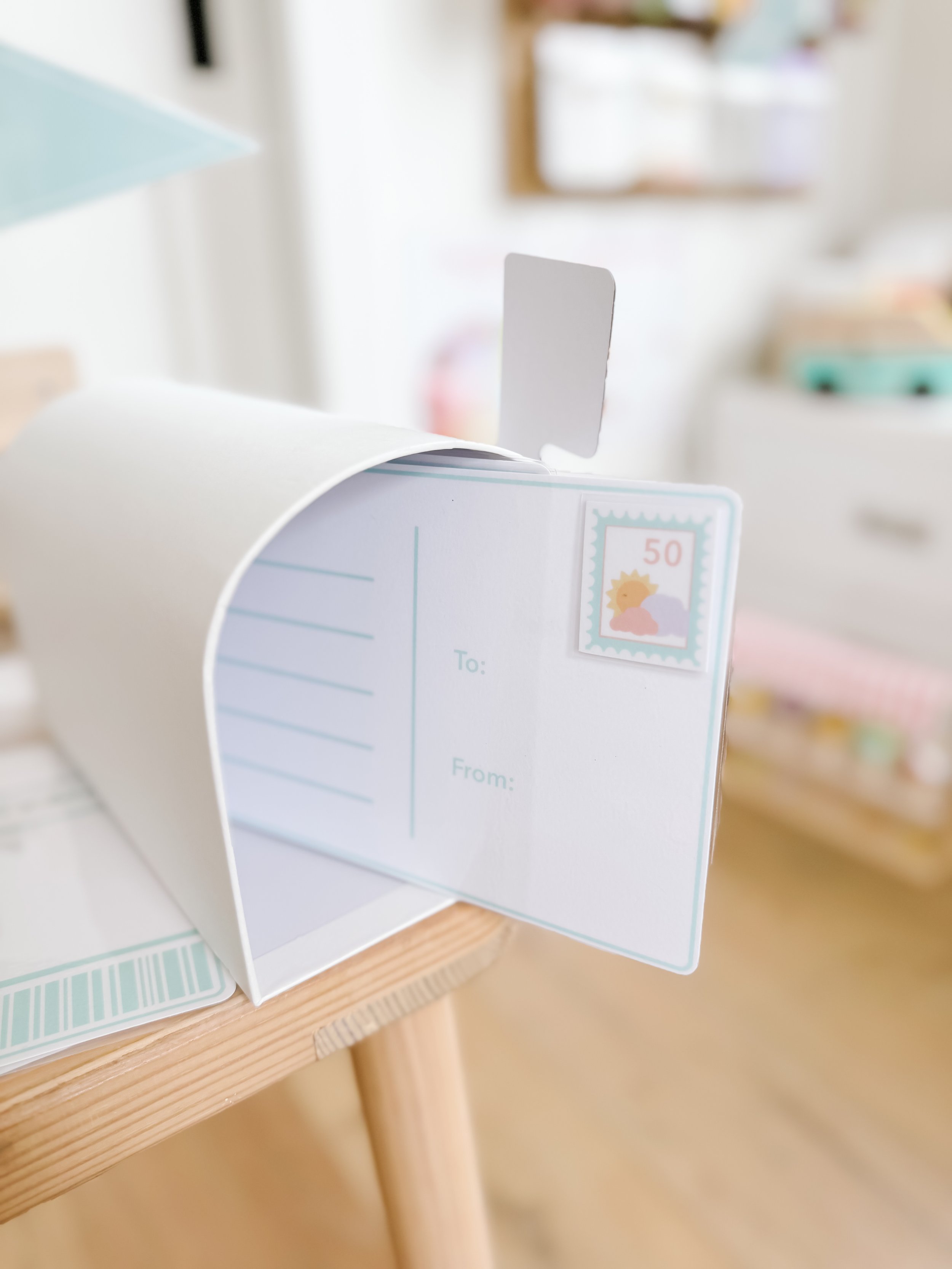
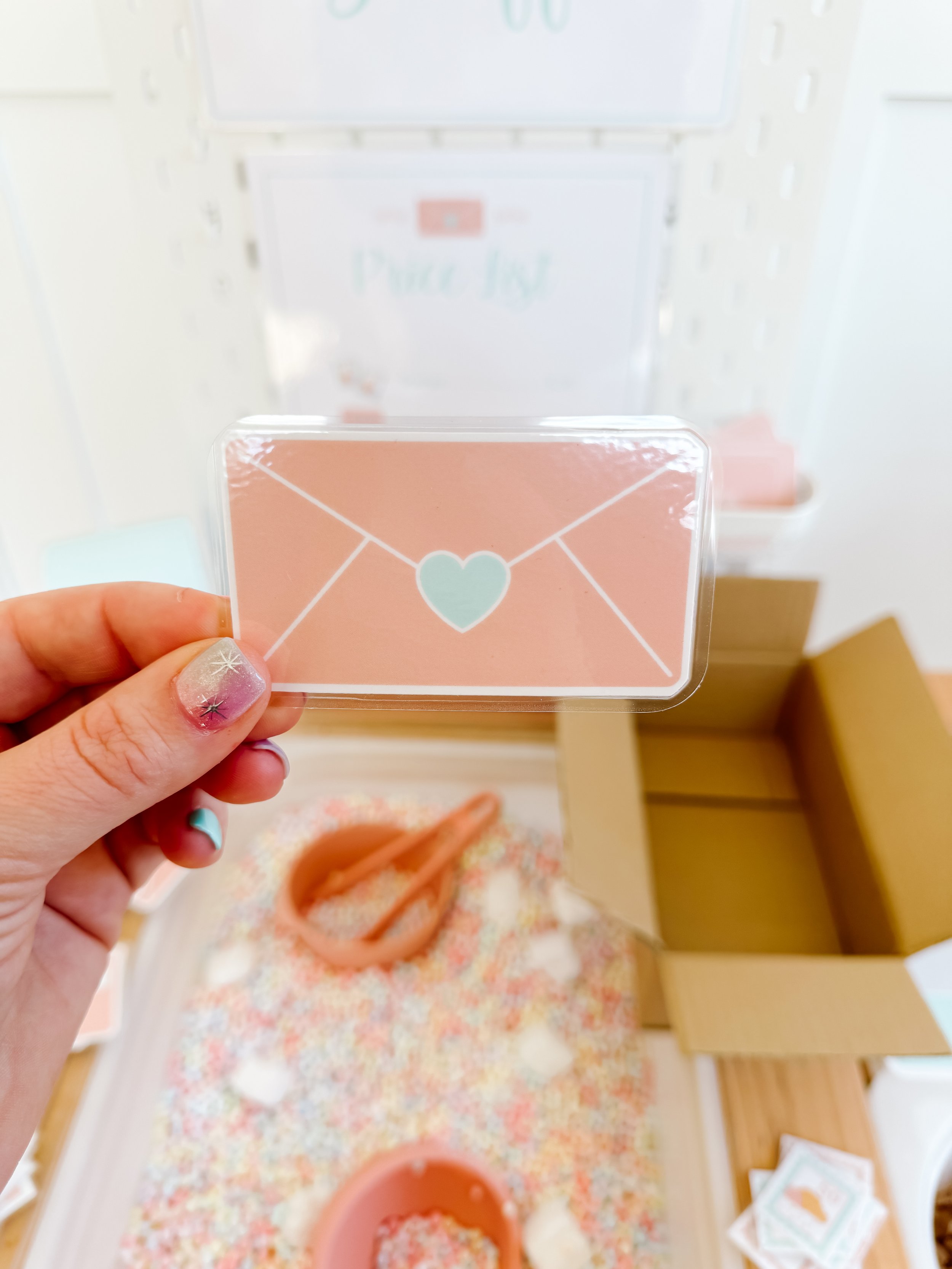
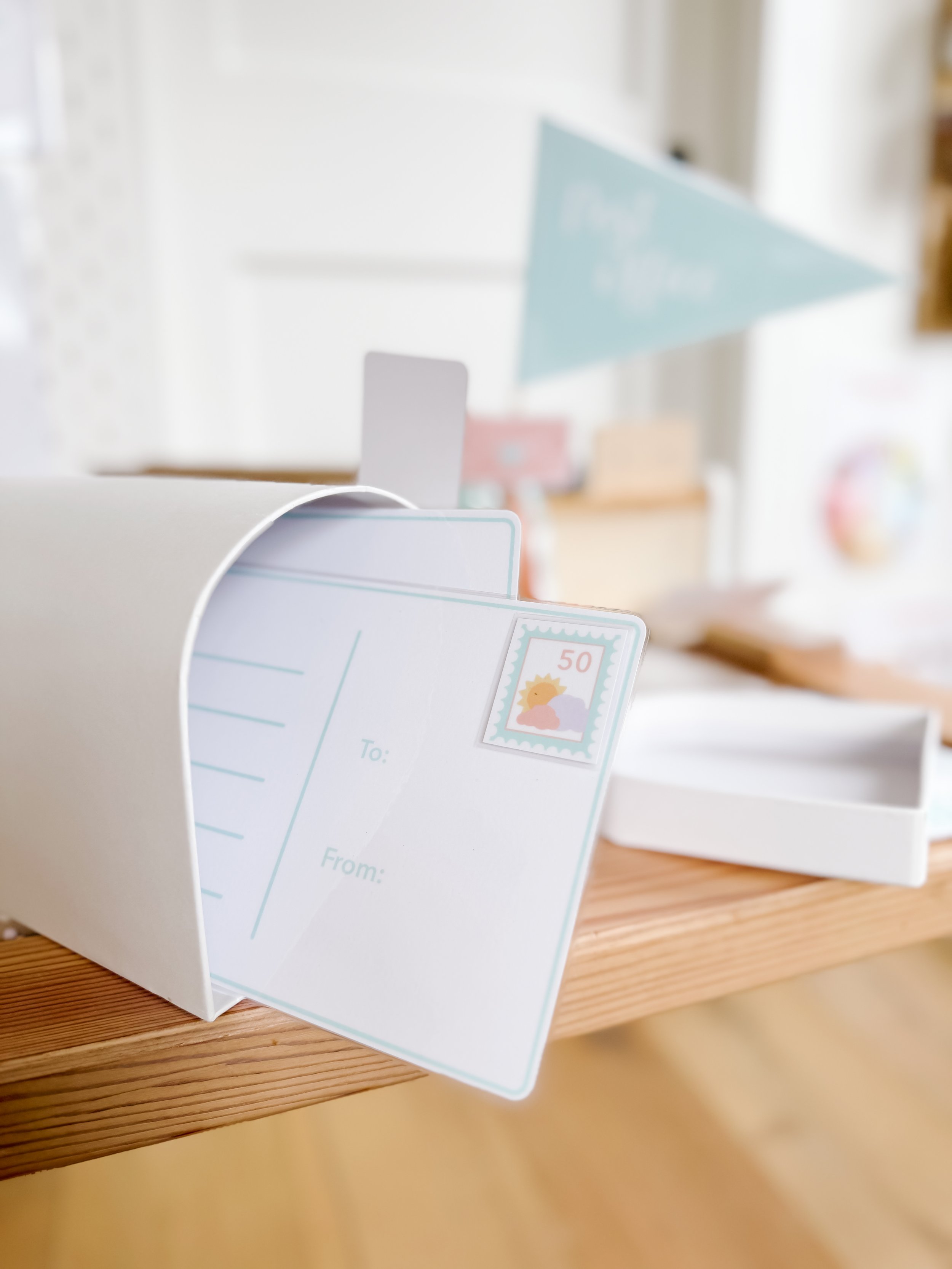
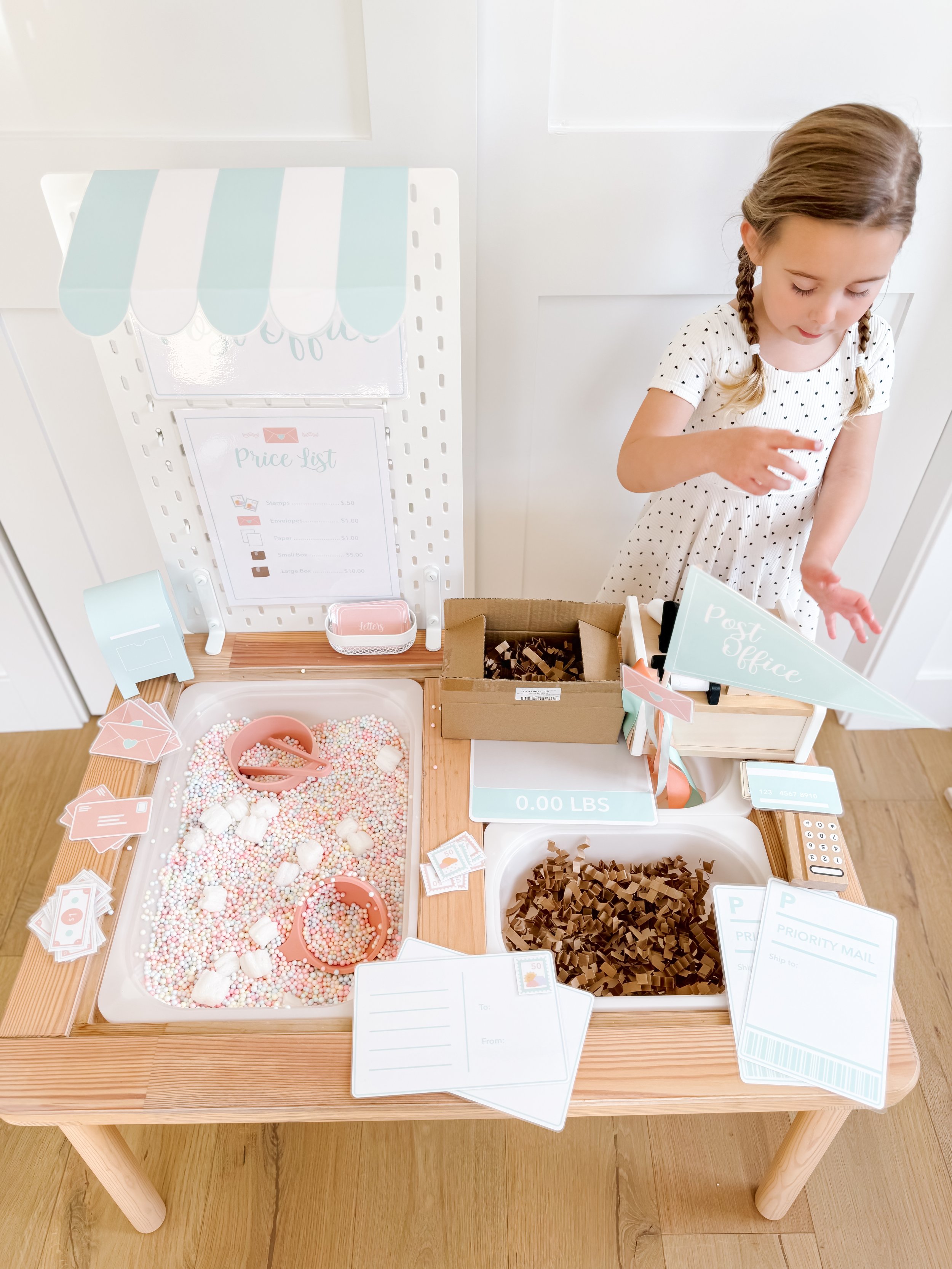
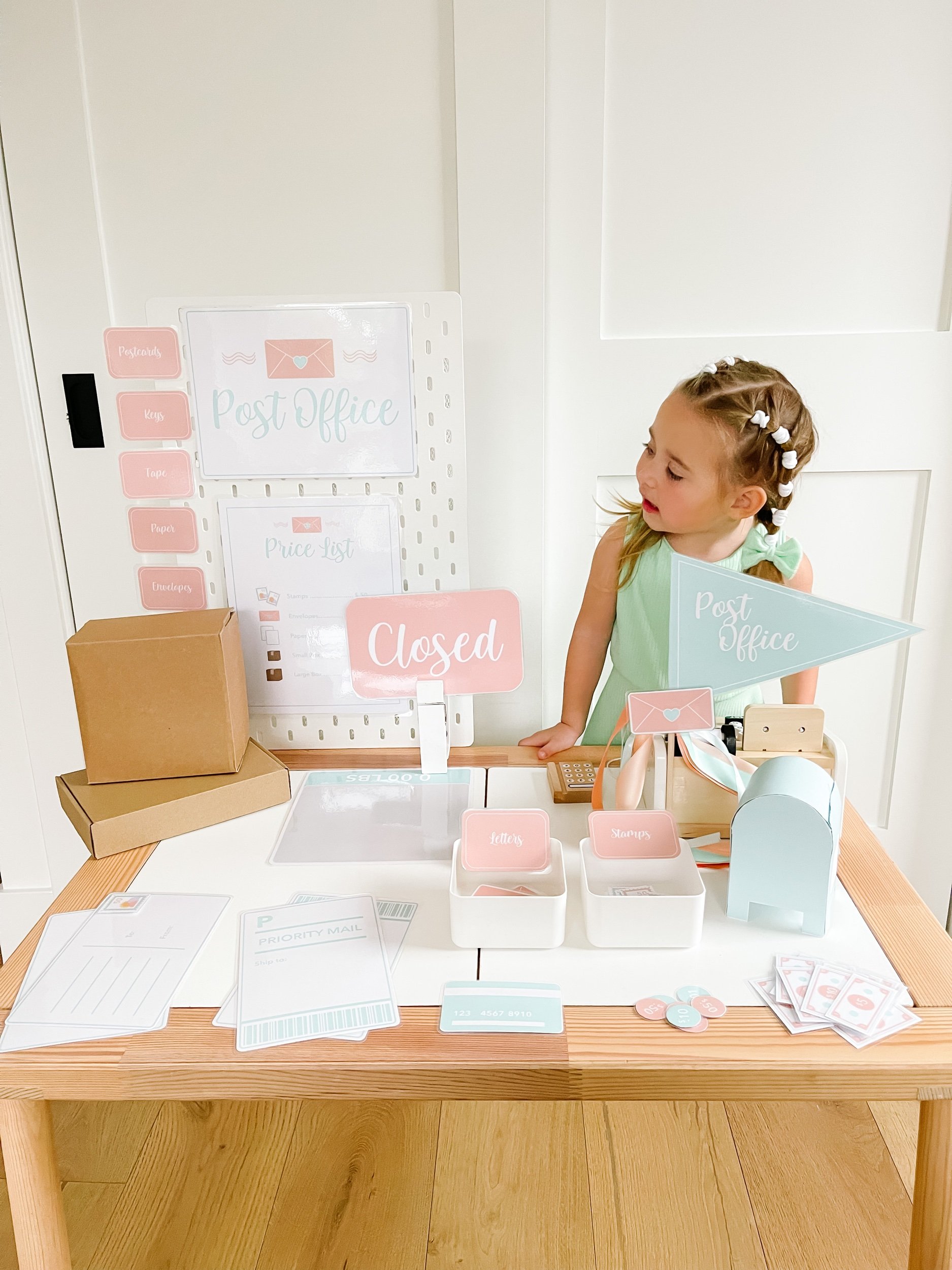
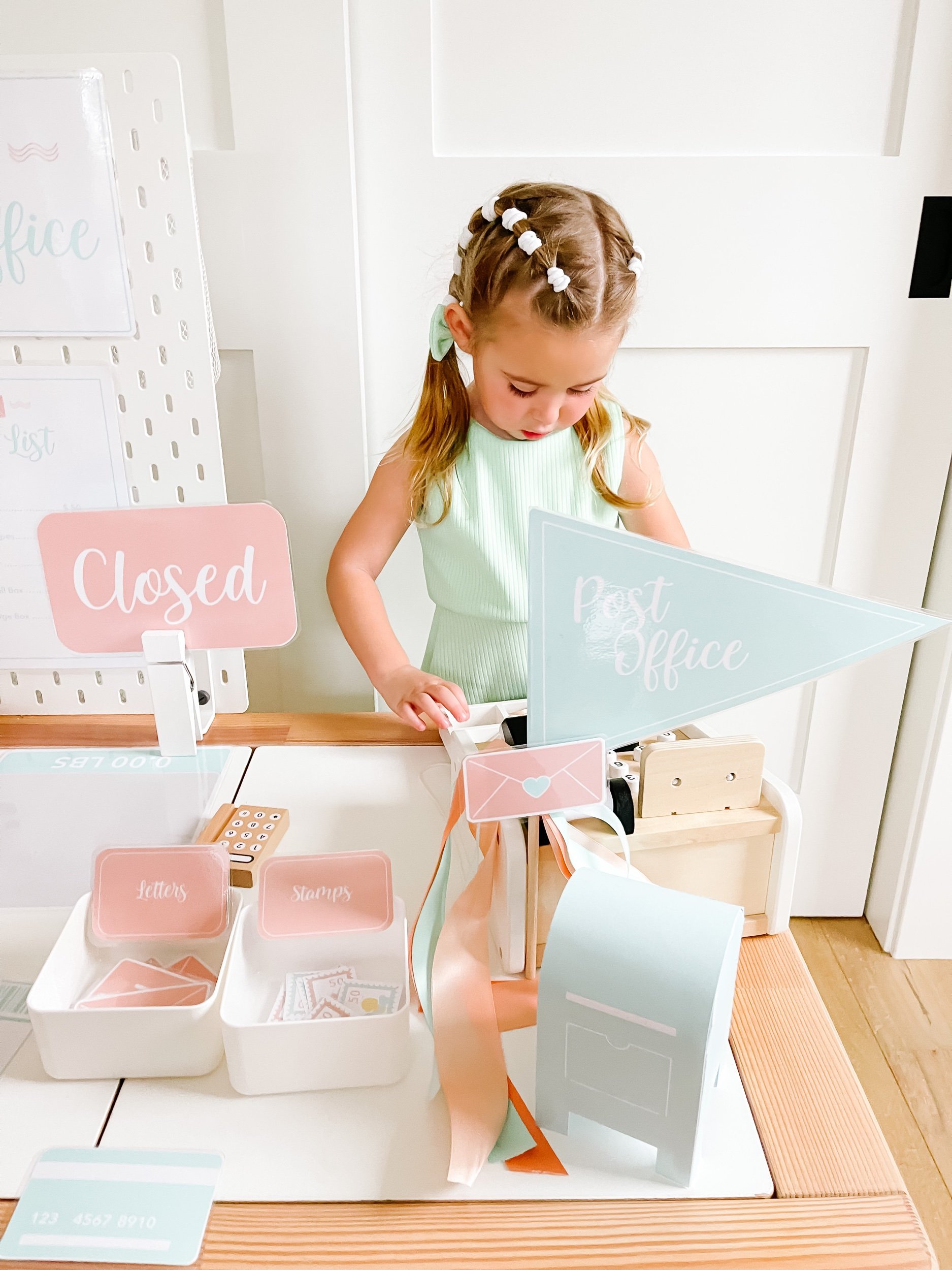
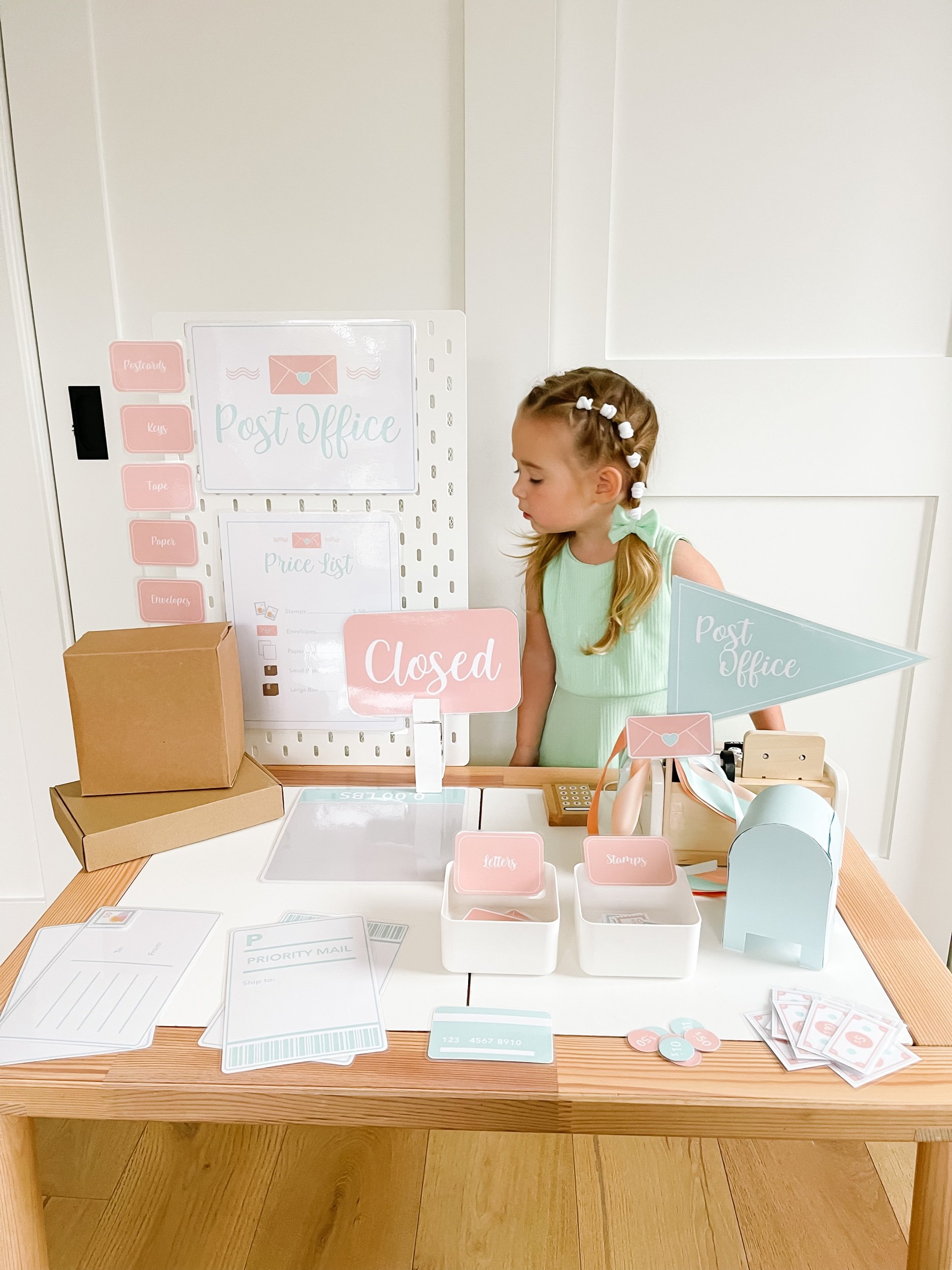
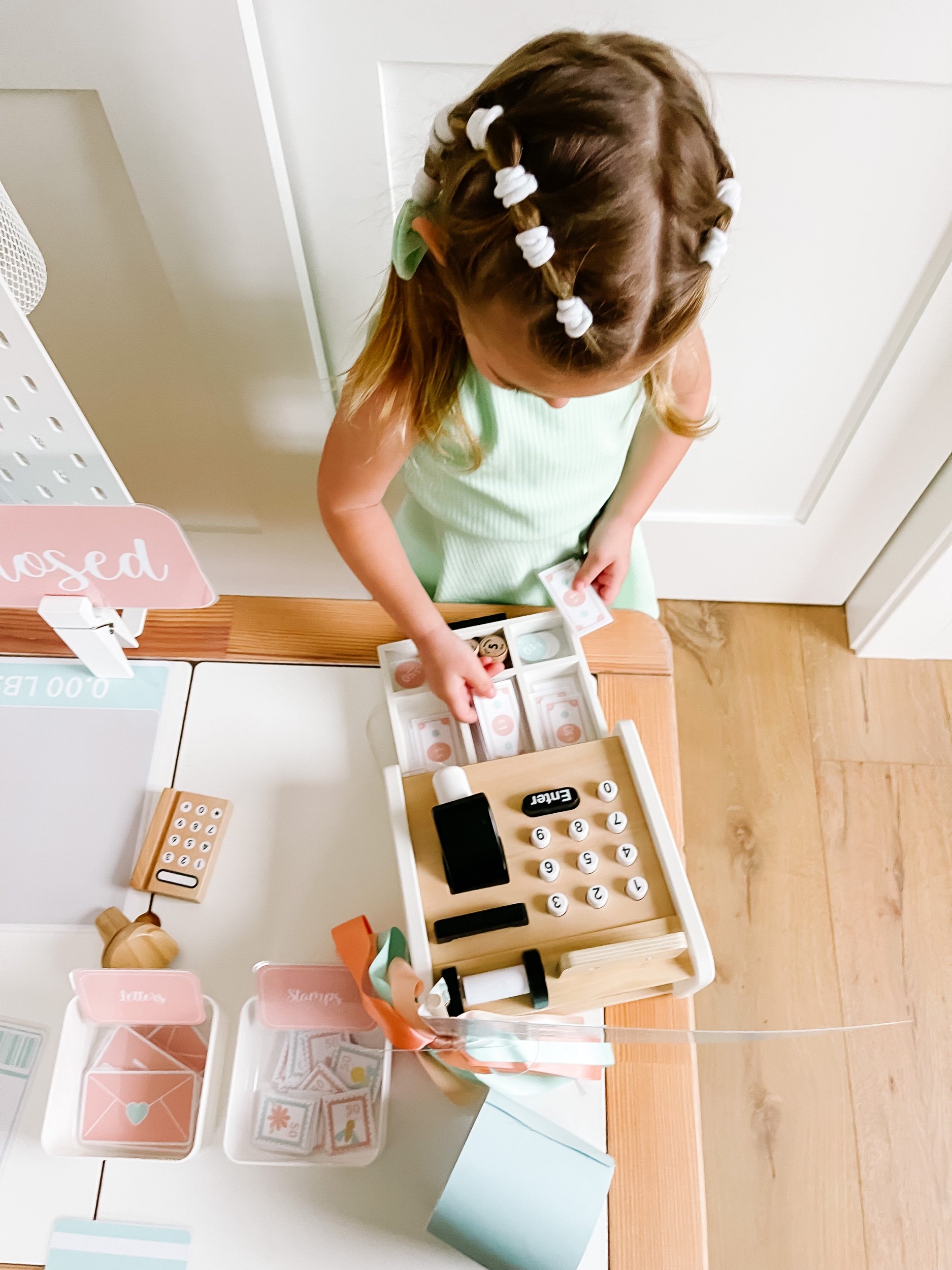
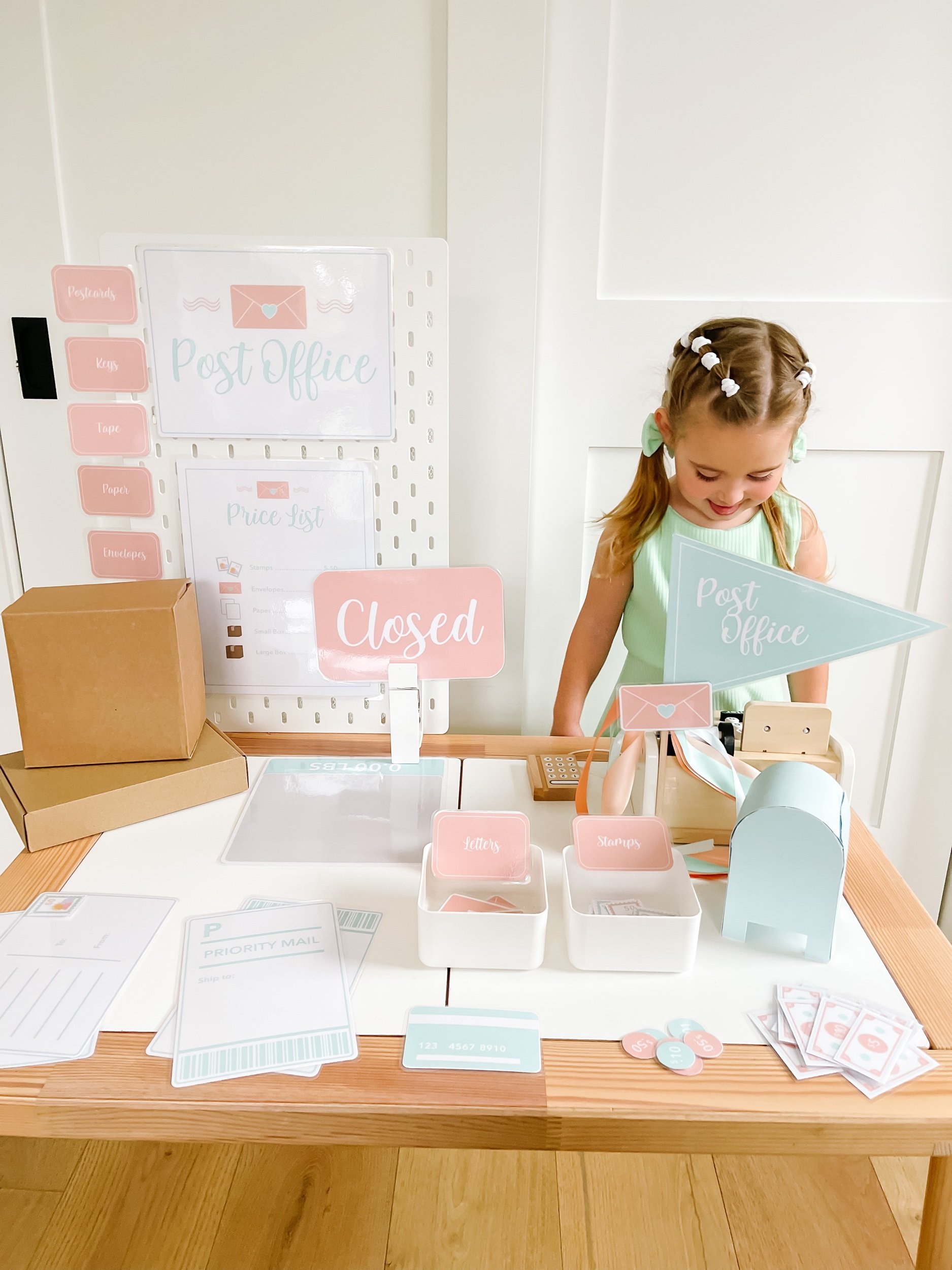
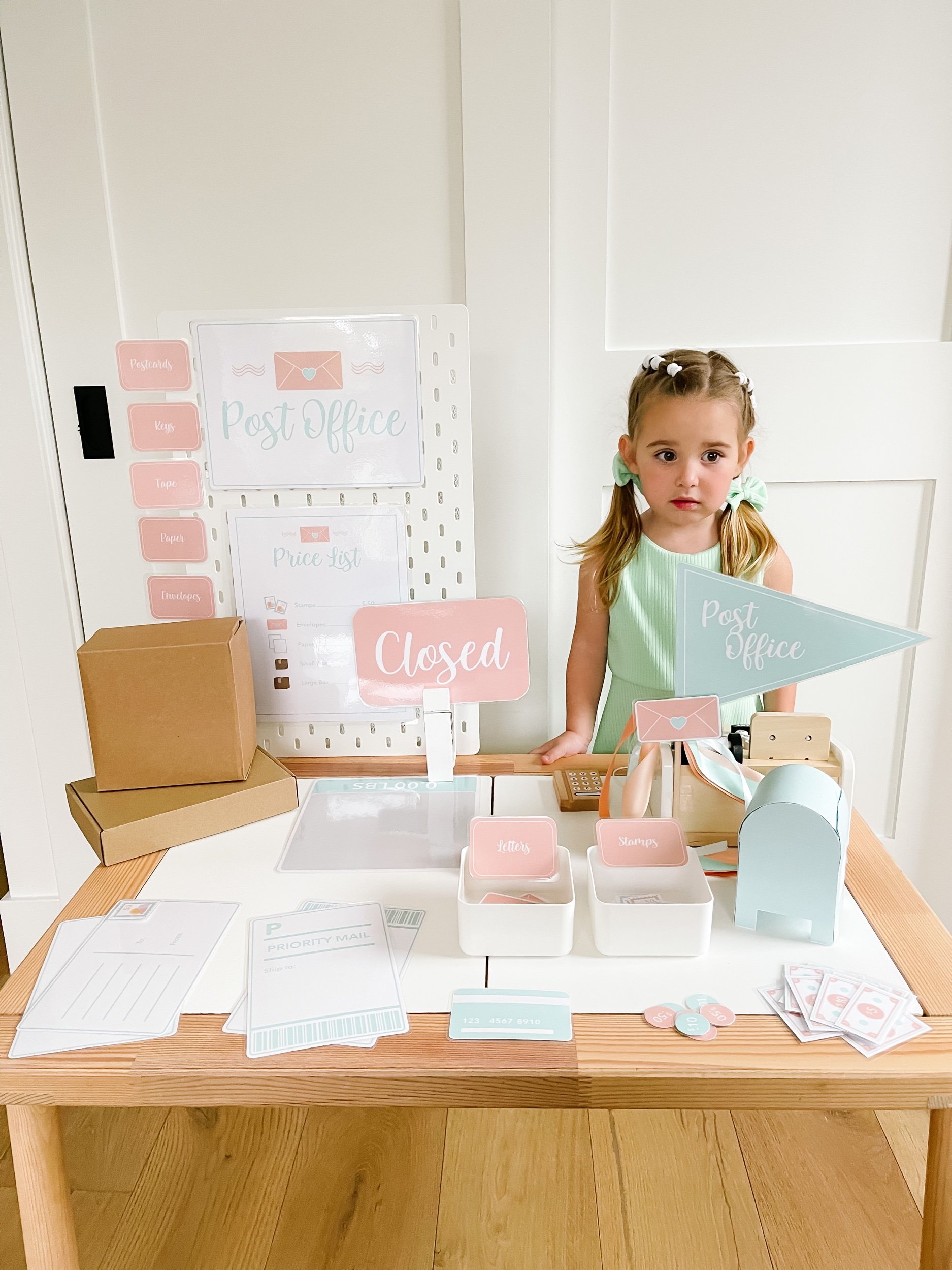
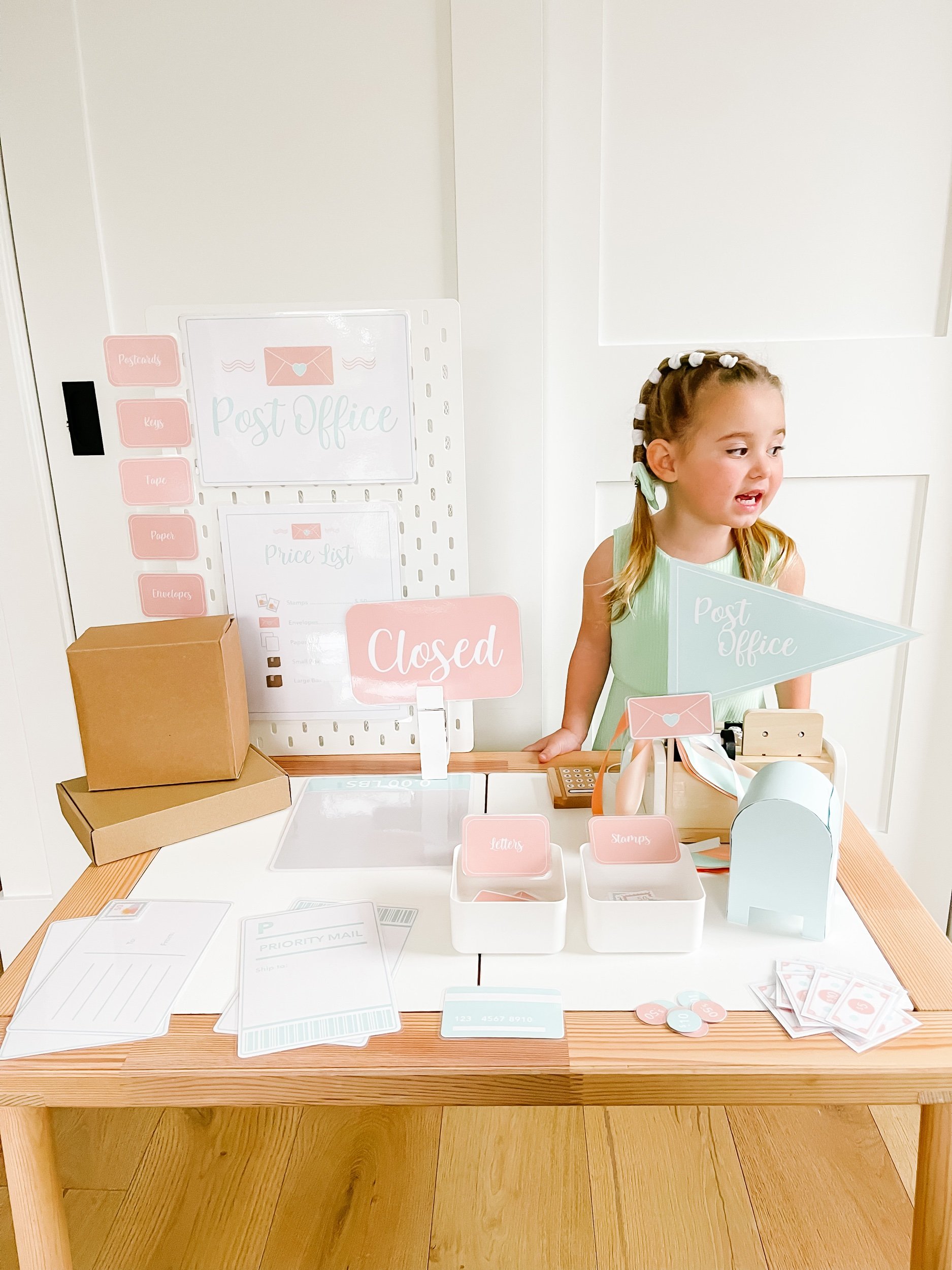
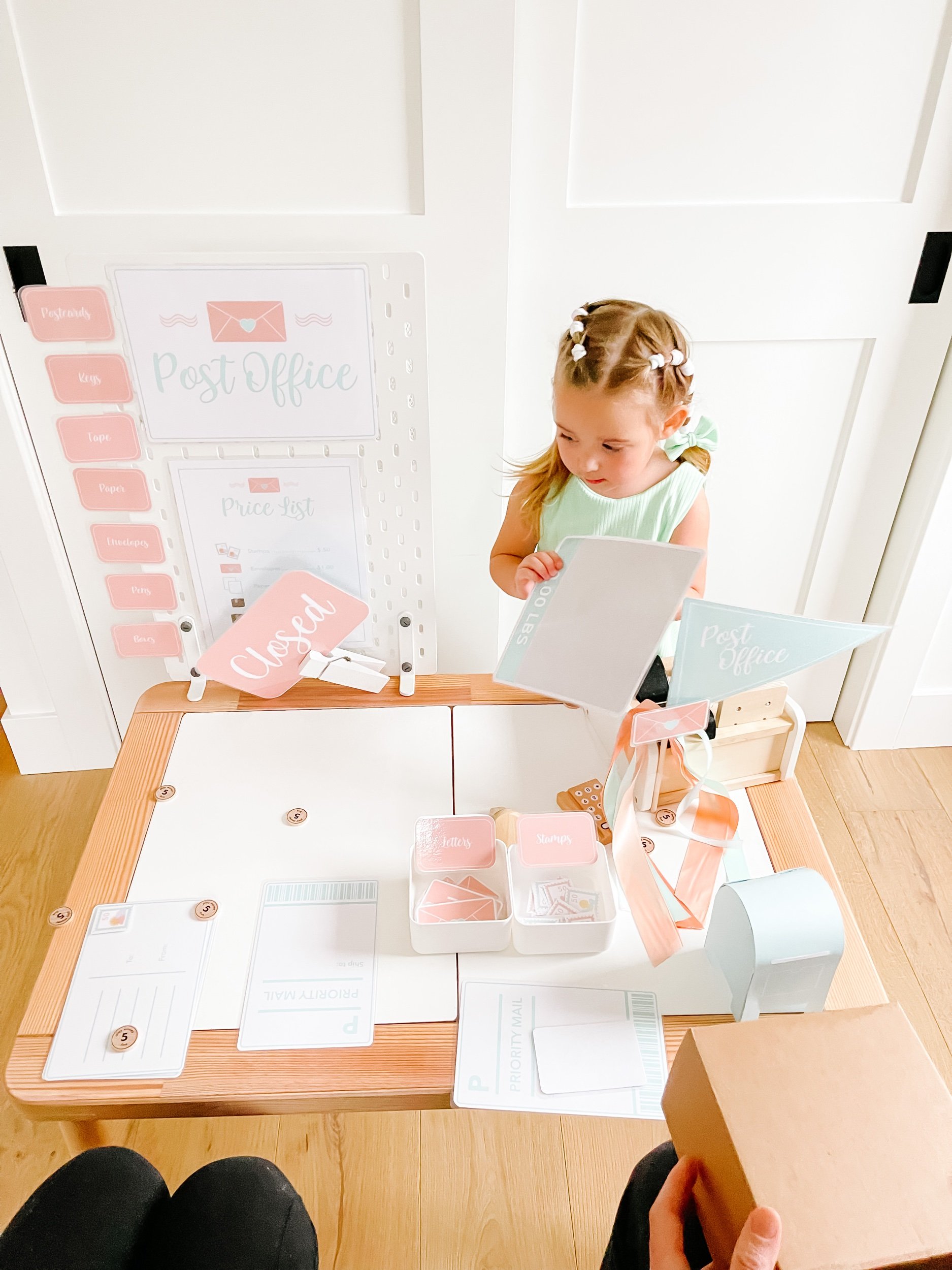
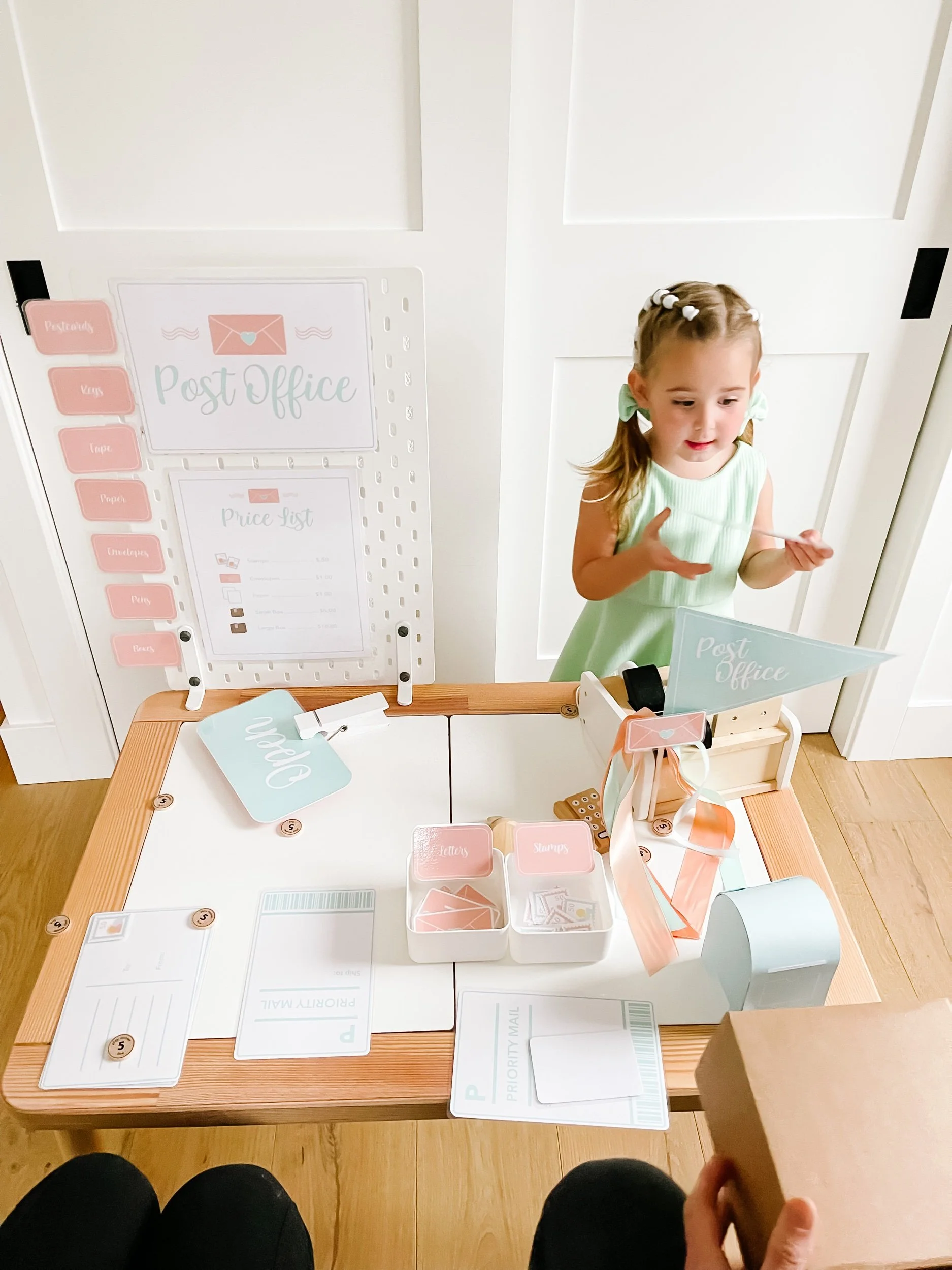
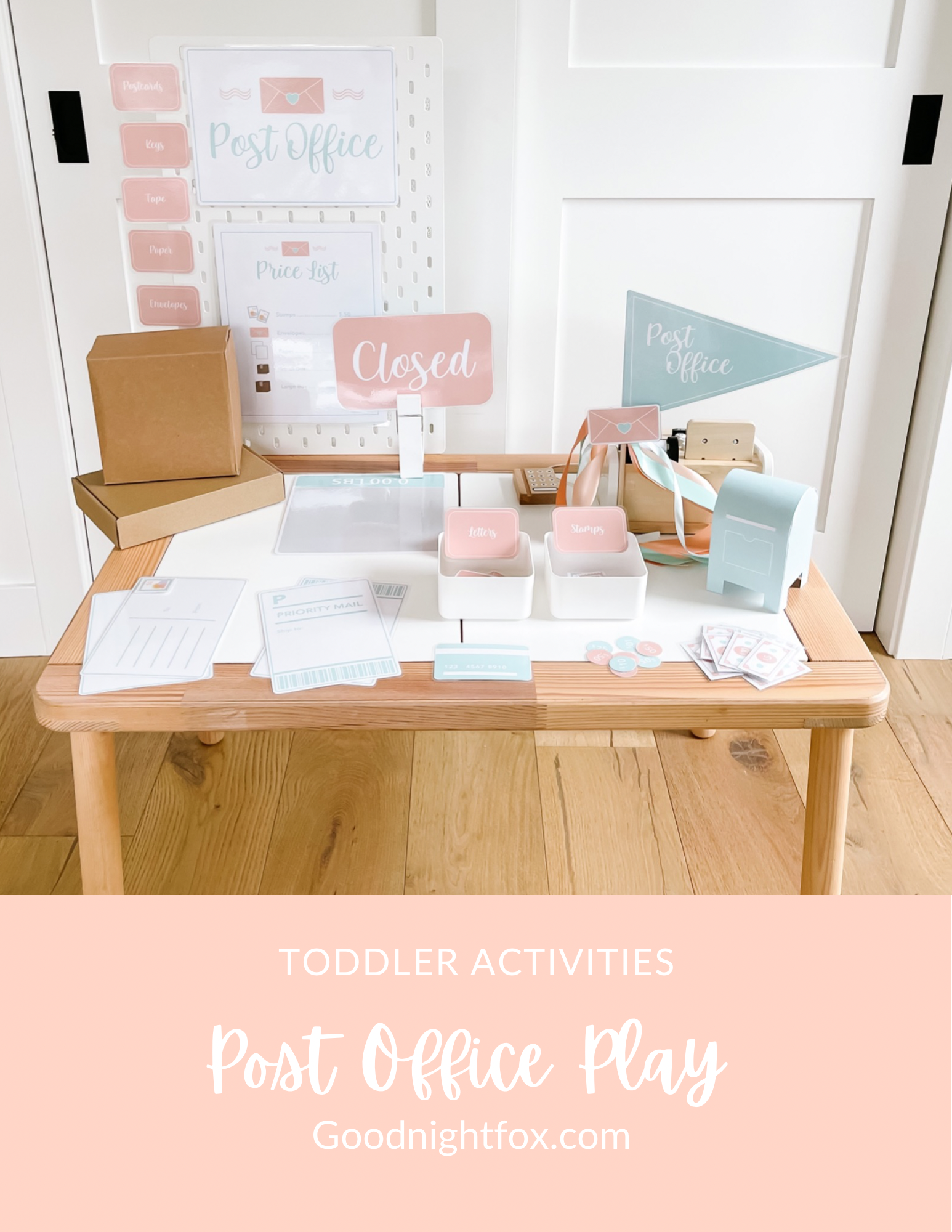
To create a truly immersive post office experience, we utilized the Printable Post Office Play kit, which includes various decorative elements. The kit contains an open/closed sign that can be hung on the door, a colorful pennant flag to make the space lively, a printable scale for weighing packages, a post office sign to go above the play area, a list of items for purchase, and labels for stamps, letters, envelopes, and more. Additionally, we used the print and fold mailcan, as well as the print and cut stamps for added realism.
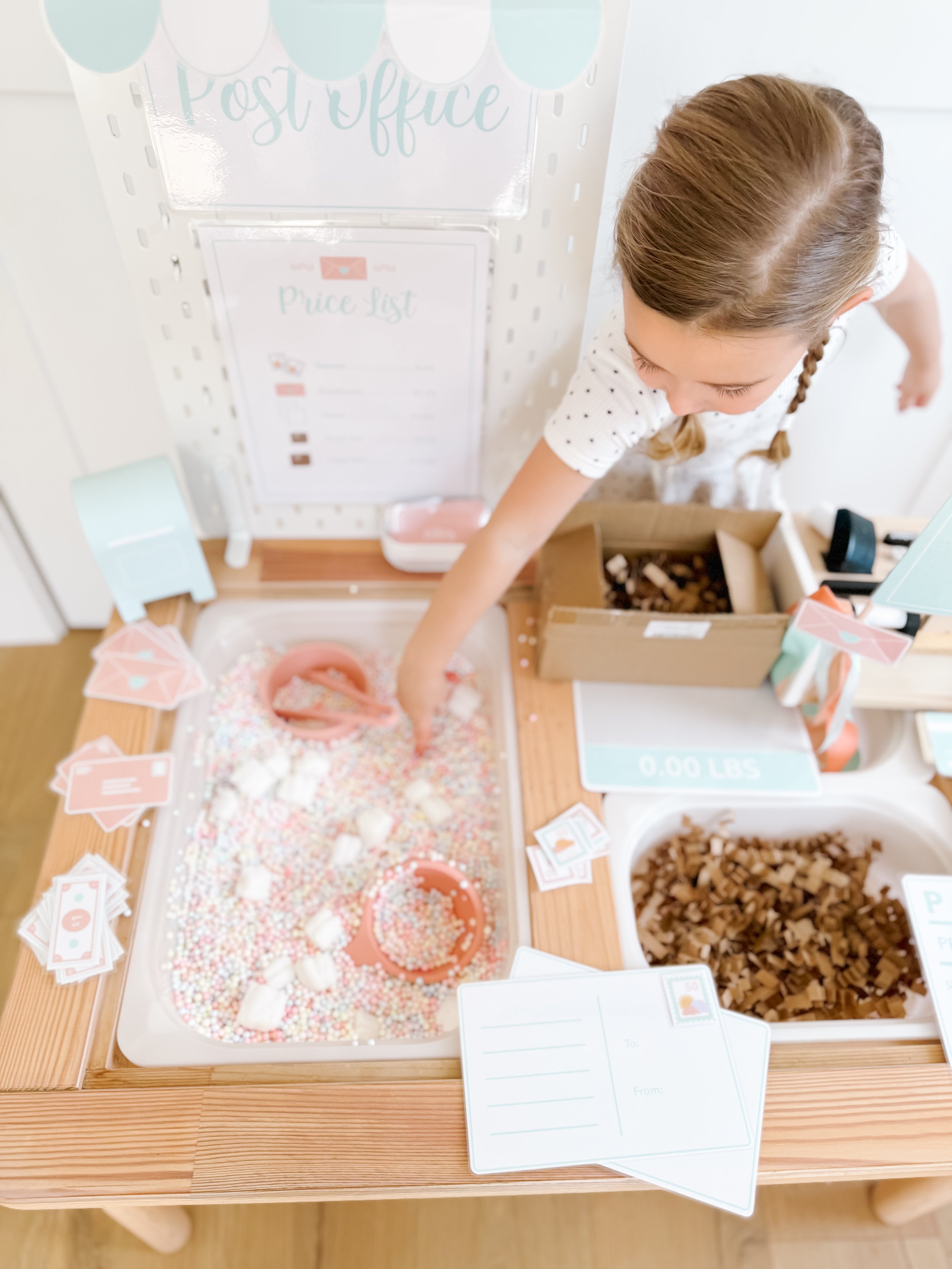
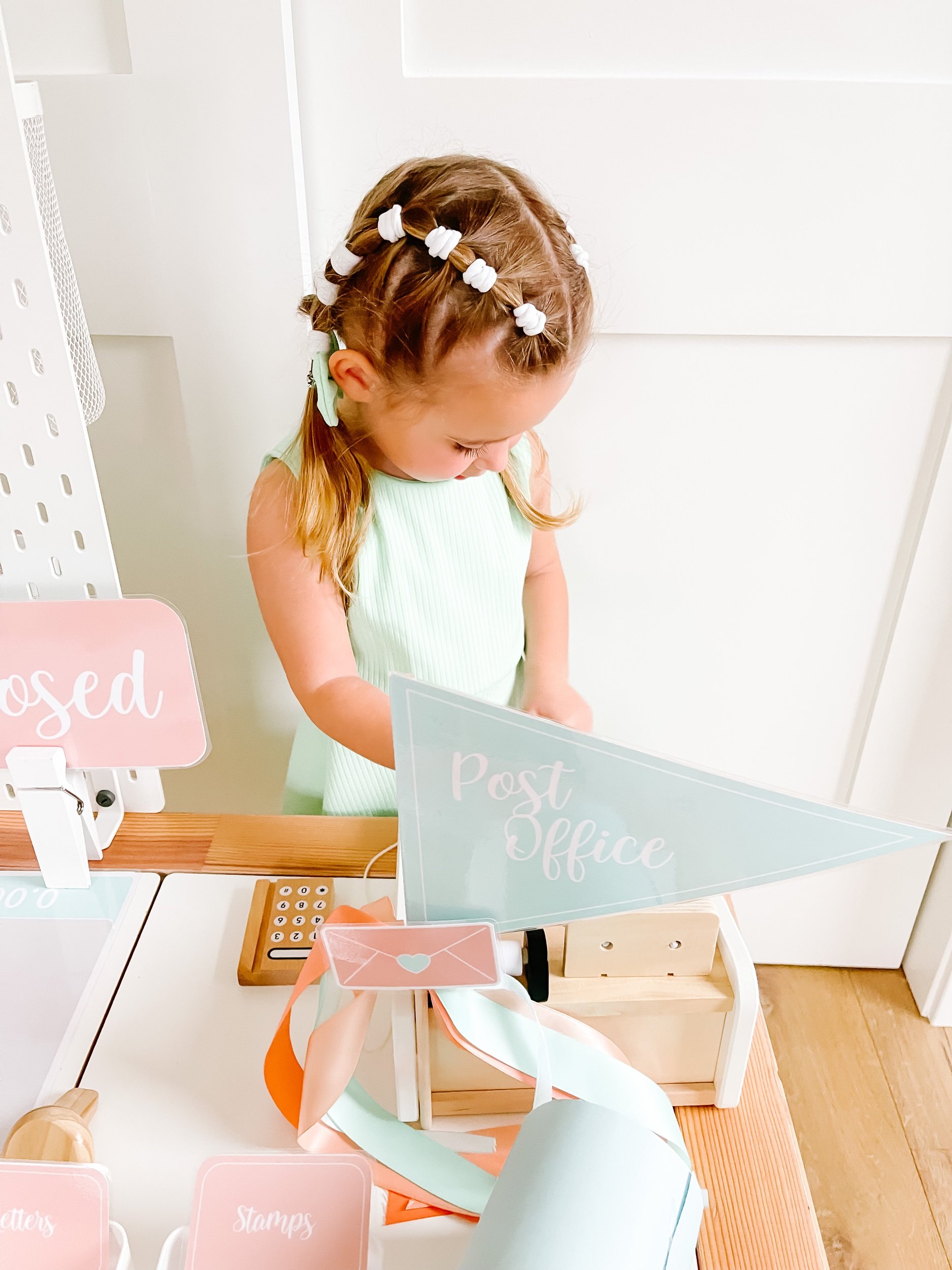
With these decorations in place, our IKEA Flisat table was transformed into a bustling post office. The colorful signs and props made Sofie feel like she was stepping into a real post office, igniting her imagination and enthusiasm for the activity.
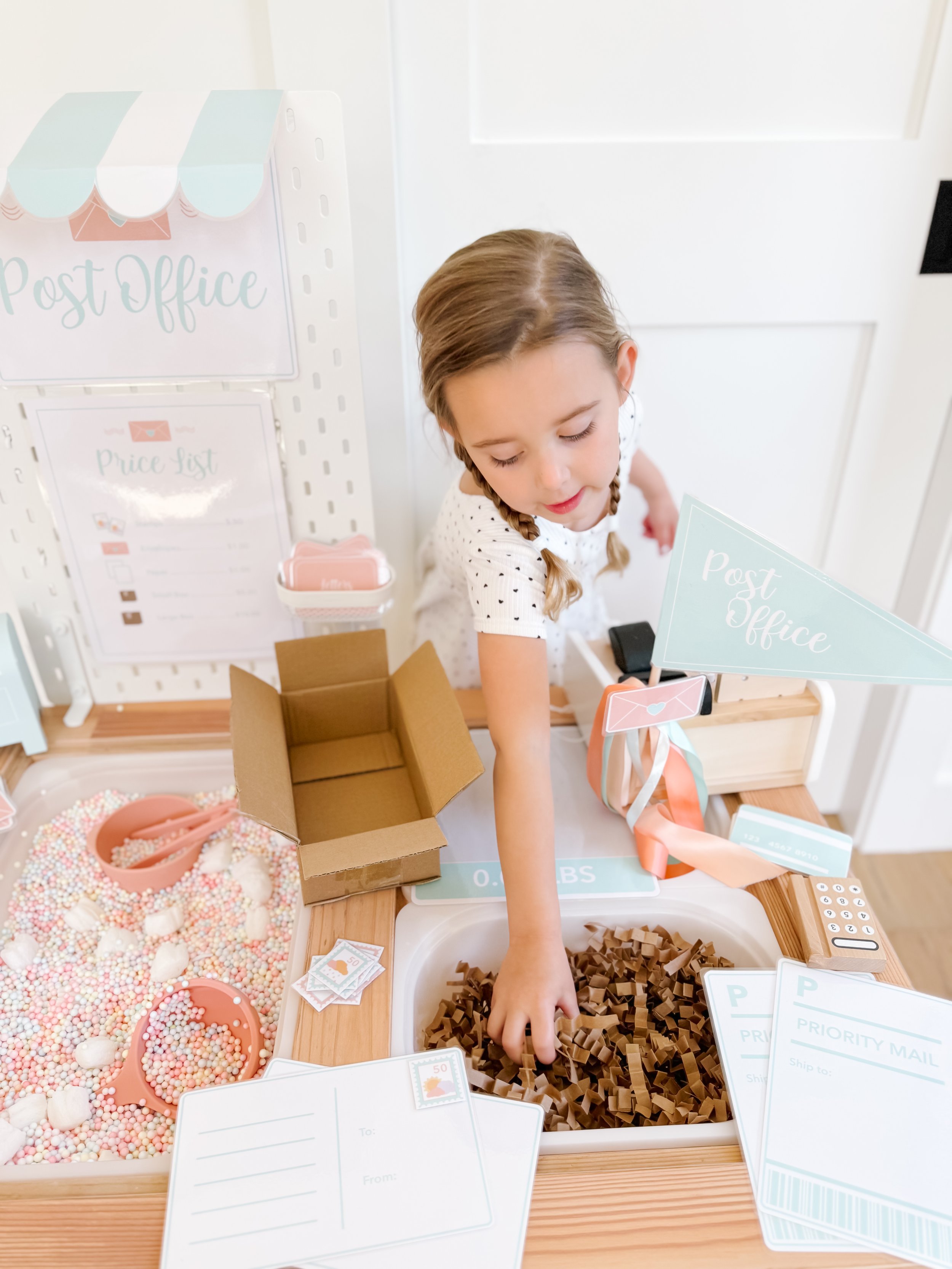
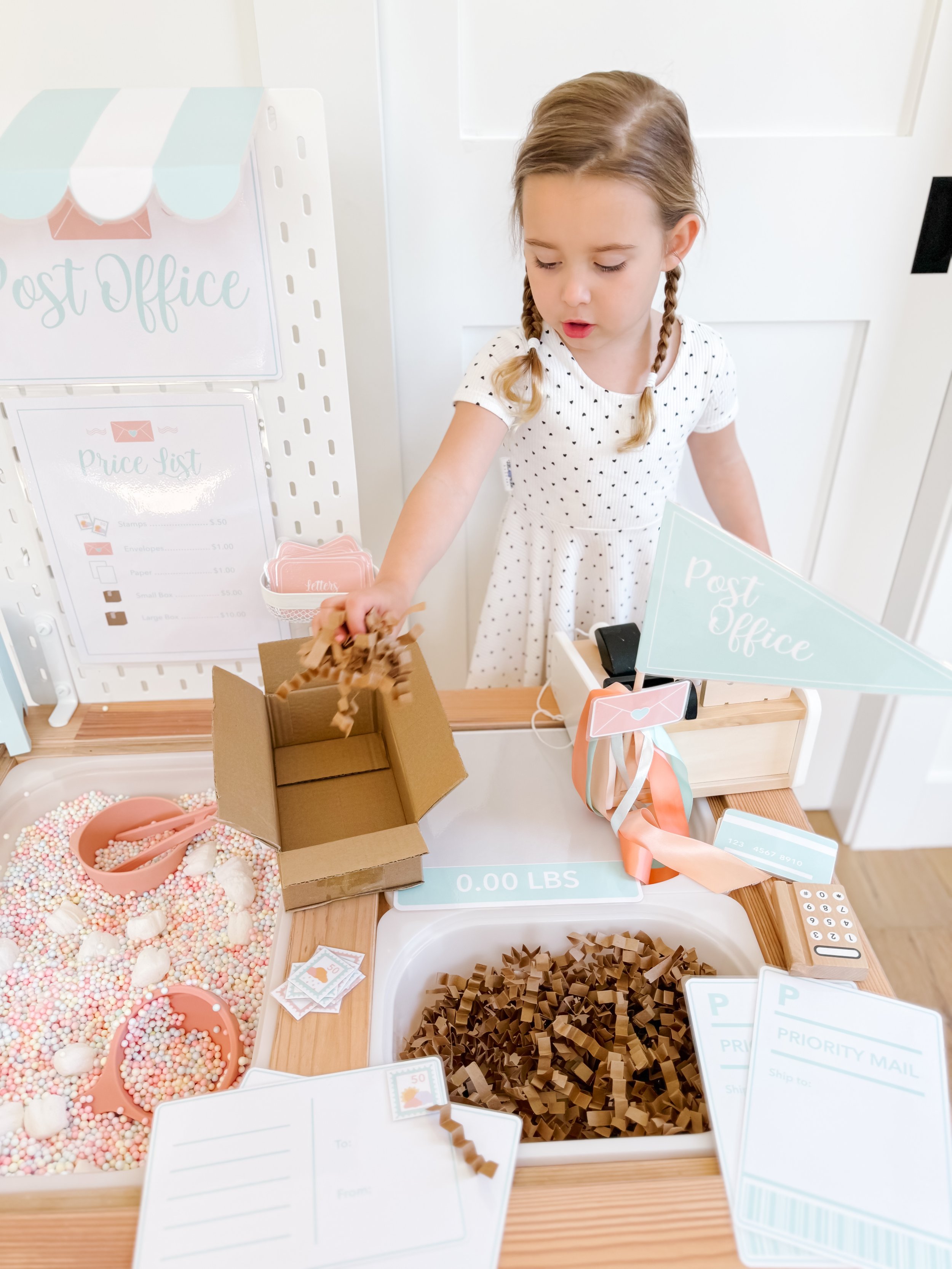
To encourage sensory exploration and understanding of weight and measurement, we set up a sensory bin filled with various-sized boxes. Using the printable scale, Sofie practiced placing the boxes on the scale and comparing their weights. You can also do this with a real scale (preferably a kitchen scale like this one). This activity not only honed her fine motor skills but also introduced basic math concepts such as heavier and lighter, larger and smaller. We also practiced which boxes fit into others and which ones did not.
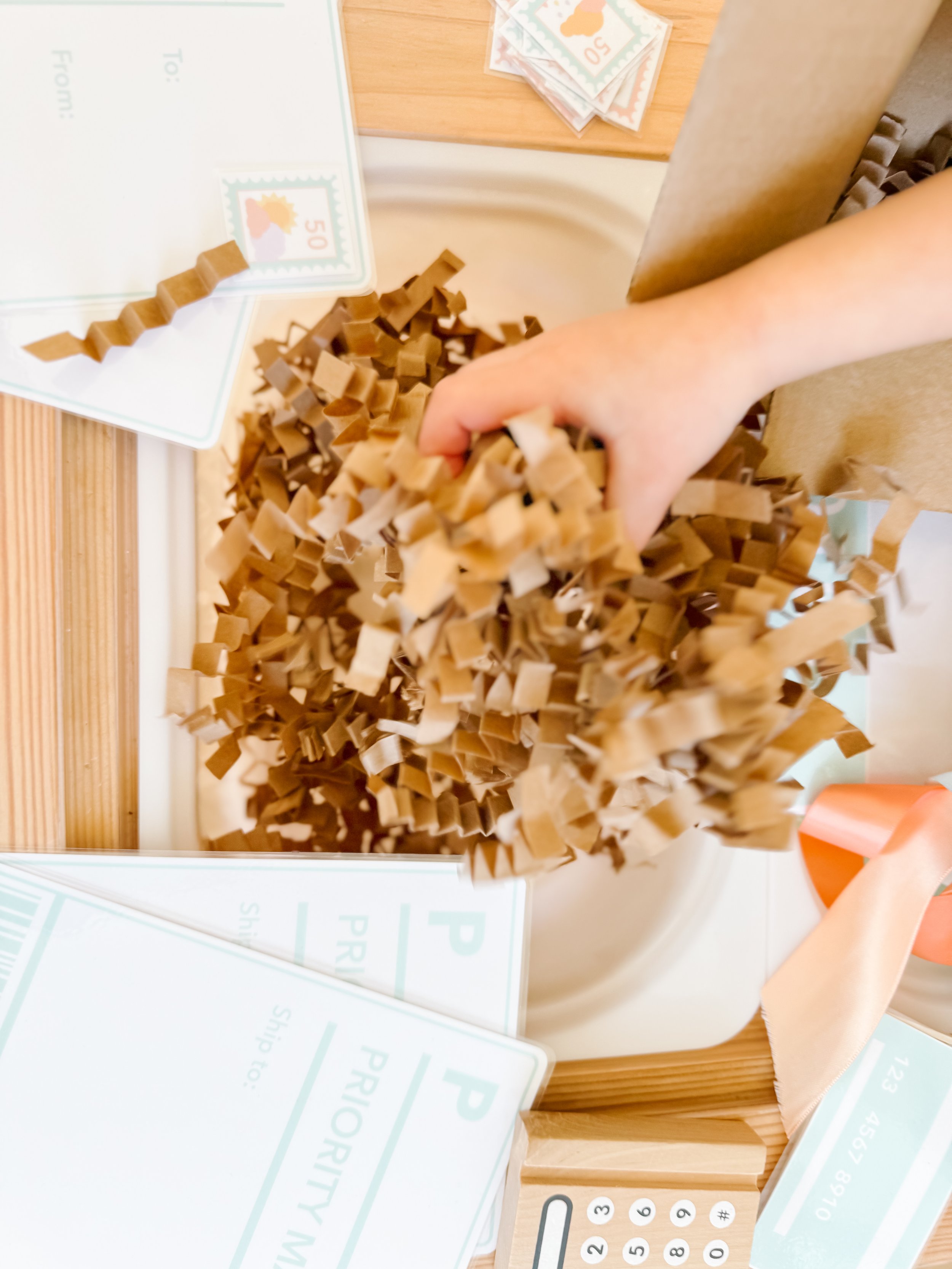
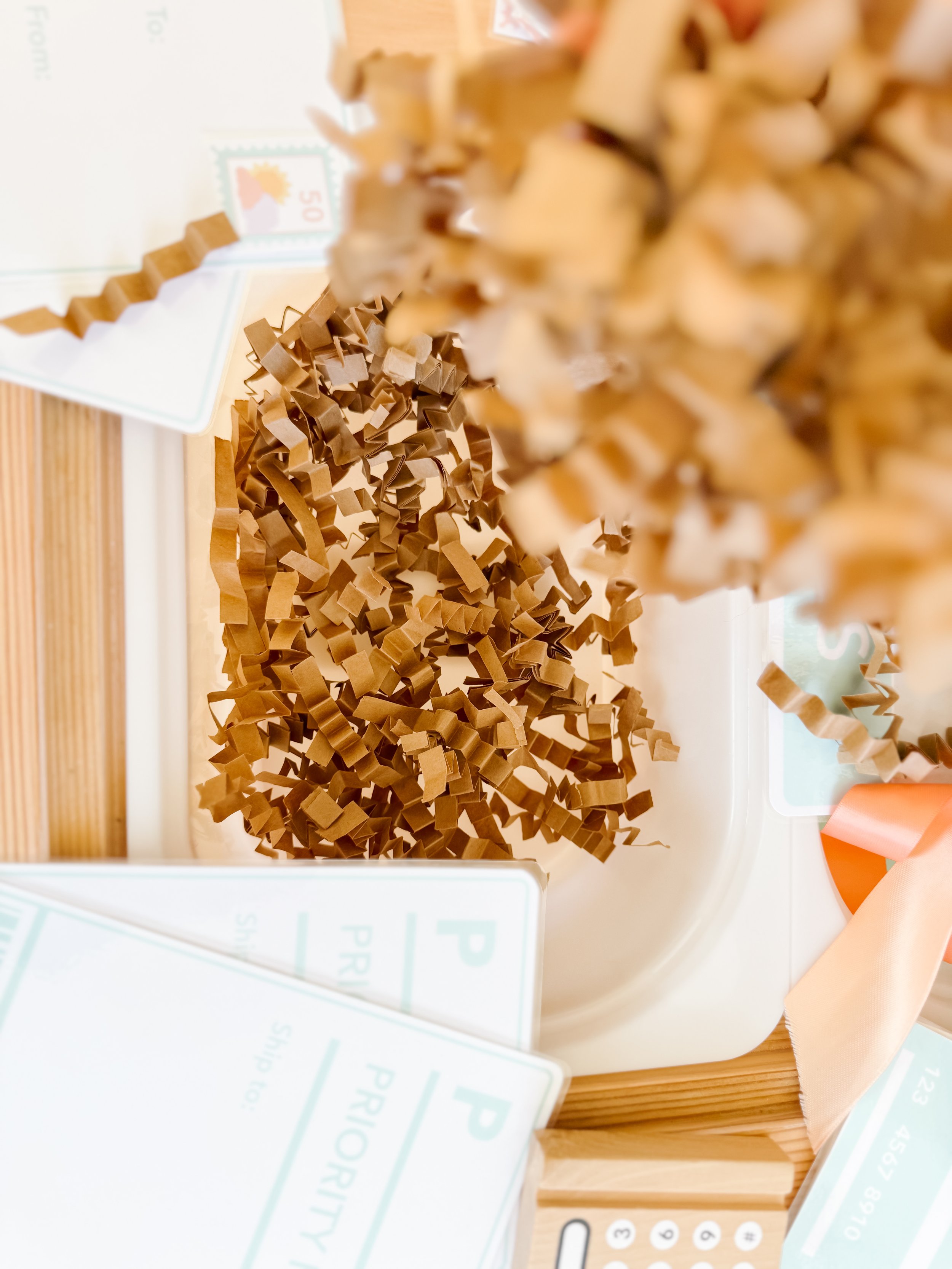
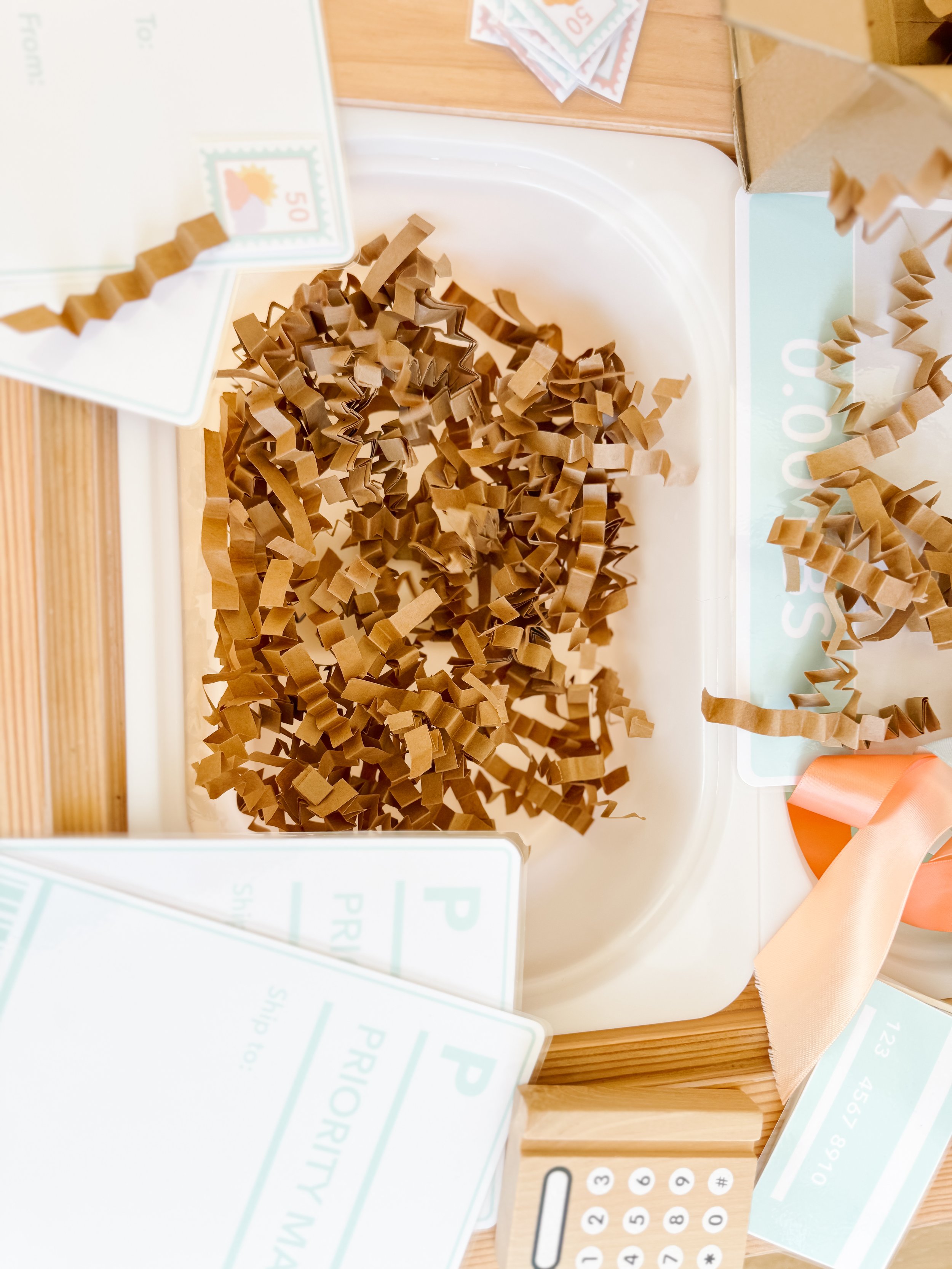
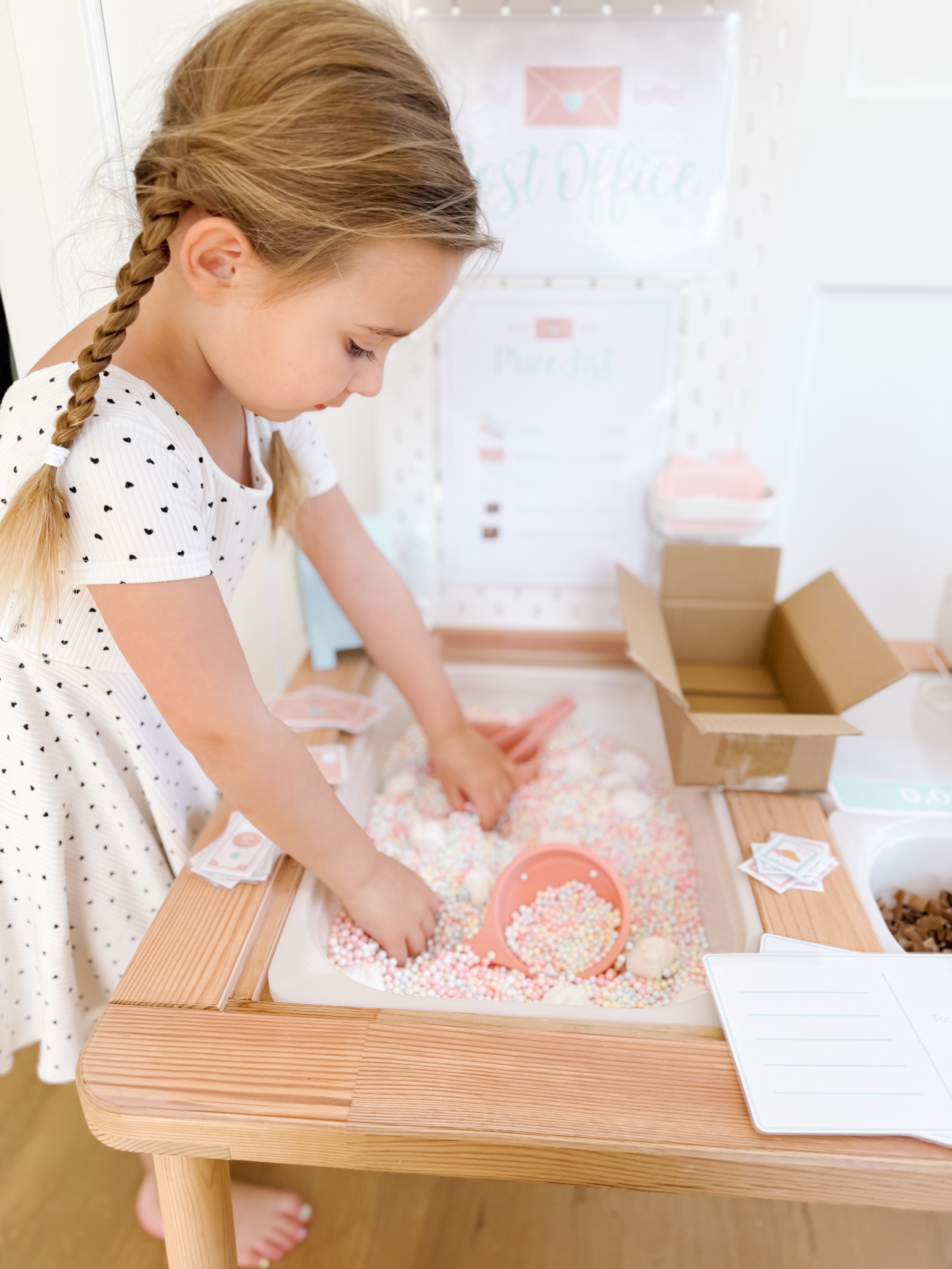
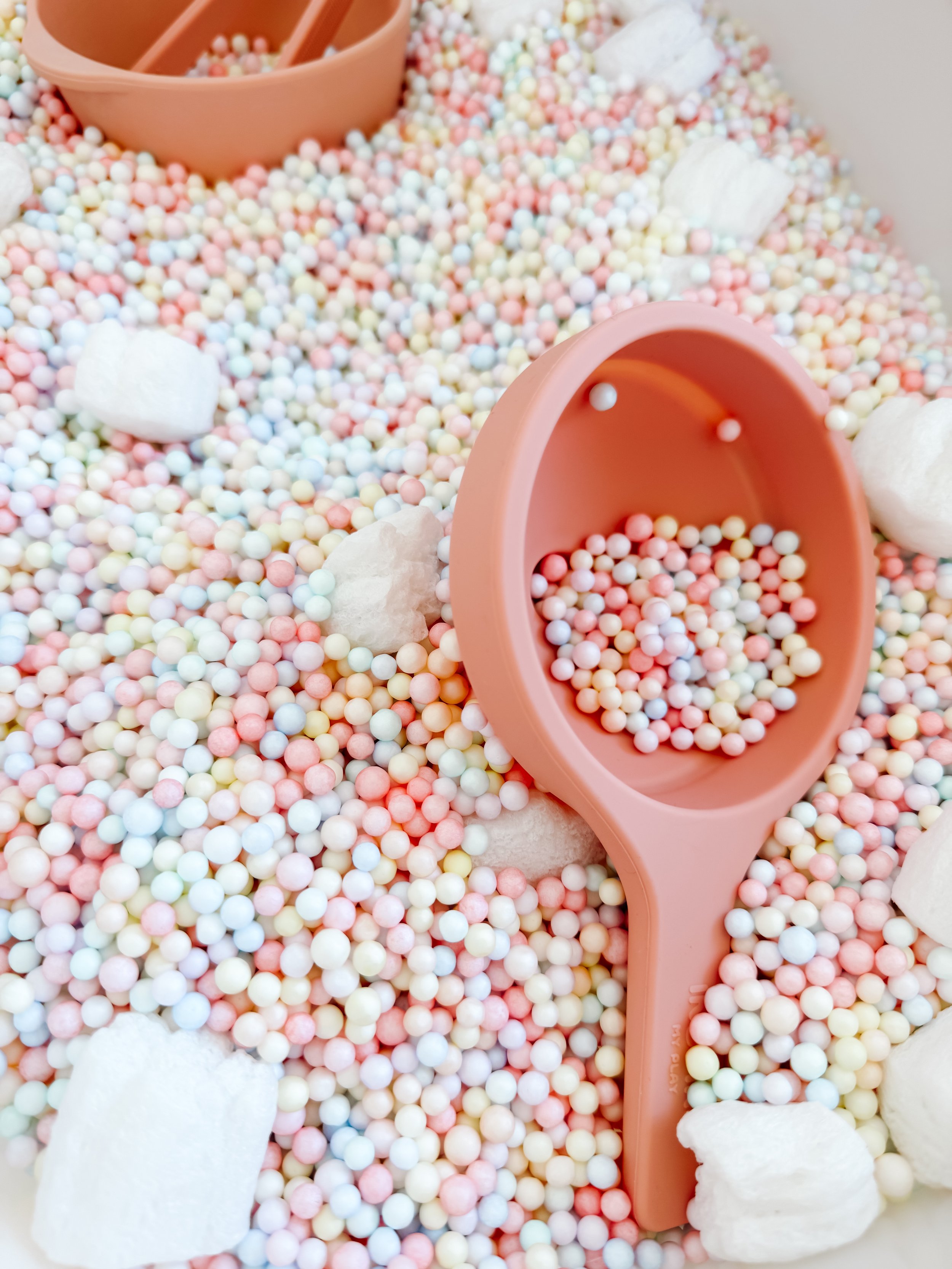
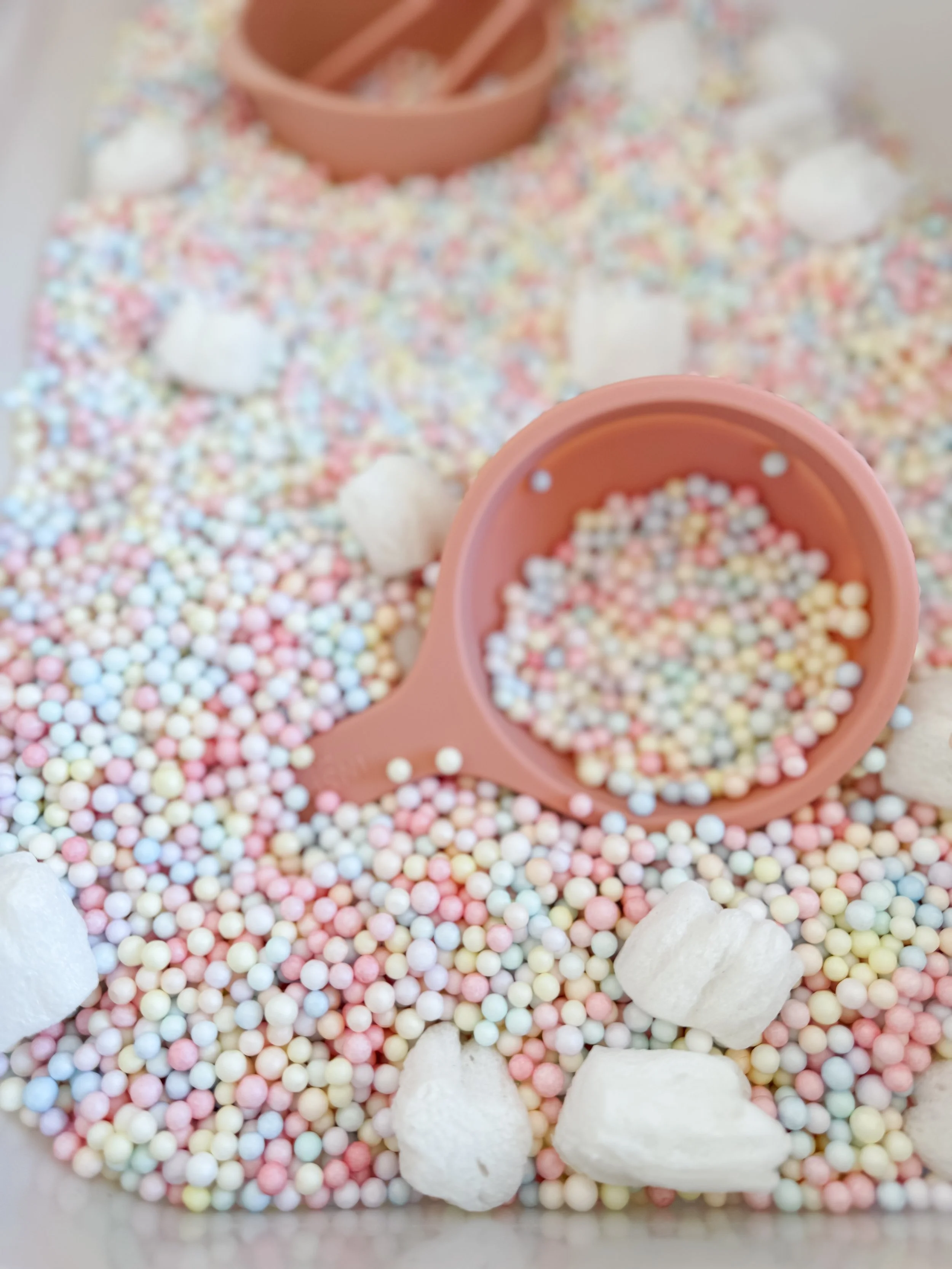
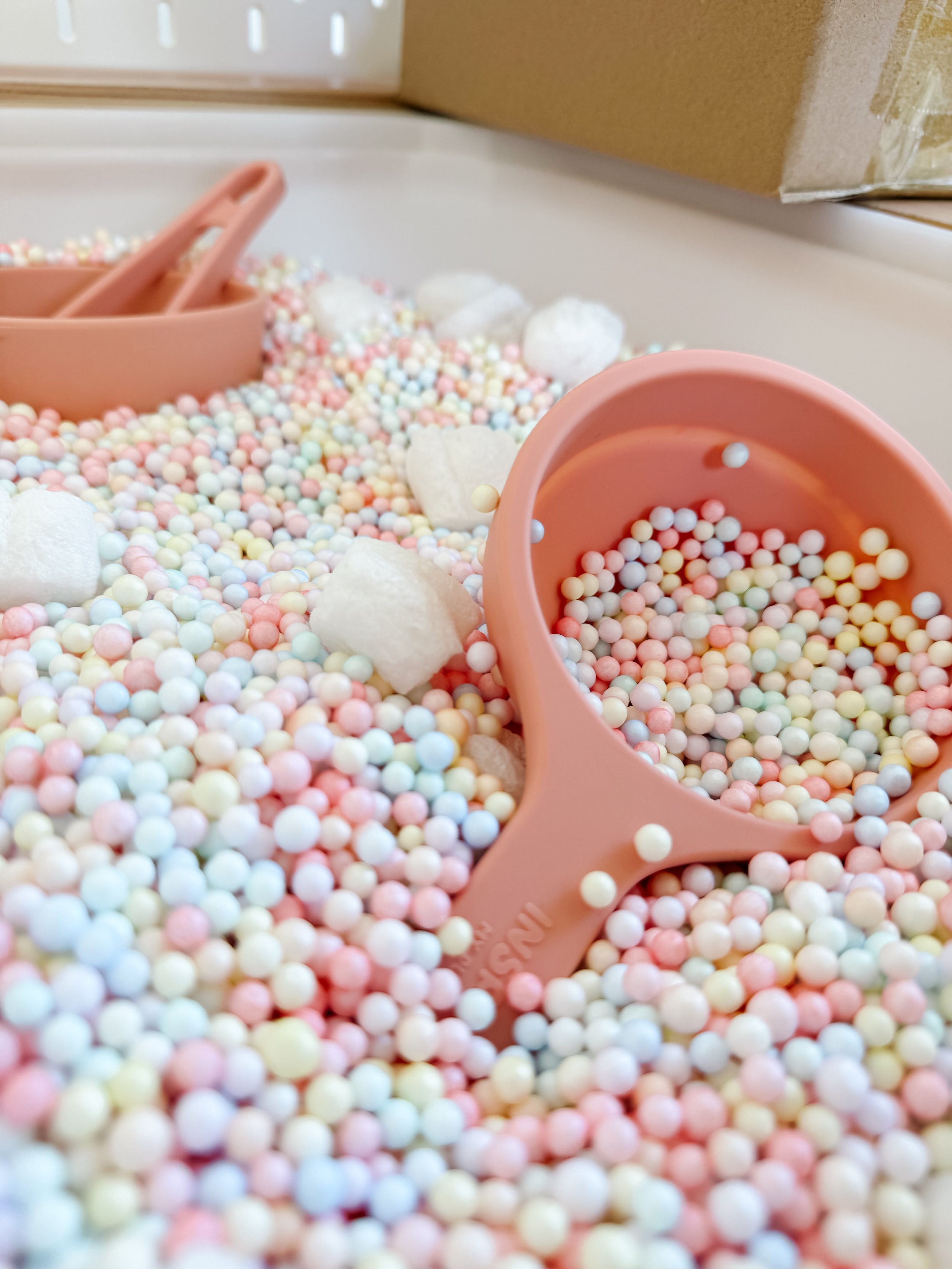
In the next sensory bin, we filled it with colorful packing foam balls that resembled packaging materials. You can also use regular packing peanuts or cotton balls or shredded paper if you have them on hand. Armed with scoops and tongs, Sofie had a blast scooping and packing the foam balls into small boxes, mimicking the process of packaging parcels. This activity enhanced her hand-eye coordination, fine motor skills, and creativity as she carefully arranged the "packages."
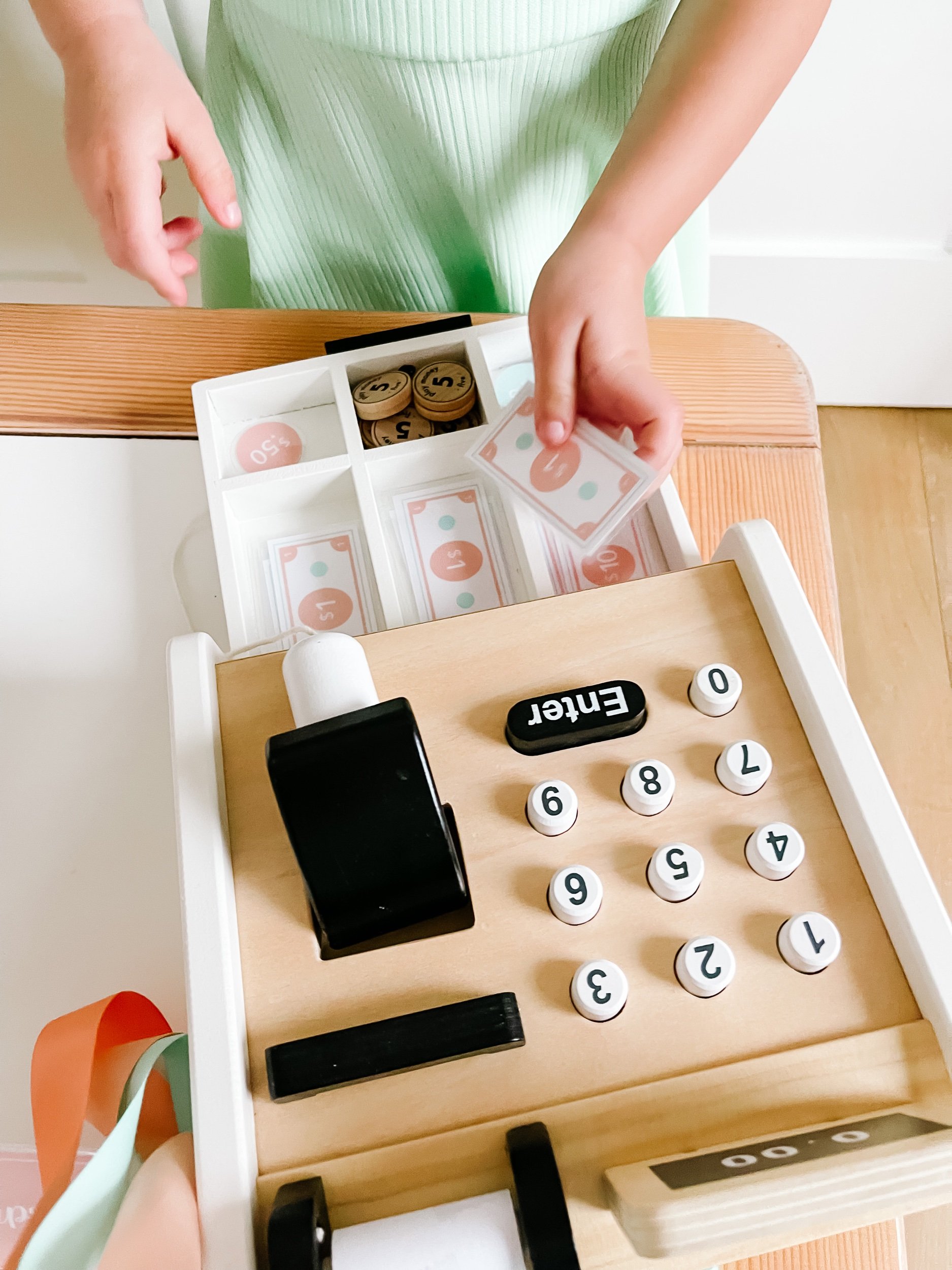
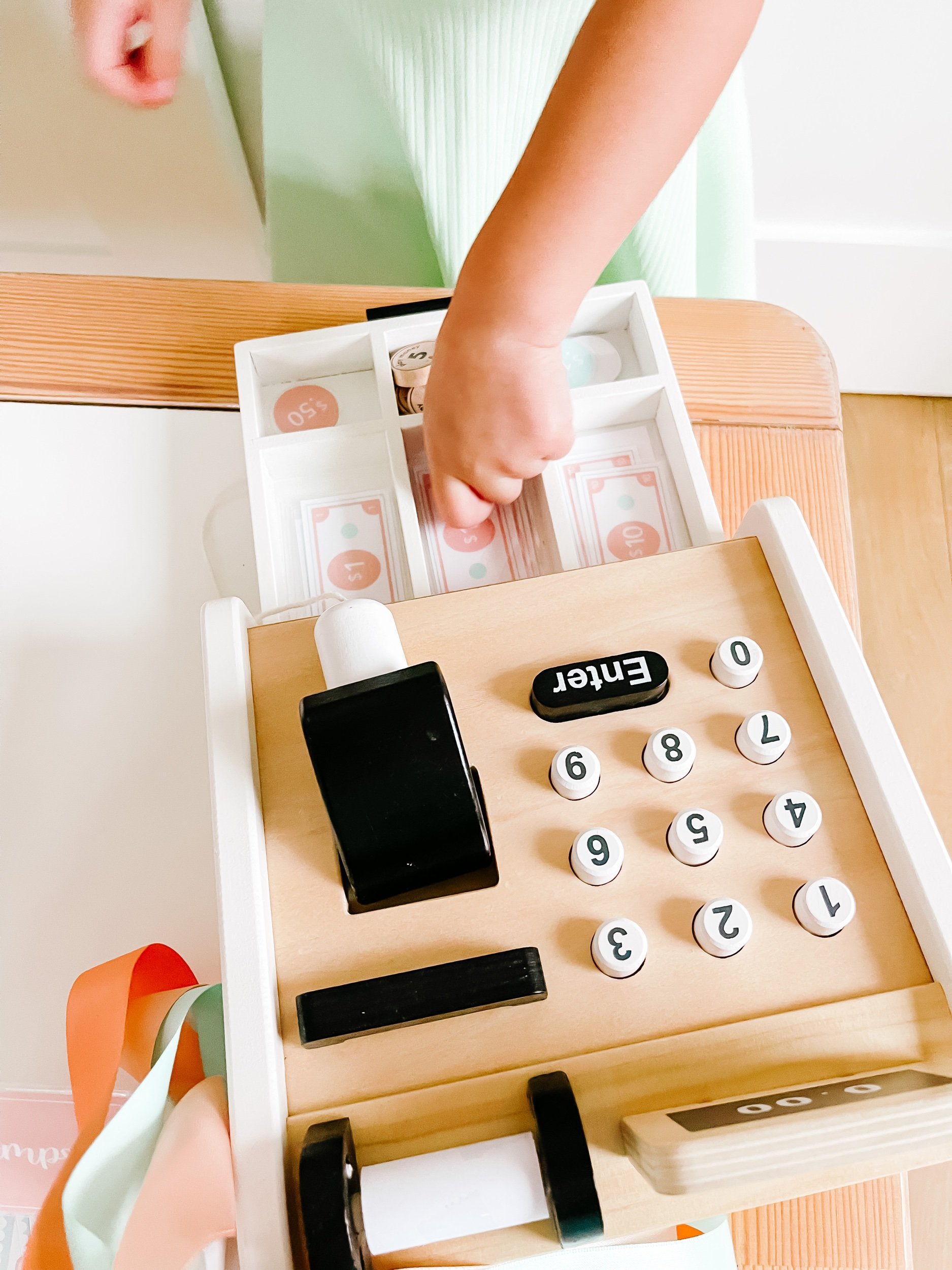
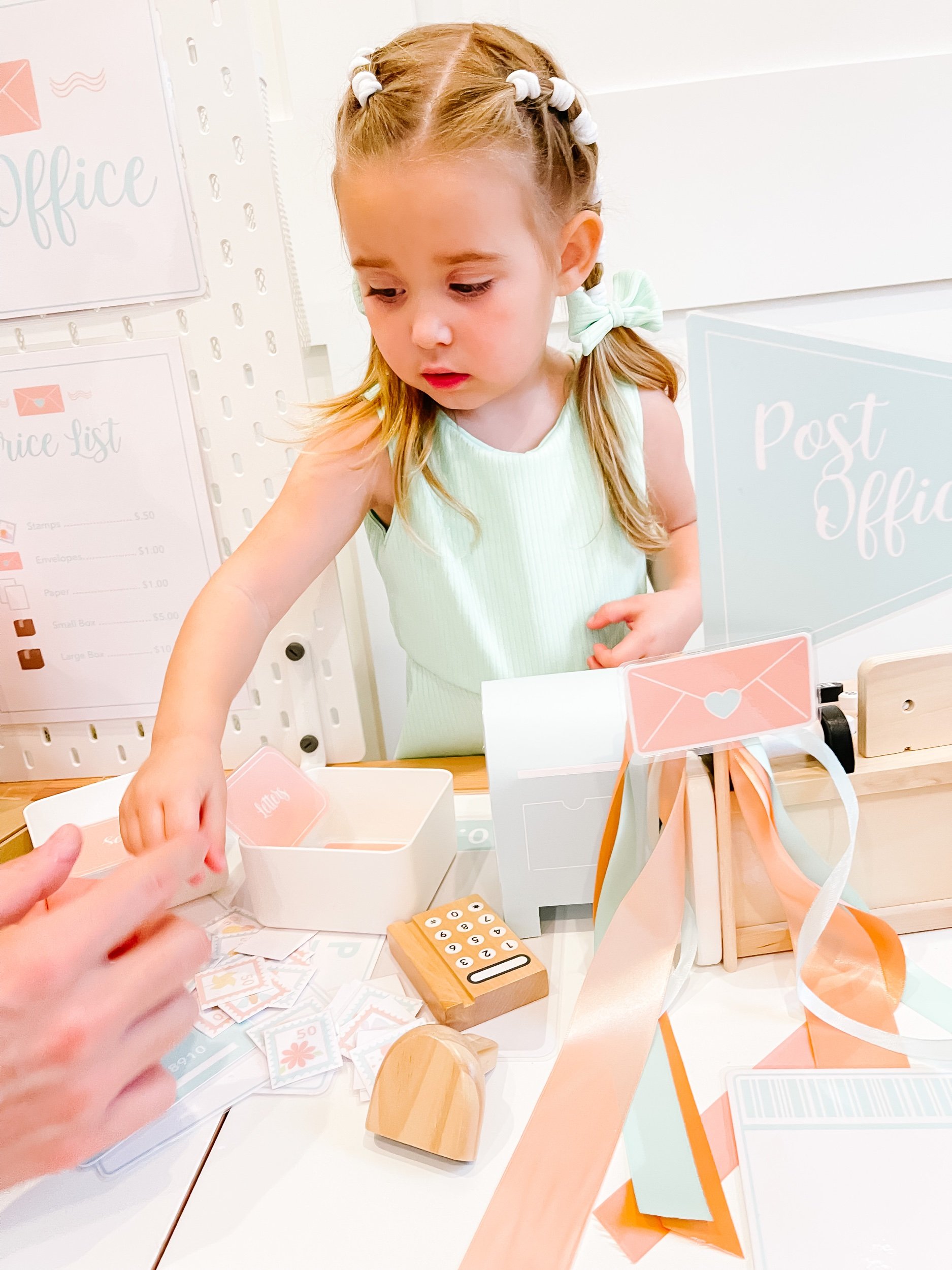
To complete our post office experience, we dedicated a section for stamping and mailing letters. Sofie used the provided labels for stamps, letters, and envelopes to personalize her mail. She had a great time pretending to be a post office clerk, carefully selecting and affixing stamps to the envelopes. Once the letters were ready, she "dropped" them into a play mailbox. This activity enhanced her creativity, fine motor skills, and understanding of mail procedures.
Engaging in dramatic and sensory play holds numerous benefits for preschoolers. Firstly, it allows children like Sofie to use their imagination and creativity, developing their cognitive and problem-solving skills. By taking on different roles and immersing themselves in a make-believe world, they enhance their social and emotional development.
Furthermore, sensory play stimulates a child's senses and hones their fine motor skills. Engaging with various tactile materials, such as the foam balls and printed letters, allows children to explore different textures, develop hand-eye coordination, and strengthen their finger muscles.
Lastly, dramatic and sensory play enables children to practice real-world scenarios, fostering early literacy and numeracy skills. Through the process of weighing, packing, stamping, and mailing, children begin to understand concepts such as weight, measurement, and basic math. Additionally, they gain exposure to reading and writing while engaging in imaginative play, enhancing their language development.
Envelope: A flat paper container used for sending letters or documents in the mail.
Stamp: A small piece of paper with an adhesive backing, often bearing a design and indicating payment of postage.
Mailbox: A container or slot used for receiving mail at one's residence or at a post office.
Postcard: A rectangular piece of thick paper or cardboard used for sending short messages, often featuring a picture on one side.
Letter: A written or printed communication addressed to a person or organization and usually sent by mail.
Package: A wrapped or boxed object that is sent by mail or delivered in person.
Address: The location to which mail is to be delivered, including the name, street, city, and postal code.
Postman: A person who delivers mail to individual residences or businesses.
Mail carrier: A person who delivers mail, typically on a daily basis, on a specific mail delivery route.
Delivery: The act of bringing or carrying mail or packages to someone's location.
Sorting: The process of arranging and organizing mail or packages based on their destination or category.
Mailbag: A bag used by mail carriers to collect and transport mail.
Postage: The fee required to send a letter, package, or other mail item through the postal system.
Mailbox key: A small key used to open a locked mailbox for receiving mail.
Mail slot: A narrow opening in a door or wall, specifically designed for dropping mail into a building.
Air mail: A method of sending mail via aircraft for faster delivery.
Express mail: A service offered by postal systems that guarantees expedited delivery of mail or packages.
Postal code: A series of letters, numbers, or both used by postal systems to identify specific geographic regions or areas.
Postal worker: A person employed by the postal service who handles mail sorting, delivery, or other related tasks.
Mail van: A vehicle used by postal services to transport mail or packages.
Post office box: A secure and individually assigned mailbox, rented from a post office, for the receipt of mail.
Mail truck: A motorized vehicle used by the postal service for delivering mail and packages.
Postage stamp: A small piece of paper with a printed design and a monetary value indicating payment of postage.
Mail delivery route: A specific path or sequence of locations followed by a mail carrier for the purpose of delivering mail.
Postal service: An organization or government agency responsible for the collection, sorting, transportation, and delivery of mail and packages.
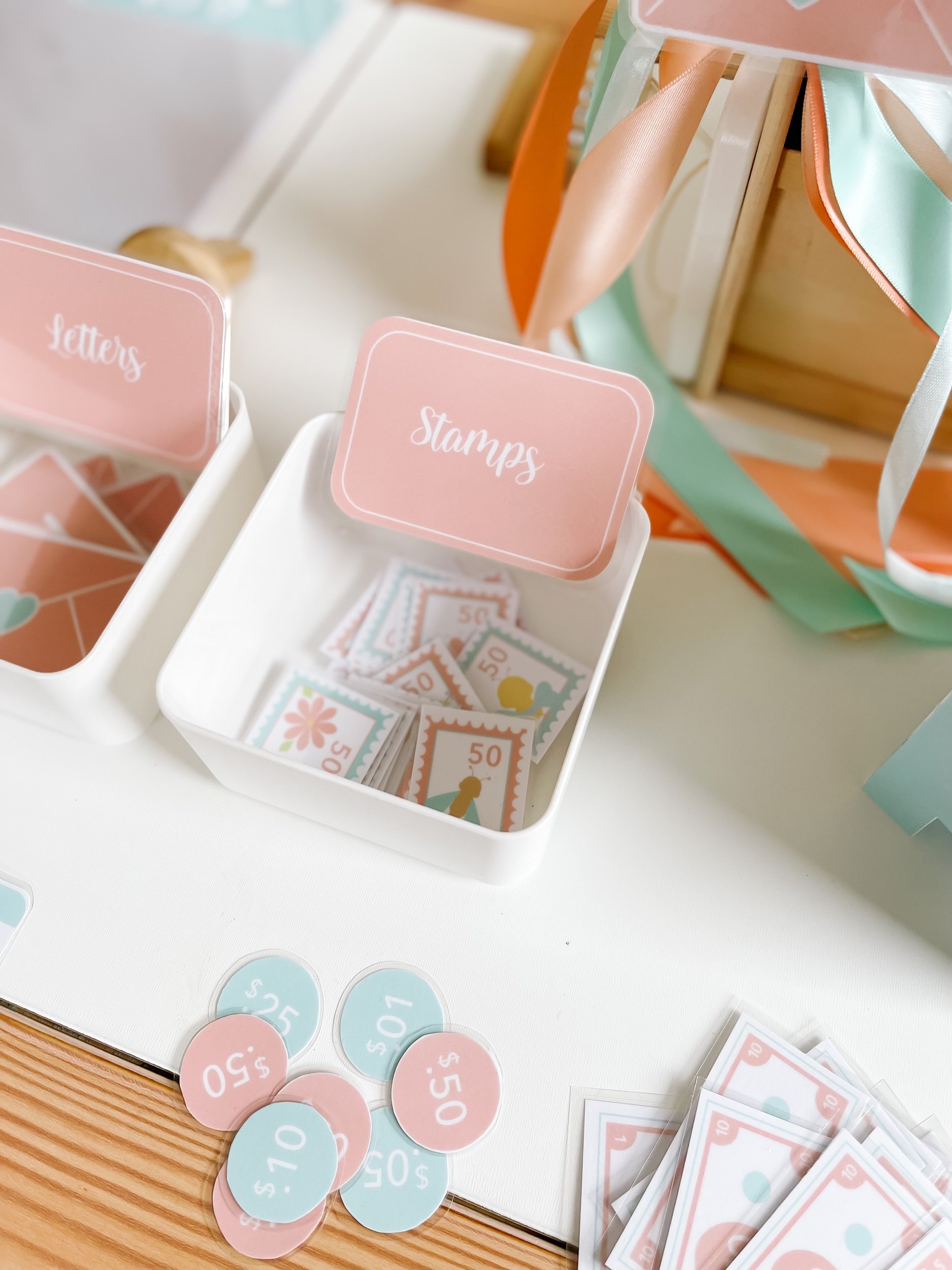
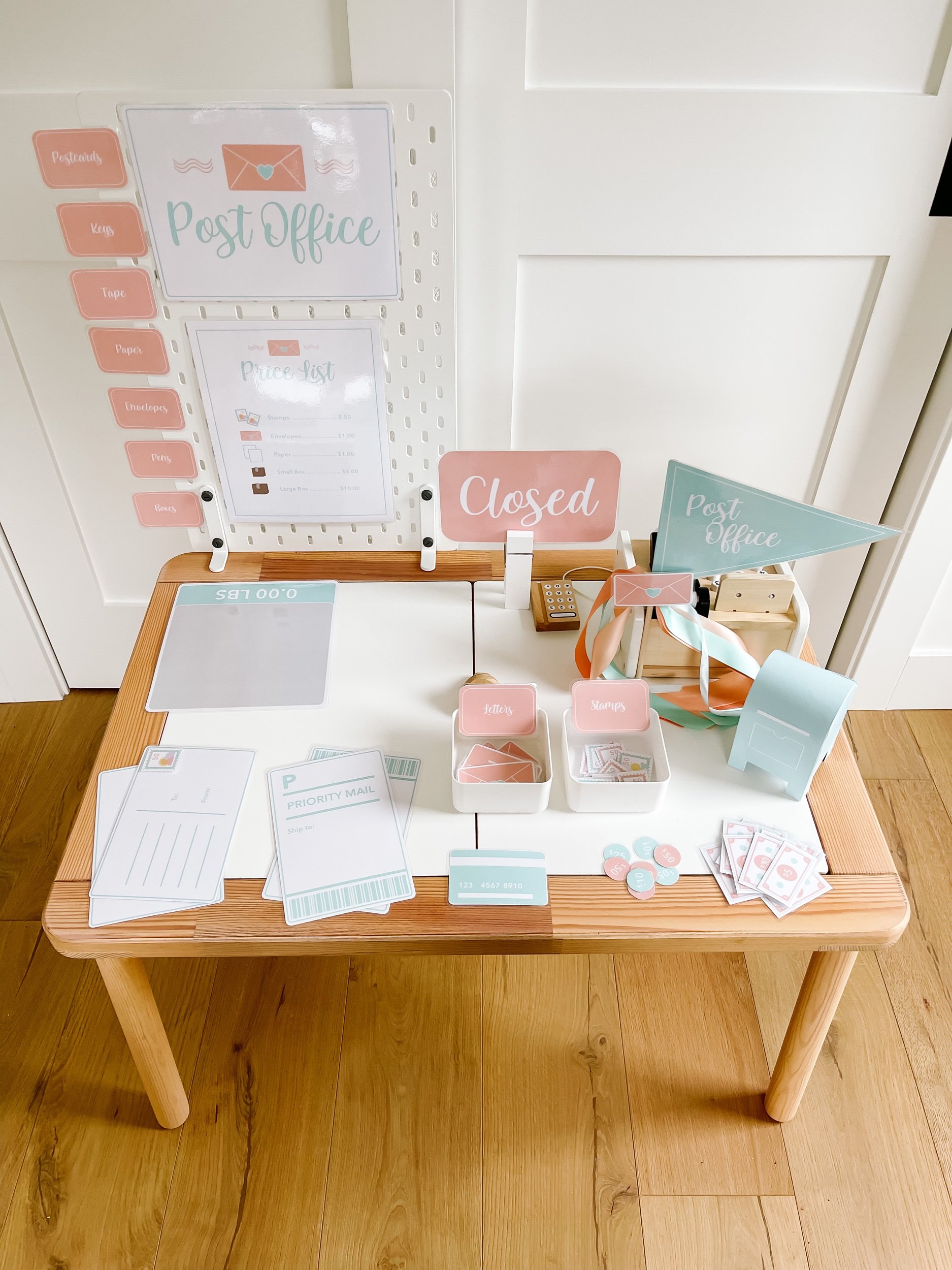
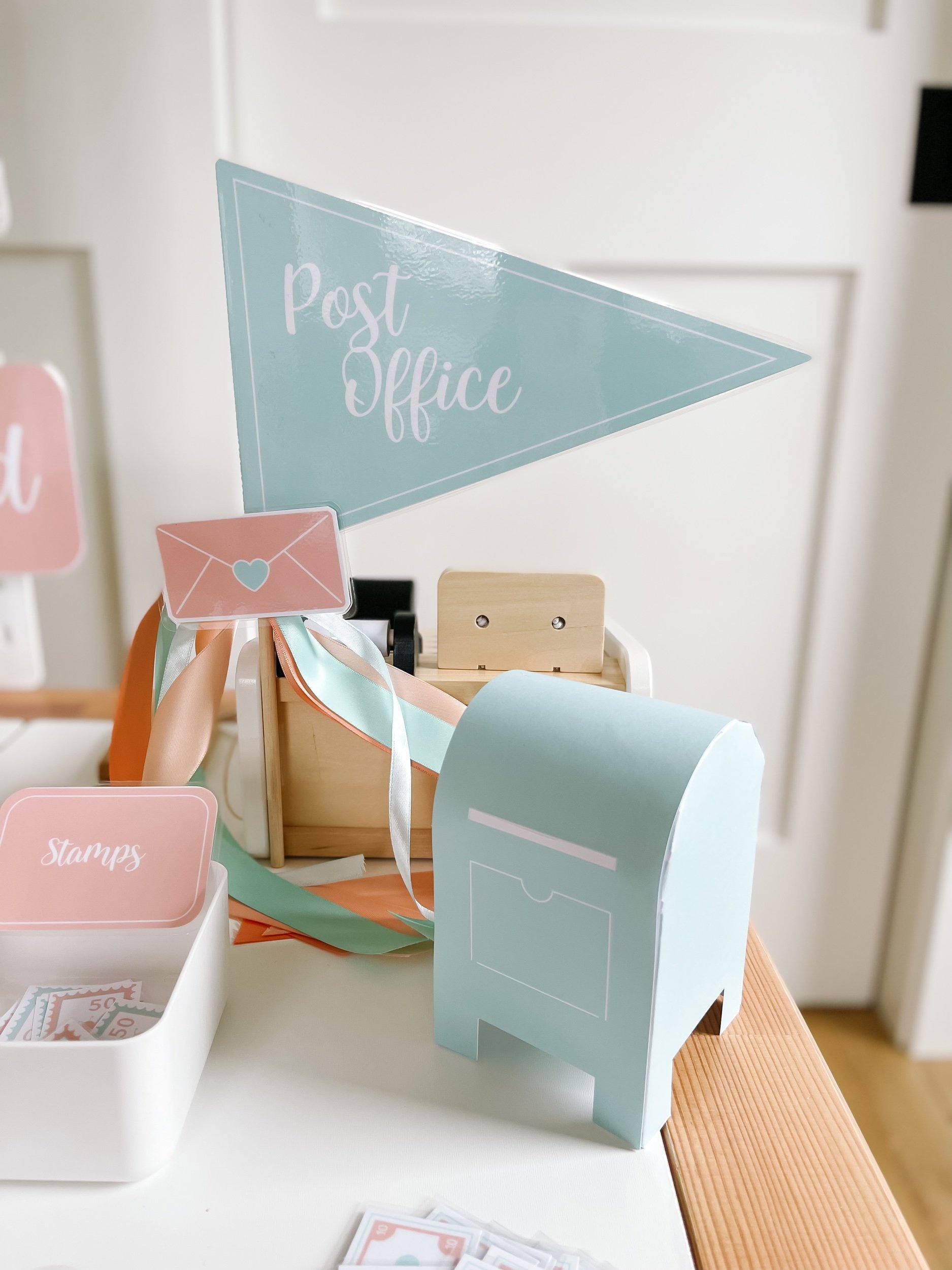
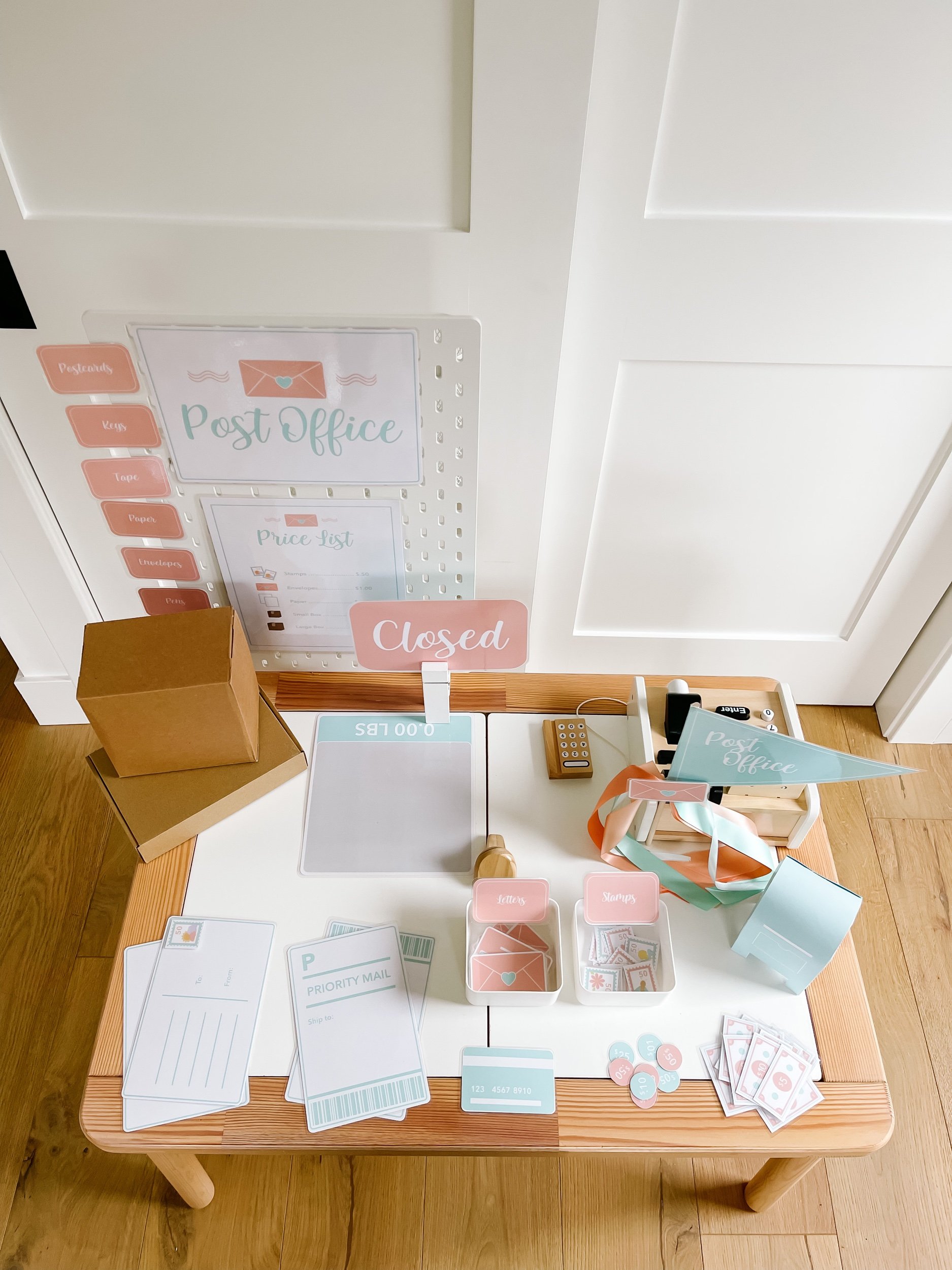
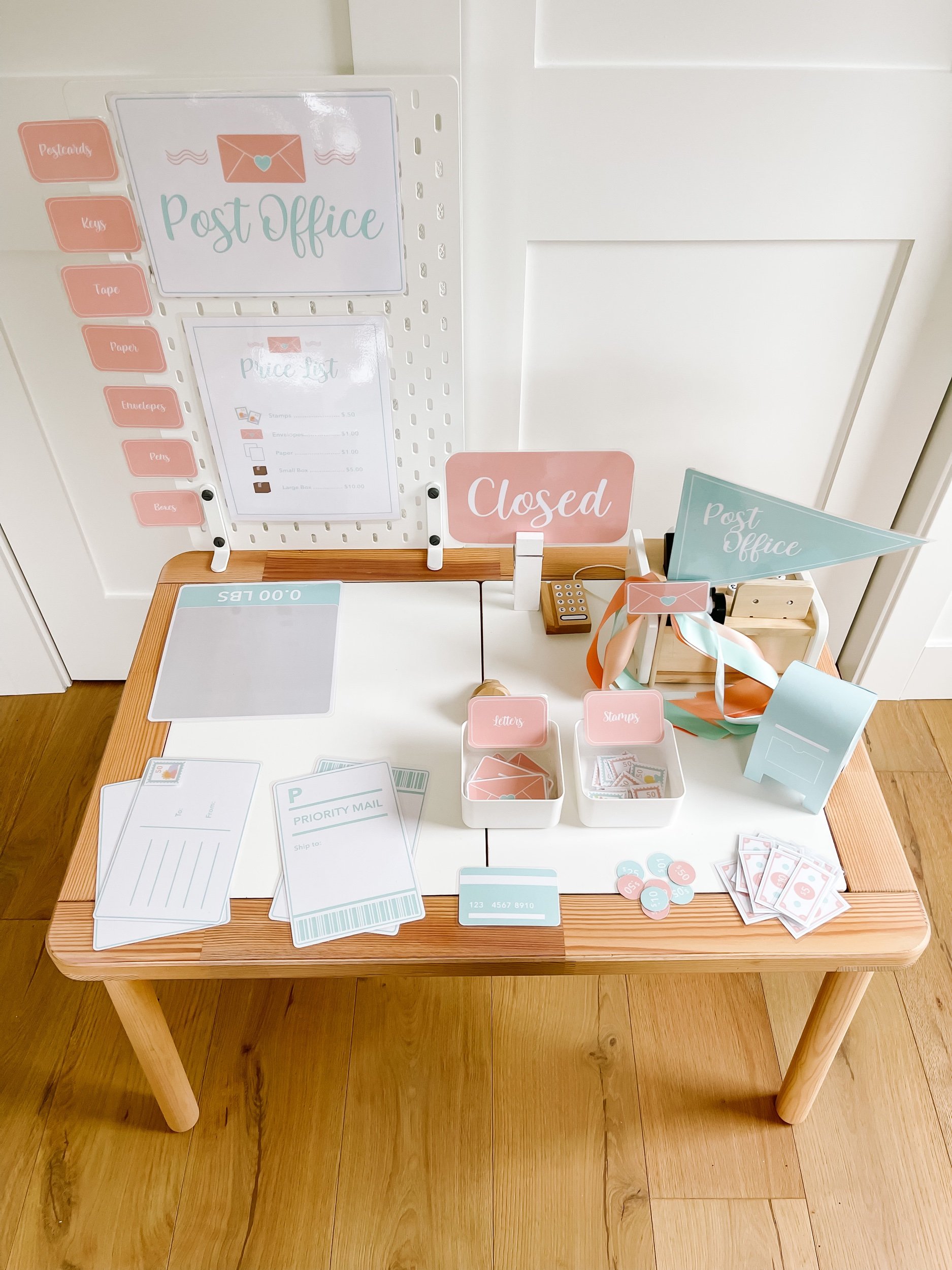
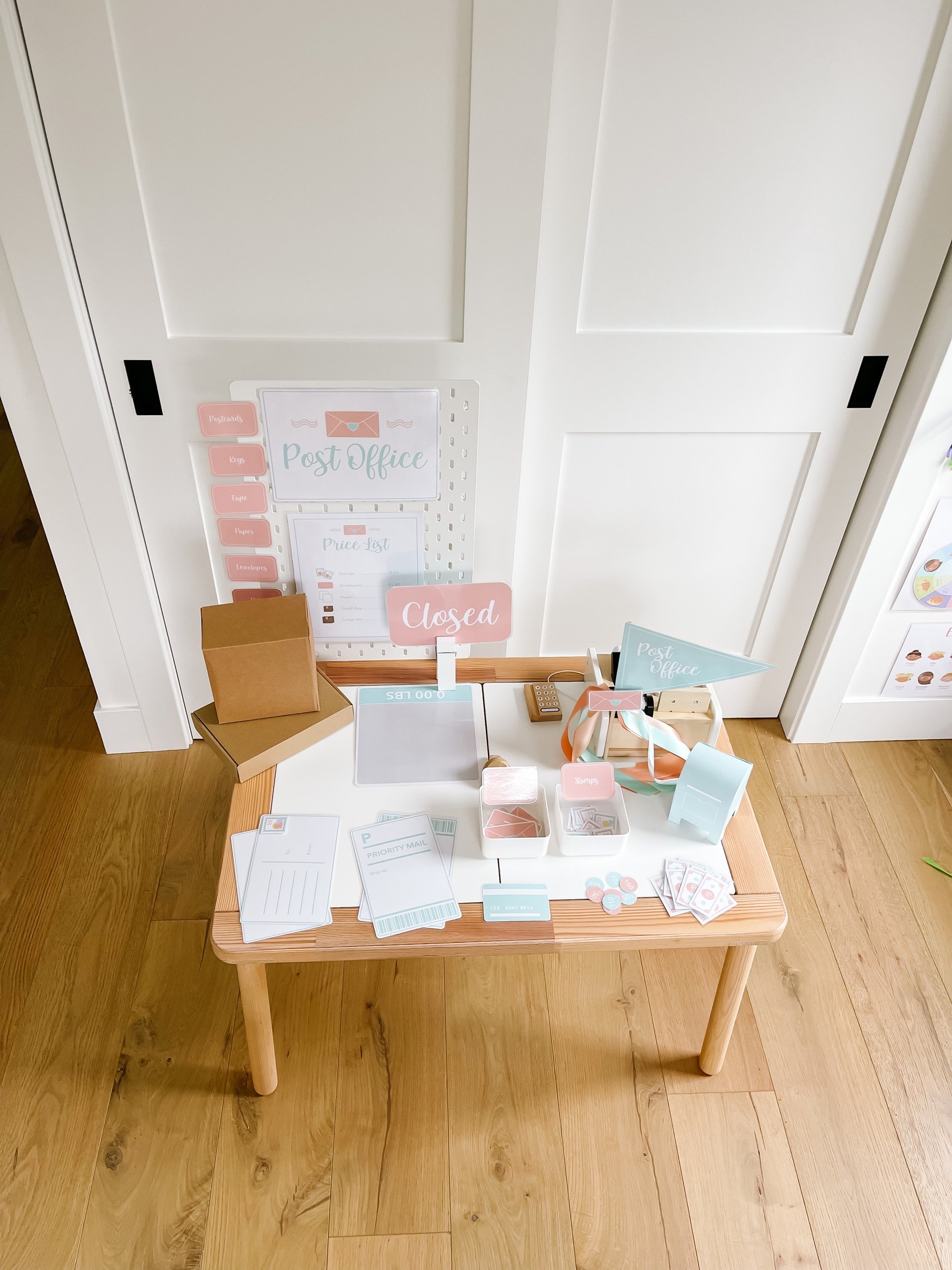
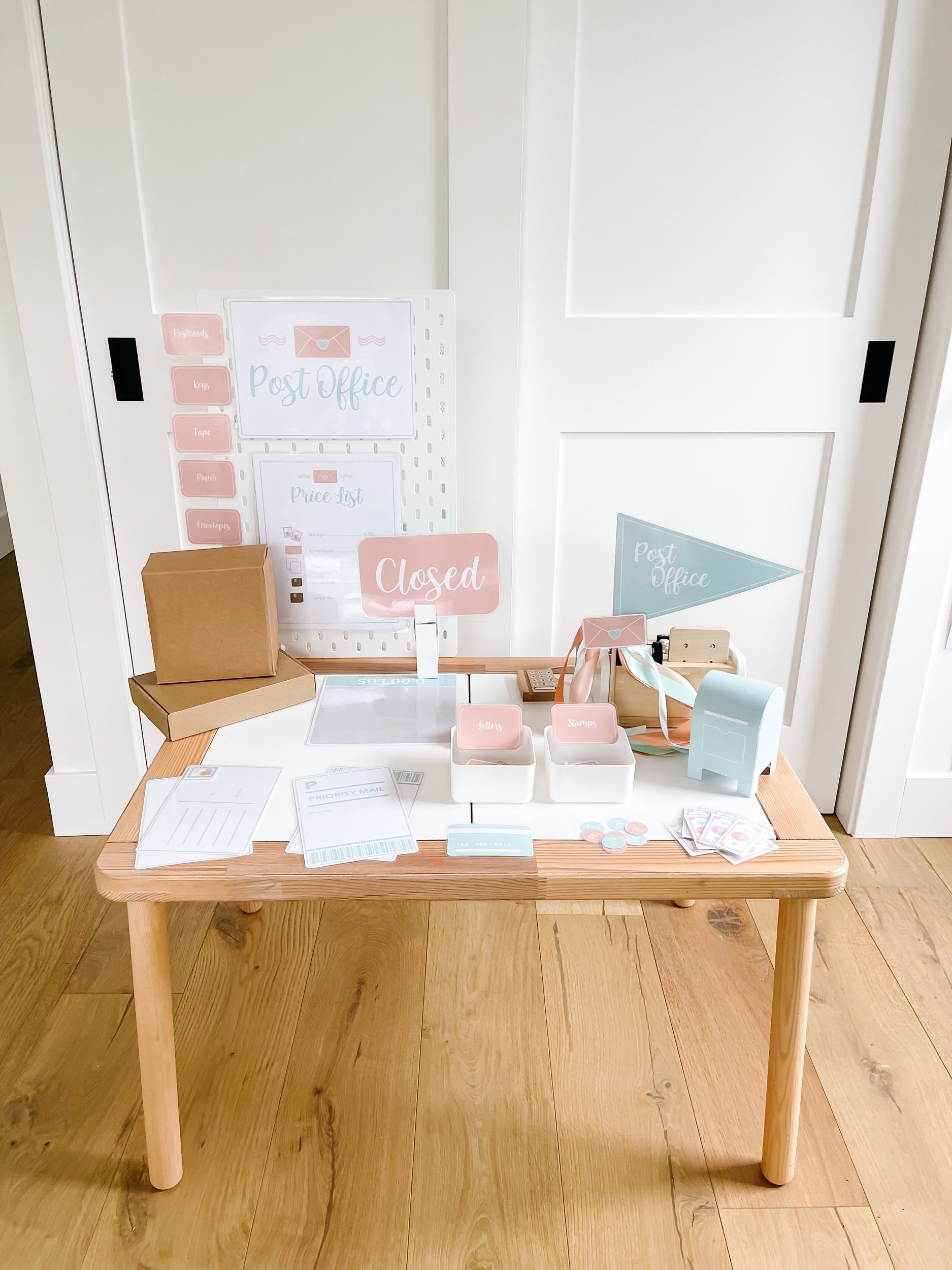
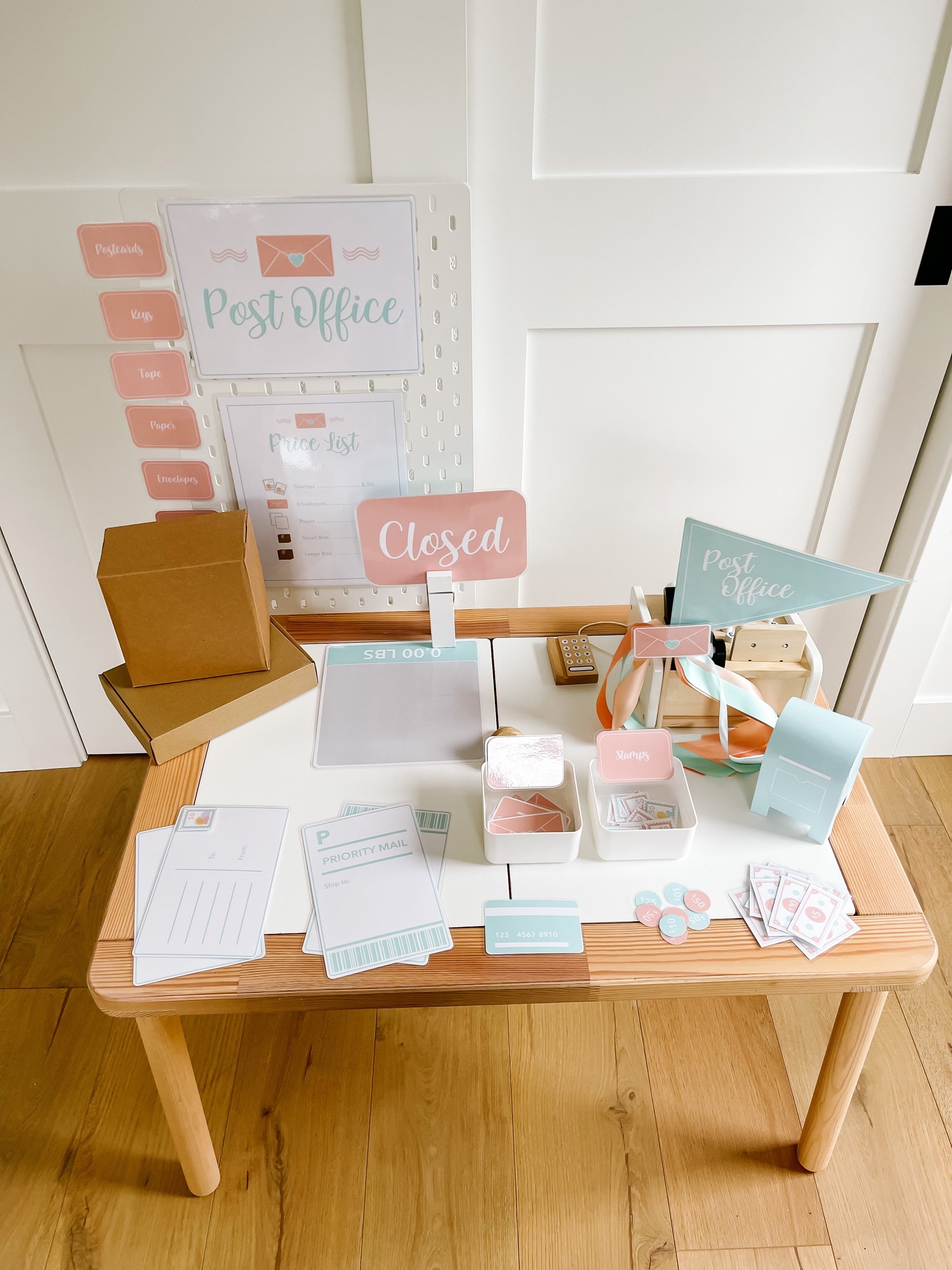
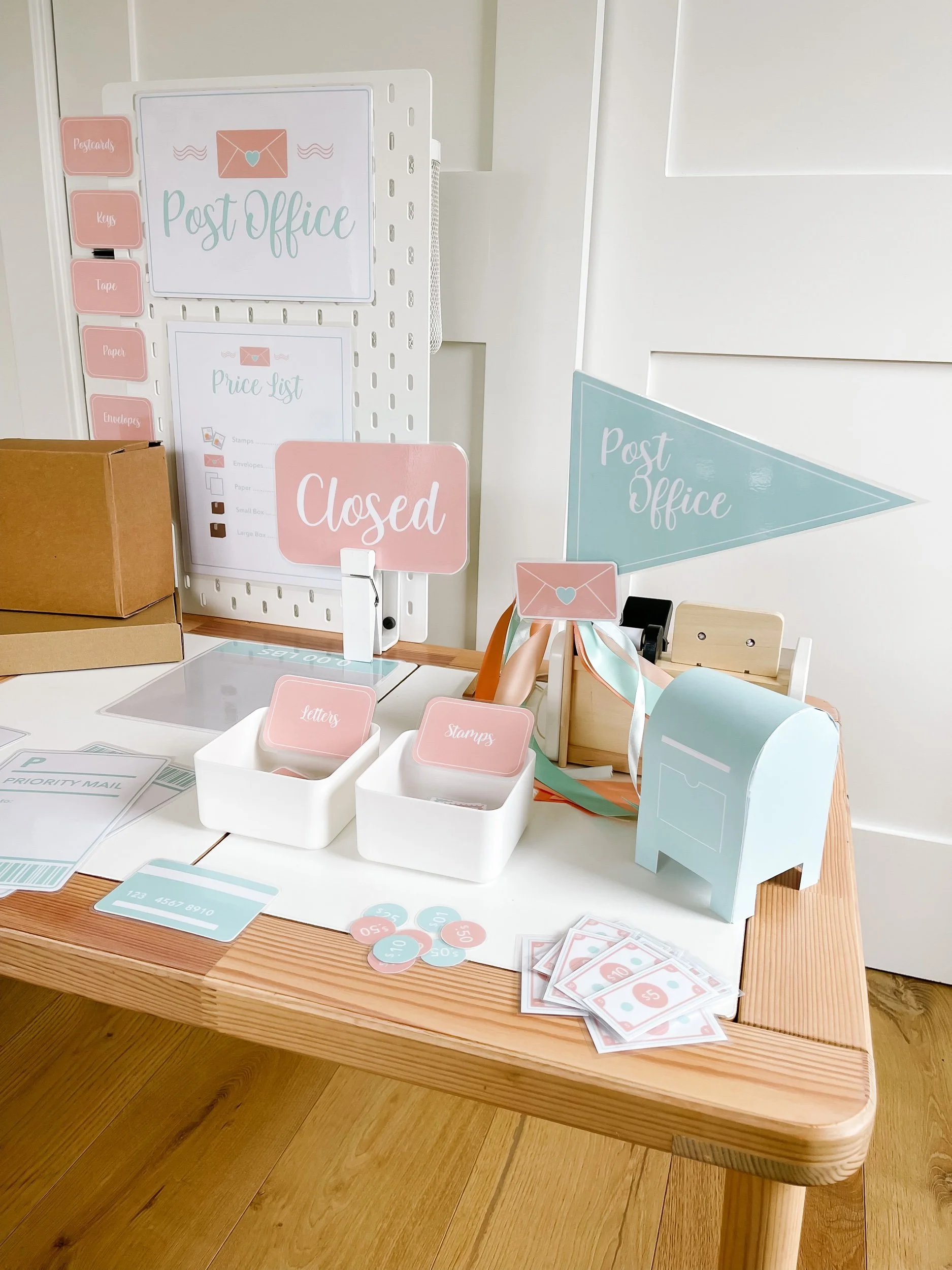
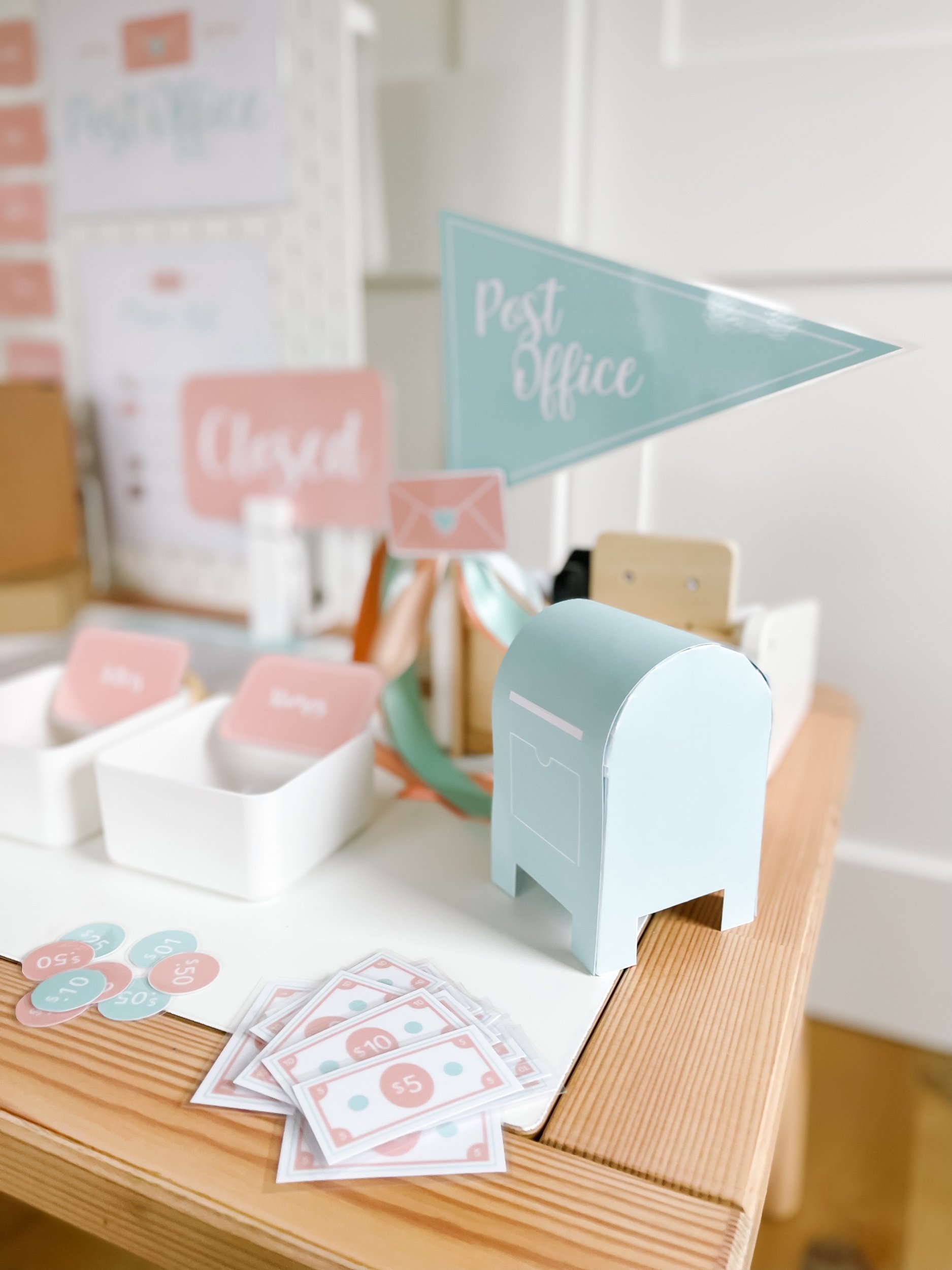
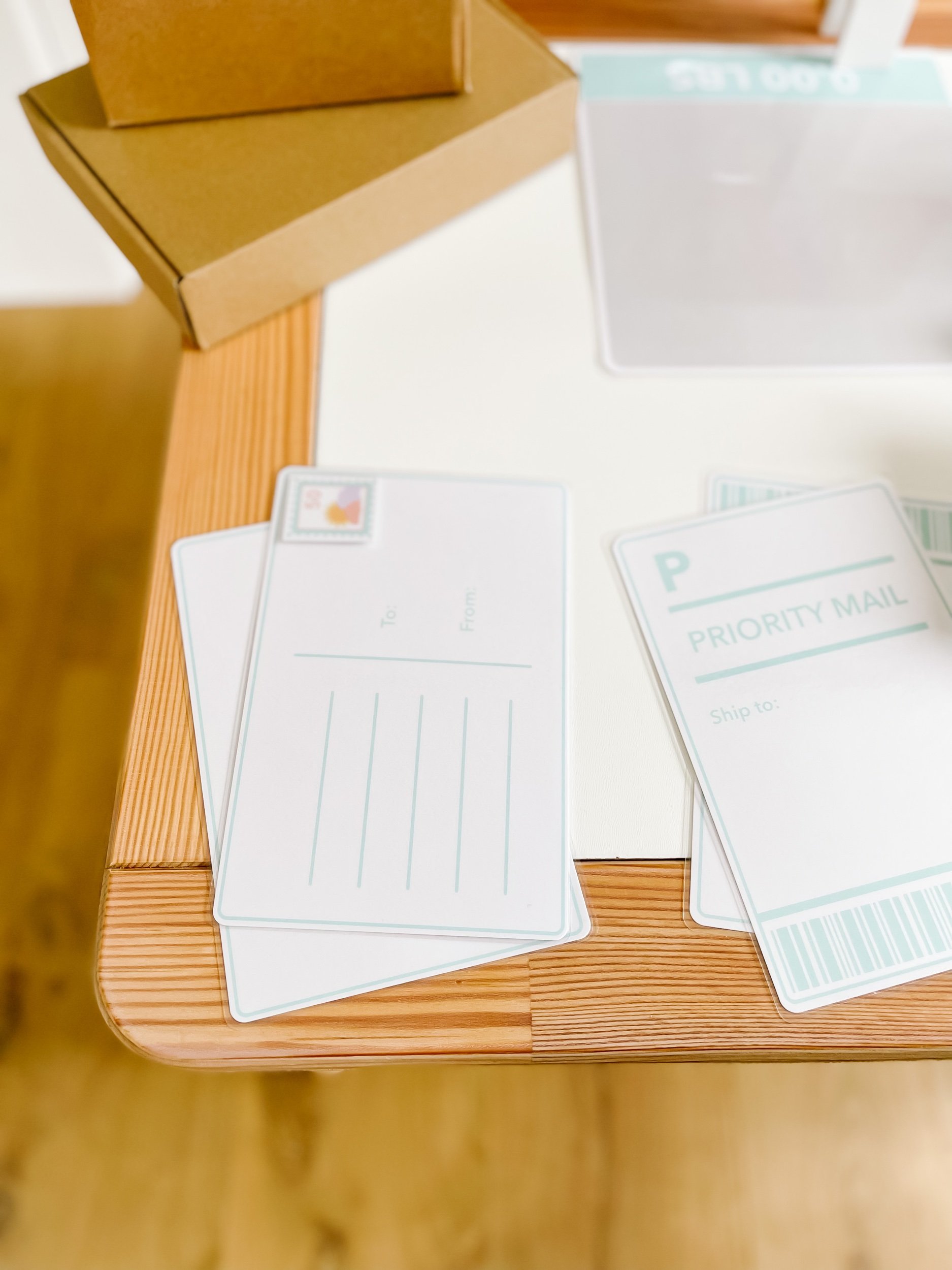
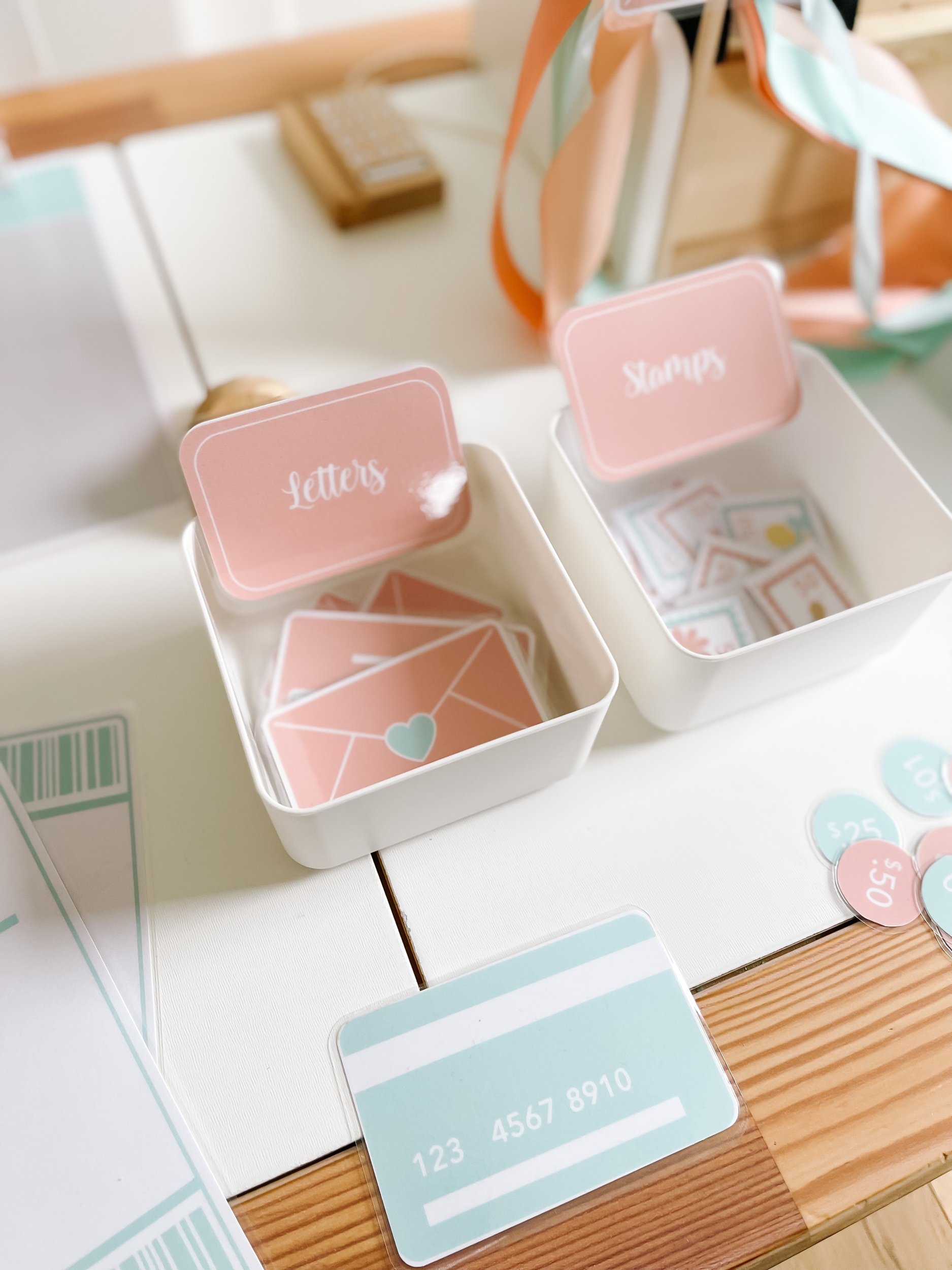
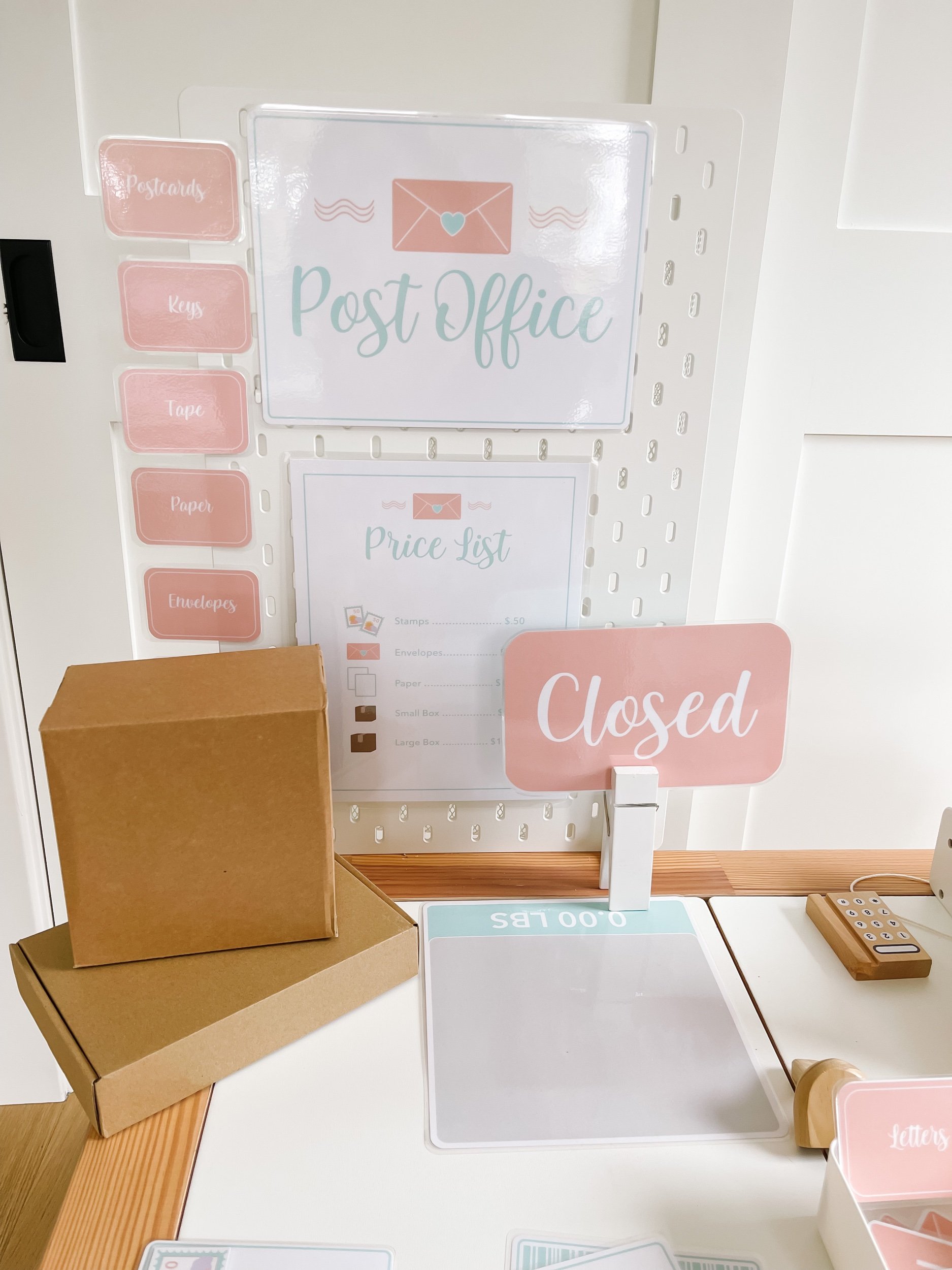
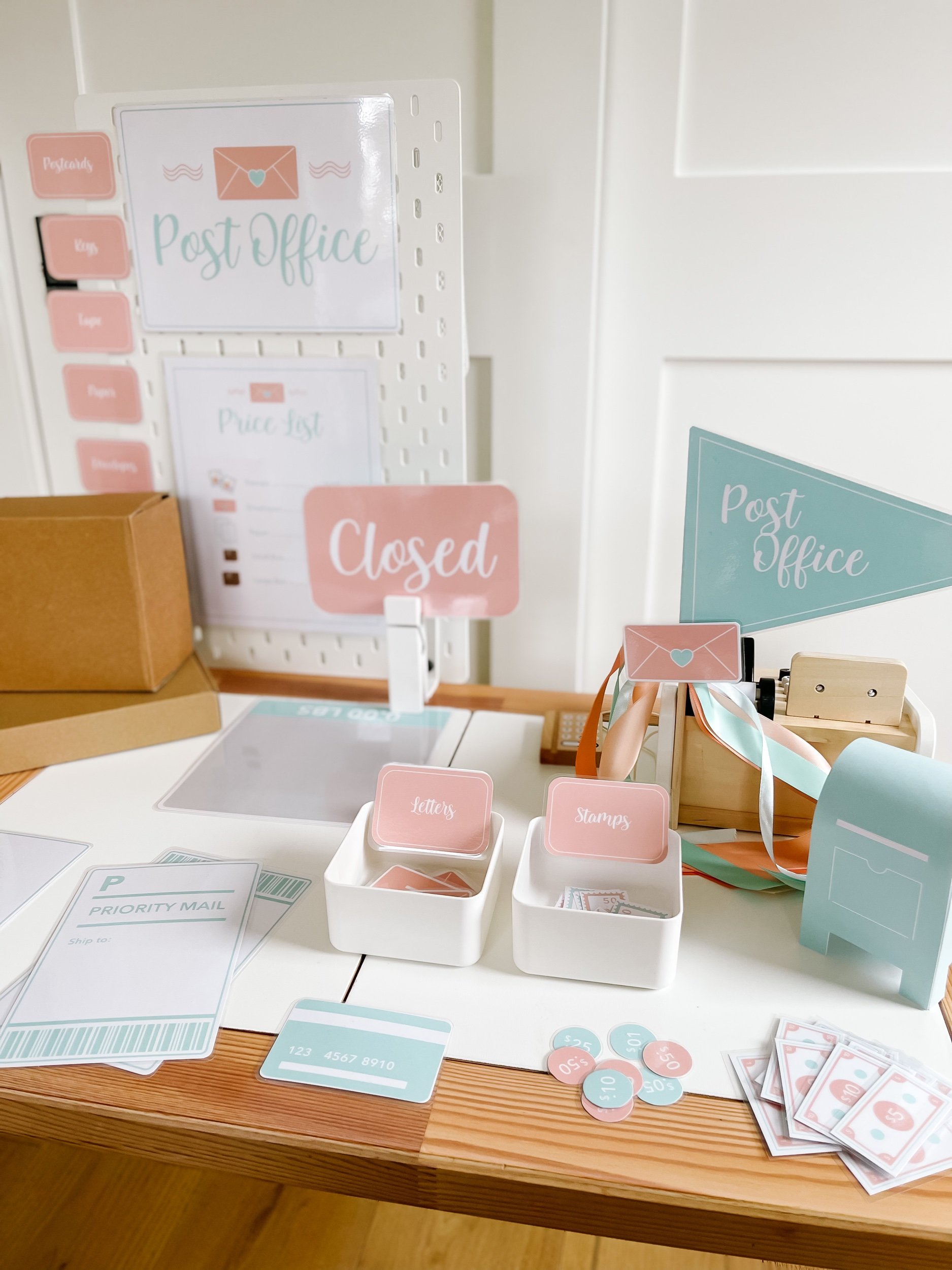
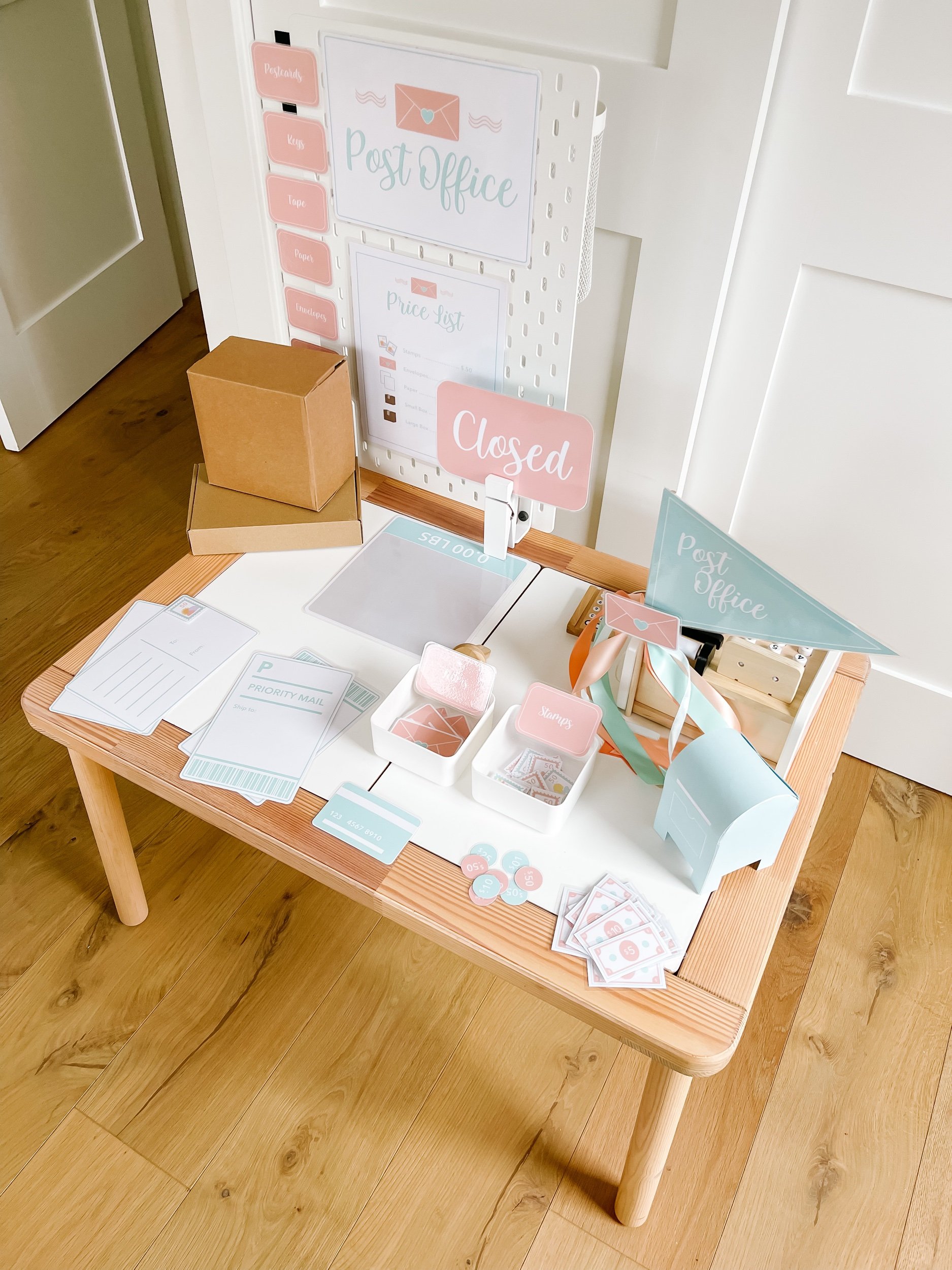
Our post office dramatic and sensory play setup proved to be a hit with Sofie, offering an enriching and enjoyable activity. As she engaged in weighing and measuring boxes, packing foam balls, and stamping and mailing letters, Sofie's imagination soared, and her sensory skills were sharpened. Most importantly, this activity provided a platform for us to bond and learn together. So, if you're looking for a fun and educational activity for your preschooler, consider setting up your own post office dramatic and sensory play. The benefits are endless, and the memories created are priceless!
Including in the printable kit
Sign
Flag
Stamps
Price List
Open/Closed Sign
Labels
Print & Fold Mailcan
Letters & Envelopes
Scale
Postcard
Shipping Labels
Coins & Credit Card
Teaching your toddler letter sounds shouldn’t feel overwhelming… but for many parents, it does.
If you’ve ever sat down to teach the alphabet and thought:
“Why does letter A make so many sounds?”
“What do I actually teach first?”
“Am I doing this right?”
You’re not alone — and that’s exactly why I created a super simple Phonics Cheat Sheet that breaks everything down in a clear, visual way.
Before you dive in, grab the FREE printable phonics cheat sheet below — it’s the perfect quick-reference guide for teaching letter sounds the stress-free way.
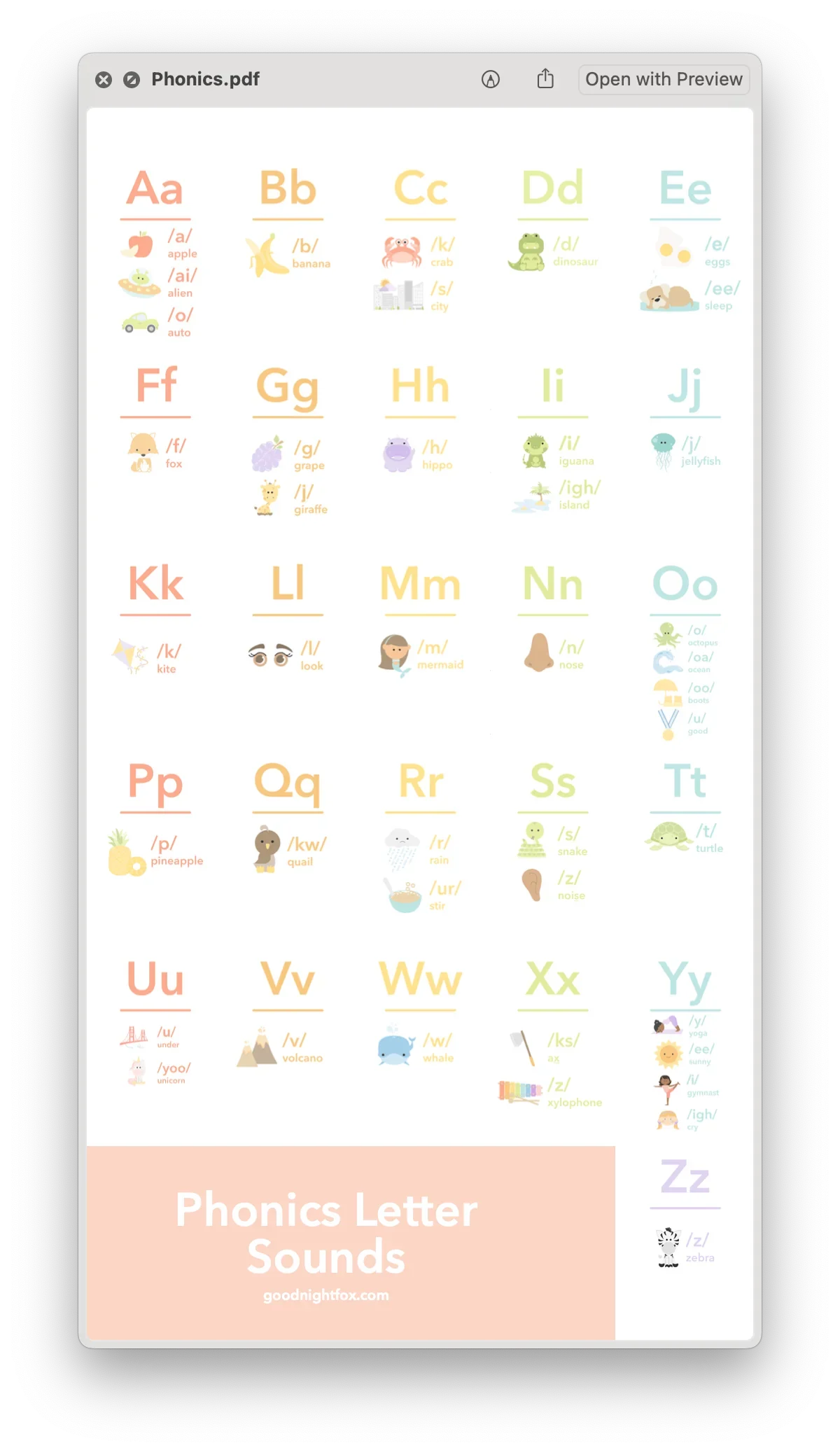
Phonics is the foundation of early reading. When toddlers learn letter sounds, they’re building:
Early decoding skills
Sound awareness (phonemic awareness)
Confidence with letters
The ability to blend sounds later
This is one of the biggest predictors of future reading success — and starting early (in a playful, low-pressure way!) makes all the difference.
Letters don’t just make one sound.
For example:
A → /a/ /ā/ /ah/
C → /k/ /s/
G → /g/ /j/
It’s no wonder parents feel unsure about teaching phonics at home.
That’s why I designed the Phonics Cheat Sheet — it lists every common letter sound in a toddler-friendly format that matches how you’ll teach them in preschool and kindergarten.
💡 Pro Tip: Keep the cheat sheet on your fridge or in your homeschool binder for quick reference during activities.
1. Start with the most common sound
Each letter has multiple sounds, but toddlers should begin with the one they’ll use most often. The free cheat sheet highlights these clearly.
2. Use real objects and sensory play
Examples:
Hide objects that begin with /b/ in a sensory bin
Make letter-sound “scooping” stations
Use playdough to form letters while saying the sound
3. Keep practice short and playful
Think: 3–5 minutes of focused phonics paired with hands-on fun.
4. Repeat sounds often and casually
Point out letter sounds while cooking, driving, reading — the more repeated exposure, the better.
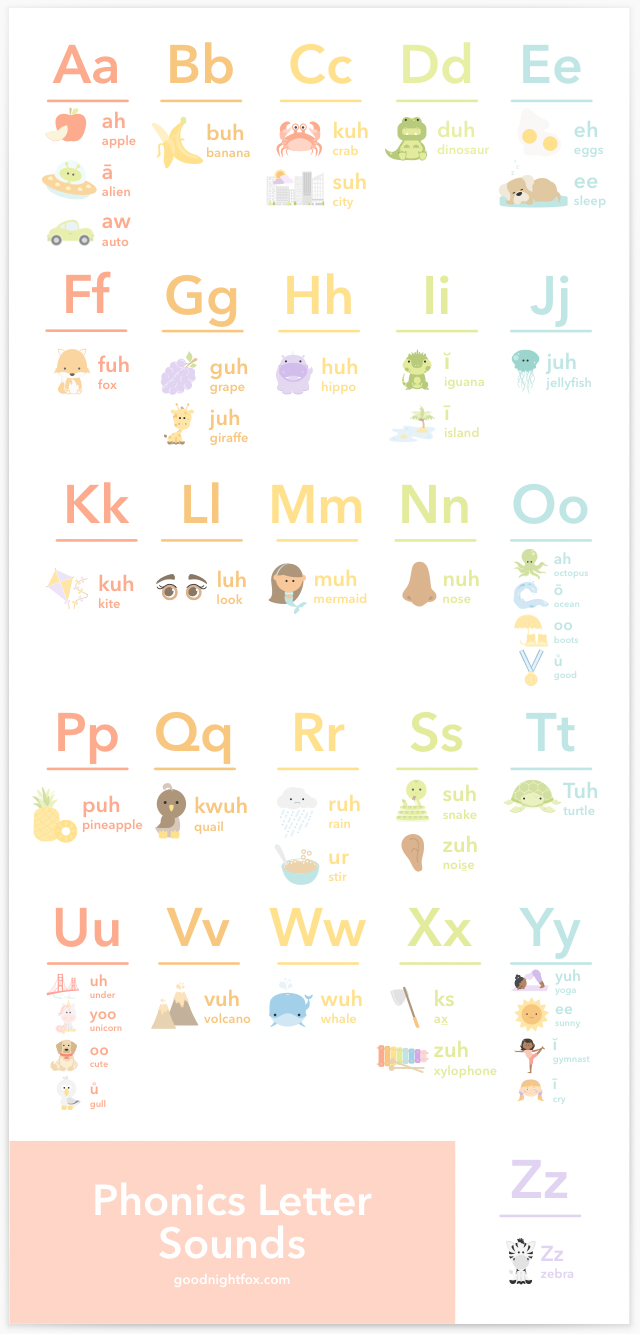
This printable includes:
The most common sound for every letter
Secondary sounds parents often forget
A toddler-friendly layout that builds confidence
Beautiful pastel illustrations that make learning feel fun
A quick-reference tool you can use with ANY activity
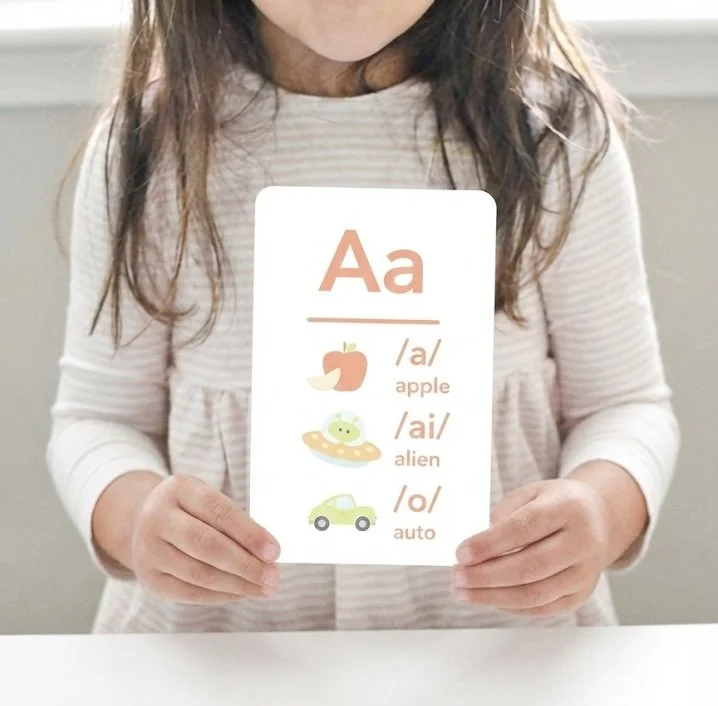
If your toddler loves hands-on learning, my Letter Sounds Flashcards are the perfect companion to the cheat sheet. They help toddlers:
Practice sounds through play
Match objects to beginning sounds
Build fine motor skills through sorting, matching, and sensory play
Gain confidence before preschool or kindergarten
Parents tell me all the time how these cards completely transformed their reading routine — making it something their child asks to do.
✨ After downloading the cheat sheet, keep an eye on your inbox.
I’ll send you a few playful phonics activities + an exclusive discount on the physical flashcards.
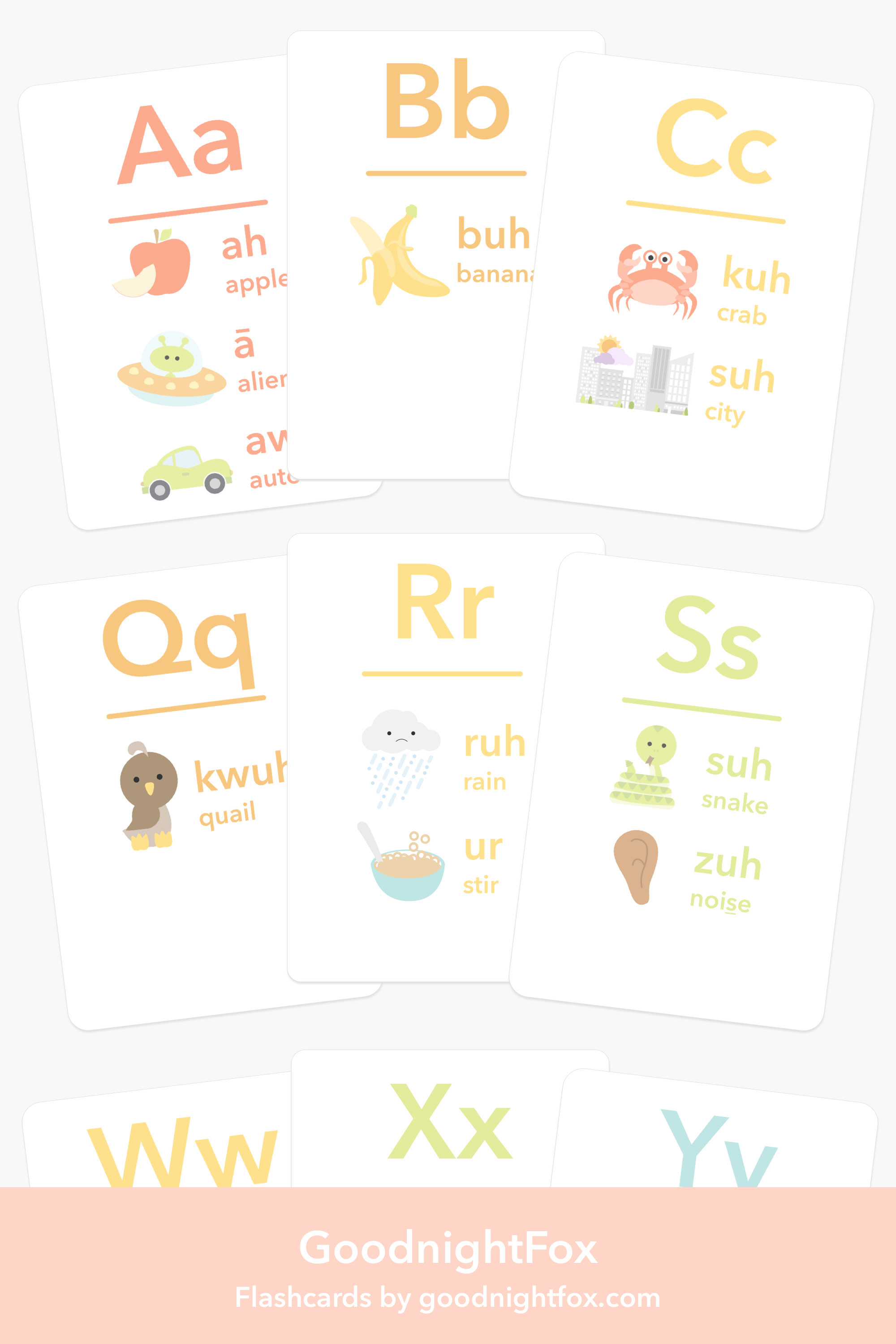


Here are easy, low-prep ideas that work with the cheat sheet and flashcards:
Sensory sound hunt — hide cards or objects that begin with the same sound in a sensory bin
Letter sorting tray — match picture cards to their beginning letter
Sound hop — place letters on the floor and let your toddler hop to the sound you call
Mini sound stations — set up 3 baskets labeled with letters and let your toddler sort objects
These are the kinds of activities that make learning feel like PLAY — and get those little neurons firing.
Download your free cheat sheet below and start feeling confident teaching letter sounds — in minutes.

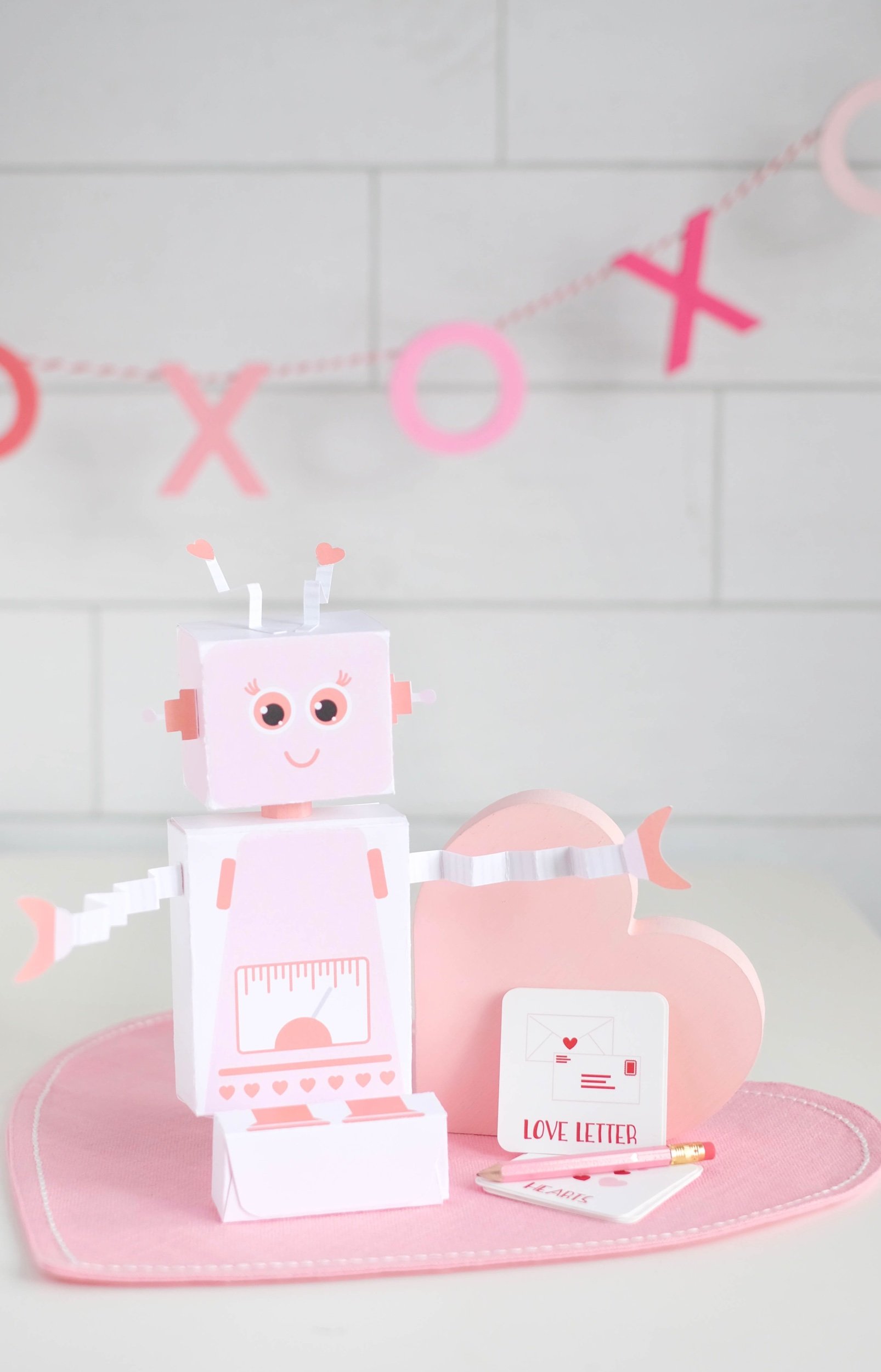
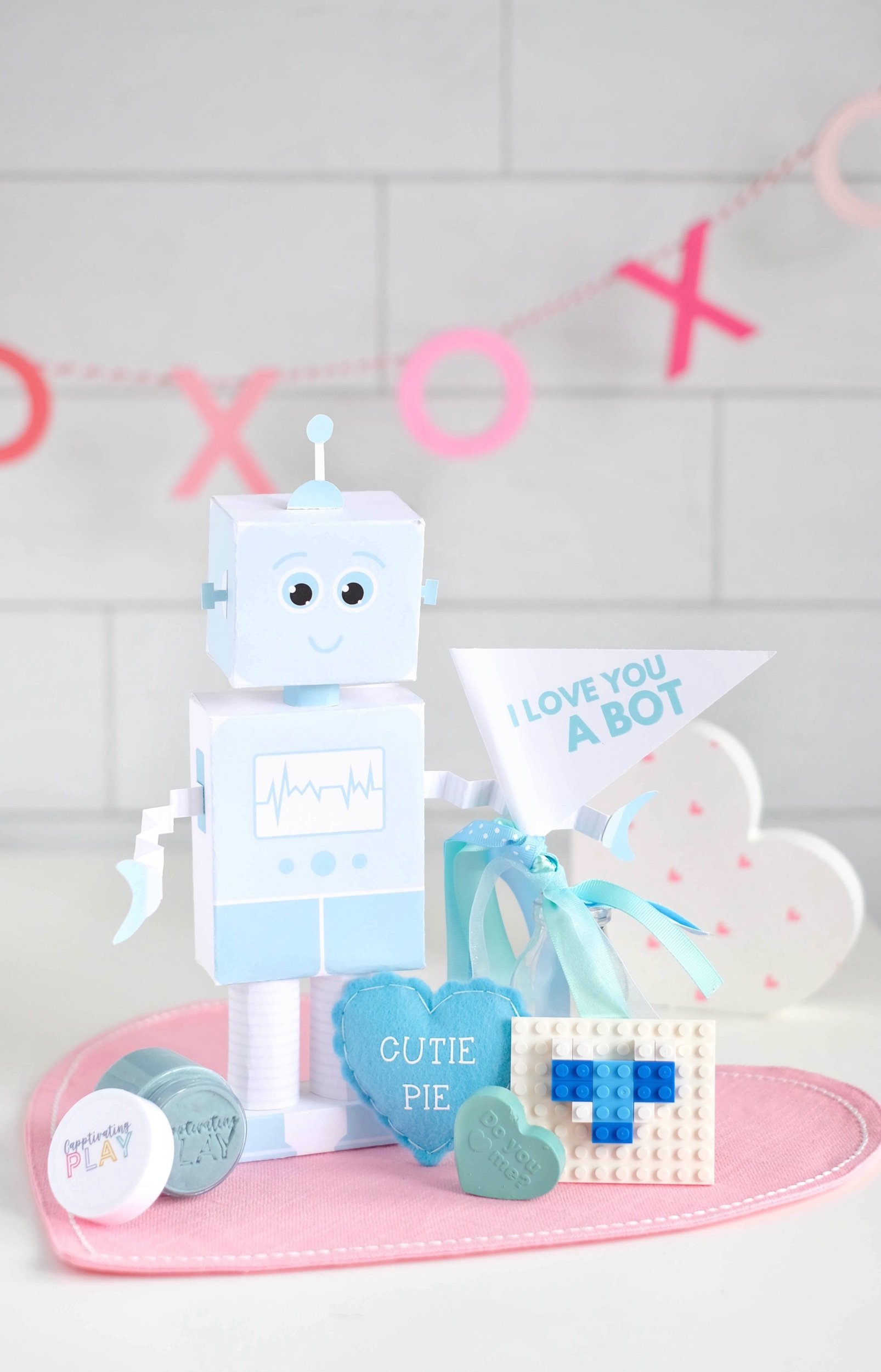
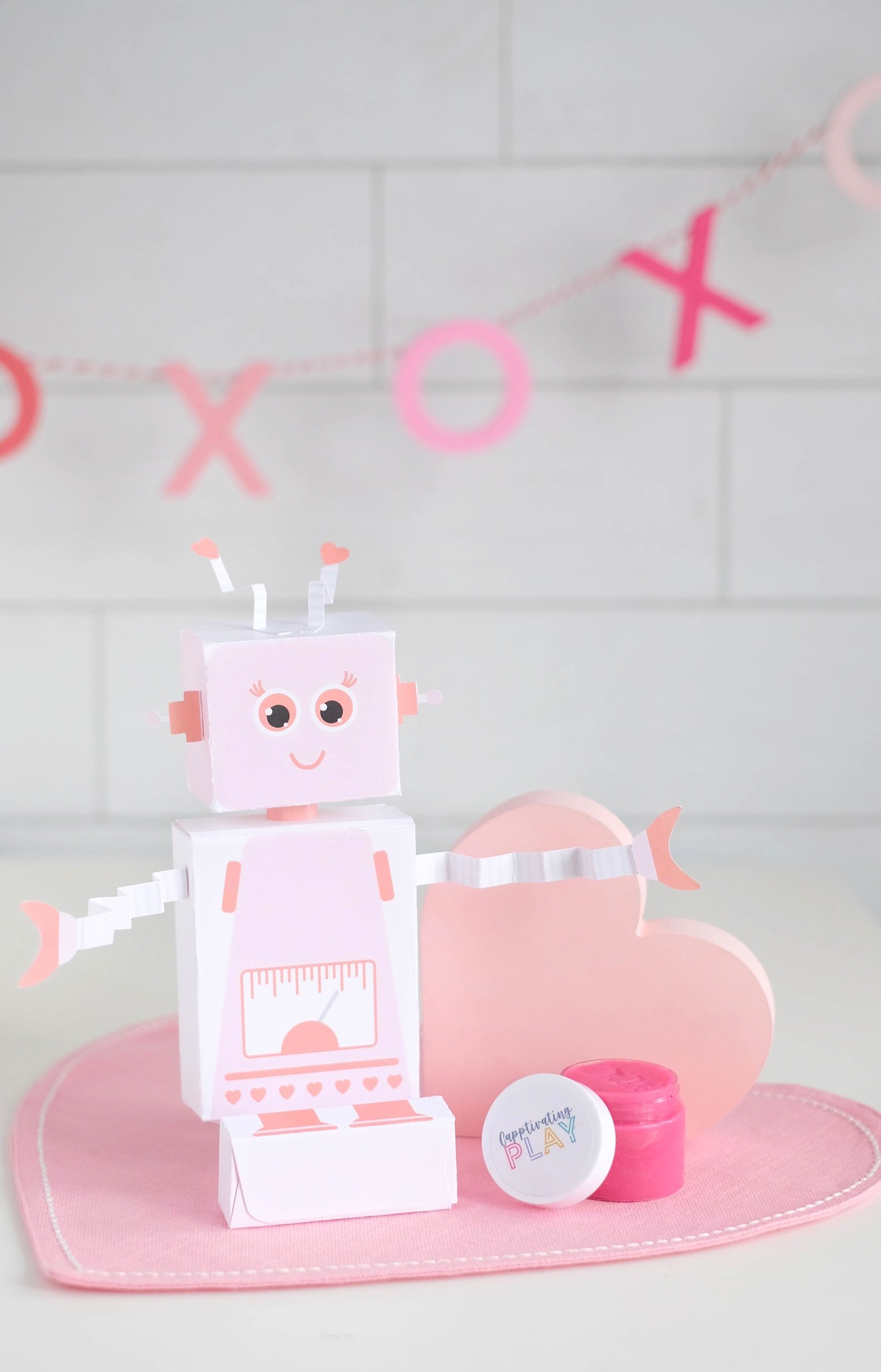
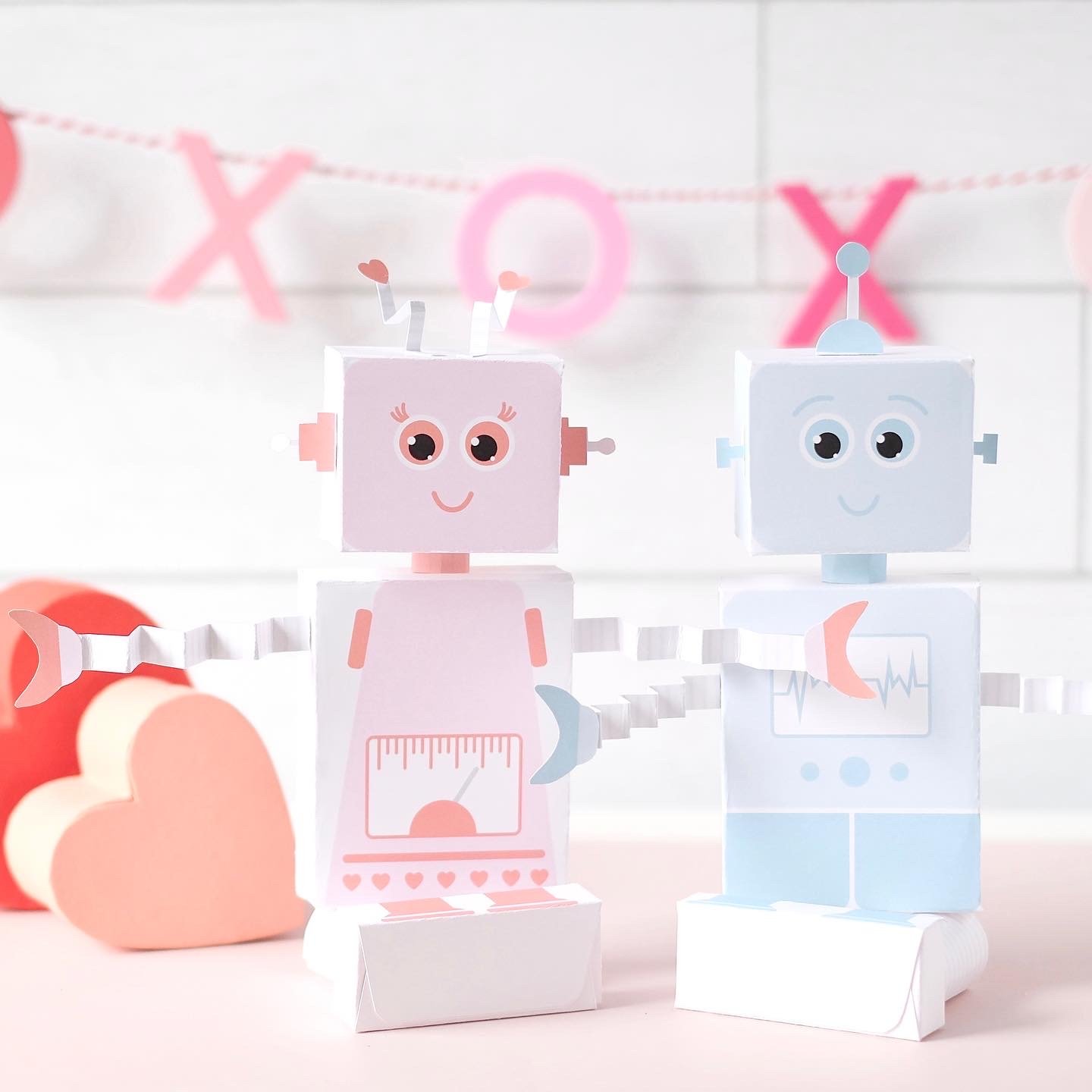
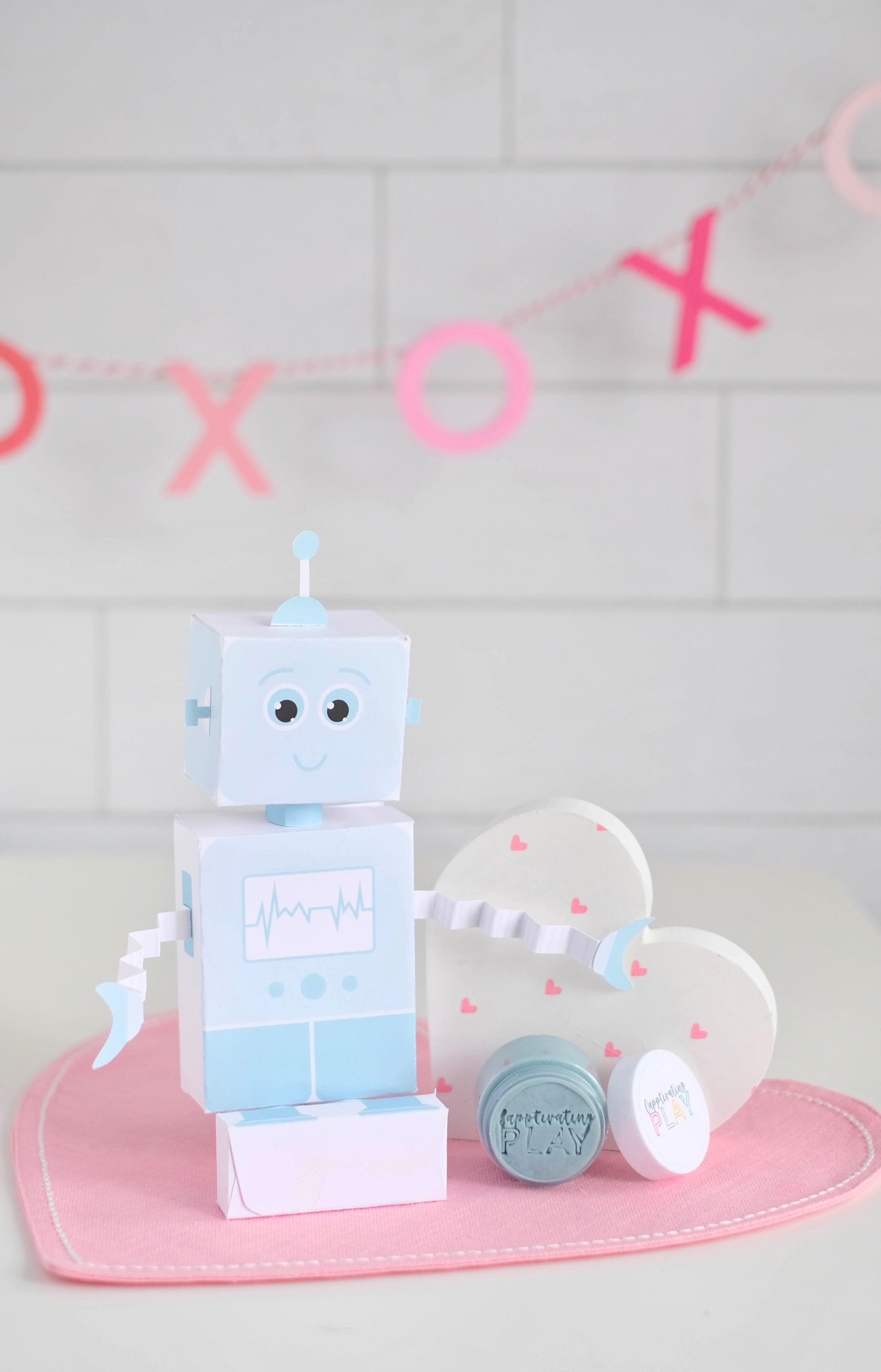
Happy Valentines Season! I’m so excited to be partnering with the lovely @cruiouswren to bring you these adorable Love Bug Valentine Basket Filler kits! Kits include:
Two Love Bug Acrylic Charms
One pink swirl play doh jar

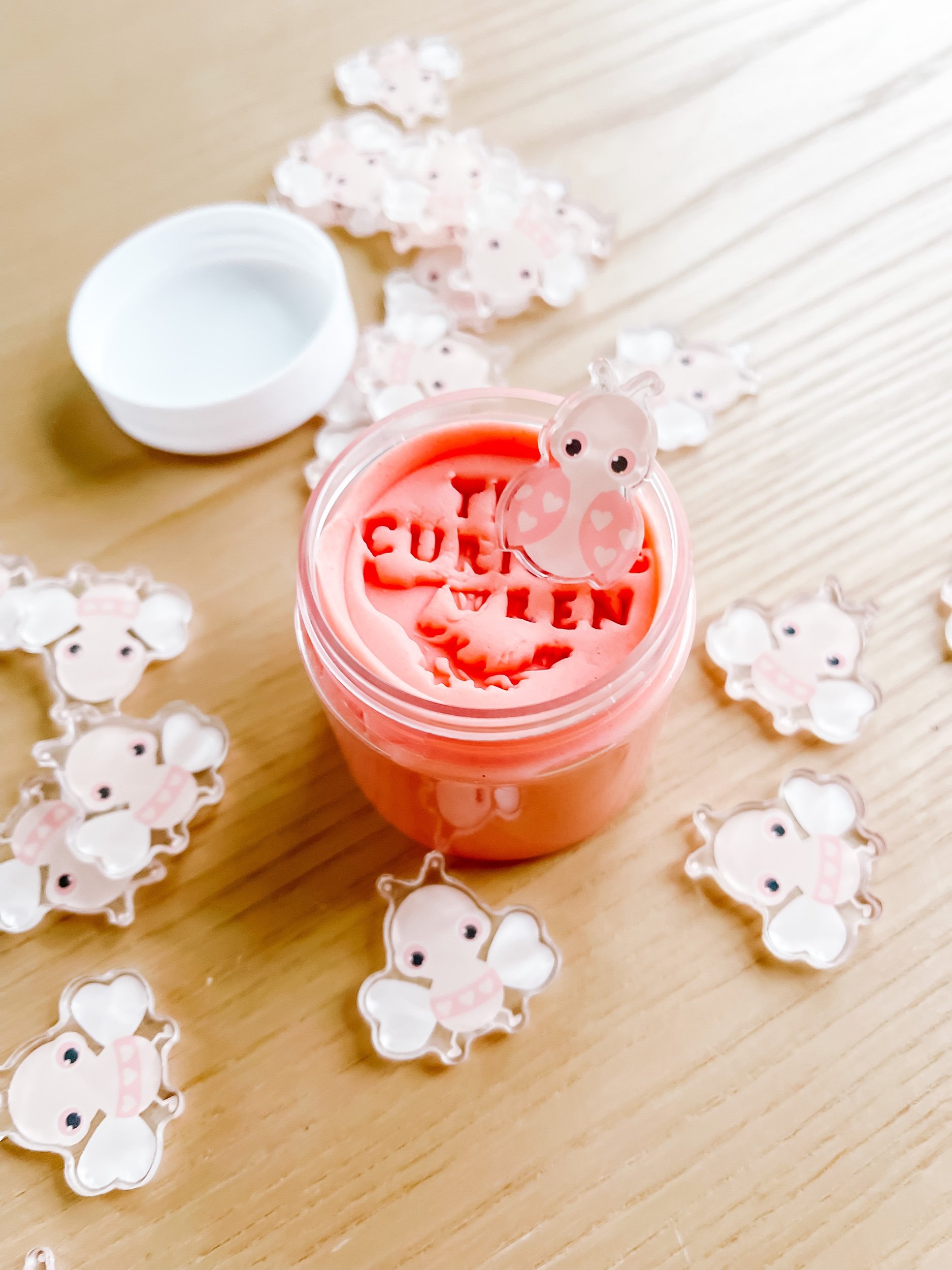

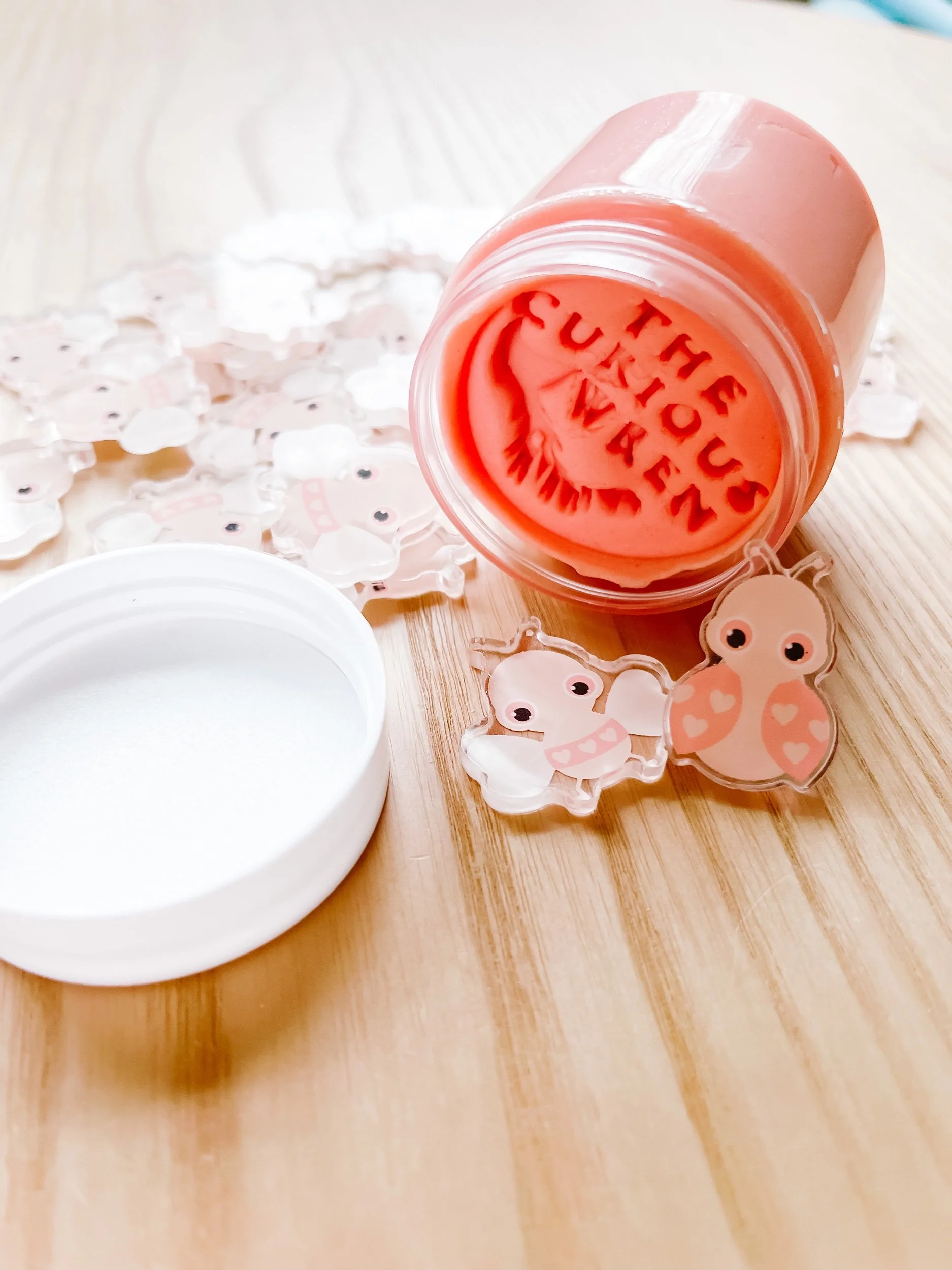


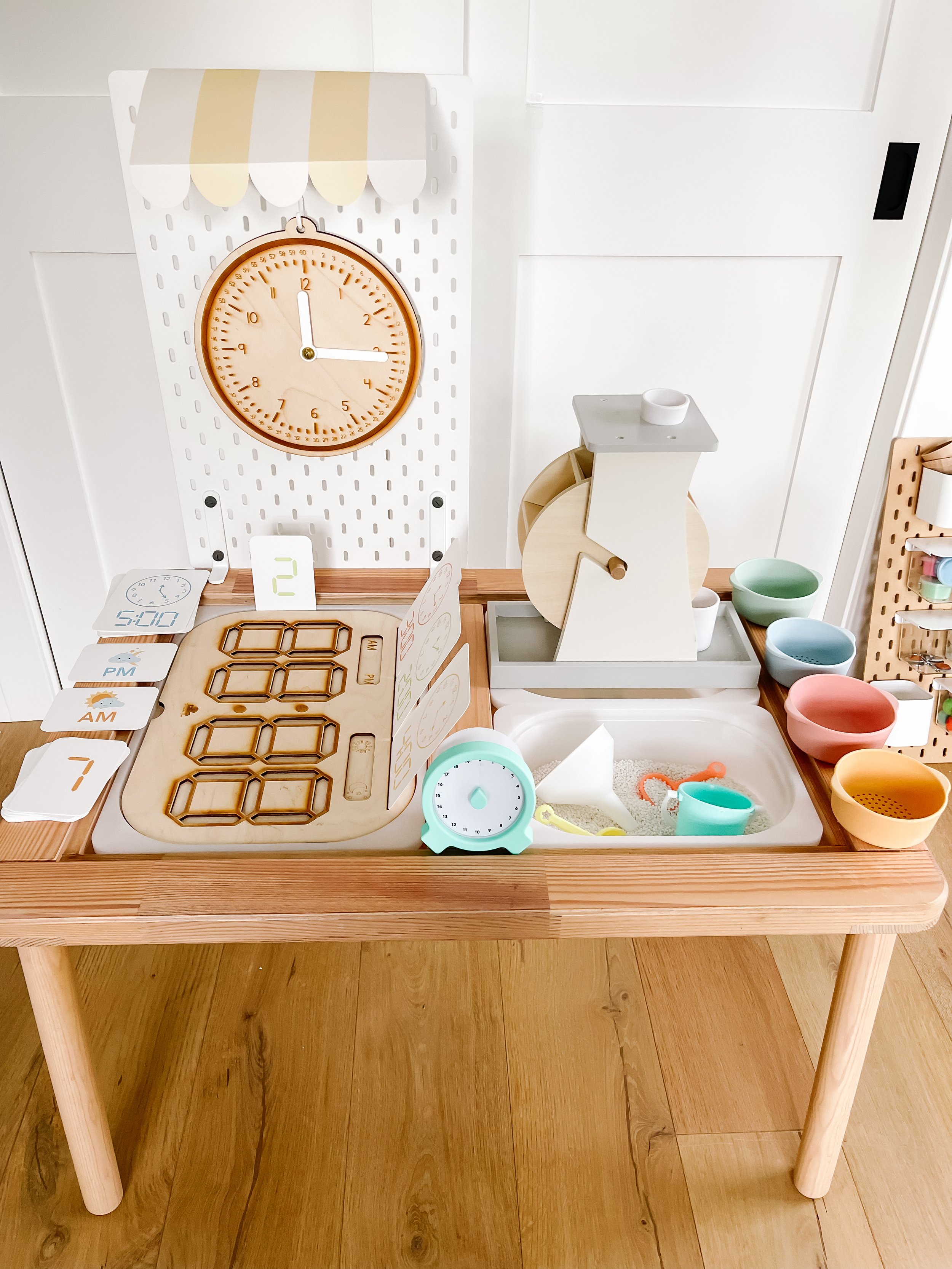
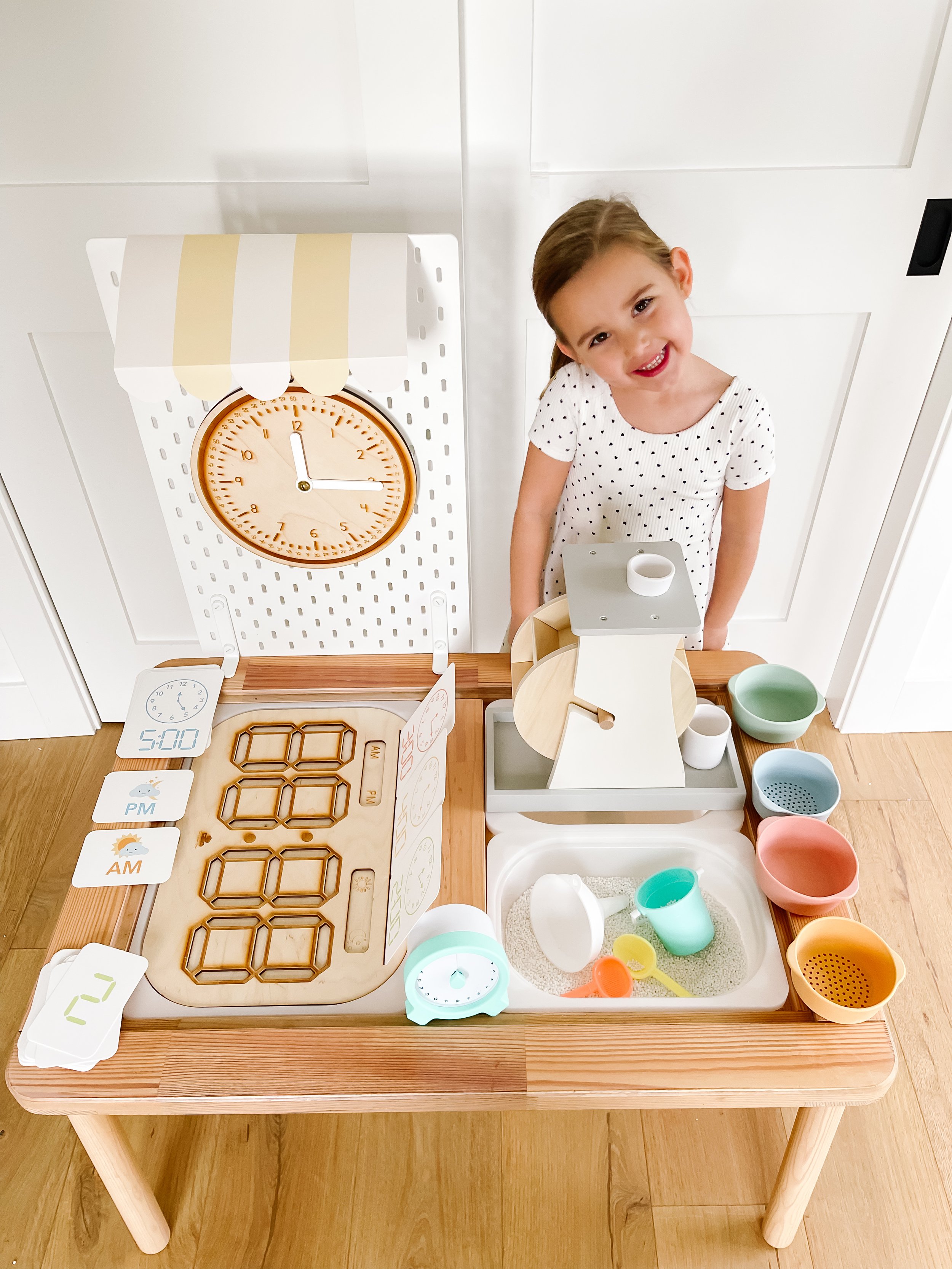
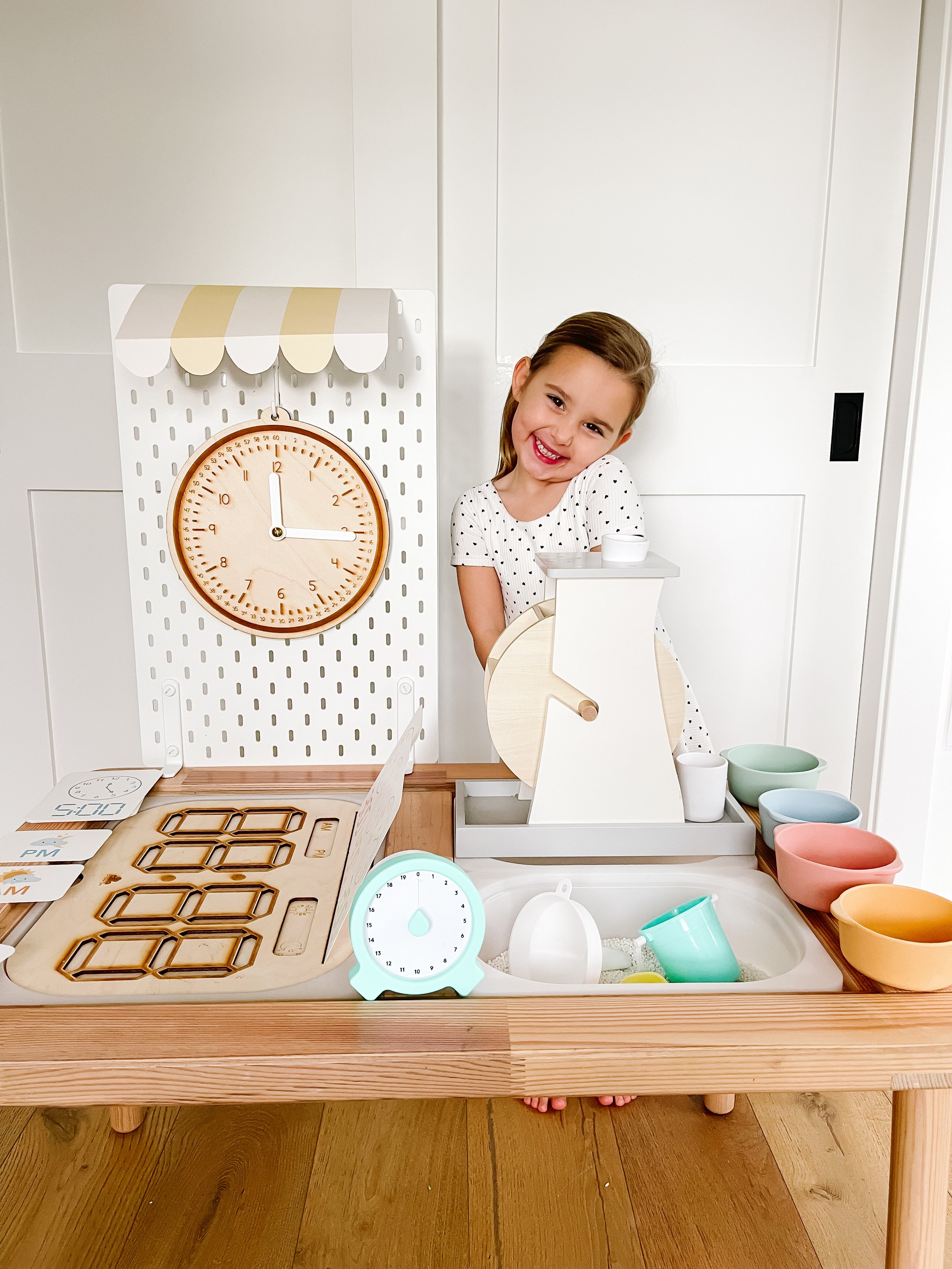
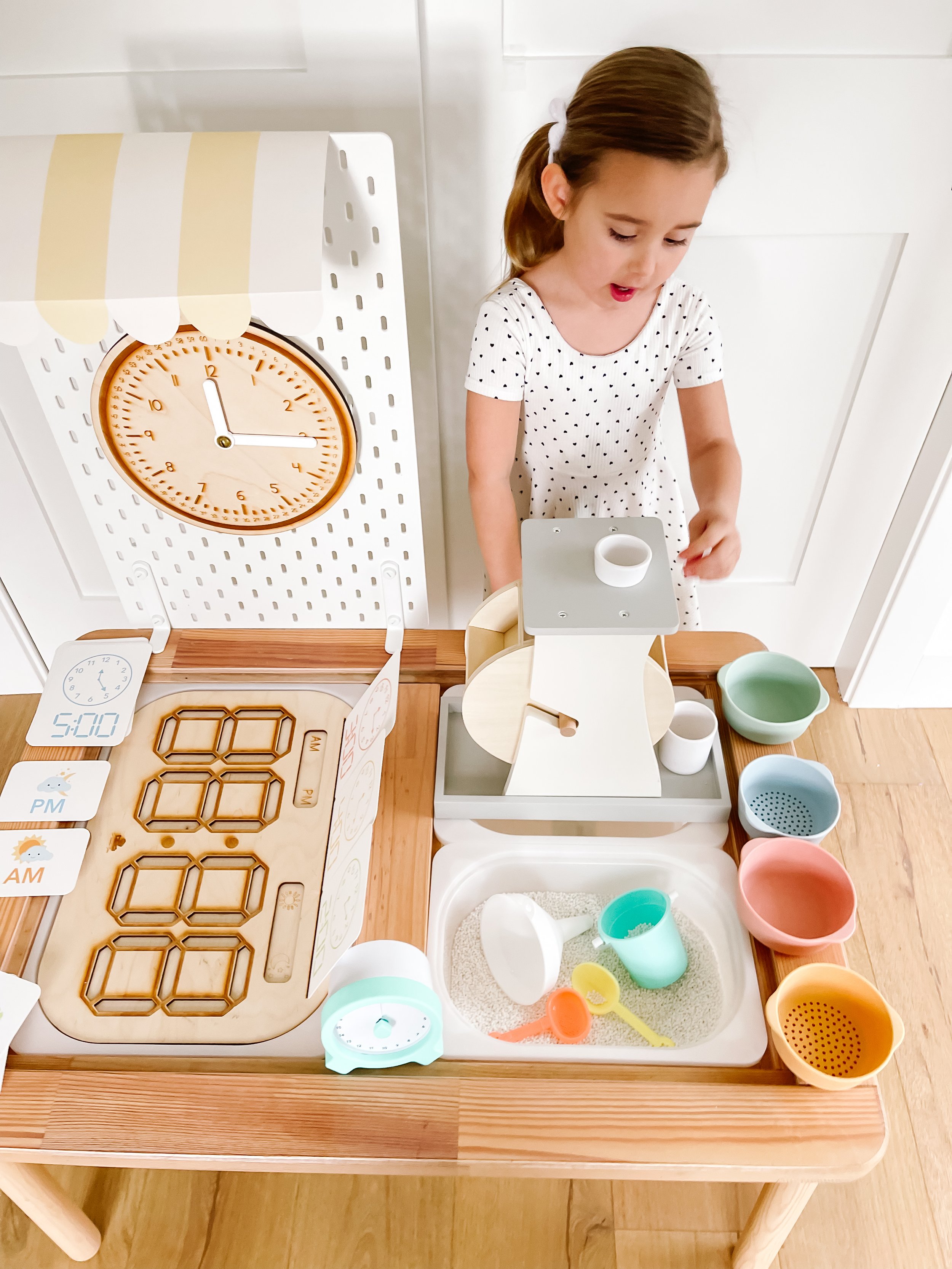
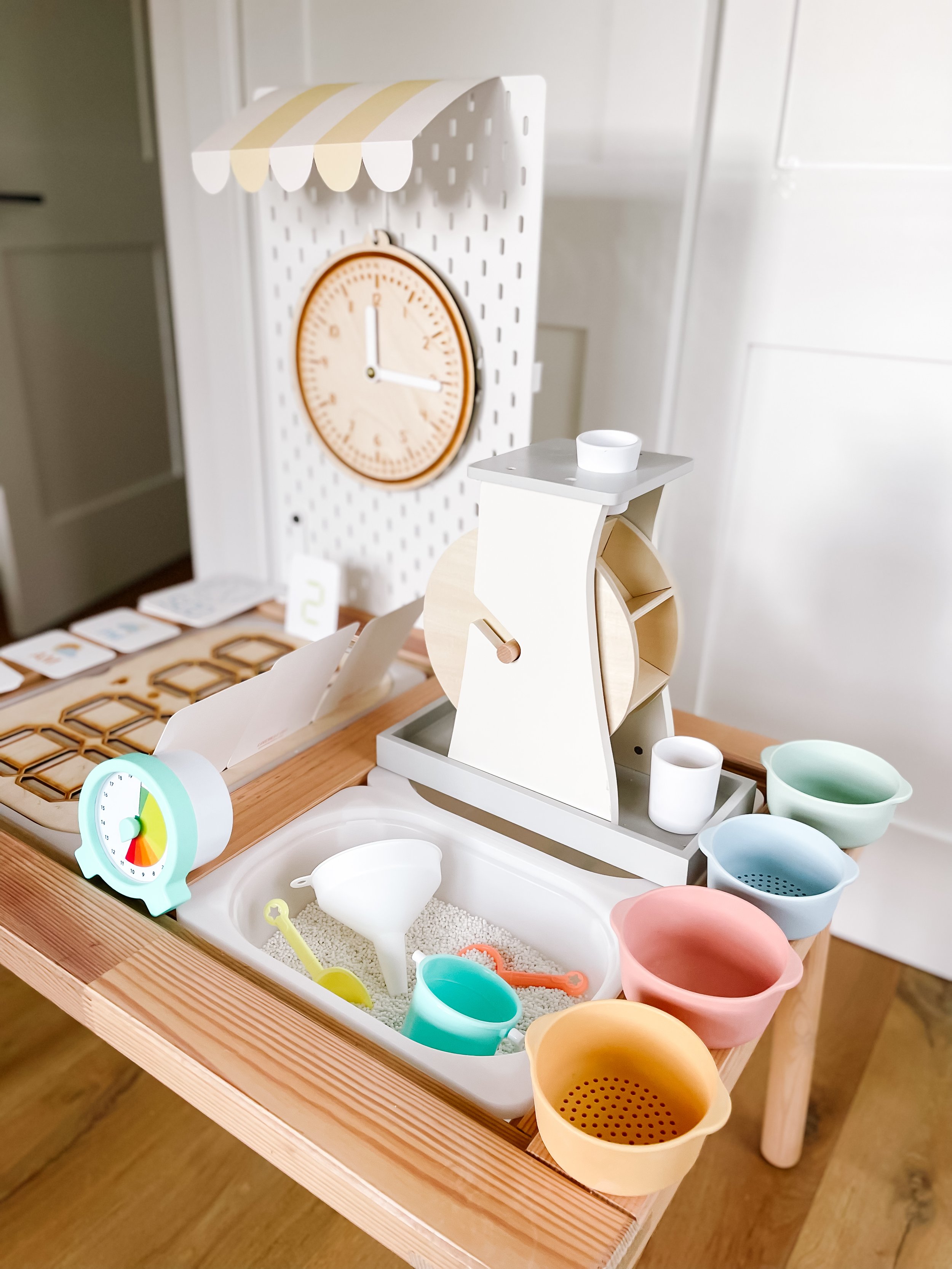
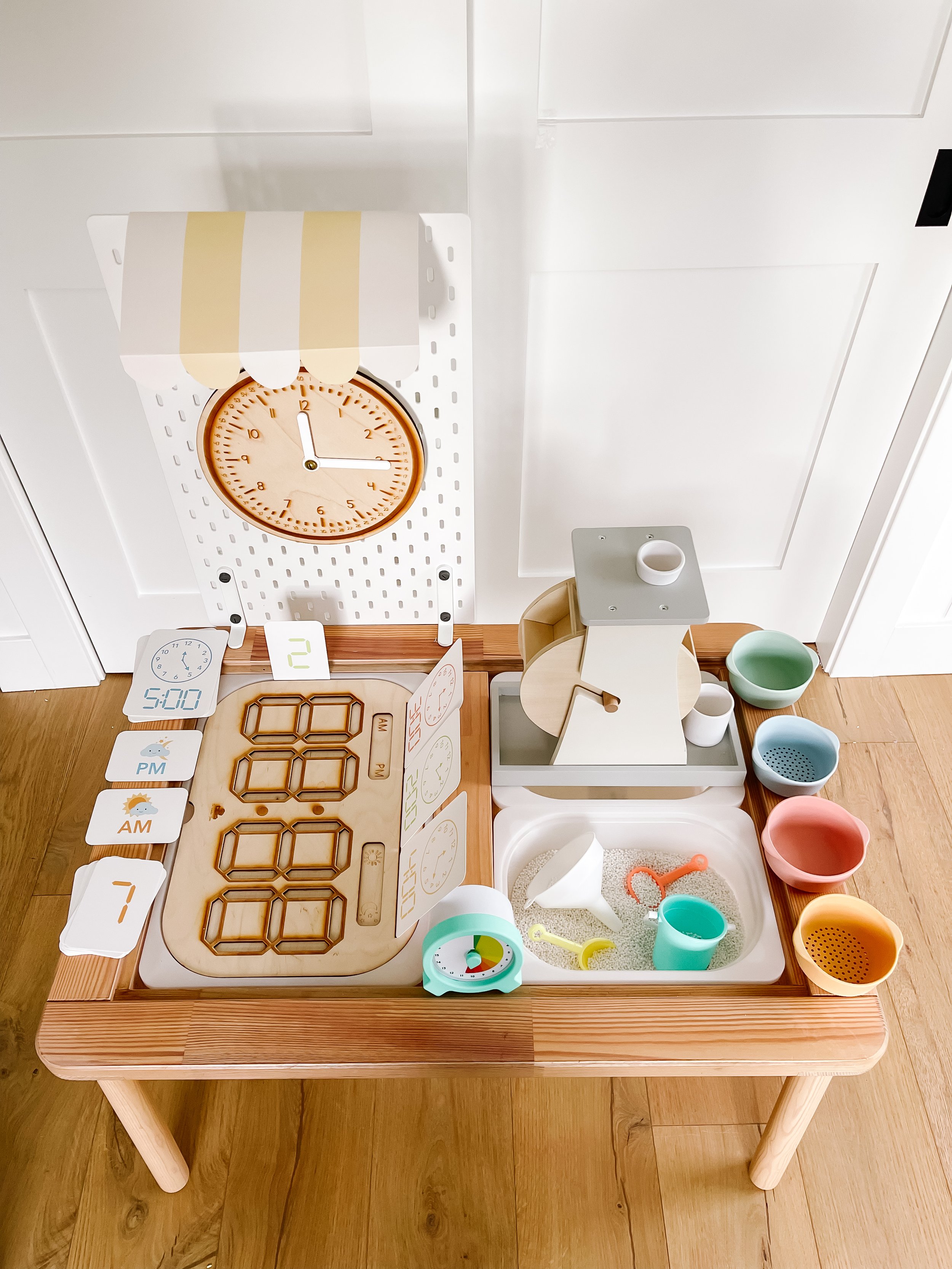
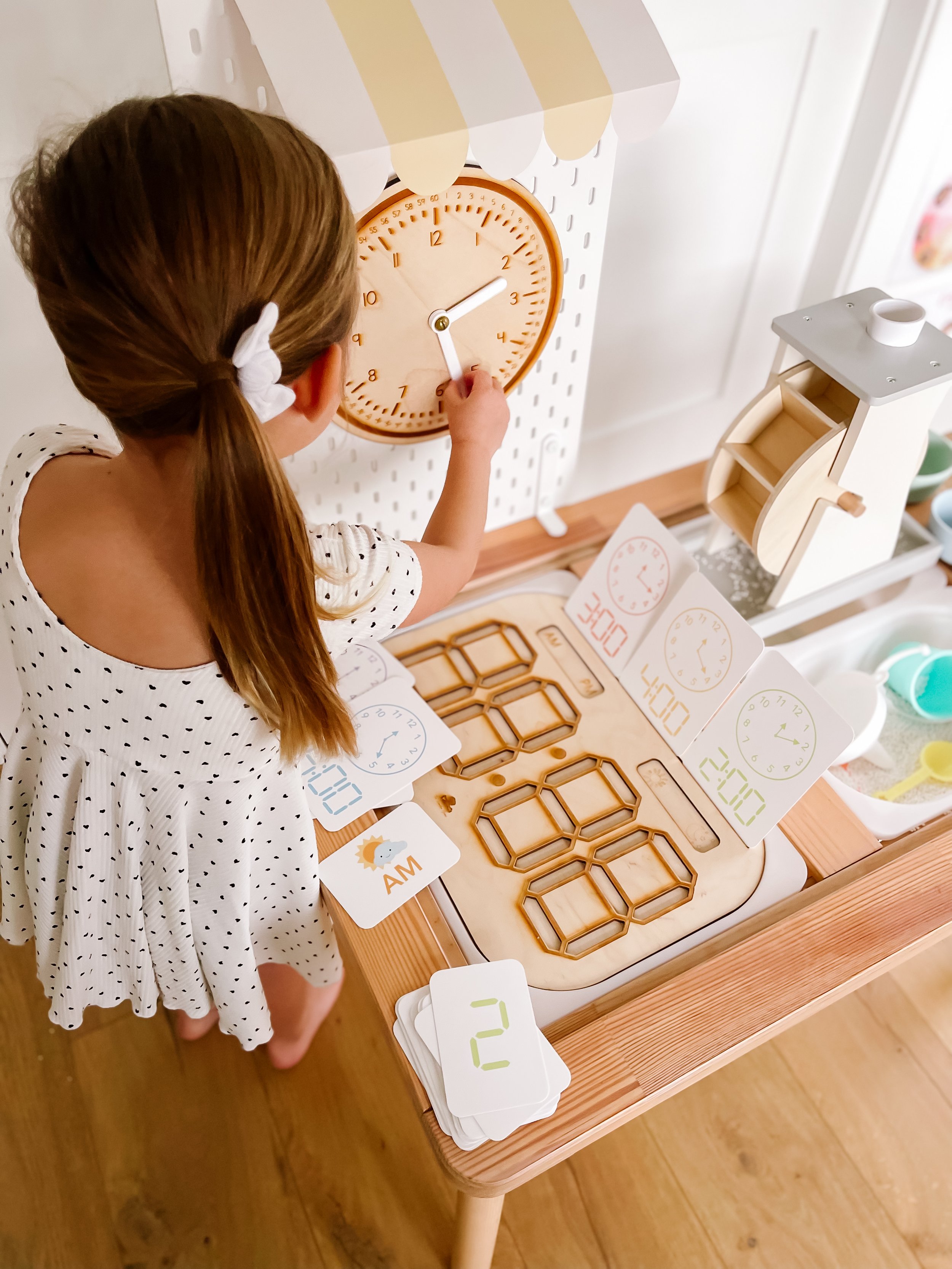
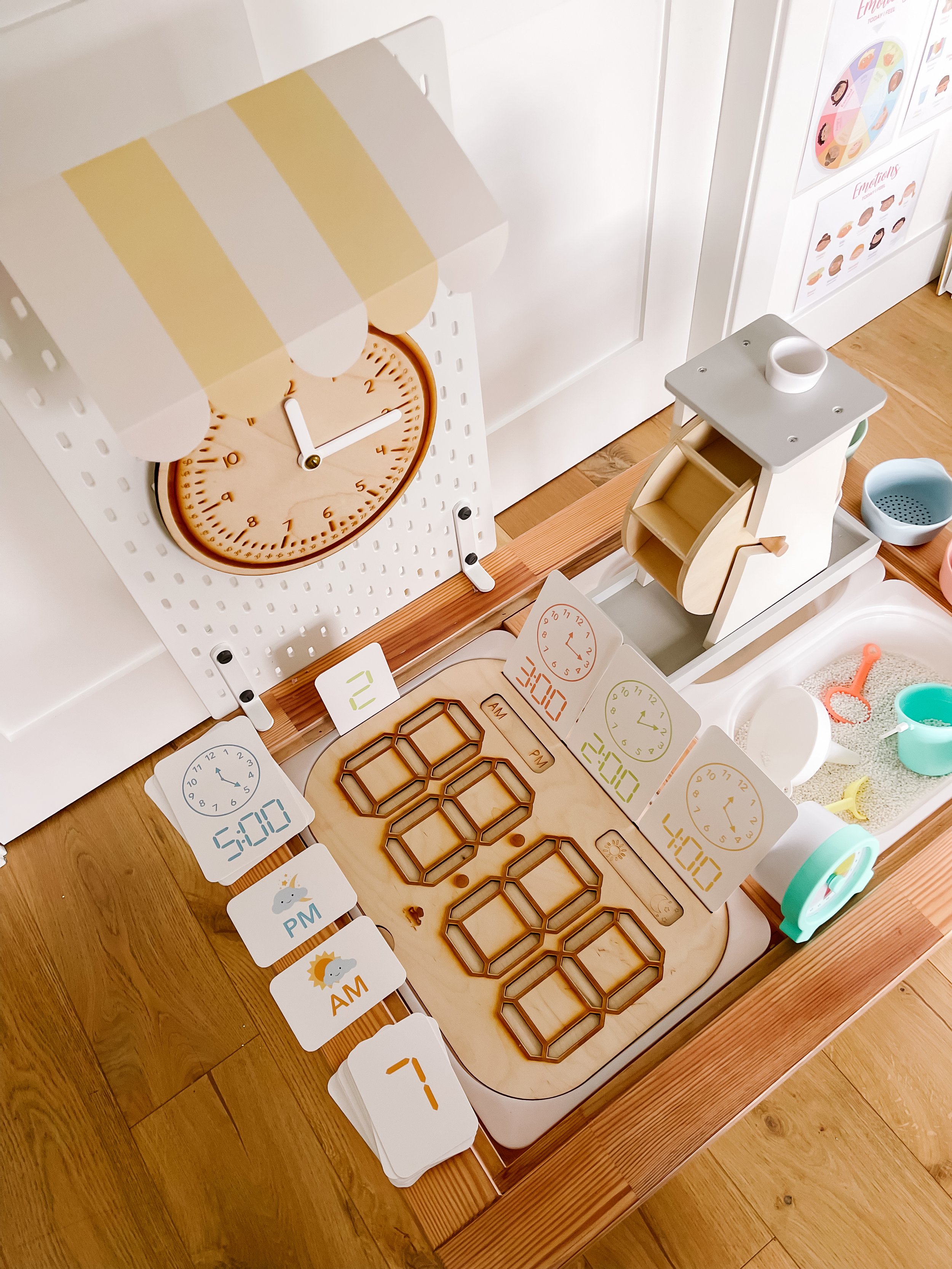
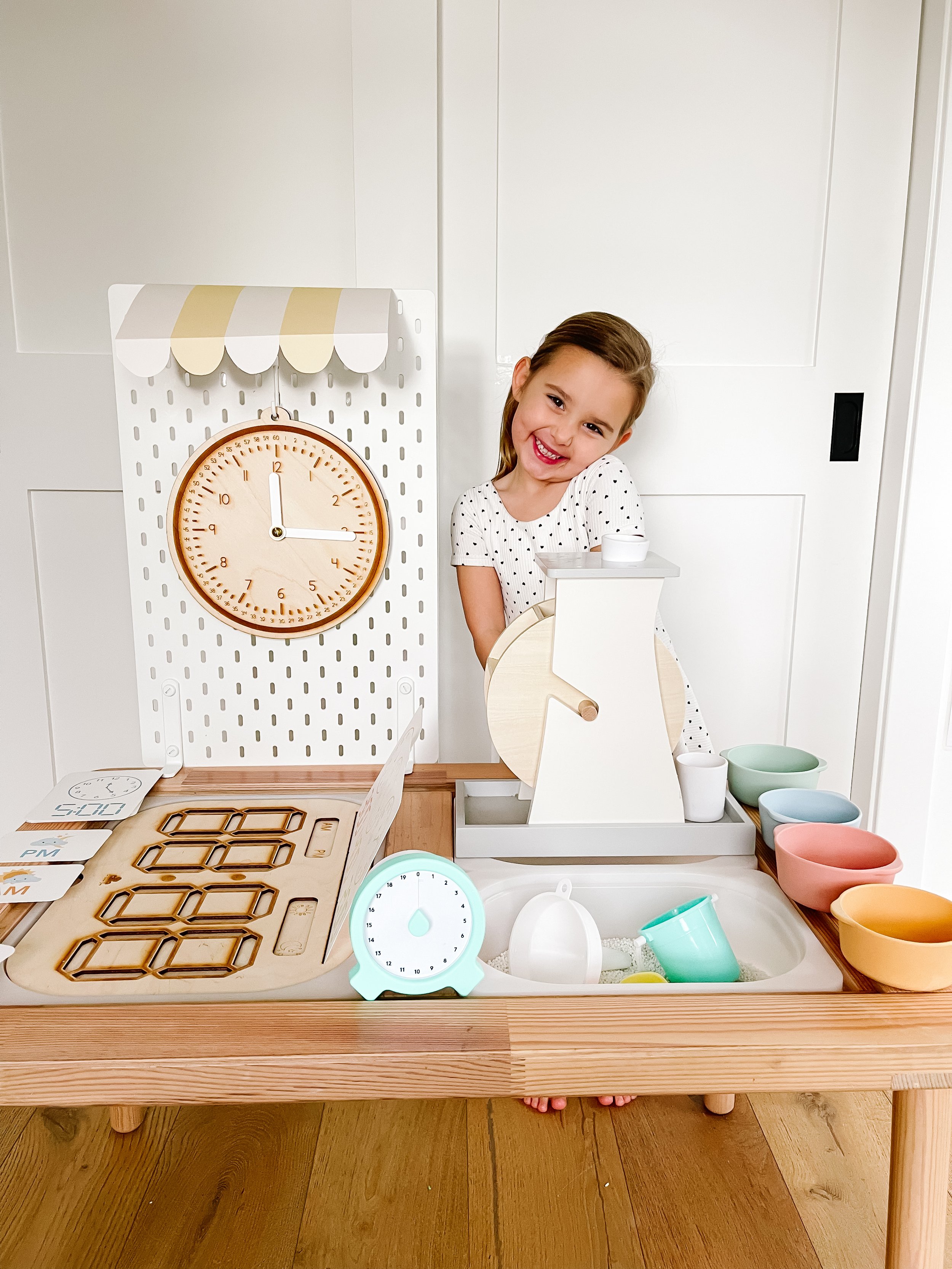
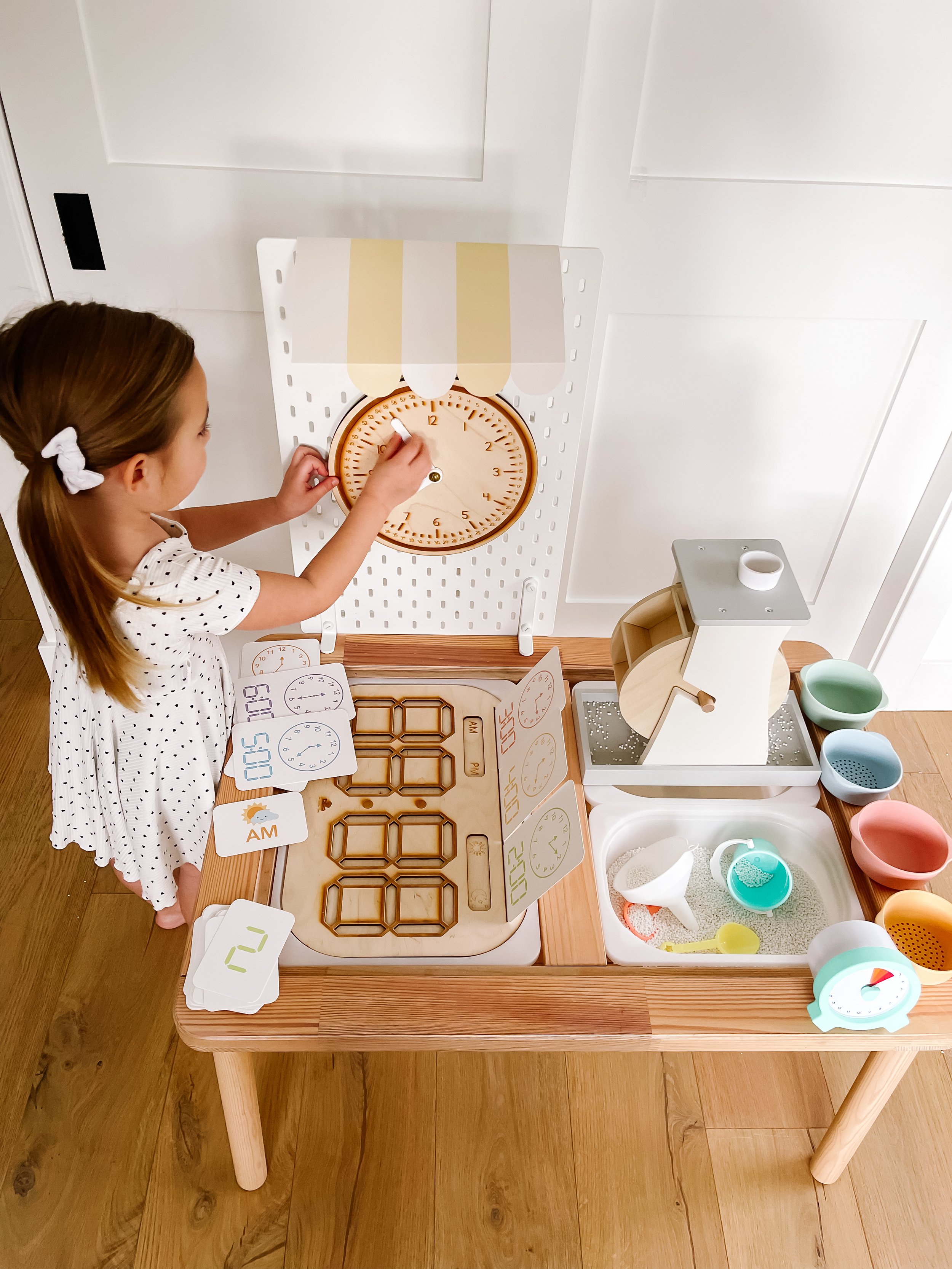
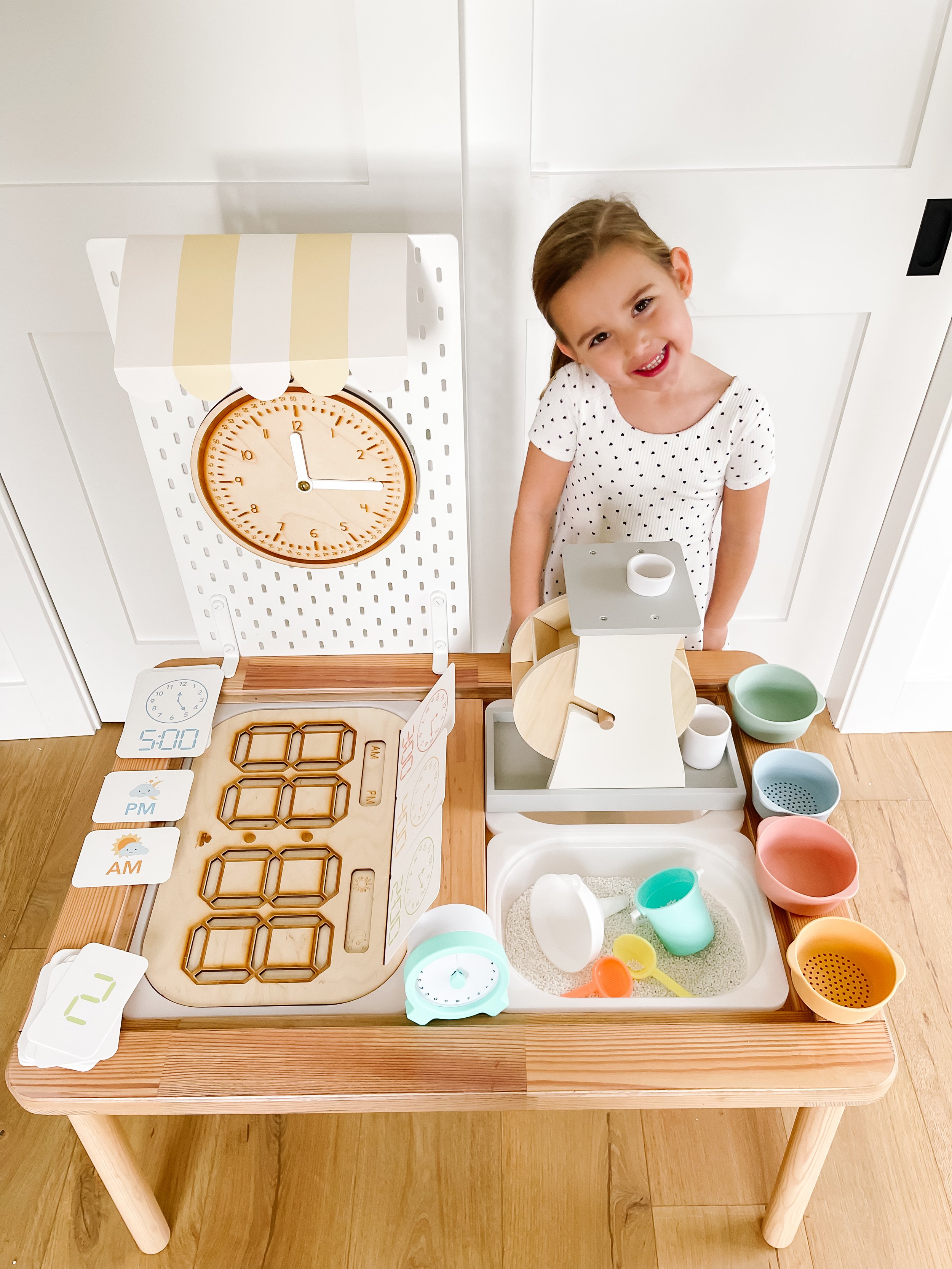
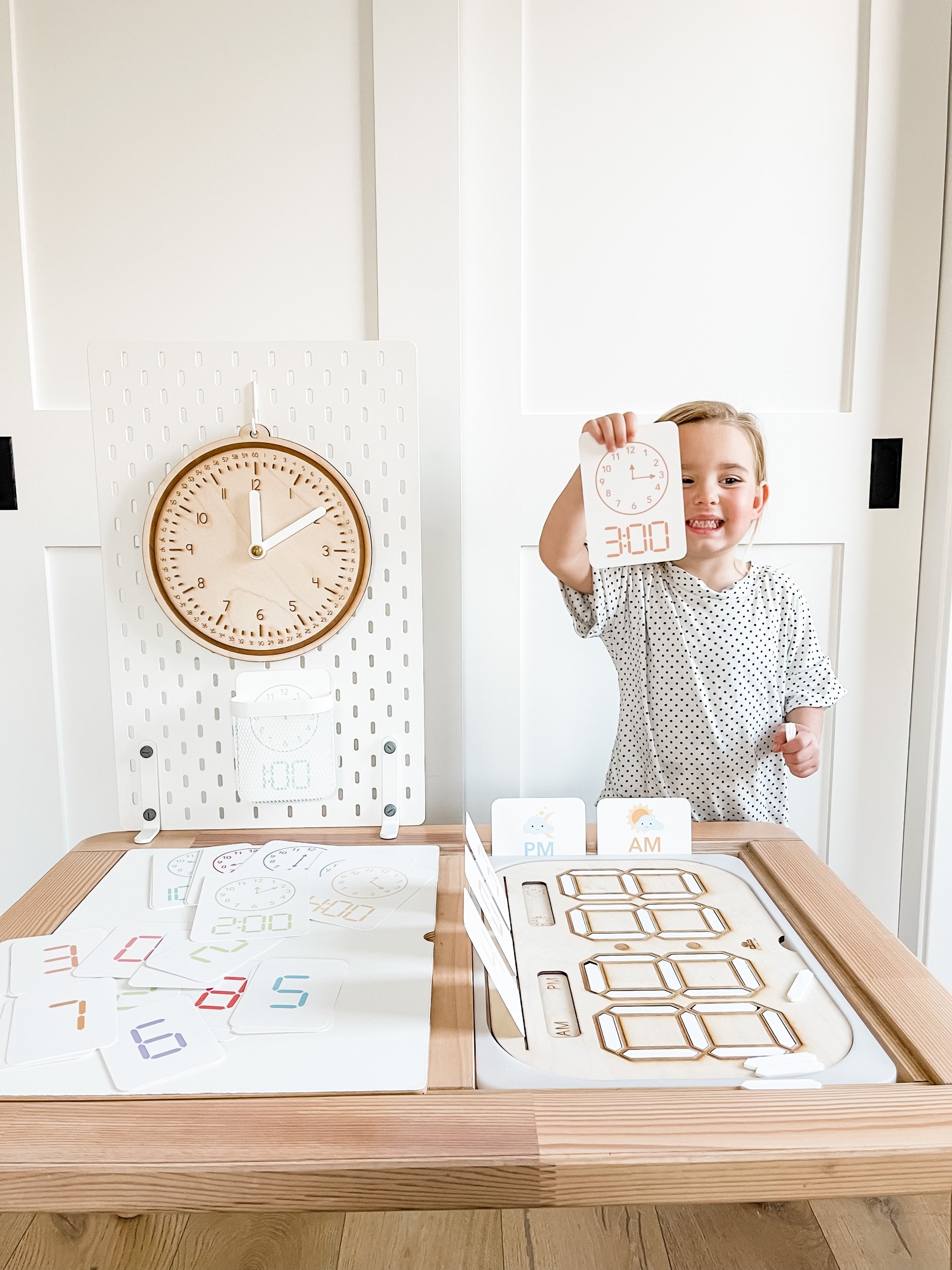
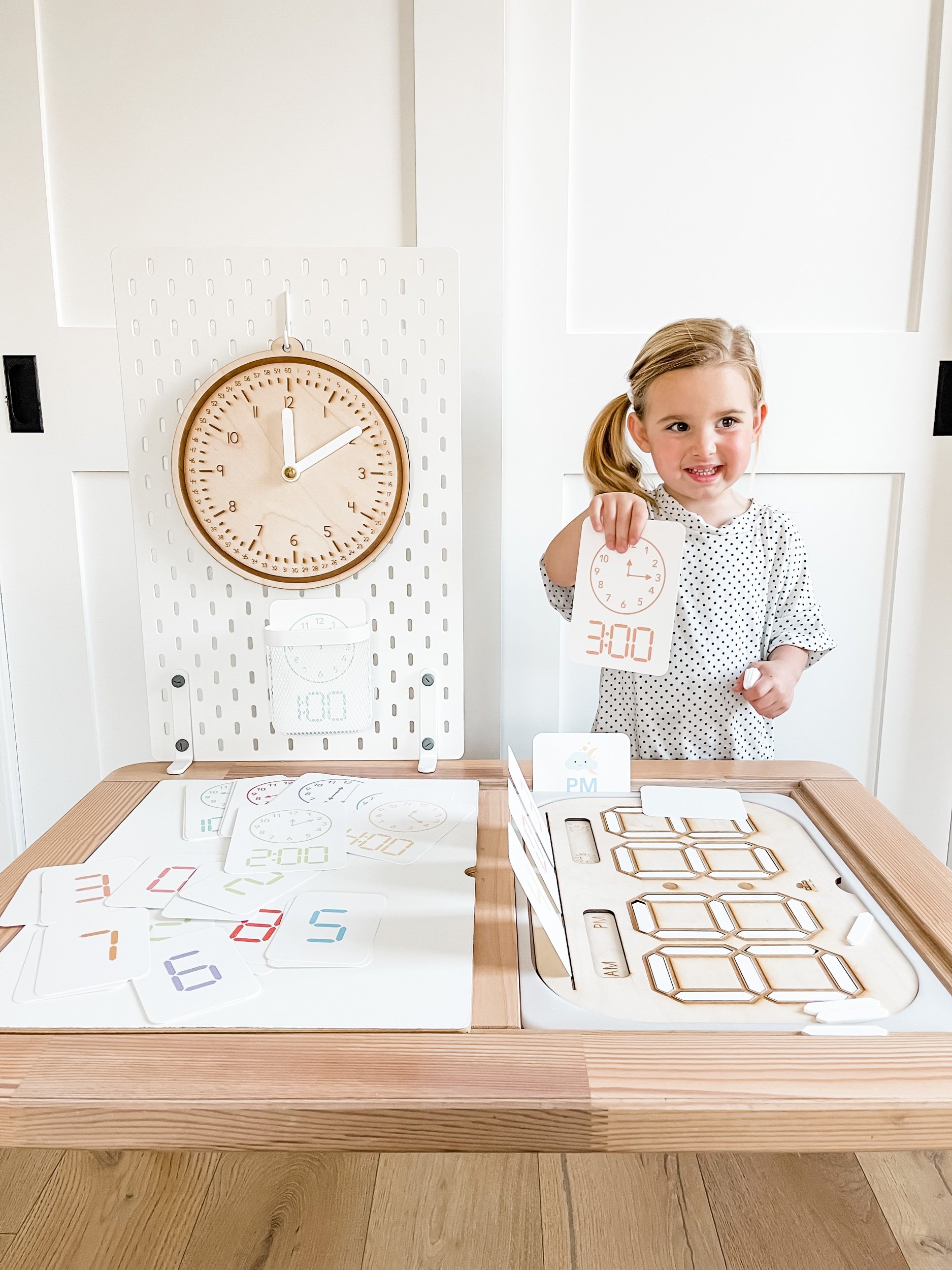
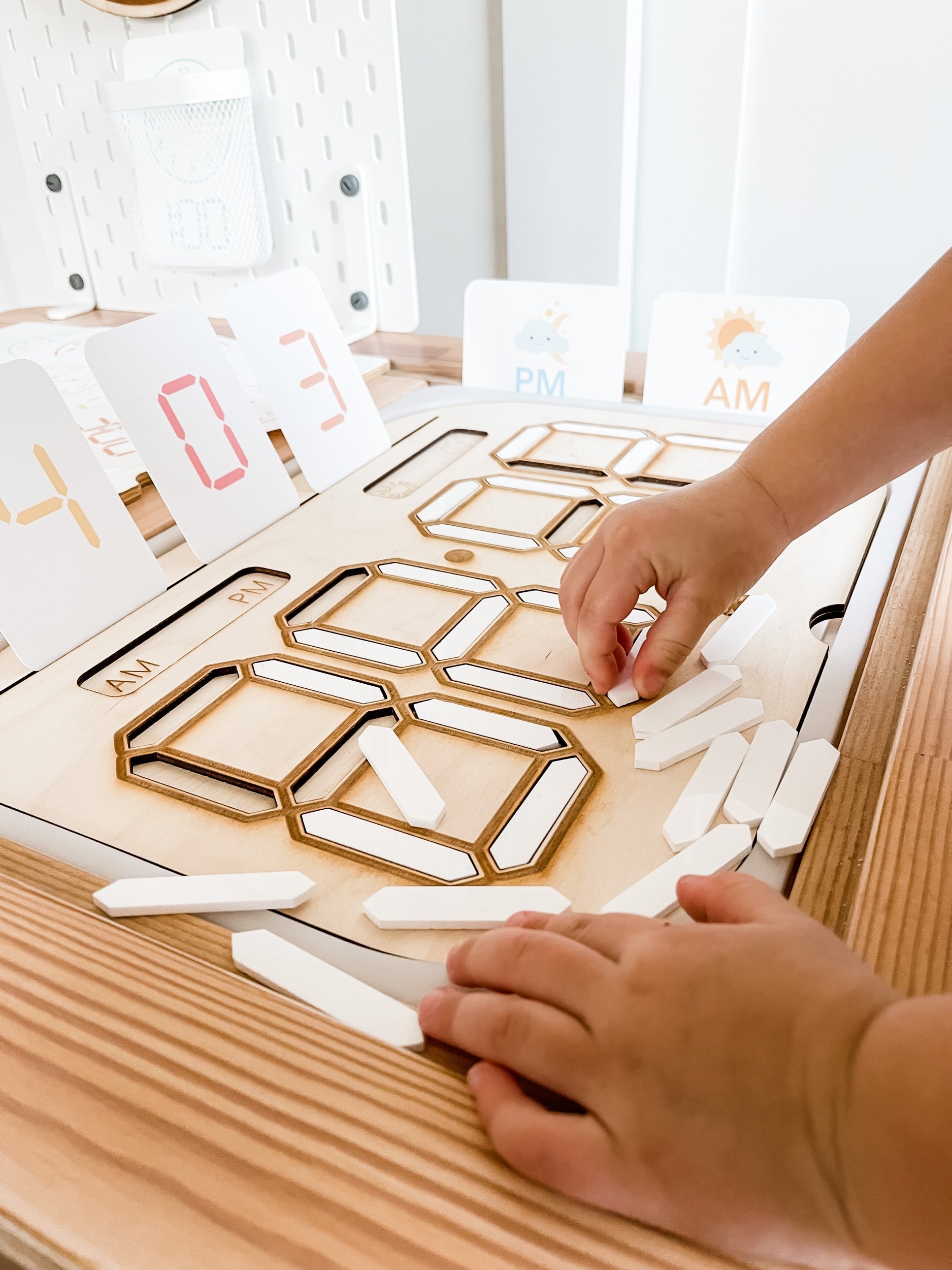
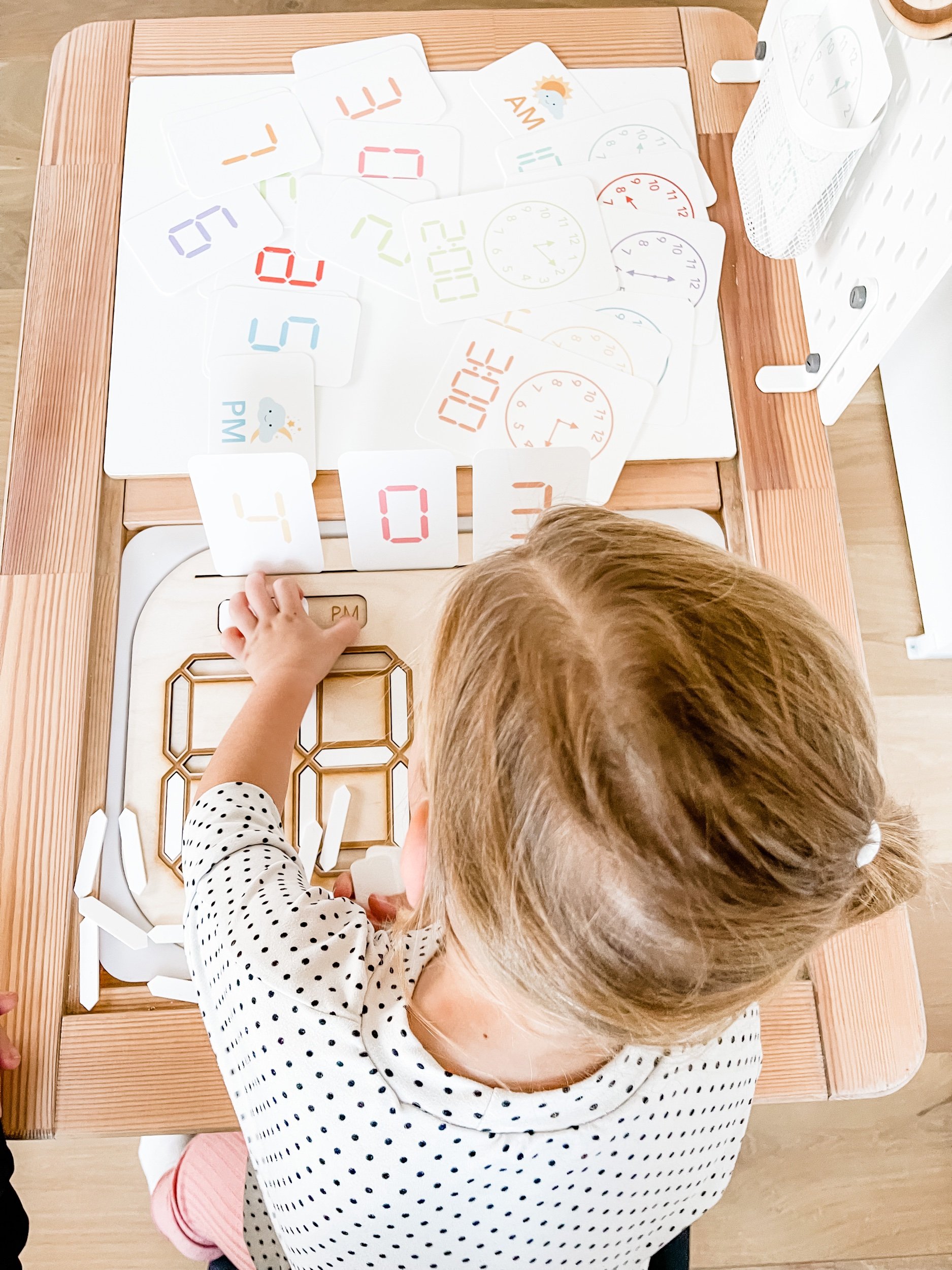
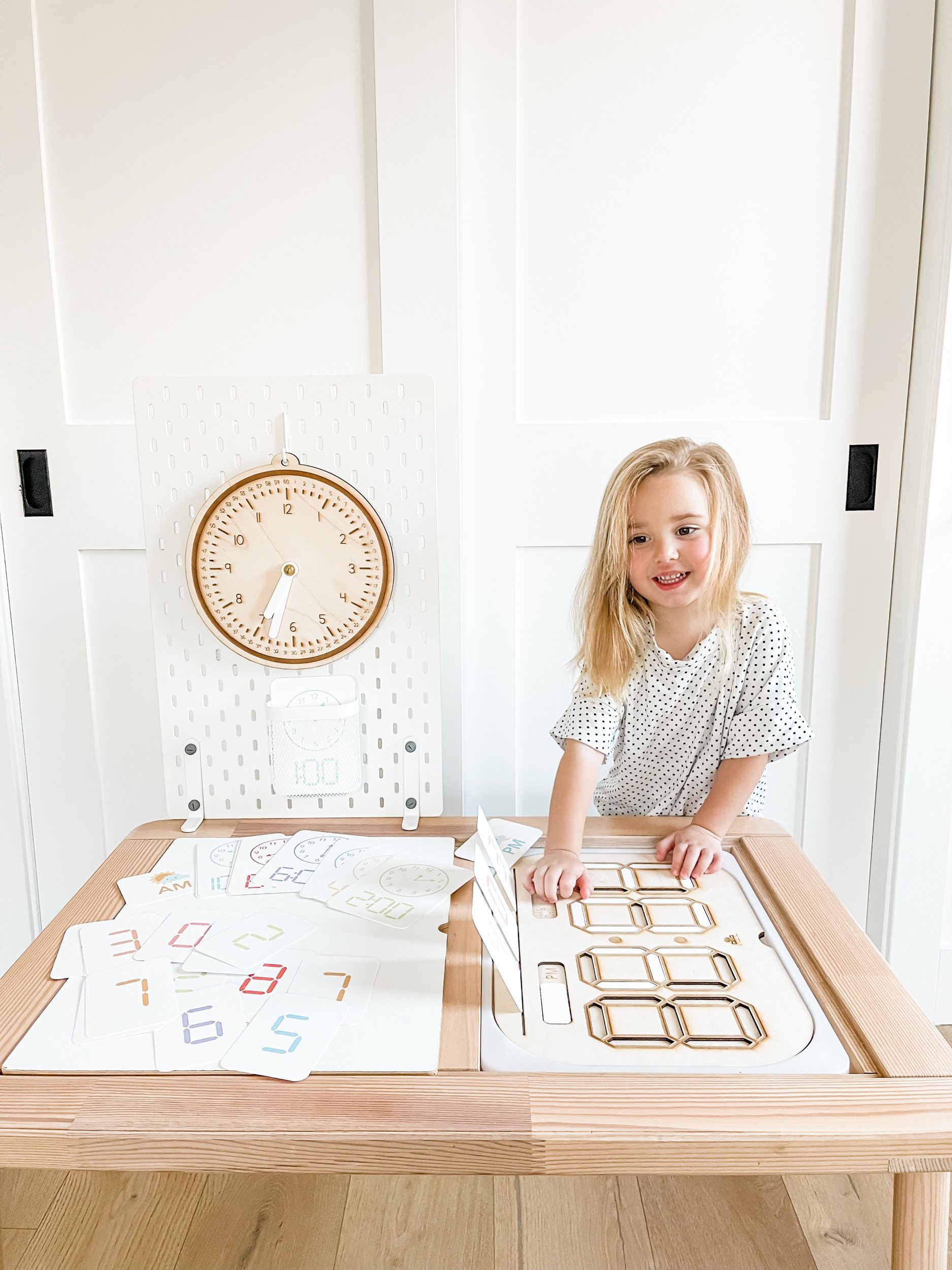
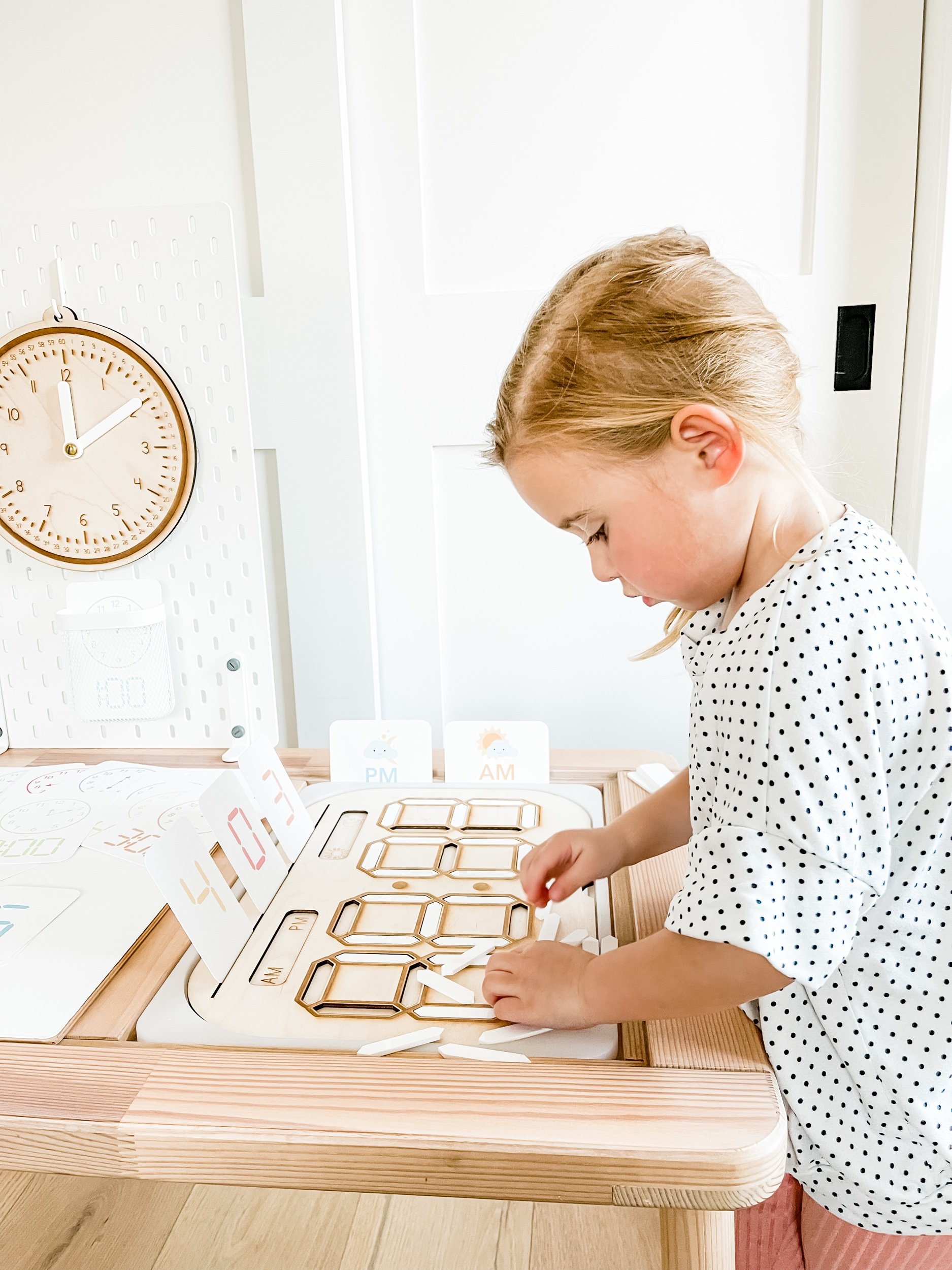
It’s time to practice telling time! This topic became most salient for me when Sofie first started school and was counting down the minutes until pick up time. The teachers would tell her to wait until the clock reached the 3:00 before she’d get picked up. Flash forward to now and we’re really starting to dig into learning was the numbers and timings truly mean. It’s sparked so much interest and excitement and it’s really amazing to see her fascination with time. Here are the learning topics we’re covering:
Learning 60 seconds per minute
Learning how to count to 1 minute
Learning how long 5 minutes left is
Learning how long 10 minutes left is
Learning to tell the hour on the analog clock
Learning to tell 30min increments on the analog clock
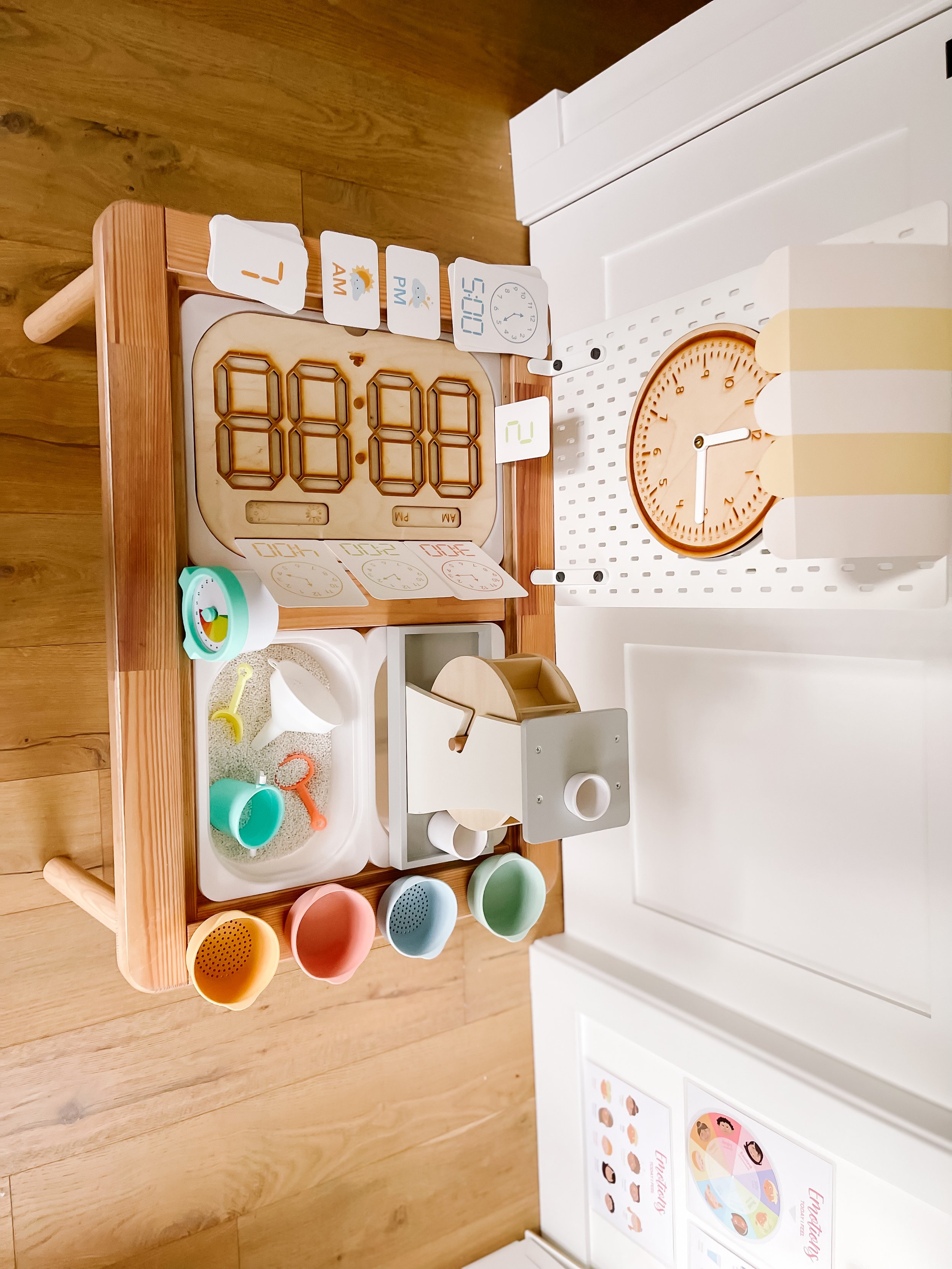
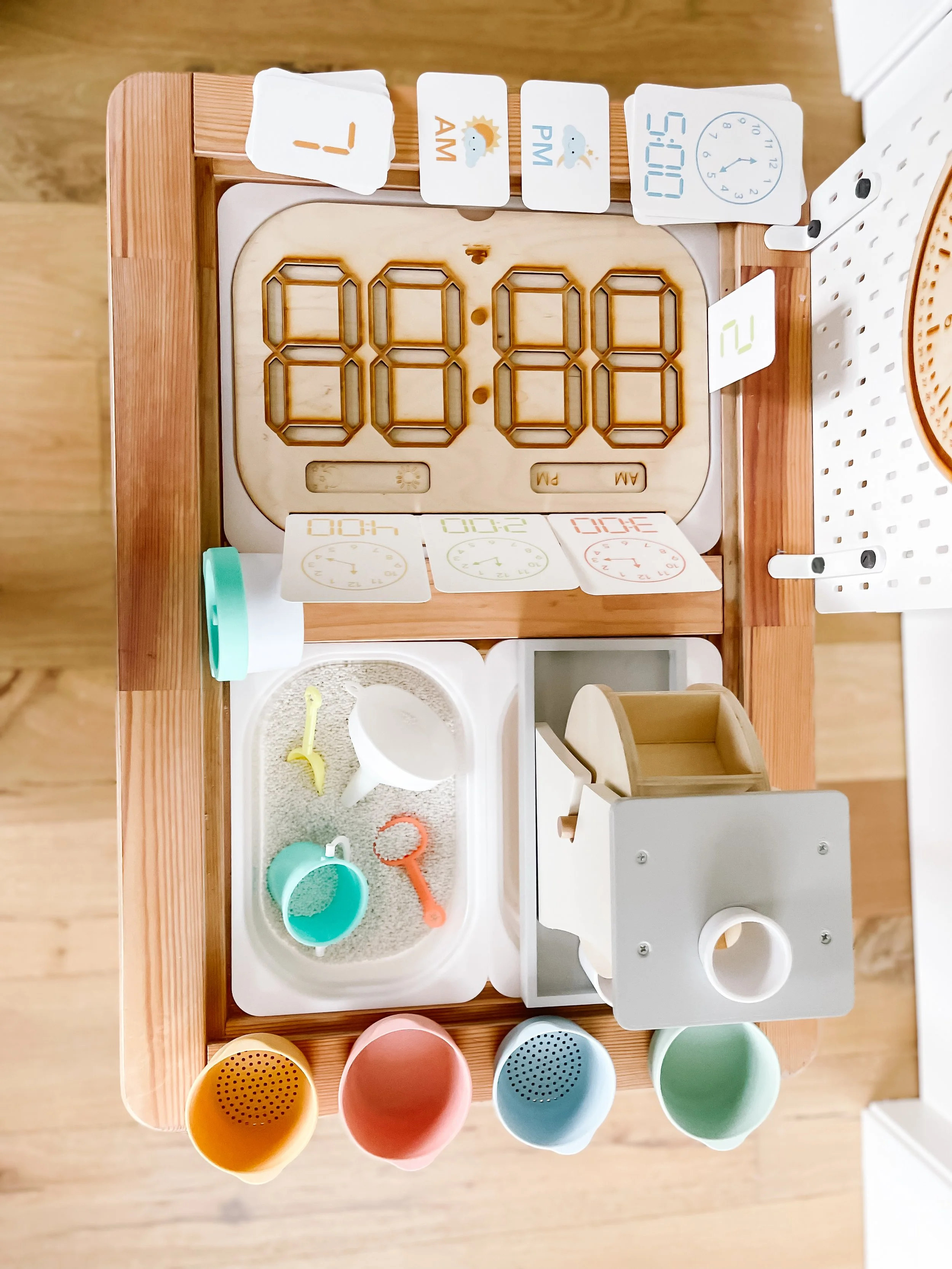
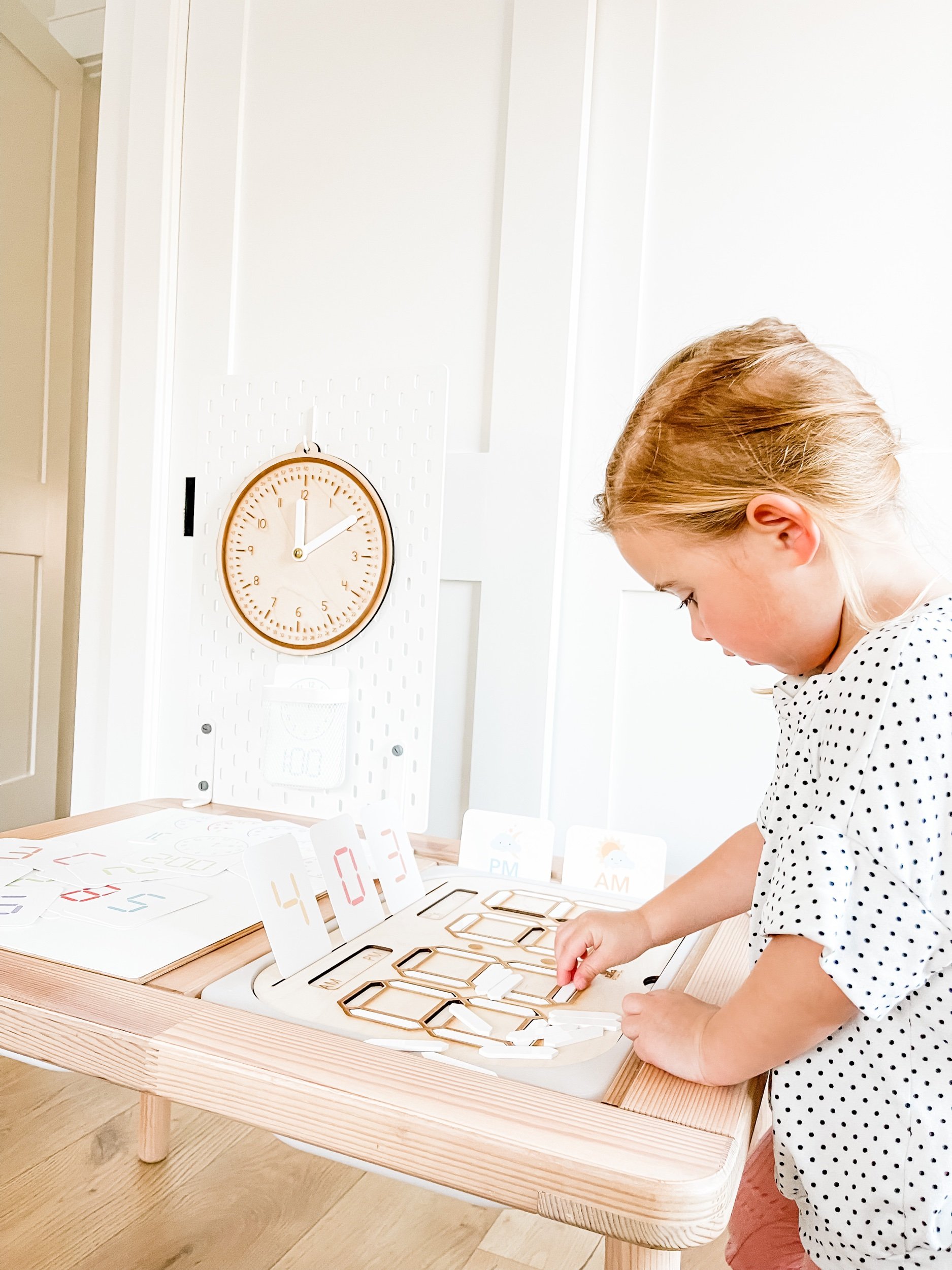
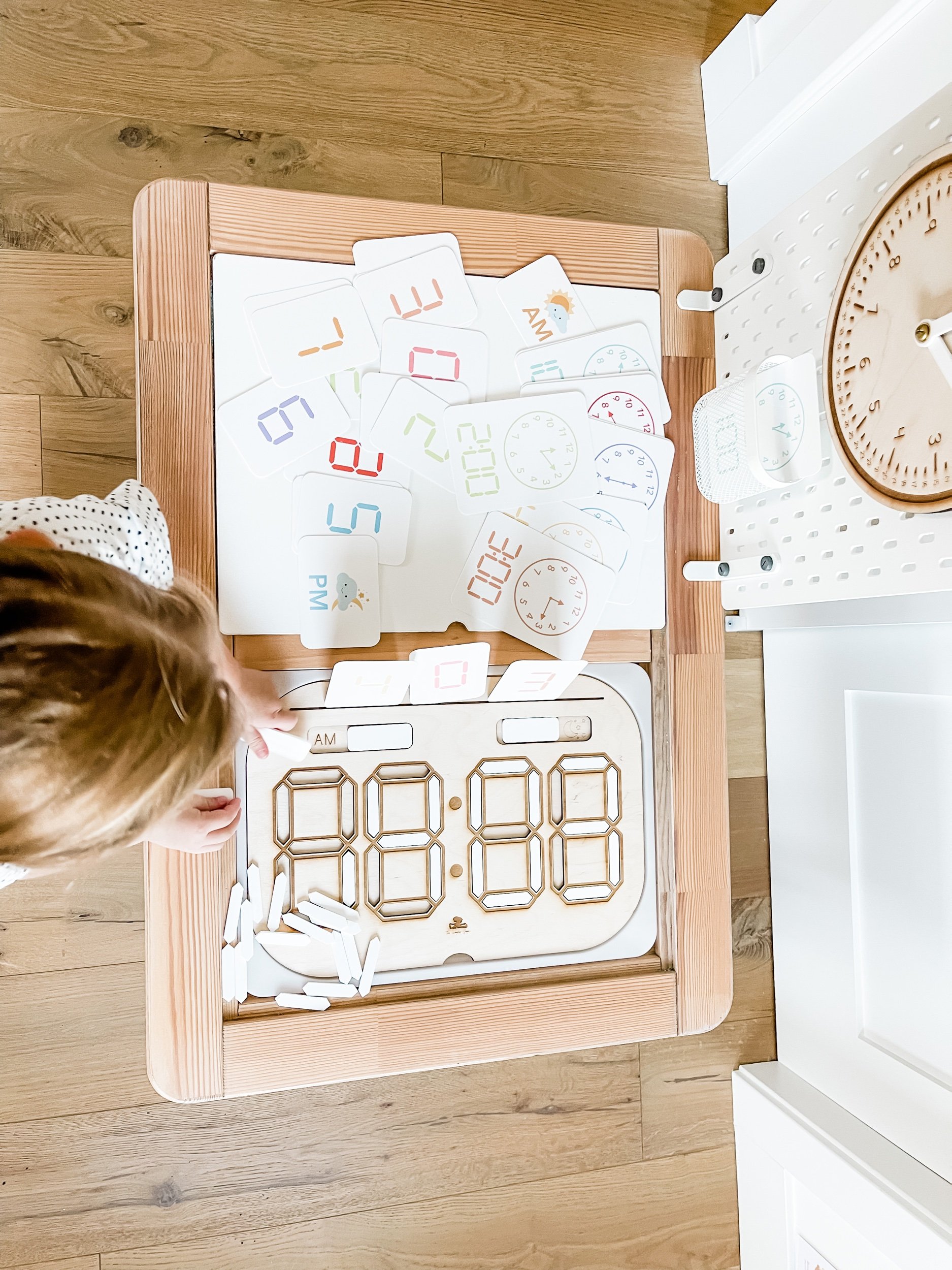
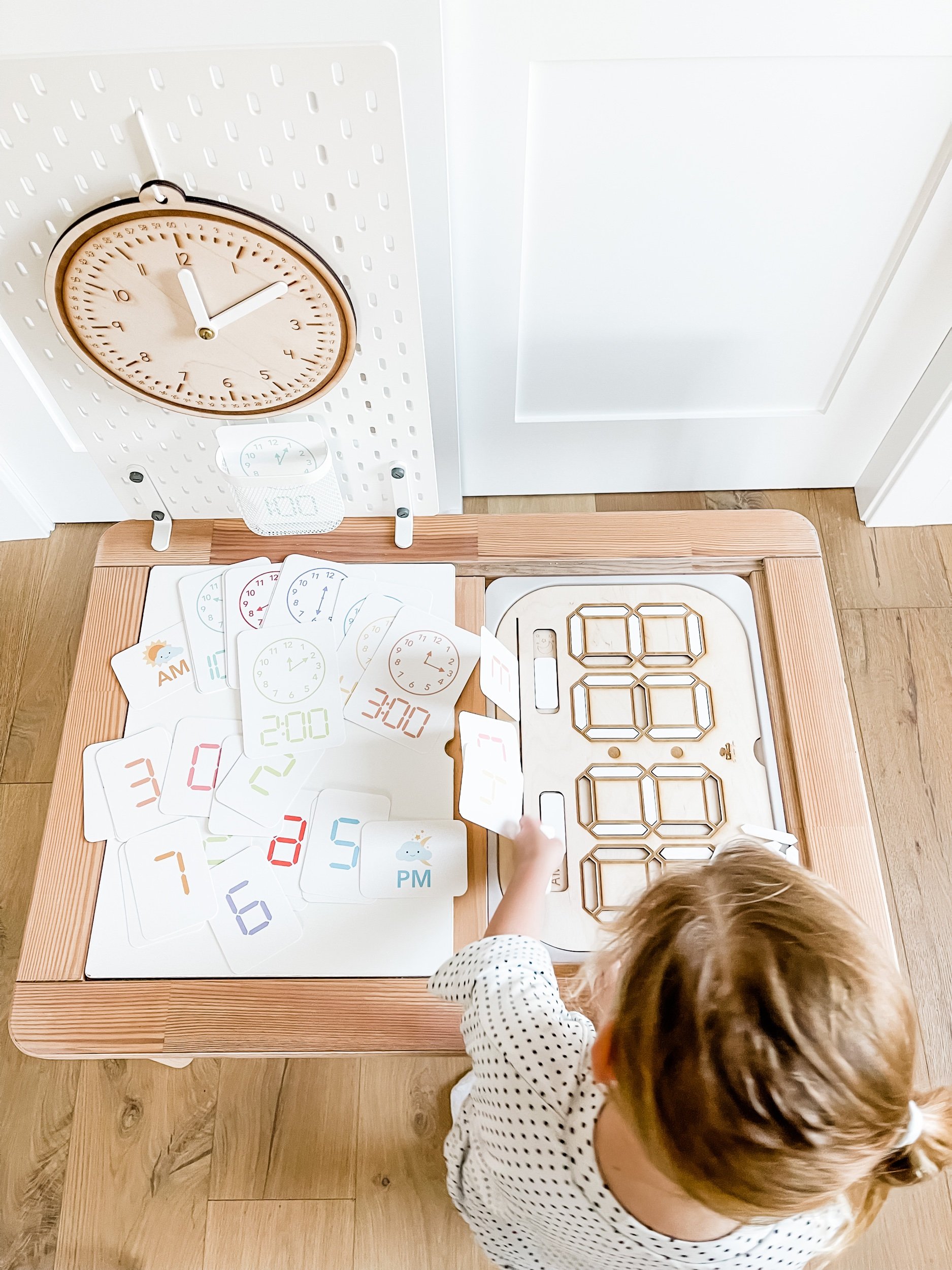
Matching our cards with the digital clock puzzle
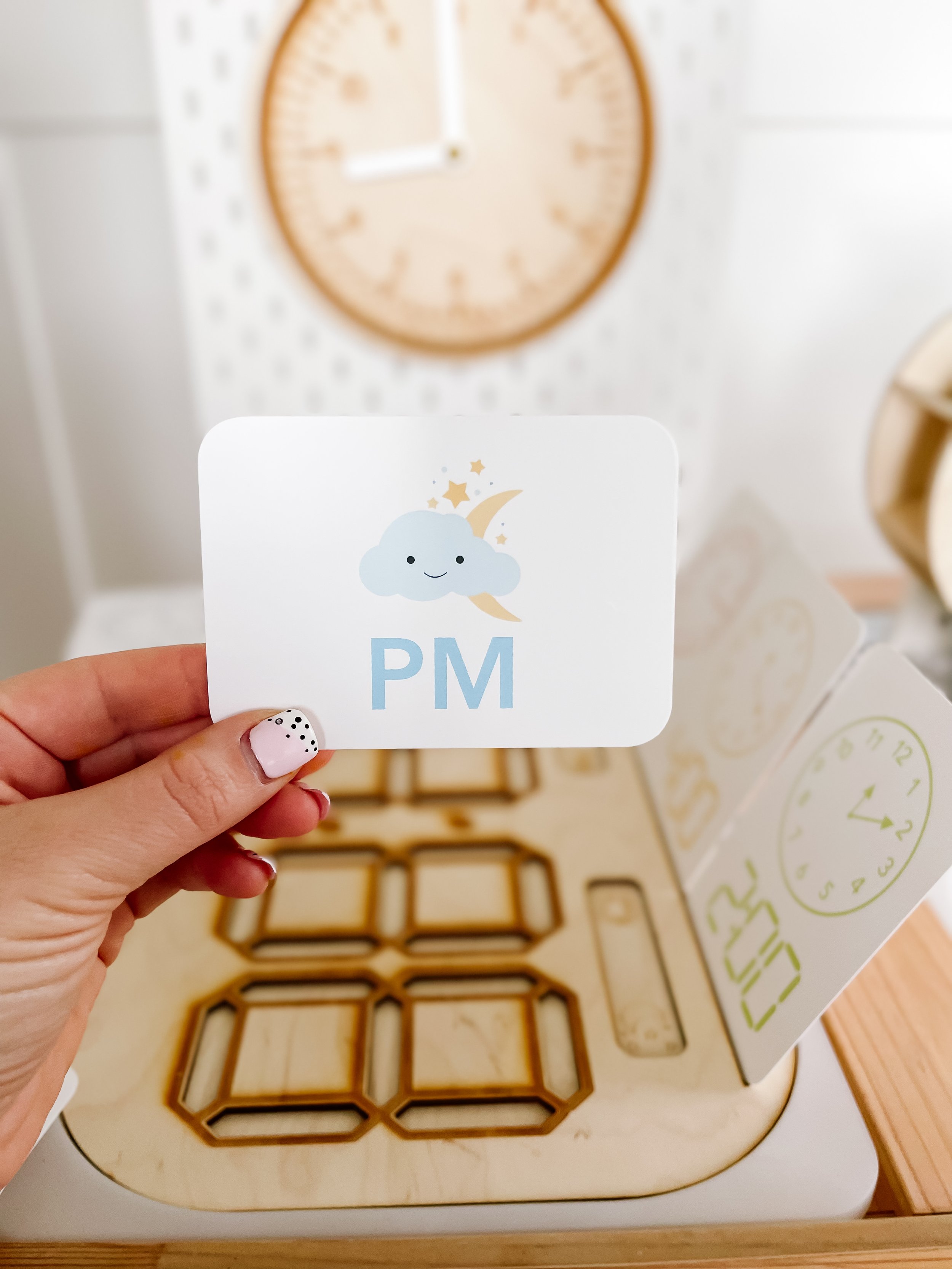
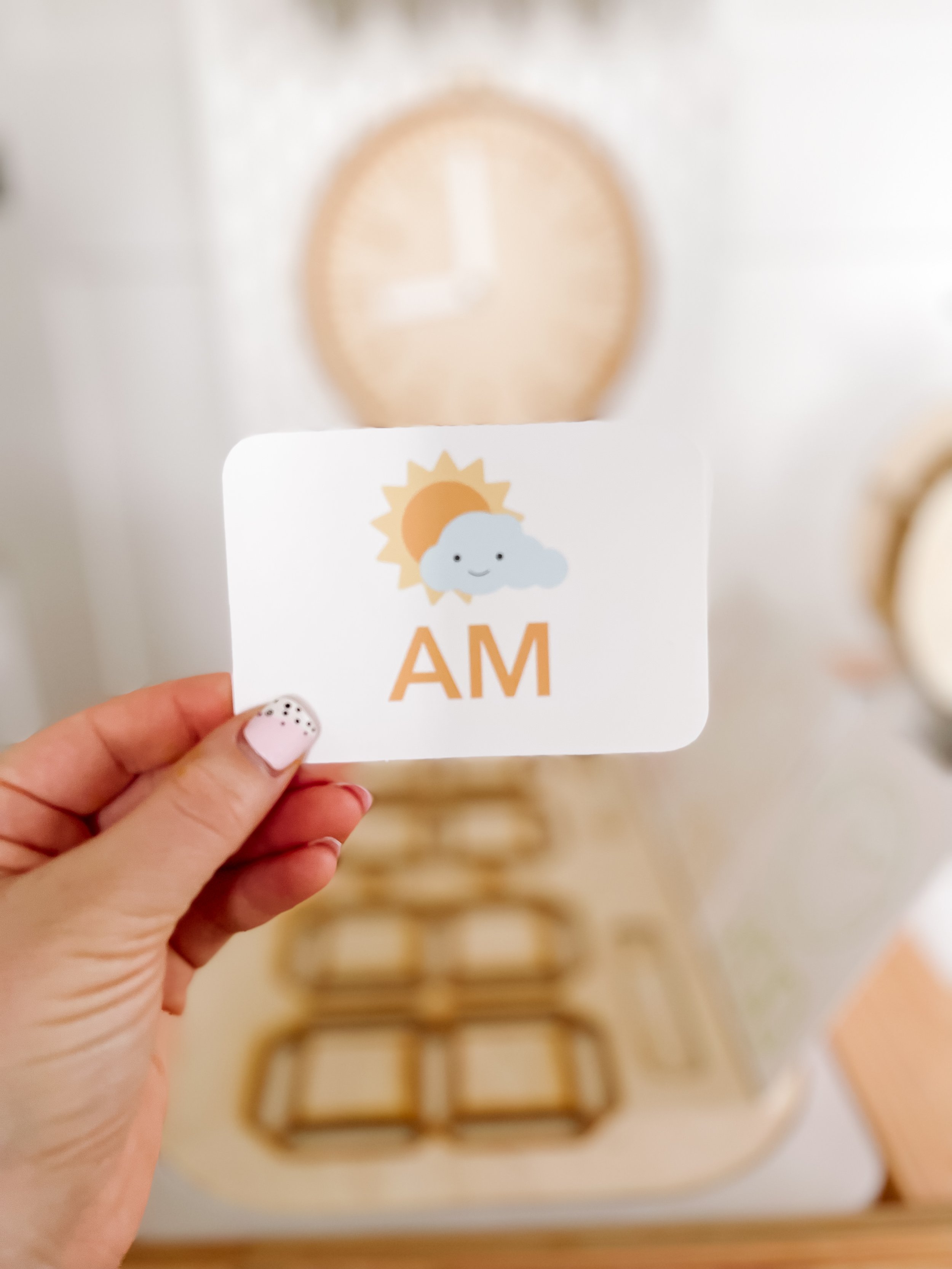
Learning the difference between AM and PM
Learning why it gets dark outside and why it gets light outside
As adults, it's easy to take for granted the skill of telling time. However, for preschoolers, understanding the concept of time can be challenging. Teaching children to tell time not only helps them with time management but also develops essential numerical and logical thinking skills. In this blog post, we'll explore three engaging sensory bin activities that are perfect for teaching preschoolers about telling time.
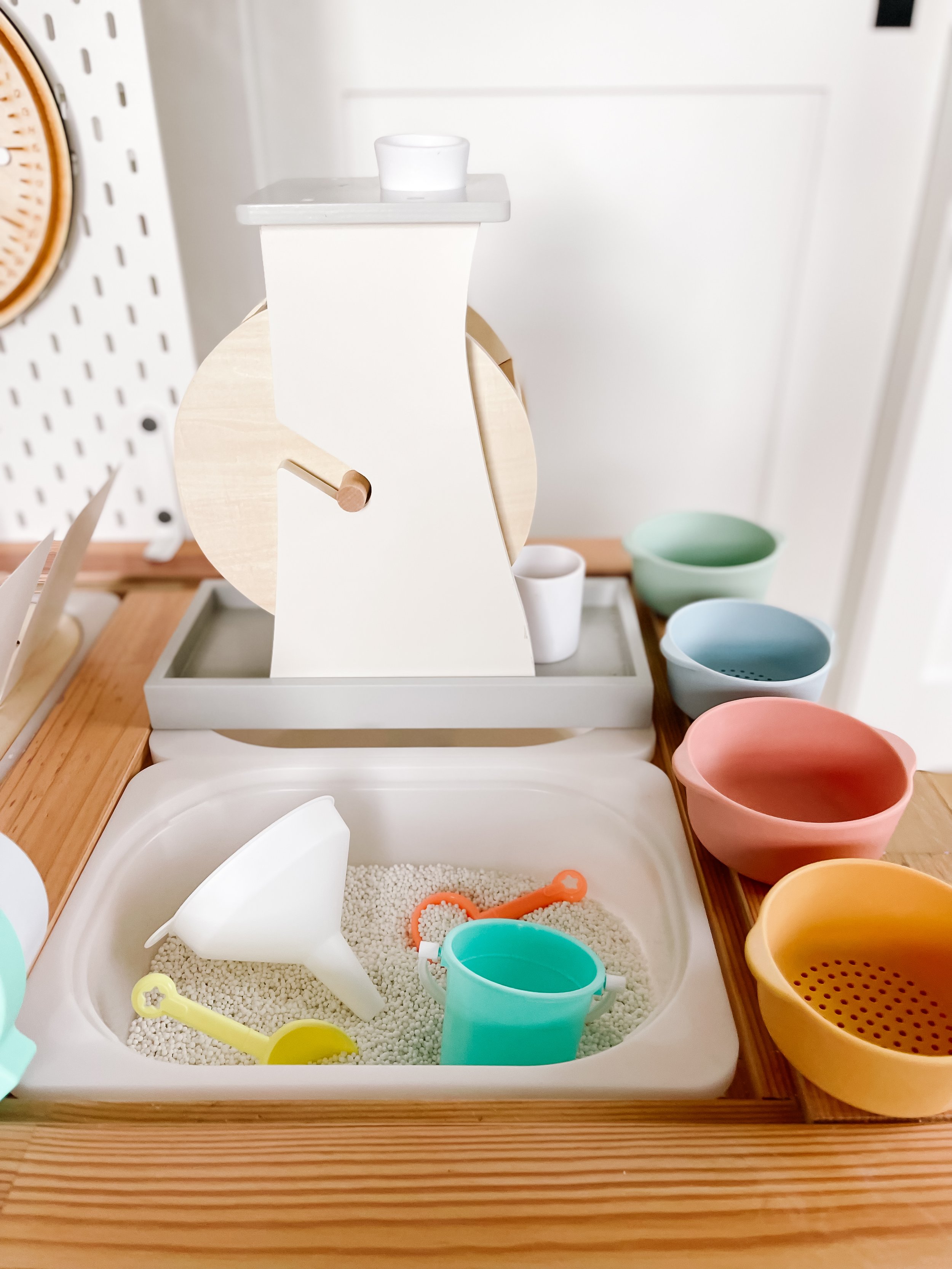
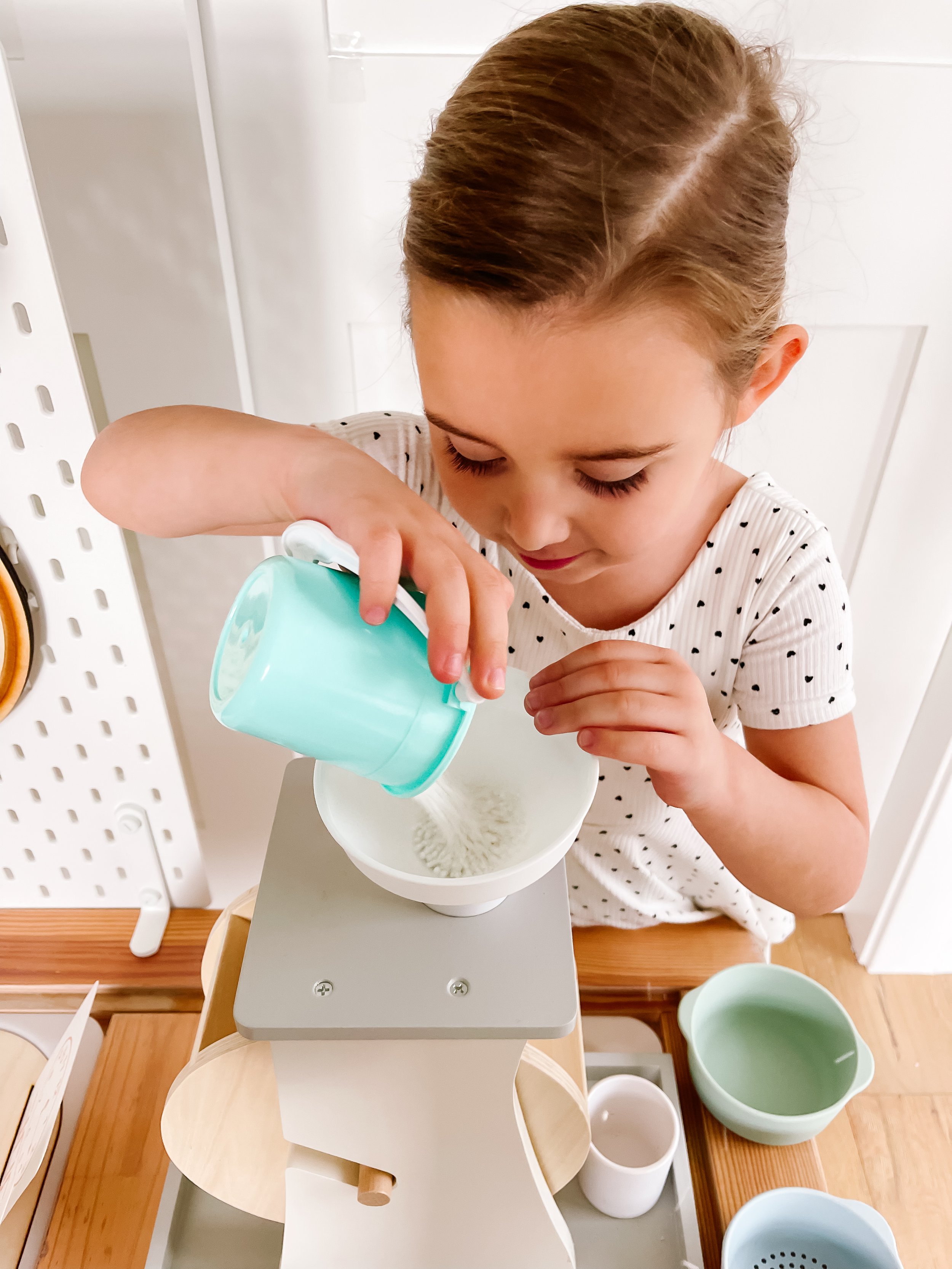
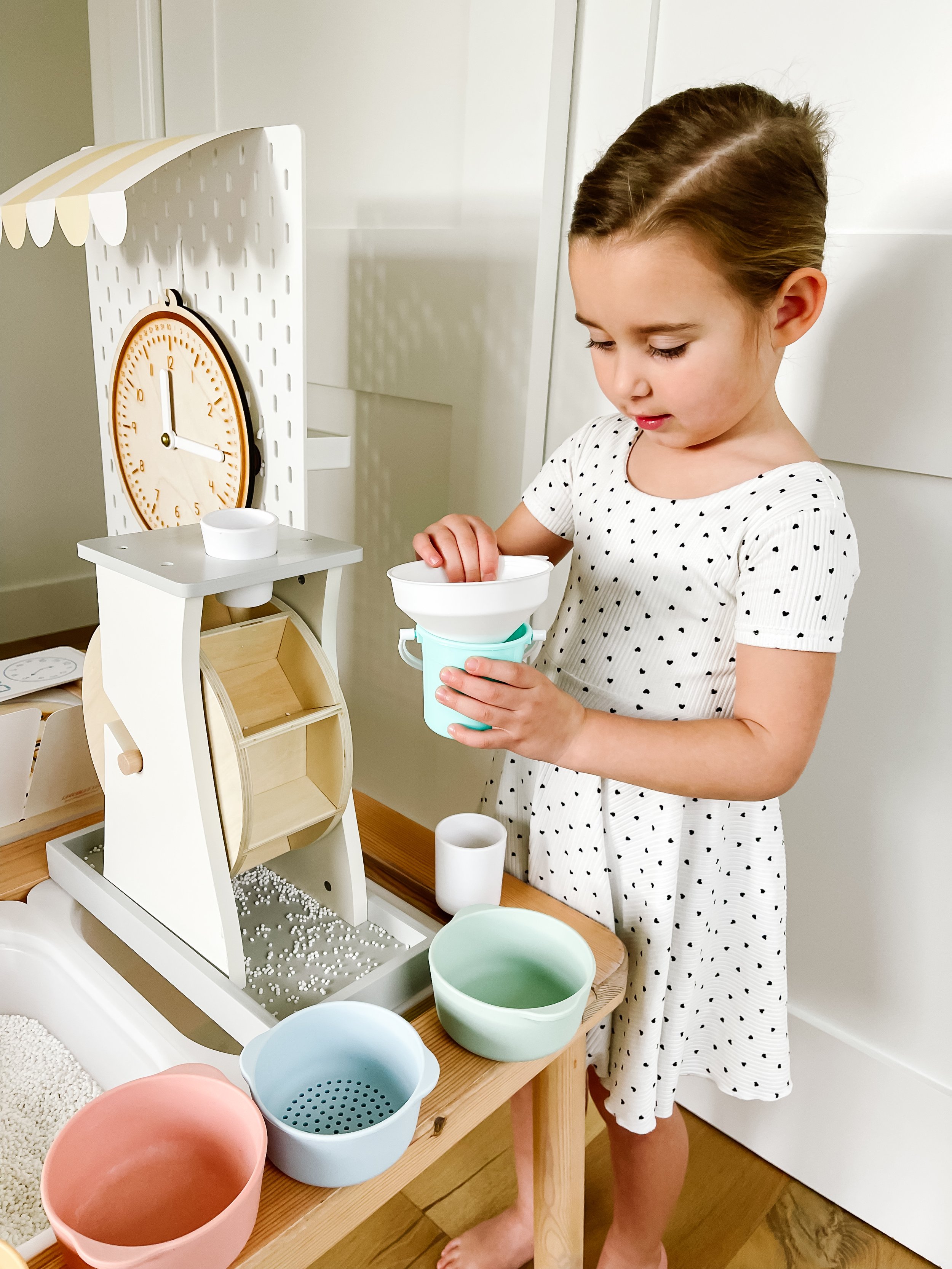
This sensory bin activity is perfect for toddlers aged 1-2. Fill a shallow container with water and gather a few plastic funnels of various sizes. Allow your child to explore pouring water through the funnels. As they experiment with different sized funnels, engage them in conversations about how long it takes for the water to pass through and fill different containers. This activity introduces the concept of time through observation.
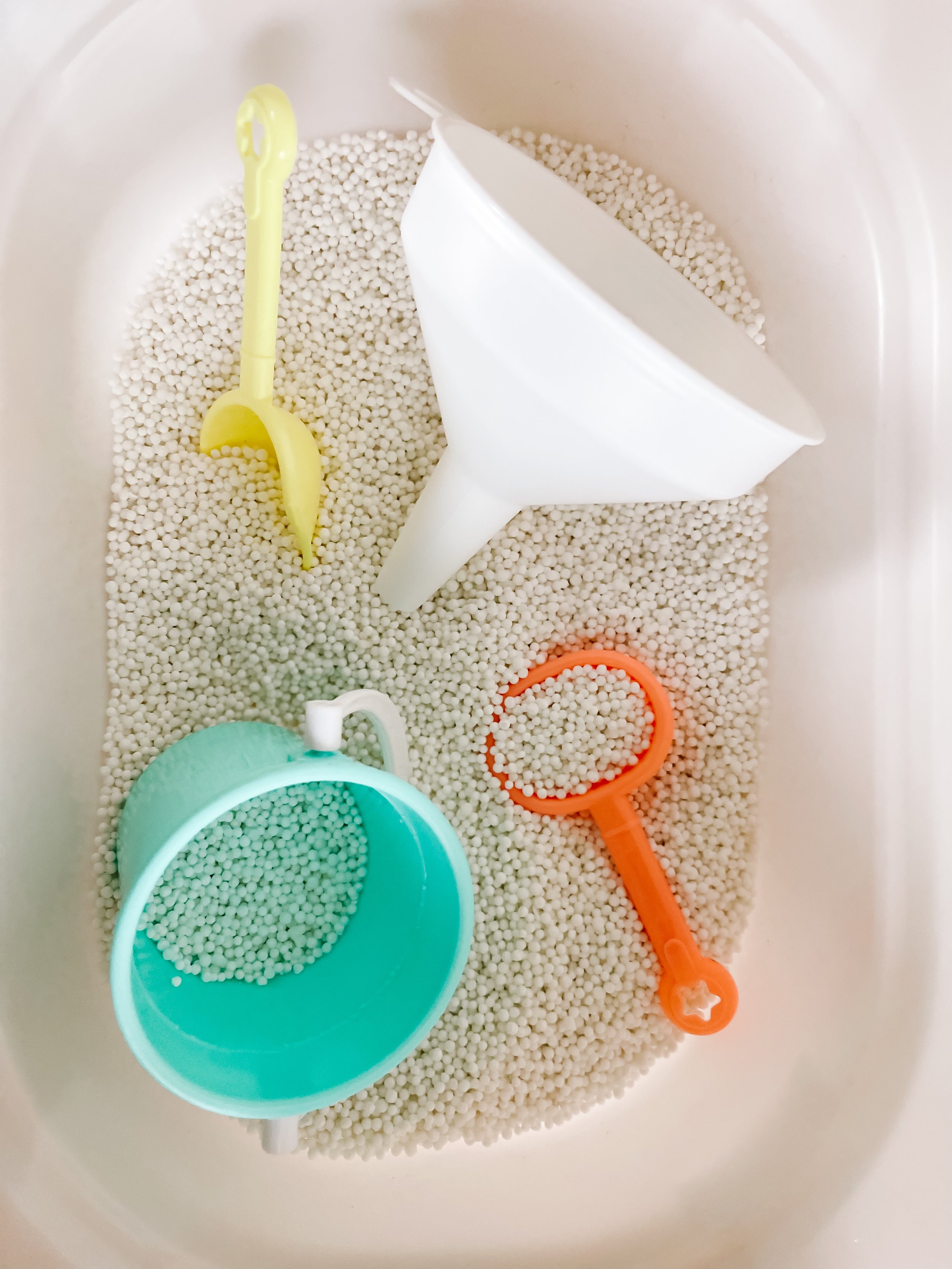
For children aged 1-2, fill a sensory bin with a mixture of sand and tapioca balls. Hide different objects partially submerged in the mixture and encourage your child to find and remove them. As they scoop, sift, and dig through the textured material, talk about the difference it makes in terms of time. How long does it take to find an object when they dig deeper into the bin? This activity helps them understand the passage of time as they engage in a hands-on exploration.
Activity 3: Learning Cards for Time Matching
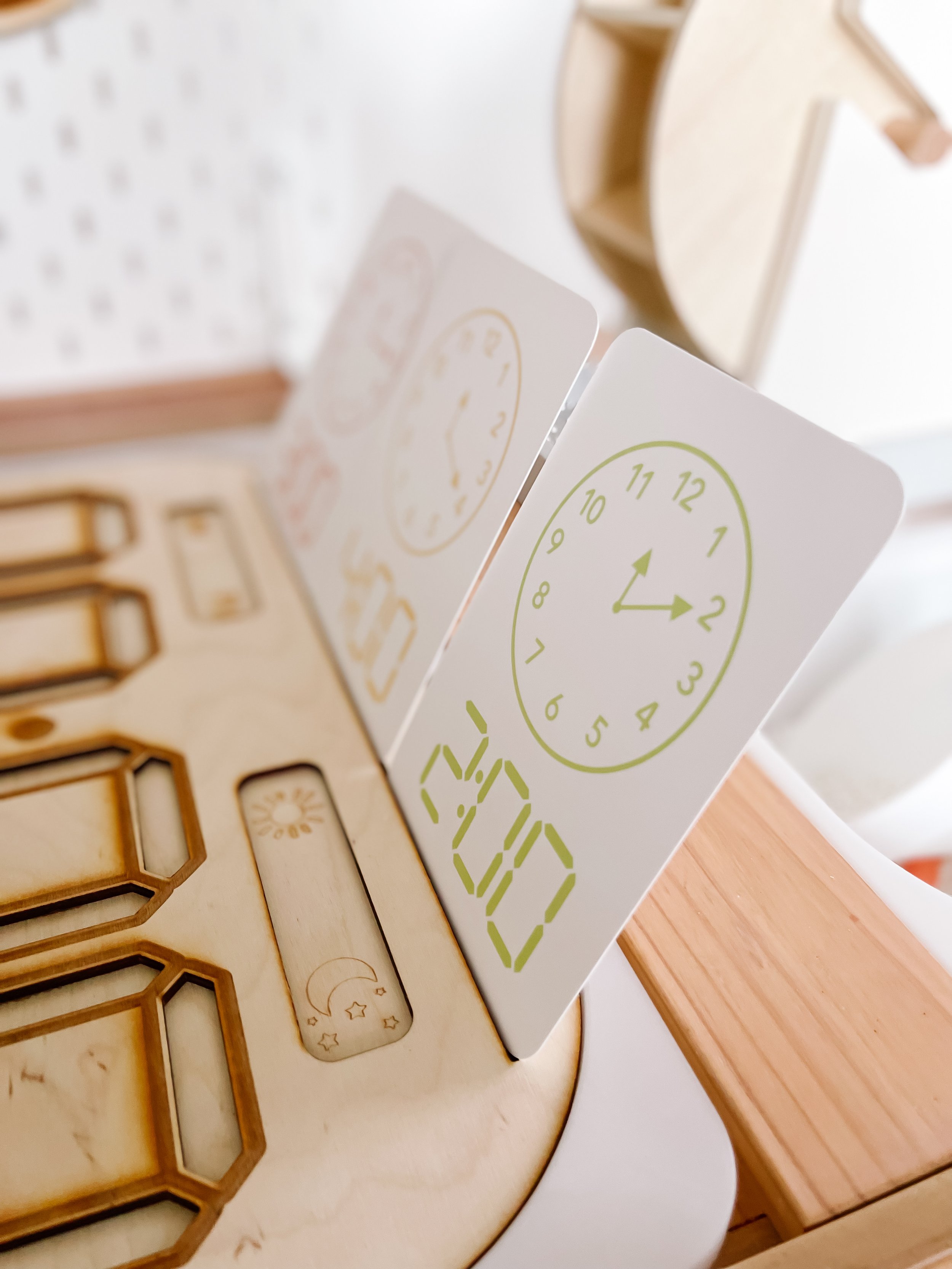
For preschoolers aged 3-4, introduce learning cards with both digital and analog clocks. Use our GoodnightFox Time Cards with different times displayed digitally and corresponding analog clocks. Start by matching the digital and analog cards together and name the times out loud. Encourage your child to practice reading the analog clocks and associating them with the corresponding digital time. Make the activity more interactive by demonstrating different times on an analog clock and asking your child to match the digital representation. With repetition and practice, they will build a solid foundation in telling time.
Activity 4: Timers and Hourglasses
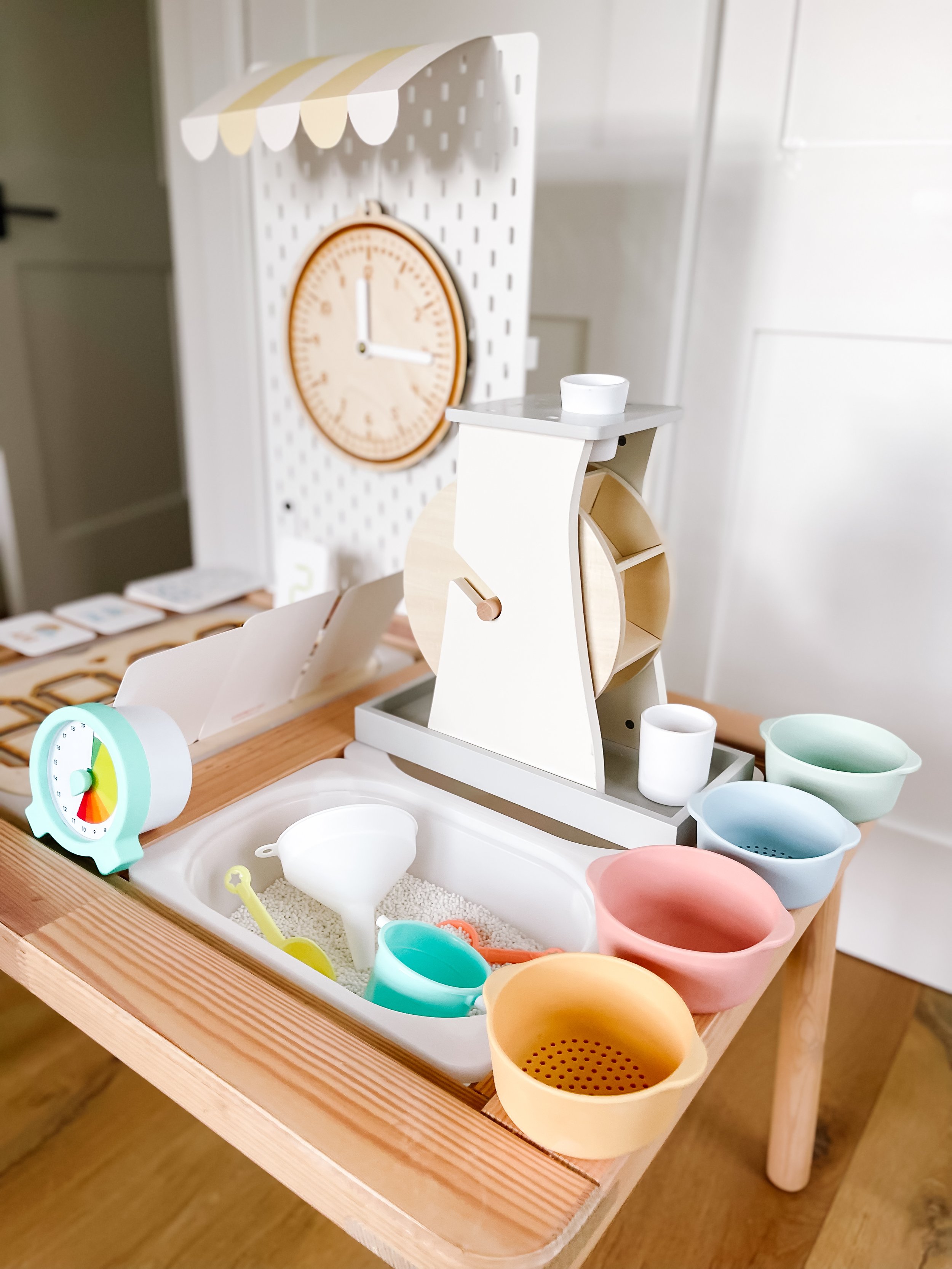
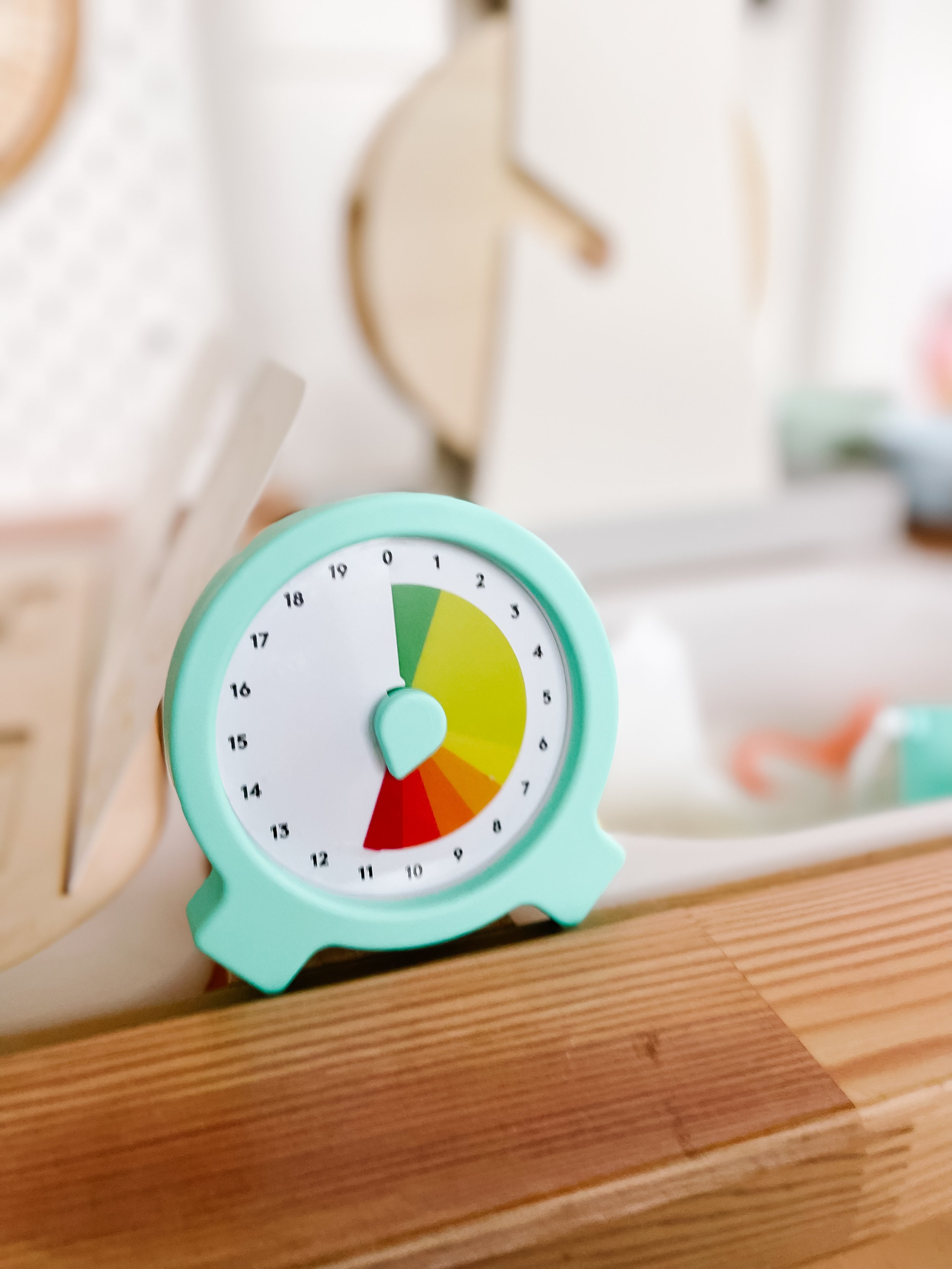
To get creative with teaching about time, introduce timers and hourglasses to your preschooler. Set up various timers with different durations and ask your child to complete tasks before the time runs out. This helps them understand the concept of deadlines and managing time effectively. Additionally, hourglasses provide a visual representation of the passage of time. Encourage your child to flip the hourglass and observe how grains of sand flow from one chamber to another. Discuss how different activities take different lengths of time by comparing the hourglass counts. We used our Lovevery timer because it’s a great visual representation of the amount of time left and proceeds from green to yellow to orange to red as time runs out.
1. Clock: A device that measures and shows time.
2. Hour: A unit of time equal to 60 minutes.
3. Minute: A unit of time equal to 60 seconds.
4. Second: The basic unit of time in the metric system.
5. Digital: A type of clock or watch that shows time using numbers.
6. Analog: A type of clock or watch that shows time using hands and a dial.
7. Face: The round surface of a clock or watch on which the numbers are displayed.
8. Numbers: The symbols used to show the hours on a clock face.
9. Hand: The pointer on a clock or watch that shows the current time.
10. Tick: The sound made by a clock or watch as it moves.
11. Tock: The sound made by a clock or watch between ticks.
12. Quarter: A period of 15 minutes.
13. Half: A period of 30 minutes.
14. Digital clock: A clock that displays the time using numbers.
15. Analog clock: A clock that displays the time using hands and a dial.
16. AM: Ante meridiem – the time from midnight to noon.
17. PM: Post meridiem – the time from noon to midnight.
18. Noon: The time of day when the sun is at its highest point in the sky.
19. Midnight: The time of day when it is 12 o'clock at night.
20. Morning: The time of day between midnight and noon.
21. Afternoon: The time of day between noon and evening.
22. Evening: The time of day between late afternoon and sleep time.
23. Night: The time of day between evening and morning when it is dark outside.
24. Digital watch: A watch that displays the time using numbers.
25. Analog watch: A watch that displays the time using hands and a dial.
These vocabulary words will help toddlers learn about time and how to tell time using both digital and analog clocks.
Learning to tell time is an important skill for preschoolers to develop. It enables them to manage their daily routines, understand schedules, and successfully complete tasks with time constraints. Mastering time-telling involves grasping numeracy concepts, developing logical thinking skills, and fostering a sense of responsibility. Engaging preschoolers with these fun sensory bin activities not only makes learning enjoyable but also provides a solid foundation for their time-telling abilities.
So, why wait? Dive into these activities and watch as your preschoolers become skilled timekeepers, all while having a blast along the way. Happy teaching!
Note: Always supervise children during sensory bin activities, especially those involving small objects or water.
All of these amazing learning materials were designed in collaboration with @WonderYearsShop where you can find the wooden analog clock and wooden digital clock puzzle.


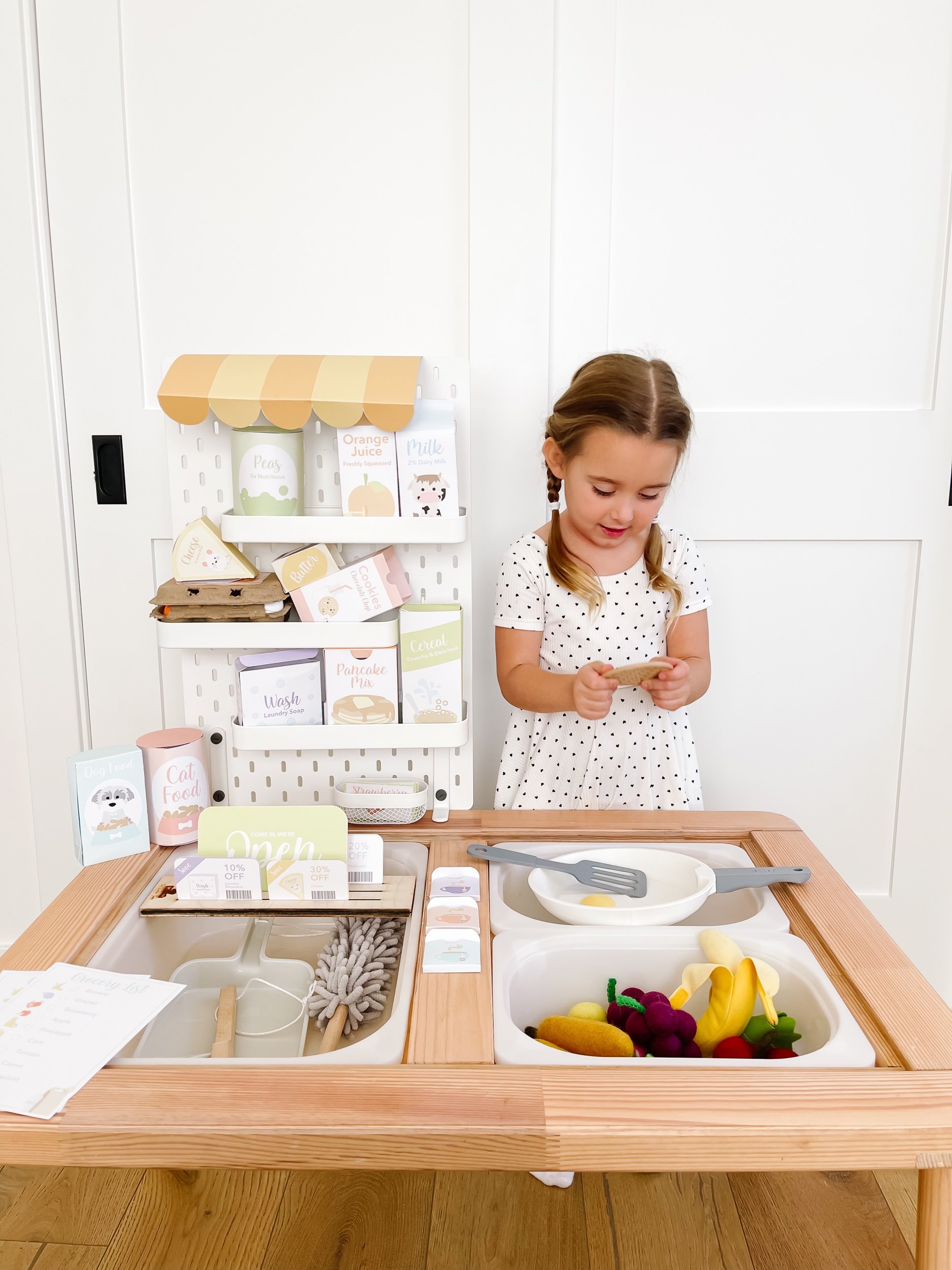
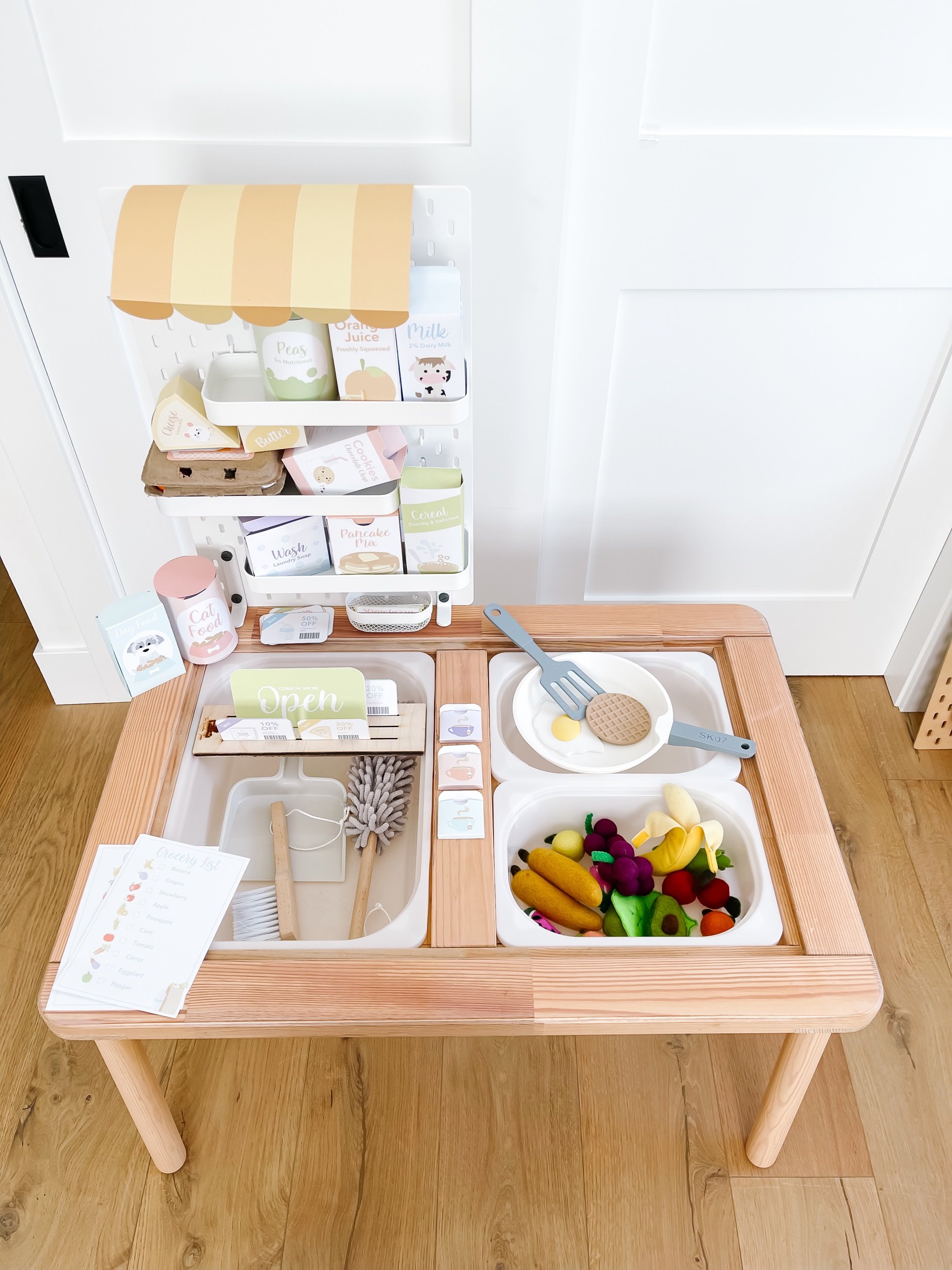
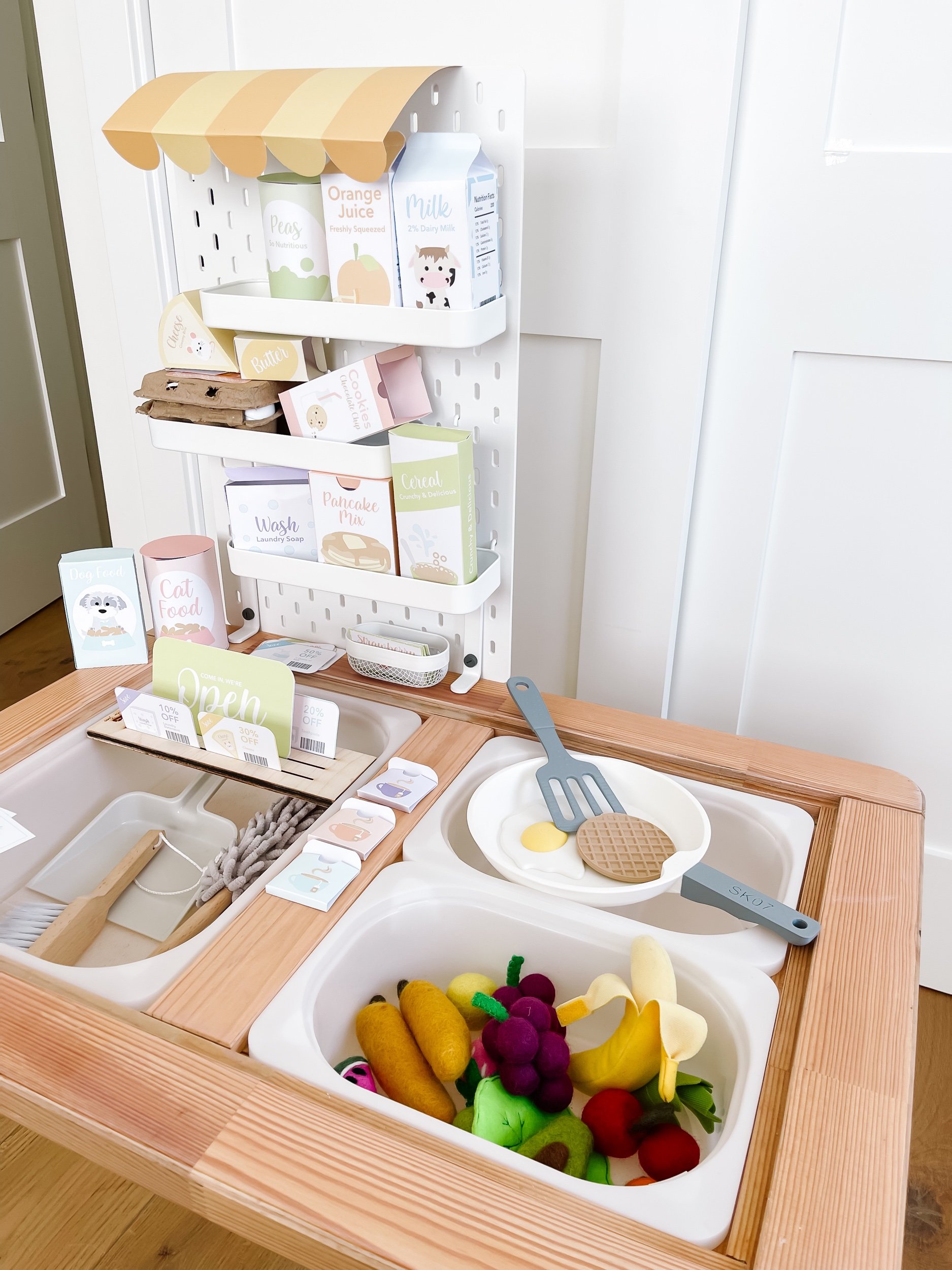
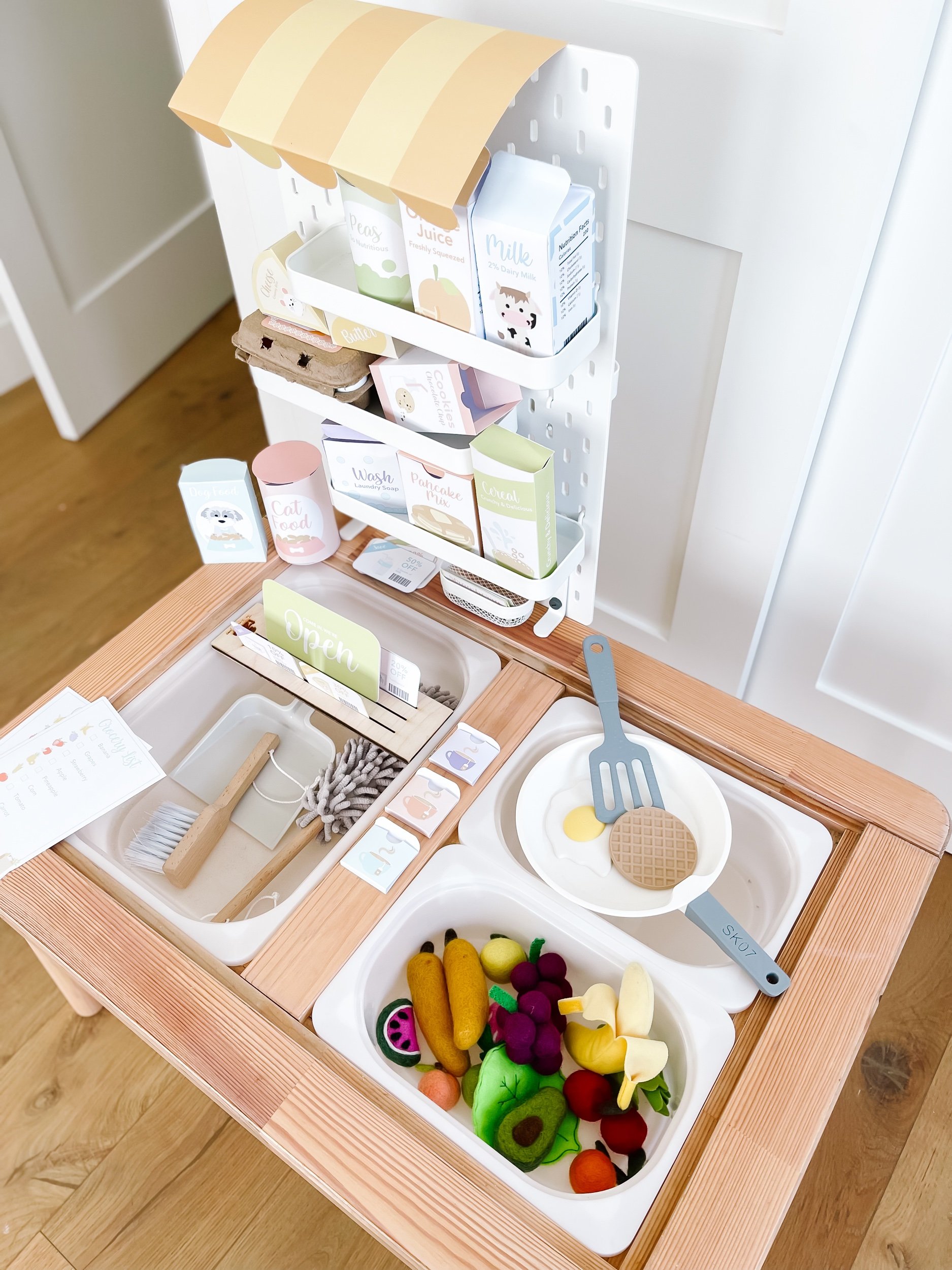
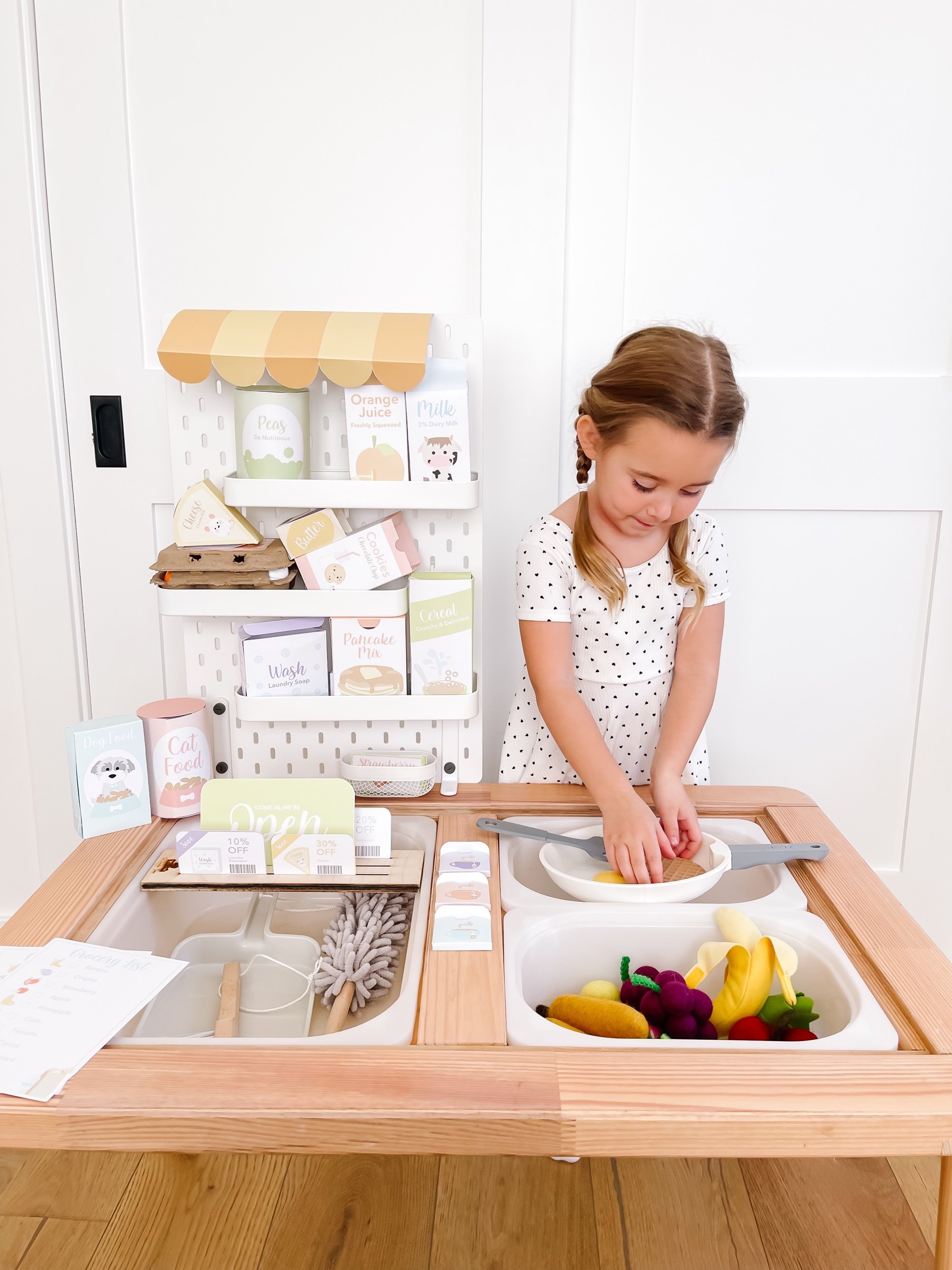
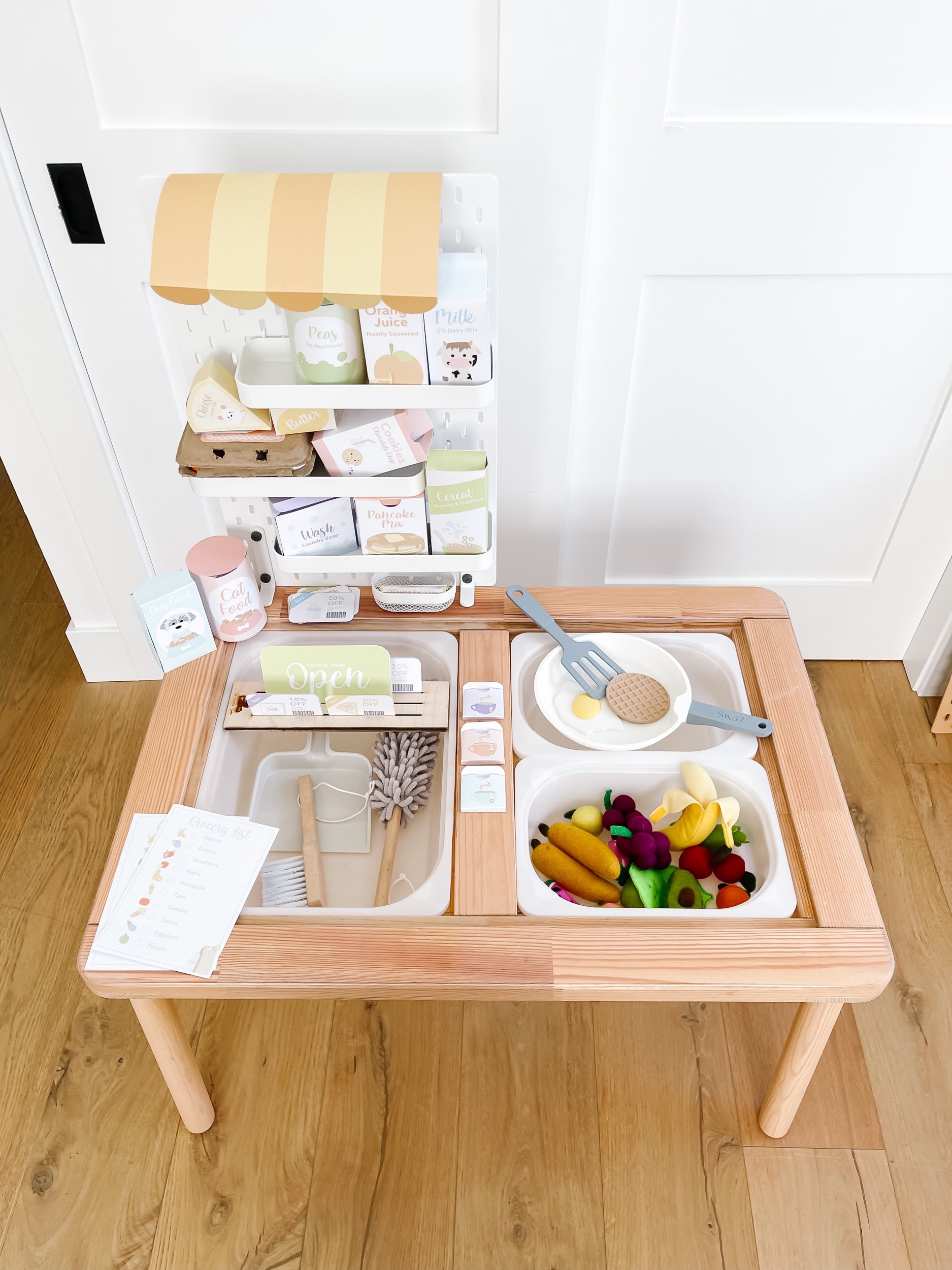
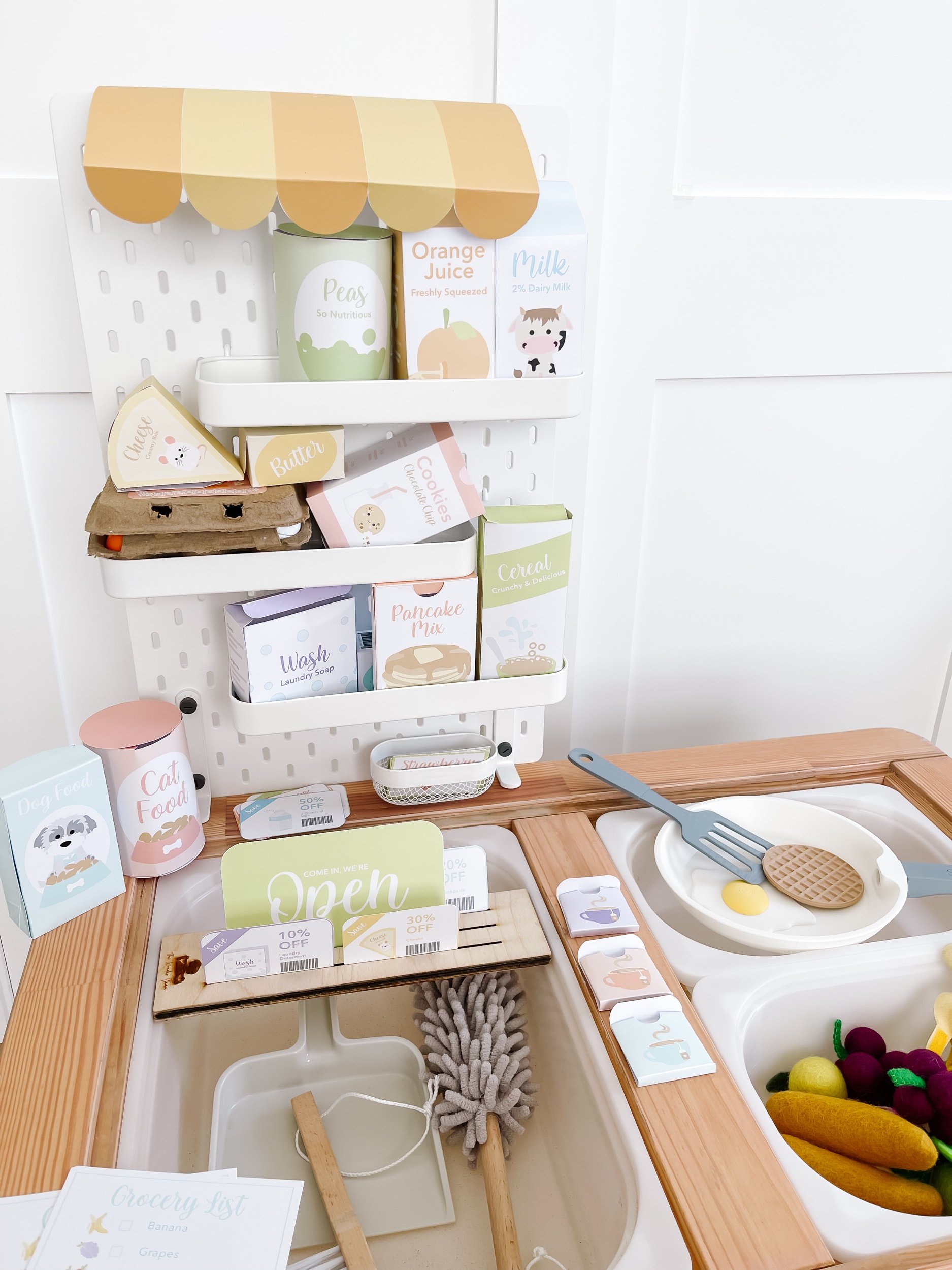
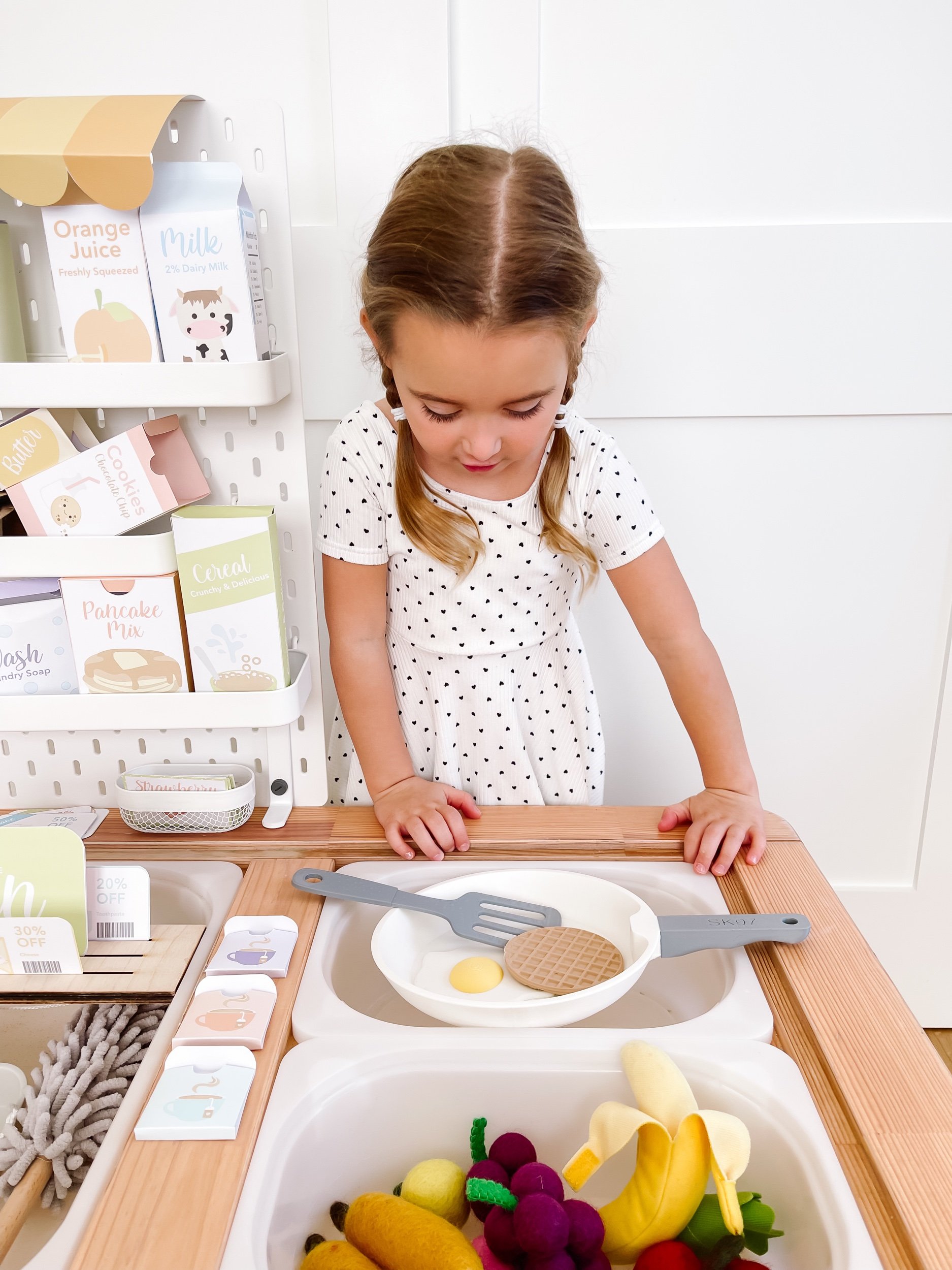
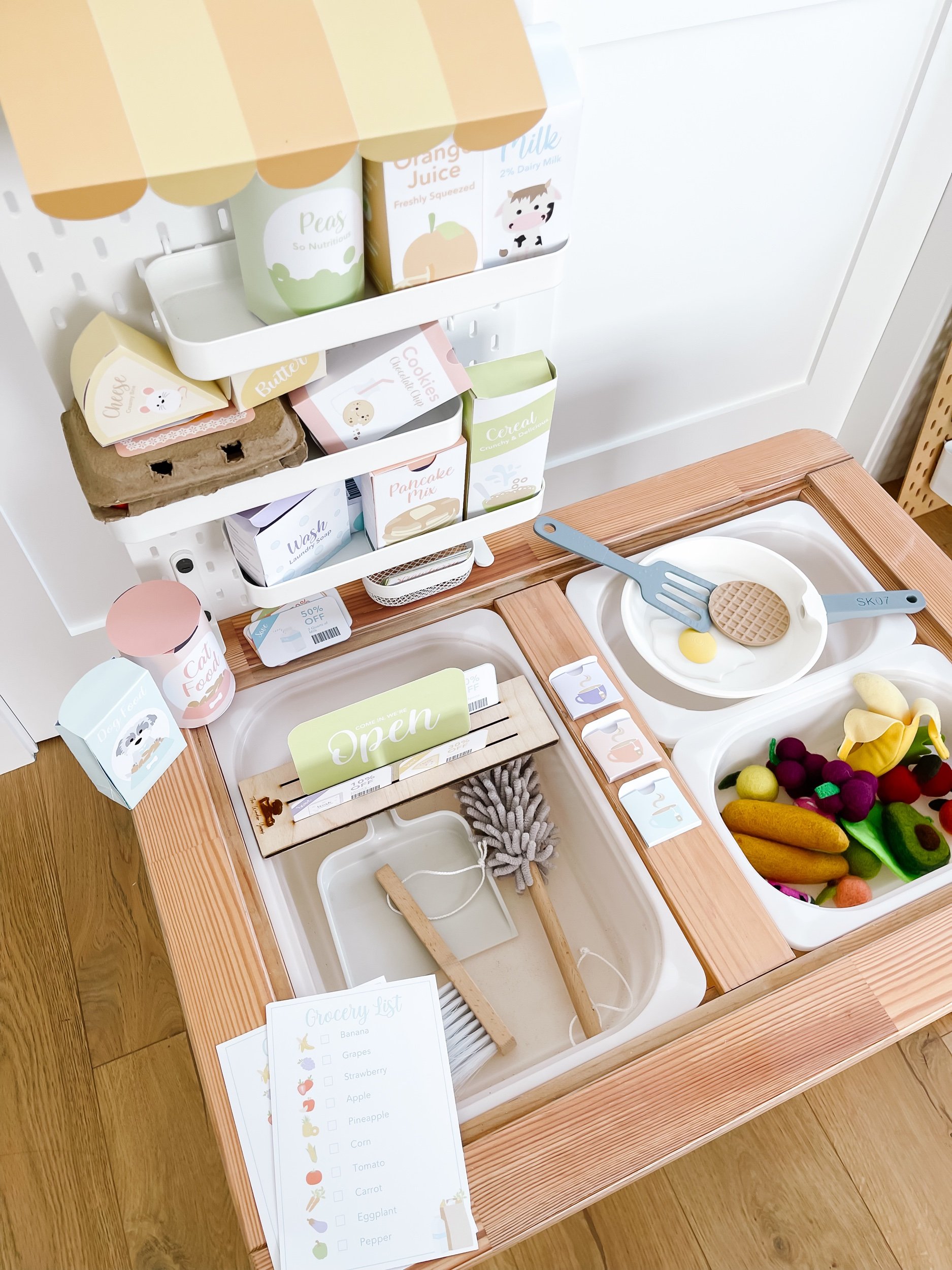
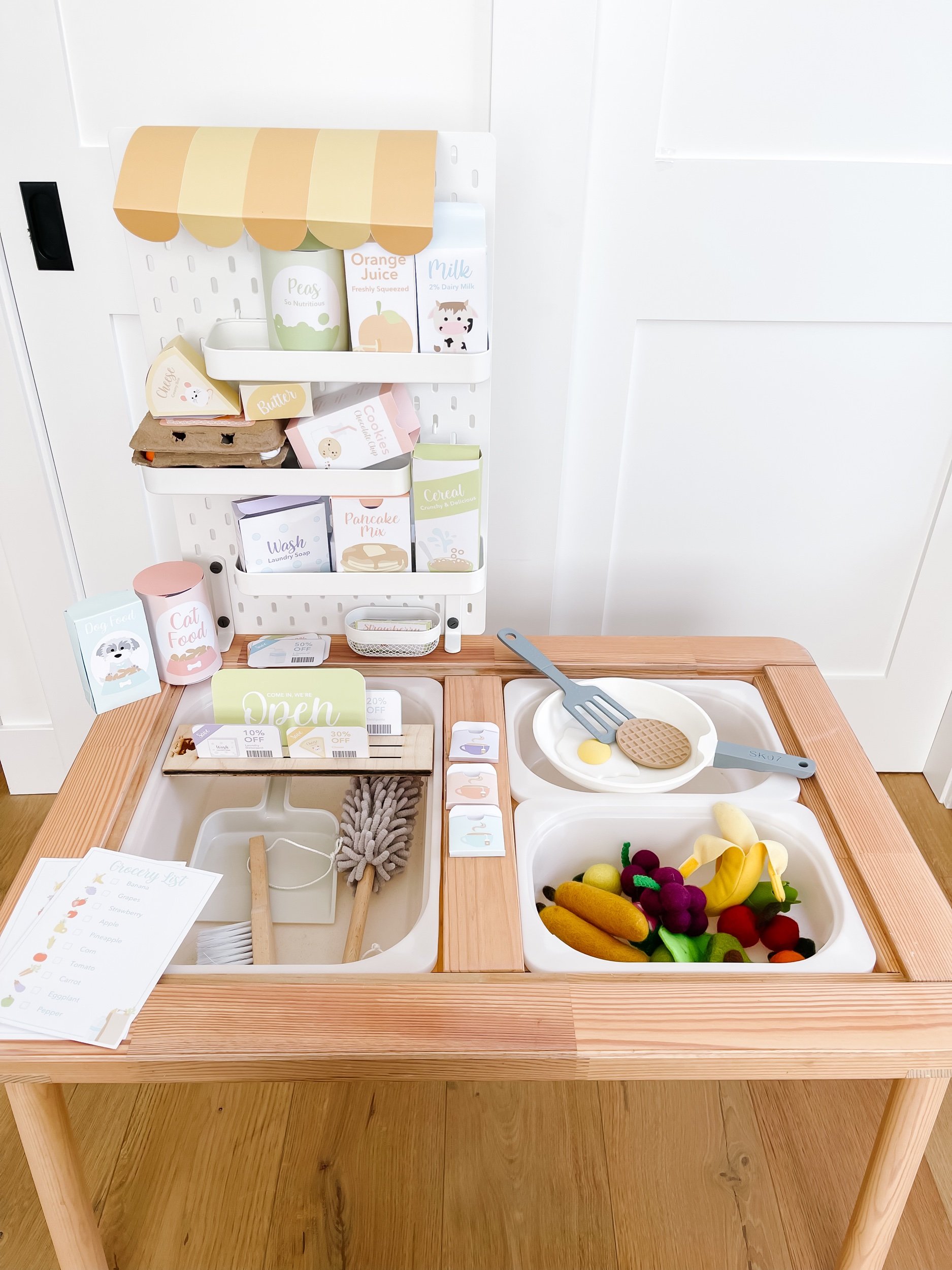
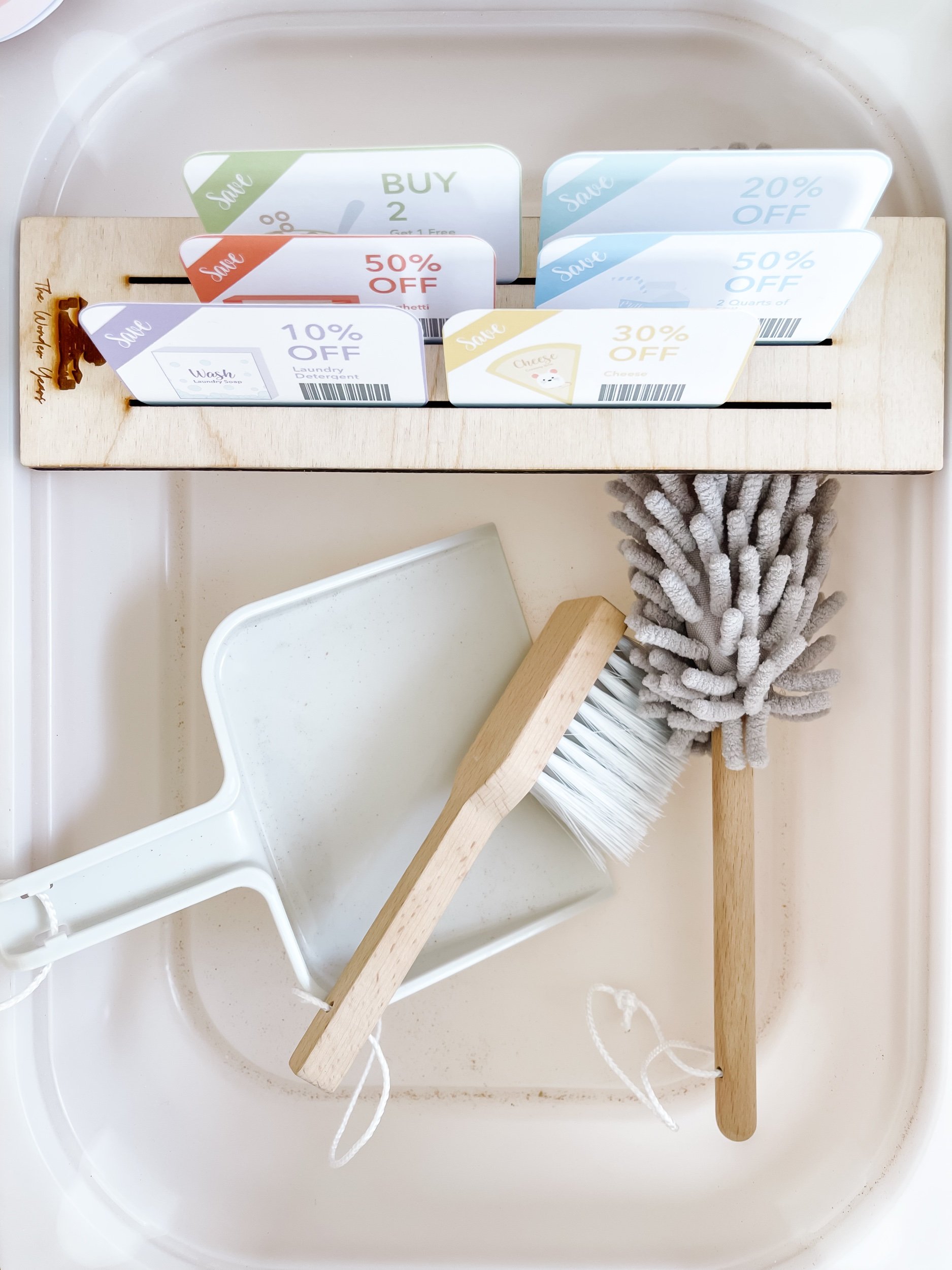
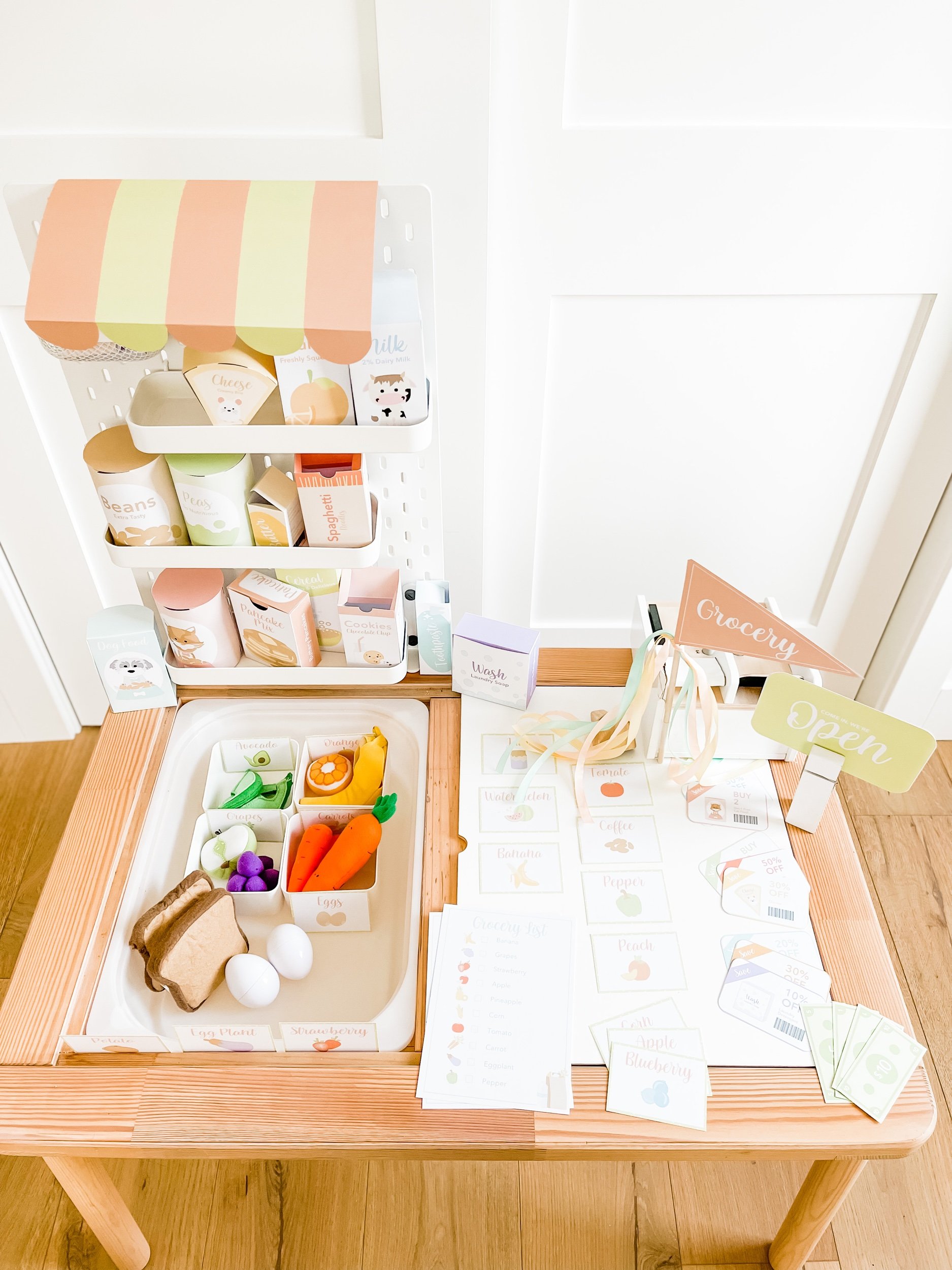
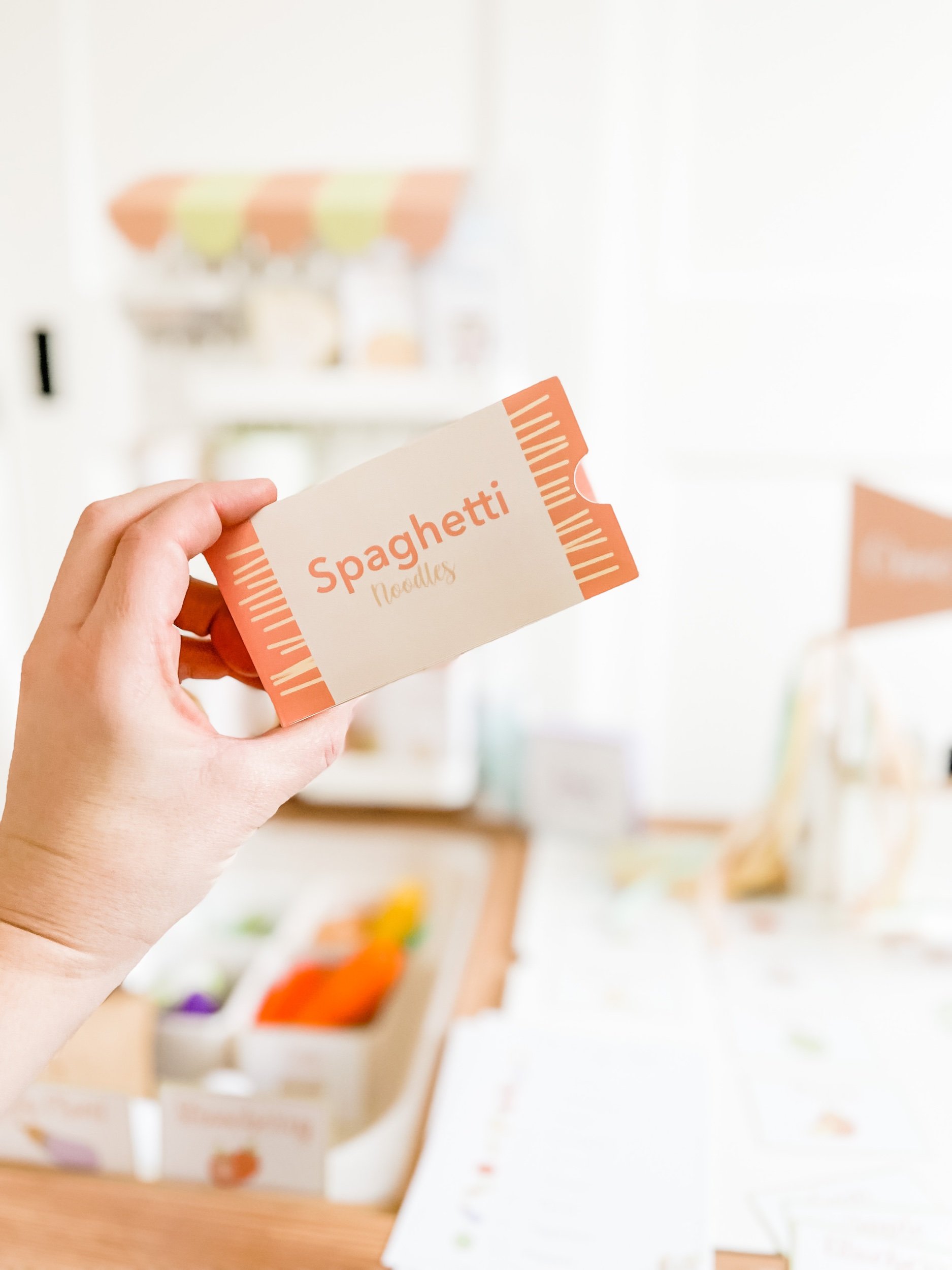
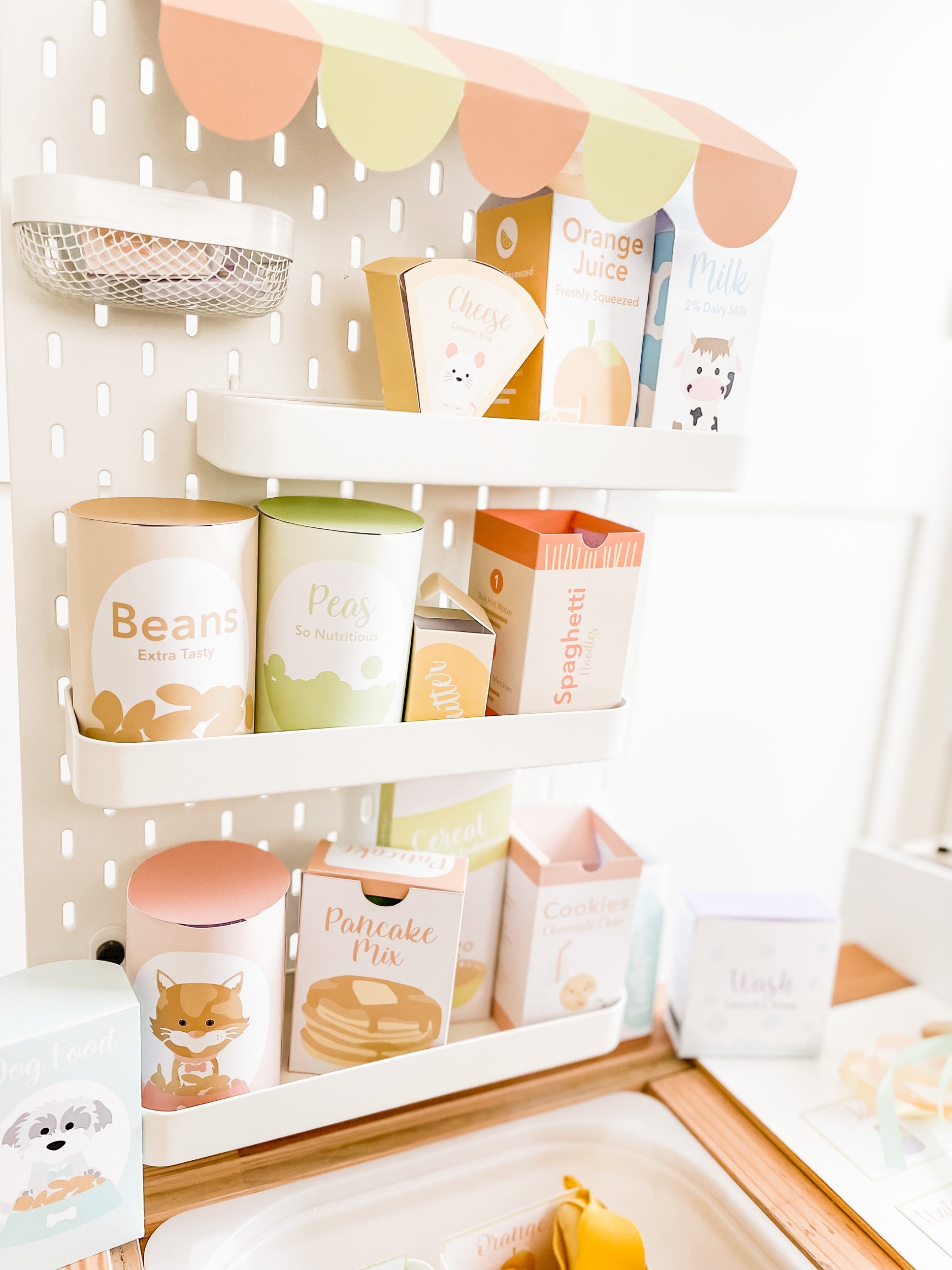
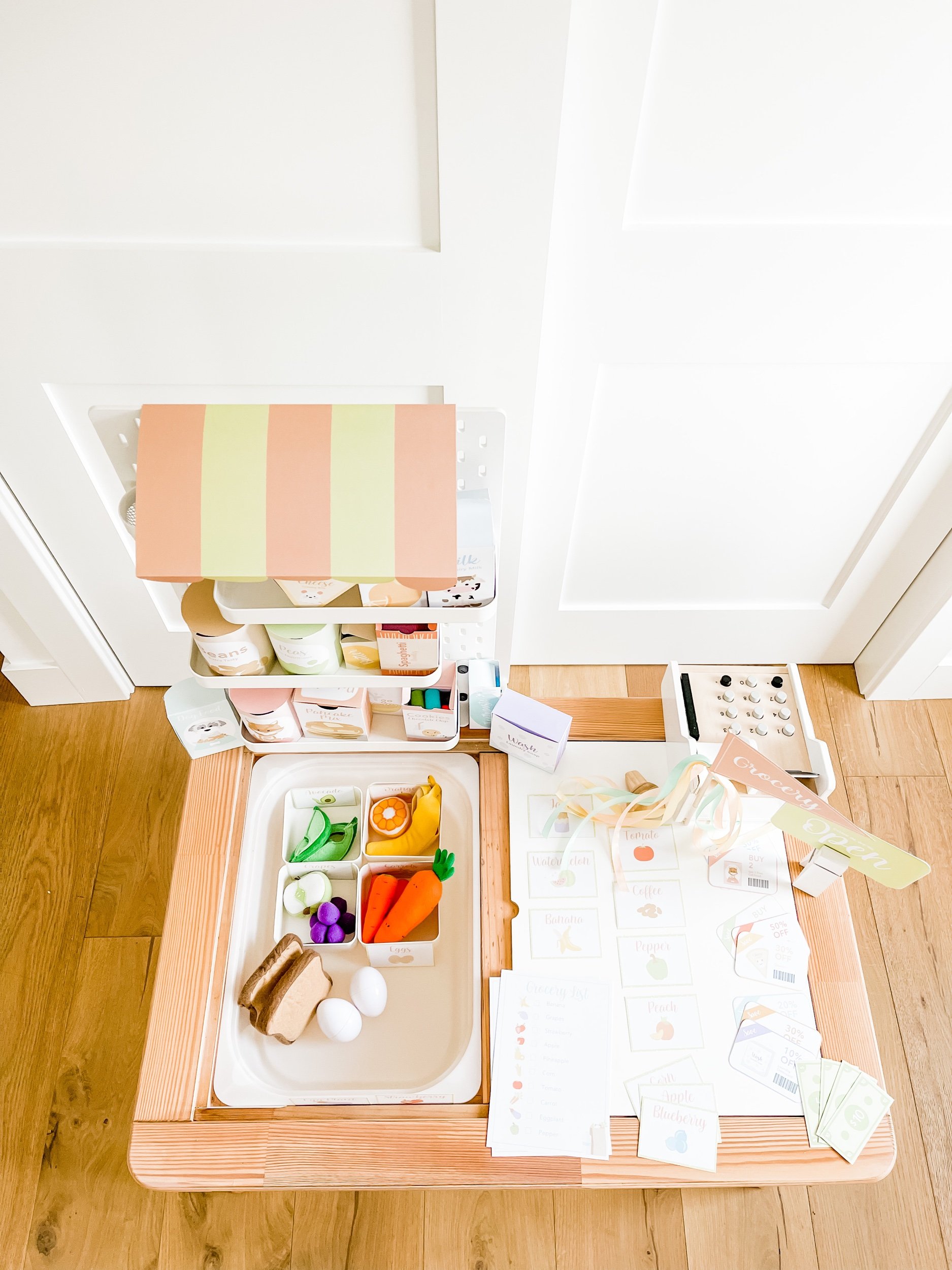
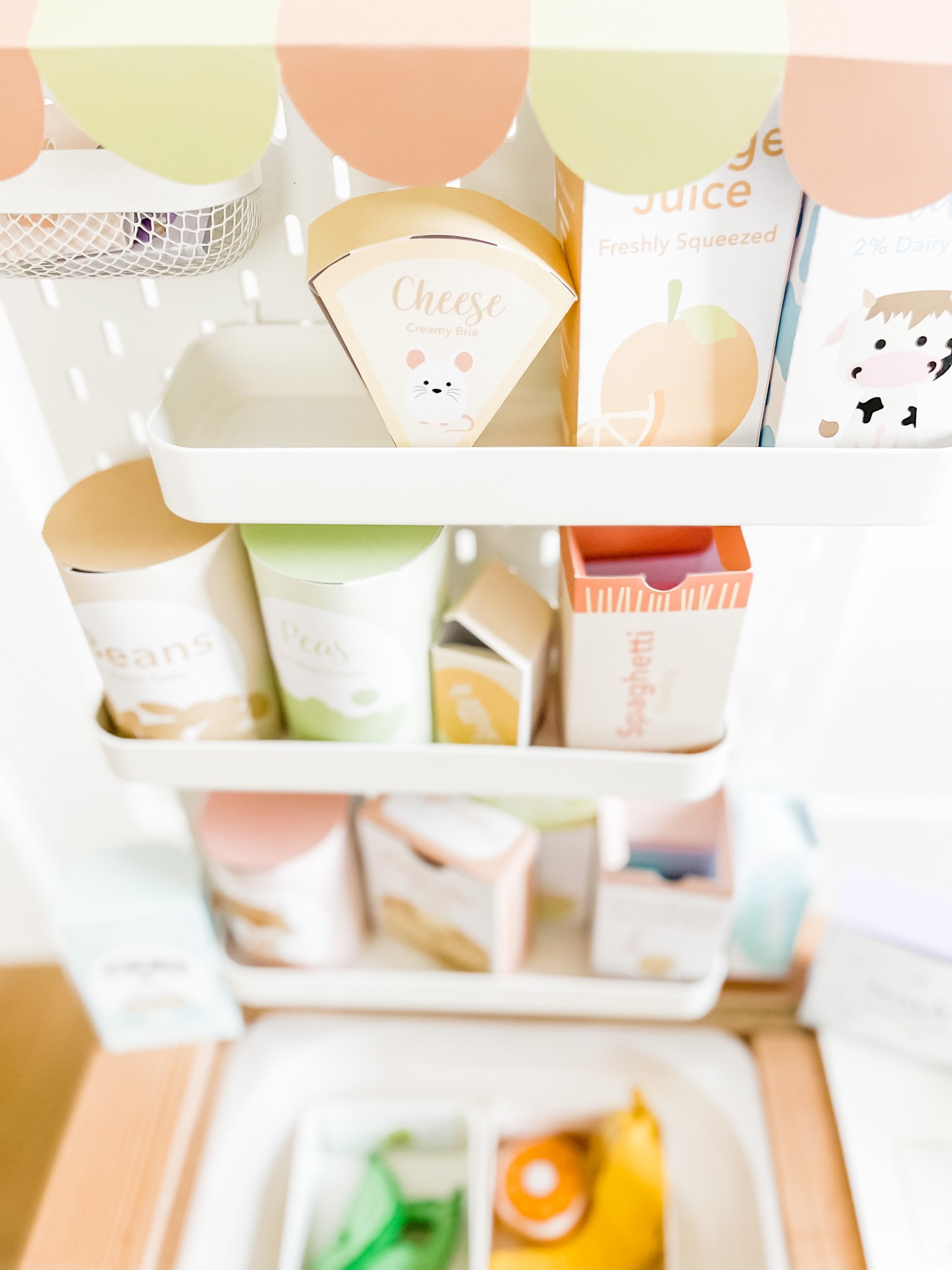
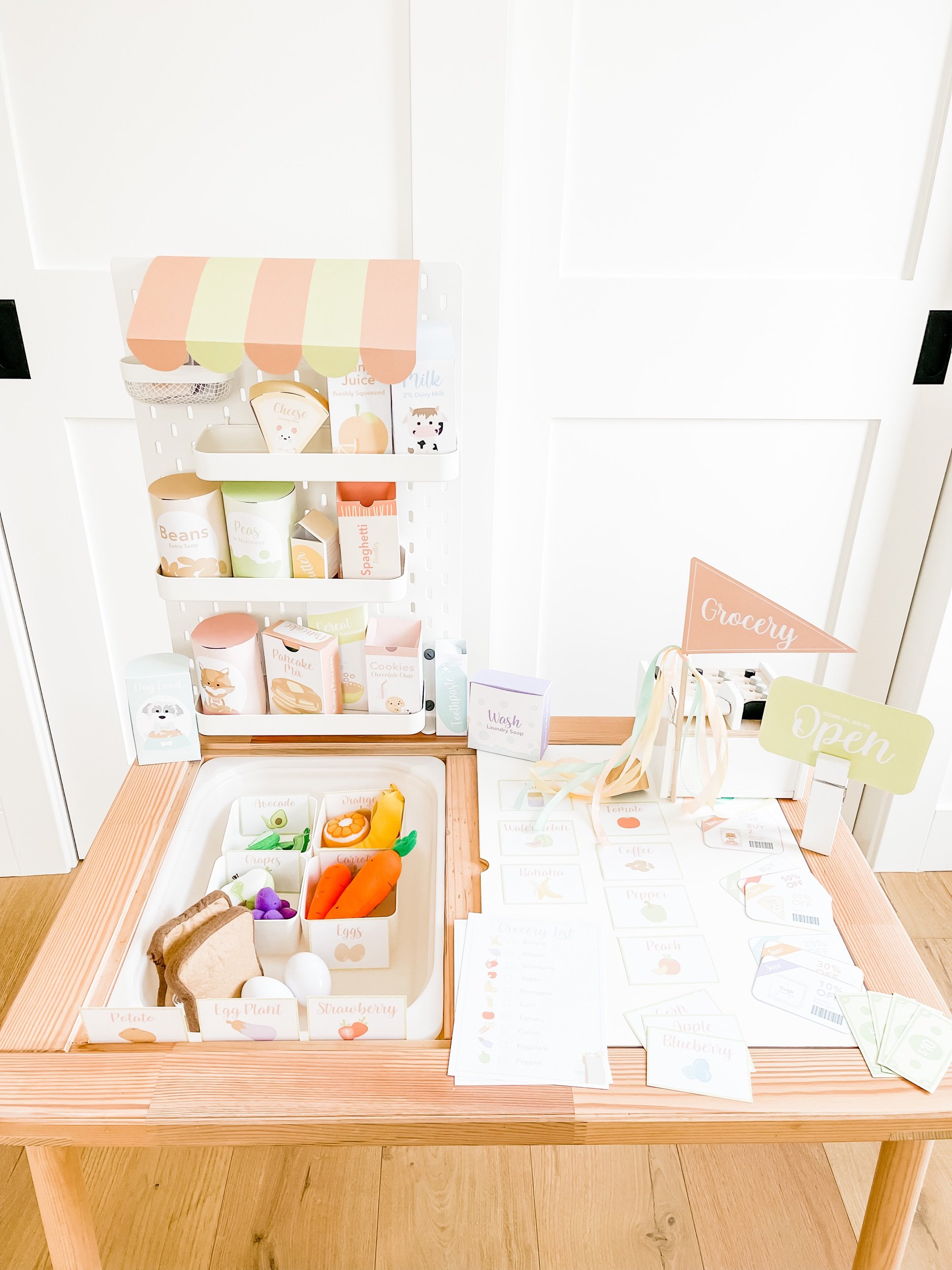
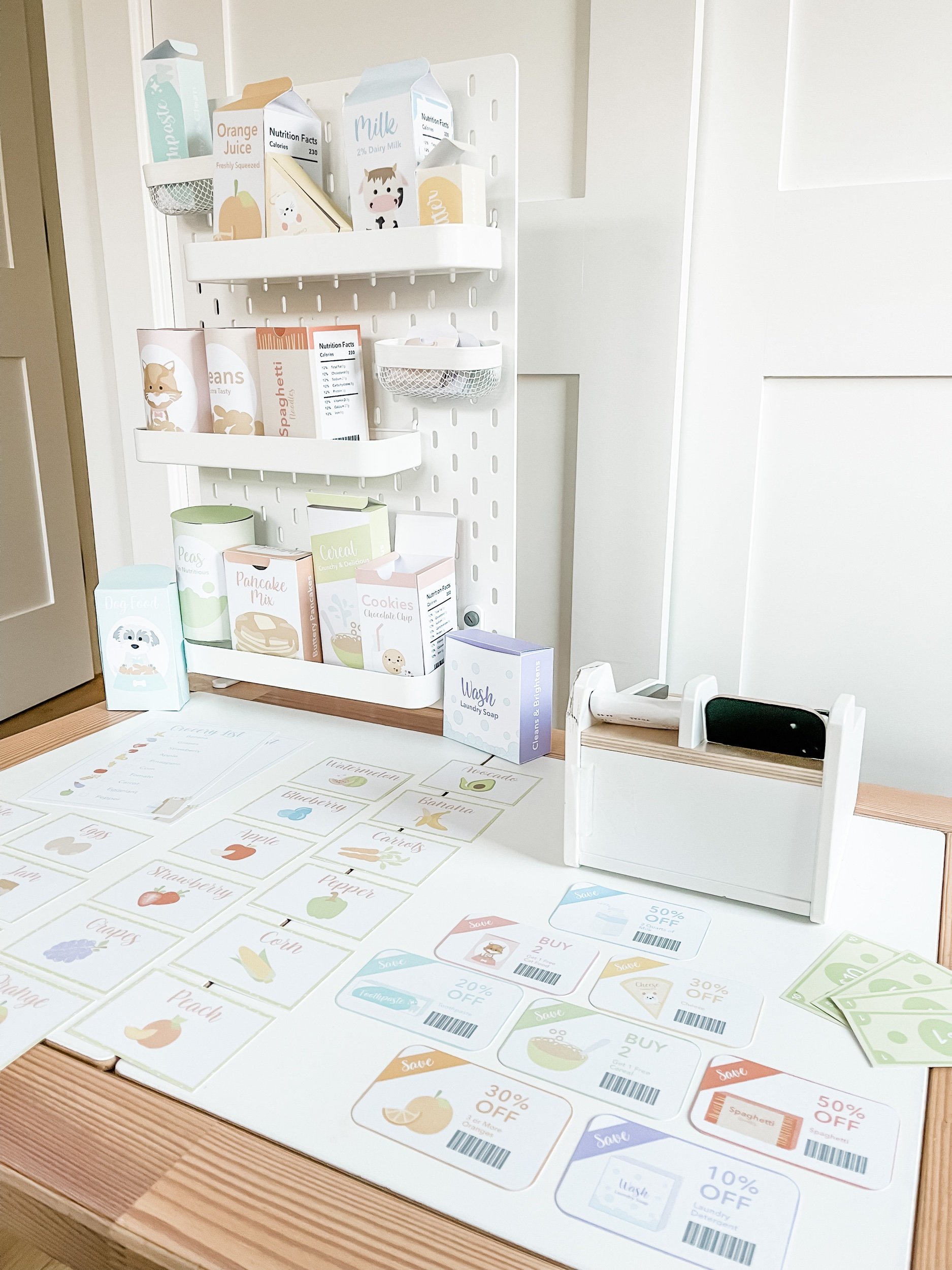
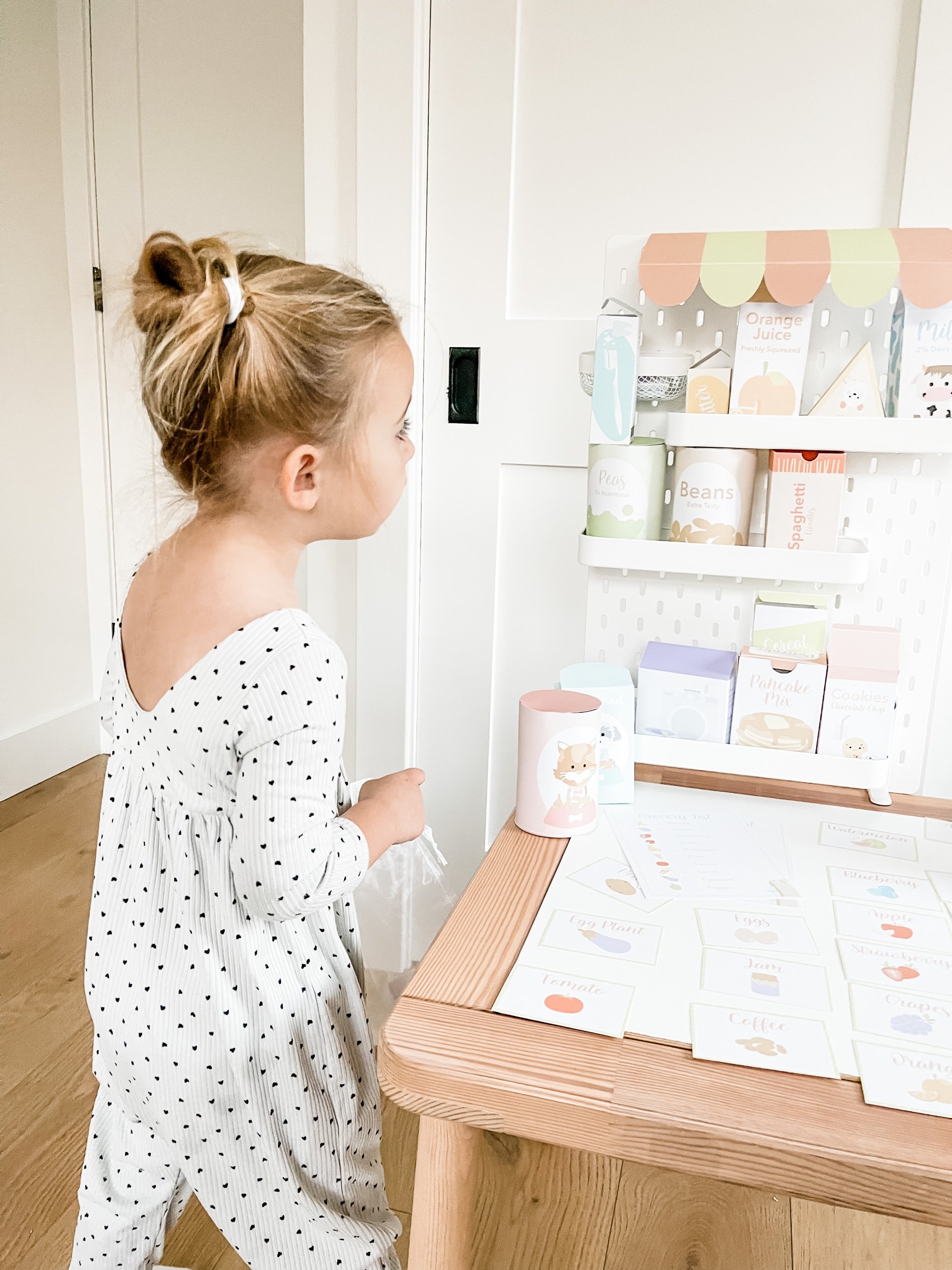
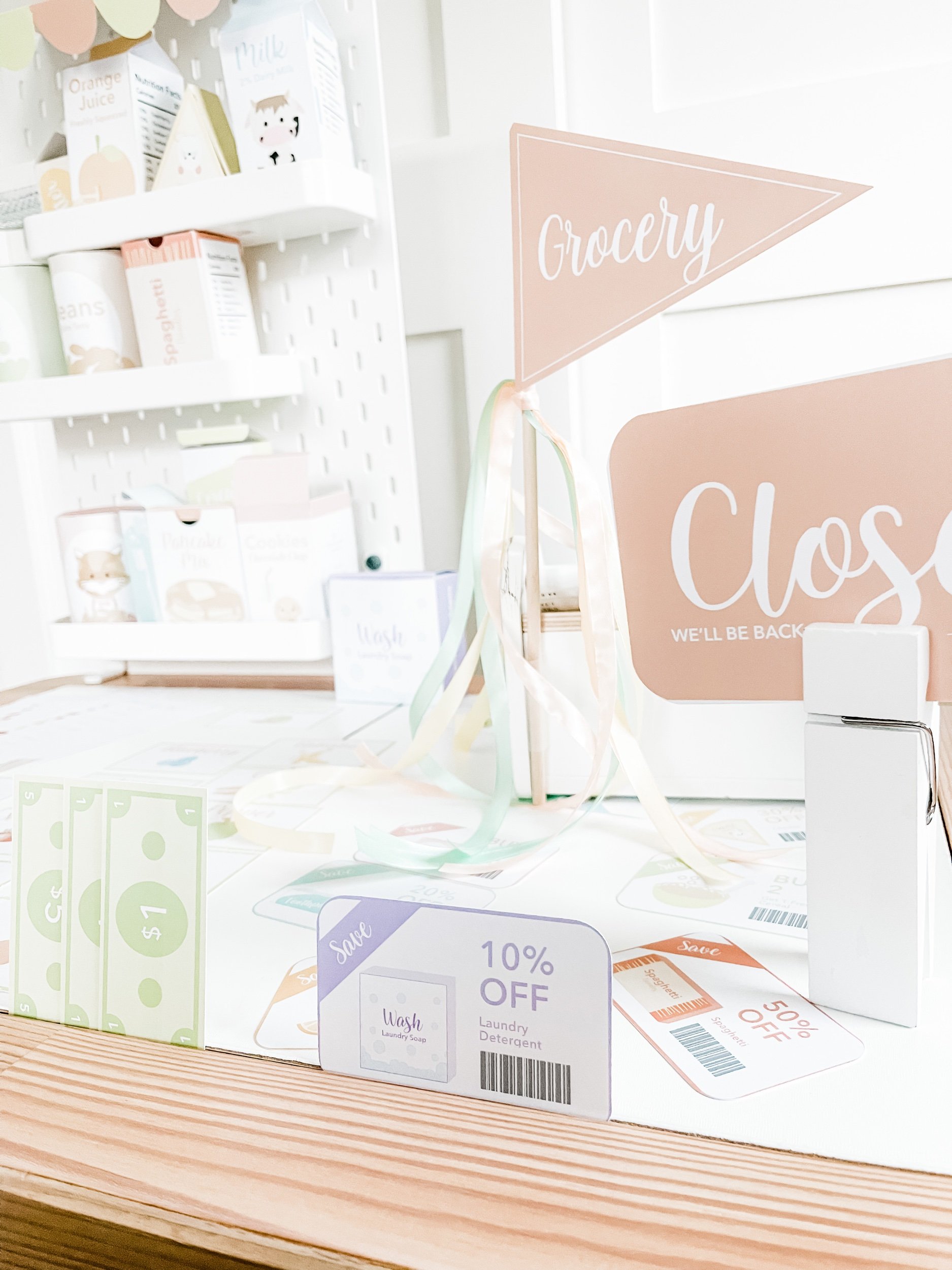
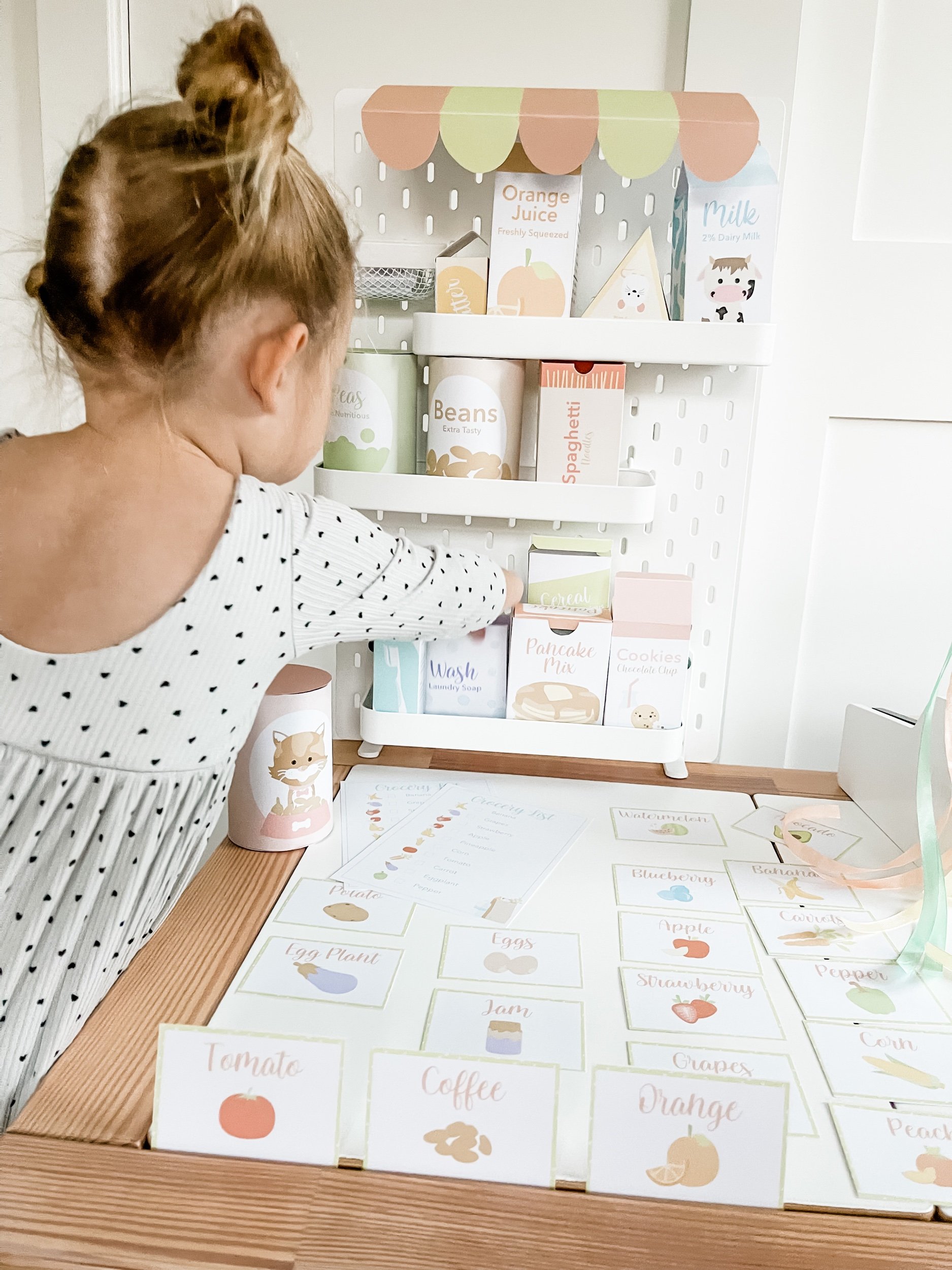
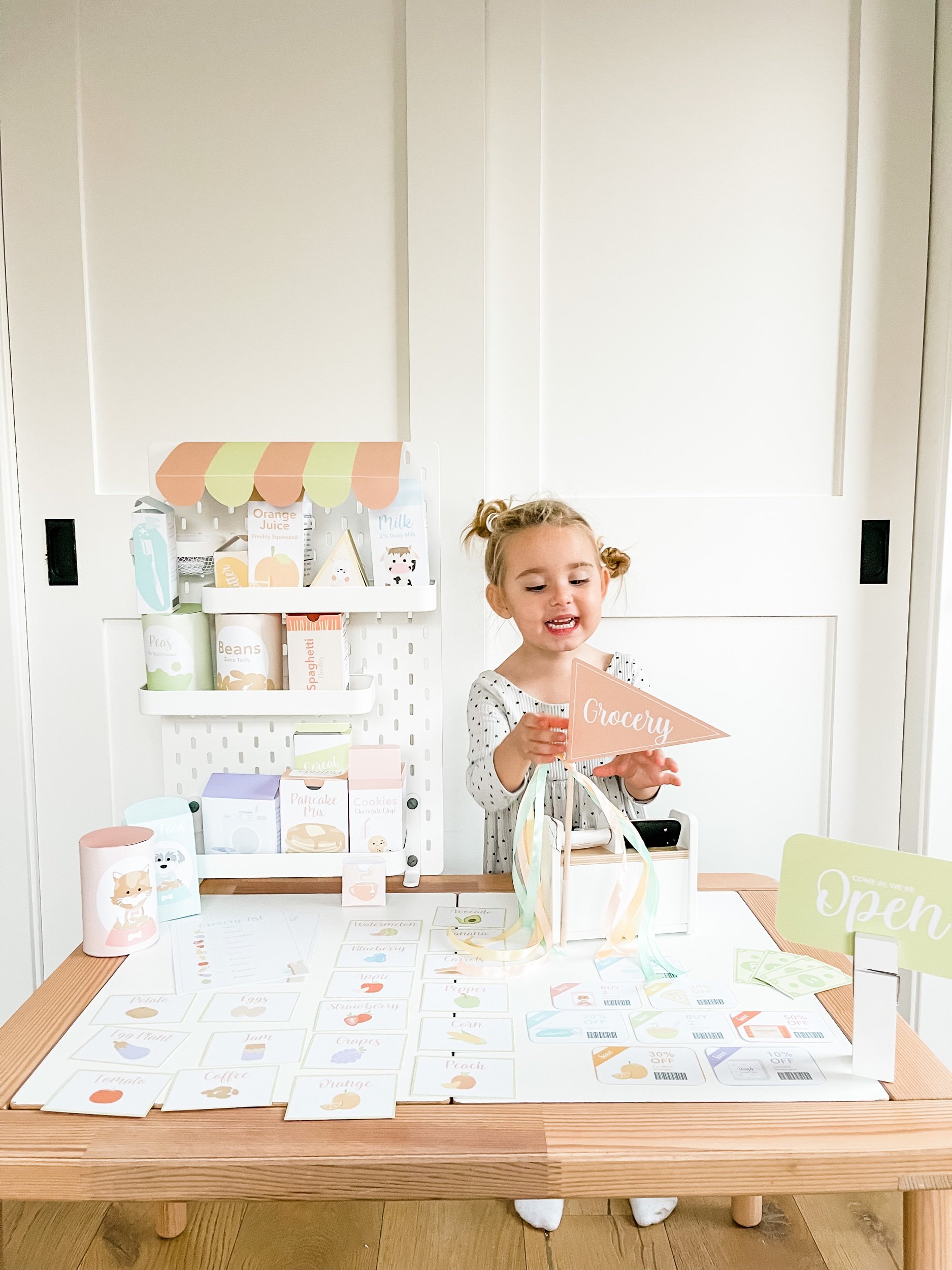
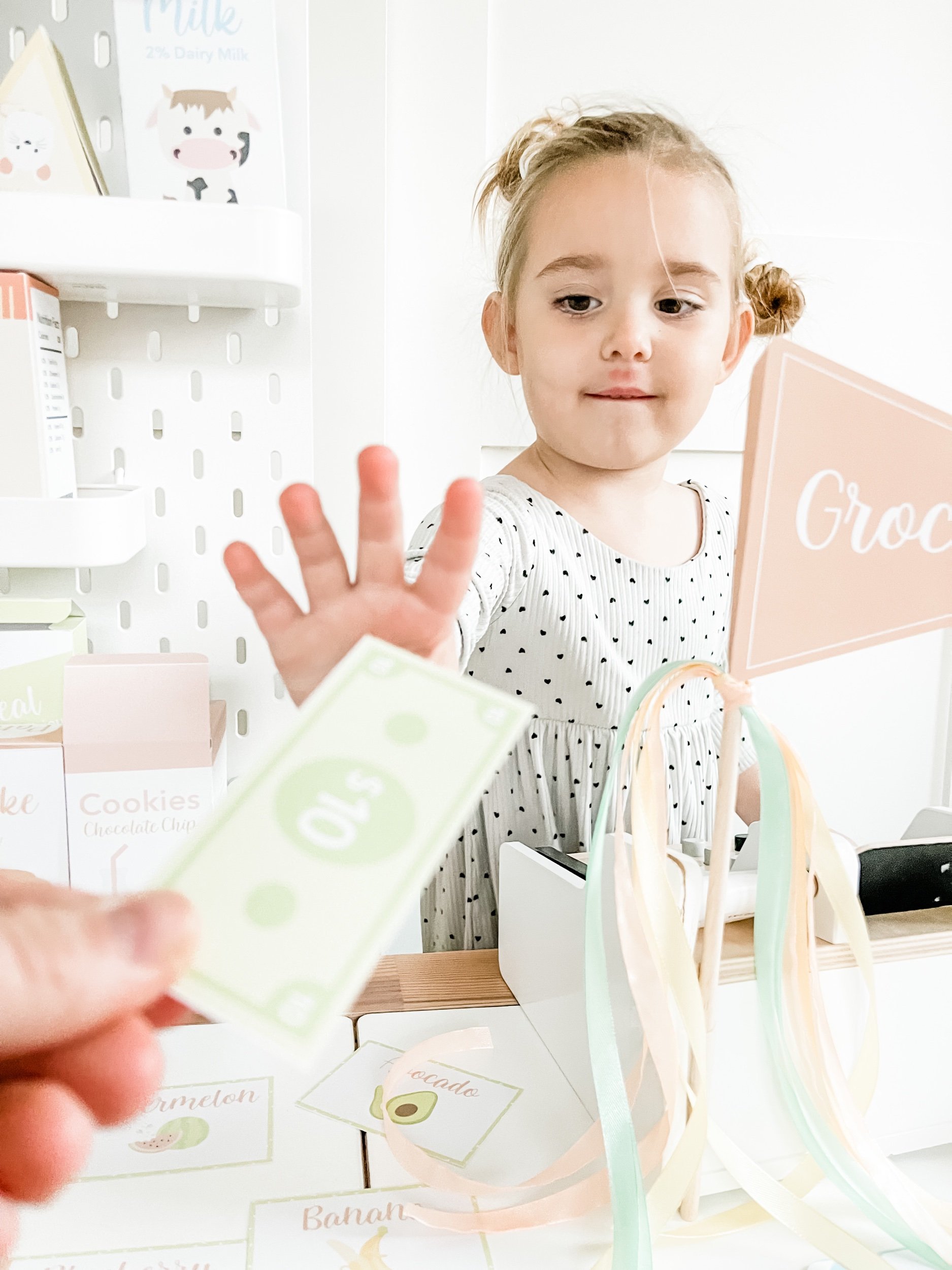
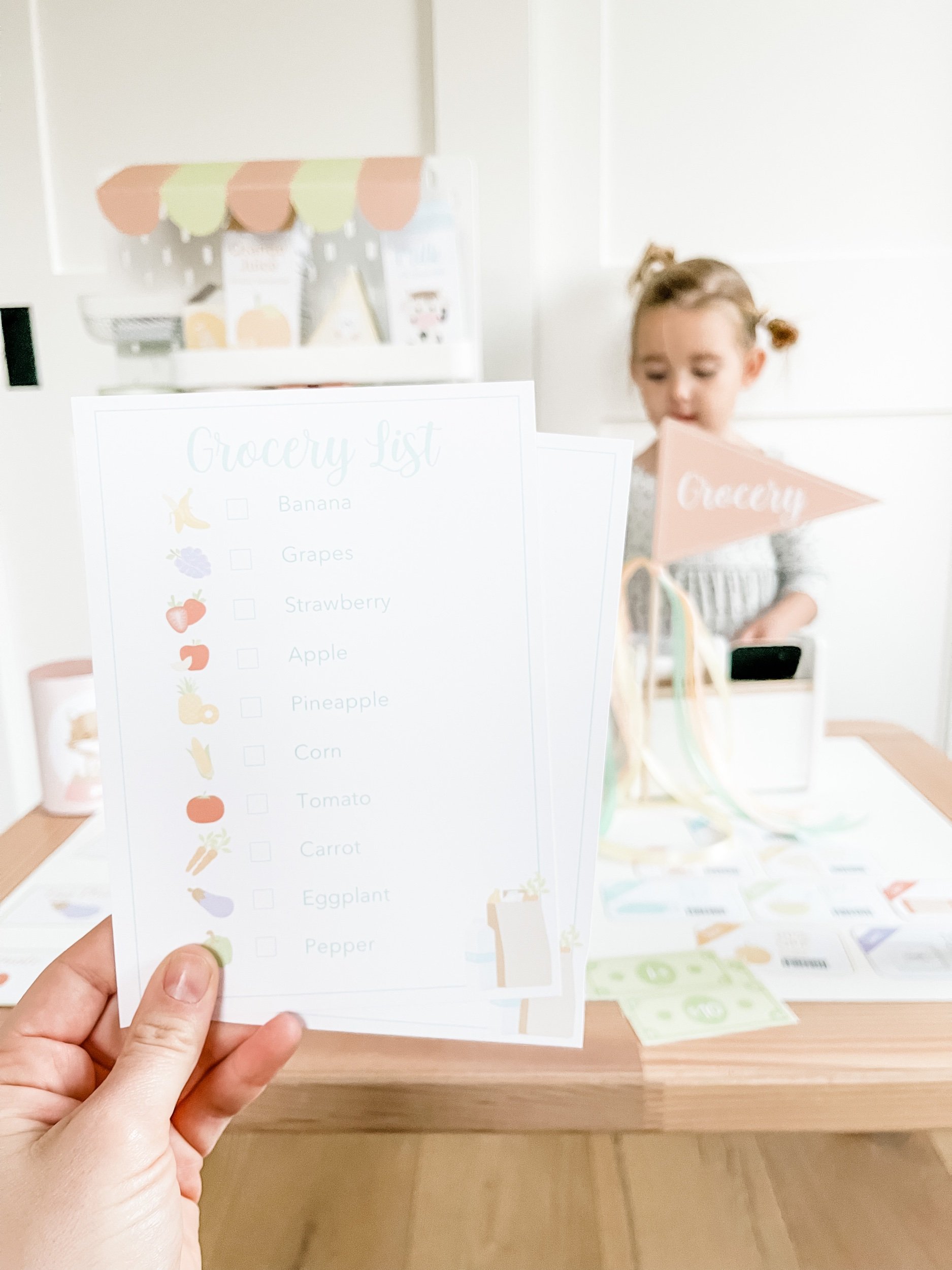
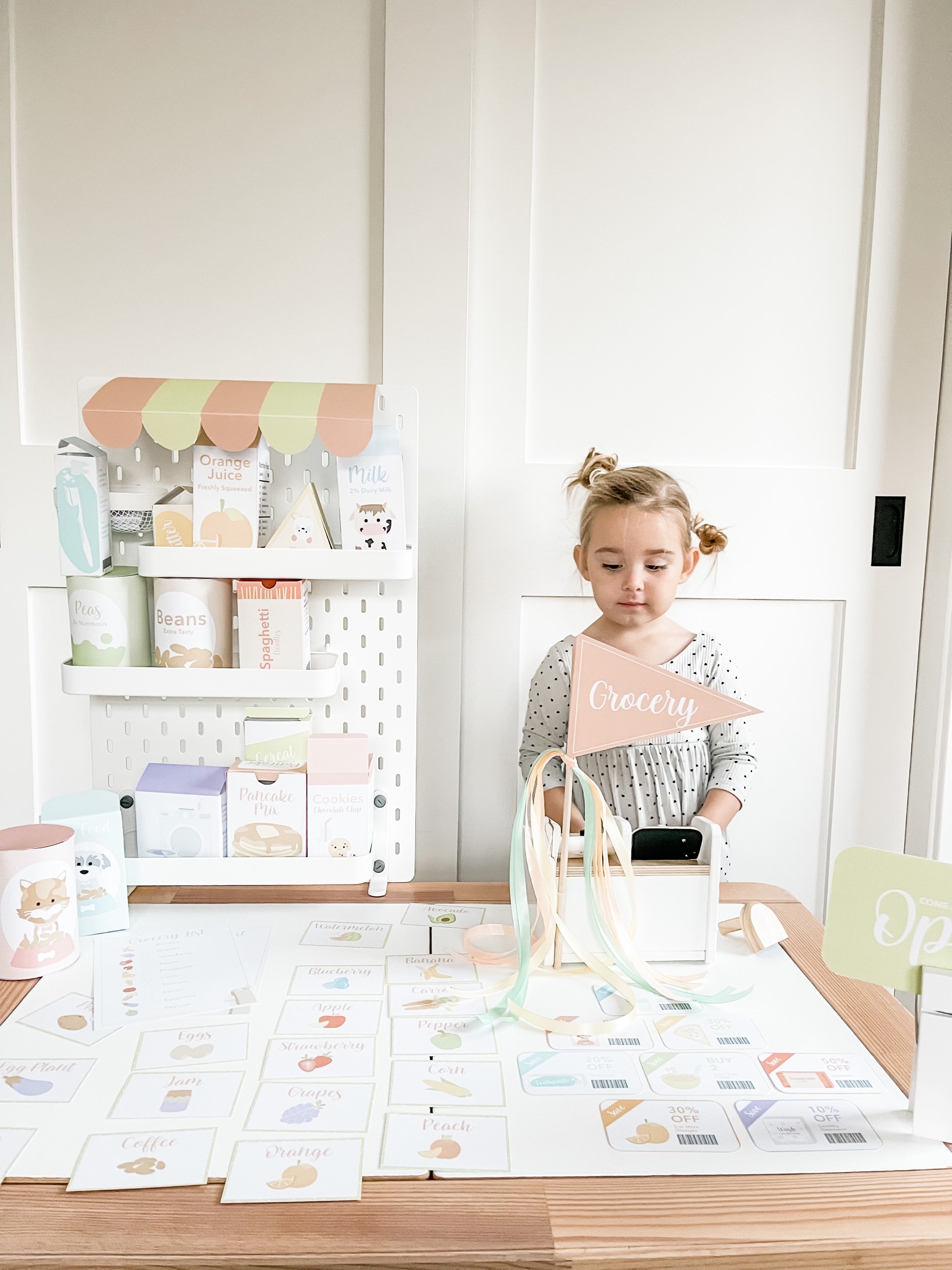
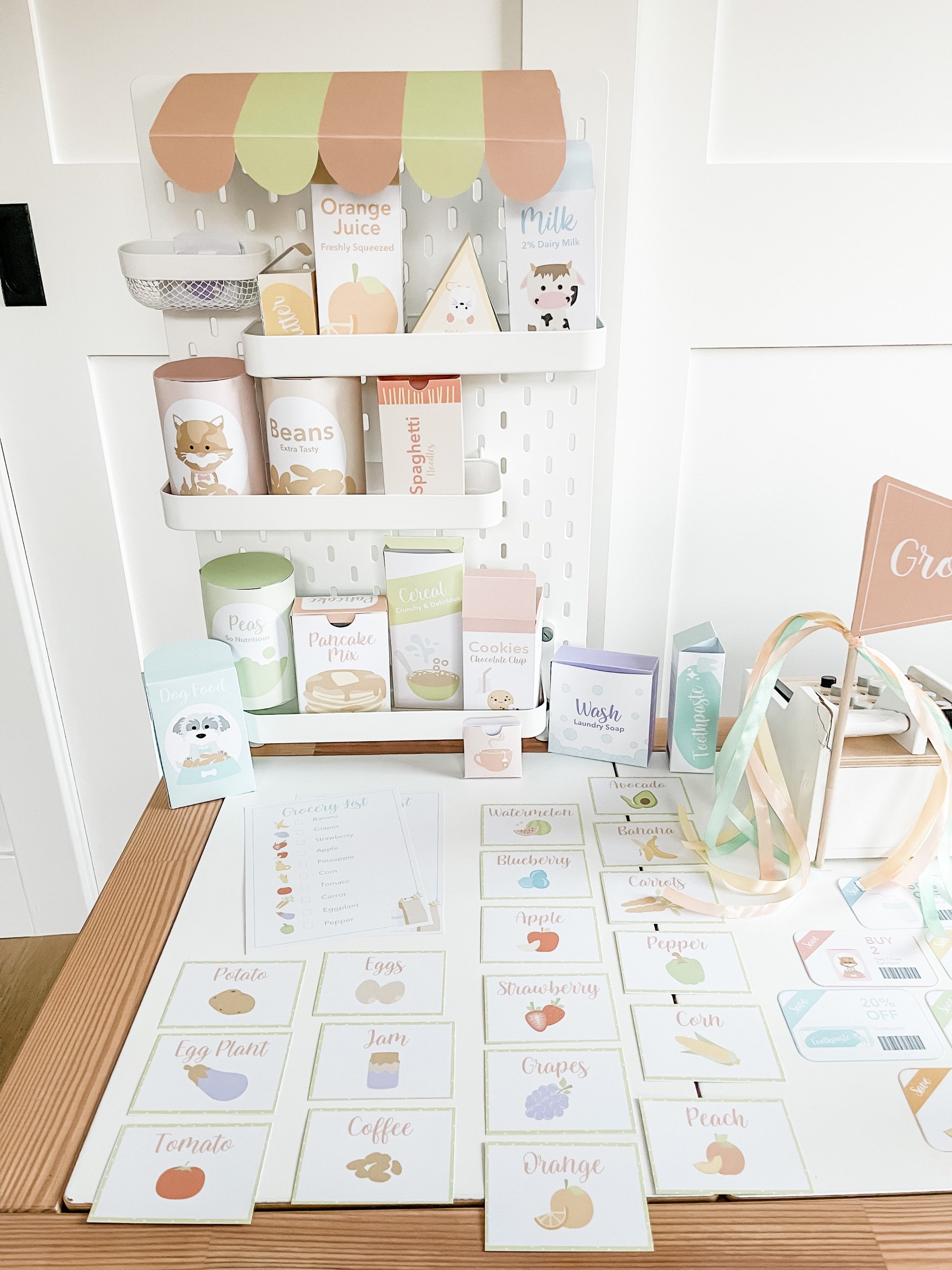
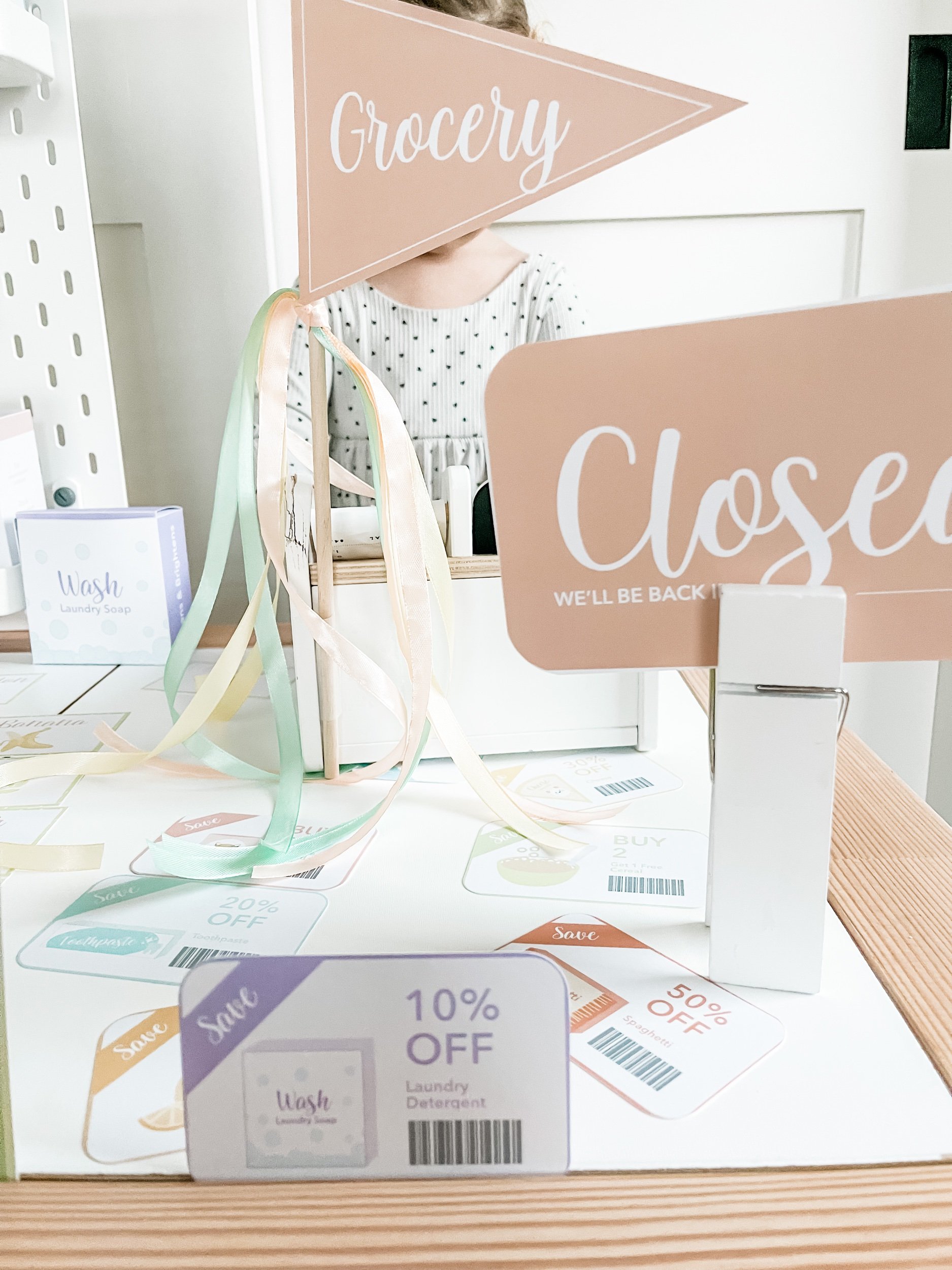
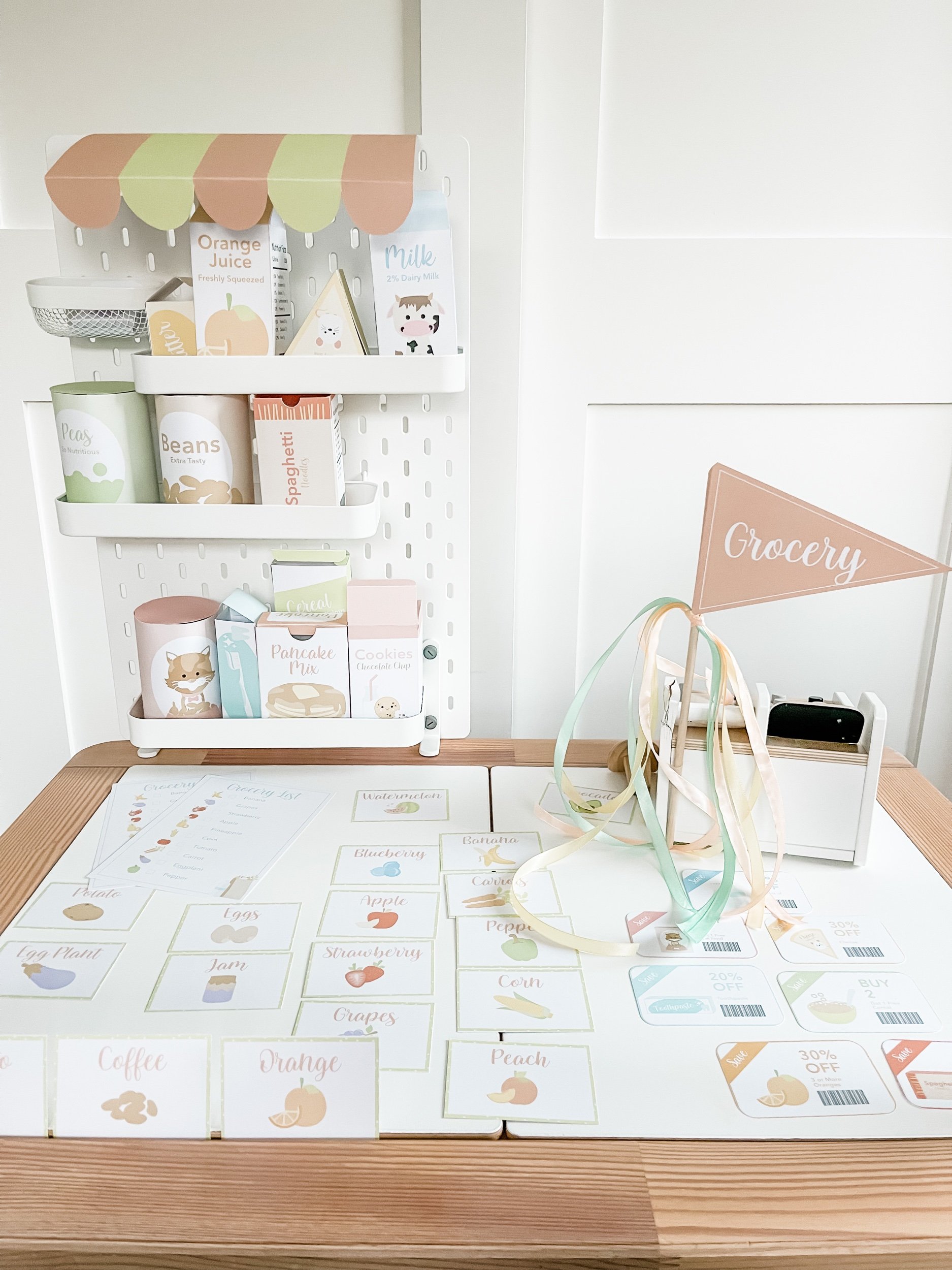
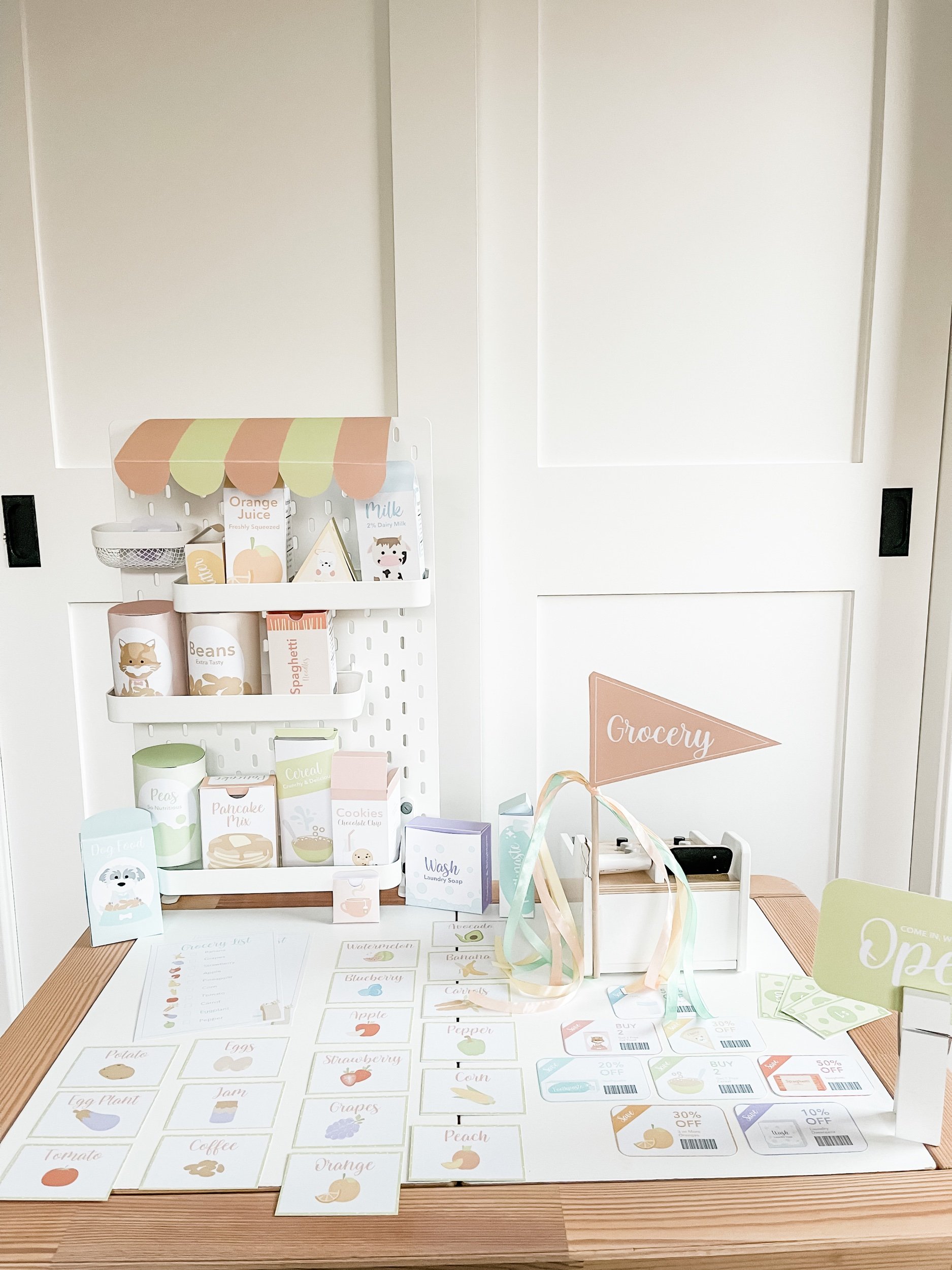
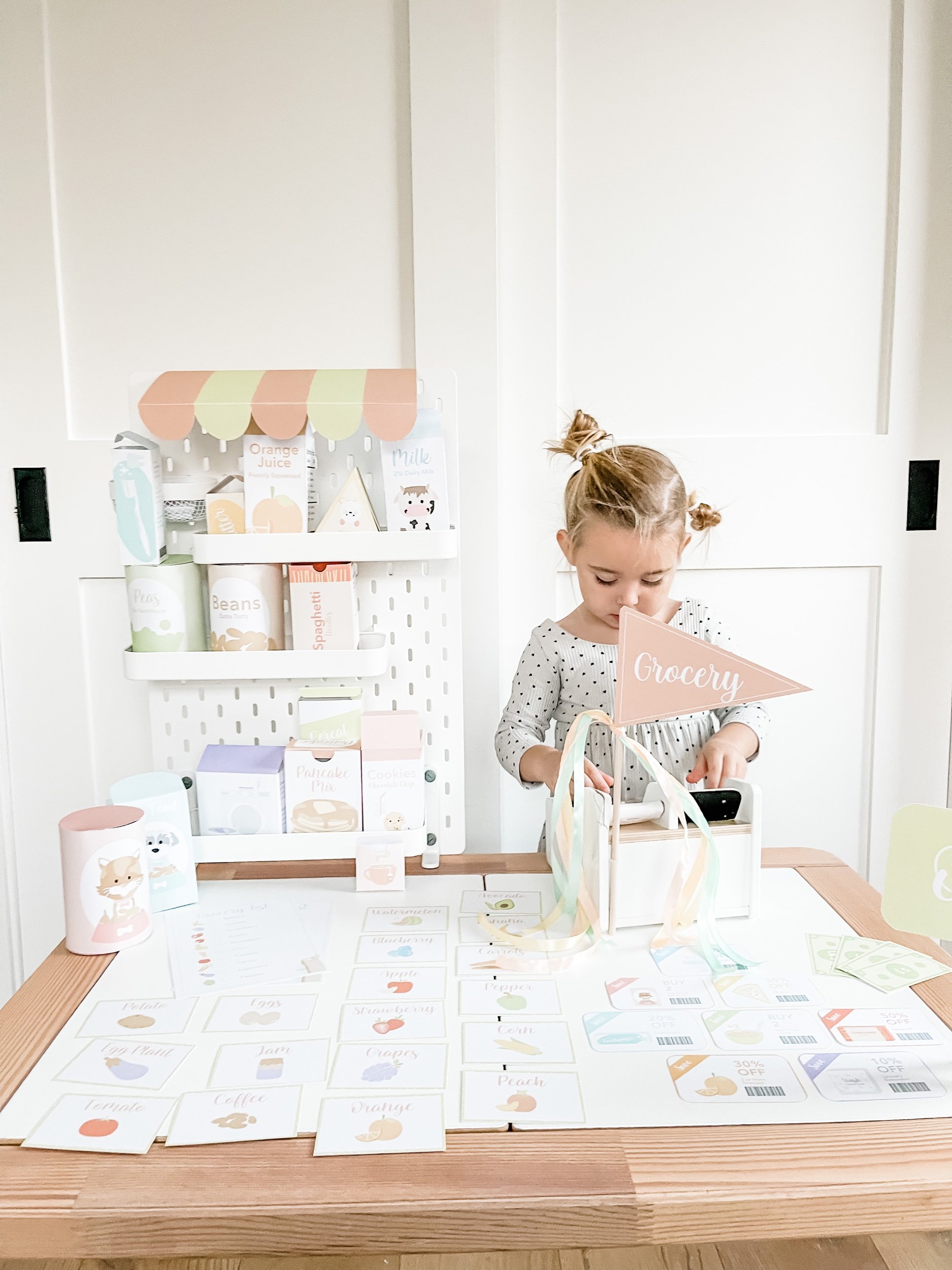
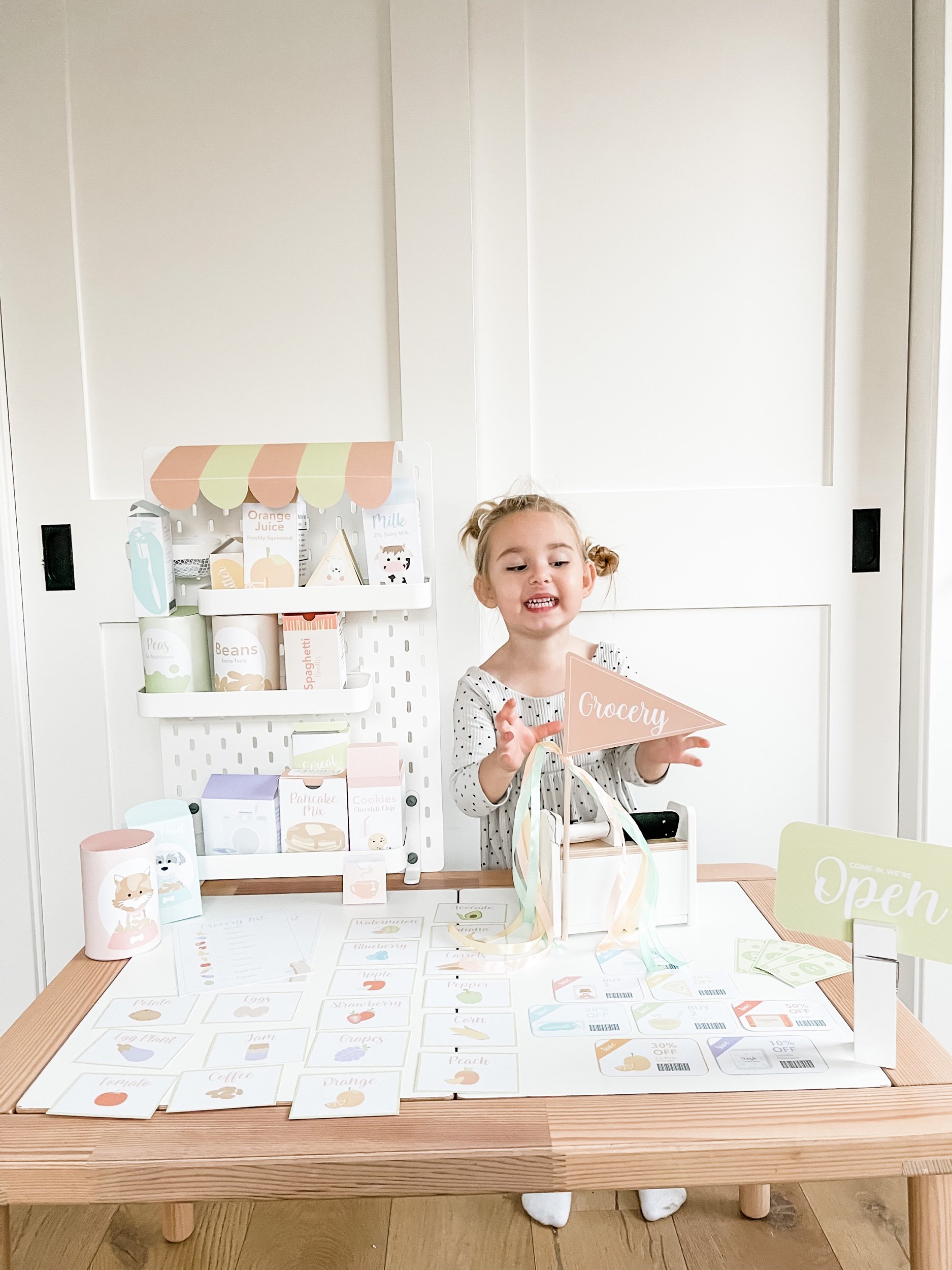
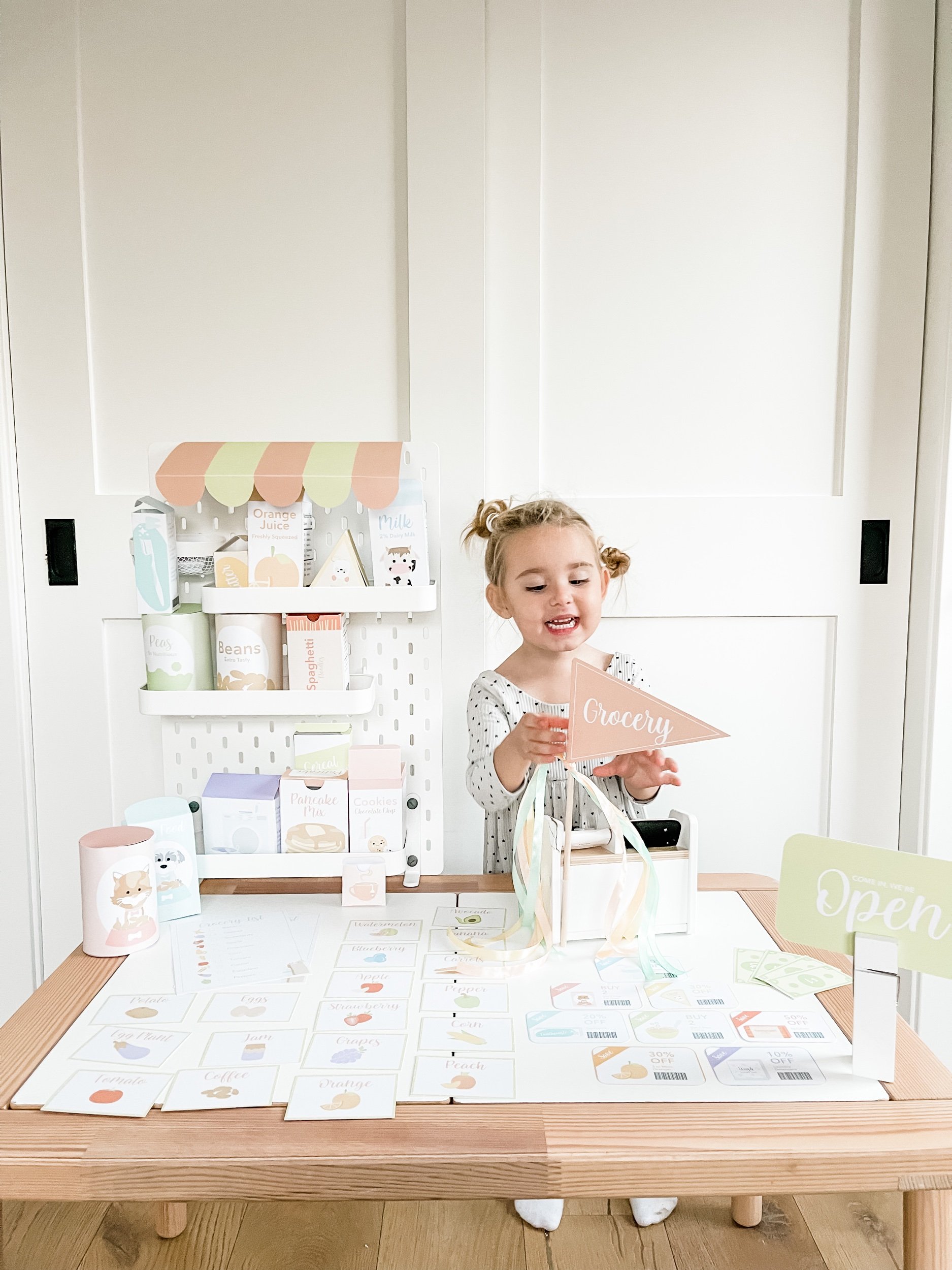
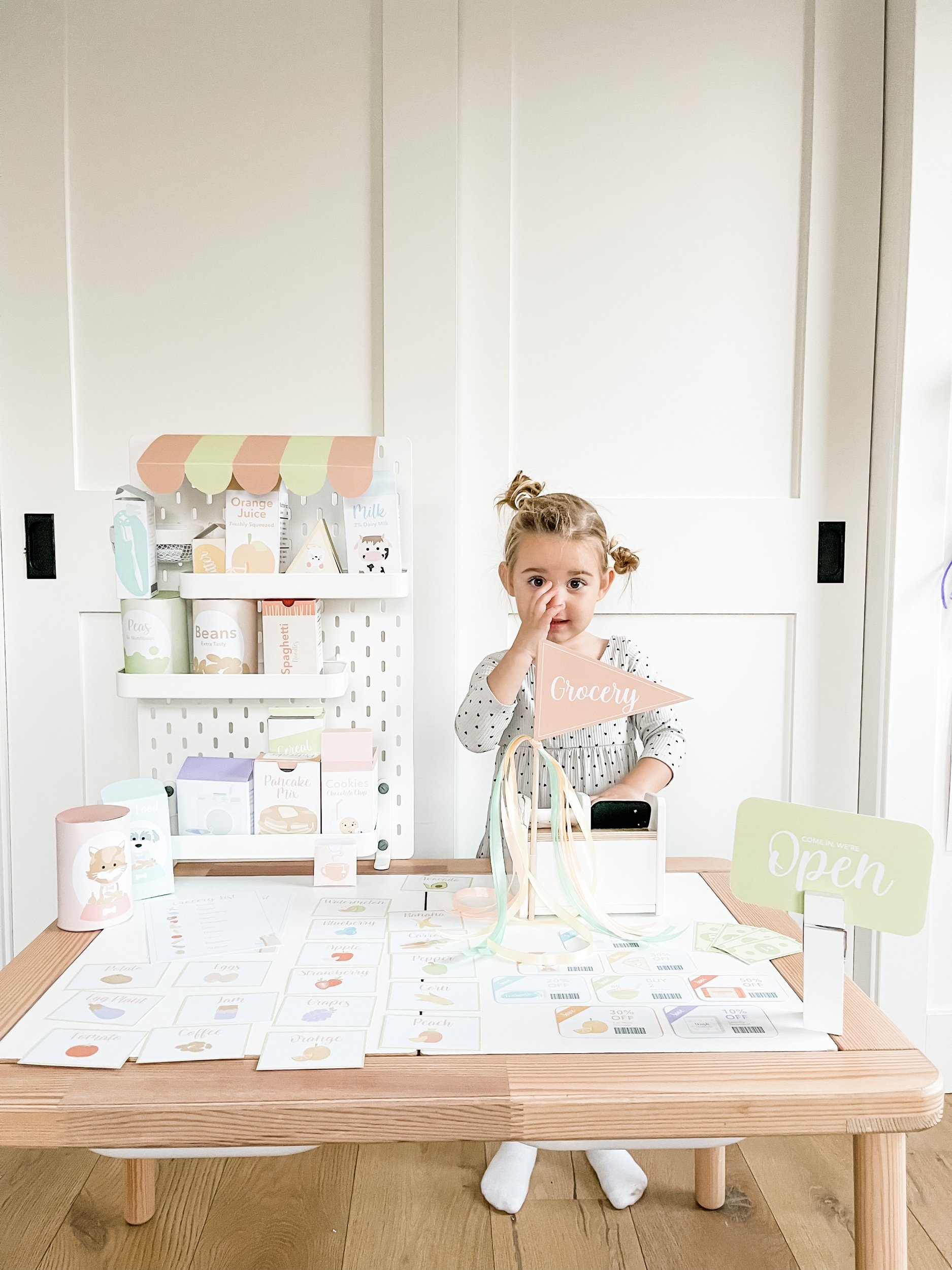
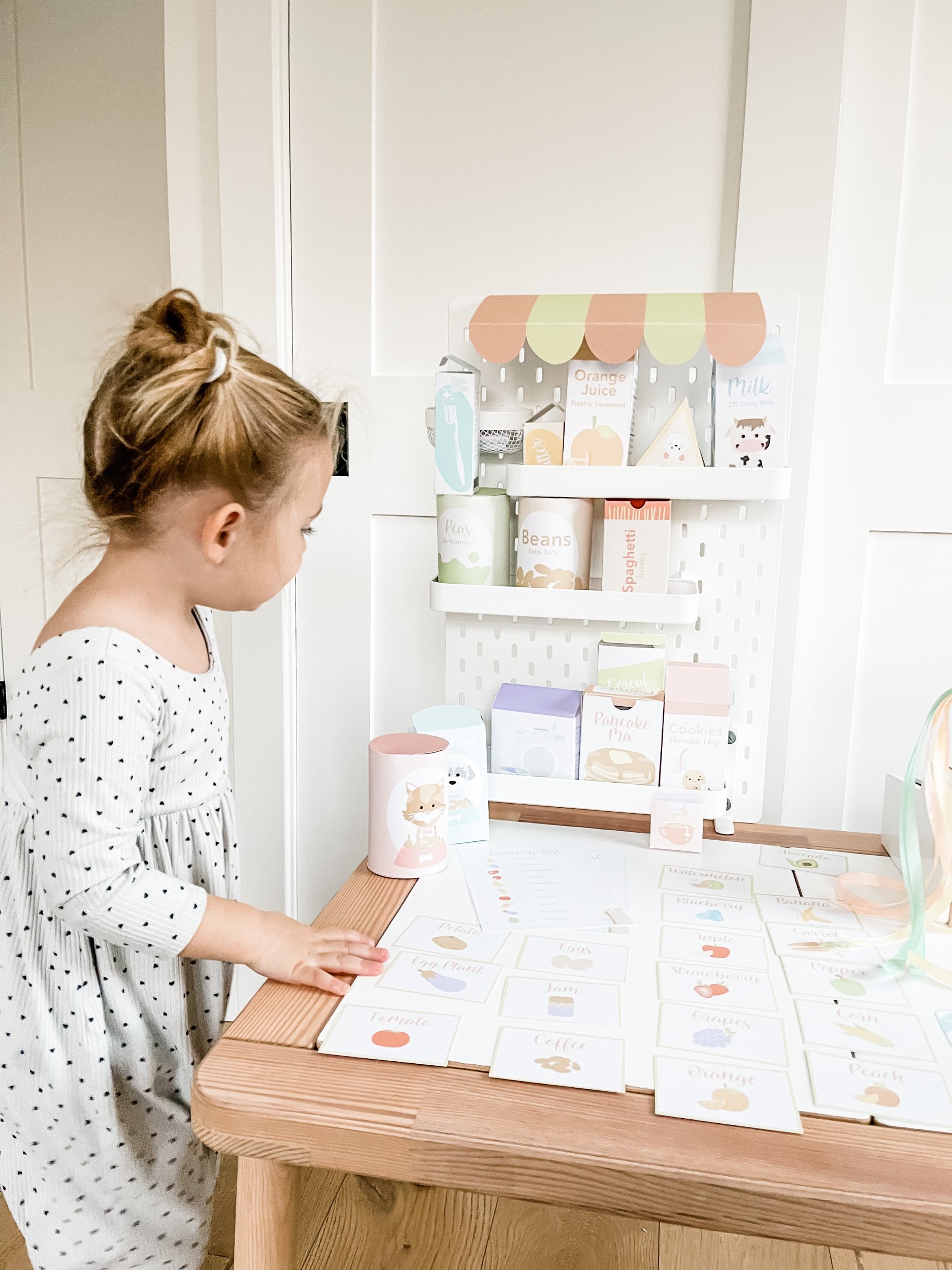
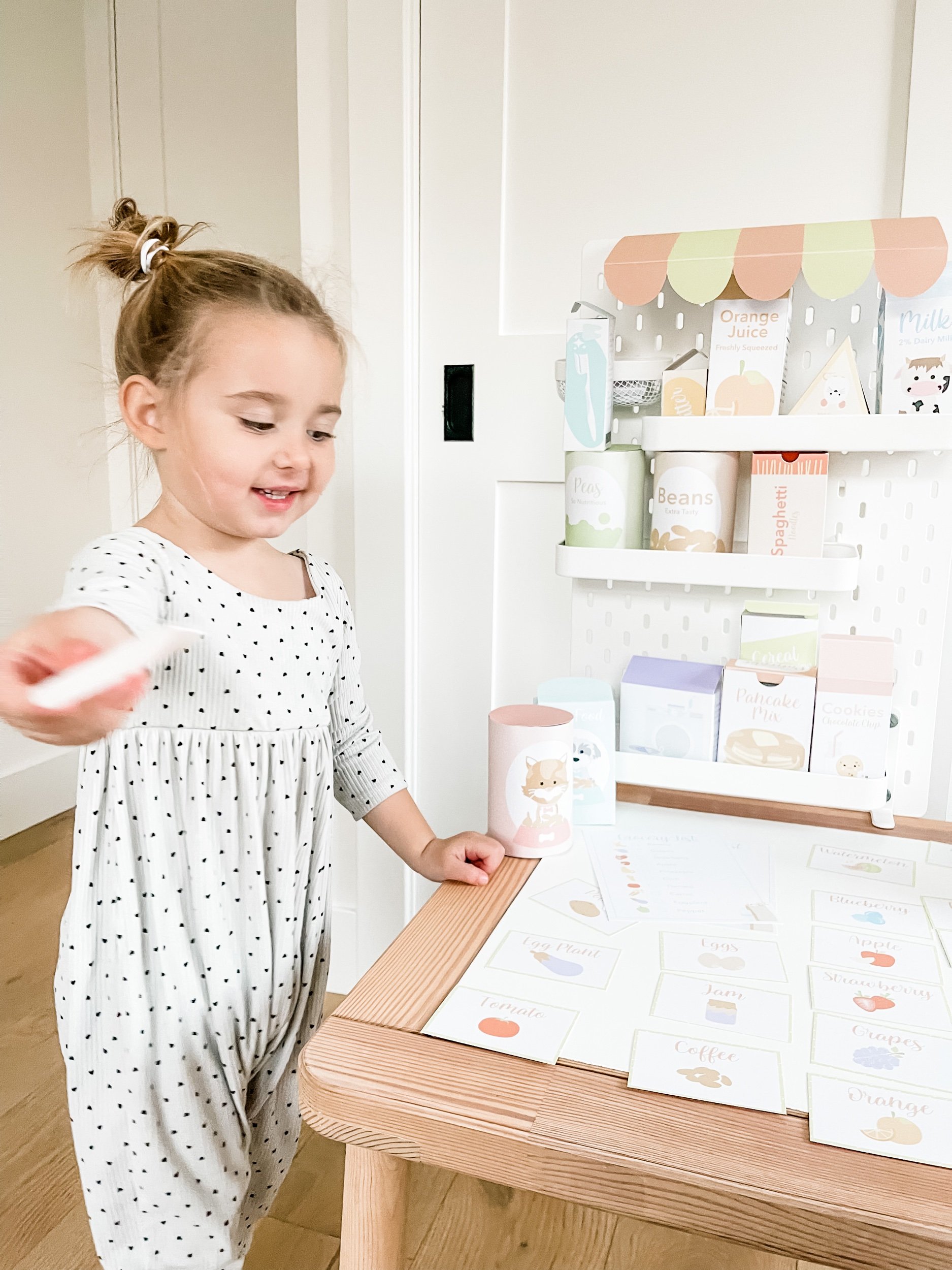
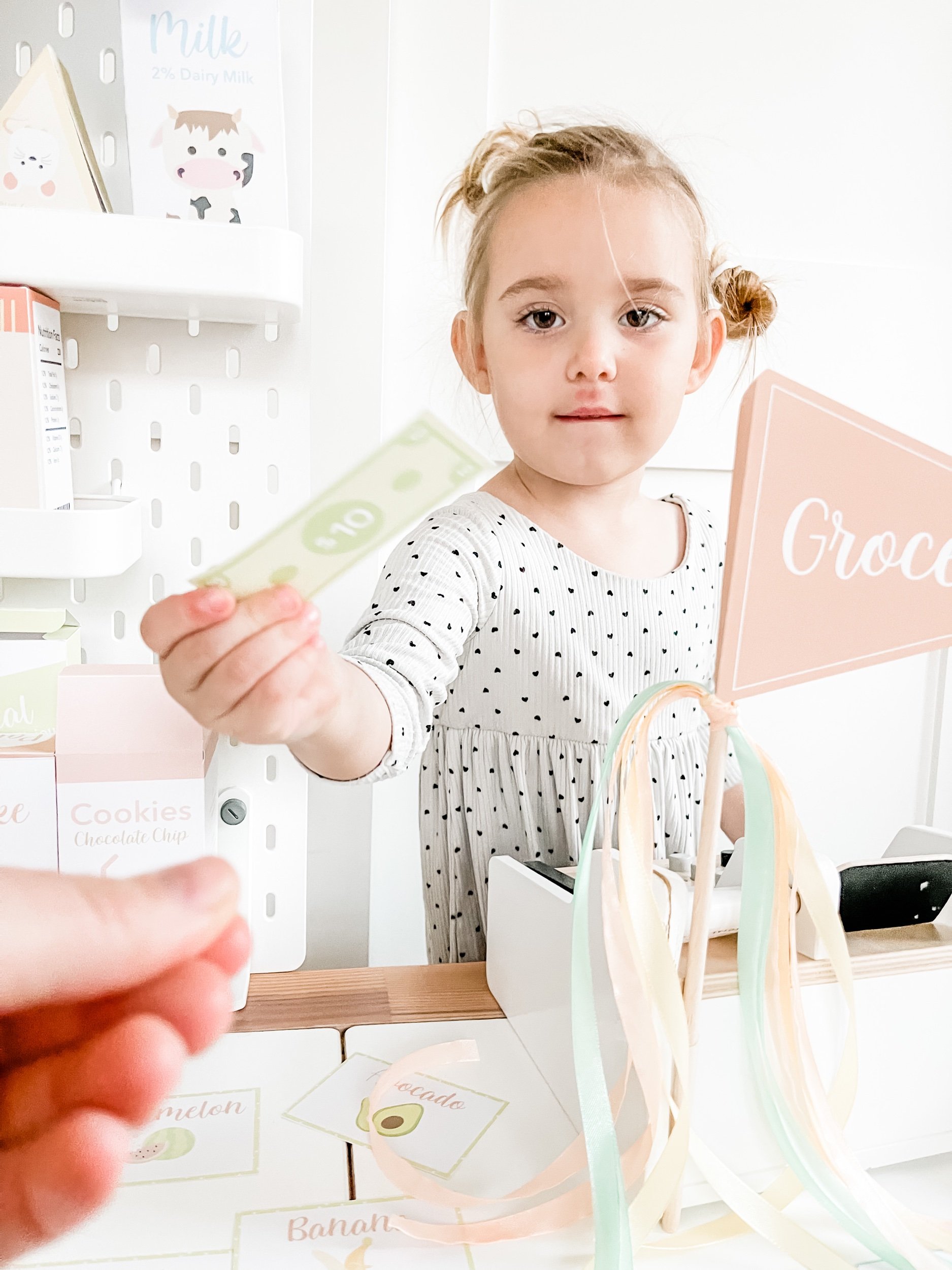
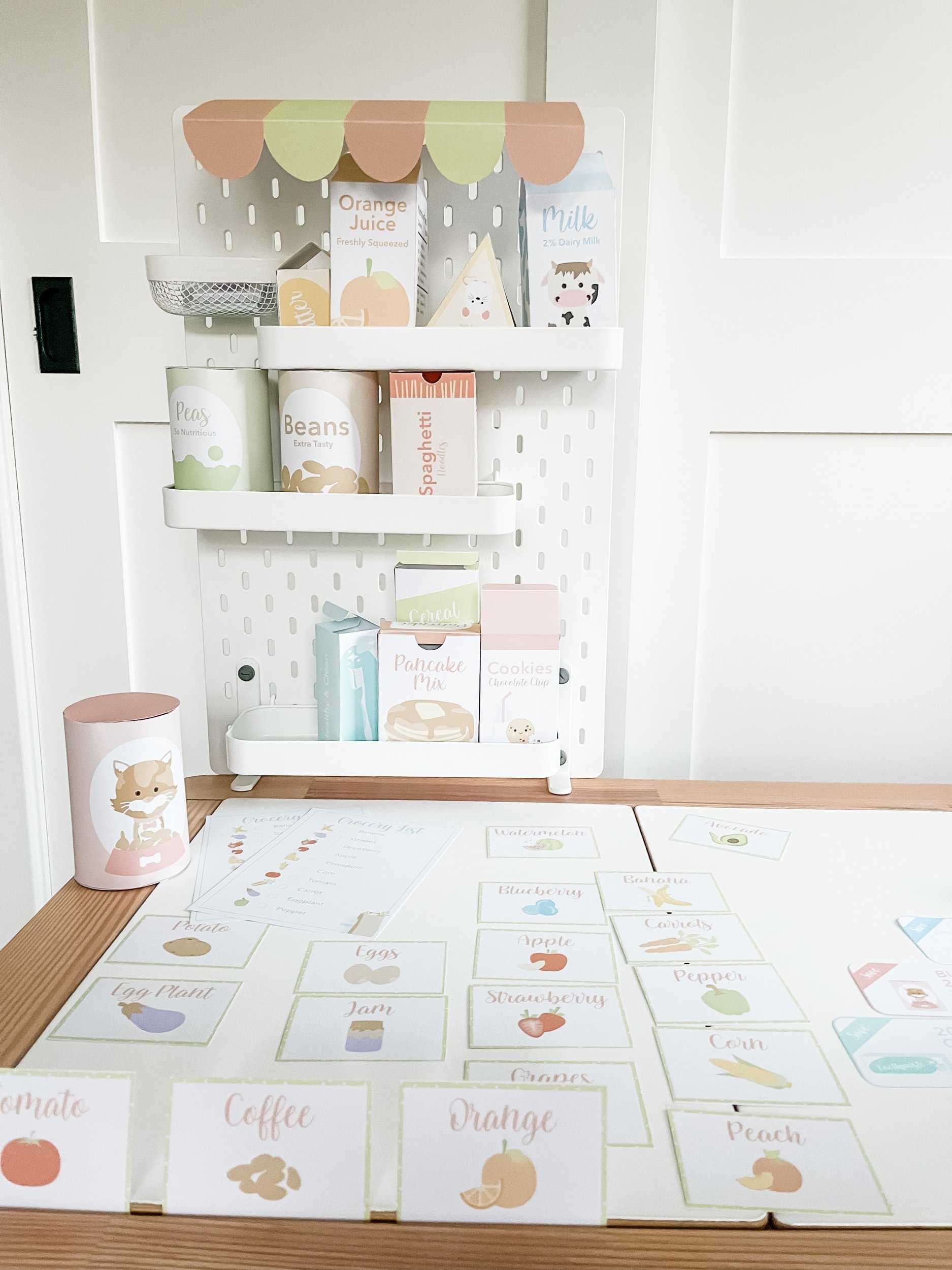
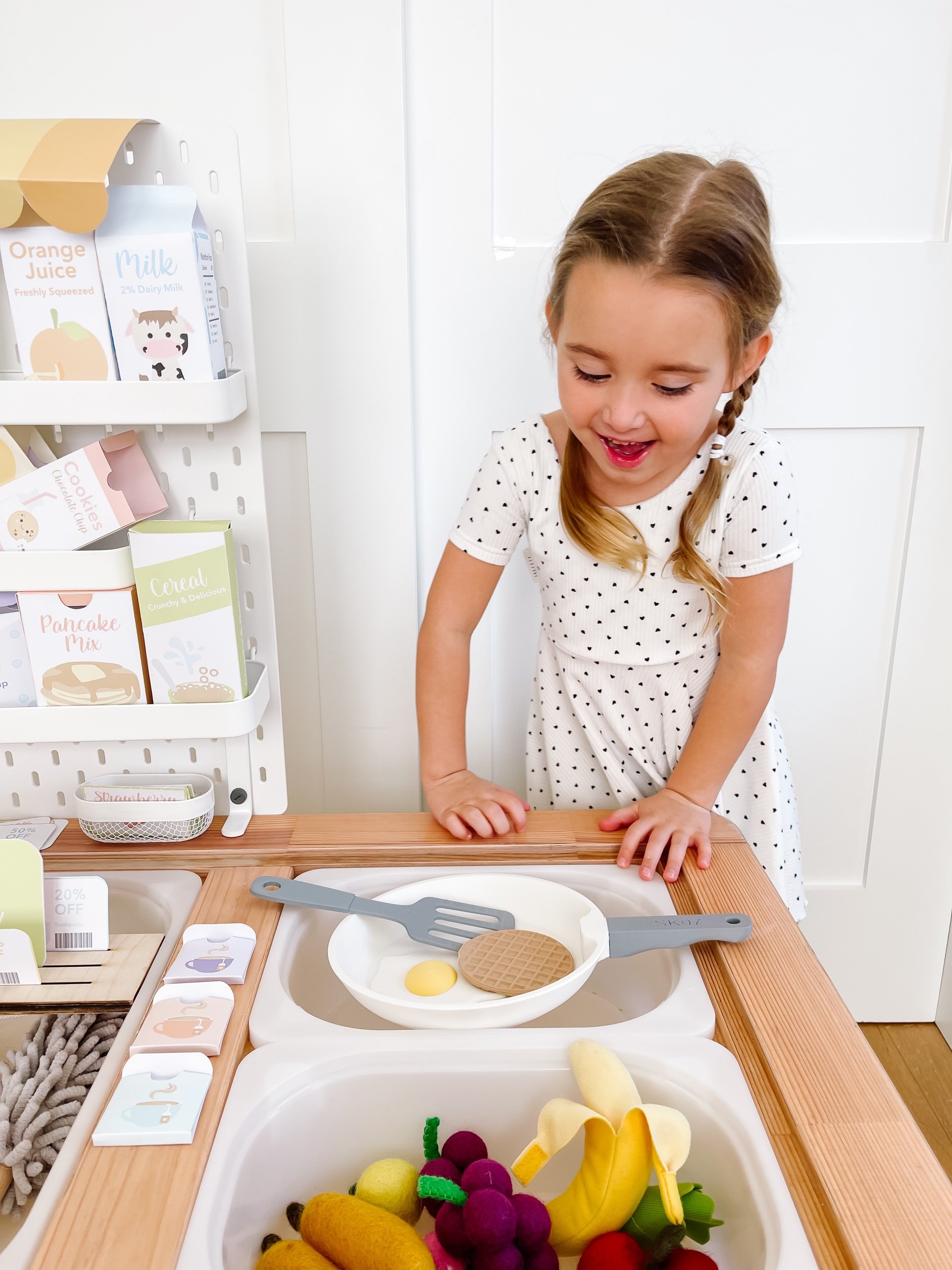
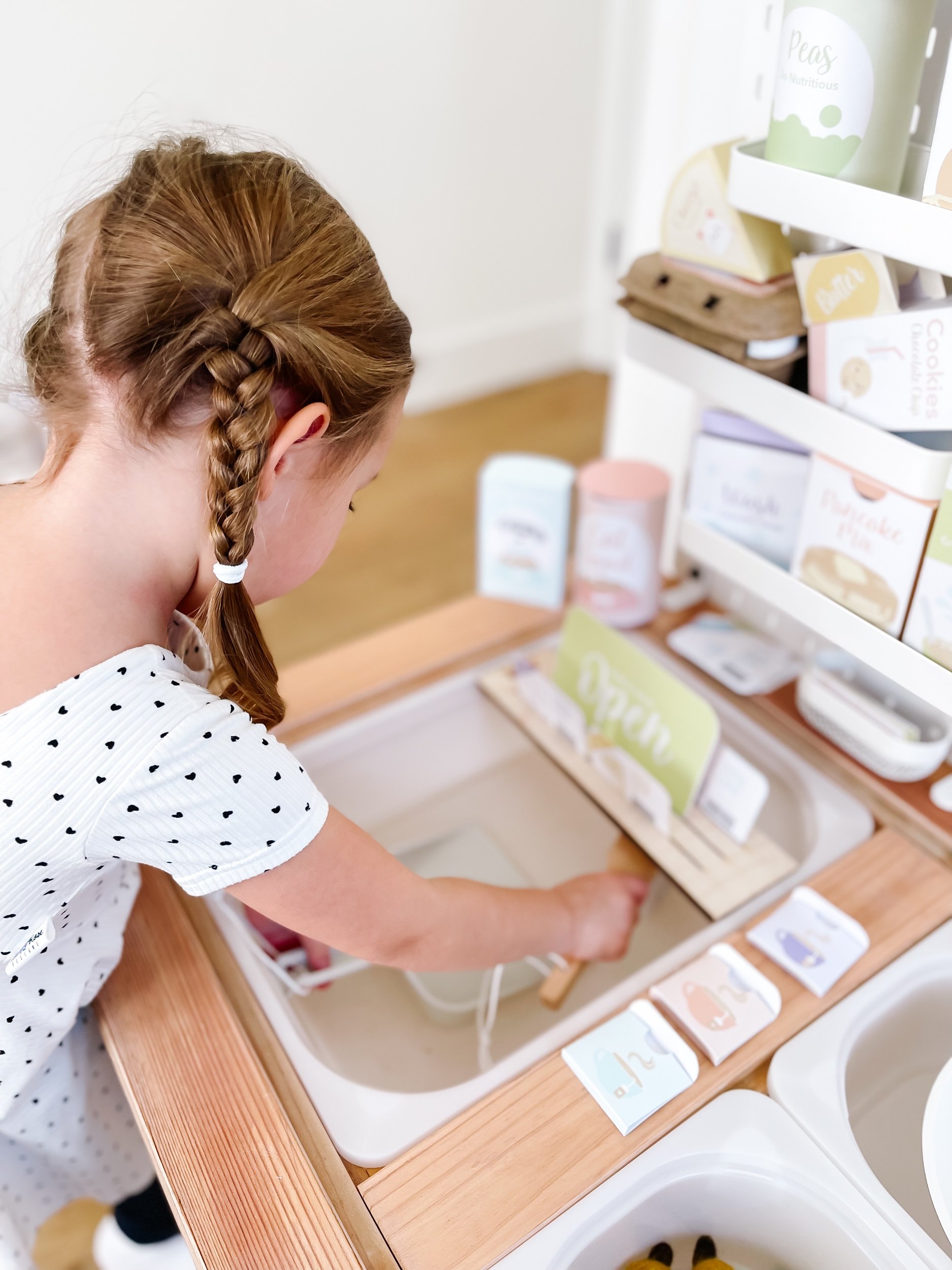
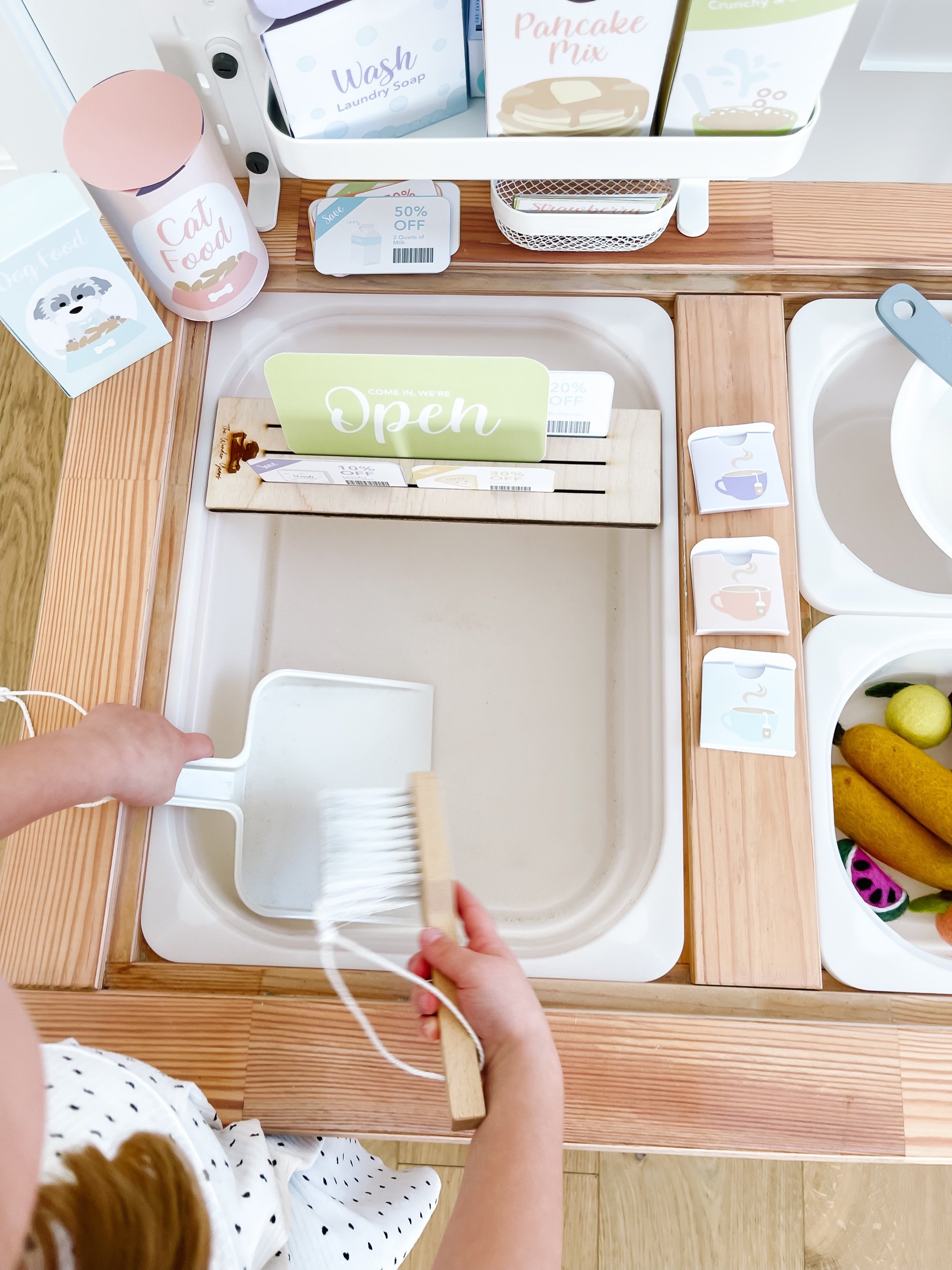
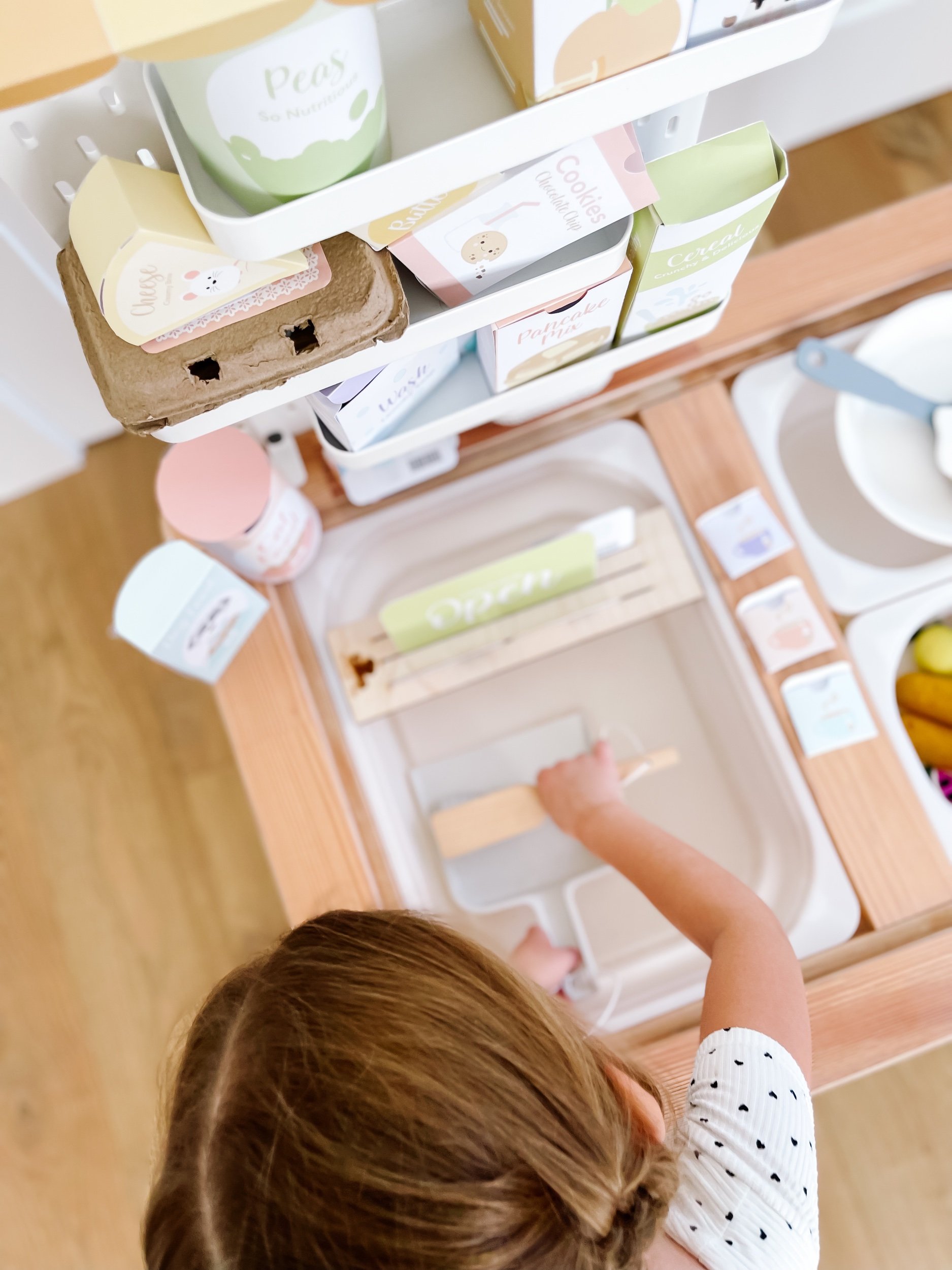
Are you searching for a fun and educational activity to engage your toddler's imagination? Look no further than our Grocery Store Printable Play Food Dramatic Play Kit. This aesthetically pleasing and affordable play set offers countless benefits for your little one's development. In this blog post, we will explore the advantages of dramatic play for toddlers, discuss the struggles of finding suitable play food sets, and showcase the learning opportunities that arise when children pretend to own a grocery store. Additionally, we will describe three distinct activities that will keep your kiddos entertained and engaged with our versatile play setup.
Dramatic play, also known as pretend play or imaginative play, plays a crucial role in the early development of toddlers. By engaging in dramatic play, children are able to explore and make sense of the world around them. Here are some key benefits your toddler can experience through this form of play:
1. Language and Communication Skills: Pretend play encourages toddlers to engage in conversations and helps them develop their vocabulary. As they pretend to shop for groceries, they may communicate their preferences, ask questions, and interact with imaginary customers, enhancing their verbal skills.
2. Imagination and Creativity: Through imaginative play, toddlers are free to think outside the box, create unique scenarios, and develop problem-solving skills. Pretending to own a grocery store allows them to unleash their creativity as they take on roles such as shopkeepers, cashiers, or customers.
3. Social and Emotional Development: Dramatic play promotes social interaction and cooperative play. It provides opportunities for children to understand different perspectives, practice empathy, share, negotiate, and resolve conflicts. These skills are essential for their emotional intelligence and future relationships.
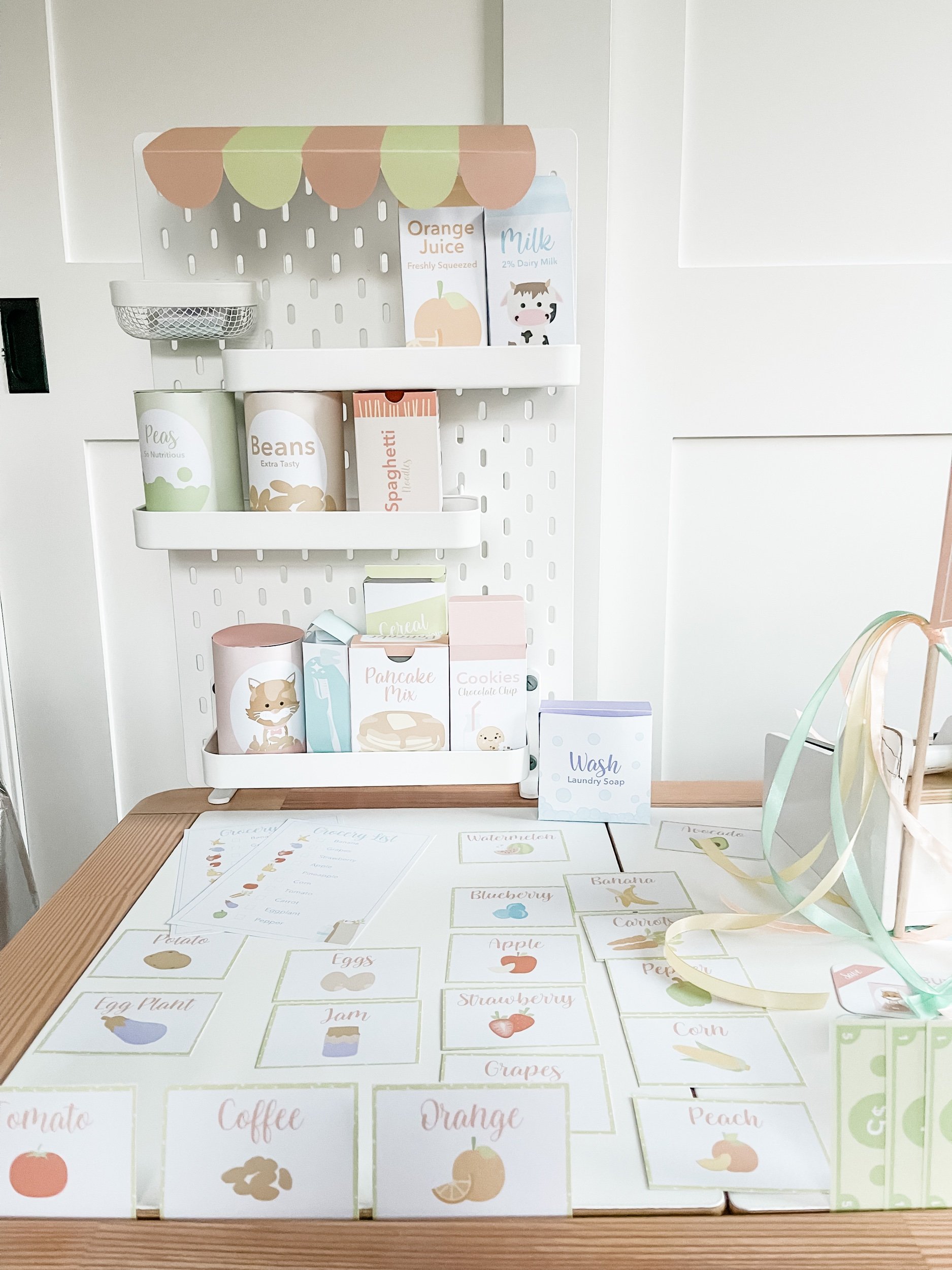
When searching for play food sets, many parents encounter a common dilemma. Wooden sets are often visually appealing, but they can be prohibitively expensive. On the other hand, cheap plastic sets may lack durability and fail to stimulate a child's imagination. With our grocery store printable play food dramatic play kit, we understand these concerns and have strived to create an ideal solution that combines affordability, aesthetics, and functionality.
Owning a grocery store, even in pretend play, provides numerous learning opportunities for toddlers. Here are some of the skills and concepts your child can develop using our play setup:
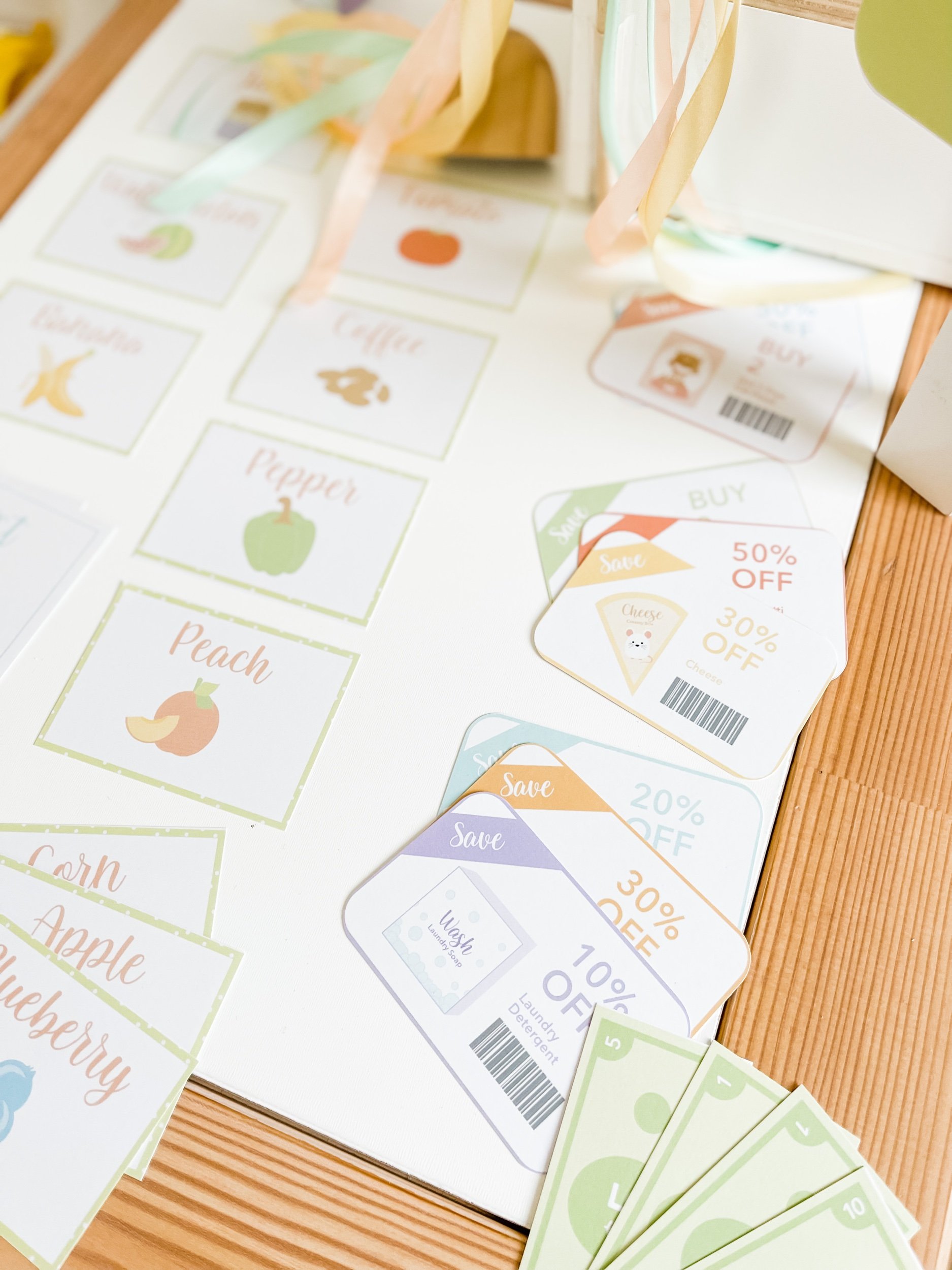
1. Numeracy Skills: Through role-playing as shopkeepers, children can practice counting, sorting, and recognizing numbers as they manage the products in their grocery store. They can engage in tasks such as pricing items, calculating totals, and making change, fostering early numeracy skills.
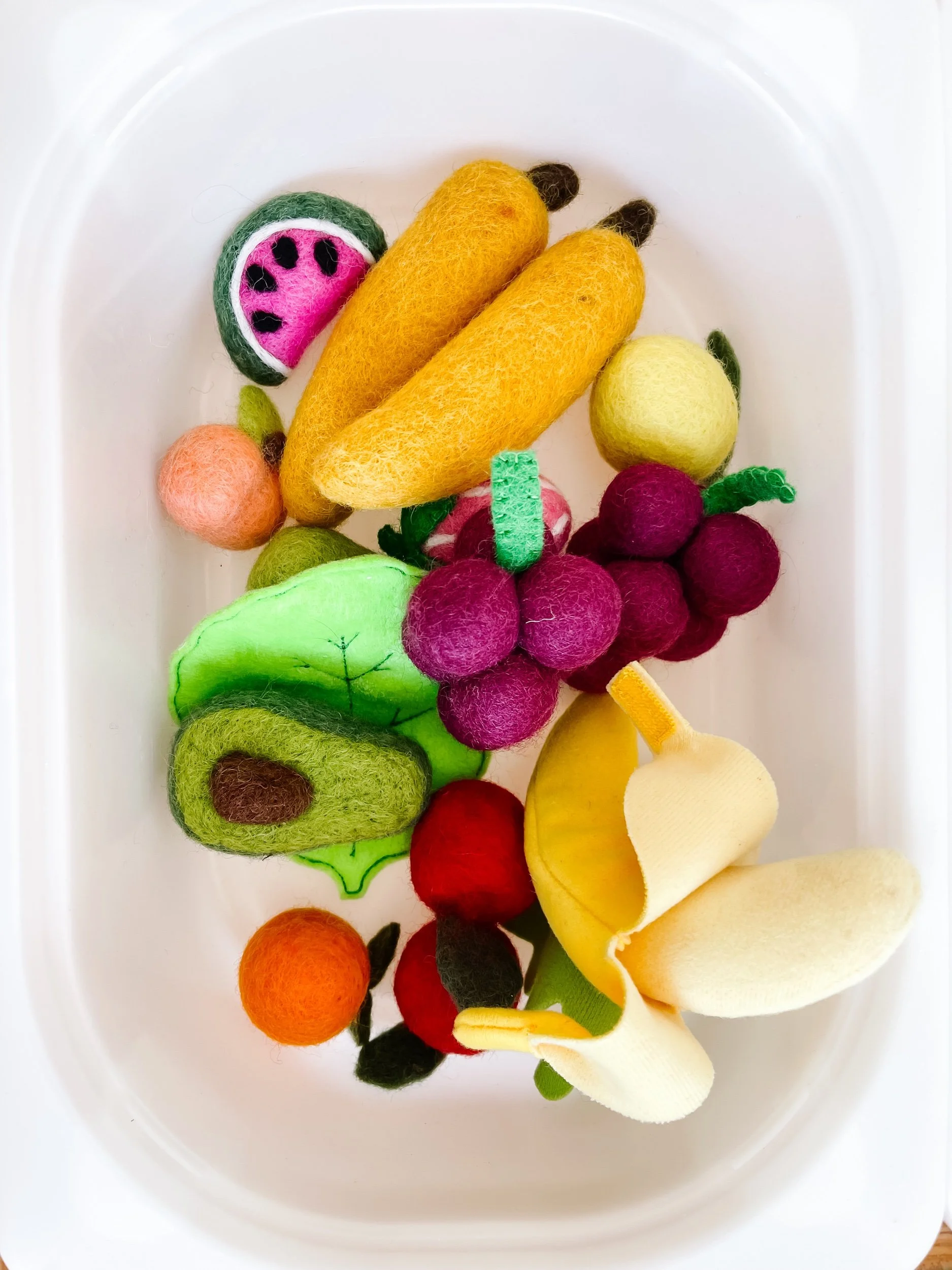
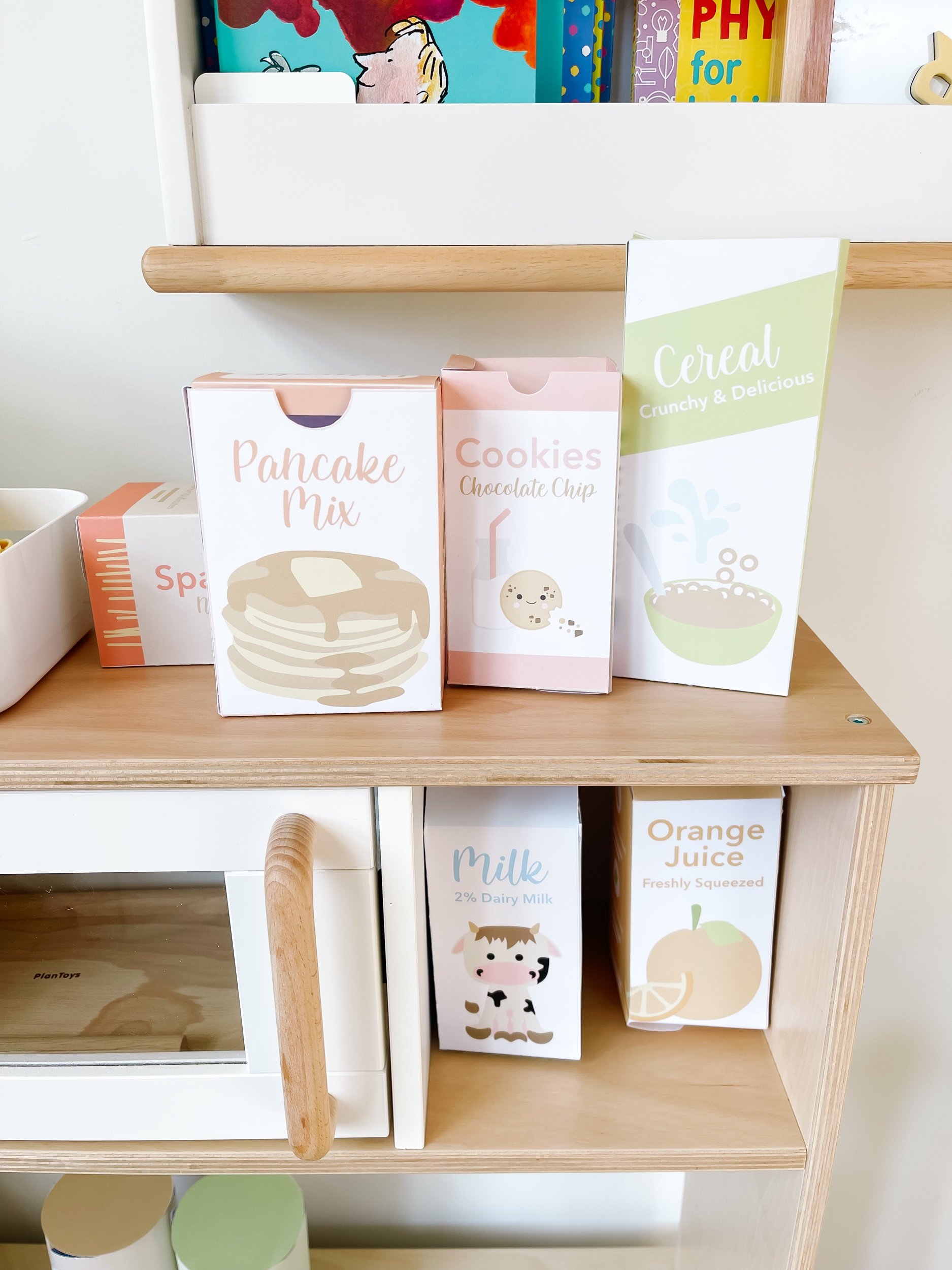
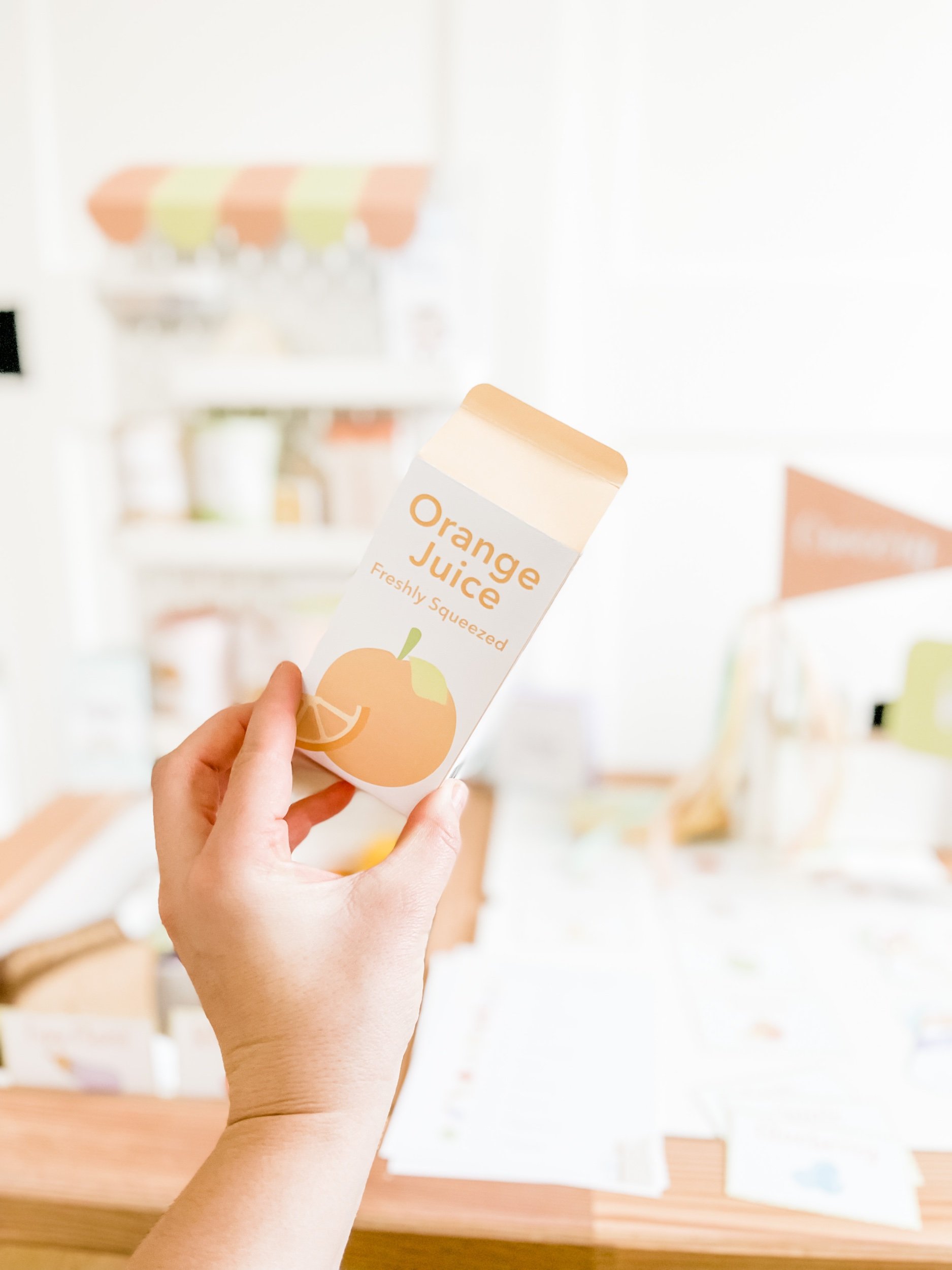
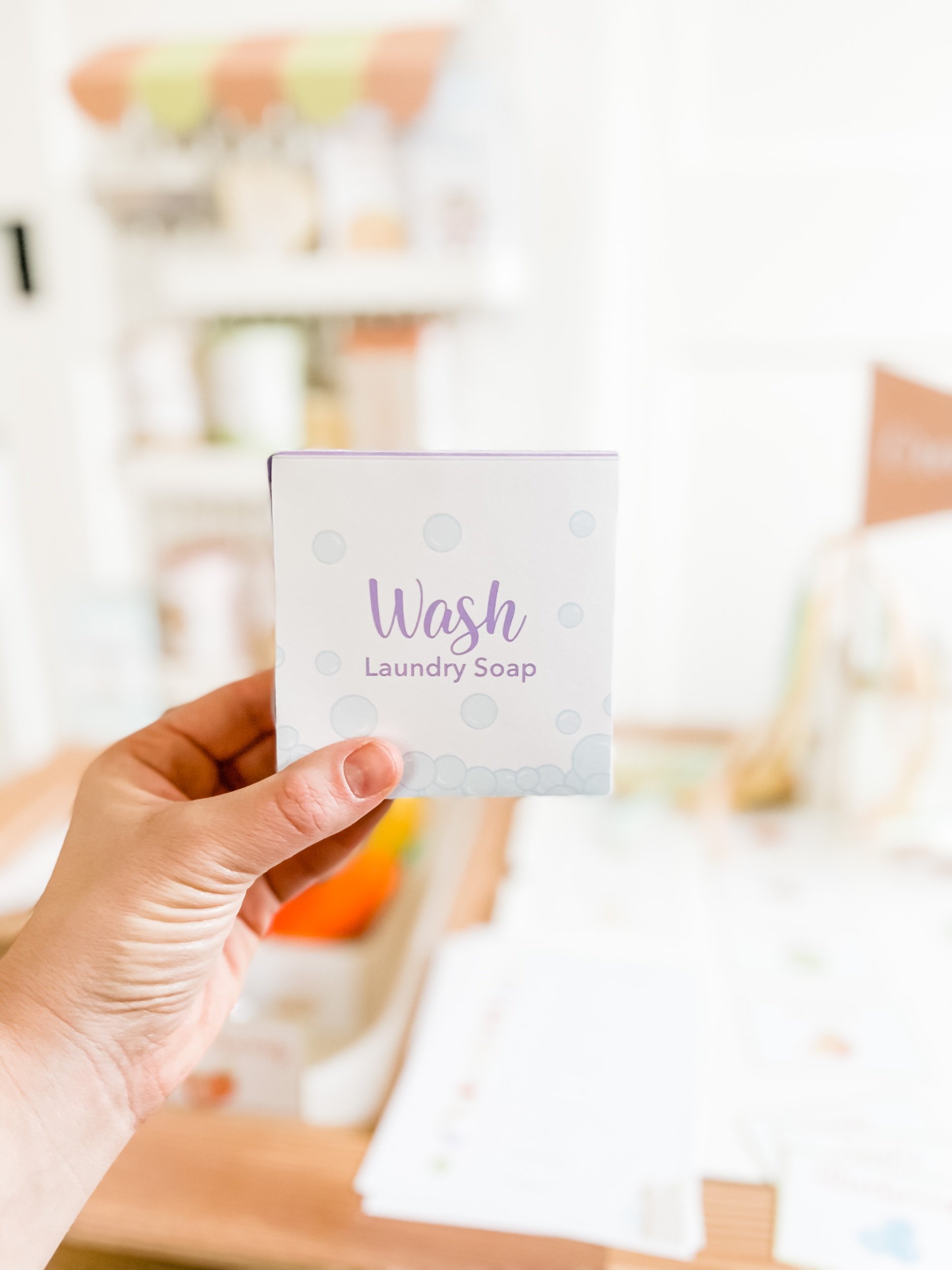
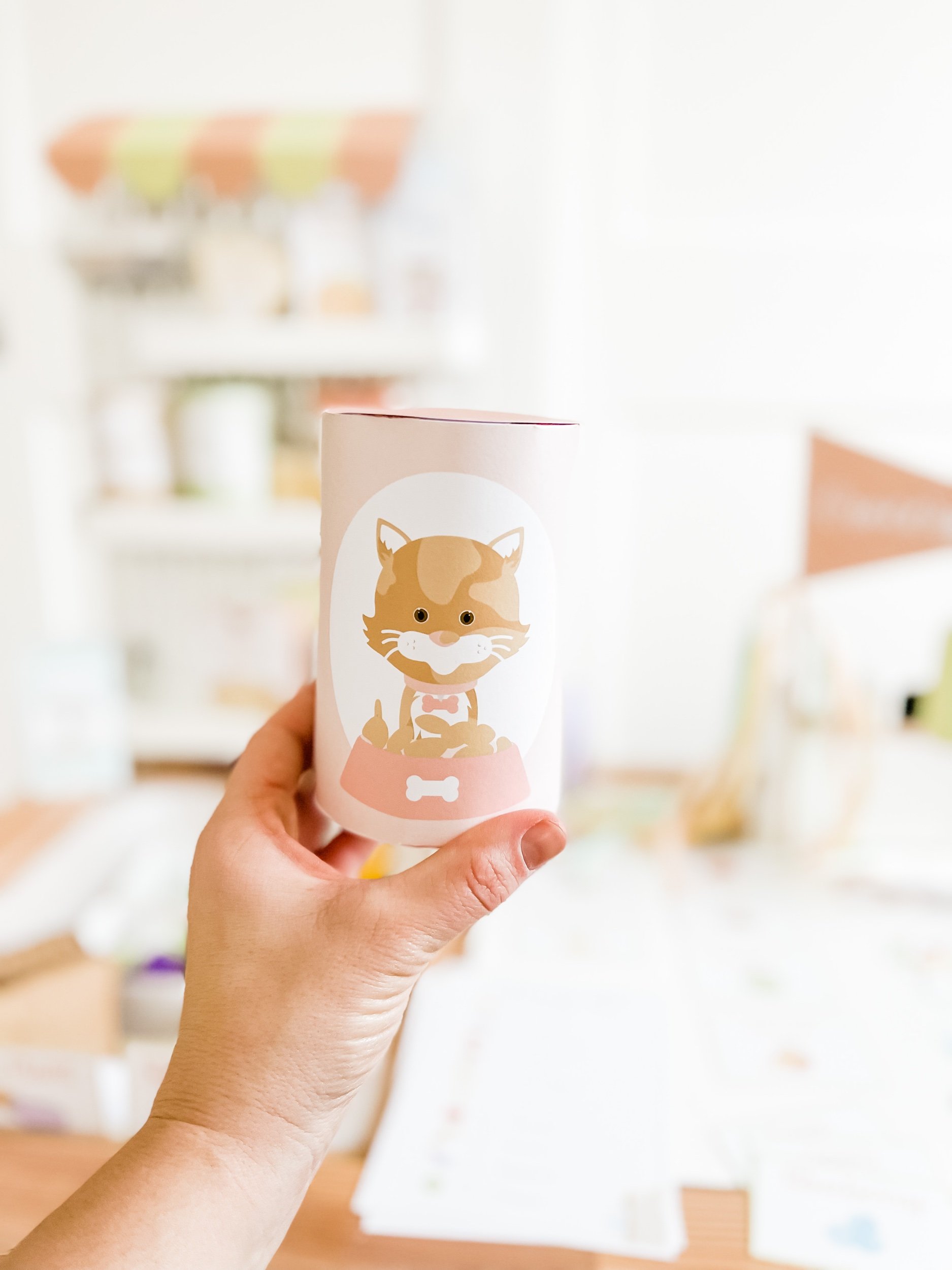
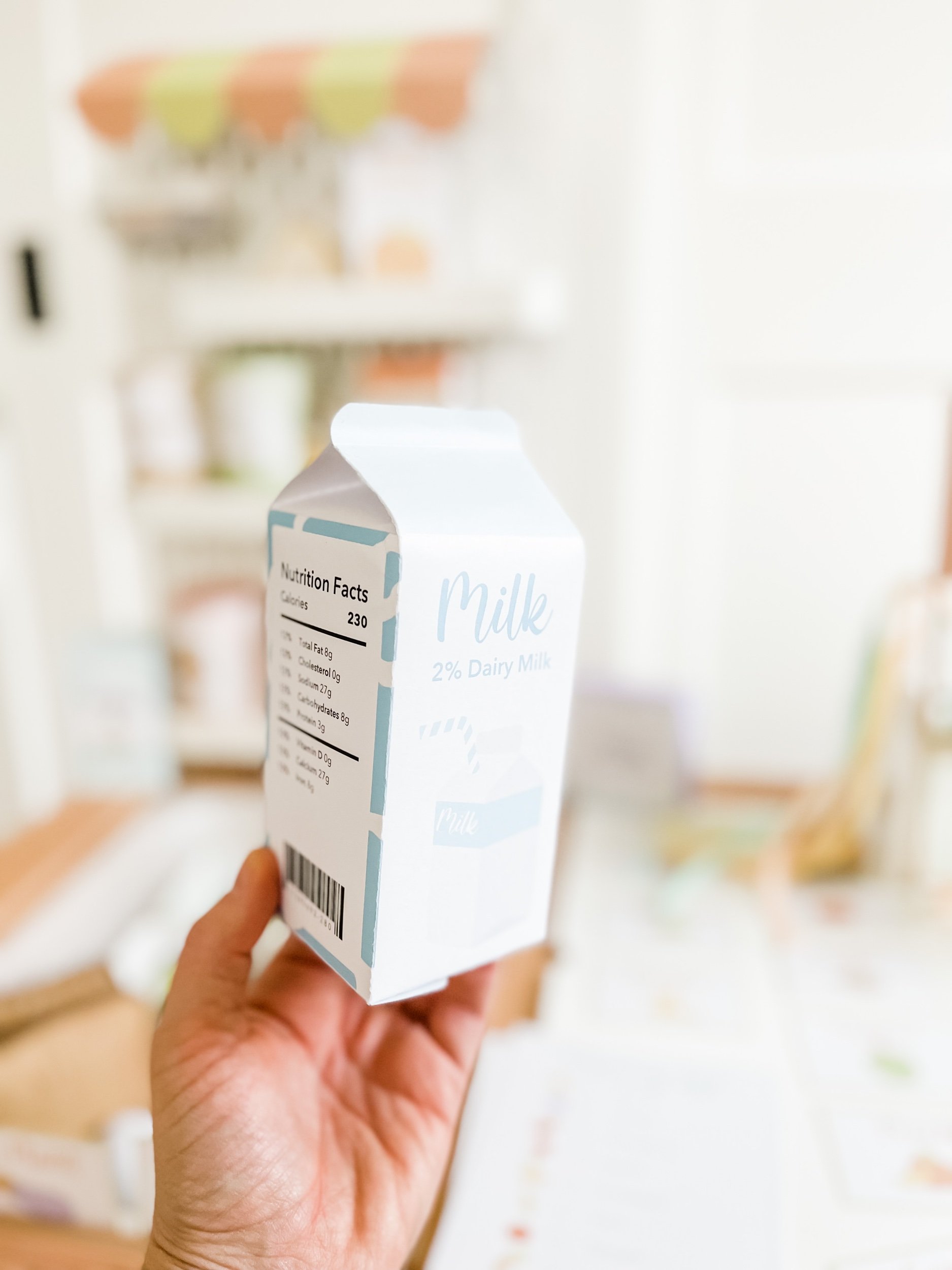
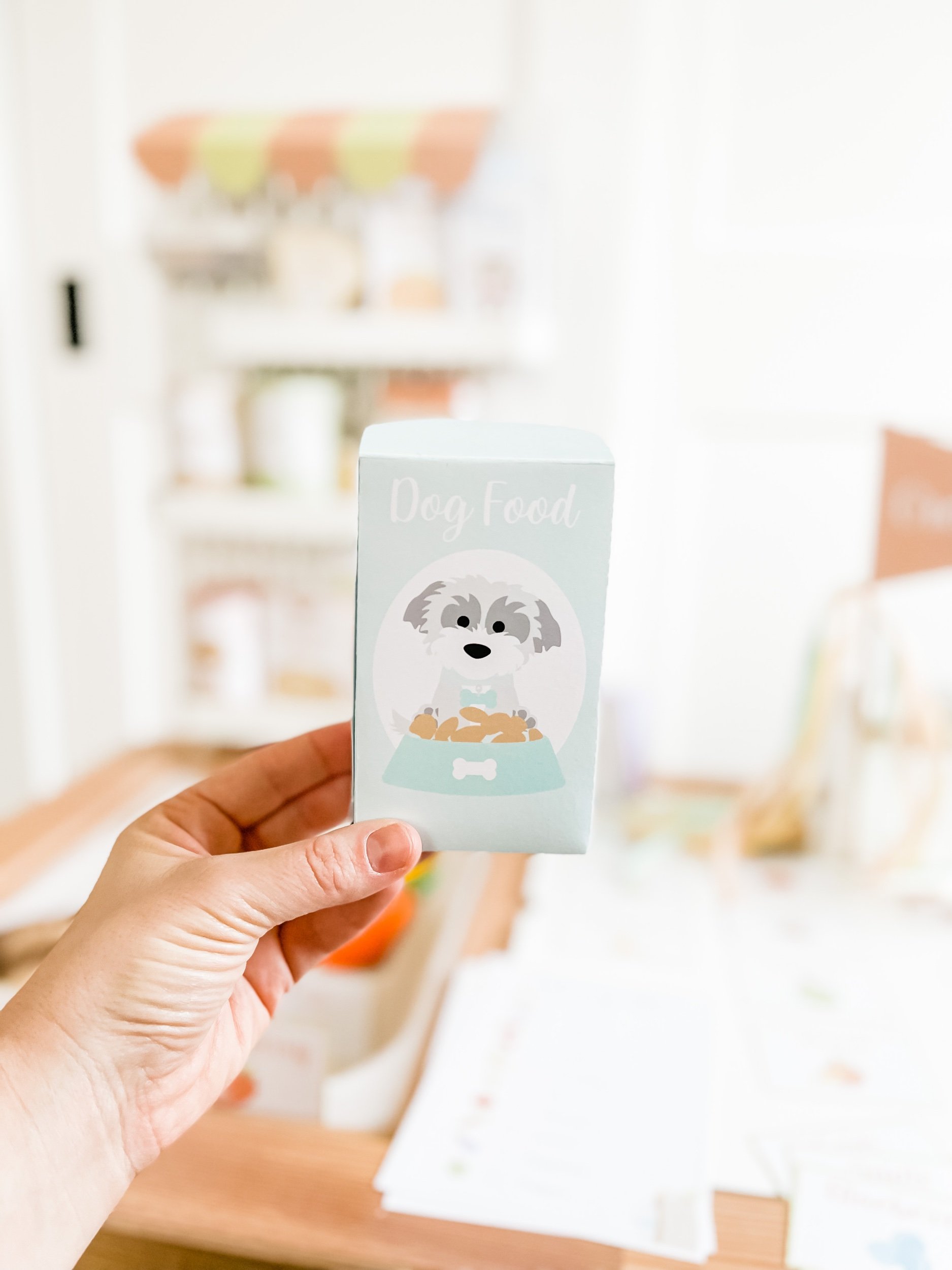
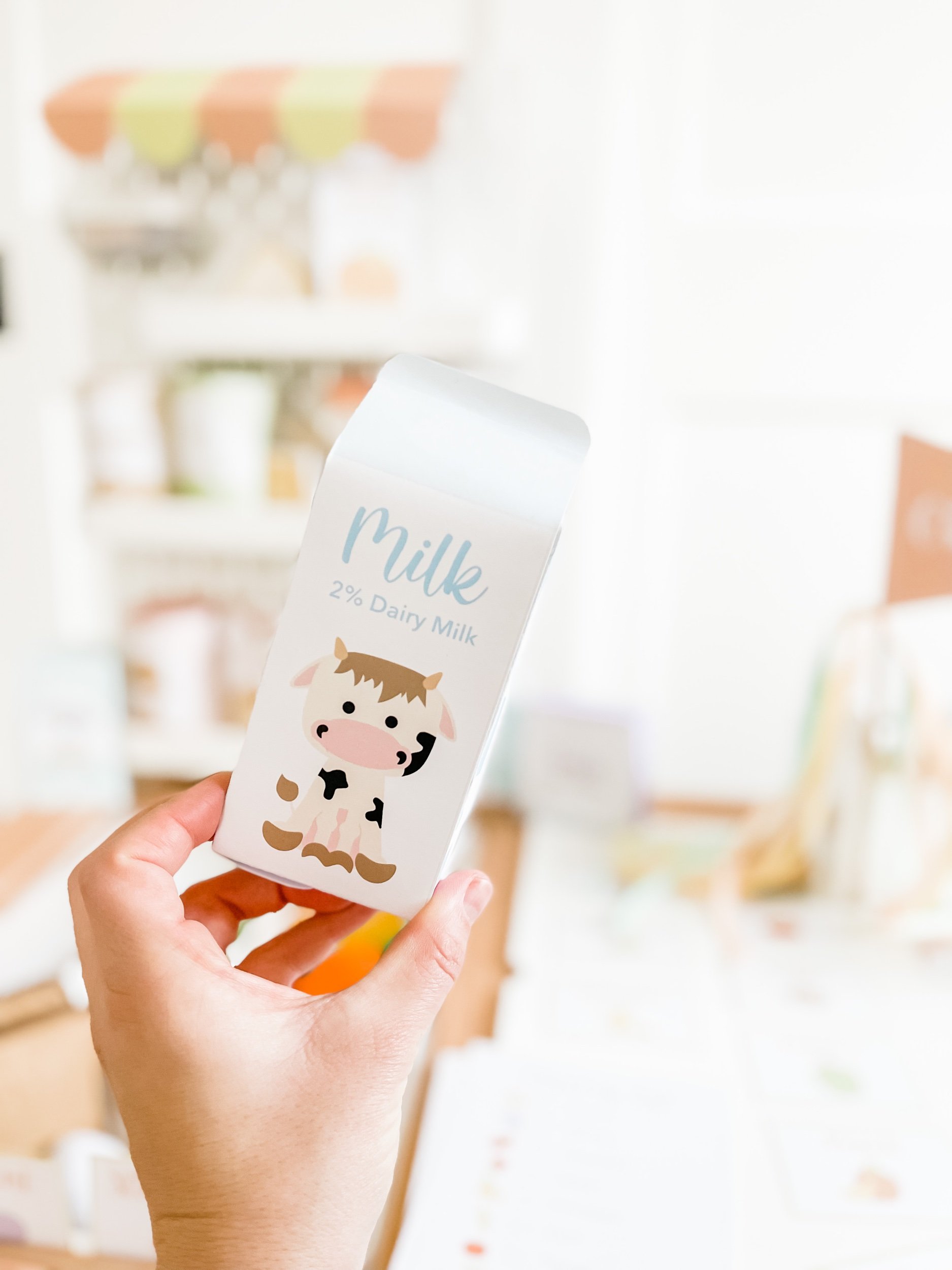
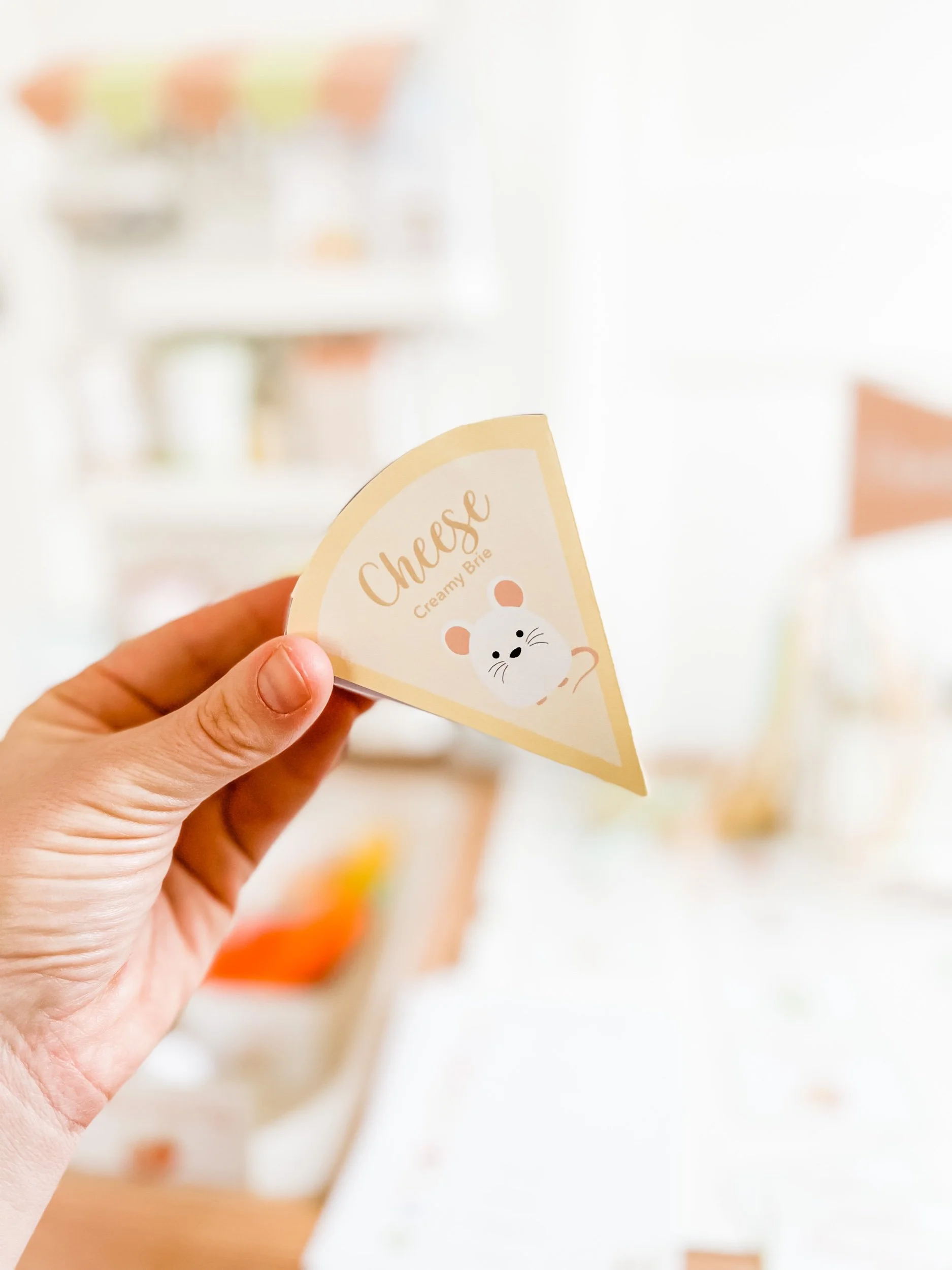
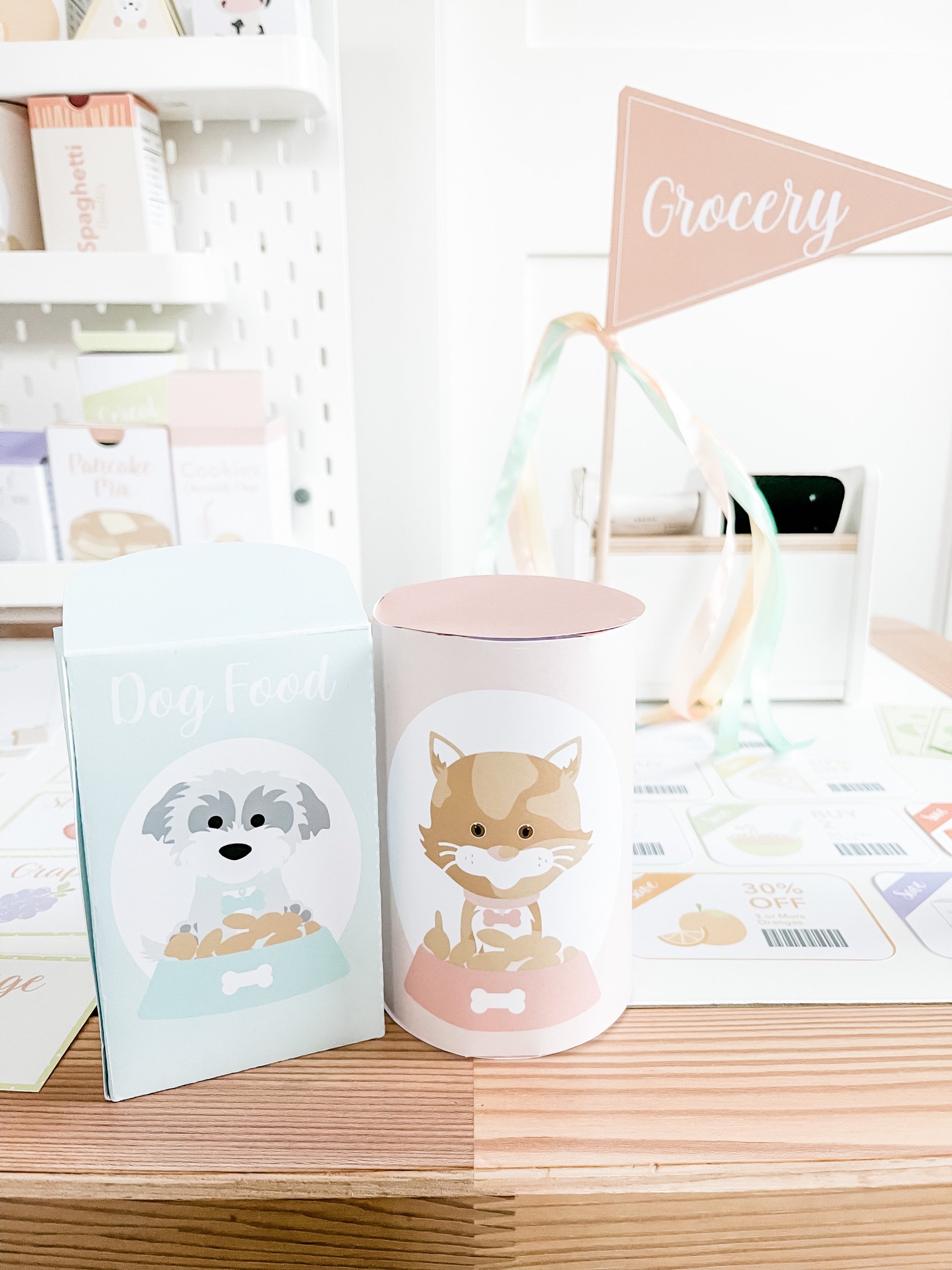
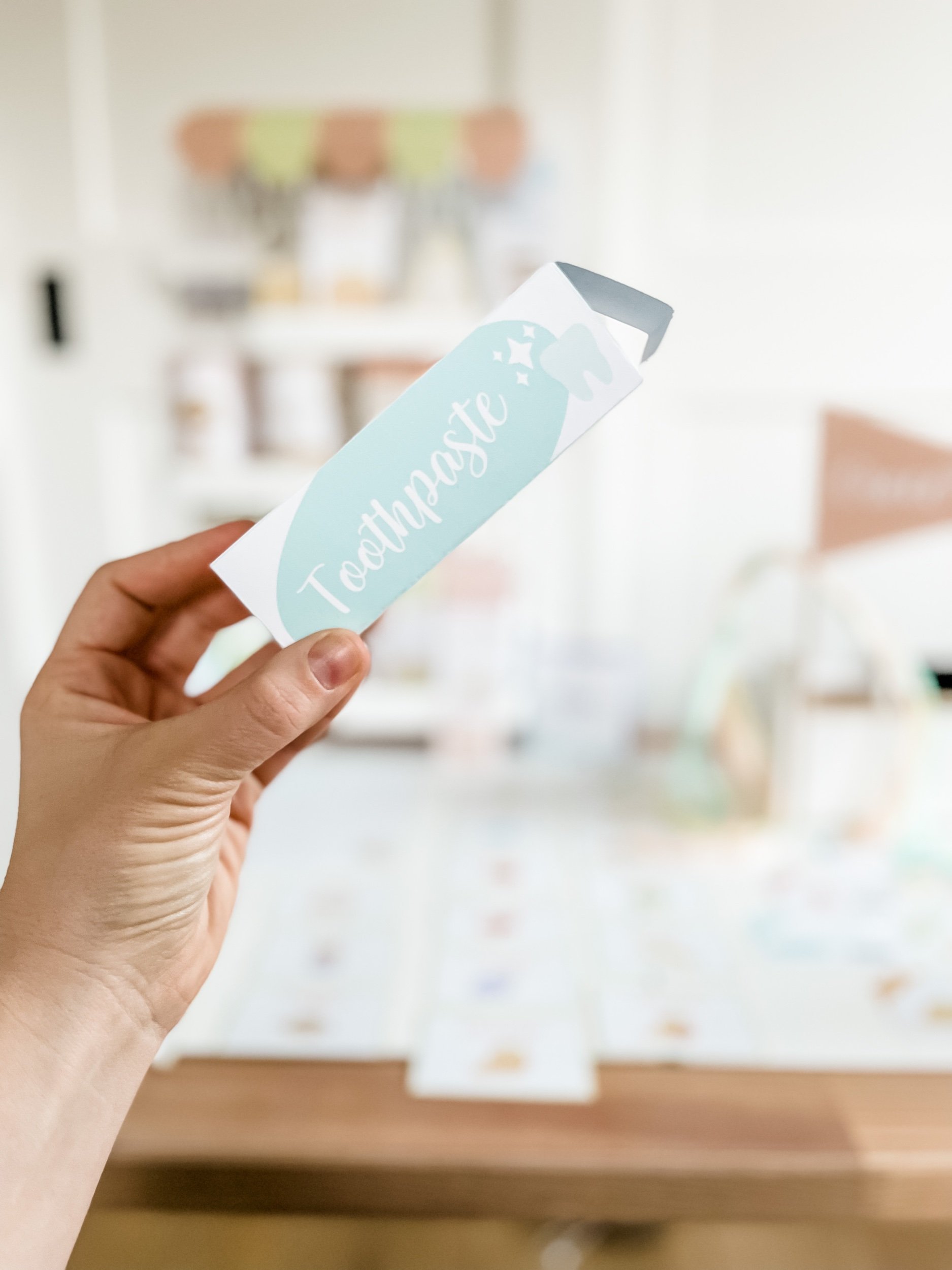
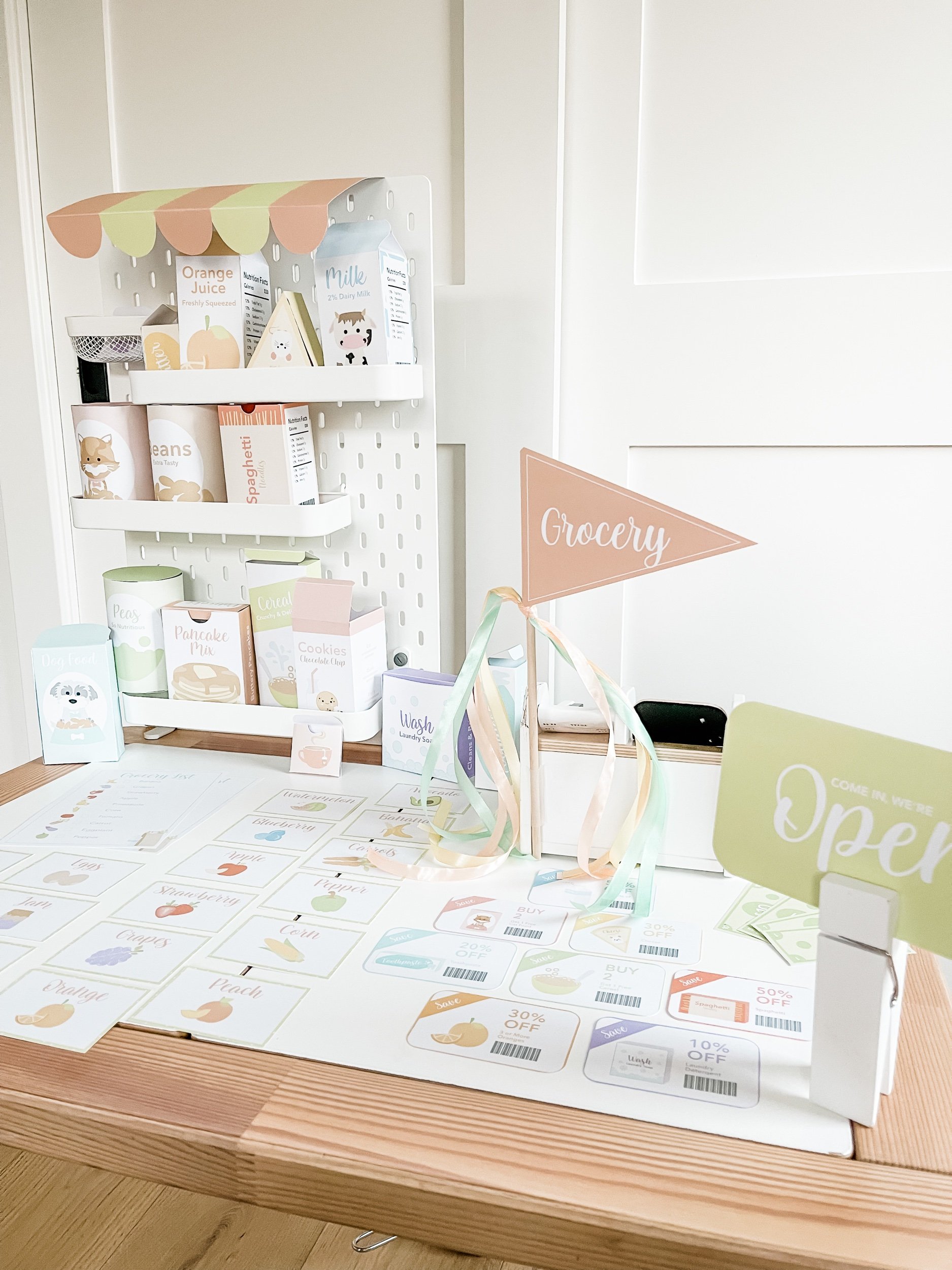
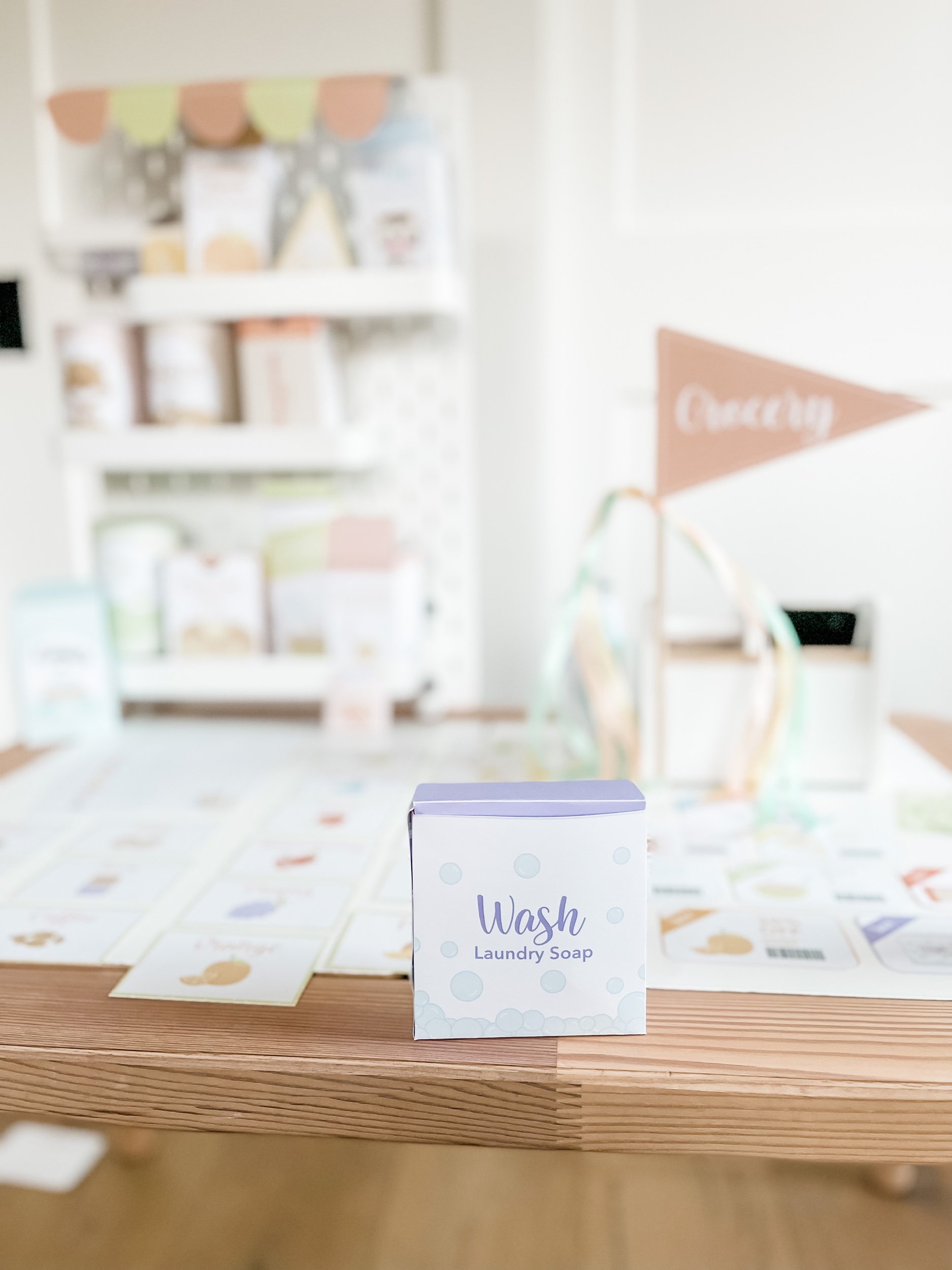
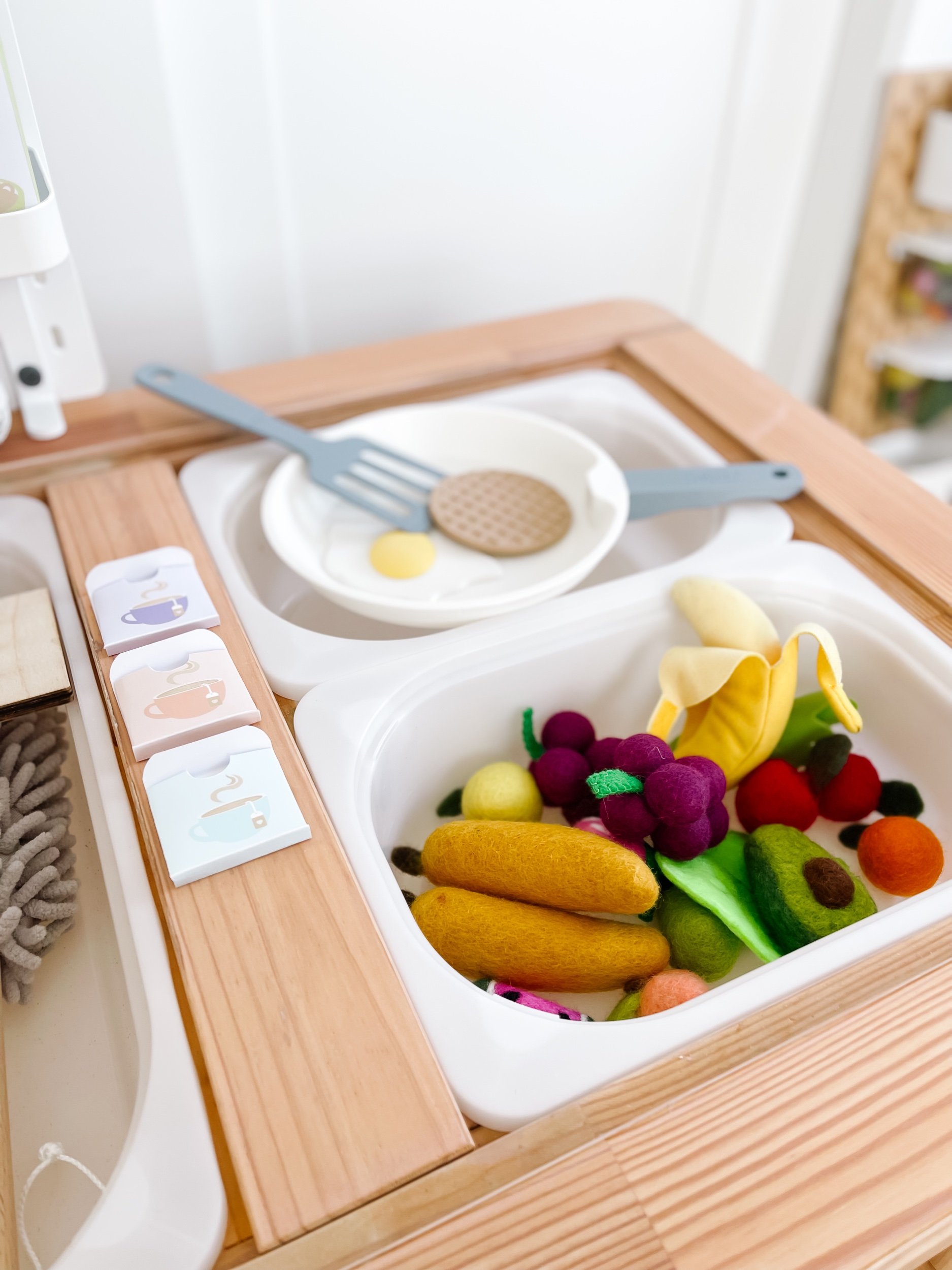
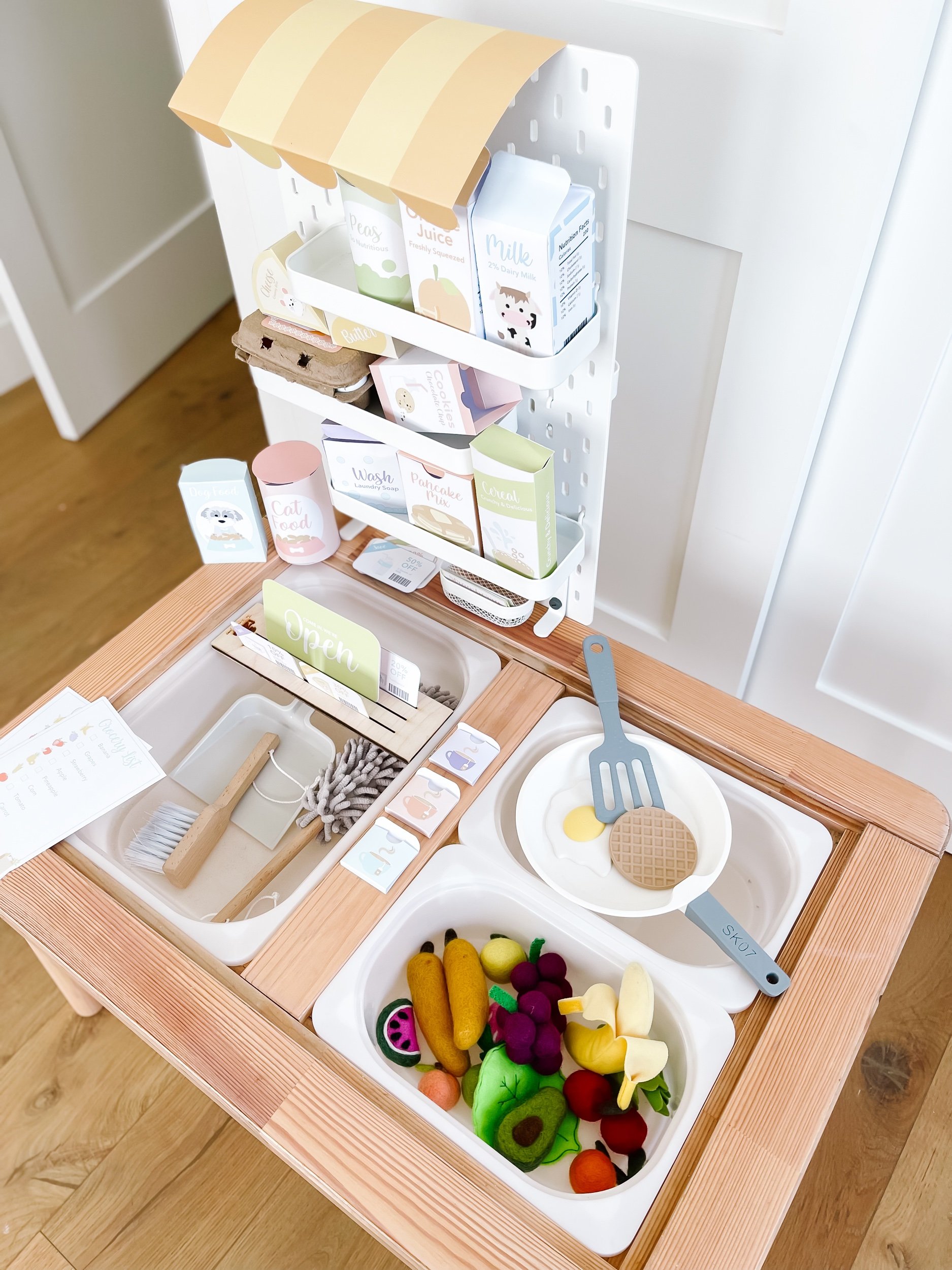
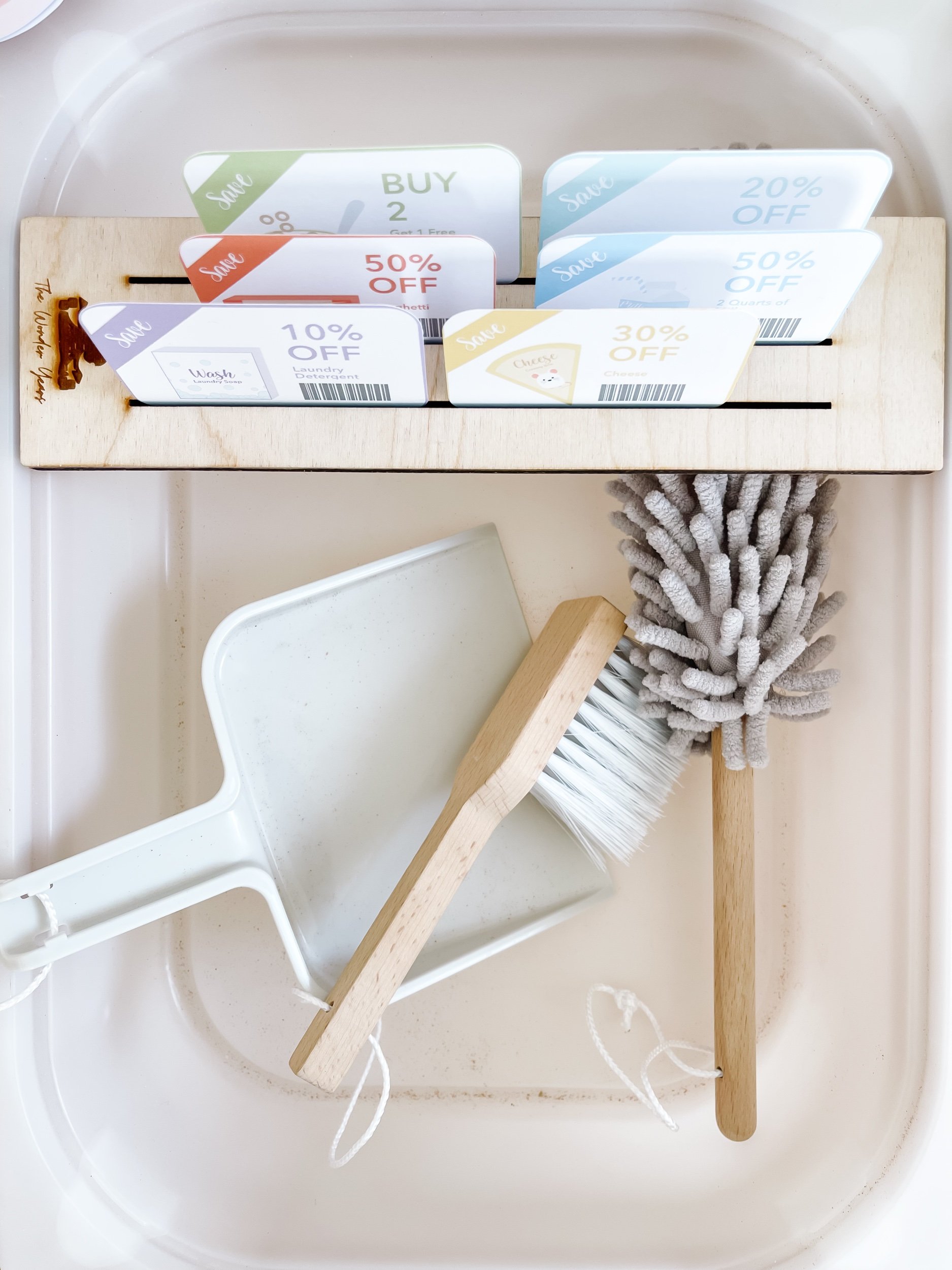
2. Healthy Food Choices: Our play food collection contains a variety of items, including toothpaste, orange juice, cheese, milk, butter, dog food, cat food, beans, spaghetti, cereal, laundry soap, and more. As toddlers explore these pretend groceries, they can learn about different food groups, healthy eating habits, and make-believe meal preparations.
3. Social Skills and Problem Solving: Interacting with others during dramatic play helps children develop essential social skills. While engaging with family members or playmates, toddlers can practice turn-taking, sharing, and cooperating. They can also address challenges that arise, such as resolving conflicts between customers or finding creative solutions to restock empty shelves.
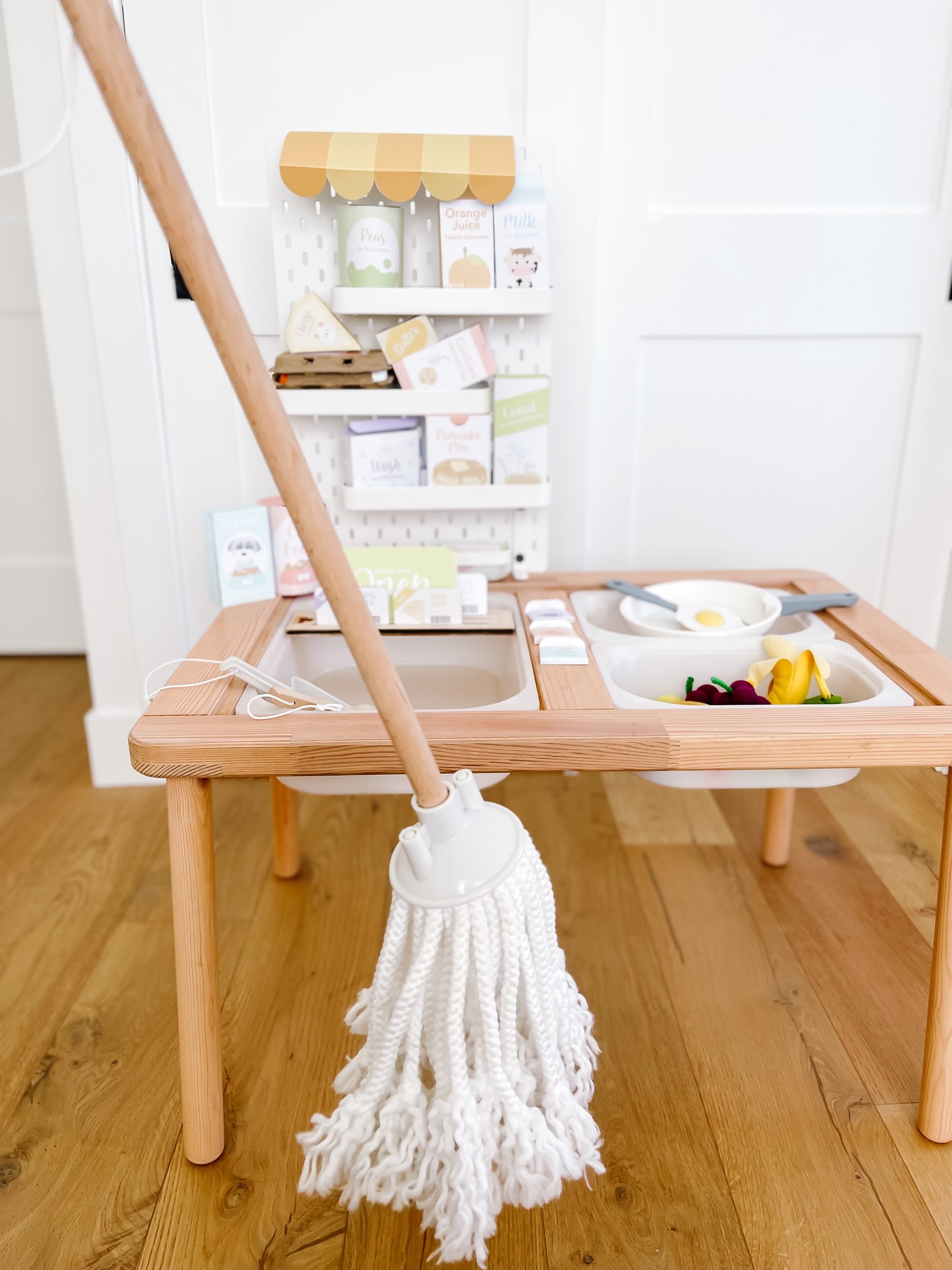
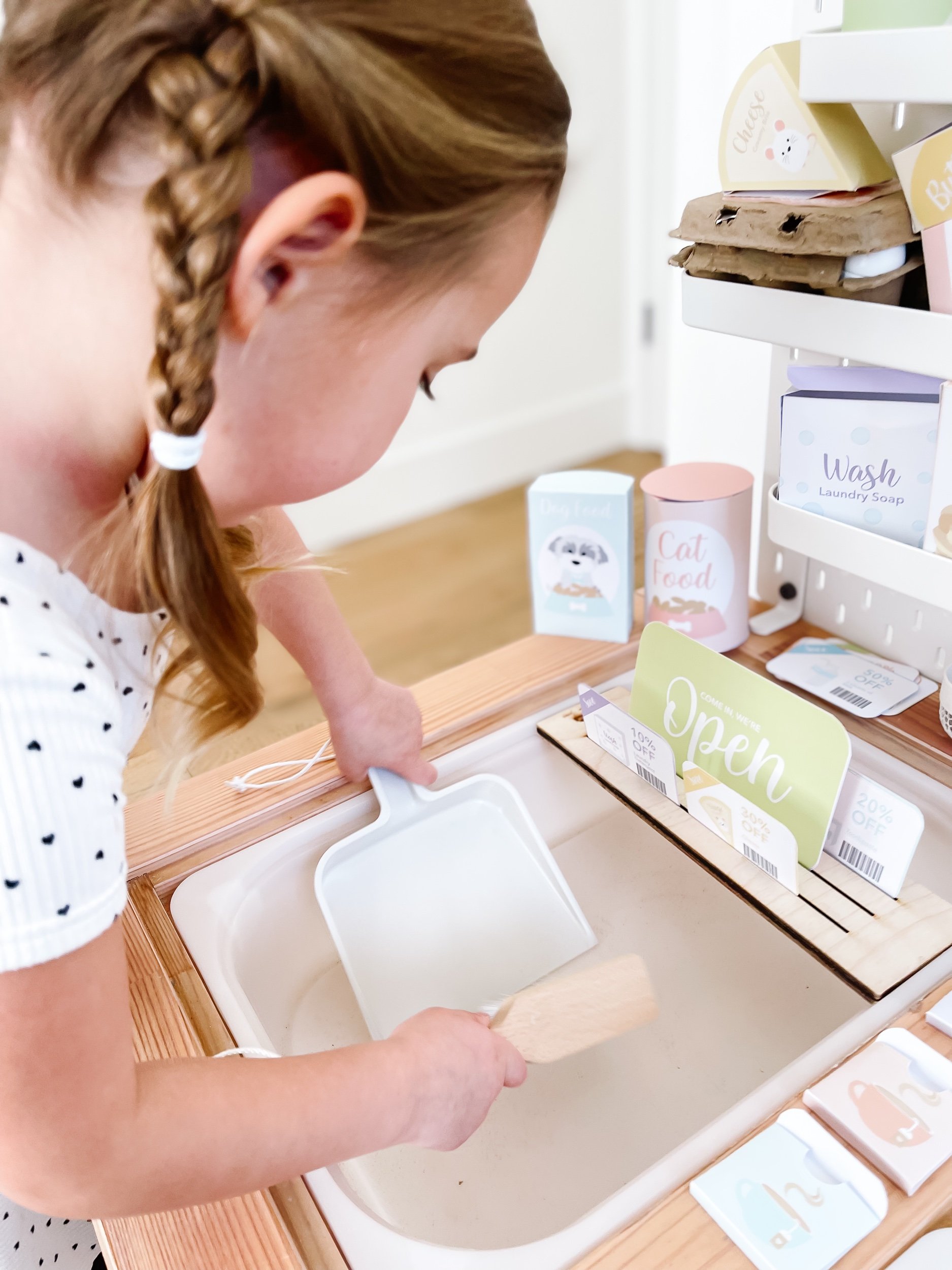
Set up a designated area as a grocery store using our printable play food. Your child can take turns being the shopkeeper and the customer, creating a realistic shopping experience. They can learn about pricing, scanning items, using a cash register, and even bagging groceries.
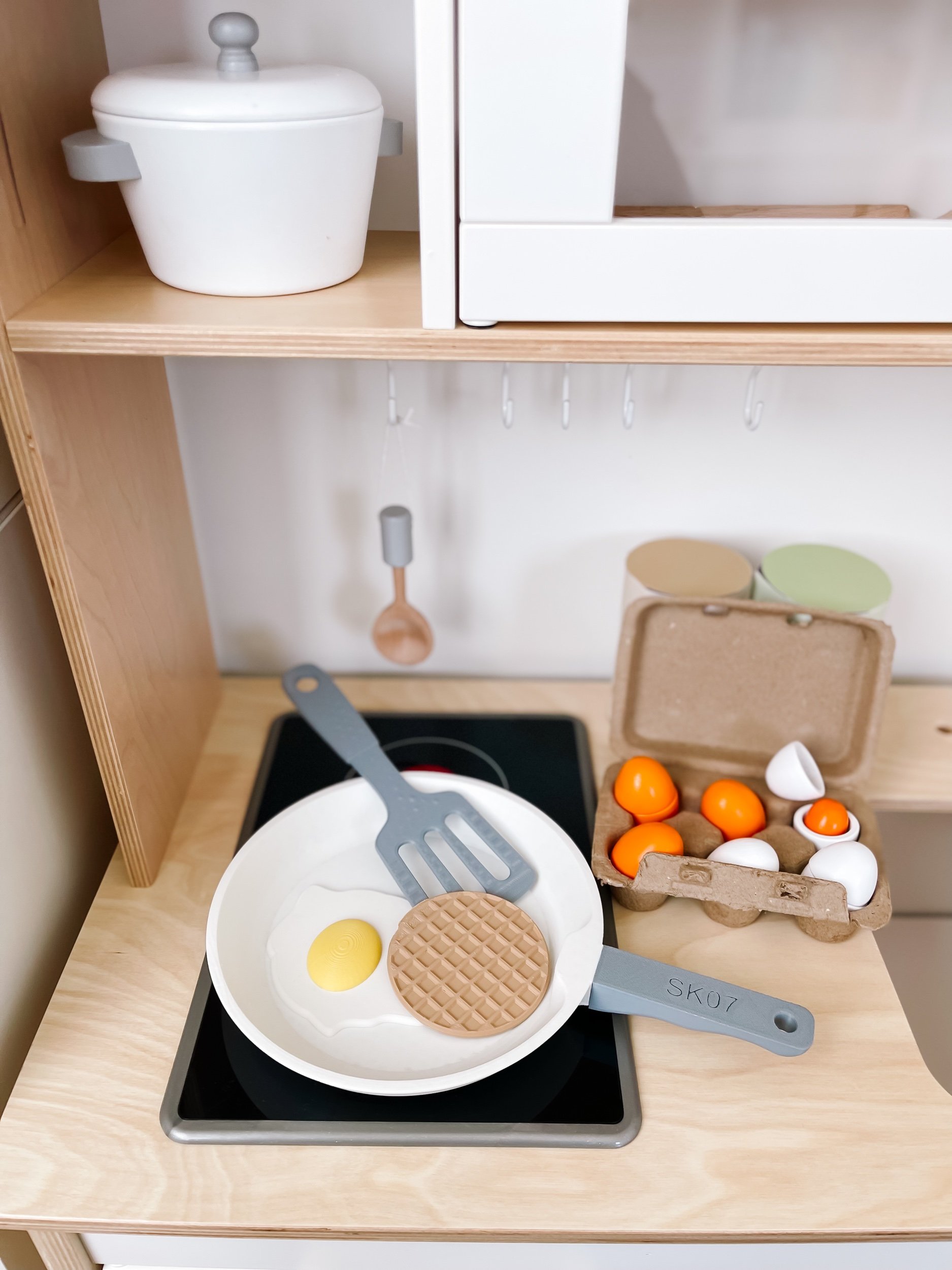
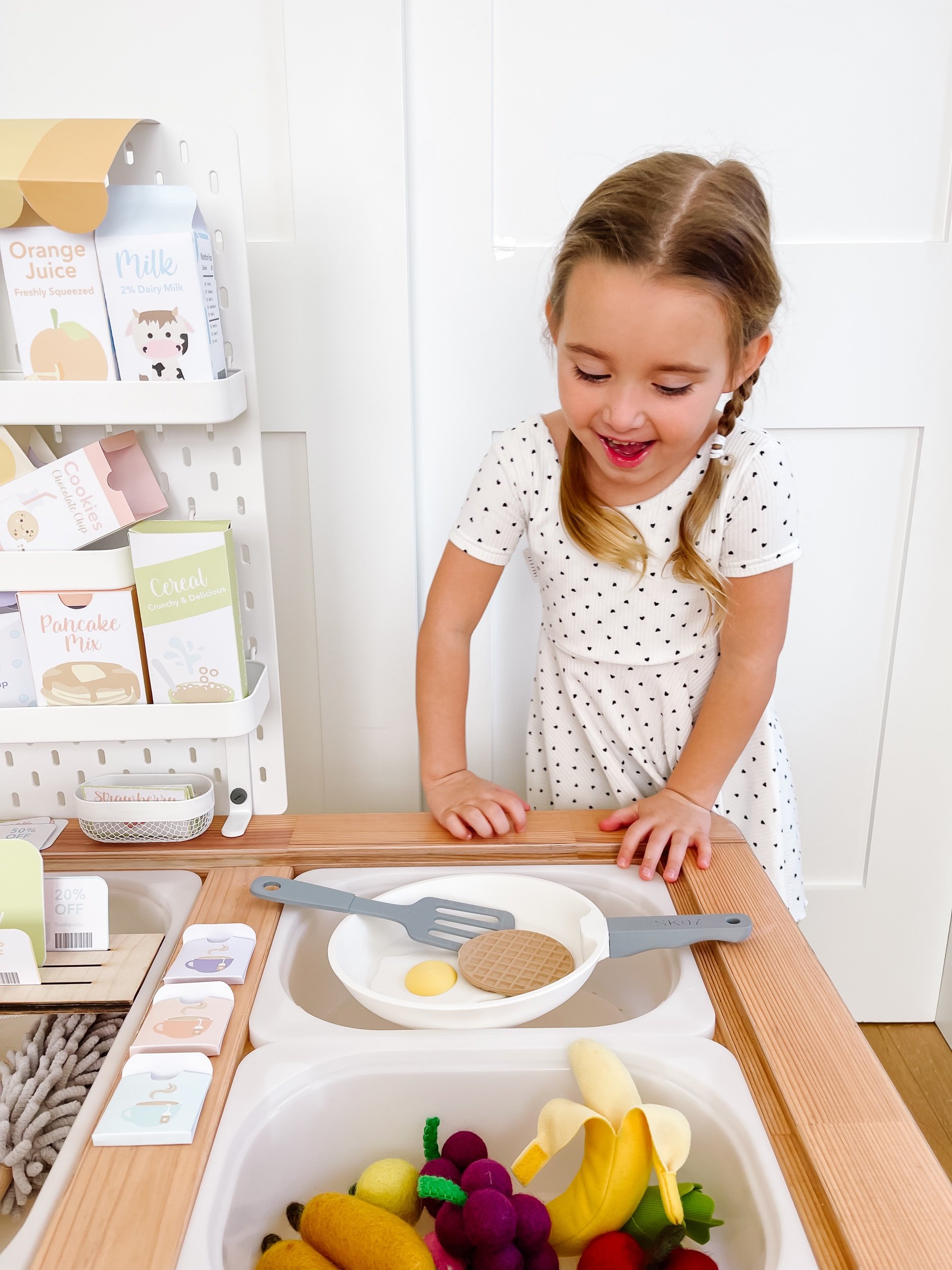
Encourage your toddler to choose ingredients from our printable food collection and create their own imaginative recipes. Through role-play cooking activities, they can practice basic kitchen skills, make-believe meal planning, and explore different food combinations.
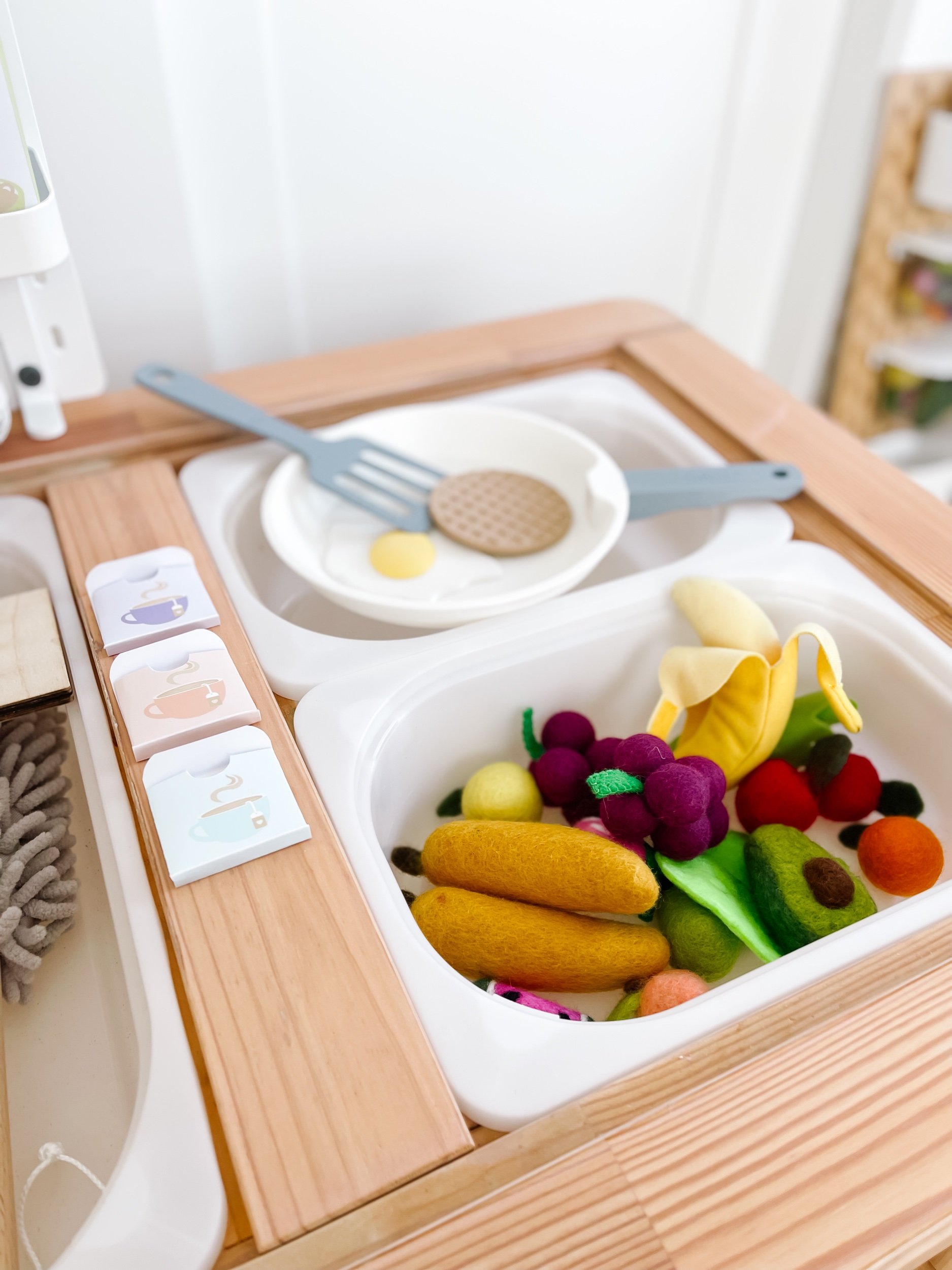
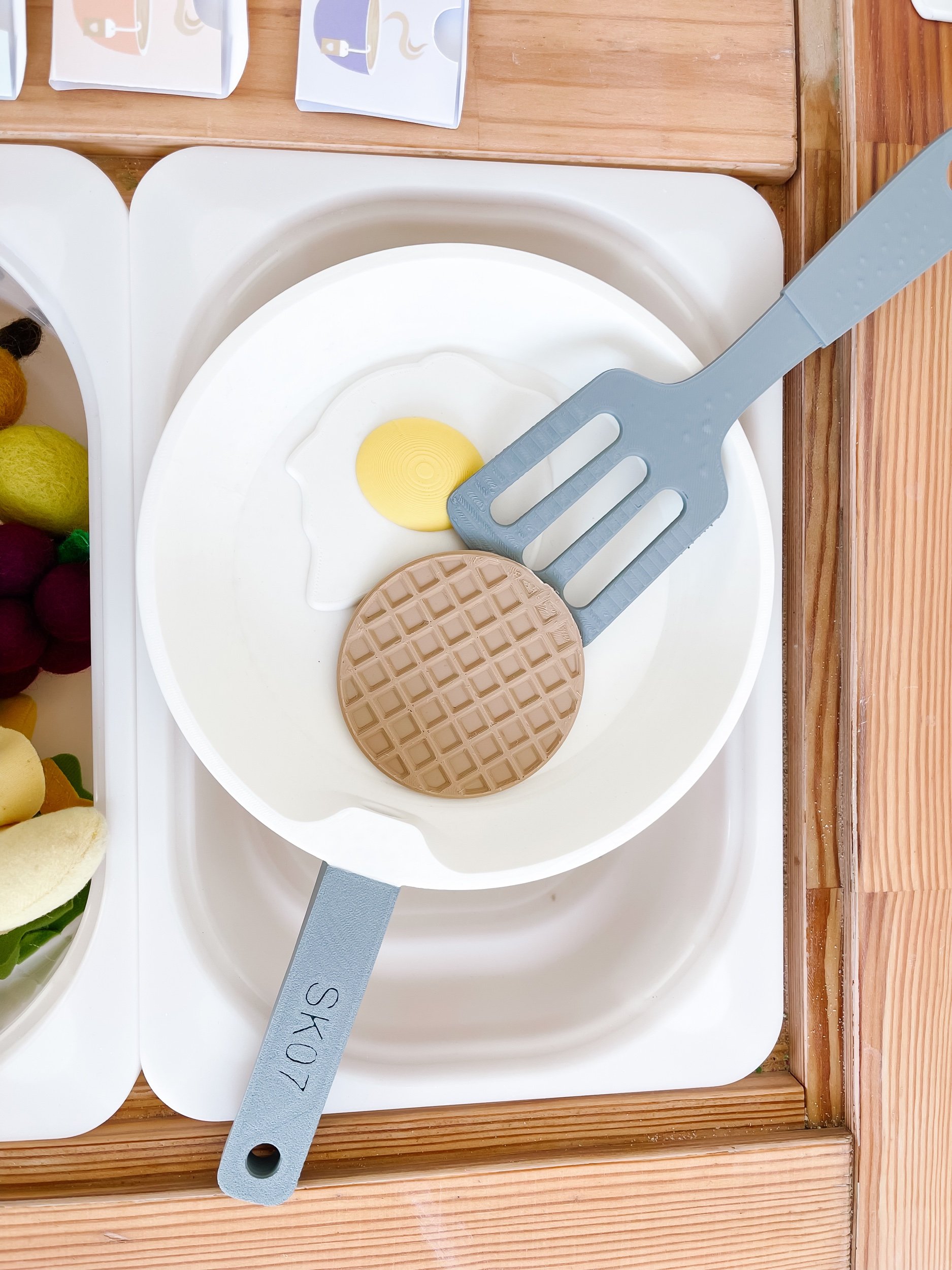
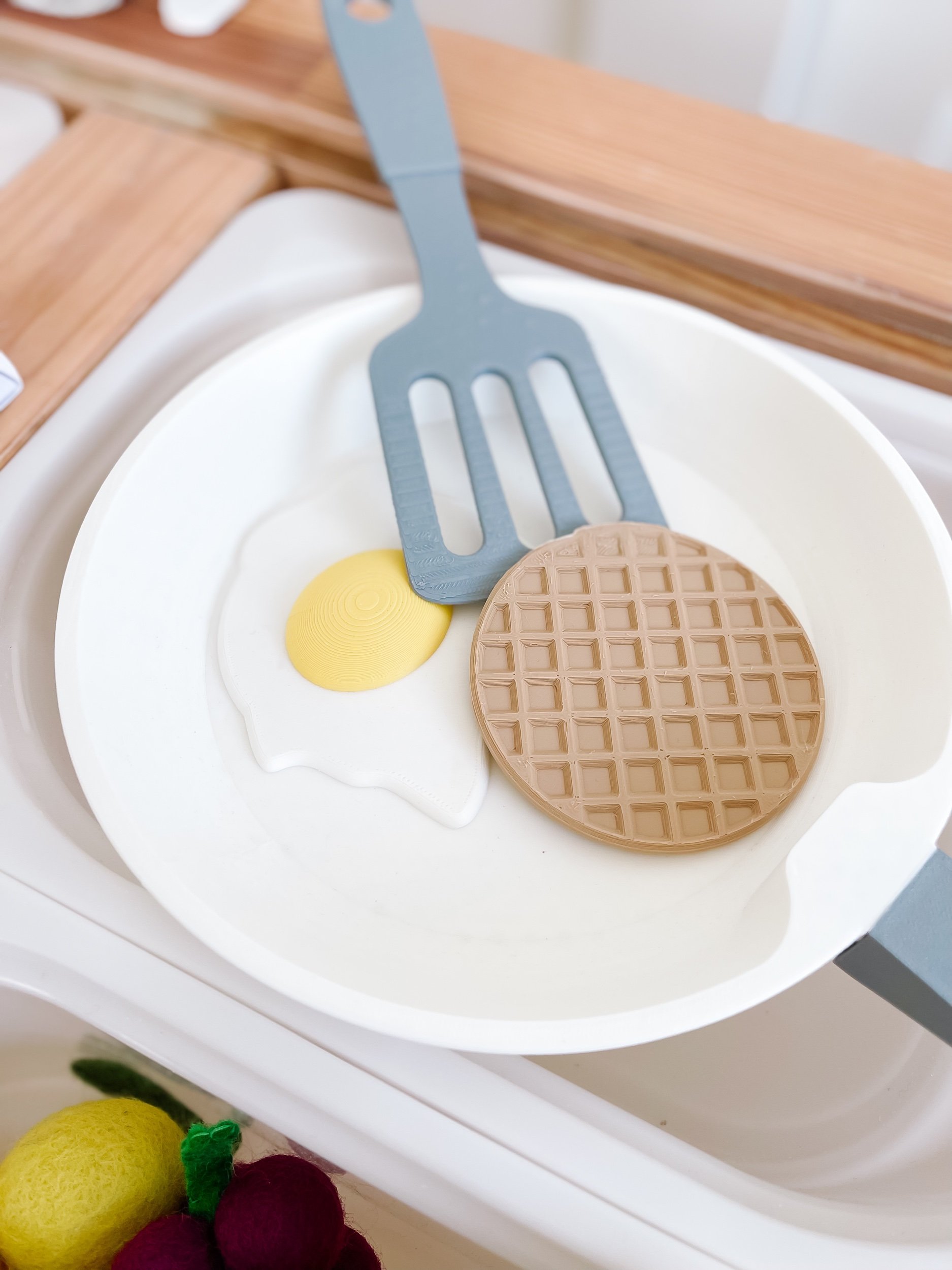
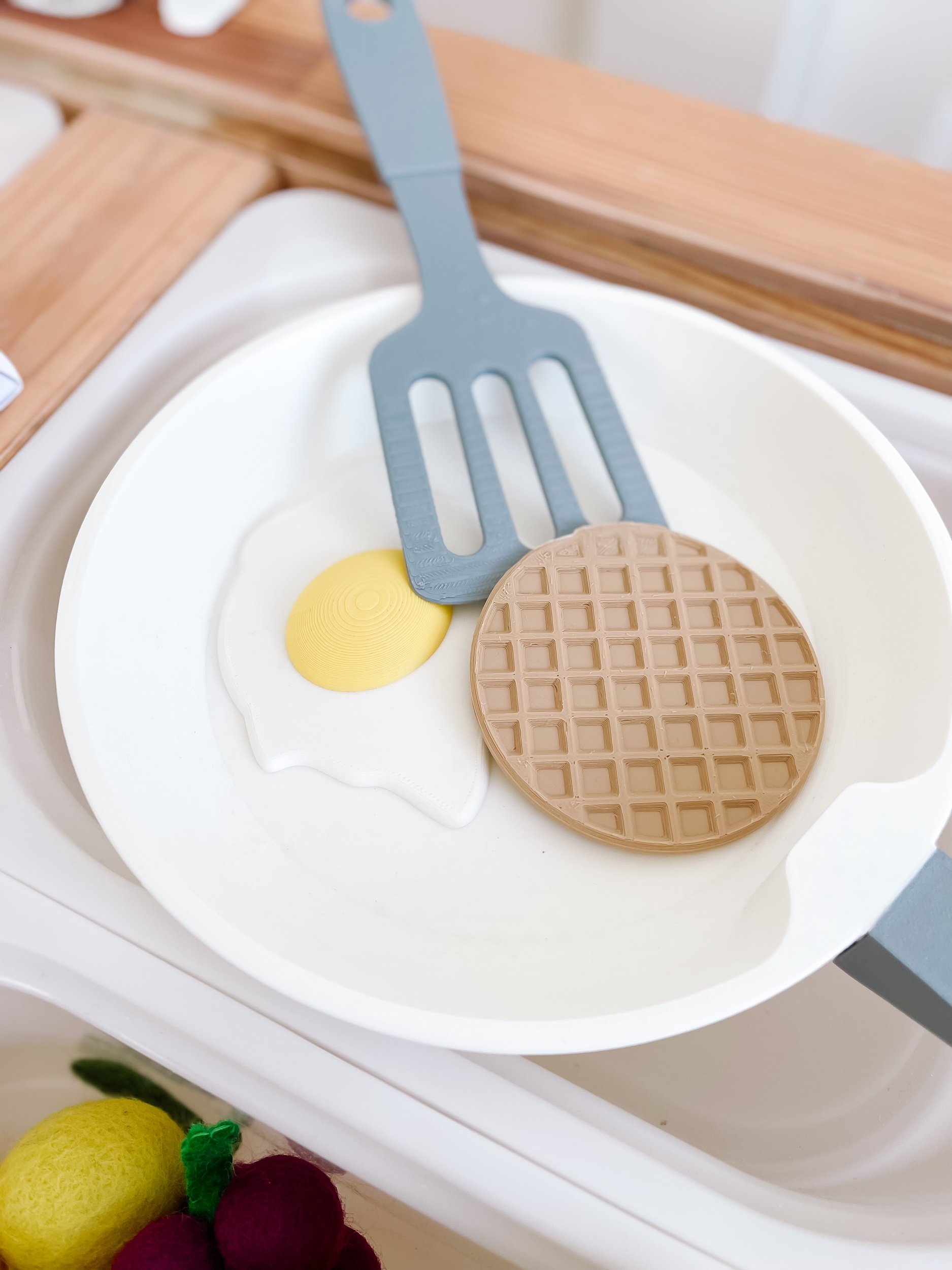
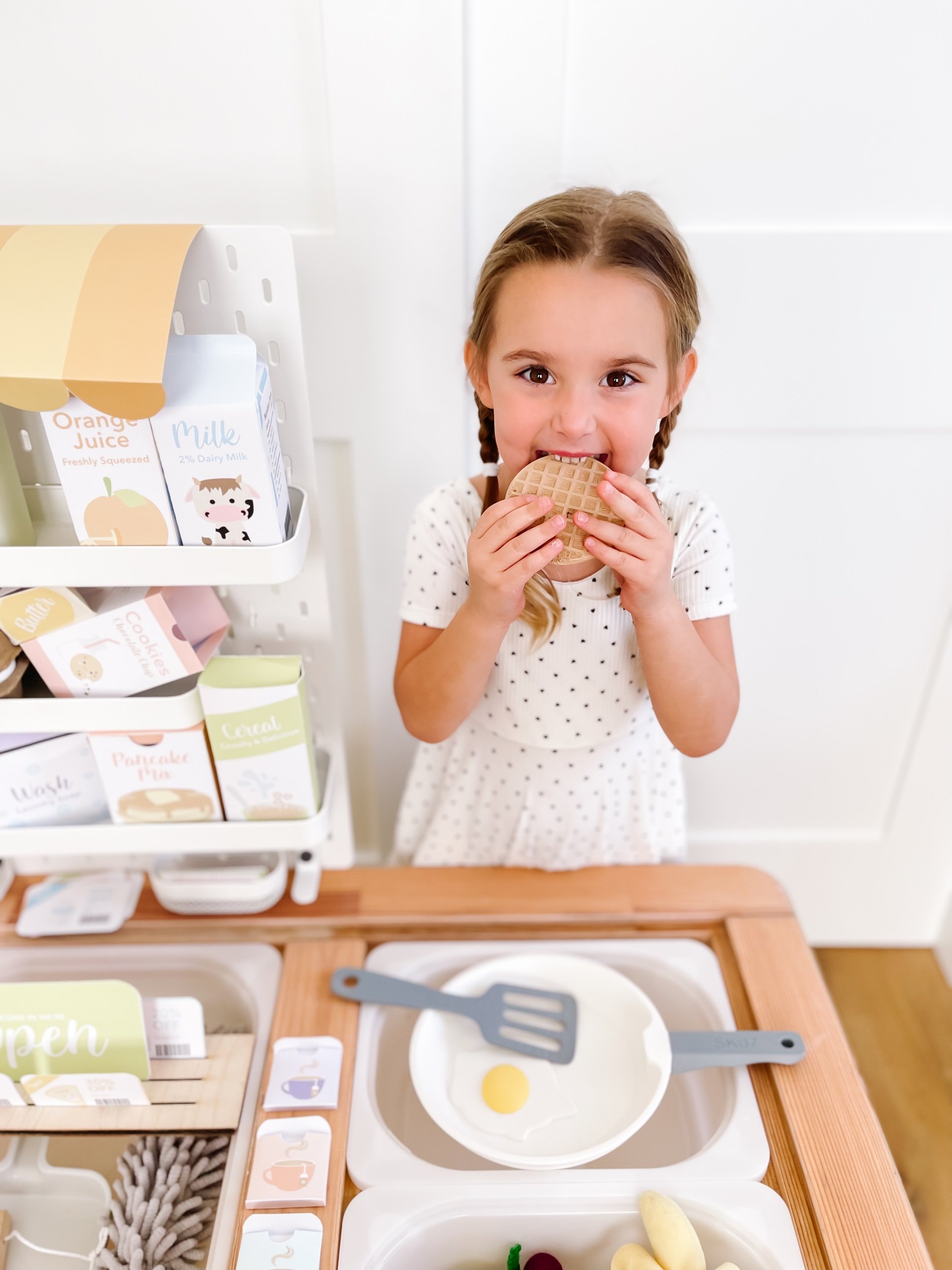
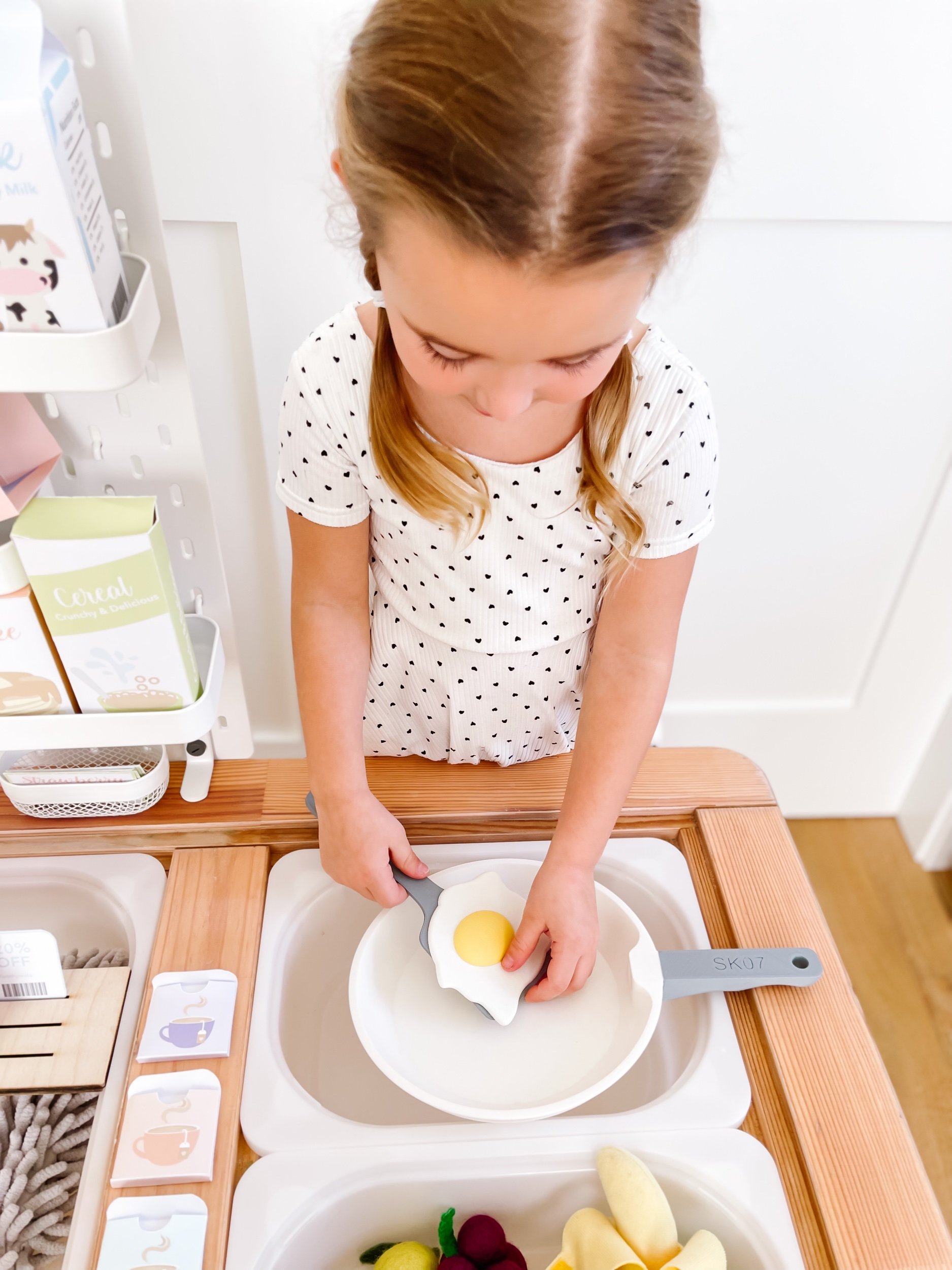
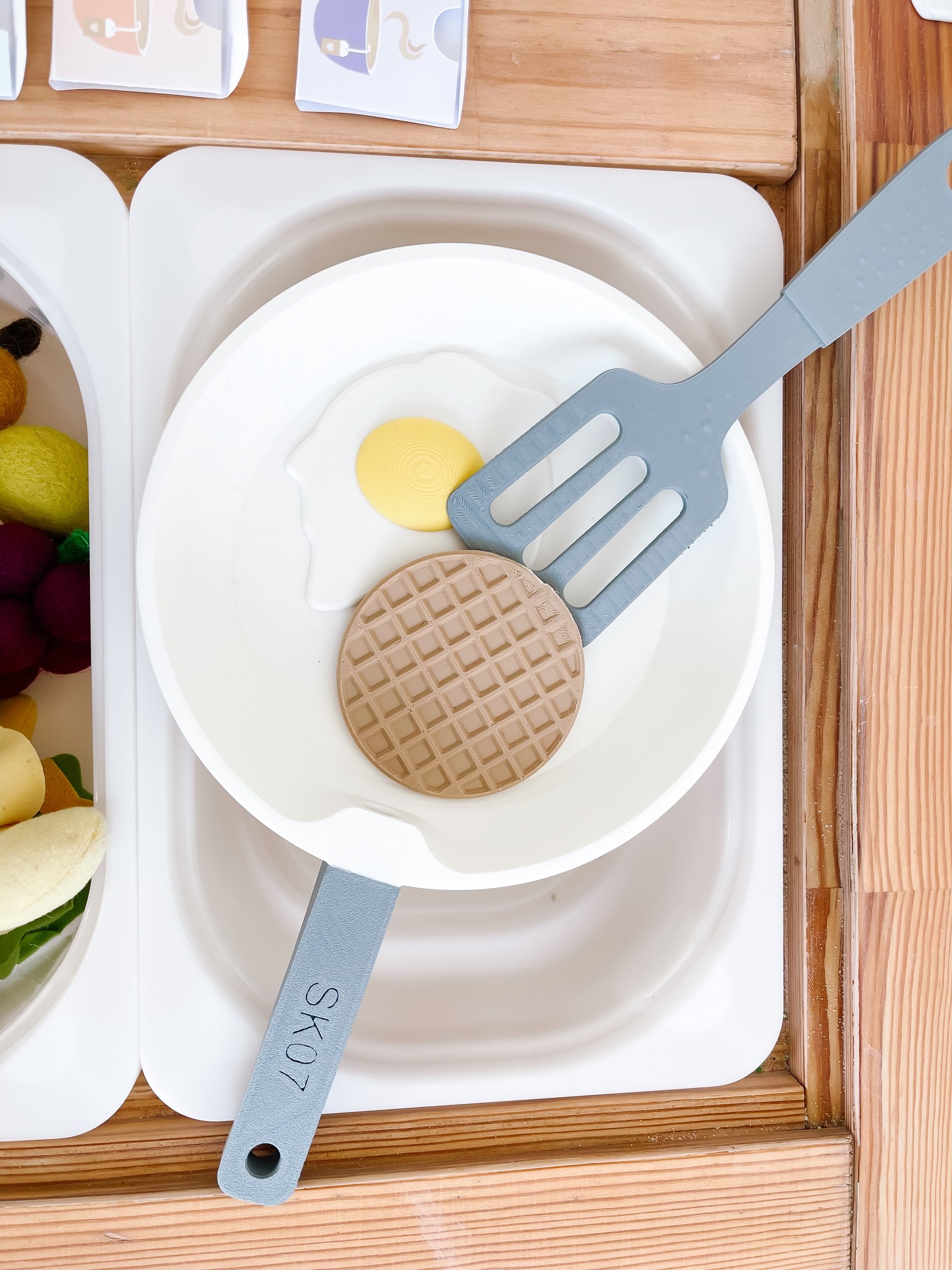
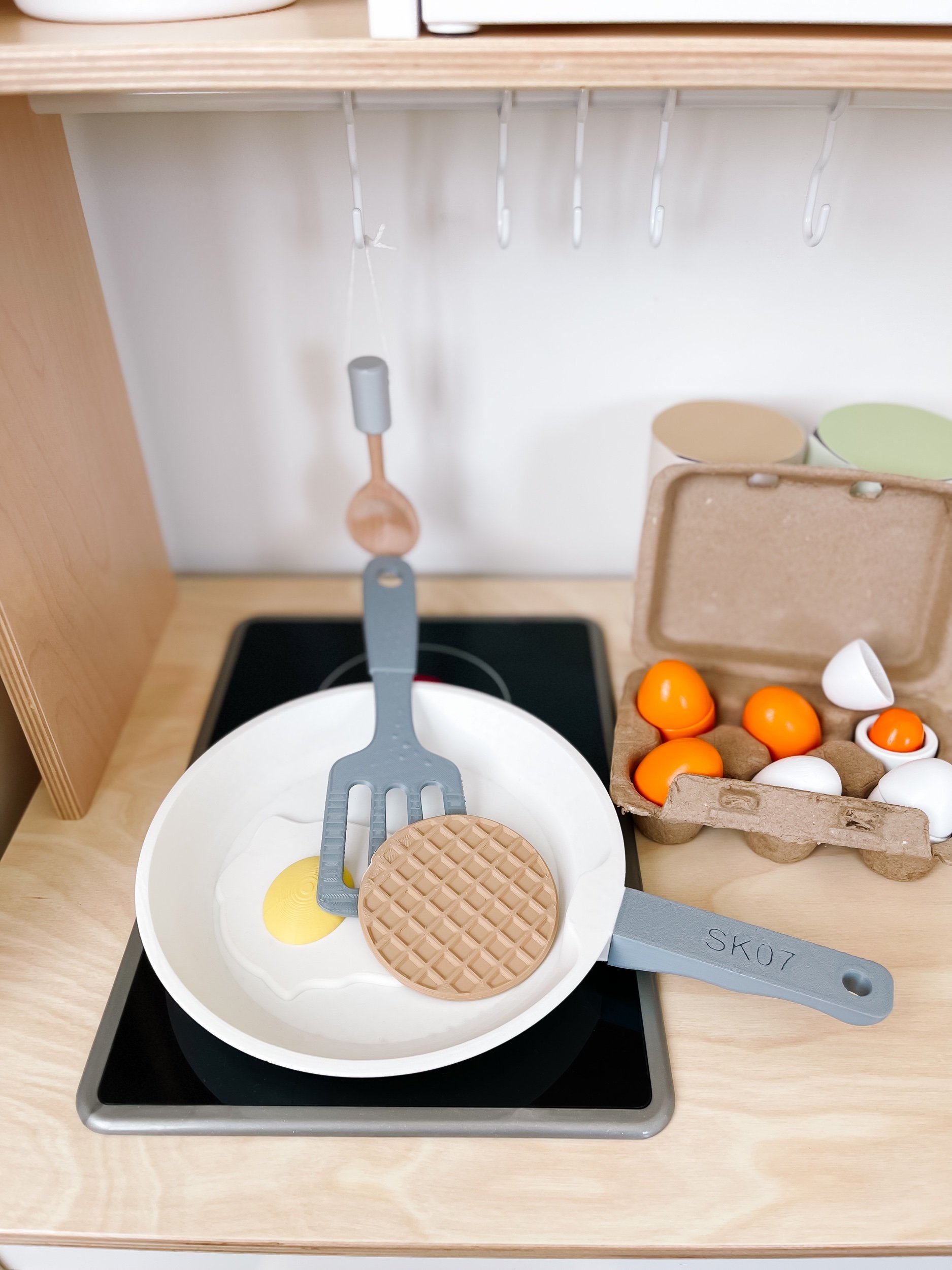
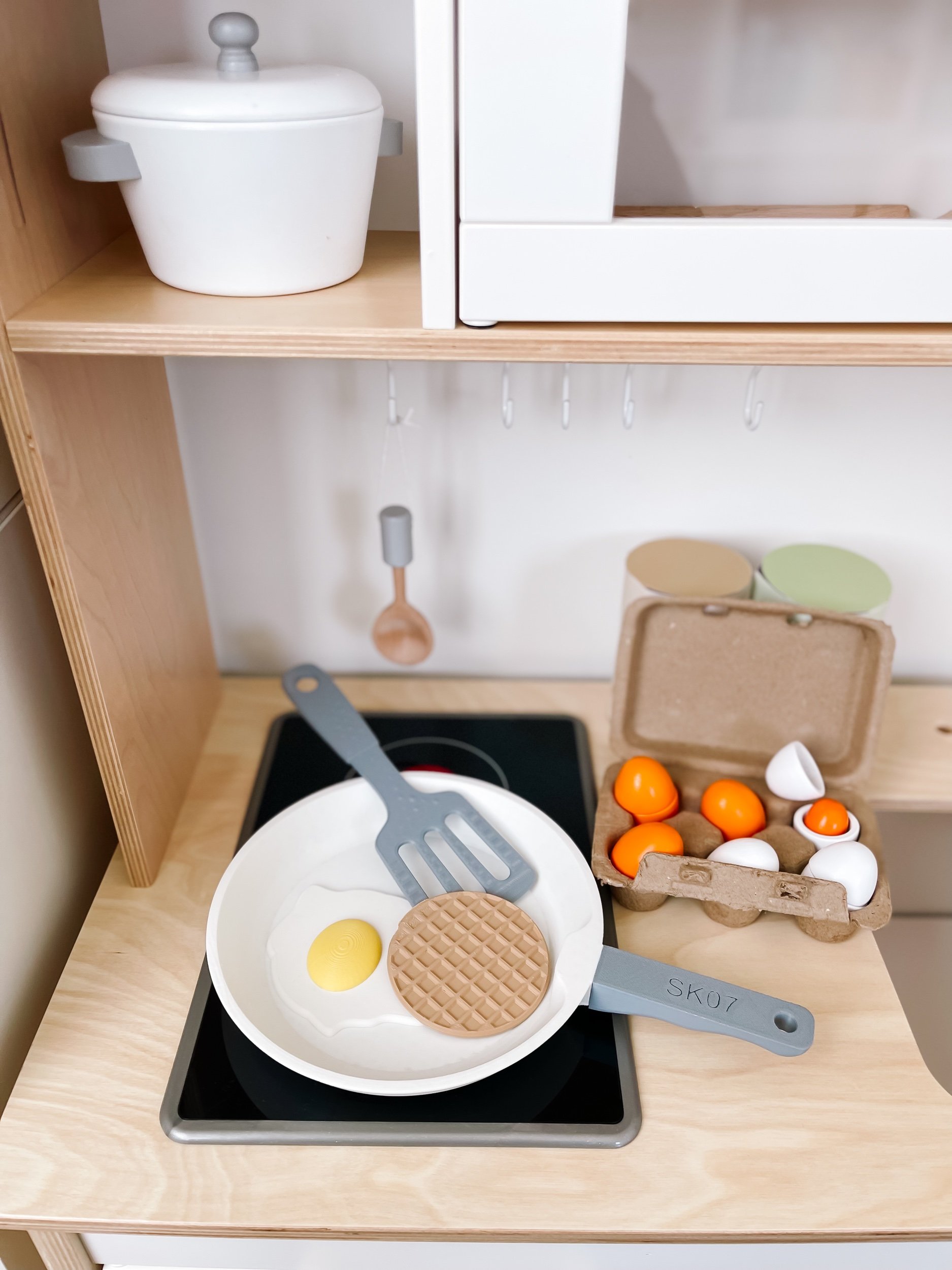
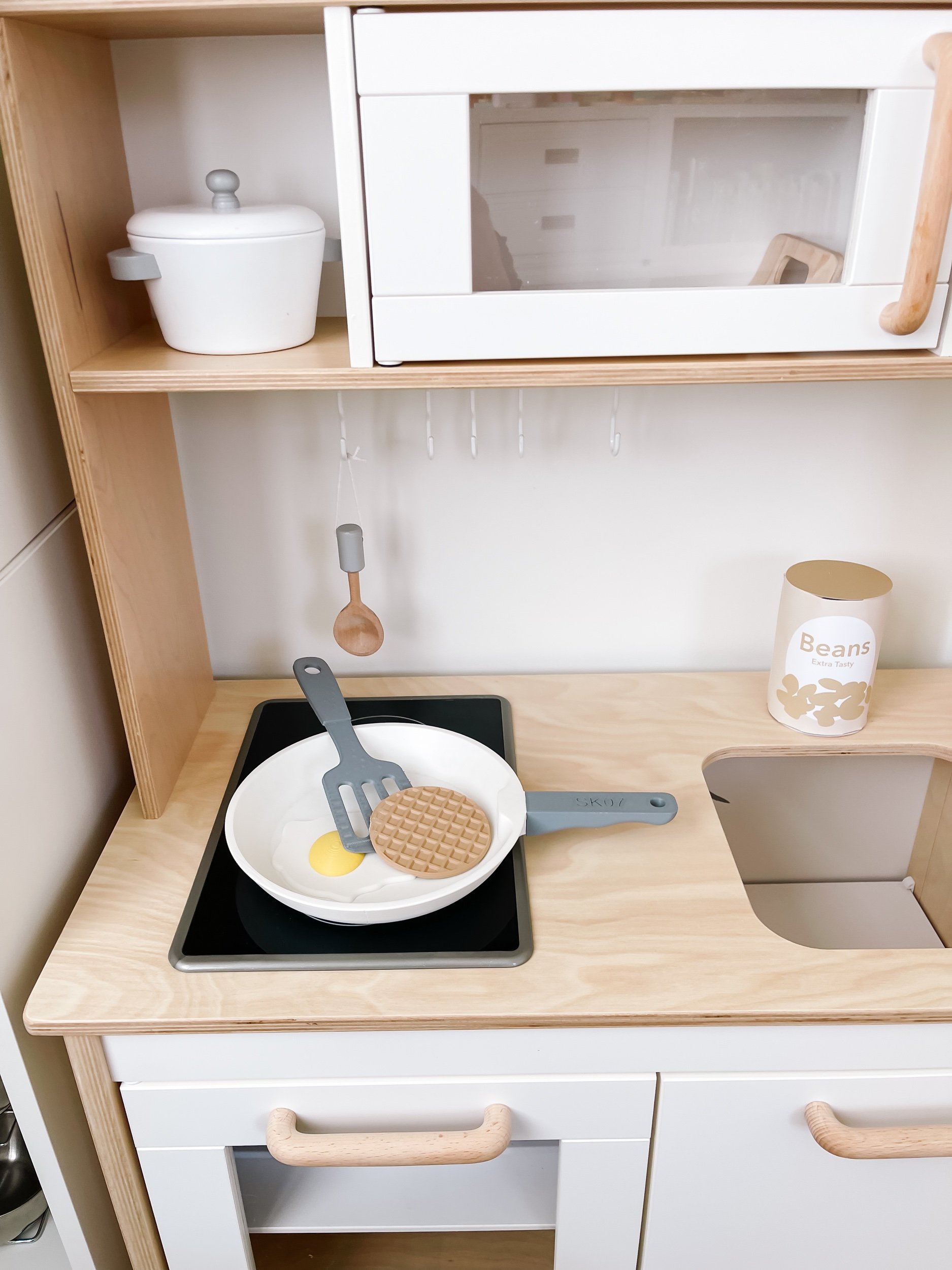
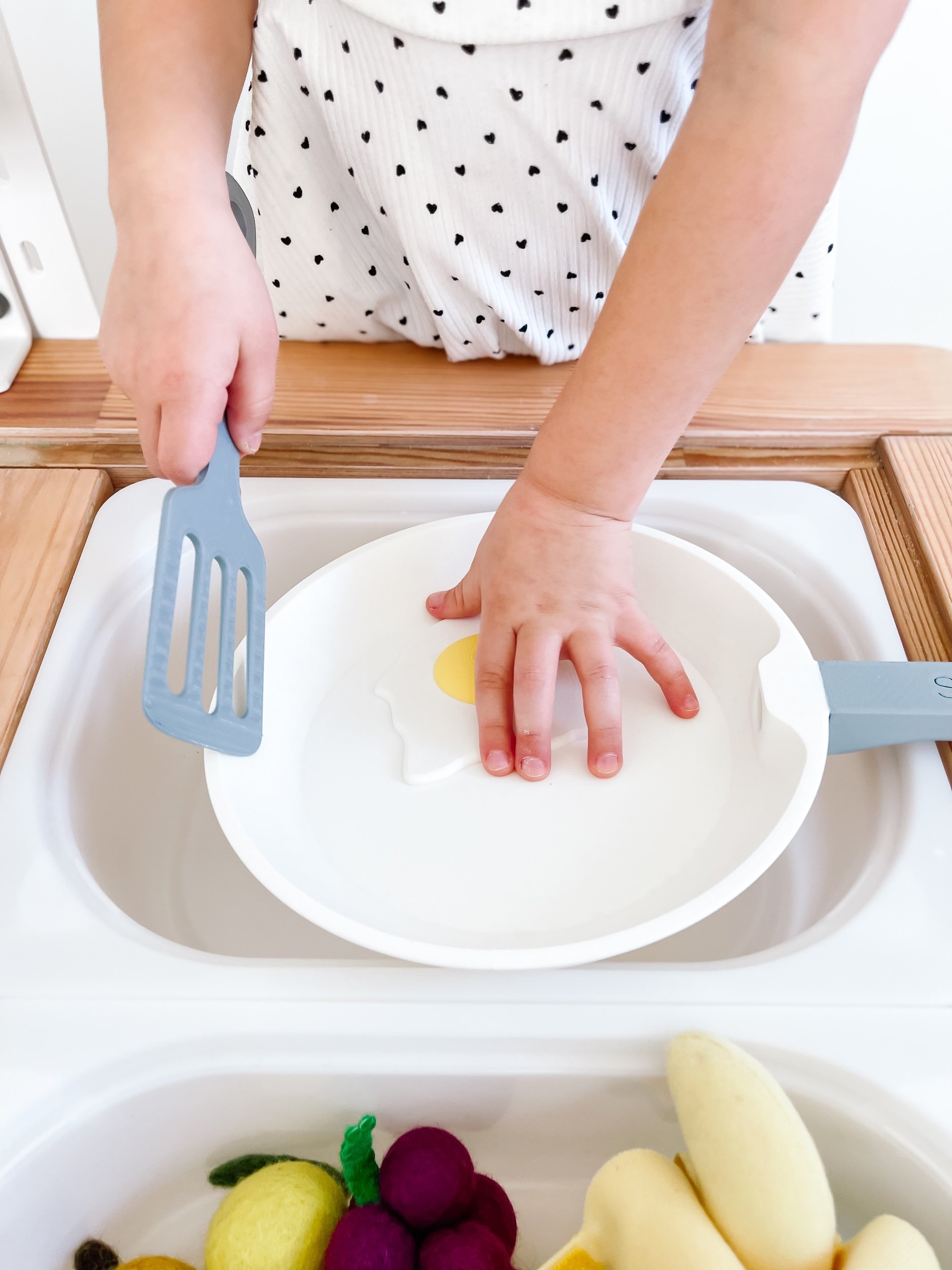
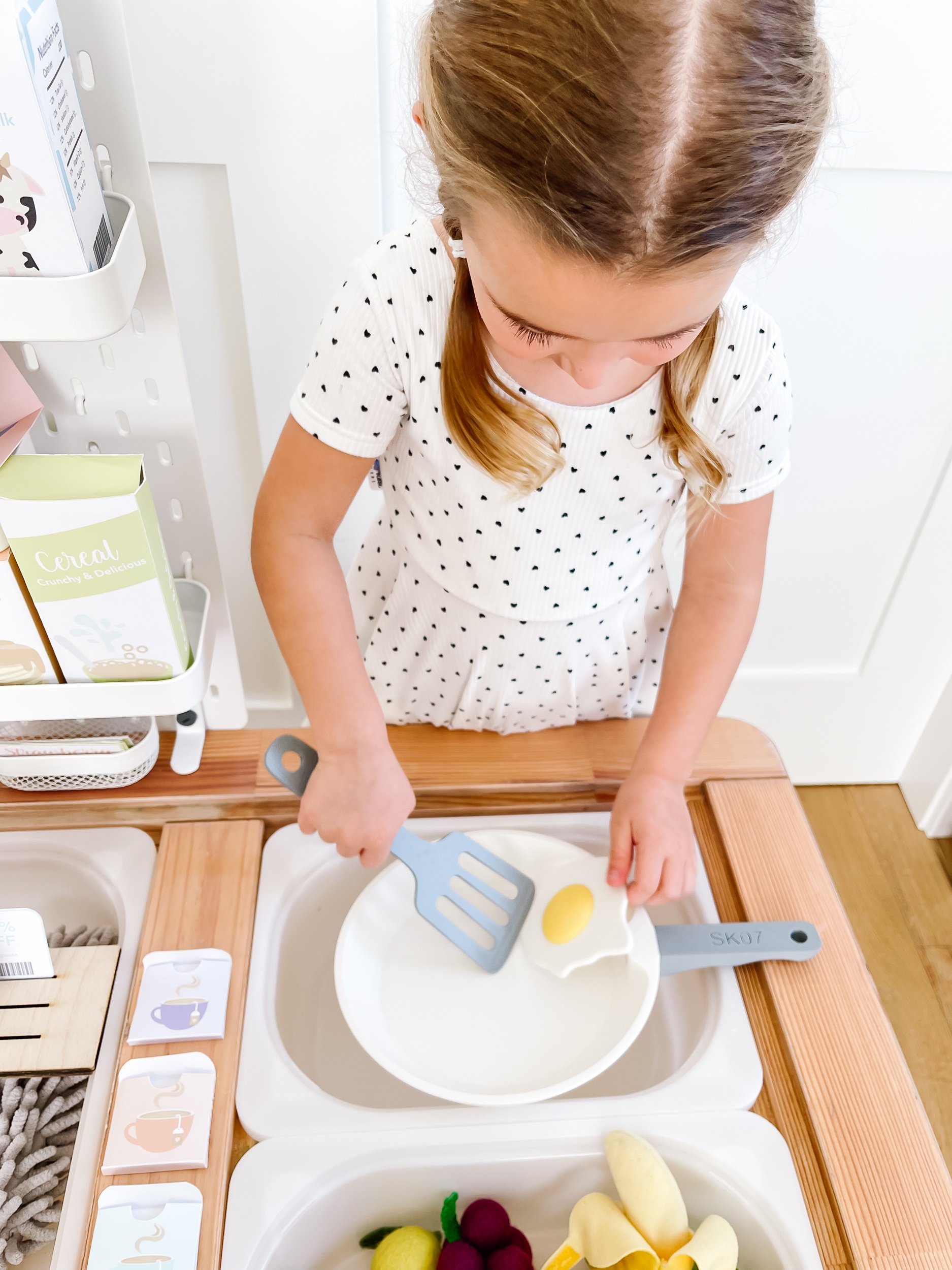
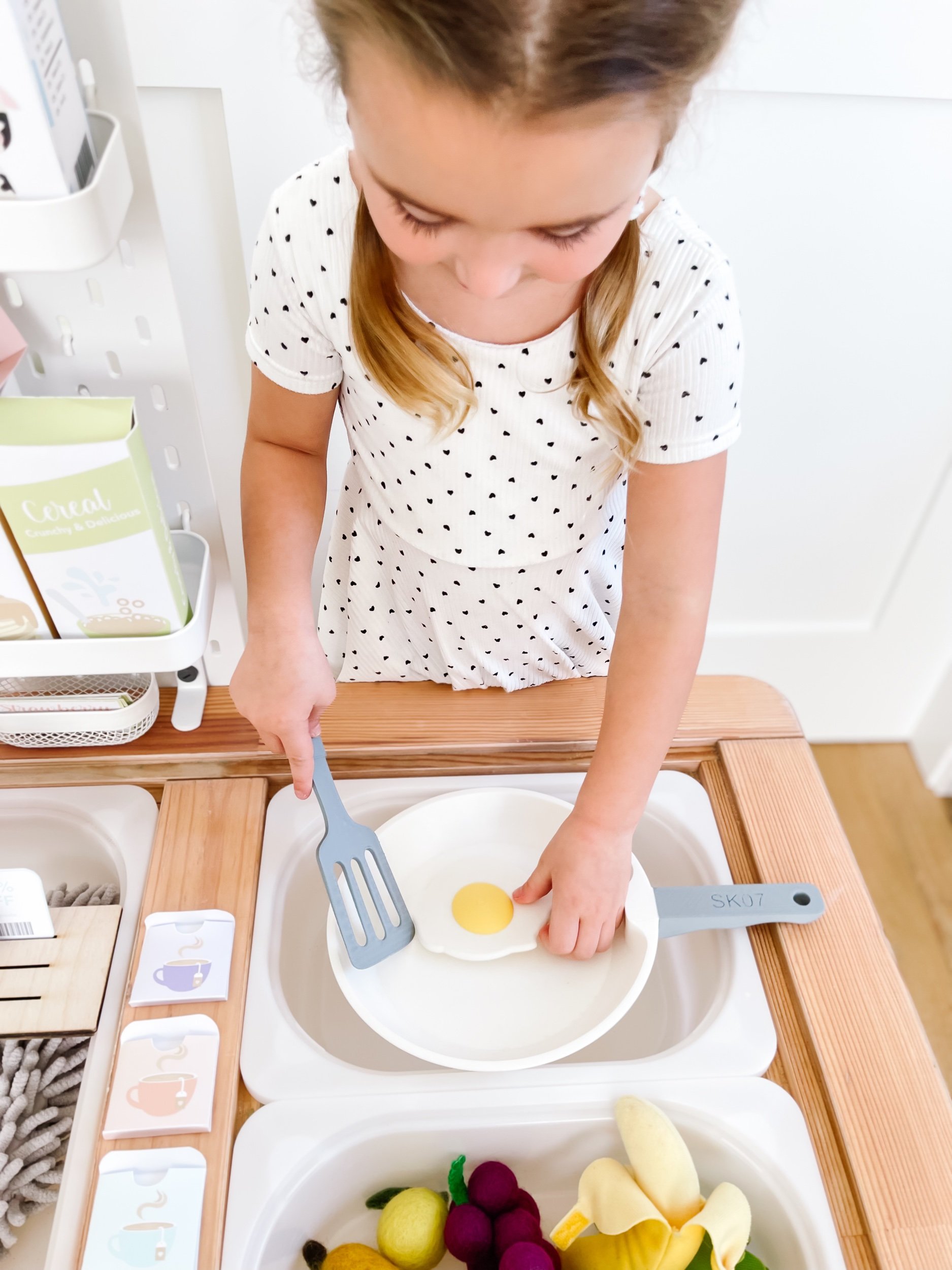
We used our amazing pan, egg, and waffle 🧇 set from @t.c.play — Sofia loved practicing flipping the eggs!
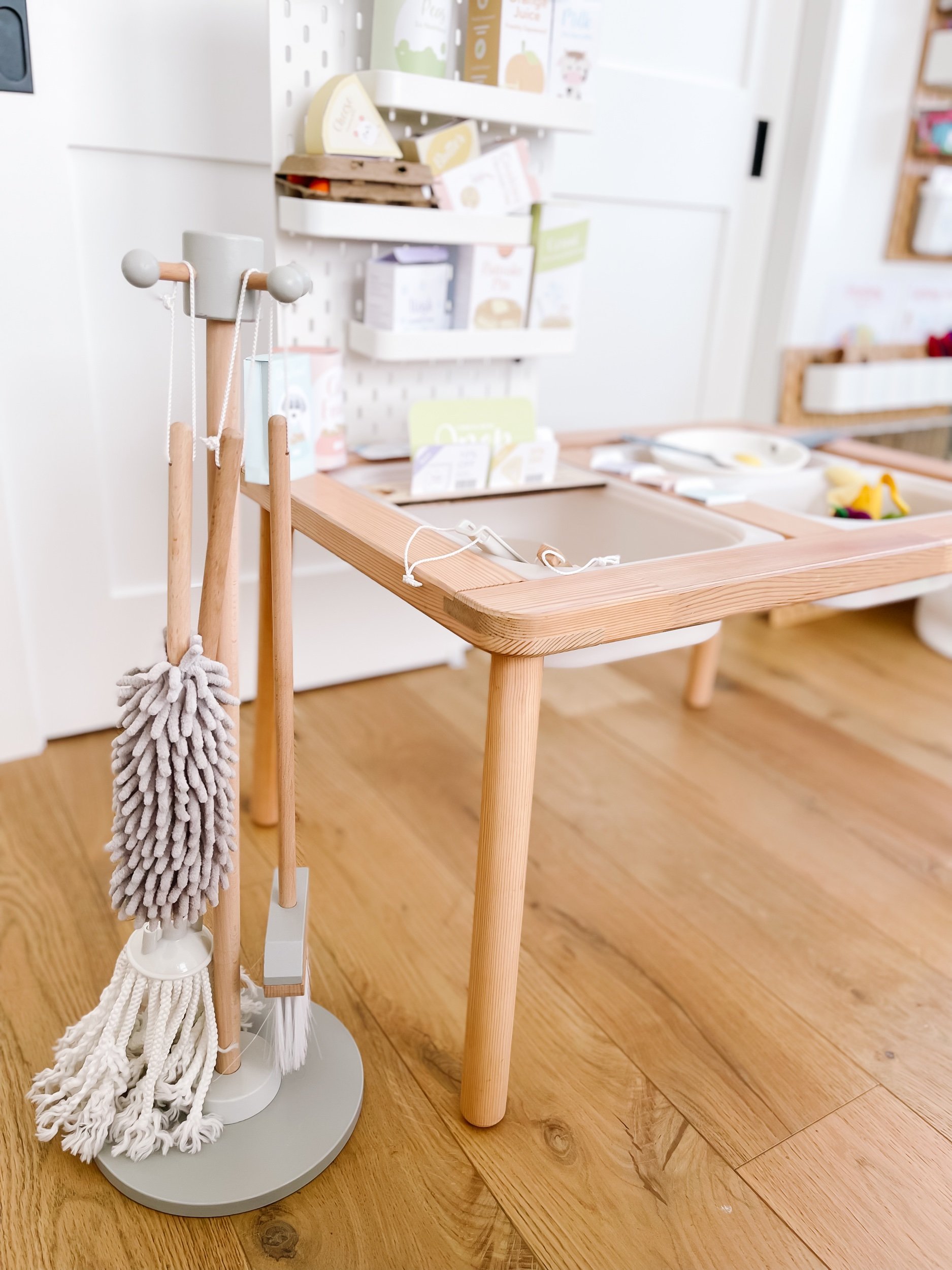
Teach responsibility and organization through cleaning up the grocery store after playtime. Toddlers can practice counting, sorting, and categorizing items, enhancing their cleaning skills while reinforcing concepts of orderliness and tidiness.
1. Apple
2. Banana
3. Orange
4. Strawberry
5. Grapes
6. Carrot
7. Tomato
8. Broccoli
9. Potato
10. Milk
11. Juice
12. Bread
13. Cheese
14. Yogurt
15. Egg
16. Chicken
17. Fish
18. Cereal
19. Pasta
20. Rice
21. Jelly
22. Peanut butter
23. Honey
24. Butter
25. Chocolate
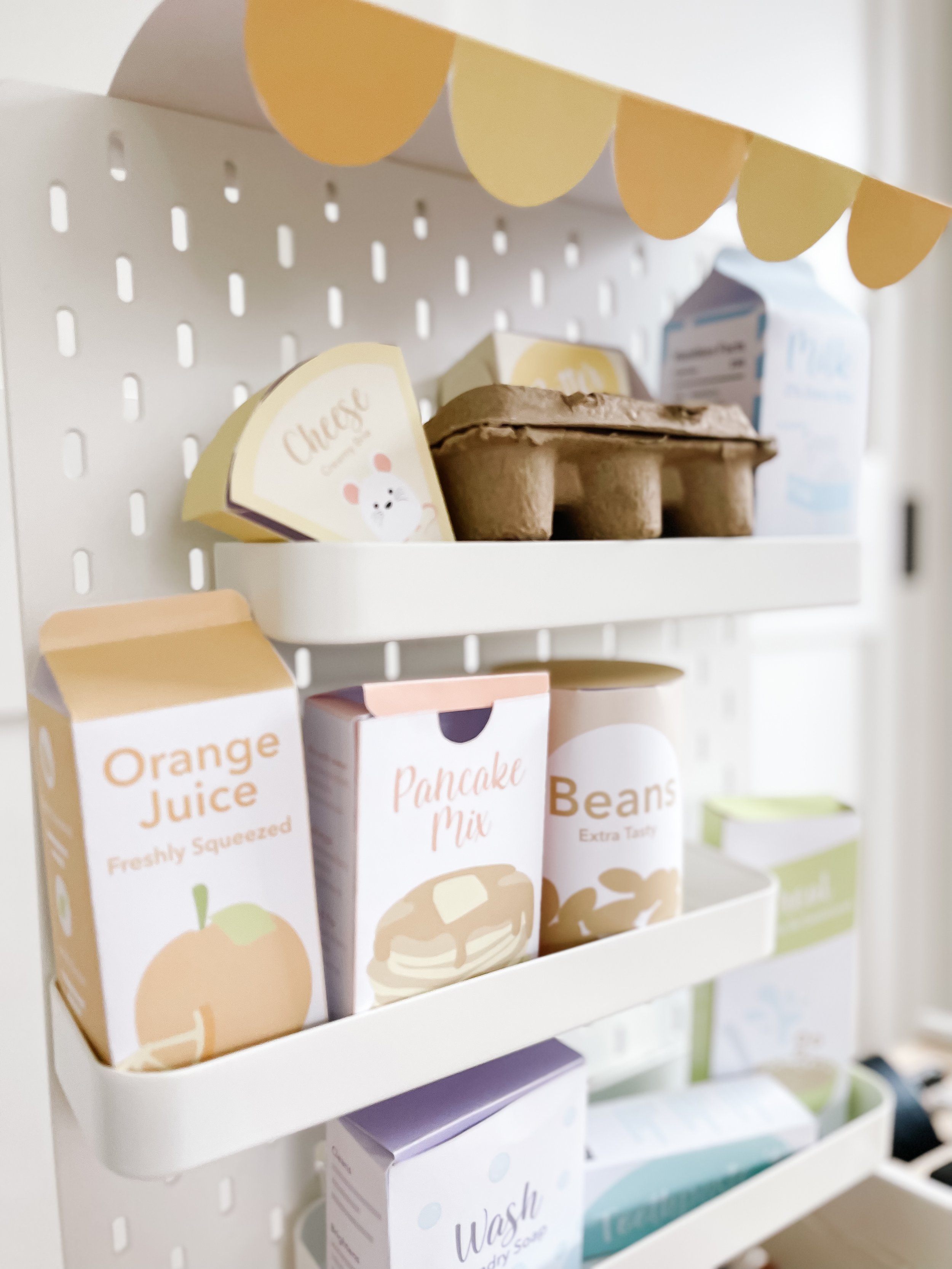
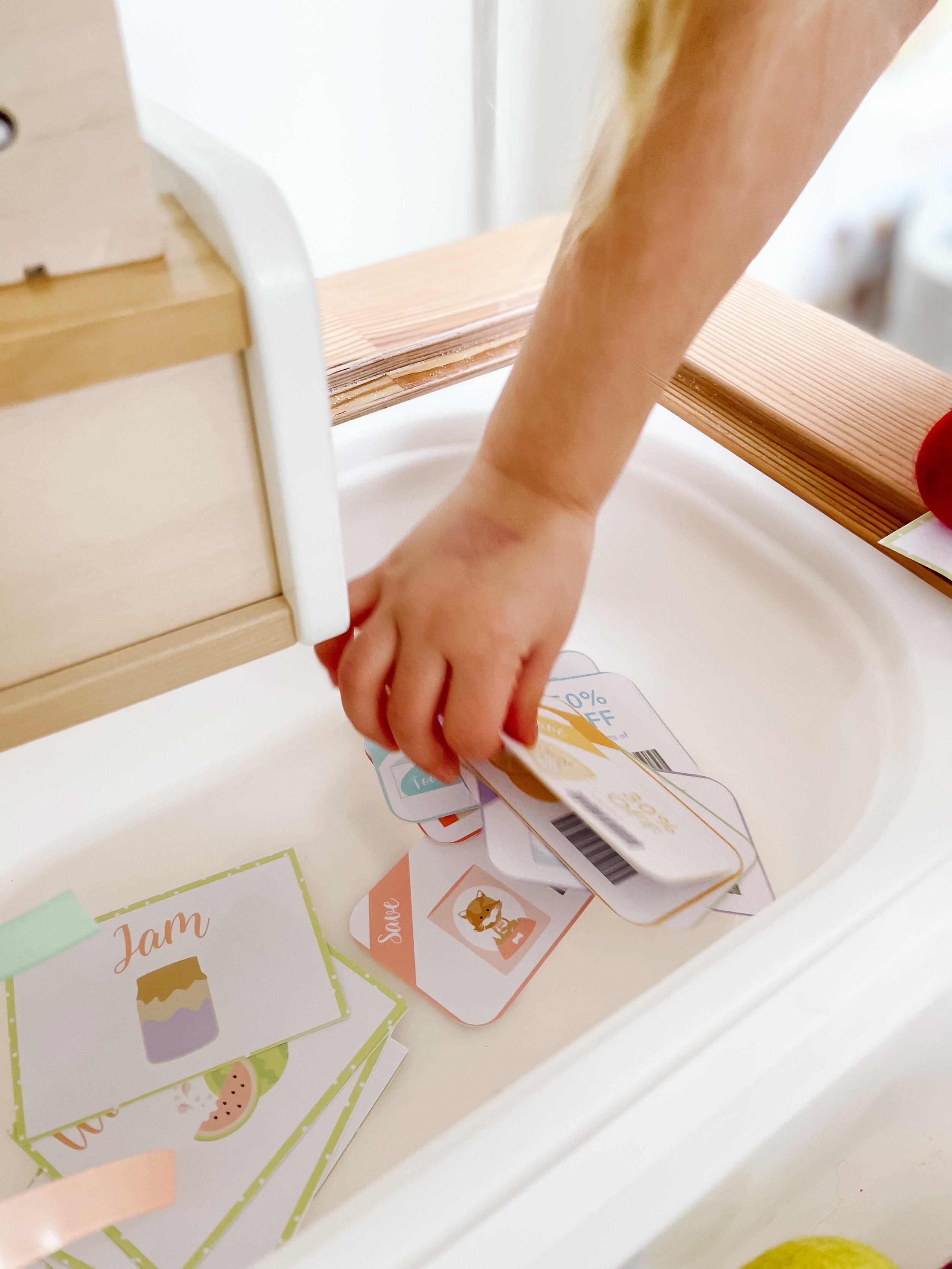
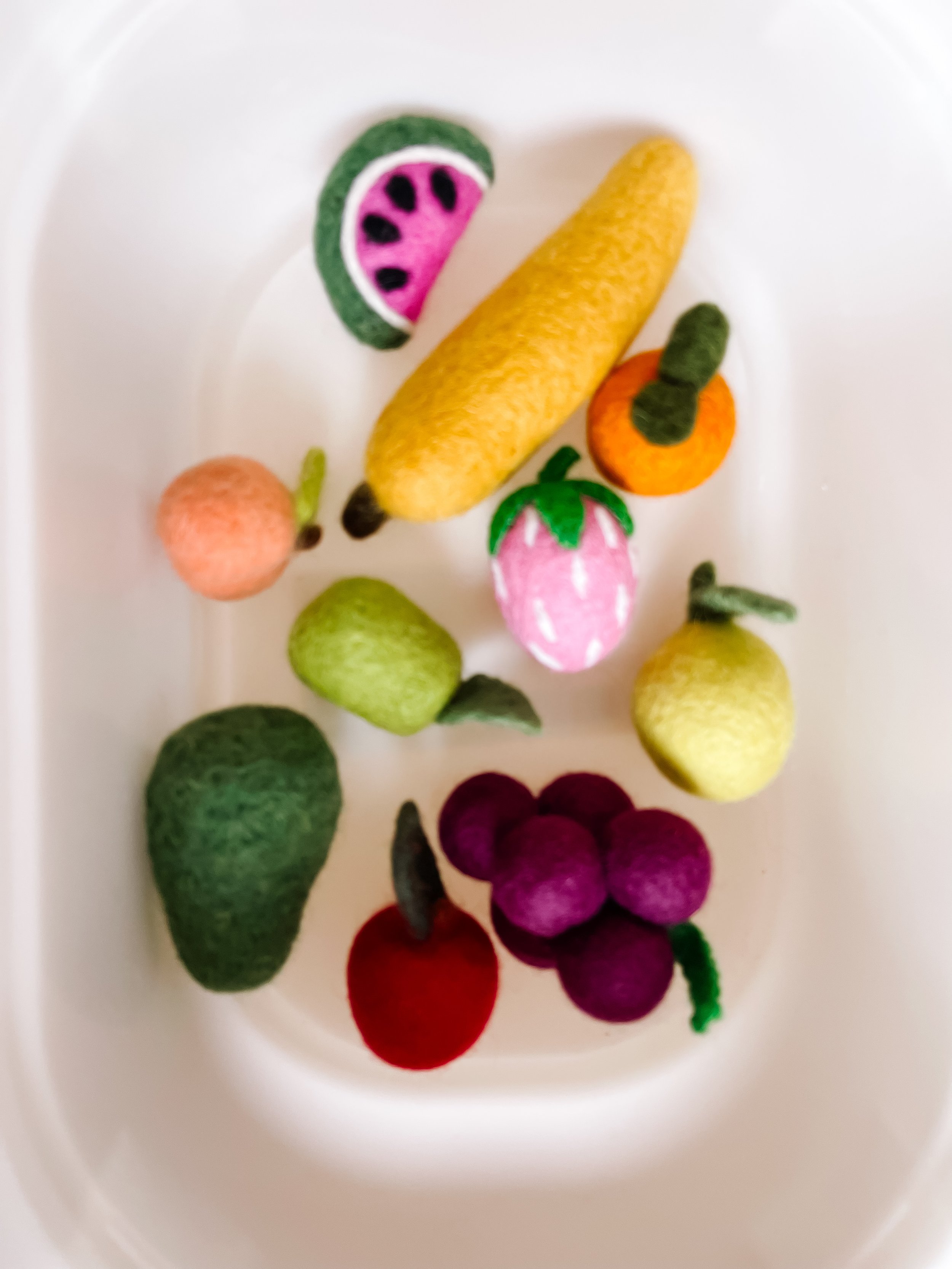
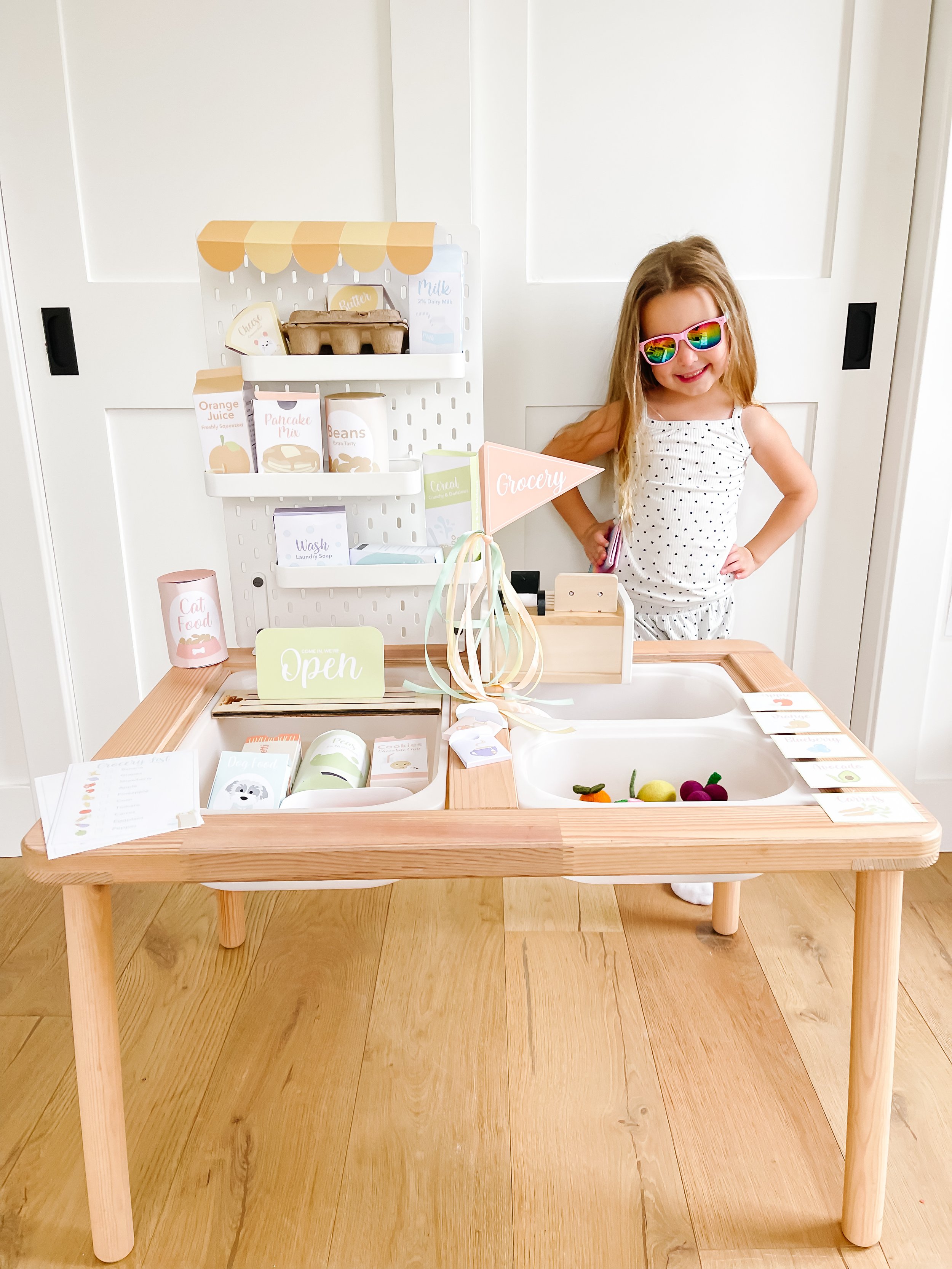
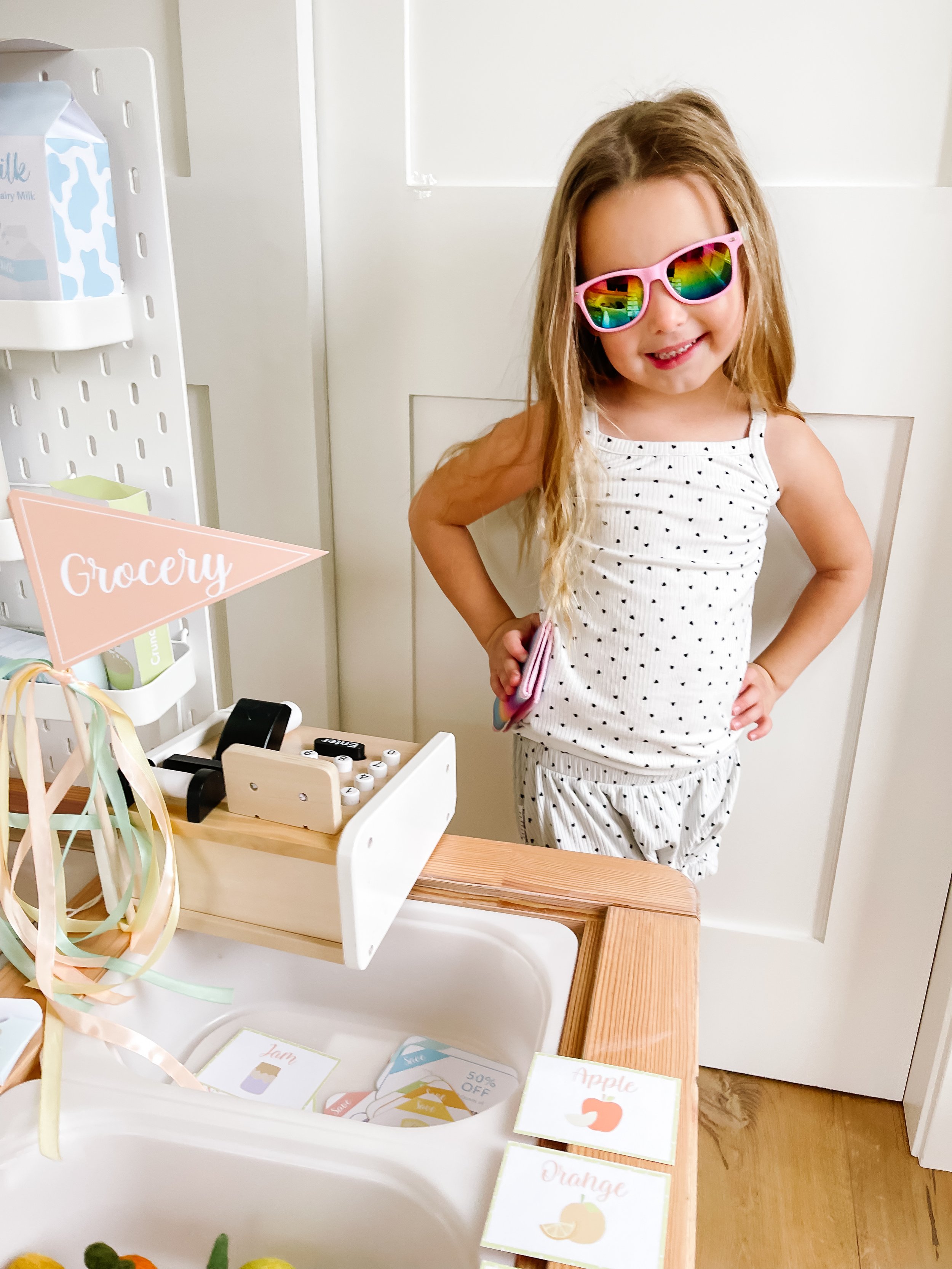
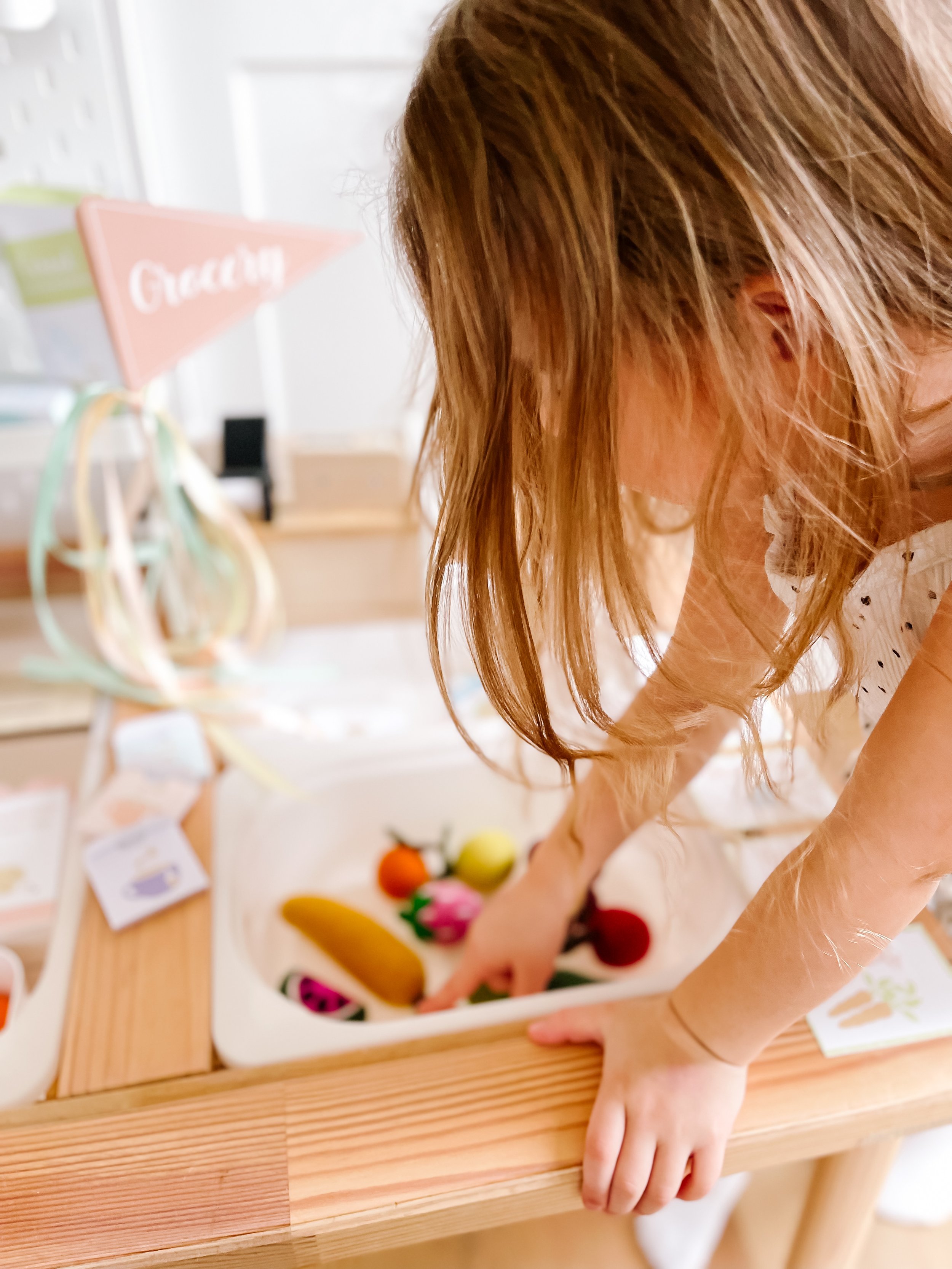
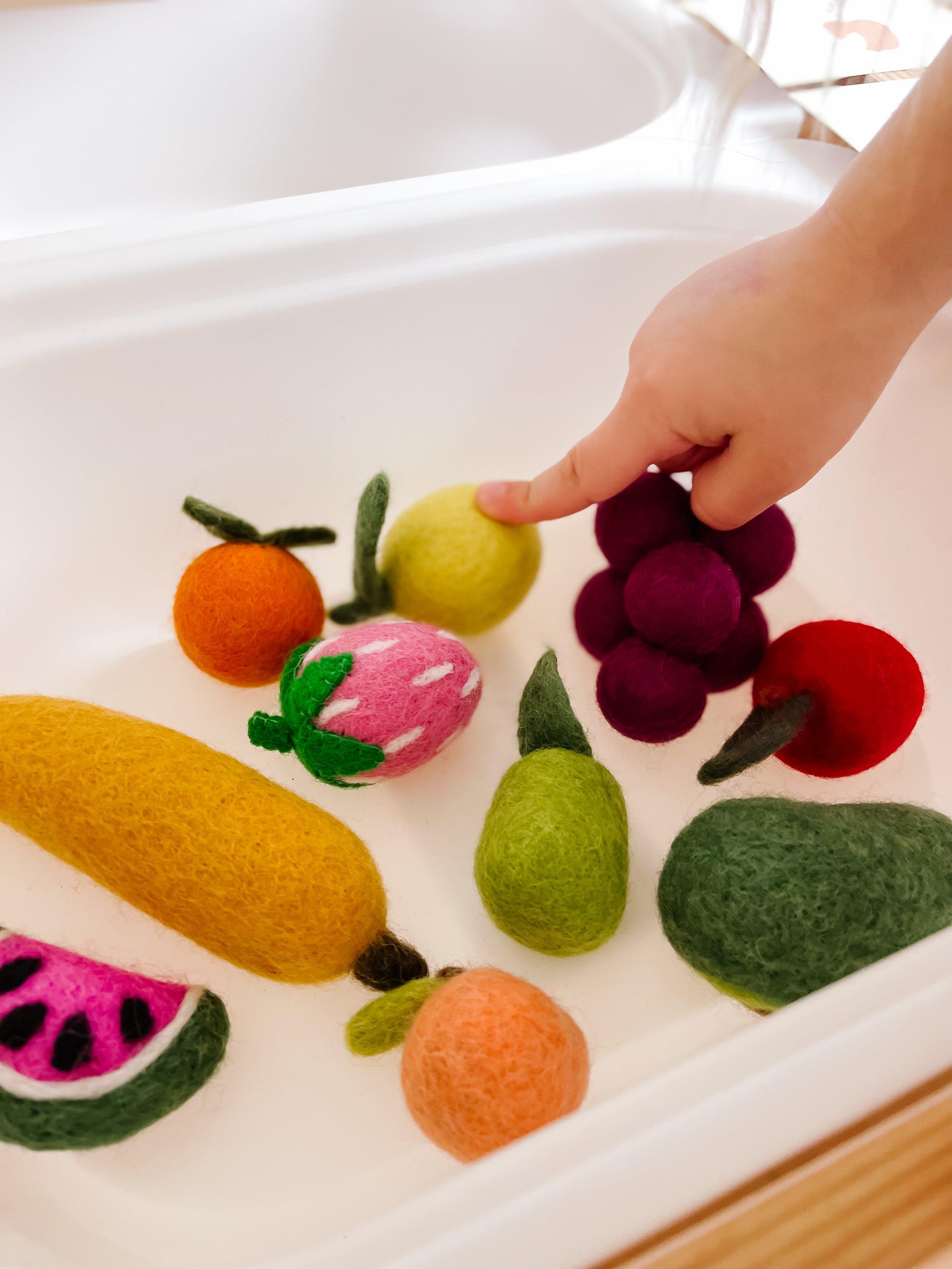
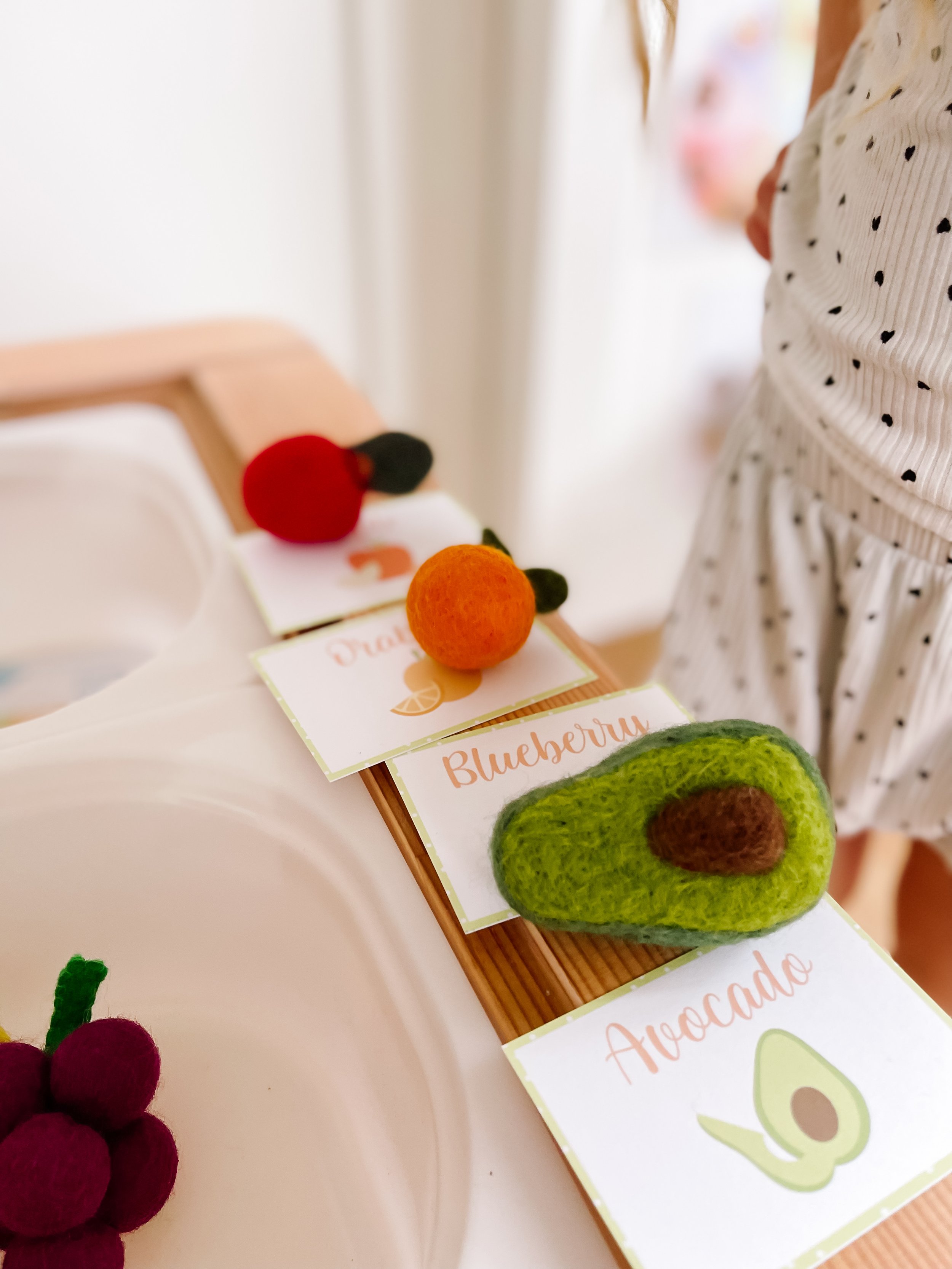
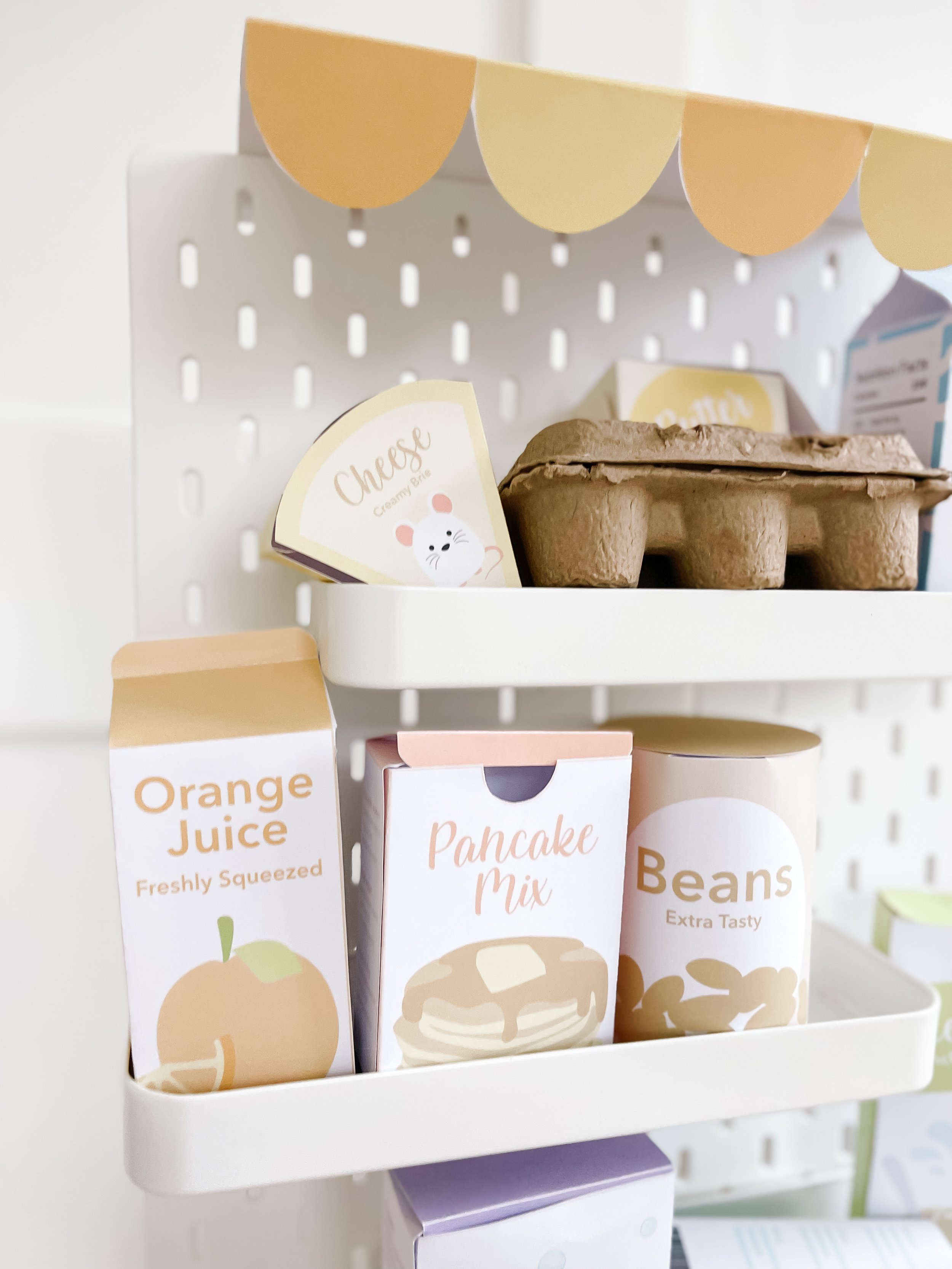
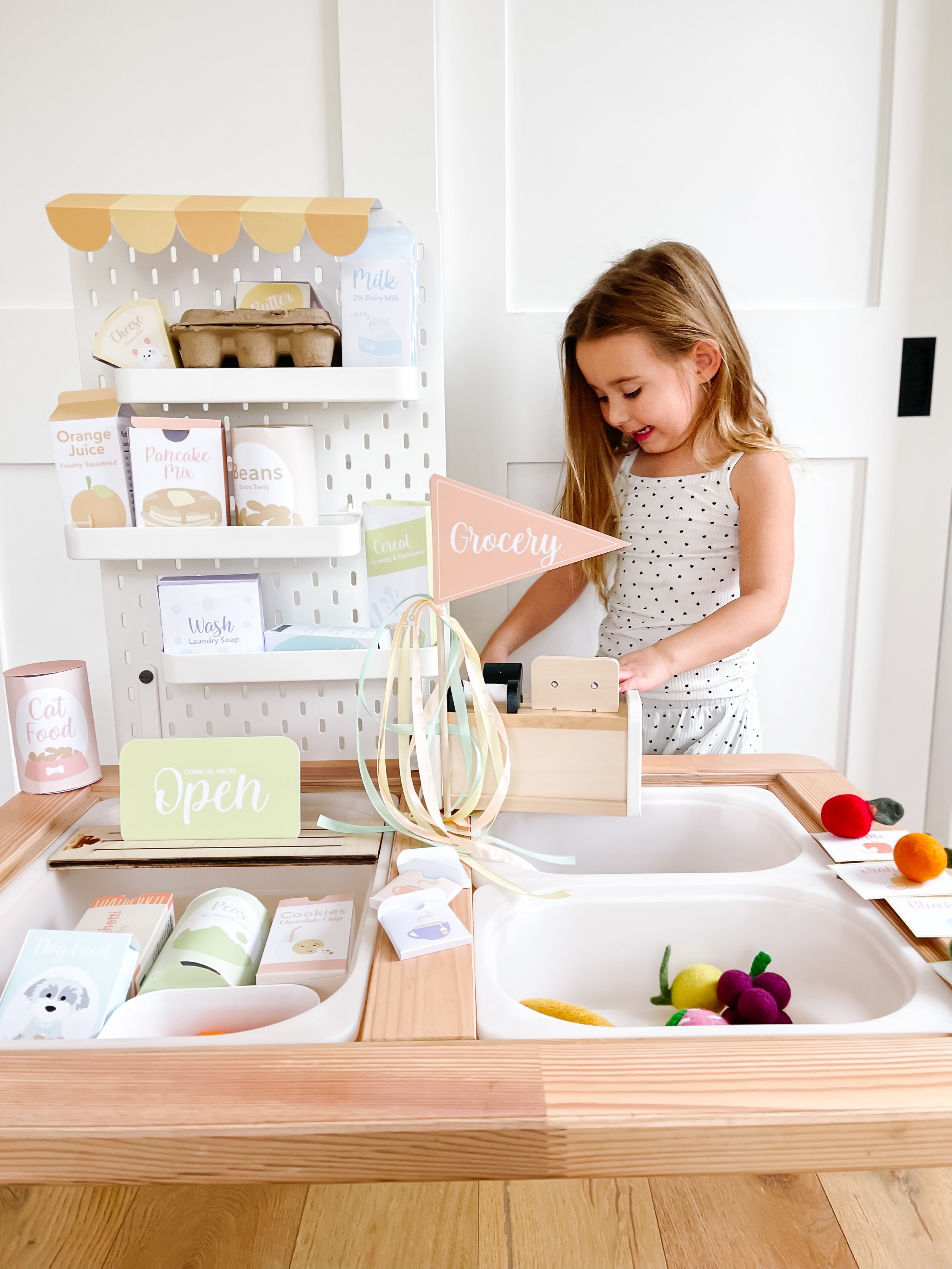
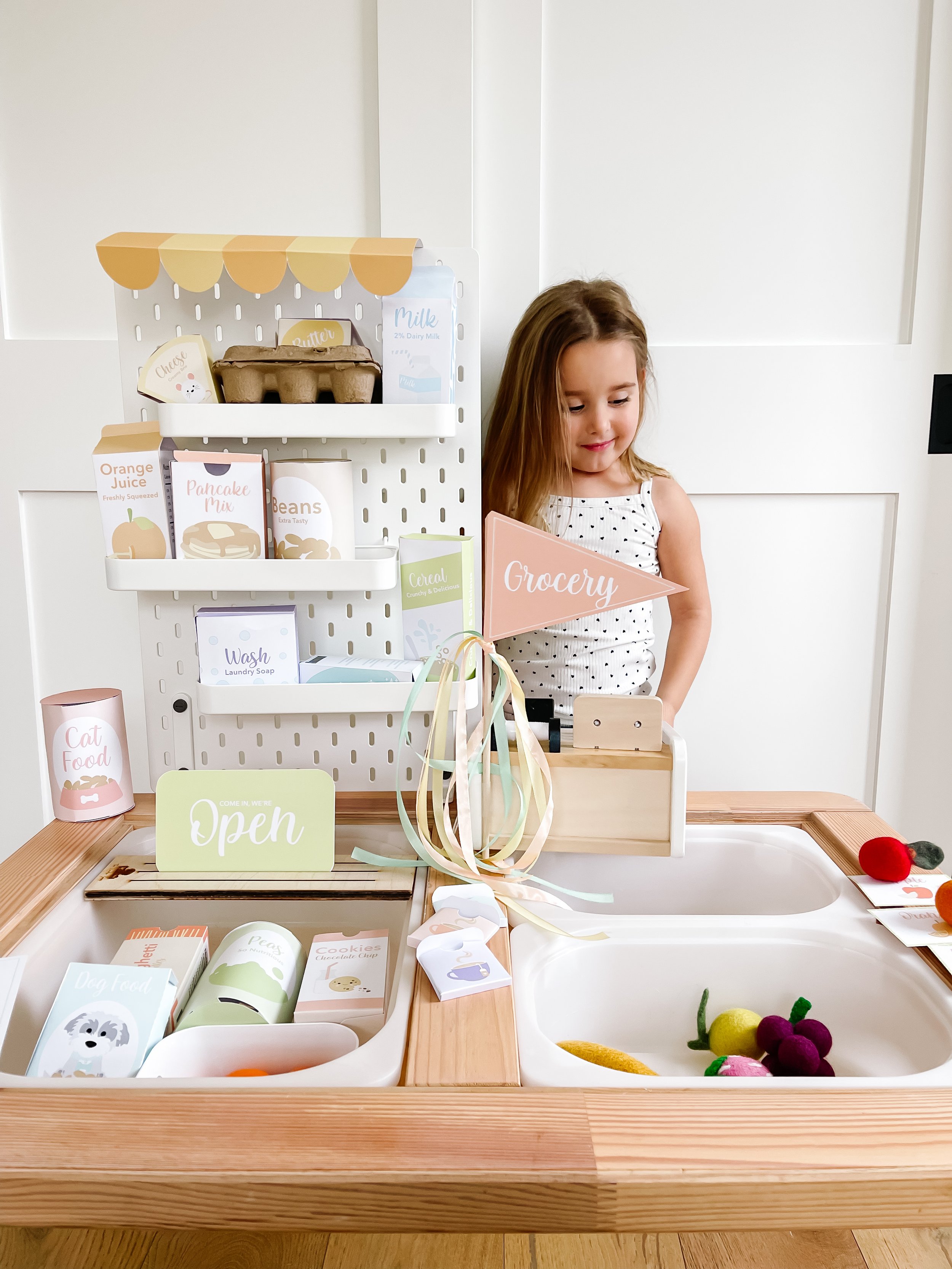
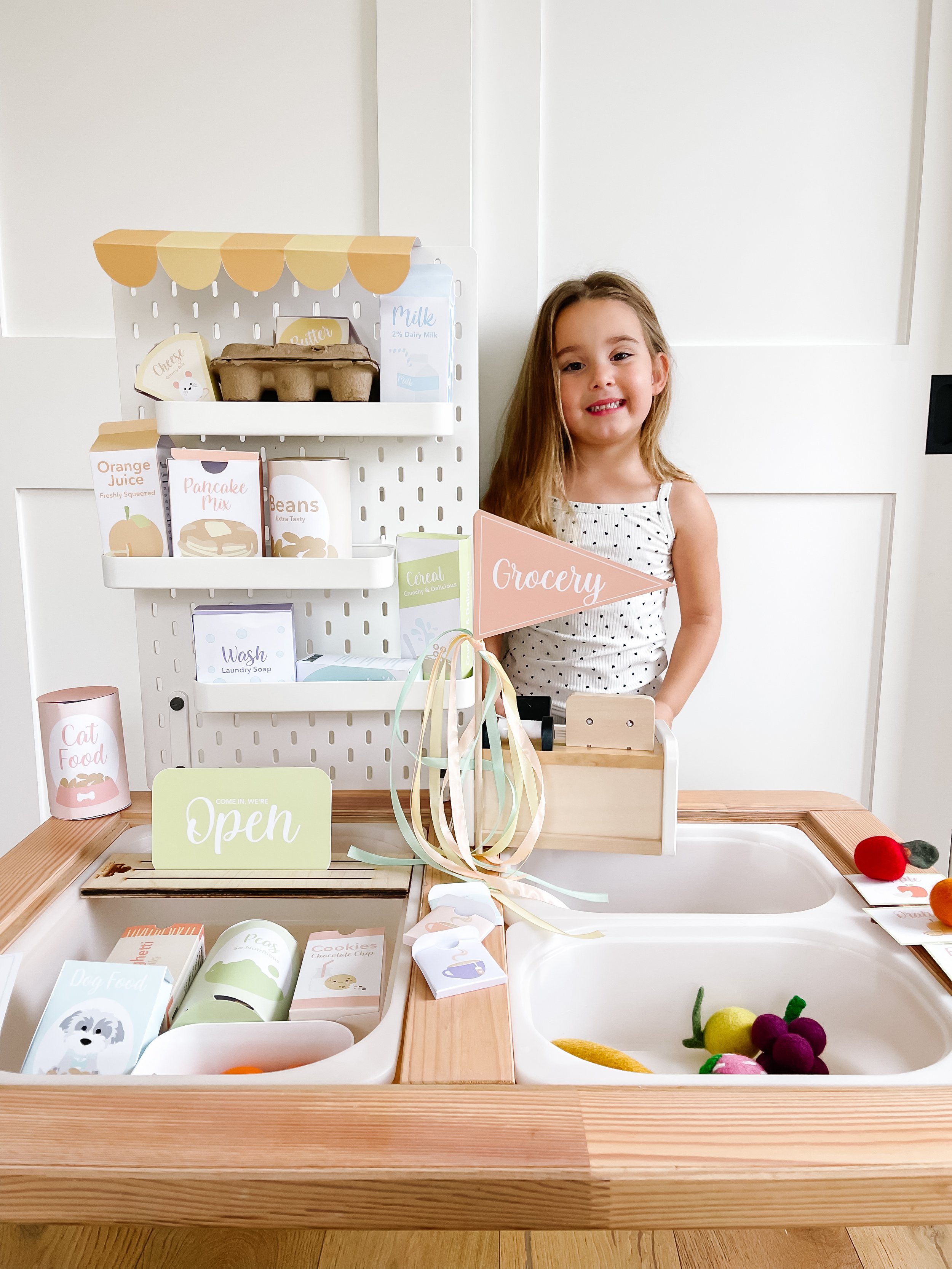
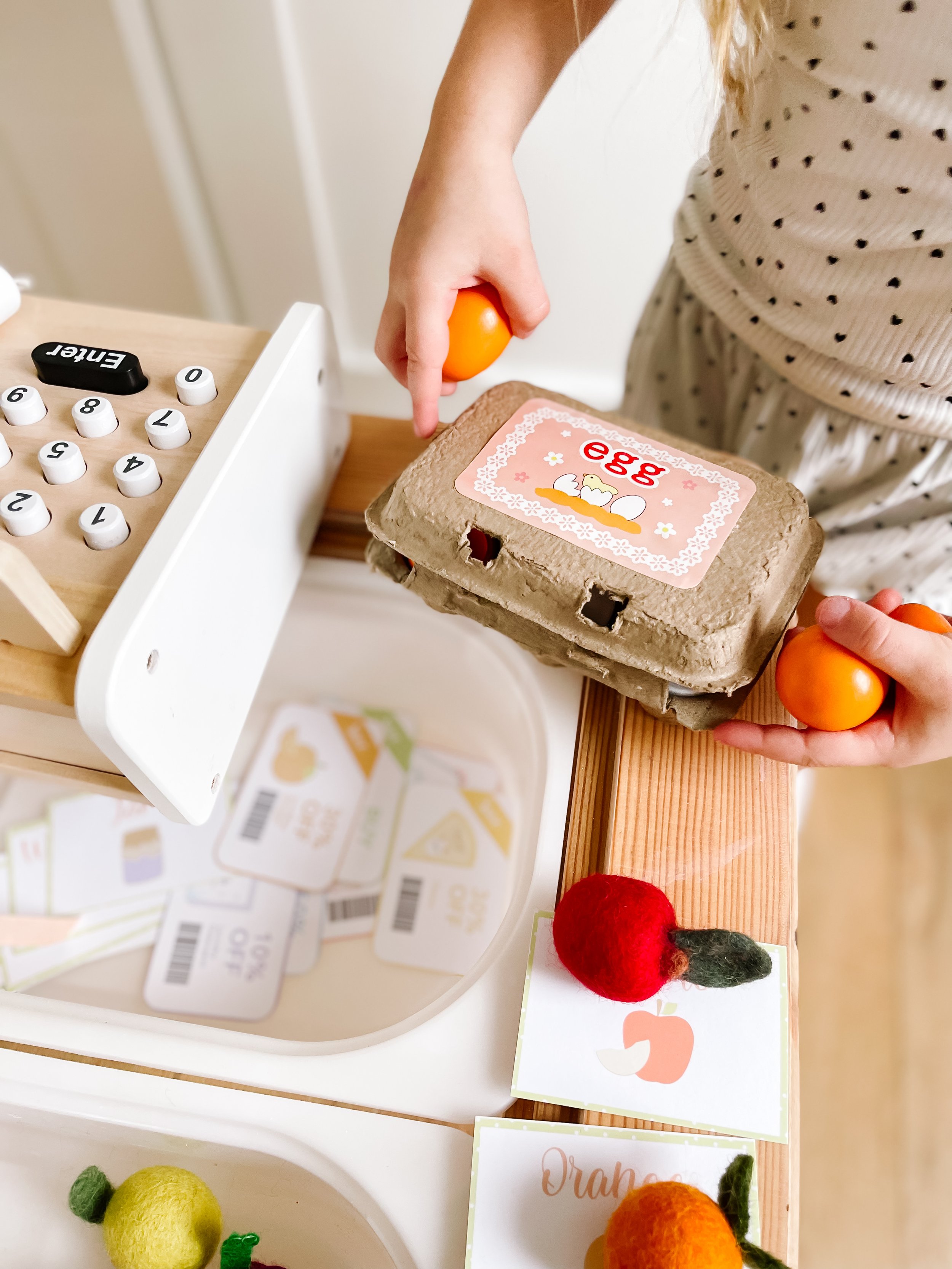
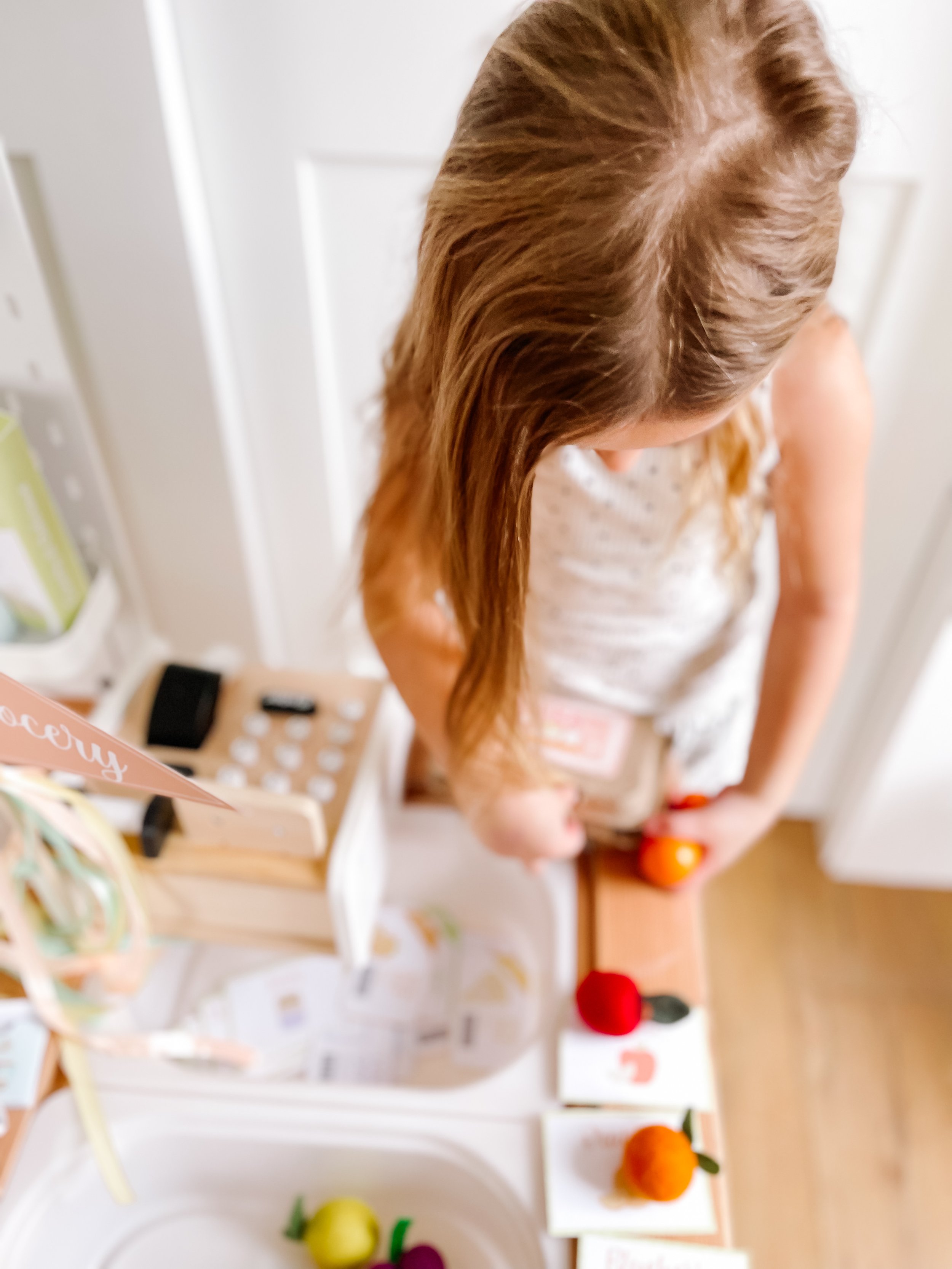
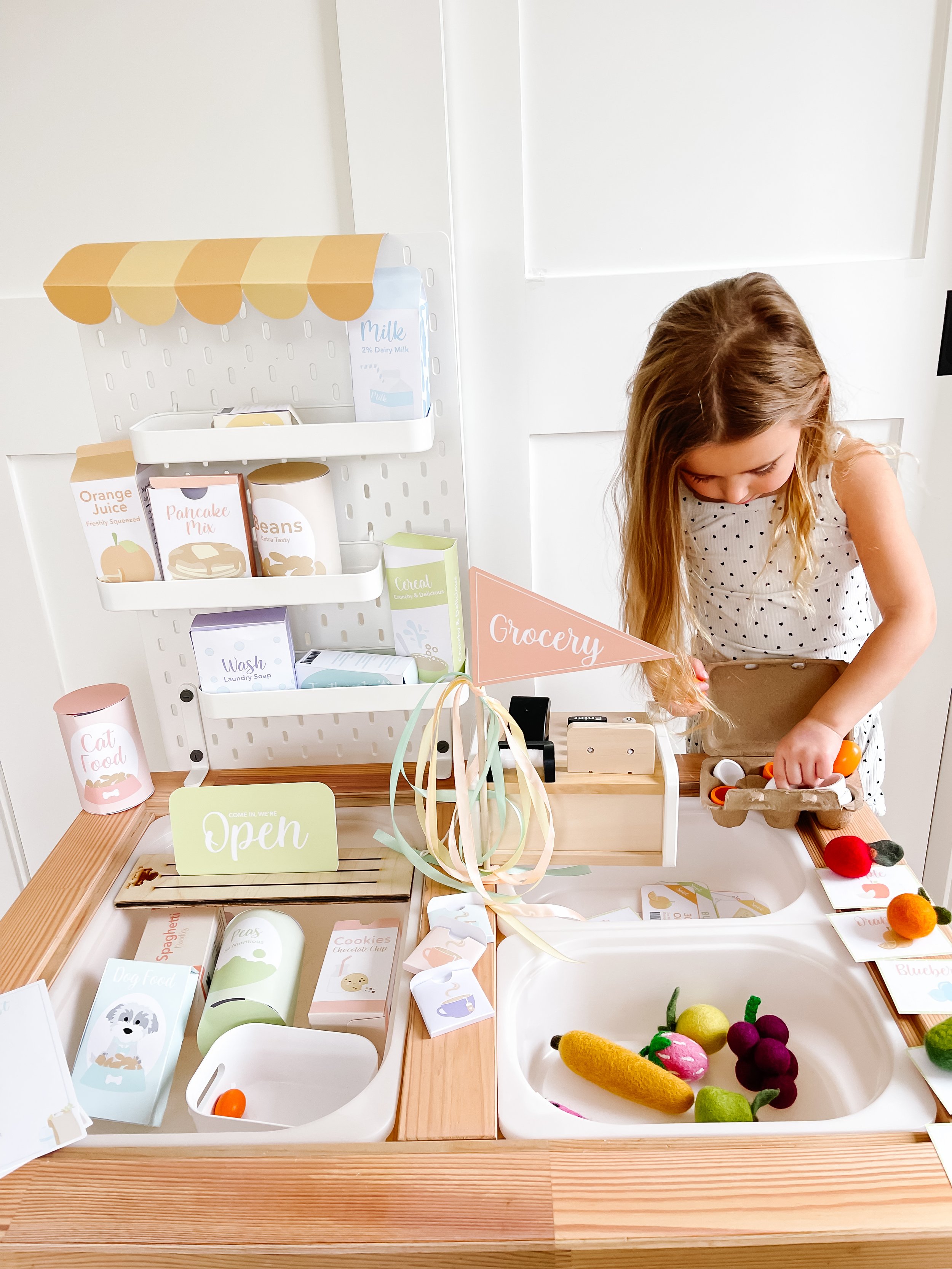
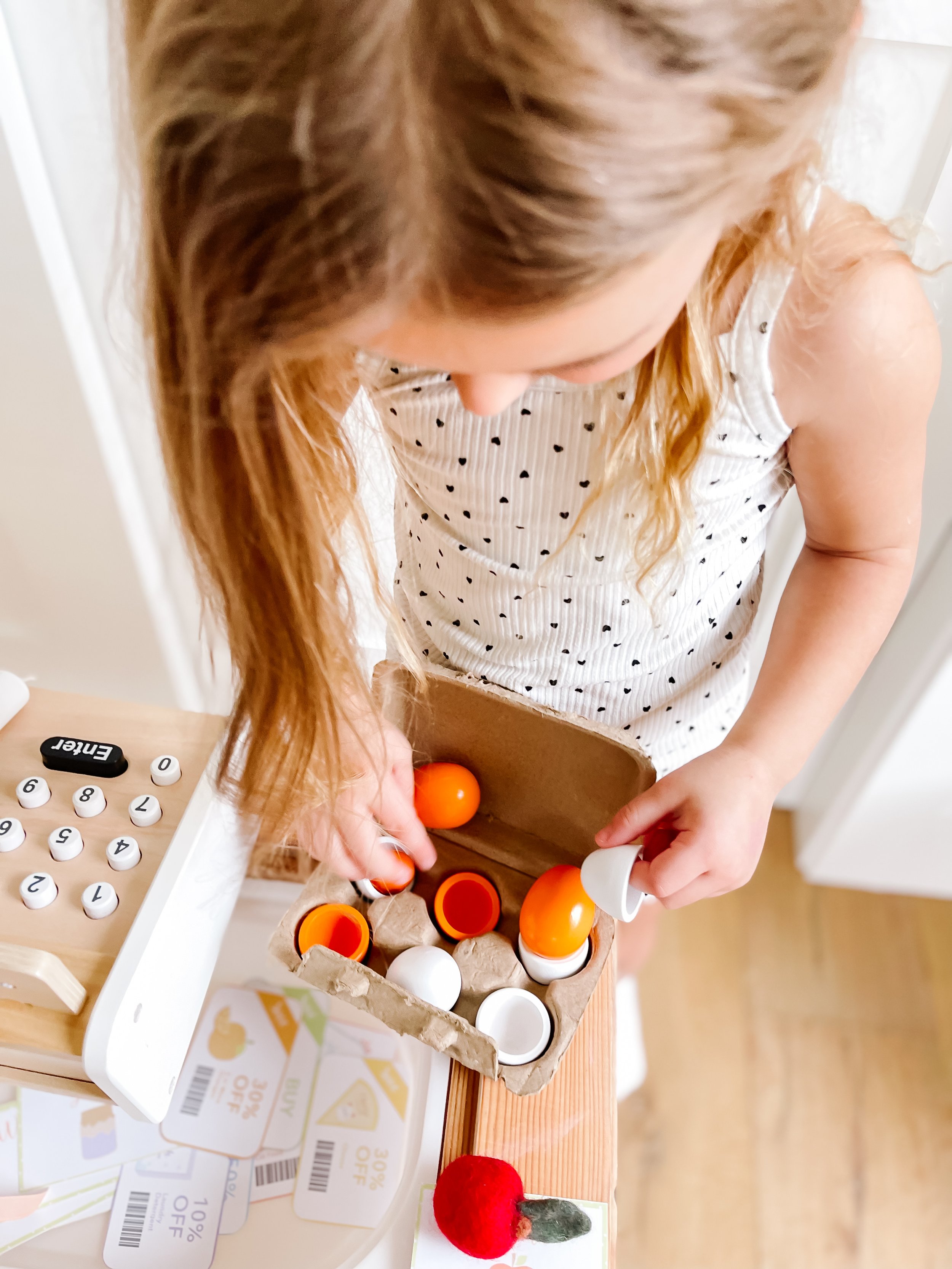
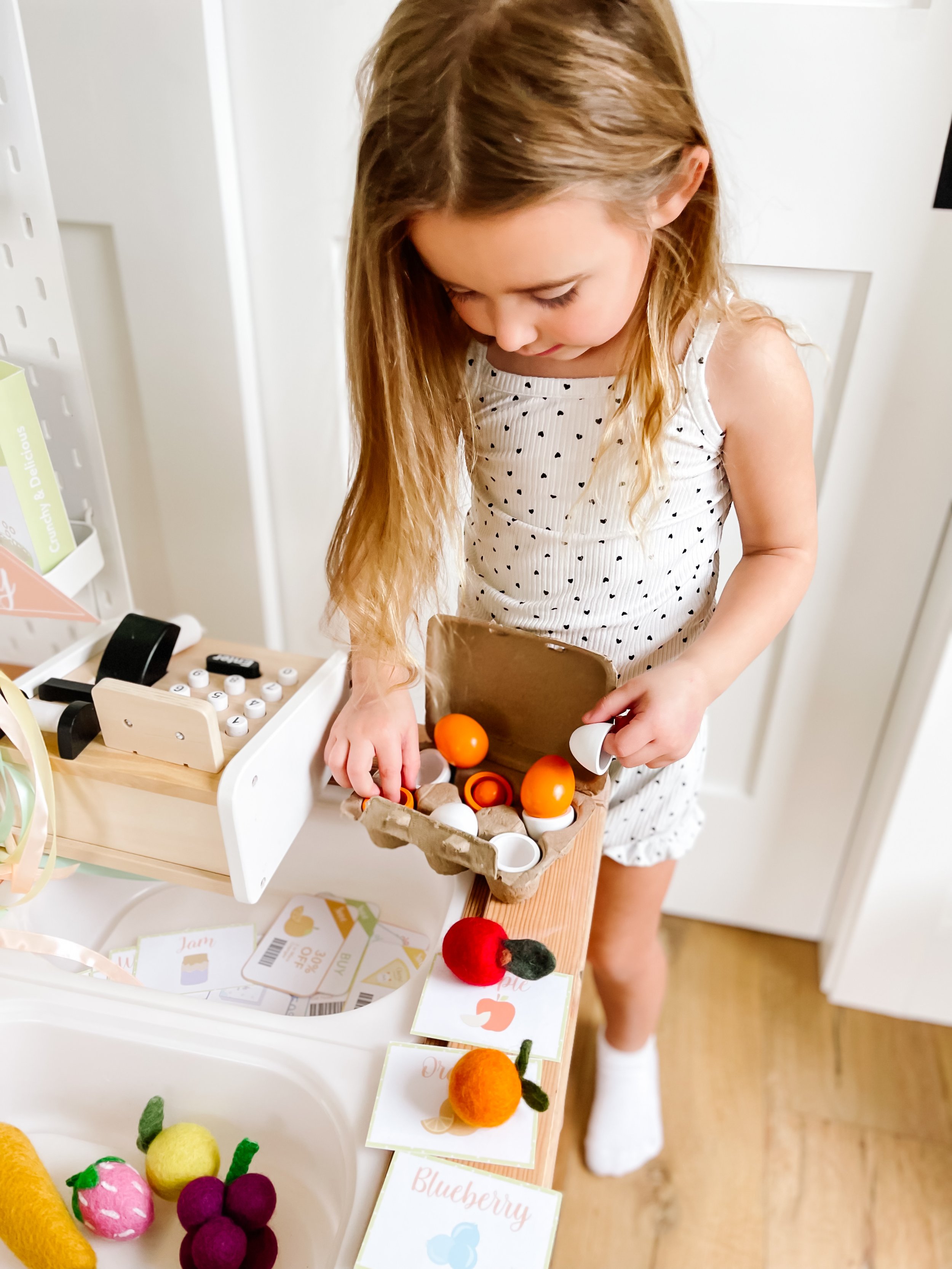
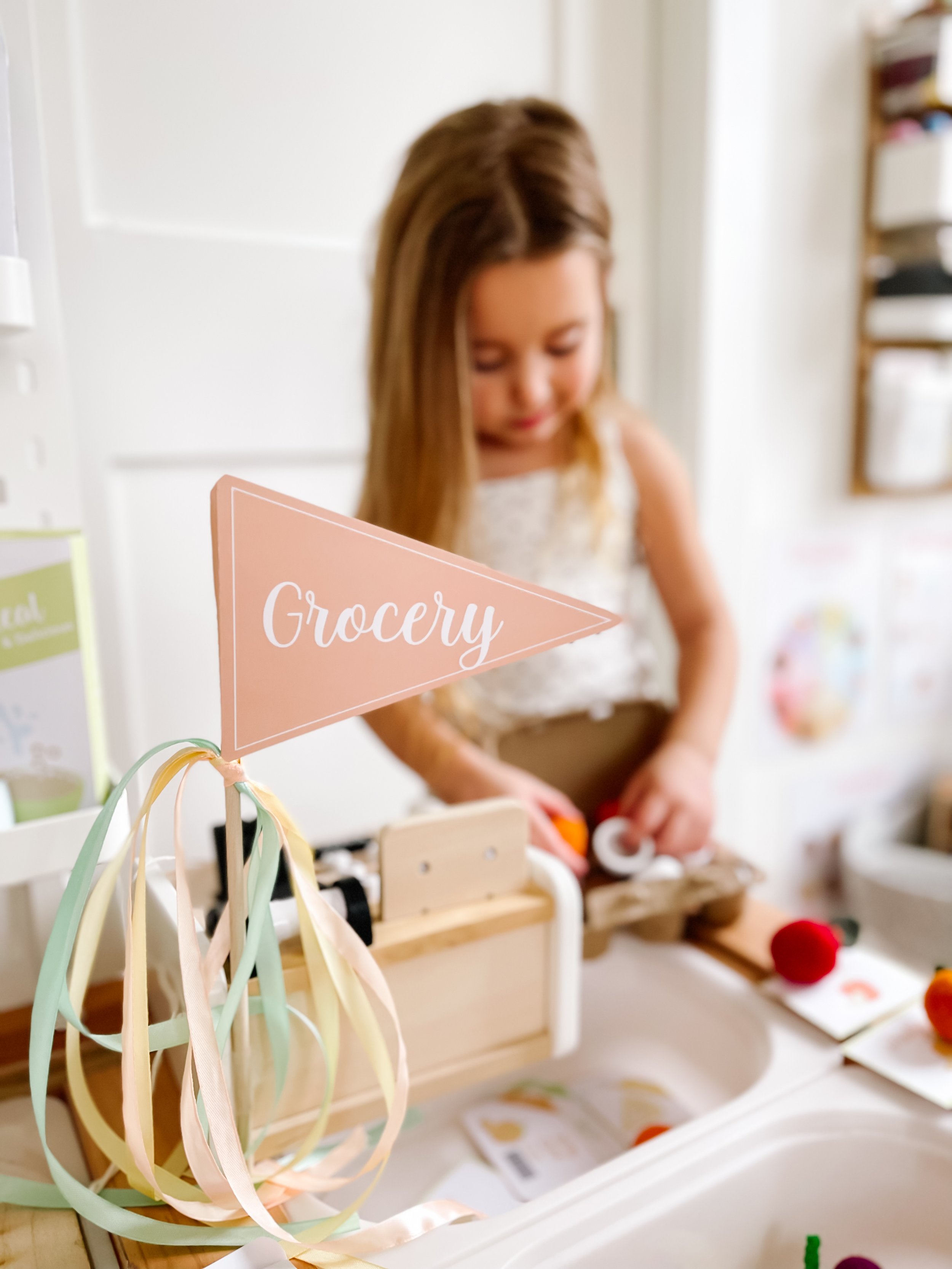
These vocabulary words are perfect for toddlers to learn while playing in a grocery store dramatic play setup. By engaging in pretend play, they can familiarize themselves with various food items and learn their names. This activity not only enhances their language skills but also introduces them to healthy and balanced eating habits.
The Grocery Store Printable Play Food Dramatic Play Kit offers an affordable and visually appealing solution for toddlers to engage in imaginative play. This play set provides vital learning moments, developing language, creativity, social skills, and problem-solving abilities. With a variety of activities, including grocery shopping, meal preparation, and clean-up, your little one's development will be supported in a fun and interactive way. Invest in our printable play food kit, and watch your child's imagination thrive!

Have a shop that specializes in baby gifts? I'd love to feature your shop and products in one of my weekly roundups. Email me at goodnightfoxstudio@gmail.com.
Check out GoodnightFox wholesale we’d love to have you carry the GoodnightFox brand.