
Sensory Bin Ideas for 2-Year-Olds: 8 Easy, Low-Mess Bins
Two-year-olds don't need a fancy sensory setup. They need something to scoop, something to pour, and permission to make a little mess. When my daughter was two, our sensory bins were the single best answer to the hardest part of the day — that stretch after nap when she was wide awake, full of energy, and done with every toy in the house. A bin on the kitchen floor bought us twenty focused minutes, and over time it bought us a lot more: pouring practice, new words, and the first real glimpses of pretend play. These 8 sensory bin ideas for 2-year-olds are built for exactly this age — short attention spans, big curiosity, everything still going in the mouth — with fillers that are easy to clean up and props big enough to be safe.
What makes a bin work for a 2-year-old
Here's what a year of bins for a two-year-old taught me — a bin that works at two looks different from one that works at four:
- One filler, not three. A single base — lentils, rice, water — reads as a place to a toddler. Mixed fillers just read as mess, and the play falls apart faster.
- Big props only. At two, everything is still explored by mouth. Figurines, cups, and scoops should all be too big to swallow, and small round foods stay out of the bin entirely unless you're sitting right there.
- One tool. A scoop or a cup is what turns dumping into purposeful play. The tool gives little hands a job, and the job is what stretches five minutes into twenty.
- A tray underneath, always. A baking sheet or a boot tray catches the escapees. The bin lives on the tray, the tray lives on the floor, and cleanup is pouring the tray back into the bin.
- Stay nearby. Two-year-olds need a grown-up within arm's reach for any bin with water, ice, or small pieces. That's not a warning label — it's just how this age plays, and it's also when the best conversations happen.
A note on expectations: at two, dumping the whole bin is the play. Scooping with purpose comes later, over months. If your toddler dumps everything in the first minute, the bin still worked — pour it back together and let them go again.
8 sensory bin ideas for 2-year-olds
1. The farm lentils bin
Setup: Fill a bin or tray with dried lentils and a scoop of corn kernels and pumpkin seeds. Add 5–6 chunky farm animal figurines and a small dish as a "feed trough." That's it — the lentils are the fields, the animals are the story.
Why it works for 2s: Toddlers already know the farm script: cows moo, pigs roll, the farmer feeds everyone. With no new concept to learn, all their energy goes into the scooping and the story. When my daughter was little, she spent an entire afternoon solemnly serving dinner to every animal, one pasta shell at a time, from a little white dish we used as the grain bin.

Low-mess tip: Lentils are the friendliest dry filler there is — they sweep up in seconds and they don't roll the way chickpeas do. Keep the bin on a tray and the whole cleanup is one pour.
2. The cocoa café bin
Setup: Brown rice (or dried beans) with a spoonful of cocoa powder shaken through for color and that warm cocoa smell, plus a few cotton-ball "marshmallows," a small mug, and a spoon. Add a second mug and the bin becomes a two-person café.
Why it works for 2s: Pouring from a mug into a mug is exactly the right difficulty for a two-year-old — challenging enough to hold attention, easy enough to succeed. And the pretend play writes itself: stirring, serving, announcing when the cocoa is "ready." When my daughter was little, she ran a whole cocoa stand out of this bin and served every stuffed animal in the house — the game was never finishing the cocoa, it was the serving.

Low-mess tip: Skip loose cocoa powder on the table and shake it through the rice in a sealed bag first. You get the smell and the color with none of the brown dust.
Pie Making Sensory Kit — $32
If the café and baking pretend play takes hold (it did in our house), our Pie Making Sensory Kit gathers the whole pie-shop game into one ready-to-go kit — no prop hunt, no filler-dyeing.
3. The frozen friends bin
Setup: Dyed chickpeas in icy blues and whites, small chunky character or winter figurines, scoops, and cups. If you don't dye chickpeas, plain dried chickpeas with a few blue cups and scoops work just as well — toddlers care about the figures and the scooping, not the exact shade.
Why it works for 2s: Familiar characters give a two-year-old an instant storyline — no world to invent, just burying, rescuing, and lining friends up for dinner. Our version used a fall palette crossed with Frozen play, and it taught me something useful: toddlers don't care about seasonal boundaries. A bin they love in one season is a bin they'll love in the next.
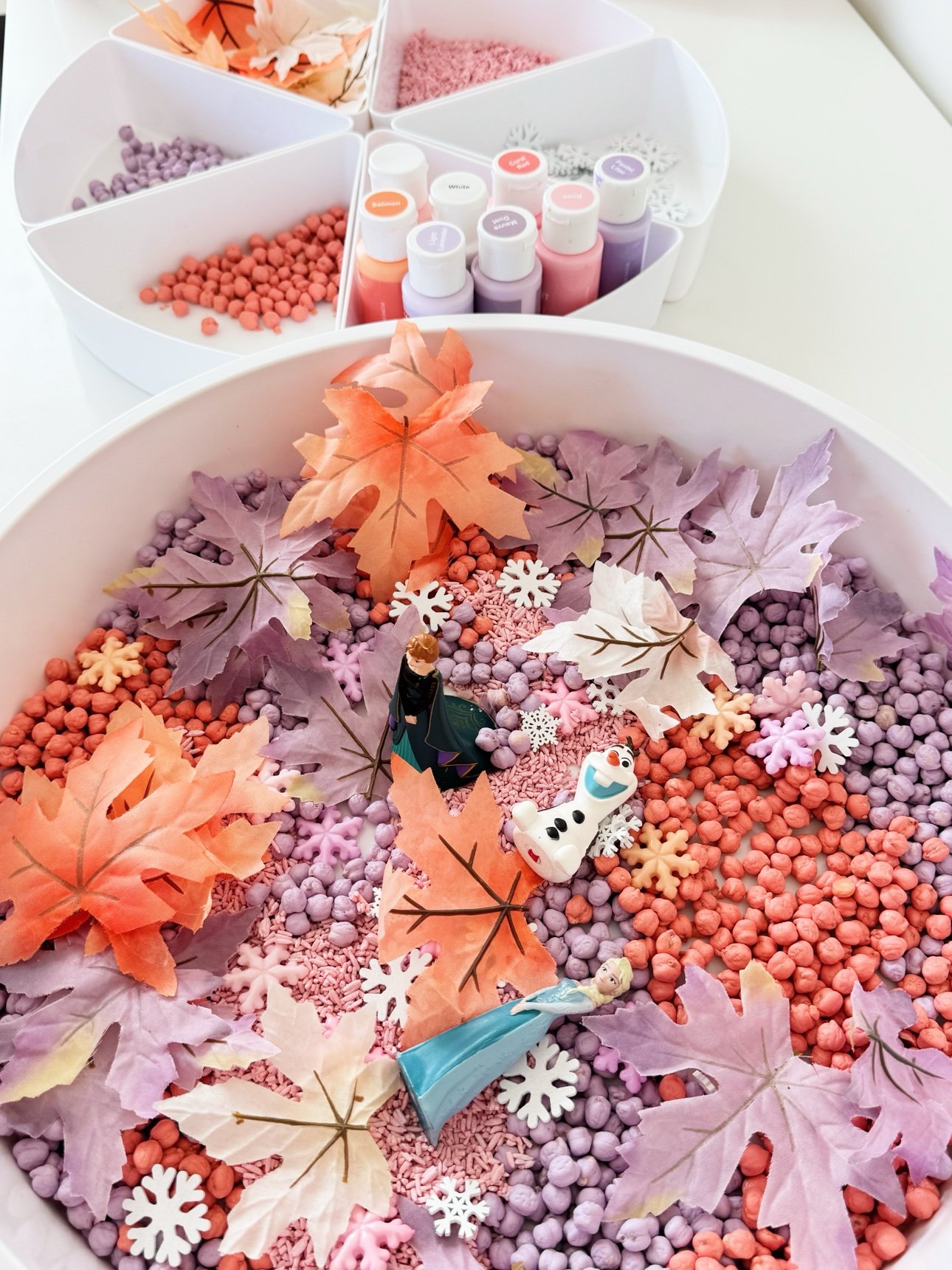
Low-mess tip: Chickpeas roll, so this bin needs the tray more than most. Refresh trick for when the novelty fades: freeze a few of the figures in a container of water overnight, and "rescuing" them with warm water and a spoon restarts the whole bin.
4. The arctic ice bin
Setup: Ice cubes and a little cold water in a bin, plus chunky polar animal figures and a cup for "rescuing" animals from the ice. That's the whole prep — no dye, no shopping trip, just ice.
Why it works for 2s: Ice is the rare filler that is free, fascinating, and self-cleaning — it just melts. Two-year-olds are endlessly interested in cold, slippery, disappearing things, and the rescue game gives them a reason to use the cup with purpose. Stay nearby (cold and slippery) and keep a towel under the tray. Ice bins have a natural ending when the ice melts, which is a gift — the play winds itself down.
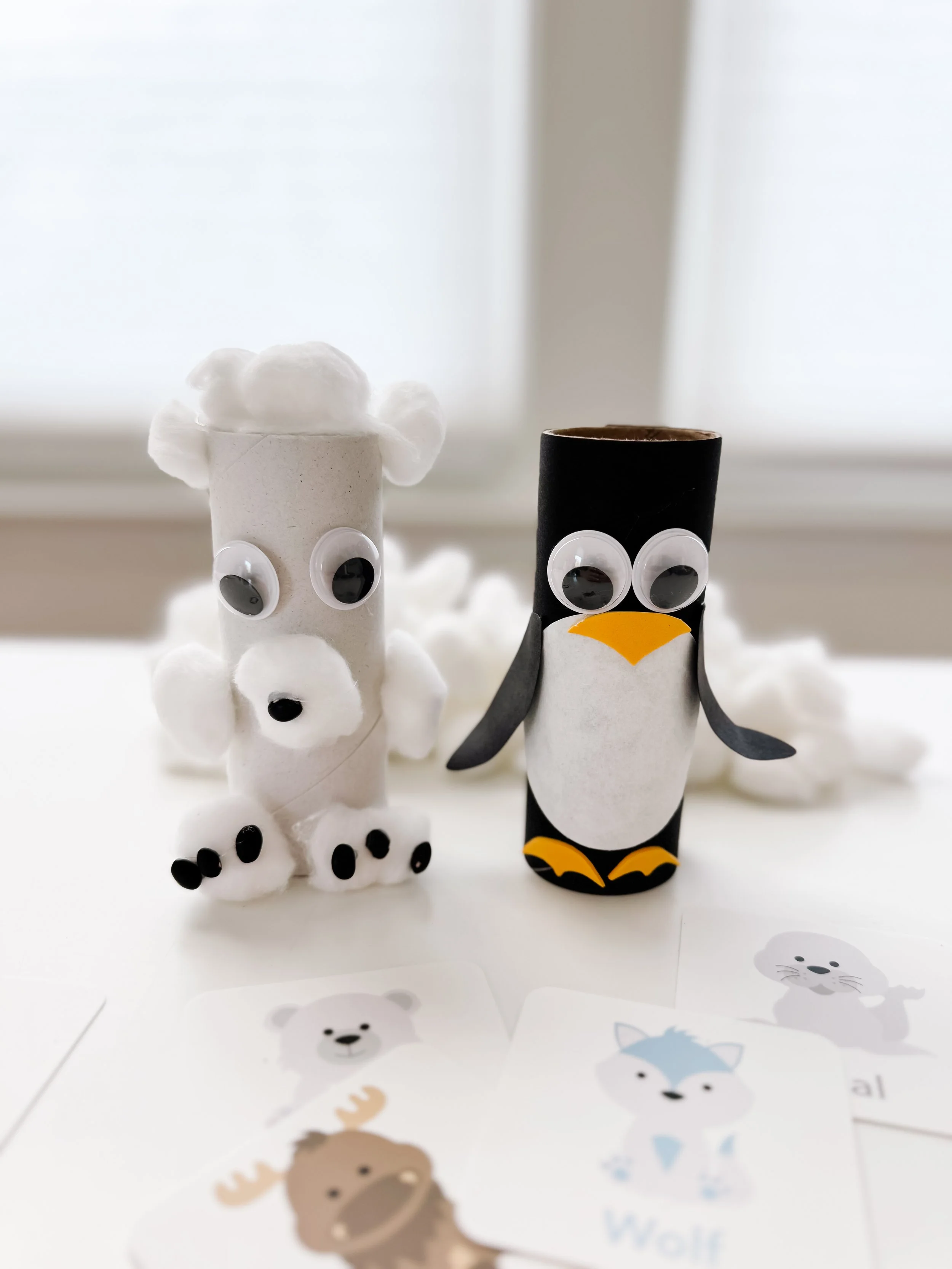
Low-mess tip: Set the bin on a towel on the tray, not just the tray alone. The towel catches the melt water, and the whole thing goes in the wash when the play is done.
Arctic Sensory Kit — $15
If the arctic theme takes hold, our Arctic Sensory Kit gathers the polar-animals play into one ready-to-go kit — no filler-dyeing, no prop hunt.
5. The counting scoop bin
Setup: A base of dried beans or large pasta, a set of chunky counting objects (big buttons, large pom-poms, or wooden beads — all too big to swallow), and a few cups or small containers. The game is simple: scoop, count out loud together, drop them in the cup. One, two, three — and dump it out and do it again.
Why it works for 2s: Two is when counting starts to click as a rhythm before it clicks as a concept. The bin gives counting a job: the numbers aren't a lesson, they're just what you say while you scoop. When my daughter was little, counting worked best tucked inside play she already loved — scooping beans into a cup while we counted together out loud, no pressure, just the rhythm of the game. Our teaching your toddler to count post has more of these play-first counting ideas.
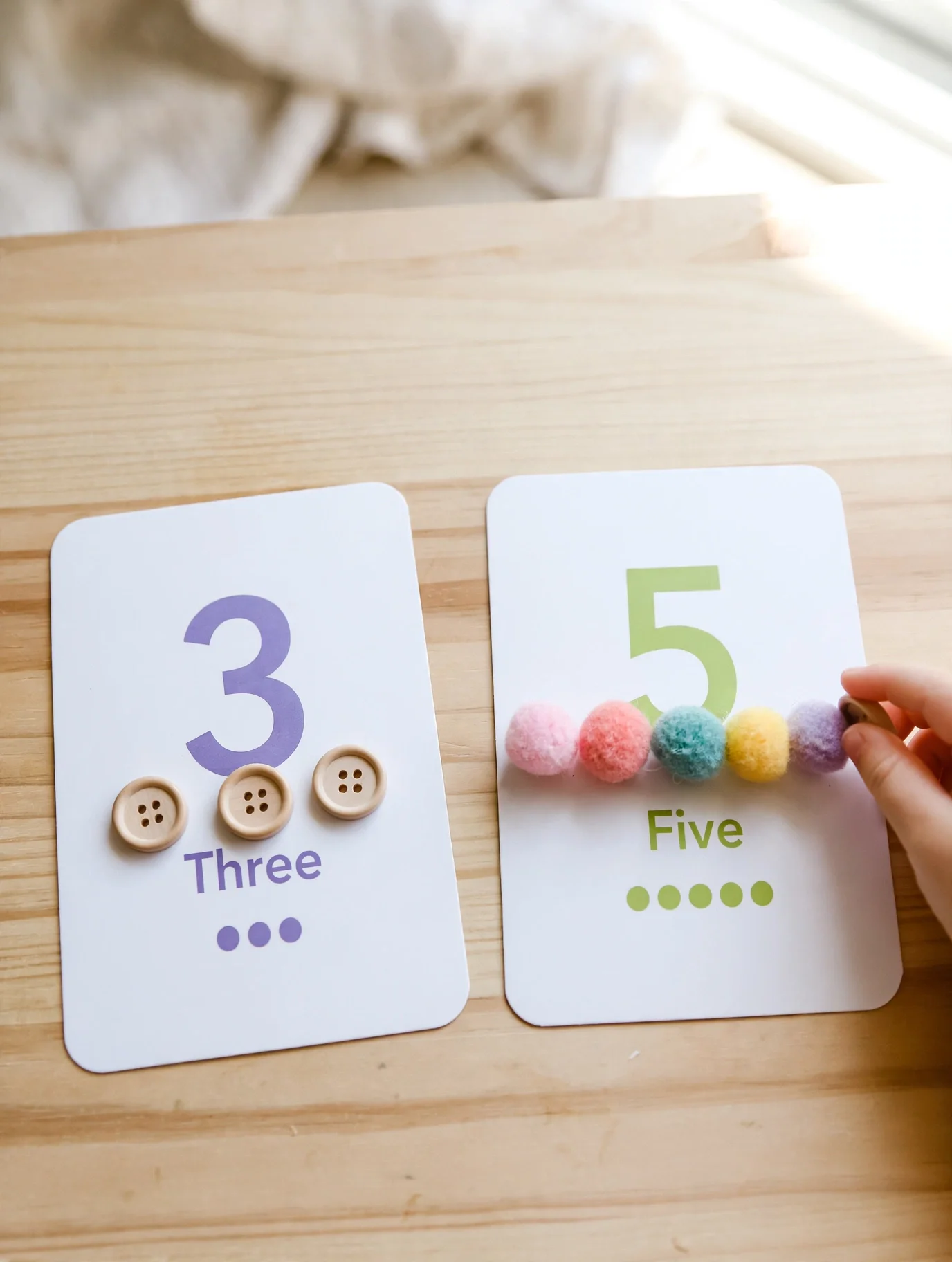
Low-mess tip: Use one cup per number game, not five. One cup means one place for the objects to go, and the reset is a single dump back into the bin.
Counting Sensory Kit — $15
Our Counting Sensory Kit pairs the counting game with ready-to-play pieces — the objects, the cups, and the counting cards in one kit, so the bin is set up in two minutes.
6. The water pouring bin
Setup: A shallow bin with an inch or two of water, plus measuring cups, a small funnel, a sponge, and a couple of bath toys or plastic animals. Set it outside on warm days or on a towel on the kitchen floor otherwise.
Why it works for 2s: Water is the original sensory bin — pouring is the skill two-year-olds are most motivated to practice, and water gives instant feedback. It splashes, it fills, it empties. The funnel is the secret prop: it turns random pouring into a puzzle (where does the water go?) and buys the longest stretch of focused play of any bin here. Stay within arm's reach and keep the water shallow.
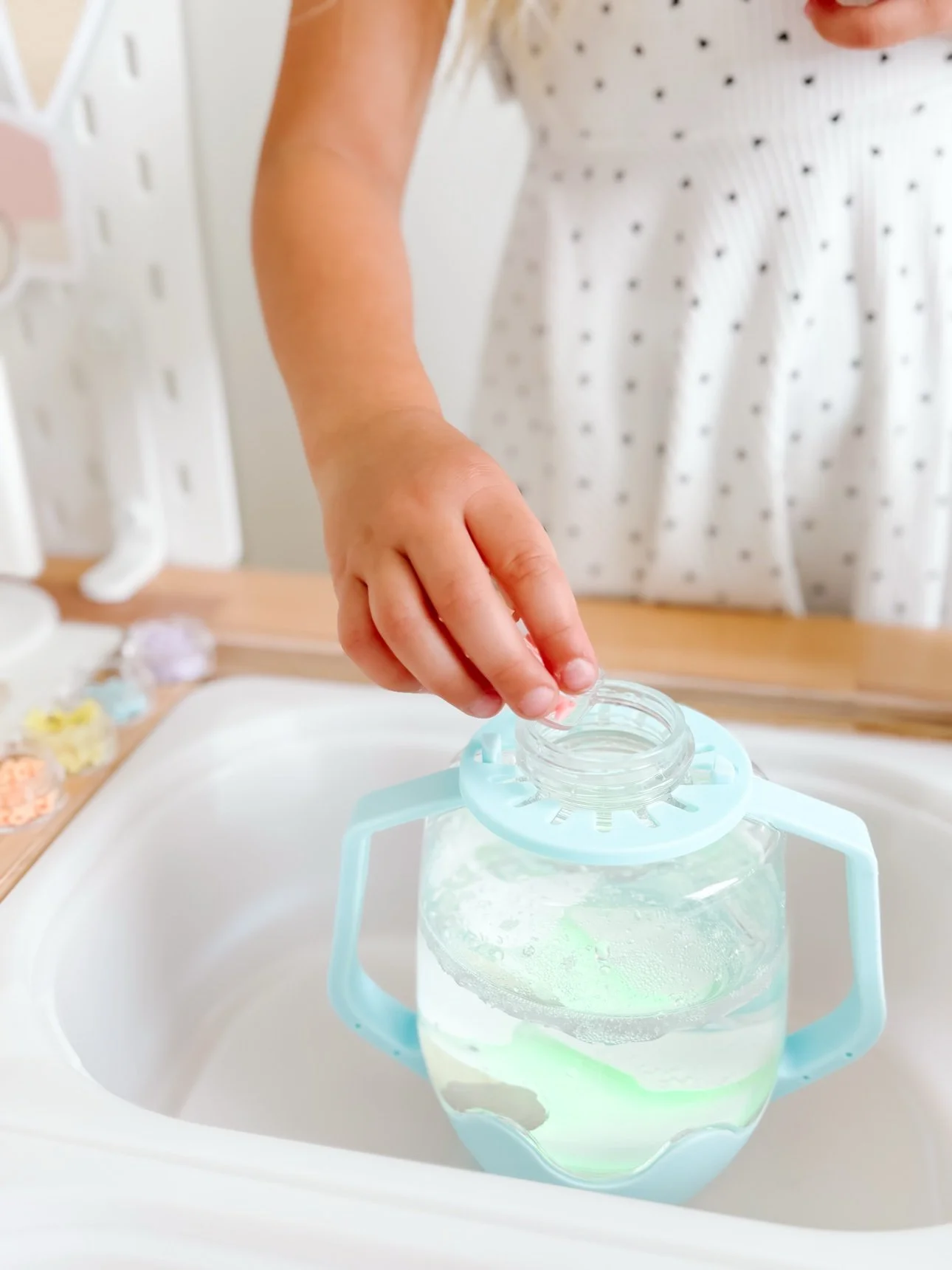
Low-mess tip: Towel under the tray, towel over your lap, and a rule that the bin stays on the towel. When the towel is soaked, the water play is done — and toddlers accept a towel-based ending far better than a timer-based one.
7. The pasta shape-sort bin
Setup: A base of large dry pasta shapes (penne, rigatoni, big shells — nothing small or round), plus a muffin tin and a few containers. The game is sorting: penne in this cup, shells in that one, rigatoni in the tin. Or no game at all — just scooping and pouring pasta, which is plenty at two.
Why it works for 2s: Pasta shapes are big, easy to grip, and naturally interesting to sort — and sorting is one of the first "thinking games" two-year-olds actually enjoy. There's no right answer to enforce, so the play stays relaxed: some days careful sorting, some days joyful dumping, and both days count. This bin also pairs with pretend baking — the pasta becomes "ingredients" for the pie shop in bin 2, and our sensory play pies roundup gathers that whole pie-shop world in one place.
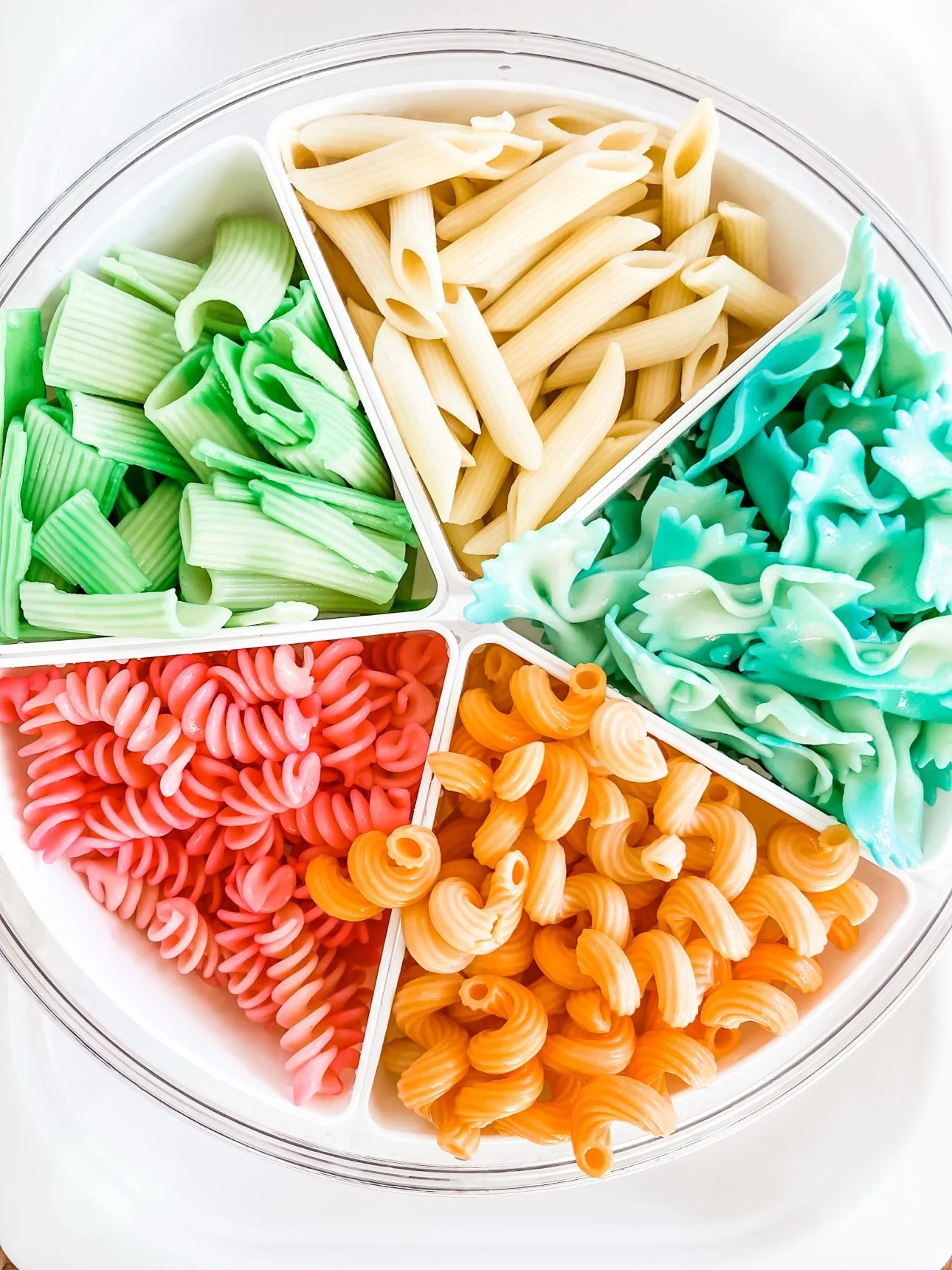
Low-mess tip: Pasta is loud on a hard floor, which is half the fun and all of the cleanup problem. A towel under the tray muffles the sound and stops the rolling — penne on a towel stays put.
8. The nature treasure bin
Setup: A base of dried leaves or brown rice, plus whatever you gathered on your last walk: pinecones, smooth stones, bare twigs, a few seed pods. Everything from outside, everything free. Check the pinecones first for sap, give them a quick brush, and retire anything that crumbles.
Why it works for 2s: Nature pieces are irregular in the best way — different weights, textures, and shapes, which is exactly what little hands are learning to notice. And the bin gives your walk a purpose: when my daughter was little, our walks always ended with pockets full of "treasures," and this bin was where the treasures lived. The play is sorting, stacking, and building tiny pinecone forests.
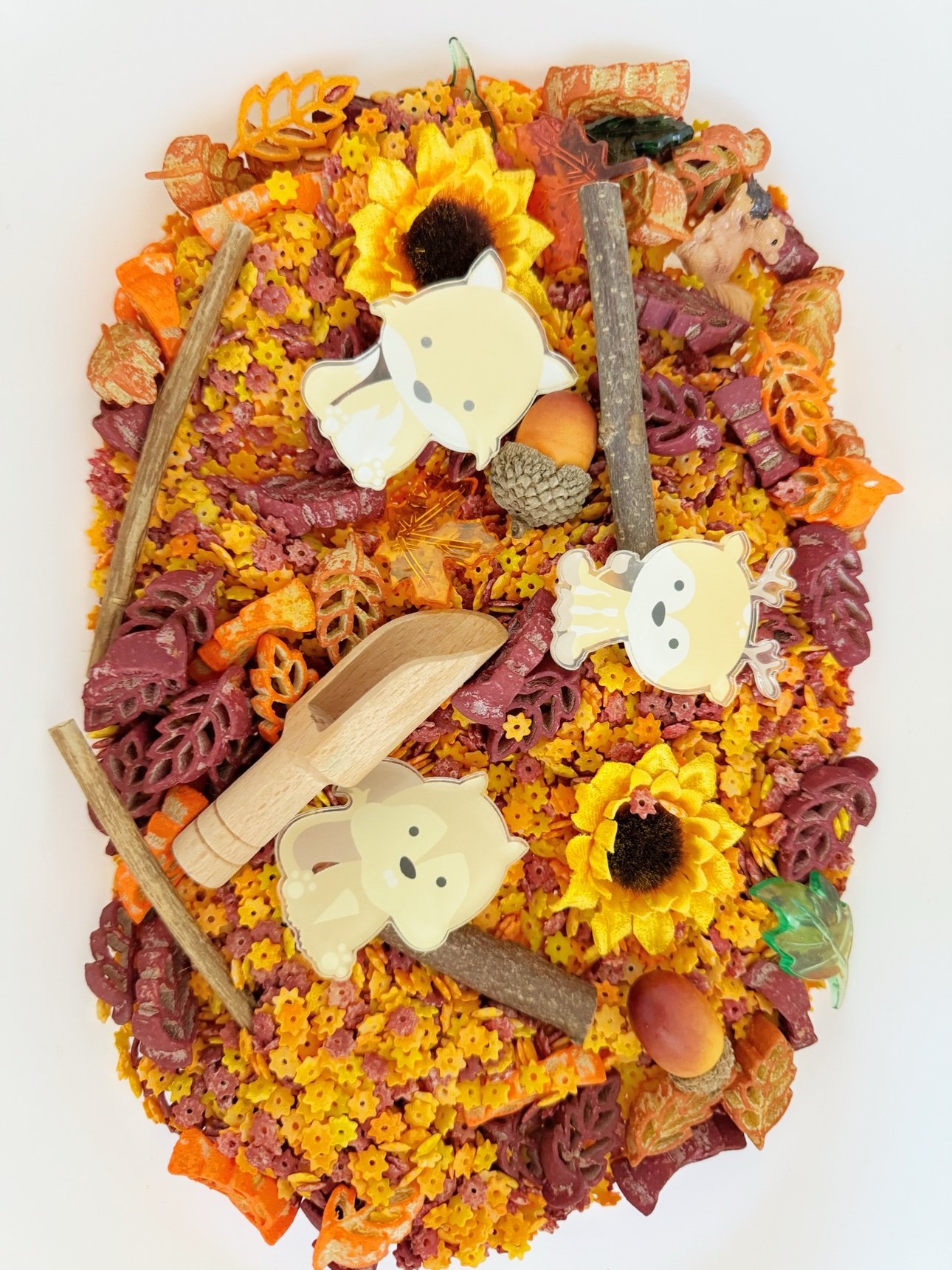
Low-mess tip: Nature bins shed — leaves crumble, twigs snap. Keep this bin in a tray with sides, and accept that a few leaf bits on the floor are part of the deal. A quick sweep at the end beats trying to keep it pristine during play.
How to start: the scoop progression
If your two-year-old has never had a sensory bin, don't start with all eight. Start with one — the farm lentils bin or the water pouring bin — and follow this loose progression:
- Week one: hands only. No tools, just the filler and a few big props. Let them feel it, dump it, and learn that the bin is a place where mess is allowed.
- Week two: add one cup. A single cup turns dumping into filling, and filling is the first purposeful bin skill. Scoop, pour, repeat.
- Week three: add a second tool. A funnel, a scoop, or a second cup. Two tools means choices, and choices mean longer play.
- Week four: add a storyline. The farm animals, the café mugs, the rescue game. Storylines are what carry a bin from twenty minutes to forty — but only once the scooping itself feels easy.
And the rotation rule that saved our sanity: run two bins at a time and swap weekly. Keep fillers in labeled zip bags, props in one basket, and rebuild a "new" bin by swapping the props, not the filler — the farm lentils become next week's counting base; the pasta becomes pie-shop ingredients.
Safety notes for 2-year-old bins
Quick, practical, and worth saying plainly: stay nearby for every bin at this age, and within arm's reach for water and ice bins. Keep props big — nothing that fits through a toilet-paper tube goes in a two-year-old's bin unsupervised. Skip small round foods entirely (grapes, whole nuts, whole cherry tomatoes) and use dried alternatives only with supervision. If your toddler is still mouthing everything, stick to the big-prop bins — farm lentils, pasta shapes, water pouring — and save smaller-piece bins for later.
Free: Winter Pie Recipe Cards
Our free Winter Pie recipe cards walk you through a done-for-you pie-shop sensory setup — the same follow-the-recipe play she loved, with printable cards to go with it. They pair perfectly with the cocoa café and pasta bins above.
Free: Winter Printable Play Mats
Pair any bin on this list with our free Winter Printable Play Mats — sorting trays and counting mats that give the scooping somewhere to go.
Sensory bins for 2-year-olds FAQ
What filler is best for a 2-year-old's first sensory bin?
Dried lentils or water. Lentils are the easiest dry filler — they pour smoothly, sweep up fast, and don't roll. Water is the most engaging first bin, kept shallow, with you nearby and a towel underneath. Either one beats rice for a first bin: rice gets everywhere.
How long will a 2-year-old actually play with a sensory bin?
Ten to twenty minutes is a great session at two, and five focused minutes still counts. Play stretches build slowly over weeks as scooping gets easier and storylines arrive. If your toddler dumps everything in the first minute, that's normal — pour it back together and let them go again.
Are sensory bins safe for toddlers who still put everything in their mouths?
Yes, with big props and supervision. Choose fillers and props that are too big to swallow, skip small round foods, and stay nearby. If your toddler is still mouthing everything, start with the farm lentils, pasta shape-sort, or water pouring bins — all big-piece play — and save smaller-piece bins for later.
How do I keep sensory bins from taking over my house?
One bin, one tray, one tool — and a rule that the bin lives on the tray. Fillers in zip bags, props in one basket, and a five-minute tidy at the end (toddlers love "rescuing" escapees back into the bin).
Can I reuse bin fillers?
Yes — dried lentils, rice, chickpeas, and pasta all store in zip bags and last for months. Toss anything that gets wet (except ice, obviously) or starts to smell, and refresh with a new bag of filler when the color or texture fades.
Two is a wonderful age for sensory play, because everything is still new — the pour, the scoop, the splash. You don't need eight bins or a perfect setup. Start with one bin on the kitchen floor this week, see which one your toddler returns to, and build your rotation around that.