• Activity ideas by age
    • Seasonal activities
    • Materials & fillers
    • Getting Started
    • Taste Safe
    • All activity ideas
  • Shop
  • Freebies
  • About
Menu

Goodnight Fox

1974 San Luis Ave
Mountain View
16502243796
Dramatic & Sensory Play for Early Learners

Your Custom Text Here

Goodnight Fox

  • Activities
    • Activity ideas by age
    • Seasonal activities
    • Materials & fillers
    • Getting Started
    • Taste Safe
    • All activity ideas
  • Shop
  • Freebies
  • About

Play-Based Learning Roadmap (Birth to Age 6)

February 15, 2026 Kylie Tuosto

Play is not just entertainment — it is how young children learn best. From tummy time to school readiness, sensory play builds the foundation for language, motor skills, creativity, and confidence.

If you’ve ever wondered what toddlers should be learning and how to support it through play, this guide walks you through exactly what to focus on at every stage.

Save this guide and come back to it often — because every stage builds on the last.
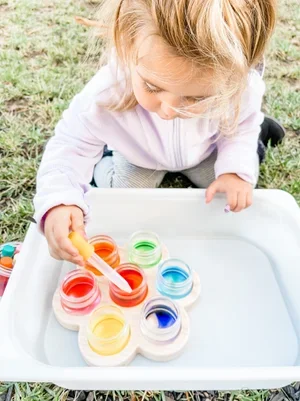

Why Play-Based Learning Works

Children learn through:

  • exploring

  • touching

  • moving

  • experimenting

  • pretending

Play activates multiple areas of the brain at once, making it one of the most powerful forms of early childhood education.

This roadmap shows how sensory play ideas for toddlers evolve as children grow from babyhood to school age.


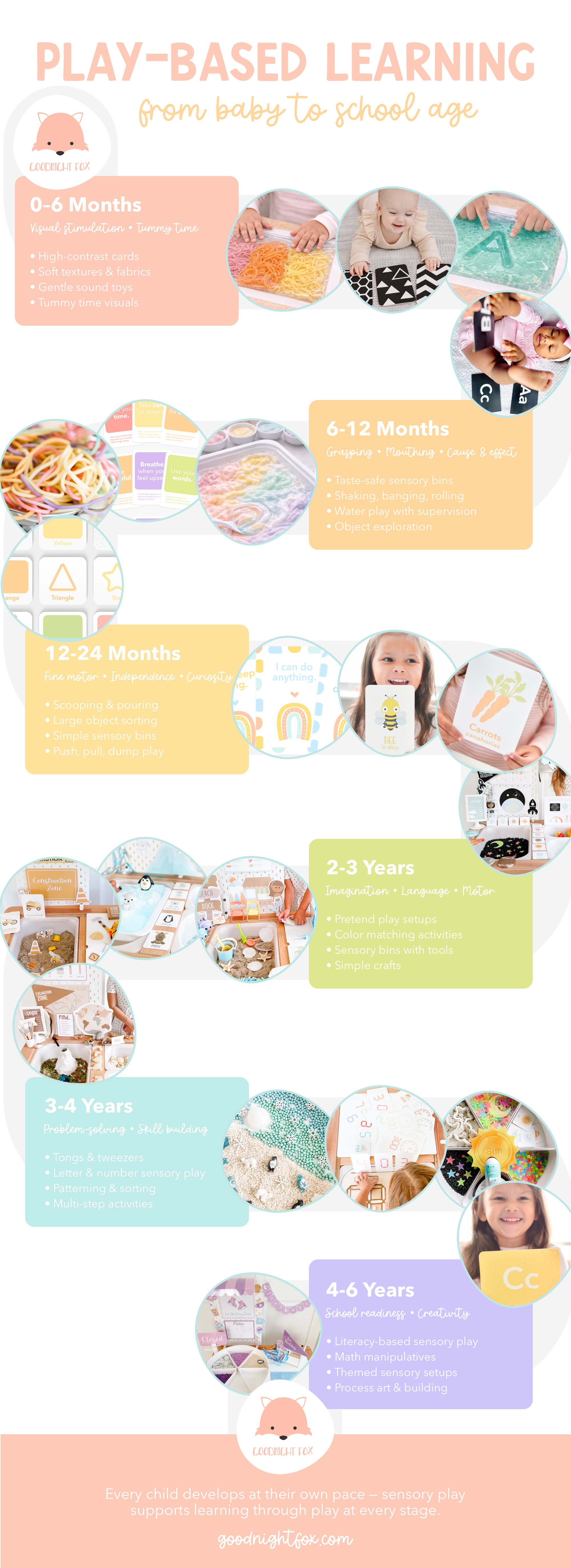
0–6 Months

Focus: Visual stimulation • Tummy time

During the first months of life, babies are learning to:

  • focus their eyes

  • track movement

  • strengthen neck and core muscles

  • explore textures and sounds

Best Activities

  • High-contrast cards

  • Soft textures and fabrics

  • Gentle sound toys

  • Tummy-time visuals

These early experiences lay the groundwork for later motor skills and early learning.
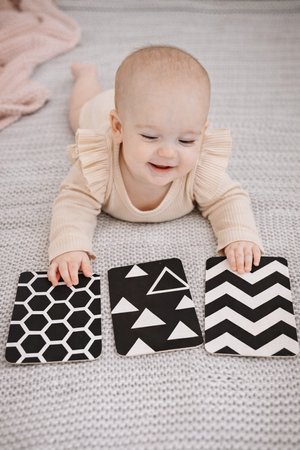
Free Printable Tummy Time Mats →


6–12 Months

Focus: Grasping • Mouthing • Cause & effect

Babies begin learning:

  • how their actions create reactions

  • how to grasp and release objects

  • how to explore safely with their mouths

Best Activities

  • Taste-safe sensory bins

  • Shaking, banging, rolling toys

  • Water sensory play with supervision

  • Object exploration

This stage is perfect for taste-safe sensory play and water sensory play for toddlers.

Explore taste-safe sensory play →


12–24 Months

Focus: Fine motor • Independence • Curiosity

Toddlers now want to do everything themselves.

They begin developing:

  • hand strength

  • coordination

  • early problem solving

  • curiosity about how things work

Best Activities

  • Scooping and pouring

  • Large object sorting

  • Simple toddler sensory bin ideas

  • Push, pull, and dump play

This is the stage where easy sensory play setups become a daily lifesaver.
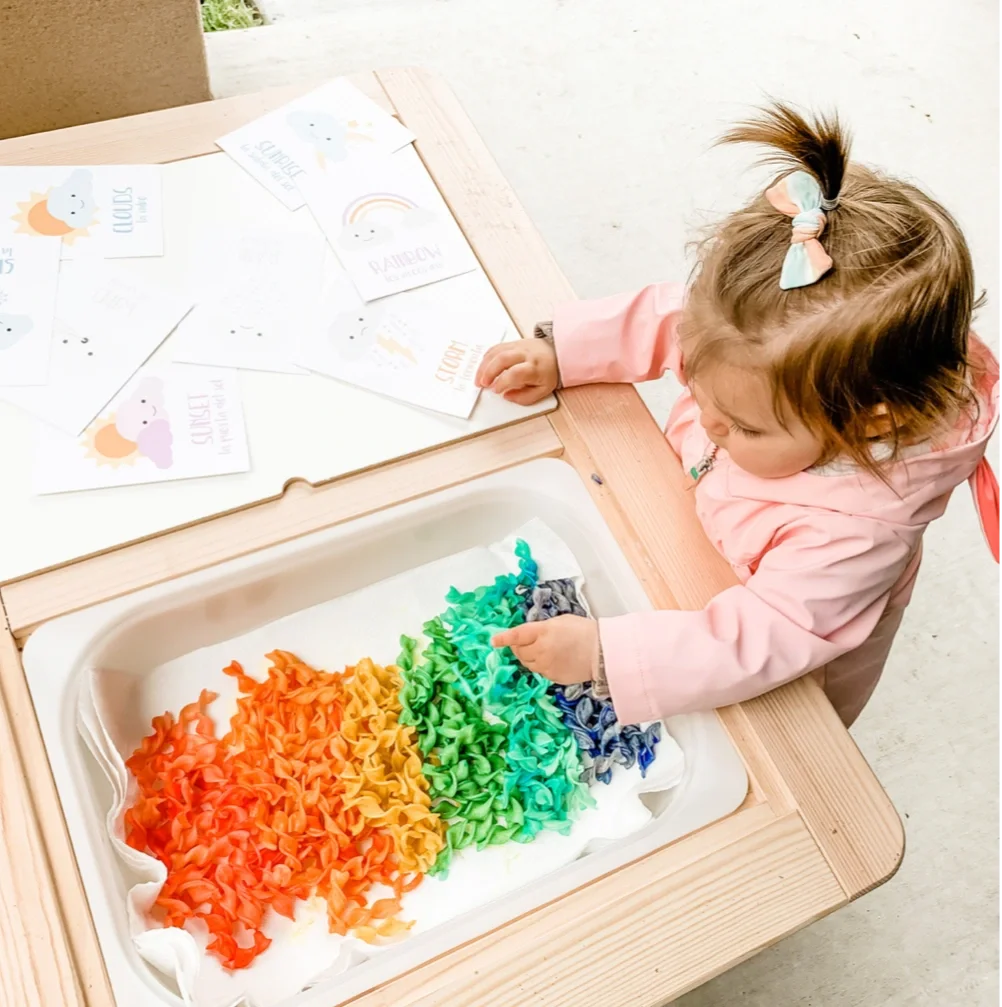
Explore Activity Ideas →


2–3 Years

Focus: Imagination • Language • Motor skills

Pretend play explodes at this stage.

Children begin:

  • storytelling

  • role playing

  • color matching

  • simple crafts

Best Activities

  • Pretend play setups

  • Color matching activities

  • Sensory bins with tools

  • Simple crafts

This is the golden age of themed sensory play ideas for toddlers.

Free Printable Ice Cream Shop →


3–4 Years

Focus: Problem solving • Skill building

Preschoolers are ready for more structured play that builds:

  • problem solving

  • patience

  • planning

  • early academic skills

Best Activities

  • Tongs and tweezers

  • Letter and number sensory play

  • Patterning and sorting

  • Multi-step activities

This is where fine motor skill activities for toddlers really shine.
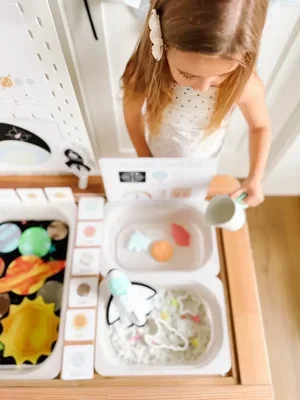
Explore Learning Materials →


4–6 Years

Focus: School readiness • Creativity

Children begin preparing for classroom learning through play.

They are ready for:

  • early literacy

  • math manipulatives

  • creative building

  • longer projects

Best Activities

  • Literacy-based sensory play

  • Math manipulatives

  • Themed sensory setups

  • Process art and building

This stage bridges play and early academics beautifully.

Explore the Preschool / Kinder Collection →


How to Use This Roadmap at Home

You don’t need a classroom or expensive toys.

Most DIY sensory activities for toddlers can be created using:

  • containers

  • scoops

  • rice or pasta

  • play dough

  • household items

Play-based learning can be:

  • affordable sensory play setups

  • toddler activities with minimal prep

  • sensory play on a budget

Even 15–20 minutes a day makes a huge difference.


The Benefits of Sensory Play

Sensory play supports:

Brain development
Multi-sensory experiences build neural connections.

Language growth
Children naturally talk about what they feel and see.

Fine motor skills
Scooping, pouring, pinching, and grasping strengthen hands.

Emotional regulation
Sensory play is one of the best calm-down activities for toddlers.

Independence and confidence
Kids learn by doing.


Final Thoughts

Every child develops at their own pace. This roadmap is not a checklist — it’s a guide to help you support learning through joyful, hands-on play.

If you ever feel unsure what activity to try next, come back to this roadmap and pick a simple activity for your child’s stage.

Play is powerful.
Play is learning.
Play is childhood.

Tags Sensory play ideas for toddlers, DIY sensory activities for toddlers, Toddler sensory bin ideas, Easy sensory play setups, Indoor sensory activities for toddlers, Educational sensory play for toddlers, Fine motor skill activities for toddlers, Sensory play benefits for toddlers, How to keep toddlers busy at home, Affordable sensory play setups, Creative sensory play for toddlers, Toddler activities with minimal prep, Multi-sensory play ideas for toddlers, Best sensory materials for toddlers
Comment

DIY Cardboard Castle Craft for Kids: A Step-by-Step Guide

January 13, 2025 Kylie Tuosto
DIY cardboard castle for kids with toilet paper roll towers and snow cone cup roofs

Looking for an engaging and easy DIY craft activity to enjoy with your kids? This DIY cardboard castle is perfect for children aged 4–8 and uses everyday household items, making it a budget-friendly and fun project. My daughter and I had a blast creating this castle together, and I’m excited to share the step-by-step instructions so you can create your own magical fortress at home.

  • Category: Crafts for Kids

  • Skill Level: Beginner

  • Time to Complete: 30-45 minutes

  • Audience: Parents for kids aged 4-8


What You’ll Need

  • 1 medium cardboard box (about the size of a shoe box)

  • 1 smaller cardboard box (for the second story)

  • 4 toilet paper rolls (for the towers)

  • 4 snow cone cups (for the tower roofs)

  • Star patches or stickers (for decoration)

  • Ribbon (for embellishment and flags)

  • Glue gun and glue sticks

  • Scissors

  • Craft paint and brushes

  • Pastel acrylic paint

  • Optional: Construction paper, markers, or stickers for extra decoration

Get Unicorn Acrylic Charms
Cardboard castle craft tutorial for kids featuring princess and unicorn themes

Step 1: Prepare the Base

  1. Take the medium-sized cardboard box and place it upside down so the open end is at the bottom. This creates a sturdy base for the castle.

  2. Paint the outside of the box in your child’s favorite color or a classic stone gray. Let it dry.


Magical DIY castle made with cardboard boxes, star patches, and ribbon

Step 2: Add the Second Story

  1. Take the smaller box and center it on top of the larger box.

  2. Use a glue gun to secure the smaller box in place.

  3. Paint the second story to match the base, or choose a contrasting color for a fun design.


Step 3: Create the Towers

  1. Paint the toilet paper rolls in the same color as the castle walls or in a matching theme.

  2. Glue one toilet paper roll to each corner of the base to serve as the castle towers.

  3. Paint the snow cone cups in a coordinating color and glue one to the top of each toilet paper roll as a roof.


close-up of a cardboard castle with ribbon and flags and star decorations for kids' crafts

Step 4: Decorate the Castle

  1. Add star patches or stickers to the walls of the castle for a magical touch.

  2. Cut small strips of ribbon to create flags and glue them to the tops of the snow cone cup roofs.

  3. Use markers, construction paper, or additional stickers to add windows, doors, or other details

DIY princess-themed cardboard castle using recycled materials like toilet paper rolls and boxes

Step 5: Add Final Details

  • Use ribbon to create a drawbridge or banners for added flair.

  • For extra fun, cut a small door into the front of the castle so kids can peek inside or use it for pretend play with toys or figurines.

Crafting a magical cardboard castle using recycle materials like toilet paper rolls and boxes

Why This Craft Is Perfect for Kids

This DIY cardboard castle is simple enough for kids to actively participate in every step, from painting to gluing and decorating. It encourages creativity and fine motor skill development while giving them a sense of pride in their creation. Plus, the finished castle makes a wonderful prop for imaginative play!

Finished cardboard castle craft for kids with creative decorations and imaginative play elements

Tips for Success

  • Supervise younger kids when using scissors or a glue gun.

  • Don’t worry about perfection—encourage your child to take the lead and make the castle uniquely theirs!

  • Save leftover materials for future crafts, like a moat or a royal throne for their castle.

We loved building this castle together, and I hope you and your kids have as much fun as we did. This is a great way to reuse items you already have at home while creating a lasting memory with your little one.

Ready to make your own DIY cardboard castle? Share your creations and tag us with #DIYKidsCrafts—we can’t wait to see your magical kingdoms!

Kids crafting a DIY cardboard castle with star stickers and ribbon for a magical touch

RElated activities

  • Unicorn Sensory Play

  • Unicorn Sensory Play Printables

  • Unicorn & Clouds

Tags DIY sensory activities for toddlers, Easy sensory play setups, crafts for kids, princess crafts, unicorn crafts, DIY cardboard castle, easy craft activities for kids, castle craft for kids, DIY crafts for 4-8 year olds, indoor crafts for kids, fun kids crafts ideas, magical kids crafts, unicorn crafts for kids, princess crafts for kids
3 Comments

Magical Unicorn Sensory Play: Spark Imagination and Learning Through Play

January 11, 2025 Kylie Tuosto

Unicorns bring a magical charm that captivates children of all ages. This unicorn-themed sensory play setup combines colorful, sparkly materials with hands-on activities that develop fine motor skills, creativity, and sensory exploration. With four enchanting bins and whimsical decor, this play setup will transport your little ones into a world of rainbows, clouds, and unicorn fun!

Download & Print

List of Materials Needed

  • Poly fiber fill or Cotton balls

  • Rainbow cutouts

  • Pink and purple star patches

  • Cloud and unicorn acrylic charms (GoodnightFox)

  • Shaving cream

  • Food coloring (pink, purple, blue)

  • Sparkly glitter

  • Materials for unicorn slime or chickpea foam (optional, for taste-safe play)

  • Pom poms or unicorn cookies (for taste-safe play)

  • Trofast bin unicorn insert (with feeding hole)

  • Unicorn cutout (mane with hole punch)

  • Fluffy rainbow yarn

  • Scissors

  • Printable decor items (castle, rainbows, unicorns, pattern-matching printables)

  • Pink/purple awning

Download Printables

Overview of Learning Objectives by Age Group

  • Age 0-6mo: Tactile exploration of soft materials like cotton balls and poly fiber fill.

  • Age 6mo-12mo: Develop fine motor skills by grabbing pom poms and touching soft textures.

  • Age 12mo-2yr: Practice cause-and-effect play, such as feeding the unicorn or swirling shaving cream.

  • Age 3yr-4yr: Strengthen motor skills with threading, scissor use, and pattern-matching activities.

  • Age 4yr-6yr: Enhance creativity and critical thinking by engaging in imaginary play and themed crafts.

IMG_5593.jpg
IMG_5605_jpg.jpg
IMG_5629_jpg.jpg
IMG_5630_jpg.jpg

Setting up unicorn land

The magical unicorn setup features a pink and purple awning that sets a whimsical tone. Decorate the space with cutout castles, rainbows, unicorns, and colorful pattern-matching printables. These elements not only create a cohesive theme but also encourage imaginative storytelling and role play.

IMG_5650.jpg
IMG_5564_jpg.jpg
IMG_5637_jpg.jpg
IMG_5650.jpg

Sensory Bin 1: Clouds & Rainbows

Materials List:

  • Poly fiber fill

  • Cotton balls

  • Rainbow cutouts

  • Pink and purple star patches

  • Cloud and unicorn acrylic charms

Activity Instructions:

Create a fluffy cloudscape by spreading poly fiber fill and cotton balls across the bin. Add rainbow cutouts and scatter star patches throughout. Use cloud and unicorn acrylic charms for “rainbow run” imaginative play. Encourage children to create stories about unicorns jumping across rainbows and resting on clouds.

IMG_5630_jpg.jpg
IMG_5632_jpg.jpg
IMG_5667_jpg.jpg
IMG_5733_jpg.jpg
IMG_5743_jpg.jpg
IMG_5746_jpg.jpg

Sensory Bin 2: Swirled Shaving Cream Magic

Materials List:

  • Shaving cream

  • Food coloring (purple, blue, pink)

  • Sparkly glitter

Activity Instructions:

Fill the bin with shaving cream and add drops of food coloring. Let kids swirl the colors to create magical patterns, then sprinkle glitter for a sparkly touch. For an alternative activity, mix unicorn slime or make taste-safe chickpea foam. Kids will love the soft textures and colorful visuals.

IMG_5633_jpg.jpg
IMG_5640.jpg
IMG_5748_jpg.jpg

Sensory Bin 3: Feed the Unicorn

Materials List:

  • Trofast bin unicorn insert

  • Pom poms or unicorn cookies

Activity Instructions:

Use the unicorn insert with a hole to mimic a magical unicorn feeding station. Encourage children to “feed” the unicorn with colorful pom poms or taste-safe unicorn cookies. This activity enhances hand-eye coordination and is perfect for pretend play.

Sensory Bin 4: Rainbow Threading and Hair Cutting

Materials List:

  • Unicorn cutout with hole-punched mane

  • Fluffy rainbow yarn

  • Scissors

Activity Instructions:

Thread fluffy rainbow yarn through the holes in the unicorn’s mane to create colorful braids. Once threaded, practice cutting the “hair” to encourage scissor skills. This activity combines creativity with fine motor development.


Benefits of Sensory Play

  1. Encourages imaginative play and storytelling.

  2. Develops fine motor skills through threading, cutting, and feeding activities.

  3. Enhances sensory processing with tactile, visual, and auditory elements.

  4. Provides calming effects through repetitive, hands-on activities.

  5. Builds problem-solving and critical thinking skills.


Week-Long Unicorn Themed Homeschool Lesson Plan

Monday: Unicorn Exploring Colors and Textures

  1. Color Sorting Activity: Sort pom poms by color. (Objective: Learn color recognition)

  2. Unicorn Art Craft: Paint a unicorn outline using watercolors. (Objective: Explore creativity and fine motor skills)

  3. Cloud Sensory Exploration: Use cotton balls and poly fiber fill to create tactile cloud art. (Objective: Develop sensory awareness)

  4. Unicorn Matching Worksheet: Match unicorns to their rainbow paths. (Objective: Practice pattern recognition)

  5. Rainbow Building with Blocks: Create rainbows using colored blocks. (Objective: Improve spatial awareness)

  6. Taste-Safe Slime Making: Make chickpea foam. (Objective: Learn about textures and safe sensory play)

  7. Story Time: Read a unicorn-themed book. (Objective: Enhance language and listening skills)

  8. Movement Game: Unicorn gallop race around the yard. (Objective: Promote gross motor skills)


Tuesday: Unicorn Numbers and Patterns

  1. Counting Clouds: Count cotton balls in groups. (Objective: Practice counting and number recognition)

  2. Rainbow Sequencing: Arrange colored strips in rainbow order. (Objective: Understand sequences)

  3. Pattern Matching Worksheet: Complete a unicorn-themed pattern sheet. (Objective: Identify and continue patterns)

  4. Pom Pom Drop: Drop pom poms into numbered cups. (Objective: Number association)

  5. Rainbow Sorting Game: Use rainbow-colored objects to create sets. (Objective: Learn sorting and grouping)

  6. Sensory Writing Tray: Use shaving cream to write numbers. (Objective: Reinforce number writing skills)

  7. Unicorn Shape Hunt: Search for hidden shape cutouts. (Objective: Recognize basic shapes)

  8. Unicorn Cookie Math: Divide cookies into equal groups. (Objective: Learn basic division and sharing concepts)


Wednesday: Language and Storytelling

  1. Unicorn Alphabet Game: Match uppercase and lowercase letters. (Objective: Letter recognition)

  2. Vocabulary Craft: Create flashcards with unicorn-related words. (Objective: Build vocabulary)

  3. Story Writing Activity: Write a short story about a unicorn’s adventure. (Objective: Develop writing skills)

  4. Magnetic Letters: Use magnetic letters to spell unicorn-themed words. (Objective: Practice spelling)

  5. Unicorn Puppet Play: Use a unicorn cutout to act out a story. (Objective: Foster imagination)

  6. Rainbow Word Search: Find unicorn-related words in a custom word search. (Objective: Practice reading skills)

  7. Interactive Story: Co-create a unicorn tale with prompts. (Objective: Enhance creative thinking)

  8. Phonics Game: Match pictures to their starting sounds. (Objective: Strengthen phonemic awareness)


Thursday: Unicorn Science and Discovery

  1. Rainbow Experiment: Use food coloring and water to create a rainbow. (Objective: Learn about color mixing)

  2. Unicorn Slime Activity: Create glittery unicorn slime. (Objective: Explore chemical reactions)

  3. Cloud in a Jar Experiment: Demonstrate condensation using a jar and hot water. (Objective: Understand weather concepts)

  4. Pom Pom Launcher: Build a simple launcher to explore physics. (Objective: Learn about force and motion)

  5. Unicorn Habitat Craft: Build a mini unicorn house using craft supplies. (Objective: Encourage design thinking)

  6. Nature Walk: Collect items and discuss textures and colors. (Objective: Connect nature to sensory learning)

  7. Unicorn Shadow Play: Use cutouts and a flashlight to make unicorn shadows. (Objective: Discover light and shadows)

  8. Glitter Globe Craft: Make a mini glitter globe with unicorn charms. (Objective: Explore visual sensory effects)


Friday: Unicorn Fine Arts and Motor Skills

  1. Rainbow Yarn Threading: Thread yarn through punched holes in a unicorn mane. (Objective: Develop fine motor skills)

  2. Unicorn Hair Salon: Cut and style yarn to “trim” unicorn hair. (Objective: Practice scissor skills)

  3. Collage Art: Create a unicorn collage with sequins and glitter. (Objective: Foster creativity)

  4. Rainbow Pom Pom Toss: Toss pom poms into cups of matching colors. (Objective: Improve hand-eye coordination)

  5. Unicorn Tiara Craft: Make a wearable unicorn crown. (Objective: Encourage creativity and design)

  6. Unicorn Dance Party: Dance to music while pretending to be unicorns. (Objective: Build gross motor skills)

  7. DIY Unicorn Puzzle: Cut a unicorn picture into pieces for a puzzle. (Objective: Enhance problem-solving skills)

  8. Review Day: Discuss the week’s activities and reflect on what was learned. (Objective: Reinforce concepts)


This lesson plan ensures children are engaged in themed, educational activities all week while keeping the weekend open for free play and exploration with the full sensory setup..

25 Unicorn Vocabulary Words

  1. Unicorn

  2. Rainbow

  3. Cloud

  4. Glitter

  5. Magical

  6. Mane

  7. Thread

  8. Feed

  9. Castle

  10. Star

  11. Charm

  12. Yarn

  13. Cut

  14. Sparkle

  15. Soft

  16. Swirl

  17. Color

  18. Foam

  19. Slime

  20. Cookie

  21. Imagination

  22. Pretend

  23. Story

  24. Pattern

  25. Explore


This magical unicorn setup promises hours of fun and learning while sparking your child’s creativity. Ready to dive into the world of sensory play? Share your favorite moments and tag @GoodnightFox for a chance to be featured!

Tags Sensory play ideas for toddlers, DIY sensory activities for toddlers, Toddler sensory bin ideas, Easy sensory play setups, Indoor sensory activities for toddlers, Mess-free sensory play ideas, Themed sensory play ideas for toddlers (unicorns, rainbows), Unicorn sensory play, Magical unicorn land for kids
3 Comments

Get Featured

Have a shop that specializes in baby gifts? I'd love to feature your shop and products in one of my weekly roundups. Email me at goodnightfoxstudio@gmail.com.

Have a small shop?

Check out GoodnightFox wholesale we’d love to have you carry the GoodnightFox brand.

Free Letter of the Week Guide

Sign up with your email address to get a weekly Letter Guide A-Z for 26 weeks of sensory play inspiration.

You’ll also get access to free printables, new products and promotions.

Thank you! Check your email for your free 26-Letter of the Week activity guide printable poster.


Free Printable Activities

Check out our free printable library of resources. From activity books, dramatic play kits, memory games, flashcards and more, you can try the entire goodnightFox collection free.


GOODNIGHTFOX

Play-based learning resources that help toddlers learn through play. Sensory play ideas, free printables, and hands-on learning tools designed for busy parents and curious little learners.

Get Free Printables →

EXPLORE

  • Start Here

  • Toddler Activities by Age

  • Seasonal Toddler Activities

  • Sensory Play Ideas

All Activity Ideas →

SHOP

  • Flashcards

  • Learning Kits

  • Memory Games

  • Dramatic Play

  • Playschool Planner

Shop All →

ABOUT

  • Our Story

  • Contact

  • FAQ

  • Privacy Policy

  • Terms & Conditions

  • Wholesale

  • Newsletter

© 2026 GoodnightFox
Play-Based Learning for Toddlers