Toilet Paper Roll Robot Craft

Toilet Paper Roll Robot Craft

Turn recycled cardboard tubes, pipe cleaners, pom-poms, googly eyes, and building bricks into a playful robot craft kids can build, customize, and use for imaginative play.
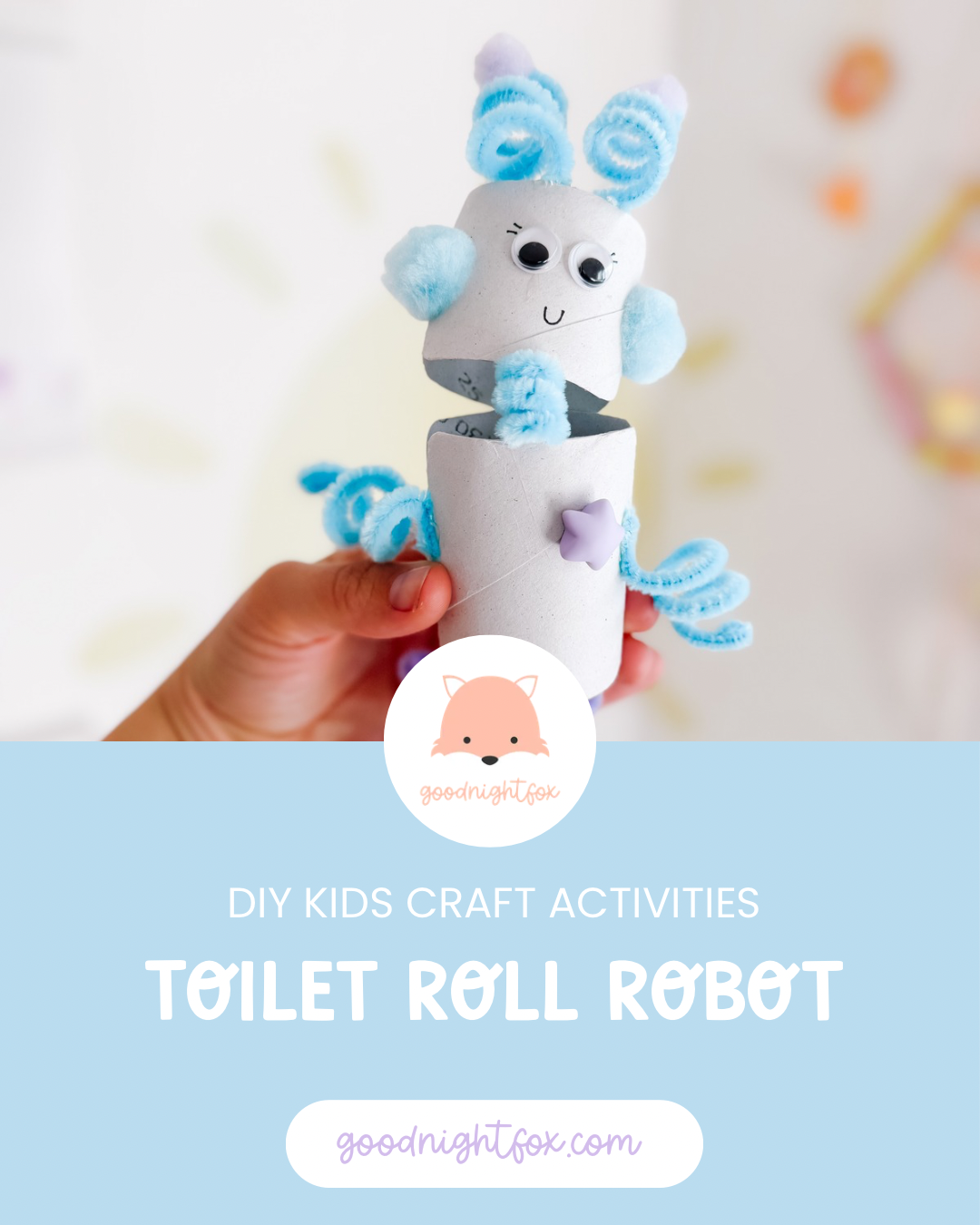
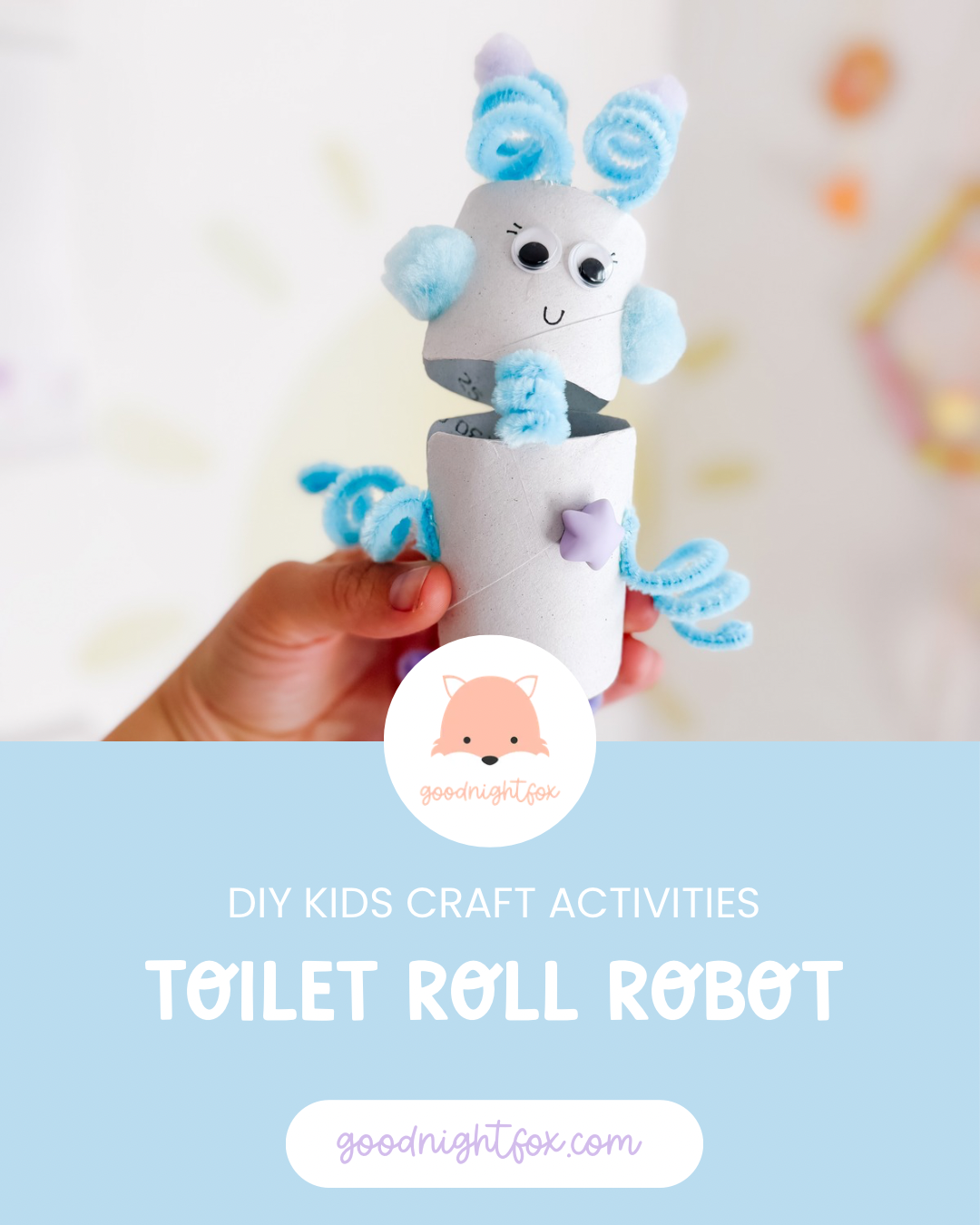
Finished toilet paper roll robot craft made with white cardboard tubes, blue and purple pipe cleaners, pom-poms, googly eyes, and building bricks.
Age4+
Prep10 minutes
Activity25–35 minutes
Mess★☆☆☆☆
SkillsSTEM + fine motor

Why we love this robot craft

This toilet paper roll robot started as a simple recycled craft, but it quickly turned into a miniature engineering project.

Kids get to decide how the robot should move, where its arms and legs should attach, what kind of antenna it needs, and which playful details will give it a personality of its own.

We used two cardboard tube sections for the robot’s head and body, then added curled pipe cleaners, pom-poms, googly eyes, markers, and building bricks. The finished robot can bend, wobble, twist, and become a character for pretend play after the crafting is finished.

It is a wonderful activity for Robot Week, Space Week, recycled craft themes, rainy days, classroom maker stations, or any child who loves building and inventing.

Materials needed

  • Two empty toilet paper rolls or one roll cut into sections
  • White paint or white paper for covering the tubes
  • Blue, purple, or pastel pipe cleaners
  • Pom-poms
  • Googly eyes
  • Washable paint markers or regular markers
  • Large building bricks or Duplo-style bricks
  • Scissors
  • Glue or low-temperature hot glue with adult help
  • A pencil or marker for curling pipe cleaners

Safety note

An adult should handle hot glue and help create any holes in the cardboard. Small pom-poms and googly eyes can be choking hazards, so supervise younger children closely.

How to make a toilet paper roll robot
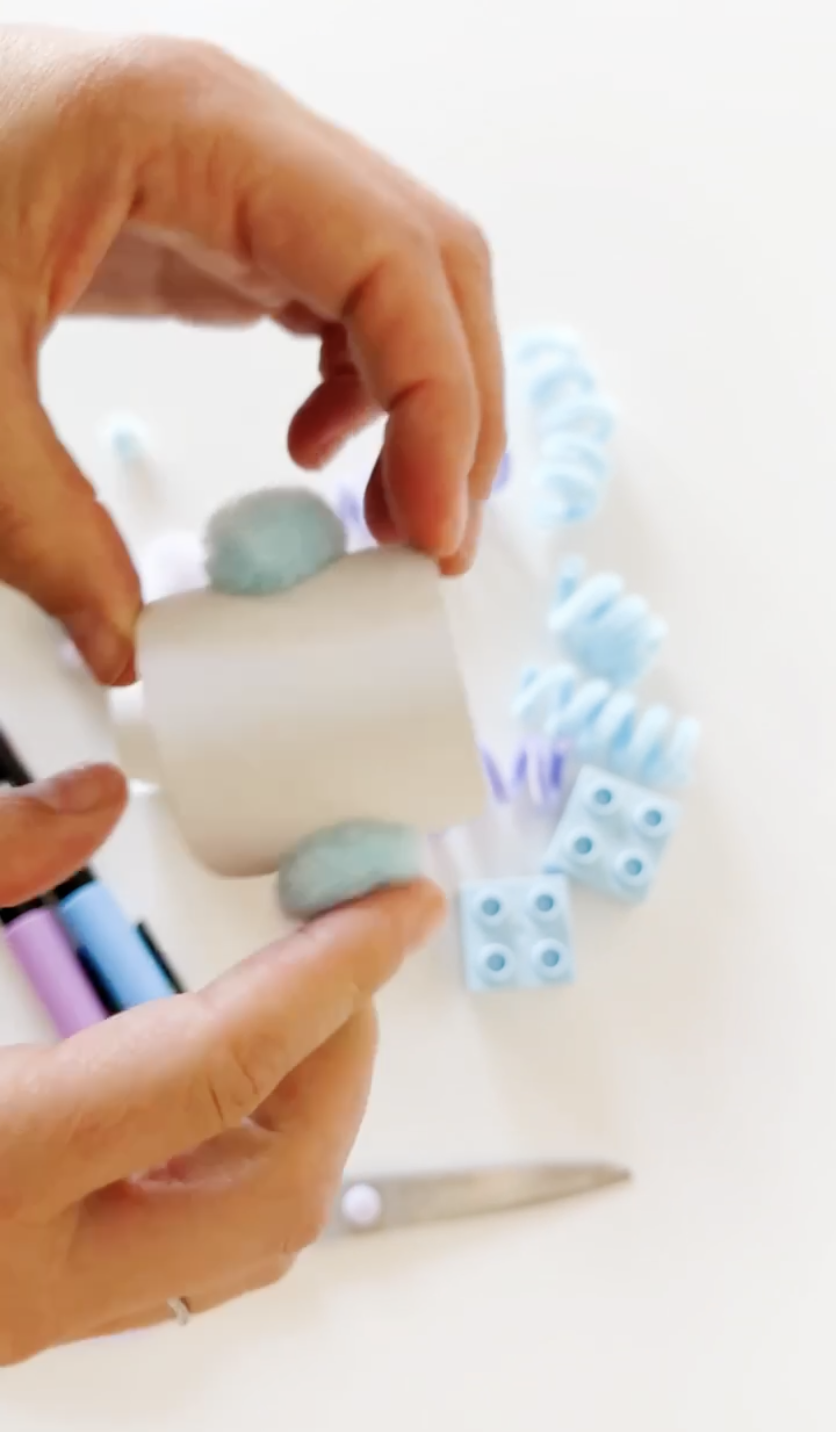
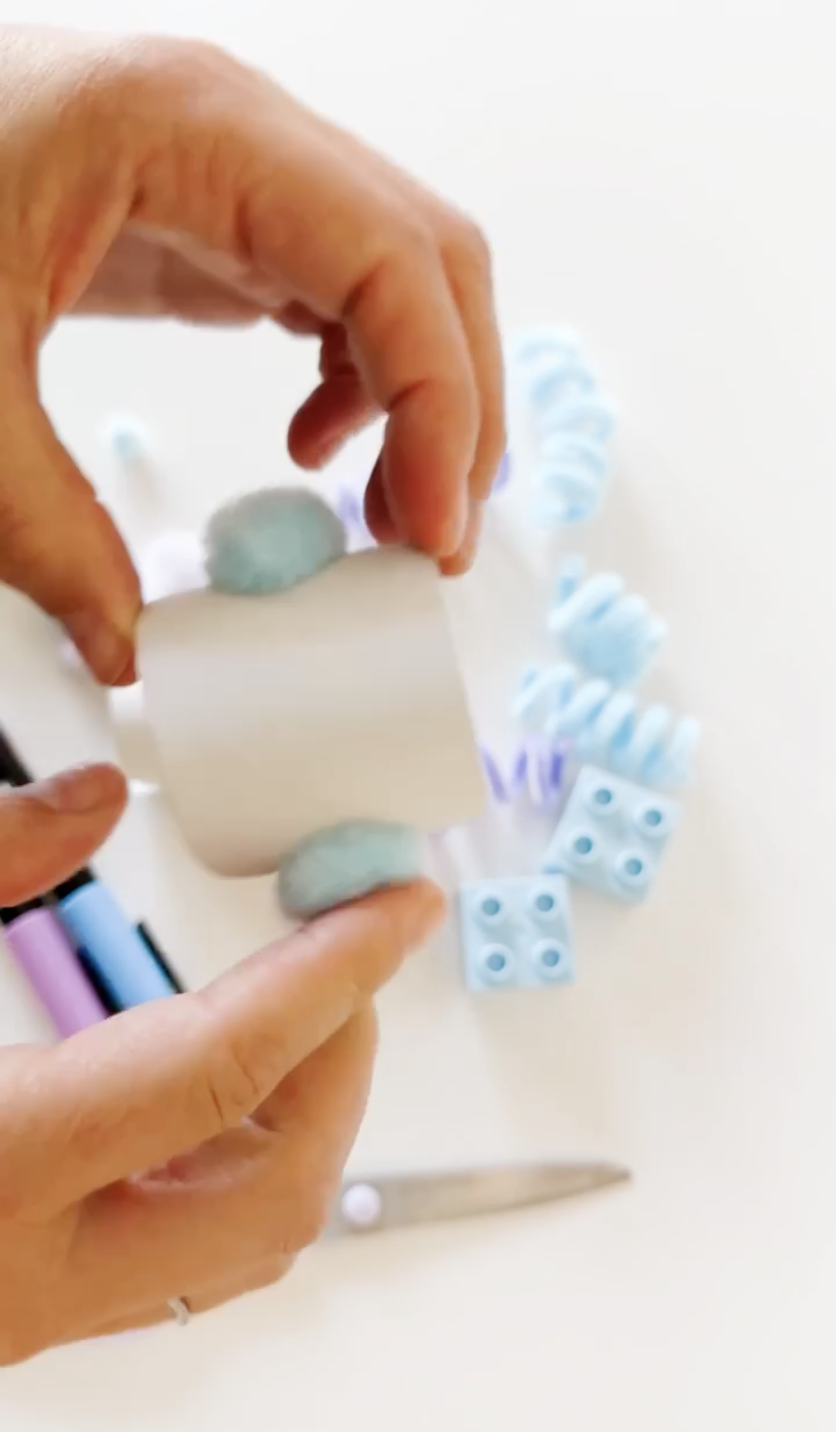
Attaching soft blue pom-poms to the sides of a white cardboard tube to make robot ears.
Step 1

Build the robot head

Cut a short section from a cardboard tube to create the robot’s head. Paint or wrap it in white paper if you want a clean robot base.

Glue a pom-pom to each side for ears. Add one more pom-pom to the top if you want a soft button, light, or extra robot sensor.
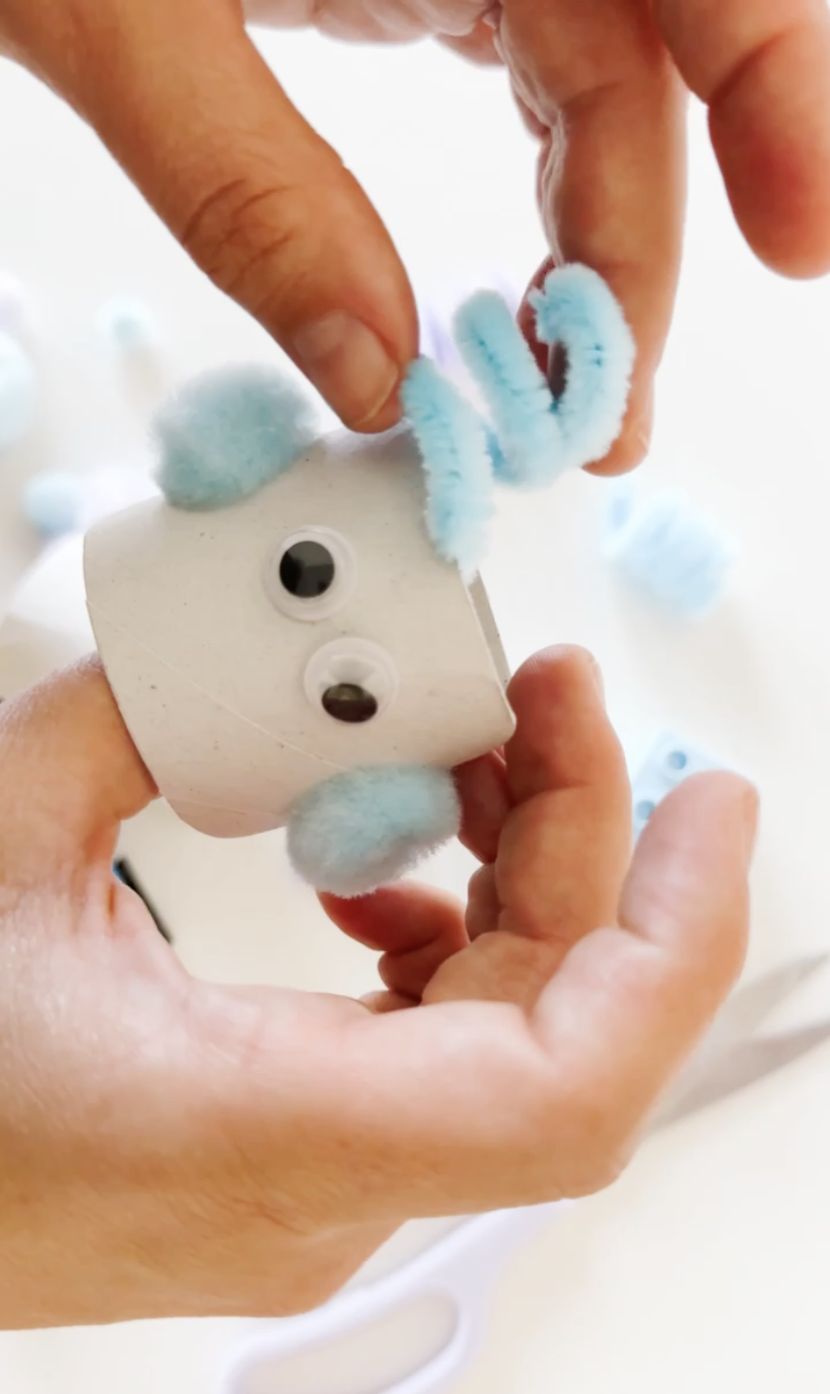
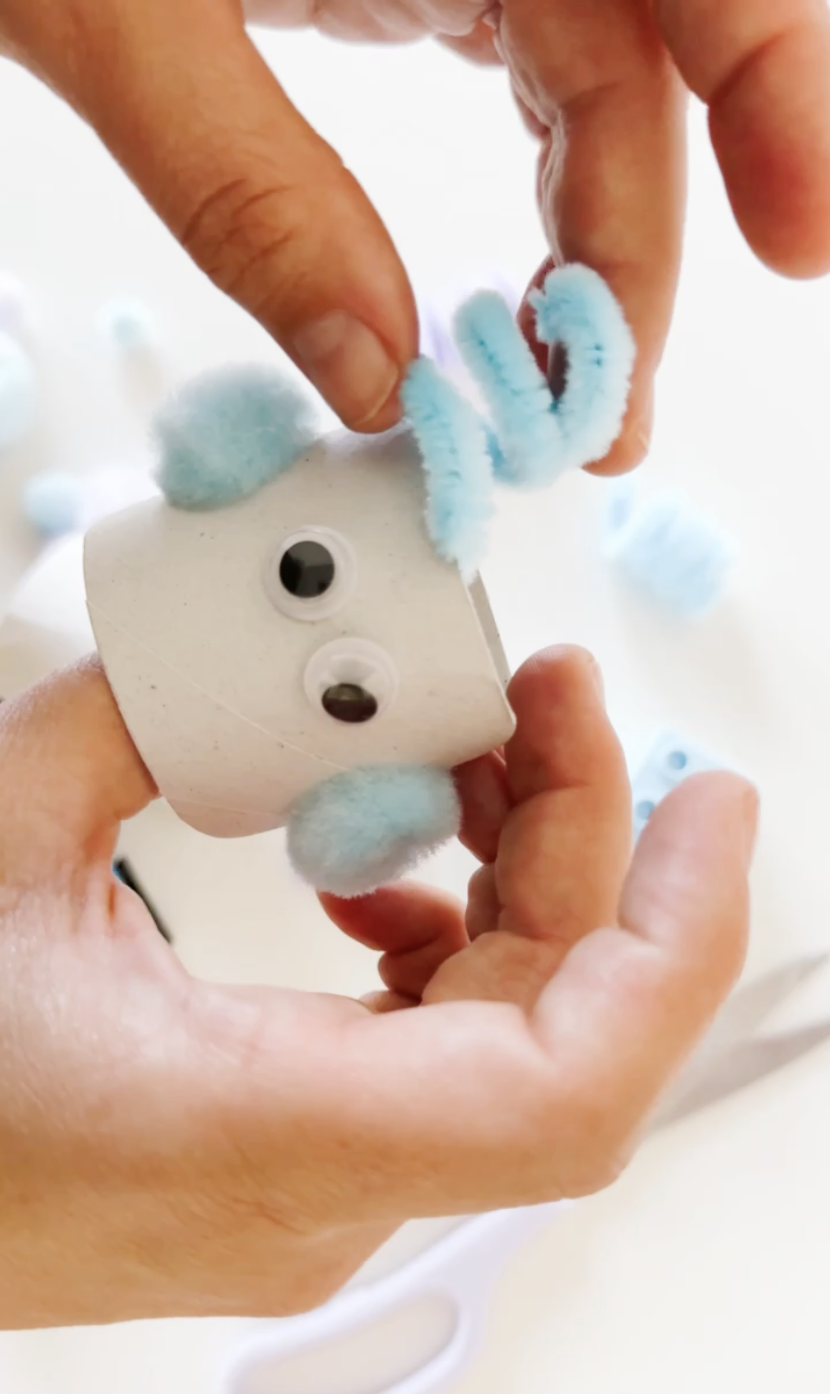
Adding googly eyes and curled blue pipe cleaner antennae to the cardboard robot head.
Step 2

Add the face and antennae

Glue two googly eyes onto the front of the robot head. Draw a small mouth, eyelashes, buttons, bolts, or any other facial details your child wants.

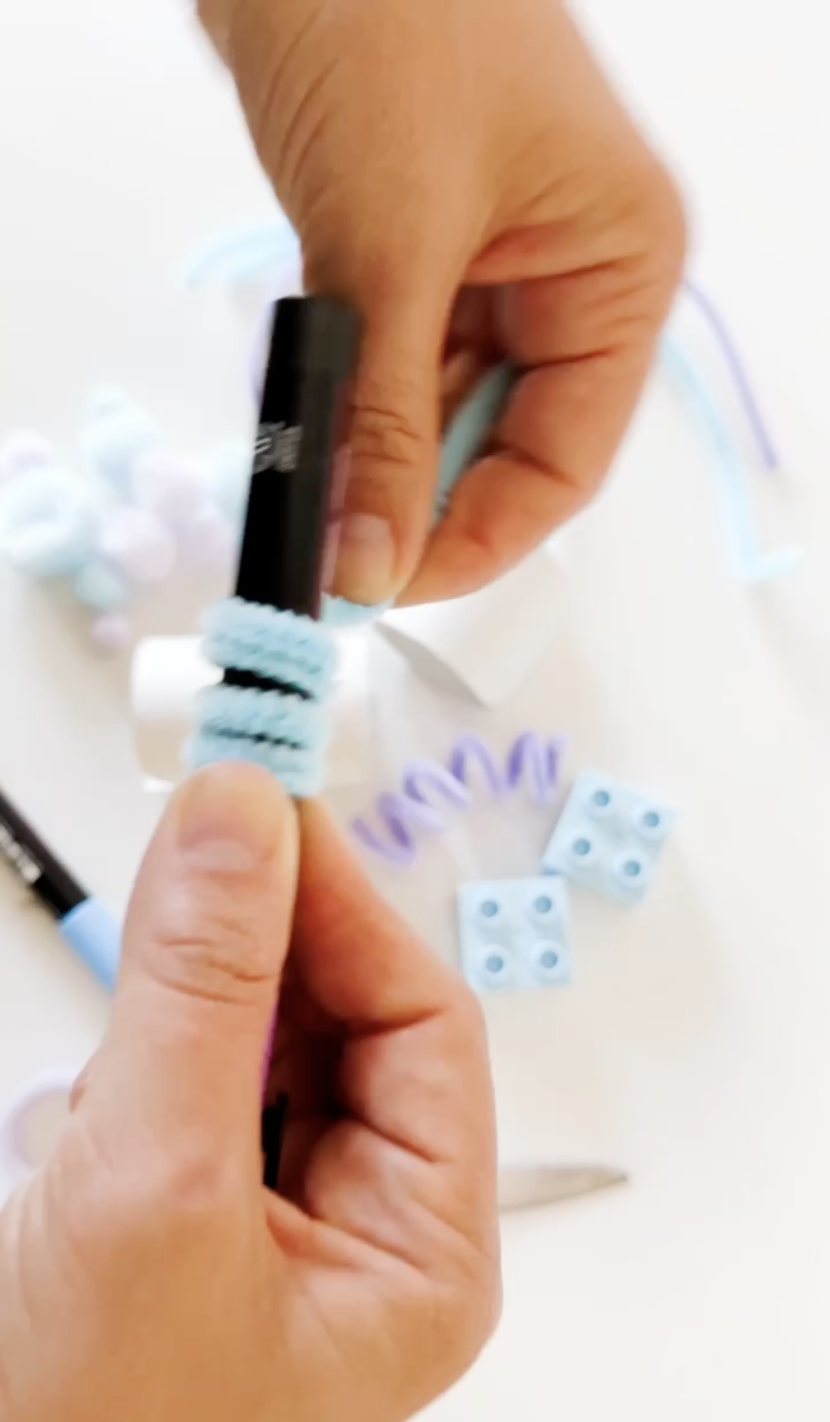
Wrap two pipe cleaners around a marker or pencil to make spirals. Slide them off, bend the ends slightly, and attach them to the top of the robot’s head as antennae.
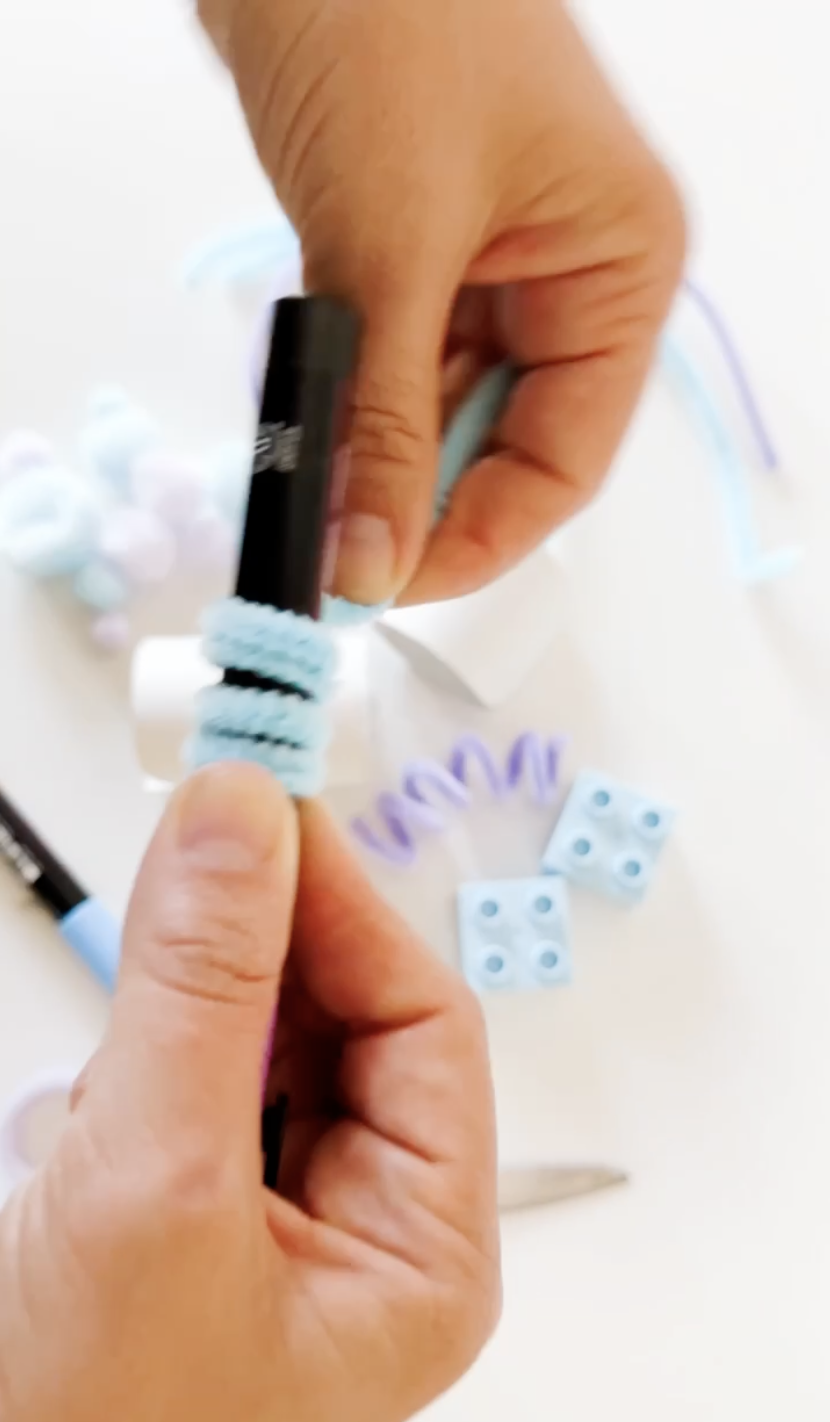
Curling a blue pipe cleaner around a black marker to make a spiral robot arm or leg.
Step 3

Make curly robot limbs

Wrap additional pipe cleaners around a marker to create coiled arms, legs, and a tail-like wire attachment.

Try making some coils tight and others loose. Ask your child which shape might make the robot bounce, reach, twist, or move most easily.
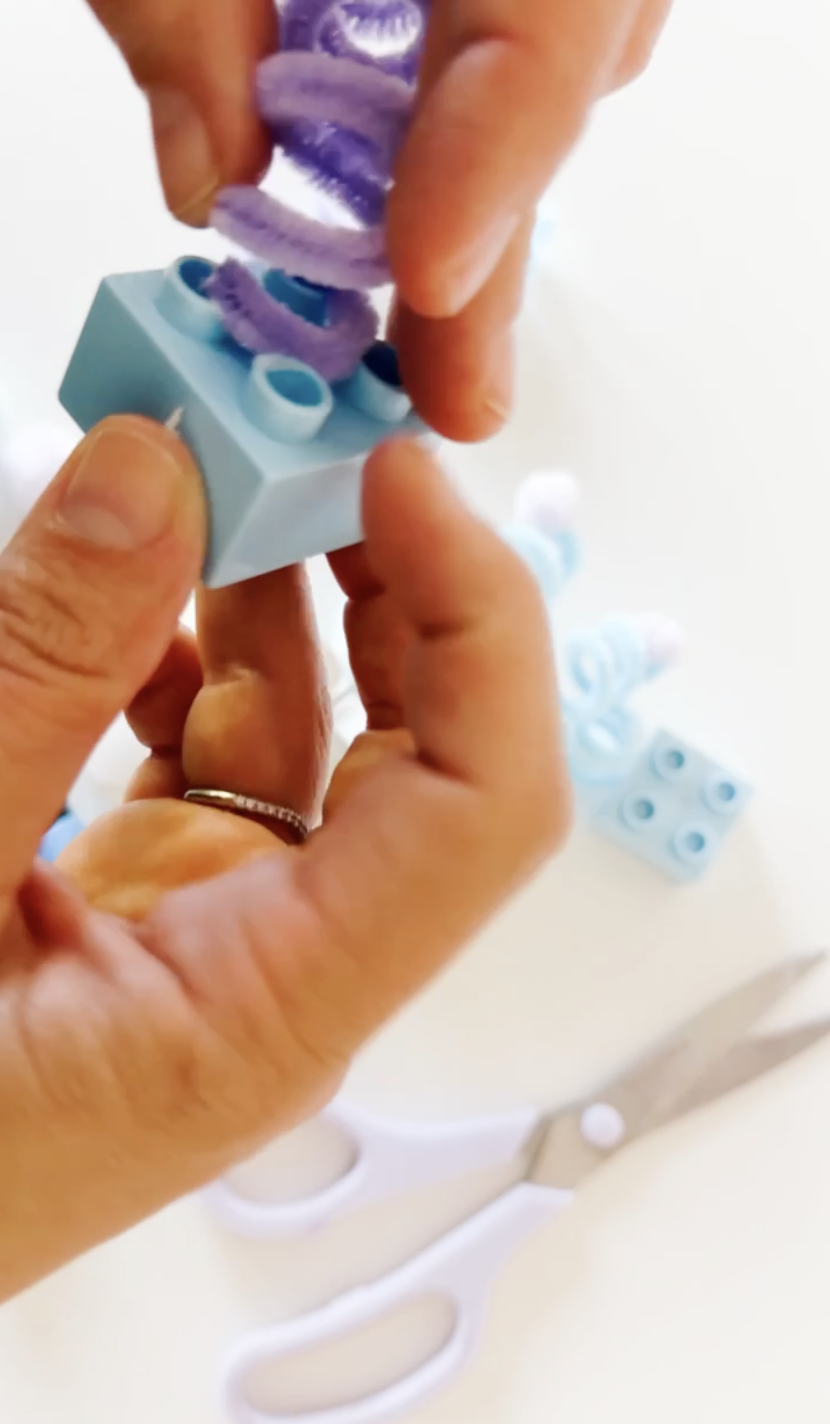
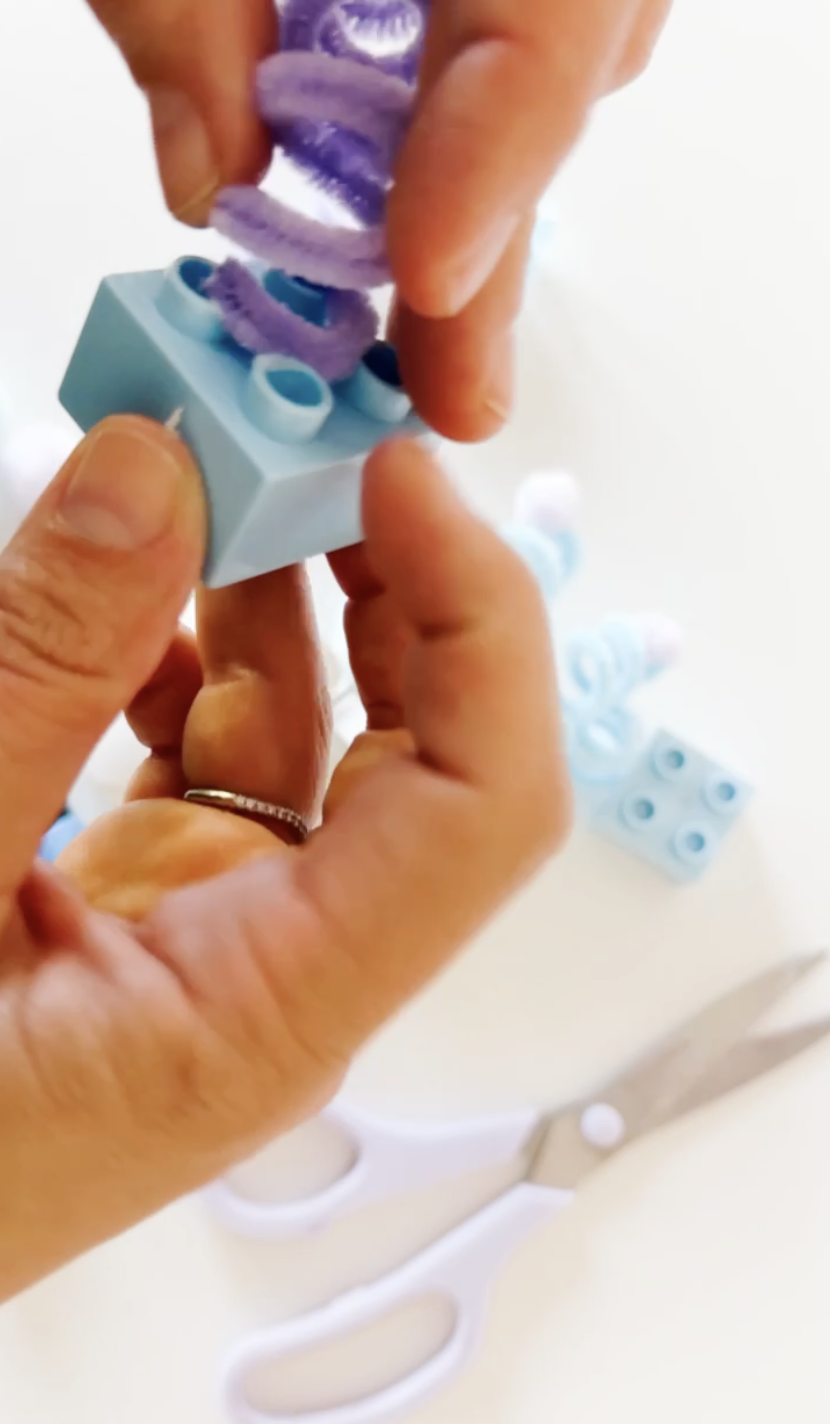
Inserting a purple curled pipe cleaner into a blue building brick to create a robot foot.
Step 4

Add building-brick feet

Press the ends of the curled pipe-cleaner legs into the openings of large building bricks. The bricks become chunky robot feet and help the finished creation stand or balance.

Test a few different bricks and positions. This is a playful opportunity to explore balance, stability, weight, and problem-solving.
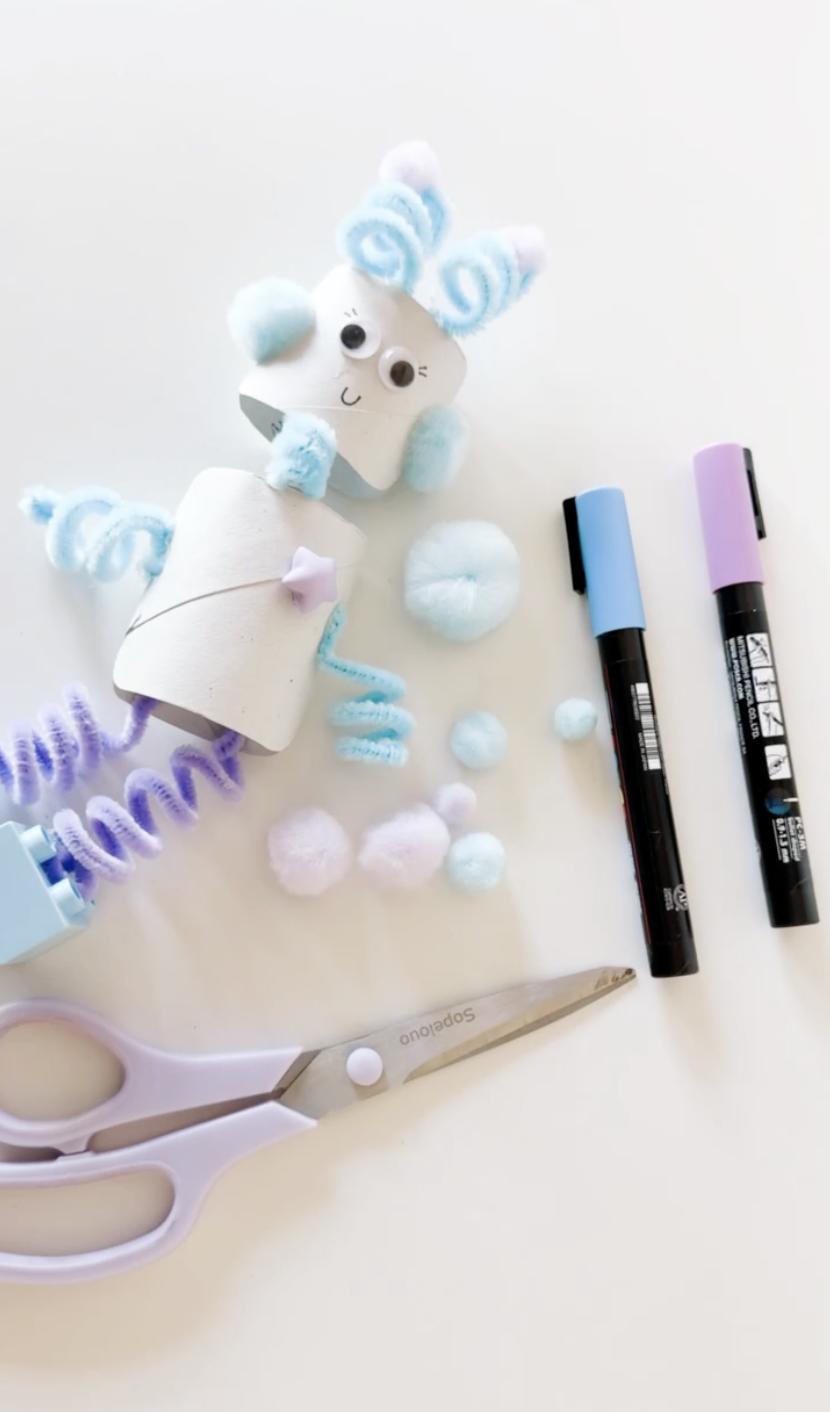
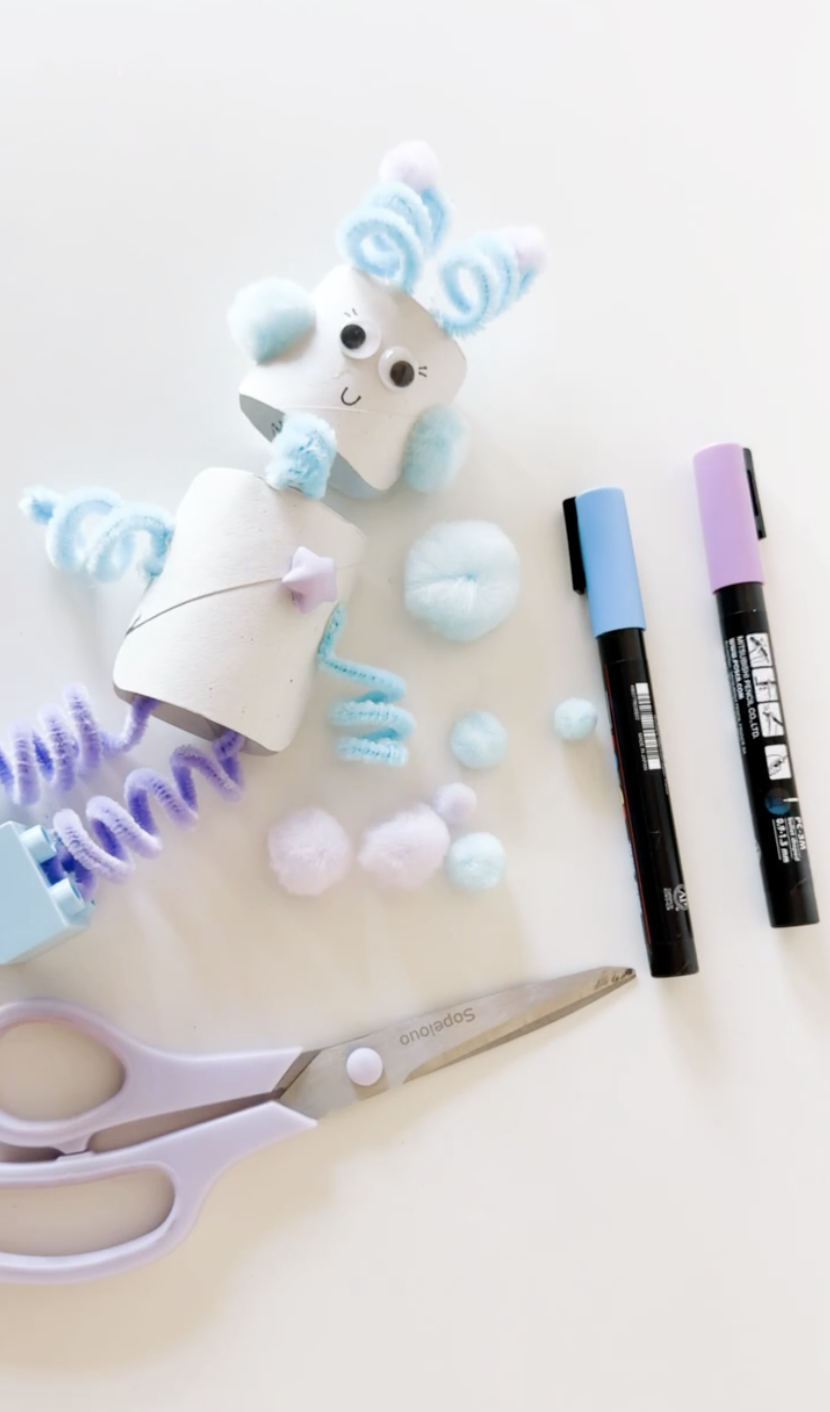
Completed toilet roll robot pieces with curled pipe cleaner limbs, pom-poms, markers, scissors, and building bricks.
Step 5

Assemble and decorate the robot

Attach the head to the larger cardboard tube body with a short pipe-cleaner neck, glue, or another flexible connector.

Add the arms, legs, feet, decorative pom-poms, and a building-brick button or control panel. Finish by drawing bolts, switches, numbers, patterns, or a robot name.

Parent tip

Do not worry about making every part perfectly symmetrical. Letting children choose unusual placements and test their own ideas turns this craft into a much richer engineering and problem-solving activity.

Turn it into a mini STEM challenge

Once the basic robot is complete, invite your child to improve its design.

  • Can you make the robot stand without falling?
  • Can you create arms that bend?
  • Can you design feet that support a heavier body?
  • Can the head spin or wobble?
  • Can you add a tool, button, sensor, or pretend control panel?
  • Can you build a second robot with a completely different job?

These small design challenges encourage children to plan, test, adjust, and try again—the same basic process engineers use when developing a new invention.

What kids learn from this robot craft

This recycled robot craft supports much more than creativity.

Wrapping pipe cleaners around a marker strengthens hand muscles and coordination. Gluing small details develops precision. Connecting the pieces introduces construction, balance, flexible joints, and cause and effect.

Children also practice planning as they decide what their robot should do and which parts it needs. When a piece does not balance or attach correctly, they get an authentic opportunity to problem-solve and revise their design.

Learning skills

Fine motor skills Early engineering Problem-solving Balance Cause and effect Creative design Recycled materials Pretend play Hand-eye coordination

Questions to ask kids

  • What job does your robot do?
  • Why does it need antennae?
  • Which parts can bend or move?
  • How can we help the robot balance?
  • What would happen if the feet were smaller?
  • What tools or buttons does your robot need?
  • What is your robot’s name?
  • Can you invent a story about where the robot lives?

Robot vocabulary

Robot Engineer Invent Design Machine Antenna Sensor Control panel Joint Balance Build Test Improve

Ways to extend the play

Robot repair shop

Set out toy tools, loose parts, building bricks, and recycled materials so children can repair and upgrade their robots.

Robot movement game

Take turns moving like robots. Use commands such as forward, backward, turn, freeze, lift, and recharge.

Design a robot helper

Ask your child to draw or build a robot that helps with a real-life job, such as cleaning, cooking, gardening, or exploring space.

Build a robot world

Use boxes, building bricks, tubes, and recycled containers to create a laboratory, charging station, or robot city.

More robot and space activities

DIY robot costume

Turn cardboard boxes, lights, building bricks, tubes, and playful materials into a full wearable robot costume.

See the robot costume

DIY astronaut costume

Continue the engineering and imaginative-play theme with a sparkly homemade astronaut costume and jetpack.

See the astronaut costume

Free printable activities

Explore more hands-on printables, activity books, dramatic-play resources, and early-learning materials.

Browse free printables

Toilet paper roll robot FAQ

How do you make a robot from a toilet paper roll?

Use one cardboard tube section for the head and another for the body. Add googly eyes, pom-pom ears, curled pipe-cleaner arms and legs, and large building bricks for the feet. Attach the parts with glue or pipe cleaners and decorate with markers.

What age is this robot craft best for?

This activity is best for children ages four and up with adult supervision. Younger children can decorate pre-cut pieces, while older children can help design, connect, and balance the robot independently.

How do you curl pipe cleaners for robot arms and legs?

Wrap a pipe cleaner tightly around a pencil or marker, then gently slide it off. Stretch or compress the spiral depending on how long and flexible you want the robot limb to be.

What can kids learn from making a robot?

Children practice fine motor skills, early engineering, creative design, balance, problem-solving, planning, and imaginative storytelling.

What can I use instead of building bricks for the feet?

Try bottle caps, small cardboard squares, corks, wooden blocks, egg-carton cups, foam shapes, or another sturdy recycled material.

Can I use this craft for a robot or space unit study?

Yes. Pair it with books about robots, coding movement games, recycled-building challenges, space sensory play, and conversations about how engineers design machines to solve problems.
Rainbow Cloud Pipe Cleaner & Fruit Loop Craft

Rainbow Cloud Pipe Cleaner & Fruit Loop Craft

A cheerful rainbow craft for kids that combines pipe cleaners, Fruit Loops, and a simple cloud shape for color sorting, fine motor practice, and weather-themed learning.

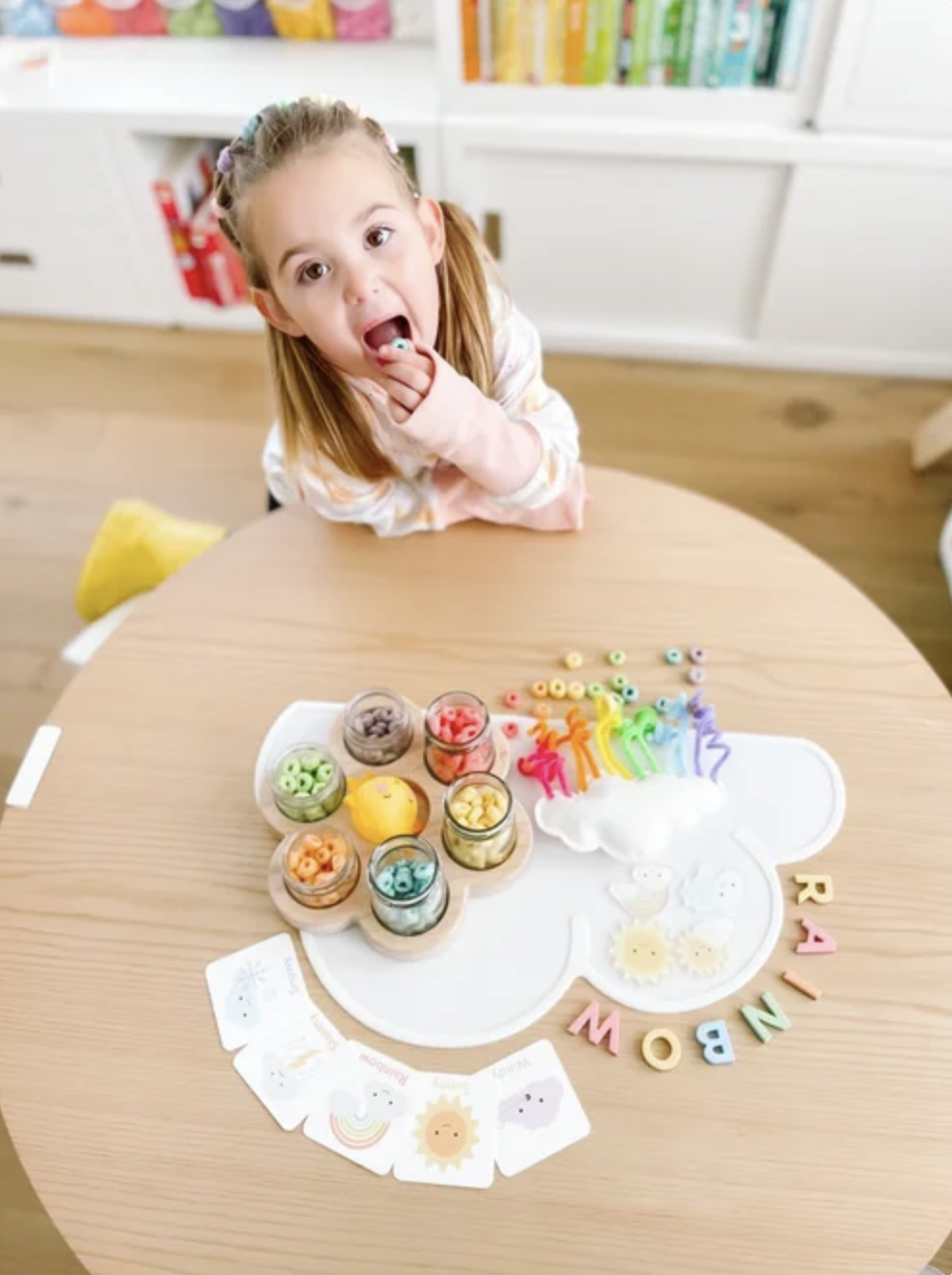
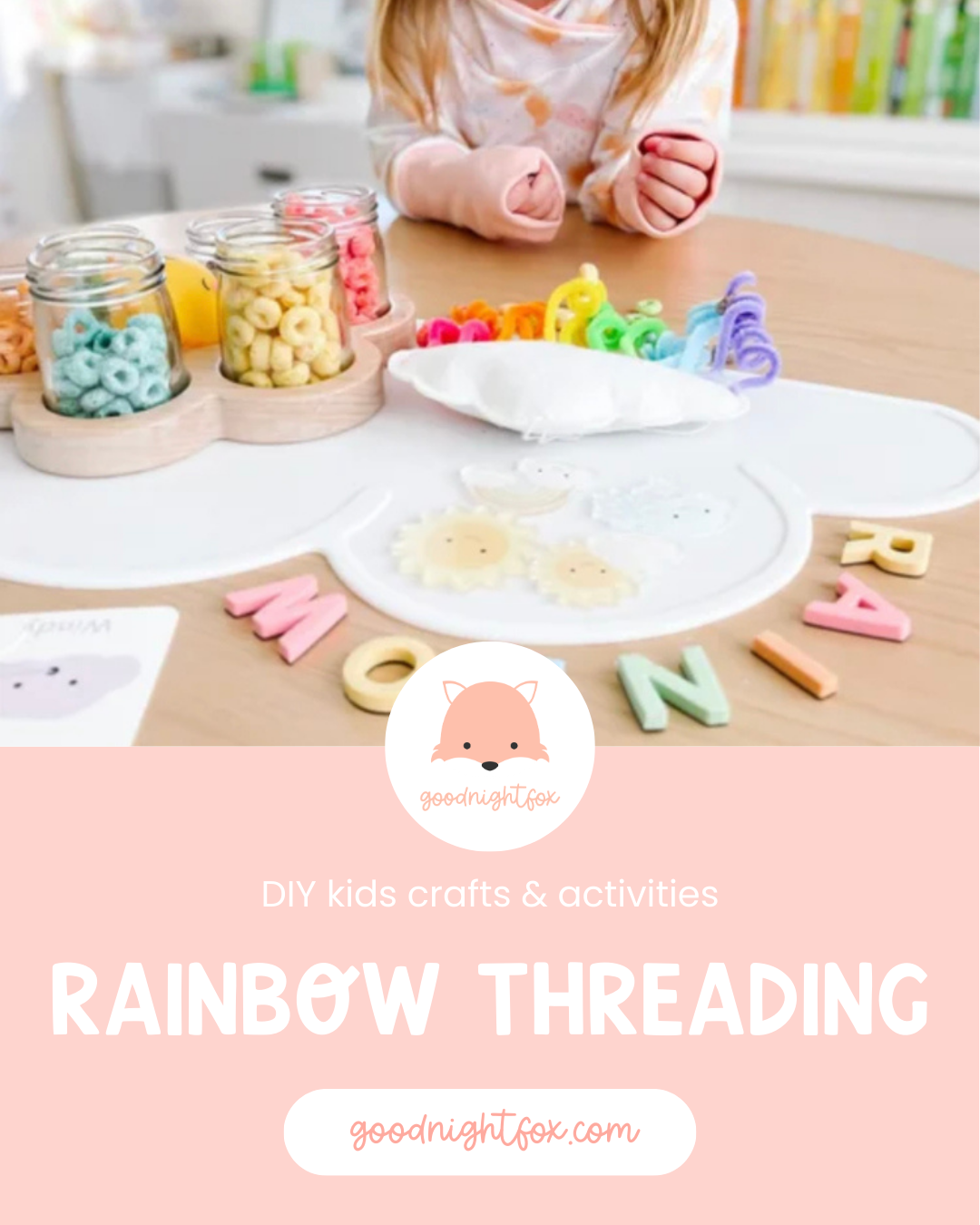
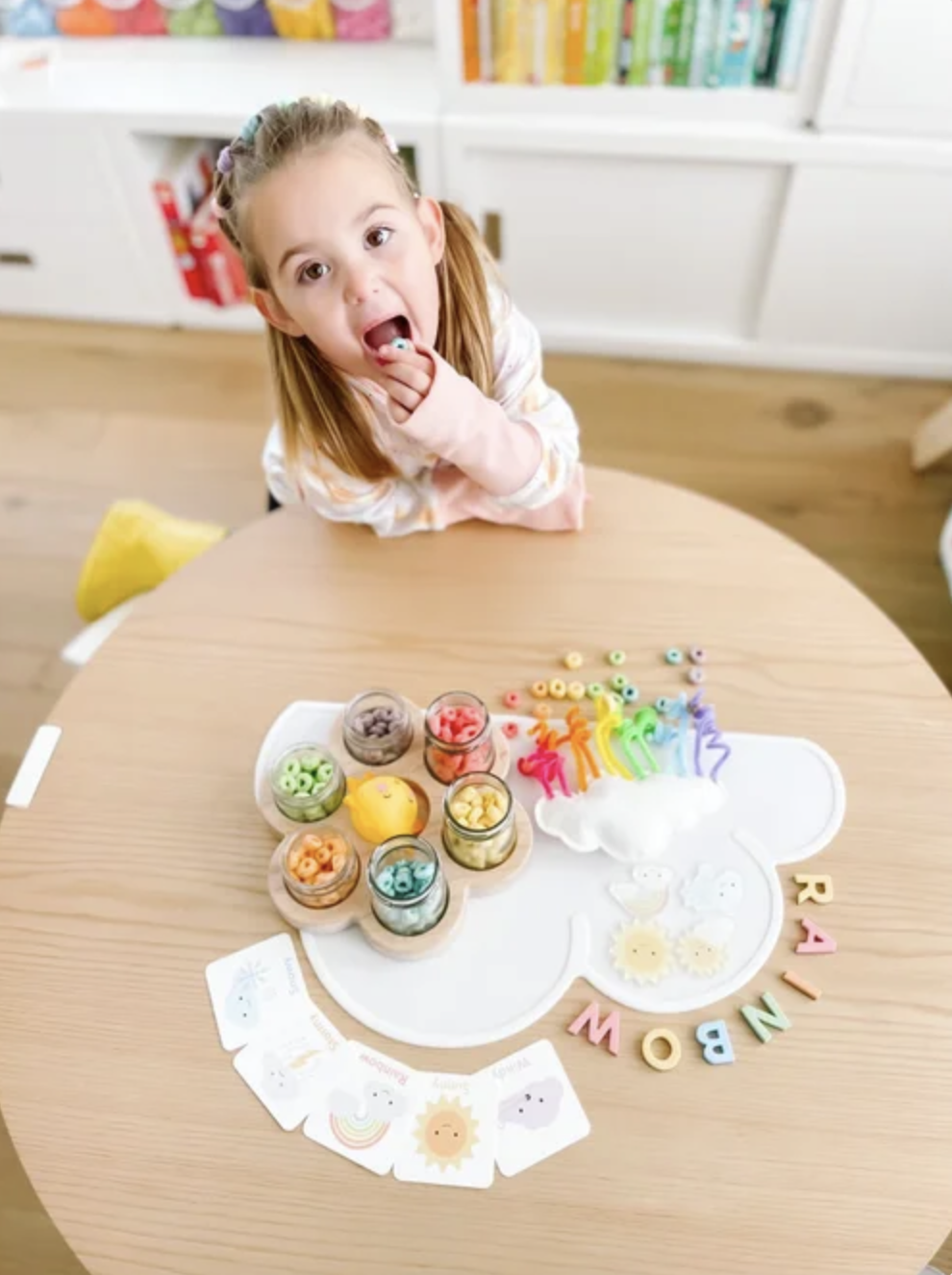
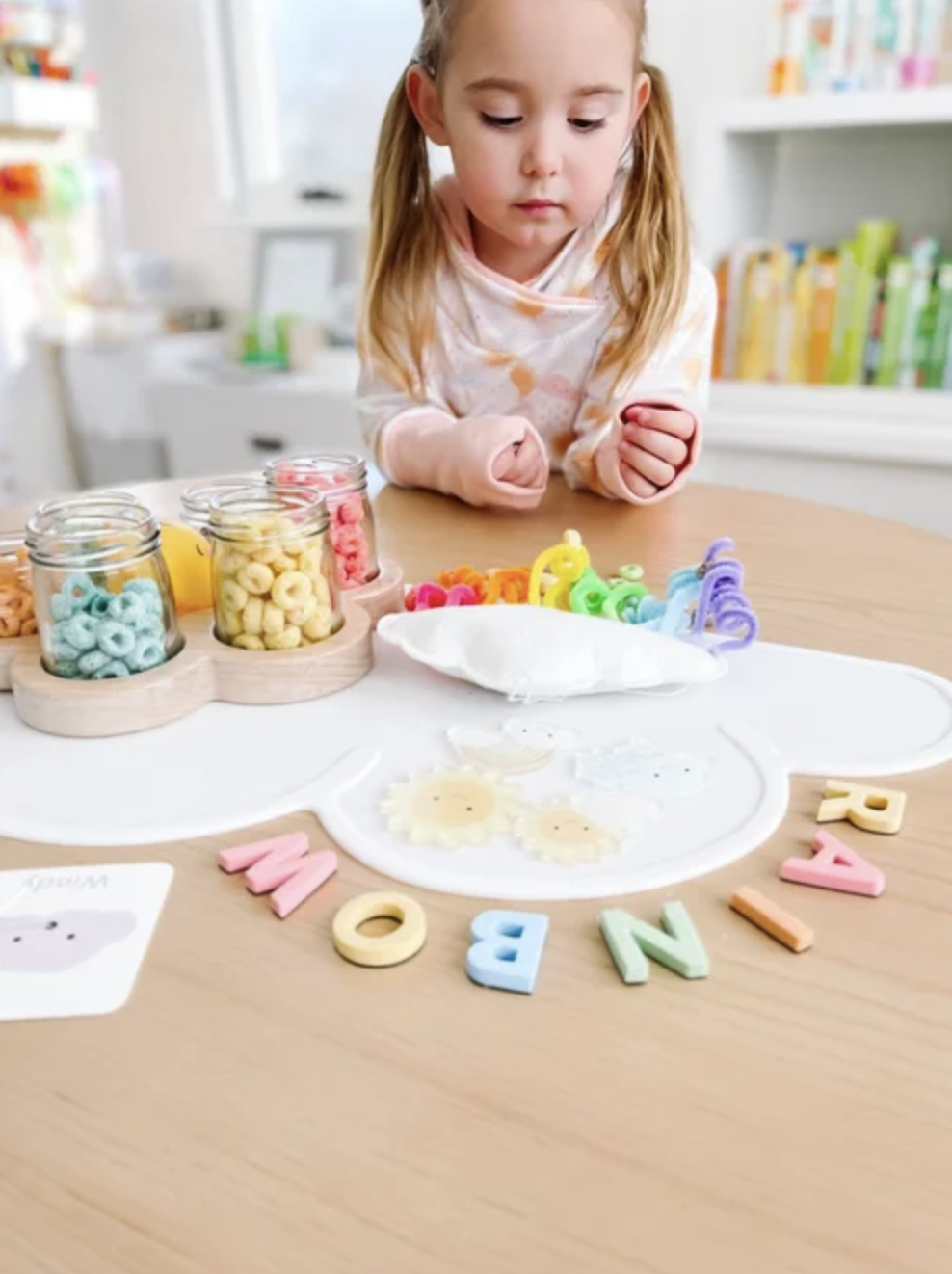
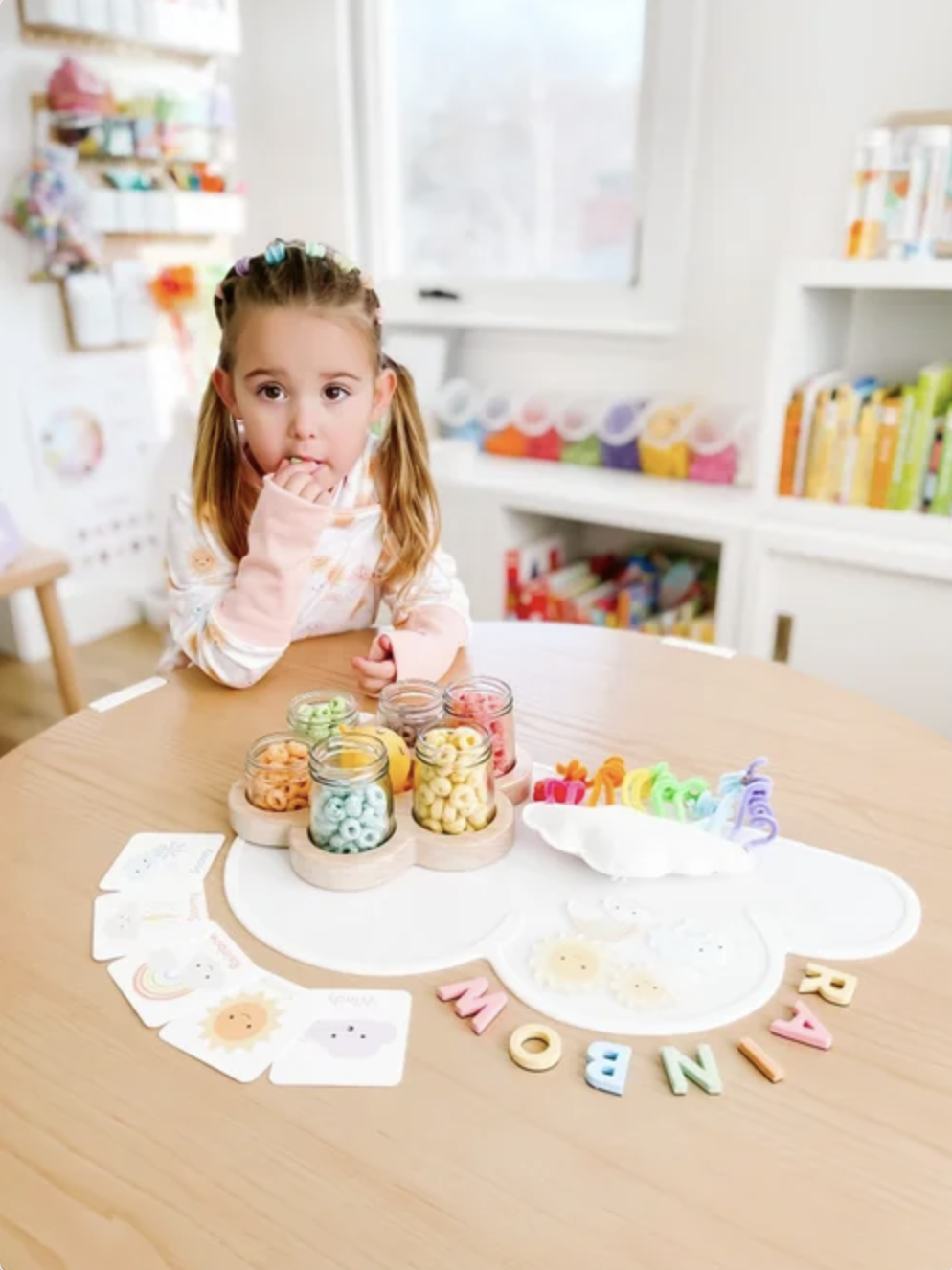
Child doing a rainbow cloud pipe cleaner and Fruit Loop craft with colorful cereal sorted in jars.
Age3+
Prep10 minutes
Activity20 minutes
Mess★☆☆☆☆
SkillsFine motor + colors

Why we love this activity

This rainbow cloud craft is one of those simple activities that feels playful, colorful, and secretly full of learning.

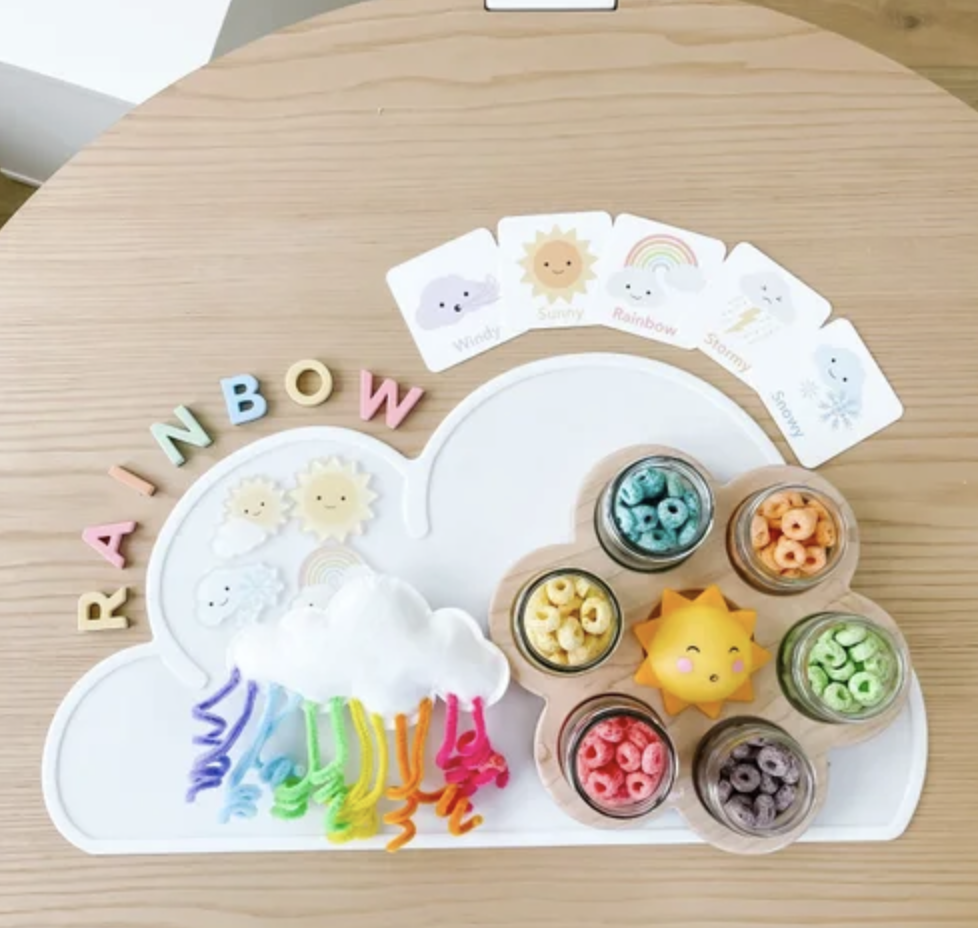
Kids get to thread Fruit Loops onto pipe cleaners, sort cereal by color, build rainbow arches, and attach everything to a fluffy cloud shape.

It is perfect for rainbow week, weather week, spring activities, St. Patrick’s Day, or anytime you want a low-prep fine motor activity that keeps little hands busy.

Because children are matching colors, sequencing the rainbow, and using careful finger movements, this craft works beautifully as both a creative project and a hands-on learning activity.

Materials needed

  • Fruit Loops or colorful cereal
  • Pipe cleaners in rainbow colors
  • White cardstock, cardboard, or foam for the cloud
  • Scissors
  • Tape or glue dots
  • Optional cotton balls for extra cloud texture

How to make a rainbow cloud craft

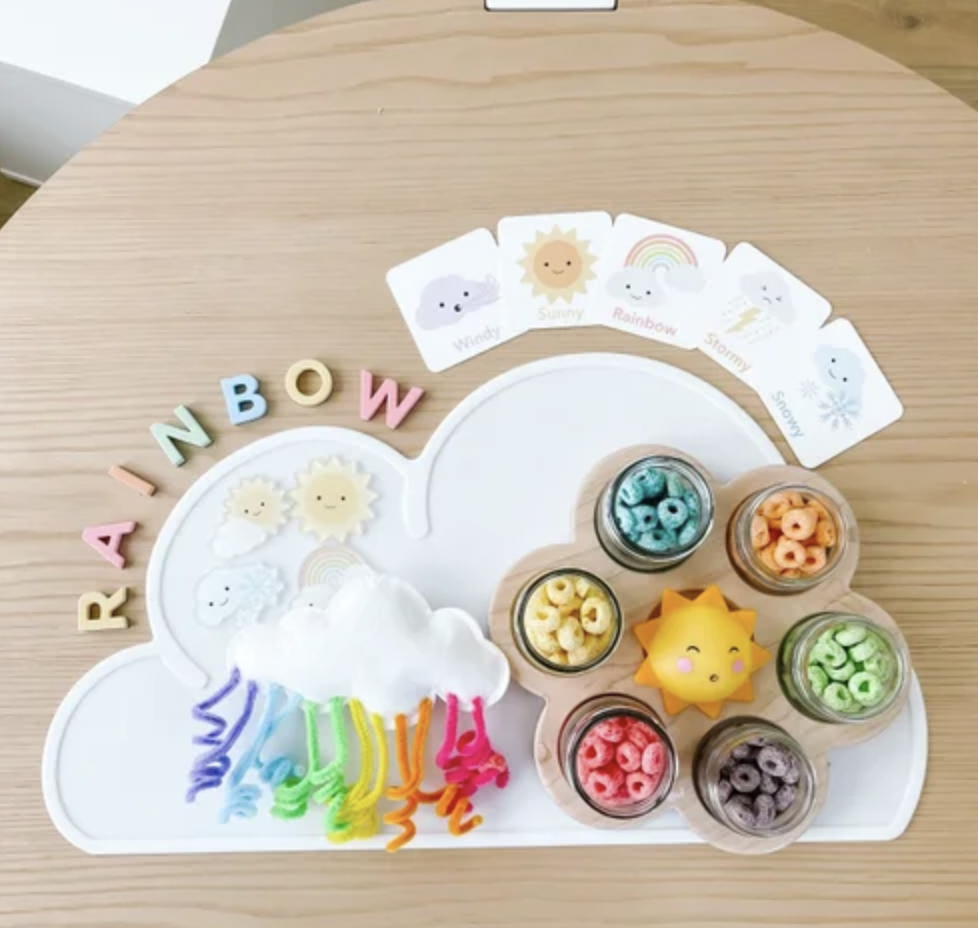
Rainbow cloud craft setup with Fruit Loops sorted by color, weather cards, pipe cleaners, and cloud tray.
Step 1

Set up the rainbow colors

Lay out pipe cleaners in rainbow order and pour colorful cereal into small jars, bowls, or a tray. Invite your child to sort the cereal by color before threading.

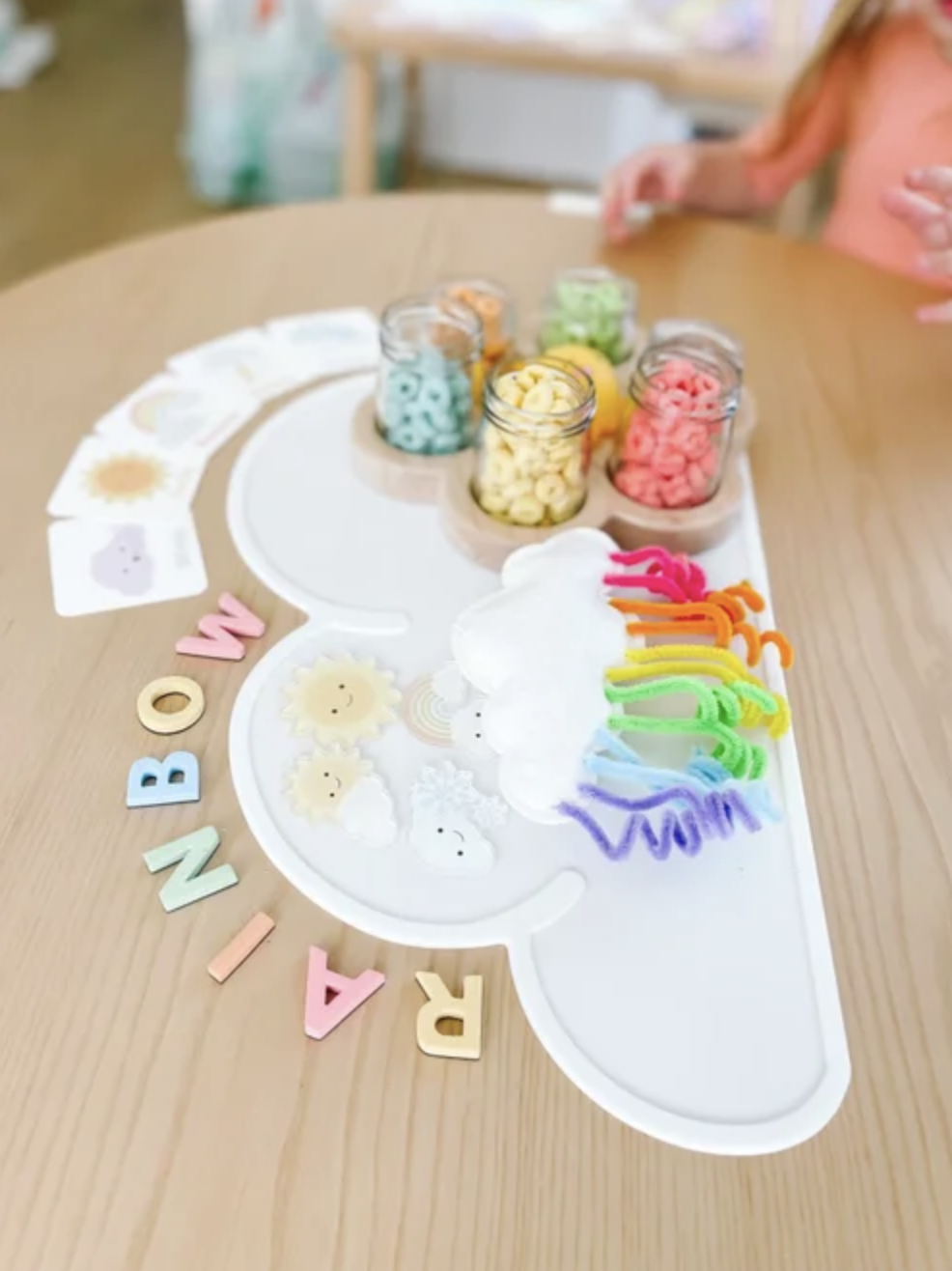
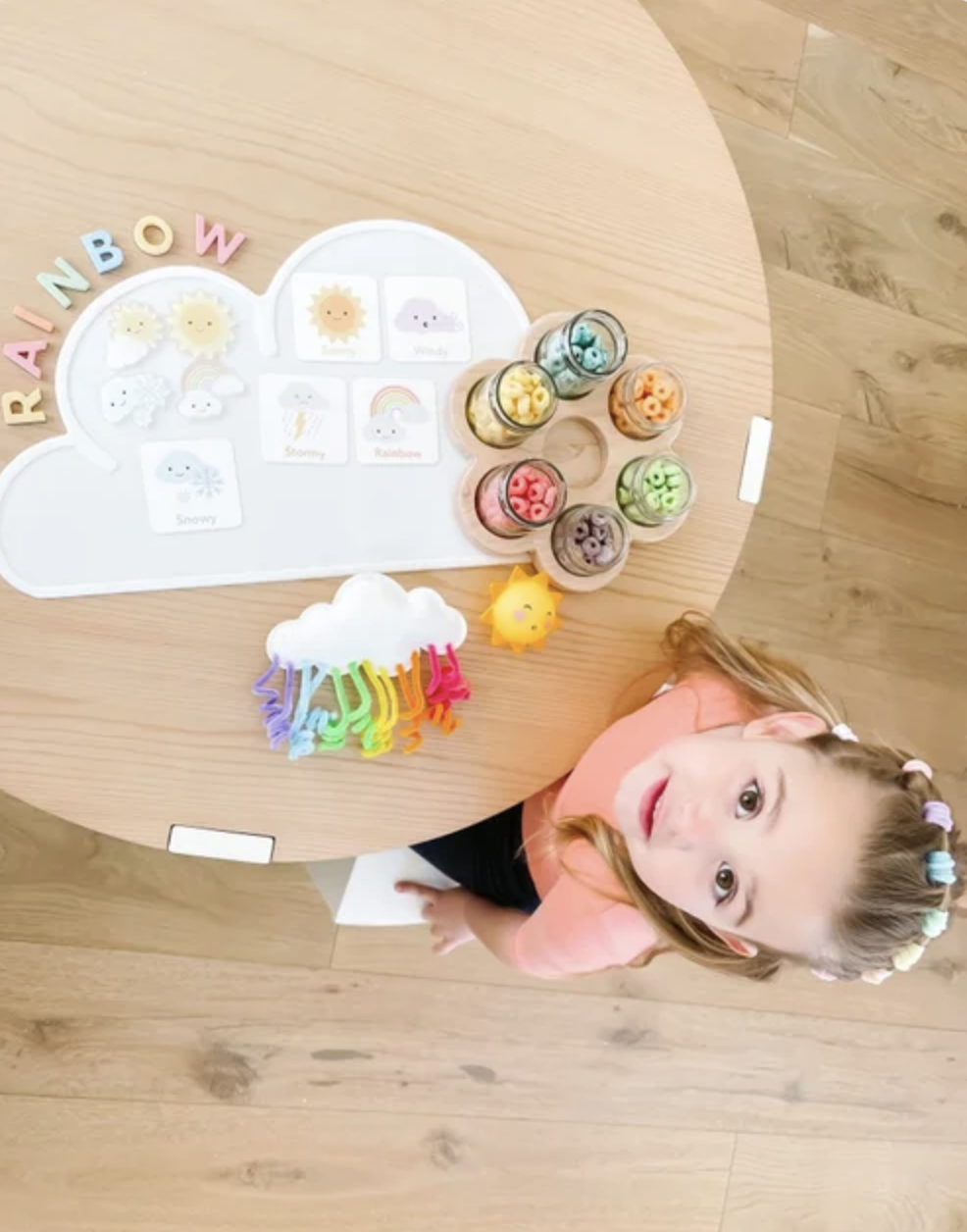
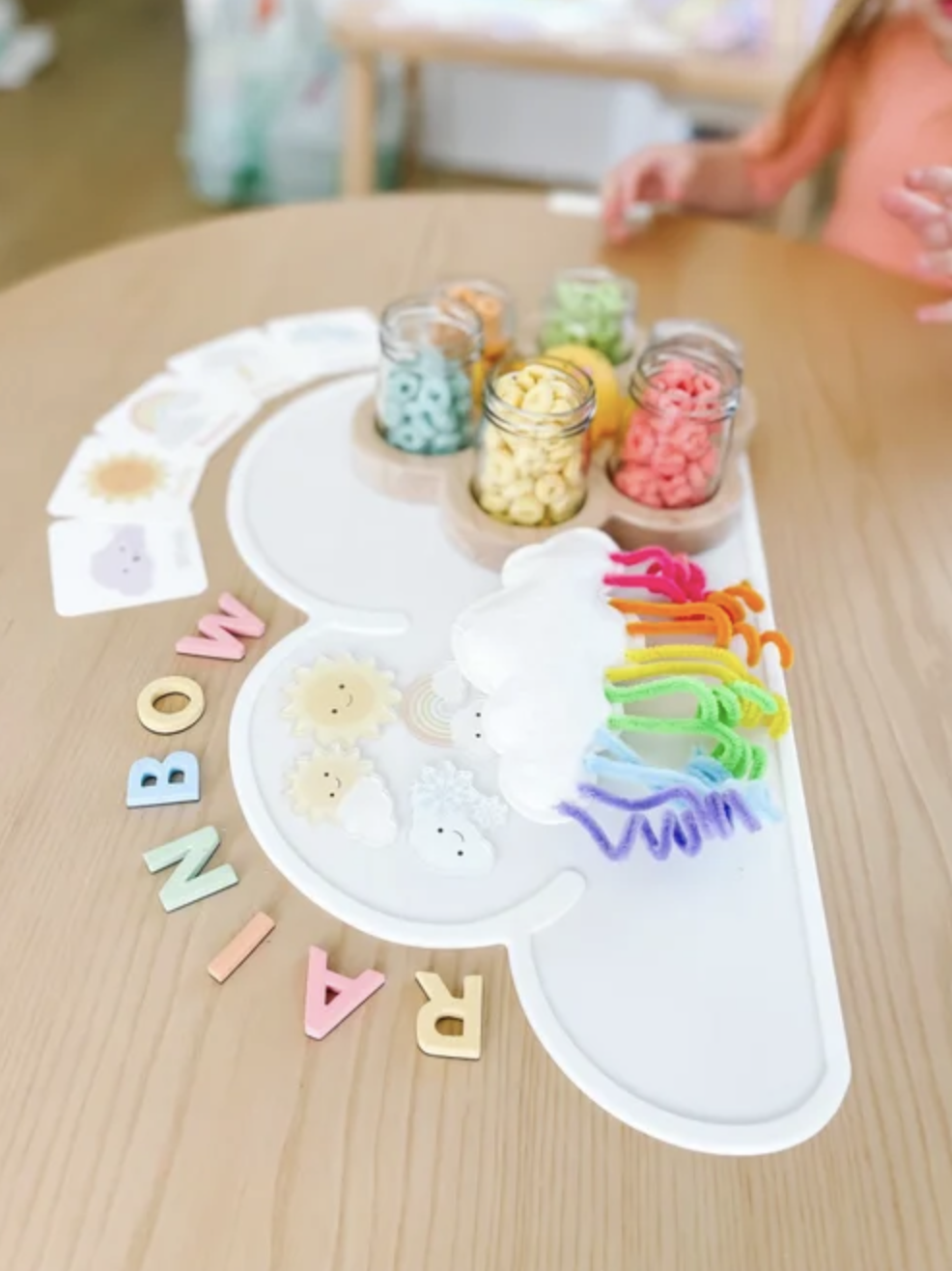
Rainbow pipe cleaners and colorful Fruit Loops arranged on a cloud tray for a preschool craft.
Step 2

Thread the cereal

Have your child thread Fruit Loops onto each pipe cleaner. This is wonderful fine motor practice and gives kids a chance to name colors as they work.

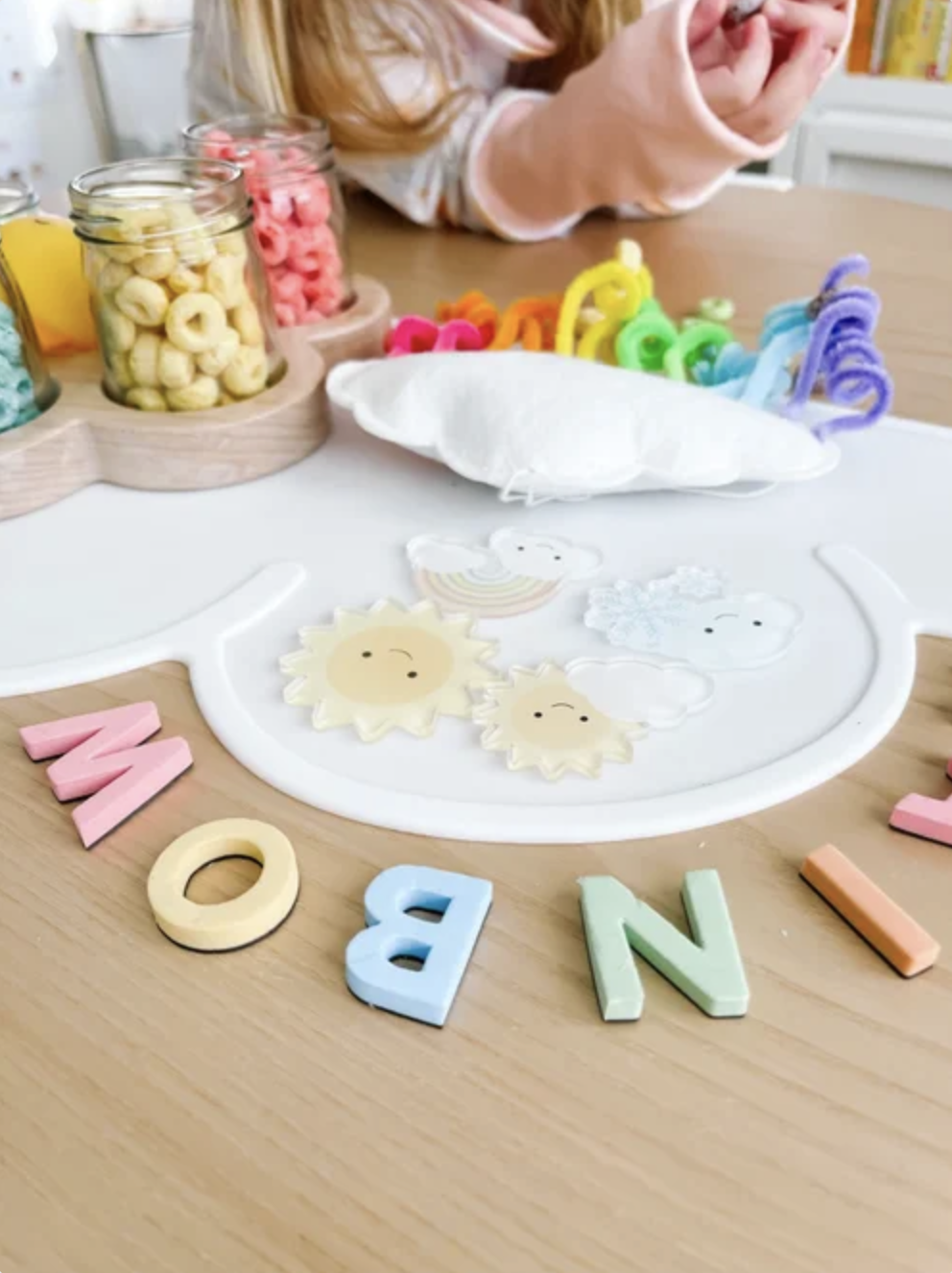
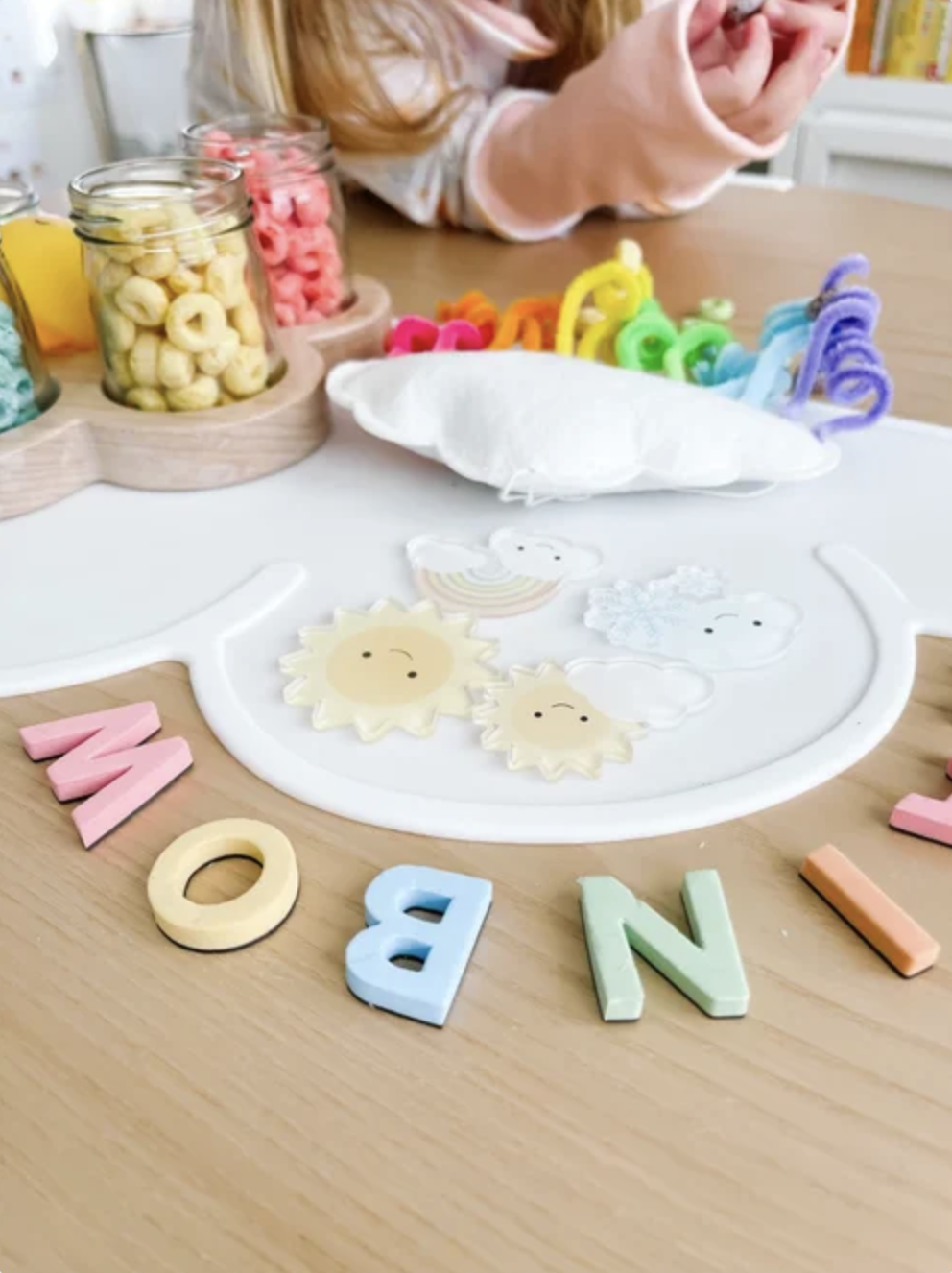
Close-up of rainbow threading activity with pipe cleaners, Fruit Loops, weather pieces, and letter tiles.
Step 3

Build the rainbow

Bend each pipe cleaner into a rainbow arch and tape the ends behind the cloud. Layer the colors from largest to smallest to create a bright rainbow shape.

Parent tip

If your child is still working on threading, use fewer cereal pieces and leave extra space on the pipe cleaner. For older kids, challenge them to build the rainbow in correct color order.

Learning benefits

This rainbow craft is simple, but it builds so many early learning skills.

Threading cereal strengthens fine motor muscles and hand-eye coordination. Sorting Fruit Loops by color supports visual discrimination and color recognition. Building the rainbow in order introduces sequencing and patterning.

It is also a natural way to start a conversation about weather, rainbows, clouds, rain, and sunshine.

Learning skills

Fine motor skills Color sorting Rainbow order Sequencing Weather vocabulary Hand-eye coordination Patterning Creative play

Weather and rainbow products to pair with this activity

Extend this rainbow craft into a full weather-themed learning day with GoodnightFox weather printables and play materials.

GoodnightFox Weather Station Printable Dramatic Play kit with rainbow and forecast activities.

Weather station pretend play

Set up a pretend weather station with forecast boards, weather symbols, and meteorologist role-play.

Shop weather station
GoodnightFox Weather Flashcards with rainbow, sun, rain, snow, and storm cards.

Weather flashcards

Practice weather vocabulary with soft pastel weather cards, including rainbow, sun, rain, clouds, and storms.
Shop flashcards
GoodnightFox Weather Wood Play Rounds with illustrated weather symbols.

Weather wood play rounds

Add wooden weather pieces to sensory bins, matching games, calendar time, and weather-themed play trays.

Shop play rounds

Questions to ask kids

  • What colors are in your rainbow?
  • Which color comes first?
  • Can you sort the cereal by color?
  • What weather do we need to see a rainbow?
  • What happens after it rains and the sun comes out?
  • Can you count how many cereal pieces are on each pipe cleaner?

More rainbow and weather activities

Rainbow threading craft Pinterest graphic for GoodnightFox.

Rainbow threading

Save this rainbow threading idea for Weather Week, spring crafts, or a colorful fine motor activity.

Rainbow threading

Rainbow milk experiment

Make colors swirl across milk while learning about surface tension and color mixing.

Rainbow milk

Sunset milk experiment

Explore warm colors, cool colors, and color mixing through a beautiful science activity.

Sunset milk

Rainbow cloud craft FAQ

How do you make a Fruit Loop rainbow craft?

Thread colorful cereal onto pipe cleaners, bend the pipe cleaners into rainbow arches, and attach them to a white cloud shape made from cardstock, cardboard, or foam.

What age is this rainbow craft best for?

This craft is best for ages three and up with adult supervision. Younger children may need help threading cereal and bending the pipe cleaners.

What do kids learn from a rainbow craft?

Kids can practice color recognition, sorting, sequencing, fine motor skills, hand-eye coordination, counting, and weather vocabulary.

Can I use this for Weather Week?

Yes. This craft pairs perfectly with weather lessons about rainbows, clouds, rain, sunshine, and the colors we see after a storm.

What can I use instead of Fruit Loops?

You can use pony beads, buttons, dyed pasta, paper circles, pom poms, or any small colorful item that can be sorted or threaded safely.

Toilet Roll Unicorn

Toilet Roll Unicorn Craft

A magical recycled craft for kids using a toilet paper roll, pipe cleaners, googly eyes, and simple supplies—perfect for unicorn week, princess play, castle crafts, and imaginative storytelling.

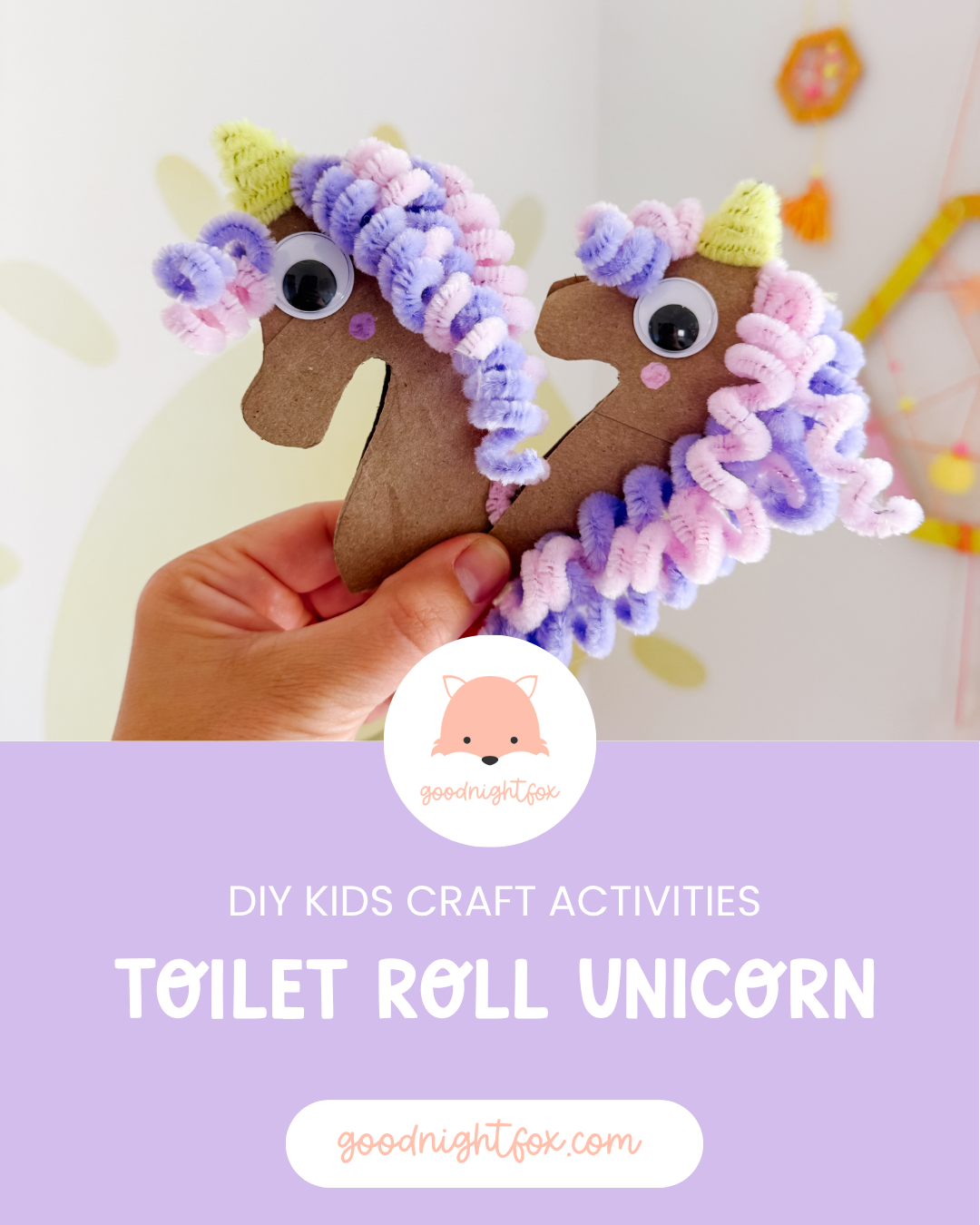
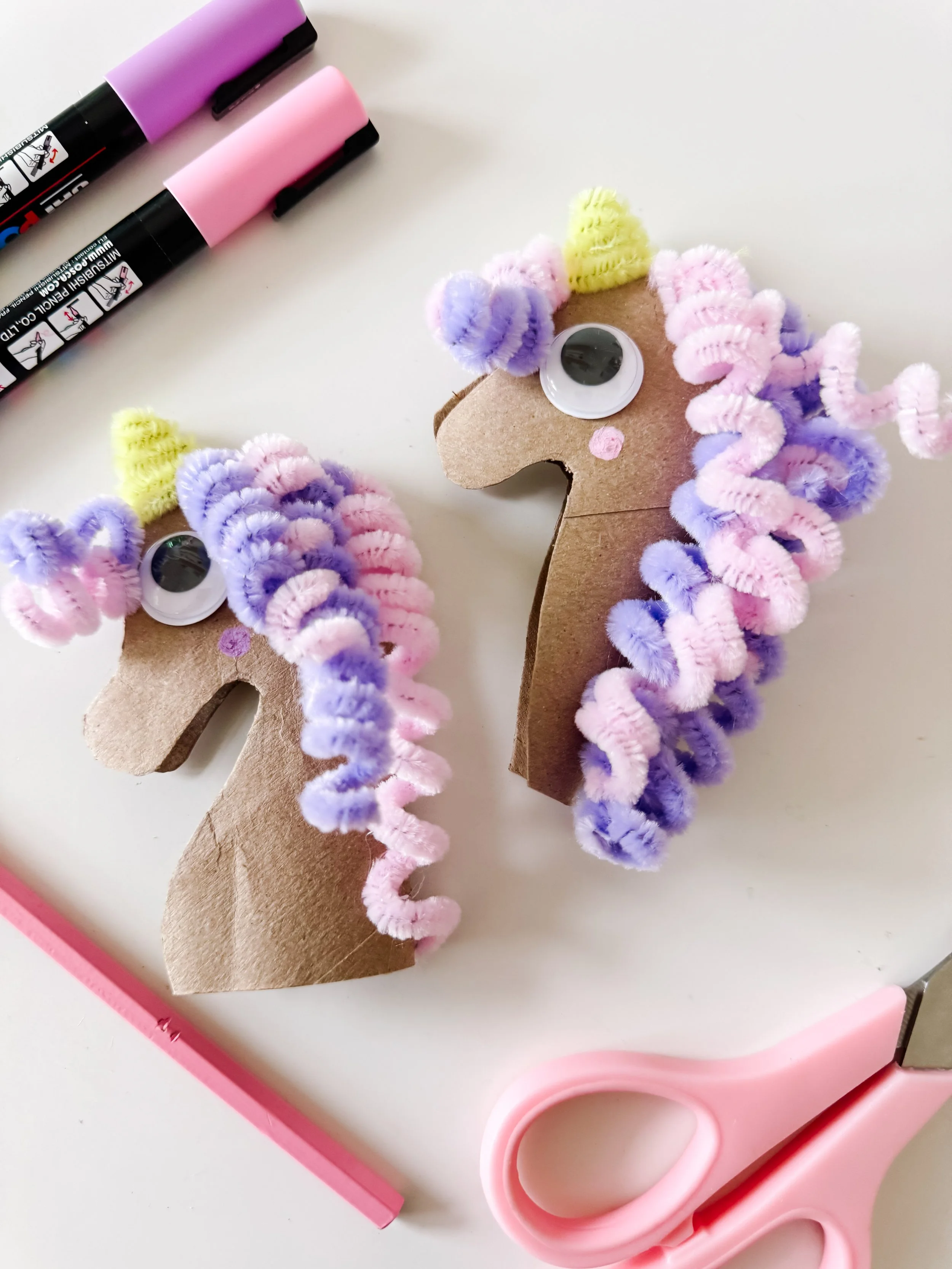
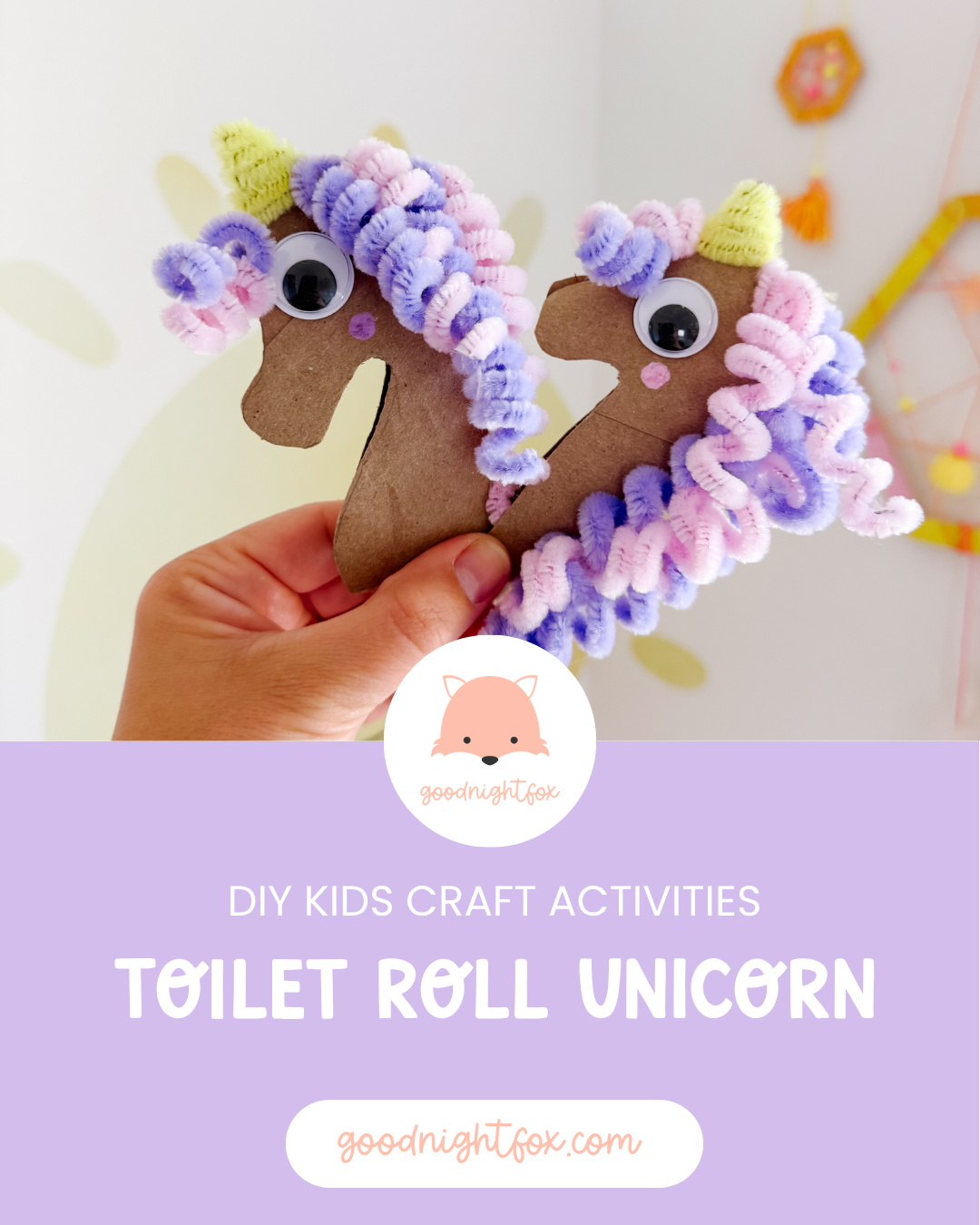
Toilet roll unicorn craft for kids with pastel pipe cleaner mane, googly eyes, and yellow horn.
Age3+
Prep10 minutes
Activity20 minutes
Mess★☆☆☆☆
SkillsFine motor + pretend play

Why we love this activity

This toilet roll unicorn craft is such a sweet way to turn a recycled cardboard tube into something magical.

Kids get to twist pipe cleaners, glue on googly eyes, draw little details, and create a colorful mane and horn. It is simple enough for preschoolers with a little help, but still open-ended enough for older kids to personalize.

What I love most is that the finished unicorn becomes more than a craft. It can gallop into castle play, unicorn sensory bins, fairy gardens, puppet shows, and magical storytelling.

Materials needed

  • Empty toilet paper roll
  • Pastel pipe cleaners
  • Yellow pipe cleaner or paper for the horn
  • Googly eyes
  • Pink and purple markers
  • Scissors
  • Glue
  • Pencil

How to make a toilet roll unicorn

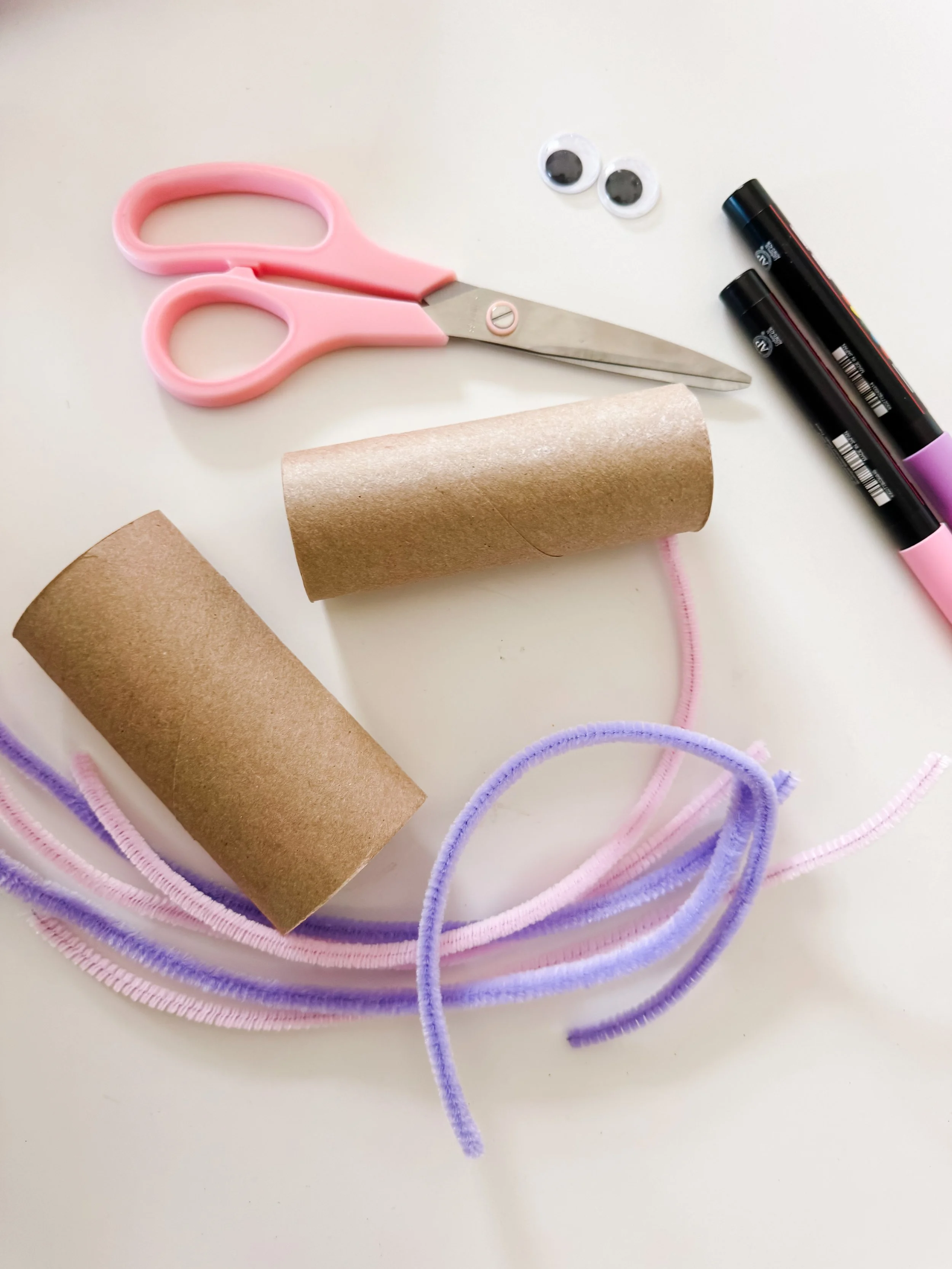
Supplies for toilet roll unicorn craft including cardboard tubes, pipe cleaners, scissors, markers, and googly eyes.
Step 1

Gather the supplies

Set out a cardboard tube, pastel pipe cleaners, googly eyes, markers, scissors, glue, and a pencil. For younger kids, pre-cut the unicorn shape so they can focus on decorating.

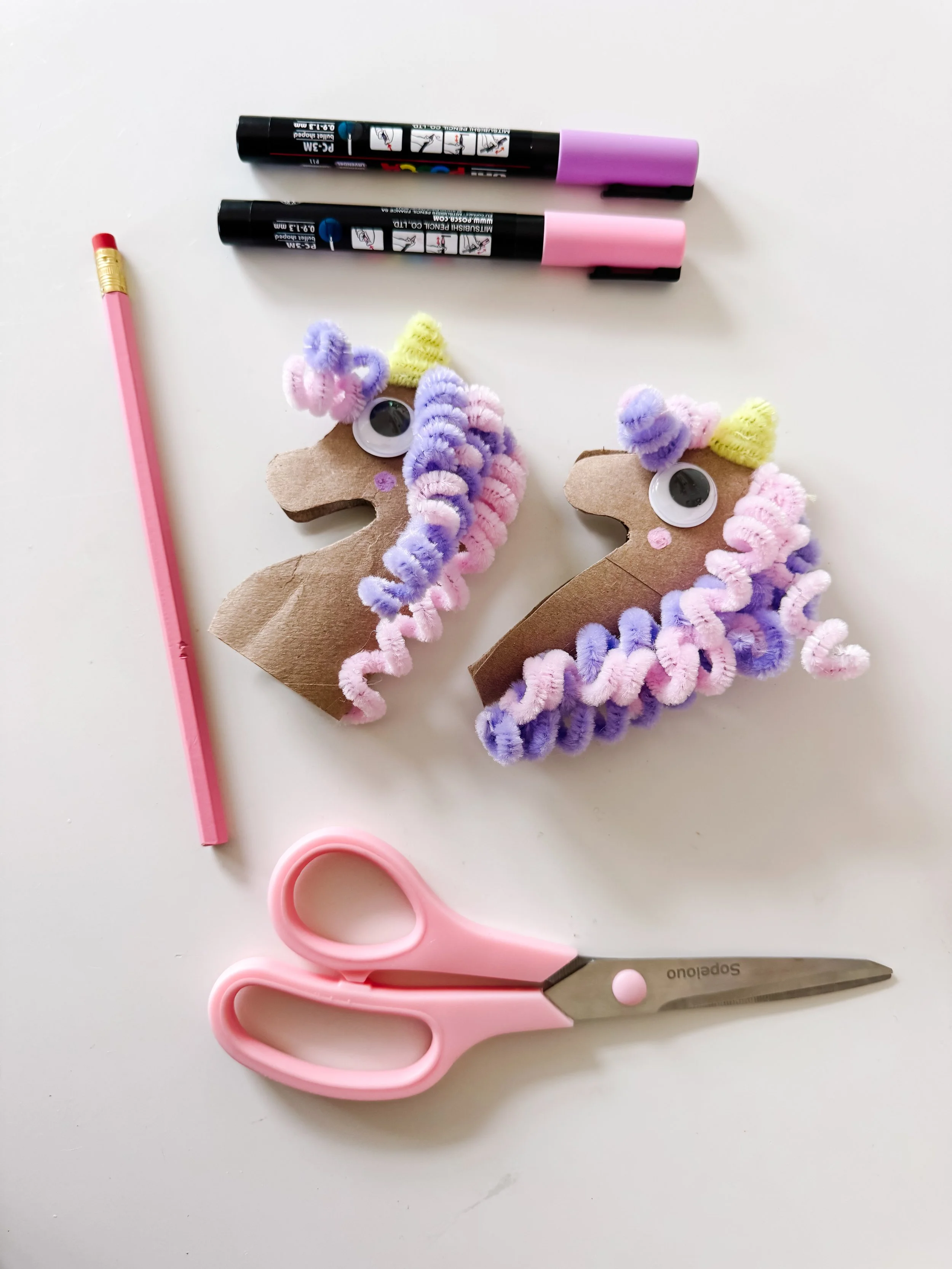
Finished toilet roll unicorn crafts with pastel pipe cleaner manes, yellow horns, and craft supplies.
Step 2

Shape the unicorn

Cut the cardboard tube into a simple unicorn head and neck shape. Add googly eyes, draw a little cheek, and attach a small yellow horn at the top.

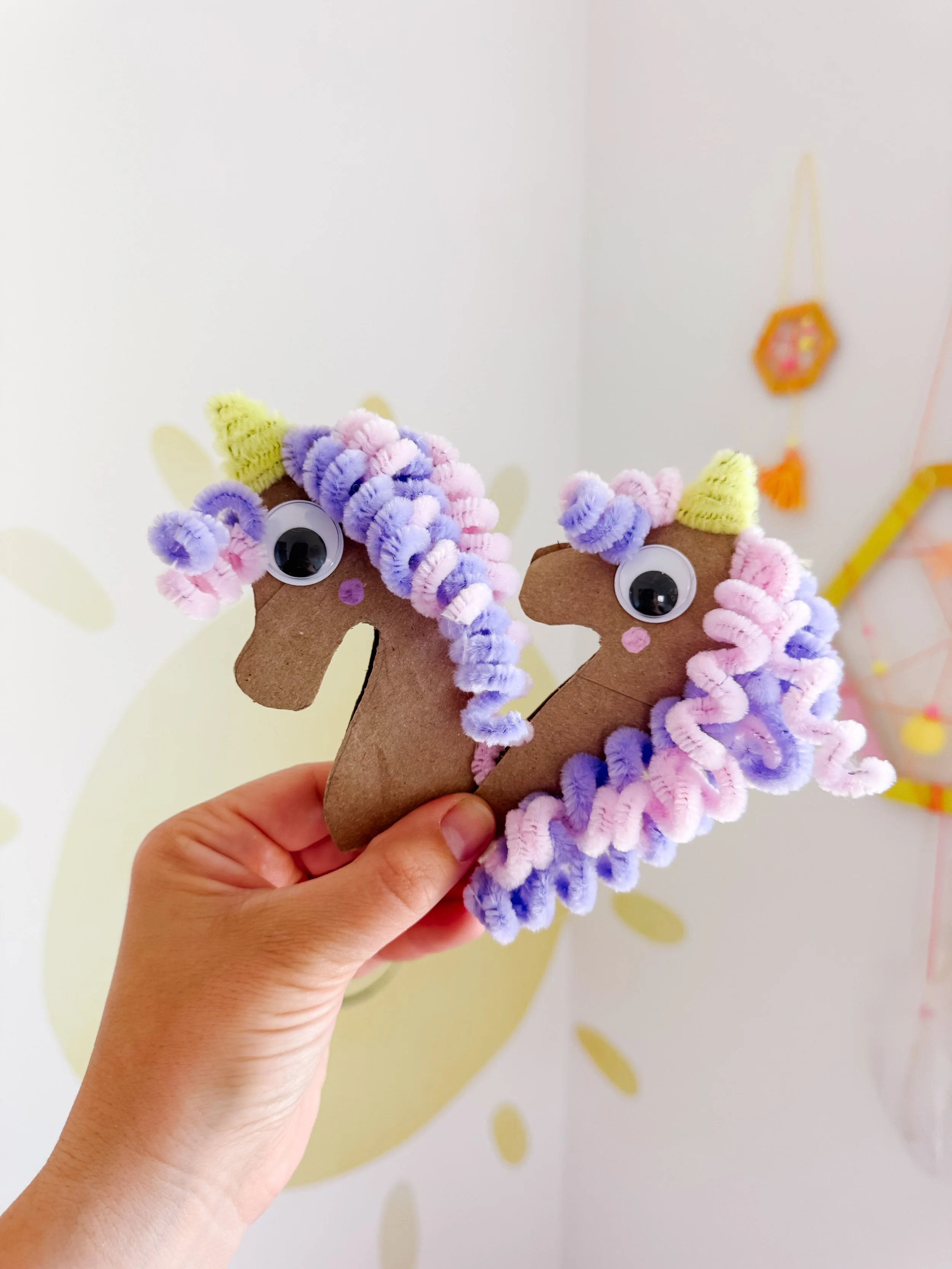
Two completed toilet roll unicorn crafts with curled pastel pipe cleaner manes.
Step 3

Add the mane

Twist pastel pipe cleaners around a pencil to create curls, then glue or tape them along the unicorn’s head and neck. Mix pink, lavender, and yellow for a magical rainbow look.

Child holding two pastel toilet roll unicorn crafts for imaginative play.
Step 4

Play with your unicorn

Once the glue dries, use the unicorns for puppet play, castle storytelling, unicorn sensory play, or a magical small-world setup.

Parent tip

To make the curly mane, wrap pipe cleaners around a pencil and slide them off gently. This is a great fine motor challenge for older preschoolers and early elementary kids.

Unicorn learning ideas

This craft naturally supports fine motor skills, creativity, and storytelling. Children strengthen their hands as they twist pipe cleaners, practice careful gluing, and decorate small details.

After the craft, invite your child to name their unicorn, create a magical kingdom, tell a story, or build a cardboard castle for the unicorn to live in.

You can also pair this with rainbow sorting, color vocabulary, unicorn sensory play, or pretend dramatic play for a full unicorn-themed activity day.

Learning skills

Fine motor skills Pipe cleaner twisting Cutting practice Gluing Color vocabulary Pretend play Creative storytelling Recycled crafts

Unicorn products to pair with this craft

Extend the magic with unicorn-themed dramatic play, sensory kits, and matching games from GoodnightFox.

GoodnightFox Unicorn Sensory and Dramatic Play Setup printable kit.

Unicorn dramatic play

A printable unicorn sensory and dramatic play setup with unicorn signs, rainbows, magical accessories, and role-play props.

Shop unicorn play
GoodnightFox Unicorn Sensory Kit with pastel sensory filler and unicorn play pieces.

Unicorn sensory kit

Add a magical hands-on sensory bin with pastel filler, unicorn pieces, and small-world play materials.

Shop sensory kit
GoodnightFox Unicorn and Princess Memory Game for kids.

Unicorn memory game

A sweet unicorn and princess matching game for quiet play, party favors, and early memory practice.

Shop memory game

More unicorn and castle activities

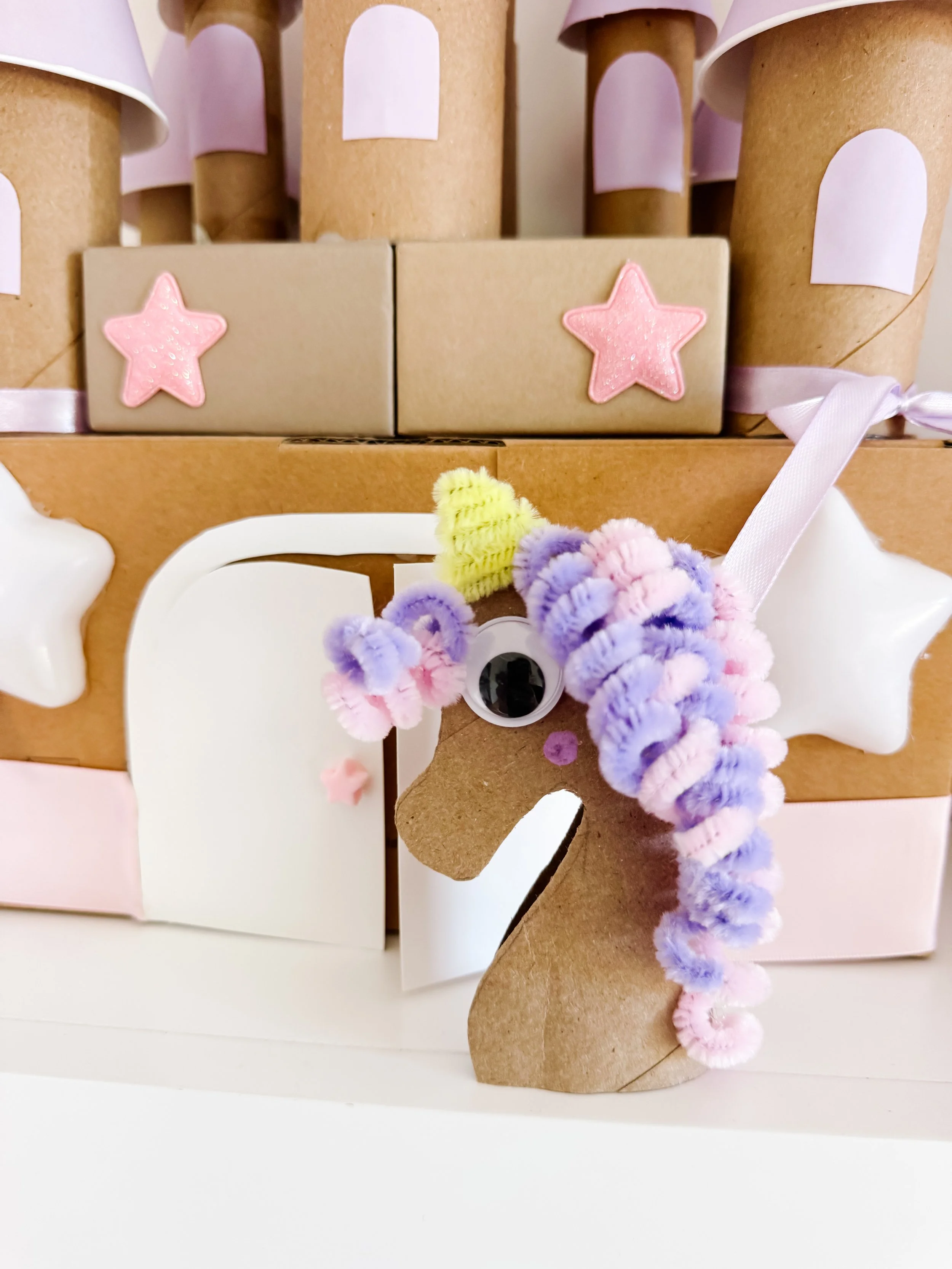
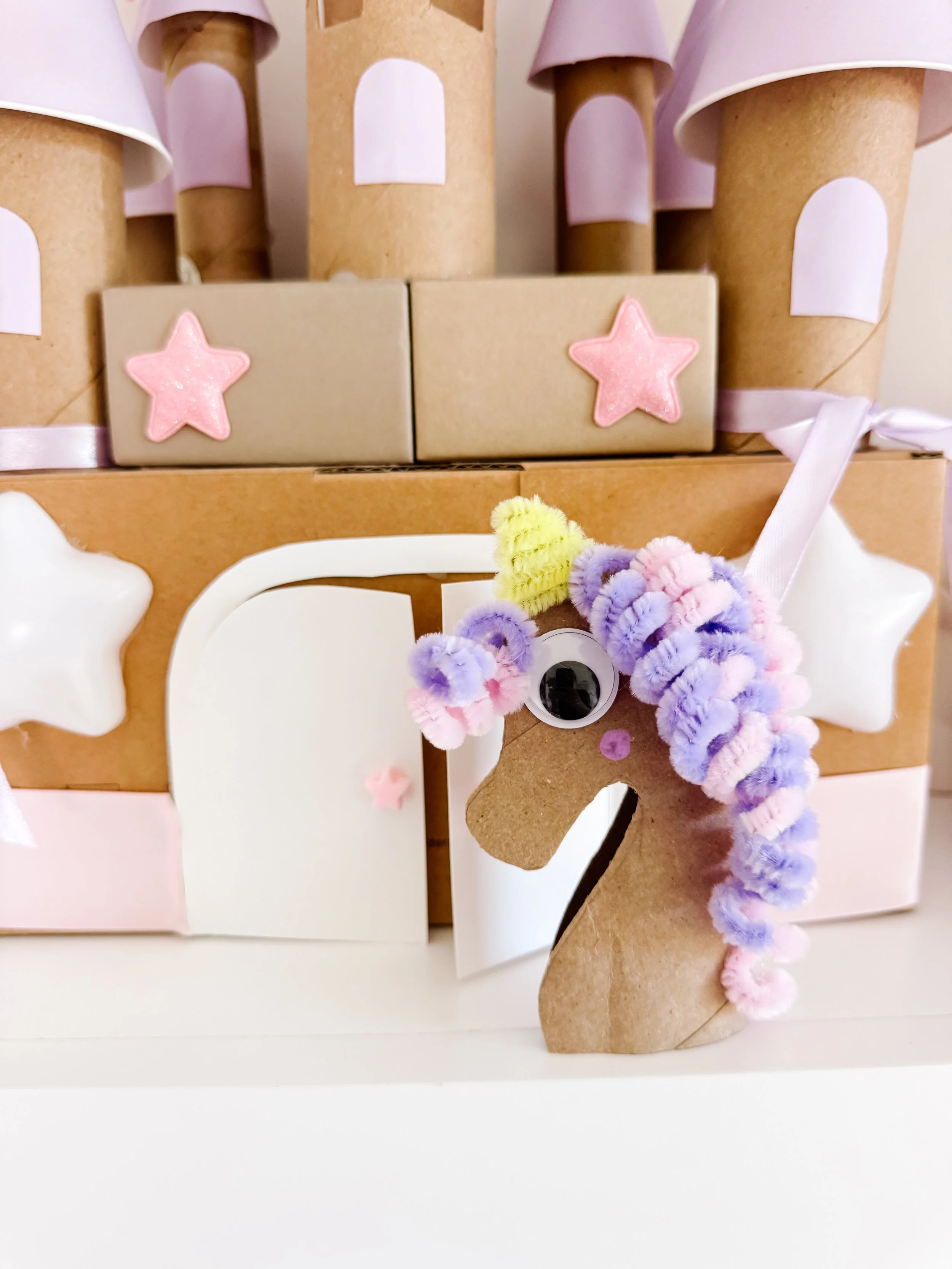
Toilet roll unicorn craft in front of a DIY cardboard castle.

Cardboard castle craft

Build a magical cardboard castle using recycled materials, then use your unicorns for pretend play.

DIY castle craft
Unicorn sensory and dramatic play printable setup.

Unicorn sensory play

Set up a rainbow-filled unicorn sensory tray with printable props and magical small-world play.

Unicorn sensory play
Toilet roll unicorn craft standing in front of a cardboard castle.

Magical storytelling

Use the unicorns as puppets for princess, fairy, castle, and rainbow-themed storytelling.

More unicorn ideas

Questions to ask kids

  • What is your unicorn’s name?
  • What magical power does your unicorn have?
  • Where does your unicorn live?
  • What colors are in the unicorn’s mane?
  • Can your unicorn visit the castle?
  • Can you tell a story about your unicorn?

Toilet roll unicorn FAQ

How do you make a unicorn out of a toilet paper roll?

Cut an empty cardboard tube into a simple unicorn head shape, add googly eyes, attach a small horn, and glue curled pipe cleaners along the head and neck to create the mane.

What age is this unicorn craft best for?

This craft is best for ages three and up with adult supervision. Younger children may need help cutting the cardboard and attaching the pipe cleaners.

How do you make the curly unicorn mane?

Wrap pastel pipe cleaners around a pencil, slide them off gently, and glue or tape them to the cardboard tube to create a curly unicorn mane.

What can kids learn from this craft?

Kids practice fine motor skills, cutting, gluing, color vocabulary, creativity, and storytelling. The finished craft can also become a pretend play puppet.

What can I pair with a unicorn craft?

Pair this craft with unicorn sensory play, rainbow sorting, a cardboard castle, princess pretend play, fairy stories, or a unicorn dramatic play setup.

Hello, World!

Toilet Roll Narwhal

Toilet Roll Narwhal Craft

A sweet ocean animal craft for kids using a toilet paper roll, tissue paper, pipe cleaners, and googly eyes—perfect for Ocean Week, summer crafts, and under-the-sea learning.

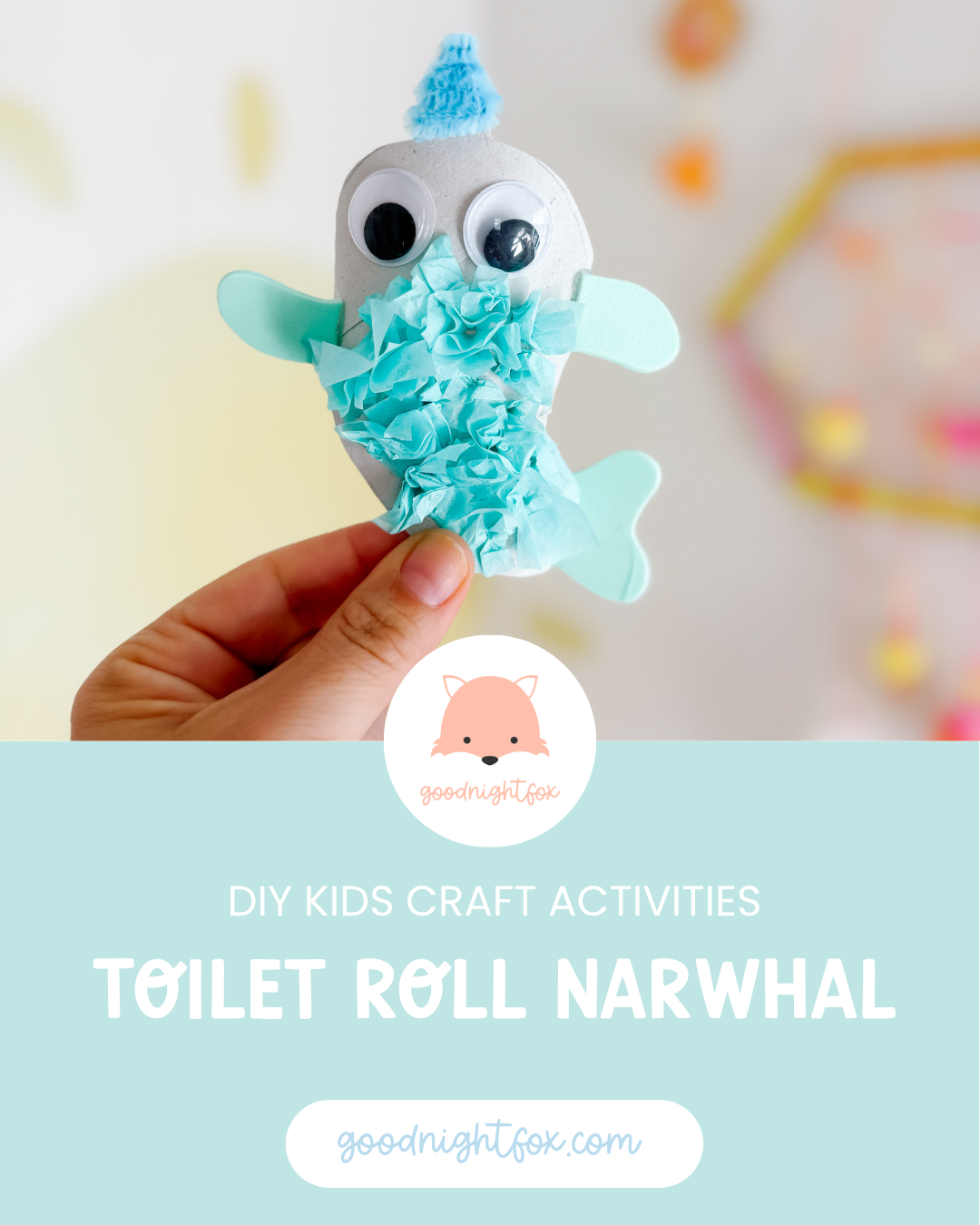
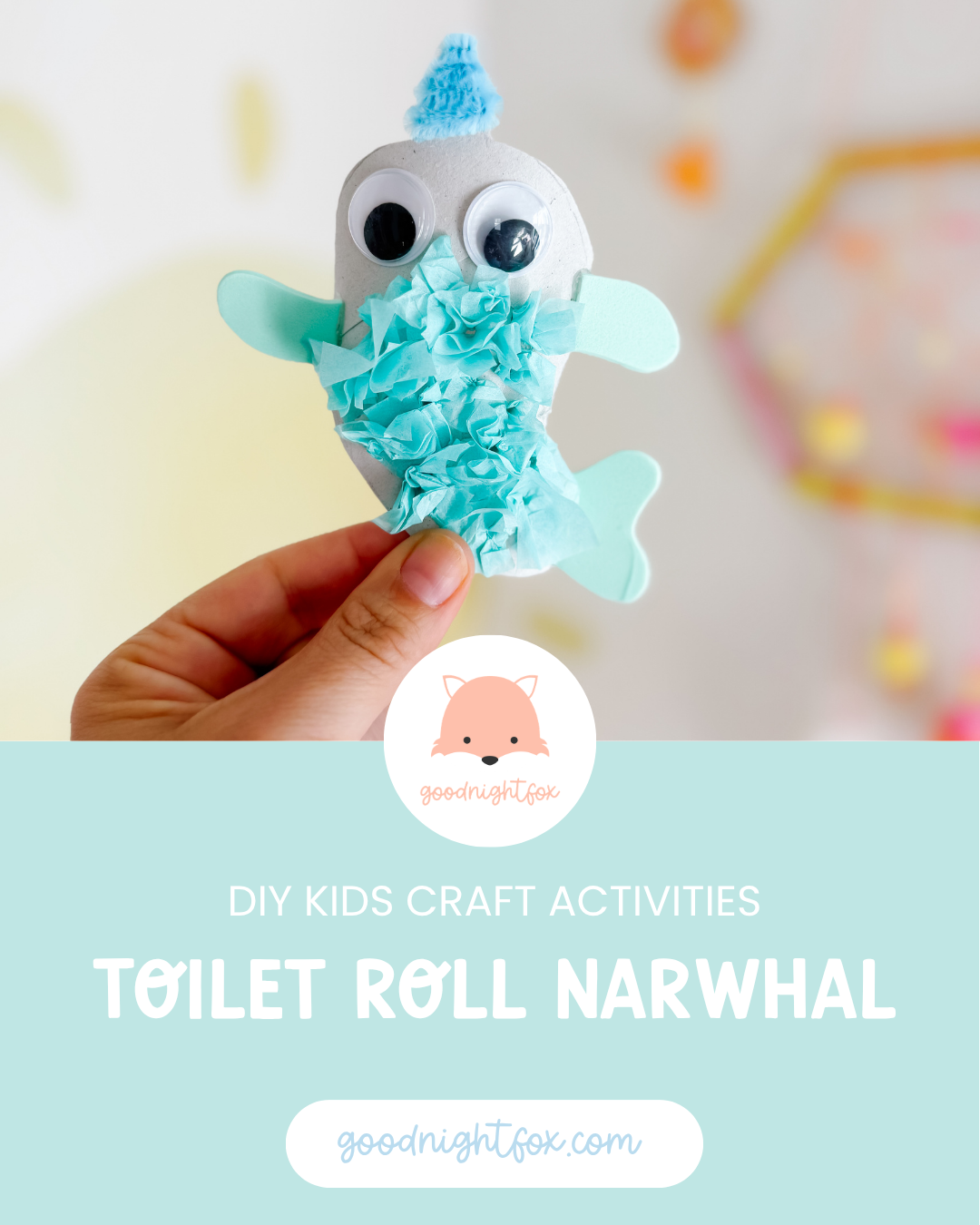
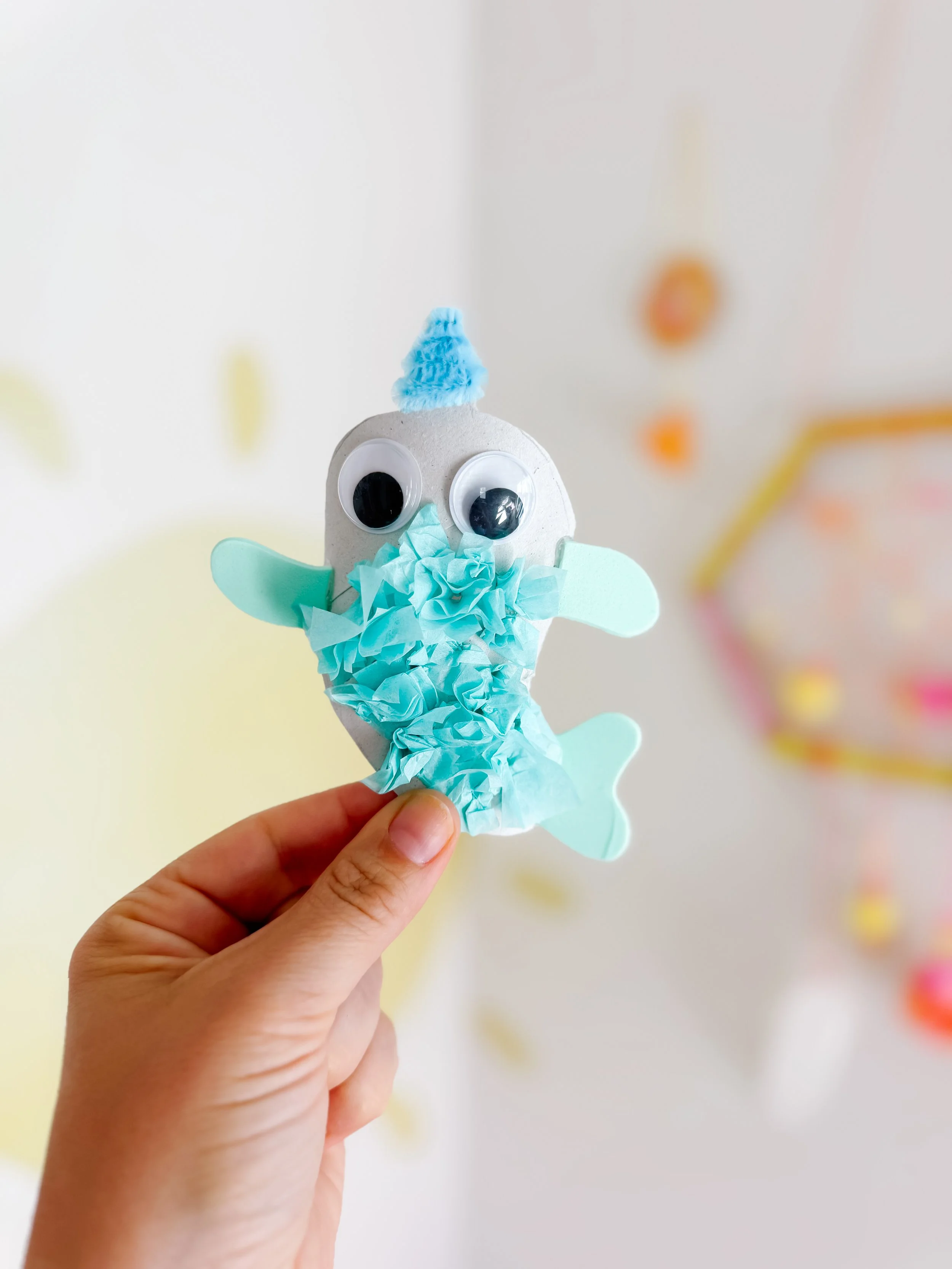
Toilet roll narwhal craft for kids with blue tissue paper, googly eyes, foam fins, and a pipe cleaner horn.
Age3+
Prep10 minutes
Activity20 minutes
Mess★☆☆☆☆
SkillsFine motor + ocean

Why we love this activity

This toilet roll narwhal craft is such a cute way to reuse a cardboard tube while adding a little ocean magic to your day.

Kids get to crumple tissue paper, glue, cut simple shapes, add googly eyes, and twist a pipe cleaner horn. It is simple enough for preschoolers, but still adorable enough to display or use in pretend ocean play afterward.

I love this craft for Ocean Week because it naturally opens up conversations about sea animals, arctic waters, whale families, and imaginative under-the-sea storytelling.

Materials needed

  • Empty toilet paper roll
  • Blue or teal tissue paper
  • Blue or teal construction paper or craft foam
  • Blue pipe cleaner
  • Googly eyes
  • Glue
  • Scissors
  • Pencil

How to make a toilet roll narwhal

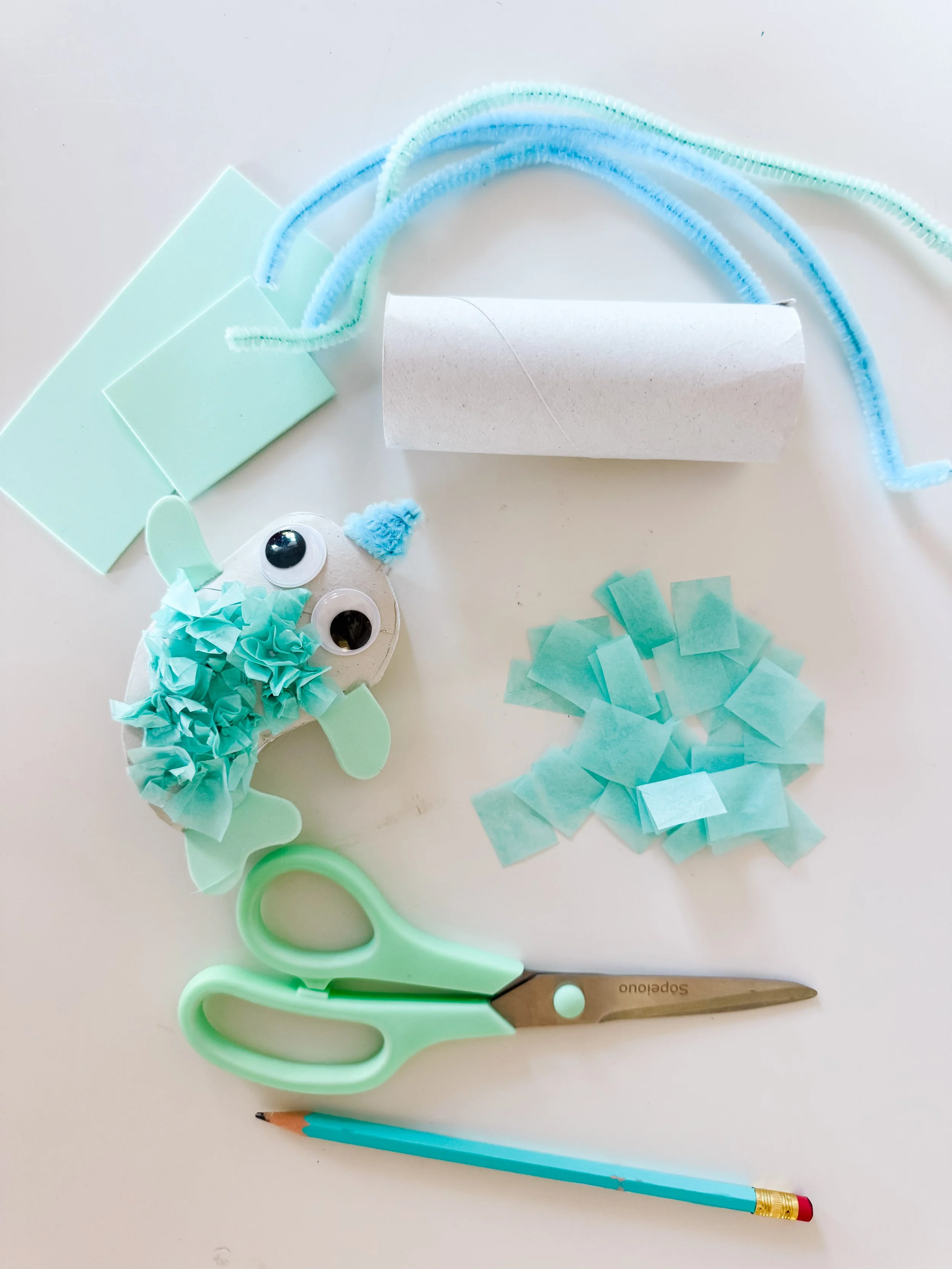
Supplies for making a toilet roll narwhal craft including tissue paper, pipe cleaners, scissors, pencil, foam, and googly eyes.
Step 1

Gather the supplies

Set out the cardboard tube, tissue paper squares, pipe cleaners, googly eyes, scissors, glue, and craft foam or paper for the fins and tail.

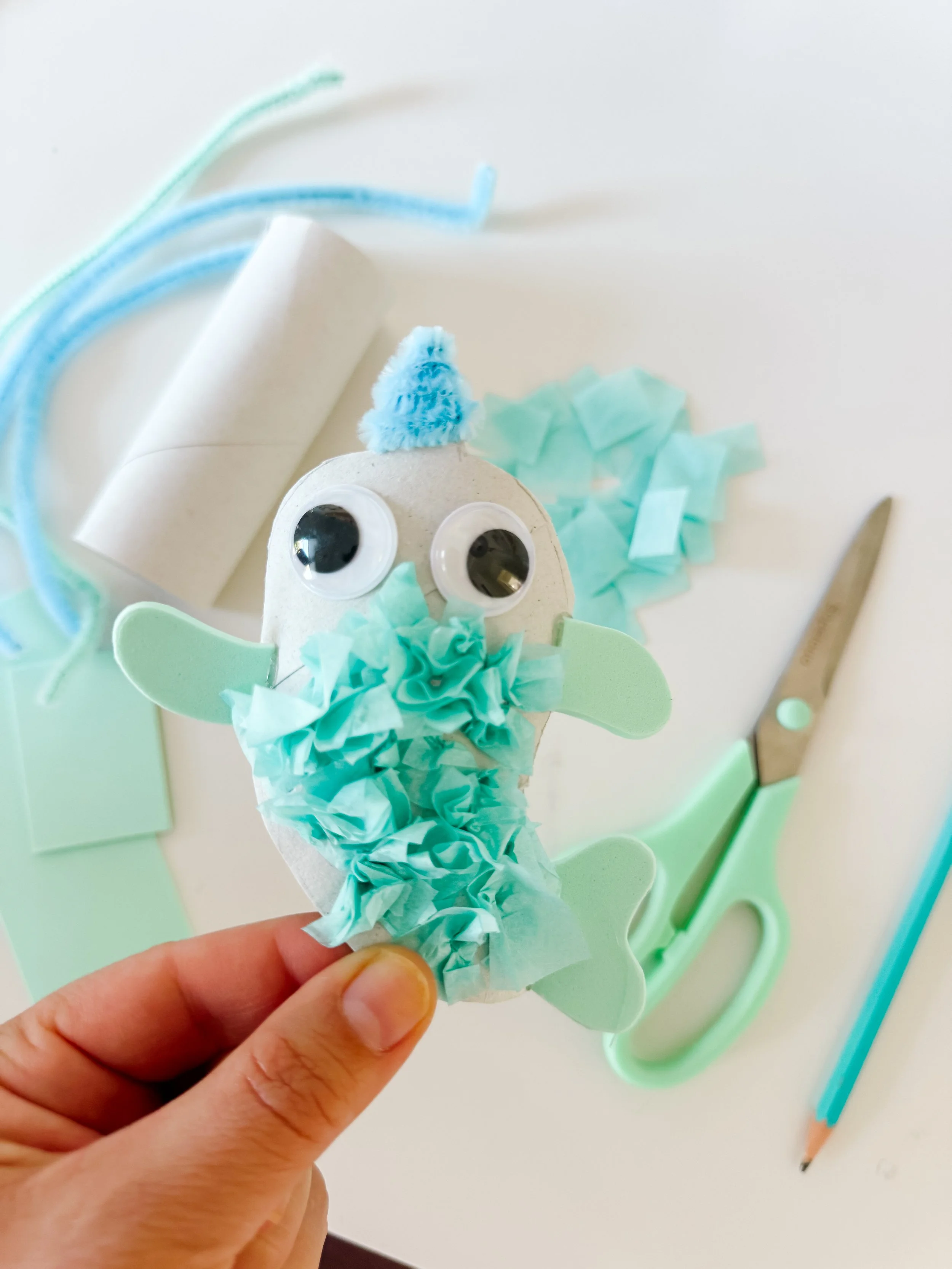
Finished toilet roll narwhal craft with tissue paper body, blue pipe cleaner horn, foam fins, and googly eyes.
Step 2

Decorate the body

Have your child crumple small pieces of tissue paper and glue them onto the front of the cardboard tube. This gives the narwhal a fun, textured body and is great for fine motor practice.

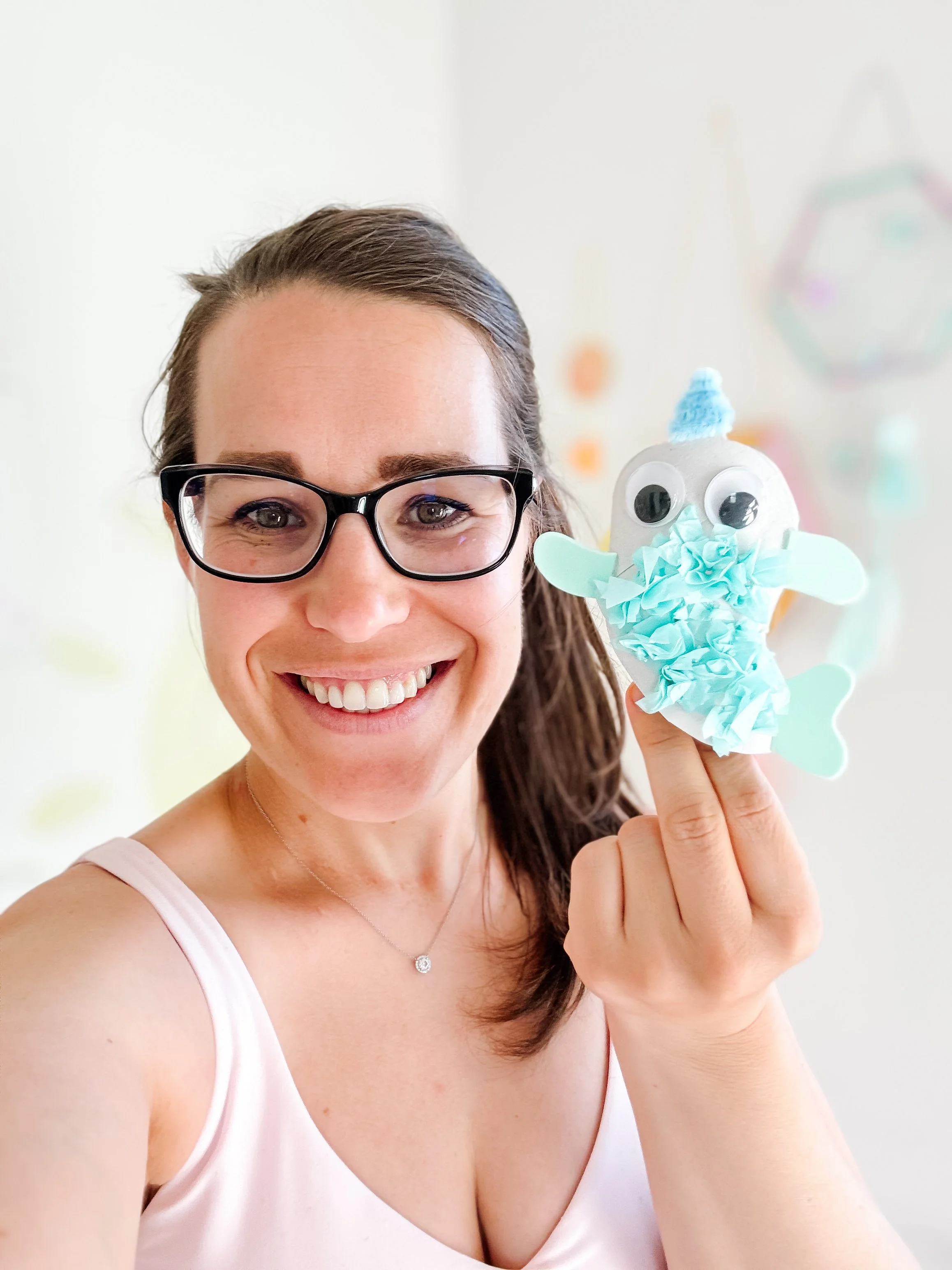
Child holding a completed blue toilet roll narwhal craft.
Step 3

Add the narwhal details

Glue on two googly eyes, add side fins and a tail, then twist a small piece of pipe cleaner into a horn and attach it to the top.

Parent tip

Pre-cut the fins and tail for younger preschoolers, then let them focus on crumpling tissue paper and gluing. Older kids can draw and cut the pieces themselves.

Ocean week learning ideas

This narwhal craft is a simple way to add an ocean animal activity to your Ocean Week plans.

After making the craft, talk about where narwhals live, what their tusk looks like, and how they are related to whales. You can also compare narwhals with other ocean animals like dolphins, whales, seahorses, fish, crabs, and sharks.

Then use the finished craft as a puppet for storytelling, small-world ocean play, or a pretend underwater adventure.

Learning skills

Fine motor skills Cutting practice Gluing Ocean vocabulary Pretend play Recycled crafts Creative storytelling

Questions to ask kids

  • What kind of animal is a narwhal?
  • Where do narwhals live?
  • What does the narwhal horn look like?
  • What other ocean animals can we make?
  • What should your narwhal’s name be?
  • Can your narwhal swim through an ocean story?

Ocean products to pair with this craft

Extend Ocean Week with sensory play, dramatic play, and printable learning activities.

Mermaid printable dramatic play kit for ocean themed pretend play.

Mermaid dramatic play

Create an underwater kingdom with printable mermaids, sea creatures, ocean props, and treasure-themed pretend play.

Shop mermaid play
Mermaid sensory kit with ocean themed sensory filler and play pieces.

Mermaid sensory kit

Add sensory filler, shells, charms, and mermaid pieces for a magical ocean sensory bin.

Shop sensory kit
Mermaid busy book printable for preschool ocean learning activities.

Mermaid busy book

A printable ocean learning activity book with early literacy, matching, and fine motor practice.

Shop busy book
Sea animals wood play rounds for ocean sensory play.

Sea animal play rounds

Wooden ocean animal play rounds for sensory bins, matching games, and small-world ocean play.

Shop play rounds

More Ocean Week ideas

Ocean sensory play setup with sand, blue sensory filler, sea animal cards, shells, and beach props.

Ocean sensory play

Set up a mermaid and sea animal sensory tray with ocean vocabulary and hands-on play.

Ocean sensory play
Coral reef sensory play activity for toddlers with ocean animals and pasta coral.

Coral reef play

Explore ocean animals and coral reefs through sensory play and small-world storytelling.

Coral reef play
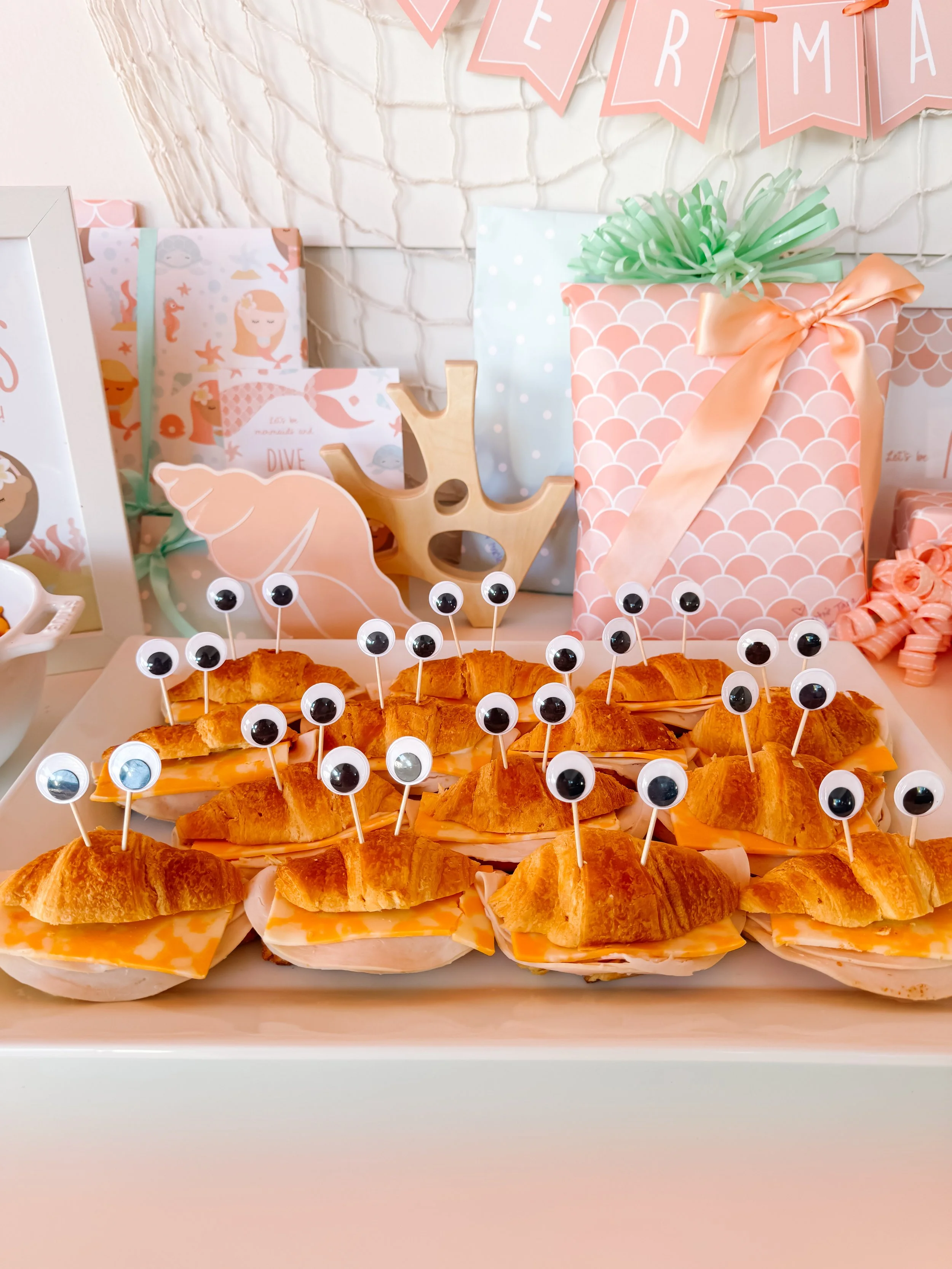
Ocean themed crab sandwiches for kids with googly eye toothpicks and mermaid party decor.

Ocean snack idea

Make playful crab sandwiches as a themed lunch or snack for Ocean Week.

Ocean week snacks

Toilet roll narwhal FAQ

How do you make a narwhal out of a toilet paper roll?

Use an empty cardboard tube as the body, cover it with tissue paper, add fins and a tail from craft paper or foam, glue on googly eyes, and twist a pipe cleaner into the narwhal horn.

What age is this narwhal craft best for?

This craft is best for ages three and up with adult supervision. Younger children may need help cutting the fins, tail, and horn.

What can kids learn from an ocean animal craft?

Kids can practice fine motor skills, cutting, gluing, ocean vocabulary, animal recognition, storytelling, and creative expression.

How can I use this craft for Ocean Week?

Pair it with ocean sensory bins, mermaid dramatic play, sea animal books, crab snacks, and vocabulary cards for a full Ocean Week activity plan.

What other toilet roll ocean animals can kids make?

Kids can make seahorses, whales, fish, sharks, jellyfish, octopuses, and mermaids using recycled cardboard tubes.