Toilet Roll Unicorn

Toilet Roll Unicorn Craft

A magical recycled craft for kids using a toilet paper roll, pipe cleaners, googly eyes, and simple supplies—perfect for unicorn week, princess play, castle crafts, and imaginative storytelling.
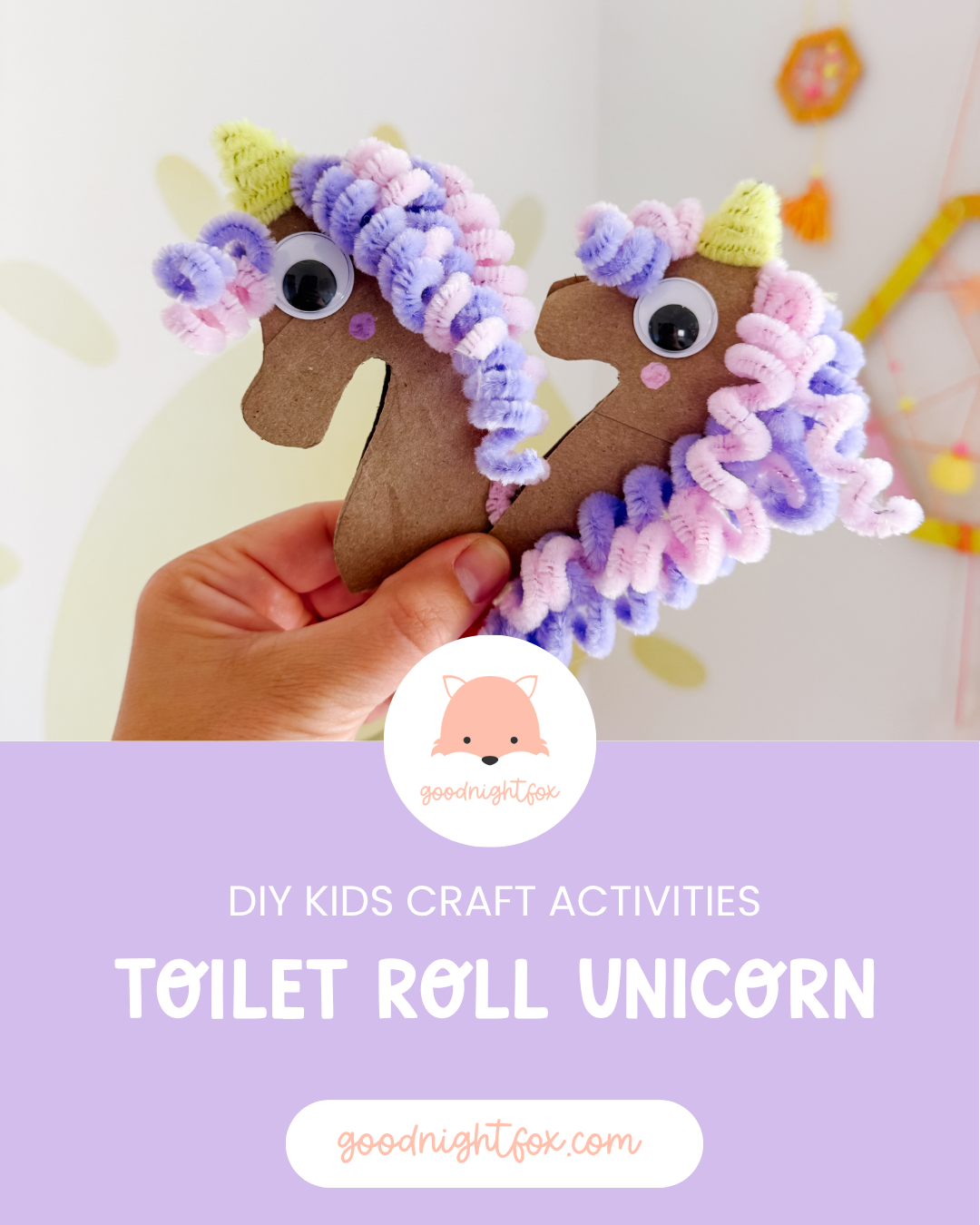
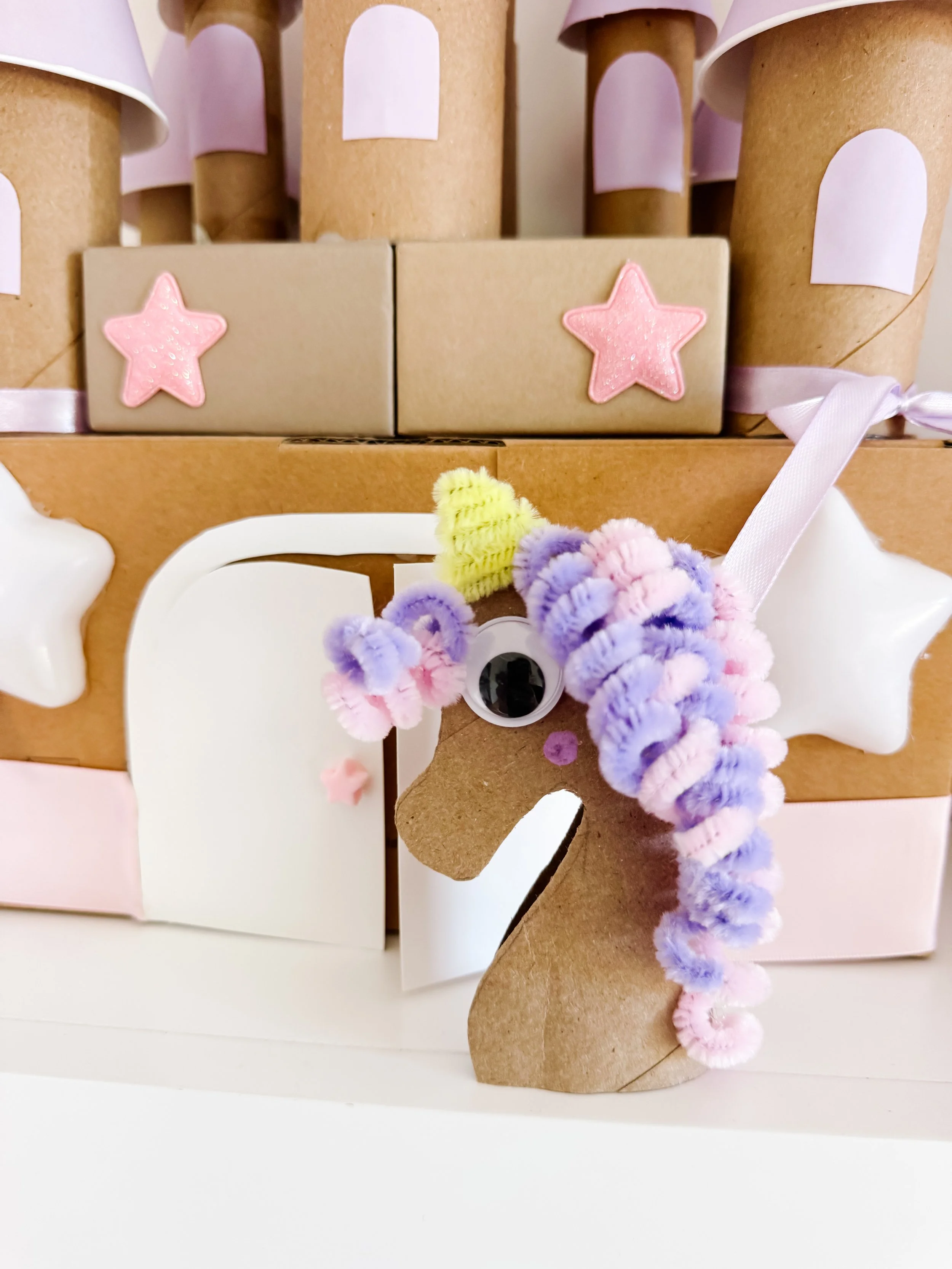
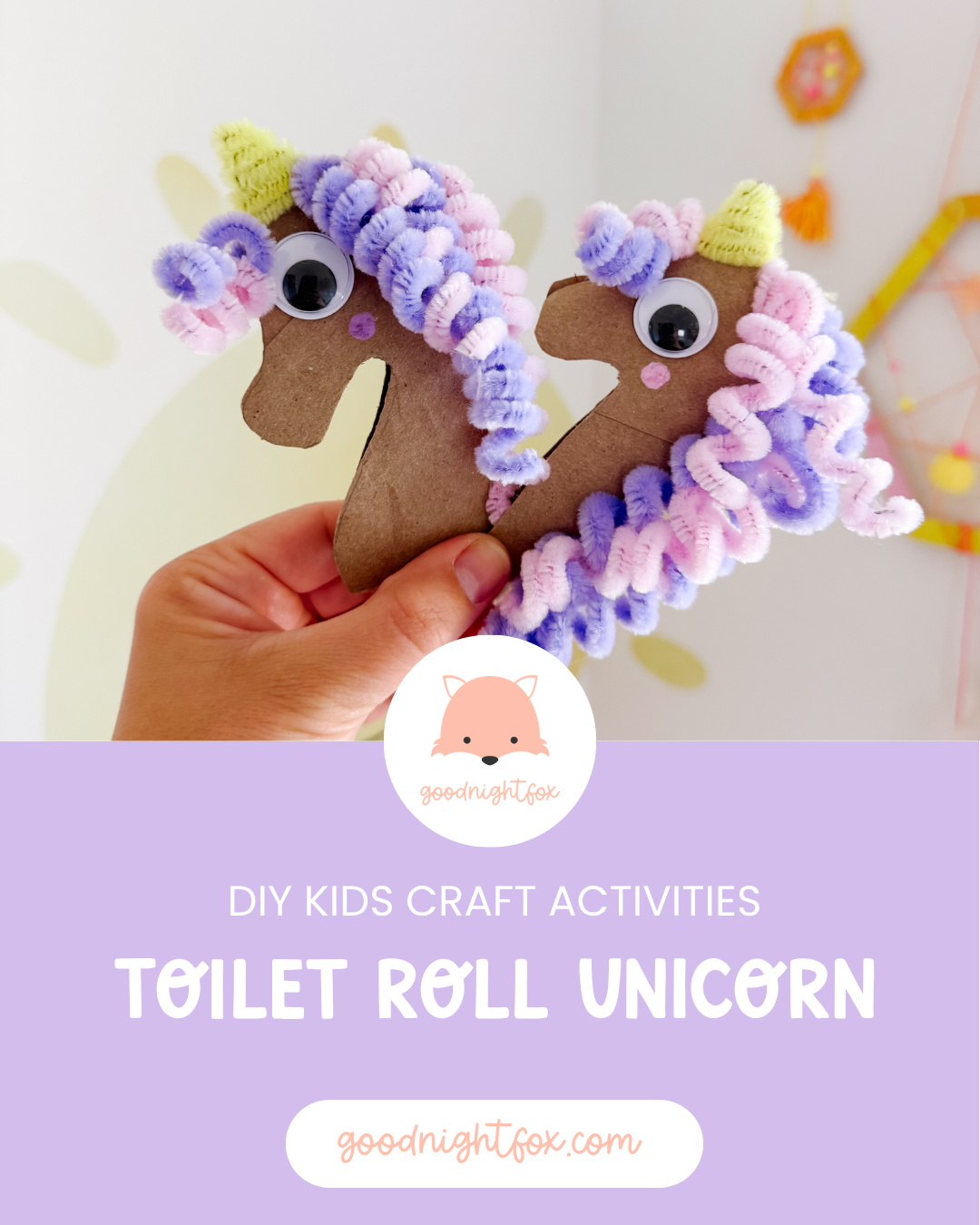
Toilet roll unicorn craft for kids with pastel pipe cleaner mane, googly eyes, and yellow horn.
Age3+
Prep10 minutes
Activity20 minutes
Mess★☆☆☆☆
SkillsFine motor + pretend play

Why we love this activity

This toilet roll unicorn craft is such a sweet way to turn a recycled cardboard tube into something magical.

Kids get to twist pipe cleaners, glue on googly eyes, draw little details, and create a colorful mane and horn. It is simple enough for preschoolers with a little help, but still open-ended enough for older kids to personalize.

What I love most is that the finished unicorn becomes more than a craft. It can gallop into castle play, unicorn sensory bins, fairy gardens, puppet shows, and magical storytelling.

Materials needed

  • Empty toilet paper roll
  • Pastel pipe cleaners
  • Yellow pipe cleaner or paper for the horn
  • Googly eyes
  • Pink and purple markers
  • Scissors
  • Glue
  • Pencil

How to make a toilet roll unicorn
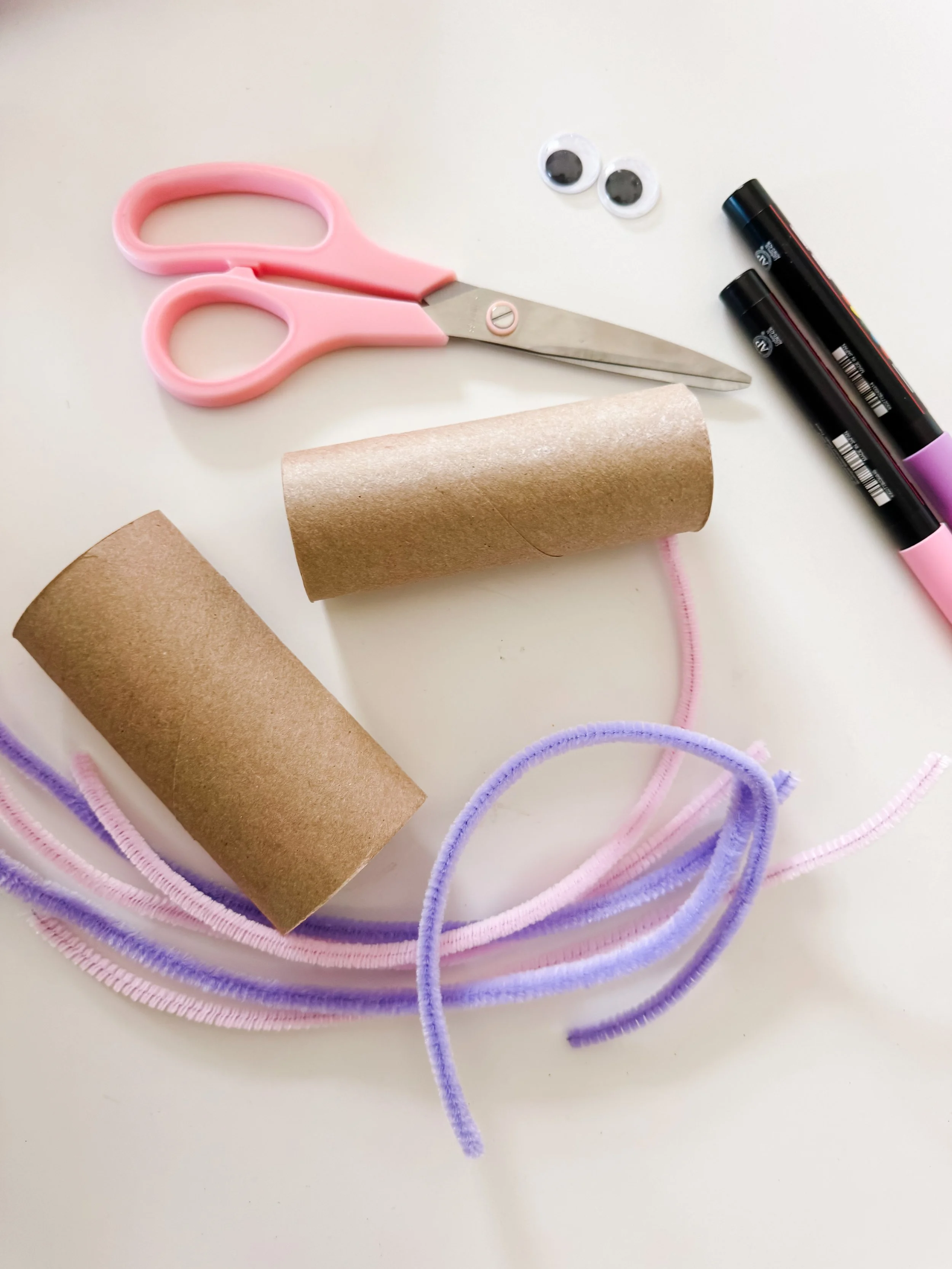
Supplies for toilet roll unicorn craft including cardboard tubes, pipe cleaners, scissors, markers, and googly eyes.
Step 1

Gather the supplies

Set out a cardboard tube, pastel pipe cleaners, googly eyes, markers, scissors, glue, and a pencil. For younger kids, pre-cut the unicorn shape so they can focus on decorating.
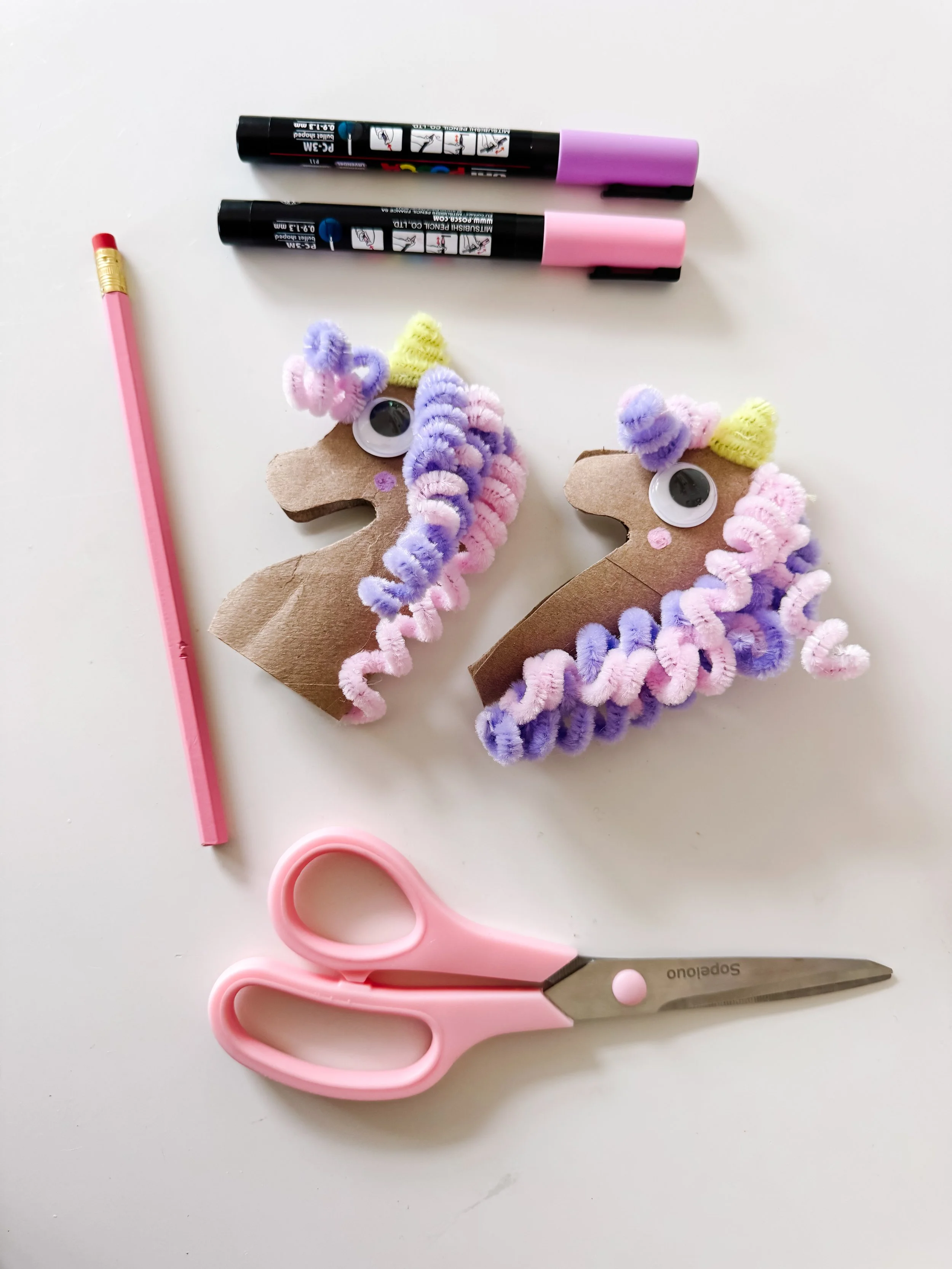
Finished toilet roll unicorn crafts with pastel pipe cleaner manes, yellow horns, and craft supplies.
Step 2

Shape the unicorn

Cut the cardboard tube into a simple unicorn head and neck shape. Add googly eyes, draw a little cheek, and attach a small yellow horn at the top.
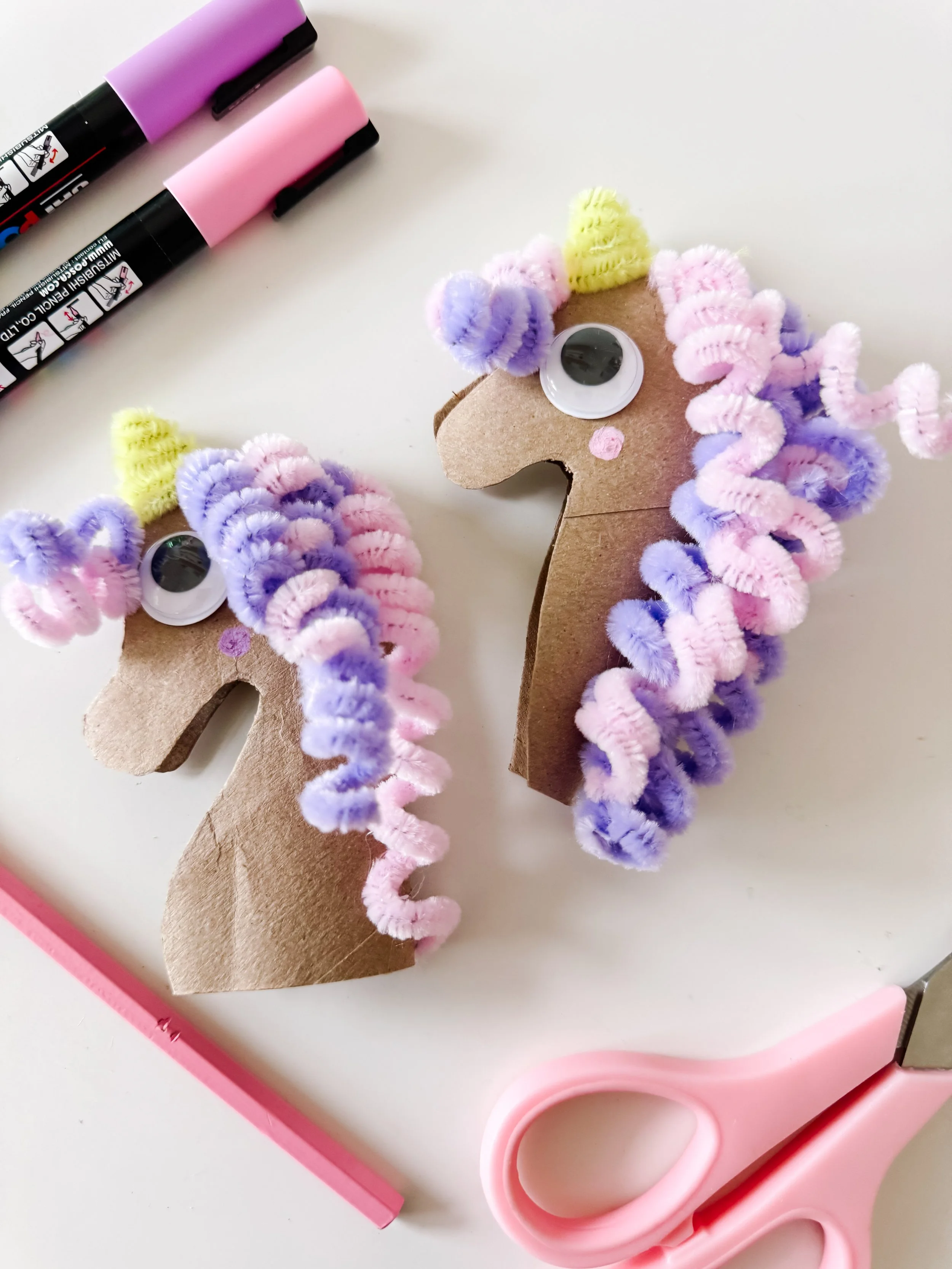
Two completed toilet roll unicorn crafts with curled pastel pipe cleaner manes.
Step 3

Add the mane

Twist pastel pipe cleaners around a pencil to create curls, then glue or tape them along the unicorn’s head and neck. Mix pink, lavender, and yellow for a magical rainbow look.
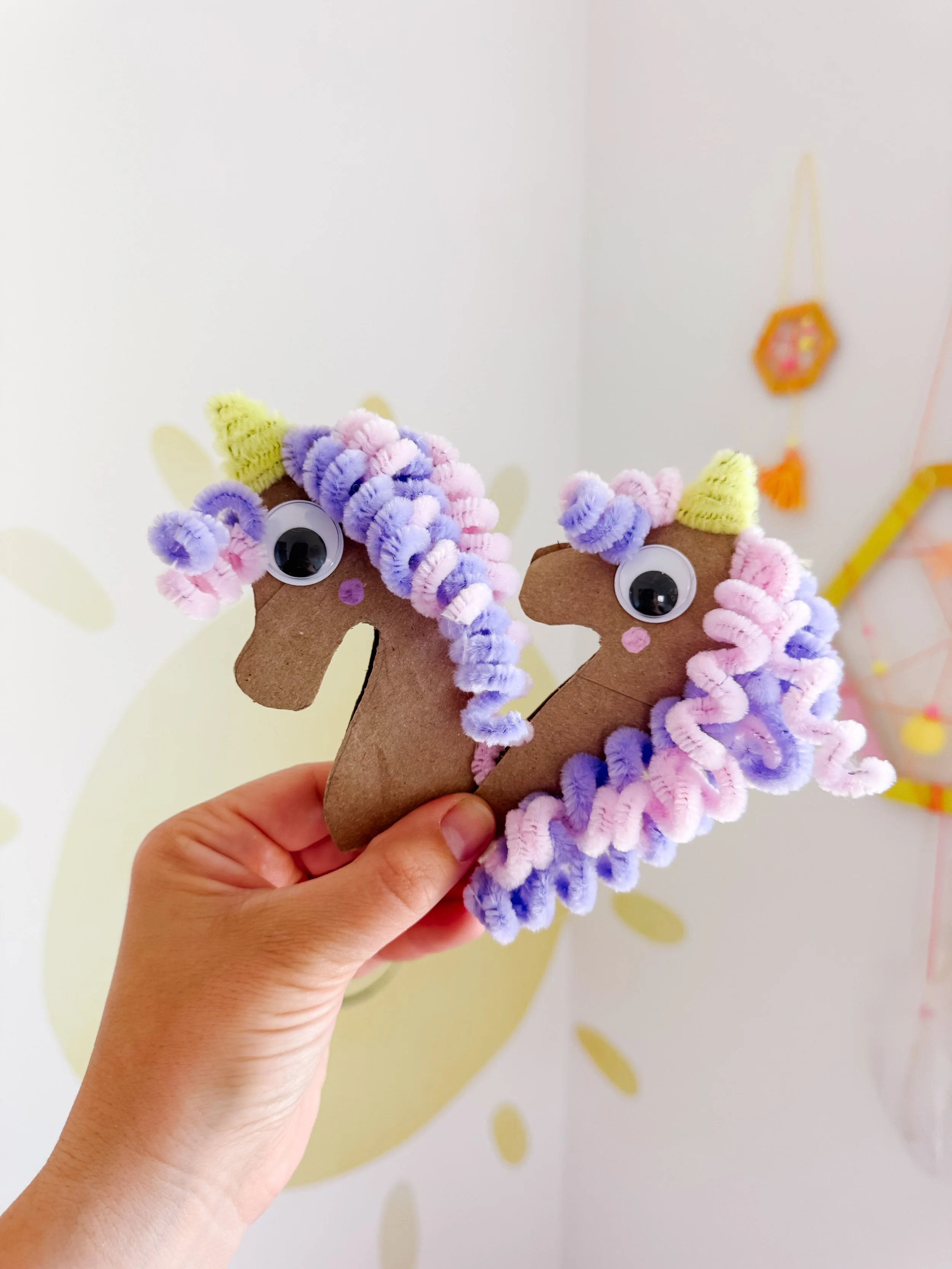
Child holding two pastel toilet roll unicorn crafts for imaginative play.
Step 4

Play with your unicorn

Once the glue dries, use the unicorns for puppet play, castle storytelling, unicorn sensory play, or a magical small-world setup.

Parent tip

To make the curly mane, wrap pipe cleaners around a pencil and slide them off gently. This is a great fine motor challenge for older preschoolers and early elementary kids.

Unicorn learning ideas

This craft naturally supports fine motor skills, creativity, and storytelling. Children strengthen their hands as they twist pipe cleaners, practice careful gluing, and decorate small details.

After the craft, invite your child to name their unicorn, create a magical kingdom, tell a story, or build a cardboard castle for the unicorn to live in.

You can also pair this with rainbow sorting, color vocabulary, unicorn sensory play, or pretend dramatic play for a full unicorn-themed activity day.

Learning skills

Fine motor skills Pipe cleaner twisting Cutting practice Gluing Color vocabulary Pretend play Creative storytelling Recycled crafts

Unicorn products to pair with this craft

Extend the magic with unicorn-themed dramatic play, sensory kits, and matching games from GoodnightFox.

GoodnightFox Unicorn Sensory and Dramatic Play Setup printable kit.

Unicorn dramatic play

A printable unicorn sensory and dramatic play setup with unicorn signs, rainbows, magical accessories, and role-play props.

Shop unicorn play
GoodnightFox Unicorn Sensory Kit with pastel sensory filler and unicorn play pieces.

Unicorn sensory kit

Add a magical hands-on sensory bin with pastel filler, unicorn pieces, and small-world play materials.

Shop sensory kit
GoodnightFox Unicorn and Princess Memory Game for kids.

Unicorn memory game

A sweet unicorn and princess matching game for quiet play, party favors, and early memory practice.

Shop memory game

More unicorn and castle activities

Toilet roll unicorn craft in front of a DIY cardboard castle.

Cardboard castle craft

Build a magical cardboard castle using recycled materials, then use your unicorns for pretend play.

DIY castle craft
Unicorn sensory and dramatic play printable setup.

Unicorn sensory play

Set up a rainbow-filled unicorn sensory tray with printable props and magical small-world play.

Unicorn sensory play
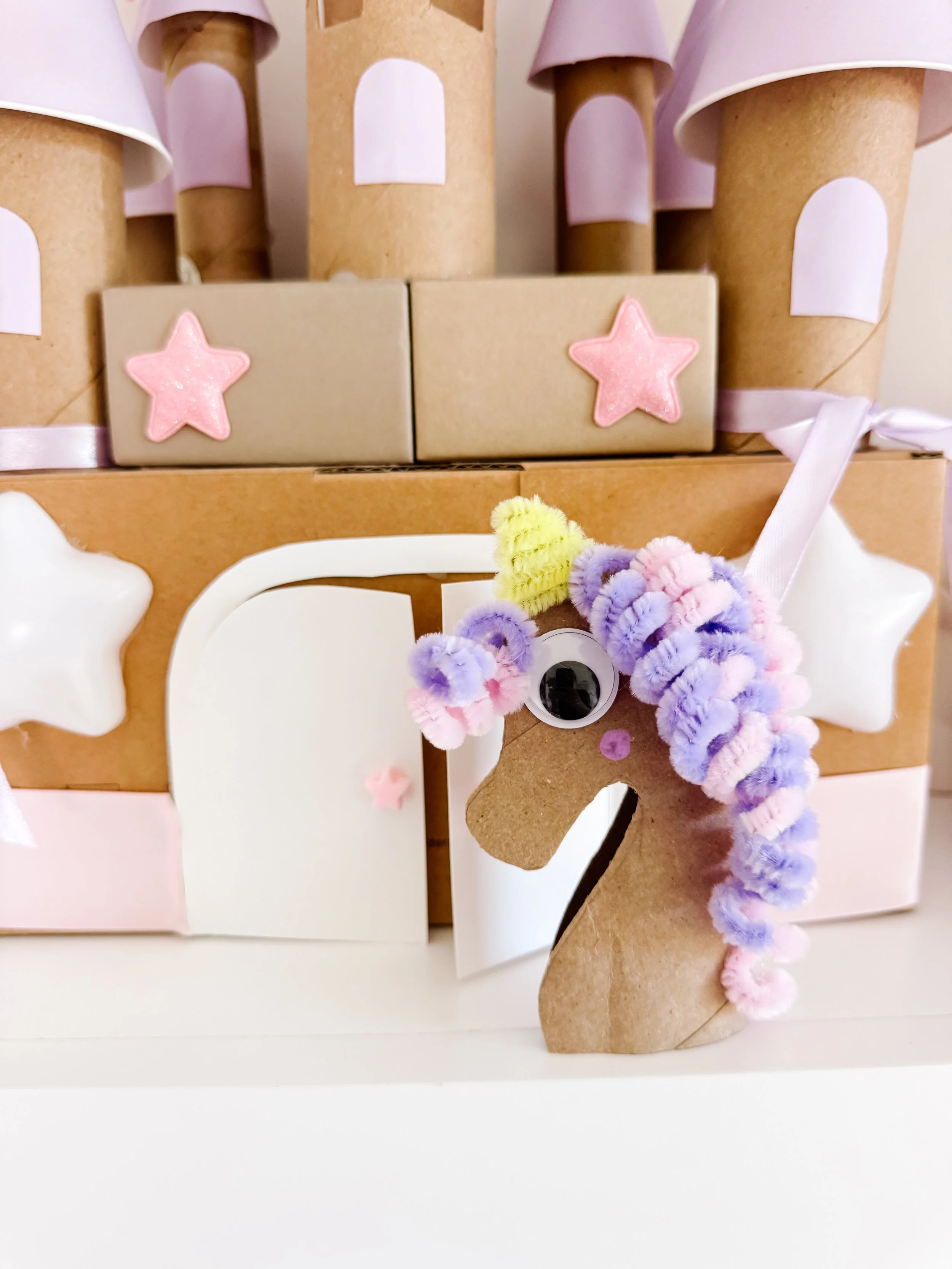
Toilet roll unicorn craft standing in front of a cardboard castle.

Magical storytelling

Use the unicorns as puppets for princess, fairy, castle, and rainbow-themed storytelling.

More unicorn ideas

Questions to ask kids

  • What is your unicorn’s name?
  • What magical power does your unicorn have?
  • Where does your unicorn live?
  • What colors are in the unicorn’s mane?
  • Can your unicorn visit the castle?
  • Can you tell a story about your unicorn?

Toilet roll unicorn FAQ

How do you make a unicorn out of a toilet paper roll?

Cut an empty cardboard tube into a simple unicorn head shape, add googly eyes, attach a small horn, and glue curled pipe cleaners along the head and neck to create the mane.

What age is this unicorn craft best for?

This craft is best for ages three and up with adult supervision. Younger children may need help cutting the cardboard and attaching the pipe cleaners.

How do you make the curly unicorn mane?

Wrap pastel pipe cleaners around a pencil, slide them off gently, and glue or tape them to the cardboard tube to create a curly unicorn mane.

What can kids learn from this craft?

Kids practice fine motor skills, cutting, gluing, color vocabulary, creativity, and storytelling. The finished craft can also become a pretend play puppet.

What can I pair with a unicorn craft?

Pair this craft with unicorn sensory play, rainbow sorting, a cardboard castle, princess pretend play, fairy stories, or a unicorn dramatic play setup.
Hello, World!
Mud Kitchen Recipe Play

Mud Kitchen Recipe Play

Whimsical mud kitchen recipe cards that turn outdoor play into magical pretend recipes, sensory exploration, counting practice, and playful instruction-following.

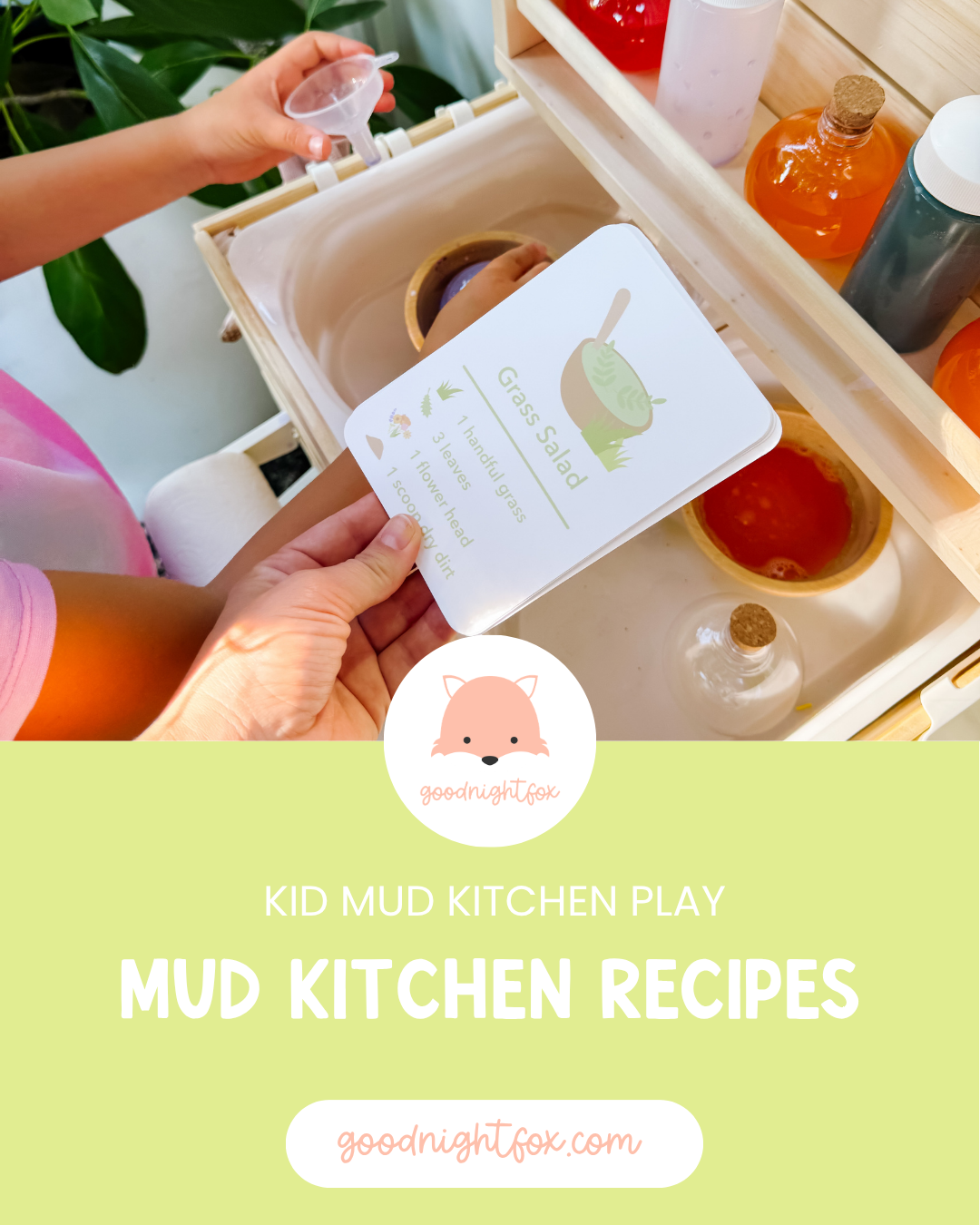
GoodnightFox mud kitchen recipe play with child using recipe cards in an outdoor mud kitchen.
Age3+
Prep10 minutes
Play Time45+ minutes
Mess★★★☆☆
SkillsRecipes + pretend play

Why we love this activity

Mud kitchens are already magical, but adding recipe cards gives the play a whole new layer of purpose.

Instead of simply mixing dirt and water, kids can follow whimsical pretend recipes like fairy potion, flower cake, grass salad, leaf soup, and mud pie.

The recipe cards give children a playful mission: find the ingredients, count the scoops, follow the steps, mix the recipe, and serve their creation.

It still feels open-ended and imaginative, but it also builds early math, sequencing, vocabulary, fine motor skills, and independent play.

What is mud kitchen recipe play?

Mud kitchen recipe play is a simple way to add structure to outdoor sensory play. Children use visual recipe cards to gather natural materials, count ingredients, scoop, pour, stir, and create pretend recipes.

For this set, the recipes are intentionally whimsical and magical. Think fairy potions, flower cakes, leaf soup, grass salad, and mud pie.

It is perfect for a backyard mud kitchen, outdoor play kitchen, nature table, preschool classroom, forest school setup, or sensory table.

Featured printable

Use the mockup card below to promote the printable Mud Play Recipe Cards.

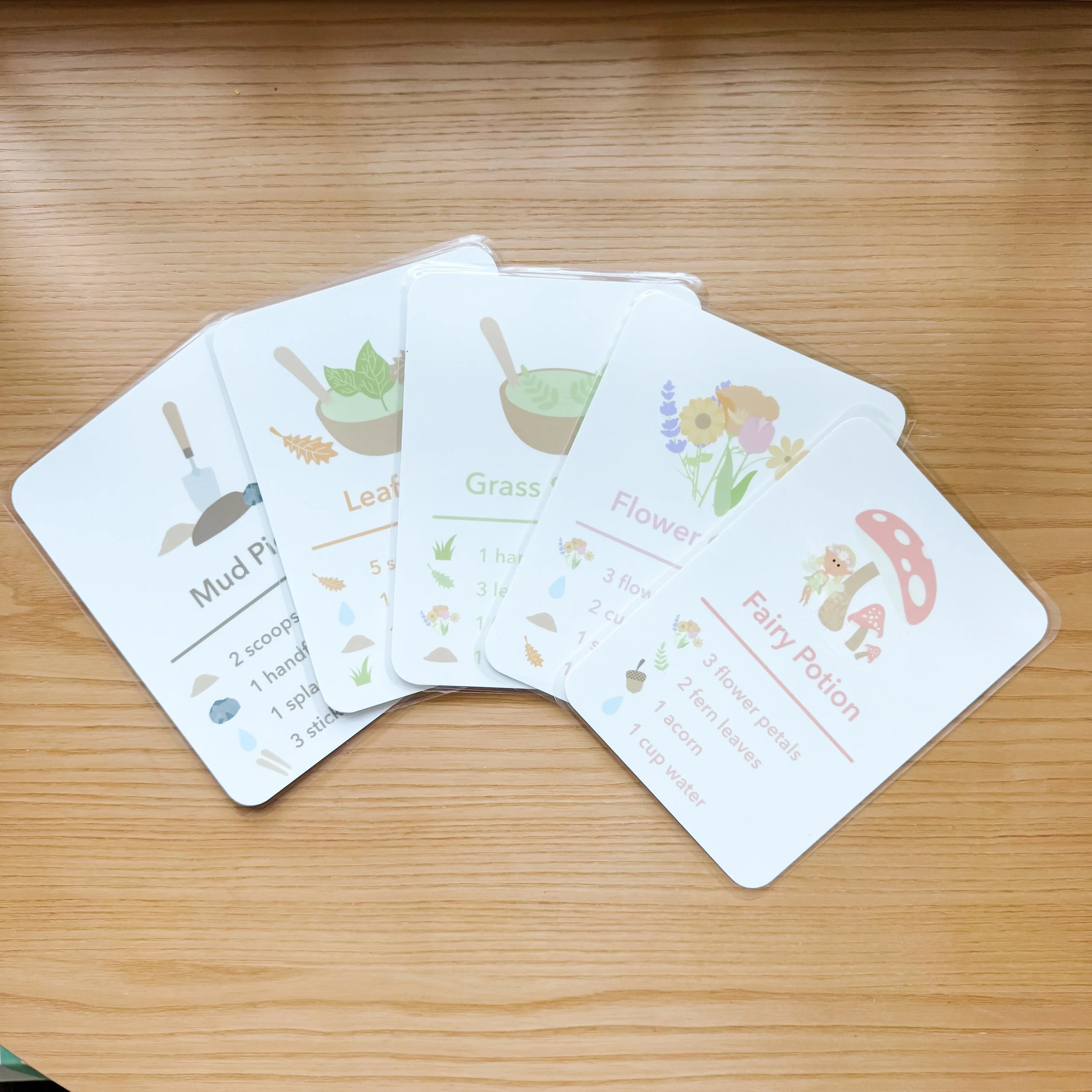
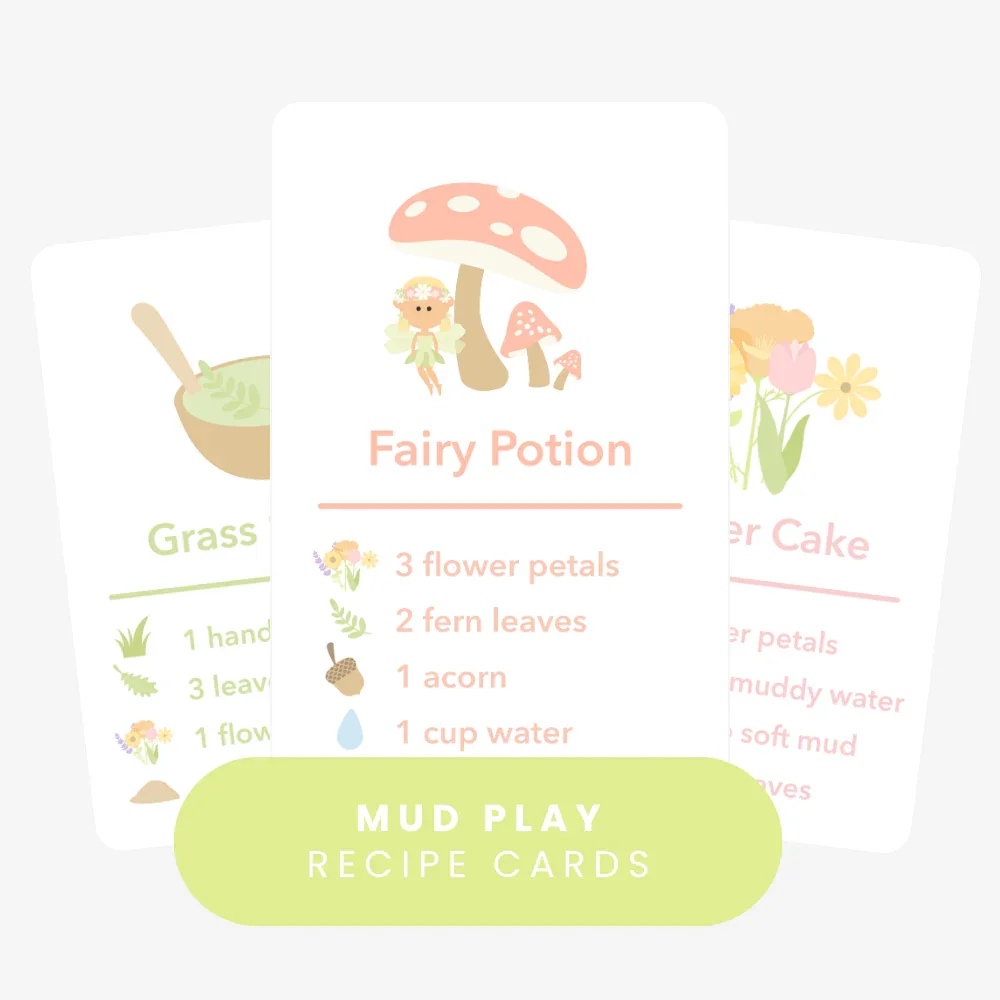
GoodnightFox Mud Play Recipe Cards printable with fairy potion, grass salad, and flower cake recipe cards.

Mud play recipe cards

Printable mud kitchen recipe cards designed for whimsical outdoor play, counting practice, sensory exploration, and magical pretend recipes.

Shop recipe cards
Free ice cream recipe cards for pretend play and mud kitchen sensory play.

Free ice cream recipe cards

Try the free ice cream recipe cards to see how recipe cards can extend sensory play and dramatic play.

Get the freebie

Recipes included in this set

  • Fairy Potion — a magical recipe using flower petals, fern leaves, acorns, and water.
  • Flower Cake — a whimsical nature recipe with petals, soft mud, and garden treasures.
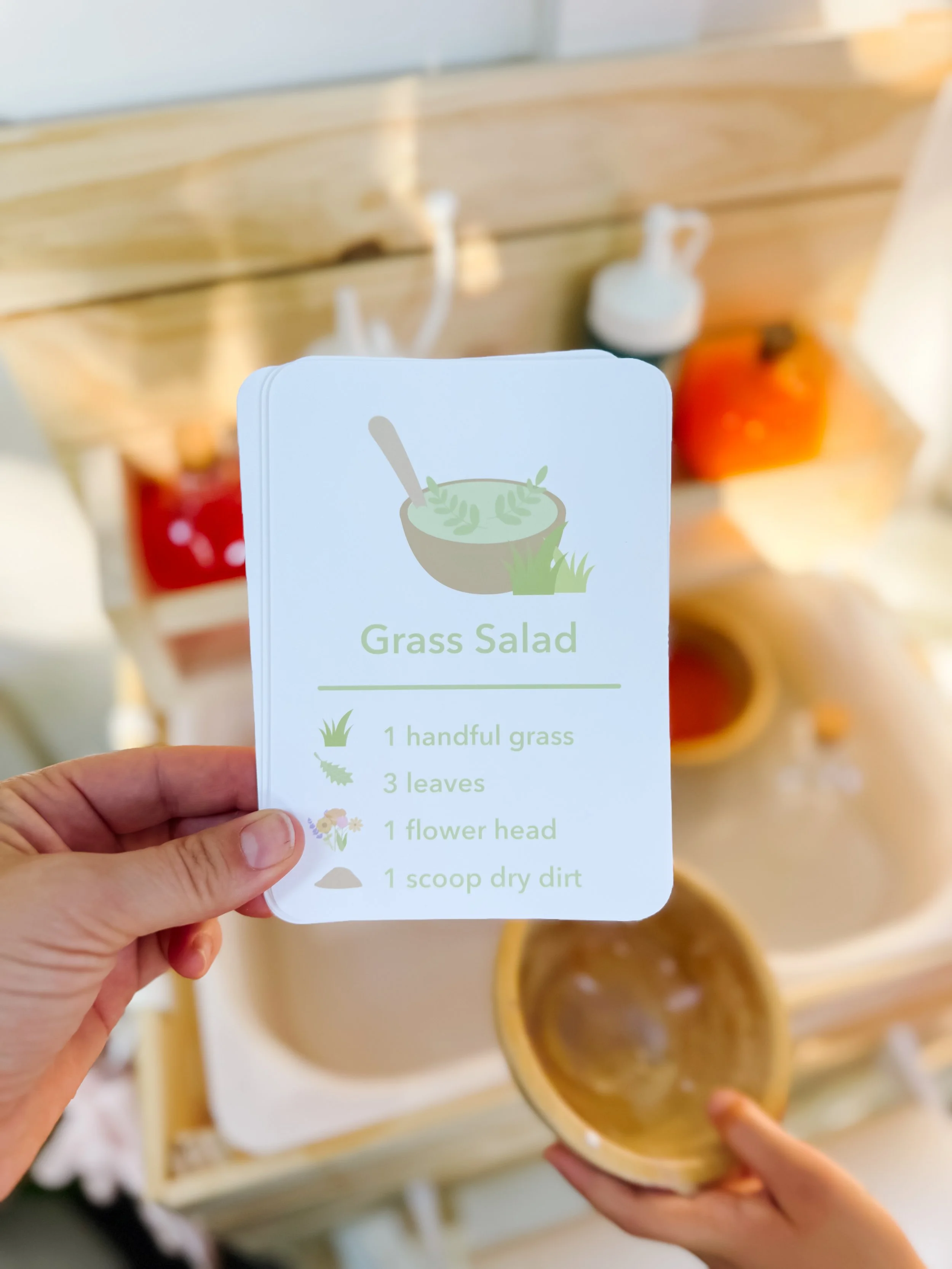
  • Grass Salad — a silly outdoor pretend recipe using handfuls of grass, leaves, flowers, and dirt.
  • Leaf Soup — a classic mud kitchen recipe using leaves, water, and natural materials.
  • Mud Pie — the ultimate mud kitchen classic with scoops of dirt, water, and found treasures.

How to set up mud kitchen recipe play

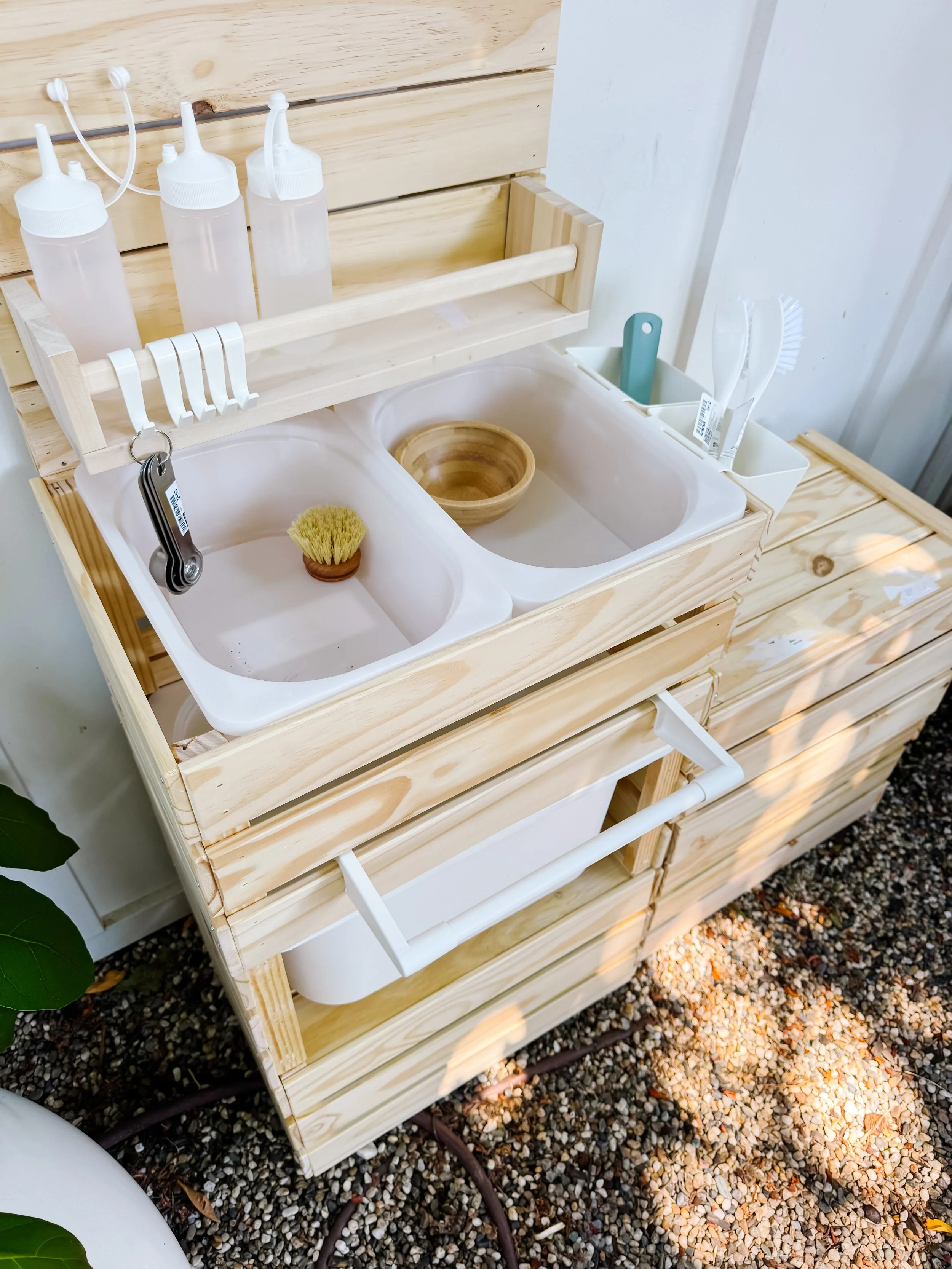
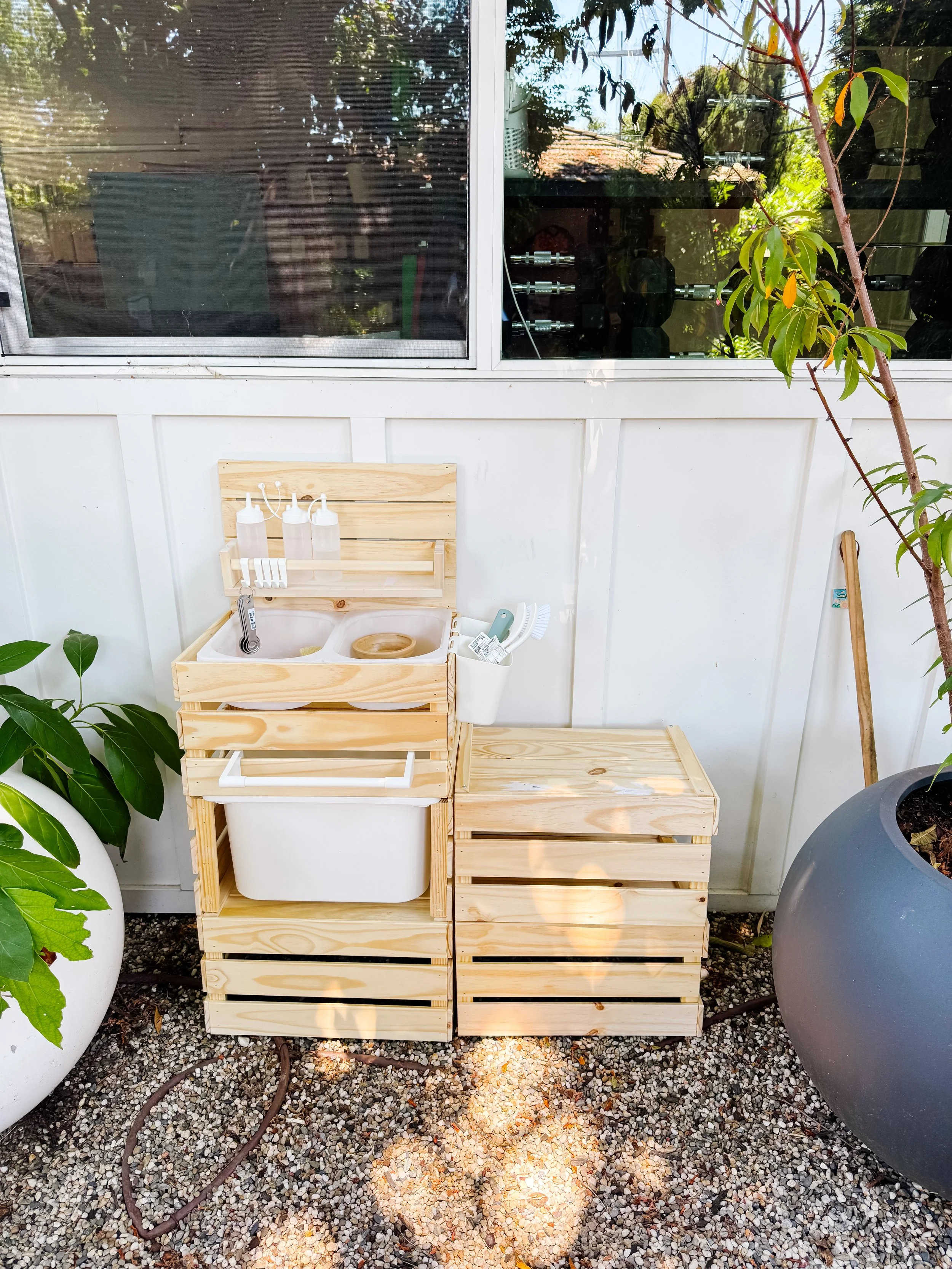
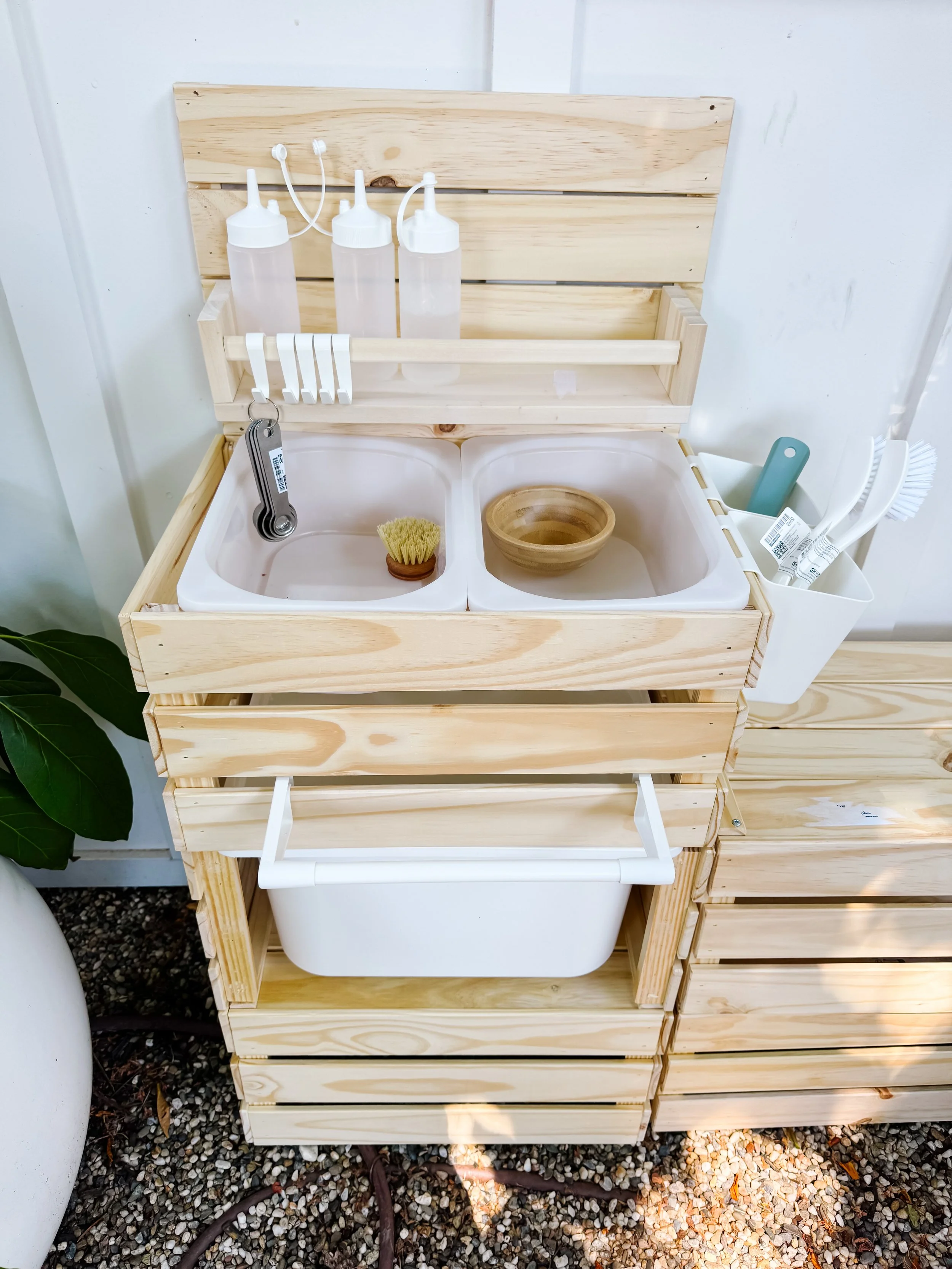
Outdoor mud kitchen setup with bowls, bottles, utensils, and sensory play supplies.
Step 1

Set up the mud kitchen

Start with a mud kitchen, play kitchen, sensory table, or a simple outdoor bin. Add bowls, spoons, scoops, water bottles, and small containers.

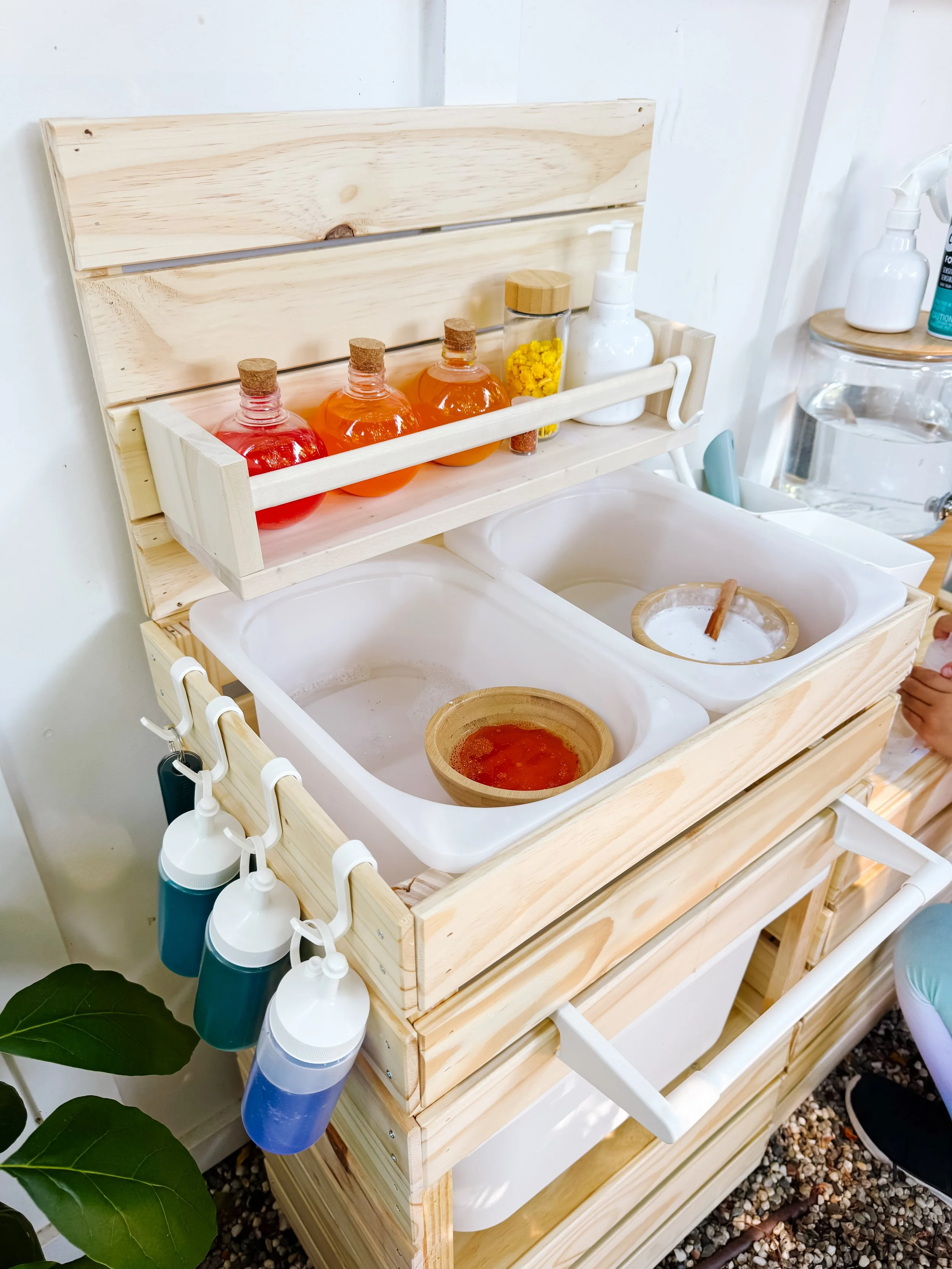
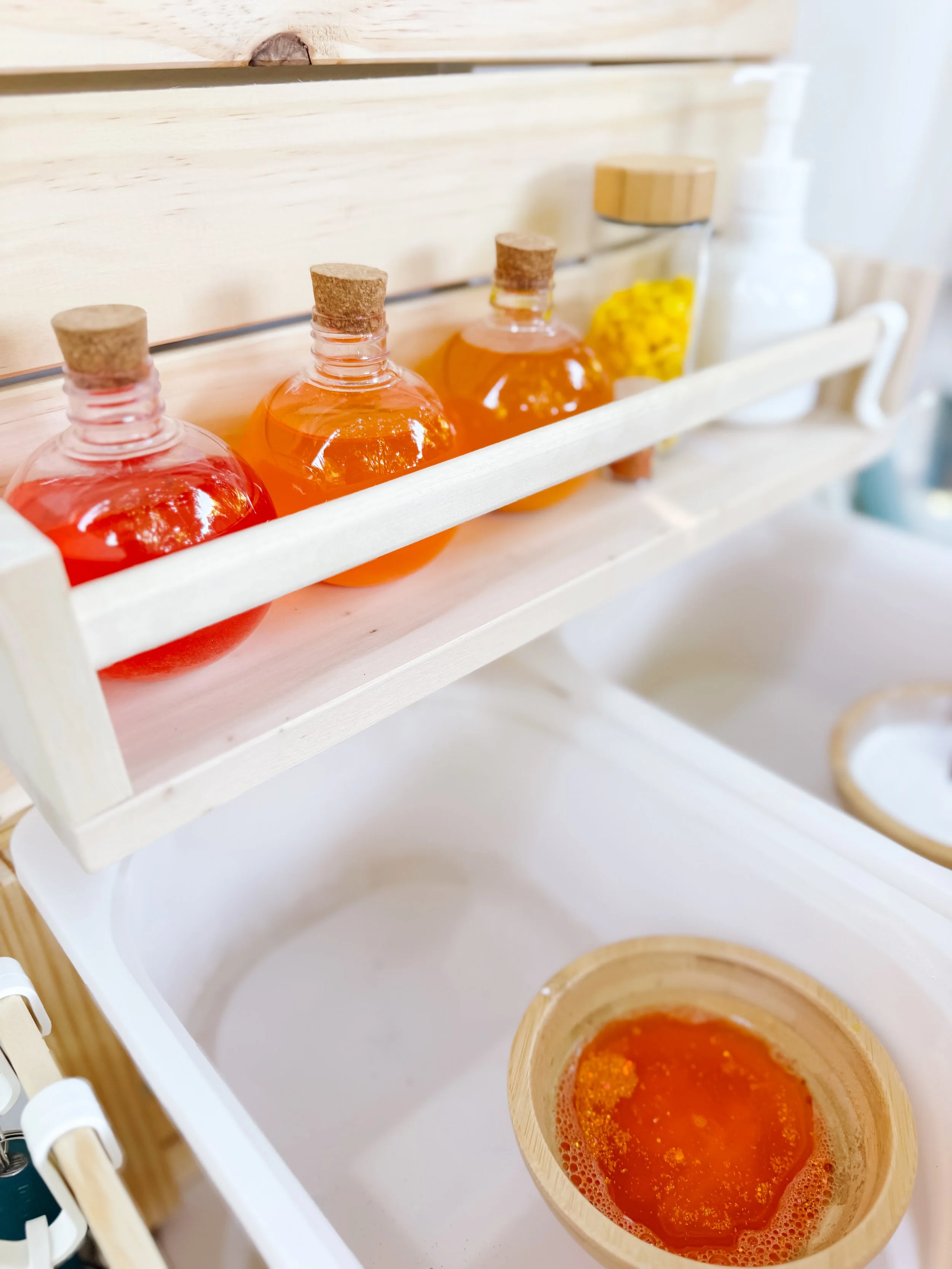
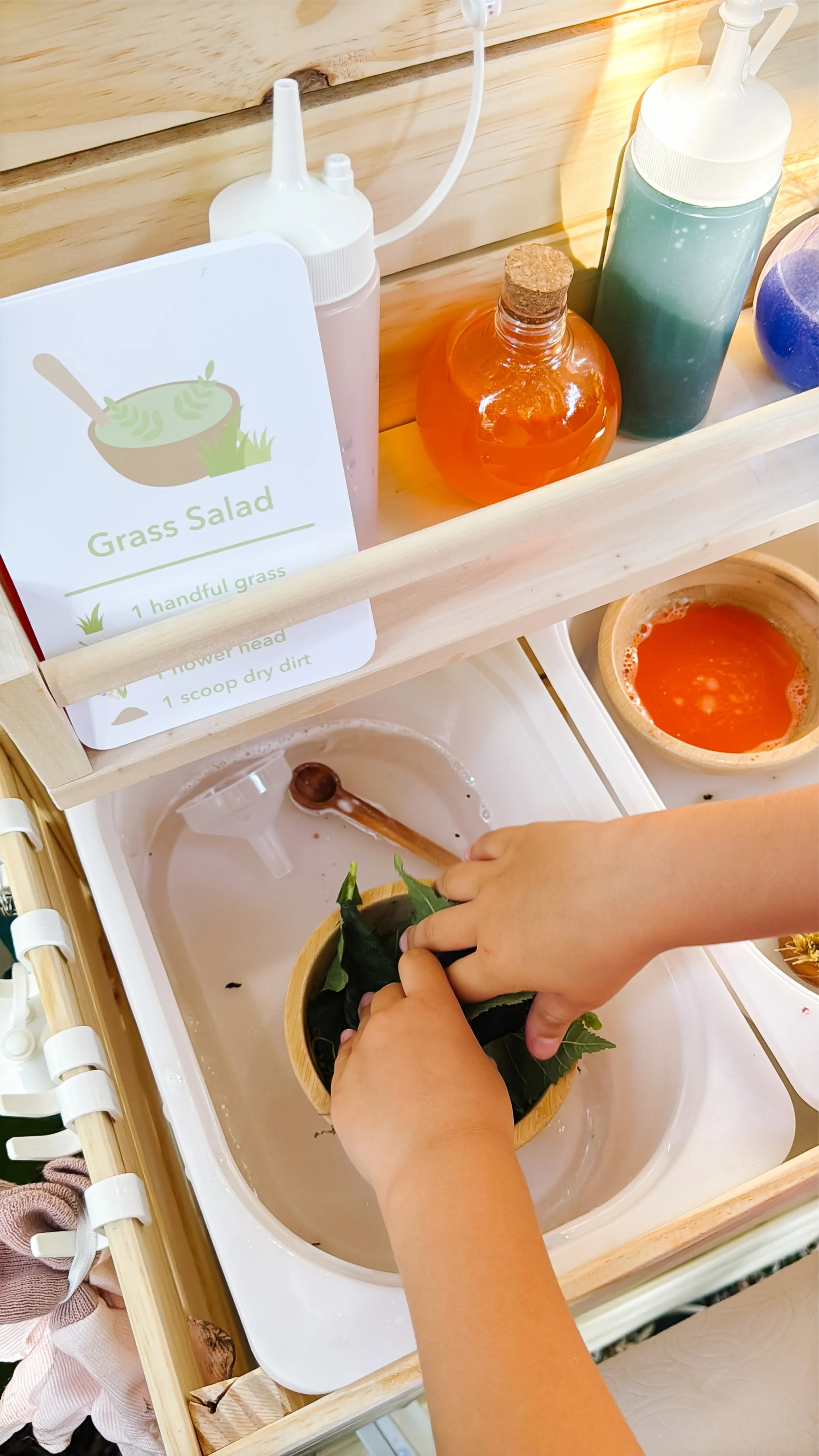
Mud kitchen setup with colored water, bowls, brushes, bottles, and pretend recipe supplies.
Step 2

Add natural ingredients

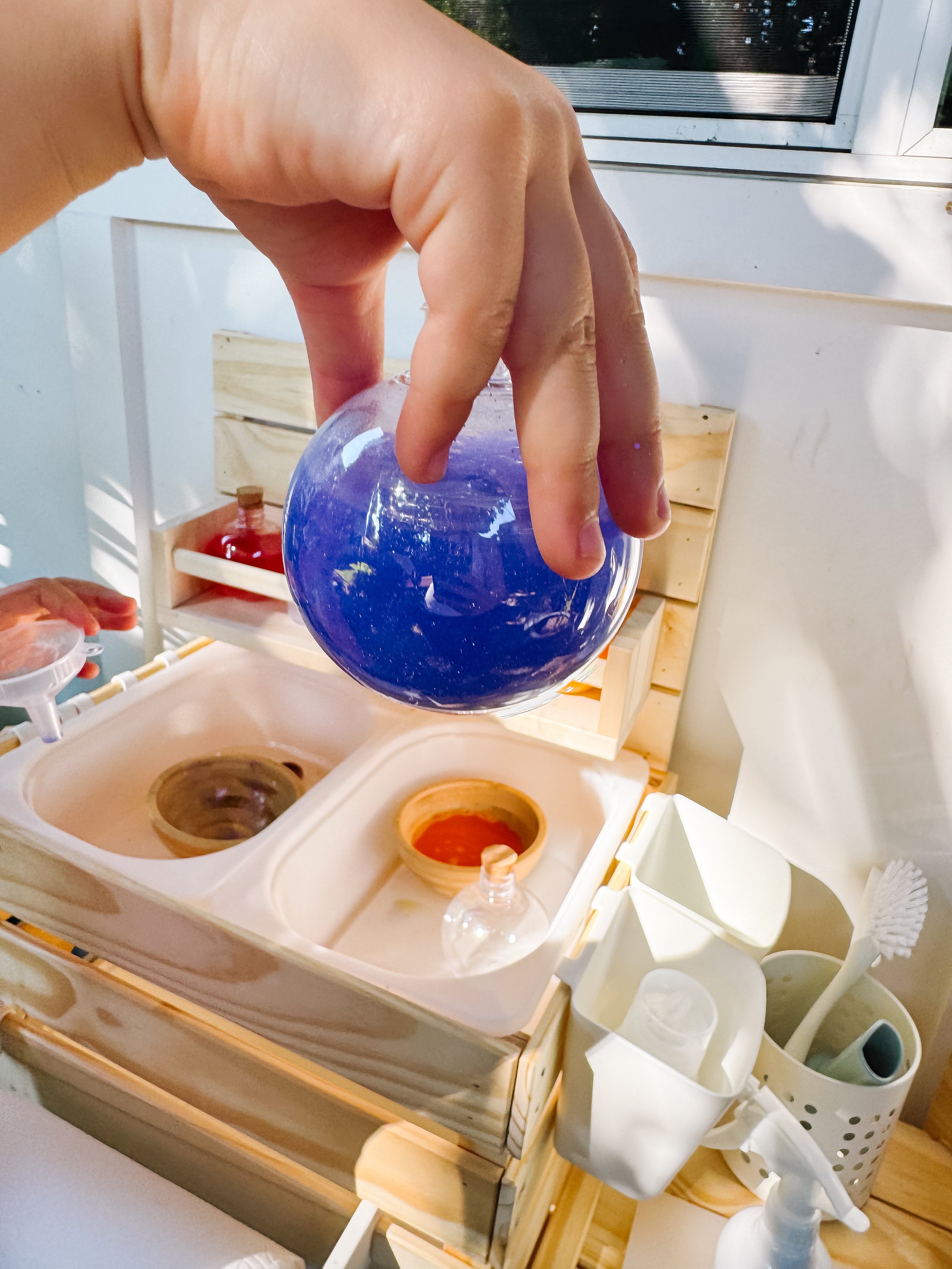
Invite kids to gather safe nature materials like leaves, grass, flower petals, sticks, dirt, acorns, and water. You can also set out colored water for extra magical potion play.

GoodnightFox mud kitchen recipe cards including fairy potion, grass salad, leaf soup, flower cake, and mud pie.
Step 3

Choose a recipe card

Let your child pick one recipe card to follow. The pictures help children identify ingredients, count quantities, and understand the steps even before they can read independently.

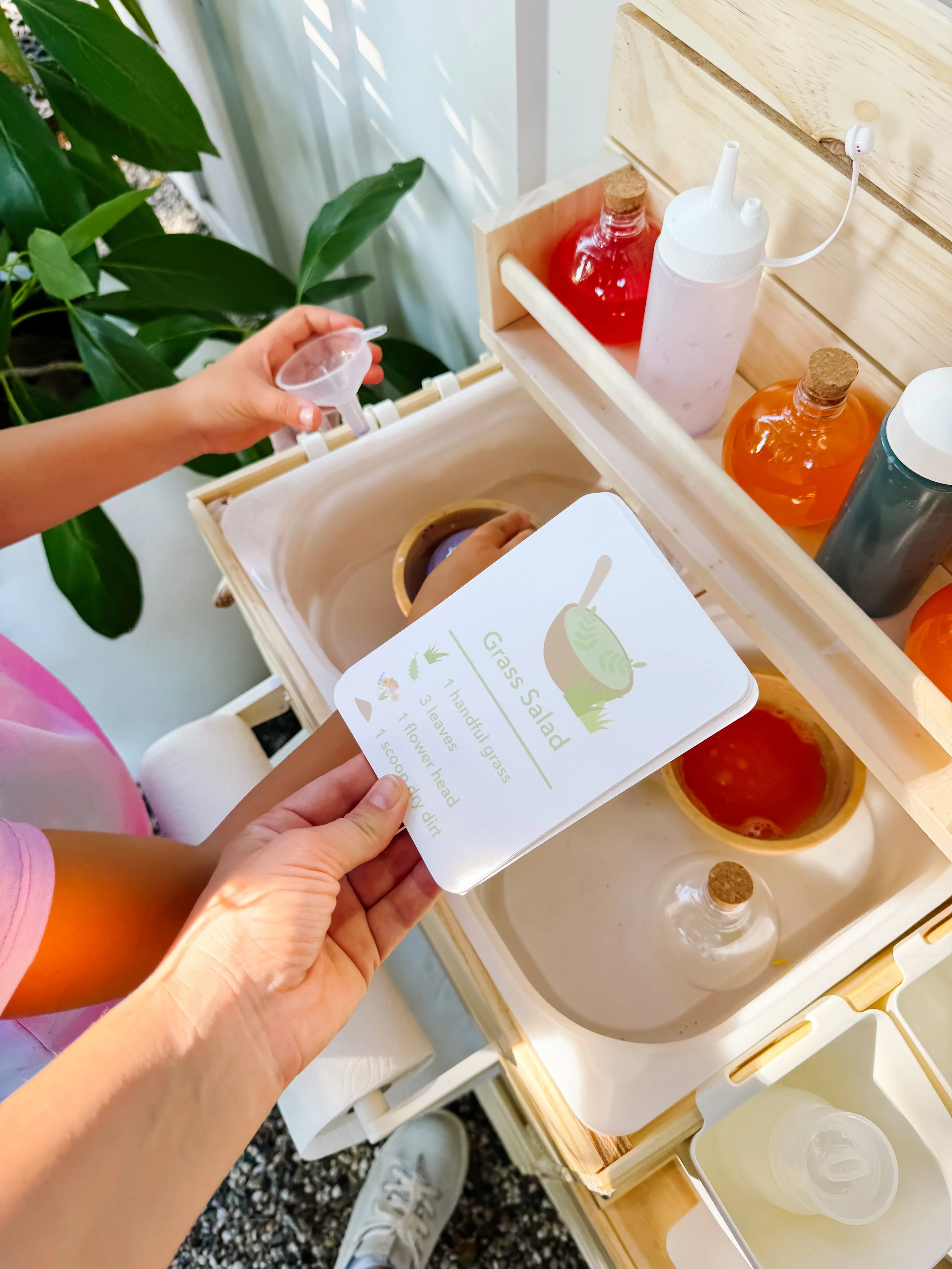
Child using a grass salad recipe card in a mud kitchen with colored water and bowls.
Step 4

Mix and pretend

Have your child count, scoop, pour, stir, and serve their recipe. Encourage them to name their creation and explain what they made.

Parent tip

Laminating the recipe cards makes them much easier to use outdoors. Kids can handle them with muddy hands, and you can simply wipe them clean after play.

Why recipe cards are so powerful for mud kitchen play

Open-ended mud kitchen play is wonderful, but sometimes children need a little prompt to stay engaged longer.

Recipe cards act like playful activity extenders. They give children a clear goal while still leaving room for imagination.

When kids follow a recipe card, they practice sequencing, matching, counting, scooping, comparing quantities, vocabulary, and independent task completion.

They are also perfect for children who love pretend play because each recipe invites storytelling: fairy café, garden bakery, forest restaurant, potion lab, or muddy outdoor restaurant.

Learning skills

Following directions Counting scoops Sequencing Fine motor skills Pretend play Outdoor sensory play Nature vocabulary Independent play Creative storytelling

Questions to ask kids

  • Which recipe should we make first?
  • How many scoops does the card say to add?
  • What ingredient comes next?
  • What does your potion smell like?
  • Who are you making this recipe for?
  • Can you create your own mud kitchen recipe?

Ways to extend the play

Fairy café

Use the fairy potion and flower cake cards to create a tiny magical restaurant.

Nature scavenger hunt

Have kids search the yard for each ingredient before they begin cooking.

Make your own recipe

Invite your child to invent a new recipe and draw the ingredients on a blank card.

Try these next

Pineapple coconut smoothie play

Use recipe cards to create tropical pretend smoothie shop play.

Smoothie play

Ice cream mud kitchen

Turn scoopable sensory dough into a pretend ice cream shop.

Ice cream play

Ice cream play dough

Make soft, fluffy, scoopable dough for sensory play and pretend shops.

Ice cream dough

Mud kitchen recipe play FAQ

What are mud kitchen recipe cards?

Mud kitchen recipe cards are visual prompt cards that show kids pretend recipes to make outside using mud, water, leaves, flowers, grass, and other nature materials.

Why use recipe cards in a mud kitchen?

Recipe cards help kids practice following directions, counting, sequencing, matching ingredients, and independent play while still enjoying open-ended sensory exploration.

What recipes can kids make in a mud kitchen?

Kids can make pretend recipes like fairy potion, flower cake, grass salad, leaf soup, mud pie, smoothie recipes, ice cream recipes, and their own invented nature recipes.

What age are mud kitchen recipe cards best for?

They are great for ages three and up. Younger children can use the pictures to match ingredients, while older preschoolers can follow the recipe more independently.

How do I make mud kitchen play last longer?

Add tools, goals, or prompts like recipe cards, scoops, tongs, containers, menus, order forms, and nature scavenger hunts to extend the play.

Pineapple Coconut Smoothie Recipe Mud Kitchen Play

Pineapple Coconut Smoothie Mud Kitchen Play

A tropical pretend smoothie recipe activity for mud kitchens, play kitchens, and sensory tables that helps kids practice following directions, counting scoops, and imaginative play.

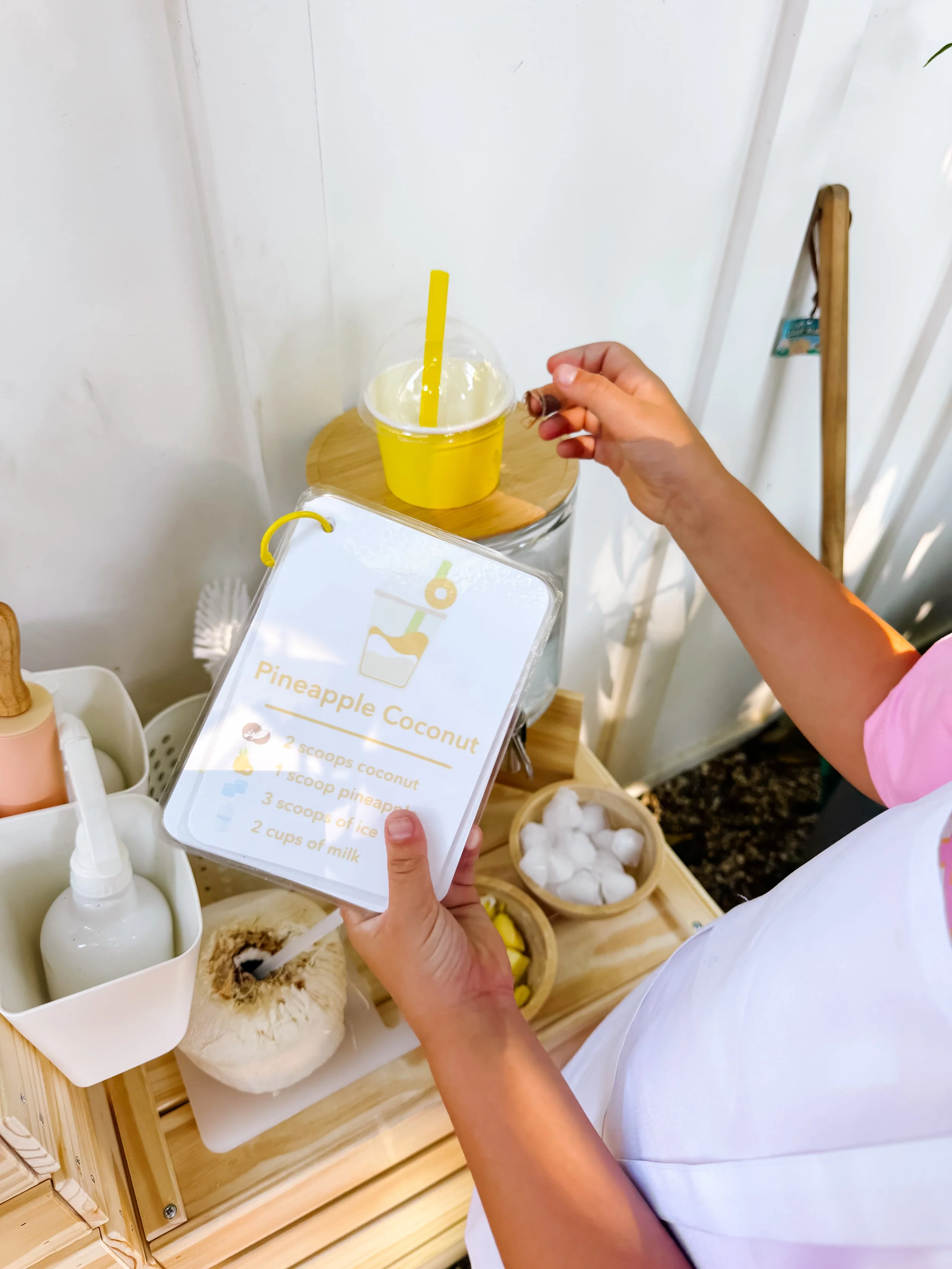
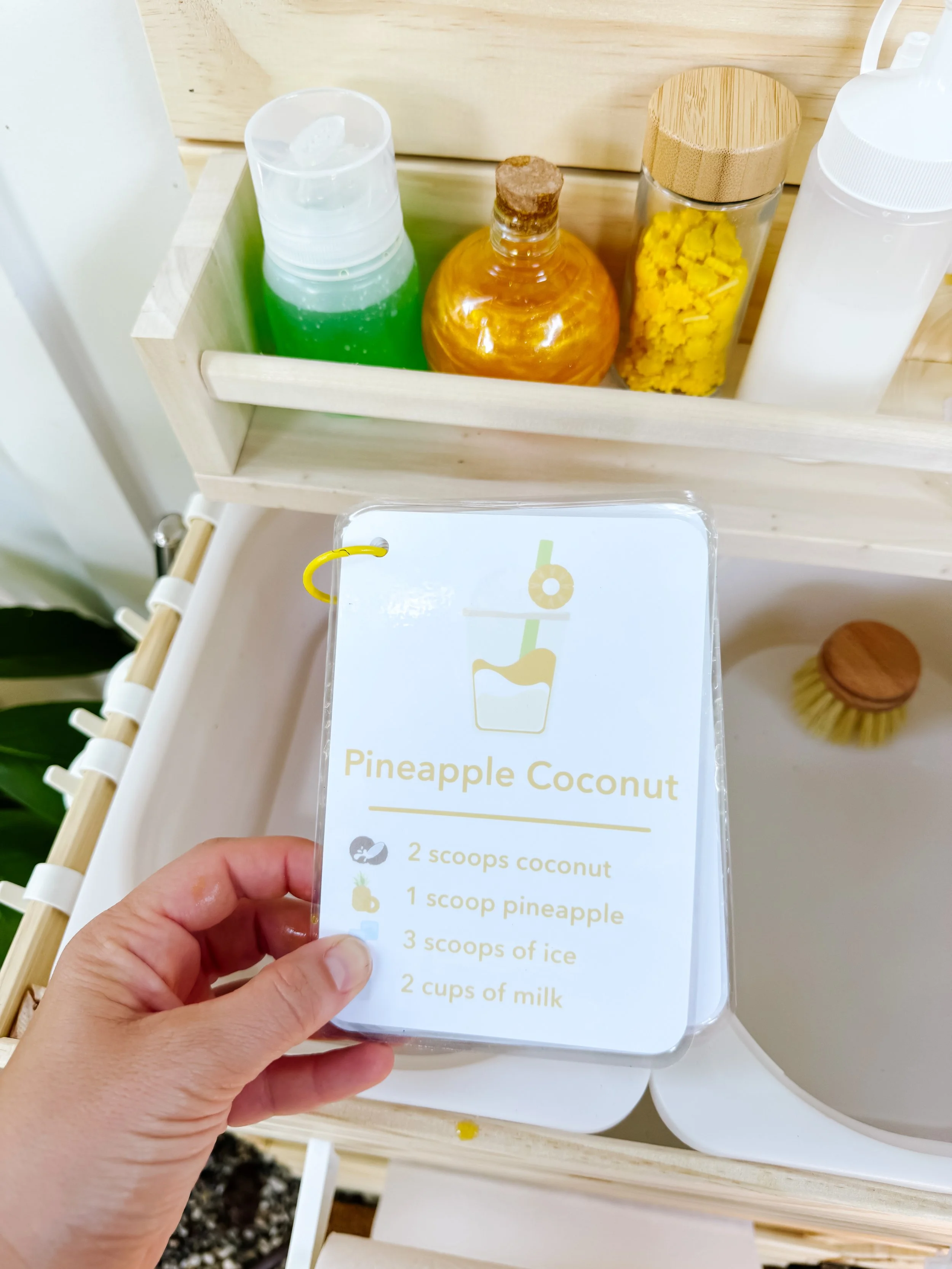
Child holding pineapple coconut smoothie recipe card during mud kitchen pretend play.
Age3+
Prep10 minutes
Play Time30+ minutes
Mess★★☆☆☆
SkillsCounting + directions

Why we love this activity

This pineapple coconut smoothie recipe activity turns a simple mud kitchen setup into a pretend smoothie shop.

Kids get to scoop, pour, stir, count, follow a recipe card, and serve their creation just like they are running a little tropical smoothie stand.

What I love most is that the recipe card gives the play just enough structure without taking away the imagination. Children still get to invent, mix, and pretend—but they also practice reading visual instructions, counting scoops, sequencing steps, and matching ingredients.

It is perfect for mud kitchens, play kitchens, sensory tables, outdoor play, summer themes, and tropical pretend play.

What you need

  • Smoothie recipe cards
  • Fresh or pretend pineapple pieces
  • Coconut pieces or coconut sensory filler
  • Ice cubes or pretend ice
  • Water or pretend milk
  • Small bowls
  • Spoons or scoops
  • Cups with lids and straws
  • Mud kitchen, play kitchen, or sensory table

Featured product

Use printable recipe cards to turn open-ended sensory play into a playful learning activity.

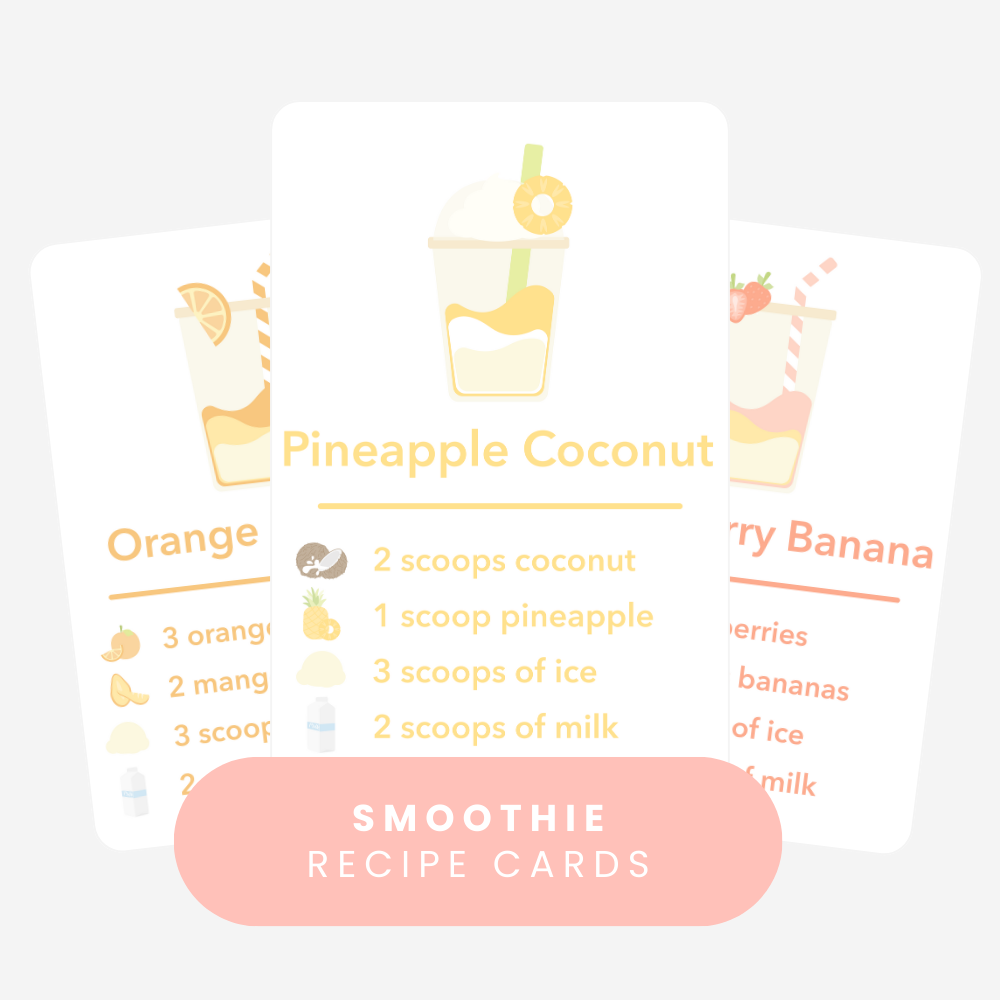
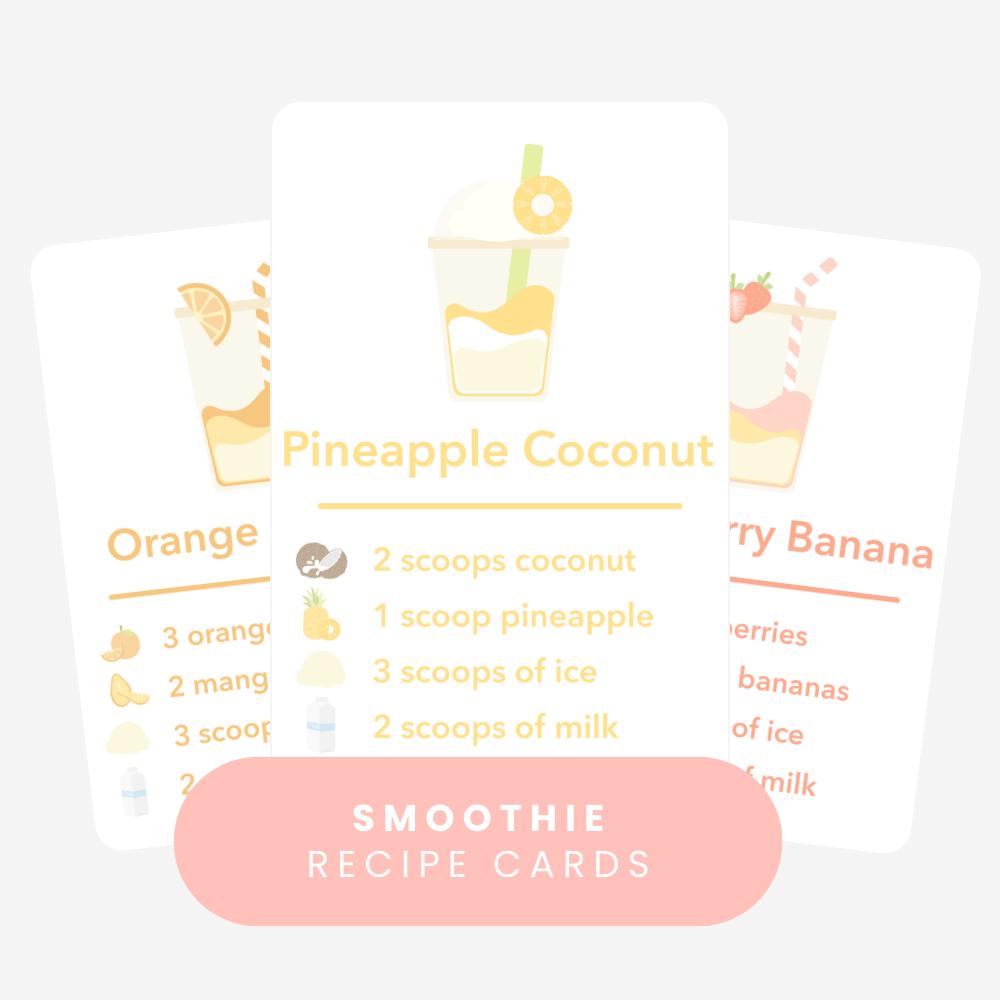
GoodnightFox smoothie recipe cards printable for mud kitchen and sensory play.

Smoothie recipe cards

Printable smoothie recipe cards for mud kitchens, play kitchens, sensory tables, and pretend smoothie shop play.

Shop smoothie cards
Free ice cream mud kitchen recipe cards for pretend play.

Free ice cream recipe cards

Try the free ice cream recipe cards to extend this same recipe-card learning format into pretend ice cream shop play.

Free ice cream cards

How to set up pineapple coconut smoothie play

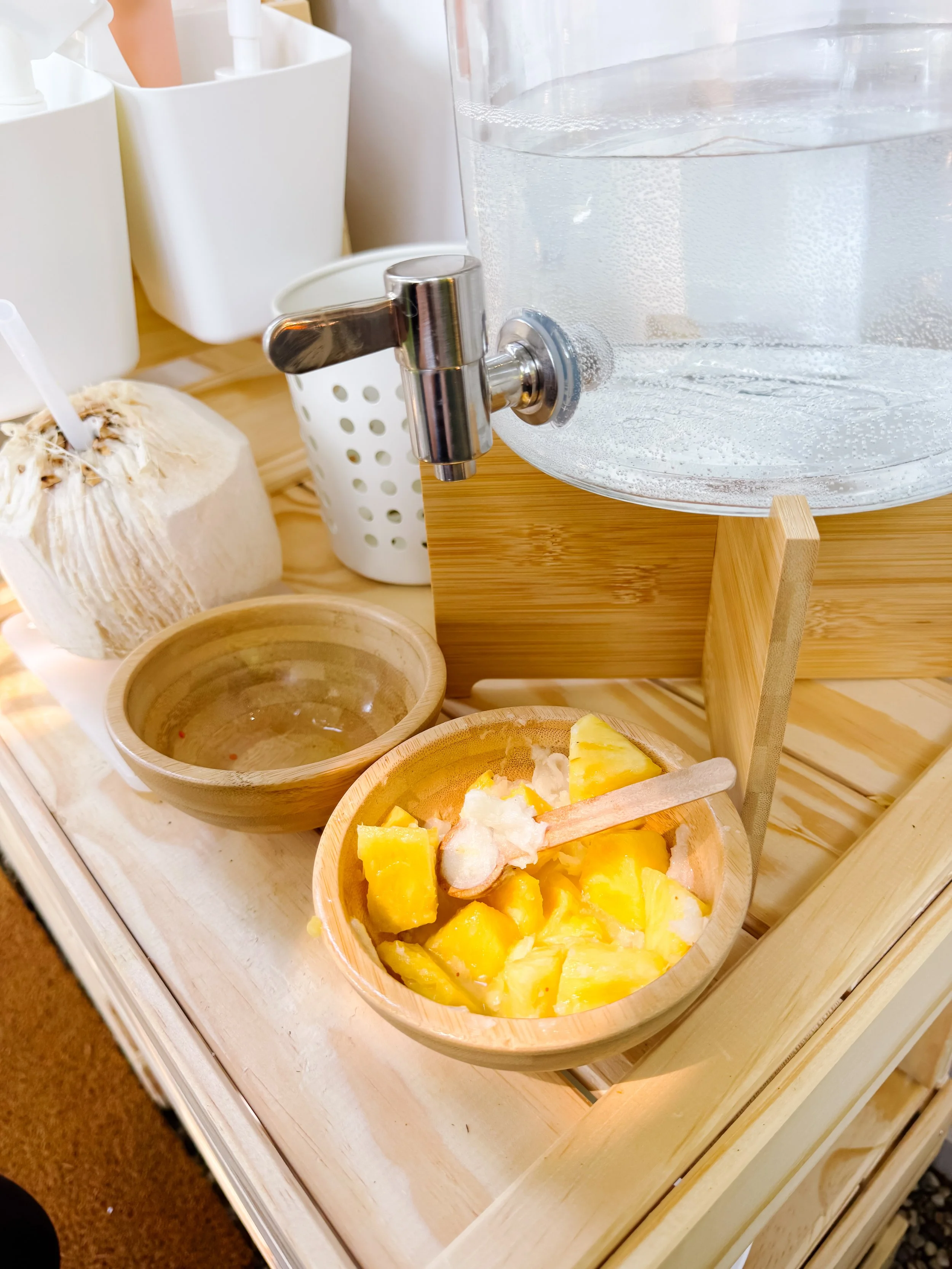
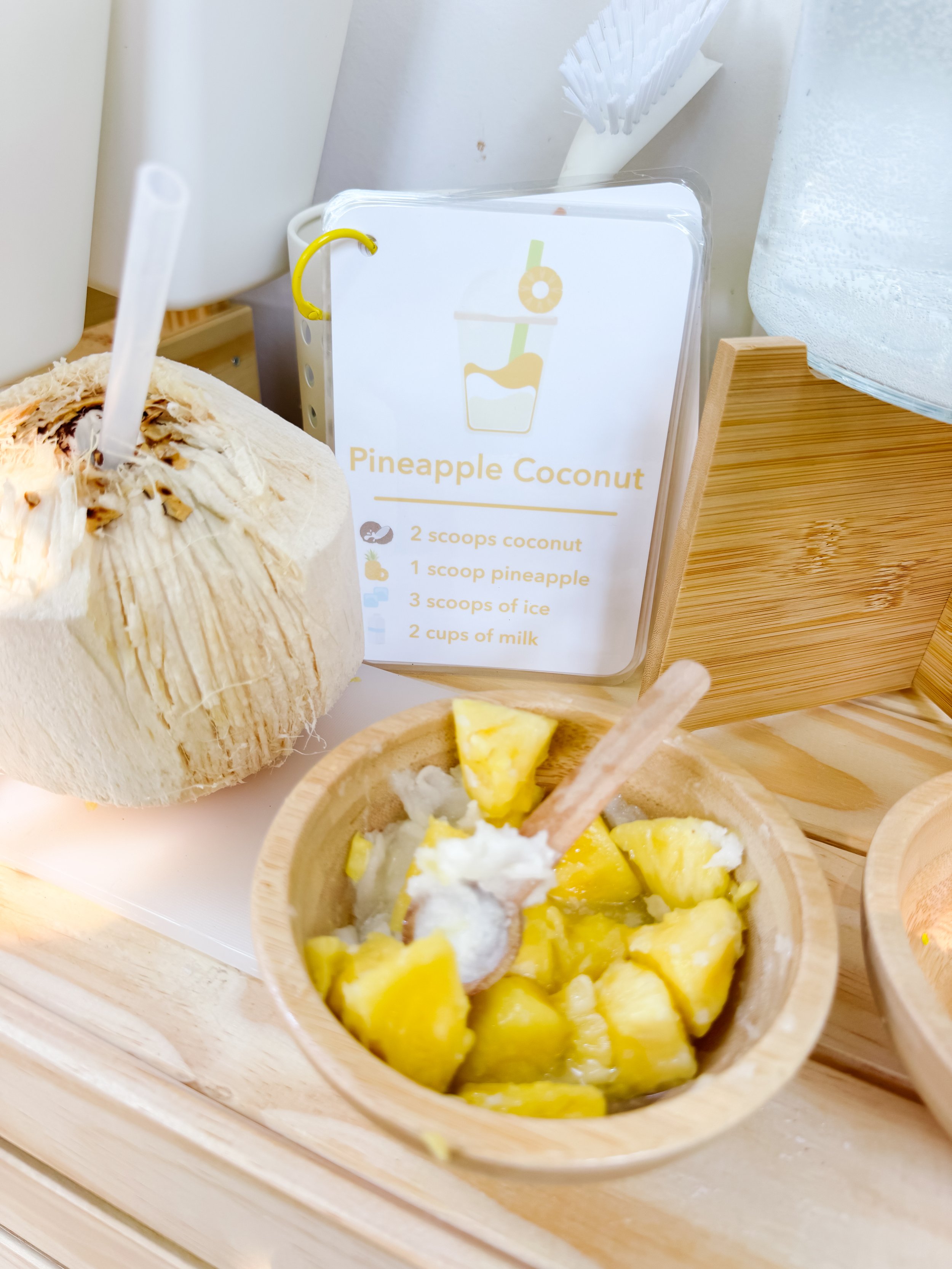
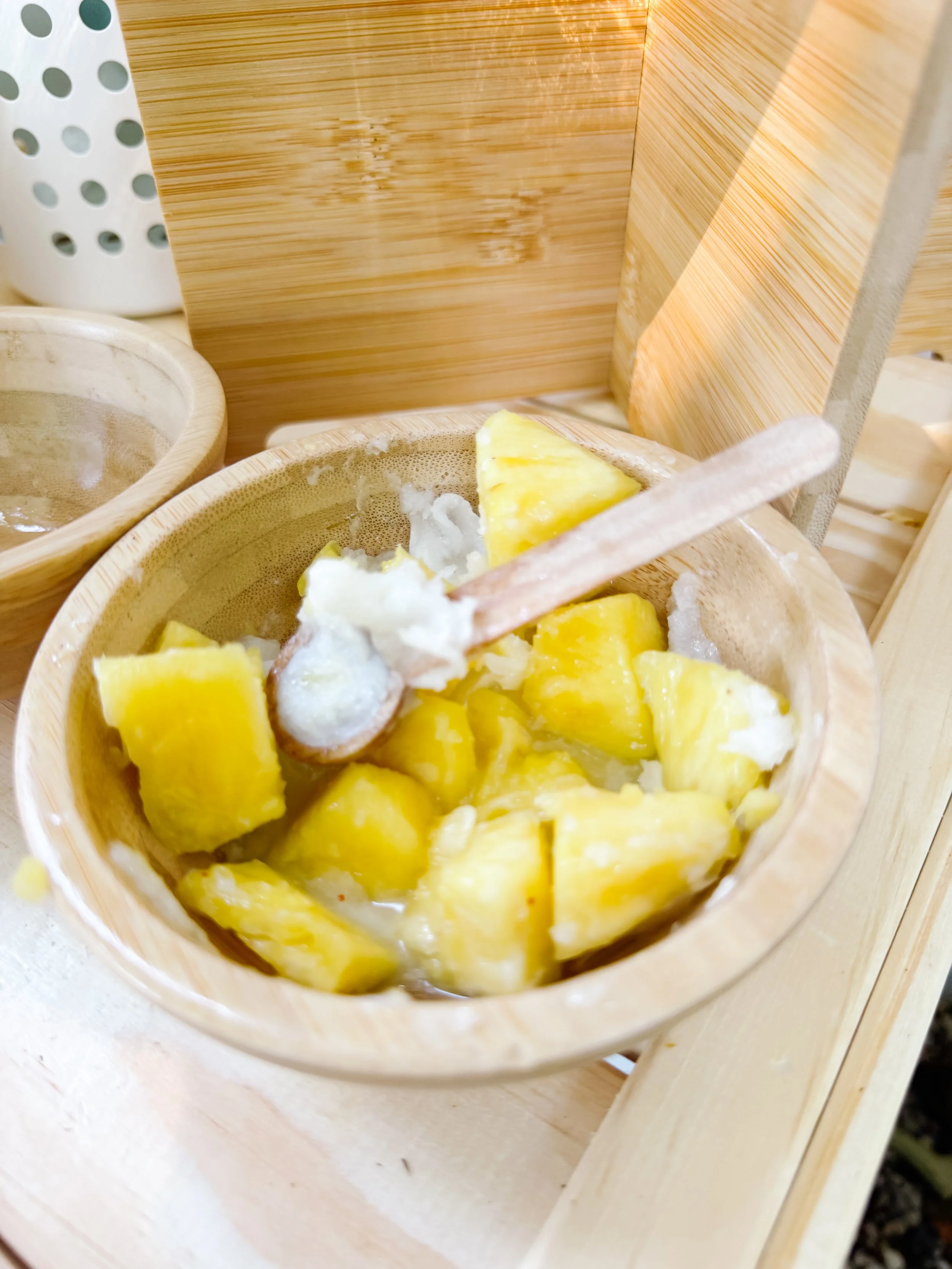
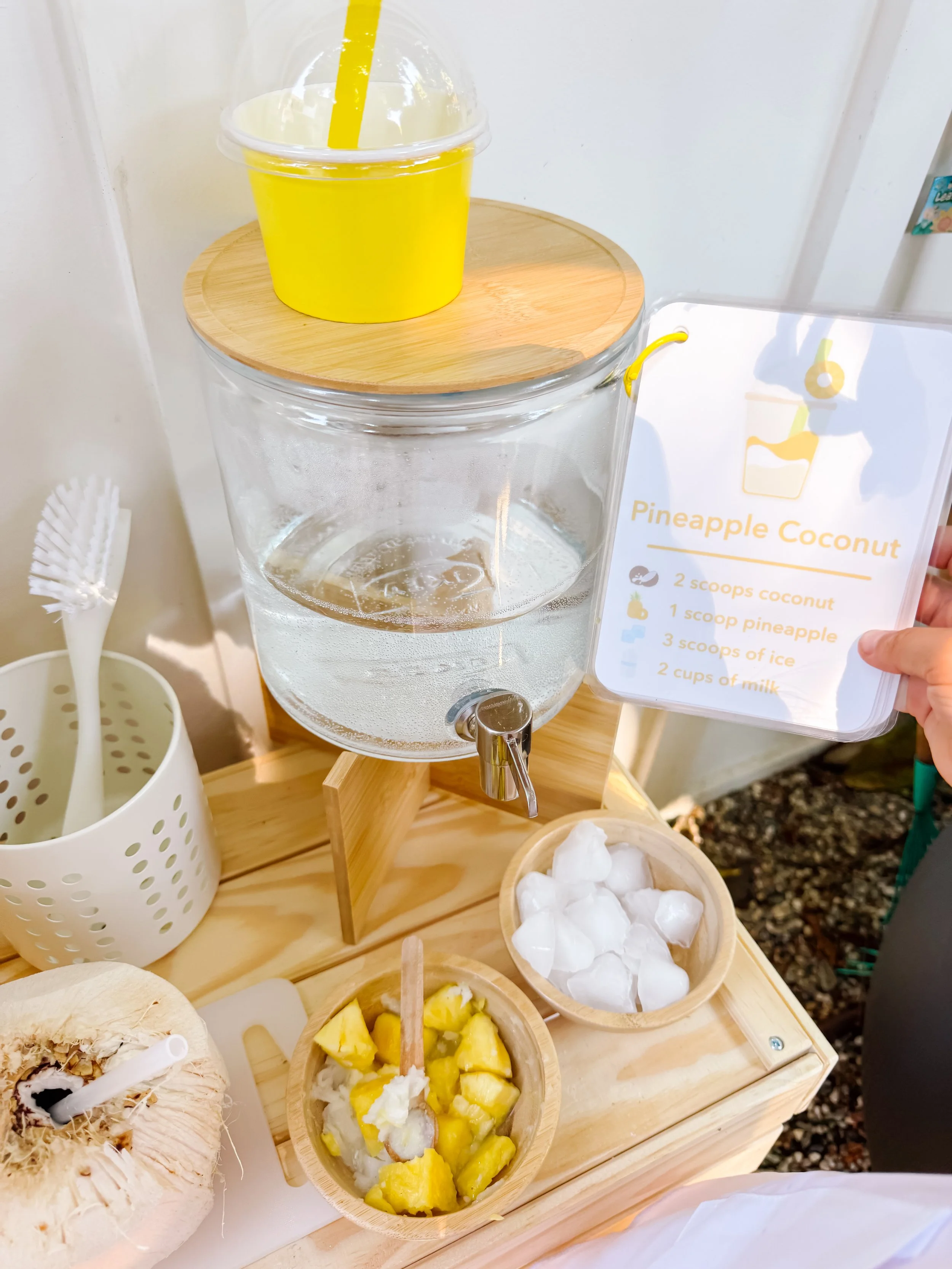
Pineapple and coconut ingredients in small bowls for smoothie mud kitchen play.
Step 1

Set out the ingredients

Place pineapple, coconut, ice, and pretend milk or water in small bowls or containers. Keep everything within reach so kids can independently scoop and pour.

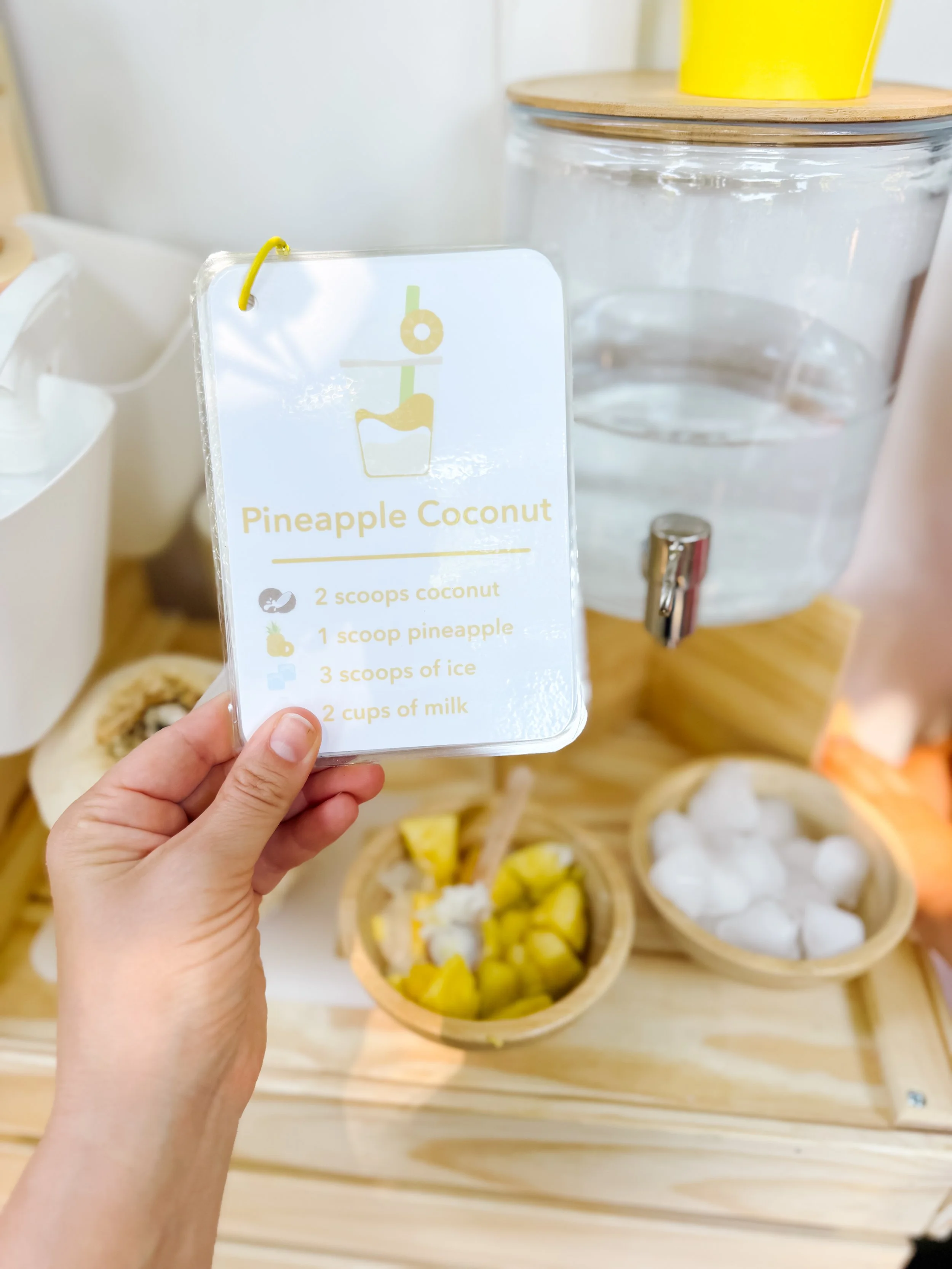
Pineapple coconut smoothie recipe card with ingredients for mud kitchen sensory play.
Step 2

Read the recipe card

Invite your child to look at the picture recipe card and identify each ingredient. The visual recipe helps kids practice following directions even before they can read independently.

Child scooping pineapple and coconut into a wooden bowl for pretend smoothie play.
Step 3

Count and scoop

Use the recipe card to count scoops of coconut, pineapple, ice, and milk. This turns pretend play into meaningful early math practice.

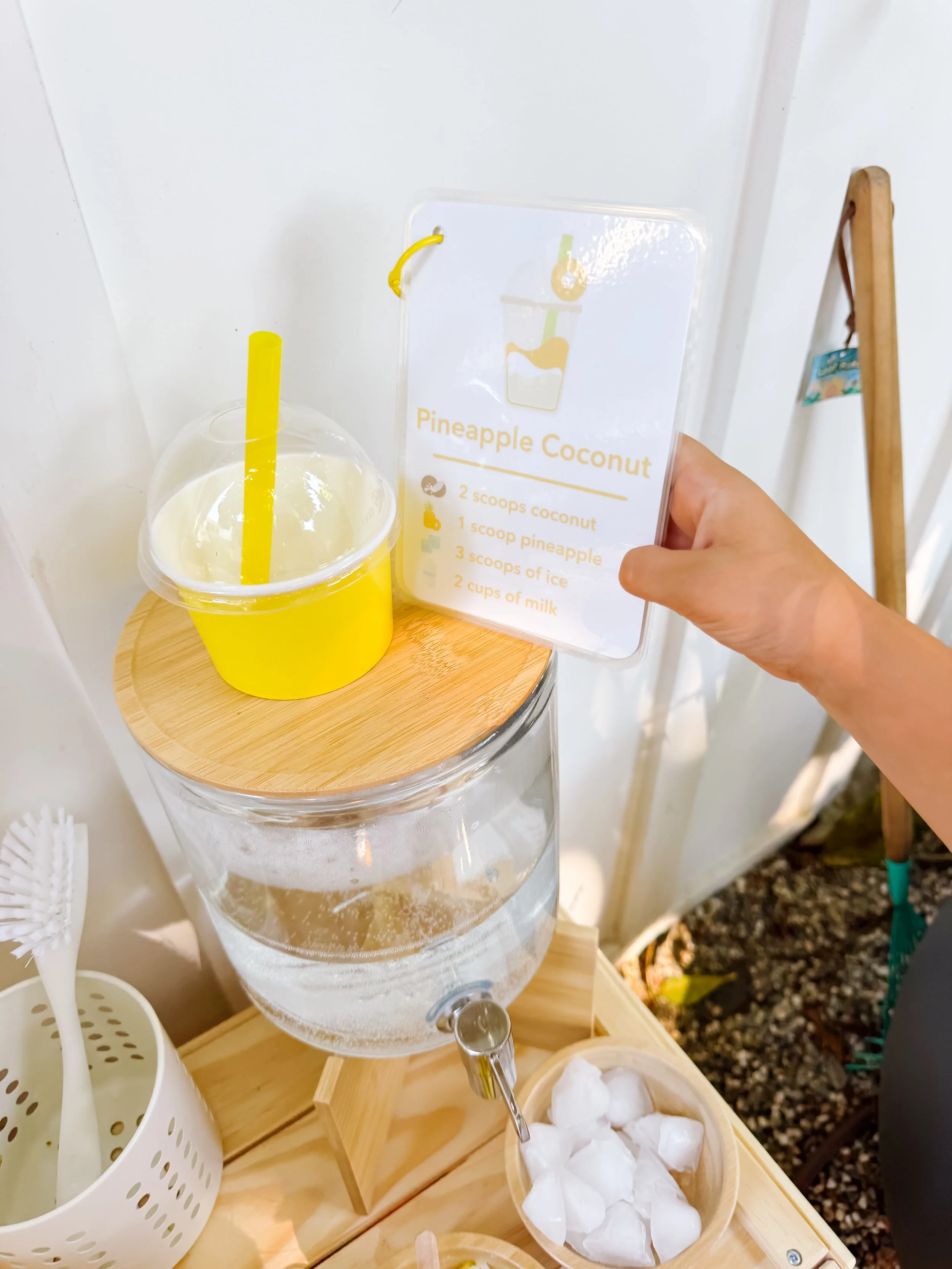
Pretend pineapple coconut smoothie served in a yellow cup with recipe card.
Step 4

Serve the smoothie

Once the smoothie is mixed, invite your child to pour or pretend-serve it in a cup with a straw. Add a recipe card nearby to complete the pretend smoothie shop setup.

Parent tip

Recipe cards are one of my favorite ways to extend sensory play because they add a clear goal. Kids still get open-ended play, but they also practice sequencing, counting, matching, and following instructions.

Why recipe cards are great for learning

Recipe cards help children turn pretend play into a structured learning experience. They give kids a visual sequence to follow, which supports early literacy, executive functioning, and independence.

When children follow a recipe card, they practice looking carefully, matching ingredients, counting scoops, remembering steps, and checking their work.

For mud kitchens and sensory tables, recipe cards also help extend attention span because children have a playful mission: make the smoothie, serve the order, and try another recipe.

Learning skills

Following directions Counting scoops Sequencing Fine motor skills Pretend play Early math Vocabulary Independent play Sensory exploration

Questions to ask kids

  • What ingredient comes first?
  • How many scoops of pineapple do we need?
  • What happens if we add more ice?
  • Can you take my smoothie order?
  • What should we name this smoothie flavor?
  • Which ingredient is your favorite to scoop?

More ways to play

Smoothie shop

Set up cups, straws, menus, and recipe cards so kids can take pretend orders.

Sensory table

Use bowls, scoops, and pretend ingredients in a sensory table for low-prep indoor play.

Play kitchen

Move the recipe cards indoors and use pretend fruit, pom poms, or play dough ingredients.

Try these next

Ice cream mud kitchen

Use free ice cream recipe cards to create a pretend ice cream shop outside.

Ice cream play

Ice cream play dough

Make soft scoopable ice cream dough for pretend play and sensory bins.

Ice cream dough

Smoothie recipe cards

Build a full smoothie recipe activity with printable visual recipe cards.

Shop cards

Pineapple coconut smoothie play FAQ

How do you set up smoothie mud kitchen play?

Set out pretend smoothie ingredients like pineapple, coconut, ice, and pretend milk with bowls, scoops, cups, and recipe cards. Invite kids to follow the recipe and serve pretend smoothies.

Why use recipe cards for mud kitchen play?

Recipe cards help children practice following instructions, counting, sequencing, matching ingredients, and completing a task during pretend play.

Can I use this activity indoors?

Yes. This activity works beautifully in a play kitchen or sensory table. Use pretend ingredients, pom poms, play dough, or taste-safe materials depending on your setup.

What age is this smoothie recipe activity best for?

This activity is best for ages three and up with adult supervision. Younger children can scoop and stir, while older preschoolers can follow the recipe card more independently.

What do kids learn from pretend smoothie shop play?

Kids practice early math, fine motor skills, sequencing, vocabulary, pretend play, social language, and independence as they follow the recipe and serve smoothies.