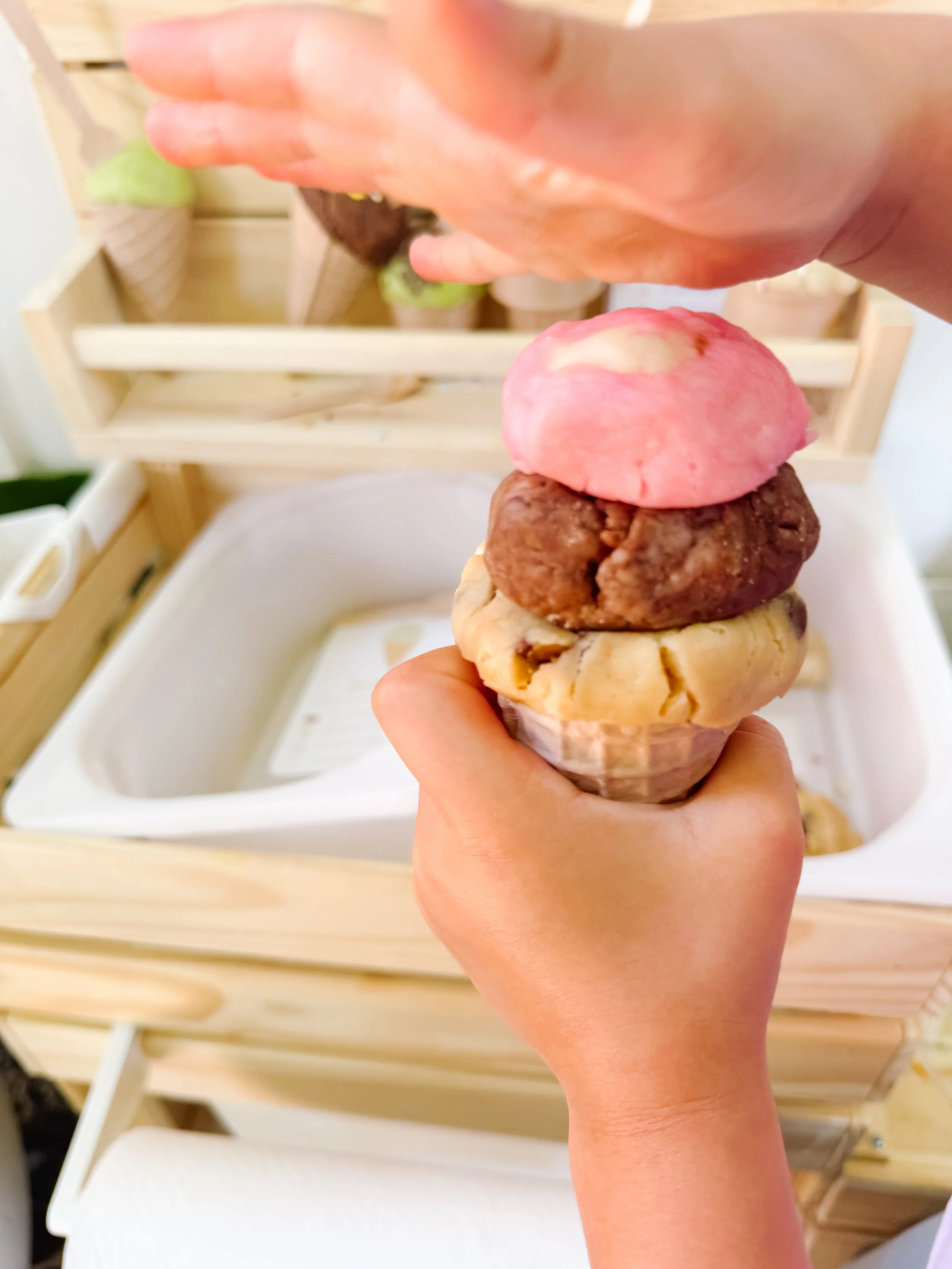
Ice Cream Mud Kitchen Play
Turn soft, scoopable ice cream dough into a pretend ice cream shop for outdoor mud kitchen play, dramatic play, sensory exploration, and summer learning.
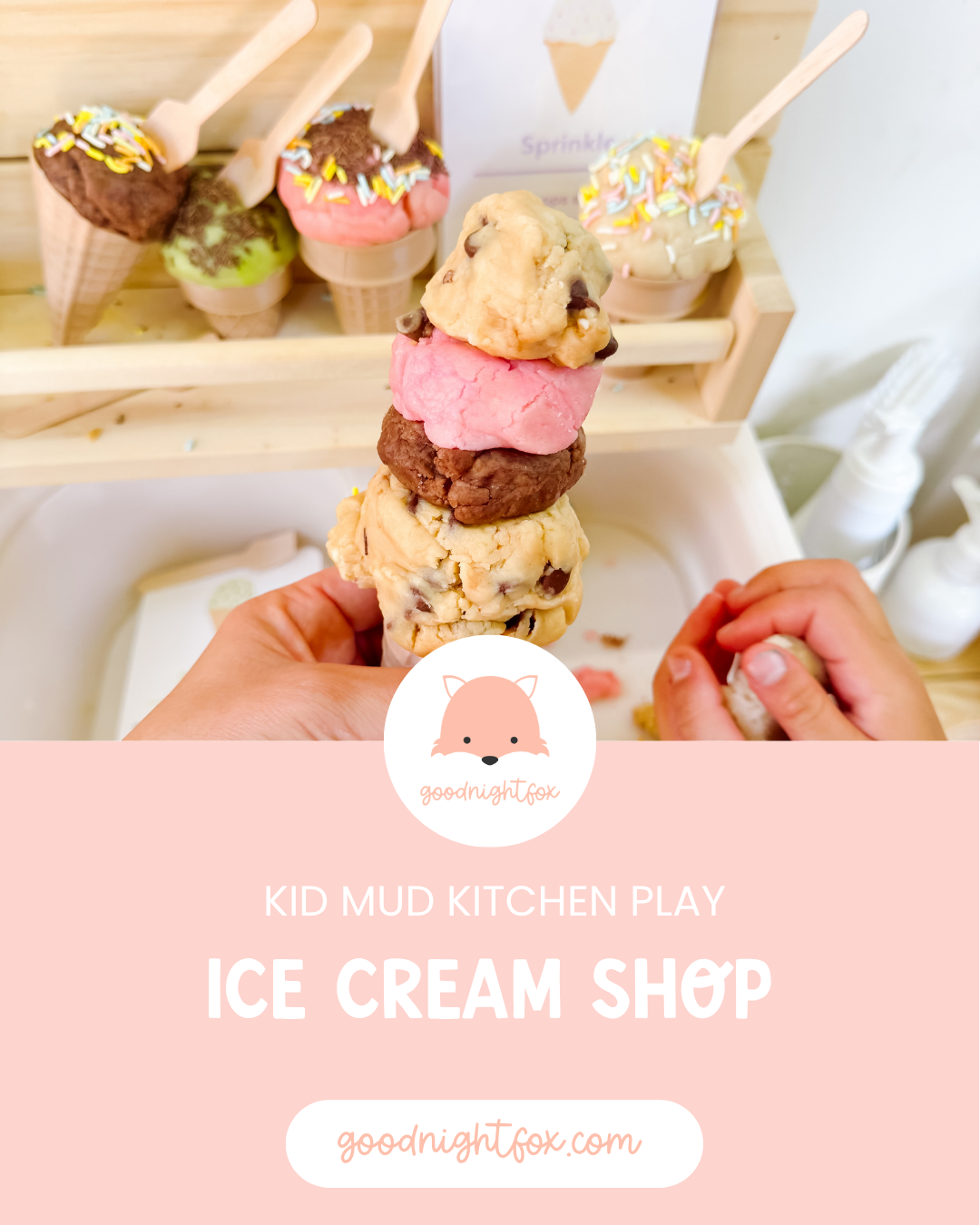
Why we love this setup
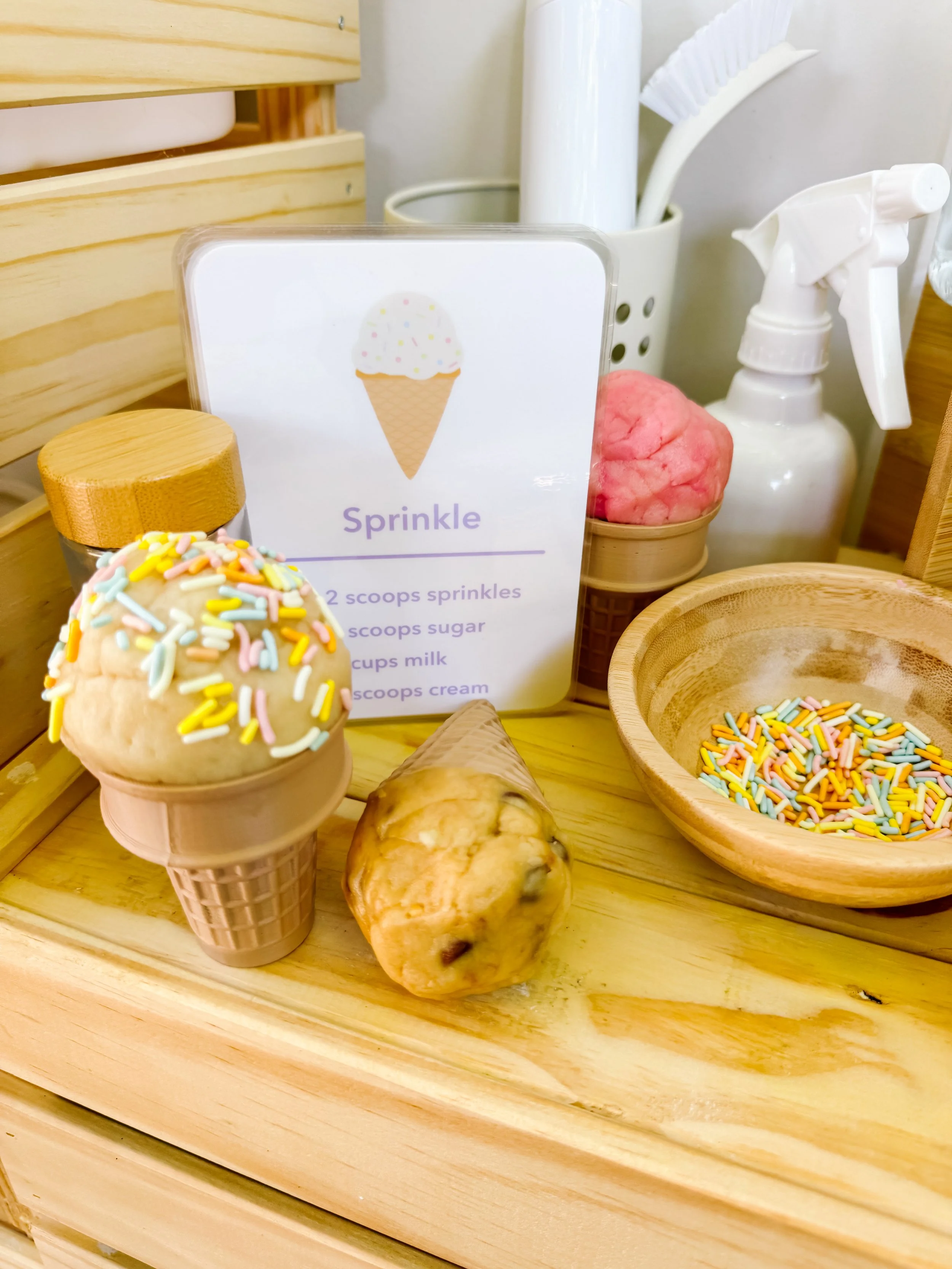
This ice cream mud kitchen setup was one of those activities that instantly turned into a full pretend play world.
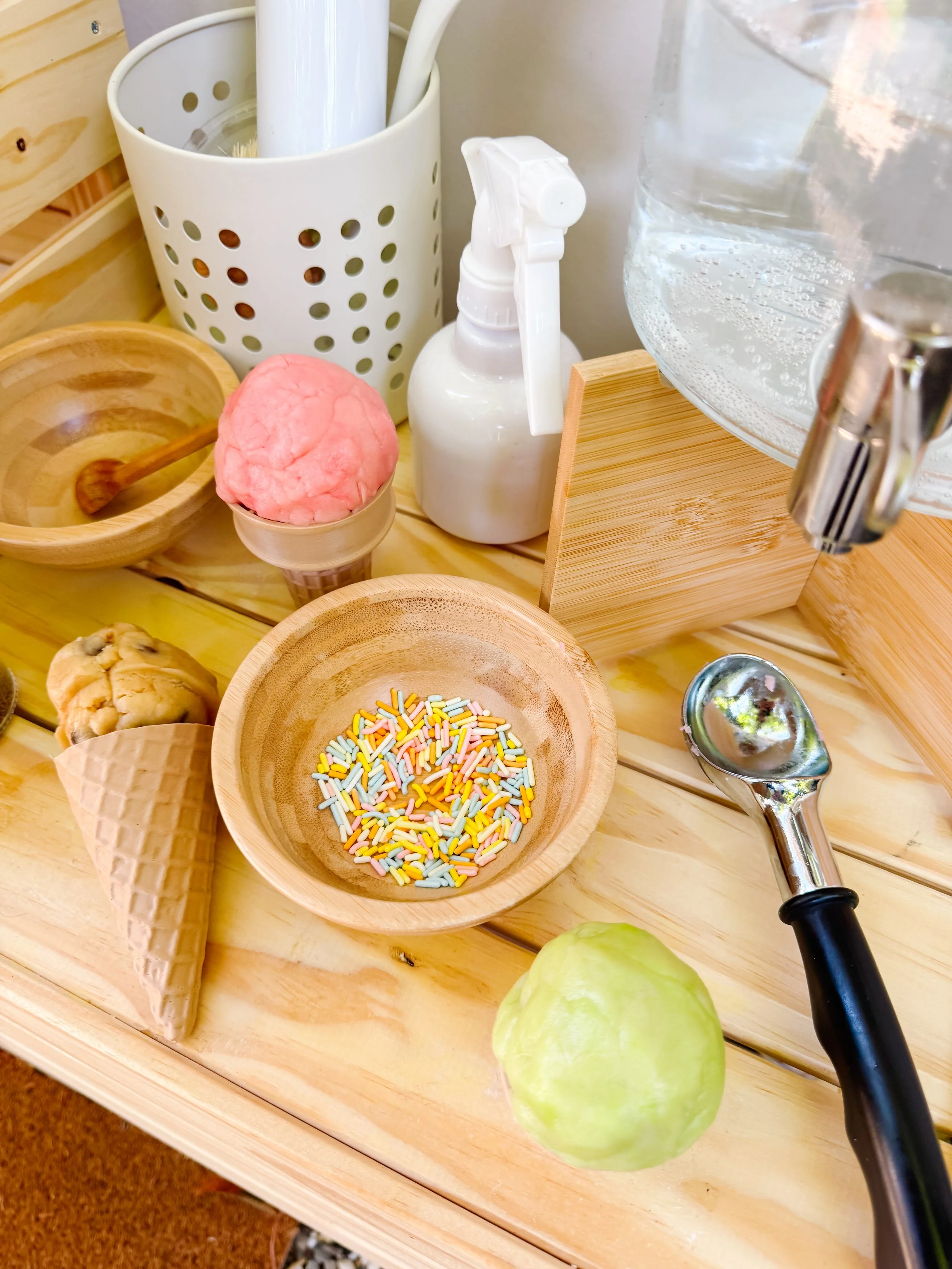
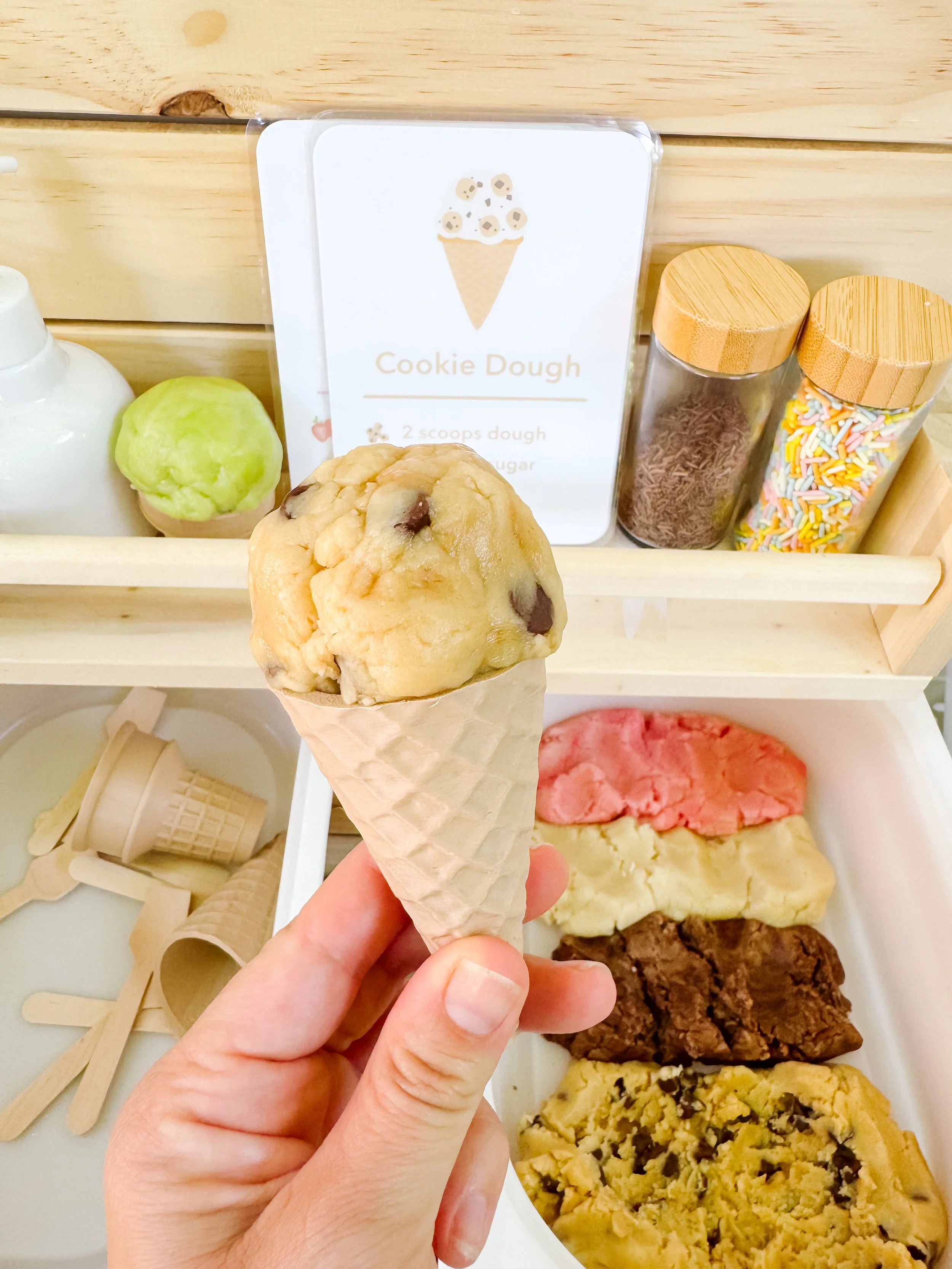
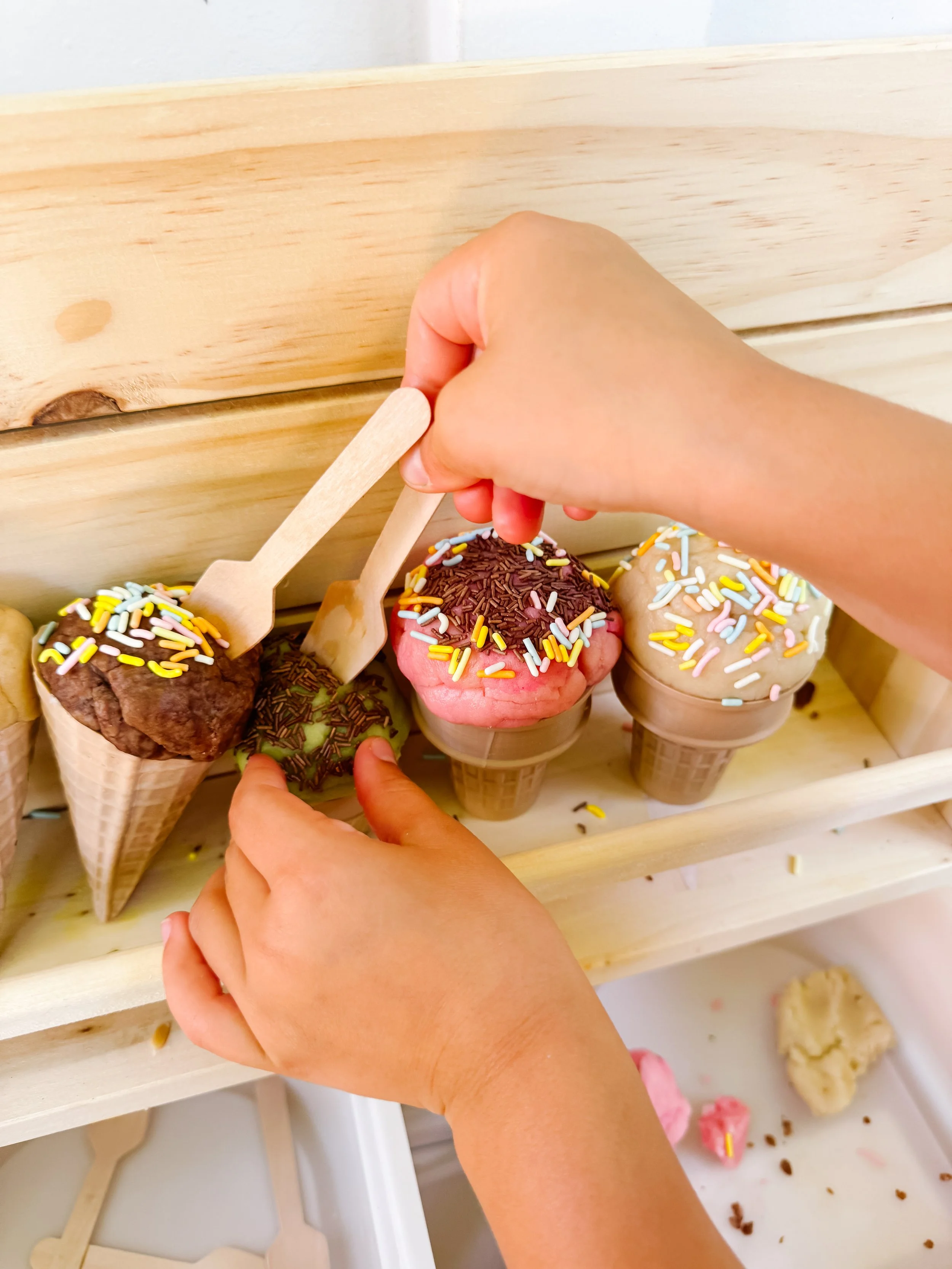
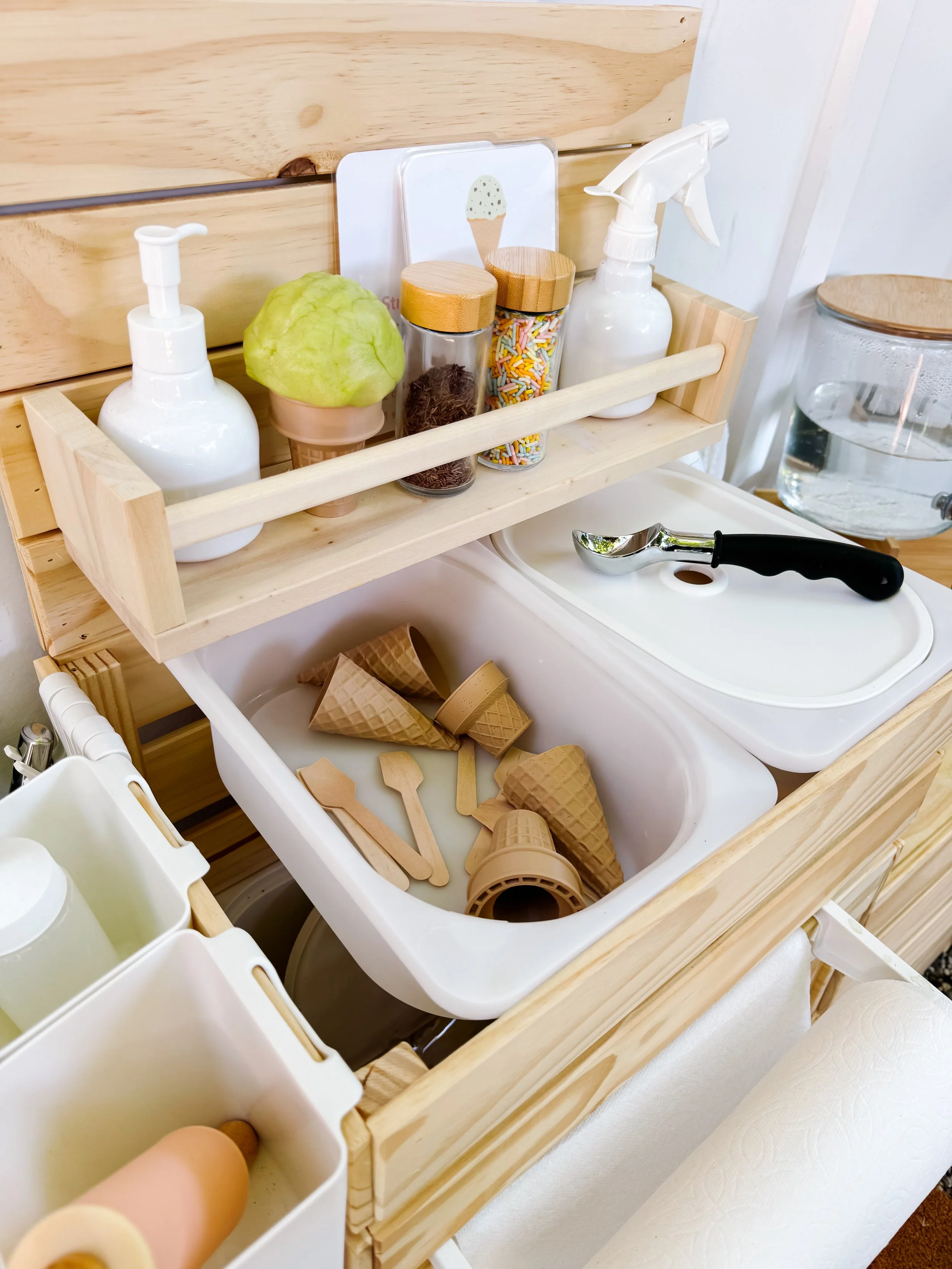
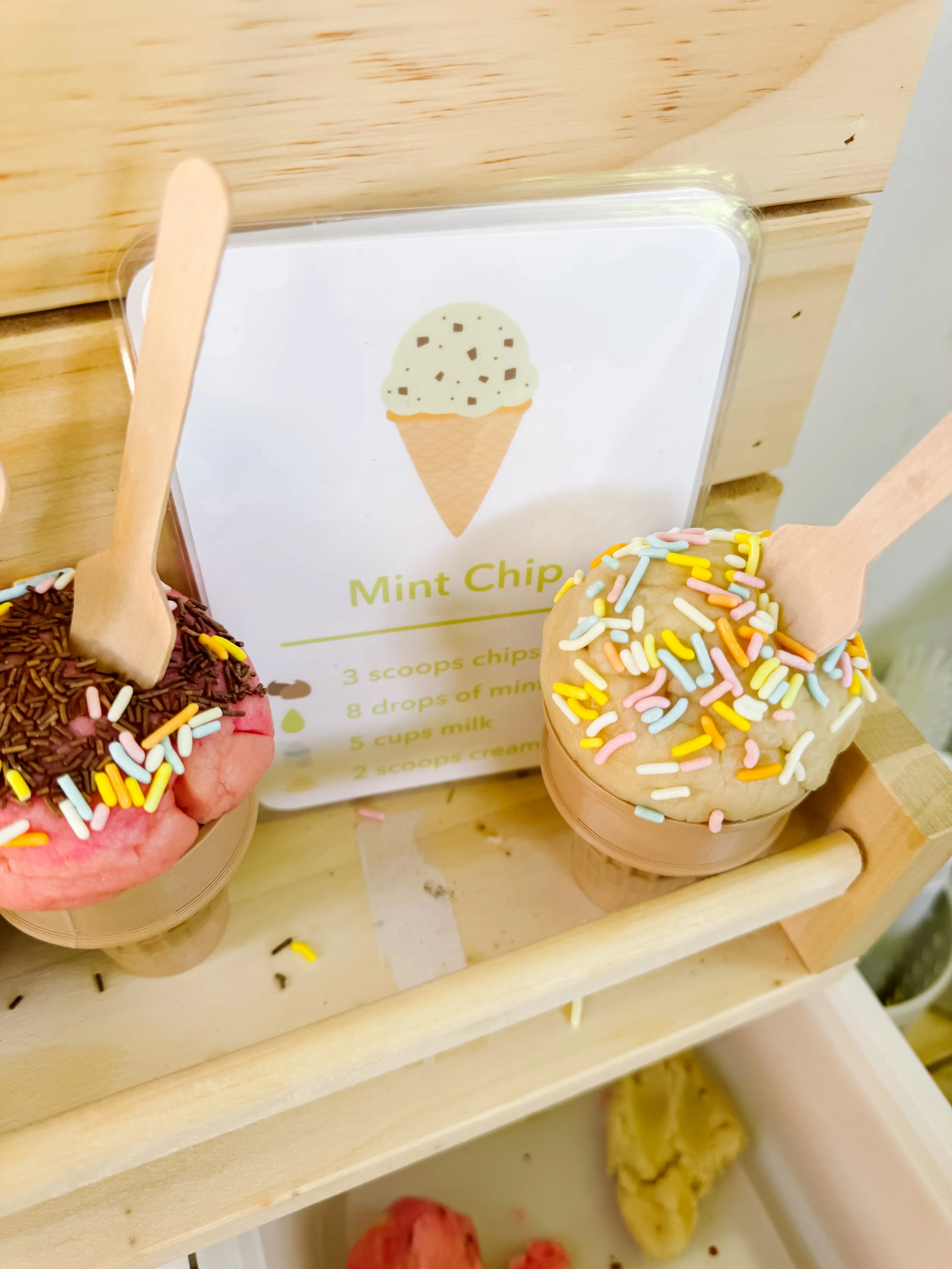
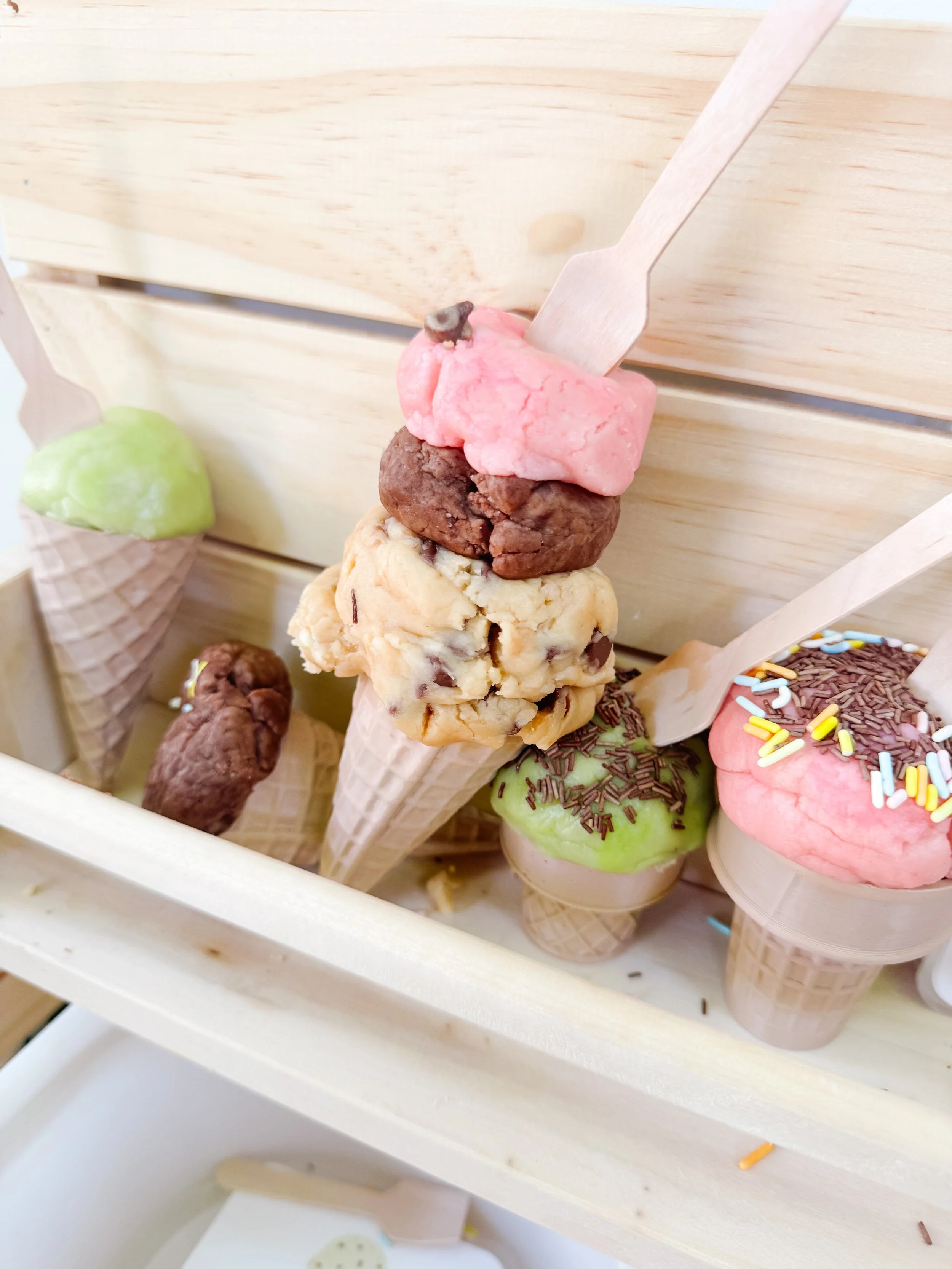
We used our soft, scoopable ice cream play dough as the “ice cream,” then added cones, wooden spoons, bowls, pretend sprinkles, and recipe cards to create a little outdoor ice cream shop.
What I love most is that this activity feels playful and open-ended. Kids can scoop, stack, decorate, take orders, invent flavors, count scoops, and practice social language while playing.
It is the perfect blend of sensory play, dramatic play, fine motor work, and summer pretend play.
What you need
- Ice cream play dough
- Ice cream cones or pretend cones
- Small bowls or cups
- Wooden spoons or scoops
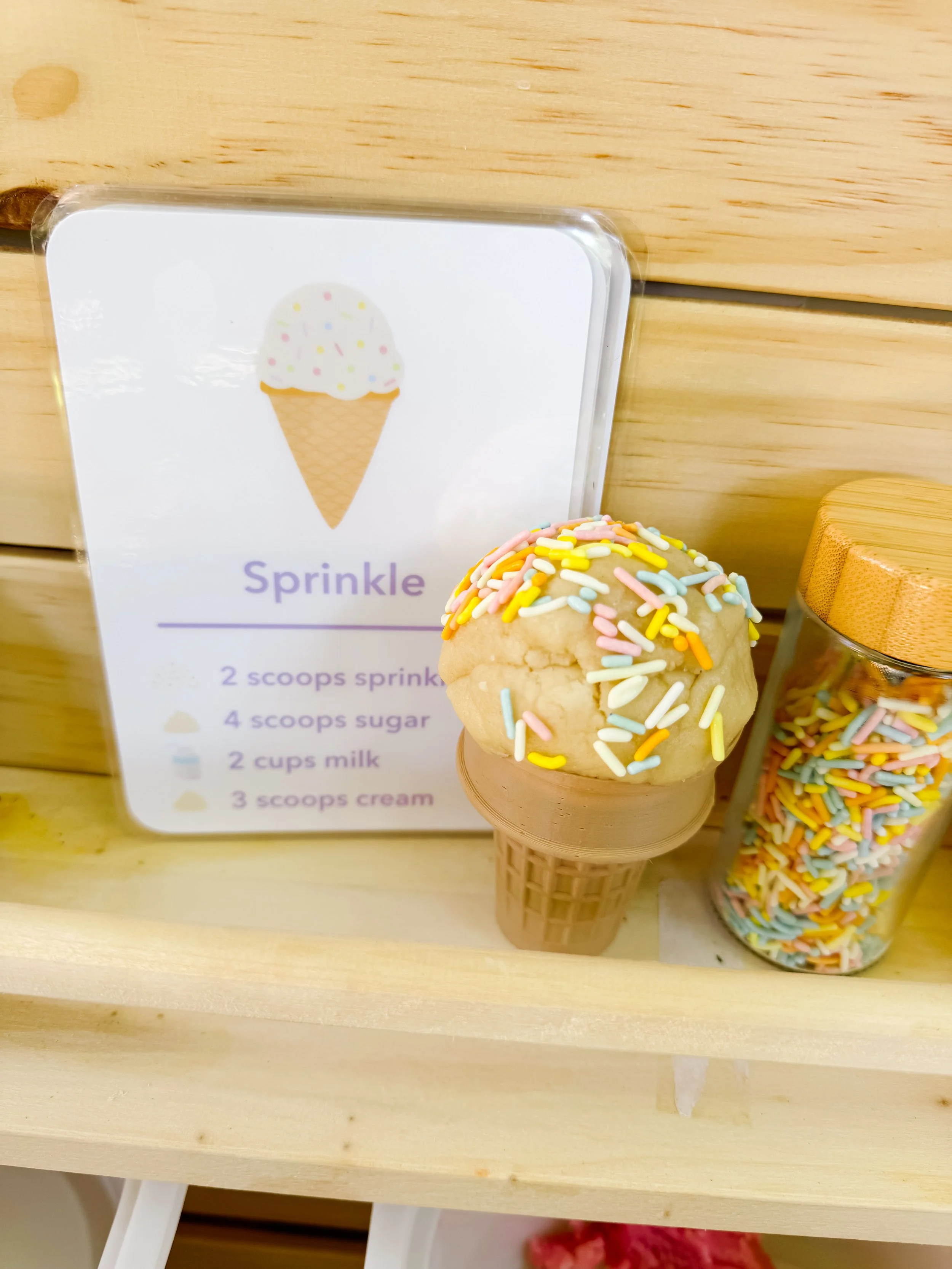
- Pretend sprinkles
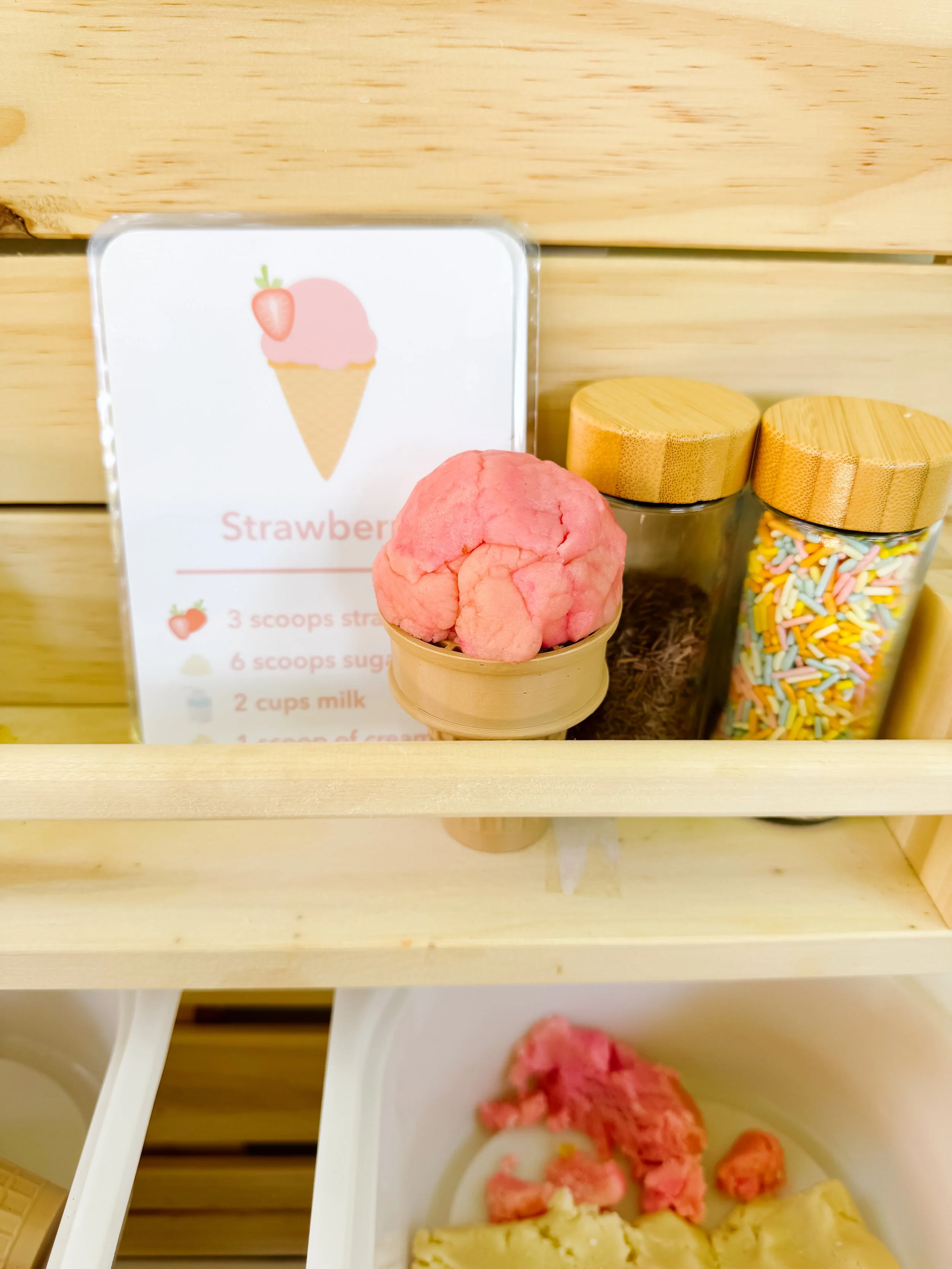
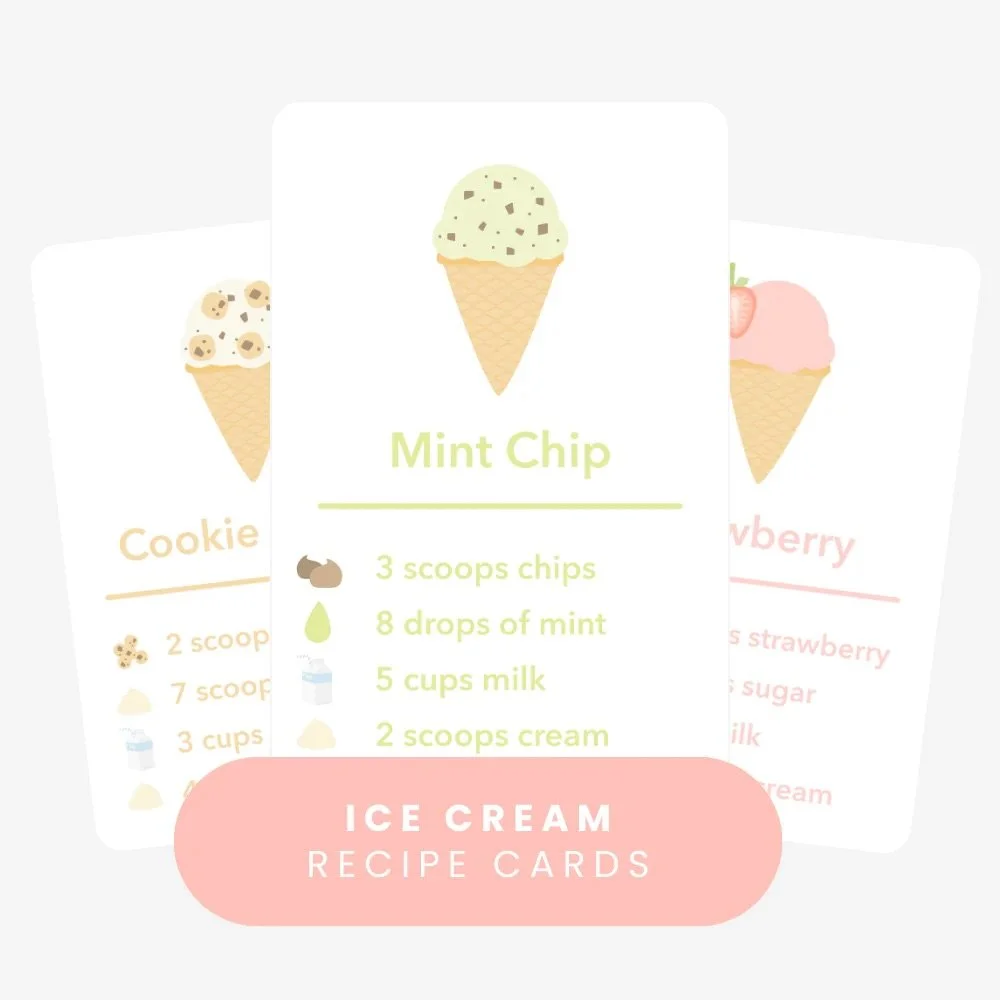
- Recipe cards or menus
- Play kitchen or mud kitchen
- Water dispenser or spray bottle for pretend cleanup
How to set up an ice cream mud kitchen
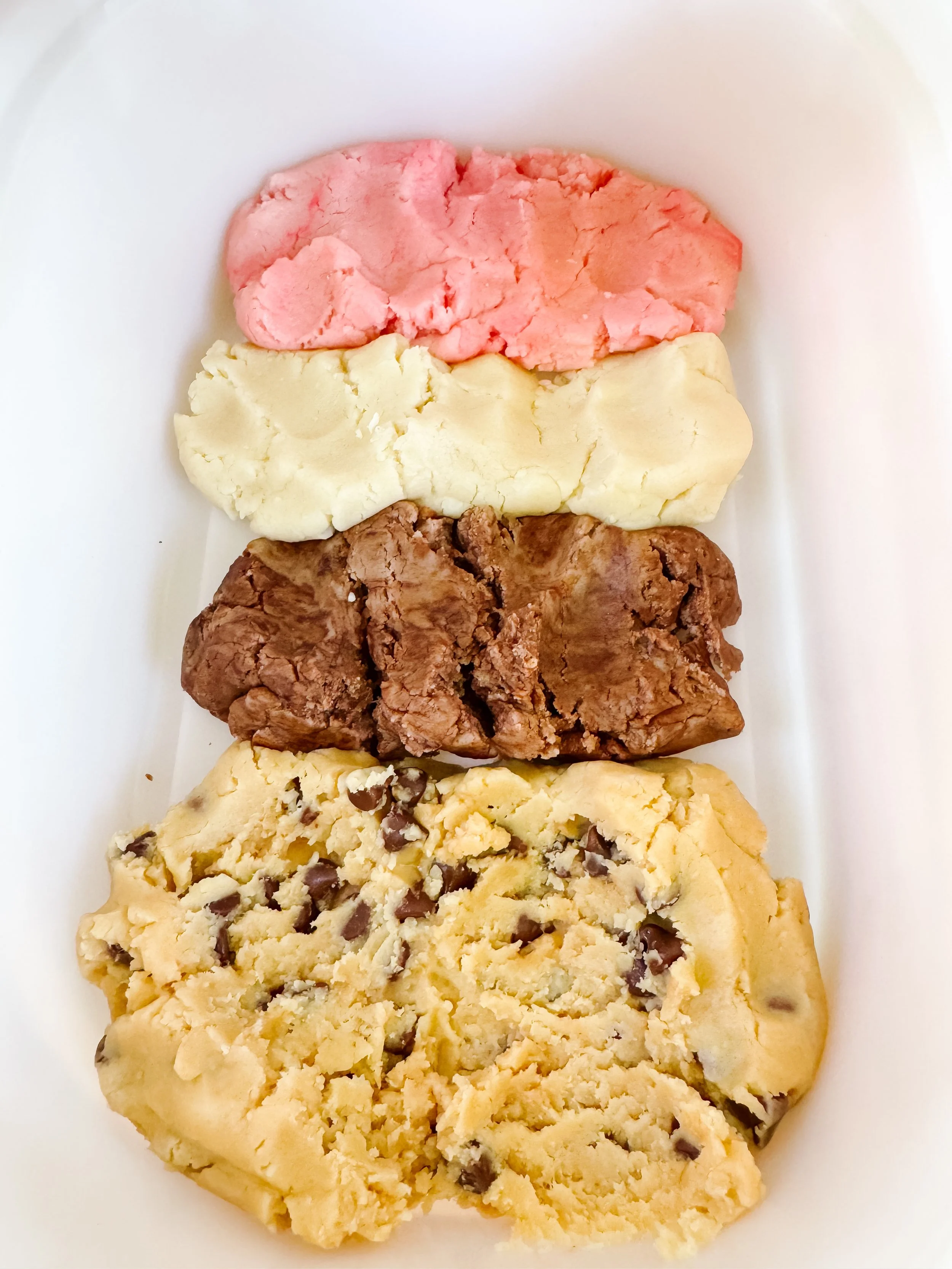
Make the ice cream dough
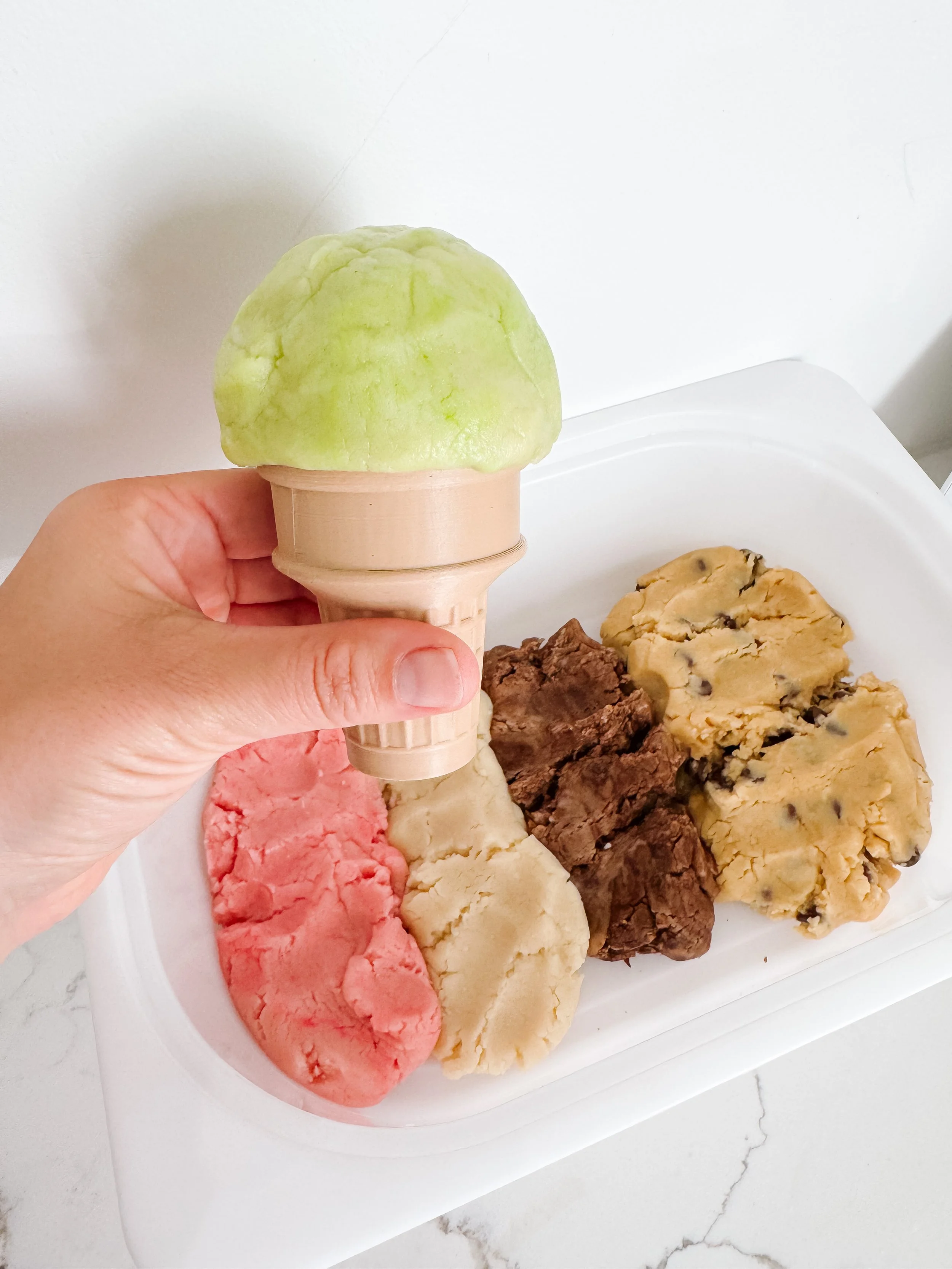
Start by preparing soft, scoopable ice cream play dough in a few different colors or flavors. We used cookie dough, chocolate, strawberry, vanilla, and mint-inspired colors.
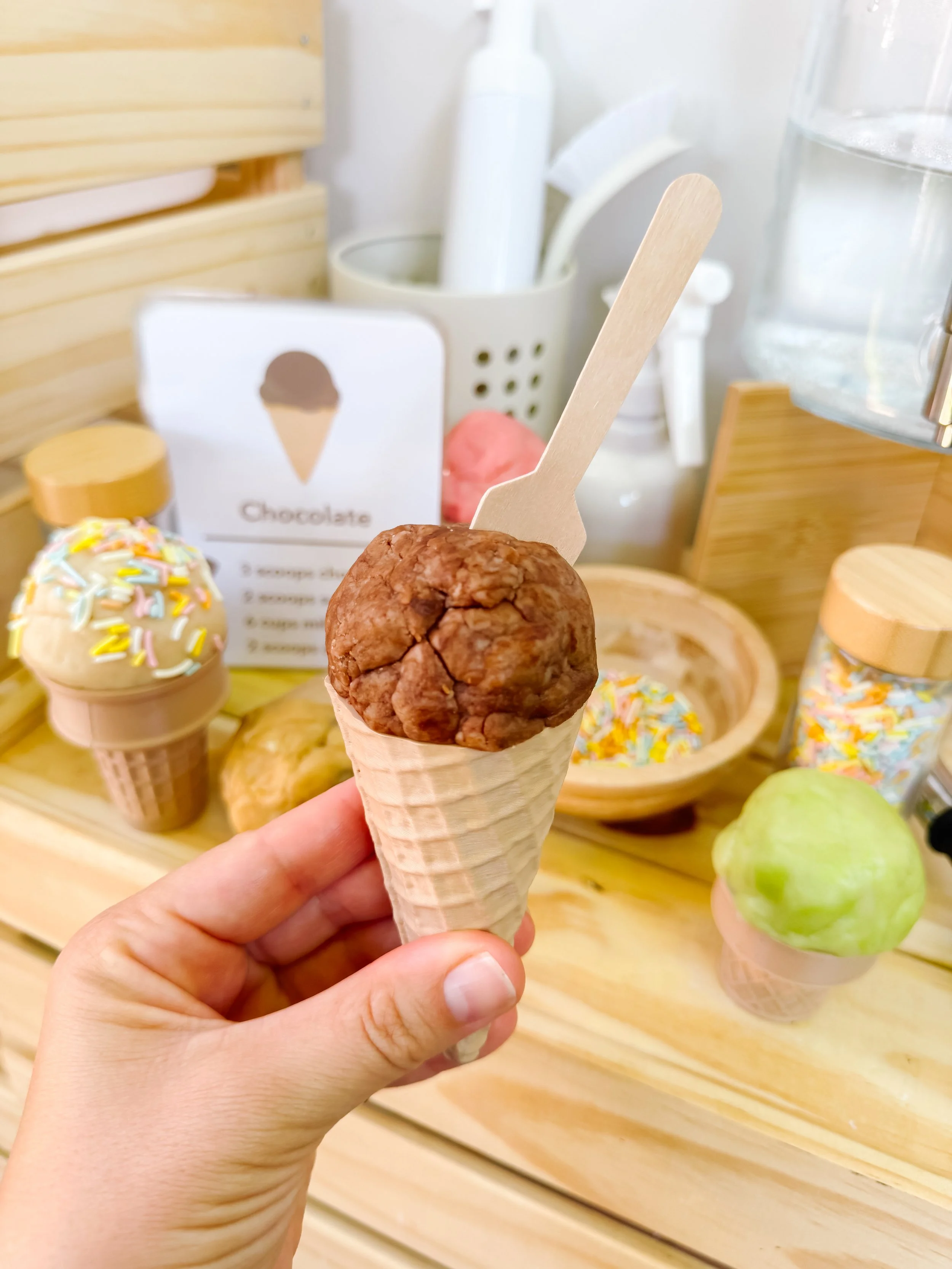
Add cones and scoops
Set out cones, bowls, small spoons, and scoops so kids can build their own pretend ice cream orders. This is great for fine motor practice and imaginative play.
Build pretend ice cream cones
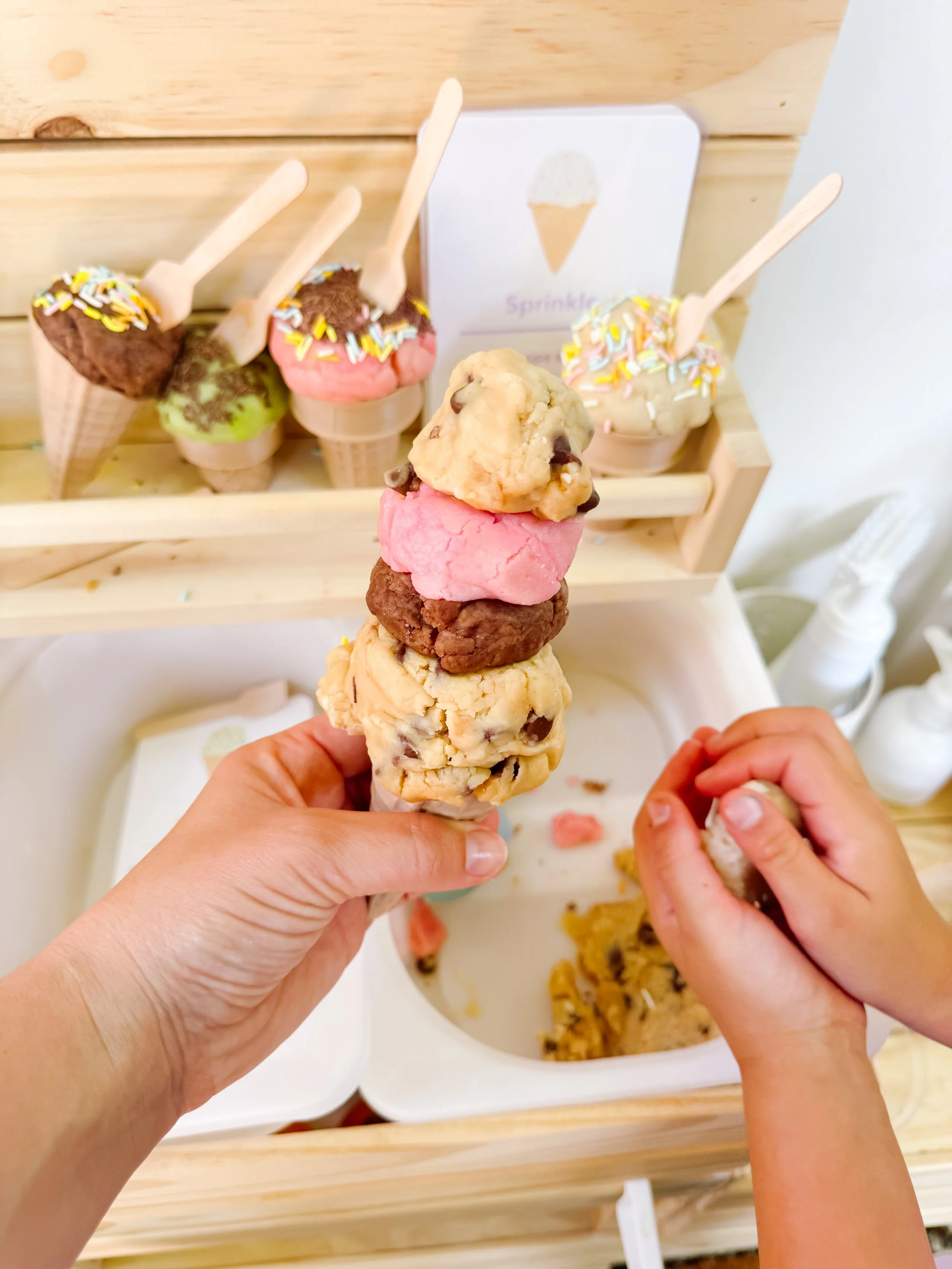
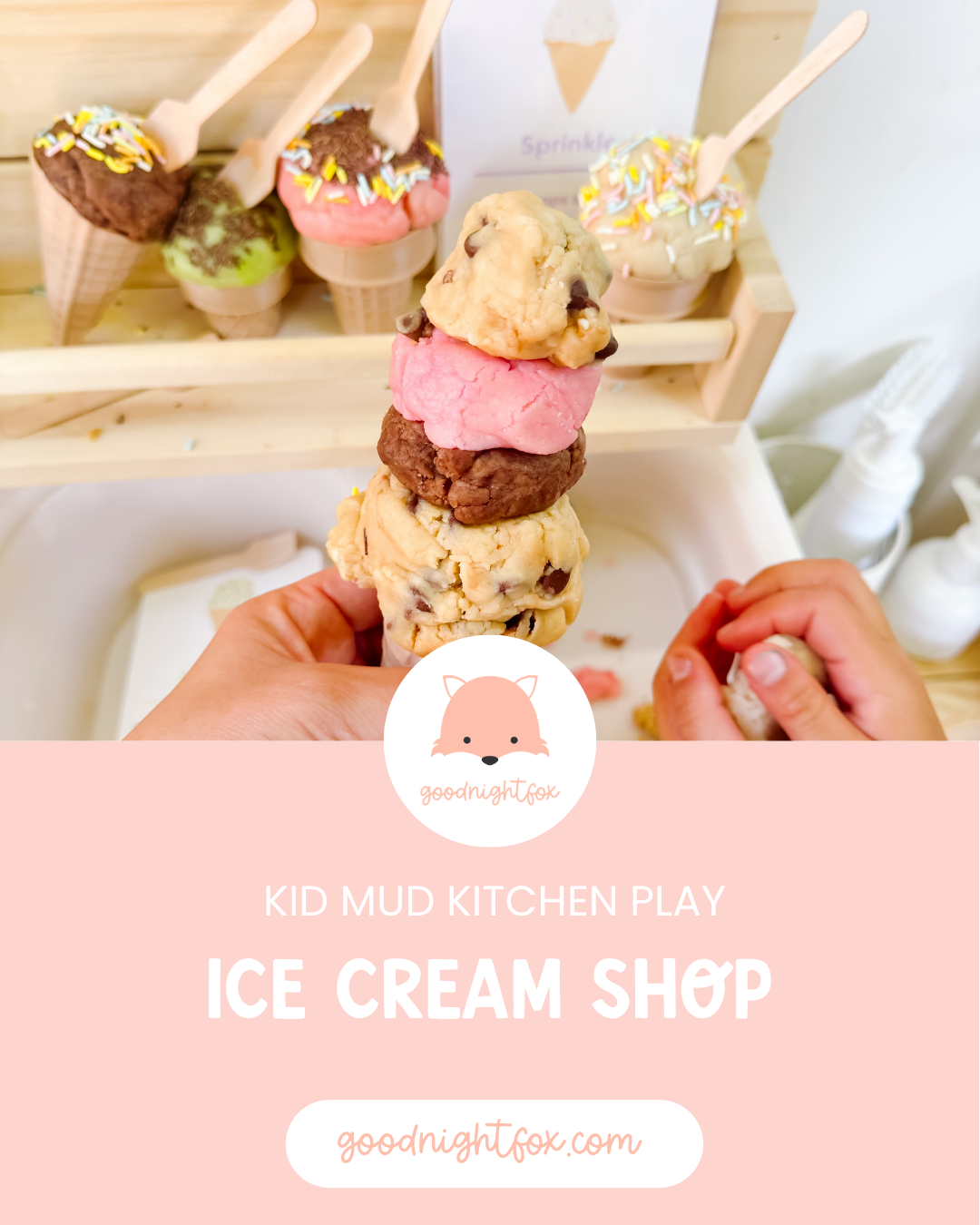
Invite kids to scoop, stack, decorate, and serve their creations. Challenge them to build the tallest cone or create a new flavor combination.
Parent tip
Set up the dough in small bins or bowls so kids can easily access each “flavor.” Add recipe cards or menus to turn simple sensory play into dramatic play.
Ice cream mud kitchen play ideas
Take orders
Have your child ask what flavor everyone wants, then build each order.
Count scoops
Practice counting one, two, three, or even four scoops on each cone.
Create a flavor of the day
Invite kids to invent a new flavor and describe what is inside.
Decorate with toppings
Use pretend sprinkles, mini chips, pom poms, beads, or small sensory fillers as toppings.
Why this activity is great for learning
Ice cream mud kitchen play looks simple, but it supports so many early learning skills.
Kids practice fine motor strength as they scoop, squeeze, roll, and stack the dough. They build language skills as they take orders and describe flavors. They practice early math as they count scoops, compare sizes, and sort toppings.
Because the activity is open-ended, children can also practice creativity, storytelling, problem solving, and cooperative play.
Learning skills
Questions to ask kids
- What flavor should we make today?
- How many scoops are on this cone?
- Which cone is tallest?
- Can you take my order?
- What toppings should we add?
- How much does my ice cream cost?
More ice cream play ideas
Ice cream play dough recipe
Make the soft, fluffy, scoopable dough used in this setup.
Ice cream dough recipeIce cream sensory play
Create a sensory bin with scoops, cones, bowls, and pretend toppings.
Coming soonIce cream shop printable
Add signs, menus, and order forms to turn the setup into a full pretend play shop.
Get the printableIce cream mud kitchen FAQ
What do you put in an ice cream mud kitchen?
Use scoopable play dough, cones, bowls, spoons, pretend sprinkles, recipe cards, menus, and a simple play kitchen or mud kitchen setup.
How do you make pretend ice cream for a mud kitchen?
Use soft sensory dough that can be scooped and shaped like ice cream. Our favorite version uses cookie mix, cornstarch, coconut oil, and water.
What age is ice cream mud kitchen play best for?
This activity is best for ages three and up with adult supervision, especially if you are using small toppings or sensory fillers.
Is this activity taste-safe?
The dough can be made with food-based ingredients, but it is intended for play, not eating. Always supervise young children.
What can kids learn from pretend ice cream shop play?
Children can practice counting, fine motor skills, language, social skills, ordering, comparing sizes, sorting toppings, and creative storytelling.