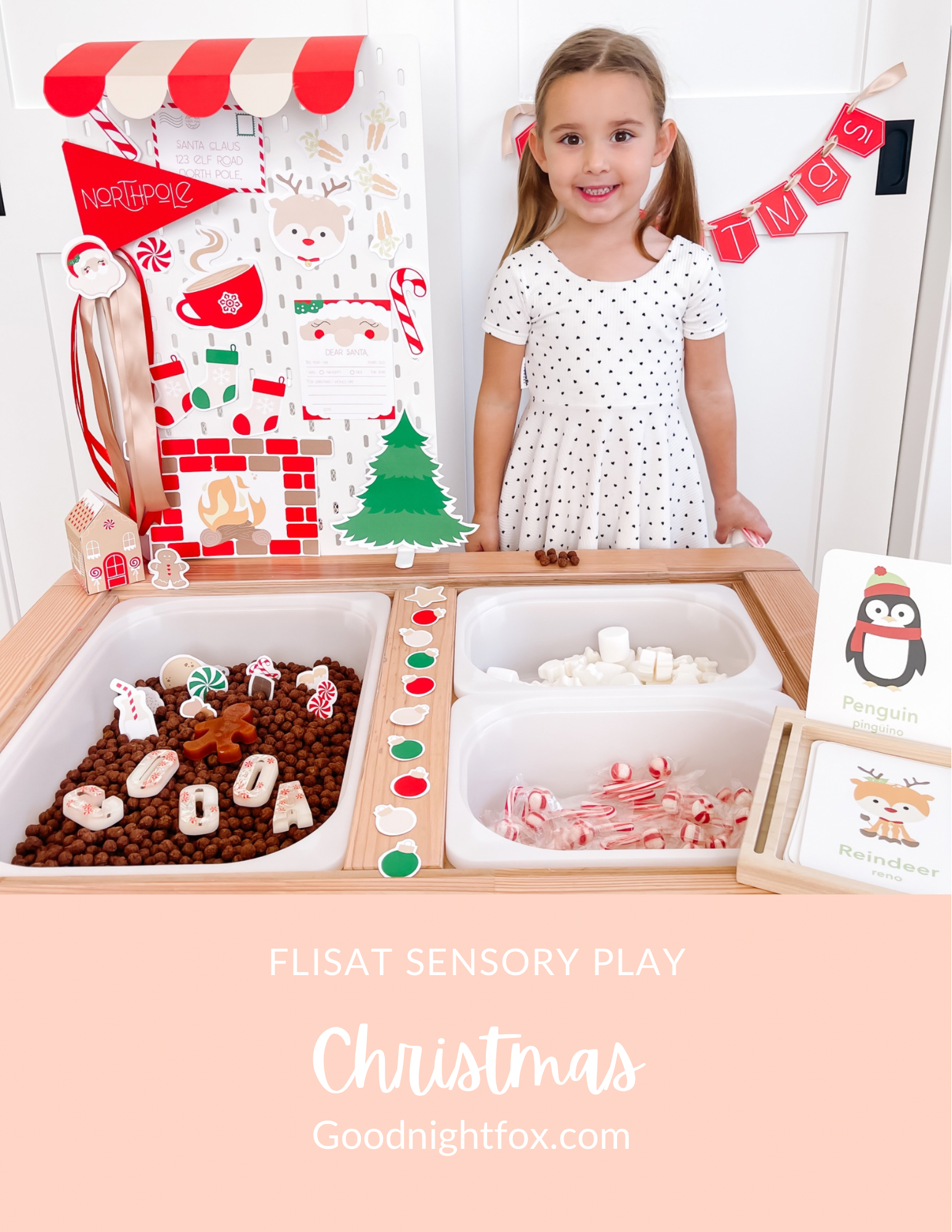
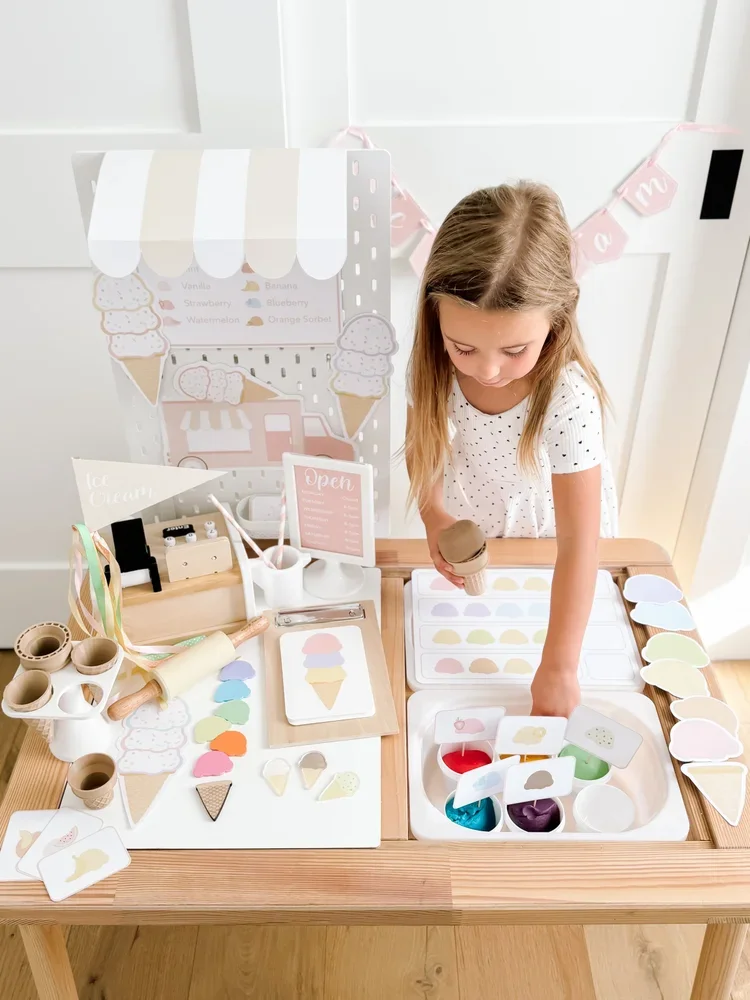
The holidays are the perfect time to bring out festive sensory play setups that spark creativity and hands-on fun! Our Red, White, and Green Hot Cocoa Stand Sensory Play Setup is ideal for little ones to explore textures, colors, and imaginative play. This holiday-themed activity features three sensory bins, a printable decor kit, and endless opportunities for festive fun.
The Setup: Festive Cocoa Stand Decor
To bring the hot cocoa stand to life, we created a whimsical setup complete with:
A banner to hang above your station.
A matching flag for added flair.
A cute awning to tie in the cocoa shop vibes.
Holiday cutouts like candy canes, snowflakes, and mugs of cocoa to complete the theme.
This printable kit makes decorating easy and keeps everything coordinated in a red, white, and green palette.
Each bin in this setup offers a different sensory experience:
Bin 1: Festive Play-Doh Creations
Play-Doh in chocolate, vanilla, and peppermint scents by @CuriousWren makes this bin a hit! Kids can roll, mold, and create their own festive cocoa cups or sweet treats. Add small cookie cutters or molds for extra fun.
Bin 2: Hot Cocoa Scooping and Pouring
This bin invites kids to pretend they’re cocoa chefs! Fill it with:
Chocolate puff cereal for a textured “hot cocoa” base.
Mini marshmallows for toppings.
Recipe cards from the printable kit to encourage imaginative role play.
Add scoops, small cups, and bowls for pouring and mixing.
Bin 3: Candy Cane Crushing
Let your little ones crush their own “candy cane toppings” in this interactive bin! Supplies include:
Peppermints
Candy canes
Kids can use small mallets or rolling pins to crush them into “sprinkles” for their cocoa stand creations.
Why This Sensory Play Setup Is a Must-Try
Encourages Imagination: Kids can role-play as cocoa stand owners, creating their own drinks and recipes.
Explores Textures and Scents: From scented Play-Doh to crunchy cereal and minty candy canes, this setup engages multiple senses.
Fosters Fine Motor Skills: Scooping, pouring, and crushing all help develop coordination and dexterity.
Holiday Spirit: The bright red, white, and green decor creates a festive atmosphere perfect for the season.
How to Get Started
Setting up your Red, White, and Green Hot Cocoa Stand Sensory Play Setup is easy! Download the printable decor kit from our shop to create your backdrop. Pair it with the sensory bin ideas listed above, and you’re ready for hours of fun!
Tag us in your setups at @GoodnightFox—we’d love to see how your little ones enjoy their holiday sensory play experience!
Looking for more holiday sensory play ideas? Check out our Craft Advent Calendar or Snow Globe Party Favors for more festive inspiration!
Calling all young superheroes and their imaginative minds! Our printable superhero dramatic play kit is here to transform your playtime into thrilling adventures filled with action-packed fun. Designed to ignite creativity and learning, this kit is the perfect catalyst for heroic play experiences.
Setting the Super Hero Scene with Dramatic Play Decor
Your play area becomes a bustling superhero hub with vibrant decorative elements. The awning banner, featuring eye-catching colors and superhero-themed designs, instantly sets the stage for epic missions. Pow and bang signs add excitement, turning an ordinary play table into a dynamic crime-fighting headquarters.
Decor setup includes:
Two colored awnings
Splat, zap, crash and pow signs
City scape cut outs for the back of the Flisat Skadis pegboard
Cut out and assemble super hero masks
Pattern matching activity
Decorative super hero pennant flags
Cut out super power cards
The cityscape hangs on the pegboard from my guide to how to set up a FLISAT table, if you're building the base setup first.
Super hero sensory bin ideas
1.Engaging Sensory Exploration with Teal, Coral, and Yellow Chickpeas
Enhance sensory play with our specially colored chickpeas! Teal, coral, and yellow chickpeas provide a textured and visually stimulating sensory filler. Imagine scooping, pouring, and exploring these colorful chickpeas while uncovering hidden superpowers using the bib hide-and-uncover cards. It’s sensory fun with a superhero twist! Use the super power cards provided in the kit and burry them underneath the chickpeas. Match the colors to the colored chickpeas for an even more challenging adventure. Once you’ve selected a super power…
2. Dawn a mask and role play your super power
Fight crime in the city, save a person from a burning building, stop an impending disaster. Let your imagination run wild as you use this kit to inspire pretend play. Sofia’s favorite super power is invisibility and she loves to pretend like I can’t see her. Whatever your child chooses, they’re sure to have so much fun with this role play activity.
Dive into character with included cutout masks, allowing young heroes to embody their favorite superheroes. The nighttime cityscape backdrop adds depth to the play experience, setting the scene for daring missions and heroic deeds.
3. PATTERN MATCHING ACTIVITY
This kit also includes a printable pattern matching activity. In this activity, kiddos will take the cut outs and match them to the next zap, bow, band, crash or splat in the sequence. They can place the next item in the empty box on the right. Pattern recognition is a critical cognitive skill which is why you see so many pattern matching questions on cognitive tests like IQ tests. Using these pattern recognition activities is a great way to have fun while developing this skill.
Learning Benefits of Dramatic Play
Dramatic play isn’t just fun; it’s a treasure trove of learning opportunities! Through imaginative play, children develop crucial social, emotional, and cognitive skills. Concepts like teamwork, problem-solving, creativity, and empathy blossom as they take on superhero roles and navigate thrilling scenarios.
Cognitive Development with Pattern Sequencing
Our kit incorporates a pattern sequence page, a valuable resource for enhancing cognitive abilities. As children engage in sorting and recognizing patterns, they sharpen their cognitive skills, paving the way for improved problem-solving and logical thinking.
Fosters sensory exploration with specially colored chickpeas.
Develops social and cognitive skills through role-playing.
Enhances cognitive abilities through pattern sequencing activities.
Transform ordinary playtime into an extraordinary adventure with our printable superhero dramatic play kit. Unleash the power of imagination and watch your child's superhero dreams come to life!
It’s important to use sensory and dramatic play to learn new words and concepts in context. The combination of sensory and dramatic play can help children retain new words faster because they have concrete examples to pair with the words. For this activity, we practice the following words and their meanings.
Hero: Someone who helps others and does good things.
2. Villain: A bad person who tries to cause trouble.
3. Cape: A special cloth you wear like a big, flowing blanket.
4. Mask: Something you wear over your eyes to hide your face.
5. Powers: Special abilities that make someone strong or fast.
6. Superhuman: Someone who is stronger or faster than most people.
7. Rescue: Saving someone from danger or harm.
8. Sidekick: A friend who helps the main hero.
9. Secret identity: A hidden name or who you really are.
10. Super strength: Being really, really strong.
11. Invisibility: Being able to disappear and not be seen.
12. Flight: Flying up in the sky like a bird.
13. Super speed: Running really, really fast.
14. Super hearing: Hearing things from really far away.
15. X-ray vision: Seeing through things like a superhero.
16. Costume: Special clothes heroes wear to look special.
17. Fortress: A big, strong, secret place where heroes stay.
18. Shield: Something strong that protects you from harm.
19. Lair: A secret hiding place, like a hero's home.
20. Bat-signal: A special light that calls a superhero for help.
21. Super suit: A costume that gives you special powers.
22. Alter ego: Another name or identity that a hero has.
23. Gadgets: Cool tools and devices that help heroes.
24. Team-up: Working together with other heroes.
25. Justice: Making things fair and right for everyone.
Welcome to an exciting wilderness adventure as we dive into the world of Safari Animal Play! In this blog post, we will unveil our innovative printable play kit, designed to take kiddos on an immersive safari journey. With elements such as the awning, safari sign, flag, banner, and tours sign, along with fun play elements like polaroid photos, toilet paper roll binoculars, and animal face masks, this sensory setup promises hours of educational and imaginative play. Let's explore the various elements and activities that make this play kit a roaring success!
Table Decor: Creating a Safari Atmosphere To set the stage for our Safari Animal Play, our printable play kit includes a charming array of table decor. We start with an inviting awning that instantly transforms any surface into a safari adventure headquarters. A vibrant safari sign ensures everyone knows they are entering a world of thrilling discovery. Accompanying the sign is a colorful flag that adds an extra touch of excitement and serves as a beacon for young explorers. A carefully crafted banner adds a playful element to the safari experience. To top it all off, a tours sign encourages young adventurers to embrace their wild side and partake in an unforgettable journey.
Play Elements: Inspiring Exploration and Creativity A safari adventure wouldn't be complete without interactive play elements. Our printable play kit includes polaroid photos of various animals, allowing children to familiarize themselves with their safari companions. Toilet paper roll binoculars provide a valuable tool for observation and encourage budding explorers to inspect their surroundings. Animal face masks enable children to step into the shoes (or paws!) of their favorite safari creatures, igniting their imagination and fostering empathetic connections with the animal kingdom.
Sensory Play Activity: Capturing Photographs and Creating Matches Engaging in sensory play is not only fun but also aids in children's cognitive development. Our printable play kit promotes a sensory play activity centered around a wooden play safari truck and animal figurines. Kids can use these props to snap photos and match them with the corresponding animals. This enthralling game encourages children to sharpen their memory skills, enhance their cognitive abilities, and deepen their knowledge of the animal kingdom.
Alternative Play Options: Tailored Adventures for All Ages We understand that every child is unique, and their play preferences may vary. Our printable play kit offers alternative play options to accommodate a diverse range of ages and interests, ensuring everyone can join the safari fun:
1. Taste-Safe Option: For younger children or those who prefer exploring with their taste buds, consider incorporating edible elements into the play. Use animal-shaped snacks or create a taste-safe sensory bin filled with edible materials like colored cereal or cooked pasta.
2. Sensory Filler Option: Extend the sensory experience further by incorporating different fillers into the play. Consider using kinetic sand, rice, or shredded paper as sensory materials, adding texture and depth to the safari animal adventure.
Through our comprehensive printable play kit, kiddos can immerse themselves in a thrilling safari animal adventure, regardless of their age or preferences. The awning, safari sign, flag, banner, and tours sign set the stage for an unforgettable journey. Polaroid photos, toilet paper roll binoculars, and animal face masks invite children to explore and create in the wild. Engaging in sensory activities with the wooden play safari truck and animal figurines enhances cognitive development and promotes a deeper understanding of wildlife. With additional alternative play options, every child can embark on a personalized safari adventure. Let their imaginations run wild and nurture their love for animals on this exciting play-filled journey!
Join us on a Safari Animal Adventure today and unlock the wonders of the animal kingdom!
Teaching Emotions to Toddlers: 7 Simple Activities
The meltdown over the wrong color cup isn't really about the cup. It's about a feeling with no words attached. Toddlers feel everything at full volume and own almost none of the vocabulary — so the fastest way to fewer, shorter meltdowns is teaching emotions through play, one face at a time.
Best forAges 1–4
Time5–15 min each
CostFree to ~$15
SkillsEmotional vocabulary + empathy
Why play works better than explaining
A lecture on feelings goes in one ear and out the other at age two. But make a playdough face with an angry mouth, and your toddler will remember "angry" for weeks. Play gives emotions a shape, a face, and a name — and naming a feeling is the first step to managing it. These seven activities build that vocabulary one game at a time.
1. Playdough faces
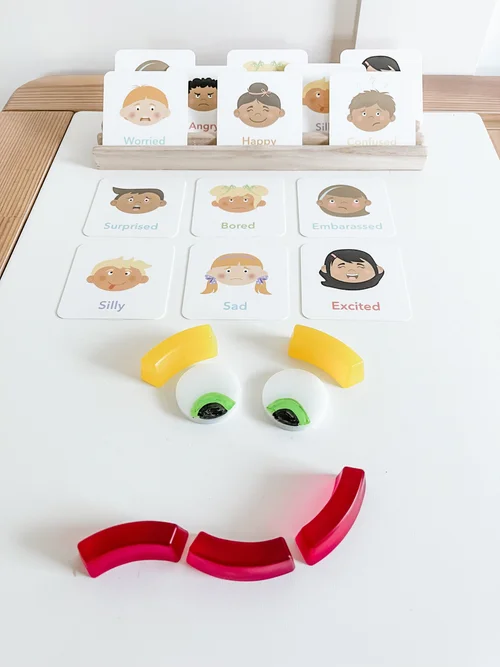
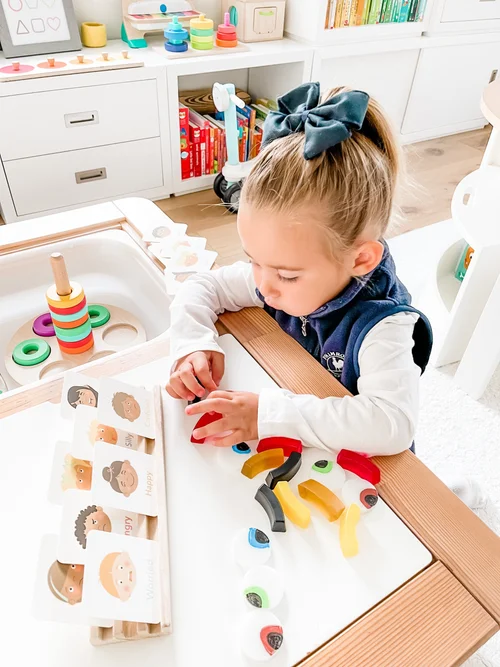
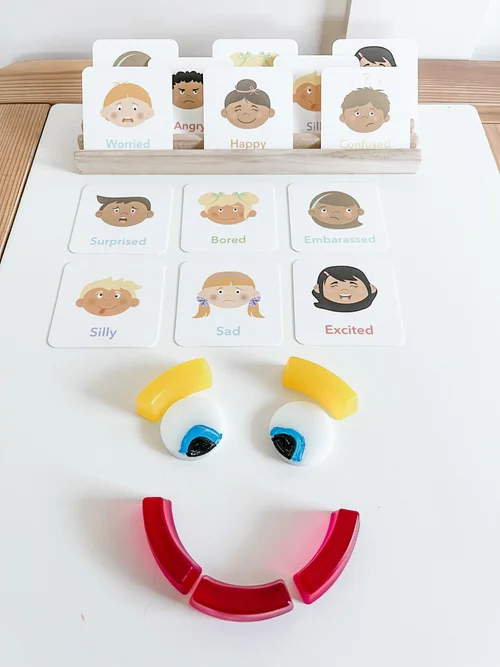
Roll out a ball of playdough, flatten it into a face shape, and build expressions together: googly eyes or dough balls for eyes, a smile or frown for the mouth. "This face is happy — can you make a sad one?" It’s part fine motor work, part feelings lesson, and toddlers will happily make twenty faces in a row. No playdough handy? Translucent face-building pieces on a light table or white tray work the same way — mix-and-match eyes, brows, and mouths to build any feeling.
Build-a-face pieces + emotion cards — every combination is a new feeling to name.
2. Mirror faces
Sit in front of a mirror together and take turns making faces: happy, sad, angry, surprised, silly. Name each one out loud as you make it, then let your toddler "teach" you. Seeing their own face do the feeling wires the word to the sensation — and the silliness keeps them coming back.
3. Emotions card match
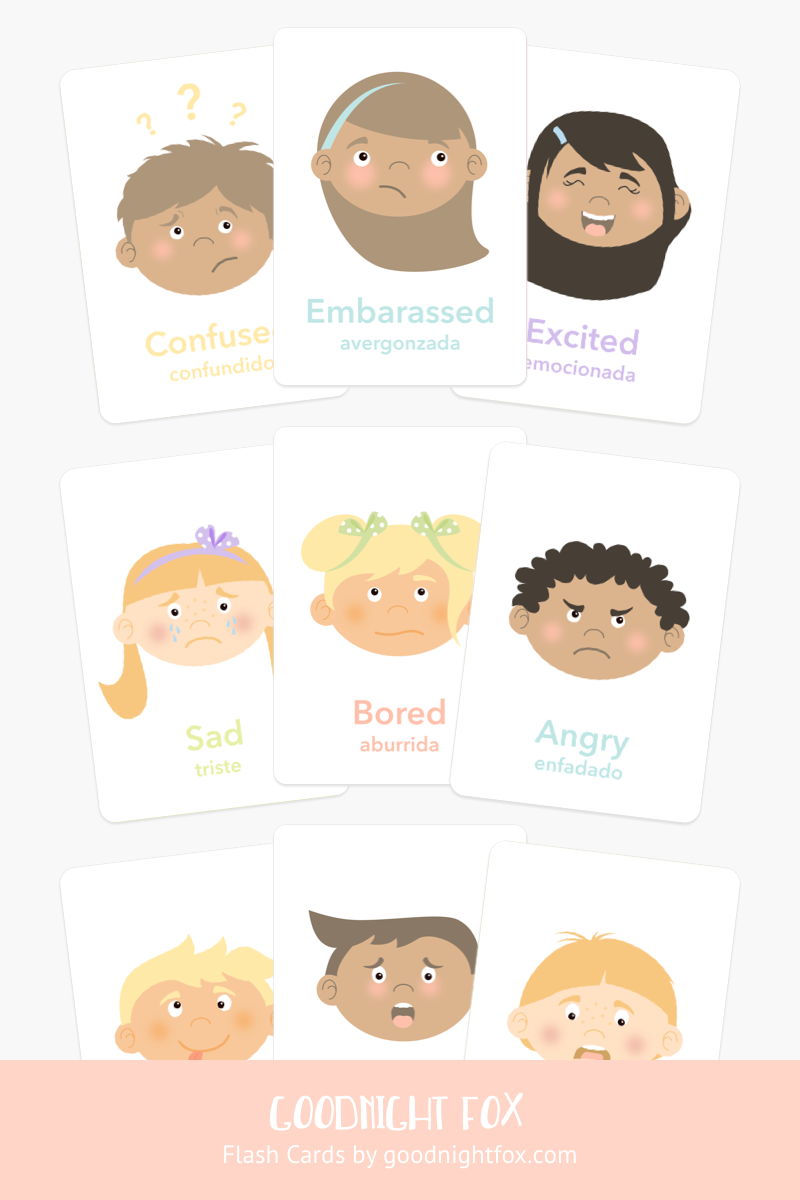
Lay out a few emotion cards face-up and take turns: "Find the worried face." "Which one is excited?" Start with three or four contrasting emotions (happy/sad/angry) and add more as they master them. Our Emotions Flashcards were made for this — expressive faces with English and Spanish emotion words, sized for little hands.
The emotions cards laid out and ready — start with three or four, then add more.Matching game in action — "find the worried face."
4. Morning feelings check-in
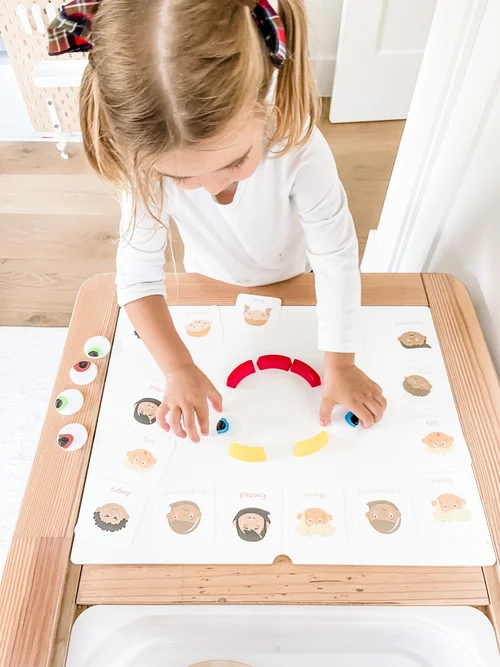
Hang an emotions chart where your toddler can reach it and make it a morning ritual: "How are you feeling today? Point to your face." No wrong answers, no fixing — just naming. Our Emotions Posters (Set of 3) include a check-in visual made for exactly this. The daily repetition is what turns vocabulary into a habit they can reach for mid-meltdown.
Morning check-in: build the face that matches the feeling.
5. Emotion story time
When you read together, pause at the characters' faces: "How do you think the bear feels right now? What does his face tell you?" Picture books are a low-stakes rehearsal space — your toddler practices reading emotions on someone else's face before they have to manage their own.
6. "What would you feel?" scenarios
During calm moments, play out tiny scenarios with toys: "The bunny's block tower fell down. How does bunny feel?" Let your toddler answer, act it out, and suggest what bunny could do. You're building the cause-and-effect map of emotions — this happened, so I feel this, so I can do that — without a single real tear.
7. Practice calming down, not just naming
Vocabulary is half the equation; the other half is what to do with the feeling. Once your toddler can name "angry," teach the exit ramp: three slow breaths, squeezing a stress ball, or hugging a stuffed animal. Our Toddler Mindfulness Flashcards pair each calming strategy with an illustration they can copy. For the full setup, see our calming corner guide.
When should I start teaching emotions to my toddler?
You can start as early as 12–18 months by simply naming feelings out loud ("you're frustrated"). Structured activities like these land best from about age 2, when toddlers start connecting words to experiences.
What if my toddler only knows "happy" and "sad"?
That's the perfect starting point. Add one new emotion at a time — "angry" and "scared" are usually next — through the activities above. Depth beats breadth: three well-understood feelings do more than twelve memorized labels.
Should I correct my toddler when they name the wrong emotion?
Gently, and rarely. If they point to "angry" when they're clearly sad, reflect what you see: "Hmm, your face looks a little droopy — could that be sad?" Modeling beats correcting.
Do emotions activities actually reduce tantrums?
They shorten them. A toddler who can say "I'm mad" doesn't need to be mad as loudly or as long. The feeling still comes — the vocabulary just gives it an exit.
Chalk art is a marvelous way to encourage creativity and imagination in children while allowing them to connect with the great outdoors. In this blog post, we'll dive into the world of outdoor chalk art and explore the numerous benefits it offers for children. We'll also showcase some impressive chalk murals created by an incredibly talented young artist – my daughter.
1. Mosaic Design:
One particular masterpiece my daughter crafted was a stunning mosaic design. Using painters tape to section off different spaces, she skillfully filled them with an array of vibrant chalk colors. This technique not only allows children to experiment with shapes and patterns but also enhances their focus and attention to detail. Through the process of creating a mosaic design, children can develop their fine motor skills while expressing their artistic flair.
2. Balloons:
Another delightful creation by my daughter was a whimsical balloon mural. By lying down with the balloons and capturing a photo from above, it appears as though she's soaring through the sky. This unique perspective not only adds an element of fun but also encourages children to think outside the box and explore different angles. Moreover, such interactive art pieces can spark imagination and storytelling, allowing children to envision themselves in exciting scenarios.
3. Ladder to the Moon:
For my daughter's next work of art, she created a captivating mural featuring a ladder reaching towards the moon. By having the child lay face down, it creates an illusion of them reaching for the stars. This mural not only ignites children's fascination with space and astronomy but also encourages them to dream big. By engaging in such imaginative play, kids can develop their cognitive and problem-solving skills while exercising their physical coordination.
4. Umbrella and Rainboots:
Last but not least, my daughter crafted a delightful mural showcasing an umbrella and rainboots. By having the child lay on the ground and hold the umbrella, it creates an illusion of them splashing through water. This particular artwork not only encourages children to experiment with perspective but also allows them to connect with nature. By incorporating elements from their surroundings, kids can develop an appreciation for the environment while enhancing their artistic abilities.
Benefits of Chalk Art Outdoors for Kids:
Beyond the remarkable murals created by my daughter, outdoor chalk art provides several noteworthy benefits for children.
Enhanced Creativity: Chalk art offers endless possibilities for children to explore their imagination and unleash their creativity. With the freedom to experiment and express themselves, kids can develop their own unique artistic style.
Motor Skills Development: Engaging in chalk art outdoors requires children to engage their fine motor skills and hand-eye coordination. Through using different strokes, blending colors, and filling in large spaces, children develop their dexterity and motor control.
Physical Activity: By actively engaging in chalk art outdoors, kids have the opportunity to combine artistic expression with physical activity. From drawing on the ground to positioning their bodies for unique perspectives, children can enjoy the benefits of both art and exercise.
Connection with Nature: Outdoor chalk art extends the child's learning beyond paper and screens. Being surrounded by nature can inspire their creativity and foster a deeper connection with the natural world.
Conclusion:
Outdoor chalk art offers a multitude of benefits for children, ranging from creativity and imagination enhancement to motor skills development and physical activity. The murals crafted by my daughter, including the mosaic design, floating balloons, ladder to the moon, and umbrella and rainboots, exemplify the endless possibilities and captivating experiences awaiting children through outdoor chalk art. So go ahead, grab some chalk, step outside, and embark on a vibrant journey of creativity and growth!
As a mother passionate about nurturing my daughter Sofia's curiosity and development, sensory play has been a cornerstone of our educational journey. Through these engaging experiences, Sofia not only discovers new textures and sensations but also expands her cognitive and motor skills while having an absolute blast.
Why Sensory Play Matters:
Sensory play is crucial for toddlers like Sofia as it stimulates their senses, fostering cognitive, language, and social-emotional development. By engaging in activities like fake snow and chickpea snowballs, shredded coconut snow and snowflakes, and ice skating arctic animals on snowflake-shaped Gatorade ice cubes, Sofia not only explores various textures but also hones her fine motor skills and imaginative thinking.
Sofia adores these sensory setups. Her eyes light up when she dives into the fake snow and chickpea snowballs, reveling in the chilly touch and tactile exploration. The shredded coconut snow and snowflakes evoke giggles and soft sensory pleasure, while the ice skating arctic animals skating on Gatorade ice cubes transport her to an imaginative wintry wonderland.
The Ice Skating Rink Play Decor:
To elevate the ice skating experience, I've designed a thematic decor setup. A vibrant menu and a charming banner adorned with wintry motifs set the scene. Flags flutter around the rink, while cutouts of drinks and snacks add to the ambiance, enhancing Sofia's playtime immersion.
Sensory play takes many shapes and forms and often depends on the kid’s age. Here are three different snow-play bins for a variety of ages including taste-safe options.
Real Ice Snowflake Skating Rink: For this sensory bin, I used real ice. I froze blue gatorade in order to give the ice some color, but you could also use food coloring if you’d like. I used this fun snowflake silicone mold in order to freeze the water and enable the little characters to float around on the ice. I used bath toys from the Target dollar spot and froze them on the top of the ice cubes. I also used a regular square mold and a sphere mold to add more ice to the bin. Sofie loved moving them around the ice and skating them around.
Fake Shredded Coconut Snow: For a taste-safe bin, I used a bag of shredded coconut from the local Trader Joe’s. I used this filler because Sofie loves to snack, but I also had a feeling she wouldn’t love the flavor and get too full before lunch. She really loved immersing her hands in the texture and squeezing and mushing it together. She even tried to make little snow balls. I added these wooden snowflakes and wool balls to the bin as well.
Fake Snow: For this bin, I used powdered fake snow. You just put the powder in the bin and add a bit of water and the snow instantly puffs up. It was both fun to watch it form and fun to squeeze and play with. We added some chickpea “snow balls” in order to make it even more fun to sift and stir.
Chickpeas, rice, and sand: Using our InspireMyPlayTray, we creating 5 different compartments. We used two shades of painted purple chickpeas, blue dyed salt, and white sushi rice. We poured the rice into the middle of the play tray, poured chickpeas around the outer edge, and blue salt in the middle. Then we used our resin pieces from @LittleOctoberHouse to make the Ice Skating Scene. We also used our GoodnightFox Animal Acrylic Charms for character small world play.
Vocabulary Words for Toddlers:
Skates
Snowflakes
Penguin
Arctic
Ice
Glide
Frosty
Chill
Slush
Winter
Skateboard
Snowball
Snowman
Blizzard
Frost
Freeze
Glacier
Icicle
Polar
Snowplow
Mittens
Snowfall
Snowboard
Figure Skating
Snowdrift
By incorporating these words into play, toddlers like Sofia not only immerse themselves in the theme but also expand their vocabulary, setting a strong foundation for future learning and communication.
Sensory play isn't just about fun; it's a gateway to holistic development, fostering creativity, cognitive growth, and joyful learning experiences. As Sofia delights in these sensory bins, I revel in witnessing her joy and development, knowing that each setup sparks new discoveries and fuels her imagination.
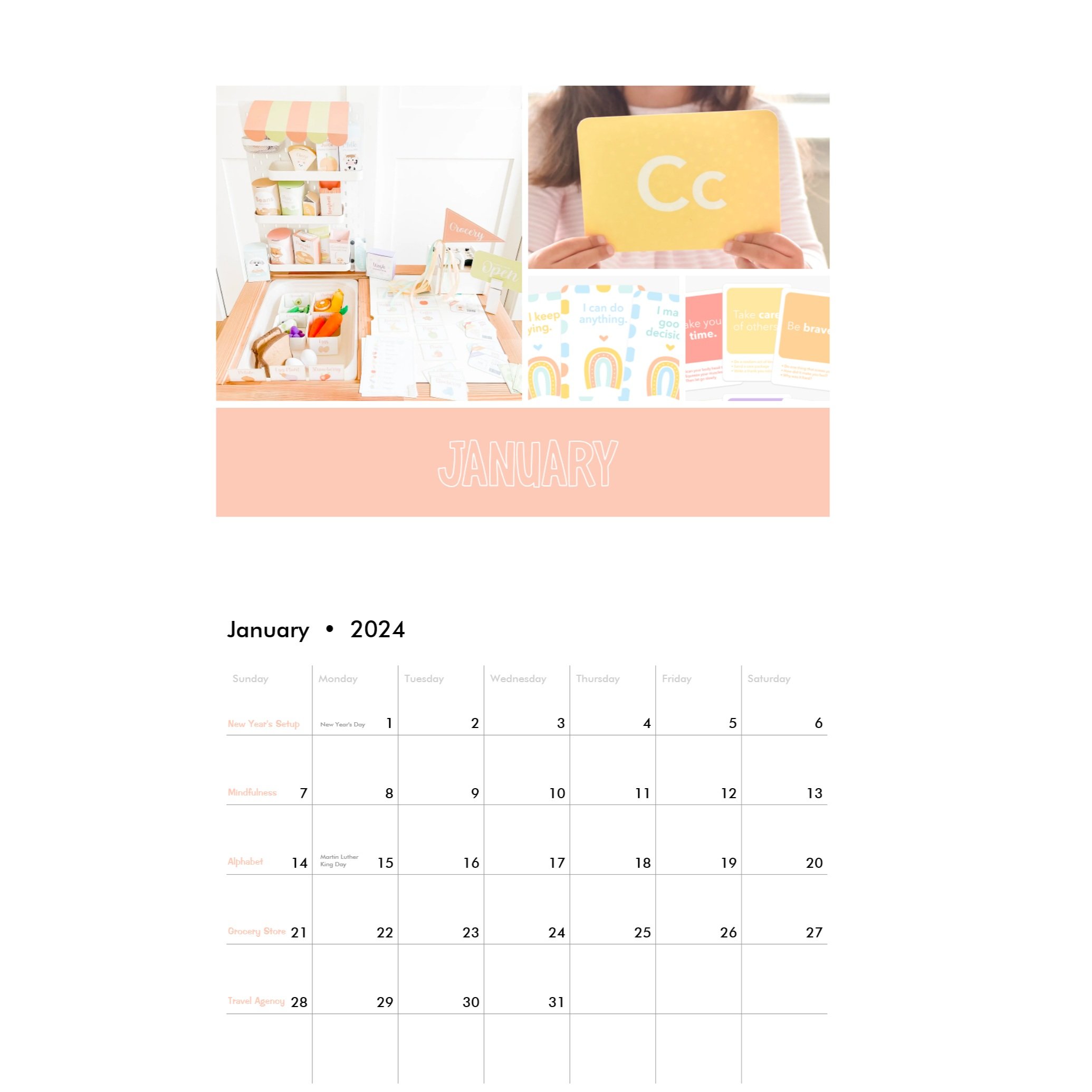
As a parent, you know that fostering creativity and imagination in your child is essential for their development. What better way to achieve this than through sensory play? To make it easier for moms like you to engage your little ones in imaginative sensory activities, we've created a Sensory Play Calendar that covers every week of the year. Get ready to embark on a journey of discovery, learning, and endless fun with your child.
We’ll kick the year off right by setting up our goals for the year, reflecting on the last year, and grounding ourselves in mindfulness practices. We’ll further our knowledge of the alphabet, build a grocery store, and create a travel agency!
Kick off the year off with the Happy New Year play setup. Use mirrors to discuss the importance of reflection and plan ahead for the goals your kiddo wants to accomplish for the year. Use the clock to discuss time and countdown on New Year’s Even.
Help your child develop mindfulness through sensory meditation. In this activity, we’ll use our Mindfulness Flashcards and our Affirmations Flashcards. We’ll complete each mindfulness activity, read and recite our affirmations, and create a calming sensory bin with zen garden sand.
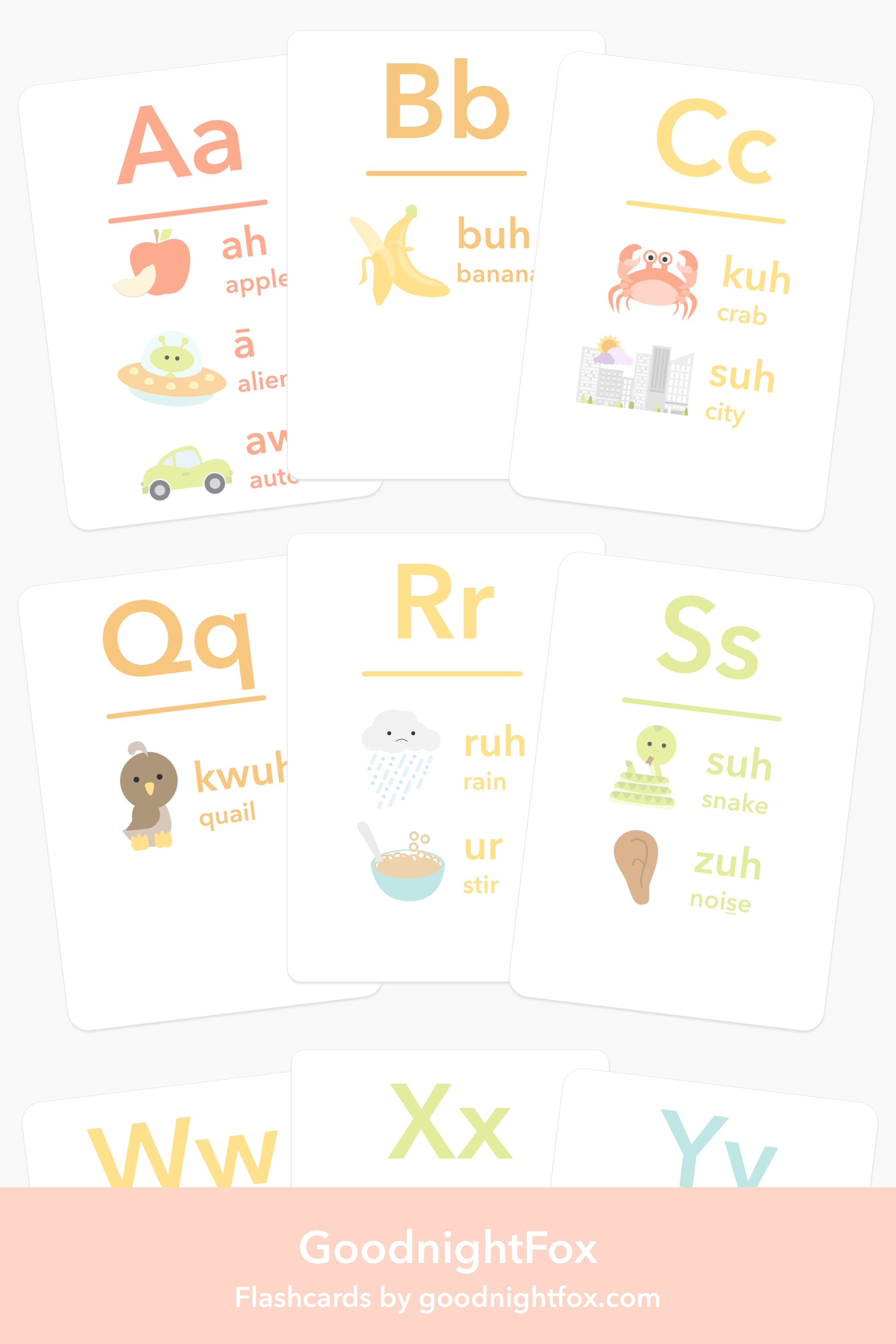
Practice upper and lowercase letters, letter recognition, letter sequencing and letter sounds. For more advanced learners, we’ll practice letter sequences (this is excellent prep for STAR Reading Assessments). We’ll create an alphabet sensory bin using resin letters and use our cards & letter mat to build letter sequences.
Activity 1: Letter Search & Alphabet Letter Noodles
Pretend play with common household chores, like grocery shopping, instills a great sense of responsibility and contribution. In this activity, we’ll venture to the grocery store, shop for regular household supplies, and use the cash register & pretend play money to check out.
We’ll wrap January with a fun adventure around the world. We’ll setup a Travel Agency where your little learner can pretend to help customers book their next trip. Then they can take the plane tickets and travel to Paris and London to see popular sights.
Activity 1: Wool ball continent color matching
Activity 2: Rubber band stretch & play
Activity 3: Travel agency shop owner dramatic play
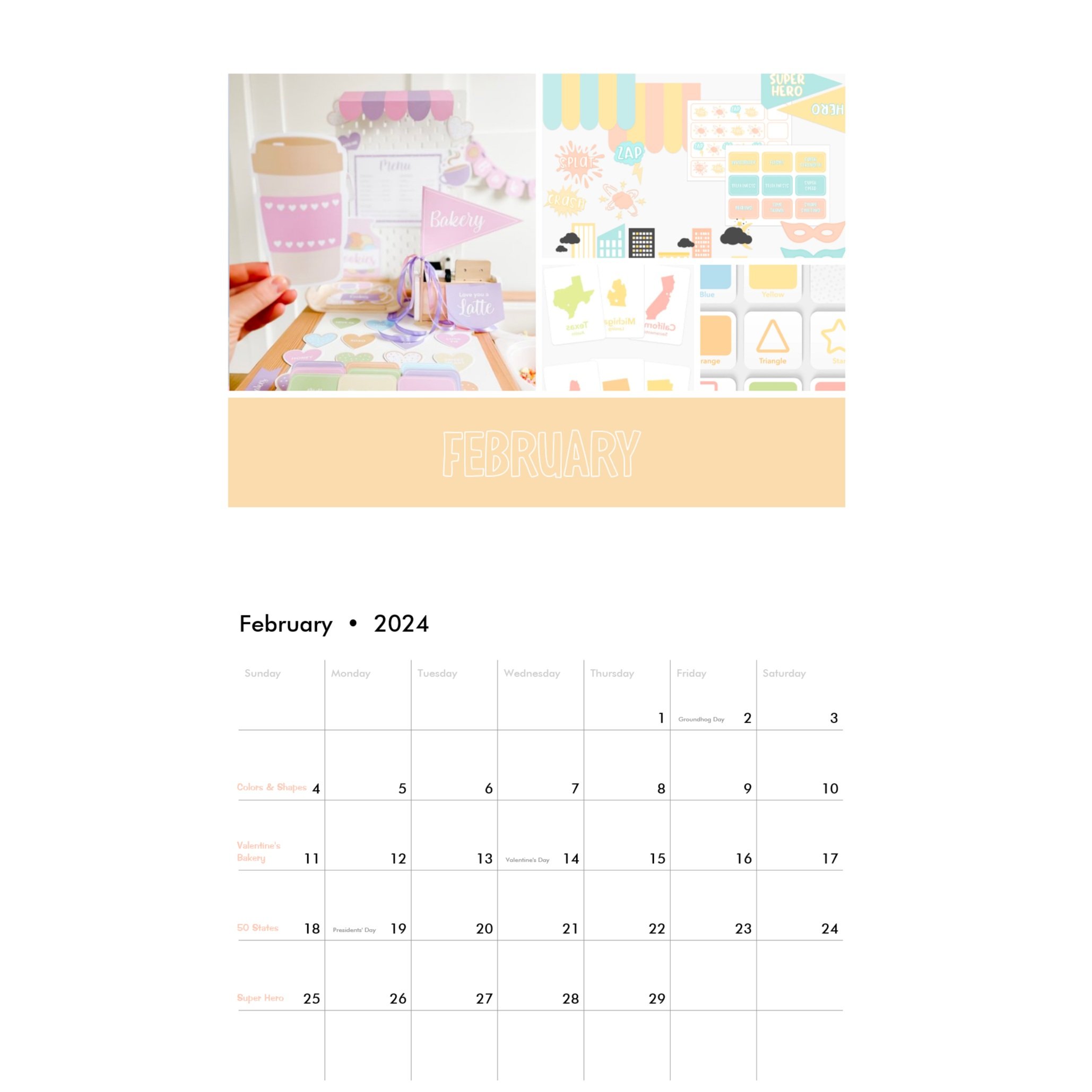
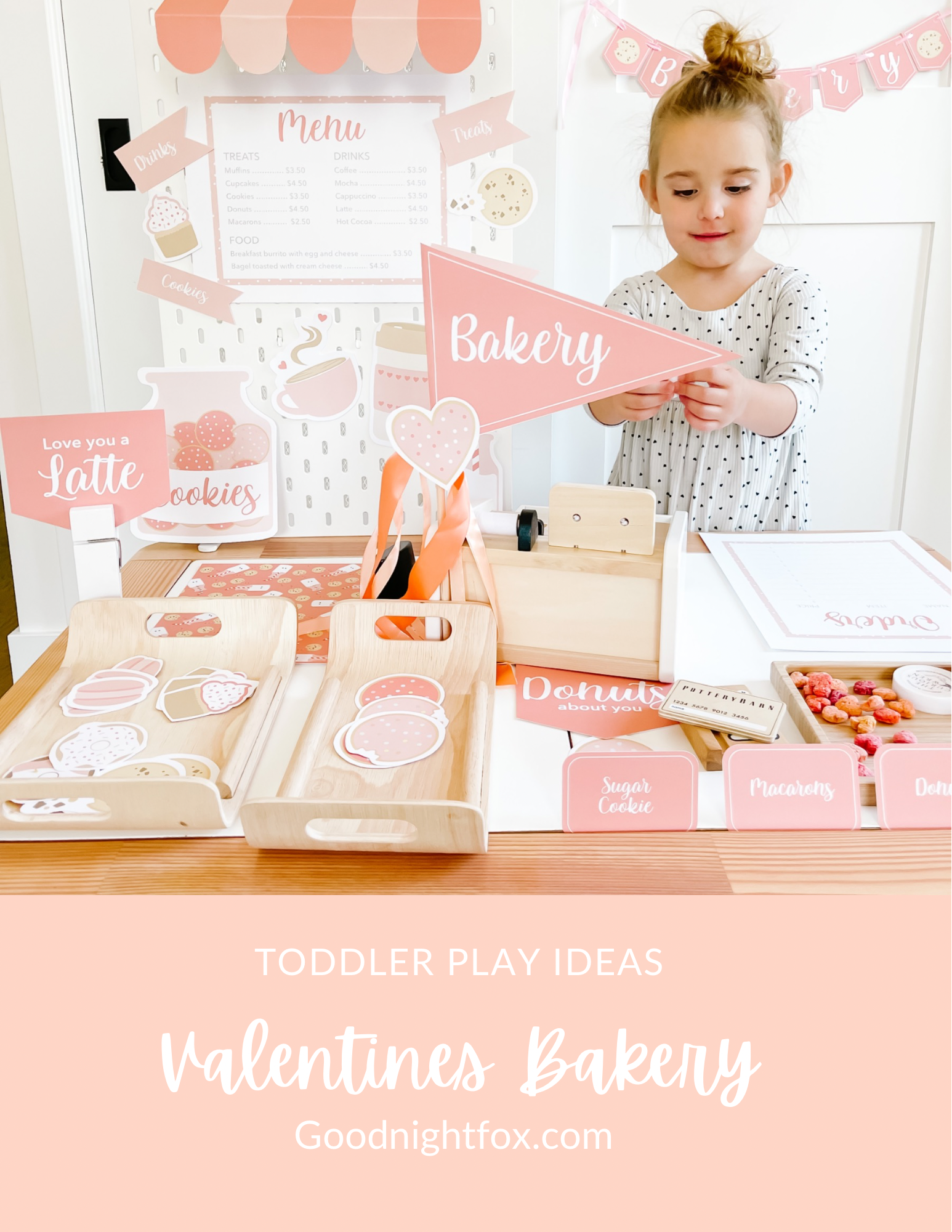
February is shaping up to be fabulous starting with a yummy Valentine’s Day Bakery. We’ll make a pit stop to learn about shapes and colors, then on to learning about the 50 states, and wrapping the month with Super Hero play.
In this activity, we’ll practice interactive skills while your little one gets to pretend to own their own bakery. At the bakery, they’ll get to take orders, serve customers, bake cookies, and take money or make change.
Activity 1: Heart-shaped cereal scooping
Activity 2: Bakery dramatic play with felt donuts & cookies
Activity 3: Sweetheart search and find with popcorn
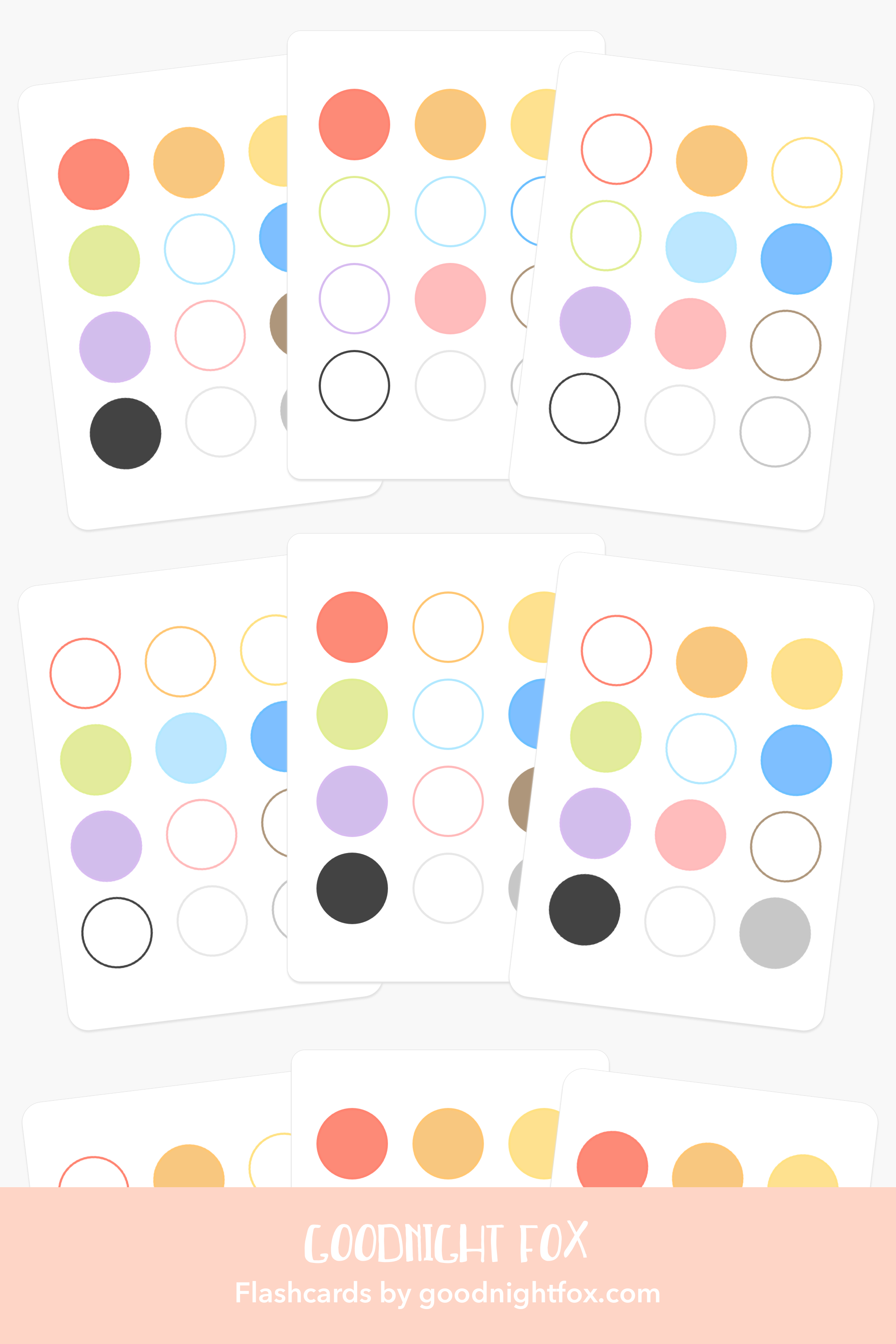
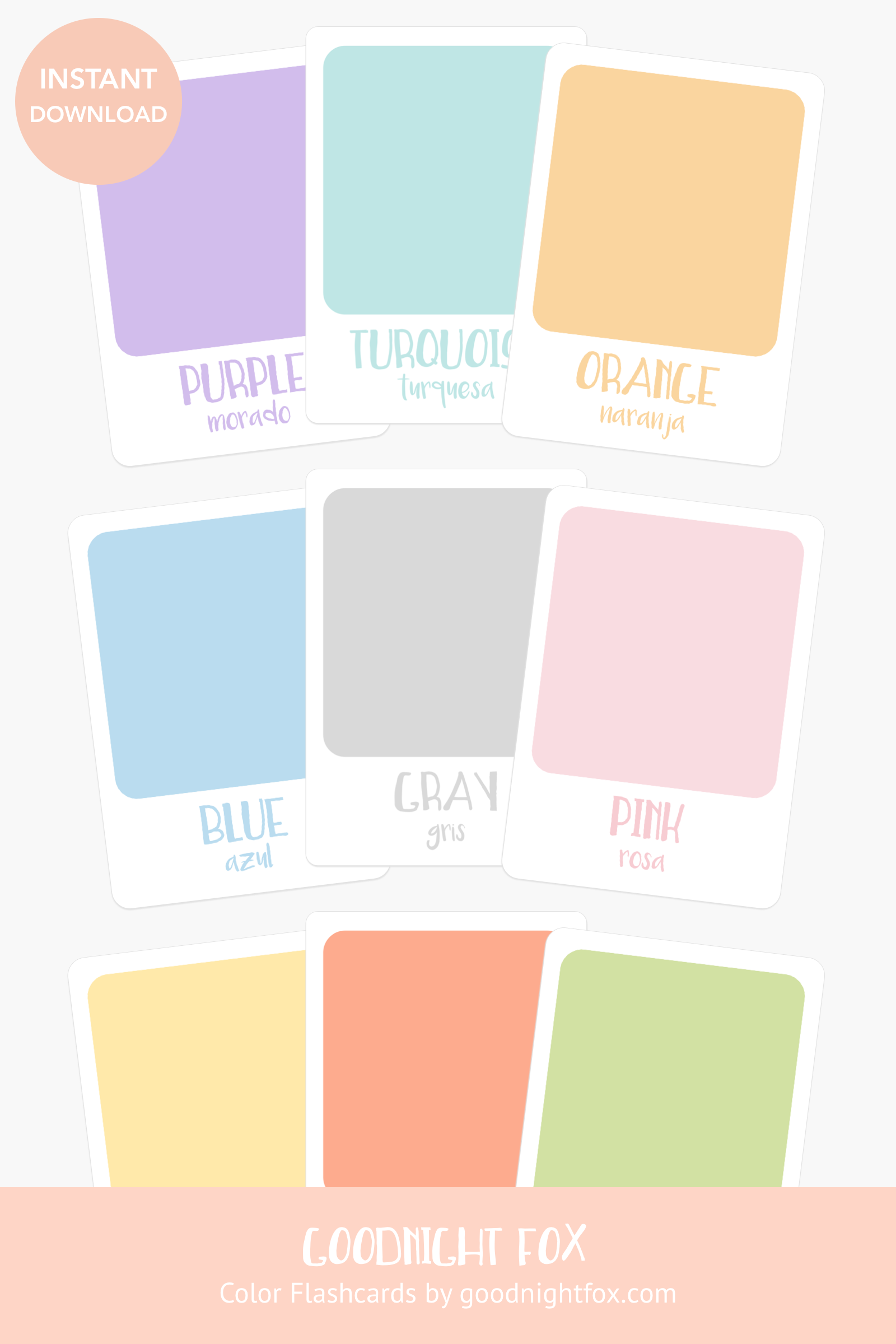
In this activity, we’ll explore shapes and colors. We’ll use our Shapes & Colors memory game to practice matching shapes and colors. We’ll use our printable color wheels to spin for a color or shape and find the matching object in our sensory bin fill with colorful wooden shaped blocks.
Activity 1: Color matching with learning wheel
Activity 2: Color sorting with balls & cupcake cups
Discover the USA through a printable United States map. Practice learning each of the 50 states and their capitols with a fun matching game. Cut out individual states and practice matching them to the map! We’ll use colorful wool/felt balls to practice color matching.
In this activity, we’ll put on super hero masks and fly around the city fighting crime with our super hero powers like invisibility and telekinesis. This dramatic play is not only fun, but a great way to practice concepts like crime and public service. We’ll use a colorful chickpea sensory filler to hide and uncover super powers.
Activity 1: Chickpea scoop and uncover super powers
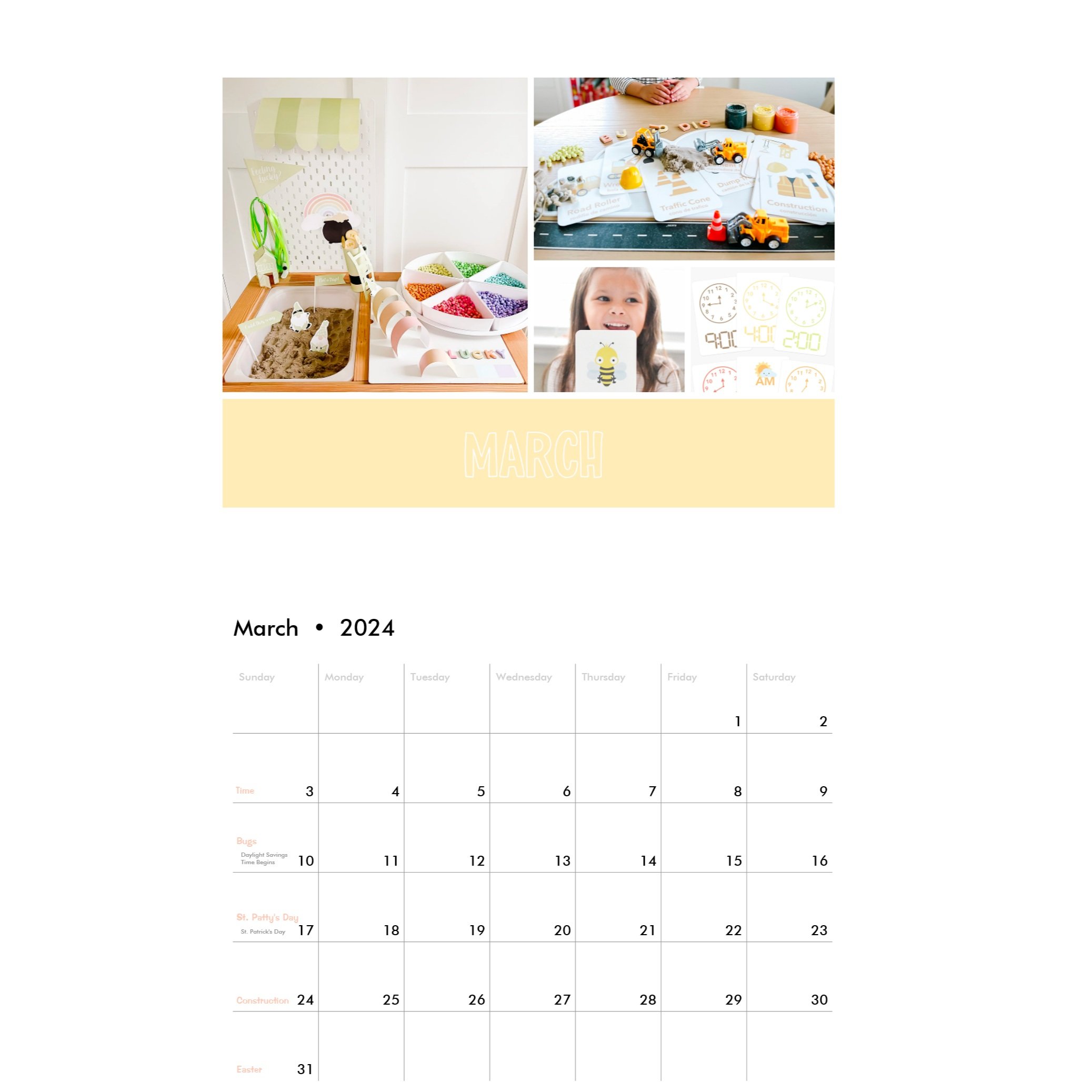
March is going to be the best yet! We’ll start by learning about time and clocks, dive into the backyard to inspect some bugs, make a leprechaun trap for St. Patty’s Day, build a construction site, and of course celebrate Easter with a mini egg hunt.
In this activity, we’ll practice learning how to tell time, use a timer, or read a clock. Learning the concept of time and sequencing is essential to toddler learning and this lesson will help kiddos conceptualize time.
Explore the world of insects with a sensory bug hunt in 3 fabulous sensory materials: Pluffle, Chickpeas, and a pretend play dirt. A great way to practice insect names and explore natural habitats of some of the smallest creatures.
Craft a sensory rainbow and pot of gold for St. Patrick's Day. This fun leprechaun trap setup includes a rainbow bridge, ladder, hat, pot of gold and rainbow and a foldable leprechaun cottage. Setup on the Flisat table along with sensory fillers like rainbow chickpeas and magnetic sand.
Building, bulldozing, digging and excavating are great ways to explore sensory play materials like kinetic sand, play doh, rocks, and sensory play mud. This activity kit includes everything you need to create the perfect construction zone for your little one to enjoy.
Activity 1: Construction Water Play or Large Rocks
Activity 2: Taste Safe Construction with Cheerio Sand and Cocoa Dirt
Easter is the perfect opportunity to celebrate spring flowers and baby animals. This printable activity kit includes everything you need to make a sensory bin egg-hunt. Paired with a green rock-grass bin full of bunnies and carrots is the perfect small world play setup.
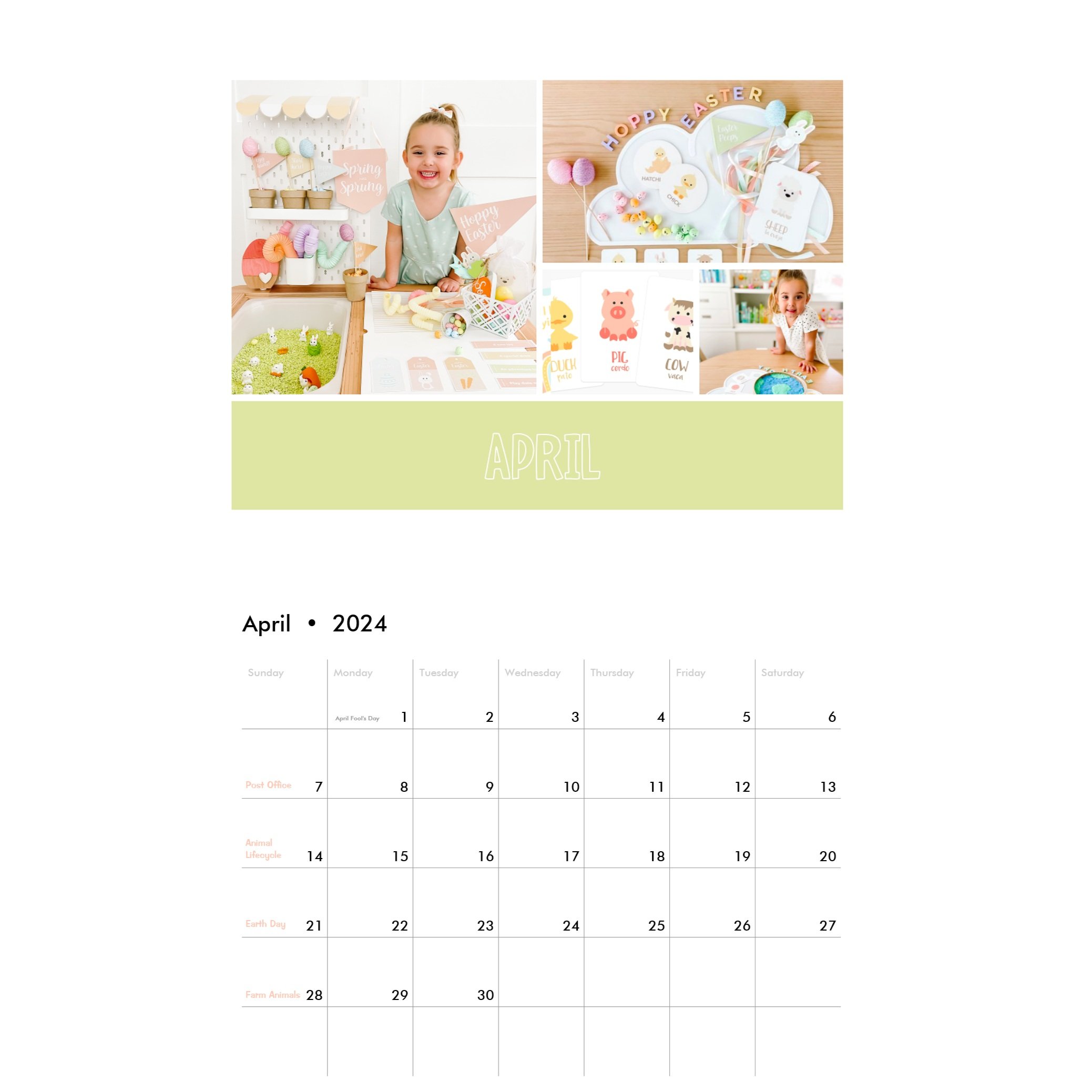
Let’s celebrate spring with some amazing new activity setups. We’ll start with a trip to the post office, we’ll learn about the various lifecycles of animals and plants, travel to the farm to meet some chicks and cows, and wrap up with an Earth Day celebration.
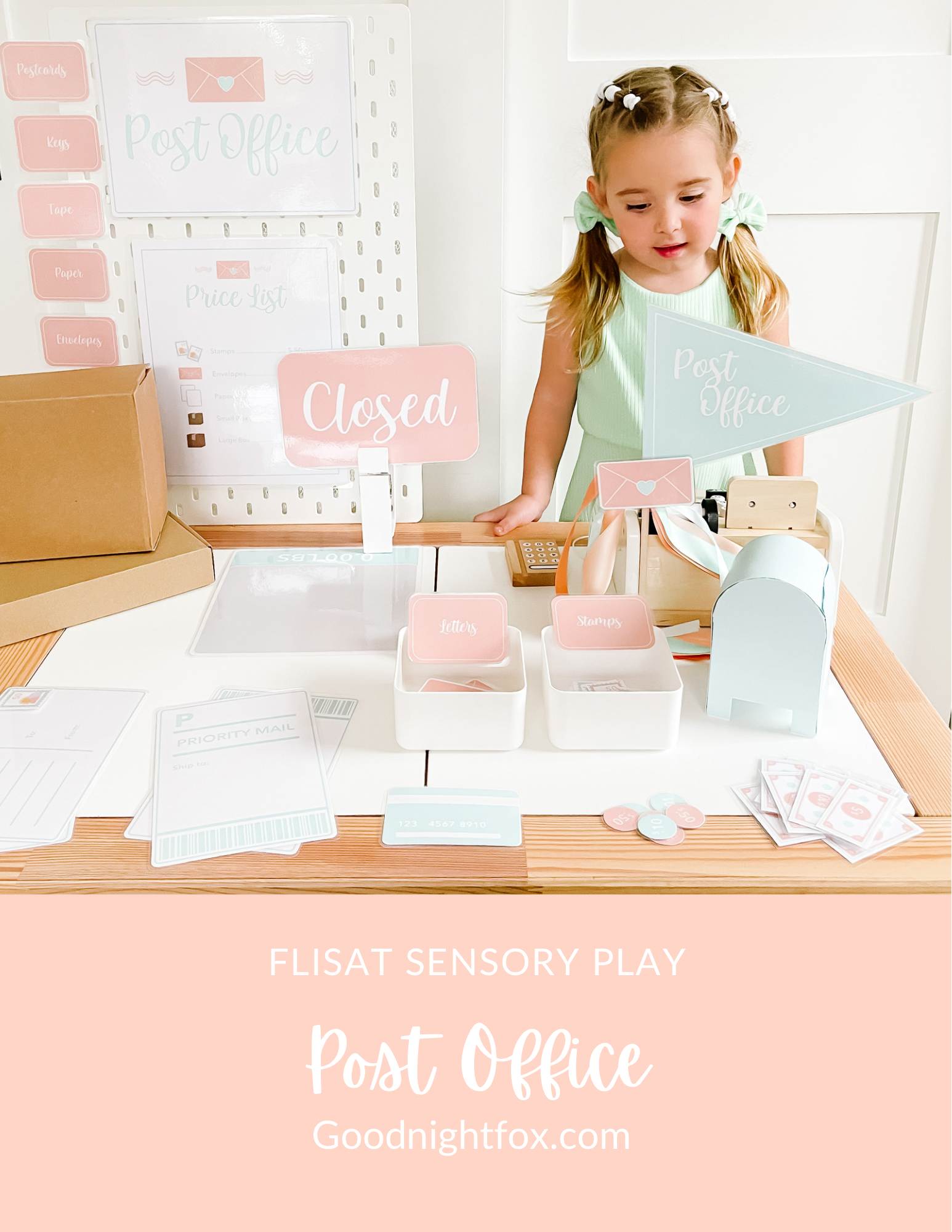
Head to the post office for this practical real world dramatic play. Take packages at the check out counter, sell boxes and stamps. Discuss the concept of the mail and post office and teach basic concepts of shipping and packaging.
Animal & plant lifecycles are a great way to explore how things grow and change over time. Using our circular lifecycle cards, we’ll use lifecycle of chicken, lifecycle of a flower, and lifecycle of a butterfly to explore how animals change over the course of time.
In this activity, we’ll explore the farm with sensory bins filled with toy farm animals, oatmeal and corn kernels. This activity kit comes with writing exercises, matching activities, along with a foldable barn and animals to play with.
We’ll use Earth Day to practice sorting recyclable materials into their appropriate bins. We’ll discuss how the Earth is our precious home and we have to take care of it by using renewable energy, cleaning up trash, and using sustainable practices.
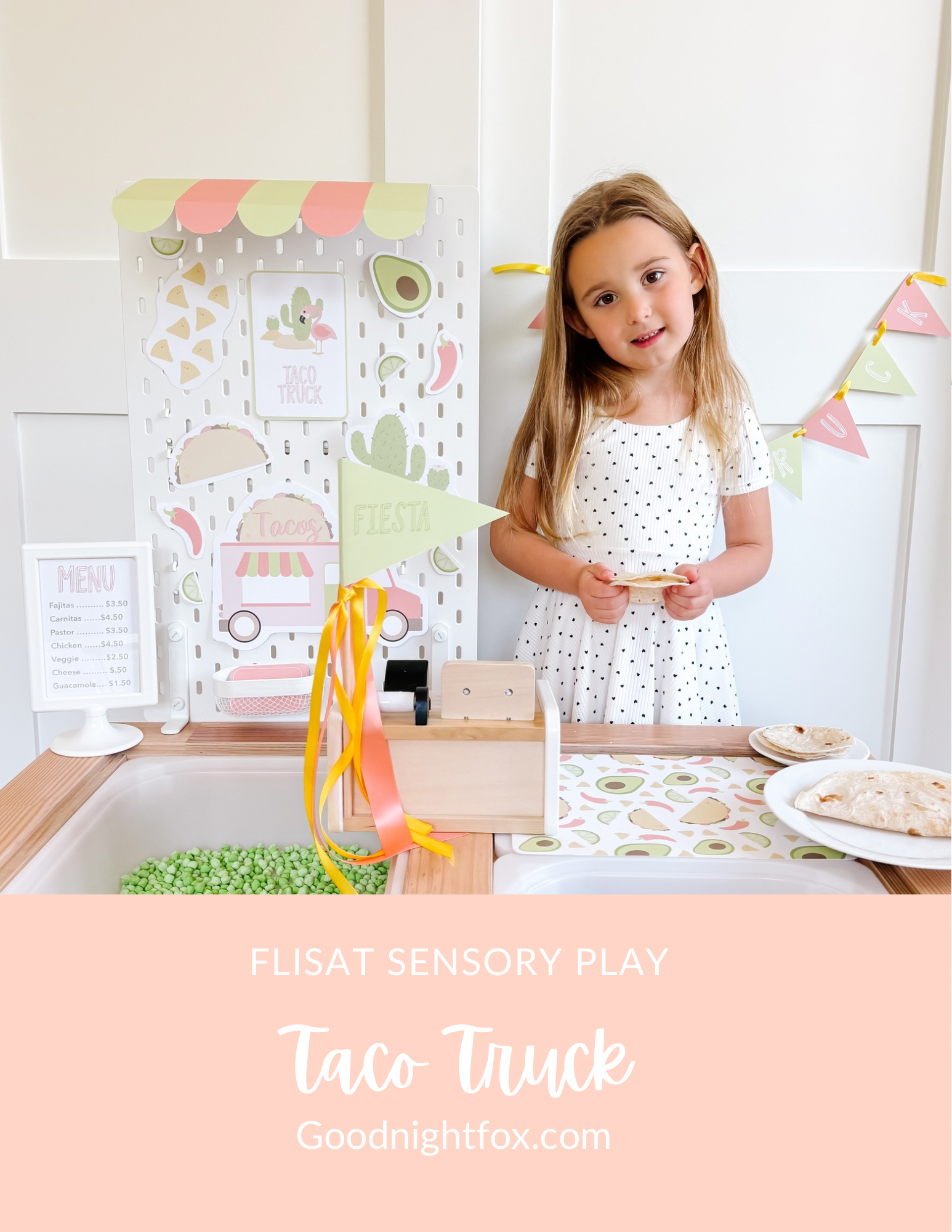
Celebrate with a sensory fiesta and build a taco truck play setup to learn Mexican cuisine. We’ll use black beans and rice as our sensory fillers for this fun play setup. You can even add chips for an extra tasty snack!
For our Flower Garden & Flower Market activity, we’ll bring to life the beautiful colors and scents of the nature around us. We’ll use brown chickpeas as our sensory filler and scoop and fill pots with play dirt while we plant printable flowers. We’ll do a petal counting activity along with pretend seed packets, checkout counter, and more!
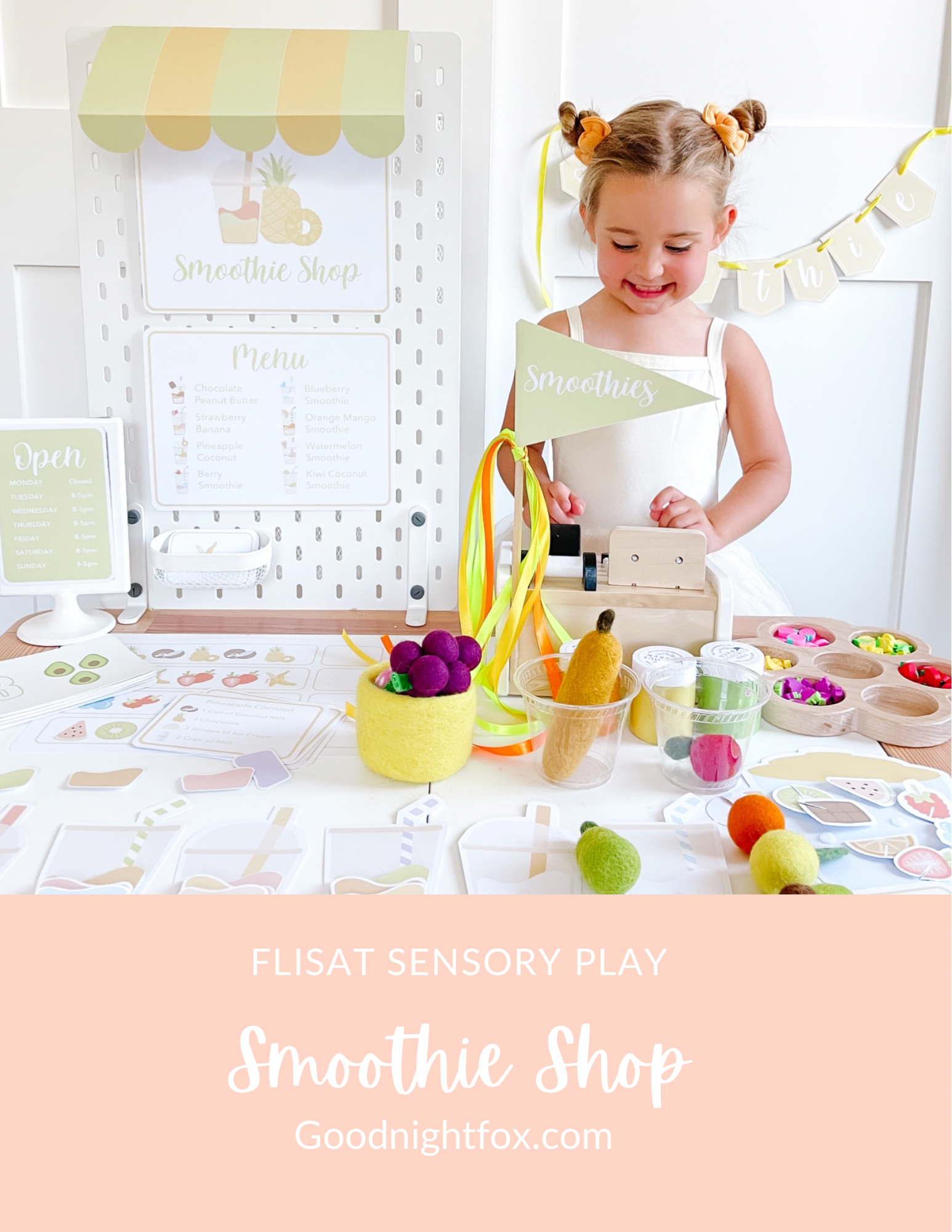
For this activity, we’ll use fruit scented doh, fruit cards and build a smoothie shop to learn mixing flavors and fruits. For a taste-safe alternative, you can use real fruits to mix and mash together!
I’m so excited for June because we’ll be playing with pets! We’ll do a sports sensory play setup to celebrate Father’s Day, and learn about the continents and forms of transportation. We’ll wrap up our June sensory play ideas with a fun little Farmer’s Market.
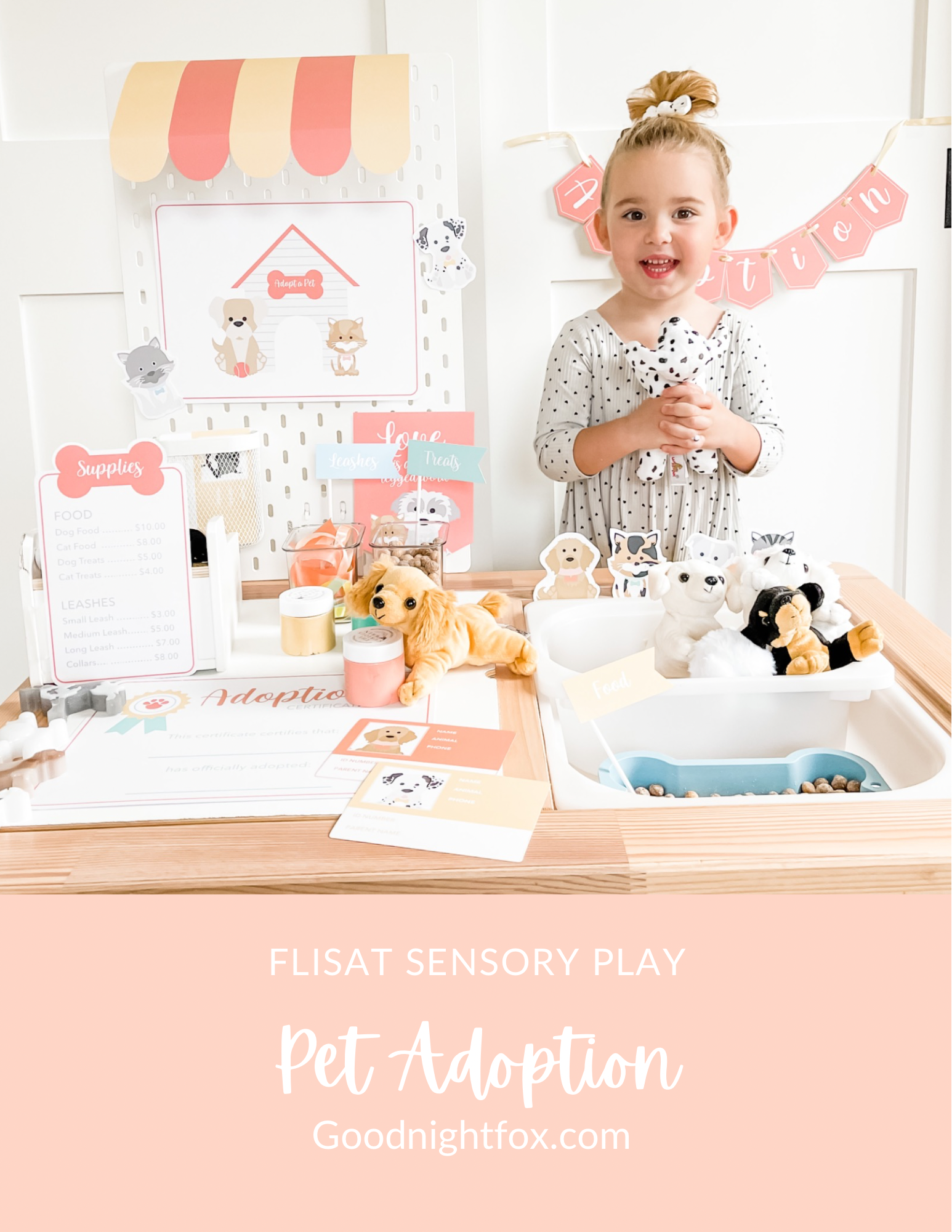
We’ll use our adoption clinic to explore the world of pets and pet care. We’ll use peanut butter cocoa puff balls cereal as our sensory filler to practice scooping and counting as we feed our pups out of their bone-shaped bowl.
For this activity, we’ll enjoy a sensory sports day with textured balls and sports-themed play. We’ll use our sports flashcards and matching erasers to do a matching activity.
We’ll set up a sensory farmer's market with felt play fruits and vegetables to sell. Complete with play money and signage, we’ll bring to life the world’s cutest little farmer’s market.
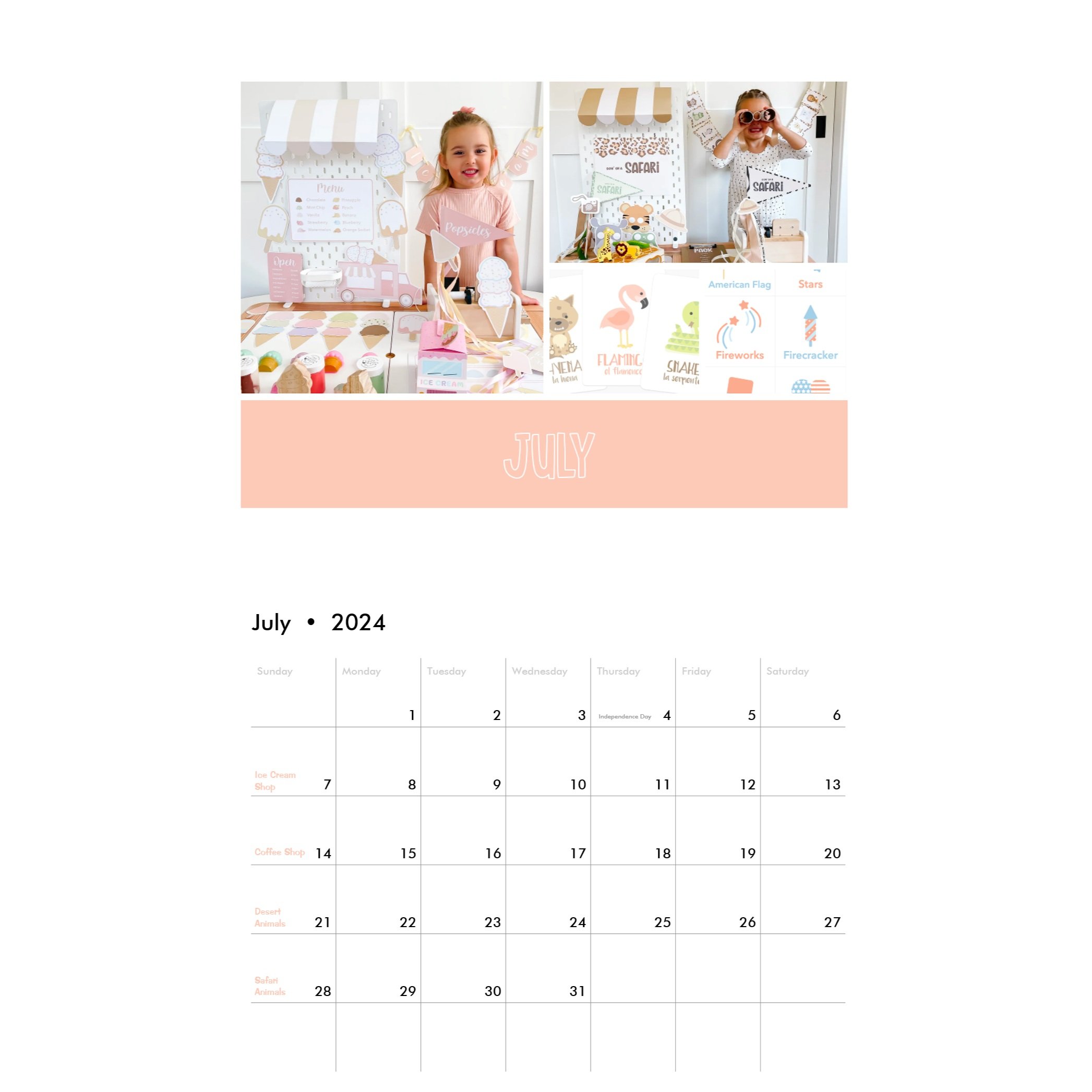
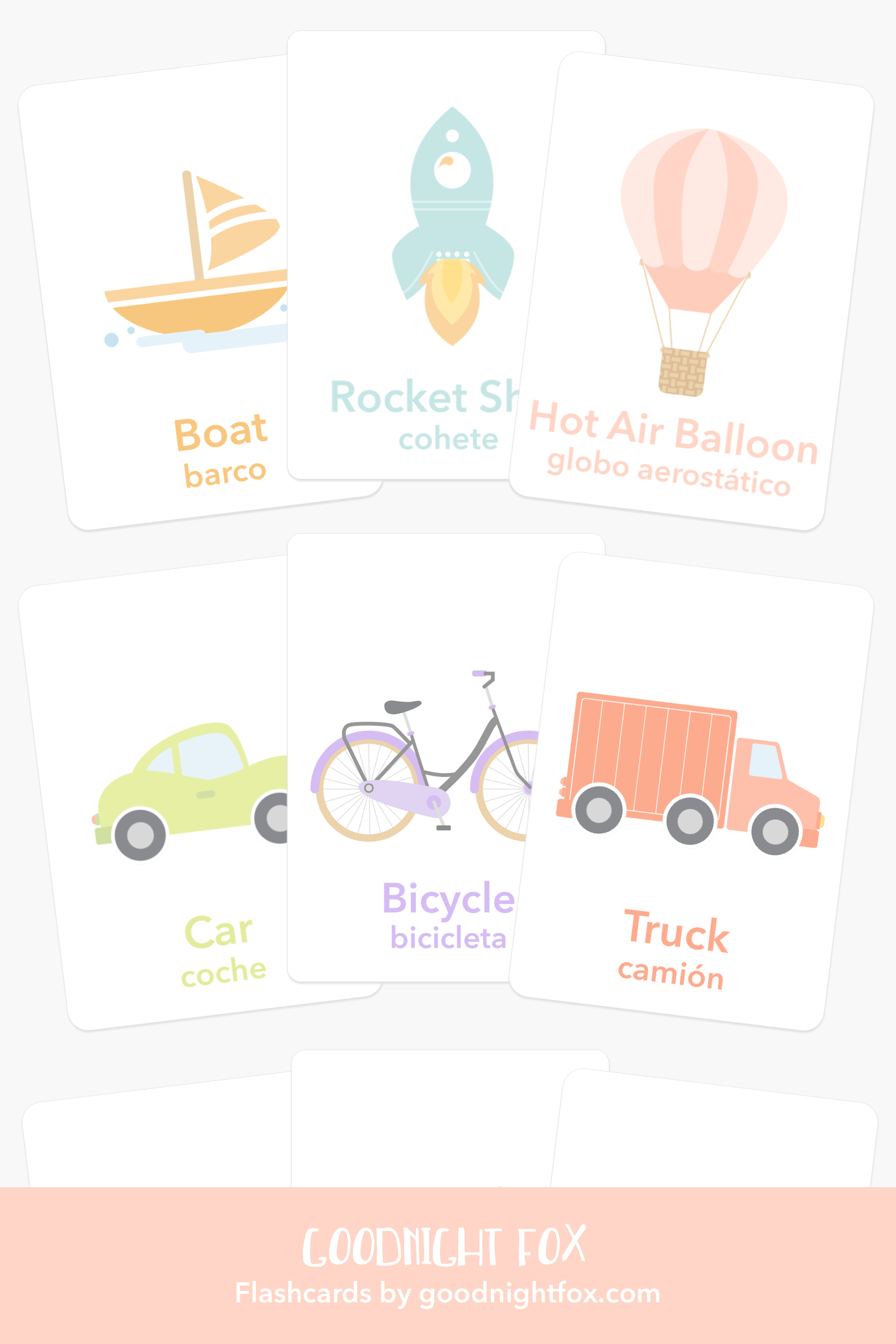
Summer is the perfect seasons for sensory play. We’ll celebrate Independence Day with a bbq cookout, build an ice cream truck, sip some cool summer coffee, visit our desert animal friends in the sweltering heat, and make a trek out to the safari to learn about some new animals.
In this activity we’ll have a pretend cook out, celebrate the stars & stripes of the American flag, and we’ll practice learning our 50 states on a map of the United States.
In this activity, we’ll make a taste-safe ice cream sensory play doh. Each colored scoop will bring joy to tiny faces while we’re practice owning an ice cream shop and putting smiles on customer’s faces. We’ll use this opportunity to practice all kinds of flavors!
Create a world of coffee, tea, and pastries with this beautiful coffee shop cafe setup. We’ll practice social skills like greeting new customers as well as customer service, counting change and more!
Discover desert life with sensory sand and toy animals. We’ll create a small world desert animal play scene, learn new vocabulary words, a search and find matching activity and letter discovery.
For this activity we’ll go on a safari adventure to learn about safari animals and their natural habitats. We’ll even make a pair of toilet paper roll binoculars!
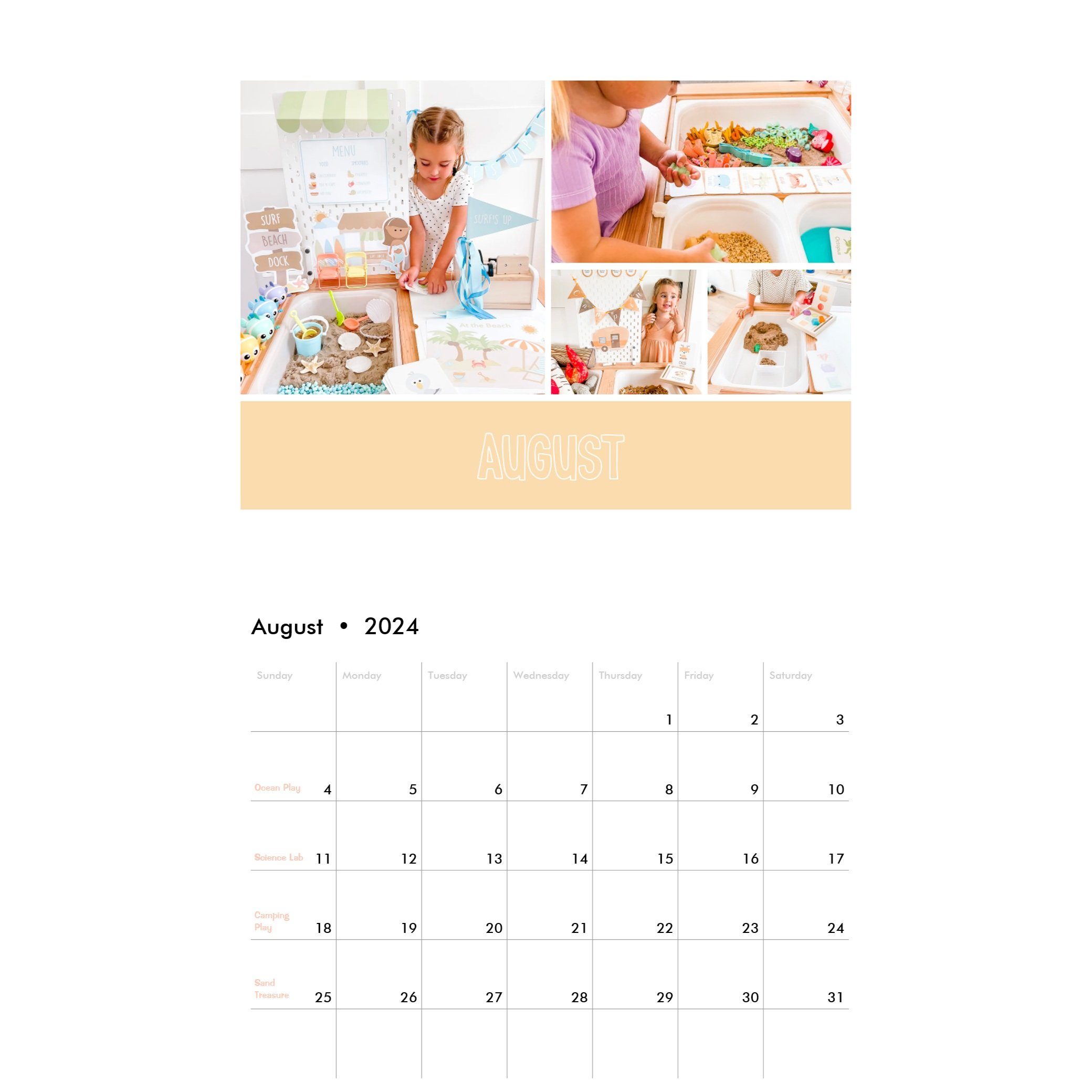
Let’s dive into summer with ocean themed sensory play that’ll have you wanting a trip to the beach! We’ll celebrate back to school season with a science lab setup, go camping, and dig for treasure.
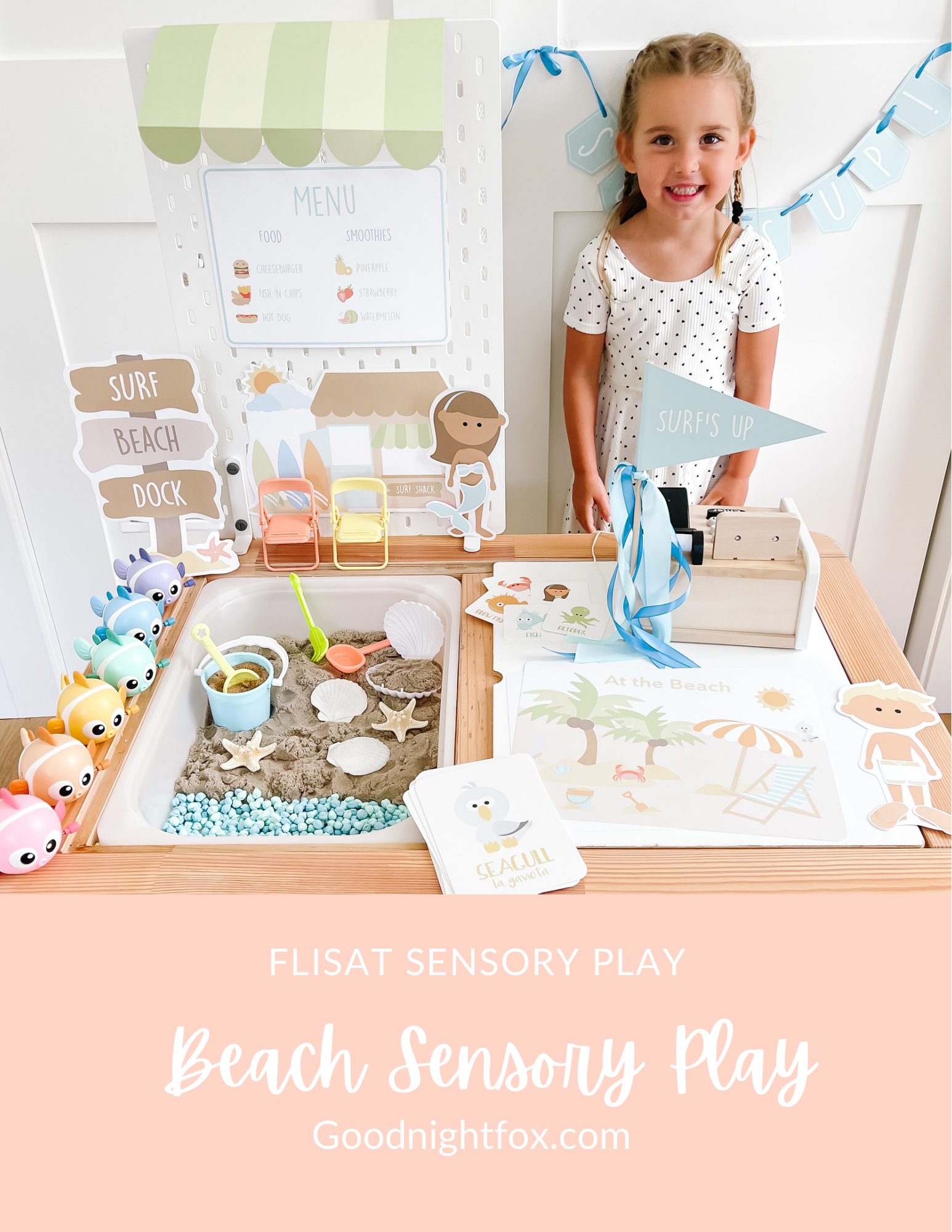
For this activity, we’ll explore ocean life with a few sensory explorations. We’ll create a magnetic sand base coral reef to explore the ocean floor. We’ll create a jello-based ocean water to float our sensory fish in.
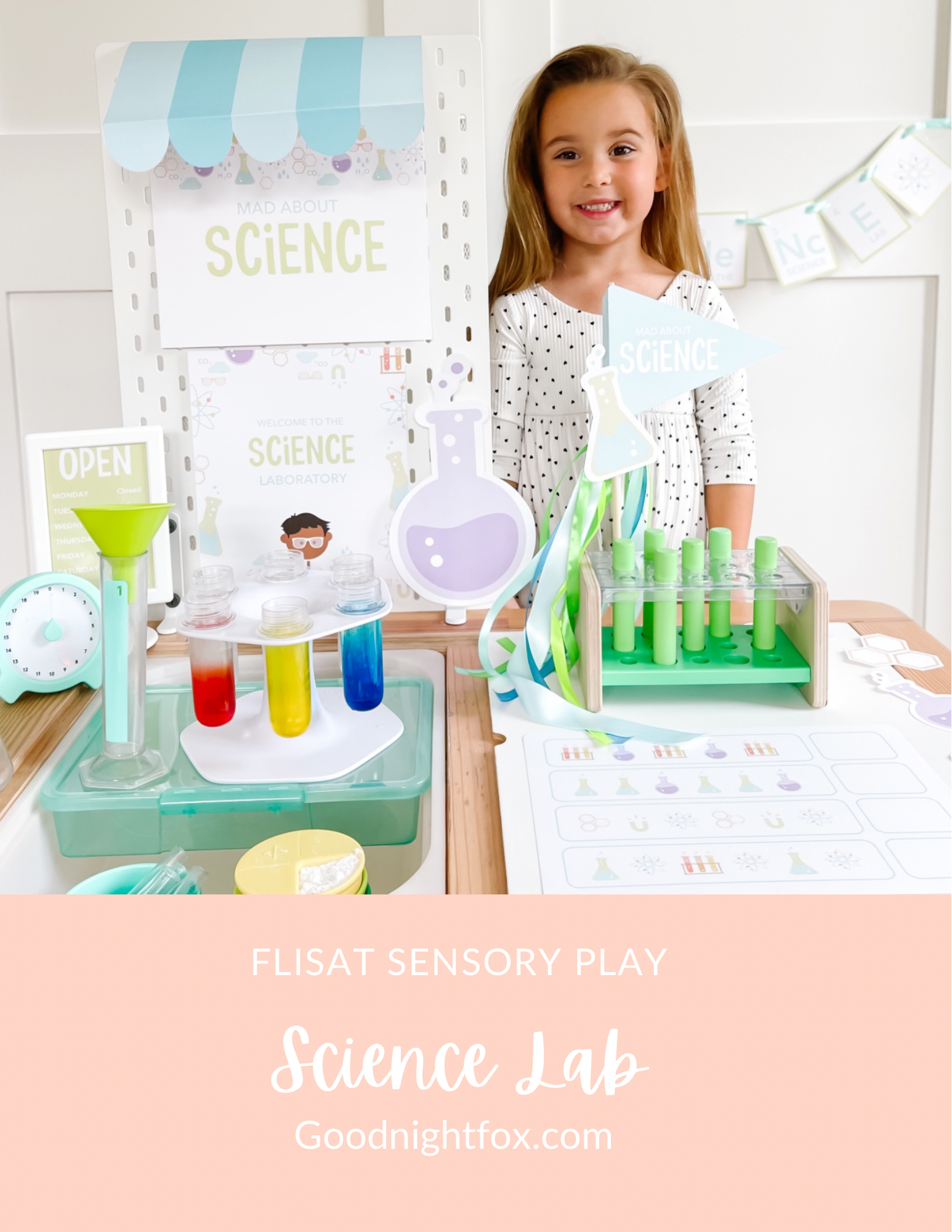
We’ll bring to life the science laboratory with our science themed printable play setup. We’ll use the Lovevery Beaker set to practice pouring and mixing various colors to practice learning about primary and secondary colors.
We’ll use one of my all time favorite sensory fillers — S’mores Granola — to build a forrest floor for our woodland animals to go camping. We’ll use a camp site map, camper, badges, and s’mores to explore the great outdoors.
For this activity, we’ll pretend to be pirates and go on a treasure hunt! We’ll use our resin gems and matching gem flashcards to go digging in our sensory play magnetic sand. We’ll do pattern practice matching each of the gems to the cards.
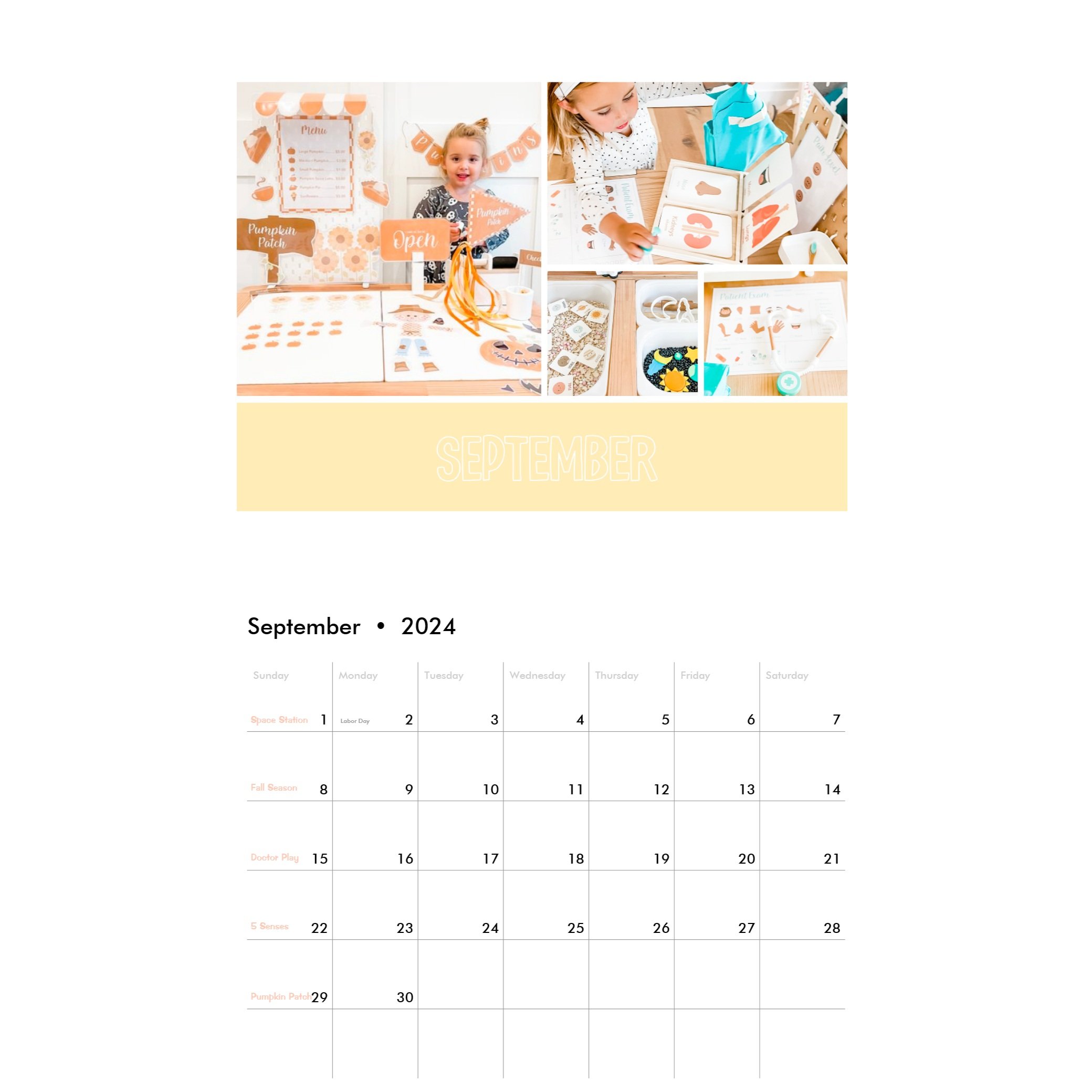
Septemeber has some of my all time favorite sensory play setups. From the amazing space station to woodland animals and everything in between, your kiddos will have a blast as the seasons change from summer to fall.
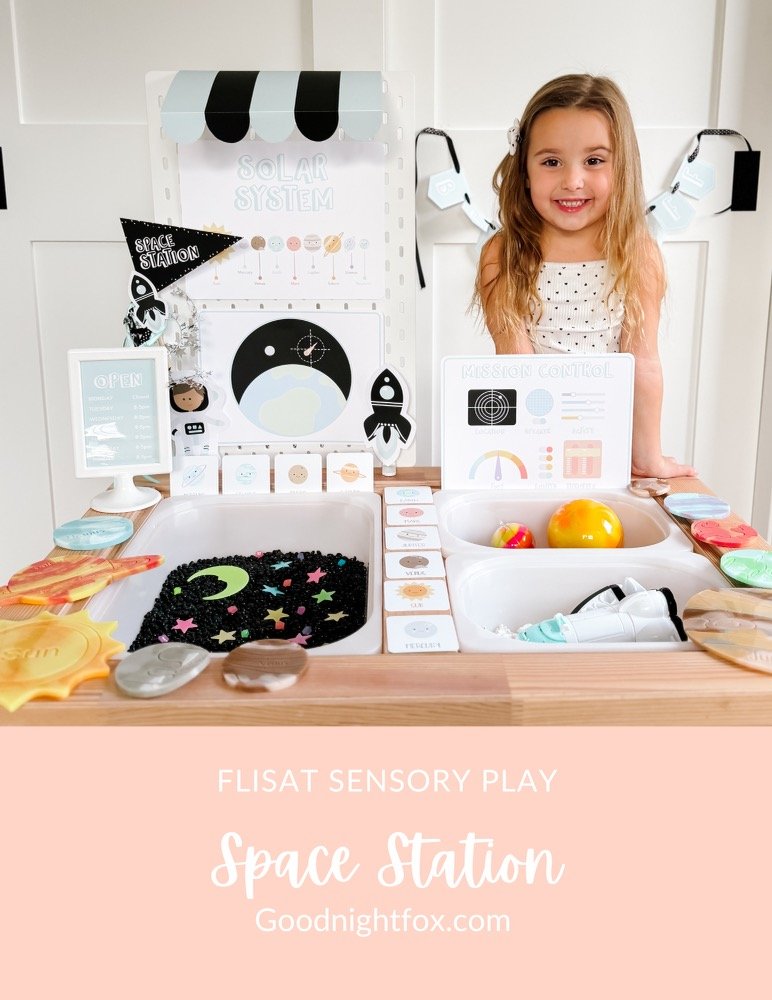
In this activity, we’ll explore the cosmos with 3 different space-themed sensory play bins. With our dramatic play, we’ll create a space station, command control board, and windows into outer space. Then we’ll make a moon landing bin, a galaxy bin, and a galaxy sensory bottle.
Activity 1: Moon landing taste-safe icing playdoh
Activity 2: Black bean & glow in the dark stars night sky
Activity 3: Space-themed bath bomb color explosion
To celebrate the changing of the seasons, we’ll create a fall themed sensory bin with leaves, pine cones, pumpkins and other elements of nature. We’ll use granola sensory filler for taste safe sensory play!
With our doctor play kit, we’ll encourage nurturing skills — pretending to be a doctor and taking care of patients in need. We’ll take X-Rays, apply bandages, fill out prescriptions cards and more!
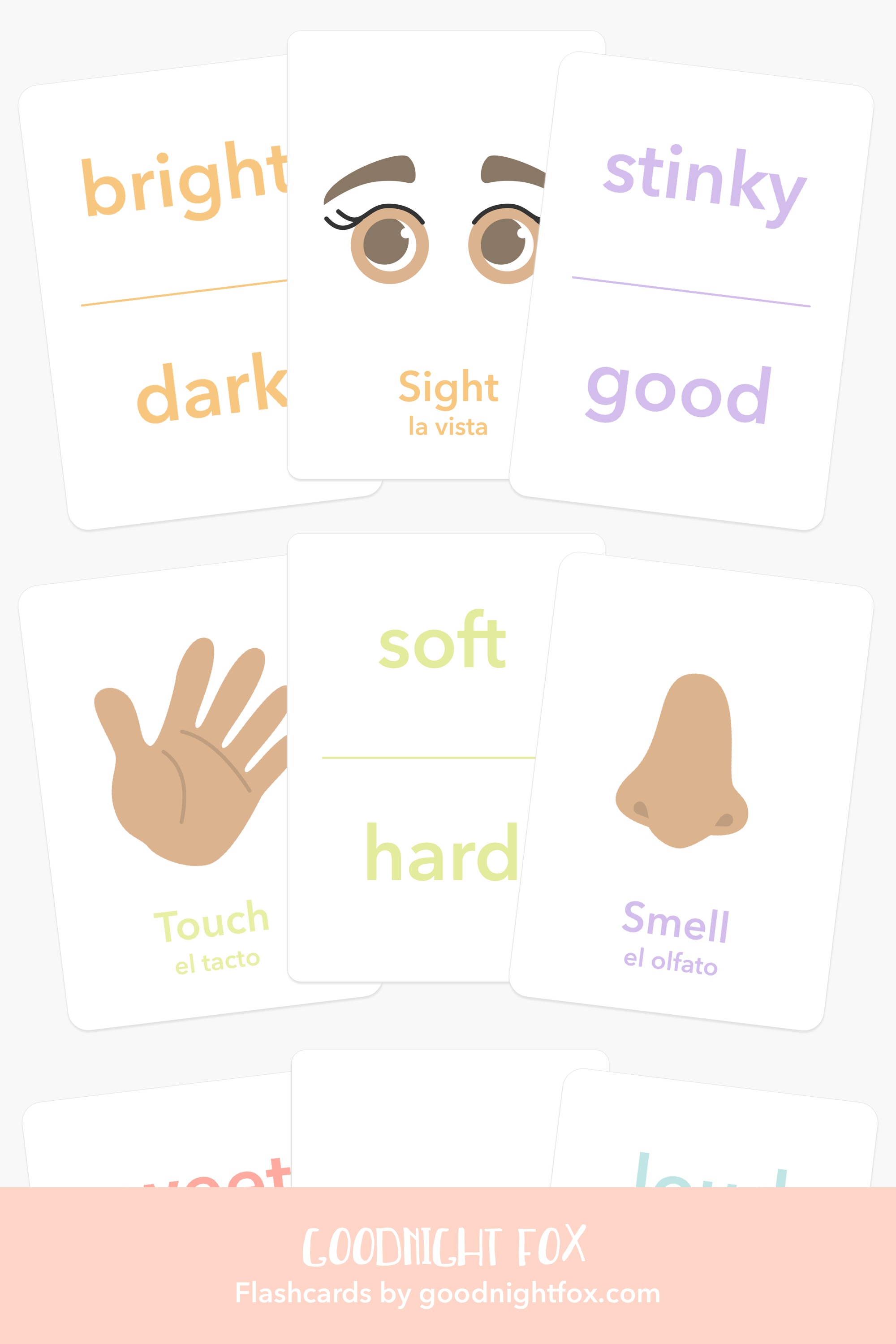
Learning about the 5 senses is a great way to bring awareness to the body and senses. We’ll use our 5 senses learning cards to mix and match and practice opposites like “light” and “dark”. We’ll great 10 sensory jars to learn about opposites on the spectrum of our 5 senses.
Let’s explore the pumpkin patch! From hay rides on tractors to sunflower patches. From scarecrows and wagons to pumpkins and pie. We’ll use our pumpkin patch dramatic play to create a world of fall. We’ll build a scarecrow, pick sunflowers and measure pumpkins!
To celebrate the fall season, we’ll kick off with a celebration of vegetables. We’ll use our vegetable toy erasers and a play dirt sensory filler to plant some vegetables and use our flashcards to match and dig up vegetables.
Join us on a paleontology adventure with our dinosaur dig! We’ll use 3 different sensory play activities together to explore dinosaurs including fossils, bone digging site, and a ice dinosaur eggs.
Activity 1: Plaster Volcano and Dinosaur Pasta Filler
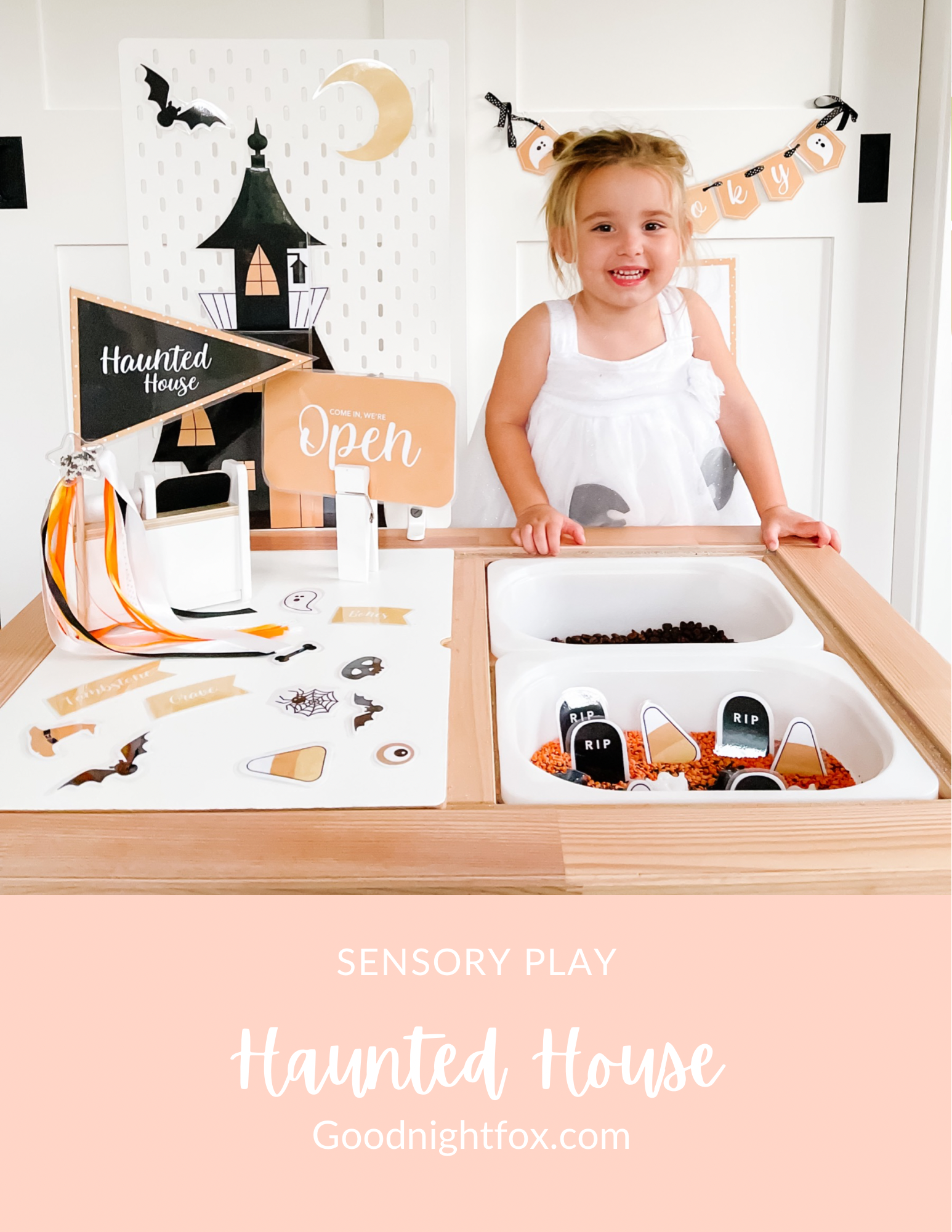
In celebration of Halloween season, we’ll pretend to be witches making magical potions and brews. We’ll use our potion mixing play setup to make combinations of various Halloween ghouls.
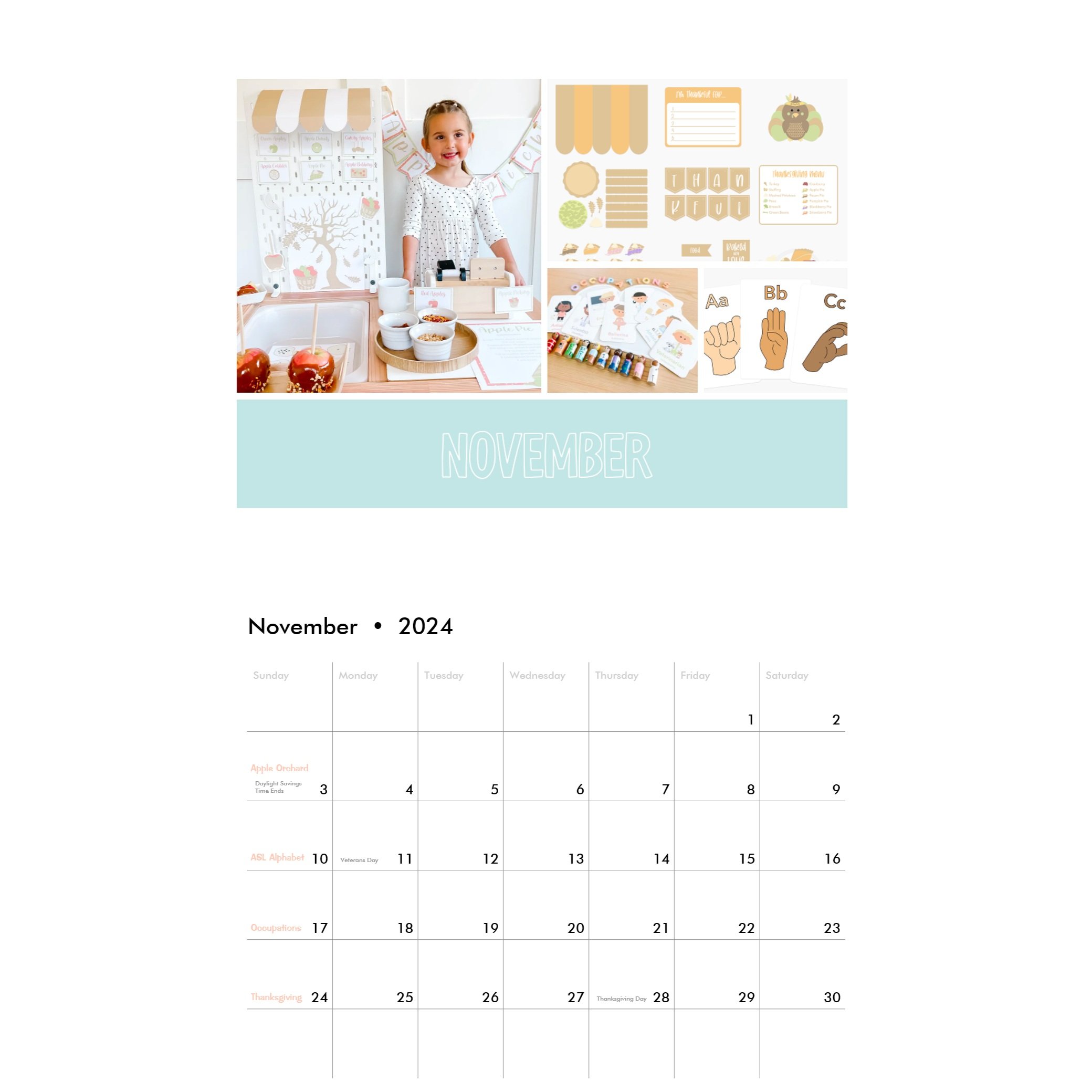
Learn all about apples with this apple picking, bobbing, leaf gluing, cider making activity. Pretend to own your own orchard and practice selling your goods.
Practice speaking with your hands learning the American Sign Language Alphabet. In this activity kit, kiddos will learn to spell their names, sign the ABCs, and use basic signs like “More” and “Thank You”.
This week we’ll be exploring careers of all kinds through our Occupations flashcards. We’ll leverage books and other tools to explore the world of possibilities.
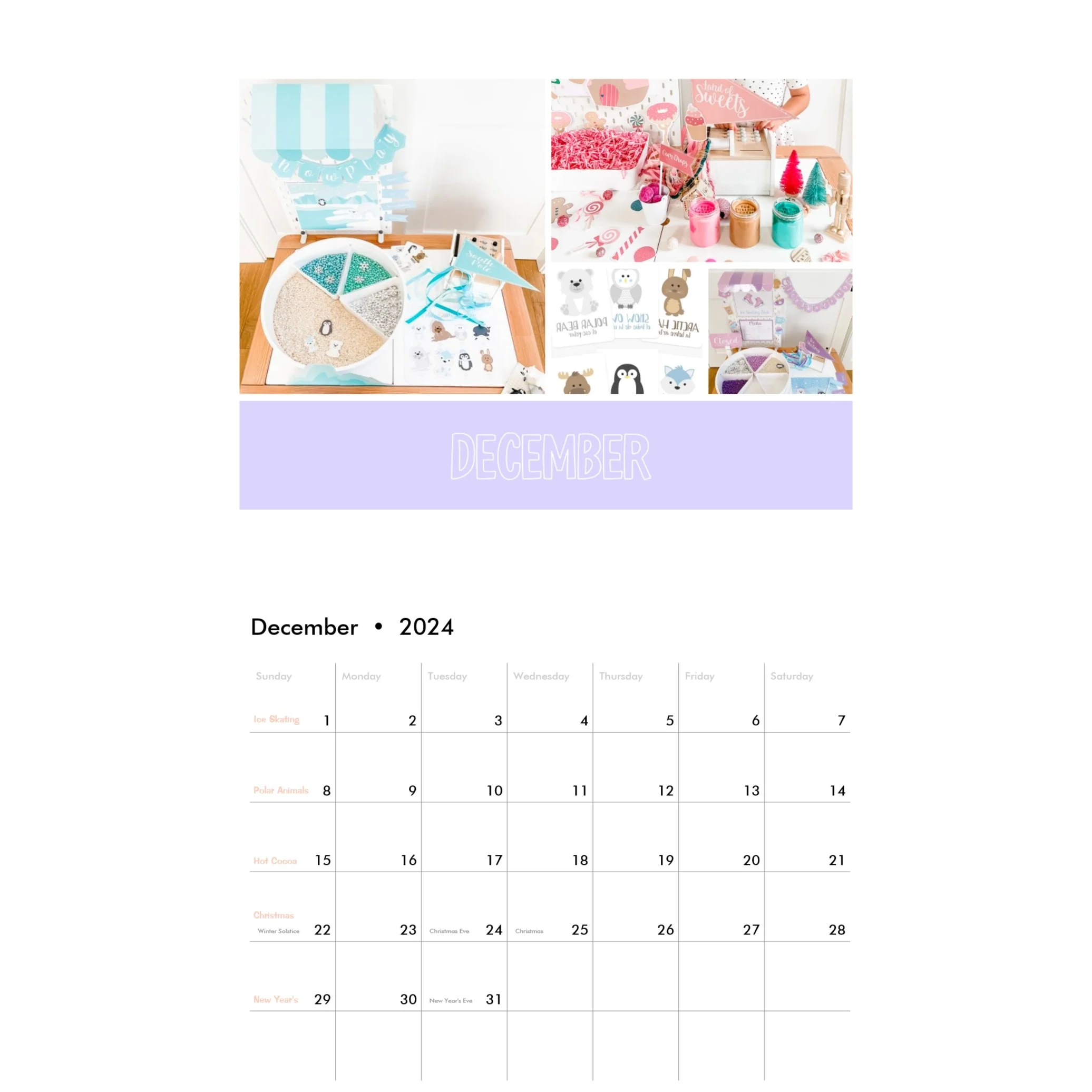
With the winter season upon us, it’s the perfect time to stay indoors and cuddle up with some cozy sensory play. Nothing could be more fun that celebrating the cold weather in the polar arctic in stark contrast with the cozy warm hot chocolate by the fire and baking in the oven.
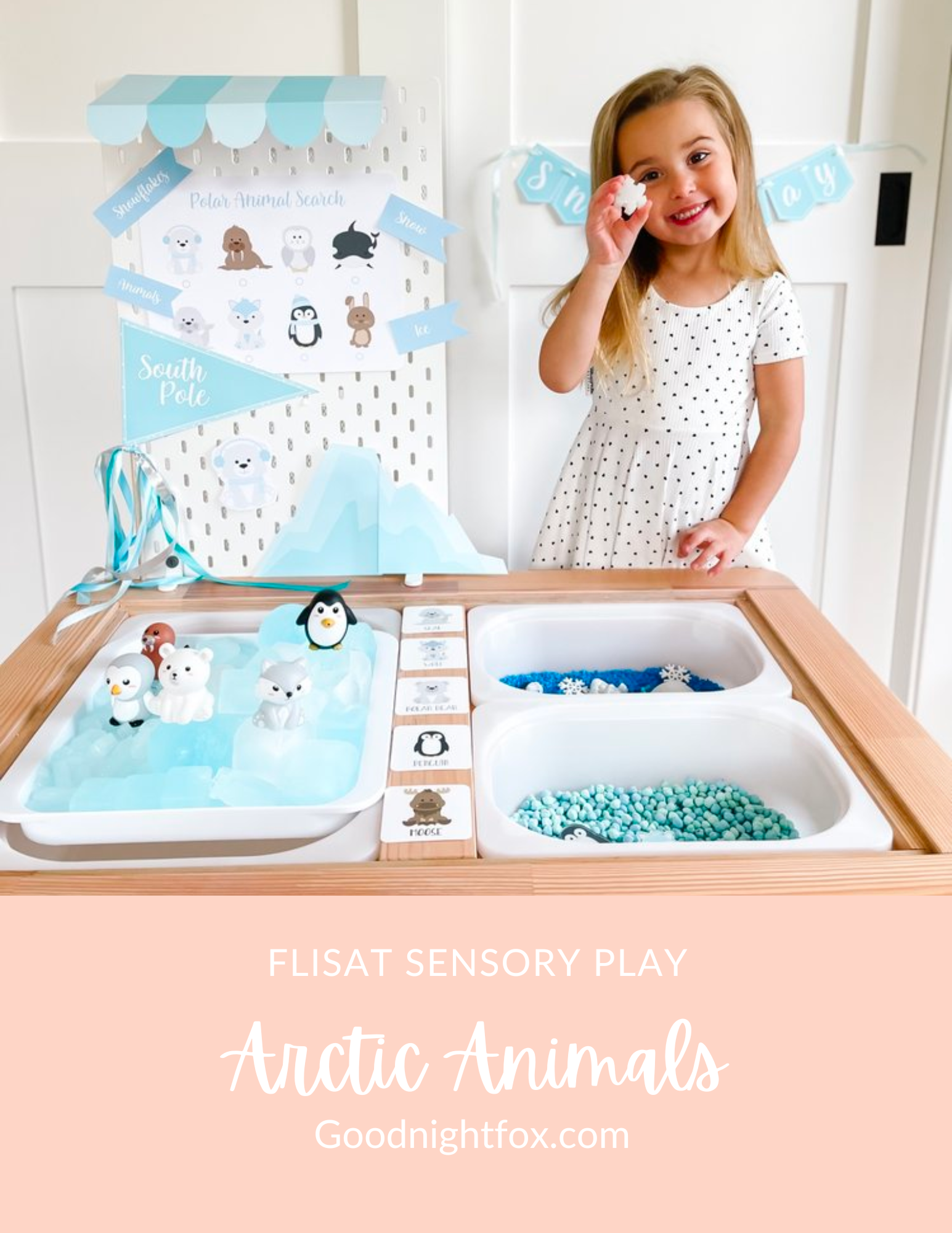
Learn about the arctic with sensory ice and polar animal figures. As we hop from bin to bin, we’ll enjoy blue pluffle and teal chickpeas, practicing scooping and playing in different textures.
Activity 1: Snowflake Ice Cube Tray with Bath Toys
Activity 2: Blue Pluffle and Snowflake Dig
Activity 3: Acrylic Polar Animal Charms and Teal Chickpeas
This winter holiday inspired Ice Skating Rink will be a playful way to celebrate the season and wrap up our year of sensory play. Filled with wooden snow flakes, arctic animals, and colorful chickpeas, this setup is sure to delight the senses.
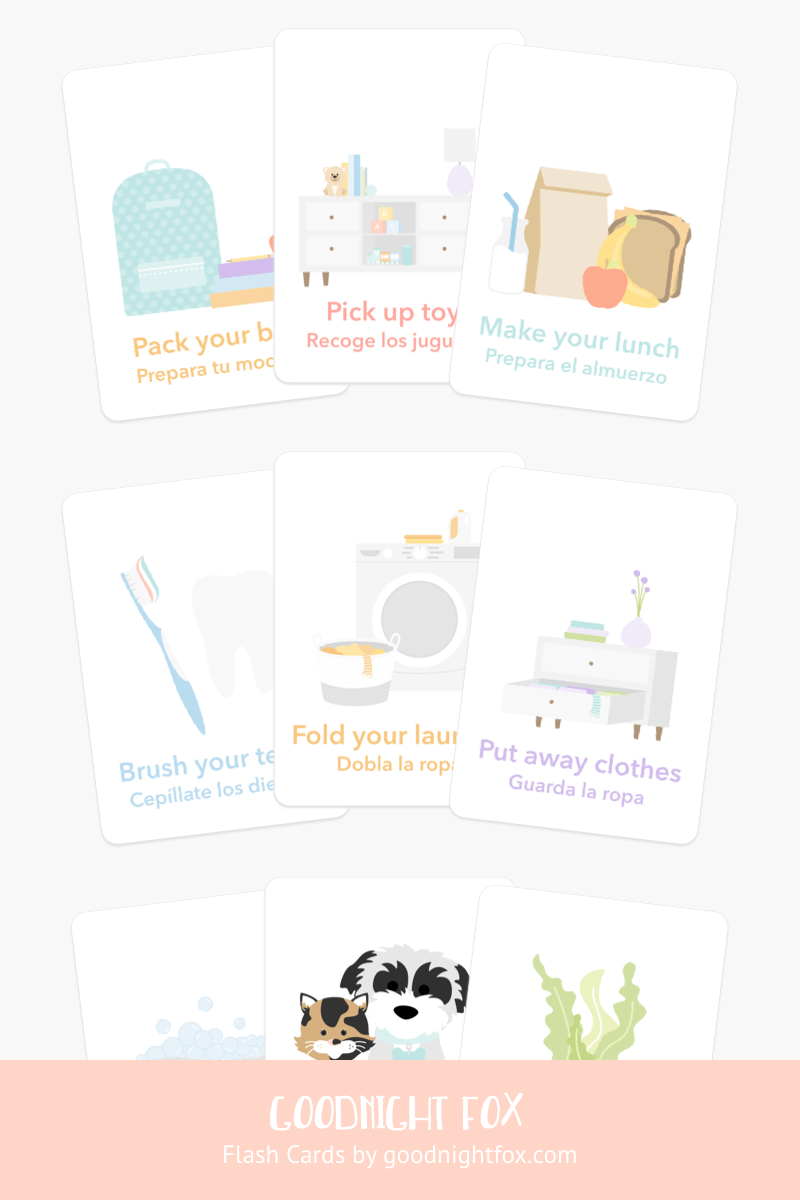
Routines: Learn about healthy morning and evening routines and self care
Chores: Practice contributing to the household with toddler friendly chores
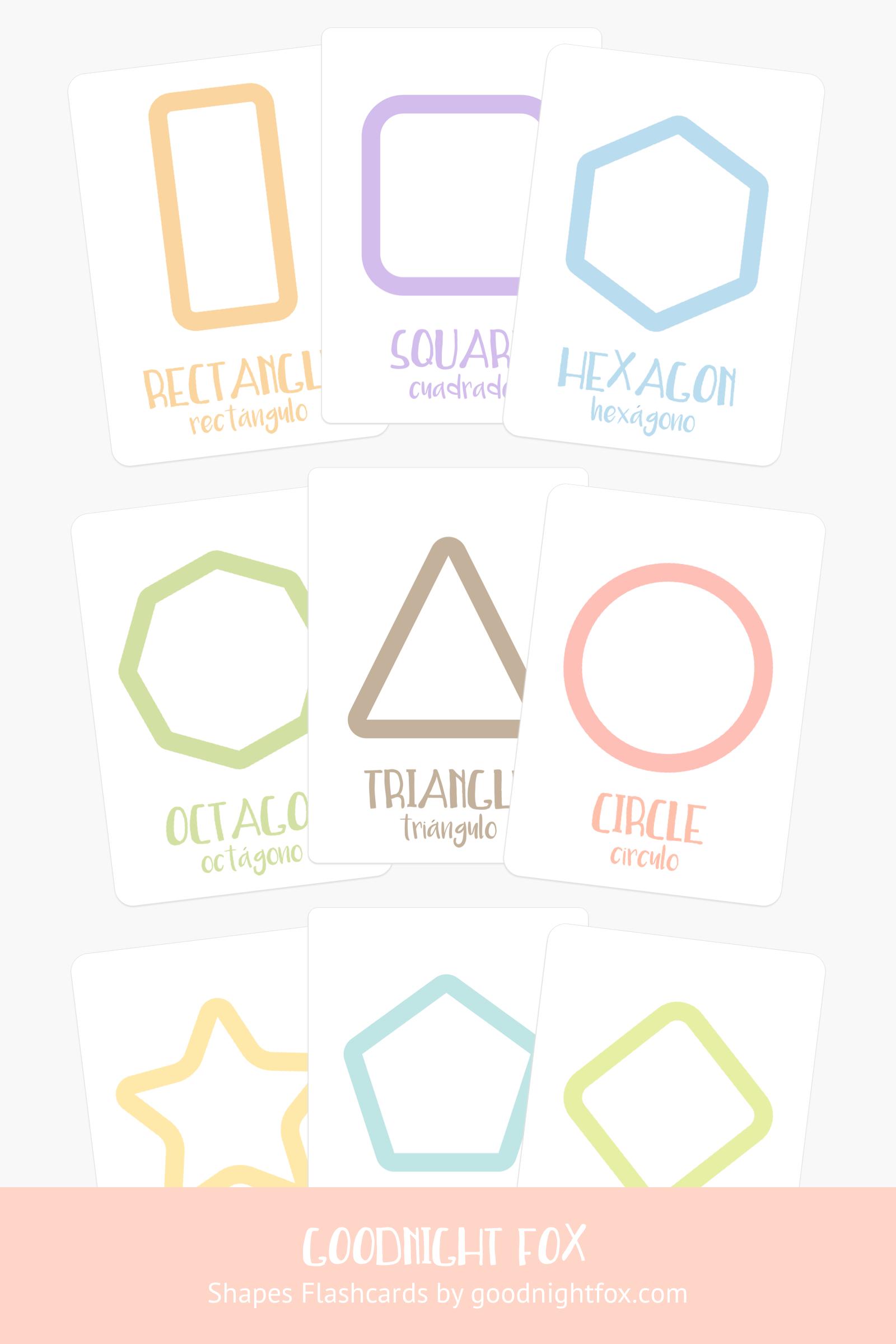
Shapes: Learn basic and advanced shapes
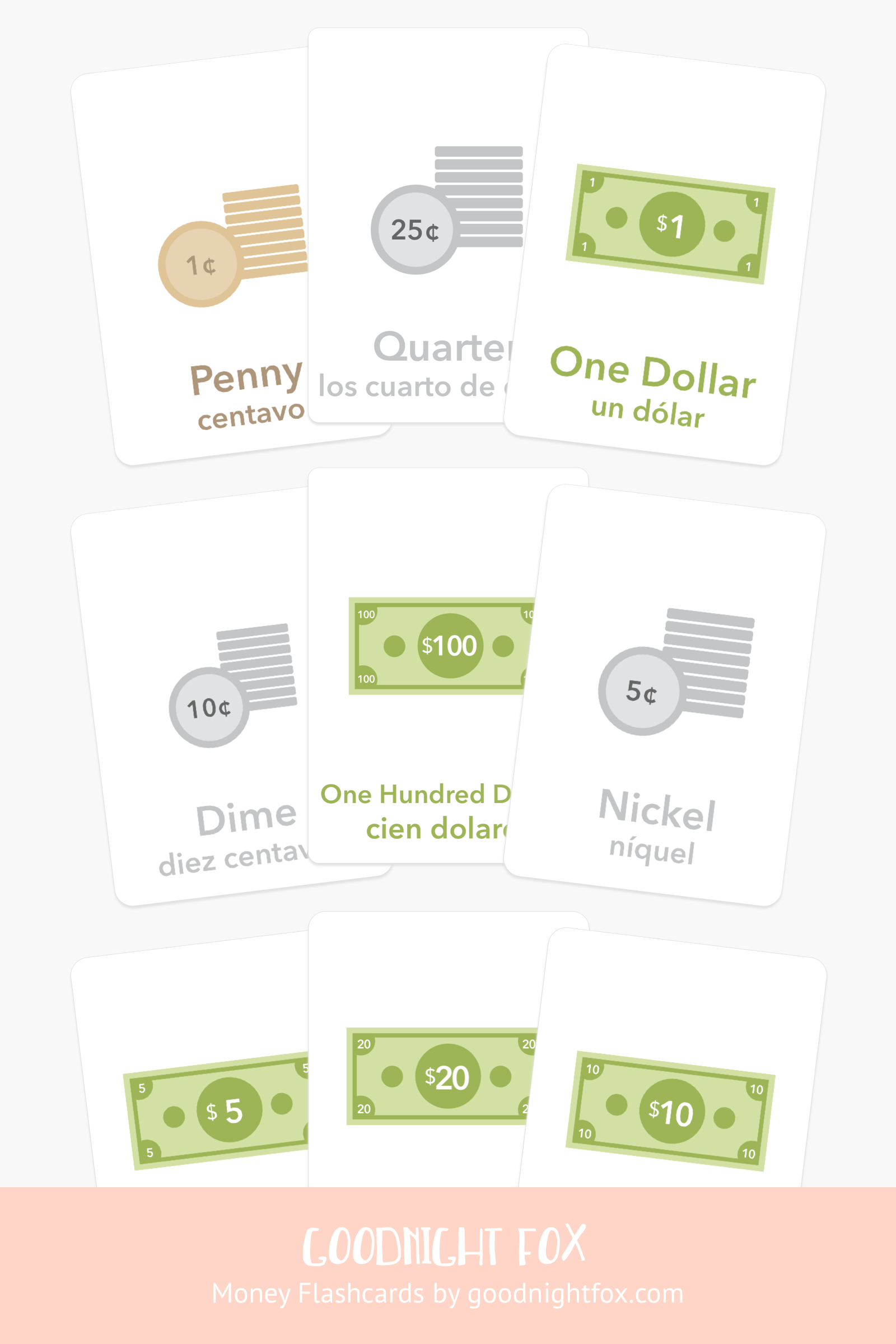
Money: Practice identifying coins and bills and adding multiple coin types together
Tangrams: Stretch your brain by building images with tangram shapes
Promote communication, emotional intelligence, and life skills through sensory experiences.
With our Sensory Play Calendar, you can provide your child with a year full of enriching, imaginative, and educational sensory experiences. Each activity is carefully designed to engage their senses and inspire creativity. To get started, explore our sensory play products at GoodnightFox.myshopify.com and let the sensory adventures begin! Happy playing, moms!
Printing Recommendations
If you’ve decided to purchase the download and print kit, here are a few recommendations on how to make the most of your printables.
Print on 80lb cardstock: I recommend printing on a thicker card stock paper for durability. If you have a printer at home you can purchase 80lb cardstock on Amazon. If you’re printing at a store I recommend FedEx Kinkos.
Print on regular paper and laminate: If you don’t want to print on cardstock, laminating regular paper is a great alternative and keeps your prints water proof in case there are spills. You can get a laminator from Amazon and lamination sheets like these.
Print Flashcards 2 per page: When printing flashcards I recommend changing your printer setting to 2 per page so that they’re a reasonable size. You can laminate these as well or use cardstock for durability.
Tools on hand: if you’re doing all of the setups, it can take time to do the cutouts. If you have a Cricut you can use the print & cut feature. If you’re doing it by hand I recommend having a paper cutter like this on hand and a corner rounder. You’ll also need a hole punch for the banner. And if you want to create the pennant flags, having wooden dowels and ribbon on hand is a must!
Awning setup: To create the look of the awning, simply fold the paper 1 inch from the straight end. Fold the rounded edge near where the rounds meet. Then use packing tape to secure the straight edge over the back of the pegboard.
Securing things: I use packing tape to secure most decorative elements to the pegboard. It’s also helpful to have on hand a roll of regular tape. I also like to use the IKEA phot frame stand for open/closed signs.
FILLER Recommendations & Shopping List
Here’s the complete list of all of the sensory fillers you might want to have on hand and many of the alternatives available to swap for taste safe options. Keep in mind that I did 3 bins each week to demonstrate multiple options, but you can choose 1 or 2 or just play with the decor!
IKEA FLISAT Table Guide: Setup, Bins & Sensory Play Ideas
Everything a beginner actually needs to know about the IKEA FLISAT sensory table — which TROFAST bins to buy, how the pegboard setup works, and the ways we really use ours — from years of GoodnightFox setups.
The tableFLISAT, 32⅝ × 22⅞ in
The binsTROFAST, 16½ × 11¾ in footprint
Core setupTable + bins. That's it.
Everything elseOptional, added gradually
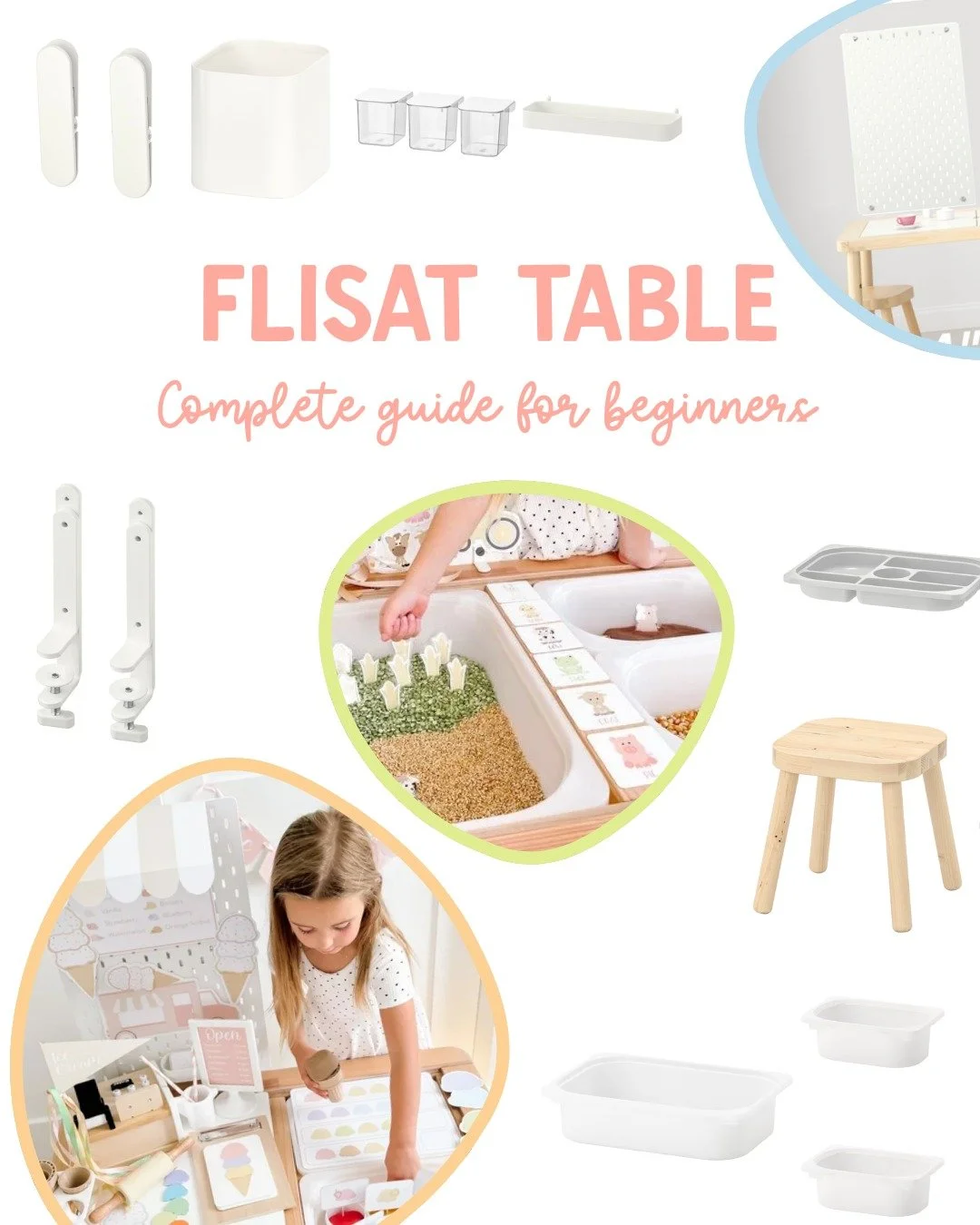
The complete FLISAT setup: table, TROFAST bins, SKADIS pegboard, and the accessories that turn it into a play shop.
If you keep seeing this little wooden table all over your feed and wondering what you'd actually need to buy, this is the guide I wish someone had handed me. We've used our IKEA FLISAT table for years of GoodnightFox sensory and pretend-play setups — it has been a sensory bin, a bakery, a vet clinic, and an ordinary craft table, sometimes all in the same week.
Here's the short answer first: the core setup is the FLISAT table plus compatible TROFAST bins. Everything else in this article — the pegboard, the trays, the tools — can be added gradually, once you know how your child actually plays. You do not need an elaborate setup to start.
The FLISAT is a wooden children's table (32⅝ × 22⅞ inches) whose top is made of two removable lids. Lift the lids and there are two openings underneath, sized to hold TROFAST storage boxes — that's what turns it into a sensory table. Drop the bins in and you have two contained play spaces; put the lids back on and it's a normal children's table for crafts, puzzles, and snacks. That open-and-close design is the whole reason parents use it for sensory play: the mess lives in the bins, and when play is over, the lids go on and the room is a room again.
The table is sold on its own at IKEA (around $99.99 in the US) and the bins are sold separately. Prices change, so check IKEA for current pricing before you go.
What do you actually need to get started?
Less than the internet suggests. Here's how I'd sort the shopping list if I were starting over:
Essential
The FLISAT table — the table itself, lids included.
TROFAST bins that fit it — see the next section for exactly which ones, because this is where beginners get stuck.
Helpful (add in the first few weeks)
Scoops, tongs, and a wide-mouth funnel
Small containers and cups for pouring and sorting
A sifter, if you'll mix fillers like rice and beans
Tape and scissors — for printables, backdrops, and quick fixes
Optional (only if they'll serve your play)
A SKÅDIS pegboard with connectors/clamps, for backdrops and storage
Printable awnings, signs, and decor for pretend-play setups
Extra trays and specialty tools
A TROFAST frame for storing whole setups (more on that in the storage section)
When I first put our everyday basics together — table, bins, pegboard, and connectors — the total came to about $120, and it's something we've used at least weekly, if not daily, ever since. But the table and bins alone would have been a complete start.
Which TROFAST bins should I buy?
This is the section that saves you a second trip to IKEA. The FLISAT's two openings each fit a TROFAST box with a 16½ × 11¾ inch footprint. That footprint comes in two depths, and there's a half-size box too:
Bin
Size
Best for
Large, deep
16½ × 11¾ × 9 in
One big sensory bin — water play, lots of filler, burying and digging
Large, shallow
16½ × 11¾ × 4 in
The same footprint with less filler to buy and shallower reach for little arms
Small
7¾ × 11¾ × 4 in
Two sit side by side in one opening — separate materials, tools, or activity parts
Three combinations cover almost everything:
Two large bins — one per opening. The simplest setup: two different fillers, or filler on one side and tools on the other.
One large + two small (my basics pick) — if you're going for the basics, I recommend two small bins on one side of the table and one large bin on the other. That enables setups with three different parts. The smaller bins are nice because they don't require as much sensory filler, which can be expensive and messy.
Mixed depths — a deep bin for the main filler and a shallow one where you want everything visible at a glance.
If you just want the basics and don't have room to store extra supplies, get one large bin and two small ones and you're done. If you want to use the bins for extra playroom storage too, get two or more large ones — they stack and swap easily.
How I set up my FLISAT table
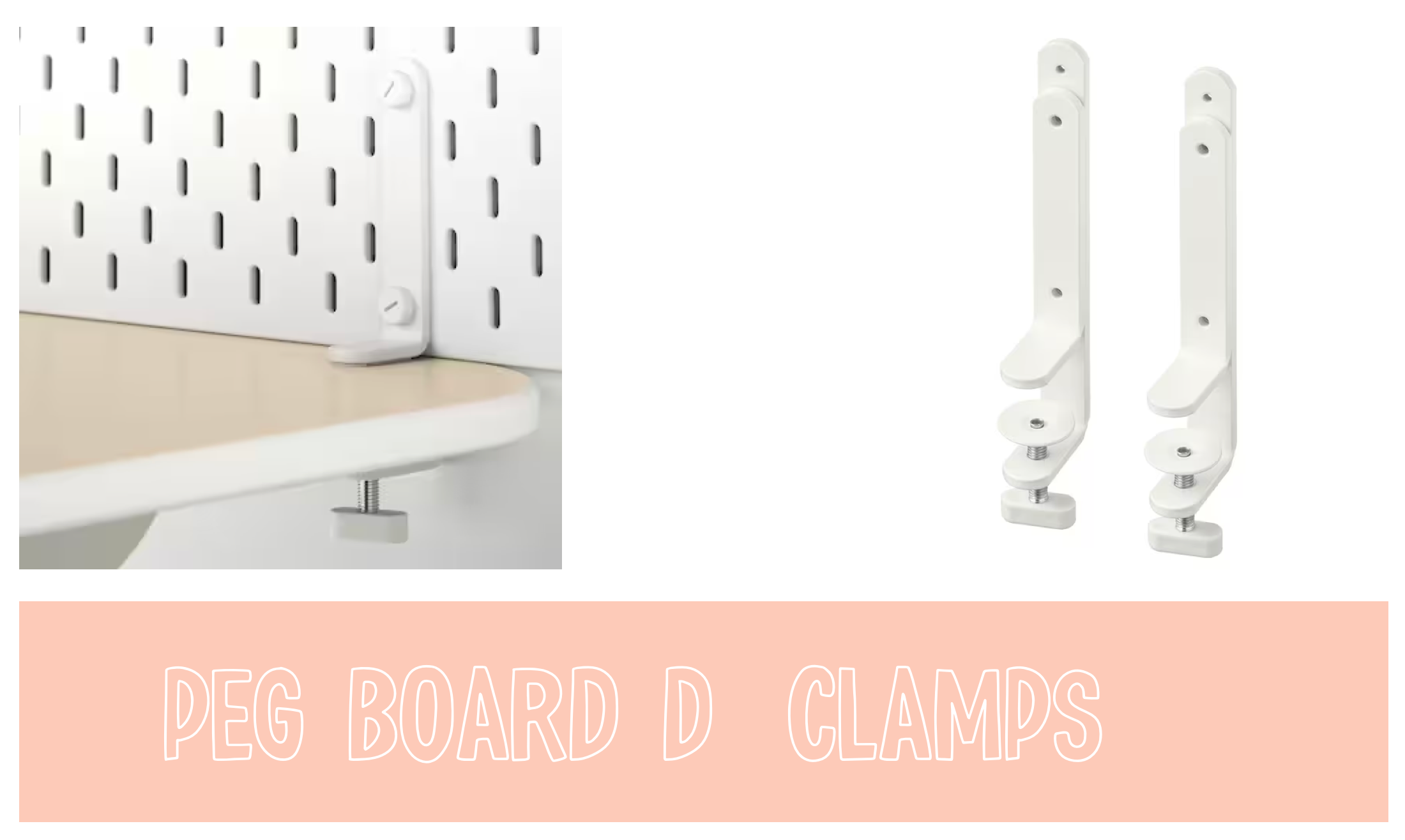
My everyday setup is the table, the one-large-and-two-small bin combination, and the smaller pegboard clamped to the back. Assembly is just IKEA's instructions for the table itself. The pegboard is my own addition: the SKÅDIS connectors (the screw-on D-clamps) secure first to the pegboard and then clamp down onto the table by tightening a screw, which keeps the board upright and secure as a backdrop for displaying sensory table materials.
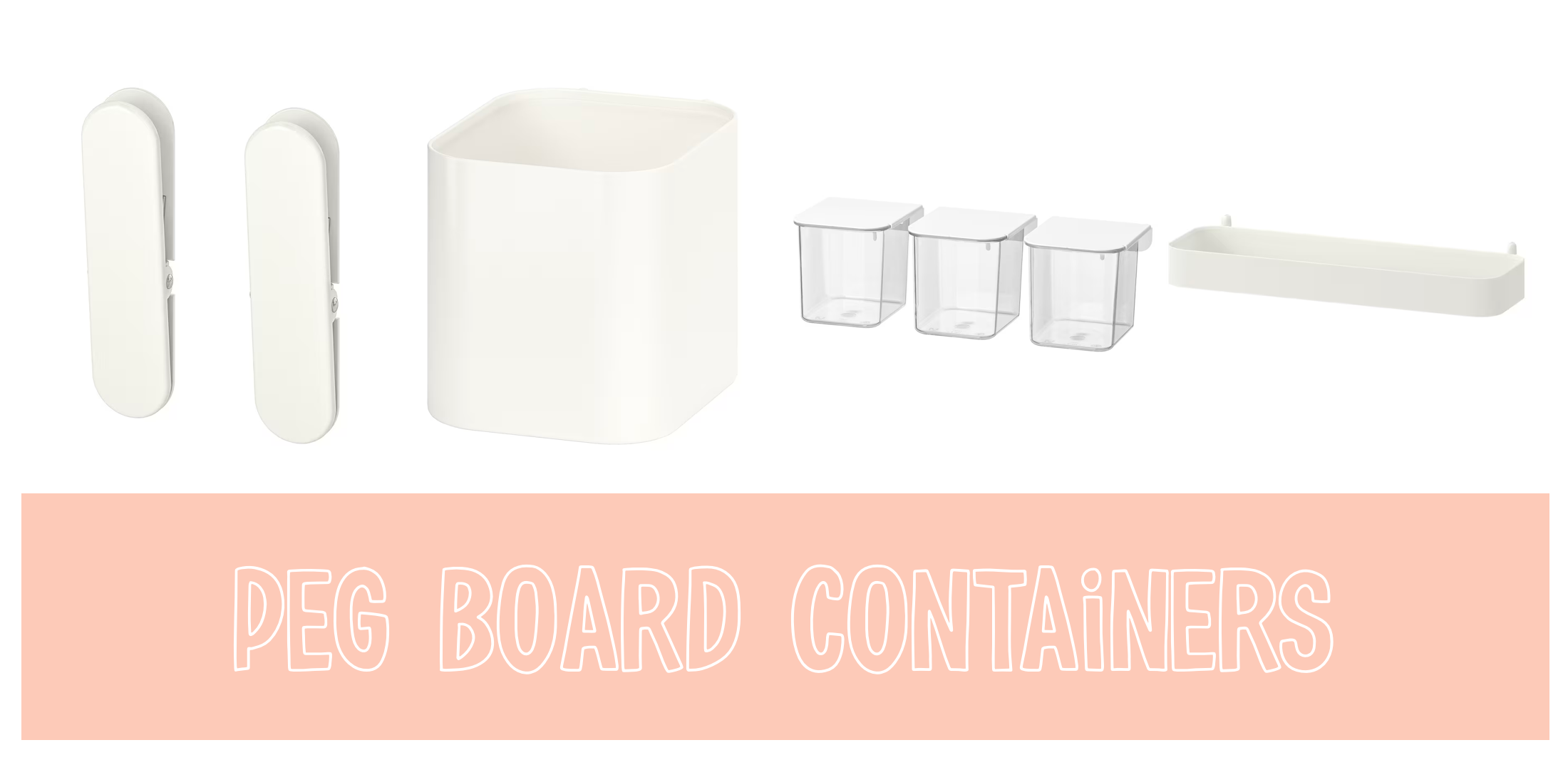
The TROFAST boxes that fit the FLISAT: the large box fills one opening; two small boxes sit side by side in the other.SKADIS pegboard containers and clips — where the small supplies and sensory tools live.
Should I add a SKÅDIS pegboard?
Short answer: not at first — but it's the add-on I get asked about most, so here's my honest comparison of the sizes. One important note: attaching a SKÅDIS to a FLISAT is my own setup, not something IKEA officially recommends. It's a modification plenty of parents make, and it works well for us — just know you're improvising, not following an IKEA pairing.
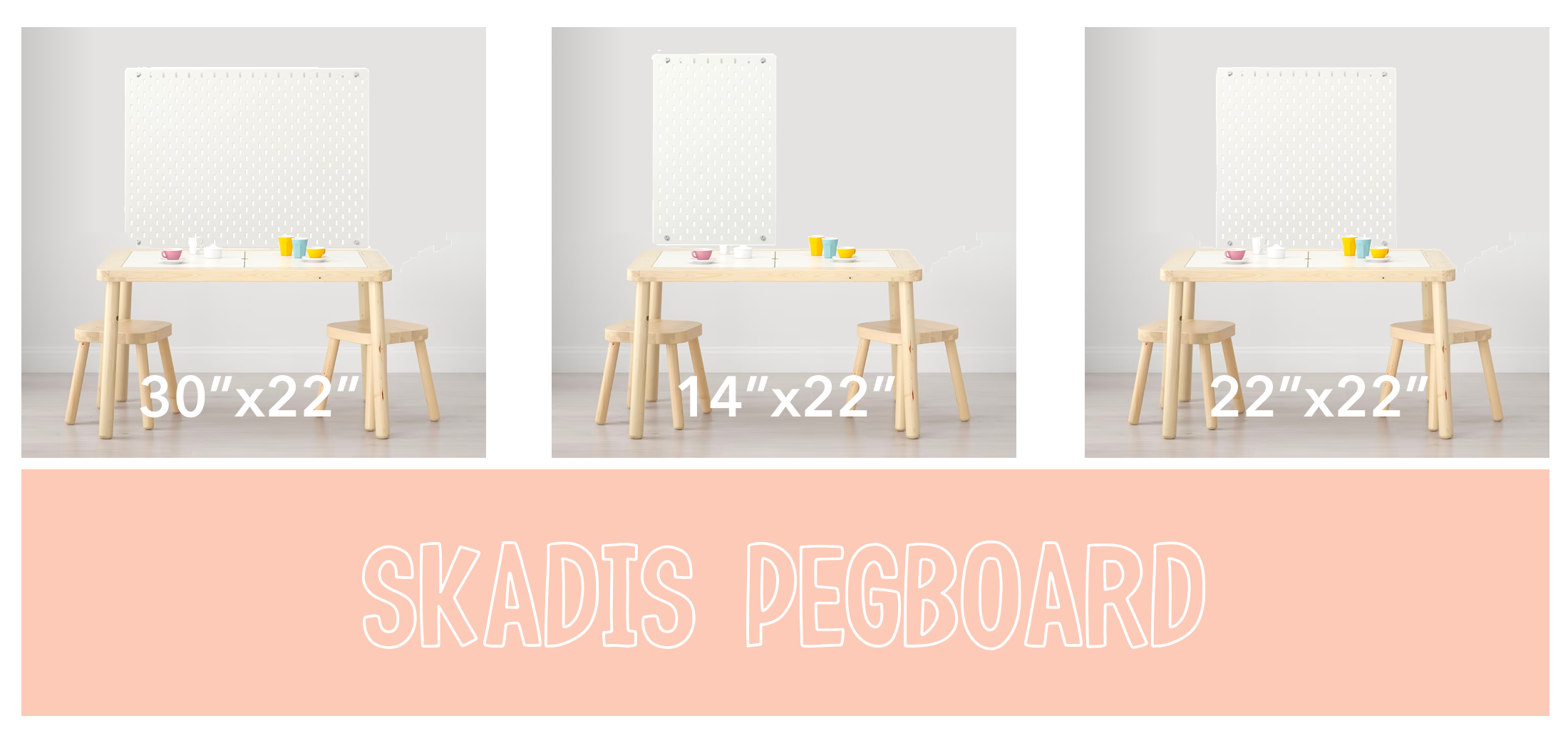
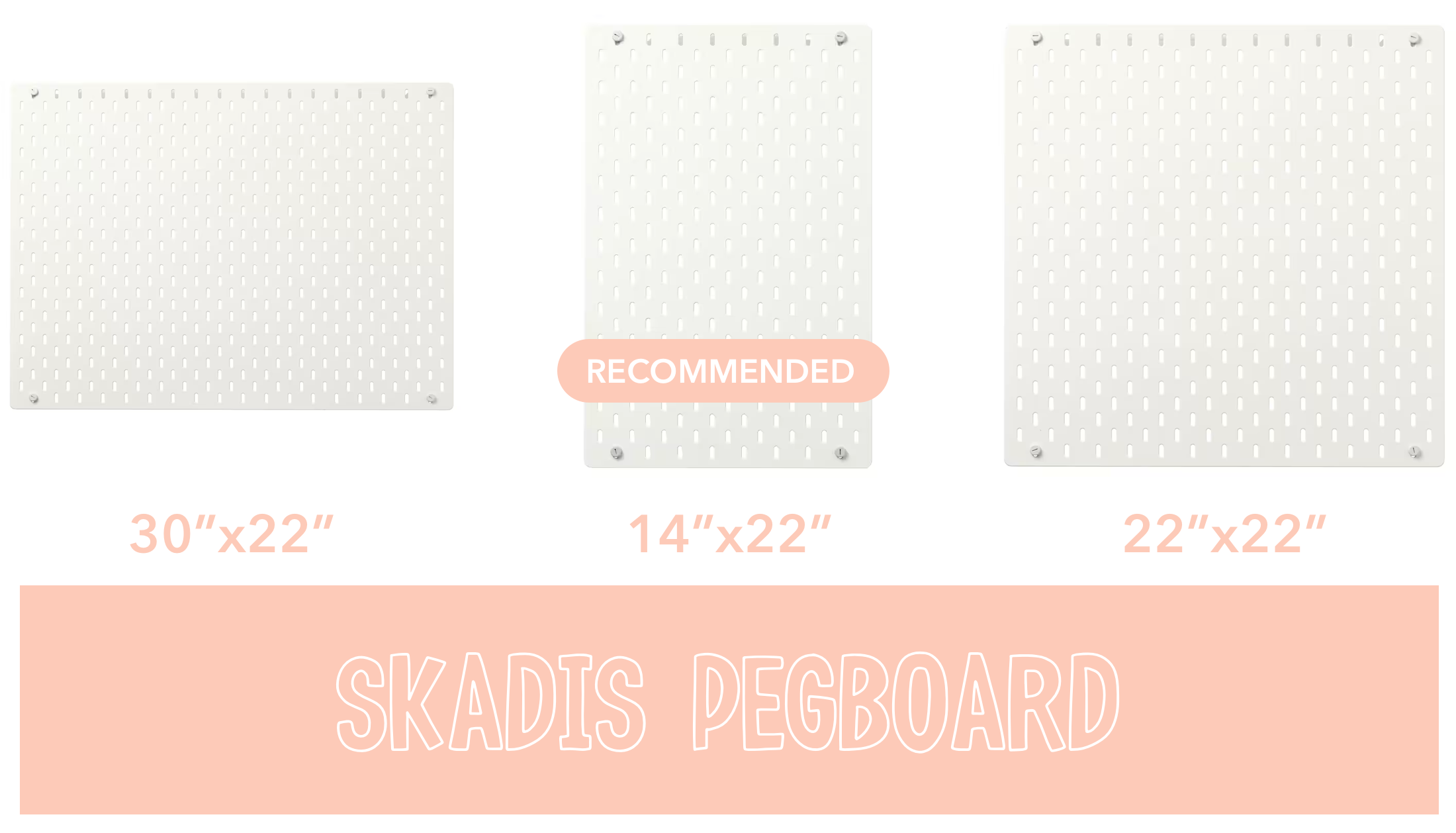
The D-clamp connectors that hold the pegboard to the back of the table.The three SKADIS sizes on the FLISAT — the small 14¾ × 22 in board is the one we use for pretend play.
14¾ × 22 in (my pick) — I love the smaller pegboard because it can be used upright and allows the child to see around the other side, which matters for dramatic play setups where I'm playing the customer on the opposite side of the "shop."
30 × 22 in — the full-sized board is popular if you want your child to sit at the table and play against a full-sized backdrop. More display space, but it walls off the far side.
22 × 22 in — the square board, in my opinion, works best on walls for sensory storage materials. This size won't match the length of the table, nor will it give the child much room to see around it.
Why the pegboard earns its place in our house: for most of my GoodnightFox printable play setups, I tape a paper awning to the pegboard to create the look of entering a shop. That one trick — a printed awning, a sign, a backdrop — is what turns a sensory bin into a bakery, a post office, or a vet clinic. The board also holds the small containers and clips in the storage section below.
Is it necessary? No. Plenty of families never add one. Add it when you find yourself wanting backdrops for pretend play, not before.
Best FLISAT accessories (the ones I actually use)
Everything here is something that's earned its space in our playroom — not a shopping list for its own sake. The pattern to notice: most of these are what I think of as activity extenders. When a child starts losing interest in a setup, you don't always need a new setup — you need a new goal inside the old one. A scoop becomes a delivery tool; tongs turn filler into a rescue mission; an empty container invites filling, carrying, and "cooking." Extenders are how one bin of rice lasts three days instead of twenty minutes.
SKÅDIS pegboards come in three sizes — the smaller upright board (center) is my pick, because kids can play on both sides of the table.
Sifter — if you plan to work with a mix of textures (rice, beans, chickpeas, sand), this specific tool earns its keep: it sorts small grains from large grains, so you can mix two fillers for play and sort them back out at the end. It's also deeply satisfying to use.
Wide-mouth funnel — get a pretty wide one for typical fillers like beans and chickpeas. Your kids will get extra use out of funnels in the bathtub too, so it doesn't hurt to have a few extras.
Scoops and cups — my favorite little cups and sifter are the stackable ones from Inspire My Play, because they save space and match the scoop set. I love silicone scoops because they're soft and flexible.
Tongs — the classic extender: suddenly everything in the bin needs rescuing, sorting, or serving.
Tape and scissors — stock up on tape especially if you'll be doing a lot of add-on materials. I use regular Scotch tape for hanging most printables and Scotch packing tape for securing the awning to the pegboard. Keep a pair of kid scissors handy too — little ones love to help, and it's great fine-motor practice.
TROFAST storage tray — not a must, but a nice-to-have if you like setups neat and orderly. It organizes scoops and spoons, and fits nicely on top of the bins while the fillers sit underneath.
A wooden serving tray — the little wooden tray from our Plan Toys food set gets used constantly to tote "orders" around in restaurant scenes.
Inspire My Play tray — I love having this tray for small world play: the dividers create spaces for each part of the setup, and it's very deep, which allows for liquids and other materials.
Cloud silicone placemat — great for sticky or messy play: slime days, playdough, anything wet. Just note that magnetic sand sticks to this surface and has to be washed off.
Felt food and a toy cash register — for farmers market, grocery store, and play kitchen setups, felt food adds realistic magic. If you're already making the IKEA trip, their felt sets (vegetables, shopping basket, pizza, cinnamon rolls) are hard to beat on price. And since most of my setups pretend my daughter owns a shop in the real world, a cash register is super handy — we've had one from Crate & Barrel and one from Pottery Barn and loved them both. (Setting up a play kitchen instead? Start with my IKEA play kitchen ideas.)
An easy first FLISAT setup
Don't overthink your first one. Here's the beginner setup I'd hand any new FLISAT owner:
Put the large bin in one side and the two small bins in the other.
Fill the large bin with one simple dry filler — rice, dried pasta, or oats.
Put scoops and cups in one small bin; leave the other small bin empty.
That's it. Scoop, pour, fill the empty bin, empty it back.
An empty container is a surprisingly powerful invitation — filling and emptying is the whole game at this age. When interest dips, add one extender (tongs, a funnel, a few puzzle pieces to bury and find) before you reach for a whole new theme. And before you choose any setup, know your own non-negotiables: some parents refuse rice or sand in the house, some prefer no sticky or doughy materials, some keep water play outside only. Knowing your limits narrows the search for inspiration in a good way.
FLISAT table ideas from our real setups
Every example below is a real GoodnightFox setup from our own table — these are the posts I send friends when they ask what to do with the table next.
Nice-to-have extras: the FLISAT stool, the TROFAST insert tray that sits on top of a bin, and the TROFAST frame for storing whole setups.
Where does my inspiration come from? Holidays and seasons first. Books, constantly — children's books are a theme factory. Learning concepts (alphabet, counting, shapes, phonics) make easy, purposeful themes. Real-world scenarios — shops and workplaces my daughter can step into — are where she learns the most, playing the part of a shop owner or astronaut, a baker or even a farm animal. And interesting materials: when I found Pluffle, I started hunting for new textures — we've built tables with ace bandages, glow-in-the-dark rocks, and hydrophobic water. Whenever you come across a fun material, even aluminum foil or wax paper, it's worth asking how it could become a setup.
If you don't know where to start, my Sensory Play Calendar is built for exactly this problem: a weekly bin with an associated learning goal, so the planning is done for you.
Pretend play with the FLISAT table
This is where GoodnightFox setups differ from a basic sensory bin. The formula is simple: pegboard or backdrop + printable awning and signs + themed materials in the bins. The awning taped to the pegboard creates the shopfront; menus, signs, and learning cards tell the story; the bins hold the "goods." One week the table is a bakery, the next it's a cat adoption center — the structure stays the same and only the printables change.
The IKEA felt food sets we reach for most — the shopping basket, vegetables, pizza, and cinnamon rolls stock most of our pretend shops.
If pretend play is your main goal, the printable library is where to dig in — see the printables section below for the full FLISAT collection.
Our most-loved FLISAT themes
Not sure which theme to try first? Start where our readers and customers start. These are the setups that get played, saved, and bought the most — the Ice Cream Shop kit is the best-selling product in our whole shop, and the vet clinic and bakery are among our most-read pretend play posts. Each one is a $5 printable kit that pairs with the blog post showing our real setup.
Ice Cream Shop
Signs, menus, order slips, mix-and-match scoops, and pretend money — the table becomes a working ice cream parlor. This is the kit that outsells everything else we make, and the setup our readers ask about most.
A teal-and-coral animal clinic with a striped awning, patient intake forms, an X-ray board, and a waiting room sign. Stuffed animals check in, get examined in the bins, and recover in style. Our vet clinic post is one of the most-saved setups on the blog.
The natural first shop: an awning on the pegboard, cakes and cookies in the display case, an order form at the register. It's the setup I built around my daughter's favorite picture book, The Smart Cookie — and bakery themes are perennial best sellers in the shop.
Our winter anchor: a cozy cocoa stand with menus, toppings, a fractions cup for pouring practice, and paper money. It comes back every winter in our FLISAT rotation, in classic red-and-green or peppermint red-and-white.
The table doesn't change as kids grow — the complexity inside it does. Babies and young toddlers start with one filler and big scoops; preschoolers are ready for multi-part setups, sorting and counting goals, and full pretend-play worlds with menus and money. Age is only a rough guide, though: what matters is choosing materials appropriate for your child and supervising actively, especially with anything small enough to be a choking hazard. For a fuller breakdown, see the sensory play by age guide on Sprout.
Sensory materials and safety
A quick word on filler safety, because the internet is loose with this. Some sensory-play resources describe food-based fillers as "taste-safe," but food-based materials can still present choking, allergy, and other risks — "it's food" is not the same as "it's safe unsupervised." What I actually did when my daughter was in the mouthing-everything phase: I chose food-based sensory materials, like cooked rice and beans, dry pasta, dry baking ingredients, and homemade playdough — and I stayed right there while she played. Keep materials age-appropriate, check for allergies before using food fillers, pull anything that's a choking hazard for your child's stage, and treat supervision as part of the activity, not an extra.
How I store FLISAT and sensory play supplies
Storage is what decides whether sensory play happens weekly or never. Taking down and putting up new setups takes time, and you'll end up wondering where it all goes. Here's the system that survived years of weekly rotations:
Themed bins, flashcards at the front as labels — no label maker required.
Plastic stackable bins (Target) — I put GoodnightFox flashcards at the front of each bin so I can remember what theme is inside without creating labels.
Photo storage bins — amazing for sorting flashcards plus one simple sensory supply. I use them for weather acrylics, bees, wool balls, fruit erasers, and all the little wooden bits and bobs you'll end up acquiring; each small box fits neatly into the large box so you can see and access everything. I keep a set of activities stored in my car at all times — super handy for a restaurant solution or something to keep attention in line at the doctor's office.
SKÅDIS pegboard containers — you'll want containers you can grab quickly for smaller supplies and fillers. I love the SKÅDIS drawer containers because they're so accessible. The little white containers are super handy too, especially if the table does double duty for art supplies (markers, pens, stamps). The white shelf can come in handy but doesn't hold much, so have a clear purpose in mind — for me it's just a catch-all. The white clips are handy for hanging flashcards and reference materials, but if I'm being honest, I just prefer to tape things directly to the board because it saves space.
TROFAST frame — if you're going all out, I highly recommend this storage unit. The fastest, most convenient sensory play storage option is hands down throwing everything for a setup into a TROFAST bin and sliding it into the frame. Take it from me: I did this for years with containers in a closet, and I wish I'd had the shelf option sooner.
Where to find FLISAT printables
This blog is the editorial side of GoodnightFox — my experience, my setups, my honest recommendations. Sprout is the structured play library: the printable setups themselves, organized so you can find one by theme and print it today. If you're looking for printable awnings, signs, menus, and full pretend-play setups sized for this table, start with the FLISAT printables and sensory table ideas guide on Sprout — it's the collection that pairs with everything in this article.
And if you already know your child will want the next shop, and the next: the four themes above — plus more than 70 others — are all inside the Ultimate Pretend Play Bundle, our complete library of printable play kits.
Frequently asked questions
What bins fit the IKEA FLISAT table?
TROFAST storage boxes with a 16½ × 11¾ inch footprint — in either the shallow (4 in) or deep (9 in) version. Two small TROFAST boxes (7¾ × 11¾ in) also fit side by side in one opening.
Can you use the FLISAT table without TROFAST bins?
Yes. With the lids on, it's a regular children's table for crafts, puzzles, and play trays. The bins are what make it a sensory table — they drop into the openings to hold fillers — but nothing about the table requires them day to day.
What do I need for a FLISAT sensory table?
The table, TROFAST bins that fit, one filler (rice, pasta, oats, water), and a few tools like scoops and cups. Everything else — pegboard, trays, printables — is optional and can come later.
Is a pegboard necessary for a FLISAT table?
No. It's my favorite optional add-on because it holds backdrops and awnings for pretend play, but the table works completely without one. Add it when you start wanting shop-style setups.
How often should I change a sensory table setup?
I change ours up about once a week — but if an activity is inspiring a lot of play, I'll leave it up for a few weeks. Let's face it, we all get busy, and sometimes there isn't time to cycle weekly. Some parents who homeschool set up a new activity every day; find the rhythm you'll actually keep.
What can I put in a FLISAT sensory table?
Dry fillers (rice, beans, chickpeas, pasta, oats), water, playdough, kinetic sand, and themed materials — plus tools like scoops, tongs, and funnels. For younger toddlers, food-based fillers with close supervision are the usual starting point.
Can the FLISAT be used for pretend play?
Absolutely — it's our main pretend-play stage. Add a backdrop or pegboard with a printable awning, put themed materials and felt food in the bins, and the table becomes a bakery, a market, a vet clinic, or an adoption center.
The FLISAT is not magic furniture. It's a simple, sturdy table that makes sensory and pretend play easy to start and easy to clean up — which, in a real house with a real toddler, is what decides whether play happens at all. Start with the table and bins. Add the rest when the play asks for it. And if you build a setup you love, I genuinely want to hear about it.
As the sun sets on my daughter’s toddler years, I find myself marveling at the sweet little soul she’s becoming. Turning four seems like a monumental step, a reminder that time is slipping through my fingers faster than I can grasp. To mark this special occasion, we decided to throw her a kids’ party that encapsulates her vibrant spirit - a celebration filled with sunshine and rainbows that mirrors the joy she brings into our lives.
Party details
Our backyard was transformed into a whimsical wonderland thanks to the creative touch of GoodnightFox and Zazzle. The flag stick, bunting banner, and print-and-fold gift boxes adorned with the theme brought an enchanting atmosphere. The sunshine piñata added an element of surprise, while the birthday girl proudly wore a crown that beautifully blended a rainbow and the number 4.
Table decorations
The focal point of our celebration was the cake table, adorned with sunshine and teal plates, and wooden teal cutlery from Ellie & Piper Party Supply. GoodnightFox’s rainbow print plates available on Zazzle added a burst of color, complemented by little treat bags designed by GoodnightFox filled with sunshine sprinkles and cloud gum balls.
Party favors
Our little guests were treated to delightful party favor bags containing sunshine squish toys, sunshine glasses, yellow bows, rainbow key chains, acrylic charms, and whimsical weather flashcards, stickers, and magnets.
Cake table
The dessert table was a culinary masterpiece, featuring a sunshine and rainbow chocolate cake with fondant toppers by The Cake Shop, cupcakes with yellow frosting and sprinkles, and intricate royal icing cookies. GoodnightFox’s table stands added an extra touch of magic, alongside rainbow macarons that were almost too beautiful to eat.
balloon Arch and Crepe Paper Backdrop:
A pastel rainbow balloon arch by Soirée Love framed our celebration, creating a stunning visual entrance. The backdrop, adorned with pastel crepe paper rainbow colors, provided the perfect setting for countless photo opportunities.
Bounce house
The white bounce house by PlaySmol stole the show, featuring a rainbow balloon arch, rainbow star ball pit toys, blow-up sunshines, and sunshine squishy toys. The joyous laughter of the little ones bouncing around was a testament to the success of our party planning.
As the day unfolded in a kaleidoscope of colors, laughter, and joy, I couldn’t help but feel grateful for the memories we created. Our little sunshine’s fourth birthday was a testament to the magic that happens when creativity, love, and celebration come together. Here’s to many more years of sunny days and rainbow-filled dreams!
Colors are an essential part of our world, and introducing them to young children can be an exciting and educational experience. One creative way to engage kids in learning about colors is through a Color Wheel Sensory Activity. This hands-on, colorful adventure can be made even more engaging by using a matching bin full of loose, colorful rainbow parts. In this blog post, we will explore the benefits of color activities for kids and the advantages of incorporating sensory play using the FLISAT play table, while drawing insights from reputable sources in kids' education.
My FLISAT setup guide covers the table-and-bins base for activities like this.
Color activities are a wonderful way to stimulate a child's cognitive and sensory development. Here are some key benefits:
1. Color Recognition: Learning to identify and differentiate between colors is an essential early skill. Color activities help children recognize and name different colors, laying the foundation for more advanced learning.
2. Language Development: These activities encourage kids to express themselves verbally as they describe the colors they see and engage in discussions about their creations.
3. Fine Motor Skills: Activities like sorting and manipulating colorful objects in the sensory bin promote fine motor skill development, aiding in hand-eye coordination.
4. Creativity and Imagination: Exploring colors in a fun and unstructured manner allows kids to use their imagination and creativity, fostering artistic expression.
5. Conceptual Understanding: By combining colors in various ways, children can grasp fundamental concepts like color mixing, patterns, and more.
1.Shapes Matching Sensory Play
For our first activity, we used our amazing resin shapes from Creating Adventures Co (get 10% off). They match perfectly with our Colors & Shapes Match game and our Shapes Placemat. We filled the bin with these awesome resin shapes along with our cards and Sofie set about organizing them all along the edges of the play table. After that, we began practicing matching each of the shapes to the cards and matching them by color. This is great practice for early learners especially in the 12mo-16mo range.
2.Color sand slime
If you haven’t tried sand slime, you’re missing out. This is one of my all time favorite sensory textures. It’s not as crumbly as kinetic sand, but it’s also not sticky like slime. It’s the perfect sanding/smooth texture for molding and playing. We used one of each color from this amazing set SlimyGoop Set — which is also perfect for classroom gifts or birthday favors since it’s a large pack of 48. We started by keeping the colors separated and matching them with other elements of the table. And then Sofie could help herself by to mix and combine all of the colors.
For our littlest learnings, practicing the names of colors and matching objects of the same color is a great way to build a foundation of what color is and what color means. For this activity, I recommend assembling the Color Wheel activity spinner. Sofia absolutely loves playing with these spinners and it’s a great way to make matching more engaging. Challenge your little one to spin the spinner. Then, with a sensory bin full of colorful toys like these silicon blocks from Bannor Toys, resin letters & fruits from @BusyLittles, poms from Amazon, wooden blocks from Lovevery, task your kiddo with finding something from the bin that matches the selected color.
2.CUPCAKE Color Sort
For this activity, fill one bin with rainbow colored silicone cupcake holders. Fill another bin with matching rainbow color wool or felt balls. Challenge your little one with a set of pinchers to grasp the colored balls and fill the holders on the other side. If this is too easy, challenge them further by setting a timer and seeing how quickly they can do it. After one try, they can try to beat their previous score!
3. WOODEN PEG DOLL COLOR SHADE SORTING
For this activity, fill one bin with rainbow colored silicone cupcake holders. Fill another bin with matching rainbow color wool or felt balls. Challenge your little one with a set of pinchers to grasp the colored balls and fill the holders on the other side. If this is too easy, challenge them further by setting a timer and seeing how quickly they can do it. After one try, they can try to beat their previous score!
4. WOOL BALL PATTERN MATCH
For this activity, use the 12 frame and ball pattern matching cards to practice creating colorful patterns with wool balls. This is a great activity for the 3-4 year old age range because it’s a bit more challenge and requires more visual concentration. With this flashcard kit, you get 10 different patterns to challenge your kiddo.
5. Rainbow activity insert board
For this activity, you’ll need this fabulous rainbow Trofast insert from Wonder Years Play. This board features three different activities in one. Your toddler can use colored popsicle sticks to match the colors of the rainbow. They can use Q-Tips to fill in the whites of the clouds and finally they can use wool colored balls to pop into each raindrop shaped hole. This activity also pairs well with the Weather Station setup!
6. Rainbow Spaghetti PLay
For this activity, you’ll want to use food coloring and cooked pasta to create a fabulous sensory play experience. Start by putting the colored noodles into a separated tray. This will help aid in practicing color recognition before digging in and making a sensory mess! This one is a great taste safe alternative and it’s just so much fun. For all of the instructions check out this Spaghetti Play Blog Post.
7. Rainbow NOODLE SHAPES
To combine texture and shape with color matching, check out this awesome noodle shapes color matching activity. If you have extra pasta on hand, this is super simple and a great taste safe option for younger kiddos. Simply cook the pasta and separate by shape. Then dye with food coloring and toss into a Trofast bin. Using the color placemat, challenge your toddler to pick out one noodle at a time and place it on the associated color. For more details, check out this Rainbow Noodles Blog Post.
Engaging kids in a Color Wheel Sensory Activity with a matching bin full of loose, colorful rainbow parts is a fantastic way to introduce them to the world of colors and stimulate their cognitive and sensory development. Using the FLISAT play table enhances the experience by providing a practical and versatile platform for these activities. By referencing reliable sources in kids' education, we can confidently say that such activities not only bring joy but also promote learning and growth in young minds. So, go ahead and explore the rainbow with your little one; the benefits are as colorful as the activity itself!
Have a shop that specializes in baby gifts? I'd love to feature your shop and products in one of my weekly roundups. Email me at goodnightfoxstudio@gmail.com.