• Activity ideas by age
    • Seasonal activities
    • Materials & fillers
    • Getting Started
    • Taste Safe
    • All activity ideas
  • Shop
  • Freebies
  • About
Menu

Goodnight Fox

1974 San Luis Ave
Mountain View
16502243796
Dramatic & Sensory Play for Early Learners

Your Custom Text Here

Goodnight Fox

  • Activities
    • Activity ideas by age
    • Seasonal activities
    • Materials & fillers
    • Getting Started
    • Taste Safe
    • All activity ideas
  • Shop
  • Freebies
  • About

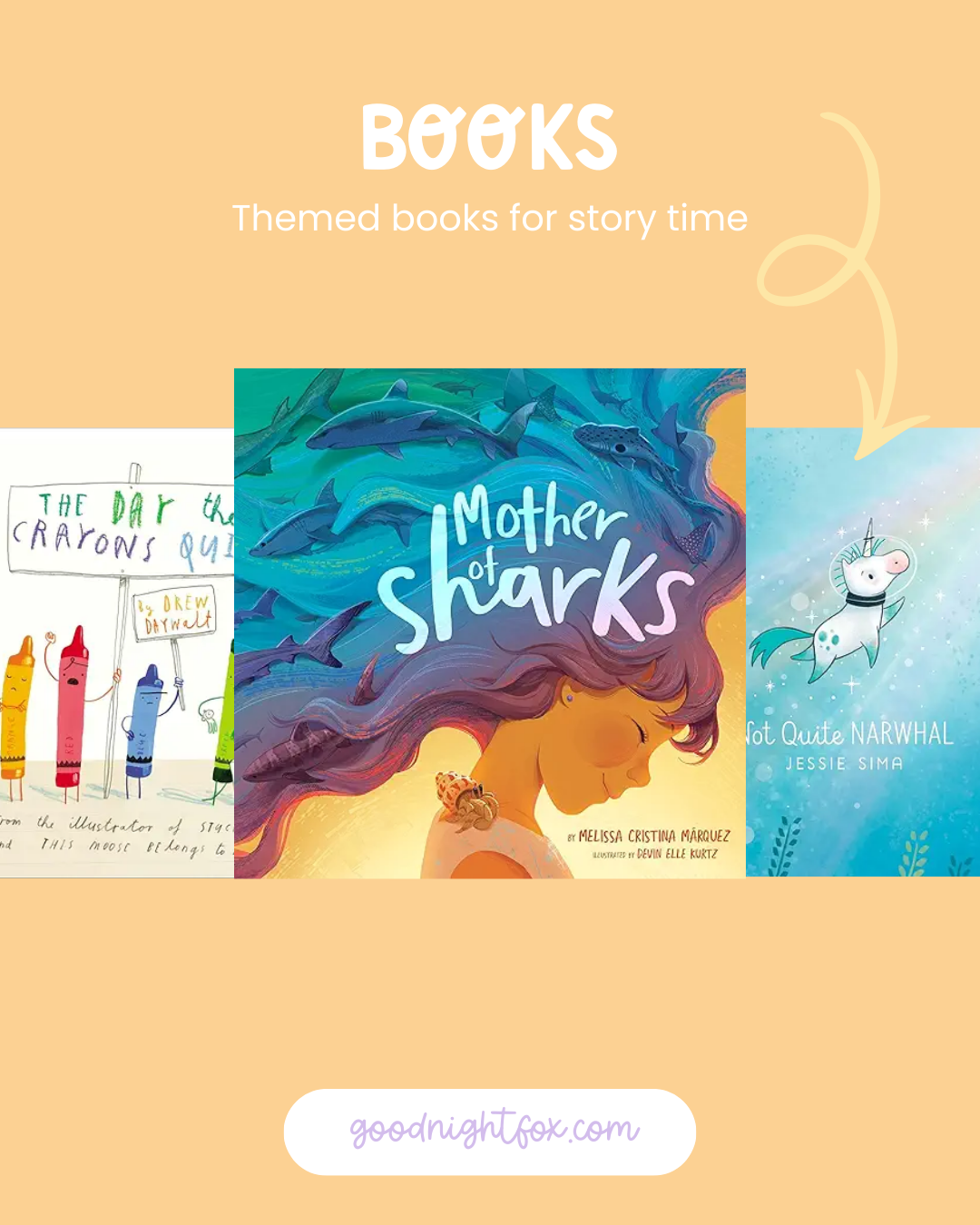
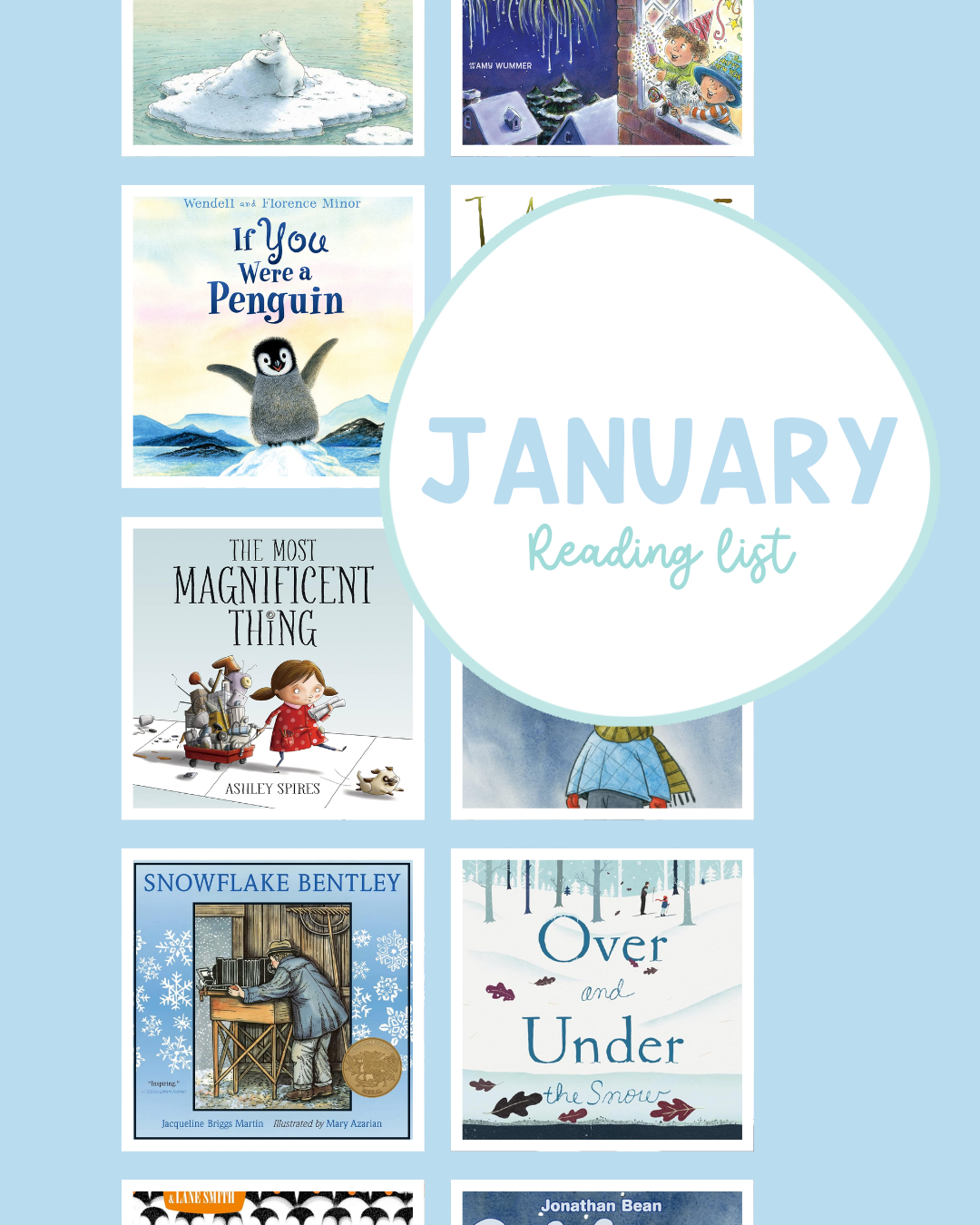
January Homeschool Reading List (Ages 3–5)

December 22, 2025 Kylie Tuosto
January homeschool reading list for ages 3–5 featuring winter, Arctic, food, and social-emotional picture books for preschool and kindergarten learning

Books + Sensory Play Ideas to Extend Learning Through Play

January is one of my favorite months to homeschool. The slower pace after the holidays, cozy winter themes, and natural focus on reflection make it the perfect time to lean into literature-based learning paired with sensory play.

This January reading list comes straight from our homeschool planner for ages 3–5, and I wanted to share it here on the blog so you can:

  • Easily revisit the book list

  • Pair stories with hands-on sensory activities

  • Extend learning beyond read-aloud time

  • Bookmark it as a monthly rhythm resource

Many of these titles are also included as links in my planner, so having them here creates a helpful, searchable reference for homeschool moms planning month by month.


How We Use Monthly Reading Lists

Each week, we focus on:

  • 1–2 anchor books

  • Short daily read-alouds

  • A sensory bin, craft, or fine-motor activity inspired by the story

This approach supports:

  • Language development

  • Emotional regulation

  • Fine motor skills

  • Theme-based vocabulary

  • Longer attention spans through play

If you’re homeschooling toddlers or preschoolers, this style keeps learning gentle, playful, and developmentally appropriate.
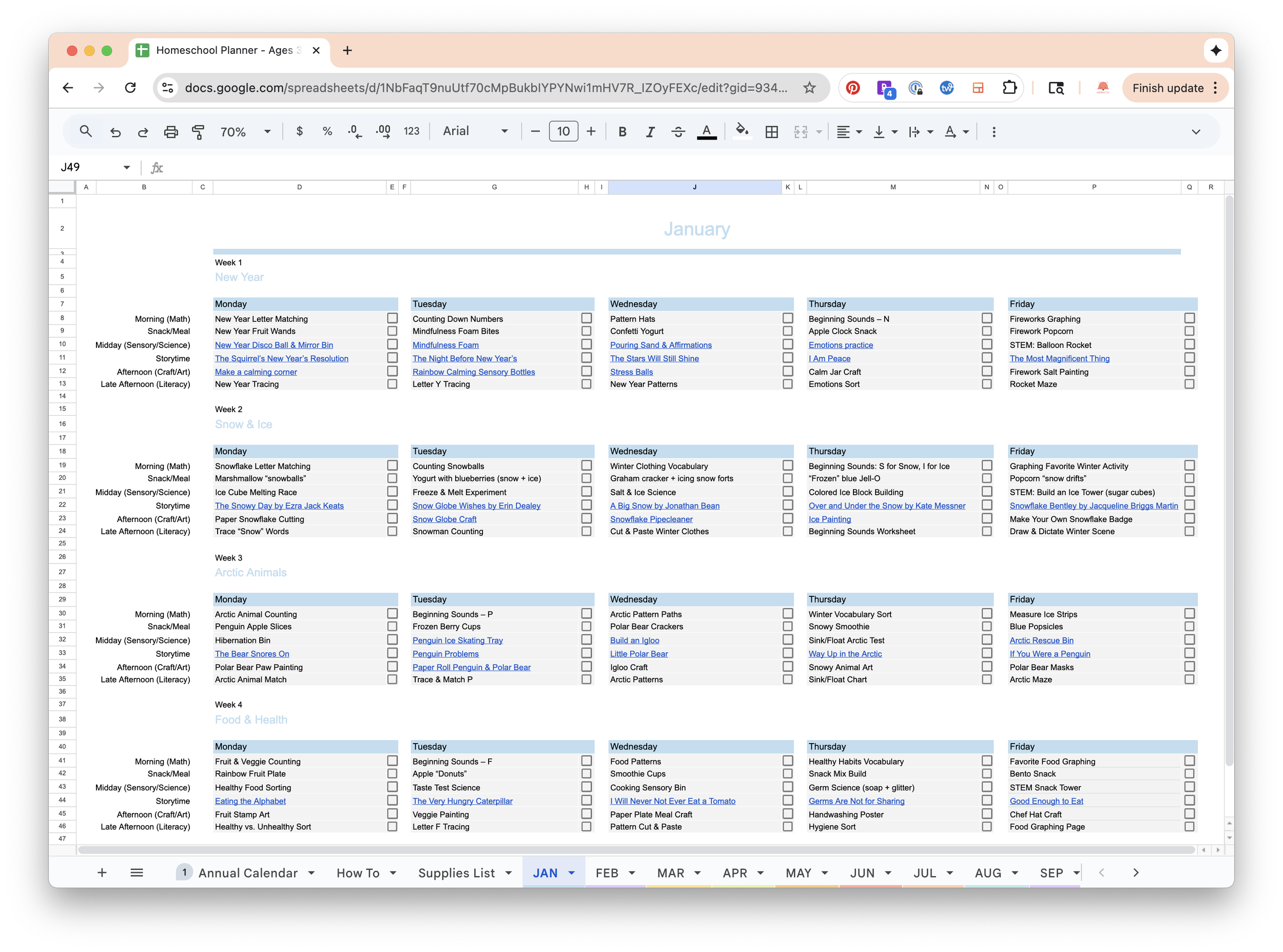

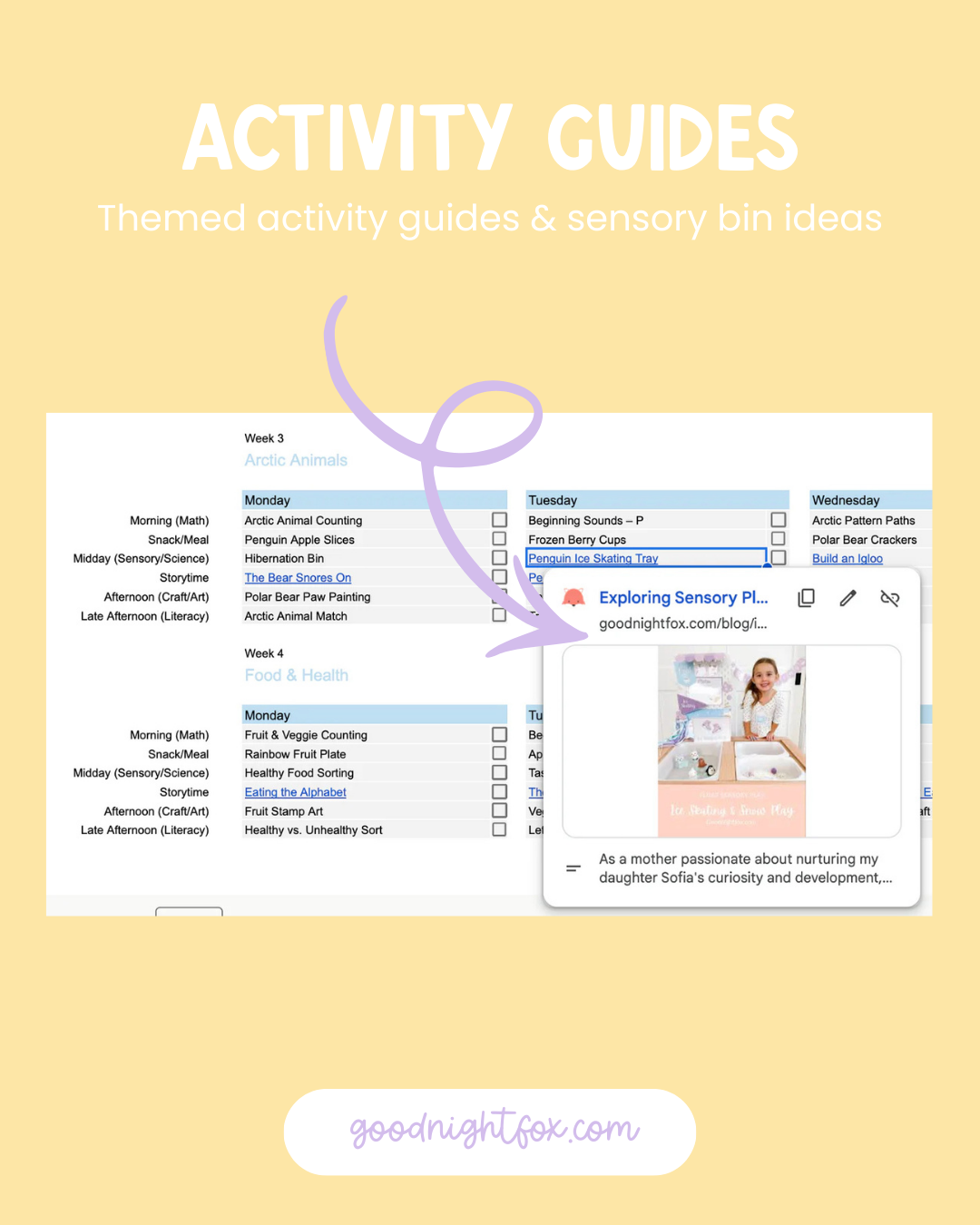
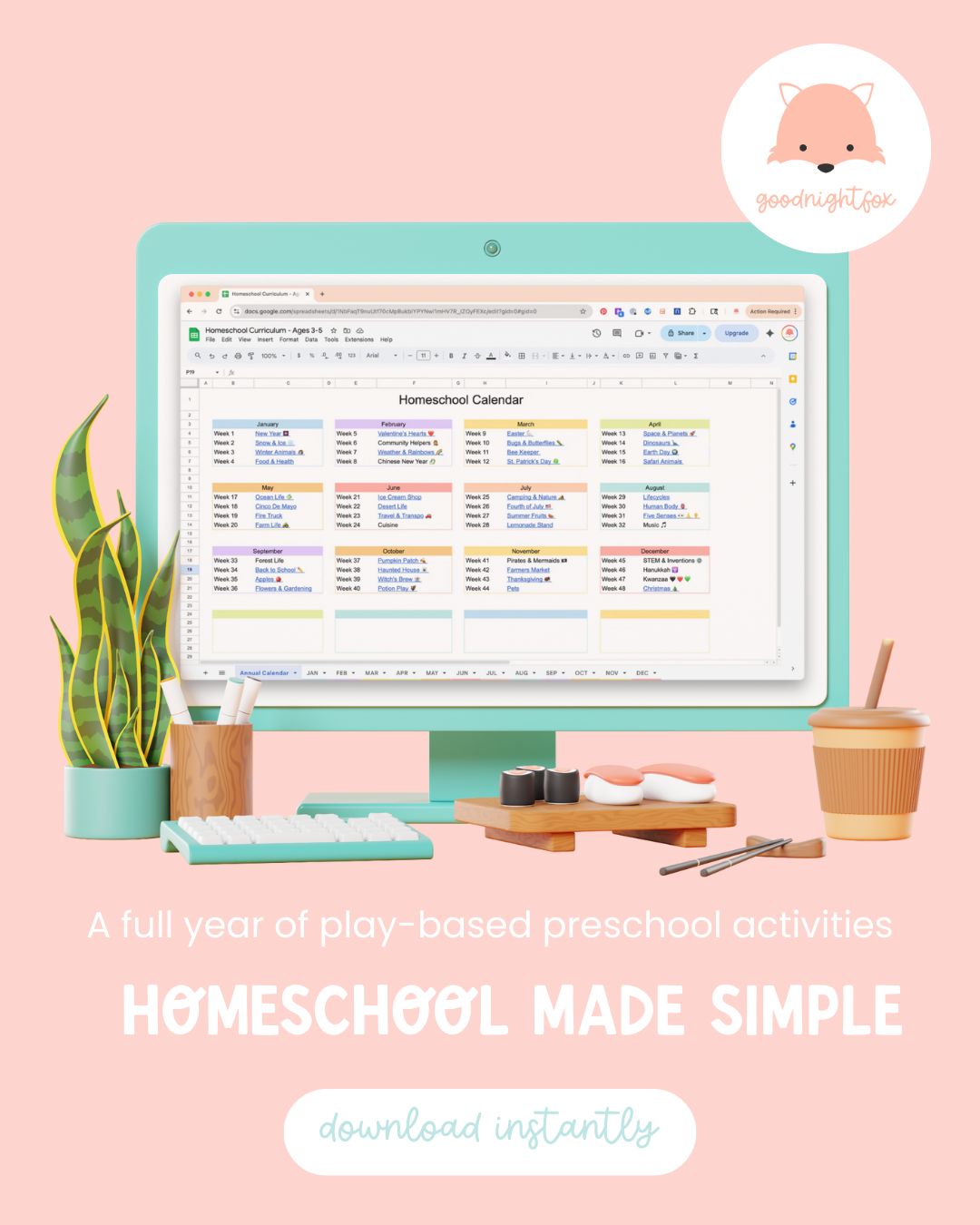
January homeschool planner for preschool and kindergarten with daily reading, sensory play, crafts, and learning activities organized by week and theme

January Homeschool Reading List (Ages 3–5)

🌟 New Year, Feelings & Growth

The Squirrel’s New Year’s Resolution
Pair with:

  • Goal-setting sensory tray (scoops + labeled cups like “kind,” “try,” “help”)

  • Acorn counting or color sorting

  • Simple “New Year promises” drawing page

The Night Before New Year’s
Pair with:

  • Countdown number cards

  • DIY ball drop using recycled tubes

  • Fireworks sensory bin (black beans + glitter stars)

The Stars Will Still Shine
I Am Peace
Pair with:

  • Calm-down sensory bottles

  • Breathing cards

  • Soft textures tray (felt, pom-poms, smooth stones)

🛠 Perseverance & Creativity

The Most Magnificent Thing
Pair with:

  • Loose parts building tray

  • Cardboard engineering challenge

  • Magnets or recycled materials bin

This book is perfect for reinforcing growth mindset during the first month of the year.

❄️ Snow & Winter Exploration

The Snowy Day by Ezra Jack Keats
A Big Snow by Jonathan Bean
Over and Under the Snow by Kate Messner
Snowflake Bentley by Jacqueline Briggs Martin

Pair with:

  • Fake snow sensory bin

  • Ice excavation with pipettes

  • Snowflake pattern matching

  • Magnifying glasses for “snow science”

These titles align beautifully with Week 2: Snow & Ice in your January homeschool schedule.

🐻 Arctic & Animal-Themed Reads

The Bear Snores On
Penguin Problems
Little Polar Bear
Way Up in the Arctic
If You Were a Penguin

Pair with:

  • Arctic animal small world play

  • Sink or float experiments

  • Ice cube habitats

  • Animal movement games

This set supports vocabulary, science concepts, and imaginative play—perfect for extending winter themes without worksheets.

🍎 Food, Nutrition & Health

Eating the Alphabet
The Very Hungry Caterpillar
I Will Never Not Ever Eat a Tomato
Good Enough to Eat

Pair with:

  • Food sorting trays

  • Felt fruits & vegetables

  • Counting snacks

  • Grocery store dramatic play

These books pair naturally with fine motor work, early literacy, and healthy habit discussions.

🧼 Health & Social Skills

Germs Are Not for Sharing

Pair with:

  • Glitter “germ” transfer experiment

  • Handwashing sensory station

  • Role-play scenarios with dolls or figures

This is a wonderful January reset book as kids return to routines and group settings.

Sample Weekly Flow Using This Reading List

Monday:
Read-aloud + sensory bin

Tuesday:
Book-inspired fine motor activity

Wednesday:
Craft or art invitation

Thursday:
Vocabulary + movement activity

Friday:
Free play using the week’s sensory setup

This rhythm mirrors the structure in your January homeschool planner and keeps prep minimal.


Why Pair Books With Sensory Play?

When books are paired with hands-on activities, children:

  • Retain vocabulary longer

  • Stay engaged past their typical attention span

  • Make emotional and real-world connections

  • Develop fine motor and problem-solving skills

This is the heart of learning through play, and it’s exactly why I design my homeschool resources and sensory kits the way I do.
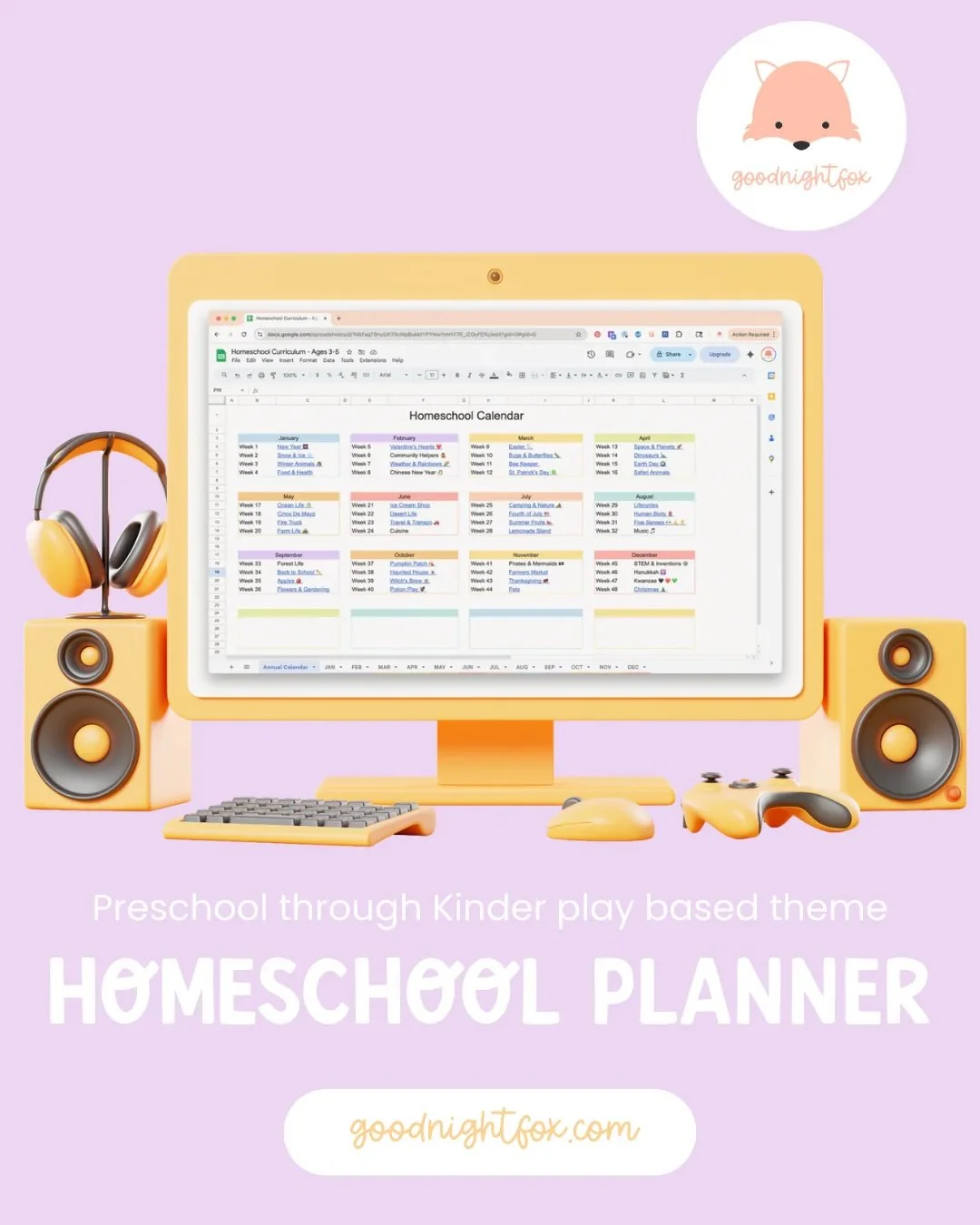


Want This Done for You?

Many of these activities are already built into:

  • My homeschool planner

  • Printable activity kits

  • Sensory play setups and flashcards

If you’re looking for low-prep, play-based learning, you’ll find plenty of support inside the Goodnight Fox shop.
Tags January homeschool reading list, homeschool reading list ages 3-5, preschool homeschool books, kindergarten homeschool reading, winter homeschool books, picture books for preschool, homeschool book list, homeschool literature based learning, sensory play homeschool, play based learning homeschool, homeschool planner preschool, monthly homeschool reading list, homeschool curriculum ages 3-5, winter learning activities for kids, Arctic animals books for kids, social emotional learning books preschool, food themed picture books, health and hygiene books for kids, early literacy homeschool, homeschool schedule preschool
Comment

Toilet Roll Arctic Animals Craft for Kids

December 19, 2025 Kylie Tuosto
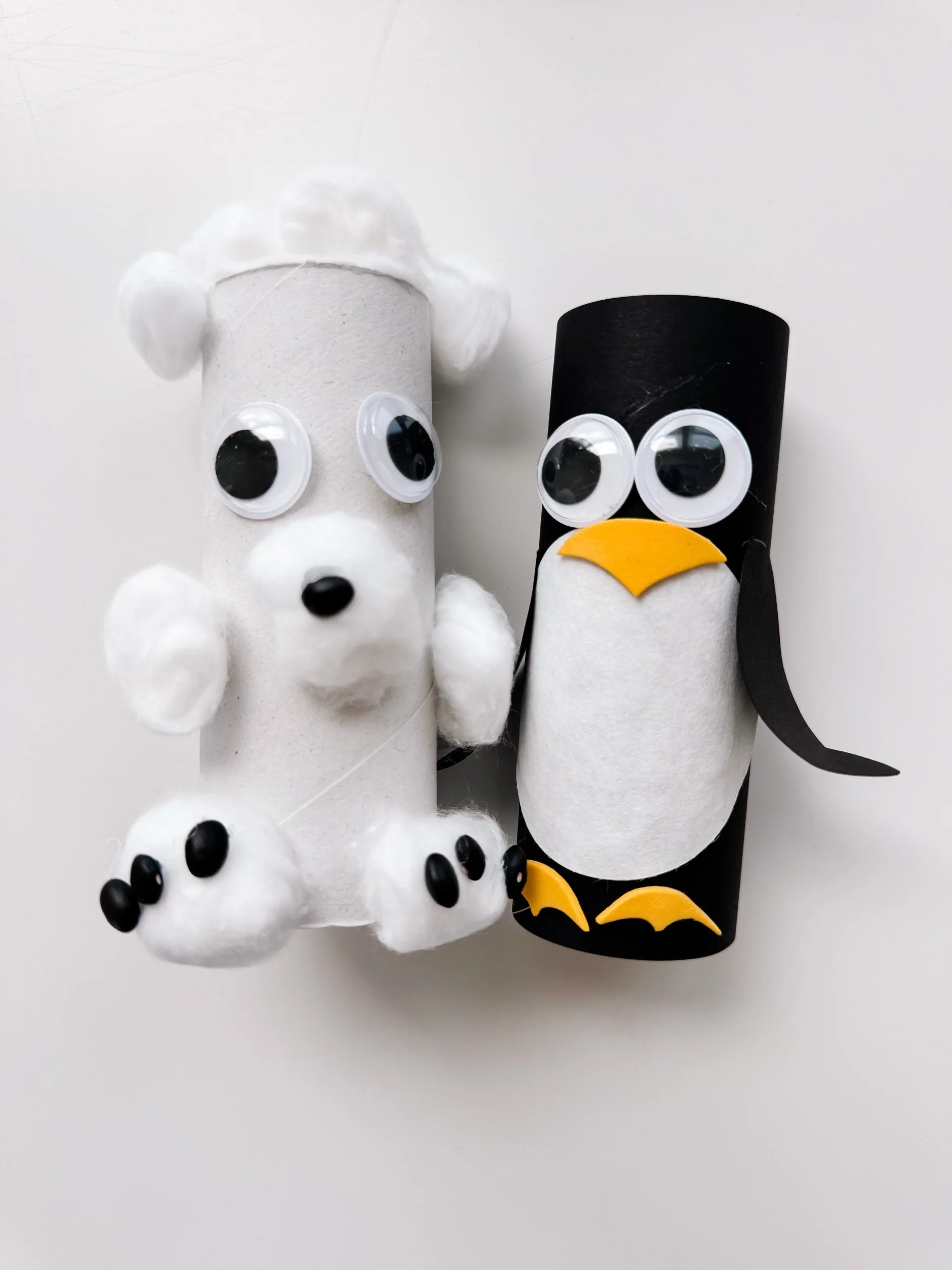
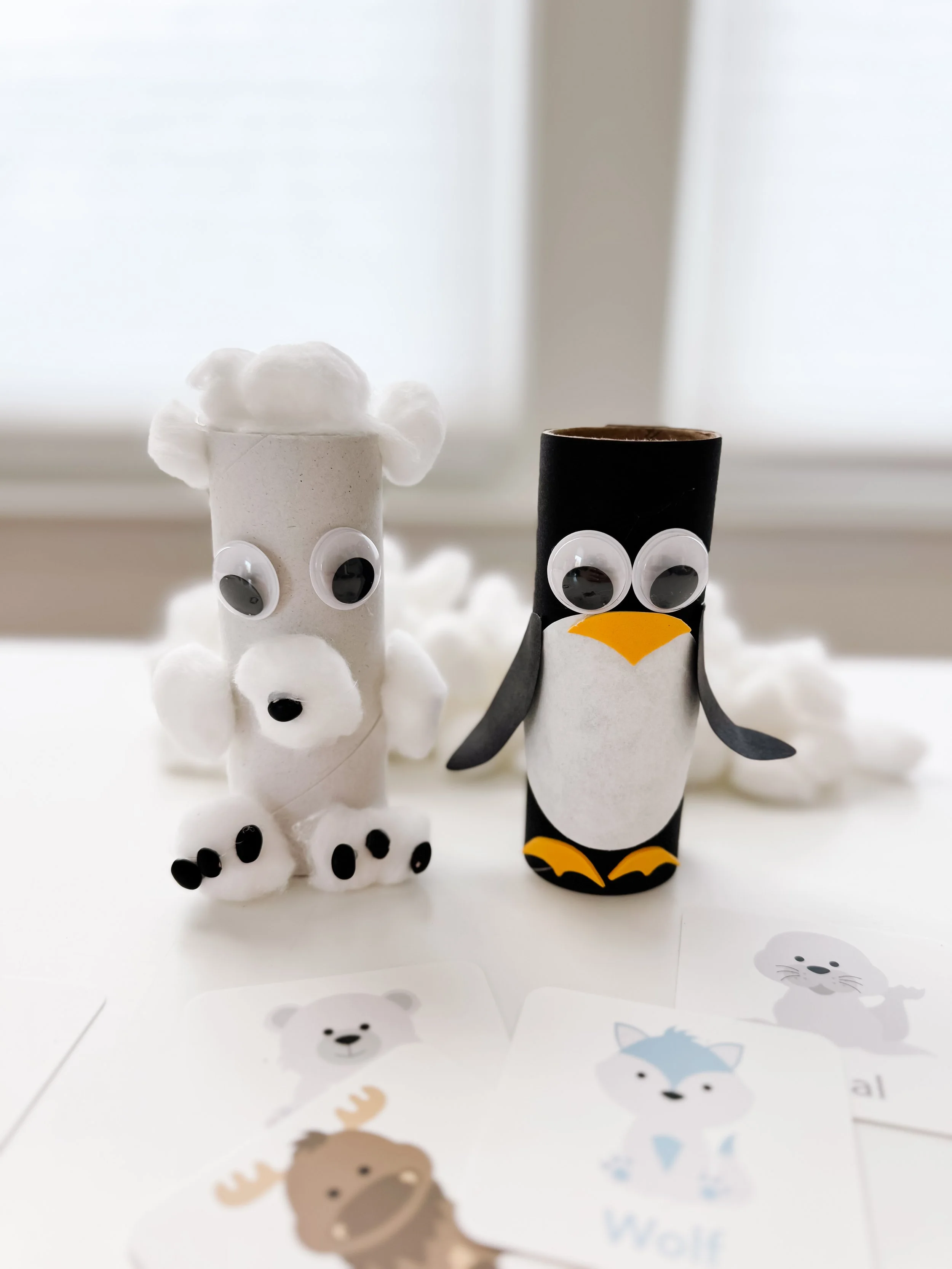
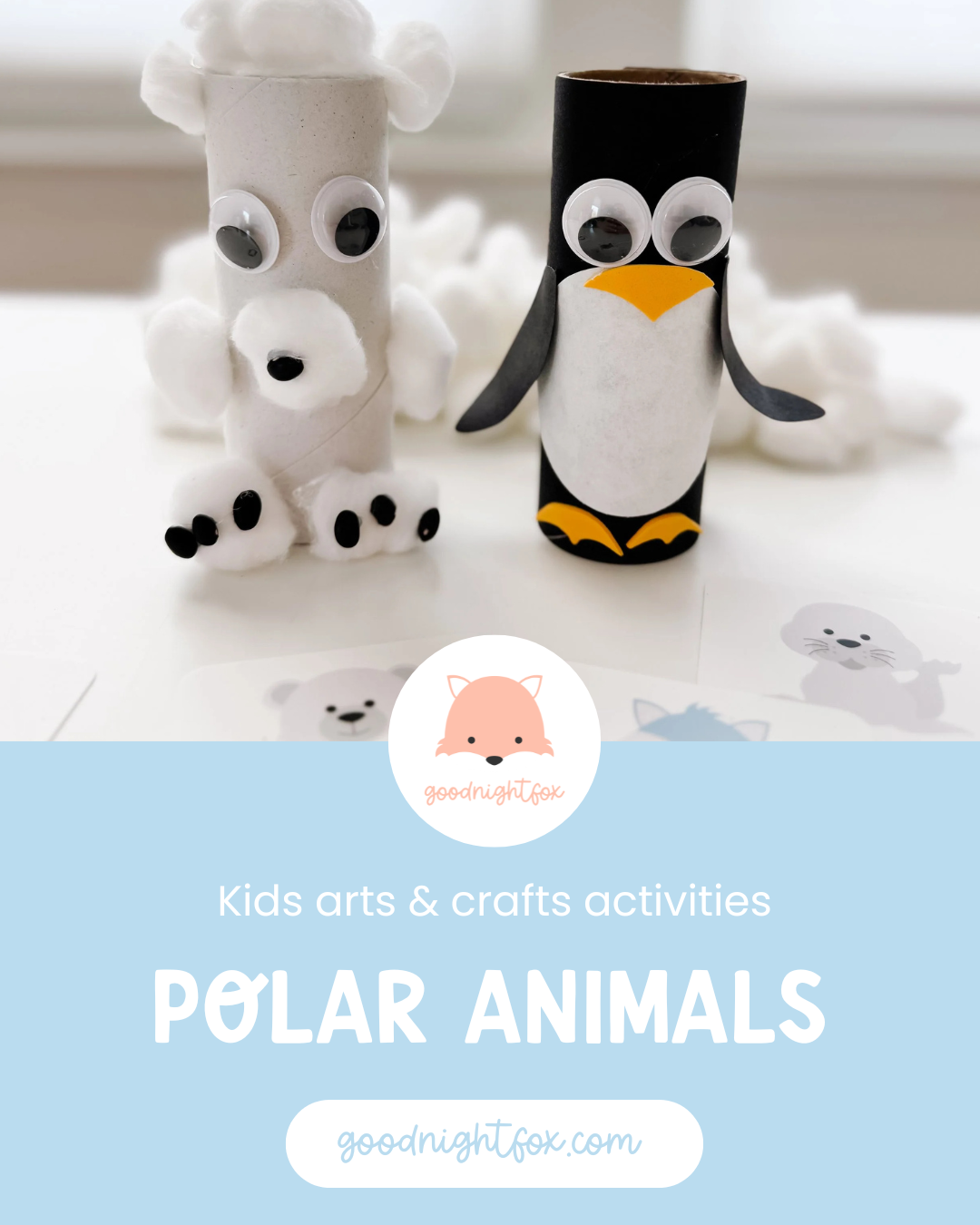
Toilet roll arctic animals polar bear and penguin

Easy Winter Craft + Arctic Animals Homeschool Activity

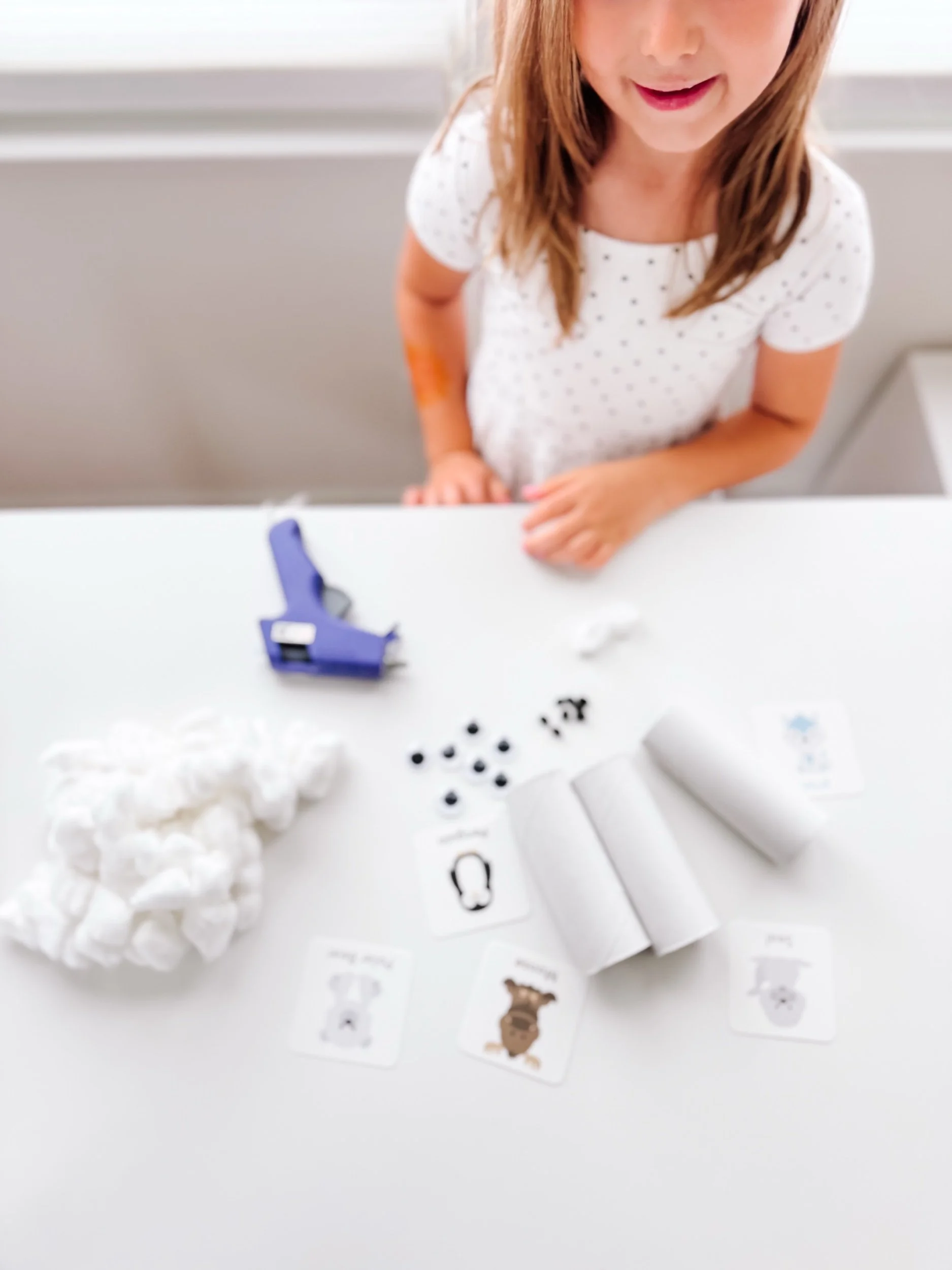
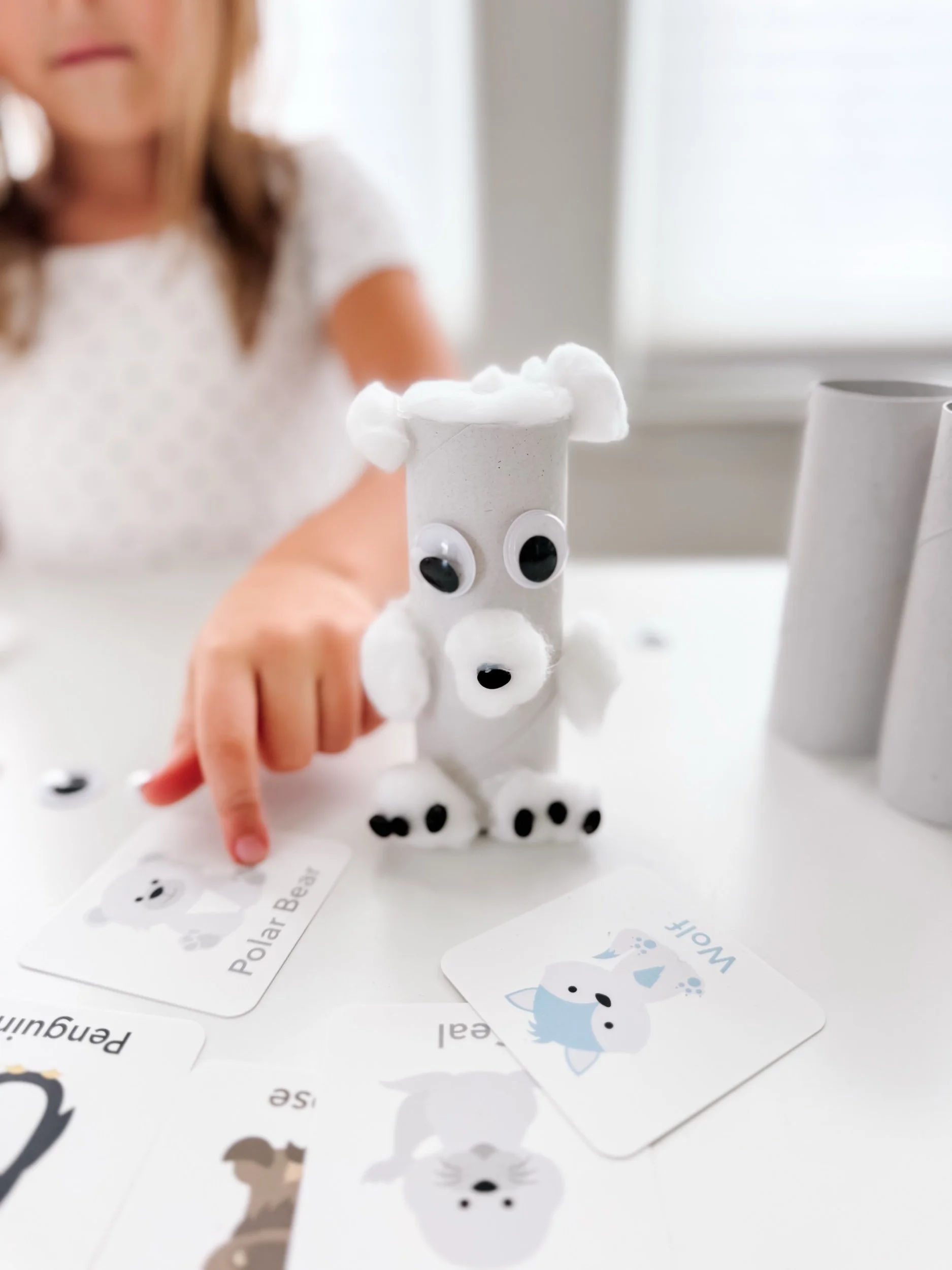
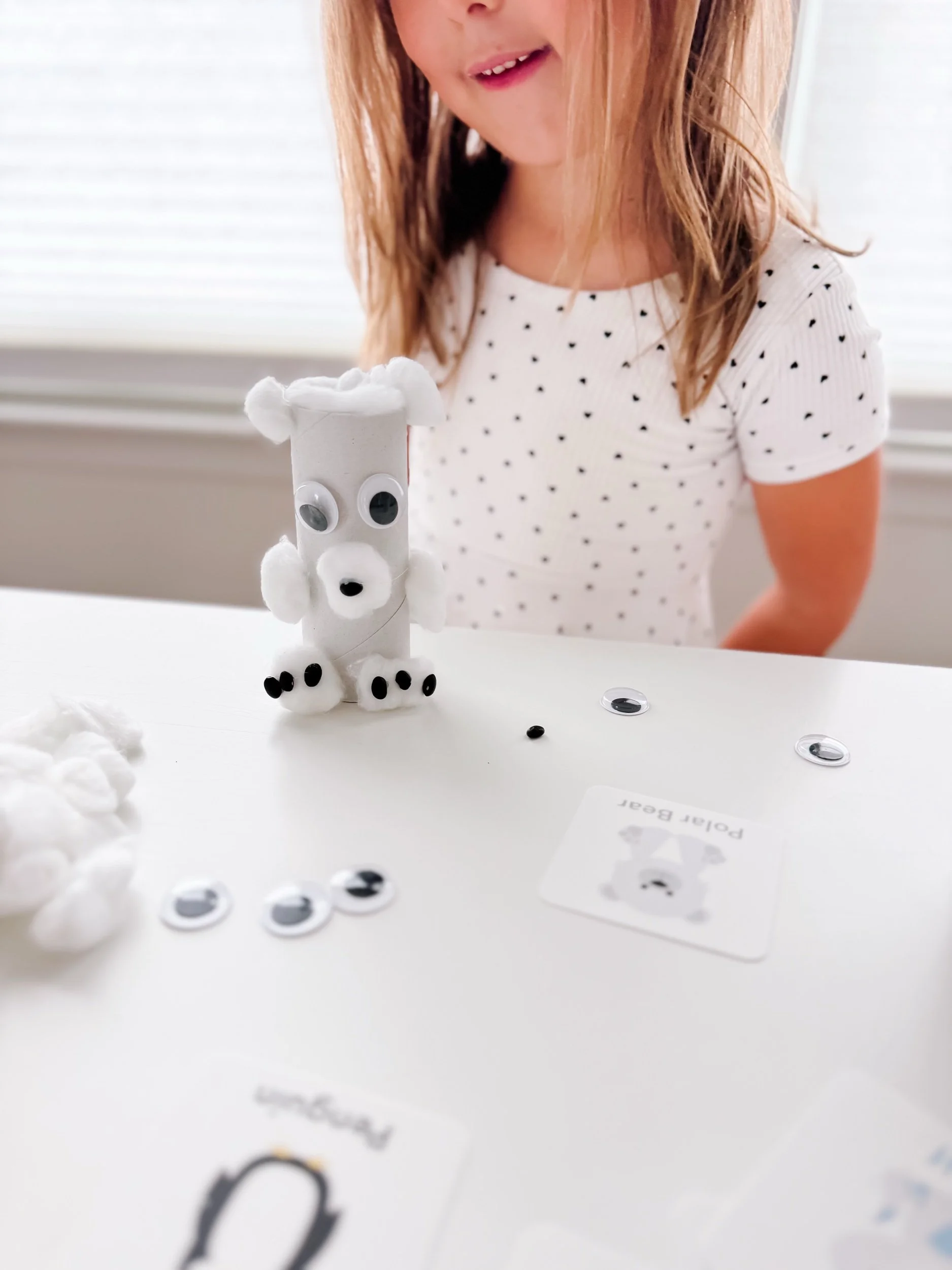
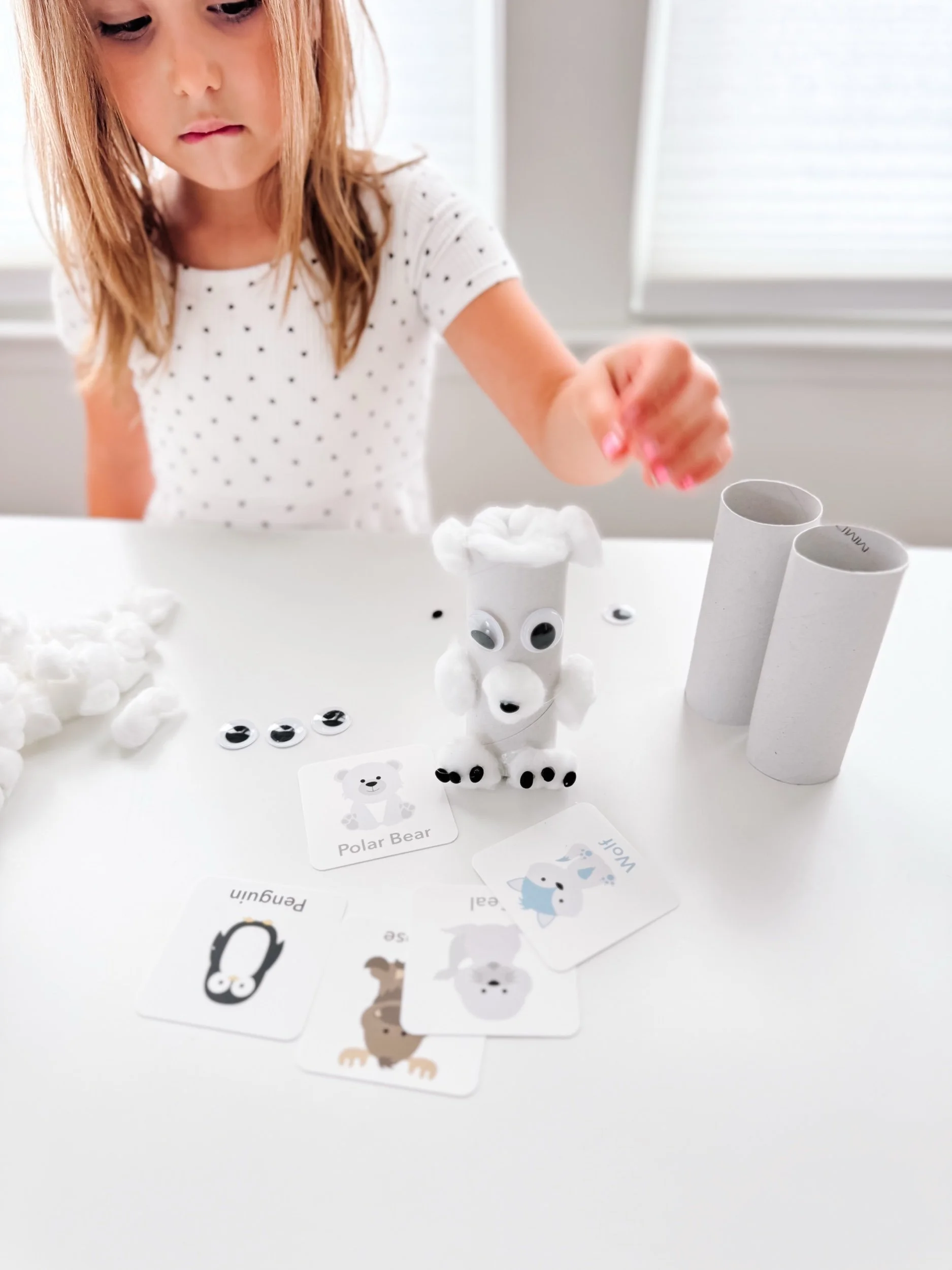
Looking for a simple winter craft that doubles as an educational activity? This Toilet Roll Arctic Animals Craft is a hands-on way for toddlers and preschoolers to explore Arctic animals through creative play. Using recycled toilet paper rolls, kids can create adorable polar bears and penguins while building fine motor skills and learning about animals that live in cold climates.

This low-prep craft fits perfectly into Arctic Animals themed learning, making it an ideal activity for winter homeschooling, classroom centers, or cozy indoor afternoons.

How-to video showing a kids craft using toilet paper rolls to make a polar bear and penguin. The video demonstrates painting the rolls, cutting and gluing paper shapes, and assembling the Arctic animals step by step.
IMG_2466_jpg.jpeg
IMG_2473_jpg.jpeg
IMG_2465_jpg.jpeg

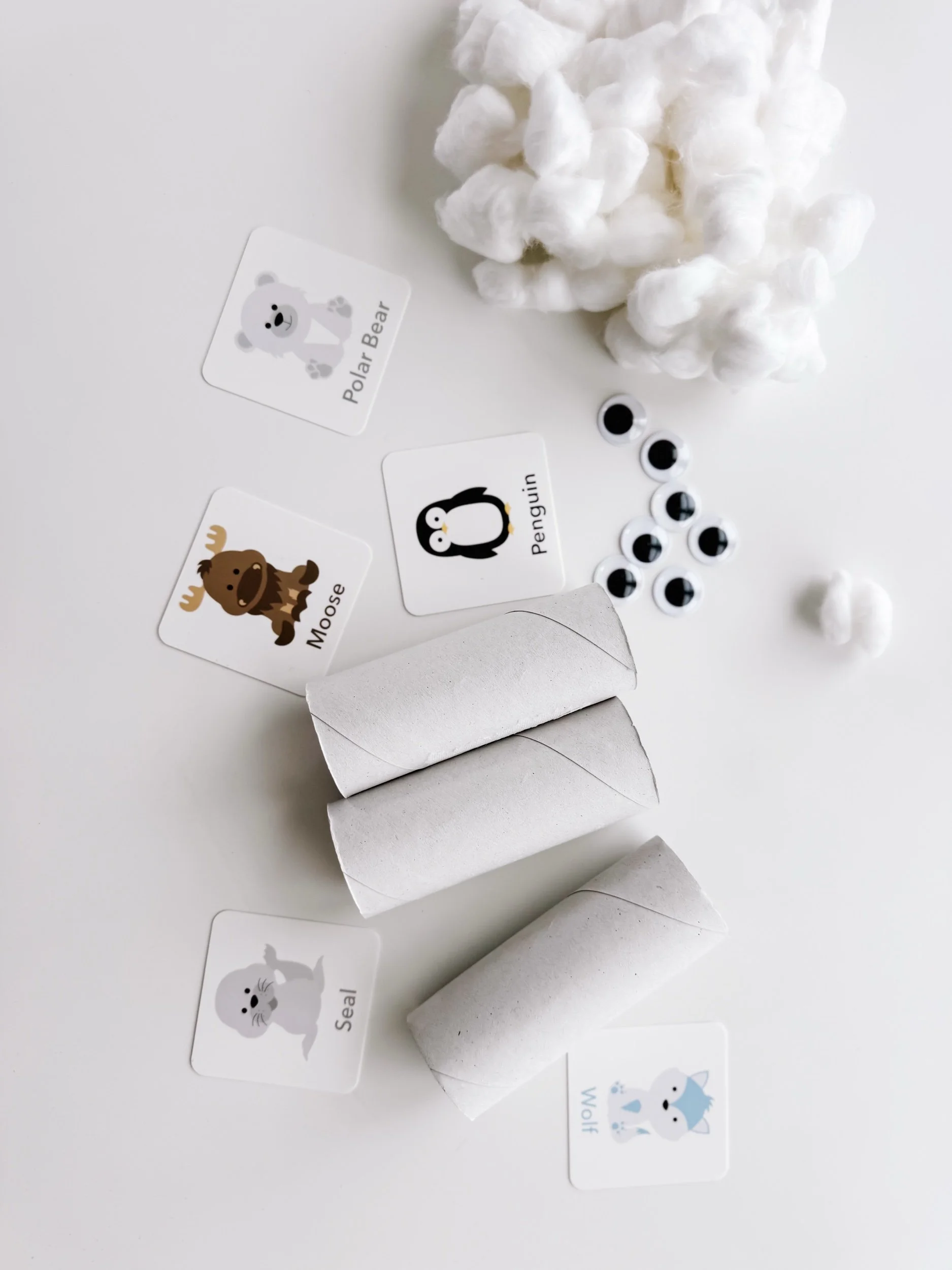
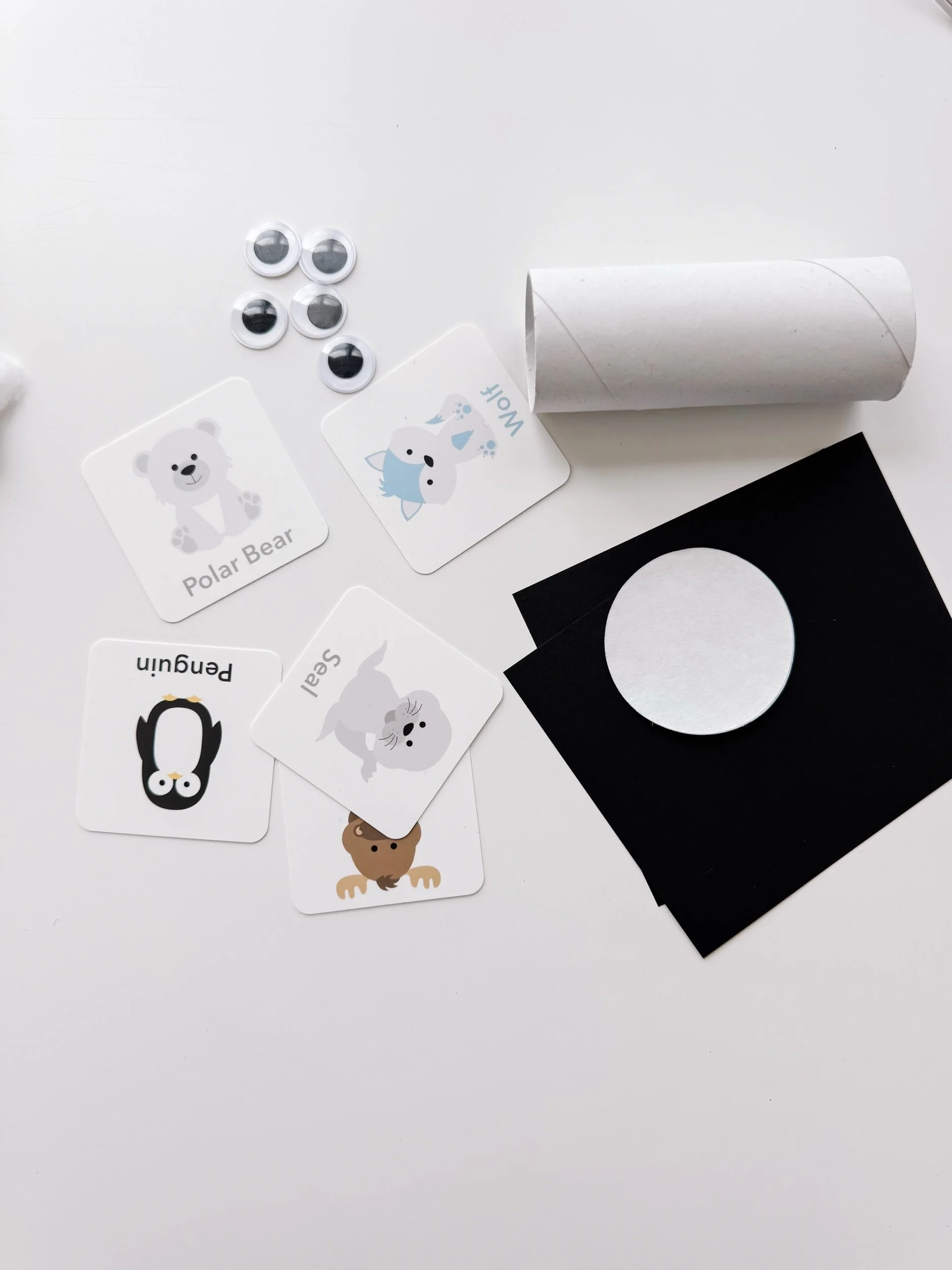
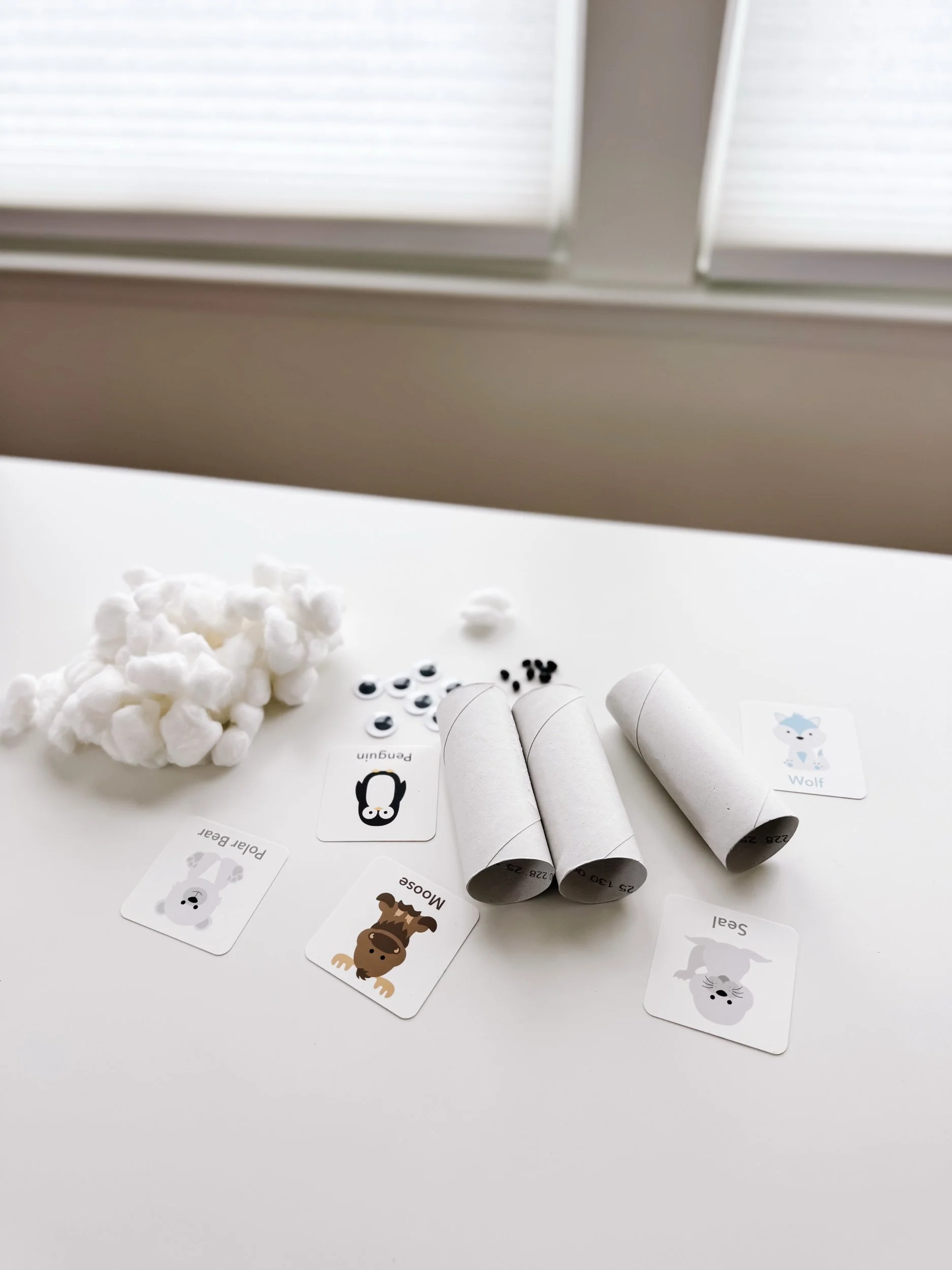
Materials

  • Empty toilet paper rolls

  • White cardstock or white paint

  • Black cardstock or black paint

  • Cotton balls

  • Googly eyes

  • Black pom poms or small paper dots

  • Yellow/orange paper (for penguin beak and feet)

  • Glue

  • Scissors

  • Optional: markers or crayons


IMG_2504_jpg.jpeg
IMG_2496_jpg.jpeg
IMG_2514.jpeg

How to Make Toilet Roll Arctic Animals

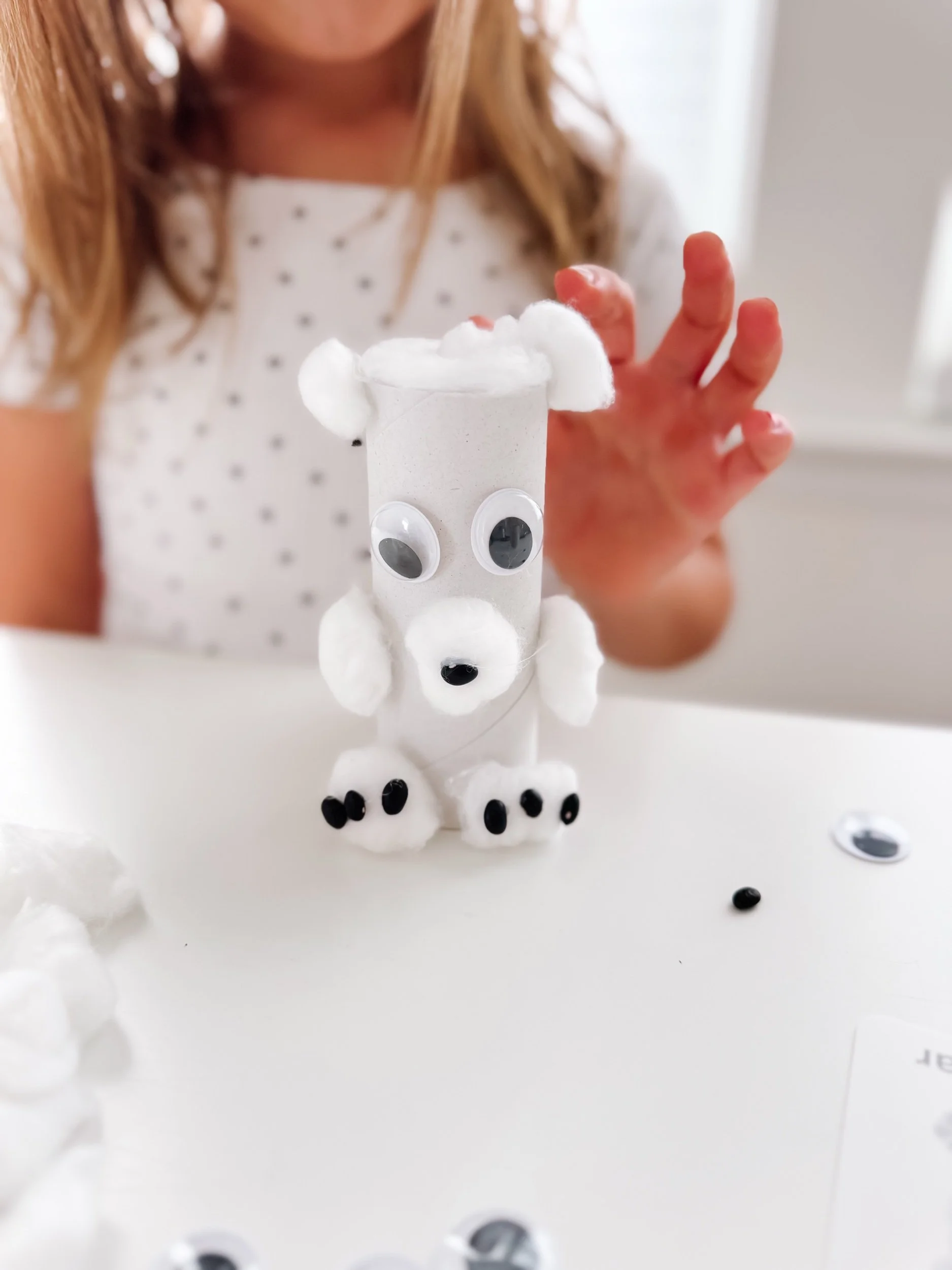
Polar Bear

  1. Wrap or paint the toilet roll white and allow it to dry.
  2. Glue googly eyes onto the front.

  3. Add a small black pom pom for the nose.

  4. Pull apart cotton balls and glue them around the top, sides, and bottom to create fluffy fur and paws.

  5. Add small black dots to the cotton for paw details.

Penguin

  1. Cover or paint the toilet roll black and let dry.

  2. Cut an oval from white paper and glue it to the front for the penguin’s belly.

  3. Add googly eyes.

  4. Cut a small triangle from yellow/orange paper for the beak and glue below the eyes.

  5. Cut flippers and feet from black and yellow paper and attach.


IMG_2499_jpg.jpeg
IMG_2494_jpg.jpeg
IMG_2501_jpg.jpeg

Opportunities to Make This a Learning Moment

While crafting, invite conversation and curiosity with questions like:

  • Where do polar bears and penguins live?

  • What do Arctic animals need to survive cold weather?

  • How is a penguin different from a polar bear?

  • Why do some animals have fur and others have feathers?

This turns a simple craft into educational sensory play for toddlers and preschoolers.


Vocabulary Words to Weave In

  • Arctic

  • Polar

  • Habitat

  • Mammal

  • Feathers

  • Fur

  • Cold climate

  • Ice

  • Snow


Make your own arctic week!

This craft is featured in the GoodnightFox Homeschool Planner – January Week 3: Arctic Animals Theme.

During this week, children explore:

  • Arctic habitats

  • Animal characteristics

  • Cold weather adaptations

  • Fine motor and creative expression

This toilet roll craft pairs beautifully with Arctic-themed books, animal flashcards, and sensory play trays included in your January learning flow.


Learning Extensions

Extend the activity with these GoodnightFox Arctic Animals resources:

  • Arctic Animals Flashcards – perfect for vocabulary building and animal recognition

  • Arctic Animals Printables – matching, tracing, and early learning activities

  • Winter & Arctic Sensory Play Ideas – pair the craft with cotton “snow,” white pom poms, or icy blue sensory fillers

These materials help reinforce learning through play while keeping your homeschool days simple and cohesive.


Why We Love This Craft

✔ Uses recycled materials
✔ Budget-friendly and low prep
✔ Supports fine motor skills
✔ Encourages creative expression
✔ Fits seamlessly into homeschool planning

If you’re building a winter homeschool routine filled with easy sensory play setups, educational crafts, and themed learning, this Toilet Roll Arctic Animals Craft is a must-add to your January plans.

Want more Arctic Animals activities? Explore the full GoodnightFox Arctic collection and homeschool planner for done-for-you learning that feels fun, not overwhelming ❄️🐧🐻‍❄️


Arctic Week Reading List

If you’re following along in the Homeschool Planner, don’t forget to check out these great Arctic Themed Books.

  • The Bear Snores On

  • Penguin Problems

  • Little Polar Bear

  • Way Up in the Arctic

  • If You Were a Penguin

Tags easy winter craft for kids, simple winter crafts, toilet paper roll craft, arctic animals craft, winter crafts for toddlers, winter crafts for preschoolers, recycled crafts for kids, arctic animals activities, homeschool winter craft, arctic animals homeschool, penguin craft for kids, polar bear craft for kids, fine motor winter activities, indoor winter activities for kids, winter animal crafts
Comment

How to Create a Daily Homeschool Rhythm That Actually Works (Without the Stress)

December 12, 2025 Kylie Tuosto

Creating a daily homeschool rhythm for preschool doesn’t have to feel overwhelming. In this post, you’ll learn how to build a flexible homeschool schedule for ages 3–5 using play-based learning, simple routines, and a repeatable daily flow that actually works in real life. This approach supports early literacy, math, sensory play, and creativity—without rigid time blocks or burnout. Perfect for homeschool parents looking for an easy, low-stress daily routine.


If homeschooling has ever felt overwhelming, chaotic, or like you’re constantly “behind,” you’re not doing it wrong — you’re just missing a rhythm, not a rigid schedule.

A daily homeschool rhythm gives your day structure without pressure. It creates predictability for your child while giving you flexibility as a parent — especially important in the preschool years when attention spans are short and curiosity changes by the minute.

In this post, I’ll walk you through how to build a simple, realistic homeschool rhythm that actually works for real life (snacks, meltdowns, and all).

Learn more about the editable planner

What Is a Homeschool Rhythm (and Why It Works Better Than a Schedule)?

A schedule tells you exactly what to do at a specific time.
A rhythm tells you what comes next — without locking you into the clock.

For young children, rhythms work better because they:

  • Reduce power struggles

  • Support emotional regulation

  • Build independence and confidence

  • Allow learning through play

  • Adapt easily to energy levels and moods

Instead of “Math at 9:00, Reading at 9:30,” a rhythm sounds like:

“We do math in the morning, literacy later in the day, and creative play every afternoon.”


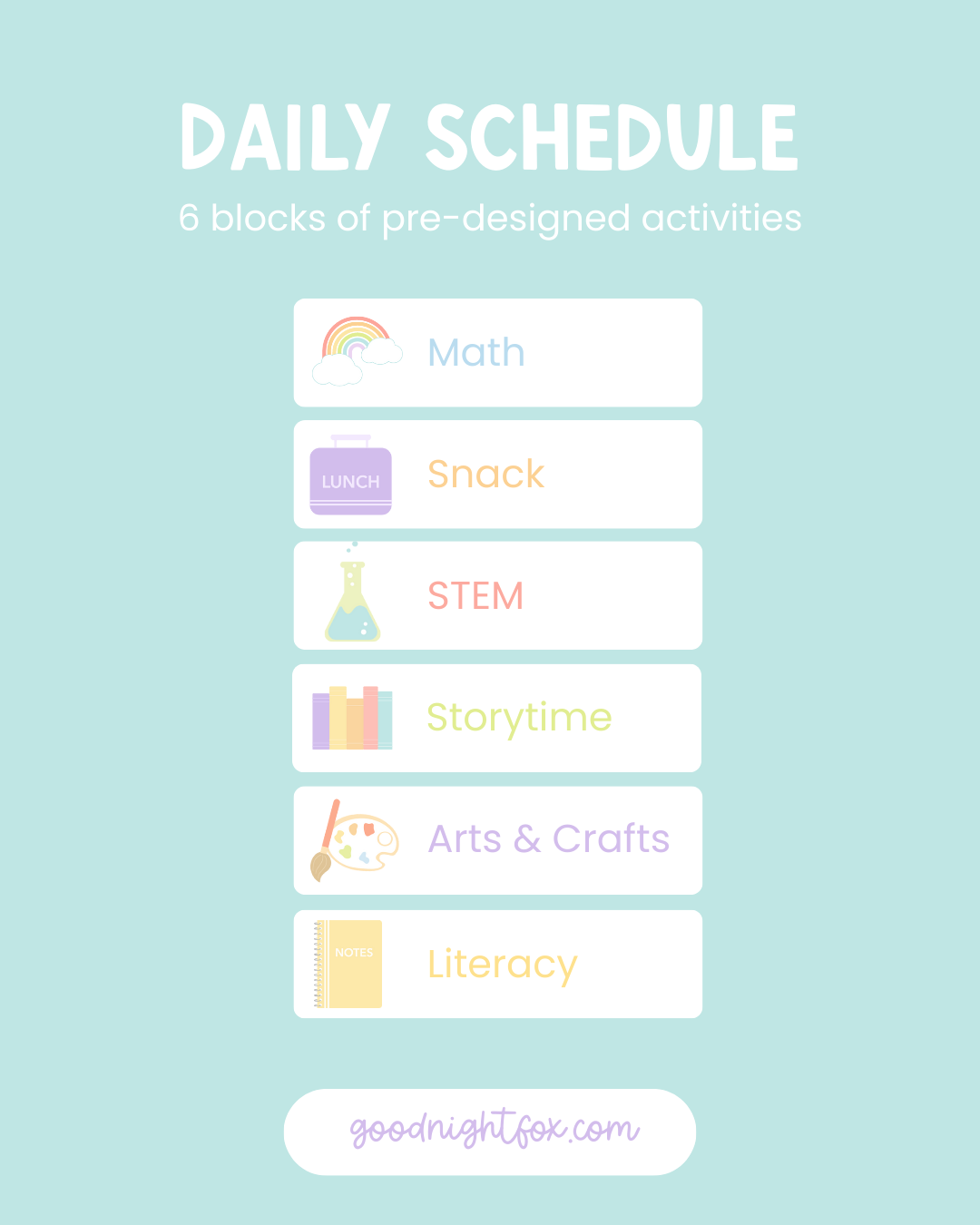
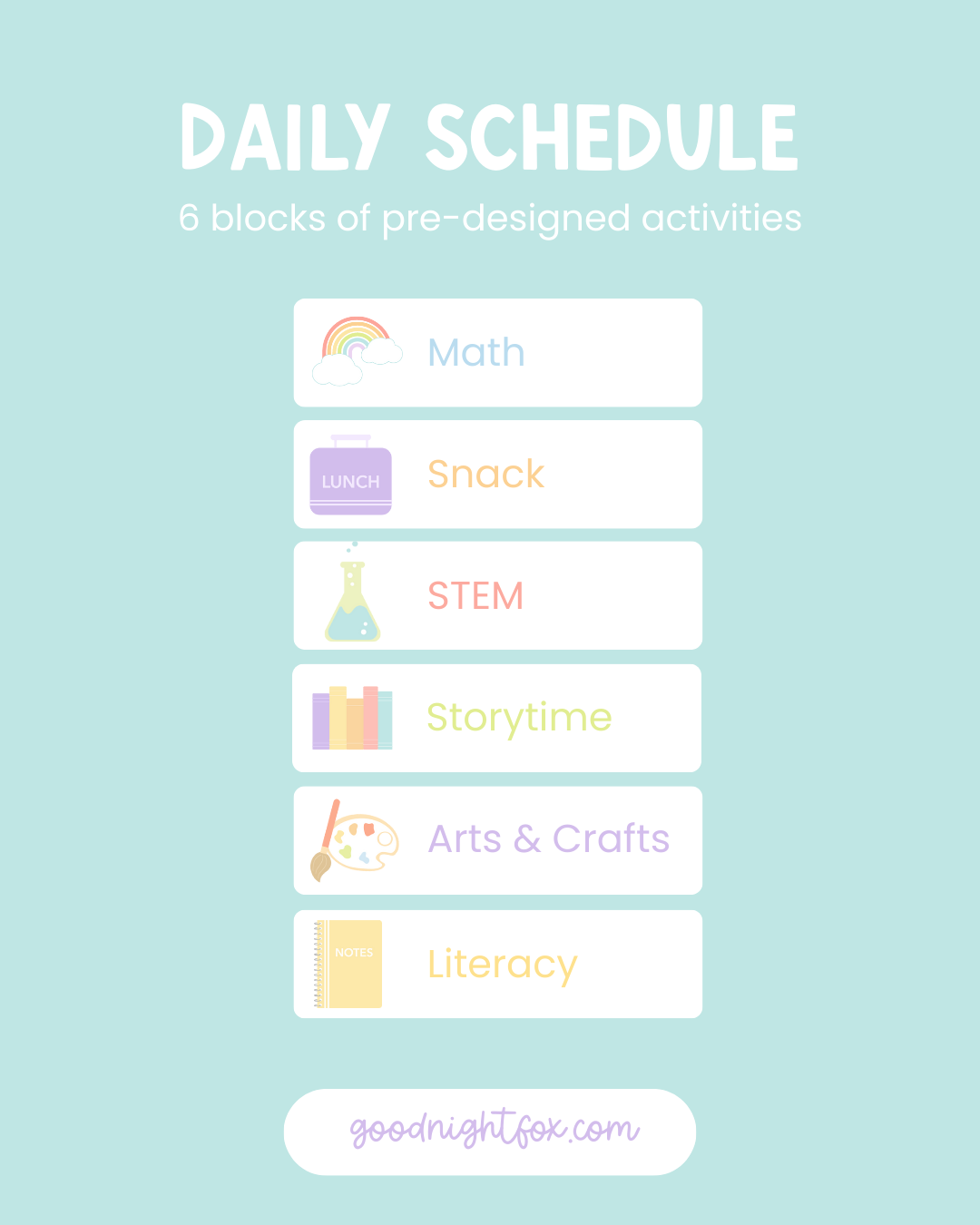
The 6-Block Daily Homeschool Rhythm (Preschool-Friendly)

This rhythm is designed specifically for ages 3–5, with short, engaging learning blocks and plenty of movement and play.

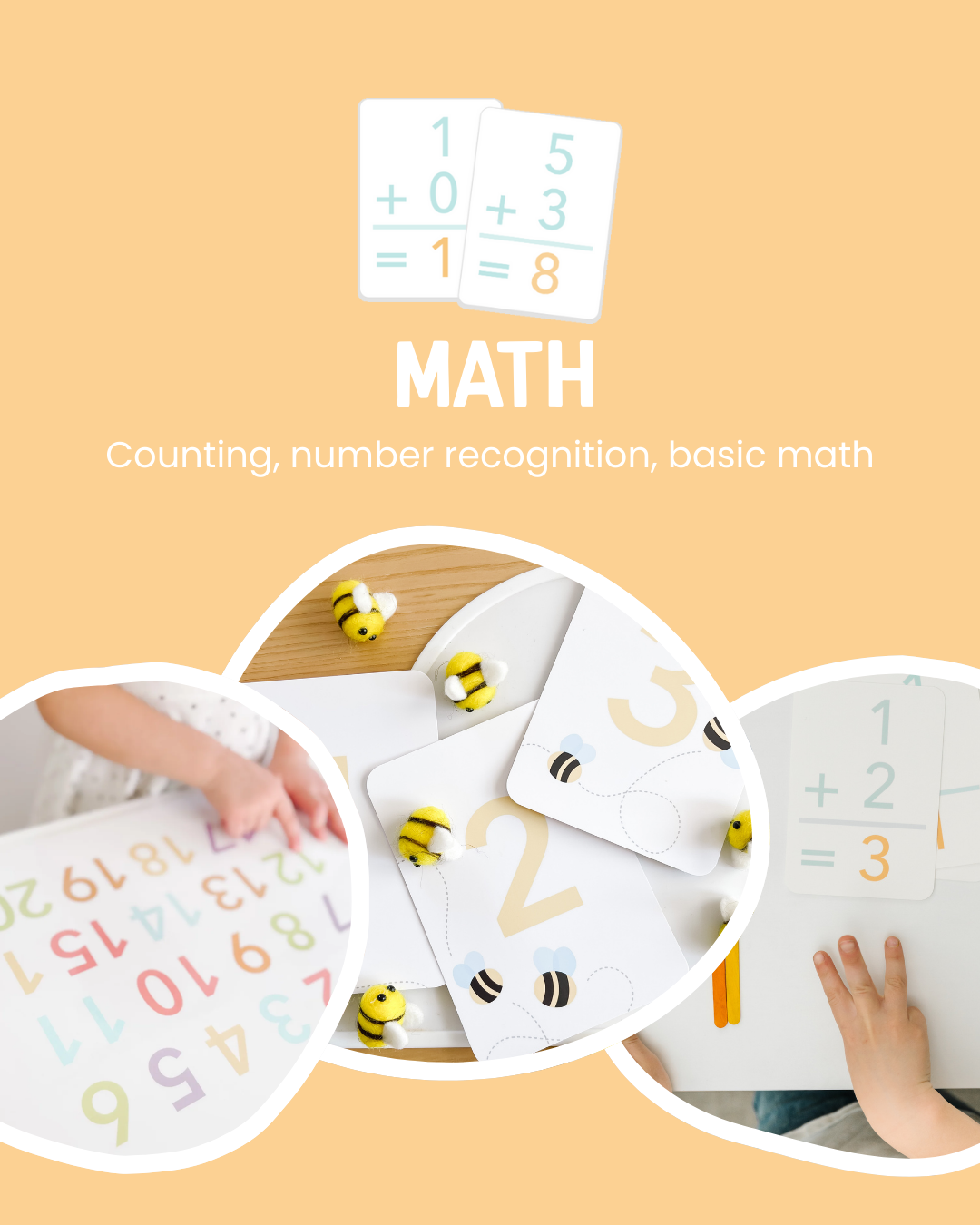
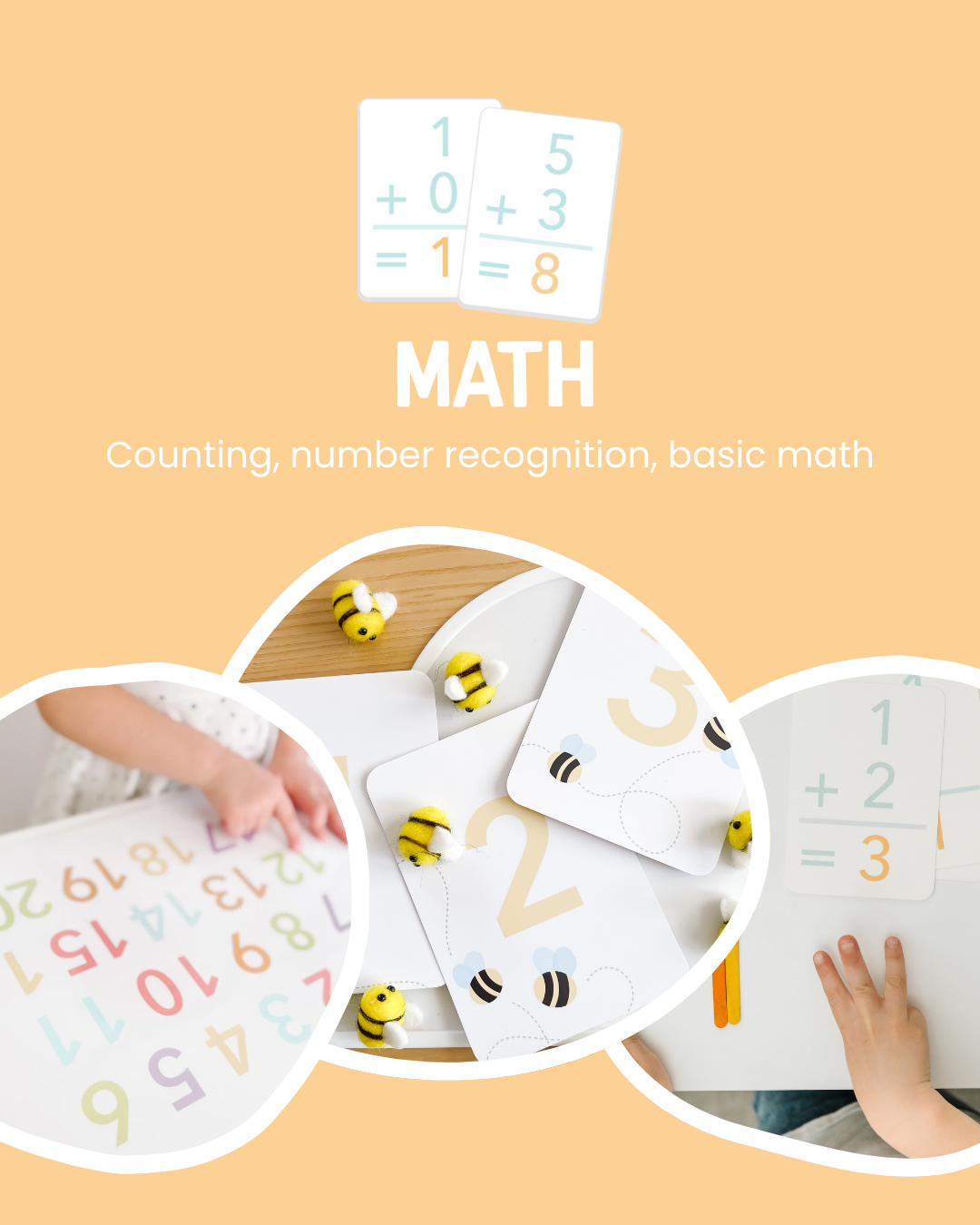
1. Morning Block (Math)

This is when attention is highest, making it the perfect time for:

  • Counting games

  • Number recognition

  • Simple patterns

  • Shape sorting

  • Hands-on math manipulatives

Keep it playful and short — 10–15 minutes is plenty.


2. Snack or Meal

Snack time is learning time too!
Use this block to:

  • Practice independence

  • Talk about colors, shapes, or quantities

  • Encourage conversation and connection

No worksheets required — just real life.


3. Midday Block (Sensory or Science)

This is the heart of play-based learning:

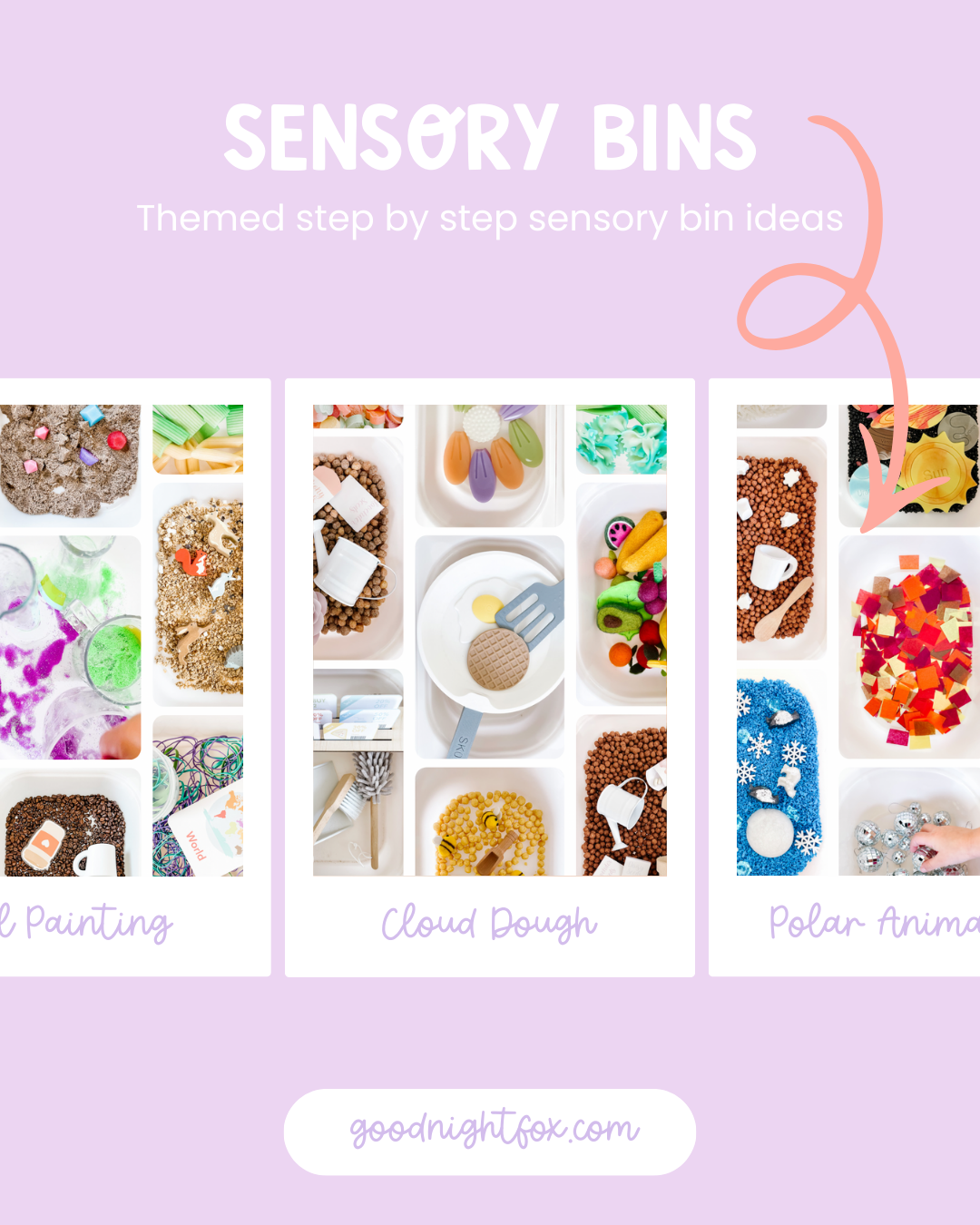
  • Sensory bins

  • Simple science experiments

  • Water play

  • Dough, rice, beans, or themed trays

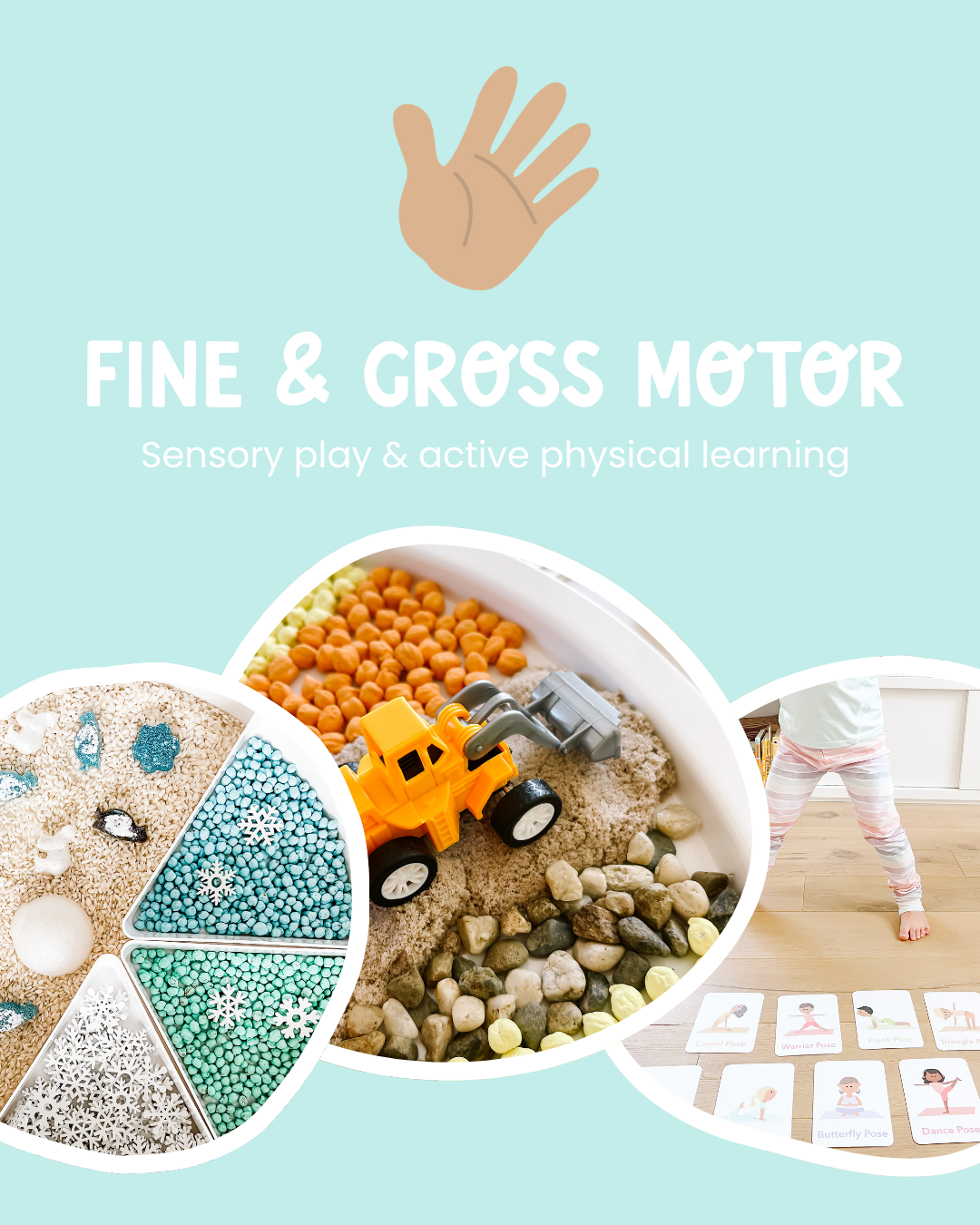
Sensory play helps children regulate emotions, build focus, and engage deeply with learning.


4. Storytime

Storytime resets the nervous system and builds language skills.

  • Read aloud

  • Ask simple questions

  • Connect stories to your weekly theme

This is also a great transition into quieter activities.


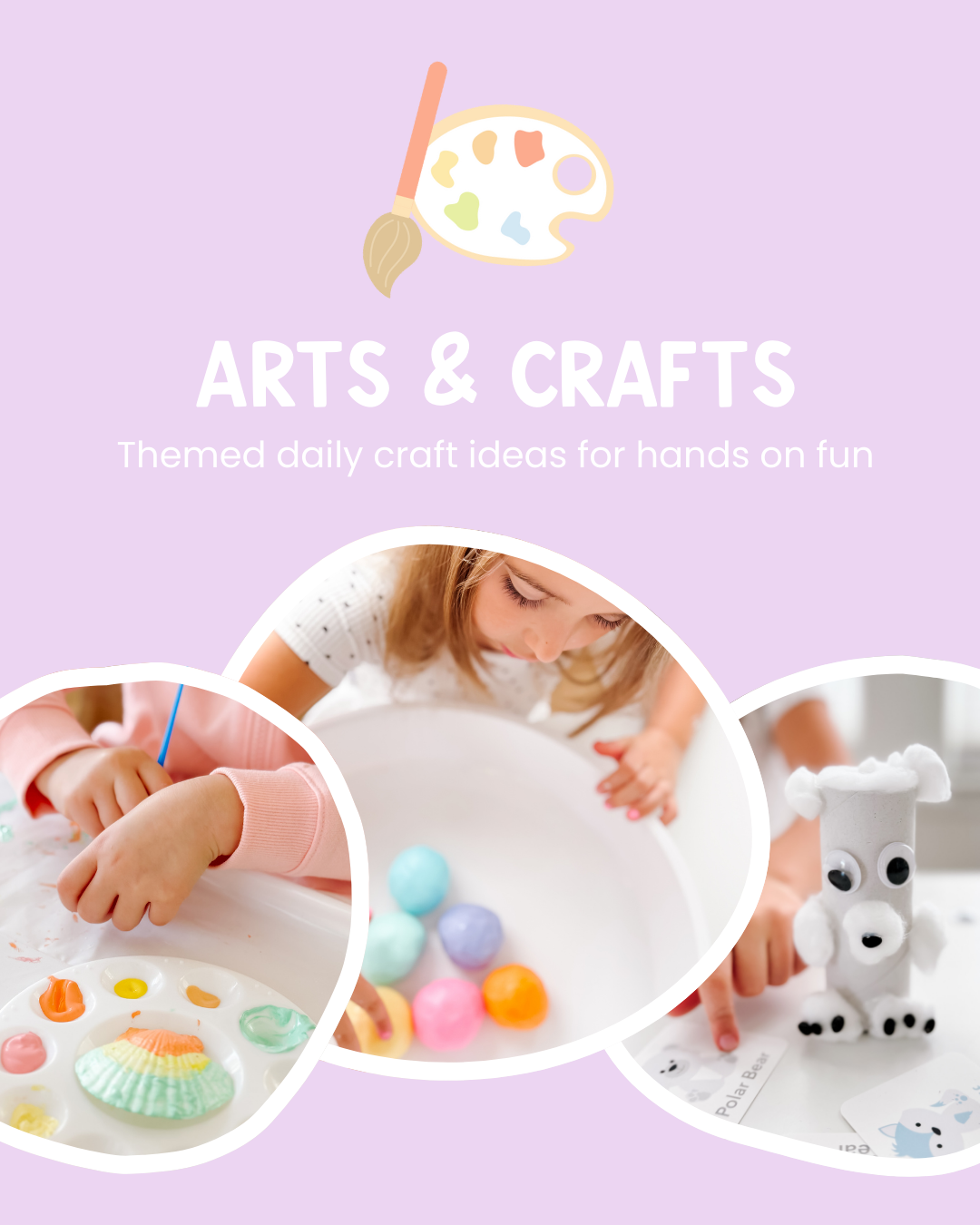
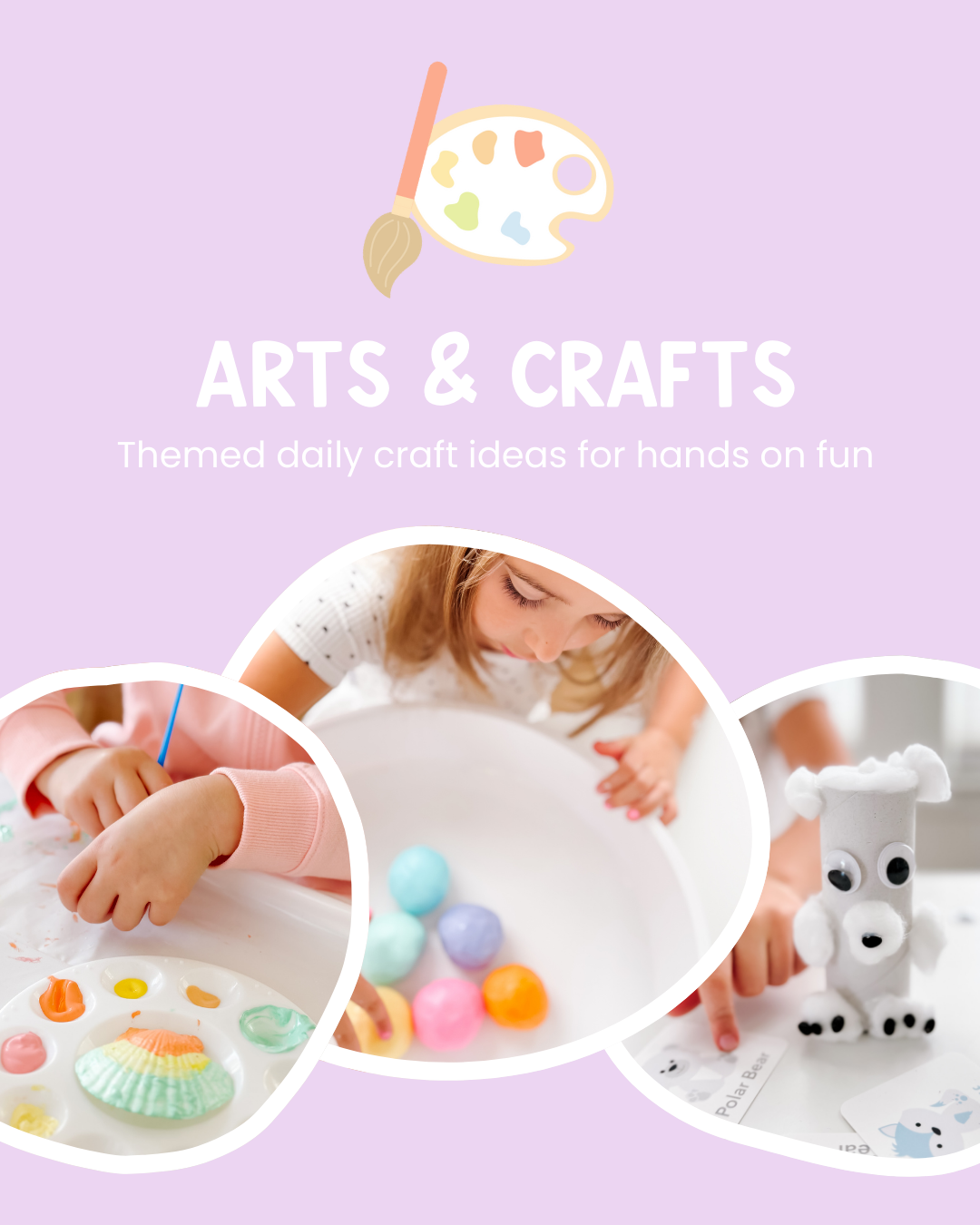
Preschool arts and crafts activities designed for homeschool families. These themed craft ideas support creativity, fine motor skills, and self-expression while reinforcing weekly learning themes in a playful, low-prep way.

5. Afternoon Block (Arts & Crafts)

Creative time allows children to process what they’ve learned:

  • Painting

  • Cutting and gluing

  • Open-ended art

  • Themed crafts

The goal isn’t a perfect project — it’s exploration and fine motor development.


6. Late Afternoon Block (Literacy)

Save literacy for later in the day when it can be:

  • Low pressure

  • Short

  • Familiar

Ideas include:

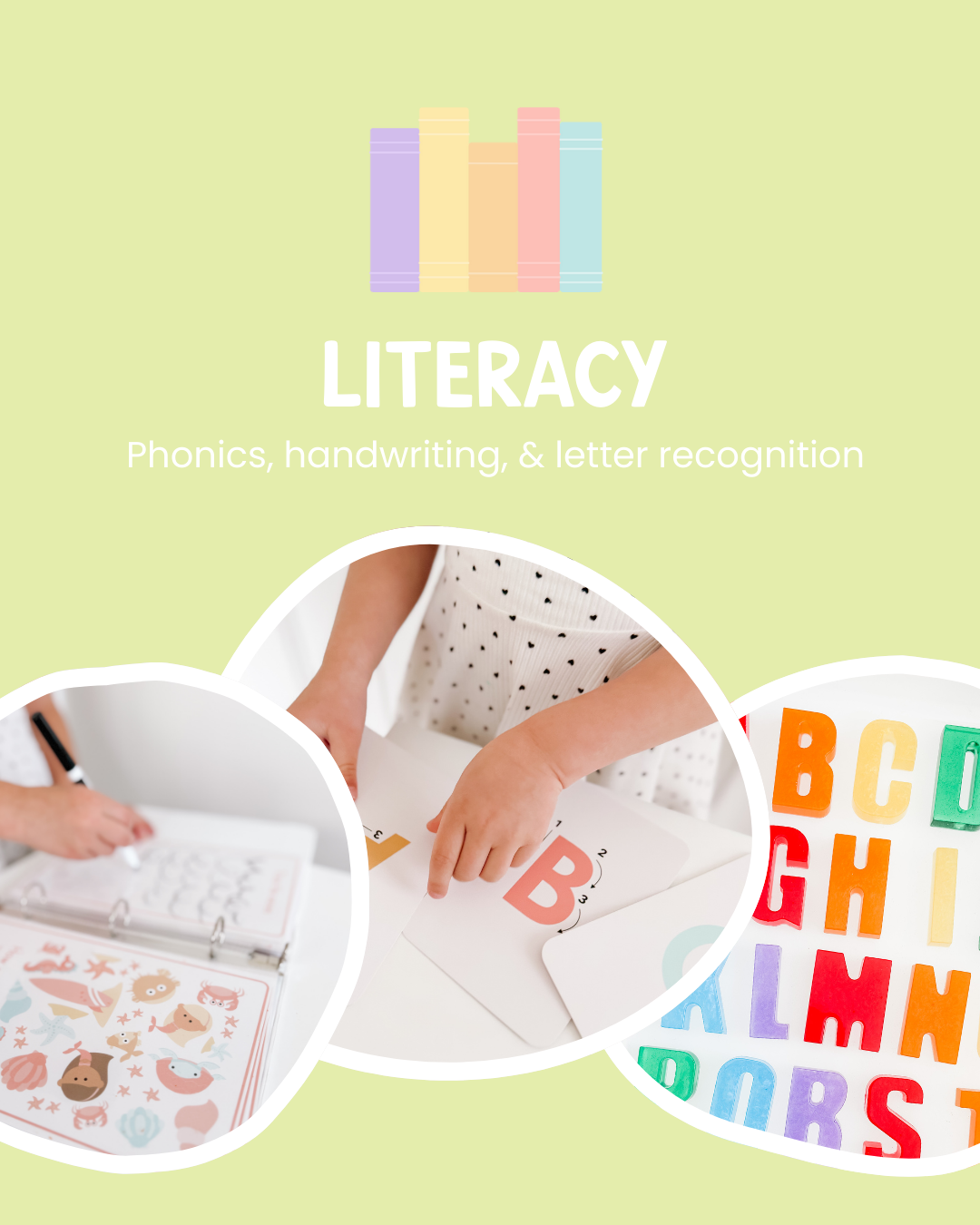
  • Letter recognition

  • Phonics games

  • Tracing

  • Matching activities

Think exposure, not mastery.


Why This Rhythm Reduces Stress (for You and Your Child)

✔️ No rushing
✔️ No guilt if something gets skipped
✔️ Built-in flexibility
✔️ Predictable flow for kids
✔️ Easy to repeat daily

Children thrive when they know what comes next — even if the activities change.


Editable daily homeschool planner sheet designed for preschool and pre-K homeschooling. This page allows parents to customize activities while still following a predictable daily rhythm. Includes space for math, snack time, sensory or science activities, storytime, crafts, and literacy. Designed to reduce overwhelm and help families build a calm, consistent homeschool routine.

Get the editable planner

How Themes Make This Even Easier

When you pair your rhythm with weekly themes, planning becomes almost effortless.

For example:

  • One theme per week

  • Same daily rhythm

  • Different activities within each block

This is exactly why I designed my Preschool Homeschool Planner — to take the guesswork out of planning while still leaving room for creativity and play.


The Biggest Mistake Parents Make with Homeschooling

Trying to do too much.

Preschool learning happens through:

  • Repetition

  • Play

  • Conversation

  • Exploration

If your child is engaged, curious, and connected — you’re doing enough.


13.png
14.png
15.png
16.png
17.png
18.png
19.png

Want This Done for You?

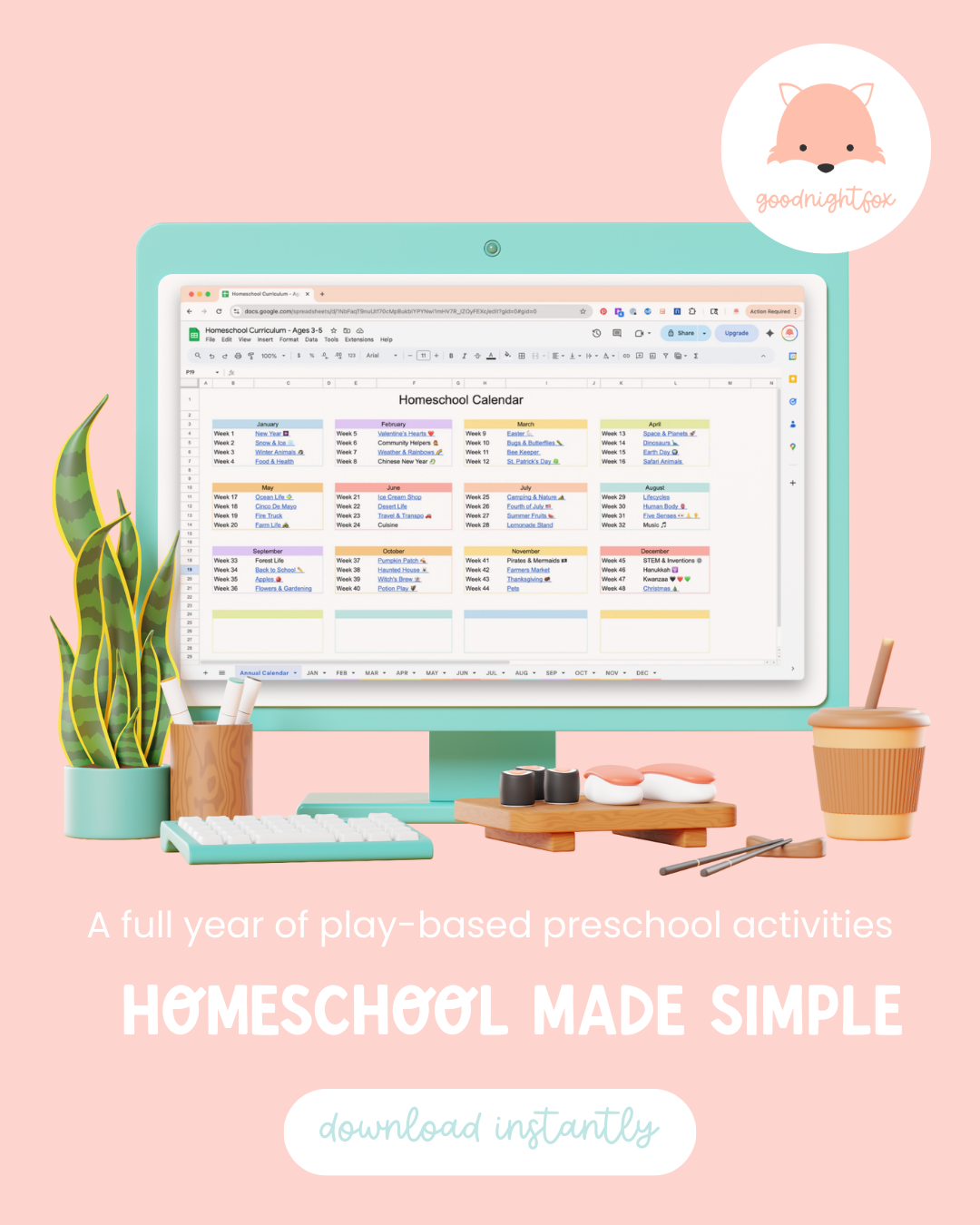
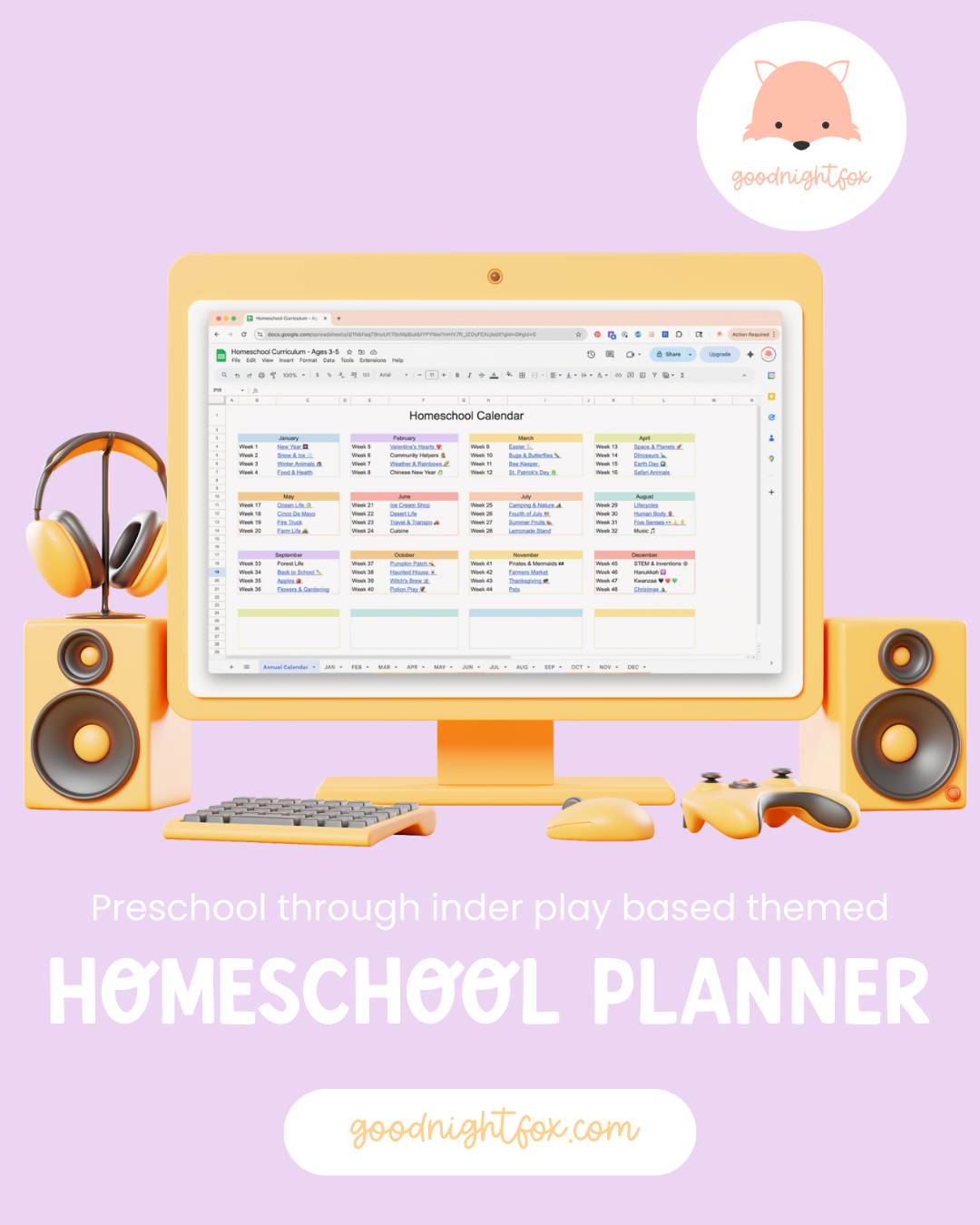
My Preschool Homeschool Planner (Ages 3–5) is built around this exact rhythm:

  • Daily 6-block schedule

  • Weekly themed plans

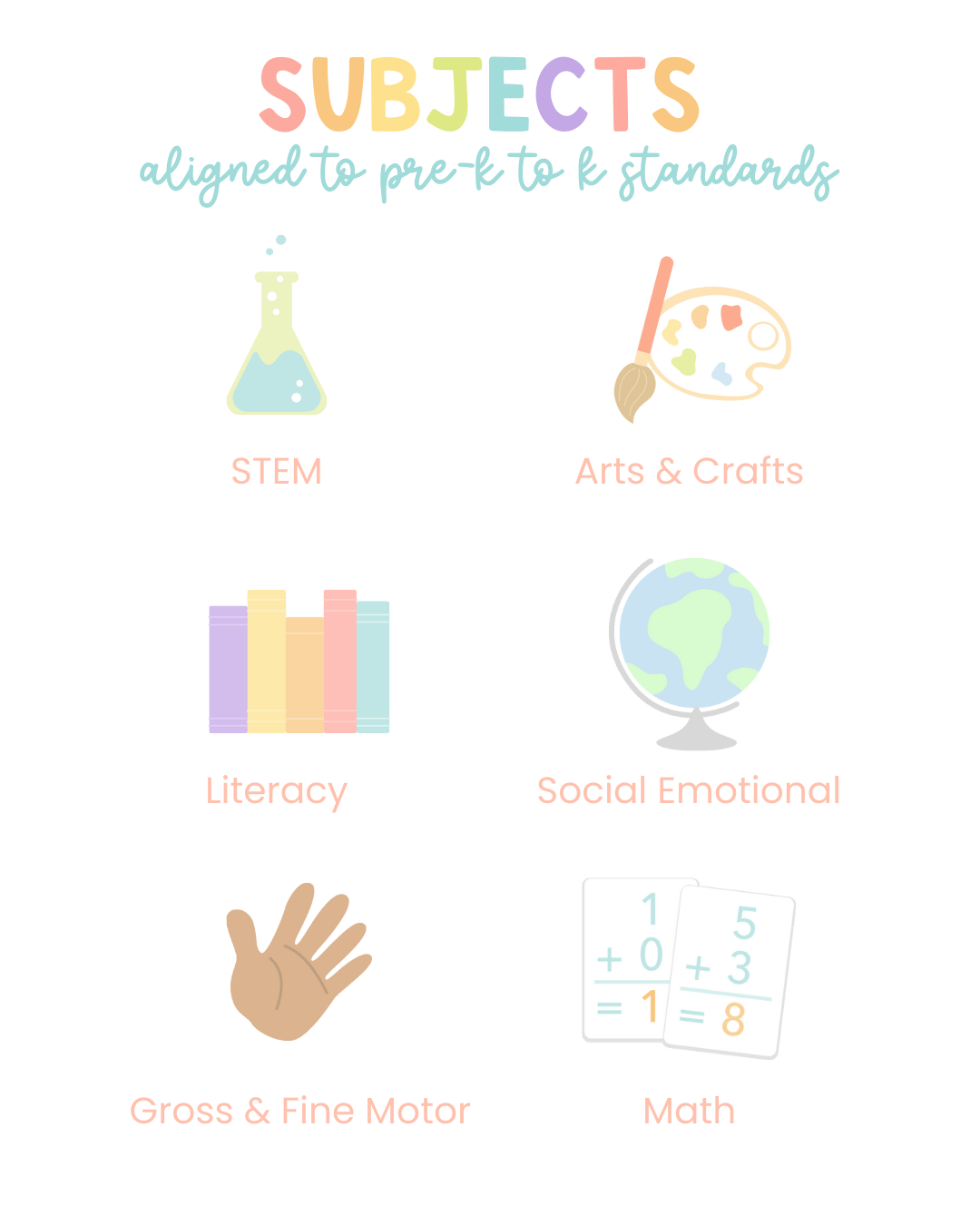
  • Literacy, math, sensory, STEM, art & more

  • Organized in Google Sheets for easy use

It’s designed to be:

  • Simple

  • Flexible

  • Play-based

  • Stress-free

✨ Perfect for parents who want structure without overwhelm.

Get the Editable Planner
20.png
21.png
22.png
23.png
24.png
25.png
26.png

Final Reminder

You don’t need a perfect homeschool day.
You need a rhythm that supports your child, your home, and your energy.

Start simple. Stay flexible. And trust that learning is happening — even on the messy days 🤍

Tags preschool homeschool, homeschool rhythm, daily homeschool schedule, homeschool routine, play based homeschool, preschool curriculum, kindergarten homeschool, homeschool planner, homeschool organization, homeschool schedule for preschool, homeschool daily rhythm, early childhood homeschool, homeschool planning tips, secular homeschool preschool, homeschool activities for kids
Comment

Nature Walk Dress-Up Craft for Kids (Free Printable Template!)

December 9, 2025 Kylie Tuosto

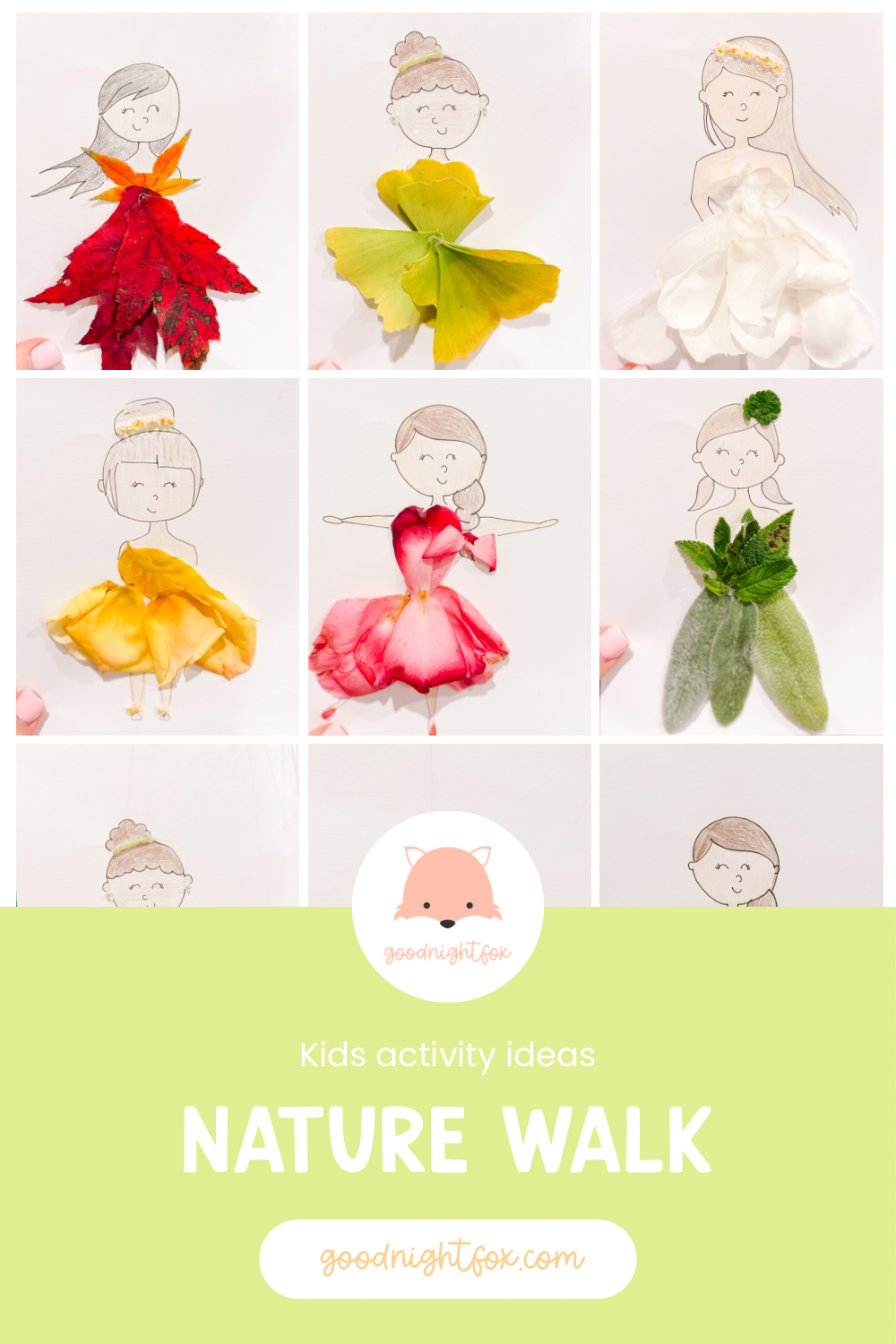
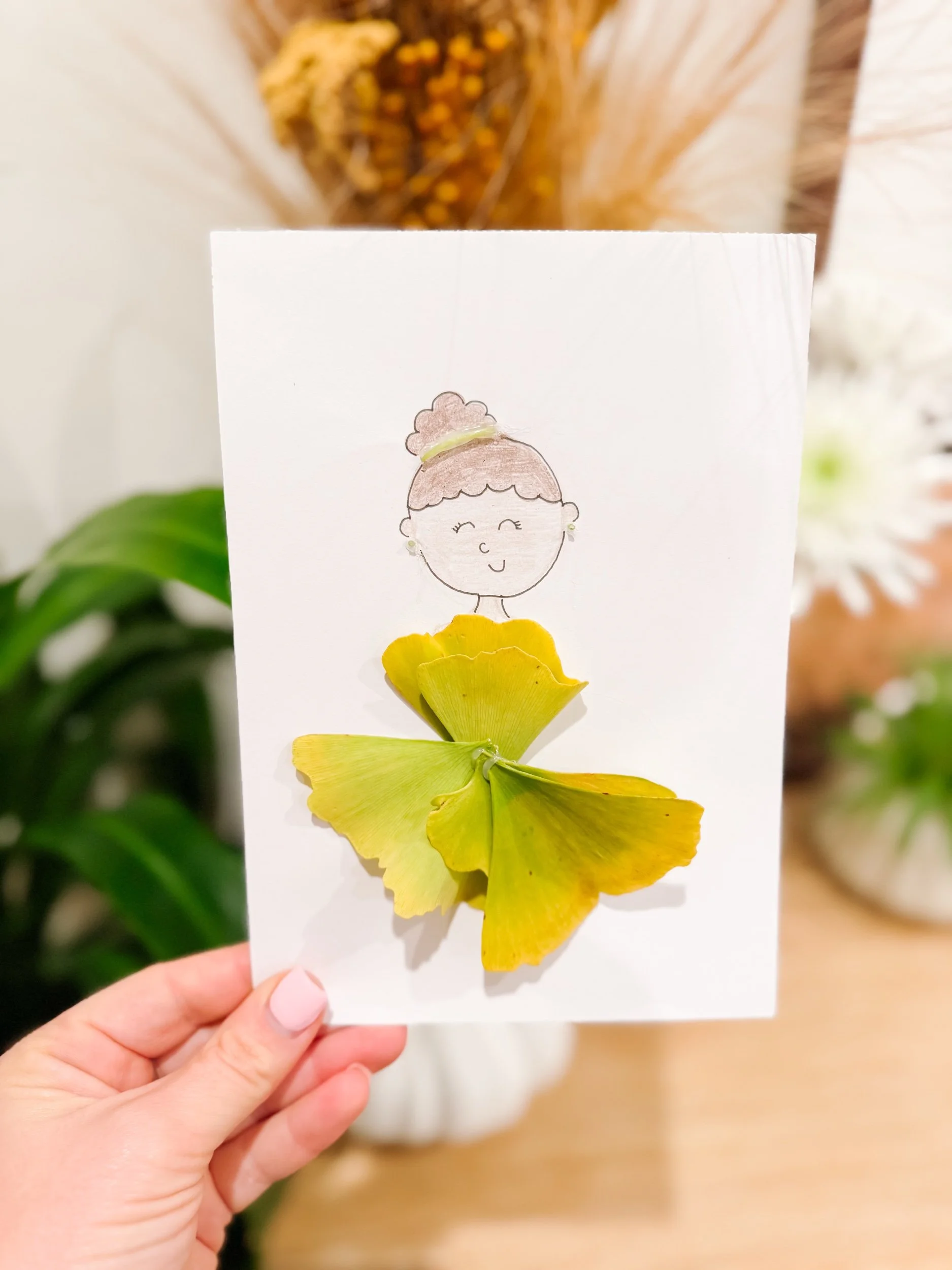
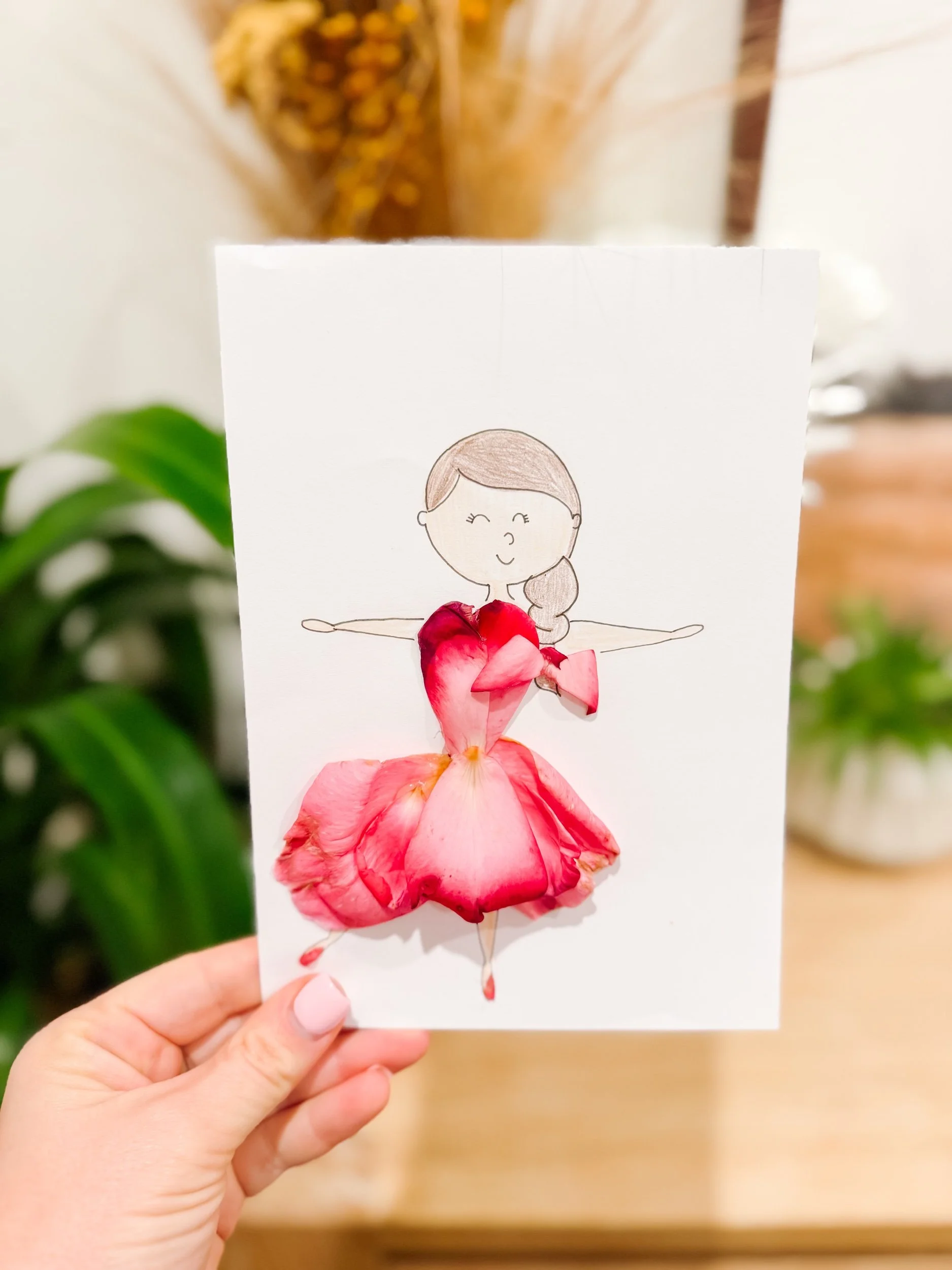
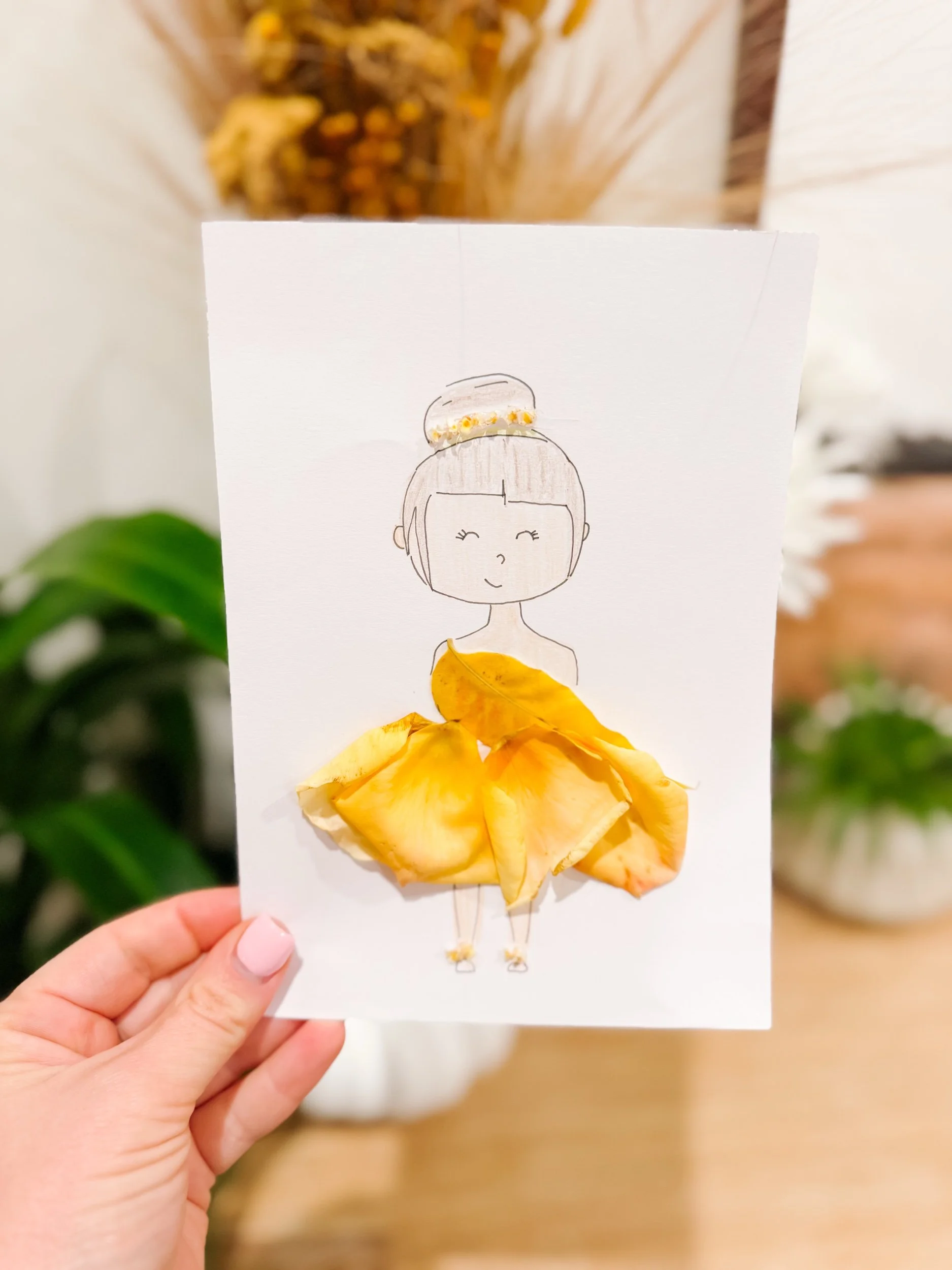
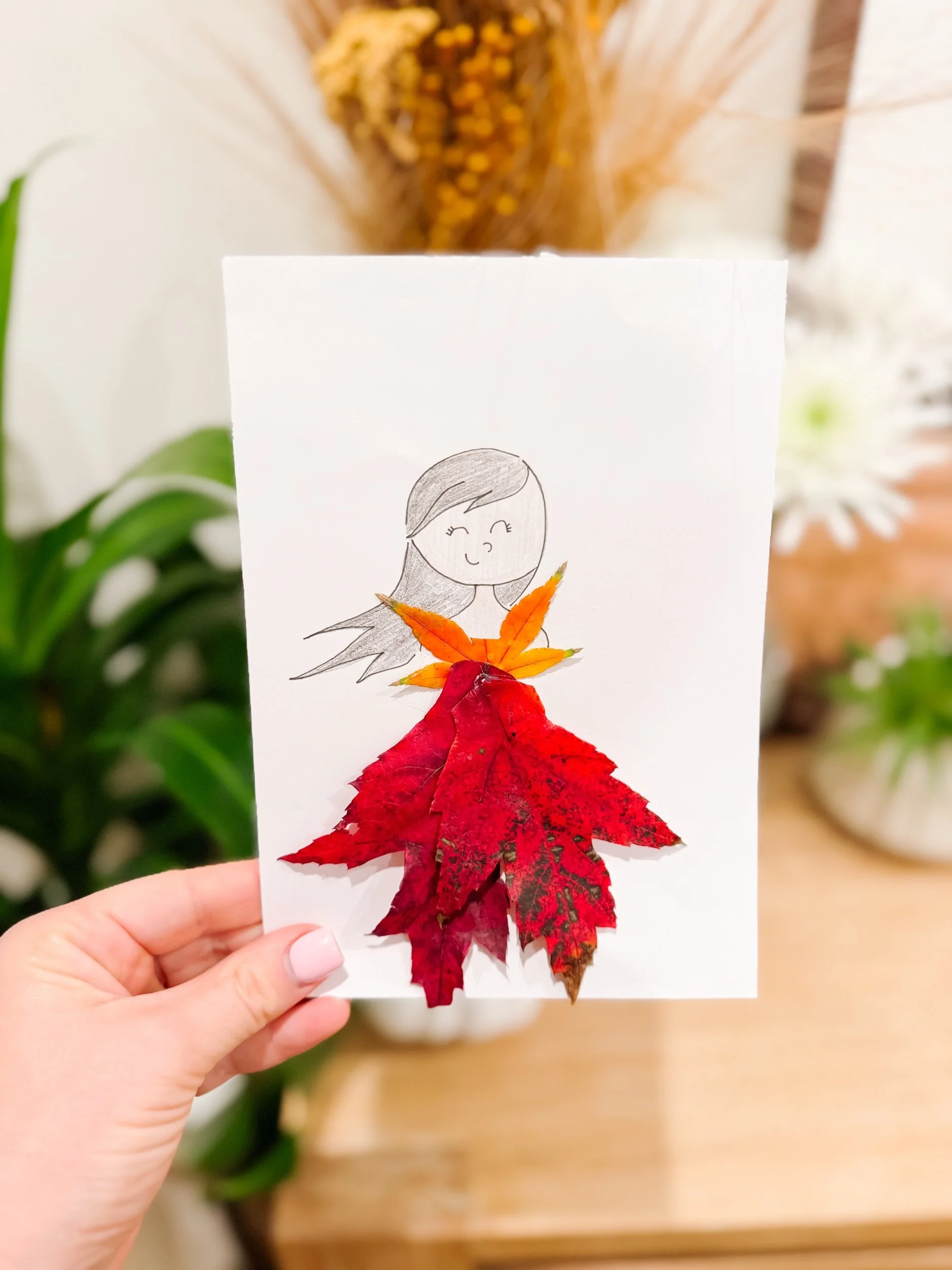
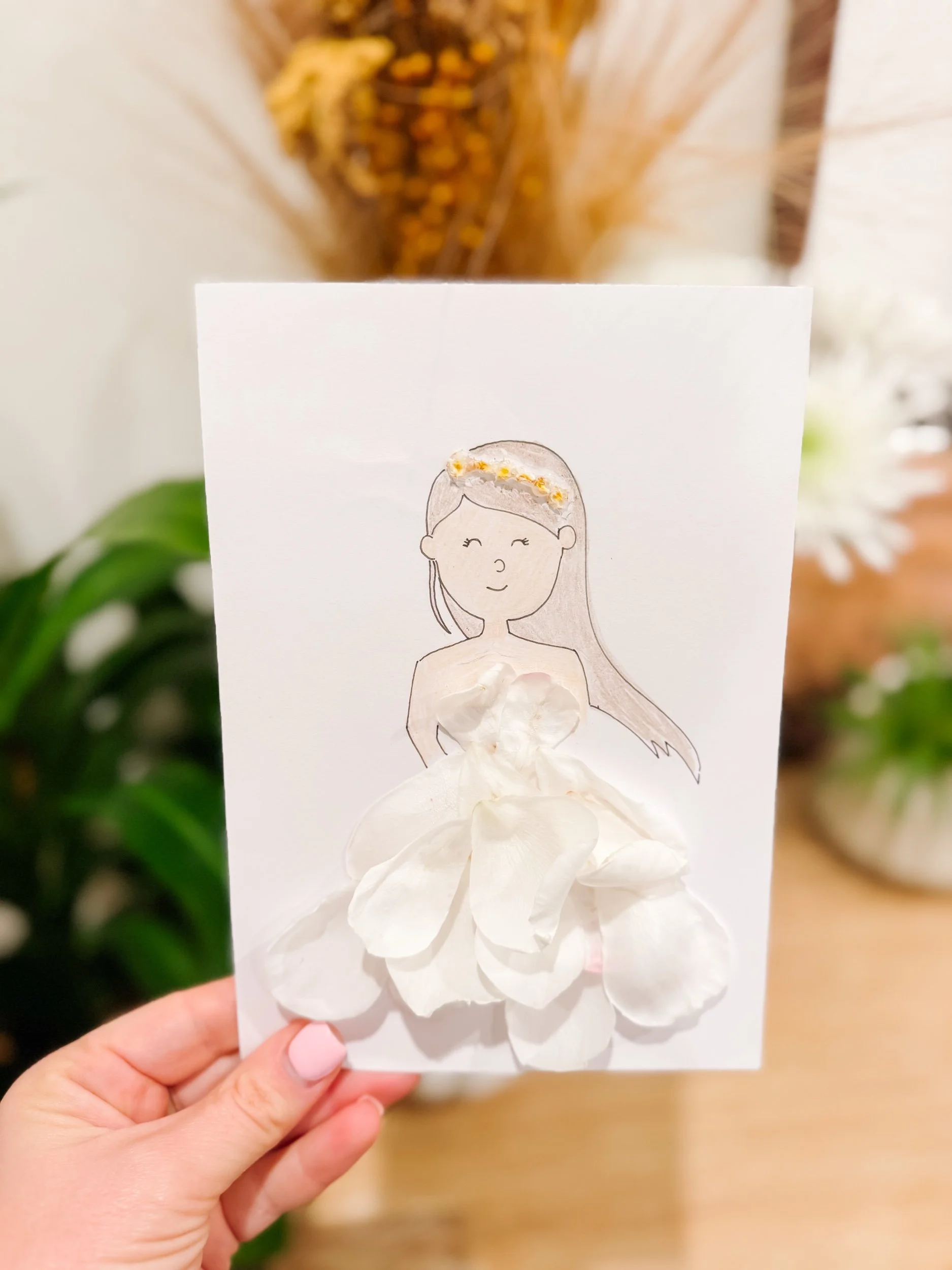
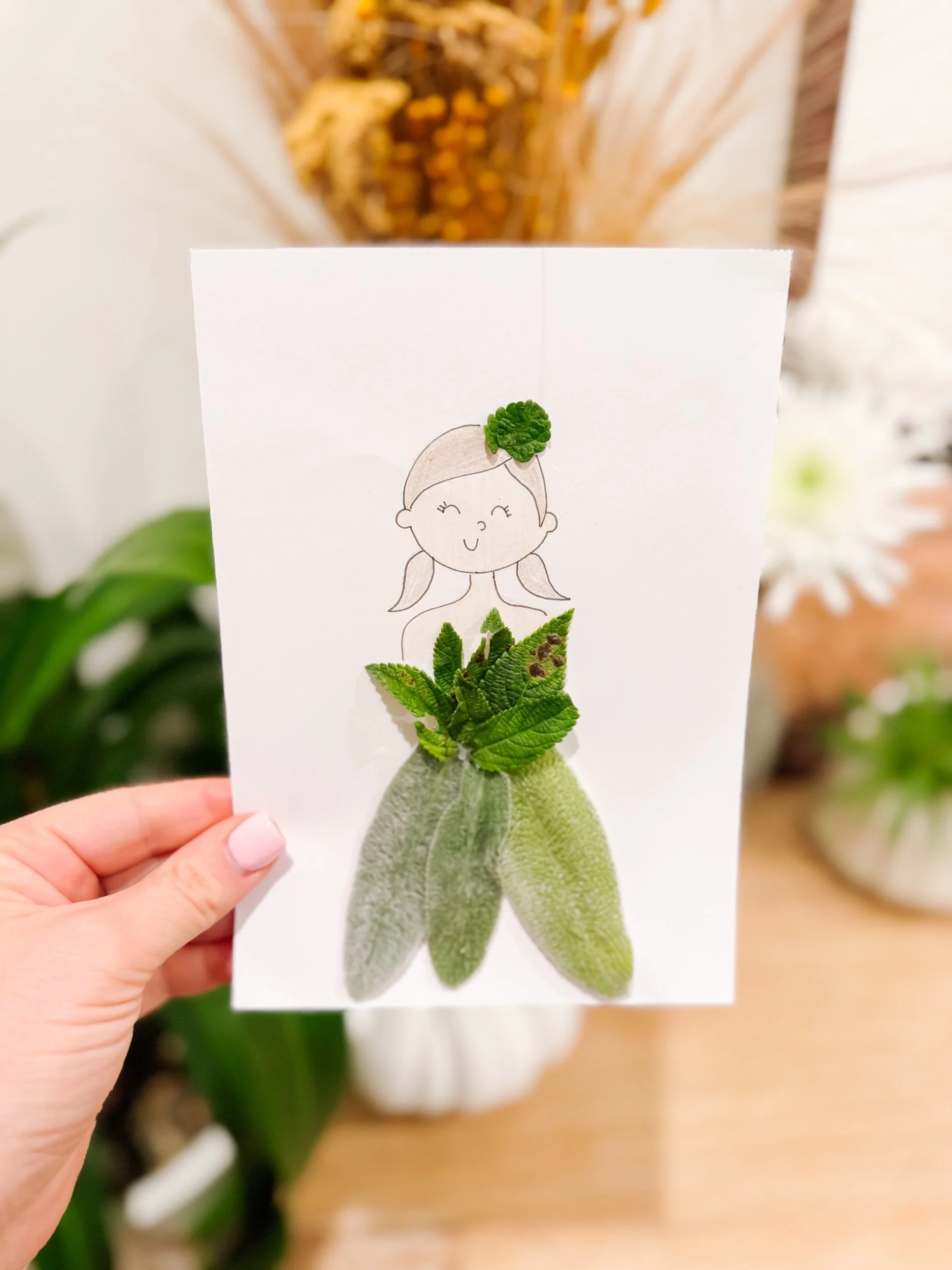
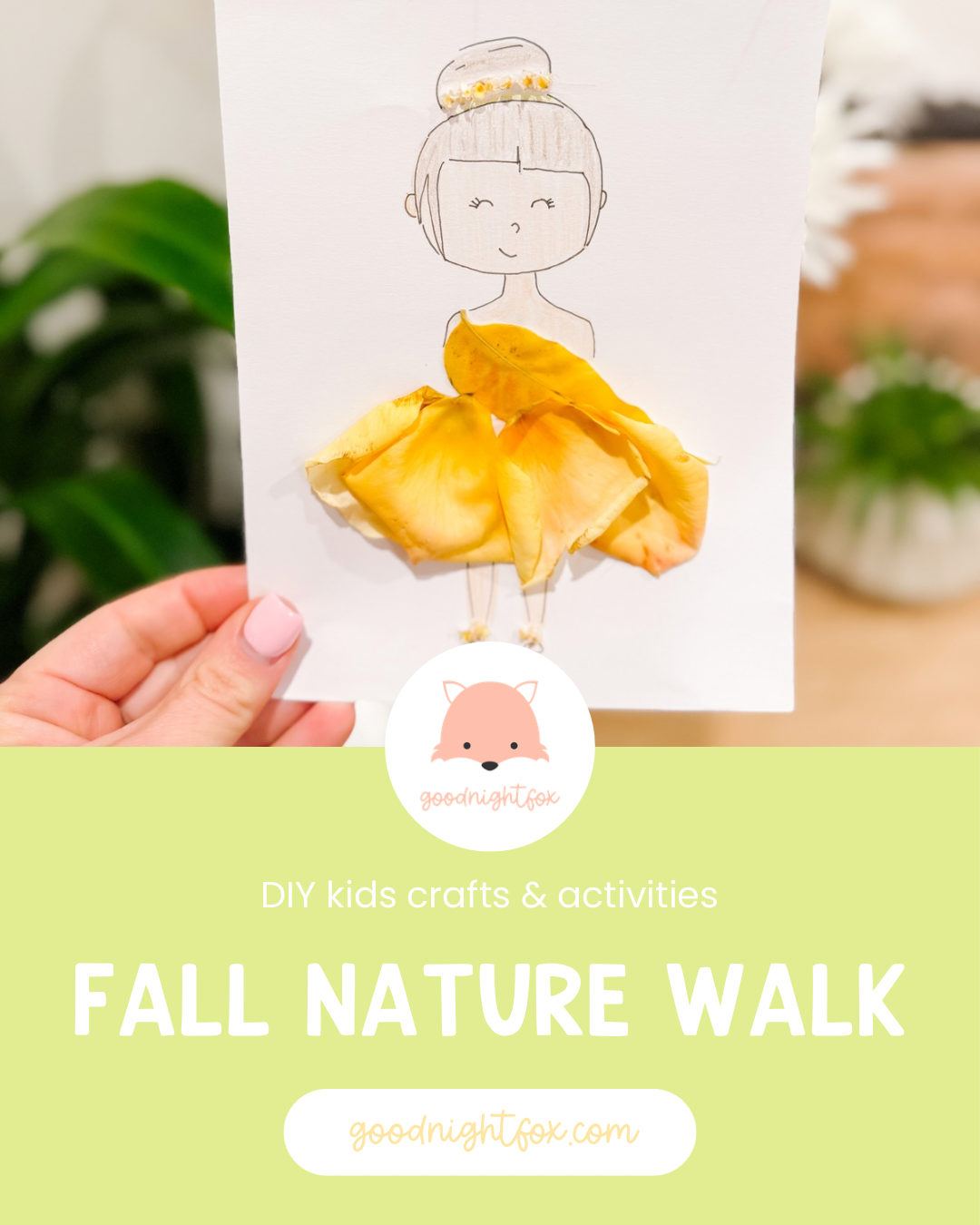
A nature walk becomes magic when kids discover they can turn leaves, petals, and flowers into beautiful outfits for little illustrated characters. This hands-on craft combines outdoor exploration, sensory learning, creativity, and fine-motor development—all while giving children a fun way to engage with nature. In this activity, kids collect natural materials during a walk and then use the free GoodnightFox dress-up printable template to design whimsical outfits.

This is a beautiful, low-prep, screen-free project perfect for preschool, kindergarten, and early elementary learners.

IMG_2754_jpg.jpeg
IMG_2749_jpg.jpeg
IMG_2757.jpeg

Materials

  • Free GoodnightFox Nature Dress-Up Printable

  • Cardstock or thick paper

  • Glue dots or school glue

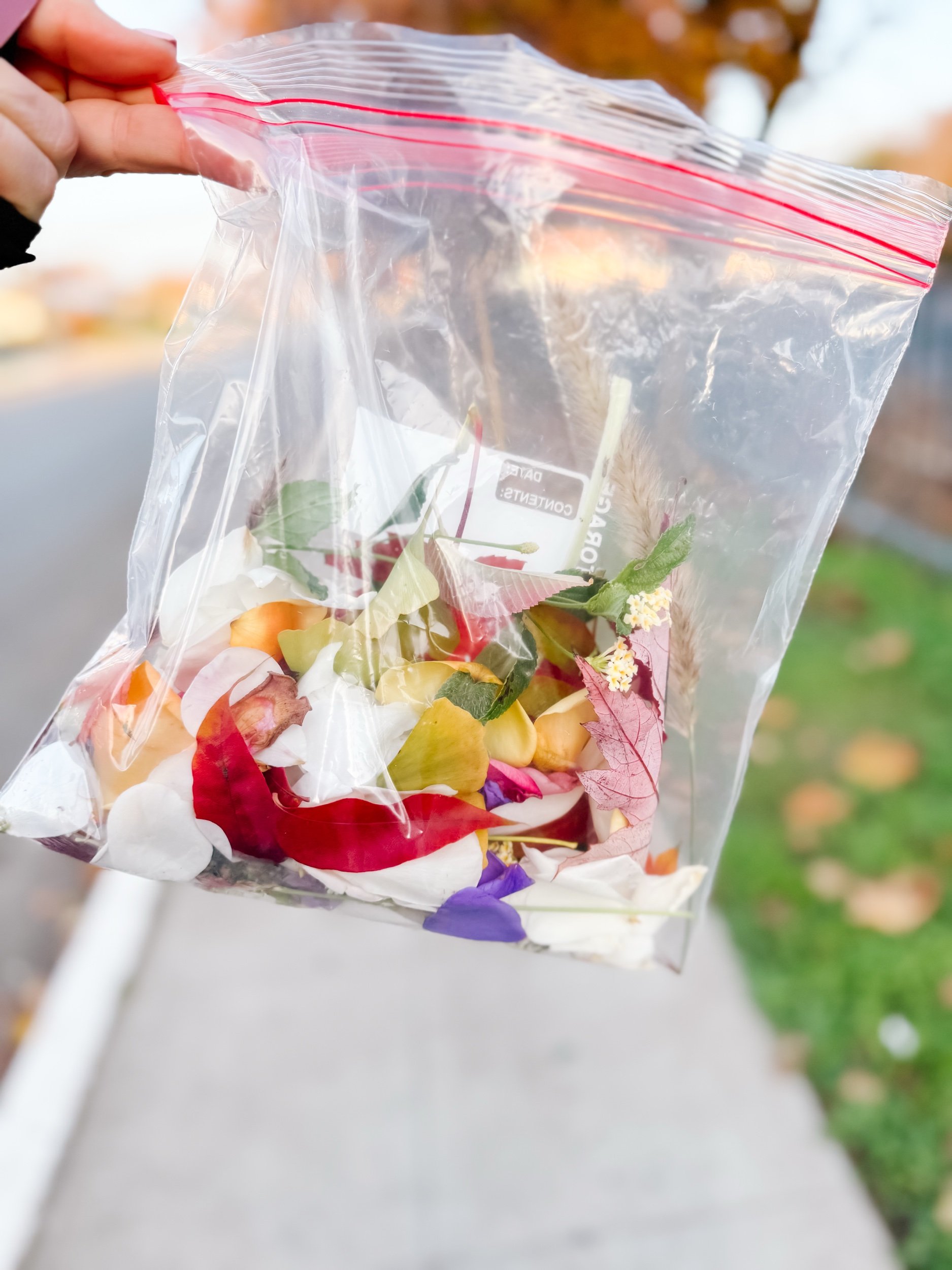
  • A small collection bag or basket for the nature walk

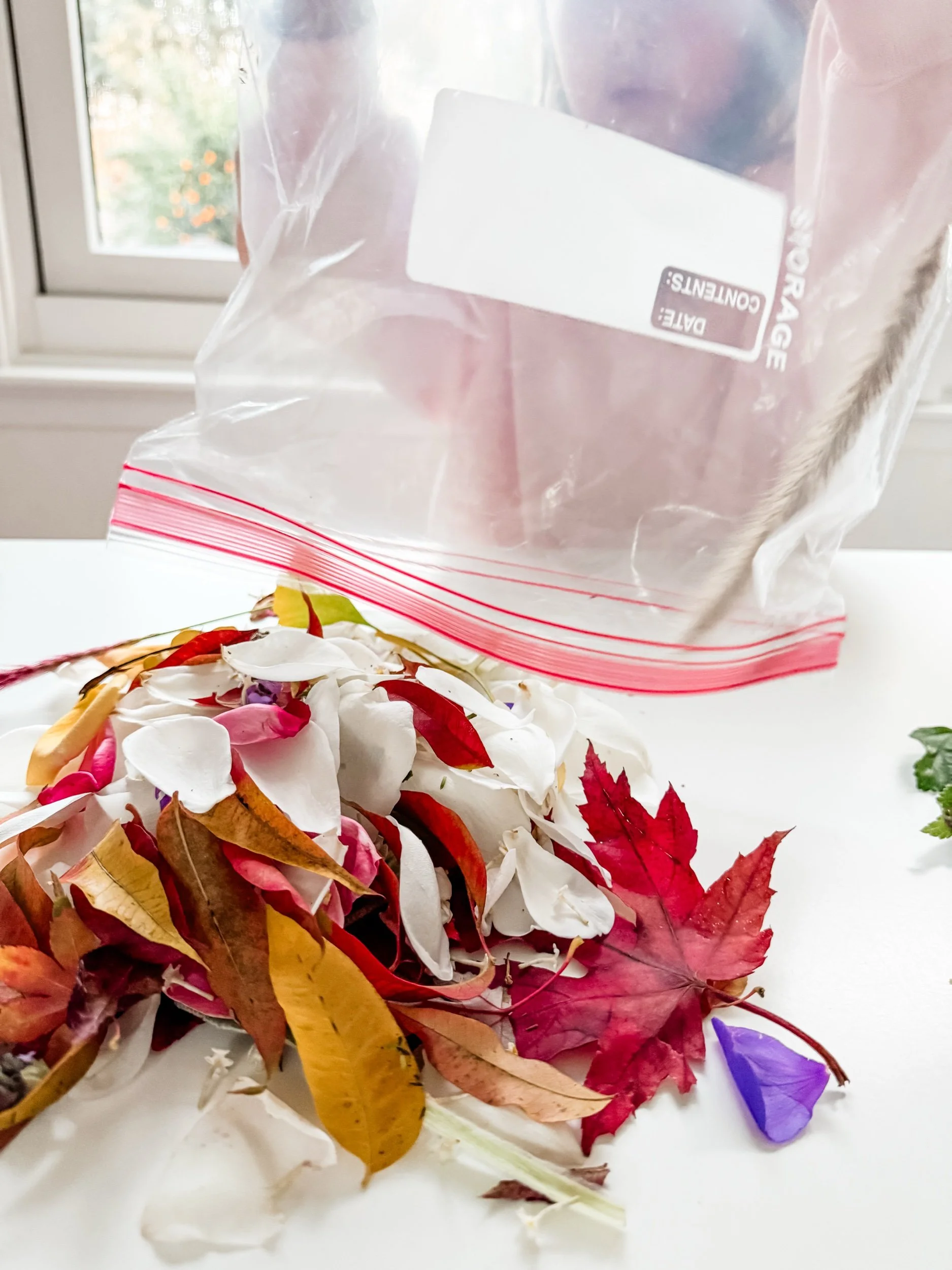
  • Flowers, leaves, herbs, petals, seed pods, grasses, or other safe natural materials

  • Optional: crayons, colored pencils, washi tape


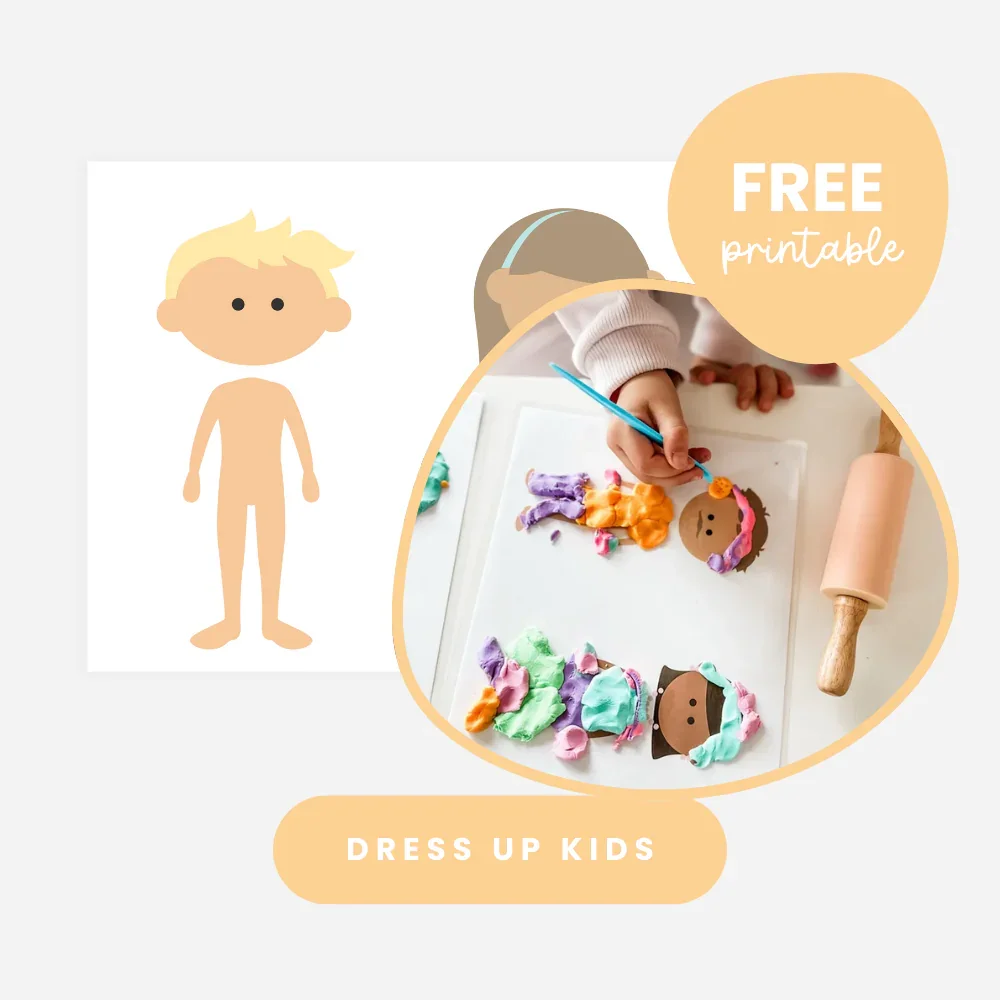
Free Kids Dress Up Printable


Print these girl and boy figurines and laminate them to use over and over again. You can use hot glue to glue on leaves, pedals, and sticks to create clothing.  

Download Now

IMG_2805_jpg.jpeg
IMG_2803.jpeg
IMG_2768_jpg.jpeg

How to Guide / Step-By-Step Instructions

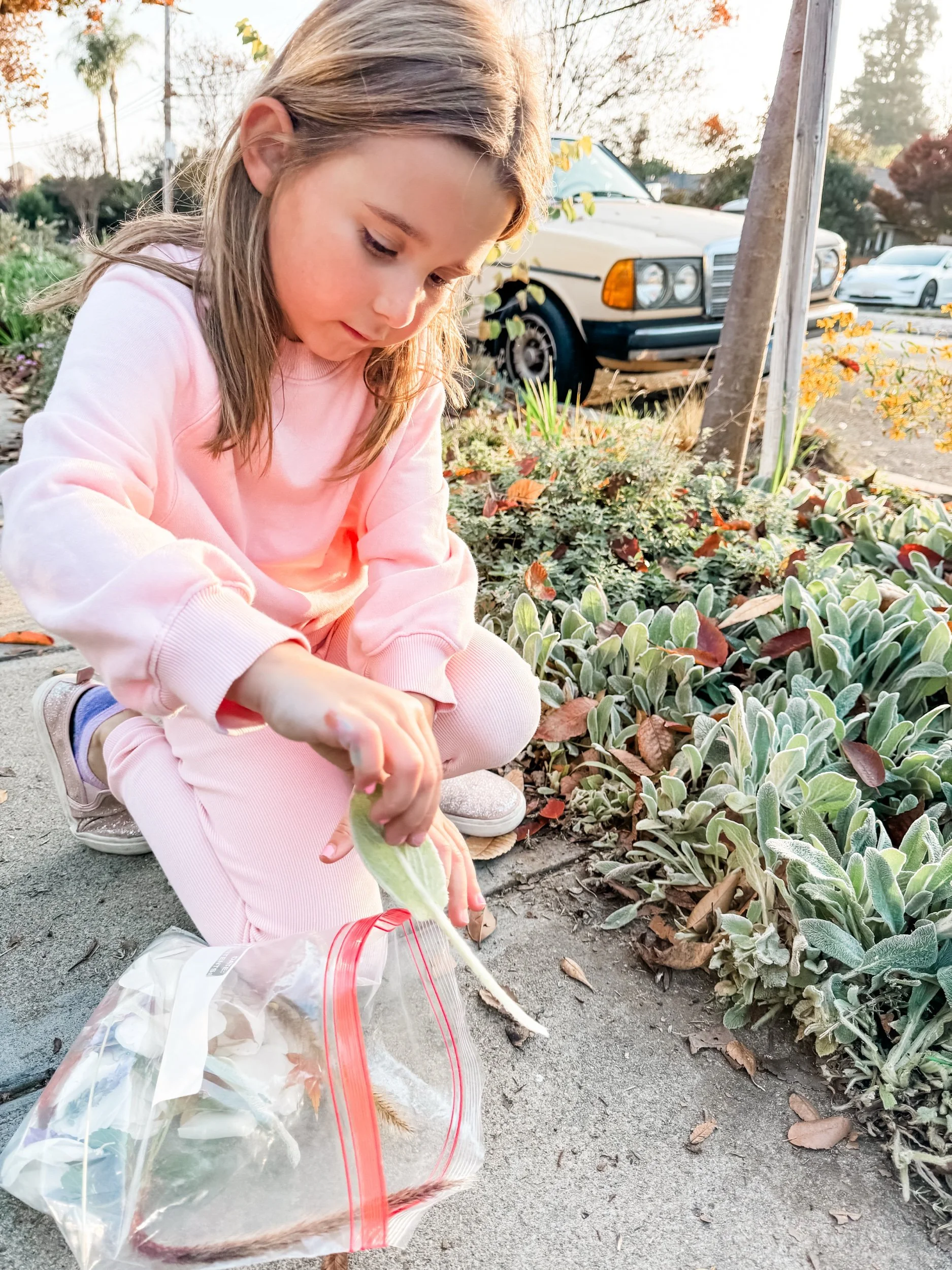
1. Go on a Nature Walk

Take a relaxing stroll through the backyard, neighborhood, park, or garden. Encourage your child to look for:

  • Leaves in different shapes and sizes

  • Flower petals (fallen or gently picked with permission)

  • Interesting textures like sage leaves, mint sprigs, pine needles, or soft grasses

2. Collect Your “Fashion Materials”

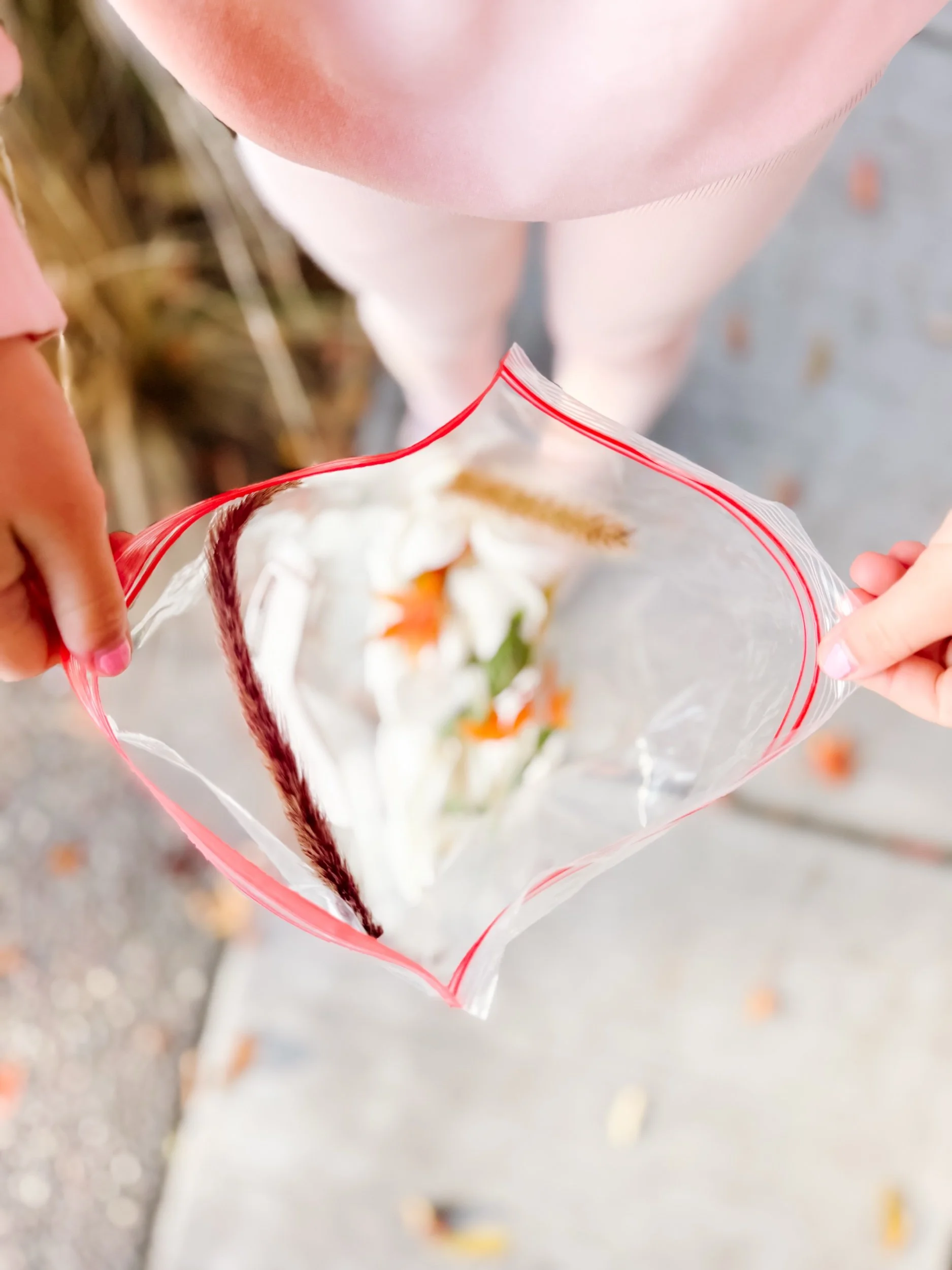
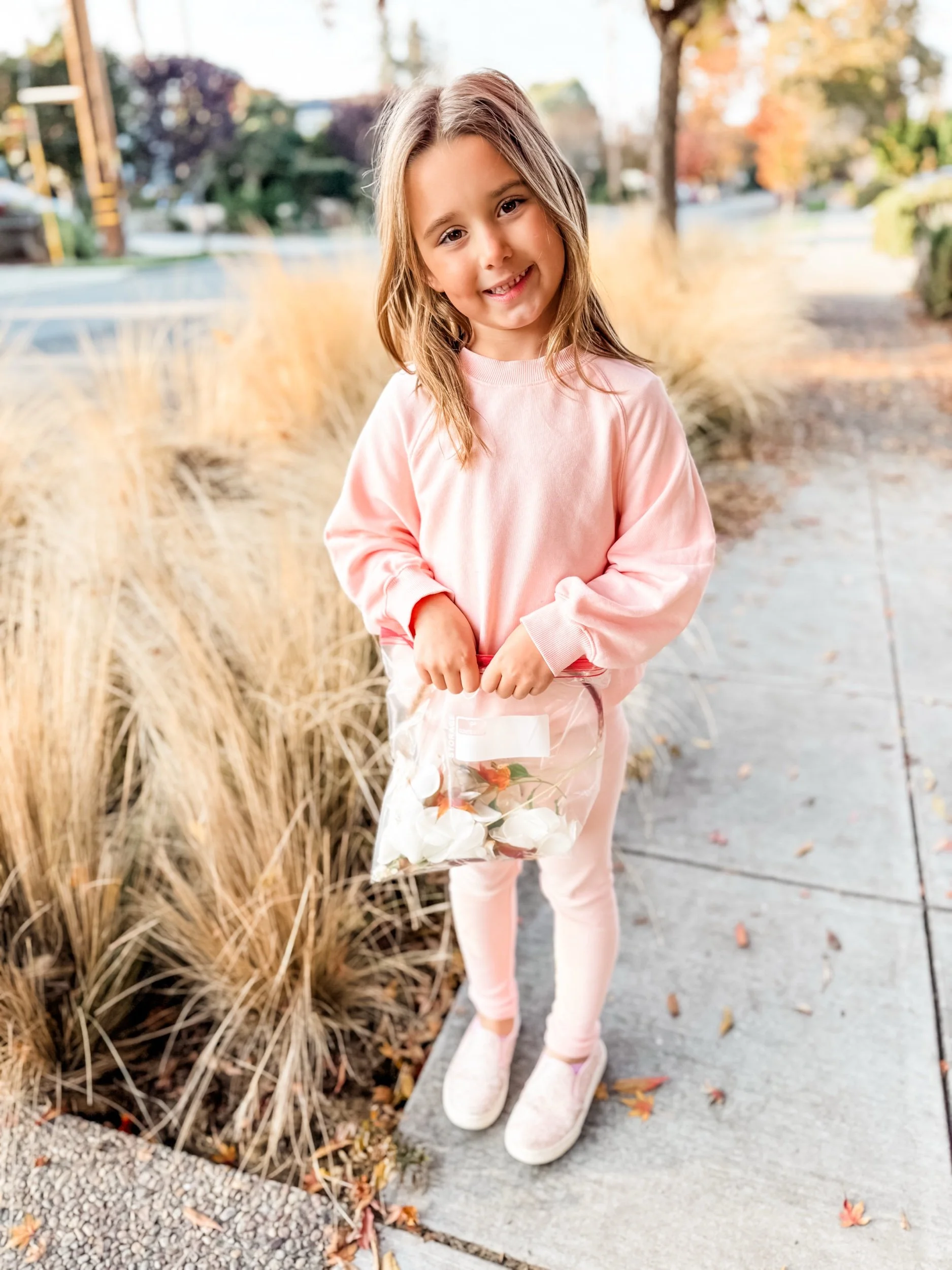
Give kids their own nature bag or basket. Let them collect anything safe, non-toxic, and not protected. Try to focus on items found on the ground to keep the activity eco-friendly.

3. Print the Free Dress-Up Templates

Your free GoodnightFox Dress-Up Dolls Printable features simple character outlines ready for kids to decorate. Print on cardstock for best results.

4. Create Your Natural Outfits

Spread out your nature treasures and invite kids to start arranging them on top of the character templates:

  • Use large leaves as skirts

  • Overlap colorful petals to create ball gowns

  • Use tiny herbs or buds as hair accessories

  • Long grasses make great scarves or belts

5. Glue Everything in Place

For young children, glue dots make this easy and mess-free. Older kids may enjoy using regular glue to create more elaborate designs.

6. Add Details

Let kids draw shoes, jewelry, sleeves, or background scenes. This part sparks storytelling and imaginative play.


IMG_2823_jpg.jpeg
IMG_2819_jpg.jpeg
IMG_2820_jpg.jpeg
IMG_2824_jpg.jpeg
IMG_2822_jpg.jpeg
IMG_2821_jpg.jpeg

Opportunities to Make This a Learning Moment

Use this activity for meaningful conversations about nature, observation, and creativity. Here are prompts parents can use:

  • “What colors did we see the most today?”

  • “Which leaf feels soft? Which one feels rough?”

  • “Why do you think the leaves have different shapes?”

  • “What season do you think these colors remind you of?”

  • “How does nature inspire fashion?”

  • “Do petals or leaves make a stronger material?”

This is also a great activity for building early science vocabulary and developing descriptive language skills.


Vocabulary Words to Weave In

  • texture

  • petal

  • leaf vein

  • stem

  • season

  • color palette

  • detail

  • symmetrical

  • pattern

  • natural materials

  • arrange

  • gather

  • observe

  • variation

  • environment


Homeschool Curriculum

This activity pairs perfectly with weeks covering seasons, plants, senses, nature, fine motor skills, and creative arts inside the GoodnightFox Homeschool Curriculum.

Families following the curriculum can use this activity as a hands-on enrichment project on days focused on outdoor learning, observational science, and art exploration.


Learning Extensions

Encourage deeper play and learning with related GoodnightFox resources:

  • Nature Walk Scavenger Hunt Printable

  • Seasonal Flashcards

  • Plant Life Cycle Worksheets

  • Outdoor Exploration Activity Pack

  • Fine Motor Cutting Strips (leaf + flower themes)

These add structure and educational depth to your themed weeks.


Download Your Free Nature Dress-Up Printable

Turn your next walk into a magical kids’ craft!

➡️ Download the FREE template at GoodnightFox.com

This printable is perfect for classrooms, playdates, parkschools, and homeschool families looking for a simple, creative, screen-free project that children love.

Comment

DIY Coffee Filter Paper Flowers – A Colorful Toddler Craft

December 6, 2025 Kylie Tuosto

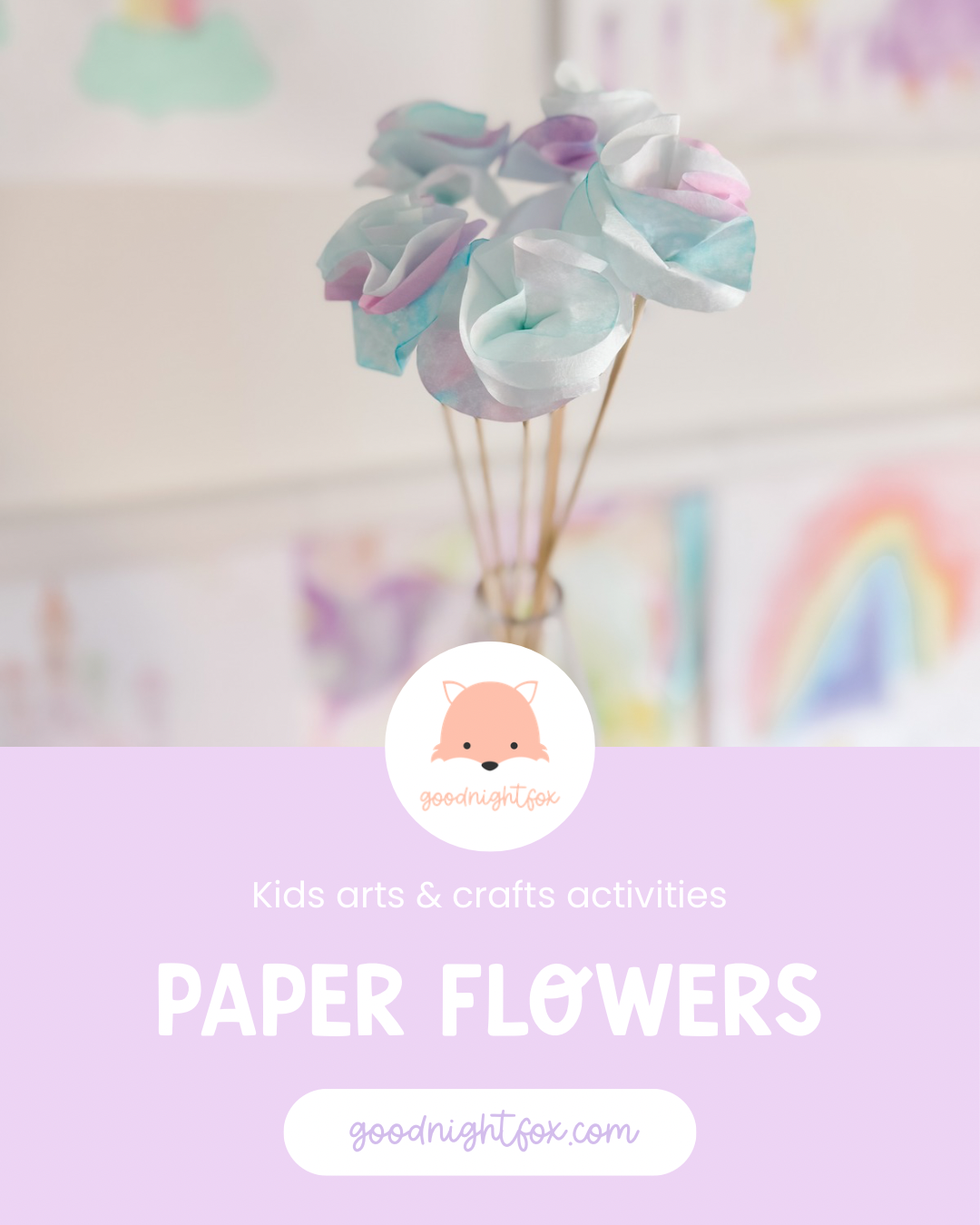
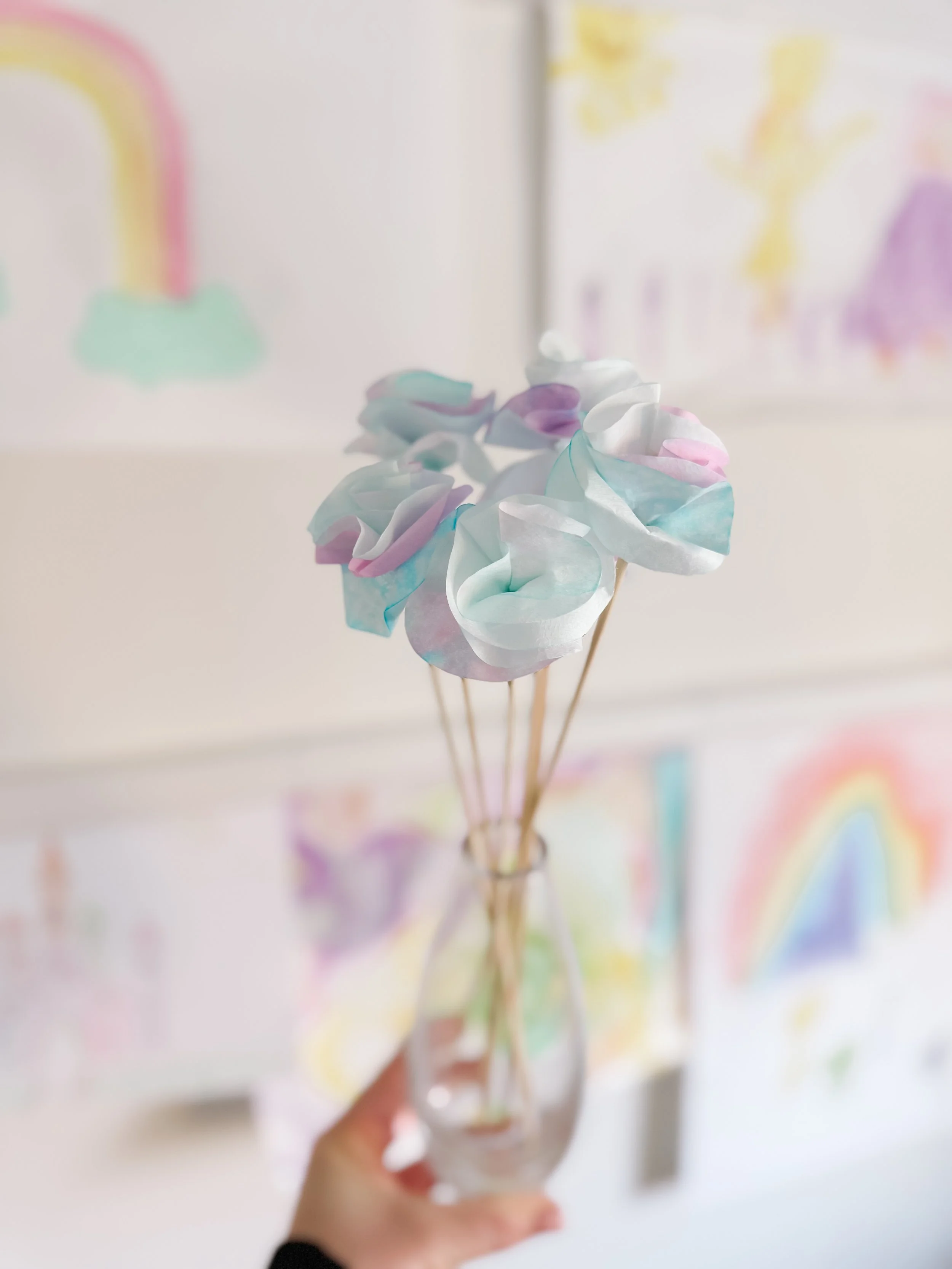
Bring a burst of color and creativity to your toddler’s day with this easy, hands-on coffee filter paper flowers craft! Using simple household items and a few drops of food coloring, kids can experiment with color mixing, fine motor skills, and imaginative play. The vibrant, soft blooms are perfect for sensory exploration, and they’re a delightful addition to your home or classroom.

This craft is also featured in the Spring / Nature Week of the GoodnightFox Homeschool Curriculum, tying art, science, and sensory play into one simple activity.


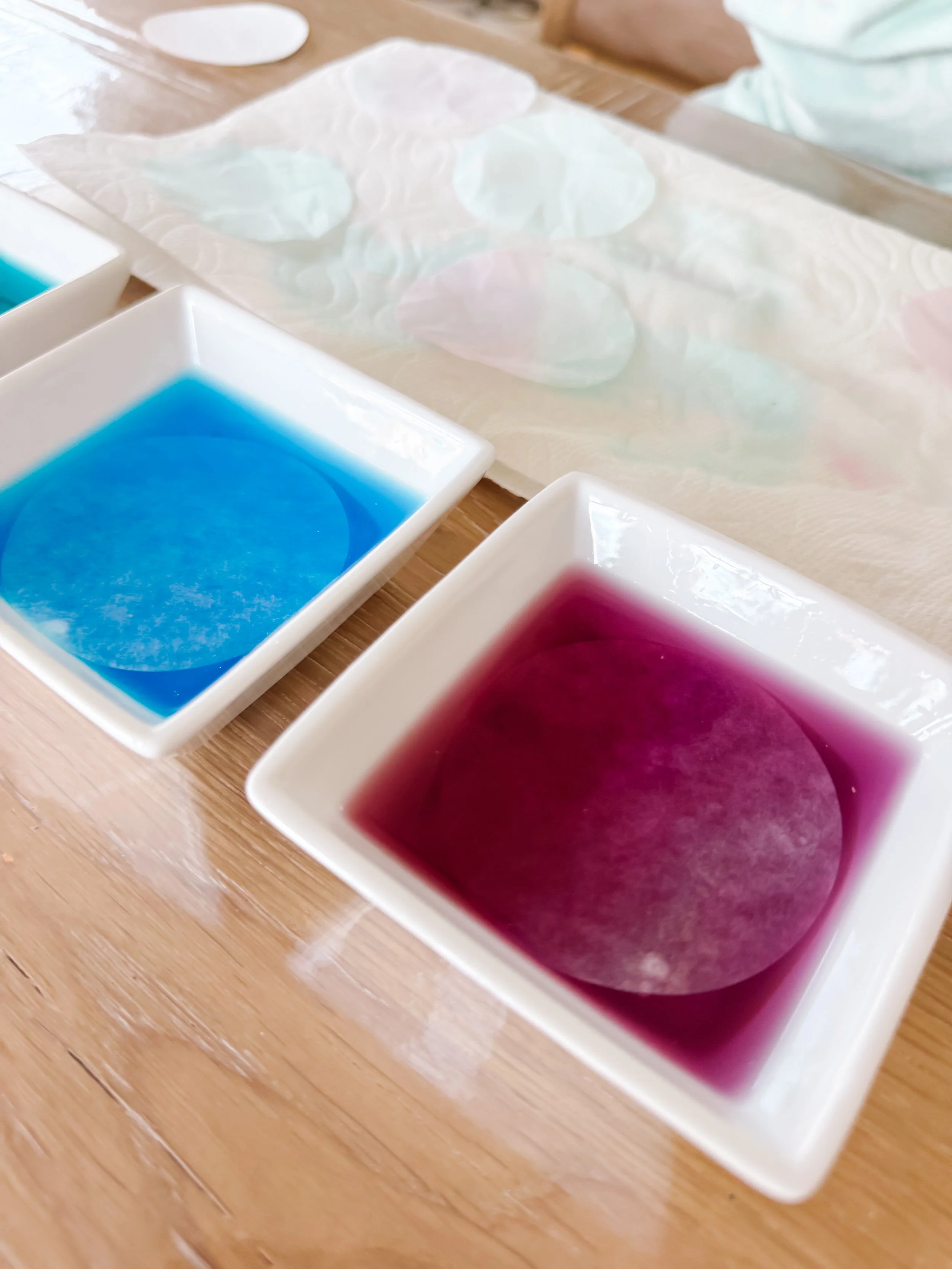
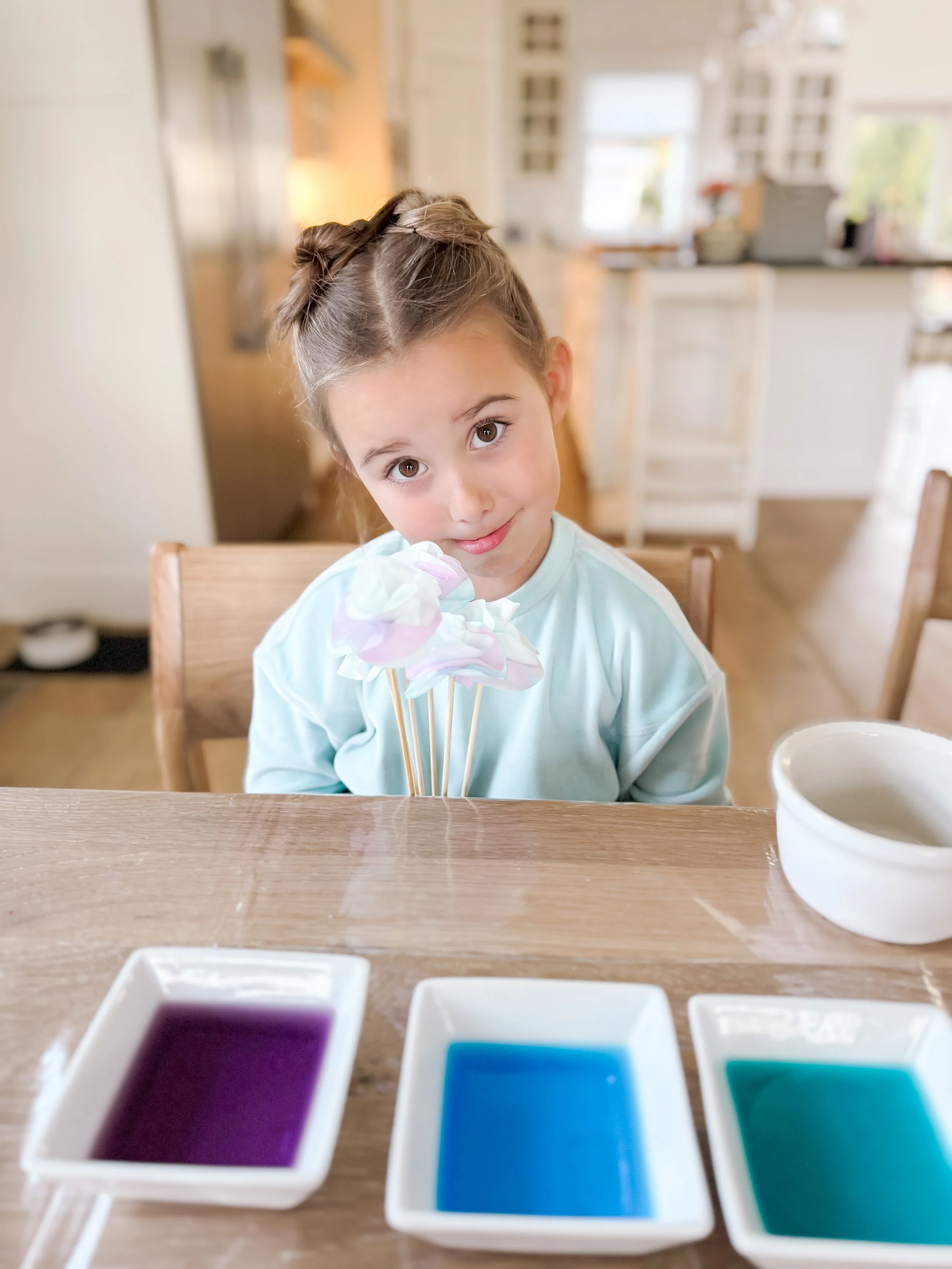
 Materials for coffee filter paper flowers craft including white coffee filters, food coloring, water cups, craft sticks, and hot glue for toddler sensory play.
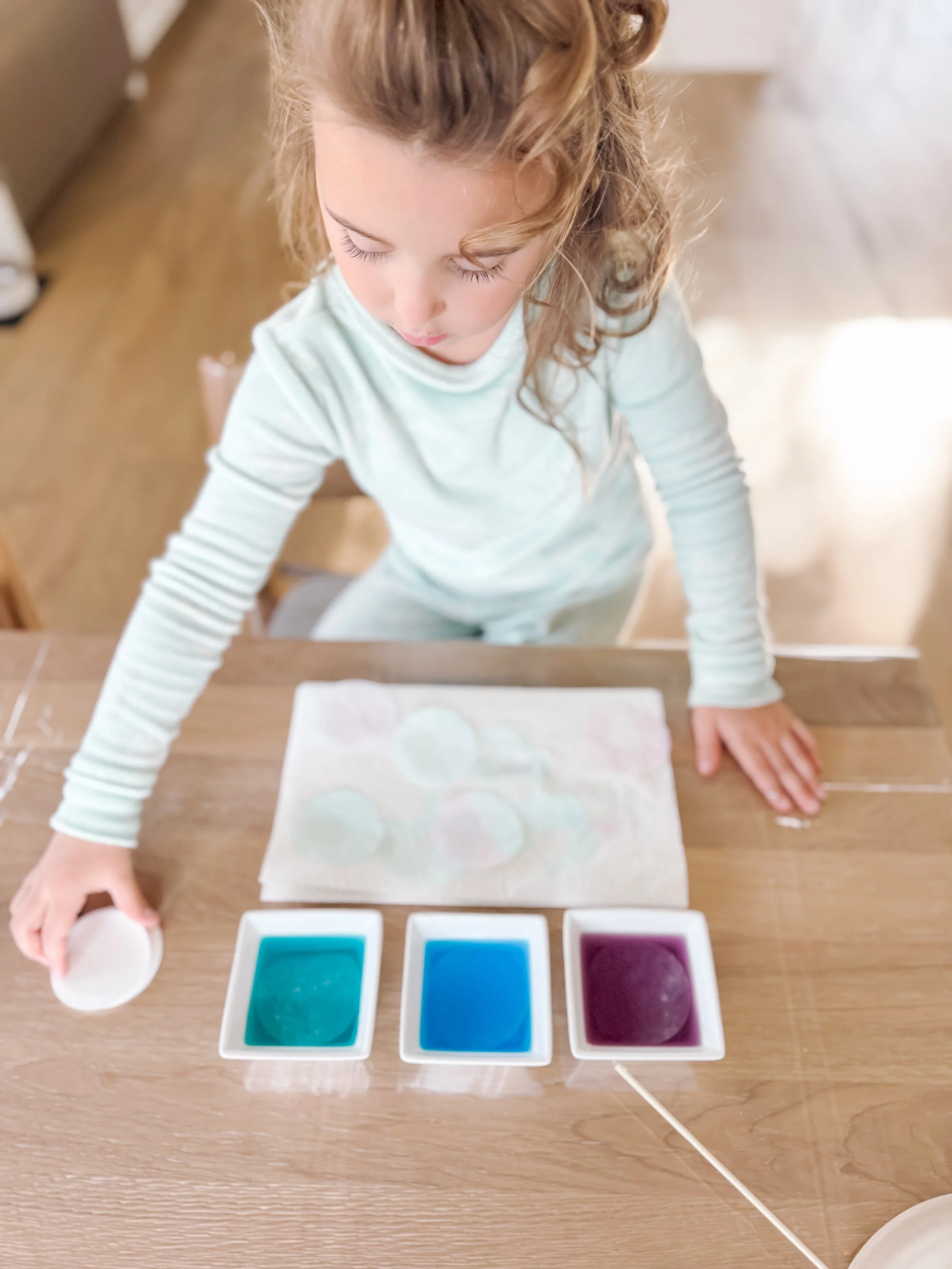
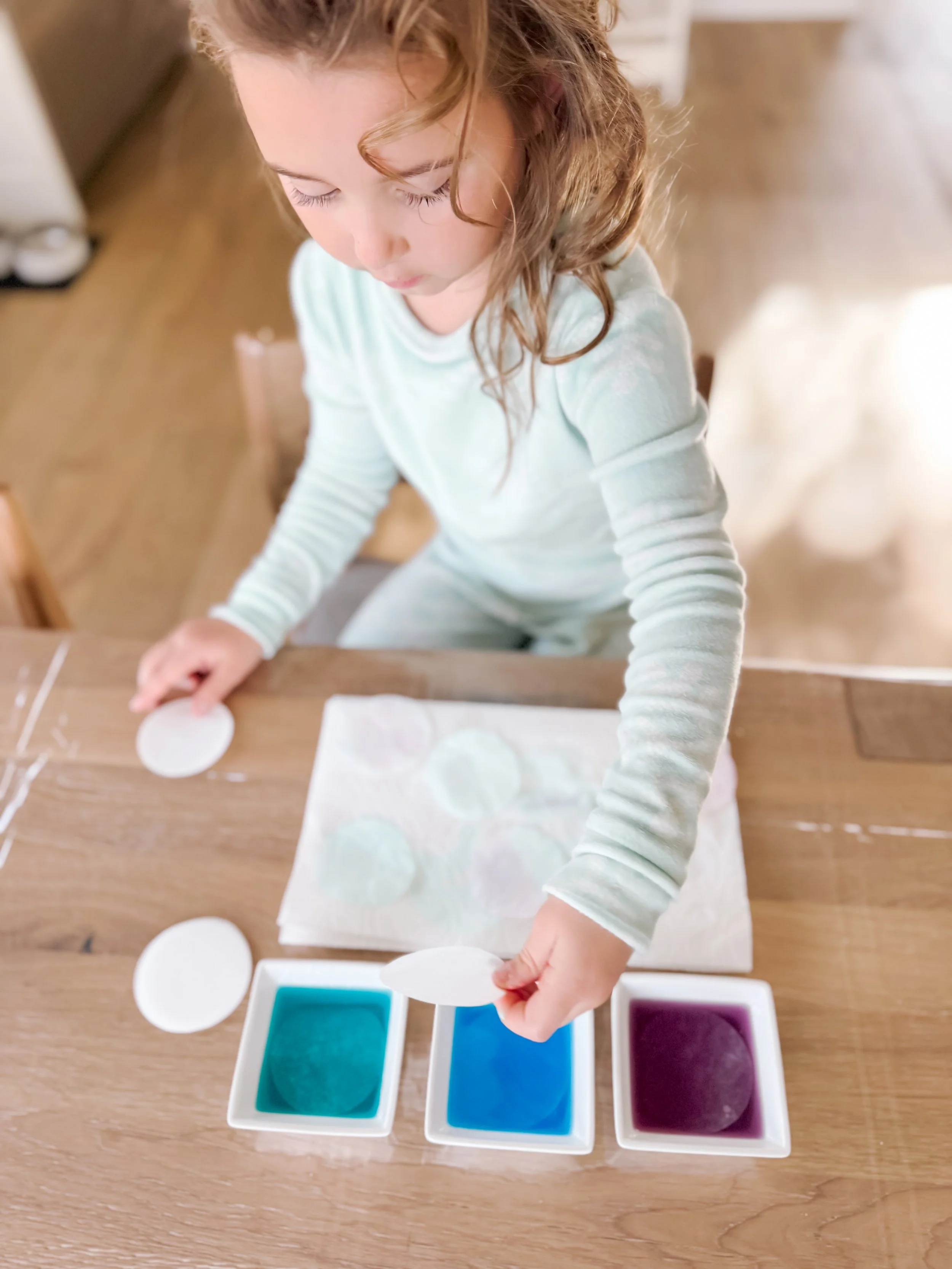
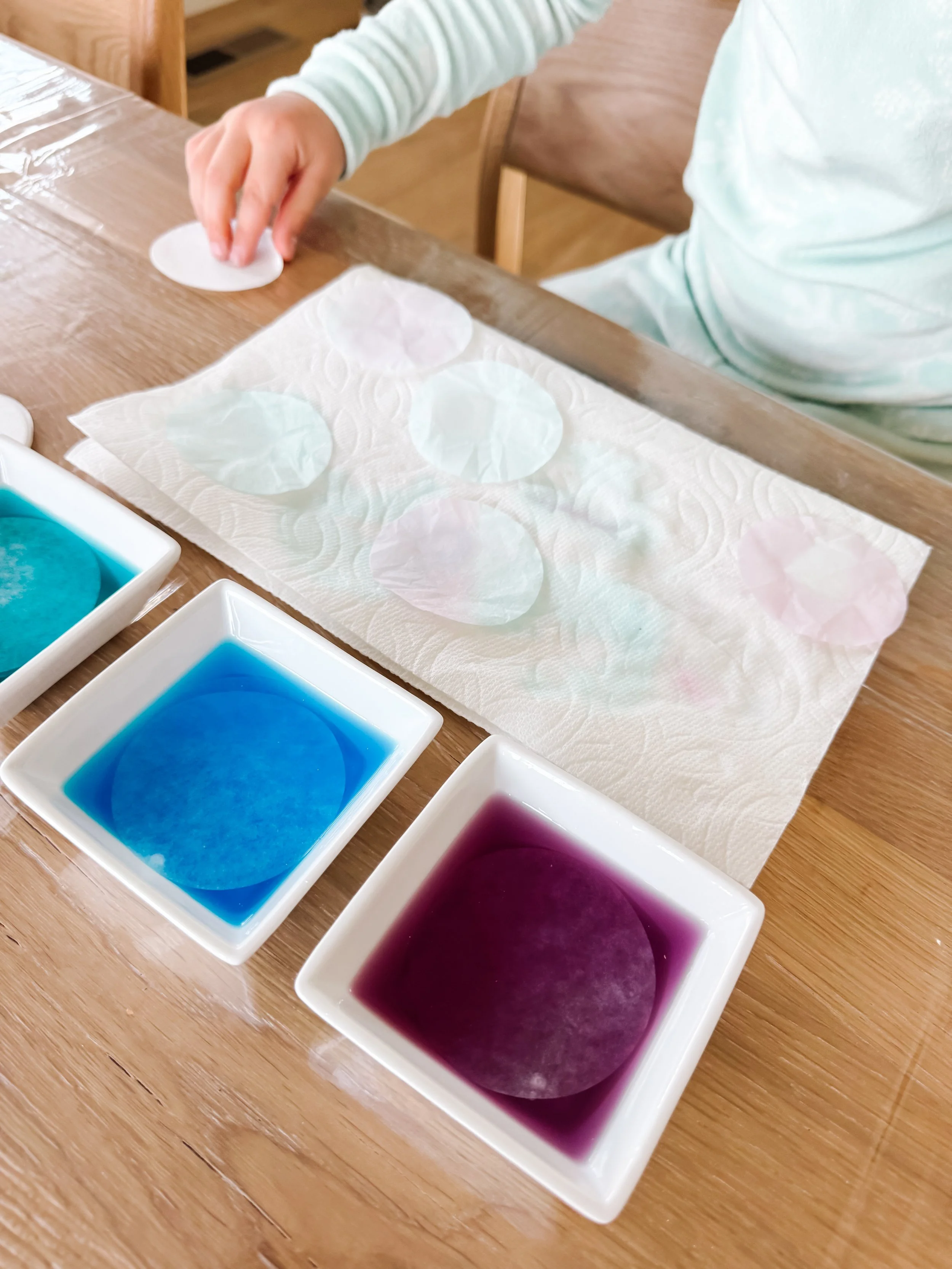
 Toddler coloring coffee filters with food coloring and water using dipping, dripping, and spraying techniques for DIY sensory flower craft
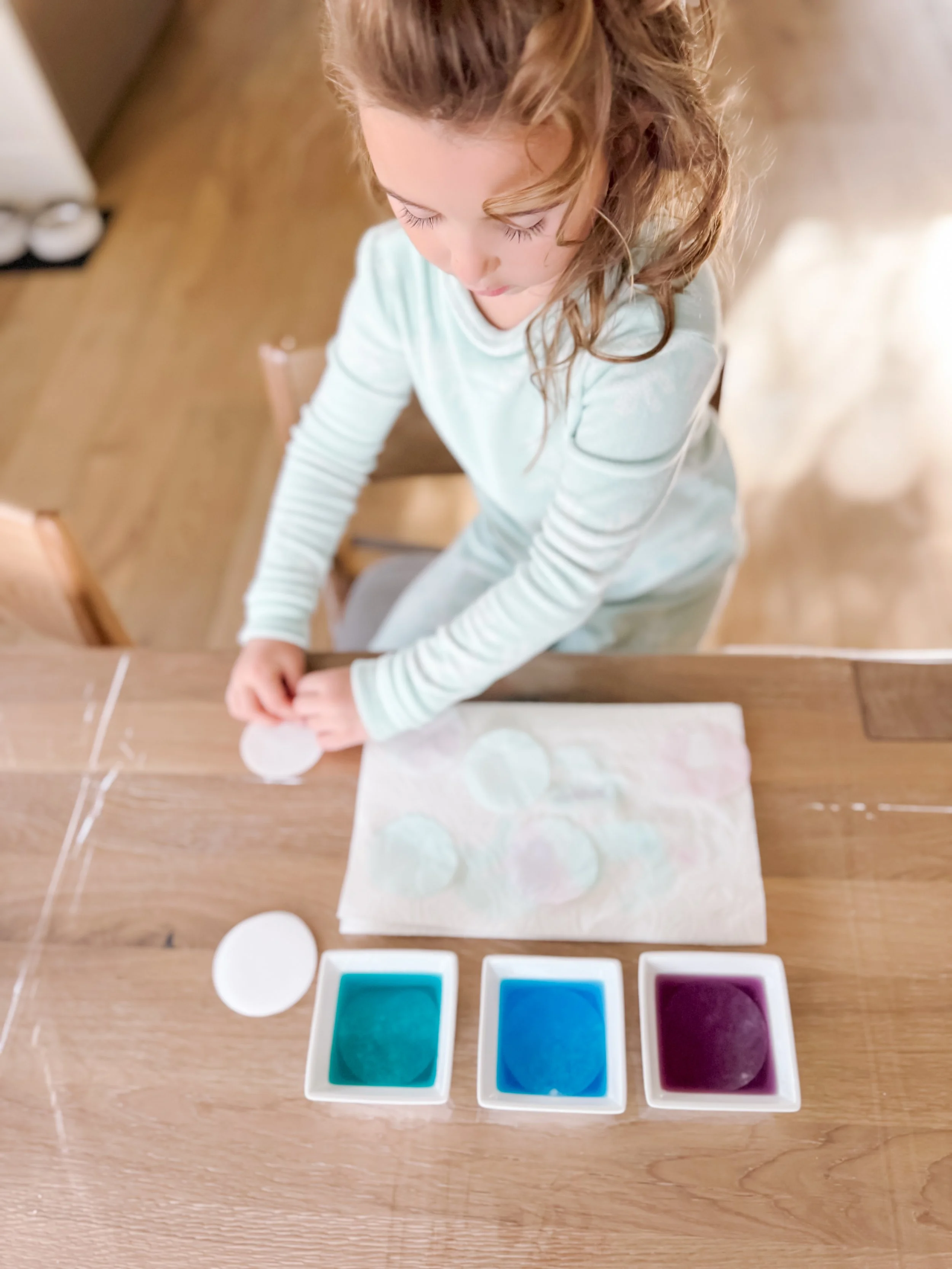
 Colored coffee filters drying on a tray after dipping, dripping, and spraying with food coloring for rainbow paper flower craft.

Materials

You’ll need the following supplies to make your coffee filter paper flowers (includes affiliate links):

  • Coffee filters (white work best for vibrant colors)

  • Food coloring (multiple colors for mixing)

  • Water in small cups or spray bottles

  • Craft sticks or popsicle sticks

  • Hot glue gun and glue sticks (adult supervision required)

  • Paper towels or a tray for drying

  • Optional: dropper or pipette for dripping technique


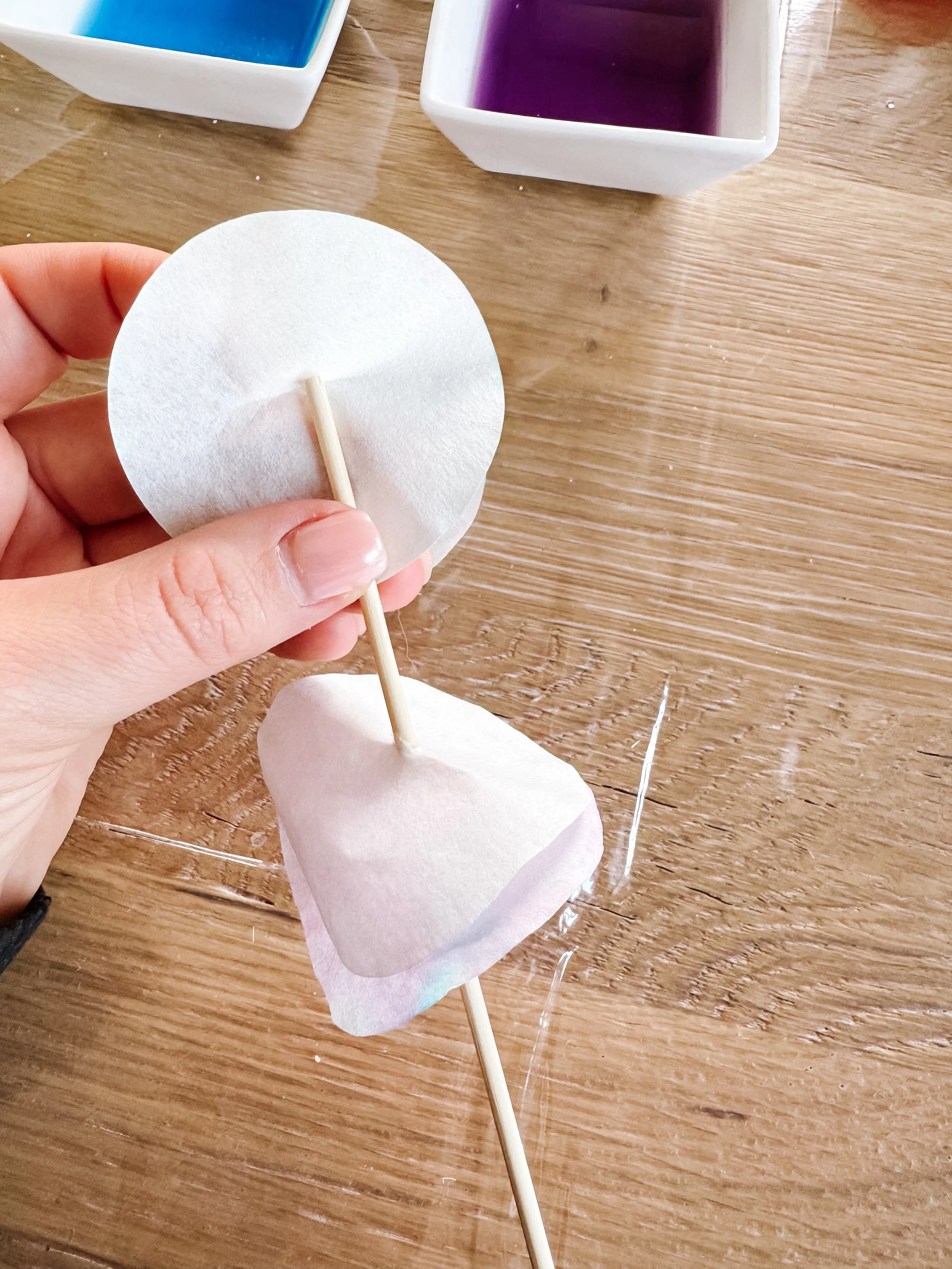
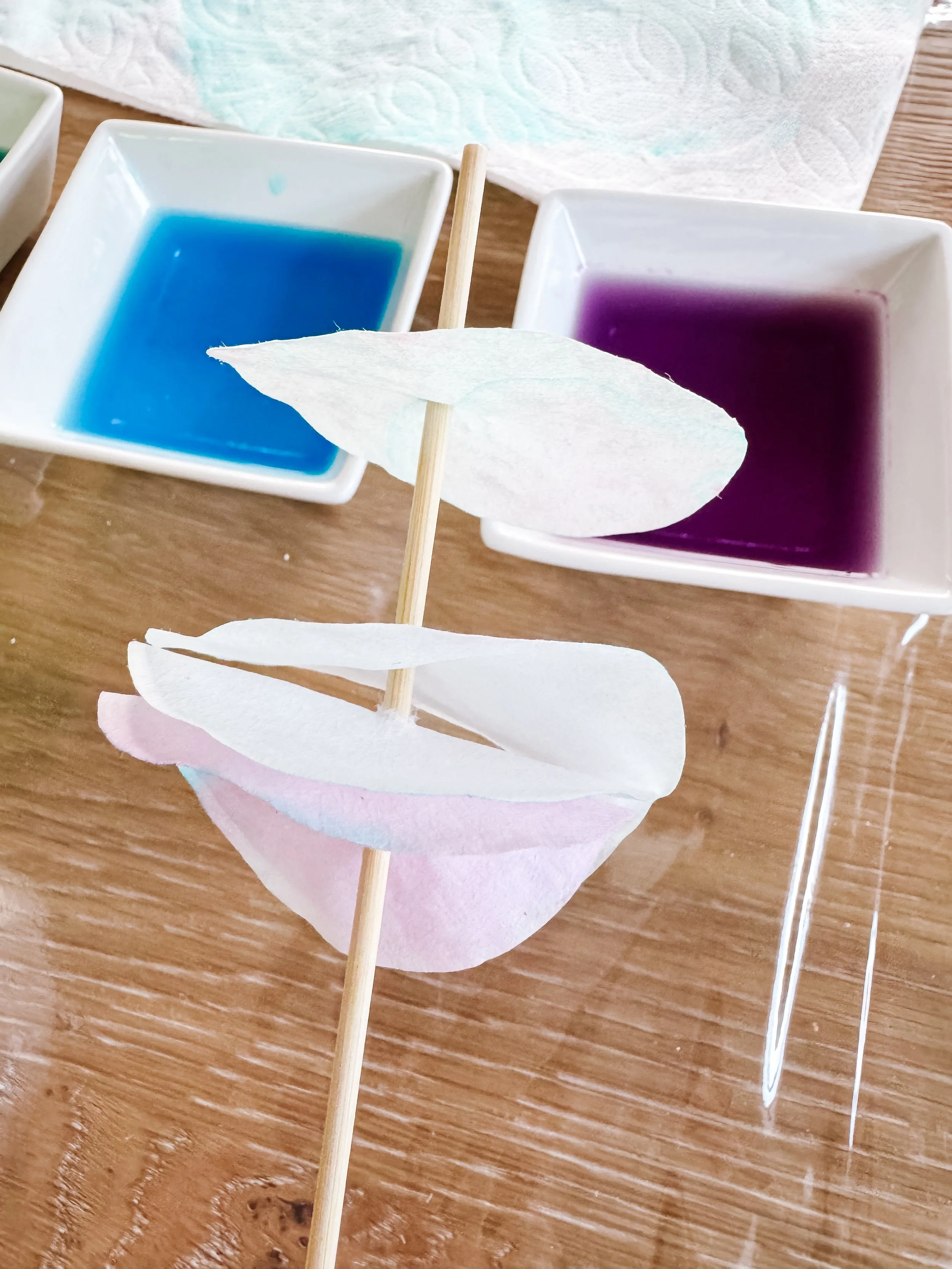
 Adult assembling coffee filter flower on craft stick using hot glue while child helps fold petals in DIY spring craft for toddlers
IMG_3739.jpg
IMG_4005.jpg
IMG_4006.jpg

How to Guide / Step-by-Step Instructions

1. Prepare Your Coffee Filters

Flatten your coffee filters on a tray or paper towels.

2. Color the Filters

There are a few ways to add color — let your child choose:

  • Dipping: Submerge part of the filter in colored water.

  • Dripping: Use a dropper or pipette to drop color on the filter.

  • Spraying: Lightly spray colored water for a soft, watercolor effect.

Tip: Encourage kids to experiment with mixing colors directly on the filter for new shades!

3. Dry Completely

Allow filters to dry fully. Depending on technique, drying can take 30–60 minutes.

4. Assemble Your Flower

  1. Take a craft stick and poke it gently through the center of a dried filter.

  2. Fold the filter petals up around the stick, shaping the bloom as you go.

  3. Secure each fold with a dab of hot glue (adult should handle this step).

5. Repeat for Additional Flowers

Mix and match colors, sizes, and techniques to create a vibrant bouquet!


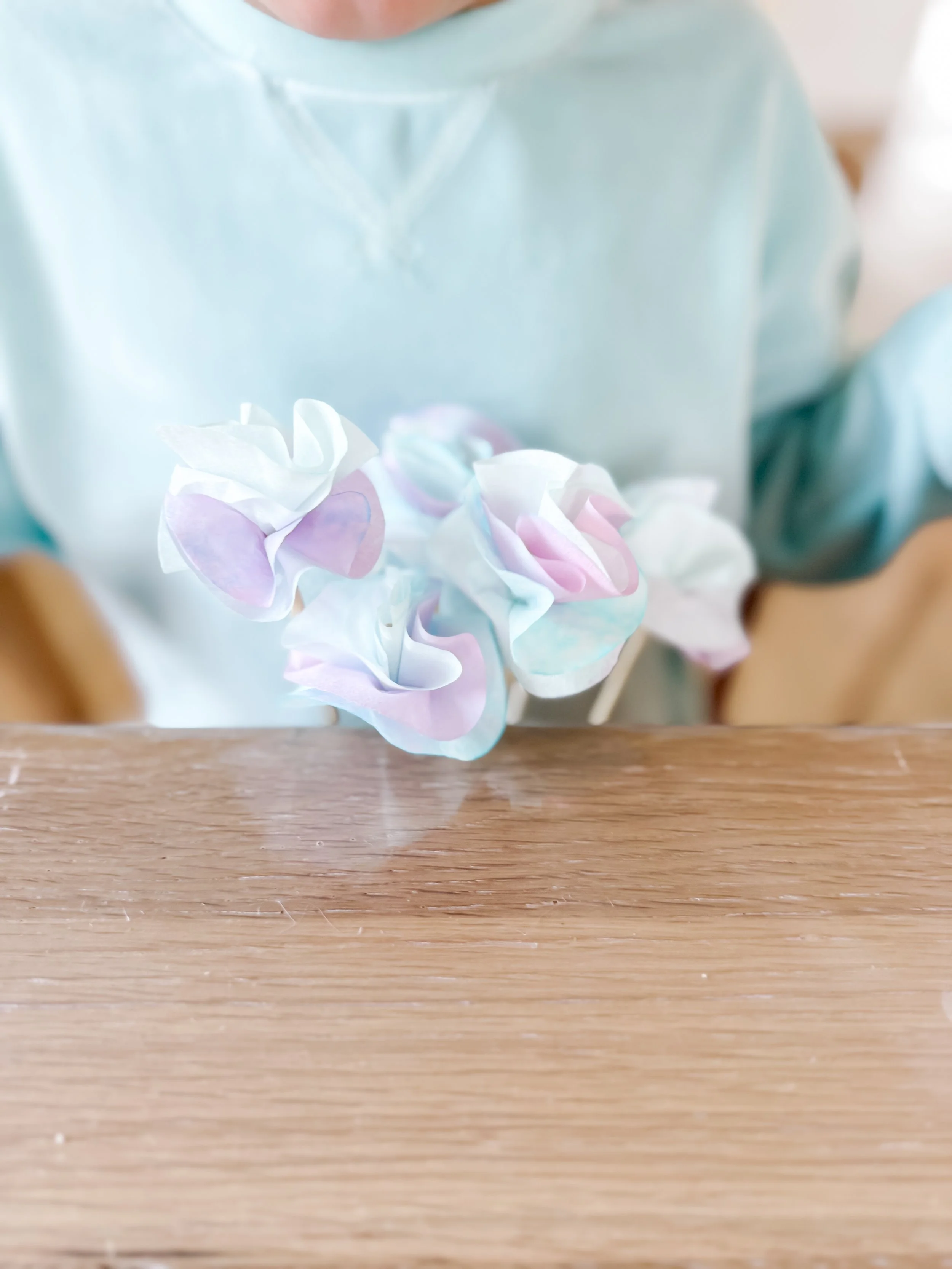
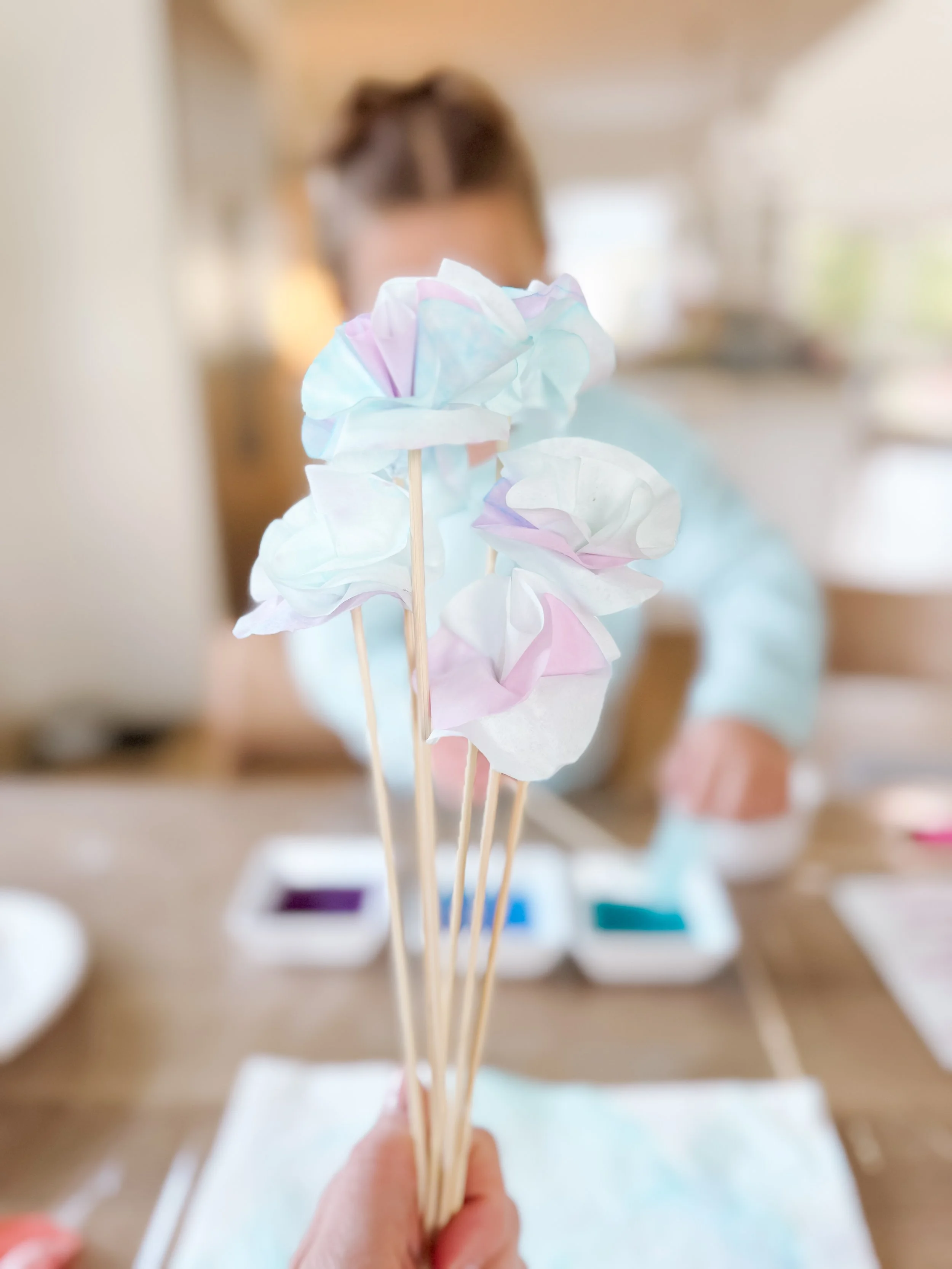
 Finished coffee filter paper flowers bouquet in pastel rainbow colors made by toddlers, perfect for sensory play and homeschool Spring Week activities.
 Toddler observing and arranging colorful coffee filter paper flowers, exploring color mixing, fine motor skills, and hands-on learning
 Coffee filter paper flowers craft featured in GoodnightFox Homeschool Curriculum Spring Week, combining art, science, and sensory play for toddlers

Homeschool Curriculum Integration – Spring / Nature Week

This craft is featured in Spring / Nature Week of the GoodnightFox Homeschool Curriculum. On the day dedicated to Flower Exploration, children:

  • Investigate color mixing using the coffee filter dye techniques

  • Observe patterns in nature, like petals and symmetry

  • Strengthen fine motor skills by folding and assembling the flowers

  • Practice descriptive language while talking about colors, textures, and shapes

It’s an easy way to combine hands-on creativity with educational objectives, all in one playful activity.

Explore the Homeschool Curriculum

Opportunities to Make the Craft a Learning Moment

Parents can weave learning into play by asking questions and encouraging observation:

  • “What happens when red and yellow mix?”

  • “Can you count the number of petals you’ve folded?”

  • “What do you notice about the shape of a flower?”

  • “Which colors do you see blending together?”

These prompts promote color recognition, math skills, vocabulary, and scientific observation while keeping the activity light and playful.


Vocabulary Words to Weave In

Introduce these words while crafting for an educational boost:

  • Petal

  • Stem

  • Bloom

  • Fold

  • Color

  • Mix / Blend

  • Spray / Drip / Dip

  • Symmetry

  • Soft

  • Vibrant


More Flower Crafts to Try

If your toddler loved this coffee filter flower craft, they’ll enjoy these other paper-based activities:

  • Rainbow Popsicle Stick Craft

  • Cloud Color-Matching Activity

  • Paper Plate Rainbow Flowers

  • Dyed Chickpeas Sensory Art

Each activity is designed to strengthen fine motor skills, sensory exploration, and color recognition, and pairs beautifully with the GoodnightFox Homeschool Curriculum.


Shop and Resource Suggestions for Flower & Spring Fun

Bring more themed fun into your home with:

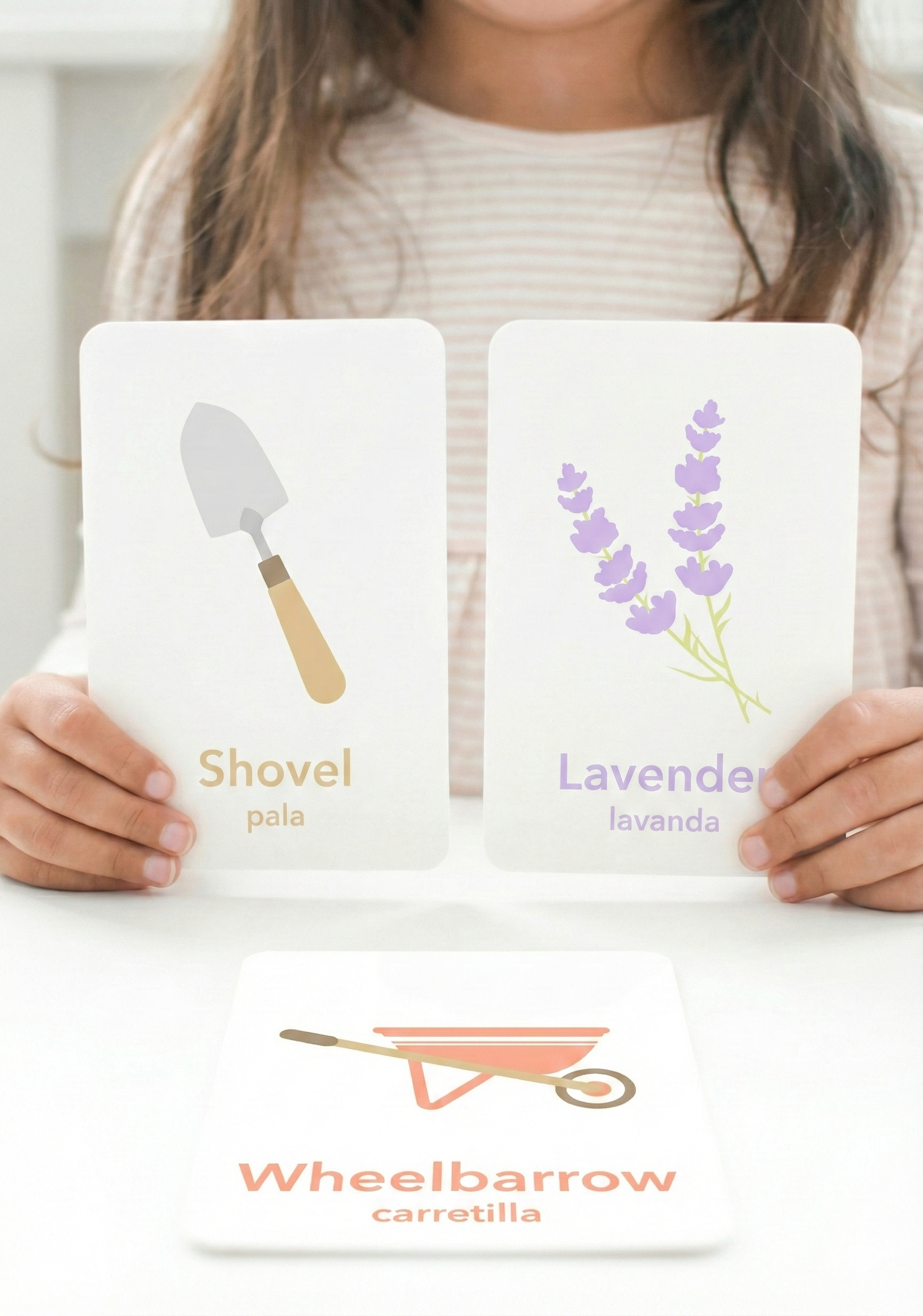
Garden Flashcards
Garden Flashcards
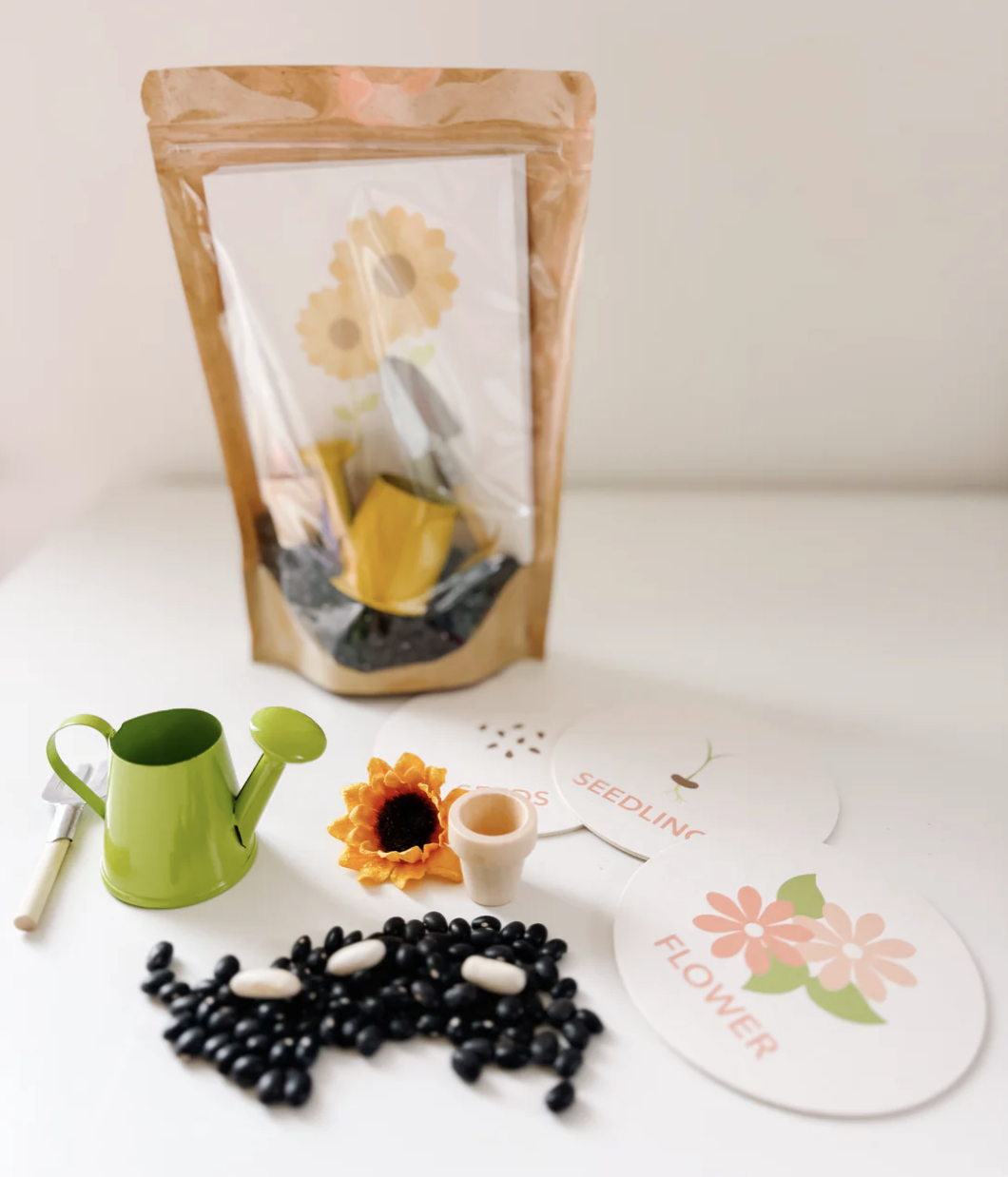
Flower Sensory Kit
Flower Sensory Kit
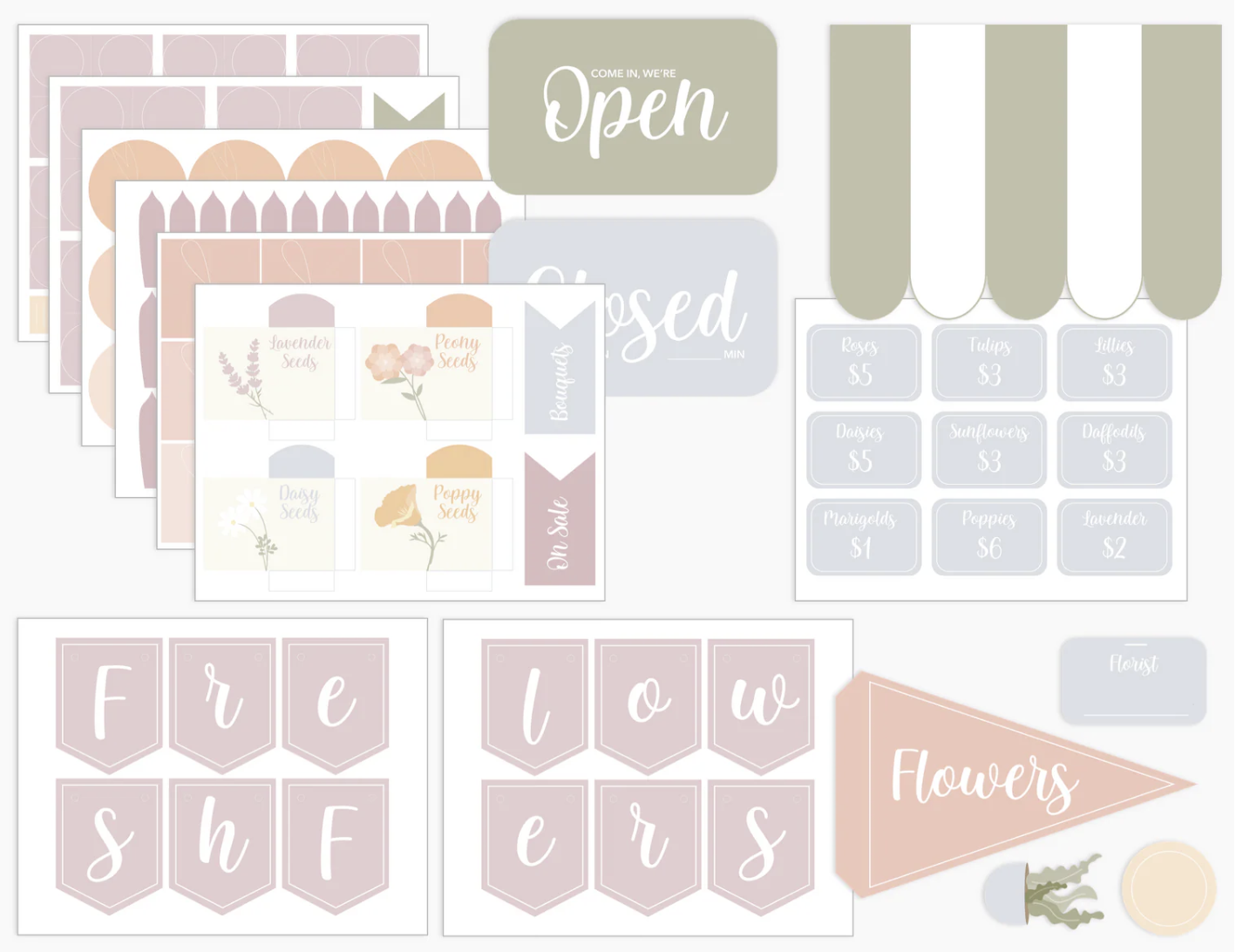
Flower Shop Dramatic Play
Lifecycle of a Flower

Tags Coffee filter paper flowers, Rainbow paper craft for preschoolers, Toddler craft with food coloring, DIY flower craft for kids, Toddler sensory play at home, Homeschool craft activities, Toddler-friendly craft ideas, Color mixing activities for preschoolers, Spring sensory play ideas, Hands-on art projects for toddlers
Comment

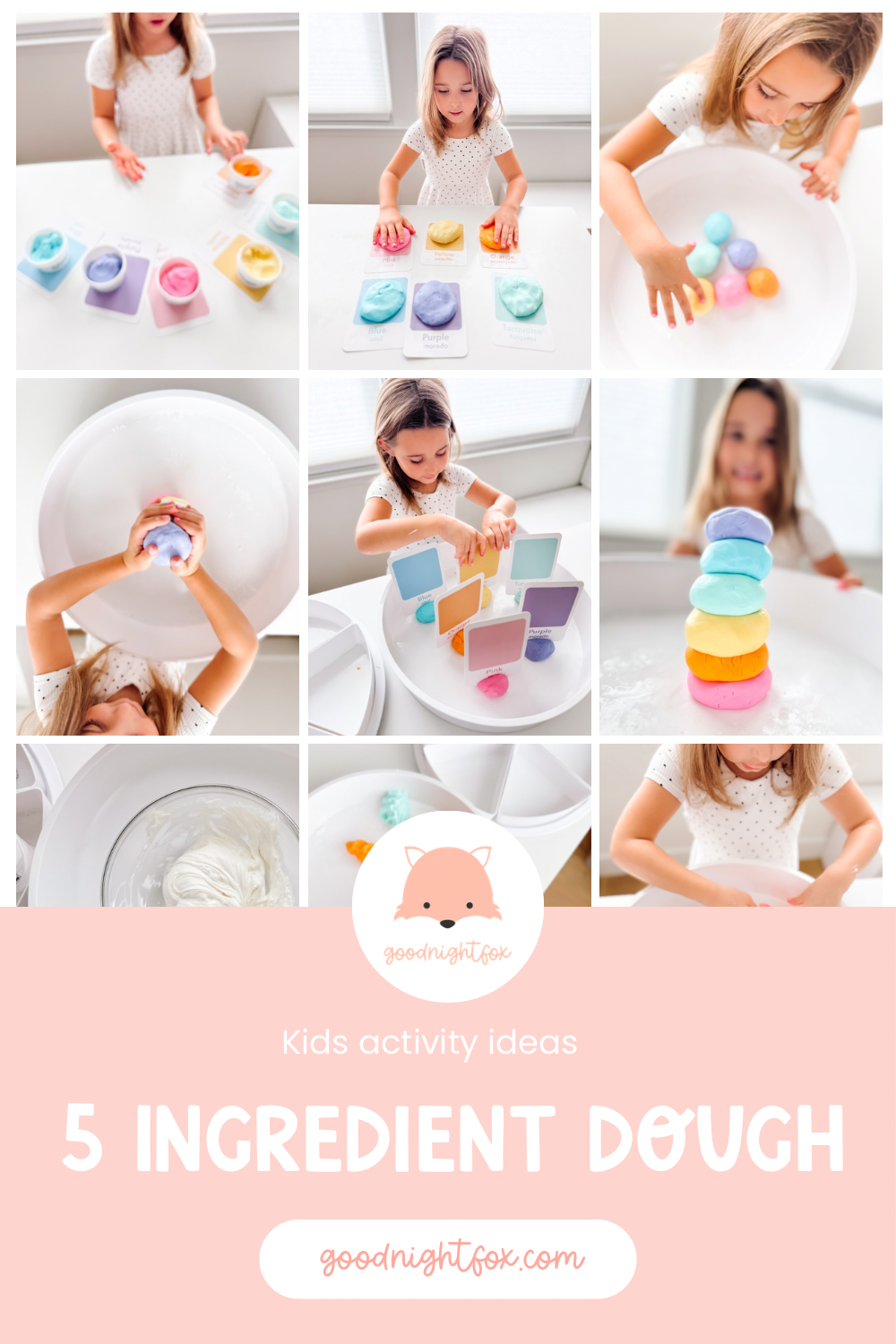
Fluffy Marshmallow Rainbow Doh (Taste-Safe!)

December 6, 2025 Kylie Tuosto
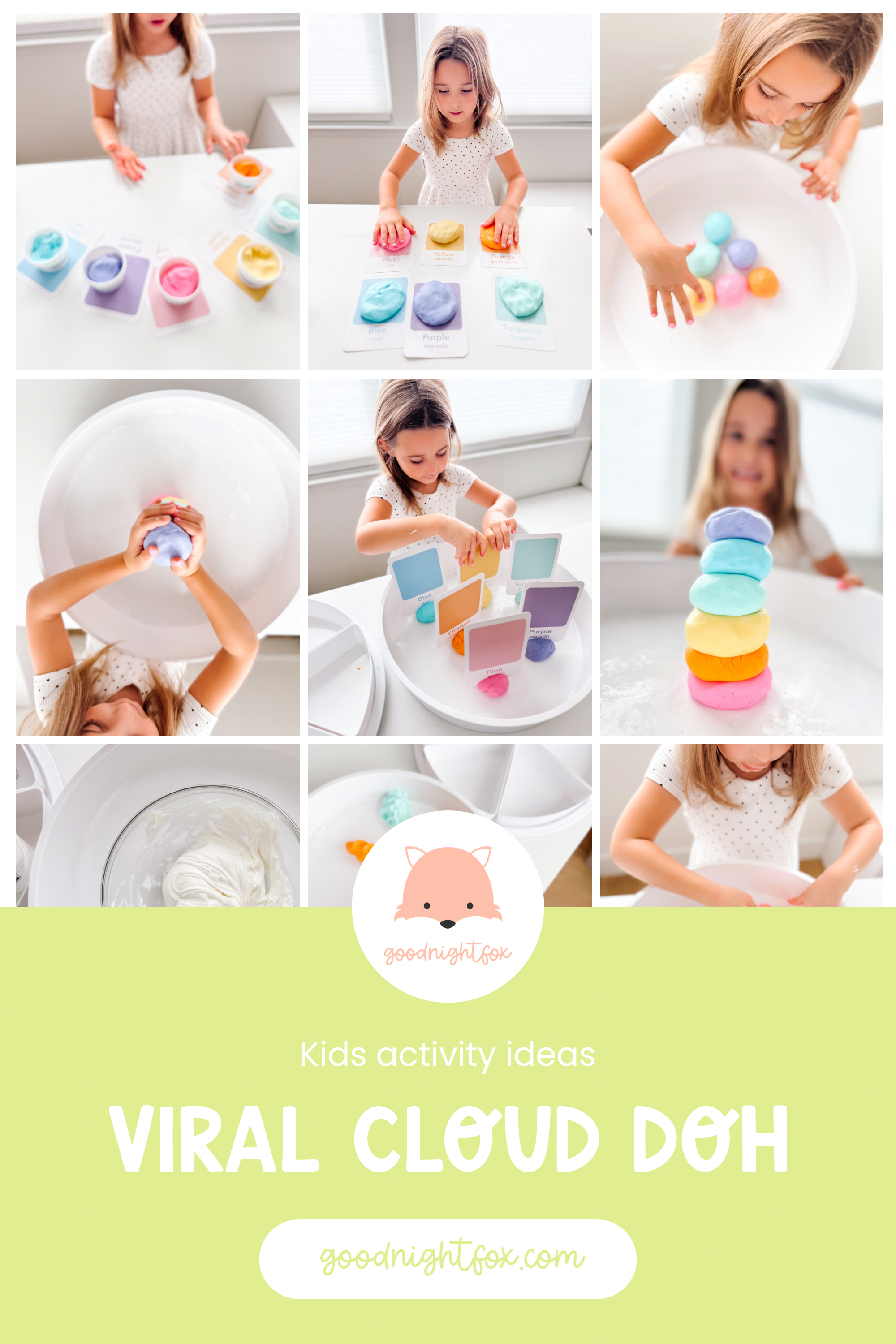
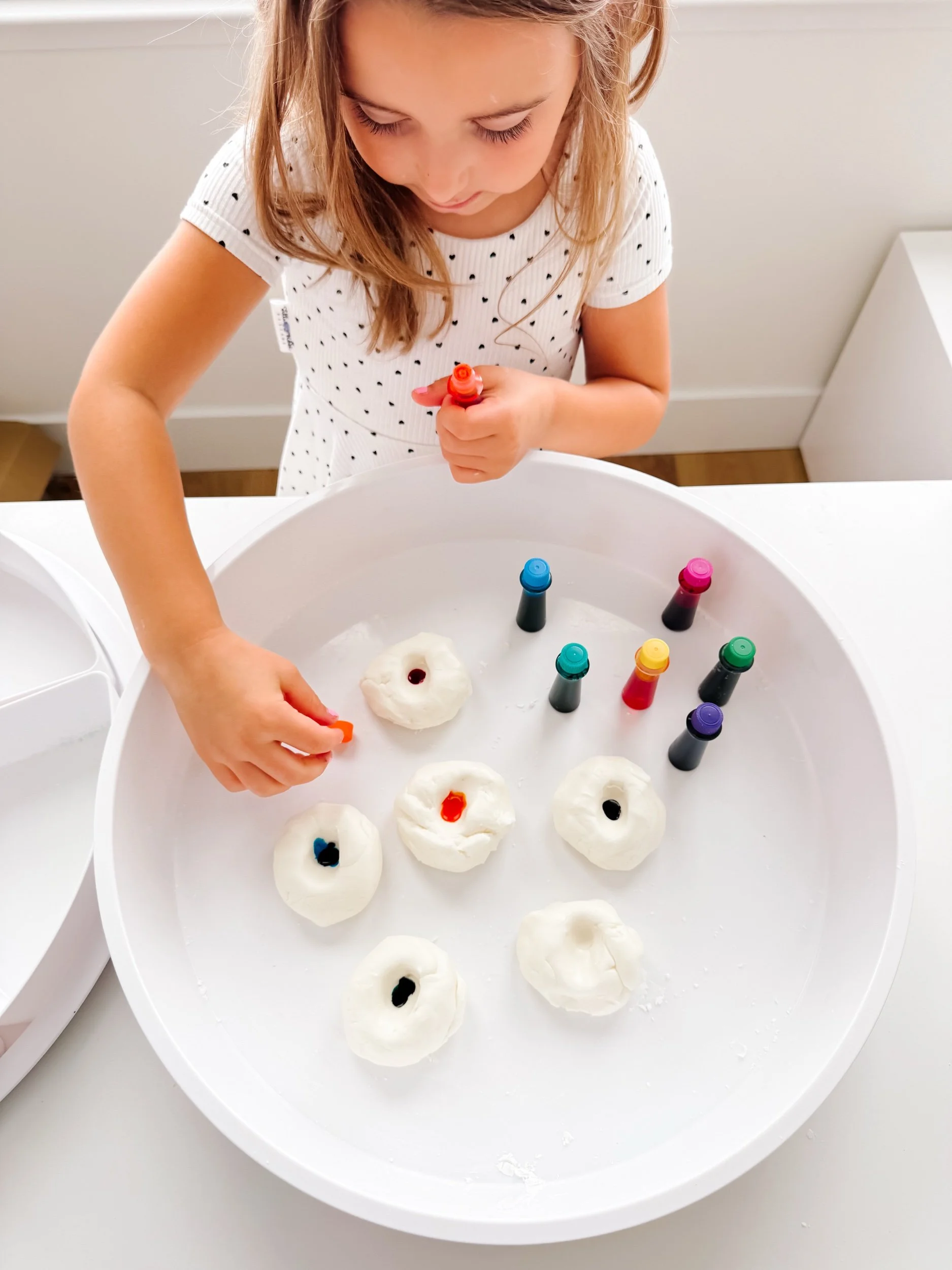
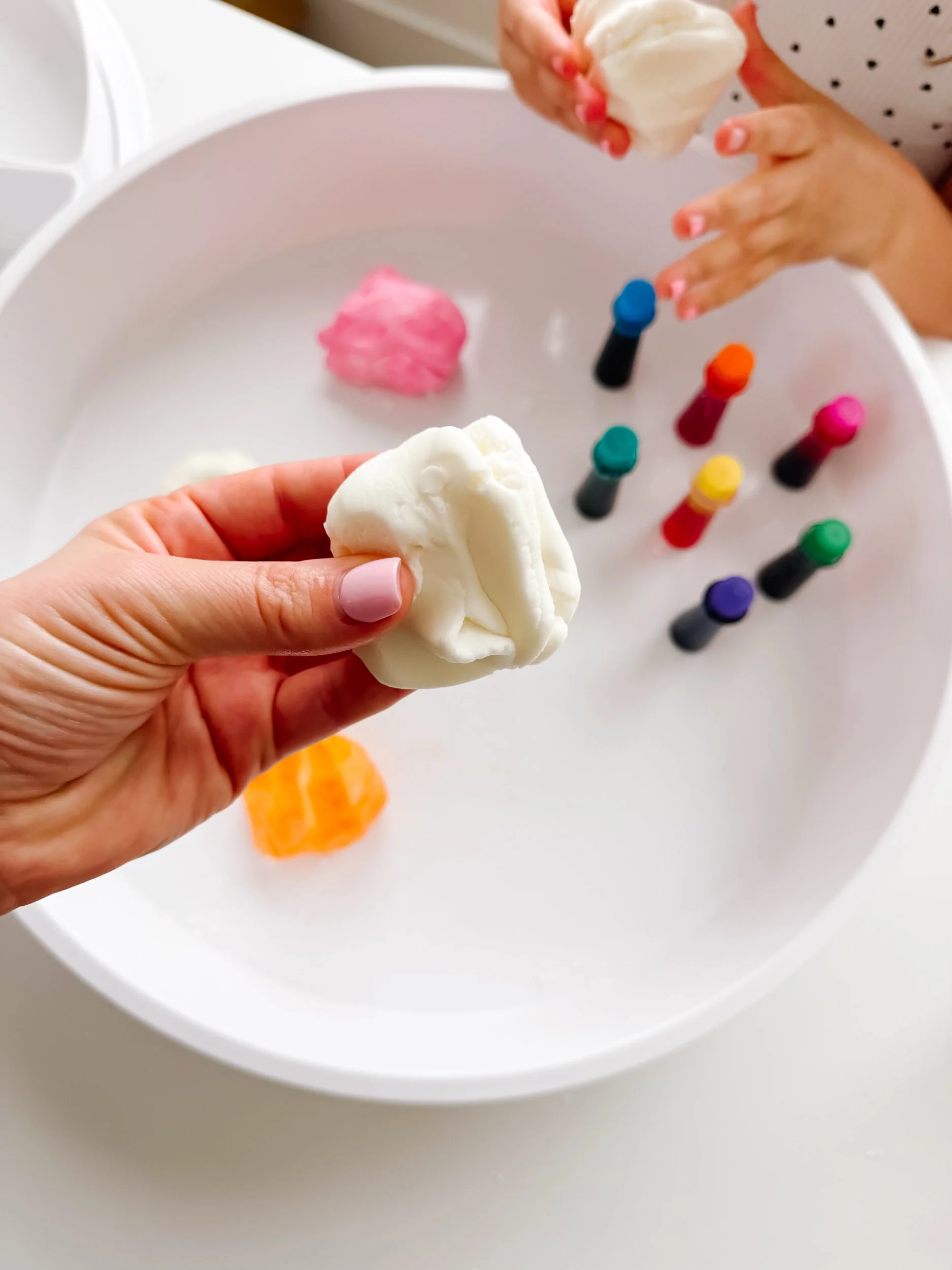
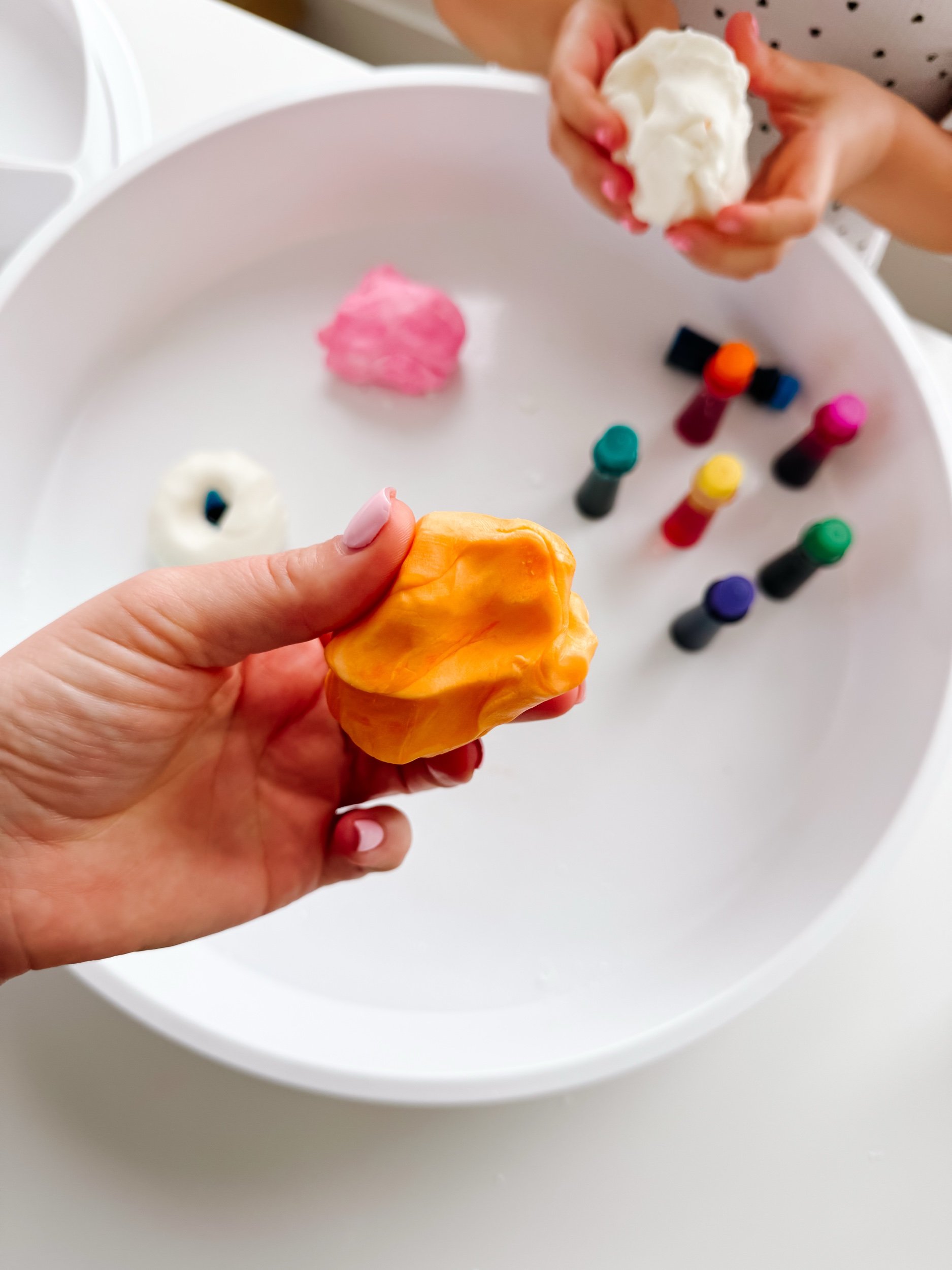
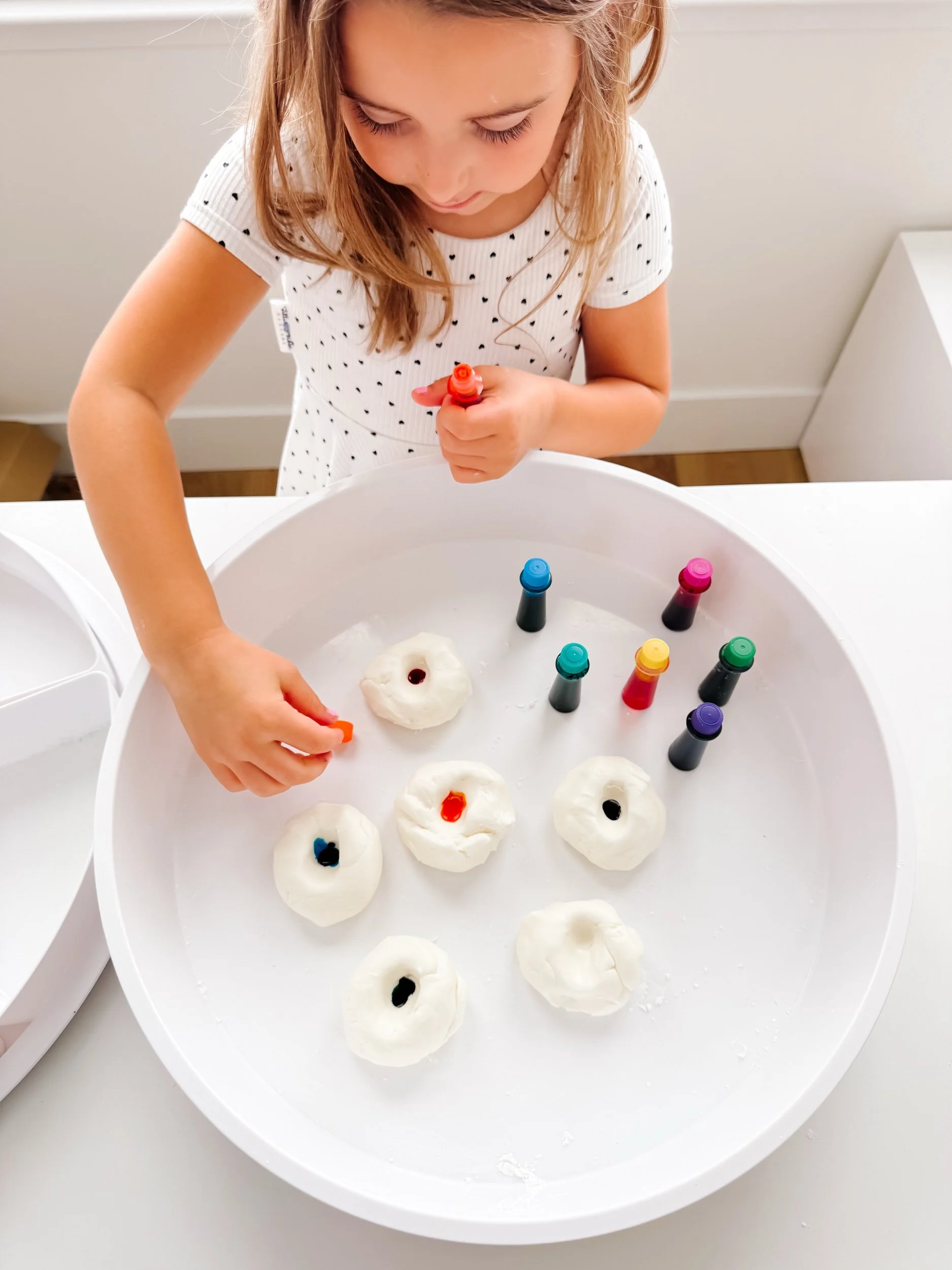
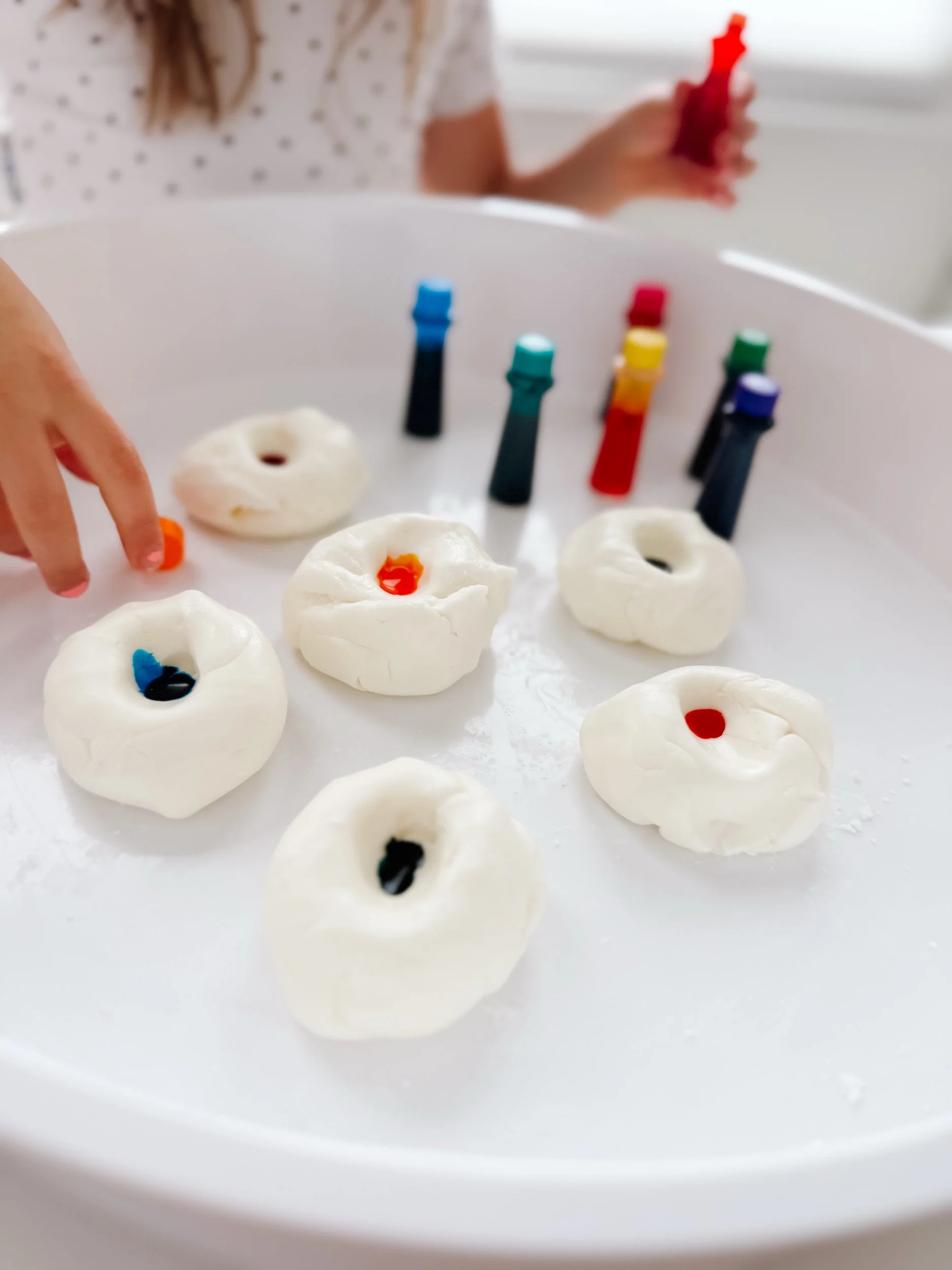
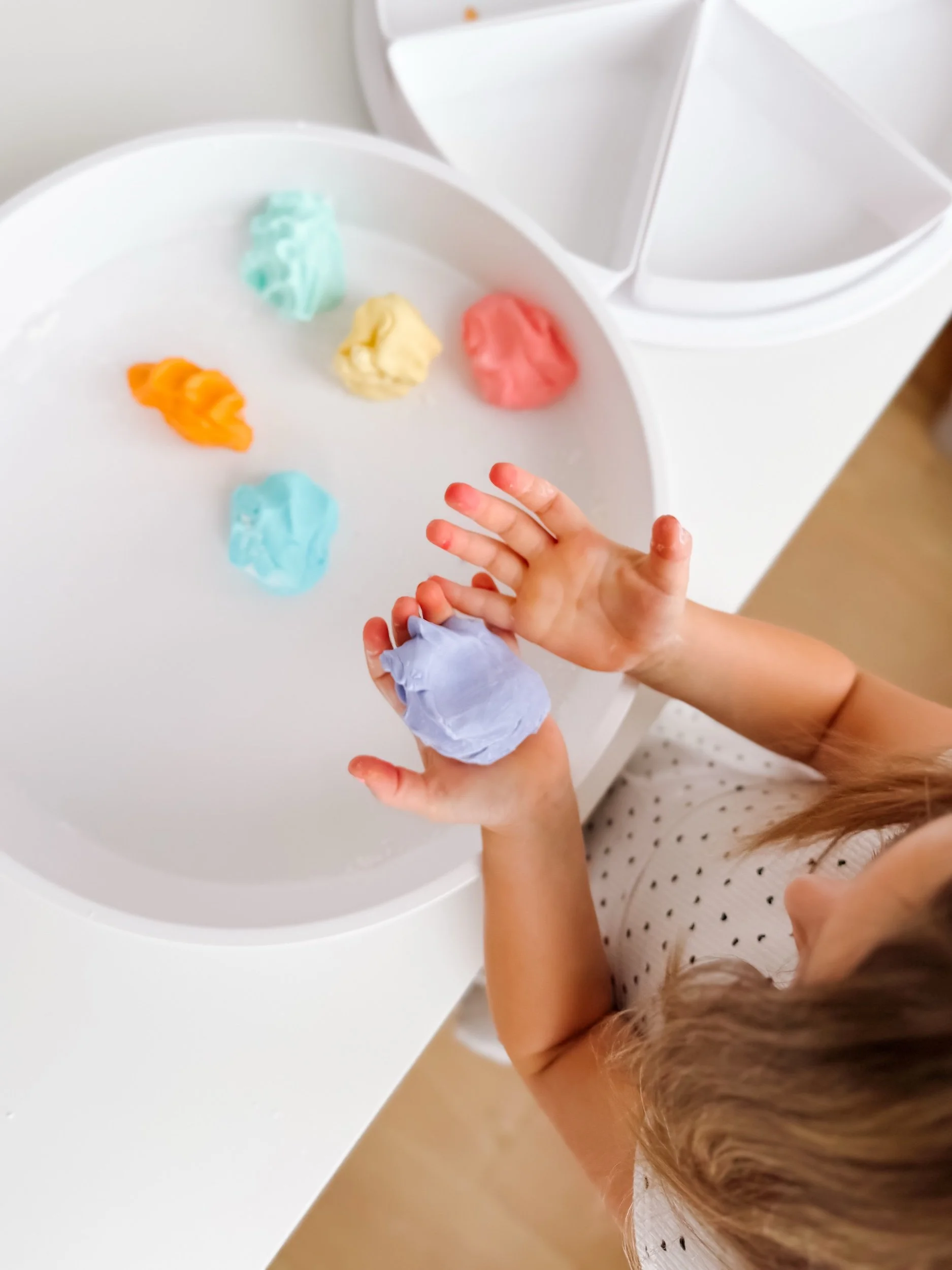
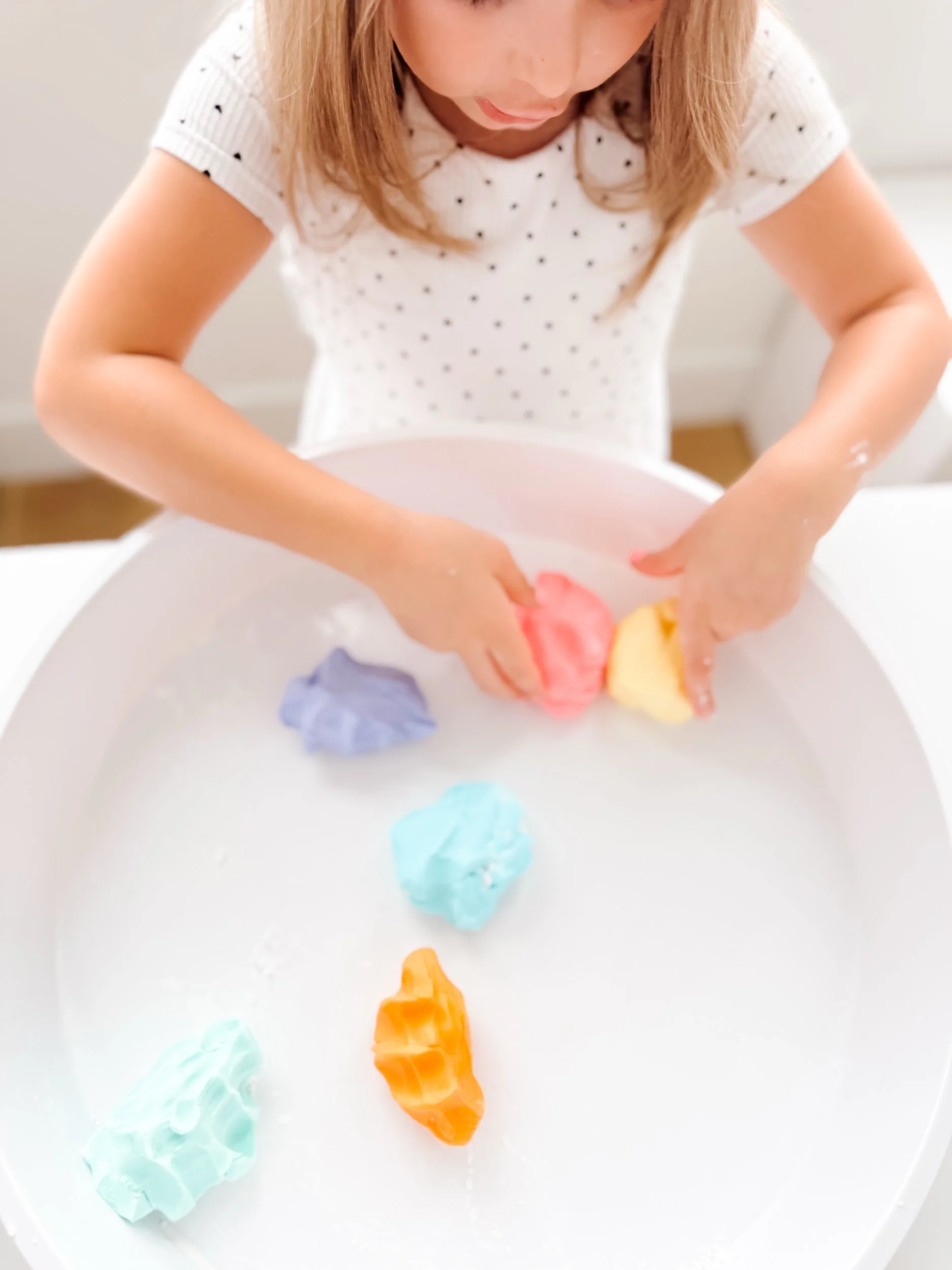
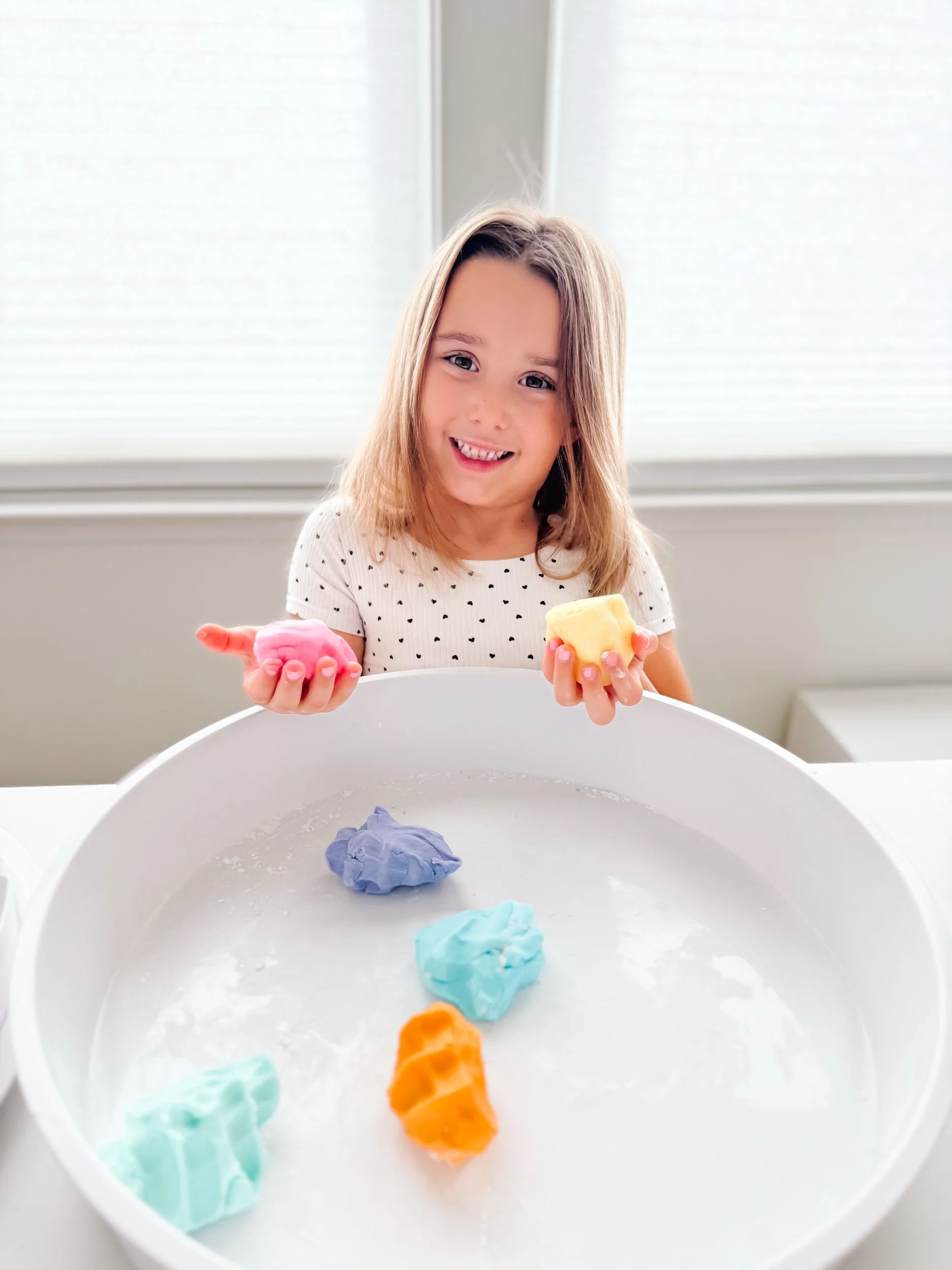
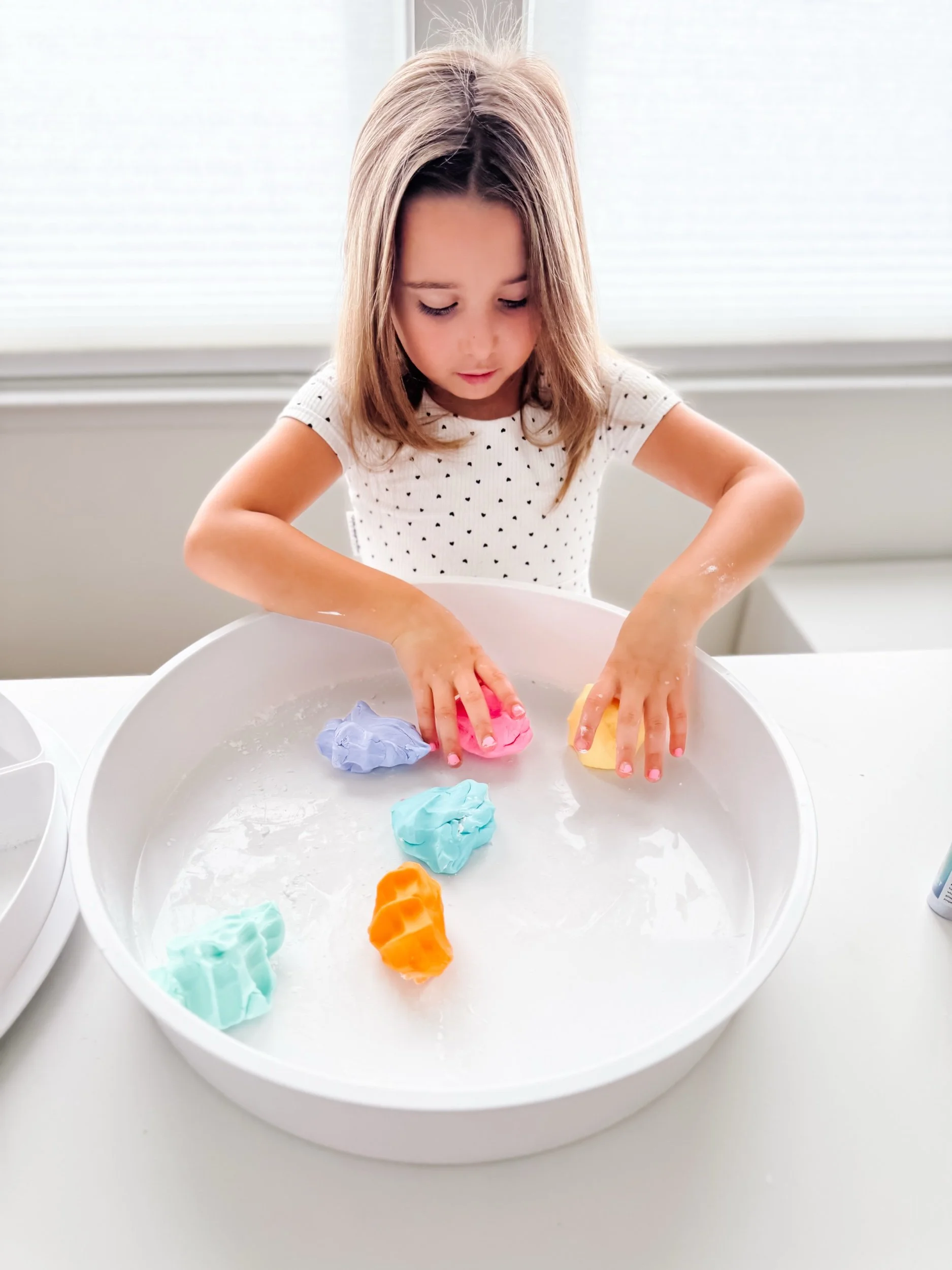
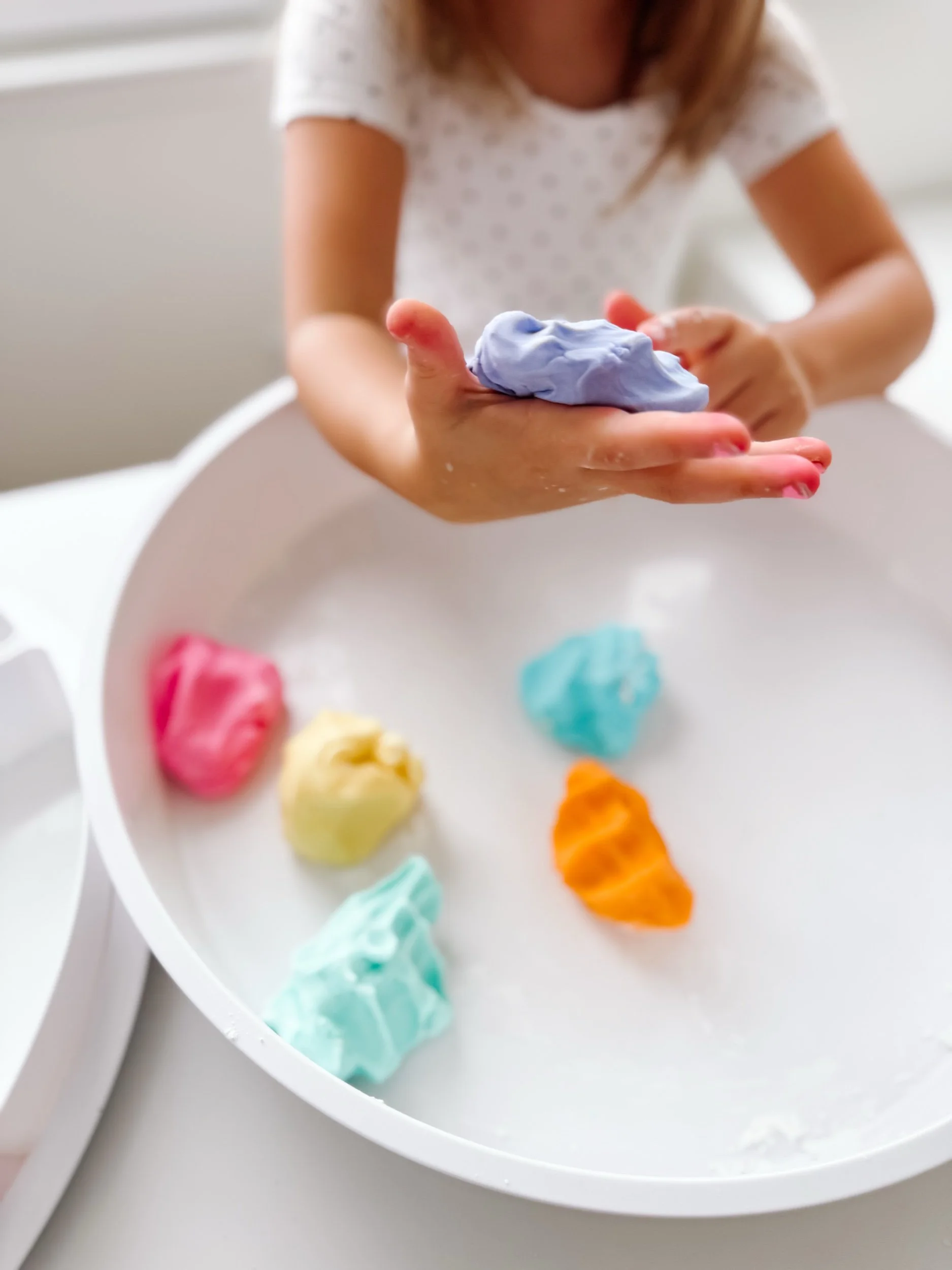
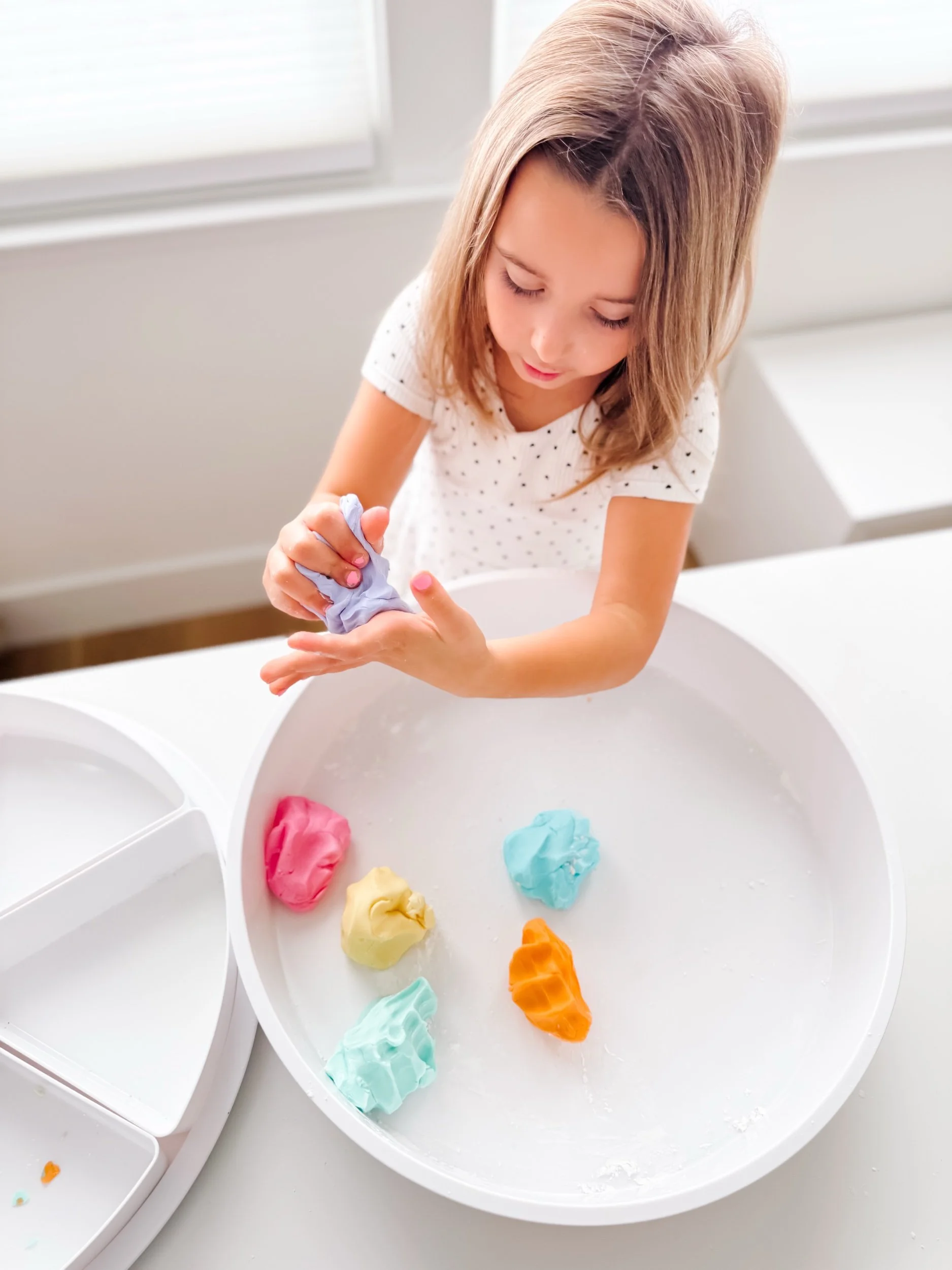
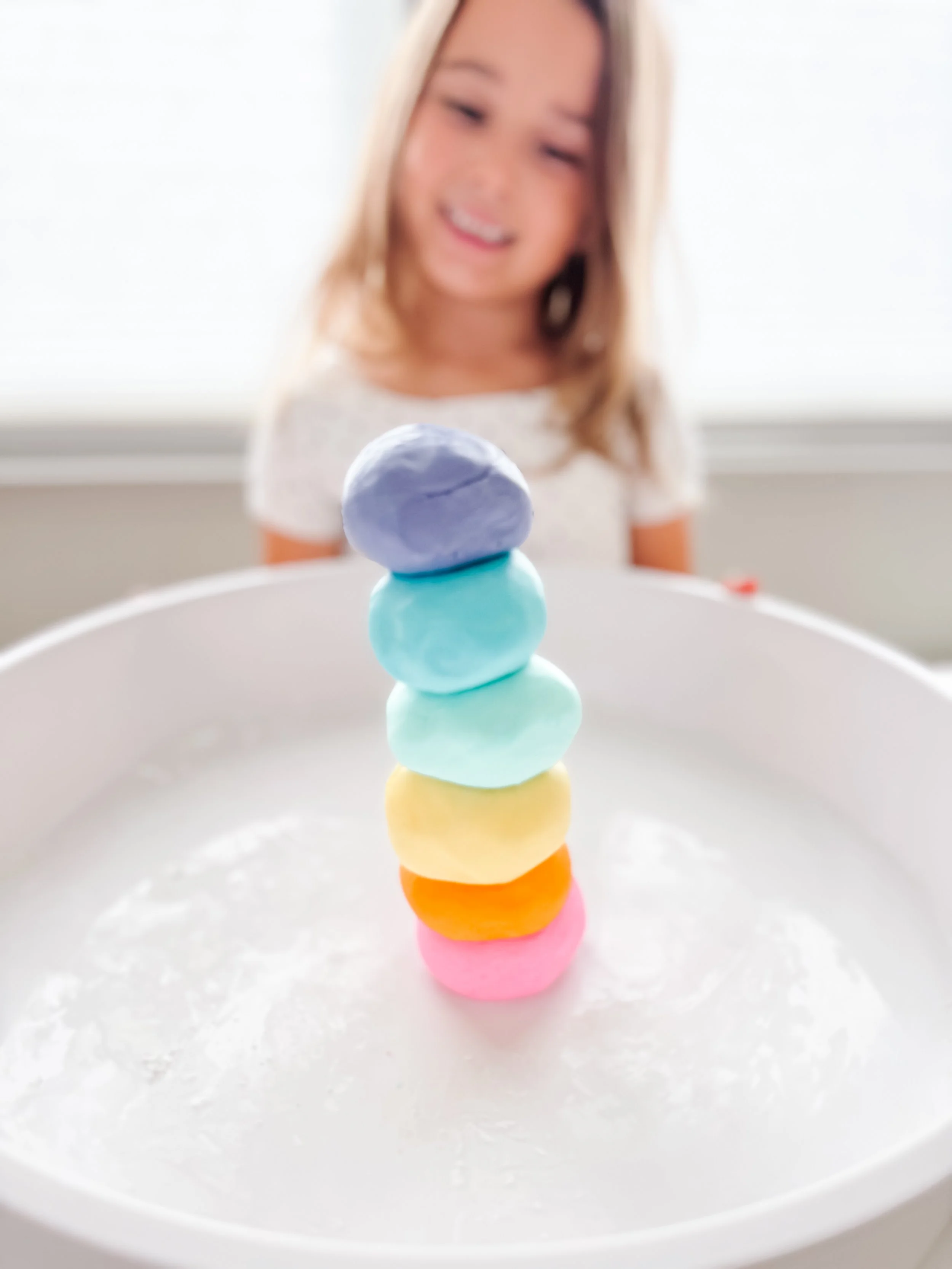
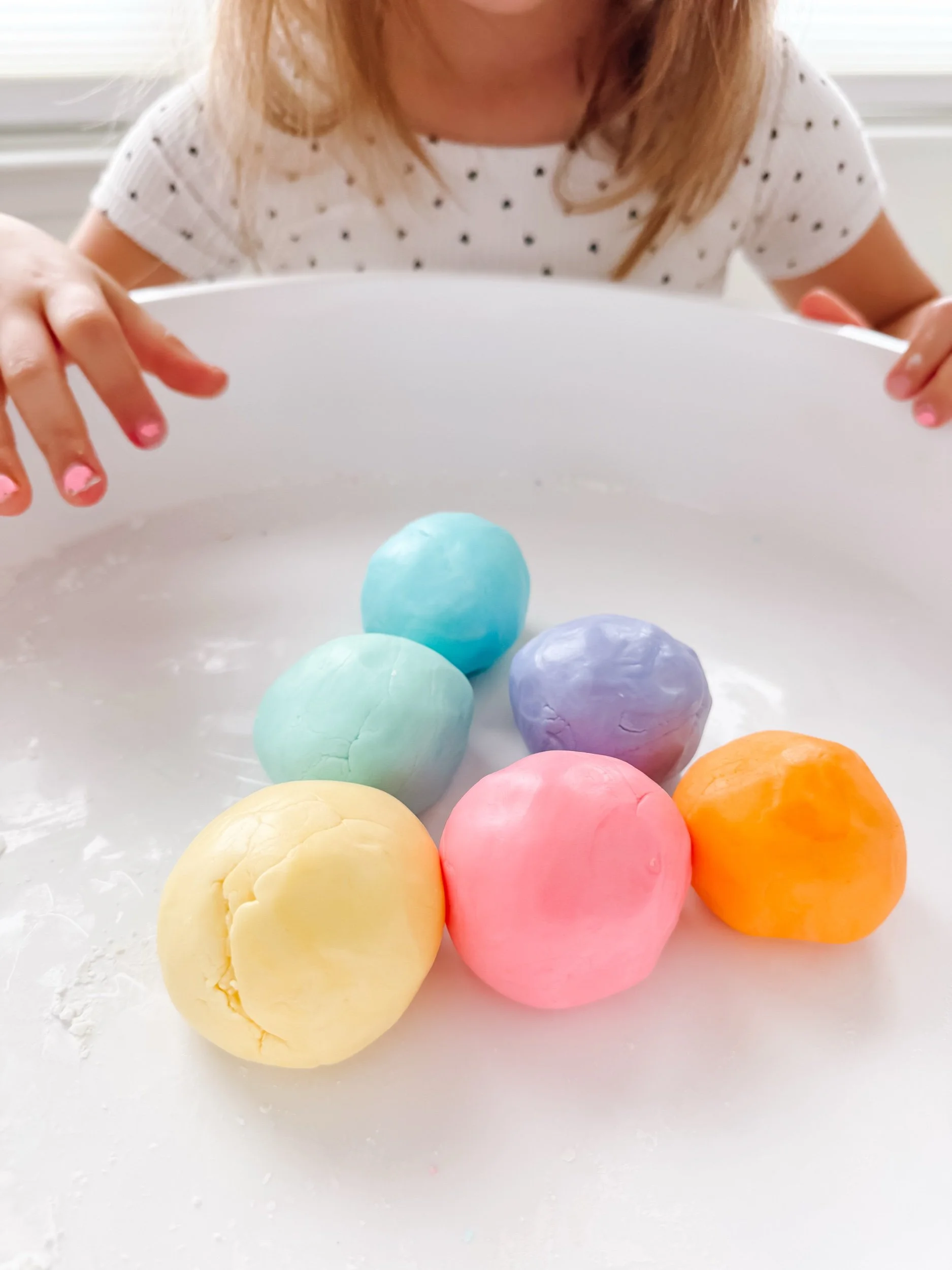
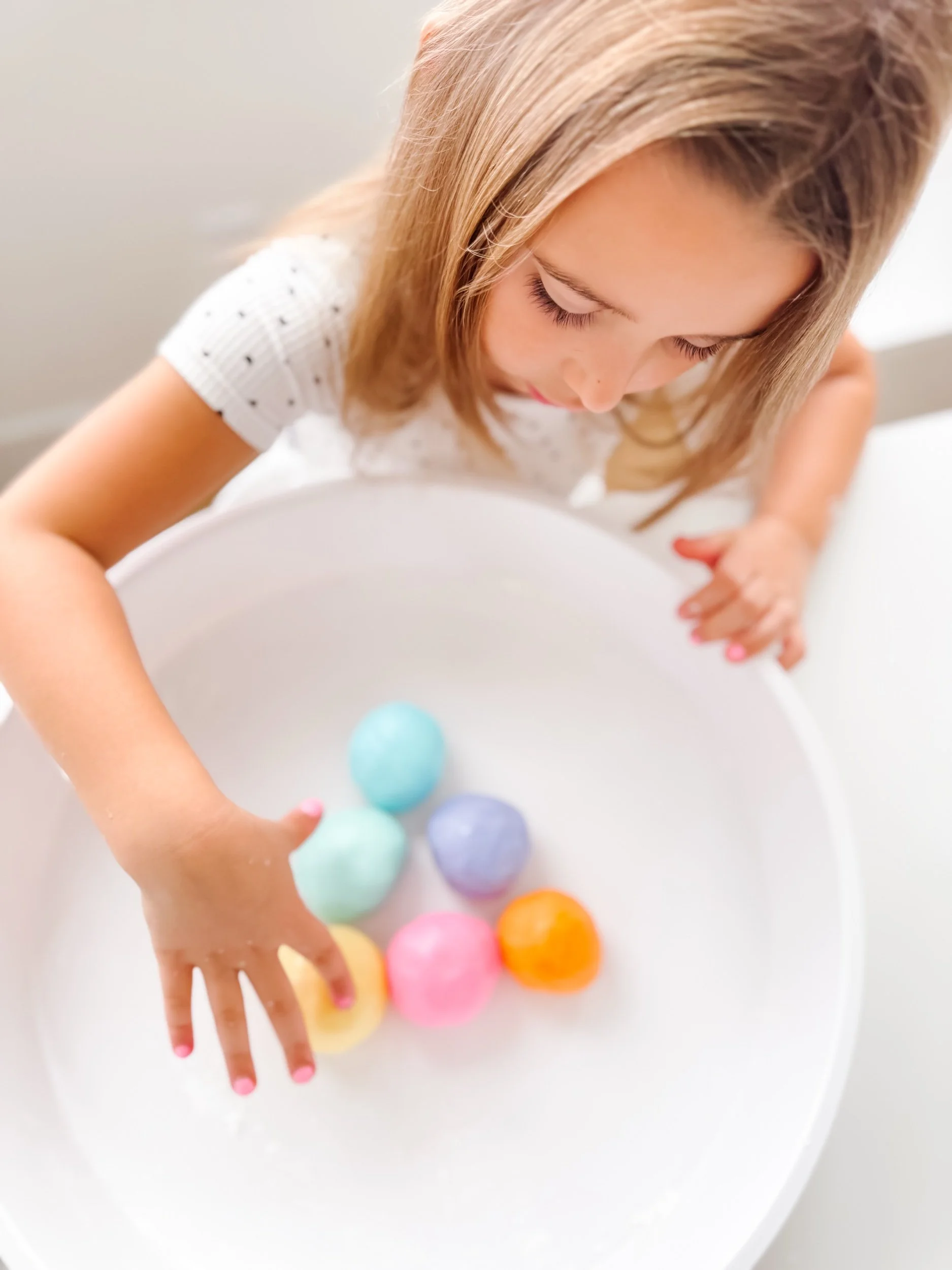
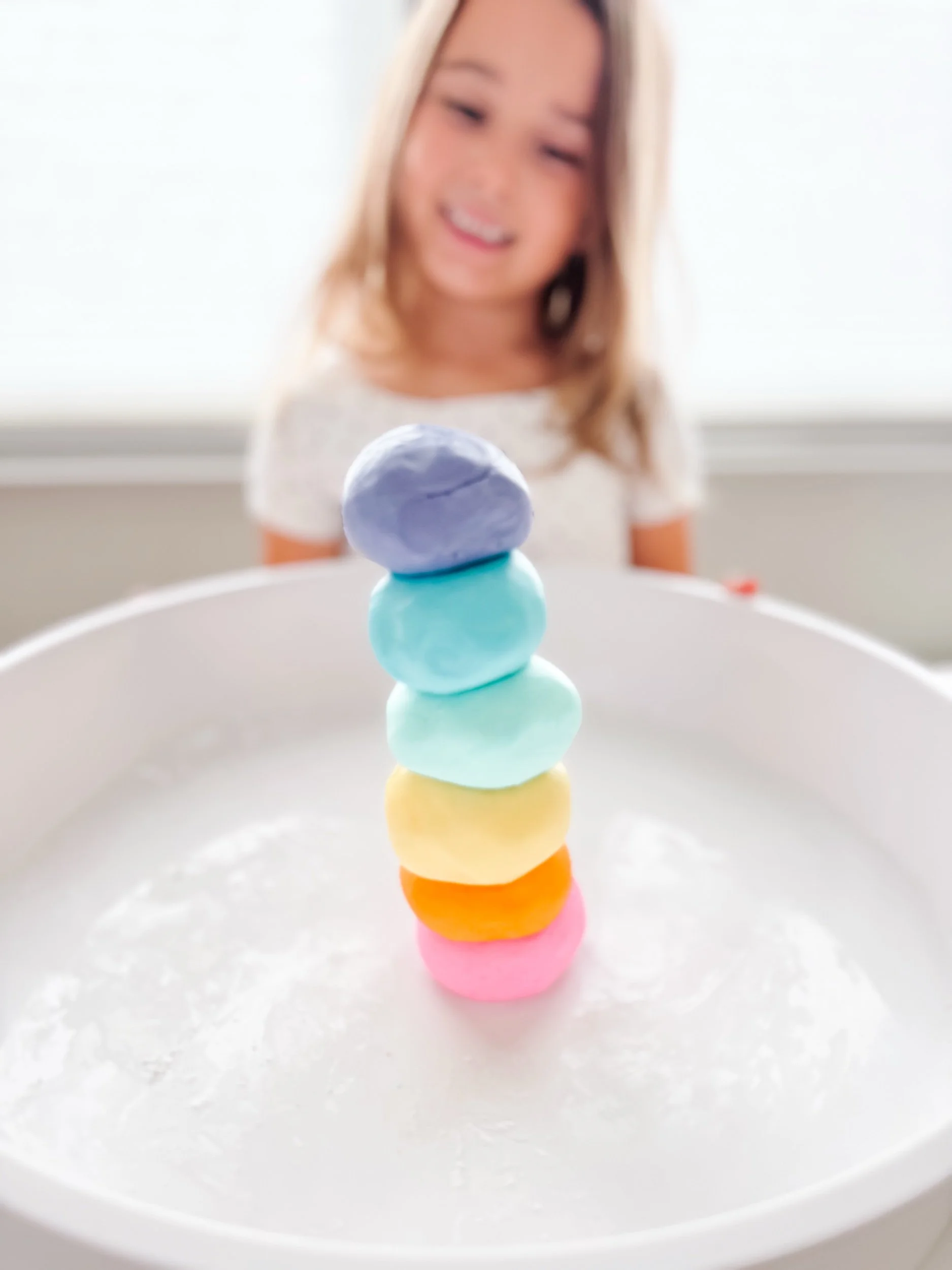
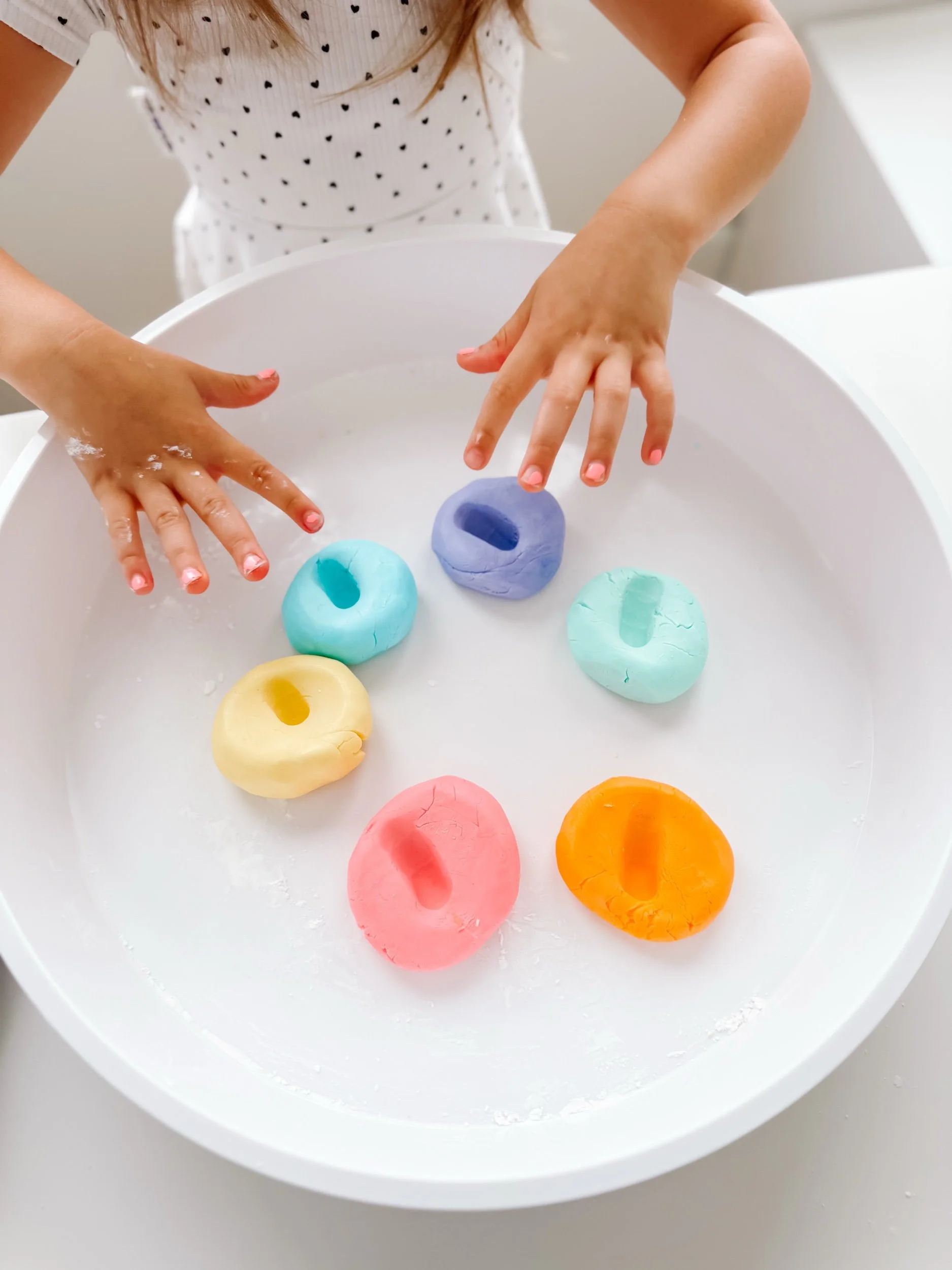
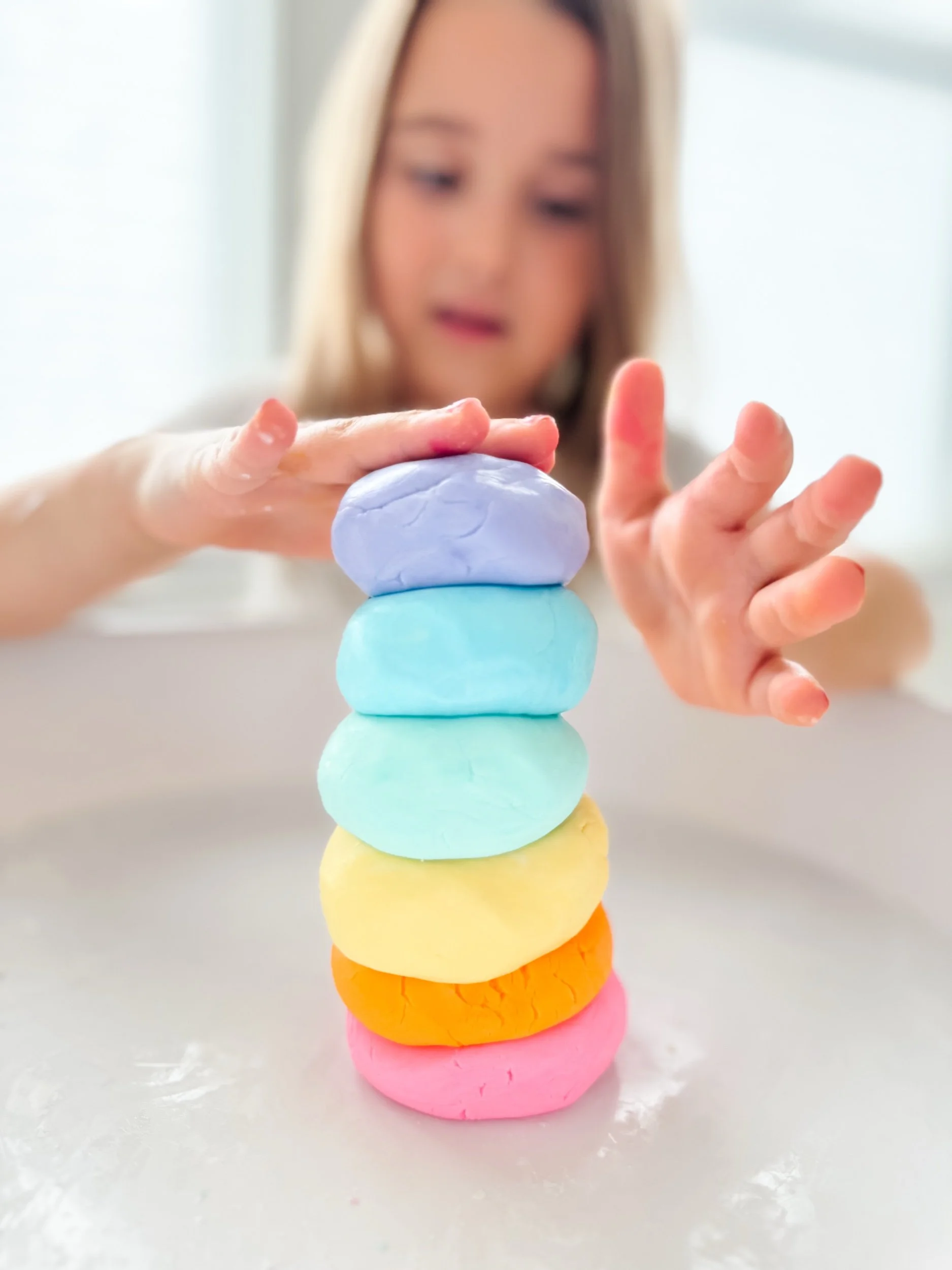
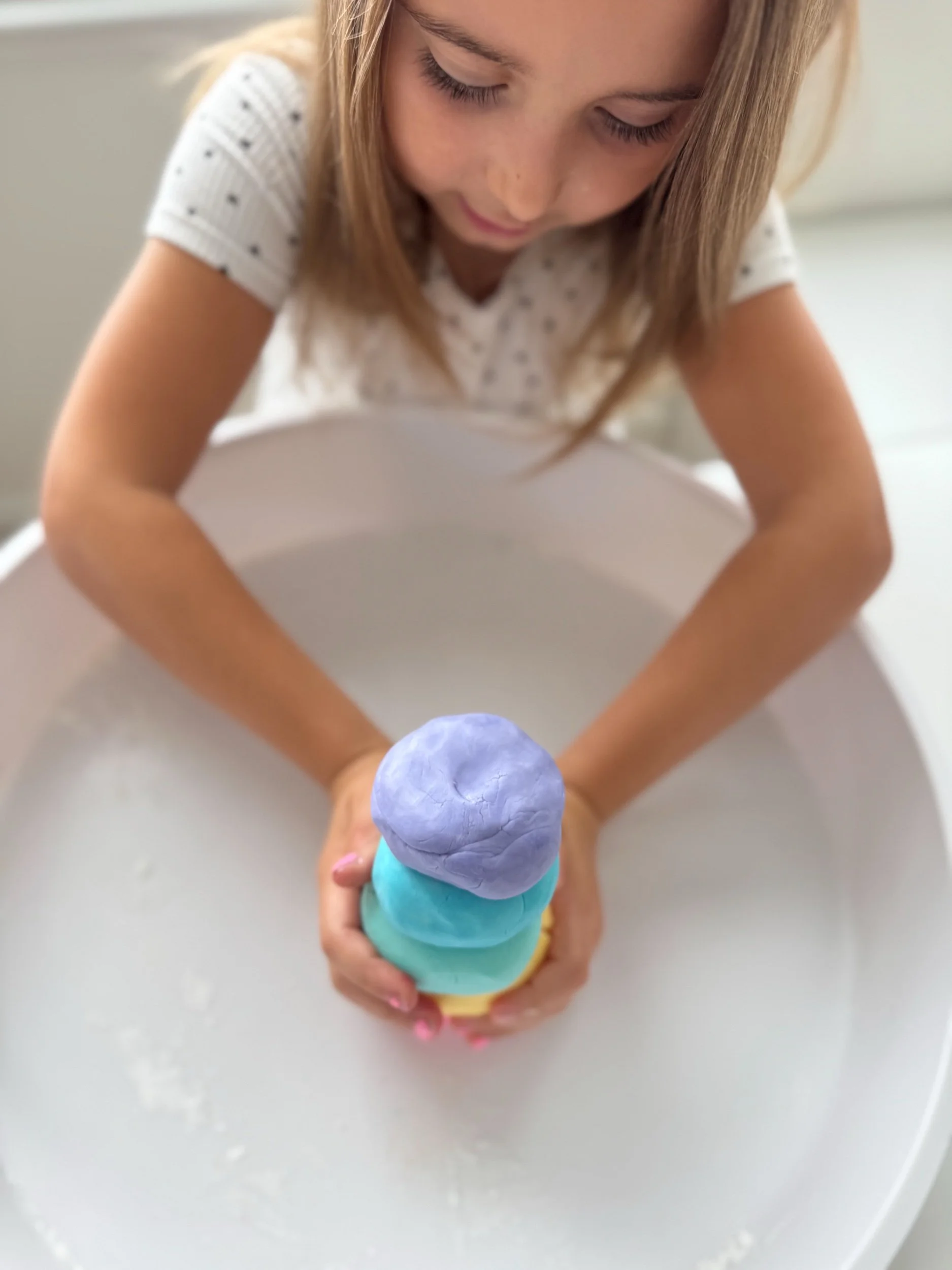
Pastel rainbow cloud marshmallow fluff play dough taste safe for toddlers

Fluffy Marshmallow Rainbow Doh (Taste-Safe!)

If you’re looking for a magical sensory activity that toddlers instantly fall in love with, this Fluffy Marshmallow Rainbow Doh is the perfect choice. It’s soft, stretchy, pastel-pretty, and has a unique marshmallow-puff texture that feels like squishing tiny clouds. Kids adore it, and parents love how easy it is to make at home.

This taste-safe sensory doh uses simple pantry ingredients and creates the perfect invitation to play — especially for rainbow-loving preschoolers and toddlers who enjoy soft textures, color play, and hands-on sensory exploration.

And the best part? This activity ties beautifully into Weather Week inside my Homeschool Curriculum & Planner, making it not just fun but a meaningful learning experience too.

Let’s get into the recipe!

IMG_1209.jpeg
IMG_1206_jpg.jpeg
IMG_1228.jpeg

Ingredients

To make your fluffy marshmallow doh, you'll need:

  • 1 cup marshmallows (mini or regular)

  • 2–3 tablespoons cooking oil (vegetable or coconut)

  • ½–1 cup cornstarch (add gradually)

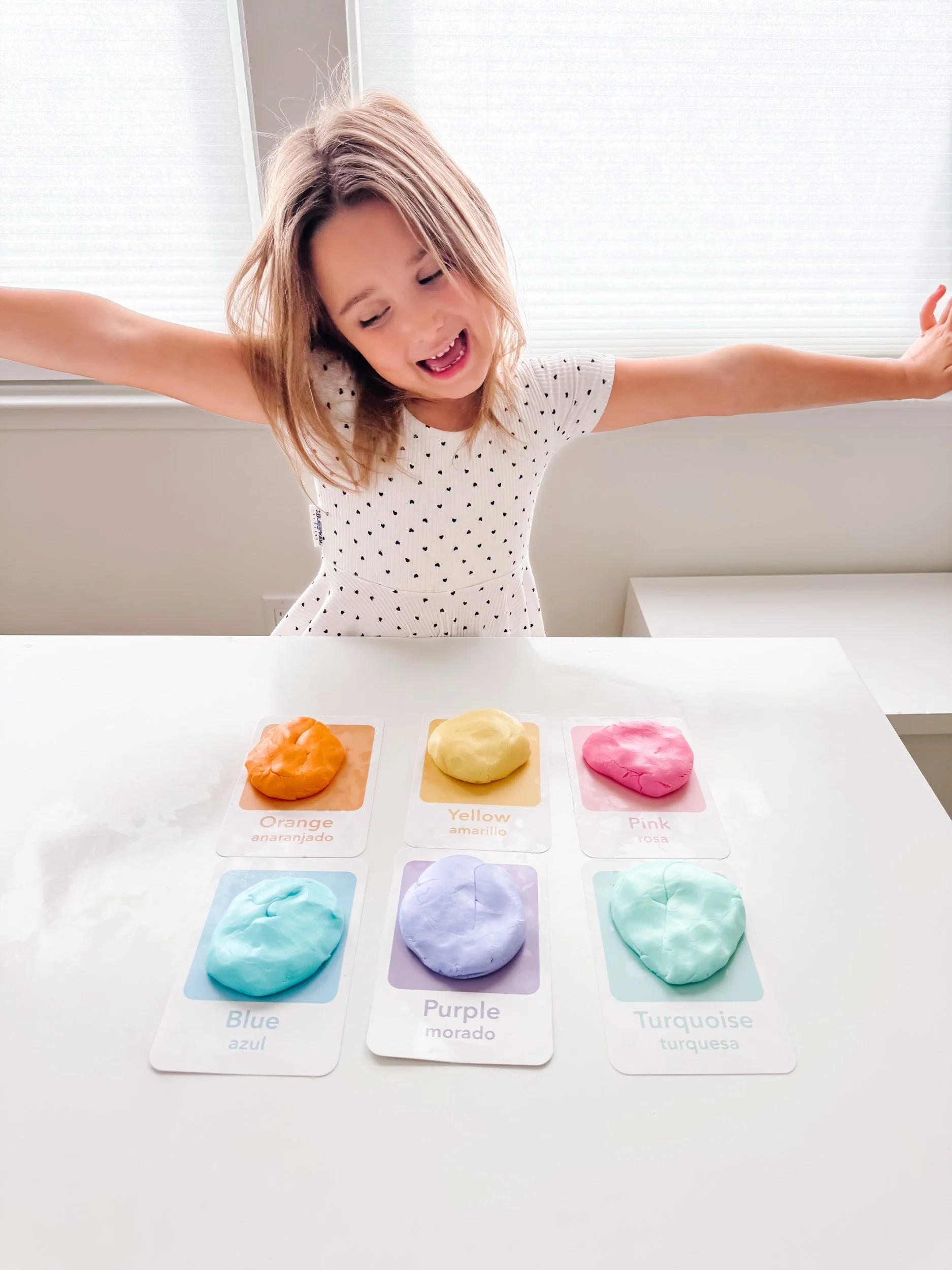
  • Food coloring (I used pastel rainbow tones — pink, peach, yellow, mint, blue, lavender)

  • Microwave-safe bowl

  • Spoon or spatula

  • Extra cornstarch for kneading


IMG_1235.jpeg
IMG_1236.jpeg
IMG_1228.jpeg
IMG_1232_jpg.jpeg
IMG_1226.jpeg
IMG_1227_jpg.jpeg
IMG_1230_jpg.jpeg

Step-by-Step Instructions

1. Melt Your Marshmallows

Add 1 cup of marshmallows and 1–2 tablespoons of oil to a microwave-safe bowl.
Microwave for 20–30 seconds until soft and melty. Stir until smooth.

2. Add Color

Add a drop or two of food coloring to the warm marshmallow mixture.
Stir until fully combined. (Tip: For pastel shades, use the tiniest amount of color!)

3. Add Cornstarch

Start with ½ cup of cornstarch and fold it into the mixture.
Keep adding small amounts until the dough becomes soft, stretchy, and slightly bouncy, but no longer sticky.

4. Knead With Hands

Dust your hands with cornstarch and knead the dough for about 30 seconds.
This step is where the magic happens — the texture transforms into a fluffy, marshmallow cloud.

5. Repeat for Each Color

If you're making a full pastel rainbow, repeat steps 1–4 with a new bowl or rinse between colors.


IMG_1255_jpg.jpeg
IMG_1273_jpg.jpeg
IMG_1269_jpg.jpeg
IMG_1271_jpg.jpeg
IMG_1246_jpg.jpeg
IMG_1251_jpg.jpeg

⭐ Why this version works

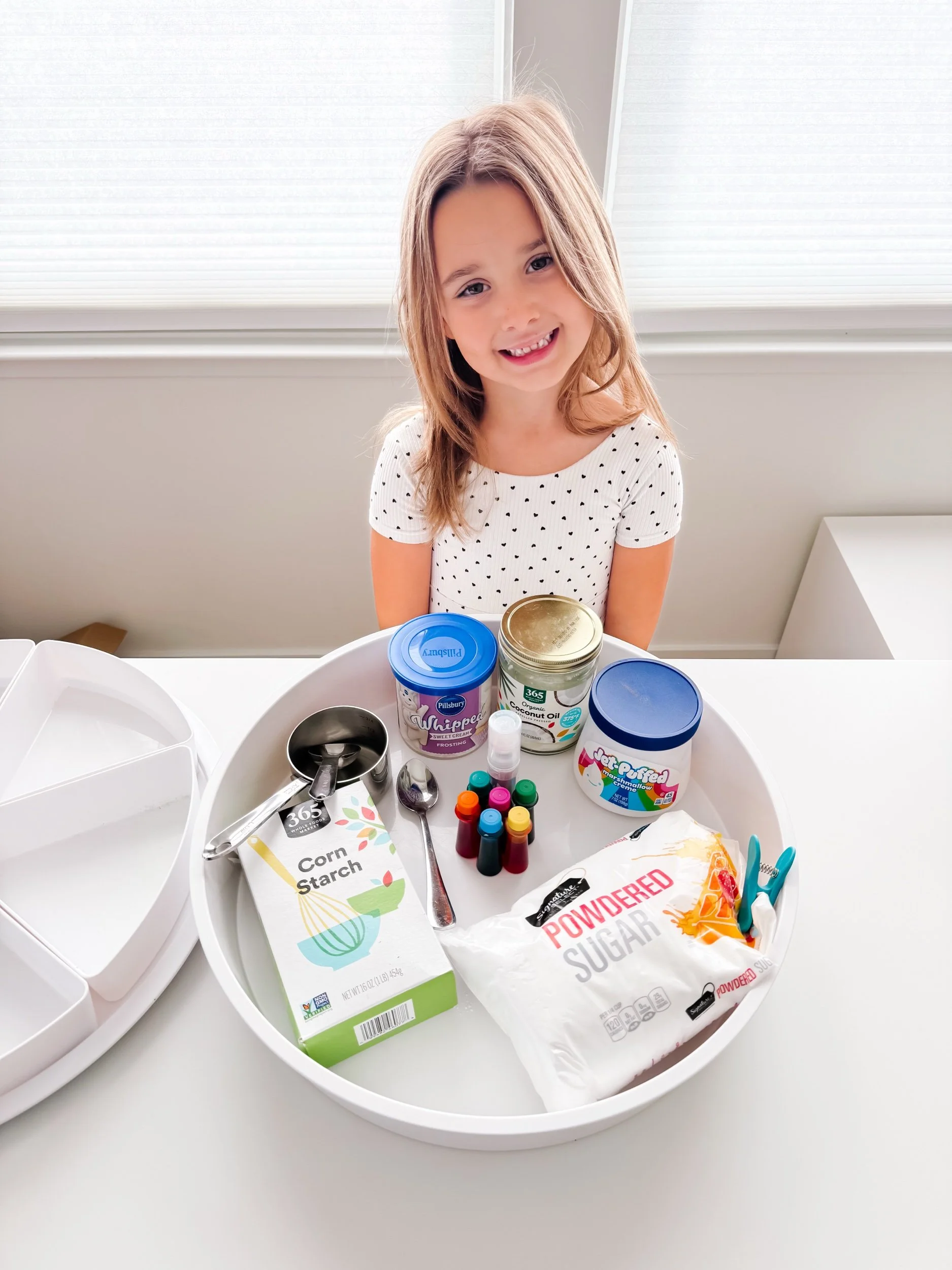
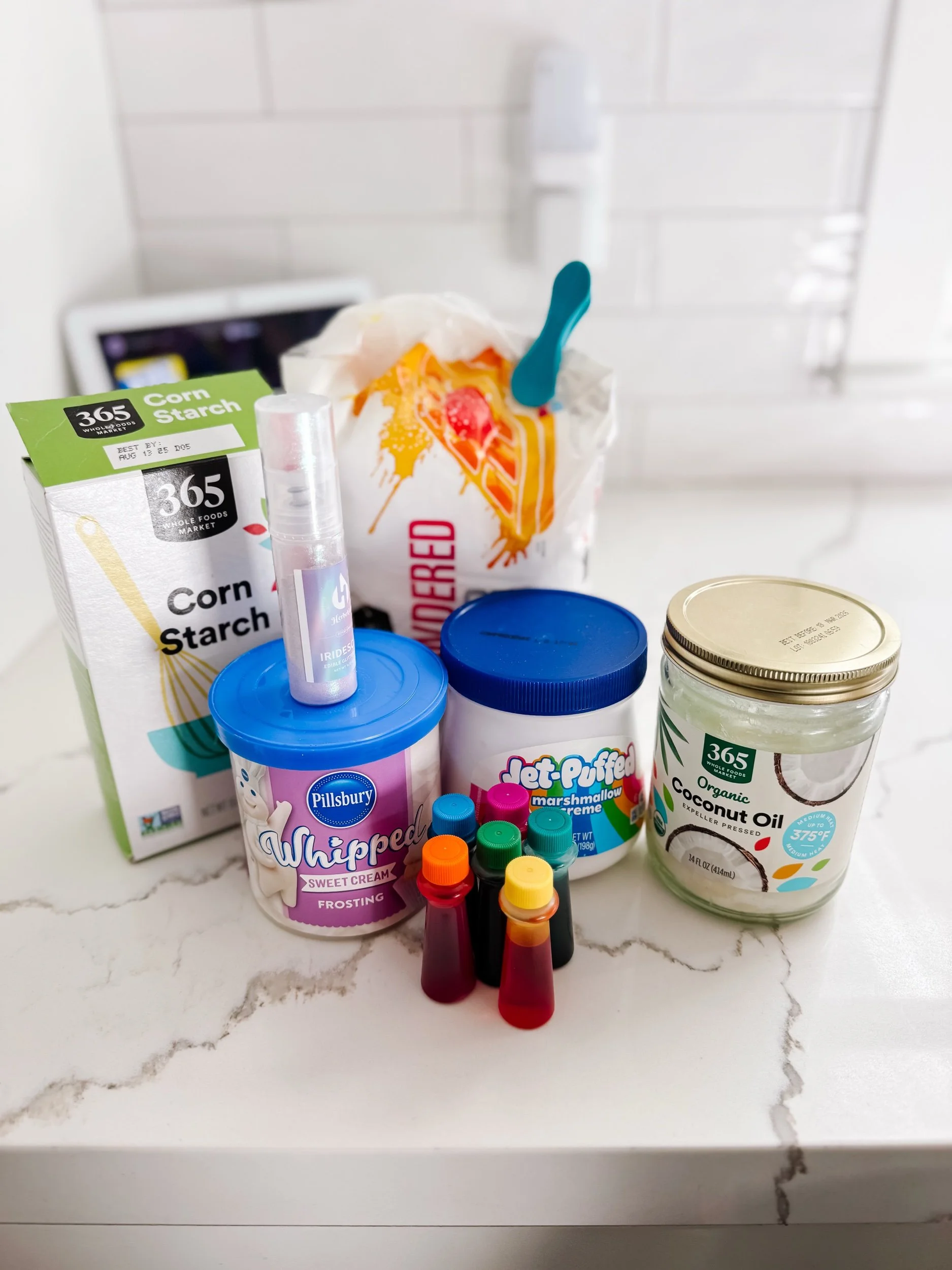
  • Marshmallow crème + frosting = a soft, airy binder.

  • Powdered sugar makes it smooth and stretchier than classic cornstarch dough.

  • Cornstarch keeps it moldable.

  • Oil keeps it from crumbling and gives it the buttery texture.


⚠️ Notes for Parents

  • Completely taste-safe, but extremely sweet — not meant to be eaten as a snack.

  • Store in an airtight container for 1–2 days (because it’s edible).

  • If it gets dry, knead in a little extra oil.

IMG_1281.jpeg
IMG_1286_jpg.jpeg
IMG_1291_jpg.jpeg
IMG_1298_jpg.jpeg
IMG_1310_jpg.jpeg

Ways to Play

(And why this dough is so good for toddler development!)

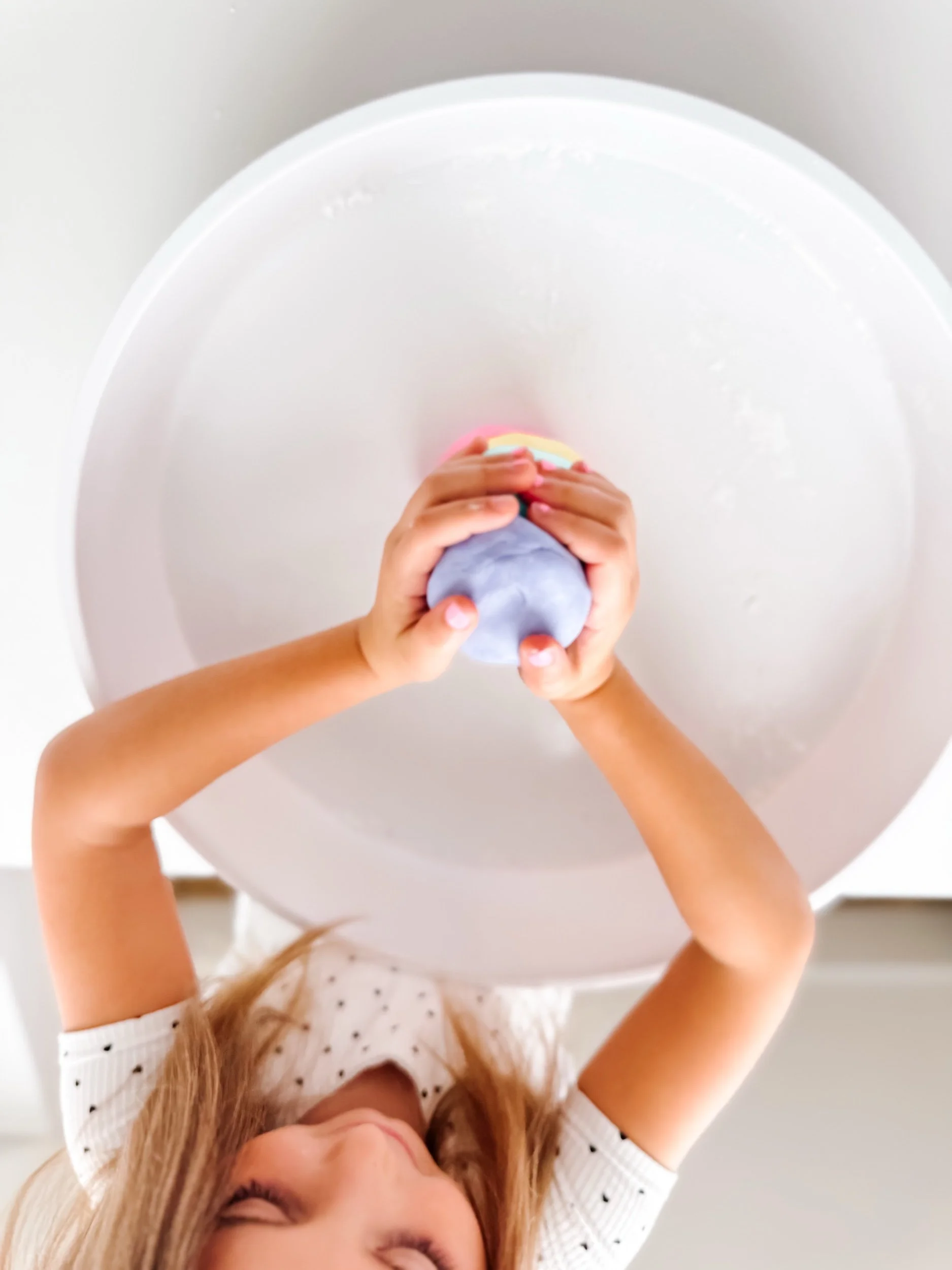
This sensory doh is incredibly versatile. In the photos, you’ll see little hands twisting rainbow ropes, squishing puffy “clouds,” and shaping colorful weather scenes — and truly, anything goes. Here are a few guided play ideas:

IMG_1313_jpg.jpeg
IMG_1309_jpg.jpeg
IMG_1307_jpg.jpeg
IMG_1311_jpg.jpeg

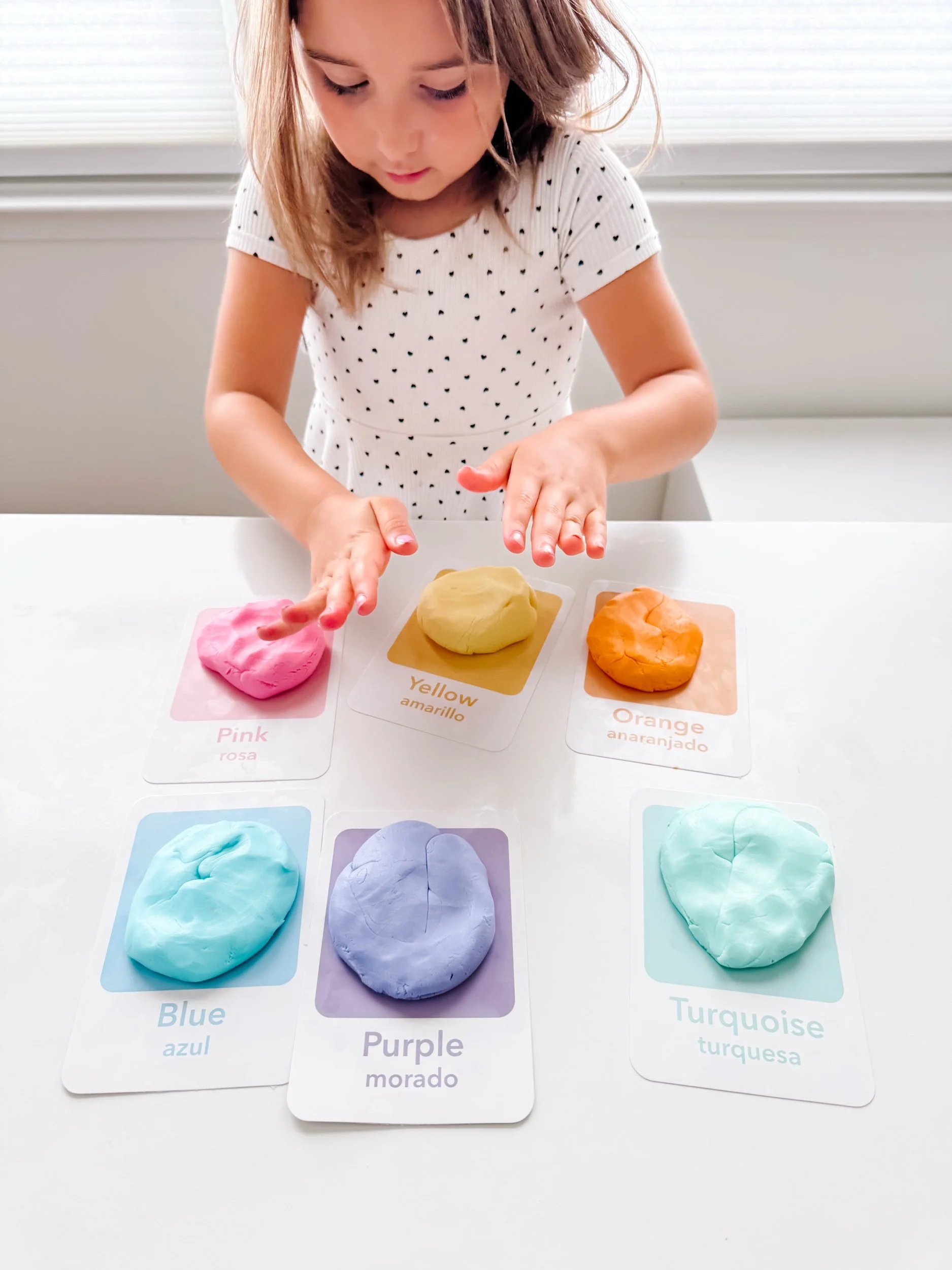
🌈 Rainbow Twists & Swirls

Kids can roll the dough into ropes and twist the pastel colors together.
Great for:

  • Fine motor skills

  • Bilateral coordination

  • Color recognition

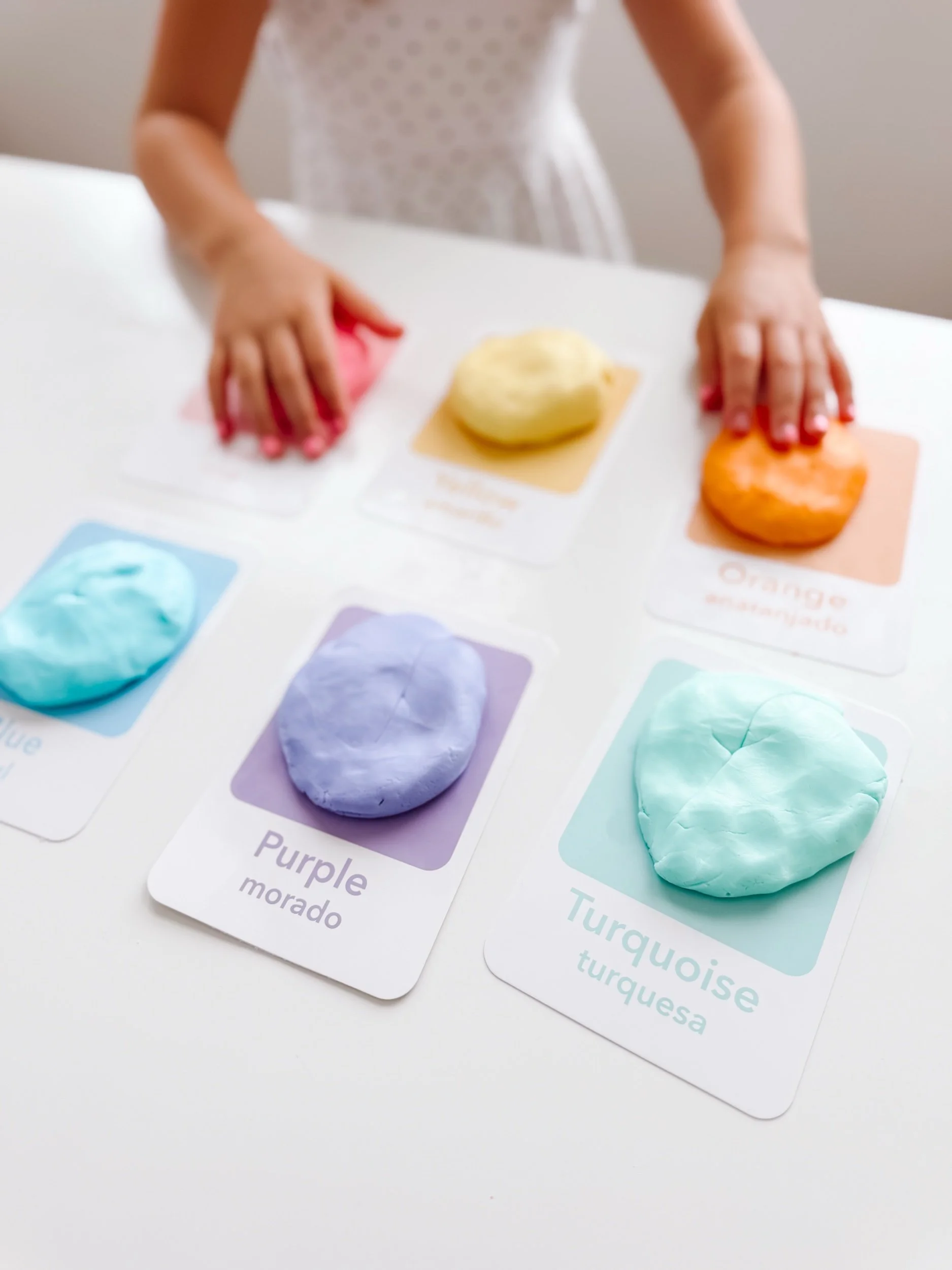
Want to extend the learning? Pair this with my Color Flashcards, which help toddlers identify, match, and describe each pastel shade while they play. It’s an easy way to sneak in early language and color awareness!


☁️ Cloud Puffs

Press, poke, and squish!
The marshmallow texture is softer than regular playdough, making it especially calming and satisfying.

IMG_1397.jpeg
IMG_1413_jpg.jpeg
IMG_1432_jpg.jpeg
IMG_1421_jpg.jpeg
IMG_1380.jpeg
IMG_1385_jpg.jpeg
IMG_1431_jpg.jpeg
IMG_1436_jpg.jpeg
IMG_1416.jpeg

🌦️ Weather Scenes

Use the pastel colors to make:

  • Clouds

  • Raindrops

  • Sun rays

  • Rainbows

  • Stormy skies

You can even add small toys or loose parts to create a full small-world weather setup.
IMG_1335_jpg.jpeg
IMG_1322_jpg.jpeg
IMG_1326_jpg.jpeg
IMG_1329_jpg.jpeg
IMG_1321_jpg.jpeg
IMG_1328_jpg.jpeg
IMG_1337_jpg.jpeg

✋ Calming Sensory Play

The pillowy bounce of this dough makes it ideal for emotional regulation and slow sensory exploration.

Weather Week in the Homeschool Planner

Inside the GoodnightFox Homeschool Curriculum & Planner, this activity fits perfectly into Weather Week — one of the most hands-on, sensory-friendly themes in the program.

Save hours on weekly homeschool planning

Here’s how it ties in:

  • Rainbow colors = perfect for learning about sun, rain, and weather patterns

  • Cloud-soft texture = great for sensory science

  • Small-world scenes = ideal for storytelling and vocabulary

Weather Week already includes:

  • A Rainbow Playdoh Day

  • Cloud science observation prompts

  • Weather cards & matching games

  • Weather charting and daily sky tracking

This marshmallow doh recipe is an easy add-on to extend the learning and bring the theme to life in a magical, hands-on way.

If you’re not using the planner yet, this is a great preview of the kind of playful, development-focused learning you can expect inside!


More Pastel Rainbow Activities From My Blog

If your child loves rainbow themes (and yours definitely will after this!), try these pastel-friendly favorites next:

  • Pastel Rice Sensory Bin

  • Rainbow Popsicle Stick Craft

  • Cloud Color-Matching Craft

  • Pastel Chickpea Dyed Sensory Bin

  • Rainbow Cutting Strips Activity


Weather-Themed Products From My Shop

Bring even more weather learning into your home with these GoodnightFox resources:

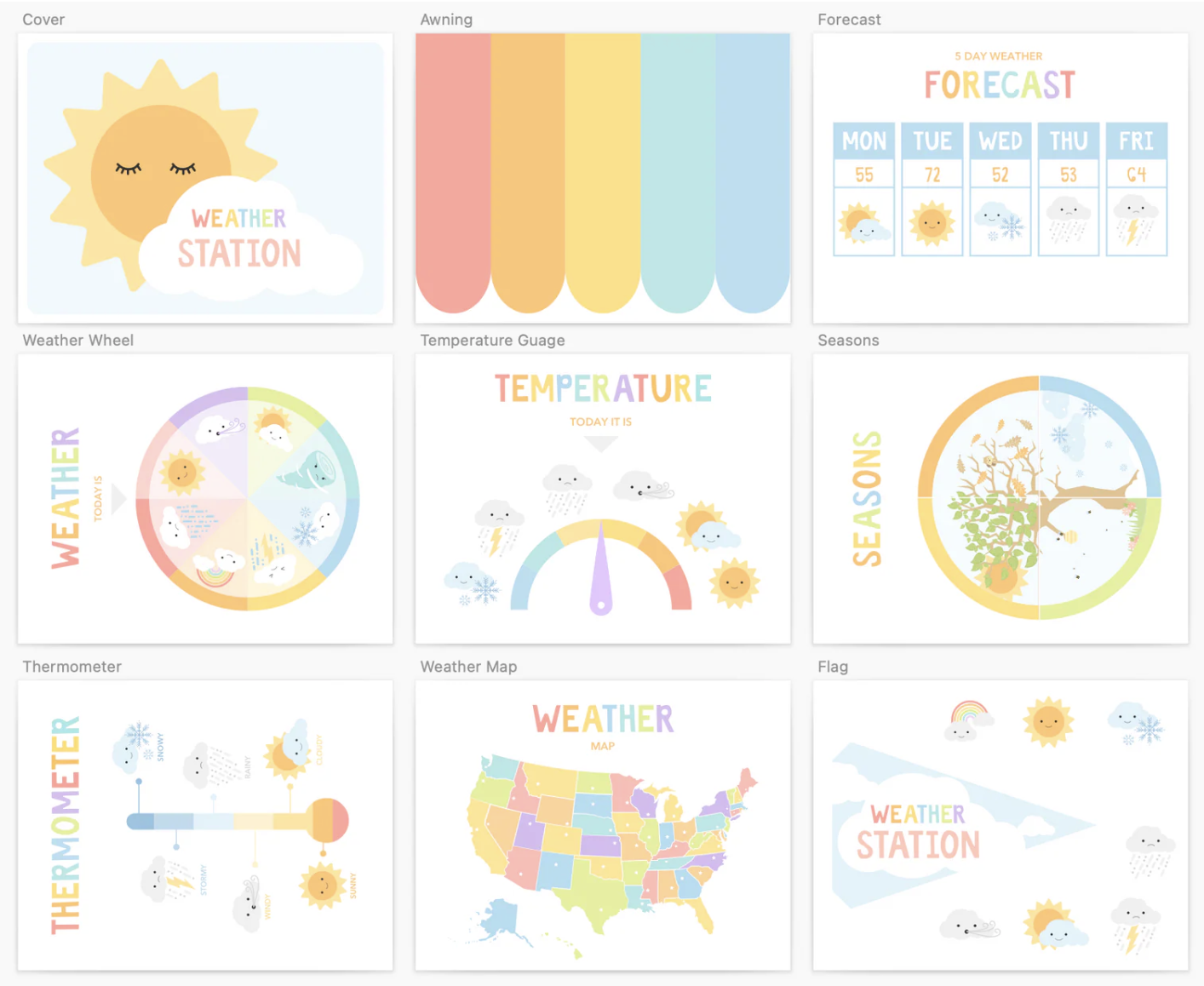
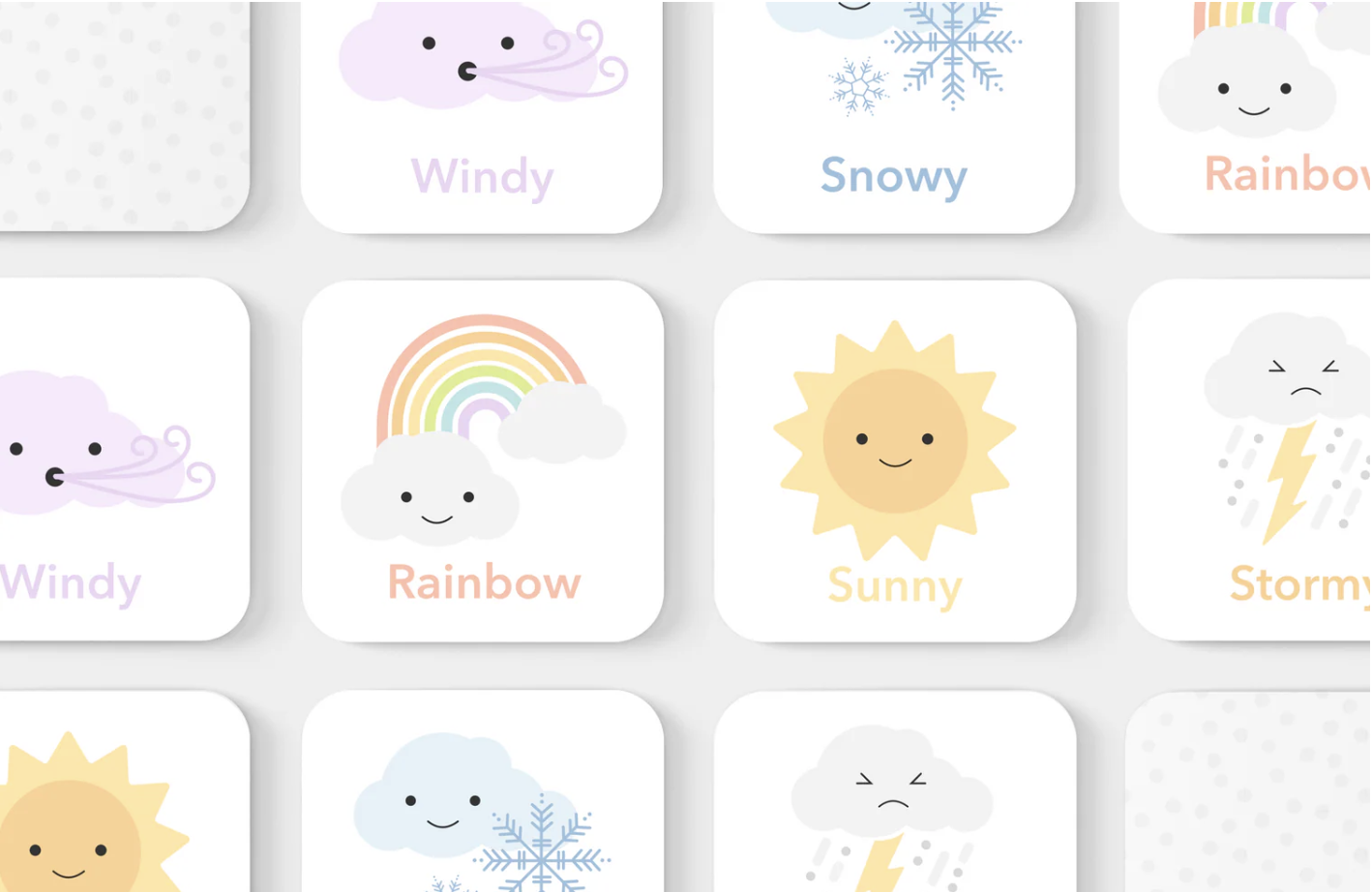
Weather Station Printable Play
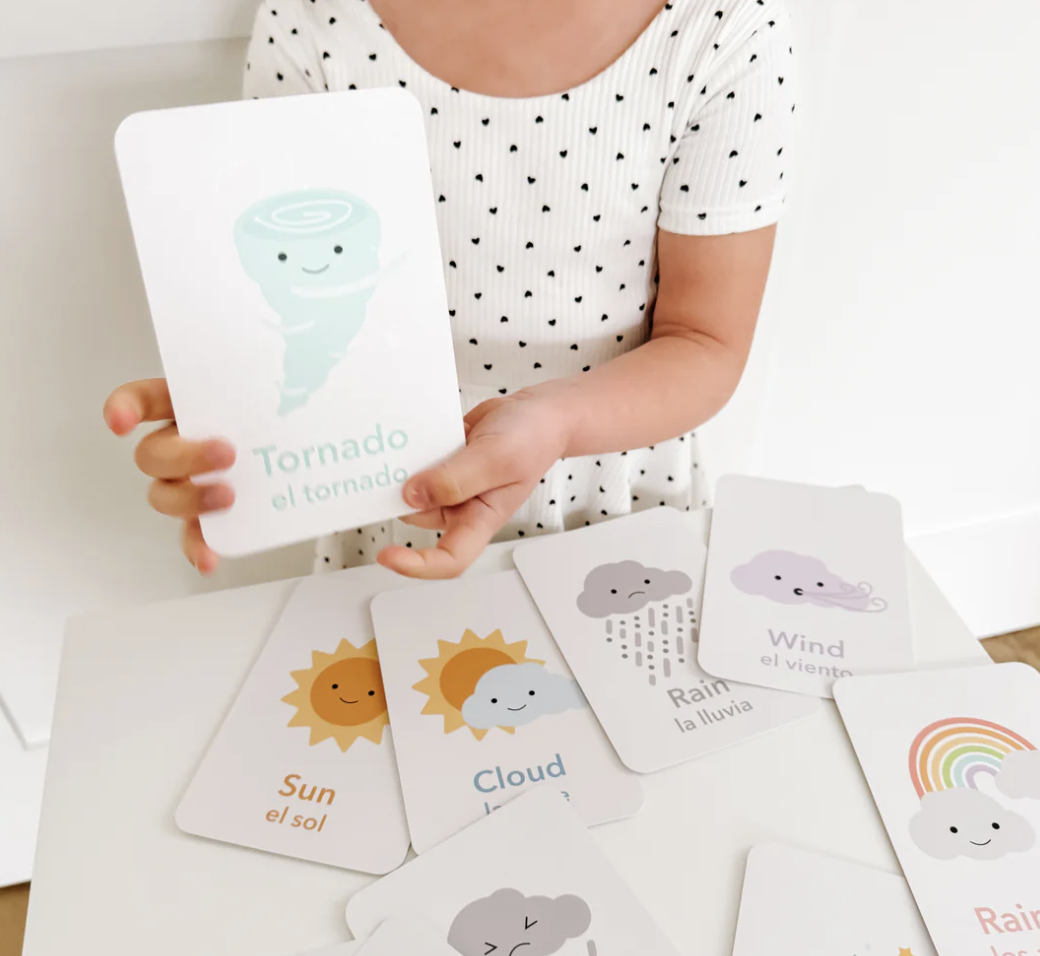
Weather Flashcards
Weather Flashcards
Weather Play Rounds
Weather Play Rounds
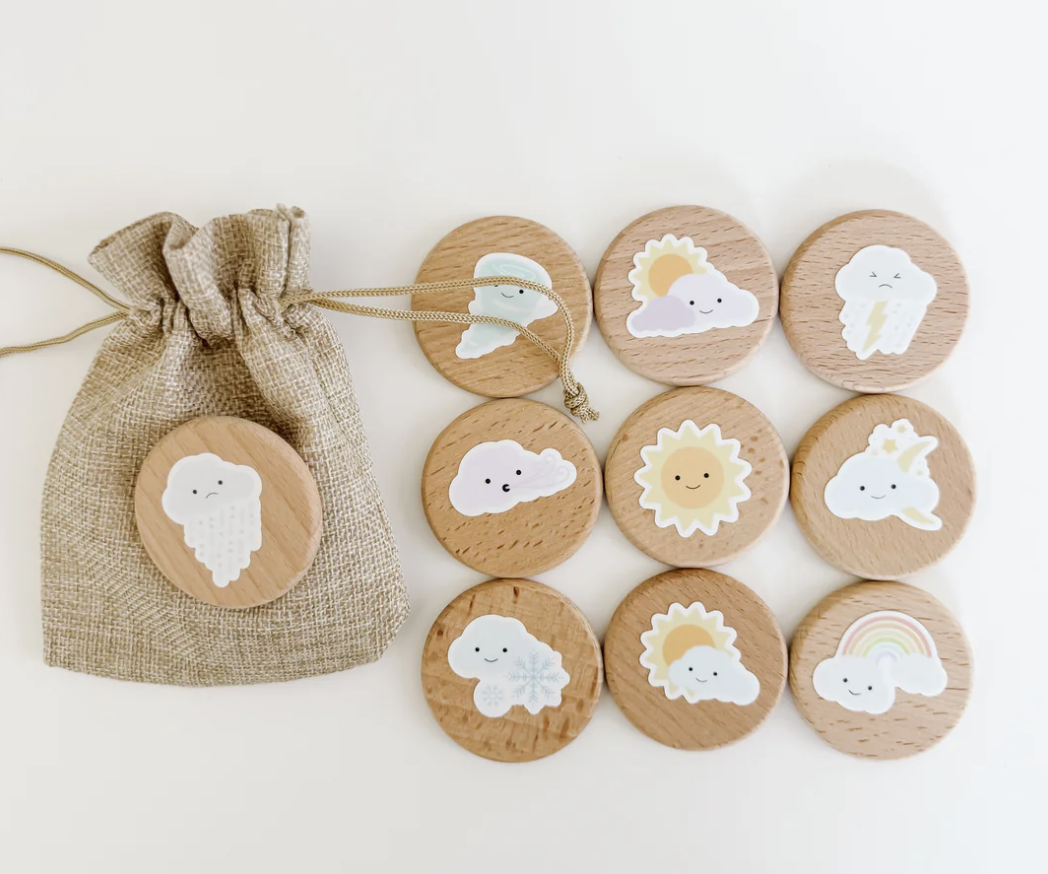
Weather Memory Game
Weather Memory Game

These pair beautifully with hands-on activities like the marshmallow doh and help create a complete, visually consistent learning environment at home.


Educational Takeaways & Homeschool Value

  • Sensory-based: strengthens fine motor skills, hand-eye coordination, and tactile awareness. (AgriCollege)

  • Creative & cognitive: supports imagination, color recognition, cause/effect, and symbolic thinking. (Sunshine House Early Learning Academy)

  • Emotional and social: encourages calm, concentration, connection (parent and child working together), and expressive play. (Mothercould)

  • Language & pre-writing readiness: shaping, pressing, and sculpting dough helps build hand strength for writing, and talking through play builds vocabulary and storytelling skills. (curiositycornersensorydough)

Tags Sensory play ideas for toddlers, DIY sensory activities for toddlers, Toddler sensory bin ideas, Fluffy marshmallow playdough, Homemade playdough recipe for toddlers, rainbow sensory play, pastel sensory activities for toddlers, weather-themed sensory activities, toddler crafts with playdough, soft sensory play for toddlers, toddler learning through play, homeschool sensory activities, cloud and rainbow play ideas
Comment

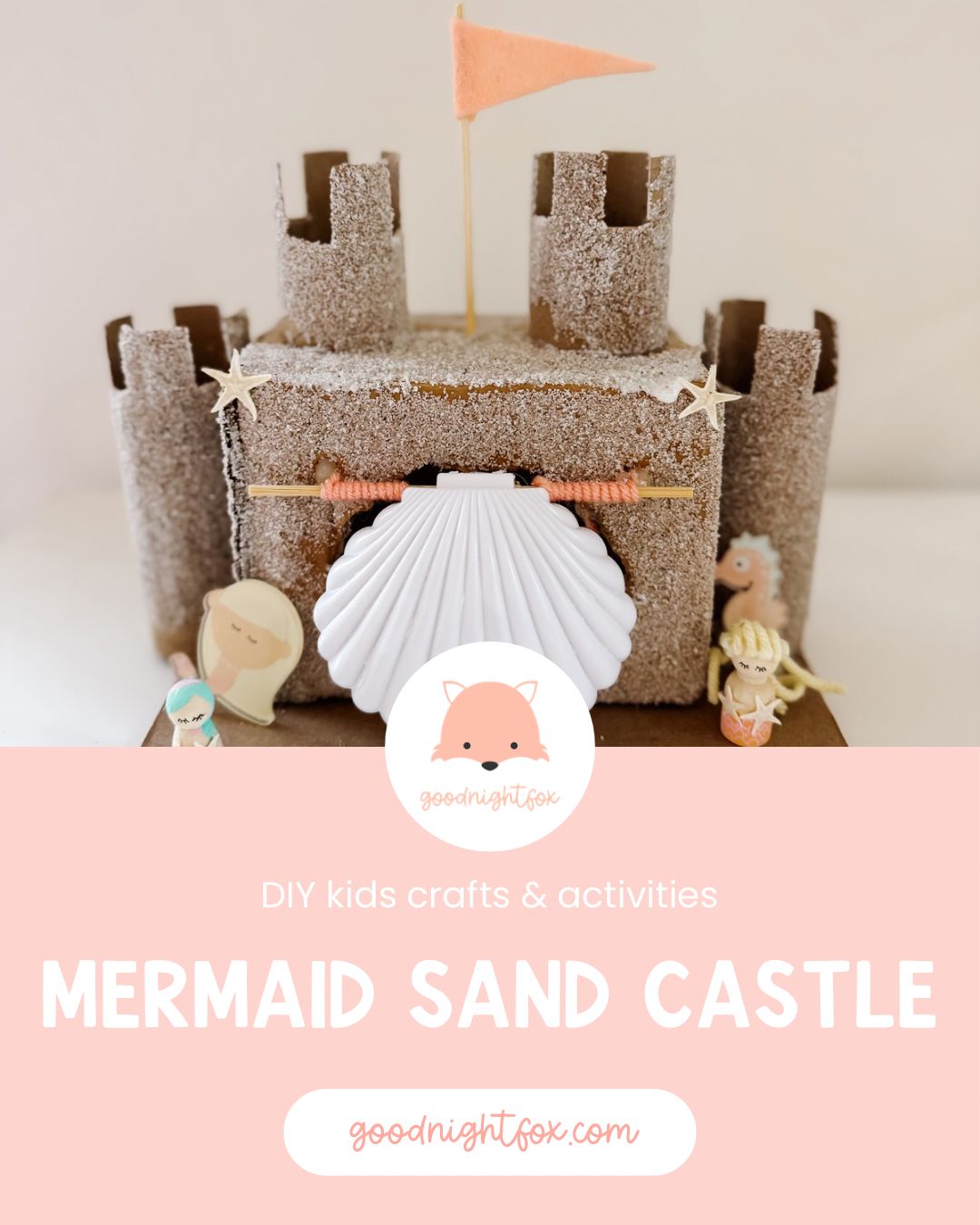
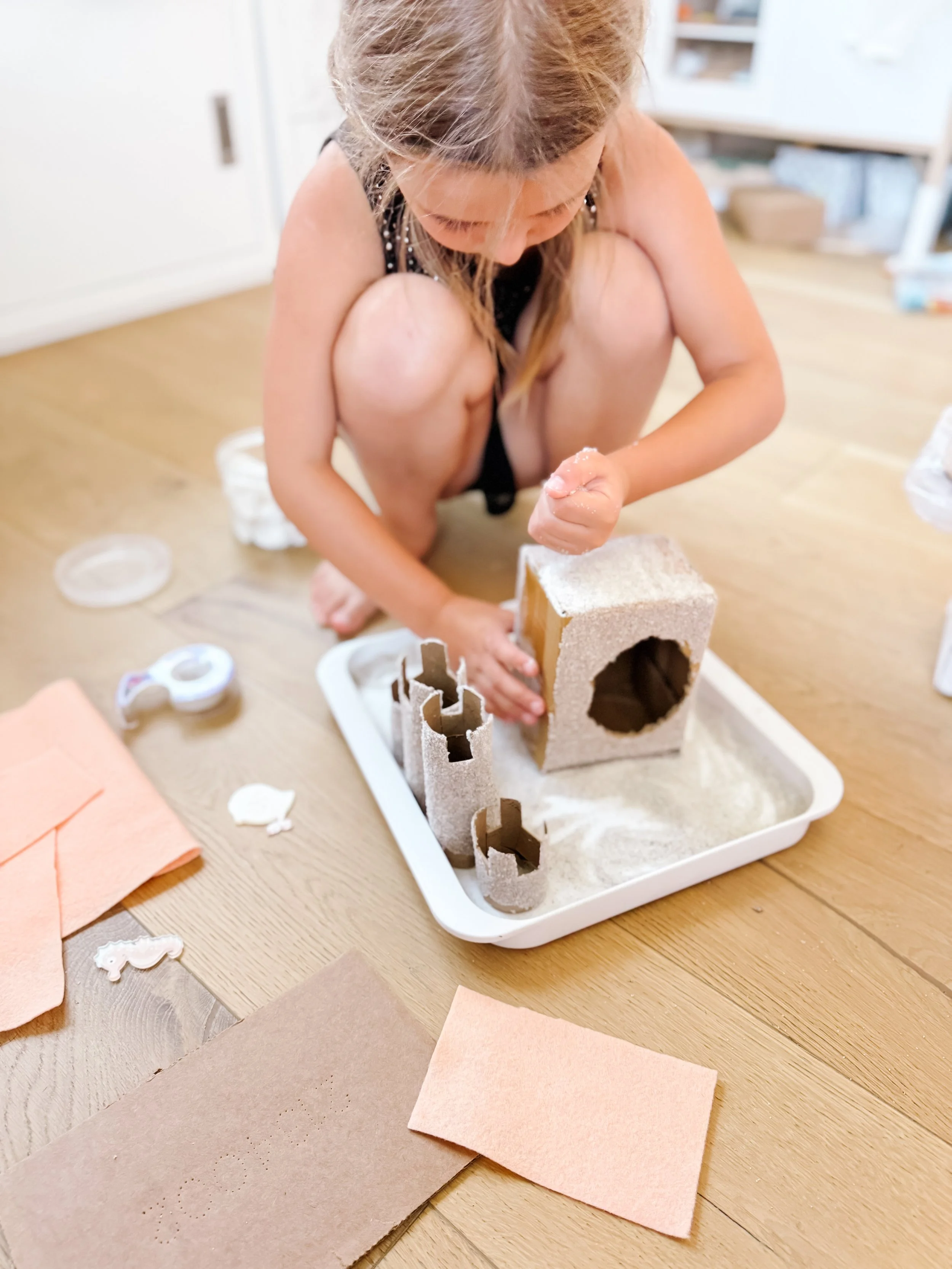
Toilet Paper Roll Mermaid Sand Castle Craft (Easy Homeschool Art Project)

December 4, 2025 Kylie Tuosto

Kids Craft Ideas • Easy Sensory Play Setups • Toddler-Friendly DIY Craft

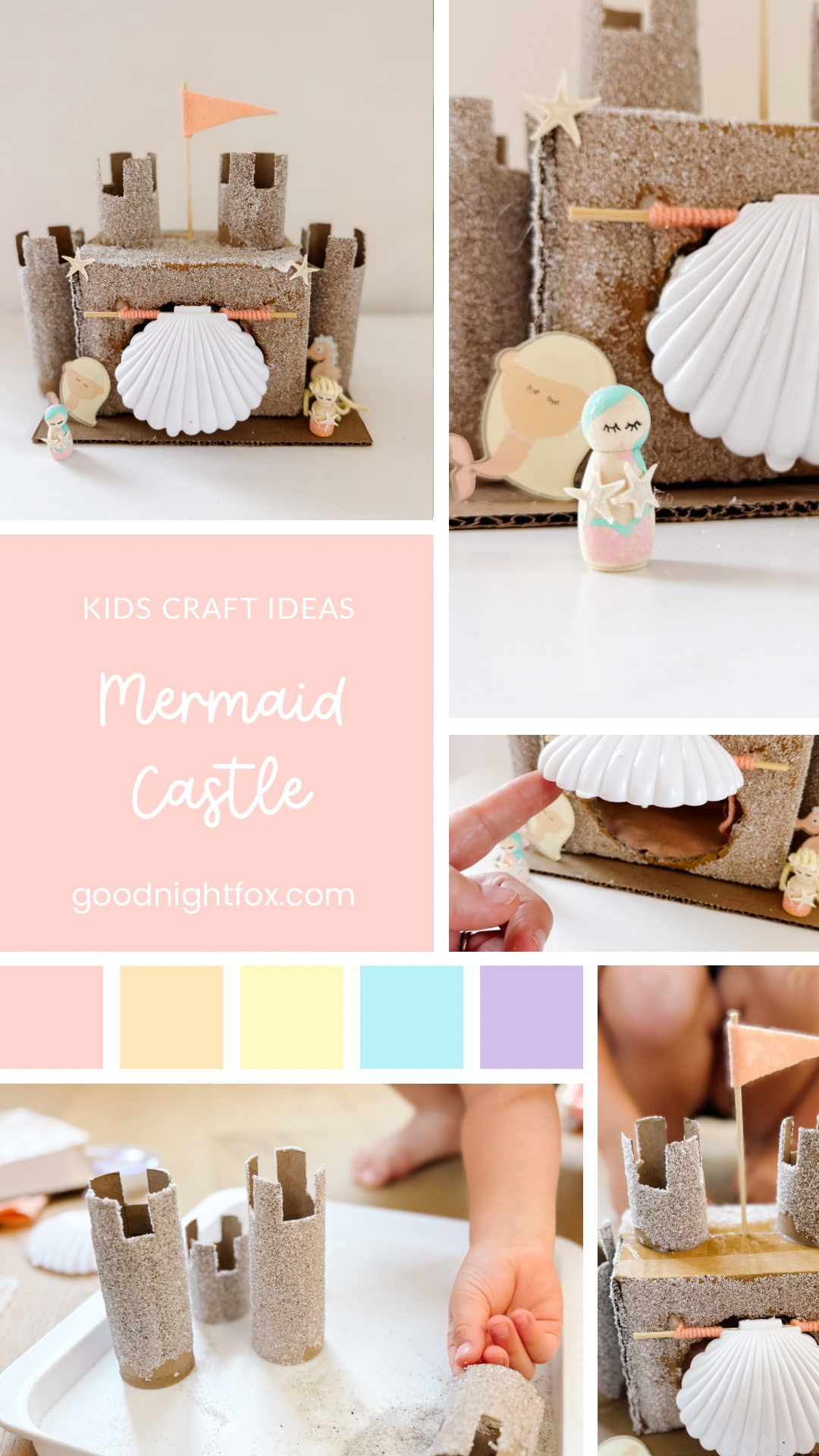
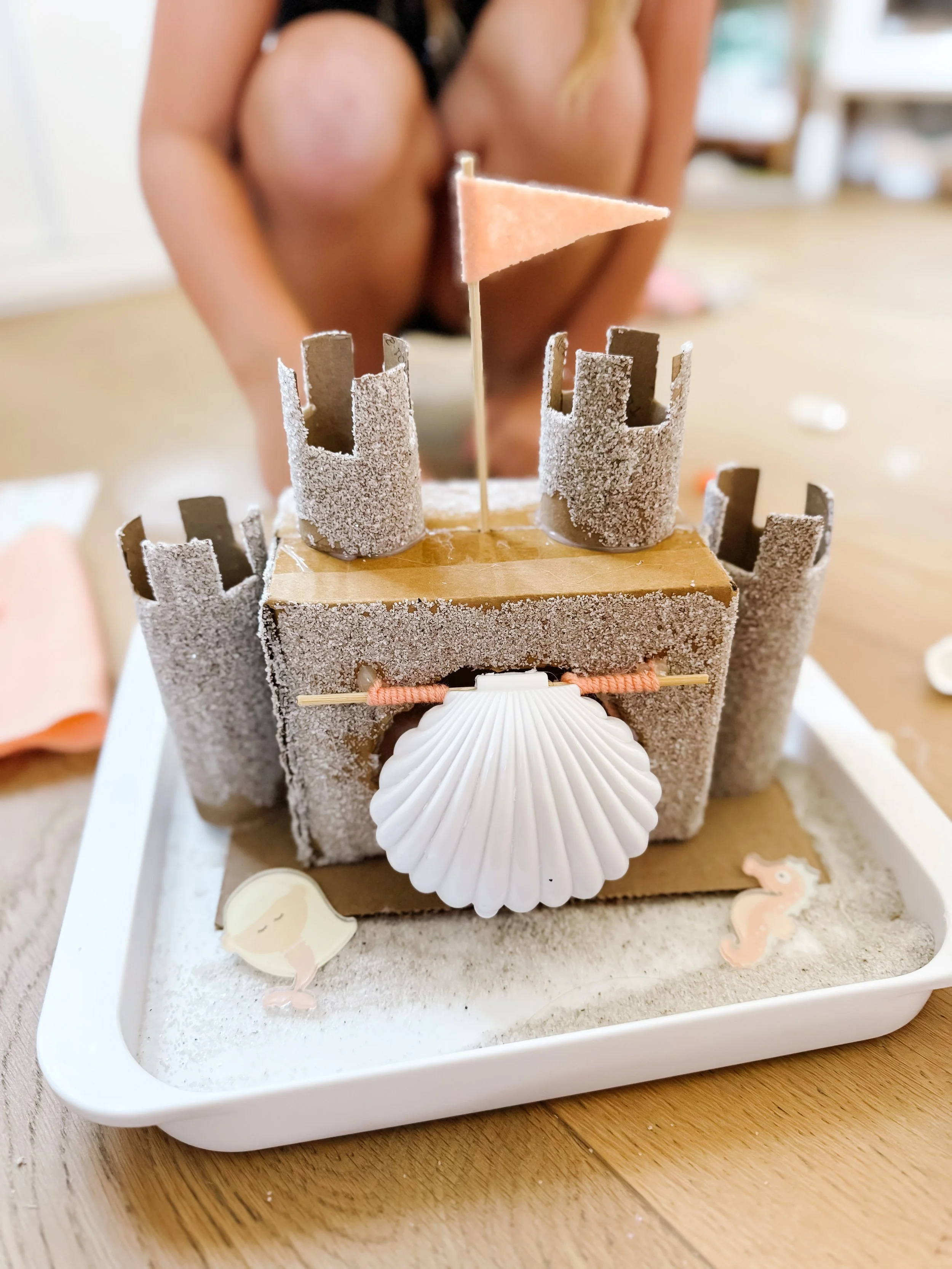
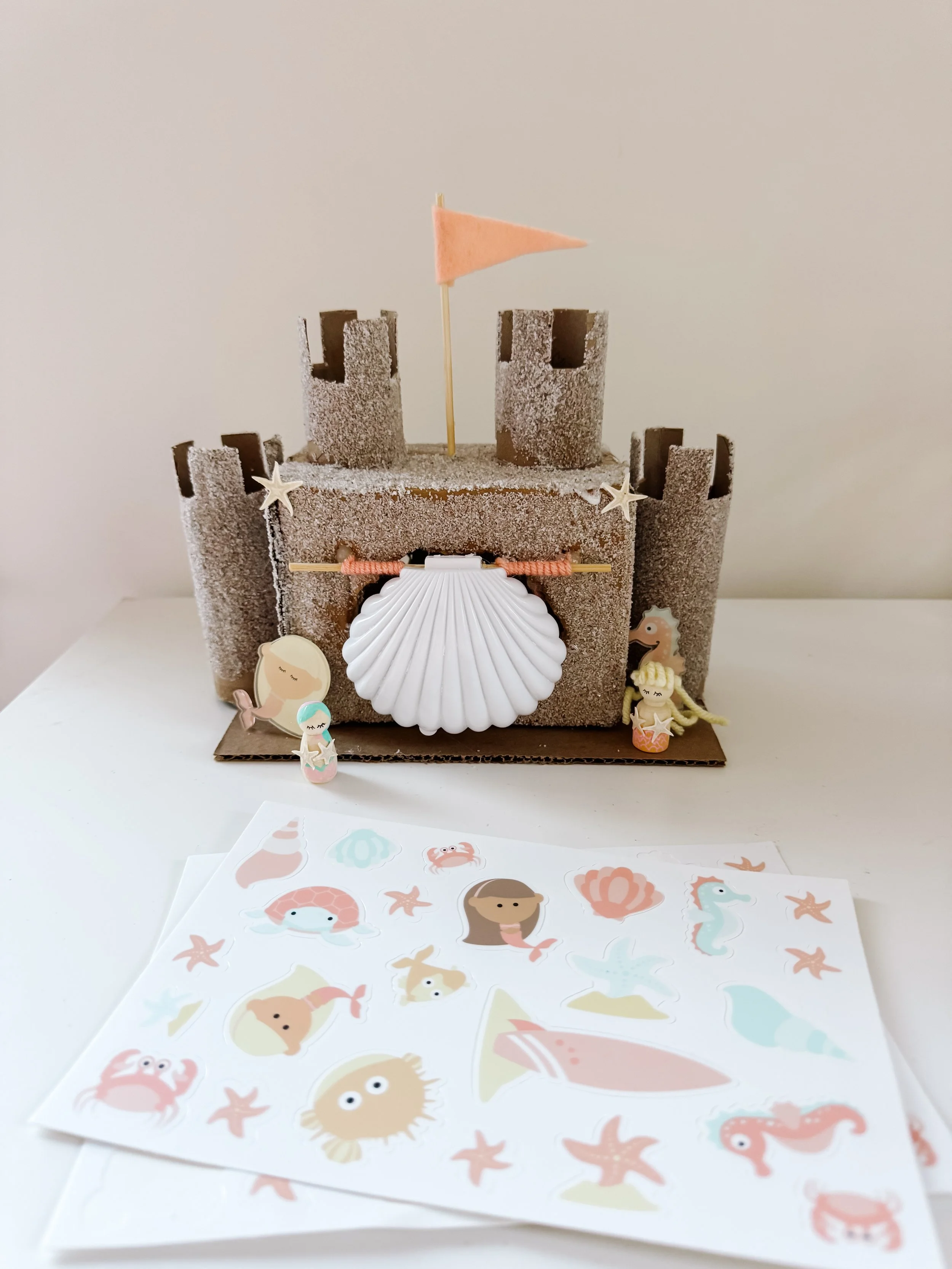
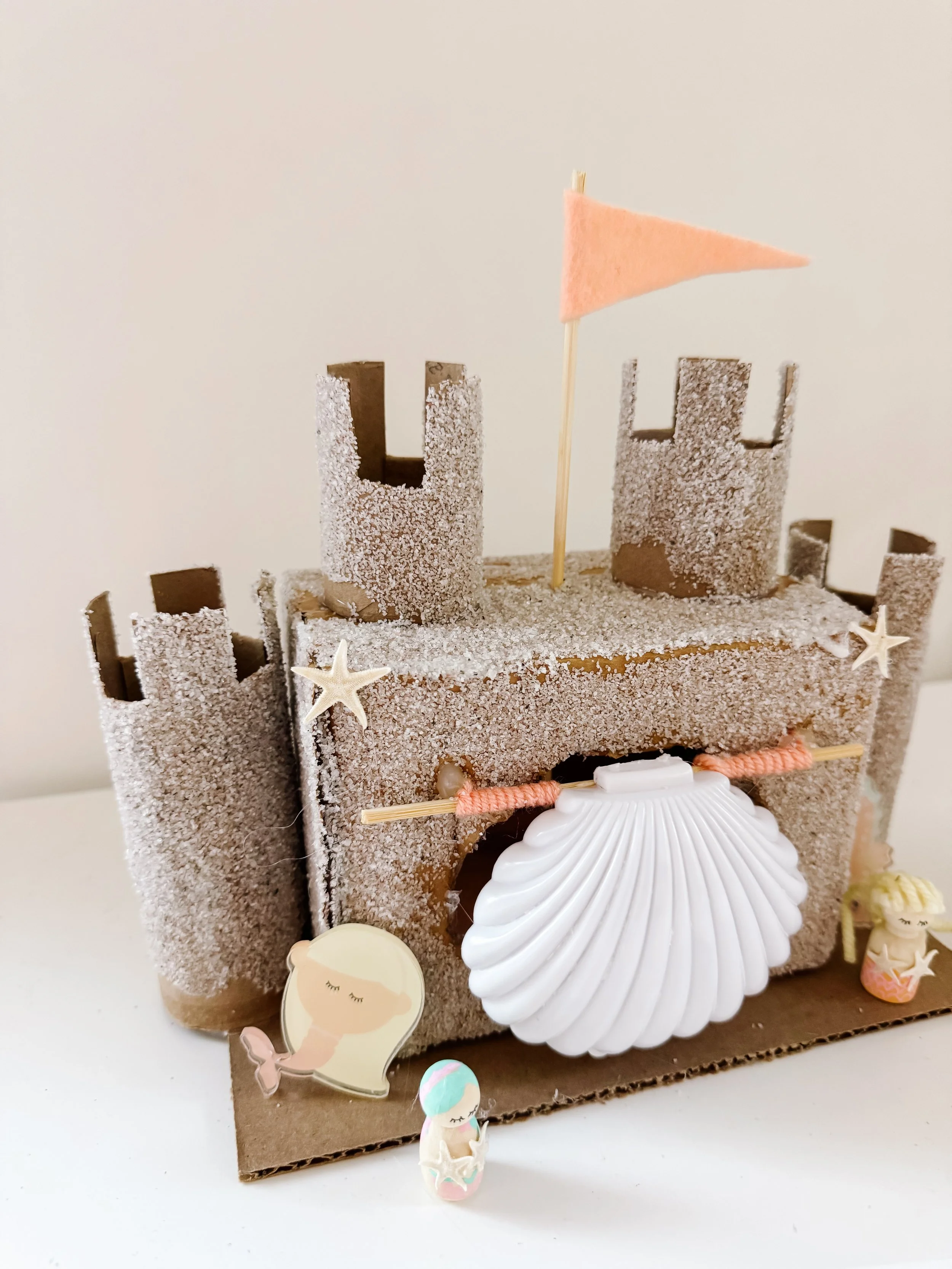
If you’re looking for a magical homeschool arts and crafts activity that feels summer-sweet, encourages creativity, and keeps little hands busy, this Toilet Paper Roll Mermaid Sand Castle Craft is the perfect project. It blends DIY sensory activities for toddlers, fine motor practice, and pretend play into one dreamy under-the-sea setup.

This craft is simple, inexpensive, and uses household items—and the finished castle pairs beautifully with any of your mermaid sensory play setups from GoodnightFox.

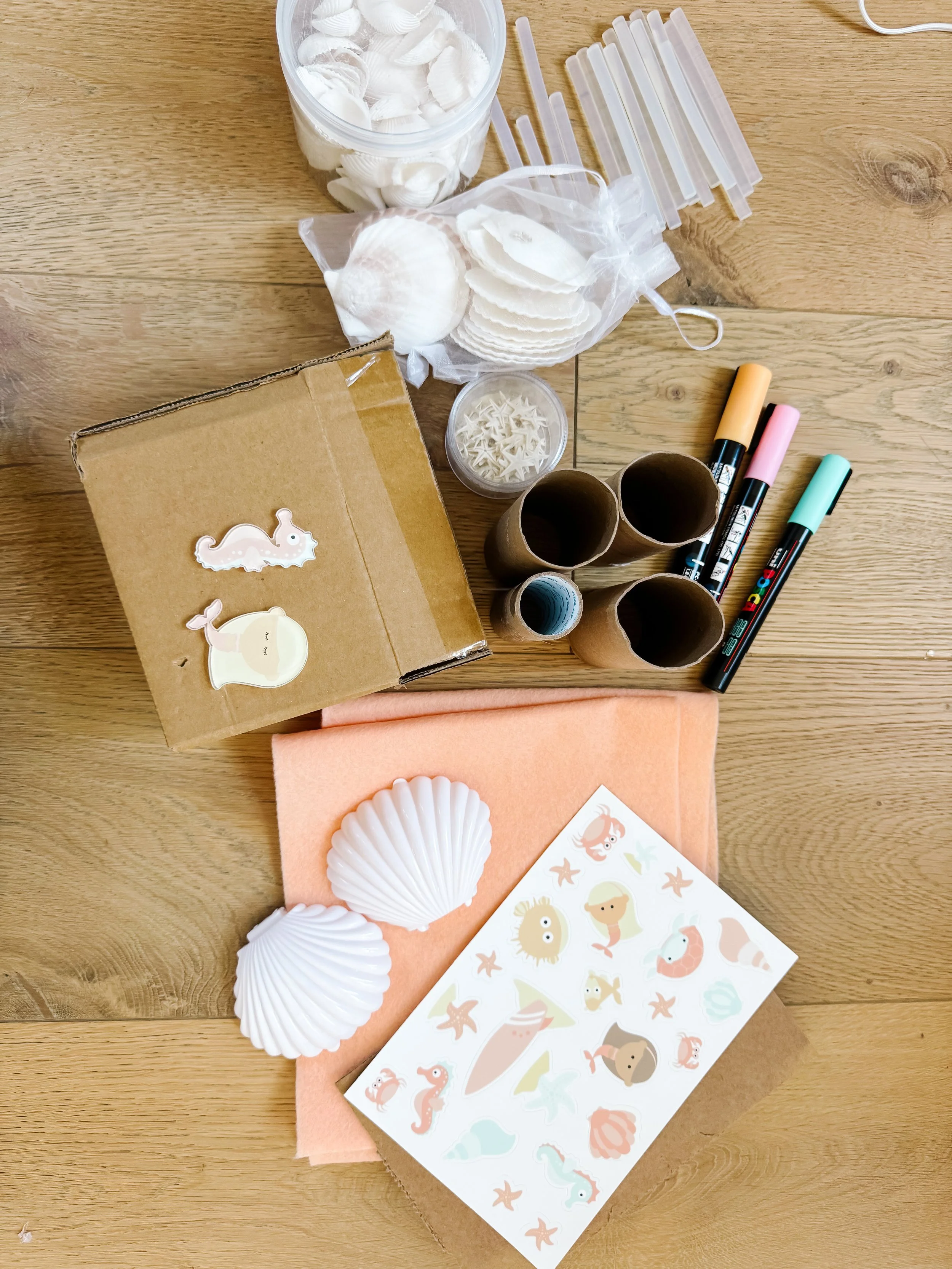
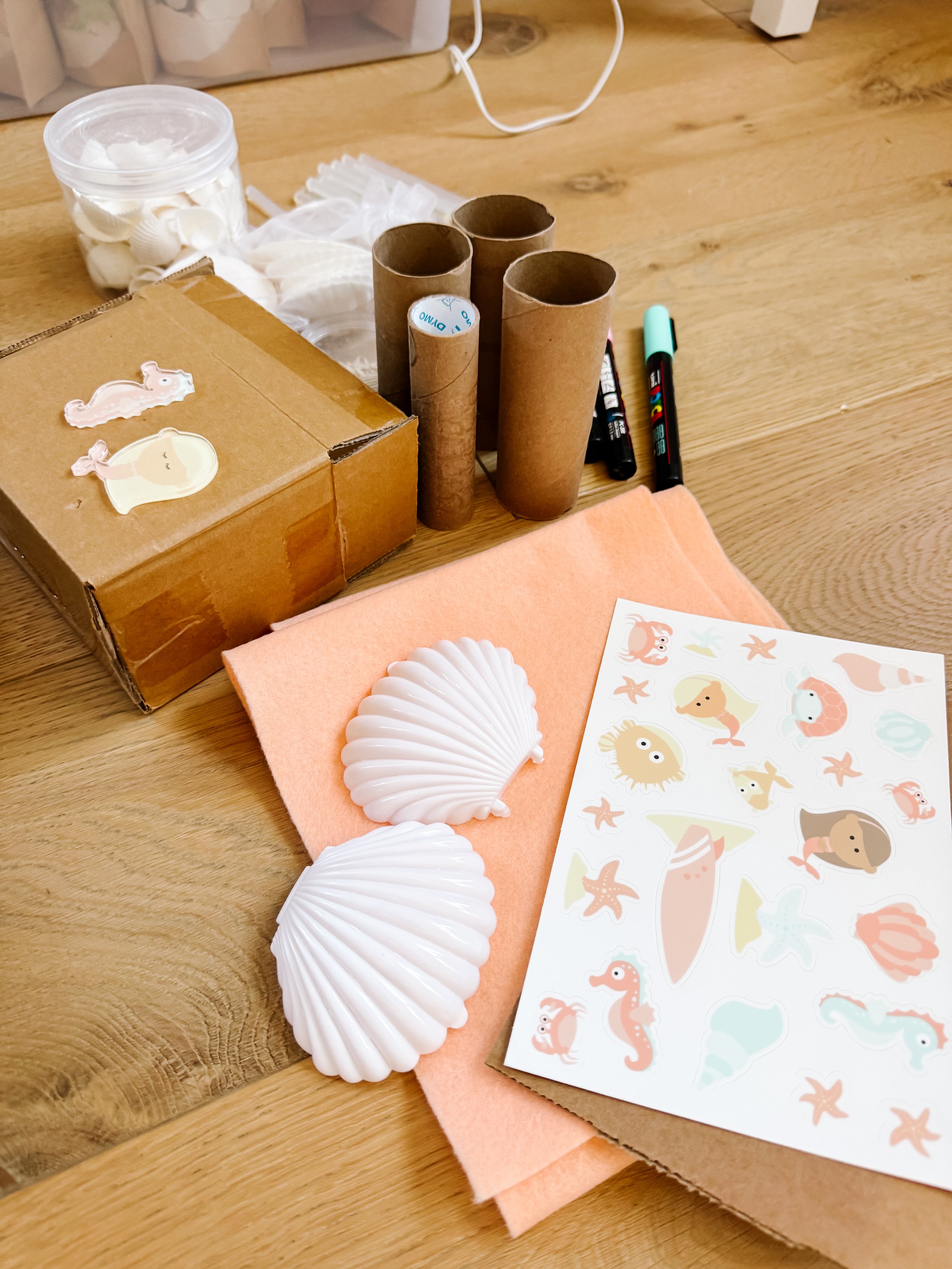
⭐ Materials You’ll Need

  • Empty toilet paper or paper towel rolls

  • Cardboard base

  • Craft sand or kinetic sand

  • White school glue

  • Paintbrush or sponge

  • Scissors

  • Seashells (real or plastic)

  • Small mermaid figurines or dolls

  • Hot glue gun (grown-up use only)

  • Pastel felt for a flag

  • Optional: pastel yarn, starfish embellishments, glitter


🎨 Age Group Learning Objectives

Age 0–6 months

  • Visual stimulation through soft colors and textures

  • Tummy-time observation of movement and sound as sand shifts


Age 6–12 months

  • Sensory exploration with sand placed in a sealed sensory bag

  • Early fine motor practice with supervised touching of smooth shells

Age 12 months–2 years

  • Hand-over-hand help gluing sand onto rolls

  • Strengthening hand muscles by scooping and sprinkling sand

  • Introducing early pretend play with mermaid characters

Age 3–4 years

  • Practicing scissor skills by cutting crenels into the towers

  • Building simple structures (STEM foundations)

  • Expanding storytelling skills with imaginative mermaid play

Age 4–6 years

  • Designing a castle layout and planning tower placement

  • Creating patterns using shells or yarn

  • Learning basic engineering concepts like stability and symmetry


🏰 Decor & Theme Overview: Under-the-Sea Pastel Castle

This craft uses pastel pinks, peaches, aquas, and lilacs, making the castle feel like it belongs in a picture-book mermaid kingdom. Add seashells, tiny starfish accessories, and a soft felt flag for a gentle, whimsical aesthetic.

Pair it with:

  • Mermaid peg dolls

  • Ocean sensory bins

  • Water beads for “underwater treasure”

  • Mermaid sensory play printables

  • Mermaid Busy Book

  • Mermaid Toilet Paper Roll Dolls


Sensory Bin 1: Mermaid Castle Construction Bin

Materials:

  • Toilet paper roll towers (pre-cut)

  • Tray of craft sand

  • Small scoops

  • Glue

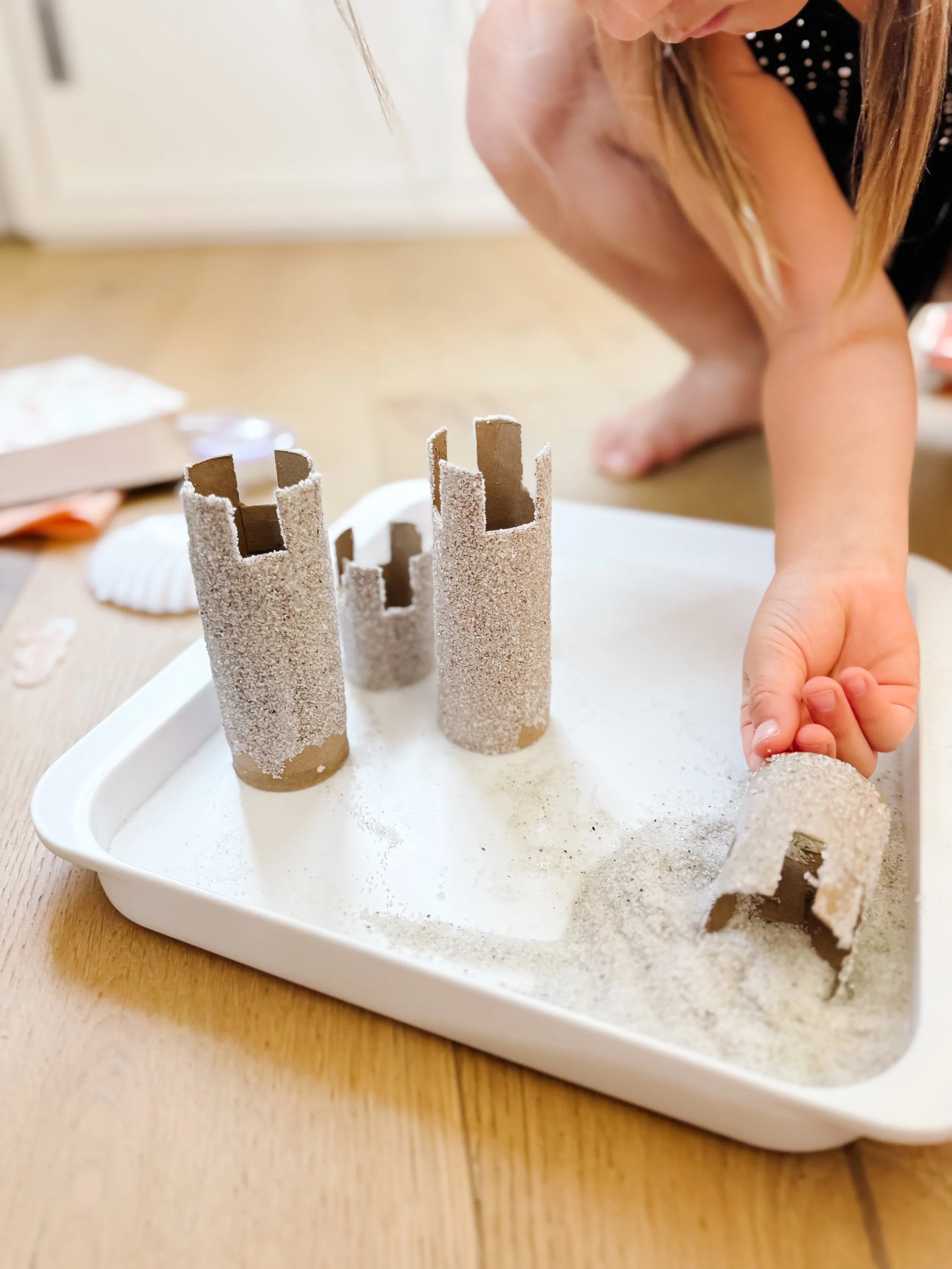
Instructions:

  1. Brush glue onto the rolls.

  2. Invite your child to sprinkle or roll each tower in sand.

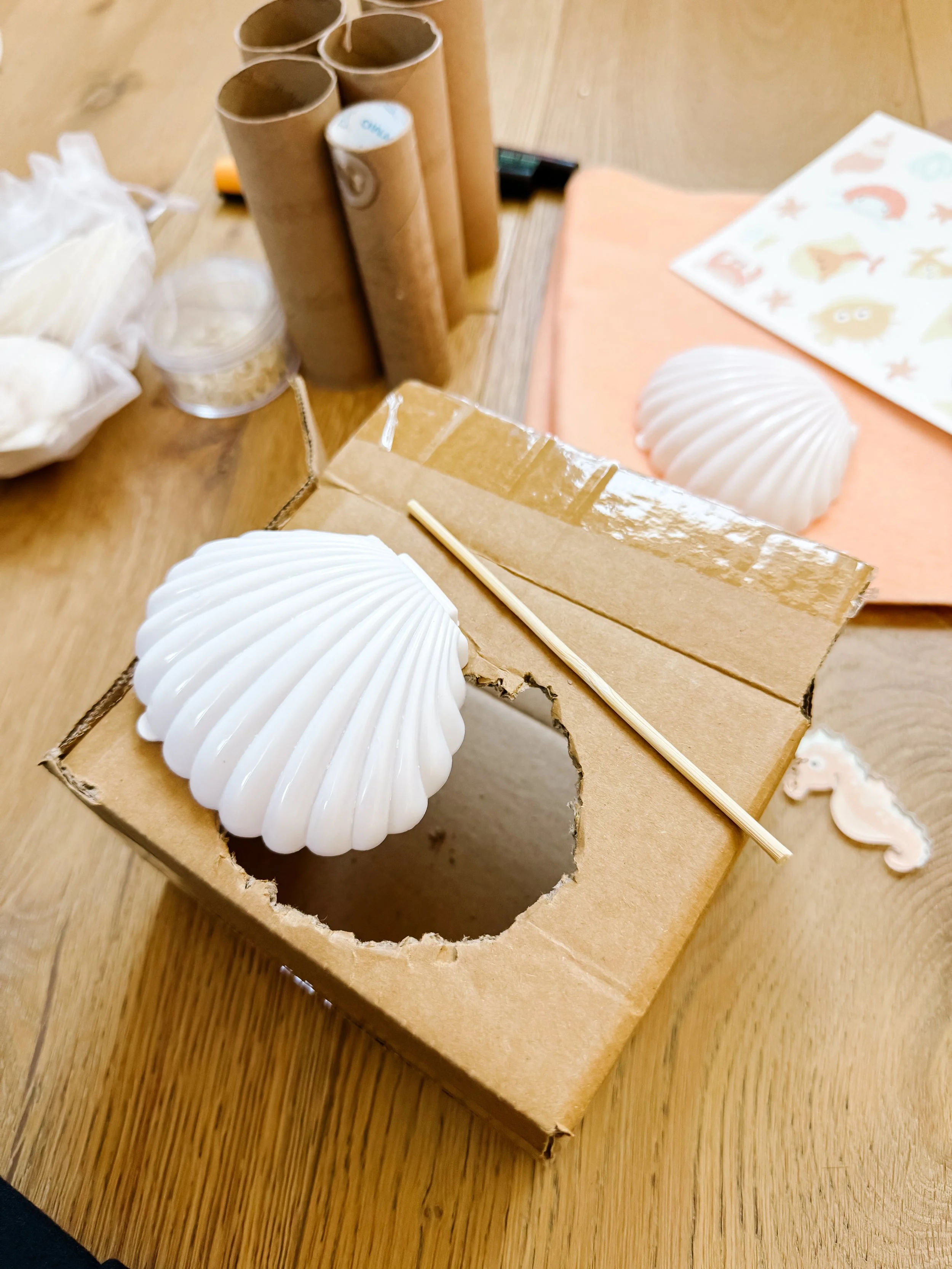
  3. Set aside to dry, then stack or glue onto the cardboard base to build the castle.

  4. Add seashells and tiny starfish to decorate the entrance.


Sensory Bin 2: Seashell Treasure Hunt

Materials:

  • Shallow bin

  • Sand

  • Small seashells

  • Mermaid figurines

Instructions:

  1. Hide shells in the sand.

  2. Kids use hands or scoops to uncover “mermaid treasures.”

  3. Add the found treasures to the castle for decoration or storytelling.


Sensory Bin 3: Ocean Small World Play

Materials:

  • Blue rice or water beads

  • Mermaid figurines

  • Mini sea creatures

  • Small pebbles

Instructions:

  1. Fill a bin with blue rice for easy mess-free sensory play.

  2. Add shells and mermaids to create an ocean scene.

  3. Encourage imaginative play and vocabulary-building stories.


🌊 Benefits of This Mermaid Sand Castle Craft

  • Fine motor skill development

  • Sensory play benefits for toddlers (texture, scooping, pouring)

  • Encourages creativity and storytelling

  • Introduces basic building + engineering concepts

  • Uses affordable sensory play materials

  • Keeps toddlers busy at home with simple, low-prep activities


🗓 Week-Long Mermaid & Pirates Themed Homeschool Lesson Plan

If your little one loved this mermaid sand castle craft, they’ll LOVE the full Homeschool Curriculum. It’s packed with sensory bins, crafts, literacy, math, story time picks, and science invitations—all carefully planned week-by-week so you don’t have to.

Homeschool planner for preschool perfect for ages 3 to 5 teaching common core curriculum

🐚 25 Vocabulary Words for the Theme

Mermaid, ocean, tide, castle, shell, treasure, lagoon, pearl, sparkle, sand, tower, wave, coral, fin, swim, deep, reef, current, flag, palace, kingdom, build, scoop, dig, decorate


🐚 Mermaid sensory play products

Treat your little mermaid lover to some of these amazing sensory kits and supplies.

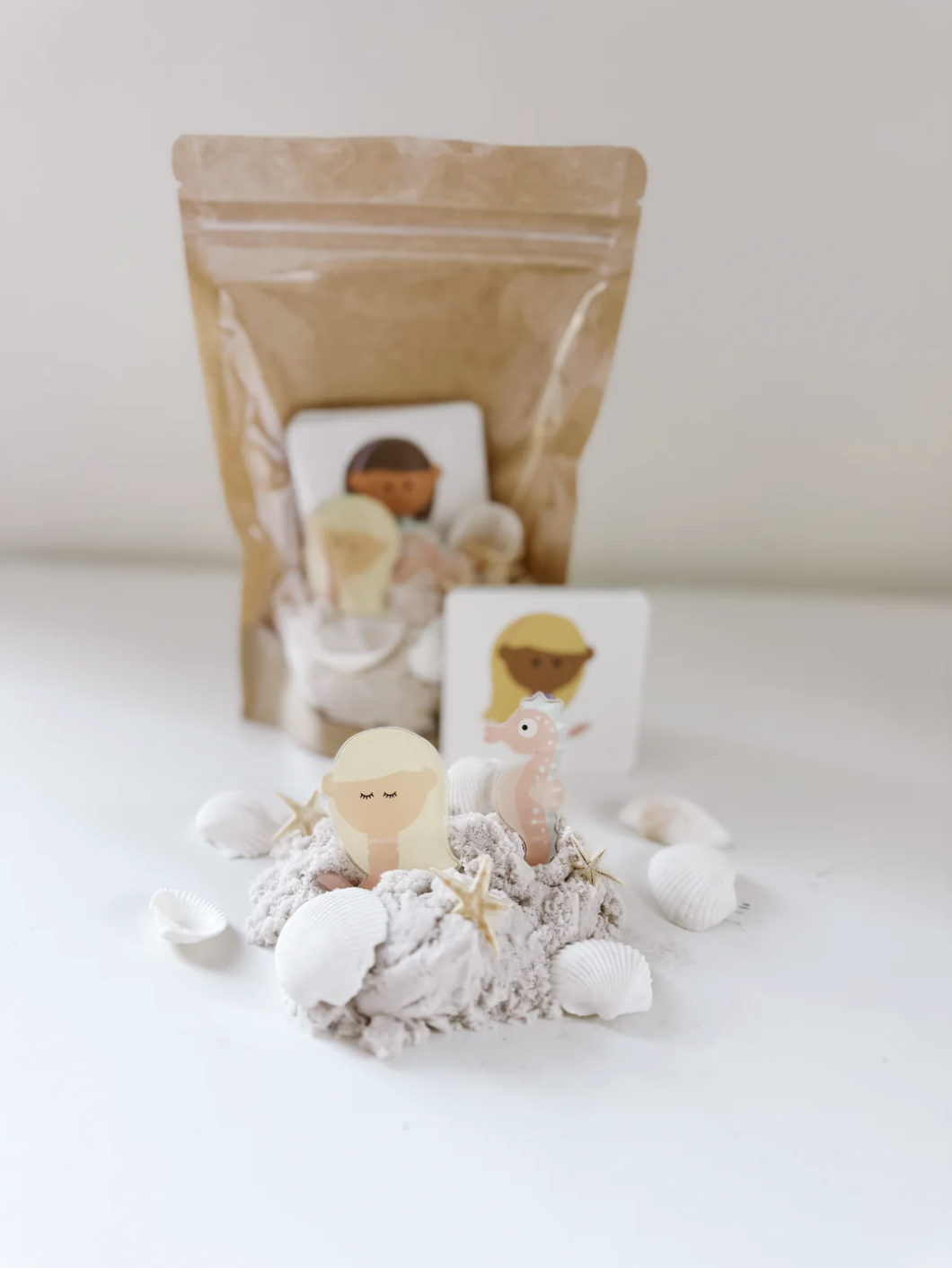
  • Mermaid Sensory Kit

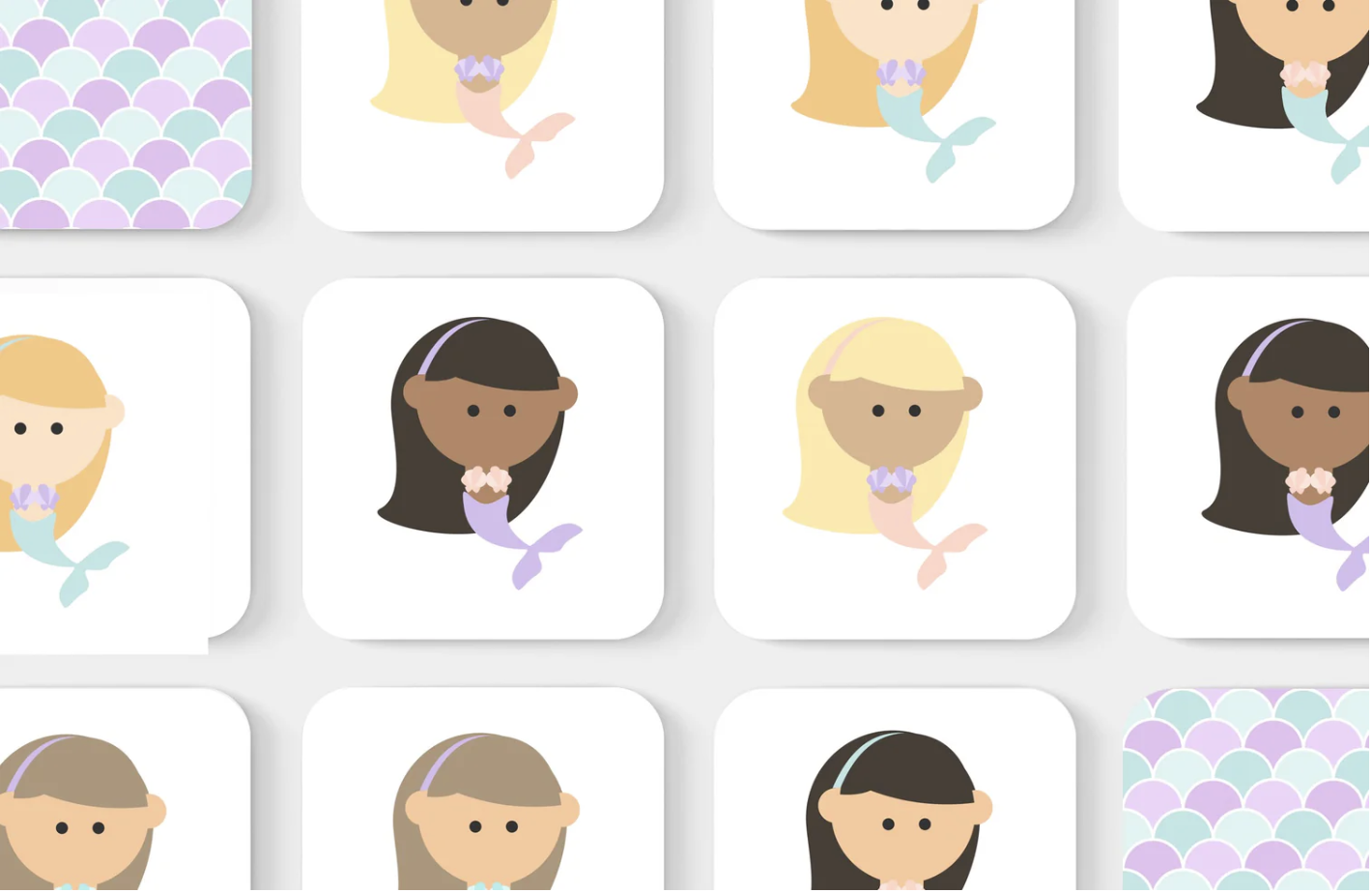
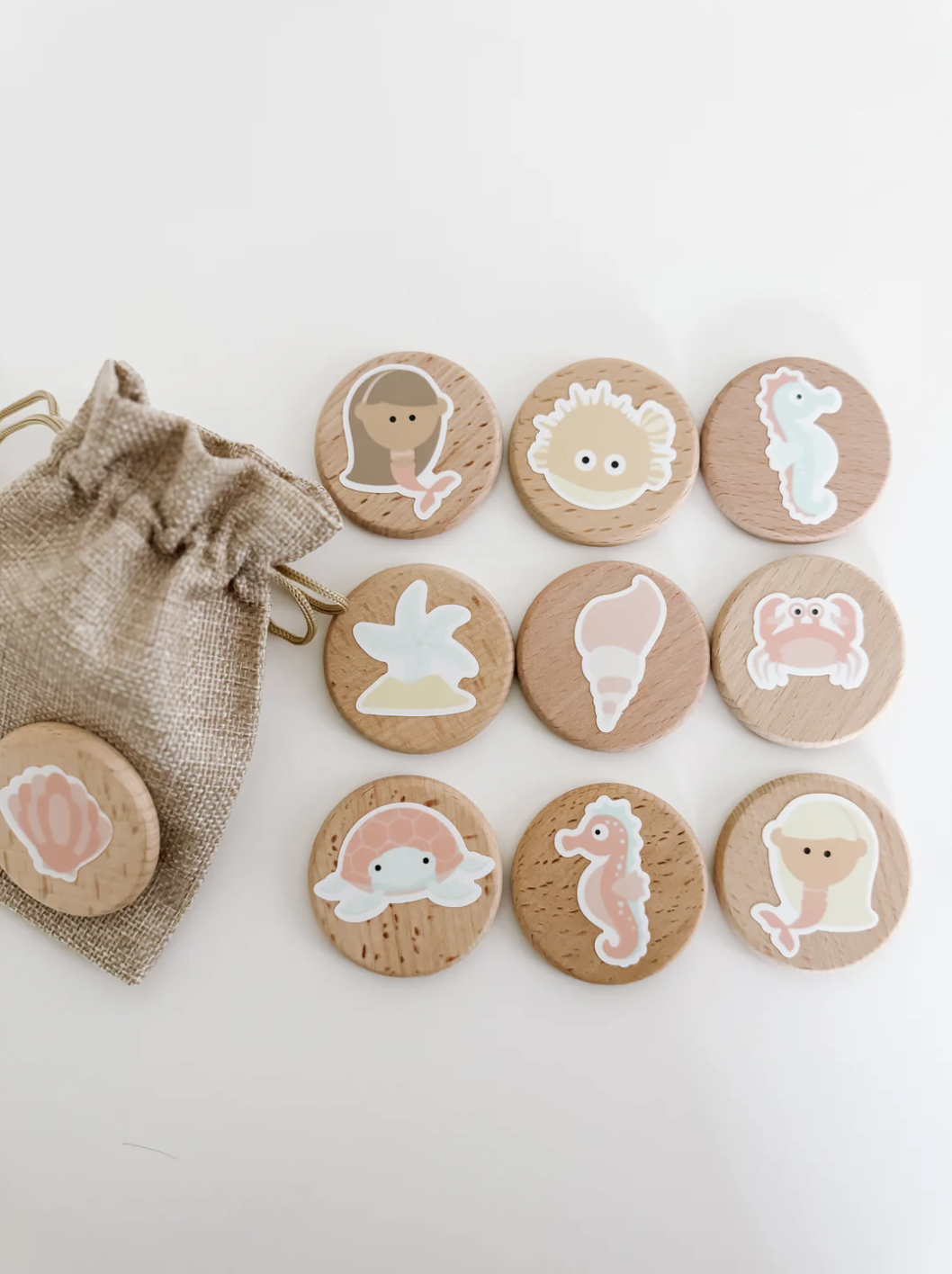
  • Mermaid Memory Game

  • Mermaid Dramatic Play

  • Mermaid Busy Book

  • Mermaid Play Rounds

Mermaid Memory Game
Mermaid Memory Game
Mermaid Sensory Kit
Mermaid Sensory Kit
Mermaid Play Rounds
Mermaid Play Rounds
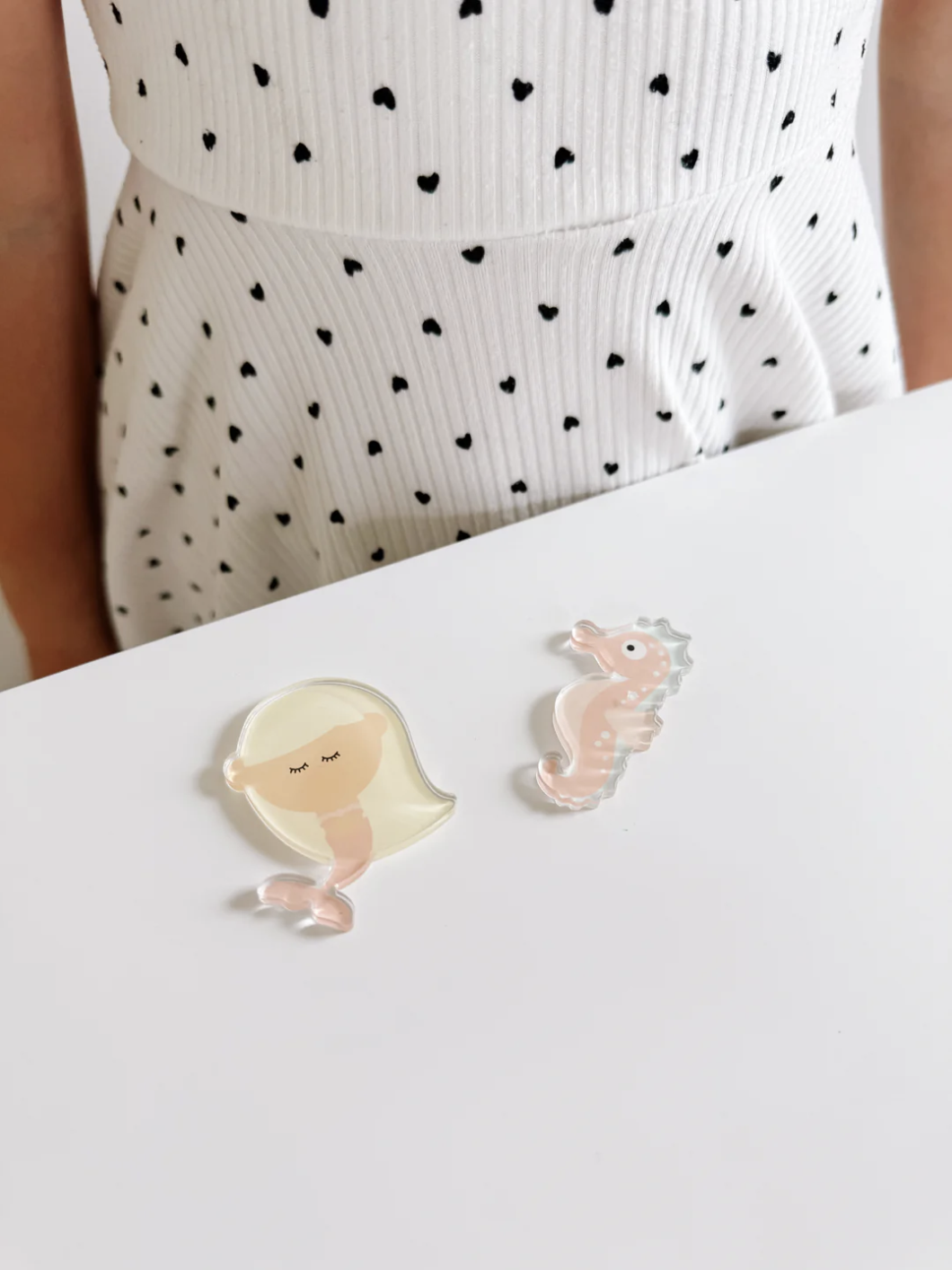
Mermaid Acrylic Charms
Tags sensory play ideas for toddlers, DIY sensory activities for toddlers, toddler sensory bin ideas, easy sensory play setups, indoor sensory activities for toddlers, mess-free sensory play ideas, educational sensory play for toddlers, fine motor skill activities for toddlers, DIY sensory toys for toddlers, sensory play benefits for toddlers, how to keep toddlers buy at home, affordable sensory play setups, creative sensory play for toddlers, mermaid craft activities, mermaid sand castle, mermaid craft idea, sensory sand castle, sensory play on a budget, best sensory materials for toddlers
Comment

❄️ Winter Ice Painting Activity for Kids (Homeschool-Friendly & So Easy!)

November 29, 2025 Kylie Tuosto
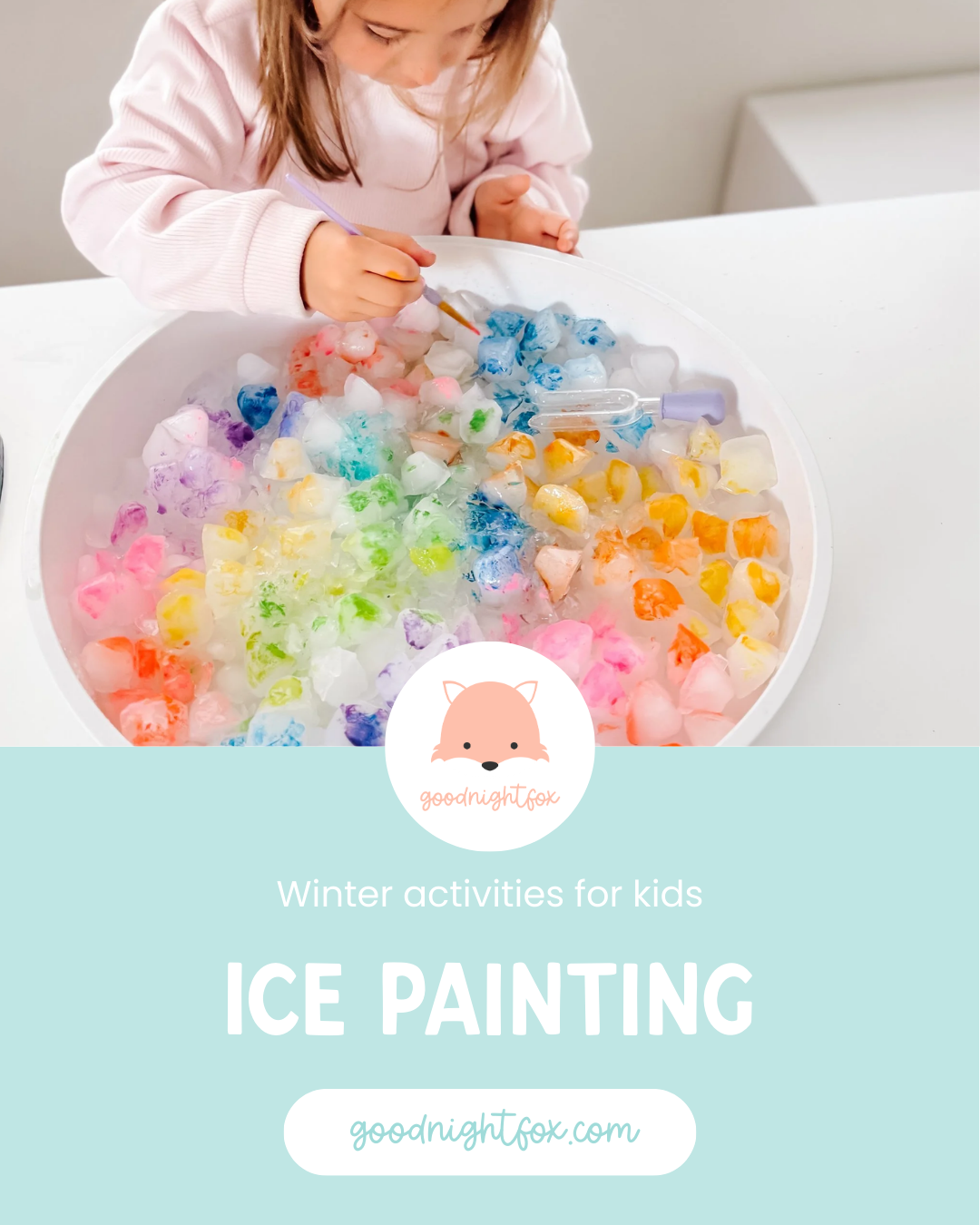
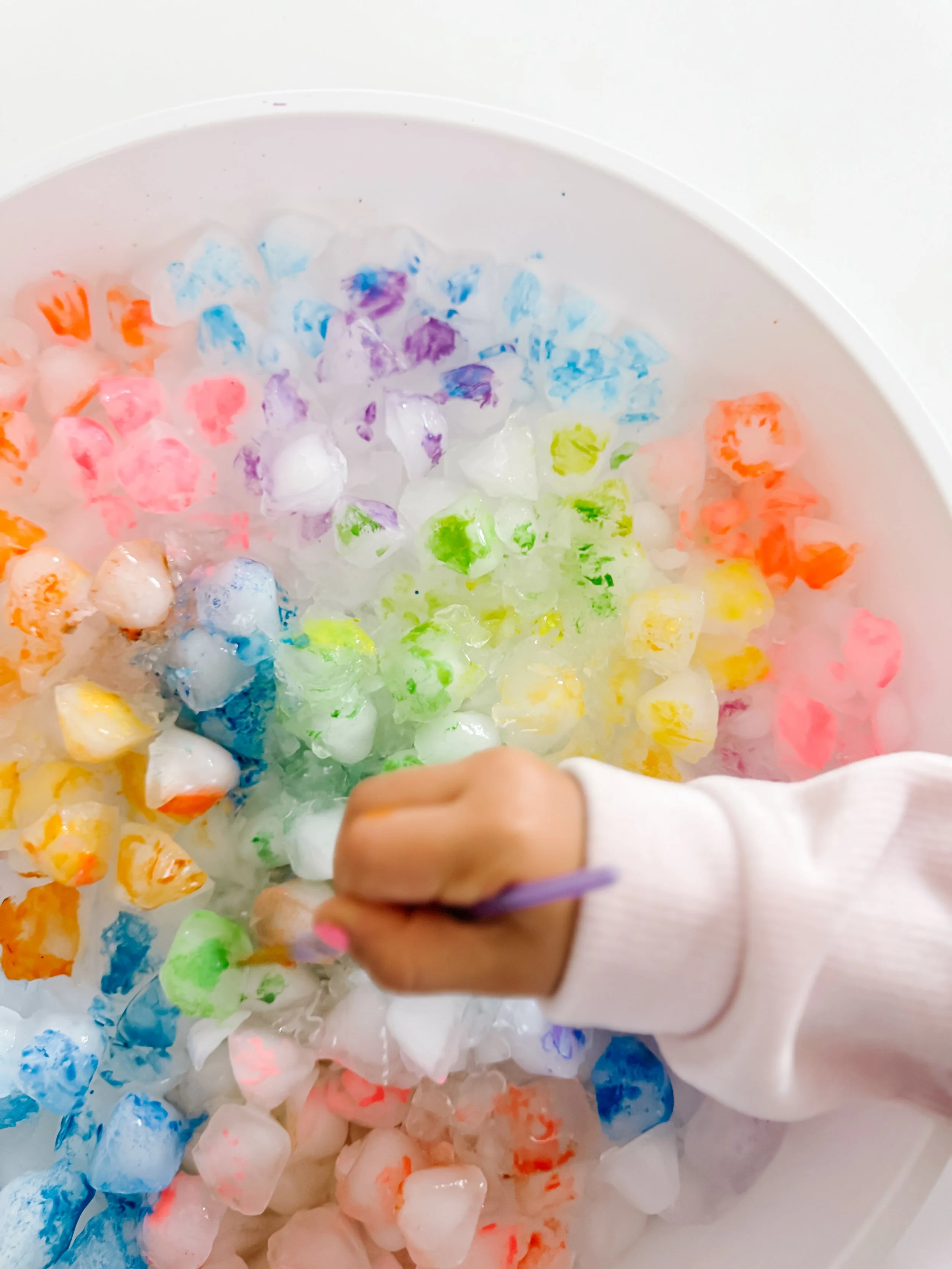
Ice painting winter craft activity

If you’re looking for a magical winter sensory art activity that keeps preschoolers and homeschool kids engaged for ages, this Winter Ice Painting Activity is a must-try! Using a big play tray, ice blocks, watercolors, and drippers, kids transform frozen cubes into vibrant mini art pieces while exploring color mixing, melting effects, and hands-on sensory play.

This easy, low-prep setup combines STEM + art, and it’s one of the most affordable sensory play ideas for toddlers during the colder months.


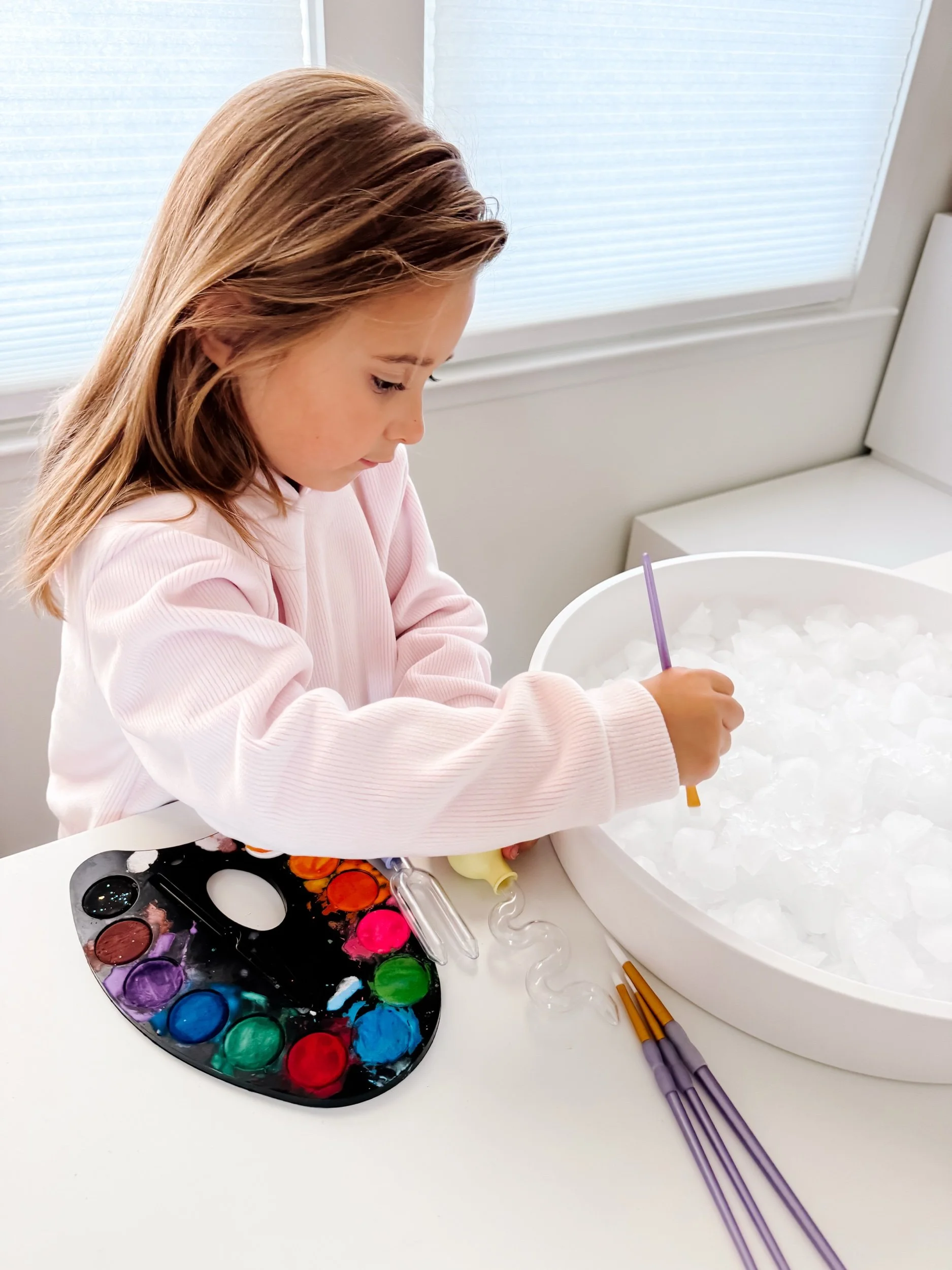
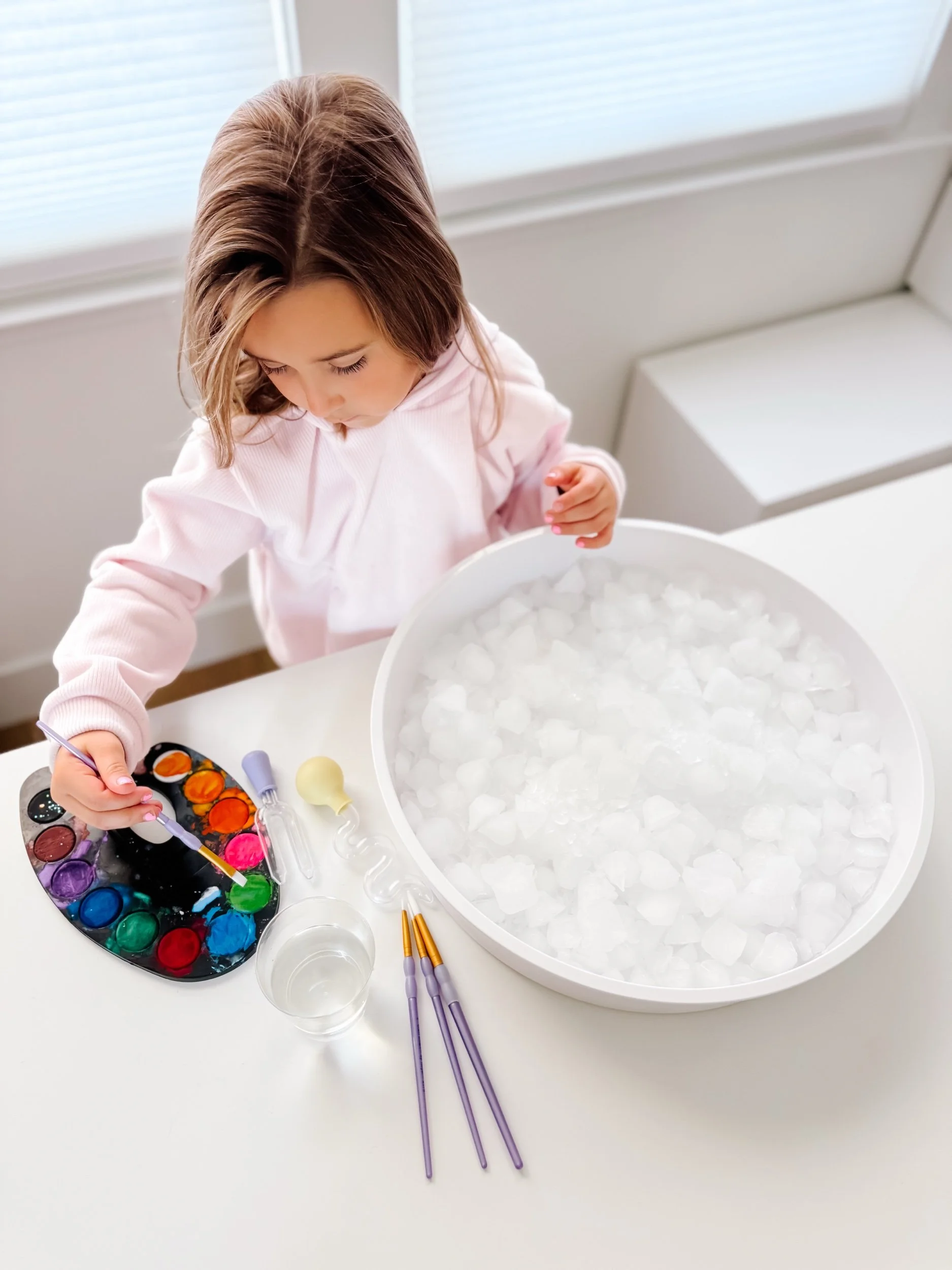
⭐ What You Need

  • Large play tray or shallow bin

  • Ice cubes or frozen blocks (silicone molds make fun shapes!)

  • Liquid watercolors or food coloring

  • Ice droppers / pipettes / drippers

  • Small cups or bowls

  • Optional: warm water for melting experiments

  • Towels or a mat for drip-catching


🎨 Learning Objectives by Age Group

0–6 months

  • Visual stimulation from bright colors on ice

  • Sensory introduction to cold temperatures (always fully supervised)

6–12 months

  • Cause-and-effect: watching color spread and ice melt

  • Early language: “cold,” “blue,” “wet,” “melt”

12 months–2 years

  • Fine motor strengthening using drippers

  • Simple color recognition

  • Sensory exploration through touch and visual observation

3–4 years

  • Color mixing experimentation

  • Early science: observing how warm water changes ice

  • Strengthening hand/finger muscles through squeezing and dripping

4–6 years

  • Introduction to states of matter (solid → liquid)

  • Intentionally creating secondary colors

  • Artistic planning and experimentation

  • Observing gradients, saturation, and melting timelines


🎨 Sensory Activity: Winter Ice Painting

A perfect mix of sensory play, art, and science!

Materials

  • Ice

  • Watercolors

  • Drippers

  • Tray

  • Optional warm water

Instructions

  1. Fill your tray with ice cubes or large frozen blocks.

  2. Pour watercolors into small cups and set out drippers.

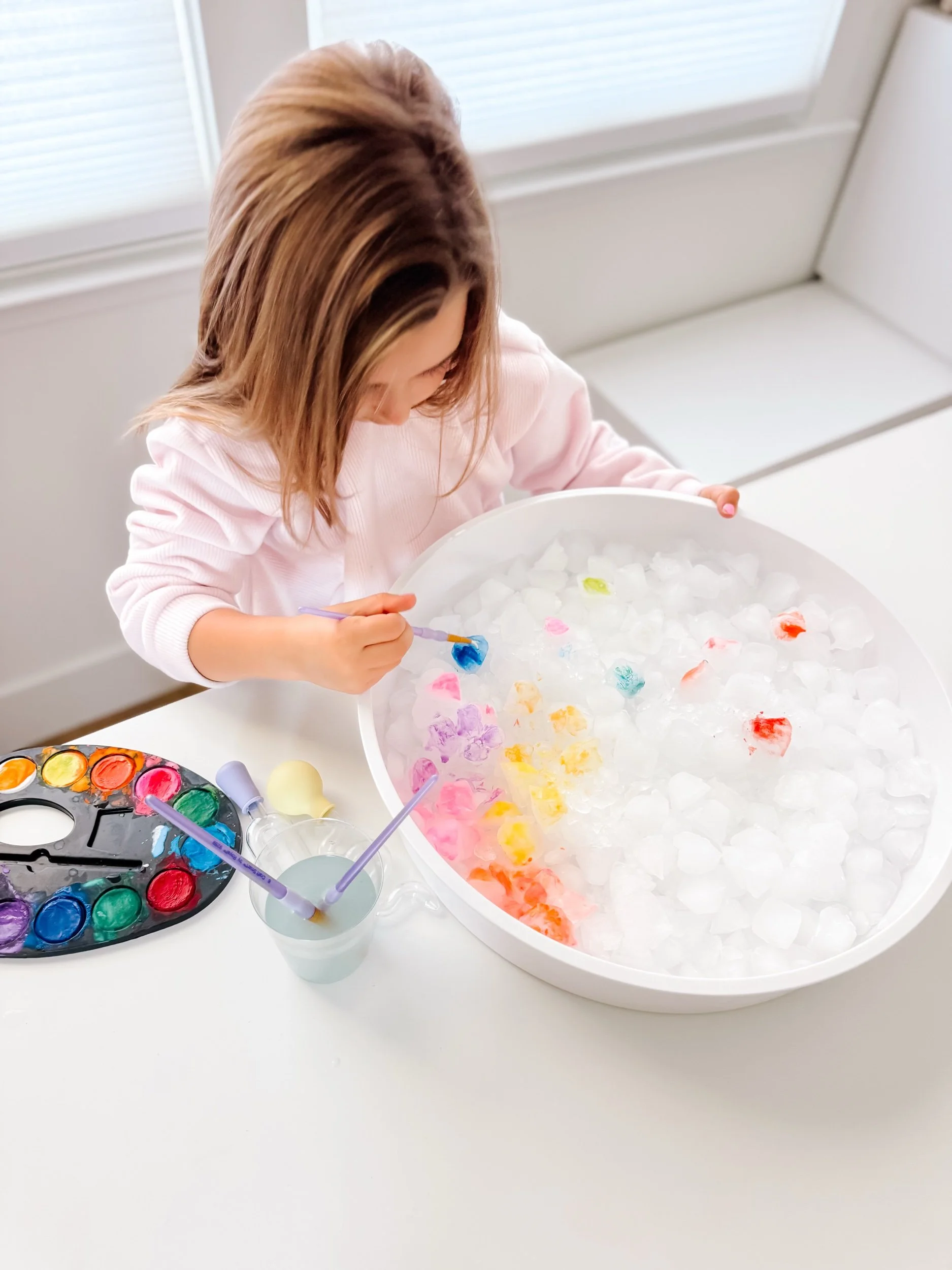
  3. Invite kids to squeeze and drip color onto the ice.

  4. Watch the colors swirl, blend, and slide across the melting surface.

  5. Add warm water for a “melting rainbow” effect.

  6. Encourage kids to experiment: layering colors, mixing hues, or creating patterns.

  7. Let them paint, melt, and explore freely!

Kids naturally stay engaged for long stretches as they drip, mix, and observe the constantly changing artwork.


IMG_0913.jpeg
IMG_0921_jpg.jpeg
IMG_0915_jpg.jpeg

💬 Educational Discussion Prompts for Homeschool Parents

Turn this into a mini winter lesson by asking:

  • “What happens when you add warm water to the ice?”

  • “Can you tell me how the colors move across the ice?”

  • “Which colors mix to make new ones?”

  • “What does the ice feel like? Smooth? Rough? Slippery?”

  • “Is the ice melting faster when you add more color?”

  • “What happens if you drip two colors in the same spot?”

  • “Let’s predict: which color will spread the fastest?”

These questions build language, STEM thinking, observation skills, and creative reasoning.


❄️ Benefits of Winter Ice Painting

  • Strengthens fine motor control

  • Encourages creative exploration

  • Teaches color theory naturally

  • Builds early science understanding

  • Boosts independent play

  • Great for toddlers and preschoolers stuck indoors

  • Mess-free when contained to a tray

  • Uses simple household materials


🧠 Vocabulary Words (Winter + Art)

  1. Freeze

  2. Melt

  3. Drip

  4. Color

  5. Mix

  6. Shade

  7. Ice

  8. Water

  9. Cold

  10. Liquid

  11. Solid

  12. Paint

  13. Blend

  14. Observe

  15. Experiment

  16. Create

  17. Transform

  18. Squeeze

  19. Drop

  20. Spread

  21. Pattern

  22. Texture

  23. Surface

  24. Temperature

  25. Change

Tags * Sensory play ideas for toddlers, * Winter sensory activities for preschool, * Winter ice painting activity, Winter ice painting activity, indoor sensory activities for toddlers, easy sensory play setups, DIY sensory activities for toddlers, creative sensory play for toddlers, toddler sensory activities with household items, fine motor skill activities for toddlers, water sensory play for toddlers, toddler art activities, mess-free sensory play ideas, educational sensory play for toddlers, simple sensory play for working moms, toddler-friendly sensory bins, sensory play on a budget
Comment

Why Picture Alphabets Help Kids Learn Faster (Backed by Brain Science 🧠✨)

November 21, 2025 Kylie Tuosto

As parents, we’ve all seen how quickly our children light up when learning feels playful and visual — whether it’s spotting animals in a book or pointing out letters on a sign. But did you know that pairing letters with pictures actually helps the brain learn faster?


Research from Carnegie Mellon University found that children who learned the alphabet with picture cues — such as A for Apple or B for Bear — recognized letter sounds 37% faster than children who learned with plain letters alone.


The difference wasn’t just motivation or interest. It was neurological.

🧠 The Brain Learns Through Connection — Not Memorization

When a child sees the letter B next to a bear, something special happens in their brain. According to the Carnegie Mellon professor who led the study, “This isn’t decoration. It’s a neurophysiological anchor.”

Here’s what that means:

  • The visual cortex processes the letter shape.

  • The hippocampus (the brain’s memory center) connects it to meaning.

  • The fusiform gyrus, which helps recognize faces and familiar patterns, links the picture to emotion and recall.

This three-part activation helps children remember not just what a letter looks like — but what it means and how it sounds.

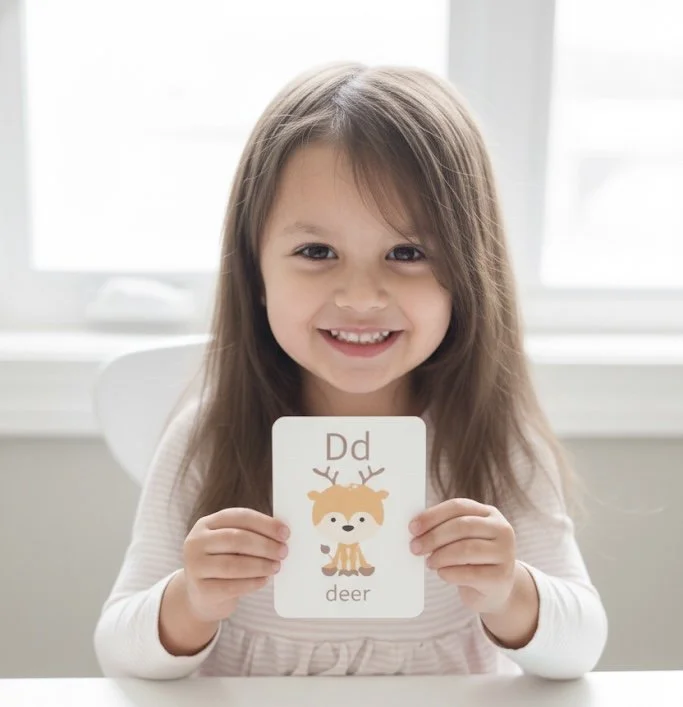
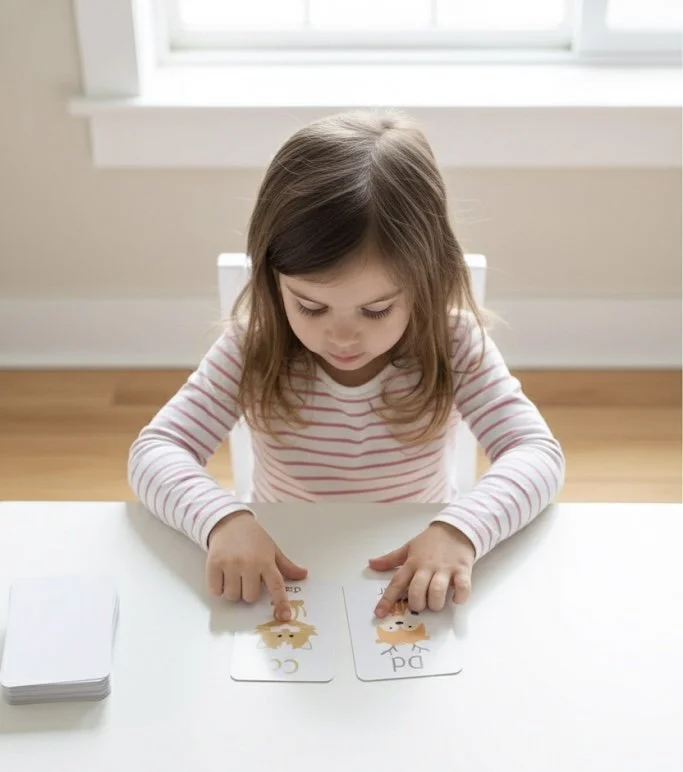
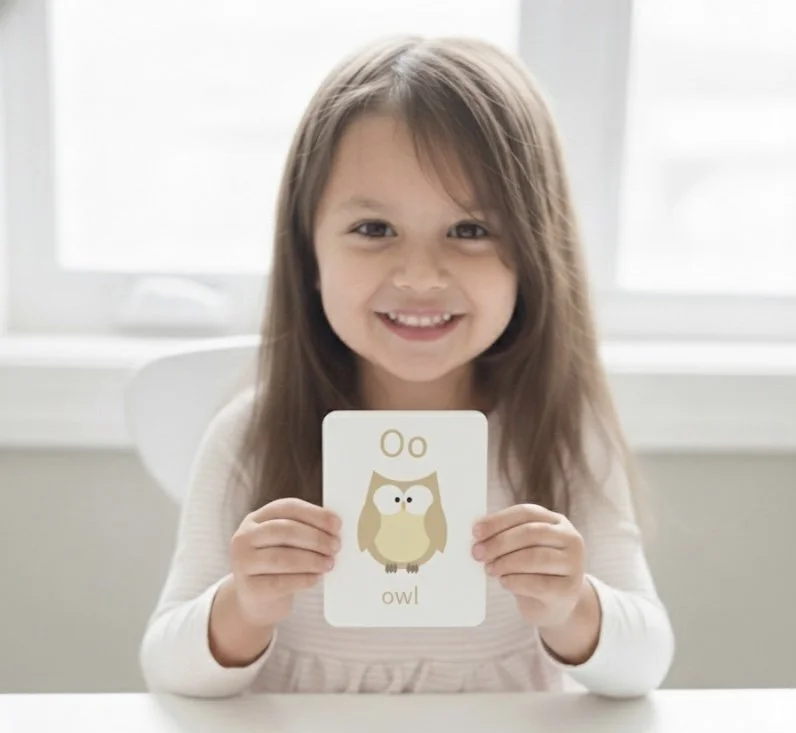
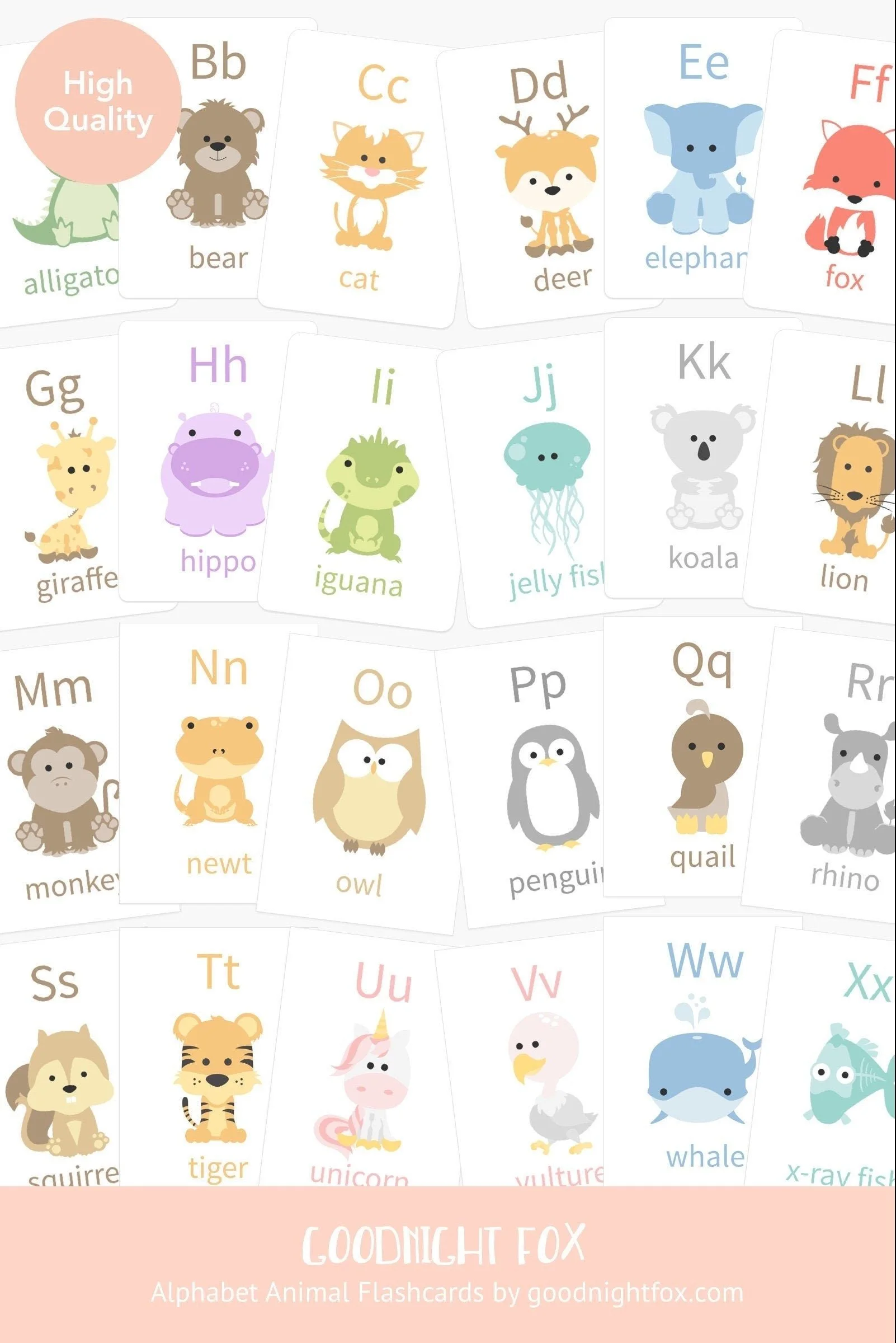
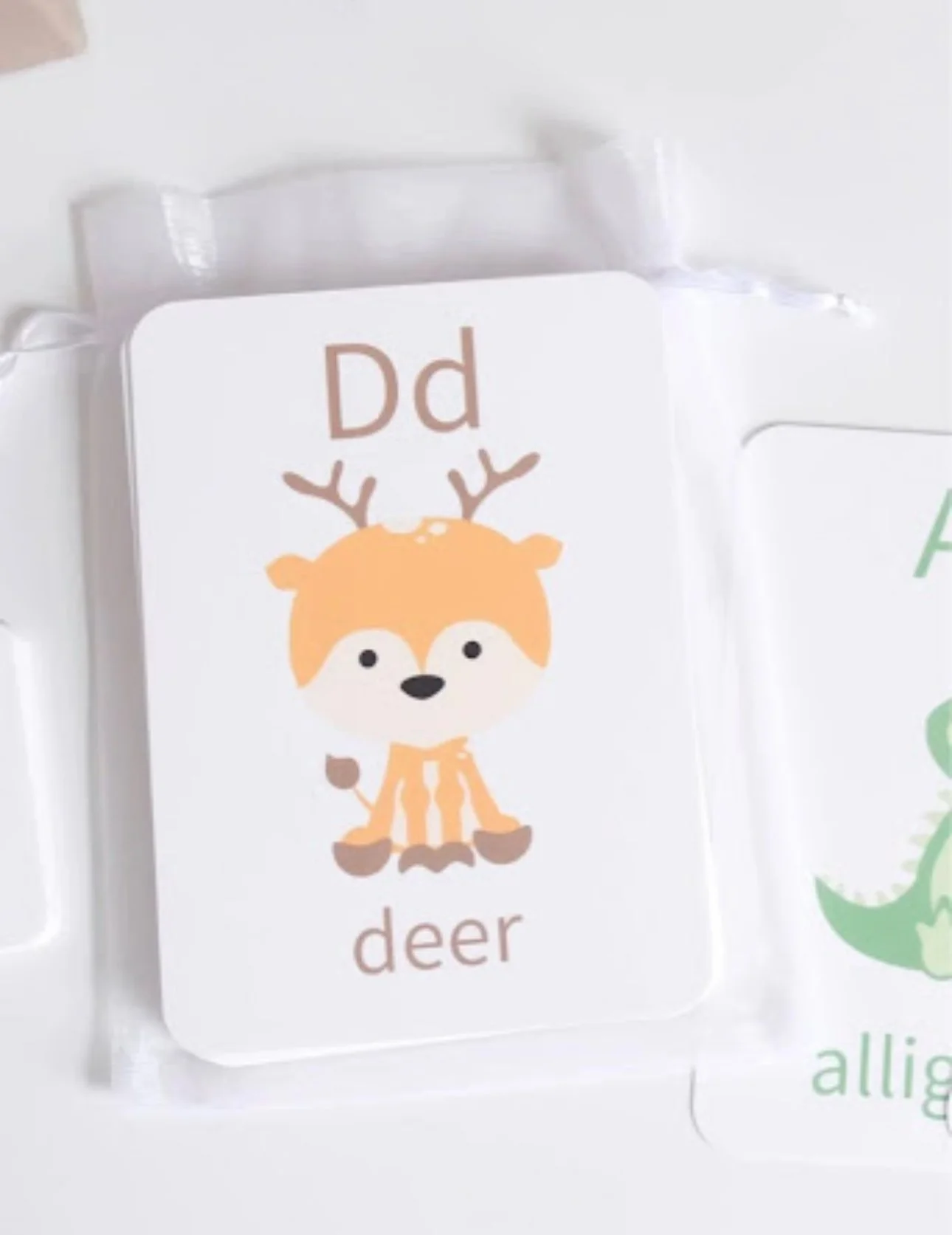
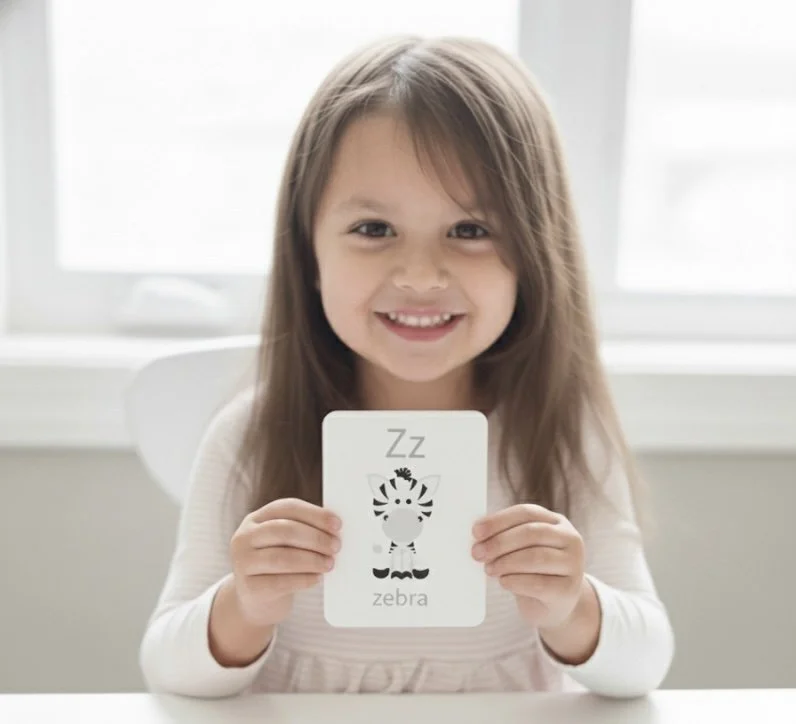
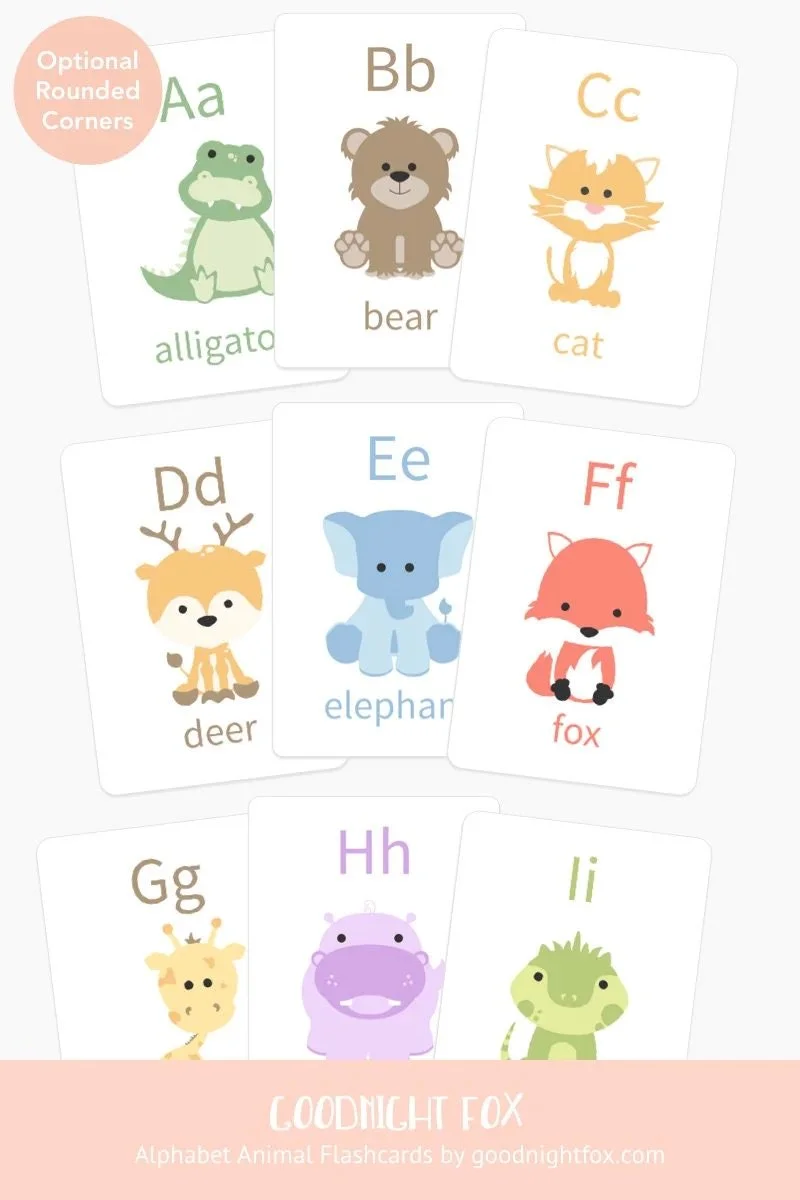
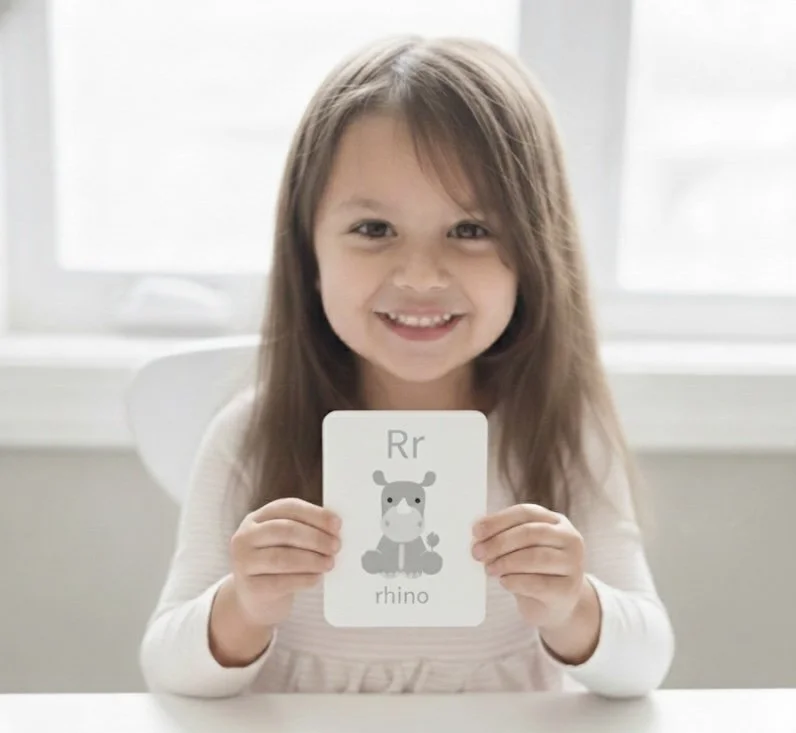
Animal Alphabet Cards

🎨 Why Pictures Turn Letters Into Meaningful Symbols

Without visual context, letters can feel like random marks on a page. To a toddler, “B” is just a line and two bumps. But when that “B” becomes a bear, the brain suddenly has something real to hold onto. One child in the Carnegie Mellon experiment even said, “B is bear, he growls.” That tiny growl is a big deal — it shows the brain transforming abstract symbols into meaningful associations involving action, sound, and emotion. This is what cognitive scientists call dual coding theory — when the brain links information through both visual and verbal pathways, it doubles the memory trace. In other words, when kids see it and say it, they remember it twice as fast.


🔠 How This Applies to Early Literacy

Studies on embedded picture mnemonics (letters that include an image within their shape) show that children recall letter-sound connections faster and retain them longer. The visual context acts like training wheels for reading — helping children:

  • Recognize letters sooner

  • Build stronger sound-to-symbol associations

  • Develop phonemic awareness naturally through play

This is why educators increasingly emphasize multi-sensory learning — combining sight, sound, and story to make literacy stick.


🦊 Designed With This Research in Mind

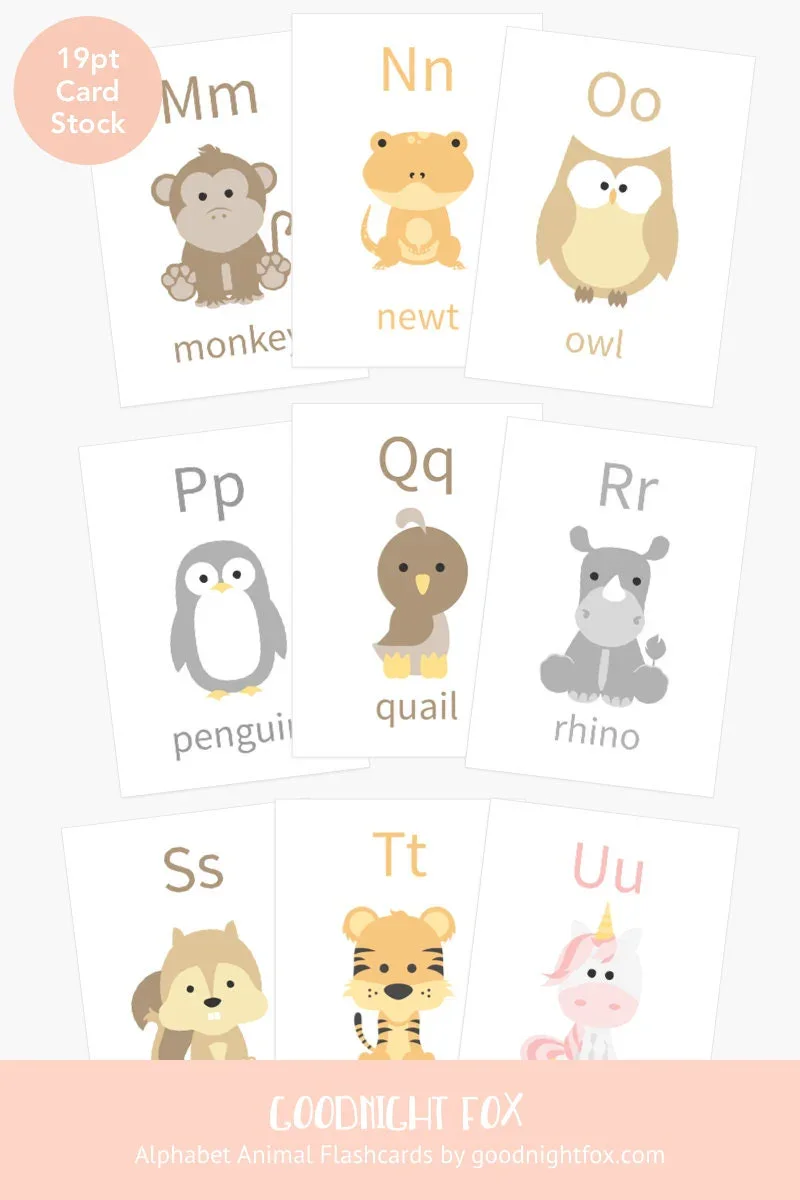
At Goodnight Fox, we created our Alphabet Animals Flashcards to give each letter a living, memorable anchor. Every animal is hand-drawn in soft, pastel tones — designed to capture attention without overwhelming the senses. Each letter and illustration pairing connects sight, sound, and emotion:

  • A for Alligator — snaps its jaws

  • B for Bear — growls

  • C for Cat — purrs softly

By turning each letter into a friendly face and story, we’re helping children’s brains store letters as experiences, not just symbols.

Animal Alphabet Learning Cards

💬 The Takeaway for Parents

If your child is just beginning their alphabet journey, look for tools that connect letters to meaning — not just rote repetition. Whether it’s singing, storytelling, or our Alphabet Animals Flashcards, the goal is the same: to help your child’s brain see, say, and feel each letter. Because learning should be as joyful — and memorable — as childhood itself. ✨


🌿 References & Further Reading

  • Carnegie Mellon University (2019). Alphabet learning and neurophysiological anchoring in preschoolers.

  • Roberts, T., Vadasy, P. & Sanders, E. (2018). Preschoolers’ Alphabet Learning: Letter Name and Sound Instruction, Cognitive Processes, and English Proficiency.

  • Ehri, L. C. (2014). Orthographic mapping in the acquisition of sight word reading, spelling memory, and vocabulary learning. Scientific Studies of Reading.

  • Practice Makes Permanent (2022). Scaffold and Accelerate Letter-Sound Learning with Mnemonic Letters.


Best Selling Animal Alphabet Cards
Tags picture alphabets, animal alphabet, how to help my toddler learn how to read, pre-reading skills for toddlers, how to help my child read, is my child ready for kindergarten?, what if my child can't read?, how to teach phonics?, how to learn letter sounds?
Comment

🦄 Magical Unicorn Lemonade Recipe (Perfect for a Unicorn Birthday Party!)

November 13, 2025 Kylie Tuosto
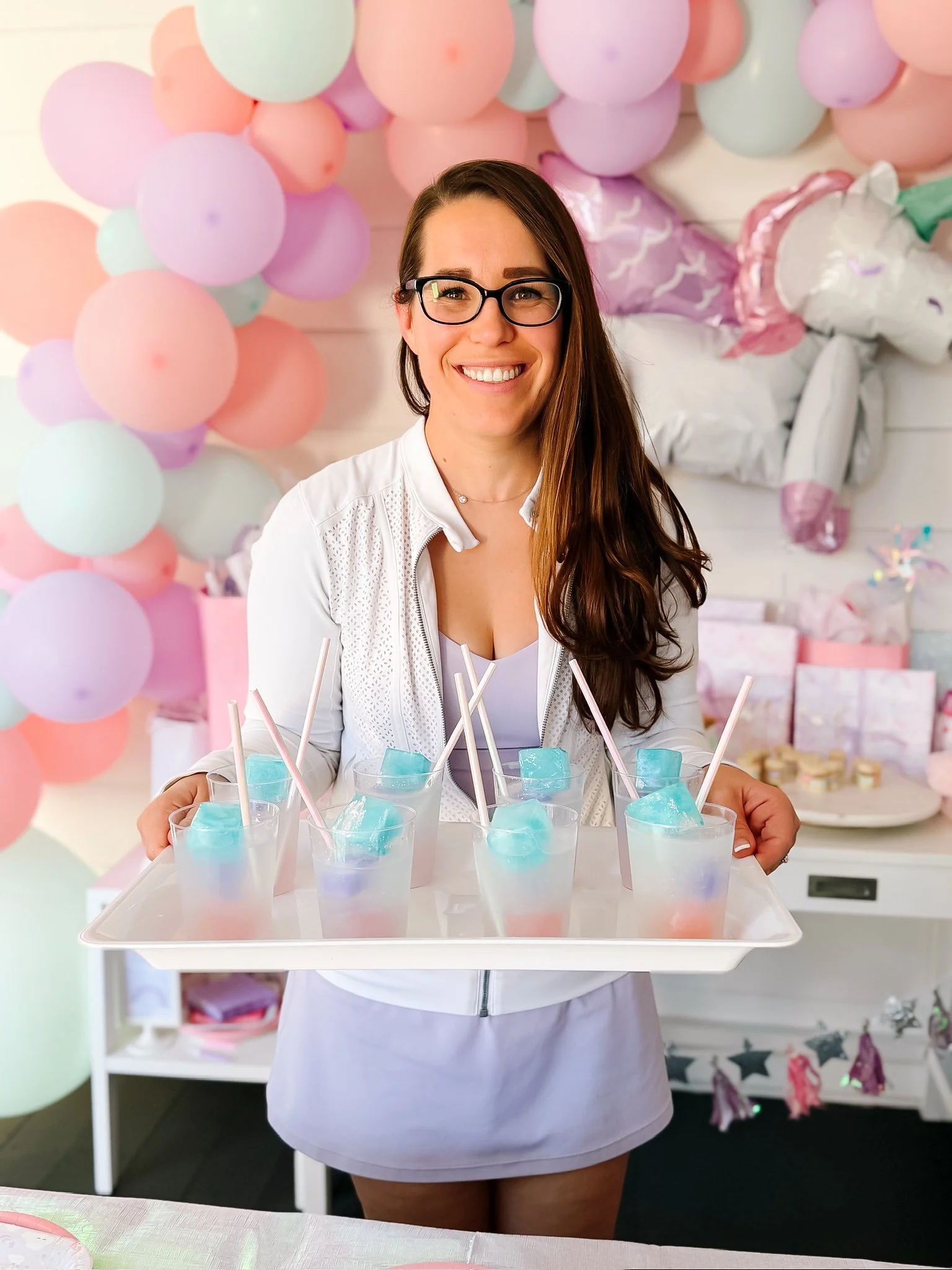
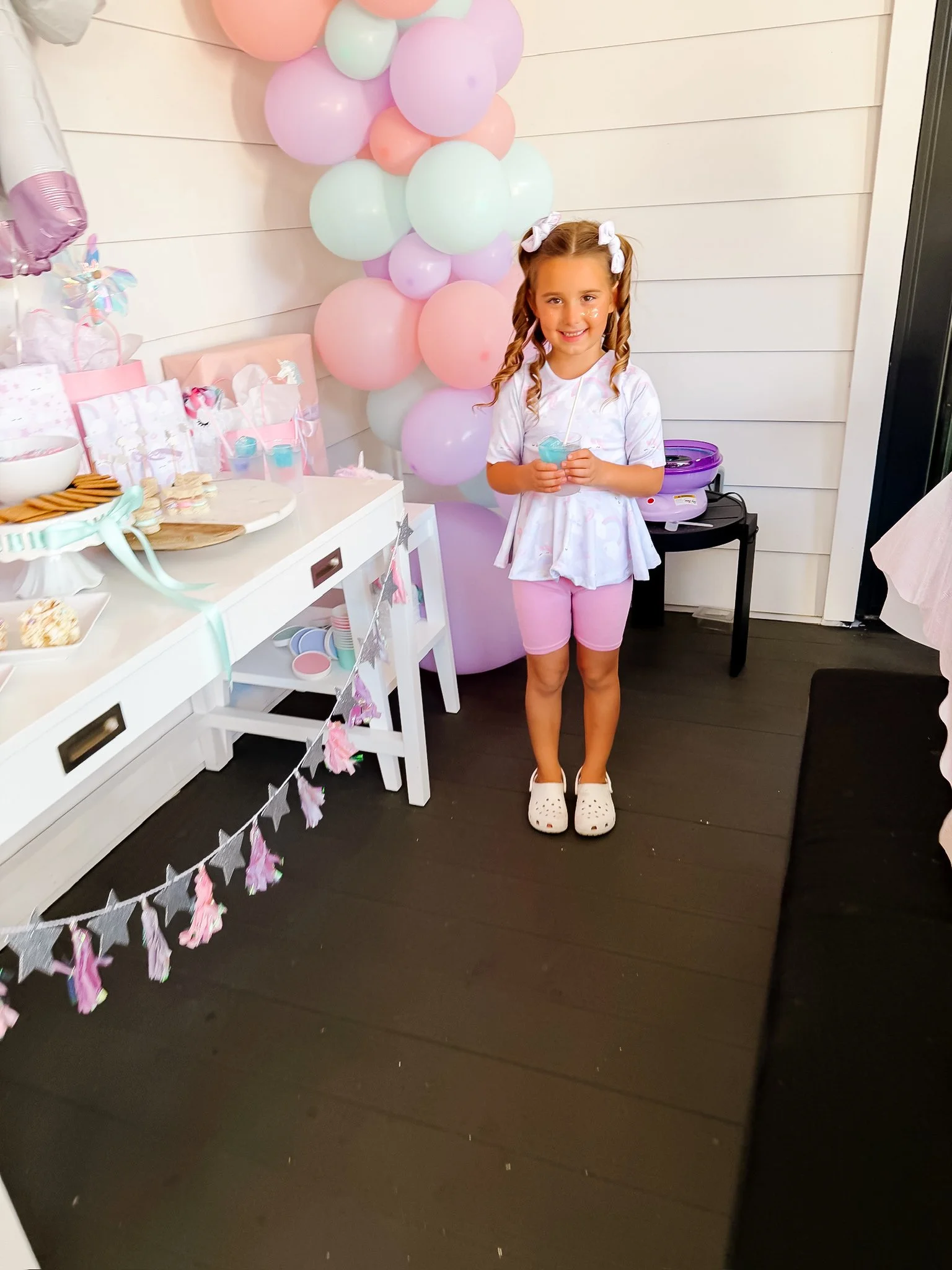
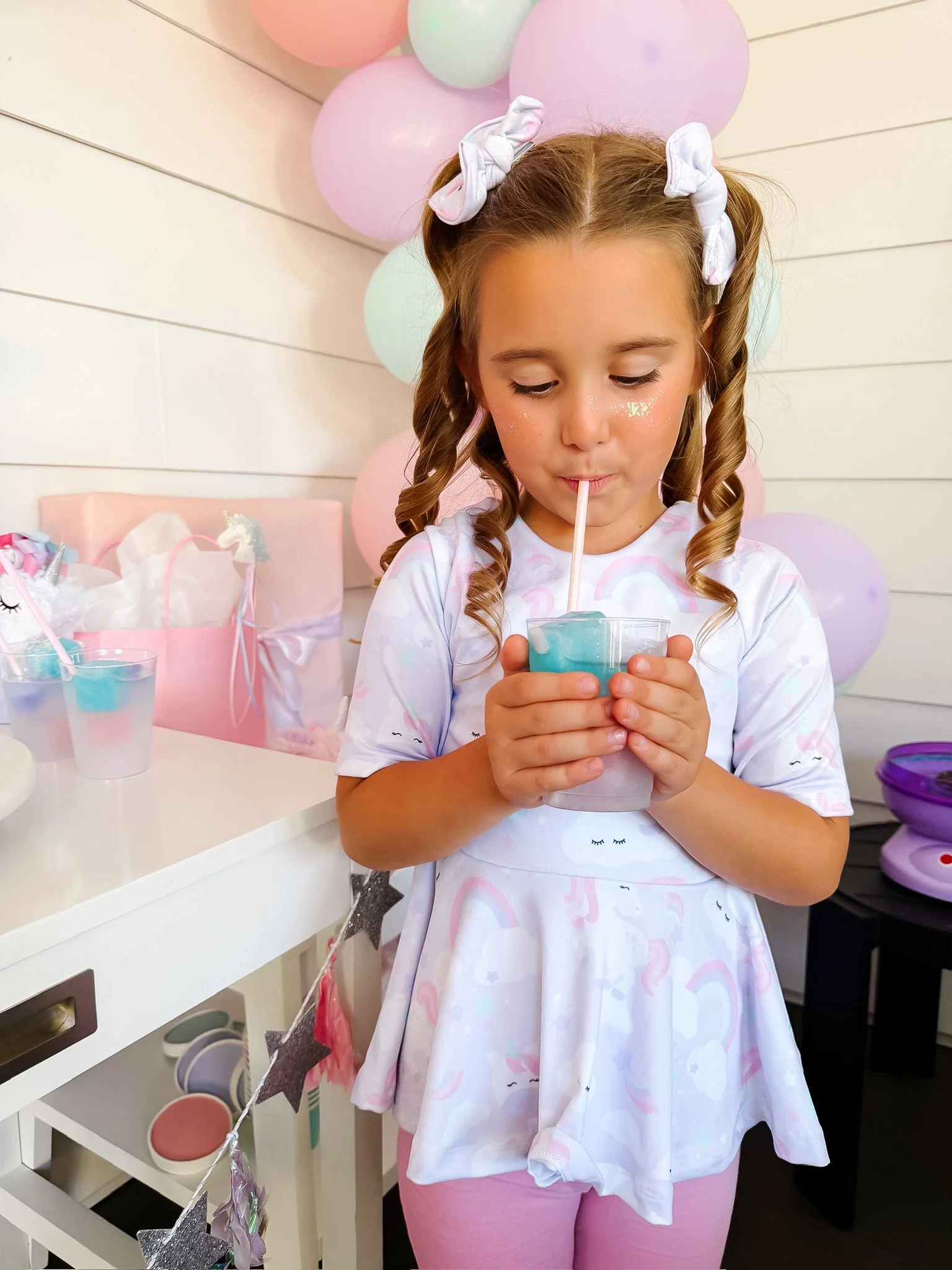
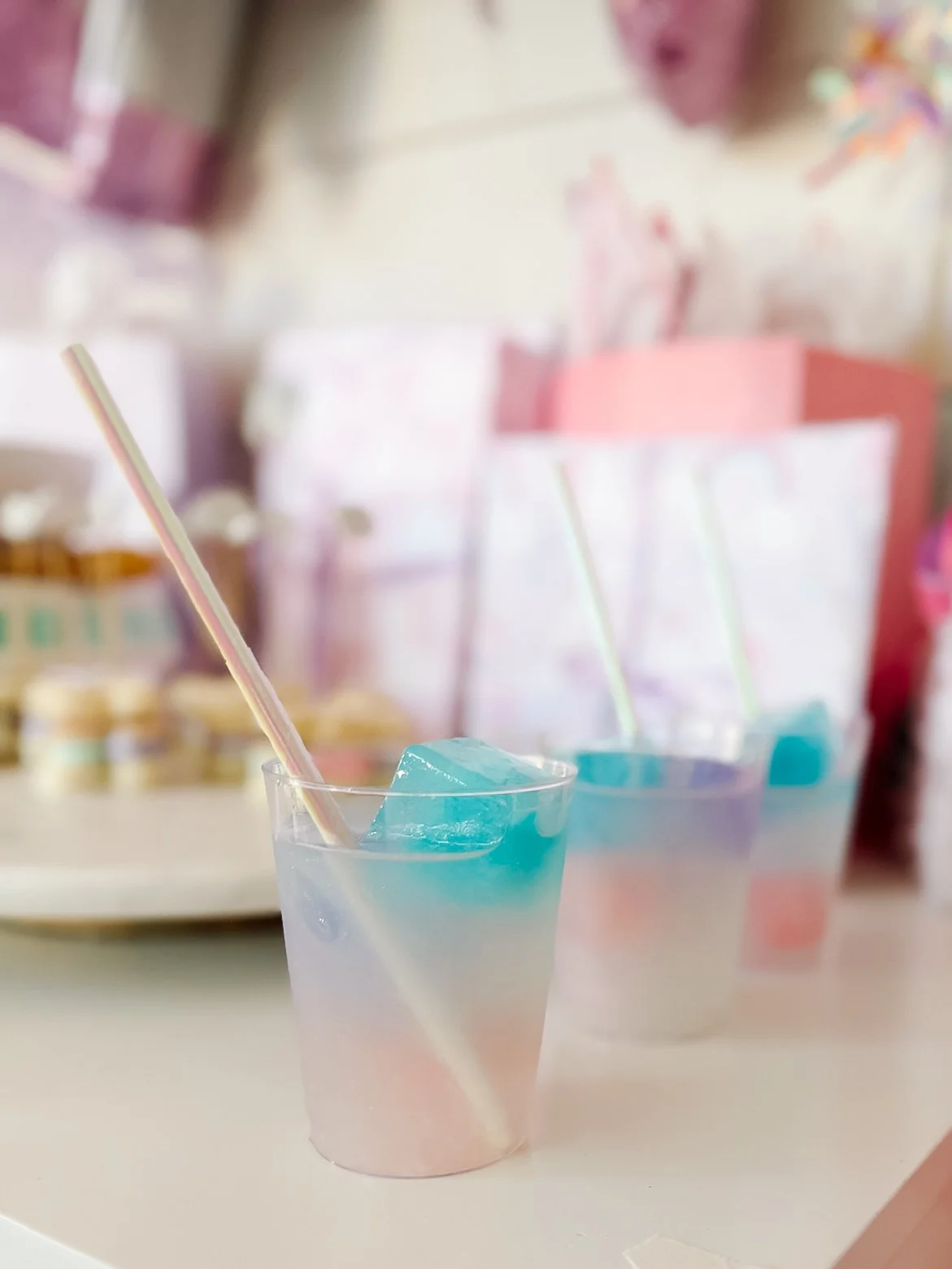
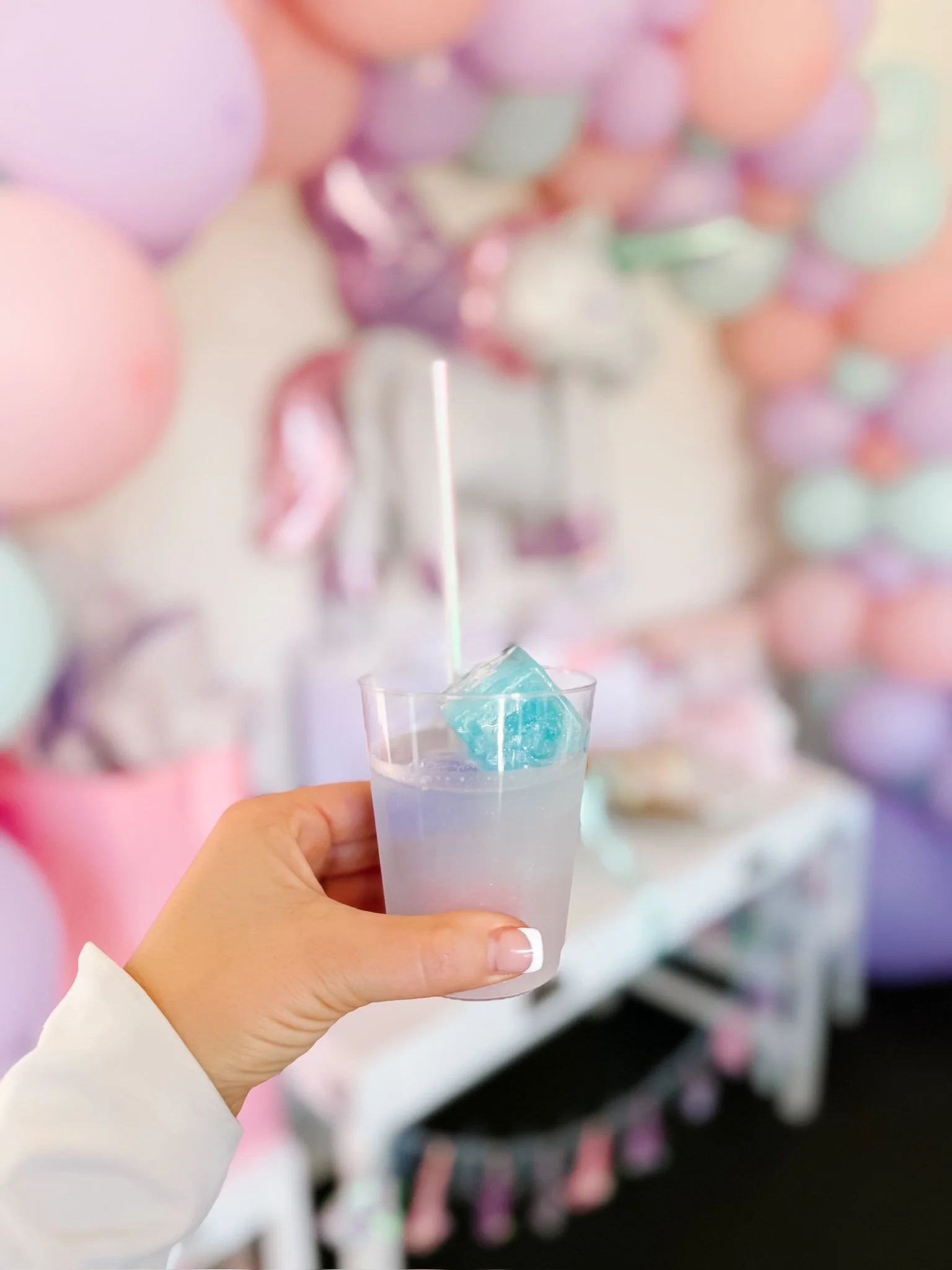
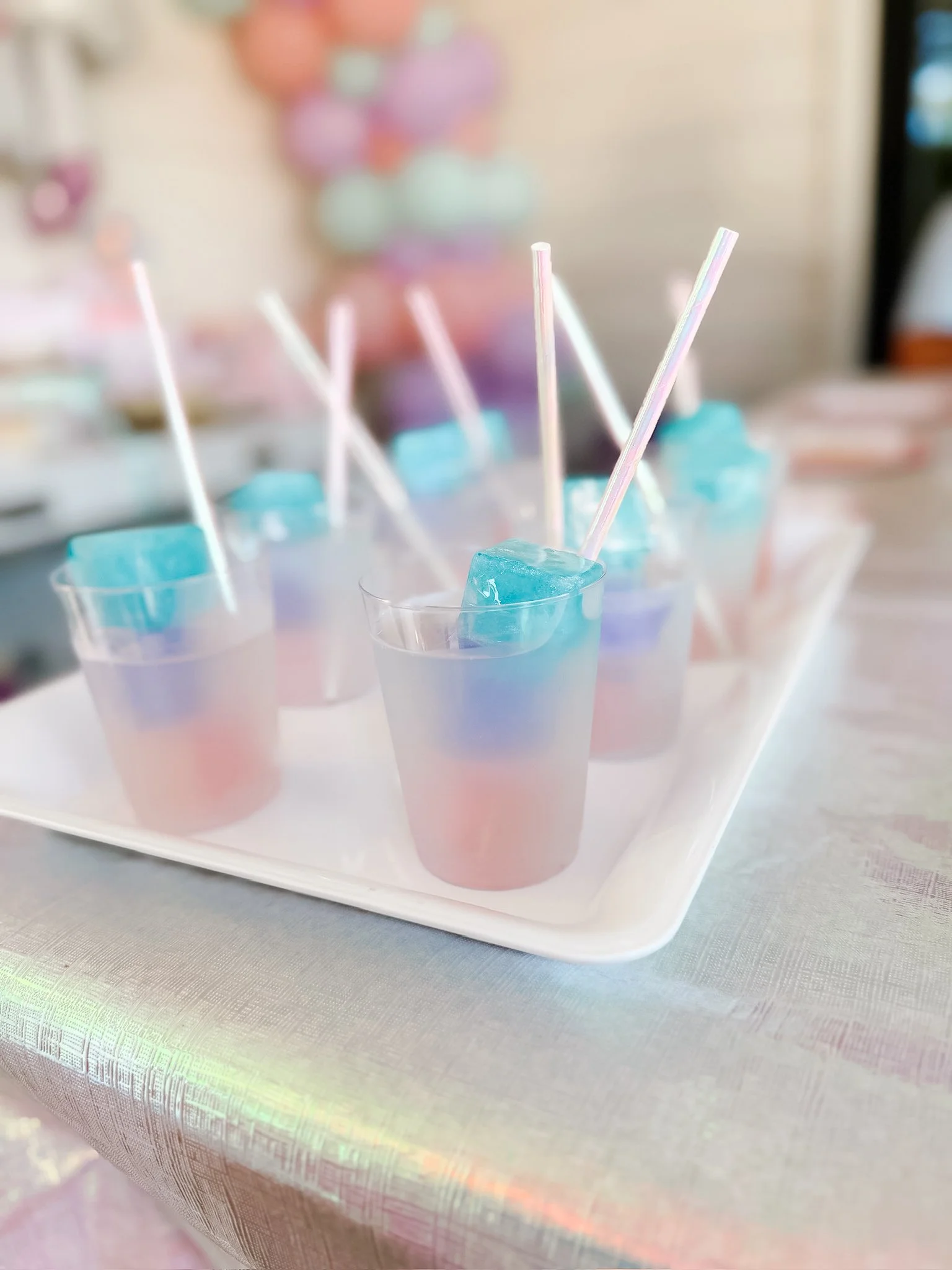
Magical unicorn lemonade in a clear glass with pink purple and teal ice cubes sparkling drink for kids party

Looking for the perfect unicorn party drink that’s as magical as it is easy to make? This Unicorn Lemonade is a fun, fizzy, and colorful treat that kids absolutely adore! With sparkling lemonade and pastel-colored ice cubes that shimmer as they melt, this drink adds the perfect whimsical touch to any unicorn-themed birthday party.

Whether you’re hosting a rainbow unicorn bash or just want to make an ordinary afternoon feel enchanted, this easy unicorn drink idea is sure to be a hit.

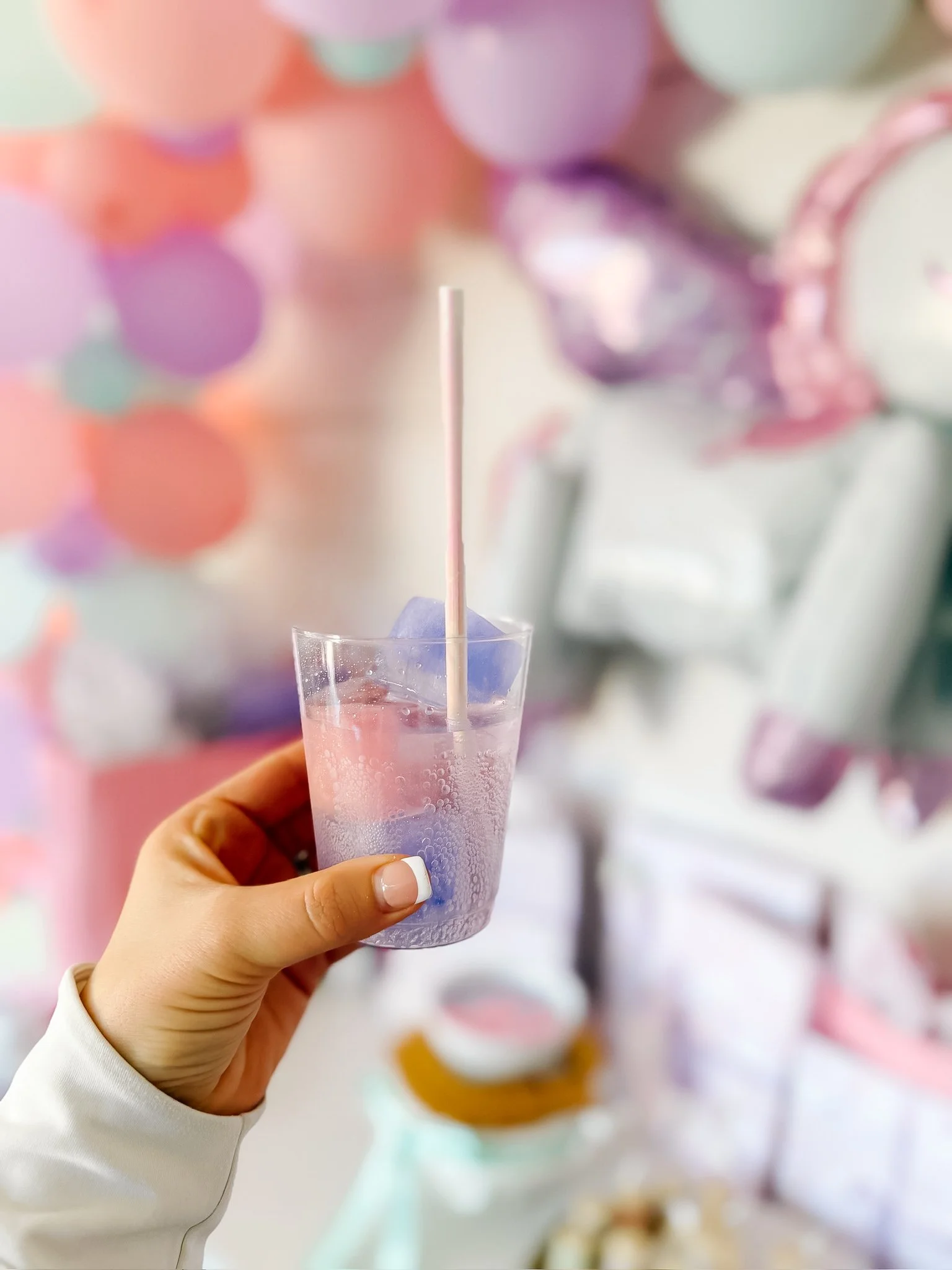
Hand dropping pastel colored ice cubes into a glass of sparkling lemonade for a unicorn party drink recipe

🌈 What You’ll Need

Ingredients:

  • Sparkling lemonade or lemon-lime soda

  • Purple, pink, and teal food coloring

  • Ice cube tray

  • Optional: Edible glitter or shimmer dust for an extra magical touch ✨


Supplies:

  • Clear cups or mason jars (so the colors shine through!)

  • Fun straws — we love pastel or paper ones for an eco-friendly touch


Close-up of an ice cube tray with pink purple and teal colored water ready to be frozen for unicorn lemonade recipe
Two clear glasses of fizzy unicorn lemonade with melting colorful ice cubes and fun paper straws for a kids birthday party

💜 How to Make Unicorn Lemonade

  1. Create your magical ice cubes.
    Mix water with a drop or two of food coloring to create separate pastel shades — pink, purple, and teal. Pour into your ice cube tray and freeze overnight.

  2. Pour the sparkle.
    Fill each cup with sparkling lemonade or lemon-lime soda.

  3. Add the magic.
    Drop in your colorful ice cubes and watch as they swirl and shimmer! The colors will slowly mix, creating a dreamy ombré effect that looks straight out of a fairytale.

  4. Optional sparkle.
    Add a sprinkle of edible glitter or shimmer dust on top for that extra unicorn magic.


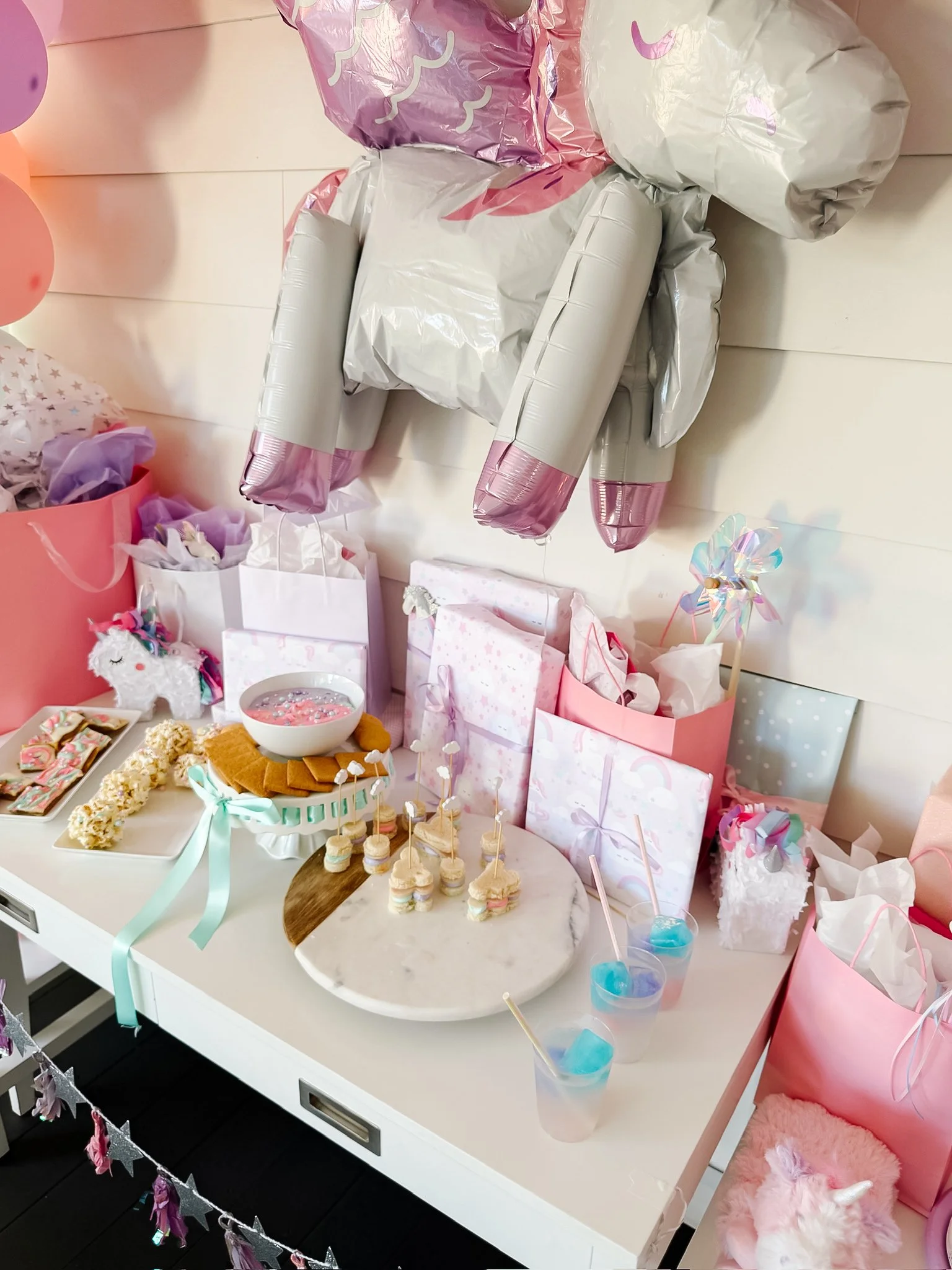
Unicorn party food table featuring colorful unicorn lemonade with popcorn balls and other pastel themed snacks

🧁 Unicorn Party Pairings

Pair your Unicorn Lemonade with other magical treats for the ultimate unicorn birthday setup:

  • 🦄 Unicorn Popcorn Balls

  • 🍰 Unicorn Trifle Cups

  • 🍧 Unicorn Pudding Cups

  • 🍦 Unicorn Frozen Yogurt Pops


These pastel treats all coordinate beautifully and make your party table feel like a rainbow come to life.


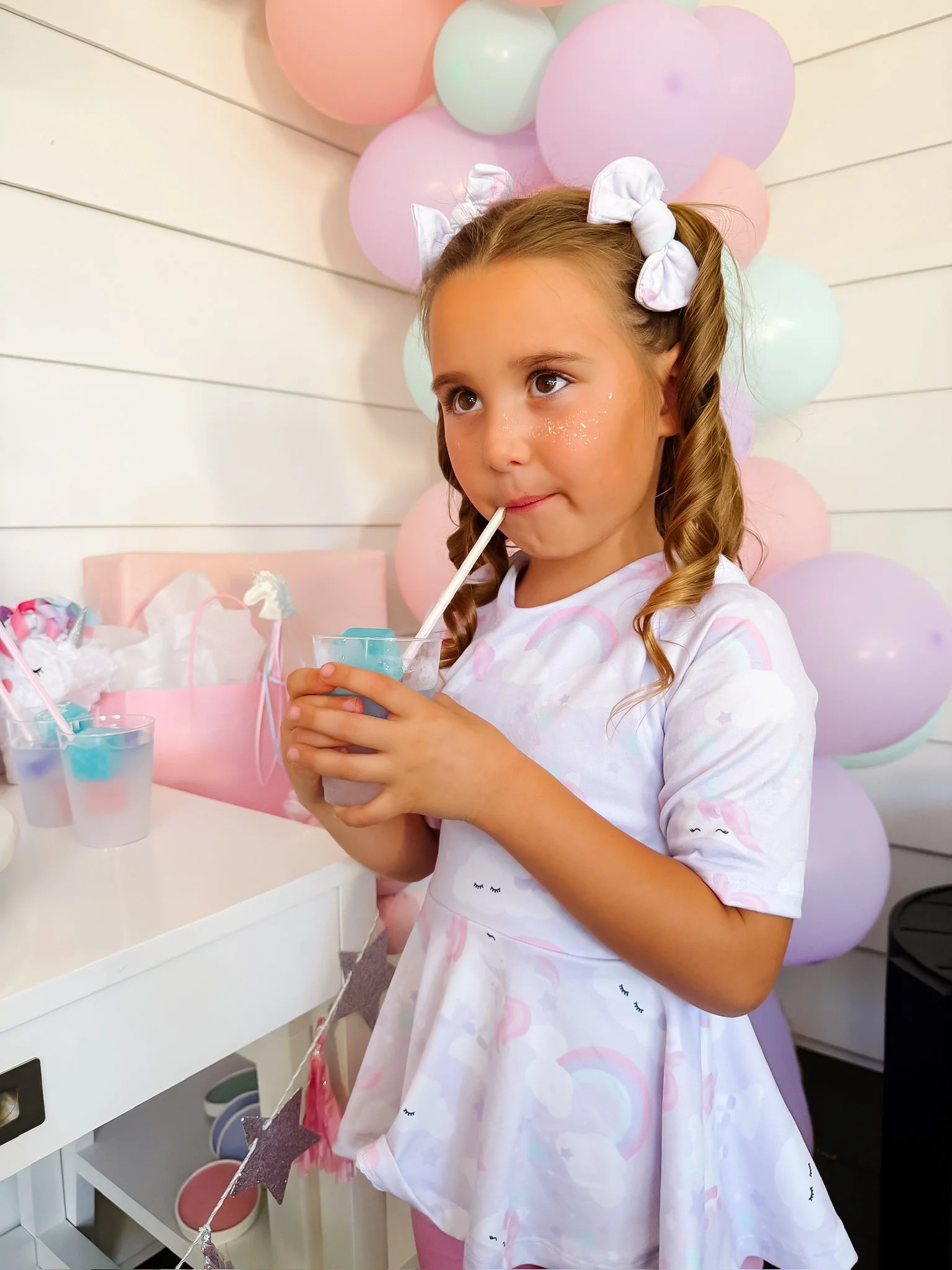
Close up of the vibrant ombré effect in a clear glass of unicorn lemonade with a colorful paper straw

🎉 Why Kids (and Parents) Love This Recipe

This easy unicorn lemonade recipe is:

  • Kid-approved – bubbly, sweet, and fun to watch change colors

  • Parent-friendly – made with simple ingredients and minimal prep

  • Photo-perfect – the ombré effect looks amazing in pictures, making it perfect for Instagram-worthy party moments


📸 Photo Tip:

Serve your unicorn lemonade in clear cups against a pastel balloon backdrop for the ultimate party photo moment. The colors from the ice cubes and the sparkle of the drink will pop beautifully in pictures!


Pinterest graphic for Unicorn Lemonade Recipe featuring the finished drink and a pink background for kids party ideas

✨ Pin It for Later!

Save this post to your Unicorn Party Ideas or Kids Party Recipes board so you can easily find it when planning your next magical celebration!


✨ More Unicorn Birthday Party Ideas

If you loved this magical idea, keep the unicorn fun going with even more whimsical treats and crafts from our Unicorn Birthday Party Collection! Each one is simple, colorful, and perfect for creating a birthday your little one will never forget.

  • 🦄 Unicorn Birthday Party Ideas – Our ultimate guide to hosting the perfect unicorn-themed celebration!

  • 🍿 Unicorn Popcorn Balls – Sweet, crunchy, and covered in pink, purple, and teal sprinkles—perfect for little hands to help make.

  • 🍨 Unicorn Trifle – Layers of pastel whipped cream, toffee bits, and blondie crumbles make this dessert a total showstopper.

  • 🍦 Unicorn Frozen Yogurt Pops – A healthy, refreshing snack that’s just as magical as it looks.

  • 🧁 Unicorn Pudding Cups – An easy, no-bake dessert that’s bursting with color and creamy flavor.

  • 🍋 Unicorn Lemonade – The prettiest drink for your unicorn party table—swirls of pink, purple, and sparkle!

  • 🍝 Unicorn Pasta – A magical mealtime idea with colorful noodles that bring joy to every bite.

  • 🍬 Unicorn Bark – A sweet and simple candy treat topped with sprinkles and glittery magic.

  • 💖 Unicorn Painting Craft – A creative art project that lets kids design and style their own ceramic unicorns

Full view of the unicorn lemonade in clear glasses with pastel ice cubes on a white table for a magical kids drink
Collage image showing ingredients and the finished unicorn lemonade drink with pink, purple, and blue ice cubes
Colorful pink, purple, and teal ice cubes in a glass bowl ready to be added to the sparkling unicorn lemonade recipe
Tags unicorn lemonade recipe, unicorn party drinks, unicorn birthday party ideas, kids unicorn drink, magical lemonade, pastel party drink, easy unicorn recipe, rainbow lemonade, unicorn drink for kids, unicorn themed birthday ideas, colorful layered drinks, sparkly drinks, edible glitter party drinks
Comment
← Newer Posts Older Posts →

Get Featured

Have a shop that specializes in baby gifts? I'd love to feature your shop and products in one of my weekly roundups. Email me at goodnightfoxstudio@gmail.com.

Have a small shop?

Check out GoodnightFox wholesale we’d love to have you carry the GoodnightFox brand.

Free Letter of the Week Guide

Sign up with your email address to get a weekly Letter Guide A-Z for 26 weeks of sensory play inspiration.

You’ll also get access to free printables, new products and promotions.

Thank you! Check your email for your free 26-Letter of the Week activity guide printable poster.


Free Printable Activities

Check out our free printable library of resources. From activity books, dramatic play kits, memory games, flashcards and more, you can try the entire goodnightFox collection free.


GOODNIGHTFOX

Play-based learning resources that help toddlers learn through play. Sensory play ideas, free printables, and hands-on learning tools designed for busy parents and curious little learners.

Get Free Printables →

EXPLORE

  • Start Here

  • Toddler Activities by Age

  • Seasonal Toddler Activities

  • Sensory Play Ideas

All Activity Ideas →

SHOP

  • Flashcards

  • Learning Kits

  • Memory Games

  • Dramatic Play

  • Playschool Planner

Shop All →

ABOUT

  • Our Story

  • Contact

  • FAQ

  • Privacy Policy

  • Terms & Conditions

  • Wholesale

  • Newsletter

© 2026 GoodnightFox
Play-Based Learning for Toddlers