
Bedtime Routine for Toddlers: A Calm 7-Step Visual Routine That Ends the Battles
If bedtime at your house currently involves forty-five minutes of negotiations, three extra glasses of water, and a toddler who suddenly needs to discuss every stuffed animal's feelings — you are not doing it wrong. Bedtime falls apart for a simple reason: the sequence only exists in your head. Your toddler can't see what's coming, so every step feels like a surprise ending. A visual bedtime routine fixes exactly that — same steps, same order, every night, on cards your child can flip themselves.
Why bedtime falls apart (and why a routine fixes it)
Toddlers don't stall at bedtime because they're difficult. They stall because transitions are hard and the evening sequence is invisible to them — bath, then teeth, then story feels like a series of ambushes when you can't see the plan. A predictable routine turns those ambushes into a path they can walk themselves, and that predictability is exactly what pediatric guidance points to: a consistent, calming pre-sleep routine — reading, bathing, quiet play — signals to a child that it's time to wind down (paraphrased from Sun Pediatrics' AAP-cited sleep hygiene guide).
The stakes are real but simple: the American Academy of Pediatrics recommends 11–14 hours of total sleep per day for ages 1–2 and 10–13 hours for ages 3–5, including naps (AAP News). A routine that starts at the same time every night is how those hours actually happen — not through willpower, but through rhythm. And a visual version of the routine does something extra: it hands the sequence to your child. Flipping each card is a tiny job with a visible finish line, and toddlers who feel in charge of the steps argue about them far less. Our visual schedule guide covers the daytime version of the same idea.
When she was little, our bedtimes ran on a picture chart long before I ever made routine cards to sell — a row of little drawings taped to the hallway wall, and she marched down that hallway flipping each one like it was her job. Because to her, it was. That's the whole method below: seven steps, same order, visible to the smallest person in the house.
The 7-step bedtime routine
Twenty to thirty minutes, same order, same time (within about half an hour), every night. The steps matter less than the sameness — pick your version of each and then don't improvise for two weeks.
1. The 10-minute wind-down warning
Bedtime starts before bedtime. About ten minutes out, dim the lights, turn off screens — pediatric guidance advises no screens in the hour before bed, since light and content both keep young brains wired — and announce the plan: "In ten minutes we start our bedtime steps." This is the runway, not the takeoff. When she was little, we'd do this with a silly "sun's going to bed too" announcement at the window, which bought us a surprising amount of cooperation for something so simple.
2. Bath or wash-up
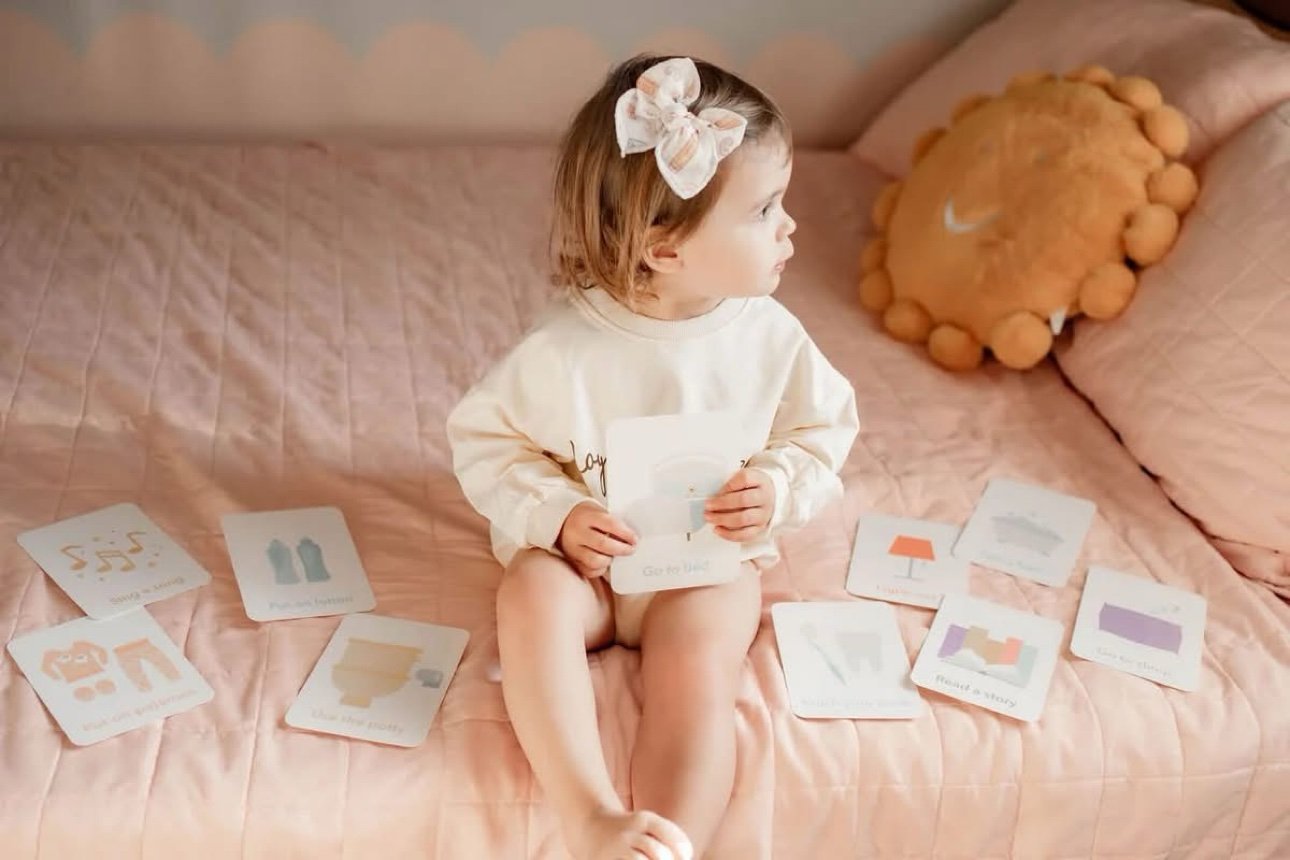
A warm bath is the classic sleepy cue, and it doubles as the last big sensory play of the day. You don't need one every night — a warm washcloth on the face and hands does the job on off nights — but keep the slot in the routine either way, so the sequence never changes. Bath toys stay simple at night; this is floating-and-pouring time, not new-toy time.
3. PJs (with a two-choice vote)
Hand your toddler exactly two pajama options and let them choose. This is the autonomy deposit that pays off later: a child who picked their own PJs has one less thing to protest. Lay them out in the same spot every night so the choice is part of the path, not a detour through the dresser drawers.
4. Brush teeth (same song, two minutes)
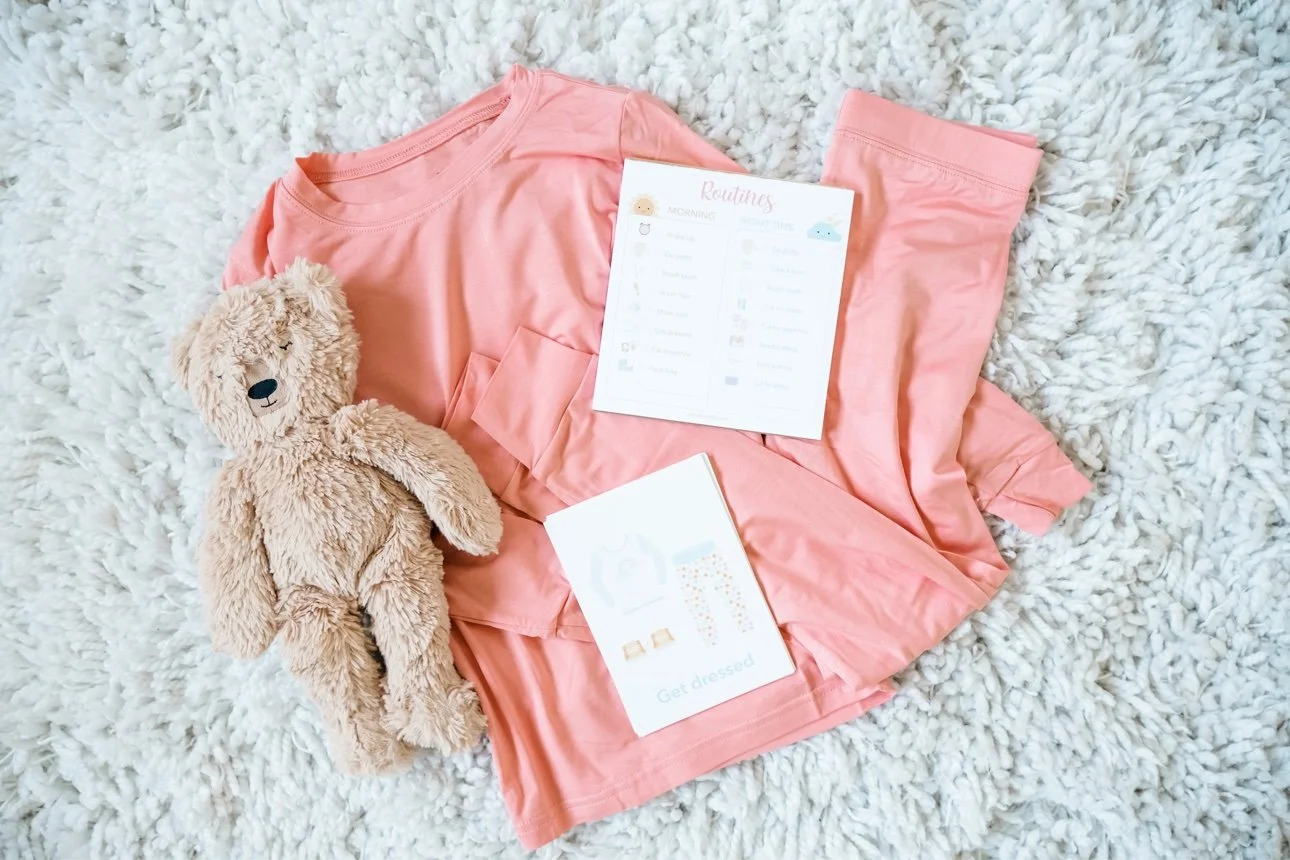
Same brush, same spot, same silly song or timer — the ritual is the point. Toddlers tolerate toothbrushing far better when it's step four of seven than when it appears out of nowhere. Let them "start" and you "finish," and keep it boring and quick.

5. Potty or fresh diaper
Last bathroom trip, last diaper change — handled now, in the routine, so it can't become a 9pm negotiation tactic later. If your toddler is potty training, this is also where the routine quietly does its work: same time, same expectation, no fanfare.
6. Story + the goodnight phrase
One or two books, in bed, read — not a tablet. Then the same short goodnight phrase every single night. Ours was short and always identical, and the identical part is what matters: a predictable phrase is a finish line your toddler can hear coming. When she was little, the phrase mattered more than the books — she'd recite it back at us before we finished, which told us the routine had officially moved into her head, where it belongs.
7. Lights out — and the chart's last flip
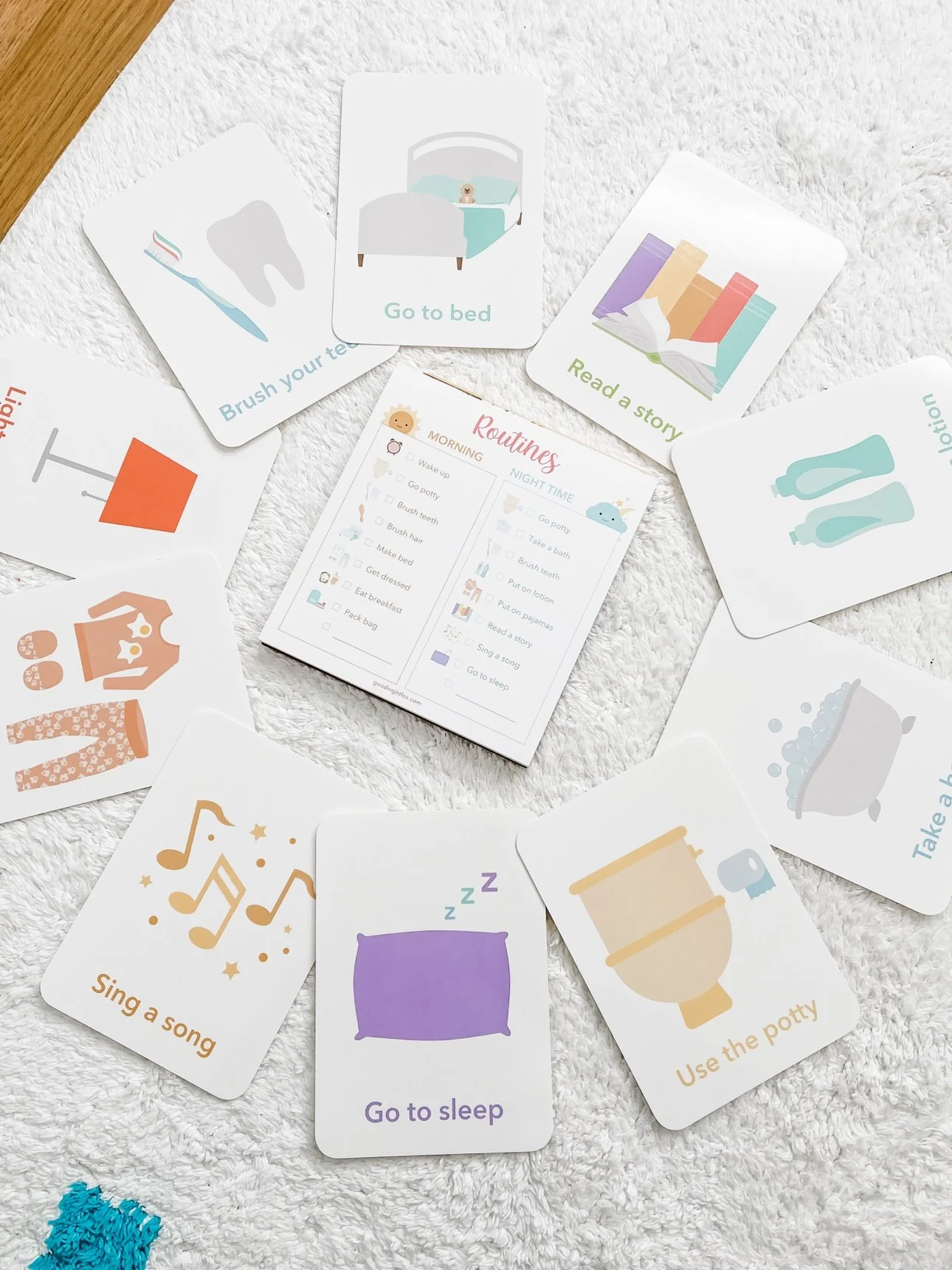
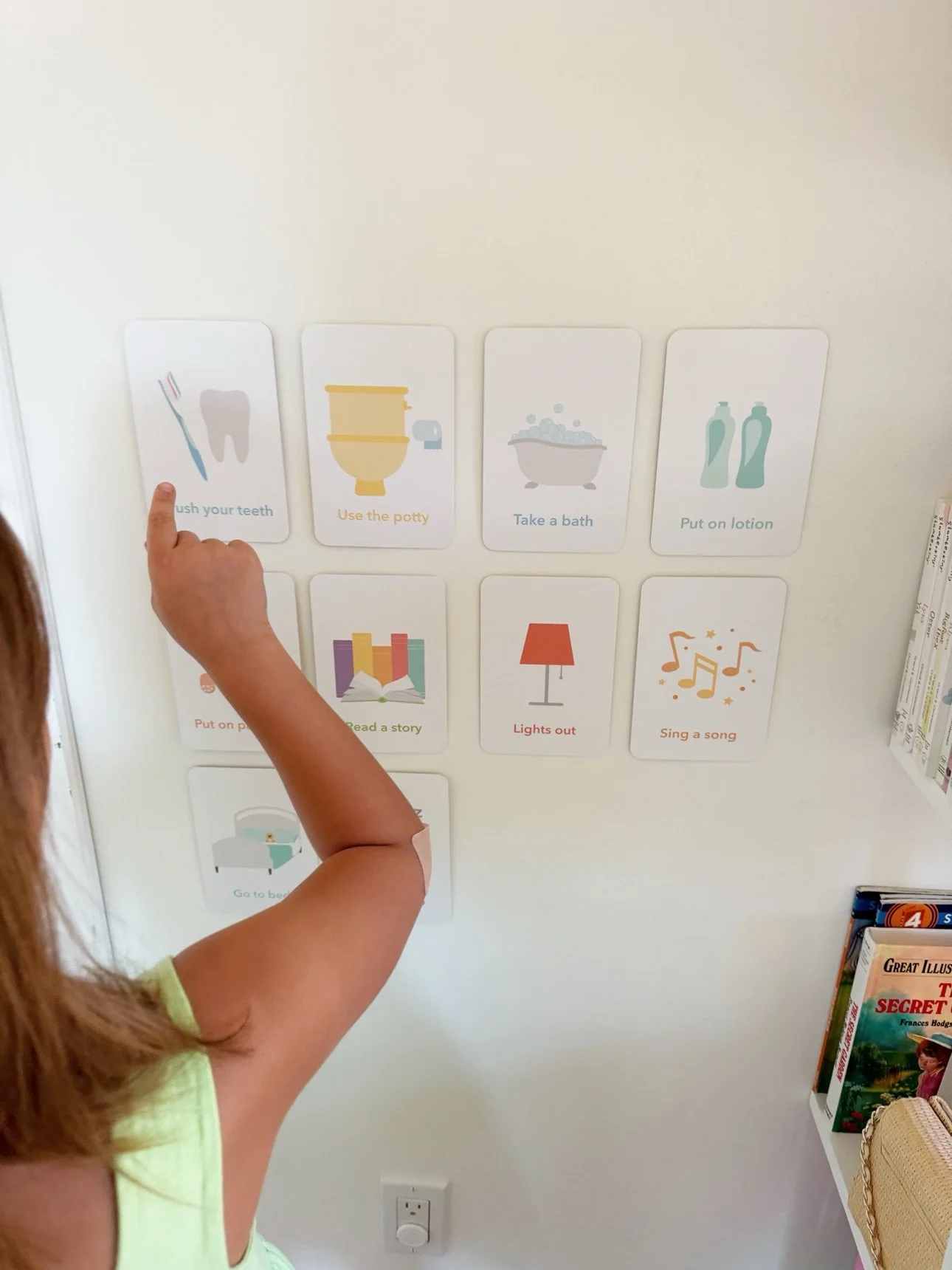
This is where the visual routine earns its keep. Line the steps up where your child can reach them — on the wall, on a ring, on the dresser — and let your toddler flip, check off, or turn over each card as you go. The last flip is lights-out, and they get to do it. A child who ends the routine themselves starts it more willingly tomorrow.

When they stall anyway (the greatest hits)
Even a good routine meets the classics. The answer to all of them is the chart, delivered on broken record:
- "One more story." "The chart says story is done — tomorrow we read two again." Then stop talking about it. Every extra word is a negotiation opening.
- "I'm thirsty." Build the water into step 5 — a small cup with the potty trip — so the request is already answered before it's asked.
- "I'm scared" / monsters. Validate briefly, keep the lights low and your voice boring, do one quick room check together as part of the routine — not as a new step invented at 9:15.
- Endless curtain calls. One calm return, one short phrase, no new steps. The routine is over; you're just the usher now.
The through-line: the chart is the authority, not you. "The chart says" ends arguments that "I said" starts.
What you can stop stressing about
- The "perfect" bedtime hour. Count backward from wake-up time using the AAP ranges above — the right bedtime is the one that delivers enough total sleep, not a number from a chart.
- A bath every single night. The slot stays; the water is optional. Nobody's sleep was ever ruined by a washcloth night.
- Doing the steps in textbook order. Your order is the right order, as long as it's the same order.
- Weekends. Pediatric guidance suggests holding the schedule within about 30 minutes even on weekends — close enough counts.
- Starting "late." A routine started at age three works fine. The best night to start was months ago; the second-best night is tonight.
Setup rules that make the routine stick
- Same order, same time, two weeks. Don't tweak it for fourteen days — the repetition is the method.
- Keep it to 20–30 minutes. Longer than that and the routine becomes the activity; the winding down should happen during it, not after.
- End in the bed. The last step happens where sleep happens — no couch-to-bed transfers after lights-out.
- Let them run the chart. Flipping the cards is the job; the job is the buy-in.
- Start on a calm night. Don't launch a new routine after a travel day or during an illness — begin when everyone's baseline is normal.
- Pair it with the morning. A visual morning routine bookends the night one, and the two charts together teach the full day's rhythm. Our general toddler routines guide covers the philosophy behind both.
What time should my toddler go to bed?
Work backward from wake-up time: ages 1–2 need about 11–14 hours of total sleep per day and ages 3–5 about 10–13 hours, including naps (AAP). For a 6:30am riser who naps 90 minutes, that usually lands lights-out somewhere between 7:00 and 8:00pm — but your child's actual sleep totals matter more than any posted bedtime.
How long should a toddler bedtime routine take?
About 20–30 minutes. Shorter than that and there's no real wind-down; much longer and the routine itself becomes the entertainment. If yours is running 45 minutes, something in the middle is a stall tactic wearing a routine costume — tighten it.
What if my toddler keeps stalling after the routine?
Make the chart the authority: "the chart says story is done." Build the usual requests (water, potty) into the steps so they're pre-answered, keep your voice boring after lights-out, and do one calm return with one short phrase. Consistency for a week or two is what retires the stalling — the routine has to outlast the testing.
Do we really need a bath every night?
No — but keep the bath slot in the routine every night, even if it's a warm washcloth on off nights. The sequence staying identical matters more than the water.
What if travel or illness breaks the routine?
It will, and that's fine. Bring the cards (or a photo of the chart) when you travel — the visual sequence survives new bedrooms surprisingly well. After an illness, just restart the same steps; most toddlers fall back into a known rhythm within a few nights.
The cards that run our bedtime
The whole method above runs on a visual chart — and our Night Time Routine Flashcards are exactly that: the evening steps on sturdy cards your toddler flips one by one, from wind-down to lights out. When she was little, the card-flip was the entire game — being in charge of the sequence turned bedtime from something done to her into something done by her.
Pair them with the Morning Routine Flashcards and the day has bookends: the night chart teaches the wind-down, the morning chart teaches the wake-up, and together they give your toddler the full day's rhythm at a glance.
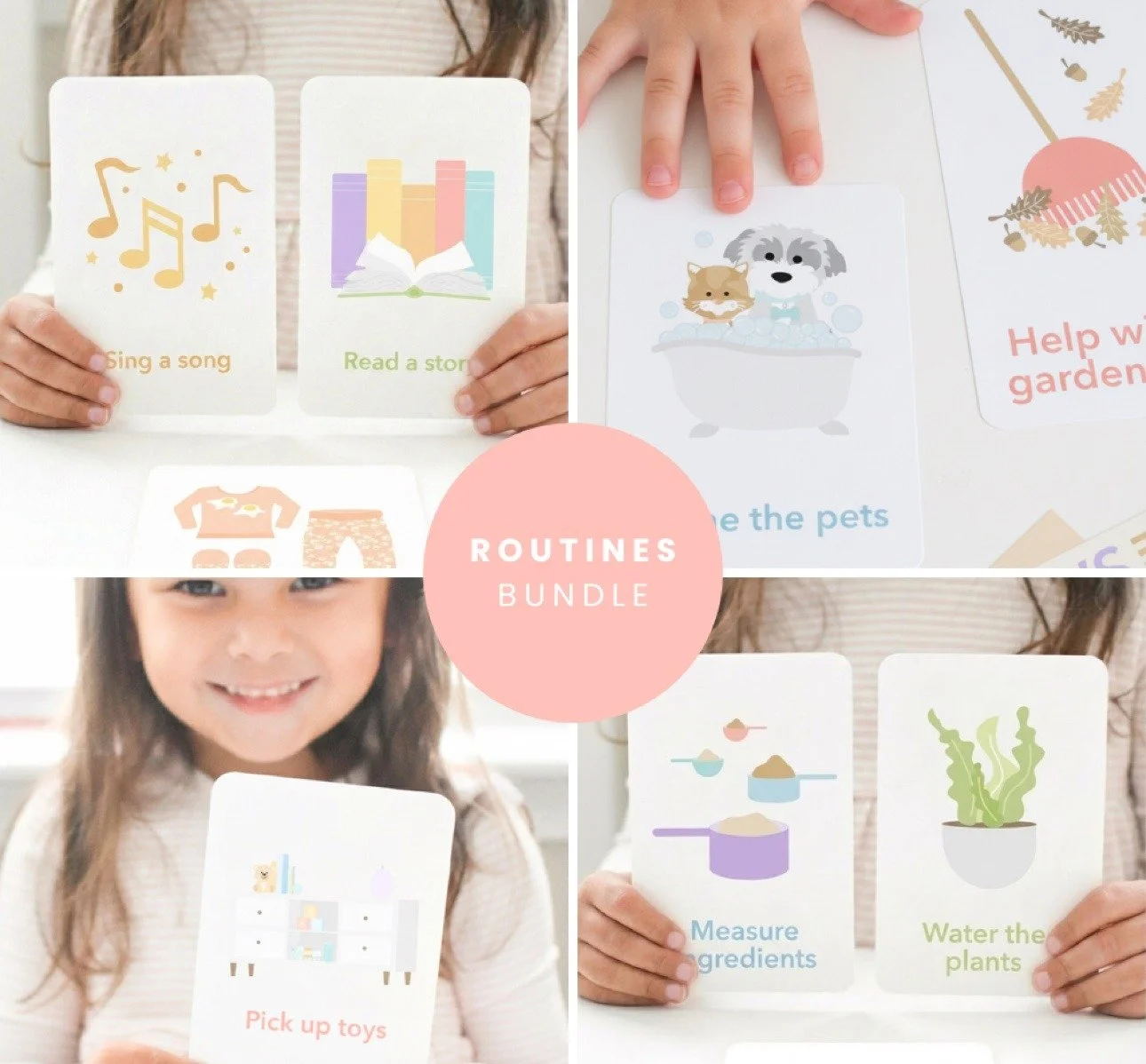
All of our routines bundles in one place — mix and match the cards your family actually uses.