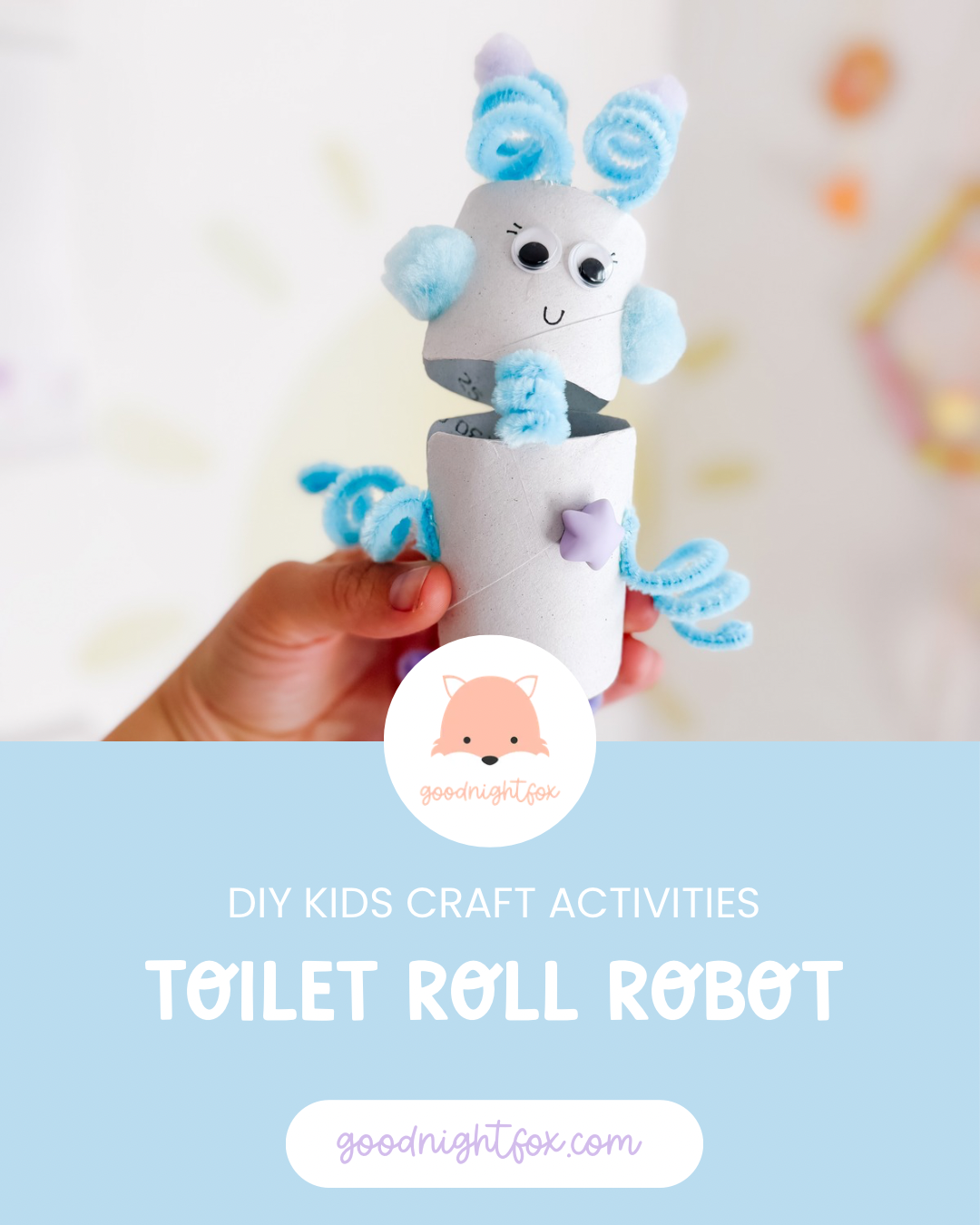
Toilet Paper Roll Robot Craft
Turn recycled cardboard tubes, pipe cleaners, pom-poms, googly eyes, and building bricks into a playful robot craft kids can build, customize, and use for imaginative play.
Why we love this robot craft
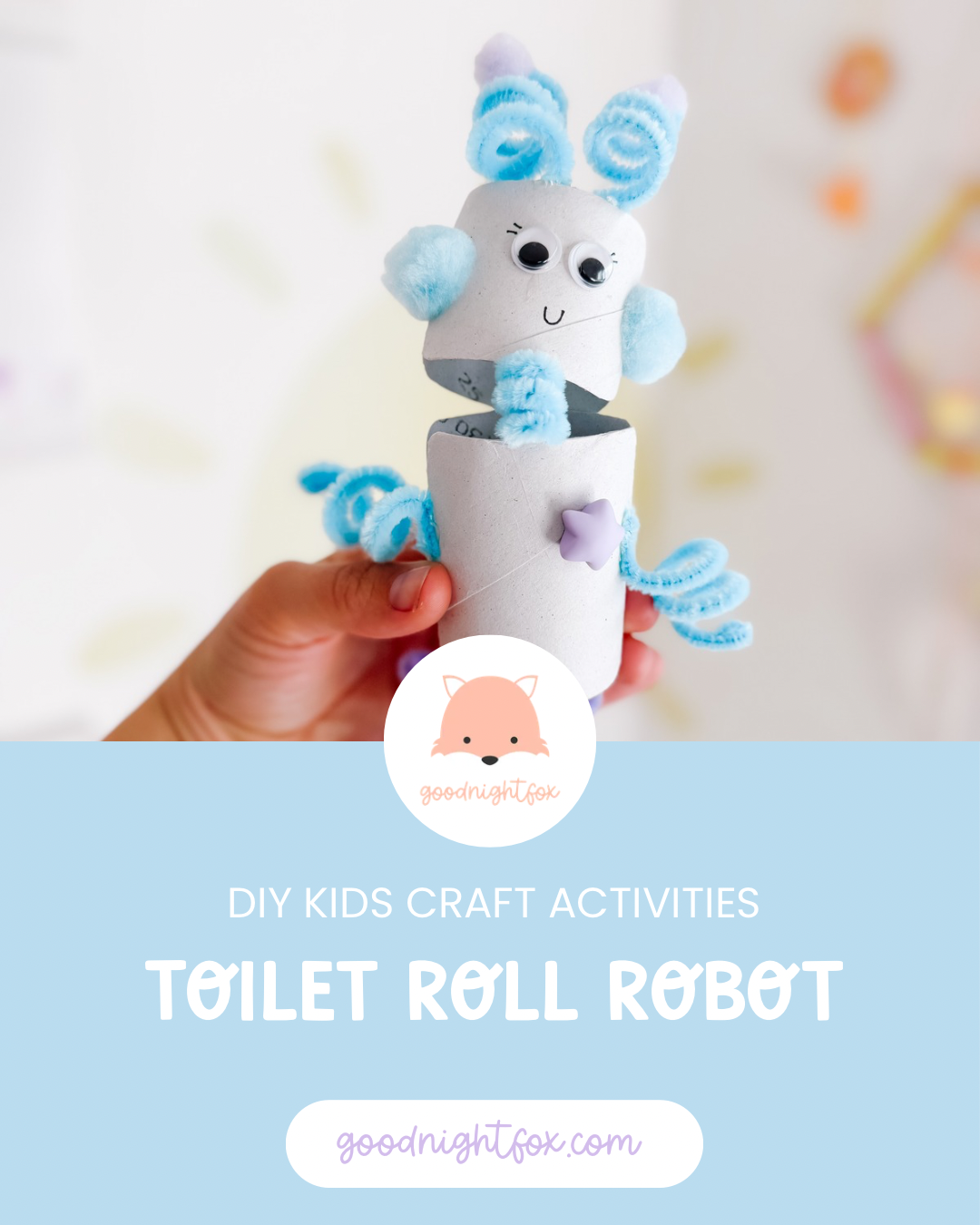
This toilet paper roll robot started as a simple recycled craft, but it quickly turned into a miniature engineering project.
Kids get to decide how the robot should move, where its arms and legs should attach, what kind of antenna it needs, and which playful details will give it a personality of its own.
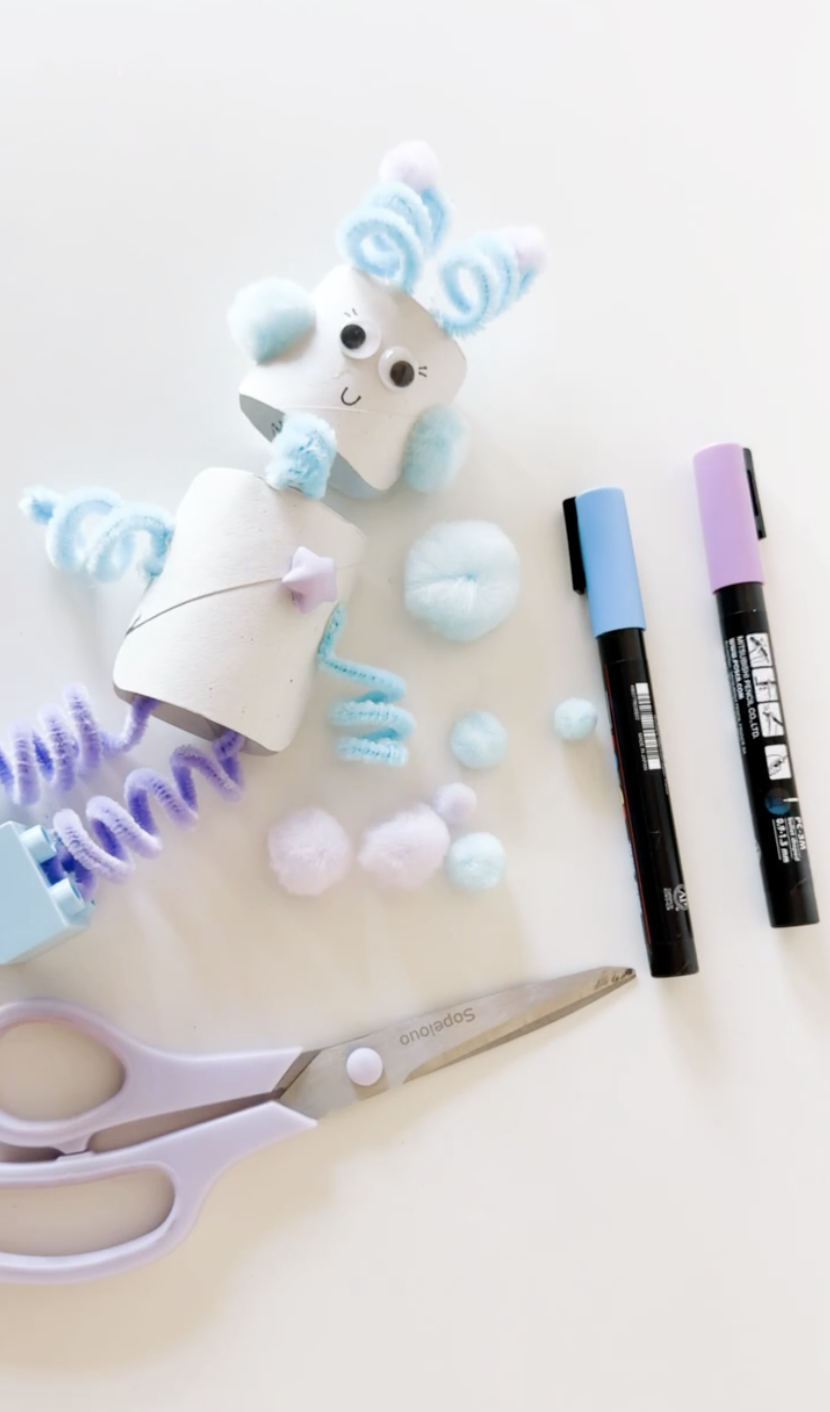
We used two cardboard tube sections for the robot’s head and body, then added curled pipe cleaners, pom-poms, googly eyes, markers, and building bricks. The finished robot can bend, wobble, twist, and become a character for pretend play after the crafting is finished.
It is a wonderful activity for Robot Week, Space Week, recycled craft themes, rainy days, classroom maker stations, or any child who loves building and inventing.
Materials needed
- Two empty toilet paper rolls or one roll cut into sections
- White paint or white paper for covering the tubes
- Blue, purple, or pastel pipe cleaners
- Pom-poms
- Googly eyes
- Washable paint markers or regular markers
- Large building bricks or Duplo-style bricks
- Scissors
- Glue or low-temperature hot glue with adult help
- A pencil or marker for curling pipe cleaners
Safety note
An adult should handle hot glue and help create any holes in the cardboard. Small pom-poms and googly eyes can be choking hazards, so supervise younger children closely.
How to make a toilet paper roll robot
Build the robot head
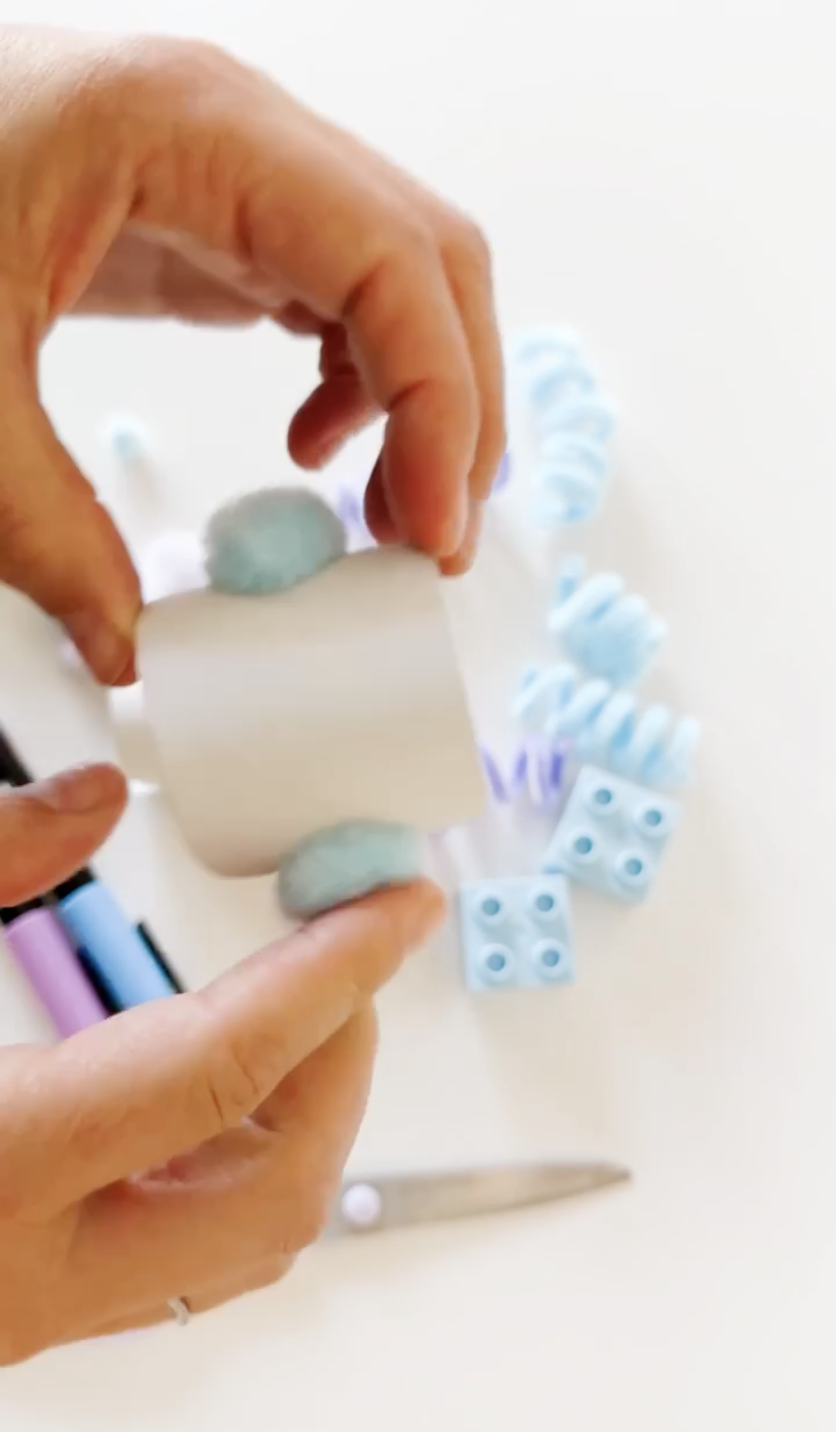
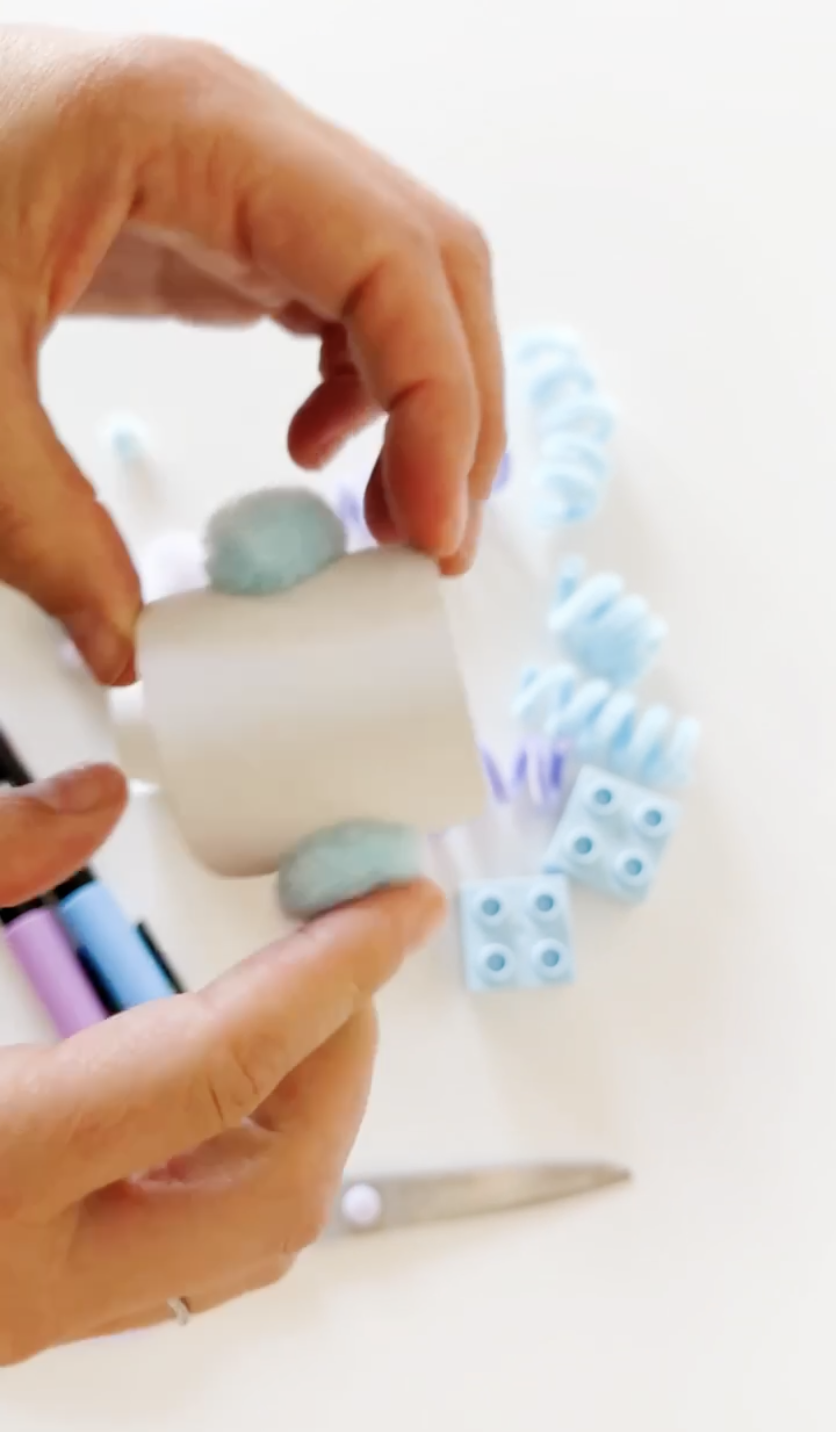
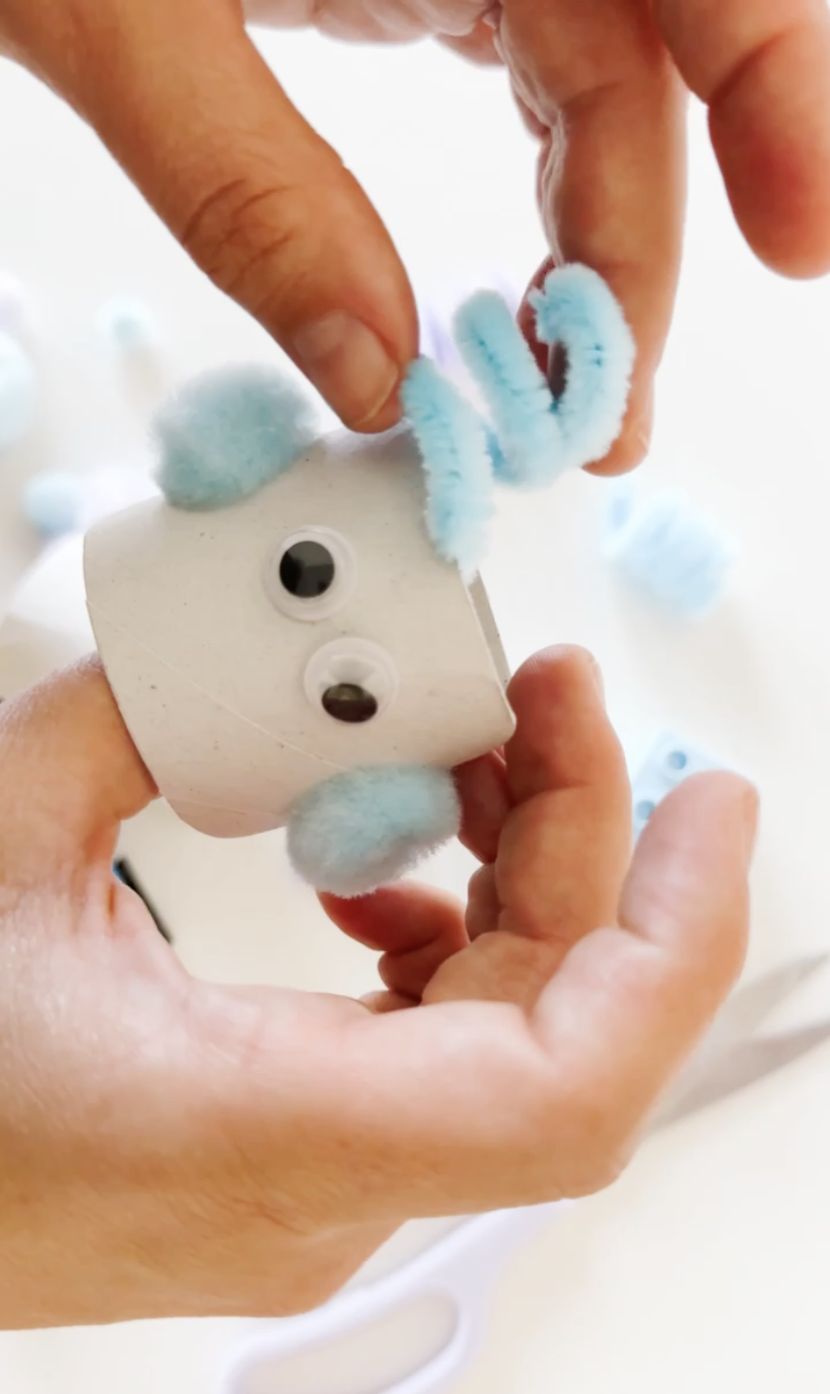
Cut a short section from a cardboard tube to create the robot’s head. Paint or wrap it in white paper if you want a clean robot base.
Glue a pom-pom to each side for ears. Add one more pom-pom to the top if you want a soft button, light, or extra robot sensor.
Add the face and antennae
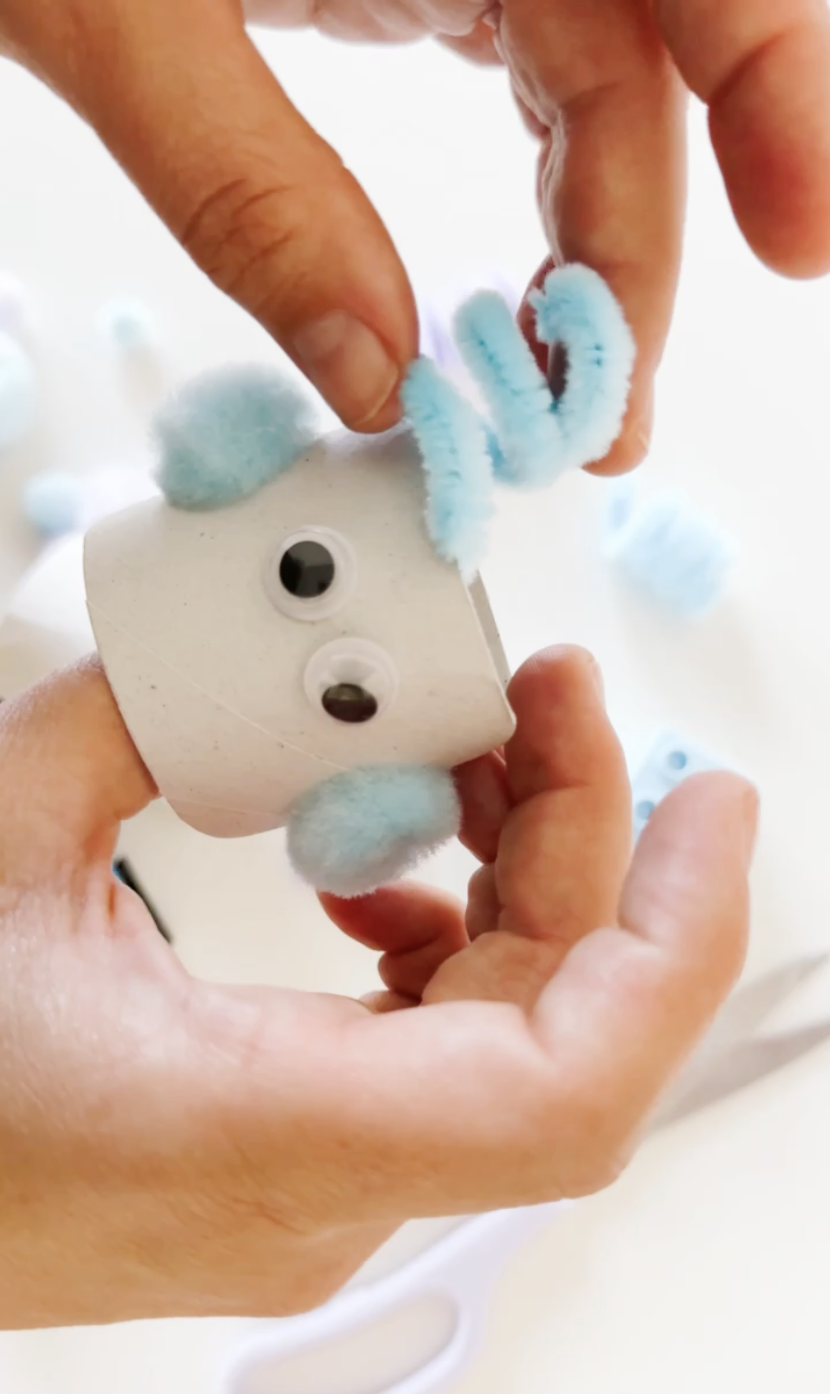
Glue two googly eyes onto the front of the robot head. Draw a small mouth, eyelashes, buttons, bolts, or any other facial details your child wants.
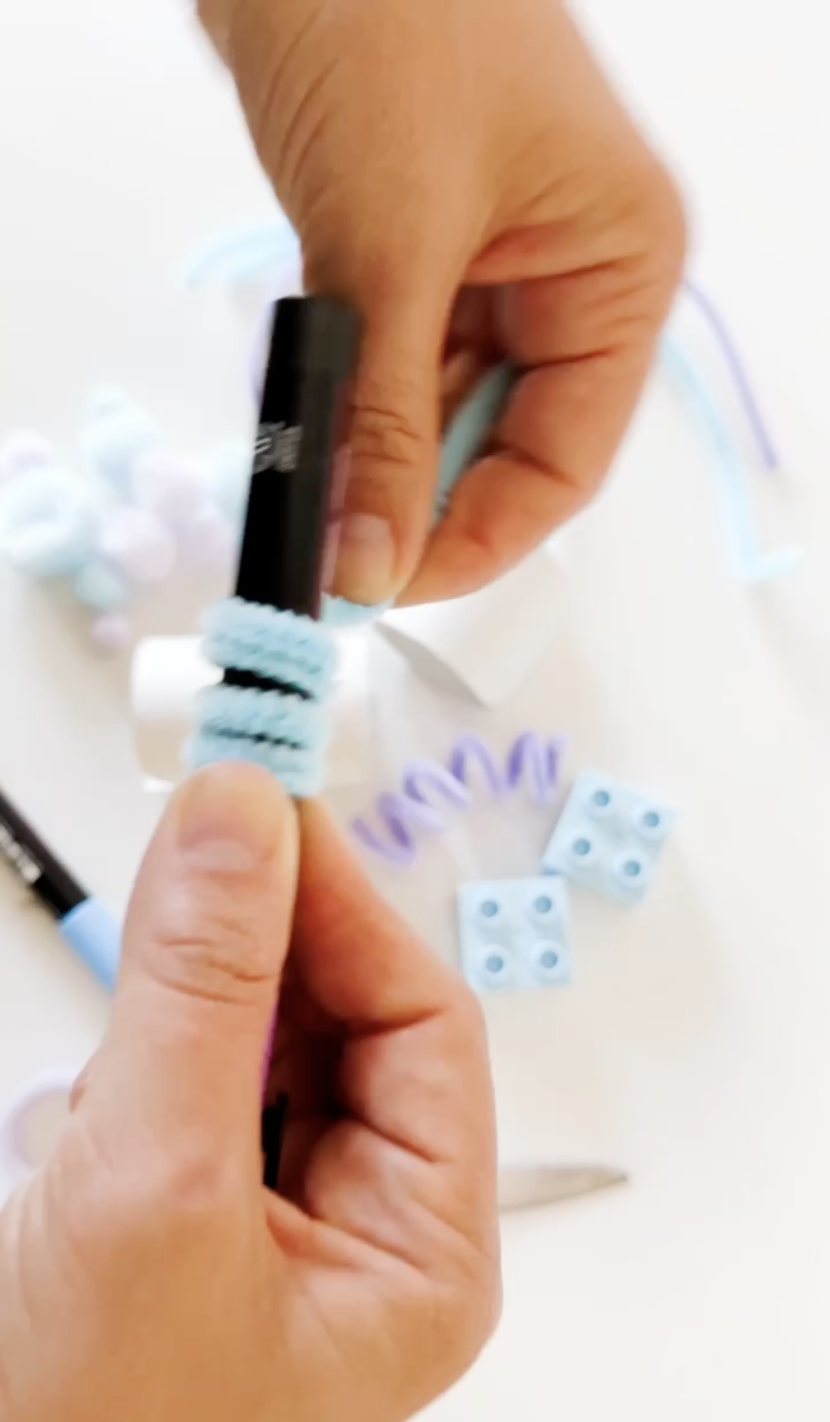
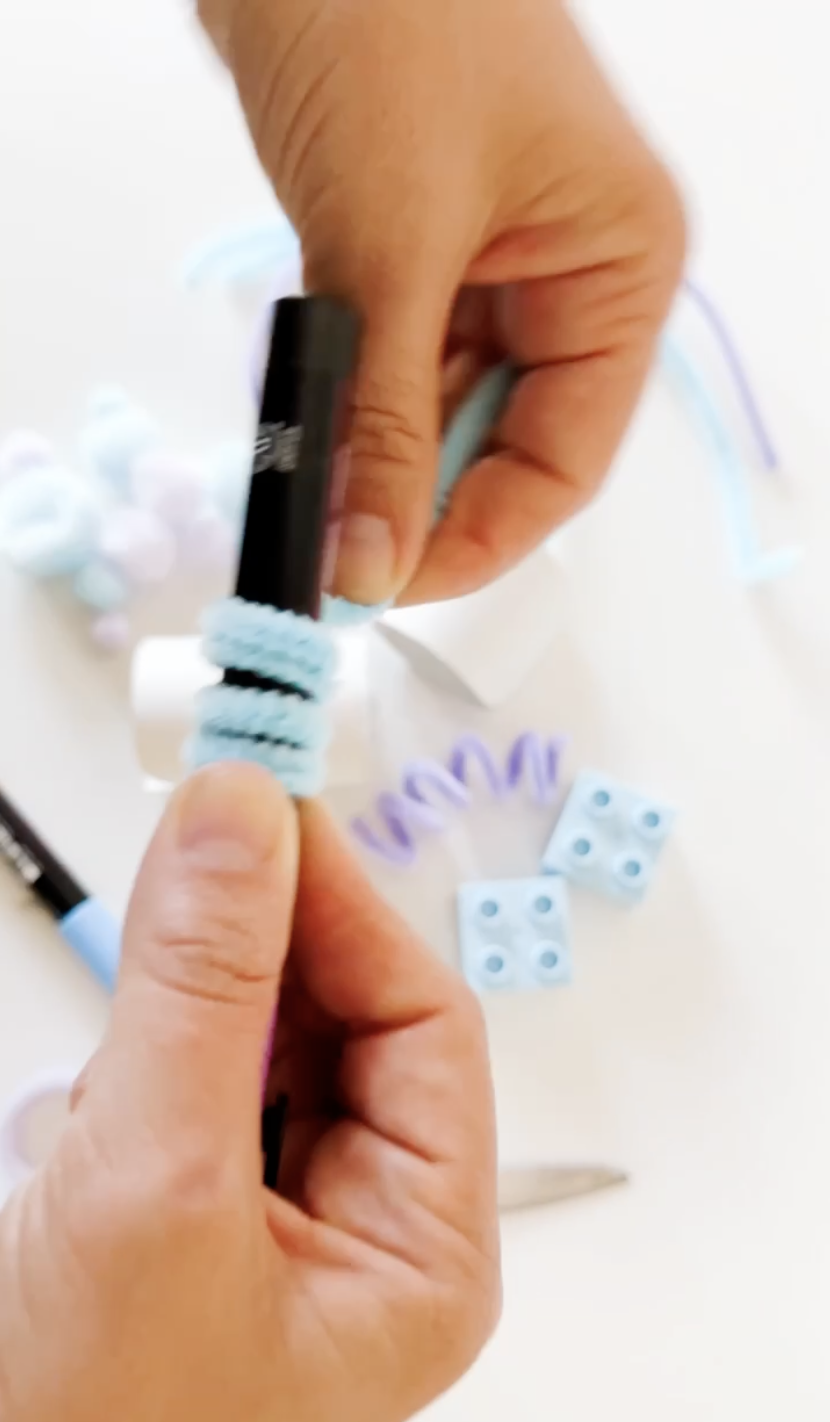
Wrap two pipe cleaners around a marker or pencil to make spirals. Slide them off, bend the ends slightly, and attach them to the top of the robot’s head as antennae.
Make curly robot limbs
Wrap additional pipe cleaners around a marker to create coiled arms, legs, and a tail-like wire attachment.
Try making some coils tight and others loose. Ask your child which shape might make the robot bounce, reach, twist, or move most easily.
Add building-brick feet
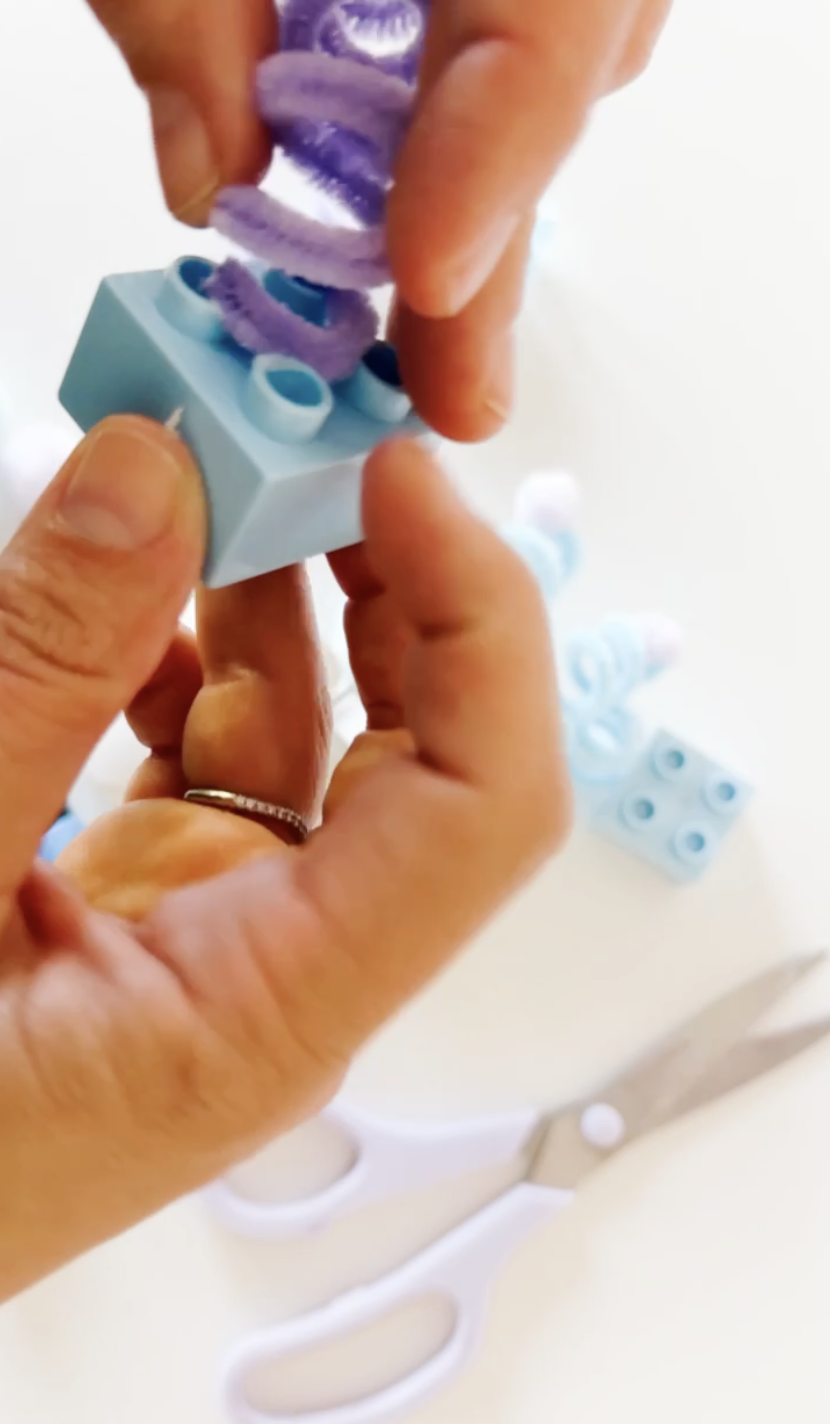
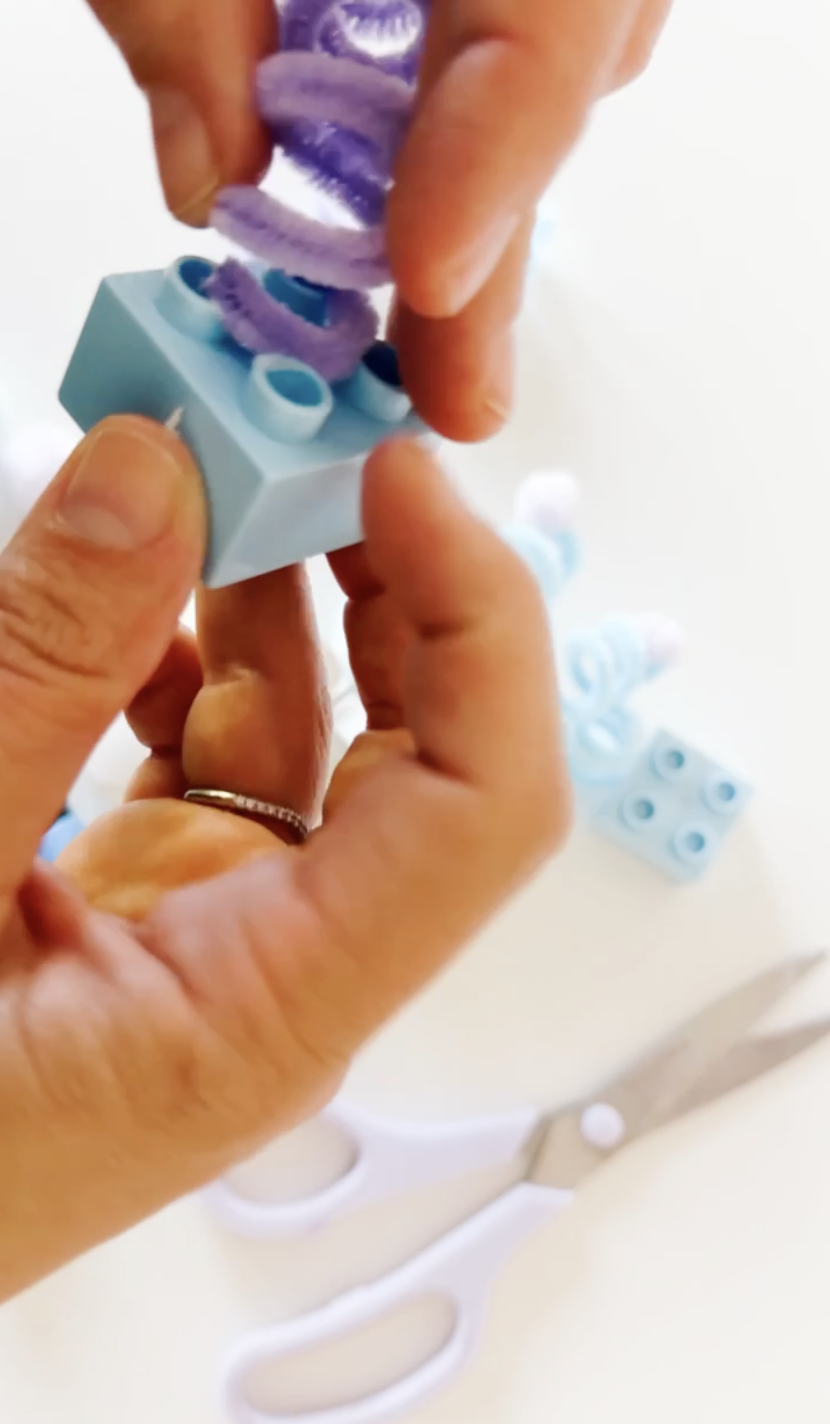
Press the ends of the curled pipe-cleaner legs into the openings of large building bricks. The bricks become chunky robot feet and help the finished creation stand or balance.
Test a few different bricks and positions. This is a playful opportunity to explore balance, stability, weight, and problem-solving.
Assemble and decorate the robot
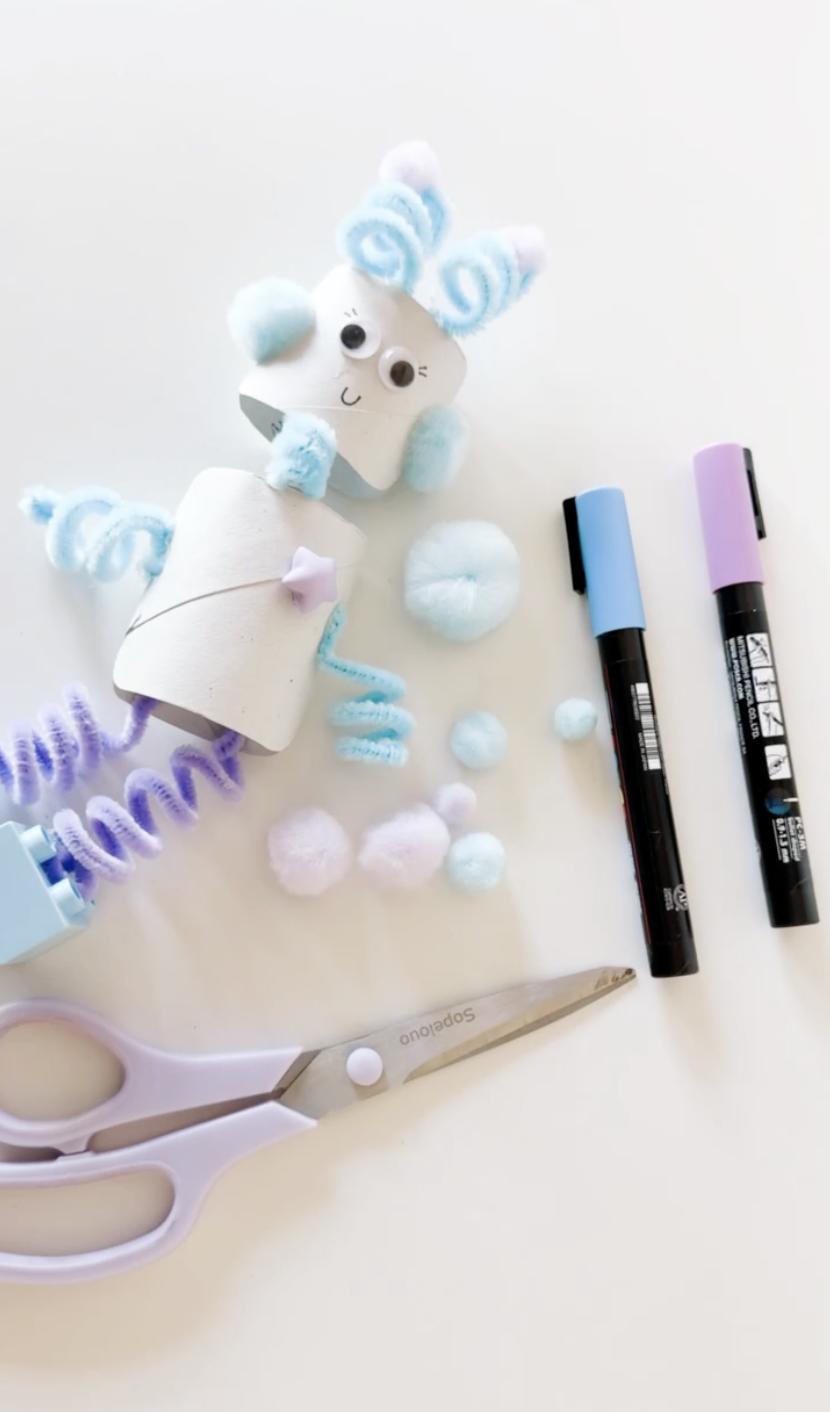
Attach the head to the larger cardboard tube body with a short pipe-cleaner neck, glue, or another flexible connector.
Add the arms, legs, feet, decorative pom-poms, and a building-brick button or control panel. Finish by drawing bolts, switches, numbers, patterns, or a robot name.
Parent tip
Do not worry about making every part perfectly symmetrical. Letting children choose unusual placements and test their own ideas turns this craft into a much richer engineering and problem-solving activity.
Turn it into a mini STEM challenge
Once the basic robot is complete, invite your child to improve its design.
- Can you make the robot stand without falling?
- Can you create arms that bend?
- Can you design feet that support a heavier body?
- Can the head spin or wobble?
- Can you add a tool, button, sensor, or pretend control panel?
- Can you build a second robot with a completely different job?
These small design challenges encourage children to plan, test, adjust, and try again—the same basic process engineers use when developing a new invention.
What kids learn from this robot craft
This recycled robot craft supports much more than creativity.
Wrapping pipe cleaners around a marker strengthens hand muscles and coordination. Gluing small details develops precision. Connecting the pieces introduces construction, balance, flexible joints, and cause and effect.
Children also practice planning as they decide what their robot should do and which parts it needs. When a piece does not balance or attach correctly, they get an authentic opportunity to problem-solve and revise their design.
Learning skills
Questions to ask kids
- What job does your robot do?
- Why does it need antennae?
- Which parts can bend or move?
- How can we help the robot balance?
- What would happen if the feet were smaller?
- What tools or buttons does your robot need?
- What is your robot’s name?
- Can you invent a story about where the robot lives?
Robot vocabulary
Ways to extend the play
Robot repair shop
Set out toy tools, loose parts, building bricks, and recycled materials so children can repair and upgrade their robots.
Robot movement game
Take turns moving like robots. Use commands such as forward, backward, turn, freeze, lift, and recharge.
Design a robot helper
Ask your child to draw or build a robot that helps with a real-life job, such as cleaning, cooking, gardening, or exploring space.
Build a robot world
Use boxes, building bricks, tubes, and recycled containers to create a laboratory, charging station, or robot city.
More robot and space activities
DIY robot costume
Turn cardboard boxes, lights, building bricks, tubes, and playful materials into a full wearable robot costume.
See the robot costumeDIY astronaut costume
Continue the engineering and imaginative-play theme with a sparkly homemade astronaut costume and jetpack.
See the astronaut costumeFree printable activities
Explore more hands-on printables, activity books, dramatic-play resources, and early-learning materials.
Browse free printablesToilet paper roll robot FAQ
How do you make a robot from a toilet paper roll?
Use one cardboard tube section for the head and another for the body. Add googly eyes, pom-pom ears, curled pipe-cleaner arms and legs, and large building bricks for the feet. Attach the parts with glue or pipe cleaners and decorate with markers.
What age is this robot craft best for?
This activity is best for children ages four and up with adult supervision. Younger children can decorate pre-cut pieces, while older children can help design, connect, and balance the robot independently.
How do you curl pipe cleaners for robot arms and legs?
Wrap a pipe cleaner tightly around a pencil or marker, then gently slide it off. Stretch or compress the spiral depending on how long and flexible you want the robot limb to be.
What can kids learn from making a robot?
Children practice fine motor skills, early engineering, creative design, balance, problem-solving, planning, and imaginative storytelling.
What can I use instead of building bricks for the feet?
Try bottle caps, small cardboard squares, corks, wooden blocks, egg-carton cups, foam shapes, or another sturdy recycled material.
Can I use this craft for a robot or space unit study?
Yes. Pair it with books about robots, coding movement games, recycled-building challenges, space sensory play, and conversations about how engineers design machines to solve problems.