Unicorn Magic Milk Experiment
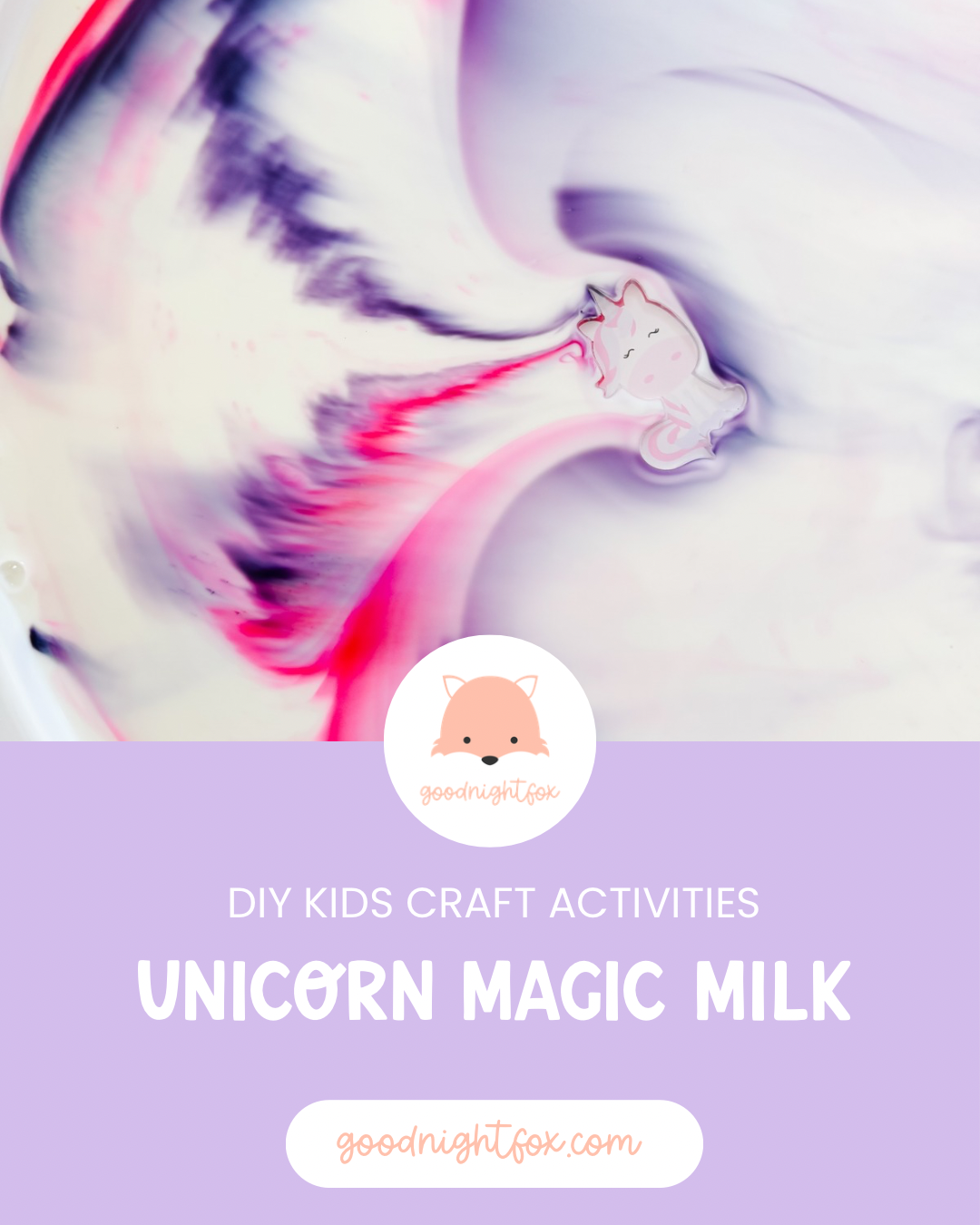
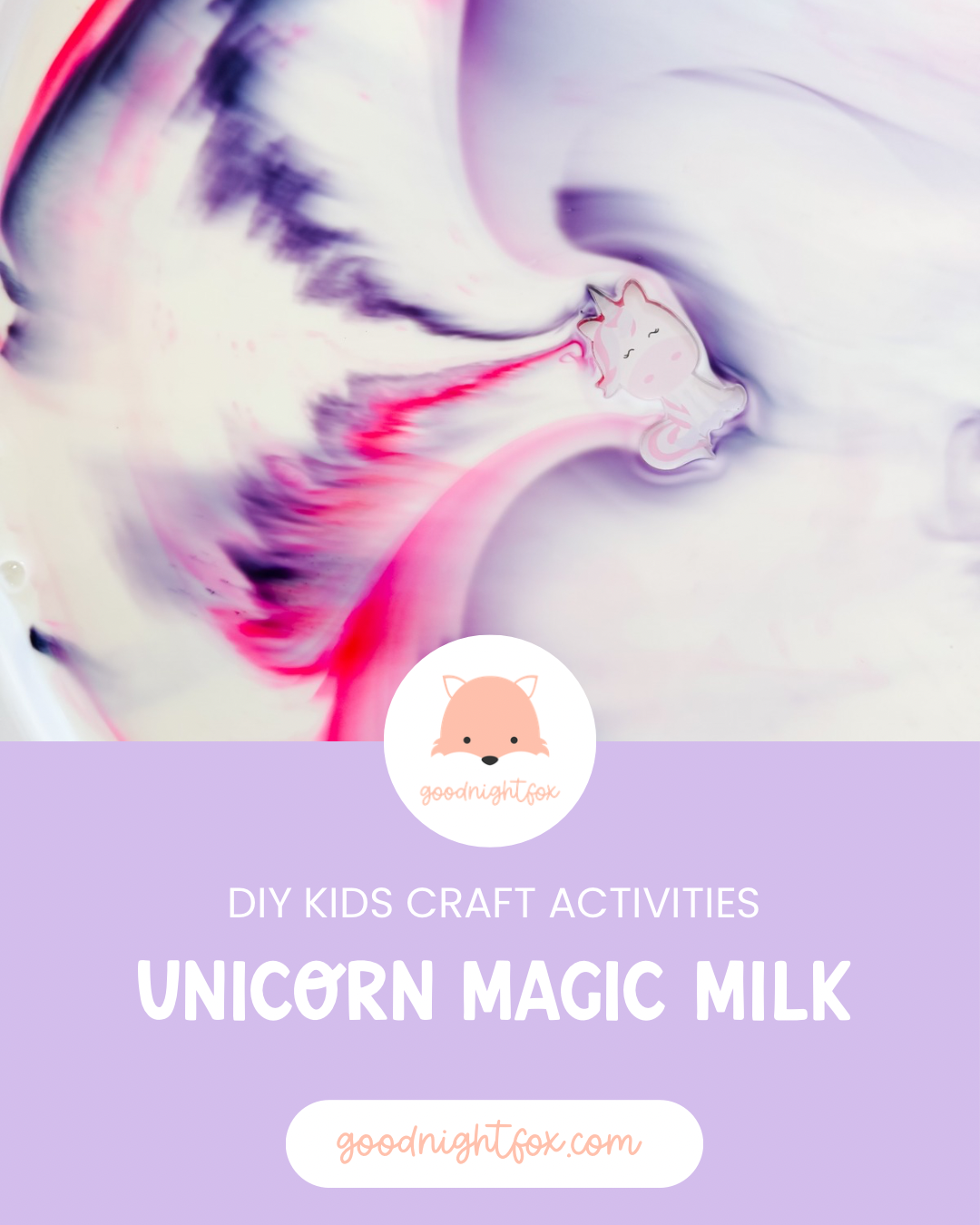
Turn a classic milk-and-soap science experiment into a magical unicorn activity with swirling pink and purple colors, foamy clouds, and GoodnightFox unicorn charms.
Why we love this magical science activity
Magic Milk is one of those experiments that never seems to lose its magic. You begin with an ordinary tray of white milk, add a few drops of color, and then watch the entire surface suddenly begin to move.
For this version, we chose bright pink, pale pink, lavender, and deep purple so the swirls looked like a unicorn flying through a pastel sky.
We also added our GoodnightFox unicorn acrylic charms to the tray. As the colors spread and curled around them, the unicorns looked as though they were floating through clouds of pink and purple magic.
It is a simple way to turn an easy kitchen-science experiment into a complete themed learning activity. Children can observe a chemical interaction, predict what will happen, explore color mixing, and invent stories about the unicorn world forming in front of them.
Materials needed
- Whole milk
- Liquid dish soap
- Pink food coloring
- Purple food coloring
- Optional blue or red food coloring for mixing new shades
- Cotton swabs
- Shallow white tray or plate
- Small bowl for dish soap
- Optional round cotton pads for stamped color designs
- GoodnightFox Unicorn & Cloud Acrylic Charms
- Paper towels for cleanup
Safety note
This is a sensory science activity, not a snack. Supervise children closely, do not allow them to drink the milk, and keep food coloring and dish soap away from eyes and mouths. Rinse and dry acrylic charms thoroughly after play.
Shop this activity
These are the core materials we use for Magic Milk activities, plus the acrylic unicorn charms that turn this version into magical small-world play.
This section contains affiliate links, which means I may earn a small commission at no additional cost to you.

Unicorn & cloud charms
Add the two-inch unicorn and cloud acrylic charms to Magic Milk, sensory bins, play dough, or unicorn small-world play.
Shop unicorn charms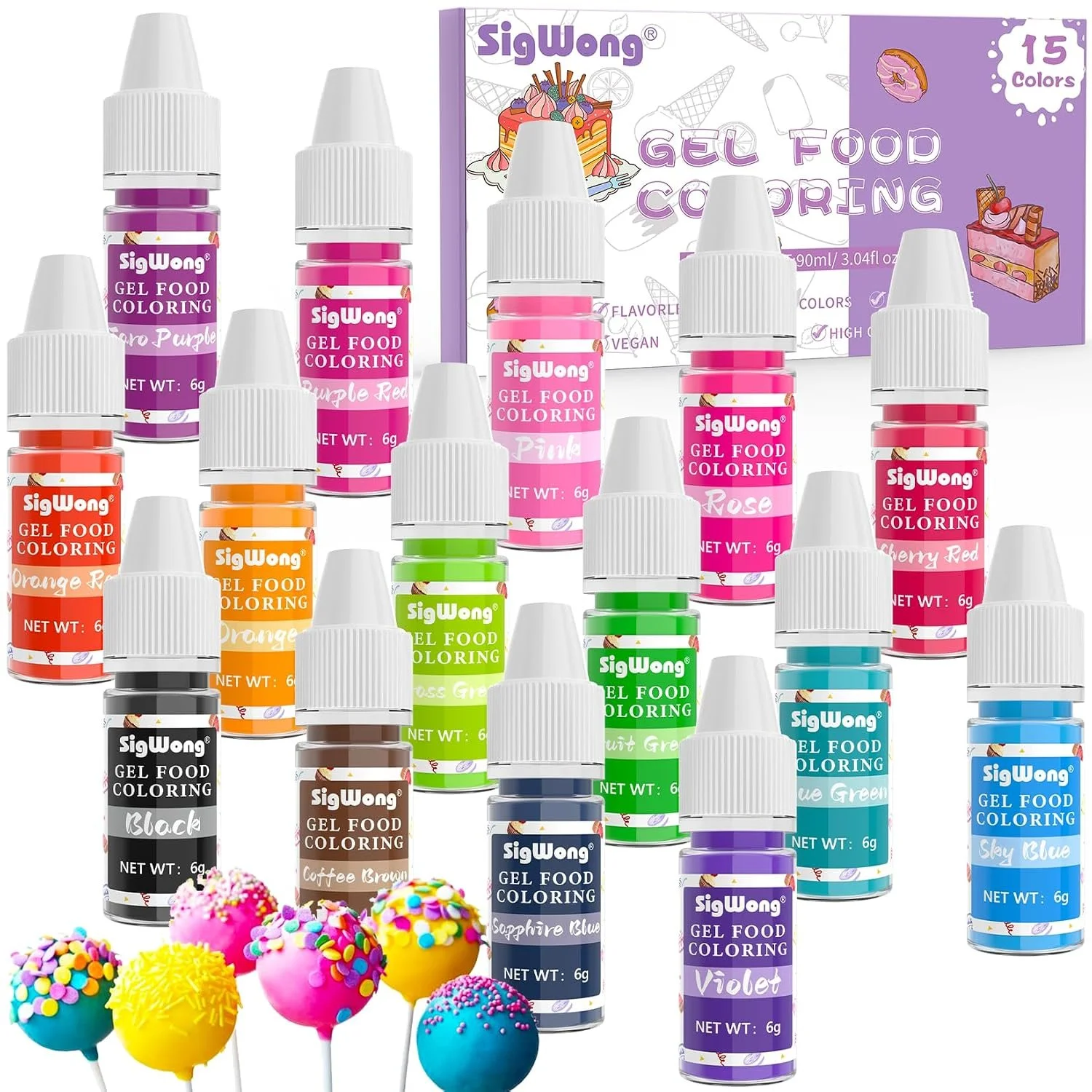
Food coloring
Use pink and purple shades, or mix red and blue to experiment with making your own unicorn colors.
View on Amazon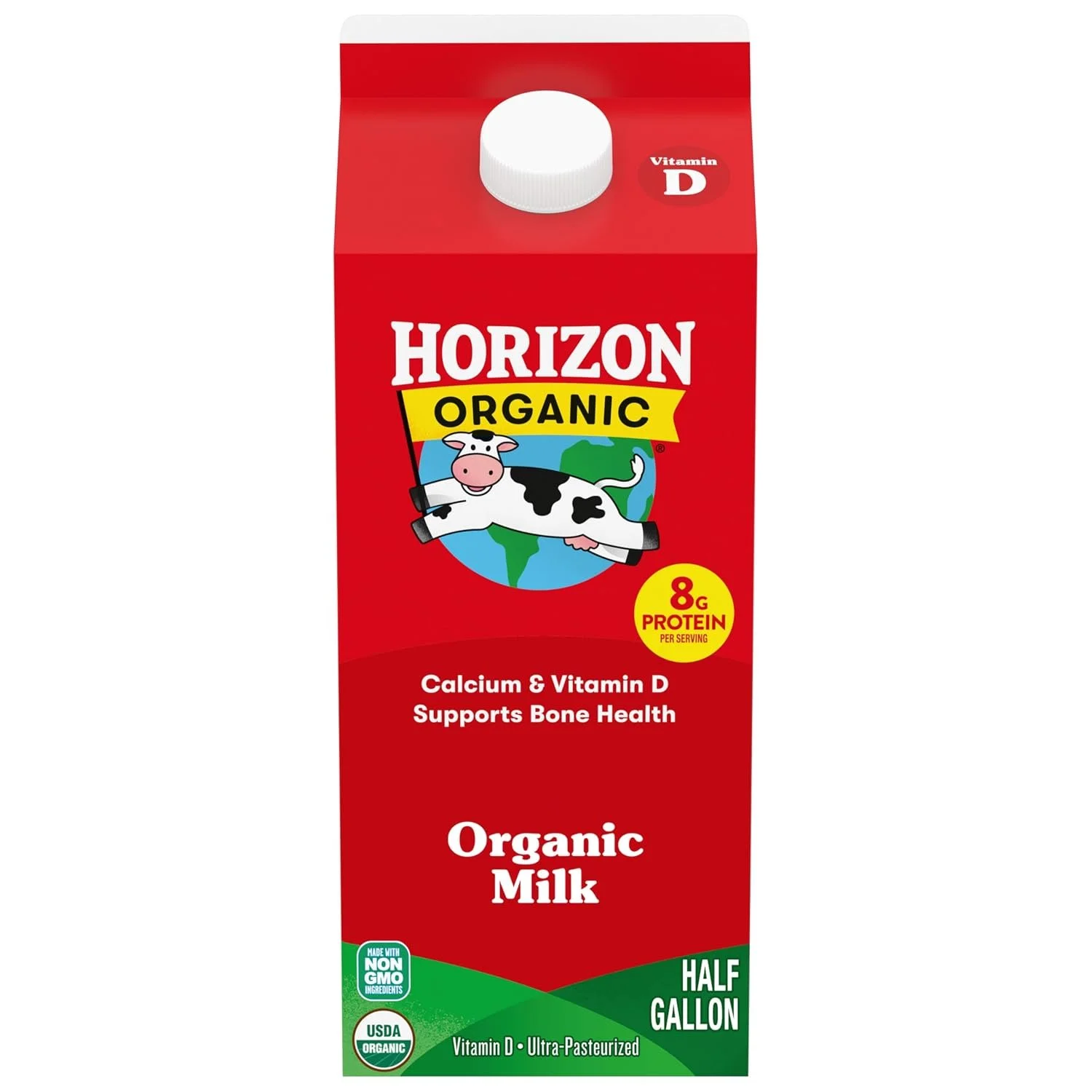
Whole milk
Whole milk generally produces a vivid, long-lasting reaction because it contains more fat than lower-fat varieties.
View on Amazon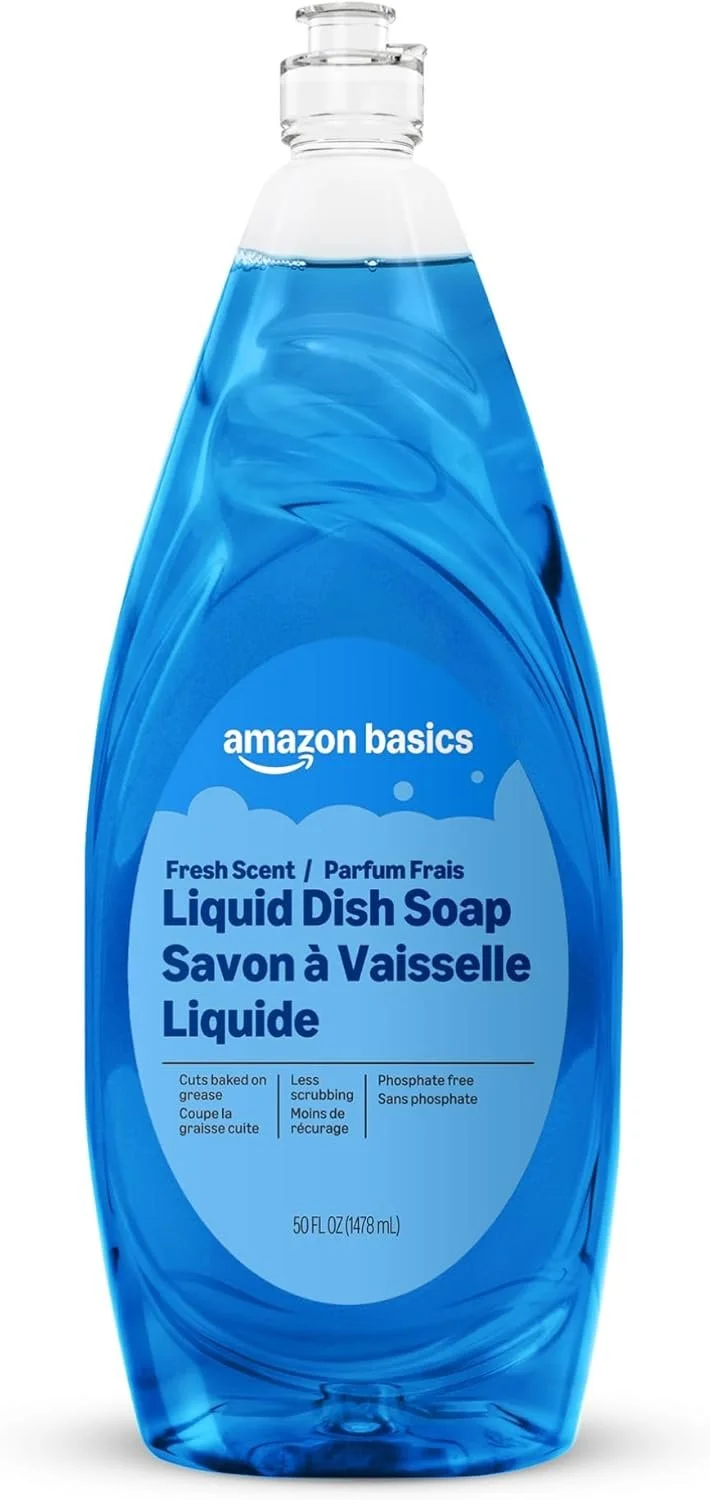
Liquid dish soap
Dish soap changes the surface tension and interacts with the fat in the milk, sending the colors swirling across the tray.
View on AmazonHow to make Unicorn Magic Milk
Pour the milk and add color
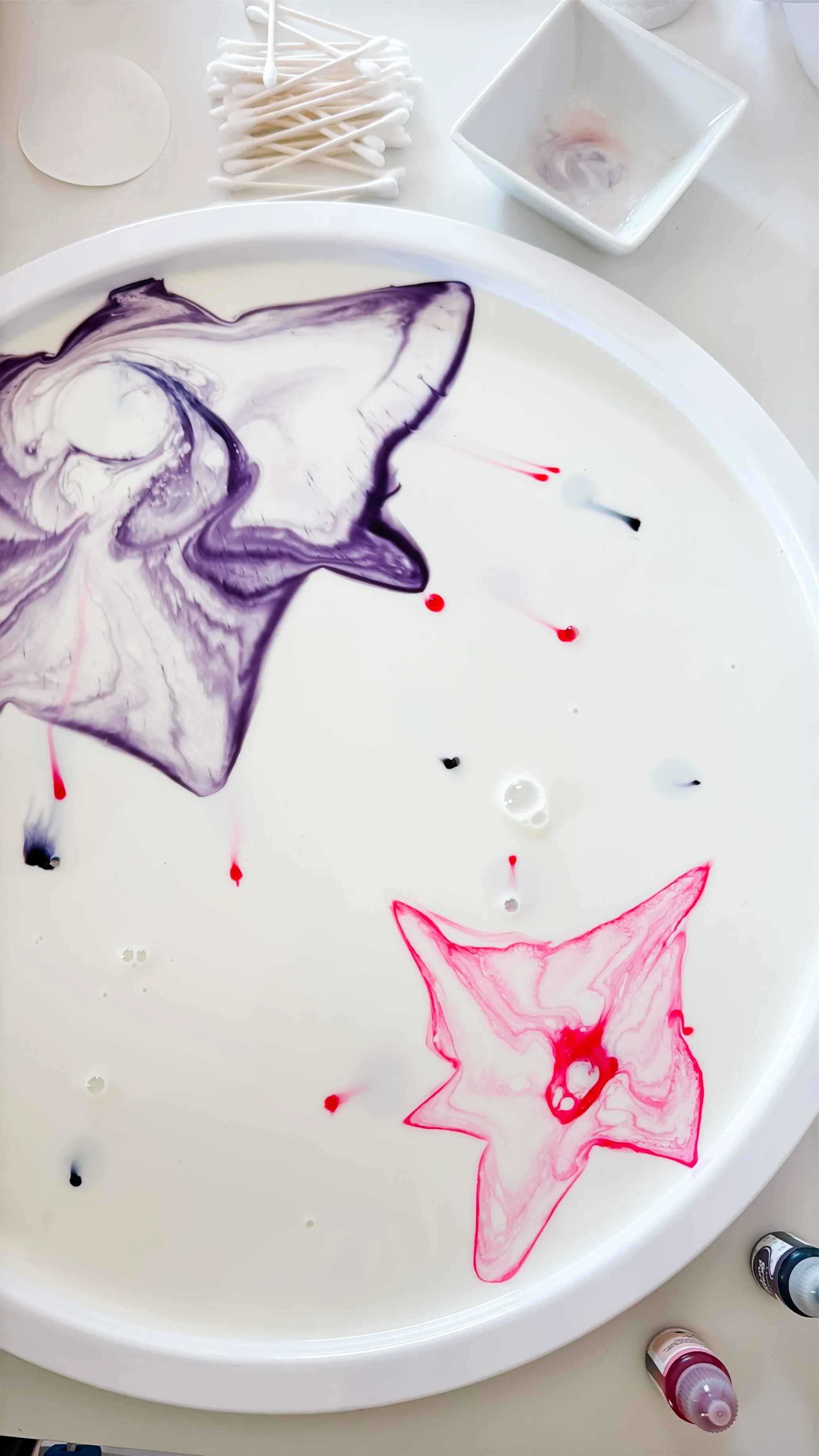
Pour enough whole milk into a shallow white tray to cover the bottom completely.
Add drops of pink and purple food coloring around the tray. You can place individual drops randomly or outline simple unicorn-inspired shapes, stars, hearts, and clouds.
Keep the drops separated at first so your child can observe how each color begins to move.
Dip the cotton swab in soap
Pour a small amount of dish soap into a separate bowl.
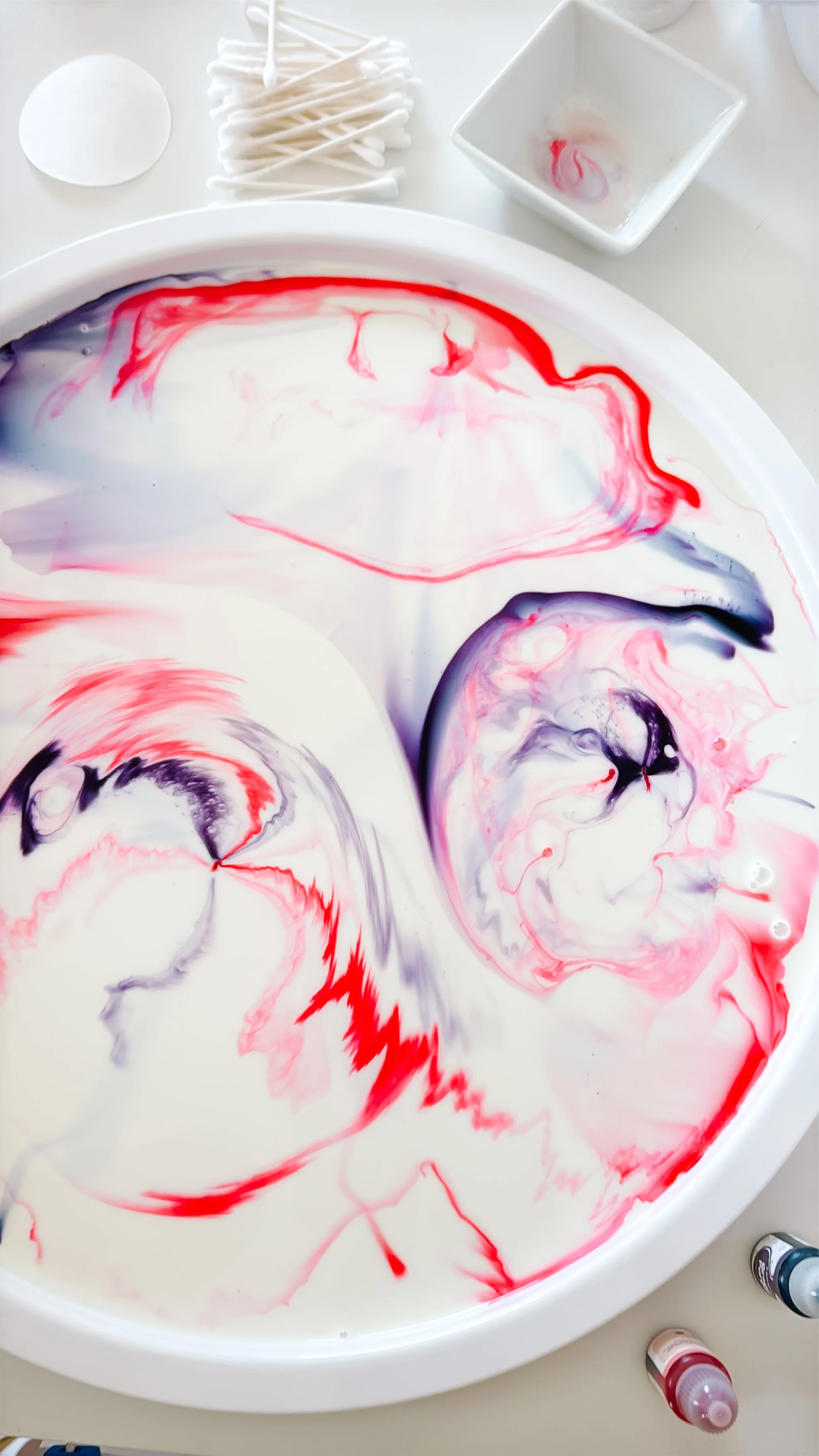
Dip one end of a cotton swab into the soap, then gently touch it to one area of colored milk. Try not to stir immediately—simply hold the swab in place and watch.
The colors should quickly pull away, spread, and begin forming swirls.
Explore different touch points
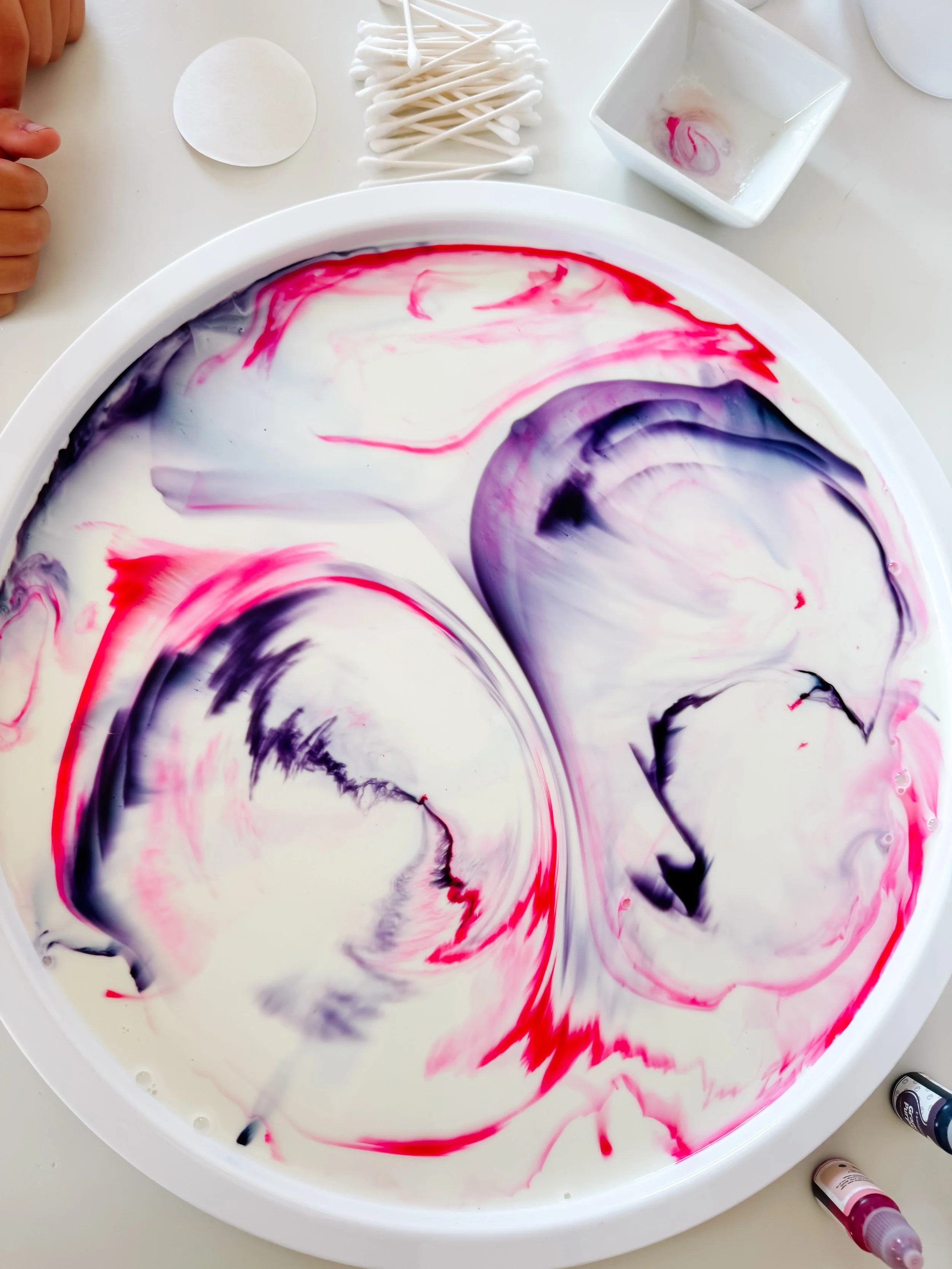
Dip a clean cotton swab into more soap and touch different parts of the tray.
Compare what happens near a concentrated drop of color versus an area where the colors have already mixed. Try touching the center of a circle, the edge of a swirl, or the space between pink and purple.
Invite your child to predict which direction the color will move before each touch.
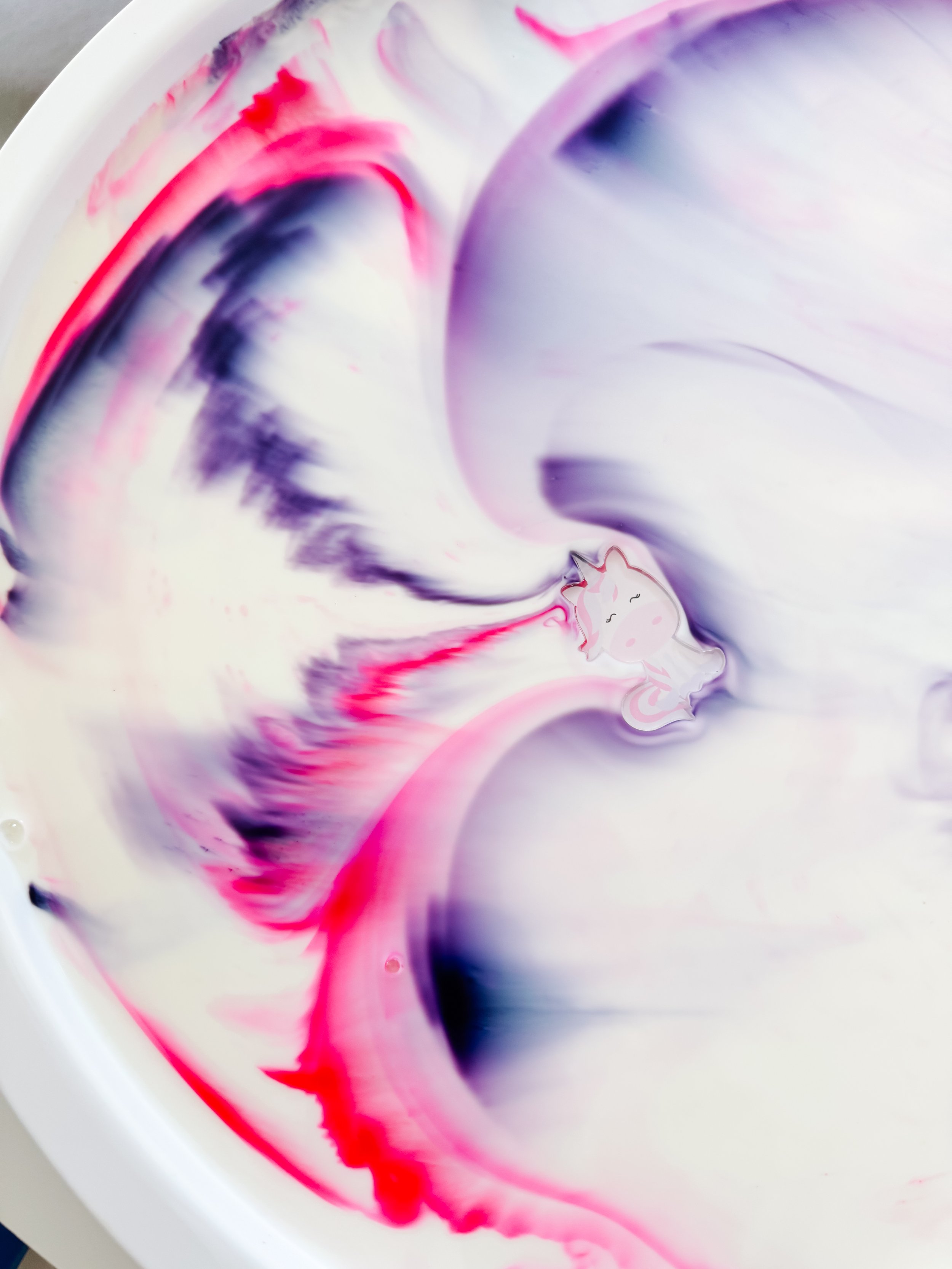
Add the unicorn charms
Once the colors are moving, gently place the acrylic unicorn and cloud charms into the tray.
Use the cotton swabs to create swirls around the charms so the unicorns appear to fly through a magical sky.
This is where the experiment naturally turns into storytelling and small-world play.
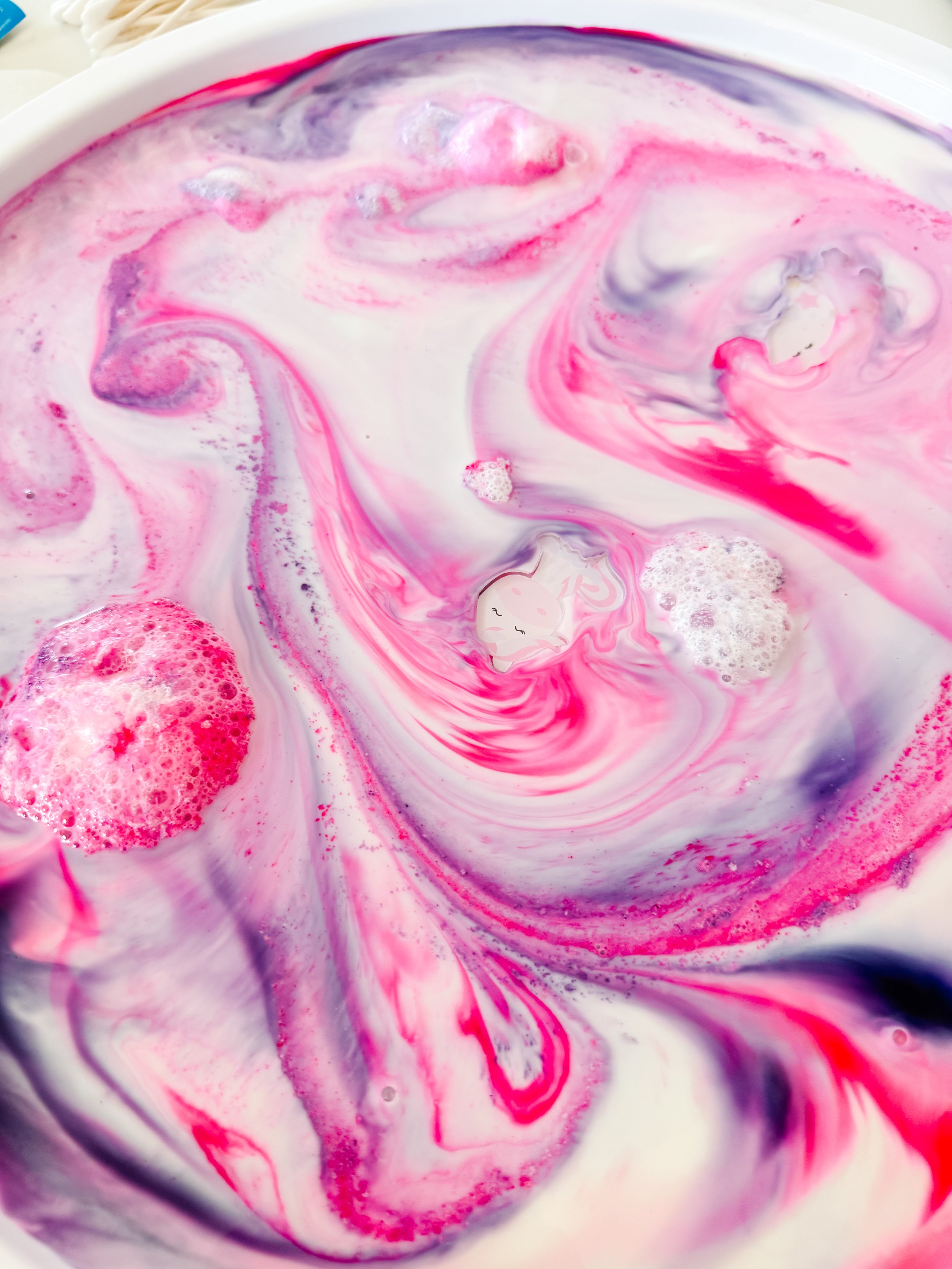
Create clouds and magical stories
Touch the soapy cotton swab in one place several times to create foamy bubbles that resemble clouds.
Invite your child to tell a story about where the unicorns are going, what magic they are carrying, or why the sky is changing color.
When the reaction begins to slow, add a few fresh drops of food coloring and test another area.
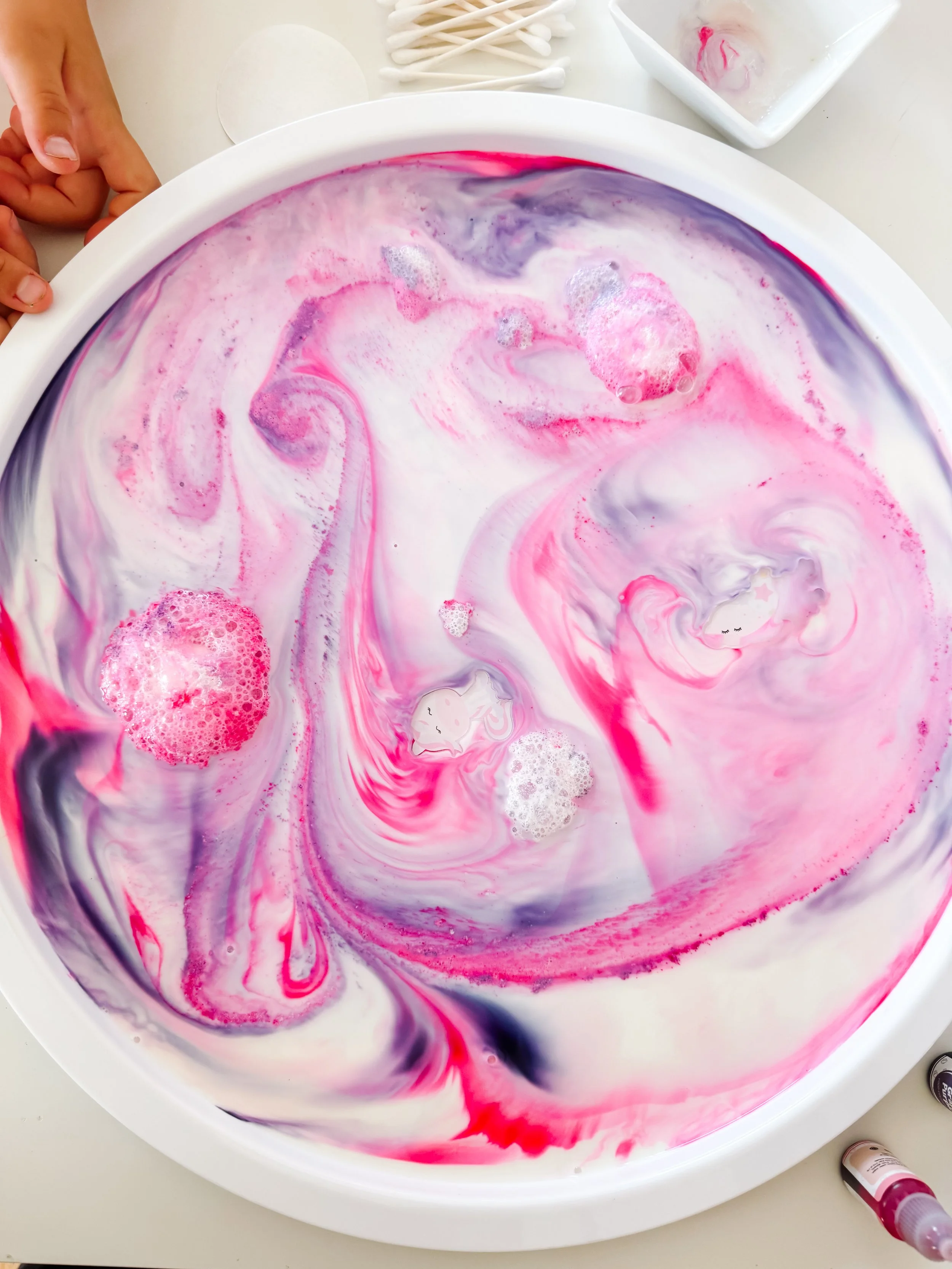
Observe the finished unicorn sky
Step back and look at the patterns that formed across the tray.
Ask your child where the colors blended, where they stayed separate, and which areas resemble clouds, wings, rainbows, or magical trails.
Take a photo before cleanup—the final patterns change quickly and are often beautiful enough to inspire a painting or drawing afterward.
Parent tip
Start with fewer drops of food coloring than you think you need. Leaving plenty of white space gives the colors room to move and creates more visible pink, purple, and lavender patterns.
Why does Magic Milk work?
Milk is mostly water, but it also contains fats, proteins, sugars, vitamins, and minerals.
Dish soap molecules are attracted to both water and fat. When the soap touches the milk, it begins interacting with the fat and disrupting the surface tension across the liquid.
As the soap moves through the milk, the food coloring is carried along with that motion. This makes the invisible movement of the liquid easy to see.
Whole milk usually produces a strong reaction because it contains more fat, but children can also compare whole milk with lower-fat milk as a follow-up experiment.
Turn it into a preschool science investigation
Compare milk types
Try whole milk, two-percent milk, and skim milk in separate dishes. Which one creates the longest-lasting color movement?
Compare color patterns
Test widely spaced drops against drops placed close together. How does the starting pattern change the final design?
Test soap amounts
Compare a lightly coated cotton swab with one holding more dish soap. Does the color move differently?
Mix new unicorn shades
Combine red and blue to make purple, then experiment with different proportions to create lavender, violet, and plum.
Learning benefits
Unicorn Magic Milk blends science, art, sensory play, and storytelling in one low-prep activity.
Children practice observation as they follow the movement of each color. They use prediction before touching the milk with soap and explore cause and effect as they repeat the action in different locations.
The unicorn theme adds imaginative language and narrative play. Children can create characters, settings, problems, and magical adventures while the visual experiment unfolds.
Learning skills
Questions to ask kids
- What do you predict will happen when the soap touches the milk?
- Which color moves first?
- Where do pink and purple blend together?
- What new colors can you see?
- Does the reaction happen faster in some areas?
- What happens when you touch the same place twice?
- What do the patterns remind you of?
- Where are the unicorns traveling?
- What magical power does each unicorn have?
Unicorn and science vocabulary
Ways to extend the unicorn play
Paint the final pattern
Use the finished tray as inspiration for a watercolor or process-art painting in pink, purple, white, and lavender.
Create a unicorn story
Ask your child to draw the magical world the unicorn visited and dictate a short story about the adventure.
Build a sensory bin
Rinse the acrylic charms and reuse them with pastel filler, clouds, stars, and scoops for Unicorn World sensory play.
Try another color theme
Make rainbow, sunset, fireworks, Northern Lights, ocean, or holiday-themed Magic Milk using a new color palette.
More unicorn activities
Toilet roll unicorn craft
Turn a recycled cardboard tube into a magical unicorn with curled pastel pipe cleaners and googly eyes.
Make the unicorn craftUnicorn sensory play
Create a pastel unicorn sensory and dramatic-play setup with printable props and magical accessories.
Explore unicorn playUnicorn & cloud charms
Reuse the acrylic charms in sensory bins, play dough, rice, slime, potion play, and small-world scenes.
Shop the charmsUnicorn Magic Milk FAQ
How do you make Unicorn Magic Milk?
Pour whole milk into a shallow tray, add pink and purple food coloring, dip a cotton swab in dish soap, and gently touch the colored milk. Add acrylic unicorn and cloud charms after the colors begin to swirl.
Why does dish soap make the food coloring move?
Dish soap reduces surface tension and interacts with fat molecules in the milk. As the soap spreads through the liquid, it carries the food coloring with it and makes the movement visible.
What kind of milk works best for Magic Milk?
Whole milk typically produces the most dramatic and longer-lasting reaction because it contains more fat. Lower-fat milk will still work but may create a subtler effect.
Can I use gel food coloring?
Liquid food coloring usually spreads more easily. Gel coloring can work when diluted with a small amount of water before it is added to the milk.
Are the unicorn acrylic charms reusable?
Yes. Remove them after play, wash them gently with soap and water, rinse thoroughly, and dry them completely before storing or reusing them.
Is Magic Milk taste-safe?
No. Even though milk and food coloring are food ingredients, dish soap is not edible. Treat this strictly as a supervised science and sensory activity.
What age is this experiment best for?
Unicorn Magic Milk is best for ages three and up with close adult supervision. Older children can make predictions, compare variables, and record their observations.
What can I do with the acrylic charms after the experiment?
Use them in unicorn sensory bins, play dough trays, potion play, small-world scenes, matching activities, party favors, or another themed science experiment.