
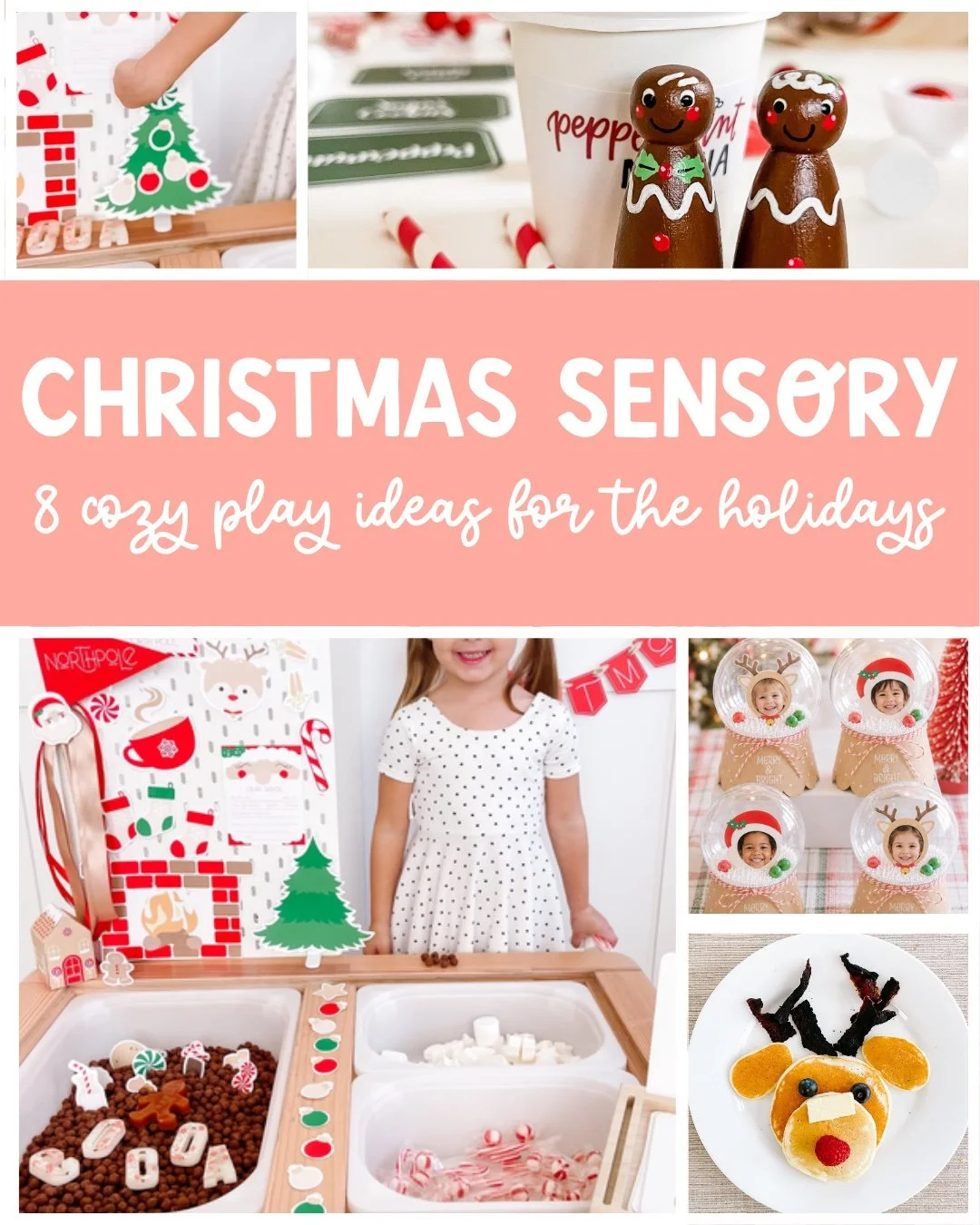
Christmas Sensory Bin Ideas: 8 Merry Bins for Toddlers
December is the easiest month of the year to fill a sensory bin. The colors are already red and green, the props are already in the house — jingle bells, wrapping paper, cookie cutters, tinsel — and the themes write themselves: Santa's workshop, reindeer food, gingerbread cookies. These 8 Christmas sensory bin ideas for toddlers are the ones I'd make again, in the order I'd make them: low-mess first, no special shopping trip required, and every one of them fits in a single bin on the kitchen floor. They all pair with our full Christmas play hub, where the season's crafts, setups, and activities live in one place.
Before you fill the first bin
Every bin below follows the same three rules that kept our Christmas play actually enjoyable instead of a cleanup project:
- One bin, one filler. A single filler reads as a place — Santa's workshop, a reindeer stable, a cookie bakery — while three mixed fillers just read as mess. Pick one base and let the props do the storytelling.
- A tray underneath, always. A baking sheet, a boot tray, or a low storage tub catches the escapees. The bin lives on the tray, the tray lives on the floor, and the floor stays a floor.
- One tool. A scoop, a cup, or tongs. The tool is what turns dumping into purposeful play — scooping "reindeer food" into a bag, pouring "workshop supplies" into a pot — and it buys you the longest stretch of independent play.
A quick safety note, the way I'd say it to a friend: stay nearby for every bin, and size the props up for younger players — bells and ornaments should be large, never small enough to be mouthed whole, and never use water beads. Dried beans and rice are supervised-only fillers for toddlers. If your youngest is still mouthing everything, our sensory bin ideas for 2-year-olds has the same spirit with bigger, safer props.
8 Christmas sensory bin ideas for toddlers
1. Santa's workshop bin
The base is red and green dyed rice — half the batch in each color, swirled together in the bin — with tiny wrapped presents (small boxes in leftover wrapping paper), large jingle bells, a few mini tools from a play tool set, and a small Santa figure if you have one. When my daughter was little, she ran this bin like a real workshop: wrapping, unwrapping, and re-wrapping the same three presents, then solemnly delivering them to every stuffed animal in the house. The presents were the whole game — the rice was just the workshop floor.
How to play: wrap a present, unwrap it, wrap it again. Toddlers will do this loop far longer than you'd expect, and each round gets a little more careful — the tape goes on straighter, the bow lands on top. Add a small basket as the "delivery sleigh" and the bin becomes a whole pretend-play errand.
Stretch it: give each stuffed animal a name and a present to deliver. "This one is for Bear, this one is for Bunny" turns the bin into a sorting and storytelling game in one.
Low-mess tip: keep the filler shallow — two cups of rice is plenty — and do all the unwrapping over the tray. The presents contain the play; the rice barely leaves the bin.
2. The reindeer food bin
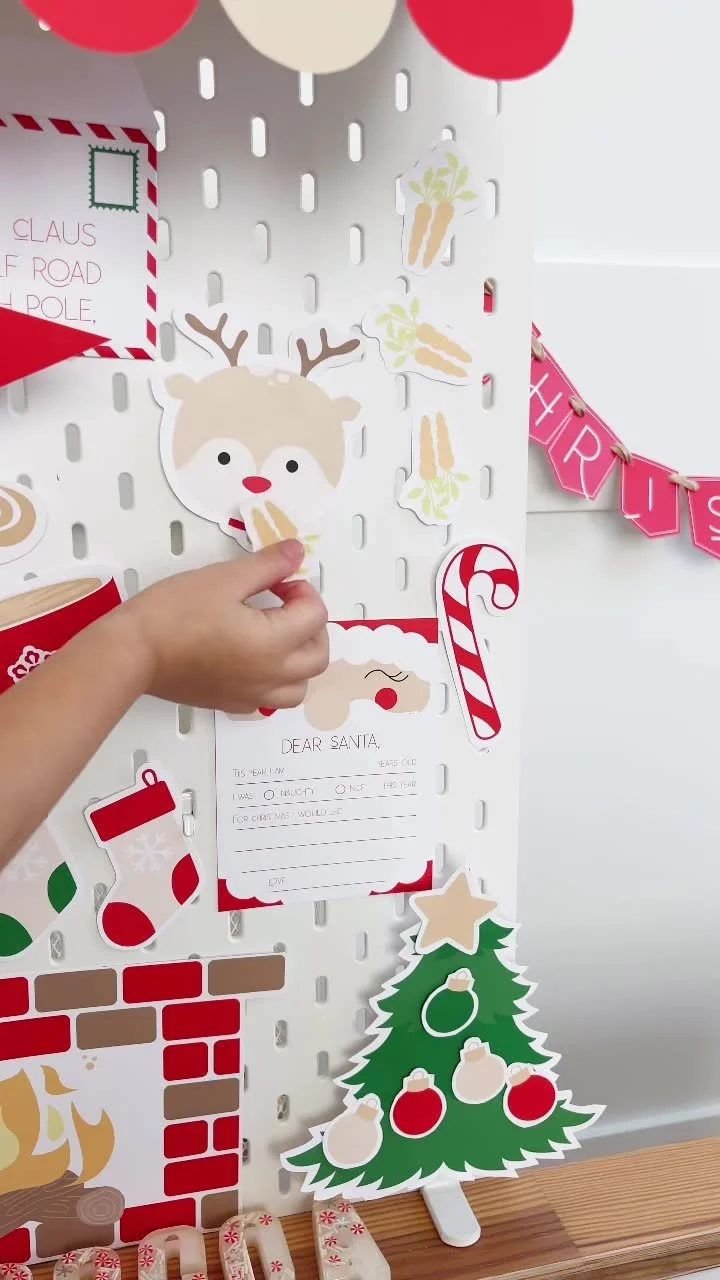
The base is plain oats — the friendliest filler on this whole list — with paper carrot cutouts, sparkly scoops and cups, a sprinkle of star-shaped pasta, and the reindeer himself: a big reindeer face on the North Pole pegboard, waiting to be fed. Our full step-by-step for the reindeer side of this theme, including the ornament craft that goes with it, lives in our reindeer and Santa snow globe ornaments post — the figures from that craft make perfect residents for this bin.
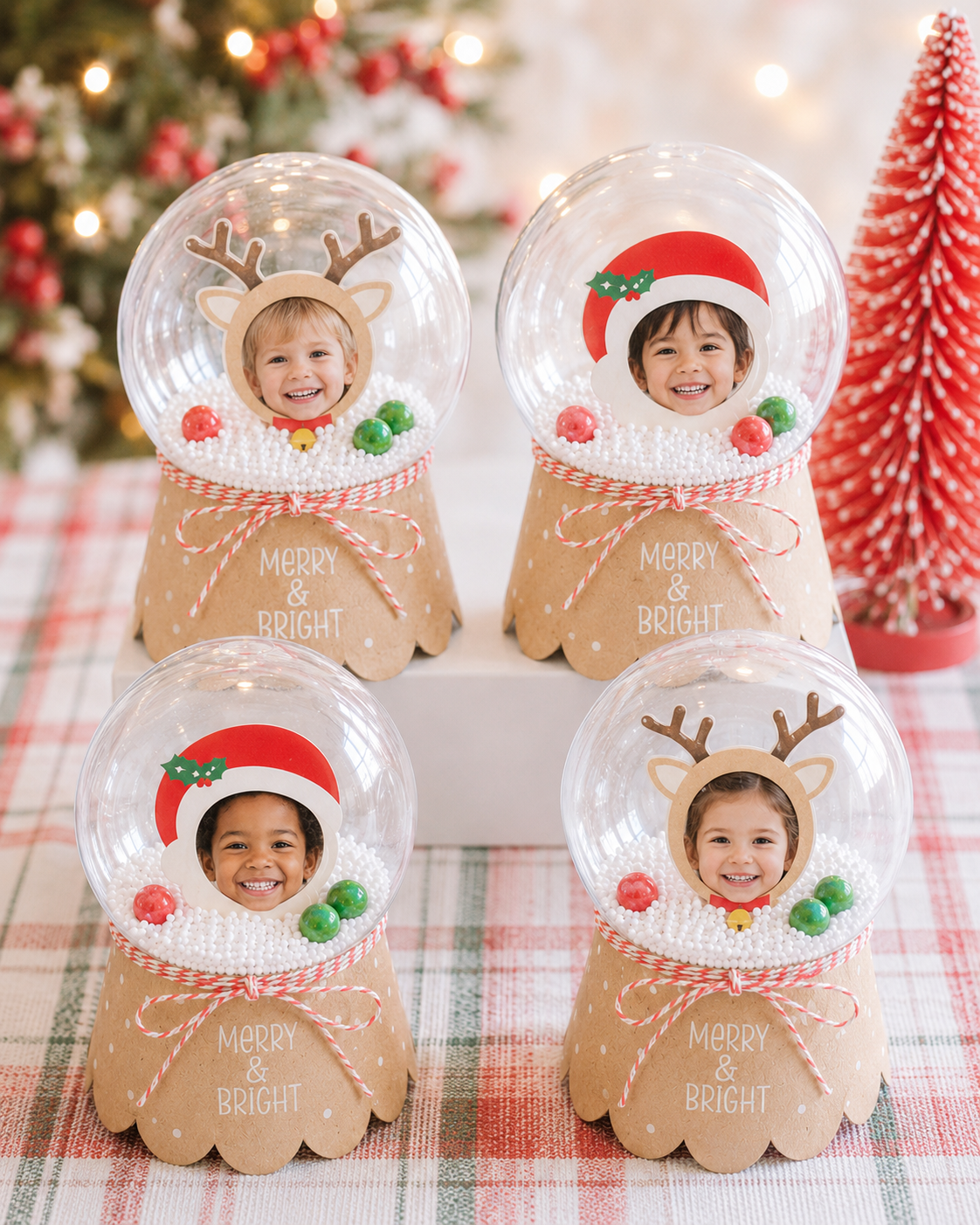
How to play: mix the "reindeer food" — a scoop of oats, a few carrots, a sprinkle of stars — then scoop it into little bags or cups, ready for Christmas Eve. The mixing is the play; the bagging is the purpose.
Stretch it: count the carrots as they go in — one for each reindeer. Nine carrots, nine reindeer, and a very proud toddler who just counted to nine without noticing.
Low-mess tip: oats sweep and vacuum better than any other filler here. Skip real carrots entirely — dried or craft ones keep the bin dry, and the bin lasts the whole season instead of one afternoon.
Reindeer & Santa Snow Globes — $5
If the reindeer theme takes hold (it did in our house for a whole December), our Reindeer & Santa Snow Globes printable turns the bin's residents into keepsake ornaments — the same figures, first in the bin, then on the tree.
3. The gingerbread cookie bin
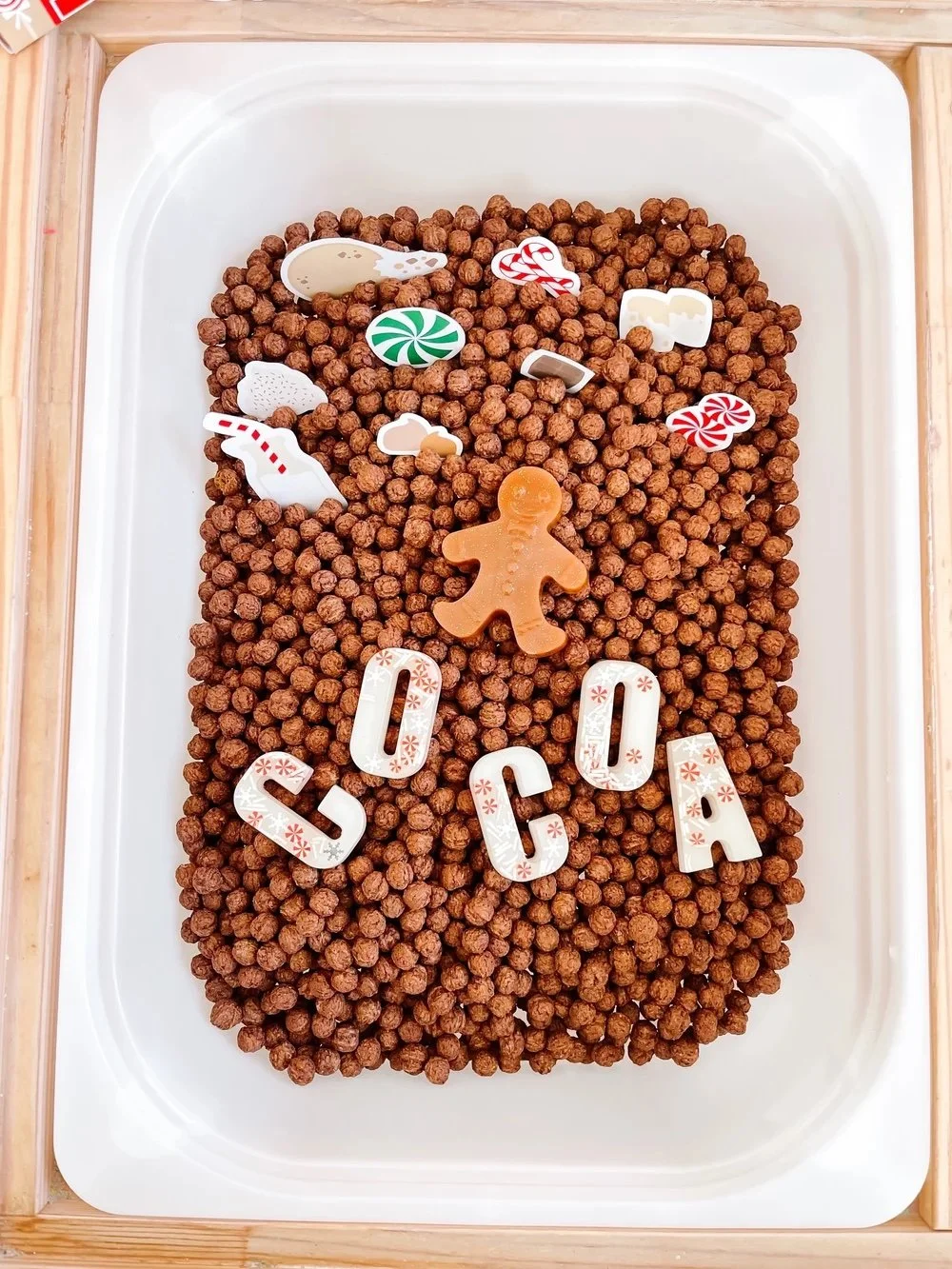
The base is cocoa cloud dough (cocoa powder, flour, and a little oil — it smells like a bakery) or brown playdough if you want zero sweep, with gingerbread-man cookie cutters, pom-pom "gumdrops," a small rolling pin, and a baking tray from the play kitchen. When my daughter was little, this bin ran a whole cookie shop: rolling, cutting, decorating, and serving every cookie to a very patient row of stuffed animals. The shop never closed; the customers never left.
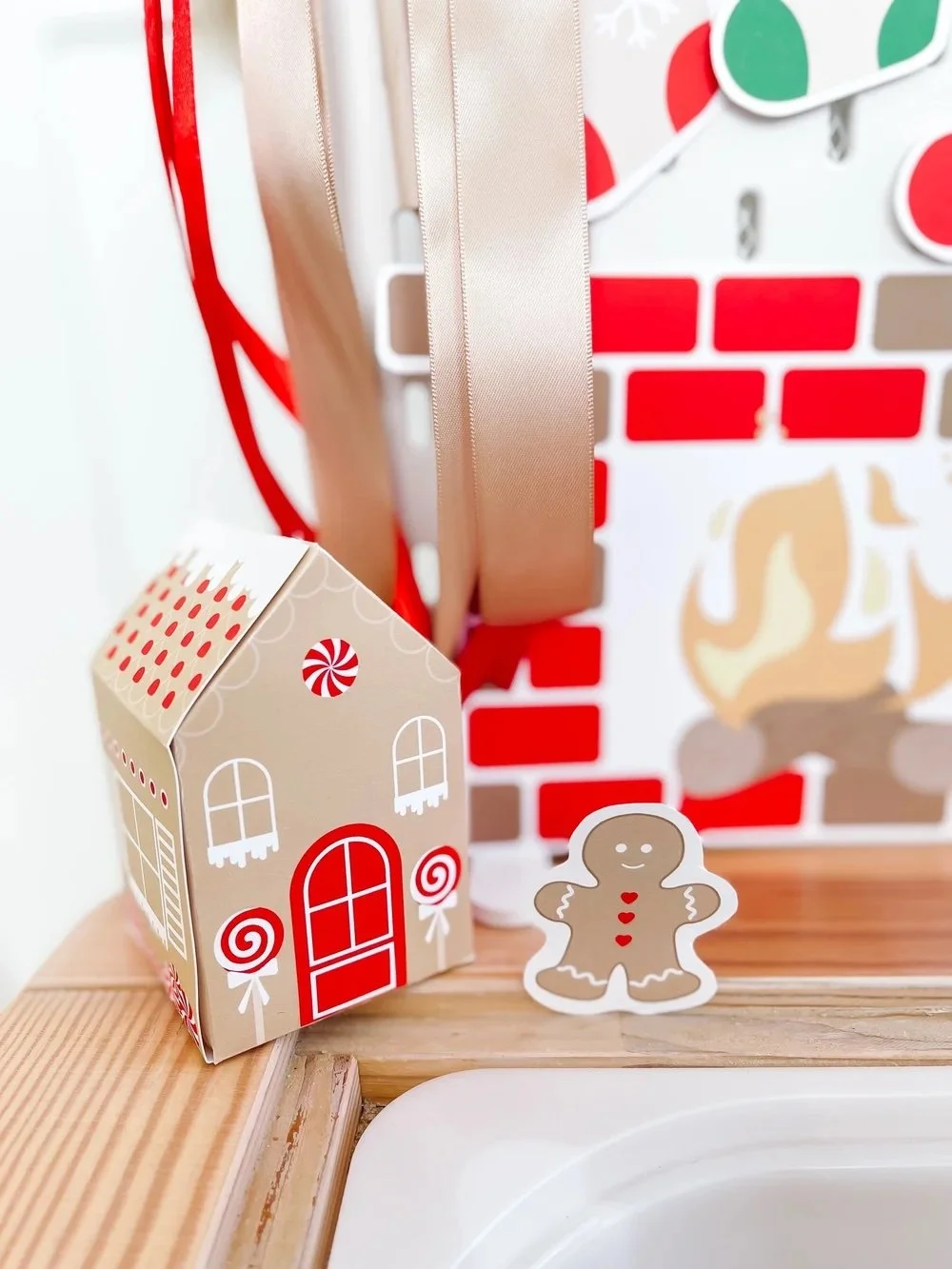
How to play: roll the dough, press the cutter, lift the cookie, decorate with pom-poms. The sequence — roll, cut, decorate — is the whole charm, and preschoolers will run it on repeat.
Stretch it: sort the pom-pom "gumdrops" by color before they go on the cookies. Red gumdrops on this cookie, green on that one, and suddenly the bakery is a sorting game too.
Low-mess tip: cloud dough stays in the bin far better than loose filler, and the playdough version needs no sweeping at all. Use pom-poms, not real candy, for the decorating — nothing sticky, nothing eaten off the floor.
Gingerbread Snow Globe — $5
Pair the cookie bin with our Gingerbread Snow Globe printable — the gingerbread friend, ready to make, hang, and play with all December. Our gingerbread snow globe ornaments deep dive has the full craft.
4. The jingle bell sound bin
The base is green and red rice with large jingle bells buried through it, plus scoops, cups, and a couple of small containers with lids. This is the noisiest bin on the list and the one toddlers return to most — there is something about digging for a sound that keeps little hands going long after the rice itself would have gotten boring. When my daughter was little, she treated this bin like a treasure hunt: every bell found got shaken, announced, and dropped into her "treasure cup" with great ceremony.
How to play: bury the bells, dig with scoops and hands, shake each one as it's found. Then rebury them and start again — the reset is part of the game.
Stretch it: hide a set number of bells and count them as they're found. "We found six — how many are still hiding?" turns a dig into a counting game without a single worksheet.
Low-mess tip: use a deep bin and a lid. Shake the whole lidded bin first so everyone hears the bells inside, then open it and dig — the sound cue makes toddlers dig with purpose instead of flinging rice.
5. The candy cane bin
The base is red and white striped rice (dye half the batch red and swirl it in) or red and white dyed pasta if you want a bigger, less-scattery filler, with red-and-white striped straws as scoops, two small cups for sorting, and a few pipe cleaners bent into candy-cane shapes. This is the prettiest bin on the list and the simplest to set up — two colors, one job, and the sorting does the teaching all by itself.

How to play: sort red to one cup, white to the other. Scoop, pour, sort again. Toddlers who won't sit for a sorting worksheet will sort candy cane rice for twenty minutes without being asked.
Stretch it: lay the pipe-cleaner candy canes in a row and make a pattern — red, white, red, white — then let your toddler continue it. Patterning is the quiet math hiding inside this bin.
Low-mess tip: pasta is bigger than rice and scatters less, so if your house has a low tolerance for sweeping, dye penne instead of rice. Either way, the tray underneath catches nearly all of it.
Christmas Flashcards — $15
When the sorting clicks, extend it with our Christmas Flashcards — the same reds, greens, and holiday pictures from the bin, turned into a matching game you can play at the table after the bin goes away.
6. The marshmallow snowman bin
The base is white — white pom-poms, cotton balls, or plain marshmallows — with a snowman built on a stick: three marshmallows stacked up, a paper top hat, button eyes, a carrot nose cut from paper, and a green paper scarf. He stands in his own bin of white filler, or right in the cocoa bin keeping the mugs company. When my daughter was little, the snowman was the first thing she built every time the Christmas table came out — the hat went on last, and it had to be straight.
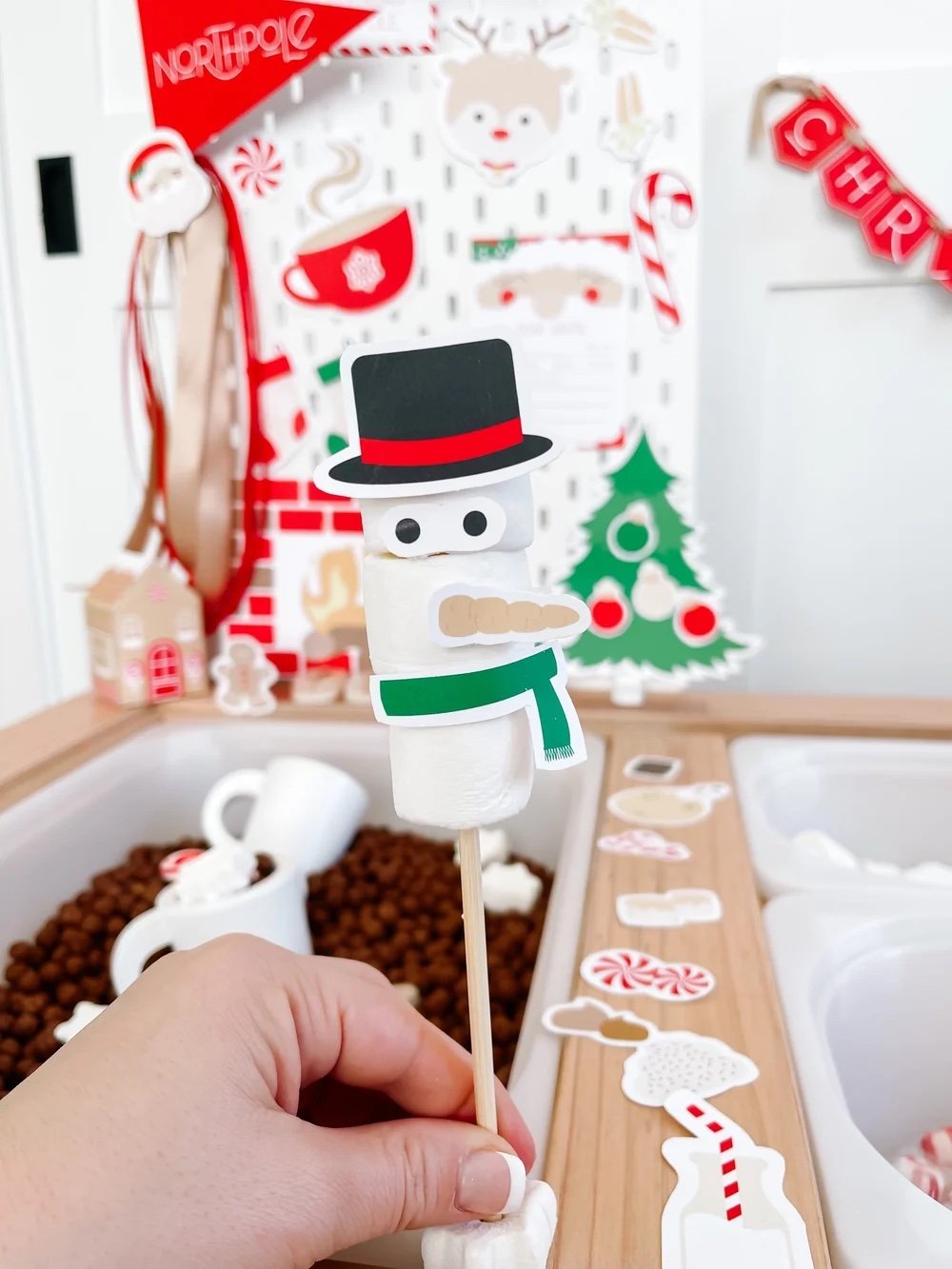
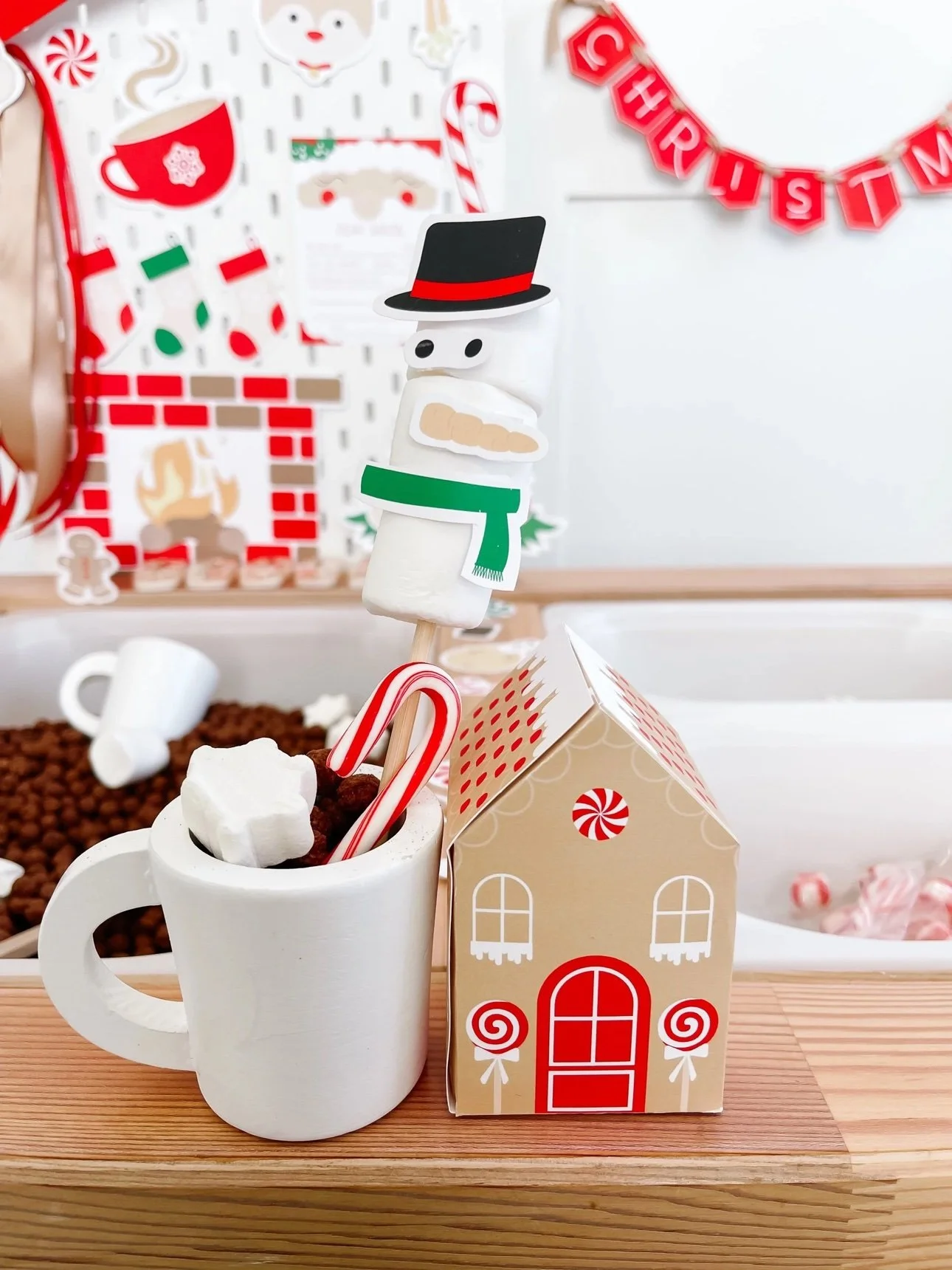
How to play: build the snowman — marshmallow, marshmallow, marshmallow, then the hat, the eyes, the nose, the scarf. Stand him in the bin, knock him down, build him again. The building is the play; the standing is the payoff.
Stretch it: give the snowman a job — he guards the cocoa bin, or he delivers the candy canes to the reindeer. A snowman with a job is a snowman with a story, and the story is where the play stretches.
Low-mess tip: marshmallows are sticky, so build the snowman over the tray and keep a damp cloth nearby. Or swap the marshmallows for white pom-poms — same snowman, zero stickiness, and he lasts all December.
7. The Christmas lights bin
The base is tinsel or white filler — cotton balls if you'd rather skip the glitter shed — with a string of battery fairy lights woven through it. This is the magic bin: turn the room light off, and the bin glows. A few clear gems or white pom-poms catch the light, and the whole thing becomes a tiny lit-up world on the kitchen floor. When my daughter was little, this was our evening bin — the one that came out after dinner, when the house was getting dark and everyone needed something calm and sparkly before bed.

How to play: bury the lights under the filler, dig to reveal the glow, cover them up again. Sort the clear gems by the light. The dark room does half the work — everything feels more exciting with the lights off.
Stretch it: let the bin be the nightlight. Ten quiet minutes of glow-bin play before bed is a genuinely lovely wind-down, and the lights make the whole room feel like December.
Low-mess tip: cotton balls instead of tinsel means no glitter shed at all. And the safety rule that matters most: the battery pack stays OUT of the bin — taped to the outside or held by you — lights only inside, always supervised, and never left on unattended.
8. Elf's present-wrapping bin
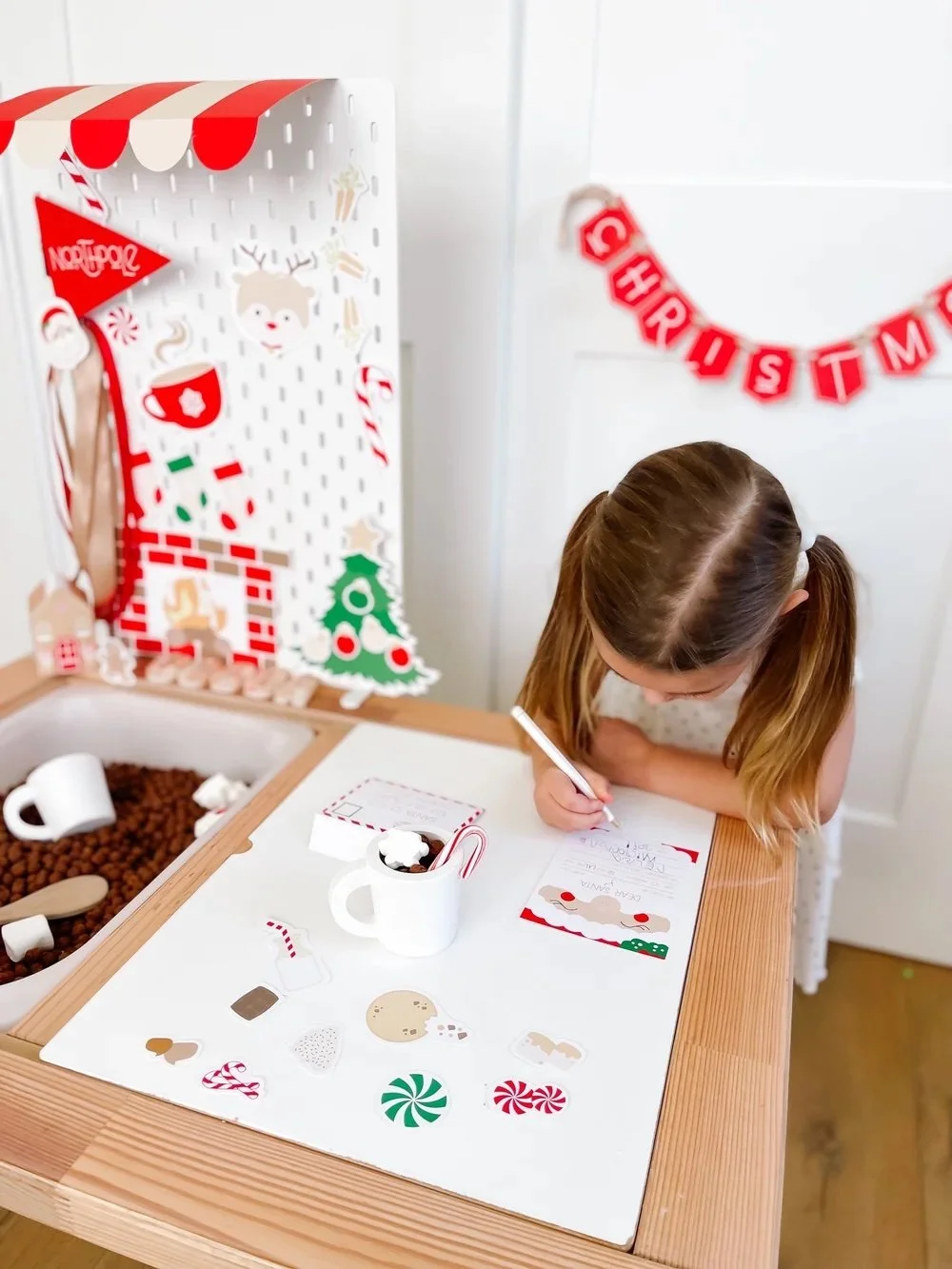
The base is wrapping-paper scraps, bows, tissue paper, and small boxes to fill, wrap, and stack — plus child-safe tape or washi tape and a few gift tags. No filler to sweep, no dye to wash off hands, just paper and boxes. This was our most-played December bin when my daughter was little, because the presents never ran out: wrap one, unwrap it, wrap it again, stack them all into a tower, knock the tower down, start over. And if you want the wrapping to mean something, slip a drawing or a note inside each box — a tiny gift for someone in the family. Our free Letter to Santa kit fits beautifully here: tuck the finished letter into the biggest box and "deliver" it together.
How to play: wrap a box, add a bow, stack it on the tower. Unwrap it and do it all again. The loop is the game, and the tower is the scoreboard.
Stretch it: make each box a delivery — "this one goes to Grandma, this one goes to Dad" — and carry it across the room to its person. The bin becomes a whole-house errand.
Low-mess tip: paper scraps are the easiest cleanup on this list. Gather, fold, done — no sweeping, no vacuuming, no rice in the couch cushions.
Free: Winter Pie Recipe Cards
When the cookie bin (number 3) sparks a baking mood, our free Winter Pie recipe cards turn it into a follow-the-recipe game — printable cards that walk you through a done-for-you winter pie sensory setup, step by step.
How to rotate Christmas bins through December
Eight bins sounds like a lot; in practice we ran two at a time and rotated weekly. Keep the fillers in labeled zip bags (rice, oats, and pasta all store beautifully), keep the props in one basket, and rebuild a "new" bin by swapping the props, not the filler. The red and green rice from Santa's workshop becomes the jingle bell bin next week; the oats from the reindeer bin become the base for a cookie-baking afternoon. If you want the Advent version: reveal one new bin each Sunday of Advent, and let the collection grow toward Christmas. For older toddlers who are ready for sequencing and sorting games, our sensory bin ideas for 3-year-olds pairs well with this list — same bins, bigger jobs.
Free: Winter Printable Play Mats
Pair any bin on this list with our free Winter Printable Play Mats — sorting trays and counting mats that give the scooping somewhere to go, including a Christmas twist: use the mats as a "sensory bag" base for travel-friendly play.
Christmas sensory bin FAQ
What age are Christmas sensory bins best for?
Ages 2–5 get the most from these bins. Two-year-olds will mostly scoop, pour, and dump (which is exactly right); four- and five-year-olds will add storylines, sorting, and recipe-following. Size the props up for younger players, and stay nearby for toddlers with any small filler.
How do I keep the mess contained?
One bin, one tray, one tool — and a rule that the bin lives on the tray. When the tray comes out, the bin comes out; when the tray goes away, the bin goes away. Choose your filler with your tolerance in mind: pasta scatters less than rice, paper scraps need no sweeping at all, and a five-minute tidy at the end (toddlers love "rescuing" escapees back into the bin) finishes the job.
Can I reuse Christmas bin fillers next year?
Yes — dyed rice, oats, and dried pasta all store in zip bags and last the whole season, and the rice and pasta keep for next December too. Toss anything that gets wet or starts to smell, and refresh with a new bag of filler when the color fades. Lights, tinsel, and bells store separately in the Christmas box.
What if my toddler tries to eat the filler?
That's normal, especially at two — everything goes in the mouth. Food-based fillers like oats and rice are the safer choice for mouthy toddlers, and they're one reason this list skips water beads entirely. Keep bells and ornaments large, supervise every bin, and if your toddler is mouthing everything in sight, pull the bin and try again in a few weeks — or start with the wrapping-paper bin, which has nothing to eat at all.
How do I keep the bins interesting all December?
Rotate, don't rebuild. Two bins out at a time, swap weekly, and change the props instead of the filler — the same rice becomes a new bin with new props. The Advent reveal (one new bin each Sunday) stretches eight bins across the whole month, and the bins your toddler returns to are the ones worth repeating next year.
December is long, and the afternoons are longer — but a bin on the floor changes the whole shape of the day. Start with Santa's workshop or the jingle bell bin (both take under ten minutes), see which one your toddler returns to, and build your rotation around that. That's how our Christmas play worked: one favorite bin, then another, until the season had a rhythm all its own. And when you're ready for the rest of the season — the crafts, the setups, the ornaments — it's all waiting in our Christmas play hub.