
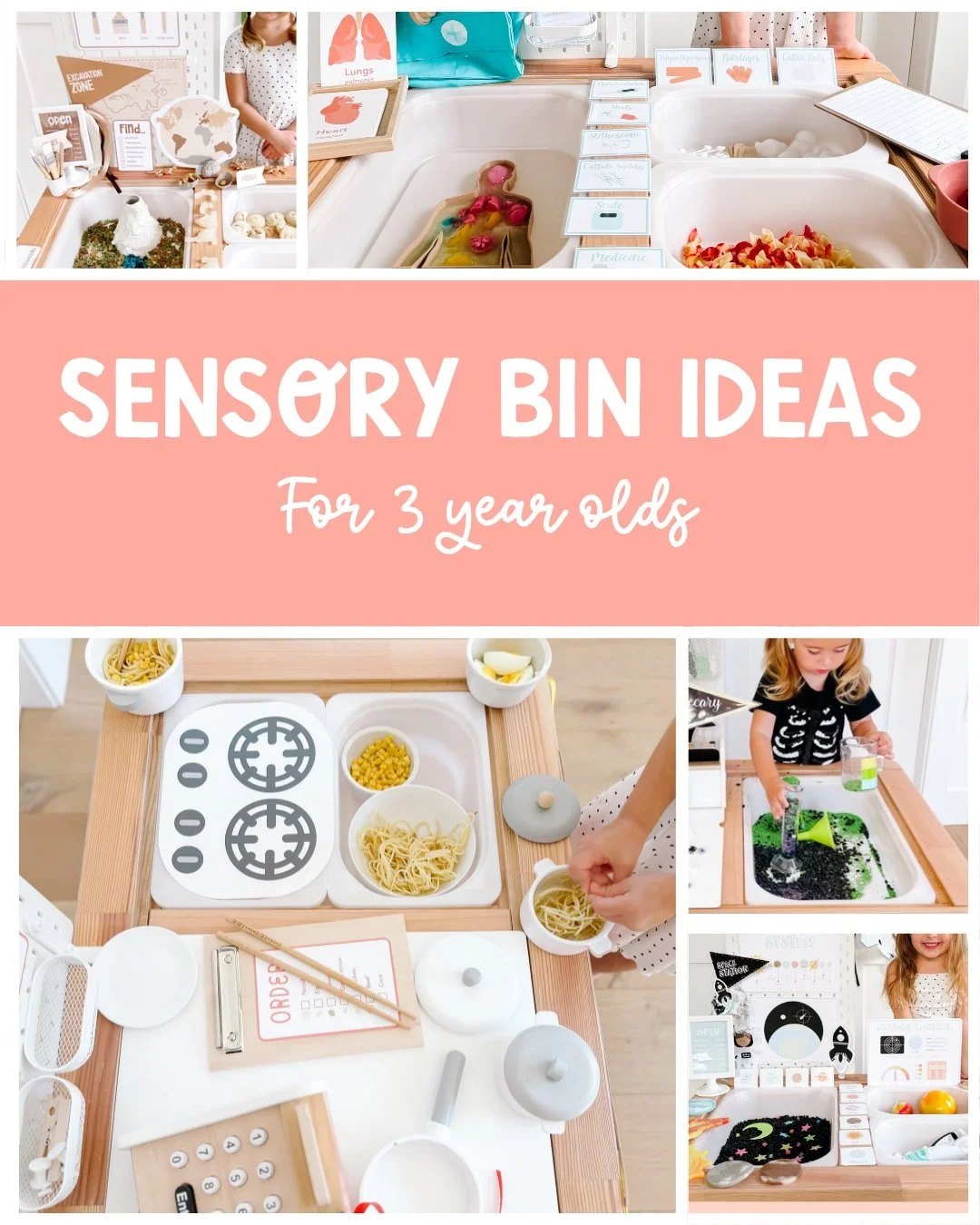
Sensory Bin Ideas for 3-Year-Olds: 8 Bins That Build Sorting, Counting & Pretend Play
Three is when sensory bins change. At two, the whole game was scooping and dumping — and that was enough. At three, something new shows up: your child starts sorting on purpose, counting out loud while they play, and staying with one bin long enough for a story to happen. When my daughter was three, our bins stopped being just a way to fill the afternoon and became the place where the skills she was learning everywhere else finally clicked — colors, numbers, and taking turns, all tucked inside play she actually wanted to do. These 8 sensory bin ideas for 3-year-olds are built for exactly this age: longer attention spans, stronger hands, a first real interest in sorting and patterns, and pretend play that runs for twenty minutes instead of two.
What changes at three — and how the bins change with it
A bin that works at three looks different from one that worked at two, and the differences are all good news:
- Sorting replaces dumping. Three-year-olds love putting like with like. Give them two or three cups and a mixed filler, and sorting becomes the game — no lesson required.
- Counting gets a job. At three, counting stops being just a song and starts being something you do: count the scoops, count the animals, count how many fit in the cup. Our teaching your toddler to count post has more of these play-first counting ideas.
- Tools get smaller. Tongs, tweezers, and small scoops are finally fun instead of frustrating — and they quietly build the same hand strength that cutting practice builds. (Our scissor skills post covers the cutting side of that same hand-strength story.)
- Pretend play runs longer. A bin at three can hold a whole storyline: the café serves customers, the farm animals need feeding, the arctic animals need rescuing. Follow the story instead of directing it.
- Patterns peek in. Simple AB patterns — red, blue, red, blue — are within reach at three, but only as a game, never as a test. If the pattern falls apart, the play still worked.
One thing that does not change: stay nearby. Three-year-olds mouth less, but small pieces still deserve a grown-up in the room, and the best conversations still happen when you are sitting right there watching the sorting happen.
8 sensory bin ideas for 3-year-olds
1. The color-sort bin
Setup: A base of dried rice or pasta dyed in two or three colors (shake the dye through in a sealed bag — no mess), plus one cup or small container per color and a scoop or tongs. The game is simple: red things in the red cup, blue things in the blue cup.
Why it works for 3s: Sorting is the signature skill of three. It feels like a puzzle and a game at once, and it holds attention far longer than free scooping did at two, because there is a satisfying finish: every cup full, every color in its place. When my daughter was three, color sorting was the first bin game she asked for by name — and the first one she could set up mostly by herself, which made her prouder than the sorting itself.
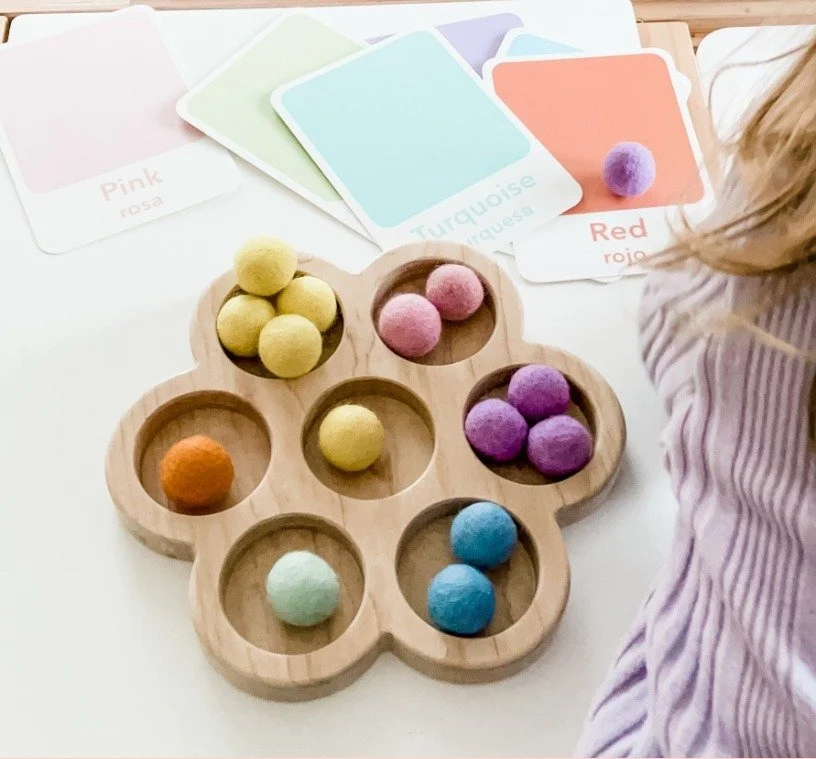
Make it last: When two colors get easy, add a third — or swap the scoop for tongs. Either change makes the same bin feel brand new, which is the cheapest refresh in sensory play.
2. The counting scoop bin
Setup: A base of dried beans or large pasta, a set of chunky counting objects (big buttons, large pom-poms, or wooden beads), and numbered cups or small containers. The game: scoop, count out loud together, drop them in the cup. At three, try "scoop five" — count five objects into the cup, dump, and do it again.
Why it works for 3s: Three is when counting starts to mean something instead of just sounding like a song. The bin gives counting a job: the numbers are just what you say while you scoop, and the cup gives the count a visible finish line. When my daughter was little, counting worked best tucked inside play she already loved — scooping beans into a cup while we counted together out loud, no pressure, just the rhythm of the game.
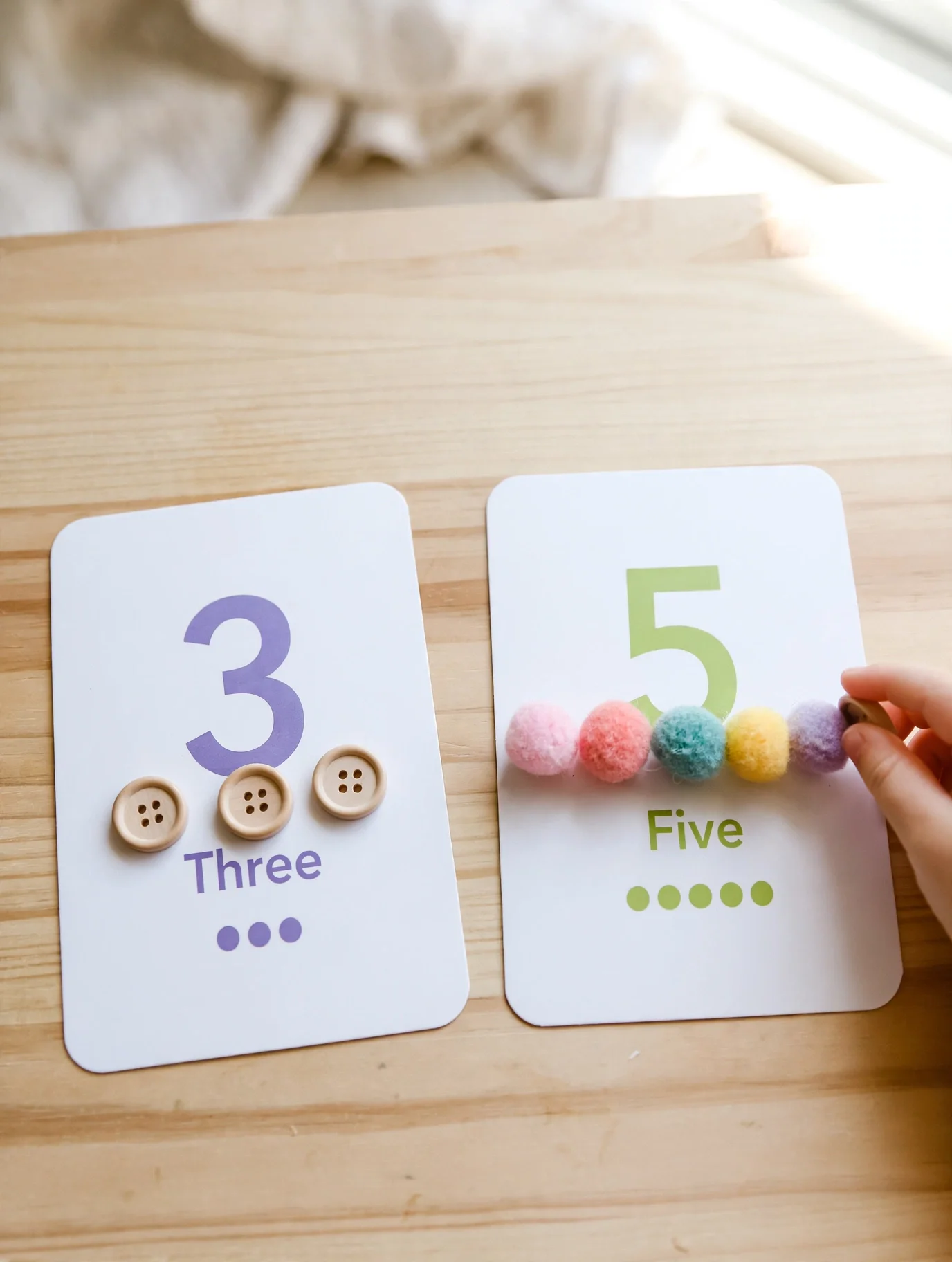
Make it last: Add a simple number card beside each cup once the counting is steady. The cards turn the same game into a matching game, and matching is exactly the next step three-year-olds reach for.
Counting Sensory Kit — $15
Our Counting Sensory Kit pairs the counting game with ready-to-play pieces — the objects, the cups, and the counting cards in one kit, so the bin is set up in two minutes.
3. The farm lentils bin, leveled up
Setup: The same beloved farm bin — dried lentils, corn kernels, and pumpkin seeds, chunky farm animal figurines, a small dish as a feed trough — plus one new job: sort the animals. All the cows in one pen (a small container), all the pigs in another. Or count them: how many cows? How many pigs?
Why it works for 3s: Familiar bins are the best bins to level up, because the play script is already known and all the new energy goes into the new skill. When my daughter was little, she spent an entire afternoon solemnly serving dinner to every animal, one pasta shell at a time, from a little white dish we used as the grain bin — and at three, that same dinner service gained a seating chart.

Make it last: Lentils are still the friendliest dry filler there is — they sweep up in seconds and they don't roll the way chickpeas do. Keep the bin on a tray and the whole cleanup is one pour.
4. The cocoa café bin
Setup: Brown rice (or dried beans) with a spoonful of cocoa powder shaken through for color and that warm cocoa smell, plus a few cotton-ball "marshmallows," two small mugs, a spoon, and a little menu card (a piece of paper that says "cocoa — 2 scoops"). Add a second mug and the bin becomes a two-person café with customers.
Why it works for 3s: At three, pretend play gets roles: someone serves, someone orders, someone announces when the cocoa is "ready." When my daughter was little, she ran a whole cocoa stand out of this bin and served every stuffed animal in the house — and at three, the stand gained a menu, a price ("two scoops!"), and very firm opinions about who had ordered what. That role play is the whole point: the bin is a stage, not just a texture.

Make it last: Skip loose cocoa powder on the table and shake it through the rice in a sealed bag first. You get the smell and the color with none of the brown dust.
Pie Making Sensory Kit — $32
If the café and baking pretend play takes hold (it did in our house), our Pie Making Sensory Kit gathers the whole pie-shop game into one ready-to-go kit — no prop hunt, no filler-dyeing. Our sensory play pies roundup gathers that whole pie-shop world in one place.
5. The frozen friends bin
Setup: Dyed chickpeas in icy blues and whites, small chunky character or winter figurines, scoops, cups, and tongs. The new game at three: sort the friends by color, or rescue them in a specific order ("first the blue ones, then the white ones").
Why it works for 3s: Familiar characters give a three-year-old an instant storyline — no world to invent, just burying, rescuing, and lining friends up for dinner — and the sorting rule gives that storyline a shape. Our version used a fall palette crossed with Frozen play, and it taught me something useful: toddlers don't care about seasonal boundaries. A bin they love in one season is a bin they'll love in the next.
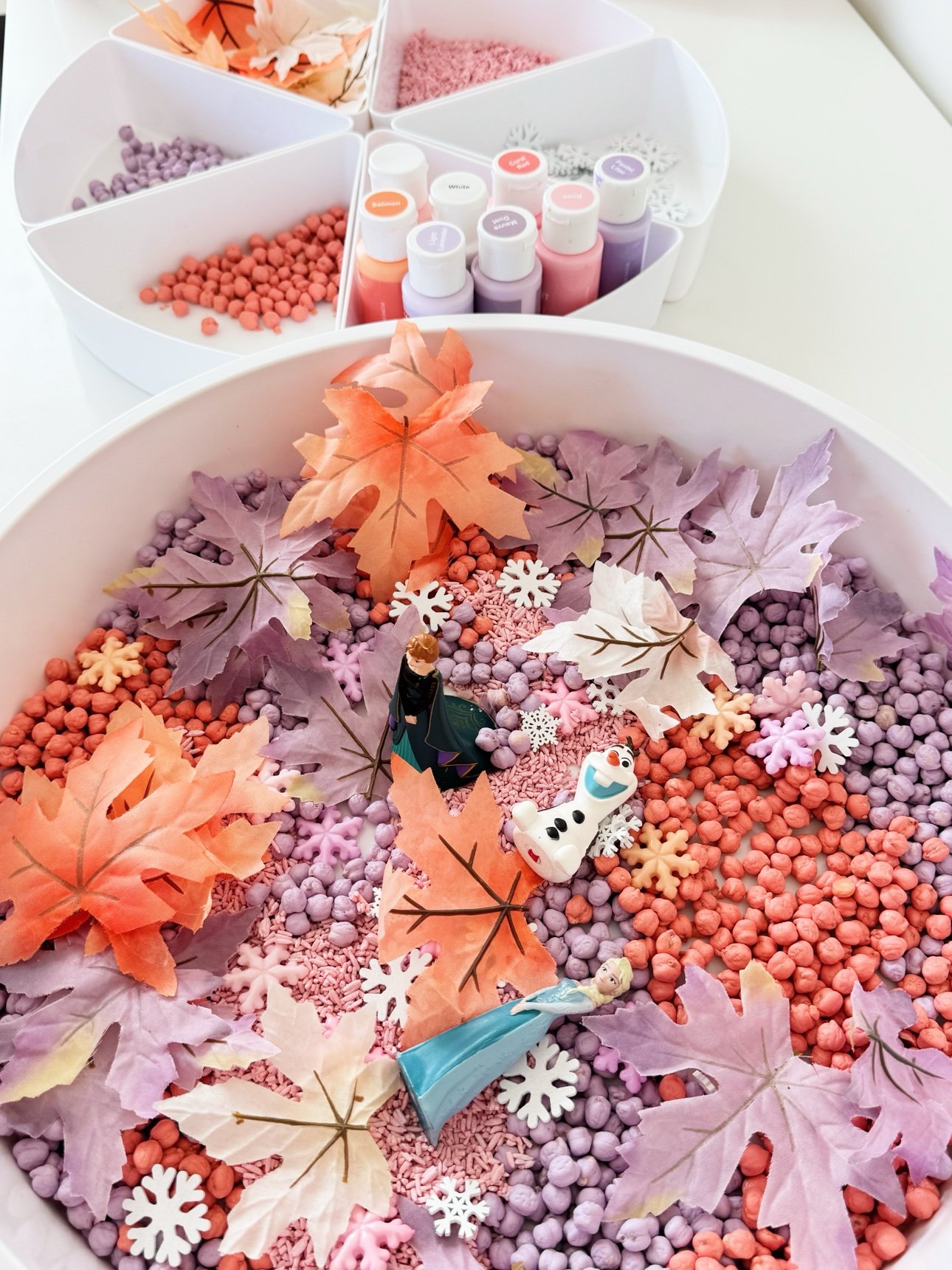
Make it last: Chickpeas roll, so this bin needs the tray more than most. Refresh trick for when the novelty fades: freeze a few of the figures in a container of water overnight, and "rescuing" them with warm water and a spoon restarts the whole bin.
6. The arctic rescue bin
Setup: Ice cubes and a little cold water in a bin, plus chunky polar animal figures, a cup, and tongs for "rescuing" animals from the ice. At three, add a mission: rescue all the penguins first, then the bears — or count the rescues out loud.
Why it works for 3s: Ice is the rare filler that is free, fascinating, and self-cleaning — it just melts. Three-year-olds are still endlessly interested in cold, slippery, disappearing things, and now the rescue game has rules and a finish line, which is exactly what stretches ten minutes into thirty. Stay nearby (cold and slippery) and keep a towel under the tray. Ice bins have a natural ending when the ice melts, which is a gift — the play winds itself down.
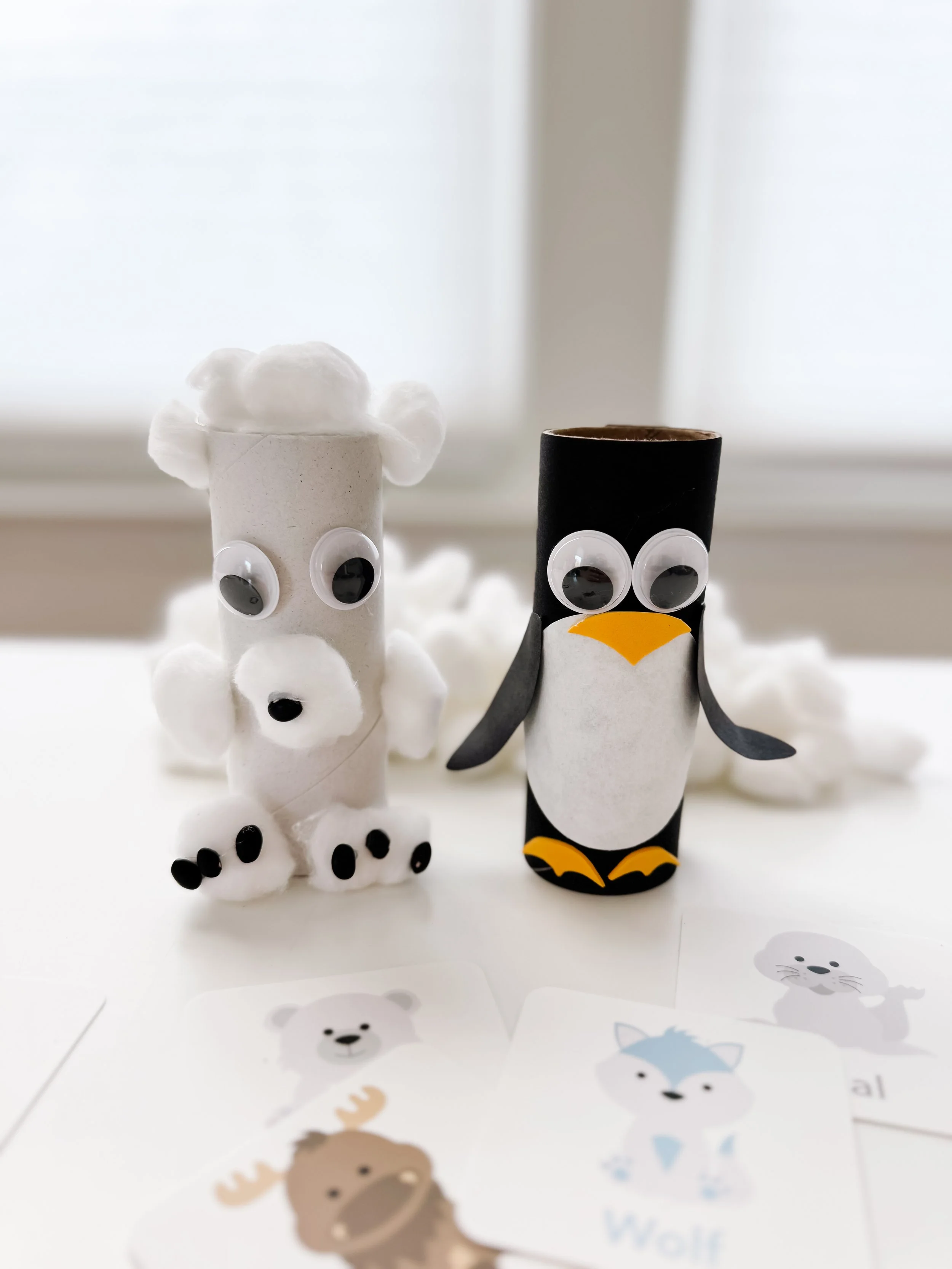
Make it last: Set the bin on a towel on the tray, not just the tray alone. The towel catches the melt water, and the whole thing goes in the wash when the play is done.
Arctic Sensory Kit — $15
If the arctic theme takes hold, our Arctic Sensory Kit gathers the polar-animals play into one ready-to-go kit — no filler-dyeing, no prop hunt.
7. The pasta pattern bin
Setup: A base of large dry pasta shapes in two colors or two shapes (penne and shells, or red-dyed and plain penne), plus a muffin tin. The game: make a pattern across the tin — red, plain, red, plain — or sort first, then pattern. Start the pattern yourself and let your child finish it.
Why it works for 3s: Patterns are the first "thinking game" that feels like play rather than school at three, and the muffin tin makes it visible: a row of cups, a row of choices, a pattern you can see growing. There is no right answer to enforce — if the pattern falls apart into joyful dumping, that day still counted, and the pattern will be there again tomorrow.
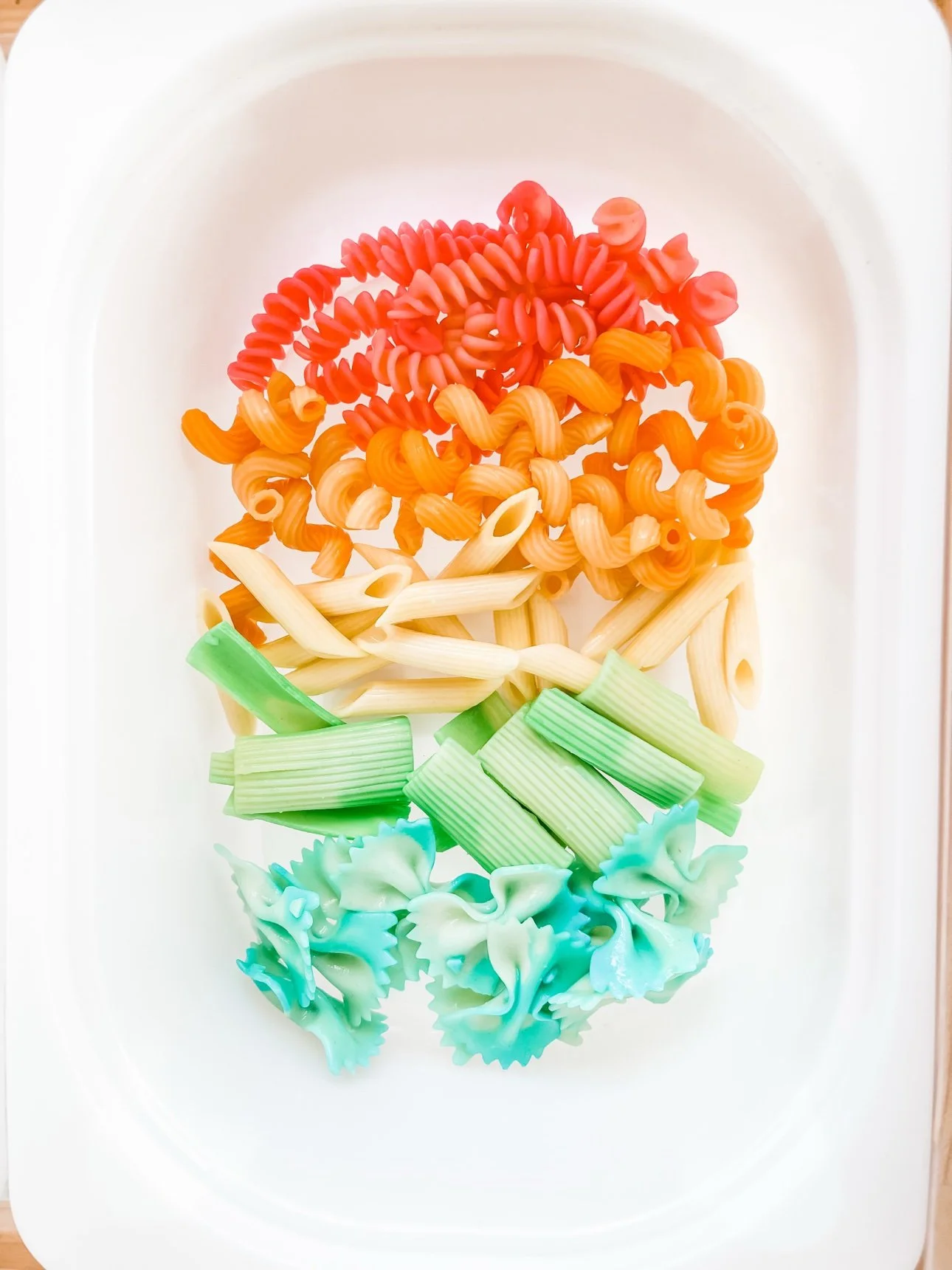
Make it last: Pasta is loud on a hard floor, which is half the fun and all of the cleanup problem. A towel under the tray muffles the sound and stops the rolling — penne on a towel stays put.
8. The nature treasure bin
Setup: A base of dried leaves or brown rice, plus whatever you gathered on your last walk: pinecones, smooth stones, bare twigs, a few seed pods. Everything from outside, everything free. The new game at three: sort the treasures — all the pinecones together, all the stones together — or count them into groups of three.
Why it works for 3s: Nature pieces are irregular in the best way — different weights, textures, and shapes, which is exactly what little hands are learning to notice. And the bin gives your walk a purpose: when my daughter was little, our walks always ended with pockets full of "treasures," and this bin was where the treasures lived. At three, the treasures also get sorted, counted, and stacked into tiny pinecone forests — the same bin, one skill level up.
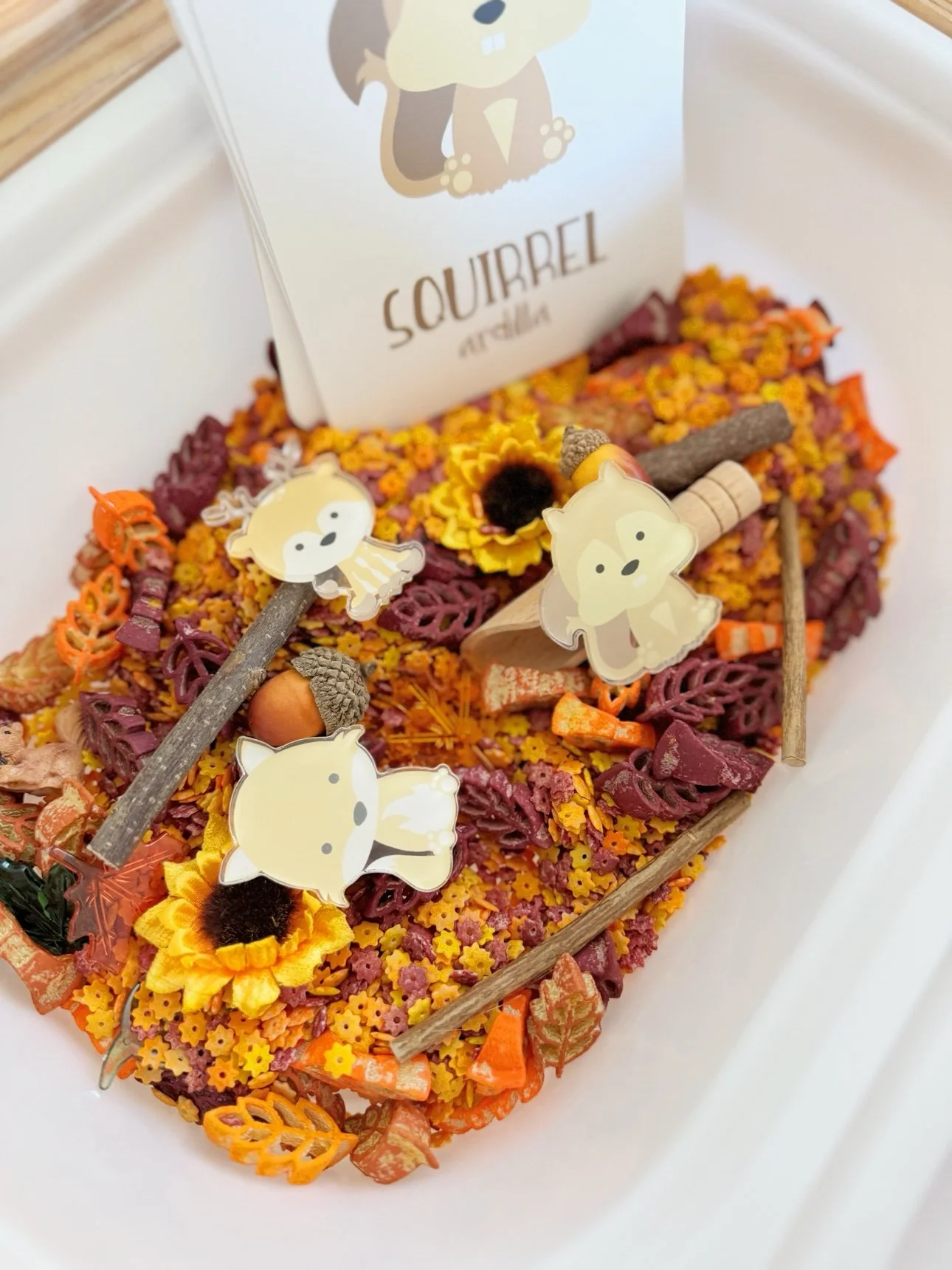
Make it last: Check the pinecones first for sap, give them a quick brush, and retire anything that crumbles. A small basket beside the bin for "new treasures" keeps the walk-to-bin loop going all season.
How to rotate bins at three
Three-year-olds can handle more bins in rotation than two-year-olds could — but the rule is still the same: fewer bins out, longer play. Keep two bins out at a time (one familiar favorite, one new challenge), and swap the new one weekly. When a bin stops getting played with, don't throw the filler away — dye it a new color, swap the tool for tongs, or add a sorting rule, and it is a new bin again.
And if a bin day falls apart — the filler goes everywhere in the first minute, nobody sorts anything, the pattern never happens — that day still worked. At three, the mess is still part of the play. Pour it back together, put the tray underneath, and let them go again tomorrow.
Free Winter Pie Recipe Cards
Want a ready-made bin game to go with the pie-shop play? Our free Winter Pie Recipe Cards turn the café and bakery bins into a follow-the-recipe game — free to download from Sprout.
Free Winter Printable Play Mats — $0
Our free Winter Printable Play Mats give the winter bins a second life on the table — print, play, wipe clean, repeat.
Frequently asked questions
How long should a 3-year-old play with a sensory bin?
Twenty to thirty minutes is a great stretch at three — longer than the ten or fifteen minutes that was realistic at two, but still with a natural ending. If the play winds down sooner, that is normal too. A bin that gets played with for ten focused minutes beats a bin that sits untouched for a week.
Are small pieces safe for 3-year-olds?
Three-year-olds mouth less than two-year-olds, but small pieces still need supervision. Keep beads, buttons, and small pasta out of unsupervised play, stay in the room, and retire anything that could fit through a toilet-paper tube.
What if my 3-year-old just dumps everything?
Then the bin still worked. Dumping is sensory play, not failed sorting. Offer the sorting game once ("can you put all the red ones here?"), and if they go back to dumping, let them. The sorting skill shows up on its own timeline, usually right after you stop pushing for it.
How many bins should I have out at once?
Two: one familiar favorite and one new challenge. More than that splits attention and multiplies cleanup. Rotate weekly, and refresh a tired bin with a new tool, a new color, or a new sorting rule instead of building a new one from scratch.
Do I need to buy a sensory kit, or can I build bins from the pantry?
The pantry builds a perfectly good bin — lentils, rice, pasta, and beans cover most of these eight ideas. Kits are for the moment a theme takes hold and you want the whole game ready to go without a prop hunt, not a requirement for starting.
Three is a wonderful age for sensory bins: the hands are stronger, the attention is longer, and the play finally has rules your child invents themselves. Start with the color sort or the counting scoop — the two bins where the new three-year-old skills show up fastest — and let the café, the farm, and the arctic rescue follow. The bins will grow with them, one sorting rule at a time.