Toddler Speech Delay Activities: 10 At-Home Ways to Encourage Talking

10 toddler speech delay activities to encourage talking at home

Toddler Speech Delay Activities: 10 At-Home Ways to Encourage Talking

If your toddler understands everything but isn't talking yet, you're not alone — and there's so much you can do at home. These 10 play-based toddler speech delay activities fit into your normal day, no special training required.

Best forAges 18 months–3 years
Time5–10 minutes, woven into your day
CostMostly free
SkillsLanguage + connection

Why making talking fun worked for us

I'll be honest with you: my daughter didn't have a speech delay — she started talking early. And I'm convinced a big reason why is that we turned talking into the best game in the house. Narrating everything, being gloriously silly with animal sounds, pausing mid-song so she could shout the missing word — talking was never a lesson, it was play.

If you're here because you're worried about your toddler's speech, I understand — the worry is real, and I've watched mom friends carry it. Here's what I want you to know: it's incredibly common, and the everyday moments you already share with your child are the most powerful place to build language. These toddler speech delay activities aren't drills or flashcard marathons. They're small shifts in how you play, talk, and go about your day — the same strategies speech-language pathologists coach parents to use at home.

What does a speech delay look like in toddlers?

Every child develops on their own timeline, but in general, a speech delay means a child's spoken language is behind what's typical for their age — even though their understanding (receptive language) may be right on track. You might notice:

  • Using gestures and pointing more than words to communicate
  • Saying fewer words than peers the same age
  • Not yet combining two words together by around age two
  • Getting frustrated when you can't understand what they want

Important: I'm a mom, not a speech therapist. If you have concerns about your child's speech, talk to your pediatrician — they can refer you for a hearing screening and a speech-language evaluation. Early support makes a real difference, and there's no downside to asking. The activities below are wonderful for all toddlers building language, whether or not a delay is ever diagnosed.

10 toddler speech delay activities to try at home

1. Narrate your day out loud

Speech therapists call this "self-talk," and it's one of the simplest language builders there is. Just describe what you're doing as you do it: "I'm peeling the banana. Peel, peel… now I'm cutting it. One slice, two slices!" Your toddler hears vocabulary connected to real actions, dozens of times a day, with zero pressure to perform.

Mom narrating daily activities to encourage toddler talking — toddler speech delay activities
She narrated everything — peeling bananas, pouring water — and the words soaked right in.

2. Offer choices instead of guessing

It's faster to hand your child what they want before they ask — but that removes their reason to communicate. Instead, hold up two options: "Do you want the apple or the banana?" Even if they just point at first, you've created a moment of communication. Then model the word back: "Banana! You chose the banana."
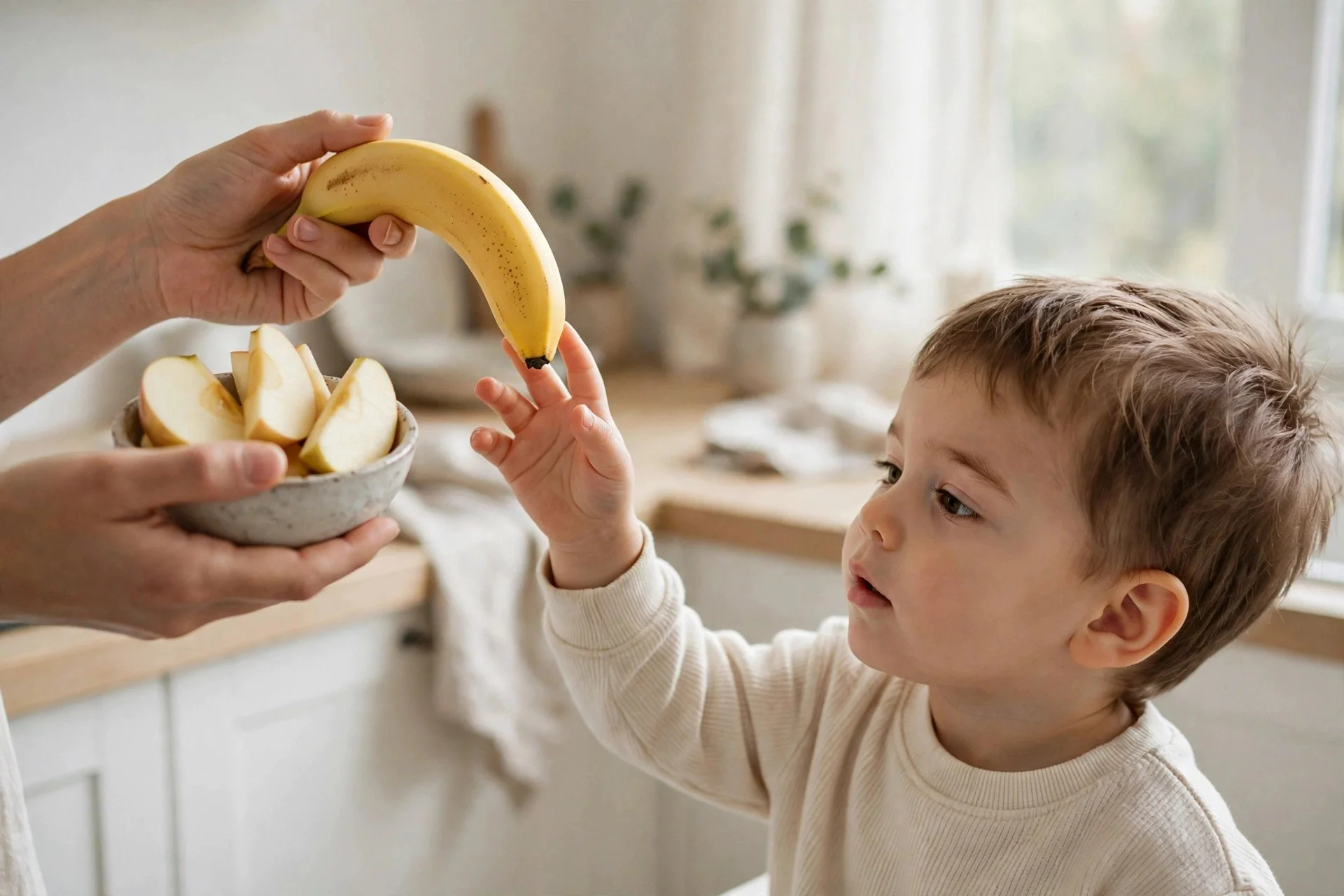
Offering a toddler two snack choices to encourage communication — toddler speech delay activities
Two options, held up side by side. Pointing counted as talking at first.

3. Create "communication temptations"

Put a favorite toy slightly out of reach — somewhere they can see it but can't grab it alone. When they look, point, or fuss, that's your opening to model the word: "Car! You want the car!" You're manufacturing joyful reasons to talk, several times a day.

Communication temptation with toy car in sight to prompt toddler speech — toddler speech delay activities
The red car sat just out of reach where she could see it. She learned fast that words made it come to her.

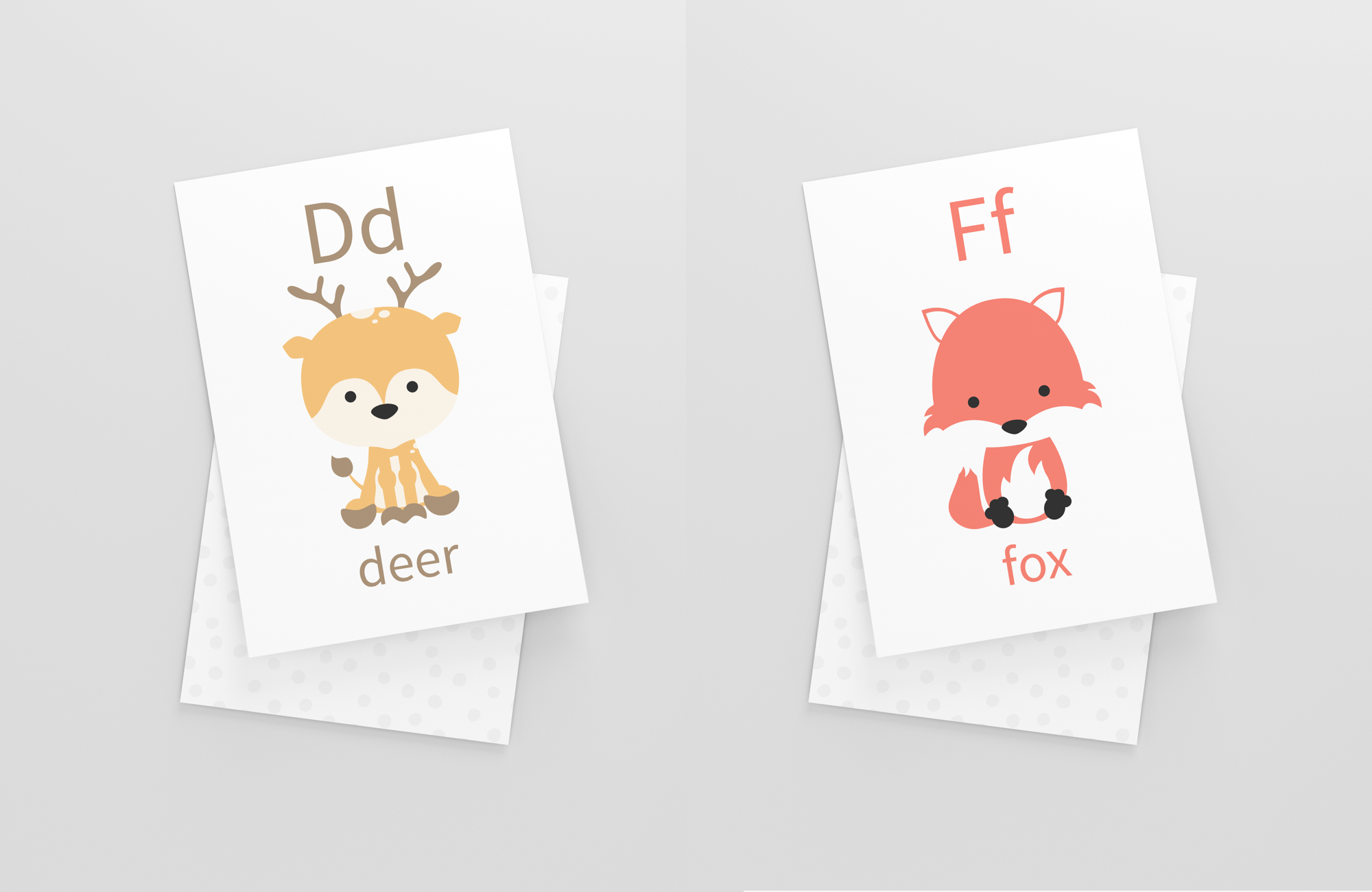
4. Practice animal sounds with picture cards

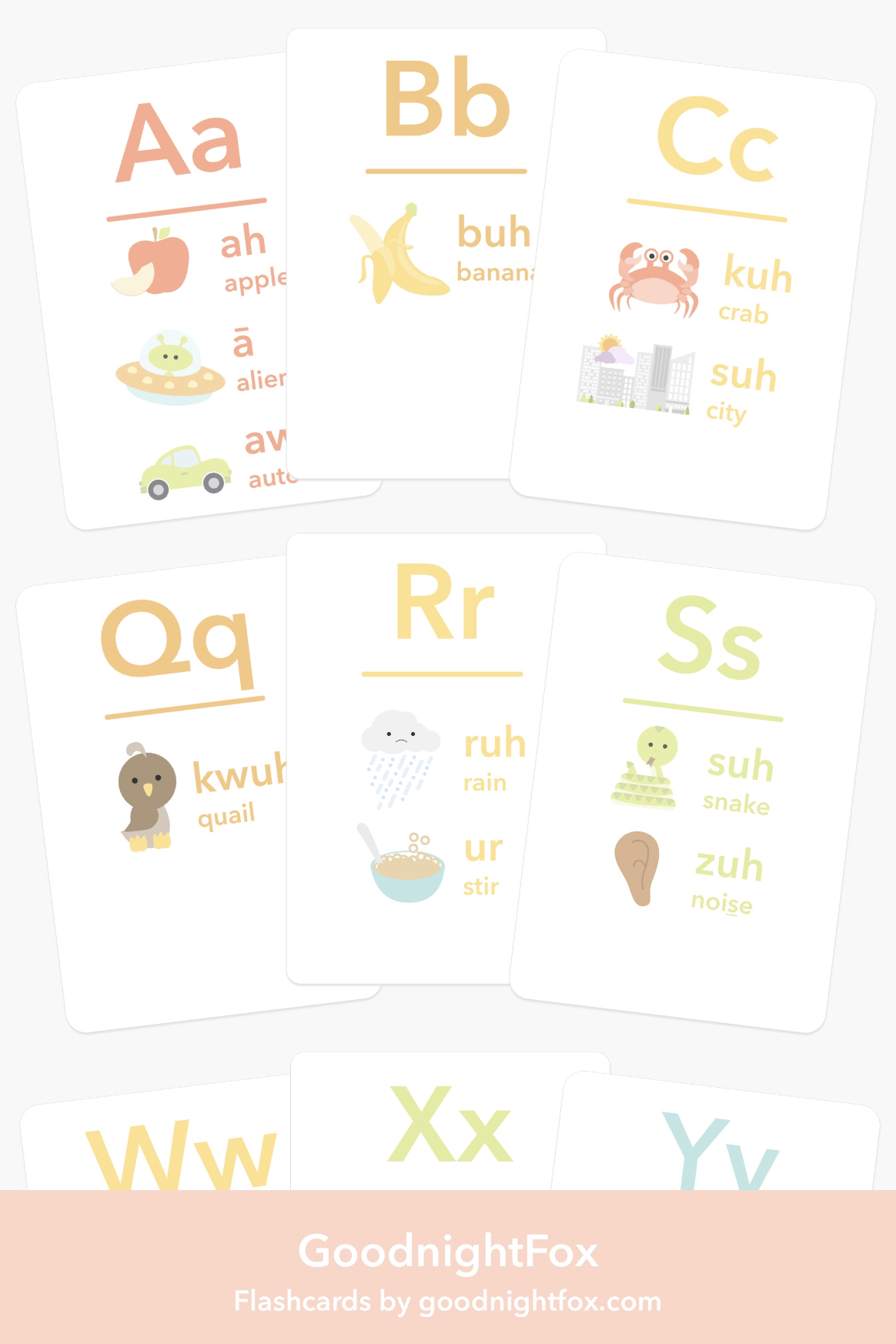
Animal sounds are often a toddler's very first "words" — moo, woof, roar — because they're fun to say and easy to imitate. Hold up an animal card, make the sound with big exaggerated expression, and wait. That pause matters: count silently to five in your head to give them time to try. We played this game constantly when she was little, a few cards at a time, a few times a day — short and silly beat long and serious every time.
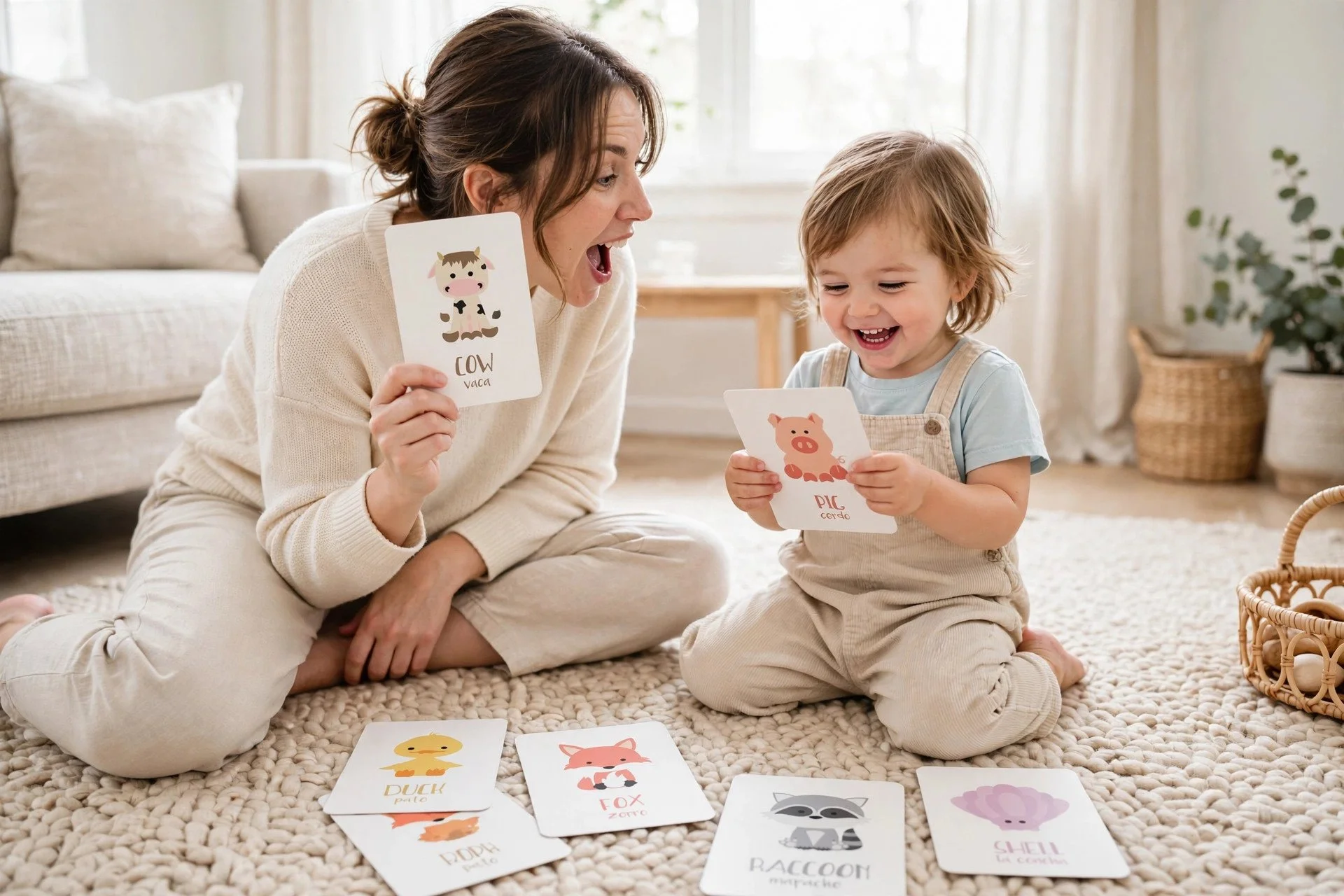
Animal sound flashcards for toddler speech delay activities
A few animal cards at a time, big silly sounds, and a long pause to let her try.

5. Try mirror play

Sit with your toddler in front of a mirror and make faces and sounds together. Watching their own mouth move helps them connect what speech feels like with what it sounds like. Stick out tongues, pop lips, say "ma-ma-ma" and "ba-ba-ba" — keep it goofy.
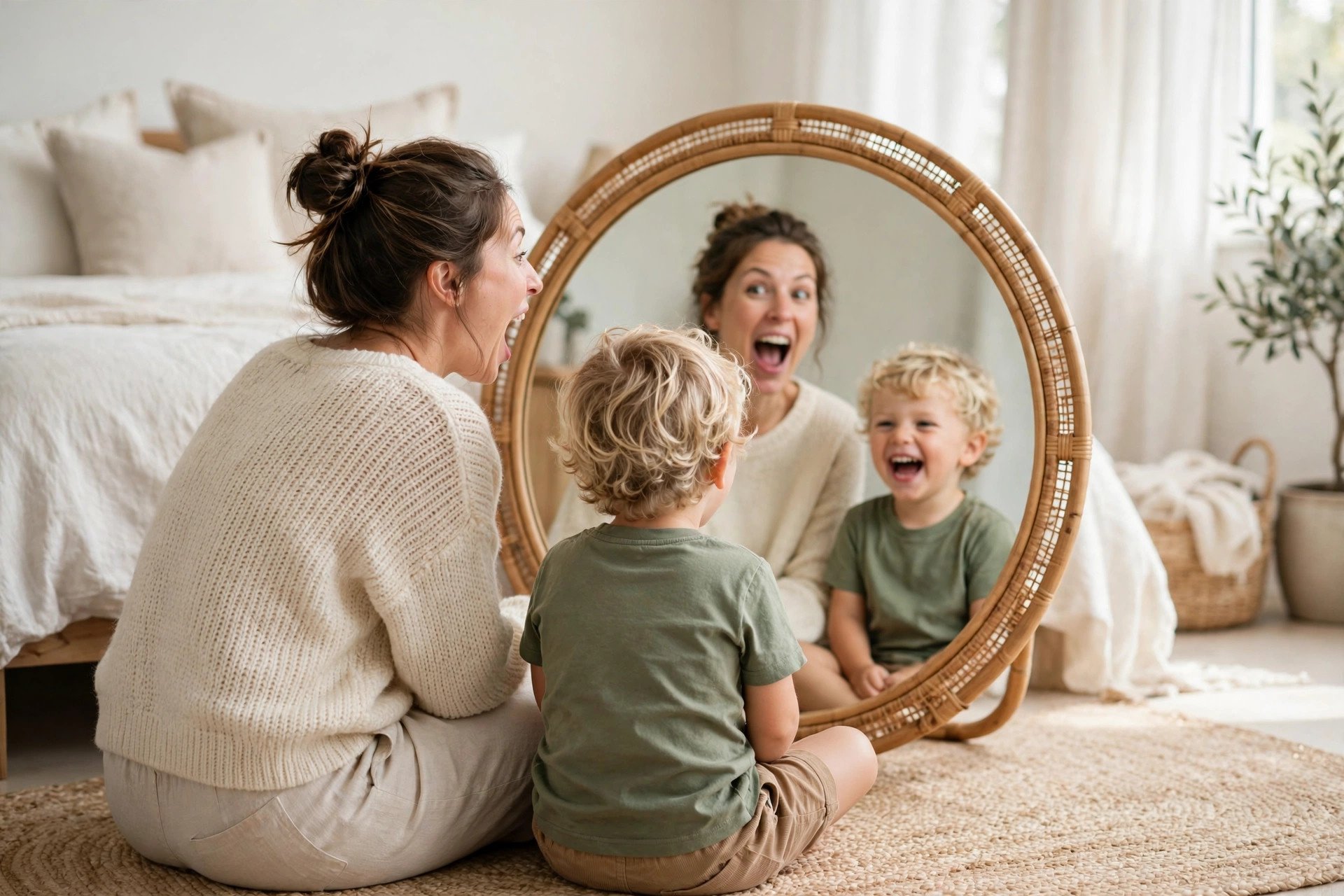
Mom and toddler doing mirror play together for speech development — toddler speech delay activities
Goofy faces in the mirror, side by side — she could watch her own mouth figure it out.

6. Sing songs — and then stop

Songs with repetitive phrases are language gold. Sing a favorite like "Wheels on the Bus," then pause before a key word and let your child fill it in: "The wheels on the bus go round and…" That expectant pause is an invitation, not a test. Celebrate any attempt — a sound, a gesture, a grin.

Singing with a toddler and pausing for them to fill in words — toddler speech delay activities
We'd stop right before the best word and wait. She always filled it in eventually.

7. Read with intent, not just the words

Don't just read the story straight through. Point at pictures and talk about them: "Look at the big yellow bus! Vroom vroom!" Ask simple questions, even if they can't answer yet: "Where's the doggy?" Books with repetitive phrases or lift-the-flap surprises give toddlers natural reasons to participate.
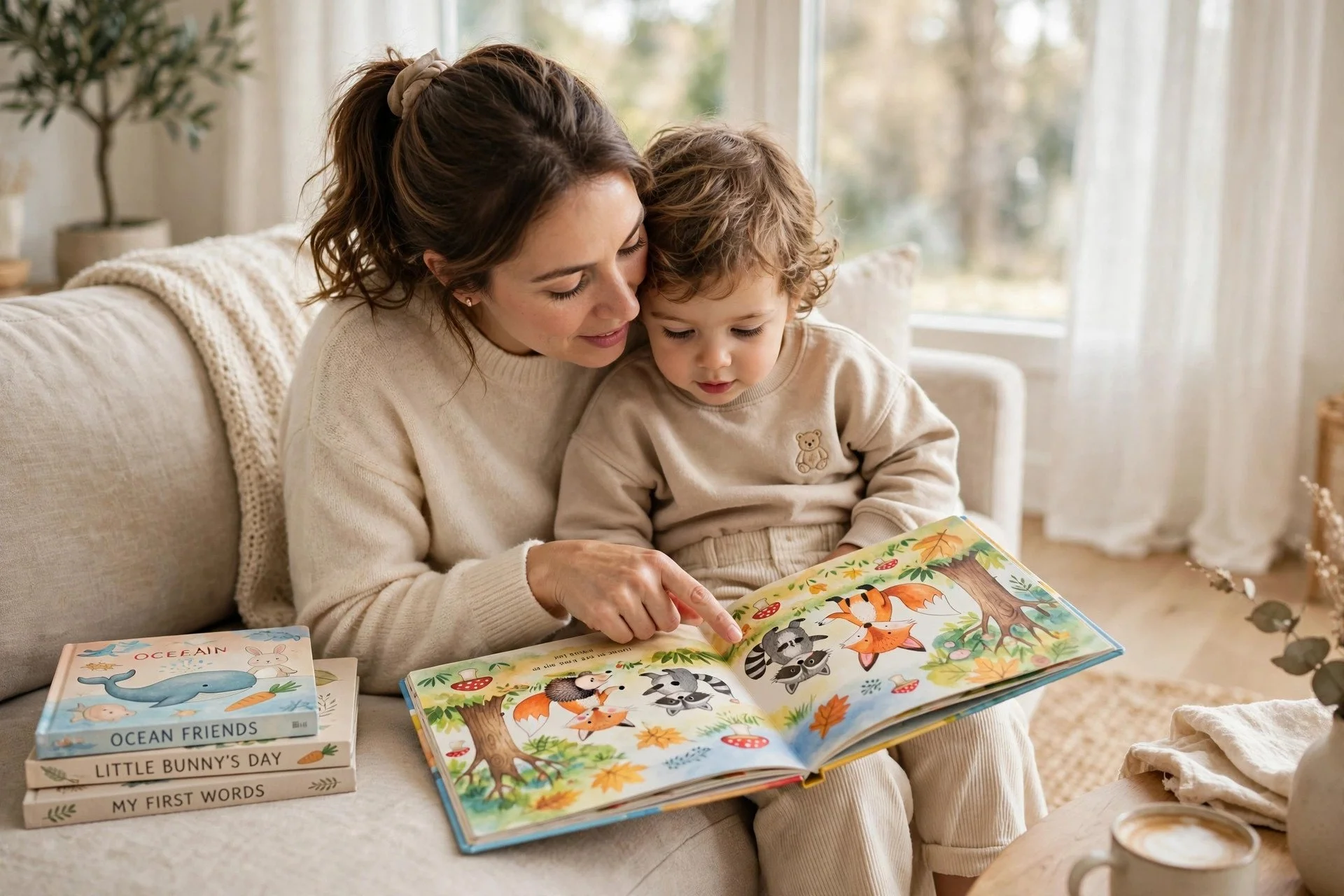
Reading together with a toddler to build language skills — toddler speech delay activities
Pointing at every picture, making the sounds — the story was just the excuse.

8. Play imitation games

Before words come sentences, and before sentences comes back-and-forth interaction. Roll a ball to each other, take turns clapping, copy each other's silly faces. These turn-taking games teach the rhythm of conversation — I do something, you do something — which is the foundation talking is built on.

Mom and toddler playing imitation games for speech development — toddler speech delay activities
Back-and-forth ball rolling and silly-face copying — the rhythm of conversation before the words.

9. Teach a few simple signs

Signs like more, all done, and help give a frustrated toddler a way to be understood right now, which reduces meltdowns while spoken words catch up. Using signs doesn't delay speech — it gives language a bridge to cross.

Teaching baby sign language more to a toddler — toddler speech delay activities
A few simple signs gave her a bridge — less frustration while the words caught up.

10. Turn down the background noise

This one's easy to miss. When the TV or music is on, your voice competes with it — and your toddler talks to you less because you're talking to them less. During play and mealtimes, turn the background noise off. Quiet space invites conversation.
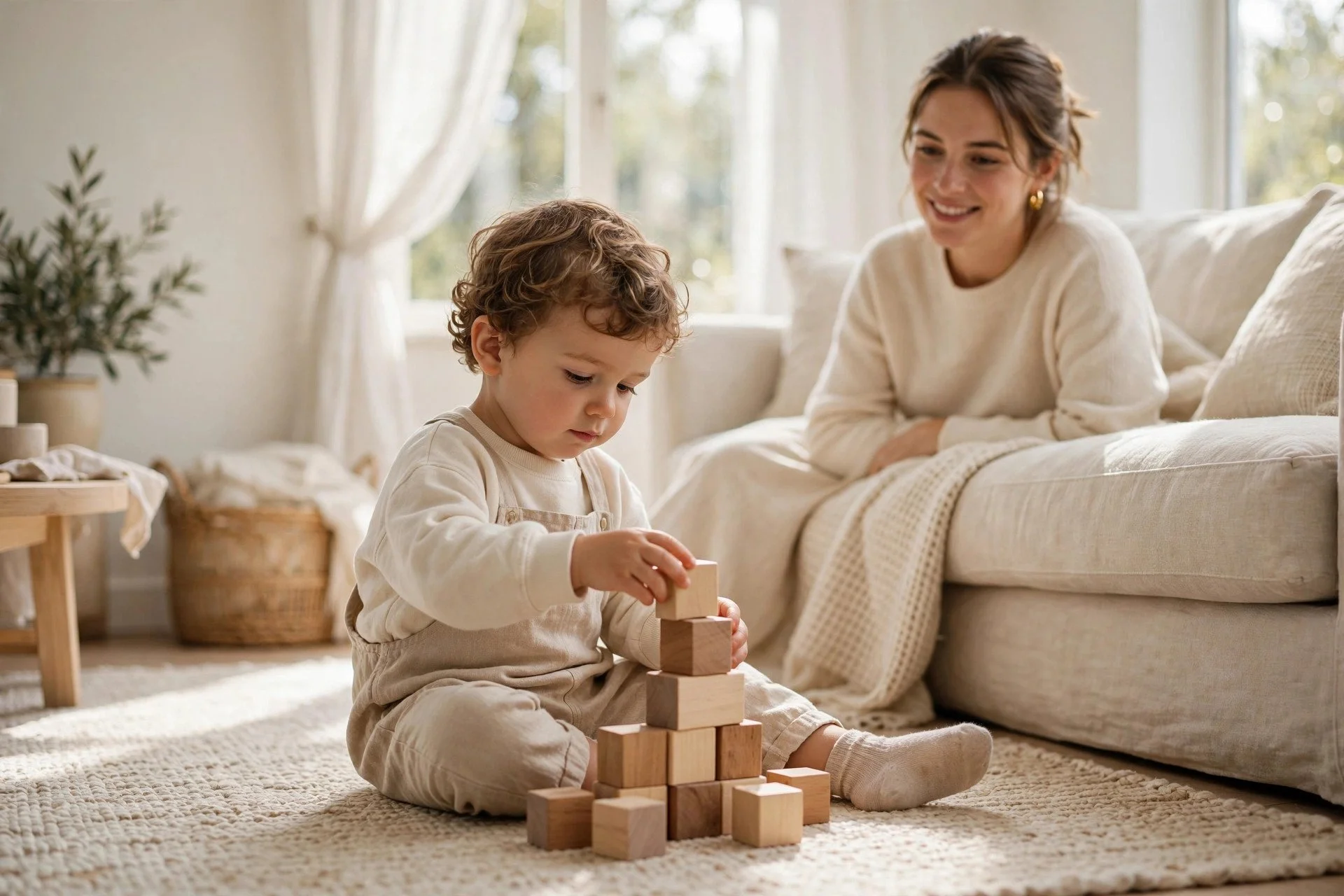
Quiet playtime without background noise to encourage toddler talking — toddler speech delay activities
TV off, music off. The quiet made room for her voice.

Bonus tip: turn flashcards into a full-body game

Language sticks better when the whole body is in on it. Try flashcard hide-and-seek: tuck a few animal cards around the room and let your toddler hunt them down — every find is a chance to name the animal and roar, moo, or woof like it. Or lay the cards face-up on the floor and call out, "Can you jump to the animal that says moo?" Hopping, stomping, and pouncing to the right card burns off energy while cementing the word-sound connection. We invented versions of this game on the fly when she was little — and the sillier it got, the more she talked.

When to talk to your pediatrician

Trust your gut. Consider asking for a referral if your toddler:

  • Isn't using any words by 16 months, or isn't combining two words by 24 months
  • Seems not to hear or respond to sounds and voices
  • Has lost words or skills they previously had
  • Doesn't point, wave, or use gestures to communicate by 12–15 months

Many school districts offer free speech and language screenings for preschool-age children, and a hearing check is always a sensible first step — even mild hearing issues can slow language down. Seeking an evaluation isn't overreacting; it's good parenting.

Do flashcards actually help with speech delays?

They can, when used the right way. The trick is keeping it playful and pressure-free: show the card, say the word clearly, make the sound fun, and wait to see if your child tries. Short sessions — just a few minutes, a few times a day — work far better than long drills. Picture cards are also one of the tools speech therapists themselves use, because pairing a clear image with a spoken word strengthens the connection.

Will using sign language delay my toddler's speech?

No — research consistently shows signs support language development rather than replacing it. Signs reduce frustration by giving toddlers a way to communicate now, and most children naturally drop signs as spoken words take over.

How long should I try home activities before seeking help?

You don't have to choose one or the other. Start the home activities today and talk to your pediatrician about your concerns — evaluations often have waitlists, so getting on the schedule early costs you nothing.

My toddler understands everything but won't talk. Is that normal?

Understanding words (receptive language) almost always develops before speaking them (expressive language), so this pattern is very common. Still, mention it to your pediatrician so they can track it with you — that's what they're there for.

Our favorite tool for first words

When she was little, we kept a small stack of animal cards in the kitchen for those in-between moments — waiting for pasta to boil, sitting in the high chair. Big, clear photos were the key: no clutter, just the animal, so all her attention went to the word and the sound. If you want the same setup, our First Words Animals cards were made exactly for this.
Shop First Words Animals Flashcards

Shop Animal Alphabet Flashcards

Visual Schedule for Toddlers: End Morning & Bedtime Battles

Visual Schedule for Toddlers: End Morning & Bedtime Battles

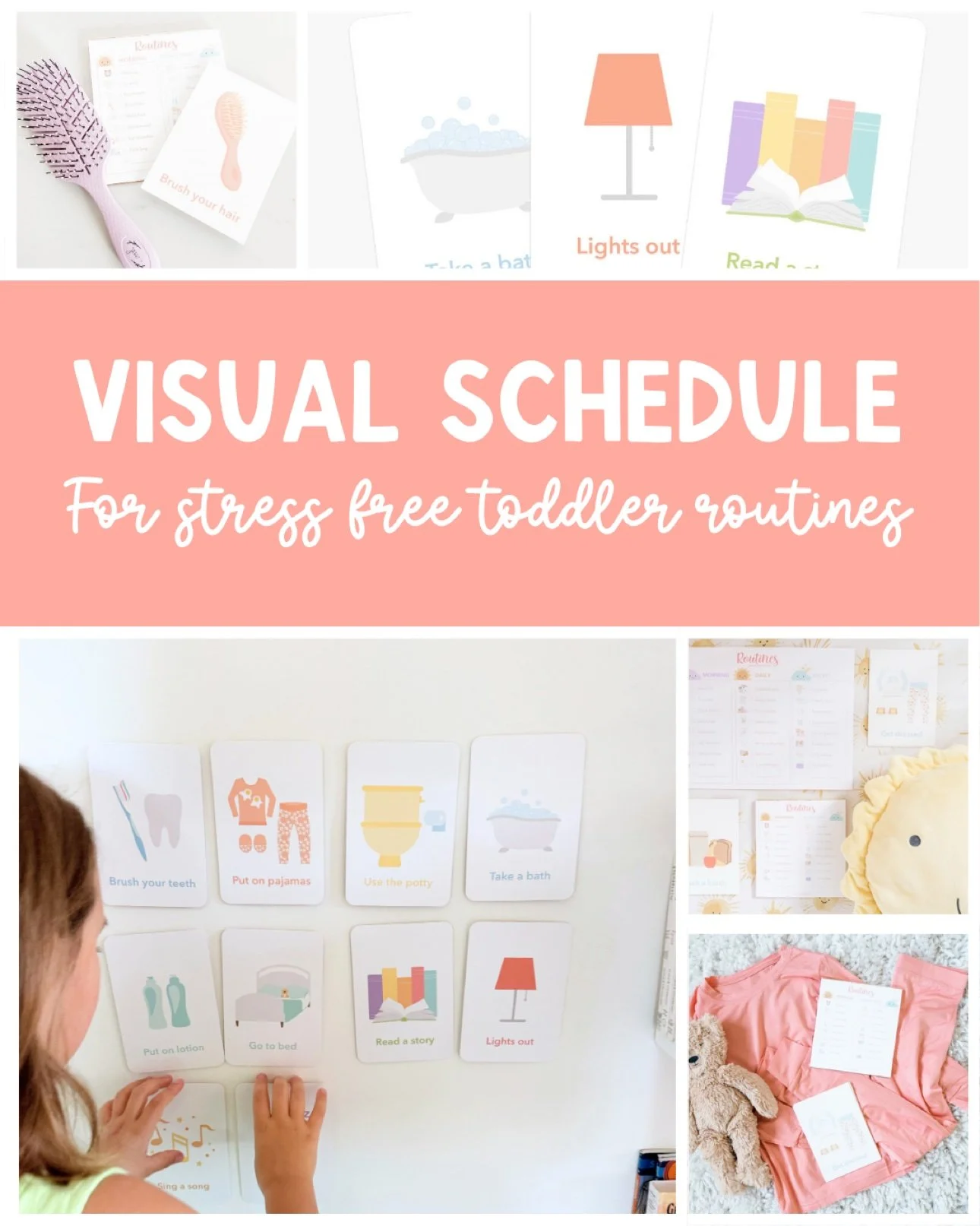
Tired of repeating yourself forty times before breakfast? A visual schedule for toddlers shows them what comes next — so you can stop narrating the whole morning and start enjoying it.

Visual schedule for toddlers — stress-free morning and bedtime routine cards
I stuck the cards on her bedroom wall with Velcro dots when she was six. She loves seeing it and moving the cards herself — all I do is ask, “What’s the next step in your routine?”
Best forAges 2–5
Setup timeAbout 10 minutes
CostFree with cards you already have
SkillsIndependence + smoother transitions

The morning I stopped repeating myself

Here's my confession: I designed these routine cards for other moms — and never put them on my own wall. For years they lived in the shop while our mornings ran on a soundtrack of me saying the same things on loop: "Shoes on. Shoes on, please. SHOES. ON." Bedtime wasn't much better — every step was a negotiation.

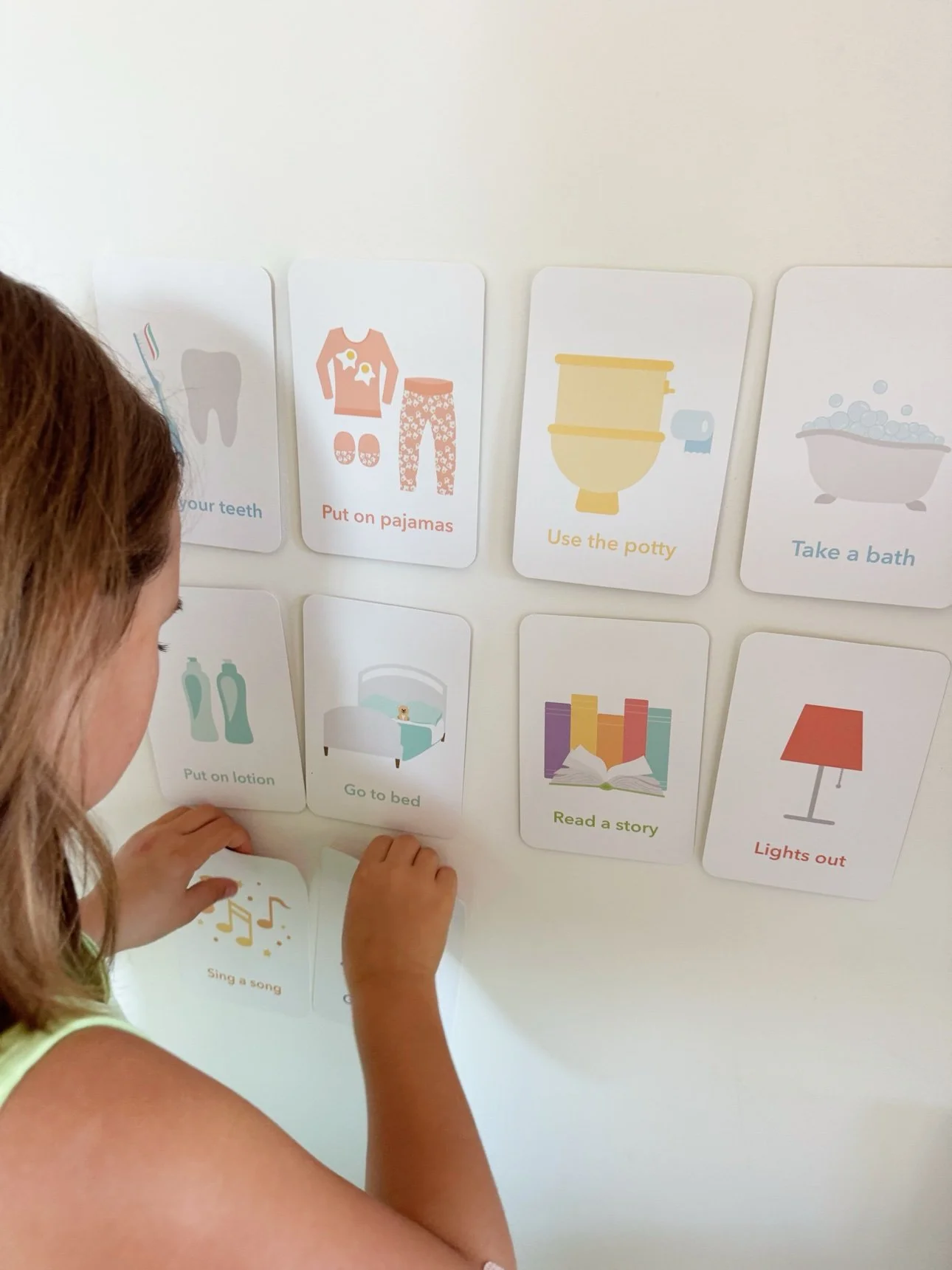
Then, when she was six, I finally practiced what I'd been preaching and stuck the cards on her bedroom wall — using Velcro dots. It made a HUGE difference. Within days she was checking the schedule herself — seeing it, moving the cards, running her own routine — and all I do now is encouragingly ask, “What's the next step in your routine?” I only wish I'd hung them up years earlier.
Toddler's bedroom wall with routine cards stuck on using Velcro dots — visual schedule for toddlers
The cards went up on her bedroom wall with Velcro dots — she rearranges them herself.

A visual schedule for toddlers works because it translates your words — which vanish the second you say them — into something they can see, touch, and follow on their own.

Why toddlers fight transitions (it's not defiance)

Toddlers live entirely in the present moment. When you announce "time to leave!", you're asking them to drop something wonderful for something unknown — and their brain genuinely can't picture what comes next. That's why transitions spark the biggest battles of the day.

A visual schedule fixes this by making the invisible visible. When a child can see that snack comes after shoes, and playground comes after snack, the day stops feeling like a series of ambushes. Predictability is calming — for toddlers especially.
What is a visual schedule, exactly?

It's simply a sequence of picture cards — one per step of a routine — arranged in order where your child can see them. Each card shows one activity: wake up, brush teeth, get dressed, eat breakfast. Your child moves through the cards as the routine happens, flipping, removing, or checking off each one.

Speech therapists, occupational therapists, and preschool teachers have used visual schedules for years, including with autistic children and kids with ADHD — but they're just as powerful for any toddler who thrives on knowing what comes next (which is nearly all of them).

How to build a visual schedule in 4 steps

Step 1: Pick one routine to start

Don't schedule the whole day on day one — that's overwhelming for everyone. Start with the routine that causes the most friction: usually mornings or bedtime. Master one, then add another.

Step 2: Choose 4–6 steps, in the same order every day

Fewer steps is better. For mornings: wake up → potty → brush teeth → get dressed → eat breakfast → shoes on. Keep the order identical daily — the power is in the predictability.

Toddler brushing teeth as one step in a visual schedule morning routine
Brush teeth sat in the same slot every morning and every night. Same step, same place, no surprises.

Step 3: Put it at their eye level

Tape the cards to the wall by their bed, stick them on the fridge with magnets, or line them up on a low shelf. If they can't see it without asking you, it can't do its job.

Visual schedule for toddlers displayed at toddler eye level
Stuck right where she could see it without asking — if they can't reach it, it can't do its job.

Step 4: Let your child work the schedule

This is the magic part. After each step, let them flip the card over, move it to a "done" pile, or slide it down. That small act of control transforms them from a passenger in your routine into the driver of it. Point to the schedule instead of repeating yourself: "Check your cards — what's next?"

A sample morning routine

Morning routine cards laid out for a toddler visual schedule
Our morning lineup: six cards, same order every day. She took it over within days — now I just ask what’s next.
  • Wake up — card one sets the tone: the day has a plan
  • Go potty — non-negotiable step two, before anything fun
  • Brush teeth — two minutes, same song every day if it helps
  • Get dressed — lay clothes out the night before to remove the decision
  • Eat breakfast — the natural reward in the middle
  • Shoes on — the finish line they can see coming

A sample bedtime routine

Bedtime routine cards laid out for a toddler visual schedule
The bedtime row ended the negotiations — bath, teeth, jammies, book, goodnight, done.
  • Bath time — the signal that the day is winding down
  • Brush teeth — two minutes, same song every day if it helps
  • Pajamas on — let them pick between two options for buy-in
  • Read a book — one or two, decided in advance (not at 8:45pm)
  • Say goodnight — same phrase, same order, every night

Tips that make it actually stick

Keep it positive. The schedule shows what to do, not what not to do. "Gentle hands" beats "don't hit" on a card every time.

Be boringly consistent for two weeks. The first few days, you'll still be doing most of the work — pointing, prompting, celebrating. Around day 5–7, most toddlers start running the schedule themselves. That's when it pays off.

Let them help build it. Choosing which cards go on the schedule (from your pre-approved options) gives them ownership. A child who built the routine defends the routine.

Adjust as they grow. When a step becomes automatic, swap in a new challenge — pouring their own water, picking tomorrow's clothes. The schedule grows with them.

Use it for the hard outings too. A 3-card schedule — store → playground → home — can prevent a grocery store meltdown better than any bribe. They can see the fun part is coming.

What age should I start a visual schedule?

Around age 2 is the sweet spot for most toddlers — they're old enough to recognize pictures and follow a sequence, and young enough that the routine becomes second nature quickly. Even 18-month-olds can follow a simple 3-card routine with help.

Do visual schedules only work for autistic children?

Not at all. Visual schedules are widely used in autism and ADHD support because they're so effective — but every toddler benefits from seeing what comes next. Preschool classrooms use them for entire classes of neurotypical kids.

What if my toddler ignores the schedule?

Totally normal in week one. Keep pointing to it cheerfully instead of repeating verbal instructions, and celebrate every time they engage with it — even just touching the next card counts. Most kids come around within a week or two once they realize the schedule is reliable.

Should I use photos or illustrations?

Either works. Real photos of your own child doing each step can be extra motivating ("that's YOU brushing teeth!"), while clear illustrations are easier to read at a glance. The key is that each card shows one obvious action.

Skip the DIY — use cards made for this

I designed these routine cards for other moms — then finally stuck them on her bedroom wall with Velcro dots when she was six, and the difference was huge. They're thick, wipeable, kid-proof cards covering morning, bedtime, and everything between. She loves seeing her schedule and manipulating the cards herself — all I do is ask, “What's the next step in your routine?”

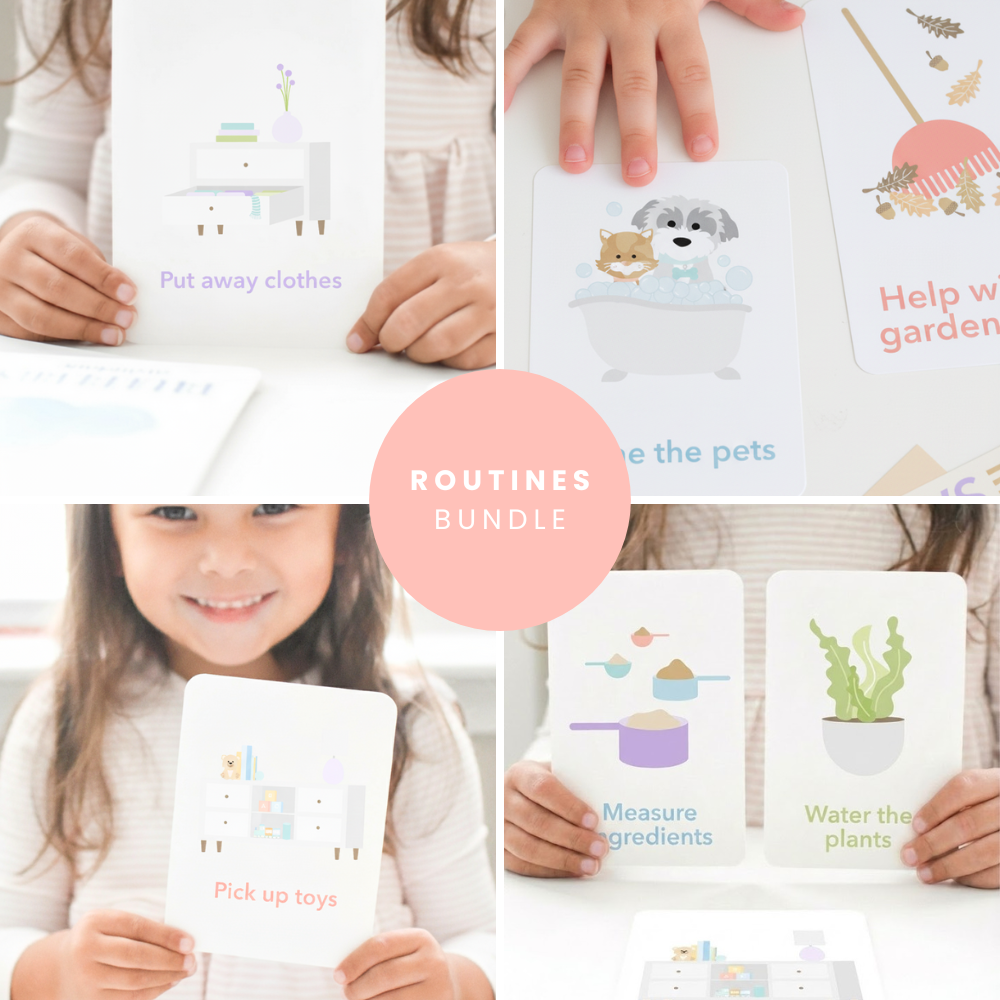
Routines flashcards bundle for building a toddler visual schedule
Designed for other moms, finally stuck on her bedroom wall — and she runs the whole thing herself.

Shop Routines Flashcards

Shop Morning Routine Cards Shop Bedtime Routine Cards

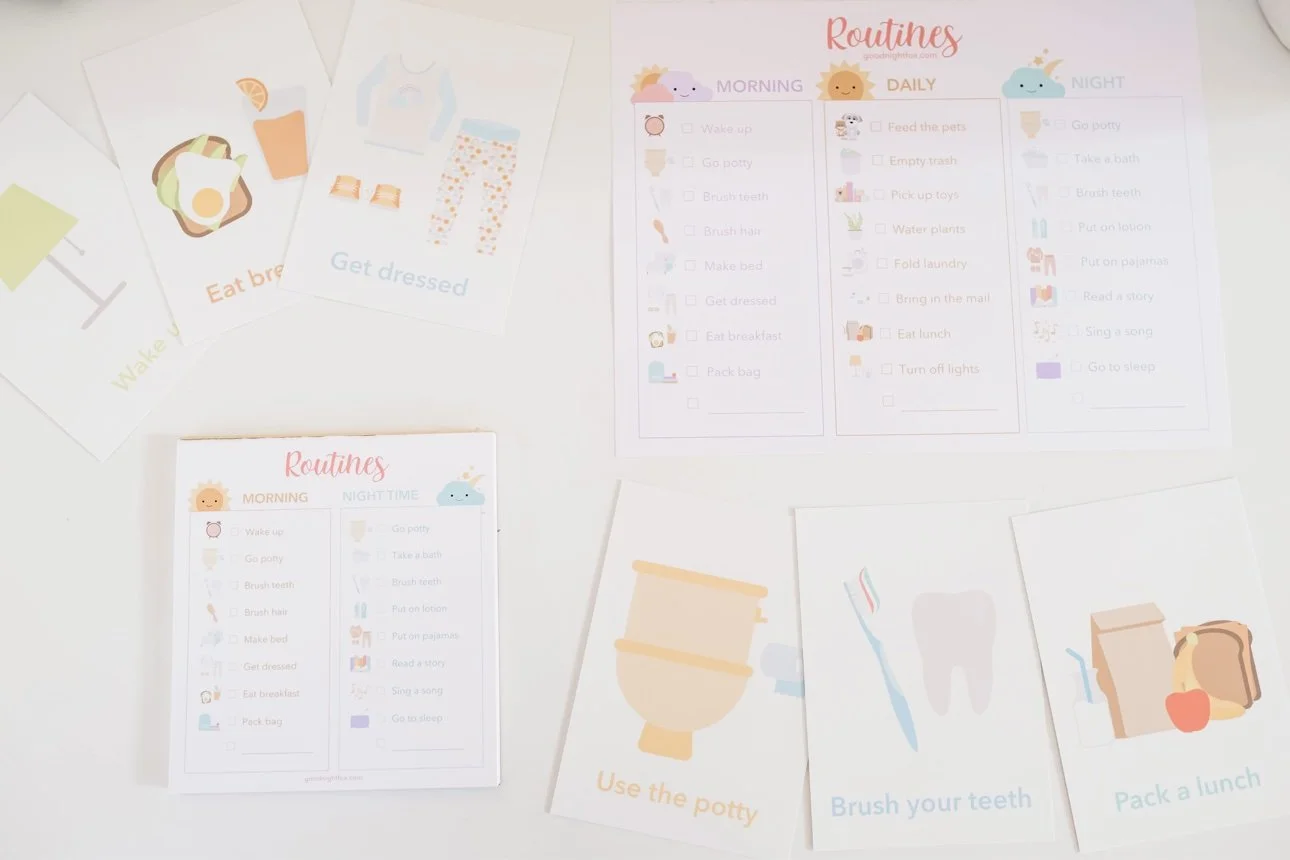
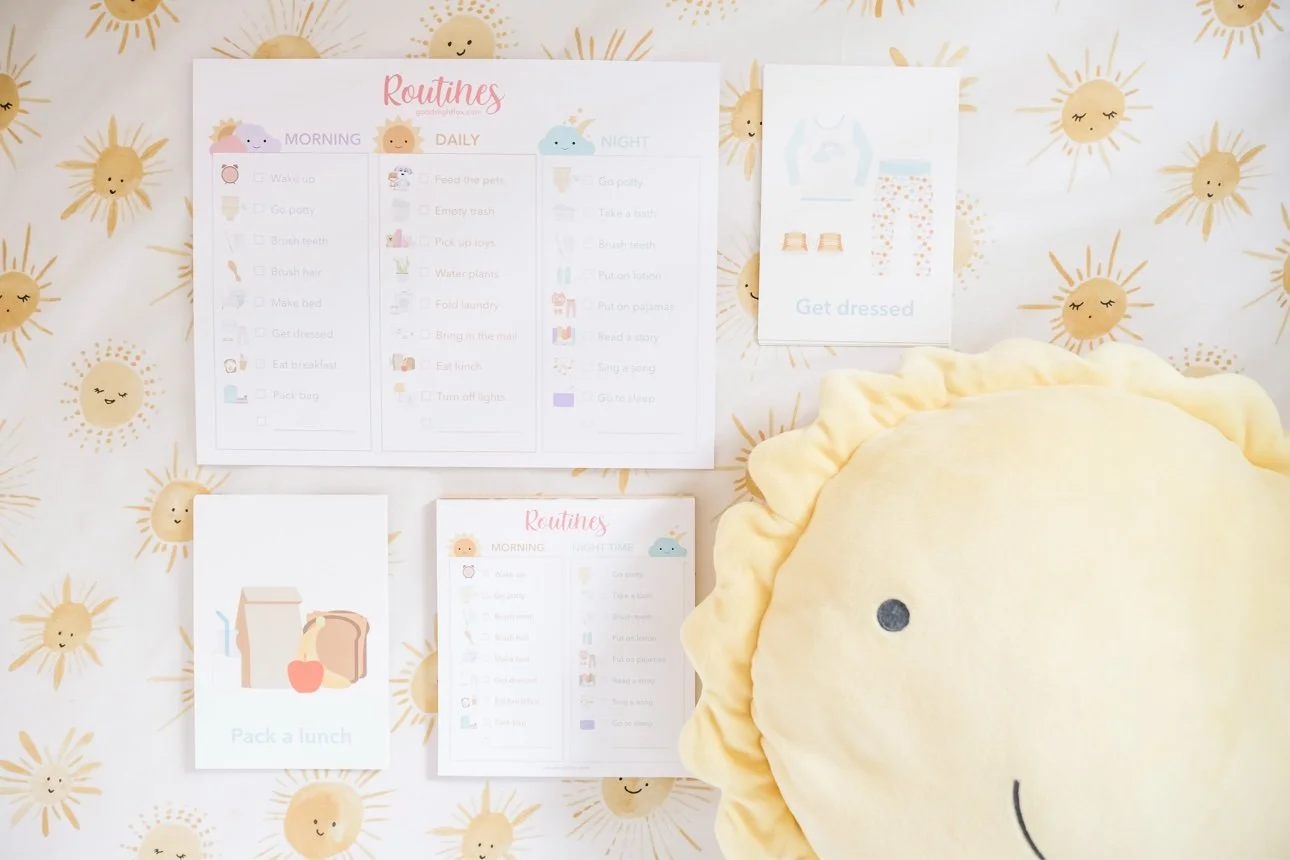
Routines checklists and cards laid out on sunny fabric

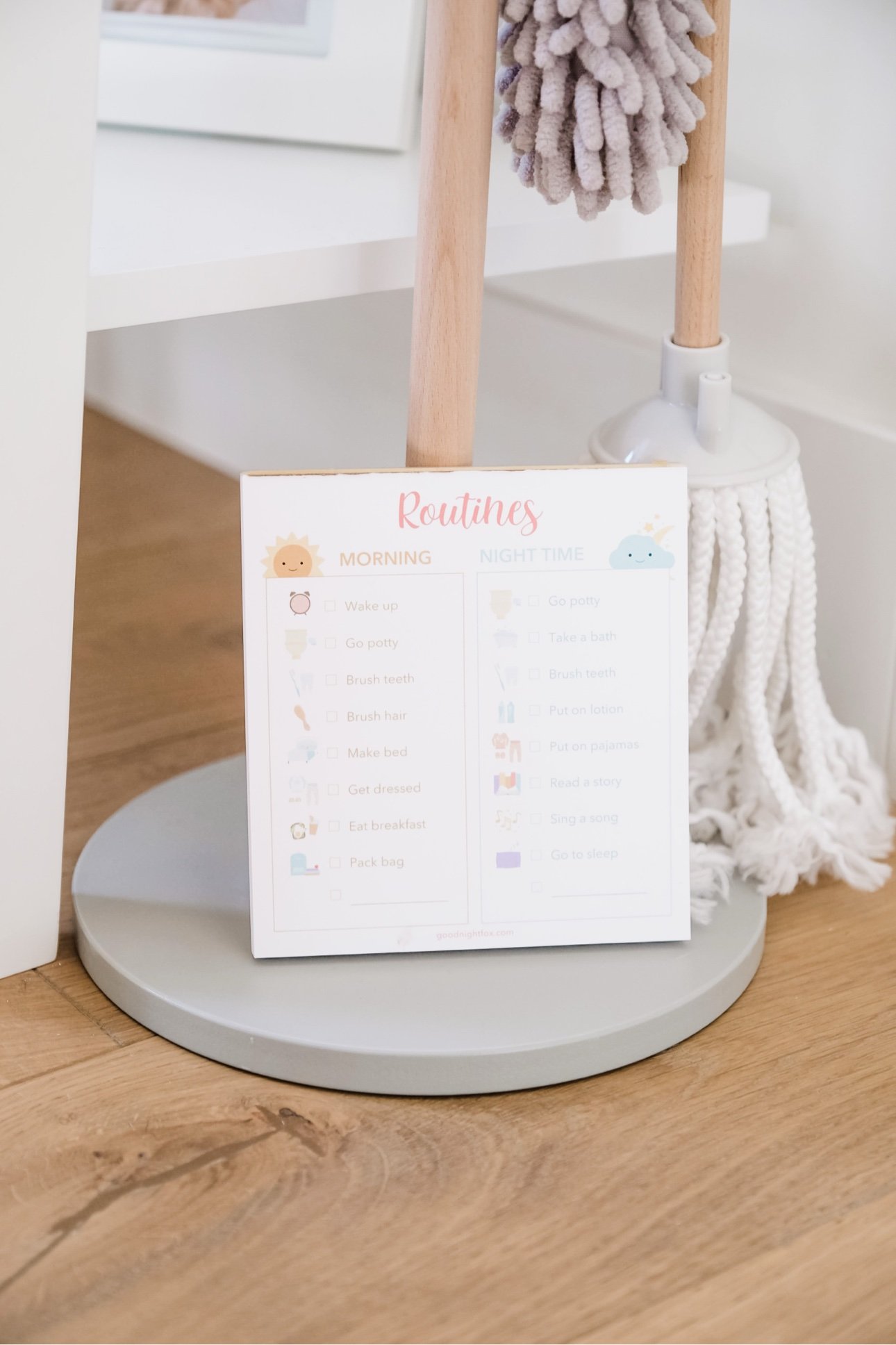
Visual schedule for toddlers: morning and bedtime routine cards

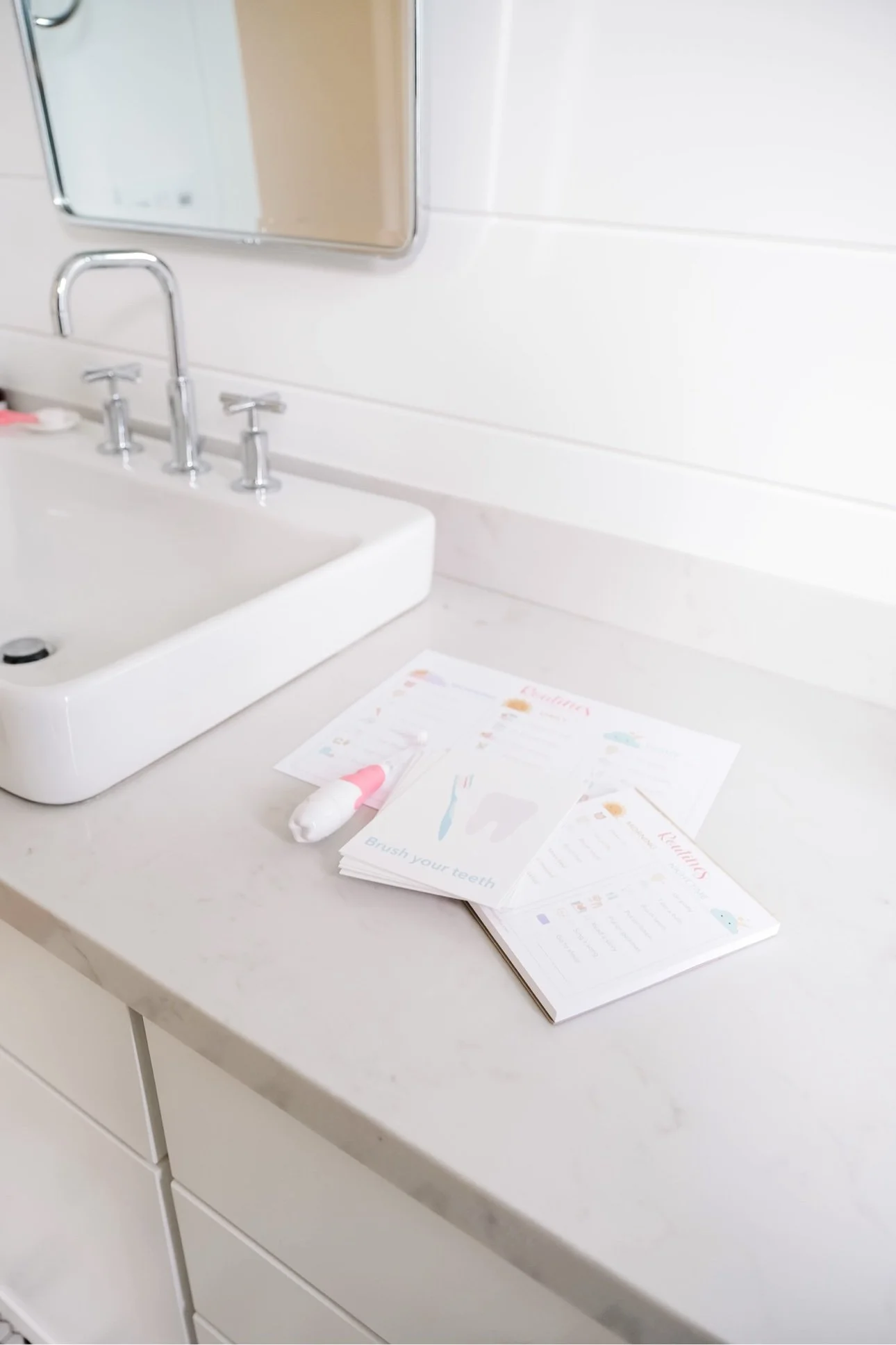
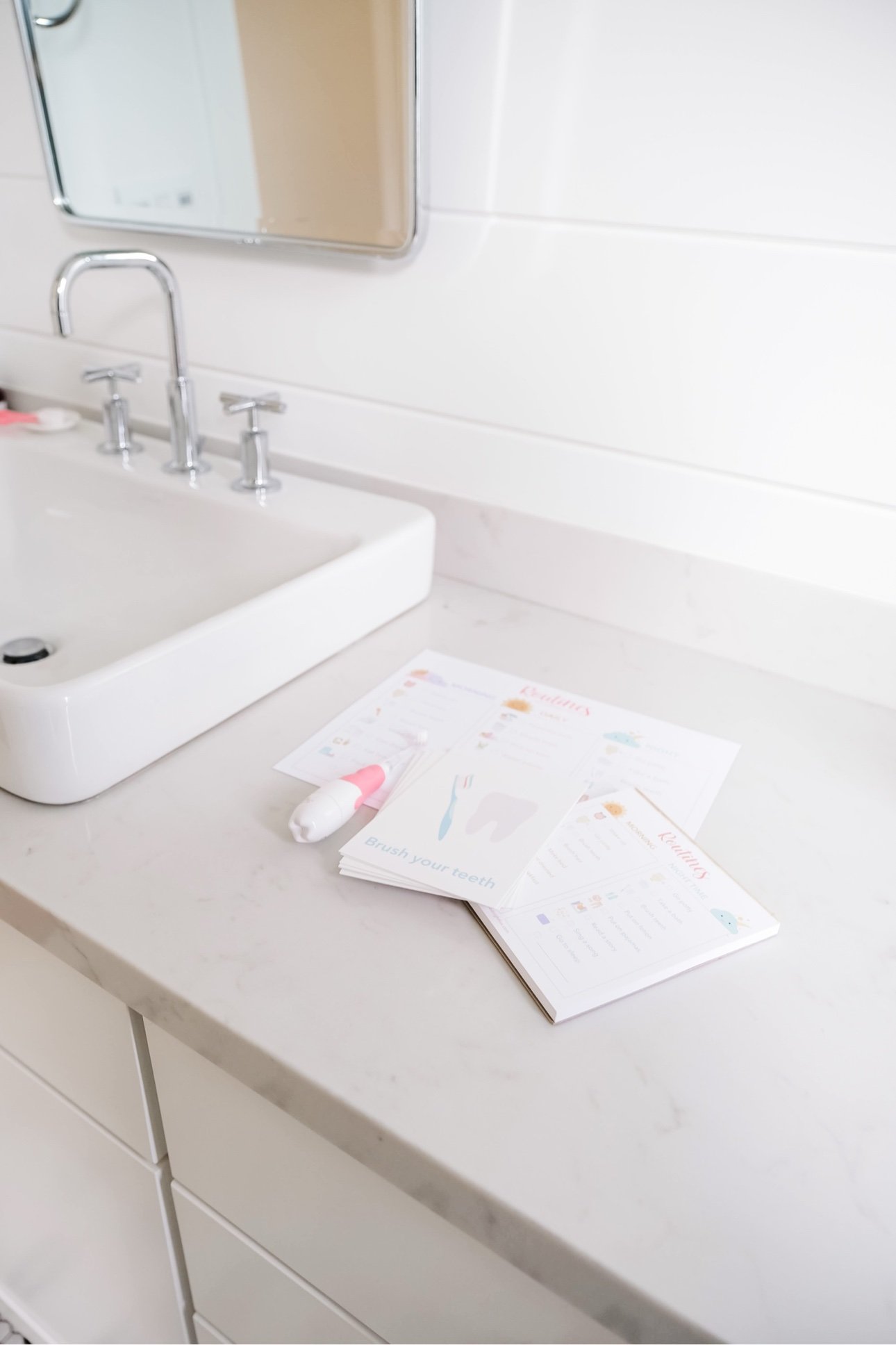
Brush your teeth routine card by the bathroom sink
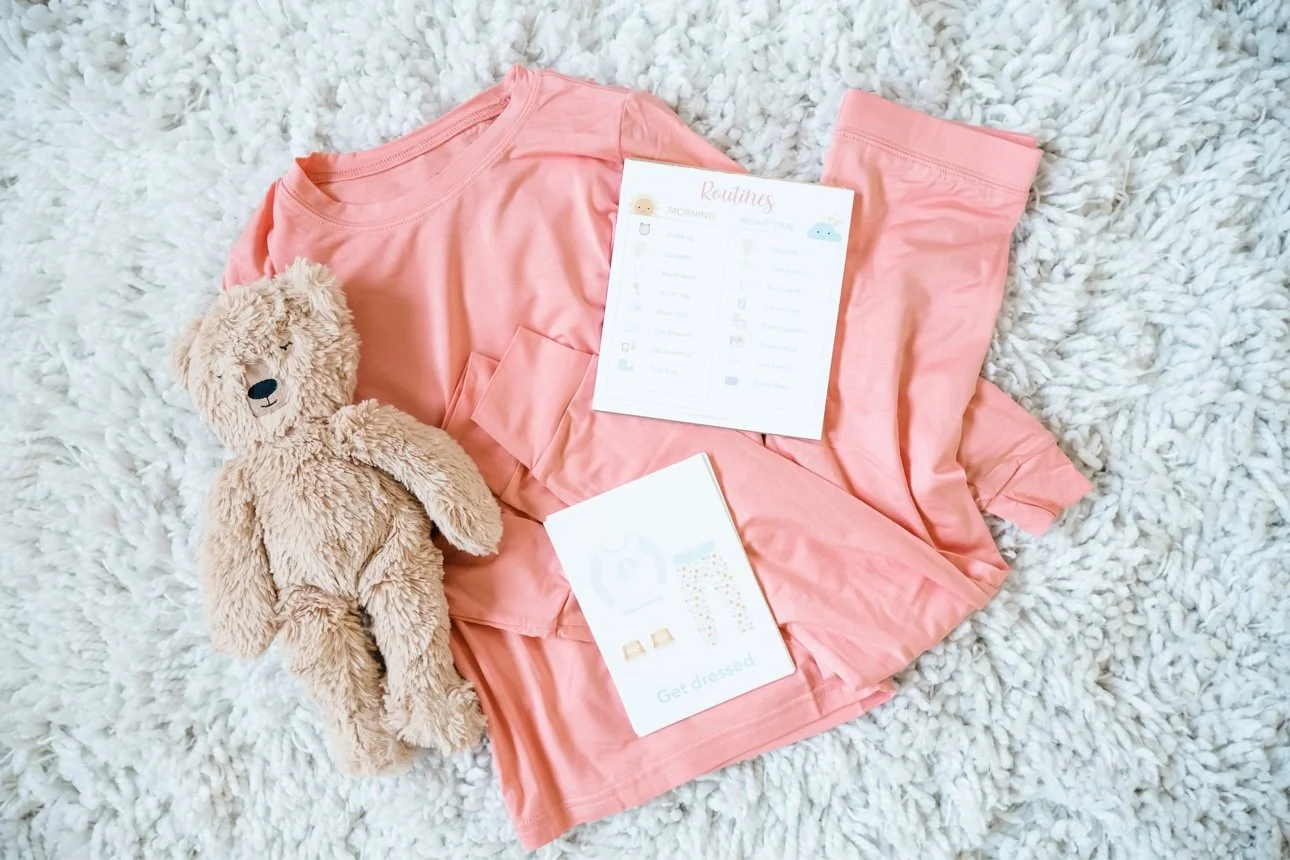
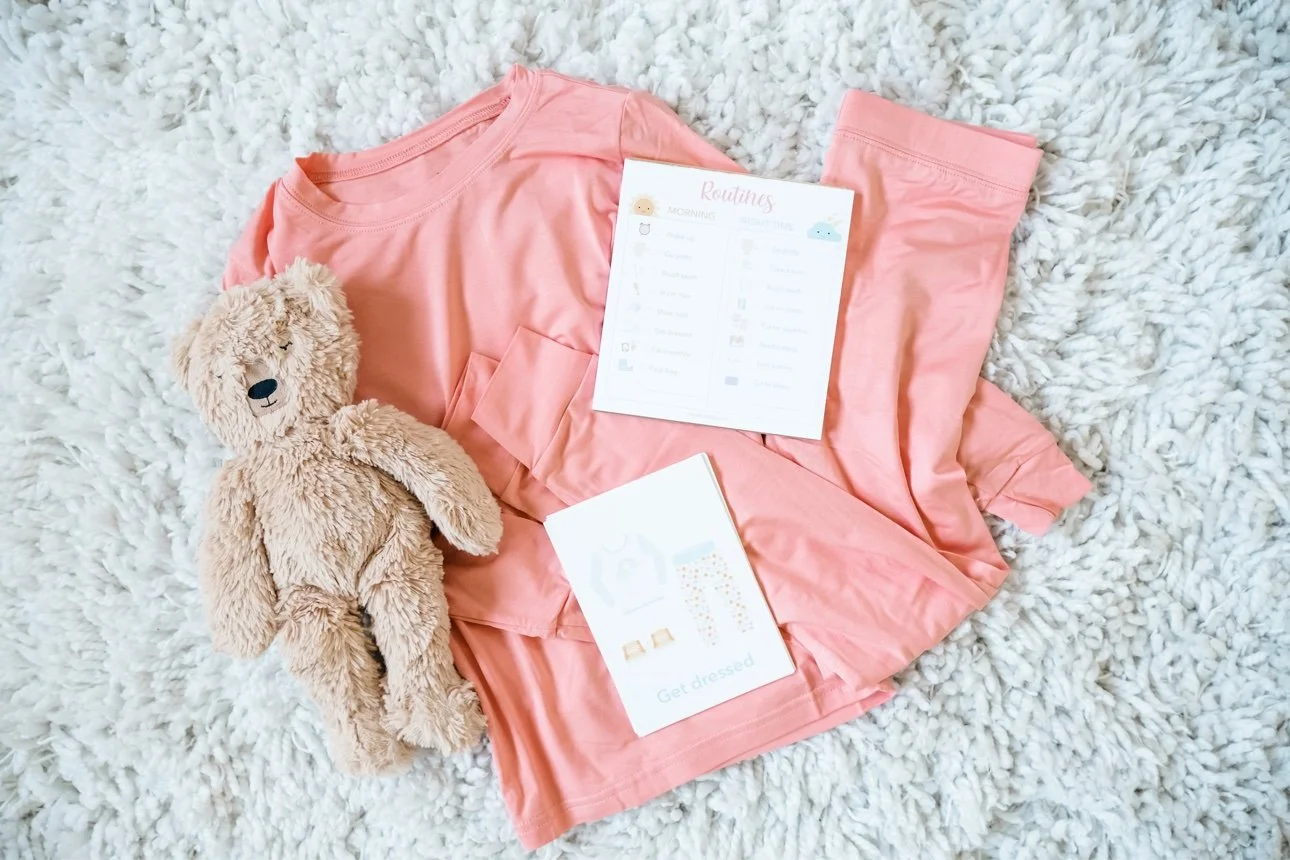
Pajamas, teddy bear, and bedtime routine checklist laid out

Unicorn Birthday Party

Unicorn Birthday Party Ideas

Pastel balloon arches, a cotton-cloud table runner, rainbow desserts, and activities little guests actually want to do — every magical detail from a real unicorn sixth birthday party, all in one place.

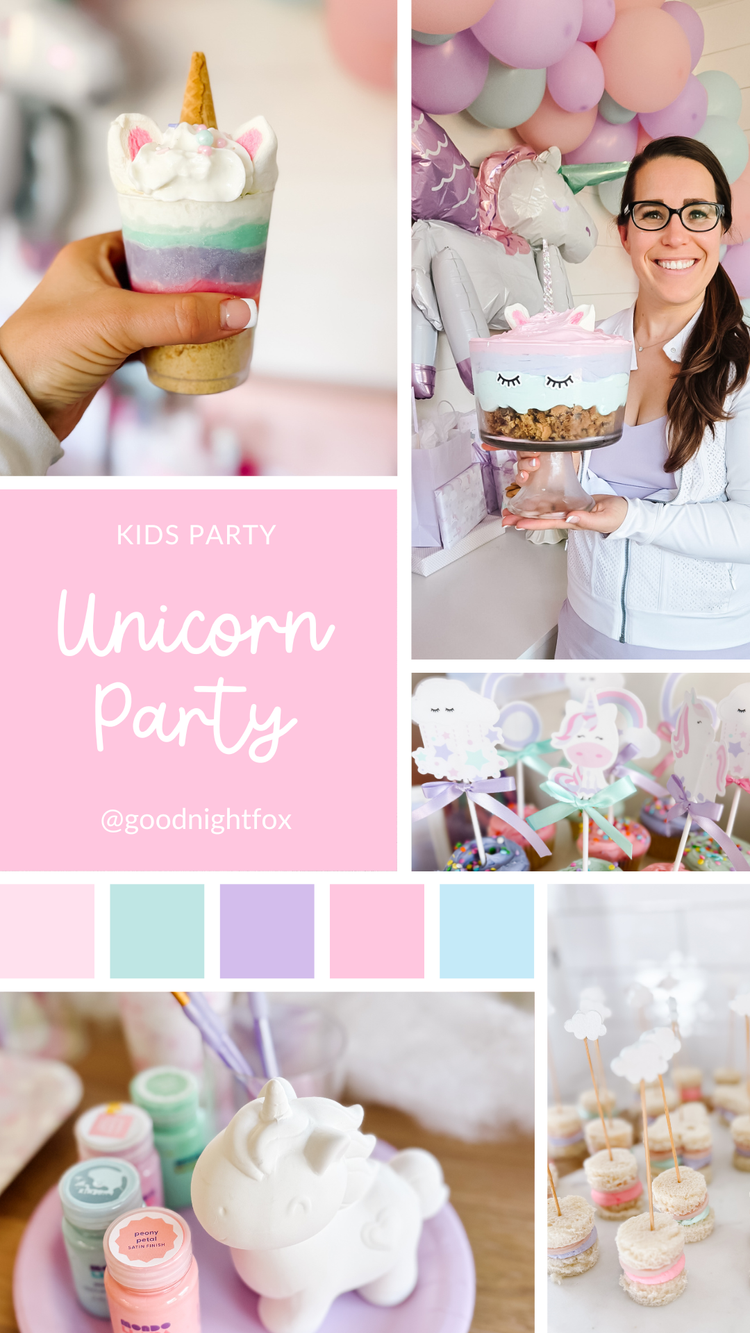
Unicorn birthday party collage: balloon arch, dessert table, unicorn cake, party favors and activities
Occasion6th birthday
PalettePastel rainbow
Planning2–3 weeks
Party length2–3 hours
Best forAges 3–7

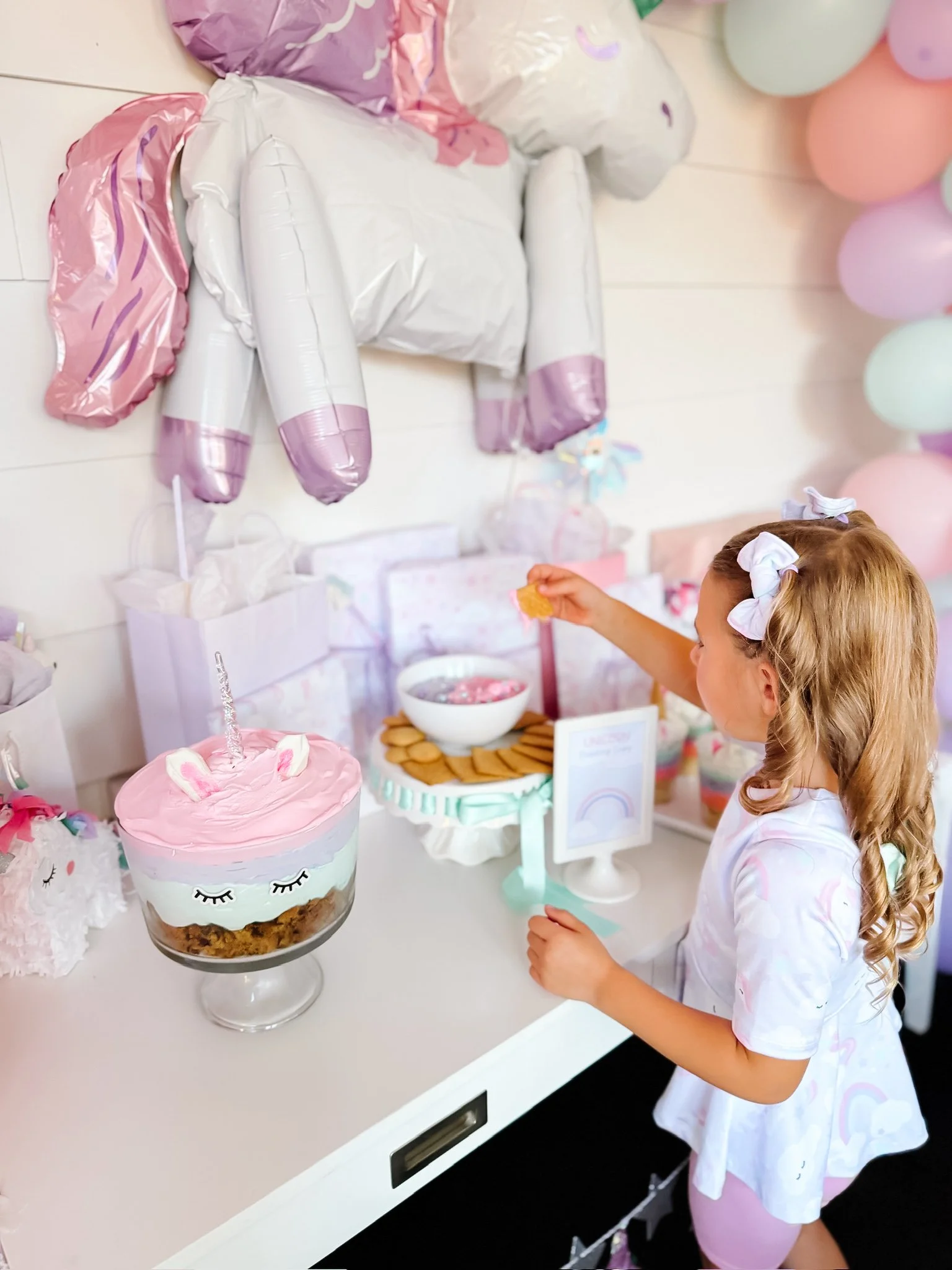
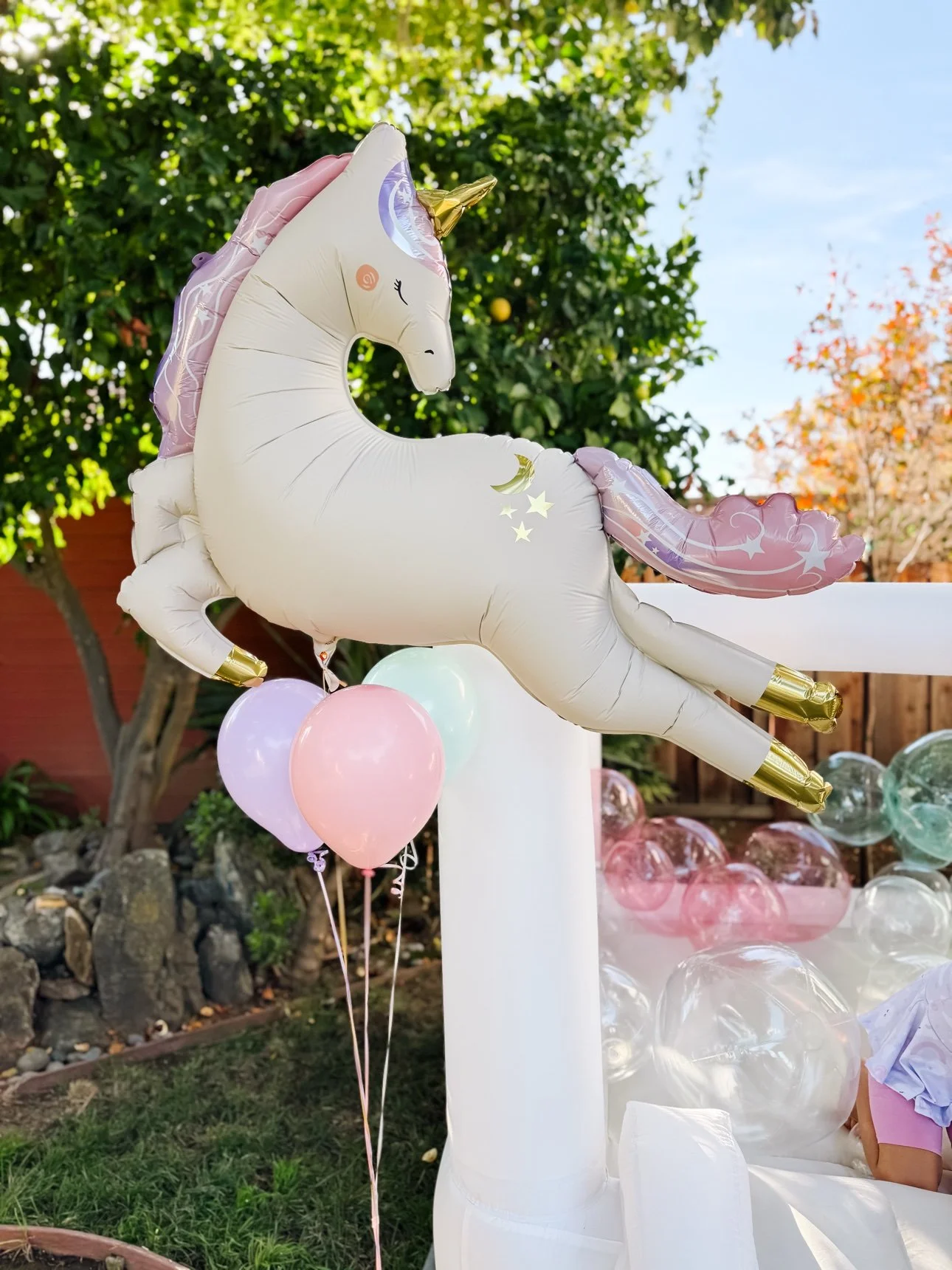
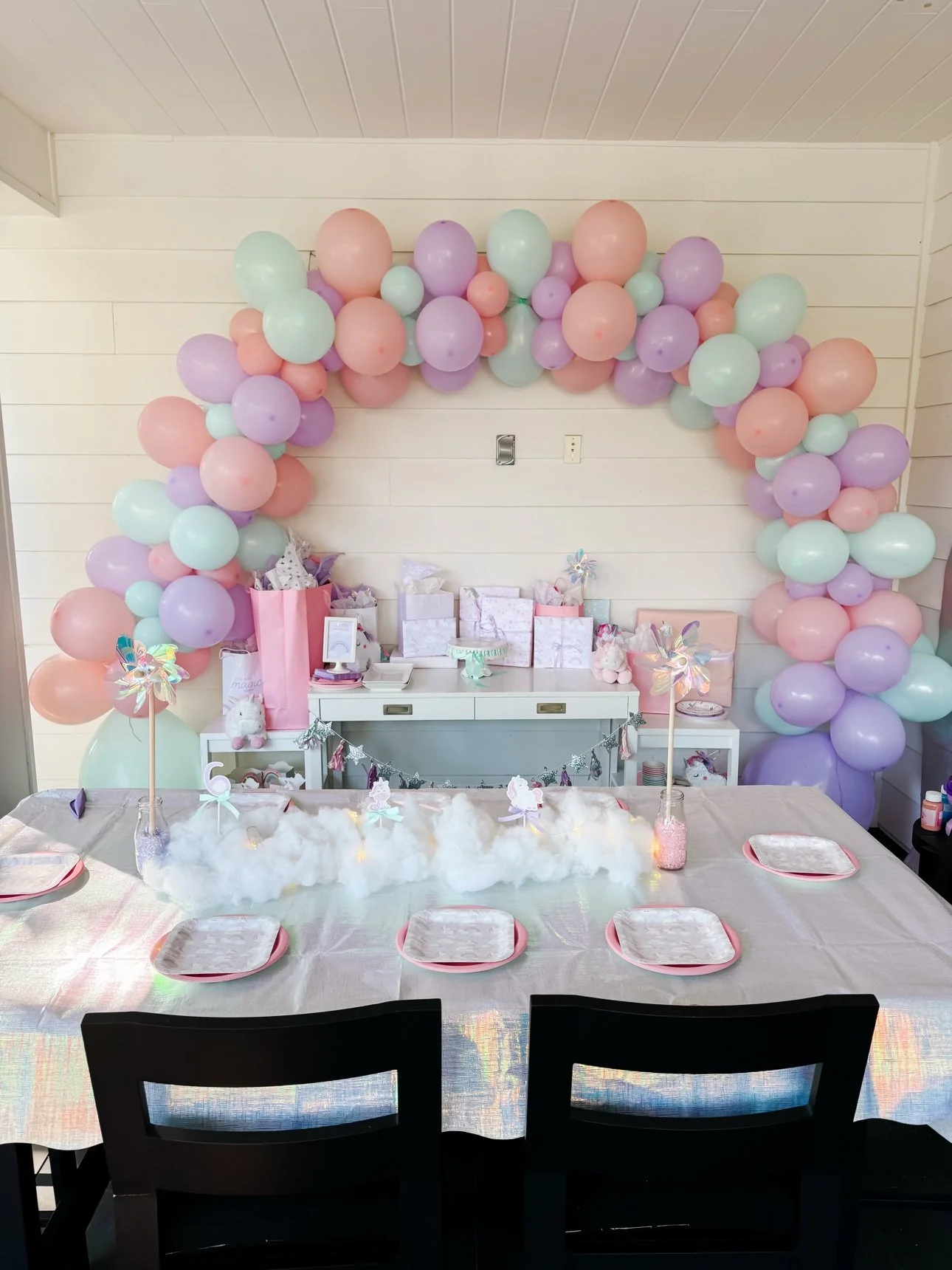
There's no better way to celebrate a sixth birthday than with a head-to-toe unicorn party. When my daughter asked for unicorns, we went all in: a pastel balloon arch with a giant foil unicorn, a dessert table fit for a fairy tale, a cotton-cloud runner down the kids' table, and activities that doubled as the favors. Everything below is what we actually did — the decor, the food, the crafts, and the take-home treats — plus links to the full recipes and tutorials for every unicorn treat.

Jump to: Color palette · Decor · Food · Dessert table · Activities · Backyard fun · Favors · Checklist · FAQ

Our unicorn color palette

Every unicorn party lives or dies by its palette. Ours was pastel rainbow: blush pink, lavender, mint, and peach, with iridescent accents (pinwheels, tablecloth, star picks) for the magic. Keeping every element inside those five colors is what makes the whole party look pulled-together — from the balloons to the cookies to the gift wrap.

Blush pink Lavender Mint Peach Iridescent

Unicorn party decor & table setup

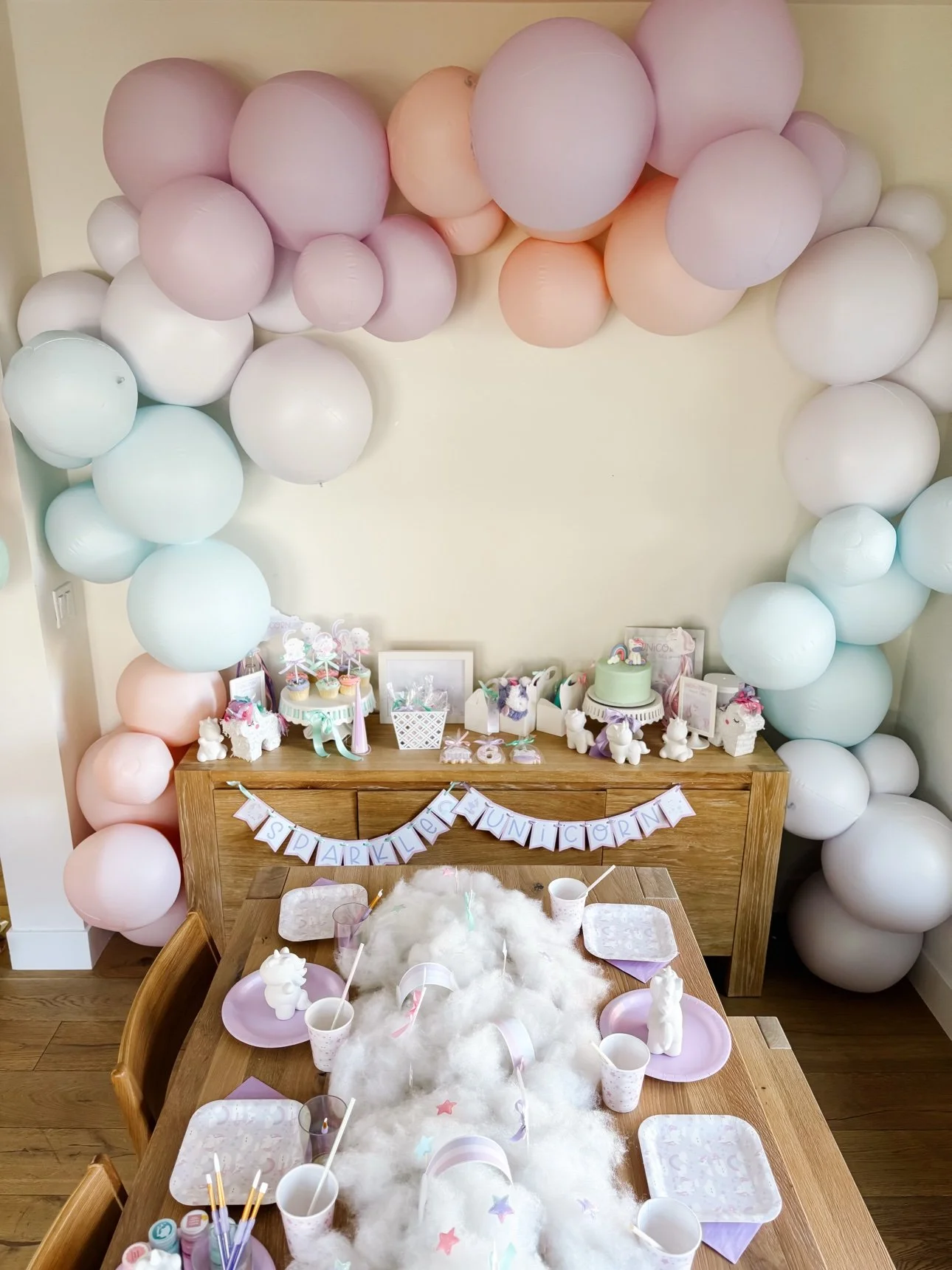
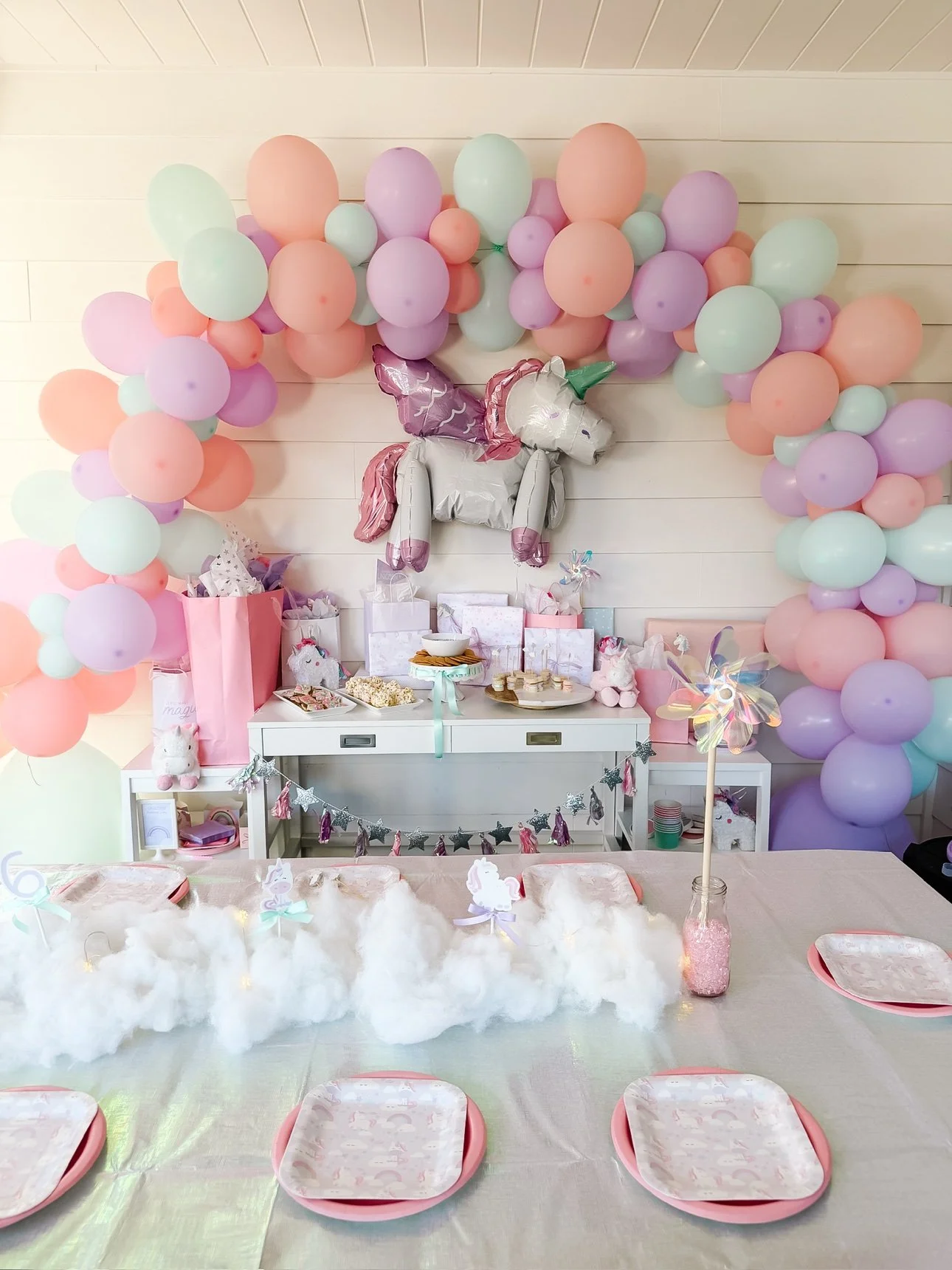
Unicorn party setup with pastel balloon arch, dessert table and kids table with cloud runner

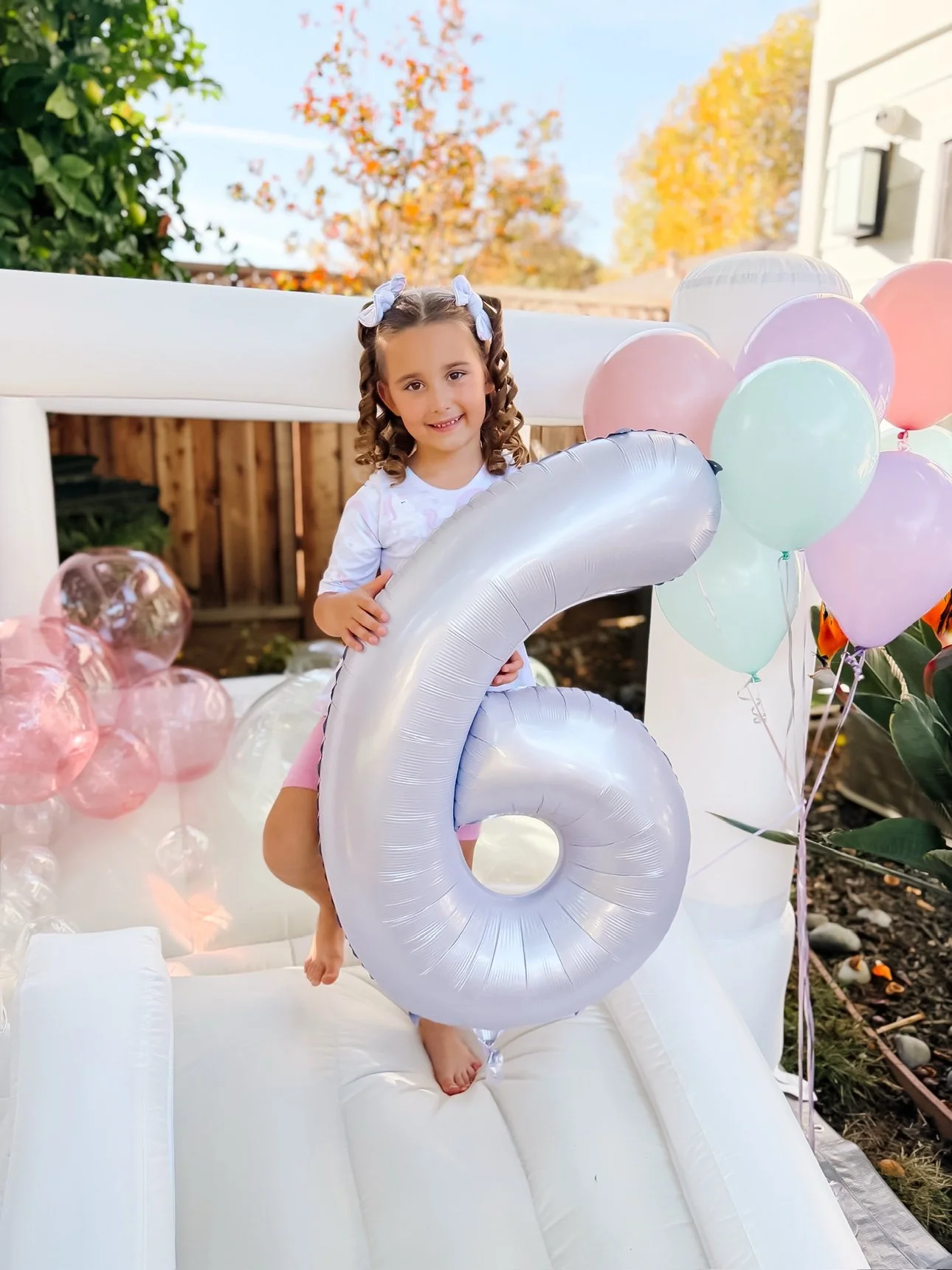
The balloon arch is the anchor of the whole party — ours framed the dessert table with pastel pink, lavender, mint, and peach balloons and a giant foil unicorn floating in the middle. Build it the day before so you're not inflating balloons while guests arrive.

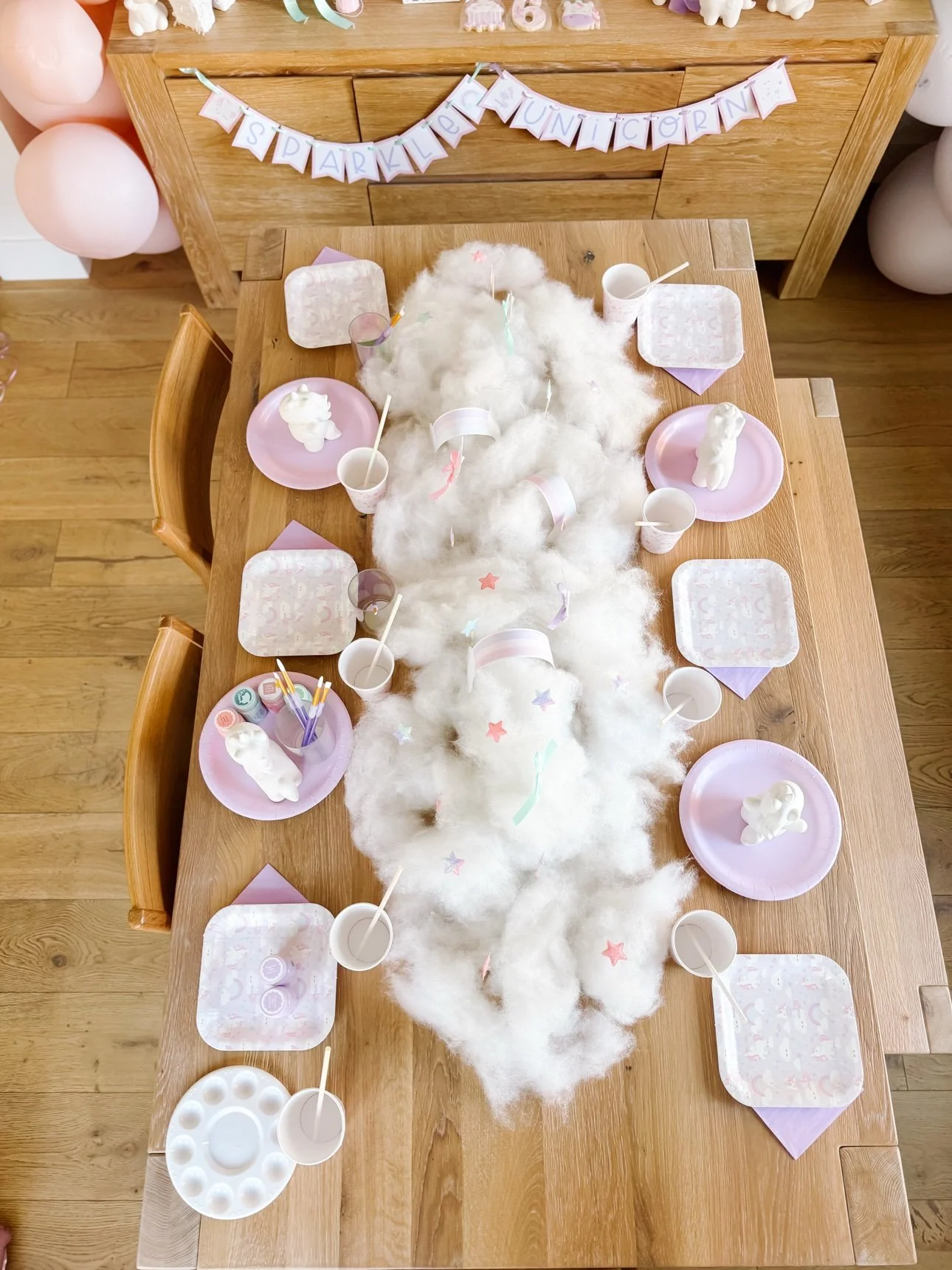
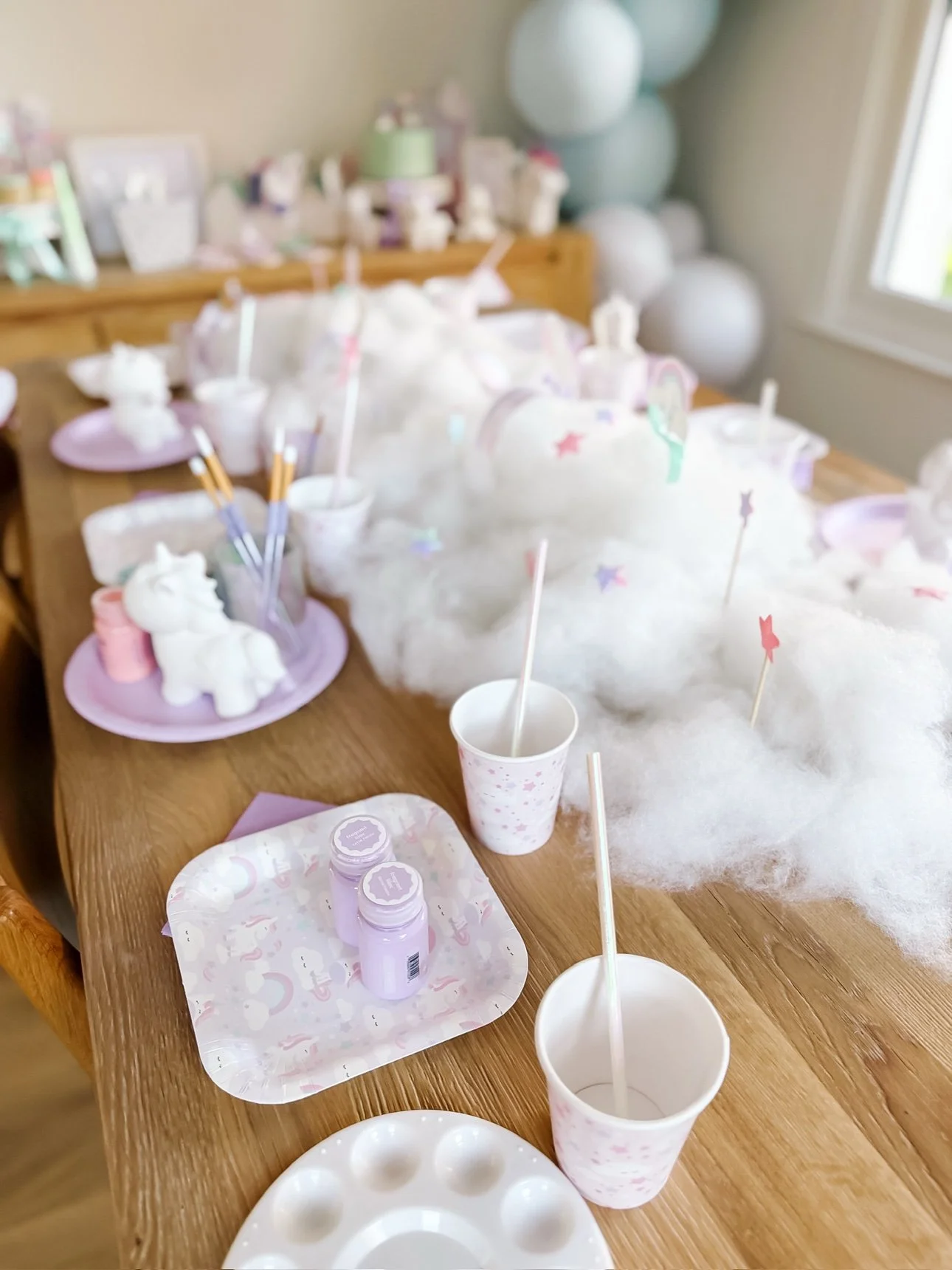
Kids party table with cotton cloud runner, paint-your-own unicorn place settings and sparkle banner

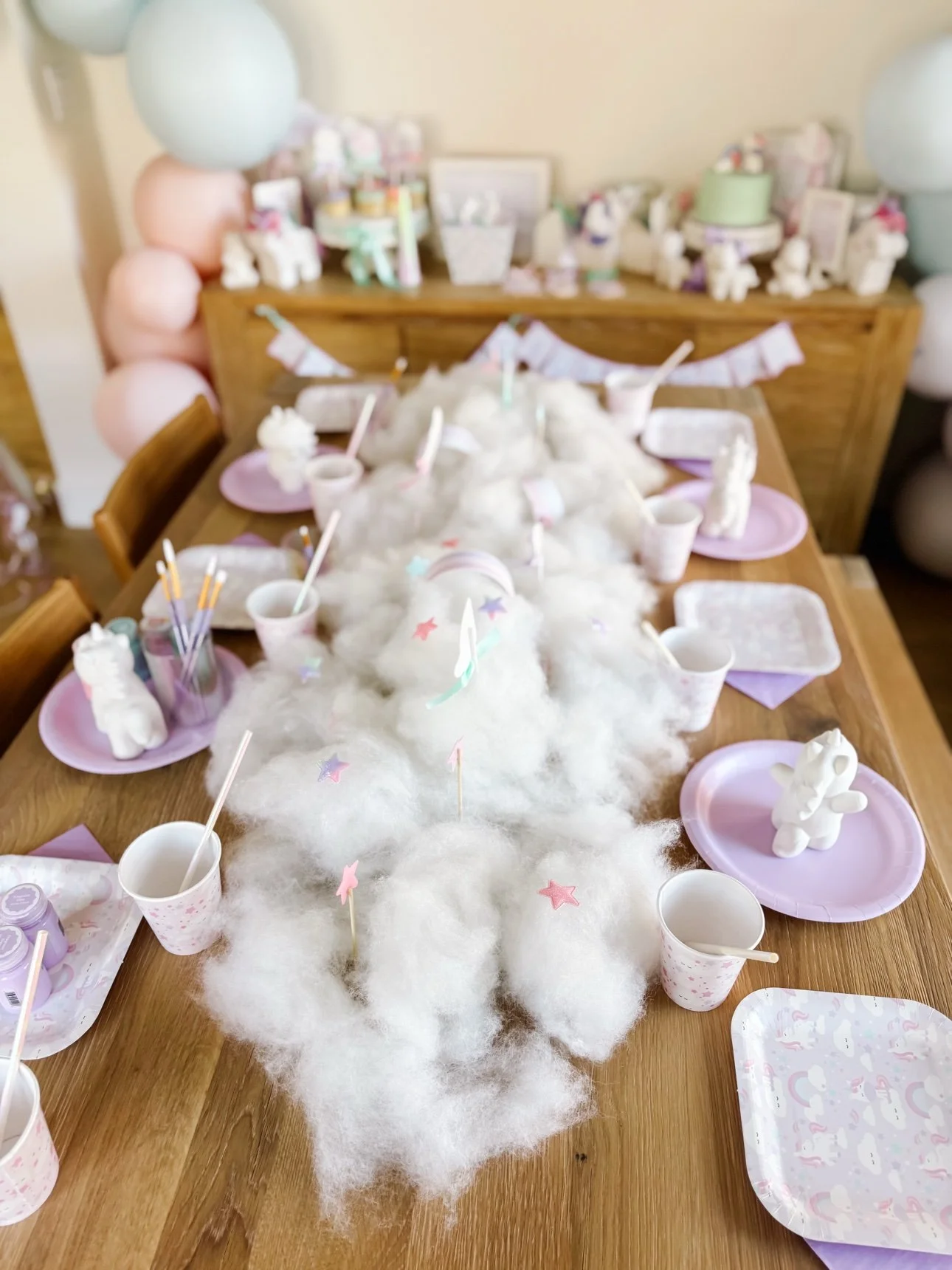
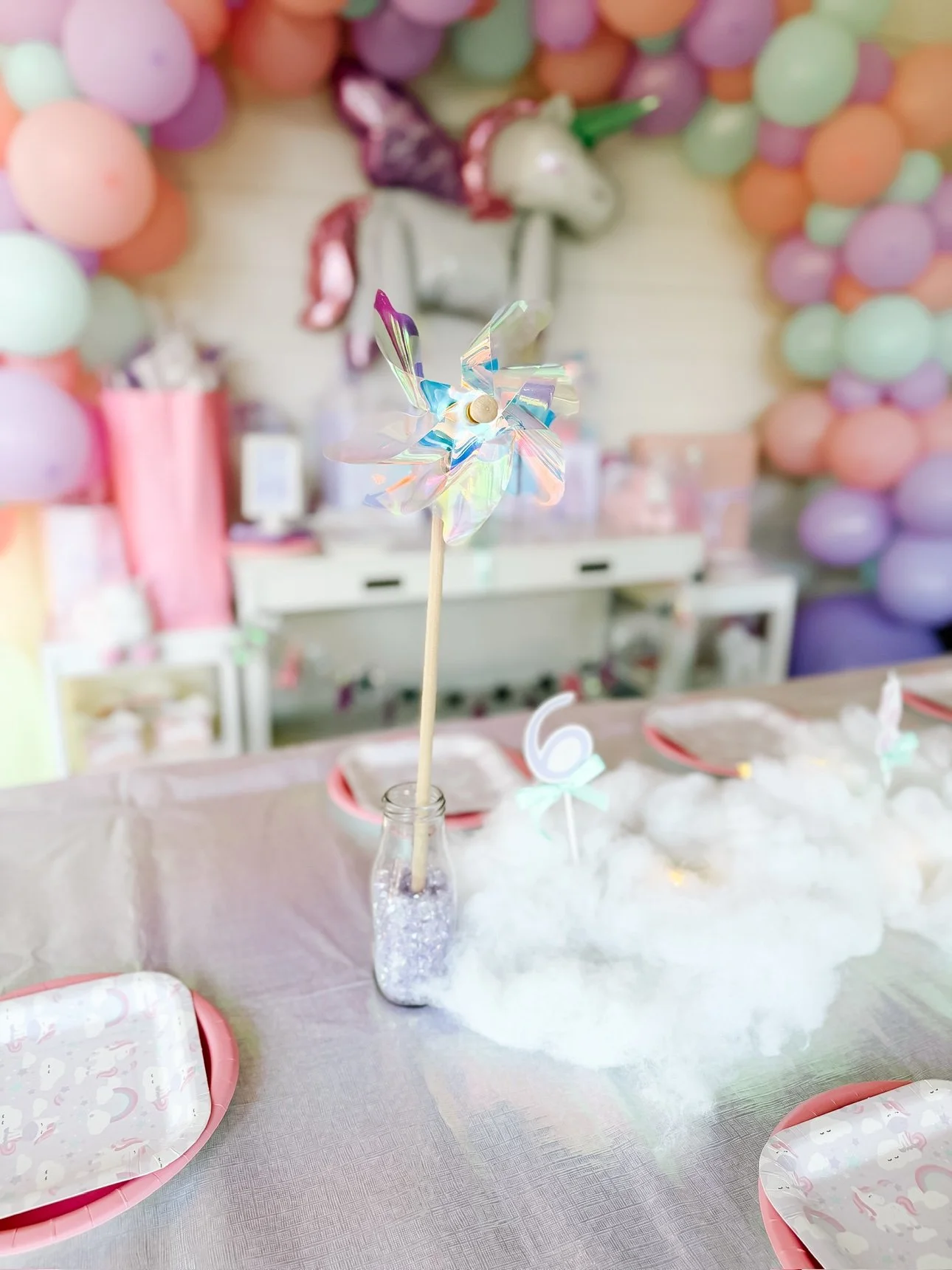
For the kids' table, we laid a cotton-cloud runner (fluffy polyester fill) straight down the middle and tucked in star picks and rainbow toppers. Each place setting got a paint-your-own ceramic unicorn with its own paint pots and brushes — the table is the activity, so there's no awkward waiting-around time before the fun starts.

Close-up of cotton cloud table runner with star and rainbow picks Iridescent pinwheel centerpiece on unicorn party table with balloon arch behind

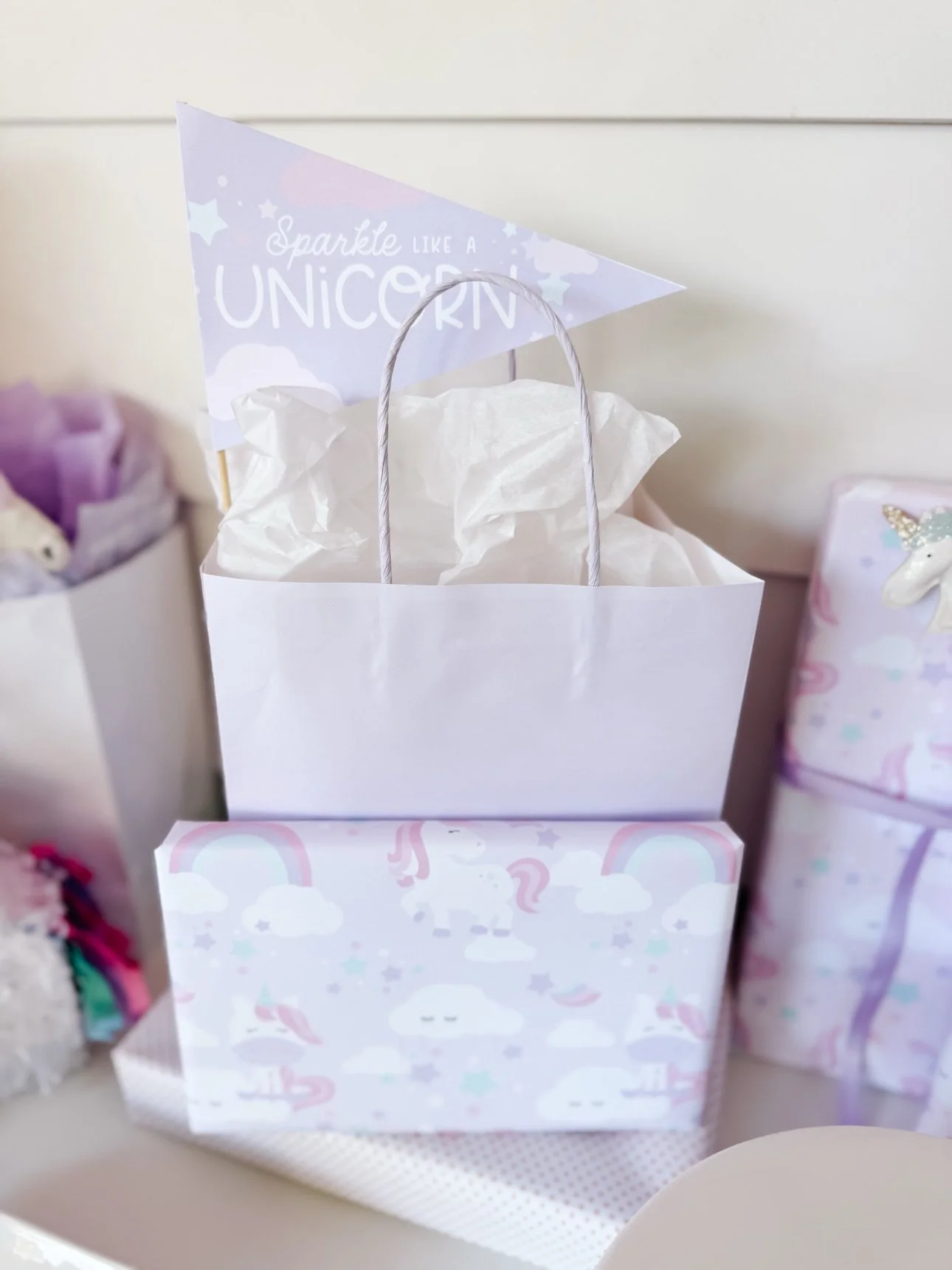
Small touches that pulled it together: iridescent pinwheel centerpieces, a "Sparkle like a Unicorn" banner, and unicorn paper plates layered over solid pink chargers.

DIY unicorn cupcake toppers

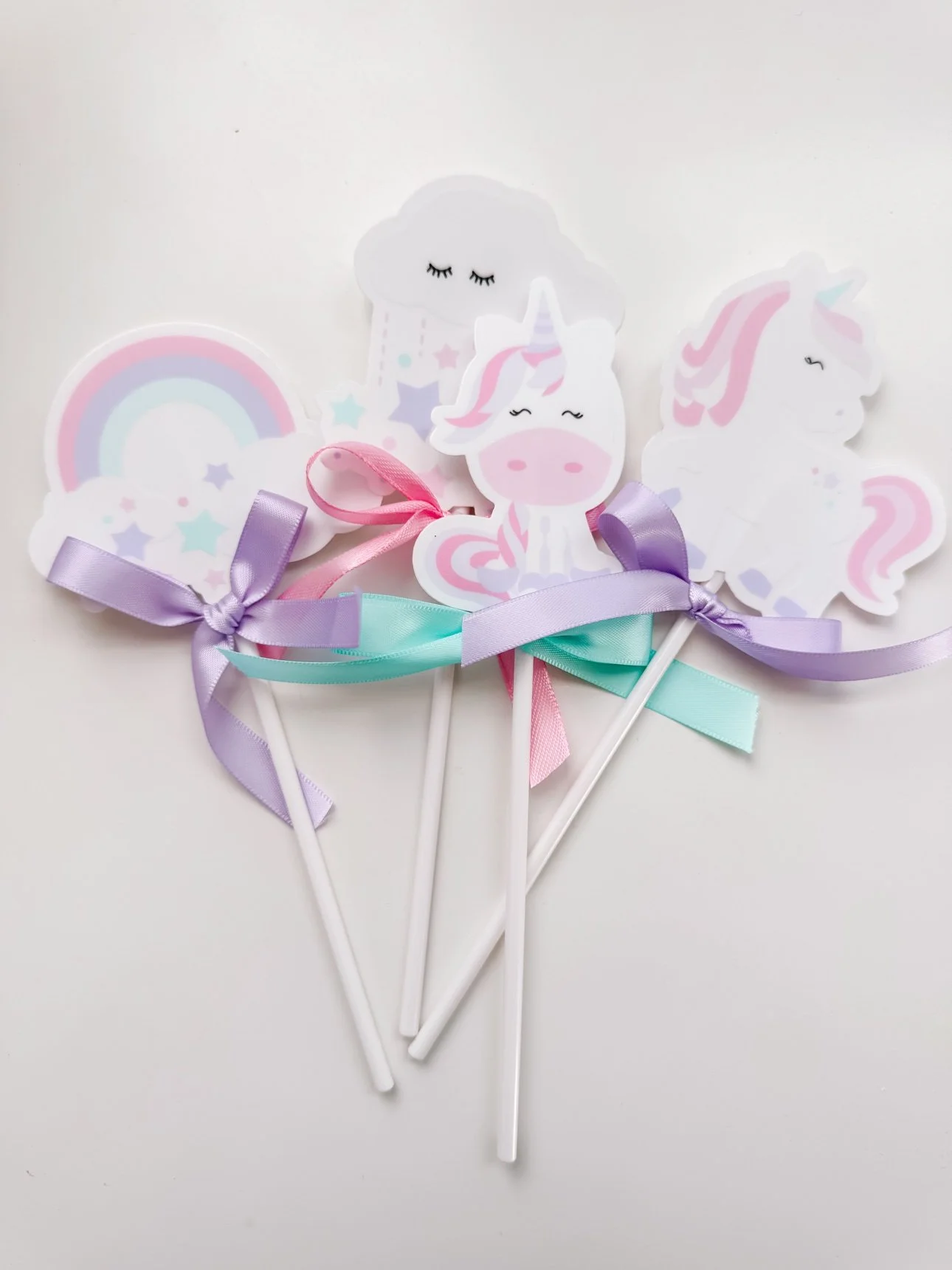
Bouquet of DIY unicorn cupcake toppers with pastel ribbon bows

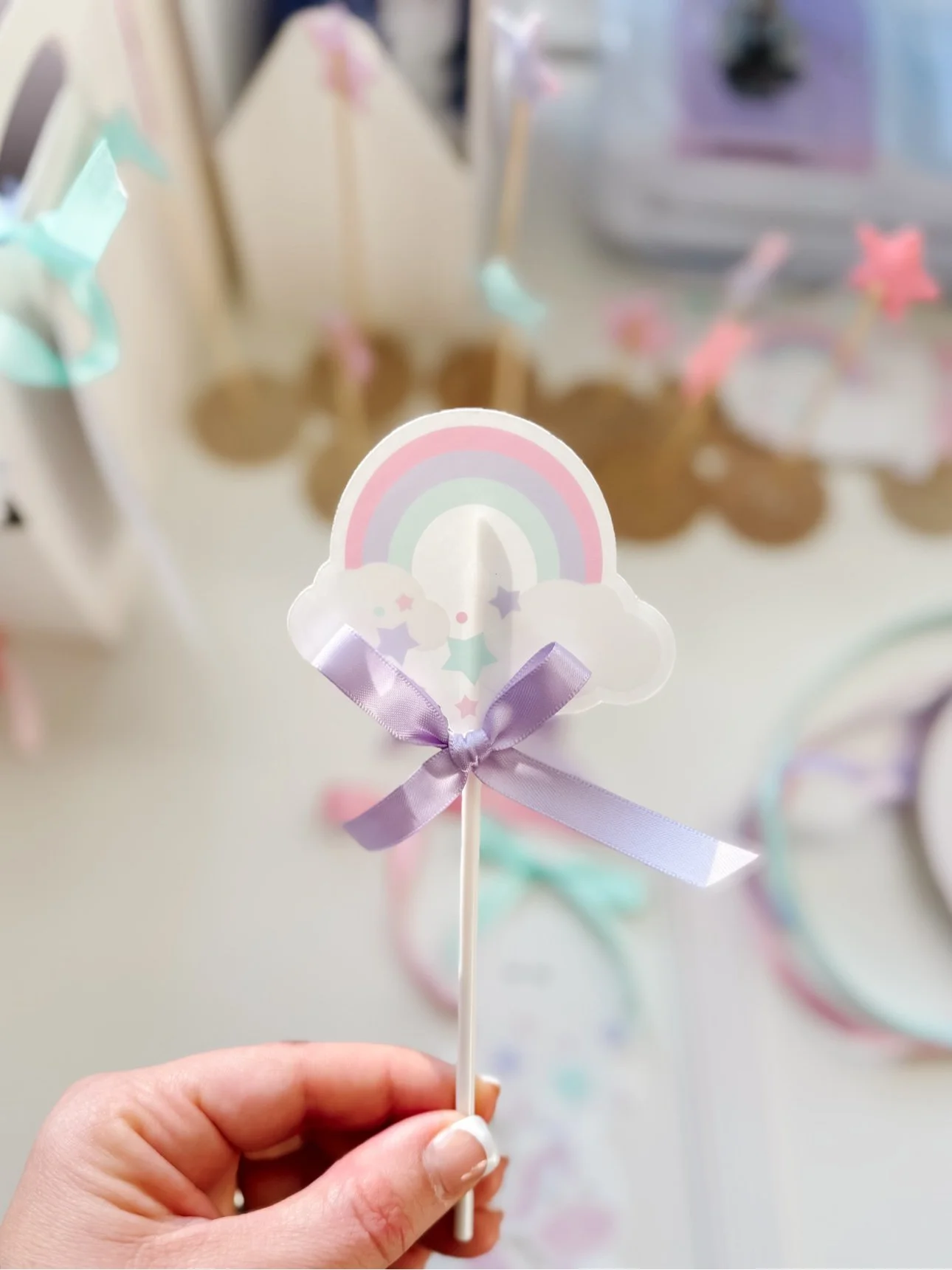
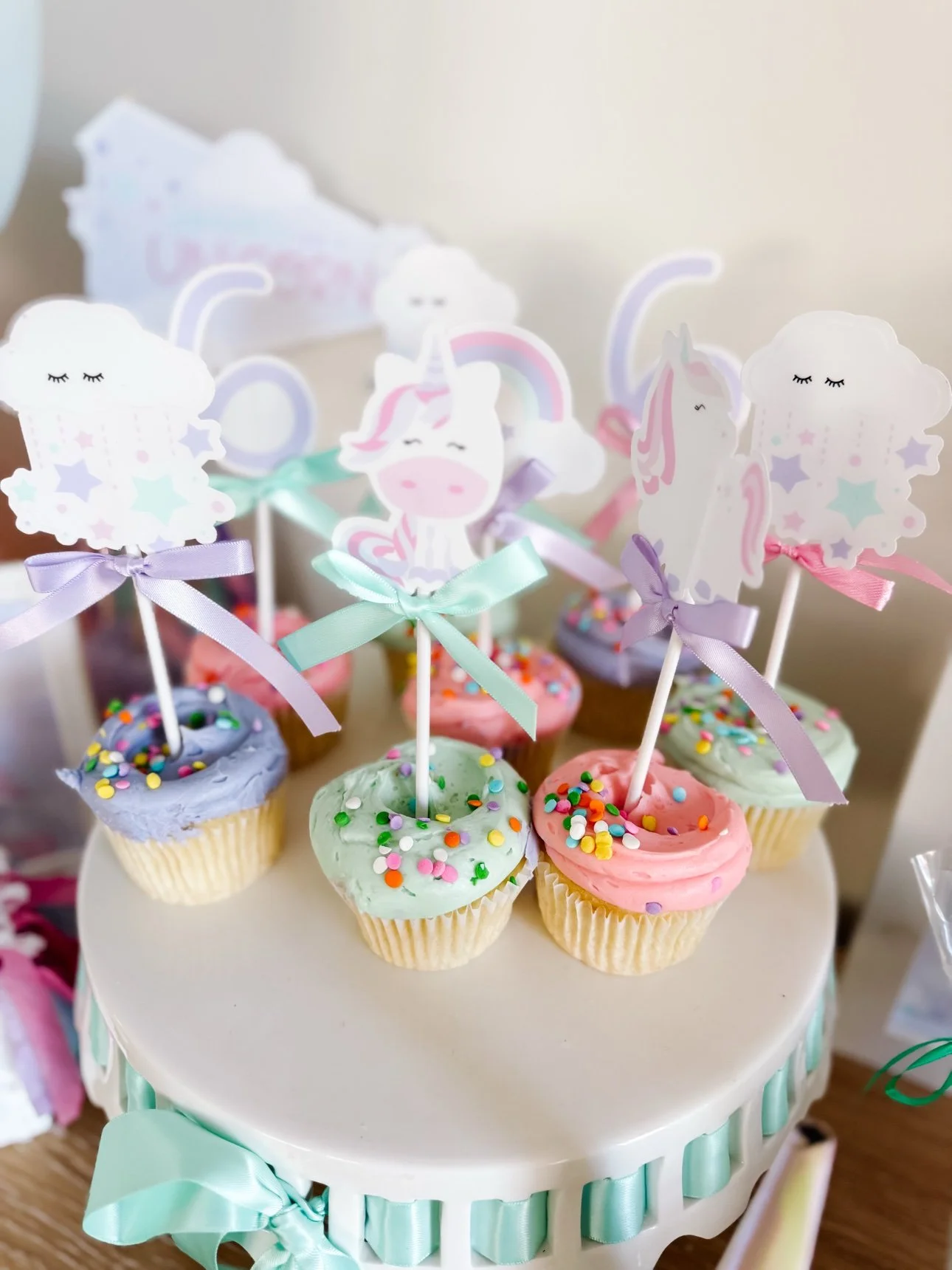
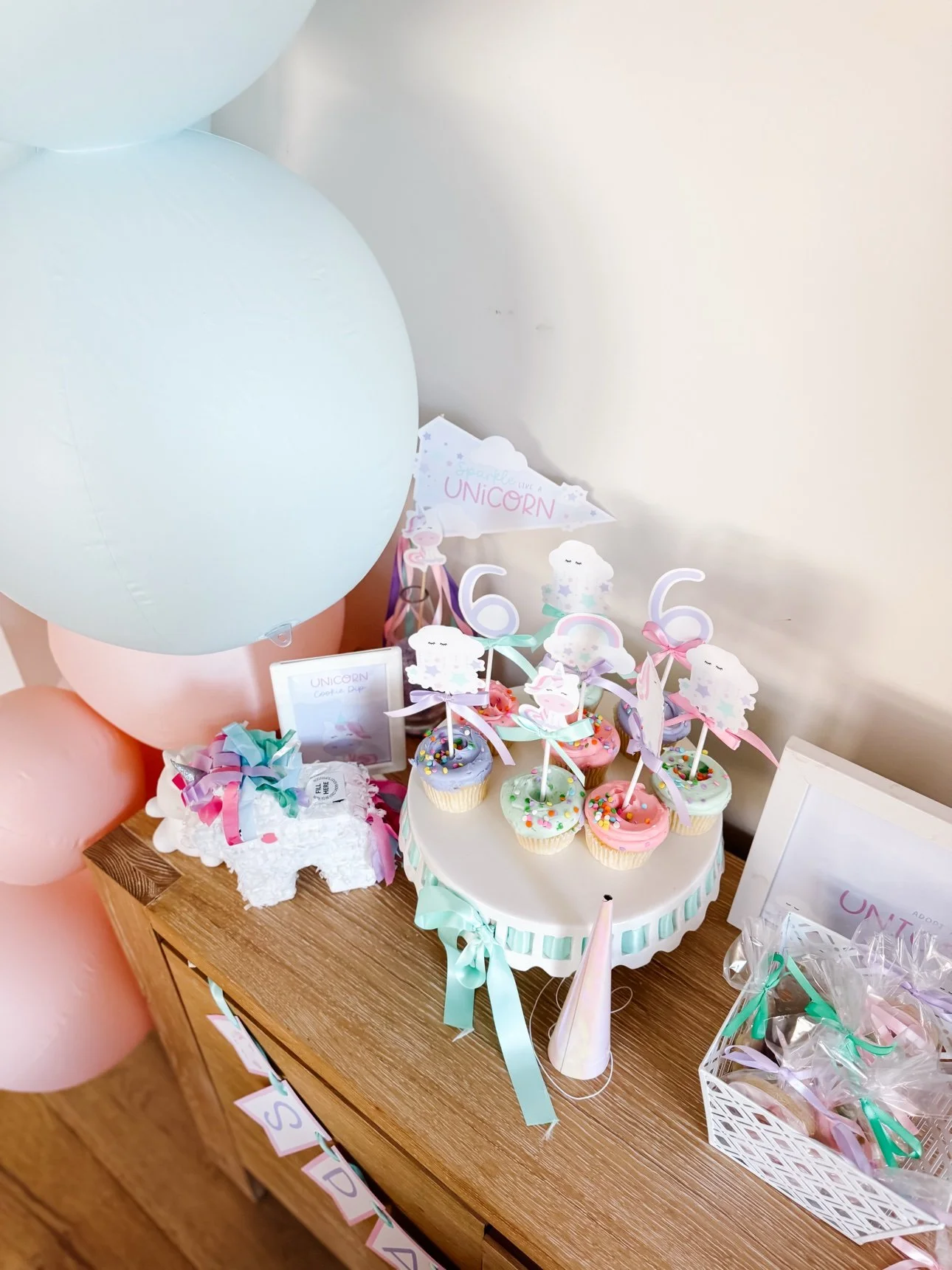
We made our own cupcake toppers from unicorn printables — rainbows, smiling clouds, unicorn faces — mounted on sticks and finished with little pastel ribbon bows. They dressed up plain frosted cupcakes instantly, and a bouquet of the extras made the sweetest party-table decoration.

Hand holding a DIY rainbow unicorn cupcake topper

Tip: print, cut, and assemble toppers 1–2 weeks ahead. It's the perfect couch-time craft project while watching TV.

Unicorn birthday party food

Our party menu leaned sweet and snacky — the kind of food little hands can grab between activities. These are the recipes we served, each with its own full tutorial:

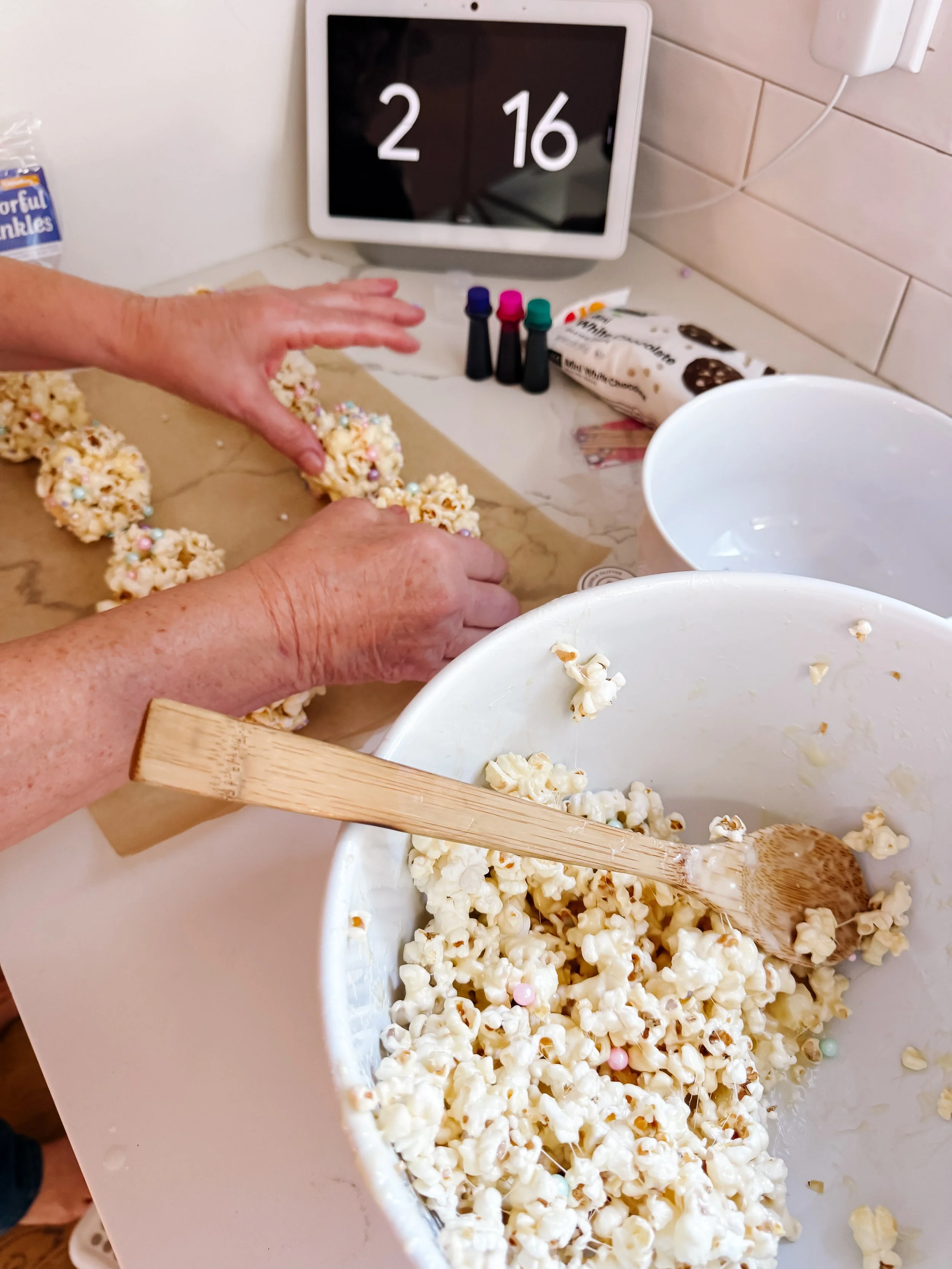
Unicorn popcorn balls with pink purple and teal sprinkles

Unicorn Popcorn Balls

Sweet, crunchy, and covered in pink, purple, and teal sprinkles — serve them on popsicle sticks as "unicorn wands."

No-bake Party snack

Get the recipe
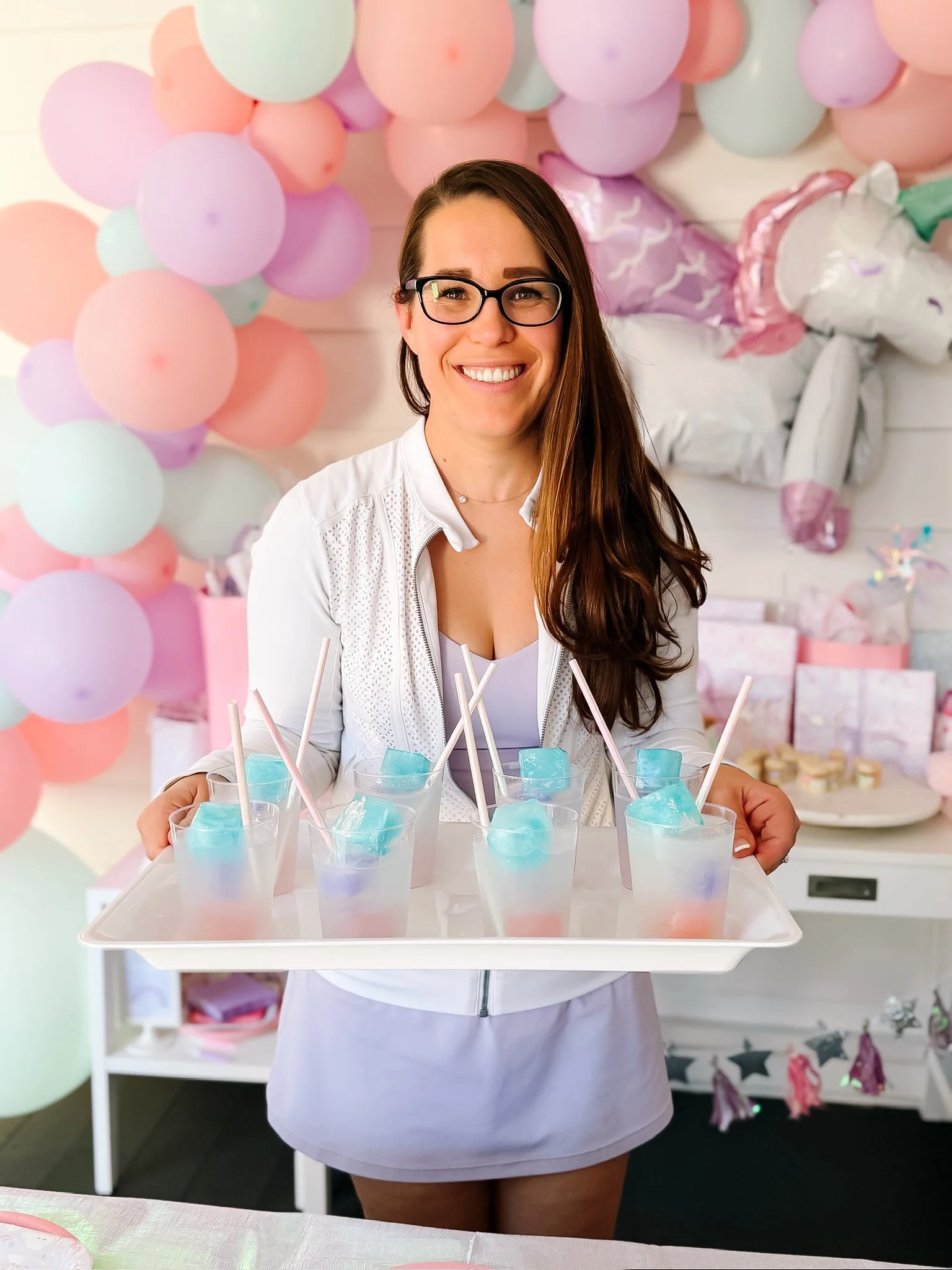
Unicorn lemonade with pastel ice cubes melting into an ombre swirl

Unicorn Lemonade

Sparkling lemonade with pastel ice cubes that melt into a gorgeous ombré swirl — the prettiest drink on the party table.

Party drink Photo-worthy

Get the recipe
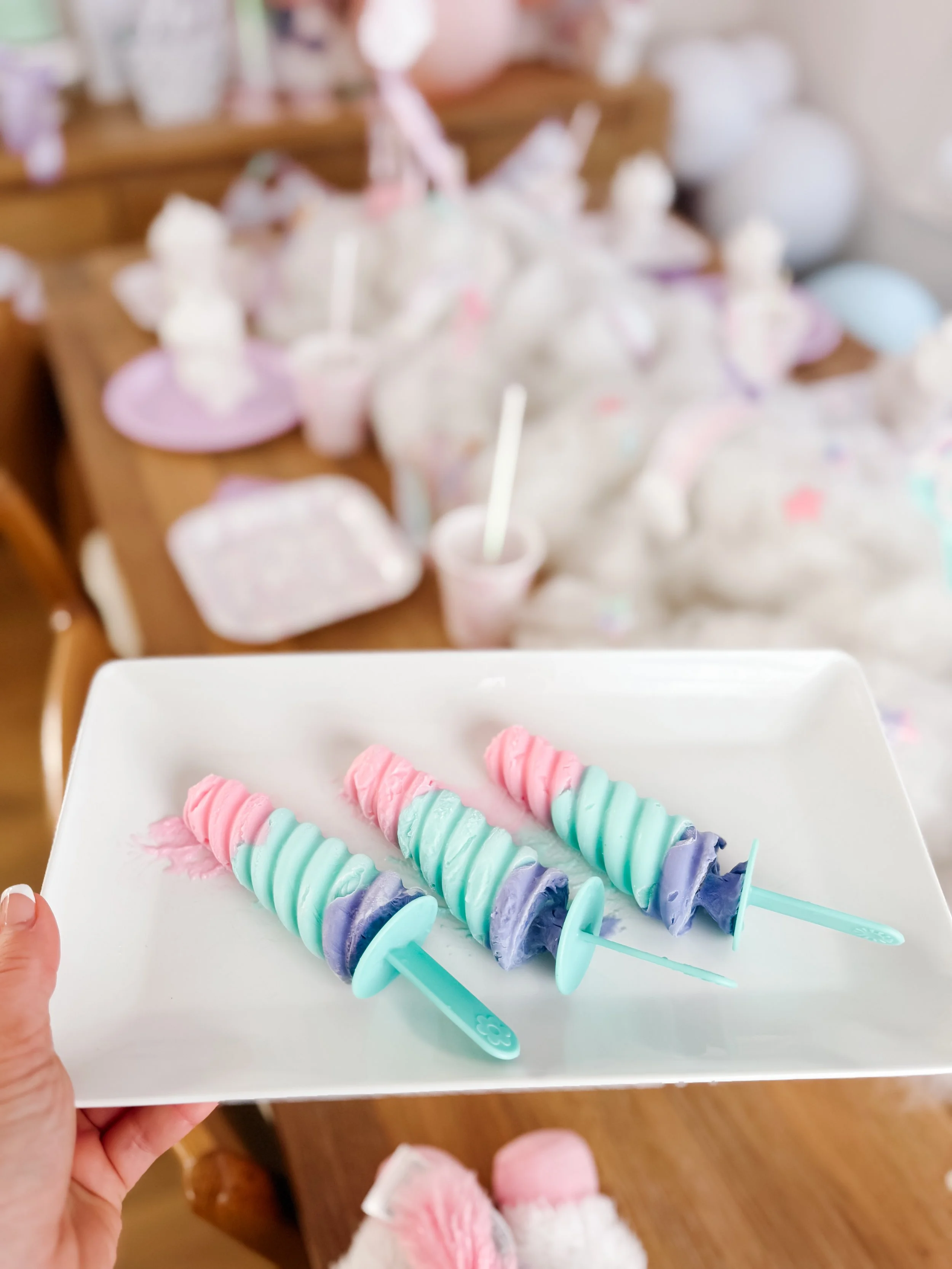
Unicorn horn frozen yogurt pops in pastel pink purple and teal swirls

Unicorn Frozen Yogurt Pops

Pastel pink, purple, and teal swirled yogurt pops — a healthier party dessert that still looks straight out of a fairy tale.

Healthier option Make-ahead

Get the recipe
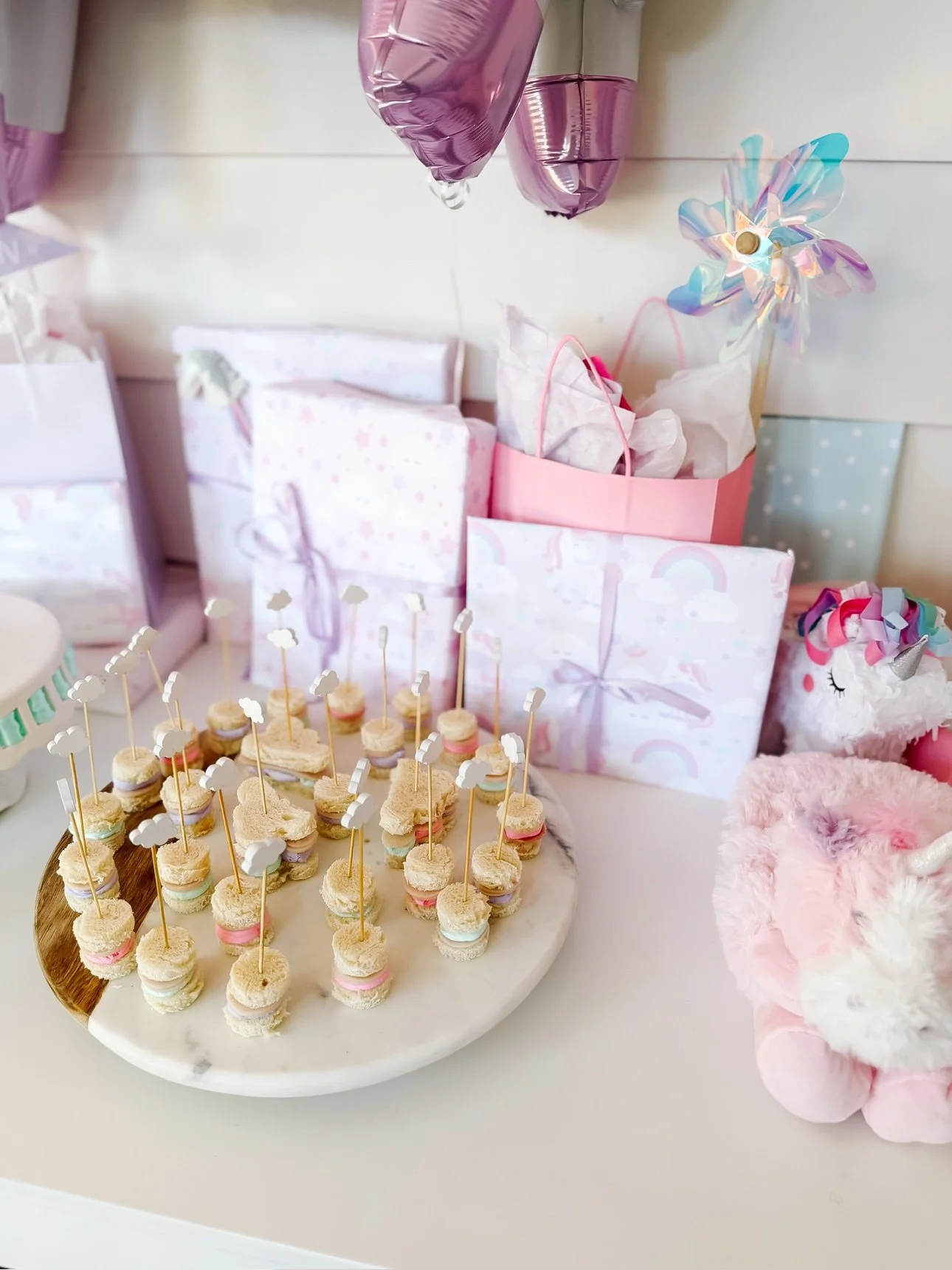
Mini sandwich stacks with cloud picks on a marble board at a unicorn party

For something savory between the sweets, we served mini sandwich stacks with little cloud picks on a marble board. They take five minutes to assemble, they match the theme, and parents appreciate seeing something with substance on the table.

Hand holding a pastel unicorn horn frozen yogurt pop at the party

Dessert table & unicorn cake

Unicorn dessert table with balloon arch, cake, cupcakes, cookies and pastel treats Mint green unicorn birthday cake with fondant unicorn and rainbow topper

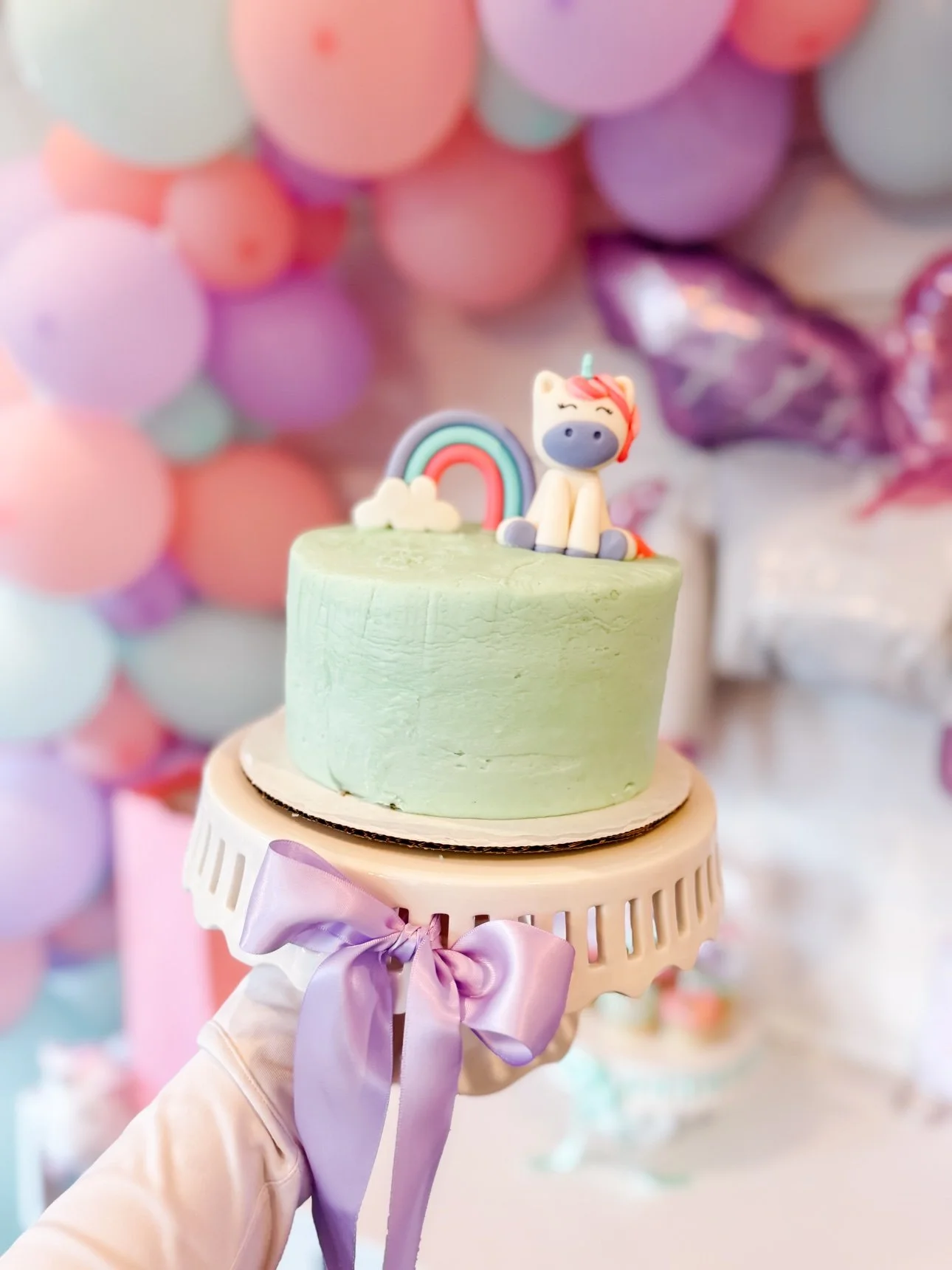
The centerpiece: a mint-green cake topped with a fondant unicorn and rainbow, displayed on a cake stand tied with a lavender bow. Around it we arranged cupcakes crowned with our DIY toppers, wrapped sugar cookies, and pastel treats at different heights — cake stands and stacked books are the easiest way to get that abundant dessert-table look.

Frosted cupcakes with DIY unicorn toppers on a cake stand
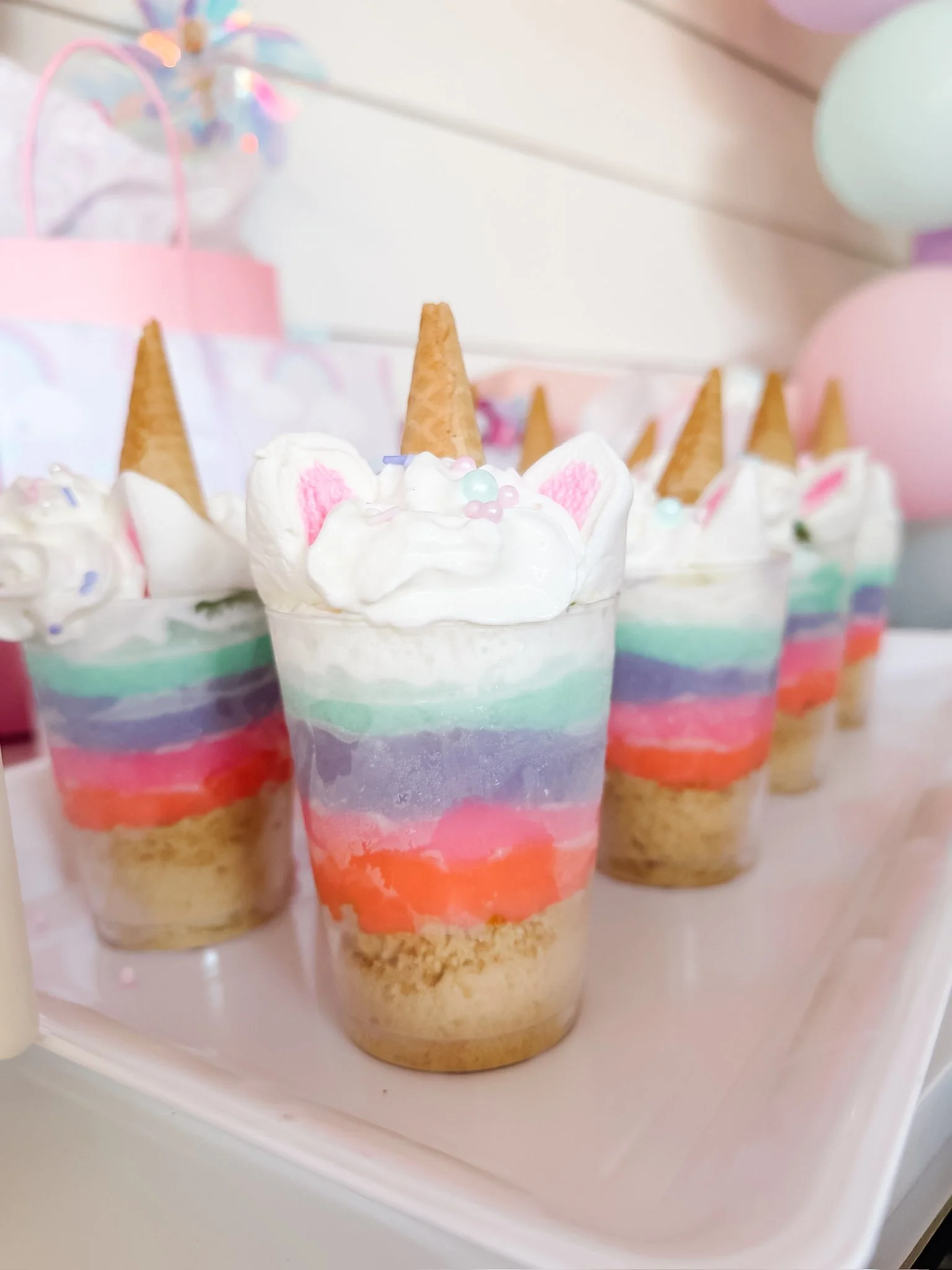
Unicorn pudding cups with pastel layers, whipped cream mane and sugar cone horn

Unicorn Pudding Cups

Pastel pudding layered over cookie crumbs, finished with a whipped-cream mane, marshmallow ears, and a sugar-cone horn.

No-bake Kid favorite

Get the recipe
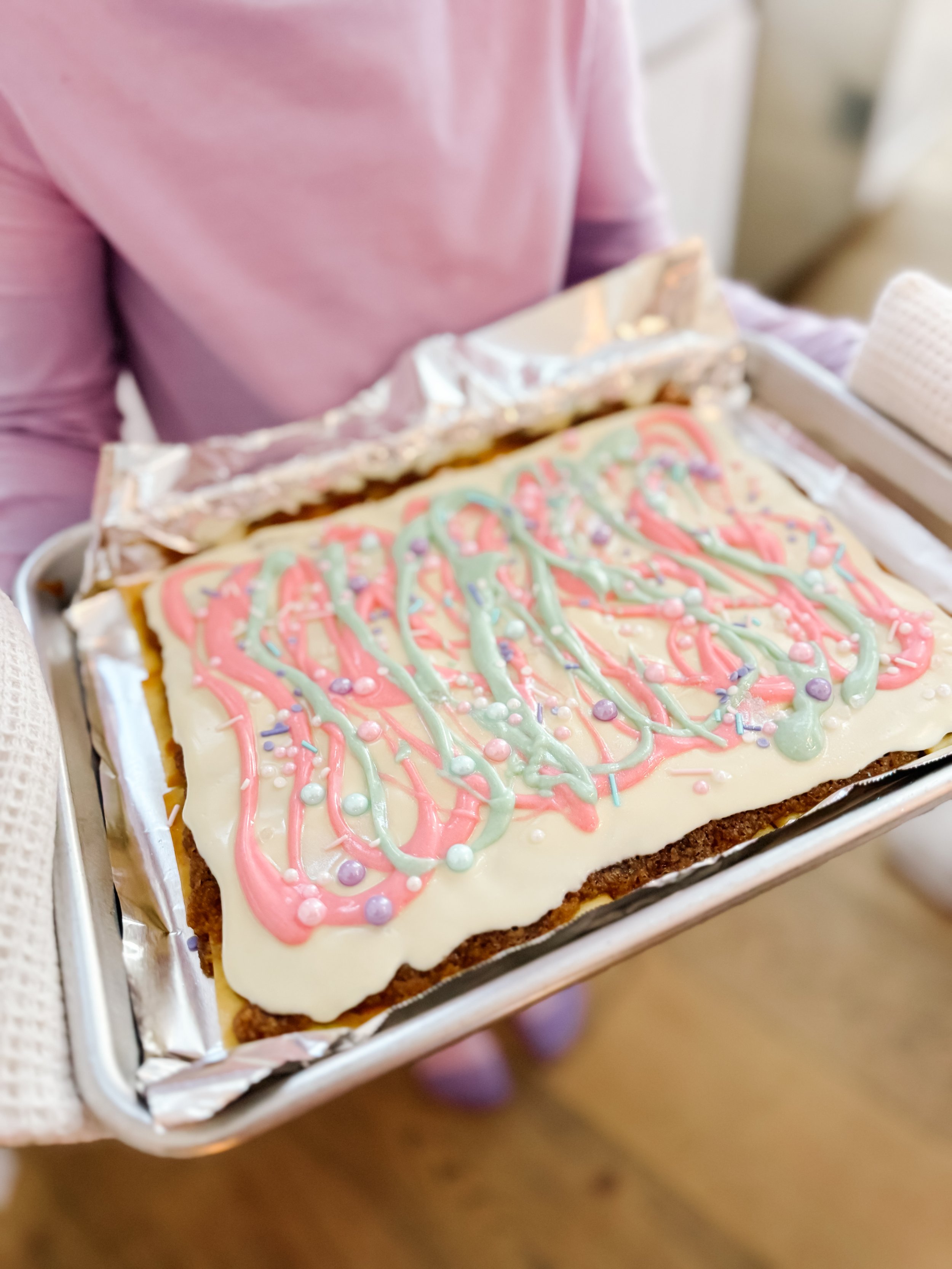
Pastel swirled unicorn bark with sprinkles and edible pearls

Unicorn Bark

Pastel-swirled white chocolate bark with sprinkles and edible pearls — breaks into perfect party-table pieces.

Easy Make-ahead

Get the recipe
Unicorn trifle with pastel Cool Whip layers on a party table

Unicorn Trifle

Layers of pastel Cool Whip, toffee bits, and blondie crumbles — a total showstopper served in a glass trifle bowl.

Showstopper Make-ahead

Get the recipe
Unicorn pudding cups party sign with pastel napkins and plates

Unicorn party activities & crafts

Paint-your-own ceramic unicorn activity table with paint pots and brushes

Paint-your-own ceramic unicorns were the main event. Each child got a ceramic unicorn, paint pots, and brushes right at their place setting — zero setup during the party, and every guest took their painted unicorn home as a favor. It kept the whole table happily busy for a solid 30 minutes.

Adopt a Unicorn station with framed sign, plush unicorns, certificates and favor boxes

Our second activity was an "Adopt a Unicorn" station: a basket of plush unicorns, a framed sign, and printed Certificates of Adoption for each child to fill out and take home. It's part craft, part favor, and kids adore choosing "their" unicorn.

Hand holding a unicorn Certificate of Adoption printable

Tip: print the adoption certificates a week ahead and pre-fill each guest's name if you can — it feels extra special.

Backyard unicorn fun

White bounce house decorated for a unicorn birthday party Outdoor unicorn party setup with balloon arch, dessert table and kids table

Outside, a white bounce house (dressed up with pastel balloons and a foil unicorn) and a cotton candy machine kept the energy going between the calmer table activities. If you're renting a bounce house, white is worth requesting — it photographs beautifully and takes themed balloons perfectly.

Unicorn party favors & take-home treats

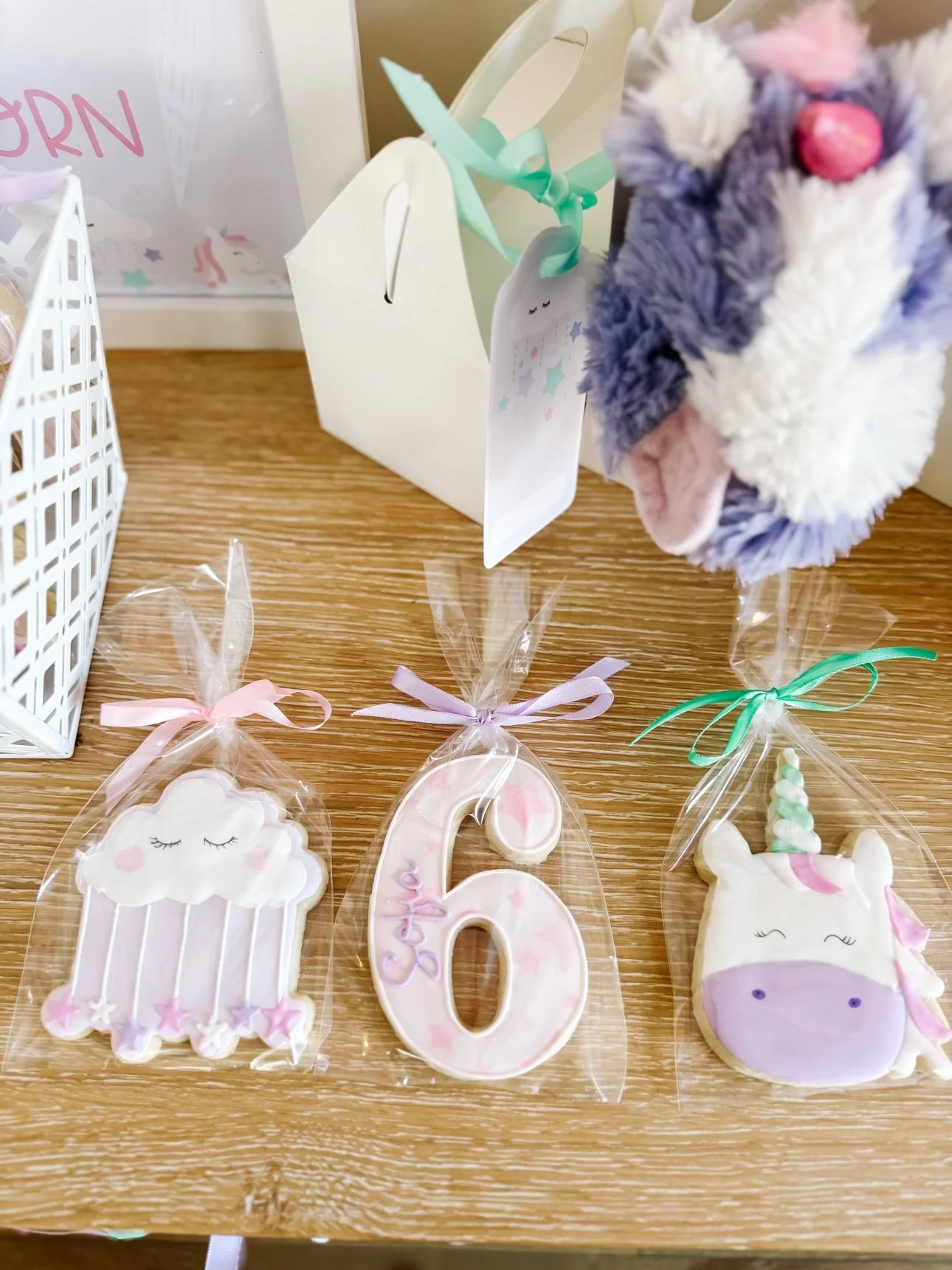
Wrapped unicorn sugar cookies laid out as party favors

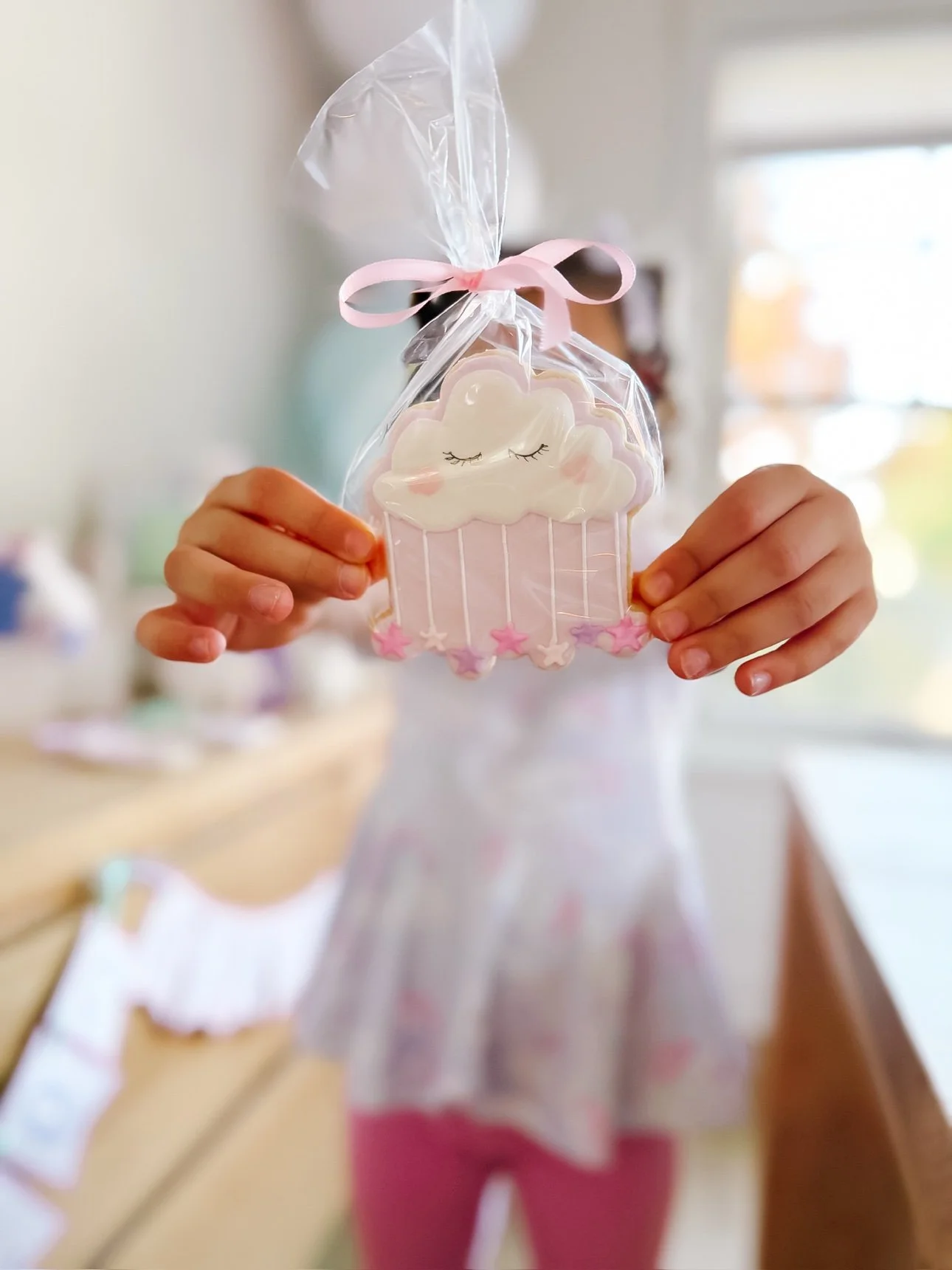
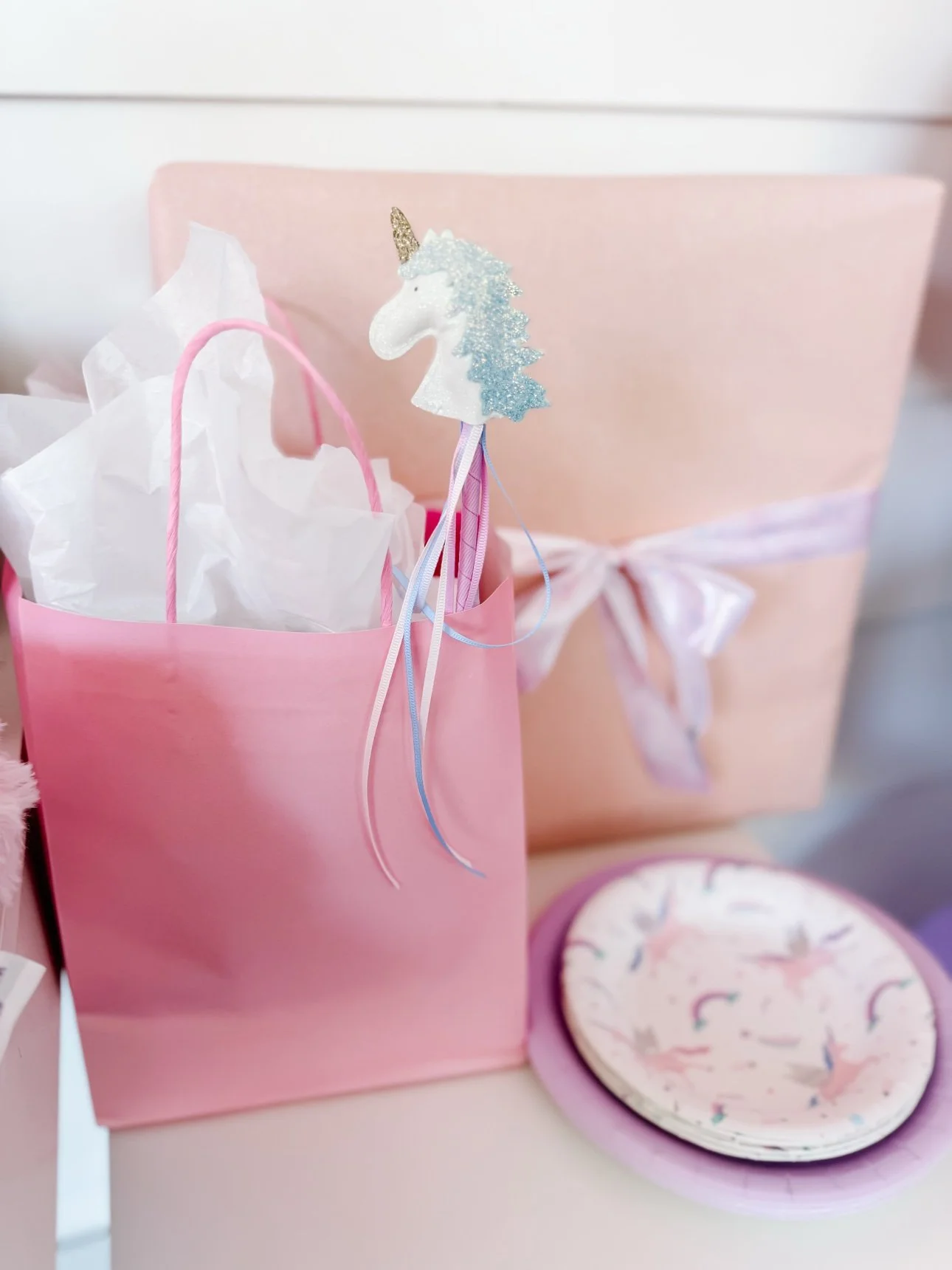
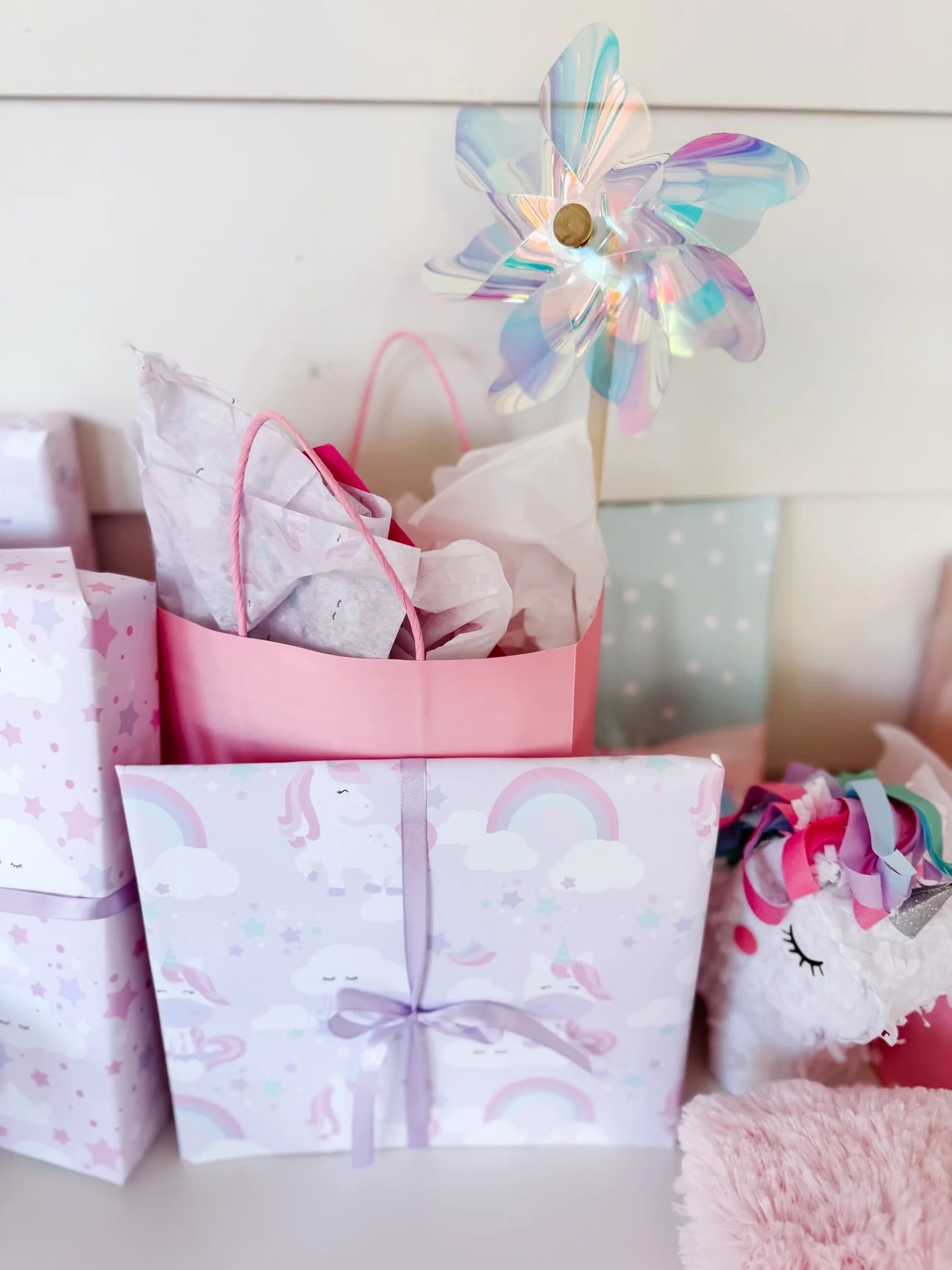
We kept favors simple and edible-plus-one-thing: wrapped unicorn sugar cookies (clouds, unicorn faces, and a "6" for the birthday girl), tucked into gift bags with a ribbon wand and a pinwheel. The painted ceramic unicorns and adopted plush unicorns from the activities doubled as favors too — which meant no separate favor to plan, buy, or assemble.

Child holding a wrapped cloud-shaped unicorn party cookie favor Pink unicorn party gift bag with ribbon wand, wrapped gift and unicorn plates Sparkle like a Unicorn pennant tucked into a party gift bag with wrapped gifts Pink plush unicorn with unicorn party gift bags

Easy favor formula: something sweet (wrapped cookie) + something to play with (ribbon wand or pinwheel) + something from the activities (painted unicorn or adoption certificate). Wrap it all in theme colors and it looks incredibly generous.

Unicorn party planning checklist

2–3 weeks before

Pick your palette and order the big pieces: balloons, foil unicorn balloon, ceramic paint-your-own unicorns, plush unicorns for the adoption station. Print and cut the DIY cupcake toppers. Print adoption certificates.

1 week before

Plan the menu and shop for the recipes. Wrap favors and assemble gift bags. Test one batch of anything you've never made (bark and popcorn balls both keep well).

Day before

Build the balloon arch. Set the tables — lay the cloud runner, arrange place settings with the paint-your-own unicorns. Make anything that holds overnight (trifle, bark, yogurt pops).

Party day

Finish fresh items (lemonade ice cubes, sandwich stacks, popcorn balls). Set out the dessert table last so everything looks fresh for photos. Then enjoy it — the activities run themselves.

Unicorn party FAQ

What age is a unicorn party best for?

We did ours for a sixth birthday, and the sweet spot is roughly ages 3–7 — old enough to enjoy the crafts (painting ceramic unicorns, adopting a plush) and young enough to be fully delighted by the theme.

How far in advance should I start planning?

Two to three weeks is plenty. The DIY pieces (cupcake toppers, printed certificates) are the only things that need real lead time; everything else is assembly the week of.

What's the one decor piece worth splurging on?

The balloon arch. It's the backdrop for every photo and it instantly makes the whole party feel magical. A foil unicorn balloon in the middle takes it from "nice balloons" to "unicorn party."

What food do kids actually eat at a unicorn party?

In our experience: the savory stuff disappears first (mini sandwich stacks), then the grab-and-go sweets (popcorn balls, cookies, bark). The pretty layered desserts are for the grown-ups' cameras as much as the kids.

How do I keep a unicorn party budget-friendly?

DIY the toppers, print the adoption certificates at home, and use fluffy polyester fill for the cloud runner — it costs very little and looks luxurious. Put your budget toward the balloon arch and the cake, the two things everyone photographs.

Throwing your own unicorn party?

I'd love to see it! Tag @goodnightfox on Instagram and use #GoodnightFoxUnicornParty so I can share your magical setup. And if you try any of the recipes above, leave a comment on the recipe post telling me how it went!

Browse more party ideas